SB 641: Public health: alcohol and drug programs: naloxone.
- Session Year: 2023-2024
- House: Senate
- Latest Version Date: 2023-09-19
Current Status:
Failed
(2024-01-25: Veto sustained.)
Introduced
In Committee
First Chamber
In Committee
Second Chamber
Enacted
What does this bill do?
The bill requires the State Department of Health Care Services to make all FDA‑approved forms and dose strengths of naloxone and other drugs that reverse opioid overdoses available through the Naloxone Distribution Project, affecting law enforcement, schools, community groups, people at risk, and their families. The project is not required to contract with manufacturers that won’t ship directly and is not required to store or mail products, and the availability is subject to not risking federal funding.
The summary is provided by generative AI which can make mistakes. For original language, please view the details in the table below.
Existing law establishes the State Department of Health Care Services within the California Health and Human Services Agency. Existing law sets forth the departments powers and duties, including receiving federal funds payable directly to the state by the Substance Abuse and Mental Health Services Administration to implement programs that provide services to alleviate the problems related to alcohol and other drug use. The Naloxone Distribution Project (NDP) is administratively created by the department to reduce opioid-related overdose deaths.
This bill would require the department, as part of the NDP, to make all United States Food and Drug Administration-approved formulations and dosage strengths of naloxone or any other opioid antagonist that are indicated for the emergency treatment of known or suspected opioid overdose available through the NDP, as specified. The bill would make legislative findings and declarations.
Existing law establishes the State Department of Health Care Services within the California Health and Human Services Agency. Existing law sets forth the departments powers and duties, including receiving federal funds payable directly to the state by the Substance Abuse and Mental Health Services Administration to implement programs that provide services to alleviate the problems related to alcohol and other drug use. The Naloxone Distribution Project (NDP) is administratively created by the department to reduce opioid-related overdose deaths.
This bill would require the department, as part of the NDP, to make all United States Food and Drug Administration-approved formulations and dosage strengths of naloxone or any other opioid antagonist that are indicated for the emergency treatment of known or suspected opioid overdose available through the NDP. NDP, as specified. The bill would make legislative findings and declarations.
Existing law establishes the State Department of Health Care Services within the California Health and Human Services Agency. Existing law sets forth the departments powers and duties, including receiving federal funds payable directly to the state by the Substance Abuse and Mental Health Services Administration to implement programs that provide services to alleviate the problems related to alcohol and other drug use. The Naloxone Distribution Project (NDP) is administratively created by the department to reduce opioid-related overdose deaths.
This bill would require the department, as part of the NDP, to make all United States Food and Drug Administration-approved formulations and dosage strengths of naloxone or any other opioid antagonist that are indicated for the emergency treatment of known or suspected opioid overdose available to NDP applicants. through the NDP. The bill would make legislative findings and declarations.
Existing law establishes the State Department of Health Care Services within the California Health and Human Services Agency. Existing law sets forth the departments powers and duties, including receiving federal funds payable directly to the state by the Substance Abuse and Mental Health Services Administration to implement programs that provide services to alleviate the problems related to alcohol and other drug use. The Naloxone Distribution Project (NDP) is administratively created by the department to reduce opioid-related overdose deaths.
This bill would require the department, as part of the NDP, to make all United States Food and Drug Administration-approved formulations and dosage strengths of naloxone that are indicated for the emergency treatment of known or suspected opioid overdose available to NDP applicants. The bill would make legislative findings and declarations.
Existing law, until July 1, 2013, required the State Department of Health Care Services to place on its internet website information on drug overdose trends in California, including county and state death rates.This bill would make technical, nonsubstantive changes to that provision.Existing law, until July 1, 2013, required the State Department of Health Care Services to place on its internet website information on drug overdose trends in California, including county and state death rates.
This bill would make technical, nonsubstantive changes to that provision.
The Legislature finds and declares all of the following:
(a)Californias opioid epidemic represents one of the greatest public health crises in our states history.
(b)Based on preliminary data, there were 6,843 opioid-related overdose deaths in California in 2021. Of these deaths, 5,722 were related to fentanyl, a synthetic opioid that is up to 50 times stronger than heroin and 100 times stronger than morphine. Of those fentanyl-related deaths, 224 were among California teens, 15 to 19 years of age, inclusive.
(c)The scope and scale of the opioid crisis demands that California use all available tools to prevent overdose deaths.
(d)One tool to combat this crisis is the utilization of the Naloxone Distribution Project administered by the State Department of Health Care Services. The Naloxone Distribution Project currently distributes naloxone to law enforcement, schools, community organizations, and other groups upon completion of an application.
(e)Naloxone is an opioid antagonist indicated for the complete or partial reversal of opioid overdose, including respiratory depression, induced by natural and synthetic opioids. It may be delivered intramuscularly with a needle or intranasally. Naloxone is indicated for emergency treatment of a known or suspected opioid overdose. It is not a substitute for emergency medical care.
(f)The State of Californias Naloxone Standing Order expressly states: The purpose of this standing order is to help reduce morbidity and mortality associated with opioid overdose by facilitating the distribution and administration of naloxone hydrochloride (naloxone).
(g)While the Naloxone Distribution Projects distribution of four-milligram doses or less of naloxone has been sufficient in the past, there is increasing evidence that administration of a single four-milligram dose may be insufficient to reverse an overdose due to the prevalence of the more potent fentanyl.
(h)Given the importance of timely administration of an opioid antagonist and that someone administering an opioid antagonist may not have access to multiple doses, it is important that United States Food and Drug Administration-approved stronger dosage formulations of an opioid antagonist be made available.
(i)The standing order contains no limitation on dosage strengths of naloxone to be made available to non-prescribing entities to distribute...to individuals at risk of opioid overdose, their family members and friends...
(j)While there is currently no limitation on the dosage strength, the State Department of Health Care Services has not made a higher dose of an opioid antagonist available.
(k)This bill authorizes and directs the State Department of Health Care Services to make all United States Food and Drug Administration-approved formulations and dosage strengths of naloxone available through the Naloxone Distribution Project.
SEC. 2.Section 11775.2 is added to the Health and Safety Code, to read:11775.2.(a)The department shall, as part of the Naloxone Distribution Project (NDP), make all United States Food and Drug Administration-approved formulations and dosage strengths of naloxone or any other opioid antagonist that are indicated for the emergency treatment of known or suspected opioid overdose available through the NDP to the extent that this does not jeopardize federal funding.
(b)Notwithstanding any other provision of this section, the NDP is not required to contract with any manufacturer that does not offer direct shipment to applicants.
(c)This section does not require the NDP or the State Department of Health Care Services to store or ship products to applicants.
The Legislature finds and declares all of the following:
(a)Californias opioid epidemic represents one of the greatest public health crises in our states history.
(b)Based on preliminary data, there were 6,843 opioid-related overdose deaths in California in 2021. Of these deaths, 5,722 were related to fentanyl, a synthetic opioid that is up to 50 times stronger than heroin and 100 times stronger than morphine. Of those fentanyl-related deaths, 224 were among California teens, 15 to 19 years of age, inclusive.
(c)The scope and scale of the opioid crisis demands that California use all available tools to prevent overdose deaths.
(d)One tool to combat this crisis is the utilization of the Naloxone Distribution Project administered by the State Department of Health Care Services. The Naloxone Distribution Project currently distributes naloxone to law enforcement, schools, community organizations, and other groups upon completion of an application.
(e)Naloxone is an opioid antagonist indicated for the complete or partial reversal of opioid overdose, including respiratory depression, induced by natural and synthetic opioids. It may be delivered intramuscularly with a needle or intranasally. Naloxone is indicated for emergency treatment of a known or suspected opioid overdose. It is not a substitute for emergency medical care.
(f)The State of Californias Naloxone Standing Order expressly states: The purpose of this standing order is to help reduce morbidity and mortality associated with opioid overdose by facilitating the distribution and administration of naloxone hydrochloride (naloxone).
(g)While the Naloxone Distribution Projects distribution of four-milligram doses or less of naloxone has been sufficient in the past, there is increasing evidence that administration of a single four-milligram dose may be insufficient to reverse an overdose due to the prevalence of the more potent fentanyl.
(h)Given the importance of timely administration of an opioid antagonist and that someone administering an opioid antagonist may not have access to multiple doses, it is important that United States Food and Drug Administration-approved stronger dosage formulations of an opioid antagonist be made available.
(i)The standing order contains no limitation on dosage strengths of naloxone to be made available to non-prescribing entities to distribute...to individuals at risk of opioid overdose, their family members and friends...
(j)While there is currently no limitation on the dosage strength, the State Department of Health Care Services has not made a higher dose of an opioid antagonist available.
(k)This bill authorizes and directs the State Department of Health Care Services to make all United States Food and Drug Administration-approved formulations and dosage strengths of naloxone available through the Naloxone Distribution Project.
SEC. 2.Section 11775.2 is added to the Health and Safety Code, to read:11775.2.(a)The department shall, as part of the Naloxone Distribution Project (NDP), make all United States Food and Drug Administration-approved formulations and dosage strengths of naloxone or any other opioid antagonist that are indicated for the emergency treatment of known or suspected opioid overdose available through the NDP to the extent that this does not jeopardize federal funding.
(b)Notwithstanding any other provision of this section, the NDP is not required to contract with any manufacturer that does not offer direct shipment to applicants.
(c)This section does not require the NDP or the State Department of Health Care Services to store or ship products to applicants.
The Legislature finds and declares all of the following:
(a)Californias opioid epidemic represents one of the greatest public health crises in our states history.
(b)Based on preliminary data, there were 6,843 opioid-related overdose deaths in California in 2021. Of these deaths, 5,722 were related to fentanyl, a synthetic opioid that is up to 50 times stronger than heroin and 100 times stronger than morphine. Of those fentanyl-related deaths, 224 were among California teens, 15 to 19 years of age, inclusive.
(c)The scope and scale of the opioid crisis demands that California use all available tools to prevent overdose deaths.
(d)One tool to combat this crisis is the utilization of the Naloxone Distribution Project administered by the State Department of Health Care Services. The Naloxone Distribution Project currently distributes naloxone to law enforcement, schools, community organizations, and other groups upon completion of an application.
(e)Naloxone is an opioid antagonist indicated for the complete or partial reversal of opioid overdose, including respiratory depression, induced by natural and synthetic opioids. It may be delivered intramuscularly with a needle or intranasally. Naloxone is indicated for emergency treatment of a known or suspected opioid overdose. It is not a substitute for emergency medical care.
(f)The State of Californias Naloxone Standing Order expressly states: The purpose of this standing order is to help reduce morbidity and mortality associated with opioid overdose by facilitating the distribution and administration of naloxone hydrochloride (naloxone).
(g)While the Naloxone Distribution Projects distribution of four-milligram doses or less of naloxone has been sufficient in the past, there is increasing evidence that administration of a single four-milligram dose is may be insufficient to reverse an overdose due to the prevalence of the more potent fentanyl.
(h)Given the importance of timely administration of an opioid antagonist and that someone administering an opioid antagonist may not have access to multiple doses, it is critical important that United States Food and Drug-approved Drug Administration-approved stronger dosage formulations of an opioid antagonist be made available.
(i)The standing order contains no limitation on dosage strengths of naloxone to be made available to non-prescribing entities to distribute...to individuals at risk of opioid overdose, their family members and friends...
(j)While there is currently no limitation on the dosage strength, the State Department of Health Care Services has not made a higher dose of an opioid antagonist available.
(k)This bill authorizes and directs the State Department of Health Care Services to make all United States Food and Drug-approved Drug Administration-approved formulations and dosage strengths of naloxone available to eligible applicants of through the Naloxone Distribution Project.
SEC. 2.Section 11775.2 is added to the Health and Safety Code, to read:11775.2.The department shall, as part of the Naloxone Distribution Project (NDP), make all United States Food and Drug-approved Drug Administration-approved formulations and dosage strengths of naloxone or any other opioid antagonist that are indicated for the emergency treatment of known or suspected opioid overdose available to eligible NDP applicants through the NDP to the extent that this does not jeopardize federal funding.
The Legislature finds and declares all of the following:
(a)Californias opioid epidemic represents one of the greatest public health crises in our states history.
(b)Based on preliminary data, there were 6,843 opioid-related overdose deaths in California in 2021. Of these deaths, 5,722 were related to fentanyl, a synthetic opioid that is up to 50 times stronger than heroin and 100 times stronger than morphine. Of those fentanyl-related deaths, 224 were among California teens, 15 to 19 years of age, inclusive.
(c)The scope and scale of the opioid crisis demands that California use all available tools to prevent overdose deaths.
(d)One tool to combat this crisis is the utilization of the Naloxone Distribution Project administered by the State Department of Health Care Services. The Naloxone Distribution Project currently distributes naloxone to law enforcement, schools, community organizations, and other groups upon completion of an application.
(e)Naloxone is an opioid antagonist indicated for the complete or partial reversal of opioid overdose, including respiratory depression, induced by natural and synthetic opioids. It may be delivered intramuscularly with a needle or intranasally. Naloxone is indicated for emergency treatment of a known or suspected opioid overdose. It is not a substitute for emergency medical care.
(f)The State of Californias Naloxone Standing Order expressly states: The purpose of this standing order is to help reduce morbidity and mortality associated with opioid overdose by facilitating the distribution and administration of naloxone hydrochloride (naloxone).
(g)While the Naloxone Distribution Projects distribution of four-milligram doses or less of naloxone has been sufficient in the past, there is increasing evidence that administration of a single four-milligram dose is insufficient to reverse an overdose due to the prevalence of the more potent fentanyl.
(h)Given the importance of timely administration of an opioid antagonist and that someone administering an opioid antagonist may not have access to multiple doses, it is critical that United States Food and Drug-approved stronger dosage formulations of an opioid antagonist be made available.
(i)The standing order contains no limitation on dosage strengths of naloxone to be made available to non-prescribing entities to distribute...to individuals at risk of opioid overdose, their family members and friends...
(j)While there is currently no limitation on the dosage strength, the State Department of Health Care Services has not made a higher dose of an opioid antagonist available.
(k)This bill authorizes and directs the State Department of Health Care Services to make all United States Food and Drug-approved formulations and dosage strengths of naloxone available to eligible applicants of the Naloxone Distribution Project.
SEC. 2.Section 11775.2 is added to the Health and Safety Code, to read:11775.2.The department shall, as part of the Naloxone Distribution Project (NDP), make all United States Food and Drug-approved formulations and dosage strengths of naloxone that are indicated for the emergency treatment of known or suspected opioid overdose available to eligible NDP applicants to the extent that this does not jeopardize federal funding.
SECTION 1.Section 11758.06 of the Health and Safety Code is amended to read:11758.06.(a)On or before July 1, 2004, and on or before January 1, 2009, as specified in subdivision (c), the department shall place on its internet website information on drug overdose trends in California, including county and state death rates, from existing data, in order to ascertain changes in the causes or rates of fatal and nonfatal drug overdoses for the preceding five years.(b)The information required by subdivision (a) shall include, to the extent available, data on all of the following:(1)Trends in drug overdose death rates by county or city, or both.(2)Suggested improvements in data collection.(3)A description of interventions that may be effective in reducing the rate of fatal or nonfatal drug overdoses.(c)The information required by subdivision (a) to be placed on the departments internet website shall remain on the internet website for a period of not less than six months. The department shall update the information required pursuant to subdivision (a) and shall place the updated information on the internet website on or before January 1, 2009, for a period of not less than six months.(d)This section shall become inoperative on July 1, 2013.(a)On or before July 1, 2004, and on or before January 1, 2009, as specified in subdivision (c), the department shall place on its Internet Web site internet website information on drug overdose trends in California, including county and state death rates, from existing data, in order to ascertain changes in the causes or rates of fatal and nonfatal drug overdoses for the preceding five years.
(b)The information required by subdivision (a) shall include, to the extent available, data on all of the following:
(1)Trends in drug overdose death rates by county or city, or both.
(2)Suggested improvements in data collection.
(3)A description of interventions that may be effective in reducing the rate of fatal or nonfatal drug overdoses.
(c)The information required by subdivision (a) to be placed on the departments Internet Web site internet website shall remain on the Internet Web site internet website for a period of not less than six months. The department shall update the information required pursuant to subdivision (a) and shall place the updated information on the Internet Web site internet website on or before January 1, 2009, for a period of not less than six months.
(d)This section shall become inoperative on July 1, 2013.
|
Date
|
Status
|
|---|---|
| Jan 25, 2024 | Veto sustained. |
| Jan 25, 2024 | Stricken from file. |
| Oct 8, 2023 | In Senate. Consideration of Governor's veto pending. |
| Oct 8, 2023 | Vetoed by the Governor. |
| Sep 21, 2023 | Enrolled and presented to the Governor at 4 p.m. |
| Sep 14, 2023 | Assembly amendments concurred in. (Ayes 40. Noes 0. Page 2846.) Ordered to engrossing and enrolling. |
| Sep 13, 2023 | In Senate. Concurrence in Assembly amendments pending. |
| Sep 13, 2023 | Read third time. Passed. (Ayes 76. Noes 0. Page 3462.) Ordered to the Senate. |
| Sep 5, 2023 | Read second time. Ordered to third reading. |
| Sep 1, 2023 | Read second time and amended. Ordered to second reading. |
| Sep 1, 2023 | From committee: Do pass as amended. (Ayes 11. Noes 0.) (September 1). |
| Aug 23, 2023 | August 23 set for first hearing. Placed on suspense file. |
| Jun 21, 2023 | From committee: Do pass and re-refer to Com. on APPR. with recommendation: To consent calendar. (Ayes 14. Noes 0.) (June 20). Re-referred to Com. on APPR. |
| Jun 8, 2023 | Referred to Com. on HEALTH. |
| May 25, 2023 | In Assembly. Read first time. Held at Desk. |
| May 25, 2023 | Read third time. Passed. (Ayes 40. Noes 0. Page 1303.) Ordered to the Assembly. |
| May 23, 2023 | Ordered to special consent calendar. |
| May 18, 2023 | Read second time. Ordered to third reading. |
| May 18, 2023 | From committee: Do pass. (Ayes 7. Noes 0. Page 1178.) (May 18). |
| May 12, 2023 | Set for hearing May 18. |
| May 8, 2023 | May 8 hearing: Placed on APPR suspense file. |
| May 2, 2023 | Set for hearing May 8. |
| May 1, 2023 | Read second time and amended. Re-referred to Com. on APPR. |
| Apr 27, 2023 | From committee: Do pass as amended and re-refer to Com. on APPR with recommendation: To consent calendar. (Ayes 11. Noes 0. Page 941.) (April 26). |
| Apr 12, 2023 | Set for hearing April 26. |
| Mar 29, 2023 | Re-referred to Com. on HEALTH. |
| Mar 20, 2023 | From committee with author's amendments. Read second time and amended. Re-referred to Com. on RLS. |
| Mar 1, 2023 | Referred to Com. on RLS. |
| Feb 17, 2023 | From printer. May be acted upon on or after March 19. |
| Feb 16, 2023 | Introduced. Read first time. To Com. on RLS. for assignment. To print. |
|
Date
|
Description
|
Location
|
Votes
|
|
|---|---|---|---|---|
| Sep 14, 2023 | Unfinished Business SB641 Roth et al. Concurrence | Senate Floor |
Passed |
|
| Sep 13, 2023 | SB 641 Roth Senate Third Reading By Haney | Assembly Floor |
Passed |
|
| Sep 1, 2023 | Do pass as amended. | Assembly Standing Committee on Appropriations |
Passed |
|
| Jun 20, 2023 | Do pass and be re-referred to the Committee on [Appropriations] with recommendation: To Consent Calendar | Assembly Standing Committee on Health |
Passed |
|
| May 25, 2023 | Special Consent SB641 Roth et al. | Senate Floor |
Passed |
|
| May 18, 2023 | Do pass | Senate Standing Committee on Appropriations |
Passed |
|
| May 8, 2023 | Placed on suspense file | Senate Standing Committee on Appropriations |
Passed |
|
| Apr 26, 2023 | Do pass as amended, but first amend, and re-refer to the Committee on [Appropriations] with the recommendation: To Consent Calendar | Senate Standing Committee on Health |
Passed |
This list shows positions taken on this bill by organizations on the date displayed, which is linked to the original source.
Positions by individuals are not included.
|
Organization
|
Position
|
Date
|
|---|---|---|
| Alexander Neville Foundation | ** Support | |
| Anaheim Lighthouse | ** Support | |
| ARCADIA POLICE OFFICERS ASSOCIATION | ** Support | |
| Burbank Police Officers Association | ** Support | |
| California Alliance for State Advocacy | ** Support | |
| California Association Of Alcohol And Drug Program Executives, Inc. | ** Support | |
| California Association of Alcohol and Drug Program Executives, Inc., cosponsor | ** Support | |
| California Association of Social Rehabilitation Agencies | ** Support | |
| California Coalition of School Safety Professionals | ** Support | |
| California Hospital Association | ** Support | |
| California State Sheriffs Association | ** Support | |
| California Teachers Association | ** Support | |
| CLAREMONT POLICE OFFICERS ASSOCIATION | ** Support | |
| Corona Police Officers Association | ** Support | |
| Culver City Police Officers' Association | ** Support | |
| Department Of Finance | ** Against | |
| Deputy Sheriffs Association of Monterey County | ** Support | |
| End Overdose | ** Support | |
| Father Joe's Villages | ** Support | |
| Father Joe’s Villages | ** Support | |
| Fentanylsolution.org | ** Support | |
| Forever Free Foundation | ** Support | |
| FULLERTON POLICE OFFICERS ASSOCIATION | ** Support | |
| High Truths on Drugs and Addiction | ** Support | |
| LA Recovery Connect | ** Support | |
| League Of California Cities | ** Support | |
| los angeles school police officers association | ** Support | |
| MURRIETA POLICE OFFICERS ASSOCIATION | ** Support | |
| MYMATCLINIC | ** Support | |
| Newport Beach Police Association | ** Support | |
| Orange County Recovery Collaboration | ** Support | |
| Palos Verdes Police Officers Association | ** Support | |
| Placer County Deputy Sheriffs’ Association | ** Support | |
| POMONA POLICE OFFICERS ASSOCIATION | ** Support | |
| Riverside County Sheriff Chad Bianco | ** Support | |
| RIVERSIDE POLICE OFFICERS ASSOCIATION | ** Support | |
| Riverside Sheriffs Association | ** Support | |
| Santa Ana Police Officers Association | ** Support | |
| Steinberg Institute | ** Support | |
| Tarzana Treatment Centers | ** Support | |
| Upland Police Officers Association | ** Support | |
| V.O.I.D. "Victims of Illicit Drugs" | ** Support | |
| Victims of Illicit Drugs | ** Support |
SENATE RULES COMMITTEE Office of Senate Floor Analyses (916) 651-1520 Fax: (916) 327-4478 | SB 641 |
VETO
Bill No: SB 641
Author: Roth (D), et al.
Amended: 9/1/23
Vote: 27
SENATE HEALTH COMMITTEE: 11-0, 4/26/23
AYES: Eggman, Glazer, Gonzalez, Grove, Hurtado, Limón, Menjivar, Roth, Rubio, Wahab, Wiener
NO VOTE RECORDED: Nguyen
SENATE APPROPRIATIONS COMMITTEE: 7-0, 5/18/23
AYES: Portantino, Jones, Ashby, Bradford, Seyarto, Wahab, Wiener
SENATE FLOOR: 40-0, 5/25/23
AYES: Allen, Alvarado-Gil, Archuleta, Ashby, Atkins, Becker, Blakespear, Bradford, Caballero, Cortese, Dahle, Dodd, Durazo, Eggman, Glazer, Gonzalez, Grove, Hurtado, Jones, Laird, Limón, McGuire, Menjivar, Min, Newman, Nguyen, Niello, Ochoa Bogh, Padilla, Portantino, Roth, Rubio, Seyarto, Skinner, Smallwood-Cuevas, Stern, Umberg, Wahab, Wiener, Wilk
SENATE FLOOR: 40-0, 9/14/23
AYES: Allen, Alvarado-Gil, Archuleta, Ashby, Atkins, Becker, Blakespear, Bradford, Caballero, Cortese, Dahle, Dodd, Durazo, Eggman, Glazer, Gonzalez, Grove, Hurtado, Jones, Laird, Limón, McGuire, Menjivar, Min, Newman, Nguyen, Niello, Ochoa Bogh, Padilla, Portantino, Roth, Rubio, Seyarto, Skinner, Smallwood-Cuevas, Stern, Umberg, Wahab, Wiener, Wilk
ASSEMBLY FLOOR: 76-0, 9/13/23 - See last page for vote
SUBJECT: Public health: alcohol and drug programs: naloxone
SOURCE: Alexander Neville Foundation
California Association of Alcohol and Drug Program Executives, Inc.
Riverside County Sheriff Chad Bianco
DIGEST:
This bill requires the Department of Health Care Services (DHCS) to make all approved formulations and dosage strengths of naloxone or any other opioid antagonist that are indicated for the emergency treatment of known or suspected opioid overdose available through the Naloxone Distribution Project (NDP).
ANALYSIS:
Existing law:
- Authorizes licensed health care providers to issue a standing order for the distribution or the administration of naloxone or any other opioid antagonist that is approved by the United States Food and Drug Administration (FDA) for the treatment of an opioid overdose to a person at risk of overdose, or family members, friends, or other persons in a position to assist a person at risk of an opioid-related overdose.
- Requires a person who is prescribed or possesses naloxone or any other opioid antagonist pursuant to a standing order to receive training, as specified. [CIV §1714.22, et seq.]
This bill:
- Requires DHCS, as part of its NDP, to make all FDA-approved formulations and dosage strengths of naloxone or any other opioid antagonist that are indicated for the emergency treatment of known or suspected opioid overdose available through the NDP to the extent that this does not jeopardize federal funding.
- Specifies that the NDP is not required to contract with any manufacturer that does not offer direct shipment to applicants, and that this bill does not require the NDP or DHCS to store products or ship them to applicants.
Comments
- Author’s statement. According to the author, California’s opioid overdose epidemic—which claimed 7,175 lives in 2021—demands a comprehensive, every-tool-in-the-tool belt approach. To that end, this bill will ensure that California’s NDP makes all FDA-approved naloxone dosage strengths and formulations for opioid overdose reversals available to law enforcement, first responders, community organizations, schools, and local health agencies. This commonsense measure recognizes that one-size-fits-all solutions are not sufficient in our large, diverse state, and the author is proud to have the support of the heroes on the front lines of responding to the overdose crisis. The author has no doubt that this bill will save countless lives.
- Naloxone. According to the U.S. Surgeon General, naloxone is an opioid antagonist that is used to temporarily reverse the effects of an opioid overdose, namely slowed or stopped breathing. Expanding the awareness and availability of this medication is a key part of the public health response to the opioid epidemic. Naloxone is a safe antidote to a suspected overdose and, when given in time, can save a life. Research shows that when naloxone and overdose education are available to community members, overdose deaths decrease in those communities. Therefore, increasing the availability and targeted distribution of naloxone is a critical component of our efforts to reduce opioid-related overdose deaths and, when combined with the availability of effective treatment, to ending the opioid epidemic. In most states, including California, people who are or who know someone at risk for opioid overdose can go to a pharmacy or community-based program, to get trained on naloxone administration, and receive naloxone by “standing order,” i.e., without a patient-specific prescription. Most states have laws designed to protect health care professionals for prescribing and dispensing naloxone from civil and criminal liabilities, as well as Good Samaritan laws to protect people who administer naloxone or call for help during an opioid overdose emergency. Naloxone is increasingly being used by police officers, emergency medical technicians, and non-emergency first responders to reverse opioid overdoses. There are two FDA-approved naloxone products for community use that are available by prescription, but too few community members are aware of the important role they can play to save lives. The Surgeon General advises patients and the public to talk with their doctor or pharmacist about obtaining naloxone; learn the signs of opioid overdose, like pinpoint pupils, slowed breathing, or loss of consciousness; and, get trained to administer naloxone in the case of a suspected emergency.
- Statewide standing order for naloxone distribution. The California Department of Public Health issued a statewide standing order for naloxone in June 2018. The order allows organizations and entities, including K-12 schools, colleges, and universities, to distribute naloxone to a person who is at risk of experiencing an overdose or an individual in a position to assist an at-risk person. Staff of community organizations and other entities distributing naloxone under the statewide standing order are required to receive training, and are also required to provide training to individuals who receive naloxone from them. Organizations may apply to use the statewide standing order and meet certain terms and conditions. A separate distribution program administered through DHCS makes use of the statewide standing order and allows various entities to apply for and obtain naloxone at no cost.
- Naloxone Distribution Project (NDP). The NDP aims to reduce opioid overdose deaths through the provision of free naloxone. Entities can apply to DHCS to have naloxone shipped directly to their address. Eligible entities include:
- Law enforcement such as police departments, county jails, and probation;
- Fire, emergency medical services (EMS), and first responders;
- Schools and universities;
- County public health and behavioral health departments; and,
- Community organizations, such as harm reduction organizations or community opioid coalitions.
Since it began in October 2018, the NDP has distributed more than 2.2 million kits of naloxone, which have been used to reverse more than 140,000 overdoses. The NDP receives State General Funds and opioid settlement funds from the Janssen and Distributors (J&D) Settlement Agreements.
- Recent FDA approval. On March 29, 2023, the FDA approved four-milligram naloxone nasal spray for over-the-counter (OTC), nonprescription, use—the first naloxone product approved for use without a prescription. This action, according to the FDA, paves the way for the life-saving medication to reverse an opioid overdose to be sold directly to consumers in places like drug stores, convenience stores, grocery stores, and gas stations, as well as online. The timeline for availability and price of this OTC product is determined by the manufacturer. The FDA will work with all stakeholders to help facilitate the continued availability of naloxone nasal spray products during the time needed to implement the switch from prescription to OTC status, which may take months. Other formulations and dosages of naloxone will remain available by prescription only. In its November 15, 2022 announcement related to the preliminary assessment for the OTC approval, the FDA specified it was assessing whether certain naloxone drug products—up to four milligrams nasal spray and up to two milligrams auto injector for intramuscular or subcutaneous use—would be approved as safe and effective for nonprescription use.
- Higher doses of opioid antagonists. In response to the increasing presence of fentanyl and resulting overdoses, both by users who actively seek it and in the unintended use by those who seek out other drugs that have fentanyl in them, several drug makers have received FDA approval of and started to market higher doses of opioid antagonists: Kloxxado, an eight milligram intranasal naloxone product, was approved in April of 2022, and in October of 2022, Zimhi, a five milligram injectable form of naloxone was approved. Drug makers have pointed to the worsening opioid epidemic and overdose rates, especially since the proliferation of synthetic opioids, and have stated that multiple doses of four-milligram naloxone have had to be administered to reverse fentanyl-caused overdoses.
- Skepticism about the need for higher-dose opioid antagonists. In a December 2021 article in STAT, “How much naloxone is needed to reverse an opioid overdose?” harm reduction organizations expressed concerns about the need for and unintended consequences of higher-dose overdose reversal medications. Generally, harm reduction organizations state that higher doses of naloxone can cause precipitated withdrawal, typically in people who are opioid-dependent, which triggers symptoms like diarrhea, vomiting, pain, and anxiety. (These opioid withdrawal symptoms, while extremely uncomfortable, do not result in death.) The FDA and drug makers also agree that higher-dose naloxone can cause precipitated withdrawal symptoms in those who are opioid dependent but argue that restoring respiration quickly before brain injury or death occur outweighs the discomforting symptoms. However, harm reduction organizations point to the trauma that such symptoms can cause to drug users, which would cause an increase in their distrust in medicine, especially since some studies have pointed to the efficacy of four-milligram naloxone even in those who were found to have fentanyl in their blood. These organizations also fear, as some studies have shown, that if people begin to associate naloxone or other opioid antagonists with negative experiences, they will be reluctant to carry it as to avoid further agonizing symptoms. In a March 28, 2023 report in STAT, “How the drug industry uses fear of fentanyl to extract more profit from naloxone,” several of the arguments against higher-dose naloxone products stated above are revisited, with the added argument that pharmaceutical companies have been on a race to figure out how to increase profits for naloxone, which no company has held patent exclusivity over since 1985, and there’s little money to be made selling low-cost generic versions. The report also states that the director of the National Institute of Drug Abuse recently stated in an interview that starting with administering smaller doses of naloxone (to an individual experiencing or suspected to be experiencing opioid overdose) is ideal, arguing that the higher-dose products may be useful in contexts where an overdose victim won’t necessarily have access to follow-up care, which can help ensure naloxone remains in an overdose victim’s system for longer and prevent another overdose. However, generally, experts argue that there are no scientific or medical reasons why higher-dose naloxone should become the norm or are currently needed at all.
An article in the International Journal of Drug Policy, “Increasingly powerful opioid antagonists are not necessary,” states that while there may have been some reports of first responders requesting higher-dose naloxone, or reports that several doses of four milligram naloxone have had to be administered to reverse an overdose, given widespread news reports about potent synthetic opioids often accompanied by alarmist misinformation about passive exposure risk, it is plausible that the increase in multiple naloxone administrations among EMS is an artifact of availability bias with multiple doses administered out of an abundance of caution, rather than based on clinical signs and symptoms. The article also states that patients treated for suspected opioid overdose may also only appear to need more naloxone due to intentional concomitant use of opioids and other sedating drugs, such as alcohol and benzodiazepines, and contamination of the illegal opioid supply with non-opioid depressants, like xylazine and barbiturates. Xylazine, a veterinary tranquilizer that is increasingly found in illicit fentanyl—one case so far was recently reported in the San Jose area—appears to have made overdoses more difficult to reverse, as it is not an opioid and no amount of naloxone will overturn the resulting symptoms. DHCS, which makes four-milligram nasal spray and 0.4 milligram intramuscular naloxone available through the NDP, also states that their research indicates, among other concerns, higher-dose naloxone can have negative unintended consequences among drug users. It is important to note as well that even while experts agree that naloxone is generally innocuous if administered to someone who is not experiencing an overdose, the FDA still indicates that up to four milligrams of naloxone nasal spray is what was approved for safe use as OTC for the general public.
FISCAL EFFECT: Appropriation: No Fiscal Com.: Yes Local: No
According to the Assembly Appropriations Committee, costs of an unknown, but likely significant amount, to DHCS. DHCS estimated costs for additional staff of $1.5 million in fiscal year (FY) 2024-25 and $1.4 million in FY 2025-26 and ongoing (General Fund) for a previous version of this bill, noting the costs to purchase all of the various formulations, and potentially to store and ship the doses, was indeterminate. DHCS stated it would need additional staff to support new contracting requirements and program expansion needs, including implementing new processes, policies, and procedures, and in anticipation of potential litigation resulting from the misuse of dosage levels. As amended, the costs associated with storing and shipping doses are no longer relevant, but many of the other expected costs remain. Opioid Settlement Funds (OSF) may become available for the NDP in the future, but projected OSF revenues are fully allocated through FY 2026-27.
Alexander Neville Foundation (co-source)
California Association of Alcohol and Drug Program Executives, Inc. (co-source)
Riverside County Sheriff Chad Bianco (co-source)
Anaheim Lighthouse
Arcadia Police Officers’ Association
Burbank Police Officers’ Association
California Alliance for State Advocacy
California Association of Social Rehabilitation Agencies
California Coalition of School Safety Professionals
California Hospital Association
California State Sheriff’s Association
Claremont Police Officers’ Association
Corona Police Officers’ Association
Culver City Police Officers’ Association
Deputy Sheriffs’ Association of Monterey County
End Overdose
Father Joe’s Villages
FentanylSolution.org
Forever Free Foundation
Fullerton Police Officers’ Association
High Truths on Drugs and Addiction
LA Recovery Connect
League of California Cities
Los Angeles School Police Officers’ Association
Murrieta Police Officers’ Association
MYMATCLINIC
Newport Beach Police Association
Orange County Recovery Collaboration
Palos Verdes Police Officers’ Association
Placer County Deputy Sheriffs’ Association
Pomona Police Officers’ Association
Riverside Police Officers’ Association
Riverside Sheriffs’ Association
Santa Ana Police Officers’ Association
Steinberg Institute
Tarzana Treatment Centers
Upland Police Officers’ Association
Victims of Illicit Drugs
One individual
OPPOSITION: (Verified 9/13/23)
Department of Finance
ARGUMENTS IN SUPPORT: Supporters of this bill argue that it is crucial to addressing the opioid epidemic in our state, which experiences thousands of overdose deaths each year. It will also save scarce state resources—freeing up funding that could be used to save even more lives. The opioid crisis is one of the most significant public health crises in California's history. Preliminary 2021 data shows that there were 6,843 opioid-related overdose deaths in our state, with fentanyl-related deaths accounting for the vast majority. The proliferation of fentanyl, which is up to 50 times stronger than heroin, has made it increasingly difficult to reverse overdoses with the current dosage strengths of naloxone provided by the NDP. Supporters state that DHCS’s NDP is a critical tool in preventing overdose deaths, and this bill would ensure that all FDA-approved formulations and dosage strengths of naloxone are made available to eligible applicants. Supporters further argue this bill is that it will save state resources as data from California’s own Department of Corrections and Rehabilitation (CDCR)—and numerous other studies—show the insufficiency and inefficiency of four-milligram naloxone. CDCR responded to 579 overdose cases between March 15, 2021 and March 14, 2022. Of that number, 81.3% of cases (471) consumed two or more units of four-milligram naloxone; a remarkable 55% of the cases (319) relied on three or more doses; and more than 20% of cases (122) used five or more doses. In some instances, as many as ten doses of four-milligram naloxone were administered. Supporters state that when taking into consideration the fact that the eight-milligram product can be purchased by the NDP at the same price as the four-milligram product, it is easy to see that expanding product availability would also save the state money.
ARGUMENTS IN OPPOSITION: The Department of Finance is opposed to this bill because it results in significant ongoing General Fund costs that should be considered as part of the annual budget process. The 2023 Budget Act includes $275 million OSF over the next four fiscal years for the NDP. Additionally, the 2023 Budget includes $30 million OSF for the CalRx Naloxone Access Initiative to support increased access to a low-cost naloxone nasal product.
GOVERNOR'S VETO MESSAGE:
This bill would require DHCS to make all FDA-approved formulations and dosage strengths of naloxone, or any other opioid antagonist, available through the NDP. The NDP was created to combat the opioid crisis by providing free naloxone in a dosage strength that is safest for public use. Since October 2018, the NDP has provided more than 2.5 million free naloxone kits to first responders, community and harm reduction organizations, schools, public health agencies, and others.
Though well intentioned, this bill could lead to the distribution of formulations and dosage strengths that may not be suited for the general public and may be more costly than other equally effective formulations. If it is determined that there is a need to add new formulations or dosages to the NDP in the future, that can be accomplished administratively.
ASSEMBLY FLOOR: 76-0, 9/13/23
AYES: Addis, Aguiar-Curry, Alanis, Alvarez, Arambula, Bains, Bennett, Berman, Boerner, Bonta, Bryan, Calderon, Juan Carrillo, Wendy Carrillo, Cervantes, Connolly, Megan Dahle, Davies, Dixon, Essayli, Flora, Mike Fong, Vince Fong, Friedman, Gabriel, Gallagher, Garcia, Gipson, Grayson, Haney, Hart, Holden, Hoover, Irwin, Jackson, Kalra, Lackey, Lee, Low, Lowenthal, Maienschein, Mathis, McCarty, McKinnor, Muratsuchi, Stephanie Nguyen, Ortega, Pacheco, Papan, Jim Patterson, Joe Patterson, Pellerin, Petrie-Norris, Quirk-Silva, Ramos, Rendon, Reyes, Rodriguez, Blanca Rubio, Sanchez, Santiago, Schiavo, Soria, Ta, Ting, Valencia, Villapudua, Waldron, Wallis, Ward, Weber, Wicks, Wilson, Wood, Zbur, Robert Rivas
NO VOTE RECORDED: Bauer-Kahan, Chen, Jones-Sawyer, Luz Rivas
Prepared by: Reyes Diaz / HEALTH / (916) 651-4111
10/20/23 10:12:38
**** END ****
SENATE RULES COMMITTEE Office of Senate Floor Analyses (916) 651-1520 Fax: (916) 327-4478 | SB 641 |
UNFINISHED BUSINESS
Bill No: SB 641
Author: Roth (D), et al.
Amended: 9/1/23
Vote: 21
SENATE HEALTH COMMITTEE: 11-0, 4/26/23
AYES: Eggman, Glazer, Gonzalez, Grove, Hurtado, Limón, Menjivar, Roth, Rubio, Wahab, Wiener
NO VOTE RECORDED: Nguyen
SENATE APPROPRIATIONS COMMITTEE: 7-0, 5/18/23
AYES: Portantino, Jones, Ashby, Bradford, Seyarto, Wahab, Wiener
SENATE FLOOR: 40-0, 5/25/23
AYES: Allen, Alvarado-Gil, Archuleta, Ashby, Atkins, Becker, Blakespear, Bradford, Caballero, Cortese, Dahle, Dodd, Durazo, Eggman, Glazer, Gonzalez, Grove, Hurtado, Jones, Laird, Limón, McGuire, Menjivar, Min, Newman, Nguyen, Niello, Ochoa Bogh, Padilla, Portantino, Roth, Rubio, Seyarto, Skinner, Smallwood-Cuevas, Stern, Umberg, Wahab, Wiener, Wilk
ASSEMBLY FLOOR: 76-0, 9/13/23 - See last page for vote
SUBJECT: Public health: alcohol and drug programs: naloxone
SOURCE: Alexander Neville Foundation
California Association of Alcohol and Drug Program Executives, Inc.
Riverside County Sheriff Chad Bianco
DIGEST:
This bill requires the Department of Health Care Services (DHCS) to make all approved formulations and dosage strengths of naloxone or any other opioid antagonist that are indicated for the emergency treatment of known or suspected opioid overdose available through the Naloxone Distribution Project (NDP).
Assembly Amendments
specify that the NDP is not required to contract with any manufacturer that does not offer direct shipment to applicants and that this bill does not require the NDP or DHCS to store products or ship them to applicants.
ANALYSIS:
Existing la:
- Authorizes licensed health care providers to issue a standing order for the distribution or the administration of naloxone or any other opioid antagonist that is approved by the United States Food and Drug Administration (FDA) for the treatment of an opioid overdose to a person at risk of overdose, or family members, friends, or other persons in a position to assist a person at risk of an opioid-related overdose.
- Requires a person who is prescribed or possesses naloxone or any other opioid antagonist pursuant to a standing order to receive training, as specified. [CIV §1714.22, et seq.]
This bill:
- Requires DHCS, as part of its NDP, to make all FDA-approved formulations and dosage strengths of naloxone or any other opioid antagonist that are indicated for the emergency treatment of known or suspected opioid overdose available through the NDP to the extent that this does not jeopardize federal funding.
- Specifies that the NDP is not required to contract with any manufacturer that does not offer direct shipment to applicants, and that this bill does not require the NDP or DHCS to store products or ship them to applicants.
Comments
- Author’s statement. According to the author, California’s opioid overdose epidemic—which claimed 7,175 lives in 2021—demands a comprehensive, every-tool-in-the-tool belt approach. To that end, this bill will ensure that California’s NDP makes all FDA-approved naloxone dosage strengths and formulations for opioid overdose reversals available to law enforcement, first responders, community organizations, schools, and local health agencies. This commonsense measure recognizes that one-size-fits-all solutions are not sufficient in our large, diverse state, and the author is proud to have the support of the heroes on the front lines of responding to the overdose crisis. The author has no doubt that this bill will save countless lives.
- Naloxone. According to the U.S. Surgeon General, naloxone is an opioid antagonist that is used to temporarily reverse the effects of an opioid overdose, namely slowed or stopped breathing. Expanding the awareness and availability of this medication is a key part of the public health response to the opioid epidemic. Naloxone is a safe antidote to a suspected overdose and, when given in time, can save a life. Research shows that when naloxone and overdose education are available to community members, overdose deaths decrease in those communities. Therefore, increasing the availability and targeted distribution of naloxone is a critical component of our efforts to reduce opioid-related overdose deaths and, when combined with the availability of effective treatment, to ending the opioid epidemic. In most states, including California, people who are or who know someone at risk for opioid overdose can go to a pharmacy or community-based program, to get trained on naloxone administration, and receive naloxone by “standing order,” i.e., without a patient-specific prescription. Most states have laws designed to protect health care professionals for prescribing and dispensing naloxone from civil and criminal liabilities, as well as Good Samaritan laws to protect people who administer naloxone or call for help during an opioid overdose emergency. Naloxone is increasingly being used by police officers, emergency medical technicians, and non-emergency first responders to reverse opioid overdoses. There are two FDA-approved naloxone products for community use that are available by prescription, but too few community members are aware of the important role they can play to save lives. The Surgeon General advises patients and the public to talk with their doctor or pharmacist about obtaining naloxone; learn the signs of opioid overdose, like pinpoint pupils, slowed breathing, or loss of consciousness; and, get trained to administer naloxone in the case of a suspected emergency.
- Statewide standing order for naloxone distribution. CDPH issued a statewide standing order for naloxone in June 2018. The order allows organizations and entities, including k-12 schools, colleges, and universities, to distribute naloxone to a person who is at risk of experiencing an overdose or an individual in a position to assist an at-risk person. Staff of community organizations and other entities distributing naloxone under the statewide standing order are required to receive training, and are also required to provide training to individuals who receive naloxone from them. Organizations may apply to use the statewide standing order and meet certain terms and conditions. A separate distribution program administered through DHCS makes use of the statewide standing order and allows various entities to apply for and obtain naloxone at no cost.
- Naloxone Distribution Project (NDP). The NDP aims to reduce opioid overdose deaths through the provision of free naloxone. Entities can apply to DHCS to have naloxone shipped directly to their address. Eligible entities include:
- Law enforcement such as police departments, county jails, and probation;
- Fire, emergency medical services (EMS), and first responders;
- Schools and universities;
- County public health and behavioral health departments; and,
- Community organizations, such as harm reduction organizations or community opioid coalitions.
Since it began in October 2018, the NDP has distributed more than 2.2 million kits of naloxone, which have been used to reverse more than 140,000 overdoses. The NDP receives State General Funds and opioid settlement funds from the Janssen and Distributors (J&D) Settlement Agreements.
- Recent FDA approval. On March 29, 2023, the U.S. Food and Drug Administration (FDA) approved four-milligram naloxone nasal spray for over-the-counter (OTC), nonprescription, use—the first naloxone product approved for use without a prescription. This action, according to the FDA, paves the way for the life-saving medication to reverse an opioid overdose to be sold directly to consumers in places like drug stores, convenience stores, grocery stores, and gas stations, as well as online. The timeline for availability and price of this OTC product is determined by the manufacturer. The FDA will work with all stakeholders to help facilitate the continued availability of naloxone nasal spray products during the time needed to implement the switch from prescription to OTC status, which may take months. Other formulations and dosages of naloxone will remain available by prescription only. In its November 15, 2022, announcement related to the preliminary assessment for the OTC approval, the FDA specified it was assessing whether certain naloxone drug products—up to four milligrams nasal spray and up to two milligrams auto injector for intramuscular or subcutaneous use—would be approved as safe and effective for nonprescription use.
- Higher doses of opioid antagonists. In response to the increasing presence of fentanyl and resulting overdoses, both by users who actively seek it and in the unintended use by those who seek out other drugs that have fentanyl in them, several drug makers have received FDA approval of and started to market higher doses of opioid antagonists: Kloxxado, an eight milligram intranasal naloxone product, was approved in April of 2022, and in October of 2022, Zimhi, a five milligram injectable form of naloxone was approved. Drug makers have pointed to the worsening opioid epidemic and overdose rates, especially since the proliferation of synthetic opioids, and have stated that multiple doses of four-milligram naloxone have had to be administered to reverse fentanyl-caused overdoses.
- Skepticism about the need for higher-dose opioid antagonists. In a December 2021 article in STAT, “How much naloxone is needed to reverse an opioid overdose?” harm reduction organizations expressed concerns about the need for and unintended consequences of higher-dose overdose reversal medications. Generally, harm reduction organizations state that higher doses of naloxone can cause precipitated withdrawal, typically in people who are opioid-dependent, which triggers symptoms like diarrhea, vomiting, pain, and anxiety. (These opioid withdrawal symptoms, while extremely uncomfortable, do not result in death.) The FDA and drug makers also agree that higher-dose naloxone can cause precipitated withdrawal symptoms in those who are opioid dependent but argue that restoring respiration quickly before brain injury or death occur outweighs the discomforting symptoms. However, harm reduction organizations point to the trauma that such symptoms can cause to drug users, which would cause an increase in their distrust in medicine, especially since some studies have pointed to the efficacy of four-milligram naloxone even in those who were found to have fentanyl in their blood. These organizations also fear, as some studies have shown, that if people begin to associate naloxone or other opioid antagonists with negative experiences, they will be reluctant to carry it as to avoid further agonizing symptoms. In a March 28, 2023 report in STAT, “How the drug industry uses fear of fentanyl to extract more profit from naloxone,” several of the arguments against higher-dose naloxone products stated above are revisited, with the added argument that pharmaceutical companies have been on a race to figure out how to increase profits for naloxone, which no company has held patent exclusivity over since 1985, and there’s little money to be made selling low-cost generic versions. The report also states that the director of the National Institute of Drug Abuse recently stated in an interview that starting with administering smaller doses of naloxone (to an individual experiencing or suspected to be experiencing opioid overdose) is ideal, arguing that the higher-dose products may be useful in contexts where an overdose victim won’t necessarily have access to follow-up care, which can help ensure naloxone remains in an overdose victim’s system for longer and prevent another overdose. However, generally, experts argue that there are no scientific or medical reasons why higher-dose naloxone should become the norm or are currently needed at all.
An article in the International Journal of Drug Policy, “Increasingly powerful opioid antagonists are not necessary,” states that while there may have been some reports of first responders requesting higher-dose naloxone, or reports that several doses of four milligram naloxone have had to be administered to reverse an overdose, given widespread news reports about potent synthetic opioids often accompanied by alarmist misinformation about passive exposure risk, it is plausible that the increase in multiple naloxone administrations among EMS is an artifact of availability bias with multiple doses administered out of an abundance of caution, rather than based on clinical signs and symptoms. The article also states that patients treated for suspected opioid overdose may also only appear to need more naloxone due to intentional concomitant use of opioids and other sedating drugs, such as alcohol and benzodiazepines, and contamination of the illegal opioid supply with non-opioid depressants, like xylazine and barbiturates. (Xylazine, a veterinary tranquilizer that is increasingly found in illicit fentanyl—one case so far was recently reported in the San Jose area—appears to have made overdoses more difficult to reverse, as it is not an opioid and no amount of naloxone will overturn the resulting symptoms. DHCS, which makes four-milligram nasal spray and 0.4 milligram intramuscular naloxone available through the NDP, also states that their research indicates, among other concerns, higher-dose naloxone can have negative unintended consequences among drug users. It is important to note as well that even while experts agree that naloxone is generally innocuous if administered to someone who is not experiencing an overdose, the FDA still indicates that up to four milligrams of naloxone nasal spray is what was approved for safe use as OTC for the general public.
FISCAL EFFECT: Appropriation: No Fiscal Com.: Yes Local: No
According to the Assembly Appropriations Committee, costs of an unknown, but likely significant amount, to DHCS. DHCS estimated costs for additional staff of $1.5 million in fiscal year (FY) 2024-25 and $1.4 million in FY 2025-26 and ongoing (General Fund) for a previous version of this bill, noting the costs to purchase all of the various formulations, and potentially to store and ship the doses, was indeterminate. DHCS stated it would need additional staff to support new contracting requirements and program expansion needs, including implementing new processes, policies, and procedures, and in anticipation of potential litigation resulting from the misuse of dosage levels. As amended, the costs associated with storing and shipping doses are no longer relevant, but many of the other expected costs remain. Opioid Settlement Funds (OSF) may become available for the NDP in the future, but projected OSF revenues are fully allocated through FY 2026-27.
SUPPORT: (Verified 9/13/23)
Alexander Neville Foundation (co-source)
California Association of Alcohol and Drug Program Executives, Inc. (co-source)
Riverside County Sheriff Chad Bianco (co-source)
Anaheim Lighthouse
Arcadia Police Officers’ Association
Burbank Police Officers’ Association
California Alliance for State Advocacy
California Association of Social Rehabilitation Agencies
California Coalition of School Safety Professionals
California Hospital Association
California State Sheriff’s Association
Claremont Police Officers’ Association
Corona Police Officers’ Association
Culver City Police Officers’ Association
Deputy Sheriffs’ Association of Monterey County
End Overdose
Father Joe’s Villages
FentanylSolution.org
Forever Free Foundation
Fullerton Police Officers’ Association
High Truths on Drugs and Addiction
LA Recovery Connect
League of California Cities
Los Angeles School Police Officers’ Association
Murrieta Police Officers’ Association
MYMATCLINIC
Newport Beach Police Association
Palos Verdes Police Officers’ Association
Placer County Deputy Sheriffs’ Association
Pomona Police Officers’ Association
Riverside Police Officers’ Association
Riverside Sheriffs’ Association
Santa Ana Police Officers’ Association
Steinberg Institute
Tarzana Treatment Centers
Upland Police Officers’ Association
Victims of Illicit Drugs
One individual
OPPOSITION: (Verified 9/13/23)
Department of Finance
ARGUMENTS IN SUPPORT: Supporters of this bill argue that it is crucial to addressing the opioid epidemic in our state, which experiences thousands of overdose deaths each year. It will also save scarce state resources—freeing up funding that could be used to save even more lives. The opioid crisis is one of the most significant public health crises in California's history. Preliminary 2021 data shows that there were 6,843 opioid-related overdose deaths in our state, with fentanyl-related deaths accounting for the vast majority. The proliferation of fentanyl, which is up to 50 times stronger than heroin, has made it increasingly difficult to reverse overdoses with the current dosage strengths of naloxone provided by the NDP. Supporters state that DHCS’s NDP is a critical tool in preventing overdose deaths, and this bill would ensure that all FDA-approved formulations and dosage strengths of naloxone are made available to eligible applicants. Supporters further argue this bill is that it will save state resources as data from California’s own Department of Corrections and Rehabilitation (CDCR)—and numerous other studies—show the insufficiency and inefficiency of four-milligram naloxone. CDCR responded to 579 overdose cases between March 15, 2021 and March 14, 2022. Of that number, 81.3% of cases (471) consumed two or more units of four-milligram naloxone; a remarkable 55% of the cases (319) relied on three or more doses; and more than 20% of cases (122) used five or more doses. In some instances, as many as ten doses of four-milligram naloxone were administered. Supporters state that when taking into consideration the fact that the eight-milligram product can be purchased by the NDP at the same price as the four-milligram product, it is easy to see that expanding product availability would also save the state money.
ARGUMENTS IN OPPOSITION: The Department of Finance is opposed to this measure because it results in significant ongoing General Fund costs that should be considered as part of the annual budget process. The 2023 Budget Act includes $275 million OSF over the next four fiscal years for the NDP. Additionally, the 2023 Budget includes $30 million OSF for the CalRx Naloxone Access Initiative to support increased access to a low-cost naloxone nasal product.
ASSEMBLY FLOOR: 76-0, 9/13/23
AYES: Addis, Aguiar-Curry, Alanis, Alvarez, Arambula, Bains, Bennett, Berman, Boerner, Bonta, Bryan, Calderon, Juan Carrillo, Wendy Carrillo, Cervantes, Connolly, Megan Dahle, Davies, Dixon, Essayli, Flora, Mike Fong, Vince Fong, Friedman, Gabriel, Gallagher, Garcia, Gipson, Grayson, Haney, Hart, Holden, Hoover, Irwin, Jackson, Kalra, Lackey, Lee, Low, Lowenthal, Maienschein, Mathis, McCarty, McKinnor, Muratsuchi, Stephanie Nguyen, Ortega, Pacheco, Papan, Jim Patterson, Joe Patterson, Pellerin, Petrie-Norris, Quirk-Silva, Ramos, Rendon, Reyes, Rodriguez, Blanca Rubio, Sanchez, Santiago, Schiavo, Soria, Ta, Ting, Valencia, Villapudua, Waldron, Wallis, Ward, Weber, Wicks, Wilson, Wood, Zbur, Robert Rivas
NO VOTE RECORDED: Bauer-Kahan, Chen, Jones-Sawyer, Luz Rivas
Prepared by: Reyes Diaz / HEALTH / (916) 651-4111
9/14/23 9:20:09
**** END ****
SENATE THIRD READING
STR Bill Id:SB 641
Author:(Roth)
As Amended Ver:September 1, 2023
Majority vote
SUMMARY
Requires the Department of Health Care Services (DHCS), as part of its Naloxone Distribution Project (NDP), to make all United States Food and Drug Administration (FDA)-approved formulations and dosage strengths of naloxone or another opioid antagonist that are indicated for the emergency treatment of known or suspected opioid overdose available to eligible NDP applicants to the extent that federal funding is not jeopardized. Provides that the NDP is not required to contract with any manufacturer that does not offer direct shipment to applicants and does not require the NDP or DHCS to store or ship products to applicants.
Major Provisions
COMMENTS
- Naloxone Hydrochloride (Naloxone). Naloxone is an opioid antagonist that is used to temporarily reverse the effects of an opioid overdose, namely slowed or stopped breathing. Expanding the awareness and availability of this medication is a key part of the public health response to the opioid epidemic. Naloxone is a safe antidote to a suspected overdose and, when given in time, saves lives. Research shows that when naloxone and overdose education are available to community members, overdose deaths decrease in those communities. Therefore, increasing the availability and targeted distribution of naloxone is a critical component of efforts to reduce opioid-related overdose deaths and, when combined with the availability of effective treatment, to ending the opioid epidemic.
In most states, including California, people who are or who know someone at risk for opioid overdose can go to a pharmacy or community-based program, to get trained on naloxone administration, and receive naloxone by "standing order," i.e., without a patient-specific prescription. Most states have laws designed to protect health care professionals for prescribing and dispensing naloxone from civil and criminal liabilities, as well as Good Samaritan laws to protect people who administer naloxone or call for help during an opioid overdose emergency. Naloxone is routinely used by police officers, emergency medical technicians, non-emergency first responders, and harm reduction centers to reverse opioid overdoses. There are two FDA-approved naloxone products for community use that are available by prescription, but too few community members are aware of the important role they can play to save lives.
- Statewide standing order for naloxone distribution. The California Department of Public Health issued a statewide standing order for naloxone in June of 2018. The order allows organizations and entities, including K-12 schools, colleges, and universities, to distribute naloxone to a person who is at risk of experiencing an overdose or an individual in a position to assist an at-risk person. Staff of community organizations and other entities distributing naloxone under the statewide standing order are required to receive training, and are also required to provide training to individuals who receive naloxone from them. Organizations that apply to use the statewide standing order must meet certain terms and conditions. A separate distribution program administered through DHCS makes use of the statewide standing order and allows various entities to apply for and obtain naloxone at no cost.
- NDP. The NDP aims to reduce opioid overdose deaths through the provision of free naloxone. Since October 2018, the NDP has distributed over 2.6 million units of naloxone, and recorded over 186,000 overdose reversals. Entities can apply to DHCS to have naloxone shipped directly to their address. Eligible entities include:
- Law enforcement such as police departments, county jails, and probation;
- Fire, emergency medical services, and first responders;
- Schools and universities;
- County public health and behavioral health departments; and,
- Community organizations, such as harm reduction organizations or community opioid coalitions and tribal organizations.
- FDA approval for Over-The-Counter (OTC) Naloxone. On March 29, 2023, the FDA approved four-milligram naloxone nasal spray for OTC, nonprescription, use—the first naloxone product approved for use without a prescription. This action, according to the FDA, paves the way for the life-saving medication to reverse an opioid overdose to be sold directly to consumers in places like drug stores, convenience stores, grocery stores, and gas stations, as well as online. The timeline for availability and price of this OTC product is determined by the manufacturer and are unknown at this time. The FDA will work with all stakeholders to help facilitate the continued availability of naloxone nasal spray products during the time needed to implement the switch from prescription to OTC status, which may take months. Other formulations and dosages of naloxone will remain available by prescription only. In its November 15, 2022, announcement related to the preliminary assessment for the OTC approval, the FDA specified it was assessing whether certain naloxone drug products – up to four milligrams nasal spray and up to two milligrams auto injector for intramuscular or subcutaneous use – would be approved as safe and effective for nonprescription use.
- CalRx. CalRx originally announced in January of 2019 in Governor Newsom's first Executive Order and later signed into law in the California Affordable Drug Manufacturing Act of 2020 through SB 852 (Pan), Chapter 207, Statutes of 2020, CalRx empowers California to develop, produce and distribute generic drugs and sell them at low cost. The first drug to be manufactured under CalRx will be insulin and Governor Newsom announced in March of 2023, that California will also seek to manufacture its own Naloxone thereby further improving access to this life saving drug and reducing the cost of providing it across the state.
- Necessity of higher doses of opioid antagonists. In response to the increasing presence of fentanyl and resulting overdoses, both by users who actively seek it and in the unintended use by those who seek out other drugs that have fentanyl in them, several drug manufacturers have received FDA approval of, and started to market, higher doses of opioid antagonists. Kloxxado, an eight milligram intranasal naloxone product, was approved in April of 2022, and in October of 2022, Zimhi, a five milligram injectable form of naloxone was approved. Drug makers have pointed to the worsening opioid epidemic and overdose rates, especially since the proliferation of synthetic opioids, and have stated that multiple doses of four-milligram naloxone often have to be administered to reverse fentanyl-caused overdoses. Below are several articles demonstrating the value of higher dose opioid antagonists.
- The American Medical Association's statement, "FDA decision on naloxone nasal state that by approving a higher dose of naloxone hydrochloride nasal spray product to treat opioid overdose, the FDA is making sure the overdose-reversing drug is potent enough to counteract the increasingly lethal and illicitly manufactured fentanyl and fentanyl analogs. Now we must make sure that the new version of naloxone is placed on the lower cost-sharing tier with low or no cost-sharing and also available in pharmacies."
- The International Journal of Drug Policy in an August 2022 report entitled, "Patient perceptions of higher-dose naloxone nasal spray for opioid overdose" reported that higher-dose formulations of naloxone were approved by the FDA for treatment of opioid overdose and were developed based on projected saturation of high-potency fentanyl analogues in the illicit marketplace. Reporting on a study of 1,152 patients entering treatment for opioid use disorder, it was found that "a majority of respondents that had been administered naloxone previously reported that their most recent overdose reversal included two or more naloxone administrations (59.9%). Most respondents either had no preference (48.4%) or preferred a higher-dose formulation (35.9%) if personally experiencing an overdose. Similar preference distributions were observed for administration to others and by community responders. Relative to standard-dose preference, respondents preferring higher-dose formulations had a greater odds of recent suspected fentanyl exposure. These data inform patients, advocates, and policymakers considering distribution and utilization of naloxone formulations by reporting perspectives of patients with opioid use and overdose experience. Limited evidence for widespread avoidance of higher-dose formulations was found."
- Skepticism about the need for high dose opioid antagonists. While strong arguments can be made for the need for higher-dose naloxone products, some skepticism persists as to whether the use of higher dose products is warranted for individuals experiencing an opioid related overdose. A December 2021 article in STAT, "How much naloxone is needed to reverse an opioid overdose?" harm reduction organizations expressed concerns about the need for and unintended consequences of higher-dose overdose reversal medications. Generally, harm reduction organizations state that higher doses of naloxone can cause precipitated withdrawal, typically in people who are opioid-dependent, which triggers symptoms like diarrhea, vomiting, pain, and anxiety. (These opioid withdrawal symptoms, while extremely uncomfortable, do not result in death.) The FDA and drug makers also agree that higher-dose naloxone can cause precipitated withdrawal symptoms in those who are opioid dependent but argue that restoring respiration quickly before brain injury or death occur outweighs the discomforting symptoms. However, harm reduction organizations point to the trauma that such symptoms can cause to drug users, which could cause an increase in their distrust in medicine, especially since some studies have pointed to the efficacy of four-milligram naloxone even in those who were found to have fentanyl in their blood. These organizations also fear, as some studies have shown, that if people begin to associate naloxone or other opioid antagonists with negative experiences, they will be reluctant to carry it to avoid further agonizing symptoms.
According to the Author
California's opioid overdose epidemic, which claimed 7,175 lives in 2021, demands a comprehensive, every-tool-in-the-tool belt approach. To that end, this bill will ensure that California's NDP makes all FDA-approved naloxone dosage strengths and formulations for opioid overdose reversals available to law enforcement, first responders, community organizations, schools, and local health agencies. This commonsense measure recognizes that one-size-fits-all solutions are not sufficient in our large, diverse state. The author concludes he is proud to have the support of the heroes on the front lines of responding to the overdose crisis and has no doubt this bill will save countless lives.
Arguments in Support
The California Association of Social Rehabilitation Agencies (CASRA) in a support position states that the proliferation of fentanyl, which is up to 50 times stronger than heroin, and now accounts for the vast majority of California's thousands of annual overdose deaths, has made it increasingly difficult to reverse overdoses with the current dosage strengths of naloxone provided by the NDP. This bill would ensure that all FDA approved formulations and dosage strengths of naloxone are made available to eligible applicants. Providing additional dosage strengths and formulations of naloxone will help ensure that those who administer naloxone – including law enforcement, first responders, community organizations (including CASRA organizations), and school personnel, have the best chance of reversing overdoses and saving lives. In concluding CASRA states that although the saving of lives should be enough, a collateral benefit of this bill is that it will save state resources. While numerous studies show the inadequacy of the four-milligram naloxone currently provided by the NDP to reverse overdoses, an eight-milligram product is available for the same price, which will allow our state to distribute twice as much naloxone for the same price, achieving appropriate saturation in impacted communities.
Arguments in Opposition
The Department of Finance is opposed to this measure because it results in significant ongoing General Fund costs that should be considered as part of the annual budget process. The 2023 Budget Act includes $275 million Opioid Settlement Funds (OSF) over the next four fiscal years for the NDP. Additionally, the 2023 Budget includes $30 million OSF for the CalRx Naloxone Access Initiative to support increased access to a low-cost naloxone nasal product. DHCS administers the NDP, which aims to reduce opioid overdose deaths of individuals through the provision of free naloxone and other opioid antagonists to qualified organizations and entities, including tribal governments. Although current NDP contractors can ship directly to consumers, many naloxone manufacturers do not have this capacity and any formularies produced by these manufacturers would need to be shipped directly from DHCS. This would require DHCS to build both the capacity to warehouse and to ship these formularies. Similarly, while the NDP's current contractors ship directly from their own stocks, this bill requires the NDP to procure sufficient stocks of each formulary of naloxone to meet anticipated demand. Because DHCS cannot determine in advance the exact amount of each formulary needed, it is likely that the NDP would have to procure more naloxone than is needed, some percentage of which would likely expire before being requested.
FISCAL COMMENTS
According to the Assembly Appropriations Committee, costs of an unknown, but likely significant amount, to DHCS. DHCS estimated costs for additional staff of $1.5 million in fiscal year (FY) 2024-25 and $1.4 million in FY 2025-26 and ongoing (General Fund) for a previous version of the bill, noting the costs to purchase all of the various formulations, and potentially to store and ship the doses, was indeterminate. DHCS stated it would need additional staff to support new contracting requirements and program expansion needs, including implementing new processes, policies, and procedures, and in anticipation of potential litigation resulting from the misuse of dosage levels. As amended, the costs associated with storing and shipping doses are no longer relevant, but many of the other expected costs remain. OSF may become available for the NDP in the future, but projected OSF revenues are fully allocated through FY 2026-27.
VOTES
SENATE FLOOR: 40-0-0
YES: Allen, Alvarado-Gil, Archuleta, Ashby, Atkins, Becker, Blakespear, Bradford, Caballero, Cortese, Dahle, Dodd, Durazo, Eggman, Glazer, Gonzalez, Grove, Hurtado, Jones, Laird, Limón, McGuire, Menjivar, Min, Newman, Nguyen, Niello, Ochoa Bogh, Padilla, Portantino, Roth, Rubio, Seyarto, Skinner, Smallwood-Cuevas, Stern, Umberg, Wahab, Wiener, Wilk
ASM HEALTH: 14-0-1
YES: Wood, Waldron, Aguiar-Curry, Arambula, Boerner, Wendy Carrillo, Vince Fong, Maienschein, McCarty, Joe Patterson, Rodriguez, Santiago, Villapudua, Weber
ABS, ABST OR NV: Flora
ASM APPROPRIATIONS: 11-0-5
YES: Holden, Bryan, Calderon, Wendy Carrillo, Mike Fong, Hart, Lowenthal, Papan, Pellerin, Weber, Wilson
ABS, ABST OR NV: Megan Dahle, Dixon, Mathis, Sanchez, Soria
UPDATED
VERSION: September 1, 2023
CONSULTANT: Judith Babcock / HEALTH / (916) 319-2097 FN: 0001633
Date of Hearing: August 23, 2023
ASSEMBLY COMMITTEE ON APPROPRIATIONS
Chris Holden, Chair
SBPCA Bill Id:SB 641
Author:(Roth) – As Amended Ver:May 1, 2023
Policy Committee: | Health | Vote: | 14 - 0 |
|
| ||
|
|
Urgency: No State Mandated Local Program: No Reimbursable: No
SUMMARY:
This bill requires the Department of Health Care Services (DHCS) to make all United States Food and Drug Administration (FDA) approved formulations and dosage strengths of naloxone or any other opioid antagonist available to eligible applicants of the Naloxone Distribution Project (NDP).
FISCAL EFFECT:
DHCS estimates costs for additional staff of $1.5 million in fiscal year (FY) 2024-25 and $1.4 million in FY 2025-26 and ongoing (General Fund).
DHCS states the cost to purchase all of the various formulations, and potentially to store and ship the doses, is indeterminate.
DHCS states it would need additional staff to support new contracting requirements and program expansion needs, including implementing new processes, policies, and procedures. The additional staff would include a Staff Services Manager I, a Health Program Specialist II, and four Associate Governmental Program Analysts. Additionally, a Medical Consultant would be needed to consult on the clinical policy development, and in anticipation of potential litigation resulting from the misuse of dosage levels, an Attorney IV would also be needed.
COMMENTS:
- Purpose. This bill is sponsored by the California Association of Alcohol and Drug Program Executives. According to the author:
California’s opioid overdose epidemic—which claimed 7,175 lives in 2021—demands a comprehensive, every-tool-in-the-toolbelt approach. To that end, I have authored Senate Bill 641 to ensure that California’s Naloxone Distribution Project makes all FDA-approved naloxone dosage strengths and formulations for opioid overdose reversals available to law enforcement, first responders, community organizations, schools, and local health agencies. This commonsense measure recognizes that one-size-fits-all solutions are not sufficient in our large, diverse state, and I am proud to have the support of the heroes on the front lines of responding to the overdose crisis. I have no doubt that this bill will save countless lives.
- Background. Naloxone is an opioid antagonist that temporarily reverses the effects of an opioid overdose, namely slowed or stopped breathing. The California Department of Public Health (CDPH) issued a statewide standing order for naloxone in June 2018. The order allows organizations and entities, including schools, colleges, and universities, to distribute naloxone to a person who is at risk of experiencing an overdose, or an individual in a position to assist an at-risk person. Staff of community organizations and other entities distributing naloxone under the statewide standing order are required to receive training, and are also required to provide training to individuals who receive naloxone from them. Organizations apply to use the statewide standing order.
DHCS administers the NDP with the goal of reducing opioid overdose deaths through the provision of free naloxone. Entities apply to DHCS to have naloxone shipped directly to their address. Eligible entities include law enforcement, firefighters and emergency medical services, schools and universities, county public health and behavioral health departments, and community organizations, such as harm reduction organizations or community opioid coalitions. The NDP receives state General Fund moneys and opioid settlement funds from the Janssen and Distributors (J&D) Settlement Agreements.
- Implementation Concerns. DHCS notes that regardless of the number of doses of a particular formulary requested, full contracting, technical assistance, and ongoing program monitoring and oversight elements would need to be in place for each formulation and dosage strength offered. Furthermore, while the current formulations offered by the NDP are shipped to applicants directly by their manufacturers, this is not true for all manufacturers. DHCS states it has contacted several other naloxone manufacturers and has been informed that they lack the capacity to ship directly to applicants. The formulations produced by such manufacturers would need to be shipped to DHCS, and would then need to be safely stored and shipped to applicants upon request. The NDP currently has no storage or shipping capabilities. Finally, while the NDP’s current contractors ship directly from their own stocks, under this bill, the NDP would need to procure sufficient stocks of each formulation of naloxone to meet anticipated demand. Because DHCS cannot determine in advance the exact amount of each formulary needed, inevitably the NDP would have to procure more naloxone than is needed, some percentage of which would likely expire before being requested.
Analysis Prepared by: Allegra Kim / APPR. / (916) 319-2081
Date of Hearing: June 20, 2023
ASSEMBLY COMMITTEE ON HEALTH
Jim Wood, Chair
SBPCA Bill Id:SB 641
Author:(Roth) – As Amended Ver:May 1, 2023
SENATE VOTE: 40-0
SUBJECT: Public health: alcohol and drug programs: naloxone.
SUMMARY: Requires the Department of Health Care Services (DHCS), as part of its Naloxone Distribution Project (NDP), to make all United States Food and Drug Administration (FDA)-approved formulations and dosage strengths of naloxone or another opioid antagonist that are indicated for the emergency treatment of known or suspected opioid overdose available to eligible NDP applicants to the extent that federal funding is not jeopardized.
EXISTING LAW:
- Authorizes licensed health care providers to issue a standing order for the distribution or the administration of naloxone or any other opioid antagonist that is approved by the FDA for the treatment of an opioid overdose to a person at risk of overdose, or family members, friends, or other persons in a position to assist a person at risk of an opioid-related overdose. Requires a person who is prescribed or possesses naloxone or any other opioid antagonist pursuant to a standing order to receive training, as specified. [Civil Code §1714.22, et seq.]
- Establishes DHCS to provide Californians with access to affordable, integrated, high-quality health care, including medical, dental, mental health, substance use treatment services and long-term care with a vision of preserving and improving the overall health and well-being of all Californians. [Health and Safety Code §100100 et seq.]
FISCAL EFFECT: According to the Senate Appropriations Committee, costs for DHCS to administer the provisions are unknown.
COMMENTS:
- PURPOSE OF THIS BILL. According to the author, California’s opioid overdose epidemic, which claimed 7,175 lives in 2021, demands a comprehensive, every-tool-in-the-tool belt approach. To that end, this bill will ensure that California’s NDP makes all FDA-approved naloxone dosage strengths and formulations for opioid overdose reversals available to law enforcement, first responders, community organizations, schools, and local health agencies. This commonsense measure recognizes that one-size-fits-all solutions are not sufficient in our large, diverse state. The author concludes he is proud to have the support of the heroes on the front lines of responding to the overdose crisis and has no doubt this bill will save countless lives.
- BACKGROUND.
- Naloxone. According to the U.S. Surgeon General, naloxone is an opioid antagonist that is used to temporarily reverse the effects of an opioid overdose, namely slowed or stopped breathing. Expanding the awareness and availability of this medication is a key part of the public health response to the opioid epidemic. Naloxone is a safe antidote to a suspected overdose and, when given in time, saves lives. Research shows that when naloxone and overdose education are available to community members, overdose deaths decrease in those communities. Therefore, increasing the availability and targeted distribution of naloxone is a critical component of efforts to reduce opioid-related overdose deaths and, when combined with the availability of effective treatment, to ending the opioid epidemic.
In most states, including California, people who are or who know someone at risk for opioid overdose can go to a pharmacy or community-based program, to get trained on naloxone administration, and receive naloxone by “standing order,” i.e., without a patient-specific prescription. Most states have laws designed to protect health care professionals for prescribing and dispensing naloxone from civil and criminal liabilities, as well as Good Samaritan laws to protect people who administer naloxone or call for help during an opioid overdose emergency. Naloxone is routinely used by police officers, emergency medical technicians, non-emergency first responders, and harm reduction centers to reverse opioid overdoses.
There are two FDA-approved naloxone products for community use that are available by prescription, but too few community members are aware of the important role they can play to save lives. The Surgeon General advises patients and the public to talk with their doctor or pharmacist about obtaining naloxone; learn the signs of opioid overdose, (pinpoint pupils, slowed breathing, or loss of consciousness) and, get trained to administer naloxone in the case of a suspected emergency. - Statewide standing order for naloxone distribution. The California Department of Public Health issued a statewide standing order for naloxone in June of 2018. The order allows organizations and entities, including K-12 schools, colleges, and universities, to distribute naloxone to a person who is at risk of experiencing an overdose or an individual in a position to assist an at-risk person. Staff of community organizations and other entities distributing naloxone under the statewide standing order are required to receive training, and are also required to provide training to individuals who receive naloxone from them. Organizations that apply to use the statewide standing order must meet certain terms and conditions. A separate distribution program administered through DHCS makes use of the statewide standing order and allows various entities to apply for and obtain naloxone at no cost.
- NDP. The NDP aims to reduce opioid overdose deaths through the provision of free naloxone. Entities can apply to DHCS to have naloxone shipped directly to their address. Eligible entities include:
- Law enforcement such as police departments, county jails, and probation;
- Fire, emergency medical services (EMS), and first responders;
- Schools and universities;
- County public health and behavioral health departments; and,
- Community organizations, such as harm reduction organizations or community opioid coalitions and tribal organizations.
- Naloxone. According to the U.S. Surgeon General, naloxone is an opioid antagonist that is used to temporarily reverse the effects of an opioid overdose, namely slowed or stopped breathing. Expanding the awareness and availability of this medication is a key part of the public health response to the opioid epidemic. Naloxone is a safe antidote to a suspected overdose and, when given in time, saves lives. Research shows that when naloxone and overdose education are available to community members, overdose deaths decrease in those communities. Therefore, increasing the availability and targeted distribution of naloxone is a critical component of efforts to reduce opioid-related overdose deaths and, when combined with the availability of effective treatment, to ending the opioid epidemic.
Since it began in October 2018, the NDP has distributed more than 2.2 million kits of naloxone, which have been used to reverse more than 140,000 overdoses. The NDP receives State General Funds and opioid settlement funds.
- FDA approval for Over-The-Counter (OTC) Naloxone. On March 29, 2023, the FDA approved four-milligram naloxone nasal spray for OTC, nonprescription, use—the first naloxone product approved for use without a prescription. This action, according to the FDA, paves the way for the life-saving medication to reverse an opioid overdose to be sold directly to consumers in places like drug stores, convenience stores, grocery stores, and gas stations, as well as online. The timeline for availability and price of this OTC product is determined by the manufacturer and are unknown at this time. The FDA will work with all stakeholders to help facilitate the continued availability of naloxone nasal spray products during the time needed to implement the switch from prescription to OTC status, which may take months. Other formulations and dosages of naloxone will remain available by prescription only. In its November 15, 2022, announcement related to the preliminary assessment for the OTC approval, the FDA specified it was assessing whether certain naloxone drug products—up to four milligrams nasal spray and up to two milligrams auto injector for intramuscular or subcutaneous use—would be approved as safe and effective for nonprescription use.
- CalRx. CalRx originally announced in January of 2019 in Governor Newsom’s first Executive Order and later signed into law in the California Affordable Drug Manufacturing Act of 2020 through SB 852 (Pan), Chapter 207, Statutes of 2020, CalRx empowers California to develop, produce and distribute generic drugs and sell them at low cost. The first drug to be manufactured under CalRx will be insulin and Governor Newsom announced in March of 2023, that California will also seek to manufacture its own Naloxone thereby further improving access to this life saving drug and reducing the cost of providing it across the state.
- Necessity of higher doses of opioid antagonists. In response to the increasing presence of fentanyl and resulting overdoses, both by users who actively seek it and in the unintended use by those who seek out other drugs that have fentanyl in them, several drug manufacturers have received FDA approval of, and started to market, higher doses of opioid antagonists. Kloxxado, an eight milligram intranasal naloxone product, was approved in April of 2022, and in October of 2022, Zimhi, a five milligram injectable form of naloxone was approved. Drug makers have pointed to the worsening opioid epidemic and overdose rates, especially since the proliferation of synthetic opioids, and have stated that multiple doses of four-milligram naloxone often have to be administered to reverse fentanyl-caused overdoses. Below are several articles demonstrating the value of higher dose opioid antagonists.
- The American Medical Association’s statement, “FDA decision on naloxone nasal state that by approving a higher dose of naloxone hydrochloride nasal spray product to treat opioid overdose, the FDA is making sure the overdose-reversing drug is potent enough to counteract the increasingly lethal and illicitly manufactured fentanyl and fentanyl analogs. Now we must make sure that the new version of naloxone is placed on the lower cost-sharing tier with low or no cost-sharing and also available in pharmacies.”
- The International Journal of Drug Policy in an August 2022 report entitled, “Patient perceptions of higher-dose naloxone nasal spray for opioid overdose” reported that higher-dose formulations of naloxone were approved by the FDA for treatment of opioid overdose and were developed based on projected saturation of high-potency fentanyl analogues in the illicit marketplace. Reporting on a study of 1,152 patients entering treatment for opioid use disorder, it was found that “a majority of respondents that had been administered naloxone previously reported that their most recent overdose reversal included two or more naloxone administrations (59.9%). Most respondents either had no preference (48.4%) or preferred a higher-dose formulation (35.9%) if personally experiencing an overdose. Similar preference distributions were observed for administration to others and by community responders. Relative to standard-dose preference, respondents preferring higher-dose formulations had a greater odds of recent suspected fentanyl exposure. These data inform patients, advocates, and policymakers considering distribution and utilization of naloxone formulations by reporting perspectives of patients with opioid use and overdose experience. Limited evidence for widespread avoidance of higher-dose formulations was found.”
- A paper published in the 2022 Harm Reduction Journal, entitled “Real-world study of multiple naloxone administration for opioid overdose reversal among bystanders” states that multiple naloxone administrations occurred in most overdose events studied, often involving more sprays than are provided in one Narcan nasal spray box, and that participants predominately expressed having a stronger preference for and confidence in an 8 mg compared to a 4 mg nasal spray. This suggests the need and desire for a higher dose naloxone nasal spray formulation option. Given that bystanders may be the first to administer naloxone to someone experience an opioid overdose, ensuring access to an adequate naloxone supply is critical in addressing the opioid overdose epidemic.
- A November 2017 study reported in Therapeutic Advances in Drug Safety entitled, “Naloxone dosage for opioid reversal: Current evidence and clinical implications” concluded that the administration of naloxone presents a challenge of balancing opposing outcomes, namely the reversal of opioid toxicity while avoiding opioid-withdrawal syndrome, as routine occurrence of the latter may reduce the willingness of people who inject drugs to administer the reversal agent when witnessing an overdose. Current evidence suggests that in the hands of trained medical personnel in an environment with additional life-support equipment, favoring the avoidance of withdrawal by utilizing a small initial dose of naloxone is safe. However, in the hands of laypeople without adequate training or equipment to provide prolonger respiratory support, the risk of under-dosing naloxone far outweighs the potential risks of precipitating opioid withdrawal. In such cases, the risk of inadequate reversal of opioid toxicity is far greater than the risk posed by over-antagonizing respiratory depression to the point of precipitating opioid withdrawal, as the latter is unpleasant but rarely life-threatening, while untreated opioid overdose is frequently fatal, particularly as the incidence of overdose due to potent synthetic opioids rises. It is further reported that it is conceivable that naloxone and fentanyl share cell membrane proteins (known as transporters) that may become saturated by a high concentration of fentanyl, preventing rapid influx of naloxone across the blood-brain barrier regardless of dose. Additionally, recent reports of fentanyl and carfentanil toxicity resistant to naloxone reversal reflect a magnitude of over-dosing that results in an effect-site opioid concentration far exceeding that with which current standard does of naloxone can compete.
- Skepticism about the need for high dose opioid antagonists. While strong arguments can be made for the need for higher-dose naloxone products, some skepticism persists as to whether the use of higher dose products is warranted for individuals experiencing an opioid related overdose. A December 2021 article in STAT, “How much naloxone is needed to reverse an opioid overdose?” harm reduction organizations expressed concerns about the need for and unintended consequences of higher-dose overdose reversal medications. Generally, harm reduction organizations state that higher doses of naloxone can cause precipitated withdrawal, typically in people who are opioid-dependent, which triggers symptoms like diarrhea, vomiting, pain, and anxiety. (These opioid withdrawal symptoms, while extremely uncomfortable, do not result in death.) The FDA and drug makers also agree that higher-dose naloxone can cause precipitated withdrawal symptoms in those who are opioid dependent but argue that restoring respiration quickly before brain injury or death occur outweighs the discomforting symptoms. However, harm reduction organizations point to the trauma that such symptoms can cause to drug users, which could cause an increase in their distrust in medicine, especially since some studies have pointed to the efficacy of four-milligram naloxone even in those who were found to have fentanyl in their blood. These organizations also fear, as some studies have shown, that if people begin to associate naloxone or other opioid antagonists with negative experiences, they will be reluctant to carry it to avoid further agonizing symptoms.
An article in the International Journal of Drug Policy, “Increasingly powerful opioid antagonists are not necessary,” states that while there may have been some reports of first responders requesting higher-dose naloxone, or reports that several doses of four milligram naloxone have had to be administered to reverse an overdose, given widespread news reports about potent synthetic opioids often accompanied by alarmist misinformation about passive exposure risk, it is plausible that the increase in multiple naloxone administrations among EMS is an artifact of availability bias with multiple doses administered out of an abundance of caution, rather than based on clinical signs and symptoms. The article also states that patients treated for suspected opioid overdose may also only appear to need more naloxone due to intentional concomitant use of opioids and other sedating drugs, such as alcohol and benzodiazepines, and contamination of the illegal opioid supply with non-opioid depressants, like xylazine and barbiturates. (Xylazine is a veterinary tranquilizer that is increasingly found in illicit fentanyl. One case recently reported in the San Jose area appears to have made overdoses more difficult to reverse, as it is not an opioid and no amount of naloxone will overturn the resulting symptoms.)
- SUPPORT. The California Association of Social Rehabilitation Agencies (CASRA) in a support position states that the proliferation of fentanyl, which is up to 50 times stronger than heroin, and now accounts for the vast majority of California’s thousands of annual overdose deaths, has made it increasingly difficult to reverse overdoses with the current dosage strengths of naloxone provided by the NDP. The NDP is a critical tool in preventing overdose deaths. This bill would ensure that all FDA approved formulations and dosage strengths of naloxone are made available to eligible applicants. Providing additional dosage strengths and formulations of naloxone will help ensure that those who administer naloxone—including law enforcement, first responders, community organizations (including CASRA organizations), and school personnel, have the best chance of reversing overdoses and saving lives. In concluding CASRA states that although the saving of lives should be enough, a collateral benefit of this bill is that it will save state resources. While numerous studies show the inadequacy of the four-milligram naloxone currently provided by the NDP to reverse overdoses, an eight-milligram product is available for the same price, which will allow our state to distribute twice as much naloxone for the same price, achieving appropriate saturation in impacted communities
The California Association of Alcohol and Drug Program Executives (CAADPE) also in a support position states that a collateral benefit of this bill is that it will save state resources. For example, the NDP currently provides a four-milligram nasal naloxone formulation but has chosen not to make the eight-milligram nasal formulation available. However, data from the California Department of Corrections and Rehabilitation (CDCR) and numerous other studies show the insufficiency and inefficiency of four milligram naloxone. CDCR responded to 579 overdose cases between March 15, 2021 and March 14, 2022. Of that number, 81.3% of cases (471) consumed two or more units of four-milligram naloxone, a remarkable 55% of the cases (319) relied on three or more doses, and more than 20% of cases (122) used five or more doses. In some instances, as many as 10 doses of four-milligram naloxone were administered. CCADPE concludes that considering that the eight-milligram product can be purchased by the NDP at the same price as the four-milligram product, it is easy to see that expanding product availability would also save the state money. - RELATED LEGISLATION.
- AB 24 (Haney) requires a person or entity that owns, manages, or is responsible for a bar, gas station, public library, or single-room occupancy hotel in a county that is experiencing an opioid overdose crisis to acquire and post an opioid antagonist kit in areas that are readily accessible only by employees, including, but not limited to, a break room, and to restock the opioid antagonist kit after each use. AB 24 was held on suspense in the Assembly Appropriations Committee.
- SB 234 (Portantino and Umberg) requires schools, college campuses, stadiums, concert venues, and amusement parks to, at all times, maintain unexpired doses of naloxone hydrochloride or any other opioid antagonist. Requires these entities to ensure that at least two employees are aware of the location of the naloxone or other opioid antagonist. SB 234 is pending hearing in the Assembly Health Committee.
- SB 472 (Hurtado) requires each individual public school operated by a school district, county office of education, or charter school to maintain at least two doses of naloxone or another opioid antagonist on its campus. Requires those entities to report to the California Department of Education and DHCS specified information by July 31, 2024, and annually thereafter. SB 472 was held on suspense in the Senate Appropriations Committee.
- PREVIOUS LEGISLATION.
- AB 1748 (Mayes), Chapter 557, Statues of 2016, authorizes school districts to provide an emergency opioid antagonist to school nurses or trained personnel and authorizes a school nurse or trained personnel to administer an opioid antagonist to a person suffering from an opioid overdose.
- SB 367 (Hurtado), Chapter 218, Statutes of 2022, requires each community college and California State University campus, and requests University of California campuses with on-campus health centers, to distribute opioid overdose reversal medication in accordance with the statewide standing order issued by the State Public Health Officer and to participate in the NDP.
REGISTERED SUPPORT / OPPOSITION:
Support
Alexander Neville Foundation, cosponsor
California Association of Alcohol and Drug Program Executives, Inc., cosponsor
Riverside County Sheriffs’ Department, cosponsor
Anaheim Lighthouse
Arcadia Police Officers' Association
Burbank Police Officers' Association, Inc
California Alliance for State Advocacy
California Association of Social Rehabilitation Agencies
California Coalition of School Safety Professionals
California Hospital Association
California State Sheriffs' Association
California Teachers Association
Claremont Police Officers Association
Corona Police Officers Association
Culver City Police Officers' Association
Deputy Sheriffs' Association of Monterey County
End Overdose
Father Joe's Villages
Fentanylsolution.org
Forever Free Foundation
Fullerton Police Officers' Association
High Truths on Drugs and Addiction
LA Recovery Connect
League of California Cities
Los Angeles School Police Officers Association
Murrieta Police Officers' Association
MYMATCLINIC
Newport Beach Police Association
Orange County Recovery Collaboration
Palos Verdes Police Officers Association
Placer County Deputy Sheriffs' Association
Pomona Police Officers' Association
Riverside County Sheriff's Office
Riverside Police Officers Association
Riverside Sheriffs' Association
Santa Ana Police Officers Association
Steinberg Institute
Tarzana Treatment Centers, INC.
Upland Police Officers Association
V.O.I.D. "Victims of Illicit Drugs"
Opposition
None on file.
Analysis Prepared by: Judith Babcock / HEALTH / (916) 319-2097
SENATE RULES COMMITTEE Office of Senate Floor Analyses (916) 651-1520 Fax: (916) 327-4478 | SB 641 |
THIRD READING
Bill No: SB 641
Author: Roth (D), et al.
Amended: 5/1/23
Vote: 21
SENATE HEALTH COMMITTEE: 11-0, 4/26/23
AYES: Eggman, Glazer, Gonzalez, Grove, Hurtado, Limón, Menjivar, Roth, Rubio, Wahab, Wiener
NO VOTE RECORDED: Nguyen
SENATE APPROPRIATIONS COMMITTEE: 7-0, 5/18/23
AYES: Portantino, Jones, Ashby, Bradford, Seyarto, Wahab, Wiener
SUBJECT: Public health: alcohol and drug programs: naloxone
SOURCE: Alexander Neville Foundation
California Association of Alcohol and Drug Program Executives, Inc.
Riverside County Sheriff Chad Bianco
DIGEST:
This bill requires the Department of Health Care Services (DHCS) to make all approved formulations and dosage strengths of naloxone or any other opioid antagonist that are indicated for the emergency treatment of known or suspected opioid overdose available through the Naloxone Distribution Project (NDP).
ANALYSIS: Existing law authorizes licensed health care providers to issue a standing order for the distribution or the administration of naloxone or any other opioid antagonist that is approved by the United States Food and Drug Administration (FDA) for the treatment of an opioid overdose to a person at risk of overdose, or family members, friends, or other persons in a position to assist a person at risk of an opioid-related overdose. Requires a person who is prescribed or possesses naloxone or any other opioid antagonist pursuant to a standing order to receive training, as specified. [CIV §1714.22, et seq.]
This bill requires DHCS, as part of its NDP, to make all FDA-approved formulations and dosage strengths of naloxone or any other opioid antagonist that are indicated for the emergency treatment of known or suspected opioid overdose available through the NDP to the extent that this does not jeopardize federal funding.
Comments
- Author’s statement. According to the author, California’s opioid overdose epidemic—which claimed 7,175 lives in 2021—demands a comprehensive, every-tool-in-the-tool belt approach. To that end, this bill will ensure that California’s NDP makes all FDA-approved naloxone dosage strengths and formulations for opioid overdose reversals available to law enforcement, first responders, community organizations, schools, and local health agencies. This commonsense measure recognizes that one-size-fits-all solutions are not sufficient in our large, diverse state, and the author is proud to have the support of the heroes on the front lines of responding to the overdose crisis. The author has no doubt that this bill will save countless lives.
- Naloxone. According to the U.S. Surgeon General, naloxone is an opioid antagonist that is used to temporarily reverse the effects of an opioid overdose, namely slowed or stopped breathing. Expanding the awareness and availability of this medication is a key part of the public health response to the opioid epidemic. Naloxone is a safe antidote to a suspected overdose and, when given in time, can save a life. Research shows that when naloxone and overdose education are available to community members, overdose deaths decrease in those communities. Therefore, increasing the availability and targeted distribution of naloxone is a critical component of our efforts to reduce opioid-related overdose deaths and, when combined with the availability of effective treatment, to ending the opioid epidemic. In most states, including California, people who are or who know someone at risk for opioid overdose can go to a pharmacy or community-based program, to get trained on naloxone administration, and receive naloxone by “standing order,” i.e., without a patient-specific prescription. Most states have laws designed to protect health care professionals for prescribing and dispensing naloxone from civil and criminal liabilities, as well as Good Samaritan laws to protect people who administer naloxone or call for help during an opioid overdose emergency. Naloxone is increasingly being used by police officers, emergency medical technicians, and non-emergency first responders to reverse opioid overdoses. There are two FDA-approved naloxone products for community use that are available by prescription, but too few community members are aware of the important role they can play to save lives. The Surgeon General advises patients and the public to talk with their doctor or pharmacist about obtaining naloxone; learn the signs of opioid overdose, like pinpoint pupils, slowed breathing, or loss of consciousness; and, get trained to administer naloxone in the case of a suspected emergency.
- Statewide standing order for naloxone distribution. CDPH issued a statewide standing order for naloxone in June 2018. The order allows organizations and entities, including k-12 schools, colleges, and universities, to distribute naloxone to a person who is at risk of experiencing an overdose or an individual in a position to assist an at-risk person. Staff of community organizations and other entities distributing naloxone under the statewide standing order are required to receive training, and are also required to provide training to individuals who receive naloxone from them. Organizations may apply to use the statewide standing order and meet certain terms and conditions. A separate distribution program administered through DHCS makes use of the statewide standing order and allows various entities to apply for and obtain naloxone at no cost.
- Naloxone Distribution Project (NDP). The NDP aims to reduce opioid overdose deaths through the provision of free naloxone. Entities can apply to DHCS to have naloxone shipped directly to their address. Eligible entities include:
- Law enforcement such as police departments, county jails, and probation;
- Fire, emergency medical services (EMS), and first responders;
- Schools and universities;
- County public health and behavioral health departments; and,
- Community organizations, such as harm reduction organizations or community opioid coalitions.
Since it began in October 2018, the NDP has distributed more than 2,200,000 kits of naloxone, which have been used to reverse more than 140,000 overdoses. The NDP receives State General Funds and opioid settlement funds from the Janssen and Distributors (J&D) Settlement Agreements.
- Recent FDA approval. On March 29, 2023, the U.S. Food and Drug Administration (FDA) approved four-milligram naloxone nasal spray for over-the-counter (OTC), nonprescription, use—the first naloxone product approved for use without a prescription. This action, according to the FDA, paves the way for the life-saving medication to reverse an opioid overdose to be sold directly to consumers in places like drug stores, convenience stores, grocery stores, and gas stations, as well as online. The timeline for availability and price of this OTC product is determined by the manufacturer. The FDA will work with all stakeholders to help facilitate the continued availability of naloxone nasal spray products during the time needed to implement the switch from prescription to OTC status, which may take months. Other formulations and dosages of naloxone will remain available by prescription only. In its November 15, 2022, announcement related to the preliminary assessment for the OTC approval, the FDA specified it was assessing whether certain naloxone drug products—up to four milligrams nasal spray and up to two milligrams auto injector for intramuscular or subcutaneous use—would be approved as safe and effective for nonprescription use.
- Higher doses of opioid antagonists. In response to the increasing presence of fentanyl and resulting overdoses, both by users who actively seek it and in the unintended use by those who seek out other drugs that have fentanyl in them, several drug makers have received FDA approval of and started to market higher doses of opioid antagonists: Kloxxado, an eight milligram intranasal naloxone product, was approved in April of 2022, and in October of 2022, Zimhi, a five milligram injectable form of naloxone was approved. Drug makers have pointed to the worsening opioid epidemic and overdose rates, especially since the proliferation of synthetic opioids, and have stated that multiple doses of four-milligram naloxone have had to be administered to reverse fentanyl-caused overdoses.
- Skepticism about the need for higher-dose opioid antagonists. In a December 2021 article in STAT, “How much naloxone is needed to reverse an opioid overdose?” harm reduction organizations expressed concerns about the need for and unintended consequences of higher-dose overdose reversal medications. Generally, harm reduction organizations state that higher doses of naloxone can cause precipitated withdrawal, typically in people who are opioid-dependent, which triggers symptoms like diarrhea, vomiting, pain, and anxiety. (These opioid withdrawal symptoms, while extremely uncomfortable, do not result in death.) The FDA and drug makers also agree that higher-dose naloxone can cause precipitated withdrawal symptoms in those who are opioid dependent but argue that restoring respiration quickly before brain injury or death occur outweighs the discomforting symptoms. However, harm reduction organizations point to the trauma that such symptoms can cause to drug users, which would cause an increase in their distrust in medicine, especially since some studies have pointed to the efficacy of four-milligram naloxone even in those who were found to have fentanyl in their blood. These organizations also fear, as some studies have shown, that if people begin to associate naloxone or other opioid antagonists with negative experiences, they will be reluctant to carry it as to avoid further agonizing symptoms. In a March 28, 2023, report in STAT, “How the drug industry uses fear of fentanyl to extract more profit from naloxone,” several of the arguments against higher-dose naloxone products stated above are revisited, with the added argument that pharmaceutical companies have been on a race to figure out how to increase profits for naloxone, which no company has held patent exclusivity over since 1985, and there’s little money to be made selling low-cost generic versions. The report also states that the director of the National Institute of Drug Abuse recently stated in an interview that starting with administering smaller doses of naloxone (to an individual experiencing or suspected to be experiencing opioid overdose) is ideal, arguing that the higher-dose products may be useful in contexts where an overdose victim won’t necessarily have access to follow-up care, which can help ensure naloxone remains in an overdose victim’s system for longer and prevent another overdose. However, generally, experts argue that there are no scientific or medical reasons why higher-dose naloxone should become the norm or are currently needed at all.
An article in the International Journal of Drug Policy, “Increasingly powerful opioid antagonists are not necessary,” states that while there may have been some reports of first responders requesting higher-dose naloxone, or reports that several doses of four milligram naloxone have had to be administered to reverse an overdose, given widespread news reports about potent synthetic opioids often accompanied by alarmist misinformation about passive exposure risk, it is plausible that the increase in multiple naloxone administrations among EMS is an artifact of availability bias with multiple doses administered out of an abundance of caution, rather than based on clinical signs and symptoms. The article also states that patients treated for suspected opioid overdose may also only appear to need more naloxone due to intentional concomitant use of opioids and other sedating drugs, such as alcohol and benzodiazepines, and contamination of the illegal opioid supply with non-opioid depressants, like xylazine and barbiturates. (Xylazine, a veterinary tranquilizer that is increasingly found in illicit fentanyl—one case so far was recently report in the San Jose area—appears to have made overdoses more difficult to reverse, as it is not an opioid and no amount of naloxone will overturn the resulting symptoms. DHCS, which makes four-milligram nasal spray and 0.4 milligram intramuscular naloxone available through the NDP, also states that their research indicates, among other concerns, higher-dose naloxone can have negative unintended consequences among drug users. It is important to note as well that even while experts agree that naloxone is generally innocuous if administered to someone who is not experiencing an overdose, the FDA still indicates that up to four milligrams of naloxone nasal spray is what was approved for safe use as OTC for the general public.
FISCAL EFFECT: Appropriation: No Fiscal Com.: Yes Local: No
According to the Senate Appropriations Committee, unknown potential costs for DHCS to administer the provisions in this bill.
SUPPORT: (Verified 5/18/23)
Alexander Neville Foundation (co-source)
California Association of Alcohol and Drug Program Executives, Inc. (co-source)
Riverside County Sheriff Chad Bianco (co-source)
Arcadia Police Officers’ Association
Burbank Police Officers’ Association
California Association of Alcohol and Drug Executives, Inc.
California Association of Social Rehabilitation Agencies
California Coalition of School Safety Professionals
California State Sheriff’s Association
Claremont Police Officers’ Association
Corona Police Officers’ Association
Culver City Police Officers’ Association
Deputy Sheriffs’ Association of Monterey County
End Overdose
Fullerton Police Officers’ Association
High Truths on Drugs and Addiction
LA Recovery Connect
League of California Cities
Los Angeles School Police Officers’ Association
Murrieta Police Officers’ Association
MYMATCLINIC
Newport Beach Police Association
Palos Verdes Police Officers’ Association
Placer County Deputy Sheriffs’ Association
Pomona Police Officers’ Association
Riverside County Sheriff’s Office
Riverside Police Officers’ Association
Riverside Sheriffs’ Association
Santa Ana Police Officers’ Association
Tarzana Treatment Centers
Upland Police Officers’ Association
One Individual
OPPOSITION: (Verified 5/18/23)
None received
ARGUMENTS IN SUPPORT: Supporters of this bill argue that it is crucial to addressing the opioid epidemic in our state, which experiences thousands of overdose deaths each year. It will also save scarce state resources—freeing up funding that could be used to save even more lives. The opioid crisis is one of the most significant public health crises in California's history. Preliminary 2021 data shows that there were 6,843 opioid-related overdose deaths in our state, with fentanyl-related deaths accounting for the vast majority. The proliferation of fentanyl, which is up to 50 times stronger than heroin, has made it increasingly difficult to reverse overdoses with the current dosage strengths of naloxone provided by the NDP. Supporters state that DHCS’s NDP is a critical tool in preventing overdose deaths, and this bill would ensure that all FDA-approved formulations and dosage strengths of naloxone are made available to eligible applicants. Supporters further argue this bill is that it will save state resources as data from California’s own Department of Corrections and Rehabilitation (CDCR)—and numerous other studies—show the insufficiency and inefficiency of four-milligram naloxone. CDCR responded to 579 overdose cases between March 15, 2021 and March 14, 2022. Of that number, 81.3% of cases (471) consumed two or more units of four-milligram naloxone; a remarkable 55% of the cases (319) relied on three or more doses; and more than 20% of cases (122) used five or more doses. In some instances, as many as ten doses of four-milligram naloxone were administered. Supporters state that when taking into consideration the fact that the eight-milligram product can be purchased by the NDP at the same price as the four-milligram product, it is easy to see that expanding product availability would also save the state money.
Prepared by: Reyes Diaz / HEALTH / (916) 651-4111
5/20/23 13:00:38
**** END ****
SENATE COMMITTEE ON
Senator Anthony Portantino, Chair
2023 - 2024 Regular Session
SB 641 (Roth) - Public health: alcohol and drug programs: naloxone
Version: | Policy Vote: |
Urgency: | Mandate: |
Hearing Date: | Consultant: |
Bill Summary:
SB 641 would require the Department of Health Care Services (DHCS) to, as part of the Naloxone Distribution Project (NDP), to make all United States Food and Drug Administration-approved formulations and dosage strengths of naloxone or any other opioid antagonist that are indicated for the emergency treatment of known or suspected opioid overdose available through the NDP to the extent it does not jeopardize federal funding.
Fiscal Impact:
Unknown potential costs for DHCS to administer the provisions.
Background:
According to the U.S. Surgeon General, naloxone is an opioid antagonist that is used to temporarily reverse the effects of an opioid overdose, namely slowed or stopped breathing. The California Department of Public Health issued a statewide standing order for naloxone in June 2018. The order allows organizations and entities, including k-12 schools, colleges, and universities, to distribute naloxone to a person who is at risk of experiencing an overdose or an individual in a position to assist an at-risk person. Staff of community organizations and other entities distributing naloxone under the statewide standing order are required to receive training, and are also required to provide training to individuals who receive naloxone from them. Organizations may apply to use the statewide standing order and meet certain terms and conditions.
The Naloxone Distribution Project (NDP), administered by DHCS, aims to reduce opioid overdose deaths through the provision of free naloxone. Entities can apply to DHCS to have naloxone shipped directly to their address. Eligible entities include:
a) Law enforcement such as police departments, county jails, and probation;
b) Fire, emergency medical services (EMS), and first responders;
c) Schools and universities;
d) County public health and behavioral health departments; and,
e) Community organizations, such as harm reduction organizations or community opioid coalitions.
The NDP receives state General Fund moneys and opioid settlement funds from the Janssen and Distributors (J&D) Settlement Agreements.
Proposed Law:
SB 641 would require DHCS to, as part of the NDP, to make all United States Food and Drug Administration-approved formulations and dosage strengths of naloxone or any other opioid antagonist that are indicated for the emergency treatment of known or suspected opioid overdose available through the NDP to the extent it does not jeopardize federal funding.
-- END --
SENATE COMMITTEE ON HEALTH
Senator Dr. Susan Talamantes Eggman, Chair
BILL NO: SB 641
AUTHOR: | Roth | ||
VERSION: | March 20, 2023 | ||
HEARING DATE: | April 26, 2023 | ||
CONSULTANT: | Reyes Diaz | ||
SUBJECT: Public health: alcohol and drug programs: naloxone
SUMMARY:
Requires the Department of Health Care Services to make all approved formulations and dosage strengths of naloxone that are indicated for the emergency treatment of known or suspected opioid overdose available to eligible Naloxone Distribution Project applicants, as specified.
Existing law: Authorizes licensed health care providers to issue a standing order for the distribution or the administration of naloxone or any other opioid antagonist that is approved by the United States Food and Drug Administration (FDA) for the treatment of an opioid overdose to a person at risk of overdose, or family members, friends, or other persons in a position to assist a person at risk of an opioid-related overdose. Requires a person who is prescribed or possesses naloxone or any other opioid antagonist pursuant to a standing order to receive training, as specified. [CIV §1714.22, et seq.]
This bill: Requires the Department of Health Care Services (DHCS), as part of its Naloxone Distribution Project (NDP), to make all FDA-approved formulations and dosage strengths of naloxone that are indicated for the emergency treatment of known or suspected opioid overdose available to eligible NDP applicants to the extent that this does not jeopardize federal funding.
FISCAL EFFECT:
This bill has not been analyzed by a fiscal committee.
COMMENTS:
- Author’s statement. According to the author, California’s opioid overdose epidemic—which claimed 7,175 lives in 2021—demands a comprehensive, every-tool-in-the-tool belt approach. To that end, this bill will ensure that California’s NDP makes all FDA-approved naloxone dosage strengths and formulations for opioid overdose reversals available to law enforcement, first responders, community organizations, schools, and local health agencies. This commonsense measure recognizes that one-size-fits-all solutions are not sufficient in our large, diverse state, and the author is proud to have the support of the heroes on the front lines of responding to the overdose crisis. The author has no doubt that this bill will save countless lives.
- Naloxone. According to the U.S. Surgeon General, naloxone is an opioid antagonist that is used to temporarily reverse the effects of an opioid overdose, namely slowed or stopped breathing. Expanding the awareness and availability of this medication is a key part of the public health response to the opioid epidemic. Naloxone is a safe antidote to a suspected overdose and, when given in time, can save a life. Research shows that when naloxone and overdose education are available to community members, overdose deaths decrease in those communities. Therefore, increasing the availability and targeted distribution of naloxone is a critical component of our efforts to reduce opioid-related overdose deaths and, when combined with the availability of effective treatment, to ending the opioid epidemic. In most states, including California, people who are or who know someone at risk for opioid overdose can go to a pharmacy or community-based program, to get trained on naloxone administration, and receive naloxone by “standing order,” i.e., without a patient-specific prescription. Most states have laws designed to protect health care professionals for prescribing and dispensing naloxone from civil and criminal liabilities, as well as Good Samaritan laws to protect people who administer naloxone or call for help during an opioid overdose emergency. Naloxone is increasingly being used by police officers, emergency medical technicians, and non-emergency first responders to reverse opioid overdoses. There are two FDA-approved naloxone products for community use that are available by prescription, but too few community members are aware of the important role they can play to save lives. The Surgeon General advises patients and the public to talk with their doctor or pharmacist about obtaining naloxone; learn the signs of opioid overdose, like pinpoint pupils, slowed breathing, or loss of consciousness; and, get trained to administer naloxone in the case of a suspected emergency.
- Statewide standing order for naloxone distribution. CDPH issued a statewide standing order for naloxone in June 2018. The order allows organizations and entities, including k-12 schools, colleges, and universities, to distribute naloxone to a person who is at risk of experiencing an overdose or an individual in a position to assist an at-risk person. Staff of community organizations and other entities distributing naloxone under the statewide standing order are required to receive training, and are also required to provide training to individuals who receive naloxone from them. Organizations may apply to use the statewide standing order and meet certain terms and conditions. A separate distribution program administered through DHCS makes use of the statewide standing order and allows various entities to apply for and obtain naloxone at no cost.
- Naloxone Distribution Project (NDP). The NDP aims to reduce opioid overdose deaths through the provision of free naloxone. Entities can apply to DHCS to have naloxone shipped directly to their address. Eligible entities include:
- Law enforcement such as police departments, county jails, and probation;
- Fire, emergency medical services (EMS), and first responders;
- Schools and universities;
- County public health and behavioral health departments; and,
- Community organizations, such as harm reduction organizations or community opioid coalitions.
Since it began in October 2018, the NDP has distributed more than 2,200,000 kits of naloxone, which have been used to reverse more than 140,000 overdoses. The NDP receives State General Funds and opioid settlement funds from the Janssen and Distributors (J&D) Settlement Agreements.
- Recent FDA approval. On March 29, 2023, the U.S. Food and Drug Administration (FDA) approved four-milligram naloxone nasal spray for over-the-counter (OTC), nonprescription, use—the first naloxone product approved for use without a prescription. This action, according to the FDA, paves the way for the life-saving medication to reverse an opioid overdose to be sold directly to consumers in places like drug stores, convenience stores, grocery stores, and gas stations, as well as online. The timeline for availability and price of this OTC product is determined by the manufacturer. The FDA will work with all stakeholders to help facilitate the continued availability of naloxone nasal spray products during the time needed to implement the switch from prescription to OTC status, which may take months. Other formulations and dosages of naloxone will remain available by prescription only. In its November 15, 2022, announcement related to the preliminary assessment for the OTC approval, the FDA specified it was assessing whether certain naloxone drug products—up to four milligrams nasal spray and up to two milligrams autoinjector for intramuscular or subcutaneous use—would be approved as safe and effective for nonprescription use.
- Higher doses of opioid antagonists. In response to the increasing presence of fentanyl and resulting overdoses, both by users who actively seek it and in the unintended use by those who seek out other drugs that have fentanyl in them, several drug makers have received FDA approval of and started to market higher doses of opioid antagonists: Kloxxado, an eight milligram intranasal naloxone product, was approved in April of 2022, and in October of 2022, Zimhi, a five milligram injectable form of naloxone was approved. Drug makers have pointed to the worsening opioid epidemic and overdose rates, especially since the proliferation of synthetic opioids, and have stated that multiple doses of four-milligram naloxone have had to be administered to reverse fentanyl-caused overdoses.
- Skepticism about the need for higher-dose opioid antagonists. In a December 2021 article in STAT, “How much naloxone is needed to reverse an opioid overdose?” harm reduction organizations expressed concerns about the need for and unintended consequences of higher-dose overdose reversal medications. Generally, harm reduction organizations state that higher doses of naloxone can cause precipitated withdrawal, typically in people who are opioid-dependent, which triggers symptoms like diarrhea, vomiting, pain, and anxiety. (These opioid withdrawal symptoms, while extremely uncomfortable, do not result in death.) The FDA and drug makers also agree that higher-dose naloxone can cause precipitated withdrawal symptoms in those who are opioid dependent but argue that restoring respiration quickly before brain injury or death occur outweighs the discomforting symptoms. However, harm reduction organizations point to the trauma that such symptoms can cause to drug users, which would cause an increase in their distrust in medicine, especially since some studies have pointed to the efficacy of four-milligram naloxone even in those who were found to have fentanyl in their blood. These organizations also fear, as some studies have shown, that if people begin to associate naloxone or other opioid antagonists with negative experiences, they will be reluctant to carry it as to avoid further agonizing symptoms. In a March 28, 2023, report in STAT, “How the drug industry uses fear of fentanyl to extract more profit from naloxone,” several of the arguments against higher-dose naloxone products stated above are revisited, with the added argument that pharmaceutical companies have been on a race to figure out how to increase profits for naloxone, which no company has held patent exclusivity over since 1985, and there’s little money to be made selling low-cost generic versions. The report also states that the director of the National Institute of Drug Abuse recently stated in an interview that starting with administering smaller doses of naloxone (to an individual experiencing or suspected to be experiencing opioid overdose) is ideal, arguing that the higher-dose products may be useful in contexts where an overdose victim won’t necessarily have access to follow-up care, which can help ensure naloxone remains in an overdose victim’s system for longer and prevent another overdose. However, generally, experts argue that there are no scientific or medical reasons why higher-dose naloxone should become the norm or are currently needed at all.
An article in the International Journal of Drug Policy, “Increasingly powerful opioid antagonists are not necessary,” states that while there may have been some reports of first responders requesting higher-dose naloxone, or reports that several doses of four milligram naloxone have had to be administered to reverse an overdose, given widespread news reports about potent synthetic opioids often accompanied by alarmist misinformation about passive exposure risk, it is plausible that the increase in multiple naloxone administrations among EMS is an artifact of availability bias with multiple doses administered out of an abundance of caution, rather than based on clinical signs and symptoms. The article also states that patients treated for suspected opioid overdose may also only appear to need more naloxone due to intentional concomitant use of opioids and other sedating drugs, such as alcohol and benzodiazepines, and contamination of the illegal opioid supply with non-opioid depressants, like xylazine and barbiturates. (Xylazine, a veterinary tranquilizer that is increasingly found in illicit fentanyl—one case so far was recently report in the San Jose area—appears to have made overdoses more difficult to reverse, as it is not an opioid and no amount of naloxone will overturn the resulting symptoms. DHCS, which makes four-milligram nasal spray and 0.4 milligram intramuscular naloxone available through the NDP, also states that their research indicates, among other concerns, higher-dose naloxone can have negative unintended consequences among drug users. It is important to note as well that even while experts agree that naloxone is generally innocuous if administered to someone who is not experiencing an overdose, the FDA still indicates that up to four milligrams of naloxone nasal spray is what was approved for safe use as OTC for the general public.
- Related legislation. SB 234 (Portantino and Umberg) requires schools, college campuses, stadiums, concert venues, and amusement parks to, at all times, maintain unexpired doses of naloxone hydrochloride or any other opioid antagonist. Requires these entities to ensure that at least two employees are aware of the location of the naloxone or other opioid antagonist. SB 234 passed this Committee by a vote of 9-1 on April 12, 2023.
SB 472 (Hurtado) requires each individual public school operated by a school district, county office of education, or charter school to maintain at least two doses of naloxone or another opioid antagonist on its campus. Requires those entities to report to the California Department of Education and DHCS specified information by July 31, 2024, and annually thereafter. SB 472 passed this Committee by a vote of 11-0 on April 12, 2023.
AB 24 (Haney) requires a person or entity that owns, manages, or is responsible for a bar, gas station, public library, or single-room occupancy hotel in a county that is experiencing an opioid overdose crisis to acquire and post an opioid antagonist kit in areas that are readily accessible only by employees, including, but not limited to, a break room, and to restock the opioid antagonist kit after each use. AB 24 passed the Assembly Health Committee by a vote of 15-0 on April 11, 2023.
- Prior legislation. SB 367 (Hurtado, Chapter 218, Statutes of 2022), requires each community college and California State University campus, and requests University of California campuses with on-campus health centers, to distribute opioid overdose reversal medication in accordance with the statewide standing order issued by the State Public Health Officer and to participate in the NPD.
AB 1748 (Mayes, Chapter 557, Statues of 2016) authorizes school districts to provide an emergency opioid antagonist to school nurses or trained personnel and authorizes a school nurse or trained personnel to administer an opioid antagonist to a person suffering from an opioid overdose.
- Support. Supporters of this bill argue that it is crucial to addressing the opioid epidemic in our state, which experiences thousands of overdose deaths each year. It will also save scarce state resources—freeing up funding that could be used to save even more lives. The opioid crisis is one of the most significant public health crises in California's history. Preliminary 2021 data shows that there were 6,843 opioid-related overdose deaths in our state, with fentanyl-related deaths accounting for the vast majority. The proliferation of fentanyl, which is up to 50 times stronger than heroin, has made it increasingly difficult to reverse overdoses with the current dosage strengths of naloxone provided by the NDP. Supporters state that DHCS’s NDP is a critical tool in preventing overdose deaths, and this bill would ensure that all FDA-approved formulations and dosage strengths of naloxone are made available to eligible applicants. Supporters further argue this bill is that it will save state resources as data from California’s own Department of Corrections and Rehabilitation (CDCR)—and numerous other studies—show the insufficiency and inefficiency of four-milligram naloxone. CDCR responded to 579 overdose cases between March 15, 2021 and March 14, 2022. Of that number, 81.3% of cases (471) consumed two or more units of four-milligram naloxone; a remarkable 55% of the cases (319) relied on three or more doses; and more than 20% of cases (122) used five or more doses. In some instances, as many as ten doses of four-milligram naloxone were administered. Supporters state that when taking into consideration the fact that the eight-milligram product can be purchased by the NDP at the same price as the four-milligram product, it is easy to see that expanding product availability would also save the state money.
- Amendments. The author may wish to consider the following amendments:
- To maintain consistency with other policies approved by this Committee and the Legislature, the bill should specify “naloxone or any other opioid antagonist approved by the FDA.”
- To clarify that opioid antagonists would be made available to eligible entities only upon approval by DHCS, the bill should specify “available
to eligible NDP applicantsthrough the NDP.”
SUPPORT AND OPPOSITION:
Support: Alexander Neville Foundation (cosponsor)
California Association of Alcohol and Drug Program Executives, Inc. (cosponsor)
Riverside County Sheriff Chad Bianco (cosponsor)
Arcadia Police Officers’ Association
Burbank Police Officers’ Association
California Association of Alcohol and Drug Executives, INC
California Association of Social Rehabilitation Agencies
California Coalition of School Safety Professionals
California State Sheriff’s Association
Claremont Police Officers’ Association
Corona Police Officers’ Association
Culver City Police Officers’ Association
Deputy Sheriffs’ Association of Monterey County
End Overdose
Fullerton Police Officers’ Association
High Truths on Drugs and Addiction
LA Recovery Connect
League of California Cities
Los Angeles School Police Officers’ Association
Murrieta Police Officers’ Association
MYMATCLINIC
Newport Beach Police Association
Palos Verdes Police Officers’ Association
Placer County Deputy Sheriffs’ Association
Pomona Police Officers’ Association
Riverside County Sheriff’s Office
Riverside Police Officers’ Association
Riverside Sheriffs’ Association
Santa Ana Police Officers’ Association
Tarzana Treatment Centers
Upland Police Officers’ Association
One Individual
Oppose: None received
-- END --
Discussed in Hearing
View Older Hearings
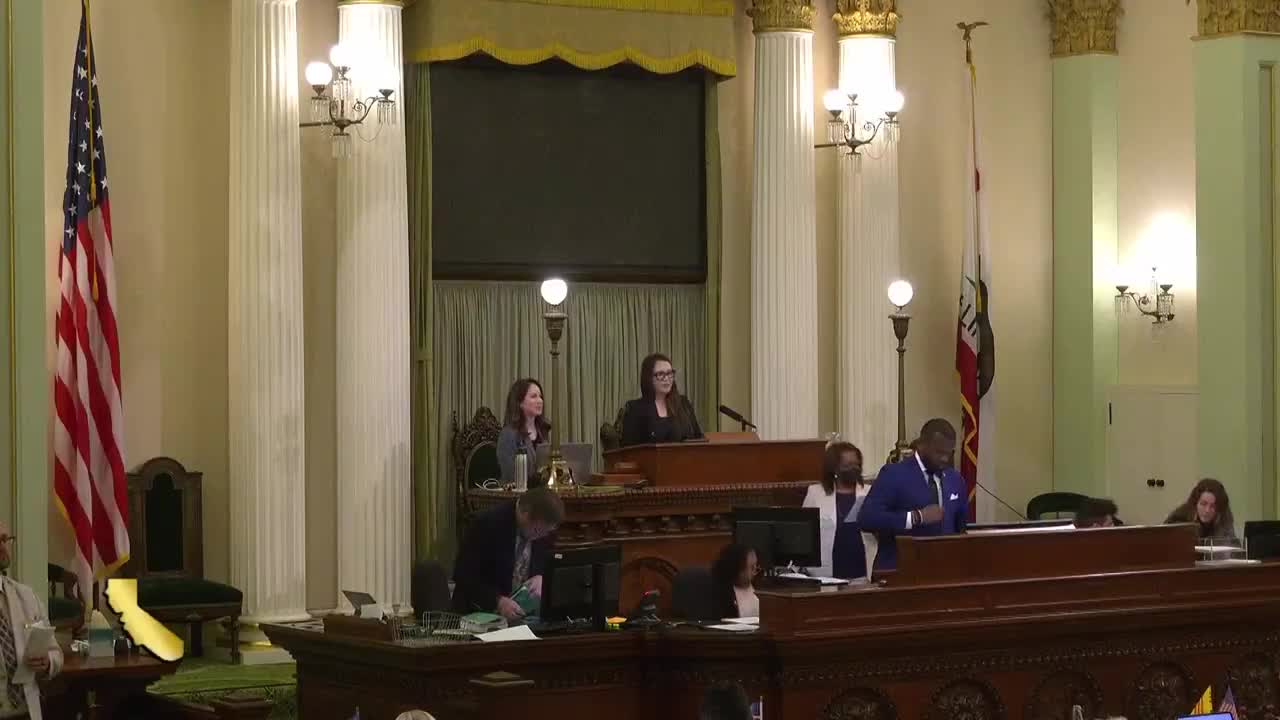
Bill Author