SB 673: Emergency notification: Ebony Alert: missing Black youth.
- Session Year: 2023-2024
- House: Senate
- Latest Version Date: 2023-10-08
Current Status:
Passed
(2023-10-08: Chaptered by Secretary of State. Chapter 627, Statutes of 2023.)
Introduced
In Committee
First Chamber
In Committee
Second Chamber
Enacted
The California Emergency Services Act, among other things, establishes the Office of Emergency Services for the purpose of mitigating the effects of natural, man-made, or war-caused emergencies and makes findings and declarations relating to ensuring that preparation within the state will be adequate to deal with those emergencies. Existing law authorizes a law enforcement agency to request the Department of California Highway Patrol to activate the Emergency Alert System within the appropriate area if that agency determines that a child 17 years of age or younger, or an individual with a proven mental or physical disability, has been abducted and is in imminent danger of serious bodily injury or death, and there is information available that, if disseminated to the general public, could assist in the safe recovery of that person. Existing law also authorizes the issuance and coordination of a Silver Alert relating to a person who is 65 years of age or older, developmentally disabled, or cognitively impaired who is reported missing, and a Feather Alert relating to an endangered indigenous person who has been reported missing under unexplained or suspicious circumstances.
This bill would authorize a law enforcement agency to request the Department of the California Highway Patrol to activate an Ebony Alert, with respect to Black youth, including young women and girls, who are reported missing under unexplained or suspicious circumstances, at risk, developmentally disabled, or cognitively impaired, or who have been abducted. The bill would authorize the department to activate an Ebony Alert within the appropriate geographical area requested by the investigating law enforcement agency and to assist the agency by disseminating specified alert messages and signs, if the department concurs with the agency that an Ebony Alert would be an effective tool in the investigation of a missing person according to specified factors. The bill would also make related legislative findings and declarations.
The California Emergency Services Act, among other things, establishes the Office of Emergency Services for the purpose of mitigating the effects of natural, man-made, or war-caused emergencies and makes findings and declarations relating to ensuring that preparation within the state will be adequate to deal with those emergencies. Existing law requires a law enforcement agency to activate the Emergency Alert System within the appropriate area if that agency determines that a child 17 years of age or younger, or an individual with a proven mental or physical disability, has been abducted and is in imminent danger of serious bodily injury or death, and there is information available that, if disseminated to the general public, could assist in the safe recovery of that person. Existing law also authorizes the issuance and coordination of a Silver Alert relating to a person who is 65 years of age or older, developmentally disabled, or cognitively impaired who is reported missing, and a Feather Alert relating to an endangered indigenous person who has been reported missing under unexplained or suspicious circumstances.
This bill would authorize a law enforcement agency to request the Department of the California Highway Patrol to activate an Ebony Alert, with respect to Black youth, including young women and girls, who are reported missing under unexplained or suspicious circumstances. circumstances, at risk, developmentally disabled, or cognitively impaired, or who have been abducted. The bill would require authorize the department to activate an Ebony Alert within the appropriate geographical area requested by the investigating law enforcement agency and to assist the agency by disseminating specified alert messages and signs, if the department concurs with the agency that an Ebony Alert would be an effective tool in the investigation of a missing person according to specified factors. The bill would also make related legislative findings and declarations.
The California Emergency Services Act, among other things, establishes the Office of Emergency Services for the purpose of mitigating the effects of natural, man-made, or war-caused emergencies and makes findings and declarations relating to ensuring that preparation within the state will be adequate to deal with those emergencies. Existing law, upon the next update of a countys emergency plan, requires the county to integrate access and functional needs into that emergency plan, as provided. Existing law requires a law enforcement agency to activate the Emergency Alert System within the appropriate area if that agency determines that a child 17 years of age or younger, or an individual with a proven mental or physical disability, has been abducted and is in imminent danger of serious bodily injury or death, and there is information available that, if disseminated to the general public, could assist in the safe recovery of that person. Existing law also authorizes the issuance and coordination of a Silver Alert relating to a person who is 65 years of age or older, developmentally disabled, or cognitively impaired who is reported missing, and a Feather Alert relating to an endangered indigenous person who has been reported missing under unexplained or suspicious circumstances.
This bill would make a nonsubstantive change to those provisions.This bill would authorize a law enforcement agency to request the Department of the California Highway Patrol to activate an Ebony Alert, with respect to Black youth, including young women and girls, who are reported missing under unexplained or suspicious circumstances. The bill would require the department to activate an Ebony Alert within the appropriate geographical area requested by the investigating law enforcement agency and to assist the agency by disseminating specified alert messages and signs, if the department concurs with the agency that an Ebony Alert would be an effective tool in the investigation of a missing person according to specified factors. The bill would also make related legislative findings and declarations.
The California Emergency Services Act, among other things, establishes the Office of Emergency Services for the purpose of mitigating the effects of natural, man-made, or war-caused emergencies and makes findings and declarations relating to ensuring that preparation within the state will be adequate to deal with those emergencies. Existing law, upon the next update of a countys emergency plan, requires the county to integrate access and functional needs into that emergency plan, as provided.
This bill would make a nonsubstantive change to those provisions.
(a)The Legislature finds and declares all of the following:
(1)According to the U.S. Department of Justice Office of Justice Programs, approximately 600,000 people go missing every year in the United States. Youth 18 years of age or under account for about 35 percent of these reported cases.
(2)Missing children have become more publicized in the United States over the past two decades, which has resulted in nearly 98 percent of these missing children being located. While this is promising, there are severe racial disparities in the statistics of the 2 percent who are still missing.
(3)According to data from the 2019 United States Census, people who are Black or African American make up 13.4% of the United States population. However, nearly 4 percent of missing persons are people of color.
(4)According to the National Crime Information Centers (NCIC) Missing Person and Unidentified Person Files for the 2021 operational year, 177,500 Black adults and children were reported missing.
(5)Black youth 18 years of age or under make up 38 percent of missing persons cases and Black children make up about 33 percent of all missing child cases and receive less media attention to the fact that they are missing.
(6)In addition to making up a disproportionate percentage of all missing people, Black women and girls are at increased risk of being harmed.
(7)The Congressional Black Caucus Foundation found in a two-year study of human trafficking incidents across the country that 40 percent of sex trafficking victims were identified as Black women.
(8)According to the FBI, 53 percent of all juvenile prostitution arrests are Black children. There is no such thing as juvenile prostitution this is sex trafficking, as juveniles cannot consent to sell sex.
(9)The first alert system developed in California was AMBER Alert, that authorized law enforcement agencies to use digital messaging on overhead roadway signs to assist in recovery efforts for child abduction cases. As of December 2020, the AMBER Alert system had successfully assisted in the rescue of 1,029 kidnapped children.
(10)The AMBER Alert system must fulfill strict criteria for the message to be broadcast. If these criteria are not met, an AMBER Alert cannot be issued, and the child is labeled as a runaway.
(11)When a missing child is listed as a runaway, they receive no media coverage, and fewer police and government resources are available for their recovery.
(12)Being identified as a runaway can also be a legal loophole for law enforcement, because when a child is listed as a runaway, the police are allowed to delay response and investigation time. In cases where the child is mislabeled as a runaway, this delay is crucial time that could be spent locating a child in danger.
(13)Black missing children are disproportionately classified as runaways in comparison to their white counterparts and do not receive the AMBER Alert, which ultimately means that fewer resources are allotted to safe return of Black children.
(b)The Legislature intends to provide law enforcement with additional tools to disseminate timely, accurate information to engage the public and the media to more effectively assist with locating missing Black children and young women that are disproportionately missing in California.
SEC. 2.Section 8594.14 is added to the Government Code, to read:8594.14.(a)For purposes of this section, Ebony Alert means a notification system, activated pursuant to subdivision (b), designed to issue and coordinate alerts with respect to Black youth, including young women and girls, who are reported missing under unexplained or suspicious circumstances, at risk, developmentally disabled, or cognitively impaired, or who have been abducted.
(b)(1)If a person is reported missing to a law enforcement agency and that agency determines that the requirements of subdivision (c) are met, the law enforcement agency may request the Department of the California Highway Patrol to activate an Ebony Alert. If the Department of the California Highway Patrol concurs that the requirements of subdivision (c) have been met, it may activate an Ebony Alert within the appropriate geographical area requested by the investigating law enforcement agency.
(2)Radio, television, cable, satellite, and social media systems are encouraged to, but not required to, cooperate with disseminating the information contained in an Ebony Alert.
(3)Upon activation of an Ebony Alert, the Department of the California Highway Patrol may assist the investigating law enforcement agency by issuing a be-on-the-lookout alert, an electronic flyer, or changeable message signs in compliance with paragraph (4).
(4)Upon activation of an Ebony Alert, the Department of the California Highway Patrol may use a changeable message sign if both of the following conditions are met:
(A)A law enforcement agency determines that a vehicle may be involved in the missing person incident.
(B)Specific identifying information about the vehicle is available for public dissemination.
(c)A law enforcement agency may request that an Ebony Alert be activated if that agency determines that an Ebony Alert would be an effective tool in the investigation of missing Black youth, including a young woman or girl. The law enforcement agency may consider the following factors to make that determination:
(1)The missing person is between 12 to 25 years of age, inclusive.
(2)The missing person suffers from a mental or physical disability.
(3)The person is missing under circumstances that indicate any of the following:
(A)The missing persons physical safety may be endangered.
(B)The missing person may be subject to trafficking.
(4)The law enforcement agency determines that the person has gone missing under unexplained or suspicious circumstances.
(5)The law enforcement agency believes that the person is in danger because of age, health, mental or physical disability, or environment or weather conditions, that the person is in the company of a potentially dangerous person, or that there are other factors indicating that the person may be in peril.
(6)The investigating law enforcement agency has utilized available local resources.
(7)There is information available that, if disseminated to the public, could assist in the safe recovery of the missing person.
(a)The Legislature finds and declares all of the following:
(1)According to the U.S. Department of Justice Office of Justice Programs, approximately 600,000 people go missing every year in the United States. Youth 18 years of age or under account for about 35 percent of these reported cases.
(2)Missing children have become more publicized in the United States over the past two decades, which has resulted in nearly 98 percent of these missing children being located. While this is promising, there are severe racial disparities in the statistics of the 2 percent who are still missing.
(3)According to data from the 2019 United States Census, people who are Black or African American make up 13.4% of the United States population. However, nearly 4 percent of missing persons are people of color.
(4)According to the National Crime Information Centers (NCIC) Missing Person and Unidentified Person Files for the 2021 operational year, 177,500 Black adults and children were reported missing.
(5)Black youth 18 years of age or under make up 38 percent of missing persons cases and Black children make up about 33 percent of all missing child cases and receive less media attention to the fact that they are missing.
(6)In addition to making up a disproportionate percentage of all missing people, Black women and girls are at increased risk of being harmed.
(7)The Congressional Black Caucus Foundation found in a two-year study of human trafficking incidents across the country that 40 percent of sex trafficking victims were identified as Black women.
(8)According to the FBI, 53 percent of all juvenile prostitution arrests are Black children. There is no such thing as juvenile prostitution this is sex trafficking, as juveniles cannot consent to sell sex.
(9)The first alert system developed in California was AMBER Alert, that authorized law enforcement agencies to use digital messaging on overhead roadway signs to assist in recovery efforts for child abduction cases. As of December 2020, the AMBER Alert system had successfully assisted in the rescue of 1,029 kidnapped children.
(10)The AMBER Alert system must fulfill strict criteria for the message to be broadcast. If these criteria are not met, an AMBER Alert cannot be issued, and the child is labeled as a runaway.
(11)When a missing child is listed as a runaway, they receive no media coverage, and less fewer police and government resources are available for their recovery.
(12)Being identified as a runaway can also be a legal loophole for law enforcement, because when a child is listed as a runaway, the police are allowed to delay response and investigation time. In cases where the child is mislabeled as a runaway, this delay is crucial time that could be spent locating a child in danger.
(13)Black missing children are disproportionately classified as runaways in comparison to their white counterparts and do not receive the AMBER Alert, which ultimately means that fewer resources are allotted to safe return of Black children.
(b)The Legislature intends to provide law enforcement with additional tools to disseminate timely, accurate information to engage the public and the media to more effectively assist with locating missing Black children and young women that are disproportionately missing in California.
SEC. 2.Section 8594.14 is added to the Government Code, to read:8594.14.(a)For purposes of this section, Ebony Alert means a notification system, activated pursuant to subdivision (b), designed to issue and coordinate alerts with respect to Black youth, including young women and girls, who are reported missing under unexplained or suspicious circumstances. circumstances, at risk, developmentally disabled, or cognitively impaired, or who have been abducted.
(b)(1)If a person is reported missing to a law enforcement agency and that agency determines that the requirements of subdivision (c) are met, the law enforcement agency may request the Department of the California Highway Patrol to activate an Ebony Alert. If the Department of the California Highway Patrol concurs that the requirements of subdivision (c) have been met, it shall may activate an Ebony Alert within the appropriate geographical area requested by the investigating law enforcement agency.
(2)Radio, television, cable, satellite, and social media systems are encouraged to, but not required to, cooperate with disseminating the information contained in an Ebony Alert.
(3)Upon activation of an Ebony Alert, the Department of the California Highway Patrol shall may assist the investigating law enforcement agency by issuing a be-on-the-lookout alert, an electronic flyer, or changeable message signs in compliance with paragraph (4).
(4)Upon activation of an Ebony Alert, the Department of the California Highway Patrol may use a changeable message sign if both of the following conditions are met:
(A)A law enforcement agency determines that a vehicle may be involved in the missing person incident.
(B)Specific identifying information about the vehicle is available for public dissemination.
(c)A law enforcement agency may request that an Ebony Alert be activated if that agency, after considering the following factors, agency determines that an Ebony Alert would be an effective tool in the investigation of missing Black youth, including a young woman or girl: girl. The law enforcement agency may consider the following factors to make that determination:
(1)The missing person is between 12 to 25 years of age, inclusive.
(2)The missing person suffers from a mental or physical disability.
(3)The person is missing under circumstances that indicate any of the following:
(A)The missing persons physical safety may be endangered.
(B)The disappearance of the missing person may not have been voluntary, including an abduction or kidnaping. (C)(B)The missing person may be subject to trafficking.
(4)The law enforcement agency determines that the person has gone missing under unexplained or suspicious circumstances.
(5)The law enforcement agency believes that the person is in danger because of age, health, mental or physical disability, or environment or weather conditions, that the person is in the company of a potentially dangerous person, or that there are other factors indicating that the person may be in peril.
(6)The investigating law enforcement agency has utilized available local resources.
(7)There is information available that, if disseminated to the public, could assist in the safe recovery of the missing person.
(a)The Legislature finds and declares all of the following:
(1)According to the U.S. Department of Justice Office of Justice Programs, approximately 600,000 people go missing every year in the United States. Youth 18 years of age or under account for about 35 percent of these reported cases.
(2)Missing children have become more publicized in the United States over the past two decades, which has resulted in nearly 98 percent of these missing children being located. While this is promising, there are severe racial disparities in the statistics of the 2 percent who are still missing.
(3)According to data from the 2019 United States Census, people who are Black or African American make up 13.4% of the United States population. However, nearly 4 percent of missing persons are people of color.
(4)According to the National Crime Information Centers (NCIC) Missing Person and Unidentified Person Files for the 2021 operational year, 177,500 Black adults and children were reported missing.
(5)Black youth 18 years of age or under make up 38 percent of missing persons cases and Black children make up about 33 percent of all missing child cases and receive less media attention to the fact that they are missing.
(6)In addition to making up a disproportionate percentage of all missing people, Black women and girls are at increased risk of being harmed.
(7)The Congressional Black Caucus Foundation found in a two-year study of human trafficking incidents across the country that 40 percent of sex trafficking victims were identified as Black women.
(8)According to the FBI, 53 percent of all juvenile prostitution arrests are Black children. There is no such thing as juvenile prostitution this is sex trafficking, as juveniles cannot consent to sell sex.
(9)The first alert system developed in California was AMBER Alert, that authorized law enforcement agencies to use digital messaging on overhead roadway signs to assist in recovery efforts for child abduction cases. As of December 2020, the AMBER Alert system had successfully assisted in the rescue of 1,029 kidnapped children.
(10)The AMBER Alert system must fulfill strict criteria for the message to be broadcast. If these criteria are not met, an AMBER Alert cannot be issued, and the child is labeled as a runaway.
(11)When a missing child is listed as a runaway, they receive no media coverage, and less police and government resources are available for their recovery.
(12)Being identified as a runaway can also be a legal loophole for law enforcement, because when a child is listed as a runaway, the police are allowed to delay response and investigation time. In cases where the child is mislabeled as a runaway, this delay is crucial time that could be spent locating a child in danger.
(13)Black missing children are disproportionately classified as runaways in comparison to their white counterparts and do not receive the AMBER Alert, which ultimately means that fewer resources are allotted to safe return of Black children.
(b)The Legislature intends to provide law enforcement with additional tools to disseminate timely, accurate information to engage the public and the media to more effectively assist with locating missing Black children and young women that are disproportionately missing in California.
SEC. 2.Section 8594.14 is added to the Government Code, to read:8594.14.(a)For purposes of this section, Ebony Alert means a notification system, activated pursuant to subdivision (b), designed to issue and coordinate alerts with respect to Black youth, including young women and girls, who are reported missing under unexplained or suspicious circumstances.
(b)(1)If a person is reported missing to a law enforcement agency and that agency determines that the requirements of subdivision (c) are met, the law enforcement agency may request the Department of the California Highway Patrol to activate an Ebony Alert. If the Department of the California Highway Patrol concurs that the requirements of subdivision (c) have been met, it shall activate an Ebony Alert within the appropriate geographical area requested by the investigating law enforcement agency.
(2)Radio, television, cable, satellite, and social media systems are encouraged to, but not required to, cooperate with disseminating the information contained in an Ebony Alert.
(3)Upon activation of an Ebony Alert, the Department of the California Highway Patrol shall assist the investigating law enforcement agency by issuing a be-on-the-lookout alert, an electronic flyer, or changeable message signs in compliance with paragraph (4).
(4)Upon activation of an Ebony Alert, the Department of the California Highway Patrol may use a changeable message sign if both of the following conditions are met:
(A)A law enforcement agency determines that a vehicle may be involved in the missing person incident.
(B)Specific identifying information about the vehicle is available for public dissemination.
(c)A law enforcement agency may request that an Ebony Alert be activated if that agency, after considering the following factors, determines that an Ebony Alert would be an effective tool in the investigation of missing Black youth, including a young woman or girl:
(1)The missing person is between 12 to 25 years of age, inclusive.
(2)The missing person suffers from a mental or physical disability.
(3)The person is missing under circumstances that indicate any of the following:
(A)The missing persons physical safety may be endangered.
(B)The disappearance of the missing person may not have been voluntary, including an abduction or kidnaping.
(C)The missing person may be subject to trafficking.
(4)The law enforcement agency determines that the person has gone missing under unexplained or suspicious circumstances.
(5)The law enforcement agency believes that the person is in danger because of age, health, mental or physical disability, or environment or weather conditions, that the person is in the company of a potentially dangerous person, or that there are other factors indicating that the person may be in peril.
(6)The investigating law enforcement agency has utilized available local resources.
(7)There is information available that, if disseminated to the public, could assist in the safe recovery of the missing person.
SECTION 1.Section 8593.3 of the Government Code is amended to read:8593.3.(a)A county, including a city and county, shall, upon the next update to its emergency plan, integrate access and functional needs into its emergency plan by addressing, at a minimum, how the access and functional needs population is being served by the following:(1)Emergency communications, including the integration of interpreters, translators, and assistive technology.(2)Emergency evacuation, including all of the following:(A)The identification of transportation resources and resources that are compliant with the federal Americans with Disabilities Act of 1990 (42 U.S.C. Sec. 12101 et seq.) for individuals who are dependent on public transportation.(B)Integrating evacuation and transportation plans to account for local community resilience centers.(C)Ensuring that local community resilience centers are prepared to serve as communitywide assets during extreme heat events and other disasters.(D)Designating available locations that may be necessary to provide respite to individuals during emergencies, including, but not limited to, extreme heat, cold, or unhealthy air incidents.(E)Integrating evacuation plans to account for the following:(i)Community resilience center programs, including, but not limited to, the Integrated Climate Adaptation and Resiliency Program (ICARP) Community Resilience and Heat Grant Program developed by the Office of Planning and Research.(ii)Fairground resilience center programs, including, but not limited to, the Fairground and Community Resilience Center Grant Program developed by the Department of Food and Agriculture.(3)Emergency sheltering, including both of the following:(A)Ensuring that designated shelters are compliant with the federal Americans with Disabilities Act of 1990 (42 U.S.C. Sec. 12101 et seq.) or can be made compliant through modification and that showers and bathrooms are fully accessible to all occupants.(B)Integrating sheltering and transportation plans to account for transportation between community resilience centers and shelters.(b)A local government may enter into an agreement with a, or may use the records of its own, social services department to access the contact information of persons from the access and functional needs population, and the contact information of the designated emergency contacts of those persons, if any, for the sole purpose of enrolling those individuals, who are residents of that local government, in a city-operated, county-operated, or city- and county-operated public emergency warning system.(c)A county, or city and county, upon the next update to its emergency plan, regarding the integration of access and functional needs into that emergency plan, shall include representatives from the access and functional needs population, pursuant to subdivision (b), including, but not limited to, social service agencies, nonprofit organizations, and transportation providers.(d)A local government that enters into an agreement to access information pursuant to subdivision (b) shall include procedures to enable any covered resident or designated emergency contact to opt out of the warning system and a process to terminate the local governments access to the contact information of the resident or the designated emergency contact from a county social services department. A local government or any third-party contractor or agent that assists with or administers an emergency warning system shall not use the information gathered for any purpose other than for emergency notification. The local government shall ensure that the confidentiality of the contact information is protected under reasonable security procedures.(e)A local government that enters into an agreement to access information pursuant to subdivision (b) shall, upon receipt of that information, notify residents and designated emergency contacts that they have been entered into the public emergency warning system. This notification shall include a process to opt out of the warning system and to terminate the local governments access to the contact information of the resident or the designated emergency contact for purposes of the emergency warning system, regardless of the source of the information.(f)For purposes of this section, the following definitions apply:(1)Access and functional needs population consists of individuals who have developmental or intellectual disabilities, physical disabilities, chronic conditions, injuries, limited English proficiency or who are non-English speaking, older adults, children, people living in institutionalized settings, or those who are low income, homeless, or transportation disadvantaged, including, but not limited to, those who are dependent on public transit or those who are pregnant.(2)Contact information means a persons name, address, telephone number, and email address.(3)Local community resilience center means a hydration station, cooling center, clean air center, respite center, community evacuation and emergency response center, or similar facility established to mitigate the public health impacts of extreme heat and other emergency situations exacerbated by climate change, such as wildfire, power outages, or flooding, on local populations.(4)Local government means a city or county, including a city and county.(g)Any contact information of a person from the access and functional needs population or the contact information of the designated emergency contact for that person, obtained by a local government pursuant to this section shall not specify whether that person receives public benefits or any other information, besides the contact information, that would be considered personal or confidential.(a)A county, including a city and county, shall, upon the next update to its emergency plan, integrate access and functional needs into its emergency plan by addressing, at a minimum, how the access and functional needs population is being served by the following:
(1)Emergency communications, including the integration of interpreters, translators, and assistive technology.
(2)Emergency evacuation, including all of the following:
(A)The identification of transportation resources and resources that are compliant with the federal Americans with Disabilities Act of 1990 (42 U.S.C. Sec. 12101 et seq.) for individuals who are dependent on public transportation.
(B)Integrating evacuation and transportation plans to account for local community resilience centers.
(C)Ensuring that local community resilience centers are prepared to serve as communitywide assets during extreme heat events and other disasters.
(D)Designating available locations that may be necessary to provide respite to individuals during emergencies, including, but not limited to, extreme heat, cold, or unhealthy air incidents.
(E)Integrating evacuation plans to account for the following:
(i)Community resilience center programs, including, but not limited to, the Integrated Climate Adaptation and Resiliency Program (ICARP) Community Resilience and Heat Grant Program developed by the Office of Planning and Research.
(ii)Fairground resilience center programs, including, but not limited to, the Fairground and Community Resilience Center Grant Program developed by the Department of Food and Agriculture.
(3)Emergency sheltering, including both of the following:
(A)Ensuring that designated shelters are compliant with the federal Americans with Disabilities Act of 1990 (42 U.S.C. Sec. 12101 et seq.) or can be made compliant through modification and that showers and bathrooms are fully accessible to all occupants.
(B)Integrating sheltering and transportation plans to account for transportation between community resilience centers and shelters.
(b)A local government may enter into an agreement with a, or may use the records of its own, social services department to access the contact information of persons from the access and functional needs population, and the contact information of the designated emergency contacts of those persons, if any, for the sole purpose of enrolling those individuals, who are residents of that local government, in a city-operated, county-operated, or city- and county-operated public emergency warning system.
(c)A county, or city and county, upon the next update to its emergency plan, regarding the integration of access and functional needs into that emergency plan, shall include representatives from the access and functional needs population, pursuant to subdivision (b), including, but not limited to, social service agencies, nonprofit organizations, and transportation providers.
(d)A local government that enters into an agreement to access information pursuant to subdivision (b) shall include procedures to enable any covered resident or designated emergency contact to opt out of the warning system and a process to terminate the local governments access to the contact information of the resident or the designated emergency contact from a county social services department. A local government or any third-party contractor or agent that assists with or administers an emergency warning system shall not use the information gathered for any purpose other than for emergency notification. The local government shall ensure that the confidentiality of the contact information is protected under reasonable security procedures.
(e)A local government that enters into an agreement to access information pursuant to subdivision (b) shall, upon receipt of that information, notify residents and designated emergency contacts that they have been entered into the public emergency warning system. This notification shall include a process to opt out of the warning system and to terminate the local governments access to the contact information of the resident or the designated emergency contact for purposes of the emergency warning system, regardless of the source of the information.
(f)For purposes of this section: section, the following definitions apply:
(1)Access and functional needs population consists of individuals who have developmental or intellectual disabilities, physical disabilities, chronic conditions, injuries, limited English proficiency or who are non-English speaking, older adults, children, people living in institutionalized settings, or those who are low income, homeless, or transportation disadvantaged, including, but not limited to, those who are dependent on public transit or those who are pregnant.
(2)Contact information means a persons name, address, telephone number, and email address.
(3)Local community resilience center means a hydration station, cooling center, clean air center, respite center, community evacuation and emergency response center, or similar facility established to mitigate the public health impacts of extreme heat and other emergency situations exacerbated by climate change, such as wildfire, power outages, or flooding, on local populations.
(4)Local government means a city or county, including a city and county.
(g)Any contact information of a person from the access and functional needs population or the contact information of the designated emergency contact for that person, obtained by a local government pursuant to this section shall not specify whether that person receives public benefits or any other information, besides the contact information, that would be considered personal or confidential.
|
Date
|
Status
|
|---|---|
| Oct 8, 2023 | Chaptered by Secretary of State. Chapter 627, Statutes of 2023. |
| Oct 8, 2023 | Approved by the Governor. |
| Sep 21, 2023 | Enrolled and presented to the Governor at 4 p.m. |
| Sep 14, 2023 | Assembly amendments concurred in. (Ayes 40. Noes 0. Page 2848.) Ordered to engrossing and enrolling. |
| Sep 13, 2023 | In Senate. Concurrence in Assembly amendments pending. |
| Sep 13, 2023 | Read third time. Passed. (Ayes 76. Noes 0. Page 3464.) Ordered to the Senate. |
| Sep 5, 2023 | Read second time. Ordered to third reading. |
| Sep 1, 2023 | Read second time and amended. Ordered to second reading. |
| Sep 1, 2023 | From committee: Do pass as amended. (Ayes 11. Noes 0.) (September 1). |
| Aug 23, 2023 | August 23 set for first hearing. Placed on suspense file. |
| Jul 11, 2023 | From committee: Do pass and re-refer to Com. on APPR. (Ayes 6. Noes 0.) (July 10). Re-referred to Com. on APPR. |
| Jun 1, 2023 | Referred to Com. on E.M. |
| May 25, 2023 | In Assembly. Read first time. Held at Desk. |
| May 24, 2023 | Read third time. Passed. (Ayes 39. Noes 0. Page 1247.) Ordered to the Assembly. |
| May 2, 2023 | Read second time. Ordered to third reading. |
| May 1, 2023 | From committee: Be ordered to second reading pursuant to Senate Rule 28.8. |
| Apr 21, 2023 | Set for hearing May 1. |
| Apr 19, 2023 | From committee: Do pass and re-refer to Com. on APPR. (Ayes 5. Noes 0. Page 803.) (April 18). Re-referred to Com. on APPR. |
| Apr 10, 2023 | Set for hearing April 18. |
| Mar 29, 2023 | Re-referred to Com. on PUB S. |
| Mar 21, 2023 | From committee with author's amendments. Read second time and amended. Re-referred to Com. on RLS. |
| Mar 1, 2023 | Referred to Com. on RLS. |
| Feb 17, 2023 | From printer. May be acted upon on or after March 19. |
| Feb 16, 2023 | Introduced. Read first time. To Com. on RLS. for assignment. To print. |
|
Date
|
Description
|
Location
|
Votes
|
|
|---|---|---|---|---|
| Sep 14, 2023 | Unfinished Business SB673 Bradford et al. Concurrence | Senate Floor |
Passed |
|
| Sep 13, 2023 | SB 673 Bradford Senate Third Reading By Gipson | Assembly Floor |
Passed |
|
| Sep 1, 2023 | Do pass as amended. | Assembly Standing Committee on Appropriations |
Passed |
|
| Jul 10, 2023 | Do pass and be re-referred to the Committee on [Appropriations] | Assembly Standing Committee on Emergency Management |
Passed |
|
| May 24, 2023 | Senate 3rd Reading SB673 Bradford et al. | Senate Floor |
Passed |
|
| Apr 18, 2023 | Do pass, but first be re-referred to the Committee on [Appropriations] | Senate Standing Committee on Public Safety |
Passed |
This list shows positions taken on this bill by organizations on the date displayed, which is linked to the original source.
Positions by individuals are not included.
|
Organization
|
Position
|
Date
|
|---|---|---|
| Access Reproductive Justice | * Support | Apr 18, 2023 |
| California Association of Black Lawyers | ** Support | |
| California Coalition For Youth | ** Support | |
| California-Hawaii State Conference Of The Naacp | ** Support | |
| City Of Hayward | ** Support | |
| Ella Baker Center | * Support | Apr 18, 2023 |
| Greater Sacramento Urban League | ** Support | |
| NAACP Altadena | ** Support | |
| NAACP Orange County | ** Support | |
| NAACP Pasadena | ** Support | |
| NAACP Richmond | ** Support | |
| NAACP Sacramento | ** Support | |
| NAACP San Gabriel Valley | ** Support | |
| NAACP San Pedro-Wilmington Beach | ** Support | |
| NAACP Santa Clarita | ** Support | |
| NAACP Santa Monica/Venice | ** Support | |
| NAACP Santa Rosa-Sonoma | ** Support | |
| NAACP Stockton | ** Support | |
| San Jose / Silicon Valley NAACP | ** Support | |
| Santa Maria/Lompoc NAACP | ** Support | |
| She Could Be My Daughter | * Support | Apr 18, 2023 |
| Voice of the Youth | ** Support | |
| Voice of the Youth | * Support | Apr 18, 2023 |
SENATE RULES COMMITTEE Office of Senate Floor Analyses (916) 651-1520 Fax: (916) 327-4478 | SB 673 |
UNFINISHED BUSINESS
Bill No: SB 673
Author: Bradford (D), et al.
Amended: 9/1/23
Vote: 21
SENATE PUBLIC SAFETY COMMITTEE: 5-0, 4/18/23
AYES: Wahab, Ochoa Bogh, Bradford, Skinner, Wiener
SENATE APPROPRIATIONS COMMITTEE: Senate Rule 28.8
SENATE FLOOR: 39-0, 5/24/23
AYES: Allen, Alvarado-Gil, Archuleta, Ashby, Atkins, Becker, Blakespear, Bradford, Caballero, Cortese, Dahle, Dodd, Durazo, Eggman, Glazer, Gonzalez, Grove, Hurtado, Jones, Laird, McGuire, Menjivar, Min, Newman, Nguyen, Niello, Ochoa Bogh, Padilla, Portantino, Roth, Rubio, Seyarto, Skinner, Smallwood-Cuevas, Stern, Umberg, Wahab, Wiener, Wilk
NO VOTE RECORDED: Limón
ASSEMBLY FLOOR: 76-0, 9/13/23 - See last page for vote
SUBJECT: Emergency notification: Ebony Alert: missing Black youth
SOURCE: Author
DIGEST:
This bill establishes the Ebony Alert system to aid in the location of missing Black youths, including young women and girls, who are reported missing under unexplained or suspicious circumstances, at risk, developmentally disabled, cognitively impaired, or who have been abducted
Assembly Amendments
make activation of the alert and investigation by CHP permissive rather than mandatory and clarify the definition of “Ebony Alert” to include at risk, developmentally disabled, or cognitively impaired individuals, or individuals that have been abducted.
ANALYSIS:
Existing law:
- States that if an abduction has been reported to a law enforcement agency and the agency determines that a child 17 years of age or younger, or an individual with a proven mental or physical disability, has been abducted and is in imminent danger of serious bodily injury or death and there is information available that, if disseminated to the general public, could assist in the safe recovery of the victim, the agency, through a person authorized to activate the Emergency Alert System (EAS), shall request the activation of the EAS within the appropriate local area. (Gov. Code, § 8594 (a).)
- Provides that the California Highway Patrol, in consultation with the Department of Justice, as well as a representative from the California State Sheriffs' Association, the California Police Chiefs' Association and the California Police Officers' Association, shall develop policies and procedures providing instructions specifying how law enforcement agencies, broadcasters participating in the EAS, and where appropriate, other supplemental warning systems, shall proceed after qualifying abduction has been reported to a law enforcement agency. (Gov. Code, § 8594 (b).)
- Defines a “Blue Alert” as a quick response system designed to issue and coordinate alerts following an attack upon a law enforcement officer, as specified. (Gov. Code, § 8594.5, (a).)
- Provides that in addition to the circumstances described under existing law relating to "Amber Alerts", upon the request of an authorized person at a law enforcement agency that is investigating an offense, the California Highway Patrol (CHP) shall activate the EAS and issue a blue alert if all of the following conditions are met:
- A law enforcement officer has been killed, suffers serious bodily injury, or is assaulted with a deadly weapon, and the suspect has fled the scene of the offense;
- A law enforcement agency investigating the offense has determined that the suspect poses an imminent threat to the public or other law enforcement personnel;
- A detailed description of the suspect’s vehicle or license plate is available for broadcast;
- Public dissemination of available information may help avert further harm or accelerate apprehension of the suspect; and,
- The CHP has been designated to use the federally authorized EAS for the issuance of blue alerts. (Gov. Code, § 8594.5 (b).)
- Provides that the "Blue Alert" system incorporates a variety of notification resources and developing technologies that may be tailored to the circumstances and geography of the underlying attack. (Gov. Code, § 8594.5 (c).)
- Provides that the blue alert system shall utilize the state-controlled Emergency Digital Information System, (EDIS) local digital signs, focused text, or other technologies, as appropriate, in addition to the federal EAS, if authorized and under conditions permitted by the federal government. (Gov. Code, § 8594.5 (c).)
- Defines a "Silver Alert" as a notification system, that can be activated as specified, and is designed to issue and coordinate alerts with respect to a person 65 years of age or older who is reported missing. (Gov. Code, § 8594.10. (a).)
- Provides that if a person is reported missing to a law enforcement agency, and that agency determines that specified requirements are met, the agency may request the California Highway Patrol to activate a "Silver Alert". (Gov. Code § 8594.10. (b).)
- Provides that if the California Highway Patrol concurs that the specified requirements are met, it shall activate a "Silver Alert" within the geographical area requested by the investigating law enforcement agency. (Gov. Code § 8594.10. (b).)
- States that a law enforcement agency may request a "Feather Alert" be activated if that agency determines that all of the following conditions are met in regard to the investigation of the missing person:
- The missing person is an indigenous woman or an indigenous person.
- The investigating law enforcement agency has utilized available local and tribal resources.
- The law enforcement agency determines that the person has gone missing under unexplained or suspicious circumstances.
- The law enforcement agency believes that the person is in danger because of age, health, mental or physical disability, or environment or weather conditions, that the person is in the company of a potentially dangerous person, or that there are other factors indicating that the person may be in peril.
- There is information available that, if disseminated to the public, could assist in the safe recovery of the missing person. (Gov. Code § 8594.13. (c).)
This bill:
- Establishes legislative findings and declarations relating to this bill.
- Defines an “Ebony Alert” as a means of a notification system, activated as specified, designed to issue and coordinate alerts with respect to Black youth, including young women and girls, who are reported missing under unexplained or suspicious circumstances, at risk, developmentally disabled, or cognitively impaired, or who have been abducted.
- Provides that if a person is reported missing to a law enforcement agency, and that agency determines that specified requirements are met, the agency may request the California Highway Patrol to activate an "Ebony Alert".
- Provides that if the California Highway Patrol concurs that the specified requirements are met, it may activate an "Ebony Alert" within the geographical area requested by the investigating law enforcement agency.
- Provides that radio, television, cable, satellite, and social media systems are encouraged to, but not required to, cooperate with disseminating the information contained in an Ebony Alert.
- States that upon activation of an Ebony Alert, the Department of the California Highway Patrol may assist the investigating law enforcement agency by issuing a be-on-the-lookout alert, an electronic flyer, or changeable message signs.
- States that upon activation of an Ebony Alert, the Department of the California Highway Patrol may use a changeable message sign if both of the following conditions are met:
- A law enforcement agency determines that a vehicle may be involved in the missing person incident.
- Specific identifying information about the vehicle is available for public dissemination.
- Provides that a law enforcement agency may request that an Ebony Alert be activated if that agency determines that an Ebony Alert would be an effective tool in the investigation of missing Black youth, including a young woman or girl. The law enforcement agency may consider the following factors to make that determination:
- The missing person is between 12 to 25 years of age, inclusive.
- The missing person suffers from a mental or physical disability.
- The person is missing under circumstances that indicate any of the following:
- The missing person’s physical safety may be endangered.
- The missing person may be subject to trafficking.
- The law enforcement agency determines that the person has gone missing under unexplained or suspicious circumstances.
- The law enforcement agency believes that the person is in danger because of age, health, mental or physical disability, or environment or weather conditions, that the person is in the company of a potentially dangerous person, or that there are other factors indicating that the person may be in peril.
- The investigating law enforcement agency has utilized available local resources.
- There is information available that, if disseminated to the public, could assist in the safe recovery of the missing person.
Comments
According to the author, “Data from the 2019 United States Census shows that people who are Black or African American make up 13.4% of the United States population. However, nearly 40% of missing persons are people of color. Black children make up about 38 percent of all missing child cases and receive less media attention to the fact that they are missing. Black youth are disproportionately classified as “runaways” in comparison to their white counterparts who are classified as “missing” and do not receive the Amber Alert. Black women and girls are at increased risk of being harmed and trafficked. The Congressional Black Caucus Foundation report on human trafficking found in a two-year study of human trafficking incidents across the country, 40% of sex trafficking victims were identified as Black women. SB 673 provides law enforcement with an additional tool, “Ebony Alert” to disseminate timely, accurate information to engage the public and the media to more effectively assist with locating Black Youth and young women that are missing persons.”
The Emergency Alert System (EAS) is part of the broader Integrated Public Alert & Warning System (IPAWS) within FEMA’s national system for local alerting that provides authenticated emergency and life-saving information to the public through mobile phones using Wireless Emergency Alerts to radio and television via the EAS, and on the National Oceanic and Atmospheric Administration’s Weather Radio. For California, FEMA and Cal OES designate entities with authority to alert and warn the public when there is a disaster, threat, or dangerous or missing person. Over 1,500 federal, state, local, tribal and territorial entities use IPAWS to send alerts and warnings.
The California Public Alert and Warning System (CalPAWS) Plan was developed by Cal OES for the purposes of formalizing effective processes and recommending standardized policies for alerting and warning California residents during local or state disasters. The plan outlines new and existing public alerts, warnings, and notification systems to offer state and local authorities various capabilities and dissemination channels for emergency alerts. Currently, California utilizes IPAWS to disseminate emergency information via satellite Emergency Alert System providers, Wireless Emergency Alert system providers, Weather Service Systems, unique systems, and potential future systems.
California also has several alert systems for the purposes of aiding in the location of specific individuals or alerting of particular emergencies. The first system developed in California was “Amber Alert,” which authorized law enforcement agencies to use digital messaging on overhead roadway signs to assist in recovery efforts for child abduction cases. After a successful implementation, the "Blue Alert" and the "Silver Alert" notification systems were developed. The "Blue Alert" system provides for public notification when a law enforcement officer has been attacked, and the "Silver Alert" notification system provides for public notification when either (1) a person age 65 years or older or (2) a person who is developmentally disabled or cognitively impaired is missing. The “Feather Alert” is the most recent addition that notifies the public in cases of endangered indigenous people who are reported missing under unexplained or suspicious circumstances.
According to the most recent FBI Missing Person and Unidentified Person Statistics in 2021, 125,727 children were labeled as Black juveniles compared to the 197,381 reported white juveniles. However, it’s important to note that the FBI makes no distinction between white and non-white Hispanics and Latinos which in turn incorporates the latter groups into the broader white category. This dramatically skews categorization numbers based on race that deprives the communities of raw data. Coupling with the fact that Black youths account for around 14% of all children in the US while making up 38% of the missing person reports, Black youths are disproportionately impacted with higher rates of juvenile labeling and missing person reports. In general, Black Americans comprise 13% of the population while making up 31% of missing persons. These numbers remain consistent with trends seen in previous years in FBI data.
The author states that this bill will give law enforcement an additional tool to effectively assist with locating young black females that are missing or abducted.
FISCAL EFFECT: Appropriation: No Fiscal Com.: Yes Local: No
According to the Assembly Appropriations Committee:
- Minor and absorbable costs to CHP to build out another new alert system.
- However, costs of an unknown, but potentially significant, amount to CHP to consider and activate Ebony Alerts, depending on the number of requests received from law enforcement agencies. This bill requires CHP to activate an alert and provide assistance if CHP concurs that specified criteria are met, but CHP notes the specified criteria are fairly broad and could trigger alerts under many circumstances. To the extent CHP is required to activate more alerts, the public could also become desensitized to the urgent messages conveyed by the alerts.
SUPPORT: (Verified 9/12/23)
California Association of Black Lawyers
California Coalition for Youth
California-Hawaii State Conference of the NAACP
City of Hayward
Greater Sacramento Urban League
NAACP Altadena
NAACP Orange County
NAACP Pasadena
NAACP Richmond
NAACP San Gabriel Valley
NAACP San Pedro-Wilmington Beach
NAACP Sacramento
NAACP Santa Clarita
NAACP Santa Monica/Venice
NAACP Santa Rosa-Sonoma
NAACP Stockton
San Jose/Silicon Valley NAACP
Santa Maria/Lompoc NAACP
Voice of the Youth
OPPOSITION: (Verified 9/12/23)
None received
ASSEMBLY FLOOR: 76-0, 9/13/23
AYES: Addis, Aguiar-Curry, Alanis, Alvarez, Arambula, Bains, Bennett, Berman, Boerner, Bonta, Bryan, Calderon, Juan Carrillo, Wendy Carrillo, Cervantes, Connolly, Megan Dahle, Davies, Dixon, Flora, Mike Fong, Vince Fong, Friedman, Gabriel, Gallagher, Garcia, Gipson, Grayson, Haney, Hart, Holden, Hoover, Irwin, Jackson, Kalra, Lackey, Lee, Low, Lowenthal, Maienschein, Mathis, McCarty, McKinnor, Muratsuchi, Stephanie Nguyen, Ortega, Pacheco, Papan, Jim Patterson, Joe Patterson, Pellerin, Petrie-Norris, Quirk-Silva, Ramos, Rendon, Reyes, Luz Rivas, Rodriguez, Blanca Rubio, Sanchez, Santiago, Schiavo, Soria, Ta, Ting, Valencia, Villapudua, Waldron, Wallis, Ward, Weber, Wicks, Wilson, Wood, Zbur, Robert Rivas
NO VOTE RECORDED: Bauer-Kahan, Chen, Essayli, Jones-Sawyer
Prepared by: Alex Barnett / PUB. S. /
9/14/23 10:02:42
**** END ****
SENATE THIRD READING
STR Bill Id:SB 673
Author:(Bradford)
As Amended Ver:September 1, 2023
Majority vote
SUMMARY
This bill establishes the Ebony Alert system, to aid in locating missing Black youths, including young women and girls, as specified.
Major Provisions
- Defines an "Ebony Alert" as a means of a notification system, activated as specified, designed to issue and coordinate alerts with respect to Black youth, including young women and girls, who are reported missing under unexplained or suspicious circumstances, at risk, developmentally disabled, or cognitively impaired, or who have been abducted.
- Authorizes the California Highway Patrol (CHP) to activate an Ebony Alert within a geographical area upon request by a law enforcement agency that determines an Ebony Alert would be an effective tool in the investigation of missing Black youth, including a young woman or girl, after considering requirements, as specified.
- Authorizes CHP to assist the investigating law enforcement agency by issuing a be-on-the-lookout alert, an electronic flyer, or changeable message signs, upon activation of an Ebony Alert,
COMMENTS
Equity Impact: According to the author's staff, "SB 673 provides law enforcement with an additional tool, "Ebony Alert" to disseminate timely, accurate information to engage the public and the media to more effectively assist with locating Black Youth and young women that are missing person. These populations are often not considered missing by law enforcement and do not receive the benefit of public advisories, government resources or media attention as non-African American populations."
Integrated Public Alert and Warning System: The Integrated Public Alert & Warning System (IPAWS) is FEMA's national system for local alerting that provides authenticated emergency and life-saving information to the public through mobile phones using Wireless Emergency Alerts (WEA), to radio and television via the Emergency Alert System, and on the National Oceanic and Atmospheric Administration's Weather Radio. For California, FEMA and Cal OES designate entities with the authority to alert and warn the public when there is a disaster, threat, or dangerous or missing person. More than 1,500 federal, state, local, tribal and territorial entities use IPAWS to send alerts and warnings.
California Public Alert and Warning System (CalPAWS) Plan: Developed by Cal OES, the purpose of the CalPAWS plan is to formalize effective processes and recommended standardized policies for alerting and warning California residents during local and state disasters. This plan integrates new and existing public alert, warning, and notification systems to offer state and local authorities an assortment of capabilities and dissemination channels for emergency alerts.
Alert Systems: The first alert system developed in California was "Amber Alert", which authorized law enforcement agencies to use the digital messaging on overhead roadway signs to assist in recovery efforts for child abduction cases. After a successful implementation, the "Blue Alert" and the "Silver Alert" notification systems were developed. The "Blue Alert" system provides for public notification when a law enforcement officer has been attacked and the "Silver Alert" notification system provides for public notification when either (1) a person age 65 years or older or (2) a person who is developmentally disabled or cognitively impaired is missing. In 2022, the "Feather Alert" became law. The "Feather Alert" system provides for public notification when an Indigenous person is involuntarily abducted or kidnapped.'
Individual County and City Alerts: Each County in California has an alerting program that residents can sign up for and receive alerts for emergencies in a specific county. Many cities also have their own unique programs. There are multiple vendors available for counties and cities to contract with to provide alerts. Not every county and city use the same vendor or system.
According to the Author
"Data from the 2019 United States Census shows that people who are Black or African American make up 13.4% of the United States population. However, nearly 40% of missing persons are people of color. Black children make up about 38% of all missing child cases and receive less media attention to the fact that they are missing. Black youth are disproportionately classified as "runaways" in comparison to their white counterparts who are classified as "missing" and do not receive the Amber Alert. Black women and girls are at increased risk of being harmed and trafficked. The Congressional Black Caucus Foundation report on human trafficking, found in a two-year study of human trafficking incidents across the country, 40% of sex trafficking victims were identified as Black women."
The author continues, "SB 673 provides law enforcement with an additional tool, "Ebony Alert" to disseminate timely, accurate information to engage the public and the media to more effectively assist with locating Black Youth and young women that are missing person."
Arguments in Support
According to the California Hawaii State Conference of the NAACP (CA/HI NAACP), "Black women and girls are at increased risk of harm and make up a disproportionate percentage of all missing people. In addition to making up a disproportionate percentage of all missing people and receiving fewer media coverage, Black women and girls are at increased risk of harm."
They continue, "According to the National Crime Information Center's (NCIC's) Missing Person and Unidentified Person Files for the 2021 operational year, 177,500 Black adults and children were reported missing. One problem with the AMBER Alert system is the strict criteria a case must fulfill for the message to be broadcast. If these guidelines are not met, an AMBER Alert cannot be issued, and the child is labeled a runaway. Because of these criteria, many missing Black children have been pushed aside. Black youth are disproportionately classified as "runaways" compared to their white counterparts, which are classified as "missing" and do not receive the Amber Alert. In cases where the child is mislabeled as a runaway, fewer resources are allotted to their safe return."
Arguments in Opposition
None on file.
FISCAL COMMENTS
According to the Assembly Appropriations Committee, "Minor and absorbable costs to CHP to build out another new alert system. However, costs of an unknown amount to CHP to consider and activate Ebony Alerts, depending on the number of requests received from law enforcement agencies. To the extent CHP is required to activate more alerts, the public could also become desensitized to the urgent messages conveyed by the alerts."
VOTES
SENATE FLOOR: 39-0-1
YES: Allen, Alvarado-Gil, Archuleta, Ashby, Atkins, Becker, Blakespear, Bradford, Caballero, Cortese, Dahle, Dodd, Durazo, Eggman, Glazer, Gonzalez, Grove, Hurtado, Jones, Laird, McGuire, Menjivar, Min, Newman, Nguyen, Niello, Ochoa Bogh, Padilla, Portantino, Roth, Rubio, Seyarto, Skinner, Smallwood-Cuevas, Stern, Umberg, Wahab, Wiener, Wilk
ABS, ABST OR NV: Limón
ASM EMERGENCY MANAGEMENT: 6-0-1
YES: Rodriguez, Waldron, Aguiar-Curry, Calderon, Megan Dahle, Schiavo
ABS, ABST OR NV: Alvarez
ASM APPROPRIATIONS: 11-0-5
YES: Holden, Bryan, Calderon, Wendy Carrillo, Mike Fong, Hart, Lowenthal, Papan, Pellerin, Weber, Wilson
ABS, ABST OR NV: Megan Dahle, Dixon, Mathis, Sanchez, Soria
UPDATED
VERSION: September 1, 2023
CONSULTANT: Ryan Fleming / E.M. / (916) 319-3802 FN: 0001656
Date of Hearing: August 23, 2023
ASSEMBLY COMMITTEE ON APPROPRIATIONS
Chris Holden, Chair
SBPCA Bill Id:SB 673
Author:(Bradford) – As Amended Ver:March 21, 2023
Policy Committee: | Emergency Management | Vote: | 6 - 0 |
|
| ||
|
|
Urgency: No State Mandated Local Program: No Reimbursable: No
SUMMARY:
This bill authorizes a law enforcement agency to request the Department of the California Highway Patrol (CHP) activate an “Ebony Alert” to help find Black youth reported missing under unexplained or suspicious circumstances.
CHP must activate the alert within the appropriate geographical area requested by the investigating law enforcement agency and assist the agency by disseminating specified alert messages and signs.
FISCAL EFFECT:
Minor and absorbable costs to CHP to build out another new alert system.
However, costs of an unknown, but potentially significant, amount to CHP to consider and activate Ebony Alerts, depending on the number of requests received from law enforcement agencies. This bill requires CHP to activate an alert and provide assistance if CHP concurs that specified criteria are met, but CHP notes the specified criteria are fairly broad and could trigger alerts under many circumstances. To the extent CHP is required to activate more alerts, the public could also become desensitized to the urgent messages conveyed by the alerts.
COMMENTS:
- Purpose. According to the author:
Black children make up about 38 percent of all missing child cases and receive less media attention to the fact that they are missing. Black youth are disproportionately classified as “runaways” in comparison to their white counterparts who are classified as “missing” and do not receive the Amber Alert. Black women and girls are at increased risk of being harmed and trafficked.
This bill is supported by the California Hawaii State Conference of the NAACP, local NAACP chapters, other community groups, and the California Coalition for Youth.
- Alert Systems. The AMBER Alert was California’s first alert system to help find missing persons, allowing CHP to activate the Emergency Alert System in certain cases when a child under age 17 or individual with a proven mental or physical disability has been abducted and in imminent danger of serious bodily injury or death. Subsequent alert systems for public notification include the (a) Blue Alert when a law enforcement officer is attacked, (b) Silver Alert when a person age 65 or older or a person with developmental disabilities or cognitive impairment is missing, (c) Feather Alert when an Indigenous person is abducted or kidnapped, and (d) Yellow Alert to aid in apprehending a person involved in a hit-and-run crash causing death.
Federal law also authorizes a national communications alert network to aid in locating missing individuals who do not qualify for AMBER or Silver Alerts, but are individuals age 17 and older who have special needs or are endangered, abducted, or kidnapped. The voluntary program allows member states, territories, and tribes to conduct regional and local searches for missing individuals by rapidly disseminating relevant information via wireless alerts or the Emergency Alert System. AB 946 (Nguyen), Chapter 93, Statutes of 2023, allowed CHP to issue an Endangered Missing Advisory under similar circumstances, which was already an existing practice of CHP.
This bill creates the Ebony Alert to help find Black youth, including young women and girls, who are reported missing under unexplained or suspicious circumstances. While this bill allows a law enforcement agency to request an Ebony Alert after considering specified factors, such as whether the missing person is between 12 to 25 years of age or suffers from a mental or physical disability, the alert could be issued for missing Black youth who do not meet any such factors.
- Prior Legislation. AB 1314 (Ramos), Chapter 467, Statutes of 2022, established the Feather Alert system.
AB 1732 (Patterson), Chapter 107, Statutes of 2022, reestablished the expired Yellow Alert system.
Analysis Prepared by: Irene Ho / APPR. / (916) 319-2081
Date of Hearing: July 10, 2023
ASSEMBLY COMMITTEE ON EMERGENCY MANAGEMENT
Freddie Rodriguez, Chair
SBPCA Bill Id:SB 673
Author:(Bradford) – As Amended Ver:March 21, 2023
SENATE VOTE: 39-0
SUBJECT: Emergency notification: Ebony Alert: missing Black youth
SUMMARY: This bill establishes the Ebony Alert system, to aid in locating missing Black youths, including young women and girls, reported missing under unexplained or suspicious circumstances. Specifically, this bill:
- Defines an “Ebony Alert” as a means of a notification system, activated as specified, designed to issue and coordinate alerts with respect to Black youth, including young women and girls, who are reported missing under unexplained or suspicious circumstances.
- Authorizes the California Highway Patrol (CHP) to activate an Ebony Alert within a geographical area upon request by a law enforcement agency that determines an Ebony Alert would be an effective tool in the investigation of missing Black youth, including a young woman or girl, after considering the following factors:
- The missing person is between 12 to 25 years of age
- The missing person suffers from a mental or physical disability.
- The person is missing under circumstances that indicate any of the following:
- The missing person’s physical safety may be endangered.
- The disappearance of the missing person may not have been voluntary, including an abduction or kidnaping.
- The missing person may be subject to trafficking.
- The law enforcement agency determines that the person has gone missing under unexplained or suspicious circumstances.
- The law enforcement agency believes that the person is in danger because of age, health, mental or physical disability, or environment or weather conditions, that the person is in the company of a potentially dangerous person, or that there are other factors indicating that the person may be in peril.
- The investigating law enforcement agency has used available local resources.
- There is information available that, if disseminated to the public, could assist in the safe recovery of the missing person.
- Provides that CHP may use a changeable message sign if the law enforcement agency determines a vehicle was used in the incident and there is specific identifying information about the vehicle.
- States that upon activation of an Ebony Alert, the Department of the California Highway Patrol shall assist the investigating law enforcement agency by issuing a be-on-the-lookout alert, an electronic flyer, or changeable message signs.
- Provides that radio, television, cable, satellite, and social media systems are encouraged to, but not required to, cooperate with disseminating the information contained in an Ebony Alert.
- Makes legislative findings and declarations
EXISTING LAW:
- Establishes the “AMBER Alert” system and states that if an abduction has been reported to a law enforcement agency and the agency determines that a child 17 years of age or younger, or an individual with a proven mental or physical disability, has been abducted and is in imminent danger of serious bodily injury or death and there is information available that, if disseminated to the general public, could assist in the safe recovery of the victim, the agency, through a person authorized to activate the Emergency Alert System (EAS), shall request the activation of the EAS within the appropriate local area. (Government Code 8594 (a))
- Provides that the CHP, in consultation with the Department of Justice, as well as a representative from the California State Sheriffs' Association, the California Police Chiefs' Association and the California Police Officers' Association, shall develop policies and procedures providing instructions specifying how law enforcement agencies, broadcasters participating in the EAS, and where appropriate, other supplemental warning systems, shall proceed after qualifying abduction has been reported to a law enforcement agency. (Government Code 8594 (b))
- Establishes the “Blue Alert,” and defines it as a quick response system designed to issue and coordinate alerts following an attack upon a law enforcement officer, as specified. (Government Code 8594.5)
- Establishes the “Silver Alert” and defines it as a notification system, that can be activated as specified, and is designed to issue and coordinate alerts with respect to a person 65 years of age or older who is reported missing. (Government Code 8594.10)
- Establishes the “Feather Alert” and defines it as a notification system, that can be activated as specified, to issue and coordinate alerts with respect to endangered indigenous people, specifically indigenous women or indigenous people, who are reported missing under unexplained or suspicious circumstances. (Government Code 8594.13)
FISCAL EFFECT: The Senate Committee on Appropriations ordered this bill to the Senate Floor under Senate Rule 28.8.
COMMENTS:
Bill Purpose: According to the author, “Data from the 2019 United States Census shows that people who are Black or African American make up 13.4% of the United States population. However, nearly 40% of missing persons are people of color. Black children make up about 38 percent of all missing child cases and receive less media attention to the fact that they are missing. Black youth are disproportionately classified as “runaways” in comparison to their white counterparts who are classified as “missing” and do not receive the Amber Alert. Black women and girls are at increased risk of being harmed and trafficked. The Congressional Black Caucus Foundation report on human trafficking, found in a two-year study of human trafficking incidents across the country, 40% of sex trafficking victims were identified as Black women.”
The author continues, “SB 673 provides law enforcement with an additional tool, “Ebony Alert” to disseminate timely, accurate information to engage the public and the media to more effectively assist with locating Black Youth and young women that are missing person.”
Equity Impact: According to the author’s staff, “SB 673 provides law enforcement with an additional tool, “Ebony Alert” to disseminate timely, accurate information to engage the public and the media to more effectively assist with locating Black Youth and young women that are missing person. These populations are often not considered missing by law enforcement and do not receive the benefit of public advisories, government resources or media attention as non-African American populations.”
California Emergency Services Act: The California Emergency Services Act (ESA) was enacted in 1970, and established Cal OES within the Governor’s Office. The ESA gives the Governor authority to proclaim a state of emergency in an area affected or likely to be affected when: conditions of disaster or extreme peril exist; the Governor is requested to do so upon request from a designated local government official; or the Governor finds that local authority is inadequate to cope with the emergency. Local governments may also issue local emergency proclamations, which is a prerequisite for requesting the Governor’s Proclamation of a State of Emergency. This act also authorizes use of the Emergency Alert System to inform the public of local, state, and national emergencies.
Integrated Public Alert & Warning System: The Integrated Public Alert & Warning System (IPAWS) is FEMA's national system for local alerting that provides authenticated emergency and life-saving information to the public through mobile phones using Wireless Emergency Alerts (WEA), to radio and television via the Emergency Alert System, and on the National Oceanic and Atmospheric Administration's Weather Radio. For California, FEMA and Cal OES designate entities with the authority to alert and warn the public when there is a disaster, threat, or dangerous or missing person. More than 1,500 federal, state, local, tribal and territorial entities use IPAWS to send alerts and warnings.
California Public Alert and Warning System (CalPAWS) Plan: Developed by Cal OES, the purpose of the CalPAWS plan is to formalize effective processes and recommended standardized policies for alerting and warning California residents during local and state disasters. This plan integrates new and existing public alert, warning, and notification systems to offer state and local authorities an assortment of capabilities and dissemination channels for emergency alerts.
Alert Systems: The first alert system developed in California was "Amber Alert", which authorized law enforcement agencies to use the digital messaging on overhead roadway signs to assist in recovery efforts for child abduction cases. After a successful implementation, the "Blue Alert" and the "Silver Alert" notification systems were developed. The "Blue Alert" system provides for public notification when a law enforcement officer has been attacked and the "Silver Alert" notification system provides for public notification when either (1) a person age 65 years or older or (2) a person who is developmentally disabled or cognitively impaired is missing. In 2022, the “Feather Alert” became law. The “Feather Alert” system provides for public notification when an Indigenous person is involuntarily abducted or kidnapped.
Individual County and City Alerts: Each County in California has an alerting program that residents can sign up for and receive alerts for emergencies in a specific county. Many cities also have their own unique programs. There are multiple vendors available for counties and cities to contract with to provide alerts. Not every county and city use the same vendor or system.
REGISTERED SUPPORT / OPPOSITION:
Support
California Coalition for Youth
California-Hawaii State Conference of The NAACP
City of Hayward
Greater Sacramento Urban League
NAACP Orange County
NAACP Richmond
NAACP Sacramento
NAACP San Gabriel Valley
NAACP San Pedro-Wilmington Branch
NAACP Santa Clarita
NAACP Santa Monica/Venice
NAACP Santa Rosa - Sonoma
NAACP Stockton
San Jose/silicon Valley NAACP
Santa-Maria/Lompoc NAACP
Voice of The Youth
Opposition
None on file.
Analysis Prepared by: Ryan Fleming / E.M. / (916) 319-3802
SENATE RULES COMMITTEE Office of Senate Floor Analyses (916) 651-1520 Fax: (916) 327-4478 | SB 673 |
THIRD READING
Bill No: SB 673
Author: Bradford (D), et al.
Amended: 3/21/23
Vote: 21
SENATE PUBLIC SAFETY COMMITTEE: 5-0, 4/18/23
AYES: Wahab, Ochoa Bogh, Bradford, Skinner, Wiener
SENATE APPROPRIATIONS COMMITTEE: Senate Rule 28.8
SUBJECT: Emergency notification: Ebony Alert: missing Black youth
SOURCE: Author
DIGEST:
This bill establish the Ebony Alert system to aid in the location of missing Black youths, including young women and girls, who are reported missing under unexplained or suspicious circumstances.
ANALYSIS:
Existing law:
- States that if an abduction has been reported to a law enforcement agency and the agency determines that a child 17 years of age or younger, or an individual with a proven mental or physical disability, has been abducted and is in imminent danger of serious bodily injury or death and there is information available that, if disseminated to the general public, could assist in the safe recovery of the victim, the agency, through a person authorized to activate the Emergency Alert System (EAS), shall request the activation of the EAS within the appropriate local area. (Gov. Code, § 8594 (a).)
- Provides that the California Highway Patrol, in consultation with the Department of Justice, as well as a representative from the California State Sheriffs' Association, the California Police Chiefs' Association and the California Police Officers' Association, shall develop policies and procedures providing instructions specifying how law enforcement agencies, broadcasters participating in the EAS, and where appropriate, other supplemental warning systems, shall proceed after qualifying abduction has been reported to a law enforcement agency. (Gov. Code, § 8594 (b).)
- Defines a “Blue Alert” as a quick response system designed to issue and coordinate alerts following an attack upon a law enforcement officer, as specified. (Gov. Code, § 8594.5, (a).)
- Provides that in addition to the circumstances described under existing law relating to "Amber Alerts", upon the request of an authorized person at a law enforcement agency that is investigating an offense, the California Highway Patrol (CHP) shall activate the EAS and issue a blue alert if all of the following conditions are met:
- A law enforcement officer has been killed, suffers serious bodily injury, or is assaulted with a deadly weapon, and the suspect has fled the scene of the offense;
- A law enforcement agency investigating the offense has determined that the suspect poses an imminent threat to the public or other law enforcement personnel;
- A detailed description of the suspect’s vehicle or license plate is available for broadcast;
- Public dissemination of available information may help avert further harm or accelerate apprehension of the suspect; and,
- The CHP has been designated to use the federally authorized EAS for the issuance of blue alerts. (Gov. Code, § 8594.5 (b).)
- Provides that the "Blue Alert" system incorporates a variety of notification resources and developing technologies that may be tailored to the circumstances and geography of the underlying attack. (Gov. Code, § 8594.5 (c).)
- Provides that the blue alert system shall utilize the state-controlled Emergency Digital Information System, (EDIS) local digital signs, focused text, or other technologies, as appropriate, in addition to the federal EAS, if authorized and under conditions permitted by the federal government. (Gov. Code, § 8594.5 (c).)
- Defines a "Silver Alert" as a notification system, that can be activated as specified, and is designed to issue and coordinate alerts with respect to a person 65 years of age or older who is reported missing. (Gov. Code, § 8594.10. (a).)
- Provides that if a person is reported missing to a law enforcement agency, and that agency determines that specified requirements are met, the agency may request the California Highway Patrol to activate a "Silver Alert". (Gov. Code § 8594.10. (b).)
- Provides that if the California Highway Patrol concurs that the specified requirements are met, it shall activate a "Silver Alert" within the geographical area requested by the investigating law enforcement agency. (Gov. Code § 8594.10. (b).)
- States that a law enforcement agency may request a "Feather Alert" be activated if that agency determines that all of the following conditions are met in regard to the investigation of the missing person:
- The missing person is an indigenous woman or an indigenous person.
- The investigating law enforcement agency has utilized available local and tribal resources.
- The law enforcement agency determines that the person has gone missing under unexplained or suspicious circumstances.
- The law enforcement agency believes that the person is in danger because of age, health, mental or physical disability, or environment or weather conditions, that the person is in the company of a potentially dangerous person, or that there are other factors indicating that the person may be in peril.
- There is information available that, if disseminated to the public, could assist in the safe recovery of the missing person. (Gov. Code § 8594.13. (c).)
This bill:
- Establishes legislative findings and declarations relating to this bill.
- Defines an “Ebony Alert” as a means of a notification system, activated as specified, designed to issue and coordinate alerts with respect to Black youth, including young women and girls, who are reported missing under unexplained or suspicious circumstances.
- Provides that if a person is reported missing to a law enforcement agency, and that agency determines that specified requirements are met, the agency may request the California Highway Patrol to activate an "Ebony Alert".
- Provides that if the California Highway Patrol concurs that the specified requirements are met, it shall activate an "Ebony Alert" within the geographical area requested by the investigating law enforcement agency.
- Provides that radio, television, cable, satellite, and social media systems are encouraged to, but not required to, cooperate with disseminating the information contained in an Ebony Alert.
- States that upon activation of an Ebony Alert, the Department of the California Highway Patrol shall assist the investigating law enforcement agency by issuing a be-on-the-lookout alert, an electronic flyer, or changeable message signs.
- States that upon activation of an Ebony Alert, the Department of the California Highway Patrol may use a changeable message sign if both of the following conditions are met:
- A law enforcement agency determines that a vehicle may be involved in the missing person incident.
- Specific identifying information about the vehicle is available for public dissemination.
- States that a law enforcement agency may request that an Ebony Alert be activated if that agency, after considering the following factors, determines that an Ebony Alert would be an effective tool in the investigation of missing Black youth, including a young woman or girl:
- The missing person is between 12 to 25 years of age, inclusive.
- The missing person suffers from a mental or physical disability.
- The person is missing under circumstances that indicate any of the following:
- The missing person’s physical safety may be endangered.
- The disappearance of the missing person may not have been voluntary, including an abduction or kidnaping.
- The missing person may be subject to trafficking.
- The law enforcement agency determines that the person has gone missing under unexplained or suspicious circumstances.
- The law enforcement agency believes that the person is in danger because of age, health, mental or physical disability, or environment or weather conditions, that the person is in the company of a potentially dangerous person, or that there are other factors indicating that the person may be in peril.
- The investigating law enforcement agency has utilized available local resources.
- There is information available that, if disseminated to the public, could assist in the safe recovery of the missing person.
Comments
According to the author, “Data from the 2019 United States Census shows that people who are Black or African American make up 13.4% of the United States population. However, nearly 40% of missing persons are people of color. Black children make up about 38 percent of all missing child cases and receive less media attention to the fact that they are missing. Black youth are disproportionately classified as “runaways” in comparison to their white counterparts who are classified as “missing” and do not receive the Amber Alert. Black women and girls are at increased risk of being harmed and trafficked. The Congressional Black Caucus Foundation report on human trafficking found in a two-year study of human trafficking incidents across the country, 40% of sex trafficking victims were identified as Black women. SB 673 provides law enforcement with an additional tool, “Ebony Alert” to disseminate timely, accurate information to engage the public and the media to more effectively assist with locating Black Youth and young women that are missing person.”
The Emergency Alert System (EAS) is part of the broader Integrated Public Alert & Warning System (IPAWS) within FEMA’s national system for local alerting that provides authenticated emergency and life-saving information to the public through mobile phones using Wireless Emergency Alerts to radio and television via the EAS, and on the National Oceanic and Atmospheric Administration’s Weather Radio. For California, FEMA and Cal OES designate entities with authority to alert and warn the public when there is a disaster, threat, or dangerous or missing person. Over 1,500 federal, state, local, tribal and territorial entities use IPAWS to send alerts and warnings.
The California Public Alert and Warning System (CalPAWS) Plan was developed by Cal OES for the purposes of formalizing effective processes and recommending standardized policies for alerting and warning California residents during local or state disasters. The plan outlines new and existing public alerts, warnings, and notification systems to offer state and local authorities various capabilities and dissemination channels for emergency alerts. Currently, California utilizes IPAWS to disseminate emergency information via satellite Emergency Alert System providers, Wireless Emergency Alert system providers, Weather Service Systems, unique systems, and potential future systems.
California also has several alert systems for the purposes of aiding in the location of specific individuals or alerting of particular emergencies. The first system developed in California was “Amber Alert,” which authorized law enforcement agencies to use digital messaging on overhead roadway signs to assist in recovery efforts for child abduction cases. After a successful implementation, the "Blue Alert" and the "Silver Alert" notification systems were developed. The "Blue Alert" system provides for public notification when a law enforcement officer has been attacked, and the "Silver Alert" notification system provides for public notification when either (1) a person age 65 years or older or (2) a person who is developmentally disabled or cognitively impaired is missing. The “Feather Alert” is the most recent addition that notifies the public in cases of endangered indigenous people who are reported missing under unexplained or suspicious circumstances.
According to the most recent FBI Missing Person and Unidentified Person Statistics in 2021, 125,727 children were labeled as Black juveniles compared to the 197,381 reported white juveniles. However, it’s important to note that the FBI makes no distinction between white and non-white Hispanics and Latinos which in turn incorporates the latter groups into the broader white category. This dramatically skews categorization numbers based on race that deprives the communities of raw data. Coupling with the fact that Black youths account for around 14% of all children in the US while making up 38% of the missing person reports, Black youths are disproportionately impacted with higher rates of juvenile labeling and missing person reports. In general, Black Americans comprise 13% of the population while making up 31% of missing persons. These numbers remain consistent with trends seen in previous years in FBI data.
The author states that this bill will give law enforcement an additional tool to effectively assist with locating Black Youth and young women that are missing person.
FISCAL EFFECT: Appropriation: No Fiscal Com.: Yes Local: No
SUPPORT: (Verified 5/1/23)
California Coalition for Youth
California-Hawaii State Conference of the NAACP
Greater Sacramento Urban League
NAACP Sacramento
NAACP Santa Clarita
NAACP Santa Monica/Venice
NAACP Santa Rosa-Sonoma
NAACP Stockton
Voice of the Youth
OPPOSITION: (Verified 5/1/23)
None received
Prepared by: Alex Barnett / PUB. S. /
5/3/23 15:01:42
**** END ****
SENATE COMMITTEE ON PUBLIC SAFETY
Senator Aisha Wahab, Chair
2023 - 2024 Regular
Bill No: SB 673 Hearing Date: April 18, 2023
Author: | Bradford | ||
Version: | March 21, 2023 | ||
Urgency: | No | Fiscal: | Yes |
Consultant: | HM | ||
Subject: Emergency notification: Ebony Alert: missing Black youth
HISTORY
Source: Author, California/Hawaii NAACP
Prior Legislation: AB 1314 (Ramos) Ch. 476, Stats. 2022
AB 8 (Gatto) Ch. 326, Stats. 2015
AB 47 (Gatto) Vetoed 2014
SB 1127 (Torres) Ch. 440, Stats. 2014
SB 1047 (Alquist) Ch. 651, Stats. 2012
SB 839 (Runner) Ch. 311, Stats. 2010
SB 38 (Alquist) failed Assembly Appropriations, 2009
SB 415 (Runner) Ch. 517, Stats. 2002
SB 6 (Rainey) Ch. 507, Stats. 1999
Support: California-Hawaii State Conference of the NAACP; NAACP Santa Rosa – Sonoma; NAACP Santa Clarita; NAACP Santa Monica/Venice; Greater Sacramento Urban League; NAACP Stockton; Voice of the Youth
Opposition: None known
PURPOSE
The purpose of this bill is to establish the Ebony Alert system to aid in the location of missing Black youths, including young women and girls, who are reported missing under unexplained or suspicious circumstances.
Existing law states that if an abduction has been reported to a law enforcement agency and the agency determines that a child 17 years of age or younger, or an individual with a proven mental or physical disability, has been abducted and is in imminent danger of serious bodily injury or death and there is information available that, if disseminated to the general public, could assist in the safe recovery of the victim, the agency, through a person authorized to activate the Emergency Alert System (EAS), shall request the activation of the EAS within the appropriate local area. (Gov. Code, § 8594 (a).)
Existing law provides that the California Highway Patrol, in consultation with the Department of Justice, as well as a representative from the California State Sheriffs' Association, the California Police Chiefs' Association and the California Police Officers' Association, shall develop policies and procedures providing instructions specifying how law enforcement agencies, broadcasters participating in the EAS, and where appropriate, other supplemental warning systems, shall proceed after qualifying abduction has been reported to a law enforcement agency. (Gov. Code, § 8594 (b).)
Existing law defines a “Blue Alert” as a quick response system designed to issue and coordinate alerts following an attack upon a law enforcement officer, as specified. (Gov. Code, § 8594.5, (a).)
Existing law provides that in addition to the circumstances described under existing law relating to "Amber Alerts", upon the request of an authorized person at a law enforcement agency that is investigating an offense, the California Highway Patrol (CHP) shall activate the EAS and issue a blue alert if all of the following conditions are met:
- A law enforcement officer has been killed, suffers serious bodily injury, or is assaulted with a deadly weapon, and the suspect has fled the scene of the offense;
- A law enforcement agency investigating the offense has determined that the suspect poses an imminent threat to the public or other law enforcement personnel;
- A detailed description of the suspect’s vehicle or license plate is available for broadcast;
- Public dissemination of available information may help avert further harm or accelerate apprehension of the suspect; and,
- The CHP has been designated to use the federally authorized EAS for the issuance of blue alerts. (Gov. Code, § 8594.5 (b).)
Existing law provides that the "Blue Alert" system incorporates a variety of notification resources and developing technologies that may be tailored to the circumstances and geography of the underlying attack. (Gov. Code, § 8594.5 (c).)
Existing law provides that the blue alert system shall utilize the state-controlled Emergency Digital Information System, (EDIS) local digital signs, focused text, or other technologies, as appropriate, in addition to the federal EAS, if authorized and under conditions permitted by the federal government. (Gov. Code, § 8594.5 (c).)
Existing law defines a "Silver Alert" as a notification system, that can be activated as specified, and is designed to issue and coordinate alerts with respect to a person 65 years of age or older who is reported missing. (Gov. Code, § 8594.10. (a).)
Existing law provides that if a person is reported missing to a law enforcement agency, and that agency determines that specified requirements are met, the agency may request the California Highway Patrol to activate a "Silver Alert". (Gov. Code § 8594.10. (b).)
Existing law provides that if the California Highway Patrol concurs that the specified requirements are met, it shall activate a "Silver Alert" within the geographical area requested by the investigating law enforcement agency. (Gov. Code § 8594.10. (b).)
Existing law states that a law enforcement agency may request a "Silver Alert" be activated if that agency determines that all of the following conditions are met in regard to the investigation of the missing person:
- The missing person is 65 years of age or older;
- The investigating law enforcement agency has utilized all available local resources;
- The law enforcement agency determines that that the person has gone missing under unexplained or suspicious circumstances;
- The law enforcement agency believes that the person is in danger because of age, health, mental or physical disability, environment or weather conditions, that the person is in the company of a potentially dangerous person, or there are other factors indicating that the person may be in peril; and,
- There is information available that, if disseminated to the public, could assist in the safe recovery of the missing person. (Gov. Code § 8594.10 (c).)
Existing law defines a “Feather Alert” as a means of notification system, designed to issue and coordinate alerts with respect to endangered indigenous people, specifically indigenous women or indigenous people, who are reported missing under unexplained or suspicious circumstances. (Gov. Code § 8594.13 (a).)
Existing law provides that if a person is reported missing to a law enforcement agency, and that agency determines that specified requirements are met, the agency may request the CHP to activate a "Feather Alert". (Gov. Code § 8594.13. (b).)
Existing law provides that if the California Highway Patrol concurs that the specified requirements are met, it shall activate a "Feather Alert" within the geographical area requested by the investigating law enforcement agency. (Gov. Code § 8594.13. (b).)
Existing law states that a law enforcement agency may request a "Feather Alert" be activated if that agency determines that all of the following conditions are met in regard to the investigation of the missing person:
- The missing person is an indigenous woman or an indigenous person.
- The investigating law enforcement agency has utilized available local and tribal resources.
- The law enforcement agency determines that the person has gone missing under unexplained or suspicious circumstances.
- The law enforcement agency believes that the person is in danger because of age, health, mental or physical disability, or environment or weather conditions, that the person is in the company of a potentially dangerous person, or that there are other factors indicating that the person may be in peril.
- There is information available that, if disseminated to the public, could assist in the safe recovery of the missing person. (Gov. Code § 8594.13. (c).)
This bill establishes legislative findings and declarations relating to this bill.
This bill defines an “Ebony Alert” as a means of a notification system, activated as specified, designed to issue and coordinate alerts with respect to Black youth, including young women and girls, who are reported missing under unexplained or suspicious circumstances.
This bill provides that if a person is reported missing to a law enforcement agency, and that agency determines that specified requirements are met, the agency may request the California Highway Patrol to activate an "Ebony Alert".
This bill provides that if the California Highway Patrol concurs that the specified requirements are met, it shall activate an "Ebony Alert" within the geographical area requested by the investigating law enforcement agency.
This bill provides that radio, television, cable, satellite, and social media systems are encouraged to, but not required to, cooperate with disseminating the information contained in an Ebony Alert.
This bill states that upon activation of an Ebony Alert, the Department of the California Highway Patrol shall assist the investigating law enforcement agency by issuing a be-on-the-lookout alert, an electronic flyer, or changeable message signs.
This bill states that upon activation of an Ebony Alert, the Department of the California Highway Patrol may use a changeable message sign if both of the following conditions are met:
- A law enforcement agency determines that a vehicle may be involved in the missing person incident.
- Specific identifying information about the vehicle is available for public dissemination.
This bill states that a law enforcement agency may request that an Ebony Alert be activated if that agency, after considering the following factors, determines that an Ebony Alert would be an effective tool in the investigation of missing Black youth, including a young woman or girl:
- The missing person is between 12 to 25 years of age, inclusive.
- The missing person suffers from a mental or physical disability.
- The person is missing under circumstances that indicate any of the following:
- The missing person’s physical safety may be endangered.
- The disappearance of the missing person may not have been voluntary, including an abduction or kidnaping.
- The missing person may be subject to trafficking.
- The law enforcement agency determines that the person has gone missing under unexplained or suspicious circumstances.
- The law enforcement agency believes that the person is in danger because of age, health, mental or physical disability, or environment or weather conditions, that the person is in the company of a potentially dangerous person, or that there are other factors indicating that the person may be in peril.
- The investigating law enforcement agency has utilized available local resources.
- There is information available that, if disseminated to the public, could assist in the safe recovery of the missing person.
COMMENTS
1. Need for This Bill
According to the author:
Data from the 2019 United States Census shows that people who are Black or African American make up 13.4% of the United States population. However, nearly 40% of missing persons are people of color.
Black children make up about 38 percent of all missing child cases and receive less media attention to the fact that they are missing. Black youth are disproportionately classified as “runaways” in comparison to their white counterparts who are classified as “missing” and do not receive the Amber Alert. Black women and girls are at increased risk of being harmed and trafficked.
The Congressional Black Caucus Foundation report on human trafficking, found in a two-year study of human trafficking incidents across the country, 40% of sex trafficking victims were identified as Black women.
SB 673 provides law enforcement with an additional tool, “Ebony Alert” to disseminate timely, accurate information to engage the public and the media to more effectively assist with locating Black Youth and young women that are missing person.
2. Emergency Alert System:
The Emergency Alert System (EAS) is part of the broader Integrated Public Alert & Warning System (IPAWS) within FEMA’s national system for local alerting that provides authenticated emergency and life-saving information to the public through mobile phones using Wireless Emergency Alerts to radio and television via the EAS, and on the National Oceanic and Atmospheric Administration’s Weather Radio. For California, FEMA and Cal OES designate entities with authority to alert and warn the public when there is a disaster, threat, or dangerous or missing person. Over 1,500 federal, state, local, tribal and territorial entities use IPAWS to send alerts and warnings.
The California Public Alert and Warning System (CalPAWS) Plan was developed by Cal OES for the purposes of formalizing effective processes and recommending standardized policies for alerting and warning California residents during local or state disasters. The plan outlines new
and existing public alerts, warnings, and notification systems to offer state and local authorities various capabilities and dissemination channels for emergency alerts[1]. Currently, California utilizes IPAWS to disseminate emergency information via satellite Emergency Alert System providers, Wireless Emergency Alert system providers, Weather Service Systems, unique systems, and potential future systems.
California also has several alert systems for the purposes of aiding in the location of specific individuals or alerting of particular emergencies. The first system developed in California was “Amber Alert,” which authorized law enforcement agencies to use digital messaging on overhead roadway signs to assist in recovery efforts for child abduction cases. After a successful implementation, the "Blue Alert" and the "Silver Alert" notification systems were developed. The "Blue Alert" system provides for public notification when a law enforcement officer has been attacked, and the "Silver Alert" notification system provides for public notification when either (1) a person age 65 years or older or (2) a person who is developmentally disabled or cognitively impaired is missing. The “Feather Alert” is the most recent addition that notifies the public in cases of endangered indigenous people who are reported missing under unexplained or suspicious circumstances.[2] (See https://www.caloes.ca.gov/wp-content/uploads/Warning-Center/Documents/StateofCaliforniaEAS-Plan.pdf for more information relating to California’s operation of existing emergency alerts.)
As noted by the author, “Ebony Alerts” will address the often ignored or lack of attention to Black youth and young Black women that are disproportionately missing in California.
3. Ebony Alert
According to the most recent FBI Missing Person and Unidentified Person Statistics in 2021, 125,727 children were labeled as Black juveniles compared to the 197,381 reported white juveniles[3]. However, it’s important to note that the FBI makes no distinction between white and non-white Hispanics and Latinos which in turn incorporates the latter groups into the broader white category. This dramatically skews categorization numbers based on race that deprives the communities of raw data. Coupling with the fact that Black youths account for around 14% of all children in the US while making up 38% of the missing person reports, Black youths are disproportionately impacted with higher rates of juvenile labeling and missing person reports. In general, Black Americans comprise 13% of the population while making up 31% of missing persons. These numbers remain consistent with trends seen in previous years in FBI data.
Moreover, according to a report by the Congressional Black Caucus Foundation, human trafficking conditions have found that 40% of sex trafficking victims were identified as Black women, whereas 57.5% of all juvenile prostitution arrests are Black children. The report also highlights the various socioeconomic conditions that many Black children and women face that contribute to these statistics.[4]
Missing black youths are also significantly underrepresented in television news and media coverage. The HBO docuseries “Black and Missing,” created by Soledad O’Brien and Natalie and Derrica Wilson, explores this facet by analyzing the socioeconomic factors that disproportionately play a role in the disappearances of Black women and girls in particular and the shortcomings of law enforcement and media organization to give them adequate attention. The docuseries makes a note of how white women get significant media attention and are considered more of an urgency. Cases such as Natalee Holloway in 2005 to the Gabby Petito in 2022 are two examples of missing white women who garnered mass media, police, and public attention that attributed to the “Missing White Woman Syndrome” phenomena.[5] Coined by the late journalist Gwen Ifill, this syndrome highlights how white women have been historically viewed as victims of needing protection. In response to this and how society views Black women and girls with urgency, Natalie Wilson states:
They are classifying [Black] children when they’re reported missing as runaways. If you’re classified as a runaway, you do not receive the Amber Alert or any type of media coverage, and oftentimes [Black] women are not treated as victims. They are treated like deviant behavior happens in that segment of society and their cases aren’t taken seriously. They’re not viewed as being important. So what we’re trying to do is to change the narrative around our missing to show the human aspect or element. These are missing mothers, and sisters, and aunts, and grandmothers, and fathers and valuable members of our society.[6]
The author states that this bill will give law enforcement an additional tool to effectively assist with locating Black Youth and young women that are missing person.
3. Argument in Support:
According to the California-Hawaii State Conference of the NAACP:
SB 673 will authorize a law enforcement agency to request the Department of the California Highway Patrol to activate an “Ebony Alert,” concerning Black youth, including young women and girls, who are reported missing under unexplained or suspicious circumstances. Black women and girls are at increased risk of harm and make up a disproportionate percentage of all missing people. In addition to making up a disproportionate percentage of all missing people and receiving fewer media coverage, Black women and girls are at increased risk of harm.
Missing children have become more publicized in the United States over the past two decades, which has resulted in nearly 98% of these missing children being located. While this is promising, there are severe racial disparities in the statistics of those still missing. According to data from the 2019 United States Census, people who are Black or African American make up 13.4% of the United States population. However, nearly 40% of missing persons are people of color. The Congressional Black Caucus Foundation report on human trafficking also found in a two-year study of human trafficking incidents across the country, 40% of sex trafficking victims were identified as Black women.
The CA/HI NAACP’s principal objective is to ensure the political, educational, social, and economic equality of minority citizens in California and eliminate race prejudice. According to the National Crime Information Center’s (NCIC’s) Missing Person and Unidentified Person Files for the 2021 operational year, 177,500 Black adults and children were reported missing. One problem with the AMBER Alert system is the strict criteria a case must fulfill for the message to be broadcast. If these guidelines are not met, an AMBER Alert cannot be issued, and the child is labeled a runaway. Because of these criteria, many missing Black children have been pushed aside. Black youth are disproportionately classified as “runaways” compared to their white counterparts, which are classified as “missing” and do not receive the Amber Alert. In cases where the child is mislabeled as a runaway, fewer resources are allotted to their safe return.
-- END –
“California State Warning Plan,” accessed March 30, 2023, https://calalerts.org/documents/calpaws/01California-State-Warning-Plan.pdf ↑
“News & Alerts,” accessed March 30, 2023, https://www.chp.ca.gov/news-alerts ↑
“2021 NCIC Missing Person and Unidentified Person Statistics,” accessed March 30, 2023, https://www.fbi.gov/file-repository/2021-ncic-missing-person-and-unidentified-person-statistics.pdf/view ↑
“Black Women and Girls: Sex Trafficking in the U.S.,” accessed April 5, 2023, https://www.cbcfinc.org/wp-content/uploads/2020/05/SexTraffickingReport3.pdf ↑
“3 Minutes on Missing White Woman Syndrome,” accessed April 10, 2023, https://www.american.edu/magazine/article/3-minutes-on-missing-white-woman-syndrome.cfm ↑
“Soledad O’Brien and Natalie Wilson discuss Black and Missing,” accessed April 10, 2023, https://19thnews.org/2021/12/soledad-obrien-black-missing-documentary/ ↑



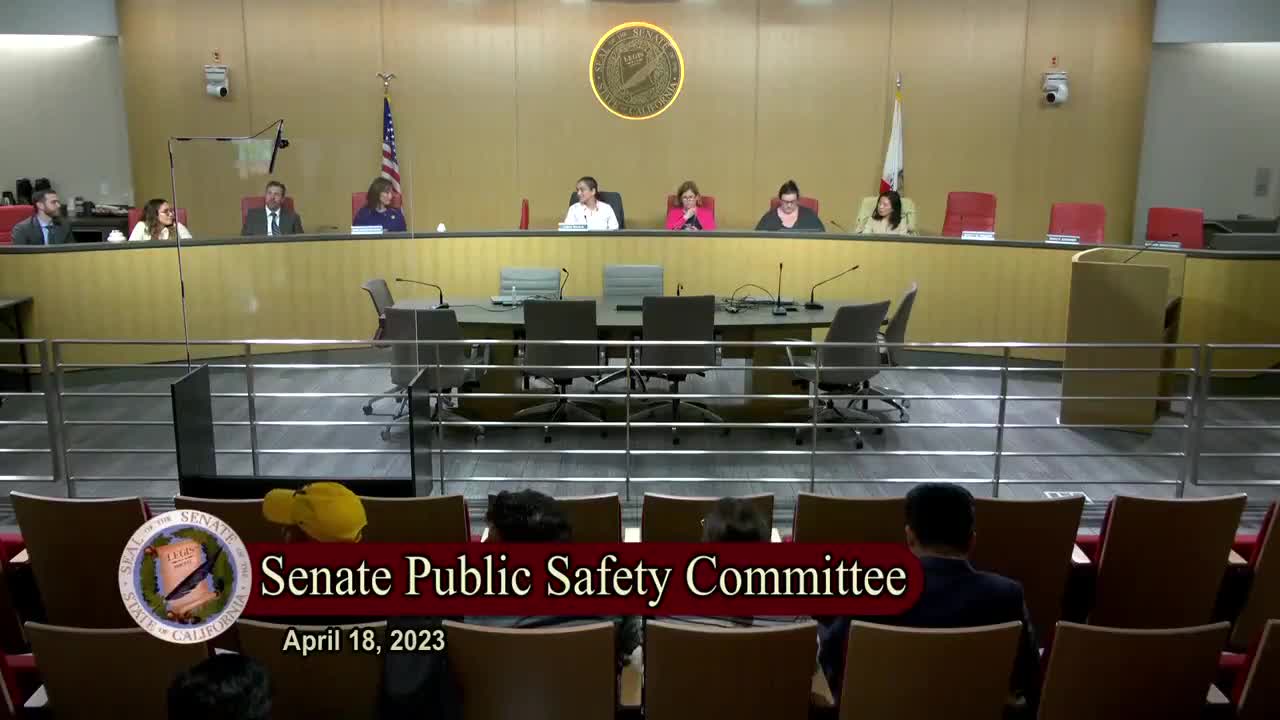
Bill Author


