SB 710: Sale of excess state highway property: State Highway Route 710 Terminus.
- Session Year: 2023-2024
- House: Senate
- Latest Version Date: 2023-10-08
Current Status:
Passed
(2023-10-08: Chaptered by Secretary of State. Chapter 501, Statutes of 2023.)
Introduced
In Committee
First Chamber
In Committee
Second Chamber
Enacted
What does this bill do?
The bill requires the Department of Transportation (Caltrans) to create and run a Terminus Regional Planning Task Force to study traffic and possible land uses around the State Route 710 Terminus, affecting nearby residents, the cities of Alhambra and Los Angeles, Los Angeles County, Cal State LA, transit agencies, local businesses, and community groups. The task force must meet regularly, include local government, university, transit, business, and community representatives, and produce a report for the Legislature on projects like housing, parks, university expansion, alternative transportation, and the Alhambra 710 Arterial Project.
The summary is provided by generative AI which can make mistakes. For original language, please view the details in the table below.
Existing law provides that the Department of Transportation shall have full possession and control of the state highway system and associated real property. Existing law, if the department determines that real property, or an interest in the property, acquired for highway purposes is no longer necessary for those purposes, authorizes the department to sell or exchange the property or property interest in the manner and upon terms, standards, and conditions established by the California Transportation Commission, as provided. Existing law authorizes the California Transportation Commission to relinquish a portion of State Highway Route 710.
This bill would require the department to establish and administer a Terminus Regional Planning Task Force, as provided, to meet quarterly and complete and submit a report to the Legislature on the issues of traffic and potential land use related to the State Route 710 Terminus adjacent areas, as defined. The bill would repeal these provisions on January 1, 2027.
Existing law provides that the Department of Transportation shall have full possession and control of the state highway system and associated real property. Existing law, if the department determines that real property, or an interest in the property, acquired for highway purposes is no longer necessary for those purposes, authorizes the department to sell or exchange the property or property interest in the manner and upon terms, standards, and conditions established by the California Transportation Commission, as provided. Existing law authorizes the California Transportation Commission to relinquish a portion of State Highway Route 710.
This bill would require the department to establish and administer a Terminus Regional Planning Committee, Task Force, as provided, to meet quarterly and complete and submit a report to the Legislature on the issues of traffic and potential land use related to the State Route 710 Terminus adjacent areas, as defined. The bill would repeal these provisions on January 1, 2027.
Existing law provides that the Department of Transportation shall have full possession and control of the state highway system and associated real property. Existing law, if the department determines that real property, or an interest in the property, acquired for highway purposes is no longer necessary for those purposes, authorizes the department to sell or exchange the property or property interest in the manner and upon terms, standards, and conditions established by the California Transportation Commission, as provided. Existing law authorizes the California Transportation Commission to relinquish a portion of State Highway Route 710.
This bill would require the department to establish and administer a Terminus Regional Planning Committee, as provided, to meet quarterly and complete and submit a report to the Legislature on the issues of traffic and potential land use related to the State Route 710 Terminus adjacent areas, as defined. The bill would repeal these provisions on January 1, 2027.
Existing law provides that the Department of Transportation shall have full possession and control of the state highway system and associated real property. Existing law, if the department determines that real property, or an interest in the property, acquired for highway purposes is no longer necessary for those purposes, authorizes the department to sell or exchange the property or property interest in the manner and upon terms, standards, and conditions established by the California Transportation Commission, as provided. Existing law authorizes the California Transportation Commission to relinquish a portion of State Highway Route 710.
This bill would require the department to establish and administer a Terminus Regional Planning Committee, as provided, to meet quarterly and complete and submit a report to the Legislature on the issues of traffic and potential land use related to this portion of Route 710. the State Route 710 Terminus adjacent areas, as defined. The bill would repeal these provisions on January 1, 2027.
Existing law provides that the Department of Transportation shall have full possession and control of the state highway system and associated real property. Existing law, if the department determines that real property, or an interest in the property, acquired for highway purposes is no longer necessary for those purposes, authorizes the department to sell or exchange the property or property interest in the manner and upon terms, standards, and conditions established by the California Transportation Commission, as provided. Existing law authorizes the California Transportation Commission to relinquish a portion of State Highway Route 710.
This bill would make a nonsubstantive change to these provisions. require the department to establish and administer a Terminus Regional Planning Committee, as provided, to meet quarterly and complete and submit a report to the Legislature on the issues of traffic and potential land use related to this portion of Route 710.
Existing law provides that the Department of Transportation shall have full possession and control of the state highway system and associated real property. Existing law, if the department determines that real property, or an interest in the property, acquired for highway purposes is no longer necessary for those purposes, authorizes the department to sell or exchange the property or property interest in the manner and upon terms, standards, and conditions established by the California Transportation Commission, as provided.
This bill would make a nonsubstantive change to these provisions.
The Legislature finds and declares all of the following:
(a)The State Route 710 Terminus was purchased by the Department of Transportation for use in building a Route 710 connection to Route 210. This use of eminent domain displaced many in the El Sereno neighborhood in the City of Los Angeles, as hundreds of homes were purchased with the intent to eventually remove the structures and construct an extension to Route 710 to close a 4.5-mile unconstructed gap between the City of Alhambra and the City of Pasadena. The State Route 710 Terminus is also bordered by the California State University, Los Angeles.
(b)The Legislature added Section 622.3, authorizing the commission to relinquish this portion of Route 710, and Section 253.9 to exclude, as of January 1, 2024, the section of Route 710 between Route 10 and Route 210 from the California freeway and expressway system.
(c)Therefore, much of this land is no longer needed by the Department of Transportation and can be put to other uses.
(d)Additionally these changes raise the need to address traffic flow in the area. Currently, Route 710 north ends abruptly just north of Route 10, causing traffic and congestion and affecting the City of Los Angeles as well as the Cities of Alhambra, South Pasadena, and Pasadena.
(e)The City of Alhambra has identified funding for a project to transform the State Route 710 Terminus into an arterial, transitioning between Route 710 and Valley Boulevard, which is being developed in conjunction with the Department of Transportation as the Alhambra 710 Arterial Project. Other stakeholders may have an interest in studying additional projects in the State Route 710 Terminus adjacent areas that address land use, multijurisdictional planning, and transportation beyond the scope of the Alhambra 710 Arterial Project.
SEC. 2.Section 118.8 is added to the Streets and Highways Code, to read:118.8.(a)For purposes of this section, the following definitions apply:
(1)State Route 710 Terminus means the Route 710 Terminus in the City of Alhambra, north of Route 10, built and currently operating as State Route 710.
(2)The State Route 710 Terminus adjacent areas means any department-owned areas or any areas impacted by past department planning for State Route 710, within the geographic area in any jurisdiction of the County of Los Angeles bounded by North Eastern Street to the west; Huntington Drive, west of the intersection of Huntington Drive and West Main Street, and West Main Street, east of that intersection, on the north; South Fremont Avenue on the east; and Route 10 on the south, excluding the State Route 710 Terminus.
(b)(1)The department shall establish and administer a Terminus Regional Planning Task Force, composed of the following members:
(A)Two representatives from the City of Alhambra.
(B)Two representatives from the City of Los Angeles, one of whom resides in the 90032 Zip Code.
(C)One representative from the County of Los Angeles.
(D)One representative from the California State University, Los Angeles.
(E)One representative from the Los Angeles County Metropolitan Transportation Authority.
(F)One representative from a business or workforce entity.
(G)One representative from a community-based organization.
(H)No more than two additional members to be appointed by the department.
(2)The department shall issue a solicitation of interest throughout the community and, from respondent entities, select the business or workforce entity and the community-based organization to be represented on the task force pursuant to subparagraphs (F) and (G) of paragraph (1), respectively.
(3)Each of the entities identified in subparagraphs (A) to (E), inclusive, of paragraph (1) and each of the entities selected pursuant to paragraph (2) shall nominate its representative to the department. The Mayor of the City of Los Angeles and the Los Angeles City Council shall jointly nominate the representatives of the City of Los Angeles. The Alhambra City Council shall nominate the representatives of the City of Alhambra.
(4)The department, in considering the nominations, shall ensure jurisdictional balance on the task force.
(c)(1)The task force shall meet quarterly, incorporating robust community engagement, to discuss the issues of traffic and potential land uses, including affordable housing, student housing, workforce development space, public university expansion, parks, open space, and alternative transportation.
(2)By December 1, 2025, the task force shall complete and submit a report to the Legislature, in compliance with Section 9795 of the Government Code, on projects and land use in the State Route 710 Terminus adjacent areas addressing the issues identified in paragraph (1), including a summary and status of the Alhambra 710 Arterial Project.
(3)Notwithstanding any other law, the report required to be submitted pursuant to paragraph (2) shall not be considered a land use study.(d)Upon completing its duties required under subdivision (c), the task force shall dissolve.
(e)Nothing in this section shall be construed to authorize the task force to impede a local jurisdictions ability to implement projects at the State Route 710 Terminus or in State Route 710 Terminus adjacent areas.
(f)This section shall remain in effect only until January 1, 2027, and as of that date is repealed.
The Legislature finds and declares all of the following:
(a)The State Route 710 Terminus was purchased by the Department of Transportation for use in building a Route 710 connection to Route 210. This use of eminent domain displaced many in the El Sereno neighborhood in the City of Los Angeles, as hundreds of homes were purchased with the intent to eventually remove the structures and construct an extension to Route 710 to close a 4.5-mile unconstructed gap between the City of Alhambra and the City of Pasadena. The State Route 710 Terminus is also bordered by the California State University, Los Angeles.
(b)The Legislature added Section 622.3, authorizing the commission to relinquish this portion of Route 710, and Section 253.9 to exclude, as of January 1, 2024, the section of Route 710 between Route 10 and Route 210 from the California freeway and expressway system.
(c)Therefore, much of this land is no longer needed by the Department of Transportation and can be put to other uses.
(d)Additionally these changes raise the need to address traffic flow in the area. Currently, Route 710 north ends abruptly just north of Route 10, causing traffic and congestion and affecting the City of Los Angeles as well as the Cities of Alhambra, South Pasadena, and Pasadena.
(e)The City of Alhambra has identified funding for a project to transform the State Route 710 Terminus into an arterial, transitioning between Route 710 and Valley Boulevard, which is being developed in conjunction with the Department of Transportation as the Alhambra 710 Arterial Project. Other stakeholders may have an interest in studying additional projects in the State Route 710 Terminus adjacent areas that address land use, multijurisdictional planning, and transportation beyond the scope of the Alhambra 710 Arterial Project.
SEC. 2.Section 118.8 is added to the Streets and Highways Code, to read:118.8.(a)For purposes of this section, the following definitions apply:
(1)State Route 710 Terminus means the Route 710 Terminus in the City of Alhambra, north of Route 10, built and currently operating as State Route 710.
(2)The State Route 710 Terminus adjacent areas means any department-owned areas or any areas impacted by past department planning for State Route 710, within the geographic area in any jurisdiction of the County of Los Angeles bounded by North Eastern Street to the west; Huntington Drive, west of the intersection of Huntington Drive and West Main Street, and West Main Street, east of that intersection, on the north; South Fremont Avenue on the east; and Route 10 on the south, excluding the State Route 710 Terminus.
(b)(1)The department shall establish and administer a Terminus Regional Planning Committee, Task Force, composed of representatives from the City of Alhambra; the City of Los Angeles; the County of Los Angeles; the LA-32 Neighborhood Council; the California State University, Los Angeles; the Los Angeles County Metropolitan Transportation Authority; and one community-based organization, with the requirement to incorporate robust community engagement, that shall meet quarterly and complete and submit a report to the Legislature in compliance with Section 9795 of the Government Code, by December 1, 2025, on projects and land use in the State Route 710 Terminus adjacent areas, including a summary and status of the Alhambra 710 Arterial Project. The committee shall discuss, and the study shall address, but need not be limited to, the issues of traffic and potential land uses, including affordable housing, student housing, workforce development space, public university expansion, parks, open space, and alternative transportation. the following members:
(2)In selecting members of the committee, the department shall ensure jurisdictional balance.(A)Two representatives from the City of Alhambra.
(B)Two representatives from the City of Los Angeles, one of whom resides in the 90032 Zip Code.
(C)One representative from the County of Los Angeles.
(D)One representative from the California State University, Los Angeles.
(E)One representative from the Los Angeles County Metropolitan Transportation Authority.
(F)One representative from a business or workforce entity.
(G)One representative from a community-based organization.
(H)No more than two additional members to be appointed by the department.
(2)The department shall issue a solicitation of interest throughout the community and, from respondent entities, select the business or workforce entity and the community-based organization to be represented on the task force pursuant to subparagraphs (F) and (G) of paragraph (1), respectively.
(3)Each of the entities identified in subparagraphs (A) to (E), inclusive, of paragraph (1) and each of the entities selected pursuant to paragraph (2) shall nominate its representative to the department. The Mayor of the City of Los Angeles and the Los Angeles City Council shall jointly nominate the representatives of the City of Los Angeles. The Alhambra City Council shall nominate the representatives of the City of Alhambra.
(4)The department, in considering the nominations, shall ensure jurisdictional balance on the task force.
(c)(1)The task force shall meet quarterly, incorporating robust community engagement, to discuss the issues of traffic and potential land uses, including affordable housing, student housing, workforce development space, public university expansion, parks, open space, and alternative transportation.
(2)By December 1, 2025, the task force shall complete and submit a report to the Legislature, in compliance with Section 9795 of the Government Code, on projects and land use in the State Route 710 Terminus adjacent areas addressing the issues identified in paragraph (1), including a summary and status of the Alhambra 710 Arterial Project.
(3)Notwithstanding any other law, the report required to be submitted pursuant to paragraph (1) (2) shall not be considered a land use study.(4)(d)Upon completing its duties required under paragraph (1), subdivision (c), the committee task force shall dissolve.
(5)(e)Nothing in this section shall be construed to authorize the committee task force to impede a local jurisdictions ability to implement projects at the State Route 710 Terminus or in State Route 710 Terminus adjacent areas.
(c)(f)This section shall remain in effect only until January 1, 2027, and as of that date is repealed.
The Legislature finds and declares all of the following:
(a)The State Route 710 Terminus was purchased by the Department of Transportation for use in building a Route 710 connection to Route 210. This use of eminent domain displaced many in the El Sereno neighborhood in the City of Los Angeles, as hundreds of homes were purchased with the intent to eventually remove the structures and construct an extension to Route 710 to close a 4.5-mile unconstructed gap between the City of Alhambra and the City of Pasadena. The State Route 710 Terminus is also bordered by the California State University, Los Angeles.
(b)The Legislature added Section 622.3, authorizing the commission to relinquish this portion of Route 710, and Section 253.9 to exclude, as of January 1, 2024, the section of Route 710 between Route 10 and Route 210 from the California freeway and expressway system.
(c)Therefore, much of this land is no longer needed by the Department of Transportation and can be put to other uses.
(d)Additionally these changes raise the need to address traffic flow in the area. Currently, Route 710 north ends abruptly just north of Route 10, causing traffic and congestion and affecting the City of Los Angeles as well as the Cities of Alhambra, South Pasadena, and Pasadena.
(e)The City of Alhambra has identified funding for a project to transform the State Route 710 Terminus into an arterial, transitioning between Route 710 and Valley Boulevard, which is being developed in conjunction with the Department of Transportation as the Alhambra 710 Arterial Project. Other stakeholders may have an interest in studying additional projects in the State Route 710 Terminus adjacent areas that address land use, multijurisdictional planning, and transportation beyond the scope of the Alhambra 710 Arterial Project.
SEC. 2.Section 118.8 is added to the Streets and Highways Code, to read:118.8.(a)For purposes of this section, the following definitions apply:
(1)State Route 710 Terminus means the Route 710 Terminus in the City of Alhambra, north of Route 10, built and currently operating as State Route 710.
(2)The State Route 710 Terminus adjacent areas means any department-owned areas or any areas impacted by past department planning for State Route 710, within the geographic area in any jurisdiction of the County of Los Angeles bounded by North Eastern Street to the west; Huntington Drive, west of the intersection of Huntington Drive and West Main Street, and West Main Street, east of that intersection, on the north; South Fremont Avenue on the east; and Route 10 on the south. south, excluding the State Route 710 Terminus.
(b)(1)The department shall establish and administer a Terminus Regional Planning Committee, composed of representatives from the City of Alhambra; the City of Los Angeles; the County of Los Angeles; the LA-32 Neighborhood Council; the California State University, Los Angeles; the Los Angeles County Metropolitan Transportation Authority; and one community-based organization, with the requirement to incorporate robust community engagement, that shall meet quarterly and complete and submit a report to the Legislature in compliance with Section 9795 of the Government Code, by December 1, 2025, on projects and land use in the State Route 710 Terminus adjacent areas, including a summary and status of the Alhambra 710 Arterial Project. The committee shall discuss, and the study shall address, but need not be limited to, the issues of traffic and potential land uses, including affordable housing, student housing, workforce development space, public university expansion, parks, open space, and alternative transportation.
(2)In selecting members of the committee, the department shall ensure jurisdictional balance.
(3)Notwithstanding any other law, the report required to be submitted pursuant to paragraph (1) shall not be considered a land use study.
(4)Upon completing its duties required under paragraph (1), the committee shall dissolve.
(5)Nothing in this section shall be construed to authorize the committee to impede a local jurisdictions ability to implement additional projects at the State Route 710 Terminus or in State Route 710 Terminus adjacent areas.
(c)This section shall remain in effect only until January 1, 2027, and as of that date is repealed.
The Legislature finds and declares all of the following:
(a)The State Route 710 Terminus was purchased by the Department of Transportation for use in building a Route 710 connection to Route 210. This use of eminent domain displaced many in the El Sereno neighborhood in the City of Los Angeles, as hundreds of homes were purchased with the intent to eventually remove the structures and construct an extension to Route 710 to close a 4.5-mile unconstructed gap between the City of Alhambra and the City of Pasadena. The State Route 710 Terminus is also bordered by the California State University, Los Angeles.
(b)The Legislature added Section 622.3, authorizing the commission to relinquish this portion of Route 710, and Section 253.9 to exclude, as of January 1, 2024, the section of Route 710 between Route 10 and Route 210 from the California freeway and expressway system.
(c)Therefore, much of this land is no longer needed by the Department of Transportation and can be put to other uses.
(d)Additionally these changes raise the need to address traffic flow in the area. Currently, Route 710 north ends abruptly just north of Route 10, causing traffic and congestion and affecting the City of Los Angeles as well as the Cities of Alhambra, South Pasadena, and Pasadena.
(e)The City of Alhambra has identified funding for a project to transform the State Route 710 Terminus into an arterial, transitioning between Route 710 and Valley Boulevard, which is being developed in conjunction with the Department of Transportation as the Alhambra 710 Arterial Project. Other stakeholders may have an interest in studying additional projects in the State Route 710 Terminus adjacent areas that address land use, multijurisdictional planning, and transportation beyond the scope of the Alhambra 710 Arterial Project.
SECTION 1.SEC. 2.Section 118.8 is added to the Streets and Highways Code, to read:118.8.(a)For purposes of this section, State the following definitions apply:
(1)State Route 710 Terminus means the Route 710 Terminus in the City of Alhambra, north of Route 10. 10, built and currently operating as State Route 710.
(b)The Legislature finds and declares the following:(1)The State Route 710 Terminus was purchased by the department for use in building a Route 710 connection to Route 210. This use of eminent domain displaced many in the El Sereno neighborhood in the City of Los Angeles, as hundreds of homes were purchased with the intent to eventually remove the structures and construct an extension to Route 710 to close a 4.5-mile unconstructed gap between the City of Alhambra and the City of Pasadena. The State Route 710 Terminus is also bordered by the California State University, Los Angeles.(2)The Legislature added Section 622.3, authorizing the commission to relinquish this portion of Route 710, and Section 253.9 to exclude, as of January 1, 2024, the section of Route 710 between Route 10 and Route 210 from the California freeway and expressway system. (3)Therefore, much of this land is no longer needed by the department and can be put to other uses.(4)Additionally these changes raise the need to address traffic flow in the area. Currently, Route 710 north ends abruptly just north of Route 10, causing traffic and congestion and affecting the City of Los Angeles as well as the Cities of Alhambra, South Pasadena, and Pasadena.(2)The State Route 710 Terminus adjacent areas means any department-owned areas or any areas impacted by past department planning for State Route 710, within the geographic area in any jurisdiction of the County of Los Angeles bounded by North Eastern Street to the west; Huntington Drive, west of the intersection of Huntington Drive and West Main Street, and West Main Street, east of that intersection, on the north; South Fremont Avenue on the east; and Route 10 on the south.
(c)(b)(1)The department shall establish and administer a Terminus Regional Planning Committee, composed of representatives from the City of Alhambra; the City of Los Angeles; the County of Los Angeles; the LA-32 Neighborhood Council; the California State University, Los Angeles; the Los Angeles County Metropolitan Transportation Authority; and one community-based organization, with the requirement to incorporate robust community engagement, that shall meet quarterly and complete and submit a report to the Legislature in compliance with Section 9795 of the Government Code, by December 1, 2025, on projects and land use in the State Route 710 Terminus. Terminus adjacent areas, including a summary and status of the Alhambra 710 Arterial Project. The committee shall discuss, and the study shall address, but need not be limited to, the issues of traffic in connecting to Route 10 and potential land uses, including affordable housing, student housing, workforce development space, public university expansion, parks, open space, and alternative transportation.
(2)The requirement to submit a report imposed pursuant to paragraph (1) is inoperative on December 1, 2029, pursuant to Section 10231.5 of the Government Code.(2)In selecting members of the committee, the department shall ensure jurisdictional balance.
(3)Notwithstanding any other law, the report required to be submitted pursuant to paragraph (1) shall not be considered a land use study.
(4)Upon completing its duties required under paragraph (1), the committee shall dissolve.
(5)Nothing in this section shall be construed to authorize the committee to impede a local jurisdictions ability to implement additional projects at the State Route 710 Terminus or in State Route 710 Terminus adjacent areas.
(c)This section shall remain in effect only until January 1, 2027, and as of that date is repealed.
(a)For purposes of this section, State Route 710 Terminus means the Route 710 Terminus in the City of Alhambra, north of Route 10.
(b)The Legislature finds and declares the following:
(1)The State Route 710 Terminus was purchased by the department for use in building a Route 710 connection to Route 210. This use of eminent domain displaced many in the El Sereno neighborhood in the City of Los Angeles, as hundreds of homes were purchased with the intent to eventually remove the structures and construct an extension to Route 710 to close a 4.5-mile unconstructed gap between the City of Alhambra and the City of Pasadena. The State Route 710 Terminus is also bordered by the California State University, Los Angeles.
(2)The Legislature added Section 622.3, authorizing the commission to relinquish this portion of Route 710, and Section 253.9 to exclude, as of January 1, 2024, the section of Route 710 between Route 10 and Route 210 from the California freeway and expressway system.
(3)Therefore, much of this land is no longer needed by the department and can be put to other uses.
(4)Additionally these changes raise the need to address traffic flow in the area. Currently, Route 710 north ends abruptly just north of Route 10, causing traffic and congestion and affecting the City of Los Angeles as well as the Cities of Alhambra, South Pasadena, and Pasadena.
(c)(1)The department shall establish and administer a Terminus Regional Planning Committee, composed of representatives from the City of Alhambra; the City of Los Angeles; the County of Los Angeles; the LA-32 Neighborhood Council; the California State University, Los Angeles; the Los Angeles County Metropolitan Transportation Authority; and one community-based organization, that shall meet quarterly and complete and submit a report to the Legislature in compliance with Section 9795 of the Government Code, by December 1, 2025, on the State Route 710 Terminus. The committee shall discuss, and the study shall address, but need not be limited to, the issues of traffic in connecting to Route 10 and potential land uses, including affordable housing, student housing, workforce development space, public university expansion, parks, open space, and alternative transportation.
(2)The requirement to submit a report imposed pursuant to paragraph (1) is inoperative on December 1, 2029, pursuant to Section 10231.5 of the Government Code.
SECTION 1.Section 118 of the Streets and Highways Code is amended to read:118.(a)If the department determines that real property or an interest therein, previously or hereafter acquired by the state for highway purposes, is no longer necessary for those purposes, the department may sell, contract to sell, sell by trust deed, or exchange the real property or interest therein in the manner and upon terms, standards, and conditions established by the commission. The payment period in a contract of sale or sale by trust deed shall not extend longer than 10 years from the time the contract of sale or trust deed is executed, and a transaction involving a contract of sale or sale by trust deed to private parties shall require a downpayment of at least 30 percent of the purchase price, except as follows:(1)For improved and unimproved real property sold or exchanged for the purpose of housing for persons and families of low or moderate income, as defined in Section 50093 of the Health and Safety Code, the payment period shall not exceed 40 years and the downpayment shall be at least 5 percent of the purchase price. All contracts of sale or sales by trust deed, for the purpose of housing for persons and families of low or moderate income shall bear interest. The rate of interest for the contract or sale shall be computed annually, and shall be the same as the average rate returned by the Pooled Money Investment Board for the past five fiscal years immediately preceding the year in which the payment is made. The contract of sale and sales by trust deeds shall not be used if the proposed development or sale qualifies for financing from other sources and if the financing makes feasible the provision of low- and moderate-income housing.(2)Improved residential property sold to a local public agency pursuant to paragraph (1), if subsequently sold or transferred to a nonprofit housing organization, shall have the endorsement of the city in which the parcels are located, or the county if the parcels are located in an unincorporated area, that the housing shall remain at affordable housing costs to persons and families of low or moderate income and very low income households for the longest feasible time, but for not less than 15 years, as determined by the city or county, as applicable. By endorsing the sale, the city or county accepts the responsibility of ensuring the housing remains affordable. The local public agency shall record in the office of the county recorder covenants or restrictions implementing this subdivision. Notwithstanding any other provision of law, the covenants or restrictions shall run with the land and shall be enforceable against the original purchaser from the department and successors in interest.(b)A conveyance under this section shall be approved by the commission and shall be executed on behalf of the state by the director and the purchase price shall be paid into the State Treasury to the credit of any fund, available to the department for highway purposes, which the commission designates.(c)Any such real property or interest therein may in like manner be exchanged, either as whole or part consideration, for any other real property or interest therein needed for state highway purposes.(a)If the department determines that real property or an interest therein, previously or hereafter acquired by the state for highway purposes, is no longer necessary for those purposes, the department may sell, contract to sell, sell by trust deed, or exchange the real property or interest therein in the manner and upon terms, standards, and conditions established by the commission. The payment period in a contract of sale or sale by trust deed shall not extend longer than 10 years from the time the contract of sale or trust deed is executed, and a transaction involving a contract of sale or sale by trust deed to private parties shall require a downpayment of at least 30 percent of the purchase price, except as follows:
(1)For improved and unimproved real property sold or exchanged for the purpose of housing for persons and families of low or moderate income, as defined in Section 50093 of the Health and Safety Code, the payment period shall not exceed 40 years and the downpayment shall be at least 5 percent of the purchase price. All contracts of sale or sales by trust deed, for the purpose of housing for persons and families of low or moderate income shall bear interest. The rate of interest for the contract or sale shall be computed annually, and shall be the same as the average rate returned by the Pooled Money Investment Board for the past five fiscal years immediately preceding the year in which the payment is made. The contract of sale and sales by trust deeds shall not be utilized used if the proposed development or sale qualifies for financing from other sources and if the financing makes feasible the provision of low- and moderate-income housing.
(2)Improved residential property sold to a local public agency pursuant to paragraph (1), if subsequently sold or transferred to a nonprofit housing organization, shall have the endorsement of the city in which the parcels are located, or the county if the parcels are located in an unincorporated area, that the housing shall remain at affordable housing costs to persons and families of low or moderate income and very low income households for the longest feasible time, but for not less than 15 years, as determined by the city or county, as applicable. By endorsing the sale, the city or county accepts the responsibility of ensuring the housing remains affordable. The local public agency shall record in the office of the county recorder covenants or restrictions implementing this subdivision. Notwithstanding any other provision of law, the covenants or restrictions shall run with the land and shall be enforceable against the original purchaser from the department and successors in interest.
(b)A conveyance under this section shall be approved by the commission and shall be executed on behalf of the state by the director and the purchase price shall be paid into the State Treasury to the credit of any fund, available to the department for highway purposes, which the commission designates.
(c)Any such real property or interest therein may in like manner be exchanged, either as whole or part consideration, for any other real property or interest therein needed for state highway purposes.
|
Date
|
Status
|
|---|---|
| Oct 8, 2023 | Chaptered by Secretary of State. Chapter 501, Statutes of 2023. |
| Oct 8, 2023 | Approved by the Governor. |
| Sep 15, 2023 | Enrolled and presented to the Governor at 3 p.m. |
| Sep 11, 2023 | Assembly amendments concurred in. (Ayes 30. Noes 2. Page 2604.) Ordered to engrossing and enrolling. |
| Sep 7, 2023 | In Senate. Concurrence in Assembly amendments pending. |
| Sep 7, 2023 | Read third time. Passed. (Ayes 78. Noes 0. Page 2999.) Ordered to the Senate. |
| Sep 5, 2023 | Read second time. Ordered to third reading. |
| Sep 1, 2023 | From committee: Do pass. (Ayes 16. Noes 0.) (September 1). |
| Aug 23, 2023 | August 23 set for first hearing. Placed on suspense file. |
| Jul 6, 2023 | From committee: Do pass and re-refer to Com. on APPR. (Ayes 15. Noes 0.) (July 5). Re-referred to Com. on APPR. |
| Jun 26, 2023 | From committee with author's amendments. Read second time and amended. Re-referred to Com. on TRANS. |
| Jun 21, 2023 | From committee with author's amendments. Read second time and amended. Re-referred to Com. on TRANS. |
| Jun 15, 2023 | Referred to Com. on TRANS. |
| Jun 1, 2023 | In Assembly. Read first time. Held at Desk. |
| May 31, 2023 | Read third time. Passed. (Ayes 32. Noes 3. Page 1395.) Ordered to the Assembly. |
| May 22, 2023 | Read second time. Ordered to third reading. |
| May 18, 2023 | Read second time and amended. Ordered to second reading. |
| May 18, 2023 | From committee: Do pass as amended. (Ayes 5. Noes 1. Page 1180.) (May 18). |
| May 12, 2023 | Set for hearing May 18. |
| May 8, 2023 | May 8 hearing: Placed on APPR suspense file. |
| May 1, 2023 | Set for hearing May 8. |
| Apr 26, 2023 | From committee: Do pass and re-refer to Com. on APPR. (Ayes 12. Noes 1. Page 904.) (April 25). Re-referred to Com. on APPR. |
| Apr 11, 2023 | Set for hearing April 25. |
| Apr 6, 2023 | April 11 hearing postponed by committee. |
| Mar 30, 2023 | Set for hearing April 11. |
| Mar 29, 2023 | Re-referred to Com. on TRANS. |
| Mar 20, 2023 | From committee with author's amendments. Read second time and amended. Re-referred to Com. on RLS. |
| Mar 1, 2023 | Referred to Com. on RLS. |
| Feb 17, 2023 | From printer. May be acted upon on or after March 19. |
| Feb 16, 2023 | Introduced. Read first time. To Com. on RLS. for assignment. To print. |
|
Date
|
Description
|
Location
|
Votes
|
|
|---|---|---|---|---|
| Sep 11, 2023 | Unfinished Business SB710 Durazo Concurrence | Senate Floor |
Passed |
|
| Sep 7, 2023 | SB 710 Durazo Senate Third Reading By Mike Fong | Assembly Floor |
Passed |
|
| Sep 1, 2023 | Do pass. | Assembly Standing Committee on Appropriations |
Passed |
|
| Jul 5, 2023 | Do pass and be re-referred to the Committee on [Appropriations] | Assembly Standing Committee on Transportation |
Passed |
|
| May 31, 2023 | Senate 3rd Reading SB710 Durazo | Senate Floor |
Passed |
|
| May 18, 2023 | Do pass as amended | Senate Standing Committee on Appropriations |
Passed |
|
| May 8, 2023 | Placed on suspense file | Senate Standing Committee on Appropriations |
Passed |
|
| Apr 25, 2023 | Do pass, but first be re-referred to the Committee on [Appropriations] | Senate Standing Committee on Transportation |
Passed |
This list shows positions taken on this bill by organizations on the date displayed, which is linked to the original source.
Positions by individuals are not included.
|
Organization
|
Position
|
Date
|
|---|---|---|
| Alhambra Chamber of Commerce | ** Against | |
| Alhambra Unified School District | ** Against | |
| Cal State LA | * Support | Apr 25, 2023 |
| City of Alhambra | ** Support | |
| City Of Los Angeles | ** Support | |
| City of Monterey Park | ** Against | |
| City of Pasadena | ** Against | |
| City of Rosemead | ** Against | |
| City of San Gabriel | ** Support | |
| City of South Pasadena | ** Against | |
| Concerned Neighbors of El Sereno | ** Support | |
| El Sereno Arroyo Playground Vecinos | ** Support | |
| Grifols, Inc. | ** Support | |
| Immersion Workforce Los Angeles | ** Support | |
| LA Hillside Village Property Owner's Association | ** Support | |
| Rosemead Chamber of Commerce and Visitor Information Center | ** Against | |
| San Gabriel Valley Council Of Governments | ** Against |
SENATE RULES COMMITTEE Office of Senate Floor Analyses (916) 651-1520 Fax: (916) 327-4478 | SB 710 |
UNFINISHED BUSINESS
Bill No: SB 710
Author: Durazo (D)
Amended: 6/26/23
Vote: 21
SENATE TRANSPORTATION COMMITTEE: 12-1, 4/25/23
AYES: Gonzalez, Allen, Archuleta, Becker, Blakespear, Cortese, Dodd, Limón, McGuire, Newman, Umberg, Wahab
NOES: Niello
NO VOTE RECORDED: Dahle, Nguyen, Seyarto
SENATE APPROPRIATIONS COMMITTEE: 5-1, 5/18/23
AYES: Portantino, Ashby, Bradford, Wahab, Wiener
NOES: Jones
NO VOTE RECORDED: Seyarto
SENATE FLOOR: 32-3, 5/31/23
AYES: Allen, Alvarado-Gil, Archuleta, Ashby, Atkins, Becker, Blakespear, Bradford, Caballero, Cortese, Dodd, Durazo, Eggman, Glazer, Gonzalez, Hurtado, Laird, Limón, McGuire, Menjivar, Min, Newman, Padilla, Portantino, Roth, Rubio, Skinner, Smallwood-Cuevas, Stern, Umberg, Wahab, Wiener
NOES: Grove, Jones, Niello
NO VOTE RECORDED: Dahle, Nguyen, Ochoa Bogh, Seyarto, Wilk
ASSEMBLY FLOOR: 78-0, 9/7/23 - See last page for vote
SUBJECT: Sale of excess state highway property: State Highway Route 710 Terminus
SOURCE: Author
DIGEST:
This bill requires the California Department of Transportation (Caltrans) to establish a Terminus Regional Planning Task Force (Task Force) with specified membership, and requires the Task Force to submit a report to the Legislature on traffic issues and potential land uses related to State Route 710, including the Alhambra 710 Arterial Project.
Assembly Amendments
revise the membership of the Task Force.
ANALYSIS: Existing law prescribes the process for the disposal of properties located within the State Route 710 corridor.
This bill requires the Caltrans to establish a Terminus Regional Planning Task Force (Task Force), and requires the Task Force to submit a report to the Legislature on traffic issues and potential land uses related to State Route 710, including the Alhambra 710 Arterial Project. Specifically, this bill:
- Defines “State Route 710 Terminus” as the Route 710 Terminus in the City of Alhambra, north of Route 10, built and currently operating as State Route 710.
- Defines “State Route 710 Terminus adjacent areas” as any department-owned areas or any areas impacted by past department planning for State Route 710, within the geographic area in any jurisdiction of the County of Los Angeles bounded by North Eastern Street to the west; Huntington Drive, west of the intersection of Huntington Drive and West Main Street, and West Main Street, east of that intersection, on the north; South Fremont Avenue on the east; and Route 10 on the south, excluding the State Route 710 Terminus.
- Requires Caltrans to establish and administer a Terminus Regional Planning Task Force to discuss traffic issues and potential land uses related to the State Route 710 Terminus in the City of Alhambra and requires the Task Force be composed of the following representatives:
- Two representatives from the City of Alhambra;
- Two representatives from the City of Los Angeles, one of whom resides in the 90032 Zip Code;
- One representative from the County of Los Angeles;
- One representative from the California State University Los Angeles;
- One representative from the Los Angeles County Metropolitan Transportation Authority;
- One representative from a business or workforce entity;
- One representative from a community-based organization; and,
- No more than two additional members to be appointed by the department.
- Requires Caltrans to ensure jurisdictional balance when selecting the Task Force.
- Requires the Task Force to meet quarterly and submit a report to the Legislature by December 1, 2025, which includes a summary and status of the Alhambra 710 Arterial Project.
- Provides that nothing can be construed to authorize the committee to impede a local jurisdiction from implementing additional projects at the State Route 710 or its adjacent areas
- Repeals these provisions on January 1, 2027.
Comments
- Author’s Statement. According to the author, “SB 710 will establish a Terminus Regional Planning Committee, bringing together a diverse set of stakeholders to study potential uses for the State Route 710 Terminus. Seventy years ago, under the threat of eminent domain, the State of California displaced families and altered our communities for a freeway expansion in Los Angeles County. In January 2020, the Legislature declared there would be no extension for the 710, and therefore much of this land is no longer needed by the department, creating a unique opportunity to repair the scars left by this abandoned project and work to make this area more complete. Many of the affected communities have invested time and effort working to propose how to best modernize and revitalize this area. SB 710 will provide the support structure needed to bring these groups together to discuss a way forward.”
- Brief History of SR 710. In the 1950’s, Caltrans planned for a freeway to connect the Port of Long Beach north to Interstate 5, Interstate 10 and the Interstate 210 freeway in Pasadena. In 1964, the southern part of SR 710 was built, starting at the Port of Long Beach and heading north. It ended 23 miles later, five miles short of the intended connection to Interstate 210, feeding into local traffic on Valley Boulevard in Alhambra, causing congestion on the neighboring freeways and streets. The gap, which was caused by challenges from the community, affects the surrounding cities of El Sereno, Alhambra, South Pasadena, Pasadena, and a portion of Los Angeles.
In 2018, the Los Angeles County Metropolitan Transportation Authority (Metro) and Caltrans identified alternatives to the freeway gap closure which did not require demolition of any homes. Subsequent legislation prohibits Caltrans from pursuing freeway gap closure. Consequently, many of these properties are no longer needed for the transportation project and are now surplus. Caltrans has begun disposing of properties pursuant to several laws enacted over the last few years.
As funding for the gap closure was no longer required, Metro recently allocated more than $1 billion in local, state and federal funds to Alhambra, Monterey Park, Pasadena, Rosemead, San Gabriel, San Marino, South Pasadena and the City and County of Los Angeles for alternative projects.
- Problems and Opportunities. The availability of property in an otherwise congested area provides a rare opportunity to benefit the public. But while halting the SR 210 project created the surplus properties, the traffic congestion remains. According to Alhambra, 58,300 vehicles use the SR 710 stub daily with only 28% local Alhambra traffic. The largest portion, 38%, continue on city streets heading north while 25% continue east on city streets rather than using Interstate 10.
This bill requires Caltrans to establish a Terminus Regional Planning Task force to consider issues of traffic and potential land uses in the State Route 710 Terminus adjacent areas, as defined, which is roughly the area adjacent to the lower one-third of the 710 gap in the map above that is mostly within the cities of Alhambra and Long Beach. A report is due by December 1, 2025. The members of the task force are:
- Two representatives from City of Alhambra chosen by the city council
- Two representatives from the City of Los Angeles jointly chosen by the mayor and city council
- One representative from the County of Los Angeles chosen by the county
- One representative from the California State University – Los Angeles (the campus is adjacent to the terminus) chosen by the university
- One representative from the Los Angeles County Metropolitan Transportation Authority chosen by itself
- A community-based organization selected by Caltrans
- Two additional members selected by Caltrans
Caltrans, in considering the membership, shall ensure jurisdictional balance on the task force.
Achieving Balance. The bill requires Caltrans to ensure jurisdictional balance on the task force. This may be difficult as it is unclear what that means. A reasonable interpretation is that the jurisdiction refers to the area defined in the bill, which is mostly the cities of Los Angeles and Alhambra, and that “balance” implies that Caltrans appointees come from both cities.
Opposition. Opponents are concerned that the bill will impair Alhambra’s 710 Arterial Project. This opposition is to a prior version of the bill, and some base their opposition on the City of Alhambra’s opposition, who is now supportive of the bill. It is not clear whether the opponents remain opposed.
FISCAL EFFECT: Appropriation: No Fiscal Com.: Yes Local: No
According to the Assembly Appropriations Committee: At the time this analysis was written, Caltrans had not provided the committee an estimate of its costs to implement the bill. Nonetheless, this analysis assumes Caltrans will experience one-time costs in the tens of thousands of dollars to low hundreds of thousands of dollars over the next two fiscal years to support the work of the task force (special fund).
SUPPORT: (Verified 9/8/23)
City of Alhambra
City of Los Angeles
City of San Gabriel
Concerned Neighbors of El Sereno
El Sereno Arroyo Playground Vecinos
Grifols, INC.
Immersion Workforce Los Angeles
LA Hillside Village Property Owner's Association
OPPOSITION: (Verified 9/8/23)
Alhambra Chamber of Commerce
Alhambra Unified School District
City of Monterey Park
City of Pasadena
City of Rosemead
Rosemead Chamber of Commerce and Visitor Information Center
San Gabriel Valley Council of Governments
ASSEMBLY FLOOR: 78-0, 9/7/23
AYES: Addis, Aguiar-Curry, Alanis, Alvarez, Arambula, Bains, Bauer-Kahan, Bennett, Berman, Boerner, Bonta, Bryan, Calderon, Juan Carrillo, Wendy Carrillo, Cervantes, Chen, Connolly, Megan Dahle, Davies, Flora, Mike Fong, Vince Fong, Friedman, Gabriel, Gallagher, Garcia, Gipson, Grayson, Haney, Hart, Holden, Hoover, Irwin, Jackson, Jones-Sawyer, Kalra, Lackey, Lee, Low, Lowenthal, Maienschein, Mathis, McCarty, McKinnor, Muratsuchi, Stephanie Nguyen, Ortega, Pacheco, Papan, Jim Patterson, Joe Patterson, Pellerin, Petrie-Norris, Quirk-Silva, Ramos, Rendon, Reyes, Luz Rivas, Rodriguez, Blanca Rubio, Sanchez, Santiago, Schiavo, Soria, Ta, Ting, Valencia, Villapudua, Waldron, Wallis, Ward, Weber, Wicks, Wilson, Wood, Zbur, Robert Rivas
NO VOTE RECORDED: Dixon, Essayli
Prepared by: Randy Chinn / TRANS. / (916) 651-4121
9/12/23 11:22:01
**** END ****
SENATE THIRD READING
STR Bill Id:SB 710
Author:(Durazo)
As Amended Ver:June 26, 2023
Majority vote
SUMMARY
Requires the California Department of Transportation (Caltrans) to establish a Terminus Regional Planning Task Force (Task Force), and requires the Task Force to submit a report to the Legislature on traffic issues and potential land uses related to State Route 710, including the Alhambra 710 Arterial Project.
Major Provisions
- Defines "State Route 710 Terminus" as the Route 710 Terminus in the City of Alhambra, north of Route 10, built and currently operating as State Route 710.
- Defines "State Route 710 Terminus adjacent areas" as any department-owned areas or any areas impacted by past department planning for State Route 710, within the geographic area in any jurisdiction of the County of Los Angeles bounded by North Eastern Street to the west; Huntington Drive, west of the intersection of Huntington Drive and West Main Street, and West Main Street, east of that intersection, on the north; South Fremont Avenue on the east; and Route 10 on the south, excluding the State Route 710 Terminus.
- Requires Caltrans to establish and administer a Terminus Regional Planning Task Force to discuss traffic issues and potential land uses related to the State Route 710 Terminus in the City of Alhambra and requires the Task Force be composed of the following representatives:
- Two representatives from the City of Alhambra;
- Two representatives from the City of Los Angeles, one of whom resides in the 90032 Zip Code;
- One representative from the County of Los Angeles;
- One representative from the California State University Los Angeles;
- One representative from the Los Angeles County Metropolitan Transportation Authority;
- One representative from a business or workforce entity;
- One representative from a community-based organization; and,
- No more than two additional members to be appointed by the department.
- Requires Caltrans to ensure jurisdictional balance when selecting the Task Force.
- Requires the Task Force to meet quarterly and submit a report to the Legislature by December 1, 2025, which includes a summary and status of the Alhambra 710 Arterial Project.
- Provides that nothing can be construed to authorize the committee to impede a local jurisdiction from implementing additional projects at the State Route 710 or its adjacent areas
Repeals these provisions on January 1, 2027.
COMMENTS
Caltrans planned to build a freeway in the 1950s to connect the Port of Long Beach north to Interstate 5, Interstate 10, and the Interstate 210 freeway in Pasadena. However, only 23 miles of the southern part of the SR 710 freeway was built in 1964. The project ended five miles short of its intended connection to Interstate 210, causing cut-through traffic on Valley Boulevard in Alhambra, as well as in neighboring streets and freeways. Of the 58,300 vehicles commuting through State Route 710 terminus, 78% are commuters on cut-through trips, who do not stop in Alhambra. As a result, streets in Alhambra are congested by drivers looking to avoid freeway traffic. The significant growth of cargo volumes handled at the ports of Los Angeles and Long Beach have also added a large amount of traffic, pollution, and damaged pavements.
Local issue. The gap in the freeway not only affects the city of Alhambra, but also its surrounding cities of El Sereno, South Pasadena, Pasadena, and a portion of Los Angeles. While the northern terminus in the City of Pasadena is under one city's jurisdiction, many different entities need to cooperate if the southern terminus is to be improved. The terminus is at the nexus of the cities of Alhambra and Los Angeles (specifically the El Sereno neighborhood) and also bordered by California State University, Los Angeles.
The Los Angeles County Metropolitan Transportation Authority (Metro) and Caltrans identified alternatives to the freeway gap closure, which did not require the demolition of any homes, in 2018. Subsequent legislation prevented Caltrans from pursuing the freeway gap closure and as a result, many properties that were acquired for the transportation project are now surplus, and no longer needed. Caltrans began disposing of these properties, in accordance with several laws that were enacted over the past few years.
Metro recently allocated more than $1 billion in local, state, and federal funds to Alhambra, Monterey Park, Pasadena, Rosemead, San Gabriel, San Marino, South Pasadena, and the City and County of Los Angeles for alternative projects. The Metro board directed the funding to go toward multi-modal facilities, not just car-centric projects, intended to alleviate traffic problems caused by the gap.
Recently, multi-modal projects have been introduced around the State Route 710 to address traffic issues and safety concerns such as "mobility hubs" in the northern part of the State Route 710 Terminus, intended to provide commuters and residents with diverse travel options including: walking, biking, transit, and shared mobility like rideshare and scooter share. The Valley Boulevard Multi-Modal Transportation Improvement Project also envisioned transformative corridor improvements for all modes of transportation including car, bus, bicycle, and pedestrian activities along a four mile corridor connecting the northern end of the State Route 710 freeway to Union Station, Hospitals, and the California State University, Los Angeles.
The City of Alhambra proposed a concept that would improve nearby Interstate 10 off-ramps and connect the six lane freeway into a four lane divided arterial with a pedestrian pathway, bicycle path, landscaping, and street improvements. The arterial would reduce traffic, and divert traffic onto Interstate 5 and 605. However, the proposal to expand the westbound ramps to the Fremont and Hellman Intersection, and eastbound ramps to the intersection of Montezuma Avenue and Fremont, could lead to property impacts and access impacts, causing schools, churches, and local businesses near Fremont Avenue to be demolished or trimmed.
Recommendations from the Task Force could lead to proposals for different projects than those for which the City of Alhambra already has provided funding. However, the local jurisdictions are not required to implement recommendations from the Task Force, and the Task Force may not impeded a local jurisdiction from implementing alternate projects not enumerated in the recommendations.
Analyzing all options. This bill requires Caltrans to establish a Task Force to make recommendations about the best use of surplus property and how to best address the traffic issues around the southern stub of State Route 710.
The availability of property in an otherwise congested area, provides a unique opportunity to benefit the public. The Task can offer perspectives that would allow for alternative projects to be recommended, after years of inaction. These alternatives could move away from car-centric projects toward pedestrian-centric ones. However, the question arises if alternative projects such as parks and affordable housing would reduce traffic in an already congested area. Fiscal committees could address if this is an appropriate use of state funding, given that the region is already shifting towards multi-modal projects and local jurisdictions could implement their own projects, regardless of the Task Force's recommendations.
According to the Author
"SB 710 will establish a Terminus Regional Planning Task Force, bringing together a diverse set of stakeholders to study potential uses for the State Route 710 terminus adjacent areas. Seventy years ago, under the threat of eminent domain, the State of California displaced families and altered our communities for a freeway expansion in Los Angeles County. In January 2020, the Legislature declared there would be no extension for the 710, and therefore much of this land is no longer needed by the department, creating a unique opportunity to repair the scars left by this abandoned project and work to make this area more complete. Many of the affected communities have invested time and effort working to propose how to best modernize and revitalize this area. SB 710 will provide the support structure needed to bring these groups together to discuss a way forward."
Arguments in Support
Concerned Neighbors of El Sereno writes, "The opening up of this land provides a unique opportunity to come together and work to make this area more complete and more connected….our community will greatly benefit from a united effort to revitalize this region. For these reasons, Concerned Neighbors of El Sereno support SB 710."
Arguments in Opposition
Rosemead Chamber of Commerce and Visitor Information Center, writes, "Alhambra's 710 Arterial Project creates better mobility, less congestion, and improved air quality for the area…we stand in solidarity with the City of Alhambra in the pursuit and completion of the 710 Arterial Project."
FISCAL COMMENTS
According to the Assembly Appropriations Committee:
At the time this analysis was written, Caltrans had not provided the committee an estimate of its costs to implement this bill. Nonetheless, this analysis assumes Caltrans will experience one-time costs in the tens of thousands of dollars to low hundreds of thousands of dollars over the next two fiscal years to support the work of the task force (special fund).
Because this bill creates a task force, it is eligible for referral to the suspense file, regardless of the bill's costs, consistent with committee rules.
VOTES
SENATE FLOOR: 32-3-5
YES: Allen, Alvarado-Gil, Archuleta, Ashby, Atkins, Becker, Blakespear, Bradford, Caballero, Cortese, Dodd, Durazo, Eggman, Glazer, Gonzalez, Hurtado, Laird, Limón, McGuire, Menjivar, Min, Newman, Padilla, Portantino, Roth, Rubio, Skinner, Smallwood-Cuevas, Stern, Umberg, Wahab, Wiener
NO: Grove, Jones, Niello
ABS, ABST OR NV: Dahle, Nguyen, Ochoa Bogh, Seyarto, Wilk
ASM TRANSPORTATION: 15-0-0
YES: Friedman, Vince Fong, Alvarez, Berman, Juan Carrillo, Davies, Gipson, Hart, Jackson, Kalra, Stephanie Nguyen, Sanchez, Wallis, Ward, Wicks
ASM APPROPRIATIONS: 16-0-0
YES: Holden, Megan Dahle, Bryan, Calderon, Wendy Carrillo, Dixon, Mike Fong, Hart, Lowenthal, Mathis, Papan, Pellerin, Sanchez, Soria, Weber, Wilson
UPDATED
VERSION: June 26, 2023
CONSULTANT: Julia Kingsley / TRANS. / (916) 319-2093 FN: 0001425
Date of Hearing: August 23, 2023
ASSEMBLY COMMITTEE ON APPROPRIATIONS
Chris Holden, Chair
SBPCA Bill Id:SB 710
Author:(Durazo) – As Amended Ver:June 26, 2023
Policy Committee: | Transportation | Vote: | 15 - 0 |
|
| ||
|
|
Urgency: No State Mandated Local Program: No Reimbursable: No
SUMMARY:
This bill directs the California Department of Transportation (Caltrans) to establish and administer the Terminus Regional Planning Task Force.
The task force is, by December 1, 2025, to complete and submit a report to the Legislature on projects and land use in the State Route (SR) 710 Terminus adjacent areas addressing traffic and potential land uses, including affordable housing, student housing, workforce development space, public university expansion, parks, open space and alternative transportation.
The bill specifies the following as task force members: two representatives from the City of Alhambra; two representatives from the City of Los Angeles, one of whom resides in the 90032 ZIP code; one representative from the County of Los Angeles; one representative from the California State University, Los Angeles; one representative from the Los Angeles County Metropolitan Transportation Authority; one representative from a business or workforce entity; one representative from a community-based organization; and no more than two additional members appointed by Caltrans. The bill provides for the nomination each task force member, the requirements of which vary by entity, and directs Caltrans, in considering the nominations, to ensure jurisdictional balance on the task force.
FISCAL EFFECT:
At the time this analysis was written, Caltrans had not provided the committee an estimate of its costs to implement the bill. Nonetheless, this analysis assumes Caltrans will experience one-time costs in the tens of thousands of dollars to low hundreds of thousands of dollars over the next two fiscal years to support the work of the task force (special fund).
Because this bill creates a task force, it is eligible for referral to the suspense file, regardless of the bill’s costs, consistent with committee rules.
COMMENTS:
- Purpose. According to the author:
Seventy years ago, under the threat of eminent domain, the State of California displaced hundreds of families and altered our communities for a freeway expansion in Los Angeles County. Interstate 710 would have been extended farther North to connect the City of Alhambra with the City of Pasadena. In January 2020, the Legislature declared there would be no extension for the 710, and therefore much of this land is no longer needed by Caltrans and can be put to other needs…The opening up of this land provides a unique opportunity to repair the scars left by this abandoned project and work to make this area more complete and more connected…However, there is no support structure in place to help these groups work together and create an integrated plan for the region.
The author intends this bill to provide a support structure to help local interest groups work together and create an integrated plan for the area that would have been occupied by an extension of the 710 freeway.
- Background.
SR 710 runs 23 miles through the County of Los Angeles. It begins in Long Beach and runs north for 26 miles to Alhambra, where it intersects SR 10 and then terminates on a surface street, six miles short of connecting to SR 210. No north/south freeway in the immediate vicinity connects SR 10 and SR 210. Many blame the lack of interconnection for exacerbating surface street congestion.
For decades, transportation planners have considered connecting SR 710 to SR 210. The connection, however, has been controversial among local property owners and residents. In addition, tenants of properties in the corridor have complained Caltrans has been an irresponsible landlord. More recently, state and local planners analyzed several alternatives to freeway interconnection and have expressed their intention to pursue a project other than interconnection.
In 2019, the Legislature approved legislation—AB 19 (Holden), Chapter 791, and SB 7 (Portantino), Chapter 835—that together, among other things, prohibits Caltrans from considering a freeway or tunnel as a feasible alternative for SR 710 between SR 10 and SR 210.
Analysis Prepared by: Jay Dickenson / APPR. / (916) 319-2081
Date of Hearing: July 5, 2023
ASSEMBLY COMMITTEE ON TRANSPORTATION
Laura Friedman, Chair
SBPCA Bill Id:SB 710
Author:(Durazo) – As Amended Ver:June 26, 2023
SENATE VOTE: 32-3
SUBJECT: Sale of excess state highway property: State Highway Route 710 Terminus
SUMMARY: Requires the California Department of Transportation (Caltrans) to establish a Terminus Regional Planning Task Force (Task Force), and requires the Task Force to submit a report to the Legislature on traffic issues and potential land uses related to State Route 710, including the Alhambra 710 Arterial Project. Specifically, this bill:
- Defines “State Route 710 Terminus” as the Route 710 Terminus in the City of Alhambra, north of Route 10, built and currently operating as State Route 710.
- Defines “State Route 710 Terminus adjacent areas” as any department-owned areas or any areas impacted by past department planning for State Route 710, within the geographic area in any jurisdiction of the County of Los Angeles bounded by North Eastern Street to the west; Huntington Drive, west of the intersection of Huntington Drive and West Main Street, and West Main Street, east of that intersection, on the north; South Fremont Avenue on the east; and Route 10 on the south, excluding the State Route 710 Terminus.
- Requires Caltrans to establish and administer a Terminus Regional Planning Task Force to discuss traffic issues and potential land uses related to the State Route 710 Terminus in the City of Alhambra and requires the Task Force be composed of the following representatives:
- Two representatives from the City of Alhambra;
- Two representatives from the City of Los Angeles, one of whom resides in the 90032 Zip Code;
- One representative from the County of Los Angeles;
- One representative from the California State University Los Angeles;
- One representative from the Los Angeles County Metropolitan Transportation Authority;
- One representative from a business or workforce entity;
- One representative from a community-based organization; and,
- No more than two additional members to be appointed by the department.
- Requires Caltrans to ensure jurisdictional balance when selecting the Task Force.
- Requires the Task Force to meet quarterly and submit a report to the Legislature by December 1, 2025, which includes a summary and status of the Alhambra 710 Arterial Project.
- Provides that nothing can be construed to authorize the committee to impede a local jurisdiction from implementing additional projects at the State Route 710 or its adjacent areas
- Repeals these provisions on January 1, 2027.
EXISTING LAW:
- Requires Caltrans to offer to sell unimproved property within State Route 710 at the price paid by Caltrans for original acquisition to a housing-related entity for affordable housing purposes. (Street and Highways Code (SHC) Section 54235.1)
- Restricts Caltrans from increasing the rent of a tenant who resides in a surplus residential property, located within the State Route 710. (SHC Section 54238.9)
- Restricts Caltrans from considering a freeway or tunnel alternatives to close the Interstate 710 North Gap. (SHC Section 54237.8)
- Grants Caltrans broad authority to have full possession and control of all state highways and all property and rights in property acquired for state highway purposes. The department is authorized and directed to lay out and construct all state highways between termini designated by law. (SHC Section 90)
FISCAL EFFECT: According to the Senate Committee on Appropriations:
- Caltrans costs, likely in the low to mid hundreds of thousands of dollars annually until the 2024-25 fiscal year (State Highway Account), to convene the Task Force and develop the specified report.
- Caltrans estimates additional unknown costs to conduct transportation and land use planning workload. The planning costs related to this bill could similarly be funded by other local, regional, state, and federal funds available for this purpose through the potential award of funds under the competitive state and federal reconnecting communities funding programs. (state/local/regional/federal funds)
COMMENTS: Caltrans planned to build a freeway in the 1950s to connect the Port of Long Beach north to Interstate 5, Interstate 10, and the Interstate 210 freeway in Pasadena. However, only 23 miles of the southern part of the SR 710 freeway was built in 1964. The project ended five miles short of its intended connection to Interstate 210, causing cut-through traffic on Valley Boulevard in Alhambra, as well as in neighboring streets and freeways. Of the 58,300 vehicles commuting through State Route 710 terminus, 78% percent are commuters on cut-through trips, who do not stop in Alhambra. As a result, streets in Alhambra are congested by drivers looking to avoid freeway traffic. The significant growth of cargo volumes handled at the ports of Los Angeles and Long Beach have also added a large amount of traffic, pollution, and damaged pavements.
Local issue. The gap in the freeway not only affects the city of Alhambra, but also its surrounding cities of El Sereno, South Pasadena, Pasadena, and a portion of Los Angeles. While the northern terminus in the City of Pasadena is under one city’s jurisdiction, many different entities need to cooperate if the southern terminus is to be improved. The terminus is at the nexus of the cities of Alhambra and Los Angeles (specifically the El Sereno neighborhood) and also bordered by California State University, Los Angeles.
The Los Angeles County Metropolitan Transportation Authority (Metro) and Caltrans identified alternatives to the freeway gap closure, which did not require the demolition of any homes, in 2018. Subsequent legislation prevented Caltrans from pursuing the freeway gap closure and as a result, many properties that were acquired for the transportation project are now surplus, and no longer needed. Caltrans began disposing of these properties, in accordance with several laws that were enacted over the past few years.
Metro recently allocated more than $1 billion in local, state, and federal funds to Alhambra, Monterey Park, Pasadena, Rosemead, San Gabriel, San Marino, South Pasadena, and the City and County of Los Angeles for alternative projects. The Metro board directed the funding to go toward multi-modal facilities, not just car-centric projects, intended to alleviate traffic problems caused by the gap.
Recently, multi-modal projects have been introduced around the State Route 710 to address traffic issues and safety concerns such as “mobility hubs” in the northern part of the State Route 710 Terminus, intended to provide commuters and residents with diverse travel options including: walking, biking, transit, and shared mobility like rideshare and scooter share. The Valley Boulevard Multi-Modal Transportation Improvement Project also envisioned transformative corridor improvements for all modes of transportation including car, bus, bicycle, and pedestrian activities along a four mile corridor connecting the northern end of the State Route 710 freeway to Union Station, Hospitals, and the California State University, Los Angeles.
The City of Alhambra proposed a concept that would improve nearby Interstate 10 off-ramps and connect the six lane freeway into a four lane divided arterial with a pedestrian pathway, bicycle path, landscaping, and street improvements. The arterial would reduce traffic, and divert traffic onto Interstate 5 and 605. However, the proposal to expand the westbound ramps to the Fremont and Hellman Intersection, and eastbound ramps to the intersection of Montezuma Avenue and Fremont, could lead to property impacts and access impacts, causing schools, churches, and local businesses near Fremont Avenue to be demolished or trimmed.
Recommendations from the Task Force could lead to proposals for different projects than those for which the City of Alhambra already has provided funding. However, the local jurisdictions are not required to implement recommendations from the Task Force, and the Task Force may not impeded a local jurisdiction from implementing alternate projects not enumerated in the recommendations.
Analyzing all options. This bill requires Caltrans to establish a Task Force to make recommendations about the best use of surplus property and how to best address the traffic issues around the southern stub of State Route 710.
The availability of property in an otherwise congested area, provides a unique opportunity to benefit the public. The Task can offer perspectives that would allow for alternative projects to be recommended, after years of inaction. These alternatives could move away from car-centric projects toward pedestrian-centric ones. However, the question arises if alternative projects such as parks and affordable housing would reduce traffic in an already congested area. Fiscal committees could address if this is an appropriate use of state funding, given that the region is already shifting towards multi-modal projects and local jurisdictions could implement their own projects, regardless of the Task Force’s recommendations.
According to the author, “SB 710 will establish a Terminus Regional Planning Task Force, bringing together a diverse set of stakeholders to study potential uses for the State Route 710 terminus adjacent areas. Seventy years ago, under the threat of eminent domain, the State of California displaced families and altered our communities for a freeway expansion in Los Angeles County. In January 2020, the Legislature declared there would be no extension for the 710, and therefore much of this land is no longer needed by the department, creating a unique opportunity to repair the scars left by this abandoned project and work to make this area more complete. Many of the affected communities have invested time and effort working to propose how to best modernize and revitalize this area. SB 710 will provide the support structure needed to bring these groups together to discuss a way forward.”
In support, Concerned Neighbors of El Sereno writes, “The opening up of this land provides a unique opportunity to come together and work to make this area more complete and more connected….our community will greatly benefit from a united effort to revitalize this region. For these reasons, Concerned Neighbors of El Sereno support SB 710.”
In opposition, Rosemead Chamber of Commerce and Visitor Information Center, writes, “Alhambra’s 710 Arterial Project creates better mobility, less congestion, and improved air quality for the area…we stand in solidarity with the City of Alhambra in the pursuit and completion of the 710 Arterial Project.”
Previous legislation. SB 381 (Portantino) Chapter 362, Statutes of 2021 makes changes to the Roberti Act to encourage the sale of homes owned by Caltrans for low- and moderate-income rental housing in the State Route 710 corridor in South Pasadena.
SB 51 (Durazo) Chapter 130, Statutes of 2021 makes changes to the Roberti Act to encourage the sale of homes owned by Department of Transportation (Caltrans) for low- and moderate-income housing in the City of Los Angeles and makes changes to the Surplus Land Act.
SB 7 (Portantino) Chapter 835, Statutes of 2019 restricts Caltrans from considering a freeway or tunnel as a feasible alternative for State Route (SR) 710 between Interstate (I-) 10 and I-210, and makes other changes related to the SR 710 corridor.
AB 29 (Holden) Chapter 791, Statutes of 2019 restricts Caltrans from considering a freeway or tunnel as a feasible alternative for State Route (SR) 710 between Interstate (I-) 10 and I-210, and redefines, as of January 1, 2024, which portions of SR 710 are included in the state freeway and expressway system to exclude the section of SR 710 generally between I-10 and I-210.
AB 287 (Holden of 2018) would have required Caltrans, along with LA Metro, to create an SR 710 North Advisory Committee, prohibited the advisory committee from considering a tunnel or freeway extension, and explicitly prohibited Caltrans from building a freeway tunnel or surface freeway to fill the SR 710 gap.
SB 416 (Liu) Chapter 468, Statutes of 2013 makes a number of changes to the Roberti Act, which governs the sale of surplus property in the SR 710 corridor, including authorization for the Department of Transportation (Caltrans) to sell properties in an “as-is” condition to specified income-qualified persons. The bill also required the proceeds from the sale of those properties to be deposited into a newly created continuously appropriated fund, rather than the State Highway Account, for purposes of providing repairs to remaining properties until the last property is sold.
REGISTERED SUPPORT / OPPOSITION:
Support
City of Alhambra
City of Los Angeles
Concerned Neighbors of El Sereno
El Sereno Arroyo Playground Vecinos
Grifols
Immersion Workforce Los Angeles
LA Hillside Village Property Owner's Association
Opposition (based on bill version prior to June 26, 2023 amendments)
Alhambra Chamber of Commerce
Alhambra Unified School District
City of Monterey Park
City of Pasadena
City of Rosemead
City of San Gabriel
City of South Pasadena
Rosemead Chamber of Commerce and Visitor Information Center
San Gabriel Valley Council of Governments
Analysis Prepared by: Sebastian Aguilar Tinajero, Julia Kingsley / TRANS. / (916) 319-2093
SENATE RULES COMMITTEE Office of Senate Floor Analyses (916) 651-1520 Fax: (916) 327-4478 | SB 710 |
THIRD READING
Bill No: SB 710
Author: Durazo (D)
Amended: 5/18/23
Vote: 21
SENATE TRANSPORTATION COMMITTEE: 12-1, 4/25/23
AYES: Gonzalez, Allen, Archuleta, Becker, Blakespear, Cortese, Dodd, Limón, McGuire, Newman, Umberg, Wahab
NOES: Niello
NO VOTE RECORDED: Dahle, Nguyen, Seyarto
SENATE APPROPRIATIONS COMMITTEE: 5-1, 5/18/23
AYES: Portantino, Ashby, Bradford, Wahab, Wiener
NOES: Jones
NO VOTE RECORDED: Seyarto
SUBJECT: Sale of excess state highway property: State Highway Route 710 Terminus
SOURCE: Author
DIGEST:
This bill requires Caltrans to establish a committee to consider ways to mitigate traffic and identify potential uses for surplus land around the southern terminus of State Route 710.
ANALYSIS: Existing law prescribes the process for the disposal of properties located within the State Route 710 corridor.
This bill:
- Requires Caltrans to establish and administer a Terminus Regional Planning Committee (Committee) with specified membership. Caltrans is required to ensure jurisdictional balance in selecting members.
- Requires the Committee to meet quarterly and complete and submit a report to the Legislature which addresses the issues of traffic and potential land uses in the State Route 710 Terminus adjacent areas.
- Defines the State Route 710 Terminus adjacent areas as any Caltrans-owned area or any areas impacted by past Caltrans planning for State Route 710 within a geographic area bounded by North Eastern Street, Huntington Drive, West Main Street, South Fremont Avenue, and State Route 10.
- Provides that nothing shall be construed to authorize the Committee to impede a local jurisdiction’s ability to implement additional projects on the State Route 710 terminus or in the adjacent areas.
- Sunsets on January 1, 2027.
Comments
- Author’s Statement. According to the author, “SB 710 will establish a Terminus Regional Planning Committee, bringing together a diverse set of stakeholders to study potential uses for the State Route 710 Terminus. Seventy years ago, under the threat of eminent domain, the State of California displaced families and altered our communities for a freeway expansion in Los Angeles County. In January 2020, the Legislature declared there would be no extension for the 710, and therefore much of this land is no longer needed by the department, creating a unique opportunity to repair the scars left by this abandoned project and work to make this area more complete. Many of the affected communities have invested time and effort working to propose how to best modernize and revitalize this area. SB 710 will provide the support structure needed to bring these groups together to discuss a way forward.”
- Brief History of SR 710. In the 1950’s, Caltrans planned for a freeway to connect the Port of Long Beach north to Interstate 5, Interstate 10 and the Interstate 210 freeway in Pasadena. In 1964, the southern part of SR 710 was built, starting at the Port of Long Beach and heading north. It ended 23 miles later, five miles short of the intended connection to Interstate 210, feeding into local traffic on Valley Boulevard in Alhambra, causing congestion on the neighboring freeways and streets. The gap, which was caused by challenges from the community, affects the surrounding cities of El Sereno, Alhambra, South Pasadena, Pasadena, and a portion of Los Angeles.
In 2018, the Los Angeles County Metropolitan Transportation Authority (Metro) and Caltrans identified alternatives to the freeway gap closure which did not require demolition of any homes. Subsequent legislation prohibits Caltrans from pursuing freeway gap closure. Consequently, many of these properties are no longer needed for the transportation project and are now surplus. Caltrans has begun disposing of properties pursuant to several laws enacted over the last few years.
As funding for the gap closure was no longer required, Metro recently allocated more than $1 billion in local, state and federal funds to Alhambra, Monterey Park, Pasadena, Rosemead, San Gabriel, San Marino, South Pasadena and the City and County of Los Angeles for alternative projects.
- Problems and Opportunities. The availability of property in an otherwise congested area provides a rare opportunity to benefit the public. But while halting the SR 210 project created the surplus properties, the traffic congestion remains. According to Alhambra, 58,300 vehicles use the SR 710 stub daily with only 28% local Alhambra traffic. The largest portion, 38%, continue on city streets heading north while 25% continue east on city streets rather than using Interstate 10.
This bill requires Caltrans to establish a Terminus Regional Planning Committee to consider issues of traffic and potential land uses in the State Route 710 Terminus adjacent areas, as defined, which is roughly the area adjacent to the lower one-third of the 710 gap in the map above. A report is due by December 1, 2025. The members of the Planning Committee are:
- City of Alhambra
- City of Los Angeles
- County of Los Angeles
- LA-32 Neighborhood Council (a neighborhood association representing the 90032 area code which borders SR 710 and SR 10)
- California State University – Los Angeles (the campus is adjacent to the terminus)
- Los Angeles County Metropolitan Transportation Authority
- A community-based organization selected by Caltrans
The amendments adopted in the Appropriations Committee require Caltrans to ensure jurisdictional balance in appointing Planning Committee members. But it is unclear how Caltrans can do that given that the membership is already specified. Also unclear is what jurisdictional balance means. Does it mean equal membership based on population? Does it mean each affected jurisdiction should be represented? The author may wish to clarify this.
- Opposition. Some local governments and individuals are concerned that the recommendations of the Terminus Regional Planning Committee (Committee) will jeopardize or delay ongoing projects. The City of Alhambra, which has been allocated $64.5M for SR 710 congestion relief, has developed plans to reduce the number of lanes on the southern SR 710 stub and improve the nearby Interstate 10 off-ramps as a way of keeping traffic on freeways and off local streets. Many cite Alhambra’s project as a preferred alternative which is completely funded. Opponents are concerned that the bill is duplicative of the effort already undertaken by Alhambra. They worry that if Alhambra’s project is revised, as could happen if the Committee were to recommend a different project, the funding Alhambra has spent on planning and outreach would be lost, and their effort to reduce local congestion delayed. It isn’t clear whether the recent amendments cause opponents to change their position.
FISCAL EFFECT: Appropriation: No Fiscal Com.: Yes Local: No
According to the Senate Appropriations Committee,
- Caltrans costs, likely in the low to mid hundreds of thousands of dollars annually until the 2024-25 fiscal year (State Highway Account), to convene the TRP Committee and develop the specified report. Staff notes that the bill does not sunset the TRP Committee, so Caltrans may incur ongoing moderate costs to administer any continued workload related to the TRP Committee.
- Caltrans estimates additional costs, potentially in the low millions of dollars (state/local/regional/federal funds), to conduct transportation and land use planning workload.
SUPPORT: (Verified 5/19/23)
Concerned Neighbors of El Sereno
El Sereno Arroyo Playground Vecinos
Immersion Workforce Los Angeles
LA Hillside Village Property Owner's Association
OPPOSITION: (Verified 5/19/23)
Alhambra Unified School District
City of Alhambra
City of Monterey Park
City of Pasadena
City of Rosemead
City of San Gabriel
City of South Pasadena
Rosemead Chamber of Commerce and Visitor Information Center
San Gabriel Valley Council of Governments (SGVCOG)
Prepared by: Randy Chinn / TRANS. / (916) 651-4121
5/23/23 13:10:30
SENATE COMMITTEE ON APPROPRIATIONS
Senator Anthony Portantino, Chair
2023 - 2024 Regular Session
SB 710 (Durazo) - Sale of excess state highway property: State Highway Route 710 Terminus
Version: March 20, 2023 | Policy Vote: TRANS. 12 - 1 |
Urgency: No | Mandate: No |
Hearing Date: May 18, 2023 | Consultant: Mark McKenzie |
Bill Summary:
SB 710 would require the Department of Transportation (Caltrans) to establish and administer a Terminus Regional Planning (TRP) Committee to meet quarterly, study issues regarding traffic and potential land uses related to the State Route (SR) 710 terminus in the City of Alhambra, and submit a report to the Legislature by December 1, 2025.
*********** ANALYSIS ADDENDUM – SUSPENSE FILE ***********
The following information is revised to reflect amendments
adopted by the committee on May 18, 2023
Fiscal Impact:
- Caltrans costs, likely in the low to mid hundreds of thousands of dollars annually until the 2024-25 fiscal year (State Highway Account), to convene the TRP Committee and develop the specified report.
- Caltrans estimates additional unknown costs to conduct transportation and land use planning workload. The planning costs related to this bill could similarly be funded by other local, regional, state, and federal funds available for this purpose through the potential award of funds under the competitive state and federal reconnecting communities funding programs. (state/local/regional/federal funds)
Author Amendments:
- Move the legislative findings and declarations into an uncodified section, and include an additional provision to that section regarding the Alhambra 710 Arterial Project.
- Add a definition of “The State Route 710 Terminus adjacent areas” to mean any Caltrans-owned areas or any areas impacted by past Caltrans planning for the SR 710 within a specified geographic area.
- Require the TRP Committee to be established to incorporate robust community engagement, and require Caltrans to ensure jurisdictional balance in selecting members of the Committee.
- Require the report to include projects and land use in the SR 710 Terminus adjacent areas, including a summary and status of the Alhambra 710 Arterial Project.
- Specify that the report would not be considered a land use study.
- Specify that the bill would not be construed to authorize the TRP Committee to impede a local jurisdiction’s ability to implement additional projects at the SR 710 Terminus or in the Terminus adjacent areas.
- Dissolve the TRP Committee upon completion and submittal of the report, and sunset the bill’s provisions on January 1, 2027.
-- END --
SENATE COMMITTEE ON
Senator Anthony Portantino, Chair
2023 - 2024 Regular Session
SB 710 (Durazo) - Sale of excess state highway property: State Highway Route 710 Terminus
Version: | Policy Vote: |
Urgency: | Mandate: |
Hearing Date: | Consultant: |
Bill Summary:
SB 710 would require the Department of Transportation (Caltrans) to establish and administer a Terminus Regional Planning (TRP) Committee to meet quarterly, study issues regarding traffic and potential land uses related to the State Route (SR) 710 terminus in the City of Alhambra, and submit a report to the Legislature by December 1, 2025.
Fiscal Impact:
- Caltrans costs, likely in the low to mid hundreds of thousands of dollars annually until the 2024-25 fiscal year (State Highway Account), to convene the TRP Committee and develop the specified report. Staff notes that the bill does not sunset the TRP Committee, so Caltrans may incur ongoing moderate costs to administer any continued workload related to the TRP Committee.
- Caltrans estimates additional costs, potentially in the low millions of dollars (state/local/regional/federal funds), to conduct transportation and land use planning workload. See staff comments.
Background:
In the 1950’s, Caltrans planned for a freeway to connect the Port of Long Beach north to Interstate 5, Interstate 10, and the Interstate 210 freeway in Pasadena. In 1964, the southern part of SR 710 was built, starting at the Port of Long Beach and heading north, terminating just north of Interstate 10, leaving a 4.5 mile unconstructed gap between that southern terminus in the City of Alhambra to a northern terminus at SR 210 in Pasadena. When the location of the SR 710 Gap Closure Project was originally identified, Caltrans acquired nearly 600 properties in the corridor with the intent to eventually remove structures and construct the freeway project. The proposed project has engendered considerable and ongoing controversy over the years, but was never built. The current SR 710 southern terminus feeds over 58,000 vehicles each day into local traffic on Valley Boulevard in Alhambra, causing congestion on the neighboring freeways and local streets.
In November of 2018, Caltrans released the Final Environmental Impact Report for the corridor and selected the Transportation System Management and Transportation Demand (TSM/TDM) as the final direction for the corridor, which includes traffic light and intersection improvements, among other fixes for local roads. This decision, which was also recognized as the Locally Approved Alternative by the Los Angeles County Metropolitan Transportation Authority (METRO), effectively eliminated the tunnel and surface expressway alternatives from future consideration. Subsequent legislation restricted Caltrans from pursuing a freeway gap closure. These actions alleviated the need to retain the properties in the corridor for freeway purposes, and Caltrans has been disposing of properties pursuant to legislation enacted in recent years.
As funding for the SR 710 gap closure was no longer required, METRO recently allocated more than $1 billion in local, state, and federal funds to the Cities of Alhambra, Monterey Park, Pasadena, Rosemead, San Gabriel, San Marino, South Pasadena, and the City and County of Los Angeles, for alternative local and regional projects. Planning on a number of these projects is currently underway.
Proposed Law:
SB 710 would require Caltrans to establish and administer a TRP Committee to meet quarterly and consider issues regarding traffic and potential land uses related to the SR 710 terminus, north of Interstate 10 in the City of Alhambra. Specifically, this bill would:
- Specify the composition of the TRP Committee as representatives from the City of Alhambra, The City of Los Angeles, the County of Los Angeles, the LA-32 Neighborhood Council, METRO, and one community-based organization.
- Require the TRP Committee to meet quarterly and complete and submit a report to the Legislature by December 1, 2025 on the SR 710 Terminus.
- Require the TRP Committee to discuss, and the study to address, issues of traffic in connecting to Interstate 10 and potential land uses, including affordable housing, student housing, workforce development space, public university expansion, parks, open space, and alternative transportation.
- Makes the reporting requirement inoperative on December 1, 2029.
Related Legislation:
Numerous bills pertaining to the sale of surplus properties in the SR 710 corridor for affordable housing purposes have been enacted in recent years, including AB 512 (Holden), Chap. 940/2022, SB 51 (Durazo), Chap. 130/2021, and SR 381 (Portantino), Chap. 362/2021.
SB 7 (Portantino), Chap. 835/2019, Prohibited Caltrans from considering a freeway or tunnel as a feasible alternative for State Route (SR) 710 between Interstates 10 and 210, and made other changes related to the SR 710 corridor.
AB 29 (Holden), Chap. 791/2019, Prohibited Caltrans from considering a freeway or tunnel as a feasible alternative for SR 710 between Interstates 10 and 210, and redefined, as of January 1, 2024, which portions of SR 710 are included in the state freeway and expressway system to exclude the section of SR 710 generally between I-10 and I-210.
AB 287 (Holden), which died in the Assembly Transportation Committee in 2017, would have required Caltrans and METRO to establish an SR 710 Advisory Committee, prohibited the committee from recommending a tunnel or freeway extension, and prohibited Caltrans from building a freeway tunnel or surface freeway to close the gap.
Staff Comments:
This bill requires Caltrans to establish and administer the TRP Committee, and requires this entity to study and report on issues of traffic in connecting to Interstate 10 and potential options for land uses in the area around the SR 710 terminus, as specified. Caltrans indicates that costs to fund the planning for transportation and land use options could be in the low millions, noting that the City of Pasadena received a federal Reconnecting Communities Pilot Program grant of $2 million for the “State Route 710 Northern Stub Re-envisioning Project” to conduct a similar study. The planning costs related to this bill could similarly be funded by other local, regional, state, and federal funds available for this purpose through the potential award of funds under the competitive state and federal reconnecting communities funding programs. The timing of funding from other sources may not align with the timelines specified in this bill, which could add cost pressures to Caltrans planning resources.
Staff notes that the City of Alhambra has been allocated $64.5 million for SR 710 congestion relief, and has developed plans to reduce the southern SR 710 stub to a four lane arterial street and improve Interstate 10 off-ramps as a way to keep through traffic on freeways and off local streets. Opponents of this bill are concerned that the work of the TRP Committee is duplicative of local efforts to plan for options to reduce local congestion, and may delay or jeopardize local projects and other plans that are underway.
Recommended Amendments:
Staff recommends moving the legislative findings and declarations to a new uncodified section of the bill.
-- END --
SENATE COMMITTEE ON TRANSPORTATION
Senator Lena Gonzalez, Chair
2023 - 2024 Regular
Bill No: SB 710 Hearing Date: 4/25/2023
Author: | Durazo | ||
Version: | 3/20/2023 | ||
Urgency: | No | Fiscal: | Yes |
Consultant: | Randy Chinn | ||
SUBJECT: Sale of excess state highway property: State Highway Route 710 Terminus
DIGEST: This bill requires Caltrans to establish a committee to consider ways to mitigate traffic and identify potential uses for surplus land around the southern terminus of State Route 710.
ANALYSIS:
Existing law prescribes the process for the disposal of properties located within the State Route 710 corridor.
This bill requires Caltrans to establish and administer a Terminus Regional Planning Committee with specified membership. The committee shall meet quarterly and complete and submit a report to the Legislature which addresses the issues of traffic in connecting to Route 10 from the southern terminus of State Route 710 in Alhambra and potential uses for surplus land associated with that terminus.
COMMENTS:
- Author’s Statement. According to the author, “SB 710 will establish a Terminus Regional Planning Committee, bringing together a diverse set of stakeholders to study potential uses for the State Route 710 Terminus. Seventy years ago, under the threat of eminent domain, the State of California displaced families and altered our communities for a freeway expansion in Los Angeles County. In January 2020, the Legislature declared there would be no extension for the 710, and therefore much of this land is no longer needed by the department, creating a unique opportunity to repair the scars left by this abandoned project and work to make this area more complete. Many of the affected communities have invested time and effort working to propose how to best modernize and revitalize this area. SB 710 will provide the support structure needed to bring these groups together to discuss a way forward.”
- Brief History of SR 710. In the 1950’s, Caltrans planned for a freeway to connect the Port of Long Beach north to Interstate 5, Interstate 10 and the Interstate 210 freeway in Pasadena. In 1964, the southern part of SR 710 was built, starting at the Port of Long Beach and heading north. It ended 23 miles later, five miles short of the intended connection to Interstate 210, feeding into local traffic on Valley Boulevard in Alhambra, causing congestion on the neighboring freeways and streets. The gap, which was caused by challenges from the community, affects the surrounding cities of El Sereno, Alhambra, South Pasadena, Pasadena, and a portion of Los Angeles.
In 2018, the Los Angeles County Metropolitan Transportation Authority (Metro) and Caltrans identified alternatives to the freeway gap closure which did not require demolition of any homes. Subsequent legislation prohibits Caltrans from pursuing freeway gap closure. Consequently, many of these properties are no longer needed for the transportation project and are now surplus. Caltrans has begun disposing of properties pursuant to several laws enacted over the last few years.
As funding for the gap closure was no longer required, Metro recently allocated more than $1 billion in local, state and federal funds to Alhambra, Monterey Park, Pasadena, Rosemead, San Gabriel, San Marino, South Pasadena and the City and County of Los Angeles for alternative projects.
- Problems and Opportunities. The availability of property in an otherwise congested area provides a rare opportunity to benefit the public. But while halting the SR 210 project created the surplus properties, the traffic congestion remains. According to Alhambra, 58,300 vehicles use the SR 710 stub daily with only 28% local Alhambra traffic. The largest portion, 38%, continue on city streets heading north while 25% continue east on city streets rather than using Interstate 10.
This bill requires Caltrans to establish a Terminus Regional Planning Committee to consider how best to use the surplus property and how to address the traffic issues in the area around the southern stub of SR 710. (This is the area adjacent to the southern segment of SR 710 between Interstate 10 and the 710 gap.) A report is due by December 1, 2025. The members of the Planning Committee are:
- City of Alhambra
- City of Los Angeles
- County of Los Angeles
- LA-32 Neighborhood Council (a neighborhood association representing the 90032 area code which borders SR 710 and SR 10)
- California State University – Los Angeles (the campus is adjacent to the terminus)
- Los Angeles County Metropolitan Transportation Authority
- A community-based organization selected by Caltrans
- Opposition. Some local governments and individuals are concerned that the recommendations of the Terminus Regional Planning Committee (Committee) will jeopardize or delay ongoing projects. The City of Alhambra, which has been allocated $64.5M for SR 710 congestion relief, has developed plans to reduce the number of lanes on the southern SR 710 stub and improve the nearby Interstate 10 off-ramps as a way of keeping traffic on freeways and off local streets. Many cite Alhambra’s project as a preferred alternative which is completely funded. Opponents are concerned that the bill is duplicative of the effort already undertaken by Alhambra. They worry that if Alhambra’s project is revised, as could happen if the Committee were to recommend a different project, the funding Alhambra has spent on planning and outreach would be lost, and their effort to reduce local congestion delayed.
Related Legislation:
AB 512 (Holden; Chapter 940 of 2022) – Requires Caltrans to offer to sell unimproved properties at the original acquisition price to a housing related entity for affordable housing purposes in Los Angeles, Pasadena, and South Pasadena.
SB 51 (Durazo; Chapter 130 of 2021) – Encourages the sale of homes owned by Caltrans, located within the State Route 710 corridor in the El Sereno neighborhood of Los Angeles Los Angeles, for low- and moderate-income rental housing.
SB 381 (Portantino; Chapter 362 of 2021) – Encourages the sale of homes owned by Caltrans for low- and moderate-income housing in the State Route 710 corridor in South Pasadena.
SB 7 (Portantino, Chapter 835, Statutes of 2019) — Restricts the California Department of Transportation (Caltrans) from considering a freeway or tunnel as a feasible alternative for State Route (SR) 710 between Interstate (I-) 10 and I-210, and makes other changes related to the SR 710 corridor.
AB 29 (Holden, Chapter 791, Statutes of 2019) — Restricts the California Department of Transportation (Caltrans) from considering a freeway or tunnel as a feasible alternative for State Route (SR) 710 between Interstate (I-) 10 and I-210, and redefines, as of January 1, 2024, which portions of SR 710 are included in the state freeway and expressway system to exclude the section of SR 710 generally between I-10 and I-210.
FISCAL EFFECT: Appropriation: Fiscal Com.: Local:
Unknown
POSITIONS: (Communicated to the committee before noon on Wednesday, April 19, 2023.)
SUPPORT:
Concerned Neighbors of El Sereno
El Sereno Arroyo Playground Vecinos
Immersion Workforce Los Angeles
LA Hillside Village Property Owner's Association
OPPOSITION:
Alhambra Chamber of Commerce
Alhambra Unified School District
City of Alhambra
City of Monterey Park
City of Pasadena
City of Rosemead
City of San Gabriel
City of South Pasadena
Rosemead Chamber of Commerce and Visitor Information Center
San Gabriel Valley Council of Governments (SGVCOG)
33 private citizens
-- END --
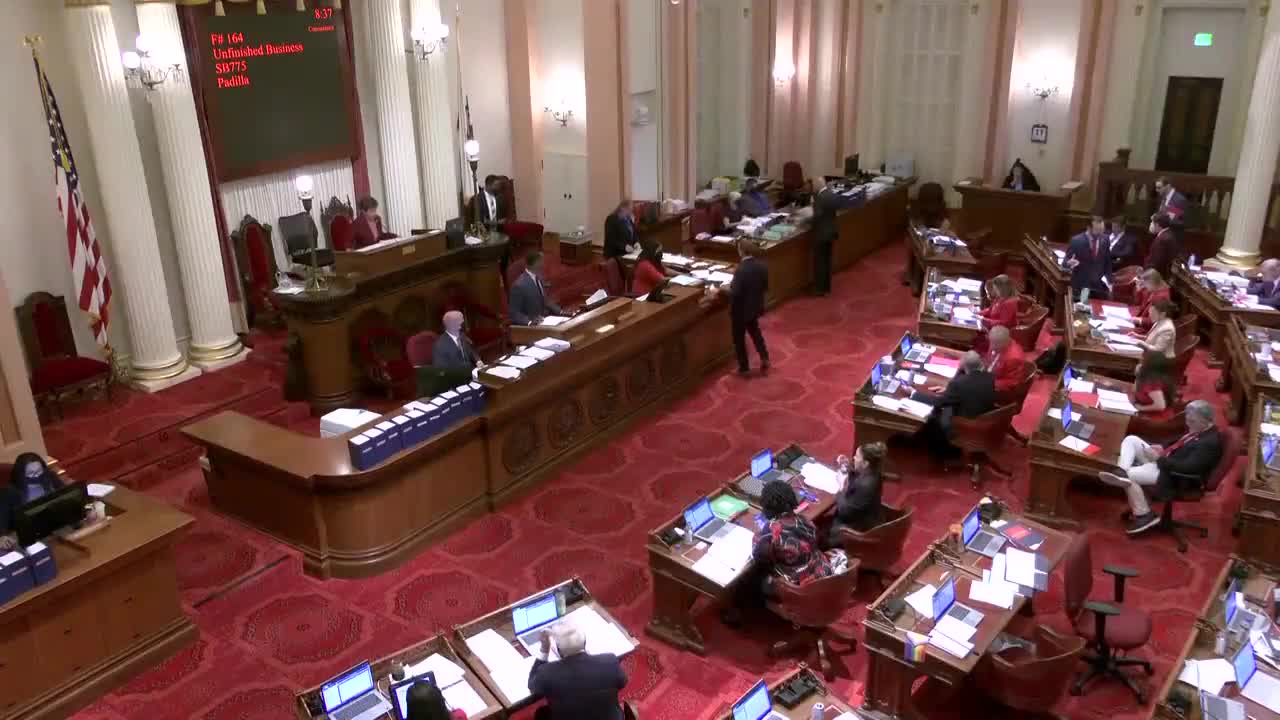
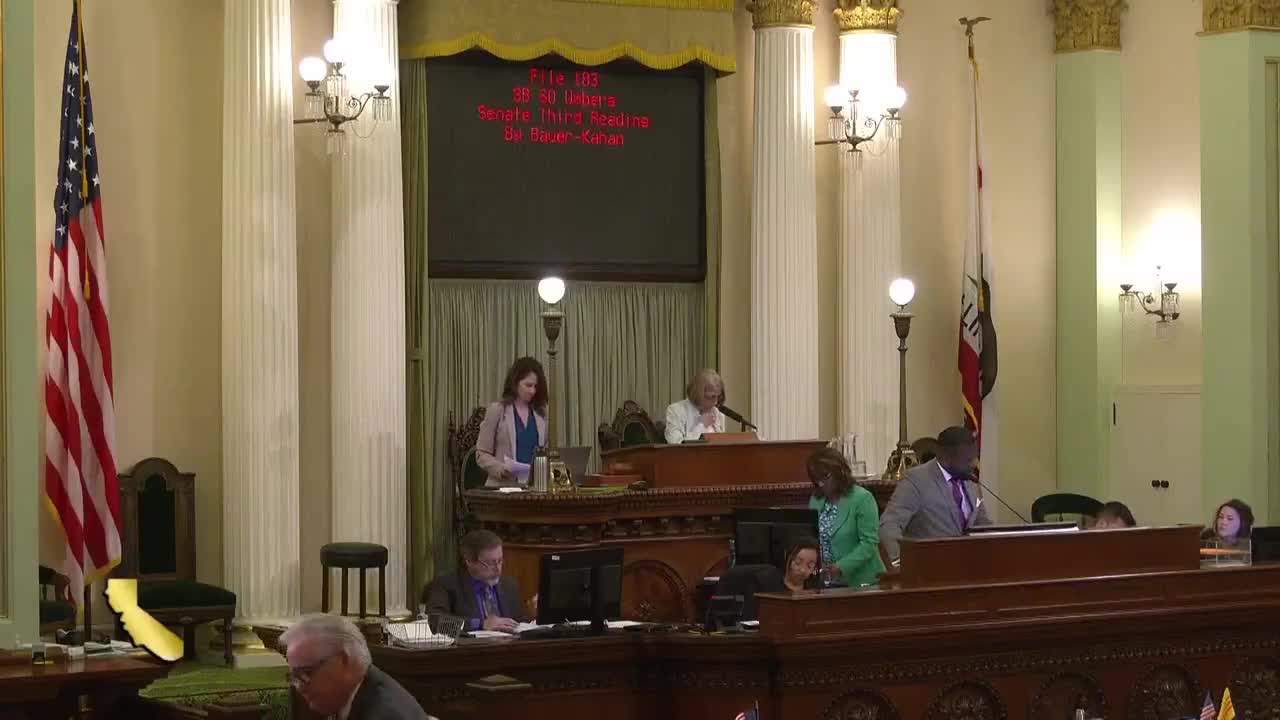
Bill Author

Bill Co-Author(s):