SB 716: Excluded employees: binding arbitration.
- Session Year: 2023-2024
- House: Senate
- Latest Version Date: 2023-09-15
Current Status:
Failed
(2024-01-25: Stricken from file.)
Introduced
In Committee
First Chamber
In Committee
Second Chamber
Enacted
Existing law, the Bill of Rights for State Excluded Employees, permits, among other things, excluded employee organizations to represent their excluded members in their employment relations, including grievances, with the state. That law defines excluded employees as all managerial employees, confidential employees, supervisory employees, and specified employees of the Department of Personnel Administration, the Department of Finance, the Controllers office, the Legislative Counsel Bureau, the Bureau of State Audits, the Public Employment Relations Board, the Department of Industrial Relations, and the State Athletic Commission.
This bill would enact the Excluded Employee Arbitration Act to permit an employee organization that represents an excluded employee who has filed certain grievances with the Department of Human Resources to request binding arbitration of the grievance if specified conditions are met. The bill would require the designation of a standing panel of arbitrators and, under specified circumstances, the provision of arbitrators from the California State Mediation and Conciliation Service within the Public Employment Relations Board. The bill would then require the arbitrator to be chosen in a specified manner and would prescribe the duties of that arbitrator.
This bill would grant a party to the arbitration the right to have a certified shorthand reporter transcribe the proceeding and would deem the transcription the official record of the proceeding. The bill would require a nonprevailing party, other than an excluded employee, to bear the costs of arbitration and would prohibit passing the costs of arbitration on to the excluded employee. The bill would repeal its provisions on January 1, 2029.
(a)It is the intent of the Legislature that state excluded employees shall have the right to arbitration as a fifth step to the excluded employee grievance procedure. The present grievance procedure leaves too many grievances unresolved. This lack of resolution has caused more cases to be filed in Californias courts, which could have been resolved at a lower level.
(b)The Legislature finds and declares all of the following:
(1)The grievance system for state excluded employees is virtually illusory, with the overwhelming majority of grievances of excluded employees being summarily denied.
(2)The practice of blanket grievance denial forces excluded employee organizations to go to court. Litigation is not only time-consuming, but also costly to both the excluded employee organizations and the State of California.
(3)Employee grievance arbitration for excluded employees results in timely resolution of grievances and is far less costly than litigation for both the State of California and for those excluded employees.
(4)Employee grievance arbitration promotes settlement of grievances in advance of actual arbitration. Sixty percent of arbitration requests are settled in advance of any arbitral hearing.
SEC. 2.Chapter 10.6 (commencing with Section 3539.75) is added to Division 4 of Title 1 of the Government Code, to read:10.6.Excluded Employee Arbitration Act3539.75.This chapter shall be known, and may be cited, as the Excluded Employee Arbitration Act.
3539.76.For purposes of this chapter:
(a)Department means the Department of Human Resources.
(b)Excluded employee means an excluded employee of the state, as defined in subdivision (b) of Section 3527.
(c)Employee organization means any organization that represents excluded employees of the State of California.
(d)Employer means the State of California.
(e)Arbitration means the process that results in a binding ruling that resolves an excluded employee grievance as the final level of the excluded employee grievance process.
3539.77.An employee organization representing an employee who has filed a grievance with the department may request arbitration of the grievance if all of the following conditions are met:
(a)The grievance alleges a dispute that is subject to the procedures established in Section 599.859 of Title 2 of the California Code of Regulations, as that section read on January 1, 2022.
(b)The grievance has not been resolved to the employee organizations satisfaction after either of the following, as applicable, pursuant to regulations of the department governing grievances for excluded employees:
(1)The fourth level of review.
(2)In cases where there is no fourth level of review, the third level of review.
(c)The employee organization requests arbitration in writing, submitted to the department, within 21 days of a decision rendered in either of the following, as applicable:
(1)The fourth level of review.
(2)In cases where there is no fourth level of review, the third level of review.
3539.78.(a)After a request for arbitration is made, the department and the employee organization shall designate a standing panel of at least 20 arbitrators who shall be available for arbitration under this chapter.
(b)If there are fewer than three arbitrators available, then the employee organization or the employer may obtain the names of an additional five arbitrators from the California State Mediation and Conciliation Service within the Public Employment Relations Board.
(c)From that standing panel, the employee organization and the employer may consecutively strike any arbitrator from that panel until the name of one arbitrator is agreed upon, or, if no agreement is made, the last remaining person on the panel shall be designated the arbitrator. The name of that arbitrator shall be submitted in writing to the department.
(d)If the employee organization does not submit its choice of an arbitrator within 45 days after requesting arbitration, the request for arbitration shall be considered withdrawn. A request that is withdrawn shall not prevent the employee from pursuing other grievance procedures available by law.
3539.79.(a)A party to the arbitration shall have the right to have a certified shorthand reporter transcribe the proceeding. The transcript shall be the official record of the proceeding.
(b)The arbitrator shall apply California law to the facts. The arbitrator shall issue a decision for each grievance heard during the arbitration. The decision shall be based solely on the written record in the grievance, the grievance response, and the oral presentations made at the arbitration. The arbitrators decision shall be legally binding.
(c)The arbitrator shall issue a written decision within 45 days of the conclusion of the hearing.
(d)The arbitrator shall order the nonprevailing party to pay the cost of the arbitration, including the cost of a certified shorthand reporter. The arbitrator shall not order the excluded employee to pay the cost of arbitration or the cost of a certified shorthand reporter, and the cost of arbitration, including the cost of a certified shorthand reporter, shall not be passed on to the excluded employee.
3539.80.This chapter shall remain in effect only until January 1, 2029, and as of that date is repealed.
|
Date
|
Status
|
|---|---|
| Jan 25, 2024 | Veto sustained. |
| Jan 25, 2024 | Stricken from file. |
| Oct 8, 2023 | In Senate. Consideration of Governor's veto pending. |
| Oct 8, 2023 | Vetoed by the Governor. |
| Sep 20, 2023 | Enrolled and presented to the Governor at 4:30 p.m. |
| Sep 13, 2023 | In Senate. Ordered to engrossing and enrolling. |
| Sep 13, 2023 | Read third time. Passed. (Ayes 80. Noes 0. Page 3354.) Ordered to the Senate. |
| Sep 5, 2023 | Read second time. Ordered to third reading. |
| Sep 1, 2023 | From committee: Do pass. (Ayes 16. Noes 0.) (September 1). |
| Aug 16, 2023 | August 16 set for first hearing. Placed on suspense file. |
| Jul 6, 2023 | From committee: Do pass and re-refer to Com. on APPR. (Ayes 10. Noes 0.) (July 5). Re-referred to Com. on APPR. |
| Jun 28, 2023 | From committee: Do pass and re-refer to Com. on JUD. (Ayes 7. Noes 0.) (June 28). Re-referred to Com. on JUD. |
| Jun 8, 2023 | Referred to Coms. on P.E. & R. and JUD. |
| May 25, 2023 | In Assembly. Read first time. Held at Desk. |
| May 25, 2023 | Read third time. Passed. (Ayes 40. Noes 0. Page 1304.) Ordered to the Assembly. |
| May 23, 2023 | Ordered to special consent calendar. |
| May 18, 2023 | Read second time. Ordered to third reading. |
| May 18, 2023 | From committee: Do pass. (Ayes 7. Noes 0. Page 1181.) (May 18). |
| May 12, 2023 | Set for hearing May 18. |
| May 1, 2023 | May 1 hearing: Placed on APPR suspense file. |
| Apr 21, 2023 | Set for hearing May 1. |
| Apr 19, 2023 | From committee: Do pass and re-refer to Com. on APPR with recommendation: To consent calendar. (Ayes 11. Noes 0. Page 800.) (April 18). Re-referred to Com. on APPR. |
| Apr 13, 2023 | From committee: Do pass and re-refer to Com. on JUD. with recommendation: To consent calendar. (Ayes 5. Noes 0. Page 713.) (April 12). Re-referred to Com. on JUD. |
| Apr 11, 2023 | Set for hearing April 18 in JUD. pending receipt. |
| Mar 21, 2023 | Set for hearing April 12. |
| Mar 1, 2023 | Referred to Coms. on L., P.E. & R. and JUD. |
| Feb 17, 2023 | From printer. May be acted upon on or after March 19. |
| Feb 16, 2023 | Introduced. Read first time. To Com. on RLS. for assignment. To print. |
|
Date
|
Description
|
Location
|
Votes
|
|
|---|---|---|---|---|
| Sep 13, 2023 | SB 716 Alvarado-Gil Senate Third Reading By Lackey | Assembly Floor |
Passed |
|
| Sep 1, 2023 | Do pass. | Assembly Standing Committee on Appropriations |
Passed |
|
| Jul 5, 2023 | Do pass and be re-referred to the Committee on [Appropriations] | Assembly Standing Committee on Judiciary |
Passed |
|
| Jun 28, 2023 | Do pass and be re-referred to the Committee on [Judiciary] | Assembly Standing Committee on Public Employment and Retirement |
Passed |
|
| May 25, 2023 | Special Consent SB716 Alvarado-Gil | Senate Floor |
Passed |
|
| May 18, 2023 | Do pass | Senate Standing Committee on Appropriations |
Passed |
|
| May 1, 2023 | Placed on suspense file | Senate Standing Committee on Appropriations |
Passed |
|
| Apr 18, 2023 | Do pass, but first be re-referred to the Committee on [Appropriations] with the recommendation: To Consent Calendar | Senate Standing Committee on Judiciary |
Passed |
|
| Apr 12, 2023 | Do pass, but first be re-referred to the Committee on [Judiciary] with the recommendation: To Consent Calendar | Senate Standing Committee on Labor, Public Employment and Retirement |
Passed |
This list shows positions taken on this bill by organizations on the date displayed, which is linked to the original source.
Positions by individuals are not included.
|
Organization
|
Position
|
Date
|
|---|---|---|
| Association of California State Employees with Disabilities | ** Support | |
| Association Of California State Supervisors | ** Support | |
| California Attorneys Administrative Law Judges and Hearing Officers in State Employment | ** Support | |
| California Correctional Supervisors Organization | ** Support | |
| California Faculty Association | ** Support | |
| Professional Engineers In California Government | ** Support |
SENATE RULES COMMITTEE Office of Senate Floor Analyses (916) 651-1520 Fax: (916) 327-4478 | SB 716 |
VETO
Bill No: SB 716
Author: Alvarado-Gil (D)
Introduced: 2/16/23
Vote: 27
SENATE LABOR, PUB. EMP. & RET. COMMITTEE: 5-0, 4/12/23
AYES: Cortese, Wilk, Durazo, Laird, Smallwood-Cuevas
SENATE JUDICIARY COMMITTEE: 11-0, 4/18/23
AYES: Umberg, Wilk, Allen, Ashby, Caballero, Durazo, Laird, McGuire, Min, Niello, Wiener
SENATE APPROPRIATIONS COMMITTEE: 7-0, 5/18/23
AYES: Portantino, Jones, Ashby, Bradford, Seyarto, Wahab, Wiener
SENATE FLOOR: 40-0, 5/25/23
AYES: Allen, Alvarado-Gil, Archuleta, Ashby, Atkins, Becker, Blakespear, Bradford, Caballero, Cortese, Dahle, Dodd, Durazo, Eggman, Glazer, Gonzalez, Grove, Hurtado, Jones, Laird, Limón, McGuire, Menjivar, Min, Newman, Nguyen, Niello, Ochoa Bogh, Padilla, Portantino, Roth, Rubio, Seyarto, Skinner, Smallwood-Cuevas, Stern, Umberg, Wahab, Wiener, Wilk
ASSEMBLY FLOOR: 80-0, 9/13/23 - See last page for vote
SUBJECT: Excluded employees: binding arbitration
SOURCE: California Correctional Supervisors Organization
DIGEST:
This bill gives state excluded employees, such as managers and supervisors, the option of requesting binding arbitration as a method for resolving disputes with their state employers after first exhausting the current grievance resolution procedures.
ANALYSIS:
Existing law:
- Establishes the Ralph C. Dills Act (Dills Act) which sets forth a framework that governs labor relations between the State of California and state employees, except for specified managerial, confidential and supervisory employees. (Government Code § 3512-3524)
- Provides the following definitions (GC § 3527):
- Defines “employee” as a civil service employee of the State of California, including state agencies, boards, and commissions designated by law to employ civil service employees, except the University of California, Hastings College of the Law, and the California State University.
- Excepts from the definition of state “employee,” managerial employees, confidential employees, supervisory employees, and other employees, as defined.
- Defines “excluded employee organization” as one that includes excluded employees of the state and that has as one of its primary purposes representing its members in employer-employee relations, including supervisory employee organizations.
- Defines “state employer” or “employer,” for purposes of meeting and conferring on matters relating to supervisory employer-employee relations, as the Governor or his or her designated representatives.
- Establishes the Bill of Rights for State Excluded Employees to inform state supervisory, managerial, confidential, and employees otherwise excepted from coverage under the Dills Act, of their rights and terms and conditions of employment, as specified, and serves to promote harmonious personnel relations among those representing state management in the conduct of state affairs. (GC § 3526)
- Authorizes supervisory employees to form, join and participate in the activities of supervisory employee organizations of their own choosing for purposes of representation on all matters of supervisory employer-employee relations, as specified, or to refrain from so doing. They also have the right to represent themselves individually in their employment relations with the public employer. (GC § 3531)
- Provides excluded employee organizations with the right to represent their excluded members in their employment relations, including grievances, with the State of California. (GC § 3530)
- Specifies that the scope of representation for supervisory employees includes all matters relating to employment conditions and supervisory employer-employee relations including wages, hours, and other terms and conditions of employment. (GC § 3532)
- Authorizes the California Department of Human Resources (CalHR) to adopt reasonable rules and regulations for the administration of employer-employee relations, including excluded employer-employee relations. (GC § 3535)
This bill:
- Declares the intent of the Legislature, and makes several findings and declarations to the effect, that state excluded employees have the right to arbitration as a fifth step to the excluded employee grievance procedure; and states that the present grievance procedure leaves too many grievances unresolved resulting in more cases being filed in California’s courts, which could have been resolved at a lower level.
- Creates the Excluded Employee Arbitration Act which authorizes an employee organization representing an employee who has filed a grievance with the Department of Human Resources (CalHR) to request arbitration of the grievance if all of the following conditions are met:
- The grievance alleges a dispute that is subject to the procedures established in Section 599.859 of Title 2 of the CA Code of Regulations, as it read on January 1, 2022;
- The grievance has not been resolved to the employee organization’s satisfaction after either of the following, as applicable, pursuant to the department’s regulations governing grievances for excluded employees: (1) the fourth level of review; or (2) in cases where there is no fourth level of review, the third level of review; and
- The employee organization requests arbitration in writing, submitted to the department, within 21 days of a decision rendered in either of the following, as applicable: (1) the fourth level of review; or (2) in cases where there is no fourth level of review, the third level of review.
- Provides, among others, the following definitions:
- “Excluded employee” means an excluded employee of the state, as defined in GC § 3527 (b).
- “Employer” means the State of California
- “Arbitration” means the process that results in a binding ruling that resolves an excluded employee grievance as the final level of the excluded employee grievance process.
- Requires CalHR and the employee organization, after the parties make a request for arbitration, to designate a standing panel of at least 20 arbitrators to be available for resolving arbitration cases authorized by this bill.
- Provides that if fewer than three arbitrators are available, then the employee organization or the employer may obtain the names of an additional five arbitrators from the California State Mediation and Conciliation Service within the Public Employment Relations Board.
- Creates a process whereby the employee organization and the employer can consecutively strike any arbitrator from the standing panel until the name of one arbitrator is agreed upon, or, if no agreement is made, the last remaining person on the panel shall be designated the arbitrator and their name submitted in writing to CalHR.
- Provides that if the employee organization does not submit its choice of an arbitrator within 45 days after requesting arbitration, the request for arbitration shall be considered withdrawn. However, a withdrawn request shall not prevent the employee from pursuing other grievance procedures available by law.
- Provides that a party to the arbitration has the right to have a certified shorthand reporter transcribe the proceeding, the transcript of which will be the official record.
- Requires that the arbitrator apply California law to the facts and base the decision solely on the written record in the grievance, the grievance response, and the oral presentations made at the arbitration.
- Specifies that the arbitrator's decision shall be legally binding and requires the arbitrator to issue a written decision within 45 days of the conclusion of the hearing.
- Requires the arbitrator to order that the non-prevailing party pay the cost of the arbitration, including the costs of a certified shorthand reporter, however, the arbitrator is prohibited from ordering the excluded employee to pay these costs and specifies that the costs of the arbitration and the reporter cannot be passed on to the excluded employee.
- Contains a sunset clause that repeals the bill’s provisions on January 1, 2029.
Comments
Need for this bill. Existing law gives most California state employees the right to form, join, and participate, or refuse to join or participate, in the activities of employee organizations of their own choosing for the purpose of representation on all matters of employer-employee relations. However, state law excludes managerial, confidential and supervisorial employees from participating or joining those organizations. (GC §3515 et seq.)
Existing law, under the Excluded Employees Bill of Rights, does authorize supervisory employees the right to form, join, and participate in the activities of supervisory employee organizations of their own choosing for the purpose of representation on all matters of supervisory employer-employee relations and requires the state to meet and confer with excluded employee organizations, as specified, but also provides that the final determination of policy or course of action in such matters, including grievances, is the sole responsibility of the state employer. (GC §3533)
Existing Grievance Procedures. Current law authorizes CalHR to adopt rules and regulations for the administration of employer-employee relations. CalHR has adopted Grievance and Appeal Procedures for excluded employees under Title 2, California Code of Regulations Section 599.859. Under these procedures, if an excluded employee has a grievance against his or her employer, the regulations establish levels of administrative review that the employee must exhaust before he or she can file a civil action in court to litigate the matter. The grievance procedure includes the following levels of review:
- Informal Discussion: Within five work days of the incident, an informal discussion between the excluded employee and the employee’s supervisor or manager. If the parties do not settle the grievance within the five days, the employee may file a written grievance.
- Formal Grievance - Level 1: If unsatisfied with the informal review, the employee may file a formal grievance within 10 workdays of the incident and the employer’s designee for the first level of review must respond within 10 working days.
- Formal Grievance - Level 2: The employee may appeal the employer’s Level 1 decision within 10 workdays of receipt of the response and the employer’s designee for the second level of review must respond within 15 workdays.
- Formal Grievance - Level 3: The employee may appeal the employer’s Level 2 decision within 10 workdays of receipt of the employer’s response and the employer’s designee for the third level of review must respond within 15 workdays.
- Formal Grievance - Level 4: The employee may appeal the employer’s Level 3 decision to CalHR within 10 workdays of receipt of the employer’s response and CalHR’s designee for the fourth level of review must respond within 20 workdays.
If the parties fail to reach a satisfactory resolution after the fourth level of review, the excluded employee or the employee organization representing the employee may pursue a claim with the appropriate entity including the State Personnel Board, the Department of Fair Employment and Housing, or the State Superior Court.
Related/Prior Legislation
AB 1714 (Cooper, 2022) was substantially identical to this bill. The bill passed both houses but the Governor vetoed the bill.
SB 1406 (Durazo, 2022) was virtually identical to this bill and AB 1714 (Cooper, 2022), except that SB 1406 did not have a sunset date in its provisions. The Governor vetoed SB 1406.
FISCAL EFFECT: Appropriation: No Fiscal Com.: Yes Local: No
According to the Senate Appropriations Committee, the CalHR indicates that it would incur increased staffing costs representing itself and other departments in arbitration proceedings as a result of this bill. The number of additional grievances/arbitrations that would result from this bill is unknown; specifically, CalHR estimates a cost of $56,000 per arbitration (General Fund). However, this bill’s costs would be partially offset to the extent that CalHR were to win arbitration proceedings.
Additionally, CalHR would require new labor relations staff with annual costs of $524,000 (General Fund).
SUPPORT: (Verified 10/12/23)
California Correctional Supervisors Organization (source)
Association of California State Supervisors
California Attorneys Administrative Law Judges and Hearing Officers in State Employment
Professional Engineers in California Government
OPPOSITION: (Verified 10/12/23)
None received
ARGUMENTS IN SUPPORT: According to the sponsor, the California Correctional Supervisors Organization, “This bill would improve the excluded employee grievance process to make it effective and would result in reduced costs to the State of California as well. Currently, the excluded employee grievance system is virtually illusory for excluded employees and is functioning at an unenforceable level. Of all the grievances filed, 99% are denied because there is no consequence for CalHR, the state agency, to not follow the rules, and there is no objective oversight. As it stands now, the state agency will deny all grievances because they believe it is in their best parochial interest and there is nowhere for the excluded employee to go, it is a closed system.”
GOVERNOR'S VETO MESSAGE:
This bill would enact the Excluded Employee Arbitration Act to provide state excluded employees the option to request binding arbitration as part of the grievance process.
Current law allows managers and supervisors to pursue resolution of disagreements through a four-step grievance process and challenge grievance decisions in court. This bill would add a costly step to this process by permitting excluded employees to arbitrate the Department of Human Resources' (CalHR) authorizing statutes, regulations, policies, and practices before nongovernmental entities. This could lead to conflicts with the statutory authority delegated to CalHR. These are the same concerns I had with previous, nearly identical bills, AB 1714 (2022), SB 76 (2021), and SB 179 (2019), which I also vetoed.
ASSEMBLY FLOOR: 80-0, 9/13/23
AYES: Addis, Aguiar-Curry, Alanis, Alvarez, Arambula, Bains, Bauer-Kahan, Bennett, Berman, Boerner, Bonta, Bryan, Calderon, Juan Carrillo, Wendy Carrillo, Cervantes, Chen, Connolly, Megan Dahle, Davies, Dixon, Essayli, Flora, Mike Fong, Vince Fong, Friedman, Gabriel, Gallagher, Garcia, Gipson, Grayson, Haney, Hart, Holden, Hoover, Irwin, Jackson, Jones-Sawyer, Kalra, Lackey, Lee, Low, Lowenthal, Maienschein, Mathis, McCarty, McKinnor, Muratsuchi, Stephanie Nguyen, Ortega, Pacheco, Papan, Jim Patterson, Joe Patterson, Pellerin, Petrie-Norris, Quirk-Silva, Ramos, Rendon, Reyes, Luz Rivas, Rodriguez, Blanca Rubio, Sanchez, Santiago, Schiavo, Soria, Ta, Ting, Valencia, Villapudua, Waldron, Wallis, Ward, Weber, Wicks, Wilson, Wood, Zbur, Robert Rivas
Prepared by: Glenn Miles / L., P.E. & R. / (916) 651-1556
10/19/23 11:13:01
**** END ****
SENATE THIRD READING
STR Bill Id:SB 716
Author:(Alvarado-Gil)
As Introduced Ver:February 16, 2023
Majority vote
SUMMARY
Establishes the Excluded Employee Arbitration Act to provide state excluded employees, such as managers and supervisors, the option of requesting binding arbitration as a method for resolving disputes with their employers after first exhausting the current grievance resolution procedures, and among other things, includes a sunset date of January 1, 2029.
Major Provisions
- Authorizes an employee organization representing an employee who has filed a grievance with the California Department of Human Resources (CalHR) to request arbitration of the grievance if all of the following conditions are met:
- The grievance alleges a dispute that is subject to the procedures established in of Title 2 of the California Code of Regulations Section 599.859, as it read on January 1, 2022;
- The grievance has not been resolved to the employee organization's satisfaction after either of the following, as applicable, pursuant to regulations of the CalHR governing grievances for excluded employees: (i) the fourth level of review; or (ii) in cases where there is no fourth level of review, the third level of review; and
- The employee organization requests arbitration in writing, submitted to the CalHR, within 21 days of a decision rendered in either of the following, as applicable: i) the fourth level of review; or ii) in cases where there is no fourth level of review, the third level of review.
- Requires, after a request for arbitration is made, the CalHR and the employee organization to designate a standing panel of at least 20 arbitrators who must be available for arbitration, as provided. Further, relating to the standing panel of arbitrators:
- If fewer than three arbitrators are available, the employee organization or the employer may obtain the names of an additional five arbitrators from the California State Mediation and Conciliation Service within the Public Employment Relations Board (PERB).
- Establishes a process whereby the employee organization and the employer can consecutively strike any arbitrator from the standing panel until the name of one arbitrator is agreed upon, or, if no agreement is made, the last remaining person on the panel must be designated and the name of that arbitrator must be submitted in writing to the CalHR.
- If the employee organization does not submit its choice of an arbitrator within 45 days after requesting arbitration, the request for arbitration must be considered withdrawn; however, a withdrawn request must not prevent the employee from pursuing other grievance procedures available by law.
- Provides that a party to the arbitration must have the right to have a certified shorthand reporter transcribe the proceeding, and the transcript must be the official record of the proceeding.
- Requires the arbitrator to apply California law to the facts and to issue a decision for each grievance heard during the arbitration, and establishes that the legally binding decision by the arbitrator must be solely based on the written record in the grievance, response to the grievance, and the oral presentations made at the arbitration.
- Requires the arbitrator to issue a written decision within 45 days of the conclusion of the hearing, and to order the nonprevailing party pay the cost of the arbitration, including the costs of a certified shorthand reporter; however, the arbitrator is expressly prohibited from ordering the excluded employee to pay the cost of arbitration or the cost of a certified shorthand reporter, and the cost of arbitration, and prohibits the cost of a certified shorthand reporter from being passed on to the excluded employee.
- Repeals these provisions on January 1, 2029.
COMMENTS
- Background: Existing Grievance Procedures
Existing law gives most California state employees the right to form, join, and participate, or refuse to join or participate, in the activities of employee organizations of their own choosing for the purpose of representation on all matters of employer-employee relations. However, because of the nature of their work and as noted above, managerial, confidential and supervisorial employees are excluded from participating or joining these unions.
In 1990, the Legislature enacted the BRSEE to ensure protection of excluded employees' workplace rights. Under these provisions, supervisory employees were provided the right to form, join, and participate in the activities of supervisory employee organizations of their own choosing for the purpose of representation on all matters of supervisory employer-employee relations. These excluded employee organizations are authorized to represent their excluded members in all matters relating to employment relations, including grievances, with the state; however, the final determination of policy or course of action in such matters is the sole responsibility of the state employer.
As previously noted, the CalHR is authorized to adopt rules and regulations for the administration of employer-employee relations and as such has adopted Grievance and Appeal Procedures for excluded employees under Title 2 of Section 599.859 of the California Code of Regulations. Under these procedures, if an excluded employee has a grievance against the employer, the regulations establish levels of administrative review that the employee must exhaust before the excluded employee can file a civil action in court to litigate the matter. The grievance procedure includes the following levels of review:
- Informal Discussion: Within five work days of the incident, an informal discussion between the excluded employee and the employee's supervisor or manager. If the grievance is not settled within the five days, a written grievance may be filed.
- Formal Grievance - Level 1: If unsatisfied with the informal review, the employee may file a formal grievance within 10 workdays of the incident and the employer's designee for the first level of review must respond within 10 working days.
- Formal Grievance - Level 2: The employee may appeal the employer's Level 1 decision within 10 workdays of receipt of the response and the employer's designee for the second level of review must respond within 15 workdays.
- Formal Grievance - Level 3: The employee may appeal the employer's Level 2 decision within 10 workdays of receipt of the employer's response and the employer's designee for the third level of review must respond within 15 workdays.
- Formal Grievance - Level 4: The employee may appeal the employer's Level 3 decision to CalHR within 10 workdays of receipt of the employer's response and CalHR's designee for the fourth level of review must respond within 20 workdays.
If no satisfactory resolution is reached after the fourth level of review, the excluded employee or the employee organization representing the employee may pursue a claim with the appropriate entity including the State Personnel Board, the Department of Fair Employment and Housing, or the State Superior Court.
- This Bill
This bill would allow for an excluded employee or their representative organization to voluntarily request arbitration to CalHR as a means of resolving a grievance. Nothing in this bill would permit CalHR or any state agency from mandating that employees agree to arbitration, thus this bill would not preclude an excluded employee from petitioning a court regarding a grievance with their employer.
- Equity Solutions and Maximizing Benefits for Underserved and Marginalized Communities
Pursuant to HR 39 (Gipson) of 2021, to continue the Assembly's commitment to investing in equity solutions and maximizing benefits for underserved and marginalized communities, legislative analyses of the Assembly must discuss the equity impact that a bill will, or may, have on such communities, if any.
This bill does not present a particular focus towards addressing equity in relation to maximizing benefits for underserved or marginalized communities as articulated in HR 39.
- Please see the policy committee analyses for a full discussion of this bill.
According to the Author
"This bill will reduce costs to the state and excluded employee organizations by allowing the use of binding arbitration between the two parties when resolving their grievances. Currently, these disagreements are filed in the Superior Court, which can take years to resolve and incur large expenses to the state. Binding arbitration is a useful tool that can hold both sides accountable during the process and helps resolve issues in good faith. Allowing the use of arbitration between the state and excluded employees, the intent of this bill is to resolve costly grievances more expeditiously and save taxpayer dollars."
Arguments in Support
The he California Correctional Supervisors Organization (CCS0) states among other things that,
"… [The] CalHR has a longstanding track record of denying all grievances brought to them by individual supervisors and their representative organizations, such as CCSO, even in cases where the remedy sought by the grievance is later adopted as department policy. This perpetual denial of legitimate grievances has a devastating effect on the morale of the supervisors who question the fairness of the process when they see their subordinates receiving the arbitration that they have been pursuing.
"Prior legislative attempts to establish the right to request binding arbitration of grievances by excluded employees have passed unanimously through both houses of the Legislature, only to me vetoed by the Governor due to the inaccuracy of the information provided to him by CalHR. While the Governors' past veto messages indicate that there are other venues available to resolve excluded employee grievances, the truth is that once CalHR denies a grievance, the only remedy available to the employee is through the courts. The Governor further cites that granting excluded employees arbitration rights would enable them to arbitrate CalHR's authorizing statutes, regulations, policies, and/or practices before non-governmental entities. There are already 21 rank-and-file bargaining units which have binding arbitration, which raises the question of why, if binding arbitration was so detrimental to the policies of the state, would it be granted to these bargaining units through their contract negotiations with CalHR?"
Arguments in Opposition
None received.
FISCAL COMMENTS
The Assembly Appropriations Committee notes that this bill would result in the following:
- General Fund costs, of an unknown but potentially significant amount annually, to the CalHR for staffing costs and fees associated with representing itself and other departments in arbitration proceedings as a result of the bill. The CalHR estimates a cost of $56,000 per arbitration. The costs of arbitration would be partially offset to the extent CalHR is the prevailing party.
- Legal Services Revolving Fund Special Fund costs in the low tens of thousands of dollars annually to the Department of Justice to the extent it represents state employers involved in an arbitration. Costs would be reimbursable through direct billings to client employers.
- Unknown, but potentially significant, annual costs to state employers to pay for arbitration proceedings should they not prevail.
- Potential annual cost savings to state employers to the extent this bill results in a) incentives to state employers to resolve disputes before they progress to arbitration, and b) fewer disputes progressing to an action in court against a state employer, as arbitration is generally less expensive than is litigation.
VOTES
SENATE FLOOR: 40-0-0
YES: Allen, Alvarado-Gil, Archuleta, Ashby, Atkins, Becker, Blakespear, Bradford, Caballero, Cortese, Dahle, Dodd, Durazo, Eggman, Glazer, Gonzalez, Grove, Hurtado, Jones, Laird, Limón, McGuire, Menjivar, Min, Newman, Nguyen, Niello, Ochoa Bogh, Padilla, Portantino, Roth, Rubio, Seyarto, Skinner, Smallwood-Cuevas, Stern, Umberg, Wahab, Wiener, Wilk
ASM PUBLIC EMPLOYMENT AND RETIREMENT: 7-0-0
YES: McKinnor, Lackey, Addis, Vince Fong, Haney, Stephanie Nguyen, Schiavo
ASM JUDICIARY: 10-0-1
YES: Maienschein, Connolly, Dixon, Haney, Kalra, Pacheco, Papan, Reyes, Sanchez, McKinnor
ABS, ABST OR NV: Essayli
ASM APPROPRIATIONS: 16-0-0
YES: Holden, Megan Dahle, Bryan, Calderon, Wendy Carrillo, Dixon, Mike Fong, Hart, Lowenthal, Mathis, Papan, Pellerin, Sanchez, Soria, Weber, Wilson
UPDATED
VERSION: February 16, 2023
CONSULTANT: Michael Bolden / P. E. & R. / (916) 319-3957 FN: 0001505
Date of Hearing: August 16, 2023
ASSEMBLY COMMITTEE ON APPROPRIATIONS
Chris Holden, Chair
SBPCA Bill Id:SB 716
Author:(Alvarado-Gil) – As Introduced Ver:February 16, 2023
Policy Committee: | Public Employment and Retirement | Vote: | 7 - 0 |
Judiciary | 10 - 0 | ||
|
|
Urgency: No State Mandated Local Program: No Reimbursable: No
SUMMARY:
This bill gives an excluded employee, such as a manager or supervisor, the option of requesting binding arbitration as a method for resolving disputes with the employee’s state employer after first exhausting current grievance resolution procedures.
Specifically, this bill permits an employee organization that represents an excluded employee who has filed a certain grievance with the Department of Human Resources (CalHR) to request binding arbitration of the grievance if specified conditions are met. The bill also requires CalHR and the employee organization to designate a standing panel of arbitrators. The bill specifies that (a) arbitrators are to apply California law to the facts of a given arbitration and (b) a party to the arbitration may have a certified shorthand reporter transcribe the proceeding. The bill requires the nonprevailing party, other than an excluded employee, to bear the costs of arbitration and prohibits passing the costs of arbitration on to the excluded employee. The bill sunsets its provisions January 1, 2029.
FISCAL EFFECT:
- General Fund costs, of an unknown but potentially significant amount annually, to CalHR for staffing costs and fees associated with representing itself and other departments in arbitration proceedings as a result of the bill. CalHR estimates a cost of $56,000 per arbitration. The costs of arbitration would be partially offset to the extent CalHR is the prevailing party.
- Legal Services Revolving Fund Special Fund costs in the low tens of thousands of dollars annually to the Department of Justice to the extent it represents state employers involved in an arbitration. Costs would be reimbursable through direct billings to client employers.
- Unknown, but potentially significant, annual costs to state employers to pay for arbitration proceedings should they not prevail.
- Potential annual cost savings to state employers to the extent this bill results in (a) incentives to state employers to resolve disputes before they progress to arbitration and (b) fewer disputes progressing to an action in court against a state employer, as arbitration is generally less expensive than is litigation.
COMMENTS:
- Purpose. According to the author:
SB 716 will reduce costs to the state and excluded employee organizations by allowing the use of binding arbitration between the two parties when resolving their grievances. Currently, these disagreements are filed in the Superior Court, which can take years to resolve and incur large expenses to the state. Binding arbitration is a useful tool that can hold both sides accountable during the process and helps resolve issues in good faith. Allowing the use of arbitration between the state and excluded employees, the intent of this bill is to resolve costly grievances more expeditiously and save taxpayer dollars.
- Background. Current law authorizes excluded employee organizations to represent excluded employees in employment relations, including grievances, with the state. Excluded employees are state employees who, due to the managerial or supervisorial nature of their work, or because they handle confidential human resources information, are excluded from union representation. If an excluded employee has a grievance against their employer, state regulations establish levels of administrative review that the employees must exhaust before they can file a civil action in court. The grievance procedure must be completed in as few levels of review as possible but no more than four levels. If no satisfactory resolution is reached after the fourth level of review, the excluded employee or employee organization representing the employee may bring an action in court. The costs of litigation associated with such proceedings can be significant.
This bill provides another level of review by allowing an employee organization to request binding arbitration as an alternative to bringing an action in court. Arbitration is a form of alternative dispute resolution where a third party reviews the dispute and makes a binding award. Nothing in this bill permits CalHR or any state employer to mandate that employees agree to arbitration and this bill does not preclude an excluded employee from petitioning a court regarding a grievance with their employer.
- Prior Legislation. SB 1406 (Durazo), of the 2021-22 Legislative Session, was identical to this bill except it contained no sunset. The bill was vetoed.
AB 1714 (Cooper), of the 2021-22 Legislative Session, was identical to this bill except it contained a sunset of January 1, 2028. The bill was vetoed.
The Governor’s veto message for both SB 1406 and AB 1714 contained the following, as it pertains to cost:
Current law allows managers and supervisors to pursue resolution of disagreements through a four-step grievance process and pursue a claim with the State Personnel Board. [This bill] would add a costly step to this process.
In addition, there have been no fewer than eight prior bill attempts on this subject as it relates to excluded employees and arbitration. Most were vetoed.
In response to the Governor’s veto messages of SB 1406 and AB 1714, as it pertains to cost, the sponsors of SB 716, the California Correctional Supervisors Organization, state:
Prior legislative attempts to establish the right to request binding arbitration of grievances by excluded employees have passed unanimously through both houses of the Legislature, only to me vetoed by the Governor due to the inaccuracy of the information provided to him by CalHR. While the Governors’ past veto messages indicate that there are other venues available to resolve excluded employee grievances, the truth is that once CalHR denies a grievance, the only remedy available to the employee is through the courts.
Analysis Prepared by: Natasha Collins / APPR. / (916) 319-2081
Date of Hearing: July 5, 2023
ASSEMBLY COMMITTEE ON JUDICIARY
Brian Maienschein, Chair
SBPCA Bill Id:SB 716
Author:(Alvarado-Gil) – As Introduced Ver:February 16, 2023
SENATE VOTE: 40-0
SUBJECT: EXCLUDED EMPLOYEES: BINDING ARBITRATION
KEY ISSUE: Should an organization that represents STATE "excluded employees" – primarily managerial and supervisory employees who are not represented by unions – be permitted to request binding arbitration for an aggriEved employee if prior administrative reviews have not resolved the grievance to THE employee's satisfaction?
SYNOPSIS
This bill is a reintroduction of a past measure, AB 1714 (Cooper, 2021), which was previously heard in this Committee and passed with a 10-0 vote. It creates the Excluded Employee Arbitration Act (EEAA). Currently, state excluded employees are faced with two options when they are trying to resolve a grievance with the state. They can file a grievance with the California Department of Human Resources (CalHR) or seek redress in the superior courts. The EEAA would provide an additional remedy to excluded employee organizations by allowing them to request arbitration after they have filed a grievance with CalHR. The authority to request arbitration would be solely given to the excluded employee organization, whereas CalHR cannot request or mandate arbitration. Additionally, this bill only allows for an arbitration request to be made if specified conditions are met. Once these conditions have been met and a written request for arbitration has been submitted to CalHR within 21 days of rendering their decision regarding the underlying grievance, the bill sets forth a process by which an arbitrator is selected between both parties. The bill would also require the nonprevailing party to pay for arbitration and the costs associated with it.
This bill is sponsored by the California Correctional Supervisors Organization and is supported by the Association of California State Employees with Disabilities, the Association of California State Supervisors, the California Attorneys Administrative Law Judges and Hearing Officers in State Employment, the California Faculty Association, and the Professional Engineers in California Government. There is no known opposition. This bill was previously heard by the Assembly Committee on Public Employment and Retirement and passed out on a vote of 7-0.
SUMMARY: Creates, until January 1, 2029, the Excluded Employee Arbitration Act (EEAA) and authorizes an employee organization representing a state excluded employee, who has filed a grievance with the California Department of Human Resources (CalHR), to request arbitration of the grievance once specified conditions have been met. Specifically, this bill:
- Authorizes an excluded employee organization to request arbitration of a grievance if all of the following conditions are met:
- The grievance alleges a dispute that is subject to specified procedures under the Grievance and Appeal Procedure – Excluded Employees (Title 2, California Code of Regulations, Section 599.859);
- The grievance has not been resolved to the employee organization’s satisfaction after either of the following, as applicable, pursuant to CalHR regulations governing grievances for excluded employees: (1) the fourth level of review; or (2) in cases where there is no fourth level of review, the third level of review; and
- The employee organization requests arbitration in writing, submitted to CalHR, within 21 days of a decision rendered in either of the following, as applicable: (1) the fourth level of review; or (2) in cases where there is no fourth level of review, the third level of review.
- Provides the following definitions:
- “Department” means the Department of Human Resources;
- “Excluded employee” means an excluded employee of the state, as defined;
- “Employee organization” means any organization that represents excluded employees of the State of California;
- “Employer” means the State of California; and
- “Arbitration” means the binding ruling that resolves an excluded employee grievance at the fifth level of the excluded employee grievance process.
- Requires, after a request for arbitration is made, that CalHR and the employee organization designate a standing panel of at least 20 arbitrators to be available for arbitration.
- Provides that if there are fewer than three arbitrators available, then the employee organization or the employer may obtain the names of an additional five arbitrators from the California State Mediation and Conciliation Service within the Public Employment Relations Board.
- Authorizes the employee organization and the employer to consecutively strike any arbitrator from the standing panel until the name of one arbitrator is agreed upon or, if no agreement is made, the last remaining person on the panel shall be designated the arbitrator.
- Requires the name of the chosen or the sole remaining arbitrator to be submitted in writing to CalHR.
- Provides that if the employee organization does not submit its choice of an arbitrator within 45 days after requesting arbitration, the request for arbitration is considered withdrawn.
- Provides for the right of a party to the arbitration to have a certified shorthand reporter to transcribe the proceeding and that the transcript be the official record of the proceeding.
- Requires the arbitrator to apply California law to the facts and also to issue a decision for each grievance heard during the arbitration.
- Requires the decision to be based solely on the written record in the grievance, the grievance response, and the oral presentations made at the arbitration.
- Makes the arbitrator’s decision legally binding.
- Requires the arbitrator to issue a written decision within 45 days of the conclusion of the hearing.
- Requires the arbitrator to order the non-prevailing party to pay the cost of the arbitration, including the cost of a certified shorthand reporter.
- Prohibits the arbitrator from ordering the excluded employee to pay the cost of the arbitration or the shorthand reporter.
- Prohibits the excluded employee’s representative to pass costs onto the excluded employee.
- Sets forth the intent of the Legislature that:
- State excluded employees have the right to arbitration as a fifth step to the excluded employee grievance procedure;
- The present grievance procedure leaves too many grievances unresolved; and
- This lack of resolution has caused more cases to be filed in California’s courts, which could have been resolved at a lower level.
- Sunsets the above provisions on January 1, 2029.
EXISTING LAW:
- Establishes the Bill of Rights for State Excluded Employees, which generally provides rights for excluded employees in grievances against state employers. (Government Code Section 3525.)
- Provides the following definitions:
- “Employee” means a civil service employee of the State of California, which includes those state agencies, boards, and commissions as may be designated by law that employ civil service employees, except the University of California, Hastings College of the Law, and the California State University;
- “Excluded employee” means all managerial employees, as defined, all confidential employees, as defined, and all supervisory employees, as defined, and all civil service employees of the Department of Human Resources, professional employees of the Department of Finance engaged in technical or analytical state budget preparation other than the auditing staff, professional employees in the Personnel/Payroll Services Division of the Controller’s office engaged in technical or analytical duties in support of the state’s personnel and payroll systems other than the training staff, employees of the Legislative Counsel Bureau, employees of the Bureau of State Audits, employees of the Public Employment Relations Board, conciliators employed by the California State Mediation and Conciliation Service, employees of the office of the State Chief Information Officer, except as provided, and intermittent athletic inspectors who are employees of the State Athletic Commission;
- “Supervisory employee organization” means an organization that represents members who are supervisory employees, as defined;
- “Excluded employee organization” means an organization that includes excluded employees of the state, as defined, and that has as one of its primary purposes representing its members in employer-employee relations; and
- “State employer” or “employer,” for purposes of meeting and conferring on matters relating to supervisory employer-employee relations, means the Governor or the Governor’s designated representatives. (Government Code Section 3527.)
- Provides excluded employee organizations the right to represent their excluded members in their employment relations, including grievances, with the State of California. (Government Code Section 3530.)
- Provides that the scope of representation for supervisory employees includes all matters relating to employment conditions and supervisory employer-employee relations including wages, hours, and other terms and conditions of employment. (Government Code Section 3532.)
FISCAL EFFECT: As currently in print this bill is keyed fiscal.
COMMENTS: In the context of the Government Code, excluded employees typically refers to managerial or supervisory level civil service employees. According to the author, the excluded employee grievance system is not currently functioning at an acceptable level, as a majority of grievances are summarily denied by CalHR. Consequently, excluded employee organizations have no other choice but to turn to the superior courts or State Personnel Board, which can result in litigation that is costly and time-consuming to the state and the excluded employee organizations. Non-excluded employees are currently permitted to resolve grievances through arbitration, which can be resolved expeditiously and usually costs less than litigation. The author of this bill contends that grievances among excluded employees would rarely escalate to arbitration because state agencies would be incentivized to make equitable and just rulings, resulting in a grievance settlement.
This bill would create the Excluded Employee Arbitration Act (EEAA) and would allow for an excluded employee or their representative organization to voluntarily request arbitration to CalHR as a means of resolving a grievance. Nothing in this bill would permit CalHR or any state agency from mandating that employees agree to arbitration, thus this bill would not preclude an excluded employee from petitioning a court regarding a grievance with their employer. The bill would require the arbitrator to apply California law to the facts of each grievance presented before them and the decision would be legally binding. Additionally, the bill requires the nonprevailing party to pay for the costs of arbitration, but prohibits the cost of arbitration from being passed on to the employee. Lastly, this bill sets forth a balanced approach regarding the process by which an arbitrator is selected and provides the right for a shorthand reporter to transcribe the proceedings.
In support of the bill, the author writes:
SB 716 will reduce costs to the state and excluded employee organizations by allowing the use of binding arbitration between the two parties when resolving their grievances. Currently, these disagreements are filed in the Superior Court, which can take years to resolve and incur large expenses to the state. Binding arbitration is a useful tool that can hold both sides accountable during the process and helps resolve issues in good faith. With SB 716 and allowing the use of arbitration between the state and excluded employees, the intent of this bill is to resolve costly grievances more expeditiously and save taxpayer dollars.
Past efforts. This bill has been introduced and has passed the Legislature numerous times. During the 2021 – 2022 legislative session, this Committee heard SB 1406 (Durazo, 2022) and AB 1714 (Cooper, 2022). Both bills were practically identical, save for a sunset provision incorporated into AB 1714 requiring its provisions to be repealed on January 1, 2028. In 2021, SB 76 (Nielsen, 2020), which was also nearly identical to this bill, passed this Committee and the Senate on consent and received no “no” votes. The efforts followed 2019’s SB 179 (Nielsen, 2019) which also made its way through the legislative process with flying colors. Each of these bills, however, met their demise at Governor Newsom’s veto pen. In his veto message of AB 1714, which mirrored the veto message of its predecessors to Governor stated:
I am returning Assembly Bill 1714 without my signature. AB 1714 would allow state employee supervisors to request binding arbitration as part of the grievance process. Current law allows managers and supervisors to pursue resolution of disagreements through a four-step grievance process and pursue a claim with the State Personnel Board. AB 1714 would add a costly step to this process. Additionally, AB 1714 would permit excluded employees to arbitrate the Department of Human Resources' (CalHR) authorizing statutes, regulations, policies, and/or practices before non-governmental entities. This could lead to conflicts with the statutory authority delegated to CalHR and the Legislature. These are the same concerns I had with a previous, nearly-identical bill, SB 179 (2019), and SB 76 (2021) which I also vetoed.
ARGUMENS IN SUPPORT: This bill is sponsored by California Correctional Supervisors Organization, Inc. It is further supported by the Association of California State Employees with Disabilities, the Association of California State Supervisors, the California Attorneys Administrative Law Judges and Hearing Officers in State Employment, the California Faculty Association, and the Professional Engineers in California Government.
The sponsor of the measure submitted the following:
The California Department of Human Resources (CalHR) oversees the process for all state employees, including state supervisors and managers, to file appeals, grievances, complaints, or to otherwise protest an action. Unfortunately, CalHR has a longstanding record of denying all grievances brought to them by individual supervisors and their representative organizations, such as CCSO, even in cases where the remedy sought by the grievance is later adopted as department policy. This perpetual denial of legitimate grievances has a devastating effect on the morale of the supervisors who question the fairness of the process when they see their subordinates receiving the arbitration that they have been pursuing.
Prior legislative attempts to establish the right to request binding arbitration of grievances by excluded employees have passed unanimously through both houses of the Legislature, only to [b]e vetoed by the Governor due to the inaccuracy of the information provided to him by CalHR. While the Governors’ past veto messages indicate that there are other venues available to resolve excluded employee grievances, the truth is that once CalHR denies a grievance, the only remedy available to the employee is through the courts. The Governor further cites that granting excluded employees arbitration rights would enable them to arbitrate CalHR’s authorizing statutes, regulations, policies, and/or practices before non-governmental entities. There are already twenty-one rank-and-file bargaining units which have binding arbitration, which raises the question of why, if binding arbitration were so detrimental to the policies of the state, would it have been granted to these bargaining units through their contract negotiations with CalHR?
A prime example of the need for arbitration is a grievance case which started in 2005 and continues to this day – almost 20 years later. The grievance involves “Walk-Time” which is the time it takes a correctional officer to reach their assigned post once they have entered the prison grounds. Walk-Time is the same as stand-by time and has precedent in case law dating back to Armour & Co. vs. Wantock (1944). In that case it was decided that once an employee is subject to the control of the employer their time was compensable. In a Walk-Time situation, the employee is locked inside the prison facility and is clearly under control of the employer.
This case is in the final stages, with the court finding for the grievant and the associated class of employees. The estimated final settlement for this case is approximately $155 million out of this year’s budget. This decades-long process could have easily been avoided and saved the state hundreds of millions of dollars so desperately needed for other programs.
By adding arbitration as a part of the Excluded Employee Bill of Rights, SB 716 would encourage state agencies to answer grievances fairly and correctly. CCSO has also included a clause for the non-prevailing party to pay the cost of the arbitration without passing those costs on to the excluded employee. As such, if the state were correct when answering important excluded employee grievances, they would not have to pay for the arbitration. This also serves to prevent abuses of the arbitration system through frivolous requests. Only when truly debatable disagreements exist will these issues be taken to arbitration. Voluntary arbitration can be a faster and more cost-effective method for resolving disputes and the absence of arbitration has cost the state substantial and unnecessary litigation costs. This bill will bring a more meaningful effort to resolve issues at a much lower level while saving significant taxpayer money.
Related prior legislation. SB 1406 (Durazo, 2022) was nearly identical to this bill and was vetoed by the Governor.
AB 1714 (Cooper, 2022) was nearly identical to this bill and was vetoed by the Governor.
SB 179 (Nielsen, 2019-2020) was nearly identical to this bill and was vetoed by the Governor.
SB 950 (Nielsen 2016) was nearly identical to this bill and was vetoed by the Governor.
AB 526 (Evans, 2007) was nearly identical to AB 1584, below. AB 526 died in the Assembly Committee on Appropriations.
AB 1584 (Evans, 2006) would have established the Excluded Employees Mediation Act, permitting excluded employees to request mediation after the fourth level of grievance review. Died in the Senate Committee on Appropriations.
AB 1258 (Matthews, 2003) was nearly identical to AB 2802, below. AB 1258 died at the Assembly Desk without committee referral.
AB 2802 (Strom-Martin, 2002) would have established arbitration procedures for supervisory employees of the Department of Corrections and the California Youth Authority. Died in the Assembly Committee on Appropriations.
SB 511 (Ayala, Chap. 1522, Stats. 1990) enacted the Excluded Employees Bill of Rights, which permits, among other things, excluded employee organizations to represent their excluded members in employment relations, including grievances, with the State.
REGISTERED SUPPORT / OPPOSITION:
Support
California Correctional Supervisors Organization, INC. (sponsor)
Association of California State Employees With Disabilities
Association of California State Supervisors
California Attorneys Administrative Law Judges and Hearing Officers in State Employment
California Faculty Association
Professional Engineers in California Government (PECG)
Opposition
None on file
Analysis Prepared by: Manuela Boucher-de la Cadena / JUD. / (916) 319-2334
Date of Hearing: June 28, 2023
ASSEMBLY COMMITTEE ON PUBLIC EMPLOYMENT AND RETIREMENT
Tina S. McKinnor, Chair
SBPCA Bill Id:SB 716
Author:(Alvarado-Gil) – As Introduced Ver:February 16, 2023
SENATE VOTE: 40-0
SUBJECT: Excluded employees: binding arbitration
SUMMARY: Establishes the Excluded Employee Arbitration Act to provide state excluded employees, such as managers and supervisors, the option of requesting binding arbitration as a method for resolving disputes with their employers after first exhausting the current grievance resolution procedures, and among other things, includes a sunset date of January 1, 2029. Specifically, this bill:
- Is dual referred to the Assembly Committee on Judiciary.
- Authorizes an employee organization representing an employee who has filed a grievance with the California Department of Human Resources (CalHR) to request arbitration of the grievance if all of the following conditions are met:
- The grievance alleges a dispute that is subject to the procedures established in Section 599.859 of Title 2 of the California Code of Regulations, as it read on January 1, 2022;
- The grievance has not been resolved to the employee organization’s satisfaction after either of the following, as applicable, pursuant to regulations of the CalHR governing grievances for excluded employees: (i) the fourth level of review; or (ii) in cases where there is no fourth level of review, the third level of review; and
- The employee organization requests arbitration in writing, submitted to the CalHR, within 21 days of a decision rendered in either of the following, as applicable: (i) the fourth level of review; or (ii) in cases where there is no fourth level of review, the third level of review.
- Requires, after a request for arbitration is made, the CalHR and the employee organization to designate a standing panel of at least 20 arbitrators who must be available for arbitration, as provided. Further, relating to the standing panel of arbitrators:
- If fewer than three arbitrators are available, the employee organization or the employer may obtain the names of an additional five arbitrators from the California State Mediation and Conciliation Service within the Public Employment Relations Board (PERB).
- Establishes a process whereby the employee organization and the employer can consecutively strike any arbitrator from the standing panel until the name of one arbitrator is agreed upon, or, if no agreement is made, the last remaining person on the panel must be designated and the name of that arbitrator must be submitted in writing to the CalHR.
- If the employee organization does not submit its choice of an arbitrator within 45 days after requesting arbitration, the request for arbitration must be considered withdrawn; however, a withdrawn request must not prevent the employee from pursuing other grievance procedures available by law.
- Provides that a party to the arbitration must have the right to have a certified shorthand reporter transcribe the proceeding, and the transcript must be the official record of the proceeding.
- Requires the arbitrator to apply California law to the facts and to issue a decision for each grievance heard during the arbitration, and establishes that the legally binding decision by the arbitrator must be solely based on the written record in the grievance, response to the grievance, and the oral presentations made at the arbitration.
- Requires the arbitrator to issue a written decision within 45 days of the conclusion of the hearing, and to order the nonprevailing party pay the cost of the arbitration, including the costs of a certified shorthand reporter; however, the arbitrator is expressly prohibited from ordering the excluded employee to pay the cost of arbitration or the cost of a certified shorthand reporter, and the cost of arbitration, and prohibits the cost of a certified shorthand reporter from being passed on to the excluded employee.
- Repeals these provisions on January 1, 2029.
- Defines the following terms for these purposes:
- “Department” to mean the CalHR.
- “Excluded employee” to mean an excluded employee of the state, as defined under existing law.[1]
- “Employee organization” to mean any organization that represents excluded employees of the State of California.
- “Employer” to mean the State of California.
- “Arbitration” to mean the process that results in a binding ruling that resolves an excluded employee grievance as the final level of the excluded employee grievance process.
- States legislative intent, findings, and declarations for these purposes.
EXISTING LAW:
- Establishes the Ralph C. Dills Act which sets forth a framework that governs labor relations between the state and its employees, except for those in specified managerial, confidential and supervisory classifications.[2]
- Establishes the Bill of Rights for State Excluded Employees (BRSEE) to inform state supervisory, managerial, confidential, and employees otherwise excepted from coverage under the Ralph C. Dills Act, of their rights and terms and conditions of employment, as specified, and serves to promote harmonious personnel relations among those representing state management in the conduct of state affairs.[3]
- States legislative findings and declarations that the rights and protections provided to excluded employees pursuant to the BRSEE constitute a matter of important concern, and that the efficient and effective administration of state programs depends upon the maintenance of high morale and the objective consideration of issues raised between excluded employees and their employer.[4]
- Defines, pursuant to the BRSEE, “excluded employees” as all managerial, confidential, and supervisory employees, as respectively defined, and all civil service employees of the CalHR, professional employees of the Department of Finance (as specified), certain employees of the State Controller’s office, employees of the Legislative Counsel Bureau; Bureau of State Audits; the PERB; State Chief Information Officer (except as provided); certain employees of the State Athletic Commission, and conciliators employed by the California State Mediation and Conciliation Service.[5]
- Authorizes supervisory employees to form, join and participate in the activities of supervisory employee organizations of their own choosing for purposes of representation on all matters of supervisory employer-employee relations, as specified, or to refrain from so doing. These employees also have the right to represent themselves individually in their employment relations with the public employer.[6]
- Provides excluded employee organizations with the right to represent their excluded members in their employment relations (including grievances) with the State of California, but prohibits excluded employees from holding any office in an employee organization which also represents nonexcluded employees.[7]
- Requires, upon request, the state to meet and confer with verified supervisory organizations representing supervisory employees on matters within the scope of representation, and establishes the initial process for meeting and conferring.[8]
- Specifies that the scope of representation for supervisory employees includes all matters relating to employment conditions and supervisory employer-employee relations including wages, hours, and other terms and conditions of employment.[9]
- Authorizes the CalHR to adopt reasonable rules and regulations for the administration of employer-employee relations, including excluded employer-employee relations.[10]
FISCAL EFFECT: According to the Senate Appropriations Committee, “[t]he CalHR indicates that it would incur increased staffing costs representing itself and other departments in arbitration proceedings as a result of the bill. The number of additional grievances/arbitrations that would result from the bill is unknown; specifically, CalHR estimates a cost of $56,000 per arbitration (General Fund). However, the [costs of this bill] would be partially offset to the extent that CalHR were to win arbitration proceedings. Additionally, CalHR would require new labor relations staff with annual costs of $524,000 (General Fund).”
COMMENTS: According to the author, “[this bill] will reduce costs to the state and excluded employee organizations by allowing the use of binding arbitration between the two parties when resolving their grievances. Currently, these disagreements are filed in the Superior Court, which can take years to resolve and incur large expenses to the state. Binding arbitration is a useful tool that can hold both sides accountable during the process and helps resolve issues in good faith. Allowing the use of arbitration between the state and excluded employees, the intent of this bill is to resolve costly grievances more expeditiously and save taxpayer dollars.”
- Background: Existing Grievance Procedures
Existing law gives most California state employees the right to form, join, and participate, or refuse to join or participate, in the activities of employee organizations of their own choosing for the purpose of representation on all matters of employer-employee relations. However, because of the nature of their work and as noted above, managerial, confidential and supervisorial employees are excluded from participating or joining these unions.
In 1990, the Legislature enacted the BRSEE to ensure protection of excluded employees’ workplace rights. Under these provisions, supervisory employees were provided the right to form, join, and participate in the activities of supervisory employee organizations of their own choosing for the purpose of representation on all matters of supervisory employer-employee relations. These excluded employee organizations are authorized to represent their excluded members in all matters relating to employment relations, including grievances, with the state; however, the final determination of policy or course of action in such matters is the sole responsibility of the state employer.
As previously noted, the CalHR is authorized to adopt rules and regulations for the administration of employer-employee relations and as such has adopted Grievance and Appeal Procedures for excluded employees under Title 2 of Section 599.859 of the California Code of Regulations. Under these procedures, if an excluded employee has a grievance against the employer, the regulations establish levels of administrative review that the employee must exhaust before the excluded employee can file a civil action in court to litigate the matter. The grievance procedure includes the following levels of review:
- Informal Discussion: Within five work days of the incident, an informal discussion between the excluded employee and the employee’s supervisor or manager. If the grievance is not settled within the five days, a written grievance may be filed.
- Formal Grievance - Level 1: If unsatisfied with the informal review, the employee may file a formal grievance within 10 workdays of the incident and the employer’s designee for the first level of review must respond within 10 working days.
- Formal Grievance - Level 2: The employee may appeal the employer’s Level 1 decision within 10 workdays of receipt of the response and the employer’s designee for the second level of review must respond within 15 workdays.
- Formal Grievance - Level 3: The employee may appeal the employer’s Level 2 decision within 10 workdays of receipt of the employer’s response and the employer’s designee for the third level of review must respond within 15 workdays.
- Formal Grievance - Level 4: The employee may appeal the employer’s Level 3 decision to CalHR within 10 workdays of receipt of the employer’s response and CalHR’s designee for the fourth level of review must respond within 20 workdays.
If no satisfactory resolution is reached after the fourth level of review, the excluded employee or the employee organization representing the employee may pursue a claim with the appropriate entity including the State Personnel Board, the Department of Fair Employment and Housing, or the State Superior Court.
- This Bill May Be Aligned with Legislative Findings and Declarations Regarding the BRSEE in Existing Law
Existing law regarding the BRSEE states legislative findings and declarations that the rights of excluded employees constitute a matter of important concern, and that the efficient and effective administration of state programs depends upon the maintenance of high morale and the objective consideration of issues raised between excluded employees and their employer.[11]
This bill is the ninth iteration and attempt of the subject relating to these employees and arbitration. Based on the relevant legislative findings and declarations stated immediately above, and regardless of the number of times in which some variation of this bill consistently has been introduced and vetoed, or other, this bill is aligned with the legislative findings and declarations in existing law.
- Equity Solutions and Maximizing Benefits for Underserved and Marginalized Communities
Pursuant to House Resolution (HR) 39 (Gipson, 2021), to continue the Assembly’s commitment to investing in equity solutions and maximizing benefits for underserved and marginalized communities, legislative analyses of the Assembly must discuss the equity impact that a bill will, or may, have on such communities, if any.
This bill does not present a particular focus towards addressing equity in relation to maximizing benefits for underserved or marginalized communities as articulated in HR 39.
- Comments by Supporters
Among other things, the California Correctional Supervisors Organization (CCS0) states that,
“… [The] CalHR has a longstanding track record of denying all grievances brought to them by individual supervisors and their representative organizations, such as CCSO, even in cases where the remedy sought by the grievance is later adopted as department policy. This perpetual denial of legitimate grievances has a devastating effect on the morale of the supervisors who question the fairness of the process when they see their subordinates receiving the arbitration that they have been pursuing.
“Prior legislative attempts to establish the right to request binding arbitration of grievances by excluded employees have passed unanimously through both houses of the Legislature, only to me vetoed by the Governor due to the inaccuracy of the information provided to him by CalHR. While the Governors’ past veto messages indicate that there are other venues available to resolve excluded employee grievances, the truth is that once CalHR denies a grievance, the only remedy available to the employee is through the courts. The Governor further cites that granting excluded employees arbitration rights would enable them to arbitrate CalHR’s authorizing statutes, regulations, policies, and/or practices before non-governmental entities. There are already 21 rank-and-file bargaining units which have binding arbitration, which raises the question of why, if binding arbitration was so detrimental to the policies of the state, would it be granted to these bargaining units through their contract negotiations with CalHR?”
- Comments by Opponents
None on file.
- Prior or Related Legislation
Assembly Bill 1714 (Cooper, 2022) was substantially similar to the current measure. This bill was vetoed by the Governor stating in part that:
“Current law allows managers and supervisors to pursue resolution of disagreements through a four-step grievance process and pursue a claim with the State Personnel Board. [This bill] would add a costly step to this process.
“Additionally, [this bill] would permit excluded employees to arbitrate the CalHR authorizing statutes, regulations, policies, and/or practices before non-governmental entities. This could lead to conflicts with the statutory authority delegated to the CalHR and the Legislature's authority. These are the same concerns I had with previous, nearly-identical bills, Senate Bill (SB) 179 (2019), and SB 76 (2021) which I also vetoed.”
Senate Bill 1406 (Durazo, 2022) was substantially similar to the current measure. This bill was vetoed by the Governor stating in part that:
“Current law allows managers and supervisors to pursue resolution of disagreements through a four-step grievance process and pursue a claim with the State Personnel Board. [This bill] would add a costly step to this process.
“Additionally, [this bill] would permit excluded employees to arbitrate the CalHR authorizing statutes, regulations, policies, and/or practices before non-governmental entities. This could lead to conflicts with the statutory authority delegated to CalHR and the Legislature's authority. These are the same concerns I had with previous, nearly-identical bills, SB 179 (2019), and SB 76 (2021) which I also vetoed.”
Senate Bill 76 (Nielsen, 2021) was substantially similar to the current measure. This bill was vetoed by the Governor who stated in part that:
“Current law allows managers and supervisors to pursue resolution of disagreements through a four-step grievance process and pursue a claim with the State Personnel Board. SB 76 would add a costly step to this process.
“Additionally, [this bill] would permit excluded employees to arbitrate the [CalHR’s] authorizing statutes, regulations, policies, and/or practices before non-governmental entities. This could lead to conflicts with the statutory authority delegated to CalHR and the Legislature. These are the same concerns I had with a previous, nearly-identical bill, SB 179 (2019), which I also vetoed.
Senate Bill 179 (Nielsen, 2019) was substantially similar to the current measure. This bill was vetoed by the Governor who stated in part that:
“Current law allows managers and supervisors to pursue resolution of disagreements through a four-step grievance process and pursue a claim with the State Personnel Board. SB 179 would add a costly step to this process.
“Expanding the right to arbitrate to state managers and supervisors will result in increased costs not contemplated in the 2020 Budget at a time when the State is facing massive cost pressures due to the COVID-19 pandemic.”
Senate Bill 76 (Nielsen, 2017) was substantially similar to Senate Bill 179 (discussed immediately above) and the current measure, except that it did not include a sunset date. This bill was subsequently amended to address an unrelated subject by a different author.
Senate Bill 950 (Nielsen, 2016) was substantially similar to the current measure, except that it did not include a sunset date. Governor Brown vetoed this bill stating in part that:
“Expanding the grievance process for the state's managers to include legally binding arbitration will reduce departments' ability to effectively manage state operations and will result in significant unbudgeted state costs.”
Assembly Bill 526 (Evans, 2007) was substantially similar to Assembly Bill 1584 (Evans, 2006), as discussed below. This bill was held by the Senate Appropriations Committee.
Assembly Bill 1584 (Evans, 2006) would have established the Excluded Employees Mediation Act permitting excluded employee to request mediation after the fourth level of grievance review. This bill was held in the Senate Appropriations Committee.
Assembly Bill 1258 (Matthews, 2003) was substantially similar to Assembly Bill 2802 (Strom-Martin, 2002) discussed below. This bill was held by the Assembly Desk without committee referral.
Assembly Bill 2802 (Strom-Martin, 2002) would have established arbitration procedures for supervisory employees of the Department of Corrections and Rehabilitation and the California Youth Authority. This bill was held in the Assembly Appropriations Committee.
Chapter 1522, Statutes of 1990 (Senate bill 511, Ayala) enacted the BRSEE which permits, among other things, excluded employee organizations to represent their excluded members in employment relations, including grievances, with the State.
REGISTERED SUPPORT / OPPOSITION:
Support
California Correctional Supervisors Organization (Sponsor)
Association of California State Supervisors
California Faculty Association
Professional Engineers in California Government
Opposition
None on file.
Analysis Prepared by: Michael Bolden / P. E. & R. / (916) 319-3957
Section 3527 of the Government (Gov.) Code is incorporated by reference. ↑
Sections 3512 et seq. of the Gov. Code. ↑
Sections 3525 et seq. of the Gov. Code. ↑
Sections 3525 et seq. ibid. ↑
Sections 3525 et seq. ibid. ↑
Section 3531 of the Gov. Code. ↑
Section 3530 of the Gov. Code. ↑
Section 3533, ibid. ↑
Section 3532, ibid. ↑
Section 3536, ibid. ↑
Section 3528 of the Gov. Code. ↑
SENATE RULES COMMITTEE Office of Senate Floor Analyses (916) 651-1520 Fax: (916) 327-4478 | SB 716 |
THIRD READING
Bill No: SB 716
Author: Alvarado-Gil (D)
Introduced: 2/16/23
Vote: 21
SENATE LABOR, PUB. EMP. & RET. COMMITTEE: 5-0, 4/12/23
AYES: Cortese, Wilk, Durazo, Laird, Smallwood-Cuevas
SENATE JUDICIARY COMMITTEE: 11-0, 4/18/23
AYES: Umberg, Wilk, Allen, Ashby, Caballero, Durazo, Laird, McGuire, Min, Niello, Wiener
SENATE APPROPRIATIONS COMMITTEE: 7-0, 5/18/23
AYES: Portantino, Jones, Ashby, Bradford, Seyarto, Wahab, Wiener
SUBJECT: Excluded employees: binding arbitration
SOURCE: California Correctional Supervisors Organization
DIGEST:
This bill gives state excluded employees, such as managers and supervisors, the option of requesting binding arbitration as a method for resolving disputes with their state employers after first exhausting the current grievance resolution procedures.
ANALYSIS:
Existing law:
- Establishes the Ralph C. Dills Act (Dills Act) which sets forth a framework that governs labor relations between the State of California and state employees, except for specified managerial, confidential and supervisory employees. (Government Code § 3512-3524)
- Provides the following definitions (GC § 3527):
- Defines “employee” as a civil service employee of the State of California, including state agencies, boards, and commissions designated by law to employ civil service employees, except the University of California, Hastings College of the Law, and the California State University.
- Excepts from the definition of state “employee,” managerial employees, confidential employees, supervisory employees, and other employees, as defined.
- Defines “excluded employee organization” as one that includes excluded employees of the state and that has as one of its primary purposes representing its members in employer-employee relations, including supervisory employee organizations.
- Defines “state employer” or “employer,” for purposes of meeting and conferring on matters relating to supervisory employer-employee relations, as the Governor or his or her designated representatives.
- Establishes the Bill of Rights for State Excluded Employees to inform state supervisory, managerial, confidential, and employees otherwise excepted from coverage under the Dills Act, of their rights and terms and conditions of employment, as specified, and serves to promote harmonious personnel relations among those representing state management in the conduct of state affairs. (GC § 3526)
- Authorizes supervisory employees to form, join and participate in the activities of supervisory employee organizations of their own choosing for purposes of representation on all matters of supervisory employer-employee relations, as specified, or to refrain from so doing. They also have the right to represent themselves individually in their employment relations with the public employer. (GC § 3531)
- Provides excluded employee organizations with the right to represent their excluded members in their employment relations, including grievances, with the State of California. (GC § 3530)
- Specifies that the scope of representation for supervisory employees includes all matters relating to employment conditions and supervisory employer-employee relations including wages, hours, and other terms and conditions of employment. (GC § 3532)
- Authorizes the California Department of Human Resources (CalHR) to adopt reasonable rules and regulations for the administration of employer-employee relations, including excluded employer-employee relations. (GC § 3535)
This bill:
- Declares the intent of the Legislature, and makes several findings and declarations to the effect, that state excluded employees have the right to arbitration as a fifth step to the excluded employee grievance procedure; and states that the present grievance procedure leaves too many grievances unresolved resulting in more cases being filed in California’s courts, which could have been resolved at a lower level.
- Creates the Excluded Employee Arbitration Act which authorizes an employee organization representing an employee who has filed a grievance with the Department of Human Resources (CalHR) to request arbitration of the grievance if all of the following conditions are met:
- The grievance alleges a dispute that is subject to the procedures established in Section 599.859 of Title 2 of the CA Code of Regulations, as it read on January 1, 2022;
- The grievance has not been resolved to the employee organization’s satisfaction after either of the following, as applicable, pursuant to the department’s regulations governing grievances for excluded employees: (1) the fourth level of review; or (2) in cases where there is no fourth level of review, the third level of review; and
- The employee organization requests arbitration in writing, submitted to the department, within 21 days of a decision rendered in either of the following, as applicable: (1) the fourth level of review; or (2) in cases where there is no fourth level of review, the third level of review.
- Provides, among others, the following definitions:
- “Excluded employee” means an excluded employee of the state, as defined in GC § 3527 (b).
- “Employer” means the State of California
- “Arbitration” means the process that results in a binding ruling that resolves an excluded employee grievance as the final level of the excluded employee grievance process.
- Requires CalHR and the employee organization, after the parties make a request for arbitration, to designate a standing panel of at least 20 arbitrators to be available for resolving arbitration cases authorized by this bill.
- Provides that if fewer than three arbitrators are available, then the employee organization or the employer may obtain the names of an additional five arbitrators from the California State Mediation and Conciliation Service within the Public Employment Relations Board.
- Creates a process whereby the employee organization and the employer can consecutively strike any arbitrator from the standing panel until the name of one arbitrator is agreed upon, or, if no agreement is made, the last remaining person on the panel shall be designated the arbitrator and their name submitted in writing to CalHR.
- Provides that if the employee organization does not submit its choice of an arbitrator within 45 days after requesting arbitration, the request for arbitration shall be considered withdrawn. However, a withdrawn request shall not prevent the employee from pursuing other grievance procedures available by law.
- Provides that a party to the arbitration has the right to have a certified shorthand reporter transcribe the proceeding, the transcript of which will be the official record.
- Requires that the arbitrator apply California law to the facts and base the decision solely on the written record in the grievance, the grievance response, and the oral presentations made at the arbitration.
- Specifies that the arbitrator's decision shall be legally binding and requires the arbitrator to issue a written decision within 45 days of the conclusion of the hearing.
- Requires the arbitrator to order that the non-prevailing party pay the cost of the arbitration, including the costs of a certified shorthand reporter, however, the arbitrator is prohibited from ordering the excluded employee to pay these costs and specifies that the costs of the arbitration and the reporter cannot be passed on to the excluded employee.
- Contains a sunset clause that repeals the bill’s provisions on January 1, 2029.
Comments
Need for this bill. Existing law gives most California state employees the right to form, join, and participate, or refuse to join or participate, in the activities of employee organizations of their own choosing for the purpose of representation on all matters of employer-employee relations. However, state law excludes managerial, confidential and supervisorial employees from participating or joining those organizations. (GC §3515 et seq.)
Existing law, under the Excluded Employees Bill of Rights, does authorize supervisory employees the right to form, join, and participate in the activities of supervisory employee organizations of their own choosing for the purpose of representation on all matters of supervisory employer-employee relations and requires the state to meet and confer with excluded employee organizations, as specified, but also provides that the final determination of policy or course of action in such matters, including grievances, is the sole responsibility of the state employer. (GC §3533)
Existing Grievance Procedures. Current law authorizes CalHR to adopt rules and regulations for the administration of employer-employee relations. CalHR has adopted Grievance and Appeal Procedures for excluded employees under Title 2, California Code of Regulations Section 599.859. Under these procedures, if an excluded employee has a grievance against his or her employer, the regulations establish levels of administrative review that the employee must exhaust before he or she can file a civil action in court to litigate the matter. The grievance procedure includes the following levels of review:
- Informal Discussion: Within five work days of the incident, an informal discussion between the excluded employee and the employee’s supervisor or manager. If the parties do not settle the grievance within the five days, the employee may file a written grievance.
- Formal Grievance - Level 1: If unsatisfied with the informal review, the employee may file a formal grievance within 10 workdays of the incident and the employer’s designee for the first level of review must respond within 10 working days.
- Formal Grievance - Level 2: The employee may appeal the employer’s Level 1 decision within 10 workdays of receipt of the response and the employer’s designee for the second level of review must respond within 15 workdays.
- Formal Grievance - Level 3: The employee may appeal the employer’s Level 2 decision within 10 workdays of receipt of the employer’s response and the employer’s designee for the third level of review must respond within 15 workdays.
- Formal Grievance - Level 4: The employee may appeal the employer’s Level 3 decision to CalHR within 10 workdays of receipt of the employer’s response and CalHR’s designee for the fourth level of review must respond within 20 workdays.
If the parties fail to reach a satisfactory resolution after the fourth level of review, the excluded employee or the employee organization representing the employee may pursue a claim with the appropriate entity including the State Personnel Board, the Department of Fair Employment and Housing, or the State Superior Court.
Related/Prior Legislation
AB 1714 (Cooper, 2022) was substantially identical to this bill. The bill passed both houses but the Governor vetoed the bill.
SB 1406 (Durazo, 2022) was virtually identical to this bill and AB 1714 (Cooper, 2022), except that SB 1406 did not have a sunset date in its provisions. The Governor vetoed SB 1406.
FISCAL EFFECT: Appropriation: No Fiscal Com.: Yes Local: No
According to the Senate Appropriations Committee, the CalHR indicates that it would incur increased staffing costs representing itself and other departments in arbitration proceedings as a result of this bill. The number of additional grievances/arbitrations that would result from this bill is unknown; specifically, CalHR estimates a cost of $56,000 per arbitration (General Fund). However, this bill’s costs would be partially offset to the extent that CalHR were to win arbitration proceedings.
Additionally, CalHR would require new labor relations staff with annual costs of $524,000 (General Fund).
SUPPORT: (Verified 5/18/23)
California Correctional Supervisors Organization (source)
Association of California State Supervisors
California Attorneys Administrative Law Judges and Hearing Officers in State Employment
Professional Engineers in California Government
OPPOSITION: (Verified 5/18/23)
None received
ARGUMENTS IN SUPPORT: According to the sponsor, the California Correctional Supervisors Organization, “This bill would improve the excluded employee grievance process to make it effective and would result in reduced costs to the State of California as well. Currently, the excluded employee grievance system is virtually illusory for excluded employees and is functioning at an unenforceable level. Of all the grievances filed, 99% are denied because there is no consequence for CalHR, the state agency, to not follow the rules, and there is no objective oversight. As it stands now, the state agency will deny all grievances because they believe it is in their best parochial interest and there is nowhere for the excluded employee to go, it is a closed system.”
Prepared by: Glenn Miles / L., P.E. & R. / (916) 651-1556
5/20/23 13:05:32
**** END ****
SENATE COMMITTEE ON APPROPRIATIONS
Senator Anthony Portantino, Chair
2023 - 2024 Regular Session
SB 716 (Alvarado-Gil) - Excluded employees: binding arbitration
Version: February 16, 2023 | Policy Vote: L., P.E. & R. 5 - 0, JUD. 11 - 0 |
Urgency: No | Mandate: No |
Hearing Date: May 1, 2023 | Consultant: Robert Ingenito |
Bill Summary:
SB 716 would give state excluded employees, such as managers and supervisors, the option of requesting binding arbitration as a method for resolving disputes with their state employers after first exhausting the current grievance resolution procedures.
Fiscal Impact:
The California Department of Human Resources (CalHR) indicates that it would incur increased staffing costs representing itself and other departments in arbitration proceedings as a result of the bill. The number of additional grievances/arbitrations that would result from the bill is unknown; specifically, CalHR estimates a cost of $56,000 per arbitration (General Fund). However, the bill’s costs would be partially offset to the extent that CalHR were to win arbitration proceedings.
Additionally, CalHR would require new labor relations staff with annual costs of $524,000 (General Fund).
Background: Most California state employees are represented by unions. However, because of the managerial or supervisorial nature of their work, or because they handle confidential human resources information, some state workers cannot be part of these unions. Such employees are known as “excluded employees.” To ensure protection of excluded employees’ workplace rights, the Legislature enacted the Excluded Employees Bill of Rights (EEBR) in 1990. Among other things, the EEBR permits excluded employee organizations to represent their excluded members in employment relations with the State. If excluded employees have a grievance against their employer, state regulations establish levels of administrative review that the employees must exhaust before they can file a civil action in court. The grievance procedure is required to be completed in as few levels of review as possible but no more than four levels, as follows:
- Informal Discussion. The excluded employee or the excluded employee’s representative shall discuss the grievance with the excluded employee’s immediate supervisor. If the grievance is not settled within five work days, a written grievance may be filed.
- Formal Grievance – Level 1. A formal grievance may be filed no later than 10 work days after the event or circumstances occasioning the grievance. The first level of review shall respond to the grievance in writing within 10 work days after the receipt of the formal grievance.
- Formal Grievance – Level 2. The grievant may appeal the decision of the first level within 10 work days after receipt of the response. Within 15 work days after receipt of the appealed grievance, the person designated by the appointing power as the second level of review shall respond in writing to the grievance.
- Formal Grievance – Level 3. The grievant may appeal the decision of the second level within 10 work days after receipt of the response to the appointing power or his/her designee. Within 15 work days after receipt of the appeal, the appointing power or his/her designee shall respond in writing to the grievance.
- Formal Grievance – Level 4. The grievant may appeal the decision of the third level within 10 work days after receipt of the response to CalHR. Within 20 work days CalHR shall respond in writing to the grievance.
If the parties fail to reach a satisfactory resolution after the fourth level of review, the excluded employee or the employee organization representing the employee may pursue a claim with the appropriate entity including the State Personnel Board, the Department of Fair Employment and Housing, or the State Superior Court.
Proposed Law:
This bill would, among other things, do the following:
- Create the Excluded Employee Arbitration Act, which authorizes an employee organization representing an employee who has filed a grievance with CalHR to request arbitration of the grievance if specified all of the following conditions are met:
- The grievance alleges a dispute that is subject to the procedures established in Section 599.859 of Title 2 of the CA Code of Regulations, as it read on January 1, 2022;
- The grievance has not been resolved to the employee organization’s satisfaction after either of the following, as applicable, pursuant to regulations of the department governing grievances for excluded employees: (1) the fourth level of review; or (2) in cases where there is no fourth level of review, the third level of review; and
- The employee organization requests arbitration in writing, submitted to the department, within 21 days of a decision rendered in either of the following, as applicable: (1) the fourth level of review; or (2) in cases where there is no fourth level of review, the third level of review.
- Require CalHR and the employee organization, after a request for arbitration is made, to designate a standing panel of at least 20 arbitrators to be available for resolving arbitration cases authorized by this bill.
- Provide that if fewer than three arbitrators are available, then the employee organization or the employer may obtain the names of an additional five arbitrators from the California State Mediation and Conciliation Service within the Public Employment Relations Board.
- Create a process whereby the employee organization and the employer can consecutively strike any arbitrator from the standing panel, as specified.
- Provide that if the employee organization does not submit its choice of an arbitrator within 45 days after requesting arbitration, the request for arbitration shall be considered withdrawn. However, a withdrawn request shall not prevent the employee from pursuing other grievance procedures available by law.
- Require that the arbitrator apply California law to the facts and that the decision be based solely on the written record in the grievance, the grievance response, and the oral presentations made at the arbitration.
- Specify that the arbitrator's decision shall be legally binding and requires the arbitrator to issue a written decision within 45 days of the conclusion of the hearing.
- Require the arbitrator to order that the nonprevailing party pay the cost of the arbitration, including the costs of a certified shorthand reporter, however, the arbitrator is prohibited from ordering the excluded employee to pay these costs and specifies that the costs of arbitration and reporter cannot be passed on to the excluded employee.
- Sunset on January 1, 2029.
Related Legislation:
- SB 1406 (Durazo, 2022) was nearly identical to this bill, except it had no sunset provision. The bill was vetoed by the Governor.
- AB 1714 (Cooper, 2022) was nearly identical to this bill, except that its sunset clause would have repealed the bill as of January 1, 2028. The bill was vetoed by the Governor.
- SB 76 (Nielsen, 2021) was identical to this bill, except that it contained a sunset clause which would have repealed the bill as of January 1, 2027. The bill was vetoed by the Governor.
- SB 179 (Nielsen, 2019) was identical to this bill, except that SB 179 did not contain a sunset clause. The bill was vetoed by the Governor.
- SB 76 (Nielsen, 2017) was, as introduced, nearly identical to this bill, and was subsequently gutted and amended to address other matters.
- SB 950 (Nielsen 2016) was substantially similar to this bill, and was vetoed by the Governor.
Staff Comments:
As noted above, CalHR indicates that the bill would require additional personnel time representing itself and other departments in arbitration proceedings. CalHR’s estimate of $56,000 per arbitration assumes arbitration hearings last two days (and reflects additional time for preparation and decision time), and includes the fee for the arbitrator, attorney fees, court reporter fees, and costs to the employee’s appointing power to produce witnesses and documents. The figure excludes costs related to travel and accommodations. Should CalHR prevail in an arbitration proceeding, its costs would be paid by the excluded state employee’s representing organization, lowering the fiscal impact of the bill.
On average over the past five years, CalHR responds to up to 150 excluded employee grievances per year. Assuming that 20 of those grievances are elevated to arbitration, the bill could result in litigation costs of approximately $928,000 annually. This figure excludes (1) travel, accommodations and other costs for both the arbitrator and CalHR personnel, and (2) the possibility that a result of the bill could be that CalHR would have to hire additional attorneys.
Staff notes that to the extent that the provision requiring the non-prevailing party to pay the cost of the arbitration incentivizes resolution during one of the initial four levels of review currently in place, costs resulting from the bill could be reduced.
Staff notes that the bill would likely achieve litigation savings (as arbitration is generally less expensive than litigation). However, the state departments realizing any savings would likely not have their budgets correspondingly reduced. Consequently, the aggregate level of state spending would likely not be impacted.
-- END --
Senator Thomas Umberg, Chair
2023-2024 Regular Session
Bill No: SB 716 (Author:Alvarado-Gil)
Version: February 16, 2023
Hearing Date: April 18, 2023
Fiscal: Yes
Urgency: No
Consultant: TSG
SUBJECT
Excluded employees: binding arbitration
DIGEST
This bill gives managerial, confidential, supervisory, and other excluded state employees the option, after exhausting normal grievance procedures, of requesting binding arbitration as a method for resolving disputes with their State employers.
EXECUTIVE SUMMARY
Most California state employees are represented by unions. However, because of the managerial or supervisorial nature of their work, or because they handle confidential human resources information, some state workers cannot be part of these unions. Such employees are known as “excluded employees.” To ensure protection of excluded employees’ workplace rights, the Legislature enacted the Excluded Employees Bill of Rights (EEBR) in 1990. Among other things, the EEBR permits excluded employee organizations to represent their excluded members in employment relations with the State. If excluded employees have a grievance against their employer, state regulations establish levels of administrative review that the employees must exhaust before they can file a civil action in court. The author of this bill contends that, instead of engaging seriously at the various levels of the grievance process, state agencies routinely deny grievances and wait to engage until after the excluded employee has taken the more drastic step of pursuing the matter in civil court or with the State Personnel Board. To address the problem, this bill would give an employee organization representing an excluded employee the option of requesting binding arbitration, instead of a lawsuit in court, as the final stage of the established grievance resolution procedure.
The bill is sponsored by the California Correctional Supervisors Organization. It has support from a handful of public supervisory employee associations. There is no opposition to the bill on file. The bill passed out of the Senate Committee on Labor, Public Employment and Retirement by a vote of 5-0. If it passes out of this Committee, it will next be heard by the Senate Appropriations Committee.
PROPOSED CHANGES TO THE LAW
Existing law:
- Establishes the Bill of Rights for State Excluded Employees which generally provides rights for excluded employees in grievances against state employers. (Gov. Code § 3525.)
- Provides the following definitions:
- “employee” means a civil service employee of the State of California, which includes those state agencies, boards, and commissions as may be designated by law that employ civil service employees, except the University of California, Hastings College of the Law, and the California State University;
- “excluded employee” means all managerial employees, as defined, all confidential employees, as defined, all supervisory employees, as defined, and all civil service employees of the Department of Human Resources, professional employees of the Department of Finance engaged in technical or analytical state budget preparation other than the auditing staff, professional employees in the Personnel/Payroll Services Division of the Controller’s office engaged in technical or analytical duties in support of the state’s personnel and payroll systems other than the training staff, employees of the Legislative Counsel Bureau, employees of the Bureau of State Audits, employees of the Public Employment Relations Board, conciliators employed by the California State Mediation and Conciliation Service, employees of the office of the State Chief Information Officer, except as provided, and intermittent athletic inspectors who are employees of the State Athletic Commission;
- “supervisory employee organization” means an organization that represents members who are supervisory employees, as defined;
- “excluded employee organization” means an organization that includes excluded employees of the state, as defined, and that has as one of its primary purposes representing its members in employer-employee relations; and
- “state employer” or “employer,” for purposes of meeting and conferring on matters relating to supervisory employer-employee relations, means the Governor or the Governor’s designated representatives. (Gov. Code § 3527.)
- Provides excluded employee organizations the right to represent their excluded members in their employment relations, including grievances, with the State of California. (Gov. Code § 3530.)
- Provides that the scope of representation for supervisory employees includes all matters relating to employment conditions and supervisory employer-employee relations including wages, hours, and other terms and conditions of employment. (Gov. Code § 3532.)
This bill:
- Enacts the Excluded Employee Arbitration Act and authorizes an employee organization representing an employee who has filed a grievance with the California Department of Human Resources (CalHR) to request arbitration of the grievance if all of the following conditions are met:
- the grievance alleges a dispute that is subject to specified procedures;
- the grievance has not been resolved to the employee organization’s satisfaction after either of the following occur, as applicable, pursuant to CalHR regulations governing grievances for excluded employees: (1) the fourth level of review; or (2) in cases where there is no fourth level of review, the third level of review; and
- the employee organization requests arbitration in writing, submitted to CalHR, within 21 days of a decision rendered in either of the following, as applicable: (1) the fourth level of review; or (2) in cases where there is no fourth level of review, the third level of review.
- Provides the following definitions:
- “excluded employee” means an excluded employee of the state, as defined;
- “employee organization” means any organization that represents excluded employees of the State of California;
- “employer” means the State of California; and
- “arbitration” means the binding ruling that resolves an excluded employee grievance at the fifth level of the excluded employee grievance process.
- Requires, after a request for arbitration is made, that CalHR and the employee organization designate a standing panel of at least 20 arbitrators to be available for arbitration.
- Provides that if there are fewer than three arbitrators available, then the employee organization or the employer may obtain the names of an additional five arbitrators from the California State Mediation and Conciliation Service within the Department of Industrial Relations.
- Authorizes the employee organization and the employer to consecutively strike any arbitrator from the standing panel until the name of one arbitrator is agreed upon or, if no agreement is made, the last remaining person on the panel shall be designated the arbitrator.
- Requires the name of the chosen or the sole remaining arbitrator to be submitted in writing to CalHR.
- Provides that if the employee organization does not submit its choice of an arbitrator within 45 days after requesting arbitration, the request for arbitration would be considered withdrawn.
- Requires the arbitrator to issue a decision for each grievance heard during the arbitration and require the decision to be based solely on the written record in the grievance, the grievance response, and the oral presentations made at the arbitration.
- Makes the arbitrator’s decision legally binding.
- Requires the arbitrator to issue a written decision within 45 days of the conclusion of the hearing.
- Requires the arbitrator to order the nonprevailing party to pay the cost of the arbitration, however, the arbitrator could not order the excluded employee to pay the cost of the arbitration nor could the excluded employee’s representative pass the cost on to the excluded employee.
- Sets forth the intent of the Legislature that: (1) state excluded employees shall have the right to arbitration as a fifth step to the excluded employee grievance procedure; (2) the present grievance procedure leaves too many grievances unresolved; and (3) this lack of resolution has caused more cases to be filed in California’s courts, which should have been resolved at a lower level.
- Contains a sunset provision repealing the bill as of January 1, 2029.
COMMENTS
- Utility of arbitration in this context
Historically, this Committee has shown skepticism toward the use of arbitration as a substitute for court proceedings. Arbitration can be arbitrary, as there is little binding the arbitrator to follow the law and rarely any avenue for appeal. (See Moncharsh v. Heily & Blase (1992) 3 Cal.4th 1, holding that a court is not permitted to vacate an arbitration award based on errors of law by the arbitrator, except for certain narrow exceptions.)
Arbitration frequently happens confidentially, resulting in no procedural transparency and allowing bad actors to keep misdeeds hidden from public view. Finally, there is some evidence that arbitration breeds conflicts of interest, since one side – usually the employer in the case of workplace disputes – frequently picks and pays the arbitrator, creating incentives to rule in that side’s favor in order to generate more business in the future.
In some contexts, however, voluntary arbitration can be a faster, more cost-effective method for resolving disagreements. In particular, where the parties mutually agree to arbitration as the avenue to resolve a known dispute, voluntary arbitration can serve to bring conflicts to a swift conclusion. This is in contrast to mandatory, pre-dispute arbitration agreements, which are generally imposed unilaterally on terms that may no longer make sense or seem fair to the aggrieved party once an actual dispute arises.
Where, as in the case of a collective bargaining agreement, there is a sufficient balance of bargaining power between the parties, even mandatory arbitration is more likely to be the result of a free and informed choice, rather than coercion.
In the case of this bill, both preconditions for fair and freely chosen arbitration are in place. First, excluded employees are represented by a union and therefore have stronger bargaining leverage than an individual employee would. Second, the bill does not force employees to agree to arbitration pre-dispute, but rather gives them the option to choose arbitration at a time when they know what is at stake and can make an informed decision.
2. Who pays for the arbitration?
Under the bill’s provisions, the party that loses the arbitration must pay the costs of the arbitration. In the event that the employee loses the arbitration, however, it is the employee organization – not the individual employee – that pays.
3. Prior legislative efforts to address the issue
Over the years, several pieces of legislation have attempted to provide excluded employees with mediation or arbitration of a grievance as an alternative to, or a step prior to, the filing of a civil action. (See Prior Legislation, below, for greater detail.) The last several iterations have been nearly identical to this bill, with only nuanced differences.
SB 950 (Nielson, 2016) passed the Assembly 75-1 and the Senate 39-0, but was then vetoed by Governor Brown. In his veto message, the Governor wrote:
This bill adds arbitration to the existing four-step grievance process for state supervisors. Expanding the grievance process for the state’s managers to include legally binding arbitration will reduce [CalHR’s] ability to effectively manage state operations and will result in significant unbudgeted state costs.
SB 950 would have applied to all alleged violations of Title 2 of the California Code of Regulations. Title 2 covers a wide variety of issues related to the administration of state government. The operations of the Secretary of State’s office and the Department of Fair Employment and Housing are part of Title 2, for example. Theoretically, therefore, SB 950 could have applied the arbitration option to matters involving the operation of those entities.
SB 179 (Nielson, 2019) was identical to SB 950, except that SB 179 would only have applied to disputes subject to the procedures established in Section 599.859 of Title 2. That is, SB 179 would have applied only to “a dispute of one or more excluded employees involving the application or interpretation of a statute, regulation, policy or practice that falls under the jurisdiction of [CalHR].” (2 C.C.R. § 599.859(b)(1).)
Despite the narrowing, SB 179 met a similar fate to SB 950. It passed the Senate 38-0 and the Assembly 74-0, but also fell victim to the Governor’s veto pen, this time in the hands of Gavin Newsom. In his message rejecting SB 179, Governor Newsom wrote:
Expanding the right to arbitrate to state managers and supervisors will result in increased costs not contemplated in the 2020 Budget at a time when the State is facing massive cost pressures due to the COVID-19 pandemic.
Apparently undaunted by these repeated rejections, Senator Nielsen introduced what amounted to the same bill yet again in 2021. (SB 76, Nielsen, 2021). The only modification was the inclusion of a sunset clause, set to expire on January 1, 2027. Predictably, SB 76 sailed through the Legislature without a single vote in opposition and, equally predictably, Governor Newsom promptly vetoed it. Governor Newsom wrote:
Current law allows managers and supervisors to pursue resolution of disagreements through a four-step grievance process and pursue a claim with the State Personnel Board. SB 76 would add a costly step to this process. Additionally, SB 76 would permit excluded employees to arbitrate the Department of Human Resources’ (CalHR) authorizing statutes, regulations, policies, and/or practices before non-governmental entities. This could lead to conflicts with the statutory authority delegated to CalHR and the Legislature.
In 2022, both Assemblymember Jim Cooper (AB 1714) and Senator Maria Elena Durazo (SB 1406) took up the well-worn baton. The two bills were identical in every respect to each other and to Senator Nielson’s SB 76 from the previous year, save for the sunset clause: AB 1714 had one; SB 1406 did not. Demonstrating his own proficiency with the cut-and-paste function, Governor Newsom replied to these essentially identical bills with essentially identical vetoes.
And still, like hope, this bill springs eternal. As to this latest attempt, the author states:
The obvious concern is that this bill has been vetoed by the Governor in prior iterations, mainly due to costs. Our office plans to work with the Governor’s Office and CalHR to examine the costs of litigation versus the cost of arbitration to show this bill will indeed save money.
4. Arguments in support of the bill
According to the author:
SB 716 will reduce costs to the state and excluded employee organizations by allowing the use of binding arbitration between the two parties when resolving their grievances. Currently, these disagreements are filed in the Superior Court, which can take years to resolve and incur large expenses to the state. Binding arbitration is a useful tool that can hold both sides accountable during the process and helps resolve issues in good faith. With SB 716 and allowing the use of arbitration between the state and excluded employees, the intent of this bill is to resolve costly grievances more expeditiously and save taxpayer dollars.
As sponsor of the bill, the California Correctional Supervisors Organization writes:
This bill would improve the excluded employee grievance process to make it effective and would result in reduced costs to the State of California as well. Currently, the excluded employee grievance system is virtually illusory for excluded employees and is functioning at an unenforceable level. Of all the grievances filed, 99 percent are denied because there is no consequence for CalHR, the state agency, to not follow the rules, and there is no objective oversight. As it stands now, the state agency will deny all grievances because they believe it is in their best parochial interest and there is nowhere for the excluded employee to go, it is a closed system.
SUPPORT
California Correctional Supervisors Organization (sponsor)
Association of California State Supervisors
Professional Engineers in California Government
OPPOSITION
None known
RELATED LEGISLATION
Pending Legislation: AB 1137 (Jones-Sawyer) requires an employee who is excluded from the definition of “state employee” to: (1) be informed in writing of a merit salary adjustment denial 10 working days before the proposed effective date of the adjustment; and (2) to receive specified compensation and holiday credit if the employee is eligible for overtime payments under the federal Fair Labor Standards Act, or, if the employee is ineligible for overtime payments, to receive specified holiday credit and informal time off.
Prior Legislation:
SB 1406 (Durazo, 2022) was nearly identical to this bill, except it had no sunset provision. In his message vetoing SB 76, Governor Newsom wrote: “Current law allows managers and supervisors to pursue resolution of disagreements through a four-step grievance process and pursue a claim with the State Personnel Board. SB 1406 would add a costly step to this process. Additionally, SB 1406 would permit excluded employees to arbitrate the Department of Human Resources' (CalHR) authorizing statutes, regulations, policies, and/or practices before non-governmental entities. This could lead to conflicts with the statutory authority delegated to CalHR and the Legislature's authority. These are the same concerns I had with previous, nearly-identical bills, SB 179 (2019), and SB 76 (2021) which I also vetoed.”
AB 1714 (Cooper, 2022) was nearly identical to this bill, except that its sunset clause would have repealed the bill as of January 1, 2028. Governor Newsom’s veto of AB 1714 was essentially identical to his veto of SB 1406 (Durazo, 2022), above.
SB 76 (Nielsen, 2021) was identical to this bill, except that its sunset clause would have repealed the bill as of January 1, 2027. Governor Newsom’s message vetoing SB 76 was essentially identical to his veto of SB 1406 (Durazo, 2022), above.
SB 179 (Nielsen, 2019) was identical to this bill, except that SB 179 did not contain a sunset clause. In his message vetoing SB 179, Governor Newsom wrote: “Expanding the right to arbitrate to state managers and supervisors will result in increased costs not contemplated in the 2020 Budget at a time when the State is facing massive cost pressures due to the COVID-19 pandemic.”
SB 76 (Nielsen, 2017) was, as introduced, nearly identical to this bill. SB 76 was subsequently gutted and amended to address other matters.
SB 950 (Nielsen 2016) was substantially similar to this bill. In his message vetoing SB 950, then Governor Brown wrote: “This bill adds arbitration to the existing four step grievance process for state supervisors. Expanding the grievance process for the state's managers to include legally binding arbitration will reduce departments' ability to effectively manage state operations and will result in significant unbudgeted state costs.”
AB 526 (Evans, 2007) was nearly identical to AB 1584, below. AB 526 died in the Assembly Committee on Appropriations.
AB 1584 (Evans, 2006) would have established the Excluded Employees Mediation Act, permitting excluded employees to request mediation after the fourth level of grievance review. AB 1584 died in the Senate Committee on Appropriations.
AB 1258 (Matthews, 2003) was nearly identical to AB 2802, below. AB 1258 died at the Assembly Desk without referral to a policy committee.
AB 2802 (Strom-Martin, 2002) would have established arbitration procedures for supervisory employees of the Department of Corrections and the California Youth Authority. AB 2802 died in the Assembly Committee on Appropriations.
SB 511 (Ayala, Chapter 1522, Statutes of 1990) enacted the Excluded Employees Bill of Rights which permits, among other things, excluded employee organizations to represent their excluded members in employment relations, including grievances, with the State.
PRIOR VOTES:
Senate Labor, Public Employment and Retirement Committee (Ayes 5, Noes 0)
**************
SENATE COMMITTEE ON LABOR, PUBLIC EMPLOYMENT AND RETIREMENT
Senator Dave Cortese, Chair
2023 - 2024 Regular
Bill No: SB 716 Hearing Date: April 12, 2023
Author: | Alvarado-Gil | ||
Version: | February 16, 2023 | ||
Urgency: | No | Fiscal: | Yes |
Consultant: | Glenn Miles | ||
SUBJECT: Excluded employees: binding arbitration
KEY ISSUE
Should the Legislature give state excluded employees, such as managers and supervisors, the option of requesting binding arbitration as a method for resolving disputes with their state employers after first exhausting the current grievance resolution procedures?
ANALYSIS
Existing law:
- Establishes the Ralph C. Dills Act (Dills Act) which sets forth a framework that governs labor relations between the State of California and state employees, except for specified managerial, confidential and supervisory employees. (Government Code § 3512-3524)
- Provides the following definitions (GC § 3527):
- Defines “employee” as a civil service employee of the State of California, including state agencies, boards, and commissions designated by law to employ civil service employees, except the University of California, Hastings College of the Law, and the California State University.
- Excepts from the definition of state “employee,” managerial employees, confidential employees, supervisory employees, and other employees, as defined.
- Defines “excluded employee organization” as one that includes excluded employees of the state and that has as one of its primary purposes representing its members in employer-employee relations, including supervisory employee organizations.
- Defines “state employer” or “employer,” for purposes of meeting and conferring on matters relating to supervisory employer-employee relations, as the Governor or his or her designated representatives.
- Establishes the Bill of Rights for State Excluded Employees to inform state supervisory, managerial, confidential, and employees otherwise excepted from coverage under the Dills Act, of their rights and terms and conditions of employment, as specified, and serves to promote harmonious personnel relations among those representing state management in the conduct of state affairs. (GC § 3526)
- Authorizes supervisory employees to form, join and participate in the activities of supervisory employee organizations of their own choosing for purposes of representation on all matters of supervisory employer-employee relations, as specified, or to refrain from so doing. They also have the right to represent themselves individually in their employment relations with the public employer. (GC § 3531)
- Provides excluded employee organizations with the right to represent their excluded members in their employment relations, including grievances, with the State of California. (GC § 3530)
- Specifies that the scope of representation for supervisory employees includes all matters relating to employment conditions and supervisory employer-employee relations including wages, hours, and other terms and conditions of employment. (GC § 3532)
- Authorizes the California Department of Human Resources (CalHR) to adopt reasonable rules and regulations for the administration of employer-employee relations, including excluded employer-employee relations. (GC § 3535)
This bill:
- Declares the intent of the Legislature, and makes several findings and declarations to the effect, that state excluded employees have the right to arbitration as a fifth step to the excluded employee grievance procedure; and states that the present grievance procedure leaves too many grievances unresolved resulting in more cases being filed in California’s courts, which could have been resolved at a lower level.
- Creates the Excluded Employee Arbitration Act which authorizes an employee organization representing an employee who has filed a grievance with the Department of Human Resources (CalHR) to request arbitration of the grievance if all of the following conditions are met:
- The grievance alleges a dispute that is subject to the procedures established in Section 599.859 of Title 2 of the CA Code of Regulations, as it read on January 1, 2022;
- The grievance has not been resolved to the employee organization’s satisfaction after either of the following, as applicable, pursuant to the department’s regulations governing grievances for excluded employees: (1) the fourth level of review; or (2) in cases where there is no fourth level of review, the third level of review; and
- The employee organization requests arbitration in writing, submitted to the department, within 21 days of a decision rendered in either of the following, as applicable: (1) the fourth level of review; or (2) in cases where there is no fourth level of review, the third level of review.
- Provides, among others, the following definitions:
- “Excluded employee” means an excluded employee of the state, as defined in GC § 3527 (b).
- “Employer” means the State of California
- “Arbitration” means the process that results in a binding ruling that resolves an excluded employee grievance as the final level of the excluded employee grievance process.
- Requires CalHR and the employee organization, after the parties make a request for arbitration, to designate a standing panel of at least 20 arbitrators to be available for resolving arbitration cases authorized by this bill.
- Provides that if fewer than three arbitrators are available, then the employee organization or the employer may obtain the names of an additional five arbitrators from the California State Mediation and Conciliation Service within the Public Employment Relations Board.
- Creates a process whereby the employee organization and the employer can consecutively strike any arbitrator from the standing panel until the name of one arbitrator is agreed upon, or, if no agreement is made, the last remaining person on the panel shall be designated the arbitrator and their name submitted in writing to CalHR.
- Provides that if the employee organization does not submit its choice of an arbitrator within 45 days after requesting arbitration, the request for arbitration shall be considered withdrawn. However, a withdrawn request shall not prevent the employee from pursuing other grievance procedures available by law.
- Provides that a party to the arbitration has the right to have a certified shorthand reporter transcribe the proceeding, the transcript of which will be the official record.
- Requires that the arbitrator apply California law to the facts and base the decision solely on the written record in the grievance, the grievance response, and the oral presentations made at the arbitration.
- Specifies that the arbitrator's decision shall be legally binding and requires the arbitrator to issue a written decision within 45 days of the conclusion of the hearing.
- Requires the arbitrator to order that the non-prevailing party pay the cost of the arbitration, including the costs of a certified shorthand reporter, however, the arbitrator is prohibited from ordering the excluded employee to pay these costs and specifies that the costs of the arbitration and the reporter cannot be passed on to the excluded employee.
- Contains a sunset clause that repeals the bill’s provisions on January 1, 2029.
COMMENTS
1. Need for this bill?
Existing law gives most California state employees the right to form, join, and participate, or refuse to join or participate, in the activities of employee organizations of their own choosing for the purpose of representation on all matters of employer-employee relations. However, state law excludes managerial, confidential and supervisorial employees from participating or joining those organizations. (GC §3515 et seq.)
Existing law, under the Excluded Employees Bill of Rights, does authorize supervisory employees the right to form, join, and participate in the activities of supervisory employee organizations of their own choosing for the purpose of representation on all matters of supervisory employer-employee relations and requires the state to meet and confer with excluded employee organizations, as specified, but also provides that the final determination of policy or course of action in such matters, including grievances, is the sole responsibility of the state employer. (GC §3533)
2. Existing Grievance Procedures
Current law authorizes CalHR to adopt rules and regulations for the administration of employer-employee relations. CalHR has adopted Grievance and Appeal Procedures for excluded employees under Title 2, California Code of Regulations Section 599.859. Under these procedures, if an excluded employee has a grievance against his or her employer, the regulations establish levels of administrative review that the employee must exhaust before he or she can file a civil action in court to litigate the matter. The grievance procedure includes the following levels of review:
- Informal Discussion: Within five work days of the incident, an informal discussion between the excluded employee and the employee’s supervisor or manager. If the parties do not settle the grievance within the five days, the employee may file a written grievance.
- Formal Grievance - Level 1: If unsatisfied with the informal review, the employee may file a formal grievance within 10 workdays of the incident and the employer’s designee for the first level of review must respond within 10 working days.
- Formal Grievance - Level 2: The employee may appeal the employer’s Level 1 decision within 10 workdays of receipt of the response and the employer’s designee for the second level of review must respond within 15 workdays.
- Formal Grievance - Level 3: The employee may appeal the employer’s Level 2 decision within 10 workdays of receipt of the employer’s response and the employer’s designee for the third level of review must respond within 15 workdays.
- Formal Grievance - Level 4: The employee may appeal the employer’s Level 3 decision to CalHR within 10 workdays of receipt of the employer’s response and CalHR’s designee for the fourth level of review must respond within 20 workdays.
If the parties fail to reach a satisfactory resolution after the fourth level of review, the excluded employee or the employee organization representing the employee may pursue a claim with the appropriate entity including the State Personnel Board, the Department of Fair Employment and Housing, or the State Superior Court.
3. Proponent Arguments
According to the sponsor:
“This bill would improve the excluded employee grievance process to make it effective and would result in reduced costs to the State of California as well. Currently, the excluded employee grievance system is virtually illusory for excluded employees and is functioning at an unenforceable level. Of all the grievances filed, 99% are denied because there is no consequence for CalHR, the state agency, to not follow the rules, and there is no objective oversight. As it stands now, the state agency will deny all grievances because they believe it is in their best parochial interest and there is nowhere for the excluded employee to go, it is a closed system.”
4. Opponent Arguments:
None received
5. Dual Referral:
The Senate Rules Committee referred this bill to the Senate Labor, Public Employment and Retirement Committee and the Senate Judiciary Committee.
6. Prior Legislation:
AB 1714 (Cooper, 2022) was substantially identical to this bill. The bill passed both houses but the Governor vetoed the bill.
SB 1406 (Durazo, 2022) was virtually identical to this bill and AB 1714 (Cooper, 2022), except that SB 1406 did not have a sunset date in its provisions. The Governor vetoed SB 1406.
SUPPORT
California Correctional Supervisors Organization (sponsor)
Association of California State Supervisors
Professional Engineers in California Government (PECG)
OPPOSITION
None on file
-- END --
Discussed in Hearing
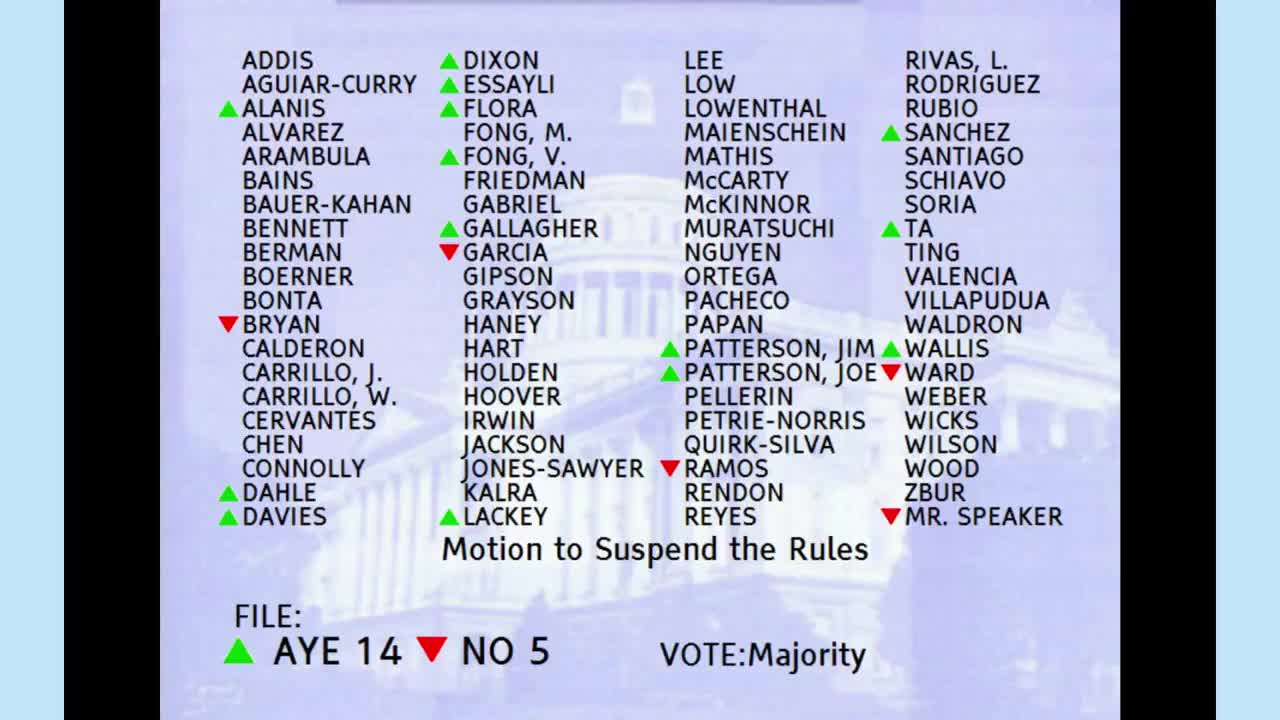 1MIN
Assembly Floor
 4MIN
Assembly Standing Committee on Judiciary
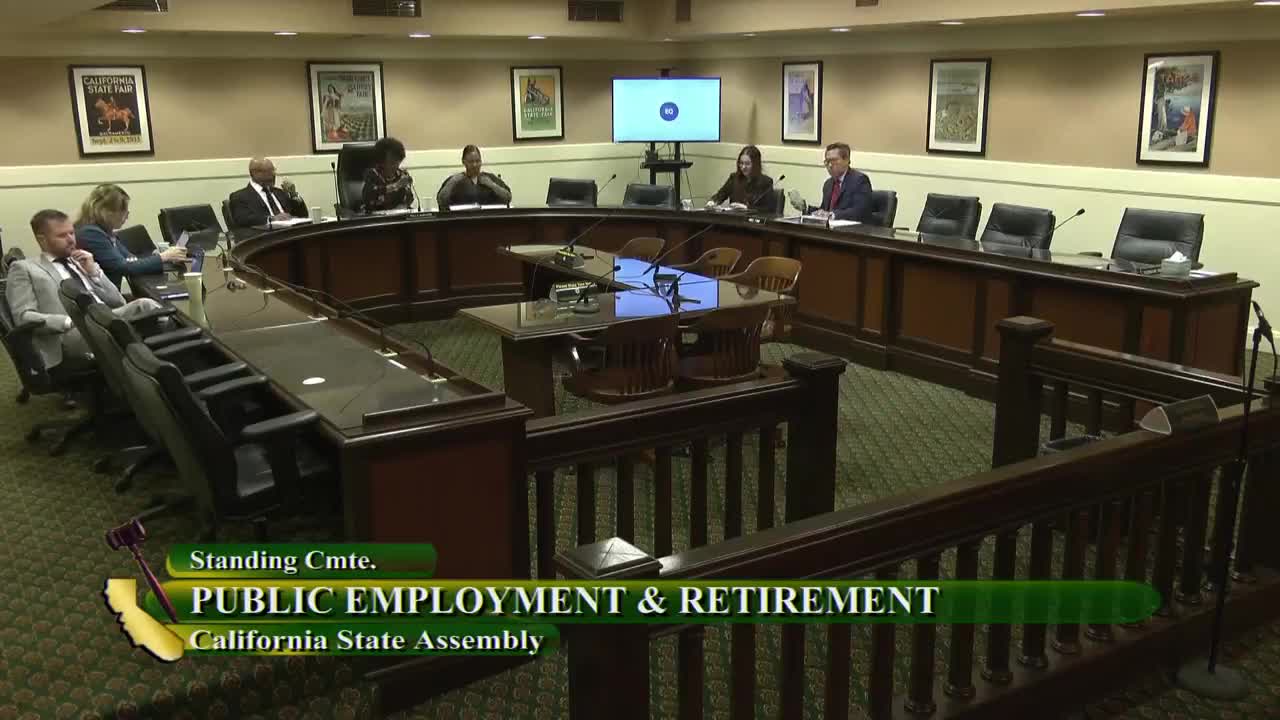 3MIN
Assembly Standing Committee on Public Employment and Retirement
Bill Author

Bill Co-Author(s):