SB 725: Grocery workers.
- Session Year: 2023-2024
- House: Senate
- Latest Version Date: 2023-09-19
Current Status:
Failed
(2024-01-25: Stricken from file.)
Introduced
In Committee
First Chamber
In Committee
Second Chamber
Enacted
What does this bill do?
The bill requires a new grocery owner or operator that will run 20 or more stores to pay an eligible grocery worker — someone who worked at the store at least six months and is not a manager — a dislocated worker allowance of one week’s pay for each full year they worked for the previous owner if the new owner does not hire them or keep them for at least 90 days; the pay rate is the higher of the worker’s average regular pay over the last three years or their final regular pay. Collective bargaining agreements may replace these rules only if they explicitly list which parts are superseded, and the rules don’t apply when the combined nationwide grocery worker totals of the seller and buyer are under 300.
The summary is provided by generative AI which can make mistakes. For original language, please view the details in the table below.
Existing law, upon change in control of a grocery establishment, provides for, among other things, a transition employment period for eligible grocery workers by requiring a successor grocery employer to hire from a list of eligible grocery workers provided by the incumbent grocery employer and to retain those employees for 90 days, except as specified.
This bill would revise the definitions of change in control, grocery establishment, and successor grocery employer, and would add a definition for job classification for purposes of those provisions. The bill, for a successor grocery employer that, after a change in control, will own, control, or operate 20 or more grocery establishments, would require the successor grocery employer to provide an eligible grocery employee a dislocated grocery worker allowance equal to one week of pay for each full year of employment with the incumbent grocery employer if the successor grocery employer does not hire an eligible grocery worker following a change in control or does not retain an eligible grocery worker for at least 90 days following the change in control or the eligible grocery workers employment commencement date, except as specified.
Existing law specifies that parties may, by collective bargaining agreement, provide that the collective bargaining agreement supersedes the provisions described above providing for employment protections for grocery workers.
This bill would require the collective bargaining agreement to explicitly set forth the requirements that are superseded, as specified.
This bill would also exempt certain incumbent grocery employers and successor grocery employers, based upon their total nationwide employment, from all of the above-described requirements.
Existing law, upon change in control of a grocery establishment, provides for, among other things, a transition employment period for eligible grocery workers by requiring a successor grocery employer to hire from a list of eligible grocery workers provided by the incumbent grocery employer and to retain those employees for 90 days, except as specified.
This bill would revise the definitions of change in control, grocery establishment, and successor grocery employer for purposes of those provisions. The bill bill, for a successor grocery employer that, after a change in control, will own, control, or operate 20 or more grocery establishments, would require a the successor grocery employer to provide an eligible grocery employee severance pay a dislocated grocery worker allowance equal to one week of pay for each full year of employment with the incumbent grocery employer if the successor grocery employer does not hire an eligible grocery worker following a change in control or does not retain an eligible grocery worker for at least 90 days following the change in control or the eligible grocery workers employment commencement date, except as specified.
This bill would also exempt certain incumbent grocery employers and successor grocery employers, based upon their total nationwide employment, from all of the above-described requirements.
Existing law, upon change in control of a grocery establishment, provides for for, among other things, a transition employment period for eligible grocery workers by requiring a successor grocery employer to hire from a list of eligible grocery workers provided by the incumbent grocery employer and to retain those employees for 90 days, except as specified.
This bill would revise the definitions of change in control, grocery establishment, and successor grocery employer for purposes of those provisions. The bill would require a successor grocery employer to provide an eligible grocery employee severance pay equal to one week of pay for each full year of employment with the incumbent grocery employer if the successor grocery employer does not hire an eligible grocery worker following a change in control or does not retain an eligible grocery worker for at least 90 days following the change in control or the eligible grocery workers employment commencement date, except as specified.
This bill would also exempt certain incumbent grocery employers and successor grocery employers, based upon their total nationwide employment, from all of the above-described requirements.
Existing law, upon change in control of a grocery establishment, provides for a transitional retention transition employment period for eligible grocery workers by requiring a successor grocery employer to hire from a list of eligible grocery workers provided by the incumbent grocery employer and to retain those employees for a specified period, 90 days, except as specified. Existing law exempts from those provisions grocery establishments that are located in geographic areas designated by the United States Department of Agriculture as a food desert if specified conditions apply.
This bill would prohibit a grocery establishment, where the change in control is a merger, from ordering a mass layoff, relocation, or termination at a covered establishment unless, 180 days before the order takes effect, the employer gives notice of the order to the employees of the covered establishment affected by the order, the Employment Development Department, the local workforce investment board, and the chief elected official of each city and county government within which the termination, relocation, or mass layoff occurs. This bill would require the notice to also be served upon the Department of Justice, the State Department of Public Health, and the State Department of Social Services if the grocery establishment is located in a geographic area designated by the United States Department of Agriculture as a food desert. revise the definitions of change in control, grocery establishment, and successor grocery employer for purposes of those provisions. The bill would require a successor grocery employer to provide an eligible grocery employee severance pay equal to one week of pay for each full year of employment with the incumbent grocery employer if the successor grocery employer does not hire an eligible grocery worker following a change in control or does not retain an eligible grocery worker for at least 90 days following the change in control or the eligible grocery workers employment commencement date, except as specified.
Existing law provides that an employer, with certain exceptions, may not order a mass layoff, relocation or termination, as defined, at a covered establishment unless the employer gives written notice of the order to the employees of the covered establishment affected by the order and specified entities, including the Employment Development Department and the local workforce investment board.
Existing law, upon change in control of a grocery establishment, provides for a transitional retention period for grocery workers by requiring a successor grocery employer to hire from a list of eligible grocery workers provided by the incumbent grocery employer and to retain those employees for a specified period, except as specified. Existing law exempts from those provisions grocery establishments that are located in geographic areas designated by the United States Department of Agriculture as a food desert if specified conditions apply.
This bill would prohibit a grocery establishment, where the change in control is a merger, from ordering a mass layoff, relocation, or termination at a covered establishment unless, 180 days before the order takes effect, the employer gives notice of the order to the employees of the covered establishment affected by the order, the Employment Development Department, the local workforce investment board, and the chief elected official of each city and county government within which the termination, relocation, or mass layoff occurs. This bill would require the notice to also be served upon the Department of Justice, the State Department of Public Health, and the State Department of Social Services if the grocery establishment is located in a geographic area designated by the United States Department of Agriculture as a food desert.
For purposes of this part, the following definitions shall apply:
(a)Change in control means any sale, purchase, assignment, acquisition, transfer, contribution, or other disposition of all or substantially all of the assets, cash on hand, or a controlling interest, including by consolidation, merger, or reorganization, of or by the incumbent grocery employer or any person who controls the incumbent grocery employer or any grocery establishment under the operation or control of either the incumbent grocery employer or any person who controls the incumbent grocery employer.
(b)Eligible grocery worker means any individual whose primary place of employment is at the grocery establishment subject to a change in control, and who has worked for the incumbent grocery employer for at least six months prior to the execution of the transfer document. Eligible grocery worker does not include a managerial, supervisory, or confidential employee.
(c)Employment commencement date means the date on which an eligible grocery worker retained by the successor grocery employer pursuant to this part commences work for the successor grocery employer in exchange for benefits and compensation under the terms and conditions established by the successor grocery employer and as required by law.
(d)Grocery establishment means a retail store in this state that is over 15,000 square feet in size and that sells primarily household foodstuffs for offsite consumption, including the sale of fresh produce, meats, poultry, fish, deli products, dairy products, canned foods, dry foods, beverages, baked foods, or prepared foods. Other household supplies or other products shall be secondary to the primary purpose of food sales. A distribution center owned and operated by a grocery establishment and used primarily to distribute goods to or from its owned stores shall be considered a grocery establishment regardless of its square footage. A grocery establishment does not include a retail store that has ceased operations for 12 months or more.
(e)Incumbent grocery employer means the person that owns, controls, or operates the grocery establishment at the time of the change in control.
(f)Job classification means a system for categorizing certain duties into certain jobs.
(g)Person means an individual, corporation, partnership, limited partnership, limited liability partnership, limited liability company, business trust, estate, trust, association, joint venture, agency, instrumentality, or any other legal or commercial entity, whether domestic or foreign.
(h)Successor grocery employer means the person that owns, controls, or operates the grocery establishment after the change in control. A successor grocery employer may be the same entity as an incumbent employer when a change in control occurs but the covered employer remains the same.
(i)Transfer document means the purchase agreement or other document effecting the change in control.
SEC. 2.Section 2507 is added to the Labor Code, to read:2507.(a)This section shall only apply to a successor grocery employer that, after a change in control, will own, control, or operate 20 or more grocery establishments.
(b)Notwithstanding other provisions of this part, if a successor grocery employer does not hire an eligible grocery worker following a change in control or does not retain an eligible grocery worker for at least 90 days following the change in control or the eligible grocery workers employment commencement date, whichever is later, the successor grocery company shall, unless the eligible grocery worker has quit or has been discharged for cause, provide the eligible grocery employee a dislocated grocery worker allowance equal to one week of pay for each full year of employment with the incumbent grocery employer. The rate of the dislocated grocery worker allowance shall be the average regular rate of compensation received during the eligible grocery workers last three years of employment with the incumbent grocery employer or the final regular rate of compensation paid to the eligible grocery worker, whichever rate is higher. The successor grocery employer shall provide the greater of the dislocated grocery worker allowance required pursuant to this subdivision or the dislocated grocery worker allowance required pursuant to the terms of a relevant collective bargaining agreement, if any.
SEC. 3.Section 2512 of the Labor Code is amended to read:2512.Parties subject to this part may, by collective bargaining agreement, provide that the agreement supersedes the requirements of this part, in whole or in part, but only if the agreement explicitly sets forth in clear and unambiguous terms the requirements of this part that are superseded.
SEC. 4.Section 2517 is added to the Labor Code, to read:2517.(a)This part shall not apply to an incumbent grocery employer and the successor grocery employer executing the transfer document with that incumbent grocery employer, if the sum of both of the following is less than 300:
(1)The number of grocery workers employed, immediately prior to the change in control, by the incumbent grocery employer across that employers grocery establishments nationwide.
(2)The number of grocery workers employed, immediately prior to the change in control, by the successor grocery employer across that employers grocery establishments nationwide.
(b)Notwithstanding any law, and for purposes of this section only, the following definitions apply:
(1)Grocery establishment as used in this section has the same meaning as defined in Section 2502, but shall also include grocery establishments in other states in the United States.
(2)Grocery worker as used in this section means any individual whose primary place of employment is at a grocery establishment that is owned, controlled, or operated by the incumbent or successor grocery employer, as applicable.
For purposes of this part, the following definitions shall apply:
(a)Change in control means any sale, purchase, assignment, acquisition, transfer, contribution, or other disposition of all or substantially all of the assets, cash on hand, or a controlling interest, including by consolidation, merger, or reorganization, of or by the incumbent grocery employer or any person who controls the incumbent grocery employer or any grocery establishment under the operation or control of either the incumbent grocery employer or any person who controls the incumbent grocery employer.
(b)Eligible grocery worker means any individual whose primary place of employment is at the grocery establishment subject to a change in control, and who has worked for the incumbent grocery employer for at least six months prior to the execution of the transfer document. Eligible grocery worker does not include a managerial, supervisory, or confidential employee.
(c)Employment commencement date means the date on which an eligible grocery worker retained by the successor grocery employer pursuant to this part commences work for the successor grocery employer in exchange for benefits and compensation under the terms and conditions established by the successor grocery employer and as required by law.
(d)Grocery establishment means a retail store in this state that is over 15,000 square feet in size and that sells primarily household foodstuffs for offsite consumption, including the sale of fresh produce, meats, poultry, fish, deli products, dairy products, canned foods, dry foods, beverages, baked foods, or prepared foods. Other household supplies or other products shall be secondary to the primary purpose of food sales. A distribution center owned and operated by a grocery establishment and used primarily to distribute goods to or from its owned stores shall be considered a grocery establishment regardless of its square footage. A grocery establishment does not include a retail store that has ceased operations for six 12 months or more.
(e)Incumbent grocery employer means the person that owns, controls, or operates the grocery establishment at the time of the change in control.
(f)Job classification means a system for categorizing certain duties into certain jobs.
(f)(g)Person means an individual, corporation, partnership, limited partnership, limited liability partnership, limited liability company, business trust, estate, trust, association, joint venture, agency, instrumentality, or any other legal or commercial entity, whether domestic or foreign.
(g)(h)Successor grocery employer means the person that owns, controls, or operates the grocery establishment after the change in control. A successor grocery employer may be the same entity as an incumbent employer when a change in control occurs but the covered employer remains the same.
(h)(i)Transfer document means the purchase agreement or other document effecting the change in control.
SEC. 2.Section 2507 is added to the Labor Code, to read:2507.Notwithstanding2507.(a)This section shall only apply to a successor grocery employer that, after a change in control, will own, control, or operate 20 or more grocery establishments.
(b)Notwithstanding other provisions of this part, if a successor grocery employer does not hire an eligible grocery worker following a change in control or does not retain an eligible grocery worker for at least 90 days following the change in control or the eligible grocery workers employment commencement date, whichever is later, the successor grocery company shall, unless the eligible grocery worker has quit or has been discharged for cause, provide the eligible grocery employee severance pay a dislocated grocery worker allowance equal to one week of pay for each full year of employment with the incumbent grocery employer. The rate of severance pay the dislocated grocery worker allowance shall be the average regular rate of compensation received during the eligible grocery workers last three years of employment with the incumbent grocery employer or the final regular rate of compensation paid to the eligible grocery worker, whichever rate is higher. The successor grocery employer shall provide the greater of the severance pay dislocated grocery worker allowance required pursuant to this subdivision or the severance pay dislocated grocery worker allowance required pursuant to the terms of a relevant collective bargaining agreement, if any.
SEC. 3.Section 2512 of the Labor Code is amended to read:2512.Parties subject to this part may, by collective bargaining agreement, provide that the agreement supersedes the requirements of this part part, in whole or in part, but only if the waiver is explicitly set forth in that agreement in clear and unambiguous terms. agreement explicitly sets forth in clear and unambiguous terms the requirements of this part that are superseded.
SEC. 4.Section 2517 is added to the Labor Code, to read:2517.(a)This part shall not apply to an incumbent grocery employer and the successor grocery employer executing the transfer document with that incumbent grocery employer, if the sum of both of the following is less than 300:
(1)The number of grocery workers employed, immediately prior to the change in control, by the incumbent grocery employer across that employers grocery establishments nationwide.
(2)The number of grocery workers employed, immediately prior to the change in control, by the successor grocery employer across that employers grocery establishments nationwide.
(b)Notwithstanding any law, and for purposes of this section only, the following definitions apply:
(1)Grocery establishment as used in this section has the same meaning as defined in Section 2502, but shall also include grocery establishments in other states in the United States.
(2)Grocery worker as used in this section means any individual whose primary place of employment is at a grocery establishment that is owned, controlled, or operated by the incumbent or successor grocery employer, as applicable.
For purposes of this part, the following definitions shall apply:
(a)Change in control means any sale, purchase, assignment, acquisition, transfer, contribution, or other disposition of all or substantially all of the assets, cash on hand, or a controlling interest, including by consolidation, merger, or reorganization, of or by the incumbent grocery employer or any person who controls the incumbent grocery employer or any grocery establishment under the operation or control of either the incumbent grocery employer or any person who controls the incumbent grocery employer.
(b)Eligible grocery worker means any individual whose primary place of employment is at the grocery establishment subject to a change in control, and who has worked for the incumbent grocery employer for at least six months prior to the execution of the transfer document. Eligible grocery worker does not include a managerial, supervisory, or confidential employee.
(c)Employment commencement date means the date on which an eligible grocery worker retained by the successor grocery employer pursuant to this part commences work for the successor grocery employer in exchange for benefits and compensation under the terms and conditions established by the successor grocery employer and as required by law.
(d)Grocery establishment means a retail store in this state that is over 15,000 square feet in size and that sells primarily household foodstuffs for offsite consumption, including the sale of fresh produce, meats, poultry, fish, deli products, dairy products, canned foods, dry foods, beverages, baked foods, or prepared foods. Other household supplies or other products shall be secondary to the primary purpose of food sales. A distribution center owned and operated by a grocery establishment and used primarily to distribute goods to or from its owned stores shall be considered a grocery establishment regardless of its square footage. A grocery establishment does not include a retail store that has ceased operations for six months or more.
(e)Incumbent grocery employer means the person that owns, controls, or operates the grocery establishment at the time of the change in control.
(f)Person means an individual, corporation, partnership, limited partnership, limited liability partnership, limited liability company, business trust, estate, trust, association, joint venture, agency, instrumentality, or any other legal or commercial entity, whether domestic or foreign.
(g)Successor grocery employer means the person that owns, controls, or operates the grocery establishment after the change in control. A successor grocery employer may be the same entity as an incumbent employer when a change in control occurs but the covered employer remains the same.
(h)Transfer document means the purchase agreement or other document effecting the change in control.
SEC. 2.Section 2507 is added to the Labor Code, to read:2507.(a)Notwithstanding other provisions of this part, if a successor grocery employer does not hire an eligible grocery worker following a change in control or does not retain an eligible grocery worker for at least 90 days following the change in control or the eligible grocery workers employment commencement date, whichever is later, the successor grocery company shall, unless the eligible grocery worker has quit or has been discharged for cause, provide the eligible grocery employee severance pay equal to one week of pay for each full year of employment with the incumbent grocery employer. The rate of severance pay shall be the average regular rate of compensation received during the eligible grocery workers last three years of employment with the incumbent grocery employer or the final regular rate of compensation paid to the eligible grocery worker, whichever rate is higher. The successor grocery employer shall provide the greater of the severance pay required pursuant to this subdivision or the severance pay required pursuant to the terms of a relevant collective bargaining agreement, if any.
(b)Parties subject to this part may, by collective bargaining agreement, provide that the agreement supersedes the requirements of this part in whole or in part, but only if the waiver is explicitly set for in that agreement in clear and unambiguous terms.SEC. 3.Section 2512 of the Labor Code is amended to read:2512.Parties subject to this part may, by collective bargaining agreement, provide that the agreement supersedes the requirements of this part. part in whole or in part, but only if the waiver is explicitly set forth in that agreement in clear and unambiguous terms.
SEC. 4.Section 2517 is added to the Labor Code, to read:2517.(a)This part shall not apply to an incumbent grocery employer and the successor grocery employer executing the transfer document with that incumbent grocery employer, if the sum of both of the following is less than 300:
(1)The number of grocery workers employed, immediately prior to the change in control, by the incumbent grocery employer across that employers grocery establishments nationwide.
(2)The number of grocery workers employed, immediately prior to the change in control, by the successor grocery employer across that employers grocery establishments nationwide.
(b)Notwithstanding any law, and for purposes of this section only, the following definitions apply:
(1)Grocery establishment as used in this section has the same meaning as defined in Section 2502, but shall also include grocery establishments in other states in the United States.
(2)Grocery worker as used in this section means any individual whose primary place of employment is at a grocery establishment that is owned, controlled, or operated by the incumbent or successor grocery employer, as applicable.
For purposes of this part, the following definitions shall apply:
(a)Change in control means any sale, purchase, assignment, acquisition, transfer, contribution, or other disposition of all or substantially all of the assets assets, cash on hand, or a controlling interest, including by consolidation, merger, or reorganization, of or by the incumbent grocery employer or any person who controls the incumbent grocery employer or any grocery establishment under the operation or control of either the incumbent grocery employer or any person who controls the incumbent grocery employer.
(b)Eligible grocery worker means any individual whose primary place of employment is at the grocery establishment subject to a change in control, and who has worked for the incumbent grocery employer for at least six months prior to the execution of the transfer document. Eligible grocery worker does not include a managerial, supervisory, or confidential employee.
(c)Employment commencement date means the date on which an eligible grocery worker retained by the successor grocery employer pursuant to this part commences work for the successor grocery employer in exchange for benefits and compensation under the terms and conditions established by the successor grocery employer and as required by law.
(d)Grocery establishment means a retail store in this state that is over 15,000 square feet in size and that sells primarily household foodstuffs for offsite consumption, including the sale of fresh produce, meats, poultry, fish, deli products, dairy products, canned foods, dry foods, beverages, baked foods, or prepared foods. Other household supplies or other products shall be secondary to the primary purpose of food sales. A distribution center owned and operated by a grocery establishment and used primarily to distribute goods to or from its owned stores shall be considered a grocery establishment regardless of its square footage. A grocery establishment does not include a retail store that has ceased operations for six months or more.
(e)Incumbent grocery employer means the person that owns, controls, or operates the grocery establishment at the time of the change in control.
(f)Person means an individual, corporation, partnership, limited partnership, limited liability partnership, limited liability company, business trust, estate, trust, association, joint venture, agency, instrumentality, or any other legal or commercial entity, whether domestic or foreign.
(g)Successor grocery employer means the person that owns, controls, or operates the grocery establishment after the change in control. A successor grocery employer may be the same entity as an incumbent employer when a change in control occurs but the covered employer remains the same.
(h)Transfer document means the purchase agreement or other document effecting the change in control.
SEC. 2.Section 2507 is added to the Labor Code, to read:2507.(a)Notwithstanding other provisions of this part, if a successor grocery employer does not hire an eligible grocery worker following a change in control or does not retain an eligible grocery worker for at least 90 days following the change in control or the eligible grocery workers employment commencement date, whichever is later, the successor grocery company shall, unless the eligible grocery worker has quit or has been discharged for cause, provide the eligible grocery employee severance pay equal to one week of pay for each full year of employment with the incumbent grocery employer. The rate of severance pay shall be the average regular rate of compensation received during the eligible grocery workers last three years of employment with the incumbent grocery employer or the final regular rate of compensation paid to the eligible grocery worker, whichever rate is higher. The successor grocery employer shall provide the greater of the severance pay required pursuant to this subdivision or the severance pay required pursuant to the terms of a relevant collective bargaining agreement, if any.
(b)Parties subject to this part may, by collective bargaining agreement, provide that the agreement supersedes the requirements of this part in whole or in part, but only if the waiver is explicitly set for in that agreement in clear and unambiguous terms.
SECTION 1.Section 1401.1 is added to the Labor Code, to read:1401.1.(a)An employer that is a grocery establishment as defined in subdivision (d) of Section 2502 where the change in control as described in subdivision (a) of Section 2502 is a merger may not order a mass layoff, relocation, or termination at a covered establishment unless, 180 days before the order takes effect, the employer gives written notice of the order to the following:(1)The employees of the covered establishment affected by the order.(2)The Employment Development Department, the local workforce investment board, and the chief elected official of each city and county government within which the termination, relocation, or mass layoff occurs.(b)An employer required to give notice of any mass layoff, relocation, or termination under this chapter shall include in its notice the elements required by the federal Worker Adjustment and Retraining Notification Act (29 U.S.C. Sec. 2101 et seq.).(c)Notwithstanding the requirements of subdivision (a), an employer is not required to provide notice if a mass layoff, relocation, or termination is necessitated by a physical calamity or act of war.(d)If the grocery establishment that is the subject of the mass layoff is located in a geographic area designated by United States Department of Agriculture as a food desert, the notice required by subdivision (a) shall also be served upon the Department of Justice, the State Department of Public Health, and the State Department of Social Services.(a)An employer that is a grocery establishment as defined in subdivision (d) of Section 2502 where the change in control as described in subdivision (a) of Section 2502 is a merger may not order a mass layoff, relocation, or termination at a covered establishment unless, 180 days before the order takes effect, the employer gives written notice of the order to the following:
(1)The employees of the covered establishment affected by the order.
(2)The Employment Development Department, the local workforce investment board, and the chief elected official of each city and county government within which the termination, relocation, or mass layoff occurs.
(b)An employer required to give notice of any mass layoff, relocation, or termination under this chapter shall include in its notice the elements required by the federal Worker Adjustment and Retraining Notification Act (29 U.S.C. Sec. 2101 et seq.).
(c)Notwithstanding the requirements of subdivision (a), an employer is not required to provide notice if a mass layoff, relocation, or termination is necessitated by a physical calamity or act of war.
(d)If the grocery establishment that is the subject of the mass layoff is located in a geographic area designated by United States Department of Agriculture as a food desert, the notice required by subdivision (a) shall also be served upon the Department of Justice, the State Department of Public Health, and the State Department of Social Services.
|
Date
|
Status
|
|---|---|
| Jan 25, 2024 | Veto sustained. |
| Jan 25, 2024 | Stricken from file. |
| Oct 8, 2023 | In Senate. Consideration of Governor's veto pending. |
| Oct 8, 2023 | Vetoed by the Governor. |
| Sep 21, 2023 | Enrolled and presented to the Governor at 4 p.m. |
| Sep 14, 2023 | Assembly amendments concurred in. (Ayes 31. Noes 8. Page 2828.) Ordered to engrossing and enrolling. |
| Sep 14, 2023 | In Senate. Concurrence in Assembly amendments pending. |
| Sep 14, 2023 | Read third time. Passed. (Ayes 59. Noes 15. Page 3518.) Ordered to the Senate. |
| Sep 8, 2023 | Read third time and amended. |
| Sep 8, 2023 | Ordered to third reading. |
| Aug 14, 2023 | Read second time. Ordered to third reading. |
| Jul 13, 2023 | From committee: Do pass. (Ayes 5. Noes 2.) (July 12). |
| Jun 15, 2023 | Referred to Com. on L. & E. |
| Jun 1, 2023 | In Assembly. Read first time. Held at Desk. |
| May 31, 2023 | Read third time. Passed. (Ayes 33. Noes 6. Page 1402.) Ordered to the Assembly. |
| May 23, 2023 | Read second time. Ordered to third reading. |
| May 22, 2023 | Read third time and amended. |
| May 22, 2023 | Ordered to second reading. |
| Apr 24, 2023 | Read second time. Ordered to third reading. |
| Apr 20, 2023 | From committee: Do pass. (Ayes 5. Noes 0. Page 833.) (April 19). |
| Apr 11, 2023 | Set for hearing April 19. |
| Mar 20, 2023 | From committee with author's amendments. Read second time and amended. Re-referred to Com. on L., P.E. & R. |
| Mar 1, 2023 | Referred to Com. on L., P.E. & R. |
| Feb 17, 2023 | From printer. May be acted upon on or after March 19. |
| Feb 16, 2023 | Introduced. Read first time. To Com. on RLS. for assignment. To print. |
|
Date
|
Description
|
Location
|
Votes
|
|
|---|---|---|---|---|
| Sep 14, 2023 | SB 725 Smallwood-Cuevas Senate Third Reading By Holden | Assembly Floor |
Passed |
|
| Sep 14, 2023 | Unfinished Business SB725 Smallwood-Cuevas Concurrence | Senate Floor |
Passed |
|
| Jul 12, 2023 | Do pass. | Assembly Standing Committee on Labor and Employment |
Passed |
|
| May 31, 2023 | Senate 3rd Reading SB725 Smallwood-Cuevas | Senate Floor |
Passed |
|
| Apr 19, 2023 | Do pass | Senate Standing Committee on Labor, Public Employment and Retirement |
Passed |
This list shows positions taken on this bill by organizations on the date displayed, which is linked to the original source.
Positions by individuals are not included.
|
Organization
|
Position
|
Date
|
|---|---|---|
| black women for wellness | ** Support | |
| California Chamber Of Commerce | ** Against | |
| California Coalition For Worker Power | * Support | Jul 12, 2023 |
| California Employment Lawyers Association | ** Support | |
| California Environmental Voters | ** Support | |
| California Faculty Association | ** Support | |
| California Food and Farming Network | ** Support | |
| California Grocers Association | ** Against | |
| California Growers Association | * Against | Apr 19, 2023 |
| California Immigrant Policy Center | ** Support | |
| California Labor Federation, Afl-Cio | ** Support | |
| California Retailers Association | ** Against | |
| California School Employees Association | ** Support | |
| California State Legislative Board, Sheet Metal, Air, Rail and Transportation Workers - Transportation Division | ** Support | |
| Center for Responsible Lending | ** Support | |
| Central California Environmental Justice Network | ** Support | |
| centro binacional para el desarrollo indigena oaxaqueno | ** Support | |
| Courage California | ** Support | |
| Economic Security Project Action | ** Support | |
| Equal Rights Advocates | * Support | Jul 12, 2023 |
| Indivisible California StateStrong | ** Support | |
| International Brotherhood of Teamsters | * Support | Apr 19, 2023 |
| kiwa | ** Support | |
| Lax-area Democratic Club | ** Support | |
| Los Angeles Alliance for a New Economy | ** Support | |
| Los Angeles County Federation of Labor, AFL-CIO | ** Support | |
| National Council Of Jewish Women Los Angeles | ** Support | |
| Pesticide Action Network | ** Support | |
| Public Counsel | ** Support | |
| Restaurant Opportunity Center United | ** Support | |
| san mateo labor council | ** Support | |
| San Mateo Labor Council, AFL-CIO | ** Support | |
| SEIU California State Council | ** Support | |
| TechEquity Collaborative | ** Support | |
| Transportation Division | ** Support | |
| United Food And Commercial Workers, Western States Council | ** Support | |
| western center on law and poverty | ** Support |
SENATE RULES COMMITTEE Office of Senate Floor Analyses (916) 651-1520 Fax: (916) 327-4478 | SB 725 |
VETO
Bill No: SB 725
Author: Smallwood-Cuevas (D)
Amended: 9/8/23
Vote: 27
SENATE LABOR, PUB. EMP. & RET. COMMITTEE: 5-0, 4/19/23
AYES: Cortese, Wilk, Durazo, Laird, Smallwood-Cuevas
SENATE FLOOR: 33-6, 5/31/23
AYES: Allen, Alvarado-Gil, Archuleta, Ashby, Atkins, Becker, Blakespear, Bradford, Caballero, Cortese, Dahle, Dodd, Durazo, Eggman, Gonzalez, Hurtado, Laird, Limón, McGuire, Menjivar, Min, Newman, Padilla, Portantino, Roth, Rubio, Skinner, Smallwood-Cuevas, Stern, Umberg, Wahab, Wiener, Wilk
NOES: Grove, Jones, Nguyen, Niello, Ochoa Bogh, Seyarto
NO VOTE RECORDED: Glazer
SENATE FLOOR: 31-8, 9/14/23
AYES: Allen, Archuleta, Ashby, Atkins, Becker, Blakespear, Bradford, Caballero, Cortese, Dodd, Durazo, Eggman, Gonzalez, Hurtado, Laird, Limón, McGuire, Menjivar, Min, Newman, Padilla, Portantino, Roth, Rubio, Skinner, Smallwood-Cuevas, Stern, Umberg, Wahab, Wiener, Wilk
NOES: Alvarado-Gil, Dahle, Grove, Jones, Nguyen, Niello, Ochoa Bogh, Seyarto
NO VOTE RECORDED: Glazer
ASSEMBLY FLOOR: 59-15, 9/14/23 - See last page for vote
SUBJECT: Grocery workers
SOURCE: United Food and Commercial Workers, Western States Council
DIGEST:
This bill requires a successor grocery employer, as specified, to provide an eligible grocery employee a payment equal to one week of pay for each full year of employment with the incumbent grocery employer if the successor grocery employer does not hire the eligible grocery worker following a change in control or does not retain the eligible grocery worker for at least 90 days following the change in control or employment commencement date. This bill exempts a grocery establishment that has ceased operations for 12 months and not apply to successor grocery employers and incumbent grocery employers with less than 300 employees, as specified.
ANALYSIS:
Existing law:
- Provides for a transition employment period for eligible grocery workers by requiring a successor grocery employer to hire from a list of eligible grocery workers provided by the incumbent grocery employer and to retain those employees for 90 days, except as specified.
- Requires that grocery establishments, when a change in control occurs, do the following:
- An incumbent grocery employer, within 15 days after the execution of the transfer document, to provide the successor grocery employer the name, address, date of hire, and employment occupation classification of each eligible grocery worker.
- The successor grocery employer to maintain a preferential hiring list of eligible grocery workers identified by the incumbent grocery employer and must hire from that list for a period of 90 days, as specified.
- During this 90-day transition employment period, eligible grocery workers to be employed under the terms and conditions established by the successor employer and pursuant to the terms of a relevant collective bargaining agreement, if any.
- If the successor employer determines that it requires fewer workers, the successor grocery employer shall retain eligible grocery workers by seniority, as specified.
- If the eligible grocery worker’s performance during the 90-day transition employment period is satisfactory, the successor grocery employer to consider offering the eligible grocery worker continued employment.
- Provides, generally, 60-70 percent of lost wages as a result of job loss.
- Establishes the California WARN (Cal/WARN) Act, which requires employers with 75 or more full and part-time employees to provide 60 days’ notice before employee termination, relocation, or mass layoff of 50 or more employees.
- States that an employer that fails to give the required notice, as required by Cal/WARN, before ordering a mass layoff, relocation, or termination, is liable to each employee entitled to notice, for specified compensation and benefits, calculated for the period of the employer’s violation, up to a maximum of 60 days, or half the number of days that the employee was employed by the employer, whichever period is smaller.
- States that an employer who fails to give the notice, as required by Cal/WARN, is subject to a civil penalty of not more than five hundred dollars ($500) for each day of the employer’s violation. Exempts an employer from this civil penalty if the employer pays all applicable employees within three weeks from the date the employer ordered the mass layoff, relocation, or termination.
- Permits a person, including a local government, or an employee representative, seeking to establish liability against an employer for violation of Cal/WARN to bring a civil action on behalf of the person other persons similarly situated, or both, in any court of competent jurisdiction. Additionally, permits a court to award reasonable attorney’s fees as part of the costs to any plaintiff who prevails in a civil action.
- Defines “grocery establishment” as a retail store in this state that is over 15,000 square feet in size and that sells primarily household foodstuffs for offsite consumption, including the sale of fresh produce, meats, poultry, fish, deli products, dairy products, canned foods, dry foods, beverages, baked foods, or prepared foods. Other household supplies or other products shall be secondary to the primary purpose of food sales. A grocery establishment does not include a retail store that has ceased operations for 12 months or more.
- Defines “successor grocery employer” as the person that owns, controls, or operates the grocery establishment after the change in control.
This bill:
- Requires a successor grocery employer that owns, operates, or controls 20 or more grocery establishments to provide an eligible grocery employee a dislocated grocery worker allowance pay equal to one week of pay for each full year of employment with the incumbent grocery employer if the successor grocery employer does not hire an eligible grocery worker following a change in control or does not retain an eligible grocery worker for at least 90 days following the change in control or the eligible grocery worker’s employment commencement date.
- Exempts an incumbent grocery employer and the successor grocery employer if they employ 300 or less grocery workers combined immediately prior to the change in control.
- Specifies the rate of a dislocated grocery worker allowance shall be the average regular rate of compensation received during the eligible grocery worker’s last three years of employment with the incumbent grocery employer or the final regular rate of compensation paid to the eligible grocery worker, whichever rate is higher, or the severance pay required pursuant to a relevant collective bargaining agreement.
- Revises the definition of “change in control” to add the purchase or acquisition of all cash on hand.
- Revises the definition of “grocery establishment” to include a distribution center, regardless of square footage, owned and operated by a grocery establishment and used primarily to distribute goods to or from its owned stores in the United States.
- Revises the definition of “successor employer” to specify a successor grocery employer may be the same entity as an incumbent employer when a change in control occurs but the covered employer remains the same.
- Provides that parties subject to a collective bargaining agreement may provide that the agreement supersedes the requirements of this bill, in whole or in part, but only if the agreement explicitly sets forth clear and unambiguous terms and requirements that are superseded.
Background
Last fall, Kroger, the largest full service grocery chain in the United States, and Albertson’s, the second largest, announced an unprecedented $25 billion merger. Kroger, which is based in Ohio, operates 2800 stores in 35 states and includes brands such as Ralph’s, Smith’s, and Harris Teeter. Albertson’s, based in Idaho, operates 2273 stores in 34 states and includes brands such as Safeway, Jewel Osco, and Shaw’s. Together, these two businesses operate in nearly every state and employ approximately 710,000 people, with over 50 manufacturing facilities and 5,000 stores.
The United States Federal Trade Commission (FTC), as part of its regulatory review of the proposed merger, is gathering information from the industry on how it thinks the merger would impact the landscape, such as product sourcing, pricing, online operations, labor dynamics, store brand programs, and shopper data use. In 2020, the FTC blocked Kroger’s proposed acquisition of Winn-Dixie, citing a violation of Section 7 of the Clayton Act (15 U.S.C. §18) and of Section 5 of the Federal Trade Commission Act (15 U.S.C. §45) due to substantial loss of competition in several markets. As a result of store closures, New Jersey passed a law in 2020 requiring employers to provide employees let go during a mass layoff with one week of severance for every year of service. In 2022, Maine followed suit by passing a similar law to require employers with 100 or more employees to provide one week of severance for every year of service, in the event of a mass layoff. This bill would likewise ensure severance for displaced employees of large grocery retailers.
Comments
Purpose of the bill. According to the author, “From 1993 to 2019, the number of grocery stores nationwide declined by roughly 30 percent. Food industry mergers and acquisitions exceeded 300 in 2019 alone and the US grocery supermarket industry is moving closer to complete concentration and monopoly as demonstrated by the series of mergers and acquisitions over the last 40 years. A hallmark of these mergers is a reduction in the workforce in the form of mass layoffs and worksite closures, which can be devastating for the workers at the site and the communities in which they live… While the notice requirements of the WARN Act and UI benefits provide some protections to workers caught in a layoff or closure, it does not require employers to provide any material support to workers trying to transition. While having the time to find new employment or partial wage replacement is helpful, it is not sufficient to deal with the costs of retraining or the uncovered living expenses while between jobs. SB 725 will limit the disruptions amongst essential grocery store workers and local communities by providing mandatory severance pay in the event there is a layoff because of a merger or consolidation. This basic protection will allow these essential workers, who have sacrificed their health and safety during the pandemic, to put food on their tables and maintain economic stability during a tumultuous time.”
FISCAL EFFECT: Appropriation: No Fiscal Com.: No Local: No
SUPPORT: (Verified 10/18/23)
United Food and Commercial Workers, Western States Council (source)
Black Women for Wellness
California Employment Lawyers Association
California Environmental Voters
California Faculty Association
California Food and Farming Network
California Immigrant Policy Center
California Labor Federation, AFL-CIO
California School Employees Association
California State Legislative Board, Sheet Metal, Air, Rail and Transportation Workers-Transportation Division
Center for Responsible Lending
Central California Environmental Justice Network
Centro Binacional Para El Desarrollo Indígena Oaxaqueno
Courage California
Economic Security Project Action
Indivisible California Statestrong
KIWA
LAX-Area Democratic Club
Los Angeles Alliance for a New Economy
Los Angeles County Federation of Labor, AFL-CIO
National Council of Jewish Women Los Angeles
Pesticide Action Network
Public Counsel
Restaurant Opportunity Center United
San Mateo Labor Council, AFL-CIO
SEIU California State Council
TechEquity Collaborative
Western Center on Law and Poverty
OPPOSITION: (Verified 10/18/23)
California Chamber of Commerce
California Grocers Association
California Retailers Association
ARGUMENTS IN SUPPORT: The United Food and Commercial Workers Union, Western States Council, states “ As conclusively demonstrated, and legally affirmed during the pandemic, grocery store workers with the experience and skill in the safe and sanitary storage and sale of food are essential to the health and well-being of every neighborhood. Building on current law and the lessons of the pandemic, SB 725 enacts new reforms by providing grocery store workers a safety net to prevent and curb the effects of layoffs of grocery workers and licensed medicine-dispensing pharmacy staff who work in grocery store pharmacies; layoffs that would, if unrestrained by the public interest, abruptly and irrevocably compel skilled workers to seek employment elsewhere, draining neighborhoods of their essential skills and economic stimulus. The bill also ensures that the costs of layoffs are shared instead of being exclusively shouldered by taxpayers.”
ARGUMENTS IN OPPOSITION: According to the opponent, California Grocers Association, “Collectively, the provisions of SB 725 will have a significant chilling effect, discouraging growth of the grocery industry and thereby limiting access to employment opportunities for Californians…Under current law, eligible grocers are obligated to provide detailed information to the successor grocer on contact information of eligible grocery workers. And during this 90-day transition period, eligible grocery workers are offered the same terms of employment as established by the incumbent grocer (including the conditions of a collective bargaining agreement). More importantly, successor grocers are not lawfully authorized to discharge an eligible grocer worker during this transition period without cause…Moreover, it is unclear why the entirety of Part 9.5 of Division 2 of the California Labor Code, which is specific to grocery workers, would apply to distribution centers and warehouses, which serve separate and distinct functions.”
GOVERNOR'S VETO MESSAGE:
This bill would require a successor grocery employer to provide an eligible grocery employee a dislocated worker allowance equal to one week of pay for each year of employment with the incumbent grocery employer, if the successor grocery employer does not hire or retain an eligible grocery worker as required in grocery worker retention laws.
While the goal of limiting the disruptions caused by grocery mergers and acquisitions amongst essential grocery store workers and local communities is laudable, existing law already provides protections for displaced workers, including WARN Act notice requirements, grocery worker retention requirements which require successor grocery employers to retain eligible grocery workers for 90-days during a store transitionary period, and unemployment insurance benefits. The additional obligations in this bill are unduly prescriptive and overly burdensome.
ASSEMBLY FLOOR: 59-15, 9/14/23
AYES: Addis, Aguiar-Curry, Alvarez, Arambula, Bains, Bauer-Kahan, Bennett, Berman, Boerner, Bonta, Bryan, Calderon, Juan Carrillo, Wendy Carrillo, Cervantes, Chen, Connolly, Mike Fong, Friedman, Gabriel, Garcia, Gipson, Grayson, Haney, Hart, Holden, Irwin, Jackson, Jones-Sawyer, Kalra, Lee, Low, Lowenthal, Maienschein, McCarty, McKinnor, Muratsuchi, Ortega, Papan, Pellerin, Petrie-Norris, Quirk-Silva, Ramos, Rendon, Reyes, Luz Rivas, Rodriguez, Santiago, Schiavo, Soria, Ting, Waldron, Ward, Weber, Wicks, Wilson, Wood, Zbur, Robert Rivas
NOES: Alanis, Megan Dahle, Davies, Dixon, Essayli, Flora, Vince Fong, Gallagher, Hoover, Mathis, Jim Patterson, Joe Patterson, Sanchez, Ta, Wallis
NO VOTE RECORDED: Lackey, Stephanie Nguyen, Pacheco, Blanca Rubio, Valencia, Villapudua
Prepared by: Dawn Clover / L., P.E. & R. / (916) 651-1556
10/25/23 10:56:05
**** END ****
SENATE RULES COMMITTEE Office of Senate Floor Analyses (916) 651-1520 Fax: (916) 327-4478 | SB 725 |
UNFINISHED BUSINESS
Bill No: SB 725
Author: Smallwood-Cuevas (D)
Amended: 9/8/23
Vote: 21
SENATE LABOR, PUB. EMP. & RET. COMMITTEE: 5-0, 4/19/23
AYES: Cortese, Wilk, Durazo, Laird, Smallwood-Cuevas
SENATE FLOOR: 33-6, 5/31/23
AYES: Allen, Alvarado-Gil, Archuleta, Ashby, Atkins, Becker, Blakespear, Bradford, Caballero, Cortese, Dahle, Dodd, Durazo, Eggman, Gonzalez, Hurtado, Laird, Limón, McGuire, Menjivar, Min, Newman, Padilla, Portantino, Roth, Rubio, Skinner, Smallwood-Cuevas, Stern, Umberg, Wahab, Wiener, Wilk
NOES: Grove, Jones, Nguyen, Niello, Ochoa Bogh, Seyarto
NO VOTE RECORDED: Glazer
ASSEMBLY FLOOR: 41-15, 9/14/23
(ROLL CALL NOT AVAILABLE)
SUBJECT: Grocery workers
SOURCE: United Food and Commercial Workers, Western States Council
DIGEST:
This bill requires a successor grocery employer, as specified, to provide an eligible grocery employee a payment equal to one week of pay for each full year of employment with the incumbent grocery employer if the successor grocery employer does not hire the eligible grocery worker following a change in control or does not retain the eligible grocery worker for at least 90 days following the change in control or employment commencement date. The provisions of this bill would not apply to successor grocery employers and incumbent grocery employers with less than 300 employees, as specified.
Assembly Amendments
1) change the definition of an exempt grocery establishment to be one that has ceased operations for 12 months instead of six months; 2) add a definition for “job classification,” 3) make the successor grocery employer provisions applicable to those that own/operate/control 20 or more grocery establishments following a change in control; and 4) change the term “severance pay” to “dislocated grocery worker allowance.”
ANALYSIS:
Existing law:
- Provides for a transition employment period for eligible grocery workers by requiring a successor grocery employer to hire from a list of eligible grocery workers provided by the incumbent grocery employer and to retain those employees for 90 days, except as specified.
- Requires that grocery establishments, when a change in control occurs, do the following:
- An incumbent grocery employer, within 15 days after the execution of the transfer document, to provide the successor grocery employer the name, address, date of hire, and employment occupation classification of each eligible grocery worker.
- The successor grocery employer to maintain a preferential hiring list of eligible grocery workers identified by the incumbent grocery employer and must hire from that list for a period of 90 days, as specified.
- During this 90-day transition employment period, eligible grocery workers to be employed under the terms and conditions established by the successor employer and pursuant to the terms of a relevant collective bargaining agreement, if any.
- If the successor employer determines that it requires fewer workers, the successor grocery employer shall retain eligible grocery workers by seniority, as specified.
- If the eligible grocery worker’s performance during the 90-day transition employment period is satisfactory, the successor grocery employer to consider offering the eligible grocery worker continued employment.
- Provides, generally, 60-70 percent of lost wages as a result of job loss.
- Establishes the California WARN (Cal/WARN) Act, which requires employers with 75 or more full and part-time employees to provide 60 days’ notice before employee termination, relocation, or mass layoff of 50 or more employees.
- States that an employer that fails to give the required notice, as required by Cal/WARN, before ordering a mass layoff, relocation, or termination, is liable to each employee entitled to notice, for specified compensation and benefits, calculated for the period of the employer’s violation, up to a maximum of 60 days, or half the number of days that the employee was employed by the employer, whichever period is smaller.
- States that an employer who fails to give the notice, as required by Cal/WARN, is subject to a civil penalty of not more than five hundred dollars ($500) for each day of the employer’s violation. Exempts an employer from this civil penalty if the employer pays all applicable employees within three weeks from the date the employer ordered the mass layoff, relocation, or termination.
- Permits a person, including a local government, or an employee representative, seeking to establish liability against an employer for violation of Cal/WARN to bring a civil action on behalf of the person other persons similarly situated, or both, in any court of competent jurisdiction. Additionally, permits a court to award reasonable attorney’s fees as part of the costs to any plaintiff who prevails in a civil action.
- Defines “grocery establishment” as a retail store in this state that is over 15,000 square feet in size and that sells primarily household foodstuffs for offsite consumption, including the sale of fresh produce, meats, poultry, fish, deli products, dairy products, canned foods, dry foods, beverages, baked foods, or prepared foods. Other household supplies or other products shall be secondary to the primary purpose of food sales. A grocery establishment does not include a retail store that has ceased operations for 12 months or more.
- Defines “successor grocery employer” as the person that owns, controls, or operates the grocery establishment after the change in control.
This bill:
- Requires a successor grocery employer that owns, operates, or controls 20 or more grocery establishments to provide an eligible grocery employee a dislocated grocery worker allowance pay equal to one week of pay for each full year of employment with the incumbent grocery employer if the successor grocery employer does not hire an eligible grocery worker following a change in control or does not retain an eligible grocery worker for at least 90 days following the change in control or the eligible grocery worker’s employment commencement date.
- Exempts an incumbent grocery employer and the successor grocery employer if they employ 300 or less grocery workers combined immediately prior to the change in control.
- Specifies the rate of a dislocated grocery worker allowance shall be the average regular rate of compensation received during the eligible grocery worker’s last three years of employment with the incumbent grocery employer or the final regular rate of compensation paid to the eligible grocery worker, whichever rate is higher, or the severance pay required pursuant to a relevant collective bargaining agreement.
- Revises the definition of “change in control” to add the purchase or acquisition of all cash on hand.
- Revises the definition of “grocery establishment” to include a distribution center, regardless of square footage, owned and operated by a grocery establishment and used primarily to distribute goods to or from its owned stores in the United States.
- Revises the definition of “successor employer” to specify a successor grocery employer may be the same entity as an incumbent employer when a change in control occurs but the covered employer remains the same.
- Provides that parties subject to a collective bargaining agreement may provide that the agreement supersedes the requirements of this bill, in whole or in part, but only if the agreement explicitly sets forth clear and unambiguous terms and requirements that are superseded.
Background
Last fall, Kroger, the largest full service grocery chain in the United States, and Albertson’s, the second largest, announced an unprecedented $25 billion merger. Kroger, which is based in Ohio, operates 2800 stores in 35 states and includes brands such as Ralph’s, Smith’s, and Harris Teeter. Albertson’s, based in Idaho, operates 2273 stores in 34 states and includes brands such as Safeway, Jewel Osco, and Shaw’s. Together, these two businesses operate in nearly every state and employ approximately 710,000 people, with over 50 manufacturing facilities and 5,000 stores.
The United States Federal Trade Commission (FTC), as part of its regulatory review of the proposed merger, is gathering information from the industry on how it thinks the merger would impact the landscape, such as product sourcing, pricing, online operations, labor dynamics, store brand programs, and shopper data use. In 2020, the FTC blocked Kroger’s proposed acquisition of Winn-Dixie, citing a violation of Section 7 of the Clayton Act (15 U.S.C. §18) and of Section 5 of the Federal Trade Commission Act (15 U.S.C. §45) due to substantial loss of competition in several markets. As a result of store closures, New Jersey passed a law in 2020 requiring employers to provide employees let go during a mass layoff with one week of severance for every year of service. In 2022, Maine followed suit by passing a similar law to require employers with 100 or more employees to provide one week of severance for every year of service, in the event of a mass layoff. This bill would likewise ensure severance for displaced employees of large grocery retailers.
Comments
Purpose of the bill. According to the author, “From 1993 to 2019, the number of grocery stores nationwide declined by roughly 30 percent. Food industry mergers and acquisitions exceeded 300 in 2019 alone and the US grocery supermarket industry is moving closer to complete concentration and monopoly as demonstrated by the series of mergers and acquisitions over the last 40 years. A hallmark of these mergers is a reduction in the workforce in the form of mass layoffs and worksite closures, which can be devastating for the workers at the site and the communities in which they live… While the notice requirements of the WARN Act and UI benefits provide some protections to workers caught in a layoff or closure, it does not require employers to provide any material support to workers trying to transition. While having the time to find new employment or partial wage replacement is helpful, it is not sufficient to deal with the costs of retraining or the uncovered living expenses while between jobs. SB 725 will limit the disruptions amongst essential grocery store workers and local communities by providing mandatory severance pay in the event there is a layoff because of a merger or consolidation. This basic protection will allow these essential workers, who have sacrificed their health and safety during the pandemic, to put food on their tables and maintain economic stability during a tumultuous time.”
FISCAL EFFECT: Appropriation: No Fiscal Com.: No Local: No
SUPPORT: (Verified 9/13/23)
United Food and Commercial Workers, Western States Council (source)
Black Women for Wellness
California Employment Lawyers Association
California Environmental Voters
California Faculty Association
California Food and Farming Network
California Immigrant Policy Center
California Labor Federation, AFL-CIO
California School Employees Association
California State Legislative Board, Sheet Metal, Air, Rail and Transportation Workers Transportation Division
Center for Responsible Lending
Central California Environmental Justice Network
Centro Binacional Para El Desarrollo Indígena Oaxaqueno
Courage California
Economic Security Project Action
Indivisible California Statestrong
Kiwa
LAANE
LAX-Area Democratic Club
Los Angeles County Federation of Labor, AFL-CIO
National Council of Jewish Women Los Angeles
Pesticide Action Network
Public Counsel
Restaurant Opportunity Center United
San Mateo Labor Council, AFL-CIO
SEIU California State Council
TechEquity Collaborative
Western Center on Law and Poverty
OPPOSITION: (Verified 9/13/23)
California Chamber of Commerce
California Grocers Association
California Retailers Association
ARGUMENTS IN SUPPORT: According to the United Food and Commercial Workers Union, Western States Council, “ As conclusively demonstrated, and legally affirmed during the pandemic, grocery store workers with the experience and skill in the safe and sanitary storage and sale of food are essential to the health and well-being of every neighborhood. Building on current law and the lessons of the pandemic, SB 725 enacts new reforms by providing grocery store workers a safety net to prevent and curb the effects of layoffs of grocery workers and licensed medicine-dispensing pharmacy staff who work in grocery store pharmacies; layoffs that would, if unrestrained by the public interest, abruptly and irrevocably compel skilled workers to seek employment elsewhere, draining neighborhoods of their essential skills and economic stimulus. The bill also ensures that the costs of layoffs are shared instead of being exclusively shouldered by taxpayers.”
ARGUMENTS IN OPPOSITION: According to the opponent, California Grocers Association, “Collectively, the provisions of SB 725 will have a significant chilling effect, discouraging growth of the grocery industry and thereby limiting access to employment opportunities for Californians…Under current law, eligible grocers are obligated to provide detailed information to the successor grocer on contact information of eligible grocery workers. And during this 90-day transition period, eligible grocery workers are offered the same terms of employment as established by the incumbent grocer (including the conditions of a collective bargaining agreement). More importantly, successor grocers are not lawfully authorized to discharge an eligible grocer worker during this transition period without cause…Moreover, it is unclear why the entirety of Part 9.5 of Division 2 of the California Labor Code, which is specific to grocery workers, would apply to distribution centers and warehouses, which serve separate and distinct functions.”
Prepared by: Dawn Clover / L., P.E. & R. / (916) 651-1556
9/14/23 14:57:58
**** END ****
SENATE THIRD READING
STR Bill Id:SB 725
Author:(Smallwood-Cuevas)
As Amended Ver:September 8, 2023
Majority vote
SUMMARY
Provides that if a successor grocery employer does not hire an eligible grocery worker following a change in control or does not retain them for at least 90 days, as specified, the successor grocery employer shall, unless the worker has quit or has been discharged for cause, provide the eligible grocery worker a dislocated grocery worker allowance equal to one week of pay for each full year of their employment.
Major Provisions
- Revises the definition of "change in control" for the purpose of the consolidation, merger, or reorganization of a grocery establishment to include, among other things, any purchase or acquisition of the incumbent grocery employer, as specified.
- Revises the definition of "grocery establishment" to include a distribution center owned and operated by a grocery establishment and used primarily to distribute goods to or from its owned stores.
- Clarifies that a successor grocery employer may be the same entity as an incumbent employer when a change in control occurs but the covered employer remains the same.
- Provides that if a successor grocery employer does not hire an eligible grocery worker following a change in control or does not retain an eligible grocery worker for at least 90 days following the change in control or the eligible grocery worker's employment commencement date, whichever is later, the successor grocery company shall, unless the eligible grocery worker has quit or has been discharged for cause, provide the eligible grocery employee a dislocated grocery worker allowance pay equal to one week of pay for each full year of their employment.
- The rate of the dislocated grocery worker allowance shall be the average regular rate of compensation received during the eligible grocery worker's last three years of employment with the incumbent grocery employer or the final regular rate of compensation paid to the eligible grocery worker, whichever rate is higher. The successor grocery employer shall provide the greater of the dislocated grocery worker allowance required pursuant to this provision or the dislocated grocery worker allowance provided by a relevant collective bargaining agreement, if any.
- This section only applies to a successor grocery employer that, after a change in control, will own, control, or operate 20 or more grocery establishments.
- Provides for the supersession of these requirements, in whole or in part, by a collective bargaining agreement, but only if the agreement explicitly sets forth in clear and unambiguous terms the requirements of this part that are superseded.
- Exempts from 4) above the execution of a transfer document between an incumbent grocery employer and a successor grocery employer, if the sum of both of the following is less than 300:
- The number of grocery workers employed, immediately prior to the change in control, by the incumbent grocery employer across that employer's grocery establishments nationwide.
- The number of grocery workers employed, immediately prior to the change in control, by the successor grocery employer across that employer's grocery establishments nationwide.
- States that "grocery worker" for the purpose of 6) above means any individual whose primary place of employment is at a grocery establishment that is owned, controlled, or operated by the incumbent or successor grocery employer, as applicable.
COMMENTS
The last few decades have seen a rise in the consolidation of grocery store chains by mergers and acquisitions. The recent Kroger and Albertsons proposed billion dollar merger is just one example. Researchers studying past supermarket mergers have identified significant risks for grocery store workers. They argue that the "consolidation of the food industries is what leads to the exploitation of workers… In the past it has led to store closings and loss of good jobs.[1]" In addition, the impact of supermarket consolidation extends to consumers and local communities that rely on and are beholden to food prices. According to the U.S. Department of Agriculture, the Kroger-Albertsons merger comes as food prices have risen precipitously-11.2% from September 2021 to September 2022.[2]
According to the Author
"SB 725 would create a safety net for essential workers by requiring a grocery establishment that conducts a layoff as a result of a merger or acquisition to provide workers at least one-week of severance pay for every year of service. From 1993 to 2019, the number of grocery stores nationwide declined by roughly 30 percent. And in 2019 alone, we saw food industry mergers and acquisitions exceed over 300. This has acted as a major contributor to the decline of available grocery stores and work opportunities, which has a devastating impact on many of our communities. We must ensure these essential workers, who are already among the most vulnerable in our state, are provided the necessary financial resources to afford basic necessities while transitioning after a mass layoff."
Arguments in Support
The United Food and Commercial Workers Western States Council "Current law already acknowledges the essential role of grocery workers play in healthful communities. Labor Code section 2500, et seq. currently establishes some ground rules concerning grocery closures.
The Legislature has in current law declared:
(b) The state has a compelling interest in ensuring the welfare of the residents of its communities through the maintenance of health and safety standards in grocery establishments.
(c) Experienced grocery retail workers with knowledge of proper sanitation procedures, health regulations and laws, and an experience-based understanding of the clientele and communities in which the retailer is located are essential in furthering this interest and the state's investments in health and safety.
(d) A transitional retention period for grocery retail workers upon change of ownership, control, or operation of grocery stores ensures stability throughout the state for these vital workers, which, in turn, results in preservation of health and safety standards.
Thus, current law requires that a successor grocery employer retain their current workforce for a minimum of 90 days after a change in ownership, and requires hospitality and service industry employers to offer to rehire qualified former employees who were laid off due to the COVID-19 pandemic. But, there are loopholes and gaps that need to be filled. SB 725 will strengthen this existing law to the benefit of our neighborhoods by requiring severance to be paid to employees who did not quit, were not fired for cause, and who were not retained by the successor grocery store. The severance is modest, equal to one week of pay for every year of service with the employer with the weekly amount determined by an average of the last three years of pay or their final pay, whichever is greater. This life-line severance grounded in the number of years of employment and, hence, the likely obligations of the employee, will ensure that employees are not suddenly plunged into destitution with the cost of providing for them shouldered exclusively by the worker and taxpayer-supported safety net programs. Instead, the social costs will be shared by taxpayers, the employee, and the former employer."
Arguments in Opposition
The California Grocers Association is opposed and states, "Since 1988, U.S. labor law, under the Worker Adjustment and Retraining Act of 1988 (WARN Act) requires most employers to provide 60-day notice to employees in advance of planned closures or layoff events, allowing employees time to seek alternative employment, retrain and reenter the job market. California has exceeded these standards since 2015 with the advent of AB 359, which created specific protections for grocery employees, namely requiring a successor grocery employer (upon consolidation, purchase, merger or reorganization) to retain eligible grocery workers for 90-days during a store transitionary period. Under current law, eligible grocers are obligated to provide detailed information to the successor grocer on contact information of eligible grocery workers. And during this 90-day transition period, eligible grocery workers are offered the same terms of employment as established by the incumbent grocer (including the conditions of a collective bargaining agreement). More importantly, successor grocers are not lawfully authorized to discharge an eligible grocer worker during this transition period without cause. Beyond these prescriptive standards for the grocery industry, California has one of the most accessible system and general labor protections to allow employees to exercise their right to bring legal action for wrongful termination. These substantial legal protections, applied generally to all employment terms and more specific conditions for the grocery industry, make the conditions of SB 725 regarding the extent of severance pay unnecessary."
FISCAL COMMENTS
None. The measure is keyed non-fiscal by the Legislative Counsel.
VOTES
SENATE FLOOR: 33-6-1
YES: Allen, Alvarado-Gil, Archuleta, Ashby, Atkins, Becker, Blakespear, Bradford, Caballero, Cortese, Dahle, Dodd, Durazo, Eggman, Gonzalez, Hurtado, Laird, Limón, McGuire, Menjivar, Min, Newman, Padilla, Portantino, Roth, Rubio, Skinner, Smallwood-Cuevas, Stern, Umberg, Wahab, Wiener, Wilk
NO: Grove, Jones, Nguyen, Niello, Ochoa Bogh, Seyarto
ABS, ABST OR NV: Glazer
ASM LABOR AND EMPLOYMENT: 5-2-0
YES: Kalra, Haney, Ortega, Reyes, Ward
NO: Flora, Chen
UPDATED
VERSION: September 8, 2023
CONSULTANT: Megan Lane / L. & E. / (916) 319-2091 FN: 0002137
SENATE THIRD READING
STR Bill Id:SB 725
Author:(Smallwood-Cuevas)
As Amended Ver:May 22, 2023
Majority vote
SUMMARY
Provides that if a successor grocery employer does not hire an eligible grocery worker following a change in control or does not retain them for at least 90 days, as specified, the successor grocery employer shall, unless the worker has quit or has been discharged for cause, provide the eligible grocery worker severance pay equal to one week of pay for each full year of their employment.
Major Provisions
- Revises the definition of "change in control" for the purpose of the consolidation, merger, or reorganization of a grocery establishment to include, among other things, any purchase or acquisition of the incumbent grocery employer, as specified.
- Revises the definition of "grocery establishment" to include a distribution center owned and operated by a grocery establishment and used primarily to distribute goods to or from its owned stores.
- Clarifies that a successor grocery employer may be the same entity as an incumbent employer when a change in control occurs but the covered employer remains the same.
- Provides that if a successor grocery employer does not hire an eligible grocery worker following a change in control or does not retain an eligible grocery worker for at least 90 days following the change in control or the eligible grocery worker's employment commencement date, whichever is later, the successor grocery company shall, unless the eligible grocery worker has quit or has been discharged for cause, provide the eligible grocery employee severance pay equal to one week of pay for each full year of their employment.
- The rate of severance pay shall be the average regular rate of compensation received during the eligible grocery worker's last three years of employment with the incumbent grocery employer or the final regular rate of compensation paid to the eligible grocery worker, whichever rate is higher. The successor grocery employer shall provide the greater of the severance pay required pursuant to this provision or the severance pay provided by a relevant collective bargaining agreement, if any.
- Provides for the supersession of these requirements, in whole or in part, by a collective bargaining agreement, but only if the waiver is explicitly set forth in that agreement in clear and unambiguous terms.
- Exempts from 4) above the execution of a transfer document between an incumbent grocery employer and a successor grocery employer, if the sum of both of the following is less than 300:
- The number of grocery workers employed, immediately prior to the change in control, by the incumbent grocery employer across that employer's grocery establishments nationwide.
- The number of grocery workers employed, immediately prior to the change in control, by the successor grocery employer across that employer's grocery establishments nationwide.
- States that "grocery worker" for the purpose of 6) above means any individual whose primary place of employment is at a grocery establishment that is owned, controlled, or operated by the incumbent or successor grocery employer, as applicable.
COMMENTS
The last few decades have seen a rise in the consolidation of grocery store chains by mergers and acquisitions. The recent Kroger and Albertsons proposed billion dollar merger is just one example. Researchers studying past supermarket mergers have identified significant risks for grocery store workers. They argue that the "consolidation of the food industries is what leads to the exploitation of workers… In the past it has led to store closings and loss of good jobs.[1]" In addition, the impact of supermarket consolidation extends to consumers and local communities that rely on and are beholden to food prices. According to the U.S. Department of Agriculture, the Kroger-Albertsons merger comes as food prices have risen precipitously-11.2% from September 2021 to September 2022.[2]
According to the Author
"SB 725 would create a safety net for essential workers by requiring a grocery establishment that conducts a layoff as a result of a merger or acquisition to provide workers at least one-week of severance pay for every year of service. From 1993 to 2019, the number of grocery stores nationwide declined by roughly 30 percent. And in 2019 alone, we saw food industry mergers and acquisitions exceed over 300. This has acted as a major contributor to the decline of available grocery stores and work opportunities, which has a devastating impact on many of our communities. We must ensure these essential workers, who are already among the most vulnerable in our state, are provided the necessary financial resources to afford basic necessities while transitioning after a mass layoff."
Arguments in Support
The United Food and Commercial Workers Western States Council "Current law already acknowledges the essential role of grocery workers play in healthful communities. Labor Code section 2500, et seq. currently establishes some ground rules concerning grocery closures.
The Legislature has in current law declared:
(b) The state has a compelling interest in ensuring the welfare of the residents of
its communities through the maintenance of health and safety standards in grocery establishments.
(c) Experienced grocery retail workers with knowledge of proper sanitation procedures, health regulations and laws, and an experience-based understanding of the clientele and communities in which the retailer is located are essential in furthering this interest and the state's investments in health and safety.
(d) A transitional retention period for grocery retail workers upon change of ownership, control, or operation of grocery stores ensures stability throughout the state for these vital workers, which, in turn, results in preservation of health and safety standards.
Thus, current law requires that a successor grocery employer retain their current workforce for a minimum of 90 days after a change in ownership, and requires hospitality and service industry employers to offer to rehire qualified former employees who were laid off due to the COVID-19 pandemic. But, there are loopholes and gaps that need to be filled. SB 725 will strengthen this existing law to the benefit of our neighborhoods by requiring severance to be paid to employees who did not quit, were not fired for cause, and who were not retained by the successor grocery store. The severance is modest, equal to one week of pay for every year of service with the employer with the weekly amount determined by an average of the last three years of pay or their final pay, whichever is greater. This life-line severance grounded in the number of years of employment and, hence, the likely obligations of the employee, will ensure that employees are not suddenly plunged into destitution with the cost of providing for them shouldered exclusively by the worker and taxpayer-supported safety net programs. Instead, the social costs will be shared by taxpayers, the employee, and the former employer."
Arguments in Opposition
The California Grocers Association is opposed and states, "Since 1988, U.S. labor law, under the Worker Adjustment and Retraining Act of 1988 (WARN Act) requires most employers to provide 60-day notice to employees in advance of planned closures or layoff events, allowing employees time to seek alternative employment, retrain and reenter the job market. California has exceeded these standards since 2015 with the advent of AB 359, which created specific protections for grocery employees, namely requiring a successor grocery employer (upon consolidation, purchase, merger or reorganization) to retain eligible grocery workers for 90-days during a store transitionary period. Under current law, eligible grocers are obligated to provide detailed information to the successor grocer on contact information of eligible grocery workers. And during this 90-day transition period, eligible grocery workers are offered the same terms of employment as established by the incumbent grocer (including the conditions of a collective bargaining agreement). More importantly, successor grocers are not lawfully authorized to discharge an eligible grocer worker during this transition period without cause. Beyond these prescriptive standards for the grocery industry, California has one of the most accessible system and general labor protections to allow employees to exercise their right to bring legal action for wrongful termination. These substantial legal protections, applied generally to all employment terms and more specific conditions for the grocery industry, make the conditions of SB 725 regarding the extent of severance pay unnecessary."
FISCAL COMMENTS
Keyed non-fiscal.
VOTES
SENATE FLOOR: 33-6-1
YES: Allen, Alvarado-Gil, Archuleta, Ashby, Atkins, Becker, Blakespear, Bradford, Caballero, Cortese, Dahle, Dodd, Durazo, Eggman, Gonzalez, Hurtado, Laird, Limón, McGuire, Menjivar, Min, Newman, Padilla, Portantino, Roth, Rubio, Skinner, Smallwood-Cuevas, Stern, Umberg, Wahab, Wiener, Wilk
NO: Grove, Jones, Nguyen, Niello, Ochoa Bogh, Seyarto
ABS, ABST OR NV: Glazer
ASM LABOR AND EMPLOYMENT: 5-2-0
YES: Kalra, Haney, Ortega, Reyes, Ward
NO: Flora, Chen
UPDATED
VERSION: May 22, 2023
CONSULTANT: Megan Lane / L. & E. / (916) 319-2091 FN: 0001217
Date of Hearing: July 12, 2023
ASSEMBLY COMMITTEE ON LABOR AND EMPLOYMENT
Ash Kalra, Chair
SBPCA Bill Id:SB 725
Author:(Smallwood-Cuevas) – As Amended Ver:May 22, 2023
SENATE VOTE:
SUBJECT: Grocery workers
SUMMARY: Provides that if a successor grocery employer does not hire an eligible grocery worker following a change in control or does not retain them for at least 90 days, as specified, the successor grocery employer shall, unless the worker has quit or has been discharged for cause, provide the eligible grocery worker severance pay equal to one week of pay for each full year of their employment.
Specifically, this bill:
- Revises the definition of “change in control” for the purpose of the consolidation, merger, or reorganization of a grocery establishment to include, among other things, any purchase or acquisition of the incumbent grocery employer, as specified.
- Revises the definition of “grocery establishment” to include a distribution center owned and operated by a grocery establishment and used primarily to distribute goods to or from its owned stores.
- Clarifies that a successor grocery employer may be the same entity as an incumbent employer when a change in control occurs but the covered employer remains the same.
- Provides that if a successor grocery employer does not hire an eligible grocery worker following a change in control or does not retain an eligible grocery worker for at least 90 days following the change in control or the eligible grocery worker’s employment commencement date, whichever is later, the successor grocery company shall, unless the eligible grocery worker has quit or has been discharged for cause, provide the eligible grocery employee severance pay equal to one week of pay for each full year of their employment.
- The rate of severance pay shall be the average regular rate of compensation received during the eligible grocery worker’s last three years of employment with the incumbent grocery employer or the final regular rate of compensation paid to the eligible grocery worker, whichever rate is higher. The successor grocery employer shall provide the greater of the severance pay required pursuant to this provision or the severance pay provided by a relevant collective bargaining agreement, if any.
- Provides for the supersession of these requirements, in whole or in part, by a collective bargaining agreement, but only if the waiver is explicitly set forth in that agreement in clear and unambiguous terms.
- Exempts from 4) above the execution of a transfer document between an incumbent grocery employer and a successor grocery employer, if the sum of both of the following is less than 300:
- The number of grocery workers employed, immediately prior to the change in control, by the incumbent grocery employer across that employer’s grocery establishments nationwide.
- The number of grocery workers employed, immediately prior to the change in control, by the successor grocery employer across that employer’s grocery establishments nationwide.
- States that “grocery worker” for the purpose of 6) above means any individual whose primary place of employment is at a grocery establishment that is owned, controlled, or operated by the incumbent or successor grocery employer, as applicable.
EXISTING LAW:
- Defines grocery establishment to mean a retail store that is over 15,000 square feet in size and that sells primarily household foodstuffs for offsite consumption, including the sale of fresh produce, meats, poultry, fish, deli products, dairy products, canned foods, dry foods, beverages, baked foods, or prepared foods. A grocery establishment does not include a retail store that has ceased operations for six months or more. Labor Code § 2502 (d).
- Defines eligible grocery worker to mean any individual whose primary place of employment is at the grocery establishment subject to a change in control, and who has worked for the incumbent grocery employer for at least six months prior to the execution of the transfer document. An eligible grocery worker does not include a managerial, supervisory, or confidential employee. Labor Code § 2502 (b).
- Defines transfer document to mean the purchase agreement or other document effecting the change in control. Labor Code § 2502 (h).
- Requires the incumbent grocery employer, within 15 days after the execution of the transfer document, to provide to the successor grocery employer the name, address, date of hire, and employment occupation classification of each eligible grocery worker. Labor Code § 2504 (a).
- Requires the successor grocery employer to maintain a preferential hiring list of eligible grocery workers identified by the incumbent grocery employer in 4) above and to hire from that list for a period beginning upon the execution of the transfer document and continuing for 90 days after the grocery establishment is fully operational and open to the public. Labor Code § 2504 (b).
- Requires a successor grocery employer to retain each eligible grocery worker hired pursuant to 5) above for at least 90 days after the eligible grocery worker’s employment commencement date. During this 90-day transition employment period, eligible grocery workers shall be employed under the terms and conditions established by the successor grocery employer and pursuant to the terms of a relevant collective bargaining agreement, if any. Labor Code § 2506 (a).
- Prohibits the successor grocery employer during the 90-day transition employment period from discharging without cause an eligible grocery worker retained pursuant to 5) above. Labor Code § 2506 (c).
- Requires, at the end of the 90-day transition employment period, the successor grocery employer to make a written performance evaluation for each eligible grocery worker who was retained. If the eligible grocery worker’s performance during the 90-day transition employment period is satisfactory, the successor grocery employer shall consider offering the eligible grocery worker continued employment under the terms and conditions established by the successor grocery employer and as required by law. Labor Code § 2506 (d).
FISCAL EFFECT: This bill is keyed non-fiscal.
COMMENTS: The last few decades have seen a rise in the consolidation of grocery store chains by mergers and acquisitions. The recent Kroger and Albertsons proposed billion dollar merger is just one example. Researchers studying past supermarket mergers have identified significant risks for grocery store workers. They argue that the “consolidation of the food industries is what leads to the exploitation of workers… In the past it has led to store closings and loss of good jobs.[1]” In addition, the impact of supermarket consolidation extends to consumers and local communities that rely on and are beholden to food prices. According to the U.S. Department of Agriculture, the Kroger-Albertsons merger comes as food prices have risen precipitously—11.2% from September 2021 to September 2022.[2]
According to the author, “SB 725 would create a safety net for essential workers by requiring a grocery establishment that conducts a layoff as a result of a merger or acquisition to provide workers at least one-week of severance pay for every year of service. From 1993 to 2019, the number of grocery stores nationwide declined by roughly 30 percent. And in 2019 alone, we saw food industry mergers and acquisitions exceed over 300. This has acted as a major contributor to the decline of available grocery stores and work opportunities, which has a devastating impact on many of our communities. We must ensure these essential workers, who are already among the most vulnerable in our state, are provided the necessary financial resources to afford basic necessities while transitioning after a mass layoff.”
The author further states that the bill promotes equity because “UFCW grocery worker members are a majority people of color and majority self-identify as female. In a report conducted by the Economic Roundtable, Kroger employees reported that 78% are food insecure, 67% cannot pay for basic expenses every month, 44% are unable to pay for rent, 29% are below or near the federal poverty level, and 14% are homeless now or in the past year. This bill will ensure that these workers, often those underserved and marginalized, will have an appropriate safety net to be able to successfully transition to a new employer in the case of termination or layoff due to a grocery merger. Without this safety net, workers will need to provide for safety net programs, which are often inadequate at meeting basic worker needs, while also looking to transition employment with the same wages and benefits incurred through years, often decades, of service for that employer. This is often impossible to do and results in workers needing to make significant concessions, like less pay, no benefits, and demotion.”
Committee Comments
Committee staff recommends the author consider in the future defining in Labor Code §2517(a) what “immediately prior to the change in control” means for purposes of an incumbent and successor grocery employer meeting the exemption for 300 or less employed grocery workers.
Arguments in Support
The United Food and Commercial Workers Western States Council “Current law already acknowledges the essential role of grocery workers play in healthful communities. Labor Code section 2500, et seq. currently establishes some ground rules concerning grocery closures.
The Legislature has in current law declared:
…(b) The state has a compelling interest in ensuring the welfare of the residents of
its communities through the maintenance of health and safety standards in grocery establishments.
(c) Experienced grocery retail workers with knowledge of proper sanitation
procedures, health regulations and laws, and an experience-based understanding of the clientele and communities in which the retailer is located are essential in furthering this interest and the state’s investments in health and safety.
(d) A transitional retention period for grocery retail workers upon change of ownership, control, or operation of grocery stores ensures stability throughout the state for these vital workers, which, in turn, results in preservation of health and safety standards.
Thus, current law requires that a successor grocery employer retain their current workforce for a
minimum of 90 days after a change in ownership, and requires hospitality and service industry
employers to offer to rehire qualified former employees who were laid off due to the COVID-19
pandemic. But, there are loopholes and gaps that need to be filled.
SB 725 will strengthen this existing law to the benefit of our neighborhoods by requiring
severance to be paid to employees who did not quit, were not fired for cause, and who were not
retained by the successor grocery store. The severance is modest, equal to one week of pay for
every year of service with the employer with the weekly amount determined by an average of the
last three years of pay or their final pay, whichever is greater. This life-line severance grounded
in the number of years of employment and, hence, the likely obligations of the employee, will
ensure that employees are not suddenly plunged into destitution with the cost of providing for
them shouldered exclusively by the worker and taxpayer-supported safety net programs. Instead,
the social costs will be shared by taxpayers, the employee, and the former employer.”
Arguments in Opposition
The California Grocers Association is opposed and states, “Since 1988, U.S. labor law, under the Worker Adjustment and Retraining Act of 1988 (WARN Act) requires most employers to provide 60-day notice to employees in advance of planned closures or layoff events, allowing employees time to seek alternative employment, retrain and reenter the job market. California has exceeded these standards since 2015 with the advent of AB 359, which created specific protections for grocery employees, namely requiring a successor grocery employer (upon consolidation, purchase, merger or reorganization) to retain eligible grocery workers for 90-days during a store transitionary period. Under current law, eligible grocers are obligated to provide detailed information to the successor grocer on contact information of eligible grocery workers. And during this 90-day transition period, eligible grocery workers are offered the same terms of employment as established by the incumbent grocer (including the conditions of a collective bargaining agreement). More importantly, successor grocers are not lawfully authorized to discharge an eligible grocer worker during this transition period without cause. Beyond these prescriptive standards for the grocery industry, California has one of the most accessible system and general labor protections to allow employees to exercise their right to bring legal action for wrongful termination. These substantial legal protections, applied generally to all employment terms and more specific conditions for the grocery industry, make the conditions of SB 725 regarding the extent of severance pay unnecessary.”
Related and Prior Legislation
AB 647 (Holden) of 2023 revises recall rights for grocery workers when there is a change of control in a grocery establishment to: 1) cover workers of a grocery distribution center; 2) provide that a separated employee who is offered a position more than 15 miles from their residence has a right to refuse such recall; and 3) create a private right of action and administrative complaint process for violations of these provisions. The bill is awaiting a hearing in the Senate Judiciary Committee.
SB 627 (Smallwood-Cuevas) of 2023 would require an employer, for a year after the closure of a covered establishment, to provide to all covered workers the opportunity to remain employed by the employer and to transfer to a location of the chain within 25 miles of the covered establishment subject to closure as positions become available. Would also require the employer to maintain a preferential transfer list of covered workers and make offers of transfer to qualified covered workers based on length of service, as specified. This bill is pending a hearing in the Assembly Judiciary Committee.
SB 93 (Committee on Budget and Fiscal Review) Chapter 16, Statutes of 2021 requires hospitality and service industry employers to offer to rehire qualified former employees who were laid off due to the COVID-19 pandemic. These employees must be notified for the same or similar positions as they last held.
AB 359 (L. Gonzalez) Chapter 212, Statutes of 2015 requires that a successor grocery employer retain their current workforce for a minimum of 90 days after a change in ownership.
REGISTERED SUPPORT / OPPOSITION:
Support
United Food and Commercial Workers, Western States Council (Sponsor)
Black Women for Wellness
California Employment Lawyers Association
California Environmental Voters
California Faculty Association
California Food and Farming Network
California Immigrant Policy Center
California Labor Federation
California School Employees Association
California State Legislative Board, Sheet Metal, Air, Rail and Transportation Workers - TD
Center for Responsible Lending
Central California Environmental Justice Network
Centro Binacional Para El Desarrollo Indígena Oaxaqueno
Courage California
Economic Security Project Action
Indivisible California Statestrong
KIWA
LAANE
LAX-Area Democratic Club
Los Angeles County Federation of Labor
National Council of Jewish Women Los Angeles
Pesticide Action Network
Public Counsel
Restaurant Opportunity Center United
San Mateo Labor Council
SEIU California State Council
Techequity Collaborative
Western Center on Law and Poverty
Opposition
California Chamber of Commerce
California Grocers Association
California Retailers Association
Analysis Prepared by: Megan Lane / L. & E. /
SENATE RULES COMMITTEE Office of Senate Floor Analyses (916) 651-1520 Fax: (916) 327-4478 | SB 725 |
THIRD READING
Bill No: SB 725
Author: Smallwood-Cuevas (D)
Amended: 5/22/23
Vote: 21
SENATE LABOR, PUB. EMP. & RET. COMMITTEE: 5-0, 4/19/23
AYES: Cortese, Wilk, Durazo, Laird, Smallwood-Cuevas
SUBJECT: Grocery workers
SOURCE: United Food and Commercial Workers, Western States Council
DIGEST:
This bill requires a successor grocery employer to provide an eligible grocery employee severance pay equal to one week of pay for each full year of employment with the incumbent grocery employer if the successor grocery employer does not hire an eligible grocery worker following a change in control or does not retain an eligible grocery worker for at least 90 days following the change in control or the eligible grocery worker’s employment commencement date. The provisions of this bill would apply to successor grocery employers and incumbent grocery employers with less than 300 employees combined.
Senate Floor Amendments of 5/22/23 provide that, for grocery workers, if a waiver is explicitly set forth in a collective bargaining agreement in clear and unambiguous terms, it may supersede labor statutes pertaining to employment transition of grocery workers; exempt from the bill an incumbent grocery employer and the successor grocery employer if they employ less than 300 grocery workers combined; define “grocery workers,” for provision 2), to mean any individual whose primary place of employment is at a grocery establishment that is owned, controlled, or operated by the incumbent or successor grocery employer, as applicable, and; define “grocery establishment,” for provision 2), to include grocery establishments in other states.
ANALYSIS:
Existing law:
- Provides for a transition employment period for eligible grocery workers by requiring a successor grocery employer to hire from a list of eligible grocery workers provided by the incumbent grocery employer and to retain those employees for 90 days, except as specified.
- Requires that grocery establishments, when a change in control occurs, do the following:
- An incumbent grocery employer, within 15 days after the execution of the transfer document, to provide the successor grocery employer the name, address, date of hire, and employment occupation classification of each eligible grocery worker.
- The successor grocery employer to maintain a preferential hiring list of eligible grocery workers identified by the incumbent grocery employer and must hire from that list for a period of 90 days, as specified.
- During this 90-day transition employment period, eligible grocery workers to be employed under the terms and conditions established by the successor employer and pursuant to the terms of a relevant collective bargaining agreement, if any.
- If the successor employer determines that it requires fewer workers, the successor grocery employer shall retain eligible grocery workers by seniority, as specified.
- If the eligible grocery worker’s performance during the 90-day transition employment period is satisfactory, the successor grocery employer to consider offering the eligible grocery worker continued employment.
- An incumbent grocery employer, within 15 days after the execution of the transfer document, to provide the successor grocery employer the name, address, date of hire, and employment occupation classification of each eligible grocery worker.
- Provides, generally, 60-70 percent of lost wages as a result of job loss.
- Establishes the California WARN (Cal/WARN) Act, which requires employers with 75 or more full and part-time employees to provide 60 days’ notice before employee termination, relocation, or mass layoff of 50 or more employees.
- States that an employer that fails to give the required notice, as required by Cal/WARN, before ordering a mass layoff, relocation, or termination, is liable to each employee entitled to notice, for specified compensation and benefits, calculated for the period of the employer’s violation, up to a maximum of 60 days, or half the number of days that the employee was employed by the employer, whichever period is smaller.
- States that an employer who fails to give the notice, as required by Cal/WARN, is subject to a civil penalty of not more than five hundred dollars ($500) for each day of the employer’s violation. Exempts an employer from this civil penalty if the employer pays all applicable employees within three weeks from the date the employer ordered the mass layoff, relocation, or termination.
- Permits a person, including a local government, or an employee representative, seeking to establish liability against an employer for violation of Cal/WARN to bring a civil action on behalf of the person other persons similarly situated, or both, in any court of competent jurisdiction. Additionally, permits a court to award reasonable attorney’s fees as part of the costs to any plaintiff who prevails in a civil action.
- Defines “grocery establishment” as a retail store in this state that is over 15,000 square feet in size and that sells primarily household foodstuffs for offsite consumption, including the sale of fresh produce, meats, poultry, fish, deli products, dairy products, canned foods, dry foods, beverages, baked foods, or prepared foods. Other household supplies or other products shall be secondary to the primary purpose of food sales. A grocery establishment does not include a retail store that has ceased operations for six months or more.
- Defines “successor grocery employer” as the person that owns, controls, or operates the grocery establishment after the change in control. A successor grocery employer may be the same entity as an incumbent employer when a change in control occurs but the covered employer remains the same.
This bill:
- Requires a successor grocery employer to provide an eligible grocery employee severance pay equal to one week of pay for each full year of employment with the incumbent grocery employer if the successor grocery employer does not hire an eligible grocery worker following a change in control or does not retain an eligible grocery worker for at least 90 days following the change in control or the eligible grocery worker’s employment commencement date.
- Exempts an incumbent grocery employer and the successor grocery employer if they employ 300 or less grocery workers combined.
- Specifies the rate of severance pay shall be the average regular rate of compensation received during the eligible grocery worker’s last three years of employment with the incumbent grocery employer or the final regular rate of compensation paid to the eligible grocery worker, whichever rate is higher, or the severance pay required pursuant to a relevant collective bargaining agreement.
- Revises the definition of “change in control” to add the purchase or acquisition of all cash on hand.
- Revises the definition of “grocery establishment” to include a distribution center, regardless of square footage, owned and operated by a grocery establishment and used primarily to distribute goods to or from its owned stores in the United States.
- Revises the definition of “successor employer” to include a successor grocery employer may be the same entity as an incumbent employer when a change in control occurs but the covered employer remains the same.
- Provides that parties subject to a collective bargaining agreement under Part 9.5 pertaining to grocery workers may provide that the agreement supersedes the requirements of this bill, but only if it is explicitly set forth in that agreement in clear and unambiguous terms.
Background
Last fall, Kroger, the largest full service grocery chain in the United States, and
Albertson’s, the second largest, announced an unprecedented $25 billion merger.
Kroger, which is based in Ohio, operates 2800 stores in 35 states and includes
brands such as Ralph’s, Smith’s, and Harris Teeter. Albertson’s, based in Idaho,
operates 2273 stores in 34 states and includes brands such as Safeway, Jewel Osco,
and Shaw’s. Together, these two businesses operate in nearly every state and
employ approximately 710,000 people, with over 50 manufacturing facilities and
5,000 stores.
The United States Federal Trade Commission (FTC), as part of its regulatory review of the proposed merger, is gathering information from the industry on how it thinks the merger would impact the landscape, such as product sourcing, pricing, online operations, labor dynamics, store brand programs, and shopper data use. In 2020, the FTC blocked Kroger’s proposed acquisition of Winn-Dixie, citing a violation of Section 7 of the Clayton Act (15 U.S.C. §18) and of Section 5 of the Federal Trade Commission Act (15 U.S.C. §45) due to substantial loss of competition in several markets.
As a result of store closures, New Jersey passed a law in 2020 requiring employers to provide employees let go during a mass layoff with one week of severance for every year of service. In 2022, Maine followed suit by passing a similar law to require employers with 100 or more employees to provide one week of severance for every year of service, in the event of a mass layoff. This bill would likewise ensure severance for displaced employees of large grocery retailers.
FISCAL EFFECT: Appropriation: No Fiscal Com.: No Local: No
SUPPORT: (Verified 5/23/23)
United Food and Commercial Workers, Western States Council (source)
Black Women for Wellness
California Employment Lawyers Association
California Environmental Voters
California Food and Farming Network
California Immigrant Policy Center
California Labor Federation, AFL-CIO
California State Legislative Board, Sheet Metal, Air, Rail and Transportation Workers - Transportation Division
Center for Responsible Lending
Central California Environmental Justice Network
Centro Binacional Para El Desarrollo Indígena Oaxaqueno
Courage California
Economic Security Project Action
Indivisible California Statestrong
Kiwa
LAANE
LAX-Area Democratic Club
Los Angeles County Federation of Labor, AFL-CIO
National Council of Jewish Women Los Angeles
Pesticide Action Network
Public Counsel
Restaurant Opportunity Center United
San Mateo Labor Council, AFL-CIO
SEIU California State Council
Tech Equity
Techequity Collaborative
Western Center on Law & Poverty
OPPOSITION: (Verified 5/22/23)
California Grocers Association
ARGUMENTS IN SUPPORT: According to the author, “From 1993 to 2019, the number of grocery stores nationwide declined by roughly 30 percent. Food industry mergers and acquisitions exceeded 300 in 2019 alone and the US grocery supermarket industry is moving closer to complete concentration and monopoly as demonstrated by the series of mergers and acquisitions over the last 40 years. A hallmark of these mergers is a reduction in the workforce in the form of mass layoffs and worksite closures, which can be devastating for the workers at the site and the communities in which they live… While the notice requirements of the WARN Act and UI benefits provide some protections to workers caught in a layoff or closure, it does not require employers to provide any material support to workers trying to transition. While having the time to find new employment or partial wage replacement is helpful, it is not sufficient to deal with the costs of retraining or the uncovered living expenses while between jobs.
SB 725 will limit the disruptions amongst essential grocery store workers and local communities by providing mandatory severance pay in the event there is a layoff because of a merger or consolidation. This basic protection will allow these essential workers, who have sacrificed their health and safety during the pandemic, to put food on their tables and maintain economic stability during a tumultuous time.”
ARGUMENTS IN OPPOSITION: According to the opponent, California Grocers Association, “Collectively, the provisions of SB 725 will have a significant chilling effect, discouraging growth of the grocery industry and thereby limiting access to employment opportunities for Californians…Under current law, eligible grocers are obligated to provide detailed information to the successor grocer on contact information of eligible grocery workers. And during this 90-day transition period, eligible grocery workers are offered the same terms of employment as established by the incumbent grocer (including the conditions of a collective bargaining agreement). More importantly, successor grocers are not lawfully authorized to discharge an eligible grocer worker during this transition period without cause…Moreover, it is unclear why the entirety of Part 9.5 of Division 2 of the California Labor Code, which is specific to grocery workers, would apply to distribution centers and warehouses, which serve separate and distinct functions.”
Prepared by: Dawn Clover / L., P.E. & R. / (916) 651-1556
5/23/23 13:49:16
SENATE COMMITTEE ON LABOR, PUBLIC EMPLOYMENT AND RETIREMENT
Senator Dave Cortese, Chair
2023 - 2024 Regular
Bill No: SB 725 Hearing Date: April 19, 2023
Author: | Smallwood-Cuevas | ||
Version: | March 20, 2023 | ||
Urgency: | No | Fiscal: | No |
Consultant: | Dawn Clover | ||
SUBJECT: Grocery workers
KEY ISSUE
Should the Legislature require a grocery store that purchases another grocery store to provide severance to an employee it is not retaining?
ANALYSIS
Existing law:
- Provides for a transition employment period for eligible grocery workers by requiring a successor grocery employer to hire from a list of eligible grocery workers provided by the incumbent grocery employer and to retain those employees for 90 days, except as specified. (§2500 et seq.)
- Requires a successor contractor to retain janitorial employees of an incumbent contractor for 60 days and to offer permanent employment to satisfactory employees at the end of the 60 day period. (Labor Code §1060 et seq.)
- Requires, for purposes of public transit contracting, a contract-awarding entity to give a 10 percent bid preference to a bidder who agrees to retain public transit employees of the prior contractor for a period of not less than 90 days. (Labor Code §1070 et seq.)
- Requires that grocery establishments, when a change in control occurs, do the following:
- An incumbent grocery employer, within 15 days after the execution of the transfer document, to provide the successor grocery employer the name, address, date of hire, and employment occupation classification of each eligible grocery worker.
- The successor grocery employer to maintain a preferential hiring list of eligible grocery workers identified by the incumbent grocery employer and must hire from that list for a period of 90 days, as specified.
- During this 90-day transition employment period, eligible grocery workers to be employed under the terms and conditions established by the successor employer and pursuant to the terms of a relevant collective bargaining agreement, if any.
- If the successor employer determines that it requires fewer workers, the successor grocery employer shall retain eligible grocery workers by seniority, as specified.
- If the eligible grocery worker’s performance during the 90-day transition employment period is satisfactory, the successor grocery employer to consider offering the eligible grocery worker continued employment. (Labor Code §§2500-2522)
- Generally provides 60-70 percent of lost wages as a result of job loss. (Unemployment Insurance Code §2655)
- Establishes the federal Worker Adjustment and Retraining Notification (WARN) Act, which prohibits an employer of 100 or more full time employees from ordering a mass layoff, relocation, or termination at a covered establishment, as defined, unless, 60 days before the order takes effect, the employer gives written notice of the order to the employees, (29 U.S.C. §§2101)
- Establishes the California WARN (Cal/WARN) Act, which requires employers with 75 or more full and part-time employees to provide 60 days’ notice before employee termination, relocation, or mass layoff of 50 or more employees. (Labor Code §§1400-1400.5)
- Exempts, from the provisions of Cal/WARN, seasonal employees and employees that are laid off as a result of the completion of a project in specified industries, where the employers are subject to specified wage orders, and the employees were hired with the understanding that their employment was seasonal and temporary. (Labor Code §1400.5)
- States that an employer that fails to give the required notice, as required by Cal/WARN, before ordering a mass layoff, relocation, or termination, is liable to each employee entitled to notice, for specified compensation and benefits, calculated for the period of the employer’s violation, up to a maximum of 60 days, or half the number of days that the employee was employed by the employer, whichever period is smaller. (Labor Code §1402)
- States that an employer who fails to give the notice, as required by Cal/WARN, is subject to a civil penalty of not more than five hundred dollars ($500) for each day of the employer’s violation. Exempts an employer from this civil penalty if the employer pays all applicable employees within three weeks from the date the employer ordered the mass layoff, relocation, or termination. (Labor Code §1403)
- Permits a person, including a local government, or an employee representative, seeking to establish liability against an employer for violation of Cal/WARN to bring a civil action on behalf of the person other persons similarly situated, or both, in any court of competent jurisdiction. Additionally, permits a court to award reasonable attorney’s fees as part of the costs to any plaintiff who prevails in a civil action. (Labor Code §1404)
- Defines “grocery establishment” as a retail store in this state that is over 15,000 square feet in size and that sells primarily household foodstuffs for offsite consumption, including the sale of fresh produce, meats, poultry, fish, deli products, dairy products, canned foods, dry foods, beverages, baked foods, or prepared foods. Other household supplies or other products shall be secondary to the primary purpose of food sales. A grocery establishment does not include a retail store that has ceased operations for six months or more. (Labor Code §2502(d))
- Defines “successor grocery employer” as the person that owns, controls, or operates the grocery establishment after the change in control. A successor grocery employer may be the same entity as an incumbent employer when a change in control occurs but the covered employer remains the same. (Labor Code §2502(g))
This bill:
- Requires a successor grocery employer to provide an eligible grocery employee severance pay equal to one week of pay for each full year of employment with the incumbent grocery employer if the successor grocery employer does not hire an eligible grocery worker following a change in control or does not retain an eligible grocery worker for at least 90 days following the change in control or the eligible grocery worker’s employment commencement date.
- Specifies the rate of severance pay shall be the average regular rate of compensation received during the eligible grocery worker’s last three years of employment with the incumbent grocery employer or the final regular rate of compensation paid to the eligible grocery worker, whichever rate is higher, or the severance pay required pursuant to a relevant collective bargaining agreement.
- Revises the definition of “change in control” to add the purchase or acquisition of all cash on hand, to read: any sale, purchase, assignment, acquisition, transfer, contribution, or other disposition of all or substantially all of the assets, cash on hand, or a controlling interest, including by consolidation, merger, or reorganization, of or by the incumbent grocery employer or any person who controls the incumbent grocery employer or any grocery establishment under the operation or control of either the incumbent grocery employer or any person who controls the incumbent grocery employer.
- Revises the definition of “grocery establishment” to include a distribution center, regardless of square footage, owned and operated by a grocery establishment and used primarily to distribute goods to or from its owned stores.
- Revises the definition of “successor employer” to include a successor grocery employer may be the same entity as an incumbent employer when a change in control occurs but the covered employer remains the same.
- Provides that parties subject to a collective bargaining agreement may provide that the agreement supersedes the requirements of this bill, but only if it is explicitly set for in that agreement in clear and unambiguous terms.
COMMENTS
1. Background:
Last fall, Kroger, the largest full service grocery chain in the United States, and Albertson’s, the second largest, announced an unprecedented $25 billion merger. Kroger, which is based in Ohio, operates 2800 stores in 35 states and includes brands such as Ralph’s, Smith’s, and Harris Teeter. Albertson’s, based in Idaho, operates 2273 stores in 34 states and includes brands such as Safeway, Jewel Osco, and Shaw’s. Together, these two businesses operate in nearly every state and employ approximately 710,000 people, with over 50 manufacturing facilities and 5,000 stores.[1]
The United States Federal Trade Commission (FTC), as part of its regulatory review of the proposed merger, is gathering information from the industry on how it thinks the merger would impact the landscape, such as product sourcing, pricing, online operations, labor dynamics, store brand programs, and shopper data use. In 2020, the FTC blocked Kroger’s proposed acquisition of Winn-Dixie, citing a violation of Section 7 of the Clayton Act (15 U.S.C. §18) and of Section 5 of the Federal Trade Commission Act (15 U.S.C. §45) due to substantial loss of competition in several markets.[2]
2. Need for this bill?
The Cal/WARN Act requires 60 day notice for an employer with 75 or more full and part time employees before ordering a mass layoff, relocation, or termination at a commercial or industrial establishment in order to allow the employee time to find another job. Additionally, UI benefits provide some protection. While existing law provides some time to find new employment while the worker can obtain partial wage replacement, hopefully in a timely manner, it may not be sufficient enough time for the individual to find gainful employment or provide enough resources to obtain training for an opportunity in another sector and cover living expenses.
According to the author, “From 1993 to 2019, the number of grocery stores nationwide declined by roughly 30 percent. Food industry mergers and acquisitions exceeded 300 in 2019 alone and the US grocery supermarket industry is moving closer to complete concentration and monopoly as demonstrated by the series of mergers and acquisitions over the last 40 years. A hallmark of these mergers is a reduction in the workforce in the form of mass layoffs and worksite closures, which can be devastating for the workers at the site and the communities in which they live… While the notice requirements of the WARN Act and UI benefits provide some protections to workers caught in a layoff or closure, it does not require employers to provide any material support to workers trying to transition. While having the time to find new employment or partial wage replacement is helpful, it is not sufficient to deal with the costs of retraining or the uncovered living expenses while between jobs.
SB 725 will limit the disruptions amongst essential grocery store workers and local communities by providing mandatory severance pay in the event there is a layoff because of a merger or consolidation. This basic protection will allow these essential workers, who have sacrificed their health and safety during the pandemic, to put food on their tables and maintain economic stability during a tumultuous time.”
As a result of store closures, New Jersey passed a law in 2020 requiring employers to provide employees let go during a mass layoff with one week of severance for every year of service. In 2022, Maine followed suit by passing a similar law to require employers with 100 or more employees to provide one week of severance for every year of service, in the event of a mass layoff. This bill would likewise ensure severance for displaced employees of chain grocery retailers.
3. Proponent Arguments:
The sponsor, United Food and Commercial Workers Western States Council writes “As conclusively demonstrated, and legally affirmed during the pandemic, grocery store workers with the experience and skill in the safe and sanitary storage and sale of food are essential to the health and well-being of every neighborhood. Building on current law and the lessons of the pandemic, SB 725 enacts new reforms by providing grocery store workers a safety net to prevent and curb the effects of layoffs of grocery workers and licensed medicine-dispensing pharmacy staff who work in grocery store pharmacies; layoffs that would, if unrestrained by the public interest, abruptly and irrevocably compel skilled workers to seek employment elsewhere, draining neighborhoods of their essential skills and economic stimulus. The bill also ensures that the costs of layoffs are shared instead of being exclusively shouldered by taxpayers… Mass layoffs by grocery chains consolidating may increase profits in the short-run, pleasing shareholders, but the costs of that profit-taking are unfairly and entirely shifted to taxpayer-funded programs that offer support for those laid off through social safety net programs… The impact of layoffs are also borne by the community. These are the kinds of workers who are not investing their money in stock portfolios. For workers who are already living paycheck to paycheck, layoffs can result in mass evictions, inability to spend money locally, and vehicles being repossessed. This means a direct loss of sales tax and property tax revenues for the communities they lived in. Inevitably, the loss of this many jobs in one region will have ripple effects through the local economy and further burden our already tattered social safety net.”
4. Opponent Arguments:
None received
5. Prior Legislation:
AB 1356 (Haney, 2023) would, among other things, make changes to the Cal/WARN Act provisions to increase the notice requirement from 60 to 90 days prior to a mass layoff and would revise the definition of “covered establishment.” This bill was referred to the Assembly Committees on Labor and Judiciary.
SB 627 (Smallwood-Cuevas, 2023) would prohibit a chain employer from closing without providing displacement notice and transfer rights. This bill passed this Committee on April 12, 2023.
SB 723 (Durazo, 2023) would remove the sunset date, thereby making them permanent, and reference to COVID-related reasons for layoffs from the existing hospitality, airports, airport service providers and event center rehiring rights adopted per SB 93 in 2021. This bill is pending before this Committee and is scheduled to be heard on April 26, 2023.
AB 359 (Gonzalez - Chapter 212, Statutes of 2015) established the 90 day worker retention requirements upon a change in control of a grocery establishments.
AB 897 (Gonzalez – Chapter 305, Statutes of 2015) specified that AB 359 did not include a retail store that had ceased operations for six months or more.
SUPPORT
United Food and Commercial Workers Western States Council (Sponsor)
Black Women for Wellness
California Employment Lawyers Association
California Environmental Voters
California Food and Farming Network
California Immigrant Policy Center
California Labor Federation, AFL-CIO
California State Legislative Board, Sheet Metal, Air, Rail and Transportation Workers -
Transportation Division (SMART-TD)
Center for Responsible Lending
Central California Environmental Justice Network
Centro Binacional Para El Desarrollo Indígena Oaxaqueno
Courage California
Economic Security Project Action
Indivisible California Statestrong
Kiwa
Lax-area Democratic Club
Los Angeles Alliance for a New Economy
Los Angeles County Federation of Labor, AFL-CIO
National Council of Jewish Women Los Angeles
Pesticide Action Network
Public Counsel
Restaurant Opportunity Center United
San Mateo Labor Council, AFL-CIO
SEIU California State Council
Techequity Collaborative
Western Center on Law & Poverty
Western Center on Law and Poverty
OPPOSITION
None received
-- END --
Discussed in Hearing
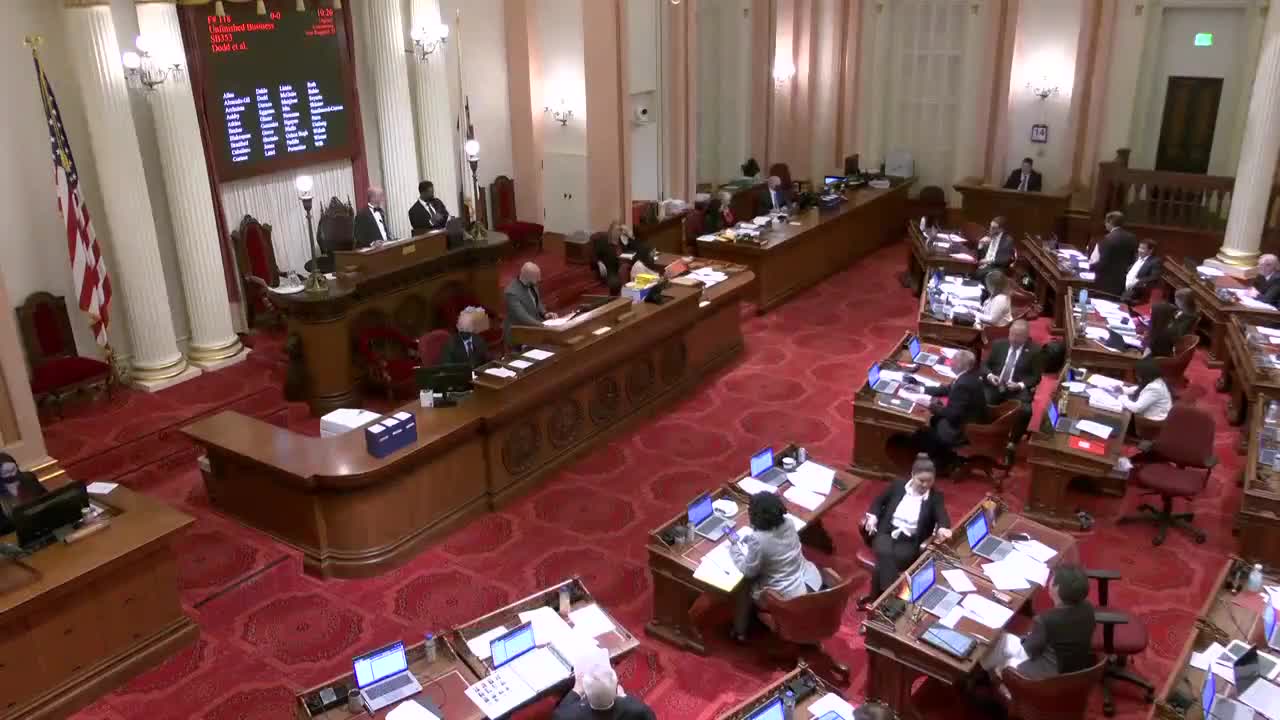 2MIN
Senate Floor
 2MIN
Assembly Floor
 27SEC
Assembly Floor
 16MIN
Assembly Standing Committee on Labor and Employment
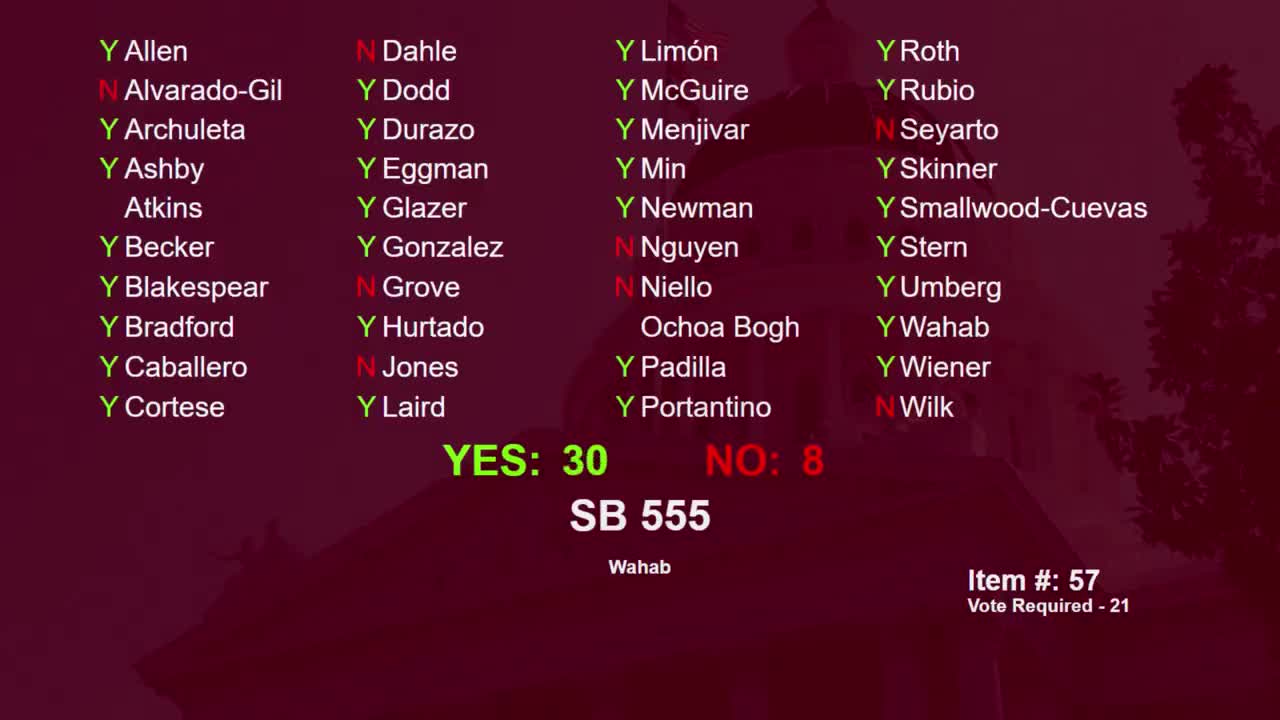 8MIN
Senate Floor
 16MIN
Senate Standing Committee on Labor, Public Employment and Retirement
Bill Author

Bill Co-Author(s):