SB 741: Domestic violence restraining orders: prehearing discovery.
- Session Year: 2023-2024
- House: Senate
- Latest Version Date: 2023-10-08
Current Status:
Passed
(2023-10-08: Chaptered by Secretary of State. Chapter 503, Statutes of 2023.)
Introduced
In Committee
First Chamber
In Committee
Second Chamber
Enacted
What does this bill do?
The bill stops routine civil discovery in domestic violence restraining order cases, affecting people seeking or responding to those orders, and allows discovery only if a court finds good cause. Courts must weigh the relevance and need for the information, the likelihood it can be obtained another way, any delay or trauma to people involved, and existing protective orders, and must limit permitted discovery to the least intrusive, minimum items needed. Survivors may still obtain police reports and their own business or medical records without court permission.
The summary is provided by generative AI which can make mistakes. For original language, please view the details in the table below.
Existing law establishes the Domestic Violence Prevention Act for the purpose of preventing acts of domestic violence, abuse, and sexual abuse and providing for a separation of the persons involved in the domestic violence for a period sufficient to enable those persons to seek a resolution of the causes of the violence. Under existing law, the act authorizes the court to issue a protective order, as defined, either ex parte or after a hearing, to restrain a person to prevent the recurrence of domestic violence.
Existing law establishes the Civil Discovery Act, which governs the rules and procedures related to discovery in civil actions. The act authorizes the parties in a civil action, unless ordered otherwise, to modify discovery procedures by written stipulation, as specified.
This bill would prohibit discovery pursuant to the Civil Discovery Act for purposes of the Domestic Violence Prevention Act except when a court grants a request for discovery upon a showing of good cause by the party making the request, as specified. The bill would require a court determining whether to permit discovery to consider, among other things, the importance and relevance of, and need for, the information sought to be obtained. The bill would authorize a court to continue commencement of the hearing or commence the hearing to receive evidence and then continue the hearing to permit one or more methods of discovery if a court finds good cause and grants a request for discovery. The bill would require the court to limit and control any permitted discovery to the least intrusive methods, as specified. The bill would make related intent statements and findings and declarations.
Existing law establishes the Domestic Violence Prevention Act for the purpose of preventing acts of domestic violence, abuse, and sexual abuse and providing for a separation of the persons involved in the domestic violence for a period sufficient to enable those persons to seek a resolution of the causes of the violence. Under existing law, the act authorizes the court to issue a protective order, as defined, either ex parte or after a hearing, to restrain a person to prevent the recurrence of domestic violence.
This bill would authorize prehearing discovery from a party to the action only as specifically provided, and would require the party seeking prehearing discovery to file a written motion setting forth the specific types of discovery sought and why the discovery is necessary. The bill would require that the motion be granted, in whole or in part, if the party seeking discovery shows there is good cause for the discovery sought, and would prohibit the court from authorizing duplicative methods of discovery if a single method would be sufficient to provide the evidence sought. The bill would authorize the court to order a different form of discovery in certain circumstances.Existing law establishes the Civil Discovery Act, which governs the rules and procedures related to discovery in civil actions. The act authorizes the parties in a civil action, unless ordered otherwise, to modify discovery procedures by written stipulation, as specified.
This bill would prohibit discovery pursuant to the Civil Discovery Act for purposes of the Domestic Violence Prevention Act except when a court grants a request for discovery upon a showing of good cause by the party making the request, as specified. The bill would require a court determining whether to permit discovery to consider, among other things, the importance and relevance of, and need for, the information sought to be obtained. The bill would authorize a court to continue commencement of the hearing or commence the hearing to receive evidence and then continue the hearing to permit one or more methods of discovery if a court finds good cause and grants a request for discovery. The bill would require the court to limit and control any permitted discovery to the least intrusive methods, as specified. The bill would make related intent statements and findings and declarations.
Existing law establishes the Domestic Violence Prevention Act for the purpose of preventing acts of domestic violence, abuse, and sexual abuse and providing for a separation of the persons involved in the domestic violence for a period sufficient to enable those persons to seek a resolution of the causes of the violence. Under existing law, the act authorizes the court to issue a protective order, as defined, either ex parte or after a hearing, to restrain a person to prevent the recurrence of domestic violence.
This bill would prohibit prehearing discovery procedures, including, but not limited to, depositions, requests for production, or requests for admission, in procedures for ex parte or other specified domestic violence restraining orders unless specifically authorized by the court for good cause shown upon written motion of a party, filed 6 judicial days prior to the hearing, and served prior to the hearing.This bill would authorize prehearing discovery from a party to the action only as specifically provided, and would require the party seeking prehearing discovery to file a written motion setting forth the specific types of discovery sought and why the discovery is necessary. The bill would require that the motion be granted, in whole or in part, if the party seeking discovery shows there is good cause for the discovery sought, and would prohibit the court from authorizing duplicative methods of discovery if a single method would be sufficient to provide the evidence sought. The bill would authorize the court to order a different form of discovery in certain circumstances.
Existing law establishes the Domestic Violence Prevention Act for the purpose of preventing acts of domestic violence, abuse, and sexual abuse and providing for a separation of the persons involved in the domestic violence for a period sufficient to enable those persons to seek a resolution of the causes of the violence. Under existing law, the act authorizes the court to issue a protective order, as defined, either ex parte or after a hearing, to restrain a person to prevent the recurrence of domestic violence.
This bill would prohibit prehearing discovery procedures, including, but not limited to, depositions, requests for production, or requests for admission, in procedures for ex parte or other specified domestic violence restraining orders unless specifically authorized by the court for good cause shown upon written motion of a party, filed 6 judicial days prior to the hearing, and served prior to the hearing.
(a)(1)The Legislature finds and declares all of the following:
(A)Domestic violence is an urgent public safety and public health crisis. More than one in three California women and one in seven men experience intimate partner physical violence, intimate partner sexual violence, or intimate partner stalking in their lifetimes. Sexual and gender minorities, including queer, gender nonbinary, intersex, and transgender persons, experience domestic violence at rates as high or higher than cisgender and heterosexual persons. Domestic violence accounts for more than 15 percent of all violent crimes in California and more than 10 percent of all California homicides.
(B)Domestic violence survivors are most at risk when attempting to leave an abusive relationship. Without effective intervention in domestic abuse, the violence often increases in frequency and severity over time. Research has established that the civil domestic violence restraining order is the most effective legal remedy for intervening in and preventing future abuse.
(C)Domestic violence survivors who enter the family or civil court systems seeking protection often face ongoing abuse in the form of litigation abuse. Litigation abuse is the use of legal or bureaucratic procedures by abusive partners to continue to attack, harass, intimidate, coercively control, or maintain contact with their former partners through the litigation system by exerting power over them, forcing them to have contact, financially burdening them with excessive discovery and litigation, degrading and insulting them in legal papers, unduly delaying the court process and final resolution of important issues, or dissuading them from pursuing legal protection. Studies show that litigation abuse causes severe consequences for survivors, including economic hardship and psychological harm, and foregoing legal relief in part or in whole. Research also shows that judicial officers and court evaluators often misunderstand or overlook litigation abuse and its effects on survivors.
(2)It is the intent of the Legislature to accomplish the following:
(A)To promote the health and safety of domestic violence survivors and their children.
(B)To ensure that domestic violence survivors can seek and receive, without delay, the protection offered by the domestic violence restraining orders, which are remedial injunctive orders intended to offer expedited separation and protection from abuse.
(C)To provide for separation and to prevent future acts of domestic violence by streamlining any domestic violence restraining order discovery to expedite the adjudication of requests for restraining orders and prevent abusive litigation tactics that interfere with legislative intent to protect domestic violence victims.
(b)Consistent with the findings and declarations and statements of legislative intent in subdivision (a), discovery pursuant to the Civil Discovery Act (Title 4 (commencing with Section 2016.010) of Part 4 of the Code of Civil Procedure), is not permitted pursuant to this part except as set forth in this section.
(c)(1)A court may grant a request for discovery only upon a showing of good cause for the discovery by the party making the request.
(2)A party may make an oral or written request for discovery to the court at an evidentiary hearing pursuant to this part.
(3)A person shall not be required to make a written objection or response to a request for discovery but may express any objection or response orally or in writing or at the hearing.
(d)In determining whether to permit discovery in a proceeding pursuant to this part, the court shall consider all of the following:
(1)The importance and relevance of, and need for, the information sought to be obtained.
(2)The likelihood that the information may be acquired by another permitted discovery method, or may be acquired by other methods including pleadings or examination at the hearing.
(3)The delay in completion of the hearing, which is entitled to calendar preference pursuant to Section 244, if the discovery is permitted.
(4)The potential, if any, that the discovery may induce trauma in any person involved in the proceeding.
(5)Whether one or more persons are subject to any restraining or protective orders.
(6)Any other factor that may affect the prompt and fair resolution of the proceeding.
(e)If a court finds good cause and grants a request for discovery pursuant to subdivision (c), the court may do either of the following:
(1)(A)Continue the commencement of hearing for a reasonable period to permit one or more methods of discovery.
(B)If the court continues the hearing to allow for discovery pursuant to subparagraph (A), the court shall extend, and may modify, any restraining order in place.
(2)Commence the hearing to receive evidence and then continue the hearing to permit one or more methods of discovery.
(f)The court shall limit and control any permitted discovery to the least intrusive methods as authorized pursuant to the Civil Discovery Act (Title 4 (commencing with Section 2016.010) of Part 4 of the Code of Civil Procedure) and the minimum number of items reasonably necessary to secure the requested information. The court shall specify the time for response to any permitted discovery after considering the items in subdivision (d).
(g)Nothing in this section is intended to take away rights afforded in the Domestic Violence Prevention Act. Nothing in this section is intended to infringe on the ability for abuse survivors to receive their police reports and evidence pursuant to Section 6228 or on parties ability to discover their own business records without obtaining court permission, including medical records, phone records, or recordings of calls to 911, to provide corroborating proof.
(a)(1)The Legislature finds and declares all of the following:
(A)Domestic violence is an urgent public safety and public health crisis. More than one in three California women and one in seven men experience intimate partner physical violence, intimate partner sexual violence, or intimate partner stalking in their lifetimes. Sexual and gender minorities, including queer, gender nonbinary, intersex, and transgender persons, experience domestic violence at rates as high or higher than cisgender and heterosexual persons. Domestic violence accounts for more than 15 percent of all violent crimes in California and more than 10 percent of all California homicides.
(B)Domestic violence survivors are most at risk when attempting to leave an abusive relationship. Without effective intervention in domestic abuse, the violence often increases in frequency and severity over time. Research has established that the civil domestic violence restraining order is the most effective legal remedy for intervening in and preventing future abuse.
(C)Domestic violence survivors who enter the family or civil court systems seeking protection often face ongoing abuse in the form of litigation abuse. Litigation abuse is the use of legal or bureaucratic procedures by abusive partners to continue to attack, harass, intimidate, coercively control, or maintain contact with their former partners through the litigation system by exerting power over them, forcing them to have contact, financially burdening them with excessive discovery and litigation, degrading and insulting them in legal papers, unduly delaying the court process and final resolution of important issues, or dissuading them from pursuing legal protection. Studies show that litigation abuse causes severe consequences for survivors, including economic hardship and psychological harm, and foregoing legal relief in part or in whole. Research also shows that judicial officers and court evaluators often misunderstand or overlook litigation abuse and its effects on survivors.
(2)It is the intent of the Legislature to accomplish the following:
(A)To promote the health and safety of domestic violence survivors and their children.
(B)To ensure that domestic violence survivors can seek and receive, without delay, the protection offered by the domestic violence restraining orders, which are remedial injunctive orders intended to offer expedited separation and protection from abuse.
(C)To provide for separation and to prevent future acts of domestic violence by streamlining any domestic violence restraining order discovery to expedite the adjudication of requests for restraining orders and prevent abusive litigation tactics that interfere with legislative intent to protect domestic violence victims.
(b)Consistent with the findings and declarations and statements of legislative intent in subdivision (a), discovery pursuant to the Civil Discovery Act (Title 4 (commencing with Section 2016.010) of Part 4 of the Code of Civil Procedure), is not permitted pursuant to this part except as set forth in this section.
(c)(1)A court may grant a request for discovery only upon a showing of good cause for the discovery by the party making the request.
(2)A party may make an oral or written request for discovery to the court at an evidentiary hearing pursuant to this part.
(3)A person shall not be required to make a written objection or response to a request for discovery but may express any objection or response orally or in writing or at the hearing.
(d)In determining whether to permit discovery in a proceeding pursuant to this part, the court shall consider all of the following:
(1)The importance and relevance of, and need for, the information sought to be obtained.
(2)The likelihood that the information may be acquired by another permitted discovery method, or may be acquired by other methods including pleadings or examination at the hearing.
(3)The delay in completion of the hearing, which is entitled to calendar preference pursuant to Section 244, if the discovery is permitted.
(4)The potential, if any, that the discovery may revictimize or induce trauma in any person involved in the proceeding.
(5)Whether one or more persons are subject to a restraining or protective order. any restraining or protective orders.
(6)Any other factor that may affect the prompt and fair resolution of the proceeding.
(e)If a court finds good cause and grants a request for discovery pursuant to subdivision (c), the court may do either of the following:
(1)(A)Continue the commencement of hearing for a reasonable period to permit one or more methods of discovery.
(B)If the court continues the hearing to allow for discovery pursuant to subparagraph (A), the court shall extend, and may modify, any restraining order in place.
(2)Commence the hearing to receive evidence and then continue the hearing to permit one or more methods of discovery.
(f)The court shall limit and control any permitted discovery to the least intrusive methods as authorized pursuant to the Civil Discovery Act (Title 4 (commencing with Section 2016.010) of Part 4 of the Code of Civil Procedure) and the minimum number of items reasonably necessary to secure the requested information. The court shall specify the time for response to any permitted discovery after considering the items in subdivision (d).
(g)Nothing in this section is intended to take away rights afforded in the Domestic Violence Prevention Act. Nothing in this section is intended to infringe on the ability for abuse survivors to receive their police reports and evidence pursuant to Section 6228 or on parties ability to discover their own business records without obtaining court permission, including medical records, phone records, or recordings of calls to 911, to provide corroborating proof.
(a)(1)The Legislature finds and declares all of the following:
(A)Domestic violence is an urgent public safety and public health crisis. More than one in three California women and one in seven men experience intimate partner physical violence, intimate partner sexual violence, or intimate partner stalking in their lifetimes. Sexual and gender minorities, including queer, gender nonbinary, intersex, and transgender persons, experience domestic violence at rates as high or higher than cisgender and heterosexual persons. Domestic violence accounts for more than 15 percent of all violent crimes in California and more than 10 percent of all California homicides.
(B)Domestic violence survivors are most at risk when attempting to leave an abusive relationship. Without effective intervention in domestic abuse, the violence often increases in frequency and severity over time. Research has established that the civil domestic violence restraining order is the most effective legal remedy for intervening in and preventing future abuse.
(C)Domestic violence survivors who enter the family or civil court systems seeking protection often face ongoing abuse in the form of litigation abuse. Litigation abuse is the use of legal or bureaucratic procedures by abusive partners to continue to attack, harass, intimidate, coercively control, or maintain contact with their former partners through the litigation system by exerting power over them, forcing them to have contact, financially burdening them with excessive discovery and litigation, degrading and insulting them in legal papers, unduly delaying the court process and final resolution of important issues, or dissuading them from pursuing legal protection. Studies show that litigation abuse causes severe consequences for survivors, including economic hardship and psychological harm, and foregoing legal relief in part or in whole. Research also shows that judicial officers and court evaluators often misunderstand or overlook litigation abuse and its effects on survivors.
(2)It is the intent of the Legislature to accomplish the following:
(A)To promote the health and safety of domestic violence survivors and their children.
(B)To ensure that domestic violence survivors can seek and receive, without delay, the protection offered by the domestic violence restraining orders, which are remedial injunctive orders intended to offer expedited separation and protection from abuse.
(C)To provide for separation and to prevent future acts of domestic violence by streamlining any domestic violence restraining order discovery to expedite the adjudication of requests for restraining orders and prevent abusive litigation tactics that interfere with legislative intent to protect domestic violence victims.
(b)Consistent with the findings and declarations and statements of legislative intent in subdivision (a), discovery pursuant to the Civil Discovery Act (Title 4 (commencing with Section 2016.010) of Part 4 of the Code of Civil Procedure), is not permitted pursuant to this part except as set forth in this section.
(c)(1)A court may grant a request for discovery only upon a showing of good cause for the discovery by the party making the request.
(2)A party may make an oral or written request for discovery to the court at an evidentiary hearing pursuant to this part.
(3)A person shall not be required to make a written objection or response to a request for discovery but may express any objection or response orally or in writing or at the hearing.
(d)In determining whether to permit discovery in a proceeding pursuant to this part, the court shall consider all of the following:
(1)The importance and relevance of, and need for, the information sought to be obtained.
(2)The likelihood that the information may be acquired by another permitted discovery method, or may be acquired by other methods including pleadings or examination at the hearing.
(3)The delay in completion of the hearing, which is entitled to calendar preference pursuant to Section 244, if the discovery is permitted.
(4)The potential, if any, that the discovery may revictimize or induce trauma in any person involved in the proceeding.
(5)Whether one or more persons are subject to a restraining or protective order.
(6)Any other factor that may affect the prompt and fair resolution of the proceeding.
(e)If a court finds good cause and grants a request for discovery pursuant to subdivision (c), the court may do either of the following:
(1)(A)Continue the commencement of hearing for a reasonable period to permit one or more methods of discovery.
(B)If the court continues the hearing to allow for discovery pursuant to subparagraph (A), the court shall extend, and may modify, any restraining order in place.
(2)Commence the hearing to receive evidence and then continue the hearing to permit one or more methods of discovery.
(f)The court shall limit and control any permitted discovery to the least intrusive methods as authorized pursuant to the Civil Discovery Act (Title 4 (commencing with Section 2016.010) of Part 4 of the Code of Civil Procedure) and the minimum number of items reasonably necessary to secure the requested information. The court shall specify the time for response to any permitted discovery after considering the items in subdivision (d).
(g)Nothing in this section is intended to take away rights afforded in the Domestic Violence Prevention Act. Nothing in this section is intended to infringe on the ability for abuse survivors to receive their police reports and evidence pursuant to Section 6228 or on parties ability to discover their own business records without obtaining court permission, including medical records, phone records, or recordings of calls to 911, to provide corroborating proof.
SECTION 1.The Legislature finds and declares all of the following:(a)Domestic violence is an urgent public safety and public health crisis. More than one in three California women and one in seven men experience intimate partner physical violence, intimate partner sexual violence, or intimate partner stalking in their lifetimes. Domestic violence accounts for more than 15 percent of all violent crimes in California and more than 10 percent of all California homicides.(b)Domestic violence survivors are most at risk when attempting to leave an abusive relationship. Without effective intervention in domestic abuse, the violence often increases in frequency and severity over time. Research has established that the civil domestic violence restraining order is the most effective legal remedy for intervening in and preventing future abuse.(c)Domestic violence survivors who enter the family or civil court systems seeking protection often face ongoing abuse in the form of litigation abuse. Litigation abuse is the use of legal or bureaucratic procedures by abusive or coercively controllingpartners to continue to attack, harass, intimidate, or control their former partners through exerting power over them, forcing them to have contact, financially burdening them with excessive discovery and litigation, or dissuading them from pursuing legal protection following abuse. Studies show that litigation abuse causes severe consequences for survivors, including economic hardship and psychological harm. Research also shows that judicial officers and court evaluators often misunderstand or overlook litigation abuse and its effects on survivors.(d)In furtherance of the Legislatures intent to promote the health and safety of domestic violence survivors and their children, it is the intent of the Legislature to ensure that domestic violence survivors can seek and receive without delay the protection offered by the domestic violence restraining orders, which are remedial injunctive orders intended to offer expedited protection from abuse. It is the intent of the Legislature to prevent future acts of domestic violence by streamlining any prehearing domestic violence restraining order discovery to expedite the adjudication of requests for restraining orders and prevent abusive litigation tactics that interfere with legislative intent.SEC. 2.Section 6309 is added to the Family Code, to read:6309.(a)Prehearing discovery sought pursuant to this part may be conducted only if specifically authorized by the court as set forth in subdivisions (b) and (c).(b)(1)A party seeking prehearing discovery from a party to the action shall file a written motion setting forth the specific type or types of discovery sought and the specific evidence the discovery is necessary to uncover. The motion shall be filed no later than six court days prior to the hearing.(2)(A)A court shall grant the motion in whole or in part only if the party seeking discovery has shown that there is good cause for the discovery sought. The court shall not authorize duplicative methods of discovery if a single method would be sufficient to provide the evidence sought.(B)The court may, at its discretion, order a different method of discovery if it determines that the method sought would cause undue trauma to the party subject to the discovery and a different method of discovery would be sufficient to provide the evidence sought. This shall include, but is not limited to, ordering interrogatories or requests for admission in lieu of a deposition.(c)Unless the court specifies alternate procedures, including, but not limited to, imposing shorter response times and limits on the number of requests that may be propounded, discovery ordered pursuant to this section shall be conducted under the Civil Discovery Act (Title 4 (commencing with Section 2016.010) of Part 4 of the Code of Civil Procedure).(d)This section does not preclude parties from conducting discovery from third parties within the statutory time limits relevant to the claims of domestic abuse.The Legislature finds and declares all of the following:
(a)Domestic violence is an urgent public safety and public health crisis. More than one in three California women and one in seven men experience intimate partner physical violence, intimate partner sexual violence, or intimate partner stalking in their lifetimes. Domestic violence accounts for more than 15 percent of all violent crimes in California and more than 10 percent of all California homicides.
(b)Domestic violence survivors are most at risk when attempting to leave an abusive relationship. Without effective intervention in domestic abuse, the violence often increases in frequency and severity over time. Research has established that the civil domestic violence restraining order is the most effective legal remedy for intervening in and preventing future abuse.
(c)Domestic violence survivors who enter the family or civil court systems seeking protection often face ongoing abuse in the form of litigation abuse. Litigation abuse is the use of legal or bureaucratic procedures by abusive or coercively controlling partners to continue to attack, harass, intimidate, or control their former partners through exerting power over them, forcing them to have contact, financially burdening them with excessive discovery and litigation, or dissuading them from pursuing legal protection following abuse. Studies show that litigation abuse causes severe consequences for survivors, including economic hardship and psychological harm. Research also shows that judicial officers and court evaluators often misunderstand or overlook litigation abuse and its effects on survivors.
(c)
(d)In furtherance of the Legislatures intent to promote the health and safety of domestic violence survivors and their children, it is the intent of the Legislature to ensure that domestic violence survivors can seek and receive without delay the protection offered by the domestic violence restraining orders, which are remedial injunctive orders intended to offer expedited protection from abuse. It is the intent of the Legislature to prevent future acts of domestic violence by streamlining any prehearing domestic violence restraining order discovery to expedite the adjudication of requests for restraining orders and prevent abusive litigation tactics that interfere with legislative intent.
SEC. 2.Section 6309 is added to the Family Code, to read:6309.(a)The Legislature declares that prehearing discovery should be prohibited in hearings governed by the Domestic Violence Prevention Act, unless specifically authorized by the court.(b)Prehearing discovery under the Civil Discovery Act (Title 4 (commencing with Section 2016.010) of Part 4 of the Code of Civil Procedure), including, but not limited to, depositions, requests for production, or requests for admission, shall only be permitted in procedures pursuant to this part if specifically authorized by the court for good cause shown upon written motion of a party, filed six judicial days prior to the hearing, and served prior to the hearing.SEC. 2.Section 6309 is added to the Family Code, to read:6309.(a)Prehearing discovery sought pursuant to this part may be conducted only if specifically authorized by the court as set forth in subdivisions (b) and (c).
(b)(1)A party seeking prehearing discovery from a party to the action shall file a written motion setting forth the specific type or types of discovery sought and the specific evidence the discovery is necessary to uncover. The motion shall be filed no later than six court days prior to the hearing.
(2)(A)A court shall grant the motion in whole or in part only if the party seeking discovery has shown that there is good cause for the discovery sought. The court shall not authorize duplicative methods of discovery if a single method would be sufficient to provide the evidence sought.
(B)The court may, at its discretion, order a different method of discovery if it determines that the method sought would cause undue trauma to the party subject to the discovery and a different method of discovery would be sufficient to provide the evidence sought. This shall include, but is not limited to, ordering interrogatories or requests for admission in lieu of a deposition.
(c)Unless the court specifies alternate procedures, including, but not limited to, imposing shorter response times and limits on the number of requests that may be propounded, discovery ordered pursuant to this section shall be conducted under the Civil Discovery Act (Title 4 (commencing with Section 2016.010) of Part 4 of the Code of Civil Procedure).
(d)This section does not preclude parties from conducting discovery from third parties within the statutory time limits relevant to the claims of domestic abuse.
The Legislature finds and declares all of the following:
(a)Domestic violence is an urgent public safety and public health crisis. More than one in three California women and one in seven men experience intimate partner physical violence, intimate partner sexual violence, or intimate partner stalking in their lifetimes. Domestic violence accounts for more than 15 percent of all violent crimes in California and more than 10 percent of all California homicides.
(b)Domestic violence survivors are most at risk when attempting to leave an abusive relationship. Without effective intervention in domestic abuse, the violence often increases in frequency and severity over time. Research has established that the civil domestic violence restraining order is the most effective legal remedy for intervening in and preventing future abuse.
(c)In furtherance of the Legislatures intent to promote the health and safety of domestic violence survivors and their children, it is the intent of the Legislature to ensure that domestic violence survivors can seek and receive without delay the protection offered by the domestic violence restraining orders, which are remedial injunctive orders intended to offer expedited protection from abuse. It is the intent of the Legislature to prevent future acts of domestic violence by streamlining any prehearing domestic violence restraining order discovery to expedite the adjudication of requests for restraining orders and prevent abusive litigation tactics that interfere with legislative intent.
SEC. 2.Section 6309 is added to the Family Code, to read:6309.(a)The Legislature declares that prehearing discovery should be prohibited in hearings governed by the Domestic Violence Prevention Act, unless specifically authorized by the court.
(b)Prehearing discovery under the Civil Discovery Act (Title 4 (commencing with Section 2016.010) of Part 4 of the Code of Civil Procedure), including, but not limited to, depositions, requests for production, or requests for admission, shall only be permitted in procedures pursuant to this part if specifically authorized by the court for good cause shown upon written motion of a party, filed six judicial days prior to the hearing, and served prior to the hearing.
|
Date
|
Status
|
|---|---|
| Oct 8, 2023 | Chaptered by Secretary of State. Chapter 503, Statutes of 2023. |
| Oct 8, 2023 | Approved by the Governor. |
| Sep 21, 2023 | Enrolled and presented to the Governor at 4 p.m. |
| Sep 14, 2023 | Assembly amendments concurred in. (Ayes 33. Noes 6. Page 2829.) Ordered to engrossing and enrolling. |
| Sep 14, 2023 | In Senate. Concurrence in Assembly amendments pending. |
| Sep 14, 2023 | Read third time. Passed. (Ayes 61. Noes 0. Page 3517.) Ordered to the Senate. |
| Sep 8, 2023 | Read third time and amended. |
| Sep 8, 2023 | Ordered to third reading. |
| Jun 22, 2023 | Read second time. Ordered to third reading. |
| Jun 21, 2023 | Read second time and amended. Ordered to second reading. |
| Jun 20, 2023 | From committee: Do pass as amended. (Ayes 8. Noes 1.) (June 20). |
| Jun 8, 2023 | Referred to Com. on JUD. |
| May 25, 2023 | In Assembly. Read first time. Held at Desk. |
| May 25, 2023 | Reconsideration granted. (Ayes 40. Noes 0. Page 1294.) |
| May 25, 2023 | Read third time. Passed. (Ayes 34. Noes 2. Page 1293.) Ordered to the Assembly. |
| May 25, 2023 | Motion to reconsider made by Senator Min. |
| Apr 13, 2023 | Read second time. Ordered to third reading. |
| Apr 12, 2023 | From committee: Do pass. (Ayes 9. Noes 1. Page 688.) (April 11). |
| Apr 3, 2023 | Set for hearing April 11. |
| Mar 30, 2023 | From committee with author's amendments. Read second time and amended. Re-referred to Com. on JUD. |
| Mar 1, 2023 | Referred to Com. on JUD. |
| Feb 21, 2023 | From printer. May be acted upon on or after March 20. |
| Feb 17, 2023 | Introduced. Read first time. To Com. on RLS. for assignment. To print. |
|
Date
|
Description
|
Location
|
Votes
|
|
|---|---|---|---|---|
| Sep 14, 2023 | SB 741 Min Senate Third Reading By Papan | Assembly Floor |
Passed |
|
| Sep 14, 2023 | Unfinished Business SB741 Min et al. Concurrence | Senate Floor |
Passed |
|
| Jun 20, 2023 | Do pass as amended. | Assembly Standing Committee on Judiciary |
Passed |
|
| May 25, 2023 | Senate 3rd Reading SB741 Min | Senate Floor |
Passed |
|
| May 25, 2023 | Senate 3rd Reading SB741 Min Reconsider | Senate Floor |
Passed |
|
| May 25, 2023 | Senate 3rd Reading SB741 Min | Senate Floor |
Passed |
|
| Apr 11, 2023 | Do pass | Senate Standing Committee on Judiciary |
Passed |
This list shows positions taken on this bill by organizations on the date displayed, which is linked to the original source.
Positions by individuals are not included.
|
Organization
|
Position
|
Date
|
|---|---|---|
| Calegislation | ** Support | |
| California Association of Certified Family Specialists | ** Support | |
| Family Law Section of the Los Angeles County Bar Association | ** Against | |
| Family Violence Appellate Project | ** Support | |
| Family Violence Law Center | ** Support | |
| UC Irvine | * Support | Jun 20, 2023 |
| University of California, Irvine School of Law Domestic Violence Clinic | ** Support |
SENATE RULES COMMITTEE Office of Senate Floor Analyses (916) 651-1520 Fax: (916) 327-4478 | SB 741 |
UNFINISHED BUSINESS
Bill No: SB 741
Author: Min (D), et al.
Amended: 9/8/23
Vote: 21
SENATE JUDICIARY COMMITTEE: 9-1, 4/11/23
AYES: Umberg, Wilk, Allen, Ashby, Durazo, Laird, McGuire, Min, Wiener
NOES: Niello
NO VOTE RECORDED: Stern
SENATE FLOOR: 34-2, 5/25/23
AYES: Allen, Alvarado-Gil, Archuleta, Ashby, Atkins, Becker, Blakespear, Bradford, Caballero, Cortese, Dodd, Durazo, Eggman, Glazer, Gonzalez, Hurtado, Laird, Limón, McGuire, Menjivar, Min, Newman, Ochoa Bogh, Padilla, Portantino, Roth, Rubio, Skinner, Smallwood-Cuevas, Stern, Umberg, Wahab, Wiener, Wilk
NOES: Jones, Niello
NO VOTE RECORDED: Dahle, Grove, Nguyen, Seyarto
ASSEMBLY FLOOR: 44-0, 9/14/23
(ROLL CALL NOT AVAILABLE)
SUBJECT: Domestic violence restraining orders: prehearing discovery
SOURCE: Author
DIGEST:
This bill requires a party seeking prehearing discovery from another party in a proceeding for a protective order under the Domestic Violence Prevention Act (DVPA) to obtain court approval before seeking the discovery, as specified.
Assembly Amendments
add findings and declarations and a statement of Legislative intent to the newly created Family Code 6309; revise and recast the provisions requiring a court to authorize discovery within a proceeding for a protective order under Part 4 of the DVPA; and clarify that the requirement to obtain court permission does not affect a party’s ability to obtain discovery under specified preexisting provisions of law.
ANALYSIS:
Existing law:
- Establishes the DVPA (Fam. Code, §§ 6200 et seq.), which sets forth procedural and substantive requirements for the issuance of a protective order to, among other things, enjoin specific acts of abuse or prohibit the abuser from coming within a specified distance of the abused person. (Fam. Code, §§ 6218, 6300 et seq.)
- Authorizes a court to issue an ex parte temporary restraining order or emergency protective order without a noticed hearing. (Fam. Code, §§ 6320-6327.)
- Authorizes a court to issue a personal conduct, stay-away, and/or residence exclusion order after a noticed hearing at which the alleged abuser may appear. (Fam. Code, §§ 6340-6347.)
- Authorizes a court to order restitution to a petitioner for expenses including loss of earnings and out-of-pocket expenses caused by the abuser, including expenses for medical care and temporary housing, as part of an order issued after notice and hearing. (Fam. Code, § 6342.)
- Grants the court the discretion to set the duration of a DVPA protective order issued after a noticed hearing, up to a maximum of five years. (Fam. Code, § 6345(a).)
- At any point during the duration of the order, it may be modified or terminated by the court upon a written stipulation filed with the court or by the motion of a party. (Fam. Code, § 6345(a).)
- The order may be renewed at the request of either party, for a period of five years or permanently; renewed orders are subject to modification, termination, and renewal under the same terms as the original order. (Fam. Code, § 6345(a).)
- Establishes the Civil Discovery Act (CDA), which provides the processes and procedures for obtaining discovery—including depositions, interrogatories, and requests for documents—in civil cases. (Code Civ. Proc., pt. 4, tit. 4, §§ 2016.010 et seq.)
This bill:
- Makes legislative findings and declarations regarding the prevalence and risks of domestic violence, as well as the phenomenon of “litigation abuse,” wherein abusive partners use legal or bureaucratic procedures to continue to attack, harass, intimidate, coercively control, or maintain contact with their former partners.
- States that it is the intent of the Legislature to accomplish all of the following:
- To promote the health and safety of domestic violence survivors of their children.
- To ensure that domestic violence survivors can seek and receive, without delay, the protection offered by domestic violence restraining orders, which are remedial injunctive orders intended to offer expedited separation and protection from abuse.
- To provide for separation and to prevent future acts of domestic violence by streamlining any domestic violence restraining order discovery to expedite the adjudication of requests for restraining orders and prevent abusive litigation tactics that interfere with legislative intent to protect domestic violence victims.
- Provides that, consistent with 1) and 2), discovery pursuant to the CDA is not permitted in a proceeding for a protective order under Part 4 of the DVPA except as permitted in 4)-7).
- Provides that a court may grant a request for discovery only upon a showing of good cause for discovery by the party making the request.
- A party may make an oral written request for discovery at an evidentiary hearing.
- A person shall not be required to make a written objection or response to a request for discovery but may express any objection or response orally or in writing or at the hearing.
- Provides that a court, in determining whether to permit discovery in a proceeding under Part 4 of the DVPA, the court shall consider all of the following:
- The importance and relevance of, and need for, the information sought to be obtained.
- The likelihood that the information may be acquired by another permitted discovery method, or may be acquired by other methods including pleadings or examination at the hearing.
- The delay in completion of the hearing, which is entitled to calendar preference, as specified.
- The potential, if any, that the discovery may induce trauma in any person involved in the proceeding.
- Whether one or more persons are subject to any restraining or protective orders.
- Any other factor that may affect the prompt and fair resolution of the proceeding.
- Provides that, if the court finds good cause and grants a request for discovery, the court may do either of the following:
- Continue the commencement of hearing for a reasonable period to permit one more methods of discovery; if the court continues the hearing to allow for discovery, the court shall extend, and may modify, any restraining order in place.
- Commence the hearing to receive evidence and then continue the hearing to permit one or methods of discovery.
- Requires the court to limit and control any permitted discovery to the least intrusive methods authorized under the CDA and the minimum number of items reasonably necessary to secure the requested information; and to specify the time for response to any permitted discovery after considering the factors in 5).
- States that nothing in 1)-7) is intended to take away rights afforded in the DVPA, or to infringe on the ability of abuse survivors to receive police reports and evidence under the Access to Domestic Violence Reports Act of 1999 (Fam. Code, § 6228) or on parties’ ability to discover their own business records without obtaining court permission, including medical records, phone records, or recordings of calls to 911, to provide corroborating evidence.
Comments
Domestic violence accounts for more than fifteen percent of all violent crimes in California and more than ten percent of all California homicides. While domestic violence restraining orders (DVROs) have proven to be an effective legal remedy for the protection of survivors, the lack of clarity on the discovery process has been exploited to detriment of victims. This bill clarifies when, and how, a party may obtain discovery permitted under the CDA in a proceeding for a DVPA protective order, by requiring the party to request the discovery and permitting the court to grant the request only upon a showing of good cause. By limiting discovery in DVPA protective order hearings to cases in which the party seeking discovery can establish good cause, this bill is intended to reduce harassment and intimidation of domestic violence survivors, prevent unnecessary delay in the adjudication of DVRO requests, and ensure that parties only use prehearing discovery when actually necessary.
FISCAL EFFECT: Appropriation: No Fiscal Com.: No Local: No
SUPPORT: (Verified 9/11/23)
Calegislation
Family Violence Appellate Project
Family Violence Law Center
University of California, Irvine School of Law Domestic Violence Clinic
OPPOSITION: (Verified 9/11/23)
Family Law Section of the Los Angeles County Bar Association
ARGUMENTS IN SUPPORT: According to the Family Violence Law Center:
Domestic violence survivors need prompt and unencumbered access to the protection that restraining orders provide. California law currently contains a lack of procedural clarity that creates opportunity for domestic abusers to delay or deny victims access to this important protection. For example, some respondents and counsel engage in extensive and needless discovery requests, serving deposition notices and interrogatories and delaying domestic violence relief that is available under a preponderance of the evidence legal standard. SB 741 resolves this ambiguity and will allow Courts to more expeditiously adjudicate domestic violence survivors’ requests for more DVROs, consistent with legislative intent. This is important because research shows that the most dangerous time for a domestic violence survivor is when he or she leaves an abusive partner. Research also shows that civil restraining orders are the most effective legal remedy for preventing future abuse.
ARGUMENTS IN OPPOSITION: According to the Family Law Section of the Los Angeles County Bar Association:
It is our position that the passage of SB 741 will pose a substantial hardship and a costly and time-consuming impediment to parties needing to conduct discovery during the short time period (typically twenty-one (21) days) between the date a Temporary Restraining Order is issued and the date of the hearing on the permanent Restraining Order…
Without the passage of SB 741, a litigant will continue to be able to take one deposition of the other party without the burden and expense of having to bring a Motion. This right, to take one deposition of the other party, is extremely important in DVPA proceedings so that all of the facts and allegations may be known to both parties before the hearing. To essentially ban this pre-hearing discovery tool will lead to many “trials by fire” as parties will be hearing many allegations for the first time during the trial on the Restraining order.
As family law practitioners, we are sensitive of the rights of domestic violence victims, and historically are in support of all proposed legislation which protects victims and their rights. However, we must also appreciate and protect the rights of the defendants in a DV proceeding, and afford them their fundamental due process rights, including the ability to conduct basic and already time-limited discovery, as a matter of right. The ramifications of a permanent Restraining Order are vast in our State and the issuance of a Restraining Order affects a parent’s rights permanently. Affording a DV defendant the right to conduct discovery will ensure fairness at the hearing on the Restraining Order, the results of which are of the utmost importance to both the victim and the defendant.
Prepared by: Allison Whitt Meredith / JUD. / (916) 651-4113
9/14/23 15:34:07
**** END ****
SENATE THIRD READING
STR Bill Id:SB 741
Author:(Min)
As Amended Ver:September 8, 2023
Majority vote
SUMMARY
Prohibits the use of discovery in a proceeding on domestic violence restraining orders without court approval.
Major Provisions
- Makes findings and declarations relating to the continuing abuse that domestic violence survivors face in court, especially in the form of abusers using procedural tactics for the purpose of delay, harassment, and intimidation, and finds further that judicial officers and court evaluators have misunderstood and overlooked litigation abuse and its effects on domestic violence survivors.
- States the Legislature's intent to accomplish all of the following:
- Promote the health and safety of domestic violence survivors and their children.
- Ensure that domestic violence survivors can seek and receive, without delay, the protection of domestic violence restraining orders, which offer expedited separation and protection from abuse.
- Provide for separation and prevent future acts of domestic violence by streamlining discovery requests and preventing abusive litigation tactics that interfere with legislative intent to protect domestic violence victims.
- Authorizes discovery in a proceeding for a domestic violence restraining or protective order subject to the following conditions:
- A court may grant the request only upon a showing of good cause for the discovery by the party making the request.
- A party may make an oral or written request for discovery to the court at an evidentiary hearing pursuant to this part.
- A person shall not be required to make a written objection or response to a request for discovery but may express any objection or response orally or in writing or at the hearing.
- Requires the court, in determining whether to permit discovery in a proceeding for a domestic violence restraining order, to consider all of the following:
- The importance and relevance of, and need for, the information sought to be obtained.
- The likelihood that the information may be acquired by another permitted discovery method, or may be acquired by other methods including pleadings or examination at the hearing.
- The delay in completion of the hearing if the discovery is permitted.
- The potential, if any, that the discovery may induce trauma in any person involved in the proceeding.
- Whether one or more persons are restrained by a restraining or protective order.
- Any other factor that may affect the prompt and fair resolution of the proceeding.
- Provides that if the court finds good cause and grants a request for discovery pursuant to the above, the court may either continue the commencement of hearing for a reasonable period to permit one or more methods of discovery, or commence the hearing to receive evidence and then continue the hearing to permit one or more methods of discovery.
- Requires the court to limit and control any permitted discovery to the least intrusive methods as authorized pursuant to the Civil Discovery Act, and the minimum number of items reasonably necessary to secure the requested information.
- Specifies that nothing in this bill is intended to take away rights afforded in the Domestic Violence Prevention Act or infringe on the ability for abuse survivors to receive their police reports and other evidence, including medical records, phone records, or recordings of calls to 911, without court permission.
COMMENTS
California's Domestic Violence Prevention Act (DVPA) allows victims and survivors of domestic violence to seek domestic violence restraining orders (DVROs) against their abusers and alleged abusers. DVROs prohibit certain kinds of behavior and typically prevent the abuser from coming within a designated distance of the domestic violence victim. Like most forms of injunctive relief, which seek to prevent some irreparable harm from occurring in the present or near future, the DVPA requires expediency and shortened timelines. For example, the DVPA permits the court to issue ex parte temporary restraining orders (TRO) and "emergency" protective orders without providing a hearing. However, a TRO or emergency order signed by the judge only lasts until the date set for a hearing. The emergency protective order takes effect immediately and lasts for only five business days or seven calendar days (whichever is shorter). The emergency order is designed to give the victim time to seek a DVRO, which lasts longer. Under a TRO, the court usually sets a hearing date within three weeks. After a court hearing, which the alleged abuser may attend, the judge can grant a "Restraining Order after Hearing," which can last up to five years, or even become a permanent order.
According to those who work with, or represent, victims of domestic violence, the intent of the DVPA – to provide expedited remedies to victims of domestic violence – is too often undermined when defendants who make duplicative and unreasonable discovery requests in an effort to delay the process. For example, the Domestic Violence Clinic at the University of California, Irvine School of Law, reports that it has observed "the weaponization of discovery to intimidate or harass abuse survivors." For example, one of the Clinic's clients who suffered traumatic brain injury as a result of her abuse, spent more than fifteen months litigating her request for a DVRO against an ex-boyfriend whose attorneys made repeated discovery requests, allegedly for no other reason than to delay the proceedings. Although the Clinic's attorneys argued that the DVPA should be construed liberally to protect victims – including by providing expedited relief – the court nonetheless responded that, because the DVPA was silent on the issue of discovery, it had no choice but to defer to the Civil Discovery Act in the Code of Civil Procedure.
However, the Civil Discovery Act, which was designed for civil actions in general, does not align well with the DVPA and its inherent need of expedited proceedings. In other civil actions, where the harm has already occurred, the need for expediency is not as great. In most civil actions, a party to a lawsuit is permitted to seek discovery from the other party (or parties) in order to gather relevant evidence for a later trial or preliminary hearing. The requesting party does not need to seek prior permission from the court; rather, the burden is on the party who objects to a discovery request to file a motion with the court. The court will then determine whether the request is appropriate – that is, whether it is reasonably calculated to obtain relevant evidence. Discovery, therefore, takes time. Once a party makes a request, the other party needs a certain amount of time to produce documents, complete interrogatories, or prepare for depositions. If a request is challenged, the court must consider the motion, balancing the requesting party's reasonable needs against the expense, intrusiveness, or any other burden imposed on the other party. Needless to say, this process is not conducive to a domestic violence victim's need for immediate protection and separation from the abuser.
This bill seeks to address the inadequacy of relying upon the Civil Discovery Act by expressly addressing the discovery issue within the DVPA. In effect, this bill would prohibit discovery unless the requesting party seeks and obtains permission from the court. The bill specifies that the court should only grant the request "upon a showing of good cause" by the party making the request. The bill requires the court, in determining whether to honor a request, to consider, among other things, the relevance of the information sought, the likelihood that the information could be acquired by other methods, and the extent to which the request would delay the completion of the hearing. Finally, the bill requires the court to limit any permitted discovery to "the least intrusive method" authorized by the Civil Discovery Act.
According to the Author
Domestic violence accounts for more than fifteen percent of all violent crimes in California and more than ten percent of all California homicides. While domestic violence restraining orders (DVROs) have proven to be an effective legal remedy for the protection of survivors, the lack of clarity on the discovery process has been exploited to detriment of victims. SB 741 will reduce the risk of harassment and intimidation of domestic violence survivors, prevent unnecessary delay in the adjudication of DVRO requests, and ensure that parties only use prehearing discovery when necessary and with good cause, reducing the cost and burden of discovery and promoting judicial economy.
Arguments in Support
According to the sponsor – University of California, Irvine School of Law Domestic Violence Clinic (UCI) – "SB 741 closes a procedural loophole that domestic abusers and their attorneys have used to delay DVRO hearings and prevent abuse survivors from receiving court-ordered protection." UCI cites research showing that the most dangerous time for a domestic violence survivor is when leaving an abusive partner and that civil restraining orders are the most effective legal remedy available for preventing future abuse. However, UCI contends that at present the Domestic Violence Prevention Act (DVPA) lacks "procedural clarity regarding discovery [and therefore] creates opportunity for domestic abusers to delay or deny abuse survivors access to this important protection." Because the DVPA and the Family Code are silent on the issue of discovery in DVRO proceedings, the Civil Discovery Act in the Code of Civil Procedure governs. However, UCI points out that these general rules are not appropriate in the DVRO context. SB 741, UCI maintains, "will amend the DVPA to provide much needed procedure appropriate to DVROs." Given that the legislative intent of the DVPA was "to provide domestic violence survivors with expeditious access to the vital protection of civil restraining orders . . . California should take swift action to update the DVPA to address discovery."
UCI also points out that there is precedent for SB 741's approach. Specifically, California's "Victims' Bill of Rights," or Marsy's Law, allows victims of criminal domestic violence to "refuse an interview, deposition, or discovery request by the defendant, the defendant's attorney, or any other person acting on behalf of the defendant." UCI reasons that if victims are entitled to this protection in the criminal context, where the defendant's liberty interest is at stake, then surely domestic violence victims seeking a civil remedy should have the protection.
Arguments in Opposition
The Family Law Section of the Los Angeles County Bar Association (LACBA) opposes SB 741 because requiring prior court approval for discovery requests "will impose a substantial hardship and a costly and time-consuming impediment on parties needing to conduct discovery" during the short period between the issuance of a temporary restraining order and a hearing on permanent order. LACBA contends that the Civil Discovery Act already "contains many safeguards and limits on discovery," including the right of a litigant to seek a protective order against improper or harassing discovery requests. LACBA also points out that, given the limited time frame of 21 days between issue of the temporary order and a hearing for a permanent order, the extent of discovery already faces a practical limitation. In sum, LACBA argues that existing law already provides a means for a victim of alleged domestic violence to limit abusive discovery without infringing upon the due process rights of the defendant.
FISCAL COMMENTS
None
VOTES
SENATE FLOOR: 32-4-4
YES: Allen, Archuleta, Ashby, Becker, Blakespear, Bradford, Caballero, Cortese, Dodd, Durazo, Eggman, Glazer, Gonzalez, Hurtado, Laird, Limón, McGuire, Menjivar, Min, Newman, Ochoa Bogh, Padilla, Portantino, Roth, Rubio, Skinner, Smallwood-Cuevas, Stern, Umberg, Wahab, Wiener, Wilk
NO: Grove, Jones, Niello, Seyarto
ABS, ABST OR NV: Alvarado-Gil, Atkins, Dahle, Nguyen
ASM JUDICIARY: 8-1-2
YES: Maienschein, Connolly, Haney, Kalra, Pacheco, Papan, Reyes, Robert Rivas
NO: Dixon
ABS, ABST OR NV: Essayli, Sanchez
SENATE FLOOR: 40-0-0
YES: Allen, Alvarado-Gil, Archuleta, Ashby, Atkins, Becker, Blakespear, Bradford, Caballero, Cortese, Dahle, Dodd, Durazo, Eggman, Glazer, Gonzalez, Grove, Hurtado, Jones, Laird, Limón, McGuire, Menjivar, Min, Newman, Nguyen, Niello, Ochoa Bogh, Padilla, Portantino, Roth, Rubio, Seyarto, Skinner, Smallwood-Cuevas, Stern, Umberg, Wahab, Wiener, Wilk
SENATE FLOOR: 34-2-4
YES: Allen, Alvarado-Gil, Archuleta, Ashby, Atkins, Becker, Blakespear, Bradford, Caballero, Cortese, Dodd, Durazo, Eggman, Glazer, Gonzalez, Hurtado, Laird, Limón, McGuire, Menjivar, Min, Newman, Ochoa Bogh, Padilla, Portantino, Roth, Rubio, Skinner, Smallwood-Cuevas, Stern, Umberg, Wahab, Wiener, Wilk
NO: Jones, Niello
ABS, ABST OR NV: Dahle, Grove, Nguyen, Seyarto
UPDATED
VERSION: September 8, 2023
CONSULTANT: Tom Clark / JUD. / (916) 319-2334 FN: 0002163
SENATE THIRD READING
STR Bill Id:SB 741
Author:(Min)
As Amended Ver:March 30, 2023
Majority vote
SUMMARY
Prohibits the use of discovery in a proceeding on domestic violence restraining orders without court approval.
Major Provisions
- Makes findings and declarations relating to the continuing abuse that domestic violence survivors face in court, especially in the form of abusers using procedural tactics for the purpose of delay, harassment, and intimidation, and finds further that judicial officers and court evaluators have misunderstood and overlooked litigation abuse and its effects on domestic violence survivors.
- States the Legislature's intent to accomplish all of the following:
- Promote the health and safety of domestic violence survivors and their children.
- Ensure that domestic violence survivors can seek and receive, without delay, the protection of domestic violence restraining orders, which offer expedited separation and protection from abuse.
- Provide for separation and prevent future acts of domestic violence by streamlining discovery requests and preventing abusive litigation tactics that interfere with legislative intent to protect domestic violence victims.
- Authorizes discovery in a proceeding for a domestic violence restraining order subject to the following conditions:
- A court may grant the request only upon a showing of good cause for the discovery by the party making the request.
- A party may make an oral or written request for discovery to the court at an evidentiary hearing pursuant to this part.
- A person shall not be required to make a written objection or response to a request for discovery but may express any objection or response orally or in writing or at the hearing.
- Requires the court, in determining whether to permit discovery in a proceeding for a domestic violence restraining order, to consider all of the following:
- The importance and relevance of, and need for, the information sought to be obtained.
- The likelihood that the information may be acquired by another permitted discovery method, or may be acquired by other methods including pleadings or examination at the hearing.
- The delay in completion of the hearing if the discovery is permitted.
- The potential, if any, that the discovery may revictimize or induce trauma in any person involved in the proceeding.
- Whether one or more persons are restrained by a restraining or protective order.
- Any other factor that may affect the prompt and fair resolution of the proceeding.
- Provides that if the court finds good cause and grants a request for discovery pursuant to the above, the court may either continue the commencement of hearing for a reasonable period to permit one or more methods of discovery, or commence the hearing to receive evidence and then continue the hearing to permit one or more methods of discovery.
- Requires the court to limit and control any permitted discovery to the least intrusive methods as authorized pursuant to the Civil Discovery Act, and the minimum number of items reasonably necessary to secure the requested information.
- Specifies that nothing in this bill is intended to take away rights afforded in the Domestic Violence Prevention Act or infringe on the ability for abuse survivors to receive their police reports and other evidence, including medical records, phone records, or recordings of calls to 911, without court permission.
COMMENTS
California's Domestic Violence Prevention Act (DVPA) allows victims and survivors of domestic violence to seek domestic violence restraining orders (DVROs) against their abusers and alleged abusers. DVROs prohibit certain kinds of behavior and typically prevent the abuser from coming within a designated distance of the domestic violence victim. Like most forms of injunctive relief, which seek to prevent some irreparable harm from occurring in the present or near future, the DVPA requires expediency and shortened timelines. For example, the DVPA permits the court to issue ex parte temporary restraining orders (TRO) and "emergency" protective orders without providing a hearing. However, a TRO or emergency order signed by the judge only lasts until the date set for a hearing. The emergency protective order takes effect immediately and lasts for only five business days or seven calendar days (whichever is shorter). The emergency order is designed to give the victim time to seek a DVRO, which lasts longer. Under a TRO, the court usually sets a hearing date within three weeks. After a court hearing, which the alleged abuser may attend, the judge can grant a "Restraining Order after Hearing," which can last up to five years, or even become a permanent order.
According to those who work with, or represent, victims of domestic violence, the intent of the DVPA – to provide expedited remedies to victims of domestic violence – is too often undermined when defendants who make duplicative and unreasonable discovery requests in an effort to delay the process. For example, the Domestic Violence Clinic at the University of California, Irvine School of Law, reports that it has observed "the weaponization of discovery to intimidate or harass abuse survivors." For example, one of the Clinic's clients who suffered traumatic brain injury as a result of her abuse, spent more than fifteen months litigating her request for a DVRO against an ex-boyfriend whose attorneys made repeated discovery requests, allegedly for no other reason than to delay the proceedings. Although the Clinic's attorneys argued that the DVPA should be construed liberally to protect victims – including by providing expedited relief – the court nonetheless responded that, because the DVPA was silent on the issue of discovery, it had no choice but to defer to the Civil Discovery Act in the Code of Civil Procedure.
However, the Civil Discovery Act, which was designed for civil actions in general, does not align well with the DVPA and its inherent need of expedited proceedings. In other civil actions, where the harm has already occurred, the need for expediency is not as great. In most civil actions, a party to a lawsuit is permitted to seek discovery from the other party (or parties) in order to gather relevant evidence for a later trial or preliminary hearing. The requesting party does not need to seek prior permission from the court; rather, the burden is on the party who objects to a discovery request to file a motion with the court. The court will then determine whether the request is appropriate – that is, whether it is reasonably calculated to obtain relevant evidence. Discovery, therefore, takes time. Once a party makes a request, the other party needs a certain amount of time to produce documents, complete interrogatories, or prepare for depositions. If a request is challenged, the court must consider the motion, balancing the requesting party's reasonable needs against the expense, intrusiveness, or any other burden imposed on the other party. Needless to say, this process is not conducive to a domestic violence victim's need for immediate protection and separation from the abuser.
This bill seeks to address the inadequacy of relying upon the Civil Discovery Act by expressly addressing the discovery issue within the DVPA. In effect, this bill would prohibit discovery unless the requesting party seeks and obtains permission from the court. The bill specifies that the court should only grant the request "upon a showing of good cause" by the party making the request. The bill requires the court, in determining whether to honor a request, to consider, among other things, the relevance of the information sought, the likelihood that the information could be acquired by other methods, and the extent to which the request would delay the completion of the hearing. Finally, the bill requires the court to limit any permitted discovery to "the least intrusive method" authorized by the Civil Discovery Act.
According to the Author
Domestic violence accounts for more than fifteen percent of all violent crimes in California and more than ten percent of all California homicides. While domestic violence restraining orders (DVROs) have proven to be an effective legal remedy for the protection of survivors, the lack of clarity on the discovery process has been exploited to detriment of victims. SB 741 will reduce the risk of harassment and intimidation of domestic violence survivors, prevent unnecessary delay in the adjudication of DVRO requests, and ensure that parties only use prehearing discovery when necessary and with good cause, reducing the cost and burden of discovery and promoting judicial economy.
Arguments in Support
According to the sponsor – University of California, Irvine School of Law Domestic Violence Clinic (UCI) – "SB 741 closes a procedural loophole that domestic abusers and their attorneys have used to delay DVRO hearings and prevent abuse survivors from receiving court-ordered protection." UCI cites research showing that the most dangerous time for a domestic violence survivor is when leaving an abusive partner and that civil restraining orders are the most effective legal remedy available for preventing future abuse. However, UCI contends that at present the Domestic Violence Prevention Act (DVPA) lacks "procedural clarity regarding discovery [and therefore] creates opportunity for domestic abusers to delay or deny abuse survivors access to this important protection." Because the DVPA and the Family Code are silent on the issue of discovery in DVRO proceedings, the Civil Discovery Act in the Code of Civil Procedure governs. However, UCI points out that these general rules are not appropriate in the DVRO context. SB 741, UCI maintains, "will amend the DVPA to provide much needed procedure appropriate to DVROs." Given that the legislative intent of the DVPA was "to provide domestic violence survivors with expeditious access to the vital protection of civil restraining orders . . . California should take swift action to update the DVPA to address discovery."
UCI also points out that there is precedent for SB 741's approach. Specifically, California's "Victims' Bill of Rights," or Marsy's Law, allows victims of criminal domestic violence to "refuse an interview, deposition, or discovery request by the defendant, the defendant's attorney, or any other person acting on behalf of the defendant." UCI reasons that if victims are entitled to this protection in the criminal context, where the defendant's liberty interest is at stake, then surely domestic violence victims seeking a civil remedy should have the protection.
Arguments in Opposition
The Family Law Section of the Los Angeles County Bar Association (LACBA) opposes SB 741 because requiring prior court approval for discovery requests "will impose a substantial hardship and a costly and time-consuming impediment on parties needing to conduct discovery" during the short period between the issuance of a temporary restraining order and a hearing on permanent order. LACBA contends that the Civil Discovery Act already "contains many safeguards and limits on discovery," including the right of a litigant to seek a protective order against improper or harassing discovery requests. LACBA also points out that, given the limited time frame of 21 days between issue of the temporary order and a hearing for a permanent order, the extent of discovery already faces a practical limitation. In sum, LACBA argues that existing law already provides a means for a victim of alleged domestic violence to limit abusive discovery without infringing upon the due process rights of the defendant.
FISCAL COMMENTS
None
VOTES
SENATE FLOOR: 32-4-4
YES: Allen, Archuleta, Ashby, Becker, Blakespear, Bradford, Caballero, Cortese, Dodd, Durazo, Eggman, Glazer, Gonzalez, Hurtado, Laird, Limón, McGuire, Menjivar, Min, Newman, Ochoa Bogh, Padilla, Portantino, Roth, Rubio, Skinner, Smallwood-Cuevas, Stern, Umberg, Wahab, Wiener, Wilk
NO: Grove, Jones, Niello, Seyarto
ABS, ABST OR NV: Alvarado-Gil, Atkins, Dahle, Nguyen
ASM JUDICIARY: 8-1-2
YES: Maienschein, Connolly, Haney, Kalra, Pacheco, Papan, Reyes, Robert Rivas
NO: Dixon
ABS, ABST OR NV: Essayli, Sanchez
SENATE FLOOR: 40-0-0
YES: Allen, Alvarado-Gil, Archuleta, Ashby, Atkins, Becker, Blakespear, Bradford, Caballero, Cortese, Dahle, Dodd, Durazo, Eggman, Glazer, Gonzalez, Grove, Hurtado, Jones, Laird, Limón, McGuire, Menjivar, Min, Newman, Nguyen, Niello, Ochoa Bogh, Padilla, Portantino, Roth, Rubio, Seyarto, Skinner, Smallwood-Cuevas, Stern, Umberg, Wahab, Wiener, Wilk
SENATE FLOOR: 34-2-4
YES: Allen, Alvarado-Gil, Archuleta, Ashby, Atkins, Becker, Blakespear, Bradford, Caballero, Cortese, Dodd, Durazo, Eggman, Glazer, Gonzalez, Hurtado, Laird, Limón, McGuire, Menjivar, Min, Newman, Ochoa Bogh, Padilla, Portantino, Roth, Rubio, Skinner, Smallwood-Cuevas, Stern, Umberg, Wahab, Wiener, Wilk
NO: Jones, Niello
ABS, ABST OR NV: Dahle, Grove, Nguyen, Seyarto
UPDATED
VERSION: March 30, 2023
CONSULTANT: Tom Clark / JUD. / (916) 319-2334 FN: 0001085
Date of Hearing: June 20, 2023
ASSEMBLY COMMITTEE ON JUDICIARY
Brian Maienschein, Chair
SBPCA Bill Id:SB 741
Author:(Min) – As Amended Ver:March 30, 2023
As Proposed to be Amended
SENATE VOTE: 34-2
SUBJECT: Domestic violence restraining orders: prehearing discovery
KEY ISSUE: should discovery in relation to a proceeding on domestic violence restraining orders be permitted only with the permission of the court?
SYNOPSIS
California’s Domestic Violence Prevention Act (DVPA) allows victims of domestic violence to seek domestic violence restraining orders (DVROs) against their abusers and alleged abusers. DVROs prohibit certain kinds of behavior and typically prevent the abuser from coming within a designated distance of the domestic violence victim. According to those who work with, or represent, victims of domestic violence, the intent of DVPA is to provide an expedited process that allows victims of domestic violence to obtain a remedy in a timely manner. However, those who work in this space report that defendants too often use discovery requests to delay the process and further harass, intimidate, and abuse the domestic violence survivor. According to the author and sponsor, these delaying tactics are made possible by DVPA’s silence on the use and methods of discovery. As such, any discovery sought by the parties is governed by the Civil Discovery Act. However this Act, which was designed for civil actions in general, does not align well with the DVPA’s goal of expedited proceedings.
This bill seeks to balance the need for expediency, inherent in the DVPA, with the legitimate needs of defendants to obtain information necessary for their defense. It does this by requiring a party in a domestic violence proceeding to obtain the permission of the court before seeking discovery. By contrast, under the existing Civil Discovery Act, a party may seek discovery against the other party without prior approval from the court, and the burden is on the other party to file a motion for an order denying the request. In sum, the bill seeks to prevent unnecessary delays in what is designed to be an expedited process by requiring court approval and supervision of discovery requests.
The bill is sponsored by the University of California, Irvine School of Law Domestic Violence Clinic. The California Association of Family Law Specialists and the Domestic Violence Appellate Projects support the bill in print if amended to provide clarifying language. There is no known opposition to this bill. The author will take mostly clarifying amendments in this Committee; however, it is unclear if these amendments address all of the concerns of the otherwise supportive stakeholders. The amendments are reflected in the summary below.
SUMMARY: Prohibits the use of discovery in a proceeding on domestic violence restraining orders without court approval. Specifically, this bill:
- Makes findings and declarations relating to the continuing abuse that domestic violence survivors face in court, especially in the form of abusers using procedural tactics for the purpose of delay, harassment, and intimidation, and finds further that judicial officers and court evaluators have misunderstood and overlooked litigation abuse and its effects on domestic violence survivors.
- States the Legislature’s intent to accomplish all of the following:
- Promote the health and safety of domestic violence survivors and their children.
- Ensure that domestic violence survivors can seek and receive, without delay, the protection of domestic violence restraining orders, which offer expedited separation and protection from abuse.
- Provide for separation and prevent future acts of domestic violence by streamlining discovery requests and preventing abusive litigation tactics that interfere with legislative intent to protect domestic violence victims.
- Authorizes discovery in a proceeding for a domestic violence restraining order subject to the following conditions:
- A court may grant the request only upon a showing of good cause for the discovery by the party making the request.
- A party may make an oral or written request for discovery to the court at an evidentiary hearing pursuant to this part.
- A person shall not be required to make a written objection or response to a request for discovery but may express any objection or response orally or in writing or at the hearing.
- Requires the court, in determining whether to permit discovery in a proceeding for a domestic violence restraining order, to consider all of the following:
- The importance and relevance of, and need for, the information sought to be obtained.
- The likelihood that the information may be acquired by another permitted discovery method, or may be acquired by other methods including pleadings or examination at the hearing.
- The delay in completion of the hearing if the discovery is permitted.
- The potential, if any, that the discovery may revictimize or induce trauma in any person involved in the proceeding.
- Whether one or more persons are restrained by a restraining or protective order.
- Any other factor that may affect the prompt and fair resolution of the proceeding.
- Provides that if the court finds good cause and grants a request for discovery pursuant to the above, the court may either continue the commencement of hearing for a reasonable period to permit one or more methods of discovery, or commence the hearing to receive evidence and then continue the hearing to permit one or more methods of discovery.
- Requires the court to limit and control any permitted discovery to the least intrusive methods as authorized pursuant to the Civil Discovery Act, and the minimum number of items reasonably necessary to secure the requested information.
- Specifies that nothing in this bill is intended to take away rights afforded in the Domestic Violence Prevention Act or infringe on the ability for abuse survivors to receive their police reports and other evidence, including medical records, phone records, or recordings of calls to 911, without court permission.
EXISTING LAW:
- Establishes the Domestic Violence Prevention Act (DVPA), which sets forth the procedural and substantive requirments for the issuance of a domestic violence restraining order (DVRO) to enjoin specific acts of abuse or prohibit an abuser from coming within a specified distance of an abused person. (Family Code Section 6200 et seq. Unless stated otherwise, all further statutory references are to the Family Code.)
- Permits a court to issue a DVRO enjoining a party from molesting, attacking, striking, stalking, threatening, sexually assaulting, battering, credibly impersonating, falsely personating, harassing, telephoning, destroying personal property, contacting, coming within a specified distance of, or disturbing the peace of the other party. (Sections 6320, 6340.)
- Authorizes a court to issue an ex parte temporary restraining order or emergency protective order without a noticed hearing. (Section 6327.)
- Authorizes a court to issue a personal conduct, stay-away, or residence exclusion order after a noticed hearing at which the alleged abuser may appear. (Sections 6340-6347.)
- Authorizes a court to set the duration of the DVRO issued after a noticed hearing, up to a maximum of five years. Specifies that the order may be renewed, modified, or terminated, as specified. (Section 6345.)
- Establishes the Civil Discovery Act, which sets forth the process for obtaining discovery (through depositions, interrogatories, document production, or admissions) in civil cases, as well as the process by which a party may object to a discovery request. (Code of Civil Procedure Section 2016.010 et seq.)
FISCAL EFFECT: As currently in print this bill is keyed non-fiscal.
COMMENTS: According to the author:
Domestic violence accounts for more than fifteen percent of all violent crimes in California and more than ten percent of all California homicides. While domestic violence restraining orders (DVROs) have proven to be an effective legal remedy for the protection of survivors, the lack of clarity on the discovery process has been exploited to detriment of victims. SB 741 will reduce the risk of harassment and intimidation of domestic violence survivors, prevent unnecessary delay in the adjudication of DVRO requests, and ensure that parties only use prehearing discovery when necessary and with good cause, reducing the cost and burden of discovery and promoting judicial economy.
Discovery (and its abuses) in proceedings for domestic violence protective orders. California’s Domestic Violence Prevention Act (DVPA) allows victims and survivors of domestic violence to seek domestic violence restraining orders (DVROs) against their abusers and alleged abusers. DVROs prohibit certain kinds of behavior and typically prevent the abuser from coming within a designated distance of the domestic violence victim. Like most forms of injunctive relief, which seek to prevent some irreparable harm from occurring in the present or near future, the DVPA requires expediency and shortened timelines. For example, the DVPA permits the court to issue ex parte temporary restraining orders (TRO) and “emergency” protective orders without providing a hearing. However, a TRO or emergency order signed by the judge only lasts until the date set for a hearing. The emergency protective order takes effect immediately and lasts for only five business days or seven calendar days (whichever is shorter). The emergency order is designed to give the victim time to seek a DVRO, which lasts longer. Under a TRO, the court usually sets a hearing date within three weeks. After a court hearing, which the alleged abuser may attend, the judge can grant a “Restraining Order after Hearing,” which can last up to five years, or even become a permanent order.
According to those who work with, or represent, victims of domestic violence, the intent of the DVPA – to provide expedited remedies to victims of domestic violence – is too often undermined when defendants who make duplicative and unreasonable discovery requests in an effort to delay the process. For example, the Domestic Violence Clinic at the University of California, Irvine School of Law, reports that it has observed “the weaponization of discovery to intimidate or harass abuse survivors.” For example, one of the Clinic’s clients who suffered traumatic brain injury as a result of her abuse, spent more than fifteen months litigating her request for a DVRO against an ex-boyfriend whose attorneys made repeated discovery requests, allegedly for no other reason than to delay the proceedings. Although the Clinic’s attorneys argued that the DVPA should be construed liberally to protect victims – including by providing expedited relief – the court nonetheless responded that, because the DVPA was silent on the issue of discovery, it had no choice but to defer to the Civil Discovery Act in the Code of Civil Procedure.
However, the Civil Discovery Act, which was designed for civil actions in general, does not align well with the DVPA and its inherent need of expedited proceedings. In other civil actions, where the harm has already occurred, the need for expediency is not as great. In most civil actions, a party to a lawsuit is permitted to seek discovery from the other party (or parties) in order to gather relevant evidence for a later trial or preliminary hearing. The requesting party does not need to seek prior permission from the court; rather, the burden is on the party who objects to a discovery request to file a motion with the court. The court will then determine whether the request is appropriate – that is, whether it is reasonably calculated to obtain relevant evidence. Discovery, therefore, takes time. Once a party makes a request, the other party needs a certain amount of time to produce documents, complete interrogatories, or prepare for depositions. If a request is challenged, the court must consider the motion, balancing the requesting party’s reasonable needs against the expense, intrusiveness, or any other burden imposed on the other party. Needless to say, this process is not conducive to a domestic violence victim’s need for immediate protection and separation from the abuser.
This bill seeks to address the inadequacy of relying upon the Civil Discovery Act by expressly addressing the discovery issue within the DVPA. In effect, this bill would prohibit discovery unless the requesting party seeks and obtains permission from the court. The bill specifies that the court should only grant the request “upon a showing of good cause” by the party making the request. The bill requires the court, in determining whether to honor a request, to consider, among other things, the relevance of the information sought, the likelihood that the information could be acquired by other methods, and the extent to which the request would delay the completion of the hearing. Finally, the bill requires the court to limit any permitted discovery to “the least intrusive method” authorized by the Civil Discovery Act.
Concerns raised by stakeholders. Although this bill faces no opposition, two groups that generally support the bill have nonetheless raised questions about some its language. For example, the Family Violence Appellate Project (FVAP), a legal services organization that provides free representation to victims of domestic violence in civil appeals, points to certain ambiguities or omissions in the bill. For example, FVAP points to a lack of clarity as to when the court would hear the discovery request. Under existing law, as noted above, the court usually sets a hearing date within three weeks (or 21 calendar days) of the initial request for a TRO. Obviously, both the request for discovery – and the time for the other party to respond to the request – would all need to take place in less than 21 days, unless the request for discovery causes the court to set a later hearing date. Would there also need to be a hearing on the discovery request, or could the court rule on the discovery request without hearing from the other party? FVAP writes that the bill should either address such issues or direct the Judicial Council of California to craft rules to implement the process anticipated by the bill. It is unclear whether the bill as proposed to be amended addresses all of FVAP’s concerns. If the bill moves out of this Committee, the author may wish to consider whether some of these questions need further clarification.
The California Association of Certified Family Law Specialists (ACFLS) also submitted a “support if amended” letter. ACFLS agrees with the need to prevent parties from using discovery requests to delay, harass, or intimidate, but it notes that due process and the right to a hearing are important considerations that must be weighed against the possibility of discovery abuse. ACFLS proposes that the new section that the bill proposes to add to the Family Code – Section 6309 – be recast as follows:
6309. (a) Either party may seek to limit prehearing discovery in proceedings under this part when it appears that such discovery has the primary purpose of harassing, intimidating, or financially burdening that party. A party seeking to limit prehearing discovery shall make an ex parte request for emergency orders, with the requirement that the responding party shall have at least five business days of notice and time to submit a written response.
(b) A court shall grant the request in whole or in part if it is shown that there is no good cause for the discovery sought, the party propounding the discovery is using duplicative methods of discovery when a single method would be sufficient, or less intrusive discovery methods are available.
(c) When ruling on an emergency application under this section, the court should consider imposing shorter response times for discovery that is permitted, to expedite the adjudication of requests for restraining orders.
The language proposed by ACFLS has the virtue of brevity; however, it is unclear whether this language meets the objectives of the author and sponsor. It is also unclear if the bill, as proposed to be amended, meets the concerns of ACFLS. The ACFLS approach differs primarily by requiring the party seeking to limit discovery to make an ex parte request to the court, instead of requiring the party seeking discovery to obtain prior permission from the court.
A simpler alternative? The approach taken by this bill is not without precedent. Specifically the “Victims Bill of Rights” – added to the California Constitution by Proposition 9 in 2008 – allows crime victims to “refuse an interview, deposition, or discovery request by the defendant, the defendant’s attorney, or any other person acting on behalf of the defendant.” (California Constitution Article I, Section 28 (b) (5).) This provision does not require a defendant to request permission from the court or otherwise require any involvement of the court. Rather, it empowers the victim to simply refuse any discovery request. This constitutional provision, however, only applies to cases of criminal domestic violence, and thus would not apply to the DVPA which offers civil remedies. Nonetheless, if the bill moves out of this Committee, the author may wish to consider a more direct approach that empowers victim of domestic violence to simply refuse discovery requests.
Author Amendments. The author will take the following amendments in this Committee. These amendments effectively strike out the substantive portion of the bill – the proposed new Section 6309 – and replace it with new similar language. Specifically, the amendments do the following:
Amendment #1
SECTION 1. Section 6309 is added to the Family Code, to read:
6309. (a) (1) The Legislature finds and declares all of the following:
(A) Domestic violence is an urgent public safety and public health crisis. More than one in three California women and one in seven men experience intimate partner physical violence, intimate partner sexual violence, or intimate partner stalking in their lifetimes. Sexual and gender minorities, including queer, gender nonbinary, intersex, and transgender persons, experience domestic violence at rates as high or higher than cisgender and heterosexual persons. Domestic violence accounts for more than 15 percent of all violent crimes in California and more than 10 percent of all California homicides.
(B) Domestic violence survivors are most at risk when attempting to leave an abusive relationship. Without effective intervention in domestic abuse, the violence often increases in frequency and severity over time. Research has established that the civil domestic violence restraining order is the most effective legal remedy for intervening in and preventing future abuse.
(C) Domestic violence survivors who enter the family or civil court systems seeking protection often face ongoing abuse in the form of litigation abuse. Litigation abuse is the use of legal or bureaucratic procedures by abusive partners to continue to attack, harass, intimidate, coercively control, or maintain contact with their former partners through the litigation system by exerting power over them, forcing them to have contact, financially burdening them with excessive discovery and litigation, degrading and insulting them in legal papers, unduly delaying the court process and final resolution of important issues, or dissuading them from pursuing legal protection. Studies show that litigation abuse causes severe consequences for survivors, including economic hardship and psychological harm, and foregoing legal relief in part or in whole. Research also shows that judicial officers and court evaluators often misunderstand or overlook litigation abuse and its effects on survivors.
(2) It is the intent of the Legislature to accomplish the following:
(A) To promote the health and safety of domestic violence survivors and their children.
(B) To ensure that domestic violence survivors can seek and receive, without delay, the protection offered by the domestic violence restraining orders, which are remedial injunctive orders intended to offer expedited separation and protection from abuse.
(C) To provide for separation and to prevent future acts of domestic violence by streamlining any domestic violence restraining order discovery to expedite the adjudication of requests for restraining orders and prevent abusive litigation tactics that interfere with legislative intent to protect domestic violence victims.
(b) Consistent with the findings and declarations and statements of legislative intent in subdivision (a), discovery pursuant to the Civil Discovery Act (Title 4 (commencing with Section 2016.010) of Part 4 of the Code of Civil Procedure), is not permitted pursuant to this part except as set forth in this section.
(c) (1) A court may grant a request for discovery only upon a showing of good cause for the discovery by the party making the request.
(2) A party may make an oral or written request for discovery to the court at an evidentiary hearing pursuant to this part.
(3) A person shall not be required to make a written objection or response to a request for discovery but may express any objection or response orally or in writing or at the hearing.
(d) In determining whether to permit discovery in a proceeding pursuant to this part, the court shall consider all of the following:
(1) The importance and relevance of, and need for, the information sought to be obtained.
(2) The likelihood that the information may be acquired by another permitted discovery method, or may be acquired by other methods including pleadings or examination at the hearing.
(3) The delay in completion of the hearing, which is entitled to calendar preference pursuant to Section 244, if the discovery is permitted.
(4) The potential, if any, that the discovery may revictimize or induce trauma in any person involved in the proceeding.
(5) Whether one or more persons are subject to a restraining or protective order.
(6) Any other factor that may affect the prompt and fair resolution of the proceeding.
(e) If a court finds good cause and grants a request for discovery pursuant to subdivision (c), the court may do either of the following:
(1) (A) Continue the commencement of hearing for a reasonable period to permit one or more methods of discovery.
(B) If the court continues the hearing to allow for discovery pursuant to subparagraph (A), the court shall extend, and may modify, any restraining order in place.
(2) Commence the hearing to receive evidence and then continue the hearing to permit one or more methods of discovery.
(f) The court shall limit and control any permitted discovery to the least intrusive methods as authorized pursuant to the Civil Discovery Act (Title 4 (commencing with Section 2016.010) of Part 4 of the Code of Civil Procedure) and the minimum number of items reasonably necessary to secure the requested information. The court shall specify the time for response to any permitted discovery after considering the items in subdivision (d).
(g) Nothing in this section is intended to take away rights afforded in the Domestic Violence Prevention Act. Nothing in this section is intended to infringe on the ability for abuse survivors to receive their police reports and evidence pursuant to Section 6228 or on parties’ ability to discover their own business records without obtaining court permission, including medical records, phone records, or recordings of calls to 911, to provide corroborating proof.
Amendment #2
On page 2, strike out lines 1 to 28, inclusive, and strike out pages 3 and 4
ARGUMENTS IN SUPPORT: According the sponsor – University of California, Irvine School of Law Domestic Violence Clinic (UCI) – “SB 741 closes a procedural loophole that domestic abusers and their attorneys have used to delay DVRO hearings and prevent abuse survivors from receiving court-ordered protection.” UCI cites research showing that the most dangerous time for a domestic violence survivor is when leaving an abusive partner and that civil restraining orders are the most effective legal remedy available for preventing future abuse. However, UCI contends that at present the Domestic Violence Prevention Act (DVPA) lacks “procedural clarity regarding discovery [and therefore] creates opportunity for domestic abusers to delay or deny abuse survivors access to this important protection.” Because the DVPA and the Family Code are silent on the issue of discovery in DVRO proceedings, the Civil Discovery Act in the Code of Civil Procedure governs. However, UCI points out that these general rules are not appropriate in the DVRO context. SB 741, UCI maintains, “will amend the DVPA to provide much needed procedure appropriate to DVROs.” Given that the legislative intent of the DVPA was “to provide domestic violence survivors with expeditious access to the vital protection of civil restraining orders . . . California should take swift action to update the DVPA to address discovery.”
UCI also points out that there is precedent for SB 741’s approach. Specifically, California’s “Victims’ Bill of Rights,” or Marsy’s Law, allows victims of criminal domestic violence to “refuse an interview, deposition, or discovery request by the defendant, the defendant’s attorney, or any other person acting on behalf of the defendant.” UCI reasons that if victims are entitled to this protection in the criminal context, where the defendant’s liberty interest is at stake, then surely domestic violence victims seeking a civil remedy should have the protection.
REGISTERED SUPPORT / OPPOSITION:
Support
University of California, Irvine School of Law Domestic Violence Clinic (sponsor)
Support, if amended (to prior version)
California Association of Certified Family Specialists
Family Violence Appellate Project
Opposition
None on file
Analysis Prepared by: Tom Clark / JUD. / (916) 319-2334
SENATE RULES COMMITTEE Office of Senate Floor Analyses (916) 651-1520 Fax: (916) 327-4478 | SB 741 |
THIRD READING
Bill No: SB 741
Author: Min (D)
Amended: 3/30/23
Vote: 21
SENATE JUDICIARY COMMITTEE: 9-1, 4/11/23
AYES: Umberg, Wilk, Allen, Ashby, Durazo, Laird, McGuire, Min, Wiener
NOES: Niello
NO VOTE RECORDED: Stern
SUBJECT: Domestic violence restraining orders: prehearing discovery
SOURCE: Author
DIGEST:
This bill requires a party seeking prehearing discovery from another party in a proceeding for a protective order under the Domestic Violence Prevention Act (DVPA) to obtain court approval before seeking the discovery, as specified.
ANALYSIS:
Existing law:
- Establishes the DVPA (Fam. Code, §§ 6200 et seq.), which sets forth procedural and substantive requirements for the issuance of a protective order to, among other things, enjoin specific acts of abuse or prohibit the abuser from coming within a specified distance of the abused person. (Fam. Code, §§ 6218, 6300 et seq.)
- Authorizes a court to issue an ex parte temporary restraining order or emergency protective order without a noticed hearing. (Fam. Code, §§ 6320-6327.)
- Authorizes a court to issue a personal conduct, stay-away, and/or residence exclusion order after a noticed hearing at which the alleged abuser may appear. (Fam. Code, §§ 6340-6347.)
- Authorizes a court to order restitution to a petitioner for expenses including loss of earnings and out-of-pocket expenses caused by the abuser, including expenses for medical care and temporary housing, as part of an order issued after notice and hearing. (Fam. Code, § 6342.)
- Grants the court the discretion to set the duration of a DVPA protective order issued after a noticed hearing, up to a maximum of five years. (Fam. Code, § 6345(a).)
- At any point during the duration of the order, it may be modified or terminated by the court upon a written stipulation filed with the court or by the motion of a party. (Fam. Code, § 6345(a).)
- The order may be renewed at the request of either party, for a period of five years or permanently; renewed orders are subject to modification, termination, and renewal under the same terms as the original order. (Fam. Code, § 6345(a).)
- Establishes the Civil Discovery Act, which provides the processes and procedures for obtaining discovery—including depositions, interrogatories, and requests for documents—in civil cases. (Code Civ. Proc., pt. 4, tit. 4, §§ 2016.010 et seq.)
This bill:
- Provides that prehearing discovery sought from another party in a proceeding for a protective order under the DVPA may be conducted only if specifically authorized by the court.
- Provides that a party seeking authorization for prehearing discovery from another party in a DVPA protective order proceeding must file a written motion that sets forth the specific type or types of discovery sought and the specific evidence the discovery is necessary to uncover. The motion must be filed no later than six court days prior to the hearing.
- Provides that a court may grant a motion under 2) in whole or in part only if the party seeking discovery shows that there is good cause for the discovery sought.
- The court shall not authorize duplicative methods of discovery if a single method would be sufficient to provide the evidence sought.
- The court may, at its discretion, order a different method of discovery than the method sought if it determines that the method sought would cause undue trauma to the party subject to the discovery and a different method of discovery would be sufficient to provide the evidence sought.
- Provides that, unless the court specifies alternate procedures, including, but not limited to, shorter response times and limits on the number of requests that may be propounded, discovery ordered under 3) shall be conducted consistent with the Civil Discovery Act.
- Provides that 1)-4) do not preclude parties from seeking discovery from third parties within the statutory time limits relevant to the claims of domestic abuse.
Comments
Domestic violence accounts for more than fifteen percent of all violent crimes in California and more than ten percent of all California homicides. While domestic violence restraining orders (DVROs) have proven to be an effective legal remedy for the protection of survivors, the lack of clarity on the discovery process has been exploited to detriment of victims. SB 741 will reduce the risk of harassment and intimidation of domestic violence survivors, prevent unnecessary delay in the adjudication of DVRO requests, and ensure that parties only use prehearing discovery when necessary and with good cause, reducing the cost and burden of discovery and promoting judicial economy.
FISCAL EFFECT: Appropriation: No Fiscal Com.: No Local: No
SUPPORT: (Verified 4/13/23)
Calegislation
Family Violence Law Center
University of California, Irvine School of Law Domestic Violence Clinic
OPPOSITION: (Verified 4/13/23)
None received
ARGUMENTS IN SUPPORT: According to the Family Violence Law Center:
Domestic violence survivors need prompt and unencumbered access to the protection that restraining orders provide. California law currently contains a lack of procedural clarity that creates opportunity for domestic abusers to delay or deny victims access to this important protection. For example, some respondents and counsel engage in extensive and needless discovery requests, serving deposition notices and interrogatories and delaying domestic violence relief that is available under a preponderance of the evidence legal standard. SB 741 resolves this ambiguity and will allow Courts to more expeditiously adjudicate domestic violence survivors’ requests for more DVROs, consistent with legislative intent. This is important because research shows that the most dangerous time for a domestic violence survivor is when he or she leaves an abusive partner. Research also shows that civil restraining orders are the most effective legal remedy for preventing future abuse.
Prepared by: Allison Whitt Meredith / JUD. / (916) 651-4113
4/14/23 13:24:45
**** END ****
Senator Thomas Umberg, Chair
2023-2024 Regular Session
Bill No: SB 741 (Author:Min)
Version: March 30, 2023
Hearing Date: April 11, 2023
Fiscal: No
Urgency: No
Consultant: AWM
SUBJECT
Domestic violence restraining orders: prehearing discovery
DIGEST
This bill requires a party seeking prehearing discovery from another party in a proceeding for a protective order under the Domestic Violence Prevention Act (DVPA) to obtain court approval, as specified.
EXECUTIVE SUMMARY
A growing body of academic evidence discusses the tragic phenomenon of “abuse by litigation,” wherein abusers perpetuate the abuse of their victims through the judicial system. Stakeholders report that this practice is rampant in proceedings to obtain a protective order under the DVPA: respondents engage in needless, extensive discovery as a way to prolong the process, delay the issuance of an order, and force contact with and wear down the victim. While there is no question that a respondent has a due process right to legitimate and necessary discovery, abusers should not be able to wield the discovery process to retraumatize their victims and impede the issuance of meritorious protective orders.
To avoid gratuitous, harassing prehearing discovery in DVPA protective order proceedings, this bill requires a party to obtain court approval before seeking prehearing discovery from another party via a noticed motion; the court may grant approval only if the motion establishes that there is good cause for the discovery sought. The bill also provides that, if the court determines that the requested method of discovery—for example, an in-person deposition—would cause undue trauma to the party from whom discovery is sought, the court may order that the discovery be conducted through the less-obtrusive method—for example, written interrogatories—if the different method would be sufficient to produce the necessary information. The bill further specifies that it does not affect a party’s right to seek discovery from third parties without a court order.
This bill is sponsored by the author and is supported by Calegislation, the Family Violence Law Center, and the University of California, Irvine School of Law Domestic Violence Clinic. There is no known opposition.
PROPOSED CHANGES TO THE LAW
Existing law:
- Establishes the DVPA (Fam. Code, §§ 6200 et seq.), which sets forth procedural and substantive requirements for the issuance of a protective order to, among other things, enjoin specific acts of abuse or prohibit the abuser from coming within a specified distance of the abused person. (Fam. Code, §§ 6218, 6300 et seq.)
- Authorizes a court to issue an ex parte temporary restraining order or emergency protective order without a noticed hearing. (Fam. Code, §§ 6320-6327.)
- Authorizes a court to issue a personal conduct, stay-away, and/or residence exclusion order after a noticed hearing at which the alleged abuser may appear. (Fam. Code, §§ 6340-6347.)
- Authorizes a court to order restitution to a petitioner for expenses including loss of earnings and out-of-pocket expenses caused by the abuser, including expenses for medical care and temporary housing, as part of an order issued after notice and hearing. (Fam. Code, § 6342.)
- Grants the court the discretion to set the duration of a DVPA protective order issued after a noticed hearing, up to a maximum of five years. (Fam. Code, § 6345(a).)
- At any point during the duration of the order, it may be modified or terminated by the court upon a written stipulation filed with the court or by the motion of a party. (Fam. Code, § 6345(a).)
- The order may be renewed at the request of either party, for a period of five years or permanently; renewed orders are subject to modification, termination, and renewal under the same terms as the original order. (Fam. Code, § 6345(a).)
- Establishes the Civil Discovery Act, which provides the processes and procedures for obtaining discovery—including depositions, interrogatories, and requests for documents—in civil cases. (Code Civ. Proc., pt. 4, tit. 4, §§ 2016.010 et seq.)
This bill:
- Provides that prehearing discovery sought from another party in a proceeding for a protective order under the DVPA may be conducted only if specifically authorized by the court.
- Provides that a party seeking authorization for prehearing discovery from another party in a DVPA protective order proceeding must file a written motion that sets forth the specific type or types of discovery sought and the specific evidence the discovery is necessary to uncover. The motion must be filed no later than six court days prior to the hearing.
- Provides that a court may grant a motion under 2) in whole or in part only if the party seeking discovery shows that there is good cause for the discovery sought.
- The court shall not authorize duplicative methods of discovery if a single method would be sufficient to provide the evidence sought.
- The court may, at its discretion, order a different method of discovery than the method sought if it determines that the method sought would cause undue trauma to the party subject to the discovery and a different method of discovery would be sufficient to provide the evidence sought.
- Provides that, unless the court specifies alternate procedures, including, but not limited to, shorter response times and limits on the number of requests that may be propounded, discovery ordered under 3) shall be conducted consistent with the Civil Discovery Act.
- Provides that 1)-4) do not preclude parties from seeking discovery from third parties within the statutory time limits relevant to the claims of domestic abuse.
COMMENTS
- Author’s comment
According to the author:
Domestic violence accounts for more than fifteen percent of all violent crimes in California and more than ten percent of all California homicides. While domestic violence restraining orders (DVROs) have proven to be an effective legal remedy for the protection of survivors, the lack of clarity on the discovery process has been exploited to detriment of victims. SB 741 will reduce the risk of harassment and intimidation of domestic violence survivors, prevent unnecessary delay in the adjudication of DVRO requests, and ensure that parties only use prehearing discovery when necessary and with good cause, reducing the cost and burden of discovery and promoting judicial economy.
2. This bill requires a party to a protective order proceeding under the DVPA to obtain court permission to conduct discovery, to ensure victims are not subjected to needless, re-traumatizing “litigation abuse”
Domestic violence frequently evolves into a cyclic pattern of behavior that even if broken by the victim is difficult for the perpetrators to give up.[1] Merely ending the relationship does not protect the victim: victims of domestic violence are six times more likely to be killed by their abuser after physical separation than before.[2] And even when the victim breaks off physical contact with an abuser and manages to escape further violence, abusers frequently seek to continue asserting their control using coercive tactics to limits the victim’s individual liberty.[3]
Due to the relentless efforts of many perpetrators of domestic violence to inflict continued physical and mental abuse, many victims are forced to seek domestic violence restraining orders. The DVPA permits an abuse victim to seek a restraining order in order to separate the parties until additional legal remedies can be obtained to stop the violence.[4] But a restraining order does not prevent an abuser from forcing the victim to interact with them through the judicial system. Litigation abuse—also known as “paper abuse”—is abuse through repeat, generally frivolous litigation filed by the abuser that perpetuates numerous horrors against the victim: the victim has to appear in court with the abuser and take time from work, taking care of children, or their daily lives to do so; the victim has to serve papers and accept papers from the abuser, which can require the victim to disclose their address to the abuser; and the victim has to deplete their own finances to defend against the abuser’s claims.[5]
Stakeholders report that respondents in DVPA cases frequently engage in abuse of the discovery process to filibuster the issuance of a protective order and to force contact with and/or harass the petitioner. Needless, redundant discovery requests can retraumatize a victim and also force them to incur legal fees, document production costs, and other expenses. Neither the DVPA nor the Civil Discovery Act currently has any guardrails for prehearing discovery in DVPA protective order proceedings, so parties seeking relief from excessive requests have no clear avenue for doing so.
This bill introduces a framework through which a party can obtain meritorious prehearing discovery from another party in a DVPA protective order proceeding while preventing duplicative, unnecessary requests. This bill requires a party seeking prehearing discovery from another party to seek court authorization for the discovery via a written motion submitted at least six court days prior to the hearing. The motion must set forth types of discovery sought and the evidence the discovery is necessary to uncover. The court may grant the motion only if there is good cause shown for the discovery and may not authorize duplicative methods of discovery if a single method is sufficient to obtain the evidence sought. The court may also, at its discretion, grant permission for a different method of discovery than the one sought in the motion, if the court determines that (1) the method sought would cause undue trauma to the party subject to the discovery, and (2) a different method would be sufficient to obtain the necessary evidence. This provision is intended to allow a court to prevent needlessly traumatic or invasive requests—for example, a deposition that would force the victim to spend an extensive amount of time with their abuser—while still protecting a party’s right to obtain evidence. Finally, the bill provides that discovery authorized under its provisions shall be conducted pursuant to the Civil Discovery Act unless the court orders alternative procedures, such as shorter timeframes.
3. Arguments in support
According to the Family Law Violence Center:
Domestic violence survivors need prompt and unencumbered access to the protection that restraining orders provide. California law currently contains a lack of procedural clarity that creates opportunity for domestic abusers to delay or deny victims access to this important protection. For example, some respondents and counsel engage in extensive and needless discovery requests, serving deposition notices and interrogatories and delaying domestic violence relief that is available under a preponderance of the evidence legal standard. SB 741 resolves this ambiguity and will allow Courts to more expeditiously adjudicate domestic violence survivors’ requests for more DVROs, consistent with legislative intent. This is important because research shows that the most dangerous time for a domestic violence survivor is when he or she leaves an abusive partner. Research also shows that civil restraining orders are the most effective legal remedy for preventing future abuse.
SUPPORT
Calegislation
Family Violence Law Center
University of California, Irvine School of Law Domestic Violence Clinic
OPPOSITION
None known
RELATED LEGISLATION
Pending Legislation:
SB 459 (Rubio, 2023) requires a court to agree to a modification of a DVPA protective order only if the court determines that the modification is in the best interest of the protected person. SB 459 is pending before the Senate Judiciary Committee.
AB 818 (Petrie-Norris, 2023) authorizes a temporary restraining order, emergency protective order, or order issued after hearing under the DVPA to be served, at the request of the petitioner, by a law enforcement officer designated for that purpose; and requires a law enforcement officer to take temporary custody of a firearm or other deadly weapon discovered in plain sight or during a lawful search when the law enforcement officer is serving a protective order, at the scene due to a domestic violence incident, or is serving a gun violence restraining order. AB 818 is pending on before the Assembly Public Safety Committee.
Prior Legislation: AB 2391 (Cunningham, Ch. 84, Stats. 2022) allows a person protected by a domestic violence protective order to seek an order declaring the restrained person a vexatious litigant and imposing financial security requirements on that person when the restrained person has filed at least one meritless action against the protected person that harassed or intimidated the protected person.
**************
Przekop, One More Battleground: Domestic Violence, Child Custody, and the Batterers’ Relentless Pursuit of their Victims Through the Courts (2011) 9 Seattle Journal for Social Justice 1053, 1058. ↑
Campbell, How Domestic Violence Batterers Use Custody Proceedings in Family Courts to Abuse Victims and How Can Put a Stop to It (2017) 24 UCLA Women’s L.J. 41, 42. ↑
Prezkop, supra, at p. 1058. ↑
See Fam. Code, div. 10, §§ 6200 et seq. ↑
See, e.g., Klein, How Domestic Abusers Weaponize the Courts, The Atlantic (Jul. 18, 2019), available at https://www.theatlantic.com/family/archive/2019/07/how-abusers-use-courts-against-their-victims/593086/ (link current as of April 7, 2023). ↑
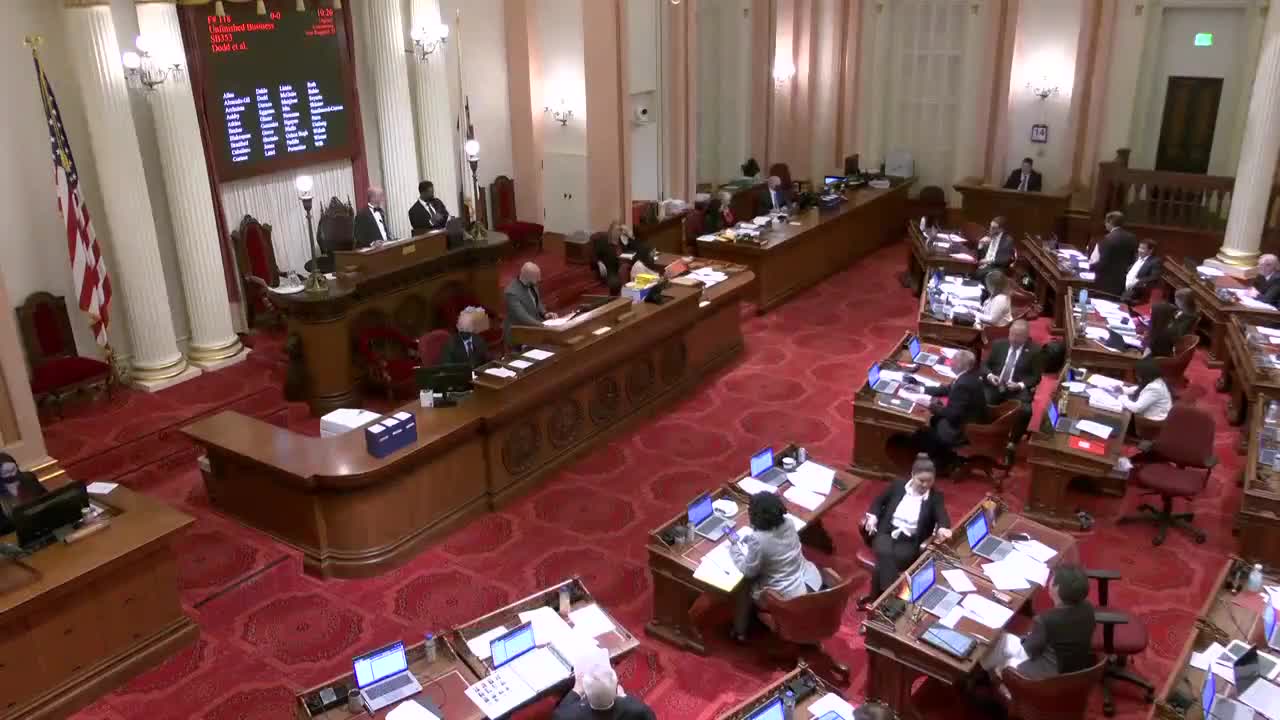
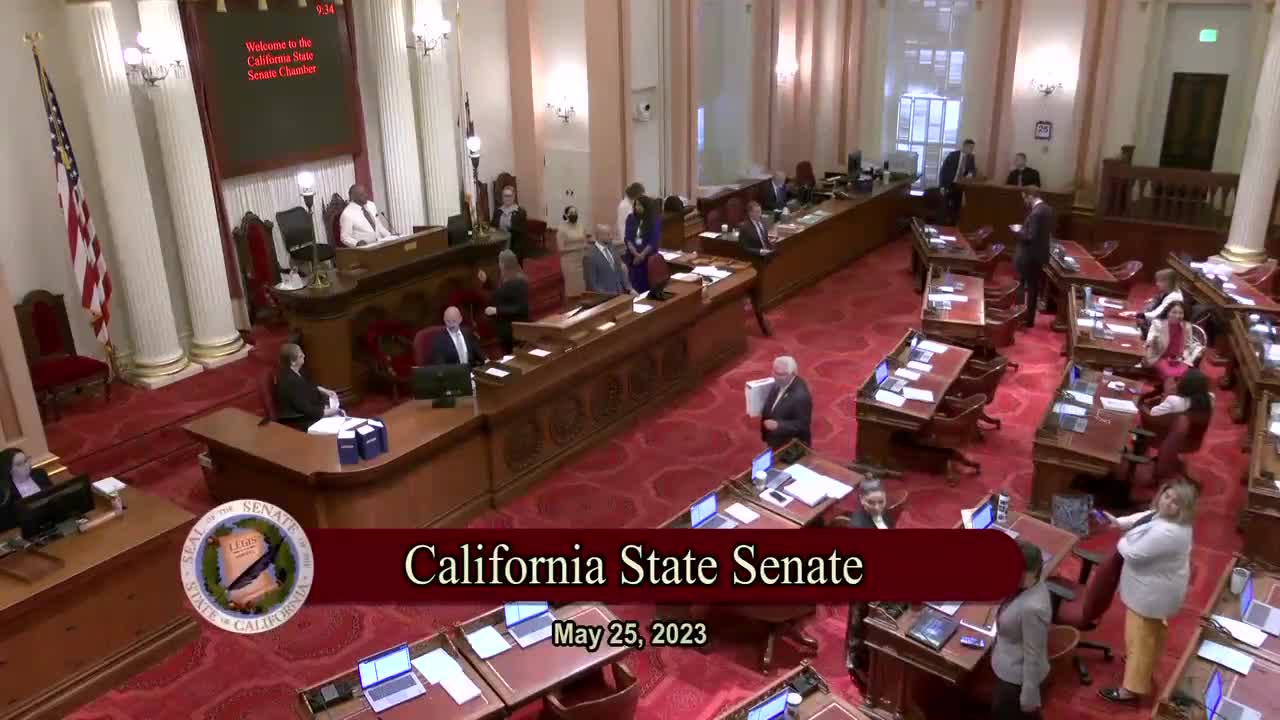
Bill Author

Bill Co-Author(s):
