SB 754: Communications: California High-Cost Fund-A Administrative Committee Fund program.
- Session Year: 2023-2024
- House: Senate
- Latest Version Date: 2023-04-18
Current Status:
Failed
(2024-02-01: Returned to Secretary of Senate pursuant to Joint Rule 56.)
Introduced
In Committee
First Chamber
In Committee
Second Chamber
Enacted
Existing law vests the Public Utilities Commission with regulatory authority over public utilities, including telephone corporations. Existing law authorizes the commission to fix just and reasonable rates and charges for public utilities. Existing law requires the commission to maintain the California High-Cost Fund-A Administrative Committee Fund (CHCF-A) program until January 1, 2028, to provide universal service rate support to small independent telephone corporations, as defined, in certain amounts in furtherance of the states universal service commitment to the continued affordability and widespread availability of safe, reliable, high-quality communications services in rural areas of the state.
This bill would, among other things, modify the definition of rate design for purposes of the CHCF-A program to specify that it does not include certain revenues, including internet access services, and would require the commission to ensure that each small independent telephone corporations rate design equals its revenue requirement. The bill would also require the commission, on or before February 1, 2024, to adjust each small independent telephone corporations rate design to remove any broadband or internet access revenues and implement corresponding increases to the distribution of CHCF-A program for funds to each small independent telephone corporation to ensure that its rate design equals its revenue requirement.
Under existing law, a violation of the Public Utilities Act or an order or direction order, decision, rule, direction, demand, or requirement of the commission is a crime.
Because the CHCF-A program is within the act and a decision or order of the violation of a commission implements the programs requirements, action implementing this bills requirements would be a crime, the bill would impose a state-mandated local program by expanding the definition of a crime. program.
The California Constitution requires the state to reimburse local agencies and school districts for certain costs mandated by the state. Statutory provisions establish procedures for making that reimbursement.
This bill would provide that no reimbursement is required by this act for a specified reason.
Existing law vests the Public Utilities Commission with regulatory authority over public utilities, including telephone corporations. Existing law authorizes the commission to fix just and reasonable rates and charges for public utilities. Existing law requires the commission to maintain the California High-Cost Fund-A Administrative Committee Fund (CHCF-A) program until January 1, 2028, to provide universal service rate support to small independent telephone corporations, as defined, in certain amounts in furtherance of the states universal service commitment to the continued affordability and widespread availability of safe, reliable, high-quality communications services in rural areas of the state.
This bill would state the intent of the Legislature to enact subsequent legislation relating to the California High-Cost Fund-A Administrative Committee Fund program. would, among other things, modify the definition of rate design for purposes of the CHCF-A program to specify that it does not include certain revenues, including internet access services, and would require the commission to ensure that each small telephone corporations rate design equals its revenue requirement. The bill would also require the commission, on or before February 1, 2024, to adjust each small independent telephone corporations rate design to remove any broadband or internet access revenues and implement corresponding increases to the CHCF-A program for each small independent telephone corporation to ensure that its rate design equals its revenue requirement.
Under existing law, a violation of the Public Utilities Act or an order or direction of the commission is a crime.
Because the CHCF-A program is within the act and a decision or order of the commission implements the programs requirements, the bill would impose a state-mandated local program by expanding the definition of a crime.
The California Constitution requires the state to reimburse local agencies and school districts for certain costs mandated by the state. Statutory provisions establish procedures for making that reimbursement.
This bill would provide that no reimbursement is required by this act for a specified reason.
Existing law vests the Public Utilities Commission with regulatory authority over public utilities, including telephone corporations. Existing law authorizes the commission to fix just and reasonable rates and charges for public utilities. Existing law requires the commission to maintain the California High-Cost Fund-A Administrative Committee Fund program until January 1, 2028, to provide universal service rate support to small independent telephone corporations, as defined, in certain amounts in furtherance of the states universal service commitment to the continued affordability and widespread availability of safe, reliable, high-quality communications services in rural areas of the state.
This bill would state the intent of the Legislature to enact subsequent legislation relating to the California High-Cost Fund-A Administrative Committee Fund program.
(a)The commission shall exercise its regulatory authority to maintain the California High-Cost Fund-A Administrative Committee Fund program (CHCF-A program) to provide universal service rate support to small independent telephone corporations in amounts sufficient to meet the revenue requirements established by the commission through rate-of-return regulation in furtherance of the states universal service commitment to the continued affordability and widespread availability of safe, reliable, high-quality communications services in rural areas of the state. The CHCF-A program is designed to ensure that telephone rates in high-cost, rural service territories remain reasonable and that sufficient incentives exist for small independent telephone corporations to make continued investments in broadband-capable facilities. This section is not intended to does not confer regulatory or ratemaking authority over internet service providers or internet access services.
(b)For purposes of this section, the following terms have the following meanings:
(1)Carrier of last resort means a telephone corporation that is required to fulfill all reasonable requests for service within its service territory.
(2)Rate base means the value of a telephone corporations plant and equipment that is reasonably necessary to provide intrastate regulated voice services and access to advanced services through deployment of broadband-capable facilities, and upon which the telephone corporation is entitled to a fair opportunity to earn a reasonable rate of return.
(3)Rate design means the mix of revenue from end user rates, federal universal service rate support, CHCF-A program funds, and other revenue sources derived from, or issued to, support the telephone corporations intrastate operations, that are collectively targeted to provide a fair opportunity to meet the revenue requirement of the telephone corporation. Rate design does not include revenue from internet access services, other nonregulated services, or interstate services regulated under the authority of the Federal Communications Commission.
(4)Rate-of-return regulation means a regulatory structure whereby the commission establishes a telephone corporations intrastate revenue requirement, and then fashions a rate design to provide the company a fair opportunity to meet the revenue requirement.
(5)Revenue requirement means the amount that is necessary for a telephone corporation to recover its reasonable intrastate expenses and tax liabilities and earn a reasonable rate of return on its intrastate rate base.
(6)Small independent telephone corporations are rural incumbent local exchange carriers subject to commission regulation.
(c)In administering the CHCF-A program the commission shall do all of the following:
(1)Continue to set rates to be charged by the small independent telephone corporations in accordance with Sections 451, 454, 455, and 728.
(2)Employ rate-of-return regulation to determine a small independent telephone corporations revenue requirement in a manner that provides revenues and earnings sufficient to allow the small independent telephone corporation to deliver safe, reliable, high-quality voice communication service and fulfill its obligations as a carrier of last resort in its service territory, and to afford the small independent telephone corporation a fair opportunity to earn a reasonable return on its investments, attract capital for investment on reasonable terms, and ensure the financial integrity of the small independent telephone corporation.
(3)Ensure that each small independent telephone corporations rate design equals its revenue requirement.
(4)Ensure that rates charged to customers of small independent telephone corporations are just and reasonable and are reasonably comparable to rates charged to customers of urban telephone corporations.
(5)Provide universal service rate support from the CHCF-A program to small independent telephone corporations in an amount sufficient to supply the portion of the revenue requirement that cannot reasonably be provided by the customers of each small independent telephone corporation after receipt of federal universal service rate support.
(6)Promote customer access to advanced services and deployment of broadband-capable facilities in rural areas that is reasonably comparable to that in urban areas, consistent with national communications policy.
(7)Include all reasonable investments necessary to provide for the delivery of high-quality voice communication services and the deployment of broadband-capable facilities in the rate base of small independent telephone corporations.
(8)Ensure that support is not excessive so that the burden on all contributors to the CHCF-A program is limited, while ensuring that each small independent telephone corporations rate design is sufficient to meet its revenue requirement.
(d)In order to participate in the CHCF-A program, a small independent telephone corporation shall meet all of the following requirements:
(1)Be subject to rate-of-return regulation.
(2)Be subject to the commissions regulation of telephone corporations pursuant to this division.
(3)Be a carrier of last resort in their service territory.
(4)Qualify as a rural telephone company under federal law (47 U.S.C. Sec. 153(44)).
(e)Upon request from the commission, a small independent telephone corporation that receives support from the CHCF-A program shall provide information regarding revenues derived from the provision of unregulated internet access service by that corporation or its affiliate within that corporations telephone service territory. The commission shall treat as confidential any information provided pursuant to this subdivision. This requirement to provide internet access revenue information does not change the scope of the commissions jurisdiction over internet service providers or internet access services, nor does it permit the inclusion of internet access service revenues in small independent telephone corporations rate designs.
(f)On or before February 1, 2024, the commission shall adjust each small independent telephone corporations rate design to remove any broadband or internet access revenues and implement corresponding increases to the distribution of CHCF-A program for funds to each small independent telephone corporation to ensure that its rate design equals its revenue requirement.
(g)The commission shall structure the CHCF-A program so that any charge imposed to promote the goals of universal service reasonably equals the value of the benefits of universal service to contributing entities and their subscribers.
(h)This section shall remain in effect only until January 1, 2028, and as of that date is repealed.
SEC. 2.No reimbursement is required by this act pursuant to Section 6 of Article XIIIB of the California Constitution because the only costs that may be incurred by a local agency or school district will be incurred because this act creates a new crime or infraction, eliminates a crime or infraction, or changes the penalty for a crime or infraction, within the meaning of Section 17556 of the Government Code, or changes the definition of a crime within the meaning of Section 6 of Article XIIIB of the California Constitution.
(a)The commission shall exercise its regulatory authority to maintain the California High-Cost Fund-A Administrative Committee Fund program (CHCF-A program) to provide universal service rate support to small independent telephone corporations in amounts sufficient to meet the revenue requirements established by the commission through rate-of-return regulation in furtherance of the states universal service commitment to the continued affordability and widespread availability of safe, reliable, high-quality communications services in rural areas of the state. The CHCF-A program is designed to ensure that telephone rates in high-cost, rural service territories remain reasonable and that sufficient incentives exist for small independent telephone corporations to make continued investments in broadband-capable facilities. This section is not intended to confer regulatory or ratemaking authority over internet service providers or internet access services.
(b)For purposes of this section, the following terms have the following meanings:
(1)Carrier of last resort means a telephone corporation that is required to fulfill all reasonable requests for service within its service territory.
(2)Rate base means the value of a telephone corporations plant and equipment that is reasonably necessary to provide intrastate regulated voice services and access to advanced services, services through deployment of broadband-capable facilities, and upon which the telephone corporation is entitled to a fair opportunity to earn a reasonable rate of return.
(3)Rate design means the mix of revenue from end user rates, high-cost federal universal service rate support, CHCF-A program funds, and other revenue sources that are derived from, or issued to, support the telephone corporations intrastate operations, that are collectively targeted to provide a fair opportunity to meet the revenue requirement of the telephone corporation. Rate design does not include revenue from internet access services, other nonregulated services, or interstate services regulated under the authority of the Federal Communications Commission.
(4)Rate-of-return regulation means a regulatory structure whereby the commission establishes a telephone corporations intrastate revenue requirement, and then fashions a rate design to provide the company a fair opportunity to meet the revenue requirement.
(5)Revenue requirement means the amount that is necessary for a telephone corporation to recover its reasonable intrastate expenses and tax liabilities and earn a reasonable rate of return on its intrastate rate base.
(6)Small independent telephone corporations are rural incumbent local exchange carriers subject to commission regulation.
(c)In administering the CHCF-A program the commission shall do all of the following:
(1)Continue to set rates to be charged by the small independent telephone corporations in accordance with Sections 451, 454, 455, and 728.
(2)Employ rate-of-return regulation to determine a small independent telephone corporations revenue requirement in a manner that provides revenues and earnings sufficient to allow the telephone corporation to deliver safe, reliable, high-quality voice communication service and fulfill its obligations as a carrier of last resort in its service territory, and to afford the telephone corporation a fair opportunity to earn a reasonable return on its investments, attract capital for investment on reasonable terms, and ensure the financial integrity of the telephone corporation.
(3)Ensure that each small telephone corporations rate design equals its revenue requirement.
(3)(4)Ensure that rates charged to customers of small independent telephone corporations are just and reasonable and are reasonably comparable to rates charged to customers of urban telephone corporations.
(4)(5)Provide universal service rate support from the CHCF-A program to small independent telephone corporations in an amount sufficient to supply the portion of the revenue requirement that cannot reasonably be provided by the customers of each small independent telephone corporation after receipt of federal universal service rate support.
(5)(6)Promote customer access to advanced services and deployment of broadband-capable facilities in rural areas that is reasonably comparable to that in urban areas, consistent with national communications policy.
(6)(7)Include all reasonable investments necessary to provide for the delivery of high-quality voice communication services and the deployment of broadband-capable facilities in the rate base of small independent telephone corporations.
(7)(8)Ensure that support is not excessive so that the burden on all contributors to the CHCF-A program is limited. limited, while ensuring that each small telephone corporations rate design is sufficient to meet its revenue requirement.
(d)In order to participate in the CHCF-A program, a small independent telephone corporation shall meet all of the following requirements:
(1)Be subject to rate-of-return regulation.
(2)Be subject to the commissions regulation of telephone corporations pursuant to this division.
(3)Be a carrier of last resort in their service territory.
(4)Qualify as a rural telephone company under federal law (47 U.S.C. Sec. 153(44)).
(e)Upon request from the commission, a small independent telephone corporation that receives support from the CHCF-A program shall provide information regarding revenues derived from the provision of unregulated internet access service by that corporation or its affiliate within that corporations telephone service territory. The commission shall treat as confidential any information provided pursuant to this subdivision. This requirement to provide internet access revenue information does not change the scope of the commissions jurisdiction over internet service providers or internet access services, nor does it permit the inclusion of internet access service revenues in small independent telephone corporations rate designs.
(f)On or before February 1, 2024, the commission shall adjust each small independent telephone corporations rate design to remove any broadband or internet access revenues and implement corresponding increases to the CHCF-A program for each small independent telephone corporation to ensure that its rate design equals its revenue requirement.
(f)(g)The commission shall structure the CHCF-A program so that any charge imposed to promote the goals of universal service reasonably equals the value of the benefits of universal service to contributing entities and their subscribers.
(g)(h)This section shall remain in effect only until January 1, 2028, and as of that date is repealed.
SEC. 2.No reimbursement is required by this act pursuant to Section 6 of Article XIIIB of the California Constitution because the only costs that may be incurred by a local agency or school district will be incurred because this act creates a new crime or infraction, eliminates a crime or infraction, or changes the penalty for a crime or infraction, within the meaning of Section 17556 of the Government Code, or changes the definition of a crime within the meaning of Section 6 of Article XIIIB of the California Constitution.
SECTION 1.It is the intent of the Legislature to enact subsequent legislation relating to the California High-Cost Fund-A Administrative Committee Fund program.It is the intent of the Legislature to enact subsequent legislation relating to the California High-Cost Fund-A Administrative Committee Fund program.
|
Date
|
Status
|
|---|---|
| Feb 1, 2024 | Returned to Secretary of Senate pursuant to Joint Rule 56. |
| May 18, 2023 | May 18 hearing: Held in committee and under submission. |
| May 12, 2023 | Set for hearing May 18. |
| May 8, 2023 | May 8 hearing: Placed on APPR suspense file. |
| May 1, 2023 | Set for hearing May 8. |
| Apr 27, 2023 | May 1 hearing postponed by committee. |
| Apr 21, 2023 | Set for hearing May 1. |
| Apr 18, 2023 | Read second time and amended. Re-referred to Com. on APPR. |
| Apr 17, 2023 | From committee: Do pass as amended and re-refer to Com. on APPR. (Ayes 15. Noes 0. Page 638.) (April 10). |
| Apr 3, 2023 | Set for hearing April 10. |
| Mar 29, 2023 | Re-referred to Com. on E., U. & C. |
| Mar 21, 2023 | From committee with author's amendments. Read second time and amended. Re-referred to Com. on RLS. |
| Mar 1, 2023 | Referred to Com. on RLS. |
| Feb 21, 2023 | From printer. May be acted upon on or after March 20. |
| Feb 17, 2023 | Introduced. Read first time. To Com. on RLS. for assignment. To print. |
|
Date
|
Description
|
Location
|
Votes
|
|
|---|---|---|---|---|
| May 8, 2023 | Placed on suspense file | Senate Standing Committee on Appropriations |
Passed |
|
| Apr 10, 2023 | Do pass as amended, but first amend, and re-refer to the Committee on [Appropriations] | Senate Standing Committee on Energy, Utilities and Communications |
Passed |
This list shows positions taken on this bill by organizations on the date displayed, which is linked to the original source.
Positions by individuals are not included.
|
Organization
|
Position
|
Date
|
|---|---|---|
| Almond Alliance | ** Support | |
| Association of California Healthcare Districts | * Support | Apr 10, 2023 |
| California Communications Association | ** Support | |
| California Independent Telecommunications Companies | ** Support | |
| Ducor Union Elementary School District | ** Support | |
| Economic Development Corporation Of Mariposa County | ** Support | |
| Kerman Chamber of Commerce | ** Support | |
| Mariposa County Board of Supervisors | ** Support | |
| Mariposa County Chamber of Commerce | ** Support | |
| Mariposa County Office of Education | ** Support | |
| Mariposa County Sheriff's Office of Emergency Services | ** Support | |
| Mariposa County Unified School District | ** Support | |
| Mount Diablo Unified School District | * Support | Apr 10, 2023 |
| Oakhurst Area Chamber of Commerce | ** Support | |
| Rotary Club of Mariposa Yosemite | ** Support | |
| The Utility Reform Network | * Against | Apr 10, 2023 |
| US Telecom | * Support | Apr 10, 2023 |
SENATE COMMITTEE ON
Senator Anthony Portantino, Chair
2023 - 2024 Regular Session
SB 754 (Alvarado-Gil) - Communications: California High-Cost Fund-A Administrative Committee Fund program
Version: | Policy Vote: |
Urgency: | Mandate: |
Hearing Date: | Consultant: |
Bill Summary:
This bill would clarify ratemaking requirements for small independent telephone corporations to prohibit the California Public Utilities Commission (CPUC) from incorporating broadband revenues in calculations for telephone corporation rates.
Fiscal Impact:
- Unknown but potentially significant ongoing cost pressure (CHCF-A fund) due to the CPUC no longer using broadband revenues to calculate the revenue requirements of the small independent telephone corporations as a result of this bill.
- The CPUC estimates its costs would be minor and absorbable.
Background:
CHCF-A. The CHCF-A is one of several programs that comprise California’s Universal Service Programs, which are aimed at ensuring that all Californians have access to affordable, high quality telecommunications services. Under existing law, the CHCF-A program provides rate support to small independent telephone corporations. These small independent telephone corporations are “Carriers of Last Resort” that are required to provide telephone service to individuals when no other carrier is willing to provide service. The rate assistance provided by the CHCF-A program is intended to ensure that residents in rural communities can access telecommunications services at rates comparable to those for similar services in urban areas. Rural telecommunications rates can significantly exceed urban rates due to higher infrastructure costs and a lack of economies of scale. While the amount needed to cover costs for CHCF-A company expenses is determined through rate cases at the CPUC, claims submitted by the small independent telephone corporations for CHCF-A subsidies have remained relatively stable and have not risen with the rate of inflation.
This bill seeks to exclude broadband revenues from telephone corporation rate case calculations. Generally, existing law establishes the rate case process to ensure that regulated utilities receive sufficient revenues to provide safe, affordable, quality service for customers. Existing law also generally requires rate design to ensure that regulated utilities earn a sufficient profit margin. This bill would make various changes to existing law governing CPUC rate cases for telephone corporations receiving support from the CHCF-A. These changes are intended to clarify that the CPUC may not use broadband revenues to calculate the revenue requirements of the small independent telephone corporations. While the CHCF-A program was originally established to support rural telephone corporation rates, these small independent telephone corporations have since developed broadband services. Existing federal rules distinguish telephone corporation services from broadband services. As a result, the small independent telephone corporations operate broadband services through affiliated companies. This bill would prohibit the CPUC from including the revenues of these broadband affiliate companies when determining the revenues of the telephone corporations and the amount of money needed to profitably operate the telephone corporation.
How did we get here? In 2011, the FCC took steps to expand its support for broadband deployment by shifting federal telecommunications infrastructure support from telephone to broadband infrastructure. To remain eligible for these subsidies, carriers needed to demonstrate that they were making progress towards meeting broadband deployment goals. At the time, stakeholders were concerned that if carriers were unable to upgrade their facilities to meet the Connect America Fund minimum speeds, the state would lose the opportunity to draw down federal subsidies and telephone corporations would more heavily rely on high cost fund support, including the CHCF-A. The CPUC opened a proceeding (R.11-11-007) to address concerns about the small independent telephone corporations’ potential federal subsidy loss and greater reliance on state rate support. At the time, stakeholders expressed concern that the CPUC would not permit the small independent telephone corporations to use their funding, which include CHCF-A monies, to deploy broadband infrastructure because internet service is not rate-regulated. To better enable these small telephone corporations to invest in broadband infrastructure the Legislature passed SB 379 (Fuller, Chapter 729, Statutes of 2012), which aligned state CHCF-A statutes with the federal shift towards broadband subsidies and enabled the CPUC to obtain information about the revenues generated by broadband affiliates of the small independent telephone corporations.
The CPUC has kept its CHCF-A rulemaking open since 2011 and periodically adopted decisions making substantial changes to the program. In 2021, the CPUC adopted a decision (D.21-04-005) that requires the imputation of all broadband revenues obtained by the small independent telephone corporations within their California high cost areas. This decision treats revenues from the broadband affiliates as monies that can be used to subsidize revenue needs of the telephone corporation. In turn, it reduces these telephone corporations’ draw from the CHCF-A fund in proportion to the profits the broadband affiliate earns. Under this imputation scheme, it is unlikely that in-state broadband investments by these affiliates will generate significant profits within high cost areas of the state. As the CPUC has reduced these companies’ subsidies from the CHCF-A program through broadband imputation, the CPUC has also increased ratepayer costs for customers of these small independent telephone corporations. In many cases, the rates approved by the CPUC exceed the rates proposed by the companies themselves.
The CPUC and the small independent telephone corporations are still engaged in litigation regarding the imputation decision; however, the most recent court decision affirmed the CPUC’s decision. This decision substantially relied on inferring legislative intent; however, the decision also noted that the statutes were broad and legislative direction was ambiguous. The court reasoned that the Legislature would not have provided the CPUC with the broadband affiliates’ revenue data if the Legislature had not intended for the CPUC to use that data to reduce subsidies from the CHCF-A program. While SB 379 made it clear that the Legislature expressly directed the CPUC to ensure that CHCF-A needs did not burden ratepayers, the bill makes no reference to using broadband subsidies to reduce telephone corporations’ ability to obtain CHCF-A subsidies.
This bill would clarify that the CPUC may not impute broadband revenues in telephone corporation rate cases. This bill would also require the CPUC to continue to limit excessive draws from the CHCF-A program that would burden ratepayers; however, it would also require the CPUC to ensure that CHCF-A companies receive sufficient revenue support to keep telephone rates affordable. While this bill would likely require the CPUC to revise its imputation decision, a new proceeding would not be necessary since the existing CHCF-A rulemaking proceeding remains open.
Does broadband imputation align with state broadband deployment goals? The small independent telephone corporations remain the only telecommunications providers in the state that are limited on their ability to earn profits from broadband affiliates. Since the CPUC adopted a decision to impute these affiliates’ revenues within high cost areas of the state, California has taken steps to issue substantial grants to deploy broadband infrastructure in unserved parts of the state. These grants are largely funded through taxpayer revenues – not ratepayer funds. While some affordability requirements have been set for these grants, these grant programs do not cap broadband revenues. In some cases, the CPUC has explicitly prioritized the deployment of broadband funding to locations where networks would be more economically sustainable. It is unclear how a broadband affiliate of a small independent telephone corporation could make a business case for obtaining these grants to deploy broadband in their high cost areas given that their profits would be imputed in subsequent rate cases.
Proposed Law:
This bill would clarify ratemaking requirements for small independent telephone corporations to prohibit the CPUC from incorporating broadband revenues in calculations for telephone corporation rates. Specifically, this bill would:
- Clarify that the CHCF-A program is intended to ensure that telephone rates in high-cost, rural service territories remain reasonable and sufficient incentives exist for small independent telephone corporations to invest in broadband-capable facilities. This bill clarifies that providing these incentives does not confer regulatory or ratemaking authority over internet service providers or internet access services.
- Modify several existing definitions to specify that rate design does not include revenue from internet access services, other nonregulated services, or interstate services regulated under the authority of the Federal Communications Commission (FCC).
- Require the CPUC to ensure that each small independent telephone corporation’s rate design equals its revenue requirement and sufficient to meet its revenue requirement.
- Clarify that providing the CPUC with broadband revenue information does not change the scope of the CPUC’s jurisdiction over internet service providers or internet access services.
- Require the CPUC to adjust each small independent telephone corporation’s rate design by February 1, 2024, to remove any broadband or internet access revenues and implement corresponding increases to the distribution of CHCF-A program funds to each small independent telephone corporation to ensure that its rate design equals its revenue requirement.
Related Legislation:
SB 857 (Hueso, Chapter Chapter 706, Statutes of 2022) extended the sunset for the CHCF-A and B programs from January 1, 2023, to January 1, 2028.
AB 1257 (Patterson, 2021) would have required the CPUC to hold at least one day of facilitated mediation before proceeding with a small independent telephone corporation’s rate case, and the bill would have required the CPUC to meet and confer with proceeding parties at least one before filing a motion to make a good faith effort to informally resolve the motion’s concerns. The bill was held on the Suspense File in this committee.
SB 603 (Borgeas, 2019) would have allowed small independent telephone corporations to use either an application or advice letter process to initiate a rate case. The bill was held on the Suspense File in the Assembly Appropriations Committee.
AB 1959 (Wood, Chapter 256, Statutes of 2018) extended the sunset for the CHCF-A and B programs from January 1, 2019, to January 1, 2023.
SB 1122 (Canella, 2016) would have required the CPUC to issue a final decision for a small independent telephone corporation rate case no later than 390 days after the corporation files its application or advice letter initiating the case. The bill also would have authorized the small independent telephone corporations to file tariffs implementing interim rates if CPUC failed to issue a final decision by the 390th day. The bill died in the Assembly.
AB 1693 (Perea, 2014) would have required the CPUC to issue a final decision for a small independent telephone corporation rate case no later than 390 days after the corporation files its application or advice letter initiating the case. The bill also would have established a process for implementing an interim rate proposed by the corporations if the CPUC failed to meet the deadline. The bill was vetoed.
SB 379 (Fuller, Chapter 729, Statutes of 2012), allowed CHCF-A subsidies for broadband-enabled infrastructure and allowed the CPUC to obtain information about the revenues generated by broadband affiliates of the small independent telephone corporations.
Staff Comments:
Amendments taken in the Senate Energy, Utilities, & Communications Committee seek to clarify that the amount companies receive from the CHCF-A may be adjusted to reflect the removal of broadband revenues, but the CHCF-A program should not be expanded. However, by ending the current practice of allowing revenues from broadband affiliates as monies that can be used to subsidize revenue needs of small independent telephone corporations, this bill could create cost pressure on the CHCF-A to backfill broadband profits. Staff notes the CHCF-A program is funded by a surcharge on in-state telecommunications services applied to all consumers’ bills. This surcharge is collected by carriers and deposited into an account administered by the CPUC.
-- END --
SENATE COMMITTEE ON ENERGY, UTILITIES AND COMMUNICATIONS
Senator Steven Bradford, Chair
2023 - 2024 Regular
Bill No: Hearing Date: 4/10/2023
Author: | |||
Version: | Amended | ||
Urgency: | Fiscal: | ||
Consultant: | |||
SUBJECT:
DIGEST: This bill clarifies rate-making requirements for small independent telephone corporations to prohibit the California Public Utilities Commission (CPUC) from incorporating broadband revenues in calculations for telephone corporation rates.
ANALYSIS:
Existing law:
- Establishes the California High Cost Fund – A (CHCF-A) program to provide support to small independent telephone companies in rural, high-cost areas of the state to ensure residents’ access to affordable telecommunications services in these communities. (Public Utilities Code §275)
- Authorizes the CPUC to administer a surcharge to fund the CHCF-A, and specifies that CHCF-A moneys appropriated to the CPUC may only be used for the administration of the CHCF-A program. (Public Utilities Code §275)
- Establishes various definitions for the administration of the CHCF-A, including, but not limited to, the following definitions:
- “Rate base” means the value of a telephone corporation’s plant and equipment that is reasonably necessary to provide regulated voice services and access to advanced services, and upon which the telephone corporation is entitled to a fair opportunity to earn a reasonable rate of return.
- “Rate design” means the mix of end user rates, high-cost support, and other revenue sources that are targeted to provide a fair opportunity to meet the revenue requirement of the telephone corporation.
- “Rate-of-return regulation” means a regulatory structure whereby the commission establishes a telephone corporation’s revenue requirement, and then fashions a rate design to provide the company a fair opportunity to meet the revenue requirement.
- “Revenue requirement” means the amount that is necessary for a telephone corporation to recover its reasonable expenses and tax liabilities and earn a reasonable rate of return. (Public Utilities Code §275.6)
- Existing law requires the CPUC to regulate the rates of telephone corporations receiving CHCF-A subsidies, and it requires the CPUC to use subsidies from the CHCF-A fund to cover those reasonable costs that these small independent telephone corporations cannot recover through rates. (Public Utilities Code §275.6)
- Existing law requires the CPUC to take certain steps when engaging in rate cases for CHCF-A companies, including, but not limited to, promote customer access to broadband services and ensure that subsidies from the CHCF-A are not so excessive that they become a burden on all telecommunications ratepayers. (Public Utilities Code §275.6)
- Requires CHCF-A companies to provide the CPUC with information about revenues it receives from its broadband service upon request. Existing law requires the CPUC to treat this information as confidential. (Public Utilities Code §276.5)
- Sunsets the CHCF-A on January 1, 2028. (Public Utilities Code §276.5)
This bill:
- Clarifies that the CHCF-A program is intended to ensure that telephone rates in high-cost, rural service territories remain reasonable and sufficient incentives exist for small independent telephone corporations to invest in broadband-capable facilities. This bill clarifies that providing these incentives does not confer regulatory or ratemaking authority over internet service providers or internet access services.
- Modifies several existing definitions to specify that rate design does not include revenue from internet access services, other nonregulated services, or interstate services regulated under the authority of the Federal Communications Commission (FCC).
- Requires the CPUC to ensure that each small telephone corporation’s rate design equals its revenue requirement and sufficient to meet its revenue requirement.
- Clarifies that providing the CPUC with broadband revenue information does not change the scope of the CPUC’s jurisdiction over internet service providers or internet access services.
- Requires the CPUC to adjust each small independent telephone corporation’s rate design by February 1, 2024, to remove any broadband or internet access revenues and implement corresponding increases to the CHCF-A program for each small independent telephone corporation to ensure that its rate design equals its revenue requirement.
Background
CHCF-A. The CHCF-A is one of several programs that comprise California’s Universal Service Programs, which are aimed at ensuring that all Californians have access to affordable, high quality telecommunications services. Under existing law, the CHCF-A program provides rate support to small independent telephone corporations. These small independent telephone corporations are “Carriers of Last Resort” that are required to provide telephone service to individuals when no other carrier is willing to provide service. The rate assistance provided by the CHCF-A program is intended to ensure that residents in rural communities can access telecommunications services at rates comparable to those for similar services in urban areas. Rural telecommunications rates can significantly exceed urban rates due to higher infrastructure costs and a lack of economies of scale. While the amount needed to cover costs for CHCF-A company expenses is determined through rate cases at the CPUC, claims submitted by the small independent telephone corporations for CHCF-A subsidies have remained relatively stable and have not risen with the rate of inflation.
Bill seeks to exclude broadband revenues from telephone corporation rate case calculations. Generally, existing law establishes the rate case process to ensure that regulated utilities receive sufficient revenues to provide safe, affordable, quality service for customers. Existing law also generally requires rate design to ensure that regulated utilities earn a sufficient profit margin. This bill makes various changes to existing law governing CPUC rate cases for telephone corporations receiving support from the CHCF-A. These changes are intended to clarify that the CPUC may not use broadband revenues to calculate the revenue requirements of the small independent telephone corporations. While the CHCF-A program was originally established to support rural telephone corporation rates, these small independent telephone corporation have since developed broadband services. Existing federal rules distinguish telephone corporation services from broadband services. As a result, the small independent telephone corporations operate broadband services through affiliated companies. This bill prohibits the CPUC from including the revenues of these broadband affiliate companies when determining the revenues of the telephone corporations and the amount of money needed to profitably operate the telephone corporation.
How did we get here? In 2011, the FCC took steps to expand its support for broadband deployment by shifting federal telecommunications infrastructure support from telephone to broadband infrastructure. To remain eligible for these subsidies, carriers needed to demonstrate that they were making progress towards meeting broadband deployment goals. At the time, stakeholders were concerned that if carriers were unable to upgrade their facilities to meet the Connect America Fund minimum speeds, the state would lose the opportunity to draw down federal subsidies and telephone corporations would more heavily rely on high cost fund support, including the CHCF-A. The CPUC opened a proceeding (R.11-11-007) to address concerns about the small independent telephone corporations’ potential federal subsidy loss and greater reliance on state rate support. At the time, stakeholders expressed concern that the CPUC would not permit the small independent telephone corporations to use their funding, which include CHCF-A monies, to deploy broadband infrastructure because internet service is not rate-regulated. To better enable these small telephone corporations to invest in broadband infrastructure the Legislature passed SB 379 (Fuller, Chapter 729, Statutes of 2012), which aligned state CHCF-A statutes with the federal shift towards broadband subsidies and enabled the CPUC to obtain information about the revenues generated by broadband affiliates of the small independent telephone corporations.
The CPUC has kept its CHCF-A rulemaking open since 2011 and periodically adopted decisions making substantial changes to the program. In 2021, the CPUC adopted a decision (D.21-04-005) that requires the imputation of all broadband revenues obtained by the small independent telephone corporations within their California high cost areas. This decision treats revenues from the broadband affiliates as monies that can be used to subsidize revenue needs of the telephone corporation. In turn, it reduces these telephone corporations’ draw from the CHCF-A fund in proportion to the profits the broadband affiliate earns. Under this imputation scheme, it is unlikely that in-state broadband investments by these affiliates will generate significant profits within high cost areas of the state. As the CPUC has reduced these companies’ subsidies from the CHCF-A program through broadband imputation, the CPUC has also increased ratepayer costs for customers of these small independent telephone corporations. In many cases, the rates approved by the CPUC exceed the rates proposed by the companies themselves.
The CPUC and the small independent telephone corporations are still engaged in litigation regarding the imputation decision; however, the most recent court decision affirmed the CPUC’s decision. This decision substantially relied on inferring legislative intent; however, the decision also noted that the statutes were broad and legislative direction was ambiguous. The court reasoned that the Legislature would not have provided the CPUC with the broadband affiliates’ revenue data if the Legislature had not intended for the CPUC to use that data to reduce subsidies from the CHCF-A program. While SB 379 made it clear that the Legislature expressly directed the CPUC to ensure that CHCF-A needs did not burden ratepayers, the bill makes no reference to using broadband subsidies to reduce telephone corporations’ ability to obtain CHCF-A subsidies.
This bill would clarify that the CPUC may not impute broadband revenues in telephone corporation rate cases. This bill also requires the CPUC to continue to limit excessive draws from the CHCF-A program that would burden ratepayers; however, it also requires the CPUC to ensure that CHCF-A companies receive sufficient revenue support to keep telephone rates affordable. While this bill would likely require the CPUC to revise its imputation decision, a new proceeding would not be necessary since the existing CHCF-A rulemaking proceeding remains open.
Does broadband imputation align with state broadband deployment goals? The small independent telephone corporations remain the only telecommunications providers in the state that are limited on their ability to earn profits from broadband affiliates. Since the CPUC adopted a decision to impute these affiliates’ revenues within high cost areas of the state, California has taken steps to issue substantial grants to deploy broadband infrastructure in unserved parts of the state. These grants are largely funded through taxpayer revenues – not ratepayer funds. While some affordability requirements have been set for these grants, these grant programs do not cap broadband revenues. In some cases, the CPUC has explicitly prioritized the deployment of broadband funding to locations where networks would be more economically sustainable. It is unclear how a broadband affiliate of a small independent telephone corporation could make a business case for obtaining these grants to deploy broadband in their high cost areas given that their profits would be imputed in subsequent rate cases.
To regulate, or not regulate: that is the (increasingly ambiguous) question. While this bill prohibits the CPUC from including broadband revenues in revenue requirements for certain small telephone corporation rate cases, this bill does not foreclose the CPUC from regulating internet service rates to the extent that the CPUC gains the authority to do so. The Obama FCC adopted rules reclassifying internet service as a more strictly regulated common carrier under Title II of the federal Communications Act. Subsequently, the Trump FCC adopted rules reverting internet service to an information service under Title I of the Communications Act. While the Trump FCC’s rules limited the treatment of internet service as a strictly regulated utility, subsequent court decisions determined that the Trump FCC overstepped its legal authority in automatically pre-empting states from adopting their own net neutrality rules. While court decisions have indicated that states may regulate internet services more actively in areas where the FCC has declined to adopt rules, these court decisions have not specifically addressed the question of state-level rate regulation of internet services. In the event that policies are clarified to facilitate state-level ratemaking over internet services, this bill would not prohibit the CPUC from doing so. Instead, it requires the CPUC to distinguish between the fully rate-regulated telephone corporation and the less-regulated broadband affiliate during telephone corporation rate cases, and it limits the CPUC from co-mingling the revenues of the telephone corporation and broadband affiliate when determining the revenue needs of the telephone corporation.
Need for amendments. As currently written, this bill could be interpreted to require the CPUC to increase the size of the CHCF-A program by February 1, 2024, as part of redesigning rates pursuant to this bill. This implication does not appear to be the author’s intent. As a result, the author and committee may wish to amend this bill to clarify that the amount companies receive from the CHCF-A may be adjusted to reflect the removal of broadband revenues, but the CHCF-A program should not be expanded.
Prior/Related Legislation
SB 857 (Hueso, Chapter Chapter 706, Statutes of 2022) extended the sunset for the CHCF-A and B programs from January 1, 2023, to January 1, 2028.
AB 1257 (Patterson, 2021) would have required the CPUC to hold at least one day of facilitated mediation before proceeding with a small independent telephone corporation’s rate case, and the bill would have required the CPUC to meet and confer with proceeding parties at least one before filing a motion to make a good faith effort to informally resolve the motion’s concerns. The bill was held in the Senate Appropriations Committee.
SB 603 (Borgeas, 2019) would have allowed small independent telephone corporations to use either an application or advice letter process to initiate a rate case. The bill was held in the Assembly Appropriations Committee.
AB 1959 (Wood, Chapter 256, Statutes of 2018) extended the sunset for the CHCF-A and B programs from January 1, 2019, to January 1, 2023.
SB 1122 (Canella, 2016) would have required the CPUC to issue a final decision for a small independent telephone corporation rate case no later than 390 days after the corporation files its application or advice letter initiating the case. The bill also would have authorized the small independent telephone corporations to file tariffs implementing interim rates if CPUC failed to issue a final decision by the 390th day. The bill died in the Assembly.
AB 1693 (Perea, 2014) would have required the CPUC to issue a final decision for a small independent telephone corporation rate case no later than 390 days after the corporation files its application or advice letter initiating the case. The bill also would have established a process for implementing an interim rate proposed by the corporations if the CPUC failed to meet the deadline. The bill was vetoed.
SB 379 (Fuller, Chapter 729, Statutes of 2012), allowed CHCF-A subsidies for broadband-enabled infrastructure and allowed the CPUC to obtain information about the revenues generated by broadband affiliates of the small independent telephone corporations.
FISCAL EFFECT: Appropriation: Fiscal Com.: Local:
SUPPORT:
California Communications Association, Co-sponsor
California’s Independent Telecommunications Companies, Co-sponsor
Almond Alliance
Association of California Healthcare Districts
Ducor Union Elementary School District
Economic Development Corporation of Mariposa County
Kerman Chamber of Commerce
Mariposa County Board of Supervisors
Mariposa County Chamber of Commerce
Mariposa County Office of Education
Mariposa County Sheriff's Office of Emergency Services
Mariposa County Unified School District
Oakhurst Area Chamber of Commerce
Rotary Club of Mariposa Yosemite
USTelecom - the Broadband Association
OPPOSITION:
The Utility Reform Network
ARGUMENTS IN SUPPORT: According to the author:
SB 754 reverses a CPUC decision that is contrary to the Legislature’s goal of connecting rural Californians to high-speed broadband. The CPUC is cutting funding that the small rural telephone companies need for upgrading their networks with fiber in some of the most rural areas of the state. In practical terms, this funding is critical for the rural communities they serve to have access to high-speed broadband, which allows for democratic engagement, social mobility, and economic equality and growth.
ARGUMENTS IN OPPOSITION: The Utility Reform Network (TURN) opposes this bill because it argues that removing broadband affiliate revenues from the independent telephone corporation’s revenue calculations would lead these telephone corporations to draw on CHCF-A monies to keep telephone rates affordable in high cost areas of the state. In opposition, TURN states: “TURN opposes SB 754 because it would result in excessive CHCF-A support to companies at the expense of consumers who pay the CHCF-A subsidy.”
-- END --
Discussed in Hearing
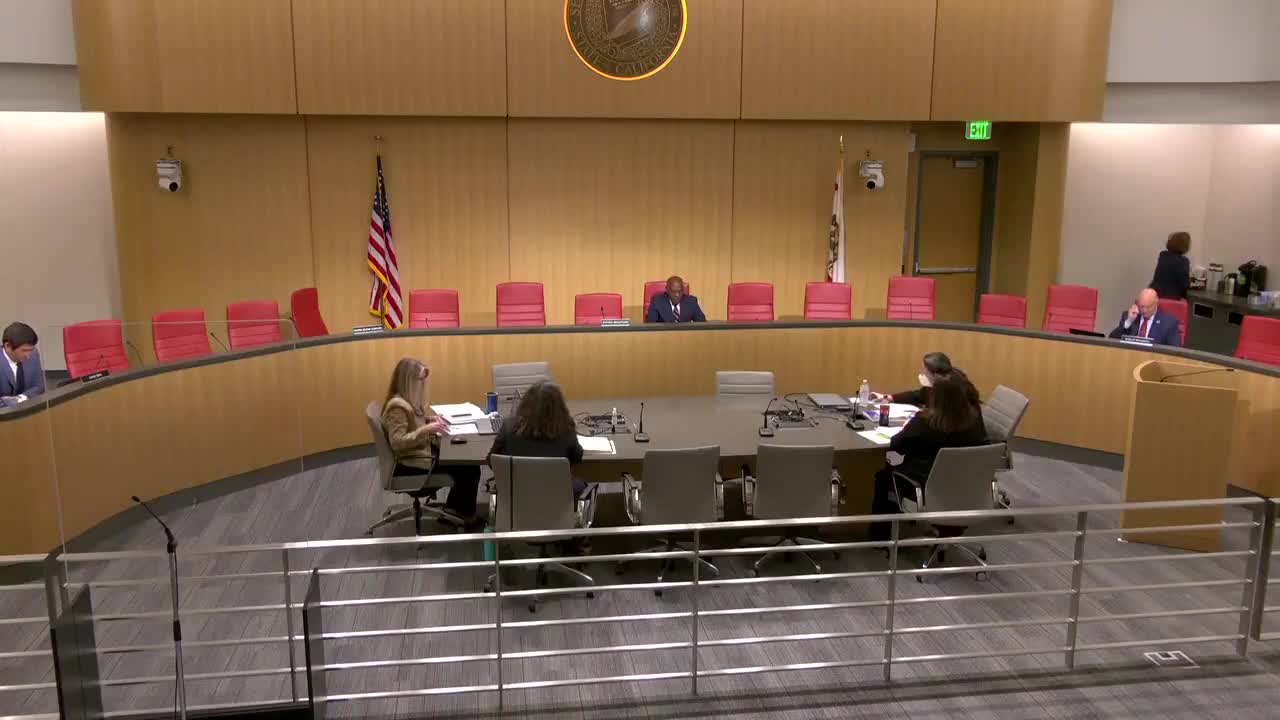 18MIN
Senate Standing Committee on Energy, Utilities and Communications
Bill Author

Bill Co-Author(s):