SB 766: Social workers.
- Session Year: 2023-2024
- House: Senate
- Latest Version Date: 2023-03-20
Current Status:
Failed
(2024-02-01: Returned to Secretary of Senate pursuant to Joint Rule 56.)
Introduced
In Committee
First Chamber
In Committee
Second Chamber
Enacted
Existing law, the Clinical Social Worker Practice Act, provides for the regulation of licensed clinical social workers. That law makes an individual who styles themselves as a licensed clinical social worker, without holding a license in good standing, guilty of a misdemeanor. Existing law exempts an individual employed by a government entity, certain academic institutions, an institution that is both nonprofit and charitable, and other specified individuals from that prohibition.
This bill would prohibit an individual from representing themselves as a social worker, unless they possess certain academic qualifications. The bill would apply that prohibition to an individual employed by a governmental entity, certain academic institutions, an institution that is both nonprofit and charitable, and other individuals. The bill would also prohibit an employer or principal from representing their employee or agent as a social worker unless the employee or agent possesses certain academic qualifications. The bill would state that, prior to January 1, 2029, these provisions do not apply to an individual that is classified as a social worker by their employer or principal if the individual held that classification prior to January 1, 2024. The bill would make a violation of these provisions an unfair business practice as well as a misdemeanor. By making a violation of these provisions a crime, the bill would impose a state-mandated local program.
The California Constitution requires the state to reimburse local agencies and school districts for certain costs mandated by the state. Statutory provisions establish procedures for making that reimbursement.
This bill would provide that no reimbursement is required by this act for a specified reason.
Existing law provides for the licensure and regulation of clinical social workers by the Board of Behavioral Sciences. Under existing law, an applicant for a clinical social worker license is required to furnish to the board evidence that the applicant has, among other things, received a masters degree from an accredited school of social work.This bill would make a nonsubstantive change to these provisions.Existing law provides for the licensure and regulation of clinical social workers by the Board of Behavioral Sciences. Under existing law, an applicant for a clinical social worker license is required to furnish to the board evidence that the applicant has, among other things, received a masters degree from an accredited school of social work.
This bill would make a nonsubstantive change to these provisions.
The Legislature finds and declares as follows:
(a)The profession of social work is over 100 years old and is practiced worldwide. Its mission is to enhance and meet the basic needs of all people, with particular attention to the states most vulnerable consumers, including families; adults and children suffering from abuse, addiction, mental illness, and disabilities; veterans; the elderly; and all people living in poverty and experiencing oppression who have the right to expect that a person with the title of social worker has the appropriate education, experience, and training.
(b)A social worker possesses a specific body of professional knowledge, training, and experience that is gained when the social worker acquires their social work degree from a school accredited by the Commission on Accreditation of the Council on Social Work Education.
(c)A social work degree is based on scientific theory and evidence-based practice.
(d)While this act protects the title of social worker, it does not limit any other health care or social service title.
(e)The public confidence and the consumers security are paramount, and protecting the social worker title is critical to successful social work for individuals, families, and communities.
SEC. 2.Section 4996.14 of the Business and Professions Code is amended to read:4996.14.(a)This chapter shall not be construed to constrict, limit, or withdraw the Medical Practice Act, the Licensed Marriage and Family Therapist Act, the Nursing Practice Act, the Licensed Professional Clinical Counselor Act, or the Psychology Licensing Law.
(b)This chapter chapter, except for Article 6 (commencing with Section 4998.90), shall not apply to an unlicensed or unregistered employee or volunteer working in a governmental entity, a school, a college, a university, or an institution that is both nonprofit and charitable if both of the following apply:
(1)The work of the employee or volunteer is performed under the oversight and direction of the entity.
(2)(A)On and after July 1, 2020, the employee or volunteer provides a client, prior to initiating psychotherapy services or as soon as practicably possible thereafter, a notice written in at least 12-point type that is in substantially the following form:
NOTICE TO CLIENTS
The (Name of office or unit) of the (Name of agency) receives and responds to complaints regarding the practice of psychotherapy by any unlicensed or unregistered practitioner providing services at (Name of agency). To file a complaint, contact (Telephone number, email address, internet website, or mailing address of agency).
The Board of Behavioral Sciences receives and responds to complaints regarding services provided by individuals licensed and registered by the board. If you have a complaint and are unsure if your practitioner is licensed or registered, please contact the Board of Behavioral Sciences at 916-574-7830 for assistance or utilize the boards online license verification feature by visiting www.bbs.ca.gov.
(B)The delivery of the notice described in subparagraph (A) to the client shall be documented.
(c)This chapter shall not apply to a person using hypnotic techniques if their client was referred by a physician and surgeon, dentist, or psychologist.
(d)This chapter shall not apply to a person using hypnotic techniques that offer vocational self-improvement, and the person is not performing therapy for emotional or mental disorders.
(e)Notwithstanding subdivisions (b) and (c) or Section 4996.13, all persons registered as associates or licensed under this chapter shall not be exempt from this chapter or the jurisdiction of the board.
SEC. 3.Article 6 (commencing with Section 4998.70) is added to Chapter 14 of Division 2 of the Business and Professions Code, to read:6.Use of the Designation Social Worker4998.70.(a)Except as provided in subdivisions (b) and (c), only an individual who possesses a degree from an accredited school of social work, as defined in Section 4991.2, may represent themselves as a social worker.
(b)A graduate of a school in candidacy status, as determined by the Commission on Accreditation of the Council on Social Work Education, or that was in candidacy status at the time the graduate began attending the school, shall not represent themselves as a social worker if the school does not obtain accreditation from the council.
(c)A social worker shall not use the title Licensed Clinical Social Worker or Associate Clinical Social Worker unless the individual meets the criteria specified under Article 4 (commencing with Section 4996).
(d)This section shall not limit the use of any other health care or social service title.
(e)Prior to January 1, 2029, this section shall not apply to an individual that is classified by their employer or principal as a social worker if the individual held that classification prior to January 1, 2024.
4998.71.(a)Except as provided in subdivisions (b) and (c), an employer or principal shall not represent their employee or agent as a social worker unless that employee or agent possesses a degree from an accredited school of social work, as defined in Section 4991.2.
(b)If an employee or agent is a graduate of a school in candidacy status, as determined by the Commission on Accreditation of the Council on Social Work Education, or is a graduate of a school that was in candidacy status at the time the graduate began attending the school, an employer or principal shall not represent the employee or agent as a social worker until the school has obtained accreditation from the council.
(c)An employer or principal shall not represent an employee or agent by the title Licensed Clinical Social Worker or Associate Clinical Social Worker unless the employee or agent meets the criteria specified under Article 4 (commencing with Section 4996).
(d)If an employee or agent who does not possess a degree from an accredited school of social work performs similar duties to that of a social worker, the employer or principal shall represent that employee or agent with a title other than social worker or any other term that implies or suggests that the individual possesses a degree from an accredited school of social work.
(e)This section shall not limit the use of any other health care or social service title.
(f)Prior to January 1, 2029, this section shall not apply to an individual that is classified by their employer or principal as a social worker if the individual held that classification prior to January 1, 2024.
4998.72.(a)A violation of this article is an unfair business practice within the meaning of Chapter 5(commencing with Section 17200) of Part 2 of Division 7, and is also subject to Section 4996.12.
(b)In addition to the causes of action and remedies established in subdivision (a), the board may bring an action for injunction or other appropriate relief restraining the conduct of any person for the violation of this article before the superior court in and for the county in which the conduct takes place.
SEC. 4.No reimbursement is required by this act pursuant to Section 6 of Article XIIIB of the California Constitution because the only costs that may be incurred by a local agency or school district will be incurred because this act creates a new crime or infraction, eliminates a crime or infraction, or changes the penalty for a crime or infraction, within the meaning of Section 17556 of the Government Code, or changes the definition of a crime within the meaning of Section 6 of Article XIIIB of the California Constitution.
SECTION 1.Section 4996.2 of the Business and Professions Code is amended to read:4996.2.Each applicant for a license shall furnish evidence satisfactory to the board that the applicant complies with all of the following requirements:(a)Is 21 years of age or older.(b)Has received a masters degree from an accredited school of social work.(c)Has had two years of supervised post-masters degree experience, as specified in Section 4996.23.(d)Not be subject to denial of licensure pursuant to Section 480. The board shall not issue a registration or license to any person who has been convicted of any crime in this or another state or in a territory of the United States that involves sexual abuse of children or who is required to register pursuant to Section 290 of the Penal Code or the equivalent in another state or territory, in accordance with Section 480.(e)Has completed adequate instruction and training in the subject of alcoholism and other chemical substance dependency. This requirement applies only to applicants who matriculate on or after January 1, 1986.(f)Has completed instruction and training in spousal or partner abuse assessment, detection, and intervention. This requirement applies to an applicant who began graduate training during the period commencing on January 1, 1995, and ending on December 31, 2003. An applicant who began graduate training on or after January 1, 2004, shall complete a minimum of 15 contact hours of coursework in spousal or partner abuse assessment, detection, and intervention strategies, including knowledge of community resources, cultural factors, and same gender abuse dynamics. Coursework required under this subdivision may be satisfactory if taken either in fulfillment of other educational requirements for licensure or in a separate course.(g)Has completed a minimum of 10 contact hours of training or coursework in human sexuality as specified in Section 1807 of Title 16 of the California Code of Regulations. This training or coursework may be satisfactory if taken either in fulfillment of other educational requirements for licensure or in a separate course.(h)Has completed a minimum of seven contact hours of training or coursework in child abuse assessment and reporting as specified in Section 1807.2 of Title 16 of the California Code of Regulations. This training or coursework may be satisfactory if taken either in fulfillment of other educational requirements for licensure or in a separate course.Each applicant for a license shall furnish evidence satisfactory to the board that the applicant complies with all of the following requirements:
(a)Is at least 21 years of age. age or older.
(b)Has received a masters degree from an accredited school of social work.
(c)Has had two years of supervised post-masters degree experience, as specified in Section 4996.23.
(d)Not be subject to denial of licensure pursuant to Section 480. The board shall not issue a registration or license to any person who has been convicted of any crime in this or another state or in a territory of the United States that involves sexual abuse of children or who is required to register pursuant to Section 290 of the Penal Code or the equivalent in another state or territory, in accordance with Section 480.
(e)Has completed adequate instruction and training in the subject of alcoholism and other chemical substance dependency. This requirement applies only to applicants who matriculate on or after January 1, 1986.
(f)Has completed instruction and training in spousal or partner abuse assessment, detection, and intervention. This requirement applies to an applicant who began graduate training during the period commencing on January 1, 1995, and ending on December 31, 2003. An applicant who began graduate training on or after January 1, 2004, shall complete a minimum of 15 contact hours of coursework in spousal or partner abuse assessment, detection, and intervention strategies, including knowledge of community resources, cultural factors, and same gender abuse dynamics. Coursework required under this subdivision may be satisfactory if taken either in fulfillment of other educational requirements for licensure or in a separate course.
(g)Has completed a minimum of 10 contact hours of training or coursework in human sexuality as specified in Section 1807 of Title 16 of the California Code of Regulations. This training or coursework may be satisfactory if taken either in fulfillment of other educational requirements for licensure or in a separate course.
(h)Has completed a minimum of seven contact hours of training or coursework in child abuse assessment and reporting as specified in Section 1807.2 of Title 16 of the California Code of Regulations. This training or coursework may be satisfactory if taken either in fulfillment of other educational requirements for licensure or in a separate course.
|
Date
|
Status
|
|---|---|
| Feb 1, 2024 | Returned to Secretary of Senate pursuant to Joint Rule 56. |
| May 18, 2023 | May 18 hearing: Held in committee and under submission. |
| May 12, 2023 | Set for hearing May 18. |
| May 8, 2023 | May 8 hearing: Placed on APPR suspense file. |
| May 1, 2023 | Set for hearing May 8. |
| Apr 24, 2023 | From committee: Do pass and re-refer to Com. on APPR. (Ayes 13. Noes 0. Page 853.) (April 24). Re-referred to Com. on APPR. |
| Apr 11, 2023 | Set for hearing April 24. |
| Apr 10, 2023 | April 17 set for first hearing canceled at the request of author. |
| Apr 3, 2023 | Set for hearing April 17. |
| Mar 29, 2023 | Re-referred to Com. on B., P. & E. D. |
| Mar 20, 2023 | From committee with author's amendments. Read second time and amended. Re-referred to Com. on RLS. |
| Mar 1, 2023 | Referred to Com. on RLS. |
| Feb 21, 2023 | From printer. May be acted upon on or after March 20. |
| Feb 17, 2023 | Introduced. Read first time. To Com. on RLS. for assignment. To print. |
|
Date
|
Description
|
Location
|
Votes
|
|
|---|---|---|---|---|
| May 8, 2023 | Placed on suspense file | Senate Standing Committee on Appropriations |
Passed |
|
| Apr 24, 2023 | Do pass, but first be re-referred to the Committee on [Appropriations] | Senate Standing Committee on Business, Professions and Economic Development |
Passed |
This list shows positions taken on this bill by organizations on the date displayed, which is linked to the original source.
Positions by individuals are not included.
|
Organization
|
Position
|
Date
|
|---|---|---|
| 23 Strong | ** Support | |
| 23 Strong | * Support | Apr 24, 2023 |
| Bay Area Association of Black Social Workers | * Support | Apr 24, 2023 |
| California Association for Licensed Professional Clinical Counselors | * Against Unless Amend | Apr 24, 2023 |
| California Association of Marriage & Family Therapists | * Against Unless Amend | Apr 24, 2023 |
| California Chapter National Association of Social Workers | * Support | Apr 24, 2023 |
| California County Welfare Directors Association | * Against | Apr 24, 2023 |
| California Society For Clinical Social Work | * Support | Apr 24, 2023 |
| Fresno Pacific University | * Support | Apr 24, 2023 |
| Lincoln Families | ** Support | |
| National Association for Social Workers, Region A | * Support | Apr 24, 2023 |
| National Association of Social Workers | * Support | Apr 24, 2023 |
| National Association of Social Workers, San Diego | * Support | Apr 24, 2023 |
| Society for Social Work Leaders in Healthcare | ** Support | |
| The City Of Artesia | * Support | Apr 24, 2023 |
| University of Southern California | * Support | Apr 24, 2023 |
SENATE COMMITTEE ON APPROPRIATIONS
Senator Anthony Portantino, Chair
2023 - 2024 Regular Session
SB 766 (Eggman) - Social workers
Version: March 20, 2023 | Policy Vote: B., P. & E.D. 13 - 0 |
Urgency: No | Mandate: Yes |
Hearing Date: May 8, 2023 | Consultant: Janelle Miyashiro |
Bill Summary:
SB 766 prohibits an individual from representing themselves as a “social worker” unless they meet educational requirements from an accredited school of social work, as specified.
Fiscal Impact:
- The Board of Behavioral Sciences (BBS) reports costs of $117,000 in Fiscal Year (FY) 2024-25 and $109,000 in FY 2025-26 and ongoing to support the enforcement requirements of this bill (Behavioral Science Examiners Fund). Additional enforcement workload includes reviewing complaints, responding to questions and working with other state and local agencies to ensure compliance. The BBS notes that these costs are not absorbable within existing resources. Actual costs to the BBS will vary and depend on the number of complaints the board receives and complexity of any associated investigations. The fiscal estimate provided by the BBS assumes approximately 30 violations per year.
- The Office of Information Services reports a minor fiscal impact to create new enforcement codes, which may be absorbed through the redirection of existing maintenance resources.
Background:
California does not require a license to be employed as a social worker. There is only one social work license in California, a Licensed Clinical Social Worker (LCSW), which allows individuals to perform clinical social work and psychotherapy.
A person may call themselves a "social worker" if they have been performing duties of social work or have received some education in the social work field. There is nothing in current law that prohibits an employer from hiring “social workers” or classifying positions as “social work” as long as they are not representing themselves or the employee, or the position as a LCSW.
There is an important distinction between regulations, which require licensure, and those, which protect a professional title. Statutes regulating professions in California generally fall into two categories: a "practice act," or a "title act." A “practice act" regulates the duties, responsibilities and scope of practice that a licensee can perform upon meeting specific educational, experiential or training requirements. A “title act" simply regulates the use of the title an individual may use in practice. In order to be permitted to use a title, a state may require proof that an individual has a certain level of experience or education relevant to the particular title being regulated. This bill provides title protection for social workers who meet specified educational requirements but are not licensed as LCSWs by the BBS. Professional title protection is intended to assure consumers that the individuals they are working with in social work settings have received the proper training and education or have the qualified work experience to provide social work services.
Proposed Law:
- Provides that only an individual who possesses a degree from an accredited school of social work may represent themselves as a social worker.
- Provides that a graduate of a school in candidacy status or that was in candidacy status at the time the graduate began attending the school cannot represent themselves as a social worker if the school does not obtain accreditation from the Commission on Accreditation of the Council on Social Work Education.
- Prohibits a social worker from using the title “LCSW” or “Associate Clinical Social Worker” (ACSW) unless the individual meets specified licensure requirements.
- Provides that the use of any other health care or social service tittle is not limited.
- Provides that the prohibition on using the title social worker does not apply to an individual that is classified by their employer or principal as a social worker if the individual held that classification prior to January 1, 2024.
- Prohibits an employer or principal from representing their employee or agent as a social worker unless that employee or agent possesses a degree from an accredited school of social work.
- Provides that an employee or agent who is a graduate of a school in candidacy status or that was in candidacy status at the time the employee or agent began attending the school cannot represent themselves as a social worker if the school does not obtain accreditation from the Commission on Accreditation of the Council on Social Work Education.
- Prohibits an employer or principal from representing an employee or agent by the title “LCSW” or “ACSW” unless that employee or agent meets specified licensure requirements.
- Provides that a violation of the above is an unfair business practice.
- Authorizes the BBS to bring an action for injunction or other appropriate relief restraining the conduct of any person for a violation of the above.
- States legislative findings and declarations.
Staff Comments:
The boards and bureaus within the Department of Consumer Affairs are special fund agencies whose activities are funded by regulatory and license fees and generally receive no support from the General Fund. New legislative mandates, even those modest in scope, may in totality create new cost pressures and impact the entity’s operating costs, future budget requests, or license fees.
-- END --
SENATE COMMITTEE ON
BUSINESS, PROFESSIONS AND ECONOMIC DEVELOPMENT
Senator Richard Roth, Chair
2023 - 2024 Regular
Bill No: SB 766 Hearing Date: April 24, 2023
Author: | Eggman | ||
Version: |
| ||
Urgency: | Fiscal: | ||
Consultant: | |||
Subject: Social workers
SUMMARY:
Prohibits an individual from holding themselves out professionally as a “social worker” unless they possess a degree from an accredited school of social work, as specified.
Existing law:
- Establishes the Licensed Clinical Social Worker Act. (Business and Professions Code (BPC) § 4991)
- States that every individual who styles himself or herself or who holds himself or herself out to be a LCSW without holding a license in good standing is guilty of a misdemeanor. (BPC § 4996)
- Establishes guidelines for the Board of Behavioral Sciences (BBS) to issue a clinical social worker license. (BPC § 4996.1)
- Establishes the guidelines for BBS to revoke or suspend a license. (BPC § 4996.11)
- Defines the practice of "clinical social work" as "a service in which special knowledge of social resources, human capabilities, and the part that unconscious motivation plays in determining behavior, is directed at helping people to achieve more adequate, satisfying and productive social adjustments." (BPC § 4996.9)
- States that the application of social work principles and methods includes, but is not restricted to, counseling and using applied psychotherapy of a nonmedical nature with individuals, families or groups, providing information and referral services, providing or arranging for the provision of social services, explaining or interpreting the psychosocial aspects of the situations of individuals or families, or groups; helping communities to organize, to provide or to improve social or health services, doing research related to social work, and the use, application, and integration of the coursework and experience, as specified. (BPC § 4996.9)
- Defines an "accredited school of social work" as a "school that is accredited by the Commission on Accreditation of the Council of Social Work Education." (BPC 4991.2)
- Exempts an individual employed by a government entity, certain academic institutions, an institution that is both nonprofit and charitable, and other specified individuals from the requirements of the Clinical Social Worker Practice Act, as defined. (BPC 4996.14)
- Defines "unfair competition" as (1) any unlawful, unfair, or fraudulent business practice; (2) any unfair, deceptive, untrue, or misleading advertising; or (3) any act prohibited by the state's false advertising statutes. (BPC § 17200.)
This bill:
- States that only an individual who possesses a degree from an accredited school of social work is authorized to represent themselves as a social worker. Prohibits a graduate of a school that is in accreditation candidacy status, as determined by the Commission on Accreditation of the Council on Social Work Education, or that was in candidacy status at the time the graduate began attending the school, from representing themselves as a social worker if the school does not obtain accreditation.
- Prohibits a social worker from using the title “LCSW” or “ACSW” unless the individual meets the criteria specified in the LCSW practice act. States that the provisions of this bill do not limit the use of any other health care or social service title.
- States that the prohibition on using the title social worker does not apply to an individual that is classified by their employer or principal as a social worker if the individual held that classification prior to January 1, 2024.
- Prohibits an employer or principal from representing their employee or agent as a social worker unless the employee or agent possesses a degree from an accredited school of social work, as defined. States that if the employee or agent is a graduate of a school that is in candidacy status, as determined by the Commission on Accreditation of the Council on Social Work Education, or that was in candidacy status at the time the graduate began attending the school, an employer or principal may not represent the employee or agent as a social worker until the school obtains accreditation from the council. Prohibits an employer or principal from representing an employee or agent by the title LCSW or ACSW unless the employee or agent meets the criteria licensure or registration, as specified.
- Requires an employer or principal to represent an employee or agent with a title other than “social worker” if the employee or agent performs duties other similar to a “social worker” and does not possess a degree from an accredited school of social work, as specified.
- States that nothing prevents the use of any other health care of service title.
- States that prior to January 1, 2029, the provisions of this bill do not apply to an individual that is classified by their employer or principal as a social worker if the individual held that classification prior to January 1, 2024.
- Makes a violation of the provisions of this bill an unfair business practice and also subject to a misdemeanor, as specified.
- Authorizes the BBS to bring an action for injunction or other appropriate relief restraining the conduct of any person for the violation of the provisions of this bill before the superior court in and for the county in which the conduct takes place.
- States findings and declarations related to the practice of the social work profession.
FISCAL EFFECT:
Unknown. This bill is keyed fiscal by Legislative Counsel.
COMMENTS:
- Purpose. This bill would permit individuals who have obtained a degree in social work from an accredited institution to represent himself or herself professionally as a social worker. The National Association of Social Work - California Chapter is the sponsor of this bill. According to the author, “Existing law only protects the title for Licensed Clinical Social Workers (LCSWs) but many social workers practice social work as BSWs and MSWs and do not need a license for their work. This bill seeks to protect the public from misrepresentation and false advertising by ensuring only those who have met the standards of the profession have the right to be classified and referred to as social workers. It does so without limiting any agency’s ability to hire individuals without social work degrees, and it does not mandate that employees with degrees in social work be assigned the title 'social worker,' but it does stop agencies from representing their employees as 'social workers' to the public if they do not possess the requisite education.”
- Background.
Social Workers and Types of Social Worker Classifications. According to the Bureau of Labor Statistics, the overall employment of social workers is projected to grow nine percent from 2021 to 2031, faster than the average for all occupations. About 74,700 openings for social workers are projected each year, on average, over the decade. Many of those openings are expected to result from the need to replace workers who transfer to different occupations or exit the labor force, such as to retire. There are two distinct types of social workers: direct-service social workers, and clinical social workers. Direct-service social workers typically assist individuals with problems in everyday life situations. These social workers can work in a variety of settings, including mental health clinics, schools, hospitals and private practice. A bachelor's degree can be required for most direct-service social work positions, with some settings requiring an additional master's degree. However, current California law does not mandate any educational or other requirements for direct service social workers.
Clinical social workers typically diagnose and treat mental and behavioral health issues. In California, clinical social workers must be licensed and the BBS is the regulatory agency responsible for the licensing of LCSWs. To be licensed as a clinical social worker, a person must graduate from an accredited master's degree program, register with the BBS as an ACSW, complete additional required coursework, obtain 3200 hours of supervised work experience, and successfully pass specified exams. There are approximately 35,000 LCSWs and 17,000 ASWs currently licensed and registered in California.
California does not require a license to be employed as a social worker. There is only one social work license in California, an LCSW, which allows individuals to perform clinical social work and psychotherapy.
A person may call themselves a "social worker" if they have been performing duties of social work or have received some education in the social work field. There is nothing in current law that prohibits an employer from hiring “social workers” or classifying positions as “social work” as long as they are not representing themselves or the employee, or the position as a LCSW. As specified in BPC § 4996: “Every individual who styles himself or herself or who holds himself or herself out to be a licensed clinical social worker, or who uses any words or symbols indicating or tending to indicate that he or she is a licensed clinical social worker, without holding his or her license in good standing under this article, is guilty of a misdemeanor. Further, it is unlawful for any person to engage in the practice of clinical social work unless at the time of so doing they hold a valid, unexpired, and unrevoked license under the social work practice act.”
Given that existing law already specifies protections of licensees, this bill aims to clarify that only persons who hold a degree from an accredited school of social work, may represent themselves as a “social worker” and employers can only represent their employees as “social workers” if the employee has obtained a degree in social work from an accredited school of social work.
Some entry-level social work positions only require a bachelor's degree in social work or another related field. Some individuals may find that in order to expand job opportunities a master of social work degree may be necessary.
Title act vs. practice act. There is an important distinction between regulations, which require licensure, and those, which protect a professional title. Statutes regulating professions in California generally fall into two categories: a "practice act," or a "title act." A “practice act" regulates the duties, responsibilities and scope of practice that a licensee can perform upon meeting specific educational, experiential or training requirements. A “title act" simply regulates the use of the title an individual may use in practice. In order to be permitted to use a title, a state may require proof that an individual has a certain level of experience or education relevant to the particular title being regulated. This bill provides title protection for social workers who meet specified educational requirements but are not licensed as LCSWs by the BBS. Professional title protection is intended to assure consumers that the individuals they are working with in social work settings have received the proper training and education or have the qualified work experience to provide social work services.
Other state vary with respect to penalty and enforcement provisions for violating a social work title act. As provided by the Author and sponsor, there are currently 41 states with a title protection for social workers, which this bill seeks to do in California.
States also have varying degrees of requirements and differing classifications and registration programs for social work professionals. Social work licensure varies from state to state. Each state licensing board determines the different kinds of licenses social workers can earn, what level of degree is required, and the scope of practice. A few examples include California, which issues an Association Clinical Social Worker registration, which includes an individual who has completed the appropriate degree program and is working to obtain the supervised experience in addition to the LCSW. Arizona issues a clinical license, a master’s license, a bachelor level license; Colorado issues a licensed clinical social worker, and a licensed social worker, which requires a master’s degree. Delaware issues a licensed clinical, masters and bachelors social worker. All 50 states require a license in order to practice clinical social work.
Existing law (BPC § 4996) specifies that only an individual who has received a license, under the LCSW act, may hold themselves out as a LCSW. Further, anyone who uses words or symbols indicating that they are licensed without being licensed is guilty of a misdemeanor. Existing law makes it unlawful to for a person to engage in social work without holding a valid and unrevoked license.
Accreditation process for schools. Academic institutions, including various private colleges and some colleges in the California State University and University of California systems, offer accredited degree programs in social work. These social work programs include undergraduate and graduate degrees, which are accredited by CSWE using the Educational Policy and Accreditation Standards. CSWE is a national, nonprofit association representing graduate and undergraduate programs of professional social work education. Founded in 1952, this accrediting body is recognized by the Council for Higher Education Accreditation as the sole accrediting agency for social work education in this country. There are currently 25 accredited schools offering a social work program in California, with four providing a master's program.
Social Workers and Jobs Titles. Social workers are employed in a variety of settings including child welfare and human services agencies, hospitals, healthcare providers, government and schools. In addition, there are wide varieties of employment titles that encompass the term “social worker”.
- Related Legislation. AB 252 (Yamada and Eggman of 2013) Prohibits an individual from holding himself or herself out professionally as a "social worker" unless he or she has received a degree from an accredited academic institution. (Status: AB 252 was held in the Assembly Appropriations Committee)
AB 671 (Portantino of 2012) would have required county child welfare supervisors hired on or after January 1, 2016 to have a master's degree in social work from an accredited or state-approved graduate school of social work. (Status: AB 671 was held in the Assembly Appropriations Committee)
AB 2753 (Solorio of 2008), would have required that a civil service classification under the State Personnel Board not be designated “social worker” unless it was limited to individuals who possessed a bachelor’s, master’s, or doctorate degree from an accredited school of social work. (Status: AB 2753 was held in the Senate.)
AB 445 (Vargas of 2003), proposed to limit the use of the title "social worker" to individuals who possess a social work degree from an accredited school. The bill received opposition from both the County Welfare Directors Association and the Association of Independent California Colleges and Universities. (Status: AB 445 was held in this committee).
AB 949 (Ducheney of 1997) would have limited the use of the title “social worker” to individuals who possessed a social work degree from a school accredited by CSWE. (Status: AB 949 was held in the Senate.)
- Arguments in Support. The National Association of Social Workers, California Association of School Social Workers and Lincoln Families write in support and note, “Presently, individuals with non-social work degrees – or sometimes no degree at all – are free to call themselves “social workers.” Employers are also free to use this title for their employees, whether the employee has a degree in social work or not. While we recognize the value of many allied professions, these workers are not necessarily grounded in social work practice, research, or values and ethics as studied in accredited schools of social work. Similarly, when complaints are made against “social workers” to program administrators, policy makers, or media representatives, there is no mechanism to distinguish between those who have earned the degree (and hence the title) from those who have not. It is impossible for the relevant authority to evaluate performance based upon training and education. This is detrimental to the public, the profession, and consumers alike.”
23 Strong writes in support and notes, “We strongly support SB 766 for those vulnerable populations we serve who deserve to be helped by someone with the education and training that reflect what is on their employment badge. Social Workers deserve a professional title because we have been denied a title in California because the CWDA is worried about being restricted in their hiring when nothing in the bill reflects this erroneous fear.”
- Arguments in Opposition. The County Welfare Directors Association writes in opposition and notes, “First, the bill will make it more difficult for counties to recruit staff to serve the children, adults and families of California. This is due to (1) the current labor market conditions affecting nearly all employment sectors, (2) the particular lack of degreed social work professionals in California and nationwide, due at least in part to the lack of available slots in our schools of social work, and (3) the fact that counties will have to re-classify positions to meet the bill's requirements, a costly and time-consuming task. Second, SB 766 and the concept of “title protection” runs counter to counties’ efforts to build diversity, equity and inclusion by hiring a workforce that has familiarity with our programs and services and represents the communities we serve. County human services agencies have a long-held and continued belief that individuals who may not possess a degree in social work, but who have other education and experience – especially lived experience – can provide excellent social work services. Barring these individuals from calling themselves “social workers” unless they possess a degree in social work – given the cost, time commitment, and lack of available slots in our schools of social work to do so – will make it more difficult for counties to build needed equity across our programs and services and more difficult to recruit a diverse workforce.”
The California Association of Marriage and Family Therapists and the California Association for Licensed Professional Clinical Counselors oppose the bill unless it is amended and state that they “struggle to understand the consumer protection or greater societal good this bill would solve. The term “social worker” does not appear to have caused a direct (or known indirect) public harm or public crisis simply by virtue of the title being used generically. We appreciate the author and sponsor’s ongoing dialogue to try to find a compromise that will not unintentionally harm access to care or further destabilize our behavioral health workforce. We have offered amendments exempting LMFTs and LPCCs from the bill. Our organizations have also presented the author’s office and sponsors with concepts to improve client awareness and transparency, including disclosure of the provider’s credentials.”
- Policy Issues for Consideration.
Enforcement. This bill currently authorizes the BBS to bring an action for injunction or any appropriate relief for a violation of this bill. Given that the BBS only has record and recourse to address licensees and registrants, is the BBS the appropriate enforcement mechanism? If a person is providing services in a “social work” nature, but are not representing themselves as a LSCW or and ACSW, the BBS may not have any mechanism by wish to discipline a non-licensee or registrant. If an individual is holding oneself out as an LCSW or ACSW without the appropriate license or registration issue by the BBS, current law already provides that an individual may be unlawful or guilty of a misdemeanor. The Author should continue working with BBS and other state agency stakeholders to determine the best means by which to hold individuals accountable who utilize the social worker title without having met the requirements set forth in this bill.
Employment and Job Title Changes-Unintended Consequences. As a result of this bill, some local government entities or private agencies may choose to reclassify their "social worker" job designations in order to attract a wider group of applicants. Because this bill requires individuals who do not possess the specified academic requirements to be classified as something other than a social worker, it could have the unintended consequence of driving employers to drop the "social worker" job title completely rather than maintain two different job classifications for what is essentially the same position. The Author should continue to identify measures that might be further taken to minimize disruption to employee tracks in various settings, including those positions, which are currently filled by other licensed mental health professionals holding a “social worker” category within their employment organization.
SUPPORT AND OPPOSITION:
Support:
National Association of Social Workers, California Chapter
Bay Area Association of Black Social Workers
California Association of School Social Workers
Lincoln Families
Society for Social Work Leaders in Healthcare
23 Strong
One individual
Opposition:
County Welfare Directors Association of California
California Association of Marriage and Therapists
California Association for Licensed Professional Clinical Counselors
-- END --
Discussed in Hearing
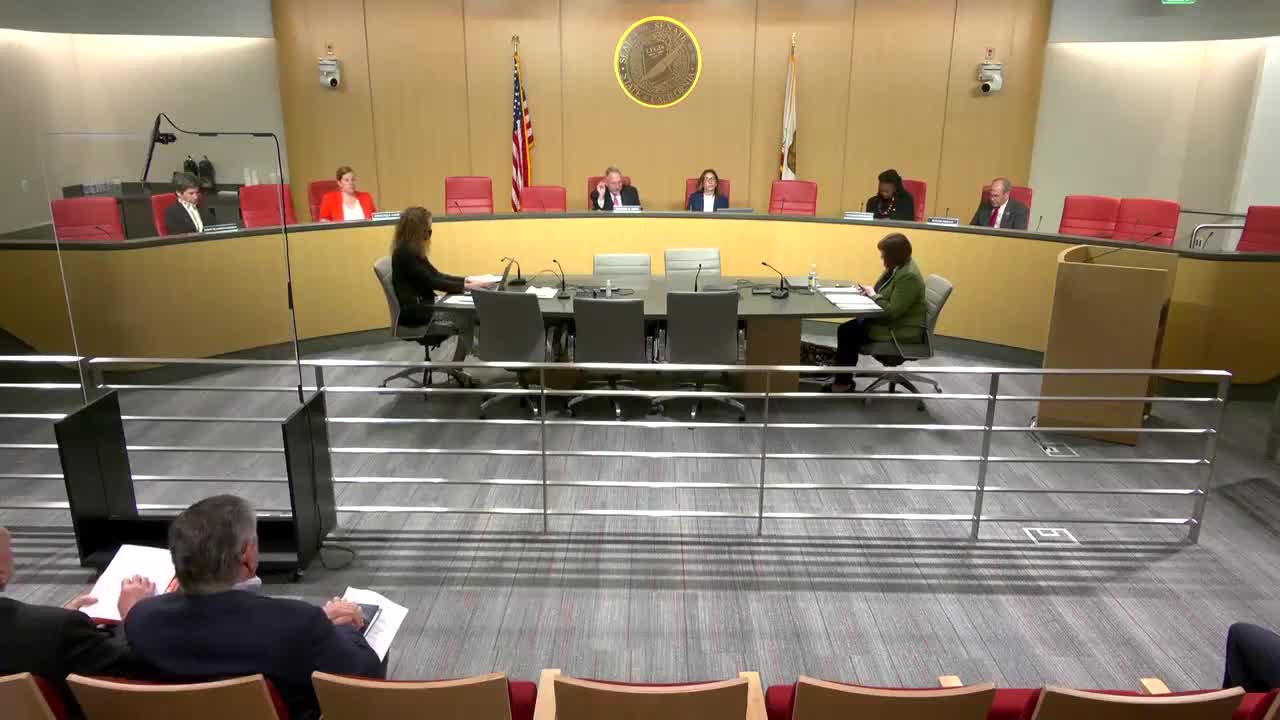 31MIN
Senate Standing Committee on Business, Professions and Economic Development
Bill Author

Bill Co-Author(s):