SB 777: Solid waste: reusable grocery bags and recycled paper bags.
- Session Year: 2023-2024
- House: Senate
- Latest Version Date: 2023-09-19
Current Status:
Failed
(2024-01-25: Stricken from file.)
Introduced
In Committee
First Chamber
In Committee
Second Chamber
Enacted
What does this bill do?
The bill lets large grocery stores use money collected from bag charges to pay for customer bag take‑back programs and other costs of recycling collected bags. It also requires those stores to file an annual report to the state recycling agency showing how many bags were bought and given away, the costs by bag type, total costs and any leftover funds; store chains may report combined data and a union representative can review the reports. The rules apply only to full‑line self‑service grocery stores with at least $2 million in annual sales that sell groceries and some perishables and that employ 300 or more people nationwide.
The summary is provided by generative AI which can make mistakes. For original language, please view the details in the table below.
The California Integrated Waste Management Act of 1989, administered by the Department of Resources Recycling and Recovery, generally regulates the disposal, management, and recycling of solid waste. Existing law prohibits certain stores from providing a single-use carryout bag to a customer and prohibits those stores from selling or distributing a reusable grocery bag or a recycled paper bag at the point of sale unless the store makes that bag available for purchase for not less than $0.10. Existing law requires a store to retain those collected moneys to be used only for costs associated with complying with those provisions, actual costs of providing recycled paper bags or reusable grocery bags, and costs associated with a stores educational materials or educational campaign encouraging the use of reusable grocery bags. Existing law authorizes a city, county, city and county, or the state to impose civil penalties on a person or entity that knows or reasonably should have known it is in violation of those requirements.
This bill would require a store to retain the collected moneys to also be used for costs associated with providing consumers with an opportunity for returning reusable grocery bags to the store for recycling, and any other costs associated with ensuring that collected bags are recycled.
The bill would require stores to submit an annual report to the department with specified information related to the total costs associated with complying with the act, as specified, and the balance, if any, of remaining funds, in the year. The bill would authorize a chain that owns more than one store to report aggregated data for all of the stores operated under that chain. The bill would authorize an authorized representative of a store with a collective bargaining agreement to review and make copies of those annual reports. The bill would require that these provisions apply only to certain stores, as described.
The California Integrated Waste Management Act of 1989, administered by the Department of Resources Recycling and Recovery, generally regulates the disposal, management, and recycling of solid waste. Existing law prohibits certain stores from providing a single-use carryout bag to a customer and prohibits those stores from selling or distributing a reusable grocery bag or a recycled paper bag at the point of sale unless the store makes that bag available for purchase for not less than $0.10. Existing law requires a store to retain those collected moneys to be used only for costs associated with complying with those provisions, actual costs of providing recycled paper bags or reusable grocery bags, and costs associated with a stores educational materials or educational campaign encouraging the use of reusable grocery bags. Existing law requires a reusable grocery bag sold by certain stores to a customer at the point of sale to be made by a certified reusable grocery bag producer and to meet specified requirements with regard to the bags labeling relating to its reusability and recyclability. Existing law authorizes a city, county, city and county, or the state to impose civil penalties on a person or entity that knows or reasonably should have known it is in violation of those requirements.
This bill would require a store to retain the collected moneys to also be used for costs associated with providing consumers with an opportunity for returning reusable grocery bags to the store for recycling, and any other costs associated with ensuring that collected bags are recycled. The bill would add specificity to the above-referenced labeling requirements for reusable grocery bags. The bill would require certain stores to accept returned reusable grocery bags from customers and to implement and maintain a plan for recycling the returned bags, as provided. The bill would delete obsolete references relating to an at-store recycling program for the return of clean plastic carryout bags to stores.
The bill would require stores to submit an annual report to the department with specified information related to the total costs associated with complying with the act, as specified, and the balance, if any, of remaining funds, in the year. The bill would authorize a chain that owns more than one store to report aggregated data for all of the stores operated under that chain. The bill would authorize the department to conduct related audits on the departments own initiative or upon request and would authorize an authorized representative of a store with a collective bargaining agreement to review and make copies of those annual reports. The bill would require that these provisions apply only to certain stores, as described.
The California Integrated Waste Management Act of 1989, administered by the Department of Resources Recycling and Recovery, generally regulates the disposal, management, and recycling of solid waste. Existing law prohibits certain stores from providing a single-use carryout bag to a customer and prohibits those stores from selling or distributing a reusable grocery bag or a recycled paper bag at the point of sale unless the store makes that bag available for purchase for not less than $0.10. Existing law requires a store to retain those collected moneys to be used only for costs associated with complying with those provisions, actual costs of providing recycled paper bags or reusable grocery bags, and costs associated with a stores educational materials or educational campaign encouraging the use of reusable grocery bags. Existing law requires a reusable grocery bag sold by certain stores to a customer at the point of sale to be made by a certified reusable grocery bag producer and to meet specified requirements with regard to the bags labeling relating to its reusability and recyclability. Existing law authorizes a city, county, city and county, or the state to impose civil penalties on a person or entity that knows or reasonably should have known it is in violation of those requirements.
This bill would require a store to retain the collected moneys to also be used for costs associated with providing consumers with an opportunity for returning reusable grocery bags to the store for recycling, and any other costs associated with ensuring that collected bags are recycled. The bill would add specificity to the above-referenced labeling requirements for reusable grocery bags. The bill would require certain stores to accept returned reusable grocery bags from customers and to implement and maintain a plan for recycling the returned bags, as provided. The bill would delete obsolete references relating to an at-store recycling program for the return of clean plastic carryout bags to stores.
The bill would require stores to submit a quarterly an annual report to the department with specified information related to the total costs associated with complying with the act, as specified, and the balance, if any, of remaining funds, in the quarter. The year. The bill would authorize a chain that owns more than one store to report aggregated data for all of the stores operated under that chain. The bill would authorize the department to conduct related audits on the departments own initiative or upon request and would authorize an authorized representative of a store with a collective bargaining agreement to review and make copies of those quarterly annual reports. The bill would require that these provisions apply only to certain stores, as described.
The California Integrated Waste Management Act of 1989, administered by the Department of Resources Recycling and Recovery, generally regulates the disposal, management, and recycling of solid waste. Existing law prohibits certain stores from providing a single-use carryout bag to a customer and prohibits those stores from selling or distributing a reusable grocery bag or a recycled paper bag at the point of sale unless the store makes that bag available for purchase for not less than $0.10. Existing law requires a store to retain those collected moneys to be used only for costs associated with complying with those provisions, actual costs of providing recycled paper bags or reusable grocery bags, and costs associated with a stores educational materials or educational campaign encouraging the use of reusable grocery bags. Existing law requires a reusable grocery bag sold by certain stores to a customer at the point of sale to be made by a certified reusable grocery bag producer and to meet specified requirements with regard to the bags labeling relating to its reusability and recyclability. Existing law authorizes a city, county, city and county, or the state to impose civil penalties on a person or entity that knows or reasonably should have known it is in violation of those requirements.
This bill would require a store to retain the collected moneys to also be used for costs associated with providing consumers with an opportunity for returning reusable grocery bags to the store for recycling, and any other costs associated with ensuring that collected bags are recycled. The bill would add specificity to the above-referenced labeling requirements for reusable grocery bags. The bill would require certain stores to accept returned reusable grocery bags from customers and to have implement and maintain a plan for recycling the returned bags, as provided. The bill would delete obsolete references relating to an at-store recycling program for the return of clean plastic carryout bags to stores.
The bill would require stores to submit a quarterly report to the department with specified information related to the total costs associated with complying with the act, as specified, and the balance, if any, of remaining funds, in the quarter. The bill would authorize the department to conduct related audits on the departments own initiative or upon request and would authorize an authorized representative of a store with a collective bargaining agreement to review and make copies of those quarterly reports. The bill would require that these provisions apply only to certain stores, as described.
The California Integrated Waste Management Act of 1989, administered by the Department of Resources Recycling and Recovery, generally regulates the disposal, management, and recycling of solid waste. Existing law prohibits certain stores from providing a single-use carryout bag to a customer and prohibits those stores from selling or distributing a reusable grocery bag or a recycled paper bag at the point of sale unless the store makes that bag available for purchase for not less than $0.10. Existing law requires a store to retain those collected moneys to be used only for costs associated with complying with those provisions, actual costs of providing recycled paper bags or reusable grocery bags, and costs associated with a stores educational materials or educational campaign encouraging the use of reusable grocery bags. Existing law requires a reusable grocery bag sold by certain stores to a customer at the point of sale to be made by a certified reusable grocery bag producer and to meet specified requirements with regard to the bags labeling relating to its reusability and recyclability. Existing law authorizes a city, county, city and county, or the state to impose civil penalties on a person or entity that knows or reasonably should have known it is in violation of those requirements.
This bill would require a store to retain the collected moneys to also be used for costs associated with providing consumers with an opportunity for returning reusable grocery bags to the store for recycling, and any other costs associated with ensuring that collected bags are recycled. The bill would add specificity to the above-referenced labeling requirements for reusable grocery bags. The bill would require certain stores to accept returned reusable grocery bags from customers and to have a plan for recycling the returned bags, as provided. The bill would delete obsolete references relating to an at-store recycling program for the return of clean plastic carryout bags to stores.
This
The bill would require stores to submit a quarterly report to the department with specified information related to the total costs associated with complying with the act, as specified, and the balance, if any, of remaining funds, in the quarter. The bill would authorize the department to conduct related audits on the departments own initiative or upon request and would authorize an authorized representative of a store with a collective bargaining agreement to review and make copies of those quarterly reports. The bill would require that these provisions apply only to certain stores, as described.
The California Integrated Waste Management Act of 1989, administered by the Department of Resources Recycling and Recovery, generally regulates the disposal, management, and recycling of solid waste. Existing law prohibits certain stores from providing a single-use carryout bag to a customer and prohibits those stores from selling or distributing a reusable grocery bag or a recycled paper bag at the point of sale unless the store makes that bag available for purchase for not less than $0.10. Existing law requires a store to retain those collected moneys to be used only for costs associated with complying with those provisions, actual costs of providing recycled paper bags or reusable grocery bags, and costs associated with a stores educational materials or educational campaign encouraging the use of reusable grocery bags. Existing law authorizes a city, county, city and county, or the state to impose civil penalties on a person or entity that knows or reasonably should have known it is in violation of those requirements.
This bill would require a store to retain the collected moneys to also be used for costs associated with providing consumers with an opportunity for returning reusable grocery bags to the store for recycling, and any other costs associated with ensuring that collected bags are recycled. The
This bill would require stores to submit a quarterly report to the department with specified information related to the total costs associated with complying with the act, as specified, and the balance, if any, of remaining funds, in the quarter. The bill would authorize the department to conduct related audits on the departments own initiative or upon request and would authorize an authorized representative of a store with a collective bargaining agreement to review and make copies of those quarterly reports. The bill would require that these provisions apply only to certain stores, as described.
The California Integrated Waste Management Act of 1989, administered by the Department of Resources Recycling and Recovery, generally regulates the disposal, management, and recycling of solid waste. Existing law prohibits certain stores from providing a single-use carryout bag to a customer and prohibits those stores from selling or distributing a reusable grocery bag or a recycled paper bag at the point of sale unless the store makes that bag available for purchase for not less than $0.10. Existing law requires a store to retain those collected moneys to be used only for costs associated with complying with those provisions, actual costs of providing recycled paper bags or reusable grocery bags, and costs associated with a stores educational materials or educational campaign encouraging the use of reusable grocery bags. Existing law authorizes a city, county, city and county, or the state to impose civil penalties on a person or entity that knows or reasonably should have known it is in violation of those requirements.
This bill would require a store to retain the collected moneys to also be used for costs associated with providing consumers with an opportunity for returning reusable grocery bags to the store for recycling, and any other costs associated with ensuring that collected bags are recycled. The bill would require stores to submit a quarterly report to the department with specified information related to the total costs associated with complying with the act, as specified, and the balance, if any, of remaining funds, in the quarter. The bill would authorize the department to conduct related audits on the departments own initiative or upon request and would authorize an authorized representative of a store with a collective bargaining agreement to review and make copies of those quarterly reports.
This act shall be known as the Transparency in Grocery Bag Recycling Act.
SEC. 2.Section 42283.7 of the Public Resources Code is amended to read:42283.7.(a)All moneys collected pursuant to this article shall be retained by the store and may be used only for the following purposes:
(1)Actual costs associated with complying with the requirements of this article.
(2)Actual costs of providing recycled paper bags or reusable grocery bags.
(3)Costs associated with a stores educational materials or educational campaign encouraging the use of reusable grocery bags.
(4)Costs associated with providing consumers with an opportunity for returning reusable grocery bags to the store for recycling, and any other costs associated with ensuring that collected bags are recycled.
(b)A store shall submit an annual report to the department specifying all of the following:
(1)The number of bags purchased in the year, categorized by the type of bags purchased.
(2)The number of bags given away without charge pursuant to subdivision (d) of Section 42283.
(3)The actual costs to the store for acquiring and providing the bags purchased in the year, categorized by the type of bags purchased.
(4)The actual costs associated with paragraphs (3) and (4) of subdivision (a), categorized by the type of bags purchased.
(5)The total costs associated with subdivision (a) in the year, categorized by the types of bags purchased.
(6)The balance, if any, of remaining funds in the year.
(c)An authorized representative of a store with a collective bargaining agreement may, upon request, review and make copies of the annual reports submitted by the store to the department pursuant to subdivision (b).
(d)For purposes of subdivisions (b) and (c), store means a full-line, self-service retail establishment that meets all of the following criteria:
(1)Has gross annual sales of two million dollars ($2,000,000) or more.
(2)Sells a line of dry groceries, canned goods, or nonfood items, and some perishable items.
(3)Is an employer with 300 or more employees nationwide. For purposes of this paragraph, employer is a person, as defined in Section 18 of the Labor Code, and includes, but is not limited to, a proprietorship, joint venture, corporate officer, or executive.
(e)A chain that owns more than one store may report aggregated data for all of the stores operated under that chain.
This act shall be known as the Transparency in Grocery Bag Recycling Act.
SEC. 2.Section 42281 of the Public Resources Code is amended to read:42281.(a)On and after July 1, 2015, a store, as defined in paragraph (1) or (2) of subdivision (g) of Section 42280, may sell or distribute a reusable grocery bag to a customer at the point of sale only if the reusable bag is made by a producer certified pursuant to this article to meet all of the following requirements:(1)Has a handle and is designed for at least 125 uses, as provided in this article.(2)Has a volume capacity of at least 15 liters.(3)Is machine washable or made from a material that can be cleaned and disinfected.(4)Has printed on the bag, or on a tag attached to the bag that is not intended to be removed, and in a manner visible to the consumer, all of the following information:(A)The name of the manufacturer.(B)The country where the bag was manufactured.(C)A statement, in bold type and a font size not less than 14-point type, that the bag is a reusable bag and designed for at least 125 uses.(D)If the bag is eligible for recycling in the state, instructions to return the bag to the store for recycling or to another appropriate recycling location. The instructions shall be printed on the consumer-facing part of the bag in bold type and a font size not less than 14-point type. If recyclable in the state, the bag shall include the chasing arrows recycling symbol or the term recyclable, consistent with the Federal Trade Commission guidelines use of that term, as updated.(5)Does not contain lead, cadmium, or any other toxic material that may pose a threat to public health. A reusable bag manufacturer may demonstrate compliance with this requirement by obtaining a no objection letter from the federal Food and Drug Administration. This requirement shall not affect any authority of the Department of Toxic Substances Control pursuant to Article 14 (commencing with Section 25251) of Chapter 6.5 of Division 20 of the Health and Safety Code and, notwithstanding subdivision (c) of Section 25257.1 of the Health and Safety Code, the reusable grocery bag shall not be considered as a product category already regulated or subject to regulation.(6)Complies with Section 260.12 of Part 260 of Title 16 of the Code of Federal Regulations related to recyclable claims if the reusable grocery bag producer makes a claim that the reusable grocery bag is recyclable.(b)(1)In addition to the requirements in subdivision (a), a reusable grocery bag made from plastic film shall meet all of the following requirements:(A)On and after January 1, 2016, it shall be made from a minimum of 20 percent postconsumer recycled material.(B)On and after January 1, 2020, it shall be made from a minimum of 40 percent postconsumer recycled material.(C)It shall be recyclable in this state, and accepted for return at stores.(D)It shall have, in addition to the information required to be printed on the bag or on a tag, pursuant to paragraph (4) of subdivision (a), a statement that the bag is made partly or wholly from postconsumer recycled material and stating the postconsumer recycled material content percentage, as applicable.(E)It shall be capable of carrying 22 pounds over a distance of 175 feet for a minimum of 125 uses and be at least 2.25 mils thick, measured according to the American Society of Testing and Materials (ASTM) Standard D6988-13.(2)A reusable grocery bag made from plastic film that meets the specifications of the American Society of Testing and Materials (ASTM) International Standard Specification for Compostable Plastics D6400, as updated, is not required to meet the requirements of subparagraph (A) or (B) of paragraph (1), but shall be labeled in accordance with the applicable state law regarding compostable plastics.(c)In addition to the requirements of subdivision (a), a reusable grocery bag that is not made of plastic film and that is made from any other natural or synthetic fabric, including, but not limited to, woven or nonwoven nylon, polypropylene, polyethylene-terephthalate, or Tyvek, shall satisfy all of the following:(1)It shall be sewn.(2)It shall be capable of carrying 22 pounds over a distance of 175 feet for a minimum of 125 uses.(3)It shall have a minimum fabric weight of at least 80 grams per square meter.(d)On and after July 1, 2016, a store as defined in paragraph (3), (4), or (5) of subdivision (g) of Section 42280, shall comply with the requirements of this section.SEC. 3.Section 42283.6 of the Public Resources Code is amended to read:42283.6.(a)The operator of a store, as defined in paragraph (1) or (2) of subdivision (g) of Section 42280 that makes recycled paper or reusable grocery bags available at the point of sale, shall provide customers with the opportunity to return reusable grocery bags and implement and maintain a plan that ensures the reusable grocery bags returned to the store are recycled. The plan shall include arrangements made with recyclers and reclaimers to ensure the reusable grocery bags meet the requirements described in subdivision (d) of Section 42355.51 and that the material is sent to responsible end markets as defined in subdivision (ad) of Section 42041. (b)A store that voluntarily agrees to comply with the provisions of this article pursuant to subdivision (g) of Section 42280 shall provide customers with the opportunity to return reusable grocery bags and implement and maintain a plan that ensures the reusable grocery bags returned to the store are recycled. The plan shall include arrangements made with recyclers and reclaimers to ensure the reusable grocery bags meet the requirements described in subdivision (d) of Section 42355.51 and that the material is sent to responsible end markets as defined in subdivision (ad) of Section 42041.SEC. 4.SEC. 2.Section 42283.7 of the Public Resources Code is amended to read:42283.7.(a)All moneys collected pursuant to this article shall be retained by the store and may be used only for the following purposes:
(1)Actual costs associated with complying with the requirements of this article.
(2)Actual costs of providing recycled paper bags or reusable grocery bags.
(3)Costs associated with a stores educational materials or educational campaign encouraging the use of reusable grocery bags.
(4)Costs associated with providing consumers with an opportunity for returning reusable grocery bags to the store for recycling, and any other costs associated with ensuring that collected bags are recycled.
(b)A store shall submit an annual report to the department specifying all of the following:
(1)The number of bags purchased in the year, categorized by the type of bags purchased.
(2)The number of bags given away without charge pursuant to subdivision (d) of Section 42283.
(3)The actual costs to the store for acquiring and providing the bags purchased in the year, categorized by the type of bags purchased.
(4)The actual costs associated with paragraphs (3) and (4) of subdivision (a), categorized by the type of bags purchased.
(5)The total costs associated with subdivision (a) in the year, categorized by the types of bags purchased.
(6)The balance, if any, of remaining funds in the year.
(c)An authorized representative of a store with a collective bargaining agreement may, upon request, review and make copies of the annual reports submitted by the store to the department pursuant to subdivision (b).
(d)The department may conduct audits of stores, upon the departments own initiative or upon request, for compliance with this section.(e)(d)For purposes of subdivisions (b), (c), and (d), (b) and (c), store means a full-line, self-service retail establishment that meets all of the following criteria:
(1)Has gross annual sales of two million dollars ($2,000,000) or more.
(2)Sells a line of dry groceries, canned goods, or nonfood items, and some perishable items.
(3)Is an employer with 300 or more employees nationwide. For purposes of this paragraph, employer is a person, as defined in Section 18 of the Labor Code, and includes, but is not limited to, a proprietorship, joint venture, corporate officer, or executive.
(f)(e)A chain that owns more than one store may report aggregated data for all of the stores operated under that chain.
This act shall be known as the Transparency in Grocery Bag Recycling Act.
SEC. 2.Section 42281 of the Public Resources Code is amended to read:42281.(a)On and after July 1, 2015, a store, as defined in paragraph (1) or (2) of subdivision (g) of Section 42280, may sell or distribute a reusable grocery bag to a customer at the point of sale only if the reusable bag is made by a producer certified pursuant to this article to meet all of the following requirements:
(1)Has a handle and is designed for at least 125 uses, as provided in this article.
(2)Has a volume capacity of at least 15 liters.
(3)Is machine washable or made from a material that can be cleaned and disinfected.
(4)Has printed on the bag, or on a tag attached to the bag that is not intended to be removed, and in a manner visible to the consumer, all of the following information:
(A)The name of the manufacturer.
(B)The country where the bag was manufactured.
(C)A statement, in bold type and a font size not less than 14-point type, that the bag is a reusable bag and designed for at least 125 uses.
(D)If the bag is eligible for recycling in the state, instructions to return the bag to the store for recycling or to another appropriate recycling location. The instructions shall be printed on the consumer-facing part of the bag in bold type and a font size not less than 14-point type. If recyclable in the state, the bag shall include the chasing arrows recycling symbol or the term recyclable, consistent with the Federal Trade Commission guidelines use of that term, as updated.
(5)Does not contain lead, cadmium, or any other toxic material that may pose a threat to public health. A reusable bag manufacturer may demonstrate compliance with this requirement by obtaining a no objection letter from the federal Food and Drug Administration. This requirement shall not affect any authority of the Department of Toxic Substances Control pursuant to Article 14 (commencing with Section 25251) of Chapter 6.5 of Division 20 of the Health and Safety Code and, notwithstanding subdivision (c) of Section 25257.1 of the Health and Safety Code, the reusable grocery bag shall not be considered as a product category already regulated or subject to regulation.
(6)Complies with Section 260.12 of Part 260 of Title 16 of the Code of Federal Regulations related to recyclable claims if the reusable grocery bag producer makes a claim that the reusable grocery bag is recyclable.
(b)(1)In addition to the requirements in subdivision (a), a reusable grocery bag made from plastic film shall meet all of the following requirements:
(A)On and after January 1, 2016, it shall be made from a minimum of 20 percent postconsumer recycled material.
(B)On and after January 1, 2020, it shall be made from a minimum of 40 percent postconsumer recycled material.
(C)It shall be recyclable in this state, and accepted for return at stores.
(D)It shall have, in addition to the information required to be printed on the bag or on a tag, pursuant to paragraph (4) of subdivision (a), a statement that the bag is made partly or wholly from postconsumer recycled material and stating the postconsumer recycled material content percentage, as applicable.
(E)It shall be capable of carrying 22 pounds over a distance of 175 feet for a minimum of 125 uses and be at least 2.25 mils thick, measured according to the American Society of Testing and Materials (ASTM) Standard D6988-13.
(2)A reusable grocery bag made from plastic film that meets the specifications of the American Society of Testing and Materials (ASTM) International Standard Specification for Compostable Plastics D6400, as updated, is not required to meet the requirements of subparagraph (A) or (B) of paragraph (1), but shall be labeled in accordance with the applicable state law regarding compostable plastics.
(c)In addition to the requirements of subdivision (a), a reusable grocery bag that is not made of plastic film and that is made from any other natural or synthetic fabric, including, but not limited to, woven or nonwoven nylon, polypropylene, polyethylene-terephthalate, or Tyvek, shall satisfy all of the following:
(1)It shall be sewn.
(2)It shall be capable of carrying 22 pounds over a distance of 175 feet for a minimum of 125 uses.
(3)It shall have a minimum fabric weight of at least 80 grams per square meter.
(d)On and after July 1, 2016, a store as defined in paragraph (3), (4), or (5) of subdivision (g) of Section 42280, shall comply with the requirements of this section.
SEC. 3.Section 42283.6 of the Public Resources Code is amended to read:42283.6.(a)The operator of a store, as defined in paragraph (1) or (2) of subdivision (g) of Section 42280 that makes recycled paper or reusable grocery bags available at the point of sale, shall provide customers with the opportunity to return reusable grocery bags and implement and maintain a plan that ensures the reusable grocery bags returned to the store are recycled. The plan shall include arrangements made with recyclers and reclaimers to ensure the reusable grocery bags meet the requirements described in subdivision (d) of Section 42355.51 and that the material is sent to responsible end markets as defined in subdivision (ad) of Section 42041.
(b)A store that voluntarily agrees to comply with the provisions of this article pursuant to subdivision (g) of Section 42280 shall provide customers with the opportunity to return reusable grocery bags and implement and maintain a plan that ensures the reusable grocery bags returned to the store are recycled. The plan shall include arrangements made with recyclers and reclaimers to ensure the reusable grocery bags meet the requirements described in subdivision (d) of Section 42355.51 and that the material is sent to responsible end markets as defined in subdivision (ad) of Section 42041.
SEC. 4.Section 42283.7 of the Public Resources Code is amended to read:42283.7.(a)All moneys collected pursuant to this article shall be retained by the store and may be used only for the following purposes:
(1)Actual costs associated with complying with the requirements of this article.
(2)Actual costs of providing recycled paper bags or reusable grocery bags.
(3)Costs associated with a stores educational materials or educational campaign encouraging the use of reusable grocery bags.
(4)Costs associated with providing consumers with an opportunity for returning reusable grocery bags to the store for recycling, and any other costs associated with ensuring that collected bags are recycled.
(b)A store shall submit a quarterly an annual report to the department specifying all of the following:
(1)The number of bags purchased in the quarter, year, categorized by the type of bags purchased.
(2)The number of bags given away without charge pursuant to subdivision (d) of Section 42283.
(2)(3)The actual costs to the store for acquiring and providing the bags purchased in the quarter, year, categorized by the type of bags purchased.
(3)(4)The actual costs associated with paragraphs (3) and (4) of subdivision (a), categorized by the type of bags purchased.
(4)(5)The total costs associated with subdivision (a) in the quarter, year, categorized by the types of bags purchased.
(5)(6)The balance, if any, of remaining funds in the quarter. year.
(c)An authorized representative of a store with a collective bargaining agreement may, upon request, review and make copies of the quarterly annual reports submitted by the store to the department pursuant to subdivision (b).
(d)The department may conduct audits of stores, upon the departments own initiative or upon request, for compliance with this section.
(e)For purposes of subdivisions (b), (c), and (d), store means a full-line, self-service retail establishment that meets all of the following criteria:
(1)Has gross annual sales of two million dollars ($2,000,000) or more.
(2)Sells a line of dry groceries, canned goods, or nonfood items, and some perishable items.
(3)Is an employer with 300 or more employees nationwide. For purposes of this paragraph, employer is a person, as defined in Section 18 of the Labor Code, and includes, but is not limited to, a proprietorship, joint venture, corporate officer, or executive.
(f)A chain that owns more than one store may report aggregated data for all of the stores operated under that chain.
This act shall be known as the Transparency in Grocery Bag Recycling Act.
SEC. 2.Section 42281 of the Public Resources Code is amended to read:42281.(a)On and after July 1, 2015, a store, as defined in paragraph (1) or (2) of subdivision (g) of Section 42280, may sell or distribute a reusable grocery bag to a customer at the point of sale only if the reusable bag is made by a producer certified pursuant to this article to meet all of the following requirements:
(1)Has a handle and is designed for at least 125 uses, as provided in this article.
(2)Has a volume capacity of at least 15 liters.
(3)Is machine washable or made from a material that can be cleaned and disinfected.
(4)Has printed on the bag, or on a tag attached to the bag that is not intended to be removed, and in a manner visible to the consumer, all of the following information:
(A)The name of the manufacturer.
(B)The country where the bag was manufactured.
(C)A statement, in bold type and a font size not less than 14-point type, that the bag is a reusable bag and designed for at least 125 uses.
(D)If the bag is eligible for recycling in the state, instructions to return the bag to the store for recycling or to another appropriate recycling location. The instructions shall be printed on the consumer-facing part of the bag in bold type and a font size not less than 14-point type. If recyclable in the state, the bag shall include the chasing arrows recycling symbol or the term recyclable, consistent with the Federal Trade Commission guidelines use of that term, as updated.
(5)Does not contain lead, cadmium, or any other toxic material that may pose a threat to public health. A reusable bag manufacturer may demonstrate compliance with this requirement by obtaining a no objection letter from the federal Food and Drug Administration. This requirement shall not affect any authority of the Department of Toxic Substances Control pursuant to Article 14 (commencing with Section 25251) of Chapter 6.5 of Division 20 of the Health and Safety Code and, notwithstanding subdivision (c) of Section 25257.1 of the Health and Safety Code, the reusable grocery bag shall not be considered as a product category already regulated or subject to regulation.
(6)Complies with Section 260.12 of Part 260 of Title 16 of the Code of Federal Regulations related to recyclable claims if the reusable grocery bag producer makes a claim that the reusable grocery bag is recyclable.
(b)(1)In addition to the requirements in subdivision (a), a reusable grocery bag made from plastic film shall meet all of the following requirements:
(A)On and after January 1, 2016, it shall be made from a minimum of 20 percent postconsumer recycled material.
(B)On and after January 1, 2020, it shall be made from a minimum of 40 percent postconsumer recycled material.
(C)It shall be recyclable in this state, and accepted for return at stores.
(D)It shall have, in addition to the information required to be printed on the bag or on a tag, pursuant to paragraph (4) of subdivision (a), a statement that the bag is made partly or wholly from postconsumer recycled material and stating the postconsumer recycled material content percentage, as applicable.
(E)It shall be capable of carrying 22 pounds over a distance of 175 feet for a minimum of 125 uses and be at least 2.25 mils thick, measured according to the American Society of Testing and Materials (ASTM) Standard D6988-13.
(2)A reusable grocery bag made from plastic film that meets the specifications of the American Society of Testing and Materials (ASTM) International Standard Specification for Compostable Plastics D6400, as updated, is not required to meet the requirements of subparagraph (A) or (B) of paragraph (1), but shall be labeled in accordance with the applicable state law regarding compostable plastics.
(c)In addition to the requirements of subdivision (a), a reusable grocery bag that is not made of plastic film and that is made from any other natural or synthetic fabric, including, but not limited to, woven or nonwoven nylon, polypropylene, polyethylene-terephthalate, or Tyvek, shall satisfy all of the following:
(1)It shall be sewn.
(2)It shall be capable of carrying 22 pounds over a distance of 175 feet for a minimum of 125 uses.
(3)It shall have a minimum fabric weight of at least 80 grams per square meter.
(d)On and after July 1, 2016, a store as defined in paragraph (3), (4), or (5) of subdivision (g) of Section 42280, shall comply with the requirements of this section.
SEC. 3.Section 42283.6 of the Public Resources Code is amended to read:42283.6.(a)The operator of a store, as defined in paragraph (1) or (2) of subdivision (g) of Section 42280 that makes recycled paper or reusable grocery bags available at the point of sale, shall provide customers with the opportunity to return reusable grocery bags and implement and maintain a plan that ensures the reusable grocery bags returned to the store are recycled. The plan shall include arrangements made with recyclers and reclaimers to ensure the reusable grocery bags meet the requirements described in subdivision (d) of Section 42355.51 and that the material is sent to responsible end markets as defined in subdivision (ad) of Section 42041.
(b)A store that voluntarily agrees to comply with the provisions of this article pursuant to subdivision (g) of Section 42280 shall provide customers with the opportunity to return reusable grocery bags and implement and maintain a plan that ensures the reusable grocery bags returned to the store are recycled. The plan shall include arrangements made with recyclers and reclaimers to ensure the reusable grocery bags meet the requirements described in subdivision (d) of Section 42355.51 and that the material is sent to responsible end markets as defined in subdivision (ad) of Section 42041.
SEC. 4.Section 42283.7 of the Public Resources Code is amended to read:42283.7.(a)All moneys collected pursuant to this article shall be retained by the store and may be used only for the following purposes:
(1)Actual costs associated with complying with the requirements of this article.
(2)Actual costs of providing recycled paper bags or reusable grocery bags.
(3)Costs associated with a stores educational materials or educational campaign encouraging the use of reusable grocery bags.
(4)Costs associated with providing consumers with an opportunity for returning reusable grocery bags to the store for recycling, and any other costs associated with ensuring that collected bags are recycled.
(b)A store shall submit a quarterly report to the department specifying all of the following:
(1)The number of bags purchased in the quarter, categorized by the type of bags purchased.
(2)The actual costs to the store for acquiring and providing the bags purchased in the quarter, categorized by the type of bags purchased.
(3)The actual costs associated with paragraphs (3) and (4) of subdivision (a), categorized by the type of bags purchased.
(4)The total costs associated with subdivision (a) in the quarter, categorized by the types of bags purchased.
(5)The balance, if any, of remaining funds in the quarter.
(c)An authorized representative of a store with a collective bargaining agreement may, upon request, review and make copies of the quarterly reports submitted by the store to the department pursuant to subdivision (b).
(d)The department may conduct audits of stores, upon the departments own initiative or upon request, for compliance with this section.
(e)For purposes of subdivisions (b), (c), and (d), store means a full-line, self-service retail establishment that meets all of the following criteria:
(1)Has gross annual sales of two million dollars ($2,000,000) or more.
(2)Sells a line of dry groceries, canned goods, or nonfood items, and some perishable items.
(3)Is an employer with 300 or more employees nationwide. For purposes of this paragraph, employer is a person, as defined in Section 18 of the Labor Code, and includes, but is not limited to, a proprietorship, joint venture, corporate officer, or executive.
This act shall be known as the Transparency in Grocery Bag Recycling Act.
SEC. 2.Section 42281 of the Public Resources Code is amended to read:42281.(a)On and after July 1, 2015, a store, as defined in paragraph (1) or (2) of subdivision (g) of Section 42280, may sell or distribute a reusable grocery bag to a customer at the point of sale only if the reusable bag is made by a producer certified pursuant to this article to meet all of the following requirements:
(1)Has a handle and is designed for at least 125 uses, as provided in this article.
(2)Has a volume capacity of at least 15 liters.
(3)Is machine washable or made from a material that can be cleaned and disinfected.
(4)Has printed on the bag, or on a tag attached to the bag that is not intended to be removed, and in a manner visible to the consumer, all of the following information:
(A)The name of the manufacturer.
(B)The country where the bag was manufactured.
(C)A statement statement, in bold type and a font size not less than 14-point type, that the bag is a reusable bag and designed for at least 125 uses.
(D)If the bag is eligible for recycling in the state, instructions to return the bag to the store for recycling or to another appropriate recycling location. The instructions shall be printed on the consumer-facing part of the bag in bold type and a font size not less than 14-point type. If recyclable in the state, the bag shall include the chasing arrows recycling symbol or the term recyclable, consistent with the Federal Trade Commission guidelines use of that term, as updated.
(5)Does not contain lead, cadmium, or any other toxic material that may pose a threat to public health. A reusable bag manufacturer may demonstrate compliance with this requirement by obtaining a no objection letter from the federal Food and Drug Administration. This requirement shall not affect any authority of the Department of Toxic Substances Control pursuant to Article 14 (commencing with Section 25251) of Chapter 6.5 of Division 20 of the Health and Safety Code and, notwithstanding subdivision (c) of Section 25257.1 of the Health and Safety Code, the reusable grocery bag shall not be considered as a product category already regulated or subject to regulation.
(6)Complies with Section 260.12 of Part 260 of Title 16 of the Code of Federal Regulations related to recyclable claims if the reusable grocery bag producer makes a claim that the reusable grocery bag is recyclable.
(b)(1)In addition to the requirements in subdivision (a), a reusable grocery bag made from plastic film shall meet all of the following requirements:
(A)On and after January 1, 2016, it shall be made from a minimum of 20 percent postconsumer recycled material.
(B)On and after January 1, 2020, it shall be made from a minimum of 40 percent postconsumer recycled material.
(C)It shall be recyclable in this state, and accepted for return at stores subject to the at-store recycling program (Chapter 5.1 (commencing with Section 42250)) for recycling. stores.
(D)It shall have, in addition to the information required to be printed on the bag or on a tag, pursuant to paragraph (4) of subdivision (a), a statement that the bag is made partly or wholly from postconsumer recycled material and stating the postconsumer recycled material content percentage, as applicable.
(E)It shall be capable of carrying 22 pounds over a distance of 175 feet for a minimum of 125 uses and be at least 2.25 mils thick, measured according to the American Society of Testing and Materials (ASTM) Standard D6988-13.
(2)A reusable grocery bag made from plastic film that meets the specifications of the American Society of Testing and Materials (ASTM) International Standard Specification for Compostable Plastics D6400, as updated, is not required to meet the requirements of subparagraph (A) or (B) of paragraph (1), but shall be labeled in accordance with the applicable state law regarding compostable plastics.
(c)In addition to the requirements of subdivision (a), a reusable grocery bag that is not made of plastic film and that is made from any other natural or synthetic fabric, including, but not limited to, woven or nonwoven nylon, polypropylene, polyethylene-terephthalate, or Tyvek, shall satisfy all of the following:
(1)It shall be sewn.
(2)It shall be capable of carrying 22 pounds over a distance of 175 feet for a minimum of 125 uses.
(3)It shall have a minimum fabric weight of at least 80 grams per square meter.
(d)On and after July 1, 2016, a store as defined in paragraph (3), (4), or (5) of subdivision (g) of Section 42280, shall comply with the requirements of this section.
SEC. 3.Section 42283.6 of the Public Resources Code is amended to read:42283.6.(a)The operator of a store, as defined in paragraph (1) or (2) of subdivision (g) of Section 42280 that makes recycled paper or reusable grocery bags available at the point of sale, shall be subject to the provisions of the at-store recycling program (Chapter 5.1 (commencing with Section 42250)). provide customers with the opportunity to return reusable grocery bags and maintain a plan that ensures the reusable grocery bags returned to the store are recycled. The plan shall include arrangements made with recyclers and reclaimers to ensure the reusable grocery bags meet the requirements described in subdivision (d) of Section 42355.51 and that the material is sent to responsible end markets as defined in subdivision (ad) of Section 42041.
(b)A store that voluntarily agrees to comply with the provisions of this article pursuant to subdivision (g) of Section 42280, shall also comply with the provisions of the at-store recycling program (Chapter 5.1 (commencing with Section 42250)). 42280 shall provide customers with the opportunity to return reusable grocery bags and maintain a plan that ensures the reusable grocery bags returned to the store are recycled. The plan shall include arrangements made with recyclers and reclaimers to ensure the reusable grocery bags meet the requirements described in subdivision (d) of Section 42355.51 and that the material is sent to responsible end markets as defined in subdivision (ad) of Section 42041.SEC. 2.SEC. 4.Section 42283.7 of the Public Resources Code is amended to read:42283.7.(a)All moneys collected pursuant to this article shall be retained by the store and may be used only for the following purposes:
(1)Actual costs associated with complying with the requirements of this article.
(2)Actual costs of providing recycled paper bags or reusable grocery bags.
(3)Costs associated with a stores educational materials or educational campaign encouraging the use of reusable grocery bags.
(4)Costs associated with providing consumers with an opportunity for returning reusable grocery bags to the store for recycling, and any other costs associated with ensuring that collected bags are recycled.
(b)A store shall submit a quarterly report to the department specifying all of the following:
(1)The number of bags purchased in the quarter, categorized by the type of bags purchased.
(2)The actual costs to the store for acquiring and providing the bags purchased in the quarter, categorized by the type of bags purchased.
(3)The actual costs associated with paragraphs (3) and (4) of subdivision (a), categorized by the type of bags purchased.
(4)The total costs associated with subdivision (a) in the quarter, categorized by the types of bags purchased.
(5)The balance, if any, of remaining funds in the quarter.
(c)An authorized representative of a store with a collective bargaining agreement may, upon request, review and make copies of the quarterly reports submitted by the store to the department pursuant to subdivision (b).
(d)The department may conduct audits of stores, upon the departments own initiative or upon request, for compliance with this section.
(e)For purposes of subdivisions (b), (c), and (d), store means a full-line, self-service retail establishment that meets all of the following criteria:
(1)Has gross annual sales of two million dollars ($2,000,000) or more.
(2)Sells a line of dry groceries, canned goods, or nonfood items, and some perishable items.
(3)Is an employer with 300 or more employees nationwide. For purposes of this paragraph, employer is a person, as defined in Section 18 of the Labor Code, and includes, but is not limited to, a proprietorship, joint venture, corporate officer, or executive.
This act shall be known as the Transparency in Grocery Bag Recycling Act.
SEC. 2.Section 42283.7 of the Public Resources Code is amended to read:42283.7.(a)All moneys collected pursuant to this article shall be retained by the store and may be used only for the following purposes:
(1)Actual costs associated with complying with the requirements of this article.
(2)Actual costs of providing recycled paper bags or reusable grocery bags.
(3)Costs associated with a stores educational materials or educational campaign encouraging the use of reusable grocery bags.
(4)Costs associated with providing consumers with an opportunity for returning reusable grocery bags to the store for recycling, and any other costs associated with ensuring that collected bags are recycled.
(b)A store shall submit a quarterly report to the department specifying all of the following:
(1)The number of bags purchased in the quarter, categorized by the type of bags purchased.
(2)The actual costs to the store for acquiring and providing the bags purchased in the quarter, categorized by the type of bags purchased.
(3)The actual costs associated with paragraphs (3) and (4) of subdivision (a), categorized by the type of bags purchased.
(4)The total costs associated with subdivision (a) in the quarter, categorized by the types of bags purchased.
(5)The balance, if any, of remaining funds in the quarter.
(c)An authorized representative of a store with a collective bargaining agreement may, upon request, review and make copies of the quarterly reports submitted by the store to the department pursuant to subdivision (b).
(d)The department may conduct audits of stores, upon the departments own initiative or upon request, for compliance with this section.
(e)For purposes of subdivisions (b), (c), and (d), store means a full-line, self-service retail establishment that meets all of the following criteria:
(1)Has gross annual sales of two million dollars ($2,000,000) or more.
(2)Sells a line of dry groceries, canned goods, or nonfood items, and some perishable items.
(3)Is an employer with 300 or more employees nationwide. For purposes of this paragraph, employer is a person, as defined in Section 18 of the Labor Code, and includes, but is not limited to, a proprietorship, joint venture, corporate officer, or executive.
This act shall be known as the Transparency in Grocery Bag Recycling Act.
SEC. 2.Section 42283.7 of the Public Resources Code is amended to read:42283.7.(a)All moneys collected pursuant to this article shall be retained by the store and may be used only for the following purposes:
(a)Costs(1)Actual costs associated with complying with the requirements of this article.
(b)(2)Actual costs of providing recycled paper bags or reusable grocery bags.
(c)(3)Costs associated with a stores educational materials or educational campaign encouraging the use of reusable grocery bags.
(4)Costs associated with providing consumers with an opportunity for returning reusable grocery bags to the store for recycling, and any other costs associated with ensuring that collected bags are recycled.
(b)A store shall submit a quarterly report to the department specifying all of the following:
(1)The number of bags purchased in the quarter, categorized by the type of bags purchased.
(2)The actual costs to the store for acquiring and providing the bags purchased in the quarter, categorized by the type of bags purchased.
(3)The actual costs associated with paragraphs (3) and (4) of subdivision (a), categorized by the type of bags purchased.
(4)The total costs associated with subdivision (a) in the quarter, categorized by the types of bags purchased.
(5)The balance, if any, of remaining funds in the quarter.
(c)An authorized representative of a store with a collective bargaining agreement may, upon request, review and make copies of the quarterly reports submitted by the store to the department pursuant to subdivision (b).
(d)The department may conduct audits of stores, upon the departments own initiative or upon request, for compliance with this section.
|
Date
|
Status
|
|---|---|
| Jan 25, 2024 | Veto sustained. |
| Jan 25, 2024 | Stricken from file. |
| Oct 8, 2023 | In Senate. Consideration of Governor's veto pending. |
| Oct 8, 2023 | Vetoed by the Governor. |
| Sep 21, 2023 | Enrolled and presented to the Governor at 4 p.m. |
| Sep 14, 2023 | Assembly amendments concurred in. (Ayes 36. Noes 2. Page 2829.) Ordered to engrossing and enrolling. |
| Sep 14, 2023 | In Senate. Concurrence in Assembly amendments pending. |
| Sep 14, 2023 | Read third time. Passed. (Ayes 60. Noes 16. Page 3519.) Ordered to the Senate. |
| Sep 7, 2023 | Read third time and amended. |
| Sep 7, 2023 | Ordered to third reading. |
| Sep 7, 2023 | Assembly Rule 69 suspended. |
| Sep 5, 2023 | Read second time. Ordered to third reading. |
| Sep 1, 2023 | Read second time and amended. Ordered to second reading. |
| Sep 1, 2023 | From committee: Do pass as amended. (Ayes 11. Noes 2.) (September 1). |
| Aug 16, 2023 | August 16 set for first hearing. Placed on suspense file. |
| Jul 12, 2023 | Read second time and amended. Re-referred to Com. on APPR. |
| Jul 11, 2023 | From committee: Do pass as amended and re-refer to Com. on APPR. (Ayes 9. Noes 0.) (July 10). |
| Jul 3, 2023 | From committee with author's amendments. Read second time and amended. Re-referred to Com. on NAT. RES. |
| Jun 19, 2023 | June 26 set for first hearing canceled at the request of author. |
| Jun 1, 2023 | Referred to Com. on NAT. RES. |
| May 25, 2023 | In Assembly. Read first time. Held at Desk. |
| May 24, 2023 | Read third time. Passed. (Ayes 36. Noes 2. Page 1273.) Ordered to the Assembly. |
| May 22, 2023 | Read second time. Ordered to third reading. |
| May 18, 2023 | Read second time and amended. Ordered to second reading. |
| May 18, 2023 | From committee: Do pass as amended. (Ayes 4. Noes 1. Page 1183.) (May 18). |
| May 12, 2023 | Set for hearing May 18. |
| Apr 17, 2023 | April 17 hearing: Placed on APPR suspense file. |
| Apr 10, 2023 | Set for hearing April 17. |
| Mar 29, 2023 | From committee: Do pass and re-refer to Com. on APPR. (Ayes 5. Noes 0. Page 572.) (March 29). Re-referred to Com. on APPR. |
| Mar 7, 2023 | Set for hearing March 29. |
| Mar 1, 2023 | Referred to Com. on E.Q. |
| Feb 21, 2023 | From printer. May be acted upon on or after March 20. |
| Feb 17, 2023 | Introduced. Read first time. To Com. on RLS. for assignment. To print. |
|
Date
|
Description
|
Location
|
Votes
|
|
|---|---|---|---|---|
| Sep 14, 2023 | SB 777 Allen Senate Third Reading By Friedman | Assembly Floor |
Passed |
|
| Sep 14, 2023 | Unfinished Business SB777 Allen Concurrence | Senate Floor |
Passed |
|
| Sep 1, 2023 | Do pass as amended. | Assembly Standing Committee on Appropriations |
Passed |
|
| Jul 10, 2023 | Do pass as amended and be re-referred to the Committee on [Appropriations] | Assembly Standing Committee on Natural Resources |
Passed |
|
| May 24, 2023 | Senate 3rd Reading SB777 Allen | Senate Floor |
Passed |
|
| May 18, 2023 | Do pass as amended | Senate Standing Committee on Appropriations |
Passed |
|
| Apr 17, 2023 | Placed on suspense file | Senate Standing Committee on Appropriations |
Passed |
|
| Mar 29, 2023 | Do pass, but first be re-referred to the Committee on [Appropriations] | Senate Standing Committee on Environmental Quality |
Passed |
This list shows positions taken on this bill by organizations on the date displayed, which is linked to the original source.
Positions by individuals are not included.
|
Organization
|
Position
|
Date
|
|---|---|---|
| 1000 Grandmothers for Future Generations | * Support | Jul 10, 2023 |
| 350 Ventura County Climate Hub | * Support | Jul 10, 2023 |
| California Federation of Teachers, AFL-CIO | ** Support | |
| California Grocers Association | ** Against | |
| California Retailers Association | ** Against | |
| Californians Against Waste | ** Support | |
| Climate Action California | * Support | Jul 10, 2023 |
| Last Beach Cleanup | ** Against | |
| National Stewardship Action Council | * Support | Jul 10, 2023 |
| Plastic Pollution Coalition | ** Against | |
| Solid Waste Association of North America | * Support | Jul 10, 2023 |
| Solid Waste Association of North America Legislative Task Force | * Support | Jul 10, 2023 |
| United Food And Commercial Workers, Western States Council | ** Support |
SENATE RULES COMMITTEE Office of Senate Floor Analyses (916) 651-1520 Fax: (916) 327-4478 | SB 777 |
VETO
Bill No: SB 777
Author: Allen (D)
Amended: 9/7/23
Vote: 27
SENATE ENVIRONMENTAL QUALITY COMMITTEE: 5-0, 3/29/23
AYES: Allen, Dahle, Gonzalez, Menjivar, Skinner
NO VOTE RECORDED: Hurtado, Nguyen
SENATE APPROPRIATIONS COMMITTEE: 4-1, 5/18/23
AYES: Portantino, Ashby, Wahab, Wiener
NOES: Jones
NO VOTE RECORDED: Bradford, Seyarto
SENATE FLOOR: 36-2, 5/24/23
AYES: Allen, Alvarado-Gil, Archuleta, Ashby, Atkins, Becker, Blakespear, Bradford, Caballero, Cortese, Dahle, Dodd, Durazo, Eggman, Glazer, Gonzalez, Grove, Hurtado, Laird, Limón, McGuire, Menjivar, Min, Newman, Nguyen, Padilla, Portantino, Roth, Rubio, Skinner, Smallwood-Cuevas, Stern, Umberg, Wahab, Wiener, Wilk
NOES: Jones, Niello
NO VOTE RECORDED: Ochoa Bogh, Seyarto
SENATE FLOOR: 36-2, 9/14/23
AYES: Allen, Alvarado-Gil, Archuleta, Ashby, Atkins, Becker, Blakespear, Bradford, Caballero, Cortese, Dahle, Dodd, Durazo, Eggman, Glazer, Gonzalez, Grove, Hurtado, Laird, Limón, McGuire, Menjivar, Min, Newman, Nguyen, Padilla, Portantino, Roth, Rubio, Skinner, Smallwood-Cuevas, Stern, Umberg, Wahab, Wiener, Wilk
NOES: Jones, Niello
NO VOTE RECORDED: Ochoa Bogh, Seyarto
ASSEMBLY FLOOR: 60-16, 9/14/23 - See last page for vote
SUBJECT: Solid waste: reusable grocery bags and recycled paper bags
SOURCE: Author
DIGEST:
This bill authorizes large stores to use monies from the $0.10 per bag charge required by the State’s “bag ban” to provide customers with opportunities to return reusable grocery bags for recycling, and requires stores to report data on bag sales and funds to CalRecycle, and make those reports available to an authorized representative of a store with a collective bargaining agreement.
ANALYSIS:
Existing law:
- Requires, under the Integrated Waste Management Act (IWMA), local governments to divert at least 50% of solid waste from landfill disposal and establishes a statewide goal that 75% of solid waste be diverted from landfill disposal by 2020. (Public Resources Code (PRC) §§41780, 41780.01)
- Establishes a Statewide “bag ban” that prohibits a store from providing a single-use carryout bag to a customer at the point of sale unless it is a compostable bag under certain conditions, including that the compostable bag be sold at not less than $0.10. (PRC §42283-42284)
- Authorizes a store to provide a recycled paper bag for less than $0.10. (PRC §42283)
- Requires stores, as defined, to expend money from the $0.10 charge added to compostable or recycled paper bags at checkout only for:
- Costs associated with complying with the requirements of this article
- Actual costs of providing recycled paper bags or reusable grocery bags.
- Costs associated with a store’s educational materials or educational campaign encouraging the use of reusable grocery bags. (PRC § 42283.7)
- Authorizes a city, county, city and county, or state to impose civil liability on a person or entity that violates these provisions. Violation amounts increase for multiple violations (PRC §42285)
This bill:
- Requires a store to use the money collected from the minimum 10 cents per bag at checkout for costs associated with providing consumers with an opportunity for returning reusable grocery bags to the store for recycling, and any other costs associated with ensuring that collected bags are recycled.
- Requires stores to submit annual reports to CalRecycle on the costs associated with complying with the statewide "bag ban," including costs of providing customers with opportunities for returning reusable grocery bags to stores for recycling, the number of bags given away without charge, and reporting any balance of funds in a given year.
- Allows an authorized representative of a store with a collective bargaining agreement to review and make copies of those quarterly reports.
- Defines “stores” to mean stores that employ at least 300 people nationwide and have gross annual sales of at least $2 million.
Background
- Plastic Pollution from bags. Plastic pollution is a persistent problem impacting the environment on a local and global scale. In 2021, global plastics production was estimated at 390.7 million metric tons: only nine percent of all plastic ever made has been recycled, according to a United Nations Environment Programme report. Plastic pollution threatens ecosystems. As litter, plastic threatens wildlife as terrestrial and marine animals alike can become entangled in or ingest plastic debris, causing suffocation or starvation. Moreover, plastic never truly degrades into its chemical components; instead, it physically breaks down into smaller and smaller pieces that become more penetrative and more challenging to clean from the environment. Plastics under five millimeters, or microplastics, have been found in the most pristine environments on earth, including in national parks, in Antarctic sea ice, and in human placentas: microplastics are shown to increase risks of cancer and disrupt hormone pathways in lab rats.
Plastic bags have historically been a major source of plastic pollution. According to the United Nations Environmental Programme (UNEP), up to five trillion plastic bags are used worldwide every year. A U.S. EPA report ‘Advancing Sustainable Materials Management: Facts and Figures 2018,’ found that the United States generated over four million tons of plastic bags, sacks, and wraps in 2018. Of that amount, more than three million tons were landfilled, and only 10% was recycled.
Specific to California, in 2011, CalRecycle found that approximately 24 billion plastic bags were landfilled in California each year, and according to a U.S. Environmental Protection Agency’s 2005 Characterization of Municipal Solid Waste report, only five percent of all single-use plastic bags were actually recycled. This staggering amount of plastic bag waste prompted many counties and cities in California to adopt single-use carry-out plastic bag bans, where stores were prohibited from providing single-use carry-out plastic bags at checkout. These local bag bans were eventually followed by a Statewide bag ban (SB 270, Padilla, Chapter 850, Statutes of 2014).
- California’s plastic bag ban. The statewide Single-Use Carryout Bag Ban (SB 270, Padilla, Chapter 850, Statutes of 2014) was signed into law in 2014. However, the law was almost immediately suspended by a referendum, and the bill did not go into effect until voters approved it as Proposition 67 in November 2016.
Under the bag ban, stores are no longer allowed to provide single-use plastic carryout bags to customers at checkout. Instead, stores can sell reusable grocery bags, recycled paper bags, or compostable bags to customers at checkout. Stores must apply a minimum 10-cent charge for these bags, which must be certified as reusable/compostable or recycled paper. This 10-cent charge per bag is intended not only to cover the costs of the store’s switch from single-use plastic to more expensive reusable, compostable, or recycled bags but also to drive a change in consumer behavior, incentivizing customers to bring their own reusable bag to avoid the 10-cent per-bag charge.
Stores do not have a reporting requirement under the bag ban but are held accountable for purchasing compostable or recycled bags. Bag producers pay an administrative certification fee and submit proof to CalRecycle certifying that their bags meet the recycled or compostable criteria for the state. This data is sent once every two years to CalRecycle via the Reusable Grocery Bag Reporting System (RGBRS). Once CalRecycle receives this proof of certification in the RGBRs data system, the department posts the name of producers to a ‘Certified Reusable Grocery Bags and Producers’ list. Stores are only allowed to purchase carryout bags that are certified in this process.
- Impact of the plastic bag ban on plastic bag pollution. Immediately following the passage of the bag ban, CalRecycle conducted a one-time limited survey on the impact of the bag ban on shifting consumer behavior and reducing plastics. Six months after SB 270 went into effect there was an 85% reduction in the number of plastic bags and a 61% reduction in the number of paper bags provided to customers, according to self-reported data from 1,500 stores across the State. However, given that this data was self-reported, only collected over six months, and did not parse out the impact of statewide and local plastic bag bans, the findings cannot be considered definitive.
However, further studies have found that the Bag Ban has led to a reduction in bag litter. In 2007, up to 10% of littered items collected across California were plastic or paper bags, but a decade later, in 2017, after SB 270 was enacted (alongside 151 local ordinances that banned single-use plastic bags at checkout), under four percent of items collected during the Coastal Cleanup Day were plastic or paper bags, representing a significant drop in plastic pollution from this point-in-time count.
- The Role of Stores in Recycling Plastic Bags. Prior to SB 270, State law had established an At-Store Recycling Program which required stores that provided single-use plastic carryout bags to also provide collection bins for those bags. The bags collected in these bins were required to be recycled in a manner consistent with local jurisdictions’ recycling plans. Under the At-Store Recycling Program, stores reported their single-use plastic bag collection and recycling efforts to CalRecycle.
When SB 270 was implemented, it was unclear whether reusable or compostable bags needed to be included in the At-Store Recycling Program. Since SB 270 had banned single-use plastic bags at check-out, many stores inferred that they did not need to offer collection bins for reusable plastic bags. However, SB 270 also specifically requires that reusable plastic bags be accepted for return at stores subject to the At-Store Recycling Program which implies that the Legislature intended for stores to continue to offer collection bins under the At-Store Recycling Program for the collection of reusable plastic bags. This confusion persisted until the At-Store Recycling Program sunset on January 1, 2020.
Comments
- Purpose of Bill. According to the author, “SB 777 will provide much-needed transparency and accountability on plastic bag surcharge allocations, as required in SB 270, by requiring retail establishments to submit a quarterly report to CalRecycle specifying the following:
- Actual costs for implementing the provisions of SB 270;
- Actual costs for providing the reusable bags;
- Costs associated with a store’s educational materials or educational campaigns encouraging the use of reusable grocery bags; and,
- Costs associated with recycling.”
- Tracking Bag Ban Data: Risks and Rewards. CalRecycle, in its 2019 report to the Legislature, “Implementation Update and Policy Considerations for Management of Reusable Grocery Bags in California,” recommends establishing enforceable annual reporting requirements for stores to include the following information:
- Number of recycled paper bags and reusable grocery bags sold;
- Number of transactions where customers have and have not purchased bags at the point of sale;
- Number of free recycled paper bags and reusable grocery bags provided to Special Supplemental Nutrition Program for Women, Infants, and Children (WIC) or Electronic Benefits Transfer (EBT) -paying customers;
- The total amount of monies collected for providing recycled paper bags and reusable grocery bags and how the money was used; and a
- Summary of efforts undertaken to promote the use of reusable grocery bags by customers.
The report states that tracking this information is important to determine whether consumer fees are being appropriately expended and to analyze the impact of the program. SB 777 builds off these recommendations.
- More than 10-cents a bag? A cautionary word on tracking the money stores get from the 10-cent charge check out: if it is found that stores are making a profit from charging 10 cents a bag under the ‘bag ban,’ then one conclusion would be that stores should expend more money on their take-back, recycling, and education efforts for reusable bags. Another interpretation, however, might be to reduce the cost of these bags so that they just cover the cost of acquiring those bags. However, this would lose sight of the fact that the primary goal of the 10-cent charge at checkout is to de-incentivize consumers from opting to take bags at checkout, instead of bringing in their own bags. The bill in print is agnostic about the end-use of the data that the program will collect, but the Legislature should consider how such data could be used.
Related/Prior Legislation
SB 1046 (Eggman Chapter 991, Statutes of 2022) prohibited, after Jan 1, 2025, certain stores from providing a pre-checkout bag to a customer unless the bag is compostable or a recycled paper bag.
SB 270 (Padilla, Chapter 850, Statutes of 2014) established a statewide “bag ban” to prohibit the use of single-use carryout bags at stores, and to instead require stores to offer reusable or compostable plastic or paper bags for 10 cents or more.
AB 2449 (Levine, Chapter 845, Statutes of 2006.), beginning July 1, 2007, required store operators to establish a recycling program that provides an opportunity for a store customer to return a plastic carryout bag back to the store.
FISCAL EFFECT: Appropriation: No Fiscal Com.: Yes Local: No
According to the Assembly Appropriations Committee, CalRecycle estimates ongoing annual costs of approximately $165,000 (Reusable Grocery Bag Fund or Integrated Waste Management Account) to audit stores. While the bill authorizes, and does not require, CalRecycle to conduct these audits, CalRecycle notes that under the bill, it would receive reports from and could be requested to audit approximately 9,500 grocery stores and 12,000 convenience stores. CalRecycle notes the costs of establishing a system to collect stores' quarterly reports are absorbable within existing resources.
SUPPORT: (Verified 10/13/23)
Californians Against Waste
United Food and Commercial Workers, Western States Council
OPPOSITION: (Verified 10/13/23)
California Grocers Association
California Retailers Association
Last Beach Cleanup
Plastic Pollution Coalition
ARGUMENTS IN SUPPORT: According to the National Stewardship Action Council: Existing law… states the reusable bags distributed must be capable of being recycled in the state. However, due to a lack of convenient collection opportunities, consumers often place these plastic bags in their curbside recycling. Plastic bags contaminate the curbside recycling system as they can get caught in the processing equipment, which often results in damage to machinery, lost productivity, and increased costs. Stores that distribute reusable bags should be required to use the funds collected to ensure returned bags are properly recycled.
ARGUMENTS IN OPPOSITION: According to the California Grocers Association, "while we know concerns exist about the recyclability of the certified reusable bags we make available to our customers, this bill will do nothing to address those concerns."
GOVERNOR'S VETO MESSAGE:
This bill authorizes grocery stores and retail chains subject to the statewide singleuse plastic bag ban to provide customers with opportunities to return reusable grocery bags for recycling. It also requires large stores to submit annual reports to the California Department of Resources Recycling and Recovery (CalRecycle) to track the revenue stores receive from the 10-cent bag fee, and make those reports available to an authorized representative with a collective bargaining agreement. I thank the author for the commitment to ensure continued success of California's single-use plastic bag ban, and I support providing consumers with more convenient options to recycle carryout bags. However, I am concerned that the data collection and reporting provisions in this bill will impose an undue burden on stores, large and small across the state, without a clear public benefit or improvement to implementation of the bag ban.
ASSEMBLY FLOOR: 60-16, 9/14/23
AYES: Addis, Aguiar-Curry, Alvarez, Arambula, Bains, Bauer-Kahan, Bennett, Berman, Boerner, Bonta, Bryan, Calderon, Juan Carrillo, Wendy Carrillo, Cervantes, Connolly, Mike Fong, Friedman, Gabriel, Garcia, Gipson, Grayson, Haney, Hart, Holden, Irwin, Jones-Sawyer, Kalra, Lee, Low, Lowenthal, Maienschein, McCarty, McKinnor, Muratsuchi, Stephanie Nguyen, Ortega, Pacheco, Papan, Pellerin, Petrie-Norris, Quirk-Silva, Ramos, Rendon, Reyes, Luz Rivas, Rodriguez, Santiago, Schiavo, Soria, Ting, Valencia, Waldron, Ward, Weber, Wicks, Wilson, Wood, Zbur, Robert Rivas
NOES: Alanis, Chen, Megan Dahle, Dixon, Essayli, Flora, Vince Fong, Gallagher, Hoover, Lackey, Mathis, Jim Patterson, Joe Patterson, Sanchez, Ta, Wallis
NO VOTE RECORDED: Davies, Jackson, Blanca Rubio, Villapudua
Prepared by: Brynn Cook / E.Q. / (916) 651-4108
10/25/23 14:00:04
SENATE RULES COMMITTEE Office of Senate Floor Analyses (916) 651-1520 Fax: (916) 327-4478 | SB 777 |
UNFINISHED BUSINESS
Bill No: SB 777
Author: Allen (D)
Amended: 9/7/23
Vote: 21
SENATE ENVIRONMENTAL QUALITY COMMITTEE: 5-0, 3/29/23
AYES: Allen, Dahle, Gonzalez, Menjivar, Skinner
NO VOTE RECORDED: Hurtado, Nguyen
SENATE APPROPRIATIONS COMMITTEE: 4-1, 5/18/23
AYES: Portantino, Ashby, Wahab, Wiener
NOES: Jones
NO VOTE RECORDED: Bradford, Seyarto
SENATE FLOOR: 36-2, 5/24/23
AYES: Allen, Alvarado-Gil, Archuleta, Ashby, Atkins, Becker, Blakespear, Bradford, Caballero, Cortese, Dahle, Dodd, Durazo, Eggman, Glazer, Gonzalez, Grove, Hurtado, Laird, Limón, McGuire, Menjivar, Min, Newman, Nguyen, Padilla, Portantino, Roth, Rubio, Skinner, Smallwood-Cuevas, Stern, Umberg, Wahab, Wiener, Wilk
NOES: Jones, Niello
NO VOTE RECORDED: Ochoa Bogh, Seyarto
ASSEMBLY FLOOR: 48-15, 9/14/23
(ROLL CALL NOT AVAILABLE)
SUBJECT: Solid waste: reusable grocery bags and recycled paper bags
SOURCE: Author
DIGEST:
This bill authorizes large stores to use monies from the $0.10 per bag charge required by the State’s “bag ban” to provide customers with opportunities to return reusable grocery bags for recycling, and requires stores to report data on bag sales and funds to CalRecycle, and make those reports available to an authorized representative of a store with a collective bargaining agreement.
Assembly Amendments
change the contents of the report to specifically include the number of bags purchased and given away without charge to customers at checkout in addition to requiring the costs of purchasing bags and any remaining balance from the sale of bags at the end of the year, change the frequency of the report from quarterly to annually; and remove CalRecycle’s authority to audit stores to determine if they are in compliance.
ANALYSIS:
Existing law:
- Requires, under the Integrated Waste Management Act (IWMA), local governments to divert at least 50% of solid waste from landfill disposal and establishes a statewide goal that 75% of solid waste be diverted from landfill disposal by 2020. (Public Resources Code (PRC) §§41780, 41780.01)
- Establishes a Statewide “bag ban” that prohibits a store from providing a single-use carryout bag to a customer at the point of sale unless it is a compostable bag under certain conditions, including that the compostable bag be sold at not less than $0.10. (PRC §42283-42284)
- Authorizes a store to provide a recycled paper bag for less than $0.10. (PRC §42283)
- Requires stores, as defined, to expend money from the $0.10 charge added to compostable or recycled paper bags at checkout only for:
- Costs associated with complying with the requirements of this article
- Actual costs of providing recycled paper bags or reusable grocery bags.
- Costs associated with a store’s educational materials or educational campaign encouraging the use of reusable grocery bags. (PRC § 42283.7)
- Authorizes a city, county, city and county, or state to impose civil liability on a person or entity that violates these provisions. Violation amounts increase for multiple violations (PRC §42285)
This bill:
- Requires a store to use the money collected from the minimum 10 cents per bag at checkout for costs associated with providing consumers with an opportunity for returning reusable grocery bags to the store for recycling, and any other costs associated with ensuring that collected bags are recycled.
- Requires stores to submit annual reports to CalRecycle on the costs associated with complying with the statewide "bag ban," including costs of providing customers with opportunities for returning reusable grocery bags to stores for recycling, the number of bags given away without charge, and reporting any balance of funds in a given year.
- Allows an authorized representative of a store with a collective bargaining agreement to review and make copies of those quarterly reports.
- Defines “stores” to mean stores that employ at least 300 people nationwide and have gross annual sales of at least $2 million.
Background
- Plastic Pollution from bags. Plastic pollution is a persistent problem impacting the environment on a local and global scale. In 2021, global plastics production was estimated at 390.7 million metric tons: only nine percent of all plastic ever made has been recycled, according to a United Nations Environment Programme report. Plastic pollution threatens ecosystems. As litter, plastic threatens wildlife as terrestrial and marine animals alike can become entangled in or ingest plastic debris, causing suffocation or starvation. Moreover, plastic never truly degrades into its chemical components; instead, it physically breaks down into smaller and smaller pieces that become more penetrative and more challenging to clean from the environment. Plastics under five millimeters, or microplastics, have been found in the most pristine environments on earth, including in national parks, in Antarctic sea ice, and in human placentas: microplastics are shown to increase risks of cancer and disrupt hormone pathways in lab rats.
Plastic bags have historically been a major source of plastic pollution. According to the United Nations Environmental Programme (UNEP), up to five trillion plastic bags are used worldwide every year. A U.S. EPA report ‘Advancing Sustainable Materials Management: Facts and Figures 2018,’ found that the United States generated over four million tons of plastic bags, sacks, and wraps in 2018. Of that amount, more than three million tons were landfilled, and only 10% was recycled.
Specific to California, in 2011, CalRecycle found that approximately 24 billion plastic bags were landfilled in California each year, and according to a U.S. Environmental Protection Agency’s 2005 Characterization of Municipal Solid Waste report, only five percent of all single-use plastic bags were actually recycled. This staggering amount of plastic bag waste prompted many counties and cities in California to adopt single-use carry-out plastic bag bans, where stores were prohibited from providing single-use carry-out plastic bags at checkout. These local bag bans were eventually followed by a Statewide bag ban (SB 270, Padilla, Chapter 850, Statutes of 2014).
- California’s plastic bag ban. The statewide Single-Use Carryout Bag Ban (SB 270, Padilla) was signed into law in 2014. However, the law was almost immediately suspended by a referendum, and the bill did not go into effect until voters approved it as Proposition 67 in November 2016.
Under the bag ban, stores are no longer allowed to provide single-use plastic carryout bags to customers at checkout. Instead, stores can sell reusable grocery bags, recycled paper bags, or compostable bags to customers at checkout. Stores must apply a minimum 10-cent charge for these bags, which must be certified as reusable/compostable or recycled paper. This 10-cent charge per bag is intended not only to cover the costs of the store’s switch from single-use plastic to more expensive reusable, compostable, or recycled bags but also to drive a change in consumer behavior, incentivizing customers to bring their own reusable bag to avoid the 10-cent per-bag charge.
Stores do not have a reporting requirement under the bag ban but are held accountable for purchasing compostable or recycled bags. Bag producers pay an administrative certification fee and submit proof to CalRecycle certifying that their bags meet the recycled or compostable criteria for the state. This data is sent once every two years to CalRecycle via the Reusable Grocery Bag Reporting System (RGBRS). Once CalRecycle receives this proof of certification in the RGBRs data system, the department posts the name of producers to a ‘Certified Reusable Grocery Bags and Producers’ list. Stores are only allowed to purchase carryout bags that are certified in this process.
- Impact of the plastic bag ban on plastic bag pollution. Immediately following the passage of the bag ban, CalRecycle conducted a one-time limited survey on the impact of the bag ban on shifting consumer behavior and reducing plastics. Six months after SB 270 went into effect there was an 85% reduction in the number of plastic bags and a 61% reduction in the number of paper bags provided to customers, according to self-reported data from 1,500 stores across the State. However, given that this data was self-reported, only collected over six months, and did not parse out the impact of statewide and local plastic bag bans, the findings cannot be considered definitive.
However, further studies have found that the Bag Ban has led to a reduction in bag litter. In 2007, up to 10% of littered items collected across California were plastic or paper bags, but a decade later, in 2017, after SB 270 was enacted (alongside 151 local ordinances that banned single-use plastic bags at checkout), under four percent of items collected during the Coastal Cleanup Day were plastic or paper bags, representing a significant drop in plastic pollution from this point-in-time count.
- The Role of Stores in Recycling Plastic Bags. Prior to SB 270, State law had established an At-Store Recycling Program which required stores that provided single-use plastic carryout bags to also provide collection bins for those bags. The bags collected in these bins were required to be recycled in a manner consistent with local jurisdictions’ recycling plans. Under the At-Store Recycling Program, stores reported their single-use plastic bag collection and recycling efforts to CalRecycle.
When SB 270 was implemented, it was unclear whether reusable or compostable bags needed to be included in the At-Store Recycling Program. Since SB 270 had banned single-use plastic bags at check-out, many stores inferred that they did not need to offer collection bins for reusable plastic bags. However, SB 270 also specifically requires that reusable plastic bags be accepted for return at stores subject to the At-Store Recycling Program which implies that the Legislature intended for stores to continue to offer collection bins under the At-Store Recycling Program for the collection of reusable plastic bags. This confusion persisted until the At-Store Recycling Program sunset on January 1, 2020.
Comments
- Purpose of Bill. According to the author, “SB 777 will provide much-needed transparency and accountability on plastic bag surcharge allocations, as required in SB 270, by requiring retail establishments to submit a quarterly report to CalRecycle specifying the following:
- Actual costs for implementing the provisions of SB 270;
- Actual costs for providing the reusable bags;
- Costs associated with a store’s educational materials or educational campaigns encouraging the use of reusable grocery bags; and,
- Costs associated with recycling.”
- Tracking Bag Ban Data: Risks and Rewards. CalRecycle, in its 2019 report to the Legislature, “Implementation Update and Policy Considerations for Management of Reusable Grocery Bags in California,” recommends establishing enforceable annual reporting requirements for stores to include the following information:
- Number of recycled paper bags and reusable grocery bags sold;
- Number of transactions where customers have and have not purchased bags at the point of sale;
- Number of free recycled paper bags and reusable grocery bags provided to Special Supplemental Nutrition Program for Women, Infants, and Children (WIC) or Electronic Benefits Transfer (EBT) -paying customers;
- The total amount of monies collected for providing recycled paper bags and reusable grocery bags and how the money was used; and a
- Summary of efforts undertaken to promote the use of reusable grocery bags by customers.
The report states that tracking this information is important to determine whether consumer fees are being appropriately expended and to analyze the impact of the program. SB 777 builds off these recommendations.
- More than 10-cents a bag? A cautionary word on tracking the money stores get from the 10-cent charge check out: if it is found that stores are making a profit from charging 10 cents a bag under the ‘bag ban,’ then one conclusion would be that stores should expend more money on their take-back, recycling, and education efforts for reusable bags. Another interpretation, however, might be to reduce the cost of these bags so that they just cover the cost of acquiring those bags. However, this would lose sight of the fact that the primary goal of the 10-cent charge at checkout is to de-incentivize consumers from opting to take bags at checkout, instead of bringing in their own bags. The bill in print is agnostic about the end-use of the data that the program will collect, but the Legislature should consider how such data could be used.
Related/Prior Legislation
SB 1046 (Eggman Chapter 991, Statutes of 2022) prohibited, after Jan 1, 2025, certain stores from providing a pre-checkout bag to a customer unless the bag is compostable or a recycled paper bag.
SB 270 (Padilla, Chapter 850, Statutes of 2014) established a statewide “bag ban” to prohibit the use of single-use carryout bags at stores, and to instead require stores to offer reusable or compostable plastic or paper bags for 10 cents or more.
AB 2449 (Levine, Chapter 845, Statutes of 2006.), beginning July 1, 2007, required store operators to establish a recycling program that provides an opportunity for a store customer to return a plastic carryout bag back to the store.
FISCAL EFFECT: Appropriation: No Fiscal Com.: Yes Local: No
According to the Assembly Appropriations Committee, CalRecycle estimates ongoing annual costs of approximately $165,000 (Reusable Grocery Bag Fund or Integrated Waste Management Account) to audit stores. While the bill authorizes, and does not require, CalRecycle to conduct these audits, CalRecycle notes that under the bill, it would receive reports from and could be requested to audit approximately 9,500 grocery stores and 12,000 convenience stores. CalRecycle notes the costs of establishing a system to collect stores' quarterly reports are absorbable within existing resources.
SUPPORT: (Verified 9/13/23)
Californians Against Waste
United Food and Commercial Workers, Western States Council
OPPOSITION: (Verified 9/13/23)
California Grocers Association
California Retailers Association
Last Beach Cleanup
Plastic Pollution Coalition
ARGUMENTS IN SUPPORT: According to the National Stewardship Action Council: Existing law… states the reusable bags distributed must be capable of being recycled in the state. However, due to a lack of convenient collection opportunities, consumers often place these plastic bags in their curbside recycling. Plastic bags contaminate the curbside recycling system as they can get caught in the processing equipment, which often results in damage to machinery, lost productivity, and increased costs. Stores that distribute reusable bags should be required to use the funds collected to ensure returned bags are properly recycled.
ARGUMENTS IN OPPOSITION: According to the California Grocers Association, "while we know concerns exist about the recyclability of the certified reusable bags we make available to our customers, this bill will do nothing to address those concerns."
Prepared by: Brynn Cook / E.Q. / (916) 651-4108
9/14/23 15:34:08
**** END ****
SENATE THIRD READING
STR Bill Id:SB 777
Author:(Allen)
As Amended Ver:September 7, 2023
Majority vote
SUMMARY
This bill requires certain stores to report specified data regarding the collection and use of the state's $0.10 bag fee to the Department of Resources Recycling and Recovery (CalRecycle) on a quarterly basis.
Major Provisions
- Authorizes a store to use funds collected pursuant to the state's $0.10 bag fee for costs associated with providing customers with an opportunity to return reusable grocery bags to the store for recycling, and any other costs associated with ensuring that collected bags are recycled.
- Requires certain stores to submit annual reports to CalRecycle on the costs associated with complying with the statewide "bag ban," including costs of providing customers with opportunities for returning reusable grocery bags to stores for recycling, the number of bags given away without charge, and reporting any balance of funds in a given year.
COMMENTS
The state's single-use bag ban was enacted by SB 270 (Padilla), Chapter 850, Statutes of 2014; however, the law was almost immediately suspended by a referendum and did not go into effect until voters approved it as Proposition 67 in 2016.
Under the ban, stores are prohibited from providing single-use plastic carryout bags to customers at checkout. Instead, stores can sell reusable grocery bags, recycled paper bags, or compostable bags. Under SB 270, a "reusable" bag is defined as any bag that has a handle and is designed to be reused at least 125 times, has a 15-liter capacity, and can be cleaned and disinfected. These reusable bags are primarily made from film plastic similar to the type used for single-use bags, but the bags are thicker to enable them to meet the definition of "reusable". Stores are required to charge a minimum of $0.10 for these bags. This $0.10 charge per bag is intended not only to cover the costs of the store's transition from single-use plastic to more expensive reusable, compostable, or recycled bags but also to drive a change in consumer behavior, incentivizing customers to bring in their own reusable bag to avoid the $0.10 charge.
Stores do not have a reporting requirement under the bag ban but are held accountable for purchasing compostable or recycled bags. Bag producers pay CalRecycle an administrative certification fee – that is deposited into the Reusable Grocery Bag Fund – and submit proof to CalRecycle certifying that their bags meet the recycled or compostable criteria for the state. Once CalRecycle receives this proof of certification, it posts the name of producers to a certified reusable grocery bags and producers list. Stores are only allowed to purchase carryout bags that are certified by this process.
Prior to SB 270, state law had established an At-Store Recycling Program which required stores that provided single-use plastic carryout bags to also provide collection bins for those bags. The bags collected in these bins were required to be recycled in a manner consistent with local jurisdictions' recycling plans. Under the At-Store Recycling Program, stores reported their single-use plastic bag collection and recycling efforts to CalRecycle. SB 270 required that reusable plastic bags be accepted for return at stores subject to the At-Store Recycling Program. The At-Store Recycling Program sunset on January 1, 2020, leaving consumers with very limited recycling options for plastic bags, including reusable plastic bags and plastic produce bags distributed by stores.
The author also intends for this bill to provide transparency and accountability with respect to the use of bag fee funds collected by stores by requiring quarterly reports to CalRecycle from certain stores – specifically a full-line, self-service retail establishment that has gross annual sales of $2 million or more, sells a line of dry groceries, canned goods, or nonfood items, and some perishable items, and is an employer with 300 or more employees nationwide.
According to the Author
SB 270 established specific requirements for the use and sale of plastic and paper bags, such as meeting specific weight and compostable requirements, allowing for a surcharge of a minimum of 10 cents per bag sold, and allocating only three uses for the surcharge… However, SB 270 did not contain any reporting or accountability measures to ensure transparency in the surcharge imposed by retailers. SB 777 corrects this by requiring larger chain retailers to report this critical information quarterly, ensuring regulators and consumers know their money is being spent to further the goals of reducing plastic waste in the state.
Arguments in Support
According to the National Stewardship Action Council:
Existing law… states the reusable bags distributed must be capable of being recycled in the state. However, due to a lack of convenient collection opportunities, consumers often place these plastic bags in their curbside recycling. Plastic bags contaminate the curbside recycling system as they can get caught in the processing equipment, which often results in damage to machinery, lost productivity, and increased costs. Stores that distribute reusable bags should be required to use the funds collected to ensure returned bags are properly recycled.
Arguments in Opposition
According to the California Grocers Association, "while we know concerns exist about the recyclability of the certified reusable bags we make available to our customers, this bill will do nothing to address those concerns."
FISCAL COMMENTS
According to the Assembly Appropriations Committee, CalRecycle estimates ongoing annual costs of approximately $165,000 (Reusable Grocery Bag Fund or Integrated Waste Management Account) to audit stores. While the bill authorizes, and does not require, CalRecycle to conduct these audits, CalRecycle notes that under the bill, it would receive reports from and could be requested to audit approximately 9,500 grocery stores and 12,000 convenience stores. CalRecycle notes the costs of establishing a system to collect stores' quarterly reports are absorbable within existing resources.
VOTES
SENATE FLOOR: 36-2-2
YES: Allen, Alvarado-Gil, Archuleta, Ashby, Atkins, Becker, Blakespear, Bradford, Caballero, Cortese, Dahle, Dodd, Durazo, Eggman, Glazer, Gonzalez, Grove, Hurtado, Laird, Limón, McGuire, Menjivar, Min, Newman, Nguyen, Padilla, Portantino, Roth, Rubio, Skinner, Smallwood-Cuevas, Stern, Umberg, Wahab, Wiener, Wilk
NO: Jones, Niello
ABS, ABST OR NV: Ochoa Bogh, Seyarto
ASM NATURAL RESOURCES: 9-0-2
YES: Luz Rivas, Addis, Friedman, Mathis, Muratsuchi, Pellerin, Ward, Wood, Zbur
ABS, ABST OR NV: Flora, Hoover
ASM APPROPRIATIONS: 11-2-3
YES: Holden, Bryan, Calderon, Wendy Carrillo, Mike Fong, Hart, Lowenthal, Papan, Pellerin, Weber, Wilson
NO: Dixon, Sanchez
ABS, ABST OR NV: Megan Dahle, Mathis, Soria
UPDATED
VERSION: September 7, 2023
CONSULTANT: Elizabeth MacMillan / NAT. RES. / (916) 319-2092 FN: 0002091
SENATE THIRD READING
STR Bill Id:SB 777
Author:(Allen)
As Amended Ver:September 1, 2023
Majority vote
SUMMARY
This bill requires certain stores that distribute reusable bags to provide customers with the opportunity to return the bags for recycling and requires certain stores to report data to the Department of Resources Recycling and Recovery (CalRecycle) on a quarterly basis.
Major Provisions
- Requires the operator of a store, as defined, to provide customers with the opportunity to return reusable grocery bags and implement and maintain a plan that ensures the reusable grocery bags returned to the store are recycled.
- Authorizes a store to use funds collected pursuant to the state's $0.10 bag fee for costs associated with providing customers with an opportunity to return reusable grocery bags to the store for recycling, and any other costs associated with ensuring that collected bags are recycled.
- Requires certain stores to submit annual reports to CalRecycle on the costs associated with complying with the statewide "bag ban," including costs of providing customers with opportunities for returning reusable grocery bags to stores for recycling, the number of bags given away without charge, and reporting any balance of funds in a given year.
- Authorizes CalRecycle to conduct audits of certain stores, upon CalRecycle's own initiative or upon request, to determine compliance with 2 and 3, above.
COMMENTS
The state's single-use bag ban was enacted by SB 270 (Padilla), Chapter 850, Statutes of 2014; however, the law was almost immediately suspended by a referendum and did not go into effect until voters approved it as Proposition 67 in 2016.
Under the ban, stores are prohibited from providing single-use plastic carryout bags to customers at checkout. Instead, stores can sell reusable grocery bags, recycled paper bags, or compostable bags. Under SB 270, a "reusable" bag is defined as any bag that has a handle and is designed to be reused at least 125 times, has a 15-liter capacity, and can be cleaned and disinfected. These reusable bags are primarily made from film plastic similar to the type used for single-use bags, but the bags are thicker to enable them to meet the definition of "reusable". Stores are required to charge a minimum of $0.10 for these bags. This $0.10 charge per bag is intended not only to cover the costs of the store's transition from single-use plastic to more expensive reusable, compostable, or recycled bags but also to drive a change in consumer behavior, incentivizing customers to bring in their own reusable bag to avoid the $0.10 charge.
Stores do not have a reporting requirement under the bag ban but are held accountable for purchasing compostable or recycled bags. Bag producers pay CalRecycle an administrative certification fee – that is deposited into the Reusable Grocery Bag Fund – and submit proof to CalRecycle certifying that their bags meet the recycled or compostable criteria for the state. Once CalRecycle receives this proof of certification, it posts the name of producers to a certified reusable grocery bags and producers list. Stores are only allowed to purchase carryout bags that are certified by this process.
Prior to SB 270, state law had established an At-Store Recycling Program which required stores that provided single-use plastic carryout bags to also provide collection bins for those bags. The bags collected in these bins were required to be recycled in a manner consistent with local jurisdictions' recycling plans. Under the At-Store Recycling Program, stores reported their single-use plastic bag collection and recycling efforts to CalRecycle. SB 270 required that reusable plastic bags be accepted for return at stores subject to the At-Store Recycling Program. The At-Store Recycling Program sunset on January 1, 2020, leaving consumers with very limited recycling options for plastic bags, including reusable plastic bags and plastic produce bags distributed by stores.
This bill reinstates a take-back requirement for reusable bags distributed by stores, requires stores to implement and maintain a plan to ensure bags are recycled, and authorizes stores to use a portion of the bag fee funds to provide recycling opportunities to consumers.
The author also intends for this bill to provide transparency and accountability with respect to the use of bag fee funds collected by stores by requiring quarterly reports to CalRecycle from certain stores – specifically a full-line, self-service retail establishment that has gross annual sales of $2 million or more, sells a line of dry groceries, canned goods, or nonfood items, and some perishable items, and is an employer with 300 or more employees nationwide.
According to the Author
SB 270 established specific requirements for the use and sale of plastic and paper bags, such as meeting specific weight and compostable requirements, allowing for a surcharge of a minimum of 10 cents per bag sold, and allocating only three uses for the surcharge…However, SB 270 did not contain any reporting or accountability measures to ensure transparency in the surcharge imposed by retailers. SB 777 corrects this by requiring larger chain retailers to report this critical information quarterly, ensuring regulators and consumers know their money is being spent to further the goals of reducing plastic waste in the state.
Arguments in Support
According to the National Stewardship Action Council:
Existing law… states the reusable bags distributed must be capable of being recycled in the state. However, due to a lack of convenient collection opportunities, consumers often place these plastic bags in their curbside recycling. Plastic bags contaminate the curbside recycling system as they can get caught in the processing equipment, which often results in damage to machinery, lost productivity, and increased costs. Stores that distribute reusable bags should be required to use the funds collected to ensure returned bags are properly recycled.
Arguments in Opposition
According to the California Grocers Association, "while we know concerns exist about the recyclability of the certified reusable bags we make available to our customers, this bill will do nothing to address those concerns."
FISCAL COMMENTS
According to the Assembly Appropriations Committee, CalRecycle estimates ongoing annual costs of approximately $165,000 (Reusable Grocery Bag Fund or Integrated Waste Management Account) to audit stores. While the bill authorizes, and does not require, CalRecycle to conduct these audits, CalRecycle notes that under the bill, it would receive reports from and could be requested to audit approximately 9,500 grocery stores and 12,000 convenience stores. CalRecycle notes the costs of establishing a system to collect stores' quarterly reports are absorbable within existing resources.
VOTES
SENATE FLOOR: 36-2-2
YES: Allen, Alvarado-Gil, Archuleta, Ashby, Atkins, Becker, Blakespear, Bradford, Caballero, Cortese, Dahle, Dodd, Durazo, Eggman, Glazer, Gonzalez, Grove, Hurtado, Laird, Limón, McGuire, Menjivar, Min, Newman, Nguyen, Padilla, Portantino, Roth, Rubio, Skinner, Smallwood-Cuevas, Stern, Umberg, Wahab, Wiener, Wilk
NO: Jones, Niello
ABS, ABST OR NV: Ochoa Bogh, Seyarto
ASM NATURAL RESOURCES: 9-0-2
YES: Luz Rivas, Addis, Friedman, Mathis, Muratsuchi, Pellerin, Ward, Wood, Zbur
ABS, ABST OR NV: Flora, Hoover
ASM APPROPRIATIONS: 11-2-3
YES: Holden, Bryan, Calderon, Wendy Carrillo, Mike Fong, Hart, Lowenthal, Papan, Pellerin, Weber, Wilson
NO: Dixon, Sanchez
ABS, ABST OR NV: Megan Dahle, Mathis, Soria
UPDATED
VERSION: September 1, 2023
CONSULTANT: Elizabeth MacMillan / NAT. RES. / (916) 319-2092 FN: 0001704
Date of Hearing: August 16, 2023
ASSEMBLY COMMITTEE ON APPROPRIATIONS
Chris Holden, Chair
SBPCA Bill Id:SB 777
Author:(Allen) – As Amended Ver:July 12, 2023
Policy Committee: | Natural Resources | Vote: | 9 - 0 |
|
| ||
|
|
Urgency: No State Mandated Local Program: No Reimbursable: No
SUMMARY:
This bill requires certain stores that distribute reusable bags to provide customers with the opportunity to return the bags for recycling and requires certain stores to report data to the Department of Resources Recycling and Recovery (CalRecycle) on a quarterly basis.
Specifically, this bill, among other things:
- Requires the operator of a store, as defined, to provide customers with the opportunity to return reusable grocery bags and implement and maintain a plan that ensures the reusable grocery bags returned to the store are recycled.
- Authorizes a store to use funds collected pursuant to the state’s 10-cent bag fee for costs associated with providing customers with an opportunity to return reusable grocery bags to the store for recycling, and any other costs associated with ensuring that collected bags are recycled.
- Requires certain stores to submit quarterly reports to CalRecycle on the costs associated with complying with the statewide ‘bag ban,’ including costs of providing customers with opportunities for returning reusable grocery bags to stores for recycling, and reporting any balance of funds in a given quarter.
- Authorizes CalRecycle to conduct audits of certain stores, upon CalRecycle’s own initiative or upon request, to determine compliance with 2 and 3, above.
FISCAL EFFECT:
CalRecycle estimates ongoing annual costs of approximately $165,000 (Reusable Grocery Bag Fund or Integrated Waste Management Account) to audit stores. While the bill authorizes, and does not require, CalRecycle to conduct these audits, CalRecycle notes that under the bill, it would receive reports from and could be requested to audit approximately 9,500 grocery stores and 12,000 convenience stores. CalRecycle notes the costs of establishing a system to collect stores’ quarterly reports are absorbable within existing resources.
COMMENTS:
1) Purpose. According to the author:
SB 270 established specific requirements for the use and sale of plastic and paper bags, such as meeting specific weight and compostable requirements, allowing for a surcharge of a minimum of 10 cents per bag sold, and allocating only three uses for the surcharge…However, SB 270 did not contain any reporting or accountability measures to ensure transparency in the surcharge imposed by retailers. SB 777 corrects this by requiring larger chain retailers to report this critical information quarterly, ensuring regulators and consumers know their money is being spent to further the goals of reducing plastic waste in the state.
2) Background. The state’s single-use bag ban was enacted by SB 270 (Padilla), Chapter 850, Statutes of 2014; however, the law was almost immediately suspended by a referendum and did not go into effect until voters approved it as Proposition 67 in November 2016.
Under the ban, stores are prohibited from providing single-use plastic carryout bags to customers at checkout. Instead, stores can sell reusable grocery bags, recycled paper bags, or compostable bags. Under SB 270, a “reusable” bag is defined as any bag that has a handle and is designed to be reused at least 125 times, has a 15-liter capacity, and can be cleaned and disinfected. These reusable bags are primarily made from film plastic similar to the type used for single-use bags, but the bags are thicker to enable them to meet the definition of “reusable”. Stores are required to charge a minimum of 10 cents for these bags. This 10-cent charge per bag is intended not only to cover the costs of the store’s transition from single-use plastic to more expensive reusable, compostable, or recycled bags but also to drive a change in consumer behavior, incentivizing customers to bring in their own reusable bag to avoid the 10-cent charge.
Stores do not have a reporting requirement under the bag ban but are held accountable for purchasing compostable or recycled bags. Bag producers pay CalRecycle an administrative certification fee – that is deposited into the Reusable Grocery Bag Fund – and submit proof to CalRecycle certifying that their bags meet the recycled or compostable criteria for the state. Once CalRecycle receives this proof of certification, it posts the name of producers to a certified reusable grocery bags and producers list. Stores are only allowed to purchase carryout bags that are certified by this process.
Prior to SB 270, state law had established an At-Store Recycling Program which required stores that provided single-use plastic carryout bags to also provide collection bins for those bags. The bags collected in these bins were required to be recycled in a manner consistent with local jurisdictions’ recycling plans. Under the At-Store Recycling Program, stores reported their single-use plastic bag collection and recycling efforts to CalRecycle. SB 270 required that reusable plastic bags be accepted for return at stores subject to the At-Store Recycling Program. The At-Store Recycling Program sunset on January 1, 2020, leaving consumers with very limited recycling options for plastic bags, including reusable plastic bags and plastic produce bags distributed by stores.
This bill reinstates a take-back requirement for reusable bags distributed by stores, requires stores to implement and maintain a plan to ensure bags are recycled, and authorizes stores to use a portion of the bag fee funds to provide recycling opportunities to consumers. Writing in support, the National Stewardship Action Council states:
Existing law also states the reusable bags distributed must be capable of being recycled in the state. However, due to a lack of convenient collection opportunities, consumers often place these plastic bags in their curbside recycling. Plastic bags contaminate the curbside recycling system as they can get caught in the processing equipment, which often results in damage to machinery, lost productivity, and increased costs.
The author also intends for this bill to provide transparency and accountability with respect to the use of bag fee funds collected by stores by requiring quarterly reports to CalRecycle from certain stores – specifically a full-line, self-service retail establishment that has gross annual sales of $2 million or more, sells a line of dry groceries, canned goods, or nonfood items, and some perishable items, and is an employer with 300 or more employees nationwide.
Analysis Prepared by: Nikita Koraddi / APPR. / (916) 319-2081
Date of Hearing: July 10, 2023
ASSEMBLY COMMITTEE ON NATURAL RESOURCES
Luz Rivas, Chair
SBPCA Bill Id:SB 777
Author:(Allen) – As Amended Ver:July 3, 2023
SENATE VOTE: 36-2
SUBJECT: Solid waste: reusable grocery bags and recycled paper bags
SUMMARY: Requires stores that distribute reusable, as defined, bags to consumers to provide customers with the opportunity to return the bags for recycling. Requires that stores use funds from the $0.10 per bag charge required by the state’s “Bag Ban” to provide customers with opportunities to return reusable grocery bags for recycling, and requires specified stores to report data on bag sales and funds to the Department of Resources Recycling and Recovery (CalRecycle) on a quarterly basis.
EXISTING LAW:
- Requires, under the Integrated Waste Management Act (IWMA), local governments to divert at least 50% of solid waste from landfill disposal and establishes a statewide goal that 75% of solid waste be diverted from landfill disposal by 2020. (Public Resources Code (PRC) 41780, 41780.01)
- Establishes the statewide Bag Ban that prohibits a store from providing a single-use carryout bag to a customer at the point of sale. (PRC 42283)
- Defines “store” as any retail establishment that meets any of the following requirements:
- Is a full-line, self-service retail store with gross annual sales of $2 million or more that sells a line of dry groceries, canned goods, or nonfood items, and some perishable items;
- Has at least 10,000 square feet of retail space that generates sales or use tax, as specified, and has a pharmacy;
- Is a convenience food store, foodmart, or other entity that is engaged in the retail sale of goods intended to be consumed off the premises, and that holds a specified license to sell alcohol; or,
- Any retail establishment that voluntarily agrees to comply with the bag ban.
- Is a full-line, self-service retail store with gross annual sales of $2 million or more that sells a line of dry groceries, canned goods, or nonfood items, and some perishable items;
- Authorizes a store to provide a reusable bag that meets specified requirements, a compostable bag (under specified conditions), or a recycled paper bag for not less than $0.10. (PRC 42281-42283)
- Requires stores to expend money from the $0.10 charge for:
- Costs associated with complying with the requirements of the bag ban;
- Actual costs of providing recycled paper bags or reusable grocery bags; and,
- Costs associated with a store’s educational materials or educational campaign encouraging the use of reusable grocery bags. (PRC 42283.7)
- Costs associated with complying with the requirements of the bag ban;
- Authorizes a city, county, city and county, or state to impose civil liability on a person or entity that violates these provisions. Violation amounts increase for multiple violations from $1,000 to $5,000 per day. (PRC 42285)
THIS BILL establishes the Transparancy in Grocery Bag Recycling Act, which:
- Requires that the statement printed on reusable bags stating their reusability must be in at least 14-point font.
- Requires operators of stores to provide customers with the opportunity to return reusable grocery bags and maintain a plan that ensures the reusable grocery bags returned to the store are recycled. Requires the plan to include arrangements made with recyclers and reclaimers to ensure the reusable bags meet specified recycling requirements and are sent to responsible end markets, as defined.
- Specifies that funds collected by stores pursuant to the state’s 10-cent bag fee may be used for costs associated with providing customers with an opportunity to return reusable grocery bags to the store for recycling, and any other costs associated with ensuring that collected bags are recycled.
- Requires stores to submit a quarterly report to CalRecycle that includes:
- The number of bags purchased in the quarter;
- The actual costs to the store for acquiring and providing bags purchased;
- The actual costs associated with providing recycled paper bags or reusable bags;
- The actual costs associated with the store’s educational materials or educational campaign encouraging the use of reusable bags;
- The total costs associated with complying with the bag ban and related costs; and,
- The balance, if any, of remaining funds in the quarter.
- Allows an authorized representative of a store with a collective bargaining agreement to review and make copies of the quarterly reports.
- Authorizes CalRecycle to conduct audits of stores to determine compliance with the bill.
- Defines “store” for purposes of the bill as a full-line, self-service retail establishment that meets the following criteria:
- Has gross annual sales of $2 million or more;
- Sells a line of dry groceries, canned goods, or nonfood items, and some perishable items; and,
- Is an employer with 300 or more employees nationwide.
FISCAL EFFECT: According to the Senate Appropriations Committee, this bill has unknown, ongoing costs, likely in the millions of dollars annually. Appropriations Committee staff notes that for the 2023-24 fiscal year, the Reusable Grocery Bag Fund is anticipated to have no revenue and an ending fund balance of $1 million.
COMMENTS:
- California’s single-use bag ban. The state’s Bag Ban was enacted by SB 270 (Padilla), Chapter 850, Statutes of 2014; however, the law was almost immediately suspended by a referendum, and did not go into effect until voters approved it as Proposition 67 in November 2016.
Under the ban, stores are prohibited from providing single-use plastic carryout bags to customers at checkout. Instead, stores can sell reusable grocery bags, recycled paper bags, or compostable bags to customers at checkout. Under the bill, reusable bags are defined as any bag that has a handle and is designed to be reused at least 125 times, has a 15 liter capacity, and can be cleaned and disinfected. These bags are primarily made from film plastic similar to the type used for single-use bags, but the bags are thicker to enable them to meet the definition of reusable. Stores are required to charge a minimum of 10 cents for these bags. This 10-cent charge per bag is intended not only to cover the costs of the store’s switch from single-use plastic to more expensive reusable, compostable, or recycled bags but also to drive a change in consumer behavior, incentivizing customers to bring their own reusable bag to avoid the 10-cent charge.
Stores do not have a reporting requirement under the bag ban but are held accountable for purchasing compostable or recycled bags. Bag producers pay an administrative certification fee and submit proof to CalRecycle certifying that their bags meet the recycled or compostable criteria for the state. This data is sent once every two years to CalRecycle via the Reusable Grocery Bag Reporting System (RGBRS). Once CalRecycle receives this proof of certification in the RGBRs data system, it posts the name of producers to a Certified Reusable Grocery Bags and Producers list. Stores are only allowed to purchase carryout bags that are certified by this process.
Immediately following the passage of the Bag Ban, CalRecycle conducted a one-time survey on the impact of the bag ban on shifting consumer behavior and reducing plastics. Six months after SB 270 went into effect there was an 85% reduction in the number of plastic bags and a 61% reduction in the number of paper bags provided to customers, according to self-reported data from 1,500 stores. However, given that this data was self-reported, only collected over six months, and did not parse out the impact of statewide and local plastic bag bans, the findings cannot be considered definitive. However, further studies have found that the Bag Ban has led to a reduction in bag litter. In 2007, up to 10% of littered items collected across California were plastic or paper bags, but a decade later, after SB 270 was enacted, under 4% of items collected during the Coastal Cleanup Day were plastic or paper bags, representing a significant drop in single-use bag pollution.
- Recycling challenges. While plastic bags are made from recyclable resin types, they are difficult to recycle and are generally not accepted for recycling in curbside collection programs. When they are mixed with other recyclables, they become entangled in sorting equipment, causing significant delays and costs.
Prior to SB 270, state law had established an At-Store Recycling Program which required stores that provided single-use plastic carryout bags to also provide collection bins for those bags. The bags collected in these bins were required to be recycled in a manner consistent with local jurisdictions’ recycling plans. Under the At-Store Recycling Program, stores reported their single-use plastic bag collection and recycling efforts to CalRecycle. SB 270 required that reusable plastic bags be accepted for return at stores subject to the At-Store Recycling Program. The At-Store Recycling Program sunset on January 1, 2020, leaving consumers with very limited recycling options for plastic bags, including reusable plastic bags and plastic produce bags distributed by stores. - This bill. This bill reinstates a take-back requirement for reusable bags distributed by stores and requires stores to maintain a plan to ensure the bags are recycled. This bill is intended to provide transparency and accountability to the use of plastic bag surcharge funds collected by stores. This bill also authorizes, but does not require, stores to use a portion of the funds to provide recycling opportunities to consumers.
- Author’s statement:
In 2014, California became the first state in the nation to ban the sale and use of single-use plastic bags at retail establishments. The law was intended to reduce the torrent of plastic polluting our beaches, parks, and oceans and endangering wildlife. SB 270 established specific requirements for the use and sale of plastic and paper bags, such as meeting specific weight and compostable requirements, allowing for a surcharge of a minimum of 10 cents per bag sold, and allocating only three uses for the surcharge. The three uses include: (1) covering the costs associated with complying with the requirements of the law, (2) covering the actual costs of providing recycled paper bags or reusable grocery bags, and (3) covering the costs associated with a store’s education materials or educational campaign encouraging the use of reusable grocery bags. However, SB 270 did not contain any reporting or accountability measures to ensure transparency in the surcharge imposed by retailers. SB 777 corrects this by requiring larger chain retailers to report this critical information quarterly, ensuring regulators and consumers know their money is being spent to further the goals of reducing plastic waste in the state.
- Suggested amendment. The committee may wish to clarify that stores are required to maintain and implement the plan for the recycling of bags.
REGISTERED SUPPORT / OPPOSITION:
Support
California Federation of Teachers, AFL-CIO
Californians Against Waste
United Food and Commercial Workers, Western States Council
Opposition
None on file
Analysis Prepared by: Elizabeth MacMillan / NAT. RES. /
SENATE RULES COMMITTEE Office of Senate Floor Analyses (916) 651-1520 Fax: (916) 327-4478 | SB 777 |
THIRD READING
Bill No: SB 777
Author: Allen (D)
Amended: 5/18/23
Vote: 21
SENATE ENVIRONMENTAL QUALITY COMMITTEE: 5-0, 3/29/23
AYES: Allen, Dahle, Gonzalez, Menjivar, Skinner
NO VOTE RECORDED: Hurtado, Nguyen
SENATE APPROPRIATIONS COMMITTEE: 4-2-1, 5/18/23
AYES: Ashby, Jones, Portantino, Wahab, Wiener
NO VOTE RECORDED: Bradford, Seyarto
SUBJECT: Solid waste: reusable grocery bags and recycled paper bags
SOURCE: United Food and Commercial Workers, Western States Council
DIGEST:
This bill requires that large stores use monies from the $0.10 per bag charge required by the State’s “bag ban” to provide customers with opportunities to return reusable grocery bags for recycling, and requires stores to report data on bag sales and funds to CalRecycle, and make those reports available to an authorized representative of a store with a collective bargaining agreement.
ANALYSIS:
Existing law:
- Requires, under the Integrated Waste Management Act (IWMA), local governments to divert at least 50% of solid waste from landfill disposal and establishes a statewide goal that 75% of solid waste be diverted from landfill disposal by 2020. (Public Resources Code (PRC) §§41780, 41780.01)
- Establishes a Statewide “bag ban” that prohibits a store from providing a single-use carryout bag to a customer at the point of sale unless it is a compostable bag under certain conditions, including that the compostable bag be sold at not less than $0.10. (PRC §42283-42284)
- Authorizes a store to provide a recycled paper bag for less than $0.10. (PRC §42283)
- Requires stores, as defined, to expend money from the $0.10 charge added to compostable or recycled paper bags at checkout only for:
- Costs associated with complying with the requirements of this article
- Actual costs of providing recycled paper bags or reusable grocery bags.
- Costs associated with a store’s educational materials or educational campaign encouraging the use of reusable grocery bags. (PRC § 42283.7)
- Authorizes a city, county, city and county, or state to impose civil liability on a person or entity that violates these provisions. Violation amounts increase for multiple violations (PRC §42285)
This bill:
- Requires a store to use some of the money collected from the minimum 10 cents per bag at checkout for costs associated with providing consumers with an opportunity for returning reusable grocery bags to the store for recycling, and any other costs associated with ensuring that collected bags are recycled.
- Requires stores to submit a quarterly report to CalRecycle on the costs associated with complying with the Statewide ‘bag ban,’ including costs of providing consumers with opportunities for returning reusable grocery bags to stores for recycling, and reporting any balance of funds in a given quarter. Authorizes CalRecycle to conduct audits relating to these reports.
- Allows an authorized representative of a store with a collective bargaining agreement to review and make copies of those quarterly reports.
- Defines “stores” to mean stores that employ at least 300 people nationwide and have gross annual sales of at least $2 million.
Background
- Plastic Pollution from bags. Plastic pollution is a persistent problem impacting the environment on a local and global scale. In 2021, global plastics production was estimated at 390.7 million metric tons: only nine percent of all plastic ever made has been recycled, according to a United Nations Environment Programme report. Plastic pollution threatens ecosystems. As litter, plastic threatens wildlife as terrestrial and marine animals alike can become entangled in or ingest plastic debris, causing suffocation or starvation. Moreover, plastic never truly degrades into its chemical components; instead, it physically breaks down into smaller and smaller pieces that become more penetrative and more challenging to clean from the environment. Plastics under five millimeters, or microplastics, have been found in the most pristine environments on earth, including in national parks, in Antarctic sea ice, and in human placentas: microplastics are shown to increase risks of cancer and disrupt hormone pathways in lab rats.
Plastic bags have historically been a major source of plastic pollution. According to the United Nations Environmental Programme (UNEP), up to five trillion plastic bags are used worldwide every year. A U.S. EPA report ‘Advancing Sustainable Materials Management: Facts and Figures 2018,’ found that the United States generated over four million tons of plastic bags, sacks, and wraps in 2018. Of that amount, more than three million tons were landfilled, and only 10% was recycled.
Specific to California, in 2011, CalRecycle found that approximately 24 billion plastic bags were landfilled in California each year, and according to a U.S. Environmental Protection Agency’s 2005 Characterization of Municipal Solid Waste report, only five percent of all single-use plastic bags were actually recycled. This staggering amount of plastic bag waste prompted many counties and cities in California to adopt single-use carry-out plastic bag bans, where stores were prohibited from providing single-use carry-out plastic bags at checkout. These local bag bans were eventually followed by a Statewide bag ban (SB 270, Padilla, Chapter 850, Statutes of 2014).
- California’s plastic bag ban. The statewide Single-Use Carryout Bag Ban (SB 270, Padilla) was signed into law in 2014. However, the law was almost immediately suspended by a referendum, and the bill did not go into effect until voters approved it as Proposition 67 in November 2016.
Under the bag ban, stores are no longer allowed to provide single-use plastic carryout bags to customers at checkout. Instead, stores can sell reusable grocery bags, recycled paper bags, or compostable bags to customers at checkout. Stores must apply a minimum 10-cent charge for these bags, which must be certified as reusable/compostable or recycled paper. This 10-cent charge per bag is intended not only to cover the costs of the store’s switch from single-use plastic to more expensive reusable, compostable, or recycled bags but also to drive a change in consumer behavior, incentivizing customers to bring their own reusable bag to avoid the 10-cent per-bag charge.
Stores do not have a reporting requirement under the bag ban but are held accountable for purchasing compostable or recycled bags. Bag producers pay an administrative certification fee and submit proof to CalRecycle certifying that their bags meet the recycled or compostable criteria for the state. This data is sent once every two years to CalRecycle via the Reusable Grocery Bag Reporting System (RGBRS). Once CalRecycle receives this proof of certification in the RGBRs data system, the department posts the name of producers to a ‘Certified Reusable Grocery Bags and Producers’ list. Stores are only allowed to purchase carryout bags that are certified in this process.
- Impact of the plastic bag ban on plastic bag pollution. Immediately following the passage of the bag ban, CalRecycle conducted a one-time limited survey on the impact of the bag ban on shifting consumer behavior and reducing plastics. Six months after SB 270 went into effect there was an 85% reduction in the number of plastic bags and a 61% reduction in the number of paper bags provided to customers, according to self-reported data from 1,500 stores across the State. However, given that this data was self-reported, only collected over six months, and did not parse out the impact of statewide and local plastic bag bans, the findings cannot be considered definitive.
However, further studies have found that the Bag Ban has led to a reduction in bag litter. In 2007, up to 10% of littered items collected across California were plastic or paper bags, but a decade later, in 2017, after SB 270 was enacted (alongside 151 local ordinances that banned single-use plastic bags at checkout), under four percent of items collected during the Coastal Cleanup Day were plastic or paper bags, representing a significant drop in plastic pollution from this point-in-time count.
- The Role of Stores in Recycling Plastic Bags. Prior to SB 270, State law had established an At-Store Recycling Program which required stores that provided single-use plastic carryout bags to also provide collection bins for those bags. The bags collected in these bins were required to be recycled in a manner consistent with local jurisdictions’ recycling plans. Under the At-Store Recycling Program, stores reported their single-use plastic bag collection and recycling efforts to CalRecycle.
When SB 270 was implemented, it was unclear whether reusable or compostable bags needed to be included in the At-Store Recycling Program. Since SB 270 had banned single-use plastic bags at check-out, many stores inferred that they did not need to offer collection bins for reusable plastic bags. However, SB 270 also specifically requires that reusable plastic bags be accepted for return at stores subject to the At-Store Recycling Program which implies that the Legislature intended for stores to continue to offer collection bins under the At-Store Recycling Program for the collection of reusable plastic bags. This confusion persisted until the At-Store Recycling Program sunset on January 1, 2020.
Comments
- Purpose of bill. According to the author, “SB 777 will provide much-needed transparency and accountability on plastic bag surcharge allocations, as required in SB 270, by requiring retail establishments to submit a quarterly report to CalRecycle specifying the following:
- Actual costs for implementing the provisions of SB 270;
- Actual costs for providing the reusable bags;
- Costs associated with a store’s educational materials or educational campaigns encouraging the use of reusable grocery bags; and,
- Costs associated with recycling.”
- How and how much should stores spend on collection and recycling? SB 777 requires stores to use some of the money collected from the minimum 10-cents per bag at checkout for costs associated with providing consumers with an opportunity for returning reusable grocery bags to the store for recycling, and any other costs associated with ensuring that collected bags are recycled.
Since the sunset of the At-Store Recycling Program on January 1st, 2020, stores currently do not collect or ensure the recycling of plastic carryout bags at checkout under state law. It may be useful for SB 777 to provide more direction to stores or set standards on expectations for in-store takeback or provide explicit authorization for CalRecycle to do so in regulations.
SB 777 currently does not specify how much of the funds collected from the 10-cent per bag at checkout should be allocated for return and recycling efforts for reusable grocery bags. Do stores need to provide take-back and recycling only if they have money left-over from other required expenditures from the 10-cent charge on bags? How should take-back and recycling be weighed against other requirements for this money, like education campaigns? The committee may wish to direct the author to work with stakeholders and committee staff to further consider how allocations from the bag charge can and should be prioritized.
- Tracking Bag Ban Data: Risks and Rewards. CalRecycle, in its 2019 report to the Legislature, “Implementation Update and Policy Considerations for Management of Reusable Grocery Bags in California,” recommends establishing enforceable annual reporting requirements for stores to include the following information:
- Number of recycled paper bags and reusable grocery bags sold;
- Number of transactions where customers have and have not purchased bags at the point of sale;
- Number of free recycled paper bags and reusable grocery bags provided to Special Supplemental Nutrition Program for Women, Infants, and Children (WIC) or Electronic Benefits Transfer (EBT) -paying customers;
- The total amount of monies collected for providing recycled paper bags and reusable grocery bags and how the money was used; and a
- Summary of efforts undertaken to promote the use of reusable grocery bags by customers.
The report states that tracking this information is important to determine whether consumer fees are being appropriately expended and to analyze the impact of the program.
SB 777 directly takes these recommendations. However, there are notable challenges to requiring businesses to share data. Producers have strong proprietary concerns with divulging their costs, such as the costs to make reusable plastic bags. From the store’s perspective, divulging information on sales of bags could also pose a risk to businesses that wish to keep their general sales volumes confidential. If this data is only reported to CalRecycle and not seen publically, this information remains confidential. However, this bill specifically authorizes a representative of a store with a collective bargaining agreement to review and make copies of those quarterly reports. This provision of the bill could meet with substantial opposition from the entities that would need to actuate the bill – without seeming to offer big environmental benefits.
- More than 10-cents a bag? A final cautionary word on tracking the money stores get from the 10-cent charge check out: if it is found that stores are making a profit from charging 10 cents a bag under the ‘bag ban,’ then one conclusion would be that stores should expend more money on their take-back, recycling, and education efforts for reusable bags. Another interpretation, however, might be to reduce the cost of these bags so that they just cover the cost of acquiring those bags. However, this would lose sight of the fact that the primary goal of the 10-cent charge at checkout is to de-incentivize consumers from opting to take bags at checkout, instead of bringing in their own bags. The bill in print is agnostic about the end-use of the data that the program will collect, but the Legislature should consider how such data could be used.
Related/Prior Legislation
SB 1046 (Eggman Chapter 991, Statutes of 2022) prohibited, after Jan 1, 2025, certain stores from providing a pre-checkout bag to a customer unless the bag is compostable or a recycled paper bag.
SB 270 (Padilla, Chapter 850, Statutes of 2014) established a statewide “bag ban” to prohibit the use of single-use carryout bags at stores, and to instead require stores to offer reusable or compostable plastic or paper bags for 10 cents or more.
AB 2449 (Levine, Chapter 845, Statutes of 2006.), beginning July 1, 2007, required store operators to establish a recycling program that provides an opportunity for a store customer to return a plastic carryout bag back to the store.
FISCAL EFFECT: Appropriation: No Fiscal Com.: Yes Local: No
According to Senate Appropriations Committee, there are unknown ongoing costs, likely in the millions of dollars annually. Staff notes that, for 2023-24, the Reusable Grocery Bag Fund is anticipated to have no revenue at all and an ending fund balance of $1 million.
SUPPORT: (Verified 5/18/23)
United Food and Commercial Workers, Western States Council (source)
Californians Against Waste
OPPOSITION: (Verified 5/18/23)
California Grocers Association
California Retailers Association
ARGUMENTS IN SUPPORT: The United Food and Commercial Workers writes in support: “ SB 270 established specific requirements for the use and sale of plastic and paper bags, such as meeting specific weight and compostable requirements, allowing for a surcharge of a minimum of 10 cents per bag sold, and allocating only three uses for the surcharge. The three allowable uses are:
(1) costs associated with complying with the requirements of this article;
(2) actual costs of providing recycled paper bags or reusable grocery bags; and
(3) costs associated with a store’s education materials or educational campaign
encouraging the use of reusable grocery bags.
Because of the lack of transparency in the collection of funds for plastic bags, it is possible that the profit from the sale of the bags to the consumers is NOT being used by the grocery stores as described above. Accordingly, SB 777 will provide much needed transparency and accountability on plastic bag surcharge allocations”
ARGUMENTS IN OPPOSITION: The California Grocer’s Association writes in opposition: "We question the need for SB 777, which seems to do nothing beneficial for the environment and rather only add costs to Cal Recycle and those required to comply with SB 270. What will CalRecycle do with the thousands of documents it will receive on a quarterly basis? The idea of requiring businesses to report to the State for the sake of reporting overlooks the costs to be incurred from the activity. Furthermore, SB 777 requires an SB 270-compliant retailer to provide the data compiled to an authorized representative of a collective bargaining agreement with no stated purpose. Such reporting, with the level of detail proposed in SB 777, will also likely include proprietary information which raises serious concerns among our members.”
Prepared by: Brynn Cook / E.Q. / (916) 651-4108
5/23/23 13:10:33
**** END ****
SENATE COMMITTEE ON
Senator Anthony Portantino, Chair
2023 - 2024 Regular Session
SB 777 (Allen) - Solid waste: reusable grocery bags and recycled paper bags
Version: | Policy Vote: |
Urgency: | Mandate: |
Hearing Date: | Consultant: |
Bill Summary:
This bill would require that stores use funds from the $0.10 per bag charge required by current law to provide opportunities for recycling reusable grocery bags as well as report data on bag sales and funds to the Department of Resources Recycling and Recovery (CalRecycle), among other things.
*********** ANALYSIS ADDENDUM – SUSPENSE FILE ***********
The following information is revised to reflect amendments
adopted by the committee on May 18, 2023
Fiscal Impact:
- Unknown ongoing costs, likely in the millions of dollars annually (Integrated Waste Management Account [IWMA] or Reusable Grocery Bag Fund), for CalRecycle to establish a reporting system, make changes to regulations, and enforce the bill’s provisions. Staff note that, for 2023-24, the IWMA is projected to have a structural deficit of $6.8 million, and the Reusable Grocery Bag Fund is anticipated to have no revenue at all and an ending fund balance of $1 million.
Author Amendments:
These amendments would narrow the scope of reporting entities.
-- END --
SENATE COMMITTEE ON APPROPRIATIONS
Senator Anthony Portantino, Chair
2023 - 2024 Regular Session
SB 777 (Allen) - Solid waste: reusable grocery bags and recycled paper bags
Version: February 17, 2023 | Policy Vote: E.Q. 5 - 0 |
Urgency: No | Mandate: No |
Hearing Date: April 17, 2023 | Consultant: Ashley Ames |
Bill Summary:
This bill would require that stores use funds from the $0.10 per bag charge required by current law to provide opportunities for recycling reusable grocery bags as well as report data on bag sales and funds to the Department of Resources Recycling and Recovery (CalRecycle), among other things.
Fiscal Impact:
- CalRecycle estimates ongoing costs of $508,000 for two positions and contract costs in 2024-25, and $1.31 million for nine positions in 2025-26 and annually thereafter (Integrated Waste Management Account [IWMA] or Reusable Grocery Bag Fund) in order to establish a reporting system, make changes to regulations, and enforce the bill’s provisions. Staff note that, for 2023-24, the IWMA is projected to have a structural deficit of $6.8 million, and the Reusable Grocery Bag Fund is anticipated to have no revenue at all and an ending fund balance of $1 million.
Background:
Plastic bag pollution. Plastic pollution is a persistent problem impacting the environment on a local and global scale. In 2021, global plastics production was estimated at 390.7 million metric tons: only nine percent of all plastic ever made has been recycled, according to a United Nations Environment Programme report. Plastic pollution threatens ecosystems. As litter, plastic threatens wildlife as terrestrial and marine animals alike can become entangled in or ingest plastic debris, causing suffocation or starvation. Moreover, plastic never truly degrades into its chemical components; instead, it physically breaks down into smaller and smaller pieces that become more penetrative and more challenging to clean from the environment. Plastics under five millimeters, or microplastics, have been found in the most pristine environments on earth, including in national parks, in Antarctic sea ice, and in human placentas: microplastics are shown to increase risks of cancer and disrupt hormone pathways in lab rats.
Plastic bags have historically been a major source of plastic pollution. According to the United Nations Environmental Programme (UNEP), up to five trillion plastic bags are used worldwide every year. A U.S. EPA report ‘Advancing Sustainable Materials Management: Facts and Figures 2018,’ found that the United States generated over four million tons of plastic bags, sacks, and wraps in 2018. Of that amount, more than three million tons were landfilled, and only 10% was recycled.
Specific to California, in 2011, CalRecycle found that approximately 24 billion plastic bags were landfilled in California each year, and according to a U.S. Environmental Protection Agency’s 2005 Characterization of Municipal Solid Waste report, only five percent of all single-use plastic bags were actually recycled. This staggering amount of plastic bag waste prompted many counties and cities in California to adopt single-use carry-out plastic bag bans, where stores were prohibited from providing single-use carry-out plastic bags at checkout. These local bag bans were eventually followed by a Statewide bag ban (SB 270, Padilla, Chapter 850, Statutes of 2014).
California’s plastic bag ban. The statewide Single-Use Carryout Bag Ban (SB 270, Padilla) was signed into law in 2014. However, the law was almost immediately suspended by a referendum, and the bill did not go into effect until voters approved it as Proposition 67 in November 2016.
Under the bag ban, stores are no longer allowed to provide single-use plastic carryout bags to customers at checkout. Instead, stores can sell reusable grocery bags, recycled paper bags, or compostable bags to customers at checkout. Stores must apply a minimum 10-cent charge for these bags, which must be certified as reusable/compostable or recycled paper. This 10-cent charge per bag is intended not only to cover the costs of the store’s switch from single-use plastic to more expensive reusable, compostable, or recycled bags but also to drive a change in consumer behavior, incentivizing customers to bring their own reusable bag to avoid the 10-cent per-bag charge.
Stores do not have a reporting requirement under the bag ban but are held accountable for purchasing compostable or recycled bags. Bag producers pay an administrative certification fee and submit proof to CalRecycle certifying that their bags meet the recycled or compostable criteria for the state. This data is sent once every two years to CalRecycle via the Reusable Grocery Bag Reporting System (RGBRS). Once CalRecycle receives this proof of certification in the RGBRs data system, the department posts the name of producers to a ‘Certified Reusable Grocery Bags and Producers’ list. Stores are only allowed to purchase carryout bags that are certified in this process.
Impact of the plastic bag ban on plastic bag pollution. Immediately following the passage of the bag ban, CalRecycle conducted a one-time limited survey on the impact of the bag ban on shifting consumer behavior and reducing plastics. Six months after SB 270 went into effect there was an 85% reduction in the number of plastic bags and a 61% reduction in the number of paper bags provided to customers, according to self-reported data from 1,500 stores across the State. However, given that this data was self-reported, only collected over six months, and did not parse out the impact of statewide and local plastic bag bans, the findings cannot be considered definitive.
However, further studies have found that the Bag Ban has led to a reduction in bag litter. In 2007, up to 10% of littered items collected across California were plastic or paper bags, but a decade later, in 2017, after SB 270 was enacted (alongside 151 local ordinances that banned single-use plastic bags at checkout), under four percent of items collected during the Coastal Cleanup Day were plastic or paper bags, representing a significant drop in plastic pollution from this point-in-time count.
The role of stores in recycling plastic bags. Prior to SB 270, State law had established an At-Store Recycling Program which required stores that provided single-use plastic carryout bags to also provide collection bins for those bags. The bags collected in these bins were required to be recycled in a manner consistent with local jurisdictions’ recycling plans. Under the At-Store Recycling Program, stores reported their single-use plastic bag collection and recycling efforts to CalRecycle.
When SB 270 was implemented, it was unclear whether reusable or compostable bags needed to be included in the At-Store Recycling Program. Since SB 270 had banned single-use plastic bags at check-out, many stores inferred that they did not need to offer collection bins for reusable plastic bags. However, SB 270 also specifically requires that reusable plastic bags be accepted for return at stores subject to the At-Store Recycling Program which implies that the Legislature intended for stores to continue to offer collection bins under the At-Store Recycling Program for the collection of reusable plastic bags. This confusion persisted until the At-Store Recycling Program sunset on January 1, 2020.
Proposed Law:
This bill would:
- Require a store to use some of the money collected from the minimum 10 cents per bag at checkout for costs associated with providing consumers with an opportunity for returning reusable grocery bags to the store for recycling, and any other costs associated with ensuring that collected bags are recycled.
- Require stores to submit a quarterly report to CalRecycle on the costs associated with complying with the Statewide ‘bag ban,’ including costs of providing consumers with opportunities for returning reusable grocery bags to stores for recycling, and reporting any balance of funds in a given quarter.
- Authorize CalRecycle to conduct audits relating to these reports.
- Allow an authorized representative of a store with a collective bargaining agreement to review and make copies of those quarterly reports.
Related Legislation:
AB 2449 (Levine, Chapter 845, Statutes of 2006.), beginning July 1, 2007, requires store operators to establish a recycling program that provides an opportunity for a store customer to return a plastic carryout bag back to the store.
AB 1219 (Wolk, Chapter 384, Statutes of 2012) extended the sunset on at-store recycling program requirements until January 1, 2020.
SB 1046 (Eggman Chapter 991, Statutes of 2022) prohibits, after Jan 1, 2025, certain stores from providing a pre-checkout bag to a customer unless the bag is compostable or a recycled paper bag.
SB 270 (Padilla, Chapter 850, Statutes of 2014) established a statewide “bag ban” to prohibit the use of single-use carryout bags at stores, and to instead require stores to offer reusable or compostable plastic or paper bags for 10 cents or more.
Staff Comments:
Although SB 777 provides CalRecycle with permissive authority to conduct audits of stores, the bill does not impose penalties or fines, nor grant CalRecycle with enforcement authority over the proposed Transparency in Grocery Bag Recycling Act. According to CalRecycle, the bill would require establishment of a reporting system to collect quarterly reports from at least 9,500 grocery stores and 12,000 convenience stores, totaling more than 80,000 reports each year. CalRecycle also notes that in order to effectively implement SB 777, either significant changes would need to be made to the Reusable Grocery Bag fund, CalRecycle’s program revenues, and CalRecycle’s regulations, or there would need to be major reform of the IWMA.
-- END --
SENATE COMMITTEE ON ENVIRONMENTAL QUALITY
Senator Allen, Chair
2023 - 2024 Regular
Bill No: SB 777
Author: | Allen | ||
Version: | 2/17/2023 | Hearing Date: | 3/29/2023 |
Urgency: | No | Fiscal: | Yes |
Consultant: | Brynn Cook | ||
SUBJECT: Solid waste: reusable grocery bags and recycled paper bags.
DIGEST: Requires that stores use monies from the $0.10 per bag charge required by the State’s “bag ban” to provide customers with opportunities to return reusable grocery bags for recycling, and requires stores to report data on bag sales and funds to CalRecycle, and make those reports available to an authorized representative of a store with a collective bargaining agreement.
ANALYSIS:
Existing law:
- Requires, under the Integrated Waste Management Act (IWMA), local governments to divert at least 50% of solid waste from landfill disposal and establishes a statewide goal that 75% of solid waste be diverted from landfill disposal by 2020. (Public Resources Code (PRC) §§41780, 41780.01)
- Establishes a Statewide “bag ban” that prohibits a store from providing a single-use carryout bag to a customer at the point of sale unless it is a compostable bag under certain conditions, including that the compostable bag be sold at not less than $0.10. (PRC §42283-42284)
- Authorizes a store to provide a recycled paper bag for less than $0.10. (PRC §42283)
- Requires stores, as defined, to expend money from the $0.10 charge added to compostable or recycled paper bags at checkout only for:
- Costs associated with complying with the requirements of this article
- Actual costs of providing recycled paper bags or reusable grocery bags.
- Costs associated with a store’s educational materials or educational campaign encouraging the use of reusable grocery bags. (PRC § 42283.7)
- Authorizes a city, county, city and county, or state to impose civil liability on a person or entity that violates these provisions. Violation amounts increase for multiple violations (PRC §42285)
This bill:
- Requires a store to use some of the money collected from the minimum 10 cents per bag at checkout for costs associated with providing consumers with an opportunity for returning reusable grocery bags to the store for recycling, and any other costs associated with ensuring that collected bags are recycled.
- Requires stores to submit a quarterly report to CalRecycle on the costs associated with complying with the Statewide ‘bag ban,’ including costs of providing consumers with opportunities for returning reusable grocery bags to stores for recycling, and reporting any balance of funds in a given quarter. Authorizes CalRecycle to conduct audits relating to these reports.
- Allows an authorized representative of a store with a collective bargaining agreement to review and make copies of those quarterly reports.
Background
- Plastic Pollution from bags. Plastic pollution is a persistent problem impacting the environment on a local and global scale. In 2021, global plastics production was estimated at 390.7 million metric tons: only nine percent of all plastic ever made has been recycled, according to a United Nations Environment Programme report. Plastic pollution threatens ecosystems. As litter, plastic threatens wildlife as terrestrial and marine animals alike can become entangled in or ingest plastic debris, causing suffocation or starvation. Moreover, plastic never truly degrades into its chemical components; instead, it physically breaks down into smaller and smaller pieces that become more penetrative and more challenging to clean from the environment. Plastics under five millimeters, or microplastics, have been found in the most pristine environments on earth, including in national parks, in Antarctic sea ice, and in human placentas: microplastics are shown to increase risks of cancer and disrupt hormone pathways in lab rats.
Plastic bags have historically been a major source of plastic pollution. According to the United Nations Environmental Programme (UNEP), up to five trillion plastic bags are used worldwide every year. A U.S. EPA report ‘Advancing Sustainable Materials Management: Facts and Figures 2018,’ found that the United States generated over four million tons of plastic bags, sacks, and wraps in 2018. Of that amount, more than three million tons were landfilled, and only 10% was recycled.
Specific to California, in 2011, CalRecycle found that approximately 24 billion plastic bags were landfilled in California each year, and according to a U.S. Environmental Protection Agency’s 2005 Characterization of Municipal Solid Waste report, only five percent of all single-use plastic bags were actually recycled. This staggering amount of plastic bag waste prompted many counties and cities in California to adopt single-use carry-out plastic bag bans, where stores were prohibited from providing single-use carry-out plastic bags at checkout. These local bag bans were eventually followed by a Statewide bag ban (SB 270, Padilla, Chapter 850, Statutes of 2014).
- California’s plastic bag ban. The statewide Single-Use Carryout Bag Ban (SB 270, Padilla) was signed into law in 2014. However, the law was almost immediately suspended by a referendum, and the bill did not go into effect until voters approved it as Proposition 67 in November 2016.
Under the bag ban, stores are no longer allowed to provide single-use plastic carryout bags to customers at checkout. Instead, stores can sell reusable grocery bags, recycled paper bags, or compostable bags to customers at checkout. Stores must apply a minimum 10-cent charge for these bags, which must be certified as reusable/compostable or recycled paper. This 10-cent charge per bag is intended not only to cover the costs of the store’s switch from single-use plastic to more expensive reusable, compostable, or recycled bags but also to drive a change in consumer behavior, incentivizing customers to bring their own reusable bag to avoid the 10-cent per-bag charge.
Stores do not have a reporting requirement under the bag ban but are held accountable for purchasing compostable or recycled bags. Bag producers pay an administrative certification fee and submit proof to CalRecycle certifying that their bags meet the recycled or compostable criteria for the state. This data is sent once every two years to CalRecycle via the Reusable Grocery Bag Reporting System (RGBRS). Once CalRecycle receives this proof of certification in the RGBRs data system, the department posts the name of producers to a ‘Certified Reusable Grocery Bags and Producers’ list. Stores are only allowed to purchase carryout bags that are certified in this process.
- Impact of the plastic bag ban on plastic bag pollution. Immediately following the passage of the bag ban, CalRecycle conducted a one-time limited survey on the impact of the bag ban on shifting consumer behavior and reducing plastics. Six months after SB 270 went into effect there was an 85% reduction in the number of plastic bags and a 61% reduction in the number of paper bags provided to customers, according to self-reported data from 1,500 stores across the State. However, given that this data was self-reported, only collected over six months, and did not parse out the impact of statewide and local plastic bag bans, the findings cannot be considered definitive.
However, further studies have found that the Bag Ban has led to a reduction in bag litter. In 2007, up to 10% of littered items collected across California were plastic or paper bags, but a decade later, in 2017, after SB 270 was enacted (alongside 151 local ordinances that banned single-use plastic bags at checkout), under four percent of items collected during the Coastal Cleanup Day were plastic or paper bags, representing a significant drop in plastic pollution from this point-in-time count.
- The Role of Stores in Recycling Plastic Bags. Prior to SB 270, State law had established an At-Store Recycling Program which required stores that provided single-use plastic carryout bags to also provide collection bins for those bags. The bags collected in these bins were required to be recycled in a manner consistent with local jurisdictions’ recycling plans. Under the At-Store Recycling Program, stores reported their single-use plastic bag collection and recycling efforts to CalRecycle.
When SB 270 was implemented, it was unclear whether reusable or compostable bags needed to be included in the At-Store Recycling Program. Since SB 270 had banned single-use plastic bags at check-out, many stores inferred that they did not need to offer collection bins for reusable plastic bags. However, SB 270 also specifically requires that reusable plastic bags be accepted for return at stores subject to the At-Store Recycling Program which implies that the Legislature intended for stores to continue to offer collection bins under the At-Store Recycling Program for the collection of reusable plastic bags. This confusion persisted until the At-Store Recycling Program sunset on January 1, 2020.
Comments
- Purpose of Bill. According to the author, “SB 777 will provide much-needed transparency and accountability on plastic bag surcharge allocations, as required in SB 270, by requiring retail establishments to submit a quarterly report to CalRecycle specifying the following:
- Actual costs for implementing the provisions of SB 270;
- Actual costs for providing the reusable bags;
- Costs associated with a store’s educational materials or educational campaigns encouraging the use of reusable grocery bags; and,
- Costs associated with recycling.”
- How and how much should stores spend on collection and recycling? SB 777 requires stores to use some of the money collected from the minimum 10-cents per bag at checkout for costs associated with providing consumers with an opportunity for returning reusable grocery bags to the store for recycling, and any other costs associated with ensuring that collected bags are recycled.
Since the sunset of the At-Store Recycling Program on January 1st, 2020, stores currently do not collect or ensure the recycling of plastic carryout bags at checkout under state law. It may be useful for SB 777 to provide more direction to stores or set standards on expectations for in-store takeback or provide explicit authorization for CalRecycle to do so in regulations.
SB 777 currently does not specify how much of the funds collected from the 10-cent per bag at checkout should be allocated for return and recycling efforts for reusable grocery bags. Do stores need to provide take-back and recycling only if they have money left-over from other required expenditures from the 10-cent charge on bags? How should take-back and recycling be weighed against other requirements for this money, like education campaigns? The committee may wish to direct the author to work with stakeholders and committee staff to further consider how allocations from the bag charge can and should be prioritized.
- Tracking Bag Ban Data: Risks and Rewards. CalRecycle, in its 2019 report to the Legislature, “Implementation Update and Policy Considerations for Management of Reusable Grocery Bags in California,” recommends establishing enforceable annual reporting requirements for stores to include the following information:
- Number of recycled paper bags and reusable grocery bags sold;
- Number of transactions where customers have and have not purchased bags at the point of sale;
- Number of free recycled paper bags and reusable grocery bags provided to Special Supplemental Nutrition Program for Women, Infants, and Children (WIC) or Electronic Benefits Transfer (EBT) -paying customers;
- The total amount of monies collected for providing recycled paper bags and reusable grocery bags and how the money was used; and a
- Summary of efforts undertaken to promote the use of reusable grocery bags by customers.
The report states that tracking this information is important to determine whether consumer fees are being appropriately expended and to analyze the impact of the program.
SB 777 directly takes these recommendations. However, there are notable challenges to requiring businesses to share data. Producers have strong proprietary concerns with divulging their costs, such as the costs to make reusable plastic bags. From the store’s perspective, divulging information on sales of bags could also pose a risk to businesses that wish to keep their general sales volumes confidential. If this data is only reported to CalRecycle and not seen publically, this information remains confidential. However, this bill specifically authorizes a representative of a store with a collective bargaining agreement to review and make copies of those quarterly reports. This provision of the bill could meet with substantial opposition from the entities that would need to actuate the bill – without seeming to offer big environmental benefits.
- More than 10-cents a bag? A final cautionary word on tracking the money stores get from the 10-cent charge check out: if it is found that stores are making a profit from charging 10 cents a bag under the ‘bag ban,’ then one conclusion would be that stores should expend more money on their take-back, recycling, and education efforts for reusable bags. Another interpretation, however, might be to reduce the cost of these bags so that they just cover the cost of acquiring those bags. However, this would lose sight of the fact that the primary goal of the 10-cent charge at checkout is to de-incentivize consumers from opting to take bags at checkout, instead of bringing in their own bags. The bill in print is agnostic about the end-use of the data that the program will collect, but the Legislature should consider how such data could be used.
Related/Prior Legislation
AB 2449 (Levine, Chapter 845, Statutes of 2006.), beginning July 1, 2007, requires store operators to establish a recycling program that provides an opportunity for a store customer to return a plastic carryout bag back to the store.
AB 1219 (Wolk, Chapter 384, Statutes of 2012) extended the sunset on at-store recycling program requirements until January 1, 2020.
SB 1046 (Eggman Chapter 991, Statutes of 2022) prohibits, after Jan 1, 2025, certain stores from providing a pre-checkout bag to a customer unless the bag is compostable or a recycled paper bag.
SB 270 (Padilla, Chapter 850, Statutes of 2014) established a statewide “bag ban” to prohibit the use of single-use carryout bags at stores, and to instead require stores to offer reusable or compostable plastic or paper bags for 10 cents or more.
SOURCE:
United Food and Commercial Workers
SUPPORT:
Californians Against Waste
United Food and Commercial Workers, Western States Council
OPPOSITION:
California Grocers Association
California Retailers Association
ARGUMENTS IN SUPPORT:
The United Food and Commercial Workers writes in support:
“ SB 270 established specific requirements for the use and sale of plastic and paper bags, such as meeting specific weight and compostable requirements, allowing for a surcharge of a minimum of 10 cents per bag sold, and allocating only three uses for the surcharge. The three allowable uses are:
(1) costs associated with complying with the requirements of this article;
(2) actual costs of providing recycled paper bags or reusable grocery bags; and
(3) costs associated with a store’s education materials or educational campaign
encouraging the use of reusable grocery bags.
Because of the lack of transparency in the collection of funds for plastic bags, it is possible that the profit from the sale of the bags to the consumers is NOT being used by the grocery stores as described above. Accordingly, SB 777 will provide much needed transparency and accountability on plastic bag surcharge allocations”
ARGUMENTS IN OPPOSITION:
The California Grocer’s Association writes in opposition:
"We question the need for SB 777, which seems to do nothing beneficial for the environment and rather only add costs to Cal Recycle and those required to comply with SB 270. What will CalRecycle do with the thousands of documents it will receive on a quarterly basis? The idea of requiring businesses to report to the State for the sake of reporting overlooks the costs to be incurred from the activity. Furthermore, SB 777 requires an SB 270-compliant retailer to provide the data compiled to an authorized representative of a collective bargaining agreement with no stated purpose. Such reporting, with the level of detail proposed in SB 777, will also likely include proprietary information which raises serious concerns among our members.”
-- END --
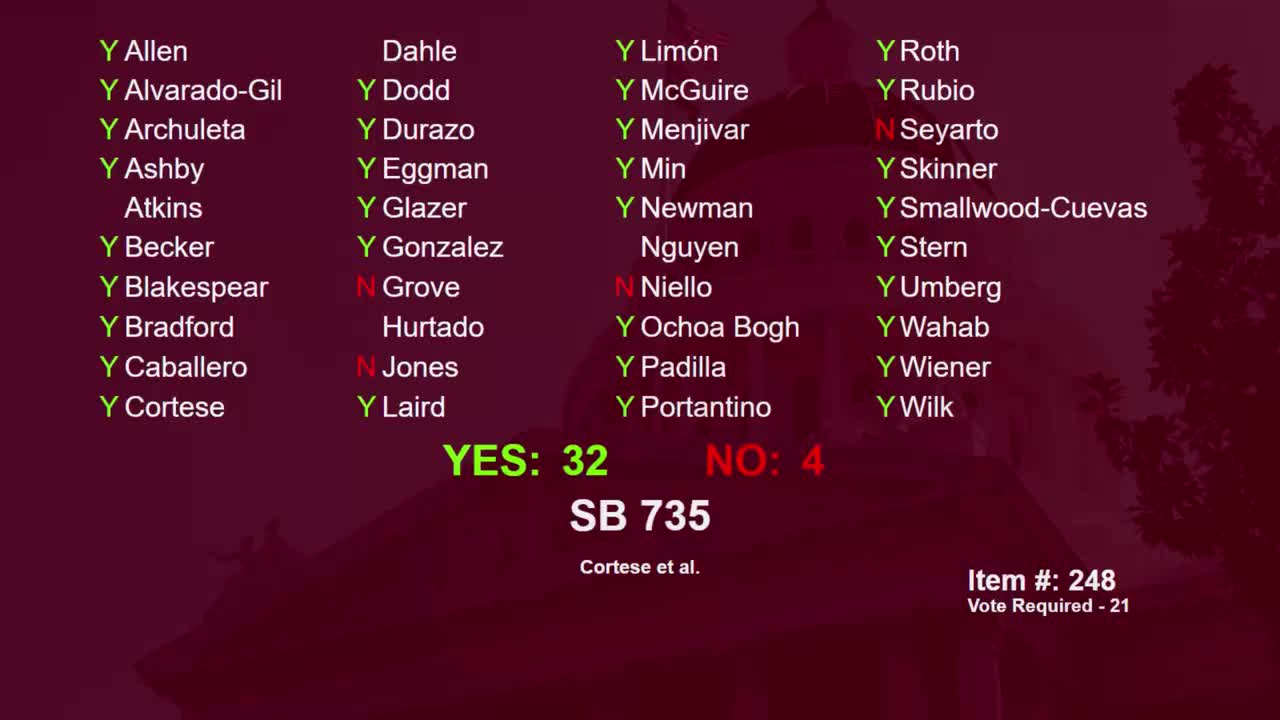
Bill Author

Bill Co-Author(s):