SB 797: Lithium Extraction Tax Citizens Oversight Committee.
- Session Year: 2023-2024
- House: Senate
- Latest Version Date: 2023-10-08
Current Status:
Passed
(2023-10-08: Chaptered by Secretary of State. Chapter 506, Statutes of 2023.)
Introduced
In Committee
First Chamber
In Committee
Second Chamber
Enacted
What does this bill do?
The bill creates a Lithium Extraction Tax Citizens Oversight Committee within the California Department of Tax and Fee Administration to oversee how revenues from the state’s lithium extraction tax are distributed and used in the local communities where lithium is extracted. The committee will collect and analyze information, make recommendations to improve community engagement and benefits, and report its findings and recommendations to the Legislature each year beginning April 1, 2027.
The summary is provided by generative AI which can make mistakes. For original language, please view the details in the table below.
Existing law, the Lithium Extraction Tax Law, imposes a lithium extraction excise tax upon each metric ton of lithium carbonate equivalent extracted from geothermal fluid, spodumene ore, rock, minerals, clay, or any other naturally occurring substance in this state, as specified. Existing law requires the California Department of Tax and Fee Administration to administer and collect the tax and requires all collected revenues, less refunds and reimbursement to the department for administrative expenses, to be deposited into the Lithium Extraction Excise Tax Fund and disbursed in the manner prescribed.
This bill would establish the Lithium Extraction Tax Citizens Oversight Committee within the department for the purposes of ensuring that certain revenues from the lithium extraction excise tax are appropriately distributed or allocated, as specified, and making recommendations on how to improve community engagement and maximize community benefits from the revenues. The bill would prescribe the composition of the committee, the appointment of committee members, meeting provisions, and specified department duties related to the committee. The bill would also require the committee to report its findings and recommendations on April 1, 2027, and annually thereafter, to the Legislature, as specified. The bill would also make related legislative findings and declarations.
Existing law, the Lithium Extraction Tax Law, imposes a lithium extraction excise tax upon each metric ton of lithium carbonate equivalent extracted from geothermal fluid, spodumene ore, rock, minerals, clay, or any other naturally occurring substance in this state, as specified. Existing law requires the California Department of Tax and Fee Administration to administer and collect the tax and requires all collected revenues, less refunds and reimbursement to the department for administrative expenses, to be deposited into the Lithium Extraction Excise Tax Fund and disbursed in the manner prescribed.
This bill would establish the Lithium Extraction Tax Citizens Oversight Committee within the department for the purposes of ensuring that certain revenues from the lithium extraction excise tax are appropriately allocated distributed or allocated, as specified, and making recommendations on how to improve community engagement and maximize community benefits from the revenues. The bill would prescribe the composition of the committee and committee, the appointment of committee members. members, meeting provisions, and specified department duties related to the committee. The bill would also require the committee to report its findings and recommendations annually on December 1 on April 1, 2027, and annually thereafter, to the Legislature, as specified. The bill would also make related legislative findings and declarations.
Existing law, the Lithium Extraction Tax Law, imposes a lithium extraction excise tax upon each metric ton of lithium carbonate equivalent extracted from geothermal fluid, spodumene ore, rock, minerals, clay, or any other naturally occurring substance in this state, as specified. Existing law requires the California Department of Tax and Fee Administration to administer and collect the tax and requires all collected revenues, less refunds and reimbursement to the department for administrative expenses, to be deposited into the Lithium Extraction Excise Tax Fund and disbursed in the manner prescribed.
This bill would establish the Lithium Extraction Tax Citizens Oversight Committee within the department for the purposes of ensuring that certain revenues from the lithium extraction excise tax are appropriately allocated and making recommendations on how to improve community engagement and maximize community benefits from the revenues. The bill would prescribe the composition of the committee and the appointment of committee members. The bill would also require the committee to report its findings and recommendations annually on December 1 to the Legislature, as specified. The bill would also make related legislative findings and declarations.
Existing law, the Lithium Extraction Tax Law, imposes a lithium extraction excise tax upon each metric ton of lithium carbonate equivalent extracted from geothermal fluid, spodumene ore, rock, minerals, clay, or any other naturally occurring substance in this state, as specified. Existing law requires the California Department of Tax and Fee Administration to administer and collect the tax and requires all collected revenues, less refunds and reimbursement to the department for administrative expenses, to be deposited into the Lithium Extraction Excise Tax Fund and disbursed in the manner prescribed.
This bill would establish the Lithium Extraction Tax Citizens Oversight Committee within the department for the purposes of ensuring that revenues from the lithium extraction excise tax are appropriately allocated and making recommendations on how to improve community engagement and maximize community benefits from the revenues. The bill would prescribe the composition of the committee and the appointment of committee members. The bill would also require the committee to report its findings and recommendations annually on December 1 to the Legislature, as specified. The bill would also make related legislative findings and declarations.
Existing law, the Lithium Extraction Tax Law, imposes a lithium extraction excise tax upon each metric ton of lithium carbonate equivalent extracted from geothermal fluid, spodumene ore, rock, minerals, clay, or any other naturally occurring substance in this state, as specified. Existing law requires the California Department of Tax and Fee Administration to administer and collect the tax and requires all collected revenues, less refunds and reimbursement to the department for administrative expenses, to be deposited into the Lithium Extraction Excise Tax Fund and disbursed in the manner prescribed.
This bill would establish the Lithium Extraction Tax Citizens Oversight Committee within the department for the purposes of ensuring that revenues from the lithium extraction excise tax are appropriately allocated and making recommendations on how to improve community engagement and maximize community benefits from the revenues. The bill would prescribe the composition of the committee and require the committee to report its findings and recommendations annually on December 1 to the Legislature, as specified. The bill would also make related legislative findings and declarations.
The Legislature finds and declares all of the following:
(a)In 2022, the Legislature passed and the Governor signed legislation that imposed a lithium extraction tax to help ensure that the economically depressed areas surrounding the Salton Sea realize tangible and sustained economic benefits from the nearby emerging lithium extraction industry.
(b)The revenues from that extraction tax are designed to remain in those historically underinvested communities in order to improve the overall health and welfare of their residents.
(c)The revenues from that extraction tax, after state administrative costs, are distributed in two ways. Eighty percent of those revenues are disbursed to the counties impacted by lithium extraction activities and 20 percent is set aside for Salton Sea restoration projects and grants for community engagement or community benefit projects at or around the Salton Sea.
SEC. 2.Section 47002 of the Revenue and Taxation Code is amended to read:47002.For purposes of this part, the following definitions apply:
(a)Department means the California Department of Tax and Fee Administration.
(b)Extraction means the process of removing lithium from geothermal fluid, spodumene ore, rock, minerals, clay, or any other naturally occurring substance by a physical or chemical process.
(c)Geothermal fluid means naturally occurring groundwater, brines, vapor, and steam associated with, or derived from, a geothermal resource.
(d)Geothermal resource has the same meaning as defined in Section 6903 of the Public Resources Code.
(e)In this state means within the exterior limits of the State of California and includes all territory within these limits owned by, or ceded to, the United States.
(f)Metric ton means a unit of mass equal to 1,000 kilograms.
(g)Minerals has the same meaning as defined in Section 2005 of the Public Resources Code.
(h)Producer means any person who extracts lithium from geothermal fluid, spodumene ore, rock, minerals, clay, or any other naturally occurring substance in this state.
(i)Committee means the Lithium Extraction Tax Citizens Oversight Committee.
SEC. 3.Chapter 4 (commencing with Section 47110) is added to Part 25 of Division 2 of the Revenue and Taxation Code, to read:4.Citizens Oversight Committee47110.(a)The Lithium Extraction Tax Citizens Oversight Committee is hereby established within the department for the purposes of ensuring that revenues from the lithium extraction excise tax are distributed pursuant to subparagraph (A) of paragraph (2) of subdivision (a) and subdivision (b) of Section 47100 and revenues deposited pursuant to subdivision (b) are allocated pursuant to Section 2951 of the Fish and Game Code, and making recommendations on how to improve community engagement and maximize community benefits from the revenues.
(b)The committee shall be composed of the following members:
(1)Three public members who reside in the local communities where the lithium extraction occurs, to be appointed by the Governor.
(2)Two public members who reside in the local communities where the lithium extraction occurs, to be appointed by the Senate Rules Committee. Of these two public members, one shall have environmental justice expertise and the other shall have economic development expertise.
(3)Two public members who reside in the local communities where the lithium extraction occurs, to be appointed by the Speaker of the Assembly. Of these two public members, one shall have environmental restoration expertise and the other shall have vocational training expertise.
(c)The members of the committee shall serve at the pleasure of the appointing power and shall be appointed for terms of two years.
(d)The members of the committee shall serve without compensation.
(e)(1)Meetings of the committee shall be subject to the Bagley-Keene Open Meeting Act (Article 9 (commencing with Section 11120) of Chapter 1 of Part 1 of Division 3 of Title 2 of the Government Code).
(2)The committee shall meet not more than once per calendar quarter.
(3)The committee shall hold its first meeting on the calendar quarter following the calendar quarter when the first revenues of the lithium extraction excise tax have been collected.
(f)The committee shall be responsible for the collection and analysis of any information included in the report required pursuant to Section 47115.
(g)The departments duties pursuant to this section shall be limited to the following:
(1)Administrative support for meetings held pursuant to subdivision (e).
(2)Compilation of the report required to be submitted by the committee pursuant to Section 47115.
47115.(a)Subject to subdivision (b), the committee shall report to the Legislature on how the revenues from the collection of the lithium extraction excise tax were distributed pursuant to subparagraph (A) of paragraph (2) of subdivision (a) of Section 47100 and how revenues deposited pursuant to subdivision (b) were allocated pursuant to Section 2951 of the Fish and Game Code in the prior fiscal year and any recommendations for improving the distribution or allocation, or both, of those revenues to enhance the health and welfare of the local communities where the lithium extraction occurs.
(b)(1)Notwithstanding Section 10231.5 of the Government Code, the report required pursuant to subdivision (a) shall be submitted on April 1, 2027 and every April 1 thereafter.
(2)The report shall be submitted in accordance with Section 9795 of the Government Code.
The Legislature finds and declares all of the following:
(a)In 2022, the Legislature passed and the Governor signed legislation that imposed a lithium extraction tax to help ensure that the economically depressed areas surrounding the Salton Sea realize tangible and sustained economic benefits from the nearby emerging lithium extraction industry.
(b)The revenues from that extraction tax are designed to remain in those historically underinvested communities in order to improve the overall health and welfare of their residents.
(c)The revenues from that extraction tax, after state administrative costs, are distributed in two ways. Eighty percent of those revenues are disbursed to the counties impacted by lithium extraction activities and 20 percent is set aside for Salton Sea restoration projects and grants for community engagement or community benefit projects at or around the Salton Sea.
SEC. 2.Section 47002 of the Revenue and Taxation Code is amended to read:47002.For purposes of this part, the following definitions apply:
(a)Department means the California Department of Tax and Fee Administration.
(b)Extraction means the process of removing lithium from geothermal fluid, spodumene ore, rock, minerals, clay, or any other naturally occurring substance by a physical or chemical process.
(c)Geothermal fluid means naturally occurring groundwater, brines, vapor, and steam associated with, or derived from, a geothermal resource.
(d)Geothermal resource has the same meaning as defined in Section 6903 of the Public Resources Code.
(e)In this state means within the exterior limits of the State of California and includes all territory within these limits owned by, or ceded to, the United States.
(f)Metric ton means a unit of mass equal to 1,000 kilograms.
(g)Minerals has the same meaning as defined in Section 2005 of the Public Resources Code.
(h)Producer means any person who extracts lithium from geothermal fluid, spodumene ore, rock, minerals, clay, or any other naturally occurring substance in this state.
(i)Committee means the Lithium Extraction Tax Citizens Oversight Committee.
SEC. 3.Chapter 4 (commencing with Section 47110) is added to Part 25 of Division 2 of the Revenue and Taxation Code, to read:4.Citizens Oversight Committee47110.(a)The Lithium Extraction Tax Citizens Oversight Committee is hereby established within the department for the purposes of ensuring that revenues from the lithium extraction excise tax are appropriately allocated distributed pursuant to subparagraph (A) of paragraph (2) of subdivision (a) and subdivision (b) of Section 47100 and revenues deposited pursuant to subdivision (b) are allocated pursuant to Section 2951 of the Fish and Game Code, and making recommendations on how to improve community engagement and maximize community benefits from the revenues.
(b)The committee shall be composed of the following members:
(1)Three public members who reside in the local communities where the lithium extraction occurs, to be appointed by the Governor.
(2)Two public members who reside in the local communities where the lithium extraction occurs, to be appointed by the Senate Rules Committee. Of these two public members, one shall have environmental justice expertise and the other shall have economic development expertise.
(3)Two public members who reside in the local communities where the lithium extraction occurs, to be appointed by the Speaker of the Assembly. Of these two public members, one shall have environmental restoration expertise and the other shall have vocational training expertise.
(c)The members of the committee shall serve at the pleasure of the appointing power and shall be appointed for terms of two years.
(d)The members of the committee shall serve without compensation.
(e)(1)Meetings of the committee shall be subject to the Bagley-Keene Open Meeting Act (Article 9 (commencing with Section 11120) of Chapter 1 of Part 1 of Division 3 of Title 2 of the Government Code).
(2)The committee shall meet not more than once per calendar quarter.
(3)The committee shall hold its first meeting on the calendar quarter following the calendar quarter when the first revenues of the lithium extraction excise tax have been collected.
(f)The committee shall be responsible for the collection and analysis of any information included in the report required pursuant to Section 47115.
(g)The departments duties pursuant to this section shall be limited to the following:
(1)Administrative support for meetings held pursuant to subdivision (e).
(2)Compilation of the report required to be submitted by the committee pursuant to Section 47115.
47115.The (a)Subject to subdivision (b), the committee shall report annually on December 1 to the Legislature on how the revenues from the collection of the lithium extraction excise tax were allocated distributed pursuant to subparagraph (A) of paragraph (2) of subdivision (a) of Section 47100 and how revenues deposited pursuant to subdivision (b) were allocated pursuant to Section 2951 of the Fish and Game Code in the prior fiscal year and any recommendations for improving the allocation distribution or allocation, or both, of those revenues to enhance the health and welfare of the local communities where the lithium extraction occurs. The report shall be submitted in accordance with Section 9795 of the Government Code.
(b)(1)Notwithstanding Section 10231.5 of the Government Code, the report required pursuant to subdivision (a) shall be submitted on April 1, 2027 and every April 1 thereafter.
(2)The report shall be submitted in accordance with Section 9795 of the Government Code.
The Legislature finds and declares all of the following:
(a)In 2022, the Legislature passed and the Governor signed legislation that imposed a lithium extraction tax to help ensure that the economically depressed areas surrounding the Salton Sea realize tangible and sustained economic benefits from the nearby emerging lithium extraction industry.
(b)The revenues from that extraction tax are designed to remain in those historically underinvested communities in order to improve the overall health and welfare of their residents.
(c)The revenues from that extraction tax, after state administrative costs, are distributed in two ways. Eighty percent of those revenues are disbursed to the counties impacted by lithium extraction activities and 20 percent is set aside for Salton Sea restoration projects and grants for community engagement or community benefit projects at or around the Salton Sea.
SEC. 2.Section 47002 of the Revenue and Taxation Code is amended to read:47002.For purposes of this part, the following definitions apply:
(a)Department means the California Department of Tax and Fee Administration.
(b)Extraction means the process of removing lithium from geothermal fluid, spodumene ore, rock, minerals, clay, or any other naturally occurring substance by a physical or chemical process.
(c)Geothermal fluid means naturally occurring groundwater, brines, vapor, and steam associated with, or derived from, a geothermal resource.
(d)Geothermal resource has the same meaning as defined in Section 6903 of the Public Resources Code.
(e)In this state means within the exterior limits of the State of California and includes all territory within these limits owned by, or ceded to, the United States.
(f)Metric ton means a unit of mass equal to 1,000 kilograms.
(g)Minerals has the same meaning as defined in Section 2005 of the Public Resources Code.
(h)Producer means any person who extracts lithium from geothermal fluid, spodumene ore, rock, minerals, clay, or any other naturally occurring substance in this state.
(i)Committee means the Lithium Extraction Tax Citizens Oversight Committee.
SEC. 3.Chapter 4 (commencing with Section 47110) is added to Part 25 of Division 2 of the Revenue and Taxation Code, to read:4.Citizens Oversight Committee47110.(a)The Lithium Extraction Tax Citizens Oversight Committee is hereby established within the department for the purposes of ensuring that revenues from the lithium extraction excise tax are appropriately allocated pursuant to subparagraph (A) of paragraph (2) of subdivision (a) and subdivision (b) of Section 47100 and making recommendations on how to improve community engagement and maximize community benefits from the revenues.
(b)The committee shall be composed of the following members:
(1)Three public members who reside in the local communities where the lithium extraction occurs, to be appointed by the Governor.
(2)Two public members who reside in the local communities where the lithium extraction occurs, to be appointed by the Senate Rules Committee. Of these two public members, one shall have environmental justice expertise and the other shall have economic development expertise.
(3)Two public members who reside in the local communities where the lithium extraction occurs, to be appointed by the Speaker of the Assembly. Of these two public members, one shall have environmental restoration expertise and the other shall have vocational training expertise.
(c)The members of the committee shall serve at the pleasure of the appointing power and shall be appointed for terms of two years.
(d)The members of the committee shall serve without compensation.
(e)Meetings of the committee shall be subject to the Bagley-Keene Open Meeting Act (Article 9 (commencing with Section 11120) of Chapter 1 of Part 1 of Division 3 of Title 2 of the Government Code).
47115.The committee shall report annually on December 1 to the Legislature on how the revenues from the collection of the lithium extraction excise tax were allocated and any recommendations for improving the allocation of those revenues to enhance the health and welfare of the local communities where the lithium extraction occurs. The report shall be submitted in accordance with Section 9795 of the Government Code.
The Legislature finds and declares all of the following:
(a)In 2022, the Legislature passed and the Governor signed legislation that imposed a lithium extraction tax to help ensure that the economically depressed areas surrounding the Salton Sea realize tangible and sustained economic benefits from the nearby emerging lithium extraction industry.
(b)The revenues from that extraction tax are designed to remain in those historically underinvested communities in order to improve the overall health and welfare of their residents.
(c)The revenues from that extraction tax, after state administrative costs, are distributed in two ways. Eighty percent of those revenues are disbursed to the counties impacted by lithium extraction activities and 20 percent is set aside for Salton Sea restoration projects and grants for community engagement or community benefit projects at or around the Salton Sea.
SEC. 2.Section 47002 of the Revenue and Taxation Code is amended to read:47002.For purposes of this part, the following definitions apply:
(a)Department means the California Department of Tax and Fee Administration.
(b)Extraction means the process of removing lithium from geothermal fluid, spodumene ore, rock, minerals, clay, or any other naturally occurring substance by a physical or chemical process.
(c)Geothermal fluid means naturally occurring groundwater, brines, vapor, and steam associated with, or derived from, a geothermal resource.
(d)Geothermal resource has the same meaning as defined in Section 6903 of the Public Resources Code.
(e)In this state means within the exterior limits of the State of California and includes all territory within these limits owned by, or ceded to, the United States.
(f)Metric ton means a unit of mass equal to 1,000 kilograms.
(g)Minerals has the same meaning as defined in Section 2005 of the Public Resources Code.
(h)Producer means any person who extracts lithium from geothermal fluid, spodumene ore, rock, minerals, clay, or any other naturally occurring substance in this state.
(i)Committee means the Lithium Extraction Tax Citizens Oversight Committee.
SEC. 3.Chapter 4 (commencing with Section 47110) is added to Part 25 of Division 2 of the Revenue and Taxation Code, to read:4.Citizens Oversight Committee47110.(a)The Lithium Extraction Tax Citizens Oversight Committee is hereby established within the department for the purposes of ensuring that revenues from the lithium extraction excise tax are appropriately allocated pursuant to Section 47100 and making recommendations on how to improve community engagement and maximize community benefits from the revenues.
(b)The committee shall be composed of the following members:
(1)Three public members who reside in the local communities where the lithium extraction occurs, to be appointed by the Governor.
(2)Two public members who reside in the local communities where the lithium extraction occurs, to be appointed by the Senate Rules Committee. Of these two public members, one shall have environmental justice expertise and the other shall have economic development expertise.
(3)Two public members who reside in the local communities where the lithium extraction occurs, to be appointed by the Speaker of the Assembly. Of these two public members, one shall have environmental restoration expertise and the other shall have vocational training expertise.
47115.The committee shall report annually on December 1 to the Legislature on how the revenues from the collection of the lithium extraction excise tax were allocated and any recommendations for improving the allocation of those revenues to enhance the health and welfare of the local communities where the lithium extraction occurs. The report shall be submitted in accordance with Section 9795 of the Government Code.
|
Date
|
Status
|
|---|---|
| Oct 8, 2023 | Chaptered by Secretary of State. Chapter 506, Statutes of 2023. |
| Oct 8, 2023 | Approved by the Governor. |
| Sep 20, 2023 | Enrolled and presented to the Governor at 4:30 p.m. |
| Sep 13, 2023 | Assembly amendments concurred in. (Ayes 33. Noes 0. Page 2748.) Ordered to engrossing and enrolling. |
| Sep 12, 2023 | In Senate. Concurrence in Assembly amendments pending. |
| Sep 12, 2023 | Read third time. Passed. (Ayes 74. Noes 0. Page 3318.) Ordered to the Senate. |
| Sep 5, 2023 | Read second time. Ordered to third reading. |
| Sep 1, 2023 | Read second time and amended. Ordered to second reading. |
| Sep 1, 2023 | From committee: Do pass as amended. (Ayes 12. Noes 1.) (September 1). |
| Aug 23, 2023 | August 23 set for first hearing. Placed on suspense file. |
| Jun 27, 2023 | From committee: Do pass and re-refer to Com. on APPR. (Ayes 8. Noes 0.) (June 26). Re-referred to Com. on APPR. |
| Jun 15, 2023 | From committee with author's amendments. Read second time and amended. Re-referred to Com. on REV. & TAX. |
| Jun 8, 2023 | Referred to Com. on REV. & TAX. |
| May 31, 2023 | In Assembly. Read first time. Held at Desk. |
| May 30, 2023 | Read third time. Passed. (Ayes 35. Noes 0. Page 1354.) Ordered to the Assembly. |
| May 18, 2023 | Read second time. Ordered to third reading. |
| May 18, 2023 | From committee: Do pass. (Ayes 5. Noes 1. Page 1184.) (May 18). |
| May 12, 2023 | Set for hearing May 18. |
| Apr 17, 2023 | April 17 hearing: Placed on APPR suspense file. |
| Apr 11, 2023 | Set for hearing April 17. |
| Apr 10, 2023 | Read second time and amended. Re-referred to Com. on APPR. |
| Mar 30, 2023 | From committee: Do pass as amended and re-refer to Com. on APPR. (Ayes 6. Noes 1. Page 574.) (March 29). |
| Mar 14, 2023 | Set for hearing March 29. |
| Mar 1, 2023 | Referred to Com. on GOV. & F. |
| Feb 21, 2023 | From printer. May be acted upon on or after March 20. |
| Feb 17, 2023 | Introduced. Read first time. To Com. on RLS. for assignment. To print. |
|
Date
|
Description
|
Location
|
Votes
|
|
|---|---|---|---|---|
| Sep 13, 2023 | Unfinished Business SB797 Padilla et al. Concurrence | Senate Floor |
Passed |
|
| Sep 12, 2023 | SB 797 Padilla Senate Third Reading By Garcia | Assembly Floor |
Passed |
|
| Sep 1, 2023 | Do pass as amended. | Assembly Standing Committee on Appropriations |
Passed |
|
| Jun 26, 2023 | Do pass and be re-referred to the Committee on [Appropriations] | Assembly Standing Committee on Revenue and Taxation |
Passed |
|
| May 30, 2023 | Senate 3rd Reading SB797 Padilla et al. | Senate Floor |
Passed |
|
| May 18, 2023 | Do pass | Senate Standing Committee on Appropriations |
Passed |
|
| Apr 17, 2023 | Placed on suspense file | Senate Standing Committee on Appropriations |
Passed |
|
| Mar 29, 2023 | Do pass as amended, but first amend, and re-refer to the Committee on [Appropriations] | Senate Standing Committee on Governance and Finance |
Passed |
This list shows positions taken on this bill by organizations on the date displayed, which is linked to the original source.
Positions by individuals are not included.
|
Organization
|
Position
|
Date
|
|---|---|---|
| City Of El Centro | ** Support | |
| Comite Civico Del Valle | ** Support | |
| Imperial County | * Against | Mar 29, 2023 |
| imperial Valley Equity and Justice Coalition | ** Support | |
| State Building and Construction Trades Council of California | ** Support |
SENATE RULES COMMITTEE Office of Senate Floor Analyses (916) 651-1520 Fax: (916) 327-4478 | SB 797 |
UNFINISHED BUSINESS
Bill No: SB 797
Author: Padilla (D), et al.
Amended: 9/1/23
Vote: 21
SENATE GOVERNANCE & FIN. COMMITTEE: 6-1, 3/29/23
AYES: Caballero, Blakespear, Durazo, Glazer, Skinner, Wiener
NOES: Dahle
NO VOTE RECORDED: Seyarto
SENATE APPROPRIATIONS COMMITTEE: 5-1, 5/18/23
AYES: Portantino, Ashby, Bradford, Wahab, Wiener
NOES: Jones
NO VOTE RECORDED: Seyarto
SENATE FLOOR: 35-0, 5/30/23
AYES: Allen, Alvarado-Gil, Archuleta, Ashby, Atkins, Becker, Blakespear, Bradford, Caballero, Cortese, Dodd, Durazo, Eggman, Glazer, Gonzalez, Grove, Hurtado, Laird, Limón, McGuire, Menjivar, Min, Newman, Niello, Padilla, Portantino, Roth, Rubio, Skinner, Smallwood-Cuevas, Stern, Umberg, Wahab, Wiener, Wilk
NO VOTE RECORDED: Dahle, Jones, Nguyen, Ochoa Bogh, Seyarto
ASSEMBLY FLOOR: 74-0, 9/12/23 - See last page for vote
SUBJECT: Lithium Extraction Tax Citizens Oversight Committee
SOURCE: Author
DIGEST:
This bill creates the Lithium Extraction Tax Citizens Oversight Committee (Committee) within the California Department of Tax and Fee Administration (CDTFA).
Assembly Amendments
(1) limit the Committee’s purpose to include ensuring distribution of revenues in Imperial County and Salton Sea Lithium Fund, not revenues allocated from lithium production in other counties; (2) limit Committee meetings to not more than once per quarter; (3) require the Committee’s first meeting be held in the calendar quarter following the calendar quarter where Lithium Extraction Tax revenues are first derived; (4) clarify the responsibilities of the Committee and CDTFA; (5) change the due date of the report from December 1st of each year to April 1, 2027, and every April 1st thereafter; and (6) make technical and conforming changes.
ANALYSIS:
Existing law:
- Enacts the Lithium Extraction Tax (LET) Law, which imposes a lithium extraction excise tax upon each metric ton of lithium carbonate extracted from geothermal fluid or any other naturally occurring substance in this state (SB 125, Committee on Budget and Fiscal Review, Chapter 63, Statutes of 2022).
- Requires producers subject to LET to register, file tax returns, and remit tax payments to CDTFA.
- States that the Lithium Extraction Tax is in-lieu of any local taxes, and preempts any local taxes on lithium extraction, except to the extent that the sales and use tax applies to the sale, storage, use, or other consumption of lithium.
- Allocates 20% of its proceeds to the Lithium Subaccount within the Salton Sea Restoration Fund, and the other 80% to all counties in proportion to the amounts of the taxes, interest, penalties, and other amounts collected for lithium extraction within each county.
- Requires each county receiving LET proceeds to establish an account or fund separate from its other accounts and funds, and specifically directs Imperial County to establish a method to distribute an amount not less than 30 percent of that amount to its communities most directly and indirectly impacted by the lithium extraction activities.
- Defines “directly impacted communities” to include:
- Directly affected communities include:
- Bombay Beach.
- The City of Brawley.
- The City of Calipatria.
- Niland.
- The City of Westmorland.
- Defines “indirectly impacted communities” to include:
- Bard.
- The City of Calexico.
- Desert Shores.
- The City of El Centro.
- Heber.
- The City of Holtville.
- The City of Imperial.
- Ocotillo.
- Palo Verde.
- Salton City.
- Salton Sea Beach.
- Seeley.
- Winterhaven.
- Vista Del Mar.
This bill:
- Creates the Lithium Extraction Tax Citizens Oversight Committee within CDTFA for the purposes of ensuring that revenues from the lithium extraction excise tax in Imperial County and allocated to the Salton Sea Lithium Fund are distributed pursuant to current law.
- Charges the Committee with making recommendations on how to improve community engagement and maximize community benefits from the revenues.
- Provides that the Committee is composed of seven members, as follows:
- Three public members appointed by the Governor who reside in the local communities where the lithium extraction occurs.
- Two public members appointed by the Senate Rules Committee who reside in the local communities where the lithium extraction occurs. Of these, one shall have environmental justice expertise and the other shall have economic development expertise.
- Two public members appointed by the Speaker of the Assembly who reside in the local communities where the lithium extraction occurs. Of these, one shall have environmental restoration expertise and the other shall have vocational training expertise.
- States that Committee members serve two-year terms at the pleasure of the appointing authority, and without compensation.
- Provides that the Bagley-Keene Open Meetings Act applies to Committee meetings.
- Limits Committee meetings to once per quarter, and sets the first Committee meeting to occur in the calendar quarter following the calendar quarter in which Lithium Extraction Tax revenue is first collected.
- Provides that the Committee is responsible for collection and analysis of information included in the report, and CDTFA’s duties are limited solely to administrative support of meetings and compilation of the Committee’s report
- Directs the Committee to report to the Legislature by April 1, 2027, and each April 1 thereafter, on how the revenues from the collection of the lithium extraction excise tax in Imperial County, as well as the revenues allocated to the Salton Sea Lithium Fund, were distributed in the previous fiscal year, and any recommendations for improving the distribution or allocation of those revenues to enhance the health and welfare of the local communities where the lithium extraction occurs.
- Makes legislative findings and declarations supporting its purposes.
Background
Lithium Extraction in Imperial County. California is home to some of the world’s most abundant geothermal energy resources. The Salton Sea presents a unique opportunity to extract lithium from the brine that is already being produced by geothermal power plants around the Salton Sea in Imperial County. According to some estimates, the Salton Sea is capable of producing 600 kilotons of lithium per year and those resources could be extracted in a more environmentally-friendly manner than in other lithium-producing countries. Lithium production can help promote these goals by providing a critical component for the production of zero emission vehicles and energy storage for California’s electric grid.
For many years, economic growth in Imperial County has lagged behind the rest of the state. Imperial County has the highest county unemployment rate (14.8 percent) in the state. According to the Imperial County Comprehensive Economic Development Strategy, in 2018, pay levels by occupation in Imperial County are about 20 percent lower overall compared to state averages, but can exceed the average in some occupations. The median household income in Imperial County, at $42,560 in 2016, is 33 percent below the state average, and per capita income in Imperial County is only about half the state average.
FISCAL EFFECT: Appropriation: No Fiscal Com.: Yes Local: No
According to the Assembly Appropriations Committee:
- CDTFA does not anticipate costs from this bill as drafted, as current provisions do not specify CDTFA’s role or any staff workload. The Department of Finance (DOF) concurs that the fiscal impact of this bill would be minor and absorbable, but opposes the bill “because it is premature.” DOF notes the excise tax took effect on January 1, 2023, and revenues have not yet significantly materialized, so “It would be prudent to consider the magnitude of the revenues prior to making recommendations on the use of the funding.”
- However, there would undoubtedly be costs to the state for, at a minimum, staff personnel hours to plan meetings and draft the report, operating and equipment expenses, and Committee member travel reimbursements. Additionally, since this bill’s primary purpose is to create a new committee, which is akin to a commission, this bill is eligible for this committee’s suspense file, per this committee’s rules and policies.
- For reference, the Budget Act of 2023 included $249,000 in fiscal year (FY) 2023-24, $145,000 in FY 2024-25, and $144,000 ongoing beginning in FY 2025-26 from the Lithium Extraction Excise Tax Program established in the previous year’s state budget (Lithium Extraction Excise Tax Fund).
SUPPORT: (Verified 9/6/23)
City of El Centro
Comite Civico Del Valle
Imperial Valley Equity and Justice Coalition
State Building and Construction Trades Council of California
OPPOSITION: (Verified 9/6/23)
None received
ARGUMENTS IN SUPPORT: According to the author, “Imperial County’s lithium will play a key part in America’s transition to clean vehicles and we need to make certain that the local communities that have been overlooked and neglected for decades enjoy the benefits of this new industry. The Lithium Extraction Tax Citizens Oversight Committee will be made up of individuals from the community who are best suited to ensure the revenues benefit the region directly. This will add local accountability and transparency as well as provide insight into community based projects that could have otherwise been overlooked.”
ASSEMBLY FLOOR: 74-0, 9/12/23
AYES: Addis, Aguiar-Curry, Alanis, Alvarez, Arambula, Bains, Bauer-Kahan, Bennett, Berman, Boerner, Bonta, Bryan, Calderon, Juan Carrillo, Wendy Carrillo, Cervantes, Chen, Connolly, Davies, Dixon, Essayli, Mike Fong, Vince Fong, Friedman, Gabriel, Garcia, Gipson, Grayson, Haney, Hart, Holden, Hoover, Irwin, Jackson, Kalra, Lackey, Lee, Low, Lowenthal, Maienschein, Mathis, McCarty, McKinnor, Muratsuchi, Stephanie Nguyen, Ortega, Pacheco, Papan, Jim Patterson, Joe Patterson, Pellerin, Petrie-Norris, Quirk-Silva, Ramos, Rendon, Reyes, Luz Rivas, Rodriguez, Blanca Rubio, Santiago, Schiavo, Soria, Ting, Valencia, Villapudua, Waldron, Wallis, Ward, Weber, Wicks, Wilson, Wood, Zbur, Robert Rivas
NO VOTE RECORDED: Megan Dahle, Flora, Gallagher, Jones-Sawyer, Sanchez, Ta
Prepared by: Colin Grinnell / GOV. & F. / (916) 651-4119
9/12/23 19:38:30
**** END ****
SENATE THIRD READING
STR Bill Id:SB 797
Author:(Padilla)
As Amended Ver:September 1, 2023
Majority vote
SUMMARY
Establishes the Lithium Extraction Tax Citizens Oversight Committee (Committee).
Major Provisions
- Establishes the Committee within the California Department of Tax and Fee Administration (CDTFA) to:
- Ensure that revenues from the lithium extraction excise tax are distributed pursuant to Revenue and Taxation Code (R&TC) Section 47100 and revenues deposited pursuant to Fish and Game Code Section 2951(b); and,
- Make recommendations on how to improve community engagement and maximize community benefits from the revenues.
- Provides that the Committee shall be composed of the following members:
- Three public members who reside in the local communities where the lithium extraction occurs, to be appointed by the Governor;
- Two public members who reside in the local communities where the lithium extraction occurs, to be appointed by the Senate Rules Committee. Of these two public members, one shall have environmental justice expertise and the other shall have economic development expertise; and,
- Two public members who reside in the local communities where the lithium extraction occurs, to be appointed by the Speaker of the Assembly. Of these two public members, one shall have environmental restoration expertise and the other shall have vocational training expertise.
- Provides that the members of the Committee shall serve at the pleasure of the appointing power and shall be appointed for terms of two years.
- Provides that the members of the Committee shall serve without compensation.
- Provides that meetings of the Committee shall be subject to the Bagley-Keene Open Meeting Act.
- Provides that the Committee shall meet not more than once per calendar quarter.
- Provides that the Committee shall hold its first meeting on the calendar quarter following the calendar quarter when the first revenues of the lithium extraction excise tax have been collected.
- Provides that the CDTFA's duties shall be limited to the following:
- Administrative support for meetings held pursuant to this bill; and,
- Compilation of the report required to be submitted by the Committee under this bill.
- Requires the Committee to report to the Legislature on how the revenues from the collection of the lithium extraction excise tax were distributed and allocated in the prior fiscal year and any recommendations for improving the distribution or allocation of those revenues to enhance the health and welfare of the local communities where the lithium extraction occurs.
- Provides that the report shall be submitted on April 1, 2027, and every April 1 thereafter.
COMMENTS
- Lithium Valley Development: Lithium is becoming an increasingly critical resource as California moves toward a clean energy future to combat the climate crisis. Specifically, lithium is a crucial component of batteries needed to power electric vehicles. California has rich but largely untapped lithium reserves, including those in geothermal brine more than one mile underground near the Salton Sea. Experts estimate that the region could satisfy more than one-third of today's global lithium demand.
- The Lithium Extraction Tax (LET) Law: As part of last year's budget agreement, the Legislature passed and the Governor signed into law the LET Law. (SB 125 (Committee on Budget and Fiscal Review), Chapter 63, Statutes of 2022.) The LET Law was adopted to promote a robust California-based lithium extraction industry "that considers the needs of the local communities where the lithium extraction occurs, while recognizing the significant benefit of having a domestic supply of lithium for the state's goals for reducing the emissions of greenhouse gases." (R&TC Section 47000(b).) Specifically, beginning January 1, 2023, the LET Law requires producers to pay a lithium extraction excise tax upon each metric ton of lithium carbonate equivalent extracted in this state. (R&TC Section 47010.) The tax is imposed at different rates based on the lifetime cumulative metric tonnage extracted by the producer. (Id.) Revenues from the tax are deposited in the Lithium Extraction Excise Tax Fund within the State Treasury and are continuously appropriated as follows:
- 80% to counties in proportion to the amounts of the taxes, interest, penalties, and other amounts collected for lithium extraction within each county, as specified; and,
- 20% to the Salton Sea Lithium Fund created by Fish and Game Code Section 2951.
- What would this bill do? This bill would establish the Committee within the CDTFA to provide a degree of citizen oversight. Specifically, the Committee would be charged with ensuring that tax revenues are appropriately allocated. The Committee would also be tasked with making recommendations on improving community engagement and maximizing community benefits from the tax revenues. Finally, this bill would require the Committee to provide an annual report to the Legislature outlining how revenues from the lithium extraction excise tax were allocated and making recommendations for improving the allocations to enhance the health and welfare of the local communities where the extraction occurs.
According to the Author
The author has provided the following statement in support of this bill:
Imperial County's lithium will play a key part in America's transition to clean vehicles and we need to make certain that the local communities that have been overlooked and neglected for decades enjoy the benefits of this new industry. The Lithium Extraction Tax Citizens Oversight Committee will be made up of individuals from the community who are best suited to ensure the revenues benefit the region directly. This will add local accountability and transparency as well as provide insight into community based projects that could have otherwise been overlooked.
Arguments in Support
This bill is supported by the City of El Centro, which notes the following:
The Salton Sea has one of the world's largest reserves of lithium which is instrumental to lithium-ion batteries and clean energy. The world demand for lithium is expected to grow as much as tenfold in the next decade. The domestic supply of lithium around the Salton Sea has the potential to unleash billions in economic opportunity in Imperial Valley, where the Salton Sea is located. Imperial County has the highest unemployment rate in the state, and a quarter of the residents live below the poverty line. In 2022, Governor Newsom signed the Lithium Extraction Tax Law, which establishes a tax for every metric ton of lithium produced, with 80% of the revenue going to Imperial County and 20% to the Salton Sea restoration efforts.
SB 797 (Padilla) would establish the Lithium Tax Oversight Committee made up of members residing in the local community where lithium extraction occurs, ensuring the tax remains in historically underinvested communities to improve the health and welfare of their residents. Ensuring the revenue from the tax goes to Imperial County and the Salton Sea is imperative to the well-being of the residents in the area.
Arguments in Opposition
None on file
FISCAL COMMENTS
According to the Assembly Appropriations Committee:
- Likely minor and absorbable costs to CDTFA to provide administrative support for meetings and compile the report. The Department of Finance (DOF) concurs that the fiscal impact of this bill would be minor and absorbable, but opposes the bill "because it is premature." DOF notes the excise tax took effect on January 1, 2023, and revenues have not yet significantly materialized, so "It would be prudent to consider the magnitude of the revenues prior to making recommendations on the use of the funding."
- For reference, the Budget Act of 2023 included $249,000 in fiscal year (FY) 2023-24, $145,000 in FY 2024-25, and $144,000 ongoing beginning in FY 2025-26 from the Lithium Extraction Excise Tax Program established in the previous year's state budget (Lithium Extraction Excise Tax Fund).
VOTES
SENATE FLOOR: 35-0-5
YES: Allen, Alvarado-Gil, Archuleta, Ashby, Atkins, Becker, Blakespear, Bradford, Caballero, Cortese, Dodd, Durazo, Eggman, Glazer, Gonzalez, Grove, Hurtado, Laird, Limón, McGuire, Menjivar, Min, Newman, Niello, Padilla, Portantino, Roth, Rubio, Skinner, Smallwood-Cuevas, Stern, Umberg, Wahab, Wiener, Wilk
ABS, ABST OR NV: Dahle, Jones, Nguyen, Ochoa Bogh, Seyarto
ASM REVENUE AND TAXATION: 8-0-3
YES: Irwin, Wallis, Bains, Calderon, Jim Patterson, Petrie-Norris, Luz Rivas, Valencia
ABS, ABST OR NV: Pacheco, Ta, Zbur
ASM APPROPRIATIONS: 12-1-3
YES: Holden, Bryan, Calderon, Wendy Carrillo, Mike Fong, Hart, Lowenthal, Mathis, Papan, Pellerin, Weber, Wilson
NO: Dixon
ABS, ABST OR NV: Megan Dahle, Sanchez, Soria
UPDATED
VERSION: September 1, 2023
CONSULTANT: M. David Ruff / REV. & TAX. / (916) 319-2098 FN: 0001662
Date of Hearing: August 23, 2023
ASSEMBLY COMMITTEE ON APPROPRIATIONS
Chris Holden, Chair
SBPCA Bill Id:SB 797
Author:(Padilla) – As Amended Ver:June 15, 2023
Policy Committee: | Revenue and Taxation | Vote: | 8 - 0 |
|
| ||
|
|
Urgency: No State Mandated Local Program: No Reimbursable: No
SUMMARY:
This bill establishes the Lithium Extraction Tax Citizens Oversight Committee (Committee) within the California Department of Tax and Fee Administration (CDTFA).
Specifically, this bill:
- Requires the Committee to ensure that revenues from the lithium extraction excise tax are appropriately allocated and make recommendations on how to improve community engagement and maximize community benefits from revenues.
- Requires the Committee to be composed of seven members who must reside in the local communities where the lithium extraction occurs and have specified expertise.
- Requires the Committee to annually report to the Legislature how tax revenues were allocated and any recommendations for improving the allocation of revenues to enhance the health and welfare of local communities.
FISCAL EFFECT:
CDTFA does not anticipate costs from this bill as drafted, as current provisions do not specify CDTFA’s role or any staff workload. The Department of Finance (DOF) concurs that the fiscal impact of this bill would be minor and absorbable, but opposes the bill “because it is premature.” DOF notes the excise tax took effect on January 1, 2023, and revenues have not yet significantly materialized, so “It would be prudent to consider the magnitude of the revenues prior to making recommendations on the use of the funding.”
However, there would undoubtedly be costs to the state for, at a minimum, staff personnel hours to plan meetings and draft the report, operating and equipment expenses, and Committee member travel reimbursements. Additionally, since this bill’s primary purpose is to create a new committee, which is akin to a commission, this bill is eligible for this committee’s suspense file, per this committee’s rules and policies.
For reference, the Budget Act of 2023 included $249,000 in fiscal year (FY) 2023-24, $145,000 in FY 2024-25, and $144,000 ongoing beginning in FY 2025-26 from the Lithium Extraction Excise Tax Program established in the previous year’s state budget (Lithium Extraction Excise Tax Fund).
COMMENTS:
- Purpose. According to the author:
Imperial County’s lithium will play a key part in America’s transition to clean vehicles and we need to make certain that the local communities that have been overlooked and neglected for decades enjoy the benefits of this new industry…This [Committee] will add local accountability and transparency as well as provide insight into community based projects that could have otherwise been overlooked.
This bill is supported by the State Building and Construction Trades Council of California, the City of El Centro, and a large coalition of community groups.
- Lithium Valley. The Salton Sea region may contain enough lithium in geothermal brines to supply a third of the world’s current lithium demand. Thus, commercial interests hope to transform the otherwise economically disadvantaged region into a lithium production hotspot, branded as “Lithium Valley.”
SB 125 (Committee on Budget and Fiscal Review), Chapter 63, Statutes of 2022, enacted a tax on lithium extraction in lieu of all county, municipal, or district taxes on lithium extraction or storage, with 80% of revenues appropriated to the county of extraction and 20% to the Salton Sea Restoration Fund to support local restoration and community projects (Lithium Extraction Excise Tax Program). SB 125 also appropriated $5 million General Fund (GF) to the County of Imperial for a county programmatic environmental impact report and health impact assessment, as well as community outreach related to lithium development. This bill establishes the Committee to ensure excise tax revenues are appropriately allocated and to make recommendations on how to improve community engagement and maximize community benefits from revenues.
Beyond the excise tax, recent state budgets have made additional significant investments in Lithium Valley. The 2022-23 state budget also provided $80 million one-time GF to expand the San Diego State University, Brawley Center in the Imperial Valley to support a local workforce pipeline to aid the state’s goals for Lithium Valley development. AB 209 (Committee on Budget), Chapter 251, Statutes of 2022, authorized, for the 2022, 2023, and 2024 calendar years, the California Alternative Energy and Advanced Transportation Financing Authority to provide an additional $15 million of sales and use tax exclusions for projects that manufacture, refine, extract, process, or recover lithium. SB 131 (Committee on Budget and Fiscal Review), Chapter 55, Statutes of 2023, expanded the New Employment Tax Credit to be claimed by additional industries, including lithium production and lithium battery manufacturing. Thus, adjusting the scope of the Committee to reflect the totality of recent Lithium Valley investments may help further maximize community benefits.
Analysis Prepared by: Irene Ho / APPR. / (916) 319-2081
Date of Hearing: June 26, 2023
ASSEMBLY COMMITTEE ON REVENUE AND TAXATION
Jacqui Irwin, Chair
SBPCA Bill Id:SB 797
Author:(Padilla) – As Amended Ver:June 15, 2023
Majority vote. Fiscal committee.
SENATE VOTE: 35-0
SUBJECT: Lithium Extraction Tax Citizens Oversight Committee
SUMMARY: Establishes the Lithium Extraction Tax Citizens Oversight Committee (Committee). Specifically, this bill:
- Contains the following legislative findings:
- In 2022, the Legislature passed and the Governor signed legislation that imposed a lithium extraction tax to help ensure that the economically depressed areas surrounding the Salton Sea realize tangible and sustained economic benefits from the nearby emerging lithium extraction industry;
- The revenues from that extraction tax are designed to remain in those historically underinvested communities in order to improve the overall health and welfare of their residents; and,
- The revenues from that extraction tax, after state administrative costs, are distributed in two ways. Eighty percent of those revenues are disbursed to the counties impacted by lithium extraction activities and 20 percent is set aside for Salton Sea restoration projects and grants for community engagement or community benefit projects at or around the Salton Sea.
- Establishes the Committee within the California Department of Tax and Fee Administration (CDTFA) to:
- Ensure that revenues from the lithium extraction excise tax are appropriately allocated pursuant to Revenue and Taxation Code (R&TC) Section 47100; and,
- Make recommendations on how to improve community engagement and maximize community benefits from the revenues.
- Provides that the Committee shall be composed of the following members:
- Three public members who reside in the local communities where the lithium extraction occurs, to be appointed by the Governor;
- Two public members who reside in the local communities where the lithium extraction occurs, to be appointed by the Senate Rules Committee. Of these two public members, one shall have environmental justice expertise and the other shall have economic development expertise; and,
- Two public members who reside in the local communities where the lithium extraction occurs, to be appointed by the Speaker of the Assembly. Of these two public members, one shall have environmental restoration expertise and the other shall have vocational training expertise.
- Provides that the members of the Committee shall serve at the pleasure of the appointing power and shall be appointed for terms of two years.
- Provides that the members of the Committee shall serve without compensation.
- Provides that meetings of the Committee shall be subject to the Bagley-Keene Open Meeting Act.
- Requires the Committee to report annually on December 1 to the Legislature on how the revenues from the collection of the lithium extraction excise tax were allocated and any recommendations for improving the allocation of those revenues to enhance the health and welfare of the local communities where the lithium extraction occurs. The report shall be submitted in accordance with Government Code Section 9795.
EXISTING LAW:
- Imposes, under the Lithium Extraction Tax Law (LET Law), a lithium extraction excise tax upon each metric ton of lithium carbonate equivalent extracted from geothermal fluid, spodumene ore, rock, minerals, clay, or any other naturally occurring substance in this state, as specified. (R&TC Section 47010.)
- Requires the CDTFA to administer and collect the tax and requires all collected revenues, less refunds and reimbursement to the CDTFA for administrative expenses, to be deposited into the Lithium Extraction Excise Tax Fund and disbursed in the manner prescribed. (R&TC Section 47060 et seq.)
FISCAL EFFECT: According to the CDTFA, this bill does not impact state revenues.
COMMENTS:
- The author has provided the following statement in support of this bill:
Imperial County's lithium will play a key part in America's transition to clean vehicles and we need to make certain that the local communities that have been overlooked and neglected for decades enjoy the benefits of this new industry. The Lithium Extraction Tax Citizens Oversight Committee will be made up of individuals from the community who are best suited to ensure the revenues benefit the region directly. This will add local accountability and transparency as well as provide insight into community based projects that could have otherwise been overlooked.
- This bill is supported by the City of El Centro, which notes the following:
The Salton Sea has one of the world's largest reserves of lithium which is instrumental to lithium-ion batteries and clean energy. The world demand for lithium is expected to grow as much as tenfold in the next decade. The domestic supply of lithium around the Salton Sea has the potential to unleash billions in economic opportunity in Imperial Valley, where the Salton Sea is located. Imperial County has the highest unemployment rate in the state, and a quarter of the residents live below the poverty line. In 2022, Governor Newsom signed the Lithium Extraction Tax Law, which establishes a tax for every metric ton of lithium produced, with 80% of the revenue going to Imperial County and 20% to the Salton Sea restoration efforts.
SB 797 (Padilla) would establish the Lithium Tax Oversight Committee made up of members residing in the local community where lithium extraction occurs, ensuring the tax remains in historically underinvested communities to improve the health and welfare of their residents. Ensuring the revenue from the tax goes to Imperial County and the Salton Sea is imperative to the well-being of the residents in the area.
- Committee Staff Comments:
- Lithium Valley Development: Lithium is becoming an increasingly critical resource as California moves toward a clean energy future to combat the climate crisis. Specifically, lithium is a crucial component of batteries needed to power electric vehicles. California has rich but largely untapped lithium reserves, including those in geothermal brine more than one mile underground near the Salton Sea. Experts estimate that the region could satisfy more than one-third of today's global lithium demand.
- The Lithium Extraction Tax Law: As part of last year's budget agreement, the Legislature passed and the Governor signed into law the LET Law. (SB 125 (Committee on Budget and Fiscal Review), Chapter 63, Statutes of 2022.) The LET Law was adopted to promote a robust California-based lithium extraction industry "that considers the needs of the local communities where the lithium extraction occurs, while recognizing the significant benefit of having a domestic supply of lithium for the state's goals for reducing the emissions of greenhouse gases." (R&TC Section 47000(b).) Specifically, beginning January 1, 2023, the LET Law requires producers to pay a lithium extraction excise tax upon each metric ton of lithium carbonate equivalent extracted in this state. (R&TC Section 47010.) The tax is imposed at different rates based on the lifetime cumulative metric tonnage extracted by the producer. (Id.) Revenues from the tax are deposited in the Lithium Extraction Excise Tax Fund within the State Treasury and are continuously appropriated as follows:
- 80% to counties in proportion to the amounts of the taxes, interest, penalties, and other amounts collected for lithium extraction within each county, as specified; and,
- 20% to the Salton Sea Lithium Fund created by Fish and Game Code Section 2951.
- What would this bill do? This bill would establish the Committee within the CDTFA to provide a degree of citizen oversight. Specifically, the Committee would be charged with ensuring that tax revenues are appropriately allocated. The Committee would also be tasked with making recommendations on improving community engagement and maximizing community benefits from the tax revenues. Finally, this bill would require the Committee to provide an annual report to the Legislature outlining how revenues from the lithium extraction excise tax were allocated and making recommendations for improving the allocations to enhance the health and welfare of the local communities where the extraction occurs.
- What is the CDTFA's role? While this bill calls for the establishment of the Committee within the CDTFA, it is not readily apparent to Committee staff what role, if any, CDTFA would fill in connection with the Committee. Would CDTFA be responsible for planning or hosting meetings? Would CDTFA have a role in assisting with annual report preparation? The author and Committee may wish to consider amendments making clear CDTFA's roles and responsibilities, if any. Additionally, if the Committee expects CDTFA to share information regarding the amount of lithium extraction tax collected in each county, legislative authorization will be required in this bill to allow the sharing of this confidential information.
REGISTERED SUPPORT / OPPOSITION:
Support
City of El Centro
Comite Civico del Valle
Imperial Valley Equity and Justice Coalition
State Building and Construction Trades Council of California
Opposition
None on file
Analysis Prepared by: M. David Ruff / REV. & TAX. / (916) 319-2098
SENATE RULES COMMITTEE Office of Senate Floor Analyses (916) 651-1520 Fax: (916) 327-4478 | SB 797 |
THIRD READING
Bill No: SB 797
Author: Padilla (D), et al.
Amended: 4/10/23
Vote: 21
SENATE GOVERNANCE & FIN. COMMITTEE: 6-1, 3/29/23
AYES: Caballero, Blakespear, Durazo, Glazer, Skinner, Wiener
NOES: Dahle
NO VOTE RECORDED: Seyarto
SENATE APPROPRIATIONS COMMITTEE: 5-1, 5/18/23
AYES: Portantino, Ashby, Bradford, Wahab, Wiener
NOES: Jones
NO VOTE RECORDED: Seyarto
SUBJECT: Lithium Extraction Tax Citizens Oversight Committee
SOURCE: Author
DIGEST:
This bill creates the Lithium Extraction Tax Citizens Oversight Committee within the California Department of Tax and Fee Administration.
ANALYSIS:
Existing law:
- Enacts the Lithium Extraction Tax (LET) Law, which imposes a lithium extraction excise tax upon each metric ton of lithium carbonate extracted from geothermal fluid or any other naturally occurring substance in this state (SB 125, Committee on Budget and Fiscal Review, Chapter 63, Statutes of 2022).
- Requires producers subject to LET to register, file tax returns, and remit tax payments to the California Department of Tax and Fee Administration (CDTFA).
- States that the Lithium Extraction Tax is in-lieu of any local taxes, and preempts any local taxes on lithium extraction, except to the extent that the sales and use tax applies to the sale, storage, use, or other consumption of lithium.
- Allocates 20% of its proceeds to the Lithium Subaccount within the Salton Sea Restoration Fund, and the other 80% to all counties in proportion to the amounts of the taxes, interest, penalties, and other amounts collected for lithium extraction within each county.
- Requires each county receiving LET proceeds to establish an account or fund separate from its other accounts and funds, and specifically directs Imperial County to establish a method to distribute an amount not less than 30 percent of that amount to its communities most directly and indirectly impacted by the lithium extraction activities.
- Defines “directly impacted communities” to include:
- Directly affected communities include:
- Bombay Beach.
- The City of Brawley.
- The City of Calipatria.
- Niland.
- The City of Westmorland.
- Defines “indirectly impacted communities to include:
- Bard.
- The City of Calexico.
- Desert Shores.
- The City of El Centro.
- Heber.
- The City of Holtville.
- The City of Imperial.
- Ocotillo.
- Palo Verde.
- Salton City.
- Salton Sea Beach.
- Seeley.
- Winterhaven.
- Vista Del Mar.
This bill:
- Creates the Lithium Extraction Tax Citizens Oversight Committee within CDTFA for the purposes of ensuring that revenues from the lithium extraction excise tax are appropriately allocated pursuant to current law.
- Charges the Committee with making recommendations on how to improve community engagement and maximize community benefits from the revenues.
- Provides that the Committee is composed of seven members, as follows:
- Three public members appointed by the Governor who reside in the local communities where the lithium extraction occurs.
- Two public members appointed by the Senate Rules Committee who reside in the local communities where the lithium extraction occurs. Of these, one shall have environmental justice expertise and the other shall have economic development expertise.
- Two public members appointed by the Speaker of the Assembly who reside in the local communities where the lithium extraction occurs. Of these, one shall have environmental restoration expertise and the other shall have vocational training expertise.
- States that committee members serve two-year terms at the pleasure of the appointing authority, and without compensation.
- Provides that the Bagley-Keene Open Meetings Act applies to Committee meetings.
- Directs the Committee to report annually to the Legislature each December 1st on how the revenues from the collection of the lithium extraction excise tax were allocated, and any recommendations for improving the allocation of those revenues to enhance the health and welfare of the local communities where the lithium extraction occurs.
- Makes legislative findings and declarations supporting its purposes.
Background
Lithium Extraction in Imperial County. California is home to some of the world’s most abundant geothermal energy resources. The Salton Sea presents a unique opportunity to extract lithium from the brine that is already being produced by geothermal power plants around the Salton Sea in Imperial County. According to some estimates, the Salton Sea is capable of producing 600 kilotons of lithium per year and those resources could be extracted in a more environmentally-friendly manner than in other lithium-producing countries. Lithium production can help promote these goals by providing a critical component for the production of zero emission vehicles and energy storage for California’s electric grid.
For many years, economic growth in Imperial County has lagged behind the rest of the state. Imperial County has the highest county unemployment rate (14.8 percent) in the state. According to the Imperial County Comprehensive Economic Development Strategy, in 2018, pay levels by occupation in Imperial County are about 20 percent lower overall compared to state averages, but can exceed the average in some occupations. The median household income in Imperial County, at $42,560 in 2016, is 33 percent below the state average, and per capita income in Imperial County is only about half the state average.
The Imperial County Board of Supervisors met on March 21 to discuss a draft model for revenue distribution, which included public input during a “Lithium Tax Revenues Spending Priorities Listening Session.” However, community members expressed concerns that the draft model allocates too much revenue to county operations, among other concerns.
Comments
Efficacy? In the past, the Legislature has eliminated boards and commissions it deemed unnecessary, most notably the California Integrated Waste Management Board in 2009. Governor Brown also proposed eliminating many more. SB 797 creates a citizen’s oversight committee for the Lithium Extraction Tax to report to the Legislature regarding the manner in which Imperial County allocates tax proceeds, and make recommendations to the Legislature for improvement focused on enhancing the health and welfare of communities where lithium extraction occurs. However, state law does not generally have citizen’s oversight committees for its taxes, with the possible exception of the Mental Health Services Oversight and Accountability Commission which administers components of the income tax surcharge enacted by the Mental Health Services Act (Proposition 63, 2004). Additionally, Imperial County could create its own advisory committee without legislation. On the other hand, the Lithium Extraction Tax is unique in several ways: it is California’s only extraction tax, is likely to apply solely in California’s most economically distressed county, and allocates most of its proceeds from a state tax directly to Imperial County, which must then allocate a share of proceeds to specified directly and indirectly affected communities. The Committee may wish to consider the value added by establishing a citizen’s oversight committee in statute for this specific tax
FISCAL EFFECT: Appropriation: No Fiscal Com.: Yes Local: No
According to the Senate Appropriations Committee:
- CDTFA indicates that the current version of the bill would not result in administrative costs.
- The bill does not give guidance on how the Committee would be staffed. Using the Milton Marks "Little Hoover" Commission on California State Organization and Economy (Little Hoover Commission) as a proxy, annual costs to operate and staff the Committee could total in the low millions of dollars annually (special fund and/or the General Fund, see Staff Comments).
SUPPORT: (Verified 5/19/23)
City of El Centro
Comite Civico Del Valle
Imperial Valley Equity and Justice Coalition
State Building and Construction Trades Council of California
OPPOSITION: (Verified 5/19/23)
None received
ARGUMENTS IN SUPPORT: According to the author, “Imperial County’s lithium will play a key part in America’s transition to clean vehicles and we need to make certain that the local communities that have been overlooked and neglected for decades enjoy the benefits of this new industry. The Lithium Extraction Tax Citizens Oversight Committee will be made up of individuals from the community who are best suited to ensure the revenues benefit the region directly. This will add local accountability and transparency as well as provide insight into community based projects that could have otherwise been overlooked
Prepared by: Colin Grinnell / GOV. & F. / (916) 651-4119
5/20/23 13:09:37
**** END ****
SENATE COMMITTEE ON APPROPRIATIONS
Senator Anthony Portantino, Chair
2023 - 2024 Regular Session
SB 797 (Padilla) - Lithium Extraction Tax Citizens Oversight Committee
Version: April 10, 2023 | Policy Vote: GOV. & F. 6 - 1 |
Urgency: No | Mandate: No |
Hearing Date: April 17, 2023 | Consultant: Robert Ingenito |
Bill Summary:
SB 797 would create the Lithium Extraction Tax Citizens Oversight Committee.
Fiscal Impact:
- The California Department of Tax and Fee Administration (CDTFA) indicates that the current version of the bill would not result in administrative costs.
- The bill does not give guidance on how the Committee would be staffed. Using the Milton Marks "Little Hoover" Commission on California State Organization and Economy (Little Hoover Commission) as a proxy, annual costs to operate and staff the Committee could total in the low millions of dollars annually (special fund and/or the General Fund, see Staff Comments).
Background:
Lithium is becoming an increasingly critical resource, and is a crucial component of batteries needed to power electric vehicles, enable a 100-percent clean electric grid, and move the state’s homes and industries away from fossil fuels. California has abundant untapped lithium reserves, including in geothermal brine more than a mile underground near the Salton Sea in Imperial County. According to some estimates, the Salton Sea is capable of producing 600 kilotons of lithium per year and those resources could be extracted in a more environmentally-friendly manner than in other lithium-producing countries. Building out a battery manufacturing ecosystem in tandem with lithium production and processing would also increase economic opportunity in the Salton Sea region, delivering quality jobs and community benefits.
In 2022, the Legislature passed SB 125 (Committee on Budget & Fiscal Review), a budget trailer bill which, among other provisions, enacted the Lithium Extraction Tax (LET) Law. Specifically, SB 125 imposes a lithium extraction excise tax upon each metric ton of lithium carbonate extracted from geothermal fluid or any other naturally occurring substance in this state. The tax took effect on January 1, 2023, with 80 percent of proceeds going to local governments and 20 percent towards Salton Sea restoration efforts and community-benefit projects in the region. The tax rate is as follows: $400 per ton for the first 20,000 tons of lithium carbonate equivalent that a firm extracts, $600 per ton for the next 10,000 tons, and $800 per ton for all lithium carbonate equivalent extracted over 30,000 tons. The three tax rates will be indexed to the California Consumer Price Index and will be adjusted annually starting on January 1, 2025.
The LET Law requires producers to register, file tax returns, and remit tax payments to CDTFA. The Governor’s proposed budget for 2023-24 includes a request from CDTFA for $249,000 in 2023-24, $145,000 in 2024-25, and $144,000 in 2025-26 to implement the tax.
SB 125 states that its tax is in-lieu of any local taxes, and preempts any local taxes on lithium extraction, except to the extent that the sales and use tax applies to the sale, storage, use, or other consumption of lithium. However, as noted earlier, the bill allocates most of its proceeds directly to local agencies, including 80 percent of tax proceeds to all counties in proportion to the amounts of the taxes, interest, penalties, and other amounts collected for lithium extraction within each county. While each county must establish an account or fund separate from its other accounts and funds, SB 125 specifically directs Imperial County to establish a method to distribute an amount not less than 30 percent of that amount to its communities most directly and indirectly impacted by the lithium extraction activities.
The Imperial County Board of Supervisors met on March 21 to discuss a draft model for revenue distribution, which included public input during a “Lithium Tax Revenues Spending Priorities Listening Session.”
Proposed Law:
This bill would, among other things, do the following:
- Create the Lithium Extraction Tax Citizens Oversight Committee within CDTFA, as specified, for the purposes of ensuring that revenues from the LET are appropriately allocated as required by SB 125. The bill also would charge the Committee with making recommendations on how to improve community engagement and maximize community benefits from the revenues.
- Provide that the members of the Committee would (1) be appointed for terms of two years, as specified, and (2) serve without compensation.
- Direct the Committee to report annually to on how the revenues from the collection of the LET tax were allocated, and any recommendations for improving the allocation of those revenues to enhance the health and welfare of the local communities where the lithium extraction occurs.
Related Legislation:
SB 125 (Committee on Budget and Fiscal Review, Chapter 63, Statutes of 2022) enacted the LET Law, which, beginning January 1 2023, requires any person who extracts lithium from geothermal fluid, spodumene ore, rock, minerals, clay, or any other naturally occurring substance in this state to pay a lithium extraction excise tax upon each metric ton of extracted lithium carbonate equivalent, as specified.
Staff Comments:
The bill, as currently drafted, does not specify CDTFA’s role. Specifically, it neither would make CDTFA a Committee member nor specify any duties for the department. Consequently, CDTFA does not anticipate costs resulting from the bill as currently drafted.
The bill in its current form does not give guidance concerning how the Committee would be staffed. As noted earlier, the Little Hoover Commission could serve as a proxy; it has a $1.3 million annual budget and is comprised of seven staff: an executive director, three managers, and three analysts. The Little Hoover Commission’s personnel costs (salaries and benefits) total about $1.1 million annually, while operating expenses and equipment comprise the other $262,000 per year. Funding would likely come from LET revenues, though the bill does not specify a funding source.
The bill specifies that Committee members would not receive compensation; however, their travel expenses likely would be reimbursed. Travel expenses for Committee members could total in the tens of thousands of dollars annually.
The Governor’s proposed 2023-24 budget includes a statutory framework for local governments, residents, and disadvantaged communities to benefit from the development and extraction of lithium in the Imperial Valley.
-- END --
SENATE COMMITTEE ON GOVERNANCE AND FINANCE
Senator Anna M. Caballero, Chair
2023 - 2024 Regular
Bill No: | SB 797 | Hearing Date: | 3/29/23 |
Author: | Padilla | Tax Levy: | No |
Version: | 2/17/23 | Fiscal: | Yes |
Consultant: | Grinnell | ||
Lithium Extraction Tax Citizens Oversight Committee
Creates the Lithium Extraction Tax Citizens Oversight Committee.
Background
California is home to some of the world’s most abundant geothermal energy resources. The Salton Sea presents a unique opportunity to extract lithium from the brine that is already being produced by geothermal power plants around the Salton Sea. According to some estimates, the Salton Sea is capable of producing 600 kilotons of lithium per year and those resources could be extracted in a more environmentally-friendly manner than in other lithium-producing countries. Lithium production can help promote these goals by providing a critical component for the production of zero emission vehicles and energy storage for California’s electric grid.
In 2020, the Legislature enacted AB 1657 (E. Garcia), which directed the California Energy Commission to establish and convene the Blue Ribbon Commission on Lithium Extraction in California to review, investigate, and analyze certain issues and potential incentives regarding lithium extraction and use in California. The Blue Ribbon Commission held more than 20 public meetings to gather information, host discussions, and hear public comments, and issued its report of findings and recommendations to the Legislature in December, 2022.
Lithium Extraction Tax Law. Last year, the Legislature enacted SB 125 (Committee on Budget & Fiscal Review), which enacted the Lithium Extraction Tax (LET) Law, among other provisions. Specifically, SB 125 imposes a lithium extraction excise tax upon each metric ton of lithium carbonate extracted from geothermal fluid or any other naturally occurring substance in this state.
The LET Law requires producers to register, file tax returns, and remit tax payments to the California Department of Tax and Fee Administration (CDTFA). The Governor’s Proposed Budget for 2023-24 included a request from CDTFA for $249,000 in fiscal year 2023-24, $145,000 in 2024-25, and $144,000 in 2025-26 to implement the tax.
Specifically, SB 125 imposes a volume-based tax on lithium extraction at rates of:
- $400 per metric ton for the first 20,000 tons of lithium carbonate equivalent extracted,
- $600 per metric ton extracted over 20,000 up to 30,000 metric tons, and
- $800 per metric ton for lithium carbonate equivalent extracted over 30,000 metric tons.
Even though the lithium extraction tax applies to any extraction occurring on or after January 1, 2023, there is currently no taxable lithium extraction occurring. However, the Blue Ribbon Commission Report states that three developers (EnergySource Minerals, BHE Renewables, and CTR) are in the process of developing projects to recover lithium from geothermal brine at existing or new geothermal power plants in Imperial County.
LET Allocation. SB 125 states that its tax is in-lieu of any local taxes, and preempts any local taxes on lithium extraction, except to the extent that the sales and use tax applies to the sale, storage, use, or other consumption of lithium. However, the bill allocates most of its proceeds directly to local agencies, including 80 percent of tax proceeds to all counties in proportion to the amounts of the taxes, interest, penalties, and other amounts collected for lithium extraction within each county. While each county must establish an account or fund separate from its other accounts and funds, SB 125 specifically directs Imperial County to establish a method to distribute an amount not less than 30 percent of that amount to its communities most directly and indirectly impacted by the lithium extraction activities. Directly affected communities include:
- Bombay Beach.
- The City of Brawley.
- The City of Calipatria.
- Niland.
- The City of Westmorland.
Indirectly affected communities include:
- Bard.
- The City of Calexico.
- Desert Shores.
- The City of El Centro.
- Heber.
- The City of Holtville.
- The City of Imperial.
- Ocotillo.
- Palo Verde.
- Salton City.
- Salton Sea Beach.
- Seeley.
- Winterhaven.
- Vista Del Mar.
For many years, economic growth in Imperial County has lagged behind the rest of the state. Imperial County has the highest county unemployment rate (14.8 percent) in the state. According to the Imperial County Comprehensive Economic Development Strategy, in 2018, pay levels by occupation in Imperial County are about 20 percent lower overall compared to state averages, but can exceed the average in some occupations. The median household income in Imperial County, at $42,560 in 2016, is 33 percent below the state average, and per capita income in Imperial County is only about half the state average.
The Imperial County Board of Supervisors met on March 21 to discuss a draft model for revenue distribution, which included public input during a “Lithium Tax Revenues Spending Priorities Listening Session.” The author wants to create an oversight committee to ensure the tax proceeds are allocated to historically underinvested communities and improve the overall health and welfare of residents where extraction occurs.
Proposed Law
Senate Bill 797 creates the Lithium Extraction Tax Citizens Oversight Committee within CDTFA for the purposes of ensuring that revenues from the lithium extraction excise tax are appropriately allocated as required by SB 125. The bill also charges the Committee with making recommendations on how to improve community engagement and maximize community benefits from the revenues. The measure provides that the Committee is composed of seven members, as follows:
- Three public members appointed by the Governor who reside in the local communities where the lithium extraction occurs.
- Two public members appointed by the Senate Rules Committee who reside in the local communities where the lithium extraction occurs. Of these, one shall have environmental justice expertise and the other shall have economic development expertise.
- Two public members appointed by the Speaker of the Assembly who reside in the local communities where the lithium extraction occurs. Of these, one shall have environmental restoration expertise and the other shall have vocational training expertise.
SB 797 directs the Committee to report annually to the Legislature each December 1st on how the revenues from the collection of the lithium extraction excise tax were allocated, and any recommendations for improving the allocation of those revenues to enhance the health and welfare of the local communities where the lithium extraction occurs.
State Revenue Impact
No estimate.
Comments
1. Purpose of the bill. According to the author, “Imperial County’s lithium will play a key part in America’s transition to clean vehicles and we need to make certain that the local communities that have been overlooked and neglected for decades enjoy the benefits of this new industry. The Lithium Extraction Tax Citizens Oversight Committee will be made up of individuals from the community who are best suited to ensure the revenues benefit the region directly. This will add local accountability and transparency as well as provide insight into community based projects that could have otherwise been overlooked.”
2. Efficacy. In the past, the Legislature has eliminated boards and commissions it deemed unnecessary, most notably the California Integrated Waste Management Board in 2009 (SB 63, Stickland). Governor Brown also proposed eliminating many more. SB 797 creates a citizen’s oversight committee for the Lithium Extraction Tax to report to the Legislature regarding the manner in which Imperial County allocates tax proceeds, and make recommendations to the Legislature for improvement focused on enhancing the health and welfare of communities where lithium extraction occurs. However, state law does not generally have citizen’s oversight committees for its taxes, with the possible exception of the Mental Health Services Oversight and Accountability Commission which administers components of the income tax surcharge enacted by the Mental Health Services Act (Proposition 63, 2004). Additionally, Imperial County could create its own advisory committee without legislation. On the other hand, the Lithium Extraction Tax is unique in several ways: it is California’s only extraction tax, is likely to apply solely in California’s most economically distressed county, and allocates most of its proceeds from a state tax directly to Imperial County, which must then allocate a share of proceeds to specified directly and indirectly affected communities. The Committee may wish to consider the value added by establishing a citizen’s oversight committee in statute for this specific tax.
3. Detail. State law establishes many different boards, commissions, and advisory committees. While SB 797 sets forth the composition of its advisory committee and the contents of its report and recommendations, it does not contain other provisions typically found in similar statutes, including:
- Fixing committee member compensation, if any.
- Setting committee member terms for a specific number of years.
- Requiring committee recommendations to be adopted at a public meeting.
The Committee may wish to amend SB 797 to apply the above provisions generally found in other statutes to its citizens’ oversight committee.
Support and Opposition
(3/24/23)
Support:
Imperial Valley Equity and Justice Coalition
State Building and Construction Trades Council of CA
Opposition: None submitted.
-- END --
Discussed in Hearing
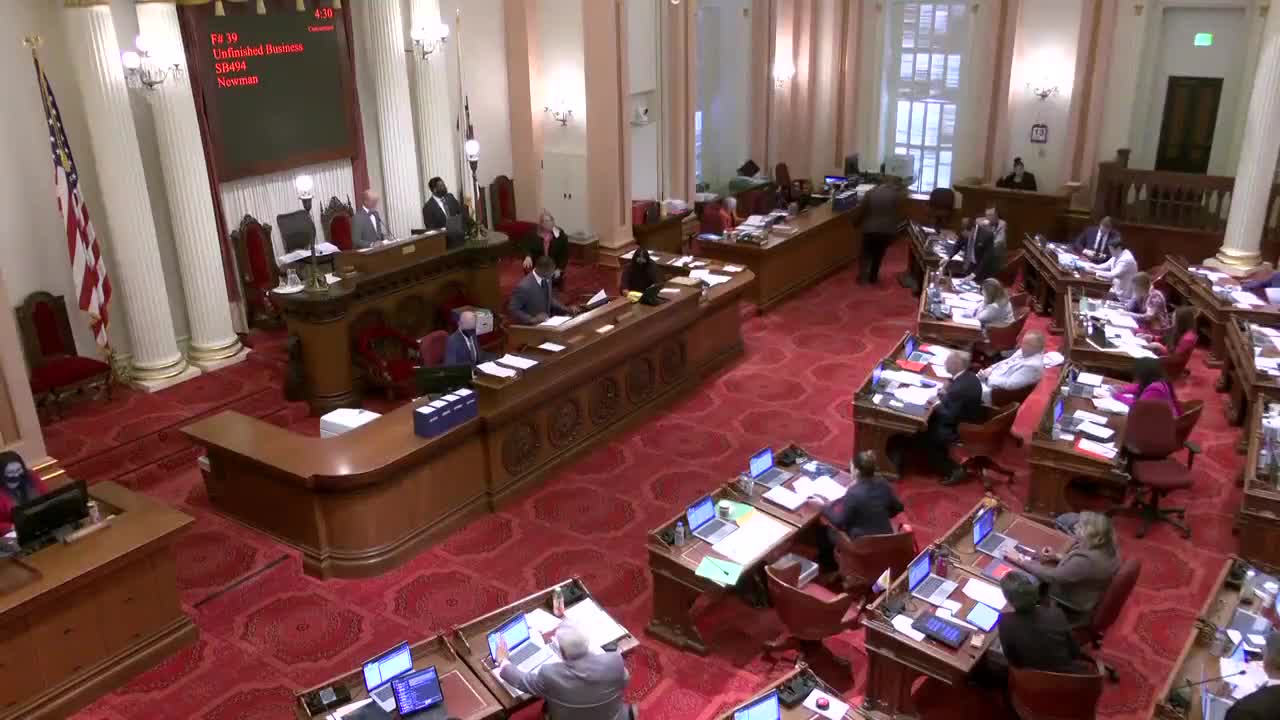 2MIN
Senate Floor
 1MIN
Assembly Floor
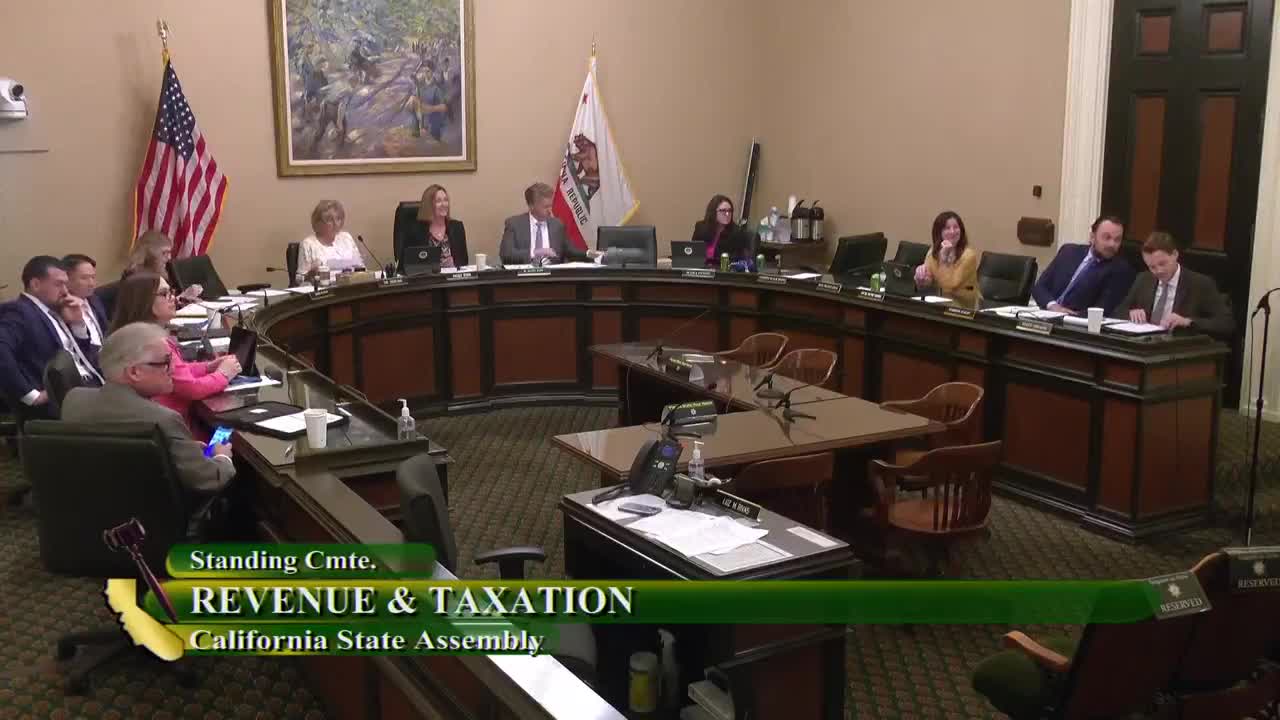 4MIN
Assembly Standing Committee on Revenue and Taxation
 7MIN
Assembly Standing Committee on Revenue and Taxation
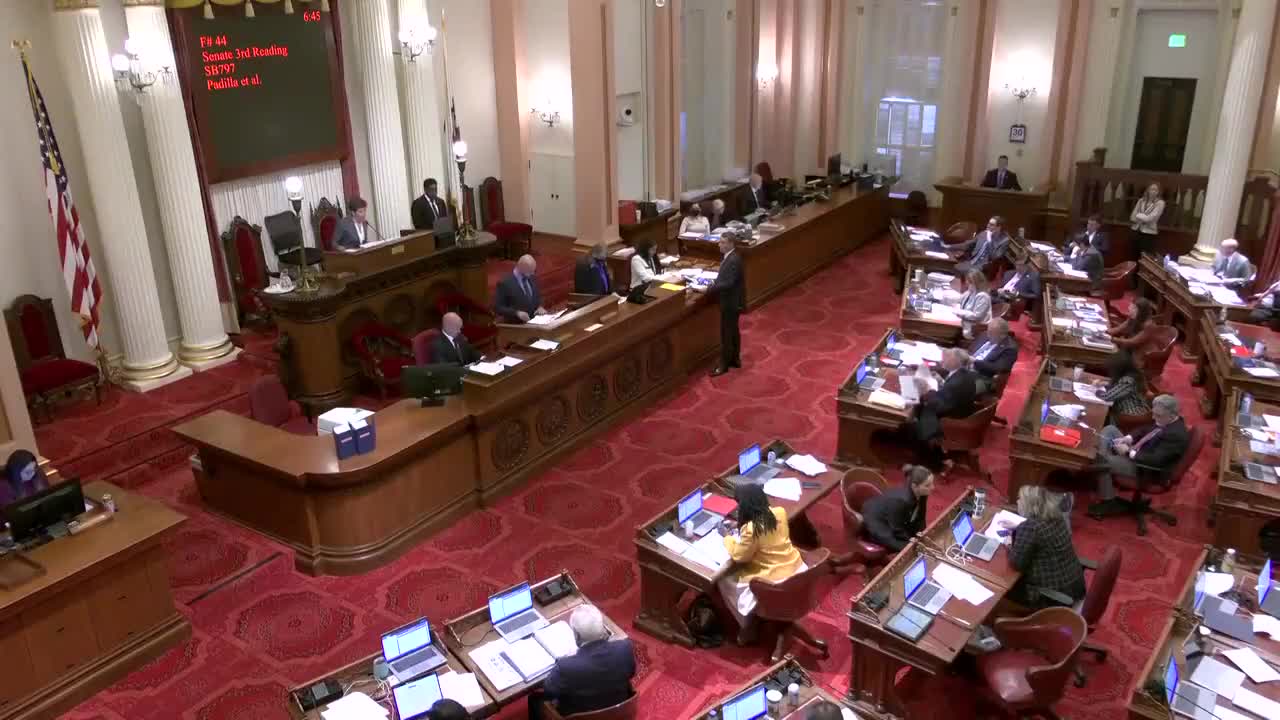 3MIN
Senate Floor
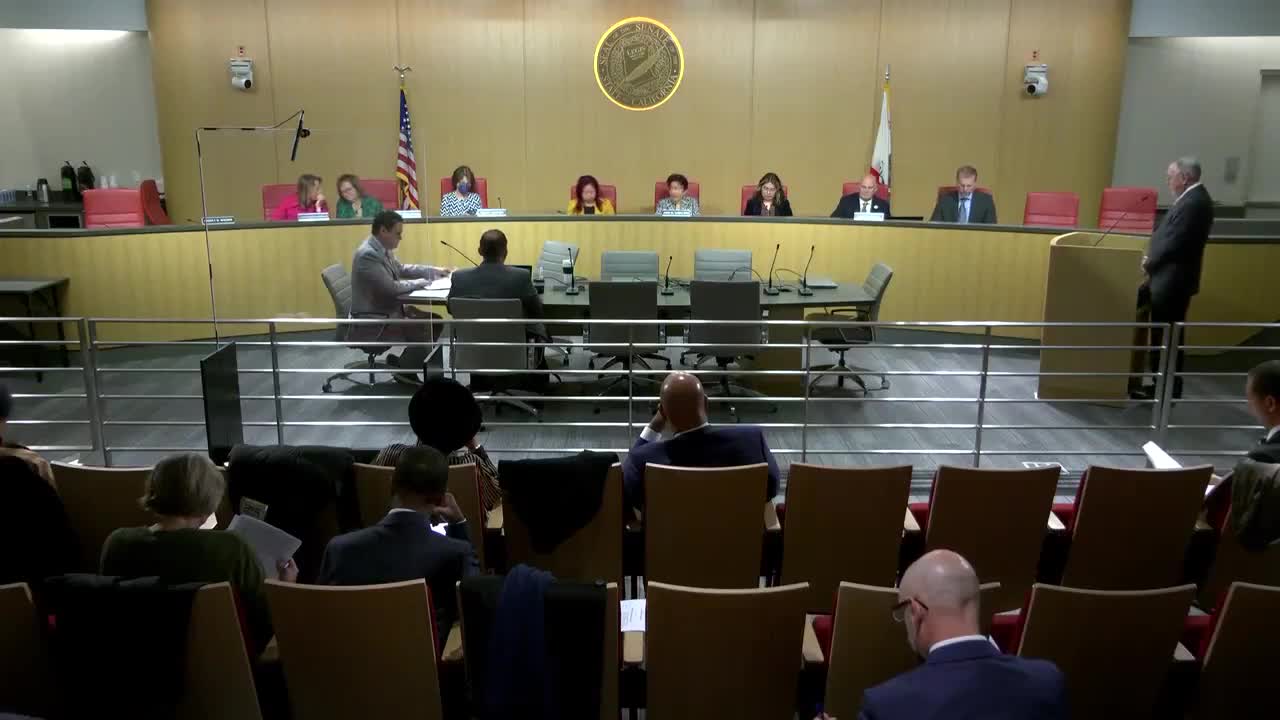 35MIN
Senate Standing Committee on Governance and Finance
Bill Author
Bill Co-Author(s):
