SB 807: Adoption facilitators.
- Session Year: 2023-2024
- House: Senate
- Latest Version Date: 2023-04-17
Current Status:
Failed
(2023-07-05: July 11 set for first hearing canceled at the request of author.)
Introduced
In Committee
First Chamber
In Committee
Second Chamber
Enacted
Existing law generally sets forth the procedures and requirements for an adoption and authorizes an adoption facilitator to provide specific adoption services. Under existing law, the birthparents or adoptive parents may revoke a contract and request the return of any fees paid to an adoption facilitator, as specified. services, including advertising for the purpose of soliciting parties to an adoption or locating children for an adoption or acting as an intermediary between the parties to an adoption, and charging a fee or other valuable consideration for services rendered.
This bill would prohibit an adoption facilitator from collecting or accepting payment from a prospective adoptive family prior to the placement of the child with the adoptive family.Existing law requires the State Department of Social Services to adopt regulations for a statewide registration and enforcement process for adoption facilitators. Existing law required the department, on or before January 1, 2008, to make specific recommendations to the Legislature, including how to implement a department program to accept and compile complaints against registered adoption facilitators and to provide public access to those complaints, as specified.This bill would require the department to publicly post the number of complaints received for each adoption facilitator on its internet website, as specified. repeal the provisions relating to adoption facilitators and would expressly prohibit a person or organization from engaging in specified activities relating to adoption, unless the person or organization is either licensed as an adoption agency by the State Department of Social Services or an attorney licensed to practice law in California. The bill would make various conforming changes.
Existing law generally sets forth the procedures and requirements for an adoption and authorizes an adoption facilitator to provide specific adoption services. Under existing law, the birthparents or adoptive parents may revoke a contract and request the return of any fees paid to an adoption facilitator, as specified.
This bill would prohibit an adoption facilitator from collecting or accepting payment from a prospective adoptive family prior to the placement of the child with the adoptive family.
Existing law requires the State Department of Social Services to adopt regulations for a statewide registration and enforcement process for adoption facilitators. Existing law required the department, on or before January 1, 2008, to make specific recommendations to the Legislature, including how to implement a department program to accept and compile complaints against registered adoption facilitators and to provide public access to those complaints, as specified.
This bill would require the department to publicly post the number of complaints received for each adoption facilitator on its internet website, as specified.
(a)Any person or organization that, without holding either a valid and unrevoked license to place children for adoption issued by the department, or a valid and unrevoked license to practice law in California, advertises in any periodical or newspaper, by radio, or other public medium, that he, she, or it the person or organization will place children for adoption, or accept, supply, provide, or obtain children for adoption, or that causes any advertisement to be published in or by any public medium soliciting, requesting, or asking for any child or children for adoption is guilty of a misdemeanor.
(b)Any person, other than a birth parent, or any organization, association, or corporation that, without holding a valid and unrevoked license to place children for adoption issued by the department, places any child for adoption is guilty of a misdemeanor.
SEC. 2.Section 8610 of the Family Code is amended to read:8610.(a)The petitioners in a proceeding for adoption of a child shall file with the court a full accounting report of all disbursements of anything of value made or agreed to be made by them or on their behalf in connection with the birth of the child, the placement of the child with the petitioners, any medical or hospital care received by the childs birth mother or by the child in connection with the childs birth, any other expenses of either birth parent, or the adoption. The accounting report shall be made under penalty of perjury and shall be submitted to the court on or before the date set for the hearing on the adoption petition, unless the court grants an extension of time.
(b)The accounting report shall be itemized in detail and shall show the services relating to the adoption or to the placement of the child for adoption that were and shall include details regarding payments for all adoption-related services received by the petitioners, by either birth parent, or by the child, or by any other person for whom payment was made by or on behalf of the petitioners. child. The report shall also include the dates of each payment, the names and addresses of each attorney, physician and surgeon, hospital, or licensed adoption agency, or other person or organization who received any funds of the petitioners in connection with the adoption or the placement of the child with them, or participated in any way in the handling of those funds, either directly or indirectly. payment.
(c)This section does not apply to an adoption by a stepparent where one birth parent or adoptive parent retains custody and control of the child.
SEC. 3.Section 8621 of the Family Code is amended to read:8621.The department shall adopt regulations regarding the provision of adoption services by the department, county adoption agencies, licensed adoption agencies, and other adoption service providers, providers authorized pursuant to this section, and shall monitor the provision of those services by county adoption agencies, licensed adoption agencies, and other adoption providers. service providers as provided by law. The department shall report violations of regulations to the appropriate licensing authority.
This section shall become operative on January 1, 1995.SEC. 4.Section 8621.5 is added to the Family Code, to read:8621.5.A person or organization shall not engage in either of the following activities unless the person or organization is licensed as an adoption agency by the department or an attorney licensed to practice law in California:
(a)Advertising for the purpose of soliciting parties to an adoption, locating children for an adoption, or acting as an intermediary between the parties to an adoption.
(b)Charging a fee or other valuable consideration for services rendered relating to an adoption, whether directly or indirectly, for locating children for adoption, or acting as an intermediary between the parties to an adoption.
SEC. 5.Chapter 1.5 (commencing with Section 8623) of Part 2 of Division 13 of the Family Code is repealed.SEC. 6.Section 8637 of the Family Code is repealed.8637.Notwithstanding the provisions of this chapter, an attorney who provides services specified in Section 8623 related to facilitating an adoption shall be subject only to those provisions of law regulating the practice of law.SEC. 7.Section 8921 of the Family Code is repealed.8921.An adoption facilitator shall not offer, provide, or facilitate any adoption service, as described in this chapter, in connection with a convention adoption unless it is registered and posts a bond pursuant to Section 8632.5, and is approved by the accrediting entity pursuant to Subpart F (commencing with Section 96.29) of Part 96 of Title 22 of the Code of Federal Regulations.SECTION 1.Section 8629 of the Family Code is amended to read:8629.(a)For a period of 72 hours after signing a contract or after the payment of a fee, the birthparents or the prospective adoptive parents may revoke the contract and request the return of any fees paid, without penalty, except for reasonable fees actually earned by the facilitator and that are supported by written records or documentation.(b)Notwithstanding subdivision (a), an adoption facilitator shall not collect or accept a payment from a prospective adoptive family prior to the placement of the child with the adoptive family.SEC. 2.Section 8632.5 of the Family Code is amended to read:8632.5.(a)The department shall establish and adopt regulations for a statewide registration and enforcement process for adoption facilitators. The department shall also establish and adopt regulations to require adoption facilitators to post a bond as required by this section.(b)The department may adapt the process it uses to register adoption service providers in order to provide a similar registration process for adoption facilitators. The process used by the department shall include a procedure for determining the status of bond compliance by adoption facilitators, a means for accepting or denying organizations seeking inclusion in the adoption facilitator registry, a means for removing adoption facilitators from the adoption facilitator registry, and an appeals process for those entities denied inclusion in or removed from the adoption facilitator registry. The department may deny or revoke inclusion in the registry for adoption facilitators to an applicant who does not possess a criminal record clearance or exemption issued by the department pursuant to Section 1522 of the Health and Safety Code and the criminal record clearance regulations applicable to personnel of private adoption agencies. Criminal record clearances and exemptions granted to adoption facilitators are not transferable.(c)Upon the establishment by the department of a registration process, all adoption facilitators that operate independently from a licensed public or private adoption agency or an adoption attorney in this state shall be required to register with the department.(d)An adoption facilitator, when posting a bond, shall also file with the department a disclosure form containing the adoption facilitators name, date of birth, residence address, business address, residence telephone number, business telephone number, and the number of adoptions facilitated for the previous year. Along with the disclosure form, the adoption facilitator shall provide all of the following information to the department:(1)Proof that the facilitator and a member of the staff who provides direct adoption services has completed two years of college courses, with at least half of the units and hours focusing on social work or a related field.(2)Proof that the facilitator and a member of the staff who provides direct adoption services has a minimum of three years of experience employed by a public or private adoption agency licensed by the department, a registered adoption facilitator, or an adoption attorney who assists in bringing adopting persons and placing parents together for the purpose of adoption placement.(A)An adoption facilitator and a member of the staff subject to this paragraph may waive the educational and experience requirements by satisfying all of the following requirements:(i)The person has over five years of work experience providing direct adoption services for a licensed adoption agency.(ii)The person has not been found liable of malfeasance in connection with providing adoption services.(iii)The person provides three separate letters of support attesting to their ethics and work providing direct adoption services from any of the following:(I)A licensed public or private adoption agency.(II)A member of the Academy of California Adoption Lawyers.(III)The State Department of Social Services.(B)An adoption facilitator who is registered with the department may also register staff members under the designation of trainee. A trainee may provide direct adoption services without meeting the requirements of this paragraph. A trainee registered with the department shall be directly supervised by an individual who meets all registration requirements.(3)A valid business license.(4)A valid, current, government-issued identification to determine the adoption facilitators identity, such as a California drivers license, identification card, passport, or other form of identification that is acceptable to the department.(5)Fingerprint images for a background check to be used by the department for the purposes described in this section.(e)The State Department of Social Services may submit fingerprint images of adoption facilitators to the Department of Justice for the purpose of obtaining criminal offender record information regarding state- and federal-level convictions and arrests, including arrests for which the Department of Justice establishes that the person is free on bail or on their own recognizance pending trial or appeal.(1)The Department of Justice shall forward to the Federal Bureau of Investigation requests for federal summary criminal history information received pursuant to this section. The Department of Justice shall review the information returned from the Federal Bureau of Investigation and compile and disseminate a response to the department.(2)The Department of Justice shall provide a response to the department pursuant to subdivision (m) of Section 11105 of the Penal Code.(3)The department shall request from the Department of Justice subsequent arrest notification service, as provided pursuant to Section 11105.2 of the Penal Code.(4)The Department of Justice shall charge a fee sufficient to cover the cost of processing the request described in this section.(5)The department may only release an applicants criminal record information search response as provided in subparagraph (G) of paragraph (3) of subdivision (a) of Section 1522 of the Health and Safety Code.(f)The department may impose a fee upon applicants for each set of classifiable fingerprint cards that it processes pursuant to paragraph (5) of subdivision (d).(g)The department shall post on its internet website the registration and bond requirements required by this chapter and a list of adoption facilitators in compliance with the registration and bond requirements of this chapter. The department shall ensure that the information is current and shall update the information at least once every 30 days.(h)The department shall develop the disclosure form required pursuant to subdivision (d) and shall make it available to any adoption facilitator posting a bond.(i)The department may charge adoption facilitators an annual filing fee to recover all costs associated with the requirements of this section and that fee shall be set by regulation.(j)The department may create an Adoption Facilitator Account for deposit of fees received from registrants.(k)(1)On or before January 1, 2008, the department shall make recommendations for the registry program to the Legislature, including a recommendation on how to implement a department program to accept and compile complaints against registered adoption facilitators and to provide public access to those complaints, by specific facilitator, through the departments internet website.(2)On or before July 1, 2024, the department shall, on a monthly basis, publicly post on its internet website the number of complaints received for each adoption facilitator for both of the following:(A)The preceding month.(B)The cumulative total for the preceding 12 months.(l)The adoption facilitator registry established pursuant to this section shall become operative on the first day of the first month following an appropriation from the Adoption Facilitator Account to the State Department of Social Services for the startup costs and the costs of administration of the adoption facilitator registry.(a)For a period of 72 hours after signing a contract or after the payment of any a fee, the birthparents or the prospective adoptive parents may revoke the contract and request the return of any fees paid, without penalty, except for any reasonable fees actually earned by the facilitator and which that are supported by written records or documentation.
(b)Notwithstanding subdivision (a), an adoption facilitator shall not collect or accept a payment from a prospective adoptive family prior to the placement of the child with the adoptive family.
SEC. 2.Section 8632.5 of the Family Code is amended to read:8632.5.(a)The department shall establish and adopt regulations for a statewide registration and enforcement process for adoption facilitators. The department shall also establish and adopt regulations to require adoption facilitators to post a bond as required by this section.
(b)The department may adapt the process it uses to register adoption service providers in order to provide a similar registration process for adoption facilitators. The process used by the department shall include a procedure for determining the status of bond compliance by adoption facilitators, a means for accepting or denying organizations seeking inclusion in the adoption facilitator registry, a means for removing adoption facilitators from the adoption facilitator registry, and an appeals process for those entities denied inclusion in or removed from the adoption facilitator registry. The department may deny or revoke inclusion in the registry for adoption facilitators to an applicant who does not possess a criminal record clearance or exemption issued by the department pursuant to Section 1522 of the Health and Safety Code and the criminal record clearance regulations applicable to personnel of private adoption agencies. Criminal record clearances and exemptions granted to adoption facilitators are not transferable.
(c)Upon the establishment by the department of a registration process, all adoption facilitators that operate independently from a licensed public or private adoption agency or an adoption attorney in this state shall be required to register with the department.
(d)An adoption facilitator, when posting a bond, shall also file with the department a disclosure form containing the adoption facilitators name, date of birth, residence address, business address, residence telephone number, business telephone number, and the number of adoptions facilitated for the previous year. Along with the disclosure form, the adoption facilitator shall provide all of the following information to the department:
(1)Proof that the facilitator and any a member of the staff who provides direct adoption services has completed two years of college courses, with at least half of the units and hours focusing on social work or a related field.
(2)Proof that the facilitator and any a member of the staff who provides direct adoption services has a minimum of three years of experience employed by a public or private adoption agency licensed by the department, a registered adoption facilitator, or an adoption attorney who assists in bringing adopting persons and placing parents together for the purpose of adoption placement.
(A)An adoption facilitator and any a member of the staff subject to this paragraph may waive the educational and experience requirements by satisfying all of the following requirements:
(i)The person has over five years of work experience providing direct adoption services for a licensed adoption agency.
(ii)The person has not been found liable of malfeasance in connection with providing adoption services.
(iii)The person provides three separate letters of support attesting to their ethics and work providing direct adoption services from any of the following:
(I)A licensed public or private adoption agency.
(II)A member of the Academy of California Adoption Lawyers.
(III)The State Department of Social Services.
(B)An adoption facilitator who is registered with the department may also register staff members under the designation of trainee. A trainee may provide direct adoption services without meeting the requirements of this paragraph. A trainee registered with the department shall be directly supervised by an individual who meets all registration requirements.
(3)A valid business license.
(4)A valid, current, government-issued identification to determine the adoption facilitators identity, such as a California drivers license, identification card, passport, or other form of identification that is acceptable to the department.
(5)Fingerprint images for a background check to be used by the department for the purposes described in this section.
(e)The State Department of Social Services may submit fingerprint images of adoption facilitators to the Department of Justice for the purpose of obtaining criminal offender record information regarding state- and federal-level convictions and arrests, including arrests for which the Department of Justice establishes that the person is free on bail or on their own recognizance pending trial or appeal.
(1)The Department of Justice shall forward to the Federal Bureau of Investigation requests for federal summary criminal history information received pursuant to this section. The Department of Justice shall review the information returned from the Federal Bureau of Investigation and compile and disseminate a response to the department.
(2)The Department of Justice shall provide a response to the department pursuant to subdivision (m) of Section 11105 of the Penal Code.
(3)The department shall request from the Department of Justice subsequent arrest notification service, as provided pursuant to Section 11105.2 of the Penal Code.
(4)The Department of Justice shall charge a fee sufficient to cover the cost of processing the request described in this section.
(5)The department may only release an applicants criminal record information search response as provided in subparagraph (G) of paragraph (4) (3) of subdivision (a) of Section 1522 of the Health and Safety Code.
(f)The department may impose a fee upon applicants for each set of classifiable fingerprint cards that it processes pursuant to paragraph (5) of subdivision (d).
(g)The department shall post on its internet website the registration and bond requirements required by this chapter and a list of adoption facilitators in compliance with the registration and bond requirements of this chapter. The department shall ensure that the information is current and shall update the information at least once every 30 days.
(h)The department shall develop the disclosure form required pursuant to subdivision (d) and shall make it available to any adoption facilitator posting a bond.
(i)The department may charge adoption facilitators an annual filing fee to recover all costs associated with the requirements of this section and that fee shall be set by regulation.
(j)The department may create an Adoption Facilitator Account for deposit of fees received from registrants.
(k)(1)On or before January 1, 2008, the department shall make recommendations for the registry program to the Legislature, including a recommendation on how to implement a department program to accept and compile complaints against registered adoption facilitators and to provide public access to those complaints, by specific facilitator, through the departments internet website.
(2)On or before July 1, 2024, the department shall, on a monthly basis, publicly post on its internet website the number of complaints received for each adoption facilitator for both of the following:
(A)The preceding month.
(B)The cumulative total for the preceding 12 months.
(l)The adoption facilitator registry established pursuant to this section shall become operative on the first day of the first month following an appropriation from the Adoption Facilitator Account to the State Department of Social Services for the startup costs and the costs of administration of the adoption facilitator registry.
|
Date
|
Status
|
|---|---|
| Jul 5, 2023 | July 11 set for first hearing canceled at the request of author. |
| Jun 15, 2023 | Referred to Com. on JUD. |
| May 31, 2023 | In Assembly. Read first time. Held at Desk. |
| May 30, 2023 | Read third time. Passed. (Ayes 40. Noes 0. Page 1343.) Ordered to the Assembly. |
| May 18, 2023 | Ordered to third reading. |
| May 18, 2023 | From consent calendar on motion of Senator Ochoa Bogh. |
| May 16, 2023 | Read second time. Ordered to consent calendar. |
| May 15, 2023 | From committee: Be ordered to second reading pursuant to Senate Rule 28.8 and ordered to consent calendar. |
| May 5, 2023 | Set for hearing May 15. |
| May 4, 2023 | May 8 hearing postponed by committee. |
| May 1, 2023 | Set for hearing May 8. |
| Apr 26, 2023 | From committee: Do pass and re-refer to Com. on APPR with recommendation: To consent calendar. (Ayes 11. Noes 0. Page 896.) (April 25). Re-referred to Com. on APPR. |
| Apr 18, 2023 | Set for hearing April 25. |
| Apr 17, 2023 | From committee with author's amendments. Read second time and amended. Re-referred to Com. on JUD. |
| Mar 1, 2023 | Referred to Com. on JUD. |
| Feb 21, 2023 | From printer. May be acted upon on or after March 20. |
| Feb 17, 2023 | Introduced. Read first time. To Com. on RLS. for assignment. To print. |
|
Date
|
Description
|
Location
|
Votes
|
|
|---|---|---|---|---|
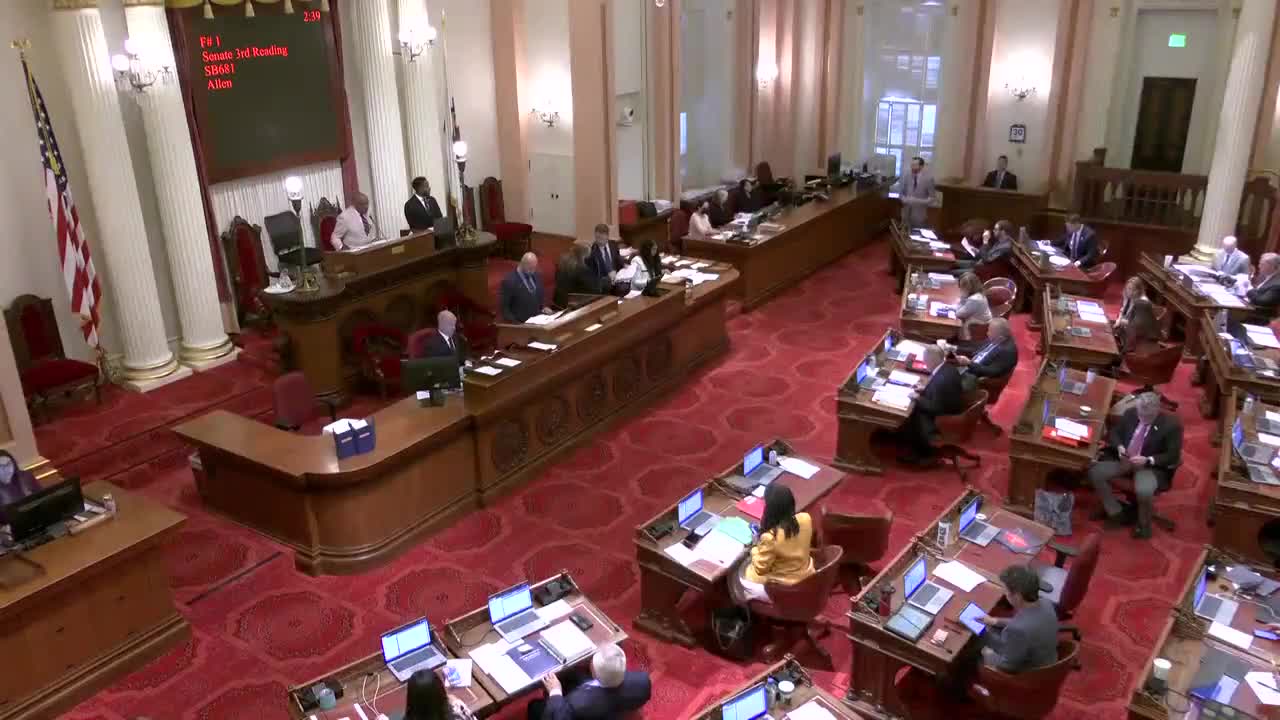
| May 30, 2023 | Senate 3rd Reading SB807 Ochoa Bogh | Senate Floor |
Passed |
|
| Apr 25, 2023 | Do pass, but first be re-referred to the Committee on [Appropriations] with the recommendation: To Consent Calendar | Senate Standing Committee on Judiciary |
Passed |
This list shows positions taken on this bill by organizations on the date displayed, which is linked to the original source.
Positions by individuals are not included.
|
Organization
|
Position
|
Date
|
|---|---|---|
| Adoption Answer Resource Center | ** Against | |
| Adoption Center of San Diego | ** Against | |
| Adoption Choices of Northern California | ** Against | |
| Adoption Consultants, Inc. | ** Against | |
| AdoptLink | ** Against | |
| Bal Jagat – Children’s World Inc. | ** Support | |
| Ethical Family Building | ** Support | |
| Family Connections Christian Adoptions | ** Support | |
| Family to Family Support Network | ** Support | |
| Holt International | ** Support | |
| Lifetime Healing Foundation | ** Support | |
| National Council for Adoption | ** Support | |
| Nightlight Christian Adoptions | ** Support | |
| Pact, an Adoption Alliance | ** Support | |
| The Family Network, Inc. | ** Against |
SENATE RULES COMMITTEE Office of Senate Floor Analyses (916) 651-1520 Fax: (916) 327-4478 | SB 807 |
THIRD READING
Bill No: SB 807
Author: Ochoa Bogh (R)
Amended: 4/17/23
Vote: 21
SENATE JUDICIARY COMMITTEE: 11-0, 4/25/23
AYES: Umberg, Wilk, Allen, Ashby, Caballero, Durazo, Laird, Min, Niello, Stern, Wiener
SENATE APPROPRIATIONS COMMITTEE: Senate Rule 28.8
SUBJECT: Adoption facilitators
SOURCE: Author
DIGEST:
This bill repeals the provisions authorizing adoption facilitators to engage in certain adoption-related activities and expressly prohibits a person or organization from engaging in specified activities relating to adoption unless they are licensed as an adoption agency by the Department of Social Services (DSS) or are a licensed attorney, as specified.
ANALYSIS:
Existing law:
- Defines the following relevant terms:
- A “licensed adoption agency” is an agency licensed by DSS to provide adoption services. An adoption agency may be a full-service adoption agency, which provides custodial services for the child, or a noncustodial adoption agency, which matches prospective adoptive parents with birth parents and supervises the placement without taking custody of the child; and may be run by a private entity or a county or consortium of counties. (Fam. Code, §§ 8513, 8521, 8530, 8533; Health & Saf. Code, § 1502.)
- An “adoption facilitator” is a person not licensed as an adoption agency by the State of California and who engages in either (1) advertising for the purpose of soliciting parties to an adoption, locating children for an adoption, or acting as an intermediary between the parties to an adoption, or (2) charging a fee or other valuable consideration for services rendered relating to an adoption. (Fam. Code, § 8623.)
- Requires DSS to establish regulations relating to the licensure of adoption agencies and sets criteria for the issuance of a license to serve as an adoption agency, conditions for the suspension or revocation of a license, and penalties for a violation of the licensing requirements and other laws. (Health & Saf. Code, §§ 1500 et seq.)
- Establishes a separate regime for the regulation of adoption facilitators, which does not require licensure, including:
- Requiring DSS to establish and adopt regulations for a statewide registration and enforcement process for adoption facilitators; all adoption facilitators must register with DSS, provide DSS with specified information about its staff, and post a bond. (Fam. Code, §§ 8635.2(a)-(d), 8636.)
- Regulating and limiting the content of an adoption facilitator’s advertisements, including prohibiting an adoption facilitator from implying that they are a licensed adoption agency. (Fam. Code, §§ 8624, 8265.)
- Providing that, for a period of 72 hours after signing a contract for after the payment of any fee, the birthparents or the prospective adoptive parents may revoke the contract and request the return of any fees paid, without penalty, except for any reasonable fees actually earned by the facilitator and which are supported by written records or documentation. (Fam. Code, § 8629.)
- Requiring all contracts entered into by an adoption facilitator be in writing and include certain statements, including a disclosure that they are not licensed by the State of California as an adoption agency, and requires the adoption facilitator to explain the terms of the written contract verbally to the prospective adoptive parents and birthparents. (Fam. Code, §§ 8631, 8632.)
- Establishing penalties for adoption facilitators who violate the relevant statutes and regulations, including a civil action for damages or a civil penalty of $1,000, which may be brought by a person injured by the violation or the Attorney General, a district attorney, or a city attorney may bring a civil action for injunctive relief, restitution, or other equitable relief against the adoption facilitator in the name of the people of the State of California. (Fam. Code, §§ 8638, 8639.)
- Requires DSS to post on its website the registration and bond requirements established under 3) and a list of adoption facilitators in compliance with those requirements. DSS must update the information at least once every 30 days. (Fam. Code, § 8632.5(g).)
This bill:
- Repeals the provisions relating to adoption facilitators.
- Prohibits, expressly, a person from engaging in activities relating to adoption unless the person is licensed as an adoption agency or is authorized to practice law in California, and updates existing laws to reflect the prohibition as follows:
- Provides that a person or organization that, without holding either a valid or unrevoked adoption agency license or a valid and unrevoked license to practice law in California, advertises that they will provide adoption placement services or obtain children for adoption is guilty of a misdemeanor.
- Removes, as part of the existing requirement that adoptive parents file with the court a report of their expenses relating to adoption-related services, the provisions referring to payments made for placement-related services to persons other than an attorney, physician and surgeon, or a licensed adoption agency.
- Eliminates, in the statute requiring DSS to adopt regulations regarding the provision of adoption services, references to adoption service providers other than county and licensed adoption agencies.
Comments
Unlike adoption agencies, adoption facilitators are not required to be licensed; they merely have to register with DSS and satisfy certain educational and bonding requirements.[1] DSS’s enforcement authority is limited to taking action against an adoption facilitator who operates without satisfying the registration requirements; an aggrieved potential parent’s only remedy against an adoption facilitator is a civil action to recover damages.[2] Nevertheless, adoption facilitators can charge tens of thousands of dollars for their services.[3]
The Legislature first addressed adoption facilitators in 1996; the bill imposed prohibitions on adoption facilitators holding themselves out as adoption agencies, added requirements relating to adoption facilitation contracts, and imposed a $10,000 bond requirement.[4] In 2006, following a high-profile raid on a Napa-based adoption facilitator, the Senate Business, Professions & Economic Development Committee held a hearing entitled “Is There A Need for Improved Regulation and Licensing of Adoption Facilitators?”.[5] Ultimately, the Legislature declined to impose a licensing requirement on adoption facilitators, and instead implemented the current requirements that adoption facilitators register with DSS and DSS post the registered facilitators on its website, and increased the bond requirement to $25,000.[6]
This bill prohibits a person or entity from serving as an adoption facilitator in the State of California. The author has concluded that the current regulatory regime—which permits adoption facilitators to operate with less oversight and fewer regulations than adoption agencies—is a failed experiment, and there is simply no way for prospective adoptive parents and birth parents to be adequately protected while facilitators are permitted to operate in a regulatory gray area. The bill thus repeals the regulatory framework for adoption facilitators and makes clear that certain adoption-related services may be provided only by a licensed adoption agency or an attorney licensed to practice in California.[7]
Many other states have laws that prohibit adoption facilitators from providing adoption services. Delaware, Kansas, and Maine prohibit the use of facilitators or intermediaries entirely; nine states permit only licensed agencies to place children in adoptive homes; and six states and the District of Columbia limit placement to a combination of licensed agencies, attorneys, and family members.[8]
FISCAL EFFECT: Appropriation: No Fiscal Com.: Yes Local: No
SUPPORT: (Verified 5/15/23)
Bal Jagat – Children’s World Inc.
Ethical Family Building
Family Connections Christian Adoptions
Family to Family Support Network
Holt International
Lifetime Healing Foundation
National Council for Adoption
Nightlight Christian Adoptions
Pact, an Adoption Alliance
Nine individuals
OPPOSITION: (Verified 5/15/23)
AdoptLink
Adoption Answer Resource Center
Adoption Center of San Diego
Adoption Choices of Northern California
Adoption Consultants, Inc.
The Family Network, Inc.
14 individuals
ARGUMENTS IN SUPPORT: According to Family Connections Christian Adoptions:
Adoption facilitators…prey on women facing unplanned pregnancies. Using the Internet, they target pregnant women in California looking for help online—especially low-income women who are in dire financial situations…Due to the lack of training, adoption facilitators routinely and recklessly ignore critical legal issues when “matching” expectant mothers with adoptive parents, including: the birth father’s legal rights, [Indian Child Welfare Act] requirements, living expense payments, in-utero drug exposure, and post-adoption contact. They are told things like “Just say you don’t know who the father is,” and “Just say you don’t have any Native American Heritage.” By the time a licensed adoption agency or attorney is called upon to assess the case, the adoption facilitator has already collected their nonrefundable matchmaking fee. When the adoption fails due to issues that were not addressed through proper due diligence at the outset, both the hopeful adoptive and expectant parents are left without recourse—and are angry at the licensed professionals who had to break the bad news to them.
In summary, adoption facilitators serve no legitimate purpose in California. With over 150 licensed adoption California adoption agencies, and over 200,000 licensed California attorneys in this state, there are more than enough regulated, ethical, and competent adoption service providers without allowing unlicensed entities to continue to defraud the public and give a bad name to everyone working in the field of adoption.
ARGUMENTS IN OPPOSITION: According to The Family Network, Inc,:
To ban facilitators is to scapegoat one entity of adoptions as the “problem.” The truth is that there are individuals, agencies, facilitators, and attorneys who have questionable adoption practices that should be regulated, as evidenced by the IAC nightmare. There are absolutely facilitators that should be banned and there should be a process to ban any unethical adoption provider, regardless of title.
However, to ban only facilitators will not solve the problem and ultimately will leave many birth parents without the loving support that the ethical facilitators provide. It would be taking away a much needed resource from women who have unplanned pregnancy.
I work with several facilitators in CA that are the most ethical entities and provide the best care to birth parents – they offer support groups, unlimited support, resources, parenting support, and adoption support. In fact, I often refer to them when an adoptive family wants an ethical birth mother supported entity to assist in their adoption.
Ultimately, I would be interested in adoption reform to rid the adoption world of those who should be eliminated regardless of their title of facilitator, agency, or attorney. However, this bill will not solve this problem – it will only leave birth parents with even less support and without some amazing programs to assist them.
Therefore, I oppose this bill as a short sided attempt at adoption reform but not actually solving the problems and leaving the vulnerable birth parents without the support they deserve.
Prepared by: Allison Whitt Meredith / JUD. / (916) 651-4113
5/17/23 15:09:45
**** END ****
Fam. Code, §§ 8632.5, 8636. ↑
Id., §§ 8638, 8639. ↑
Pohl, Facilitator or agency? What to look for before signing an adoption contract in California, Sacramento Bee (Jan. 5, 2023), available at https://www.sacbee.com/news/investigations/article270082417.html. All links in this analysis are current as of May 15, 2023. ↑
See SB 2035 (Killea, Ch. 1135, Stats. 1996). ↑
Sen. Com. on Judiciary, com. on Sen. Bill No. 1758 (2005-2006 Reg. Sess.) as amended Apr. 20, 2006. ↑
SB 1758 (Figueroa, Ch. 754, Stats. 2006). ↑
Among the changes made by this bill are changes to the existing restrictions on who may advertise that they will provide adoption placement services or supply children for adoption, to clarify that only licensed agencies and attorneys—the only entities legally entitled to provide those services—may advertise those services. (See Fam. Code, § 8609.) While a restriction on advertising restricts speech, restrictions relating to licensed professions are frequently upheld as satisfying the state’s interest in protecting the public from misleading advertisements. (E.g., American Academy of Pain Management v. Joseph (9th Cir. 2004) 353 F.3d 1099, 1108-1109.) The existing prohibition has been in statute since 1996 and does not appear to have been challenged on First Amendment grounds. ↑
United States Department of Health and Human Services, Administration for Children and Families, Children’s Bureau, Use of advertising and facilitators in adoptive placements (Jul. 2020), p. 2, available at https://www.childwelfare.gov/pubpdfs/advertising.pdf. ↑
Senator Thomas Umberg, Chair
2023-2024 Regular Session
Bill No: SB 807 (Author:Ochoa Bogh)
Version: April 17, 2023
Hearing Date: April 25, 2023
Fiscal: Yes
Urgency: No
Consultant: AWM
SUBJECT
Adoption facilitators
DIGEST
This bill repeals the provisions authorizing adoption facilitators to engage in certain adoption-related activities and expressly prohibits a person or organization from engaging in specified activities relating to adoption unless they are licensed as an adoption agency by the Department of Social Services (DSS) or are a licensed attorney, as specified.
EXECUTIVE SUMMARY
Parents seeking to adopt have several options, including proceeding through a licensed adoption agency or contracting with an adoption facilitator. Adoption facilitators locate children available for adoption and act as intermediaries between the prospective adoptive parents and birth parents during the adoption process, all for a substantial fee; but they may not engage in some of the services that licensed agencies provide, such as taking custody of a child being placed for adoption. Adoption facilitators are not licensed by the state—they merely have to register with DSS—and are subject to significantly less oversight than licensed adoption agencies.
In 2006, the Legislature—in response to a high-profile raid on an adoption facilitator—considered whether the current framework for registering, but not licensing, adoption facilitators was enough to protect consumers. The Legislature ultimately enacted SB 1758 (Figueroa, Ch. 754, Stats. 2006), which bolstered the registration regime without meaningfully increasing DSS’s oversight.
In January of this year, the Sacramento Bee published a long exposé on a Sacramento-based adoption facilitator who failed to provide placements for many families, despite accepting tens of thousands of dollars in fees. The article posits that the framework for adoption facilitators is unsustainable and that the registration requirement might do more harm than good, by falsely suggesting that DSS is meaningfully overseeing adoption facilitators. Several individuals writing in support of the bill recount similar experiences with adoption facilitators, including paying tens of thousands of dollars for “matches” that fell through due to facilitator misconduct.
This bill, in response to the article and other reports of adoption facilitator misconduct, repeals the provisions relating to adoption facilitators and prohibits the practice by providing that certain adoption-related services may be provided only by a licensed adoption agency or an attorney licensed in California.
This bill is sponsored by the author and is supported by Bal Jagat – Children’s World Inc., Ethical Family Building, Family Connections Christian Adoptions, Holt International, the Lifetime Healing Foundation, the National Council for Adoption, Nightlight Christian Adoptions, Pact, and nine individuals who report negative experiences with adoption facilitators. There is no known opposition.
PROPOSED CHANGES TO THE LAW
Existing law:
- Defines the following relevant terms:
- A “licensed adoption agency” is an agency licensed by DSS to provide adoption services. An adoption agency may be a full-service adoption agency, which provides custodial services for the child, or a noncustodial adoption agency, which matches prospective adoptive parents with birth parents and supervises the placement without taking custody of the child; and may be run by a private entity or a county or consortium of counties. (Fam. Code, §§ 8513, 8521, 8530, 8533; Health & Saf. Code, § 1502.)
- An “adoption facilitator” is a person not licensed as an adoption agency by the State of California and who engages in either (1) advertising for the purpose of soliciting parties to an adoption, locating children for an adoption, or acting as an intermediary between the parties to an adoption, or (2) charging a fee or other valuable consideration for services rendered relating to an adoption. (Fam. Code, § 8623.)
- Requires DSS to establish regulations relating to the licensure of adoption agencies and sets criteria for the issuance of a license to serve as an adoption agency, conditions for the suspension or revocation of a license, and penalties for a violation of the licensing requirements and other laws. (Health & Saf. Code, §§ 1500 et seq.)
- Establishes a separate regime for the regulation of adoption facilitators, which does not require licensure, including:
- Requiring DSS to establish and adopt regulations for a statewide registration and enforcement process for adoption facilitators; all adoption facilitators must register with DSS, provide DSS with specified information about its staff, and post a bond. (Fam. Code, §§ 8635.2(a)-(d), 8636.)
- Regulating and limiting the content of an adoption facilitator’s advertisements, including prohibiting an adoption facilitator from implying that they are a licensed adoption agency. (Fam. Code, §§ 8624, 8265.)
- Providing that, for a period of 72 hours after signing a contract for after the payment of any fee, the birthparents or the prospective adoptive parents may revoke the contract and request the return of any fees paid, without penalty, except for any reasonable fees actually earned by the facilitator and which are supported by written records or documentation. (Fam. Code, § 8629.)
- Requiring all contracts entered into by an adoption facilitator be in writing and include certain statements, including a disclosure that they are not licensed by the State of California as an adoption agency, and requires the adoption facilitator to explain the terms of the written contract verbally to the prospective adoptive parents and birthparents. (Fam. Code, §§ 8631, 8632.)
- Establishing penalties for adoption facilitators who violate the relevant statutes and regulations, including a civil action for damages or a civil penalty of $1,000, which may be brought by a person injured by the violation or the Attorney General, a district attorney, or a city attorney may bring a civil action for injunctive relief, restitution, or other equitable relief against the adoption facilitator in the name of the people of the State of California. (Fam. Code, §§ 8638, 8639.)
- Requires DSS to post on its website the registration and bond requirements established under 3) and a list of adoption facilitators in compliance with those requirements. DSS must update the information at least once every 30 days. (Fam. Code, § 8632.5(g).)
This bill:
- Repeals the provisions relating to adoption facilitators.
- Expressly prohibits a person from engaging in activities relating to adoption unless the person is licensed as an adoption agency or is authorized to practice law in California, and updates existing laws to reflect the prohibition as follows:
- Provides that a person or organization that, without holding either a valid or unrevoked adoption agency license or a valid and unrevoked license to practice law in California, advertises that they will provide adoption placement services or obtain children for adoption is guilty of a misdemeanor.
- Removes, as part of the existing requirement that adoptive parents file with the court a report of their expenses relating to adoption-related services, the provisions referring to payments made for placement-related services to persons other than an attorney, physician and surgeon, or a licensed adoption agency.
- Eliminates, in the statute requiring DSS to adopt regulations regarding the provision of adoption services, references to adoption service providers other than county and licensed adoption agencies.
COMMENTS
- Author’s comment
According to the author:
While adoption agencies are heavily regulated in California, “adoption facilitators” receive little oversight. Unlike adoption agencies, facilitators do not need much training before charging tens of thousands of dollars to prospective parents. This lack of oversight leaves many potential families at risk. In a heartbreaking example, a recent Sacramento Bee investigation found that nearly two dozen families looking to adopt paid more than $245,000 to the Sacramento-based “adoption facilitator” Little Angel Adoptions. Not one of these families had a child placed with them.
The vast majority of states have banned any entity other than licensed adoption agencies or lawyers from performing adoption-related services. SB 807 will increase transparency and accountability in the adoption process by ensuring only qualified and regulated entities perform adoption-related services.
2. Background on Adoption Facilitators
Adoption agencies are heavily regulated, licensed facilities that are authorized to handle an adoption from start to finish.[1]
This bill does not address adoption agencies. This bill instead addresses adoption facilitators. Adoption facilitators are intermediaries. They make connections between birth parents and potential adoptive parents, but they cannot place children for adoption, supervise adoption placements, or assess birth parents, prospective adoptive parents, or children—those roles are reserved for licensed adoption agencies.[2]
Adoption facilitators can charge tens of thousands of dollars for their services.[3] Unlike adoption agencies, adoption facilitators are not required to be licensed; they merely have to register with DSS and satisfy certain educational and bonding requirements.[4] DSS’s enforcement authority is limited to taking action against an adoption facilitator who operates without satisfying the registration requirements; an aggrieved potential parent’s only remedy against an adoption facilitator is a civil action to recover damages.[5] Pact, a licensed adoption agency writing in support, states:
While California’s nearly 150 adoption agencies and attorneys are licensed and subject to expansive regulations designed to protect Californians, adoption facilitators are not required to hold any social work or legal credentials, nor are they subject to any regulatory authority. Adoption facilitators are allowed to operate as for-profit businesses with no limitations on the fees they’re allowed to charge. Because facilitators are unlicensed, there is no state licensing board to which an individual harmed by a facilitator may submit a complaint.
The Legislature first addressed adoption facilitators in 1996; the bill imposed prohibitions on adoption facilitators holding themselves out as adoption agencies, added requirements relating to adoption facilitation contracts, and imposed a $10,000 bond requirement.[6] In 2006, following a high-profile raid on a Napa-based adoption facilitator, the Senate Business, Professions & Economic Development Committee held a hearing entitled “Is There A Need for Improved Regulation and Licensing of Adoption Facilitators?”.[7] Ultimately, the Legislature declined to impose a licensing requirement on adoption facilitators, and instead implemented the current requirements that adoption facilitators register with DSS and DSS post the registered facilitators on its website, and increased the bond requirement to $25,000.[8]
According to the bill’s supporters, California is the only state that has codified the role of adoption facilitator, thereby conferring the imprimatur of state approval. Supporters claim that, despite statutory prohibitions, several of the state’s registered adoption facilitators advertise themselves as licensed adoption agencies. They also claim that adoption facilitators frequently target pregnant women in crisis. For example, according to Ethical Family Building:
Over the past ten years, the internet has allowed California facilitators, along with a whole host of other unlicensed out-of-state paid adoption intermediaries, to expand their reach through aggressive and often misleading online advertisements that target low-income pregnant women in California looking for help online. These women turn to adoption facilitators amidst difficult pregnancy decisions and other challenging circumstances, unaware the facilitator holds a financial stake in their decision or that the facilitator is not actually licensed to provide adoption services.
In January of 2023, the Sacramento Bee published an investigative article about a particular adoption facilitator that took on numerous clients—and took in over $200,000 in fees—while only rarely making matches.[9] While the article focused on only the single adoption facilitator, it suggested that California’s current regulatory scheme, by requiring registration but not meaningful oversight, “[has] enabled private adoption facilitators to take advantage of prospective parents in an adoption system primed for abuse.”[10] The article highlighted, among other issues, the risk that DSS’s posting of registered adoption facilitators implies a greater degree of oversight or approval than is actually taking place, and DSS’s lack of enforcement authority—a combination, the article states, which is unique to California.[11]
3. This bill repeals the statutory authorization for adoption facilitators and prohibits persons other than licensed adoption agencies or licensed attorneys from providing adoption-related services
This bill prohibits a person or entity from serving as an adoption facilitator in the State of California. The author has concluded that the current regulatory regime—which permits adoption facilitators to operate with less oversight and fewer regulations than adoption agencies—is a failed experiment; there is simply no way for prospective adoptive parents and birth parents to be adequately protected while facilitators are permitted to operate in a regulatory gray area. The bill thus repeals the regulatory framework for adoption facilitators and makes clear that certain adoption-related services may be provided only by a licensed adoption agency or an attorney licensed to practice in California.[12]
Many other states have laws that prohibit adoption facilitators from providing adoption services. Delaware, Kansas, and Maine prohibit the use of facilitators or intermediaries entirely; nine states permit only licensed agencies to place children in adoptive homes; and six states and the District of Columbia limit placement to a combination of licensed agencies, attorneys, and family members.[13]
Going forward, the author may wish to consider measures to clarify the enforcement mechanisms for when a person engages in adoption activities without the proper licensure.
4. Arguments in support
According to Family Connections Christian Adoptions, writing in support:
Adoption facilitators…prey on women facing unplanned pregnancies. Using the Internet, they target pregnant women in California looking for help online—especially low-income women who are in dire financial situations…Due to the lack of training, adoption facilitators routinely and recklessly ignore critical legal issues when “matching” expectant mothers with adoptive parents, including: the birth father’s legal rights, [Indian Child Welfare Act] requirements, living expense payments, in-utero drug exposure, and post-adoption contact. They are told things like “Just say you don’t know who the father is,” and “Just say you don’t have any Native American Heritage.” By the time a licensed adoption agency or attorney is called upon to assess the case, the adoption facilitator has already collected their nonrefundable matchmaking fee. When the adoption fails due to issues that were not addressed through proper due diligence at the outset, both the hopeful adoptive and expectant parents are left without recourse—and are angry at the licensed professionals who had to break the bad news to them.
In summary, adoption facilitators serve no legitimate purpose in California. With over 150 licensed adoption California adoption agencies, and over 200,000 licensed California attorneys in this state, there are more than enough regulated, ethical, and competent adoption service providers without allowing unlicensed entities to continue to defraud the public and give a bad name to everyone working in the field of adoption.
SUPPORT
Bal Jagat – Children’s World Inc.
Ethical Family Building
Family Connections Christian Adoptions
Holt International
Lifetime Healing Foundation
National Council for Adoption
Nightlight Christian Adoptions
Pact, an Adoption Alliance
Nine individuals
OPPOSITION
None known
RELATED LEGISLATION
Pending Legislation: None known.
Prior Legislation:
SB 1726 (Scott, Ch. 534, Stats. 2008) added the $100-per-day civil penalty assessable by DSS for adoption facilitators who operate without registering with DSS.
SB 1758 (Figueroa, Ch. 754, Stats. 2006) prohibited adoption facilitators from implying they are licensed adoption agencies, required DSS to adopt regulations for statewide registration by adoption facilitators, increased the amount of the bond that adoption facilitators must post, and added the treble damages and attorney fee provisions for the civil remedy.
**************
Fam. Code, §§ 8700-8720; Health & Saf. Code, §§ 1501, 1502, 1502.6, 1506-1509; Cal. Code Regs., tit. 22, div. 9, ch. 6, §§ 89001 et seq.). ↑
Health & Saf. Code, § 1502. ↑
Pohl, Facilitator or agency? What to look for before signing an adoption contract in California, Sacramento Bee (Jan. 5, 2023), available at https://www.sacbee.com/news/investigations/article270082417.html. All links in this analysis are current as of April 20, 2023. ↑
Fam. Code, §§ 8632.5, 8636. ↑
Id., §§ 8638, 8639. ↑
See SB 2035 (Killea, Ch. 1135, Stats. 1996). ↑
Sen. Com. on Judiciary, com. on Sen. Bill No. 1758 (2005-2006 Reg. Sess.) as amended Apr. 20, 2006. ↑
SB 1758 (Figueroa, Ch. 754, Stats. 2006). ↑
Pohl, A Sacramento woman billed families thousands to find them a baby. Many say they were scammed, Sacramento Bee (updated Jan. 10, 2023), https://www.sacbee.com/article270082407.html. ↑
Ibid. ↑
Ibid. ↑
Among the changes made by this bill are changes to the existing restrictions on who may advertise that they will provide adoption placement services or supply children for adoption, to clarify that only licensed agencies and attorneys—the only entities legally entitled to provide those services—may advertise those services. (See Fam. Code, § 8609.) While a restriction on advertising restricts speech, restrictions relating to licensed professions are frequently upheld as satisfying the state’s interest in protecting the public from misleading advertisements. (E.g., American Academy of Pain Management v. Joseph (9th Cir. 2004) 353 F.3d 1099, 1108-1109.) The existing prohibition has been in statute since 1996 and does not appear to have been challenged on First Amendment grounds. ↑
United States Department of Health and Human Services, Administration for Children and Families, Children’s Bureau, Use of advertising and facilitators in adoptive placements (Jul. 2020), p. 2, available at https://www.childwelfare.gov/pubpdfs/advertising.pdf. ↑
Bill Author

Bill Co-Author(s):