SB 812: Tax preparers.
- Session Year: 2023-2024
- House: Senate
- Latest Version Date: 2023-09-08
Current Status:
Passed
(2023-09-08: Chaptered by Secretary of State. Chapter 185, Statutes of 2023.)
Introduced
In Committee
First Chamber
In Committee
Second Chamber
Enacted
What does this bill do?
This bill extends the Tax Preparation Act so it stays in effect until January 1, 2028, keeping the requirement that paid tax preparers register with the California Tax Education Council. The chapter also remains subject to review by the Legislature’s policy committees.
The summary is provided by generative AI which can make mistakes. For original language, please view the details in the table below.
Existing law, the Tax Preparation Act, requires a tax preparer to register with the California Tax Education Council, which is charged with carrying out regulatory responsibilities and duties under the act. Existing law subjects the act to review by the appropriate policy committees of the Legislature and repeals the act on January 1, 2024. Existing law makes a violation of the act a misdemeanor, except as specified.
This bill would extend the operation of the act until January 1, 2028.
By expanding the operation of the act, the violation of which is a crime, the bill would impose a state-mandated local program.
The California Constitution requires the state to reimburse local agencies and school districts for certain costs mandated by the state. Statutory provisions establish procedures for making that reimbursement.
This bill would provide that no reimbursement is required by this act for a specified reason.
Existing law, the Tax Preparation Act, requires a tax preparer to register with the California Tax Education Council, which is charged with carrying out regulatory responsibilities and duties under the act. Existing law subjects the act to review by the appropriate policy committees of the Legislature and repeals the act on January 1, 2024. Existing law makes a violation of the act a misdemeanor, except as specified.
This bill would extend the operation of the act until January 1, 2028.
By expanding the operation of the act, the violation of which is a crime, the bill would impose a state-mandated local program.
The California Constitution requires the state to reimburse local agencies and school districts for certain costs mandated by the state. Statutory provisions establish procedures for making that reimbursement.
This bill would provide that no reimbursement is required by this act for a specified reason.
Existing law, the Tax Preparation Act, requires a tax preparer to register with the California Tax Education Council, which is charged with carrying out regulatory responsibilities and duties under the act. Existing law subjects the act to review by the appropriate policy committees of the Legislature and repeals the act on January 1, 2024. Existing law makes a violation of the act a misdemeanor, except as specified.
Existing law requires a tax preparer to maintain a bond issued by a surety company admitted to business in California for each individual preparing tax returns for another person, as prescribed. Existing law requires a tax preparer, on and after July 1, 2019, to report a paid claim against its surety bond to the council, and requires the council to post a notice of the claim on its internet website.This bill would also require the council to post a notice of the claim on its social media accounts, if applicable.Existing law requires the council to establish and maintain on its internet website a searchable public registry of registrants. Existing law requires the internet website to contain direct links to internet websites maintained by the California Board of Accountancy, the State Bar of California, and the Internal Revenue Service where public information regarding tax preparers exempt from this act may be obtained. The bill would require the above-described links to also be included on applicable social media websites and accounts, to the extent feasible. Existing law requires a provider of tax preparer education for tax preparers to meet standards and procedures as approved by the council. Existing law also requires a list of those providers approved by the council to be made available to tax preparers upon request.This bill would require a list of those approved providers to also be made available to the Legislature upon request.This bill would extend the operation of the act until January 1, 2028.
By expanding the scope of a crime, operation of the act, the violation of which is a crime, the bill would impose a state-mandated local program.
The California Constitution requires the state to reimburse local agencies and school districts for certain costs mandated by the state. Statutory provisions establish procedures for making that reimbursement.
This bill would provide that no reimbursement is required by this act for a specified reason.
Existing law, the Tax Preparation Act, requires a tax preparer to register with the California Tax Education Council, which is charged with carrying out regulatory responsibilities and duties under the act. Existing law makes a violation of the act a misdemeanor, except as specified.
Existing law requires a tax preparer to maintain a bond issued by a surety company admitted to business in California for each individual preparing tax returns for another person, as prescribed. Existing law requires a tax preparer, on and after July 1, 2019, to report a paid claim against its surety bond to the council, and requires the council to post a notice of the claim on its internet website.
This bill would also require the council to post a notice of the claim on its social media accounts, if applicable.
Existing law requires the council to establish and maintain on its internet website a searchable public registry of registrants. Existing law requires the internet website to contain direct links to internet websites maintained by the California Board of Accountancy, the State Bar of California, and the Internal Revenue Service where public information regarding tax preparers exempt from this act may be obtained.
The bill would require the above-described links to also be included on applicable social media websites and accounts, to the extent feasible.
Existing law requires a provider of tax preparer education for tax preparers to meet standards and procedures as approved by the council. Existing law also requires a list of those providers approved by the council to be made available to tax preparers upon request.
This bill would require a list of those approved providers to also be made available to the Legislature upon request.
By expanding the scope of a crime, the bill would impose a state-mandated local program.
The California Constitution requires the state to reimburse local agencies and school districts for certain costs mandated by the state. Statutory provisions establish procedures for making that reimbursement.
This bill would provide that no reimbursement is required by this act for a specified reason.
(a)This chapter shall be subject to review by the appropriate policy committees of the Legislature.
(b)This chapter shall remain in effect only until January 1, 2028, and as of that date is repealed.
SEC. 2.No reimbursement is required by this act pursuant to Section 6 of Article XIIIB of the California Constitution because the only costs that may be incurred by a local agency or school district will be incurred because this act creates a new crime or infraction, eliminates a crime or infraction, or changes the penalty for a crime or infraction, within the meaning of Section 17556 of the Government Code, or changes the definition of a crime within the meaning of Section 6 of Article XIIIB of the California Constitution.
(a)This chapter shall be subject to review by the appropriate policy committees of the Legislature.
(b)This chapter shall remain in effect only until January 1, 2028, and as of that date is repealed.
SEC. 2.No reimbursement is required by this act pursuant to Section 6 of Article XIIIB of the California Constitution because the only costs that may be incurred by a local agency or school district will be incurred because this act creates a new crime or infraction, eliminates a crime or infraction, or changes the penalty for a crime or infraction, within the meaning of Section 17556 of the Government Code, or changes the definition of a crime within the meaning of Section 6 of Article XIIIB of the California Constitution.
(a)This chapter shall be subject to review by the appropriate policy committees of the Legislature.
(b)This chapter shall remain in effect only until January 1, 2024, 2028, and as of that date is repealed.
SEC. 2.No reimbursement is required by this act pursuant to Section 6 of Article XIIIB of the California Constitution because the only costs that may be incurred by a local agency or school district will be incurred because this act creates a new crime or infraction, eliminates a crime or infraction, or changes the penalty for a crime or infraction, within the meaning of Section 17556 of the Government Code, or changes the definition of a crime within the meaning of Section 6 of Article XIIIB of the California Constitution.
SECTION 1.Section 22250.1 of the Business and Professions Code is amended to read:22250.1.(a)A tax preparer shall maintain a bond issued by a surety company admitted to do business in this state for each individual preparing tax returns for another person. The principal sum of the bond shall be five thousand dollars ($5,000). A tax preparer subject to this section shall provide to the surety company proof that the individual is at least 18 years of age before a surety bond may be issued.(b)The bond required by this section shall be in favor of, and payable to, the people of the State of California and shall be for the benefit of any person or persons damaged by any fraud, dishonesty, misstatement, misrepresentation, deceit, or any unlawful acts or omissions by the tax preparer, or the tax preparers employed or associated with it to provide tax preparation services.(c)The tax preparer filing the bond shall identify all tax preparers employed or associated with the tax preparer and shall provide for each employee or associate the evidence required by subdivision (a) to the surety company. A tax preparer employed or associated with a tax preparer shall be covered by the bond of the tax preparer with which the tax preparer is employed or associated. However, in no event shall the total bond required for any single tax preparer and the tax preparers employed or associated with it be required to exceed one hundred twenty-five thousand dollars ($125,000). The aggregate liability of the surety to any and all persons regardless of the number of claims against the bond or the number of years the bond remains in force shall not exceed five thousand dollars ($5,000) for any one tax preparer. Any revision of the bond amount shall not be cumulative. The liability of the surety on the bond shall not include payment of any civil penalties, fines, attorneys fees, or any other cost provided by statute or regulation.(d)The tax preparer shall file an amendment to the bond within 30 days of a change in information contained in the bond, including a change in the tax preparers employed or associated with the tax preparer.(e)(1)A tax preparer shall not conduct business without having a current surety bond in the amount prescribed by this section.(2)Thirty days prior to the cancellation or termination of any surety bond required by this section, the surety shall send a written notice of that cancellation or termination to the tax preparer and the California Tax Education Council, identifying the bond and the date of cancellation or termination.(3)If a tax preparer fails to obtain a new bond by the effective date of the cancellation or termination of the former bond, the tax preparer shall cease to conduct business until that time as a new surety bond is obtained.(f)Notwithstanding Section 995.710 of the Code of Civil Procedure, a tax preparer shall not make a deposit in lieu of bond.(g)A tax preparer shall furnish evidence of the bond required by this section upon the request of any state or federal agency or any law enforcement agency or the California Tax Education Council.(h)On and after July 1, 2019, a tax preparer shall report a paid claim against its surety bond to the council, and the council shall post a notice of the claim on its internet website, and on its social media accounts, if applicable.SEC. 2.Section 22251.4 of the Business and Professions Code is amended to read:22251.4.(a)The council shall establish and maintain on its internet website a searchable public registry of registrants. Each registrants listing shall clearly indicate whether the registrant is actively in compliance with the annual registration requirements and shall include any of the following information that is applicable to the registrant:(1)The registrants name and mailing address.(2)The registrants California Tax Education Council registration number.(3)Any other information the council believes would be beneficial to consumers of tax preparation services that is consistent with protecting the public pursuant to subdivision (b) of Section 22251.2.(b)The internet website of the council shall contain direct links to the internet websites maintained by the California Board of Accountancy, the State Bar of California, and the Internal Revenue Service where public information regarding tax preparers exempt from this chapter may be obtained. To the extent feasible, the above-described links in this subdivision shall also be included on applicable social media website and accounts.SEC. 3.Section 22254 of the Business and Professions Code is amended to read:22254.A provider of tax preparer education for tax preparers shall meet standards and procedures as approved by the council. The council shall either approve or decline to approve providers of tax preparer education within 120 days of receiving a request for approval. If approval is not declined within 120 days, the provider shall be deemed approved. A listing of those providers approved by the council shall be made available to tax preparers upon request. A listing of those providers approved by the council shall also be made available to the Legislature upon request.SEC. 4.No reimbursement is required by this act pursuant to Section 6 of Article XIIIB of the California Constitution because the only costs that may be incurred by a local agency or school district will be incurred because this act creates a new crime or infraction, eliminates a crime or infraction, or changes the penalty for a crime or infraction, within the meaning of Section 17556 of the Government Code, or changes the definition of a crime within the meaning of Section 6 of Article XIIIB of the California Constitution.(a)A tax preparer shall maintain a bond issued by a surety company admitted to do business in this state for each individual preparing tax returns for another person. The principal sum of the bond shall be five thousand dollars ($5,000). A tax preparer subject to this section shall provide to the surety company proof that the individual is at least 18 years of age before a surety bond may be issued.
(b)The bond required by this section shall be in favor of, and payable to, the people of the State of California and shall be for the benefit of any person or persons damaged by any fraud, dishonesty, misstatement, misrepresentation, deceit, or any unlawful acts or omissions by the tax preparer, or the tax preparers employed or associated with it to provide tax preparation services.
(c)The tax preparer filing the bond shall identify all tax preparers employed or associated with the tax preparer and shall provide for each employee or associate the evidence required by subdivision (a) to the surety company. A tax preparer employed or associated with a tax preparer shall be covered by the bond of the tax preparer with which the tax preparer is employed or associated. However, in no event shall the total bond required for any single tax preparer and the tax preparers employed or associated with it be required to exceed one hundred twenty-five thousand dollars ($125,000). The aggregate liability of the surety to any and all persons regardless of the number of claims against the bond or the number of years the bond remains in force shall not exceed five thousand dollars ($5,000) for any one tax preparer. Any revision of the bond amount shall not be cumulative. The liability of the surety on the bond shall not include payment of any civil penalties, fines, attorneys fees, or any other cost provided by statute or regulation.
(d)The tax preparer shall file an amendment to the bond within 30 days of a change in information contained in the bond, including a change in the tax preparers employed or associated with the tax preparer.
(e)(1)A tax preparer shall not conduct business without having a current surety bond in the amount prescribed by this section.
(2)Thirty days prior to the cancellation or termination of any surety bond required by this section, the surety shall send a written notice of that cancellation or termination to the tax preparer and the California Tax Education Council, identifying the bond and the date of cancellation or termination.
(3)If a tax preparer fails to obtain a new bond by the effective date of the cancellation or termination of the former bond, the tax preparer shall cease to conduct business until that time as a new surety bond is obtained.
(f)Notwithstanding Section 995.710 of the Code of Civil Procedure, a tax preparer shall not make a deposit in lieu of bond.
(g)A tax preparer shall furnish evidence of the bond required by this section upon the request of any state or federal agency or any law enforcement agency or the California Tax Education Council.
(h)On and after July 1, 2019, a tax preparer shall report a paid claim against its surety bond to the council, and the council shall post a notice of the claim on its internet website. website, and on its social media accounts, if applicable.
SEC. 2.Section 22251.4 of the Business and Professions Code is amended to read:22251.4.(a)The council shall establish and maintain on its Internet Web site internet website a searchable public registry of registrants. Each registrants listing shall clearly indicate whether the registrant is actively in compliance with the annual registration requirements and shall include any of the following information that is applicable to the registrant:
(1)The registrants name and mailing address.
(2)The registrants California Tax Education Council registration number.
(3)Any other information the council believes would be beneficial to consumers of tax preparation services that is consistent with protecting the public pursuant to subdivision (b) of Section 22251.2.
(b)The Internet Web site internet website of the council shall contain direct links to the Internet Web sites internet websites maintained by the California Board of Accountancy, the State Bar of California, and the Internal Revenue Service where public information regarding tax preparers exempt from this chapter may be obtained. To the extent feasible, the above-described links in this subdivision shall also be included on applicable social media website and accounts.
SEC. 3.Section 22254 of the Business and Professions Code is amended to read:22254.A provider of tax preparer education for tax preparers shall meet standards and procedures as approved by the council. The council shall either approve or decline to approve providers of tax preparer education within 120 days of receiving a request for approval. If approval is not declined within 120 days, the provider shall be deemed approved. A listing of those providers approved by the council shall be made available to tax preparers upon request. A listing of those providers approved by the council shall also be made available to the Legislature upon request.
SEC. 4.No reimbursement is required by this act pursuant to Section 6 of Article XIIIB of the California Constitution because the only costs that may be incurred by a local agency or school district will be incurred because this act creates a new crime or infraction, eliminates a crime or infraction, or changes the penalty for a crime or infraction, within the meaning of Section 17556 of the Government Code, or changes the definition of a crime within the meaning of Section 6 of Article XIIIB of the California Constitution.
|
Date
|
Status
|
|---|---|
| Sep 8, 2023 | Chaptered by Secretary of State. Chapter 185, Statutes of 2023. |
| Sep 8, 2023 | Approved by the Governor. |
| Aug 30, 2023 | Enrolled and presented to the Governor at 2 p.m. |
| Aug 24, 2023 | In Senate. Ordered to engrossing and enrolling. |
| Aug 24, 2023 | Read third time. Passed. (Ayes 73. Noes 0. Page 2802.) Ordered to the Senate. |
| Aug 17, 2023 | Read second time. Ordered to consent calendar. |
| Aug 16, 2023 | From committee: Do pass. Ordered to consent calendar. (Ayes 15. Noes 0.) (August 16). |
| Jul 11, 2023 | From committee: Do pass and re-refer to Com. on APPR. (Ayes 19. Noes 0.) (July 11). Re-referred to Com. on APPR. |
| Jun 1, 2023 | Referred to Com. on B. & P. |
| May 25, 2023 | In Assembly. Read first time. Held at Desk. |
| May 24, 2023 | Read third time. Passed. (Ayes 39. Noes 0. Page 1248.) Ordered to the Assembly. |
| May 9, 2023 | Read second time. Ordered to third reading. |
| May 8, 2023 | From committee: Be ordered to second reading pursuant to Senate Rule 28.8. |
| May 2, 2023 | Set for hearing May 8. |
| Apr 27, 2023 | Read second time and amended. Re-referred to Com. on APPR. |
| Apr 26, 2023 | From committee: Do pass as amended and re-refer to Com. on APPR. (Ayes 13. Noes 0. Page 854.) (April 24). |
| Mar 6, 2023 | Set for hearing April 24. |
| Mar 1, 2023 | Referred to Com. on B., P. & E. D. |
| Feb 21, 2023 | From printer. May be acted upon on or after March 20. |
| Feb 17, 2023 | Introduced. Read first time. To Com. on RLS. for assignment. To print. |
|
Date
|
Description
|
Location
|
Votes
|
|
|---|---|---|---|---|
| Aug 24, 2023 | SB 812 Roth Consent Calendar Second Day Regular Session | Assembly Floor |
Passed |
|
| Aug 16, 2023 | Do pass. To Consent Calendar. | Assembly Standing Committee on Appropriations |
Passed |
|
| Jul 11, 2023 | Do pass and be re-referred to the Committee on [Appropriations] | Assembly Standing Committee on Business and Professions |
Passed |
|
| May 24, 2023 | Senate 3rd Reading SB812 Roth et al. | Senate Floor |
Passed |
|
| Apr 24, 2023 | Do pass as amended, but first amend, and re-refer to the Committee on [Appropriations] | Senate Standing Committee on Business, Professions and Economic Development |
Passed |
This list shows positions taken on this bill by organizations on the date displayed, which is linked to the original source.
Positions by individuals are not included.
Date of Hearing: August 16, 2023
ASSEMBLY COMMITTEE ON APPROPRIATIONS
Chris Holden, Chair
SBPCA Bill Id:SB 812
Author:(Roth) – As Amended Ver:April 27, 2023
Policy Committee: | Business and Professions | Vote: | 19 - 0 |
|
| ||
|
|
Urgency: No State Mandated Local Program: Yes Reimbursable: No
SUMMARY:
This bill extends the sunset date for the Tax Preparation Act (act), which provides for the California Tax Education Council (CTEC), by four years, to January 1, 2028.
FISCAL EFFECT:
No state costs associated with extending the act and CTEC. The registration of tax preparers is handled by CTEC, a nonprofit regulating entity outside of state government and not supported by state funds.
COMMENTS:
- Purpose. This bill is the sunset review vehicle for CTEC, authored by the Chair of the Senate Committee on Business, Professions, and Economic Development as part of the committee’s review of the authorities and activities of the boards and bureaus under the Department of Consumer Affairs (DCA). According to the author:
This bill ensures continued oversight of tax preparers in California by extending the operations of the California Tax Education Council for 4 years. California consumers are better off with standardized education and professional accountability for professionals who provide fee-based tax preparation services throughout the state.
- Background. CTEC is a nonprofit corporation responsible for the registration and enforcement of paid tax preparers in California. Existing law requires paid tax preparers to register with CTEC, obtain a certificate of completion of specified tax education curriculum, and maintain a surety bond of $5,000 payable to the State of California. On June 30, 2022, a total of 38,278 individuals had registered with CTEC. The program sunsets on January 1, 2024.
One of the issues raised during the sunset review process was the implementation of AB 3143 (Low), Chapter 597, Statutes of 2018, which, in part, required applicants, beginning July 1, 2020, to submit fingerprints to the Department of Justice (DOJ) for both a state and federal background check as a condition of registration with CTEC. According to CTEC the Federal Bureau of Investigation has been unable to provide the federal criminal history piece of the applicant background check to CTEC due to issues with the state’s statutory authorization. The author is continuing to work to resolve this issue. This bill could be further amended to reflect a resolution, should one be forthcoming.
- Related Legislation. This bill is one of eight sunset review bills moving through the legislative process this session. SBs 813, 814, and 815, also authored by Senator Roth, are pending in this committee. ABs 1262 and 1263, authored by the Assembly Business and Professions Committee, and AB 1257 and 1264, authored by Assemblymember Berman, Chair of the Assembly Business and Professions Committee, are pending in the Senate Appropriations Committee.
- Prior Legislation. AB 3143 (Low), Chapter 597, Statutes of 2018, in part, extended the act’s sunset date by four years, to January 1, 2023. The CTEC was subsequently extended one more year, to January 1, 2024, by SB 607 (Min), Chapter 607, Statutes of 2021, to adjust the sunset review schedules interrupted during the COVID-19 pandemic.
Analysis Prepared by: Jennifer Swenson / APPR. / (916) 319-2081
Date of Hearing: July 11, 2023
ASSEMBLY COMMITTEE ON BUSINESS AND PROFESSIONS
Marc Berman, Chair
SBPCA Bill Id:SB 812
Author:(Roth) – As Amended Ver:April 27, 2023
SENATE VOTE: 39-0
SUBJECT: Tax preparers
SUMMARY: Extends the sunset date for the California Tax Education Council (CTEC) by four years to January 1, 2028.
EXISTING LAW:
- Establishes the Tax Preparation Act (Act) which provides for the registration of paid tax preparers by CTEC and repeals the Act on January 1, 2023. (Business and Professions Code (BPC) §§ 22250 et seq.)
- Requires a CTEC-registered tax preparer (CRTP) to maintain a $5,000 surety bond. (BPC § 22250.1)
- Specifies that a “tax preparer” includes a person who, for a fee or other consideration, assists with or prepares tax returns for another person or who assumes final responsibility for completed work on a return on which preliminary work has been done by another person, or who hold themselves out as offering those services. A tax preparer is also a business entity that has associated with it people who have as part of their responsibilities the preparation of data and ultimate signatory authority on tax returns or that hold themselves out as offering those services or having that authority. (BPC § 22251(a))
- Specifies that CTEC is a single nonprofit organization exempt from taxation under section 501(c)(3) of Title 26 of the United States Code. (BPC § 22251(d))
- Specifies that it is the intent of the Act to enable consumers to easily identify credible CRTPs who are bonded and registered, to ensure CRTPs receive adequate education and treat confidential information appropriately, to prohibit CRTPs from making fraudulent, untrue, or misleading representations, and to provide for a self-funded nonprofit oversight body to register paid tax preparers and ensure that they meet all of the requirements of CRTPs. (BPC § 22251.1)
- Specifies that protection of the public must be the highest priority for CTEC when exercising its registration and disciplinary authority, and any other functions. (BPC § 22251.2(b))
- Requires CTEC to be governed by a board of directors, as specified, and subjects board meetings to the Bagley-Keene Open Meeting Act. (BPC § 22251.2(c) and (d))
- Requires CTEC to issue registrations, deny applications, and discipline registrants as authorized by the Act. (BPC § 22251.2)
- Requires CTEC to establish application fees, renewal fees, delinquent fees, and other fees related to the regulatory cost of providing services and carrying out CTEC’s responsibilities and duties. (BPC § 22251.2)
- Requires CTEC to establish and maintain on its website a searchable public registry of CRTPs, as specified. (BPC § 22251.4)
- Requires any CRTP, before providing services, to provide a customer in writing with the following:
- The CRTP’s name, address, and telephone number.
- Evidence of compliance with the surety bond requirement, including the bond number, if any.
- CTEC’s website.
(BPC § 22252)
- Prohibits a CRTP from disclosing confidential information concerning a client or a prospective client without their written permission, except as provided. (BPC § 22252.1)
- Specifies acts and omissions that constitute a violation of the Act and for which CTEC is authorized to deny an application for registration or discipline a CRTP. (BPC § 22253)
- Authorizes the Franchise Tax Board (FTB) to notify CTEC when it identifies an individual who has failed to register as a tax preparer and authorizes the Attorney General, a district attorney, or a city attorney to cite, fine, and issue a cease and desist order to that individual. (BPC § 22253.2(a) and (b))
- Authorizes CTEC to enter into an agreement with the FTB to provide reimbursement to the FTB for any expenses incurred. (BPC § 22253.2(c))
- Authorizes CTEC to take disciplinary action against a CRTP, as specified. (BPC § 22253.3)
- Prohibits CTEC from disciplining a CRTP or denying registration to an applicant except as specified. (BPC § 22253.4)
- Requires, as a condition of registration, applicants to submit fingerprints for a background check. CTEC must submit the fingerprints and related information to the Department of Justice (DOJ) for the purpose of obtaining state and federal criminal history information. (BPC § 22253.5)
- Requires providers of tax preparer education to meet standards and procedures as approved by CTEC. A listing of providers approved by CTEC must be made available to CRTPs upon request. (BPC § 22254)
- Mandates that CTEC issue a “certificate of completion” to a tax preparer when the tax preparer demonstrates that they have completed at least 60 hours of instruction in basic income tax law, theory, and practice by an approved curriculum provider within the previous 18 months and provides evidence of the surety bond requirement. (BPC § 22255(a))
- Requires a CRTP to complete 20 hours of continuing education (CE), as specified, annually. (BPC § 22255(b))
- Specifies that a person who violates the Act, except as specified, is guilty of a misdemeanor punishable by a fine not exceeding $1,000 or by imprisonment in county jail for not more than one year, or by both. (BPC § 22256)
- Specifies that if a CRTP fails to perform a duty specifically imposed by the Act, any person may maintain an action for enforcement of those duties or to recover a civil penalty in the amount of $1,000 or both enforcement and recovery. A prevailing plaintiff is also entitled to attorney’s fees and costs. (BPC § 22257)
- Exempts certified public accountants, attorneys, enrolled agents, and employees of these licensees, as well as specified financial institutions and their employees, from the requirement to register as a tax preparer. (BPC § 22258)
- Specifies that the Act will be repealed on January 1, 2024. (BPC § 22259)
THIS BILL:
- Extends the Act’s sunset date to January 1, 2028.
FISCAL EFFECT: Pursuant to Senate Rule 28.8, no significant state costs anticipated.
COMMENTS:
Purpose. This bill is sponsored by the author. According to the author: “This bill ensures continued oversight of tax preparers in California by extending the operations of the California Tax Education Council for 4 years. California consumers are better off with standardized education and professional accountability for professionals who provide fee-based tax preparation services throughout the state.”
Background.
Sunset review. In order to ensure that California’s myriad of professional boards, bureaus, commissions, and councils are meeting the state’s public protection priorities, authorizing statutes for these regulatory bodies are subject to statutory dates of repeal, at which point the entity “sunsets” unless the date is extended by the Legislature. The sunset process provides a regular forum for discussion around the successes and challenges of various programs and the consideration of proposed changes to laws governing the regulation of professionals. Currently, the sunset review process applies to approximately three dozen different boards and bureaus under the Department of Consumer Affairs, as well as the Department of Real Estate and three nongovernmental nonprofit councils.
On a schedule averaging every four years, each entity is required to present a report to the Legislature’s policy committees, which in return prepare a comprehensive background paper on the efficacies and efficiencies of their licensing and enforcement programs. Both the Administration and regulated professional stakeholders actively engage in this process. Legislation is then subsequently introduced extending the repeal date for the entity along with any reforms identified during the sunset review process.
History and function of the California Tax Education Council. CTEC is responsible for the registration and enforcement of paid tax preparers in California. Anyone who charges a fee to assist with or prepare a state or federal income tax return, excluding certified public accountants, attorneys, enrolled agents, and certain financial institutions and their employees, must be registered with CTEC.[1] These exempt individuals are subject to their respective professional disciplinary standards for conduct and competence. CRTPs make up the second largest segment of tax preparation professionals serving California, following certified public accountants.[2] On June 30, 2022, a total of 38,278 individuals had registered with CTEC.[3]
To register with CTEC, an applicant must complete a total of 60 hours of education from a CTEC-approved provider, of which 45 hours are dedicated to federal tax education and 15 hours to state tax education.[4] Although CTEC does not require applicants to pass a standardized exam to register, applicants are required to pass the final exam of their qualifying education course with a grade of 70% or higher.[5] Additionally, applicants must purchase and maintain a $5,000 surety bond, pass a background check, obtain a Preparer Tax Identification Number (PTIN) from the Internal Revenue Service, and pay the registration fee.[6] Once all these requirements have been fulfilled, CTEC issues a Certificate of Completion to an applicant. Once registered, CRTPs are required to complete 20 hours of CE annually, including 10 hours on federal tax law, 5 hours on state tax law, 3 hours on tax law updates, and 2 hours on ethics.[7]
CTEC is responsible for approving all providers of tax preparer qualifying education (QE) and CE providers for applicants and registrants.[8] On June 30, 2022, CTEC has a total of 103 approved providers, 52 QE providers and 71 CE providers.[9]
CTEC’s board of directors is required to be comprised of no more than one representative from each California nonprofit corporation representing CRTPs, enrolled agents, attorneys, or certified public accountants with a membership in California of at least 400 in each of the last three calendar years that elects to participate; no more than one representative from each for-profit tax preparation corporation that had at least 400 employees or franchisees in California during the previous calendar year and has been operating in California for the last three years that chooses to participate; and six CRTPs.[10] On June 30, 2022, CTEC had 14 volunteers on its board of directors, which include representatives from the following:
- California Society of Enrolled Agents
- California Society of Tax Consultants, Inc.
- H & R Block Tax Services, Inc.
- Jackson Hewitt Tax Service
- Liberty Tax Service
- National Association of Enrolled Agents
- National Association of Tax Professionals
- National Society of Accountants[11]
CTEC has adopted the following mission statement:
The California Tax Education Council (CTEC) will continue to protect the public by establishing professional tax education standards, approving tax education providers who comply with these standards, and facilitating tax preparer compliance.[12]
Sunset issues for consideration. In preparation for the sunset hearings, committee staff prepared public background papers that identify outstanding issues relating to the entity being reviewed. These background papers are available on the Committee’s website: https://abp.assembly.ca.gov/jointsunsethearings. While all of the issues identified in the background paper remain available for discussion, the following are currently being addressed in this bill or otherwise actively discussed:
- Sunset Issue #3: Implementation of AB 3143 (Low), Chapter 597, Statutes of 2018. AB 3143 (Low), in part, required applicants to submit fingerprints for a background check as a condition of registration with CTEC, beginning July 1, 2020. Applicants are required to submit fingerprints to DOJ for a background check. A report from DOJ is then issued to CTEC indicating whether or not the applicant has a criminal history.[13] CTEC’s paralegal reviews each report provided by DOJ and if the applicant has criminal history that is relevant to tax preparation, the report is sent on to CTEC background reviewers for further review. CTEC reports that it has denied 92 applications for registration.[14] Of the 92 denials, 78 applications were denied for failure to disclose criminal history information on the application.
CTEC reports that it has been informed by the DOJ that the language establishing the new fingerprinting and background requirement in AB 3143 (Low) was not worded in such a manner that the Federal Bureau of Investigation (FBI) would provide federal criminal history information to CTEC regarding applicants.[15] Consequently, CTEC has not been able to comply with the existing law, which requires both a state and federal background check.[16] CTEC has provided at least one example of an applicant who had no criminal offenses in California but had significant federal offenses that are related to tax preparation.
This committee has recently become aware of at least two other entities (the California Massage Therapy Council and the Department of Cannabis Control) that are also unable to receive federal criminal history information from the FBI.
- Sunset Issue #12: Continued Regulation. CTEC ensures a minimum level of education and professional accountability for CRTPs in California.
This bill would extend CTEC’s sunset date to January 1, 2028.
Current Related Legislation.
AB 1257 (Assembly Business and Professions Committee) of 2023 is the sunset review bill for the Dental Hygiene Board of California. Pending in the Senate Business, Professions, and Economic Development Committee.
AB 1262 (Assembly Business and Professions Committee) of 2023 is the sunset review bill for the Professional Fiduciaries Bureau. Pending in the Senate Judiciary Committee.
AB 1263 (Assembly Business and Professions Committee) of 2023 is the sunset review bill for the Bureau of Automotive Repair. Pending in the Senate Business, Professions, and Economic Development Committee.
AB 1264 (Assembly Business and Professions Committee) of 2023 is the sunset review bill for the Acupuncture Board. Pending in the Senate Business, Professions, and Economic Development Committee.
SB 813 (Roth) is the sunset review bill for the Structural Pest Control Board. Pending in this committee.
SB 814 (Roth) is the sunset review bill for the Bureau of Household Goods and Services. Pending in this committee.
SB 815 (Roth) is the sunset review bill for the Medical Board of California. Pending in this committee.
Prior Related Legislation.
SB 1140 (Stone) Chapter 65, Statutes of 2020, would have, in part, required CRTPs to provide clients with a written notice of all costs and fees prior to starting tax preparation services and inform clients that they may be eligible for free tax preparation services. SB 1140 was substantially amended in the Assembly Appropriations Committee and was not germane to tax preparation when it was signed into law.
AB 3143 (Low), Chapter 597, Statutes of 2018, in part, extended the Act’s sunset date by four years, authorized CTEC to contract with the FTB to carry out enforcement activities, and required applicants to undergo a background check.
SB 1476 (Figueroa), Chapter 658, Statutes of 2006, in part, increased the number of CRTPs appointed to CTEC from two to six.
POLICY ISSUES:
During CTEC’s sunset review in March of this year, a coalition of organizations including the California Budget & Policy Center, Golden State Opportunity, United Ways of California, and GRACE submitted a memo with recommendations to provide greater consumer protections for low-income tax filers. Their proposed policy changes include: 1) requiring CRTPs to disclose fees up-front; 2) requiring CTEC to post complaints made against CRTPs on its website; 3) limiting the individuals who are exempt from registration with CTEC; 4) requiring CRTPs to provide written disclosure of free tax preparation assistance; 5) increasing CRTPs bond requirement; 6) reconsidering the approval process for tax provider education curriculum providers; and 7) requiring CRTPs to provide side-by-side comparison of the full amount of the tax refund a filer would receive if they pursued a Refund Anticipation Loan (RAL) compared to if they did not. A RAL is a loan based upon a filer’s anticipated refund and is not the refund itself.
IMPLEMENTATION ISSUES:
Existing law currently requires applicants to submit fingerprints for a background check. However, as previously discussed in the Background section of this analysis, CTEC has not been able to receive federal criminal history information from the FBI since the fingerprinting and background check requirement took effect on July 1, 2020.
In the event that a statutory resolution is not identified in time for this bill to be passed by the Legislature and signed into law this year, the author may wish to remove or postpone the federal background check requirement.
REGISTERED SUPPORT:
None on file.
REGISTERED OPPOSITION:
None on file.
Analysis Prepared by: Kaitlin Curry / B. & P. / (916) 319-3301
California Tax Education Council. (n.d.-a). About Us. California Tax Education Council. https://www.ctec.org/taxpayers/about-ctec ↑
Ibid. ↑
California Tax Education Council. (95812). (rep.). Background Information and Overview of the Current Regulatory Program Sunset Review June 30, 2022. Sacramento, CA. ↑
BPC § 22255 ↑
California Tax Education Council. (95812). (rep.). Background Information and Overview of the Current Regulatory Program Sunset Review June 30, 2022. Sacramento, CA. ↑
California Tax Education Council. (n.d.). CTEC APPLICATION PROCESS FOR NEW PREPARERS. California Tax Education Council. https://www.ctec.org/App/Preparer/NewApplication/index ↑
California Tax Education Council. (95812). (rep.). Background Information and Overview of the Current Regulatory Program Sunset Review June 30, 2022. Sacramento, CA. ↑
Ibid. ↑
Ibid. ↑
BPC § 22251.2 ↑
California Tax Education Council. (95812). (rep.). Background Information and Overview of the Current Regulatory Program Sunset Review June 30, 2022. Sacramento, CA. ↑
Ibid. ↑
Ibid. ↑
Ibid. ↑
Ibid. ↑
BPC § 22253.5 ↑
SENATE RULES COMMITTEE Office of Senate Floor Analyses (916) 651-1520 Fax: (916) 327-4478 | SB 812 |
THIRD READING
Bill No: SB 812
Author: Roth (D), et al.
Amended: 4/27/23
Vote: 21
SENATE BUS., PROF. & ECON. DEV. COMMITTEE: 13-0, 4/24/23
AYES: Roth, Nguyen, Alvarado-Gil, Archuleta, Ashby, Becker, Dodd, Eggman, Glazer, Niello, Smallwood-Cuevas, Wahab, Wilk
SENATE APPROPRIATIONS COMMITTEE: Senate Rule 28.8
SUBJECT: Tax preparers
SOURCE: Author
DIGEST:
This bill extends the operations of the California Tax Education Council (CTEC) for four years.
ANALYSIS:
Existing law:
- Provides for the registration of tax preparers by CTEC and repeals (sunsets) those provisions of law effective January 1, 2023. (Business and Professions Code (BPC) § 22250 et. seq.)
- Defines a “tax preparer" as a person who, for a fee or for other consideration, assists with or prepares tax returns for another person or who assumes final responsibility for completed work on a return on which preliminary work has been done by another person, or who holds himself or herself out as offering those services. (BPC § 22251 (a))
- Defines a “tax preparer” to also mean a corporation, partnership, association, or other entity that has persons associated with it who have as part of their responsibilities the preparation of data and ultimate signatory authority of tax returns or that holds itself out as offering those services or having that authority. (Id.)
- Defines “council” as the CTEC that is a single nonprofit organization exempt from taxation under Section 501(c)(3) of the U.S. Tax Code and provides for the composition of CTEC as specified. (BPC § 22251 (d))
- States that it is the intent of the Legislature in establishing CTEC and its registration of paid tax preparers to enable consumers to easily identify credible tax preparers who are bonded and registered, to ensure tax preparers receive adequate education and treat confidential information appropriately, to prohibit tax preparers from making fraudulent, untrue, or misleading representations, and to provide for a self-funded nonprofit oversight body to register tax preparers and ensure that they meet all of the requirements of this chapter. (BPC § 22251.1.)
- Requires that prior to rendering any tax preparation services, a tax preparer shall provide the customer in writing with the tax preparer’s name, address, telephone number, and evidence of compliance with the bonding requirement, including the bond number, if any. (BPC § 22252)
- Makes it a violation of the Tax Preparer Law for a tax preparer to do or commit, and the CTEC may deny an application for registration or discipline a registrant for any of the specified violations. (BPC §§ 22253 and 22253.1.5)
This bill extends the operations of CTEC for four years
Background
Oversight Hearings and Sunset Review of Licensing Boards and Programs. In early 2023, the Senate Business, Professions and Economic Development Committee and the Assembly Business and Professions Committee (Committees) began their comprehensive sunset review oversight of 8 regulatory entities including the Board. The Committees conducted two oversight hearings in March of this year. This bill and the accompanying sunset bills are intended to implement legislative changes as recommended by staff of the Committees and which are reflected in the Background Papers prepared by Committee staff for each agency and program reviewed this year.
CTEC. CTEC is a non-profit corporation that administers the registration and enforcement of tax preparers. CTEC was established in 1997 when the Governor and the California State Legislature transferred the responsibility for approving tax schools and certifying the education of tax preparers from the California State Tax Preparer Program in the Department of Consumer Affairs to the California Tax Education Council (CTEC) via SB 1077 (Greene, Chapter 1137, Statutes of 1996). In what was described as a “grand experiment” to privatize the regulation of tax schools and registration of tax preparers in the State of California, CTEC was established as a new private tax industry council. No state funds were allocated to CTEC, and no staff existed to carry out the workload. Today, CTEC is responsible for the registration and enforcement of tax preparers who charge a fee, excluding certain professionals. CTEC is also charged with approving providers of tax education and maintaining and distributing to the public a list of those approved providers. CTEC and CTEC Registered Tax Preparers (CRTPs) make up the second largest segment of tax preparation professionals serving California, following certified public accountants. Anyone who, for a fee, assists with or prepares a state or federal income tax return, excluding certified public accountants, attorneys, enrolled agents, enrolled actuaries, and certain financial institutions or their employees, must be registered with CTEC. These exempt individuals are subject to their respective professional disciplinary standards for conduct and competence.
Comments
The Inland Equity Partnership, John Burton Advocates for Youth, and United Ways of California write in support if amended and would like certain issues to be addressed. They believe that paid preparers should disclose a notice of all fees being charged by a tax preparer in advance, including an estimate of the tax refund a client would receive without paying a tax preparer’s fees. They also believe this bill should be amended to require paid tax preparers to provide a written disclosure to income-eligible tax filers with a statement relating to the availability of free tax preparation services for individuals with incomes below specified amounts that also identifies the Franchise Tax Board’s and Internal Revenue Service’s internet websites where the client may find additional information. The organizations also believe CTEC should consider adding a section for publicized complaints next to each registrant listing and that this bill should language to the list of those who are exempt from registration to ensure that preparers who claim exemption because they “work for an exempt tax preparer” are directly supervised by a registered preparer or exempted person. The groups also would like the bond tax preparers pay to be increased every five years, as the National Consumer Law Center proposes. They believe CTEC should actively approve or decline to approve a curriculum provider within the 120-day period to guarantee that tax preparers are receiving adequate education to fulfill their tax preparation services. The organizations also believe a tax preparer should provide in writing or electronically a side-by-side comparison of the full amount of the tax refund the filer would receive if they do not elect to pursue a tax refund anticipation loan (RAL) versus the reduced amount they would receive if they elect to pursue a RAL.
FISCAL EFFECT: Appropriation: No Fiscal Com.: Yes Local: Yes
SUPPORT: (Verified 5/9/23)
None received
OPPOSITION: (Verified 5/9/23)
None received
Prepared by: Dana Shaker / B., P. & E.D. /
5/10/23 15:35:00
**** END ****
SENATE COMMITTEE ON
BUSINESS, PROFESSIONS AND ECONOMIC DEVELOPMENT
Senator Richard Roth, Chair
2023 - 2024 Regular
Bill No: SB 812 Hearing Date: April 24, 2023
Author: | Roth | ||
Version: | February 17, 2023 | ||
Urgency: | No | Fiscal: | Yes |
Consultant: | Dana Shaker | ||
Subject: Tax preparers: notices: social media accounts
SUMMARY:
Makes various changes to the operations of the California Tax Education Council (CTEC).
Existing law:
- Provides for the registration of tax preparers by CTEC and repeals (sunsets) those provisions of law effective January 1, 2023. (Business and Professions Code (BPC) § 22250 et. seq.)
- Requires all CTEC-registered tax preparers to maintain a $5,000 surety bond. (BPC § 22250)
- Defines a “tax preparer" as a person who, for a fee or for other consideration, assists with or prepares tax returns for another person or who assumes final responsibility for completed work on a return on which preliminary work has been done by another person, or who holds himself or herself out as offering those services. (BPC § 22251 (a))
- Defines a “tax preparer” to also mean a corporation, partnership, association, or other entity that has persons associated with it who have as part of their responsibilities the preparation of data and ultimate signatory authority of tax returns or that holds itself out as offering those services or having that authority. (Id.)
- Specifies that a “tax preparer” does not include an employee who, as part of the regular clerical duties of employment, prepares his or her employer’s income, sales or payroll tax returns. (Id.)
- Defines “council” as the CTEC that is a single nonprofit organization exempt from taxation under Section 501(c)(3) of the U.S. Tax Code and provides for the composition of CTEC as specified. (BPC § 22251 (d))
- States that it is the intent of the Legislature in establishing CTEC and its registration of paid tax preparers to enable consumers to easily identify credible tax preparers who are bonded and registered, to ensure tax preparers receive adequate education and treat confidential information appropriately, to prohibit tax preparers from making fraudulent, untrue, or misleading representations, and to provide for a self-funded nonprofit oversight body to register tax preparers and ensure that they meet all of the requirements of this chapter. (BPC § 22251.1.)
- Provides that the CTEC shall have responsibilities and duties as specified; shall issue registrations, deny applications and discipline registrants as authorized and may adopt bylaws, rules, regulations; and procedures necessary to effectuate the purposes of the Tax Preparer law. (BPC § 22251.2)
- Requires that prior to rendering any tax preparation services, a tax preparer shall provide the customer in writing with the tax preparer’s name, address, telephone number, and evidence of compliance with the bonding requirement, including the bond number, if any. (BPC § 22252)
- Makes it a violation of the Tax Preparer Law for a tax preparer to do or commit, and the CTEC may deny an application for registration or discipline a registrant for any of the specified violations. (BPC §§ 22253 and 22253.1.5)
- Provides that CTEC may enter into an agreement with the Franchise Tax Board (FTB) to provide reimbursement to the FTB for any expenses incurred to identify an individual who is not in compliance with the Tax Preparer Law. (BPC § 22253.2)
- Authorizes CTEC to discipline registrants by placing the registrant on probation, suspending the registration, revoking the registration, or other actions.
(BPC § 22253.3) - Requires CTEC to issue a “certificate of completion” when a tax preparer demonstrates completion of not less than 60 hours of specified educational requirements, and requires an annual 20 hours of continuing education for active registrants. (BPC § 22255)
- Exempts enrolled agents, attorneys, certified public accountants, and employees of these licensees, as well as certain financial institutions, from CTEC’s registration requirements. (BPC § 22258)
- Requires a tax preparer, on and after July 1, 2019, to report a paid claim against its surety bond to the council, and requires the council to post a notice of the claim on its internet website. (BPC § 22250.1)
- Requires CTEC to establish and maintain on its internet website a searchable public registry of registrants. (BPC § 22251.4(a))
- Requires the internet website to contain direct links to internet websites maintained by the California Board of Accountancy, the State Bar of California, and the Internal Revenue Service where public information regarding tax preparers exempt from this act may be obtained. (BPC § 22251.4(b))
- Requires a provider of tax preparer education for tax preparers to meet standards and procedures as approved by the CTEC. Existing law also requires a list of those providers approved by the CTEC to be made available to tax preparers upon request. (BPC § 22254)
This bill:
- Requires the CTEC to post a notice of the claim on its social media accounts, if applicable.
- Requires the above-described links to also be included on applicable social media websites and accounts, to the extent feasible.
- Requires a list of those approved providers to also be made available to the Legislature upon request.
FISCAL EFFECT:
Unknown. This bill is keyed fiscal by Legislative Counsel.
COMMENTS:
- Purpose. This bill is sponsored by the Author. According to the Author, this bill “makes changes to CTEC and laws governing tax preparers, intended to improve oversight of the profession and CTEC operations, stemming from the sunset review oversight of CTEC.”
- Oversight Hearings and Sunset Review of Licensing Boards and Programs. In early 2023, the Senate Business, Professions and Economic Development Committee and the Assembly Committee on Business and Professions (Committees) began their comprehensive sunset review oversight of 8 regulatory entities including the Board. The Committees conducted two oversight hearings in March of this year. This bill and the accompanying sunset bills are intended to implement legislative changes as recommended by staff of the Committees and which are reflected in the Background Papers prepared by Committee staff for each agency and program reviewed this year.
- Background on CTEC. CTEC is a non-profit corporation that administers the registration and enforcement of tax preparers. CTEC was established in 1997 when the Governor and the California State Legislature transferred the responsibility for approving tax schools and certifying the education of tax preparers from the California State Tax Preparer Program in the Department of Consumer Affairs to the California Tax Education Council (CTEC) via SB 1077 (Greene, Chapter 1137, Statutes of 1996). In what was described as a “grand experiment” to privatize the regulation of tax schools and registration of tax preparers in the State of California, CTEC was established as a new private tax industry council. No state funds were allocated to CTEC, and no staff existed to carry out the workload. Today, CTEC is responsible for the registration and enforcement of tax preparers who charge a fee, excluding certain professionals. CTEC is also charged with approving providers of tax education and maintaining and distributing to the public a list of those approved providers. CTEC and CTEC Registered Tax Preparers (CRTPs) make up the second largest segment of tax preparation professionals serving California, following certified public accountants. Anyone who, for a fee, assists with or prepares a state or federal income tax return, excluding certified public accountants, attorneys, enrolled agents, enrolled actuaries, and certain financial institutions or their employees, must be registered with CTEC. These exempt individuals are subject to their respective professional disciplinary standards for conduct and competence.
- Review of the Tax Preparer Program, Issues Identified and Recommended Changes. The following are some of the issues pertaining to CTEC that may require statutory changes, along with background information concerning the particular issue. Recommendations were made by Committee staff regarding the particular issue areas which needed to be addressed.
- Issue: Continued Regulation by the CTEC.
Background: The responsibility for approving tax schools and certifying the education of tax preparers was transferred from the California State Tax Preparer Program, under the Department of Consumer Affairs, to CTEC by the Governor and the Legislature effective July 1, 1997. Since taking over this responsibility, CTEC has continued to be more efficient and effective and has provided better value, service and response to the profession of tax preparers than the prior state run program. CTEC has also been very responsive to the recommendations of the Committees and that of the prior Joint Legislative Sunset Review Committee.
Recommendation: Committee staff recommended that the registration of tax preparers by CTEC be continued and the profession be regulated by the current Council membership in order to protect the interests of the public and consumers in seeking the assistance of tax preparers and that CTEC be reviewed by the Committees once again in four years.
As a result, the Author will amend the bill moving forward to extend CTEC operations for four years.
- Comments from interested parties. The Inland Equity Partnership, John Burton Advocates for Youth, and United Ways of California say that they support this bill if it is amended, citing a memorandum they issued on a prior CTEC sunset bill which raised a number of issues. According to the organizations, enforcing disclosures related to the fees charged for services could help hold paid tax preparers accountable and curb predatory practices and as such, believe the bill should be amended to include language introduced in a bill by Assemblymember Stone in 2019. The groups also note that people would benefit from receiving a statement… relating to the availability of free tax preparation services for individuals with incomes below specified amounts that also identifies the Franchise Tax Board’s and Internal Revenue Service’s internet websites where the client may find additional information.” The groups further believe that CTEC should add a section for publicized complaints next to each registrant listing and should add language to the list of those who are exempt from registration to ensure that preparers who claim exemption because they “work for an exempt tax preparer” are directly supervised by a registered preparer or exempted person. According to the organizations, the bond amount a tax preparer is required to post should be increased to ensure that it can compensate consumers who are harmed by tax preparers, such as by fraudulent activities that result in consumers having to pay penalties. The groups also believe that CTEC should actively approve or decline to approve a curriculum provider a specified period to guarantee that tax preparers are receiving adequate education to fulfill their tax preparation services. According to the organizations, a tax preparer should also be required to provide specified information during the application process for a Refund Anticipation Loan (RAL).
- Proposed Author’s Amendments. In order to continue CTEC operations and tax preparer regulation, the Author plans to amend the measure to extend the sunset of CTEC for four years to January 1, 2028.
SUPPORT AND OPPOSITION:
Support:
None received
Opposition:
None received
-- END --
Discussed in Hearing
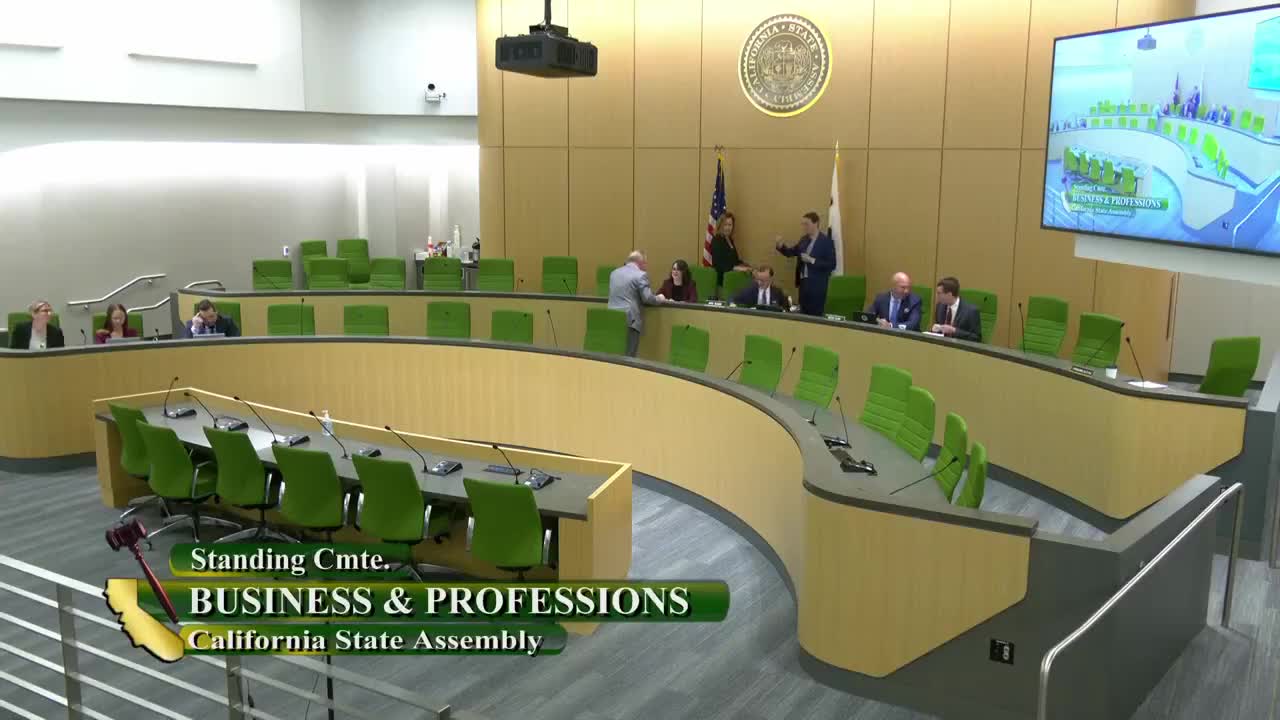 1MIN
Assembly Standing Committee on Business and Professions
 44SEC
Senate Floor
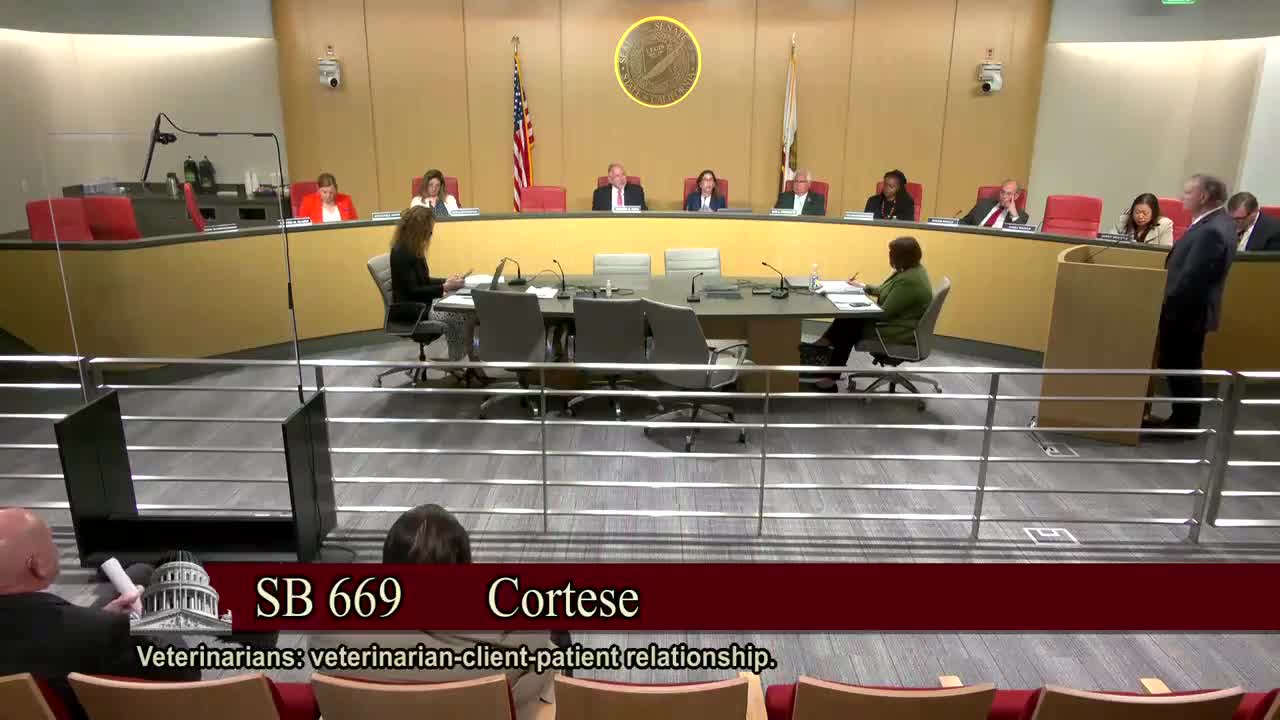 3MIN
Senate Standing Committee on Business, Professions and Economic Development
Bill Author

Bill Co-Author(s):