SB 831: Agricultural workers: immigration: parole.
- Session Year: 2023-2024
- House: Senate
- Latest Version Date: 2023-10-08
Current Status:
Passed
(2023-10-08: Chaptered by Secretary of State. Chapter 636, Statutes of 2023.)
Introduced
In Committee
First Chamber
In Committee
Second Chamber
Enacted
What does this bill do?
The bill lets the Governor make an agreement with the U.S. Attorney General to create a program that could give California agricultural workers federal parole — temporary permission to enter and stay — so they can continue working. If the program is put in place and renewed, the Governor must report to the Legislature in the program’s third year on its effects on farm labor supply, worker retention, and the state economy.
The summary is provided by generative AI which can make mistakes. For original language, please view the details in the table below.
Existing federal law, the Immigration and Nationality Act, makes certain aliens ineligible to receive visas and ineligible to be admitted into the United States, except as specified. The act authorizes the United States Attorney General to parole into the United States, on a case-by-case basis for urgent humanitarian reasons or significant public benefit, any alien applying for admission to the United States, as specified.
Existing law authorizes the Governor to enter into specified agreements with the federal government on behalf of the state. Under existing law, these agreements concern various subject matters, including, but not limited to, health, such as the state Medicaid plan relating to the Medi-Cal program, and transportation matters.
This bill would authorize the Governor to enter into an agreement with the United States Attorney General to establish a program for the United States Attorney General to grant an agricultural employee, as defined, parole pursuant to the above-described authorization under the act, as specified. Subject to implementation of that program, the bill would require the Governor to prepare a report on the impact of the program on the 3rd year of the renewal of the program, as provided.
Existing law sets forth the duties of the Department of Community Services and Development respecting certain community programs in the state, including administering the Naturalization Services Program that provides funding to community-based organizations to assist lawful permanent residents in obtaining citizenship.This bill would authorize the Governor to enter into an agreement with the federal government to establish a workgroup to develop a pilot program for an agricultural employee, as defined, who meets specified eligibility criteria, including that they have lived continuously in the United States for 5 years, to be granted lawful permanent resident status. The bill would authorize the department to administer the pilot program, and establish an application process and eligibility criteria for that program, as specified.Existing law sets forth the duties of the Department of Community Services and Development respecting certain community programs in the state, including administering the Naturalization Services Program that provides funding to community-based organizations to assist lawful permanent residents in obtaining citizenship.
This bill would authorize the Governor to enter into an agreement with the federal government to establish a workgroup to develop a pilot program for an agricultural employee, as defined, who meets specified eligibility criteria, including that they have lived continuously in the United States for 5 years, to be granted lawful permanent resident status. The bill would authorize the department to administer the pilot program, and establish an application process and eligibility criteria for that program, as specified.
Existing law creates the California Work Opportunity and Responsibility to Kids Act, which is referred to as CalWORKs. Existing law requires the Employment Development Department to perform specified duties relating to job creation in connection with CalWORKs, including establishing a council of corporate executives to provide ongoing advice and assistance to the department in recruiting private employers to hire recipients of aid. Existing law requires the department, in consultation with the council, to establish a clearinghouse for information for private sector employers to obtain information about assistance and resources for hiring CalWORKs recipients. This bill would make nonsubstantive changes to these provisions.Existing law creates the California Work Opportunity and Responsibility to Kids Act, which is referred to as CalWORKs. Existing law requires the Employment Development Department to perform specified duties relating to job creation in connection with CalWORKs, including establishing a council of corporate executives to provide ongoing advice and assistance to the department in recruiting private employers to hire recipients of aid. Existing law requires the department, in consultation with the council, to establish a clearinghouse for information for private sector employers to obtain information about assistance and resources for hiring CalWORKs recipients.
This bill would make nonsubstantive changes to these provisions.
The Legislature finds and declares all of the following:
(a)California is soon to be the fourth largest economy in the world. This economy relies on a healthy workforce capable of meeting the needs to keep the economy strong.
(b)California is a major agricultural producing state in the United States with more than $50,000,000,000 in agricultural annual revenue and producing over 13 percent of the United States agricultural value. California produces more than 400 commodities, including over one-third of the vegetables and three-quarters of the fruits and nuts consumed in the United States.
(c)Californias agricultural sector is vital to the economy of the state, including small and rural communities. Californias agricultural commodities are also exported globally. According to a study by the University of California, Davis, every dollar of value added (labor and property income and indirect business taxes) in farming and agriculture-related industries generates an additional $1.27 in the state economy. For every 100 jobs in agriculture, there are 94 additional jobs created throughout the state. Californias ability to grow food domestically is important to maintain the health and welfare of the 40,000,000 residents that live in the state, in order to reduce the need to import food from other countries. Californias agriculture contributes significantly to the states economic well-being and is vital to its stability and growth. This business sector relies upon a stable workforce to maintain economic production and revenues. However, farmers and agricultural producers in California are struggling to find a reliable and consistent workforce.
(d)Despite the countrys need for labor there are still many workers who are undocumented and not eligible to obtain a work permit due to the federal governments failure to take action. Undocumented workers are a primary workforce in agriculture despite the risk of deportation by the federal government. Additionally, undocumented agricultural workers have no access to disability benefits and social security benefits that they earn as part of their work in agriculture due to their immigration status.
(e)During the COVID-19 pandemic, our country experienced a shortage of paper products, hand sanitizer, face masks, and many other goods, but fresh fruits and vegetables were always available. Undocumented agricultural workers were classified as essential workers, yet they were ineligible to receive unemployment benefits or any other COVID-19 relief granted by the federal government and faced higher infection and death rates than other workers.
(f)California recognizes the value of undocumented workers and their families and has enacted legislation to protect their rights and integrate them into our society. California provides benefits and resources for undocumented California workers, such as disability insurance; paid family leave; Medi-Cal, Women, Infants, and Children program (WIC); as well as free or reduced school meals. California also provides resources for Deferred Action for Childhood Arrivals (DACA) recipients. There are about 590,000 DACA recipients in the United States and approximately 28 percent of DACA recipients live in California. California created the California Dream Act that allows undocumented students and DACA recipients to receive financial aid. Despite all the work California has done to protect undocumented workers, they continue to face the possibility of deportation, family separation, and lost wages and benefits due to their immigration status, all of which negatively affects Californias economy, public safety, and quality of life in our communities.
SEC. 2.Article 9 (commencing with Section 12092) is added to Chapter 1 of Part 2 of Division 3 of Title 2 of the Government Code, to read:9.California Program for Agricultural Employees12092.As used in this article, the following terms apply:
(a)Agricultural employee has the same meaning as that term is defined in subdivision (b) of Section 1140.4 of the Labor Code.
(b)Parole has the same meaning as that term is used in Section 1182(d)(5)(A) of Title 8 of the United States Code, which authorizes the United States Attorney General, on a case-by-case basis, to parole an alien applying for admission to the United States if there is an urgent humanitarian reasons or significant public benefit.
(c)Program means a program for an agricultural employee to be granted parole.
12092.1.To address the states critical need for labor provided by agricultural employees, and the economic harm California faces from the uncertainty surrounding the immigration status of the states agricultural employee workforce, the Governor, on behalf of this state, may enter into an agreement with the United States Attorney General, or the United States Attorney Generals designee, to establish a program for the United States Attorney General, or the United States Attorney Generals designee, to grant an agricultural employee, living in the state, parole.
12092.2.Subject to the implementation of the program, on the third year of the renewal of the program, the Governor shall prepare a report to the Legislature, in accordance with Section 9795, on the impact of the program on all of the following:
(a)The states critical need for labor provided by agricultural employees.
(b)The states ability to attract and maintain its agricultural employee workforce.
(c)Other effects on the states economy.
SECTION 1.Article 9 (commencing with Section 12092) is added to Chapter 1 of Part 2 of Division 3 of Title 2 of the Government Code, to read:9.Lawful Permanent Resident Pilot Program12092.As used in this article, the following terms apply:(a)Agricultural employee has the same meaning as that term is defined in subdivision (b) of Section 1140.4 of the Labor Code.(b)Department means the Department of Community Services and Development.(c)Lawful permanent resident has the same meaning as that term is defined in Section 1101(a)(20) of Title 8 of the United States Code.(d)Pilot program means the pilot program for an agricultural employee to be granted lawful permanent resident status, as described in this article.12092.1.The Governor, on behalf of this state, may enter into an agreement with the federal government to establish a workgroup to develop a pilot program for an agricultural employee who has lived continuously in the United States for five years to be granted lawful permanent resident status.12092.2.(a)Upon implementation of the pilot program, the department may administer the pilot program.(b)The department may establish an application process for the pilot program, which includes, but is not limited to, all of the following:(1)The payment of application fees to the department and any federal entity to obtain lawful permanent resident status.(2)A criminal history background check.(3)A national security check.12092.3.The department may establish eligibility criteria for an agricultural employee to be eligible for lawful permanent resident status. An agricultural employee may be eligible for lawful permanent resident status under the pilot program if the individual meets all of the following:(a)They have lived continuously in the United States for five years.(b)They have demonstrated good moral character.(c)They have not been convicted of a crime.As used in this article, the following terms apply:
(a)Agricultural employee has the same meaning as that term is defined in subdivision (b) of Section 1140.4 of the Labor Code.
(b)Department means the Department of Community Services and Development.
(c)Lawful permanent resident has the same meaning as that term is defined in Section 1101(a)(20) of Title 8 of the United States Code.
(d)Pilot program means the pilot program for an agricultural employee to be granted lawful permanent resident status, as described in this article.
12092.1.The Governor, on behalf of this state, may enter into an agreement with the federal government to establish a workgroup to develop a pilot program for an agricultural employee who has lived continuously in the United States for five years to be granted lawful permanent resident status.
12092.2.(a)Upon implementation of the pilot program, the department may administer the pilot program.
(b)The department may establish an application process for the pilot program, which includes, but is not limited to, all of the following:
(1)The payment of application fees to the department and any federal entity to obtain lawful permanent resident status.
(2)A criminal history background check.
(3)A national security check.
12092.3.The department may establish eligibility criteria for an agricultural employee to be eligible for lawful permanent resident status. An agricultural employee may be eligible for lawful permanent resident status under the pilot program if the individual meets all of the following:
(a)They have lived continuously in the United States for five years.
(b)They have demonstrated good moral character.
(c)They have not been convicted of a crime.
SECTION 1.Section 17002 of the Unemployment Insurance Code is amended to read:17002.In carrying out the provisions of this division, the department shall conduct activities, including, but not limited to, all of the following:(a)Establish a council of corporate executives consisting of 13 members drawn from the business community, including, but not limited to, retired or former chief executive officers of major California corporations. Seven members shall be appointed by the Governor, three shall be appointed by the Senate Committee on Rules, and three shall be appointed by the Speaker of the Assembly. Appointments shall be made no later than January 31, 1998. This council shall provide ongoing advice and assistance to the department in recruiting private employers to hire recipients of aid.(b)In consultation with the council described in subdivision (a), establish a clearinghouse for information on the internet or other forms of toll-free communication for private sector employers to obtain information about assistance and resources for hiring CalWORKs recipients and to register their pledges to assist the state in finding the jobs necessary to meet the local welfare-to-work goals throughout the state.(c)In consultation with the council described in subdivision (a), provide a forum for leaders in faith-based communities, and other civic leaders, to assist the state in promoting welfare-to-work goals as part of the civic duty of their constituents.In carrying out the provisions of this division, the department shall conduct activities activities, including, but not limited to, all of the following:
(a)Establish a council of corporate executives consisting of 13 members drawn from the business community community, including, but not limited to, retired or former chief executive officers of major California corporations. Seven members shall be appointed by the Governor, three shall be appointed by the Senate Committee on Rules, and three shall be appointed by the Speaker of the Assembly. Appointments shall be made no later than January 31, 1998. This council shall provide ongoing advice and assistance to the department in recruiting private employers to hire recipients of aid.
(b)In consultation with the council described in subdivision (a), establish a clearinghouse for information on the Internet internet or other forms of toll-free communication for private sector employers to obtain information about assistance and resources for hiring CalWORKs recipients and to register their pledges to assist the state in finding the jobs necessary to meet the local welfare-to-work goals throughout the state.
(c)In consultation with the council described in subdivision (a), provide a forum for leaders in the faith-based communities, as well as and other civic leaders, to assist the state in promoting welfare-to-work goals as part of the civic duty of their constituents.
|
Date
|
Status
|
|---|---|
| Oct 8, 2023 | Chaptered by Secretary of State. Chapter 636, Statutes of 2023. |
| Oct 8, 2023 | Approved by the Governor. |
| Sep 21, 2023 | Enrolled and presented to the Governor at 4 p.m. |
| Sep 14, 2023 | Assembly amendments concurred in. (Ayes 34. Noes 5. Page 2830.) Ordered to engrossing and enrolling. |
| Sep 14, 2023 | In Senate. Concurrence in Assembly amendments pending. |
| Sep 14, 2023 | Read third time. Passed. (Ayes 65. Noes 11. Page 3520.) Ordered to the Senate. |
| Sep 5, 2023 | Read second time. Ordered to third reading. |
| Sep 1, 2023 | Read second time and amended. Ordered to second reading. |
| Sep 1, 2023 | From committee: Do pass as amended. (Ayes 12. Noes 2.) (September 1). |
| Aug 16, 2023 | August 16 set for first hearing. Placed on suspense file. |
| Jul 12, 2023 | From committee: Do pass and re-refer to Com. on APPR. (Ayes 6. Noes 0.) (July 11). Re-referred to Com. on APPR. |
| Jun 15, 2023 | Referred to Com. on HUM. S. |
| May 31, 2023 | In Assembly. Read first time. Held at Desk. |
| May 30, 2023 | Read third time. Passed. (Ayes 34. Noes 2. Page 1351.) Ordered to the Assembly. |
| May 18, 2023 | Read second time. Ordered to third reading. |
| May 18, 2023 | From committee: Do pass. (Ayes 5. Noes 2. Page 1185.) (May 18). |
| May 12, 2023 | Set for hearing May 18. |
| May 8, 2023 | May 8 hearing: Placed on APPR suspense file. |
| May 1, 2023 | Set for hearing May 8. |
| Apr 26, 2023 | From committee: Do pass and re-refer to Com. on APPR. (Ayes 5. Noes 0. Page 902.) (April 25). Re-referred to Com. on APPR. |
| Apr 18, 2023 | From committee: Do pass and re-refer to Com. on PUB S. (Ayes 4. Noes 0. Page 749.) (April 17). Re-referred to Com. on PUB S. |
| Apr 11, 2023 | Set for hearing April 25 in PUB S. pending receipt. |
| Apr 11, 2023 | Set for hearing April 17. |
| Mar 29, 2023 | Re-referred to Coms. on HUMAN S. and PUB S. |
| Mar 22, 2023 | From committee with author's amendments. Read second time and amended. Re-referred to Com. on RLS. |
| Mar 1, 2023 | Referred to Com. on RLS. |
| Feb 21, 2023 | From printer. May be acted upon on or after March 20. |
| Feb 17, 2023 | Introduced. Read first time. To Com. on RLS. for assignment. To print. |
|
Date
|
Description
|
Location
|
Votes
|
|
|---|---|---|---|---|
| Sep 14, 2023 | SB 831 Caballero Senate Third Reading By Garcia | Assembly Floor |
Passed |
|
| Sep 14, 2023 | Unfinished Business SB831 Caballero Concurrence | Senate Floor |
Passed |
|
| Sep 1, 2023 | Do pass as amended. | Assembly Standing Committee on Appropriations |
Passed |
|
| Jul 11, 2023 | Do pass and be re-referred to the Committee on [Appropriations] | Assembly Standing Committee on Human Services |
Passed |
|
| May 30, 2023 | Senate 3rd Reading SB831 Caballero | Senate Floor |
Passed |
|
| May 18, 2023 | Do pass | Senate Standing Committee on Appropriations |
Passed |
|
| May 8, 2023 | Placed on suspense file | Senate Standing Committee on Appropriations |
Passed |
|
| Apr 25, 2023 | Do pass, but first be re-referred to the Committee on [Appropriations] | Senate Standing Committee on Public Safety |
Passed |
|
| Apr 17, 2023 | Do pass, but first be re-referred to the Committee on [Public Safety] | Senate Standing Committee on Human Services |
Passed |
This list shows positions taken on this bill by organizations on the date displayed, which is linked to the original source.
Positions by individuals are not included.
|
Organization
|
Position
|
Date
|
|---|---|---|
| California Citrus Mutual | ** Support | |
| California Fresh Fruit Association | ** Support | |
| California Public Defenders Association | ** Support | |
| California Workforce Association | ** Support | |
| Farm Worker Families | * Support | Apr 17, 2023 |
| Farmworkerfamilies | ** Support | |
| Indivisible Sacramento | ** Support | |
| Indivisible San Francisco | ** Support | |
| la Cooperativa Campesina de California | ** Support | |
| Lideres Campesinas | * Support | Jul 11, 2023 |
| National Association Of Social Workers, California Chapter | ** Support | |
| Norcal Resist | ** Support | |
| San Francisco Public Defenders Office | * Support | Apr 25, 2023 |
SENATE RULES COMMITTEE Office of Senate Floor Analyses (916) 651-1520 Fax: (916) 327-4478 | SB 831 |
UNFINISHED BUSINESS
Bill No: SB 831
Author: Caballero (D)
Amended: 9/1/23
Vote: 21
SENATE HUMAN SERVICES COMMITTEE: 4-0, 4/17/23
AYES: Alvarado-Gil, Ochoa Bogh, Menjivar, Wahab
NO VOTE RECORDED: Hurtado
SENATE PUBLIC SAFETY COMMITTEE: 5-0, 4/25/23
AYES: Wahab, Ochoa Bogh, Bradford, Skinner, Wiener
SENATE APPROPRIATIONS COMMITTEE: 5-2, 5/18/23
AYES: Portantino, Ashby, Bradford, Wahab, Wiener
NOES: Jones, Seyarto
SENATE FLOOR: 34-2, 5/30/23
AYES: Allen, Alvarado-Gil, Archuleta, Ashby, Atkins, Becker, Blakespear, Bradford, Caballero, Cortese, Dodd, Durazo, Eggman, Glazer, Gonzalez, Hurtado, Laird, Limón, McGuire, Menjivar, Min, Newman, Niello, Ochoa Bogh, Padilla, Portantino, Roth, Rubio, Skinner, Smallwood-Cuevas, Stern, Umberg, Wahab, Wiener
NOES: Jones, Seyarto
NO VOTE RECORDED: Dahle, Grove, Nguyen, Wilk
ASSEMBLY FLOOR: 51-9, 9/14/23
(ROLL CALL NOT AVAILABLE)
SUBJECT: Agricultural workers: immigration: parole.
SOURCE: Author
DIGEST:
This bill authorizes the Governor to enter into an agreement with the United States Attorney General (USGA) to establish a program for the USGA to grant an agricultural employee parole. Requires the Governor to prepare a report on the impact of the program on the 3rd year of the renewal of the program.
Assembly Amendments
revise and recast the bill with similar intent as it left the Senate.
ANALYSIS:
Existing law:
- Defines “agricultural employee” as one engaged in agriculture. (Labor Code 1140.4(b))
- Defines “agriculture” to include farming in all its branches, and, among other things, includes the cultivation and tillage of the soil, dairying, the production, cultivation, growing, and harvesting of any agricultural or horticultural commodities, the raising of livestock, bees, furbearing animals, or poultry, and any practices (including any forestry or lumbering operations) performed by a farmer or on a farm as an incident to or in conjunction with such farming operations, including preparation for market and delivery to storage or to market or to carriers for transportation to market. (Labor Code 1140.4(a))
- Defines “lawful permanent resident” as the status of having been lawfully accorded the privilege of residing permanently in the United States as an immigrant in accordance with the immigration laws, such status not having changed. (United States Code, Title 8, Section 1101(a)(20))
This bill:
- Authorizes the Governor, on behalf of the state, to enter into an agreement with the United States Attorney General, or the United States Attorney General's designee, to establish a program for the United States Attorney General or designee to grant an agricultural employee, living in the state, parole.
- Subjects to the implementation of the program, on the third year of the renewal of the program, requires the Governor to prepare a report to the Legislature on the impact of the program as specified.
Comments
According to the author, “Our country experienced a shortage of paper products, hand sanitizer, face masks and many other products during the pandemic, but fresh fruits and vegetables were not one of them. Workers in the agriculture sector were classified as essential workers and were expected to show up to work every day despite the risk of serious illness and death that was rampant in the industry. As a consequence, many farmworkers and their families suffered due to the pandemic, living in overcrowded living quarters, lacking sick leave and medical care for treatment. At issue is the disparities in our communities that farmworkers face because a majority are not legal residents or are undocumented workers ineligible to work legally in the United States.”
Farmworkers in California California is the largest producer of agricultural goods in the United States, and is one of the largest agricultural producing regions in the world. As a result, farmworkers play a key role in the operation and delivery of the state’s food system, but continue to face a number of economic disadvantages when compared to other Californians. HCD reports that depending on the source, the number of farmworkers residing in California ranges from 391,700 to 802,662. These estimates include both migratory and permanent farmworkers. A large portion of these individuals are also estimated to be undocumented.
According to a 2018 report published by the HCD, on average, farmer incomes are less than half of the area median household income of other Californians. The report also indicates a number of trends that suggest a changing farmworker population in California. This includes a decrease in the number of single farmworkers, from 59 percent in 1990 to 25 percent in 2012, and fewer farmworkers migrating from farm to farm on an annual basis, from 43 percent in 1990 to 16 percent in 2012.1 Since the HCD is focused on housing, their report concludes that these shifting demographics have a variety of implications for the types of housing needed for farmworkers, including a greater need for affordable housing, permanent housing, and family-friendly housing. These trends may have implications for farmworker needs beyond housing, such as their need for supportive services and safety net programs.
Immigration System The United States Constitution gives Congress the power to establish a uniform rule of naturalization, making immigration a federal responsibility. Federal immigration law sets the parameters for who may enter the country and under what conditions. States and local government then develop laws and policies that impact immigrants once they are in the United States. According to the National Conference of State Legislatures, state legislatures consider more than 1,200 bills each year that relate to immigrants. Programs through California Departments also assist immigrants. CDSS funds community based programs that assist immigrants living in California. These programs offer free legal services and information about other services that support immigrants. This bill would allow for the creation of a pilot program to provide a pathway to lawful permanent residency for agriculture workers who meet specified criteria.
Related/Prior Legislation:
SB 1066 (Hurtado, 2022) would have established the California Farmworkers Drought Resilience Pilot Project. This bill was vetoed by the Governor.
AB 153 (Committee on Budget, Chapter 86, Statutes of 2021) created the GIP Program, among other things, to provide grant funding to eligible entities for guaranteed income pilots or projects, as provided.
SB 739 (Cortese, 2021) would have created a universal basic income pilot project for foster youth who exited care at 21 years of age, to be administered by CDSS. The bill would also have provided for monthly $1,000 UBI payments to former foster youth for three years, as provided. This bill in part was included in the 2021 Budget.
FISCAL EFFECT: Appropriation: No Fiscal Com.: Yes Local: No
According to the Assembly Appropriations Committee:
- General Fund (GF) cost pressures of an unknown amount, potentially significant, to establish a program to grant an agricultural employee parole, should the Governor reach an agreement with the U.S. Attorney General.
- One-time GF costs, potentially in the low hundreds-of-thousands of dollars to the Governor's Office to prepare a report on the impact of the program, should a program be implemented. These costs would be incurred in the third year of the renewal of the program.
SUPPORT: (Verified 9/14/23)
California Citrus Mutual
California Fresh Fruit Association
California Public Defenders Association
California Workforce Association
Farmworkerfamilies
Indivisible Sacramento
Indivisible San Francisco
LA Cooperativa Campesina De California
National Association of Social Workers, California Chapter
Norcal Resist
OPPOSITION: (Verified 9/14/23)
None received
Prepared by: Heather Hopkins / HUMAN S. / (916) 651-1524
9/14/23 14:57:59
**** END ****
SENATE THIRD READING
STR Bill Id:SB 831
Author:(Caballero)
As Amended Ver:September 1, 2023
Majority vote
SUMMARY
Authorizes the Governor, on behalf of the state, to enter into an agreement with the United States (U.S.) Attorney General, or the United States Attorney General's designee, to establish a program for the United States Attorney General or designee to grant an agricultural employee, living in the state, parole.
Major Provisions
- Authorizes the Governor, on behalf of the state, to enter into an agreement with the United States Attorney General, or the United States Attorney General's designee, to establish a program for the United States Attorney General or designee to grant an agricultural employee, living in the state, parole.
- Subject to the implementation of the program, on the third year of the renewal of the program, requires the Governor to prepare a report to the Legislature on the impact of the program as specified.
COMMENTS
Data from the United States Department of Agriculture (USDA) indicates that roughly half of hired crop farmworkers are not legally authorized to work in the United States. According to the USDA, from 2018 to 2020, 30% of crop farmworkers were U.S. born, 6% were immigrants who had obtained U.S. citizenship, 23% were other authorized immigrants (primarily permanent residents or green card holders), and the remaining 41% held no work authorization. According to the USDA, the share of workers who are unauthorized is highest in California.
The United States Constitution gives Congress the power to establish a uniform rule of naturalization throughout the country. Accordingly, federal immigration law sets the parameters for who may enter the country, become a citizen, and under what conditions. Under federal law, "lawful permanent residents (LPRs)", also known as "green card" holders, are non-citizens who are lawfully authorized to live and work permanently in the U.S. An LPR also may apply to become a U.S. citizen if they meet certain eligibility requirements.
Some immigrants may qualify for "parole," or permission to enter the United States temporarily. Section 1182 (d)(5)(a) of Title 8 of the United States Code grants the United States Attorney General the authority to grant specified immigrants temporary parole into the United States on a case-by-case basis "for urgent humanitarian reasons or significant public benefit." Individuals granted parole may also obtain work authorization for the duration of their parole period. In sum, parole offers an opportunity for an immigrant to obtain authorized entry into the United States on a case-by-case basis without, or pending, a determination of their legal immigration status.
According to the Office of Congressional Research, the vast majority of parole programs have focused on one of three categories: refugee-related parole programs, family reunification parole programs, and Cuban parole programs. (Immigration Parole, Congressional Research Service (October 15, 2020) at p. 7 available at https://crsreports.congress.gov/product/pdf/R/R46570.) The use of parole by the executive branch has been a topic of controversy for the past several decades. In particular, arguments have centered over the potential conflict between generalized programs (such as Cuban parole programs) and the text of the statute calling for case-by-case determinations. Potentially unsurprisingly, the Trump administration made efforts to terminate certain parole programs such as the Haitian Family Reunification Parole program and the Filipino World War II Veterans Parole Program. (Id. at p. 13.)
Immigration, unlike other areas of the law such as criminal or civil law, is the exclusive jurisdiction of the federal government. Moreover, what makes immigration law even more unique is the fact that the Constitution and subsequent Supreme Court jurisprudence has carved out immigration as the territory of the federal government. (U.S. Const. Art. I, Sec 8, Cl. 14.) Indeed, the U.S. Supreme Court has held that, "Congress has plenary power to make rules for the admission of aliens and to exclude those who possess those characteristics which Congress has forbidden." (Boutilier v. INS (1967) 387 U.S. 118.)
This bill seeks to authorize the Governor to enter into an agreement with the United States Attorney General (AG) or their designee to establish a program for the AG or their designee to grant an agricultural employee, living in the state, parole. In identifying the need for this bill, the author points to a significant need for agricultural labor in the state, as well as the humanitarian impact of undocumented status on one of the most marginalized communities. Arguably, explicitly granting the Governor, who has unique insight into the needs of this population in California as well the labor deficits of the state, the authority to collaborate with the U.S. AG would facilitate the development of a set of factors that would allow the AG to more effectively evaluate whether to grant or deny parole for immigrant farmworkers in California. The development of these factors could be considered as part of a larger national farmworker parole program, considering the farmworker shortage faced nationwide.
It is unclear whether there is any reason, statutory or otherwise, that the Governor could not currently collaborate with the AG to provide feedback on how to consider applications for parole, the state of immigrant farmworkers in California, or the state's need for agricultural workers. While there may be some question as to the need for such an explicit grant of authority, this bill certainly points to an area of significant concern, specifically the situation of thousands of undocumented agricultural workers living and working in the state. Undocumented residents of California, whether working as agricultural laborers or not, are instrumental members of communities across the state. However, they face challenges accessing a bevy of social services, including health care or work authorization, and live under constant fear of law enforcement and deportation, exposing them to significant risk of exploitation and abuse. Theoretically, a program such as the one contemplated by this bill could help alleviate some of the concerns that plague immigrant farmworkers throughout the state.
According to the Author
[During the pandemic] workers in the agriculture sector were classified as essential workers and were expected to show up to work every day despite the risk of serious illness and death that was rampant in the industry. As a consequence, many farmworkers and their families suffered due to the pandemic, living in overcrowded living quarters, lacking sick leave and medical care for treatment. At issue is the disparities in our communities that farmworkers face because a majority are not legal residents or are undocumented workers ineligible to work legally in the United States.
Arguments in Support
Support on file is to a prior version of this bill.
Arguments in Opposition
No opposition on file.
FISCAL COMMENTS
According to the Assembly Appropriations Committee:
- General Fund (GF) cost pressures of an unknown amount, potentially significant, to establish a program to grant an agricultural employee parole, should the Governor reach an agreement with the U.S. Attorney General.
- One-time GF costs, potentially in the low hundreds-of-thousands of dollars to the Governor's Office to prepare a report on the impact of the program, should a program be implemented. These costs would be incurred in the third year of the renewal of the program.
VOTES
SENATE FLOOR: 34-2-4
YES: Allen, Alvarado-Gil, Archuleta, Ashby, Atkins, Becker, Blakespear, Bradford, Caballero, Cortese, Dodd, Durazo, Eggman, Glazer, Gonzalez, Hurtado, Laird, Limón, McGuire, Menjivar, Min, Newman, Niello, Ochoa Bogh, Padilla, Portantino, Roth, Rubio, Skinner, Smallwood‑Cuevas, Stern, Umberg, Wahab, Wiener
NO: Jones, Seyarto
ABS, ABST OR NV: Dahle, Grove, Nguyen, Wilk
ASM HUMAN SERVICES: 6-0-2
YES: Jackson, Alanis, Arambula, Bonta, Bryan, Garcia
ABS, ABST OR NV: Sanchez, Calderon
ASM APPROPRIATIONS: 12-2-2
YES: Holden, Bryan, Calderon, Wendy Carrillo, Mike Fong, Hart, Lowenthal, Mathis, Papan, Pellerin, Weber, Wilson
NO: Megan Dahle, Dixon
ABS, ABST OR NV: Sanchez, Soria
UPDATED
VERSION: September 1, 2023
CONSULTANT: Manuela Boucher-de la Cadena / JUD. / (916) 319-2334 FN: 0001708
Date of Hearing: August 16, 2023
ASSEMBLY COMMITTEE ON APPROPRIATIONS
Chris Holden, Chair
SBPCA Bill Id:SB 831
Author:(Caballero) – As Amended Ver:March 22, 2023
Policy Committee: | Human Services | Vote: | 6 - 0 |
|
| ||
|
|
Urgency: No State Mandated Local Program: No Reimbursable: No
SUMMARY:
This bill authorizes the Governor to enter into an agreement with the federal government to grant agricultural workers lawful permanent resident status.
Specifically, this bill:
- Authorizes the Governor to enter into an agreement with the federal government to establish a workgroup to develop a pilot program for an agricultural employee who has lived continuously in the United States (U.S.) for five years to be granted lawful permanent resident status.
- Authorizes the Department of Community Services and Development (CSD), upon implementation of the pilot program, to administer the pilot program.
- Allows CSD to establish an application process for the pilot program, which includes, but is not limited to, the payment of application fees to CSD and any federal entity, a criminal background check, and a national security check.
- Allows CSD to establish eligibility criteria for an agricultural employee to be eligible for lawful permanent resident status. Specifies an agricultural employee may be eligible for lawful permanent resident status under the pilot program if the individual has lived continuously in the U.S. for five years, has demonstrated good moral character, and has not been convicted of a crime.
FISCAL EFFECT:
This bill directs CSD to establish eligibility criteria and administer a program for a new pathway for lawful permanent residence, an area well outside the department’s experience and expertise. As a result, and given the number of potential programmatic and legal complexities associated with implementing this bill, CSD anticipates ongoing General Fund costs in the tens of millions of dollars for contracting with an entity with expertise in federal immigration law and administration, and for CSD staff to oversee the contract and respond to program inquiries.
The actual costs of implementing and administering the pilot program would depend on its scope and scale, which is undefined in the bill, and would be developed by a workgroup to be established by the Governor and federal government, whose membership is unspecified. In addition, the bill contains unclear application and eligibility criteria. All of these factors make costs difficult to estimate.
COMMENTS:
- Purpose. The author seeks to create a pathway, in partnership with the federal government, to legalize the agricultural workforce. According to the author:
[During the pandemic] workers in the agriculture sector were classified as essential workers and were expected to show up to work every day despite the risk of serious illness and death that was rampant in the industry. As a consequence, many farmworkers and their families suffered due to the pandemic, living in overcrowded living quarters, lacking sick leave and medical care for treatment. At issue is the disparities in our communities that farmworkers face because a majority are not legal residents or are undocumented workers ineligible to work legally in the United States. Creating a pathway to permanent residency in the United States would allow undocumented friends, family members and neighbors to come out of the shadows, to live lives free of fear and allow them to qualify for the safety net programs that they deserve and pay into.
- Background.
Immigration. The U.S. Constitution gives Congress the power to establish a uniform rule of naturalization throughout the U.S. Accordingly, federal immigration law sets the parameters for who may enter the country, become a citizen, and under what conditions. Under federal law, “lawful permanent residents (LPRs)”, also known as “green card” holders, are non-citizens who are lawfully authorized to live and work permanently in the U.S. An LPR also may apply to become a U.S. citizen if they meet certain eligibility requirements.
The California Department of Social Services (CDSS) houses the Immigration Services Bureau, which funds community-based programs that assist immigrants living in California. These programs offer free legal services and information about other services that support immigrants.
Data from the United States Department of Agriculture (USDA) indicates that roughly half of hired crop farmworkers are not legally authorized to work in the U.S. From 2018 to 2020, 30% of crop farmworkers were U.S. born, 6% were immigrants who had obtained U.S. citizenship, 23% were other authorized immigrants (primarily permanent residents or green card holders), and the remaining 41% held no work authorization. According to the USDA, the share of workers who are unauthorized is highest in California.
CSD. CSD administers local community services and energy programs through a network of local providers and regional administrators to deliver services to low-income families, individuals, and communities. The services and programs administered by CSD help low‐income Californians achieve and maintain economic security, meet their home energy needs, and reduce their utility costs through energy efficiency upgrades and access to clean renewable energy. The CSD also administers the Farmworker Resource Center Grant Program, which provides grants to counties interested in developing resource centers and programs designed to address the needs of farmworkers and their families.
This bill gives CSD responsibility for establishing criteria for a new immigration status and for administering the program, including accepting and processing applications, assessing fees, and determining whether applicants meet the department’s requirements for lawful permanent residence. CSD indicates the breadth of such an endeavor and the level of expertise required to develop, implement, and oversee an immigration program that is consistent with the federal immigration system, and the specific requirements of a pilot program which has yet to be established, is outside of the scope of CSD’s current programs and responsibilities.
Analysis Prepared by: Jennifer Swenson / APPR. / (916) 319-2081
Date of Hearing: July 11, 2023
ASSEMBLY COMMITTEE ON HUMAN SERVICES
Corey A. Jackson, Chair
SBPCA Bill Id:SB 831
Author:(Caballero) – As Amended Ver:March 22, 2023
SENATE VOTE: 34-2
SUBJECT: Department of Community Services and Development: pilot program: lawful permanent residents
SUMMARY: Allows the Governor to enter an agreement with the federal government to establish a workgroup to develop a permanent resident pilot program for an agricultural employee. Specifically, this bill:
- Authorizes the Governor to enter into an agreement with the federal government to establish a workgroup to develop a pilot program for an agricultural employee who has lived continuously in the United States for five years to be granted lawful permanent resident status.
- Permits the California Department of Community Services and Development (CSD) upon implementation of the pilot program, to administer a pilot program for certain agricultural employees.
- Provides that CSD may establish an application process for the pilot program, including, but not limited to:
- The payment of application fees to the department and any federal entity to obtain lawful permanent resident status;
- A criminal history background check; and,
- A national security check.
- Allows CSD to establish eligibility criteria for an agricultural employee to be eligible for lawful permanent resident status. An agricultural employee may be eligible for lawful permanent resident status under the pilot program if the individual meets all of the following:
- They have lived continuously in the United States for five years;
- They have demonstrated good moral character; and,
- They have not been convicted of a crime.
EXISTING LAW:
- Establishes CSD within the California Health and Human Services Agency, and enumerates the following responsibilities:
- Recognize existing community action agencies and Indian tribes or tribal organizations, as the operators of programs to serve the poor in local communities, and, where the programs are of a statewide or multicounty nature, other limited purpose agencies may be considered as program operators;
- Apply for, administer, and oversee federal block grant funds, including, but not limited to, the Community Services Block Grant and the Low-Income Home Energy Assistance Program, and other public and private funds designed to support antipoverty programs in the state that are not currently administered by other departments, and define and enforce programmatic performance and fiscal accountability standards for those funds;
- Provide funding and technical assistance, directly or through grants or contracts, to community action agencies, Indian tribes, and other agencies that operate programs of an antipoverty nature;
- Coordinate antipoverty efforts throughout the state, to the extent permissible under federal law, to avoid duplication, improve delivery of services, and relate programs to one another;
- Maintain liaison with the Office of Community Services in the federal Department of Health and Human Services, county and city commissions on economic opportunity, citizens’ groups, and all other governmental agencies engaged in economic opportunity or community service programs, or both;
- Collect and assemble pertinent information and data available from other agencies of the state and federal governments and disseminate information in the interests of community services programs in the state by publication, advertisement, conference, workshops, programs, lectures, and other means;
- Plan and evaluate long-range and short-range strategies for overcoming poverty in the state;
- Mobilize public and private resources in support of antipoverty and community services programs;
- Encourage participation by residents of poor communities in the development and operation of community action programs for their betterment;
- Advise the Governor of the Governor’s responsibilities under the Economic Opportunity Program and the Community Services Block Grant Program as well as any other federal law enacted with respect to meeting the needs of the poor;
- Measure and evaluate, directly or through grants or contracts, the impact of this article and other poverty-related programs authorized by law, in order to determine the effectiveness of the programs in achieving stated goals, impact on related programs, and the structure and mechanisms for the delivery of services. All the offices under the executive branch shall cooperate and provide the necessary information to the director, upon the director’s request, to achieve the purposes of this subdivision; and,
- Promulgate regulations and negotiate and execute contracts necessary or convenient for the exercise of its responsibilities, powers, and functions, and to ensure that federal and state standards of programmatic performance and fiscal accountability are met. (Government Code Sections 12085 – 12091)
- Requires the California Department of Social Services (CDSS) to establish and supervise a county- or county consortia-administered program to provide cash assistance to the Cash Assistance Program for Aged, Blind, and Disabled Legal Immigrants that are not eligible for SSI/SSP. (Welfare and Institutions Code Section [WIC] 18937-18944)
- Requires CDSS to provide grants to qualified organizations to provide services to assist with the naturalization process and any appeals arising from the process. (WIC 13303)
- Defines “agricultural employee” as one engaged in agriculture. (Labor Code Section [LAB] 1140.4(b))
- Defines “agriculture” to include farming in all its branches, and, among other things, includes the cultivation and tillage of the soil, dairying, the production, cultivation, growing, and harvesting of any agricultural or horticultural commodities, the raising of livestock, bees, furbearing animals, or poultry, and any practices (including any forestry or lumbering operations) performed by a farmer or on a farm as an incident to or in conjunction with such farming operations, including preparation for market and delivery to storage or to market or to carriers for transportation to market. (LAB 1140.4(a))
- Defines “lawful permanent resident” as the status of having been lawfully accorded the privilege of residing permanently in the United States as an immigrant in accordance with the immigration laws, such status not having changed. (United States Code, Title 8, Section 1101(a)(20))
FISCAL EFFECT: According to the Senate Appropriations Committee on May 8, 2023:
- CSD indicates the cost of implementing and administering the pilot program is unknown, and would depend on its scope and scale which would be developed by the proposed workgroup. CSD anticipates ongoing costs for contracting with an entity with expertise in federal immigration law and administration, and ongoing CSD staffing costs to oversee the program.
- Unknown General Fund cost pressures to expand the pilot program statewide.
COMMENTS:
Background: California Department of Community Services and Development. CSD administers California’s federal funding share for the Community Services Block Grant, Low Income Home Energy Assistance Program, and Weatherization Assistance Program. In addition, CSD administers the state’s Low-Income Weatherization Program, one of California Climate Investments, a statewide initiative that directed billions of Cap-and-Trade dollars into programs to reduce greenhouse gas emissions, and improve public health and the environment-particularly in disadvantaged, low-income, and other priority population communities. The Naturalization Services Program, established within CSD, was funded in the 2002-03 State Budget and ceased operating in 2007-08. The program provided funding to community-based organizations to assist legal permanent residents in obtaining citizenship via existing federal laws and regulations.
This bill would require CSD to administer a pilot program for certain agricultural employees and to establish eligibility criteria for an agricultural employee to be eligible for lawful permanent resident status.
Immigration Services. CDSS houses the Immigration Services Bureau which funds legal services and education and outreach to increase access to legal immigration remedies. CDSS also funds programs at community-based organizations that can provide legal advice on how to change immigration status. Programs also include, storm assistance, cash assistance, and food assistance.
The legal assistance allows access to information and application assistance for Deferred Action for Childhood Arrivals (DACA), Naturalization, Other Immigration Remedies, and immigration protections for Unaccompanied Undocumented Minors.
Cash Assistance Program for Aged, Blind, and Disabled Immigrants is a state-funded program that provides monthly cash aid to aging, blind, and immigrants that are not eligible for SSI/SSP based on immigration status. In 1996, the Personal Responsibility and Work Opportunity Act excluded noncitizen immigrants from SSI/SSP eligibility.
California Food Assistance Program provides state-funded food assistance to qualified noncitizens, using the same automated systems used by CalFresh, the Electronic Benefits Transfer and the California Statewide Automated Welfare System.
Data from the United States Department of Agriculture (USDA), indicates that roughly half of hired crop farmworkers are not legally authorized to work in the US. In 2018–20, 30% of crop farmworkers were US born, 6% were immigrants who had obtained United States (U.S.) citizenship, 23% were other authorized immigrants (primarily permanent residents or green-card holders), and the remaining 41% held no work authorization. According to the USDA, the share of workers who are U.S. born is highest in the Midwest, while the share who are unauthorized is highest in California.
Author’s Statement: According to the Author, “Our country experienced a shortage of paper products, hand sanitizer, face masks and many other products during the pandemic, but fresh fruits and vegetables were not one of them. Workers in the agriculture sector were classified as essential workers and were expected to show up to work every day despite the risk of serious illness and death that was rampant in the industry. As a consequence, many farmworkers and their families suffered due to the pandemic, living in overcrowded living quarters, lacking sick leave and medical care for treatment. At issue is the disparities in our communities that farmworkers face because a majority are not legal residents or are undocumented workers ineligible to work legally in the United States. Creating a pathway to permanent residency in the United States would allow undocumented friends, family members and neighbors to come out of the shadows, to live lives free of fear and allow them to qualify for the safety net programs that they deserve and pay into. [This bill] would state that the intent of the Legislature is to create a partnership with the Federal Government in conjunction with the Governor to create a pathway to legalize an agricultural workforce who are critical to the state’s economy and food security. ”
Equity Implications: Creating a pathway for permanent residency for undocumented farmworkers who lack bargaining power, earning potential, and suffer exploitation by employers due to their immigration status, would allow for fairness in pay and employee protection in the workplace. During the COVID-19 pandemic, farmworkers, including undocumented workers, were deemed by the federal government to be “essential workers” critical to the food supply chain. During the pandemic, the Immigration and Customs Enforcement temporarily ceased to carry out enforcement actions and instead focus efforts on gangs, drug enforcement and human trafficking. The unfairness in simultaneously deeming undocumented agricultural workers essential while not providing a pathway to legal residency, and merely pausing enforcement when it benefits the economy should be addressed. California leads the nation in the production of fruits, vegetable, wines, and nuts, which positively impacts the state and national economy. It is appropriate to develop policies that treat agricultural employees the same regardless of their immigration status.
Policy Considerations: This bill aims to help make a pathway for undocumented farmworkers to become lawful permanent residents via a workgroup and pilot program. According to the California Department of Food and Agriculture, over a third of the country’s vegetables and three-quarters of the country’s fruits and nuts are grown in California; and, in 2021, California’s farms and ranches received $51.1 billion in cash receipts for their output. There is no question that farmworkers, including those who are not documented, bring economic value to California. However, it is unclear if this bill is the best solution to help them gain permanent residency.
This bill gives ownership of this workgroup and pilot program to CSD. As outlined above, CSD does not have expertise or the infrastructure to support such a program.
The Author may wish to consider moving this to a more appropriate department or agency.
This bill calls for a workgroup and a pilot program, but lacks specificity and leaves lots of questions. Who are the members of this workgroup? How long or often will the workgroup convene? Will the workgroup produce a report with recommendations? Is there any legislative signoff? What is the objective of the pilot program? When does the pilot program sunset?
The Author may wish to consider amending this bill to add specificity.
The bill allows, but does not require, CSD to establish an application process. Within the application process, the bill provides for an application fee to CSD and any federal entity, but does not specify which federal entities. Additionally, a criminal history check and a national security check are included in the application process. It is unclear what constitutes a national security check.
The Author may wish to consider amending this bill to further clarify the intended application process.
This bill permits CSD to establish eligibility criteria for participants in the pilot program. The eligibility requirements include good moral character and no convictions of a crime. Good moral character is subjective and it is unclear who determines an applicant’s character. Furthermore, it is unclear if the best policy for permanent residency includes no crime convictions. As outlined in the Senate Public Safety Committee Analysis, “What about all the various Fish and Game misdemeanors—would catching a fish too big or too small make a person ineligible? What about a charge for camping because a person has no home? It may be necessary to get the Federal Government to agree to have any conviction make a person ineligible but should that be established in statute even before the workgroup meets?”
The Author may wish to consider what is necessary for eligibility criteria.
RELATED AND PRIOR LEGISLATION:
AB 2060 (De La Torre), Chapter 515, Statute of 2006, established the “Naturalization Services Program” that is to be administered within CSD.
REGISTERED SUPPORT / OPPOSITION:
Support
California Citrus Mutual
California Fresh Fruit Association
California Public Defenders Association (CPDA)
California Workforce Association
FarmworkerFamilies
Indivisible Sacramento
Indivisible San Francisco
LA Cooperativa Campesina De California
National Association of Social Workers, California Chapter
NorCal Resist
Opposition
None on file
Analysis Prepared by: Alexandria Smith / HUM. S. / (916) 319-2089
SENATE RULES COMMITTEE Office of Senate Floor Analyses (916) 651-1520 Fax: (916) 327-4478 | SB 831 |
THIRD READING
Bill No: SB 831
Author: Caballero (D)
Amended: 3/22/23
Vote: 21
SENATE HUMAN SERVICES COMMITTEE: 4-0, 4/17/23
AYES: Alvarado-Gil, Ochoa Bogh, Menjivar, Wahab
NO VOTE RECORDED: Hurtado
SENATE PUBLIC SAFETY COMMITTEE: 5-0, 4/25/23
AYES: Wahab, Ochoa Bogh, Bradford, Skinner, Wiener
SENATE APPROPRIATIONS COMMITTEE: 5-2, 5/18/23
AYES: Portantino, Ashby, Bradford, Wahab, Wiener
NOES: Jones, Seyarto
SUBJECT: Department of Community Services and Development: pilot program: lawful permanent residents
SOURCE: Author
DIGEST:
This bill authorizes the Governor to enter into an agreement with the federal government to establish a workgroup to develop a pilot program for agricultural workers who have lived continuously in the United States for five years to be granted lawful permanent resident status and states that Department of Community Services and Development (CSD) may administer and establish an application process for the pilot program.
ANALYSIS:
Existing law:
- Defines “agricultural employee” as one engaged in agriculture. (Labor Code 1140.4(b))
- Defines “agriculture” to include farming in all its branches, and, among other things, includes the cultivation and tillage of the soil, dairying, the production, cultivation, growing, and harvesting of any agricultural or horticultural commodities, the raising of livestock, bees, furbearing animals, or poultry, and any practices (including any forestry or lumbering operations) performed by a farmer or on a farm as an incident to or in conjunction with such farming operations, including preparation for market and delivery to storage or to market or to carriers for transportation to market. (Labor Code 1140.4(a))
- Defines “lawful permanent resident” as the status of having been lawfully accorded the privilege of residing permanently in the United States as an immigrant in accordance with the immigration laws, such status not having changed. (United States Code, Title 8, Section 1101(a)(20))
This bill:
- Provides that the Governor may enter into an agreement with the federal government to establish a workgroup to develop a pilot program for an agricultural employee who has lived continuously in the United States for five years to be granted lawful permanent resident status.
- Permits CSD, that upon implementation of the pilot program to administer a pilot program for certain agricultural employees.
- Provides that CSD may establish an application process for the pilot program, including, but not limited to a. The payment of application fees to the department and any federal entity to obtain lawful permanent resident status. b. A criminal history background check. c. A national security check.
- Allows CDS to establish eligibility criteria for an agricultural employee to be eligible for lawful permanent resident status. An agricultural employee may be eligible for lawful permanent resident status under the pilot program if the individual meets all of the following:
- They have lived continuously in the United States for five years.
- They have demonstrated good moral character.
- They have not been convicted of a crime.
Comments
According to the author, “Our country experienced a shortage of paper products, hand sanitizer, face masks and many other products during the pandemic, but fresh fruits and vegetables were not one of them. Workers in the agriculture sector were classified as essential workers and were expected to show up to work every day despite the risk of serious illness and death that was rampant in the industry. As a consequence, many farmworkers and their families suffered due to the pandemic, living in overcrowded living quarters, lacking sick leave and medical care for treatment. At issue is the disparities in our communities that farmworkers face because a majority are not legal residents or are undocumented workers ineligible to work legally in the United States. Creating a pathway to permanent residency in the United States would allow undocumented friends, family members and neighbors to come out of the shadows, to live lives free of fear and allow them to qualify for the safety net programs that they deserve and pay into. SB 831 would state that the intent of the Legislature is to create a partnership with the Federal Government, in conjunction with the Governor, to create a pathway to legalize an agricultural workforce who are critical to the state’s economy and food security. ”
Farmworkers in California California is the largest producer of agricultural goods in the United States, and is one of the largest agricultural producing regions in the world. As a result, farmworkers play a key role in the operation and delivery of the state’s food system, but continue to face a number of economic disadvantages when compared to other Californians. HCD reports that depending on the source, the number of farmworkers residing in California ranges from 391,700 to 802,662. These estimates include both migratory and permanent farmworkers. A large portion of these individuals are also estimated to be undocumented.
According to a 2018 report published by the HCD, on average, farmer incomes are less than half of the area median household income of other Californians. The report also indicates a number of trends that suggest a changing farmworker population in California. This includes a decrease in the number of single farmworkers, from 59 percent in 1990 to 25 percent in 2012, and fewer farmworkers migrating from farm to farm on an annual basis, from 43 percent in 1990 to 16 percent in 2012.1 Since the HCD is focused on housing, their report concludes that these shifting demographics have a variety of implications for the types of housing needed for farmworkers, including a greater need for affordable housing, permanent housing, and family-friendly housing. These trends may have implications for farmworker needs beyond housing, such as their need for supportive services and safety net programs.
Immigration System The United States Constitution gives Congress the power to establish a uniform rule of naturalization, making immigration a federal responsibility. Federal immigration law sets the parameters for who may enter the country and under what conditions. States and local government then develop laws and policies that impact immigrants once they are in the United States. According to the National Conference of State Legislatures, state legislatures consider more than 1,200 bills each year that relate to immigrants. Programs through California Departments also assist immigrants. CDSS funds community based programs that assist immigrants living in California. These programs offer free legal services and information about other services that support immigrants.
This bill allows for the creation of a pilot program to provide a pathway to lawful permanent residency for agriculture workers who meet specified criteria.
Related/Prior Legislation
SB 1066 (Hurtado, 2022) would have established the California Farmworkers Drought Resilience Pilot Project. The bill was vetoed by the Governor.
AB 153 (Committee on Budget, Chapter 86, Statutes of 2021) created the GIP Program, among other things, to provide grant funding to eligible entities for guaranteed income pilots or projects, as provided.
SB 739 (Cortese, 2021) would have created a universal basic income pilot project for foster youth who exited care at 21 years of age, to be administered by CDSS. The bill would also have provided for monthly $1,000 UBI payments to former foster youth for three years, as provided. This bill in part was included in the 2021 Budget.
AB 826 (Santiago, 2020) would have established a program to provide $600 in emergency food assistance to a person is who self-attests to eligibility for at least one of the following benefits: Federal Emergency Food Assistance Program; Disaster Relief Assistance for Immigrants Project; or immigrant legal services. The bill was vetoed by the Governor.
SB 1443 (Rubio, 2020) would have made all noncitizens, regardless of immigration status, eligible for aid under the Food Assistance Program. The bill died in the Senate Rules Committee.
SB 1770 (Alejo, 2016) would have extended eligibility for nutrition assistance under CFAP to a noncitizen who is lawfully present in the United States, provided they meet all remaining eligibility requirements. The bill was vetoed by the Governor.
AB 2345 (Gonzalez, 2014) would have expanded eligibility for aid under the CalWORKs program to noncitizen individuals who were lawfully present in the United States. It was held in the Assembly Appropriations Committee.
SB 1569 (Kuehl, Chapter 672, Statutes of 2006) extended eligibility for certain public social services, including CalWORKs and CFAP, to qualified noncitizen victims of trafficking, domestic violence, and other serious crimes. C
FISCAL EFFECT: Appropriation: No Fiscal Com.: Yes Local: No
According to the Senate Appropriations Committee, CSD indicates the cost of implementing and administering the pilot program is unknown, and would depend on its scope and scale which would be developed by the proposed workgroup. CSD anticipates ongoing costs for contracting with an entity with expertise in federal immigration law and administration, and ongoing CSD staffing costs to oversee the program. Unknown General Fund cost pressures to expand the pilot program statewide.
SUPPORT: (Verified 5/25/23)
California Public Defenders Association
Farmworkerfamilies
Indivisible Sacramento
Indivisible San Francisco
LA Cooperativa Campesina De California
National Association of Social Workers, California Chapter
NorCal Resist
OPPOSITION: (Verified 5/19/23)
None received
Prepared by: Heather Hopkins / HUMAN S. / (916) 651-1524
5/25/23 13:30:54
**** END ****
SENATE COMMITTEE ON
Senator Anthony Portantino, Chair
2023 - 2024 Regular Session
SB 831 (Caballero) - Department of Community Services and Development: pilot program: lawful permanent residents
Version: | Policy Vote: |
Urgency: | Mandate: |
Hearing Date: | Consultant: |
Bill Summary:
SB 831 would authorize the Governor to enter into an agreement with the federal government to establish a workgroup to develop a pilot program for agricultural workers who have lived continuously in the United States for five years to be granted lawful permanent resident status and permit the Department of Community Services and Development (CSD) to administer the pilot program.
Fiscal Impact:
- CSD indicates the cost of implementing and administering the pilot program is unknown, and would depend on its scope and scale which would be developed by the proposed workgroup. CSD anticipates ongoing costs for contracting with an entity with expertise in federal immigration law and administration, and ongoing CSD staffing costs to oversee the program.
- Unknown General Fund cost pressures to expand the pilot program statewide.
Background:
CSD administers local community services and energy programs through a network of local providers and regional administrators to deliver services to low-income families, individuals, and communities. The services and programs administered by CSD help low‐income Californians achieve and maintain economic security, meet their home energy needs, and reduce their utility costs through energy efficiency upgrades and access to clean renewable energy. The CSD also administers the Farmworker Resource Center Grant Program, which provides grants to counties interested in developing resource centers and programs designed to address the needs of farmworkers and their families.
Proposed Law:
Specific provisions of the bill would:
- Provide that the Governor may enter into an agreement with the federal government to establish a workgroup to develop a pilot program for an agricultural employee who has lived continuously in the United States for five years to be granted lawful permanent resident status.
- Permit CSD to administer the pilot program.
- Provide that CSD may establish an application process for the pilot program, including, but not limited to:
- The payment of application fees to the department and any federal entity to obtain lawful permanent resident status.
- A criminal history background check.
- A national security check.
- Allow CSD to establish eligibility criteria for an agricultural employee to be eligible for lawful permanent resident status. An agricultural employee would be eligible for lawful permanent resident status under the pilot program if the individual meets all of the following:
- They have lived continuously in the United States for five years.
- They have demonstrated good moral character.
- They have not been convicted of a crime.
-- END --
SENATE COMMITTEE ON PUBLIC SAFETY
Senator Aisha Wahab, Chair
2023 - 2024 Regular
Bill No: SB 831 Hearing Date: April 25, 2023
Author: | Caballero | ||
Version: | March 22, 2023 | ||
Urgency: | No | Fiscal: | Yes |
Consultant: | MK | ||
Subject: Department of Community Services and Development: pilot program: lawful permanent residents
HISTORY
Source: Author
Prior Legislation: None
Support: California Public Defenders Association; FarmworkerFamilies; Indivisible Sacramento; Indivisible San Francisco; Norcal Resist
Opposition: None known
PURPOSE
The purpose of this bill is to authorize the Governor to enter into an agreement with the federal government to establish a workgroup to develop a pilot program for agricultural workers who have lived continuously in the United States for five years to be granted lawful permanent resident status and states that Department of Community Services and Development (CSD) may administer and establish an application process for the pilot program.
Existing law defines “agricultural employee” as one engaged in agriculture. (Labor Code 1140.4(b))
Existing law defines “agriculture” to include farming in all its branches, and, among other things, includes the cultivation and tillage of the soil, dairying, the production, cultivation, growing, and harvesting of any agricultural or horticultural commodities, the raising of livestock, bees, furbearing animals, or poultry, and any practices (including any forestry or lumbering operations) performed by a farmer or on a farm as an incident to or in conjunction with such farming operations, including preparation for market and delivery to storage or to market or to carriers for transportation to market. (Labor Code 1140.4(a))
Existing law defines “lawful permanent resident” as the status of having been lawfully accorded the privilege of residing permanently in the United States as an immigrant in accordance with the immigration laws, such status not having changed. (United States Code, Title 8, Section 1101(a)(20))
This bill provides that the Governor may enter into an agreement with the federal government to establish a workgroup to develop a pilot program for an agricultural employee who has lived continuously in the United States for five years to be granted lawful permanent resident status.
This bill permits CSD, that upon implementation of the pilot program to administer a pilot program for certain agricultural employees.
This bill provides that CSD may establish an application process for the pilot program, including, but not limited to:
- The payment of application fees to the department and any federal entity to obtain lawful permanent resident status.
- A criminal history background check.
- A national security check.
- The payment of application fees to the department and any federal entity to obtain lawful permanent resident status.
This bill allows CDS to establish eligibility criteria for an agricultural employee to be eligible for lawful permanent resident status. An agricultural employee may be eligible for lawful permanent resident status under the pilot program if the individual meets all of the following:
- They have lived continuously in the United States for five years.
- They have demonstrated good moral character.
- They have not been convicted of a crime.
- They have lived continuously in the United States for five years.
COMMENTS
1. Need for This Bill
According to the author:
Our country experienced a shortage of paper products, hand sanitizer, face masks and many other products during the pandemic, but fresh fruits and vegetables were not one of them. Workers in the agriculture sector were classified as essential workers and were expected to show up to work every day despite the risk of serious illness and death that was rampant in the industry. As a consequence, many farmworkers and their families suffered due to the pandemic, living in overcrowded living quarters, lacking sick leave and medical care for treatment. At issue is the disparities in our communities that farmworkers face because a majority are not legal residents or are undocumented workers ineligible to work legally in the United States. Creating a pathway to permanent residency in the United States would allow undocumented friends, family members and neighbors to come out of the shadows, to live lives free of fear and allow them to qualify for the safety net programs that they deserve and pay into. SB 831 would state that the intent of the Legislature is to create a partnership with the Federal Government in conjunction with the Governor to create a pathway to legalize an agricultural workforce who are critical to the state’s economy and food security.
2. Pilot project
This bill authorizes the Governor to enter into an agreement with the federal government to establish a workgroup to develop a pilot program for an agricultural employee who meets specified eligibility requirements to be granted lawful permanent residency status.
One of the eligibility requirements is a criminal background check and a statement that a person has not been convicted of a crime.
The Department of Community Services and Development is the department that would implement the pilot project. In order to complete a state and federal background check the department will need statutory authorization. Does this need to be clarified within this statute or will it require a future authorizing section? The author may wish to work with the Department of Justice to determine what if any additional language is needed. It is also unclear what “a national security check” means. If it is intended the federal check is included when a background check is done, that too will need operating language.
This bill also provides that in order for an agricultural employee to be eligible for lawful permanent resident status under the pilot program if the individual meets all the following:
- They have lived continuously in the United States for five years.
- They have demonstrated good moral character.
- They have not been convicted of a crime.
It is appropriate for a person to be ineligible for lawful permanent resident status if they are convicted of any crime? Should a single DUI years prior make a person ineligible? What about all the various Fish and Game misdemeanors—would catching a fish too big or too small make a person ineligible? What about a charge for camping because a person has no home? It may be necessary to get the Federal Government to agree to have any conviction make a person ineligible but should that be established in statute even before the workgroup meets?
3. Argument in Support
According to Indivisible Sacramento:
Denying citizenship or permanent residency status is based in decades of racist, xenophobic; policies that sought to prevent the majority Latino workforce from settling permanently in the; United States. Despite these inequities, migrant farmworkers show up to work every day to work; our state’s farms and fields, directly contributing to our state’s status as the largest agricultural producer in the nation.1 Researchers estimate that 75 percent of California’s farmworkers are undocumented, preventing them from accessing many state and federal aid programs, enrolling in school, opening bank accounts, or even getting identification documents.2 Simply put, these workers feed us, working through heat waves, torrential downpours, and the worst of the pandemic to ensure our shelves are stocked and our cupboards are full.
A pathway to legal residency status for these most essential of workers is long overdue. Republican opposition has stalled similar programs in Congress, but SB 831 could create additional pressure on federal officials to act now to give farmworkers the legal status they have more than earned. For these reasons and more, we are proud to support this legislation as written.
-- END –
SENATE COMMITTEE ON HUMAN SERVICES
Senator Alvarado-Gil, Chair
2023 - 2024 Regular
Bill No: | SB 831 | ||
Author: | Caballero | ||
Version: | March 22, 2023 | Hearing Date: |
|
Urgency: | No | Fiscal: | Yes |
Consultant: | Heather Hopkins | ||
Subject: Department of Community Services and Development: pilot program: lawful permanent residents
SUMMARY
This bill authorizes the Governor to enter into an agreement with the federal government to establish a workgroup to develop a pilot program for agricultural workers who have lived continuously in the United States for five years to be granted lawful permanent resident status and states that Department of Community Services and Development (CSD) may administer and establish an application process for the pilot program.
ABSTRACT
Existing Law:
- Defines “agricultural employee” as one engaged in agriculture. (Labor Code 1140.4(b))
- Defines “agriculture” to include farming in all its branches, and, among other things, includes the cultivation and tillage of the soil, dairying, the production, cultivation, growing, and harvesting of any agricultural or horticultural commodities, the raising of livestock, bees, furbearing animals, or poultry, and any practices (including any forestry or lumbering operations) performed by a farmer or on a farm as an incident to or in conjunction with such farming operations, including preparation for market and delivery to storage or to market or to carriers for transportation to market. (Labor Code 1140.4(a))
- Defines “lawful permanent resident” as the status of having been lawfully accorded the privilege of residing permanently in the United States as an immigrant in accordance with the immigration laws, such status not having changed. (United States Code, Title 8, Section 1101(a)(20))
This Bill:
- Provides that the Governor may enter into an agreement with the federal government to establish a workgroup to develop a pilot program for an agricultural employee who has lived continuously in the United States for five years to be granted lawful permanent resident status.
- Permits CSD, that upon implementation of the pilot program to administer a pilot program for certain agricultural employees.
- Provides that CSD may establish an application process for the pilot program, including, but not limited to
- The payment of application fees to the department and any federal entity to obtain lawful permanent resident status.
- A criminal history background check.
- A national security check.
- The payment of application fees to the department and any federal entity to obtain lawful permanent resident status.
- Allows CDS to establish eligibility criteria for an agricultural employee to be eligible for lawful permanent resident status. An agricultural employee may be eligible for lawful permanent resident status under the pilot program if the individual meets all of the following:
- They have lived continuously in the United States for five years.
- They have demonstrated good moral character.
- They have not been convicted of a crime.
- They have lived continuously in the United States for five years.
FISCAL IMPACT
This bill has not yet been analyzed by a fiscal committee.
BACKGROUND AND DISCUSSION
Purpose of the Bill:
According to the author, “Our country experienced a shortage of paper products, hand sanitizer, face masks and many other products during the pandemic, but fresh fruits and vegetables were not one of them. Workers in the agriculture sector were classified as essential workers and were expected to show up to work every day despite the risk of serious illness and death that was rampant in the industry. As a consequence, many farmworkers and their families suffered due to the pandemic, living in overcrowded living quarters, lacking sick leave and medical care for treatment. At issue is the disparities in our communities that farmworkers face because a majority are not legal residents or are undocumented workers ineligible to work legally in the United States. Creating a pathway to permanent residency in the United States would allow undocumented friends, family members and neighbors to come out of the shadows, to live lives free of fear and allow them to qualify for the safety net programs that they deserve and pay into. SB 831 would state that the intent of the Legislature is to create a partnership with the Federal Government, in conjunction with the Governor, to create a pathway to legalize an agricultural workforce who are critical to the state’s economy and food security. ”
Farmworkers in California
California is the largest producer of agricultural goods in the United States, and is one of the largest agricultural producing regions in the world. As a result, farmworkers play a key role in the operation and delivery of the state’s food system, but continue to face a number of economic disadvantages when compared to other Californians. HCD reports that depending on the source, the number of farmworkers residing in California ranges from 391,700 to 802,662. These estimates include both migratory and permanent farmworkers. A large portion of these individuals are also estimated to be undocumented.
According to a 2018 report published by the HCD, on average, farmer incomes are less than half of the area median household income of other Californians. The report also indicates a number of trends that suggest a changing farmworker population in California. This includes a decrease in the number of single farmworkers, from 59 percent in 1990 to 25 percent in 2012, and fewer farmworkers migrating from farm to farm on an annual basis, from 43 percent in 1990 to 16 percent in 2012.[1] Since the HCD is focused on housing, their report concludes that these shifting demographics have a variety of implications for the types of housing needed for farmworkers, including a greater need for affordable housing, permanent housing, and family-friendly housing. These trends may have implications for farmworker needs beyond housing, such as their need for supportive services and safety net programs.
Immigration System
The United States Constitution gives Congress the power to establish a uniform rule of naturalization, making immigration a federal responsibility. Federal immigration law sets the parameters for who may enter the country and under what conditions. States and local government then develop laws and policies that impact immigrants once they are in the United States. According to the National Conference of State Legislatures, state legislatures consider more than 1,200 bills each year that relate to immigrants. Programs through California Departments also assist immigrants. CDSS funds community based programs that assist immigrants living in California. These programs offer free legal services and information about other services that support immigrants.
This bill would allow for the creation of a pilot program to provide a pathway to lawful permanent residency for agriculture workers who meet specified criteria.
Related/Prior Legislation:
SB 1066 (Hurtado, 2022) would have established the California Farmworkers Drought Resilience Pilot Project. This bill was vetoed by the Governor.
AB 153 (Committee on Budget, Chapter 86, Statutes of 2021) created the GIP Program, among other things, to provide grant funding to eligible entities for guaranteed income pilots or projects, as provided.
SB 739 (Cortese, 2021) would have created a universal basic income pilot project for foster youth who exited care at 21 years of age, to be administered by CDSS. The bill would also have provided for monthly $1,000 UBI payments to former foster youth for three years, as provided. This bill in part was included in the 2021 Budget.
AB 826 (Santiago, 2020) would have established a program to provide $600 in emergency food assistance to a person is who self-attests to eligibility for at least one of the following benefits: Federal Emergency Food Assistance Program; Disaster Relief Assistance for Immigrants Project; or immigrant legal services. This bill was vetoed by the Governor.
SB 1443 (Rubio, 2020) would have made all noncitizens, regardless of immigration status, eligible for aid under the Food Assistance Program. This bill died in Senate Rules Committee.
SB 1770 (Alejo, 2016) would have extended eligibility for nutrition assistance under CFAP to a noncitizen who is lawfully present in the United States, provided they meet all remaining eligibility requirements. This bill was vetoed by the Governor.
AB 2345 (Gonzalez, 2014) would have expanded eligibility for aid under the CalWORKs program to noncitizen individuals who were lawfully present in the United States. It was held in the Assembly Appropriations Committee.
SB 1569 (Kuehl, Chapter 672, Statutes of 2006) extended eligibility for certain public social services, including CalWORKs and CFAP, to qualified noncitizen victims of trafficking, domestic violence, and other serious crimes.
COMMENTS
This bill seeks to establish a workgroup to develop a pilot program for an agricultural employee who has lived continuously in the United States for five years to be granted lawful permanent resident status. Given the struggles to do comprehensive federal immigration reform in the past several decades, a program such as this may provide a viable option for a streamlined process for certain persons to be grated lawful permanent resident status.
PRIOR VOTES
Senate Committee: |
|
Assembly Floor: |
|
Assembly Appropriations Committee: |
|
Assembly Committee: |
|
POSITIONS
Support:
Indivisible Sacramento
Indivisible San Francisco
Norcal Resist
Oppose:
None received
-- END --
https://www.hcd.ca.gov/policy-research/plans-reports/docs/sha_final_combined.pdf ↑
Discussed in Hearing
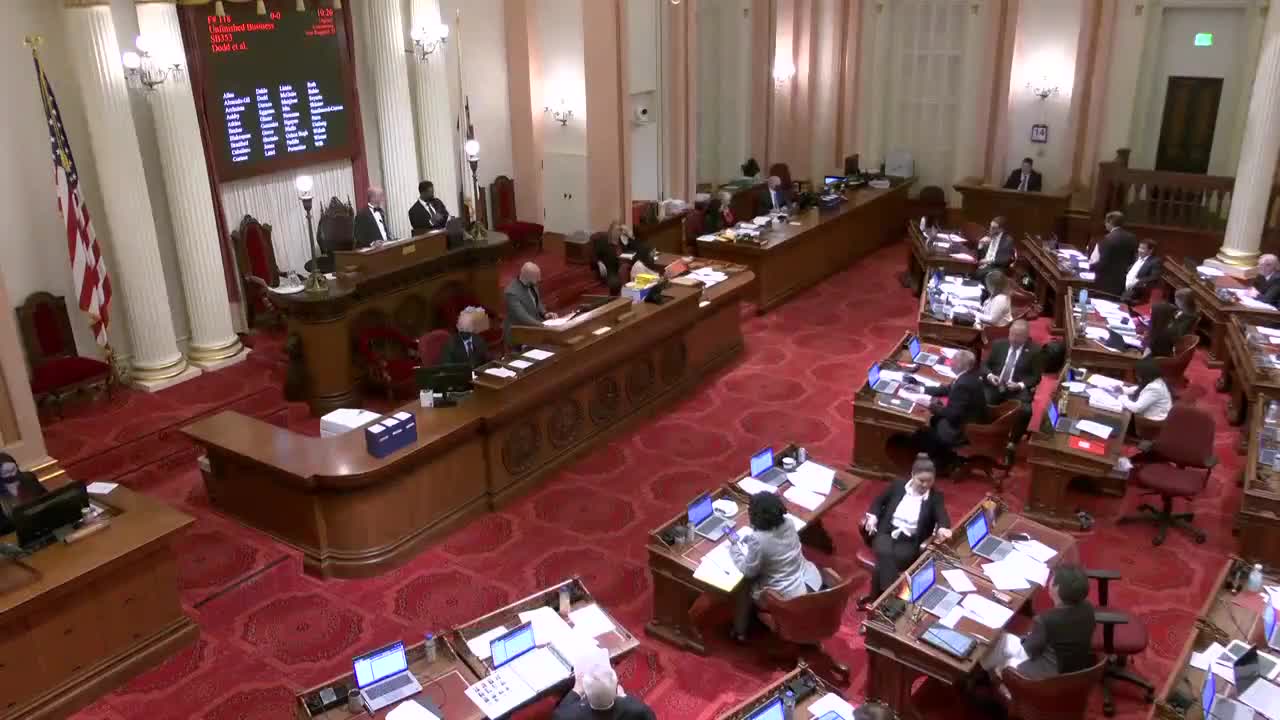 2MIN
Senate Floor
 1MIN
Assembly Floor
 12MIN
Assembly Standing Committee on Human Services
 3MIN
Senate Floor
 17MIN
Senate Standing Committee on Public Safety
 23MIN
Senate Standing Committee on Human Services
Bill Author

Bill Co-Author(s):