SB 843: Factual innocence.
- Session Year: 2023-2024
- House: Senate
- Latest Version Date: 2023-03-29
Current Status:
Failed
(2024-02-01: Returned to Secretary of Senate pursuant to Joint Rule 56.)
Introduced
In Committee
First Chamber
In Committee
Second Chamber
Enacted
Existing law requires the court to order records sealed if a person is found to be factually innocent, including records of arrest and detention, upon written or oral motion of any party. Under existing law, if a writ of habeas corpus or motion to vacate a judgment is granted for specified reasons, the petitioner may move for a finding of factual innocence by a preponderance of the evidence for the purpose of obtaining compensation for the pecuniary injury sustained through the erroneous conviction and incarceration.
This bill would require the Department of Justice in those circumstances to issue to the person a certificate of innocence, annotate the persons state summary criminal history information, and request the law enforcement agency that has jurisdiction over the offense underlying the conviction at issue and any local, state, or federal agency or entity to which the department provided that criminal record information to also annotate their records, as specified. The bill would require any state or local agency or entity within the State of California that receives notice of this request from the department to annotate any local summary criminal history information for the person and to request that any local, state, or federal agency or entity to which the law enforcement agency provided that criminal offender record information annotate its records, as specified. By imposing additional duties on local governments, this bill would impose a state-mandated local program. The bill would require courts to order that relief be granted when a person is found to be factually innocent, and would require the court to report those proceedings to the Department of Justice. The bill would additionally require the Department of Justice to send notice of findings of innocence to all agencies and officers that it had previously notified of the arrest or other proceedings against the person.
The California Constitution requires the state to reimburse local agencies and school districts for certain costs mandated by the state. Statutory provisions establish procedures for making that reimbursement.
This bill would provide that, if the Commission on State Mandates determines that the bill contains costs mandated by the state, reimbursement for those costs shall be made pursuant to the statutory provisions noted above.
Existing law defines murder as the unlawful killing of a human being, or a fetus, with malice aforethought. Existing law creates an exemption for a person who commits an act that results in the death of a fetus under specific circumstances, including if the act is solicited, aided, abetted, or consented to by the mother of the fetus.This bill would expand that exemption to include a mother who sought, arranged, or agreed to the act that resulted in the death of the fetus.Existing law defines murder as the unlawful killing of a human being, or a fetus, with malice aforethought. Existing law creates an exemption for a person who commits an act that results in the death of a fetus under specific circumstances, including if the act is solicited, aided, abetted, or consented to by the mother of the fetus.
This bill would expand that exemption to include a mother who sought, arranged, or agreed to the act that resulted in the death of the fetus.
Whenever a person is convicted of a charge, and the conviction is set aside based upon a determination that the person was factually innocent of the charge, the judge shall order that the records in the case be sealed, including any record of arrest or detention, upon written or oral motion of any party in the case or the court, and with notice to all parties to the case. If such an order is made, the court shall give the defendant a copy of that order and inform the defendant that he or she may thereafter state he or she was not arrested for that charge and that he or she was not convicted of that charge, and that he or she was found innocent of that charge by the court. The court shall also inform the defendant of the availability of indemnity for persons erroneously convicted pursuant to Chapter 5 (commencing with Section 4900) of Title 6 of Part 3, and the time limitations for presenting those claims. The court shall report the finding of innocence to the Department of Justice, utilizing existing reporting methods prescribed by the department, and shall issue both of the following:
(a)An order entitling the defendant, upon application to the Department of Justice, to the relief available pursuant to Section 13151.5, and, upon proof by the defendant, specifying the number of days that the defendant was incarcerated, including in pretrial detention, solely as a result of the former conviction, the number of days that the individual was on parole or community supervision solely as a result of the former conviction, and the number of days the defendant was required to register as a sex offender solely as a result of the former conviction. A person granted relief under this section prior to January 1, 2024, may bring a motion for the relief available under this subdivision and for the relief available pursuant to Section 13151.5. The court shall provide the Department of Justice with any order issued under this subdivision utilizing existing reporting methods prescribed by the department.
(b)Upon written or oral motion of a party in the case or the court, and with notice to all parties to the case, an order that the records in the case be sealed, including any record of arrest or detention. If such an order is made, the court shall give the defendant a copy of that order and inform the defendant that they may thereafter state they were not arrested for that charge and that they were not convicted of that charge, and that they were found innocent of that charge by the court.
SEC. 2.Section 1485.55 of the Penal Code is amended to read:1485.55.(a)In a contested or uncontested proceeding, if the court has granted a writ of habeas corpus or when, pursuant to Section 1473.6, the court vacates a judgment, and if the court has found that the person is factually innocent, under any standard for factual innocence applicable in those proceedings, that finding shall be binding on the California Victim Compensation Board for a claim presented to the board, and upon application by the person, the board shall, without a hearing, recommend to the Legislature that an appropriation be made and the claim paid pursuant to Section 4904. A person granted relief under this subdivision on or after January 1, 2014, is entitled, upon application to the Department of Justice, to the relief available pursuant to Section 13151.5.
(b)In a contested or uncontested proceeding, if the court has granted a writ of habeas corpus or vacated a judgment pursuant to Section 1473.6 or paragraph (2) of subdivision (a) of Section 1473.7, the person may move for a finding of factual innocence by a preponderance of the evidence that the crime with which they were charged was either not committed at all or, if committed, was not committed by the petitioner. If the court makes a finding of factual innocence under this subdivision, it shall also issue an order entitling the defendant, upon application to the Department of Justice, to the relief available pursuant to Section 13151.5, including, subject to proof by the defendant, the number of days that the defendant was incarcerated, including in pretrial detention, solely as a result of the former conviction, the number of days that the individual was on parole or community supervision solely as a result of the former conviction, and the number of days the defendant was required to register as a sex offender solely as a result of the former conviction. The court shall provide the Department of Justice with any order issued under this subdivision utilizing existing reporting methods prescribed by the department.
(c)If the court makes a finding that the petitioner has proven their factual innocence by a preponderance of the evidence pursuant to subdivision (b), the board shall, without a hearing, recommend to the Legislature that an appropriation be made and any claim filed shall be paid pursuant to Section 4904. A person granted relief under this subdivision prior to January 1, 2024, is entitled, upon application to the Department of Justice, to the relief available pursuant to Section 13151.5.
(d)A presumption does not exist An inference shall not be drawn in any other proceeding for failure to make a motion or obtain a favorable ruling pursuant to subdivisions subdivision (a) and or (b). No A res judicata or collateral estoppel finding in any other proceeding shall not be made for failure to make a motion or obtain a favorable ruling pursuant to subdivision (a) or (b) of this section.
(e)If a federal court, after granting a writ of habeas corpus, pursuant to a nonstatutory motion or request, finds a petitioner factually innocent by no less than a preponderance of the evidence that the crime with which they were charged was either not committed at all or, if committed, was not committed by the petitioner, the board shall, without a hearing, recommend to the Legislature that an appropriation be made and any claim filed shall be paid pursuant to Section 4904. A person granted relief under this subdivision on or after January 1, 2014, is entitled, upon application to the Department of Justice, to the relief available pursuant to Section 13151.5.
(f)For the purposes of this section, unless otherwise stated, court is defined as a state or federal court.
SEC. 3.Section 11105.55 is added to the Penal Code, to read:11105.55.If the Department of Justice receives notice that a person has received a finding of innocence from a state or federal court, or of an award or recommendation of compensation for erroneous conviction from the California Victim Compensation Board, it shall send notice of that fact to all officers and agencies that it had previously notified of the arrest or other proceedings against the person.
SEC. 4.Section 13102 of the Penal Code is amended to read:13102.(a)As used in this chapter, criminal offender record information means records and data compiled by criminal justice agencies for purposes of identifying criminal offenders and of maintaining as to each such offender a summary of arrests, pretrial proceedings, the nature and disposition of criminal charges, sentencing, incarceration, rehabilitation, and release.
Such(b)Criminal offender record information shall be restricted to that which is recorded as the result of an arrest, detention, or other initiation of criminal proceedings or of any consequent proceedings related thereto. It shall be understood to include, where appropriate, such items for each person arrested as the following:
(a)(1)Personal indentification. identification.
(b)(2)The fact, date, and arrest charge; whether the individual was subsequently released and, if so, by what authority and upon what terms.
(c)(3)The fact, date, and results of any pretrial proceedings.
(d)(4)The fact, date, and results of any trial or proceeding, including any sentence or penalty.
(e)(5)The fact, date, and results of any direct or collateral review of that trial or proceeding; the period and place of any confinement, including admission, release; and, where appropriate, readmission and rerelease dates.
(f)(6)The fact, date, and results of any release proceedings.
(g)(7)The fact, date, and authority of any act of pardon or clemency.
(h)(8)The fact and date of any formal termination to the criminal justice process as to that charge or conviction.
(i)(9)The fact, date, and results of any proceeding revoking probation or parole.
(10)The fact and date of an annotation required under paragraph (2) of subdivision (c) of Section 13151.5.
It(c)Criminal offender record information shall not include intelligence, analytical, and investigative reports and files, nor statistical records and reports in which individuals are not identified and from which their identities are not ascertainable.
SEC. 5.Section 13151.5 is added to the Penal Code, to read:13151.5.(a)A person who has received an order granting relief pursuant to Section 851.86 or 1485.55, a federal court order containing a finding of factual innocence, or an award or recommendation by the California Victim Compensation Board of compensation for erroneous conviction, may file an application with the Department of Justice for a certificate and an annotation to their criminal offender record information. The application shall include a certified copy of the order granting relief to the claimant pursuant to Section 851.86 or 1485.55, the federal court order containing a finding of the claimants factual innocence, or the order by the California Victim Compensation Board awarding or recommending compensation to the claimant for erroneous conviction.
(b)The Department of Justice shall prescribe and furnish the procedures and forms to be used for the application described in subdivision (a).
(c)When the Department of Justice receives an application and supporting materials pursuant to subdivision (a), it shall, within six weeks, do all of the following:
(1)Issue to the claimant a certificate on Department of Justice letterhead, signed by or on behalf of the Attorney General, stating the claimants name, the charge set forth in the original and any amended accusatory pleading that resulted in the former conviction, the fact and date of the former conviction, and that either a court has found that the claimant did not commit the crime underlying the former conviction or the California Victim Compensation Board has awarded compensation to the claimant for erroneous conviction. If the application includes a certified order with findings on the number of days that the claimant was incarcerated, placed on parole or community supervision, or required to register as a sex offender solely as a result of the former conviction, these day counts shall also be included in the certificate.
(2)Annotate the claimants state summary criminal history information to state, directly next to or below the entry regarding the former conviction, that either a court has found that the claimant did not commit the crime underlying the former conviction or the California Victim Compensation Board has awarded compensation to the claimant for erroneous conviction.
(3)Request that the law enforcement agency that has jurisdiction over the offense underlying the conviction at issue, as well as any local, state, or federal agency or entity to which the Department of Justice has provided criminal offender record information regarding the claimant, annotate its records to state that either a court has found that the claimant did not commit the crime underlying the former conviction or the California Victim Compensation Board has awarded compensation to the claimant for erroneous conviction. Each state or local agency or entity within the State of California receiving such a request shall annotate its records accordingly.
(d)A state or local agency or entity with the State of California that receives notice from the Department of Justice pursuant to paragraph (3) of subdivision (c), including the law enforcement agency that has jurisdiction over the offense underlying the conviction at issue, shall, within two weeks, do both of the following:
(1)Annotate the local summary criminal history information for the claimant to state, directly next to or below the entry or entries regarding the former conviction, that either a court has found that the claimant did not commit the crime underlying the former conviction or the California Victim Compensation Board has awarded compensation to the claimant for erroneous conviction.
(2)Request that a local, state, or federal agency or entity to which the law enforcement agency has provided criminal offender record information regarding the claimant annotate its records to state that either a court has found that the claimant did not commit the crime underlying the former conviction or the California Victim Compensation Board has awarded compensation to the claimant for erroneous conviction. Each state or local agency or entity within the State of California receiving such a request shall annotate its records accordingly.
SEC. 6.If the Commission on State Mandates determines that this act contains costs mandated by the state, reimbursement to local agencies and school districts for those costs shall be made pursuant to Part 7 (commencing with Section 17500) of Division 4 of Title 2 of the Government Code.
SECTION 1.Section 187 of the Penal Code is amended to read:187.(a)Murder is the unlawful killing of a human being, or a fetus, with malice aforethought.(b)This section shall not apply to a person who commits an act that results in the death of a fetus if any of the following apply:(1)The act complied with the Therapeutic Abortion Act, Article 2 (commencing with Section 123400) of Chapter 2 of Part 2 of Division 106 of the Health and Safety Code.(2)The act was committed by a holder of a physicians and surgeons certificate, as defined in the Business and Professions Code, in a case where, to a medical certainty, the result of childbirth would be death of the mother of the fetus or where the mothers death from childbirth, although not medically certain, would be substantially certain or more likely than not.(3)The act was solicited, sought, arranged, aided, abetted, or agreed to by the mother of the fetus.(c)Subdivision (b) shall not be construed to prohibit the prosecution of a person under any other provision of law.(a)Murder is the unlawful killing of a human being, or a fetus, with malice aforethought.
(b)This section shall not apply to any a person who commits an act that results in the death of a fetus if any of the following apply:
(1)The act complied with the Therapeutic Abortion Act, Article 2 (commencing with Section 123400) of Chapter 2 of Part 2 of Division 106 of the Health and Safety Code.
(2)The act was committed by a holder of a physicians and surgeons certificate, as defined in the Business and Professions Code, in a case where, to a medical certainty, the result of childbirth would be death of the mother of the fetus or where her the mothers death from childbirth, although not medically certain, would be substantially certain or more likely than not.
(3)The act was solicited, sought, arranged, aided, abetted, or consented agreed to by the mother of the fetus.
(c)Subdivision (b) shall not be construed to prohibit the prosecution of any a person under any other provision of law.
|
Date
|
Status
|
|---|---|
| Feb 1, 2024 | Returned to Secretary of Senate pursuant to Joint Rule 56. |
| May 18, 2023 | May 18 hearing: Held in committee and under submission. |
| May 12, 2023 | Set for hearing May 18. |
| May 1, 2023 | May 1 hearing: Placed on APPR suspense file. |
| Apr 21, 2023 | Set for hearing May 1. |
| Apr 19, 2023 | From committee: Do pass and re-refer to Com. on APPR. (Ayes 5. Noes 0. Page 803.) (April 18). Re-referred to Com. on APPR. |
| Mar 29, 2023 | From committee with author's amendments. Read second time and amended. Re-referred to Com. on PUB S. |
| Mar 23, 2023 | Set for hearing April 18. |
| Mar 22, 2023 | March 28 set for first hearing canceled at the request of author. |
| Mar 8, 2023 | Set for hearing March 28. |
| Mar 1, 2023 | Referred to Com. on PUB S. |
| Feb 21, 2023 | From printer. May be acted upon on or after March 20. |
| Feb 17, 2023 | Introduced. Read first time. To Com. on RLS. for assignment. To print. |
|
Date
|
Description
|
Location
|
Votes
|
|
|---|---|---|---|---|
| May 1, 2023 | Placed on suspense file | Senate Standing Committee on Appropriations |
Passed |
|
| Apr 18, 2023 | Do pass, but first be re-referred to the Committee on [Appropriations] | Senate Standing Committee on Public Safety |
Passed |
This list shows positions taken on this bill by organizations on the date displayed, which is linked to the original source.
Positions by individuals are not included.
|
Organization
|
Position
|
Date
|
|---|---|---|
| After Innocence | * Support | Apr 18, 2023 |
| California Public Defenders Association | * Support | Apr 18, 2023 |
SENATE COMMITTEE ON
Senator Anthony Portantino, Chair
2023 - 2024 Regular Session
SB 843 (Glazer) - Factual innocence
Version: | Policy Vote: |
Urgency: | Mandate: |
Hearing Date: | Consultant: |
Bill Summary:
SB 843 would require the updating of records and issuance of a certificate of factual innocence to people who have been found factually innocent by a court.
Fiscal Impact:
- DOJ: Staff notes costs of approximately $27,000 in fiscal year (FY) 2022-23, $35,000 in FY 2023-24 and annually thereafter DOJ to create and award certificates of innocence, annotate criminal history records, and notify entities to which records have been provided (General Fund).
- Local law enforcement: Unknown, potentially reimbursable costs to local law enforcement agencies to annotate certificate of innocence on criminal history records and send out requests to update records to all entities to which those records have been provided (Local Funds, General Fund). General Fund costs will depend on whether this bill constitutes a reimbursable state mandate as determined by the Commission on State Mandates.
Background:
Under existing law there are a number of ways in which a person may be found by a state or federal court to be factually innocence. A person found factually innocent is entitled to reimbursement for their time served. The Victim’s Compensation Board (VCB) makes a recommendation to Legislature to appropriate the funds. This bill clarifies that when a court finds a person factually innocent, the court shall notify the DOJ of that fact and the DOJ shall in turn include it in its criminal record information and notify anyone to whom they have sent a criminal record.
Proposed Law:
- Provides that when a court sets aside a conviction based upon a determination that the person was factually innocent of the charge it shall report the finding of innocence to the Department of Justice (DOJ) and shall issue both of the following:
- An order entitling the defendant, upon application to the DOJ, to specified relief, and, upon proof that the defendant was incarcerated, solely as a result of the former conviction, the number of dates that the individual was on parole or community supervision, and the number of days the person was required ot register as a sex offender. A person granted relief under this section prior to January 1, 2024, may bring a motion for relief available under this bill.
- Upon written or oral motion of a party in the case or court, and with notice to all parties to the case, an order that the records in the case be sealed, including any record of arrest or detention. If such an order is made, the court shall give the defendant a copy of that order and inform the defendant that they may thereafter state they were not convicted of that charge, and that they were found innocent of that charge in court.
- Provides that if the DOJ receives notice that a person has received a finding of innocence from a state or federal court, or of an award or recommendation of compensation for erroneous conviction from a VCB, it shall send notice of that fact to all officers and agencies it has previously notified of the arrest or other proceedings against the person.
- Provides that a person who has received an order granting relief based on a finding of factual innocence, the DOJ shall, within two weeks do all the following:
- Issue to the claimant a certificate of innocence on Department of Justice letterhead, stating the charge set forth in the original and any amended accusatory pleading that resulted in the former conviction, the fact and date of the former conviction, and that either a court has found the claimant did not commit the crime underlying the former conviction of the VCB has awarded compensation to the claimant for an erroneous conviction. If the application includes a certified order with findings on the number of days incarcerated, etc. those day counts should also be included in the certificate.
- Annotate the claimant’ state summary criminal history information to state, directly next to or below the entry or entries regarding the former conviction that the claimant has been found by court to have not committed the crime or the VCB has awarded compensation to the claimant for erroneous conviction.
- Request that the law enforcement agency that has jurisdiction over the offense underlying the conviction at issue, as well as any local, state, or federal agency or entity to which the DOJ has provided criminal offender record information regarding the claimant, annotate its records to state that either a court found the claimant did not commit the crime underlying the former conviction or the VCB has awarded compensation to the claimant for erroneous conviction. Each agency receiving such a request shall annotate it records accordingly.
- Provides that the law enforcement agency that has jurisdiction over the offense underlying the conviction at issue shall, within two weeks, do both of the following:
- Annotate any local summary criminal history information for the claimant to state, directly next to or below the entry or entries regarding the former conviction, that the claimant did not commit the crime underlying the former conviction or VCB has awarded compensation to the claimant for erroneous conviction.
- Request that any local, state, or federal agency or entity to which the law enforcement agency has provided criminal offender record information regarding the claimant annotate its records to state that the claimant did not commit the crime underlying the former conviction or VCB has awarded compensation to the claimant for erroneous conviction. Each state or local agency or entity within the State of California receiving such a request shall annotate its records accordingly.
- Provides that any person who has been found factually innocent prior to January 1, 2023 is entitled to the nonmonetary relief described in the bill.
- Provides that if the DOJ receives notice that a person has received a finding of innocence, it shall send notice of that fact to all officers and agencies it had previously notified of the arrest or other proceedings against the person.
- Provides that a finding of factual innocence shall be included in the criminal record information.
Related Legislation:
SB 1468 (Glazer, 2022) was substantially similar to this bill except that it would have included certain decisions by the CalVCB to also trigger non-monetary relief. SB 1468 was vetoed by the Governor who stated that he was “concerned it deems an informal decision by CalVCB to approve compensation to necessarily be an official finding of innocence.”
-- END --
SENATE COMMITTEE ON PUBLIC SAFETY
Senator Aisha Wahab, Chair
2023 - 2024 Regular
Bill No: SB 843 Hearing Date: April 18, 2023
Author: | Glazer | ||
Version: | March 29, 2023 | ||
Urgency: | No | Fiscal: | Yes |
Consultant: | MK | ||
Subject: Crimes: murder
HISTORY
Source: After Innocence
Prior Legislation: SB 1468 (Glazer) Vetoed 2022
Support: California Public Defenders Office
Opposition: None known
PURPOSE
The purpose of this bill is to provide non-monetary relief in the form of updating records and issuing a certificate of factual innocence to people who have been found factually innocent by a court.
Existing law provides that whenever a person is convicted of a charge, and the conviction is set aside based upon a determination that the person was factually innocent of the charge, the judge shall order that the records in the case be sealed, including any record of arrest or detention, upon written or oral motion of any party in the case or the court, and with notice to all parties to the case. If such an order is made, the court shall give the defendant a copy of that order and inform the defendant that he or she may thereafter state he or she was not arrested for that charge and that he or she was not convicted of that charge, and that he or she was found innocent of that charge by the court. The court shall also inform the defendant of the availability of indemnity for persons erroneously convicted and the time limitations for presenting those claims. (Penal Code § 851.86)
This bill provides that the court shall report the finding of innocence to the Department of Justice (DOJ) and shall issue both of the following:
- An order entitling the defendant, upon application to the DOJ, to specified relief, and, upon proof that the defendant was incarcerated, solely as a result of the former conviction, the number of dates that the individual was on parole or community supervision, and the number of days the person was required ot register as a sex offender. A person granted relief under this section prior to January 1, 2024, may bring a motion for relief available under this bill.
- Upon written or oral motion of a party in the case or court, and with notice to all parties to the case, an order that the records in the case be sealed, including any record of arrest or detention. If such an order is made, the court shall give the defendant a copy of that order and inform the defendant that they may thereafter state they were not convicted of that charge, and that they were found innocent of that charge in court.
Existing law provides that when a person is found factually innocent, either after a habeas corpus petition, motion, or after the dismissal of charges, a person is entitled to specified monetary compensation. (Pen. Code Sec. 1485.55)
This bill provides that in addition to compensation through the VCB and Legislature, the person shall be granted the nonmonetary relief that is available pursuant to this bill.
This bill provides that if the DOJ receives notice that a person has received a finding of innocence from a state or federal court, or of an award or recommendation of compensation for erroneous conviction from a VCB, it shall send notice of that fact to all officers and agencies it has previously notified of the arrest or other proceedings against the person.
This bill provides that a person who has received an order granting relief based on a finding of factual innocence, the claimant shall be entitled to the following relief:
- The Department of Justice shall, within two weeks do all the following:
- Issue to the claimant a certificate of innocence on Department of Justice letterhead, stating the charge set forth in the original and any amended accusatory pleading that resulted in the former conviction, the fact and date of the former conviction, and that either a court has found the claimant did not commit the crime underlying the former conviction of the VCB has awarded compensation to the claimant for an erroneous conviction. If the application includes a certified order with findings on the number of days incarcerated, etc. those day counts should also be included in the certificate.
- Annotate the claimant’ state summary criminal history information to state, directly next to or below the entry or entries regarding the former conviction that the claimant has been found by court to have not committed the crime or the VCB has awarded compensation to the claimant for erroneous conviction.
- Request that the law enforcement agency that has jurisdiction over the offense underlying the conviction at issue, as well as any local, state, or federal agency or entity to which the DOJ has provided criminal offender record information regarding the claimant, annotate its records to state that either a court found the claimant did not commit the crime underlying the former conviction or the VCB has awarded compensation to the claimant for erroneous conviction. Each agency receiving such a request shall annotate it records accordingly.
This bill provides that the law enforcement agency that has jurisdiction over the offense underlying the conviction at issue shall, within two weeks, do both of the following:
- Annotate any local summary criminal history information for the claimant to state, directly next to or below the entry or entries regarding the former conviction, that the claimant did not commit the crime underlying the former conviction or VCB has awarded compensation to the claimant for erroneous conviction.
- Request that any local, state, or federal agency or entity to which the law enforcement agency has provided criminal offender record information regarding the claimant annotate its records to state that the claimant did not commit the crime underlying the former conviction or VCB has awarded compensation to the claimant for erroneous conviction. Each state or local agency or entity within the State of California receiving such a request shall annotate its records accordingly.
This bill provides that any person who has been found factually innocent prior to January 1, 2023 is entitled to the nonmonetary relief it creates.
This bill provides that if the Department of Justice receives notice that a person has received a finding of innocence, it shall send notice of that fact to all officers and agencies it had previously notified of the arrest or other proceedings against the person.
Existing law includes what shall be included in a person’s criminal record information. (Pen. Code Sec. 13102)
This bill provides that a fact and date of an annotation under this bill shall be included in the criminal record information.
COMMENTS
1. Need for This Bill
According to the author:
For example, when they apply for jobs or housing, prospective employers and landlords will learn about their conviction and incarceration by reviewing commercial background checks, online research, or their employment or rental histories. But those sources typically do not include subsequent exonerations or findings by the state of factual innocence.
As a result, prospective employers or landlords have no reason to believe that applicants were exonerated and found innocent, and the individuals have no simple way to prove otherwise.
SB 843 would provide that, upon receipt of a certified copy of a court finding of innocence or a recommendation or award of compensation for erroneous conviction, the Department of Justice will provide the individual a certificate that states (1) the dates of the wrongful conviction and its reversal; and (2) the source of the finding of innocence or compensation for erroneous conviction.
By reducing these additional challenges and moving towards a mindset of prevention and rehabilitation, these individuals will be able re-enter society with more ease.
This bill will help lower recidivism levels and create a path for those who were found innocence to reintegrate into society.
2. Factual Innocence
Under existing law there are a number of ways in which a person may be found by a state or federal court to be factually innocence. A person found factually innocent is entitled to reimbursement for their time served. The Victim’s Compensation Board (VCB) makes a recommendation to Legislature to appropriate the funds.
This bill clarifies that when a court finds a person factually innocent, the court shall notify the DOJ of that fact and the DOJ shall in turn include it in its criminal record information and notify anyone to whom they have sent a criminal record.
3. Nonmonetary relief
This bill creates the right to the following “nonmonetary relief” for anyone that has been found to be factually innocent.
- Certificate of Innocence
This bill provides that when a person who has received an order grating relief for innocence, a federal court order containing a finding of factual innocence, or an award or recommendation by the VCB of compensation for erroneous conviction, may file an application with the DOJ for a certificate and an annotation in their criminal record information. The certificate shall be issued on DOJ letterhead within six weeks from when DOJ receives the application.
Is the DOJ the proper entity to issue a certificate of innocence? Would it be more appropriate coming from the court that made the determination or from the VCB after granting an award? If the concern that it be uniform, couldn’t Judicial Council come up with a form? The courts are as much a representative of the State as DOJ. If the issue is the abstract of judgement a person would receive is too confusing, the court could attach a more easily understood certificate of innocence. Wouldn’t the court issuing a plain language document be more efficient?
- Annotate claimant’s criminal history
This bill provides that within six weeks of being notified that a court has found a person factually innocent, or the VCB has awarded a claim, the DOJ and any local law enforcement agency having jurisdiction over the case, shall annotate any local summary criminal history information for the claimant to state, directly next to or below the entry or entries regarding the former conviction that the claimant has been found by the State of California to be innocent of the crime underlying the former conviction.
- Have other agencies update their records
This bill provides that within six weeks of being notified that a court has found a person factually innocent, the DOJ and any local law enforcement agency having jurisdiction over the case, shall request that local, state, or federal agencies or entities to which the DOJ has provided records, update their records to reflect the innocence.
4. Veto Message to SB 1468 (Glazer) 2022
The Governor vetoed SB 1468 a similar bill stating:
This bill would provide nonmonetary relief for all persons who have been either (1) declared factually innocent by a federal or state court under any standard, or (2) approved for compensation by the California Victim Compensation Board (CalVCB) as an erroneously convicted individual. The nonmonetary relief includes an official certificate of innocence, as well as an annotation in the claimant's criminal history information stating that the claimant has been found innocent of the crime.
I support ensuring that those who have been erroneously convicted have the tools necessary to reenter society. While this bill is well intended, I am concerned it deems an informal decision by CalVCB to approve compensation to necessarily be an official finding of innocence.
For this reason, I cannot sign this bill.
Since this bill still includes an award by VCB as a trigger for the certificate and the changes to the criminal record, does this bill address the Governor’s concerns?
5. Argument in Support
The California Public Defenders Association supports this bill stating:
SB 843 clarifies and expands the exemption for who can be charged with murder of a fetus. SB 483 amends Penal Code Section 187 to specify that if the mother of the fetus sought, arranged, or agreed to the killing, then the person who committed the act resulting in the fetus’s death cannot be charged with murder with malice aforethought. These changes protect women’s rights to bodily autonomy by protecting those who assist them in carrying out their wishes from prosecution.
-- END –
Discussed in Hearing
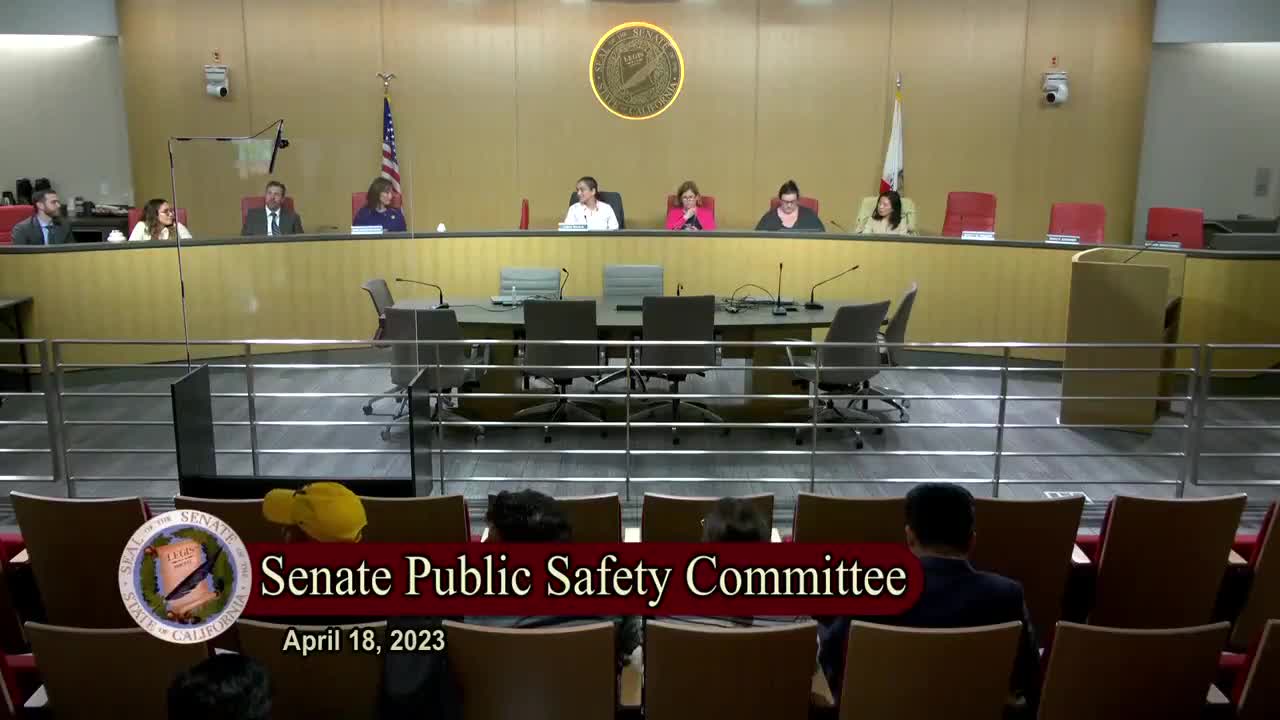 6MIN
Senate Standing Committee on Public Safety
Bill Author

Bill Co-Author(s):