SB 847: Vehicles: motorcycle: safety helmet exception.
- Session Year: 2023-2024
- House: Senate
- Latest Version Date: 2023-09-19
Current Status:
Failed
(2024-01-25: Stricken from file.)
Introduced
In Committee
First Chamber
In Committee
Second Chamber
Enacted
What does this bill do?
The bill lets the state agency that sets motorcycle helmet rules certify helmets that mostly meet federal safety standards but do not fully comply when the helmet is designed to accommodate a driver’s or passenger’s religious beliefs or practices. This would allow manufacturers and sellers to offer those specially designed helmets for use by motorcycle and motorized bicycle riders.
The summary is provided by generative AI which can make mistakes. For original language, please view the details in the table below.
Existing law authorizes the Department of the California Highway Patrol to adopt regulations establishing specifications and standards for safety helmets offered for sale, or sold, for use by drivers and passengers of motorcycles and motorized bicycles. Existing law requires the regulations to include specified federal standards.
This bill would authorize the department, notwithstanding the provisions mentioned above, to adopt a regulation certifying a helmet offered for sale, or sold, that substantially complies with, but does not meet, the requirements imposed by the specified federal standards if the helmet is designed for the purposes of compliance with a drivers or passengers religious beliefs or practices.
Existing law requires a driver and a passenger to wear a safety helmet meeting certain requirements when riding on a motorcycle, motor-driven cycle, or motorized bicycle. This bill would exempt from this requirement a person who wears a turban or patka as an expression of the persons religious belief and practice when riding on a motorcycle, motor-driven cycle, or motorized bicycle.Existing law requires a driver and a passenger to wear a safety helmet meeting certain requirements when riding on a motorcycle, motor-driven cycle, or motorized bicycle.
This bill would exempt from this requirement a person who wears a turban or patka as an expression of the persons religious belief and practice when riding on a motorcycle, motor-driven cycle, or motorized bicycle.
(a)The department may adopt reasonable regulations establishing specifications and standards for safety helmets offered for sale, or sold, for use by drivers and passengers of motorcycles and motorized bicycles as it determines are necessary for the safety of those drivers and passengers. The regulations shall include, but are not limited to, the requirements imposed by Federal Motor Vehicle Safety Standard No. 218 (49 C.F.R. Sec. 571.218) and may include compliance with that federal standard by incorporation of its requirements by reference. Each helmet sold or offered for sale for use by drivers and passengers of motorcycles and motorized bicycles shall be conspicuously labeled in accordance with the federal standard that shall constitute the manufacturers certification that the helmet conforms to the applicable federal motor vehicle safety standards.
(b)A person shall not sell, or offer for sale, for use by a driver or passenger of a motorcycle or motorized bicycle any safety helmet that is not of a type meeting requirements established by the department.
(c)Notwithstanding subdivision (a), the department may adopt a regulation certifying a helmet offered for sale, or sold, for use by drivers and passengers of motorcycles and motorized bicycles that substantially complies with, but does not meet, the requirements imposed by the federal motor vehicle safety standards if the helmet is designed for the purposes of compliance with a drivers or passengers religious beliefs or practices.
(a)The department may adopt reasonable regulations establishing specifications and standards for safety helmets offered for sale, or sold, for use by drivers and passengers of motorcycles and motorized bicycles as it determines are necessary for the safety of those drivers and passengers. The regulations shall include, but are not limited to, the requirements imposed by Federal Motor Vehicle Safety Standard No. 218 (49 C.F.R. Sec. 571.218) and may include compliance with that federal standard by incorporation of its requirements by reference. Each helmet sold or offered for sale for use by drivers and passengers of motorcycles and motorized bicycles shall be conspicuously labeled in accordance with the federal standard which that shall constitute the manufacturers certification that the helmet conforms to the applicable federal motor vehicle safety standards.
(b)No A person shall not sell, or offer for sale, for use by a driver or passenger of a motorcycle or motorized bicycle any safety helmet which that is not of a type meeting requirements established by the department.
(c)Notwithstanding subdivision (a), the department may adopt a regulation certifying a helmet offered for sale, or sold, for use by drivers and passengers of motorcycles and motorized bicycles that substantially complies with, but does not meet, the requirements imposed by the federal motor vehicle safety standards if the helmet is designed for the purposes of compliance with a drivers or passengers religious beliefs or practices.
SECTION 1.Section 27803 of the Vehicle Code is amended to read:27803.(a)A driver and any passenger shall wear a safety helmet meeting requirements established pursuant to Section 27802 when riding on a motorcycle, motor-driven cycle, or motorized bicycle.(b)It is unlawful to operate a motorcycle, motor-driven cycle, or motorized bicycle if the driver or any passenger is not wearing a safety helmet as required by subdivision (a).(c)It is unlawful to ride as a passenger on a motorcycle, motor-driven cycles, or motorized bicycle if the driver or any passenger is not wearing a safety helmet as required by subdivision (a).(d)This section applies to persons who are riding on motorcycles, motor-driven cycles, or motorized bicycles operated on the highways.(e)For the purposes of this section, wear a safety helmet or wearing a safety helmet means having a safety helmet meeting the requirements of Section 27802 on the persons head that is fastened with the helmet straps and that is of a size that fits the wearing persons head securely without excessive lateral or vertical movement.(f)This section does not apply to a person operating, or riding as a passenger in, a fully enclosed three-wheeled motor vehicle that is not less than seven feet in length and not less than four feet in width, and has an unladen weight of 900 pounds or more, if the vehicle meets or exceeds all of the requirements of this code, the Federal Motor Vehicle Safety Standards, and the rules and regulations adopted by the United States Department of Transportation and the National Highway Traffic Safety Administration.(g)This section does not apply to a driver or passenger who wears a turban or patka as an expression of the persons religious belief and practice when riding on a motorcycle, motor-driven cycle, or motorized bicycle.(h)In enacting this section, it is the intent of the Legislature to ensure that all persons are provided with an additional safety benefit while operating or riding a motorcycle, motor-driven cycle, or motorized bicycle.(a)A driver and any passenger shall wear a safety helmet meeting requirements established pursuant to Section 27802 when riding on a motorcycle, motor-driven cycle, or motorized bicycle.
(b)It is unlawful to operate a motorcycle, motor-driven cycle, or motorized bicycle if the driver or any passenger is not wearing a safety helmet as required by subdivision (a).
(c)It is unlawful to ride as a passenger on a motorcycle, motor-driven cycles, or motorized bicycle if the driver or any passenger is not wearing a safety helmet as required by subdivision (a).
(d)This section applies to persons who are riding on motorcycles, motor-driven cycles, or motorized bicycles operated on the highways.
(e)For the purposes of this section, wear a safety helmet or wearing a safety helmet means having a safety helmet meeting the requirements of Section 27802 on the persons head that is fastened with the helmet straps and that is of a size that fits the wearing persons head securely without excessive lateral or vertical movement.
(f)This section does not apply to a person operating, or riding as a passenger in, a fully enclosed three-wheeled motor vehicle that is not less than seven feet in length and not less than four feet in width, and has an unladen weight of 900 pounds or more, if the vehicle meets or exceeds all of the requirements of this code, the Federal Motor Vehicle Safety Standards, and the rules and regulations adopted by the United States Department of Transportation and the National Highway Traffic Safety Administration.
(g)This section does not apply to a driver or passenger who wears a turban or patka as an expression of the persons religious belief and practice when riding on a motorcycle, motor-driven cycle, or motorized bicycle.
(g)(h)In enacting this section, it is the intent of the Legislature to ensure that all persons are provided with an additional safety benefit while operating or riding a motorcycle, motor-driven cycle, or motorized bicycle.
|
Date
|
Status
|
|---|---|
| Jan 25, 2024 | Veto sustained. |
| Jan 25, 2024 | Stricken from file. |
| Oct 8, 2023 | In Senate. Consideration of Governor's veto pending. |
| Oct 8, 2023 | Vetoed by the Governor. |
| Sep 21, 2023 | Enrolled and presented to the Governor at 4 p.m. |
| Sep 14, 2023 | Assembly amendments concurred in. (Ayes 31. Noes 5. Page 2798.) Ordered to engrossing and enrolling. |
| Sep 13, 2023 | In Senate. Concurrence in Assembly amendments pending. |
| Sep 13, 2023 | Read third time. Passed. (Ayes 74. Noes 0. Page 3391.) Ordered to the Senate. |
| Sep 5, 2023 | Read second time. Ordered to third reading. |
| Sep 1, 2023 | From committee: Do pass. (Ayes 16. Noes 0.) (September 1). |
| Aug 23, 2023 | August 23 set for first hearing. Placed on suspense file. |
| Jul 6, 2023 | From committee: Do pass and re-refer to Com. on APPR. (Ayes 15. Noes 0.) (July 5). Re-referred to Com. on APPR. |
| Jun 19, 2023 | From committee with author's amendments. Read second time and amended. Re-referred to Com. on TRANS. |
| Jun 15, 2023 | Referred to Coms. on TRANS. and JUD. |
| Jun 1, 2023 | In Assembly. Read first time. Held at Desk. |
| May 31, 2023 | Read third time. Passed. (Ayes 21. Noes 8. Page 1384.) Ordered to the Assembly. |
| May 16, 2023 | Read second time. Ordered to third reading. |
| May 15, 2023 | From committee: Be ordered to second reading pursuant to Senate Rule 28.8. |
| May 5, 2023 | Set for hearing May 15. |
| May 4, 2023 | May 8 hearing postponed by committee. |
| May 1, 2023 | Set for hearing May 8. |
| Apr 26, 2023 | From committee: Do pass and re-refer to Com. on APPR. (Ayes 9. Noes 0. Page 904.) (April 25). Re-referred to Com. on APPR. |
| Apr 3, 2023 | Set for hearing April 25. |
| Mar 1, 2023 | Referred to Com. on TRANS. |
| Feb 21, 2023 | From printer. May be acted upon on or after March 20. |
| Feb 17, 2023 | Introduced. Read first time. To Com. on RLS. for assignment. To print. |
|
Date
|
Description
|
Location
|
Votes
|
|
|---|---|---|---|---|
| Sep 14, 2023 | Unfinished Business SB847 Dahle Concurrence | Senate Floor |
Passed |
|
| Sep 13, 2023 | SB 847 Dahle Senate Third Reading By Megan Dahle | Assembly Floor |
Passed |
|
| Sep 1, 2023 | Do pass. | Assembly Standing Committee on Appropriations |
Passed |
|
| Jul 5, 2023 | Do pass and be re-referred to the Committee on [Appropriations] | Assembly Standing Committee on Transportation |
Passed |
|
| May 31, 2023 | Senate 3rd Reading SB847 Dahle | Senate Floor |
Passed |
|
| Apr 25, 2023 | Do pass, but first be re-referred to the Committee on [Appropriations] | Senate Standing Committee on Transportation |
Passed |
This list shows positions taken on this bill by organizations on the date displayed, which is linked to the original source.
Positions by individuals are not included.
|
Organization
|
Position
|
Date
|
|---|---|---|
| 1 private citizen | ** Support | |
| Auto Club of Southern California | ** Against | |
| California Coalition for Children's Safety and Health | ** Against | |
| Children's Advocacy Institute at University of San Diego School of Law | ** Against | |
| City Of Fresno | * Support | Jul 5, 2023 |
| County Health Executive's Association of California | * Against | Apr 25, 2023 |
| County Health Executives Association Of California | ** Against | |
| Jakara Movement | ** Against | |
| Legendary Sikh Riders | ** Support | |
| Manteca City Of | * Support | Jul 5, 2023 |
| Selma City | * Support | Jul 5, 2023 |
| Sikh Legends of America | ** Support | |
| Sikhead Saints Motorcycle Club | ** Support | |
| Yuba City | * Support | Jul 5, 2023 |
SENATE RULES COMMITTEE Office of Senate Floor Analyses (916) 651-1520 Fax: (916) 327-4478 | SB 847 |
VETO
Bill No: SB 847
Author: Dahle (R)
Amended: 6/19/23
Vote: 27
SENATE TRANSPORTATION COMMITTEE: 9-0, 4/25/23
AYES: Niello, Allen, Archuleta, Becker, Cortese, Dahle, Dodd, Newman, Seyarto
NO VOTE RECORDED: Gonzalez, Blakespear, Limón, McGuire, Nguyen, Umberg, Wahab
SENATE APPROPRIATIONS COMMITTEE: Senate Rule 28.8
SENATE FLOOR: 21-8, 5/31/23
AYES: Alvarado-Gil, Archuleta, Ashby, Atkins, Bradford, Caballero, Cortese, Dahle, Dodd, Eggman, Grove, Hurtado, Jones, Nguyen, Niello, Ochoa Bogh, Portantino, Roth, Seyarto, Skinner, Wilk
NOES: Blakespear, Glazer, Gonzalez, Min, Padilla, Smallwood-Cuevas, Umberg, Wiener
NO VOTE RECORDED: Allen, Becker, Durazo, Laird, Limón, McGuire, Menjivar, Newman, Rubio, Stern, Wahab
SENATE FLOOR: 31-5, 9/14/23
AYES: Allen, Alvarado-Gil, Archuleta, Ashby, Atkins, Becker, Bradford, Caballero, Cortese, Dahle, Dodd, Eggman, Glazer, Grove, Hurtado, Jones, Laird, Menjivar, Newman, Nguyen, Niello, Ochoa Bogh, Portantino, Roth, Rubio, Seyarto, Skinner, Smallwood-Cuevas, Umberg, Wahab, Wilk
NOES: Blakespear, Durazo, Gonzalez, Min, Wiener
NO VOTE RECORDED: Limón, McGuire, Padilla, Stern
ASSEMBLY FLOOR: 74-0, 9/13/23 - See last page for vote
SUBJECT: Vehicles: motorcycle: safety helmet exception
SOURCE: Author
This bill authorizes the California Highway Patrol (CHP) to adopt regulations certifying a helmet offered for sale, or sold, for use by drivers and passengers of motorcycles and motorized bicycles that substantially comply with, but do not meet, the requirements imposed by the federal motor vehicle safety standards, if the helmet is designed in compliance with a driver’s or passenger’s religious beliefs or practices.
ANALYSIS:
Existing law:
- Requires any driver or passenger to wear a safety helmet when riding on a motorcycle, motor-driven cycle, or motorized bicycle. (Vehicle Code (VEH) 27803)
- Requires safety helmets to meet requirements imposed by the Federal Motor Vehicle Safety Standards and be conspicuously labeled as in accordance with such. (VEH 27802)
This bill authorizes the CHP to adopt regulations certifying a helmet offered for sale, or sold, for use by drivers and passengers of motorcycles and motorized bicycles that substantially comply with, but do not meet, the requirements imposed by the federal motor vehicle safety standards, if the helmet is designed compliance with a driver’s or passenger’s religious beliefs or practices.
Comments
- Purpose of bill. According to the author, “Freedom of religion is a core foundation of this country. We, as Americans, have the right to freely express our religion and I believe that right should equally extend to everyone. Any law that limits the ability to express ones religion, goes against what this country is all about. While current law does not intentionally discriminate against certain religions, the reality is that those who practice those religions, are limited in how they can express their customs.”
- Motorcycle helmets save lives. Every year there are thousands of deaths and injuries of motorcyclists involved in crashes. According to the Center for Disease Control, more than 5,500 motorcyclists died in 2020, and more than 180,000 were treated in emergency departments for crash injuries. The economic costs of these injuries and deaths are significant: $81 million in medical costs and $57.8 billion from lives lost.
In 2017 the National Highway Traffic Safety Administration (NHTSA) published a report analyzing the impact helmets had on motorcyclist. According to that report, helmets saved the lives of 1,872 motorcyclists in 2017. If all motorcyclists had worn helmets, an additional 749 lives could have been saved. Helmets are estimated to be 37% effective in preventing fatalities to motorcycle riders and 41% for motorcycle passengers.
Every year NHTSA conducts the National Occupant Protection Use Survey, which provides nationwide observed data on motorcycle helmet use. In 2021 this survey found that in states requiring every rider to use a helmet 86% of riders wore a helmet while in other states only 53% wore a helmet. In states without universal helmet laws, 55% of motorcyclists killed in 2021 were not wearing helmets, as compared to 9% in states with universal helmet laws.
- California’s motorcycle helmet law. In 1966, federal legislation authorized the withholding of highway funds from any state that failed to enact a mandatory helmet requirement. A majority of states complied with the federal requirement, but California remained one of three states that did not comply. It was not until 1991 that California achieved full compliance through the enactment of AB 7 (Floyd, Chapter 32, Statutes of 1991).
Subsequently, in 1995, the federal government repealed the penalty sanction for states without helmet laws, giving individual states a choice in deciding to require the use of motorcycle helmets. The Legislature has heard several bills in the years since that would have created exemptions in the universal helmet law and has passed none of them.
- Turbans, patkas, and Sikhism. The 2021 American Community Survey estimated that 211,000 Sikhs live in California, nearly half of all Sikhs living in the United States. The Sikh Reht Maryada is a code of conduct and conventions for orthodox Sikhism. This code of conduct includes a dress code requiring Sikhs to carry five articles of faith, referred to as the Panj Kakkar. Among these articles is the Kesh, the practice of allowing one’s hair to grow naturally, without being cut. Because of the Kesh Sikhs also wear head coverings as a part of their faith, to cover and protect their hair. Sikh men are specifically required to tie a dastaar, or turban, as a symbol of humility and the supremacy of God. Many Sikh children wear patkas, a cloth head covering secured with strings, due to the shorter length of their Kesh or difficulty in tying a dastaar. Some Sikh men also choose to wear patkas, larger than those worn by children.
- Alternative helmets. According to the report An Analysis of Hospitalized Motorcyclists in the State of Maryland Based on Helmet Use and Outcome, operators injured in crashes and transported to a shock trauma center indicated that 56% of those wearing a “novelty helmet” received head injuries compared to 19% of those wearing a federally certified helmet. In 2011, NHTSA attempted to make it easier for riders and law enforcement officials to identify non-compliant helmets by requiring all compliant helmets manufactured after May 13, 2013, to have a certification decal which includes the phrase “FMVSS No. 28 certified.” California law requires helmets to have that label to comply with the state’s requirement to wear a helmet. In 2015, NHTSA updated its definition of motorcycle helmet to prevent the marketing of novelty helmets as motorcycle helmets. NHTSA created a process for approving helmets for manufacturers whose helmets do not comply with proposed dimensional and compression requirements, but do comply with the performance requirements and all other aspects of the federal rule.
There currently is no approved helmet for those of the Sikh faith. A company called Tough Turban has designed a turban that uses non-Newtonian foam that hardens on impact, 3D-printed chainmail, and a composite fabric used in bulletproof clothing, to create a turban that can lessen the impact of a motorcycle accident. This “Tough Turban” has no current public safety data available. This bill creates the potential avenue for the Tough Turban, or a similar type of helmet, to comply with California’s helmet law if, CHP determines that it substantially complies with the federal requirement.
- Promoting safety and expression. Federally certified motorcycle helmets save lives, and “novelty helmets” fail to provide the same protection as a federally certified helmet. Nonetheless, it is possible for a “novelty helmet” to provide better protection than no protection at all. Riding a motorcycle without a certified helmet is against current state law. However, certain faiths that enjoy riding motorcycles are likely to never to wear a helmet not because of a disbelief in a helmets safety benefit or preference to avoid compliance with state laws, but because their religious faith prohibits them from doing so. For these reasons, this bill authorizes the CHP to certify helmets that comply with religious beliefs even though they will not provide the same protections as a federally certified helmet.
FISCAL EFFECT: Appropriation: No Fiscal Com.: Yes Local: No
According to the Assembly Appropriations Committee, should the CHP elect to implement this bill, it could create state cost pressure. Establishing helmet regulations might require an investment of millions of dollars if conducted in-house. This would involve hiring qualified staff, setting up testing procedures, and acquiring the necessary equipment, extending over 12-18 months. Alternatively, outsourcing testing could still cost hundreds of thousands of dollars and might not be easily attainable. Liability concerns encompass multiple aspects. CHP's ability to provide motorcycle safety training for juveniles might be compromised, as contracted training companies could face challenges obtaining insurance for helmet-exempt courses. The potential for civil litigation arises from disagreements over helmet approvals, with potential lawsuit costs reaching up to $1 million per case. Additionally, waiving federal regulations could expose CHP to lawsuits for injuries or fatalities, with typical wrongful death lawsuit amounts ranging from $600,000 to $2 million.
SUPPORT: (Verified 10/10/23)
Legendary Sikh Riders
Sikh Legends of America
Sikhead Saints Motorcycle Club
One individual
OPPOSITION: (Verified 10/10/23)
Auto Club of Southern California
California Coalition for Children's Safety and Health
Children's Advocacy Institute, University of San Diego School of Law
County Health Executives Association of California
Jakara Movement
GOVERNOR'S VETO MESSAGE:
This bill would authorize the California Highway Patrol to adopt a regulation to certify motorcycle helmets that do not meet the safety requirements imposed by Federal Motor Vehicle Safety Standards in order to accommodate a driver's or passenger's religious beliefs.
Motorcycle helmets save lives. The National Highway Traffic Safety Administration (NHTSA) requires that all motorcycle helmets sold in the United States meet Federal Motor Vehicle Safety Standard (FMVSS) 218. This standard defines minimum levels of performance that helmets must meet to protect the head and brain in the event of a crash. According to NHTSA, helmets that do not meet FMVSS 218 create a higher risk for skull fracture and brain injury when compared to certified ones. Approval of a helmet model that does not comply with rigorous federal safety standards will undoubtedly impact public safety.
While I am sensitive to the protection of religious freedoms, I cannot support legislation that would have the unintended public safety consequences associated with this proposal.
ASSEMBLY FLOOR: 74-0, 9/13/23
AYES: Addis, Aguiar-Curry, Alanis, Alvarez, Arambula, Bains, Bauer-Kahan, Bennett, Berman, Boerner, Bonta, Bryan, Calderon, Juan Carrillo, Wendy Carrillo, Cervantes, Chen, Connolly, Megan Dahle, Davies, Dixon, Essayli, Flora, Mike Fong, Vince Fong, Friedman, Gabriel, Gallagher, Garcia, Gipson, Grayson, Haney, Hart, Holden, Hoover, Irwin, Jackson, Jones-Sawyer, Kalra, Lee, Low, Lowenthal, Maienschein, Mathis, McCarty, McKinnor, Muratsuchi, Stephanie Nguyen, Ortega, Pacheco, Papan, Jim Patterson, Joe Patterson, Pellerin, Petrie-Norris, Quirk-Silva, Rendon, Luz Rivas, Blanca Rubio, Sanchez, Santiago, Schiavo, Soria, Ta, Ting, Valencia, Villapudua, Waldron, Wallis, Ward, Wicks, Wilson, Wood, Robert Rivas
NO VOTE RECORDED: Lackey, Ramos, Reyes, Rodriguez, Weber, Zbur
Prepared by: Jacob O'Connor / TRANS. / (916) 651-4121
10/19/23 10:46:01
**** END ****
SENATE RULES COMMITTEE Office of Senate Floor Analyses (916) 651-1520 Fax: (916) 327-4478 | SB 847 |
UNFINISHED BUSINESS
Bill No: SB 847
Author: Dahle (R)
Amended: 6/19/23
Vote: 21
SENATE TRANSPORTATION COMMITTEE: 9-0, 4/25/23
AYES: Niello, Allen, Archuleta, Becker, Cortese, Dahle, Dodd, Newman, Seyarto
NO VOTE RECORDED: Gonzalez, Blakespear, Limón, McGuire, Nguyen, Umberg, Wahab
SENATE APPROPRIATIONS COMMITTEE: Senate Rule 28.8
SENATE FLOOR: 21-8, 5/31/23
AYES: Alvarado-Gil, Archuleta, Ashby, Atkins, Bradford, Caballero, Cortese, Dahle, Dodd, Eggman, Grove, Hurtado, Jones, Nguyen, Niello, Ochoa Bogh, Portantino, Roth, Seyarto, Skinner, Wilk
NOES: Blakespear, Glazer, Gonzalez, Min, Padilla, Smallwood-Cuevas, Umberg, Wiener
NO VOTE RECORDED: Allen, Becker, Durazo, Laird, Limón, McGuire, Menjivar, Newman, Rubio, Stern, Wahab
ASSEMBLY FLOOR: 74-0, 9/13/23 - See last page for vote
SUBJECT: Vehicles: motorcycle: safety helmet exception
SOURCE: Author
DIGEST:
This bill authorizes the California Highway Patrol (CHP) to adopt regulations certifying a helmet offered for sale, or sold, for use by drivers and passengers of motorcycles and motorized bicycles that substantially comply with, but do not meet, the requirements imposed by the federal motor vehicle safety standards, if the helmet is designed in compliance with a driver’s or passenger’s religious beliefs or practices.
Assembly Amendments
remove an exemption for wearing a motorcycle helmet if the rider wore a turban or patka for religious reasons and replaced it with the current CHP authorization.
ANALYSIS:
Existing law:
- Requires any driver or passenger to wear a safety helmet when riding on a motorcycle, motor-driven cycle, or motorized bicycle. (Vehicle Code (VEH) 27803)
- Requires safety helmets to meet requirements imposed by the Federal Motor Vehicle Safety Standards and be conspicuously labeled as in accordance with such. (VEH 27802)
This bill authorizes the California Highway Patrol (CHP) to adopt regulations certifying a helmet offered for sale, or sold, for use by drivers and passengers of motorcycles and motorized bicycles that substantially comply with, but do not meet, the requirements imposed by the federal motor vehicle safety standards, if the helmet is designed compliance with a driver’s or passenger’s religious beliefs or practices.
Comments
- Purpose of bill. According to the author, “Freedom of religion is a core foundation of this country. We, as Americans, have the right to freely express our religion and I believe that right should equally extend to everyone. Any law that limits the ability to express ones religion, goes against what this country is all about. While current law does not intentionally discriminate against certain religions, the reality is that those who practice those religions, are limited in how they can express their customs.”
- Motorcycle helmets save lives. Every year there are thousands of deaths and injuries of motorcyclists involved in crashes. According to the Center for Disease Control, more than 5,500 motorcyclists died in 2020, and more than 180,000 were treated in emergency departments for crash injuries. The economic costs of these injuries and deaths are significant: $81 million in medical costs and $57.8 billion from lives lost.
In 2017 the National Highway Traffic Safety Administration published a report analyzing the impact helmets had on motorcyclist. According to that report, helmets saved the lives of 1,872 motorcyclists in 2017. If all motorcyclists had worn helmets, an additional 749 lives could have been saved. Helmets are estimated to be 37% effective in preventing fatalities to motorcycle riders and 41% for motorcycle passengers.
Every year NHSTA conducts the National Occupant Protection Use Survey, which provides nationwide observed data on motorcycle helmet use. In 2021 this survey found that in states requiring every rider to use a helmet 86% of riders wore a helmet while in other states only 53% wore a helmet. In states without universal helmet laws, 55% of motorcyclists killed in 2021 were not wearing helmets, as compared to 9% in states with universal helmet laws.
- California’s motorcycle helmet law. In 1966, federal legislation authorized the withholding of highway funds from any state that failed to enact a mandatory helmet requirement. A majority of states complied with the federal requirement, but California remained one of three states that did not comply. It was not until 1991 that California achieved full compliance through the enactment of AB 7 (Floyd, Chapter 32, Statutes of 1991).
Subsequently, in 1995, the federal government repealed the penalty sanction for states without helmet laws, giving individual states a choice in deciding to require the use of motorcycle helmets. The Legislature has heard several bills in the years since that would have created exemptions in the universal helmet law and has passed none of them.
- Turbans, patkas, and Sikhism. The 2021 American Community Survey estimated that 211,000 Sikhs live in California, nearly half of all Sikhs living in the United States. The Sikh Reht Maryada is a code of conduct and conventions for orthodox Sikhism. This code of conduct includes a dress code requiring Sikhs to carry five articles of faith, referred to as the Panj Kakkar. Among these articles is the Kesh, the practice of allowing one’s hair to grow naturally, without being cut. Because of the Kesh Sikhs also wear head coverings as a part of their faith, to cover and protect their hair. Sikh men are specifically required to tie a dastaar, or turban, as a symbol of humility and the supremacy of God. Many Sikh children wear patkas, a cloth head covering secured with strings, due to the shorter length of their Kesh or difficulty in tying a dastaar. Some Sikh men also choose to wear patkas, larger than those worn by children.
- Alternative helmets. According to the report An Analysis of Hospitalized Motorcyclists in the State of Maryland Based on Helmet Use and Outcome, operators injured in crashes and transported to a shock trauma center indicated that 56% of those wearing a “novelty helmet” received head injuries compared to 19% of those wearing a federally certified helmet. In 2011, NHTSA attempted to make it easier for riders and law enforcement officials to identify non-compliant helmets by requiring all compliant helmets manufactured after May 13, 2013 to have a certification decal which includes the phrase “FMVSS No. 28 certified.” California law requires helmets to have that label to comply with the state’s requirement to wear a helmet. In 2015, NHTSA updated its definition of motorcycle helmet to prevent the marketing of novelty helmets as motorcycle helmets. NHTSA created a process for approving helmets for manufacturers whose helmets do not comply with proposed dimensional and compression requirements, but do comply with the performance requirements and all other aspects of the federal rule.
There currently is no approved helmet for those of the Sikh faith. A company called Tough Turban has designed a turban that uses non-Newtonian foam that hardens on impact, 3D-printed chainmail, and a composite fabric used in bulletproof clothing, to create a turban that can lessen the impact of a motorcycle accident. This “Tough Turban” has no current public safety data available. This bill creates the potential avenue for the Tough Turban, or a similar type of helmet, to comply with California’s helmet law if, CHP determines that it substantially complies with the federal requirement.
- Promoting safety and expression. Federally certified motorcycle helmets save lives, and “novelty helmets” fail to provide the same protection as a federally certified helmet. Nonetheless, it is possible for a “novelty helmet” to provide better protection than no protection at all. Riding a motorcycle without a certified helmet is against current state law. However, certain faiths that enjoy riding motorcycles are likely to never to wear a helmet not because of a disbelief in a helmets safety benefit or preference to avoid compliance with state laws, but because their religious faith prohibits them from doing so. For these reasons, this bill authorizes the CHP to certify helmets that comply with religious beliefs even though they will not provide the same protections as a federally certified helmet.
FISCAL EFFECT: Appropriation: No Fiscal Com.: Yes Local: No
According to the Assembly Appropriations Committee, should the CHP elect to implement this bill, it could create state cost pressure. Establishing helmet regulations might require an investment of millions of dollars if conducted in-house. This would involve hiring qualified staff, setting up testing procedures, and acquiring the necessary equipment, extending over 12-18 months. Alternatively, outsourcing testing could still cost hundreds of thousands of dollars and might not be easily attainable. Liability concerns encompass multiple aspects. CHP's ability to provide motorcycle safety training for juveniles might be compromised, as contracted training companies could face challenges obtaining insurance for helmet-exempt courses. The potential for civil litigation arises from disagreements over helmet approvals, with potential lawsuit costs reaching up to $1 million per case. Additionally, waiving federal regulations could expose CHP to lawsuits for injuries or fatalities, with typical wrongful death lawsuit amounts ranging from $600,000 to $2 million.
SUPPORT: (Verified 9/11/23)
Jakara Movement
Legendary Sikh Riders
Sikh Legends of America
Sikhead Saints Motorcycle Club
1 private citizen
OPPOSITION: (Verified 9/11/23)
Auto Club of Southern California
California Coalition for Children's Safety and Health
Children's Advocacy Institute, University of San Diego School of Law
County Health Executives Association of California
ARGUMENTS IN SUPPORT: According to Jakara Movement,
“Our organization seeks to empower, educate, and organize Punjabi Sikhs and other marginalized communities. Calfifornia is home to half of the Sikhs in the U.S. — an estimated quarter million people. Sikhism is a monotheistic faith with origins in 15th century India whose followers are best recognized by the uncut hair and turbans many men wear. At Sikh Gurdwaras (places of worship) in Sacramento, Fresno, Bakersfield, and Riverside, many Sikhs are motorcycle enthusiasts and seek to continue their privilege to ride as well as respecting their freedom of religion in a way that supports safety. After a thorough dialogue with many of our motorcyclist members, we strongly urge you to support the bill by voting YES on SB 847. From our conversations, we have synthesized that motorcyclists wish to remain safe, enjoy the privilege of riding a motorcycle and respect their freedom of religion. The Jakara Movement and our Sikh constituents support SB 847. We hope you will reflect the wishes of the 250,000+ Punjabi Sikh community and help safeguard California’s roads while respecting their freedom of religious expression”
ARGUMENTS IN OPPOSITION: According to the California Coalition for Children’s Safety and Health,
“The bill currently now opens an unintended loophole in California’s motorcycle law allowing for – unlike the Sikh community’s issues - “creative” definitions of religious reasons for not complying with the long-standing traffic safety law to protect motorcycle riders from severe head injury. The cost to California’s taxpayers will end up holding the purse strings and will have to pay for increased millions of dollars of healthcare costs associated with a higher number of motorcycle crash head injuries. “
“Another unintended consequence would be increased costs to law enforcement and local government involving the confusion such a proposal would create for traffic safety officers and local traffic courts. Anytime there are safety laws only applicable to some rather than to all will increase traffic safety enforcement complications and more contested enforcement stops at the scene or being adjudicated in local traffic court settings.”
ASSEMBLY FLOOR: 74-0, 9/13/23
AYES: Addis, Aguiar-Curry, Alanis, Alvarez, Arambula, Bains, Bauer-Kahan, Bennett, Berman, Boerner, Bonta, Bryan, Calderon, Juan Carrillo, Wendy Carrillo, Cervantes, Chen, Connolly, Megan Dahle, Davies, Dixon, Essayli, Flora, Mike Fong, Vince Fong, Friedman, Gabriel, Gallagher, Garcia, Gipson, Grayson, Haney, Hart, Holden, Hoover, Irwin, Jackson, Jones-Sawyer, Kalra, Lee, Low, Lowenthal, Maienschein, Mathis, McCarty, McKinnor, Muratsuchi, Stephanie Nguyen, Ortega, Pacheco, Papan, Jim Patterson, Joe Patterson, Pellerin, Petrie-Norris, Quirk-Silva, Rendon, Luz Rivas, Blanca Rubio, Sanchez, Santiago, Schiavo, Soria, Ta, Ting, Valencia, Villapudua, Waldron, Wallis, Ward, Wicks, Wilson, Wood, Robert Rivas
NO VOTE RECORDED: Lackey, Ramos, Reyes, Rodriguez, Weber, Zbur
Prepared by: Jacob O'Connor / TRANS. / (916) 651-4121
9/14/23 10:29:59
**** END ****
SENATE THIRD READING
STR Bill Id:SB 847
Author:(Dahle)
As Amended Ver:June 19, 2023
Majority vote
SUMMARY
Authorizes the California Highway Patrol (CHP) to adopt regulations certifying a helmet offered for sale, or sold, for use by drivers and passengers of motorcycles and motorized bicycles that substantially comply with, but do not meet, the requirements imposed by the federal motor vehicle safety standards, if the helmet is designed in compliance with a driver's or passenger's beliefs or practices.
COMMENTS
According to the National Highway Traffic Safety Administration, in 2021 5,932 motorcyclists were killed, 14% of all traffic fatalities, and the highest number of motorcyclist killed since the federal government began collecting data on traffic fatalities in 1975. The per vehicle miles traveled fatality rate for cyclists was 30.05, almost 24 times the passenger car occupant fatality rate of 1.26. In states without universal helmet laws, 55% of motorcyclists killed in 2021 were not wearing helmets, as compared to 9% in states with universal helmet laws.
According to Motorcycle Fatality Rates Due to Head Injuries are Lower in States with Helmet Laws, a research paper by the Lerner Center for Public Health Promotion at Syracuse University, 37% of all motorcycle crash fatalities involve head injuries. States with helmet laws had a 33% lower head-related fatality rate compared to states without helmet laws. From 1999 to 2019 there were approximately 7,000 deaths in states without helmet laws compared to what they may have experienced with helmet laws in effect.
This bill would authorize CHP to approve a helmet that substantially meets, but does not fully meet, federal motor vehicle safety standards for the design of helmets if the helmet was designed to accommodate someone's religious beliefs. For comparison, the version of this bill that passed out of the Senate exempted those wearing turbans for religious purposes from having to wear a helmet. The founders of the Sikh faith started the practice maintaining hair uncut. Many Sikhs interpret the keeping of this requirement as a sign of commitment and acceptance of God's Will. Wearing a turban to keep the uncut hair while wearing a turban is part of Sikhs' five articles of faith.
According to the report An Analysis of Hospitalized Motorcyclists in the State of Maryland Based on Helmet Use and Outcome, operators injured in crashes and transported to a shock trauma center indicated that 56% of those wearing a "novelty helmet" received head injuries compared to 19% of those wearing a federally certified helmet. In 2011, NHTSA attempted to make it easier for riders and law enforcement officials to identify non-compliant helmets by requiring all compliant helmets manufactured after May 13, 2013 to have a certification decal which includes the phrase "FMVSS No. 28 certified." California law requires helmets to have that label to comply with the state's requirement to wear a helmet.
In 2015, NHTSA updated its definition of motorcycle helmet to prevent the marketing of novelty helmets as motorcycle helmets. NHTSA created a process for approving helmets for manufacturers whose helmets do not comply with proposed dimensional and compression requirements, but do comply with the performance requirements and all other aspects of the federal rule.
There currently is no approved helmet for those of the Sikh faith. A company called Tough Turban has designed a turban that uses Newtonian foam founded in military armor and composite fabric. This bill creates the potential avenue for the Tough Turban, or a similar type of helmet, to comply with California's helmet law if, CHP determines that it substantially complies with the federal requirement.
According to the Author
"Freedom of religion is a core foundation of this country. We, as Americans, have the right to freely express our religion and I believe that right should equally extend to everyone. Any law that limits the ability to express ones religion, goes against what this country is all about. While current law does not intentionally discriminate against certain religions, the reality is that those who practice those religions, are limited in how they can express their customs."
Arguments in Support
None on file reflecting the current version of this bill.
Arguments in Opposition
The Auto Club of Southern California, writing in opposition to this bill, argues "SB 847 is concerning in California where many riders and passengers already use substandard helmets despite our universal helmet law. The Auto Club is very concerned that SB 847, despite its good intentions, will increase the state's motorcycle fatality and serious injury rates by allowing for the legal and broader use of substandard helmets. According to the National Safety Council, motorcyclists accounted for 14% of all traffic fatalities in 2020 despite only having a three percent modal share. Moreover, while motorcycle deaths are continuing to increase nationwide, statewide deaths specifically from not wearing helmets increased nine percent from 2020 to 2021 according to the California Office of Traffic Safety.
FISCAL COMMENTS
According to Assembly Appropriations Committee, "Should CHP elect to implement SB 847, it could create state cost pressure. Establishing helmet regulations might require an investment of millions of dollars if conducted in-house. This would involve hiring qualified staff, setting up testing procedures, and acquiring the necessary equipment, extending over 12-18 months. Alternatively, outsourcing testing could still cost hundreds of thousands of dollars and might not be easily attainable. Liability concerns encompass multiple aspects. CHP's ability to provide motorcycle safety training for juveniles might be compromised, as contracted training companies could face challenges obtaining insurance for helmet-exempt courses. The potential for civil litigation arises from disagreements over helmet approvals, with potential lawsuit costs reaching up to $1million per case. Additionally, waiving federal regulations could expose CHP to lawsuits for injuries or fatalities, with typical wrongful death lawsuit amounts ranging from $600,000 to $2 million."
VOTES
SENATE FLOOR: 21-8-11
YES: Alvarado-Gil, Archuleta, Ashby, Atkins, Bradford, Caballero, Cortese, Dahle, Dodd, Eggman, Grove, Hurtado, Jones, Nguyen, Niello, Ochoa Bogh, Portantino, Roth, Seyarto, Skinner, Wilk
NO: Blakespear, Glazer, Gonzalez, Min, Padilla, Smallwood-Cuevas, Umberg, Wiener
ABS, ABST OR NV: Allen, Becker, Durazo, Laird, Limón, McGuire, Menjivar, Newman, Rubio, Stern, Wahab
ASM TRANSPORTATION: 15-0-0
YES: Friedman, Vince Fong, Alvarez, Berman, Juan Carrillo, Davies, Gipson, Hart, Jackson, Kalra, Stephanie Nguyen, Sanchez, Wallis, Ward, Wicks
ASM APPROPRIATIONS: 16-0-0
YES: Holden, Megan Dahle, Bryan, Calderon, Wendy Carrillo, Dixon, Mike Fong, Hart, Lowenthal, Mathis, Papan, Pellerin, Sanchez, Soria, Weber, Wilson
UPDATED
VERSION: June 19, 2023
CONSULTANT: David Sforza / TRANS. / (916) 319-2093 FN: 0001411
Date of Hearing: August 23, 2023
ASSEMBLY COMMITTEE ON APPROPRIATIONS
Chris Holden, Chair
SBPCA Bill Id:SB 847
Author:(Dahle) – As Amended Ver:June 19, 2023
Policy Committee: | Transportation | Vote: | 15 - 0 |
|
| ||
|
|
Urgency: No State Mandated Local Program: No Reimbursable: No
SUMMARY:
This bill grants the California Highway Patrol (CHP) the authority to establish regulations for the certification of helmets available for sale or used by motorcycle and motorized bicycle operators and passengers. These helmets may not fully meet the requirements outlined in federal motor vehicle safety standards. However, they can still be certified by CHP if they are designed in accordance with the wearer's specific beliefs or practices.
FISCAL EFFECT:
Should CHP elect to implement SB 847, it could create state cost pressure. Establishing helmet regulations might require an investment of millions of dollars if conducted in-house. This would involve hiring qualified staff, setting up testing procedures, and acquiring the necessary equipment, extending over 12-18 months. Alternatively, outsourcing testing could still cost hundreds of thousands of dollars and might not be easily attainable. Liability concerns encompass multiple aspects. CHP's ability to provide motorcycle safety training for juveniles might be compromised, as contracted training companies could face challenges obtaining insurance for helmet-exempt courses. The potential for civil litigation arises from disagreements over helmet approvals, with potential lawsuit costs reaching up to $1million per case. Additionally, waiving federal regulations could expose CHP to lawsuits for injuries or fatalities, with typical wrongful death lawsuit amounts ranging from $600,000 to $2 million.
COMMENTS:
- Purpose. SB 847 would create a potential avenue for the “Tough Turban,” or a similar type of helmet, to comply with California's helmet law if CHP determines that it substantially complies with the federal requirement. According to the author:
Freedom of religion is a core foundation of this country. We, as Americans, have the right to freely express our religion and I believe that right should equally extend to everyone. Any law that limits the ability to express one's religion, goes against what this country is all about.” The purpose of SB 847 is to authorize the California Highway Patrol (CHP) to establish regulations for certifying helmets designed for use by motorcycle and motorized bicycle riders and passengers. These helmets would be allowed for sale and use even if they don't fully meet federal motor vehicle safety standards, provided they substantially align with the driver's or passenger's beliefs or practices. The author explains that “There currently is no approved helmet for those of the Sikh faith. A company called Tough Turban has designed a turban that uses Newtonian foam founded in military armor and composite fabric.
- Background. SB 847 addresses the intersection of motorcycle safety and religious freedom. In 2021, motorcyclist fatalities were a significant concern, with 5,932 motorcyclists reported dead, comprising 14% of all traffic fatalities, the highest count since data collection began in 1975. Motorcycle fatality rates were substantially higher in states without universal helmet laws, with 55% of motorcyclists killed not wearing helmets, compared to 9% in states with such laws. A study by Syracuse University's Lerner Center found that 37% of motorcycle crash fatalities involve head injuries, and states with helmet laws had a 33% lower head-injury-related fatality rate. While universal helmet laws exist, some individuals, due to religious beliefs, choose not to wear helmets. SB 847 aims to bridge this gap by allowing CHP to certify helmets that respect religious practices while offering better protection than no helmet. The bill acknowledges the efficacy of certified helmets but recognizes the need to accommodate specific beliefs, striking a balance between safety and personal freedom.
- Prior Legislation. Several previous legislative attempts aimed to exempt motorcycle drivers aged 18 and older, who completed motorcyclist safety training and met specific criteria, from the universal helmet law. However, these bills failed at various stages of the legislative process. For instance, AB 695 of the 2011-12 Legislative Session, AB 1205 of the 2009-10 Legislative Session, AB 2427 of the 2005-06 Legislative Session and SB 969 of the 2005-06 Legislative Session did not advance beyond the committee stages. Similarly, SB 685 of the 2003-04 Legislative Session aimed to exclude individuals with a physician-certified disability from the helmet law but was unsuccessful in committee, while AB 2700 (2002) intended to allow motorcyclists over 21 years old with adequate medical insurance to bypass the helmet law but failed on the Assembly Floor.
Analysis Prepared by: Chris Adams and Jay Dickenson / APPR. / (916) 319-2081
Date of Hearing: July 5, 2023
ASSEMBLY COMMITTEE ON TRANSPORTATION
Laura Friedman, Chair
SBPCA Bill Id:SB 847
Author:(Dahle) – As Amended Ver:June 19, 2023
SENATE VOTE: 21-8
SUBJECT: Vehicles: motorcycle: safety helmet exception
SUMMARY: Authorizes the California Highway Patrol (CHP) to adopt regulations certifying a helmet offered for sale, or sold, for use by drivers and passengers of motorcycles and motorized bicycles that substantially comply with, but do not meet, the requirements imposed by the federal motor vehicle safety standards, if the helmet is designed compliance with a driver’s or passenger’s beliefs or practices.
EXISTING LAW:
- Authorizes CHP to adopt reasonable regulations establishing specifications and standards for safety helmets offered for sale, or sold, for use by drivers and passengers for motorcycles and motorized bicycles as it determines are necessary for the safety of those drivers and passengers. The regulations are required to include the requires imposed by Federal Motor Carrier Safety Standard number 218. (Vehicle Code Section (VEH) 27802)
- Requires any driver or passenger to wear a safety helmet approved by CHP when riding on a motorcycle, motor-driven cycle, or motorized bicycle. (VEH 27803)
FISCAL EFFECT: According to the Senate Appropriations Committee, pursuant to Senate Rule 28.8, negligible state costs.
COMMENTS:
According to the National Highway Traffic Safety Administration, in 2021 5,932 motorcyclists were killed, 14% of all traffic fatalities, and the highest number of motorcyclist killed since the federal government began collecting data on traffic fatalities in 1975. The per vehicle miles traveled fatality rate for cyclists was 30.05, almost 24 times the passenger car occupant fatality rate of 1.26. In states without universal helmet laws, 55% of motorcyclists killed in 2021 were not wearing helmets, as compared to 9% in states with universal helmet laws.
According to Motorcycle Fatality Rates Due to Head Injuries are Lower in States with Helmet Laws, a research paper by the Lerner Center for Public Health Promotion at Syracuse University, 37% of all motorcycle crash fatalities involve head injuries. States with helmet laws had a 33% lower head-related fatality rate compared to states without helmet laws. From 1999 to 2019 there were approximately 7,000 deaths in states without helmet laws compared to what they may have experienced with helmet laws in effect.
According to the author, “Freedom of religion is a core foundation of this country. We, as Americans, have the right to freely express our religion and I believe that right should equally extend to everyone. Any law that limits the ability to express ones religion, goes against what this country is all about. While current law does not intentionally discriminate against certain religions, the reality is that those who practice those religions, are limited in how they can express their customs.”
This bill would authorize CHP to approve a helmet that substantially meets, but does not fully meet, federal motor vehicle safety standards for the design of helmets if the helmet was designed to accommodate someone’s religious beliefs. For comparison, the version of this bill that passed out of the Senate exempted those wearing turbans for religious purposes from having to wear a helmet. The founders of the Sikh faith started the practice maintaining hair uncut. Many Sikhs interpret the keeping of this requirement as a sign of commitment and acceptance of God’s Will. Wearing a turban to keep the uncut hair while wearing a turban is part of Sikhs’ five articles of faith.
According to the report An Analysis of Hospitalized Motorcyclists in the State of Maryland Based on Helmet Use and Outcome, operators injured in crashes and transported to a shock trauma center indicated that 56% of those wearing a “novelty helmet” received head injuries compared to 19% of those wearing a federally certified helmet. In 2011, NHTSA attempted to make it easier for riders and law enforcement officials to identify non-compliant helmets by requiring all compliant helmets manufactured after May 13, 2013 to have a certification decal which includes the phrase “FMVSS No. 28 certified.” California law requires helmets to have that label to comply with the state’s requirement to wear a helmet.
In 2015, NHTSA updated its definition of motorcycle helmet to prevent the marketing of novelty helmets as motorcycle helmets. NHTSA created a process for approving helmets for manufacturers whose helmets do not comply with proposed dimensional and compression requirements, but do comply with the performance requirements and all other aspects of the federal rule.
There currently is no approved helmet for those of the Sikh faith. A company called Tough Turban has designed a turban that uses Newtonian foam founded in military armor and composite fabric. This bill creates the potential avenue for the Tough Turban, or a similar type of helmet, to comply with California’s helmet law if, CHP determines that it substantially complies with the federal requirement.
The Auto Club of Southern California, writing in opposition to this bill, argues “SB 847 is concerning in California where many riders and passengers already use substandard helmets despite our universal helmet law. The Auto Club is very concerned that SB 847, despite its good intentions, will increase the state’s motorcycle fatality and serious injury rates by allowing for the legal and broader use of substandard helmets. According to the National Safety Council, motorcyclists accounted for 14 percent of all traffic fatalities in 2020 despite only having a three percent modal share. Moreover, while motorcycle deaths are continuing to increase nationwide, statewide deaths specifically from not wearing helmets increased nine percent from 2020 to 2021 according to the California Office of Traffic Safety.
Everyone has a right to self-expression while riding a motorcycle or any other method of transportation, but safety should always remain a priority. While we support the intent of SB 847, motorcycle drivers and passengers would be better served if the bill encouraged or required helmet designs that accommodate BOTH religious needs and conform to federal safety guidelines.”
Committee comments: Federally certified motorcycle helmets save lives, and “novelty helmets” fail to provide the same protection as a federally certified helmet. Nonetheless, it is possible for a “novelty helmet” to provide better protection than no protection at all. Riding a motorcycle without a certified helmet is against current state law. However, certain faiths that enjoy riding motorcycles are likely to never to wear a helmet not because of a disbelief in a helmets safety benefit or preference to avoid compliance with state laws, but because their religious faith prohibits them from doing so. For these reasons, it may benefit the state to certify helmets that may not provide the same protections as a federally certified helmet, but at least would provide better protection than no helmet at all.
Previous Legislation:
AB 695 (Norby of 2011) would have exempted motorcycle drivers 18 years or older who have completed a motorcyclist safety training program from the universal helmet law. This bill failed passage in the Assembly Committee on Transportation.
AB 1205 (Logue of 2009) would have exempted motorcycle drivers 18 years or older who have completed a motorcyclist safety training program from the universal helmet law. This bill failed passage in the Assembly Committee on Transportation.
AB 2427 (Canciamilla of 2006) would have exempted motorcycle drivers 18 years or older who have completed a motorcyclist safety training program from the universal helmet law. This bill failed passage in the Assembly Committee on Transportation.
SB 969 (Ducheny of 2006) would have exempted motorcycle drivers 18 years or older who have completed a motorcyclist safety training program and has proof of current medical insurance from the universal helmet law. This bill failed passage in the Senate Committee on Transportation and Housing.
SB 685 (Hollingsworth of 2003) would have exempted from the helmet law persons who file a physician's certificate with the DMV substantiating a disability that renders them unable to wear a helmet. This bill failed passage in the Senate Committee on Transportation.
AB 2700 (Mountjoy of 2002) would have exempted from the helmet law motorcyclists 21 years old and over who carry proof of at least $1 million in medical insurance on their persons. This bill failed passage on the Assembly Floor.
REGISTERED SUPPORT / OPPOSITION:
Support
One Individual
Opposition
Auto Club of Southern California
County Health Executives Association of California (prior version)
Analysis Prepared by: David Sforza / TRANS. / (916) 319-2093
SENATE RULES COMMITTEE Office of Senate Floor Analyses (916) 651-1520 Fax: (916) 327-4478 | SB 847 |
THIRD READING
Bill No: SB 847
Author: Dahle (R)
Introduced: 2/17/23
Vote: 21
SENATE TRANSPORTATION COMMITTEE: 9-0, 4/25/23
AYES: Niello, Allen, Archuleta, Becker, Cortese, Dahle, Dodd, Newman, Seyarto
NO VOTE RECORDED: Gonzalez, Blakespear, Limón, McGuire, Nguyen, Umberg, Wahab
SENATE APPROPRIATIONS COMMITTEE: Senate Rule 28.8
SUBJECT: Vehicles: motorcycle: safety helmet exception
SOURCE: Author
DIGEST:
This bill exempts a person wearing a turban or patka from wearing a safety helmet when riding a motorcycle, motor-driven cycle, or motorized bicycle.
ANALYSIS:
Existing law:
- Requires any driver or passenger to wear a safety helmet when riding on a motorcycle, motor-driven cycle, or motorized bicycle. (Vehicle Code (VEH) 27803)
- Requires safety helmets to meet requirements imposed by the Federal Motor Vehicle Safety Standards and be conspicuously labeled as in accordance with such. (VEH 27802)
This bill exempts from this requirement any driver or passenger who wears a turban or patka as an expression of their religious belief and practice.
Comments
- Purpose of bill. According to the author, “Freedom of religion is a core foundation of this country. We, as Americans, have the right to freely express our religion and I believe that right should equally extend to everyone. Any law that limits the ability to express ones religion, goes against what this country is all about. While current law does not intentionally discriminate against certain religions, the reality is that those who practice those religions, are limited in how they can express their customs. Exempting those who wear turbans or patkas from wearing helmets is a simple way to ensure that everyone’s religious freedoms are protected.”
- Motorcycle helmets save lives. Every year there are thousands of deaths and injuries of motorcyclists involved in crashes. According to the Center for Disease Control, more than 5,500 motorcyclists died in 2020, and more than 180,000 were treated in emergency departments for crash injuries. The economic costs of these injuries and deaths are significant: $81 million in medical costs and $57.8 billion from lives lost.
In 2017 the National Highway Traffic Safety Administration published a report analyzing the impact helmets had on motorcyclists. According to that report, helmets saved the lives of 1,872 motorcyclists in 2017. If all motorcyclists had worn helmets, an additional 749 lives could have been saved. Helmets are estimated to be 37% effective in preventing fatalities to motorcycle riders and 41% for motorcycle passengers.
Every year NHSTA conducts the National Occupant Protection Use Survey, which provides nationwide observed data on motorcycle helmet use. In 2021 this survey found that in states requiring every rider to use a helmet 86% of riders wore a helmet while in other states only 53% wore a helmet.
- California’s motorcycle helmet law. In 1966, federal legislation authorized the withholding of highway funds from any state that failed to enact a mandatory helmet requirement. A majority of states complied with the federal requirement, but California remained one of three states that did not comply. It was not until 1991 that California achieved full compliance through the enactment of AB 7 (Floyd, Chapter 32, Statutes of 1991).
Subsequently, in 1995, the federal government repealed the penalty sanction for states without helmet laws, giving individual states a choice in deciding to require the use of motorcycle helmets. The Legislature has heard several bills in the years since that would have created exemptions in the universal helmet law and has passed none of them.
- Turbans, patkas, and Sikhism. The 2021 American Community Survey estimated that 211,000 Sikhs live in California, nearly half of all Sikhs living in the United States. The Sikh Reht Maryada is a code of conduct and conventions for orthodox Sikhism. This code of conduct includes a dress code requiring Sikhs to carry five articles of faith, referred to as the Panj Kakkar. Among these articles is the Kesh, the practice of allowing one’s hair to grow naturally, without being cut. Because of the Kesh Sikhs also wear head coverings as a part of their faith, to cover and protect their hair. Sikh men are specifically required to tie a dastaar, or turban, as a symbol of humility and the supremacy of God. Many Sikh children wear patkas, a cloth head covering secured with strings, due to the shorter length of their Kesh or difficulty in tying a dastaar. Some Sikh men also choose to wear patkas, larger than those worn by children.
- Helmet laws in other jurisdictions. Currently, 18 states and Washington D.C. have a universal helmet law for all riders. 29 states require helmets for specified riders, generally riders under a certain age (usually 18 or 21). Only Illinois, Iowa, and New Hampshire have no motorcycle helmet laws.
None of the helmet laws in other states have exemptions for Sikhs or any other group on the basis of religious practice. This question has been debated and considered in other countries. In Canada, Sikhs are exempt from motorcycle helmet laws in several provinces including Alberta, British Columbia, Manitoba, and Ontario. Sikhs are also exempt from wearing motorcycle helmets in the United Kingdom and India. Other countries have rejected exemptions for Sikhs. In 2019, the German Federal Administrative Court ruled against an appeal by a Sikh man arguing for an exemption from a German motorcycle helmet requirement. Australia has exemptions for Sikhs to their bicycle helmet laws but has no such exemption for motorcycle helmets.
In 2017 the United States Army issued a directive on grooming and appearance regulations that allows observant Sikh men and conservative Muslim women to wear religious head coverings instead of other military headwear. However, this policy still required soldiers to readjust their hair as necessary to accommodate wearing an Advanced Combat Helmet or other protective headgear if duties, position, or assignment required them to wear such gear.
- Enforcement issues. The universal helmet law in California is enforced by the California Highway Patrol. If someone is not wearing a helmet while riding a motorcycle, the CHP can pull them over and punish them with a fine of up to $250 and/or put them on probation for a year. Being able to enforce the law is critical for ensuring it continues to provide a public safety benefit to the state. This bill creates an exemption to that law for people whose religious beliefs require the wearing of a turban or patka. However, enforcing a law based on expression of belief would be difficult to achieve while complying with discrimination prevention. Should a police officer question people wearing turbans instead of helmets if they are truly Sikh? Practically speaking, this bill will prevent the CHP from enforcing the helmet law if any rider is wearing a turban or patka, regardless of their religious beliefs. Furthermore, in enforcing this exemption, officers will have to determine on the road if a head covering is a turban, patka, or just some other type of fabric worn on the head. This sort of evaluation would be difficult to make, likely requiring officers to have to excuse anyone wearing some sort of head covering from the law. This would be a large exemption that would undercut the safety benefits of the helmet law.
- Balancing public safety and personal freedoms. Ultimately, this bill poses the question about how the Legislature should balance the well-established public safety benefits of motorcycle helmets against the rights of motorcyclists who wish to be able to ride motorcycles without a helmet. This question has been raised before the Legislature several times and each time they have chosen to retain the existing law. This bill contends that because some people cannot ride a motorcycle without a helmet for religious reasons, they should be allowed to ride without a helmet, situating their access to motorcycles above the public safety benefit of helmet requirements.
Driving is a privilege and not a right. But mobility is an important aspect to being successful in the modern world and actions that limit mobility should be carefully considered. Motorcycles offer certain advantages to riders over other vehicles, being generally cheaper and more fuel efficient than cars and more powerful than bicycles. However, motorcycles are not the only option for achieving mobility and these options do not require a helmet. Public transportation, active transportation, e-bikes, rideshares, and cars are all still available to anyone who is unable or unwilling to wear a helmet. Restricting the ability for someone, Sikh or not, to ride a motorcycle does not severely dampen their mobility in California.
The existing law also does not prevent all Sikhs from enjoying motorcycling. Several proponents of this bill are Sikh motorcycle clubs. Participants in these clubs currently are willing to wear a motorcycle helmet in place of a turban while riding a motorcycle. Once they reach their destination they will go somewhere private, remove the helmet, and tie their turbans. They still support this bill because they wish to be able to proudly display the symbol of their faith while enjoying riding a motorcycle. They contend there are likely many Sikhs who would like to join their organizations but who are unwilling to ride with a helmet in place of a turban.
- Promoting safety and expression. The private sector has begun to create innovations to address the problem of Sikhs being unable to wear turbans and helmets. One company in Canada, Bold Helmets, has developed a bicycle helmet with a bulge designed to accommodate a hair knot covered by a patka. Pfaff Harley-Davidson in Ontario has developed an open-source design for a “Tough Turban”. This turban uses various materials, including non-Newtonian foam that hardens on impact, 3D-printed chainmail, and a composite fabric used in bulletproof clothing, to create a turban that can lessen the impact of a motorcycle accident. This “Tough Turban” has no current public safety data available. If these, or other new helmets, truly do provide increased safety benefits they may provide a safe way in the future for Sikhs to ride without a traditional helmet.
Related/Prior Legislation
AB 695 (Norby, 2011) would have exempted motorcycle drivers 18 years or older who have completed a motorcyclist safety training program from the universal helmet law. The bill failed passage in the Assembly Transportation Committee.
AB 1205 (Logue, 2009) would have exempted motorcycle drivers 18 years or older who have completed a motorcyclist safety training program from the universal helmet law. The bill failed passage in the Assembly Transportation Committee.
AB 2427 (Canciamilla, 2006) would have exempted motorcycle drivers 18 years or older who have completed a motorcyclist safety training program from the universal helmet law. The bill failed passage in the Assembly Transportation Committee.
SB 969 (Ducheny, 2006) would have exempted motorcycle drivers 18 years or older who have completed a motorcyclist safety training program and has proof of current medical insurance from the universal helmet law. The bill failed passage in the Senate Transportation and Housing Committee.
SB 685 (Hollingsworth, 2003) would have exempted from the helmet law persons who file a physician's certificate with the DMV substantiating a disability that renders them unable to wear a helmet. The bill failed passage in the Senate Transportation Committee.
AB 2700 (Mountjoy, 2002) would have exempted from the helmet law motorcyclists 21 years old and over who carry proof of at least $1 million in medical insurance on their persons. The bill failed passage on the Assembly Floor.
FISCAL EFFECT: Appropriation: No Fiscal Com.: Yes Local: No
SUPPORT: (Verified 5/17/23)
Legendary Sikh Riders
Sikh Legends of America
Sikhead Saints Motorcycle Club
One individual
OPPOSITION: (Verified 5/17/23)
Auto Club of Southern California
County Health Executives Association of California
Prepared by: Jacob O'Connor / TRANS. / (916) 651-4121
5/17/23 15:09:45
**** END ****
SENATE COMMITTEE ON TRANSPORTATION
Senator Lena Gonzalez, Chair
2023 - 2024 Regular
Bill No: Hearing Date: 4/25/2023
Author: | Dahle | ||
Version: | 2/17/2023 | ||
Urgency: | No | Fiscal: | Yes |
Consultant: | Jacob O'Connor | ||
SUBJECT:
DIGEST: This bill exempts a person wearing a turban or patka from wearing a safety helmet when riding a motorcycle, motor-driven cycle, or motorized bicycle.
ANALYSIS:
Existing law:
- Requires any driver or passenger to wear a safety helmet when riding on a motorcycle, motor-driven cycle, or motorized bicycle. (Vehicle Code (VEH) 27803)
- Requires safety helmets to meet requirements imposed by the Federal Motor Vehicle Safety Standards and be conspicuously labeled as in accordance with such. (VEH 27802)
This bill exempts from this requirement any driver or passenger who wears a turban or patka as an expression of their religious belief and practice.
COMMENTS:
- Purpose of bill. According to the author, “Freedom of religion is a core foundation of this country. We, as Americans, have the right to freely express our religion and I believe that right should equally extend to everyone. Any law that limits the ability to express ones religion, goes against what this country is all about. While current law does not intentionally discriminate against certain religions, the reality is that those who practice those religions, are limited in how they can express their customs. Exempting those who wear turbans or patkas from wearing helmets is a simple way to ensure that everyone’s religious freedoms are protected.”
- Motorcycle helmets save lives. Every year there are thousands of deaths and injuries of motorcyclists involved in crashes. According to the Center for Disease Control, more than 5,500 motorcyclists died in 2020, and more than 180,000 were treated in emergency departments for crash injuries. The economic costs of these injuries and deaths are significant: $81 million in medical costs and $57.8 billion from lives lost.
In 2017 the National Highway Traffic Safety Administration published a report analyzing the impact helmets had on motorcyclist. According to that report, helmets saved the lives of 1,872 motorcyclists in 2017. If all motorcyclists had worn helmets, an additional 749 lives could have been saved. Helmets are estimated to be 37% effective in preventing fatalities to motorcycle riders and 41% for motorcycle passengers.
Every year NHSTA conducts the National Occupant Protection Use Survey, which provides nationwide observed data on motorcycle helmet use. In 2021 this survey found that in states requiring every rider to use a helmet 86% of riders wore a helmet while in other states only 53% wore a helmet.
- California’s motorcycle helmet law. In 1966, federal legislation authorized the withholding of highway funds from any state that failed to enact a mandatory helmet requirement. A majority of states complied with the federal requirement, but California remained one of three states that did not comply. It was not until 1991 that California achieved full compliance through the enactment of AB 7 (Floyd), Chapter 32, Statutes of 1991.
Subsequently, in 1995, the federal government repealed the penalty sanction for states without helmet laws, giving individual states a choice in deciding to require the use of motorcycle helmets. The Legislature has heard several bills in the years since that would have created exemptions in the universal helmet law and has passed none of them.
- Turbans, patkas, and Sikhism. The 2021 American Community Survey estimated that 211,000 Sikhs live in California, nearly half of all Sikhs living in the United States. The Sikh Reht Maryada is a code of conduct and conventions for orthodox Sikhism. This code of conduct includes a dress code requiring Sikhs to carry five articles of faith, referred to as the Panj Kakkar. Among these articles is the Kesh, the practice of allowing one’s hair to grow naturally, without being cut. Because of the Kesh Sikhs also wear head coverings as a part of their faith, to cover and protect their hair. Sikh men are specifically required to tie a dastaar, or turban, as a symbol of humility and the supremacy of God. Many Sikh children wear patkas, a cloth head covering secured with strings, due to the shorter length of their Kesh or difficulty in tying a dastaar. Some Sikh men also choose to wear patkas, larger than those worn by children.
- Helmet laws in other jurisdictions. Currently 18 states and Washington D.C. have a universal helmet law for all riders. 29 states require helmets for specified riders, generally riders under a certain age (usually 18 or 21). Only Illinois, Iowa, and New Hampshire have no motorcycle helmet laws.
None of the helmet laws in other states have exemptions for Sikhs or any other group on the basis of religious practice. This question has been debated and considered in other countries. In Canada Sikhs are exempt from motorcycle helmet laws in several provinces including Alberta, British Columbia, Manitoba, and Ontario. Sikhs are also exempt from wearing motorcycle helmets in the United Kingdom and India. Other countries have rejected exemptions for Sikhs. In 2019, the German Federal Administrative Court ruled against an appeal by a Sikh man arguing for an exemption from a German motorcycle helmet requirement. Australia has exemptions for Sikhs to their bicycle helmet laws but has no such exemption for motorcycle helmets.
In 2017 the United States Army issued a directive on grooming and appearance regulations that allows observant Sikh men and conservative Muslim women to wear religious head coverings instead of other military headwear. However this policy still required soldiers to readjust their hair as necessary to accommodate wearing an Advanced Combat Helmet or other protective headgear if duties, position, or assignment required them to wear such gear.
- Enforcement issues. The universal helmet law in California is enforced by the California Highway Patrol. If someone is not wearing a helmet while riding a motorcycle, the CHP can pull them over and punish them with a fine of up to $250 and/or put them on probation for a year. Being able to enforce the law is critical for ensuring it continues to provide a public safety benefit to the state. This bill creates an exemption to that law for people whose religious beliefs require the wearing of a turban or patka. However, enforcing a law based on expression of belief would be difficult to achieve while complying with discrimination prevention. Should a police officer question people wearing turbans instead of helmets if they are truly Sikh? Practically speaking, this bill will prevent the CHP from enforcing the helmet law if any rider is wearing a turban or patka, regardless of their religious beliefs. Furthermore, in enforcing this exemption, officers will have to determine on the road if a head covering is a turban, patka, or just some other type of fabric worn on the head. This sort of evaluation would be difficult to make, likely requiring officers to have to excuse anyone wearing some sort of head covering from the law. This would be a very large exemption that would undercut the safety benefits of the helmet law.
- Balancing public safety and personal freedoms. Ultimately, this bill poses the question about how the Legislature should balance the well-established public safety benefits of motorcycle helmets against the rights of motorcyclists who wish to be able to ride motorcycles without a helmet. This question has been raised before the Legislature several times and each time they have chosen to retain the existing law. This bill contends that because some people cannot ride a motorcycle without a helmet for religious reasons, they should be allowed to ride without a helmet, situating their access to motorcycles above the public safety benefit of helmet requirements.
Driving is a privilege and not a right. But mobility is an important aspect to being successful in the modern world and actions that limit mobility should be carefully considered. Motorcycles offer certain advantages to riders over other vehicles, being generally cheaper and more fuel efficient than cars and more powerful than bicycles. However, motorcycles are not the only option for achieving mobility and these options do not require a helmet. Public transportation, active transportation, e-bikes, rideshares, and cars are all still available to anyone who is unable or unwilling to wear a helmet. Restricting the ability for someone, Sikh or not, to ride a motorcycle does not severely dampen their mobility in California.
The existing law also does not prevent all Sikhs from enjoying motorcycling. Several proponents of this bill are Sikh motorcycle clubs. Participants in these clubs currently are willing to wear a motorcycle helmet in place of a turban while riding a motorcycle. Once they reach their destination they will go somewhere private, remove the helmet, and tie their turbans. They still support this bill because they wish to be able to proudly display the symbol of their faith while enjoying riding a motorcycle. They contend there are likely many Sikhs who would like to join their organizations but who are unwilling to ride with a helmet in place of a turban.
- Promoting safety and expression. The private sector has begun to create innovations to address the problem of Sikhs being unable to wear turbans and helmets. One company in Canada, Bold Helmets, has developed a bicycle helmet with a bulge designed to accommodate a hair knot covered by a patka. Pfaff Harley-Davidson in Ontario has developed an open-source design for a “Tough Turban”. This turban uses various materials, including non-Newtonian foam that hardens on impact, 3D-printed chainmail, and a composite fabric used in bulletproof clothing, to create a turban that can lessen the impact of a motorcycle accident. This “Tough Turban” has no current public safety data available. If these, or other new helmets, truly do provide increased safety benefits they may provide a safe way in the future for Sikhs to ride without a traditional helmet. The author and committee may wish to amend the bill to instead authorize the CHP to, as part of their Motorcycle Safety Unit, sponsor research and safety testing of novel motorcycle helmets designed to accommodate turbans and patkas. They may further wish to amend the bill to require the CHP to sponsor the safety testing of at least one such helmet by 2026 and to report the findings of the testing to the Legislature by 2027.
Related Legislation:
AB 695 (Norby, 2011) – Would have exempted motorcycle drivers 18 years or older who have completed a motorcyclist safety training program from the universal helmet law. This bill failed passage in the Assembly Committee on Transportation.
AB 1205 (Logue, 2009) – Would have exempted motorcycle drivers 18 years or older who have completed a motorcyclist safety training program from the universal helmet law. This bill failed passage in the Assembly Committee on Transportation.
AB 2427 (Canciamilla, 2006) – Would have exempted motorcycle drivers 18 years or older who have completed a motorcyclist safety training program from the universal helmet law. This bill failed passage in the Assembly Committee on Transportation.
SB 969 (Ducheny, 2006) – Would have exempted motorcycle drivers 18 years or older who have completed a motorcyclist safety training program and has proof of current medical insurance from the universal helmet law. This bill failed passage in the Senate Committee on Transportation and Housing.
SB 685 (Hollingsworth, 2003) – Would have exempted from the helmet law persons who file a physician's certificate with the DMV substantiating a disability that renders them unable to wear a helmet. This bill failed passage in the Senate Committee on Transportation.
AB 2700 (Mountjoy, 2002) – Would have exempted from the helmet law motorcyclists 21 years old and over who carry proof of at least $1 million in medical insurance on their persons. This bill failed passage on the Assembly Floor.
FISCAL EFFECT: Appropriation: No Fiscal Com.: Yes Local: No
POSITIONS: (Communicated to the committee before noon on Wednesday, April 19, 2023.)
SUPPORT:
Legendary Sikh Riders
Sikh Legends of America
Sikhead Saints Motorcycle Club
1 private citizen
OPPOSITION:
Auto Club of Southern California (AAA)
County Health Executives Association of California (CHEAC)
-- END --
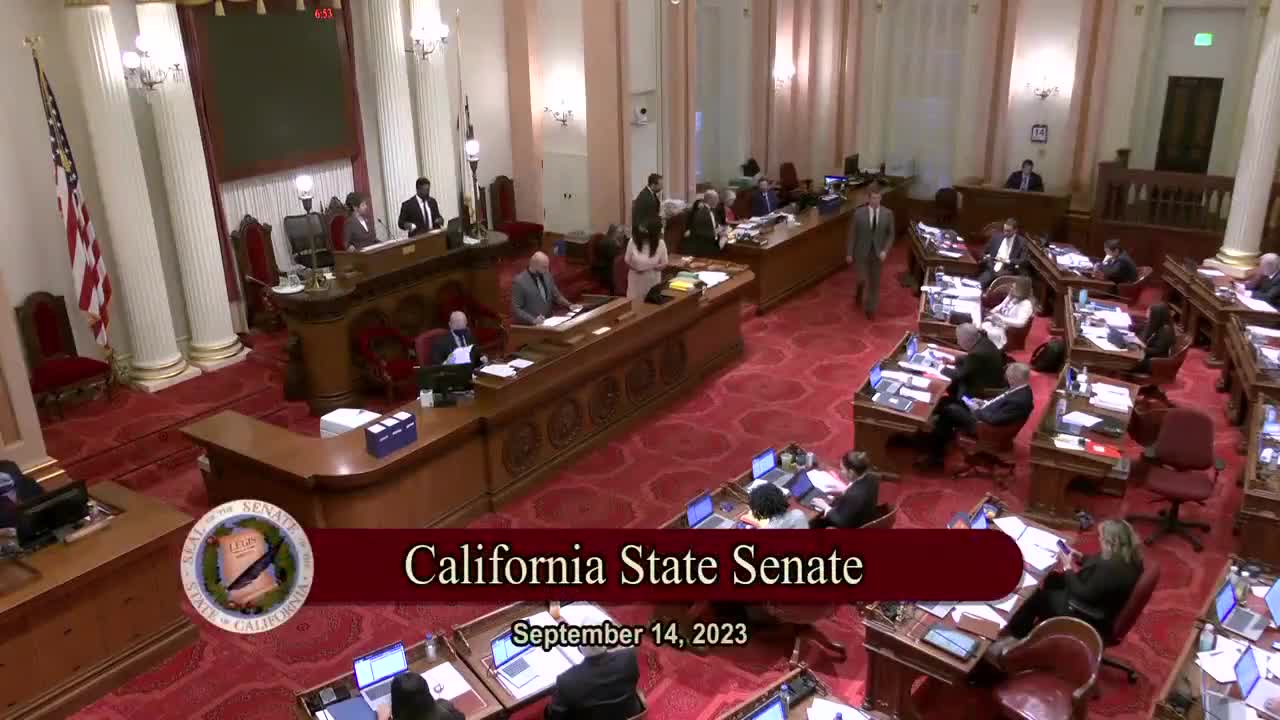
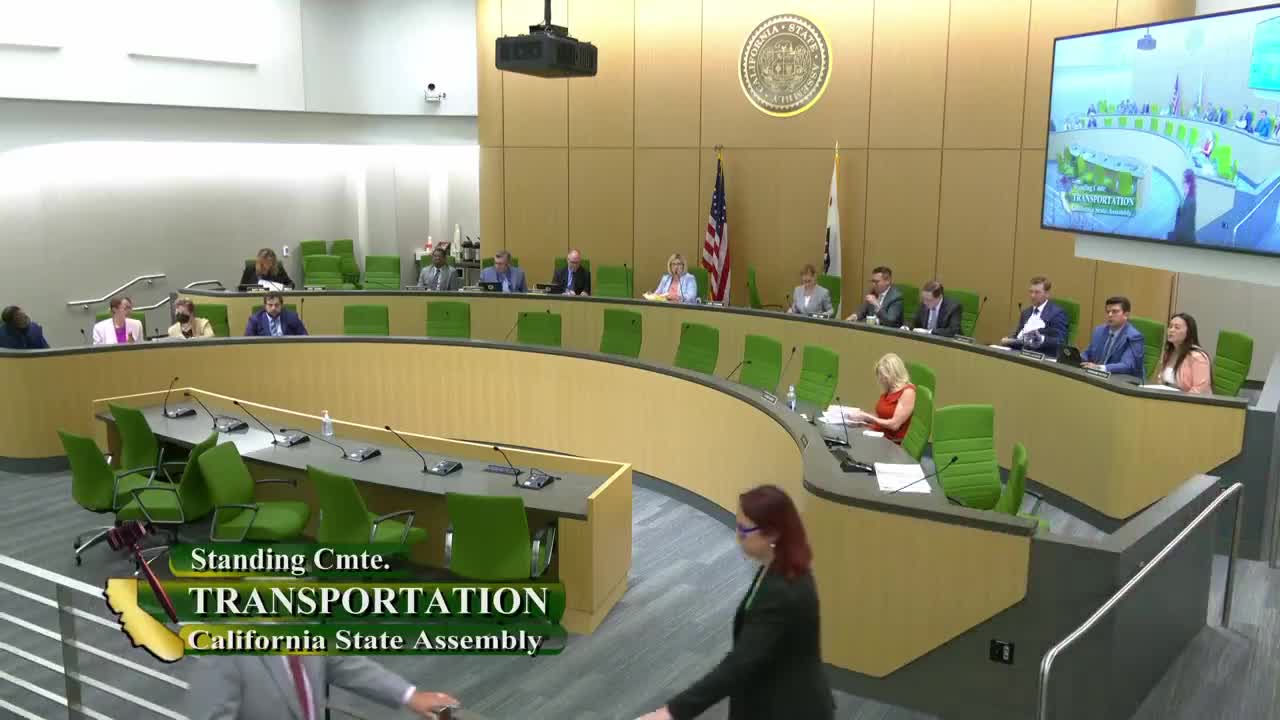
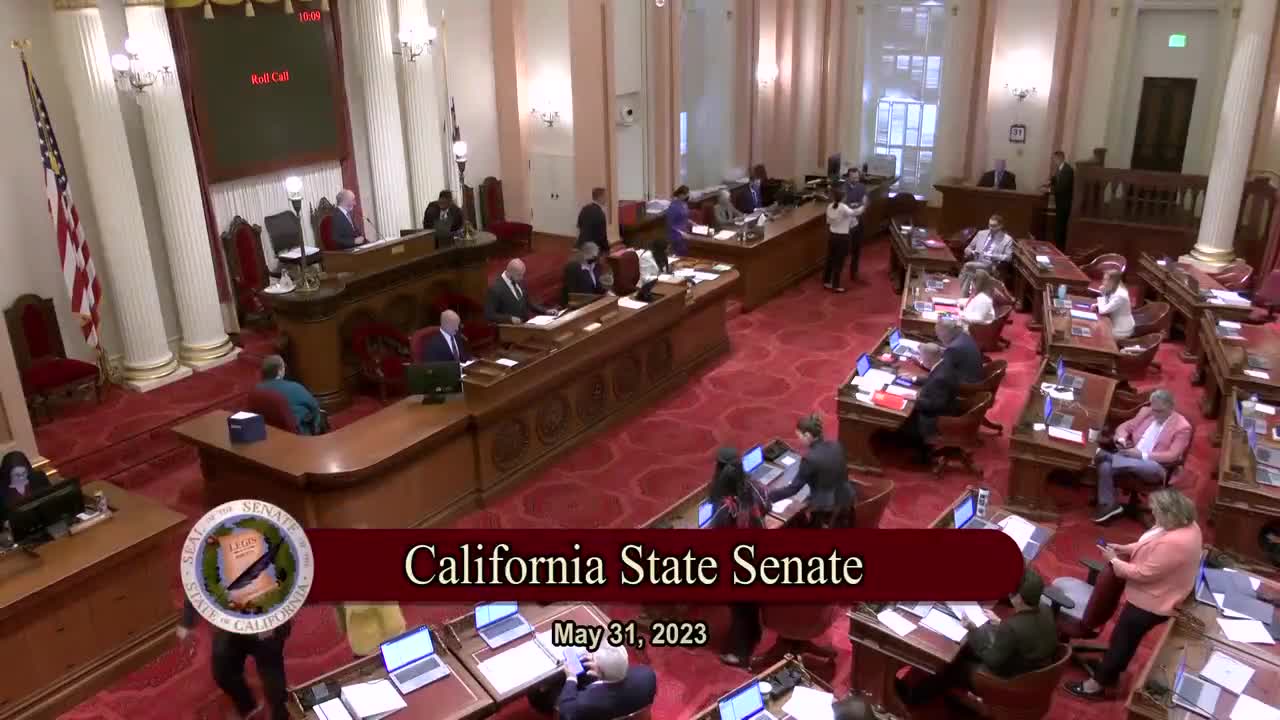
Bill Author

Bill Co-Author(s):