SB 863: Measures proposed by the Legislature.
- Session Year: 2023-2024
- House: Senate
- Latest Version Date: 2024-09-22
Current Status:
Passed
(2024-09-22: Chaptered by Secretary of State. Chapter 449, Statutes of 2024.)
Introduced
In Committee
First Chamber
In Committee
Second Chamber
Enacted
Existing law requires every constitutional amendment, bond measure, or other legislative measure submitted to the people by the Legislature to appear on the ballot of the first statewide election occurring at least 131 days after the adoption of the proposal by the Legislature.
This bill would allow the Legislature to specify, in the text of a measure that proposes an amendment or revision of the Constitution, that the constitutional amendment or revision submitted to the people will appear on the ballot at an election other than the one described above if the election specified in the measure would occur at least 131 days after adoption of the measure by the Legislature.
Existing law requires every constitutional amendment, bond measure, or other legislative measure submitted to the people by the Legislature to appear on the ballot of the first statewide election occurring at least 131 days after the adoption of the proposal by the Legislature.
This bill would allow the Legislature to specify specify, in the text of a measure that proposes an amendment or revision of the Constitution, that a the constitutional amendment, bond measure, or other legislative measure amendment or revision submitted to the people will appear on the ballot at an election other than the one described above if the election specified in the proposal measure would occur at least 131 days after adoption of the proposal measure by the Legislature.
Existing law requires every constitutional amendment, bond measure, or other legislative measure submitted to the people by the Legislature to appear on the ballot of the first statewide election occurring at least 131 days after the adoption of the proposal by the Legislature.
This bill would allow the Legislature to specify that a constitutional amendment, bond measure, or other legislative measure submitted to the people will appear on the ballot at an election other the one described above if the election specified in the proposal would occur at least 131 days after adoption of the proposal by the Legislature.
Existing law prohibits an owner of residential real property from terminating the tenancy of a tenant who has continuously and lawfully occupied a residential real property for 12 months without just cause, as specified. Existing law requires that before an owner of residential real property issues a notice to terminate for cause that is a curable lease violation, the owner shall first give notice of the violation to the tenant with an opportunity to cure the violation pursuant to specified provisions that authorize the tenant to perform the conditions or covenants of the lease, or to pay the stipulated rent, within 3 days, and thereby save the lease from forfeiture, unless that performance cannot occur, in which case no notice need be given. Existing law specifies that if the violation is not cured within the time period set forth in the notice, existing law authorizes a 3-day notice to quit without an opportunity to cure to be served to terminate the tenancy.This bill would remove the requirement that the notice to terminate for cause that is a curable lease violation be given pursuant to those provisions and would instead specify that the time period to cure the violation set forth in the notice shall not be less than 7 days, after which time, if the violation is not cured, a 3-day notice to quit without an opportunity to cure may thereafter be served to terminate the tenancy.Existing law prohibits an owner of residential real property from terminating the tenancy of a tenant who has continuously and lawfully occupied a residential real property for 12 months without just cause, as specified. Existing law requires that before an owner of residential real property issues a notice to terminate for cause that is a curable lease violation, the owner shall first give notice of the violation to the tenant with an opportunity to cure the violation pursuant to specified provisions that authorize the tenant to perform the conditions or covenants of the lease, or to pay the stipulated rent, within 3 days, and thereby save the lease from forfeiture, unless that performance cannot occur, in which case no notice need be given. Existing law specifies that if the violation is not cured within the time period set forth in the notice, existing law authorizes a 3-day notice to quit without an opportunity to cure to be served to terminate the tenancy.
This bill would remove the requirement that the notice to terminate for cause that is a curable lease violation be given pursuant to those provisions and would instead specify that the time period to cure the violation set forth in the notice shall not be less than 7 days, after which time, if the violation is not cured, a 3-day notice to quit without an opportunity to cure may thereafter be served to terminate the tenancy.
Existing law generally prohibits public entities from adopting a statute, ordinance, or regulation, or taking an administrative action, to compel the owner of residential real property to offer, or to continue to offer, accommodations, as defined, in the property for rent or lease.This bill would make nonsubstantive changes to that provision.Existing law generally prohibits public entities from adopting a statute, ordinance, or regulation, or taking an administrative action, to compel the owner of residential real property to offer, or to continue to offer, accommodations, as defined, in the property for rent or lease.
This bill would make nonsubstantive changes to that provision.
(a)Every constitutional amendment, bond measure, or other legislative measure submitted to the people by the Legislature shall appear on the ballot of the first statewide election occurring at least 131 days after the adoption of the proposal by the Legislature.
(b)Notwithstanding subdivision (a), the Legislature may specify, in the text of a measure that proposes an amendment or revision of the Constitution, that the constitutional amendment or revision submitted to the people shall appear on the ballot at a statewide election other than the election specified in subdivision (a), if the election specified in the measure would occur at least 131 days after adoption of the measure by the Legislature.
(a)Every constitutional amendment, bond measure, or other legislative measure submitted to the people by the Legislature shall appear on the ballot of the first statewide election occurring at least 131 days after the adoption of the proposal by the Legislature.
(b)Notwithstanding subdivision (a), the Legislature may specify specify, in the text of a measure that proposes an amendment or revision of the Constitution, that the that a constitutional amendment, bond measure, or other legislative measure amendment or revision submitted to the people shall appear on the ballot at a statewide election other than the election specified in subdivision (a), if the election specified in the proposal measure would occur at least 131 days after adoption of the proposal measure by the Legislature.
(a)Every constitutional amendment, bond measure, or other legislative measure submitted to the people by the Legislature shall appear on the ballot of the first statewide election occurring at least 131 days after the adoption of the proposal by the Legislature.
(b)Notwithstanding subdivision (a), the Legislature may specify that a constitutional amendment, bond measure, or other legislative measure submitted to the people shall appear on the ballot at a statewide election other than the election specified in subdivision (a), if the election specified in the proposal would occur at least 131 days after adoption of the proposal by the Legislature.
All matter omitted in this version of the bill appears in the bill as amended in the Senate, March 22, 2023. (JR11)(a)Notwithstanding any other law, after a tenant has continuously and lawfully occupied a residential real property for 12 months, the owner of the residential real property shall not terminate the tenancy without just cause, which shall be stated in the written notice to terminate tenancy. If any additional adult tenants are added to the lease before an existing tenant has continuously and lawfully occupied the residential real property for 24 months, then this subdivision shall only apply if either of the following are satisfied:
(1)All of the tenants have continuously and lawfully occupied the residential real property for 12 months or more.
(2)One or more tenants have continuously and lawfully occupied the residential real property for 24 months or more.
(b)For purposes of this section, just cause includes either of the following:
(1)At-fault just cause, which is any of the following:
(A)Default in the payment of rent.
(B)A breach of a material term of the lease, as described in paragraph (3) of Section 1161 of the Code of Civil Procedure, including, but not limited to, violation of a provision of the lease after being issued a written notice to correct the violation.
(C)Maintaining, committing, or permitting the maintenance or commission of a nuisance as described in paragraph (4) of Section 1161 of the Code of Civil Procedure.
(D)Committing waste as described in paragraph (4) of Section 1161 of the Code of Civil Procedure.
(E)The tenant had a written lease that terminated on or after January 1, 2020, or January 1, 2022, if the lease is for a tenancy in a mobilehome, and after a written request or demand from the owner, the tenant has refused to execute a written extension or renewal of the lease for an additional term of similar duration with similar provisions, provided that those terms do not violate this section or any other provision of law.
(F)Criminal activity by the tenant on the residential real property, including any common areas, or any criminal activity or criminal threat, as defined in subdivision (a) of Section 422 of the Penal Code, on or off the residential real property, that is directed at any owner or agent of the owner of the residential real property.
(G)Assigning or subletting the premises in violation of the tenants lease, as described in paragraph (4) of Section 1161 of the Code of Civil Procedure.
(H)The tenants refusal to allow the owner to enter the residential real property as authorized by Sections 1101.5 and 1954 of this code, and Sections 13113.7 and 17926.1 of the Health and Safety Code.
(I)Using the premises for an unlawful purpose as described in paragraph (4) of Section 1161 of the Code of Civil Procedure.
(J)The employee, agent, or licensees failure to vacate after their termination as an employee, agent, or a licensee as described in paragraph (1) of Section 1161 of the Code of Civil Procedure.
(K)When the tenant fails to deliver possession of the residential real property after providing the owner written notice as provided in Section 1946 of the tenants intention to terminate the hiring of the real property, or makes a written offer to surrender that is accepted in writing by the landlord, but fails to deliver possession at the time specified in that written notice as described in paragraph (5) of Section 1161 of the Code of Civil Procedure.
(2)No-fault just cause, which includes any of the following:
(A)(i)Intent to occupy the residential real property by the owner or their spouse, domestic partner, children, grandchildren, parents, or grandparents.
(ii)For leases entered into on or after July 1, 2020, or July 1, 2022, if the lease is for a tenancy in a mobilehome, clause (i) shall apply only if the tenant agrees, in writing, to the termination, or if a provision of the lease allows the owner to terminate the lease if the owner, or their spouse, domestic partner, children, grandchildren, parents, or grandparents, unilaterally decides to occupy the residential real property. Addition of a provision allowing the owner to terminate the lease as described in this clause to a new or renewed rental agreement or fixed-term lease constitutes a similar provision for the purposes of subparagraph (E) of paragraph (1).
(B)Withdrawal of the residential real property from the rental market.
(C)(i)The owner complying with any of the following:
(I)An order issued by a government agency or court relating to habitability that necessitates vacating the residential real property.
(II)An order issued by a government agency or court to vacate the residential real property.
(III)A local ordinance that necessitates vacating the residential real property.
(ii)If it is determined by any government agency or court that the tenant is at fault for the condition or conditions triggering the order or need to vacate under clause (i), the tenant shall not be entitled to relocation assistance as outlined in paragraph (3) of subdivision (d).
(D)(i)Intent to demolish or to substantially remodel the residential real property.
(ii)For purposes of this subparagraph, substantially remodel means the replacement or substantial modification of any structural, electrical, plumbing, or mechanical system that requires a permit from a governmental agency, or the abatement of hazardous materials, including lead-based paint, mold, or asbestos, in accordance with applicable federal, state, and local laws, that cannot be reasonably accomplished in a safe manner with the tenant in place and that requires the tenant to vacate the residential real property for at least 30 days. Cosmetic improvements alone, including painting, decorating, and minor repairs, or other work that can be performed safely without having the residential real property vacated, do not qualify as substantial rehabilitation.
(c)Before an owner of residential real property issues a notice to terminate a tenancy for just cause that is a curable lease violation, the owner shall first give notice of the violation to the tenant with an opportunity to cure the violation pursuant to paragraph (3) of Section 1161 of the Code of Civil Procedure. violation. If the violation is not cured within the time period set forth in the notice, which shall not be less than seven days, a three-day notice to quit without an opportunity to cure may thereafter be served to terminate the tenancy.
(d)(1)For a tenancy for which just cause is required to terminate the tenancy under subdivision (a), if an owner of residential real property issues a termination notice based on a no-fault just cause described in paragraph (2) of subdivision (b), the owner shall, regardless of the tenants income, at the owners option, do one of the following:
(A)Assist the tenant to relocate by providing a direct payment to the tenant as described in paragraph (3).
(B)Waive in writing the payment of rent for the final month of the tenancy, prior to the rent becoming due.
(2)If an owner issues a notice to terminate a tenancy for no-fault just cause, the owner shall notify the tenant of the tenants right to relocation assistance or rent waiver pursuant to this section. If the owner elects to waive the rent for the final month of the tenancy as provided in subparagraph (B) of paragraph (1), the notice shall state the amount of rent waived and that no rent is due for the final month of the tenancy.
(3)(A)The amount of relocation assistance or rent waiver shall be equal to one month of the tenants rent that was in effect when the owner issued the notice to terminate the tenancy. Any relocation assistance shall be provided within 15 calendar days of service of the notice.
(B)If a tenant fails to vacate after the expiration of the notice to terminate the tenancy, the actual amount of any relocation assistance or rent waiver provided pursuant to this subdivision shall be recoverable as damages in an action to recover possession.
(C)The relocation assistance or rent waiver required by this subdivision shall be credited against any other relocation assistance required by any other law.
(4)An owners failure to strictly comply with this subdivision shall render the notice of termination void.
(e)This section shall not apply to the following types of residential real properties or residential circumstances:
(1)Transient and tourist hotel occupancy as defined in subdivision (b) of Section 1940.
(2)Housing accommodations in a nonprofit hospital, religious facility, extended care facility, licensed residential care facility for the elderly, as defined in Section 1569.2 of the Health and Safety Code, or an adult residential facility, as defined in Chapter 6 of Division 6 of Title 22 of the Manual of Policies and Procedures published by the State Department of Social Services.
(3)Dormitories owned and operated by an institution of higher education or a kindergarten and grades 1 to 12, inclusive, school.
(4)Housing accommodations in which the tenant shares bathroom or kitchen facilities with the owner who maintains their principal residence at the residential real property.
(5)Single-family owner-occupied residences, including both of the following:
(A)A residence in which the owner-occupant rents or leases no more than two units or bedrooms, including, but not limited to, an accessory dwelling unit or a junior accessory dwelling unit.
(B)A mobilehome.
(6)A property containing two separate dwelling units within a single structure in which the owner occupied one of the units as the owners principal place of residence at the beginning of the tenancy, so long as the owner continues in occupancy, and neither unit is an accessory dwelling unit or a junior accessory dwelling unit.
(7)Housing that has been issued a certificate of occupancy within the previous 15 years, unless the housing is a mobilehome.
(8)Residential real property, including a mobilehome, that is alienable separate from the title to any other dwelling unit, provided that both of the following apply:
(A)The owner is not any of the following:
(i)A real estate investment trust, as defined in Section 856 of the Internal Revenue Code.
(ii)A corporation.
(iii)A limited liability company in which at least one member is a corporation.
(iv)Management of a mobilehome park, as defined in Section 798.2.
(B)(i)The tenants have been provided written notice that the residential property is exempt from this section using the
following statement:
This property is not subject to the rent limits imposed by Section 1947.12 of the Civil Code and is not subject to the just cause requirements of Section 1946.2 of the Civil Code. This property meets the requirements of Sections 1947.12 (d)(5) and 1946.2 (e)(8) of the Civil Code and the owner is not any of the following: (1) a real estate investment trust, as defined by Section 856 of the Internal Revenue Code; (2) a corporation; or (3) a limited liability company in which at least one member is a corporation.
(ii)(I)Except as provided in subclause (II), for a tenancy existing before July 1, 2020, the notice required under clause (i) may, but is not required to, be provided in the rental agreement.
(II)For a tenancy in a mobilehome existing before July 1, 2022, the notice required under clause (i) may, but is not required to, be provided in the rental agreement.
(iii)(I)Except as provided in subclause (II), for any tenancy commenced or renewed on or after July 1, 2020, the notice required under clause (i) must be provided in the rental agreement.
(II)For any tenancy in a mobilehome commenced or renewed on or after July 1, 2022, the notice required under clause (i) shall be provided in the rental agreement.
(iv)Addition of a provision containing the notice required under clause (i) to any new or renewed rental agreement or fixed-term lease constitutes a similar provision for the purposes of subparagraph (E) of paragraph (1) of subdivision (b).
(9)Housing restricted by deed, regulatory restriction contained in an agreement with a government agency, or other recorded document as affordable housing for persons and families of very low, low, or moderate income, as defined in Section 50093 of the Health and Safety Code, or subject to an agreement that provides housing subsidies for affordable housing for persons and families of very low, low, or moderate income, as defined in Section 50093 of the Health and Safety Code or comparable federal statutes.
(f)An owner of residential real property subject to this section shall provide notice to the tenant as follows:
(1)(A)Except as provided in subparagraph (B), for any tenancy commenced or renewed on or after July 1, 2020, as an addendum to the lease or rental agreement, or as a written notice signed by the tenant, with a copy provided to the tenant.
(B)For a tenancy in a mobilehome commenced or renewed on or after July 1, 2022, as an addendum to the lease or rental agreement, or as a written notice signed by the tenant, with a copy provided to the tenant.
(2)(A)Except as provided in subparagraph (B), for a tenancy existing prior to July 1, 2020, by written notice to the tenant no later than August 1, 2020, or as an addendum to the lease or rental agreement.
(B)For a tenancy in a mobilehome existing prior to July 1, 2022, by written notice to the tenant no later than August 1, 2022, or as an addendum to the lease or rental agreement.
(3)The notification or lease provision shall be in no less than 12-point type, and shall include the following:
California law limits the amount
your rent can be increased. See Section 1947.12 of the Civil Code for more information. California law also provides that after all of the tenants have continuously and lawfully occupied the property for 12 months or more or at least one of the tenants has continuously and lawfully occupied the property for 24 months or more, a landlord must provide a statement of cause in any notice to terminate a tenancy. See Section 1946.2 of the Civil Code for more information.
The provision of the notice shall be subject to Section 1632.
(g)(1)This section does not apply to the following residential real property:
(A)Residential real property subject to a local ordinance requiring just cause for termination of a residential tenancy adopted on or before September 1, 2019, in which case the local ordinance shall apply.
(B)Residential real property subject to a local ordinance requiring just cause for termination of a residential tenancy adopted or amended after September 1, 2019, that is more protective than this section, in which case the local ordinance shall apply. For purposes of this subparagraph, an ordinance is more protective if it meets all of the following criteria:
(i)The just cause for termination of a residential tenancy under the local ordinance is consistent with this section.
(ii)The ordinance further limits the reasons for termination of a residential tenancy, provides for higher relocation assistance amounts, or provides additional tenant protections that are not prohibited by any other provision of law.
(iii)The local government has made a binding finding within their local ordinance that the ordinance is more protective than the provisions of this section.
(2)A residential real property shall not be subject to both a local ordinance requiring just cause for termination of a residential tenancy and this section.
(3)A local ordinance adopted after September 1, 2019, that is less protective than this section shall not be enforced unless this section is repealed.
(h)Any waiver of the rights under this section shall be void as contrary to public policy.
(i)For the purposes of this section, the following definitions shall apply:
(1)Owner includes any person, acting as principal or through an agent, having the right to offer residential real property for rent, and includes a predecessor in interest to the owner.
(2)Residential real property means any dwelling or unit that is intended for human habitation, including any dwelling or unit in a mobilehome park.
(3)Tenancy means the lawful occupation of residential real property and includes a lease or sublease.
(j)This section shall not apply to a homeowner of a mobilehome, as defined in Section 798.9.
(k)This section shall remain in effect only until January 1, 2030, and as of that date is repealed.
SECTION 1.Section 7060 of the Government Code is amended to read:7060.(a)A public entity, as defined in Section 811.2, shall not, by statute, ordinance, or regulation, or by administrative action implementing a statute, ordinance or regulation, compel the owner of a residential real property to offer, or to continue to offer, accommodations in the property for rent or lease, except for guestrooms or efficiency units within a residential hotel, as defined in Section 50519 of the Health and Safety Code, if the residential hotel meets all of the following conditions:(1)The residential hotel is located in a city and county, or in a city with a population of over 1,000,000.(2)The residential hotel has a permit of occupancy issued prior to January 1, 1990.(3)The residential hotel did not send a notice of intent to withdraw the accommodations from rent or lease pursuant to subdivision (a) of Section 7060.4 that was delivered to the public entity prior to January 1, 2004.(b)For the purposes of this chapter, the following definitions apply:(1)Accommodations means either of the following:(A)The residential rental units in any detached physical structure containing four or more residential rental units.(B)With respect to a detached physical structure containing three or fewer residential rental units, the residential rental units in that structure and in any other structure located on the same parcel of land, including any detached physical structure specified in subparagraph (A).(2)Disabled means a person with a disability, as defined in Section 12955.3 of the Government Code.(a)No A public entity, as defined in Section 811.2, shall, shall not, by statute, ordinance, or regulation, or by administrative action implementing any a statute, ordinance or regulation, compel the owner of any a residential real property to offer, or to continue to offer, accommodations in the property for rent or lease, except for guestrooms or efficiency units within a residential hotel, as defined in Section 50519 of the Health and Safety Code, if the residential hotel meets all of the following conditions:
(1)The residential hotel is located in a city and county, or in a city with a population of over 1,000,000.
(2)The residential hotel has a permit of occupancy issued prior to January 1, 1990.
(3)The residential hotel did not send a notice of intent to withdraw the accommodations from rent or lease pursuant to subdivision (a) of Section 7060.4 that was delivered to the public entity prior to January 1, 2004.
(b)For the purposes of this chapter, the following definitions apply:
(1)Accommodations means either of the following:
(A)The residential rental units in any detached physical structure containing four or more residential rental units.
(B)With respect to a detached physical structure containing three or fewer residential rental units, the residential rental units in that structure and in any other structure located on the same parcel of land, including any detached physical structure specified in subparagraph (A).
(2)Disabled means a person with a disability, as defined in Section 12955.3 of the Government Code.
|
Date
|
Status
|
|---|---|
| Sep 22, 2024 | Chaptered by Secretary of State. Chapter 449, Statutes of 2024. |
| Sep 22, 2024 | Approved by the Governor. |
| Aug 23, 2024 | Enrolled and presented to the Governor at 2 p.m. |
| Aug 20, 2024 | Assembly amendments concurred in. (Ayes 31. Noes 9. Page 5245.) Ordered to engrossing and enrolling. |
| Aug 8, 2024 | In Senate. Concurrence in Assembly amendments pending. |
| Aug 8, 2024 | Read third time. Passed. (Ayes 55. Noes 16. Page 6246.) Ordered to the Senate. |
| Jun 27, 2024 | Read second time. Ordered to third reading. |
| Jun 26, 2024 | From committee: Do pass. (Ayes 6. Noes 2.) (June 26). |
| Jun 19, 2024 | From committee with author's amendments. Read second time and amended. Re-referred to Com. on ELECTIONS. |
| Jun 5, 2024 | June 12 set for first hearing canceled at the request of author. |
| Apr 29, 2024 | Referred to Com. on ELECTIONS. |
| Jan 30, 2024 | In Assembly. Read first time. Held at Desk. |
| Jan 30, 2024 | Read third time. Passed. (Ayes 30. Noes 7. Page 3061.) Ordered to the Assembly. |
| Jan 10, 2024 | Read second time. Ordered to third reading. |
| Jan 9, 2024 | From committee: Do pass. (Ayes 6. Noes 1. Page 2957.) (January 9). |
| Jan 4, 2024 | Set for hearing January 9. |
| Jan 3, 2024 | Withdrawn from committee. |
| Jan 3, 2024 | Re-referred to Com. on RLS. |
| Jan 3, 2024 | Re-referred to Com. on E. & C.A. |
| Jan 3, 2024 | From committee with author's amendments. Read second time and amended. Re-referred to Com. on JUD. |
| Apr 21, 2023 | May 2 set for first hearing canceled at the request of author. |
| Apr 11, 2023 | Set for hearing May 2. |
| Mar 29, 2023 | Re-referred to Com. on JUD. |
| Mar 22, 2023 | From committee with author's amendments. Read second time and amended. Re-referred to Com. on RLS. |
| Mar 1, 2023 | Referred to Com. on RLS. |
| Feb 21, 2023 | From printer. May be acted upon on or after March 20. |
| Feb 17, 2023 | Introduced. Read first time. To Com. on RLS. for assignment. To print. |
|
Date
|
Description
|
Location
|
Votes
|
|
|---|---|---|---|---|
| Aug 20, 2024 | Unfinished Business SB863 Allen Concurrence | Senate Floor |
Passed |
|
| Aug 8, 2024 | SB 863 Allen Senate Third Reading By Low | Assembly Floor |
Passed |
|
| Jun 26, 2024 | Do pass. | Assembly Standing Committee on Elections |
Passed |
|
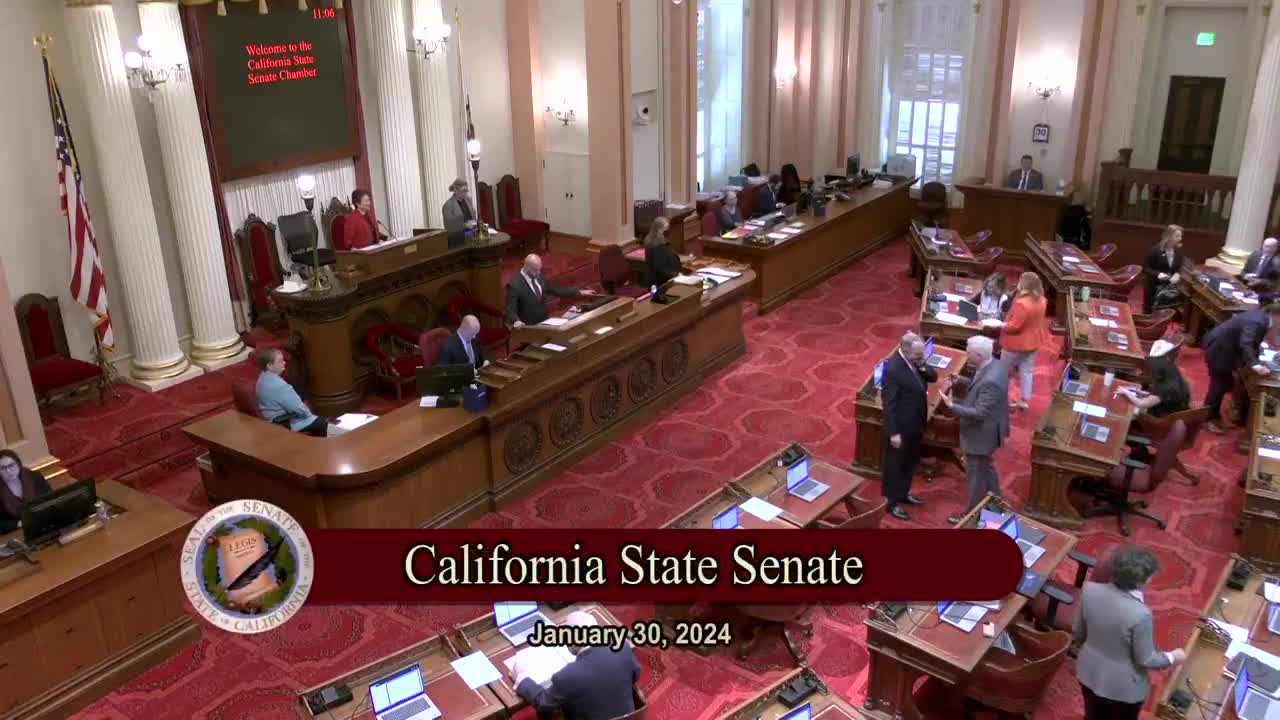
| Jan 30, 2024 | Senate 3rd Reading SB863 Allen | Senate Floor |
Passed |
|
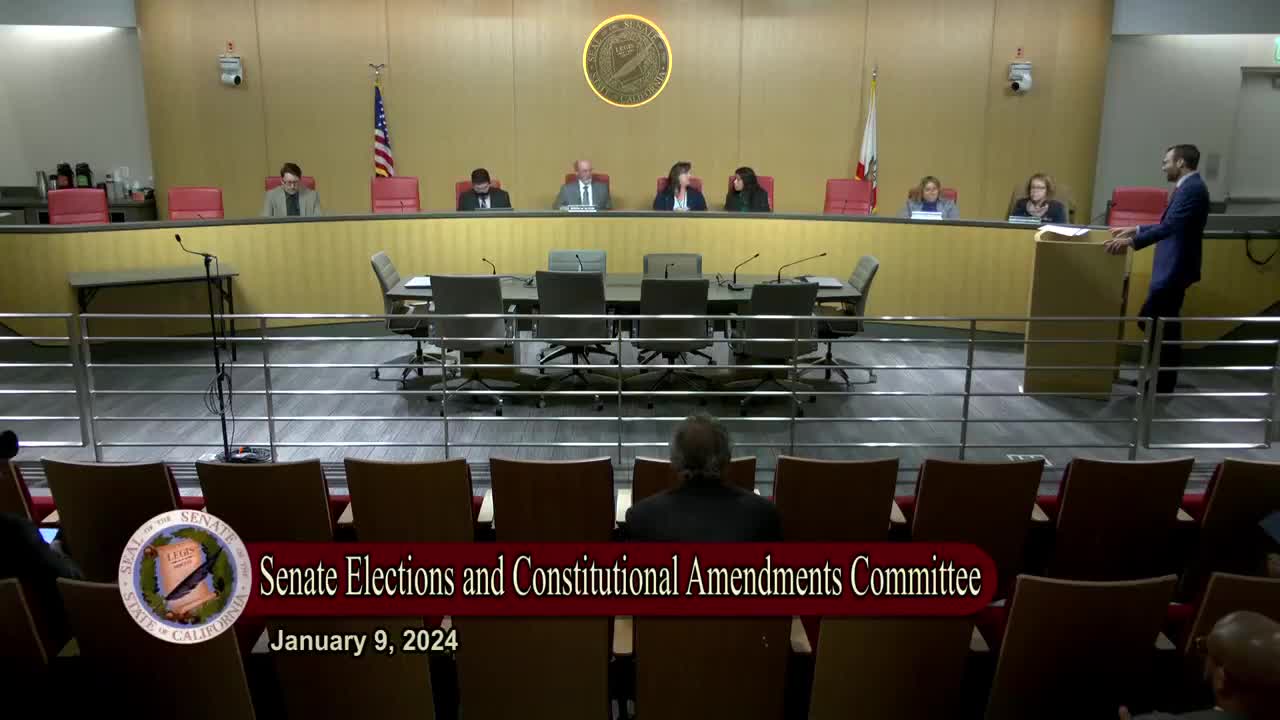
| Jan 9, 2024 | Do pass | Senate Standing Committee on Elections and Constitutional Amendments |
Passed |
This list shows positions taken on this bill by organizations on the date displayed, which is linked to the original source.
Positions by individuals are not included.
SENATE RULES COMMITTEE Office of Senate Floor Analyses (916) 651-1520 Fax: (916) 327-4478 | SB 863 |
UNFINISHED BUSINESS
Bill No: SB 863
Author: Allen (D)
Amended: 6/19/24
Vote: 21
SENATE ELECTIONS & C.A. COMMITTEE: 6-1, 1/9/24
AYES: Glazer, Allen, Durazo, Menjivar, Newman, Umberg
NOES: Nguyen
SENATE FLOOR: 30-7, 1/30/24
AYES: Allen, Archuleta, Ashby, Atkins, Becker, Blakespear, Bradford, Caballero, Cortese, Dodd, Durazo, Eggman, Glazer, Hurtado, Laird, Limón, McGuire, Menjivar, Min, Newman, Padilla, Portantino, Roth, Rubio, Skinner, Smallwood-Cuevas, Stern, Umberg, Wahab, Wiener
NOES: Alvarado-Gil, Dahle, Jones, Nguyen, Ochoa Bogh, Seyarto, Wilk
NO VOTE RECORDED: Gonzalez, Grove, Niello
ASSEMBLY FLOOR: 55-16, 8/8/24 - See last page for vote
SUBJECT: Measures proposed by the Legislature
SOURCE: Author
DIGEST:
This bill allows the Legislature to specify the statewide election a constitutional amendment or revision submitted to the people shall appear on the ballot if the election specified in the measure would occur at least 131 days after the measure’s adoption by the Legislature, as specified.
Assembly Amendments
provide clarifying language.
ANALYSIS:
Existing law:
- Provides voters with the ability to propose changes to the California Constitution or statute via initiative or to repeal a recently passed law via referendum.
- Provides that every constitutional amendment, bond measure, or other legislative measure submitted to the people by the Legislature shall appear on the ballot of the first statewide election occurring at least 131 days after the adoption of the proposal by the Legislature.
This bill permits the Legislature to specify the statewide election a constitutional amendment or revision submitted to the people shall appear on the ballot if the election specified in the measure would occur at least 131 days after the adoption of the measure by the Legislature, as specified.
Background
- Types of Ballot Measures. Under existing law, the Legislature is permitted to submit constitutional amendments, bond measures, or other legislative measures to voters for their approval and adoption. These are referred to as legislative ballot measures. Legislative ballot measures include amendments to the California Constitution (referred to as legislative constitutional amendments) and other legislative changes (referred to as legislative statutes), such as a bond measure. Legislative ballot measures are placed on the ballot of the first statewide election occurring at least 131 days after the adoption of the proposal by the Legislature.
Additionally, Californians also possess the ability to propose changes through the initiative and referendum process. For initiatives, these ballot measures are typically referred to as initiative statutes, such as bond measures or other statutory changes. For amendments to the California Constitution through the initiative process, it is referred to as an initiative constitutional amendment.
Finally, Californians also have the power to approve or reject statutes or parts of statutes, with the exception of urgency statutes, statutes calling elections, and statutes providing for tax levies or appropriations for usual current state expenses. These are referred to as referendum measures. Initiative measures and/or referendum measures only appear at the statewide general elections.
- Companion Bills. For legislative constitutional amendments, additional legislation is needed to move a proposed constitutional amendment from the election where the proposed measure is placed (i.e. the first statewide election occurring at least 131 days after the adoption of the proposal by the Legislature) to another election. These companion bills move through the legislative process and are signed or vetoed by the Governor.
For example, SB 789 (Allen, Chapter 787, Statutes of 2023) moved three measures that would have been placed on the ballot for the March 5, 2024 statewide primary election to the November 5, 2024 statewide general election.
Comments
- According to the author: “The Legislature has the ability to propose bonds, certain changes to statute, and amendments to the California Constitution to the voters for approval at a statewide election. State law currently allows the Legislature to specify in a bond or statutory measure at which statewide election it will appear before voters. However, the same flexibility does not exist for constitutional amendments, which occasionally require accompanying legislation to determine ballot placement. SB 863 will conform these processes and allow the Legislature to specify a ballot in a proposed constitutional amendment.”
- Need for the Measure. In the materials provided by the author, the author notes Section 9040 of the California Elections Code requires constitutional amendments, bonds, and other legislative measures submitted to the voters to appear on the ballot of the next statewide election occurring at least 131 days after adoption by the Legislature. In the case of a bond or statutory measure, the Legislature can bypass this default timeline and instead place the proposal on a statewide ballot farther in the future. Bonds and statutory measures are subject to the same process as general legislative bills and must be signed by the Governor.
The author also explains that constitutional amendments are subject to a different process as outlined in Article XVIII of the California Constitution. Legislative constitutional amendments must be approved by a two-third vote of both houses of the Legislature and are not required to be signed by the Governor. In effect, a constitutional amendment does not have the force of law and cannot bypass the default ballot referral timeline specified in Section 9040 of the Elections Code. All proposed legislative constitutional amendments are automatically referred to the next statewide ballot. If the Legislature wishes to move a proposed constitutional amendment to another ballot, it requires accompanying legislation calling a special election.
- Governor’s Role. Since legislative constitutional amendments are considered resolutions, instead of bills, the Governor does not consider those measures for a signature or veto. Under the provisions of this bill, a companion bill requiring a Governor’s signature would no longer be needed. As a result, the Governor would no longer have a formal avenue for input when considering moving a proposed legislative constitutional amendment from one election to another.
Related/Prior Legislation
SB 292 (Moscone, Chapter 326, Statutes of 1968) provided that every measure submitted to the people by the Legislature shall appear on the ballot of the first general election occurring after 150 days after the adoption of the measure.
AB 1429 (Waxman, Chapter 1775, Statutes of 1971) provided that every measure submitted to the people by the Legislature shall appear on the ballot of the first statewide election occurring after 150 days after the adoption of the measure.
AB 4214 (Garcia, Chapter 1389, Statutes of 1974) changed, from 150 day to 131 days, the number of days which must intervene between adoption of a proposal by the Legislature and its submission to the people at a statewide election.
SB 789 (Allen, Chapter 787, Statutes of 2023) moved SCA 2 (Allen, Resolution Chapter 182, Statutes of 2022), ACA 1 (Aguiar-Curry, Resolution Chapter 173, Statutes of 2023), and ACA 5 (Low, Resolution Chapter 125, Statutes of 2023) from the March 5, 2024 statewide primary election to the November 5, 2024 statewide general election.
AB 440 (Pellerin, Chapter 82, Statutes of 2024) moved, among other provisions, ACA 13 (Ward, Resolution Chapter 176, Statutes of 2023) from the November 5, 2024 statewide general election to the November 3, 2026 statewide general election.
FISCAL EFFECT: Appropriation: No Fiscal Com.: No Local: No
SUPPORT: (Verified 8/8/24)
None received
OPPOSITION: (Verified 8/8/24)
None received
ASSEMBLY FLOOR: 55-16, 8/8/24
AYES: Addis, Alvarez, Arambula, Bains, Bennett, Berman, Boerner, Bryan, Calderon, Juan Carrillo, Wendy Carrillo, Cervantes, Connolly, Mike Fong, Friedman, Gabriel, Gipson, Grayson, Hart, Holden, Irwin, Jackson, Jones-Sawyer, Kalra, Lee, Low, Lowenthal, Maienschein, Mathis, McCarty, McKinnor, Muratsuchi, Stephanie Nguyen, Ortega, Pacheco, Papan, Pellerin, Quirk-Silva, Ramos, Rendon, Reyes, Luz Rivas, Rodriguez, Blanca Rubio, Santiago, Schiavo, Soria, Ting, Villapudua, Ward, Wicks, Wilson, Wood, Zbur, Robert Rivas
NOES: Alanis, Chen, Megan Dahle, Davies, Dixon, Essayli, Flora, Gallagher, Hoover, Lackey, Jim Patterson, Joe Patterson, Sanchez, Ta, Waldron, Wallis
NO VOTE RECORDED: Aguiar-Curry, Bauer-Kahan, Bonta, Garcia, Haney, Petrie-Norris, Valencia, Weber
Prepared by: Scott Matsumoto/ E. & C.A. / (916) 651-4106
8/9/24 16:38:02
**** END ****
SENATE THIRD READING
STR Bill Id:SB 863
Author:(Allen)
As Amended Ver:June 19, 2024
Majority vote
SUMMARY
Allows the Legislature to designate the statewide election at which a legislative constitutional amendment or constitutional revision will appear on the ballot, provided that the designated election is at least 131 days away.
Major Provisions
Permits the Legislature to specify, in the text of a measure that proposes an amendment or revision of the California Constitution, that the amendment or revision submitted to the people shall appear on the ballot at a statewide election other than the election specified by state law if the election specified in the proposal would occur at least 131 days after adoption of the proposal by the Legislature.
COMMENTS
There are several situations in which the Legislature can propose measures that will appear on the statewide ballot for voters' consideration. The two most common types of legislative ballot measures are constitutional amendments that are proposed by the Legislature, and bills that propose to authorize the issuance of general obligation bonds.
When a legislative ballot measure qualifies to appear on the ballot, Section 9040 of the Elections Code generally requires the measure to appear on the first statewide election that occurs at least 131 days after the adoption of the proposal by the Legislature. Because that law governing the timing of when legislative ballot measures are submitted to voters is found in state statute, that law can also be waived or modified for a specific legislative ballot measure through the enactment of another statute.
In the case of a legislative ballot measure that is put on the ballot through the passage of a bill that must be signed by the Governor—like a bill proposing a general obligation bond—the text of the bill itself may also include language that overrides Section 9040 of the Elections Code and provides for the measure to be submitted to the voters at an election other than the one where it would appear if Section 9040 applied. Certain legislative ballot measures, however, are placed on the ballot using mechanisms other than bills. When the Legislature proposes a constitutional amendment, for example, it does so through the passage of a resolution (referred to as an Assembly Constitutional Amendment or Senate Constitutional Amendment, depending on the house in which it was introduced). Because a state statute (like Elections Code Section 9040) can only be amended or waived through the enactment of another statute, a resolution that places a proposed constitutional amendment on the ballot cannot also override the provisions of Elections Code Section 9040 that specify the election at which the voters will consider that measure.
As a result, when the Legislature desires to place a specific constitutional amendment on a ballot at an election other than the election where the measure would appear under Section 9040 of the Elections Code, it generally has done so by passing a separate bill that specifies the election at which that measure will appear. This bill would allow the Legislature, in the text of a resolution that proposes a legislative constitutional amendment, to specify the election at which that measure will appear on the ballot, subject to certain restrictions.
Please see the policy committee analysis for a full discussion of this bill.
According to the Author
"The Legislature has the ability to propose bonds, certain changes to statute, and amendments to the California Constitution to the voters for approval at a statewide election. State law currently allows the Legislature to specify in a bond or statutory measure at which statewide election it will appear before voters. However, the same flexibility does not exist for constitutional amendments, which occasionally require accompanying legislation to determine ballot placement. SB 863 will conform these processes and allow the Legislature to specify a ballot in a proposed constitutional amendment."
Arguments in Support
None received.
Arguments in Opposition
None received.
FISCAL COMMENTS
None. This bill is keyed non-fiscal by the Legislative Counsel.
VOTES
SENATE FLOOR: 30-7-3
YES: Allen, Archuleta, Ashby, Atkins, Becker, Blakespear, Bradford, Caballero, Cortese, Dodd, Durazo, Eggman, Glazer, Hurtado, Laird, Limón, McGuire, Menjivar, Min, Newman, Padilla, Portantino, Roth, Rubio, Skinner, Smallwood-Cuevas, Stern, Umberg, Wahab, Wiener
NO: Alvarado-Gil, Dahle, Jones, Nguyen, Ochoa Bogh, Seyarto, Wilk
ABS, ABST OR NV: Gonzalez, Grove, Niello
ASM ELECTIONS: 6-2-0
YES: Pellerin, Bennett, Berman, Cervantes, Low, Weber
NO: Lackey, Essayli
UPDATED
VERSION: June 19, 2024
CONSULTANT: Ethan Jones / ELECTIONS / (916) 319-2094 FN: 0003654
Date of Hearing: June 26, 2024
ASSEMBLY COMMITTEE ON ELECTIONS
Gail Pellerin, Chair
SBPCA Bill Id:SB 863
Author:(Allen) – As Amended Ver:June 19, 2024
SENATE VOTE: 30-7
SUBJECT: Measures proposed by the Legislature.
SUMMARY: Allows the Legislature to designate the statewide election at which a legislative constitutional amendment or constitutional revision will appear on the ballot, provided that the designated election is at least 131 days away. Specifically, this bill permits the Legislature to specify, in the text of a measure that proposes an amendment or revision of the California Constitution, that the amendment or revision submitted to the people shall appear on the ballot at a statewide election other than the election specified by state law if the election specified in the proposal would occur at least 131 days after adoption of the proposal by the Legislature.
EXISTING LAW:
- Provides that the Legislature may make no law except by statute and may enact no statute except by bill. Provides that no bill may be passed unless a majority of the membership of each house concurs, as specified. (California Constitution, Article IV, §8)
- Requires each bill passed by the Legislature to be presented to the Governor. Provides that a bill becomes a statute if it is signed by the Governor. Permits the Governor to veto a bill, as specified. Provides that a bill that was vetoed by the Governor shall become a statute if the Legislature overrides the veto by a two-thirds vote of each house, as specified. Provides that any bill that is presented to the Governor by the Legislature, and that is not vetoed and returned by the Governor to the Legislature within a specified period, becomes a statute. (California Constitution, Article IV, §10)
- Permits the Legislature to propose an amendment to or revision of the Constitution, subject to the approval of the voters. (California Constitution, Article XVIII, §§1, 4)
- Requires voter approval before the state can issue general obligation bonds to pay for a project. (California Constitution, Article XVI, §1)
- Permits voters, through the initiative process, to propose statutes and amendments to the Constitution and to adopt or reject them. (California Constitution, Article II, §8) Permits the Legislature to amend or repeal an initiative statute that was approved by the voters only by another statute that becomes effective when approved by the voters, unless the initiative statute permits amendment or repeal without the voters’ approval. (California Constitution, Article II, §10(c))
- Requires every constitutional amendment, bond measure, or other legislative measure submitted to the people by the Legislature to appear on the ballot of the first statewide election occurring at least 131 days after the adoption of the proposal by the Legislature. (Elections Code §9040)
- Defines “statewide election,” for the purpose of the Elections Code, as an election held throughout the state. (Elections Code §357)
FISCAL EFFECT: None. This bill is keyed non-fiscal by the Legislative Counsel.
COMMENTS:
- Purpose of the Bill: According to the author:
The Legislature has the ability to propose bonds, certain changes to statute, and amendments to the California Constitution to the voters for approval at a statewide election. State law currently allows the Legislature to specify in a bond or statutory measure at which statewide election it will appear before voters. However, the same flexibility does not exist for constitutional amendments, which occasionally require accompanying legislation to determine ballot placement. SB 863 will conform these processes and allow the Legislature to specify a ballot in a proposed constitutional amendment.
- Legislative Ballot Measures: There are several situations in which the Legislature can propose measures that will appear on the statewide ballot for voters’ consideration. The two most common types of legislative ballot measures are constitutional amendments that are proposed by the Legislature, and bills that propose to authorize the issuance of general obligation bonds. Bills that propose to amend or repeal a previously-approved initiative measure may also require voter approval in order to take effect. The Legislature may also submit measures to the voters that propose a constitutional revision, ask the voters whether to call for a constitutional convention, or ask the voters an advisory question, though these types of measures are considerably less common.
When a legislative ballot measure qualifies to appear on the ballot, Section 9040 of the Elections Code generally requires the measure to appear on the first statewide election that occurs at least 131 days after the adoption of the proposal by the Legislature. Because that law governing the timing of when legislative ballot measures are submitted to voters is found in state statute, that law can also be waived or modified for a specific legislative ballot measure through the enactment of another statute.
In the case of a legislative ballot measure that is put on the ballot through the passage of a bill that must be signed by the Governor—like a bill proposing a general obligation bond or proposing to amend a previously-approved initiative—the text of the bill itself may also include language that overrides Section 9040 of the Elections Code and provides for the measure to be submitted to the voters at an election other than the one where it would appear if Section 9040 applied. For example, SB 1174 (Lara), Chapter 1174, Statutes of 2014, proposed to amend and repeal various provisions of Proposition 227 of 1998, related to English language instruction of limited English proficient students. Because SB 1174 proposed amending a previously-approved initiative, it required the approval of voters to take effect. SB 1174 was chaptered in late-September 2014, so it would have appeared on the ballot at the June 7, 2016, presidential primary election if the provisions of Section 9040 of the Elections Code had applied. SB 1174, however, included language that required its provisions that proposed amending Proposition 227 to be submitted to the voters at the November 8, 2016, presidential general election instead, thereby overriding the provisions of Section 9040 for that measure.
Certain legislative ballot measures, however, are placed on the ballot using mechanisms other than bills. When the Legislature proposes a constitutional amendment, for example, it does so through the passage of a resolution (referred to as an Assembly Constitutional Amendment or Senate Constitutional Amendment, depending on the house in which it was introduced). Because a state statute (like Elections Code Section 9040) can only be amended or waived through the enactment of another statute, a resolution that places a proposed constitutional amendment on the ballot cannot also override the provisions of Elections Code Section 9040 that specify the election at which the voters will consider that measure.
As a result, when the Legislature desires to place a specific constitutional amendment on a ballot at an election other than the election where the measure would appear under Section 9040 of the Elections Code, it generally has done so by passing a separate bill that specifies the election at which that measure will appear. For example, SB 789 (Allen), Chapter 787, Statutes of 2023, provided for three identified legislative constitutional amendments to appear on the ballot at the November 5, 2024, presidential general election, notwithstanding the provisions of Section 9040 of the Elections Code. In the absence of SB 789, those three legislative constitutional amendments would have appeared on the ballot at the March 5, 2024, presidential primary election in accordance with the requirements of Section 9040 of the Elections Code. - Governor’s Role: Existing law ensures that the Governor is part of the decision-making process any time that the Legislature seeks to require a legislative ballot measure to appear on the ballot at an election other than the one specified in accordance with Section 9040 of the Elections Code. Under this bill, however, the Legislature could specify the election at which a legislative constitutional amendment would appear on the ballot in the text of the resolution proposing the legislative constitutional amendment itself, provided that the specified election was at least 131 days away. In such a situation, the Governor would no longer have a formal role in deciding whether the proposed constitutional amendment would appear on the ballot at an election other than the one specified in accordance with Section 9040 of the Elections Code, since legislative constitutional amendments are chaptered by the Secretary of State following legislative approval without being presented for the Governor’s consideration.
It should be noted, however, that the flexibility provided by this bill applies only to measures where the Governor does not have a formal role in deciding whether to place those measures on the ballot. If the Legislature wanted to specify the election at which a legislative bond measure or a legislative initiative amendment appeared on the ballot, the Governor would continue to have a role in considering that proposal.
REGISTERED SUPPORT / OPPOSITION:
Support
None on file.
Opposition
None on file.
Analysis Prepared by: Ethan Jones / ELECTIONS / (916) 319-2094
SENATE RULES COMMITTEE Office of Senate Floor Analyses (916) 651-1520 Fax: (916) 327-4478 | SB 863 |
THIRD READING
Bill No: SB 863
Author: Allen (D)
Amended: 1/3/24
Vote: 21
SENATE ELECTIONS & C.A. COMMITTEE: 6-1, 1/9/24
AYES: Glazer, Allen, Durazo, Menjivar, Newman, Umberg
NOES: Nguyen
SUBJECT: Measures proposed by the Legislature
SOURCE: Author
DIGEST:
This bill allows the Legislature to specify the statewide election a constitutional amendment, bond measure, or other legislative measure submitted to the people shall appear on the ballot if the election specified in the proposal would occur at least 131 days after the proposal’s adoption by the Legislature, as specified.
ANALYSIS:
Existing law:
- Provides voters with the ability to propose changes to the California Constitution or statute via initiative or to repeal a recently passed law via referendum.
- Provides that every constitutional amendment, bond measure, or other legislative measure submitted to the people by the Legislature shall appear on the ballot of the first statewide election occurring at least 131 days after the adoption of the proposal by the Legislature.
This bill permits the Legislature to specify the statewide election a constitutional amendment, bond measure, or other legislative measure submitted to the people shall appear on the ballot if the election specified in the proposal would occur at least 131 days after the adoption of the proposal by the Legislature, as specified.
Background
Types of Ballot Measures. Under existing law, the Legislature is permitted to submit to constitutional amendments, bond measures, or other legislative measures to voters for their approval and adoption. These are referred to as legislative ballot measures. Legislative ballot measures include amendments to the California Constitution (referred to as legislative constitutional amendments) and other legislative changes (referred to as legislative statutes), such as a bond measure. Legislative ballot measures are placed on the ballot of the first statewide election occurring at least 131 days after the adoption of the proposal by the Legislature.
Additionally, Californians also possess the ability to propose changes through the initiative and referendum process. For initiatives, these ballot measures are typically referred to as initiative statutes, such as bond measures or other statutory changes. For amendments to the California Constitution through the initiative process, it is referred to as an initiative constitutional amendment.
Finally, Californians also have the power to approve or reject statutes or parts of statutes, with the exception of urgency statutes, statutes calling elections, and statutes providing for tax levies or appropriations for usual, current state expenses. These are referred to as referendum measures.
Initiative measures and/or referendum measures only appear at the statewide general elections.
Companion Bills. For legislative constitutional amendments, additional legislation is needed to move a proposed constitutional amendment from the election where the proposed measure is placed (i.e. the first statewide election occurring at least 131 days after the adoption of the proposal by the Legislature) to another election. These companion bills move through the legislative process and are signed or vetoed by the Governor.
For example, SB 789 (Allen, Chapter 787, Statutes of 2023) moved three measures that would have been placed on the ballot for the March 5, 2024 statewide primary election to the November 5, 2024 statewide general election.
Comments
- Author’s Statement. According to the author, “The Legislature has the ability to propose bonds, certain changes to statute, and amendments to the California Constitution to the voters for approval at a statewide election. State law currently allows the Legislature to specify in a bond or statutory measure at which statewide election it will appear before voters. However, the same flexibility does not exist for constitutional amendments, which occasionally require accompanying legislation to determine ballot placement. SB 863 will conform these processes and allow the Legislature to specify a ballot in a proposed constitutional amendment.”
- Need for the Measure. In the materials provided by the author, the author notes Section 9040 of the California Elections Code requires constitutional amendments, bonds, and other legislative measures submitted to the voters to appear on the ballot of the next statewide election occurring at least 131 days after adoption by the Legislature. In the case of a bond or statutory measure, the Legislature can bypass this default timeline and instead place the proposal on a statewide ballot farther in the future. Bonds and statutory measures are subject to the same process as general legislative bills, must be signed by the Governor, and have the effect of law.
The author also explains that constitutional amendments are subject to a different process as outlined in Article XVIII of the California Constitution. Legislative constitutional amendments must be approved by a two-third vote of both houses of the Legislature and are not required to be signed by the Governor. In effect, a constitutional amendment does not have the force of law and cannot bypass the default ballot referral timeline specified in Section 9040 of the Elections Code. All proposed legislative constitutional amendments are automatically referred to the next statewide ballot. If the Legislature wishes to move a proposed constitutional amendment to another ballot, it requires accompanying legislation calling a special election.
- Governor’s Role. Since legislative constitutional amendments are considered resolutions, instead of bills, the Governor does not consider those measures for a signature or veto. Under the provisions of this bill, a companion bill requiring a Governor’s signature would no longer be needed. As a result, the Governor would no longer have a formal avenue for input when considering moving a proposed legislative constitutional amendment from one election to another.
Related/Prior Legislation
SB 789 (Allen, Chapter 787, Statutes of 2023) moved SCA 2 (Allen, Resolution Chapter 182, Statutes of 2022), ACA 1 (Aguiar-Curry, Resolution Chapter 173, Statutes of 2023), and ACA 5 (Low, Resolution Chapter 125, Statutes of 2023) from the March 5, 2024 statewide primary election to the November 5, 2024 statewide general election.
AB 4214 (Garcia, Chapter 1389, Statutes of 1974) changed, from 150 day to 131 days, the number of days which must intervene between adoption of a proposal by the Legislature and its submission to the people at a statewide election.
AB 1429 (Waxman, Chapter 1775, Statutes of 1971) provided that every measure submitted to the people by the Legislature shall appear on the ballot of the first statewide election occurring after 150 days after the adoption of the measure.
SB 292 (Moscone, Chapter 326, Statutes of 1968) provided that every measure submitted to the people by the Legislature shall appear on the ballot of the first general election occurring after 150 days after the adoption of the measure.
FISCAL EFFECT: Appropriation: No Fiscal Com.: No Local: No
SUPPORT: (Verified 1/10/24)
None received
OPPOSITION: (Verified 1/10/24)
None received
Prepared by: Scott Matsumoto / E. & C.A. / (916) 651-4106
1/11/24 11:12:39
**** END ****
SENATE COMMITTEE ON
ELECTIONS AND CONSTITUTIONAL AMENDMENTS
Senator Steven Glazer, Chair
2023 - 2024 Regular
Bill No: 863 Hearing Date: 1/9/24
Author: | Allen | ||
Version: |
| ||
Urgency: | Fiscal: | ||
Consultant: | |||
Subject:
DIGEST
This bill allows the Legislature to specify the statewide election a constitutional amendment, bond measure, or other legislative measure submitted to the people shall appear on the ballot if the election specified in the proposal would occur at least 131 days after the proposal’s adoption by the Legislature, as specified.
ANALYSIS
Existing law:
- Provides voters with the ability to propose changes to the California Constitution or statute via initiative or to repeal a recently passed law via referendum.
- Provides that every constitutional amendment, bond measure, or other legislative measure submitted to the people by the Legislature shall appear on the ballot of the first statewide election occurring at least 131 days after the adoption of the proposal by the Legislature.
This bill:
- Permits the Legislature to specify the statewide election a constitutional amendment, bond measure, or other legislative measure submitted to the people shall appear on the ballot if the election specified in the proposal would occur at least 131 days after the adoption of the proposal by the Legislature, as specified.
BACKGROUND
Types of Ballot Measures. Under existing law, the Legislature is permitted to submit to constitutional amendments, bond measures, or other legislative measures to voters for their approval and adoption. These are referred to as legislative ballot measures. Legislative ballot measures include amendments to the California Constitution (referred to as legislative constitutional amendments) and other legislative changes (referred to as legislative statutes), such as a bond measure. Legislative ballot measures are placed on the ballot of the first statewide election occurring at least 131 days after the adoption of the proposal by the Legislature.
Additionally, Californians also possess the ability to propose changes through the initiative and referendum process. For initiatives, these ballot measures are typically referred to as initiative statutes, such as bond measures or other statutory changes. For amendments to the California Constitution through the initiative process, it is referred to as an initiative constitutional amendment.
Finally, Californians also have the power to approve or reject statutes or parts of statutes, with the exception of urgency statutes, statutes calling elections, and statutes providing for tax levies or appropriations for usual, current state expenses. These are referred to as referendum measures.
Initiative measures and/or referendum measures only appear at the statewide general elections.
Companion Bills. For legislative constitutional amendments, additional legislation is needed to move a proposed constitutional amendment from the election where the proposed measure is placed (i.e. the first statewide election occurring at least 131 days after the adoption of the proposal by the Legislature) to another election. These companion bills move through the legislative process and are signed or vetoed by the Governor.
For example, SB 789 (Allen), Chapter 787, Statutes of 2023, moved three measures that would have been placed on the ballot for the March 5, 2024 statewide primary election to the November 5, 2024 statewide general election.
COMMENTS
- According to the author: The Legislature has the ability to propose bonds, certain changes to statute, and amendments to the California Constitution to the voters for approval at a statewide election. State law currently allows the Legislature to specify in a bond or statutory measure at which statewide election it will appear before voters. However, the same flexibility does not exist for constitutional amendments, which occasionally require accompanying legislation to determine ballot placement. SB 863 will conform these processes and allow the Legislature to specify a ballot in a proposed constitutional amendment.
- Need for the Measure. In the materials provided by the author, the author notes Section 9040 of the California Elections Code requires constitutional amendments, bonds, and other legislative measures submitted to the voters to appear on the ballot of the next statewide election occurring at least 131 days after adoption by the Legislature. In the case of a bond or statutory measure, the Legislature can bypass this default timeline and instead place the proposal on a statewide ballot farther in the future. Bonds and statutory measures are subject to the same process as general legislative bills, must be signed by the Governor, and have the effect of law.
The author also explains that constitutional amendments are subject to a different process as outlined in Article XVIII of the California Constitution. Legislative constitutional amendments must be approved by a two-third vote of both houses of the Legislature and are not required to be signed by the Governor. In effect, a constitutional amendment does not have the force of law and cannot bypass the default ballot referral timeline specified in Section 9040 of the Elections Code. All proposed legislative constitutional amendments are automatically referred to the next statewide ballot. If the Legislature wishes to move a proposed constitutional amendment to another ballot, it requires accompanying legislation calling a special election.
- Governor’s Role. Since legislative constitutional amendments are considered resolutions, instead of bills, the Governor does not consider those measures for a signature or veto. Under the provisions of SB 863, a companion bill requiring a Governor’s signature would no longer be needed. As a result, the Governor would no longer have a formal avenue for input when considering moving a proposed legislative constitutional amendment from one election to another.
RELATED/PRIOR LEGISLATION
SB 292 (Moscone), Chapter 326, Statutes of 1968, provided that every measure submitted to the people by the Legislature shall appear on the ballot of the first general election occurring after 150 days after the adoption of the measure.
AB 1429 (Waxman), Chapter 1775, Statutes of 1971, provided that every measure submitted to the people by the Legislature shall appear on the ballot of the first statewide election occurring after 150 days after the adoption of the measure.
AB 4214 (Garcia), Chapter 1389, Statutes of 1974, changed, from 150 day to 131 days, the number of days which must intervene between adoption of a proposal by the Legislature and its submission to the people at a statewide election.
SB 789 (Allen), Chapter 787, Statutes of 2023, moved SCA 2 (Allen), Resolution Chapter 182, Statutes of 2022, ACA 1 (Aguiar-Curry), Resolution Chapter 173, Statutes of 2023, ACA 5 (Low), Resolution Chapter 125, Statutes of 2023, from the March 5, 2024 statewide primary election to the November 5, 2024 statewide general election.
POSITIONS
Sponsor: Author
Support: None received
Oppose: None received
-- END --

Bill Author

Bill Co-Author(s):