SB 872: Pupil enrollment: class size: report.
- Session Year: 2023-2024
- House: Senate
- Latest Version Date: 2023-10-08
Current Status:
Passed
(2023-10-08: Chaptered by Secretary of State. Chapter 614, Statutes of 2023.)
Introduced
In Committee
First Chamber
In Committee
Second Chamber
Enacted
What does this bill do?
This bill would require the California Department of Education to publish an annual, public “California raw class size data report” showing average class sizes at every school site in each school district, county office of education, and charter school for transitional kindergarten through high school. The report must show average class size for both self-contained and departmentalized classes and defines average class size as total course enrollment divided by the number of classes.
The summary is provided by generative AI which can make mistakes. For original language, please view the details in the table below.
Existing law establishes a system of public elementary and secondary schools in this state, and authorizes local educational agencies throughout the state to operate schools and provide instruction to pupils in kindergarten and grades 1 to 12, inclusive. Existing law requires attendance in all schools and classes to be recorded and kept according to specified regulations. Existing law establishes the State Department of Education, under the administration of the Superintendent of Public Instruction, and assigns to the department numerous duties relating to the financing, governance, and guidance of the public elementary and secondary schools in this state.
This bill would require the department to provide a report, to be published annually and made publicly available, of public school enrollment information, as specified, in order for the public to easily determine specified information regarding class size for each schoolsite in every school district, county office of education, and charter school.
Existing law establishes a system of public elementary and secondary schools in this state, and authorizes local educational agencies throughout the state to operate schools and provide instruction to pupils in kindergarten and grades 1 to 12, inclusive. Existing law requires attendance in all schools and classes to be recorded and kept according to specified regulations. Existing law establishes the State Department of Education, under the administration of the Superintendent of Public Instruction, and assigns to the department numerous duties relating to the financing, governance, and guidance of the public elementary and secondary schools in this state.
This bill would require the department to provide a report, to be published annually and made publicly available, of public school attendance enrollment information, as specified, in order for the public to easily determine specified information regarding class size for each schoolsite in every school district, county office of education, and charter school. The bill would require each of those local educational agencies to report the required attendance data to the department for these purposes, as provided. To the extent that the bill imposes new requirements on local educational agencies, the bill would impose a state-mandated local program.
The California Constitution requires the state to reimburse local agencies and school districts for certain costs mandated by the state. Statutory provisions establish procedures for making that reimbursement.This bill would provide that, if the Commission on State Mandates determines that the bill contains costs mandated by the state, reimbursement for those costs shall be made pursuant to the statutory provisions noted above.Existing law establishes a system of public elementary and secondary schools in this state, and authorizes local educational agencies throughout the state to operate schools and provide instruction to pupils in kindergarten and grades 1 to 12, inclusive. Existing law requires attendance in all schools and classes to be recorded and kept according to specified regulations. Existing law establishes the State Department of Education, under the administration of the Superintendent of Public Instruction, and assigns to the department numerous duties relating to the financing, governance, and guidance of the public elementary and secondary schools in this state.
This bill would require the department to provide a report, to be published annually and made publicly available, of public school attendance information, as specified, in order for the public to easily determine specified information regarding class size for each schoolsite in every school district, county office of education, and charter school. The bill would require each of those local educational agencies to report the required attendance data to the department for these purposes. purposes, as provided. To the extent that the bill imposes new requirements on local educational agencies, the bill would impose a state-mandated local program.
The California Constitution requires the state to reimburse local agencies and school districts for certain costs mandated by the state. Statutory provisions establish procedures for making that reimbursement.
This bill would provide that, if the Commission on State Mandates determines that the bill contains costs mandated by the state, reimbursement for those costs shall be made pursuant to the statutory provisions noted above.
Existing law establishes a system of public elementary and secondary schools in this state, and authorizes local educational agencies throughout the state to operate schools and provide instruction to pupils in kindergarten and grades 1 to 12, inclusive. Existing law requires attendance in all schools and classes to be recorded and kept according to specified regulations. Existing law establishes the State Department of Education, under the administration of the Superintendent of Public Instruction, and assigns to the department numerous duties relating to the financing, governance, and guidance of the public elementary and secondary schools in this state.
This bill would require the department to provide a report, to be published annually and made publicly available, of public school attendance information, as specified, in order for the public to easily determine specified information regarding class size for each schoolsite in every school district, county office of education, and charter school. The bill would require each of those local educational agencies to report the required attendance data to the department for these purposes. To the extent that the bill imposes new requirements on local educational agencies, the bill would impose a state-mandated local program.
The California Constitution requires the state to reimburse local agencies and school districts for certain costs mandated by the state. Statutory provisions establish procedures for making that reimbursement.
This bill would provide that, if the Commission on State Mandates determines that the bill contains costs mandated by the state, reimbursement for those costs shall be made pursuant to the statutory provisions noted above.
Existing law prescribes the required courses of study for grades 1 to 12, inclusive. Existing law establishes the Instructional Quality Commission and requires the commission to, among other things, recommend curriculum frameworks to the State Board of Education. This bill would express the intent of the Legislature to enact subsequent legislation relating to the curriculum requirements for elementary and secondary pupils.Existing law prescribes the required courses of study for grades 1 to 12, inclusive. Existing law establishes the Instructional Quality Commission and requires the commission to, among other things, recommend curriculum frameworks to the State Board of Education.
This bill would express the intent of the Legislature to enact subsequent legislation relating to the curriculum requirements for elementary and secondary pupils.
The Legislature finds and declares all of the following:
(a)Results of the 2013 Teaching and Learning International Survey (TALIS) released in 2014 shows that American teachers today work harder under much more challenging conditions than teachers elsewhere in the industrialized world.
(b)In the 2013 TALIS survey, United States teachers must cope with larger class sizes of 27 students per class versus the TALIS international average of 24.
(c)Teachers in the United States also reported spending many more hours than teachers in any other country directly instructing children each week at 27 hours per week versus the TALIS international average of 19.
(d)Having increased numbers of students in every classroom places immense strain on the capacity of educators in our system to create the required lesson plans, direct instruction, review homework assignments and testing, and provide beneficial one-on-one instruction to assist struggling students.
(e)High class sizes lead to less time in their schedules for planning, collaboration, and professional development, as well as limited ability to provide tailored high-quality instruction to each student.
(f)Current state reports by Ed-Data.org provide an average snapshot of class sizes in our public education system, however data is only provided with a multiple year gap and only reflects the averages of pupils to certificated staff, including librarians, counselors, and administrators, and so does not accurately portray the number of pupils in classes.
SEC. 2.Section 33317.5 is added to the Education Code, to read:33317.5.(a)Notwithstanding any other law, the department shall provide a report of public school pupil enrollment information, to be known as the California raw class size data report, in order for the public to easily determine all of the following data:
(1)The average class size in each self-contained and departmentalized class for each schoolsite in every local educational agency from transitional kindergarten through all elementary school grades.
(2)The average class size in each self-contained and departmentalized class for each schoolsite in every local educational agency for each middle school grade.
(3)The average class size in each self-contained and departmentalized class for each schoolsite in every local educational agency for each high school grade.
(b)The report described in subdivision (a) shall be published annually and publicly available on the departments internet website.
(c)For purposes of this section, the following definitions apply:
(1)Average class size means the total course enrollment divided by the number of classes.
(2)Local educational agency means a school district, county office of education, or charter school.
The Legislature finds and declares all of the following:
(a)Results of the 2013 Teaching and Learning International Survey (TALIS) released in 2014 shows that American teachers today work harder under much more challenging conditions than teachers elsewhere in the industrialized world.
(b)In the 2013 TALIS survey, United States teachers must cope with larger class sizes of 27 students per class versus the TALIS international average of 24.
(c)Teachers in the United States also reported spending many more hours than teachers in any other country directly instructing children each week at 27 hours per week versus the TALIS international average of 19.
(d)Having increased numbers of students in every classroom places immense strain on the capacity of educators in our system to create the required lesson plans, direct instruction, review homework assignments and testing, and provide beneficial one-on-one instruction to assist struggling students.
(e)High class sizes lead to less time in their schedules for planning, collaboration, and professional development, as well as limited ability to provide tailored high-quality instruction to each student.
(f)Current state reports by Ed-Data.org provide an average snapshot of class sizes in our public education system, however data is only provided with a multiple year gap and only reflects the averages of pupils to certificated staff, including librarians, counselors, and administrators, and so does not accurately portray the number of pupils in classes.
SEC. 2.Section 33317.5 is added to the Education Code, to read:33317.5.(a)Notwithstanding any other law, the department shall provide a report of public school pupil attendance enrollment information, to be known as the California raw class size data report, in order for the public to easily determine all of the following data:
(1)The average number of pupils class size in each self-contained and departmentalized class for each schoolsite in every local educational agency from transitional kindergarten through all elementary school grades.
(2)The average number of pupils class size in each self-contained and departmentalized class for each schoolsite in every local educational agency for each middle school grade.
(3)The average number of pupils class size in each self-contained and departmentalized class for each schoolsite in every local educational agency for each high school grade.
(b)The report described in subdivision (a) shall be published annually and publicly available on the departments internet website.
(c)Each local educational agency shall report the required attendance data to the department for purposes of this section using the data reported in the school accountability report card pursuant to paragraph (4) of subdivision (b) of Section 33126.(d)(c)For purposes of this section, local the following definitions apply:
(1)Average class size means the total course enrollment divided by the number of classes.
(2)Local educational agency means a school district, county office of education, or charter school.
SEC. 3.If the Commission on State Mandates determines that this act contains costs mandated by the state, reimbursement to local agencies and school districts for those costs shall be made pursuant to Part 7 (commencing with Section 17500) of Division 4 of Title 2 of the Government Code.The Legislature finds and declares all of the following:
(a)Results of the 2013 Teaching and Learning International Survey (TALIS) released in 2014 shows that American teachers today work harder under much more challenging conditions than teachers elsewhere in the industrialized world.
(b)In the 2013 TALIS survey, United States teachers must cope with larger class sizes of 27 students per class versus the TALIS international average of 24.
(c)Teachers in the United States also reported spending many more hours than teachers in any other country directly instructing children each week at 27 hours per week versus the TALIS international average of 19.
(d)Having increased numbers of students in every classroom places immense strain on the capacity of educators in our system to create the required lesson plans, direct instruction, review homework assignments and testing, and provide beneficial one-on-one instruction to assist struggling students.
(e)High class sizes lead to less time in their schedules for planning, collaboration, and professional development, as well as limited ability to provide tailored high-quality instruction to each student.
(f)Current state reports by Ed-Data.org provide an average snapshot of class sizes in our public education system, however data is only provided with a multiple year gap and only reflects the averages of pupils to certificated staff, including librarians, counselors, and administrators, and so does not accurately portray the number of pupils in classes.
SEC. 2.Section 33317.5 is added to the Education Code, to read:33317.5.(a)Notwithstanding any other law, the department shall provide a report of public school pupil attendance information required by Sections 41376, 41378, and 44809, information, to be known as the California raw class size data report, in order for the public to easily determine all of the following data:
(1)The average number of pupils in each self-contained and departmentalized class for each schoolsite in every local educational agency from transitional kindergarten through all elementary school grades.
(2)The average number of pupils in each self-contained and departmentalized class for each schoolsite in every local educational agency for each middle school grade.
(3)The average number of pupils in each self-contained and departmentalized class for each schoolsite in every local educational agency for each high school grade.
(b)The report shall be published annually and publicly available on the departments internet website.
(c)Each local educational agency shall report the required attendance data to the department for purposes of this section. section using the data reported in the school accountability report card pursuant to paragraph (4) of subdivision (b) of Section 33126.
(d)For purposes of this section, the following definitions apply:(1)Average number of pupils shall be defined as the number of pupils reflected on attendance records in each class room for four days a month, randomly selected, for each month during the school year, divided by the number of those days randomly selected.(2)Local(d)For purposes of this section, local educational agency means a school district, county office of education, or charter school.
SEC. 3.If the Commission on State Mandates determines that this act contains costs mandated by the state, reimbursement to local agencies and school districts for those costs shall be made pursuant to Part 7 (commencing with Section 17500) of Division 4 of Title 2 of the Government Code.
The Legislature finds and declares all of the following:
(a)Results of the 2013 Teaching and Learning International Survey (TALIS) released in 2014 shows that American teachers today work harder under much more challenging conditions than teachers elsewhere in the industrialized world.
(b)In the 2013 TALIS survey, United States teachers must cope with larger class sizes of 27 students per class versus the TALIS international average of 24.
(c)Teachers in the United States also reported spending many more hours than teachers in any other country directly instructing children each week at 27 hours per week versus the TALIS international average of 19.
(d)Having increased numbers of students in every classroom places immense strain on the capacity of educators in our system to create the required lesson plans, direct instruction, review homework assignments and testing, and provide beneficial one-on-one instruction to assist struggling students.
(e)High class sizes lead to less time in their schedules for planning, collaboration, and professional development, as well as limited ability to provide tailored high-quality instruction to each student.
(f)Current state reports by Ed-Data.org provide an average snapshot of class sizes in our public education system, however data is only provided with a multiple year gap and only reflects the averages of pupils to certificated staff, including librarians, counselors, and administrators, and so does not accurately portray the number of pupils in classes.
SEC. 2.Section 33317.5 is added to the Education Code, to read:33317.5.(a)Notwithstanding any other law, the department shall provide a report of public school pupil attendance information required by Sections 41376, 41378, and 44809, to be known as the California raw class size data report, in order for the public to easily determine all of the following data:
(1)The average number of pupils in each self-contained and departmentalized class for each schoolsite in every local educational agency from transitional kindergarten through all elementary school grades.
(2)The average number of pupils in each self-contained and departmentalized class for each schoolsite in every local educational agency for each middle school grade.
(3)The average number of pupils in each self-contained and departmentalized class for each schoolsite in every local educational agency for each high school grade.
(b)The report shall be published annually and publicly available on the departments internet website.
(c)Each local educational agency shall report the required attendance data to the department for purposes of this section.
(d)For purposes of this section, the following definitions apply:
(1)Average number of pupils shall be defined as the number of pupils reflected on attendance records in each class room for four days a month, randomly selected, for each month during the school year, divided by the number of those days randomly selected.
(2)Local educational agency means a school district, county office of education, or charter school.
SEC. 3.If the Commission on State Mandates determines that this act contains costs mandated by the state, reimbursement to local agencies and school districts for those costs shall be made pursuant to Part 7 (commencing with Section 17500) of Division 4 of Title 2 of the Government Code.
SECTION 1.It is the intent of the Legislature to enact subsequent legislation relating to the curriculum requirements for elementary and secondary pupils.It is the intent of the Legislature to enact subsequent legislation relating to the curriculum requirements for elementary and secondary pupils.
|
Date
|
Status
|
|---|---|
| Oct 8, 2023 | Chaptered by Secretary of State. Chapter 614, Statutes of 2023. |
| Oct 8, 2023 | Approved by the Governor. |
| Sep 21, 2023 | Enrolled and presented to the Governor at 4 p.m. |
| Sep 14, 2023 | Assembly amendments concurred in. (Ayes 40. Noes 0. Page 2800.) Ordered to engrossing and enrolling. |
| Sep 13, 2023 | In Senate. Concurrence in Assembly amendments pending. |
| Sep 13, 2023 | Read third time. Passed. (Ayes 80. Noes 0. Page 3392.) Ordered to the Senate. |
| Sep 7, 2023 | Read third time and amended. |
| Sep 7, 2023 | Ordered to third reading. |
| Sep 5, 2023 | Read second time. Ordered to third reading. |
| Sep 1, 2023 | From committee: Do pass. (Ayes 16. Noes 0.) (September 1). |
| Aug 16, 2023 | August 16 set for first hearing. Placed on suspense file. |
| Jun 29, 2023 | From committee: Do pass and re-refer to Com. on APPR. with recommendation: To consent calendar. (Ayes 7. Noes 0.) (June 28). Re-referred to Com. on APPR. |
| Jun 19, 2023 | From committee with author's amendments. Read second time and amended. Re-referred to Com. on ED. |
| Jun 8, 2023 | Referred to Com. on ED. |
| May 25, 2023 | In Assembly. Read first time. Held at Desk. |
| May 25, 2023 | Read third time. Passed. (Ayes 40. Noes 0. Page 1306.) Ordered to the Assembly. |
| May 23, 2023 | Ordered to special consent calendar. |
| May 18, 2023 | Read second time. Ordered to third reading. |
| May 18, 2023 | From committee: Do pass. (Ayes 7. Noes 0. Page 1186.) (May 18). |
| May 12, 2023 | Set for hearing May 18. |
| May 8, 2023 | May 8 hearing: Placed on APPR suspense file. |
| May 1, 2023 | Set for hearing May 8. |
| Apr 26, 2023 | From committee: Do pass and re-refer to Com. on APPR. (Ayes 7. Noes 0. Page 935.) (April 26). Re-referred to Com. on APPR. |
| Apr 11, 2023 | Set for hearing April 26. |
| Mar 29, 2023 | Re-referred to Com. on ED. |
| Mar 21, 2023 | From committee with author's amendments. Read second time and amended. Re-referred to Com. on RLS. |
| Mar 1, 2023 | Referred to Com. on RLS. |
| Feb 21, 2023 | From printer. May be acted upon on or after March 20. |
| Feb 17, 2023 | Introduced. Read first time. To Com. on RLS. for assignment. To print. |
|
Date
|
Description
|
Location
|
Votes
|
|
|---|---|---|---|---|
| Sep 14, 2023 | Unfinished Business SB872 Min Concurrence | Senate Floor |
Passed |
|
| Sep 13, 2023 | SB 872 Min Senate Third Reading By McCarty | Assembly Floor |
Passed |
|
| Sep 1, 2023 | Do pass. | Assembly Standing Committee on Appropriations |
Passed |
|
| Jun 28, 2023 | Do pass and be re-referred to the Committee on [Appropriations] with recommendation: To Consent Calendar | Assembly Standing Committee on Education |
Passed |
|
| May 25, 2023 | Special Consent SB872 Min | Senate Floor |
Passed |
|
| May 18, 2023 | Do pass | Senate Standing Committee on Appropriations |
Passed |
|
| May 8, 2023 | Placed on suspense file | Senate Standing Committee on Appropriations |
Passed |
|
| Apr 26, 2023 | Do pass, but first be re-referred to the Committee on [Appropriations] | Senate Standing Committee on Education |
Passed |
This list shows positions taken on this bill by organizations on the date displayed, which is linked to the original source.
Positions by individuals are not included.
|
Organization
|
Position
|
Date
|
|---|---|---|
| California Federation Of Teachers | ** Support | |
| California Teachers Association | ** Support | |
| Los Angeles County Office Of Education | ** Support | |
| Support Public Housing CA | ** Support | |
| Support Public Housing California | ** Support |
SENATE RULES COMMITTEE Office of Senate Floor Analyses (916) 651-1520 Fax: (916) 327-4478 | SB 872 |
UNFINISHED BUSINESS
Bill No: SB 872
Author: Min (D)
Amended: 9/7/23
Vote: 21
SENATE EDUCATION COMMITTEE: 7-0, 4/26/23
AYES: Newman, Ochoa Bogh, Cortese, Glazer, McGuire, Smallwood-Cuevas, Wilk
SENATE APPROPRIATIONS COMMITTEE: 7-0, 5/18/23
AYES: Portantino, Jones, Ashby, Bradford, Seyarto, Wahab, Wiener
SENATE FLOOR: 40-0, 5/25/23
AYES: Allen, Alvarado-Gil, Archuleta, Ashby, Atkins, Becker, Blakespear, Bradford, Caballero, Cortese, Dahle, Dodd, Durazo, Eggman, Glazer, Gonzalez, Grove, Hurtado, Jones, Laird, Limón, McGuire, Menjivar, Min, Newman, Nguyen, Niello, Ochoa Bogh, Padilla, Portantino, Roth, Rubio, Seyarto, Skinner, Smallwood-Cuevas, Stern, Umberg, Wahab, Wiener, Wilk
ASSEMBLY FLOOR: 80-0, 9/13/23 - See last page for vote
SUBJECT: Pupil enrollment: class size: report
SOURCE: California Federation of Teachers
DIGEST:
This bill requires the California Department of Education (CDE) to publish a report annually on its website on the average class sizes in public schools.
Assembly Amendments
:
- Strike the code references made in relation to enrollment information;
- Require CDE to capture the class size, rather than number of pupils in transitional kindergarten – grade 12 inclusive;
- Define “Average class size” to mean the total course enrollment divide by the number of classes; and
- Make other technical changes.
ANALYSIS:
Existing law:
- Defines the following terms to administer the provisions of this chapter and the requirements of Education Code Sections 41376 and 41378::
- “Class” to mean a group of pupils scheduled to report regularly at a particular time to a specific teacher instead of a grade, a broader segment of the school organization.
- “Average number of pupils enrolled per class” to mean grades 1, 2, and 3 is the number obtained by dividing the sum of the quotients derived from the “number of pupils enrolled” for all classes in those grades by the number of those quotients.
- “Number of pupils enrolled” to mean a class for kindergarten, and grades 1, 2, or 3 means the sum of the numbers determined by all the active enrollment counts made for the class, divided by the number of such counts made for the class.
- “Full-time equivalent classroom teacher” to mean the period of time the duties of a classroom teacher are assigned a classroom teacher equal to the total number of hours designated by a governing board as a regular school day.
- “Classroom teacher” to mean an employee of the district in a position requiring certification qualifications whose duties require him to teach in regular day classes in any grade of Grades 4 to 8, inclusive, during the regular school year. (California Code of Regulation § 15103)
- Requires the Superintendent of Public Instruction (SPI), in computing apportionments and allowances from the State School Fund for the second principal apportionment, to determine the following for the kindergarten classes maintained by each school district maintaining kindergarten classes:
- The number of pupils enrolled in each kindergarten class, the total enrollment in all such classes, and the average number of pupils enrolled per class.
- The total number of pupils in excess of 33 in each class has an enrollment of over 33.
- The total number of pupils by which the average class size in the district exceeds 31.
- The greater number of pupils as described in (b) or (c) above.
- The SPI must compute the product obtained by multiplying the excess number of pupils calculated by 0.97 and decreasing the average daily attendance reported by the resulting product. (Education Code (EC) § 41378)
- Requires a state school register shall be kept by every teacher in the public elementary schools, except a teacher in:
- A school in which the state school register of each teacher is kept on behalf of the teacher in a central office by an employee of the school district.
- A school in which a central file of individual records of pupil enrollment, absence, and attendance is maintained on forms containing at least the minimum items of information prescribed by the CDE and whose principal submits periodic reports of pupil personnel data to the city or district superintendent of schools, or, if no superintendent is employed in the district, to the county superintendent of schools on forms approved by the CDE. (EC § 44809 (a))
- Specifies, for grades 1 to 3, inclusive, the SPI of a local educational agency (LEA) must determine the number of classes, the number of pupils enrolled in each class, the total enrollment in all such classes, the average number of pupils enrolled per class, and the total of the numbers of pupils which are more than 30 in each class. (EC § 41376 (a)(1)(A))
- Specifies for LEAs that do not have any classes with an enrollment over 32 and whose average size for all the classes is 30 or less, there shall be no excess declare and states LEAs that have one or more classes in a lot of an enrollment of 32 or whose average size for all the classes is more than 30, the excess shall be the total of the number of pupils which are more than 30 in each class having an enrollment of more than 30. (EC § 41376 (a)(1)(B))
This bill:
- Requires the CDE to report and make publically available on its website the “California Raw Class Size Data Report,” to include all of the following data:
- The average class size in each self-contained and departmentalized class for each school site in every LEA from transitional kindergarten through all elementary school grades.
- The average class size in each self-contained and departmentalized class for each school site in every LEA for each middle school grade.
- The average class size in each self-contained and departmentalized class for each school site in every LEA for each high school grade.
- Adds findings and declarations related to the Teaching and Learning International Survey (TALIS) and inaccurate class size data.
- Defines “Average class size” to mean the total course enrollment divide by the number of classes.
FISCAL EFFECT: Appropriation: No Fiscal Com.: Yes Local: No
According to the Assembly Appropriations Committee, ongoing General Fund costs of $142,000 to CDE for one position to collect and annually report data, as required by this bill. Minor ongoing Proposition 98 General Fund costs to each of California’s more than 1,000 LEAs to annually report data from their more than 13,000 schools SARCs to CDE. Upfront costs will be higher to LEAs as they transition to the new requirement. If the Commission on State Mandates determines the bill’s requirements to be a reimbursable state mandate, the state would need to reimburse these costs to LEAs or provide funding through the K-12 Mandate Block Grant.
SUPPORT: (Verified 9/13/23)
California Federation of Teachers (source)
California Teachers Association
Los Angeles County Office of Education
Support Public Housing California
OPPOSITION: (Verified 9/13/23)
None received
ARGUMENTS IN SUPPORT: According to the California Federation of Teachers, "Currently, class size ratios have been reported on the Ed-Data.org website, and the California Department of Education DataQuest website. Unfortunately, numbers reported for student-teacher ratios on Ed-Data reflect a formula that incorporates all certificated staff located on campus. This means that librarians, counselors, and administrative staff such as Principals are included in the denominator of the formula and present a skewed number that is lower than reality. Having increased numbers of students in every classroom places immense strain on the capacity of educators in our system to create the required lesson plans, direct instruction, review homework assignments and testing, and provide beneficial one-on-one instruction to assist struggling students. High class sizes lead to less time in their schedules for planning, collaboration, and professional development, as well as limited ability to provide tailored high-quality instruction to each student. In short, high class sizes lead to educator burnout, and lower student achievement. Without access to real class size data that is up to date, California will be unable to properly address the problem presented by large class sizes."
ASSEMBLY FLOOR: 80-0, 9/13/23
AYES: Addis, Aguiar-Curry, Alanis, Alvarez, Arambula, Bains, Bauer-Kahan, Bennett, Berman, Boerner, Bonta, Bryan, Calderon, Juan Carrillo, Wendy Carrillo, Cervantes, Chen, Connolly, Megan Dahle, Davies, Dixon, Essayli, Flora, Mike Fong, Vince Fong, Friedman, Gabriel, Gallagher, Garcia, Gipson, Grayson, Haney, Hart, Holden, Hoover, Irwin, Jackson, Jones-Sawyer, Kalra, Lackey, Lee, Low, Lowenthal, Maienschein, Mathis, McCarty, McKinnor, Muratsuchi, Stephanie Nguyen, Ortega, Pacheco, Papan, Jim Patterson, Joe Patterson, Pellerin, Petrie-Norris, Quirk-Silva, Ramos, Rendon, Reyes, Luz Rivas, Rodriguez, Blanca Rubio, Sanchez, Santiago, Schiavo, Soria, Ta, Ting, Valencia, Villapudua, Waldron, Wallis, Ward, Weber, Wicks, Wilson, Wood, Zbur, Robert Rivas
Prepared by: Kordell Hampton / ED. / (916) 651-4105
9/14/23 9:45:45
**** END ****
SENATE THIRD READING
STR Bill Id:SB 872
Author:(Min)
As Amended Ver:September 7, 2023
Majority vote
SUMMARY
Requires the California Department of Education (CDE) to annually publish on its website a report of average class sizes in public schools.
Major Provisions
- Requires the CDE to provide a report of public school pupil enrollment information, to be known as the "California raw class size data report," in order for the public to easily determine all of the following data:
- The average class size in each self-contained and departmentalized class for each schoolsite in every LEA from transitional kindergarten through all elementary school grades;
- The average class size in each self-contained and departmentalized class for each schoolsite in every LEA for each middle school grade; and
- The average class size in each self-contained and departmentalized class for each schoolsite in every LEA for each high school grade.
- Requires that the report be published annually and publicly available on the CDE's website.
- Defines "average class size" to mean the total course enrollment divided by the number of classes.
- Defines "local educational agency" to mean a school district, county office of education (COE), or charter school
COMMENTS
Class size data currently posted on the CDE's Dataquest website as "average class size" and the Education Data Partnership's website as "per student ratio." Current law requires LEAs and charter schools to collect and report data on class size to the CDE, for inclusion in the California Longitudinal Student Achievement Data System (CALPADS) data system.
This data is made publicly available through CDE's website as "average class size," which is defined as "total course enrollment" divided by the "number of classes." A "filtered average class size" number also excludes classes that have an enrollment of 0 or more than 50 students, and classes that are independent study, special education, other instruction-related assignment, and department chair codes.
This data is also posted on the Ed-Data.org website. This website is administered by the Education Data Partnership, a partnership of the CDE, EdSource, and the Fiscal Crisis and Management Assistance Team (FCMAT) and is designed to offer the public access to data about K-12 education in California.
Student-to-teacher ratio vs. class size. Researchers have noted that while student-to-teacher ratio is a measure similar to, but distinct from, class size, they are often conflated. Class size is the number of students attending a class or the average number of students in a classroom. Student-to-teacher ratio is the average number of students a teacher instructs in a school, and may include other certificated staff, such as instructional specialists, librarians, counselors, and others. Average class size may also not represent the number of students taught by an individual teacher if the teacher teaches multiple classes. A school with a low student-to-teacher ratio may not always have smaller class sizes, and vice versa. (Graue, 2009; Koc, 2015) The author notes that the Dataquest and Ed-data.org websites reflect student-to-teacher ratios, which is distinct from average class size.
According to the Author
"California's class sizes are larger than the national average and are negatively impacting our teachers' ability to meet the needs of every student. Currently, the student-to-teacher ratio is used as a proxy for the 'class size,' but most class sizes are larger than what the student-to-teacher ratios may show. Current data collection practices include every certificated staff, which deflates the real student-to-teacher ratio. As a result, California class sizes may be larger than we know. To obtain the granular data, parents, policymakers, and accountability models require you to seek out data from every school individually--an arduous task. To make better-informed decisions, the data collection practices must be reworked. SB 872 will ensure that we capture California's true class sizes by ensuring that the real number of students per teacher in each classroom is reported. Only then will we be able to start addressing our class sizes and developing models to lower them."
Arguments in Support
The California Federation of Teachers writes, "Currently, class size ratios have been reported on the Ed-Data.org website, and the California Department of Education DataQuest website. Unfortunately, numbers reported for student-teacher ratios on Ed-Data reflect a formula that incorporates all certificated staff located on campus. This means that librarians, counselors, and administrative staff such as Principals are included in the denominator of the formula and present a skewed number that is lower than reality.
Having increased numbers of students in every classroom places immense strain on the capacity of educators in our system to create the required lesson plans, direct instruction, review homework assignments and testing, and provide beneficial one-on-one instruction to assist struggling students. High class sizes lead to less time in their schedules for planning, collaboration, and professional development, as well as limited ability to provide tailored high-quality instruction to each student. In short, high class sizes lead to educator burnout, and lower student achievement.
Without access to real class size data that is up to date, California will be unable to properly address the problem presented by large class sizes."
Arguments in Opposition
None on file
FISCAL COMMENTS
According to the Assembly Appropriations Committee, ongoing General Fund costs of $142,000 to CDE for one position to collect and annually report data.
VOTES
SENATE FLOOR: 40-0-0
YES: Allen, Alvarado-Gil, Archuleta, Ashby, Atkins, Becker, Blakespear, Bradford, Caballero, Cortese, Dahle, Dodd, Durazo, Eggman, Glazer, Gonzalez, Grove, Hurtado, Jones, Laird, Limón, McGuire, Menjivar, Min, Newman, Nguyen, Niello, Ochoa Bogh, Padilla, Portantino, Roth, Rubio, Seyarto, Skinner, Smallwood-Cuevas, Stern, Umberg, Wahab, Wiener, Wilk
ASM EDUCATION: 7-0-0
YES: Muratsuchi, Megan Dahle, Juan Carrillo, Hoover, Lee, McCarty, Quirk-Silva
ASM APPROPRIATIONS: 16-0-0
YES: Holden, Megan Dahle, Bryan, Calderon, Wendy Carrillo, Dixon, Mike Fong, Hart, Lowenthal, Mathis, Papan, Pellerin, Sanchez, Soria, Weber, Wilson
UPDATED
VERSION: September 7, 2023
CONSULTANT: Tanya Lieberman / ED. / (916) 319-2087 FN: 0001919
SENATE THIRD READING
STR Bill Id:SB 872
Author:(Min)
As Amended Ver:June 19, 2023
Majority vote
SUMMARY
Requires the California Department of Education (CDE) to annually publish on its website a report of class sizes in public schools.
Major Provisions
- Requires the CDE to provide a report of public school pupil attendance information, to be known as the "California raw class size data report," in order for the public to easily determine all of the following data:
- The average number of pupils in each self-contained and departmentalized class for each schoolsite in every local educational agency (LEA) from transitional kindergarten through all elementary school grades;
- The average number of pupils in each self-contained and departmentalized class for each schoolsite in every LEA for each middle school grade; and
- The average number of pupils in each self-contained and departmentalized class for each schoolsite in every LEA for each high school grade.
- Requires that the report be published annually and publicly available on the CDE's website.
- Requires each LEA to report the required attendance data to the CDE for purposes of these requirements using the data reported in the school accountability report card.
- Defines "local educational agency" to mean a school district, county office of education (COE), or charter school.
COMMENTS
Class size data currently posted on the CDE's Dataquest website as "average class size" and the Education Data Partnership's website as "per student ratio." Current law requires LEAs and charter schools to collect and report data on class size to the CDE, for inclusion in the California Longitudinal Student Achievement Data System (CALPADS) data system.
This data is made publicly available through CDE's website as "average class size," which is defined as "total course enrollment" divided by the "number of classes." A "filtered average class size" number also excludes classes that have an enrollment of 0 or more than 50 students, and classes that are independent study, special education, other instruction-related assignment, and department chair codes.
This data is also posted on the Ed-Data.org website. This website is administered by the Education Data Partnership, a partnership of the CDE, EdSource, and the Fiscal Crisis and Management Assistance Team (FCMAT) and is designed to offer the public access to data about K-12 education in California.
Student-to-teacher ratio vs. class size. Researchers have noted that while student-to-teacher ratio is a measure similar to, but distinct from, class size, they are often conflated. Class size is the number of students attending a class or the average number of students in a classroom. Student-to-teacher ratio is the average number of students a teacher instructs in a school, and may include other certificated staff, such as instructional specialists, librarians, counselors, and others. Average class size may also not represent the number of students taught by an individual teacher if the teacher teaches multiple classes. A school with a low student-to-teacher ratio may not always have smaller class sizes, and vice versa. (Graue, 2009; Koc, 2015) The author notes that the Dataquest and Ed-data.org websites reflect student-to-teacher ratios, which is distinct from average class size.
According to the Author
"California's class sizes are larger than the national average and are negatively impacting our teachers' ability to meet the needs of every student. Currently, the student-to-teacher ratio is used as a proxy for the 'class size,' but most class sizes are larger than what the student-to-teacher ratios may show. Current data collection practices include every certificated staff, which deflates the real student-to-teacher ratio. As a result, California class sizes may be larger than we know. To obtain the granular data, parents, policymakers, and accountability models require you to seek out data from every school individually--an arduous task. To make better-informed decisions, the data collection practices must be reworked. SB 872 will ensure that we capture California's true class sizes by ensuring that the real number of students per teacher in each classroom is reported. Only then will we be able to start addressing our class sizes and developing models to lower them."
Arguments in Support
The California Federation of Teachers writes, "Currently, class size ratios have been reported on the Ed-Data.org website, and the California Department of Education DataQuest website. Unfortunately, numbers reported for student-teacher ratios on Ed-Data reflect a formula that incorporates all certificated staff located on campus. This means that librarians, counselors, and administrative staff such as Principals are included in the denominator of the formula and present a skewed number that is lower than reality.
Having increased numbers of students in every classroom places immense strain on the capacity of educators in our system to create the required lesson plans, direct instruction, review homework assignments and testing, and provide beneficial one-on-one instruction to assist struggling students. High class sizes lead to less time in their schedules for planning, collaboration, and professional development, as well as limited ability to provide tailored high-quality instruction to each student. In short, high class sizes lead to educator burnout, and lower student achievement.
Without access to real class size data that is up to date, California will be unable to properly address the problem presented by large class sizes."
Arguments in Opposition
None on file
FISCAL COMMENTS
According to the Assembly Appropriations Committee:
- Ongoing General Fund costs of $142,000 to CDE for one position to collect and annually report data.
- Minor ongoing Proposition 98 General Fund costs to each of California's more than 1,000 LEAs to annually report data from their more than 13,000 schools school accountability report cards to CDE. Upfront costs will be higher to LEAs as they transition to the new requirement.
VOTES
SENATE FLOOR: 40-0-0
YES: Allen, Alvarado-Gil, Archuleta, Ashby, Atkins, Becker, Blakespear, Bradford, Caballero, Cortese, Dahle, Dodd, Durazo, Eggman, Glazer, Gonzalez, Grove, Hurtado, Jones, Laird, Limón, McGuire, Menjivar, Min, Newman, Nguyen, Niello, Ochoa Bogh, Padilla, Portantino, Roth, Rubio, Seyarto, Skinner, Smallwood-Cuevas, Stern, Umberg, Wahab, Wiener, Wilk
ASM EDUCATION: 7-0-0
YES: Muratsuchi, Megan Dahle, Juan Carrillo, Hoover, Lee, McCarty, Quirk-Silva
ASM APPROPRIATIONS: 16-0-0
YES: Holden, Megan Dahle, Bryan, Calderon, Wendy Carrillo, Dixon, Mike Fong, Hart, Lowenthal, Mathis, Papan, Pellerin, Sanchez, Soria, Weber, Wilson
UPDATED
VERSION: June 19, 2023
CONSULTANT: Tanya Lieberman / ED. / (916) 319-2087 FN: 0001517
Date of Hearing: August 16, 2023
ASSEMBLY COMMITTEE ON APPROPRIATIONS
Chris Holden, Chair
SBPCA Bill Id:SB 872
Author:(Min) – As Amended Ver:June 19, 2023
Policy Committee: | Education | Vote: | 7 - 0 |
|
| ||
|
|
Urgency: No State Mandated Local Program: Yes Reimbursable: Yes
SUMMARY:
This bill requires the California Department of Education (CDE) to annually provide a publically available report on its website about class sizes at schoolsites. The bill requires local educational agencies (LEAs) to report data to CDE for this report.
Specifically, this bill requires LEAs to report attendance data to CDE using data reported in the school accountability report card (SARC). The bill requires the CDE’s report to include the following data:
- The average number of pupils in each self-contained and departmentalized class for each schoolsite in every LEA from transitional kindergarten through all elementary school grades.
- The average number of pupils in each self-contained and departmentalized class for each schoolsite in every LEA for each middle school grade.
- The average number of pupils in each self-contained and departmentalized class for each schoolsite in every LEA for each high school grade.
FISCAL EFFECT:
- Ongoing General Fund costs of $142,000 to CDE for one position to collect and annually report data, as required by this bill.
- Minor ongoing Proposition 98 General Fund costs to each of California’s more than 1,000 LEAs to annually report data from their more than 13,000 schools SARCs to CDE. Upfront costs will be higher to LEAs as they transition to the new requirement.
If the Commission on State Mandates determines the bill’s requirements to be a reimbursable state mandate, the state would need to reimburse these costs to LEAs or provide funding through the K-12 Mandate Block Grant.
COMMENTS:
- Purpose. According to the findings and declarations of this bill, current state reports provide an average snapshot of class sizes in public schools, but data is provided with a multiple year gap and reflects the averages of pupils to certificated staff, including librarians, counselors, and administrators, and therefore does not accurately portray the number of pupils in classes. This bill seeks to provide more accurate information about class sizes.
This bill is sponsored by CFT.
- Background. According to CDE, as part of Proposition 98, an initiative passed by the voters in 1988 that provides a stable source of state revenue to public schools, all public schools are required annually to prepare SARCs. SARCs provide data and other information about each public school, including demographic information, academic data, class size, teacher and staff information, and fiscal and expenditure data. Current law requires the governing board of each LEA to annually issue a SARC for each school in the LEA, publicize those reports, and notify parents or guardians of pupils that a hard copy will be provided upon request.
This bill requires LEAs to provide certain data from its schools’ SARCs to CDE and CDE to annually publish the data.
Analysis Prepared by: Natasha Collins / APPR. / (916) 319-2081
Date of Hearing: June 28, 2023
ASSEMBLY COMMITTEE ON EDUCATION
Al Muratsuchi, Chair
SBPCA Bill Id:SB 872
Author:(Min) – As Amended Ver:June 19, 2023
SENATE VOTE: 40-0
SUBJECT: Pupil attendance: class size: report
SUMMARY: Requires local educational agencies (LEAs) and charter schools to report specified class size information for each elementary, middle, and high school to the California Department of Education (CDE), and requires the CDE to annually post this data on its website. Specifically, this bill:
- Requires the CDE to publish annually and make publicly available on its website a report of student attendance information, to be known as the “California raw class size data report,” in order for the public to easily determine the following data:
- The average number of students in each self-contained and departmentalized class for each schoolsite in every local educational agency (LEA) and charter school from transitional kindergarten (TK) through all elementary school grades;
- The average number of students in each self-contained and departmentalized class for each schoolsite in every LEA and charter school for each middle school grade; and
- The average number of students in each self-contained and departmentalized class for each schoolsite in every LEA and charter school for each high school grade.
- Requires each LEA to report this data to the CDE, using the data reported in the school accountability report card (SARC).
- Defines “local educational agency,” for purposes of this measure, to mean a school district, county office of education (COE), or charter school.
EXISTING LAW:
Education Code
- Establishes the SARC, to provide data by which a parent can make meaningful comparisons between public schools that will enable him or her to make informed decisions on the school in which to enroll his or her children. Requires the SARC to include assessment of progress toward reducing class sizes and teaching loads, including the distribution of class sizes at the schoolsite by grade level and the average class size, using the California Basic Educational Data System or a successor data system information, for the most recent three-year period. (Education Code (EC) 33126)
- Requires the Superintendent of Public Instruction (SPI), in computing apportionments and allowances from the State School Fund for the second principal apportionment, to determine the following for the kindergarten classes maintained by each school district maintaining kindergarten classes and having average daily attendance (ADA) of 101 or more:
- For grades 1 to 3, inclusive, the number of classes, the number of students enrolled in each class, the total enrollment in all such classes, the average number of students enrolled per class, and the total of the numbers of students which are in excess of 30 in each class; and
- For grades 4 to 8, inclusive, the total number of students enrolled, the number of full-time equivalent classroom teachers, and the average number of students per each full-time equivalent classroom teacher.
- Defines the number of students enrolled in each class to mean the average of the active enrollment in that class on the last teaching day of each school month that ends before April 15 of each school year.
- Requires the governing board of each school district maintaining elementary schools to report for the fiscal year 1964–65 and each year thereafter the information required for the determination to be made by the SPI, together with, and at the same time as, the reports required to be filed for the second principal apportionment of the State School Fund. (EC 41376)
- Requires the SPI to compute the product obtained by multiplying the excess number of students calculated by 0.97 and decreasing the ADA reported by the resulting product. (EC 41378)
- Establishes the Local Control Funding Formula (LCFF), which, for school districts and charter schools, is comprised of the following components:
- A base grant of the following amounts per ADA in 2022-23:
- $10,119 for grades K-3, which includes a 10.4% grade span adjustment (GSA) for class size reduction;
- $9,304 for grades 4-6;
- $9,580 for grades 7-8; and
- $11,391 for grades 9-12, which includes a 2.6% GSA for college and career readiness.
- Requires, upon full implementation of the LCFF, as a condition of receiving funds, school districts to maintain an average class enrollment for each schoolsite for kindergarten and grades 1 to 3, inclusive, of not more than 24 students, unless a collectively bargained alternative ratio is agreed to by the district. (EC 42238.02)
California Code of Regulations (CCR):
- For purposes of EC sections 41376 and 41378, establishes the following definitions:
- Defines “class” to mean a group of students scheduled to report regularly at a particular time to a specific teacher instead of a grade, a broader segment of the school organization.
- Where the type of teaching in kindergarten and grades 1 through 3 is other than in self-contained classes, defines "class" as the basic homeroom where all of the following applies for a child:
- Attendance is recorded and investigation of absences is instigated;
- The child has his desk, locker, or drawer;
- The teacher handles the administrative routines such as keeping cumulative records, collecting basic data about the child, distributing items to go home, collecting lunch money, and distributing and collecting report cards;
- The teacher is the usual contact with the child's parents; and
- Some planned instruction is given.
- Defines “average number of students enrolled per class” in kindergarten and grades 1, 2, and 3 to be the number obtained by dividing the sum of the quotients derived from the “number of students enrolled” for all classes in those grades by the number of those quotients.
- Defines “number of students enrolled” to mean a class for kindergarten, and Grades 1, 2, or 3 means the sum of the numbers determined by all the active enrollment counts made for the class, divided by the number of such counts made for the class.
- Defines “full-time equivalent classroom teacher” to mean the period of time the duties of a classroom teacher are assigned to a classroom teacher equal to the total number of hours designated by a governing board as a regular school day.
- Defines “classroom teacher” to mean an employee of the district in a position requiring certification qualifications whose duties require him to teach in regular day classes in any grade of Grades 4 to 8, inclusive, during the regular school year.
- Requires that, for kindergarten and grades 1 through 3, a count be made on the last teaching day of each school month that ends prior to April 15 of the school year, and for grades 4 to 8, inclusive, at the end of the sixth school month. Requires that a count of full-time equivalent classroom teachers also be made at the end of the sixth school month. (Title V California Code of Regulations (CCR) 15103)
FISCAL EFFECT: According to the Senate Appropriations Committee:
- While some of the data that the bill requires may already be collected as part of existing processes (e.g. computing apportionments and Ed Data), it may not be collected in the same manner or methodology. For example, the bill defines “average number of students” as the number of students reflected on attendance records in each classroom for four days a month, randomly selected, for each month during the school year, divided by the number of days chosen. Typically, the data that is currently collected utilizes census figures, not randomly selected days for each month.
- To the extent CDE is unable to merely take existing data and report it differently to comply with the bill’s requirements, it could result in additional, ongoing General Fund costs for the department. A precise estimate is unknown because it would largely depend on the scope of work, but it could be in the hundreds of thousands of dollars each year.
COMMENTS:
Need for the bill. According to the author, “California’s class sizes are larger than the national average and are negatively impacting our teachers' ability to meet the needs of every student. Currently, the student-to-teacher ratio is used as a proxy for the ‘class size,’ but most class sizes are larger than what the student-to-teacher ratios may show. Current data collection practices include every certificated staff, which deflates the real student-to-teacher ratio. As a result, California class sizes may be larger than we know. To obtain the granular data, parents, policymakers, and accountability models require you to seek out data from every school individually--an arduous task. To make better-informed decisions, the data collection practices must be reworked. SB 872 will ensure that we capture California’s true class sizes by ensuring that the real number of students per teacher in each classroom is reported. Only then will we be able to start addressing our class sizes and developing models to lower them.”
Effect of this bill. This bill makes the following changes to existing reporting on class size:
- Requires LEAs to report class size data as they report it for purposes of the SARC;
- Requires the CDE to post class size data. This data is currently posted as student-to-teacher ratio data on the Dataquest and Education Data Partnership websites, as discussed below.
- Requires that TK class size be reported separately from Kindergarten data.
Class size data currently posted on the CDE’s Dataquest website as “average class size” and the Education Data Partnership’s website as “per student ratio.” Current law requires LEAs and charter schools to collect and report data on class size to the CDE, for inclusion in the California Longitudinal Student Achievement Data System (CALPADS) data system.
This data is made publicly available through CDE’s website as “average class size,” which is defined as “total course enrollment” divided by the “number of classes.” A “filtered average class size” number also excludes classes that have an enrollment of 0 or more than 50 students, and classes that are independent study, special education, other instruction-related assignment, and department chair codes.
This data is also posted on the Ed-Data.org website. This website is administered by the Education Data Partnership, a partnership of the CDE, EdSource, and the Fiscal Crisis and Management Assistance Team (FCMAT) and is designed to offer the public access to data about K-12 education in California. Student-to-teacher ratio data for the 2017-18 and 2018-19 school years are shown below.
Student-to-teacher ratio vs. class size. Researchers have noted that while student-to-teacher ratio is a measure similar to, but distinct from, class size, they are often conflated. Class size is the number of students attending a class or the average number of students in a classroom. Student-to-teacher ratio is the average number of student a teacher instructs in a school, and may include other certificated staff, such as instructional specialists, librarians, counselors, and others. Average class size may also not represent the number of students taught by an individual teacher if the teacher teaches multiple classes. A school with a low student-to-teacher ratio may not always have smaller class sizes, and vice versa. (Graue, 2009; Koc, 2015)
The author notes that the Dataquest and Ed-data.org websites reflect student-to-teacher ratios, which is distinct from average class size.
Existing data outdated. The Dataquest and the Education Data Partnership websites provide class size data from the 2017-18 and 2018-19 school years. Data from the three most recent completed school years, 2019-20, 2020-21, and 2021-22, have not yet been published by the CDE.
K-3 grade span adjustment in the Local Control Funding Formula. The LCFF was established in the 2013-14 fiscal year to provide a more equitable distribution of funding among school districts, charter schools, and COEs. The three main components of the LCFF for school districts and charter schools are the base, supplemental, and concentration grants. The amount of the base grant is different for four different grade spans and receives a statutory annual cost-of-living-adjustment (COLA). The base grant for each school district and charter school, including the GSA, is multiplied by units of ADA.
The LCFF provides a 10.4% adjustment to the K-3 base grant for school districts that maintain an average class enrollment of not more than 24 students for each schoolsite in kindergarten and grades 1 to 3, inclusive, unless a collectively bargained alternative annual average class enrollment for each schoolsite in those grades is agreed to. Charter schools also receive this adjustment, however they are not required to comply with the class size requirement.
K-3 Class Size Reduction (CSR) program. The K-3 CSR Program was established in 1996 by SB 1777 (Chapter 163, Statutes of 1996) to improve education, especially in reading and mathematics, in kindergarten and grades one through three. The K-3 CSR Program provided funds to school districts and charter schools that reduced one or more classes to 20 students or fewer per certificated teacher. Classes were reduced based on the following grade-level priority: first grade, second grade, then third grade or kindergarten or both. Class sizes were computed based on the average daily enrollment in each class, and with the exception of small school districts and classes claimed for reduced funding, could not exceed 20.44 students.
In 2004, the K-3 CSR program was modified to allow a class to increase up to 21.9 students and still receive a small portion of the per student funding rate. As part of the February 2009 budget, the program structure was significantly relaxed to allow schools to continue receiving funding for K-3 classes even in excess of 25 students. (For example, for classes of 23, a school now received 80% of the per student rate for the first 20 students. For classes of 25 or more students, a school received 70% of the per student funding rate for the first 20 students.)
The K-3 CSR program funding was one of 41 categorical programs that became unrestricted (or, “flexible categorical programs”) following the 2008-09 fiscal year. At that time, LEAs were authorized to use the funds to provide services under the pre-flexed programs or for other education purposes or programs.
Was CSR effective? According to a 2002 report from the Public Policy Institute of California (PPIC), Class Size Reduction, Teacher Quality, and Academic Achievement in California Public Elementary Schools, CSR had the following effects on K-3 instruction in California public schools: 1) CSR led to a dramatic increase in the percentages of inexperienced and uncertified teachers, and 2) evaluating the effect of CSR on student achievement is challenging because there were no statewide test scores for the years preceding the implementation of the program, and not all schools were able to participate in the program immediately because of shortages of space and qualified teachers. However, the academic achievement of students already enrolled in struggling schools before CSR was typically lower after the implementation of the program. The report noted:
The inability of CSR to raise achievement for some of the state’s neediest students suggests that the statewide implementation of CSR was far from ideal. It is not surprising that the schools that had difficulty hiring before CSR had even more difficulty hiring after CSR created thousands of openings at schools with fewer needy students. If, instead, these struggling schools had been allowed to reduce class size first, they might have had an easier time attracting and retaining teachers because of their smaller class sizes (compared with other schools). Furthermore, our finding that schools with few low-income students received few benefits from smaller classes implies that delaying CSR in these schools would not have hurt these students.
The CDE partnered in 2002 with several research institutions to establish a consortium to evaluate the effects of CSR on achievement, on the quality of the state’s teaching corps, on special needs students, and on other practices. The consortium’s findings included:
- Implementation of CSR occurred rapidly, although it lagged in schools serving minority and low-income students;
- The relationship of CSR to student achievement was inconclusive;
- CSR was associated with declines in teacher qualifications and a more inequitable distribution of credentialed teachers;
- CSR had only a modest effect on teacher mobility;
- CSR implementation did not affect special education identification or placement;
- Students in reduced size third-grade classes received more individual attention, but similar instruction and curriculum;
- Parents liked reduced class sizes; and
- Classroom space and dollars were taken away from other programs to support CSR.
Universal transitional kindergarten (UTK) currently being phased in, with smaller class sizes required. As part of the 2021-22 Budget, the state adopted a five-year phase in of UTK for all four-year olds. As part of that phase in, the state adopted unique class size and student-to-teacher ratio requirements along with additional funding to support this work. The five-year phase in includes the following year-by-year requirements. By the 2023-24 school year, TK classrooms must be staffed with a student to adult ratio of 10:1 (contingent on available funding). All TK teachers must possess a teaching credential plus additional training or experience in early childhood education.
Arguments in support. The California Federation of Teachers writes, “Currently, class size ratios have been reported on the Ed-Data.org website, and the California Department of Education DataQuest website. Unfortunately, numbers reported for student-teacher ratios on Ed-Data reflect a formula that incorporates all certificated staff located on campus. This means that librarians, counselors, and administrative staff such as Principals are included in the denominator of the formula and present a skewed number that is lower than reality.
Having increased numbers of students in every classroom places immense strain on the capacity of educators in our system to create the required lesson plans, direct instruction, review homework assignments and testing, and provide beneficial one-on-one instruction to assist struggling students. High class sizes lead to less time in their schedules for planning, collaboration, and professional development, as well as limited ability to provide tailored high-quality instruction to each student. In short, high class sizes lead to educator burnout, and lower student achievement.
Without access to real class size data that is up to date, California will be unable to properly address the problem presented by large class sizes.”
Related legislation. SB 1431 (Susan Rubio) of the 2021-22 Session would have provided, contingent upon an appropriation, a Local Control Funding Formula (LCFF) base grant increase of 32.5% for school districts and charter schools that have an average class size at each schoolsite for kindergarten and grades 1 to 3, inclusive, of not more than 20 students. This bill was held in the Assembly Education Committee.
AB 2924 (O’Donnell) of the 2021-22 Session would have required, commencing with the 2022–23 fiscal year, the LCFF GSA of 10.4% to be applied to the kindergarten and grades 1 to 3, inclusive, base grant, the grades 4 to 6, inclusive, base grant, and the grades 7 and 8 base grant for a school district or charter school that maintains an average class enrollment of not more than 24 students for each schoolsite, unless a collectively bargained alternative ratio is agreed to by the school district or charter school. This bill was held in the Assembly Education Committee.
SB 1777 (O’Connell), Chapter 163, Statutes of 1996, established the K–3 CSR Program which provided funds to school districts and charter schools that reduced one or more classes to 20 students or fewer per certificated teacher.
REGISTERED SUPPORT / OPPOSITION:
Support
California Federation of Teachers
California Teachers Association
Los Angeles County Office of Education
Opposition
None on file
Analysis Prepared by: Tanya Lieberman / ED. / (916) 319-2087
SENATE RULES COMMITTEE Office of Senate Floor Analyses (916) 651-1520 Fax: (916) 327-4478 | SB 872 |
THIRD READING
Bill No: SB 872
Author: Min (D)
Amended: 3/21/23
Vote: 21
SENATE EDUCATION COMMITTEE: 7-0, 4/26/23
AYES: Newman, Ochoa Bogh, Cortese, Glazer, McGuire, Smallwood-Cuevas, Wilk
SENATE APPROPRIATIONS COMMITTEE: 7-0, 5/18/23
AYES: Portantino, Jones, Ashby, Bradford, Seyarto, Wahab, Wiener
SUBJECT: Pupil attendance: class size: report
SOURCE: California Federation of Teachers AFL-CIO
DIGEST:
This bill requires the California Department of Education (CDE) to publish a report annually and make it available on its website the raw class size data, as specified.
ANALYSIS:
Existing law:
California Code of Regulation (CCR)
- Provides, to administer the provisions of this chapter and the requirements of Education Code sections 41376 and 41378, the following definitions apply:
- Defines “class” to mean a group of pupils scheduled to report regularly at a particular time to a specific teacher instead of a grade, a broader segment of the school organization.
- Defines “average number of pupils enrolled per class” to mean grades 1, 2, and 3 is the number obtained by dividing the sum of the quotients derived from the “number of pupils enrolled” for all classes in those grades by the number of those quotients.
- Defines “number of pupils enrolled” to mean a class for kindergarten, and Grades 1, 2, or 3 means the sum of the numbers determined by all the active enrollment counts made for the class, divided by the number of such counts made for the class.
- Defines “full-time equivalent classroom teacher” to mean the period of time the duties of a classroom teacher are assigned a classroom teacher equal to the total number of hours designated by a governing board as a regular school day.
- Defines “classroom teacher” to mean an employee of the district in a position requiring certification qualifications whose duties require him to teach in regular day classes in any grade of Grades 4 to 8, inclusive, during the regular school year. (CCR § 15103)
Education Code (EC)
- Requires the Superintendent of Public Instruction (SPI), in computing apportionments and allowances from the State School Fund for the second principal apportionment, to determine the following for the kindergarten classes maintained by each school district maintaining kindergarten classes:
- The number of pupils enrolled in each kindergarten class, the total enrollment in all such classes, and the average number of pupils enrolled per class.
- The total number of pupils in excess of 33 in each class has an enrollment of over 33.
- The total number of pupils by which the average class size in the district exceeds 31.
- The greater number of pupils as described in (b) or (c) above.
- The SPI must compute the product obtained by multiplying the excess number of pupils calculated by 0.97 and decreasing the average daily attendance (ADA) reported by the resulting product. (EC § 41378)
- Requires a state school register shall be kept by every teacher in the public elementary schools, except a teacher in:
- A school in which the state school register of each teacher is kept on behalf of the teacher in a central office by an employee of the school district.
- A school in which a central file of individual records of pupil enrollment, absence, and attendance is maintained on forms containing at least the minimum items of information prescribed by the CDE and whose principal submits periodic reports of pupil personnel data to the city or district superintendent of schools, or, if no superintendent is employed in the district, to the county superintendent of schools on forms approved by the CDE. (EC § 44809 (a))
- Specifies, for grades 1 to 3, inclusive, the Superintendent of a local educational agency (LEA) must determine the number of classes, the number of pupils enrolled in each class, the total enrollment in all such classes, the average number of pupils enrolled per class, and the total of the numbers of pupils which are more than 30 in each class. (EC § 41376 (a)(1)(A))
- Specifies for LEAs that do not have any classes with an enrollment over 32 and whose average size for all the classes is 30 or less, there shall be no excess declare and states LEAs that have one or more classes in a lot of an enrollment of 32 or whose average size for all the classes is more than 30, the excess shall be the total of the number of pupils which are more than 30 in each class having an enrollment of more than 30. (EC § 41376 (a)(1)(B))
- Specifies, for grades 4 to 8, inclusive, the Superintendent of an LEA must determine the total number of pupils enrolled, the number of full-time equivalent classroom teachers, and the average number of pupils per each full-time equivalent classroom teacher. (EC § 41376(a)(2))
- Requires the governing board of each LEA-maintaining elementary school to report for the fiscal year 1964–65 and each year after that, the information required for the determination to be made by the SPI under this section by instructions provided on forms furnished and prescribed by the SP and clarifies that the information reported by the LEA together with, and at the same time as, the reports required to be filed for the second principal apportionment of the State School Fund. (EC § 41376 (b))
This bill:
- Requires the CDE to report and make publically available on its website the “California Raw Class Size Data Report,” to include all of the following data:
- The average number of pupils in each self-contained and departmentalized class for each school site in every LEA from transitional kindergarten through all elementary school grades.
- The average number of pupils in each self-contained and departmentalized class for each school site in every LEA for each middle school grade.
- The average number of pupils in each self-contained and departmentalized class for each school site in every LEA for each high school grade.
- Requires each LEA report the required attendance data, already specified in existing law, to the CDE.
- Adds findings and declarations related to the Teaching and Learning International Survey (TALIS) and inaccurate class size data.
- Defines “Average number of pupils” as the number of pupils reflected on attendance records in each classroom for four days a month, randomly selected, for each month during the school year, divided by the number of days chosen.
- Defines “LEA” as a school district, county office of education, or charter school.
Comments
- Need for the bill. According to the author, “California’s class sizes are larger than the national average and are negatively impacting our teachers' ability to meet the needs of every student. Currently, the student-to-teacher ratio is used as a proxy for the “class size,” but most class sizes are larger than what the student-to-teacher ratios may show. Current data collection practices include every certificated staff, which deflates the real student-to-teacher ratio. As a result, California class sizes may be larger than we know. To obtain the granular data, parents, policymakers, and accountability models require you to seek out data from every school individually--an arduous task. To make better-informed decisions, the data collection practices must be reworked. SB 872 will ensure that we capture California’s true class sizes by ensuring that the real number of students per teacher in each classroom is reported. Only then will we be able to start addressing our class sizes and developing models to lower them”
- CDE: California Longitudinal Pupil Achievement Data System (CALPADS). CALPADS provides LEAs with access to longitudinal data and reports on their students. It gives LEAs immediate access to information on new students, enabling the LEAs to place students appropriately and determine whether any assessments are necessary. To meet the requirements of LEAs shall retain and report to CALPADS individual pupil and staff records, including:
- Statewide Student Identifier data;
- Student enrollment and exit data;
- All necessary data to produce required graduation and dropout rates;
- Demographic data;
- Data necessary to comply with the No Child Left Behind Act of 2001; and
- Other data elements deemed necessary by the SPI, with approval of the State Board of Education (SBE), to comply with the federal reporting requirements delineated in the No Child Left Behind Act of 2001 and after review and comment by the convened advisory board.
- Education Data Partnership (ED Data). Ed-Data is a partnership of the California Department of Education, EdSource, and the FCMAT designed to offer educators, policymakers, the legislature, parents, and quick public access to timely and comprehensive data about K-12 education in California.
CDE and FCMAT: CDE collects, analyzes, and publishes fiscal, demographic, attendance, and student performance data from local educational agencies. CDE staff administer the CALPADS, the longitudinal data system used to collect much of the students and staff data displayed on the Ed-Data website. FCMAT’s California School Information Services (CSIS) helps the CDE support and maintain CALPADS. FCMAT administers the Education Data Partnership to provide interactive and accessible financial and demographic information for policymakers at the state and local levels.
Ed Data provides an array of information to the public. This information includes but is not limited to teacher-to-student ratio, administrator-to-student ratio, average teaching experience, pupil personnel services, staff-to-student ratio, foster youth count, cumulative enrollment, and English learners by individual school, LEA, or county level.
While Ed Data provides essential information for parents and guardians, data regarding the 2019-20 and 2020-21 school years remain pending. The inclusion of the 2019-20 school year data is underway.
- Governor’s 2023-24 Budget Proposal. In the Governor’s 2023-24 budget, a proposed allocation of $2.5 million in non-Proposition 98 General Fund and 15 positions for data support to help meet state and federal data and accountability reporting requirements.
FISCAL EFFECT: Appropriation: No Fiscal Com.: Yes Local: Yes
According to the Senate Appropriations Committee, “While some of the data that the bill requires may already be collected as part of existing processes (e.g. computing apportionments and Ed Data), it may not be collected in the same manner or methodology. For example, the bill defines “average number of pupils” as the number of pupils reflected on attendance records in each classroom for four days a month, randomly selected, for each month during the school year, divided by the number of days chosen. Typically, the data that is currently collected utilizes census figures, not randomly selected days for each month. To the extent CDE is unable to merely take existing data and report it differently to comply with the bill’s requirements, it could result in additional, ongoing General Fund costs for the department. A precise estimate is unknown because it would largely depend on the scope of work, but it could be in the hundreds of thousands of dollars each year.”
SUPPORT: (Verified 5/18/23)
California Federation of Teachers AFL-CIO (source)
California Teachers Association
Los Angeles County Office of Education
Support Public Housing California
OPPOSITION: (Verified 5/18/23)
None received
ARGUMENTS IN SUPPORT: According to the California Federation of Teachers AFL-CIO “Currently, class size ratios have been reported on the Ed-Data.org website, and the California Department of Education DataQuest website. Unfortunately, numbers reported for student-teacher ratios on Ed-Data reflect a formula that incorporates all certificated staff located on campus. This means that librarians, counselors, and administrative staff such as Principals are included in the denominator of the formula and present a skewed number that is lower than reality. Furthermore, data available on both sites are only reporting up to the 2018-19 academic year. While the impacts of the COVID-19 pandemic are widespread and had a dramatic impact on school in the 2019-20 year and beyond, the lack of data presents a hole in the institutional knowledge of the state, leaving stakeholders and policymakers flying blind when it comes to the issue of class sizes. SB 872 fixes this issue by refocusing the existing class size reporting infrastructure and brings it to one, easily digestible location. This bill will empower parents and policymakers to know real-world information on the conditions of their student's class sizes and how that will impact the quality of education.”
Prepared by: Kordell Hampton / ED. / (916) 651-4105
5/20/23 13:09:52
SENATE COMMITTEE ON
Senator Anthony Portantino, Chair
2023 - 2024 Regular Session
SB 872 (Min) - Pupil attendance: class size: report
Version: | Policy Vote: |
Urgency: | Mandate: |
Hearing Date: | Consultant: |
Bill Summary:
This bill requires the California Department of Education (CDE) to report and make publically available on its website the “California Raw Class Size Data Report.”
Fiscal Impact:
While some of the data that the bill requires may already be collected as part of existing processes (e.g. computing apportionments and Ed Data), it may not be collected in the same manner or methodology. For example, the bill defines “average number of pupils” as the number of pupils reflected on attendance records in each classroom for four days a month, randomly selected, for each month during the school year, divided by the number of days chosen. Typically, the data that is currently collected utilizes census figures, not randomly selected days for each month.
To the extent CDE is unable to merely take existing data and report it differently to comply with the bill’s requirements, it could result in additional, ongoing General Fund costs for the department. A precise estimate is unknown because it would largely depend on the scope of work, but it could be in the hundreds of thousands of dollars each year.
Background:
Existing law requires the Superintendent of Public Instruction (SPI), in computing apportionments and allowances from the State School Fund for the second principal apportionment, to determine the following for the kindergarten classes maintained by each school district maintaining kindergarten classes:
- The number of pupils enrolled in each kindergarten class, the total enrollment in all such classes, and the average number of pupils enrolled per class.
- The total number of pupils in excess of 33 in each class has an enrollment of over 33.
- The total number of pupils by which the average class size in the district exceeds 31.
- The greater number of pupils as described in (b) or (c) above.
- The SPI must compute the product obtained by multiplying the excess number of pupils calculated by 0.97 and decreasing the average daily attendance (ADA) reported by the resulting product.
Existing law specifies, for grades 1 to 3, inclusive, the Superintendent of a local educational agency (LEA) must determine the number of classes, the number of pupils enrolled in each class, the total enrollment in all such classes, the average number of pupils enrolled per class, and the total of the numbers of pupils which are more than 30 in each class.
Existing law specifies, for grades 4 to 8, inclusive, the Superintendent of an LEA must determine the total number of pupils enrolled, the number of full-time equivalent classroom teachers, and the average number of pupils per each full-time equivalent classroom teacher.
Ed-Data is a partnership of the CDE, EdSource, and the Fiscal Crisis and Management Assistance Team (FCMAT) designed to offer educators, policymakers, the legislature, parents, and quick public access to timely and comprehensive data about K-12 education in California. The CDE collects, analyzes, and publishes fiscal, demographic, attendance, and student performance data from local educational agencies. The CDE also administers the California Longitudinal Pupil Achievement Data System (CALPADS), the longitudinal data system used to collect much of the students and staff data displayed on the Ed-Data website. FCMAT’s California School Information Services (CSIS) helps the CDE support and maintain CALPADS. FCMAT also administers the Education Data Partnership to provide interactive and accessible financial and demographic information for policymakers at the state and local levels.
Ed Data provides an array of information to the public, including teacher-to-student ratios, administrator-to-student ratios, average teaching experience, pupil personnel services, staff-to-student ratios, foster youth counts, cumulative enrollment, and English learners by individual school, LEA, or county level.
Proposed Law:
This bill requires the CDE to report and make publically available on its website the “California Raw Class Size Data Report,” to include all of the following data:
- The average number of pupils in each self-contained and departmentalized class for each school site in every LEA from transitional kindergarten through all elementary school grades.
- The average number of pupils in each self-contained and departmentalized class for each school site in every LEA for each middle school grade.
- The average number of pupils in each self-contained and departmentalized class for each school site in every LEA for each high school grade.
This bill provides that LEAs must report the required attendance data, already specified in existing law, to the CDE. Further, the bill defines “Average number of pupils” as the number of pupils reflected on attendance records in each classroom for four days a month, randomly selected, for each month during the school year, divided by the number of days chosen.
-- END --
SENATE COMMITTEE ON EDUCATION
Senator Josh Newman, Chair
2023 - 2024 Regular
Bill No: Hearing Date: April 26, 2023
Author: | Min | ||
Version: |
| ||
Urgency: | Fiscal: | ||
Consultant: | |||
Subject:
SUMMARY
This bill requires the California Department of Education (CDE) to publish a report annually and make it available on its website the raw class size data, as specified.
BACKGROUND
Existing Law
California Code of Regulation (CCR)
- To administer the provisions of this chapter and the requirements of Education Code sections 41376 and 41378, the following definitions apply:
- Defines “class” to mean a group of pupils scheduled to report regularly at a particular time to a specific teacher instead of a grade, a broader segment of the school organization.
- Defines “average number of pupils enrolled per class” to mean grades 1, 2, and 3 is the number obtained by dividing the sum of the quotients derived from the “number of pupils enrolled” for all classes in those grades by the number of those quotients.
- Defines “number of pupils enrolled” to mean a class for kindergarten, and Grades 1, 2, or 3 means the sum of the numbers determined by all the active enrollment counts made for the class, divided by the number of such counts made for the class.
- Defines “full-time equivalent classroom teacher” to mean the period of time the duties of a classroom teacher are assigned a classroom teacher equal to the total number of hours designated by a governing board as a regular school day.
- Defines “classroom teacher” to mean an employee of the district in a position requiring certification qualifications whose duties require him to teach in regular day classes in any grade of Grades 4 to 8, inclusive, during the regular school year. (CCR § 15103)
Education Code (EDC)
- Requires the Superintendent of Public Instruction (SPI), in computing apportionments and allowances from the State School Fund for the second principal apportionment, to determine the following for the kindergarten classes maintained by each school district maintaining kindergarten classes:
- The number of pupils enrolled in each kindergarten class, the total enrollment in all such classes, and the average number of pupils enrolled per class.
- The total number of pupils in excess of 33 in each class has an enrollment of over 33.
- The total number of pupils by which the average class size in the district exceeds 31.
- The greater number of pupils as described in (b) or (c) above.
- The SPI must compute the product obtained by multiplying the excess number of pupils calculated by 0.97 and decreasing the average daily attendance (ADA) reported by the resulting product. (EDC § 41378)
- Requires a state school register shall be kept by every teacher in the public elementary schools, except a teacher in:
- A school in which the state school register of each teacher is kept on behalf of the teacher in a central office by an employee of the school district.
- A school in which a central file of individual records of pupil enrollment, absence, and attendance is maintained on forms containing at least the minimum items of information prescribed by the CDE and whose principal submits periodic reports of pupil personnel data to the city or district superintendent of schools, or, if no superintendent is employed in the district, to the county superintendent of schools on forms approved by the CDE. (EDC § 44809 (a))
- Specifies, for grades 1 to 3, inclusive, the Superintendent of a local educational agency (LEA) must determine the number of classes, the number of pupils enrolled in each class, the total enrollment in all such classes, the average number of pupils enrolled per class, and the total of the numbers of pupils which are more than 30 in each class. (EDC § 41376 (a)(1)(A))
- Specifies for LEAs that do not have any classes with an enrollment over 32 and whose average size for all the classes is 30 or less, there shall be no excess declare and states LEAs that have one or more classes in a lot of an enrollment of 32 or whose average size for all the classes is more than 30, the excess shall be the total of the number of pupils which are more than 30 in each class having an enrollment of more than 30. (EDC § 41376 (a)(1)(B))
- Specifies, for grades 4 to 8, inclusive, the Superintendent of an LEA must determine the total number of pupils enrolled, the number of full-time equivalent classroom teachers, and the average number of pupils per each full-time equivalent classroom teacher. (EDC § 41376(a)(2))
- The governing board of each LEA-maintaining elementary school to report for the fiscal year 1964–65 and each year after that, the information required for the determination to be made by the SPI under this section by instructions provided on forms furnished and prescribed by the SP and clarifies that the information reported by the LEA together with, and at the same time as, the reports required to be filed for the second principal apportionment of the State School Fund. (EDC § 41376 (b))
ANALYSIS
This bill requires the CDE to publish a report annually and make it available on its website the raw class size data, as specified. Specifically, this bill:
California Raw Class Size Data Report
- Requires the CDE to report and make publically available on its website the “California Raw Class Size Data Report,” to include all of the following data:
- The average number of pupils in each self-contained and departmentalized class for each school site in every LEA from transitional kindergarten through all elementary school grades.
- The average number of pupils in each self-contained and departmentalized class for each school site in every LEA for each middle school grade.
- The average number of pupils in each self-contained and departmentalized class for each school site in every LEA for each high school grade.
- Each LEA must report the required attendance data, already specified in existing law, to the CDE.
Finding and Declarations
- Adds findings and declarations related to the Teaching and Learning International Survey (TALIS) and inaccurate class size data.
Definitions
- Defines “Average number of pupils” as the number of pupils reflected on attendance records in each classroom for four days a month, randomly selected, for each month during the school year, divided by the number of days chosen.
- Defines “LEA” as a school district, county office of education, or charter school
STAFF COMMENTS
- Need for the bill. According to the author, “California’s class sizes are larger than the national average and are negatively impacting our teachers' ability to meet the needs of every student. Currently, the student-to-teacher ratio is used as a proxy for the “class size,” but most class sizes are larger than what the student-to-teacher ratios may show. Current data collection practices include every certificated staff, which deflates the real student-to-teacher ratio. As a result, California class sizes may be larger than we know. To obtain the granular data, parents, policymakers, and accountability models require you to seek out data from every school individually--an arduous task. To make better-informed decisions, the data collection practices must be reworked. SB 872 will ensure that we capture California’s true class sizes by ensuring that the real number of students per teacher in each classroom is reported. Only then will we be able to start addressing our class sizes and developing models to lower them”
- CDE: California Longitudinal Pupil Achievement Data System (CALPADS). CALPADS provides LEAs with access to longitudinal data and reports on their students. It gives LEAs immediate access to information on new students, enabling the LEAs to place students appropriately and determine whether any assessments are necessary. To meet the requirements of LEAs shall retain and report to CALPADS individual pupil and staff records, including:
- Statewide Student Identifier data;
- Student enrollment and exit data;
- All necessary data to produce required graduation and dropout rates;
- Demographic data;
- Data necessary to comply with the No Child Left Behind Act of 2001; and
- Other data elements deemed necessary by the SPI, with approval of the State Board of Education (SBE), to comply with the federal reporting requirements delineated in the No Child Left Behind Act of 2001 and after review and comment by the convened advisory board.
While data on CALPADS is not public facing, CDE and Fiscal Crisis and Management Assistance Team/California School Information Services (FCMAT) share similar information to the public through Ed Data, as noted in comment # 3 below.
- Education Data Partnership (ED Data). Ed-Data is a partnership of the California Department of Education, EdSource, and the FCMAT designed to offer educators, policymakers, the legislature, parents, and quick public access to timely and comprehensive data about K-12 education in California.
CDE and FCMAT: CDE collects, analyzes, and publishes fiscal, demographic, attendance, and student performance data from local educational agencies. CDE staff administer the CALPADS, the longitudinal data system used to collect much of the students and staff data displayed on the Ed-Data website. FCMAT’s California School Information Services (CSIS) helps the CDE support and maintain CALPADS. FCMAT administers the Education Data Partnership to provide interactive and accessible financial and demographic information for policymakers at the state and local levels.
Ed Data provides an array of information to the public. This information includes but is not limited to teacher-to-student ratio, administrator-to-student ratio, average teaching experience, pupil personnel services, staff-to-student ratio, foster youth count, cumulative enrollment, and English learners by individual school, LEA, or county level.
To the extent that this bill would require CDE to publish on its website, the average number of pupils in each self-contained and departmentalized class for each school site in every local educational agency from transitional kindergarten through high school, seems duplicative as this information, and much more, is already captured on Ed Data.
While Ed Data provides essential information for parents and guardians, data regarding the 2019-20 and 2020-21 school years remain pending. The inclusion of the 2019-20 school year data is underway.
- Governor’s 2023-24 Budget Proposal. In the Governor’s 2023-24 budget, a proposed allocation of $2.5 million in non-Proposition 98 General Fund and 15 positions for data support to help meet state and federal data and accountability reporting requirements.
SUPPORT
California Teachers Association
Support Public Housing CA
OPPOSITION
None received
-- END --
Discussed in Hearing
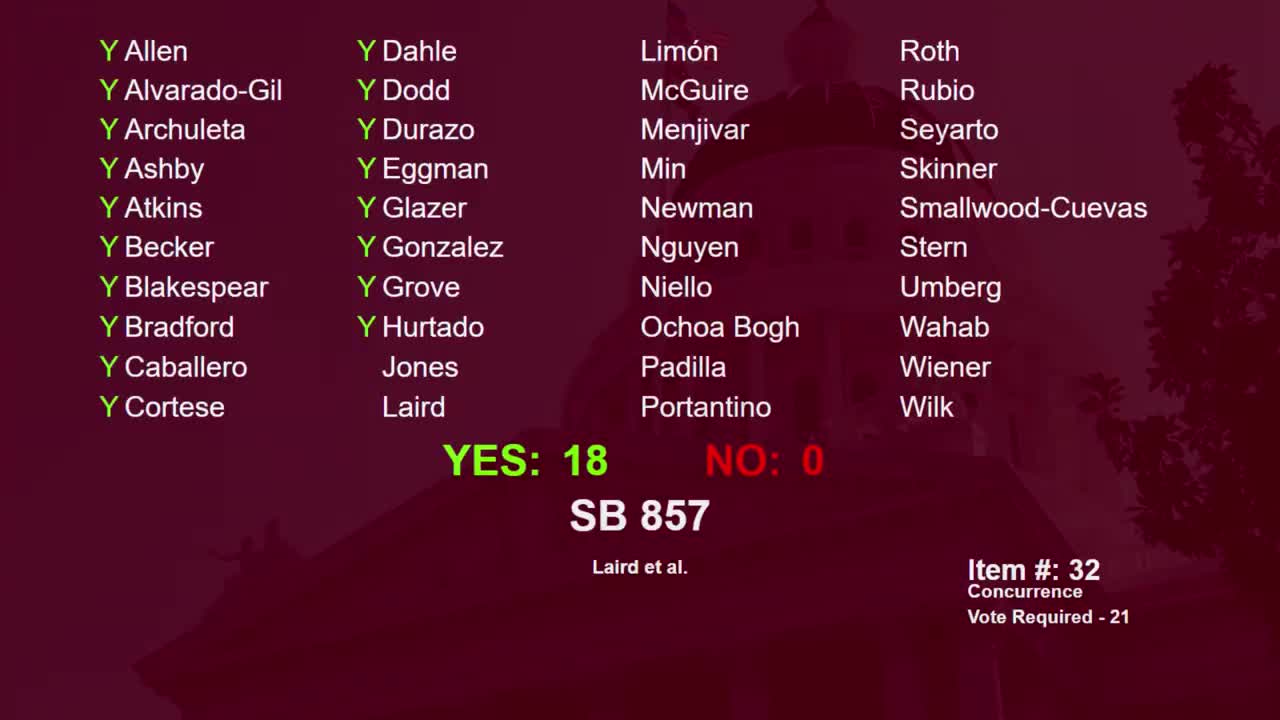 37SEC
Senate Floor
 47SEC
Assembly Floor
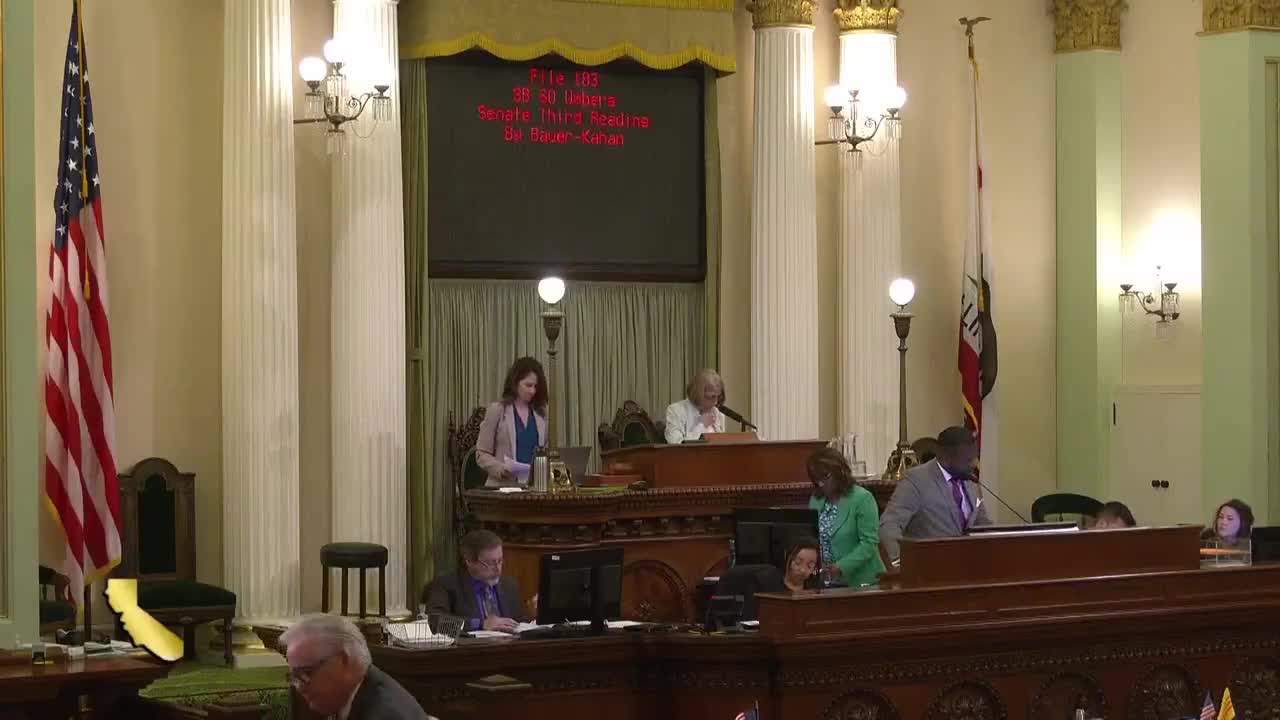 1MIN
Assembly Floor
 3MIN
Senate Standing Committee on Education
Bill Author

Bill Co-Author(s):