SB 921: Animal welfare.
- Session Year: 2023-2024
- House: Senate
- Latest Version Date: 2024-04-08
Current Status:
Failed
(2024-04-08: Read second time and amended. Re-referred to Com. on APPR.)
Introduced
In Committee
First Chamber
In Committee
Second Chamber
Enacted
What does this bill do?
This bill broadens California’s animal cruelty law to make it a crime for anyone who maliciously or intentionally maims, kills, or otherwise causes needless suffering to a living animal, affecting pet owners, animal caretakers, handlers, and others who use or control animals. It also clarifies that routine animal handling and husbandry practices (including rodeo activities), acts done under permits from wildlife agencies for conservation work, and traditional animal testing for medical research are not treated as mistreatment under the law.
The summary is provided by generative AI which can make mistakes. For original language, please view the details in the table below.
Existing law makes it a crime to inflict unnecessary cruelty or to abuse an animal in any manner, including, but not limited to, maliciously and intentionally maiming, mutilating, torturing, or wounding an animal.
This bill would additionally make it a crime to otherwise abuse or subject a living animal to needless suffering. The bill would make it a crime for a person to maliciously and intentionally mistreat any animal even if the mistreatment does not cause physical injury, subject to specified exceptions. By expanding the scope of a crime, this bill would impose a state-mandated local program.
Existing law requires a person who is convicted of specified crimes, including misdemeanor or felony abuse of an animal, who is granted probation to successfully complete counseling.This bill would expand that requirement to require a person convicted of an infraction for abusing an animal to complete counseling. The bill would make failure to complete counseling a misdemeanor. By creating a new crime, the bill would impose a state-mandated local program.The bill would require that specified handling and husbandry practices widely regarded as routine, including rodeo or rodeo related events, not be presumed to constitute animal mistreatment. The bill would make animal treatment laws inapplicable to acts authorized pursuant to permits issued by a wildlife agency as part of wildlife conservation research and to traditional methods of animal testing performed for the purpose of medical research, as defined.
The California Constitution requires the state to reimburse local agencies and school districts for certain costs mandated by the state. Statutory provisions establish procedures for making that reimbursement.
This bill would provide that no reimbursement is required by this act for a specified reason.
Existing law makes it a crime to inflict unnecessary cruelty or to abuse an animal in any manner, including, but not limited to, maliciously and intentionally maiming, mutilating, torturing, or wounding an animal.
This bill would additionally make it a crime to otherwise abuse or subject a living animal to needless suffering. The bill would make it a crime for a person to maliciously and intentionally mistreat any animal even if the mistreatment does not cause physical injury. injury, subject to specified exceptions. By expanding the scope of a crime, this bill would impose a state-mandated local program.
Existing law requires a person who is convicted of specified crimes, including misdemeanor or felony abuse of an animal, who is granted probation to successfully complete counseling.
This bill would expand that requirement to require a person convicted of an infraction for abusing an animal to complete counseling. The bill would make failure to complete counseling a misdemeanor. By creating a new crime, the bill would impose a state-mandated local program.
The California Constitution requires the state to reimburse local agencies and school districts for certain costs mandated by the state. Statutory provisions establish procedures for making that reimbursement.
This bill would provide that no reimbursement is required by this act for a specified reason.
Existing law makes it a crime to inflict unnecessary cruelty or to abuse an animal in any manner, including, but not limited to, maliciously and intentionally maiming, mutilating, torturing, or wounding an animal.
This bill would additionally make it a crime to otherwise abuse or subject a living animal to needless suffering. The bill would make it a crime for a person to maliciously and intentionally mistreat any animal even if the mistreatment does not cause physical injury. By expanding the scope of a crime, this bill would impose a state-mandated local program.
Existing law requires a person who is convicted of specified crimes, including misdemeanor or felony abuse of an animal, who is granted probation to successfully complete counseling.
This bill would expand that requirement to require a person convicted of an infraction for abusing an animal to complete counseling. The bill would make failure to complete counseling a misdemeanor. By creating a new crime, the bill would impose a state-mandated local program.
The California Constitution requires the state to reimburse local agencies and school districts for certain costs mandated by the state. Statutory provisions establish procedures for making that reimbursement.
This bill would provide that no reimbursement is required by this act for a specified reason.
(a)Except as provided in subdivision (c) of this section or Section 599c, a person who maliciously and intentionally maims, mutilates, tortures, wounds, poisons, or otherwise abuses or subjects a living animal to needless suffering, or maliciously and intentionally kills an animal, is guilty of a crime punishable pursuant to subdivision (e). (d).
(b)Except as otherwise provided in subdivision (a) or (c), a person who overdrives, overloads, drives when overloaded, overworks, tortures, torments, deprives of necessary sustenance, drink, or shelter, cruelly beats, mutilates, or cruelly kills an animal, or causes or procures an animal to be so overdriven, overloaded, driven when overloaded, overworked, tortured, tormented, deprived of necessary sustenance, drink, shelter, or to be cruelly beaten, mutilated, or cruelly killed; and whoever, having the charge or custody of an animal, either as owner or otherwise, subjects an animal to needless suffering, or inflicts unnecessary cruelty upon the animal, or in any manner abuses an animal, or fails to provide the animal with proper food, drink, or shelter, or protection from the weather, or who drives, rides, or otherwise uses the animal when unfit for labor, is, for each offense, guilty of a crime punishable pursuant to paragraph (1) of subdivision (e). (d).
(c)A person who maliciously and intentionally maims, mutilates, or tortures a mammal, bird, reptile, amphibian, or fish, as described in subdivision (f), (e), is guilty of a crime punishable pursuant to paragraph (1) of subdivision (e). subdivision (d).
(d)(1)Except as otherwise provided in subdivisions (a), (b), or (c), a person who maliciously and intentionally mistreats any animal but does not cause physical injury is guilty of a crime punishable pursuant to paragraph (2) of subdivision (e).(2)For purposes of this subdivision, mistreatment includes, but is not limited to, beating, striking, tormenting, or inflicting unnecessary pain upon any animal without justification.(3)For purposes of this subdivision, animal handling and husbandry practices widely regarded as routine and acceptable practice within the relevant industry or educational modality shall be presumed not to constitute mistreatment.(e)(1)This section does not apply to any traditional method of animal testing performed for the purpose of medical research.(2)For the purposes of this section, medical research means research related to the causes, diagnosis, treatment, control, or prevention of physical or mental diseases and impairments of humans or animals or related to the development of biomedical products, devices, biologics, parasiticides, or drugs as defined in Section 321(g)(1) of Title 21 of the United States Code.(3)For the purposes of this section, traditional method of animal testing means a process or procedure using animals to obtain information on the characteristics of a chemical, agent, or device and that generates information regarding the ability of a chemical, agent, or device to produce a specific biological effect under specified conditions.(f)(1)A(d)A violation of subdivision (a), (b), or (c) is punishable as a felony by imprisonment pursuant to subdivision (h) of Section 1170, or by a fine of not more than twenty thousand dollars ($20,000), or by both that fine and imprisonment, or alternatively, as a misdemeanor by imprisonment in a county jail for not more than one year, or by a fine of not more than twenty thousand dollars ($20,000), or by both that fine and imprisonment.
(2)(A)A violation of subdivision (d) is punishable as a misdemeanor by imprisonment in a county jail for not more than one year, a fine of not more than one thousand dollars ($1,000), or by both that fine and imprisonment, or as an infraction by a fine of not more than five hundred dollars ($500).(B)A person convicted of an infraction pursuant to this paragraph shall complete counseling or treatment as specified in Section 600.8.(C)If a person is convicted of an infraction pursuant to this paragraph, the court shall impose the fine and order the defendant to file proof of completion of counseling or treatment with the court within 18 months of the conviction.(D)A person who is ordered to complete counseling or treatment pursuant to this paragraph and who willfully fails to comply with a court order to attend and successfully complete counseling or treatment is guilty of a misdemeanor.(g)(e)(1)Subdivision (c) applies to a mammal, bird, reptile, amphibian, or fish that is a creature described as follows:
(A)Endangered species or threatened species as described in Chapter 1.5 (commencing with Section 2050) of Division 3 of the Fish and Game Code.
(B)Fully protected birds described in Section 3511 of the Fish and Game Code.
(C)Fully protected mammals described in Chapter 8 (commencing with Section 4700) of Part 3 of Division 4 of the Fish and Game Code.
(D)Fully protected reptiles and amphibians described in Chapter 2 (commencing with Section 5050) of Division 5 of the Fish and Game Code.
(E)Fully protected fish as described in Section 5515 of the Fish and Game Code.
(2)This subdivision does not supersede or affect any law relating to taking of the described species, including, but not limited to, Section 12008 of the Fish and Game Code.
(h)(f)For the purposes of subdivision (c), each act of malicious and intentional maiming, mutilating, or torturing a separate specimen of a creature described in subdivision (e) is a separate offense. If a person is charged with a violation of subdivision (c), the proceedings shall be subject to Section 12157 of the Fish and Game Code.
(i)(g)(1)Upon the conviction of a person charged with a violation of this section by causing or permitting an act of cruelty, as defined in Section 599b, all animals lawfully seized and impounded with respect to the violation by a peace officer, officer of a humane society, or officer of an animal shelter or animal regulation department of a public agency shall be adjudged by the court to be forfeited and shall thereupon be awarded to the impounding officer for proper disposition. A person convicted of a violation of this section by causing or permitting an act of cruelty, as defined in Section 599b, shall be liable to the impounding officer for all costs of impoundment from the time of seizure to the time of proper disposition.
(2)Mandatory seizure or impoundment shall not apply to animals in properly conducted scientific experiments or investigations performed under the authority of the faculty of a regularly incorporated medical college or university of this state.
(j)(h)For the purposes of this section, malicious or maliciously means having the unlawful intent to disturb, annoy, or injure an animal, or the intent to do a wrongful act, established either by proof or by presumption of law. act.
(i)It is the intent of the Legislature to hold accountable those individuals who affirmatively act to harm animals or who are criminally negligent in their care for animals within their custody or possession. This section does not impair those professions that necessarily involve interactions with animals including, but not limited to, those described in Section 599c.
SEC. 2.Section 599c of the Penal Code is amended to read:599c.No part of this title shall be construed as interfering (a)(1)The provisions of this title do not interfere with any of the laws of this state known as the game laws, or any laws for or against the destruction of certain birds, nor must this title be construed as interfering birds.
(2)The provisions of this title do not interfere with the right to destroy any venomous reptile, or any animal known as dangerous to life, limb, or property, or to interfere with the right to kill all animals an animal used for food, or with food.
(3)The provisions of this title do not interfere with the right to conduct properly conducted scientific experiments or investigations performed under the authority of the faculty of a regularly incorporated medical college or university of this state.
(b)For purposes of this title, animal handling and husbandry practices widely regarded as routine and acceptable practices within the relevant industry or educational modality, including, but not limited to, those practices commonly found in rodeo or rodeo related events, shall be presumed not to constitute mistreatment.
(c)This title does not apply to acts authorized pursuant to a permit issued by a state or federal wildlife agency as part of a wildlife conservation research or recovery effort including, but not limited to, immobilizations, vaccinations, tagging, banding, collaring, or similar activities.
(d)This title does not apply to any traditional method of animal testing performed for the purpose of medical research.
(1)For the purposes of this section, medical research means research related to the causes, diagnosis, treatment, control, or prevention of physical or mental diseases and impairments of humans or animals or related to the development of biomedical products, devices, biologics, parasiticides, or drugs as defined in Section 321(g)(1) of Title 21 of the United States Code.
(2)For the purposes of this section, traditional method of animal testing means a process or procedure using animals to obtain information on the characteristics of a chemical, agent, or device and that generates information regarding the ability of a chemical, agent, or device to produce a specific biological effect under specified conditions.
(e)This title does not apply to any of the following:
(1)An animal test of any cosmetic that is required by a federal or state regulatory authority if all of the following apply:
(A)The ingredient is in wide use and cannot be replaced by another ingredient capable of performing a similar function.
(B)A specific human health problem is substantiated and the need to conduct animal tests is justified and is supported by a detailed research protocol proposed as the basis for the evaluation.
(C)There is not a nonanimal alternative method accepted for the relevant endpoint by the relevant federal or state regulatory authority.
(2)An animal test that was conducted to comply with a requirement of a foreign regulatory authority, if no evidence derived from the test was relied upon to substantiate the safety of the cosmetic sold in California by the manufacturer.
(3)An animal test that was conducted on any product or ingredient subject to the requirements of Subchapter V of the Federal Food, Drug, and Cosmetic Act (21 U.S.C. 351 et seq.).
(4)(A)An animal test that was conducted for noncosmetic purposes in response to a requirement of a federal, state, or foreign regulatory authority, if no evidence derived from the test was relied upon to substantiate the safety of the cosmetic sold in California by the manufacturer.
(B)A manufacturer is not prohibited from reviewing, assessing, or retaining evidence from an animal test conducted pursuant to this paragraph.
SEC. 2.SEC. 3.No reimbursement is required by this act pursuant to Section 6 of Article XIIIB of the California Constitution because the only costs that may be incurred by a local agency or school district will be incurred because this act creates a new crime or infraction, eliminates a crime or infraction, or changes the penalty for a crime or infraction, within the meaning of Section 17556 of the Government Code, or changes the definition of a crime within the meaning of Section 6 of Article XIIIB of the California Constitution.
(a)Except as provided in subdivision (c) of this section or Section 599c, a person who maliciously and intentionally maims, mutilates, tortures, wounds, poisons, or otherwise abuses or subjects a living animal to needless suffering, or maliciously and intentionally kills an animal, is guilty of a crime punishable pursuant to subdivision (e).
(b)Except as otherwise provided in subdivision (a) or (c), a person who overdrives, overloads, drives when overloaded, overworks, tortures, torments, deprives of necessary sustenance, drink, or shelter, cruelly beats, mutilates, or cruelly kills an animal, or causes or procures an animal to be so overdriven, overloaded, driven when overloaded, overworked, tortured, tormented, deprived of necessary sustenance, drink, shelter, or to be cruelly beaten, mutilated, or cruelly killed; and whoever, having the charge or custody of an animal, either as owner or otherwise, subjects an animal to needless suffering, or inflicts unnecessary cruelty upon the animal, or in any manner abuses an animal, or fails to provide the animal with proper food, drink, or shelter, or protection from the weather, or who drives, rides, or otherwise uses the animal when unfit for labor, is, for each offense, guilty of a crime punishable pursuant to paragraph (1) of subdivision (e).
(c)A person who maliciously and intentionally maims, mutilates, or tortures a mammal, bird, reptile, amphibian, or fish, as described in subdivision (f), is guilty of a crime punishable pursuant to paragraph (1) of subdivision(e). subdivision (e).
(d)(1)Except as otherwise provided in subdivisions (a), (b), or (c), a person who maliciously and intentionally mistreats any animal but does not cause physical injury is guilty of a crime punishable pursuant to paragraph (2) of subdivision (e).
(2)For purposes of this subdivision, mistreatment includes, but is not limited to, beating, striking, tormenting, or inflicting unnecessary pain upon any animal without justification.
(3)For purposes of this subdivision, animal handling and husbandry practices widely regarded as routine and acceptable practice within the relevant industry or educational modality shall be presumed not to constitute mistreatment.
(e)(1)This section does not apply to any traditional method of animal testing performed for the purpose of medical research.
(2)For the purposes of this section, medical research means research related to the causes, diagnosis, treatment, control, or prevention of physical or mental diseases and impairments of humans or animals or related to the development of biomedical products, devices, biologics, parasiticides, or drugs as defined in Section 321(g)(1) of Title 21 of the United States Code.
(3)For the purposes of this section, traditional method of animal testing means a process or procedure using animals to obtain information on the characteristics of a chemical, agent, or device and that generates information regarding the ability of a chemical, agent, or device to produce a specific biological effect under specified conditions.
(e)(f)(1)A violation of subdivision (a), (b), or (c) is punishable as a felony by imprisonment pursuant to subdivision (h) of Section 1170, or by a fine of not more than twenty thousand dollars ($20,000), or by both that fine and imprisonment, or alternatively, as a misdemeanor by imprisonment in a county jail for not more than one year, or by a fine of not more than twenty thousand dollars ($20,000), or by both that fine and imprisonment.
(2)(A)A violation of subdivision (d) is punishable as a misdemeanor by imprisonment in a county jail for not more than one year, a fine of not more than one thousand dollars ($1,000), or by both that fine and imprisonment, or as an infraction by a fine of not more than five hundred dollars ($500).
(B)A person convicted of an infraction pursuant to this paragraph shall complete counseling or treatment as specified in Section 600.8.
(C)If a person is convicted of an infraction pursuant to this paragraph, the court shall impose the fine and order the defendant to file proof of completion of counseling or treatment with the court within 18 months of the conviction.
(D)A person who is ordered to complete counseling or treatment pursuant to this paragraph and who willfully fails to comply with a court order to attend and successfully complete counseling or treatment is guilty of a misdemeanor.
(f)(g)(1)Subdivision (c) applies to a mammal, bird, reptile, amphibian, or fish that is a creature described as follows:
(A)Endangered species or threatened species as described in Chapter 1.5 (commencing with Section 2050) of Division 3 of the Fish and Game Code.
(B)Fully protected birds described in Section 3511 of the Fish and Game Code.
(C)Fully protected mammals described in Chapter 8 (commencing with Section 4700) of Part 3 of Division 4 of the Fish and Game Code.
(D)Fully protected reptiles and amphibians described in Chapter 2 (commencing with Section 5050) of Division 5 of the Fish and Game Code.
(E)Fully protected fish as described in Section 5515 of the Fish and Game Code.
(2)This subdivision does not supersede or affect any law relating to taking of the described species, including, but not limited to, Section 12008 of the Fish and Game Code.
(g)(h)For the purposes of subdivision (c), each act of malicious and intentional maiming, mutilating, or torturing a separate specimen of a creature described in subdivision (e) is a separate offense. If a person is charged with a violation of subdivision (c), the proceedings shall be subject to Section 12157 of the Fish and Game Code.
(h)(i)(1)Upon the conviction of a person charged with a violation of this section by causing or permitting an act of cruelty, as defined in Section 599b, all animals lawfully seized and impounded with respect to the violation by a peace officer, officer of a humane society, or officer of an animal shelter or animal regulation department of a public agency shall be adjudged by the court to be forfeited and shall thereupon be awarded to the impounding officer for proper disposition. A person convicted of a violation of this section by causing or permitting an act of cruelty, as defined in Section 599b, shall be liable to the impounding officer for all costs of impoundment from the time of seizure to the time of proper disposition.
(2)Mandatory seizure or impoundment shall not apply to animals in properly conducted scientific experiments or investigations performed under the authority of the faculty of a regularly incorporated medical college or university of this state.
(j)For the purposes of this section, malicious or maliciously means having the intent to disturb, annoy, or injure an animal, or the intent to do a wrongful act, established either by proof or by presumption of law.
SEC. 2.No reimbursement is required by this act pursuant to Section 6 of Article XIIIB of the California Constitution because the only costs that may be incurred by a local agency or school district will be incurred because this act creates a new crime or infraction, eliminates a crime or infraction, or changes the penalty for a crime or infraction, within the meaning of Section 17556 of the Government Code, or changes the definition of a crime within the meaning of Section 6 of Article XIIIB of the California Constitution.
(a)Except as provided in subdivision (c) of this section or Section 599c, a person who maliciously and intentionally maims, mutilates, tortures, or wounds a living animal, wounds, or otherwise abuses or subjects a living animal to needless suffering, or maliciously and intentionally kills an animal, is guilty of a crime punishable pursuant to subdivision (d). (e).
(b)Except as otherwise provided in subdivision (a) or (c), a person who overdrives, overloads, drives when overloaded, overworks, tortures, torments, deprives of necessary sustenance, drink, or shelter, cruelly beats, mutilates, or cruelly kills an animal, or causes or procures an animal to be so overdriven, overloaded, driven when overloaded, overworked, tortured, tormented, deprived of necessary sustenance, drink, shelter, or to be cruelly beaten, mutilated, or cruelly killed; and whoever, having the charge or custody of an animal, either as owner or otherwise, subjects an animal to needless suffering, or inflicts unnecessary cruelty upon the animal, or in any manner abuses an animal, or fails to provide the animal with proper food, drink, or shelter, or protection from the weather, or who drives, rides, or otherwise uses the animal when unfit for labor, is, for each offense, guilty of a crime punishable pursuant to subdivision (d). paragraph (1) of subdivision (e).
(c)A person who maliciously and intentionally maims, mutilates, or tortures a mammal, bird, reptile, amphibian, or fish, as described in subdivision (e), (f), is guilty of a crime punishable pursuant to subdivision (d). paragraph (1) of subdivision(e).
(d)Except as otherwise provided in subdivisions (a), (b), or (c), a person who maliciously and intentionally mistreats any animal but does not cause physical injury is guilty of a crime punishable pursuant to paragraph (2) of subdivision (e).
(d)(e)(1)A violation of subdivision (a), (b), or (c) is punishable as a felony by imprisonment pursuant to subdivision (h) of Section 1170, or by a fine of not more than twenty thousand dollars ($20,000), or by both that fine and imprisonment, or alternatively, as a misdemeanor by imprisonment in a county jail for not more than one year, or by a fine of not more than twenty thousand dollars ($20,000), or by both that fine and imprisonment.
(2)(A)A violation of subdivision (d) is punishable as a misdemeanor by imprisonment in a county jail for not more than one year, a fine of not more than one thousand dollars ($1,000), or by both that fine and imprisonment, or as an infraction by a fine of not more than five hundred dollars ($500).
(B)A person convicted of an infraction pursuant to this paragraph shall complete counseling or treatment as specified in Section 600.8.
(C)If a person is convicted of an infraction pursuant to this paragraph, the court shall impose the fine and order the defendant to file proof of completion of counseling or treatment with the court within 18 months of the conviction.
(D)A person who is ordered to complete counseling or treatment pursuant to this paragraph and who willfully fails to comply with a court order to attend and successfully complete counseling or treatment is guilty of a misdemeanor.
(e)(f)(1)Subdivision (c) applies to a mammal, bird, reptile, amphibian, or fish that is a creature described as follows:
(A)Endangered species or threatened species as described in Chapter 1.5 (commencing with Section 2050) of Division 3 of the Fish and Game Code.
(B)Fully protected birds described in Section 3511 of the Fish and Game Code.
(C)Fully protected mammals described in Chapter 8 (commencing with Section 4700) of Part 3 of Division 4 of the Fish and Game Code.
(D)Fully protected reptiles and amphibians described in Chapter 2 (commencing with Section 5050) of Division 5 of the Fish and Game Code.
(E)Fully protected fish as described in Section 5515 of the Fish and Game Code.
(2)This subdivision does not supersede or affect any law relating to taking of the described species, including, but not limited to, Section 12008 of the Fish and Game Code.
(f)(g)For the purposes of subdivision (c), each act of malicious and intentional maiming, mutilating, or torturing a separate specimen of a creature described in subdivision (e) is a separate offense. If a person is charged with a violation of subdivision (c), the proceedings shall be subject to Section 12157 of the Fish and Game Code.
(g)(h)(1)Upon the conviction of a person charged with a violation of this section by causing or permitting an act of cruelty, as defined in Section 599b, all animals lawfully seized and impounded with respect to the violation by a peace officer, officer of a humane society, or officer of an animal shelter or animal regulation department of a public agency shall be adjudged by the court to be forfeited and shall thereupon be awarded to the impounding officer for proper disposition. A person convicted of a violation of this section by causing or permitting an act of cruelty, as defined in Section 599b, shall be liable to the impounding officer for all costs of impoundment from the time of seizure to the time of proper disposition.
(2)Mandatory seizure or impoundment shall not apply to animals in properly conducted scientific experiments or investigations performed under the authority of the faculty of a regularly incorporated medical college or university of this state.
SEC. 2.No reimbursement is required by this act pursuant to Section 6 of Article XIIIB of the California Constitution because the only costs that may be incurred by a local agency or school district will be incurred because this act creates a new crime or infraction, eliminates a crime or infraction, or changes the penalty for a crime or infraction, within the meaning of Section 17556 of the Government Code, or changes the definition of a crime within the meaning of Section 6 of Article XIIIB of the California Constitution.
|
Date
|
Status
|
|---|---|
| Apr 8, 2024 | Read second time and amended. Re-referred to Com. on APPR. |
| Apr 4, 2024 | From committee: Do pass as amended and re-refer to Com. on APPR. (Ayes 5. Noes 0. Page 3449.) (April 2). |
| Mar 13, 2024 | From committee with author's amendments. Read second time and amended. Re-referred to Com. on PUB S. |
| Mar 6, 2024 | Set for hearing April 2. |
| Feb 14, 2024 | Referred to Com. on PUB S. |
| Jan 12, 2024 | From printer. May be acted upon on or after February 11. |
| Jan 11, 2024 | Introduced. Read first time. To Com. on RLS. for assignment. To print. |
|
Date
|
Description
|
Location
|
Votes
|
|
|---|---|---|---|---|
| Apr 2, 2024 | Do pass as amended, but first amend, and re-refer to the Committee on [Appropriations] | Senate Standing Committee on Public Safety |
Passed |
This list shows positions taken on this bill by organizations on the date displayed, which is linked to the original source.
Positions by individuals are not included.
|
Organization
|
Position
|
Date
|
|---|---|---|
| Aclu California Action | * Support | Apr 2, 2024 |
| California Public Defenders Office | * Support | Apr 2, 2024 |
| Riverside County | * Support | Apr 2, 2024 |
| Riverside County District Attorney's Office | * Support | Apr 2, 2024 |
| Social Compassion and Legislation | * Support | Apr 2, 2024 |
SENATE COMMITTEE ON PUBLIC SAFETY
Senator Aisha Wahab, Chair
2023 - 2024 Regular
Bill No: SB 921 Hearing Date: April 2, 2024
Author: | Roth | ||
Version: | March 13, 2024 | ||
Urgency: | No | Fiscal: | Yes |
Consultant: | MK | ||
Subject: Animal welfare
HISTORY
Source: Riverside District Attorney’s Office
Prior Legislation: AB 829(Waldron) Chapter 546, Stats. 2023
SB 580 (Wilk) Held Assembly Approps. 2020
AB 611 (Nazarian), Chapter 613, Stats. 2019
SB 1024 (Wilk) Held Assembly Approps. 2018
AB 3040 (Nazarian) Held Senate Approps. 2018
Support: Arcadia Police Officers' Association; Burbank Police Officers' Association; California District Attorneys Assoc.; California Reserve Peace Officers Association; Claremont Police Officers Association; Corona Police Officers Association; Culver City Police Officers' Association; Deputy Sheriffs' Association of Monterey County; Fullerton Police Officers' Association; Murrieta Police Officers' Association; Newport Beach Police Association; Novato Police Officers Association; Palos Verdes Police Officers Association; Placer County Deputy Sheriffs' Association; Pomona Police Officers' Association; Riverside County District Attorney; Riverside Police Officers Association; Riverside Sheriffs' Association; Santa Ana Police Officers Association; Upland Police Officers Association
Opposition: California Public Defenders Association (unless amended)
PURPOSE
The purpose of this bill is to create an alternate misdemeanor/infraction for mistreating an animal when there is no injury.
Existing law provides that any person who sexually assaults any animal for the reason of arousing or gratifying the sexual desire of a person is guilty of a misdemeanor punishable by up to 6 months in jail and/or a fine of $1,000 plus approximately 310% penalty assessments for a total fine of $4,100. (Penal Code § 286.5)
Existing law provides that every person who, without the consent of the owner, willfully administers poison to any animal, the property of another, or exposes any poisonous substance, with the intent that the same shall be taken or swallowed by any such animal is guilty of a misdemeanor punishable by up to 6 months in jail/and or fine of $1,000 ($4,100 with penalty assessments). (Penal Code § 596)
Existing law provides that every owner, driver, or keeper of any animal who permits the animal to be in any building, enclosure, lane, street etc. without proper care and attention is guilty of a misdemeanor punishable by up to 6 months in jail/and or fine of $1,000 ($4,100 with penalty assessments). (Penal Code § 597.1)
Existing law provides that every owner, driver, or possessor of any animal who permits the animal to be in any building, enclosure, lane, street, square, or lot of any city, county etc. without proper care and attention shall be guilty of a misdemeanor punishable by up to 6 months in jail/and or fine of $1,000 ($4,100 with penalty assessments). (Penal Code § 597e)
Existing law provides that any person who injures a police dog or horse is guilty of a misdemeanor or, if the injury is serious, a wobbler. The penalty for the misdemeanors are punishable by up to 6 months in jail/and or fine of $1,000 ($4,100 with penalty assessments). (Penal Code § 600)
Existing law provides that a person shall not leave or confine and animal in any unattended vehicle under conditions that endanger the health or well-being of an animal due to heat, cold, lack of adequate ventilation, or lack of food or water, or other circumstances that could reasonably case suffering, disability, or death to an animal. (Penal Code § 597.7 (a)
Existing law provides that unless the animal suffers great bodily injury, a first conviction for violation of this section is an infraction punishable by a fine not exceeding $100 ($410 with penalty assessments) per animal. If the animal suffers great bodily injury, a violation of this section is a misdemeanor punishable by a fine not exceeding $500 ($2,050 with penalty assessments) and/or imprisonment in the county jail not exceeding six months. Subsequent violations of this section, whether or not there is injury, is a misdemeanor punishable by a fine not exceeding $500 ($2,050 with penalty assessments) and or imprisonment in the county jail not exceeding 6 months. (Penal Code § 597.7(c))
Existing law provides that a person who maliciously and intentionally maims, mutilates, tortures, or wounds a living animal, is guilty of a wobbler. (Penal Code § 597 (a))
Existing law provides that a person who overdrives, overloads, drives when overloaded, overworks, tortures, torments, deprives of necessary sustenance, drink, or shelter, or to be cruelly beaten, mutilates, or cruelly kills an animal, or cases or procures and animal to be so deprived, and whoever, having the charge or custody of an animal, either as owner or unnecessary cruelty upon the animal, or in any manner abuses an animal, or fails to provide the animal with proper food, drink, or shelter, or protection from the weather, or who drives, rides, or otherwise uses the animal when unfit for labor, is, for each offense is guilty of a wobbler. (Penal Code §597(b))
Existing law provides that a person who maliciously and intentionally maims, mutilates, or tortures a mammal, bird, reptile, amphibian, or fish is guilty of a wobbler. (Penal Code § 597(c))
Existing law provides that for the violations in Penal Code Section 597 are punishable as a wobbler with a jail felony of 16 months, 2 or 3 years and/or a fine up to $20,000 ($82,000 with penalty assessments) or a one year in county jail and/or a fine of up to $20,000 ($82,000 with penalty assessments (Penal Code § 597 (d))
Existing law provides that if a person is granted probation for maliciously and intentionally maiming, mutilating, torturing, wounding or killing an animal, he or she shall order the defendant to complete counseling designed to evaluate and treat behavior or conduct disorders. (Penal Code § 600.8)
This bill provides that a person who maliciously and intentionally mistreats any animal but does not cause physical injury is guilty of a wobblette punishable for not more than one year, and/or fine of not more than $1,000 ($3,100 with penalty assessments) or by an infraction with a fine of not more than $500 ($1,550 with penalty assessments).
This bill defines “mistreatment” as including, but not limited to, beating, striking, tormenting, or infliction unnecessary pain upon any animal without justification.
This bill provides that animal husbandry practices widely regarded as routine and acceptable practice within the relevant industry or educational modality shall be presumed not to constitute mistreatment.
This bill provides that this section does not apply to any traditional method of animal testing performed for the purpose of medical research.
This bill provides that “medical research” means research related to the causes, diagnosis, treatment, control, or prevention of physical or mental diseases and impairments of humans or animals or related to the development of biomedical products, devices, biologics, parasiticides, or drugs as defined by federal law.
This bill provides that “traditional method of animal testing” means a process or procedure using animals to obtain information on the characteristics of a chemical, agent, or device and that generates information regarding the ability of a chemical, agent or device to produce a specific biological effect under specified conditions.
This bill defines “malicious” or “maliciously” as having the intent to disturb, annoy, or injury an animal, or the intent to do a wrongful act, established by either proof or by presumption of law.
This bill provides that if a person is convicted of an infraction the court shall impose a fine and within 18 months the person shall complete counseling as specified in Penal Code Section 600.8.
This bill provides that failure to complete counseling or treatment is guilty of a misdemeanor.
COMMENTS
1. Need for This Bill
According to the author:
Due to a lack of parity in the law, those who mistreat animals that they do not own avoid prosecution unless there is a serious injury or death.
This loophole in practice means that District Attorneys’ Offices are currently unable to hold defendants accountable when they mistreat animals simply because the animal the defendant abused was not their own.
For example, in some domestic violence scenarios, defendants may harm a significant other’s pet by kicking, punching, etc. However, charges cannot be filed in those cases unless the injury to the animal rose to the level of “maiming, mutilating, torturing, wounding, or killing that animal. Thus, if the suspect does not cause a serious laceration, break a bone, or inflict some other significant demonstrable injury, they are not criminally liable.
Animal abuse is abuse whether or not it was committed against one’s own animal or an animal they did not own. In fact, in the scenarios where this is most common – abuse of a partner’s pet, the abuse of an animal is often used as a tool to manipulate and threaten a human being.
Violence against animals is a serious red flag that someone may also be violent against humans, and it’s imperative we can hold dangerous people accountable before they escalate towards more violence.
This is a critical piece of legislation to ensure the safety of both animals and humans in California.
2. Wobblette for mistreatment with no physical injury
Exiting law makes it a wobbler for a person to subject an animal of which they have charge or custody of an animal to subject the animal to suffering is guilty of a wobbler. It is also a wobbler to maliciously and intentionally maim, mutilate, or torture a mammal bird, reptile, or amphibian.
This bill would make it a wobblette, either a misdemeanor or infraction, to maliciously and intentionally mistreat any animal but not cause physical injury. It would be punishable by up to one year in county jail and a fine up to $1,000 (approximately $3,100 with penalty assessments[1]). If the person is convicted of the infraction they are subject to a fine of $500 ($1,550 with penalty assessments) and must attend counseling or treatment as ordered by the court. Failure to complete the counseling or treatment is a misdemeanor.
Ordinarily a baseline misdemeanor is 6 months in county jail. This bill makes the misdemeanor penalty one year. Is this appropriate for an offense where there has been no injury?
Ordinarily the fine for an infraction, because you do not have the right to an attorney or a jury trial, has been $250 ($775 with penalty assessments). Is the $500 penalty in this new infraction too high especially in light of the treatment requirement?
What are the circumstances under consideration in this bill for which a person can be charge with a misdemeanor? Could a person be charged for kicking a loose dog away from their leashed dog? Or throwing something at the dog to get if off their property and away from their pet or child? Is that considered with justification? What if the dog owner says their dog just wanted to play and never hurt anyone, is that still justified?
The definition of malicious or maliciously in this bill means having the intent to disturb, annoy, or injury an animal, or with the intent to do a wrongful act. Isn’t pushing a dog away from one’s self or dog “disturbing” the dog even if there is no intent to injure the dog? What if a person uses a hose to spray a dog or cat away from their flower beds? Is that justified? Is it annoying to the animal? Is this definition of malicious too broad? Is a misdemeanor appropriate when there is no injury?
This bill also provides that malicious or maliciously can be established by either proof or presumption of law. A similar provision is included in arson (Penal Code Section 450) but is a presumption of law appropriate in this case? Shouldn’t the prosecutor be required to prove the intent was malicious and also not justified?
3. Counseling or Treatment
Generally a person charged with an infraction does not go before a court, unless that person requests a hearing. In this case a person may likely be charged with the misdemeanor an plea to the infraction but if a person is not charged directly with the infraction they will not have an attorney. They also do not have the right to a jury trial and they rarely actually go to court. Fines in infractions are generally just paid. Thus, it is not clear how a person will be sentenced to treatment or counseling, assuming any is available. It is also not clear that the process to prove they did such treatment or counseling will be clear to an individual. Failure to complete the counseling or treatment and to notify the court within 18 months is a misdemeanor. Is a misdemeanor appropriate for an underlying infraction when the process may not be clear?
4. Technical Amendment
After the various amendments to this bill, there is now an incorrect cross-reference that should be changed when the bill gets amended again. On page 2 line 23 “pursuant to paragraph 1 of subdivision (e)” should read “pursuant to paragraph 2 of subdivision (f)”
5. Argument in Support
The sponsor, the Riverside County District Attorney states:
Currently, California’s animal abuse statute criminalizes two general categories of behavior: affirmative conduct that results in serious physical harm to an animal or neglectful conduct by a person with a possessory interest over the animal that results in its unnecessary suffering. It is unlawful to cause “needless suffering” or to “in any manner abuse” one’s own animal. However, the provisions that apply to any animal only prohibit one from maiming, mutilating, torturing, or wounding them. Thus, an individual can strike, kick, torment, or otherwise cause purposeful harm to an animal they do not own so long as the injury that the animal sustains does not rise to the egregious level of maiming, torturing, etc.
Animal abuse is a crime in all 50 states and most legislatures criminalize needless pain or suffering to an animal. Where California differs, however, is that our current statutory construction requires very serious injury before there is liability when the animal being abused is not owned by the perpetrator. For example, in California, an individual can beat a stray dog without running afoul of any criminal statute so long as no bones are broken. If that same beating took place in Washington, the perpetrator would be guilty of a misdemeanor or a felony.
Existing law affords animal abusers the opportunity to address underlying behavioral or mental health issues that led to their actions by requiring counseling or, in certain circumstances, a higher degree of mental health treatment. This existing law would apply to SB 921’s provisions and afford those convicted of mistreating an animal counseling to address any underlying psychological or behavioral issues and avoid future abuse.
SB 921 will close a gap in existing law and ensure that vulnerable animals are protected by holding anyone who purposely seeks to harm any animal, regardless of ownership, accountable for their actions.
6. Argument in Opposition
The California Public Defenders oppose this bill unless it is amended to take care of the issues they raise. Specifically they state:
SB 921 create a new offense “mistreatment” of an animal that would be punishable by as a misdemeanor or an infraction. If punished as a misdemeanor, it would be punished by up to one year in county jail, $1000 fine, and counseling or treatment. If punished as an infraction, it would be punished by counseling or treatment and $500 fine. Failure to complete the counseling or treatment imposed as punishment for infraction, would be punishable as a misdemeanor.
While sympathetic with the author’s intentions to prevent animal mistreatment, SB 921 is so overbroad and vague it does not give an individual notice of what kind of behavior is unlawful. Additionally, requiring counseling and exorbitant fines for an infraction and then imposing a misdemeanor for failure to complete the counseling is ensuring that otherwise law abiding citizens will have criminal records that have life long consequences for them and their families.
First, the definitions of “mistreatment” under proposed Penal Code section 597(d) and “malicious” or “maliciously” under proposed section 597(d) are overbroad and vague. It is so overbroad that spraying a cat from a water bottle to teach it not to scratch the furniture or yelling at it to stop its scratching would be criminalized.
We propose that “mistreatment” should be clarified and amended to cure the overbroad and vagueness issues as follows:
(d) (1) Except as otherwise provided in subdivisions (a), (b), or (c), a person who maliciously and intentionally mistreats any animal but does not cause physical injury is guilty of a crime punishable pursuant to paragraph (2) of subdivision (e) (f).
(2) For purposes of this subdivision, “mistreatment” includes, but is not limited to, beating, striking, tormenting, or inflicting unnecessary pain a wound or other bodily injury, whether minor or serious, caused by the direct application of physical force upon any animal without justification.
Malicious or maliciously should be clarified as follows:
(j) For the purposes of this section, “malicious” or “maliciously” means having the unlawful intent to disturb, annoy, or injure an animal, or the intent to do a wrongful act, established either by proof or by presumption of law.
Second, imposing a one year misdemeanor and a $1000 fine or an infraction and a $500 fine when under existing law actually killing or maiming an animal is punishable as a one year misdemeanor or felony is unduly harsh.
Imposing $1000 and $500 fines is bad public policy. It is not consistent with this Legislature’s efforts to ameliorate the impact of criminal justice fines and fees on individuals and our communities. As noted in the Federal Reserve’s 2022 Economic Well-Being of U.S. Households survey “some 37% of Americans lack enough money to cover a $400 emergency expense, up from 32% in 2021. That means nearly one in four consumers would have to use credit, turn to family, sell assets, or get a loan in order to cover any major unexpected cost. And when asked about non-emergency expenses, 18% of Americans said the largest expense they could cover using only their savings was under $100.” (https://www.federalreserve.gov/newsevents/pressreleases/files/other20230522a1.pdf as reported in https://fortune.com/2023/05/23/inflation-economy-consumer-finances-americans-cant-cover-emergency-expense-federal-reserve/.)
Third, providing that failure to do counseling, an education program or both ordered upon conviction of an infraction is further criminalizing poverty and ensuring that an otherwise law abiding citizen will become mired in the criminal justice system.
We propose that the punishment sections be amended as follows:
(2) (A) A violation of subdivision (d) is punishable as a misdemeanor by imprisonment in a county jail for not more than one year, a fine of not more than one thousand dollars ($1,000), or by both that fine and imprisonment, or as an infraction by a fine of not more than five hundred dollars ($500) , or as an infraction.
(B) A person convicted of an infraction a misdemeanor pursuant to this paragraph shall complete counseling or treatment as specified in Section 600.8.
(C) If a person is convicted of an infraction pursuant to this paragraph, the court shall impose the fine and order the defendant to watch a videotape regarding proper treatment of animals either at the local police department, animal shelter, or humane society and file proof of completion of counseling or treatment with the court within 18 months of the conviction.
(D) A person who is ordered to complete counseling or treatment watch a videotape regarding proper treatment of animals at the local police department, animal shelter, or humane society and file proof with the court within 18 months of the conviction pursuant to this paragraph subparagraph (C), and who willfully fails to comply with a court order to attend and successfully complete counseling or treatment do so, is guilty of a misdemeanor an infraction, punishable by a fine of not more than two hundred and fifty dollars ($250).
For these reasons, on behalf of CPDA, we respectfully urge a “NO” vote on SB 921 when it comes before you in the Senate Public Safety Committee unless it is amended to address these issues.
-- END –
Until the budget year 2002-2003, there was 170% in penalty assessments applied to every fine, the current penalty assessments are approximately 310% plus a flat fee of $79. (See Penal Code § 1464; Penal Code § 1465.7; Penal Code § 1465.8 Government Code § 70373; Government Code § 7600.5; Government Code § 76000 et seq; Government Code §76000.10 Government Code § 76104.6; Government Code §76104,7) ↑
Discussed in Hearing
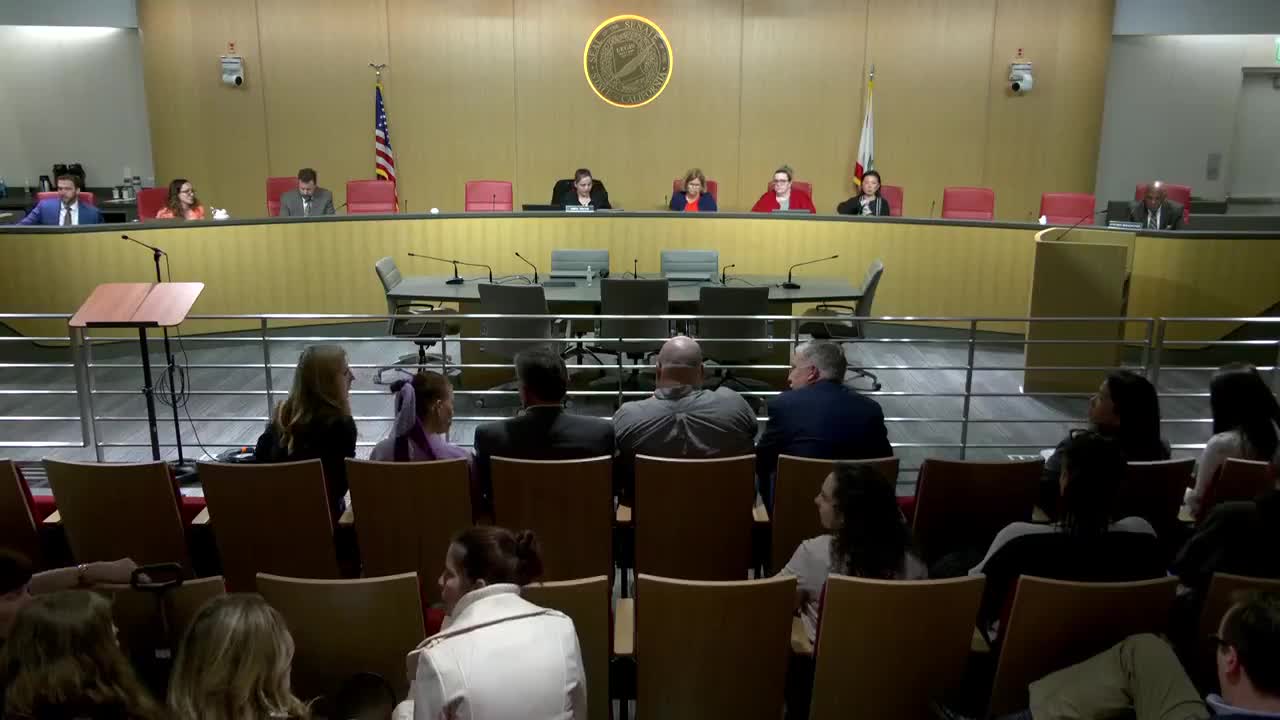 6MIN
Senate Standing Committee on Public Safety
Bill Author