SB 941: California Global Warming Solutions Act of 2006: scoping plan: industrial sources of emissions.
- Session Year: 2023-2024
- House: Senate
- Latest Version Date: 2024-09-25
Current Status:
Passed
(2024-09-25: Chaptered by Secretary of State. Chapter 595, Statutes of 2024.)
Introduced
In Committee
First Chamber
In Committee
Second Chamber
Enacted
The California Global Warming Solutions Act of 2006 designates the State Air Resources Board as the state agency responsible for monitoring and regulating sources emitting greenhouse gases. The act requires the state board to prepare and approve a scoping plan for achieving the maximum technologically feasible and cost-effective reductions in greenhouse gas emissions and to update the scoping plan at least once every 5 years.
This bill would require the state board, in its next update to the scoping plan, to include a discussion of industrial sources of emissions of greenhouse gases for which there are zero-emission alternatives currently technologically available and a discussion of industrial sources of emissions of greenhouse gases for which there are no zero-emission alternatives currently technologically available.
This bill would make these provisions inoperative on July 1, 2028, and would repeal them as of January 1, 2029.
The California Global Warming Solutions Act of 2006 designates the State Air Resources Board as the state agency responsible for monitoring and regulating sources emitting greenhouse gases. The act requires the state board to prepare and approve a scoping plan for achieving the maximum technologically feasible and cost-effective reductions in greenhouse gas emissions and to update the scoping plan at least once every 5 years.
This bill would require the state board, in its next update to the scoping plan, to include certain information and recommendations relating to a discussion of industrial sources of emissions of greenhouse gases. gases for which there are zero-emission alternatives currently technologically available and a discussion of industrial sources of emissions of greenhouse gases for which there are no zero-emission alternatives currently technologically available.
This bill would make these provisions inoperative on July 1, 2028, and would repeal it as of January 1, 2029.
The California Global Warming Solutions Act of 2006 designates the State Air Resources Board as the state agency responsible for monitoring and regulating sources emitting greenhouse gases. The act requires the state board to prepare and approve a scoping plan for achieving the maximum technologically feasible and cost-effective reductions in greenhouse gas emissions and to update the scoping plan at least once every 5 years.
This bill would require the state board, in its next update to the scoping plan, to include certain information and recommendations relating to industrial sources of emissions of greenhouse gases.
Existing law establishes the State Department of Social Services in the California Health and Human Services Agency.This bill would make a technical, nonsubstantive change to that provision.Existing law establishes the State Department of Social Services in the California Health and Human Services Agency.
This bill would make a technical, nonsubstantive change to that provision.
(a)In the next update to the scoping plan prepared pursuant to Section 38561, the state board shall include both of the following:
(1)A discussion of industrial sources of emissions of greenhouse gases for which there are zero-emission alternatives currently technologically available.
(2)A discussion of industrial sources of emissions of greenhouse gases for which there are no zero-emission alternatives currently technologically available.
(b)This section shall become inoperative on July 1, 2028, and, as of January 1, 2029, is repealed.
(a)In the next update to the scoping plan prepared pursuant to Section 38561, the state board shall include both of the following:
(1)A discussion of industrial sources of emissions of greenhouse gases for which there are zero-emission alternatives currently technologically available, the public health and climate benefits associated with these alternatives, and the policy options for deploying these alternatives. available.
(2)(A)A discussion of industrial sources of emissions of greenhouse gases for which there are no zero-emission alternatives currently technologically available.
(B)For sources discussed in subparagraph (A), a discussion of any nascent technologies that may be able to eliminate the associated emissions of greenhouse gases and other air pollutants if these technologies are further developed.(3)An approximation of industrial greenhouse gas emissions that cannot currently be eliminated through existing technology along with a discussion of potential policy options to further reduce these emissions in the future.(4)Policy recommendations for decarbonizing, to the maximum extent feasible, industrial emissions of greenhouse gases, including consideration of replacement of combustion-based technologies with zero-emission and electrical technologies, among other options, as determined by the state board.(b)This section shall become inoperative on July 1, 2028, and, as of January 1, 2029, is repealed.
(a)In the next update to the scoping plan prepared pursuant to Section 38561, the state board shall include the following:
(1)A discussion of industrial sources of emissions of greenhouse gases for which there are zero-emission alternatives currently technologically available, the public health and climate benefits associated with these alternatives, and the policy options for deploying these alternatives.
(2)(A)A discussion of industrial sources of emissions of greenhouse gases for which there are no zero-emission alternatives currently technologically available.
(B)For sources discussed in subparagraph (A), a discussion of any nascent technologies that may be able to eliminate the associated emissions of greenhouse gases and other air pollutants if these technologies are further developed.
(3)An approximation of industrial greenhouse gas emissions that cannot currently be eliminated through existing technology along with a discussion of potential policy options to further reduce these emissions in the future.
(4)Policy recommendations for decarbonizing, to the maximum extent feasible, industrial emissions of greenhouse gases, including consideration of replacement of combustion-based technologies with zero-emission and electrical technologies, among other options, as determined by the state board.
(b)This section shall become inoperative on July 1, 2028, and, as of January 1, 2029, is repealed.
SECTION 1.Section 10550 of the Welfare and Institutions Code is amended to read:10550.There is in the California Health and Human Services Agency a State Department of Social Services.There is in the California Health and Welfare Human Services Agency a State Department of Social Services.
|
Date
|
Status
|
|---|---|
| Sep 25, 2024 | Chaptered by Secretary of State. Chapter 595, Statutes of 2024. |
| Sep 25, 2024 | Approved by the Governor. |
| Sep 3, 2024 | Enrolled and presented to the Governor at 3 p.m. |
| Aug 26, 2024 | In Senate. Ordered to engrossing and enrolling. |
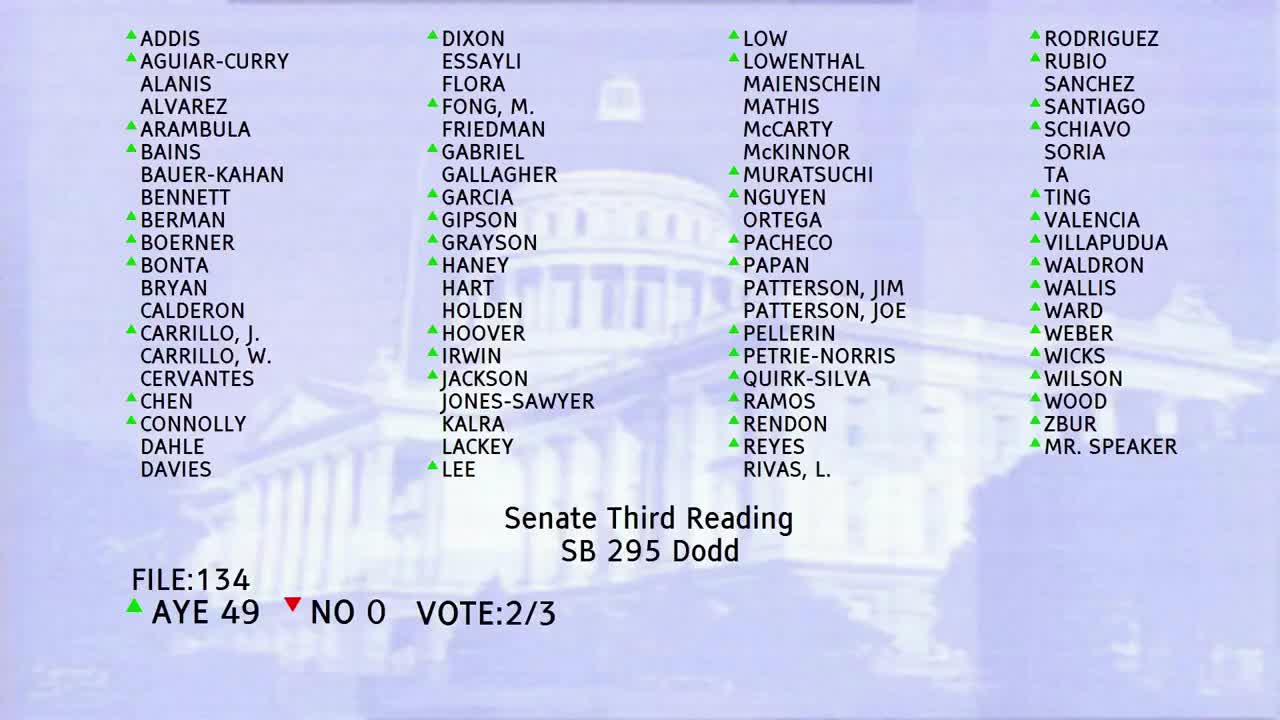
| Aug 26, 2024 | Read third time. Passed. (Ayes 75. Noes 1. Page 6520.) Ordered to the Senate. |
| Aug 19, 2024 | Read second time. Ordered to third reading. |
| Aug 15, 2024 | From committee: Do pass. (Ayes 14. Noes 0.) (August 15). |
| Jul 2, 2024 | July 2 set for first hearing. Placed on suspense file. |
| Jun 26, 2024 | June 26 hearing postponed by committee. |
| Jun 18, 2024 | From committee: Do pass and re-refer to Com. on APPR. with recommendation: To consent calendar. (Ayes 10. Noes 0.) (June 17). Re-referred to Com. on APPR. |
| Jun 3, 2024 | Referred to Com. on NAT. RES. |
| May 22, 2024 | In Assembly. Read first time. Held at Desk. |
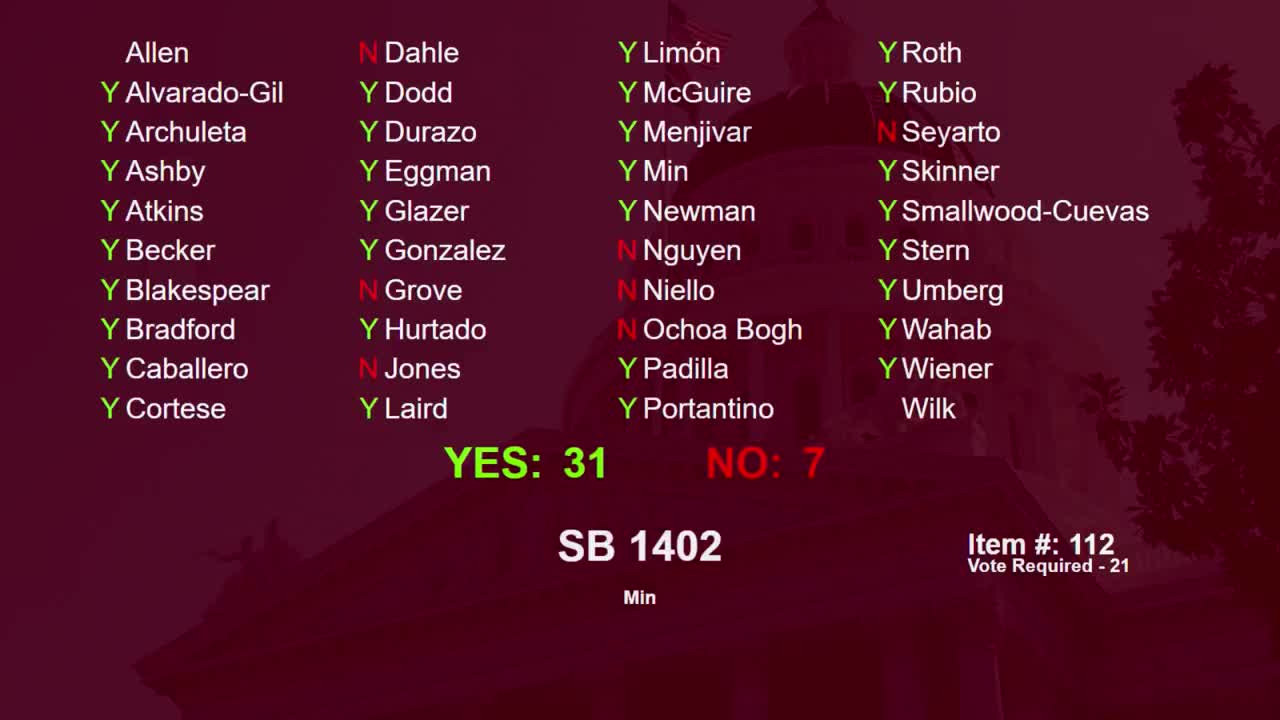
| May 21, 2024 | Read third time. Passed. (Ayes 31. Noes 5. Page 4074.) Ordered to the Assembly. |
| May 20, 2024 | Read second time. Ordered to third reading. |
| May 16, 2024 | Read second time and amended. Ordered to second reading. |
| May 16, 2024 | From committee: Do pass as amended. (Ayes 5. Noes 2. Page 3964.) (May 16). |
| May 14, 2024 | Set for hearing May 16. |
| May 13, 2024 | May 13 hearing: Placed on APPR suspense file. |
| May 3, 2024 | Set for hearing May 13. |
| Apr 25, 2024 | From committee: Do pass and re-refer to Com. on APPR. (Ayes 5. Noes 0. Page 3753.) (April 24). Re-referred to Com. on APPR. |
| Apr 10, 2024 | Set for hearing April 24. |
| Apr 3, 2024 | Re-referred to Com. on E.Q. |
| Mar 18, 2024 | From committee with author's amendments. Read second time and amended. Re-referred to Com. on RLS. |
| Feb 14, 2024 | Referred to Com. on RLS. |
| Jan 18, 2024 | From printer. May be acted upon on or after February 17. |
| Jan 17, 2024 | Introduced. Read first time. To Com. on RLS. for assignment. To print. |
|
Date
|
Description
|
Location
|
Votes
|
|
|---|---|---|---|---|
| Aug 26, 2024 | SB 941 Skinner Senate Third Reading By Berman | Assembly Floor |
Passed |
|
| Aug 15, 2024 | Do pass. | Assembly Standing Committee on Appropriations |
Passed |
|
| Jun 17, 2024 | Do pass and be re-referred to the Committee on [Appropriations] with recommendation: To Consent Calendar | Assembly Standing Committee on Natural Resources |
Passed |
|
| May 21, 2024 | Senate 3rd Reading SB941 Skinner | Senate Floor |
Passed |
|
| May 16, 2024 | Do pass as amended | Senate Standing Committee on Appropriations |
Passed |
|
| May 13, 2024 | Placed on suspense file | Senate Standing Committee on Appropriations |
Passed |
|
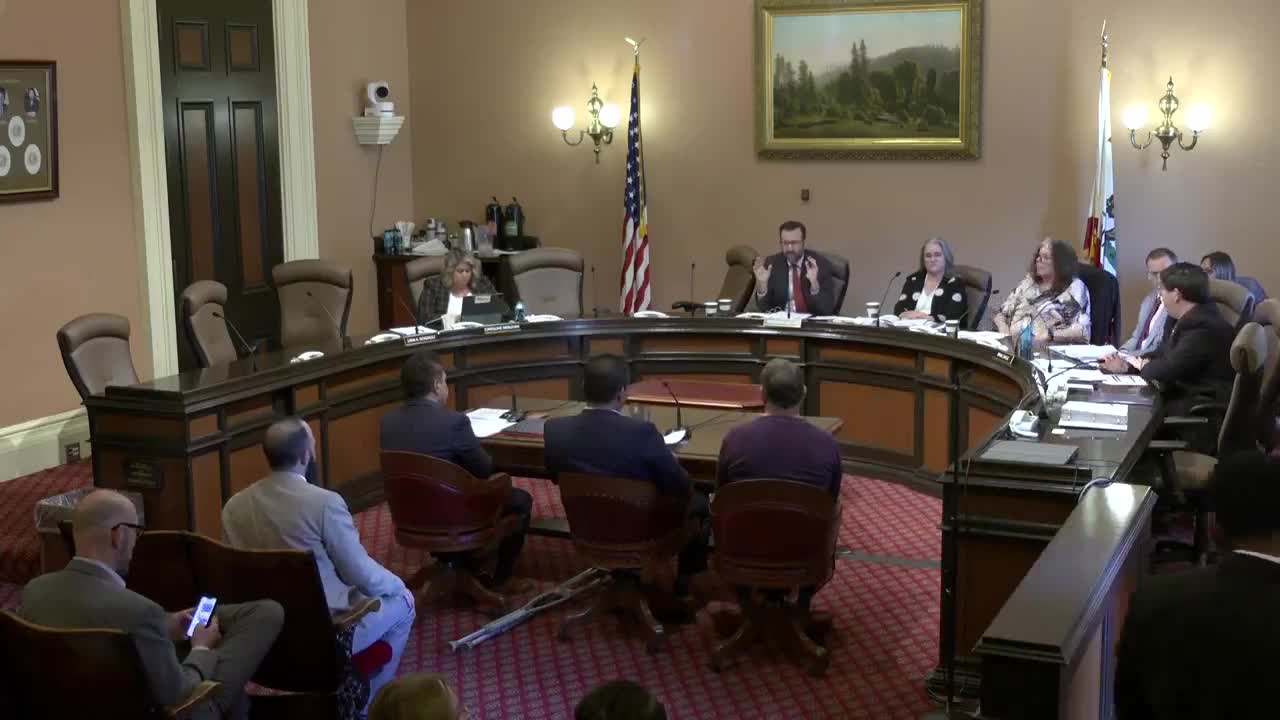
| Apr 24, 2024 | Do pass, but first be re-referred to the Committee on [Appropriations] | Senate Standing Committee on Environmental Quality |
Passed |
This list shows positions taken on this bill by organizations on the date displayed, which is linked to the original source.
Positions by individuals are not included.
|
Organization
|
Position
|
Date
|
|---|---|---|
| Natural Resources Defense Council | * Support | Apr 24, 2024 |
SENATE THIRD READING
STR Bill Id:SB 941
Author:(Skinner)
As Amended Ver:May 16, 2024
Majority vote
SUMMARY
Requires the Air Resources Board (ARB), in the next update to its climate change scoping plan, to include a discussion of the availability of zero-emission alternatives to industrial sources of greenhouse gas (GHG) emissions.
Major Provisions
- Requires ARB, in the next scoping plan update, to include both of the following:
- A discussion of industrial sources of emissions of greenhouse gases for which there are zero-emission alternatives currently technologically available.
- A discussion of industrial sources of emissions of greenhouse gases for which there are no zero-emission alternatives currently technologically available.
- Becomes inoperative on July 1, 2028, and sunsets January 1, 2029.
COMMENTS
According to ARB's GHG Emission Inventory (the same set of emissions which the scoping plan is intended to address), the "industrial sector" includes the following sources: combined heat and power for industrial customers, landfills, manufacturing, mining, off-road, oil & gas production and processing, petroleum marketing, petroleum refining and hydrogen production, solid waste treatment, solvents & chemicals, transmission and distribution, and wastewater treatment.
In the latest version of the Emission Inventory, industrial emissions account for 22% of total GHG emissions, the second largest sector after transportation at 39%. Looking just at contributors of industrial emissions, three sub-sectors—petroleum refining (31%), manufacturing (20%), and oil & gas production and processing (15%)—account for two-thirds of the entire sector.
The 2022 Scoping Plan Update identified several actions to reduce emissions from the industrial sector, including to: Use clean and renewable hydrogen for 25% of process heat by 2035 and 100% by 2045 for the chemicals and allied products and pulp and paper sectors; use carbon capture and storage (CCS) at refineries, with most operations covered by 2030; retire all combined-heat-and-power plants by 2040; use CCS on 40% of stone, clay, glass, and cement making by 2035 and on all such facilities by 2045, and reduce some emissions through changing input materials; electrify/decarbonize the rest of industrial demand by 2045 where possible, with target varying by sector; leverage energy efficiency and renewable technology programs; prioritize these transitions in communities most in need; create markets for low-carbon products and recycled materials; and revise utility gas and electricity rate design to create an incentive to electrify and reduce industrial sector fossil gas use.
According to the Author
As California continues to successfully decarbonize buildings and transportation, industrial processes and facilities are becoming responsible for a growing percentage of California's GHG emissions. To achieve the state's goal of carbon neutrality by 2045, reducing industrial GHG emissions must be prioritized. SB 941 directs ARB to include industrial decarbonization in its next scheduled scoping plan. By doing so, SB 941, allows ARB, within their currently scheduled scoping plan update, to identify and evaluate available zero emission alternatives to industrial processes as well for any emerging technologies that have the potential to lower emissions from those industrial practices for which there are no currently no available zero emission alternatives.
Arguments in Support
According to E2, understanding the significance of securing GHG emission reductions in this sector, SB 941 would go a step further and require that the next scoping plan include a discussion of industrial sources of emissions for which there are and are not zero-emission alternatives that are currently technologically available. This will ensure that future policies or regulations addressing industrial emissions are supported by a robust analysis of where the industry can and cannot use zero-emission alternatives using today's technology.
Arguments in Opposition
None received.
FISCAL COMMENTS
According to the Assembly Appropriations Committee, ARB reports approximately $150,000 in costs from the Cost of Implementation Account to contract for a study, but notes that this bill's implementation timeline does not align with when additional resources would be available to ARB – FY 2025-2026 at the earliest
VOTES
SENATE FLOOR: 31-5-4
YES: Alvarado-Gil, Archuleta, Ashby, Atkins, Becker, Blakespear, Bradford, Caballero, Cortese, Dodd, Durazo, Eggman, Glazer, Gonzalez, Hurtado, Laird, Limón, McGuire, Menjivar, Min, Newman, Padilla, Portantino, Roth, Rubio, Skinner, Smallwood-Cuevas, Stern, Umberg, Wahab, Wiener
NO: Grove, Jones, Nguyen, Niello, Seyarto
ABS, ABST OR NV: Allen, Dahle, Ochoa Bogh, Wilk
ASM NATURAL RESOURCES: 10-0-1
YES: Bryan, Flora, Bauer-Kahan, Friedman, Hoover, Kalra, Lackey, Muratsuchi, Pellerin, Wicks
ABS, ABST OR NV: Wood
ASM APPROPRIATIONS: 14-0-1
YES: Wicks, Sanchez, Arambula, Bryan, Calderon, Wendy Carrillo, Dixon, Mike Fong, Grayson, Haney, Hart, Pellerin, Ta, Villapudua
ABS, ABST OR NV: Jim Patterson
UPDATED
VERSION: May 16, 2024
CONSULTANT: Lawrence Lingbloom / NAT. RES. / (916) 319-2092 FN: 0003954
Date of Hearing: July 2, 2024
ASSEMBLY COMMITTEE ON APPROPRIATIONS
Buffy Wicks, Chair
SBPCA Bill Id:SB 941
Author:(Skinner) – As Amended Ver:May 16, 2024
Policy Committee: | Natural Resources | Vote: | 10 - 0 |
|
| ||
|
|
Urgency: No State Mandated Local Program: No Reimbursable: No
SUMMARY:
This bill requires the Air Resources Board (ARB), in the next update to its climate change scoping plan, to include a discussion of the availability of zero-emission alternatives to industrial sources of greenhouse gas (GHG) emissions.
Specifically, this bill:
- Requires ARB, in the next scoping plan update, to include a discussion of industrial sources of emissions of greenhouse gases for which there are zero-emission alternatives currently technologically available and for which there are no zero-emission alternatives currently technologically available.
- Becomes inoperative on July 1, 2028, and sunsets January 1, 2029.
FISCAL EFFECT:
ARB reports approximately $150,000 in costs from the Cost of Implementation Account to contract for a study, but notes that this bill’s implementation timeline does not align with when additional resources would be available to ARB – FY 2025-2026 at the earliest.
COMMENTS:
- Purpose. – According to the author:
As California continues to successfully decarbonize buildings and transportation, industrial processes and facilities are becoming responsible for a growing percentage of California’s GHG emissions. To achieve the state’s goal of carbon neutrality by 2045, reducing industrial GHG emissions must be prioritized. SB 941 directs ARB to include industrial decarbonization in its next scheduled scoping plan. By doing so, SB 941, allows ARB, within their currently scheduled scoping plan update, to identify and evaluate available zero emission alternatives to industrial processes as well for any emerging technologies that have the potential to lower emissions from those industrial practices for which there are no currently available zero emission alternatives.
- Background. The California Global Warming Solutions Act of 2006 requires ARB to prepare and approve a scoping plan at least once every five years for achieving the maximum technologically feasible and cost-effective reductions in GHG emissions from sources or categories of sources of GHGs. According to ARB’s GHG Emission Inventory (the same set of emissions the scoping plan is to address), the “industrial sector” includes the following sources: combined heat and power for industrial customers, landfills, manufacturing, mining, off-road, oil and gas production and processing, petroleum marketing, petroleum refining and hydrogen production, solid waste treatment, solvents and chemicals, transmission and distribution, and wastewater treatment.
In the latest version of the Emission Inventory, industrial emissions account for 22% of total GHG emissions, the second largest sector after transportation at 39%. Looking just at contributors of industrial emissions, three sub-sectors—petroleum refining (31%), manufacturing (20%), and oil & gas production and processing (15%)—account for two-thirds of the entire sector.
The 2022 Scoping Plan Update identified several actions to reduce emissions from the industrial sector, including to use clean and renewable hydrogen for 25% of process heat by 2035 and 100% by 2045 for the chemicals and allied products and pulp and paper sectors; use carbon capture and storage (CCS) at refineries, with most operations covered by 2030; retire all combined-heat-and-power plants by 2040; use CCS on 40% of stone, clay, glass, and cement making by 2035 and on all such facilities by 2045, and reduce some emissions through changing input materials; electrify/decarbonize the rest of industrial demand by 2045 where possible, with target varying by sector; leverage energy efficiency and renewable technology programs; prioritize these transitions in communities most in need; create markets for low-carbon products and recycled materials; and revise utility gas and electricity rate design to create an incentive to electrify and reduce industrial sector fossil gas use.
Analysis Prepared by: Jacqueline Kinney / APPR. / (916) 319-2081
Date of Hearing: June 17, 2024
ASSEMBLY COMMITTEE ON NATURAL RESOURCES
Isaac G. Bryan, Chair
SBPCA Bill Id:SB 941
Author:(Skinner) – As Amended Ver:May 16, 2024
SENATE VOTE: 31-5
SUBJECT: California Global Warming Solutions Act of 2006: scoping plan: industrial sources of emissions
SUMMARY: Requires the Air Resources Board (ARB), in the next update to its climate change scoping plan, to include a discussion of the availability of zero-emission alternatives to industrial sources of greenhouse gas (GHG) emissions.
EXISTING LAW requires ARB to prepare and approve a scoping plan at least once every five years for achieving the maximum technologically feasible and cost-effective reductions in GHG emissions from sources or categories of sources of GHGs. (Health and Safety Code 38561)
THIS BILL:
- Requires ARB, in the next scoping plan update, to include both of the following:
- A discussion of industrial sources of emissions of greenhouse gases for which there are zero-emission alternatives currently technologically available.
- A discussion of industrial sources of emissions of greenhouse gases for which there are no zero-emission alternatives currently technologically available.
- Becomes inoperative on July 1, 2028, and sunsets January 1, 2029.
FISCAL EFFECT: According to the Senate Appropriations Committee, unknown, potentially significant one-time costs (Cost of Implementation Account) for ARB to contract for a study on industrial decarbonization.
COMMENTS:
- Background. According to ARB’s GHG Emission Inventory (the same set of emissions which the scoping plan is intended to address), the “industrial sector” includes the following sources: combined heat and power for industrial customers, landfills, manufacturing, mining, off-road, oil & gas production and processing, petroleum marketing, petroleum refining and hydrogen production, solid waste treatment, solvents & chemicals, transmission and distribution, and wastewater treatment.
In the latest version of the Emission Inventory, industrial emissions account for 22% of total GHG emissions, the second largest sector after transportation at 39%. Looking just at contributors of industrial emissions, three sub-sectors—petroleum refining (31%), manufacturing (20%), and oil & gas production and processing (15%)—account for two-thirds of the entire sector.
The 2022 Scoping Plan Update identified several actions to reduce emissions from the industrial sector, including to: Use clean and renewable hydrogen for 25 percent of process heat by 2035 and 100 percent by 2045 for the chemicals and allied products and pulp and paper sectors; use carbon capture and storage (CCS) at refineries, with most operations covered by 2030; retire all combined-heat-and-power plants by 2040; use CCS on 40 percent of stone, clay, glass, and cement making by 2035 and on all such facilities by 2045, and reduce some emissions through changing input materials; electrify/decarbonize the rest of industrial demand by 2045 where possible, with target varying by sector; leverage energy efficiency and renewable technology programs; prioritize these transitions in communities most in need; create markets for low-carbon products and recycled materials; and revise utility gas and electricity rate design to create an incentive to electrify and reduce industrial sector fossil gas use.
- Author’s statement:
As California continues to successfully decarbonize buildings and transportation, industrial processes and facilities are becoming responsible for a growing percentage of California’s GHG emissions. To achieve the state’s goal of carbon neutrality by 2045, reducing industrial GHG emissions must be prioritized. SB 941 directs ARB to include industrial decarbonization in its next scheduled scoping plan. By doing so, SB 941, allows ARB, within their currently scheduled scoping plan update, to identify and evaluate available zero emission alternatives to industrial processes as well for any emerging technologies that have the potential to lower emissions from those industrial practices for which there are no currently no available zero emission alternatives.
REGISTERED SUPPORT / OPPOSITION:
Support
E2
Opposition
None on file
Analysis Prepared by: Lawrence Lingbloom / NAT. RES. /
SENATE RULES COMMITTEE Office of Senate Floor Analyses (916) 651-1520 Fax: (916) 327-4478 | SB 941 |
THIRD READING
Bill No: SB 941
Author: Skinner (D)
Amended: 5/16/24
Vote: 21
SENATE ENVIRONMENTAL QUALITY COMMITTEE: 5-0, 4/24/24
AYES: Allen, Gonzalez, Hurtado, Menjivar, Skinner
NO VOTE RECORDED: Dahle, Nguyen
SENATE APPROPRIATIONS COMMITTEE: 5-2, 5/16/24
AYES: Caballero, Ashby, Becker, Bradford, Wahab
NOES: Jones, Seyarto
SUBJECT: California Global Warming Solutions Act of 2006: scoping plan: industrial sources of emissions
SOURCE: Author
DIGEST:
This bill requires the California Air Resources Board to include specified information regarding greenhouse gas emissions from the industrial sector in the next Scoping Plan Update.
ANALYSIS:
Existing law:
- Under the California Global Warming Solutions Act of 2006 (Health and Safety Code (HSC) §38500 et seq.):
- Requires the California Air Resources Board (CARB) to approve a statewide greenhouse gas (GHG) emissions limit equivalent to the statewide GHG emissions level in 1990 to be achieved by 2020 (AB 32, 2006) and to ensure that statewide GHGs are reduced to at least 40% below the 1990 level by 2030 (SB 32, 2016).
- Requires CARB to prepare and approve a scoping plan for achieving the maximum technologically feasible and cost-effective reductions in GHG emissions and to update the scoping plan at least once every 5 years.
- States, under the California Climate Crisis Act—AB 1279 (Muratsuchi, Chapter 337, Statutes of 2022), that it is the policy of the state to achieve net zero GHG emissions no later than 2045, and to ensure that by 2045 statewide anthropogenic GHG emissions are reduced to at least 85% below the 1990 level.
- Requires the California Air Resources Board (CARB) to approve a statewide greenhouse gas (GHG) emissions limit equivalent to the statewide GHG emissions level in 1990 to be achieved by 2020 (AB 32, 2006) and to ensure that statewide GHGs are reduced to at least 40% below the 1990 level by 2030 (SB 32, 2016).
- Requires the California Energy Commission (CEC) to establish the Industrial Decarbonization and Improvement of Grid Operations (INDIGO) program to provide incentives for projects at industrial facilities that help achieve the following:
- Enhance electrical grid reliability and enable effective industrial participation in certain load reduction programs.
- Electrify processes using gas or fossil fuels.
- Incorporate energy storage or renewable energy resources.
- Increase energy efficiency.
- Deploy novel decarbonization technologies and strategies. (Public Resources Code §§25662-25662.2)
This bill:
Requires CARB to, as part of the next Scoping Plan update, discuss industrial sources of GHGs for which there are or are not zero-emission alternatives available.
Background
- The business of industry. No economic sector is a monolith, but the industrial sector is particularly diverse. According to CARB’s GHG Emission Inventory (the same set of emissions which the Scoping Plan is intended to address), the “industrial sector” includes the following sources: combined heat and power for industrial customers, landfills, manufacturing, mining, off-road, oil & gas production and processing, petroleum marketing, petroleum refining and hydrogen production, solid waste treatment, solvents & chemicals, transmission and distribution, and wastewater treatment.
In the latest version of the Emission Inventory, industrial emissions account for 22% of total GHG emissions, the second largest sector after transportation at 39%. Looking just at contributors of industrial emissions, three sub-sectors—petroleum refining (31%), manufacturing (20%), and oil & gas production and processing (15%)—account for two-thirds of the entire sector. - The 2022 Scoping Plan Update. The Scoping Plan was initially required by AB 32 and is updated by CARB at least once every five years for the purpose of achieving California’s climate goals with the maximum technologically feasible and cost-effective reductions in GHG emissions.
The 2022 Scoping Plan Update is primarily focused on achieving the newly statutorily required carbon neutrality by 2045 goal, although it does briefly address the 2030 SB 32 goal as well. The Update stated that in order to be on track for success in reaching net neutrality (and 85% reduction in emissions) by 2045, California should in fact strive for a 48% reduction by 2030, rather than the SB 32 target of 40% below 1990 levels.
The Update identified several actions to reduce emissions from the industrial sector, including to: Use clean and renewable hydrogen for 25 percent of process heat by 2035 and 100 percent by 2045 for the chemicals and allied products and pulp and paper sectors; use carbon capture and storage (CCS) at refineries, with most operations covered by 2030; retire all combined-heat-and-power plants by 2040; use CCS on 40 percent of stone, clay, glass, and cement making by 2035 and on all such facilities by 2045, and reduce some emissions through changing input materials; electrify/decarbonize the rest of industrial demand by 2045 where possible, with target varying by sector; leverage energy efficiency and renewable technology programs; prioritize these transitions in communities most in need; create markets for low-carbon products and recycled materials; and revise utility gas and electricity rate design to create an incentive to electrify and reduce industrial sector fossil gas use. - Federal support. The U.S. Department of Energy (DOE) issued an Industrial Decarbonization Roadmap that assesses industrial emissions and opportunities to decarbonize them across the entire U.S. economy. The Roadmap identifies four key technological pillars (energy efficiency; industrial electrification; low-carbon fuels, feedstocks, and energy sources; and carbon capture, utilization, and storage) to significantly reduce emissions for the five subsectors studied (chemical manufacturing, petroleum refining, iron and steel, food and beverage, and cement). With the application of alternative approaches, the Roadmap found that 100% of annual CO2 emissions could be mitigated.
Just weeks ago, the DOE announced $6 billion across 33 projects in more than 20 states to, “decarbonize energy-intensive industries, reduce industrial greenhouse gas emissions, support good-paying union jobs, revitalize industrial communities, and strengthen the nation’s manufacturing competitiveness.” The DOE further stated that, “Many of the projects will deploy first-in-the-nation emissions-reducing technologies that have the potential for sector-wide adoption and transformation, multiplying the magnitude of the emissions cuts and supporting the future of U.S. manufacturing.”
Three of the funded projects are located in California: a net-zero cement plant project in Lebec receiving up to $500 million, a project decarbonizing glass furnaces in Tracy receiving up to $125 million, and a hybrid electric glass furnace project in Modesto receiving up to $75 million.
Comments
- Purpose of Bill. According to the author:
“As California continues to successfully decarbonize buildings and transportation, Industrial processes and facilities are becoming responsible for a growing percentage of California’s greenhouse gas emissions. To achieve the state’s goal of carbon neutrality by 2045, reducing industrial GHG emissions must be prioritized. SB 941 directs CARB to include industrial decarbonization in its next scheduled scoping plan. By doing so, SB 941, allows CARB, within their currently scheduled scoping plan update, to identify and evaluate available zero emission alternatives to industrial processes as well for any emerging technologies that have the potential to lower emissions from those industrial practices for which there are no currently no available zero emission alternatives.”
- Decarbonized heat: so hot right now. Despite being the second most-emitting sector of California’s economy, the 2022 Scoping Plan Update dedicated only several pages to industry. This meant the Plan was unable to assess some of the existing and nascent industrial emission reduction strategies. However, it should be noted that there has been considerable recent investment and progress in mitigating emissions from industrial sources. Thus, this sector of California’s economy is likely an important focus for future Scoping Plan Updates.
Related/Prior Legislation
AB 2083 (Berman, 2024) requires the CEC to assess the potential for the state to reduce GHG emissions from the state’s industrial facilities’ heat application equipment and processes by at least 85% below 1990 levels by January 1, 2045. Requires CEC to report its findings to the Legislature by January 1, 2027. AB 2083 is set to be heard April 24, 2024, in the Assembly Utilities & Energy Committee.
AB 841 (Berman, 2023) requires the California Energy Commission (CEC) to create a roadmap for electrifying industrial processes, including processes requiring heat, as specified. AB 841 died in the Senate Appropriations Committee.
FISCAL EFFECT: Appropriation: No Fiscal Com.: Yes Local: No
According to the Senate Appropriations Committee:
- Unknown, potentially significant one-time costs (Cost of Implementation Account) for CARB to contract for a study on industrial decarbonization.
SUPPORT: (Verified 05/16/2024)
None received
OPPOSITION: (Verified 05/16/2024)
Prepared by: Eric Walters / E.Q. / (916) 651-4108
5/18/24 14:01:46
**** END ****
SENATE COMMITTEE ON
Senator Anna Caballero, Chair
2023 - 2024 Regular Session
SB 941 (Skinner) - California Global Warming Solutions Act of 2006: scoping plan: industrial sources of emissions
Version: | Policy Vote: |
Urgency: | Mandate: |
Hearing Date: | Consultant: |
Bill Summary:
This bill would require the California Air Resources Board (ARB) to include specified information regarding greenhouse gas emissions (GHGs) from the industrial sector in the next Scoping Plan Update.
*********** ANALYSIS ADDENDUM – SUSPENSE FILE ***********
The following information is revised to reflect amendments
adopted by the committee on May 16, 2024
Fiscal Impact:
- Unknown, potentially significant one-time costs (Cost of Implementation Account) for ARB to contract for a study on industrial decarbonization.
Author Amendments:
These amendments would narrow the scoping plan requirements to a discussion of industrial sources of emissions of GHGs for which there are zero-emission alternatives currently technologically available as well as ones for which there are no zero-emission alternatives currently technologically available.
-- END --
SENATE COMMITTEE ON
Senator Anna Caballero, Chair
2023 - 2024 Regular Session
SB 941 (Skinner) - California Global Warming Solutions Act of 2006: scoping plan: industrial sources of emissions
Version: | Policy Vote: |
Urgency: | Mandate: |
Hearing Date: | Consultant: |
Bill Summary:
This bill would require the California Air Resources Board (ARB) to include specified information regarding greenhouse gas emissions (GHGs) from the industrial sector in the next Scoping Plan Update.
Fiscal Impact:
- ARB estimates one-time costs of about $2 million to contract for a study on industrial decarbonization, including technology review, commercialization status, and barriers to scaling.
Background:
According to ARB’s GHG Emission Inventory (the same set of emissions which the Scoping Plan is intended to address), the “industrial sector” includes the following sources: combined heat and power for industrial customers, landfills, manufacturing, mining, off-road, oil & gas production and processing, petroleum marketing, petroleum refining and hydrogen production, solid waste treatment, solvents & chemicals, transmission and distribution, and wastewater treatment.
In the latest version of the Emission Inventory, industrial emissions account for 22% of total GHG emissions, the second largest sector after transportation at 39%. Looking just at contributors of industrial emissions, three sub-sectors—petroleum refining (31%), manufacturing (20%), and oil & gas production and processing (15%)—account for two-thirds of the entire sector.
The 2022 Scoping Plan Update. The Scoping Plan was initially required by AB 32 and is updated by ARB at least once every five years for the purpose of achieving California’s climate goals with the maximum technologically feasible and cost-effective reductions in GHG emissions.
The 2022 Scoping Plan Update is primarily focused on achieving the newly statutorily required carbon neutrality by 2045 goal, although it does briefly address the 2030 SB 32 goal as well. The Update stated that in order to be on track for success in reaching net neutrality (and 85% reduction in emissions) by 2045, California should in fact strive for a 48% reduction by 2030, rather than the SB 32 target of 40% below 1990 levels.
The Update identified several actions to reduce emissions from the industrial sector, including to: Use clean and renewable hydrogen for 25 percent of process heat by 2035 and 100 percent by 2045 for the chemicals and allied products and pulp and paper sectors; use carbon capture and storage (CCS) at refineries, with most operations covered by 2030; retire all combined-heat-and-power plants by 2040; use CCS on 40 percent of stone, clay, glass, and cement making by 2035 and on all such facilities by 2045, and reduce some emissions through changing input materials; electrify/decarbonize the rest of industrial demand by 2045 where possible, with target varying by sector; leverage energy efficiency and renewable technology programs; prioritize these transitions in communities most in need; create markets for low-carbon products and recycled materials; and revise utility gas and electricity rate design to create an incentive to electrify and reduce industrial sector fossil gas use.
The Integrated Energy Policy Report. The California Energy Commission’s (CEC’s) annual Integrated Energy Policy Report (IEPR) also considered approaches to decarbonize the industrial sector. The report stated that pathways to decarbonize the industrial sector include electrification, such as the use of widely available high-efficiency electric resistance heaters and boilers, and industrial electric heat pumps that are a promising decarbonization option for low-temperature industrial processes. Other options include heaters and boilers that operate using biomass, solar-powered heating, and small-scale carbon capture technologies. In addition, the IEPR found there may be opportunities to use clean and renewable hydrogen in the industrial sector to reduce GHG emissions.
Federal support. The U.S. Department of Energy (DOE) issued an Industrial Decarbonization Roadmap that assesses industrial emissions and opportunities to decarbonize them across the entire U.S. economy. The Roadmap identifies four key technological pillars (energy efficiency; industrial electrification; low-carbon fuels, feedstocks, and energy sources; and carbon capture, utilization, and storage) to significantly reduce emissions for the five subsectors studied (chemical manufacturing, petroleum refining, iron and steel, food and beverage, and cement). With the application of alternative approaches, the Roadmap found that 100% of annual CO2 emissions could be mitigated.
Just weeks ago, the DOE announced $6 billion across 33 projects in more than 20 states to, “decarbonize energy-intensive industries, reduce industrial greenhouse gas emissions, support good-paying union jobs, revitalize industrial communities, and strengthen the nation’s manufacturing competitiveness.” The DOE further stated that, “Many of the projects will deploy first-in-the-nation emissions-reducing technologies that have the potential for sector-wide adoption and transformation, multiplying the magnitude of the emissions cuts and supporting the future of U.S. manufacturing.”
Three of the funded projects are located in California: a net-zero cement plant project in Lebec receiving up to $500 million, a project decarbonizing glass furnaces in Tracy receiving up to $125 million, and a hybrid electric glass furnace project in Modesto receiving up to $75 million.
Proposed Law:
This bill would require ARB to include specified information regarding GHGs from the industrial sector in the next Scoping Plan Update, including:
- Industrial sources of GHGs where zero-emission alternatives exist today;
- Industrial sources of GHGs were no (or only nascent) alternative exist today;
- An approximation of industrial GHG emissions that cannot be eliminated through existing technology; and
- Policy recommendations for decarbonizing the industrial sector, as specified.
Related Legislation:
AB 2083 (Berman, 2024) would require the CEC to assess the potential for the state to reduce GHG emissions from the state’s industrial facilities’ heat application equipment and processes by at least 85% below 1990 levels by January 1, 2045. Requires CEC to report its findings to the Legislature by January 1, 2027.
AB 841 (Berman, 2023) would have require the CE) to create a roadmap for electrifying industrial processes, including processes requiring heat, as specified. AB 841 died in this committee.
-- END --
SENATE COMMITTEE ON ENVIRONMENTAL QUALITY
Senator Allen, Chair
2023 - 2024 Regular
Bill No. | SB 941 | Hearing Date: | 4/24/2024 |
Author: | Skinner | ||
Version: | 3/18/2024 | ||
Urgency: | No | Fiscal: | Yes |
Consultant: | Eric Walters | ||
SUBJECT: California Global Warming Solutions Act of 2006: scoping plan: industrial sources of emissions
DIGEST: This bill requires the California Air Resources Board to include specified information regarding greenhouse gas emissions from the industrial sector in the next Scoping Plan Update.
ANALYSIS:
Existing law:
- Under the California Global Warming Solutions Act of 2006 (Health and Safety Code (HSC) §38500 et seq.):
- Requires the California Air Resources Board (CARB) to approve a statewide greenhouse gas (GHG) emissions limit equivalent to the statewide GHG emissions level in 1990 to be achieved by 2020 (AB 32, 2006) and to ensure that statewide GHGs are reduced to at least 40% below the 1990 level by 2030 (SB 32, 2016).
- Requires CARB to prepare and approve a scoping plan for achieving the maximum technologically feasible and cost-effective reductions in GHG emissions and to update the scoping plan at least once every 5 years.
- States, under the California Climate Crisis Act—AB 1279 (Muratsuchi, Chapter 337, Statutes of 2022), that it is the policy of the state to achieve net zero GHG emissions no later than 2045, and to ensure that by 2045 statewide anthropogenic GHG emissions are reduced to at least 85% below the 1990 level.
- Requires the California Air Resources Board (CARB) to approve a statewide greenhouse gas (GHG) emissions limit equivalent to the statewide GHG emissions level in 1990 to be achieved by 2020 (AB 32, 2006) and to ensure that statewide GHGs are reduced to at least 40% below the 1990 level by 2030 (SB 32, 2016).
- Requires the California Energy Commission (CEC) to establish the Industrial Decarbonization and Improvement of Grid Operations (INDIGO) program to provide incentives for projects at industrial facilities that help achieve the following:
- Enhance electrical grid reliability and enable effective industrial participation in certain load reduction programs.
- Electrify processes using gas or fossil fuels.
- Incorporate energy storage or renewable energy resources.
- Increase energy efficiency.
- Deploy novel decarbonization technologies and strategies. (Public Resources Code §§25662-25662.2)
This bill:
- Requires CARB to include specific information regarding GHG emissions from the industrial sector in the next Scoping Plan update, including:
- Industrial sources of GHGs where zero-emission alternatives exist today;
- Industrial sources of GHGs were no (or only nascent) alternative exist today;
- An approximation of industrial GHG emissions that cannot be eliminated through existing technology; and
- Policy recommendations for decarbonizing the industrial sector, as specified.
Background
- The business of industry. No economic sector is a monolith, but the industrial sector is particularly diverse. According to CARB’s GHG Emission Inventory (the same set of emissions which the Scoping Plan is intended to address), the “industrial sector” includes the following sources: combined heat and power for industrial customers, landfills, manufacturing, mining, off-road, oil & gas production and processing, petroleum marketing, petroleum refining and hydrogen production, solid waste treatment, solvents & chemicals, transmission and distribution, and wastewater treatment.
In the latest version of the Emission Inventory, industrial emissions account for 22% of total GHG emissions, the second largest sector after transportation at 39%. Looking just at contributors of industrial emissions, three sub-sectors—petroleum refining (31%), manufacturing (20%), and oil & gas production and processing (15%)—account for two-thirds of the entire sector. - The 2022 Scoping Plan Update. The Scoping Plan was initially required by AB 32 and is updated by CARB at least once every five years for the purpose of achieving California’s climate goals with the maximum technologically feasible and cost-effective reductions in GHG emissions.
The 2022 Scoping Plan Update is primarily focused on achieving the newly statutorily required carbon neutrality by 2045 goal, although it does briefly address the 2030 SB 32 goal as well. The Update stated that in order to be on track for success in reaching net neutrality (and 85% reduction in emissions) by 2045, California should in fact strive for a 48% reduction by 2030, rather than the SB 32 target of 40% below 1990 levels.
The Update identified several actions to reduce emissions from the industrial sector, including to: Use clean and renewable hydrogen for 25 percent of process heat by 2035 and 100 percent by 2045 for the chemicals and allied products and pulp and paper sectors; use carbon capture and storage (CCS) at refineries, with most operations covered by 2030; retire all combined-heat-and-power plants by 2040; use CCS on 40 percent of stone, clay, glass, and cement making by 2035 and on all such facilities by 2045, and reduce some emissions through changing input materials; electrify/decarbonize the rest of industrial demand by 2045 where possible, with target varying by sector; leverage energy efficiency and renewable technology programs; prioritize these transitions in communities most in need; create markets for low-carbon products and recycled materials; and revise utility gas and electricity rate design to create an incentive to electrify and reduce industrial sector fossil gas use.
More broadly, the Scoping Plan Update considered the different types of energy requirements and GHG sources that exist in industry and what technologies may be suitable to decarbonize them. Specifically the Update reported:
- Low-temperature heat: For industrial processes that have relatively low heat requirements, such as food processors, paper mills, and industries that use low-pressure steam in their processes, the Update found that electrification and solar thermal heat were the best options. Approaches could include replacing fossil gas boilers with electric boilers, process heaters with industrial electric heat pumps, steel forging furnaces with induction heaters, and implementing other sector-specific process electrification.
- High-temperature heat: For industries with high heat needs, such as steel forging, glass manufacturing, and industries with calcination processes, such as manufacturing lime and cement, there were found to be fewer commercially available and economically viable electrification options. For these processes, onsite combustion may continue to be needed, and decarbonization will likely require fuel substitution to hydrogen, biomethane, or other low-carbon fuels.
- Process emissions: The chemical transformation of limestone to cement releases CO2; these (and other such) releases are referred to as “process emissions.” Over 60 percent of emissions from cement (and roughly 20% from the industrial sector as a whole) are process emissions unrelated to fuel use, and most emissions related to fuel use are from coal and petroleum coke combustion. Process emissions from cement manufacturing are significant and will continue even if the sector were to operate using only zero-carbon fuels; thus carbon capture and use/sequestration will be a likely component of any strategy to fully decarbonize cement manufacturing.
- Low-temperature heat: For industrial processes that have relatively low heat requirements, such as food processors, paper mills, and industries that use low-pressure steam in their processes, the Update found that electrification and solar thermal heat were the best options. Approaches could include replacing fossil gas boilers with electric boilers, process heaters with industrial electric heat pumps, steel forging furnaces with induction heaters, and implementing other sector-specific process electrification.
- The Integrated Energy Policy Report. The California Energy Commission’s (CEC’s) annual Integrated Energy Policy Report (IEPR) also considered approaches to decarbonize the industrial sector. The report stated that pathways to decarbonize the industrial sector include electrification, such as the use of widely available high-efficiency electric resistance heaters and boilers, and industrial electric heat pumps that are a promising decarbonization option for low-temperature industrial processes. Other options include heaters and boilers that operate using biomass, solar-powered heating, and small-scale carbon capture technologies. In addition, the IEPR found there may be opportunities to use clean and renewable hydrogen in the industrial sector to reduce GHG emissions.
- Federal support. The U.S. Department of Energy (DOE) issued an Industrial Decarbonization Roadmap that assesses industrial emissions and opportunities to decarbonize them across the entire U.S. economy. The Roadmap identifies four key technological pillars (energy efficiency; industrial electrification; low-carbon fuels, feedstocks, and energy sources; and carbon capture, utilization, and storage) to significantly reduce emissions for the five subsectors studied (chemical manufacturing, petroleum refining, iron and steel, food and beverage, and cement). With the application of alternative approaches, the Roadmap found that 100% of annual CO2 emissions could be mitigated.
Just weeks ago, the DOE announced $6 billion across 33 projects in more than 20 states to, “decarbonize energy-intensive industries, reduce industrial greenhouse gas emissions, support good-paying union jobs, revitalize industrial communities, and strengthen the nation’s manufacturing competitiveness.” The DOE further stated that, “Many of the projects will deploy first-in-the-nation emissions-reducing technologies that have the potential for sector-wide adoption and transformation, multiplying the magnitude of the emissions cuts and supporting the future of U.S. manufacturing.”
Three of the funded projects are located in California: a net-zero cement plant project in Lebec receiving up to $500 million, a project decarbonizing glass furnaces in Tracy receiving up to $125 million, and a hybrid electric glass furnace project in Modesto receiving up to $75 million.
Comments
- Purpose of Bill. According to the author, “As California continues to successfully decarbonize buildings and transportation, Industrial processes and facilities are becoming responsible for a growing percentage of California’s greenhouse gas emissions. To achieve the state’s goal of carbon neutrality by 2045, reducing industrial GHG emissions must be prioritized. SB 941 directs CARB to include industrial decarbonization in its next scheduled scoping plan. By doing so, SB 941, allows CARB, within their currently scheduled scoping plan update, to identify and evaluate available zero emission alternatives to industrial processes as well for any emerging technologies that have the potential to lower emissions from those industrial practices for which there are no currently no available zero emission alternatives.”
- Decarbonized heat: so hot right now. Despite being the second most-emitting sector of California’s economy, the 2022 Scoping Plan Update dedicated only several pages to industry. This meant the Plan was unable to assess some of the existing and nascent industrial emission reduction strategies. However, it should be noted that there has been considerable recent investment and progress in mitigating emissions from industrial sources. One example of this progress is lower-temperature heat.
Although the “hard to abate” label has often been applied broadly to industry—particularly because of the need for high-temperature heat—there are many emission-intensive processes that only need modest lower-temperature heat. Shockingly, industrial heat is over 25% of total world final energy consumption; we use a lot of energy to heat processes up to make the products we rely on. In California, more natural gas is burned for industrial process heat than for electric power generation. Decarbonizing that share of energy use would make a huge impact accordingly. Yet even as recently as 2019, reports on opportunities for decarbonizing industrial heat concluded that CCS may in fact be the cheapest option for reducing emissions.
Technological developments and dedicated investments have quickly changed that reality. In addition to the DOE’s recent investments, the Department also is pursuing a so-called “Industrial Heat Shot,” which aims to develop cost-competitive industrial heat decarbonization technologies with at least 85% lower GHG emissions by 2035. While some industrial emissions may indeed be hard to abate, certain sectors and governments appear to be charging ahead with decarbonizing processes as quickly as possible even today.
For example, Kraft Heinz received up to $170.9 million from the recent DOE funding announcement described above to electrify food production at ten facilities, including its mac-and-cheese plant in Holland, Michigan. Rather than the gas-powered heaters used to dry the noodles today, the plant plans to use heat pumps and electric heaters and boilers to reduce emissions by 99%. This underscores the fact that the industrial sector represents a sprawling, diverse set of technologies and needs. Even if cleaning up the steel production process is difficult, we can still benefit from decarbonized macaroni in the short- to medium-term.
In the private sector, some companies are developing promising technologies such as thermal batteries as well. These deceptively simple “rocks-in-a-box” solutions can store and dispatch low-temperature heat with extremely high efficiency. This ability to store energy in the form of heat allows currently carbon-intensive processes to make use of abundant zero-carbon solar energy during the day and provide consistent heat as needed throughout a continuous process.
Despite all of the recent advances and investments in decarbonizing industrial emission sources (such as process heat), the latest Scoping Plan Update provided relatively little space to progress in this space. As such, it may be wise to ensure the 2027 Scoping Plan Update will provide a more thorough assessment of where existing and nascent technologies alike can be used to reduce GHG emissions in California. This commonsense measure will help make the next Scoping Plan Update more helpful for addressing emissions from our state’s second most-emitting sector.
Related/Prior Legislation
AB 2083 (Berman, 2024) requires the CEC to assess the potential for the state to reduce GHG emissions from the state’s industrial facilities’ heat application equipment and processes by at least 85% below 1990 levels by January 1, 2045. Requires CEC to report its findings to the Legislature by January 1, 2027. AB 2083 is set to be heard April 24, 2024 in the Assembly Utilities & Energy Committee.
AB 841 (Berman, 2023) requires the California Energy Commission (CEC) to create a roadmap for electrifying industrial processes, including processes requiring heat, as specified. AB 841 died in the Senate Appropriations Committee.
SOURCE:
Author
SUPPORT:
None received
OPPOSITION:
None received
-- END --
Discussed in Hearing
 1MIN
Assembly Floor
 6MIN
Senate Floor
 5MIN
Senate Standing Committee on Environmental Quality
 33SEC
Senate Standing Committee on Environmental Quality
21SEC
Senate Standing Committee on Environmental Quality
Bill Author

Bill Co-Author(s):