SB 960: Transportation: planning: complete streets facilities: transit priority facilities.
- Session Year: 2023-2024
- House: Senate
- Latest Version Date: 2024-09-27
Current Status:
Passed
(2024-09-27: Chaptered by Secretary of State. Chapter 630, Statutes of 2024.)
Introduced
In Committee
First Chamber
In Committee
Second Chamber
Enacted
What does this bill do?
The bill requires the state Department of Transportation (Caltrans) to plan for and track “complete streets” — sidewalks, bike lanes, and transit-priority features — on the state highway system and to set measurable targets, including specific four-year goals for adding those features to SHOPP-funded projects. It also requires Caltrans to adopt a transit policy and design guidance that define transit performance measures and add complete-streets and transit-priority goals to the State Highway System Management Plan. The bill creates a formal project intake and encroachment-permit review process (permits to build or work in state highway space) with district permit managers, plain-language reporting on included facilities, and targeted outreach to underserved communities.
The summary is provided by generative AI which can make mistakes. For original language, please view the details in the table below.
(1)Existing law requires the Department of Transportation to improve and maintain the states highways, and establishes various programs to fund the development, construction, and repair of local roads, bridges, and other critical transportation infrastructure in the state, including the state highway operation and protection program (SHOPP). Existing law requires the department, in consultation with the California Transportation Commission, to prepare a robust asset management plan to guide selection of projects for the SHOPP. Existing law requires the commission, in connection with the plan, to adopt targets and performance measures reflecting state transportation goals and objectives. Existing law requires the department to develop, in consultation with the commission, a plain language performance report to increase transparency and accountability of the SHOPP.
This bill would require the targets and performance measures adopted by the commission to include targets and performance measures reflecting state transportation goals and objectives for complete streets assets that reflect the existence and conditions of bicycle, pedestrian, and transit priority facilities on the state highway system. The bill would require the departments plain language performance report to include a description of complete streets facilities, including pedestrian, bicycle, and transit priority facilities on each project, as specified. The bill would require the department to commit to specific 4-year targets to incorporate complete streets facilities, including pedestrian and bicycle facilities, into projects funded by the SHOPP, as specified.
(2)Existing law creates transit districts in designated areas throughout the state and authorizes the use of various vehicles for the purpose of public and private transit. Existing law authorizes transit buses and other transit vehicles to operate on state highways.
This bill would require the Director of Transportation to adopt a transit policy to guide the implementation of transit priority facilities and transit stops on the state highway system, as specified. The bill would require the department to adopt, on or before July 1, 2027, guidance that defines transit performance measures and identifies the departments responsibilities in supporting transit vehicles on the state highway system, as specified.
(3)Existing law requires the department to prepare a State Highway System Management Plan (SHSMP), which includes a 10-year state highway system rehabilitation plan for the rehabilitation or reconstruction by the SHOPP of all state highways and bridges, as provided. Existing law requires the SHSMP to include specific quantifiable accomplishments, goals, objectives, costs, and performance measures consistent with the asset management plan described above. Existing law requires the SHSMP to be updated every 2 years.
This bill would expressly require the SHSMP to also include specific quantifiable accomplishments, goals, objectives, costs, and performance measures for complete streets facilities and transit priority facilities, as specified.
(4)Existing law authorizes the department to issue encroachment permits and requires the department to either approve or deny an application from an applicant for an encroachment permit within 60 days of receiving a completed application, as provided.
This bill would require the department, on or before January 1, 2027, to develop and adopt a project intake, evaluation, and encroachment permit review process for complete streets facilities that are sponsored by a local jurisdiction or a transit agency. The bill would require the department to produce a report regarding project applications submitted through this process, as specified. The bill would require the department to designate an encroachment permit manager in each district to ensure that applications for complete streets facilities are reviewed in accordance with the process, as specified.
(1)Existing law requires the Department of Transportation to improve and maintain the states highways, and establishes various programs to fund the development, construction, and repair of local roads, bridges, and other critical transportation infrastructure in the state, including the state highway operation and protection program (SHOPP). Existing law requires the department, in consultation with the California Transportation Commission, to prepare a robust asset management plan to guide selection of projects for the SHOPP. Existing law requires the commission, in connection with the plan, to adopt targets and performance measures reflecting state transportation goals and objectives. Existing law requires the department to develop, in consultation with the commission, a plain language performance report to increase transparency and accountability of the SHOPP.
This bill would require the targets and performance measures adopted by the commission to include targets and performance measures reflecting state transportation goals and objectives for complete streets assets that reflect the existence and conditions of bicycle, pedestrian, and transit priority facilities on the state highway system. The bill would require the departments plain language performance report to include a description of complete streets facilities, including pedestrian, bicycle, and transit priority facilities on each project, as specified. The bill would require the department to commit to specific 4-year targets to incorporate complete streets facilities facilities, including pedestrian and bicycle facilities, into projects funded by the SHOPP, as specified.
(2)Existing law creates transit districts in designated areas throughout the state and authorizes the use of various vehicles for the purpose of public and private transit. Existing law authorizes transit buses and other transit vehicles to operate on state highways.
This bill would require the Director of Transportation to adopt a transit policy to guide the implementation of transit priority facilities and transit stops on the state highway system, as specified. The bill would require the department to adopt, on or before July 1, 2027, guidance that defines transit performance measures and identifies the departments responsibilities in supporting transit vehicles on the state highway system, as specified.
(3)Existing law requires the department to prepare a State Highway System Management Plan (SHSMP), which includes a 10-year state highway system rehabilitation plan for the rehabilitation or reconstruction by the SHOPP of all state highways and bridges, as provided. Existing law requires the SHSMP to include specific quantifiable accomplishments, goals, objectives, costs, and performance measures consistent with the asset management plan described above. Existing law requires the SHSMP to be updated every 2 years.
This bill would expressly require the SHSMP to also include specific quantifiable accomplishments, goals, objectives, costs, and performance measures for complete streets facilities and transit priority facilities, as specified.
(4)Existing law authorizes the department to issue encroachment permits and requires the department to either approve or deny an application from an applicant for an encroachment permit within 60 days of receiving a completed application, as provided.
This bill would require the department, on or before January 1, 2027, to develop and adopt a project intake, evaluation, and encroachment permit review process for complete streets facilities that are sponsored by a local jurisdiction or a transit agency. The bill would require the department to produce a report regarding project applications submitted through this process, as specified. The bill would require the department to designate an encroachment permit manager in each district to ensure that applications for complete streets facilities are reviewed in accordance with the process, as specified.
(1)Existing law requires the Department of Transportation to improve and maintain the states highways, and establishes various programs to fund the development, construction, and repair of local roads, bridges, and other critical transportation infrastructure in the state, including the state highway operation and protection program (SHOPP). Existing law requires the department, in consultation with the California Transportation Commission, to prepare a robust asset management plan to guide selection of projects for the SHOPP. Existing law requires the commission, in connection with the plan, to adopt targets and performance measures reflecting state transportation goals and objectives. Existing law requires the department to develop, in consultation with the commission, a plain language performance report to increase transparency and accountability of the SHOPP.
This bill would require the targets and performance measures adopted by the commission to include targets and performance measures reflecting state transportation goals and objectives for complete streets assets that reflect the existence and conditions of bicycle, pedestrian, and transit priority facilities on the state highway system. The bill would require the departments plain language performance report to include a description of complete streets facilities, including pedestrian, bicycle, and transit priority facilities on each project, as specified. The bill would require the department to incorporate complete streets elements commit to specific 4-year targets to incorporate complete streets facilities into projects funded by the SHOPP, as specified.
(2)Existing law creates transit districts in designated areas throughout the state and authorizes the use of various vehicles for the purpose of public and private transit. Existing law authorizes transit buses and other transit vehicles to operate on state highways.
This bill would require the Director of Transportation to adopt a transit policy to guide the implementation of transit priority facilities and transit stops on the state highway system, as specified. The bill would require the department to adopt, on or before July 1, 2027, guidance that defines transit performance measures and identifies the departments responsibilities in supporting transit vehicles on the state highway system, as specified.
(3)Existing law requires the department to prepare a State Highway System Management Plan (SHSMP), which includes a 10-year state highway system rehabilitation plan for the rehabilitation or reconstruction by the SHOPP of all state highways and bridges, as provided. Existing law requires the SHSMP to include specific quantifiable accomplishments, goals, objectives, costs, and performance measures consistent with the asset management plan described above. Existing law requires the SHSMP to be updated every 2 years.
This bill would expressly require the SHSMP to also include specific quantifiable accomplishments, goals, objectives, costs, and performance measures for complete streets facilities consistent with the asset management plan, and transit priority facilities, as specified.
(4)Existing law authorizes the department to issue encroachment permits and requires the department to either approve or deny an application from an applicant for an encroachment permit within 60 days of receiving a completed application, as provided.
This bill would require the department department, on or before January 1, 2027, to develop and adopt a project intake, evaluation, and encroachment permit review process for complete streets facilities that are sponsored by a local jurisdiction or a transit agency. The bill would require the department to produce a report regarding project applications submitted through this process, as specified. The bill would require the department to designate an encroachment permit manager in each district to ensure that applications for complete streets facilities are reviewed in accordance with the process, as specified.
(1)Existing law requires the Department of Transportation to improve and maintain the states highways, and establishes various programs to fund the development, construction, and repair of local roads, bridges, and other critical transportation infrastructure in the state.
This bill would require all transportation projects funded or overseen by the department to provide complete streets facilities, except as specified.(2) state, including the state highway operation and protection program (SHOPP). Existing law requires the department, in consultation with the California Transportation Commission, to prepare a robust asset management plan to guide selection of projects for the state highway operation and protection program (SHOPP). SHOPP. Existing law requires the commission, in connection with the plan, to adopt targets and performance measures reflecting state transportation goals and objectives. Existing law requires the department to develop, in consultation with the commission, a plain language performance report to increase transparency and accountability of the SHOPP.
This bill would require the targets and performance measures adopted by the commission to include objective targets and performance measures reflecting state transportation goals and objectives, including objectives for complete streets assets that reflect the existence and conditions of bicycle, pedestrian, and transit priority facilities on the state highway system. The bill would require the departments plain language performance report to include a description of complete streets facilities, including pedestrian, bicycle, and transit priority facilities on each project, as specified. The bill would require the department to incorporate complete streets elements into projects funded by the SHOPP, as specified.
(3)(2)Existing law creates transit districts in designated areas throughout the state and authorizes the use of various vehicles for the purpose of public and private transit. Existing law authorizes transit buses and other transit vehicles to operate on state highways.
This bill would require the Director of Transportation to adopt a transit priority policy to guide the implementation of transit priority facilities and transit stops on the state highway system, as specified. The bill would require the department to adopt, on or before July 1, 2027, design guidance for transit priority facilities. guidance that defines transit performance measures and identifies the departments responsibilities in supporting transit vehicles on the state highway system, as specified.
(4)(3)Existing law requires the department to prepare a State Highway System Management Plan (SHSMP), which includes a 10-year state highway system rehabilitation plan for the rehabilitation or reconstruction by the SHOPP of all state highways and bridges, as provided. Existing law requires the SHSMP to include specific quantifiable accomplishments, goals, objectives, costs, and performance measures consistent with the asset management plan described above. Existing law requires the SHSMP to be updated every 2 years.
This bill would expressly require the SHSMP to also include specific quantifiable accomplishments, goals, objectives, costs, and performance measures for transit priority complete streets facilities consistent with the asset management plan and the departments most recent policy. plan, as specified.
(5)(4)Existing law authorizes the department to issue encroachment permits and requires the department to either approve or deny an application from an applicant for an encroachment permit within 60 days of receiving a completed application, as provided.
This bill would require the department to develop and adopt a project intake, evaluation, and encroachment permit review process for complete streets facilities that are sponsored by a local jurisdiction or a transit agency. The bill would require the department to produce a report regarding project applications submitted through this process, as specified. The bill would require the department to designate an encroachment permit manager in each district to ensure that applications for complete streets facilities are reviewed in accordance with the process, as specified.
(1)Existing law requires the Department of Transportation to improve and maintain the states highways, and establishes various programs to fund the development, construction, and repair of local roads, bridges, and other critical transportation infrastructure in the state.
This bill would require all transportation projects funded or overseen by the department to provide complete streets facilities, except as specified.
(2)Existing law requires the department, in consultation with the California Transportation Commission, to prepare a robust asset management plan to guide selection of projects for the state highway operation and protection program (SHOPP). Existing law requires the commission, in connection with the plan, to adopt targets and performance measures reflecting state transportation goals and objectives. Existing law requires the department to develop, in consultation with the commission, a plain language performance report to increase transparency and accountability of the SHOPP.
This bill would require the targets and performance measures adopted by the commission to include objective targets and performance measures reflecting state transportation goals and objectives, including for complete streets assets that reflect the existence and conditions of bicycle, pedestrian, and transit priority facilities on the state highway system. The bill would require the departments plain language performance report to include a description of complete streets facilities, including pedestrian, bicycle, and transit priority facilities on each project, as specified.
(3)Existing law creates transit districts in designated areas throughout the state and authorizes the use of various vehicles for the purpose of public and private transit. Existing law authorizes transit buses and other transit vehicles to operate on state highways.
This bill would require the Director of Transportation to adopt a transit priority policy to guide the implementation of transit priority facilities on the state highway system, as specified. The bill would require the department to adopt, on or before July 1, 2027, design guidance for transit priority facilities.
(4)Existing law requires the department to prepare a State Highway System Management Plan (SHSMP), which includes a 10-year state highway system rehabilitation plan for the rehabilitation or reconstruction by the SHOPP of all state highways and bridges, as provided. Existing law requires the SHSMP to include specific quantifiable accomplishments, goals, objectives, costs, and performance measures consistent with the asset management plan described above. Existing law requires the SHSMP to be updated every 2 years.
This bill would require the SHSMP to also include specific quantifiable accomplishments, goals, objectives, costs, and performance measures for transit priority facilities consistent with the asset management plan and the departments most recent policy.
(5)Existing law authorizes the department to issue encroachment permits and requires the department to either approve or deny an application from an applicant for an encroachment permit within 60 days of receiving a completed application, as provided.
This bill would require the department to develop and adopt a project intake, evaluation, and encroachment permit review process for complete streets facilities that are sponsored by a local jurisdiction or a transit agency. The bill would require the department to produce a report regarding project applications submitted through this process, as specified. The bill would require the department to designate an encroachment permit manager in each district to ensure that applications for complete streets facilities are reviewed in accordance with the process, as specified.
(1)Existing law requires the Department of Transportation to improve and maintain the states highways, and establishes various programs to fund the development, construction, and repair of local roads, bridges, and other critical transportation infrastructure in the state.
This bill would require all transportation projects funded or overseen by the department to provide comfortable, convenient, and connected complete streets facilities unless an exemption is documented and approved, complete streets facilities, except as specified.
(2)Existing law requires the department, in consultation with the California Transportation Commission, to prepare a robust asset management plan to guide selection of projects for the state highway operation and protection program (SHOPP). Existing law requires the commission, in connection with the plan, to adopt targets and performance measures reflecting state transportation goals and objectives. Existing law requires the department to develop, in consultation with the commission, a plain language performance report to increase transparency and accountability of the SHOPP.
This bill would require the asset management plan to prioritize the implementation of comfortable, convenient, and connected facilities for pedestrians, bicyclists, and transit users on all projects in the program, where applicable. The bill would repeal the requirement for the commission to adopt require the targets and performance measures and instead require the commission to adopt 4-year and 10-year adopted by the commission to include objective targets and performance measures reflecting state transportation goals and objectives, including for complete streets assets that reflect the existence and conditions of bicycle, pedestrian, and transit priority facilities on the state highway system. The bill would require the departments plain language performance report to include a description of complete streets facilities, including pedestrian, bicycle, and transit priority facilities on each project, as specified. The bill would require the department, in consultation with the commission, to update the asset management plan and use it to guide the selection of transit priority projects for the SHOPP, as specified.
(3)Existing law creates transit districts in designated areas throughout the state and authorizes the use of various vehicles for the purpose of public and private transit. Existing law authorizes transit buses and other transit vehicles to operate on state highways.
This bill would define transit priority project as a roadway design, operations, and enforcement action, treatment, or project that helps transit buses and other transit vehicles avoid traffic congestion, reduce signal delays, and move more predictably and reliably, as specified. The bill would require the Director of Transportation to adopt a policy on transit priority projects for state and local highways. The bill would require the department to take certain actions to streamline the approval of transit priority projects, as specified. The bill would require the department to approve, deny, or make a determination on an application for a transit priority project or an encroachment permit for a transit priority project within specified time periods. The bill would prohibit the department from denying or delaying by more than 60 days the implementation of a transit priority project to do a detailed traffic analysis, as specified.The bill would require the department to establish 4-year and 10-year targets for the fast and reliable movement of transit vehicles on state highways. The bill would require the targets to be designed to measure progress on specified objectives and to encourage a minimum 20% improvement for each objective for each 4-year cycle. The bill would require the department to incorporate the targets into the State Highway System Management Plan and to account for local plans in identifying transit priority projects, as specified. The bill would require the department to establish a process to streamline the approval of pedestrian facilities, traffic calming improvements, bicycle facilities, and transit priority projects at locations where a local highway is above, below, or otherwise intersects with, a conventional state highway, as specified.This bill would require the Director of Transportation to adopt a transit priority policy to guide the implementation of transit priority facilities on the state highway system, as specified. The bill would require the department to adopt, on or before July 1, 2027, design guidance for transit priority facilities.
(4)Existing law requires the department to prepare a State Highway System Management Plan (SHSMP), which includes a 10-year state highway system rehabilitation plan for the rehabilitation or reconstruction by the SHOPP of all state highways and bridges, as provided. Existing law requires the SHSMP to include specific quantifiable accomplishments, goals, objectives, costs, and performance measures consistent with the asset management plan described above. Existing law requires the SHSMP to be updated every 2 years.
This bill would require the SHSMP to also include specific quantifiable accomplishments, goals, objectives, costs, and performance measures for transit priority facilities consistent with the asset management plan and the departments most recent policy.
(5)Existing law authorizes the department to issue encroachment permits and requires the department to either approve or deny an application from an applicant for an encroachment permit within 60 days of receiving a completed application, as provided.
This bill would require the department to develop and adopt a project intake, evaluation, and encroachment permit review process for complete streets facilities that are sponsored by a local jurisdiction or a transit agency. The bill would require the department to produce a report regarding project applications submitted through this process, as specified. The bill would require the department to designate an encroachment permit manager in each district to ensure that applications for complete streets facilities are reviewed in accordance with the process, as specified.
(1)Existing law requires the Department of Transportation to improve and maintain the states highways, and establishes various programs to fund the development, construction, and repair of local roads, bridges, and other critical transportation infrastructure in the state.
This bill would require all transportation projects funded or overseen by the department to provide comfortable, convenient, and connected complete streets facilities unless an exemption is documented and approved, as specified.
(2)Existing law requires the department, in consultation with the California Transportation Commission, to prepare a robust asset management plan to guide selection of projects for the state highway operation and protection program (SHOPP). Existing law requires the commission, in connection with the plan, to adopt targets and performance measures reflecting state transportation goals and objectives. Existing law requires the department to develop, in consultation with the commission, a plain language performance report to increase transparency and accountability of the SHOPP.
This bill would require the asset management plan to prioritize the implementation of comfortable, convenient, and connected facilities for pedestrians, bicyclists, and transit users on all projects in the program, where applicable. The bill would repeal the requirement for the commission to adopt targets and performance measures and instead require the commission to adopt 4-year and 10-year objective targets and performance measures reflecting state transportation goals and objectives, including for complete streets assets that reflect the existence and conditions of bicycle, pedestrian, and transit facilities on the state highway system. The bill would require the departments plain language performance report to include a description of pedestrian, bicycle, and transit facilities on each project, as specified. The bill would require the department, in consultation with the commission, to update the asset management plan and use it to guide the selection of transit priority projects for the SHOPP, as specified.
(3)Existing law creates transit districts in designated areas throughout the state and authorizes the use of various vehicles for the purpose of public and private transit. Existing law authorizes transit buses and other transit vehicles to operate on state highways.
This bill would define transit priority project as a roadway design, operations, and enforcement action, treatment, or project that helps transit buses and other transit vehicles avoid traffic congestion, reduce signal delays, and move more predictably and reliably, as specified. The bill would require the Director of Transportation to adopt a policy on transit priority projects for state and local highways. The bill would require the department to take certain actions to streamline the approval of transit priority projects, as specified. The bill would require the department to approve, deny, or make a determination on an application for a transit priority project or an encroachment permit for a transit priority project within specified time periods. The bill would prohibit the department from denying or delaying by more than 60 days the implementation of a transit priority project to do a detailed traffic analysis, as specified.
The bill would require the department to establish 4-year and 10-year targets for the fast and reliable movement of transit vehicles on state highways. The bill would require the targets to be designed to measure progress on specified objectives and to encourage a minimum 20% improvement for each objective for each 4-year cycle. The bill would require the department to incorporate the targets into the State Highway System Management Plan and to account for local plans in identifying transit priority projects, as specified.
The bill would require the department to establish a process to streamline the approval of pedestrian facilities, traffic calming improvements, bicycle facilities, and transit priority projects at locations where a local highway is above, below, or otherwise intersects with, a conventional state highway, as specified.
The Legislature finds and declares the following:
(a)Californias laws and policies underscore the importance of reducing car dependence and instead increasing walking, bicycling, and transit use in order to create more sustainable, healthy, and affordable communities. However, this mode shift is not yet consistently expressed across and aligned across state policies, programs, and agencies.
(b)Increasing vehicle miles traveled and infrastructure throughput improvements exclusively for cars and freight continue to impede Californias efforts to curb vehicle emissions and pollution and to achieve state climate and environmental goals.
(c)People who are walking or bicycling are killed or seriously injured in California at much higher rates than car drivers or passengers based on their percentage of trips and relative miles traveled, and these disproportionate rates are increasing each year.
(d)Underserved communities, including low-income communities and communities of color, lack safe streets, bicycle lanes, and sidewalks. In many cases, underserved communities also lack access to private vehicles, are dependent on shared rides or public transit, or simply lack any reliable transportation options. As a result, these communities experience higher rates of traffic fatalities and serious injuries and chronic diseases related to air pollution and the lack of safe physical activity.
(e)The Department of Transportation adopted Directors Policy 37 (DP-37) in 2021 to establish the departments organizational priority to encourage and maximize walking, biking, transit, and passenger rail as a strategy to not only meet state climate, health, equity, and environmental goals but also to foster socially and economically vibrant, thriving, and resilient communities. To achieve this vision, [the department] will maximize the use of design flexibility to provide context-sensitive solutions and networks for travelers of all ages and abilities.
(f)Despite policy commitments by the department since 2008 to implement safe and multimodal street designs, progress toward implementation has been slow. The 2024 draft state highway operation and protection program (SHOPP) reveals that significant progress must still be made toward achieving the policy set forth in DP-37 and delivering facilities that are comfortable, convenient, and connected for users of all ages and abilities. According to the 2024 draft SHOPP, only 21 percent of SHOPP projects include meaningful complete streets facilities, such as bikeways, sidewalks, and crosswalks, and the investment levels fall short of being on track to reach the departments 10-year investment projections. At the same time, deaths and serious injuries from vehicles in California reached an over 30-year high in 2022, which is the most recent year with finalized data.
(g)Transit is a key part of a complete street. As the owner and operator of the state highway system, the department should play a pivotal role in improving public transit by advancing transit priority corridors to speed up transit vehicles stuck in traffic and make transit more convenient and attractive for current and future transit users.
(h)Making buses faster and more reliable addresses inequities embedded in the current transit system. When transit is given priority on Californias roadways, buses are even more well-suited to deliver many more people to destinations in a less stressful, less polluting, and less costly manner than private vehicles.
(i)Transit priority has many proven benefits. When transit moves quickly, predictably, and reliably, it results in shorter travel times, more competitive service that attracts new riders, and more reliable travel times allowing for seamless transfers, lower operating costs, and more revenue for transit agencies. It also improves safety by reducing bus-automobile conflicts and creates faster response times for emergency vehicles.
(j)The department should play a leadership role in advancing transit priority as part of its commitment to making roads work for people who walk, bike, or use transit. This includes making changes to the state highway network to support fast and reliable transit travel.
(k)In 2023, the department drafted and began stakeholder engagement on a transit priority policy but it has not yet published or adopted a publicly available version of this policy.
SEC. 2.Section 14526.4 of the Government Code is amended to read:14526.4.(a)The department, in consultation with the commission, shall prepare a robust asset management plan to guide selection of projects for the state highway operation and protection program required by Section 14526.5. The asset management plan shall be consistent with any applicable state and federal requirements.
(b)The department shall include complete streets assets in the asset management plan, including pedestrian, bicycle, and transit priority facilities on the state highway system that are not required under the federal Americans with Disabilities Act of 1990 (Public Law 101-336).
(c)In connection with the asset management plan, the commission shall do both of the following:
(1)Adopt targets and performance measures reflecting state transportation goals and objectives, including for complete streets assets that reflect the existence and conditions of bicycle, pedestrian, and transit priority facilities on the state highway system.
(2)Review and approve the asset management plan.
(d)As used in this section, asset management plan means a document assessing the health and condition of the state highway system with which the department is able to determine the most effective way to apply the states limited resources.
SEC. 3.Section 14526.6 of the Government Code is amended to read:14526.6.(a)The department shall report to the commission quarterly, for projects that complete construction in the previous quarter, on the information outlined in subdivision (b) for all major state highway operation and protection program projects, as defined by the commission pursuant to subdivision (f) of Section 167 of the Streets and Highways Code.
(b)The department shall report to the commission on the approved capital and support budgets compared to expenditures at contract construction acceptance for all projects included in subdivision (a).
(c)The department shall develop, in consultation with the commission, a plain language performance report to increase transparency and accountability of the state highway operation and protection program. The plain language performance report shall include a description of complete streets facilities, including pedestrian, bicycle, and transit priority facilities, on each project, including the number, extent, cost, and type of the facilities.
SEC. 4.Section 14526.8 is added to the Government Code, to read:14526.8.(a)(1)Consistent with proportional progress toward the 10-year targets of the relevant State Highway System Management Plan, the department shall commit to specific 4-year targets to incorporate complete streets facilities, including pedestrian and bicycle facilities that are not otherwise required under the federal Americans with Disabilities Act (42 U.S.C. Sec. 12101 et seq.), into projects funded by the state highway operation and protection program, including on entrances and exits that interact with local streets.
(2)Beginning with the 2028 state highway operation and protection program, the department shall, to the extent feasible and appropriate, in locations with current or future transit priority needs, provide and improve transit priority facilities on the state highway system in a manner consistent with the departments most recent guidance, transit plans, and the State Highway System Management Plan.
(b)(1)For projects funded by the state highway operation and protection program with complete streets facilities, the department shall consult with, and document consultation with, public agencies and representatives from local bicycle, pedestrian, and transit advisory committees, community-based organizations, or other local stakeholders impacted by the project. In consultation with stakeholders, the department shall develop guidance to implement this subdivision.
(2)A project with complete streets facilities in an underserved community shall include specific outreach targeted to the most underserved areas. The department shall establish a definition for underserved community, to be used for purposes of this section, and that definition may include both of the following:
(A)Equity priority communities based on the departmentss transportation equity index or a similar or successor tool established by the department.
(B)Disadvantaged communities, as defined by a region following a stakeholder engagement process that is part of a regular four-year cycle adoption of a regional transportation plan by a metropolitan planning organization or a regional transportation planning agency.
(c)If the department decides to not include complete streets facilities in a manner consistent with the departments guidance on any project in the state highway operation and protection program, the justification for that decision shall be documented with final approval by the director or an executive with authority delegated by the director, and posted to the departments public internet website. If the director delegates approval authority described in this subdivision to an executive at the district level, the department shall develop guidance for those approvals, in consultation with stakeholders.
SEC. 5.Section 149.20 is added to the Streets and Highways Code, to read:149.20.(a)On or before January 1, 2026, the director shall adopt a transit policy to guide the implementation of transit priority facilities and transit stops on the state highway system.
(b)The policy described in subdivision (a) shall be developed in consultation with relevant stakeholders, including, but not limited to, transit operators, local governments, regional transportation planning agencies, and transit advocacy organizations.
(c)On or before January 1, 2027, the department shall adopt guidance that does both of the following:
(1)Defines transit performance measures.
(2)Identifies specific responsibilities for the departments programs, divisions, districts, and offices in supporting the reliable, predictable, and fast movement of transit vehicles on the state highway system.
(d)On or before July 1, 2028, the department shall adopt design guidance for transit priority facilities.
SEC. 6.Section 164.6 of the Streets and Highways Code is amended to read:164.6.(a)(1)The department shall prepare a State Highway System Management Plan. The plan shall include a 10-year state highway system rehabilitation plan for the rehabilitation or reconstruction, or the combination thereof, by the State Highway Operation and Protection Program, of all state highways and bridges owned by the state. The plan shall identify all rehabilitation needs for the 10-year period beginning on July 1, 1998, and ending on June 30, 2008, and shall include a schedule of improvements to complete all needed rehabilitation during the life of the plan not later than June 30, 2008. The plan shall be updated every two years beginning in 2000.
(2)The State Highway System Management Plan shall also include a five-year maintenance plan that addresses the maintenance needs of the state highway system. The maintenance plan shall be updated every two years, concurrent with the rehabilitation plan described in paragraph (1). The maintenance plan shall include only maintenance activities that, if the activities are not performed, could result in increased State Highway Operation and Protection Program costs in the future. The maintenance plan shall identify any existing backlog in those maintenance activities and shall recommend a strategy, specific activities, and an associated funding level to reduce or prevent any backlog during the plan five-year period.
(b)(1)The State Highway System Management Plan shall include specific quantifiable accomplishments, goals, objectives, costs, and performance measures, including for complete streets facilities, including pedestrian and bicycle facilities, consistent with the asset management plan required by Section 14526.4 of the Government Code. The plan shall contain strategies to control costs and improve efficiency of the State Highway Operation and Protection Program.
(2)In 2027, as feasible, and continuing thereafter, the State Highway System Management Plan shall include specific quantifiable accomplishments, goals, objectives, costs, and performance measures for transit priority facilities, consistent with the asset management plan required by Section 14526.4 of the Government Code and the departments transit policy and associated guidance.
(c)The State Highway System Management Plan for rehabilitation and maintenance shall attempt to balance resources between State Highway Operation and Protection Program activities and maintenance activities in order to achieve identified goals at the lowest possible long-term total cost. If the maintenance plan recommends increases in maintenance spending, it shall identify projected future State Highway Operation and Protection Program costs that would be avoided by increasing maintenance spending. The departments maintenance division shall identify highway maintenance projects and associated costs that allow it to achieve the requirements of this subdivision.
(d)The draft State Highway System Management Plan shall be submitted to the commission for review and comments not later than February 15 of each odd-numbered year, and the final plan shall be transmitted by the department to the Governor and the Legislature not later than June 1 of each odd-numbered year. The department shall make the draft of its proposed plan available to regional transportation agencies for review and comment, and shall include and respond to the comments in the final plan.
(e)The State Highway System Management Plan shall be the basis for the departments budget request and for the adoption of fund estimates pursuant to Section 163.
SEC. 7.Section 671.5 of the Streets and Highways Code is amended to read:671.5.(a)The department shall either approve or deny an application from an applicant for an encroachment permit within 60 days of receiving a completed application, as determined by the department. An application for an encroachment permit is complete when all other statutory requirements, including the California Environmental Quality Act (Division 13 (commencing with Section 21000) of the Public Resources Code), have been complied with. The departments failure to notify the applicant within that 60-day period that the permit is denied shall be deemed to constitute approval of the permit. Thereafter, upon notifying the department, the applicant may act in accordance with its permit application, as if the permit had been approved.
(b)All of the following shall apply to the departments review of an application for an encroachment permit for a broadband facility:
(1)The department shall specify in writing all permit application criteria. It is the intent of the Legislature to ensure a streamlined, predictable, and expeditious process by which the department reviews broadband facility permit applications in order to achieve the rapid deployment of broadband facilities on highways.
(2)Within 30 days after an application for an encroachment permit for a broadband facility is submitted, the department shall notify the applicant in writing whether the permit application is deemed complete. If the department does not notify the applicant within that 30-day period that the application is incomplete, the failure to notify shall be deemed to constitute a finding that the permit application is complete.
(3)If the department deems a permit application incomplete, the department shall do all of the following:
(A)At the time of notifying the applicant that the application is incomplete, furnish to the applicant a detailed explanation why the application is incomplete, with reference to the specific application criteria that the application does not meet.
(B)Identify all supplemental information necessary to complete the application.
(C)In a timely manner and no later than 14 days after a meeting is requested by the applicant, meet with the applicant to discuss any outstanding supplemental information necessary to complete the application. The department shall not be required to participate in more than three individual meetings with the applicant and shall not be required to meet in excess of four hours for each permit application.
(D)Provide the applicant with no less than 30 days to resubmit its application with the supplemental information that the department identified in the notice. The applicants failure to respond with additional information during that period shall be deemed to constitute a withdrawal of the application.
(4)Within 30 days after receiving supplemental information from an applicant pursuant to paragraph (3), the department shall approve or deny the application.
(c)If the department denies an application for an encroachment permit, the department shall, at the time of notifying the applicant of the denial, furnish to the applicant a detailed explanation of the reason for the denial.
(d)The department shall adopt regulations prescribing procedures for an applicant to appeal to the director for a final determination of the departments denial of an application. The appeal shall be made in writing to the director. There shall be a final written determination by the director within 60 calendar days after receipt of the applicants written appeal. The adopted regulations shall require the appellant to pay to the department a fee of not more than 50 percent of the estimated administrative cost to the department of conducting the appeal.
(e)This section does not preclude an applicant and the department from mutually agreeing to an extension of any time limit provided by this section.
(f)(1)On or before January 1, 2027, the department shall develop and adopt a process for project intake, project evaluation, and encroachment permit review for complete streets facilities, including pedestrian, bicycle, and transit priority facilities, that are sponsored by a local jurisdiction or a transit agency. The department shall design this process to enable the department to comply with subdivision (a).
(2)The department shall report annually to the commission regarding project applications submitted pursuant to the process adopted pursuant to paragraph (1). The report shall include, but not be limited to, all of the following information:
(A)The number of completed applications submitted.
(B)The number of encroachment permits issued.
(C)The number of days required to process each application.
(3)The department shall post the report described in paragraph (2) on the departments internet website.
(4)The department shall designate an encroachment permit manager in each district to ensure that applications for complete streets facilities are reviewed through the process adopted pursuant to paragraph (1). The encroachment permit manager shall have expertise in bicycle, pedestrian, and transit priority facilities.
(a)The Legislature finds and declares the following:
(1)(a)Californias laws and policies underscore the importance of reducing car dependence and instead increasing walking, bicycling, and transit use in order to create more sustainable, healthy, and affordable communities. However, this mode shift is not yet consistently expressed across and aligned across state policies, programs, and agencies.
(2)(b)Increasing vehicle miles traveled and infrastructure throughput improvements exclusively for cars and freight continue to impede Californias efforts to curb vehicle emissions and pollution and to achieve state climate and environmental goals.
(3)(c)People who are walking or bicycling are killed or seriously injured in California at much higher rates than car drivers or passengers based on their percentage of trips and relative miles traveled, and these disproportionate rates are increasing each year.
(4)(d)Underserved communities, including low-income communities and communities of color, lack safe streets, bicycle lanes, and sidewalks. In many cases, underserved communities also lack access to private vehicles, are dependent on shared rides or public transit, or simply lack any reliable transportation options. As a result, these communities experience higher rates of traffic fatalities and serious injuries and chronic diseases related to air pollution and the lack of safe physical activity.
(5)(e)The Department of Transportation adopted Directors Policy 37 (DP-37) in 2021 to establish the departments organizational priority to encourage and maximize walking, biking, transit, and passenger rail as a strategy to not only meet state climate, health, equity, and environmental goals but also to foster socially and economically vibrant, thriving, and resilient communities. To achieve this vision, [the department] will maximize the use of design flexibility to provide context-sensitive solutions and networks for travelers of all ages and abilities.
(6)(f)Despite policy commitments by the department since 2008 to implement safe and multimodal street designs, progress toward implementation has been slow. The 2024 draft state highway operation and protection program (SHOPP) reveals that significant progress must still be made toward achieving the policy set forth in DP-37 and delivering facilities that are comfortable, convenient, and connected for users of all ages and abilities. According to the 2024 draft SHOPP, only 21 percent of SHOPP projects include meaningful complete streets facilities, such as bikeways, sidewalks, and crosswalks, and the investment levels fall short of being on track to reach the departments 10-year investment projections. At the same time, deaths and serious injuries from vehicles in California reached an over 30-year high in 2022, which is the most recent year with finalized data.
(7)(g)Transit is a key part of a complete street. As the owner and operator of the state highway system, the department should play a pivotal role in improving public transit by advancing transit priority corridors to speed up transit vehicles stuck in traffic and make transit more convenient and attractive for current and future transit users.
(8)(h)Making buses faster and more reliable addresses inequities embedded in the current transit system. When transit is given priority on Californias roadways, buses are even more well-suited to deliver many more people to destinations in a less stressful, less polluting, and less costly manner than private vehicles.
(9)(i)Transit priority has many proven benefits. When transit moves quickly, predictably, and reliably, it results in shorter travel times, more competitive service that attracts new riders, and more reliable travel times allowing for seamless transfers, lower operating costs, and more revenue for transit agencies. It also improves safety by reducing bus-automobile conflicts and creates faster response times for emergency vehicles.
(10)(j)The department should play a leadership role in advancing transit priority as part of its commitment to making roads work for people who walk, bike, or use transit. This includes making changes to the state highway network to support fast and reliable transit travel.
(11)(k)In 2023, the department drafted and began stakeholder engagement on a transit priority policy but it has not yet published or adopted a publicly available version of this policy.
(b)It is the intent of the Legislature that the department consider both of the following for purposes of specific outreach targeted to the most underserved communities and areas pursuant to Section 14526.8 of the Government Code:(1)Disadvantaged communities, as defined by a region following a stakeholder engagement process that is part of a regular four-year cycle adoption of a regional transportation plan by a metropolitan planning organization or a regional transportation planning agency.(2)Equity priority communities based on the transportation equity index or a similar or successor tool established by the department with stakeholder input.SEC. 2.Section 14526.4 of the Government Code is amended to read:14526.4.(a)The department, in consultation with the commission, shall prepare a robust asset management plan to guide selection of projects for the state highway operation and protection program required by Section 14526.5. The asset management plan shall be consistent with any applicable state and federal requirements.
(b)The department shall include complete streets assets in the asset management plan, including pedestrian, bicycle, and transit priority facilities on the state highway system that are not required under the federal Americans with Disabilities Act of 1990 (Public Law 101-336).
(c)In connection with the asset management plan, the commission shall do both of the following:
(1)Adopt targets and performance measures reflecting state transportation goals and objectives, including for complete streets assets that reflect the existence and conditions of bicycle, pedestrian, and transit priority facilities on the state highway system.
(2)Review and approve the asset management plan.
(d)As used in this section, asset management plan means a document assessing the health and condition of the state highway system with which the department is able to determine the most effective way to apply the states limited resources.
SEC. 3.Section 14526.6 of the Government Code is amended to read:14526.6.(a)The department shall report to the commission quarterly, for projects that complete construction in the previous quarter, on the information outlined in subdivision (b) for all major state highway operation and protection program projects, as defined by the commission pursuant to subdivision (f) of Section 167 of the Streets and Highways Code.
(b)The department shall report to the commission on the approved capital and support budgets compared to expenditures at contract construction acceptance for all projects included in subdivision (a).
(c)The department shall develop, in consultation with the commission, a plain language performance report to increase transparency and accountability of the state highway operation and protection program. The plain language performance report shall include a description of complete streets facilities, including pedestrian, bicycle, and transit priority facilities, on each project, including the number, extent, cost, and type of the facilities.
SEC. 4.Section 14526.8 is added to the Government Code, to read:14526.8.(a)(1)Consistent with proportional progress toward the 10-year targets of the relevant State Highway System Management Plans 10-year targets, Plan, the department shall commit to specific 4-year targets to incorporate complete streets facilities facilities, including pedestrian and bicycle facilities that are not otherwise required under the federal Americans with Disabilities Act (42 U.S.C. Sec. 12101 et seq.), into projects funded by the state highway operation and protection program, including on entrances and exits that interact with local streets.
(2)Beginning with the 2028 state highway operation and protection program, the department shall, to the extent feasible and appropriate, in locations with current or future transit priority needs, provide and improve transit priority facilities on the state highway system in a manner consistent with the departments most recent guidance, transit plans, and the State Highway System Management Plan.
(b)(1)For projects funded by the state highway operation and protection program with complete streets facilities, the department shall consult with, and document consultation with, public agencies and representatives from local bicycle, pedestrian, and transit advisory committees, community-based organizations, or other local stakeholders impacted by the project. In consultation with stakeholders, the department shall develop guidance to implement this subdivision.
(2)A project with complete streets facilities in an underserved community shall include specific outreach targeted to the most underserved areas. The department shall establish a definition for underserved community, to be used for purposes of this section, and that definition may include both of the following:
(A)Equity priority communities based on the departmentss transportation equity index or a similar or successor tool established by the department.
(B)Disadvantaged communities, as defined by a region following a stakeholder engagement process that is part of a regular four-year cycle adoption of a regional transportation plan by a metropolitan planning organization or a regional transportation planning agency.
(c)If the department decides to not include complete streets facilities in a manner consistent with the departments guidance on any project in the state highway operation and protection program, the justification for that decision shall be documented with final approval by the director or an executive with authority delegated by the director, and posted to the departments public internet website. If the director delegates the approval authority described in this subdivision to an executive at the district level, the department shall develop guidance, guidance for those approvals, in consultation with stakeholders, for that delegated authority to approve. stakeholders.
SEC. 5.Section 149.20 is added to the Streets and Highways Code, to read:149.20.(a)On or before January 1, 2026, the director shall adopt a transit policy to guide the implementation of transit priority facilities and transit stops on the state highway system.
(b)The policy described in subdivision (a) shall be developed in consultation with relevant stakeholders, including, but not limited to, transit operators, local governments, regional transportation planning agencies, and transit advocacy organizations.
(c)On or before January 1, 2027, the department shall adopt guidance that does both of the following:
(1)Defines transit performance measures.
(2)Identifies specific responsibilities for the departments programs, divisions, districts, and offices in supporting the reliable, predictable, and fast movement of transit vehicles on the state highway system.
(d)On or before July 1, 2028, the department shall adopt design guidance for transit priority facilities.
SEC. 6.Section 164.6 of the Streets and Highways Code is amended to read:164.6.(a)(1)The department shall prepare a State Highway System Management Plan. The plan shall include a 10-year state highway system rehabilitation plan for the rehabilitation or reconstruction, or the combination thereof, by the State Highway Operation and Protection Program, of all state highways and bridges owned by the state. The plan shall identify all rehabilitation needs for the 10-year period beginning on July 1, 1998, and ending on June 30, 2008, and shall include a schedule of improvements to complete all needed rehabilitation during the life of the plan not later than June 30, 2008. The plan shall be updated every two years beginning in 2000.
(2)The State Highway System Management Plan shall also include a five-year maintenance plan that addresses the maintenance needs of the state highway system. The maintenance plan shall be updated every two years, concurrent with the rehabilitation plan described in paragraph (1). The maintenance plan shall include only maintenance activities that, if the activities are not performed, could result in increased State Highway Operation and Protection Program costs in the future. The maintenance plan shall identify any existing backlog in those maintenance activities and shall recommend a strategy, specific activities, and an associated funding level to reduce or prevent any backlog during the plan five-year period.
(b)(1)The State Highway System Management Plan shall include specific quantifiable accomplishments, goals, objectives, costs, and performance measures, including for complete streets facilities, including pedestrian and bicycle facilities, consistent with the asset management plan required by Section 14526.4 of the Government Code. The plan shall contain strategies to control costs and improve efficiency of the State Highway Operation and Protection Program.
(2)Commencing in 2027, In 2027, as feasible, and continuing thereafter, the State Highway System Management Plan shall, to the extent feasible, shall include specific quantifiable accomplishments, goals, objectives, costs, and performance measures for transit priority facilities, consistent with the asset management plan required by Section 14526.4 of the Government Code and the departments transit policy and associated guidance.
(c)The State Highway System Management Plan for rehabilitation and maintenance shall attempt to balance resources between State Highway Operation and Protection Program activities and maintenance activities in order to achieve identified goals at the lowest possible long-term total cost. If the maintenance plan recommends increases in maintenance spending, it shall identify projected future State Highway Operation and Protection Program costs that would be avoided by increasing maintenance spending. The departments maintenance division shall identify highway maintenance projects and associated costs that allow it to achieve the requirements of this subdivision.
(d)The draft State Highway System Management Plan shall be submitted to the commission for review and comments not later than February 15 of each odd-numbered year, and the final plan shall be transmitted by the department to the Governor and the Legislature not later than June 1 of each odd-numbered year. The department shall make the draft of its proposed plan available to regional transportation agencies for review and comment, and shall include and respond to the comments in the final plan.
(e)The State Highway System Management Plan shall be the basis for the departments budget request and for the adoption of fund estimates pursuant to Section 163.
SEC. 7.Section 671.5 of the Streets and Highways Code is amended to read:671.5.(a)The department shall either approve or deny an application from an applicant for an encroachment permit within 60 days of receiving a completed application, as determined by the department. An application for an encroachment permit is complete when all other statutory requirements, including the California Environmental Quality Act (Division 13 (commencing with Section 21000) of the Public Resources Code), have been complied with. The departments failure to notify the applicant within that 60-day period that the permit is denied shall be deemed to constitute approval of the permit. Thereafter, upon notifying the department, the applicant may act in accordance with its permit application, as if the permit had been approved.
(b)All of the following shall apply to the departments review of an application for an encroachment permit for a broadband facility:
(1)The department shall specify in writing all permit application criteria. It is the intent of the Legislature to ensure a streamlined, predictable, and expeditious process by which the department reviews broadband facility permit applications in order to achieve the rapid deployment of broadband facilities on highways.
(2)Within 30 days after an application for an encroachment permit for a broadband facility is submitted, the department shall notify the applicant in writing whether the permit application is deemed complete. If the department does not notify the applicant within that 30-day period that the application is incomplete, the failure to notify shall be deemed to constitute a finding that the permit application is complete.
(3)If the department deems a permit application incomplete, the department shall do all of the following:
(A)At the time of notifying the applicant that the application is incomplete, furnish to the applicant a detailed explanation why the application is incomplete, with reference to the specific application criteria that the application does not meet.
(B)Identify all supplemental information necessary to complete the application.
(C)In a timely manner and no later than 14 days after a meeting is requested by the applicant, meet with the applicant to discuss any outstanding supplemental information necessary to complete the application. The department shall not be required to participate in more than three individual meetings with the applicant and shall not be required to meet in excess of four hours for each permit application.
(D)Provide the applicant with no less than 30 days to resubmit its application with the supplemental information that the department identified in the notice. The applicants failure to respond with additional information during that period shall be deemed to constitute a withdrawal of the application.
(4)Within 30 days after receiving supplemental information from an applicant pursuant to paragraph (3), the department shall approve or deny the application.
(c)If the department denies an application for an encroachment permit, the department shall, at the time of notifying the applicant of the denial, furnish to the applicant a detailed explanation of the reason for the denial.
(d)The department shall adopt regulations prescribing procedures for an applicant to appeal to the director for a final determination of the departments denial of an application. The appeal shall be made in writing to the director. There shall be a final written determination by the director within 60 calendar days after receipt of the applicants written appeal. The adopted regulations shall require the appellant to pay to the department a fee of not more than 50 percent of the estimated administrative cost to the department of conducting the appeal.
(e)This section does not preclude an applicant and the department from mutually agreeing to an extension of any time limit provided by this section.
(f)(1)On or before January 1, 2027, the department shall develop and adopt a process for project intake, project evaluation, and encroachment permit review for complete streets facilities, including pedestrian, bicycle, and transit priority facilities, that are sponsored by a local jurisdiction or a transit agency. The department shall design this process to enable the department to comply with subdivision (a).
(2)The department shall report annually to the commission regarding project applications submitted pursuant to the process adopted pursuant to paragraph (1). The report shall include, but not be limited to, all of the following information:
(A)The number of completed applications submitted.
(B)The number of encroachment permits issued.
(C)The number of days required to process each application.
(3)The department shall post the report described in paragraph (2) on the departments internet website.
(4)The department shall designate an encroachment permit manager in each district to ensure that applications for complete streets facilities are reviewed through the process adopted pursuant to paragraph (1). The encroachment permit manager shall have expertise in bicycle, pedestrian, and transit priority facilities.
(a)The Legislature finds and declares the following:
(a)(1)Californias laws and policies underscore the importance of reducing car dependence and instead increasing walking, bicycling, and transit use in order to create more sustainable, healthy, and affordable communities. However, this mode shift is not yet consistently expressed across and aligned across state policies, programs, and agencies.
(b)(2)Increasing vehicle miles traveled and infrastructure throughput improvements exclusively for cars and freight continue to impede Californias efforts to curb vehicle emissions and pollution and to achieve state climate and environmental goals.
(c)(3)People who are walking or bicycling are killed or seriously injured in California at much higher rates than car drivers or passengers based on their percentage of trips and relative miles traveled, and these disproportionate rates are increasing each year.
(d)(4)Underserved communities, including low-income communities and communities of color, lack safe streets, bicycle lanes, and sidewalks. In many cases, underserved communities also lack access to private vehicles, are dependent on shared rides or public transit, or simply lack any reliable transportation options. As a result, these communities experience higher rates of traffic fatalities and serious injuries and chronic diseases related to air pollution and the lack of safe physical activity.
(e)(5)The Department of Transportation adopted Directors Policy 37 (DP-37) in 2021 to establish the departments organizational priority to encourage and maximize walking, biking, transit, and passenger rail as a strategy to not only meet state climate, health, equity, and environmental goals but also to foster socially and economically vibrant, thriving, and resilient communities. To achieve this vision, [the department] will maximize the use of design flexibility to provide context-sensitive solutions and networks for travelers of all ages and abilities.
(f)(6)Despite policy commitments by the department since 2008 to implement safe and multimodal street designs, progress towards toward implementation has been slow. The 2024 draft state highway operation and protection program (SHOPP) reveals that significant progress must still be made toward achieving the policy set forth in DP-37 and delivering facilities that are comfortable, convenient, and connected for users of all ages and abilities. According to the 2024 draft SHOPP, only 21 percent of SHOPP projects include meaningful complete streets facilities, such as bikeways, sidewalks, and crosswalks, and the investment levels fall short of being on track to reach the departments 10-year investment projections. At the same time, deaths and serious injuries from vehicles have increased and have reached an all-time high. in California reached an over 30-year high in 2022, which is the most recent year with finalized data.
(g)(7)Transit is a key part of a complete street. As the owner and operator of the state highway system, the department should play a pivotal role in improving public transit by advancing transit priority corridors to speed up transit vehicles stuck in traffic and make transit more convenient and attractive for current and future transit users.
(h)(8)Making buses faster and more reliable addresses inequities embedded in the current transit system. When transit is given priority on Californias roadways, buses are even more well-suited to deliver many more people to destinations in a less stressful, less polluting, and less costly manner than private vehicles.
(i)(9)Transit priority has many proven benefits. When transit moves quickly, predictably, and reliably, it results in shorter travel times, more competitive service that attracts new riders, and more reliable travel times allowing for seamless transfers, lower operating costs, and more revenue for transit agencies. It also improves safety by reducing bus-automobile conflicts and creates faster response times for emergency vehicles.
(j)(10)The department should play a leadership role in advancing transit priority as part of its commitment to making roads work for people who walk, bike, or use transit. This includes making changes to the state highway network to support fast and reliable transit travel.
(k)(11)In 2023, the department drafted and began stakeholder engagement on a transit priority policy but it has not yet published or adopted a publicly available version of this policy.
(b)It is the intent of the Legislature that the department consider both of the following for purposes of specific outreach targeted to the most underserved communities and areas pursuant to Section 14526.8 of the Government Code:
(1)Disadvantaged communities, as defined by a region following a stakeholder engagement process that is part of a regular four-year cycle adoption of a regional transportation plan by a metropolitan planning organization or a regional transportation planning agency.
(2)Equity priority communities based on the transportation equity index or a similar or successor tool established by the department with stakeholder input.
SEC. 2.Section 14526.4 of the Government Code is amended to read:14526.4.(a)The department, in consultation with the commission, shall prepare a robust asset management plan to guide selection of projects for the state highway operation and protection program required by Section 14526.5. The asset management plan shall be consistent with any applicable state and federal requirements.
(b)The department shall include complete streets assets in the asset management plan, including pedestrian, bicycle, and transit priority facilities on the state highway system that are not required under the federal Americans with Disabilities Act of 1990 (Public Law 101-336).
(c)In connection with the asset management plan, the commission shall do both of the following:
(1)Adopt targets and performance measures reflecting state transportation goals and objectives, including for complete streets assets that reflect the existence and conditions of bicycle, pedestrian, and transit priority facilities on the state highway system.
(2)Review and approve the asset management plan.
(d)As used in this section, asset management plan means a document assessing the health and condition of the state highway system with which the department is able to determine the most effective way to apply the states limited resources.
SEC. 3.Section 14526.6 of the Government Code is amended to read:14526.6.(a)The department shall report to the commission quarterly, for projects that complete construction in the previous quarter, on the information outlined in subdivision (b) for all major state highway operation and protection program projects, as defined by the commission pursuant to subdivision (f) of Section 167 of the Streets and Highways Code.
(b)The department shall report to the commission on the approved capital and support budgets compared to expenditures at contract construction acceptance for all projects included in subdivision (a).
(c)The department shall develop, in consultation with the commission, a plain language performance report to increase transparency and accountability of the state highway operation and protection program. The plain language performance report shall include a description of complete streets facilities, including pedestrian, bicycle, and transit priority facilities, on each project, including the number, extent, cost, and type of the facilities.
SEC. 4.Section 14526.8 is added to the Government Code, to read:14526.8.(a)To the extent provided in subdivision (f) of Section 2030 of the Streets and Highways Code and consistent with the most recent department guidance in locations with current or future complete streets needs, the department shall incorporate complete streets elements (1)Consistent with proportional progress toward the State Highway System Management Plans 10-year targets, the department shall commit to specific 4-year targets to incorporate complete streets facilities into projects funded by the state highway operation and protection program, including on entrances and exits that interact with local streets.
(2)Beginning with the 2028 state highway operation and protection program, the department shall, to the extent feasible and appropriate, in locations with current or future transit priority needs, provide and improve transit priority facilities on the state highway system in a manner consistent with the departments most recent guidance, transit plans, and the State Highway System Management Plan.
(b)(1)Each project development team established by the department for a project pursuant to subdivision (a) For projects funded by the state highway operation and protection program with complete streets facilities, the department shall consult with, and document consultation with, public agencies and representatives from local bicycle, pedestrian, and transit advisory committees, community-based organizations, or other local stakeholders impacted by the project regarding the pedestrian, bicycle, and transit priority facilities proposed for the project. project. In consultation with stakeholders, the department shall develop guidance to implement this subdivision.
(2)A complete streets project A project with complete streets facilities in an underserved community shall include specific outreach targeted to the most underserved areas. For purposes of this paragraph, an underserved community includes both of the following:
(A)Disadvantaged communities, as defined by a region following a stakeholder engagement process that is part of a regular four-year-cycle adoption of a regional transportation plan by a metropolitan planning organization or a regional transportation planning agency.(B)Equity priority communities based on the transportation equity index established by the department.(c)If the department decides to not include complete streets facilities in capital and maintenance projects in a manner consistent with the departments guidance on any project in the state highway operation and protection program, the justification for that decision shall be documented with final approval by the responsible district director or an executive with authority delegated by the director, and posted to the departments public internet website. If the director delegates the authority described in this subdivision to an executive at the district level, the department shall develop guidance, in consultation with stakeholders, for that delegated authority to approve.
SEC. 5.Section 149.20 is added to the Streets and Highways Code, to read:149.20.(a)On or before January 1, 2026, the director shall adopt a transit policy to guide the implementation of transit priority facilities and transit stops on the state highway system.
(b)The policy described in subdivision (a) shall be developed in consultation with relevant stakeholders, including, but not limited to, transit operators, local governments, regional transportation planning agencies, and transit advocacy organizations.
(c)On or before January 1, 2027, the department shall adopt guidance that does both of the following:
(1)Defines transit performance measures.
(2)Identifies specific responsibilities for the departments programs, divisions, districts, and offices in supporting the reliable, predictable, and fast movement of transit vehicles on the state highway system.
(d)On or before July 1, 2027, 2028, the department shall adopt design guidance for transit priority facilities.
SEC. 6.Section 164.6 of the Streets and Highways Code is amended to read:164.6.(a)(1)The department shall prepare a State Highway System Management Plan. The plan shall include a 10-year state highway system rehabilitation plan for the rehabilitation or reconstruction, or the combination thereof, by the State Highway Operation and Protection Program, of all state highways and bridges owned by the state. The plan shall identify all rehabilitation needs for the 10-year period beginning on July 1, 1998, and ending on June 30, 2008, and shall include a schedule of improvements to complete all needed rehabilitation during the life of the plan not later than June 30, 2008. The plan shall be updated every two years beginning in 2000.
(2)The State Highway System Management Plan shall also include a five-year maintenance plan that addresses the maintenance needs of the state highway system. The maintenance plan shall be updated every two years, concurrent with the rehabilitation plan described in paragraph (1). The maintenance plan shall include only maintenance activities that, if the activities are not performed, could result in increased State Highway Operation and Protection Program costs in the future. The maintenance plan shall identify any existing backlog in those maintenance activities and shall recommend a strategy, specific activities, and an associated funding level to reduce or prevent any backlog during the plan five-year period.
(b)(1)The State Highway System Management Plan shall include specific quantifiable accomplishments, goals, objectives, costs, and performance measures, including for complete streets facilities, as described in subdivision (f) of Section 2030, including pedestrian and bicycle facilities, consistent with the asset management plan required by Section 14526.4 of the Government Code. The plan shall contain strategies to control costs and improve efficiency of the State Highway Operation and Protection Program.
(2)Commencing in 2027, the State Highway System Management Plan shall, to the extent feasible, include specific quantifiable accomplishments, goals, objectives, costs, and performance measures for transit priority facilities, consistent with the asset management plan required by Section 14526.4 of the Government Code and the departments transit policy and associated guidance.
(c)The State Highway System Management Plan for rehabilitation and maintenance shall attempt to balance resources between State Highway Operation and Protection Program activities and maintenance activities in order to achieve identified goals at the lowest possible long-term total cost. If the maintenance plan recommends increases in maintenance spending, it shall identify projected future State Highway Operation and Protection Program costs that would be avoided by increasing maintenance spending. The departments maintenance division shall identify highway maintenance projects and associated costs that allow it to achieve the requirements of this subdivision.
(d)The draft State Highway System Management Plan shall be submitted to the commission for review and comments not later than February 15 of each odd-numbered year, and the final plan shall be transmitted by the department to the Governor and the Legislature not later than June 1 of each odd-numbered year. The department shall make the draft of its proposed plan available to regional transportation agencies for review and comment, and shall include and respond to the comments in the final plan.
(e)The State Highway System Management Plan shall be the basis for the departments budget request and for the adoption of fund estimates pursuant to Section 163.
SEC. 7.Section 671.5 of the Streets and Highways Code is amended to read:671.5.(a)The department shall either approve or deny an application from an applicant for an encroachment permit within 60 days of receiving a completed application, as determined by the department. An application for an encroachment permit is complete when all other statutory requirements, including the California Environmental Quality Act (Division 13 (commencing with Section 21000) of the Public Resources Code), have been complied with. The departments failure to notify the applicant within that 60-day period that the permit is denied shall be deemed to constitute approval of the permit. Thereafter, upon notifying the department, the applicant may act in accordance with its permit application, as if the permit had been approved.
(b)All of the following shall apply to the departments review of an application for an encroachment permit for a broadband facility:
(1)The department shall specify in writing all permit application criteria. It is the intent of the Legislature to ensure a streamlined, predictable, and expeditious process by which the department reviews broadband facility permit applications in order to achieve the rapid deployment of broadband facilities on highways.
(2)Within 30 days after an application for an encroachment permit for a broadband facility is submitted, the department shall notify the applicant in writing whether the permit application is deemed complete. If the department does not notify the applicant within that 30-day period that the application is incomplete, the failure to notify shall be deemed to constitute a finding that the permit application is complete.
(3)If the department deems a permit application incomplete, the department shall do all of the following:
(A)At the time of notifying the applicant that the application is incomplete, furnish to the applicant a detailed explanation why the application is incomplete, with reference to the specific application criteria that the application does not meet.
(B)Identify all supplemental information necessary to complete the application.
(C)In a timely manner and no later than 14 days after a meeting is requested by the applicant, meet with the applicant to discuss any outstanding supplemental information necessary to complete the application. The department shall not be required to participate in more than three individual meetings with the applicant and shall not be required to meet in excess of four hours for each permit application.
(D)Provide the applicant with no less than 30 days to resubmit its application with the supplemental information that the department identified in the notice. The applicants failure to respond with additional information during that period shall be deemed to constitute a withdrawal of the application.
(4)Within 30 days after receiving supplemental information from an applicant pursuant to paragraph (3), the department shall approve or deny the application.
(c)If the department denies an application for an encroachment permit, the department shall, at the time of notifying the applicant of the denial, furnish to the applicant a detailed explanation of the reason for the denial.
(d)The department shall adopt regulations prescribing procedures for an applicant to appeal to the director for a final determination of the departments denial of an application. The appeal shall be made in writing to the director. There shall be a final written determination by the director within 60 calendar days after receipt of the applicants written appeal. The adopted regulations shall require the appellant to pay to the department a fee of not more than 50 percent of the estimated administrative cost to the department of conducting the appeal.
(e)This section does not preclude an applicant and the department from mutually agreeing to an extension of any time limit provided by this section.
(f)(1)On or before January 1, 2027, the department shall develop and adopt a process for project intake, project evaluation, and encroachment permit review for complete streets facilities, including pedestrian, bicycle, and transit priority facilities, that are sponsored by a local jurisdiction or a transit agency. The department shall design this process to enable the department to comply with subdivision (a).
(2)The department shall report annually to the commission regarding project applications submitted pursuant to the process adopted pursuant to paragraph (1). The report shall include, but not be limited to, all of the following information:
(A)The number of completed applications submitted.
(B)The number of encroachment permits issued.
(C)The number of days required to process each application.
(3)The department shall post the report described in paragraph (2) on the departments internet website.
(4)The department shall designate an encroachment permit manager in each district to ensure that applications for complete streets facilities are reviewed through the process adopted pursuant to paragraph (1). The encroachment permit manager shall have expertise in bicycle, pedestrian, and transit priority facilities.
The Legislature finds and declares the following:
(a)Californias laws and policies underscore the importance of reducing car dependence and instead increasing walking, bicycling, and transit use in order to create more sustainable, healthy, and affordable communities. However, this mode shift is not yet consistently expressed across and aligned across state policies, programs, and agencies.
(b)Increasing vehicle miles traveled and infrastructure throughput improvements exclusively for cars and freight continue to impede Californias efforts to curb vehicle emissions and pollution and to achieve state climate and environmental goals.
(c)People who are walking or bicycling are killed or seriously injured in California at much higher rates than car drivers or passengers based on their percentage of trips and relative miles traveled, and these disproportionate rates are increasing each year.
(d)Underserved communities, including low-income communities and communities of color, lack safe streets, bicycle lanes, and sidewalks. In many cases, underserved communities also lack access to private vehicles, are dependent on shared rides or public transit, or simply lack any reliable transportation options. As a result, these communities experience higher rates of traffic fatalities and serious injuries and chronic diseases related to air pollution and the lack of safe physical activity.
(e)The Department of Transportation adopted Directors Policy 37 (DP-37) in 2021 to establish the departments organizational priority to encourage and maximize walking, biking, transit, and passenger rail as a strategy to not only meet state climate, health, equity, and environmental goals but also to foster socially and economically vibrant, thriving, and resilient communities. To achieve this vision, [the department] will maximize the use of design flexibility to provide context-sensitive solutions and networks for travelers of all ages and abilities.
(f)Despite policy commitments by the department since 2008 to implement safe and multimodal street designs, progress towards implementation has been slow. The 2024 draft state highway operation and protection program (SHOPP) reveals that significant progress must still be made toward achieving the policy set forth in DP-37 and delivering facilities that are comfortable, convenient, and connected for users of all ages and abilities. According to the 2024 draft SHOPP, only 21 percent of SHOPP projects include meaningful complete streets facilities, such as bikeways, sidewalks, and crosswalks, and the investment levels fall short of being on track to reach the departments 10-year investment projections. At the same time, deaths and serious injuries from vehicles have increased and have reached an all-time high.
(g)Transit is a key part of a complete street. As the owner and operator of the state highway system, the department should play a pivotal role in improving public transit by advancing transit priority corridors to speed up transit vehicles stuck in traffic and make transit more convenient and attractive for current and future transit users.
(h)Making buses faster and more reliable addresses inequities embedded in the current transit system. When transit is given priority on Californias roadways, buses are even more well-suited to deliver many more people to destinations in a less stressful, less polluting, and less costly manner than private vehicles.
(i)Transit priority has many proven benefits. When transit moves quickly, predictably, and reliably, it results in shorter travel times, more competitive service that attracts new riders, and more reliable travel times allowing for seamless transfers, lower operating costs, and more revenue for transit agencies. It also improves safety by reducing bus-automobile conflicts and creates faster response times for emergency vehicles.
(j)The department should play a leadership role in advancing transit priority as part of its commitment to making roads work for people who walk, bike, or use transit. This includes making changes to the state highway network to support fast and reliable transit travel.
(k)In 2023, the department drafted and began stakeholder engagement on a transit priority policy but it has not yet published or adopted a publicly available version of this policy.
SEC. 2.Section 14526.4 of the Government Code is amended to read:14526.4.(a)The department, in consultation with the commission, shall prepare a robust asset management plan to guide selection of projects for the state highway operation and protection program required by Section 14526.5. The asset management plan shall be consistent with any applicable state and federal requirements.
(b)The department shall include complete streets assets in the asset management plan, including pedestrian, bicycle, and transit priority facilities on the state highway system that are not required under the federal Americans with Disabilities Act of 1990 (Public Law 101-336).
(c)In connection with the asset management plan, the commission shall do both of the following:
(1)Adopt targets and performance measures reflecting state transportation goals and objectives, including for complete streets assets that reflect the existence and conditions of bicycle, pedestrian, and transit priority facilities on the state highway system.
(2)Review and approve the asset management plan.
(d)As used in this section, asset management plan means a document assessing the health and condition of the state highway system with which the department is able to determine the most effective way to apply the states limited resources.
SEC. 3.Section 14526.6 of the Government Code is amended to read:14526.6.(a)The department shall report to the commission quarterly, for projects that complete construction in the previous quarter, on the information outlined in subdivision (b) for all major state highway operation and protection program projects, as defined by the commission pursuant to subdivision (f) of Section 167 of the Streets and Highways Code.
(b)The department shall report to the commission on the approved capital and support budgets compared to expenditures at contract construction acceptance for all projects included in subdivision (a).
(c)The department shall develop, in consultation with the commission, a plain language performance report to increase transparency and accountability of the state highway operation and protection program. The plain language performance report shall include a description of complete streets facilities, including pedestrian, bicycle, and transit priority facilities, on each project, including the number, extent, and type of the facilities.
SEC. 4.Section 14526.8 is added to the Government Code, to read:14526.8.(a)Commencing with the 2026 state highway operation and protection program, all transportation projects on state highways, including on entrances and exits that interact with local streets, funded or overseen by the department, shall provide complete streets facilities for people walking, biking, and taking transit or passenger rail, as follows:(1)(A)Except as provided in subparagraphs (B) and (C), facilities for pedestrians and bicyclists shall, to the extent feasible, be provided and improved consistent with the most recent department guidance.(B)Subparagraph (A) does not apply to projects on state highways or other facilities that are closed to use by pedestrians, bicyclists, other nonmotorized users, or a person operating a motor-driven cycle, motorized bicycle, motorized scooter, or electrically motorized board, pursuant to Section 21960 of the Vehicle Code.(C)Subparagraph (A) does not apply if the inclusion of a facility for pedestrians and bicyclists would result in an unavoidable substantial safety risk for pedestrians or bicyclists.(2)(A)Except as provided in subparagraphs (B) and (C), commencing with the 2028 state highway operation and protection program, transit priority facilities to improve the movement and operations of transit vehicles on the state highway system shall, to the extent feasible, be provided and improved consistent with the most recent department guidance.(B)Subparagraph (A) does not apply to projects on state highways or other facilities that are closed to use by pedestrians, bicyclists, other nonmotorized users, or a person operating a motor-driven cycle, motorized bicycle, motorized scooter, or electrically motorized board, pursuant to Section 21960 of the Vehicle Code.(C)Subparagraph (A) does not require the inclusion of a facility that would result in an unavoidable substantial safety risk for pedestrians or bicyclists.14526.8.(a)To the extent provided in subdivision (f) of Section 2030 of the Streets and Highways Code and consistent with the most recent department guidance in locations with current or future complete streets needs, the department shall incorporate complete streets elements into projects funded by the state highway operation and protection program, including on entrances and exits that interact with local streets.
(3)(A)Each(b)(1)Each project development team established by the department for a project pursuant to this subdivision (a) shall consult with, and document consultation with, public agencies and representatives from local bicycle, pedestrian, and transit advisory committees, community-based organizations, or other local stakeholders impacted by the project regarding the pedestrian, bicycle, and transit priority facilities proposed for the project.
(B)(2)A complete streets project in an underserved community shall include specific outreach targeted to the most underserved areas. For purposes of this subparagraph, paragraph, an underserved community includes both of the following:
(i)(A)Disadvantaged communities, as defined by a region following a stakeholder engagement process that is part of a regular four-year-cycle adoption of a regional transportation plan by a metropolitan planning organization or a regional transportation planning agency.
(ii)(B)Equity priority communities based on the transportation equity index established by the department.
(b)(c)If the department decides to not include complete streets facilities in capital and maintenance projects in the state highway operation and protection program, the justification for that decision shall be documented with final approval by the responsible district director and posted to the departments public internet website.
SEC. 5.Section 149.20 is added to the Streets and Highways Code, to read:149.20.(a)On or before January 1, 2026, the director shall adopt a transit priority policy to guide the implementation of transit priority facilities and transit stops on the state highway system. The policy shall do all of the following:
(1)Define transit priority facilities, including, but not limited to, roadway design, roadway operations, signals, and other physical improvements that help transit buses and other transit vehicles avoid traffic congestions, reduce delays, and move more predictably and reliably.(2)Define transit priority performance measures, including, but not limited to, transit delay and transit travel time reliability.(3)Identify specific responsibilities for the departments programs, divisions, districts, and offices in supporting the reliable, predictable, and fast movement of transit vehicles on the state highway system.(b)The policy described in subdivision (a) shall be developed in consultation with relevant stakeholders, including, but not limited to, transit operators, local governments, regional transportation planning agencies, and transit advocacy organizations.
(c)On or before January 1, 2027, the department shall adopt guidance that does both of the following:
(1)Defines transit performance measures.
(2)Identifies specific responsibilities for the departments programs, divisions, districts, and offices in supporting the reliable, predictable, and fast movement of transit vehicles on the state highway system.
(c)(d)On or before July 1, 2027, the department shall adopt design guidance for transit priority facilities.
SEC. 6.Section 164.6 of the Streets and Highways Code is amended to read:164.6.(a)(1)The department shall prepare a State Highway System Management Plan. The plan shall include a 10-year state highway system rehabilitation plan for the rehabilitation or reconstruction, or the combination thereof, by the State Highway Operation and Protection Program, of all state highways and bridges owned by the state. The plan shall identify all rehabilitation needs for the 10-year period beginning on July 1, 1998, and ending on June 30, 2008, and shall include a schedule of improvements to complete all needed rehabilitation during the life of the plan not later than June 30, 2008. The plan shall be updated every two years beginning in 2000.
(2)The State Highway System Management Plan shall also include a five-year maintenance plan that addresses the maintenance needs of the state highway system. The maintenance plan shall be updated every two years, concurrent with the rehabilitation plan described in paragraph (1). The maintenance plan shall include only maintenance activities that, if the activities are not performed, could result in increased State Highway Operation and Protection Program costs in the future. The maintenance plan shall identify any existing backlog in those maintenance activities and shall recommend a strategy, specific activities, and an associated funding level to reduce or prevent any backlog during the plan five-year period.
(b)(1)Except as provided in paragraph (2), the The State Highway System Management Plan shall include specific quantifiable accomplishments, goals, objectives, costs, and performance measures, including for complete streets facilities, including pedestrian, bicycle, and transit priority facilities, as described in subdivision (f) of Section 2030, consistent with the asset management plan required by Section 14526.4 of the Government Code. The plan shall contain strategies to control costs and improve efficiency of the State Highway Operation and Protection Program.
(2)Beginning with the 2027 State Highway System Management Plan, the plan shall include specific quantifiable accomplishments, goals, objectives, costs, and performance measures for transit priority facilities consistent with the departments most recent policy. The State Highway System Management Plan shall include this information in the 2025 plan, if feasible.(c)The State Highway System Management Plan for rehabilitation and maintenance shall attempt to balance resources between State Highway Operation and Protection Program activities and maintenance activities in order to achieve identified goals at the lowest possible long-term total cost. If the maintenance plan recommends increases in maintenance spending, it shall identify projected future State Highway Operation and Protection Program costs that would be avoided by increasing maintenance spending. The departments maintenance division shall identify highway maintenance projects and associated costs that allow it to achieve the requirements of this subdivision.
(d)The draft State Highway System Management Plan shall be submitted to the commission for review and comments not later than February 15 of each odd-numbered year, and the final plan shall be transmitted by the department to the Governor and the Legislature not later than June 1 of each odd-numbered year. The department shall make the draft of its proposed plan available to regional transportation agencies for review and comment, and shall include and respond to the comments in the final plan.
(e)The State Highway System Management Plan shall be the basis for the departments budget request and for the adoption of fund estimates pursuant to Section 163.
SEC. 7.Section 671.5 of the Streets and Highways Code is amended to read:671.5.(a)The department shall either approve or deny an application from an applicant for an encroachment permit within 60 days of receiving a completed application, as determined by the department. An application for an encroachment permit is complete when all other statutory requirements, including the California Environmental Quality Act (Division 13 (commencing with Section 21000) of the Public Resources Code), have been complied with. The departments failure to notify the applicant within that 60-day period that the permit is denied shall be deemed to constitute approval of the permit. Thereafter, upon notifying the department, the applicant may act in accordance with its permit application, as if the permit had been approved.
(b)All of the following shall apply to the departments review of an application for an encroachment permit for a broadband facility:
(1)The department shall specify in writing all permit application criteria. It is the intent of the Legislature to ensure a streamlined, predictable, and expeditious process by which the department reviews broadband facility permit applications in order to achieve the rapid deployment of broadband facilities on highways.
(2)Within 30 days after an application for an encroachment permit for a broadband facility is submitted, the department shall notify the applicant in writing whether the permit application is deemed complete. If the department does not notify the applicant within that 30-day period that the application is incomplete, the failure to notify shall be deemed to constitute a finding that the permit application is complete.
(3)If the department deems a permit application incomplete, the department shall do all of the following:
(A)At the time of notifying the applicant that the application is incomplete, furnish to the applicant a detailed explanation why the application is incomplete, with reference to the specific application criteria that the application does not meet.
(B)Identify all supplemental information necessary to complete the application.
(C)In a timely manner and no later than 14 days after a meeting is requested by the applicant, meet with the applicant to discuss any outstanding supplemental information necessary to complete the application. The department shall not be required to participate in more than three individual meetings with the applicant and shall not be required to meet in excess of four hours for each permit application.
(D)Provide the applicant with no less than 30 days to resubmit its application with the supplemental information that the department identified in the notice. The applicants failure to respond with additional information during that period shall be deemed to constitute a withdrawal of the application.
(4)Within 30 days after receiving supplemental information from an applicant pursuant to paragraph (3), the department shall approve or deny the application.
(c)If the department denies an application for an encroachment permit, the department shall, at the time of notifying the applicant of the denial, furnish to the applicant a detailed explanation of the reason for the denial.
(d)The department shall adopt regulations prescribing procedures for an applicant to appeal to the director for a final determination of the departments denial of an application. The appeal shall be made in writing to the director. There shall be a final written determination by the director within 60 calendar days after receipt of the applicants written appeal. The adopted regulations shall require the appellant to pay to the department a fee of not more than 50 percent of the estimated administrative cost to the department of conducting the appeal.
(e)This section does not preclude an applicant and the department from mutually agreeing to an extension of any time limit provided by this section.
(f)(1)On or before January 1, 2027, the department shall develop and adopt a process for project intake, project evaluation, and encroachment permit review for complete streets facilities, including pedestrian, bicycle, and transit priority facilities, that are sponsored by a local jurisdiction or a transit agency. The department shall design this process to enable the department to comply with subdivision (a).
(2)The department shall report annually to the commission regarding project applications submitted pursuant to the process adopted pursuant to paragraph (1). The report shall include, but not be limited to, all of the following information:
(A)The number of completed applications submitted.
(B)The number of encroachment permits issued.
(C)The number of days required to process each application.
(3)The department shall post the report described in paragraph (2) on the departments internet website.
(4)The department shall designate an encroachment permit manager in each district to ensure that applications for complete streets facilities are reviewed through the process adopted pursuant to paragraph (1). The encroachment permit manager shall have expertise in bicycle, pedestrian, and transit priority facilities.
The Legislature finds and declares the following:
(a)Californias laws and policies underscore the importance of reducing car dependence and instead increasing walking, bicycling, and transit use in order to create more sustainable, healthy, and affordable communities. However, this mode shift is not yet consistently expressed across and aligned across state policies, programs, and agencies.
(b)Increasing vehicle miles traveled and infrastructure throughput improvements exclusively for cars and freight continue to impede Californias efforts to curb vehicle emissions and pollution and to achieve state climate and environmental goals.
(c)People who are walking or bicycling are killed or seriously injured in California at much higher rates than car drivers or passengers based on their percentage of trips and relative miles traveled, and these disproportionate rates are increasing each year.
(d)Underserved communities, including low-income communities and communities of color, lack safe streets, bicycle lanes, and sidewalks. In many cases, underserved communities also lack access to private vehicles, are dependent on shared rides or public transit, or simply lack any reliable transportation options. As a result, these communities experience higher rates of traffic fatalities and serious injuries and chronic diseases related to air pollution and the lack of safe physical activity.
(e)The Department of Transportation adopted Directors Policy 37 (DP-37) in 2021 to establish the departments organizational priority to encourage and maximize walking, biking, transit, and passenger rail as a strategy to not only meet state climate, health, equity, and environmental goals but also to foster socially and economically vibrant, thriving, and resilient communities. To achieve this vision, [the department] will maximize the use of design flexibility to provide context-sensitive solutions and networks for travelers of all ages and abilities.
(f)Despite policy commitments by the department since 2008 to implement safe and multimodal street designs, progress towards implementation has been slow. The 2024 draft state highway operation and protection program (SHOPP) reveals that significant progress must still be made toward achieving the policy set forth in DP-37 and delivering facilities that are comfortable, convenient, and connected for users of all ages and abilities. According to the 2024 draft SHOPP, only 21 percent of SHOPP projects include meaningful complete streets facilities, such as bikeways, sidewalks, and crosswalks, and the investment levels fall short of being on track to reach the departments 10-year investment projections. At the same time, deaths and serious injuries from vehicles have increased and have reached an all-time high.
(g)Transit is a key part of a complete street. As the owner and operator of the state highway system, the department should play a pivotal role in improving public transit by advancing transit priority corridors to speed up transit vehicles stuck in traffic and make transit more convenient and attractive for current and future transit users.
(h)Making buses faster and more reliable addresses inequities embedded in the current transit system. When transit is given priority on Californias roadways, buses are even more well-suited to deliver many more people to destinations in a less stressful, less polluting, and less costly manner than private vehicles.
(i)Transit priority has many proven benefits. When transit moves quickly, predictably, and reliably, it results in shorter travel times, more competitive service that attracts new riders, and more reliable travel times allowing for seamless transfers, lower operating costs, and more revenue for transit agencies. It also improves safety by reducing bus-automobile conflicts and creates faster response times for emergency vehicles.
(j)The department should play a leadership role in advancing transit priority as part of its commitment to making roads work for people who walk, bike, or use transit. This includes making changes to the state highway network to support fast and reliable transit travel.
(k)In 2023, the department drafted and began stakeholder engagement on a transit priority policy but it has not yet published or adopted a publicly available version of this policy.
SEC. 2.Section 14526.4 of the Government Code is amended to read:14526.4.(a)The department, in consultation with the commission, shall prepare a robust asset management plan to guide selection of projects for the state highway operation and protection program required by Section 14526.5. The asset management plan shall be consistent with any applicable state and federal requirements.
(b)The department shall include complete streets assets in the asset management plan, including pedestrian, bicycle, and transit priority facilities on the state highway system that are not required under the federal Americans with Disabilities Act of 1990 (Public Law 101-336).
(c)In connection with the asset management plan, the commission shall do both of the following:
(1)Adopt targets and performance measures reflecting state transportation goals and objectives, including for complete streets assets that reflect the existence and conditions of bicycle, pedestrian, and transit priority facilities on the state highway system.
(2)Review and approve the asset management plan.
(d)As used in this section, asset management plan means a document assessing the health and condition of the state highway system with which the department is able to determine the most effective way to apply the states limited resources.
SEC. 3.Section 14526.6 of the Government Code is amended to read:14526.6.(a)The department shall report to the commission quarterly, for projects that complete construction in the previous quarter, on the information outlined in subdivision (b) for all major state highway operation and protection program projects, as defined by the commission pursuant to subdivision (f) of Section 167 of the Streets and Highways Code.
(b)The department shall report to the commission on the approved capital and support budgets compared to expenditures at contract construction acceptance for all projects included in subdivision (a).
(c)The department shall develop, in consultation with the commission, a plain language performance report to increase transparency and accountability of the state highway operation and protection program. The plain language performance report shall include a description of complete streets facilities, including pedestrian, bicycle, and transit priority facilities, on each project, including the number, extent, and type of the facilities.
SEC. 4.Section 14526.8 is added to the Government Code, to read:14526.8.(a)Commencing with the 2026 state highway operation and protection program, all transportation projects on state highways, including on entrances and exits that interact with local streets, funded or overseen by the department, shall provide complete streets facilities for people walking, biking, and taking transit or passenger rail, as follows:
(1)(A)Except as provided in subparagraphs (B) and (C), facilities for pedestrians and bicyclists shall shall, to the extent feasible, be provided and improved consistent with the most recent department guidance.
(B)Subparagraph (A) does not apply to projects on state highways or other facilities that are closed to use by pedestrians, bicyclists, other nonmotorized users, or a person operating a motor-driven cycle, motorized bicycle, motorized scooter, or electronically electrically motorized board, pursuant to Section 21960 of the Vehicle Code.
(C)Subparagraph (B) (A) does not apply if the inclusion of a facility for pedestrians and bicyclists would result in an unavoidable substantial safety risk for pedestrians or bicyclists.
(2)(A)Except as provided in subparagraph (B), subparagraphs (B) and (C), commencing with the 2028 state highway operation and protection program, transit priority facilities to improve the movement and operations of transit vehicles on the state highway system shall, to the extent feasible, be provided and improved consistent with the most recent department guidance.
(B)Subparagraph (A) does not apply to projects on state highways or other facilities that are closed to use by pedestrians, bicyclists, other nonmotorized users, or a person operating a motor-driven cycle, motorized bicycle, motorized scooter, or electrically motorized board, pursuant to Section 21960 of the Vehicle Code.
(B)(C)Subparagraph (A) does not require the inclusion of a facility that would result in an unavoidable substantial safety risk for pedestrians or bicyclists.
(3)(A)Each project development team established by the department for a project pursuant to this subdivision shall consult with, and document consultation with, public agencies and representatives from local bicycle, pedestrian, and transit advisory committees, community-based organizations, or other local stakeholders impacted by the project regarding the pedestrian, bicycle, and transit priority facilities proposed for the project.
(B)A complete streets project in an underserved community shall include specific outreach targeted to the most underserved areas. For purpose purposes of this subparagraph, an underserved community includes both of the following:
(i)Disadvantaged communities, as defined by a region following a stakeholder engagement process that is part of a regular four-year-cycle adoption of a regional transportation plan by a metropolitan planning organization or a regional transportation planning agency.
(ii)Equity priority communities based on the transportation equity index established by the department.
(b)If the department decides to not include complete streets facilities in capital and maintenance projects in the state highway operation and protection program, the justification for that decision shall be documented with final approval by the responsible district director and posted to the departments public internet website.
SEC. 5.Section 149.20 is added to the Streets and Highways Code, to read:149.20.(a)On or before January 1, 2026, the director shall adopt a transit priority policy to guide the implementation of transit priority facilities on the state highway system. The policy shall do all of the following:
(1)Define transit priority facilities, including, but not limited to, roadway design, roadway operations, signals, and other physical improvements that help transit buses and other transit vehicles avoid traffic congestions, reduce delays, and move more predictably and reliably.
(2)Define transit priority performance measures, including, but not limited to, transit delay and transit travel time reliability.
(3)Identify specific responsibilities for the departments programs, divisions, districts, and offices in supporting the reliable, predictable, and fast movement of transit vehicles on the state highway system.
(b)The policy described in subdivision (a) shall be developed in consultation with relevant stakeholders, including, but not limited to, transit operators, local governments, regional transportation planning agencies, and transit advocacy organizations.
(c)On or before July 1, 2027, the department shall adopt design guidance for transit priority facilities.
SEC. 6.Section 164.6 of the Streets and Highways Code is amended to read:164.6.(a)(1)The department shall prepare a State Highway System Management Plan. The plan shall include a 10-year state highway system rehabilitation plan for the rehabilitation or reconstruction, or the combination thereof, by the State Highway Operation and Protection Program, of all state highways and bridges owned by the state. The plan shall identify all rehabilitation needs for the 10-year period beginning on July 1, 1998, and ending on June 30, 2008, and shall include a schedule of improvements to complete all needed rehabilitation during the life of the plan not later than June 30, 2008. The plan shall be updated every two years beginning in 2000.
(2)The State Highway System Management Plan shall also include a five-year maintenance plan that addresses the maintenance needs of the state highway system. The maintenance plan shall be updated every two years, concurrent with the rehabilitation plan described in paragraph (1). The maintenance plan shall include only maintenance activities that, if the activities are not performed, could result in increased State Highway Operation and Protection Program costs in the future. The maintenance plan shall identify any existing backlog in those maintenance activities and shall recommend a strategy, specific activities, and an associated funding level to reduce or prevent any backlog during the plan five-year period.
(b)(1)Except as provided in paragraph (2), the State Highway System Management Plan shall include specific quantifiable accomplishments, goals, objectives, costs, and performance measures, including for complete streets facilities, including pedestrian, bicycle, and transit priority facilities, consistent with the asset management plan required by Section 14526.4 of the Government Code. The plan shall contain strategies to control costs and improve efficiency of the State Highway Operation and Protection Program.
(2)Beginning with the 2027 State Highway System Management plan, Plan, the plan shall include specific quantifiable accomplishments, goals, objectives, costs, and performance measures for transit priority facilities consistent with the departments most recent policy. The State Highway System Management Plan shall include this information in the 2025 plan, if feasible.
(c)The State Highway System Management Plan for rehabilitation and maintenance shall attempt to balance resources between State Highway Operation and Protection Program activities and maintenance activities in order to achieve identified goals at the lowest possible long-term total cost. If the maintenance plan recommends increases in maintenance spending, it shall identify projected future State Highway Operation and Protection Program costs that would be avoided by increasing maintenance spending. The departments maintenance division shall identify highway maintenance projects and associated costs that allow it to achieve the requirements of this subdivision.
(d)The draft State Highway System Management Plan shall be submitted to the commission for review and comments not later than February 15 of each odd-numbered year, and the final plan shall be transmitted by the department to the Governor and the Legislature not later than June 1 of each odd-numbered year. The department shall make the draft of its proposed plan available to regional transportation agencies for review and comment, and shall include and respond to the comments in the final plan.
(e)The State Highway System Management Plan shall be the basis for the departments budget request and for the adoption of fund estimates pursuant to Section 163.
SEC. 7.Section 671.5 of the Streets and Highways Code is amended to read:671.5.(a)The department shall either approve or deny an application from an applicant for an encroachment permit within 60 days of receiving a completed application, as determined by the department. An application for an encroachment permit is complete when all other statutory requirements, including the California Environmental Quality Act (Division 13 (commencing with Section 21000) of the Public Resources Code), have been complied with. The departments failure to notify the applicant within that 60-day period that the permit is denied shall be deemed to constitute approval of the permit. Thereafter, upon notifying the department, the applicant may act in accordance with its permit application, as if the permit had been approved.
(b)All of the following shall apply to the departments review of an application for an encroachment permit for a broadband facility:
(1)The department shall specify in writing all permit application criteria. It is the intent of the Legislature to ensure a streamlined, predictable, and expeditious process by which the department reviews broadband facility permit applications in order to achieve the rapid deployment of broadband facilities on highways.
(2)Within 30 days after an application for an encroachment permit for a broadband facility is submitted, the department shall notify the applicant in writing whether the permit application is deemed complete. If the department does not notify the applicant within that 30-day period that the application is incomplete, the failure to notify shall be deemed to constitute a finding that the permit application is complete.
(3)If the department deems a permit application incomplete, the department shall do all of the following:
(A)At the time of notifying the applicant that the application is incomplete, furnish to the applicant a detailed explanation why the application is incomplete, with reference to the specific application criteria that the application does not meet.
(B)Identify all supplemental information necessary to complete the application.
(C)In a timely manner and no later than 14 days after a meeting is requested by the applicant, meet with the applicant to discuss any outstanding supplemental information necessary to complete the application. The department shall not be required to participate in more than three individual meetings with the applicant and shall not be required to meet in excess of four hours for each permit application.
(D)Provide the applicant with no less than 30 days to resubmit its application with the supplemental information that the department identified in the notice. The applicants failure to respond with additional information during that period shall be deemed to constitute a withdrawal of the application.
(4)Within 30 days after receiving supplemental information from an applicant pursuant to paragraph (3), the department shall approve or deny the application.
(c)If the department denies an application for an encroachment permit, the department shall, at the time of notifying the applicant of the denial, furnish to the applicant a detailed explanation of the reason for the denial.
(d)The department shall adopt regulations prescribing procedures for an applicant to appeal to the director for a final determination of the departments denial of an application. The appeal shall be made in writing to the director. There shall be a final written determination by the director within 60 calendar days after receipt of the applicants written appeal. The adopted regulations shall require the appellant to pay to the department a fee of not more than 50 percent of the estimated administrative cost to the department of conducting the appeal.
(e)This section does not preclude an applicant and the department from mutually agreeing to an extension of any time limit provided by this section.
(f)(1)On or before January 1, 2027, the department shall develop and adopt a process for project intake, project evaluation, and encroachment permit review for complete streets facilities, including pedestrian, bicycle, and transit priority facilities, that are sponsored by a local jurisdiction or a transit agency. The department shall design this process to enable the department to comply with subdivision (a).
(2)The department shall report annually to the commission regarding project applications submitted pursuant to the process adopted pursuant to paragraph (1). The report shall include, but not be limited to, all of the following information:
(A)The number of completed applications submitted.
(B)The number of encroachment permits issued.
(C)The number of days required to process each application.
(3)The department shall post the report described in paragraph (2) on the departments internet website.
(4)The department shall designate an encroachment permit manager in each district to ensure that applications for complete streets facilities are reviewed through the process adopted pursuant to paragraph (1). The encroachment permit manager shall have expertise in bicycle, pedestrian, and transit priority facilities.
The Legislature finds and declares the following:
(a)Californias laws and policies underscore the importance of reducing car dependence and instead increasing walking, bicycling, and transit use in order to create more sustainable, healthy, and affordable communities. However, this mode shift is not yet consistently expressed across and aligned across state policies, programs, and agencies.
(b)Increasing vehicle miles traveled and infrastructure throughput improvements exclusively for cars and freight continue to impede Californias efforts to curb vehicle emissions and pollution and to achieve state climate and environmental goals.
(c)People who are walking or bicycling are killed or seriously injured in California at much higher rates than car drivers or passengers based on their percentage of trips and relative miles traveled, and these disproportionate rates are increasing each year.
(d)Underserved communities, including low-income communities and communities of color, lack safe streets, bicycle lanes, and sidewalks. In many cases, underserved communities also lack access to private vehicles, are dependent on shared rides or public transit, or simply lack any reliable transportation options. As a result, these communities experience higher rates of traffic fatalities and serious injuries and chronic diseases related to air pollution and the lack of safe physical activity.
(e)The Department of Transportation adopted Directors Policy 37 (DP-37) in 2021 to establish the departments organizational priority to encourage and maximize walking, biking, transit, and passenger rail as a strategy to not only meet state climate, health, equity, and environmental goals but also to foster socially and economically vibrant, thriving, and resilient communities. To achieve this vision, [the department] will maximize the use of design flexibility to provide context-sensitive solutions and networks for travelers of all ages and abilities.
(f)Despite policy commitments by the department since 2008, the 2008 to implement safe and multimodal street designs, progress towards implementation has been slow. The 2024 draft state highway operation and protection program (SHOPP) reveals that significant progress has not been must still be made toward achieving the policy set forth in DP-37. DP-37 and delivering facilities that are comfortable, convenient, and connected for users of all ages and abilities. According to the 2024 draft SHOPP, only 21 percent of SHOPP projects include meaningful complete streets facilities, such as bikeways, sidewalks, and crosswalks, and the investment levels fall short of being on track to reach the departments 10-year investment projections. At the same time, deaths and serious injuries from vehicles have increased and have reached an all-time high.
(g)Transit is a key part of a complete street. As the owner and operator of the state highway system, the department should play a pivotal role in improving bus transit operations by providing public transit by advancing transit priority corridors to speed up buses transit vehicles stuck in traffic and make transit more convenient and attractive for current and future transit users.
(h)Making buses faster and more reliable can address some of the addresses inequities embedded in the current transit system. When transit is given priority on Californias roadways, buses are even more well-suited to deliver many more people to destinations in a less stressful, less polluting, and less costly manner than private vehicles.
(i)Transit priority has many proven benefits. When transit moves quickly, predictably, and reliably, it results in shorter travel times, more competitive service that attracts new riders, and more reliable travel times allowing for seamless transfers, lower operating costs, and more revenue for transit agencies. It also improves safety by reducing bus-automobile conflicts and creates faster response times for emergency vehicles.
(j)The department should play a leadership role in advancing transit priority. priority as part of its commitment to making roads work for people who walk, bike, or use transit. This includes making changes to the state highway network to support fast and reliable transit travel.
(k)In 2023, the department drafted and began stakeholder engagement on a transit priority policy but it has not yet published or adopted a publicly available version of this policy.
SEC. 2.Section 14526.4 of the Government Code is amended to read:14526.4.(a)The department, in consultation with the commission, shall prepare a robust asset management plan to guide selection of projects for the state highway operation and protection program required by Section 14526.5. The asset management plan shall be consistent with any applicable state and federal requirements, and shall prioritize the implementation of comfortable, convenient, and connected facilities for pedestrians, bicyclists, and transit users on all projects in the program, where applicable, pursuant to Section 14526.7. requirements.
(b)The department shall include complete streets assets in the asset management plan, including pedestrian, bicycle, and transit priority facilities on the state highway system that are not required under the federal Americans with Disabilities Act of 1990 (Public Law 101-336).
(c)In connection with the asset management plan, the commission shall do both of the following:
(1)Adopt 4-year and 10-year objective targets and performance measures reflecting state transportation goals and objectives, including for complete streets assets that reflect the existence and conditions of bicycle, pedestrian, and transit priority facilities on the state highway system.
(2)Review and approve the asset management plan.
(d)The department, in consultation with the commission, shall update the asset management plan and use it to guide the selection of transit priority projects, as described in Article 3.9 (commencing with Section 159) of Chapter 1 of Division 1 of the Streets and Highways Code, for the state highway operation and protection program, commencing with the project delivery report that is due on or before November 15, 2026, pursuant to Section 14526.5.(e)(d)As used in this section, asset management plan means a document assessing the health and condition of the state highway system with which the department is able to determine the most effective way to apply the states limited resources.
SEC. 3.Section 14526.6 of the Government Code is amended to read:14526.6.(a)The department shall report to the commission quarterly, for projects which that complete construction in the previous quarter, on the information outlined in subdivision (b) for all major state highway operation and protection program projects, as defined by the commission pursuant to subdivision (f) of Section 167 of the Streets and Highways Code.
(b)The department shall report to the commission on the approved capital and support budgets compared to expenditures at contract construction acceptance for all projects included in subdivision (a).
(c)The department shall develop, in consultation with the commission, a plain language performance report to increase transparency and accountability of the state highway operation and protection program. The plain language performance report shall include a description of complete streets facilities, including pedestrian, bicycle, and transit facilities priority facilities, on each project, including the number, extent, and type of the facilities.
SEC. 4.Section 14526.8 is added to the Government Code, to read:14526.8.(a)Commencing with the 2026 state highway operation and protection program, in locations with current and future pedestrian, bicycle, or transit needs, all transportation projects on state highways, including on entrances and exits that interact with local streets, funded or overseen by the department department, shall provide comfortable, convenient, and connected complete streets facilities for people walking, biking, and taking transit or passenger rail unless an exception is documented and approved as provided in subdivisions (b) and (c), rail, as follows:
(1)Facilities (A)Except as provided in subparagraphs (B) and (C), facilities for pedestrians and bicyclists shall be provided and improved consistent with the most recent department guidance and shall serve people of all ages and abilities, in consultation with the appropriate city or county. guidance.
(B)Subparagraph (A) does not apply to projects on state highways or other facilities that are closed to use by pedestrians, bicyclists, other nonmotorized users, or a person operating a motor-driven cycle, motorized bicycle, motorized scooter, or electronically motorized board, pursuant to Section 21960 of the Vehicle Code.
(C)Subparagraph (B) does not apply if the inclusion of a facility for pedestrians and bicyclists would result in an unavoidable substantial safety risk for pedestrians or bicyclists.
(2)Facilities (A)Except as provided in subparagraph (B), commencing with the 2028 state highway operation and protection program, transit priority facilities to improve the movement and operations of transit vehicles on the state highway system, and to improve the transit user experience in accessing transit, planning trips, or paying fares, shall system shall, to the extent feasible, be provided and improved consistent with the most recent department guidance and in consultation with the appropriate transit agency. guidance.
(3)Complete streets projects should prioritize underserved communities that have been historically harmed and segmented by the transportation network, and public engagement for these projects shall include specific outreach targeted to the most underserved areas. For purpose of this paragraph, underserved communities include both the following:(A)Low-income communities, as defined in Section 39713 of the Health and Safety Code.(B)Equity priority communities based on the transportation equity index established by the department.(B)Subparagraph (A) does not require the inclusion of a facility that would result in an unavoidable substantial safety risk for pedestrians or bicyclists.
(4)(3)(A)Each project development team established by the department for a project in a location with current and future pedestrian, bicycle, or transit needs pursuant to this subdivision shall consult with, and document consultation with, representatives from local bicycle, pedestrian, and transit advisory committees, community-based organizations, residents of underserved communities, and or other local stakeholders impacted by the project regarding the pedestrian, bicycle, and transit facilities proposed for the project.
(b)(1)Except as provided in paragraph (2), this section shall not apply to projects on state highways or other facilities that are closed, by law, to use by pedestrians, bicyclists, and other nonmotorized users, and that do not include a current or future transit route. (2)If a project includes improvements to highway entrances and exits that interact with local highways, the department shall consider bicycle, pedestrian, and transit improvements to the entrance and exit intersections within the project in consultation with the appropriate city, county, or transit agency.(B)A complete streets project in an underserved community shall include specific outreach targeted to the most underserved areas. For purpose of this subparagraph, an underserved community includes both of the following:
(i)Disadvantaged communities, as defined by a region following a stakeholder engagement process that is part of a regular four-year-cycle adoption of a regional transportation plan by a metropolitan planning organization or a regional transportation planning agency.
(ii)Equity priority communities based on the transportation equity index established by the department.
(c)(b)If the department decides to not include complete streets elements facilities in capital and maintenance projects, projects in the state highway operation and protection program, the justification for that decision shall be documented with final approval by the responsible district director and posted to the departments public internet website. The department may exempt a project from the requirements of this section when supported by data demonstrating a lack of current and future pedestrian, bicycle, or transit needs, following public engagement on the project including the appropriate city, county, or transit agency, and the representatives described in paragraph (4) of subdivision (a).
SEC. 5.Article 3.9 (commencing with Section 159) is added to Chapter 1 of Division 1 of the Streets and Highways Code, to read:3.9.Transit Priority Projects159.For purposes of this article, the following definitions apply:(a)Design exception means an exception to the design standards specified in the Highway Design Manual, including, but not limited to, an exception to a lane width, signage, or striping requirement.(b)Highway has the same meaning as provided in Section 360 of the Vehicle Code.(c)Performance measure means an analytical planning tool that is used to quantitatively evaluate transportation improvements and to assist in determining effective implementation actions, considering all transportation modes and strategies.(d)Rider delay means transit delay weighted by the number of transit riders experiencing the delay.(e)Transit delay means the additional time that a transit rider spends on a segment of a state highway relative to the time required to travel the same segment during free-flow traffic conditions.(f)Transit priority project means a roadway design, operations, and enforcement action, treatment, or project that helps transit buses and other transit vehicles avoid traffic congestion, reduce signal delays, and move more predictably and reliably, including all of the following:(1)Bus stop or station placements and physical configurations, such as level boarding and bus bulbs, that are designed to maximize boarding, align efficiency, and reduce delays, and sidewalks and crosswalks that are designed to provide safe access to and from transit stops and stations.(2)Payment systems that reduce boarding times.(3)Turn restrictions and exceptions designed to minimize disruption to transit movements or to give transit vehicles and emergency vehicles special privileges to make otherwise restricted turns.(4)Strategic enforcement designed to minimize vehicles blocking transit stops and transit routes.(5)Queue jump lanes to help transit vehicles move to the front of traffic waiting at a signal.(6)Transit signal priority, retiming, and preemption that adjusts traffic signal timing in real time to minimize transit vehicle delays. This may include, but is not limited to, reducing the length of a red light for a transit vehicle or extending an existing green light for an approaching transit vehicle.(7)Dedicated lanes reserved for the exclusive use of transit vehicles and emergency vehicles.(g)Transit travel time reliability means the amount of variability in the time required to travel a segment of the state highway during a given time of day.159.1.(a)The department shall establish 4-year and 10-year targets for the fast and reliable movement of transit vehicles on state highways that also operate on local highways. The targets shall be designed to measure progress on all of the following:(1)Improvement in transit travel time reliability.(2)Increased average transit travel speed.(3)Increased average transit travel speed relative to automobile travel speed.(4)Reduced transit delay.(5)Reduced rider delay.(6)Improved rider throughput.(7)Improved accessibility of stops, stations, and boarding facilities.(b)The departments targets shall be set to encourage a minimum of 20-percent improvement for each of the measures described in subdivision (a) for each 4-year cycle, relative to existing conditions.(c)The departments targets shall be incorporated into the State Highway System Management Plan (SHSMP), commencing with the 2027 SHSMP.(d)The department shall take into account local plans in identifying transit priority projects but shall primarily base its transit priority investment priorities and selection criteria on the objective performance measures developed pursuant to this section.159.2.(a)On or before January 1, 2026, the director shall adopt a policy on transit priority projects for state and local highways.(b)Beginning January 1, 2026, the department shall make a determination on an application for a transit priority project on state highways within 90 business days of receiving the application.(c)The department, in consultation with transit operating agencies, shall establish a list of automatic and expedited design exceptions, and a process to streamline the approval of transit priority projects on state highways where transit buses routinely experience significant delays. The streamlining process shall be adopted on or before December 31, 2025, and shall enable the department to make a determination on a transit priority project within 90 business days of receiving an application.(d)On or before December 31, 2025, the department, in consultation with transit operating agencies, shall establish and adopt a process to streamline the approval of changes to occupancy requirements and hours of enforcement on corridors where transit buses operate either in a high-occupancy vehicle lane or a high-occupancy transit lane on a state highway.(e)Beginning January 1, 2026, the department shall not deny, nor shall it delay by more than 60 days, the implementation of a transit priority project to do a detailed traffic analysis unless the traffic analysis directly relates to achieving the desired transit performance targets or the traffic analysis relates to a potential safety risk.(f)Beginning January 1, 2026, the department shall approve or deny an application for an encroachment permit for a transit priority project within 60 days of receiving the application.159.3.The department, in consultation with local jurisdictions, shall establish a process to streamline the approval of pedestrian facilities, traffic-calming improvements, bicycle facilities, and transit priority projects at locations where a local highway is above, below, or otherwise intersects with, a conventional state highway. The streamlining process shall be adopted on or before December 31, 2025.SEC. 5.Section 149.20 is added to the Streets and Highways Code, to read:149.20.(a)On or before January 1, 2026, the director shall adopt a transit priority policy to guide the implementation of transit priority facilities on the state highway system. The policy shall do all of the following:
(1)Define transit priority facilities, including, but not limited to, roadway design, roadway operations, signals, and other physical improvements that help transit buses and other transit vehicles avoid traffic congestions, reduce delays, and move more predictably and reliably.
(2)Define transit priority performance measures, including, but not limited to, transit delay and transit travel time reliability.
(3)Identify specific responsibilities for the departments programs, divisions, districts, and offices in supporting the reliable, predictable, and fast movement of transit vehicles on the state highway system.
(b)The policy described in subdivision (a) shall be developed in consultation with relevant stakeholders, including, but not limited to, transit operators, local governments, regional transportation planning agencies, and transit advocacy organizations.
(c)On or before July 1, 2027, the department shall adopt design guidance for transit priority facilities.
SEC. 6.Section 164.6 of the Streets and Highways Code is amended to read:164.6.(a)(1)The department shall prepare a State Highway System Management Plan. The plan shall include a 10-year state highway system rehabilitation plan for the rehabilitation or reconstruction, or the combination thereof, by the State Highway Operation and Protection Program, of all state highways and bridges owned by the state. The plan shall identify all rehabilitation needs for the 10-year period beginning on July 1, 1998, and ending on June 30, 2008, and shall include a schedule of improvements to complete all needed rehabilitation during the life of the plan not later than June 30, 2008. The plan shall be updated every two years beginning in 2000.
(2)The State Highway System Management Plan shall also include a five-year maintenance plan that addresses the maintenance needs of the state highway system. The maintenance plan shall be updated every two years, concurrent with the rehabilitation plan described in paragraph (1). The maintenance plan shall include only maintenance activities that, if the activities are not performed, could result in increased State Highway Operation and Protection Program costs in the future. The maintenance plan shall identify any existing backlog in those maintenance activities and shall recommend a strategy, specific activities, and an associated funding level to reduce or prevent any backlog during the plan five-year period.
(b)The (1)Except as provided in paragraph (2), the State Highway System Management Plan shall include specific quantifiable accomplishments, goals, objectives, costs, and performance measures measures, including for complete streets facilities, including pedestrian, bicycle, and transit priority facilities, consistent with the asset management plan required by Section 14526.4 of the Government Code. The plan shall contain strategies to control costs and improve efficiency of the State Highway Operation and Protection Program.
(2)Beginning with the 2027 State Highway System Management plan, the plan shall include specific quantifiable accomplishments, goals, objectives, costs, and performance measures for transit priority facilities consistent with the departments most recent policy. The State Highway System Management Plan shall include this information in the 2025 plan, if feasible.
(c)The State Highway System Management Plan for rehabilitation and maintenance shall attempt to balance resources between State Highway Operation and Protection Program activities and maintenance activities in order to achieve identified goals at the lowest possible long-term total cost. If the maintenance plan recommends increases in maintenance spending, it shall identify projected future State Highway Operation and Protection Program costs that would be avoided by increasing maintenance spending. The departments maintenance division shall identify highway maintenance projects and associated costs that allow it to achieve the requirements of this subdivision.
(d)The draft State Highway System Management Plan shall be submitted to the commission for review and comments not later than February 15 of each odd-numbered year, and the final plan shall be transmitted by the department to the Governor and the Legislature not later than June 1 of each odd-numbered year. The department shall make the draft of its proposed plan available to regional transportation agencies for review and comment, and shall include and respond to the comments in the final plan.
(e)The State Highway System Management Plan shall be the basis for the departments budget request and for the adoption of fund estimates pursuant to Section 163.
SEC. 7.Section 671.5 of the Streets and Highways Code is amended to read:671.5.(a)The department shall either approve or deny an application from an applicant for an encroachment permit within 60 days of receiving a completed application, as determined by the department. An application for an encroachment permit is complete when all other statutory requirements, including the California Environmental Quality Act (Division 13 (commencing with Section 21000) of the Public Resources Code), have been complied with. The departments failure to notify the applicant within that 60-day period that the permit is denied shall be deemed to constitute approval of the permit. Thereafter, upon notifying the department, the applicant may act in accordance with its permit application, as if the permit had been approved.
(b)All of the following shall apply to the departments review of an application for an encroachment permit for a broadband facility:
(1)The department shall specify in writing all permit application criteria. It is the intent of the Legislature to ensure a streamlined, predictable, and expeditious process by which the department reviews broadband facility permit applications in order to achieve the rapid deployment of broadband facilities on highways.
(2)Within 30 days after an application for an encroachment permit for a broadband facility is submitted, the department shall notify the applicant in writing whether the permit application is deemed complete. If the department does not notify the applicant within that 30-day period that the application is incomplete, the failure to notify shall be deemed to constitute a finding that the permit application is complete.
(3)If the department deems a permit application incomplete, the department shall do all of the following:
(A)At the time of notifying the applicant that the application is incomplete, furnish to the applicant a detailed explanation why the application is incomplete, with reference to the specific application criteria that the application does not meet.
(B)Identify all supplemental information necessary to complete the application.
(C)In a timely manner and no later than 14 days after a meeting is requested by the applicant, meet with the applicant to discuss any outstanding supplemental information necessary to complete the application. The department shall not be required to participate in more than three individual meetings with the applicant and shall not be required to meet in excess of four hours for each permit application.
(D)Provide the applicant with no less than 30 days to resubmit its application with the supplemental information that the department identified in the notice. The applicants failure to respond with additional information during that period shall be deemed to constitute a withdrawal of the application.
(4)Within 30 days after receiving supplemental information from an applicant pursuant to paragraph (3), the department shall approve or deny the application.
(c)If the department denies an application for an encroachment permit, the department shall, at the time of notifying the applicant of the denial, furnish to the applicant a detailed explanation of the reason for the denial.
(d)The department shall adopt regulations prescribing procedures for an applicant to appeal to the director for a final determination of the departments denial of an application. The appeal shall be made in writing to the director. There shall be a final written determination by the director within 60 calendar days after receipt of the applicants written appeal. The adopted regulations shall require the appellant to pay to the department a fee of not more than 50 percent of the estimated administrative cost to the department of conducting the appeal.
(e)Nothing in this section precludes This section does not preclude an applicant and the department from mutually agreeing to an extension of any time limit provided by this section.
(f)(1)On or before January 1, 2027, the department shall develop and adopt a process for project intake, project evaluation, and encroachment permit review for complete streets facilities, including pedestrian, bicycle, and transit priority facilities, that are sponsored by a local jurisdiction or a transit agency. The department shall design this process to enable the department to comply with subdivision (a).
(2)The department shall report annually to the commission regarding project applications submitted pursuant to the process adopted pursuant to paragraph (1). The report shall include, but not be limited to, all of the following information:
(A)The number of completed applications submitted.
(B)The number of encroachment permits issued.
(C)The number of days required to process each application.
(3)The department shall post the report described in paragraph (2) on the departments internet website.
(4)The department shall designate an encroachment permit manager in each district to ensure that applications for complete streets facilities are reviewed through the process adopted pursuant to paragraph (1). The encroachment permit manager shall have expertise in bicycle, pedestrian, and transit priority facilities.
The Legislature finds and declares the following:
(a)Californias laws and policies underscore the importance of reducing car dependence and instead increasing walking, bicycling, and transit use in order to create more sustainable, healthy, and affordable communities. However, this mode shift is not yet consistently expressed across and aligned across state policies, programs, and agencies.
(b)Increasing vehicle miles traveled and infrastructure throughput improvements exclusively for cars and freight continue to impede Californias efforts to curb vehicle emissions and pollution and to achieve state climate and environmental goals.
(c)People who are walking or bicycling are killed or seriously injured in California at much higher rates than car drivers or passengers based on their percentage of trips and relative miles traveled, and these disproportionate rates are increasing each year.
(d)Underserved communities, including low-income communities and communities of color, lack safe streets, bicycle lanes, and sidewalks. In many cases, underserved communities also lack access to private vehicles, are dependent on shared rides or public transit, or simply lack any reliable transportation options. As a result, these communities experience higher rates of traffic fatalities and serious injuries and chronic diseases related to air pollution and the lack of safe physical activity.
(e)The Department of Transportation adopted Directors Policy 37 (DP-37) in 2021 to establish the departments organizational priority to encourage and maximize walking, biking, transit, and passenger rail as a strategy to not only meet state climate, health, equity, and environmental goals but also to foster socially and economically vibrant, thriving, and resilient communities. To achieve this vision, [the department] will maximize the use of design flexibility to provide context-sensitive solutions and networks for travelers of all ages and abilities.
(f)Despite policy commitments by the department since 2008, the 2024 draft state highway operation and protection program reveals that significant progress has not been made toward achieving the policy set forth in DP-37.
(g)As the owner and operator of the state highway system, the department should play a pivotal role in improving bus transit operations by providing transit priority corridors to speed up buses stuck in traffic and make transit more convenient and attractive for current and future transit users.
(h)Making buses faster and more reliable can address some of the inequities embedded in the current transit system. When transit is given priority on Californias roadways, buses are even more well-suited to deliver many more people to destinations in a less stressful, less polluting, and less costly manner than private vehicles.
(i)Transit priority has many proven benefits. When transit moves quickly, predictably, and reliably, it results in shorter travel times, more competitive service that attracts new riders, and more reliable travel times allowing for seamless transfers, lower operating costs, and more revenue for transit agencies. It also improves safety by reducing bus-automobile conflicts and creates faster response times for emergency vehicles.
(j)The department should play a leadership role in advancing transit priority. This includes making changes to the state highway network to support fast and reliable transit travel.
SEC. 2.Section 14526.4 of the Government Code is amended to read:14526.4.(a)The department, in consultation with the commission, shall prepare a robust asset management plan to guide selection of projects for the state highway operation and protection program required by Section 14526.5. The asset management plan shall be consistent with any applicable state and federal requirements. requirements, and shall prioritize the implementation of comfortable, convenient, and connected facilities for pedestrians, bicyclists, and transit users on all projects in the program, where applicable, pursuant to Section 14526.7.
(b)The department may prepare the asset management plan in phases, with the first phase to be implemented with the 2016 state highway operation and protection program, and the complete asset management plan to be prepared no later than the 2020 state highway operation and protection program.(b)The department shall include complete streets assets in the asset management plan, including pedestrian, bicycle, and transit facilities on the state highway system that are not required under the federal Americans with Disabilities Act of 1990 (Public Law 101-336).
(c)In connection with the asset management plan, the commission shall do both of the following:
(1)Adopt targets and performance measures reflecting state transportation goals and objectives.(1)Adopt 4-year and 10-year objective targets and performance measures reflecting state transportation goals and objectives, including for complete streets assets that reflect the existence and conditions of bicycle, pedestrian, and transit facilities on the state highway system.
(2)Review and approve the asset management plan, including the final version of the first phase and the complete plan prepared by the department pursuant to subdivision (b). plan.
(d)The department, in consultation with the commission, shall update the asset management plan and use it to guide the selection of transit priority projects, as described in Article 3.9 (commencing with Section 159) of Chapter 1 of Division 1 of the Streets and Highways Code, for the state highway operation and protection program, commencing with the project delivery report that is due on or before November 15, 2026, pursuant to Section 14526.5.
(d)(e)As used in this section, asset management plan means a document assessing the health and condition of the state highway system with which the department is able to determine the most effective way to apply the states limited resources.
SEC. 3.Section 14526.6 of the Government Code is amended to read:14526.6.(a)The department shall report to the commission quarterly, for projects which complete construction in the previous quarter, on the information outlined in subdivision (b) for all major state highway operation and protection program projects, as defined by the commission pursuant to subdivision (f) of Section 167 of the Streets and Highways Code.
(b)The department shall report to the commission on the approved capital and support budgets compared to expenditures at contract construction acceptance for all projects included in subdivision (a).
(c)The department shall develop, in consultation with the commission, a plain language performance report to increase transparency and accountability of the state highway operation and protection program. The plain language performance report shall include a description of pedestrian, bicycle, and transit facilities on each project, including the number, extent, and type of the facilities.
SEC. 4.Section 14526.8 is added to the Government Code, to read:14526.8.(a)Commencing with the 2026 state highway operation and protection program, in locations with current and future pedestrian, bicycle, or transit needs, all transportation projects funded or overseen by the department shall provide comfortable, convenient, and connected complete streets facilities for people walking, biking, and taking transit or passenger rail unless an exception is documented and approved as provided in subdivisions (b) and (c), as follows:
(1)Facilities for pedestrians and bicyclists shall be provided and improved consistent with the most recent department guidance and shall serve people of all ages and abilities, in consultation with the appropriate city or county.
(2)Facilities to improve the movement and operations of transit vehicles on the state highway system, and to improve the transit user experience in accessing transit, planning trips, or paying fares, shall be provided and improved consistent with the most recent department guidance and in consultation with the appropriate transit agency.
(3)Complete streets projects should prioritize underserved communities that have been historically harmed and segmented by the transportation network, and public engagement for these projects shall include specific outreach targeted to the most underserved areas. For purpose of this paragraph, underserved communities include both the following:
(A)Low-income communities, as defined in Section 39713 of the Health and Safety Code.
(B)Equity priority communities based on the transportation equity index established by the department.
(4)Each project development team established by the department for a project in a location with current and future pedestrian, bicycle, or transit needs shall consult with, and document consultation with, representatives from local bicycle, pedestrian, and transit advisory committees, community-based organizations, residents of underserved communities, and other local stakeholders impacted by the project regarding the pedestrian, bicycle, and transit facilities proposed for the project.
(b)(1)Except as provided in paragraph (2), this section shall not apply to projects on state highways or other facilities that are closed, by law, to use by pedestrians, bicyclists, and other nonmotorized users, and that do not include a current or future transit route.
(2)If a project includes improvements to highway entrances and exits that interact with local highways, the department shall consider bicycle, pedestrian, and transit improvements to the entrance and exit intersections within the project in consultation with the appropriate city, county, or transit agency.
(c)If the department decides to not include complete streets elements in capital and maintenance projects, the justification for that decision shall be documented with final approval by the responsible district director and posted to the departments public internet website. The department may exempt a project from the requirements of this section when supported by data demonstrating a lack of current and future pedestrian, bicycle, or transit needs, following public engagement on the project including the appropriate city, county, or transit agency, and the representatives described in paragraph (4) of subdivision (a).
SEC. 5.Article 3.9 (commencing with Section 159) is added to Chapter 1 of Division 1 of the Streets and Highways Code, to read:3.9.Transit Priority Projects159.For purposes of this article, the following definitions apply:
(a)Design exception means an exception to the design standards specified in the Highway Design Manual, including, but not limited to, an exception to a lane width, signage, or striping requirement.
(b)Highway has the same meaning as provided in Section 360 of the Vehicle Code.
(c)Performance measure means an analytical planning tool that is used to quantitatively evaluate transportation improvements and to assist in determining effective implementation actions, considering all transportation modes and strategies.
(d)Rider delay means transit delay weighted by the number of transit riders experiencing the delay.
(e)Transit delay means the additional time that a transit rider spends on a segment of a state highway relative to the time required to travel the same segment during free-flow traffic conditions.
(f)Transit priority project means a roadway design, operations, and enforcement action, treatment, or project that helps transit buses and other transit vehicles avoid traffic congestion, reduce signal delays, and move more predictably and reliably, including all of the following:
(1)Bus stop or station placements and physical configurations, such as level boarding and bus bulbs, that are designed to maximize boarding, align efficiency, and reduce delays, and sidewalks and crosswalks that are designed to provide safe access to and from transit stops and stations.
(2)Payment systems that reduce boarding times.
(3)Turn restrictions and exceptions designed to minimize disruption to transit movements or to give transit vehicles and emergency vehicles special privileges to make otherwise restricted turns.
(4)Strategic enforcement designed to minimize vehicles blocking transit stops and transit routes.
(5)Queue jump lanes to help transit vehicles move to the front of traffic waiting at a signal.
(6)Transit signal priority, retiming, and preemption that adjusts traffic signal timing in real time to minimize transit vehicle delays. This may include, but is not limited to, reducing the length of a red light for a transit vehicle or extending an existing green light for an approaching transit vehicle.
(7)Dedicated lanes reserved for the exclusive use of transit vehicles and emergency vehicles.
(g)Transit travel time reliability means the amount of variability in the time required to travel a segment of the state highway during a given time of day.
159.1.(a)The department shall establish 4-year and 10-year targets for the fast and reliable movement of transit vehicles on state highways that also operate on local highways. The targets shall be designed to measure progress on all of the following:
(1)Improvement in transit travel time reliability.
(2)Increased average transit travel speed.
(3)Increased average transit travel speed relative to automobile travel speed.
(4)Reduced transit delay.
(5)Reduced rider delay.
(6)Improved rider throughput.
(7)Improved accessibility of stops, stations, and boarding facilities.
(b)The departments targets shall be set to encourage a minimum of 20-percent improvement for each of the measures described in subdivision (a) for each 4-year cycle, relative to existing conditions.
(c)The departments targets shall be incorporated into the State Highway System Management Plan (SHSMP), commencing with the 2027 SHSMP.
(d)The department shall take into account local plans in identifying transit priority projects but shall primarily base its transit priority investment priorities and selection criteria on the objective performance measures developed pursuant to this section.
159.2.(a)On or before January 1, 2026, the director shall adopt a policy on transit priority projects for state and local highways.
(b)Beginning January 1, 2026, the department shall make a determination on an application for a transit priority project on state highways within 90 business days of receiving the application.
(c)The department, in consultation with transit operating agencies, shall establish a list of automatic and expedited design exceptions, and a process to streamline the approval of transit priority projects on state highways where transit buses routinely experience significant delays. The streamlining process shall be adopted on or before December 31, 2025, and shall enable the department to make a determination on a transit priority project within 90 business days of receiving an application.
(d)On or before December 31, 2025, the department, in consultation with transit operating agencies, shall establish and adopt a process to streamline the approval of changes to occupancy requirements and hours of enforcement on corridors where transit buses operate either in a high-occupancy vehicle lane or a high-occupancy transit lane on a state highway.
(e)Beginning January 1, 2026, the department shall not deny, nor shall it delay by more than 60 days, the implementation of a transit priority project to do a detailed traffic analysis unless the traffic analysis directly relates to achieving the desired transit performance targets or the traffic analysis relates to a potential safety risk.
(f)Beginning January 1, 2026, the department shall approve or deny an application for an encroachment permit for a transit priority project within 60 days of receiving the application.
159.3.The department, in consultation with local jurisdictions, shall establish a process to streamline the approval of pedestrian facilities, traffic-calming improvements, bicycle facilities, and transit priority projects at locations where a local highway is above, below, or otherwise intersects with, a conventional state highway. The streamlining process shall be adopted on or before December 31, 2025.
|
Date
|
Status
|
|---|---|
| Sep 27, 2024 | Chaptered by Secretary of State. Chapter 630, Statutes of 2024. |
| Sep 27, 2024 | Approved by the Governor. |
| Sep 9, 2024 | Enrolled and presented to the Governor at 3 p.m. |
| Aug 29, 2024 | Assembly amendments concurred in. (Ayes 31. Noes 9. Page 5630.) Ordered to engrossing and enrolling. |
| Aug 26, 2024 | In Senate. Concurrence in Assembly amendments pending. |
| Aug 26, 2024 | Read third time. Passed. (Ayes 58. Noes 17. Page 6548.) Ordered to the Senate. |
| Aug 22, 2024 | Read third time and amended. |
| Aug 22, 2024 | Ordered to third reading. |
| Aug 20, 2024 | Read second time. Ordered to third reading. |
| Aug 19, 2024 | Read second time and amended. Ordered to second reading. |
| Aug 15, 2024 | From committee: Do pass as amended. (Ayes 11. Noes 3.) (August 15). |
| Aug 7, 2024 | August 7 set for first hearing. Placed on suspense file. |
| Jul 3, 2024 | Read second time and amended. Re-referred to Com. on APPR. |
| Jul 2, 2024 | From committee: Do pass as amended and re-refer to Com. on APPR. (Ayes 11. Noes 4.) (July 1). |
| Jun 3, 2024 | Referred to Com. on TRANS. |
| May 23, 2024 | In Assembly. Read first time. Held at Desk. |
| May 22, 2024 | Read third time. Passed. (Ayes 28. Noes 9. Page 4145.) Ordered to the Assembly. |
| May 20, 2024 | Read second time. Ordered to third reading. |
| May 17, 2024 | Read second time and amended. Ordered to second reading. |
| May 17, 2024 | From committee: Do pass as amended. (Ayes 5. Noes 2. Page 3965.) (May 16). |
| May 10, 2024 | Set for hearing May 16. |
| May 6, 2024 | May 6 hearing: Placed on APPR suspense file. |
| Apr 26, 2024 | Set for hearing May 6. |
| Apr 24, 2024 | From committee: Do pass and re-refer to Com. on APPR. (Ayes 11. Noes 4. Page 3732.) (April 23). Re-referred to Com. on APPR. |
| Apr 16, 2024 | From committee with author's amendments. Read second time and amended. Re-referred to Com. on TRANS. |
| Apr 2, 2024 | Set for hearing April 23. |
| Apr 1, 2024 | April 9 hearing postponed by committee. |
| Feb 28, 2024 | Set for hearing April 9. |
| Feb 14, 2024 | Referred to Com. on TRANS. |
| Jan 24, 2024 | From printer. May be acted upon on or after February 23. |
| Jan 23, 2024 | Introduced. Read first time. To Com. on RLS. for assignment. To print. |
|
Date
|
Description
|
Location
|
Votes
|
|
|---|---|---|---|---|
| Aug 29, 2024 | Unfinished Business SB960 Wiener et al. Concurrence | Senate Floor |
Passed |
|
| Aug 26, 2024 | SB 960 Wiener Senate Third Reading By Friedman | Assembly Floor |
Passed |
|
| Aug 15, 2024 | Do pass as amended. | Assembly Standing Committee on Appropriations |
Passed |
|
| Jul 1, 2024 | Do pass as amended and be re-referred to the Committee on [Appropriations] | Assembly Standing Committee on Transportation |
Passed |
|
| May 22, 2024 | Senate 3rd Reading SB960 Wiener et al. | Senate Floor |
Passed |
|
| May 16, 2024 | Do pass as amended | Senate Standing Committee on Appropriations |
Passed |
|
| May 6, 2024 | Placed on suspense file | Senate Standing Committee on Appropriations |
Passed |
|
| Apr 23, 2024 | Do pass, but first be re-referred to the Committee on [Appropriations] | Senate Standing Committee on Transportation |
Passed |
This list shows positions taken on this bill by organizations on the date displayed, which is linked to the original source.
Positions by individuals are not included.
|
Organization
|
Position
|
Date
|
|---|---|---|
| 350 Bay Area Action | ** Support | |
| AARP | ** Support | |
| AARP California | ** Support | |
| Active San Gabriel Valley | ** Support | |
| Activesgv | ** Support | |
| Alameda County Transportation Commission | ** Support | Jul 1, 2024 |
| Alameda-Contra Costa Transit District | ** Support | |
| America Walks | ** Support | |
| American Academy Of Pediatrics, California | ** Support | |
| american council of engineering companies | ** Against | |
| Associated General Contractors Of California | ** Against | |
| Bicycling Monterey | ** Support | |
| Bike East Bay | ** Support | |
| Bike LA | ** Support | |
| Bike Monterey | ** Support | |
| Bike Walk Alameda | ** Support | |
| Bikeable Santa Rosa | ** Support | |
| Breast Cancer Prevention Partners | ** Support | |
| CalBike | ** Support | |
| California Alliance for Jobs | ** Against | |
| California Asphalt Pavement Association | ** Against | |
| California Association for Coordinated Transportation | ** Support | Jul 1, 2024 |
| California Bicycle Coalition | ** Support | |
| California Coalition | * Support | Jul 1, 2024 |
| CALIFORNIA CONSTRUCTION & INDUSTRIAL MATERIALS ASSOCIATION | ** Against | |
| California Environmental Voters | ** Support | |
| California State Council Of Laborers | ** Against | |
| California Transit Association | ** Support | |
| California Walks | ** Support | |
| California YIMBY | ** Support | |
| Car-Lite Long Beach | ** Support | |
| Chico Velo | ** Support | |
| City and County of San Francisco | * Support | Jul 1, 2024 |
| City of Emeryville | ** Support | |
| City of Gilroy Council Member Zach Hilton | ** Support | |
| City of Oakland Mayor Sheng Thao | ** Support | |
| City of San Jose | ** Support | |
| City of San Luis Obispo | ** Support | |
| City of Santa Monica | * Support | Jul 1, 2024 |
| Civic Thread | * Support | Jul 1, 2024 |
| Climate Action California | ** Support | |
| Climate Plan | ** Support | |
| Climate Reality Project | * Support | Jul 1, 2024 |
| Climate Reality San Francisco Bay Area Chapter | ** Support | |
| ClimatePlan | ** Support | |
| Coalition For Clean Air | ** Support | |
| Coalition For Responsible Transportation Priorities | ** Support | |
| County Of Los Angeles | * Support | Jul 1, 2024 |
| Cruise Strategies | * Support | Apr 23, 2024 |
| Day One | ** Support | |
| East Bay Leadership Council | ** Support | |
| East Bay YIMBY | ** Support | |
| Evergreen Action | ** Support | |
| Families for Safe Streets San Diego | * Support | Jul 1, 2024 |
| Fearless Advocacy Inc | * Support | Apr 23, 2024 |
| Genesis | * Support | Apr 23, 2024 |
| Glendale Environmental Coalition | * Support | Jul 1, 2024 |
| Goleta City Of | ** Support | |
| Green Lining Institute | * Support | Apr 23, 2024 |
| Greenbelt Alliance | ** Support | |
| Greenlining Institute | ** Support | |
| Grow the Richmond | ** Support | |
| Healing and Justice Center | ** Support | |
| Housing Action Coalition | ** Support | |
| How to ADU | ** Support | |
| International Union of Operating Engineers | ** Against | |
| Keeplamoving | ** Against | |
| Kids Safe San Francisco | * Support | Apr 23, 2024 |
| Kidsafe Sf | ** Support | |
| Laguna Beach City Of | ** Support | |
| London Breed, Mayor Of San Francisco | ** Support | |
| Los Angeles Walks | ** Support | |
| Marin County Bicycle Coalition | ** Support | |
| Mendocino Council of Governments | ** Against | |
| Metropolitan Transportation Commission | ** Support | |
| Monterey-Salinas Transit | ** Support | |
| Mountain View YIMBY | ** Support | |
| Move LA | ** Support | |
| Move La A Project Of Community Partners | ** Support | |
| Move Santa Barbara County | ** Support | |
| Napa County Bicycle Coalition | ** Support | |
| Napa County Transportation and Planning Agency | ** Support | |
| Napa County Transportation And Planning Agency/Napa Valley Transportation Authority | ** Support | |
| Napa-Solano for Everyone | ** Support | |
| Natural Resources Defense Council | ** Support | |
| New Livable California Dba Livable California | ** Against | |
| NextGen California | ** Support | |
| Northern Neighbors | ** Support | |
| Pasadena Complete Streets Coalition | ** Support | |
| Pedal Movement | ** Support | |
| Peninsula for Everyone | ** Support | |
| People for Bikes | ** Support | |
| People For Housing Orange County | ** Support | |
| PeopleforBikes | ** Support | |
| Planning And Conservation League | ** Support | |
| PolicyLink | ** Support | |
| Progress Noe Valley | ** Support | |
| Public Advocates | ** Support | |
| PUR | ** Support | |
| Rails-to-Trails Conservancy | ** Support | |
| Rebuild Socal Partnership | ** Against | |
| Safe Passage Along Lucas Valley Road | ** Support | |
| Safe Routes Partnership | ** Support | |
| Safer Streets LA | ** Against | |
| San Francisco Bicycle Coalition | ** Support | |
| San Francisco Yimby | ** Support | |
| San Luis Obispo Yimby | ** Support | |
| Santa Ana Active Streets | ** Support | |
| Santa Cruz Climate Action Network | * Support | Jul 1, 2024 |
| Santa Cruz Yimby | ** Support | |
| Santa Rosa Yimby | ** Support | |
| Seamless Bay Area | ** Support | |
| Sierra Club California | ** Support | |
| Sierra Club of California | ** Support | |
| Silicon Valley Bicycle Coalition | ** Support | |
| SoCal Families for Safe Streets | * Support | Jul 1, 2024 |
| Solano County Democratic Central Committee | ** Support | |
| Sonoma County Bicycle Coalition | ** Support | |
| South Bay Yimby | ** Support | |
| Southern California Contractors Association | ** Against | |
| Southern California Families for Safe Streets | * Support | Jul 1, 2024 |
| Southside Forward | ** Support | |
| SPUR | ** Support | |
| Street Racing Kills | * Support | Jul 1, 2024 |
| Streets Are For Everyone | ** Support | |
| Streets for All | ** Support | |
| Streets for People | ** Support | |
| Sustainable Claremont | ** Support | |
| The Climate Center | ** Support | |
| The Greenlining Institute | ** Support | |
| Traffic Violence Rapid Response | ** Support | |
| Traffic Violence Rapid Response | * Support | Jul 1, 2024 |
| Transbay Coalition | ** Support | |
| Transform | ** Support | |
| Transportation California | ** Against | |
| United Contractors | ** Against | |
| Urban Environmentalists | ** Support | |
| Ventura County YIMBY | ** Support | |
| Vision Zero Network | ** Support | |
| Walk San Francisco | ** Support | |
| Walk SF | ** Support | |
| WALKSacramento | * Support | Jul 1, 2024 |
| West Hollywood/hernan Molina, Governmental Affairs Liaison | ** Support | |
| Western Regional Association for Pavement Preservation | ** Against | |
| Wtb Tam | ** Support | |
| Wtb-tam | ** Support | |
| Yimby Action | ** Support |
SENATE RULES COMMITTEE Office of Senate Floor Analyses (916) 651-1520 Fax: (916) 327-4478 | SB 960 |
UNFINISHED BUSINESS
Bill No: SB 960
Author: Wiener (D), et al.
Amended: 8/22/24
Vote: 21
SENATE TRANSPORTATION COMMITTEE: 11-4, 4/23/24
AYES: Cortese, Allen, Archuleta, Blakespear, Dodd, Gonzalez, Laird, Limón, Newman, Portantino, Umberg
NOES: Niello, Dahle, Nguyen, Seyarto
SENATE APPROPRIATIONS COMMITTEE: 5-2, 5/16/24
AYES: Caballero, Ashby, Becker, Bradford, Wahab
NOES: Jones, Seyarto
SENATE FLOOR: 28-9, 5/22/24
AYES: Ashby, Atkins, Becker, Blakespear, Bradford, Caballero, Cortese, Dodd, Durazo, Eggman, Glazer, Gonzalez, Hurtado, Laird, Limón, McGuire, Menjivar, Min, Newman, Padilla, Portantino, Rubio, Skinner, Smallwood-Cuevas, Stern, Umberg, Wahab, Wiener
NOES: Dahle, Grove, Jones, Nguyen, Niello, Ochoa Bogh, Roth, Seyarto, Wilk
NO VOTE RECORDED: Allen, Alvarado-Gil, Archuleta
ASSEMBLY FLOOR: 58-17, 8/26/24 - See last page for vote
SUBJECT: Transportation: planning: complete streets facilities: transit priority facilities
SOURCE: AARP
California Bicycle Coalition
SPUR
Streets for All
DIGEST:
This bill requires Caltrans to include complete streets assets in its asset management plan, system highway management plan, and in the plain language performance report for the state highway operation and protection program (SHOPP). This bill requires Caltrans to develop and adopt transit priority policy and guidelines. This bill requires Caltrans to commit to specific 4-yeear targets to incorporate complete streets facilities in the SHOPP.
Assembly Amendments
removed requirements for any project in the SHOPP to include bicycle, pedestrian, and transit priority projects unless a specified exception applied.
ANALYSIS:
Existing law:
- Requires the California Department of Transportation (Caltrans), in consultation with California Transportation Commission, to prepare the Transportation Asset Management Plan (TAMP), consistent with state and federal law to be implemented with the State Highway Operations and Protection Program (SHOPP).
- Requires Caltrans to prepare a State Highway System Management Plan (SHSMP) that consists of both a 10-year state highway rehabilitation plan and a 5-year maintenance plan.
- Requires Caltrans to develop the SHOPP, based on the TAMP and the SHSMP, to guide expenditures of federal and state funds for major capital improvements that preserve and maintain the state highway system.
- Limits SHOPP projects to capital improvements for maintenance, safety, and rehabilitation of state highways and bridges that do not add a new lane.
- Enacts the Road Repair and Accountability Act of 2017, SB 1 (Beall, Chapter 5, Statutes of 2017), which provides roughly $5.2 billion annually to fund the state’s highways, local streets and roads, public transportation, and active transportation programs.
- Requires, to the extent beneficial, cost effective, and practicable, Caltrans, cities and counties receiving funds under SB 1 to incorporate complete street elements into projects.
- Establishes Caltrans Director’s Policy DP-37 (an internal department policy), effective December 7, 2021 that directs Caltrans to implement complete streets facilities on all transportation projects funded or overseen by Caltrans.
- Creates transit districts in designated areas throughout the state and authorizes the use of various vehicles for the purpose of public and private transit. Authorizes transit buses and other transit vehicles to operate on state highways.
This bill:
- Generally uses “complete streets” to include pedestrian, bicycle, and transit priority facilities including those that are not required under the federal American with Disabilities Act of 1990.
- Requires Caltrans to include complete streets assets in the TAMP and SHSMP and in their targets and performance measures.
- Requires, to the extent feasible by 2027, the SHSMP to include specific quantifiable accomplishments, goals, objectives, costs and performance measures for transit priority facilities.
- Requires Caltrans to include a description of complete streets facilities, including the number, extent, cost, and type, in the plain language performance report of the SHOPP.
- Requires Caltrans to commit to specific 4-year targets to incorporate complete streets bicycle and pedestrian facilities into projects funded by the SHOPP, including on entrances and exits that interact with local streets, that are proportional towards the existing 10-year targets of the relevant SHSMP.
- Requires, beginning with the 2028 SHOPP, Caltrans to provide and improve transit priority facilities in locations with current or future transit priority needs and in a manner consistent with their most recent guidance and plans, to the extent feasible and appropriate.
- Requires Caltrans to consult and document consultation with public agencies and representative from local complete streets advisory committees and other local stakeholders for projects funded by the SHOPP.
- Requires SHOPP projects with complete streets facilities in an underserved community to include specific outreach targeted to the most underserved areas.
- Requires Caltrans to develop a definition for “underserved community” for this purpose, which may include equity priority communities based on Caltrans’ equity index or disadvantaged communities as defined by a region or in a metropolitan planning origination or regional transportation planning agency.
- Requires Caltrans to document and post to their website a justification, approved by the director or an executive, if they do not include complete streets facilities on a project sin a manner consistent with their guidance.
- Requires, on or before January 1, 2026, the Caltrans director to adopt a transit policy to guide the implication of transit priority facilities. This policy shall be developed in consultation with relevant stakeholders.
- Requires Caltrans by January 1, 202 to adopt guidance defining transit performance measures and identifying specific responsibilities for their programs, divisions, districts, and offices in supporting the reliable, predictable, and fast movement of transit vehicles on the state highway system.
- Requires Caltrans on or before July 1, 2028 to adopt design guidance for transit priority facilities.
- Requires on or before January 1, 2027, to develop and adopt a process for project intake, evaluation, and encroachment permit review for complete streets facilities. Requires Caltrans to designate an encroachment permit manager in each district to ensure applications for complete streets facilities are reviewed through this process.
- Requires Caltrans to annually report to the California Transportation Commission information about project applications pursuant to this process, including the number of applications submitted, permits issued, and days required to process each application.
Comments
- Purpose of the bill. According to the author, “California has one of the highest rates of death and serious injuries from vehicle collisions in the country. Traffic violence disproportionately impacts pedestrians, bicyclists, people with low-incomes, people of color, children and seniors. This bill will make state-owned highways safer and more convenient for all users, including pedestrians, bicyclists, transit riders and drivers. Roadway design is one of the strongest predictors of traffic related deaths and injuries and therefore one of the state’s most important levers for addressing the epidemic of traffic violence. This bill is needed to address the traffic violence, reduce congestion, reduce greenhouse gas emissions, remedy transit operating deficiencies, and ensure equitable access to mobility for all Californians.”
- The state highway system. California has a large network of highways and local streets and roads, consisting of almost 400,000 lane miles of pavement and over 25,000 bridges. The state highway system, owned and managed by Caltrans, is made up of roughly 50,000 lane miles and 13,000 bridges, including both federal and state highways.
- How do we plan projects on the state highway system? TAMP, SHSMP, and SHOPP. Transportation infrastructure projects are usually very expensive and operate on long timescales. Caltrans uses a series long-term assessment and planning documents to ensure the state’s transportation network is being maintained and updated appropriately.
The TAMP is a strategic document designed to assess the health and condition of the state highway system and California’s portion of the national highway system. The document fulfills state planning goals as well as federal requirements for transportation funding. The TAMP includes an identification and assessment of the status and upkeep needs of physical assets. Pavement, bridges, drainage and transportation management systems (technology such as traffic signals) are the primary asset classes. Additionally nine supplementary asset classes, including complete streets, are included to a more limited degree. The TAMP also sets 2, 4, and 10-year performance targets for these assets and provides an analysis of the gap between current investments and what is needed to reach those targets. The TAMP is updated every four years.
The SHSMP is a 10-year planning document that is revised every 2 years. It uses the asset performance metrics from the TAMP and combines them with goals and principles in the Caltrans Strategic Plan and the CAPTI to produce an integrated management plan for the state highway system. The SHSMP, includes performance metrics beyond what is considered in the TAMP, including safety, multimodality, efficiency, climate action, and equity. The SHSMP also produces a constrained investment plan for the SHOPP. Caltrans districts use the SHSMP to develop district-specific performance and funding targets and develop a portfolio of projects for inclusion in the SHOPP.
The SHOPP is a 4-year program of projects that collectively improve the condition, operation, and sustainability of the state highway system. The SHOPP is the State’s “fix-it-first” program to address safety and emergency repair needs, to rehabilitate and reconstruct state highways and bridges and supporting infrastructure such as culverts, traffic management centers, safety roadside rest areas, and maintenance stations. The SHOPP portfolio of projects is updated every two years.
Because of this management scheme it can take a long time for new priorities to result in actual changes in what projects are being performed on the state highway system. The current projects being implemented in the SHOPP are those that were programmed in the 2022 SHOPP, which in turn was based on the 2017 SHSMP. If one were to establish a new requirement in the next SHSMP its impact would not be fully felt until the 2030 SHOPP.
- Complete Streets on State Highways. This bill originally shared major components with SB 127 (Wiener, 2019), which would have required prioritization of complete streets projects in the TAMP and the SHOPP. The bill was ultimately vetoed by Governor Newsom, but in the time since Caltrans has acted on its own to more deeply and consistently incorporate complete streets facilities into their goals.
Firstly, in 2021, then Director Toks Omishakin issued Director’s Policy 37 which established the Caltrans policy that all transportation projects funded or overseen by Caltrans in locations with current or future pedestrian, bicycle, or transit needs, will provide comfortable, convenient, and connected complete streets facilities unless an exception is documented and approved. Caltrans committed to creating a new, standalone, biennial Complete Streets Action Plan to identify and track implementation of actions needed to implement the new policy. Actions include tasks like developing frameworks to evaluate active transportation project performance and developing complete streets design guidance. 78 percent of the listed tasks have been completed so far.
One key result of the policy has been requiring a Complete Streets Decision Document (CSDD) to record key decisions about incorporating complete streets facilities. A CSDD is required to be completed and attached to the Project Initiation Document for all projects in the SHOPP except for permanent restoration and specific safety projects. The document requires specifying which documents were used to assess the complete streets needs for the project and if there is any known opposition to preferred complete streets elements. If complete streets projects are present but not addressed by the project, the document must include a justification for why they were not included.
Another important result of this policy and plan has been the issuance of new contextual design guidance for the construction of bicycle and pedestrian facilities laid out in Design Information Bulletin 94. It provides guidance on what type of bikeway is appropriate on different types of streets, how much space is needed for sidewalks in different areas, evaluations of different bus stop designs, and other similar useful guidance for planners and engineers.
Finally, Caltrans has been working to incorporate complete streets facilities into its long-term planning documents. Caltrans included bicycle and pedestrian facilities in the TAMP for the first time in 2022 as a supplemental asset management class. Caltrans districts have all completed regional active transportation plans. These all fed into the 2023 SHSMP which included a bicycle and pedestrian infrastructure asset class and need assessment. This bill would codify the existing inclusion of bicycle and pedestrian facilities in these documents and additionally require the inclusion of transit priority projects.
- What is Transit Priority? Increasing transit frequency is key to increasing ridership. Frequency can be increased with additional bus drivers or with more efficient service such as transit-only lanes or bus rapid transit. According to Best Practices in Implementing Tactical Transit Lanes, a guide produced by the UCLA Institute of Transportation Studies, transit-only lanes have been able to improve peak congestion travel times by 20-28%. These lanes can produce dramatic decreases in the variability of transit travel times.
As described in a recent report entitled, “Making Roads Work for Transit,” from SPUR, transit priority treatments — also referred to as transit priority measures, interventions, projects, or actions — are changes to the physical roadway layout, traffic controls, signal operations, and traffic enforcement that are designed to improve transit efficiency, speed, and reliability. These treatments help buses and other transit vehicles bypass traffic congestion, experience less delay at traffic signals, and move more predictably on local streets and arterials.
- Requiring complete streets and transit priority. Currently Caltrans policy states that all transportation projects funded or overseen by Caltrans will provide comfortable, convenient, and connected complete streets facilities for people walking, biking, and taking transit or passenger rail unless an exception is documented and approved. Some potential reasons listed in the CSDD form include engineering justifications, right-of-way constraints, and environmental impacts. Advocates have generally been dissatisfied with the exceptions that have been cited in various CSDDs, in particular pointing out inconsistencies with some reasons for exceptions and assessments made in local bicycle plans. This bill will require Caltrans to include complete streets facilities, accomplishments, and targets throughout their planning documents. If Caltrans decides to not implement a complete street element in a project this bill requires a public justification approved by the district director or their delegate.
FISCAL EFFECT: Appropriation: No Fiscal Com.: Yes Local: No
According to the Assembly Appropraitions Committee:
“Caltrans anticipates additional workload necessitating annual, ongoing cost in the low millions of dollars. The new and additional workload created by this bill includes:
- Enhancing and implementing additional, targeted public engagement strategies.
- Updating the encroachment permit review process for complete streets and providing training to appropriate staff.
- Posting complete streets decision documents online.
- Adding transit priority facilities into the asset management plan.
- Developing and maintaining transit facility design guidance.
- Coordination between Caltrans district units in project delivery, traffic operations, planning, traffic safety and maintenance.
Potential cost pressure of a significant amount to fund projects or project elements for which funding was displaced by the complete streets elements addressed by this bill, to the extent such displacement occurs (State Highway Fund and other special funds).”
SUPPORT: (Verified 8/26/24)
AARP (co-source)
California Bicycle Coalition (co-source)
Spur (co-source)
Streets for All (co-source)
350 Bay Area Action
AARP California
Active San Gabriel Valley
Activesgv
Alameda-contra Costa Transit District (ac Transit)
America Walks
American Academy of Pediatrics, California
Bicycling Monterey
Bike East Bay
Bike LA
Bike Monterey
Bike Walk Alameda
Bikeable Santa Rosa
Breast Cancer Prevention Partners
Calbike
California Environmental Voters
California Environmental Voters (formerly Clcv)
California Transit Association
California Walks
California Yimby
Car-lite Long Beach
Chico Velo
City of Emeryville
City of Gilroy Council Member Zach Hilton
City of Oakland Mayor Sheng Thao
City of San Jose
City of San Luis Obispo
Climate Action California
Climate Plan
Climate Reality San Francisco Bay Area Chapter
Climateplan
Coalition for Clean Air
Coalition for Responsible Transportation Priorities
Day One
East Bay Leadership Council
East Bay Yimby
Evergreen Action
Goleta; City of
Greenbelt Alliance
Greenlining Institute
Grow the Richmond
Healing and Justice Center
Housing Action Coalition
Housing Action Coalition (UNREG)
How to Adu
Kidsafe Sf
Laguna Beach; City of
London Breed, Mayor of San Francisco
Los Angeles Walks
Marin County Bicycle Coalition
Mayor of City & County of San Francisco London Breed
Metropolitan Transportation Commission
Monterey-salinas Transit (MST)
Mountain View Yimby
Move LA
Move La, a Project of Community Partners
Move Santa Barbara County
Napa County Bicycle Coalition (napa Bike)
Napa County Transportation and Planning Agency/napa Valley Transportation Authority
Napa-solano for Everyone
Natural Resources Defense Council
Nextgen California
Northern Neighbors
Pasadena Complete Streets Coalition
Pedal Movement
Peninsula for Everyone
People for Bikes
People for Housing Orange County
Peopleforbikes
Planning and Conservation League
Policylink
Progress Noe Valley
Public Advocates
Rails-to-trails Conservancy
Safe Passage Along Lucas Valley Road
Safe Routes Partnership
San Francisco Bicycle Coalition
San Francisco Yimby
San Luis Obispo Yimby
Santa Ana Active Streets
Santa Cruz Yimby
Santa Rosa Yimby
Seamless Bay Area
Sierra Club California
Sierra Club of California
Silicon Valley Bicycle Coalition
Solano County Democratic Central Committee
Sonoma County Bicycle Coalition
South Bay Yimby
Southside Forward
Streets are For Everyone (SAFE) (UNREG)
Streets for People
Sustainable Claremont
The Climate Center
The Greenlining Institute
Traffic Violence Rapid Response
Transbay Coalition
Transform
Urban Environmentalists
Ventura County Yimby
Vision Zero Network
Walk San Francisco
Walk Sf
West Hollywood/hernan Molina, Governmental Affairs Liaison
Wtb Tam
Wtb-tam
Yimby Action
OPPOSITION: (Verified 8/26/24)
Keeplamoving
Mendocino Council of Governments
New Livable California Dba Livable California
Safer Streets LA
ASSEMBLY FLOOR: 58-17, 8/26/24
AYES: Addis, Aguiar-Curry, Alvarez, Arambula, Bains, Bauer-Kahan, Bennett, Berman, Boerner, Bonta, Bryan, Calderon, Juan Carrillo, Wendy Carrillo, Connolly, Mike Fong, Friedman, Gabriel, Garcia, Gipson, Grayson, Haney, Hart, Holden, Irwin, Jackson, Jones-Sawyer, Kalra, Lee, Low, Lowenthal, Maienschein, McCarty, McKinnor, Muratsuchi, Stephanie Nguyen, Pacheco, Papan, Pellerin, Petrie-Norris, Quirk-Silva, Rendon, Reyes, Luz Rivas, Rodriguez, Blanca Rubio, Santiago, Schiavo, Soria, Ting, Villapudua, Ward, Weber, Wicks, Wilson, Wood, Zbur, Robert Rivas
NOES: Alanis, Chen, Megan Dahle, Davies, Dixon, Essayli, Flora, Gallagher, Hoover, Lackey, Mathis, Jim Patterson, Joe Patterson, Sanchez, Ta, Waldron, Wallis
NO VOTE RECORDED: Cervantes, Ortega, Ramos, Valencia
Prepared by: Melissa White / TRANS. / (916) 651-4121, Jacob O'Connor / TRANS. / (916) 651-4121
8/27/24 14:04:41
**** END ****
SENATE THIRD READING
STR Bill Id:SB 960
Author:(Wiener)
As Amended Ver:August 22, 2024
Majority vote
SUMMARY
Requires the California Department of Transportation (Caltrans) to include in its plans for the state highway system (SHS) targets and performance measures for complete streets, including bicycle, pedestrian, and transit facilities, and to incorporate complete streets assets into projects funded by the State Highway Operation and Protection Program (SHOPP).
Major Provisions
- Requires Caltrans to include complete streets assets in its asset management plan including pedestrian, bicycle, and transit priority facilities that are not required under the federal American Disabilities Act of 1990, and to adopt related targets and performance measures.
- Requires the plain language performance report of the SHOPP to include a description of complete streets facilities on each project, including the number, extent, cost, and type of the facilities.
- Requires, consistent with proportional progress toward the state highway system management plan's (SHSMP) 10-year targets, Caltrans to commit to specific four-year targets to incorporate complete streets facilities into projects funded by the SHOPP including on entrances and exits that interact with local streets.
- Requires, beginning with the 2028 SHOPP, to the extent feasible and appropriate, in locations with current or future transit priority needs, provide and improve transit priority facilities on the state highway system in a manner consistent with Caltrans' most recent guidance, transit plans, and SHSMP.
- Requires for projects with complete streets assets that the SHOPP funds that Caltrans consult with, and document consultation with, public agencies and representatives from local bicycle, pedestrian, and transit advisory committees, community-based organizations, or other local stakeholders impacted by the project, and requires Caltrans to develop guidance to implement this provision.
- Requires complete street projects in underserved communities to include specific outreach to the most underserved areas.
- Requires that if Caltrans does not include complete streets facilities in a manner consistent with its guidance on any SHOPP project, the justification must be documented with final approval by the director or a delegate and posted to Caltrans' public internet website. If this authority is delegated, the department shall develop guidance, in consultation with stakeholders, for that delegated authority.
- Requires on or before January 1, 2026, the director of Caltrans to adopt a transit priority policy to guide the implementation of transit priority facilities and transit stops on the SHS that is developed in consultation with relevant stakeholders:
- The policy shall on or before, January 1, 2027 define transit performance measures and identify specific responsibilities of Caltrans' programs, divisions, districts, and offices in supporting the reliable, predictable, and fast movement of transit vehicles on the state highway system.
- Requires Caltrans to adopt on or before July 1, 2028 design guidance for transit priority facilities.
- Requires Caltrans beginning with the 2027 SHSMP, to the extent feasible, and regularly thereafter, to include specific quantifiable accomplishments, goals, objectives, costs, and performance measures for and transit priority facilities consistent with the asset management plan and the department's transit policy and associated guidance.
- Requires on or before January 1, 2027, Caltrans to develop and adopt a streamlined project intake, evaluation, and encroachment permit review process for complete streets facilities, including pedestrian, bicycle, and transit facilities sponsored by local jurisdictions or transit agencies. This process shall be designed to enable Caltrans to provide a determination on an encroachment permit application within 60 days of receiving a completed application.
- Requires Caltrans to annually report to the California Transportation Commission (CTC) and post on its website the number of completed applications submitted, permits issued, and the days required to process each application in this streamlined process.
- Requires Caltrans to designate an encroachment permit manager with expertise in complete streets facilities in each district to ensure complete streets facilities are reviewed and approved efficiently under this streamlined process.
COMMENTS
California's network of highways and local streets and roads, consists of almost 400,000 lane miles of pavement and over 25,000 bridges. Caltrans owns and manages the state highway system—consisting of roughly 50,000 lane miles and 13,000 bridges, including both federal and state highways. This network provides people and businesses the ability to access destinations and move goods and services throughout the state. Currently, roughly $35 billion (federal, state, and local funds combined) is spent annually in California on building and maintaining the transportation network.
Transportation and climate change. Emissions from the transportation sector, the state's largest source of greenhouse gases (GHGs), continue to rise despite statewide GHG emission reduction efforts and ambitious targets. Shifting people to cleaner modes of transportation, such as transit or bicycle and walking, are also major strategies for the state to reach its goal of carbon neutrality by 2045. According to the California Air Resource Board's (CARB) 2022 Scoping Plan, including the transition to cleaner vehicles and low-carbon fuels, the path to carbon neutrality by 2045 also depends on reducing the amount people drive or vehicle miles traveled (VMT) by 25% by 2030 and 30% by 2045.
Executive action. On September 20, 2019, Governor Newsom issued Executive Order (EO) N-19-19, which called for actions from multiple state agencies to reduce GHG emissions and mitigate the impacts of climate change. CalSTA adopted the California Action Plan for Transportation Infrastructure (CAPTI) in July 2021. The CAPTI is "a framework and statement of intent for aligning state transportation infrastructure investments with state climate, health, and social equity goals, built on the foundation of the 'fix-it-first' approach established in SB 1." The CAPTI contains an overall transportation investment framework and specific strategies to implement the plan through state agency actions.
Caltrans' System Investment Strategy (CSIS) implements one of CAPTI's key actions, and includes methodologies and processes for how Caltrans should invest billions of dollars of highly competitive fund programs that will address transportation deficiencies while also achieving the CAPTI Guiding Principles. One key metric proposed for project selection criteria included in the CSIS is mode shift; meaning from passenger vehicles to bicycle, pedestrian, and transit alternatives.
On December 7, 2021, Caltrans Director Omishakin issued Director's Policy (DP-37), which establishes that "all transportation projects funded or overseen by Caltrans will provide comfortable, convenient, and connected complete streets facilities for people walking, biking, and taking transit or passenger rail unless an exception is documented and approved. When decisions are made not to include complete streets elements in capital and maintenance projects, the justification will be documented with final approval by the responsible District Director." The policy outlines the roles and responsibilities for implementation of the policy at Caltrans.
Caltrans uses a series long-term assessment and planning documents to maintain and update the state's transportation network; TAMP, SHSMP, and the SHOPP. The TAMP is a strategic document designed to assess the health and condition of the SHS and California's portion of the national highway system. The SHSMP is a 10-year planning document that is revised every 2 years. It uses the asset assessment and performance metrics from the TAMP and combines them with goals and principles in the Caltrans Strategic Plan and the CAPTI to produce an integrated performance management plan for the SHS. The SHSMP assesses the state level needs and goals for maintaining the SHS, similar to the TAMP, but includes additional performance metrics like safety, multimodality, efficiency, climate action, and equity. The SHSMP also goes beyond the TAMP in that it produces a constrained investment plan for the SHOPP. Caltrans districts use the SHSMP to develop district-specific performance and funding targets and develop a portfolio of projects to meet those targets for inclusion in the SHOPP.
The SHOPP is a four-year program of projects and to address safety and emergency repair needs, to rehabilitate and reconstruct state highways and bridges and supporting infrastructure such as culverts, traffic management centers, safety roadside rest areas, and maintenance stations. The SHOPP portfolio of projects is updated every two years, carrying forward the last two years of projects programmed in the preceding SHOPP and programming in two new years of projects based on the updated SHSMP and resulting district plans.
Caltrans requires the use of a Complete Streets Decision Document (CSDD) to record key decisions about incorporating complete streets facilities in projects on the SHS for any project that requires a Project Initiation Document (PID). All projects in the SHOPP, except for permanent restoration and specific safety projects, require a PID. The document requires answering essential questions such as which planning documents were determined to assess the complete streets needs for the project and if there is any known public and stakeholder opposition to preferred complete streets elements. If complete streets projects are present but not addressed by the project, the document must include a justification for why they were not included.
Caltrans has been working to incorporate complete streets facilities into its long-term planning documents. Caltrans included bicycle and pedestrian facilities in the TAMP for the first time in 2022 as a supplemental asset management class. Caltrans districts have all completed regional active transportation plans. These all are woven into the 2023 SHSMP which includes a bicycle and pedestrian infrastructure asset class and needs assessment. For new assets, the performance targets are specific to the development of new sidewalks, crosswalks, and bikeways where a facility does not currently exist.
Transit priority. According to Best Practices in Implementing Tactical Transit Lanes, a guide produced by the UCLA Institute of Transportation Studies, transit-only lanes can improve peak congestion travel times by 20-28% by dramatically decreasing the variability of transit travel times. Research suggests that reducing the total amount of time it takes a transit rider to go door-to-door by 5-15% can increase urban peak ridership by 2-9%. Examples of transit priority projects include; dedicated transit-only lanes reserved for the exclusive use of transit vehicles, transit signal priority, strategic enforcement designed to minimize vehicles blocking transit stops and transit routes, and bus stop placements and physical configurations designed to maximize boarding/alighting efficiency and reduce delays.
Caltrans can be integral to the success of transit by facilitating the development of infrastructure and operations along the highway that promote and prioritize the movement of transit vehicles. Since the adoption of CAPTI, Caltrans has been working to develop a Transit Priority policy for projects on the SHS. As part of this effort, Caltrans District 4, which covers the Bay Area, is working with transit agencies, regional partners, and the public to develop a California Bay Area Transit Plan. This plan will include a toolbox of best practices for transit supportive infrastructure to consider on the state transportation network. It will include an inventory of existing transit-supportive infrastructure and district level goals, objectives, and performance measures for this infrastructure. Using this information, the plan will generate a prioritized list and map of transit-supportive infrastructure needs. The plan is expected to be completed near the end of 2024.
According to the Author
"California has one of the highest rates of death and serious injuries from vehicle collisions in the country. Traffic violence disproportionately impacts pedestrians, bicyclists, children, seniors, and people of color. This bill will make state-owned highways safer and more convenient for all users, including pedestrians, bicyclists, transit riders and drivers. Roadway design is one of the strongest predictors of traffic-related deaths and injuries and therefore one of the state's most important levers for addressing the epidemic of traffic violence. This bill is needed to reduce traffic violence, reduce congestion, reduce greenhouse gas emissions, improve transit, and ensure equitable access to mobility for all Californians."
Arguments in Support
California Bicycle Coalition writes, "SB 960 helps build the infrastructure we need to make California safer, cleaner, and more affordable. Traffic deaths are at an all-time high in California. The state is at risk of failing to meet its greenhouse gas reduction targets, especially because vehicle miles traveled continue to climb. And transportation is the third largest expense for most families. We estimate that the average cost of owning and maintaining a car in California is $1,200 per month. Imagine how much more financial freedom families could have if they could get around with one car, instead of two. Solving these problems requires that the state build better infrastructure so that people can safely and reliably walk, bike and use transit. That's what SB 960 does."
Arguments in Opposition
California Cities for Local Control writes, "the reduction of automobile travel lanes on state highways will jeopardize safety on those roads themselves by mixing fast- and slow- moving traffic, as well as on city streets, which will absorb commuters trying to avoid highway congestions. Emergency response vehicles will be slowed, and evacuation routes will be hampered. As California experiences more wildfires due to climate change, the human toll from this bill could be dire."
FISCAL COMMENTS
According to the Assembly Committee on Appropriations:
- Caltrans anticipates additional workload necessitating annual, ongoing cost in the low millions of dollars.
- Potential cost pressure of a significant amount to fund projects or project elements for which funding was displaced by the complete streets elements addressed by this bill, to the extent such displacement occurs (State Highway Fund and other special funds).
VOTES
SENATE FLOOR: 28-9-3
YES: Ashby, Atkins, Becker, Blakespear, Bradford, Caballero, Cortese, Dodd, Durazo, Eggman, Glazer, Gonzalez, Hurtado, Laird, Limón, McGuire, Menjivar, Min, Newman, Padilla, Portantino, Rubio, Skinner, Smallwood-Cuevas, Stern, Umberg, Wahab, Wiener
NO: Dahle, Grove, Jones, Nguyen, Niello, Ochoa Bogh, Roth, Seyarto, Wilk
ABS, ABST OR NV: Allen, Alvarado-Gil, Archuleta
ASM TRANSPORTATION: 11-4-0
YES: Wilson, Aguiar-Curry, Berman, Juan Carrillo, Hart, Jackson, Lowenthal, Papan, Ting, Ward, Wicks
NO: Davies, Hoover, Sanchez, Wallis
ASM APPROPRIATIONS: 11-3-1
YES: Wicks, Arambula, Bryan, Calderon, Wendy Carrillo, Mike Fong, Grayson, Haney, Hart, Pellerin, Villapudua
NO: Sanchez, Dixon, Ta
ABS, ABST OR NV: Jim Patterson
UPDATED
VERSION: August 22, 2024
CONSULTANT: Farra Bracht / TRANS. / (916) 319-2093 FN: 0004422
SENATE THIRD READING
STR Bill Id:SB 960
Author:(Wiener)
As Amended Ver:August 19, 2024
Majority vote
SUMMARY
Requires the California Department of Transportation (Caltrans) to include in its plans for the state highway system (SHS) targets and performance measures for complete streets, including bicycle, pedestrian, and transit facilities, and to incorporate complete streets assets into projects funded by the State Highway Operation and Protection Program (SHOPP).
Major Provisions
- Requires Caltrans to include complete streets assets in its asset management plan including pedestrian, bicycle, and transit priority facilities that are not required under the federal American Disabilities Act of 1990, and to adopt related targets and performance measures.
- Requires the plain language performance report of the SHOPP to include a description of complete streets facilities on each project, including the number, extent, cost, and type of the facilities.
- Requires, consistent with proportional progress toward the state highway system management plan's (SHSMP) 10-year targets, Caltrans to commit to specific four-year targets to incorporate complete streets facilities into projects funded by the SHOPP including on entrances and exits that interact with local streets.
- Requires, beginning with the 2028 SHOPP, to the extent feasible and appropriate, in locations with current or future transit priority needs, provide and improve transit priority facilities on the state highway system in a manner consistent with Caltrans' most recent guidance, transit plans, and SHSMP
- Requires for projects with complete streets assets that the SHOPP funds that Caltrans consult with, and document consultation with, public agencies and representatives from local bicycle, pedestrian, and transit advisory committees, community-based organizations, or other local stakeholders impacted by the project, and requires Caltrans to develop guidance to implement this provision.
- Requires complete street projects in underserved communities to include specific outreach to the most underserved areas.
- Requires that if Caltrans does not include complete streets facilities in a manner consistent with its guidance on any SHOPP project, the justification must be documented with final approval by the director or a delegate and posted to Caltrans' public internet website. If this authority is delegated, the department shall develop guidance, in consultation with stakeholders, for that delegated authority.
- Requires on or before January 1, 2026, the director of Caltrans to adopt a transit priority policy to guide the implementation of transit priority facilities and transit stops on the SHS that is developed in consultation with relevant stakeholders:
- The policy shall on or before, January 1, 2027 define transit performance measures and identify specific responsibilities of Caltrans' programs, divisions, districts, and offices in supporting the reliable, predictable, and fast movement of transit vehicles on the state highway system.
- Requires Caltrans to adopt on or before July 1, 2028 design guidance for transit priority facilities.
- Requires Caltrans beginning with the 2027 SHSMP, to the extent feasible, and regularly thereafter, to include specific quantifiable accomplishments, goals, objectives, costs, and performance measures for and transit priority facilities consistent with the asset management plan and the department's transit policy and associated guidance.
- Requires on or before January 1, 2027, Caltrans to develop and adopt a streamlined project intake, evaluation, and encroachment permit review process for complete streets facilities, including pedestrian, bicycle, and transit facilities sponsored by local jurisdictions or transit agencies. This process shall be designed to enable Caltrans to provide a determination on an encroachment permit application within 60 days of receiving a completed application.
- Requires Caltrans to annually report to the California Transportation Commission (CTC) and post on its website the number of completed applications submitted, permits issued, and the days required to process each application in this streamlined process.
- Requires Caltrans to designate an encroachment permit manager with expertise in complete streets facilities in each district to ensure complete streets facilities are reviewed and approved efficiently under this streamlined process.
COMMENTS
California's network of highways and local streets and roads, consists of almost 400,000 lane miles of pavement and over 25,000 bridges. Caltrans owns and manages the state highway system—consisting of roughly 50,000 lane miles and 13,000 bridges, including both federal and state highways. This network provides people and businesses the ability to access destinations and move goods and services throughout the state. Currently, roughly $35 billion (federal, state, and local funds combined) is spent annually in California on building and maintaining the transportation network.
Transportation and climate change. Emissions from the transportation sector, the state's largest source of greenhouse gases (GHGs), continue to rise despite statewide GHG emission reduction efforts and ambitious targets. Shifting people to cleaner modes of transportation, such as transit or bicycle and walking, are also major strategies for the state to reach its goal of carbon neutrality by 2045. According to the California Air Resource Board's (CARB) 2022 Scoping Plan, including the transition to cleaner vehicles and low-carbon fuels, the path to carbon neutrality by 2045 also depends on reducing the amount people drive or vehicle miles traveled (VMT) by 25% by 2030 and 30% by 2045.
Executive action. On September 20, 2019, Governor Newsom issued Executive Order (EO) N-19-19, which called for actions from multiple state agencies to reduce GHG emissions and mitigate the impacts of climate change. CalSTA adopted the California Action Plan for Transportation Infrastructure (CAPTI) in July 2021. The CAPTI is "a framework and statement of intent for aligning state transportation infrastructure investments with state climate, health, and social equity goals, built on the foundation of the 'fix-it-first' approach established in SB 1." The CAPTI contains an overall transportation investment framework and specific strategies to implement the plan through state agency actions.
Caltrans' System Investment Strategy (CSIS) implements one of CAPTI's key actions, and includes methodologies and processes for how Caltrans should invest billions of dollars of highly competitive fund programs that will address transportation deficiencies while also achieving the CAPTI Guiding Principles. One key metric proposed for project selection criteria included in the CSIS is mode shift; meaning from passenger vehicles to bicycle, pedestrian, and transit alternatives.
On December 7, 2021, Caltrans Director Omishakin issued Director's Policy (DP-37), which establishes that "all transportation projects funded or overseen by Caltrans will provide comfortable, convenient, and connected complete streets facilities for people walking, biking, and taking transit or passenger rail unless an exception is documented and approved. When decisions are made not to include complete streets elements in capital and maintenance projects, the justification will be documented with final approval by the responsible District Director." The policy outlines the roles and responsibilities for implementation of the policy at Caltrans.
Caltrans uses a series long-term assessment and planning documents to maintain and update the state's transportation network; TAMP, SHSMP, and the SHOPP. The TAMP is a strategic document designed to assess the health and condition of the SHS and California's portion of the national highway system. The SHSMP is a 10-year planning document that is revised every 2 years. It uses the asset assessment and performance metrics from the TAMP and combines them with goals and principles in the Caltrans Strategic Plan and the CAPTI to produce an integrated performance management plan for the SHS. The SHSMP assesses the state level needs and goals for maintaining the SHS, similar to the TAMP, but includes additional performance metrics like safety, multimodality, efficiency, climate action, and equity. The SHSMP also goes beyond the TAMP in that it produces a constrained investment plan for the SHOPP. Caltrans districts use the SHSMP to develop district-specific performance and funding targets and develop a portfolio of projects to meet those targets for inclusion in the SHOPP.
The SHOPP is a four-year program of projects and to address safety and emergency repair needs, to rehabilitate and reconstruct state highways and bridges and supporting infrastructure such as culverts, traffic management centers, safety roadside rest areas, and maintenance stations. The SHOPP portfolio of projects is updated every two years, carrying forward the last two years of projects programmed in the preceding SHOPP and programming in two new years of projects based on the updated SHSMP and resulting district plans.
Caltrans requires the use of a Complete Streets Decision Document (CSDD) to record key decisions about incorporating complete streets facilities in projects on the SHS for any project that requires a Project Initiation Document (PID). All projects in the SHOPP, except for permanent restoration and specific safety projects, require a PID. The document requires answering essential questions such as which planning documents were determined to assess the complete streets needs for the project and if there is any known public and stakeholder opposition to preferred complete streets elements. If complete streets projects are present but not addressed by the project, the document must include a justification for why they were not included.
Caltrans has been working to incorporate complete streets facilities into its long-term planning documents. Caltrans included bicycle and pedestrian facilities in the TAMP for the first time in 2022 as a supplemental asset management class. Caltrans districts have all completed regional active transportation plans. These all are woven into the 2023 SHSMP which includes a bicycle and pedestrian infrastructure asset class and needs assessment. For new assets, the performance targets are specific to the development of new sidewalks, crosswalks, and bikeways where a facility does not currently exist.
Transit priority. According to Best Practices in Implementing Tactical Transit Lanes, a guide produced by the UCLA Institute of Transportation Studies, transit-only lanes can improve peak congestion travel times by 20-28% by dramatically decreasing the variability of transit travel times. Research suggests that reducing the total amount of time it takes a transit rider to go door-to-door by 5-15% can increase urban peak ridership by 2-9%. Examples of transit priority projects include; dedicated transit-only lanes reserved for the exclusive use of transit vehicles, transit signal priority, strategic enforcement designed to minimize vehicles blocking transit stops and transit routes, and bus stop placements and physical configurations designed to maximize boarding/alighting efficiency and reduce delays.
Caltrans can be integral to the success of transit by facilitating the development of infrastructure and operations along the highway that promote and prioritize the movement of transit vehicles. Since the adoption of CAPTI, Caltrans has been working to develop a Transit Priority policy for projects on the SHS. As part of this effort, Caltrans District 4, which covers the Bay Area, is working with transit agencies, regional partners, and the public to develop a California Bay Area Transit Plan. This plan will include a toolbox of best practices for transit supportive infrastructure to consider on the state transportation network. It will include an inventory of existing transit-supportive infrastructure and district level goals, objectives, and performance measures for this infrastructure. Using this information, the plan will generate a prioritized list and map of transit-supportive infrastructure needs. The plan is expected to be completed near the end of 2024.
According to the Author
"California has one of the highest rates of death and serious injuries from vehicle collisions in the country. Traffic violence disproportionately impacts pedestrians, bicyclists, children, seniors, and people of color. This bill will make state-owned highways safer and more convenient for all users, including pedestrians, bicyclists, transit riders and drivers. Roadway design is one of the strongest predictors of traffic-related deaths and injuries and therefore one of the state's most important levers for addressing the epidemic of traffic violence. This bill is needed to reduce traffic violence, reduce congestion, reduce greenhouse gas emissions, improve transit, and ensure equitable access to mobility for all Californians."
Arguments in Support
California Bicycle Coalition writes, "SB 960 helps build the infrastructure we need to make California safer, cleaner, and more affordable. Traffic deaths are at an all-time high in California. The state is at risk of failing to meet its greenhouse gas reduction targets, especially because vehicle miles traveled continue to climb. And transportation is the third largest expense for most families. We estimate that the average cost of owning and maintaining a car in California is $1,200 per month. Imagine how much more financial freedom families could have if they could get around with one car, instead of two. Solving these problems requires that the state build better infrastructure so that people can safely and reliably walk, bike and use transit. That's what SB 960 does."
Arguments in Opposition
California Cities for Local Control writes, "the reduction of automobile travel lanes on state highways will jeopardize safety on those roads themselves by mixing fast- and slow- moving traffic, as well as on city streets, which will absorb commuters trying to avoid highway congestions. Emergency response vehicles will be slowed, and evacuation routes will be hampered. As California experiences more wildfires due to climate change, the human toll from this bill could be dire."
FISCAL COMMENTS
According to the Assembly Committee on Appropriations:
- Caltrans anticipates additional workload necessitating annual, ongoing cost in the low millions of dollars.
- Potential cost pressure of a significant amount to fund projects or project elements for which funding was displaced by the complete streets elements addressed by this bill, to the extent such displacement occurs (State Highway Fund and other special funds)."
VOTES
SENATE FLOOR: 28-9-3
YES: Ashby, Atkins, Becker, Blakespear, Bradford, Caballero, Cortese, Dodd, Durazo, Eggman, Glazer, Gonzalez, Hurtado, Laird, Limón, McGuire, Menjivar, Min, Newman, Padilla, Portantino, Rubio, Skinner, Smallwood-Cuevas, Stern, Umberg, Wahab, Wiener
NO: Dahle, Grove, Jones, Nguyen, Niello, Ochoa Bogh, Roth, Seyarto, Wilk
ABS, ABST OR NV: Allen, Alvarado-Gil, Archuleta
ASM TRANSPORTATION: 11-4-0
YES: Wilson, Aguiar-Curry, Berman, Juan Carrillo, Hart, Jackson, Lowenthal, Papan, Ting, Ward, Wicks
NO: Davies, Hoover, Sanchez, Wallis
ASM APPROPRIATIONS: 11-3-1
YES: Wicks, Arambula, Bryan, Calderon, Wendy Carrillo, Mike Fong, Grayson, Haney, Hart, Pellerin, Villapudua
NO: Sanchez, Dixon, Ta
ABS, ABST OR NV: Jim Patterson
UPDATED
VERSION: August 19, 2024
CONSULTANT: Julia Kingsley / TRANS. / (916) 319-2093 FN: 0004125
Date of Hearing: August 7, 2024
ASSEMBLY COMMITTEE ON APPROPRIATIONS
Buffy Wicks, Chair
SBPCA Bill Id:SB 960
Author:(Wiener) – As Amended Ver:July 3, 2024
Policy Committee: | Transportation | Vote: | 11 - 4 |
|
| ||
|
|
Urgency: No State Mandated Local Program: No Reimbursable: No
SUMMARY:
This bill modifies a number of processes and programs at the Department of Transportation (Caltrans) to facilitate consideration and development of “complete streets” elements—such as such as bikeways, sidewalks, crosswalks and transit—in the state highway system.
Specifically, this bill:
- Requires Caltrans to include in the transit asset management plan (TAMP), which current law directs Caltrans to prepare, complete street assets, including pedestrian, bicycle and transit priority facilities on the state highway system that are not required under the federal Americans with Disabilities Act and, in connection with the TAMP, to adopt target and performance measures that reflect state transportation goals and objectives for complete streets.
- Requires Caltrans to incorporate complete streets elements into projects funded by the state highway operation and protection program (SHOPP), including on entrances and exits that interact with local streets.
- Requires each project development team established by Caltrans for a SHOPP project to consult with, and document its consultation with, public agencies and representatives from local bicycle, pedestrian and transit advisory committees, community-based organizations or other local stakeholders impacted by the project regarding the pedestrian, bicycle and transit priority facilities proposed for the project.
- Requires a complete streets SHOPP project in an underserved community, as defined, include specific outreach targeted to the most underserved areas.
- Requires Caltrans, if it decides to not include complete streets facilities in capital and maintenance projects in the SHOPP, to document the justification for that decision and final approval by the responsible district director, and post the document to Caltrans’ internet website.
- Requires Caltrans to include in its plain-language performance report on SHOPP, which current law requires Caltrans to develop, a description of complete streets facilities, including pedestrian, bicycle and transit priority facilities, on each project, including the number, extent and type of the facilities.
- Requires the State Highway System Management Plan (SHSMP) to include specific quantifiable accomplishments, goals, objectives, costs and performance measures for complete streets.
- Requires the director of Caltrans, by January 1, 2026, to adopt a transit policy, developed in consultation with specified stakeholders, to guide the implementation of transit priority facilities and transit stops on the state highway system and requires Caltrans, by January 1, 2027, to adopt guidance that (a) defines transit performance measures and (b) identifies specific responsibilities for Caltrans’ subdivisions in supporting the reliable, predictable and fast movement of transit vehicles on the state highway system.
- Requires Caltrans, by July 1, 2027, to adopt design guidance for transit priority facilities.
- Requires, Caltrans, on or before January 1, 2027, to develop and adopt a streamlined project intake, evaluation and encroachment permit review process for complete streets facilities, including facilities sponsored by local jurisdictions or transit agencies, that enables Caltrans to provide a determination on an encroachment permit application within 60 days of receiving a completed application.
- Requires Caltrans to annually report to the California Transportation Commission (CTC) and post on its website the number of completed applications submitted, permits issued and the number of days required to process each application in this streamlined process.
- Requires Caltrans to designate an encroachment permit manager with expertise in complete streets facilities in each district to ensure complete streets facilities are reviewed and approved efficiently under this streamlined process.
FISCAL EFFECT:
- Caltrans anticipates additional workload necessitating annual, ongoing cost in the low millions of dollars. The new and additional workload created by this bill includes:
- Enhancing and implementing additional, targeted public engagement strategies.
- Updating the encroachment permit review process for complete streets and providing training to appropriate staff.
- Posting complete streets decision documents online.
- Adding transit priority facilities into the asset management plan.
- Developing and maintaining transit facility design guidance.
- Coordination between Caltrans district units in project delivery, traffic operations, planning, traffic safety and maintenance.
- Potential cost pressure of a significant amount to fund projects or project elements for which funding was displaced by the complete streets elements addressed by this bill, to the extent such displacement occurs (State Highway Fund and other special funds).
COMMENTS:
- Purpose. The author intends this bill to result in incorporation of complete streets elements in all aspects of Caltrans roadway design, thereby reducing traffic violence, congestion and greenhouse gas emissions, improving transit and ensuring equitable access to mobility for all Californians. According to the author, “This bill will make state-owned highways safer and more convenient for all users, including pedestrians, bicyclists, transit riders and drivers.”
- Background.
Complete Streets. In a general sense, a complete street is one that accommodates all users, regardless of each user’s mode of transportation. High-level state transportation policy fully supports complete streets. In December 2021, the director of Caltrans released “Director’s Policy 37 (DP 37),” which defines complete streets as follows:
A complete street is a transportation facility that is planned, designed, constructed, operated, and maintained to provide comfortable and convenient mobility, and improve accessibility and connectivity to essential community destinations for all users, regardless of whether they are travelling as pedestrians, bicyclists, public transportation riders, or drivers. Complete streets are especially attuned to the needs of people walking, using assistive mobility devices, rolling, biking, and riding transit. Complete streets also maximize the use of the existing right-of-way by prioritizing space-efficient forms of mobility, such as walking and biking, while also facilitating goods movement in a manner with the least environmental and social impacts. Complete streets shift the focus of transportation planning and project development from vehicle movement as the primary goal to the movement of people and goods.
DP 37 also declared the policy that “all transportation projects funded or overseen by Caltrans will provide comfortable, convenient, and connected complete streets facilities for people walking, biking, and taking transit or passenger rail unless an exception is documented and approved.”
TAMP, SHSMP and SHOPP. Three inter-related documents coordinate Caltrans management of and planning for the state’s highways. State law requires Caltrans, in consultation with the CTC, prepare a robust transportation asset management plan (the TAMP)—a document assessing the health and condition of the state highway system, which the department uses to determine the most effective way to apply the state’s limited resources. The TAMP is to include targets and performance measures reflecting state transportation goals and objectives.
State law also requires Caltrans to prepare a state highway operation and protection program (the SHOPP), based on the TAMP, for the expenditure of transportation funds for major capital improvements that are necessary to preserve and protect the state highway system. Projects included in the SHOPP are limited to improvements relative to the maintenance, safety, operation, and rehabilitation of state highways and bridges that do not add a new traffic lane to the system.
State law additionally requires Caltrans to prepare a State Highway System Management Plan (SHSMP) every two years. The plan is to include a 10-year state highway system rehabilitation plan for the rehabilitation or reconstruction, or the combination thereof, by the SHOPP, of all state highways and bridges owned by the state. The SHSMP is to also include a five-year maintenance plan that addresses the maintenance needs of the state highway system and is to include only maintenance activities that, if the activities are not performed, could result in increased SHOPP costs in the future.
This bill requires incorporation of complete streets considerations or elements in all three, documents, the TAMP, the SHOPP and SHSMP, consistent with DP 37.
- Support and Opposition. This bill is supported by a large coalition of organizations that advocate for all manner of highway users and environmental causes, as well as representatives of local governments and transit agencies, who assert SB 960 is “designed to make state-owned highways in California safer and more convenient for all users” and would:
- Reduce deaths and serious injuries by making state-owned roadways safer by design.
- Give transit riders a more reliable and predictable trip with transit priority treatments.
- Create a virtuous cycle of growing ridership that, in turn, reduces climate pollution, increases equitable mobility, and improves transit’s fiscal sustainability.
- Enable counties and local governments to make the most of local transportation dollars by speeding up the delivery of complete streets and transit priority projects that require state approval.
A coalition of organizations, including Transportation California, submitted a letter of opposition to an earlier version of this bill, contending it “removes flexibility and could prevent Caltrans from achieving a balance of investments that meets performance targets, improves safety for all users, protects the system from climate related impacts, and increase bicycle and pedestrian mobility and safety.” It is unclear whether this coalition, or its individual members, remain opposed to this bill.
Analysis Prepared by: Jay Dickenson / APPR. / (916) 319-2081
Date of Hearing: July 1, 2024
ASSEMBLY COMMITTEE ON TRANSPORTATION
Lori D. Wilson, Chair
SBPCA Bill Id:SB 960
Author:(Wiener) – As Amended Ver:May 17, 2024
SENATE VOTE: 28-9
SUBJECT: Transportation: planning: complete streets facilities: transit priority projects
SUMMARY: Requires the California Department of Transportation (Caltrans) to include bicycle, pedestrian, and transit facilities in its state highway system (SHS) plans and State Highway Operation and Protection Program (SHOPP) projects and directs Caltrans to develop a transit priority policy and incorporate transit facilities on the SHS. Specifically, this bill:
- Requires on or before January 1, 2026, the director of Caltrans to adopt a transit priority policy to guide the implementation of transit priority facilities on the state highway system. The policy shall:
- Define transit priority facilities, including, but not limited to, roadway design, roadway operations, signals, and other physical improvements that help transit vehicles avoid traffic congestion, reduce delays, and move more predictably and reliably;
- Define transit priority performance measures, including but not limited to, transit delay and transit travel time reliability;
- Identify specific responsibility of Caltrans’ programs, divisions, districts, and offices in supporting the reliable, predictable, and fast movement of transit vehicles on the state highway system; and,
- Be developed in consultation with relevant stakeholders, including but not limited to, transit operators, local governments, regional transportation planning agencies, and transit advocacy organizations.
- Requires on or before July 1, 2027, Caltrans to adopt design guidance for transit-priority facilities.
- Requires Caltrans to include complete streets assets (pedestrian, bicycle, and transit priority facilities) in the transportation asset management plan (TAMP) and adopt related targets and performance measures.
- Requires Caltrans beginning with the 2027 SHSMP to include specific quantifiable accomplishments, goals, objectives, costs, and performance measures for complete streets facilities, or in 2025 if feasible.
- Requires the plain language performance report of the SHOPP to include a description of complete streets facilities on each project, including the number, extent, and type of the facilities.
- Requires, commencing with the 2026 SHOPP, all transportation projects on the SHS funded or overseen by Caltrans to provide complete streets facilities as follows:
- Requires facilities for pedestrian and bicyclists to be provided and improved in a manner that is at minimum consistent with the most recent Caltrans guidance unless:
- The project is on a state highway or other facility that is closed to use by pedestrians, bicyclists, other nonmotorized users, or any person operating a motor-driven cycle, motorized bicycle, motorized scooter, or electrically motorized board; and,
- The requirement would include a facility that would result in an unavoidable substantial safety risk for pedestrians or bicyclists.
- Requires, commencing with the 2028 SHOPP, to the extent feasible transit priority facilities that improve the movement and operations of transit vehicles on the state highway system shall be provided and improved in a manner that is at minimum consistent with the most recent Caltrans guidance unless the facility would result in a substantial safety risk for pedestrians or bicyclists.
- Requires facilities for pedestrian and bicyclists to be provided and improved in a manner that is at minimum consistent with the most recent Caltrans guidance unless:
- Requires each project development team established by Caltrans for a SHOPP project with a complete streets facility to consult with, and document consultation with, representatives from local bicycle, pedestrian, and transit advisory committees, community-based organizations, or other local stakeholders impacted by the project regarding the complete streets facilities.
- Requires complete streets projects in either an equity priority community as identified by Caltrans’ transportation equity index or a disadvantaged community as defined in a Regional Transportation Plan to include specific outreach targeted to the most underserved areas.
- Requires that if Caltrans does not include complete streets facilities in a SHOPP project pursuant to an exception then the justification must be documented with final approval by the responsible district director and posted to Caltrans’ public internet website.
- Requires on or before January 1, 2027, Caltrans to develop and adopt a streamlined project intake, evaluation, and encroachment permit review process for complete streets facilities, including facilities sponsored by local jurisdictions or transit agencies. This process shall be designed to enable Caltrans to provide a determination on an encroachment permit application within 60 days of receiving a completed application.
- Requires Caltrans to annually report to the California Transportation Commission (CTC) and post on its website the number of completed applications submitted, permits issued, and the days required to process each application in this streamlined process.
- Requires Caltrans to designate an encroachment permit manager with expertise in complete streets facilities in each district to ensure complete streets facilities are reviewed and approved efficiently under this streamlined process.
EXISTING LAW:
- Establishes the California Department of Transportation (Caltrans) including the powers and duties to develop the full potential of all resources and opportunities that are now, and may become, available to the state and to regional and local agencies for meeting California’s transportation needs. (Government Code (GOV) Code 14000-14005, 14030)
- Establishes the California State Transportation Agency (CalSTA), including powers and duties to develop, report on, and coordinate planning and policy formulation in transportation policies ( GOV Code 13975-13980)
- Creates the CTC and vests it with various responsibilities, including programming and allocating funds for the construction of highway, passenger rail, transit, and active transportation improvements through various transportation programs. (GOV Code 14500-14518)
- Requires Caltrans, in consultation with CTC, to prepare the TAMP, consistent with state and federal law to be implemented with the SHOPP. Defines the TAMP as a document assessing the health and condition of the state highway system to determine the most effective way to apply the state’s limited resources. (GOV 14526.4)
- Requires CTC to adopt targets and performance measures reflecting the state’s goals and objectives and to review the TAMP as it is developed. (GOV 14526.4)
- Requires Caltrans to prepare a State Highway System Management Plan (SHSMP) that consists of both a 10-year state highway rehabilitation plan and a 5-year maintenance plan. Requires Caltrans to submit the draft plan to the CTC for review and comment by February 15 of each odd-numbered year, and to transmit the final plan to the Governor and the Legislature by June 1 of each odd-numbered year. (GOV 164.6)
- Requires Caltrans to develop the SHOPP, based on the TAMP and the SHSMP, to guide expenditures of federal and state funds for major capital improvements to preserve and maintain the state highway system. (GOV 14526.5)
- Limits SHOPP projects to capital improvements relative to maintenance, safety, and rehabilitation of state highways and bridges that do not add a new lane to the system. (GOV 14526.5)
- Requires CTC to adopt the SHOPP and submit it to the Legislature and Governor by April 1 of each even-numbered year. (GOV 14526.5)
- Requires Caltrans to develop a plain language performance report on the SHOPP for CTC, to increase transparency and accountability. (GOV 14526.6)
- Enacts the Road Repair and Accountability Act of 2017, SB 1 (Beall, Chapter 5, Statutes of 2017), which provides roughly $5.2 billion annually to fund the state’s highways, local streets and roads, public transportation, and active transportation programs.
- Creates the Active Transportation Program (ATP), funded with a combination of federal funds and state funds to encourage increased use of active modes of transportation, such as walking and biking. (SHC 2380)
- Requires, to the extent beneficial, cost effective, and practicable, Caltrans, cities and counties receiving funds under SB 1 to incorporate complete street elements into projects, including, but not limited to, elements that improve the quality of bicycle and pedestrian facilities and that improve safety for all users of transportation facilities. (Streets and Highway Code (SHC) 2030 (f))
- Empowers the CTC to direct Caltrans to plan, design, and construct the freeway so as to provide locations for rapid transit district facilities, and requires the cost be considered as part of the cost of constructing the state highway. (SHC 150)
- Provides for an exemption to the California Environmental Quality Act (CEQA) for certain specified transit, bicycle, and pedestrian projects. (Public Resources Code (PRC) 21080.25)
FISCAL EFFECT:
According to the Senate Committee on Appropriations:
“Caltrans estimates one-time and ongoing costs in the low millions of dollars annually for additional staffing resources to research, draft, and adopt various priorities, guidance, performance measures, and permit processes across various programs and plans, as required by this bill. (State Highway Account and Public Transportation Account)
The CTC indicates that any costs to update existing targets and performance measures in the SHOPP guidelines would be minor and absorbable. (State Highway Account)
To the extent this bill results in the inclusion of additional bicycle, pedestrian, and transit priority facilities on SHOPP capital and maintenance projects, there would be additional cost pressures to provide more overall funding for SHOPP projects, or an overall reduction in the number of projects that are funded. (State Highway Account, Road Maintenance and Rehabilitation Account, federal funds)”
COMMENTS: California has a large network of highways and local streets and roads, consisting of almost 400,000 lane miles of pavement and over 25,000 bridges. Caltrans owns and manages the state highway system—consisting of roughly 50,000 lane miles and 13,000 bridges, including both federal and state highways. This network provides people and businesses the ability to access destinations and move goods and services throughout the state. Currently, roughly $35 billion (federal, state, and local funds combined) is spent annually in California on building and maintaining the transportation network. Additionally, with the passage of the federal Infrastructure Investment and Jobs Act (IIJA), California is expected to receive approximately $40 billion over five years.
Transportation and climate change. Emissions from the transportation sector, the state’s largest source of greenhouse gases (GHGs), are still on the rise despite statewide GHG emission reduction efforts and increasingly ambitious targets. Shifting people to cleaner modes of transportation, such as transit or bicycle and walking, also serves as a major component of the state’s goal to reach carbon neutrality by 2045. According to the California Air Resource Board’s (CARB) 2022 Scoping Plan, including the transition to cleaner vehicles and low-carbon fuels, the path to carbon neutrality by 2045 also depends on reducing the amount people drive or vehicle miles traveled (VMT) by 25% by 2030 and 30% by 2045.
Executive Action. On September 20, 2019, Governor Newsom issued Executive Order (EO) N-19-19, which called for actions from multiple state agencies to reduce GHG emissions and mitigate the impacts of climate change. CalSTA adopted the California Action Plan for Transportation Infrastructure (CAPTI) in July 2021. The CAPTI is “a framework and statement of intent for aligning state transportation infrastructure investments with state climate, health, and social equity goals, built on the foundation of the ‘fix-it-first’ approach established in SB 1.” The CAPTI contains an overall transportation investment framework and specific strategies to implement the plan through state agency actions.
Caltrans’ System Investment Strategy (CSIS) implements one of CAPTI’s key actions, and includes methodologies and processes for how Caltrans should invest billions of dollars of highly competitive fund programs that will address transportation deficiencies while also achieving the CAPTI Guiding Principles. One key metric proposed for project selection criteria included in the CSIS is mode shift; meaning from passenger vehicles to bicycle, pedestrian, and transit alternatives.
On September 23, 2020, Governor Newsom issued EO N-79-20, to accelerate the transition away from fossil fuels. This EO requires the state to transition to the sale of zero-emission vehicles (ZEV), and requires CalSTA, by July 15, 2021, to identify near term actions and investments strategies to improve clean transportation, including supporting bicycle, pedestrian, and micro-mobility options by incorporating safe and accessible infrastructure into projects where appropriate.
On December 7, 2021, Caltrans Director Omishakin issued Director’s Policy (DP-37), which establishes that “all transportation projects funded or overseen by Caltrans will provide comfortable, convenient, and connected complete streets facilities for people walking, biking, and taking transit or passenger rail unless an exception is documented and approved. When decisions are made not to include complete streets elements in capital and maintenance projects, the justification will be documented with final approval by the responsible District Director.” The policy outlines the roles and responsibilities for implementation of the policy at Caltrans.
Planning and maintaining the state highway system. Caltrans uses a series long-term assessment and planning documents to maintain and update the state’s transportation network; TAMP, SHSMP, and the SHOPP.
The TAMP is a strategic document designed to assess the health and condition of the SHS and California’s portion of the national highway system. The document fulfills state planning goals as well as federal requirements for transportation funding. The TAMP includes an identification and assessment of the status and upkeep needs of physical assets. Pavement and bridges are required asset classes under federal requirements. Drainage and transportation management systems (technology that improves operational efficiency such as traffic signals) are two primary asset classes included due to state guidelines. Additionally nine supplementary asset classes, including complete streets, are included in the TAMP to a more limited degree. The TAMP is updated every four years, and include short and long range performance targets for the condition of the state highway system.
The SHSMP is a 10-year planning document that is revised every 2 years. It uses the asset assessment and performance metrics from the TAMP and combines them with goals and principles in the Caltrans Strategic Plan and the CAPTI to produce an integrated performance management plan for the SHS. The SHSMP assesses the state level needs and goals for maintaining the SHS, similar to the TAMP, but includes additional performance metrics like safety, multimodality, efficiency, climate action, and equity. The SHSMP also goes beyond the TAMP in that it produces a constrained investment plan for the SHOPP. Caltrans districts use the SHSMP to develop district-specific performance and funding targets and develop a portfolio of projects to meet those targets for inclusion in the SHOPP.
The SHOPP is a four-year program of projects and to address safety and emergency repair needs, to rehabilitate and reconstruct state highways and bridges and supporting infrastructure such as culverts, traffic management centers, safety roadside rest areas, and maintenance stations. The SHOPP portfolio of projects is updated every two years, carrying forward the last two years of projects programmed in the preceding SHOPP and programming in two new years of projects based on the updated SHSMP and resulting district plans.
Complete streets on state highways. Caltrans has committed to a biennial Complete Streets Action Plan to identify and track implementation of key high-priority actions needed to implement DP-37. Actions include tasks like developing evaluation frameworks for assessing active transportation project performance and co-benefits, developing a statewide Caltrans active transportation project development database, and developing complete streets design guidance. According to the online dashboard for the plan, 78% of the tasks have been completed so far.
One key result of this policy has been Caltrans requiring the use of a Complete Streets Decision Document (CSDD) to record key decisions about incorporating complete streets facilities in projects on the SHS for any project that requires a Project Initiation Document (PID). All projects in the SHOPP, except for permanent restoration and specific safety projects, require a PID. The document requires answering essential questions such as which planning documents were determined to assess the complete streets needs for the project and if there is any known public and stakeholder opposition to preferred complete streets elements. If complete streets projects are present but not addressed by the project, the document must include a justification for why they were not included.
Another important result of this policy has been the issuance of new contextual design guidance for the construction of bicycle and pedestrian facilities laid out in Design Information Bulletin 94 (DIB-94). This guidance is meant to be used in conjunction with the CSDD when making decisions to maximize the use of the public right of way to achieve sustainable and equitable mobility. It provides guidance on what type of bikeway is appropriate on different types of streets, how much space is needed for sidewalks in different areas, evaluations of different bus stop designs, and other similar useful guidance.
Finally, Caltrans has been working to incorporate complete streets facilities into its long-term planning documents. Caltrans included bicycle and pedestrian facilities in the TAMP for the first time in 2022 as a supplemental asset management class. Caltrans districts have all completed regional active transportation plans. These all are woven into the 2023 SHSMP which includes a bicycle and pedestrian infrastructure asset class and needs assessment. For new assets, the performance targets are specific to the development of new sidewalks, crosswalks, and bikeways where a facility does not currently exist, as well as the re-classification of an asset to a preferred facility (i.e., a Class III shared facility upgraded to a Class II bike lane, or a standard crosswalk reconstructed as a high-visibility crosswalk).
Transit Priority. According to Best Practices in Implementing Tactical Transit Lanes, a guide produced by the UCLA Institute of Transportation Studies, transit-only lanes have been able to improve peak congestion travel times by 20-28%. These lanes can dramatically decreases in the variability of transit travel times. Research suggests that reducing the total amount of time it takes a transit rider to go door-to-door by 5-15% can increase urban peak ridership by 2-9%. Examples of transit priority projects include; dedicated transit-only lanes reserved for the exclusive use of transit vehicles, transit signal priority, strategic enforcement designed to minimize vehicles blocking transit stops and transit routes, and bus stop placements and physical configurations designed to maximize boarding/alighting efficiency and reduce delays.
Caltrans can be integral to the success of transit by facilitating the development of infrastructure and operations along the highway that promote and prioritize the movement of transit vehicles. Since the adoption of CAPTI, Caltrans has been working to develop a Transit Priority policy for projects on the SHS. As part of this effort, Caltrans District 4, which covers the Bay Area, is working with transit agencies, regional partners, and the public to develop a California Bay Area Transit Plan. This plan will include a toolbox of best practices for transit supportive infrastructure to consider on the state transportation network. It will include an inventory of existing transit-supportive infrastructure and district level goals, objectives, and performance measures for this infrastructure. Using this information, the plan will generate a prioritized list and map of transit-supportive infrastructure needs. The plan is expected to be completed near the end of 2024.
According to the author, “California has one of the highest rates of death and serious injuries from vehicle collisions in the country. Traffic violence disproportionately impacts pedestrians, bicyclists, children, seniors, and people of color. This bill will make state-owned highways safer and more convenient for all users, including pedestrians, bicyclists, transit riders and drivers. Roadway design is one of the strongest predictors of traffic-related deaths and injuries and therefore one of the state’s most important levers for addressing the epidemic of traffic violence. This bill is needed to reduce traffic violence, reduce congestion, reduce greenhouse gas emissions, improve transit, and ensure equitable access to mobility for all Californians.”
In support, Calbike writes, “SB 960 helps build the infrastructure we need to make California safer, cleaner, and more affordable. Traffic deaths are at an all time high in California. The state is at risk of failing to meet its greenhouse gas reduction targets, especially because vehicle miles traveled continue to climb. And transportation is the third largest expense for most families. We estimate that the average cost of owning and maintaining a car in California is $1,200 per month. Imagine how much more financial freedom families could have if they could get around with one car, instead of two. Solving these problems requires that the state build better infrastructure so that people can safely and reliably walk, bike and use transit. That’s what SB 960 does.”
In opposition, Transportation California writes, “Caltrans recently reported that it spent approximately $1 billion to fix damage to the SHS (a figure that is relatively consistent year over year), which is over 20-percent of the overall annual investment. Caltrans also spent $1 billion on safety projects on the existing SHS. Ultimately, SB 960 removes flexibility and could prevent Caltrans from achieving a balance of investments that meets performance targets, improves safety for all users, protects the system from climate related impacts, and increase bicycle and pedestrian mobility and safety.”
Committee comments and amendments. The state is committed to a multimodal transportation system, as outlined in EOs, policy directives, long range planning documents, and project selection metrics. However, these processes take time for results. Current (2024) projects implemented in the SHOPP were programmed in the 2022 SHOPP, which in turn was based on the 2017 SHSMP. If one was to establish a new requirement in the next (2025) SHSMP, its impact would not be fully felt until the 2030 SHOPP. This bill makes changes to all three major planning documents at once, to ensure action is being taken on complete streets infrastructure at every stage of planning as soon as possible.
This bill has components similar to SB 127 (Wiener) of 2019, which would have required prioritization of complete streets projects in the TAMP and the SHOPP. The bill was ultimately vetoed by Governor Newsom, but in the time since Caltrans has acted on its own to more deeply and consistently incorporate complete streets facilities into their goals.
In the case of SB 127 (Wiener) of 2019, and this bill, the lack of flexibility and contextual guidance puts existing projects at risk. The current language requires Caltrans to the extent feasible, to provide complete streets facilities for people walking, biking, and taking transit or passenger rail within the SHOPP. By creating additional targets without additional funding, this will create less funding for existing activities and less flexibility for delivering projects. Given the current state of decreasing revenues, cuts will need to be made in maintenance efforts or other transportation areas or new revenues will need to be raised in order to fulfill the state’s existing goals, not including new goals.
Over the last few years, Caltrans has increased inclusion of bicycle and pedestrian improvements in the SHOPP without this statutory requirement. This bill would effectively codify the existing inclusion of bicycle and pedestrian facilities in these documents and additionally require the inclusion of transit priority projects.
The administration has provided technical feedback to the author’s office and this committee. The amendments below reflect the first round of suggested amendments from Caltrans. The committee will stay engaged with the author and administration as negotiations continue, should this bill pass this committee.
The committee may wish to make the following amendments proposed by Caltrans:
- Amend GOV 14526.8 to read:
“(a) To the extent provided in subdivision (f) of Section 2030 of the Streets and Highways Code and consistent with the most recent department guidance in locations with current or future complete streets needs, the department shall incorporate complete streets elements into projects funded by the state highway operation and protection program, including on entrances and exits that interact with local streets.
(b) (1) Each project development team established by the department for a project pursuant to subdivision (a) shall consult with, and document consultation with, public agencies and representatives from local bicycle, pedestrian, and transit advisory committees, community-based organizations, or other local stakeholders impacted by the project regarding the pedestrian, bicycle, and transit priority facilities proposed for the project.
(2) A complete streets project in an underserved community shall include specific outreach targeted to the most underserved areas. For purposes of this subparagraph, paragraph, an underserved community includes both of the following:
(A) Disadvantaged communities, as defined by a region following a stakeholder engagement process that is part of a regular four-year-cycle adoption of a regional transportation plan by a metropolitan planning organization or a regional transportation planning agency.
(B) Equity priority communities based on the transportation equity index established by the department.
(c) If the department decides to not include complete streets facilities in capital and maintenance projects in the state highway operation and protection program, the justification for that decision shall be documented with final approval by the responsible district director and posted to the department’s public internet website.”
- Amend SHC 149.20 to read:
“(a) On or before January 1, 2026, the director shall adopt a transit priority policy to guide the implementation of transit priority facilities and transit stops on the state highway system. The policy shall do all of the following:
(1) Define transit priority facilities, including, but not limited to, roadway design, roadway operations, signals, and other physical improvements that help transit buses and other transit vehicles avoid traffic congestions, reduce delays, and move more predictably and reliably.
(2) Define transit priority performance measures, including, but not limited to, transit delay and transit travel time reliability.
(3) Identify specific responsibilities for the department’s programs, divisions, districts, and offices in supporting the reliable, predictable, and fast movement of transit vehicles on the state highway system.
(b) The policy described in subdivision (a) shall be developed in consultation with relevant stakeholders, including, but not limited to, transit operators, local governments, regional transportation planning agencies, and transit advocacy organizations.
(c) On or before January 1, 2027, the department shall adopt guidance that does both of the following:
(1) Defines transit performance measures.
(2) Identifies specific responsibilities for the department’s programs, divisions, districts, and offices in supporting the reliable, predictable, and fast movement of transit vehicles on the state highway system.
(d) On or before July 1, 2027, the department shall adopt design guidance for transit priority facilities.”
3) Amend SHC 164.6 (b) to read:
“ The State Highway System Management Plan shall include specific quantifiable accomplishments, goals, objectives, costs, and performance measures, including for complete streets facilities, including pedestrian, bicycle, and transit priority facilities, as described in subdivision (f) of Section 2030, consistent with the asset management plan required by Section 14526.4 of the Government Code. The plan shall contain strategies to control costs and improve efficiency of the State Highway Operation and Protection Program.”
4) Strike SHC 164.6 (b) (2).
Previous legislation. AB 7 (Friedman of 2023) would require CalSTA, Caltrans, and the CTC, on or after January 1, 2025, to the extent feasible, applicable, and cost effective, to incorporate the goals related to CAPTI into program funding guidelines and planning processes, as specified. This bill is pending on the Senate Inactive File.
AB 455 (Wicks of 2022) would have required Caltrans, no later than July 1, 2024, in consultation with the Metropolitan Transportation Commission, the Bay Area Toll Authority, relevant transit operators, and relevant local transportation agencies, to establish speed and reliability performance targets for buses traveling through the Bay Bridge corridor. This bill was held in Senate Appropriations Committee.
SB 922 (Wiener, Chapter 987, Statutes of 2022) expanded CEQA exemptions for specified transit, bicycle, and pedestrian projects, and extends these exemptions from 2023 to 2030.
AB 2438 (Friedman of 2022) would have required various state transportation programs to incorporate strategies from the CAPTI into program guidelines. Also would have required various state agencies to establish new transparency and accountability guidelines for certain transportation funding programs. This bill was vetoed by Governor Newsom.
AB 1147 (Friedman of 2021), among other provisions, would have required the Governor’s Office of Planning and Research (OPR) to develop a guidance document to provide best practices for establishing “15-minute communities,” and would have required Caltrans to develop a bicycle highway pilot program. This bill was vetoed by Governor Newsom.
SB 127 (Wiener of 2019) would have changed state policies for the management of the state highway system, including requiring Caltrans to incorporate complete street elements into projects in specified areas. This bill was vetoed by Governor Newsom.
REGISTERED SUPPORT / OPPOSITION:
Support
350 Bay Area Action
AARP California
Active SGV
Alameda-Contra Costa Trasit District
American Academy of Pediatrics, California
America Walks
Bike East Bay
Bike LA
Bike Walk Alameda
Breast Cancer Prevention Partners
Calbike
California Environmental Voters
California Transit Association
California Walks
Chico Velo
City of Goleta
City of Oakland Mayor Sheng Thao
City of San Jose
Climate Action California
Climate Plan
Climate Reality San Francisco Bay Area Chapter
Coalition for Responsible Transportation Priorities
Day One
Evergreen Action
Greenbelt Alliance
Greenlining Institute
Healing and Justice Center
Los Angeles Walks
Kidsafe SF
Marin County Bicycle Coalition
Mayor of City & County of San Francisco, London Breed
MOVE LA
Move Santa Barbara County
Napa County Bicycle Coalition
Napa County Transportation and Planning Agency
Napa Valley Transportation Authority
Nextgen California
Pasadena Complete Streets Coalition
Pedal Movement
PeopleForBikes
Planning and Conservation League
Policylink
Public Advocates
Rails-to-Trails Conservancy
Safe Routes Partnership
San Francisco Bicycle Coalition
Santa Ana Active Streets
Seamless Bay Area
Sierra Club California
Silicon Valley Bicycle Coalition
Solano County Democratic Central Committee
Sonoma County Bicycle Coalition
Spur
Streets are For Everyone
Streets for All
Sustainable Claremont
The Climate Center
The Greenlining Institute
Transbay Coalition
Transform
Vision Zero Network
Walk SF
WTB TAM
One Individual
Opposition
American Council of Engineering Companies
Associated General Contractors of California
California Alliance for Jobs
California Asphalt Pavement Association
California Construction & Industrial Materials Association
California State Council of Laborers
International Union of Operating Engineers
Keeplamoving
Mendocino Council of Governments
New Livable California Dba Livable California
Rebuild Socal Partnership
Safer Streets LA
Southern California Contractors Association
Transportation California
United Contractors (UCON)
Western Regional Association for Pavement Preservation
Analysis Prepared by: Julia Kingsley / TRANS. / (916) 319-2093
SENATE RULES COMMITTEE Office of Senate Floor Analyses (916) 651-1520 Fax: (916) 327-4478 | SB 960 |
THIRD READING
Bill No: SB 960
Author: Wiener (D), et al.
Amended: 5/17/24
Vote: 21
SENATE TRANSPORTATION COMMITTEE: 11-4, 4/23/24
AYES: Cortese, Allen, Archuleta, Blakespear, Dodd, Gonzalez, Laird, Limón, Newman, Portantino, Umberg
NOES: Niello, Dahle, Nguyen, Seyarto
SENATE APPROPRIATIONS COMMITTEE: 5-2, 5/16/24
AYES: Caballero, Ashby, Becker, Bradford, Wahab
NOES: Jones, Seyarto
SUBJECT: Transportation: planning: complete streets facilities: transit priority projects
SOURCE: AARP
California Bicycle Coalition
PUR
Streets for All
DIGEST:
This bill directs Caltrans to develop a transit priority policy. This bill requires inclusion of bicycle, pedestrian, and transit priority facilities in the Transportation Asset Management Plan (TAMP), the State Highway System Management Plan (SHSMP), and the plain language performance report of the State Highway Operation and Protection Program (SHOPP). This bill requires any project in the SHOPP to include bicycle, pedestrian, and transit priority projects unless a specified exception applies.
ANALYSIS:
Existing law:
- Requires the California Department of Transportation (Caltrans), in consultation with California Transportation Commission, to prepare the TAMP, consistent with state and federal law to be implemented with the SHOPP.
- Requires Caltrans to prepare a SHSMP that consists of both a 10-year state highway rehabilitation plan and a five-year maintenance plan.
- Requires Caltrans to develop the SHOPP, based on the TAMP and the SHSMP, to guide expenditures of federal and state funds for major capital improvements that preserve and maintain the state highway system.
- Limits SHOPP projects to capital improvements for maintenance, safety, and rehabilitation of state highways and bridges that do not add a new lane to the system.
- Enacts the Road Repair and Accountability Act of 2017, SB 1 (Beall, Chapter 5, Statutes of 2017), which provided roughly $5.2 billion annually to fund the state’s highways, local streets and roads, public transportation, and active transportation programs. The Act required several performance outcomes by 2027, including not less than 98% of pavement on the state highway system being in good or fair condition, and 90% of other types of infrastructure being in good or fair condition.
- Requires, to the extent beneficial, cost effective, and practicable, Caltrans, cities and counties receiving funds under SB 1 to incorporate complete street elements into projects.
- Establishes Caltrans Director’s Policy DP-37 (an internal department policy), effective December 7, 2021 that directs Caltrans to implement complete streets facilities on all transportation projects funded or overseen by Caltrans.
- Creates transit districts in designated areas throughout the state and authorizes the use of various vehicles for the purpose of public and private transit. Authorizes transit buses and other transit vehicles to operate on state highways.
This bill:
- Requires on or before January 1, 2026, the director of Caltrans to adopt a transit priority policy to help guide the implementation of transit priority facilities on the state highway system. The policy, at minimum, shall:
- Define transit priority facilities, including, but not limited to, roadway design, roadway operations, signals, and other physical improvements that help transit vehicles move more predictably and reliably;
- Define transit priority performance measures, including but not limited to, transit delay and transit travel time reliability;
- Identify specific responsibility of Caltrans’ programs, divisions, districts, and offices in supporting the reliable, predictable, and fast movement of transit vehicles on the state highway system; and
- Be developed in consultation with relevant stakeholders, including but not limited to, transit operators, local governments, regional transportation planning agencies, and transit advocacy organizations.
- Requires on or before July 1, 2027, Caltrans to adopt design guidance for transit-priority facilities.
- Requires Caltrans to include complete streets assets (pedestrian, bicycle, and transit priority facilities) located on the state highway system in the TAMP and SHSMP including targets and performance measures for complete streets assets.
- Requires the 2027 SHSMP, or 2025 if feasible, to include specific quantifiable accomplishments, goals, objectives, costs, and performance measures for transit priority guidelines consistent with Caltrans’ most recent policy.
- Requires the plain language report of the SHOPP to include a description of complete streets facilities on each project.
- Requires, commencing with the 2026 SHOPP, all transportation projects on the state highways funded or overseen by Caltrans to provide complete streets facilities as follows:
- To the extent feasible, facilities for pedestrian and bicyclists shall be provided and improved in a manner that consistent with the most recent Caltrans guidance.
- Commencing with the 2028 SHOPP, to the extent feasible, transit priority facilities shall be provided and improved in a manner that is consistent with the most recent Caltrans guidance.
- Exempts projects from the requirements of a) and b) if:
- The project is on a state highway or other facility that is closed to use by pedestrians, bicyclists, or other nonmotorized or micromobility device users; or
- The requirement would include a facility that would result in an unavoidable substantial safety risk for pedestrians or bicyclists.
- Requires each project development team established by Caltrans for a SHOPP project with a complete streets facility to consult with representatives from local bicycle, pedestrian, and transit advisory committees, public agencies, community-based organizations, or other local stakeholders.
- Requires complete streets projects in either an equity priority community, as identified by Caltrans’ transportation equity index, or a disadvantaged community, as defined in a Regional Transportation Plan, to include specific outreach targeted to the most underserved areas.
- Requires that if Caltrans does not include complete streets facilities in a SHOPP project that the justification must be documented with final approval by the responsible district director and posted to Caltrans’ website.
- Requires Caltrans, on or before January 1, 2027, to develop and adopt a streamlined project intake, evaluation, and encroachment permit review process for complete streets facilities, including facilities sponsored by local jurisdictions or transit agencies, designed to provide a determination on a permit application within 60 days of receiving a completed application.
- Requires Caltrans to annually report to the California Transportation Commission (CTC) and on its website, the number of completed applications submitted, permits issued, and the days required to process each application in this streamlined process.
- Requires Caltrans to designate an encroachment permit manager with expertise in complete streets facilities in each district to ensure complete streets facilities are reviewed and approved efficiently under this streamlined process.
Comments
- Purpose of the bill. According to the author, “California has one of the highest rates of death and serious injuries from vehicle collisions in the country. Traffic violence disproportionately impacts pedestrians, bicyclists, people with low-incomes, people of color, children and seniors. This bill make state-owned highways safer and more convenient for all users, including pedestrians, bicyclists, transit riders and drivers. Roadway design is one of the strongest predictors of traffic related deaths and injuries and therefore one of the state’s most important levers for addressing the epidemic of traffic violence. This bill is needed to address the traffic violence, reduce congestion, reduce greenhouse gas emissions, remedy transit operating deficiencies, and ensure equitable access to mobility for all Californians.”
- The state highway system. California has a large network of highways and local streets and roads, consisting of almost 400,000 lane miles of pavement and over 25,000 bridges. The state highway system, owned and managed by Caltrans, is made up of roughly 50,000 lane miles and 13,000 bridges, including both federal and state highways.
- How do we plan projects on the state highway system? TAMP, SHSMP, and SHOPP. Transportation infrastructure projects are usually very expensive and operate on long timescales. Caltrans uses a series long-term assessment and planning documents to ensure the state’s transportation network is being maintained and updated appropriately.
The TAMP is a strategic document designed to assess the health and condition of the state highway system and California’s portion of the national highway system. The document fulfills state planning goals as well as federal requirements for transportation funding. The TAMP includes an identification and assessment of the status and upkeep needs of physical assets. Pavement, bridges, drainage and transportation management systems (technology such as traffic signals) are the primary asset classes. Additionally nine supplementary asset classes, including complete streets, are included to a more limited degree. The TAMP also sets two, four, and 10-year performance targets for these assets and provides an analysis of the gap between current investments and what is needed to reach those targets. The TAMP is updated every four years.
The SHSMP is a 10-year planning document that is revised every two years. It uses the asset performance metrics from the TAMP and combines them with goals and principles in the Caltrans Strategic Plan and the California Action Plan for Transportation Introduction to produce an integrated management plan for the state highway system. The SHSMP, includes performance metrics beyond what is considered in the TAMP, including safety, multimodality, efficiency, climate action, and equity. The SHSMP also produces a constrained investment plan for the SHOPP. Caltrans districts use the SHSMP to develop district-specific performance and funding targets and develop a portfolio of projects for inclusion in the SHOPP.
The SHOPP is a four year program of projects that collectively improve the condition, operation, and sustainability of the state highway system. The SHOPP is the State’s “fix-it-first” program to address safety and emergency repair needs, to rehabilitate and reconstruct state highways and bridges and supporting infrastructure such as culverts, traffic management centers, safety roadside rest areas, and maintenance stations. The SHOPP portfolio of projects is updated every two years.
Because of this management scheme it can take a long time for new priorities to result in actual changes in what projects are being performed on the state highway system. The current projects being implemented in the SHOPP are those that were programmed in the 2022 SHOPP, which in turn was based on the 2017 SHSMP. If one were to establish a new requirement in the next SHSMP its impact would not be fully felt until the 2030 SHOPP.
- Complete Streets on State Highways. This bill shares major components with SB 127 (Wiener, 2019), which would have required prioritization of complete streets projects in the TAMP and the SHOPP. The bill was ultimately vetoed by Governor Newsom, but in the time since Caltrans has acted on its own to more deeply and consistently incorporate complete streets facilities into their goals.
Firstly, in 2021, then Director Toks Omishakin issued Director’s Policy 37 which established the Caltrans policy that all transportation projects funded or overseen by Caltrans in locations with current or future pedestrian, bicycle, or transit needs, will provide comfortable, convenient, and connected complete streets facilities unless an exception is documented and approved. Caltrans committed to creating a new, standalone, biennial Complete Streets Action Plan to identify and track implementation of actions needed to implement the new policy. Actions include tasks like developing frameworks to evaluate active transportation project performance and developing complete streets design guidance. 78 percent of the listed tasks have been completed so far.
One key result of the policy has been requiring a Complete Streets Decision Document (CSDD) to record key decisions about incorporating complete streets facilities. A CSDD is required to be completed and attached to the Project Initiation Document for all projects in the SHOPP except for permanent restoration and specific safety projects. The document requires specifying which documents were used to assess the complete streets needs for the project and if there is any known opposition to preferred complete streets elements. If complete streets projects are present but not addressed by the project, the document must include a justification for why they were not included.
Another important result of this policy and plan has been the issuance of new contextual design guidance for the construction of bicycle and pedestrian facilities laid out in Design Information Bulletin 94. It provides guidance on what type of bikeway is appropriate on different types of streets, how much space is needed for sidewalks in different areas, evaluations of different bus stop designs, and other similar useful guidance for planners and engineers.
Finally, Caltrans has been working to incorporate complete streets facilities into its long-term planning documents. Caltrans included bicycle and pedestrian facilities in the TAMP for the first time in 2022 as a supplemental asset management class. Caltrans districts have all completed regional active transportation plans. These all fed into the 2023 SHSMP which included a bicycle and pedestrian infrastructure asset class and need assessment. This bill codifies the existing inclusion of bicycle and pedestrian facilities in these documents and additionally requires the inclusion of transit priority projects.
- What is Transit Priority? Increasing transit frequency is key to increasing ridership. Frequency can be increased with additional bus drivers or with more efficient service such as transit-only lanes or bus rapid transit. According to Best Practices in Implementing Tactical Transit Lanes, a guide produced by the UCLA Institute of Transportation Studies, transit-only lanes have been able to improve peak congestion travel times by 20-28%. These lanes can produce dramatic decreases in the variability of transit travel times.
As described in a recent report entitled, “Making Roads Work for Transit,” from SPUR, transit priority treatments — also referred to as transit priority measures, interventions, projects, or actions — are changes to the physical roadway layout, traffic controls, signal operations, and traffic enforcement that are designed to improve transit efficiency, speed, and reliability. These treatments help buses and other transit vehicles bypass traffic congestion, experience less delay at traffic signals, and move more predictably on local streets and arterials.
- Caltrans is working on a transit priority policy. As owners and operators of the State Highway System, Caltrans can be integral to the success of transit, through facilitating the development of infrastructure and operations along the highway that promote and prioritize the movement of transit vehicles along the state highway. Caltrans has been working to develop a Transit Priority department policy for projects on the state highway system. As part of this effort, Caltrans District 4, which covers the Bay Area, is working with transit agencies, regional partners, and the public to develop a California Bay Area Transit Plan. This plan will include a toolbox of best practices for transit supportive infrastructure to consider on the state transportation network and generate a prioritized list and map of transit-supportive infrastructure needs. The plan is expected to be completed near the end of the year.
- Requiring complete streets and transit priority. Currently Caltrans policy states that all transportation projects funded or overseen by Caltrans will provide comfortable, convenient, and connected complete streets facilities for people walking, biking, and taking transit or passenger rail unless an exception is documented and approved. Some potential reasons listed in the CSDD form include engineering justifications, right-of-way constraints, and environmental impacts. Advocates have generally been dissatisfied with the exceptions that have been cited in various CSDDs, in particular pointing out inconsistencies with some reasons for exceptions and assessments made in local bicycle plans. This bill will require Caltrans to include complete streets facilities on all SHOPP projects where feasible, unless the project site is legally closed to cyclists and pedestrians or if the project would result in an unavoidable safety conflict with those users. If such an exemption is applied, the district must justify the exclusion of the facility from the project and post the justification to the Caltrans website.
- Too many needs, not enough money. In 2017, the Legislature passed SB 1, the Road Repair and Accountability Act. In order to raise funds to perform essential maintenance and repair of the state highway system, SB 1 introduced additional fees and increases in fuel taxes. Despite this significant action, the outlook of financing maintenance for the state highway system remains poor. According to a report from the Legislative Analyst’s Office, released in December of 2023, the state policies incentivizing a shift to zero emission vehicles will result in a significant decrease in transportation funding revenues because of the reduction in use of taxed gasoline and diesel. As these revenues go down transportation infrastructure costs will continue to increase due to inflation. Requiring complete streets facilities to be included on all projects in the SHOPP will increase the costs of repairing the state transportation system. Feasibility exemptions help mitigate these concerns. Even so, given decreasing transportation revenues, in the future transportation spending cuts will need to be made or new revenues will need to be raised in order to continue to meet ambitious complete streets goals while maintaining the state highway system.
FISCAL EFFECT: Appropriation: No Fiscal Com.: Yes Local: No
According to the Senate Appropriations Committee, “Caltrans estimates one-time and ongoing costs in the low millions of dollars annually for additional staffing resources to research, draft, and adopt various priorities, guidance, performance measures, and permit processes across various programs and plans, as required by this bill. (State Highway Account and Public Transportation Account)
The CTC indicates that any costs to update existing targets and performance measures in the SHOPP guidelines would be minor and absorbable. (State Highway Account)
To the extent this bill results in the inclusion of additional bicycle, pedestrian, and transit priority facilities on SHOPP capital and maintenance projects, there would be additional cost pressures to provide more overall funding for SHOPP projects, or an overall reduction in the number of projects that are funded. (State Highway Account, Road Maintenance and Rehabilitation Account, federal funds)”
SUPPORT: (Verified 5/16/24)
AARP (co-source)
California Bicycle Coalition (co-source)
PUR (co-source)
Streets for All (co-source)
City of Gilroy Council Member Zach Hilton
350 Bay Area Action
AARP California
Active San Gabriel Valley
Activesgv
Alameda-Contra Costa Transit District (ac Transit)
America Walks
American Academy of Pediatrics, California
Bicycling Monterey
Bike East Bay
Bike LA
Bike Monterey
Bike Walk Alameda
Bikeable Santa Rosa
Breast Cancer Prevention Partners
Calbike
California Environmental Voters
California Environmental Voters
California Transit Association
California Walks
California Yimby
Car-lite Long Beach
Chico Velo
City of Emeryville
City of San Jose
Climate Action California
Climateplan
Coalition for Clean Air
Coalition for Responsible Transportation Priorities
Day One
East Bay Yimby
Evergreen Action
Greenbelt Alliance
Greenlining Institute
Grow the Richmond
Healing and Justice Center
Housing Action Coalition (UNREG)
How to Adu
Kidsafe Sf
Laguna Beach; City of
London Breed, Mayor of San Francisco
Marin County Bicycle Coalition
Mountain View Yimby
Move LA
Move La, a Project of Community Partners
Move Santa Barbara County
Napa County Bicycle Coalition
Napa County Transportation and Planning Agency
Napa Valley Transportation Authority
Napa-Solano for Everyone
Natural Resources Defense Council
Nextgen California
Northern Neighbors
Pasadena Complete Streets Coalition
Pedal Movement
Peninsula for Everyone
People for Bikes
People for Housing Orange County
Peopleforbikes
Planning and Conservation League
Policylink
Progress Noe Valley
Public Advocates
Rails-to-trails Conservancy
Safe Passage Along Lucas Valley Road
Safe Routes Partnership
San Francisco Yimby
San Luis Obispo Yimby
Santa Ana Active Streets
Santa Cruz Yimby
Santa Rosa Yimby
Seamless Bay Area
Sierra Club California
Sierra Club of California
Silicon Valley Bicycle Coalition
Sonoma County Bicycle Coalition
South Bay Yimby
Southside Forward
Streets for People
Sustainable Claremont
The Climate Center
The Greenlining Institute
Traffic Violence Rapid Response
Transbay Coalition
Transform
Urban Environmentalists
Ventura County Yimby
Vision Zero Network
Walk San Francisco
Walk Sf
West Hollywood/hernan Molina, Governmental Affairs Liaison
Wtb Tam
Yimby Action
OPPOSITION: (Verified 5/16/24)
American Council of Engineering Companies
Associated General Contractors of California
California Alliance for Jobs
California Asphalt Pavement Association
California Construction & Industrial Materials Association
California State Council of Laborers
International Union of Operating Engineers
Keeplamoving
New Livable California Dba Livable California
Rebuild Socal Partnership
Safer Streets LA
Southern California Contractors Association
Transportation California
United Contractors
Western Regional Association for Pavement Preservation
Prepared by: Melissa White / TRANS. / (916) 651-4121, Jacob O'Connor / TRANS. / (916) 651-4121
5/20/24 18:52:14
**** END ****
SENATE COMMITTEE ON APPROPRIATIONS
Senator Anna Caballero, Chair
2023 - 2024 Regular Session
SB 960 (Wiener) - Transportation: planning: complete streets facilities: transit priority projects
Version: April 16, 2024 | Policy Vote: TRANS. 11 - 4 |
Urgency: No | Mandate: No |
Hearing Date: May 16, 2024 | Consultant: Mark McKenzie |
Bill Summary:
SB 960 would require the Department of Transportation (Caltrans) to adopt a transit priority policy to guide the implementation of transit priority facilities on the state highway system (SHS). The bill would require inclusion of bicycle, pedestrian, and transit priority facilities in the Transportation Asset Management Plan (TAMP), the State Highway System Management Plan (SHSMP), and the plain language performance report of the State Highway Operation and Protection Program (SHOPP). This bill would also require any project in the SHOPP to include bicycle, pedestrian, and transit priority facilities, except as specified.
*********** ANALYSIS ADDENDUM – SUSPENSE FILE ***********
The following information is revised to reflect amendments
adopted by the committee on May 16, 2024
Fiscal Impact:
- Caltrans estimates one-time and ongoing costs in the low millions of dollars annually for additional staffing resources to research, draft, and adopt various priorities, guidance, performance measures, and permit processes across various programs and plans, as required by this bill. (State Highway Account and Public Transportation Account)
- The California Transportation Commission (CTC) indicates that any costs to update existing targets and performance measures in the SHOPP guidelines would be minor and absorbable. (State Highway Account)
- To the extent this bill results in the inclusion of additional bicycle, pedestrian, and transit priority facilities on SHOPP capital and maintenance projects, there would be additional cost pressures to provide more overall funding for SHOPP projects, or an overall reduction in the number of projects that are funded. (State Highway Account, Road Maintenance and Rehabilitation Account, federal funds)
Author Amendments:
- Provide an exemption from the requirement to include transit priority facilities on SHOPP projects beginning in 2028 if the project is on a state highway or other facility that is closed to use by pedestrians, bicyclists, other nonmotorized users, or a person operating specified motorized device, as specified.
- Require each Caltrans project development team for a SHOPP project to consult with public agencies, in addition to the other specified interested parties, regarding the pedestrian, bicycle, and transit priority facilities proposed for the project.
- Make other technical and clarifying changes.
Committee Amendments:
- Specify that facilities for bicycles and pedestrians must only be provided on SHOPP projects on state highways that are funded or overseen by Caltrans, to the extent inclusion of those facilities is feasible.
-- END --
SENATE COMMITTEE ON
Senator Anna Caballero, Chair
2023 - 2024 Regular Session
SB 960 (Wiener) - Transportation: planning: complete streets facilities: transit priority projects
Version: | Policy Vote: |
Urgency: | Mandate: |
Hearing Date: | Consultant: |
Bill Summary:
SB 960 would require the Department of Transportation (Caltrans) to adopt a transit priority policy to guide the implementation of transit priority facilities on the state highway system (SHS). The bill would require inclusion of bicycle, pedestrian, and transit priority facilities in the Transportation Asset Management Plan (TAMP), the State Highway System Management Plan (SHSMP), and the plain language performance report of the State Highway Operation and Protection Program (SHOPP). This bill would also require any project in the SHOPP to include bicycle, pedestrian, and transit priority facilities, except as specified.
Fiscal Impact:
- Caltrans estimates one-time and ongoing costs in the low millions of dollars annually for additional staffing resources to research, draft, and adopt various priorities, guidance, performance measures, and permit processes across various programs and plans, as required by this bill. See Staff Comments. (State Highway Account and Public Transportation Account)
- Unknown major cost pressures, to the extent that the bill would require inclusion of complete streets facilities where a need has not been previously identified. This bill would increase the scope and cost of certain SHOPP capital and maintenance projects by requiring the provision of bicycle, pedestrian, and transit priority facilities, except in specified limited circumstances, which will constrain resources. This would result in cost pressures to provide more funding for SHOPP projects or reduce the number of projects that are funded. (State Highway Account, Road Maintenance and Rehabilitation Account, federal funds)
- The California Transportation Commission (CTC) indicates that any costs to update existing targets and performance measures in the SHOPP guidelines would be minor and absorbable. (State Highway Account)
Background:
Existing law requires Caltrans, in consultation with the CTC, to prepare a robust transportation asset management plan (TAMP), and requires the CTC to adopt targets and performance measures for inclusion in the TAMP that reflect the state’s goals and objectives, in order to guide selection of SHOPP projects. Existing law also requires Caltrans to prepare a biennial State Highway System Management Plan (SHSMP) that consists of both a 10-year state highway rehabilitation plan and a 5-year maintenance plan that attempts to balance resources to achieve identified goals at the lowest possible long-term costs. The SHSMP must include specific quantifiable accomplishments, goals, objectives, costs, and performance measures, consistent with the TAMP.
Existing law requires Caltrans to develop the SHOPP, based on the TAMP and SHSMP, to guide expenditures of federal and state funds for major capital improvements to preserve and maintain the state highway system. The SHOPP is a four-year program of projects that collectively improve the condition, operation, and sustainability of the SHS. SHOPP projects are major capital improvements necessary to preserve and protect the SHS, and they are limited to improvements relative to maintenance, safety, and rehabilitation of state highways and bridges that do not add a new lane to the system. The CTC is required to adopt the SHOPP’s program of projects and submit it to the Legislature and Governor by April 1 of each even-numbered year.
Caltrans has taken increased actions in recent years to more deeply and consistently incorporate complete streets facilities into their goals. In 2021, then Director Toks Omishakin issued Director’s Policy 37, which established the Caltrans policy that all transportation projects funded or overseen by Caltrans in locations with current or future pedestrian, bicycle, or transit needs, will provide comfortable, convenient, and connected complete streets facilities unless an exception is documented and approved. DP-37 established a definition for a complete street as a transportation facility that is planned, designed, constructed, operated, and maintained to provide comfortable and convenient mobility and improve accessibility for all users, regardless of their mode of transportation. Complete streets should be attuned to the needs of pedestrians, those using mobility devices, cyclists, and transit riders.
Proposed Law:
SB 960 would impose new requirements on Caltrans to facilitate the development of more complete streets and transit priority facilities. Specifically, this bill would do the following:
- Require the director of Caltrans to adopt a transit priority policy by January 1, 2026 to guide the implementation of transit priority facilities on the SHS.
- Require the policy to be developed in consultation with relevant stakeholders, including transit operators, local governments, regional transportation planning agencies, and transit advocacy organizations, and do all of the following:
- Define transit priority facilities, including roadway design, roadway operations, signals, and other physical improvements that help transit vehicles avoid traffic congestion, reduce delays, and move more predictably and reliably.
- Define transit priority performance measures, including transit delay and transit travel time reliability.
- Identify specific responsibility of Caltrans’ programs, divisions, districts, and offices in supporting the reliable, predictable, and fast movement of transit vehicles on the SHS.
- Require Caltrans to adopt design guidance for transit priority facilities by July 1, 2027.
- Require Caltrans to include complete streets assets in the TAMP, including pedestrian, bicycle, and transit priority facilities on the SHS.
- Require the TAMP’s targets and performance measures reflecting state goals and objectives to include those for complete streets assets that reflect the existence and condition of bicycle, pedestrian, and transit priority projects on the SHS.
- Require Caltrans to include in the SHS Management Plan specific quantifiable accomplishments, goals, objectives, costs, and performance measures for complete streets facilities, including pedestrian, bicycle, and transit priority facilities.
- Require the specified information regarding transit priority facilities to be consistent with Caltrans most recent policy beginning with the 2027 SHSMP, and in the 2025 Plan, if feasible.
- Require all transportation projects on state highways that are funded or overseen by Caltrans, including entrances and exits that interact with local streets, to provide complete streets facilities consistent with the most recent department guidance, commencing with the 2026 SHOPP. The bill provides exceptions for the following:
- Projects on state highways or other facilities that are closed to use by pedestrians, bicyclists, other nonmotorized users, or a person operating specified motorized device.
- If the inclusion of a facility for pedestrians and bicyclists would result in an unavoidable substantial safety risk to those persons.
- Require transit priority facilities to improve the movement and operations of transit vehicles on the SHS to be provided and improved consistent with the most recent department guidance, to the extent feasible, commencing with the 2028 SHOPP. The bill provides and exception to this requirement if the facility would result in an unavoidable substantial risk for pedestrians and bicyclists.
- Require each Caltrans project development team established for a complete streets project to document consultation with representatives from local bicycle, pedestrian, ad transit advisory committees, community-based organizations, or other local stakeholders impacted by a project, as specified.
- Require a complete streets project in an underserved community, including disadvantaged communities and equity priority communities, as specified, to include specific outreach targeted to the most underserved areas.
- Require Caltrans to document justification for a decision not to include complete streets facilities in SHOPP projects, with final approval for that decision by the responsible district director, and to post the justification on its public website.
- Require Caltrans to include a description of complete streets facilities on each project, including the number, extent, and type of those facilities, in its quarterly performance reports to the CTC on completed SHOPP projects.
- Require Caltrans to develop and adopt a process for project intake, evaluation, and encroachment permit review for complete streets facilities that are sponsored by a local jurisdiction or transit agency, as specified.
- Require Caltrans to provide, and post on its website, an annual report to the CTC regarding project applications submitted pursuant to this process that includes the number of completed applications submitted, the number of encroachment permits issued, and the number of days required to process each application.
- Require Caltrans to designate an encroachment permit manager with expertise in bicycle, pedestrian, and transit priority facilities in each district to ensure applications for complete streets are reviewed through the adopted process.
Related Legislation:
SB 127 (Wiener), which was vetoed by Governor Newsom in 2019, would have required Caltrans to include new complete streets elements as part of all SHOPP capital improvement projects, except as specified, and required the Asset Management Plan to include complete streets elements and prioritize the implementation of safe and connected facilities for pedestrians, bicyclists, and transit users. The veto message stated the following:
By implementing my Executive Order N-19-19, Caltrans is increasing and accelerating its investments in active transportation where appropriate and feasible. I am committed to holding the department accountable to deliver more alternatives to driving while continuing to maintain our state's highways and bridges. The new leadership we are putting in place at Caltrans will be key in implementing this vision and approach.
Staff Comments:
This bill would impose numerous new requirements on Caltrans to ensure the inclusion of more bicycle, pedestrian, and transit priority facilities in projects on the SHS. Caltrans estimates costs in the low millions of dollars for staff to perform the additional workload associated with the bill, including the following:
- Developing and adopting a transit priority policy and associated design guidance.
- Developing and adopting a process for project intake, evaluation, and encroachment permit review for local complete streets projects, and assigning an encroachment permit manager with specified expertise in each district.
- Incorporating bicycle, pedestrian, and transit facilities into the TAMP, and adopting corresponding targets and performance measures for transit.
- Including specific quantifiable accomplishments, goals, objectives, costs, and performance measures for complete streets facilities, including pedestrian, bicycle, and transit priority facilities in the SHSMP.
- Conducting additional project evaluation and analysis for SHOPP projects to ensure inclusion of complete streets facilities, and documenting reasons for not including those facilities, including evaluations of whether inclusion involves unavoidable safety risks for pedestrians or bicyclists.
- Developing and implementing additional public engagement processes.
- Collecting, analyzing, and coordinating information related to the new reporting requirements.
Current Caltrans policy states that all transportation projects funded or overseen by Caltrans will provide comfortable, convenient, and connected complete streets facilities for people walking, biking, and taking transit or passenger rail, unless an exception is documented and approved. To the extent the requirements of the bill are consistent with the most recent Caltrans policy to incorporate complete streets in locations with current or future pedestrian, bicycle, or transit needs, Caltrans indicates that the bill should not have a substantial impact on project costs. However, to the extent the bill requires bicycle, pedestrian, and transit facilities on all transportation projects, including those where that need has not been identified or justified, the bill could result in significant additional project costs.
-- END --
SENATE COMMITTEE ON TRANSPORTATION
Senator Dave Cortese, Chair
2023 - 2024 Regular
Bill No: SB 960 Hearing Date: 4/23/2024
Author: | Wiener | ||
Version: | 4/16/2024 Amended | ||
Urgency: | No | Fiscal: | Yes |
Consultant: | Jacob O'Connor, Melissa White | ||
SUBJECT: Transportation: planning: complete streets facilities: transit priority projects
DIGEST: This bill directs Caltrans to develop a transit priority policy. This bill requires inclusion of bicycle, pedestrian, and transit priority facilities in the Transportation Asset Management Plan, the State Highway System Management Plan, and the plain language performance report of the State Highway Operation and Protection Program (SHOPP). This bill requires any project in the SHOPP to include bicycle, pedestrian, and transit priority projects unless a specified exception applies.
ANALYSIS:
Existing law:
- Vests the California Department of Transportation (Caltrans) with the full possession and control of all state highways and all property and rights in property acquired for state highway purposes.
- Creates the California State Transportation Agency (CalSTA) and vests it various responsibilities including, but not limited to, the implementation and programming of the Transit and Intercity Rail Capital (TIRCP) program, which is a competitive program to fund transformative transit capital improvements that will modernize California’s intercity, commuter, and urban rail systems and bus and ferry transit systems.
- Creates the California Transportation Commission (CTC) and vests it with various responsibilities, including programming and allocating funds for the construction of highway, passenger rail, transit, and active transportation improvements through various transportation programs.
- Requires Caltrans, in consultation with CTC, to prepare the Transportation Asset Management Plan (TAMP), consistent with state and federal law to be implemented with the State Highway Operations and Protection Program (SHOPP). Defines the TAMP as a document assessing the health and condition of the state highway system to determine the most effective way to apply the state’s limited resources.
- Requires CTC to adopt targets and performance measures reflecting the state’s goals and objectives and to review the TAMP as it is developed.
- Requires Caltrans to prepare a State Highway System Management Plan (SHSMP) that consists of both a 10-year state highway rehabilitation plan and a 5-year maintenance plan. Requires Caltrans to submit the draft plan to the CTC for review and comment by February 15 of each odd-numbered year, and to transmit the final plan to the Governor and the Legislature by June 1 of each odd-numbered year.
- Requires Caltrans to develop the SHOPP, based on the TAMP and the SHSMP, to guide expenditures of federal and state funds for major capital improvements to preserve and maintain the state highway system.
- Limits SHOPP projects to capital improvements relative to maintenance, safety, and rehabilitation of state highways and bridges that do not add a new lane to the system.
- Requires CTC to adopt the SHOPP and submit it to the Legislature and Governor by April 1 of each even-numbered year.
- Requires Caltrans to develop a plain language performance report on the SHOPP for CTC, to increase transparency and accountability.
- Enacts the Road Repair and Accountability Act of 2017, SB 1 (Beall, Chapter 5, Statutes of 2017), which provides roughly $5.2 billion annually to fund the state’s highways, local streets and roads, public transportation, and active transportation programs.
- Sets performance outcomes through SB 1 for Caltrans to meet for the state highway program by 2027, including:
a) Not less than 98 percent of pavement on the state highway system in good or fair condition;
b) Not less than 90 percent level of service achieved for maintenance of potholes, spalls, and cracks;
c) Not less than 90 percent of culverts in good or fair condition;
d) Not less than 90 percent of the transportation management system units in good condition; and
e) Fix not less than an additional 500 bridges.
- Creates the Active Transportation Program (ATP), funded with a combination of federal funds and state funds to encourage increased use of active modes of transportation, such as walking and biking.
- Requires, to the extent beneficial, cost effective, and practicable, Caltrans, cities and counties receiving funds under SB 1 to incorporate complete street elements into projects, including, but not limited to, elements that improve the quality of bicycle and pedestrian facilities and that improve safety for all users of transportation facilities.
- Establishes Caltrans Director’s Policy DP-37 (an internal department policy), effective December 7, 2021 that directs Caltrans to implement complete streets facilities on all transportation projects funded or overseen by Caltrans.
- Enacts Executive Order N-19-19, which calls for actions from state agencies, including CalSTA, to work to align transportation spending with the state’s climate goals, where feasible, including reducing congestion through strategies that encourage a reduction in driving and invest further in walking, biking, and transit.
- Enacts Executive Order N-79-20, to accelerate the transition away from fossil fuels. Requires CalSTA, by July 15, 2021, to identify near term actions and investments strategies to improve clean transportation, including supporting bicycle, pedestrian, and micro-mobility options by incorporating safe and accessible infrastructure into projects where appropriate.
- Creates transit districts in designated areas throughout the state and authorizes the use of various vehicles for the purpose of public and private transit. Authorizes transit buses and other transit vehicles to operate on state highways.
- Provides for an exemption to the California Environmental Quality Act (CEQA) for certain specified transit, bicycle, and pedestrian projects.
This bill:
- Requires on or before January 1, 2026, the director of Caltrans to adopt a transit priority policy to help guide the implementation of transit priority facilities on the state highway system. The policy, at minimum, shall:
- Define transit priority facilities, including, but not limited to, roadway design, roadway operations, signals, and other physical improvements that help transit vehicles avoid traffic congestion, reduce delays, and move more predictably and reliably;
- Define transit priority performance measures, including but not limited to, transit delay and transit travel time reliability;
- Identify specific responsibility of Caltrans’ programs, divisions, districts, and offices in supporting the reliable, predictable, and fast movement of transit vehicles on the state highway system; and
- Be developed in consultation with relevant stakeholders, including but not limited to, transit operators, local governments, regional transportation planning agencies, and transit advocacy organizations.
- Requires on or before July 1, 2027, Caltrans to adopt design guidance for transit-priority facilities.
- Requires Caltrans to include complete streets assets (pedestrian, bicycle, and transit priority facilities) located on the state highway system in the TAMP.
- Requires the targets and performance measures adopted in the TAMP to include targets for physical complete streets assets on the state highway system.
- Requires the SHSMP to include specific quantifiable accomplishments, goals, objectives, costs, and performance measures for complete streets facilities.
- Requires the 2027 SHSMP, or 2025 if feasible, to include specific quantifiable accomplishments, goals, objectives, costs, and performance measures for transit priority guidelines consistent with Caltrans’ most recent policy.
- Requires the plain language report of the SHOPP to include a description of complete streets facilities on each project, including the number, extent, and type of the facilities.
- Requires, commencing with the 2026 SHOPP, all transportation projects on the state highways funded or overseen by Caltrans to provide complete streets facilities as follows:
- Requires facilities for pedestrian and bicyclists to be provided and improved in a manner that is at minimum consistent with the most recent Caltrans guidance unless:
- The project is on a state highway or other facility that is closed to use by pedestrians, bicyclists, other nonmotorized users, or any person operating a motor-driven cycle, motorized bicycle, motorized scooter, or electrically motorized board.
- The requirement would include a facility that would result in an unavoidable substantial safety risk for pedestrians or bicyclists.
- Requires, commencing with the 2028 SHOPP, to the extent feasible transit priority facilities that improve the movement and operations of transit vehicles on the state highway system shall be provided and improved in a manner that is at minimum consistent with the most recent Caltrans guidance unless the facility would result in a substantial safety risk for pedestrians or bicyclists.
- Requires facilities for pedestrian and bicyclists to be provided and improved in a manner that is at minimum consistent with the most recent Caltrans guidance unless:
- Requires each project development team established by Caltrans for a SHOPP project with a complete streets facility to consult with, and document consultation with, representatives from local bicycle, pedestrian, and transit advisory committees, community-based organizations, or other local stakeholders impacted by the project regarding the complete streets facilities.
- Requires complete streets projects in either an equity priority community as identified by Caltrans’ transportation equity index or a disadvantaged community as defined in a Regional Transportation Plan to include specific outreach targeted to the most underserved areas.
- Requires that if Caltrans does not include complete streets facilities in a SHOPP project pursuant to an exception then the justification must be documented with final approval by the responsible district director and posted to Caltrans’ public internet website.
- Requires on or before January 1 2027, Caltrans to develop and adopt a streamlined project intake, evaluation, and encroachment permit review process for complete streets facilities, including facilities sponsored by local jurisdictions or transit agencies. This process shall be designed to enable Caltrans to provide a determination on an encroachment permit application within 60 days of receiving a completed application.
- Requires Caltrans to annually report to the CTC the number of completed applications submitted, permits issued, and the days required to process each application in this streamlined process. This information must be made available on the Caltrans website.
- Requires Caltrans to designate an encroachment permit manager with expertise in complete streets facilities in each district to ensure complete streets facilities are reviewed and approved efficiently under this streamlined process.
COMMENTS:
- Purpose of the bill. According to the author, “California has one of the highest rates of death and serious injuries from vehicle collisions in the country. Traffic violence disproportionately impacts pedestrians, bicyclists, people with low-incomes, people of color, children and seniors. This bill will make state-owned highways safer and more convenient for all users, including pedestrians, bicyclists, transit riders and drivers. Roadway design is one of the strongest predictors of traffic related deaths and injuries and therefore one of the state’s most important levers for addressing the epidemic of traffic violence. This bill is needed to address the traffic violence, reduce congestion, reduce greenhouse gas emissions, remedy transit operating deficiencies, and ensure equitable access to mobility for all Californians.”
- California’s transportation network. California’s transportation network consists of streets, highways, railways, bicycle routes, and pedestrian pathways. This network provides people and businesses the ability to access destinations and move goods and services throughout the state. Construction, operations, and maintenance responsibilities are shared amongst state, regional, tribal and local governments. Funding for these activities comes from federal, state, and local taxes, fees and assessments, and private and tribal investments. This collaborative effort results in a well-integrated transportation network that provides mobility for 40 million people, while helping California sustain its position as the world’s fourth largest economy. Currently, roughly $35 billion (federal, state, and local funds combined) is spent annually in California on building and maintaining the transportation network. Additionally, with the passage of the federal Infrastructure Investment and Jobs Act (IIJA, P.L. 117-58), California is expected to receive approximately $40 billion over five years.
- Transportation and climate change. Emissions from the transportation sector, the state’s largest source of greenhouse gases (GHGs), are still on the rise despite statewide GHG emission reduction efforts and increasingly ambitious targets. Shifting people to cleaner modes of transportation, such as transit or bicycle and walking, also serves as a major component of the state’s goal to reach carbon neutrality by 2045. According to the California Air Resource Board’s (CARB) 2022 Scoping Plan, including the transition to cleaner vehicles and low-carbon fuels, the path to carbon neutrality by 2045 also depends on reducing the amount people drive or vehicle miles traveled (VMT) by 25% by 2030 and 30% by 2045.
- What is CAPTI? On September 20, 2019, Governor Newsom issued Executive Order (EO) N-19-19, which called for actions from multiple state agencies to reduce GHG emissions and mitigate the impacts of climate change. To that end, CalSTA adopted the California Action Plan for Transportation Infrastructure (CAPTI) in July 2021. The CAPTI is “a framework and statement of intent for aligning state transportation infrastructure investments with state climate, health, and social equity goals, built on the foundation of the ‘fix-it-first’ approach established in SB 1.” The CAPTI contains an overall transportation investment framework and specific strategies to implement the plan through state agency actions.
The CAPTI principles are broad policy goals. The CAPTI then details specific strategies to implement the principles relevant to various state transportation programs. For example, one of the ten CAPTI principles is “Investing in networks of safe and accessible bicycle and pedestrian infrastructure.” Then, as an action item, the CAPTI recommends that Caltrans update the SHSMP to include active transportation, climate resiliency, nature based solutions, GHG reduction, and climate smart decision making. It does not include a recommendation for a specific requirement or set-aside of funding in the SHOPP for complete streets projects.
Regarding the need for the state to support increasing transit ridership, CAPTI recommends identifying long term strategic funding pathways to realize the state rail plan and accelerating transit funding to support transit recovery with deployment of zero-emission transit fleets and transit and rail improvements. The CAPTI also recommended prioritizing projects through the Solutions for Congested Corridors Program “that could include investments in bus and rail transit, active transportation, and highway solutions that improve transit travel times and reliability (such as priced managed lanes with transit service, dedicated transit lanes, and transit signal priority).”
- The state highway system. California has a large network of highways and local streets and roads, consisting of almost 400,000 lane miles of pavement and over 25,000 bridges. The state highway system, owned and managed by Caltrans, is made up of roughly 50,000 lane miles and 13,000 bridges, including both federal and state highways.
- How do we plan projects on the State Highway System? TAMP, SHSMP, and SHOPP. Transportation infrastructure projects are usually very expensive and operate on long timescales. Caltrans uses a series long-term assessment and planning documents to ensure the state’s transportation network is being maintained and updated appropriately.
The TAMP is a strategic document designed to assess the health and condition of the state highway system and California’s portion of the national highway system. The document fulfills state planning goals as well as federal requirements for transportation funding. The TAMP includes an identification and assessment of the status and upkeep needs of physical assets. Pavement and bridges are required asset classes under federal requirements. Drainage and transportation management systems (technology that improves operational efficiency such as traffic signals) are two primary asset classes included due to state guidelines. Additionally nine supplementary asset classes, including complete streets, are included in the TAMP to a more limited degree. In addition to inventorying these assets the TAMP also sets 2, 4, and 10-year performance targets for these assets and an analysis of the gap between current investments and what is needed to reach those targets. The TAMP is updated every four years.
The SHSMP is a 10-year planning document that is revised every 2 years. It uses the asset assessment and performance metrics from the TAMP and combines them with goals and principles in the Caltrans Strategic Plan and the CAPTI to produce an integrated performance management plan for the state highway system. The SHSMP assesses the state level needs and goals for maintaining the state highway system, similar to the TAMP, but includes additional performance metrics like safety, multimodality, efficiency, climate action, and equity. The SHSMP also goes beyond the TAMP in that it produces a constrained investment plan for the SHOPP. Caltrans districts use the SHSMP to develop district-specific performance and funding targets and develop a portfolio of projects to meet those targets for inclusion in the SHOPP.
The SHOPP is a 4-year program of projects that collectively improve the condition, operation, and sustainability of the state highway system. The SHOPP is the State’s “fix-it-first” program to address safety and emergency repair needs, to rehabilitate and reconstruct state highways and bridges and supporting infrastructure such as culverts, traffic management centers, safety roadside rest areas, and maintenance stations. The SHOPP portfolio of projects is updated every two years, carrying forward the last two years of projects programmed in the preceding SHOPP and programming in two new years of projects based on the updated SHSMP and resulting district plans.
Because of this management scheme it can take a long time for new priorities to flow through the system and result in actual changes in what projects are being performed on the state highway system. The current projects being implemented in the SHOPP are those that were programmed in the 2022 SHOPP, which in turn was based on the 2017 SHSMP. If one was to establish a new requirement in the next (2025) SHSMP its impact would not be fully felt until the 2030 SHOPP. That is partly why this bill makes changes to all three major planning documents at once, to ensure action is being taken on complete streets infrastructure at every stage of planning as soon as possible.
- Complete Streets on State Highways. This bill shares major components with SB 127 (Wiener, 2019), which would have required prioritization of complete streets projects in the TAMP and the SHOPP. The bill was ultimately vetoed by Governor Newsom, but in the time since Caltrans has acted on its own to more deeply and consistently incorporate complete streets facilities into their goals.
Firstly, in 2021, then Director Toks Omishakin issued Director’s Policy 37 which established the Caltrans policy that all transportation projects funded or overseen by Caltrans in locations with current or future pedestrian, bicycle, or transit needs, will provide comfortable, convenient, and connected complete streets facilities unless an exception is documented and approved. DP-37 established a definition for a complete street as a transportation facility that is planned, designed, constructed, operated, and maintained to provide comfortable and convenient mobility and improve accessibility for all users, regardless of their mode of transportation. They should be attuned to the needs of pedestrians, those using mobility devices, cyclists, and transit riders.
As part of the rollout of this new policy Caltrans committed to creating a new, standalone, biennial Complete Streets Action Plan to identify and track implementation of key high-priority actions needed to implement the new policy. Actions include tasks like developing evaluation frameworks for assessing active transportation project performance and co-benefits, developing a statewide Caltrans active transportation project development database, and developing complete streets design guidance. According to the online dashboard for the plan, 78% of the tasks have been completed so far.
One key result of this policy has been the required use of a Complete Streets Decision Document (CSDD) that records key decisions about incorporating complete streets facilities in projects on the state highway system. A CSDD is required to be completed and attached to the Project Initiation Document (PID) for any project that requires a PID, which includes all projects in the SHOPP except for permanent restoration and specific safety projects. The document requires answering essential questions such as which planning documents were determined to assess the complete streets needs for the project and if there is any known public and stakeholder opposition to preferred complete streets elements. If complete streets projects are present but not addressed by the project, the document must include a justification for why they were not included.
Another important result of this policy and plan has been the issuance of new contextual design guidance for the construction of bicycle and pedestrian facilities laid out in Design Information Bulletin 94. This guidance is meant to be used in conjunction with the CSDD when making decisions to maximize the use of the public right of way to achieve sustainable and equitable mobility. It provides guidance on what type of bikeway is appropriate on different types of streets, how much space is needed for sidewalks in different areas, evaluations of different bus stop designs, and other similar useful guidance.
Finally, Caltrans has been working to incorporate complete streets facilities into its long-term planning documents. Caltrans included bicycle and pedestrian facilities in the TAMP for the first time in 2022 as a supplemental asset management class. Caltrans districts have all completed regional active transportation plans. These all fed into the 2023 SHSMP which included a bicycle and pedestrian infrastructure asset class and need assessment. For existing infrastructure the SHSMP assessed the status of what percentage of linear feet fell into “good”, “fair”, or “poor” repair. For new assets, the performance targets are specific to the development of new sidewalks, crosswalks, and bikeways where a facility does not currently exist, as well as the re-classification of an asset to a preferred facility (i.e., a Class III shared facility upgraded to a Class II bike lane, or a standard crosswalk reconstructed as a high-visibility crosswalk). This bill would effectively codify the existing inclusion of bicycle and pedestrian facilities in these documents and additionally require the inclusion of transit priority projects.
- What is Transit Priority? As mentioned, the state’s goals for GHG and VMT reduction heavily depend on a reliable and convenient public transit system. In fact, CARB identified the need to double the capacity and service frequencies of the existing local public transit networks by 2030, including having transit stops much closer to where people need to go and providing reliable, shorter frequencies.
Increasing transit frequency is key to increasing ridership. Frequency can be increased with additional bus drivers or with more efficient service such as transit-only lanes or bus rapid transit. According to Best Practices in Implementing Tactical Transit Lanes, a guide produced by the UCLA Institute of Transportation Studies, transit-only lanes have been able to improve peak congestion travel times by 20-28%. These lanes can produce dramatic decreases in the variability of transit travel times. Research suggests that reducing the total amount of time it takes a transit rider to go door-to-door by 5-15% can increase urban peak ridership by 2-9%.
As described in a recent report entitled, “Making Roads Work for Transit,” from SPUR, transit priority treatments — also referred to as transit priority measures, interventions, projects, or actions — are changes to the physical roadway layout, traffic controls, signal operations, and traffic enforcement that are designed to improve transit efficiency, speed, and reliability. These treatments help buses and other transit vehicles bypass traffic congestion, experience less delay at traffic signals, and move more predictably on local streets and arterials.
Specifically, examples of transit priority projects include:
- Dedicated transit-only lanes reserved for the exclusive use of transit vehicles.
- Transit signal priority, which adjusts traffic signal timing in real time to minimize delay of transit vehicles.
- Queue jump lanes to help transit vehicles move to the front of traffic waiting at a signal.
- Strategic enforcement designed to minimize vehicles blocking transit stops and transit routes.
- Turn restrictions and exceptions designed to minimize disruption to transit movements or to give transit vehicles special privileges to make otherwise restricted turns.
- Bus stop placements and physical configurations designed to maximize boarding/alighting efficiency and reduce delays.
- Caltrans is working on a transit priority policy. As owners and operators of the State Highway System, Caltrans can be integral to the success of transit, through facilitating the development of infrastructure and operations along the highway that promote and prioritize the movement of transit vehicles along the state highway. Since the adoption of CAPTI, Caltrans has been working to develop a Transit Priority department policy for projects on the state highway system. As part of this effort, Caltrans District 4, which covers the Bay Area, is working with transit agencies, regional partners, and the public to develop a California Bay Area Transit Plan. This plan will include a toolbox of best practices for transit supportive infrastructure to consider on the state transportation network. It will include an inventory of existing transit-supportive infrastructure and district level goals, objectives, and performance measures for this infrastructure. Using this information the plan will generate a prioritized list and map of transit-supportive infrastructure needs. The plan is expected to be completed near the end of the year.
- Requiring complete streets and transit priority. Currently Caltrans policy states that all transportation projects funded or overseen by Caltrans will provide comfortable, convenient, and connected complete streets facilities for people walking, biking, and taking transit or passenger rail unless an exception is documented and approved. Some potential reasons listed in the CSDD form include engineering justifications, right-of-way constraints, and environmental impacts. Advocates have generally been dissatisfied with the exceptions that have been cited in various CSDDs, in particular pointing out inconsistencies with some reasons for exceptions and assessments made in local bicycle plans. The biggest policy change this bill makes is to require Caltrans to include complete streets facilities on all SHOPP projects except in very specific cases.
For bicycle and pedestrian facilities, this requirement can be waived only if the project site is legally closed to cyclists and pedestrians or if the project would result in an unavoidable safety conflict with those users (like a narrow road where the turn radius of a truck would encroach on a bicycle lane). If such an exemption is applied, the district must justify the exclusion of the facility from the project and post the justification to the Caltrans website. This bill affords more flexibility with the requirement for transportation priority facilities, in recognition of the greater patchwork of transit needs and the importance of coordination with transit agencies in completing these projects. This bill would require transit priority facilities to be included on all SHOPP projects unless such facilities are found to be infeasible.
- Too many needs, not enough money. In 2017, the Legislature passed SB 1, the Road Repair and Accountability Act. In order to raise funds to perform essential maintenance and repair of the state highway system, SB 1 introduced additional fees and increases in fuel taxes. Despite this significant action, the outlook of financing maintenance for the state highway system remains poor. According to a report from the Legislative Analyst’s Office, released in December of 2023, the state policies incentivizing a shift to zero emission vehicles will result in a significant decrease in transportation funding revenues because of the reduction in use of taxed gasoline and diesel. As these revenues go down transportation infrastructure costs will continue to increase due to inflation. Requiring complete streets facilities be included on all projects in the SHOPP, regardless of cost exceptions, will increase the costs of repairing the state transportation system. Given the current state of decreasing revenues cuts will need to be made in maintenance efforts or other transportation areas or new revenues will need to be raised.
Related Legislation:
AB 7 (Friedman, 2023) would require CalSTA, Caltrans, and the CTC, on or after January 1, 2025, to the extent feasible, applicable, and cost effective, to incorporate the goals related to CAPTI into program funding guidelines and planning processes, as specified. This bill is pending on the Senate Inactive File.
AB 455 (Wicks, 2022) would have required Caltrans, no later than July 1, 2024, in consultation with the Metropolitan Transportation Commission, the Bay Area Toll Authority, relevant transit operators, and relevant local transportation agencies, to establish speed and reliability performance targets for buses traveling through the Bay Bridge corridor. This bill was held in Senate Appropriations Committee.
SB 922 (Wiener, Chapter 987, Statutes of 2022) expanded CEQA exemptions for specified transit, bicycle, and pedestrian projects, and extends these exemptions from 2023 to 2030.
AB 2438 (Friedman, 2022) would have required various state transportation programs to incorporate strategies from the CAPTI into program guidelines. Also would have required various state agencies to establish new transparency and accountability guidelines for certain transportation funding programs. This bill was vetoed by Governor Newsom.
AB 1147 (Friedman, 2021), among other provisions, would have required the Governor’s Office of Planning and Research (OPR) to develop a guidance document to provide best practices for establishing “15-minute communities,” and would have required Caltrans to develop a bicycle highway pilot program. This bill was vetoed by Governor Newsom.
SB 127 (Wiener, 2019) would have changed state policies for the management of the state highway system, including requiring Caltrans to incorporate complete street elements into projects in specified areas. This bill was vetoed by Governor Newsom.
FISCAL EFFECT: Appropriation: Fiscal Com.: Local:
POSITIONS: (Communicated to the committee before noon on Wednesday,
April 17th.)
SUPPORT:
350 Bay Area Action
AARP (co-sponsor)
AARP California
Active San Gabriel Valley
Activesgv
America Walks
American Academy of Pediatrics, California
Bike East Bay
Bike LA
Bike Monterey
Bike Walk Alameda
Bikeable Santa Rosa
Breast Cancer Prevention Partners
California Bicycle Coalition (co-sponsor)
California Environmental Voters
California Walks
California Yimby
Chico Velo
City of Emeryville
City of Gilroy Council Member Zach Hilton
Climate Action California
Climateplan
Coalition for Clean Air
Coalition for Responsible Transportation Priorities
Day One
East Bay Yimby
Evergreen Action
Greenbelt Alliance
Grow the Richmond
Healing and Justice Center
Housing Action Coalition (UNREG)
How to Adu
Kidsafe Sf
Laguna Beach; City of
Marin County Bicycle Coalition
Mountain View Yimby
Move LA
Move Santa Barbara County
Napa County Bicycle Coalition (napa Bike)
Napa-solano for Everyone
Natural Resources Defense Council
Nextgen California
Northern Neighbors
Pasadena Complete Streets Coalition
Peninsula for Everyone
People for Bikes
People for Housing Orange County
Policylink
Progress Noe Valley
Public Advocates
Rails-to-trails Conservancy
Safe Passage Along Lucas Valley Road
Safe Routes Partnership
San Francisco Yimby
San Luis Obispo Yimby
Santa Ana Active Streets
Santa Cruz Yimby
Santa Rosa Yimby
Seamless Bay Area
Sierra Club California
Silicon Valley Bicycle Coalition
Sonoma County Bicycle Coalition
South Bay Yimby
Southside Forward
SPUR (co-sponsor)
Streets for All (co-sponsor)
Streets for People
Sustainable Claremont
The Climate Center
The Greenlining Institute
Traffic Violence Rapid Response
Transbay Coalition
Transform
Urban Environmentalists
Ventura County Yimby
Vision Zero Network
Walk San Francisco
West Hollywood/hernan Molina, Governmental Affairs Liaison
Wtb Tam
Yimby Action
OPPOSITION:
American Council of Engineering Companies
Associated General Contractors of California
California Alliance for Jobs
California Asphalt Pavement Association
California Construction & Industrial Materials Association
California State Council of Laborers
International Union of Operating Engineers
Keeplamoving
New Livable California Dba Livable California
Rebuild Socal Partnership
Safer Streets LA
Southern California Contractors Association
Transportation California
United Contractors (UCON)
Western Regional Association for Pavement Preservation
ARGUMENTS IN SUPPORT: According to a coalition letter submitted by the co-sponsors, “SB 960 improves road safety, strengthening requirements that state-owned surface streets comfortably accommodate all road users, including pedestrians, bicyclists, and those using public transit. SB 960 further directs the Department of Transportation (Caltrans) to develop a transit priority policy, improving transit performance on key state-owned highways.
In 2019, the Legislature passed SB 127 (Wiener), which required Caltrans to prioritize safe and connected facilities for pedestrians, bicyclists, and transit riders on all SHOPP projects and in the asset management plan. Such improvements are consistent with recommendations outlined in the State’s Climate Action Plan for Transportation Infrastructure (CAPTI). While the bill was not signed into law, the Governor directed the administration through Executive Order N-19-19 and later N-79-20 to implement complete streets elements such as active transportation and transit improvements to help reduce congestion and meet California’s climate goals.
While Caltrans proceeded to develop a Complete Streets policy for its projects, it has not effectively implemented the policy in its asset management plan or in the State Highway Operation and Protection Program of projects – all while more and more vulnerable road users die on California roads.
SB 960 would also accelerate the delivery of transit priority projects on state-owned highways in order to make transit faster and more reliable. Expanding Caltrans’ leadership and simplifying the department’s internal processes for approving transit priority projects helps the state deliver on its commitments to reduce vehicle miles traveled and increasing transit ridership. Transit priority projects have numerous benefits, such as increasing transit reliability, improving coordination and transfers, which boost ridership while reducing operating costs. Transit priority projects expand equitable access to transit because bus riders are more likely to be low-income and people of color relative to the general population”
ARGUMENTS IN OPPOSITION: According to a coalition letter submitted by the opposition, “Transportation California and our undersigned member organizations and partners, representing the transportation construction industry that designs, builds, repairs, and maintains the statewide multimodal transportation network, regret to inform you that we are opposed to your SB 960, which would make several changes to how the California Department of Transportation (Caltrans) plans, builds, and funds bicycle and pedestrian projects on the state highway system (SHS). These changes will ultimately hamper the state’s ability to make transportation investment decisions that balance several important policy objectives and deliver Californians a safe, efficient, and seamless transportation system…
However, SB 960 is too aggressive in the current and anticipated future funding environment. Despite the much-needed injection of new revenue for the maintenance and operation of the existing SHS via SB 1 (Beall, 2017), Caltrans is still facing an annual shortfall of over $5 billion to bring the system into a state of good repair, improve safety for all modes, etc. While Caltrans is using SB 1 resources to make meaningful progress towards meeting state and federal performance targets and goals for the four primary asset classes (pavement, bridge, transportation management systems, and drainage), the overall SHS needs have grown due to several factors, including the incorporation of active transportation infrastructure needs and improvements needed to protect the SHS from impacts of climate change such as sea level rise…
[T]he state is making meaningful progress to increase active transportation infrastructure on the SHS. The 2024 SHOPP includes over 250 miles of new bike lanes and over 50 miles of sidewalk and crosswalk projects. Over $1 billion will be invested in the next four years in bicycle, pedestrian, and transit supportive projects…
Ultimately, SB 960 removes flexibility and could prevent Caltrans from achieving a balance of investments that meets performance targets, improves safety for all users, protects the system from climate related impacts, and increase bicycle and pedestrian mobility and safety”
-- END --
Discussed in Hearing
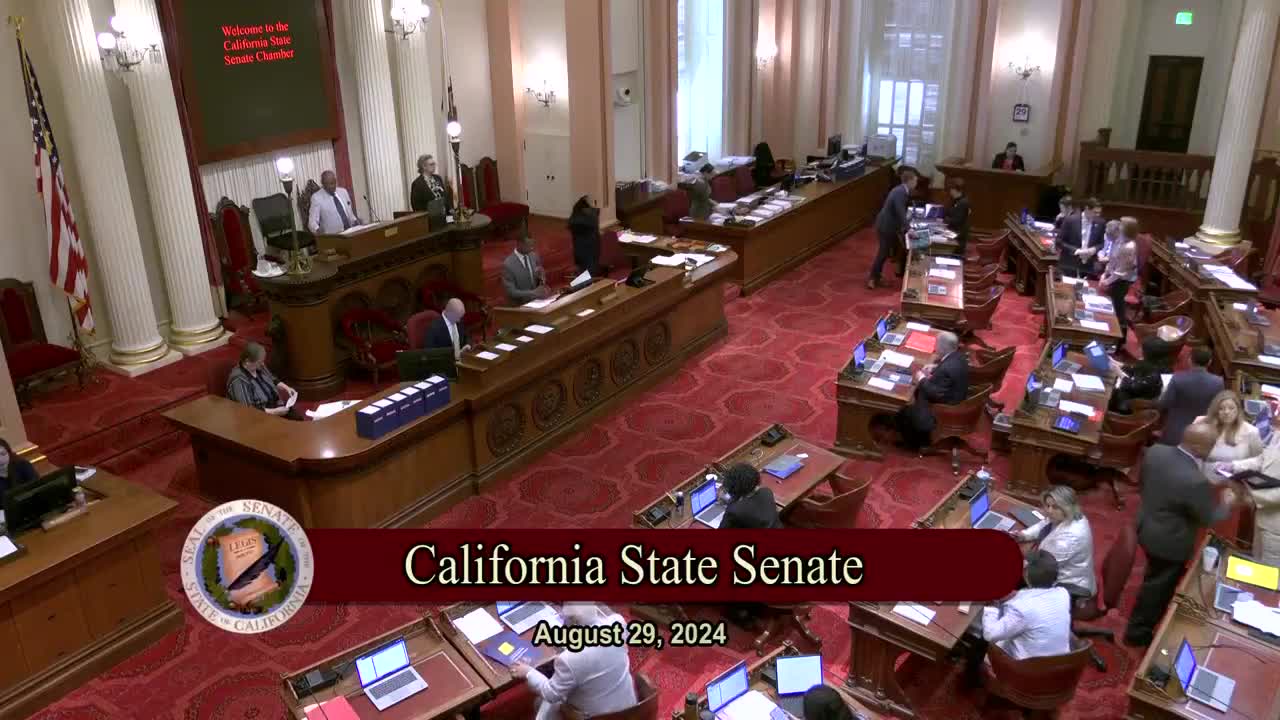 2MIN
Senate Floor
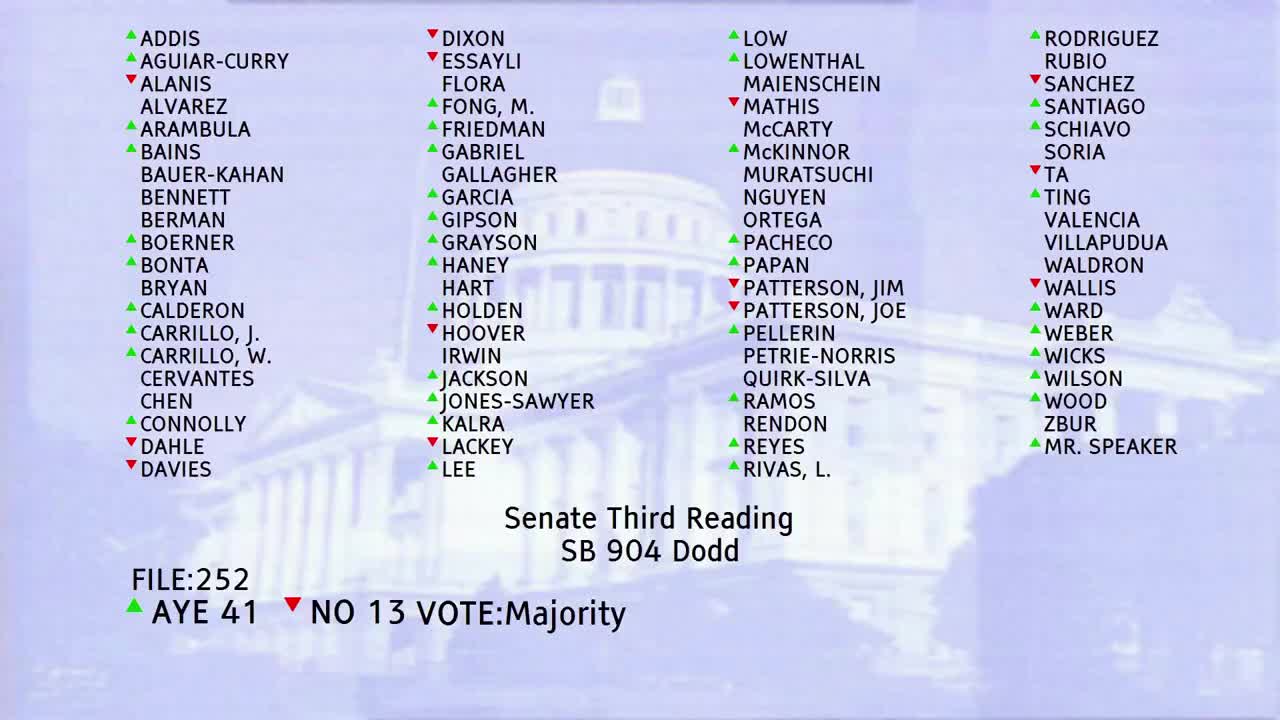 2MIN
Assembly Floor
 1MIN
Assembly Floor
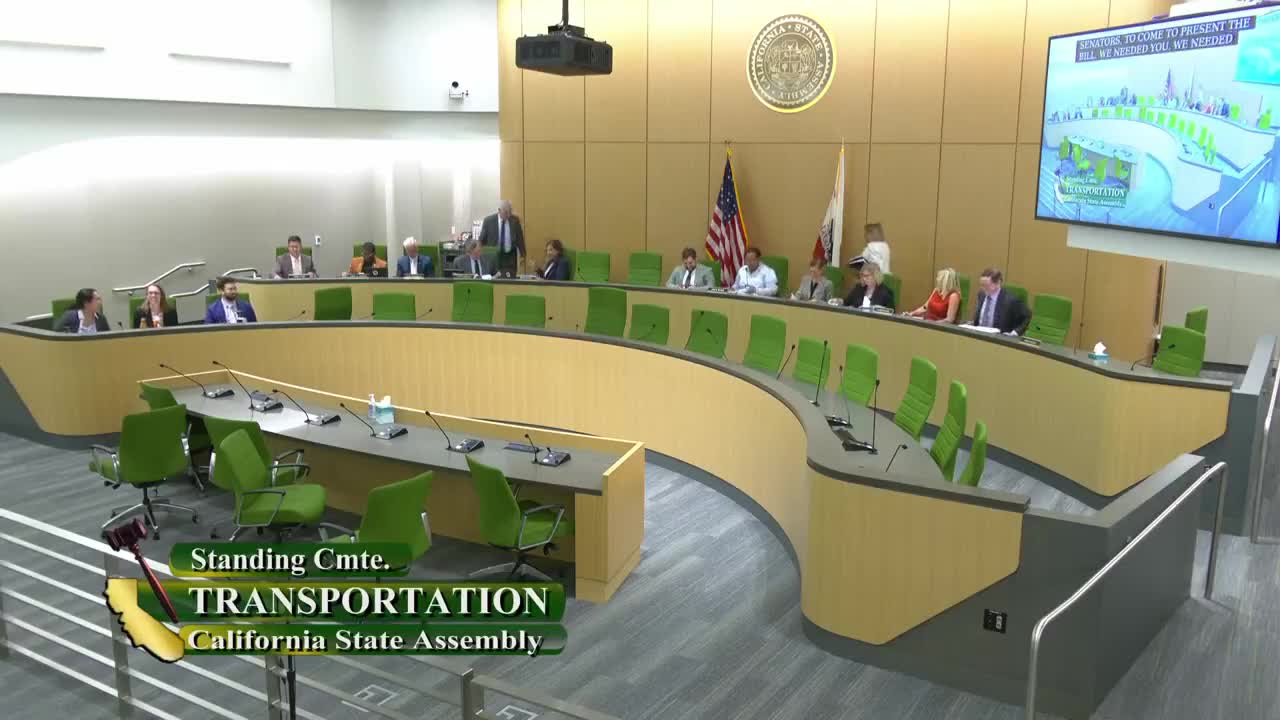 19MIN
Assembly Standing Committee on Transportation
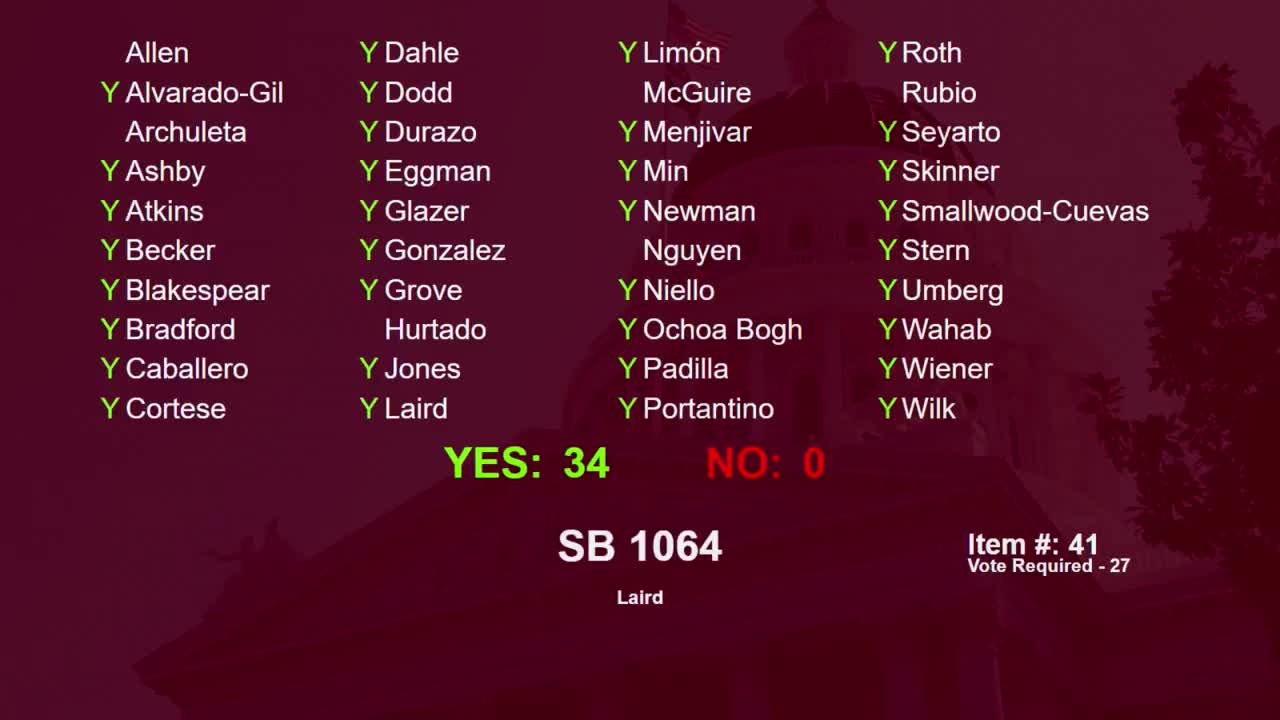 3MIN
Senate Floor
 13MIN
Senate Standing Committee on Transportation
 1SEC
Senate Standing Committee on Transportation
1MIN
Senate Standing Committee on Transportation
Bill Author