SB 97: Criminal procedure: writ of habeas corpus.
- Session Year: 2023-2024
- House: Senate
- Latest Version Date: 2023-10-07
Current Status:
Passed
(2023-10-07: Chaptered by Secretary of State. Chapter 381, Statutes of 2023.)
Introduced
In Committee
First Chamber
In Committee
Second Chamber
Enacted
What does this bill do?
The bill expands when people in custody can ask a court to review their imprisonment by allowing habeas corpus claims based on new evidence discovered after trial, including newly developed scientific disputes or expert opinions that were later undermined. It lets incarcerated petitioners waive appearing in person at evidentiary hearings or appear remotely unless their lawyer says they must be present. It also creates a presumption in favor of relief if the prosecutor or Attorney General concedes a claim, and allows a petitioner’s postconviction lawyer to serve as trial counsel on retrial if the client agrees and the lawyer is qualified.
The summary is provided by generative AI which can make mistakes. For original language, please view the details in the table below.
Existing law allows a person who is unlawfully imprisoned or restrained of their liberty to prosecute a writ of habeas corpus to inquire into the cause of their imprisonment or restraint.
Existing law allows a writ of habeas corpus to be prosecuted on several bases, including on the basis of the discovery of new evidence discovered after trial that could not have been discovered prior to trial by the exercise of due diligence.
This bill would allow for prosecution of a writ of habeas corpus to be prosecuted on the additional bases of the discovery of new evidence that has not been previously presented and heard at trial and has been discovered after trial.
The bill would allow a petitioner who is incarcerated in state prison to not appear at an evidentiary hearing if there is a waiver of the right to appear on record, or to appear through the use of remote technology unless counsel indicates that the defendants presence is needed.
The bill would require a presumption in favor of granting relief in a habeas petition if the district attorney or the Attorney General concede or stipulate to a factual or legal basis for the relief.
The bill would allow, if after granting postconviction relief the prosecuting agency retries the petitioner, the petitioners postconviction counsel to be appointed as counsel to represent the petitioner on the retrial, if certain requirements are met.
Existing law allows a person who is unlawfully imprisoned or restrained of their liberty to prosecute a writ of habeas corpus to inquire into the cause of their imprisonment or restraint.
Existing law allows a writ of habeas corpus to be prosecuted on several bases, including on the basis of the discovery of new evidence discovered after trial.
This bill would allow for prosecution of a writ of habeas corpus to be prosecuted on the additional bases of the discovery of new evidence that has not been previously presented and heard at trial and has been discovered after a plea or trial.
The bill would allow a petitioner who is incarcerated in state prison to not appear at an evidentiary hearing if there is a waiver of the right to appear on record, or to appear through the use of remote technology unless counsel indicates that the defendants presence is needed.
The bill would require a presumption in favor of granting relief in a habeas petition if the district attorney or the Attorney General concede or stipulate to a factual or legal basis for the relief.
The bill would allow, if after granting postconviction relief the prosecuting agency retries the petitioner, the petitioners postconviction counsel to be appointed as counsel to represent the petitioner on the retrial, if certain requirements are met.
Existing law allows a person who is unlawfully imprisoned or restrained of their liberty to prosecute a writ of habeas corpus to inquire into the cause of their imprisonment or restraint.
Existing law allows a writ of habeas corpus to be prosecuted on several bases, including on the basis of the discovery of new evidence discovered after trial.
This bill would allow for prosecution of a writ of habeas corpus to be prosecuted on the additional bases of the discovery of new evidence that has not been previously presented and heard at trial and has been discovered after a plea or trial that has not previously been presented and heard. trial.
The bill would allow a petitioner who is incarcerated in state prison to not appear at an evidentiary hearing if there is a waiver of the right to appear on record, or to appear through the use of remote technology unless counsel indicates that the defendants presence is needed.
The bill would require a presumption in favor of granting relief in a habeas petition if the district attorney or the Attorney General concede or stipulate to a factual or legal basis for the relief.
The bill would allow, if after granting postconviction relief the prosecuting agency retries the petitioner, the petitioners postconviction counsel to be appointed as counsel to represent the petitioner on the retrial, if certain requirements are met.
Existing law allows a person who is unlawfully imprisoned or restrained of their liberty to prosecute a writ of habeas corpus to inquire into the cause of their imprisonment or restraint.
Existing law allows a writ of habeas corpus to be prosecuted on several bases, including on the basis of the discovery of new evidence discovered after trial.
This bill would allow for prosecution of a writ of habeas corpus to be prosecuted on the additional bases of the discovery of new evidence discovered after a plea or trial that has not previously been presented and heard.
The bill would require the court to hold an evidentiary hearing before denying habeas relief on the grounds that the facts raised in support of a writ of habeas corpus and relevant to granting relief lack credibility.The bill would allow a petitioner to not appear at an evidentiary hearing if there is a waiver of the right to appear on record, or appear through the use of remote technology unless counsel indicates that the defendants presence is needed.
The bill would require a presumption in favor of granting relief in a habeas petition if the district attorney or the Attorney General concede or stipulate to a factual or legal basis for the relief.
The bill would allow, if after granting postconviction relief the prosecuting agency retries the petitioner, the petitioners postconviction counsel to be appointed as counsel to represent the petitioner on the retrial, if certain requirements are met.
Existing law allows a person who is unlawfully imprisoned or restrained of their liberty to prosecute a writ of habeas corpus to inquire into the cause of their imprisonment or restraint.
This bill would allow the district attorney or the Attorney General to prosecute a writ of habeas corpus on behalf of a person to rectify a wrongful conviction or sentence. The bill would require the prosecuting agency to give written notice to that person, their last counsel of record, the public defender, and the local innocence organization, if the writ is based on facts showing the person may not have committed the offense.Existing law allows a writ of habeas corpus to be prosecuted on several bases, including on the basis of the discovery of new evidence discovered after trial.
This bill would allow for prosecution of a writ of habeas corpus to be prosecuted on the additional bases of the discovery of new evidence discovered after a plea or a reasonable possibility that the factfinder would have reached a different outcome absent a combination of errors in the case. plea or trial that has not previously been presented and heard.
The bill would require the court to hold an evidentiary hearing before denying a habeas relief on the grounds that the evidence lacks habeas relief on the grounds that the facts raised in support of a writ of habeas corpus and relevant to granting relief lack credibility.
The bill would allow a petitioner to not appear at an evidentiary hearing if there is a waiver of the right to appear on record, or appear through the use of remote technology unless counsel indicates that the defendants presence is needed.
The bill would require a presumption in favor of granting relief in a habeas petition if the district attorney or the Attorney General concede or stipulate to a factual or legal basis for the relief.
The bill would require, allow, if after granting postconviction relief the prosecuting agency retries the petitioner, the petitioners postconviction counsel to be appointed as counsel to represent the petitioner on the retrial. retrial, if certain requirements are met.
Existing law allows a person who is unlawfully imprisoned or restrained of their liberty to prosecute a writ of habeas corpus to inquire into the cause of their imprisonment or restraint.
This bill would allow the district attorney or the Attorney General to prosecute a writ of habeas corpus on behalf of a person to rectify a wrongful conviction or sentence. The bill would require the prosecuting agency to give written notice to that person, their last counsel of record, the public defender, and the local innocence organization, if the writ is based on facts showing the person may not have committed the offense.
Existing law allows a writ of habeas corpus to be prosecuted on several bases, including on the basis of the discovery of new evidence discovered after trial.
This bill would allow for prosecution of a writ of habeas corpus to be prosecuted on the additional bases of the discovery of new evidence discovered after a plea or a reasonable possibility that the factfinder would have reached a different outcome absent a combination of errors in the case.
The bill would require the court to hold an evidentiary hearing before denying a habeas relief on the grounds that the evidence lacks credibility.
The bill would allow a petitioner to not appear at an evidentiary hearing if there is a waiver of the right to appear on record, or appear through the use of remote technology unless counsel indicates that the defendants presence is needed.
The bill would require a presumption in favor of granting relief in a habeas petition if the district attorney or the Attorney General concede or stipulate to a factual or legal basis for the relief.
The bill would require, if after granting postconviction relief the prosecuting agency retries the petitioner, the petitioners postconviction counsel to be appointed as counsel to represent the petitioner on the retrial.
(a)A person unlawfully imprisoned or restrained of their liberty, under any pretense, may prosecute a writ of habeas corpus to inquire into the cause of the imprisonment or restraint.
(b)(1)A writ of habeas corpus may be prosecuted for, but not limited to, the following reasons:
(A)False evidence that is material on the issue of guilt or punishment was introduced against a person at a hearing or trial relating to the persons incarceration.
(B)False physical evidence, believed by a person to be factual, probative, or material on the issue of guilt, which was known by the person at the time of entering a plea of guilty, which was a material factor directly related to the plea of guilty by the person.
(C)(i)New evidence exists that is presented without substantial delay, is admissible, and is sufficiently material and credible that it more likely than not would have changed the outcome of the case.
(ii)For purposes of this section, new evidence means evidence that has not previously been presented and heard at trial and has been discovered after trial.
(D)A significant dispute has emerged or further developed in the petitioners favor regarding expert medical, scientific, or forensic testimony that was introduced at trial or a hearing and that expert testimony more likely than not affected the outcome of the case.
(i)For purposes of this section, the expert medical, scientific, or forensic testimony includes the experts conclusion or the scientific, forensic, or medical facts upon which their opinion is based.
(ii)For purposes of this section, the significant dispute may be as to the reliability or validity of the diagnosis, technique, methods, theories, research, or studies upon which a medical, scientific, or forensic expert based their testimony.
(iii)Under this section, a significant dispute can be established by credible expert testimony or declaration, or by peer reviewed literature showing that experts in the relevant medical, scientific, or forensic community, substantial in number or expertise, have concluded that developments have occurred that undermine the reliability or validity of the diagnosis, technique, methods, theories, research, or studies upon which a medical, scientific, or forensic expert based their testimony.
(iv)In assessing whether a dispute is significant, the court shall give great weight to evidence that a consensus has developed in the relevant medical, scientific, or forensic community undermining the reliability or validity of the diagnosis, technique, methods, theories, research, or studies upon which a medical, scientific, or forensic expert based their testimony or that there is a lack of consensus as to the reliability or validity of the diagnosis, technique, methods, theories, research, or studies upon which a medical, scientific, or forensic expert based their testimony.
(v)The significant dispute must have emerged or further developed within the relevant medical, scientific, or forensic community, which includes the scientific community and all fields of scientific knowledge on which those fields or disciplines rely and shall not be limited to practitioners or proponents of a particular scientific or technical field or discipline.
(vi)If the petitioner makes a prima facie showing that they are entitled to relief, the court shall issue an order to show cause why relief shall not be granted. To obtain relief, all the elements of this subparagraph must be established by a preponderance of the evidence.
(2)For purposes of this subdivision, false evidence includes opinions of experts that have either been repudiated by the expert who originally provided the opinion at a hearing or trial or that have been undermined by the state of scientific knowledge or later scientific research or technological advances.
(3)Any allegation that the prosecution knew or should have known of the false nature of the evidence is immaterial to the prosecution of a writ of habeas corpus brought under subparagraph (A) or (B) of paragraph (1).
(4)This subdivision does not create additional liabilities, beyond those already recognized, for an expert who repudiates the original opinion provided at a hearing or trial or whose opinion has been undermined by scientific research, technological advancements, or because of a reasonable dispute within the experts relevant scientific community as to the validity of the methods, theories, research, or studies upon which the expert based their opinion.
(c)This section does not change the existing procedures for habeas relief.
(d)This section does not limit the grounds for which a writ of habeas corpus may be prosecuted or preclude the use of any other remedies.
(e)Notwithstanding any other law, a writ of habeas corpus may also be prosecuted after judgment has been entered based on evidence that a criminal conviction or sentence was sought, obtained, or imposed in violation of subdivision (a) of Section 745, if that section applies based on the date of judgment as provided in subdivision (k) of Section 745. A petition raising a claim of this nature for the first time, or on the basis of new discovery provided by the state or other new evidence that could not have been previously known by the petitioner with due diligence, shall not be deemed a successive or abusive petition. If the petitioner has a habeas corpus petition pending in state court, but it has not yet been decided, the petitioner may amend the existing petition with a claim that the petitioners conviction or sentence was sought, obtained, or imposed in violation of subdivision (a) of Section 745. The petition shall state if the petitioner requests appointment of counsel and the court shall appoint counsel if the petitioner cannot afford counsel and either the petition alleges facts that would establish a violation of subdivision (a) of Section 745 or the State Public Defender requests counsel be appointed. Newly appointed counsel may amend a petition filed before their appointment. The court shall review a petition raising a claim pursuant to Section 745 and shall determine if the petitioner has made a prima facie showing of entitlement to relief. If the petitioner makes a prima facie showing that the petitioner is entitled to relief, the court shall issue an order to show cause why relief shall not be granted and hold an evidentiary hearing, unless the state declines to show cause. The defendant may appear remotely, and the court may conduct the hearing through the use of remote technology, unless counsel indicates that the defendants presence in court is needed. If the court determines that the petitioner has not established a prima facie showing of entitlement to relief, the court shall state the factual and legal basis for its conclusion on the record or issue a written order detailing the factual and legal basis for its conclusion.
(f)If the court holds an evidentiary hearing and the petitioner is incarcerated in state prison, the petitioner may choose not to appear for the hearing with a signed or oral waiver on record, or they may appear remotely through the use of remote technology, unless counsel indicates that the defendants presence in court is needed.
(g)For purposes of this section, if the district attorney in the county of conviction or the Attorney General concedes or stipulates to a factual or legal basis for habeas relief, there shall be a presumption in favor of granting relief. This presumption may be overcome only if the record before the court contradicts the concession or stipulation or it would lead to the court issuing an order contrary to law.
(h)(1)If after the court grants postconviction relief under this section and the prosecuting agency elects to retry the petitioner, the petitioners postconviction counsel may be appointed as counsel or cocounsel to represent the petitioner on the retrial if both of the following requirements are met:
(A)The petitioner and postconviction counsel both agree for postconviction counsel to be appointed.
(B)Postconviction counsel is qualified to handle trials.
(2)Counsel shall be paid under the applicable pay scale for appointed counsel. Otherwise, the court shall appoint other appropriate counsel.
(a)A person unlawfully imprisoned or restrained of their liberty, under any pretense, may prosecute a writ of habeas corpus to inquire into the cause of the imprisonment or restraint.
(b)(1)A writ of habeas corpus may be prosecuted for, but not limited to, the following reasons:
(A)False evidence that is material on the issue of guilt or punishment was introduced against a person at a hearing or trial relating to the persons incarceration.
(B)False physical evidence, believed by a person to be factual, probative, or material on the issue of guilt, which was known by the person at the time of entering a plea of guilty, which was a material factor directly related to the plea of guilty by the person.
(C)(i)New evidence exists that is presented without substantial delay, is admissible, and is sufficiently material and credible that it more likely than not would have changed the outcome of the case.
(ii)For purposes of this section, new evidence means evidence that has not previously been presented and heard at trial and has been discovered after a plea or trial.
(D)A significant dispute has emerged or further developed in the petitioners favor regarding expert medical, scientific, or forensic testimony that was introduced at trial or a hearing and that expert testimony more likely than not affected the outcome of the case.
(i)For purposes of this section, the expert medical, scientific, or forensic testimony includes the experts conclusion or the scientific, forensic, or medical facts upon which their opinion is based.
(ii)For purposes of this section, the significant dispute may be as to the reliability or validity of the diagnosis, technique, methods, theories, research, or studies upon which a medical, scientific, or forensic expert based their testimony.
(iii)Under this section, a significant dispute can be established by credible expert testimony or declaration, or by peer reviewed literature showing that experts in the relevant medical, scientific, or forensic community, substantial in number or expertise, have concluded that developments have occurred that undermine the reliability or validity of the diagnosis, technique, methods, theories, research, or studies upon which a medical, scientific, or forensic expert based their testimony.
(iv)In assessing whether a dispute is significant, the court shall give great weight to evidence that a consensus has developed in the relevant medical, scientific, or forensic community undermining the reliability or validity of the diagnosis, technique, methods, theories, research, or studies upon which a medical, scientific, or forensic expert based their testimony or that there is a lack of consensus as to the reliability or validity of the diagnosis, technique, methods, theories, research, or studies upon which a medical, scientific, or forensic expert based their testimony.
(v)The significant dispute must have emerged or further developed within the relevant medical, scientific, or forensic community, which includes the scientific community and all fields of scientific knowledge on which those fields or disciplines rely and shall not be limited to practitioners or proponents of a particular scientific or technical field or discipline.
(vi)If the petitioner makes a prima facie showing that they are entitled to relief, the court shall issue an order to show cause why relief shall not be granted. To obtain relief, all the elements of this subparagraph must be established by a preponderance of the evidence.
(2)For purposes of this subdivision, false evidence includes opinions of experts that have either been repudiated by the expert who originally provided the opinion at a hearing or trial or that have been undermined by the state of scientific knowledge or later scientific research or technological advances.
(3)Any allegation that the prosecution knew or should have known of the false nature of the evidence is immaterial to the prosecution of a writ of habeas corpus brought under subparagraph (A) or (B) of paragraph (1).
(4)This subdivision does not create additional liabilities, beyond those already recognized, for an expert who repudiates the original opinion provided at a hearing or trial or whose opinion has been undermined by scientific research, technological advancements, or because of a reasonable dispute within the experts relevant scientific community as to the validity of the methods, theories, research, or studies upon which the expert based their opinion.
(c)This section does not change the existing procedures for habeas relief.
(d)This section does not limit the grounds for which a writ of habeas corpus may be prosecuted or preclude the use of any other remedies.
(e)Notwithstanding any other law, a writ of habeas corpus may also be prosecuted after judgment has been entered based on evidence that a criminal conviction or sentence was sought, obtained, or imposed in violation of subdivision (a) of Section 745, if that section applies based on the date of judgment as provided in subdivision (k) of Section 745. A petition raising a claim of this nature for the first time, or on the basis of new discovery provided by the state or other new evidence that could not have been previously known by the petitioner with due diligence, shall not be deemed a successive or abusive petition. If the petitioner has a habeas corpus petition pending in state court, but it has not yet been decided, the petitioner may amend the existing petition with a claim that the petitioners conviction or sentence was sought, obtained, or imposed in violation of subdivision (a) of Section 745. The petition shall state if the petitioner requests appointment of counsel and the court shall appoint counsel if the petitioner cannot afford counsel and either the petition alleges facts that would establish a violation of subdivision (a) of Section 745 or the State Public Defender requests counsel be appointed. Newly appointed counsel may amend a petition filed before their appointment. The court shall review a petition raising a claim pursuant to Section 745 and shall determine if the petitioner has made a prima facie showing of entitlement to relief. If the petitioner makes a prima facie showing that the petitioner is entitled to relief, the court shall issue an order to show cause why relief shall not be granted and hold an evidentiary hearing, unless the state declines to show cause. The defendant may appear remotely, and the court may conduct the hearing through the use of remote technology, unless counsel indicates that the defendants presence in court is needed. If the court determines that the petitioner has not established a prima facie showing of entitlement to relief, the court shall state the factual and legal basis for its conclusion on the record or issue a written order detailing the factual and legal basis for its conclusion.
(f)If the court holds an evidentiary hearing and the petitioner is incarcerated in state prison, the petitioner may choose not to appear for the hearing with a signed or oral waiver on record, or they may appear remotely through the use of remote technology, unless counsel indicates that the defendants presence in court is needed.
(g)For purposes of this section, if the district attorney in the county of conviction or the Attorney General concedes or stipulates to a factual or legal basis for habeas relief, there shall be a presumption in favor of granting relief. This presumption may be overcome only if the record before the court contradicts the concession or stipulation or it would lead to the court issuing an order contrary to law.
(h)(1)If after the court grants postconviction relief under this section and the prosecuting agency elects to retry the petitioner, the petitioners postconviction counsel may be appointed as counsel or cocounsel to represent the petitioner on the retrial if both of the following requirements are met:
(A)The petitioner and postconviction counsel both agree for postconviction counsel to be appointed.
(B)Postconviction counsel is qualified to handle trials.
(2)Counsel shall be paid under the applicable pay scale for appointed counsel. Otherwise, the court shall appoint other appropriate counsel.
(a)A person unlawfully imprisoned or restrained of their liberty, under any pretense, may prosecute a writ of habeas corpus to inquire into the cause of the imprisonment or restraint.
(b)(1)A writ of habeas corpus may be prosecuted for, but not limited to, the following reasons:
(A)False evidence that is material on the issue of guilt or punishment was introduced against a person at a hearing or trial relating to the persons incarceration.
(B)False physical evidence, believed by a person to be factual, probative, or material on the issue of guilt, which was known by the person at the time of entering a plea of guilty, which was a material factor directly related to the plea of guilty by the person.
(C)(i)New evidence exists that is presented without substantial delay, is admissible, and is sufficiently material and credible that it more likely than not would have changed the outcome of the case.
(ii)For purposes of this section, new evidence means evidence that has not previously been presented and heard at trial and has been discovered after a plea or trial that has not previously been presented and heard. trial.
(D)A significant dispute has emerged or further developed in the petitioners favor regarding expert medical, scientific, or forensic testimony that was introduced at trial or a hearing and that expert testimony more likely than not affected the outcome of the case.
(i)For purposes of this section, the expert medical, scientific, or forensic testimony includes the experts conclusion or the scientific, forensic, or medical facts upon which their opinion is based.
(ii)For purposes of this section, the significant dispute may be as to the reliability or validity of the diagnosis, technique, methods, theories, research, or studies upon which a medical, scientific, or forensic expert based their testimony.
(iii)Under this section, a significant dispute can be established by credible expert testimony or declaration, or by peer reviewed literature showing that experts in the relevant medical, scientific, or forensic community, substantial in number or expertise, have concluded that developments have occurred that undermine the reliability or validity of the diagnosis, technique, methods, theories, research, or studies upon which a medical, scientific, or forensic expert based their testimony.
(iv)In assessing whether a dispute is significant, the court shall give great weight to evidence that a consensus has developed in the relevant medical, scientific, or forensic community undermining the reliability or validity of the diagnosis, technique, methods, theories, research, or studies upon which a medical, scientific, or forensic expert based their testimony or that there is a lack of consensus as to the reliability or validity of the diagnosis, technique, methods, theories, research, or studies upon which a medical, scientific, or forensic expert based their testimony.
(v)The significant dispute must have emerged or further developed within the relevant medical, scientific, or forensic community, which includes the scientific community and all fields of scientific knowledge on which those fields or disciplines rely and shall not be limited to practitioners or proponents of a particular scientific or technical field or discipline.
(vi)If the petitioner makes a prima facie showing that they are entitled to relief, the court shall issue an order to show cause why relief shall not be granted. To obtain relief, all the elements of this subparagraph must be established by a preponderance of the evidence.
(2)For purposes of this subdivision, false evidence includes opinions of experts that have either been repudiated by the expert who originally provided the opinion at a hearing or trial or that have been undermined by the state of scientific knowledge or later scientific research or technological advances.
(3)Any allegation that the prosecution knew or should have known of the false nature of the evidence is immaterial to the prosecution of a writ of habeas corpus brought under subparagraph (A) or (B) of paragraph (1).
(4)This subdivision does not create additional liabilities, beyond those already recognized, for an expert who repudiates the original opinion provided at a hearing or trial or whose opinion has been undermined by scientific research, technological advancements, or because of a reasonable dispute within the experts relevant scientific community as to the validity of the methods, theories, research, or studies upon which the expert based their opinion.
(c)This section does not change the existing procedures for habeas relief.
(d)This section does not limit the grounds for which a writ of habeas corpus may be prosecuted or preclude the use of any other remedies.
(e)Notwithstanding any other law, a writ of habeas corpus may also be prosecuted after judgment has been entered based on evidence that a criminal conviction or sentence was sought, obtained, or imposed in violation of subdivision (a) of Section 745, if that section applies based on the date of judgment as provided in subdivision (k) of Section 745. A petition raising a claim of this nature for the first time, or on the basis of new discovery provided by the state or other new evidence that could not have been previously known by the petitioner with due diligence, shall not be deemed a successive or abusive petition. If the petitioner has a habeas corpus petition pending in state court, but it has not yet been decided, the petitioner may amend the existing petition with a claim that the petitioners conviction or sentence was sought, obtained, or imposed in violation of subdivision (a) of Section 745. The petition shall state if the petitioner requests appointment of counsel and the court shall appoint counsel if the petitioner cannot afford counsel and either the petition alleges facts that would establish a violation of subdivision (a) of Section 745 or the State Public Defender requests counsel be appointed. Newly appointed counsel may amend a petition filed before their appointment. The court shall review a petition raising a claim pursuant to Section 745 and shall determine if the petitioner has made a prima facie showing of entitlement to relief. If the petitioner makes a prima facie showing that the petitioner is entitled to relief, the court shall issue an order to show cause why relief shall not be granted and hold an evidentiary hearing, unless the state declines to show cause. The defendant may appear remotely, and the court may conduct the hearing through the use of remote technology, unless counsel indicates that the defendants presence in court is needed. If the court determines that the petitioner has not established a prima facie showing of entitlement to relief, the court shall state the factual and legal basis for its conclusion on the record or issue a written order detailing the factual and legal basis for its conclusion.
(f)If the court holds an evidentiary hearing and the petitioner is incarcerated in state prison, the petitioner may choose not to appear for the hearing with a signed or oral waiver on record, or they may appear remotely through the use of remote technology, unless counsel indicates that the defendants presence in court is needed.
(g)For purposes of this section, if the district attorney in the county of conviction or the Attorney General concedes or stipulates to a factual or legal basis for habeas relief, there shall be a presumption in favor of granting relief. This presumption may be overcome only if the record before the court contradicts the concession or stipulation or it would lead to the court issuing an order contrary to law.
(h)(1)If after the court grants postconviction relief under this section and the prosecuting agency elects to retry the petitioner, the petitioners postconviction counsel may be appointed as counsel or cocounsel to represent the petitioner on the retrial if both of the following requirements are met:
(A)The petitioner and postconviction counsel both agree for postconviction counsel to be appointed.
(B)Postconviction counsel is qualified to handle trials.
(2)Counsel shall be paid under the applicable pay scale for appointed counsel. Otherwise, the court shall appoint other appropriate counsel.
(a)A person unlawfully imprisoned or restrained of their liberty, under any pretense, may prosecute a writ of habeas corpus to inquire into the cause of the imprisonment or restraint.
(b)(1)A writ of habeas corpus may be prosecuted for, but not limited to, the following reasons:
(A)False evidence that is material on the issue of guilt or punishment was introduced against a person at a hearing or trial relating to the persons incarceration.
(B)False physical evidence, believed by a person to be factual, probative, or material on the issue of guilt, which was known by the person at the time of entering a plea of guilty, which was a material factor directly related to the plea of guilty by the person.
(C)(i)New evidence exists that is presented without substantial delay, is admissible, and is sufficiently material and credible that it more likely than not would have changed the outcome of the case.
(ii)For purposes of this section, new evidence means evidence that has been discovered after a plea or trial that has not previously been presented and heard.
(D)A significant dispute has emerged or further developed in the petitioners favor regarding expert medical, scientific, or forensic testimony that was introduced at trial or a hearing and that expert testimony more likely than not affected the outcome of the case.
(i)For purposes of this section, the expert medical, scientific, or forensic testimony includes the experts conclusion or the scientific, forensic, or medical facts upon which their opinion is based.
(ii)For purposes of this section, the significant dispute may be as to the reliability or validity of the diagnosis, technique, methods, theories, research, or studies upon which a medical, scientific scientific, or forensic expert based their testimony.
(iii)Under this section, a significant dispute can be established by credible expert testimony or declaration, or by peer reviewed literature showing that experts in the relevant medical, scientific, or forensic community, substantial in number or expertise, have concluded that developments have occurred that undermine the reliability or validity of the diagnosis, technique, methods, theories, research, or studies upon which a medical, scientific, or forensic expert based their testimony.
(iv)In assessing whether a dispute is significant, the court shall give great weight to evidence that a consensus has developed in the relevant medical, scientific, or forensic community undermining the reliability or validity of the diagnosis, technique, methods, theories, research, or studies upon which a medical, scientific, or forensic expert based their testimony or that there is a lack of consensus as to the reliability or validity of the diagnosis, technique, methods, theories, research, or studies upon which a medical, scientific, or forensic expert based their testimony.
(v)The significant dispute must have emerged or further developed within the relevant medical, scientific, or forensic community, which includes the scientific community and all fields of scientific knowledge on which those fields or disciplines rely and shall not be limited to practitioners or proponents of a particular scientific or technical field or discipline.
(vi)If the petitioner makes a prima facie showing that they are entitled to relief, the court shall issue an order to show cause why relief shall not be granted. To obtain relief, all the elements of this subparagraph must be established by a preponderance of the evidence.
(2)For purposes of this subdivision, false evidence includes opinions of experts that have either been repudiated by the expert who originally provided the opinion at a hearing or trial or that have been undermined by the state of scientific knowledge or later scientific research or technological advances.
(3)Any allegation that the prosecution knew or should have known of the false nature of the evidence is immaterial to the prosecution of a writ of habeas corpus brought under subparagraph (A) or (B) of paragraph (1).
(4)This subdivision does not create additional liabilities, beyond those already recognized, for an expert who repudiates the original opinion provided at a hearing or trial or whose opinion has been undermined by scientific research, technological advancements, or because of a reasonable dispute within the experts relevant scientific community as to the validity of the methods, theories, research, or studies upon which the expert based their opinion.
(c)This section does not change the existing procedures for habeas relief.
(d)This section does not limit the grounds for which a writ of habeas corpus may be prosecuted or preclude the use of any other remedies.
(e)Notwithstanding any other law, a writ of habeas corpus may also be prosecuted after judgment has been entered based on evidence that a criminal conviction or sentence was sought, obtained, or imposed in violation of subdivision (a) of Section 745, if that section applies based on the date of judgment as provided in subdivision (k) of Section 745. A petition raising a claim of this nature for the first time, or on the basis of new discovery provided by the state or other new evidence that could not have been previously known by the petitioner with due diligence, shall not be deemed a successive or abusive petition. If the petitioner has a habeas corpus petition pending in state court, but it has not yet been decided, the petitioner may amend the existing petition with a claim that the petitioners conviction or sentence was sought, obtained, or imposed in violation of subdivision (a) of Section 745. The petition shall state if the petitioner requests appointment of counsel and the court shall appoint counsel if the petitioner cannot afford counsel and either the petition alleges facts that would establish a violation of subdivision (a) of Section 745 or the State Public Defender requests counsel be appointed. Newly appointed counsel may amend a petition filed before their appointment. The court shall review a petition raising a claim pursuant to Section 745 and shall determine if the petitioner has made a prima facie showing of entitlement to relief. If the petitioner makes a prima facie showing that the petitioner is entitled to relief, the court shall issue an order to show cause why relief shall not be granted and hold an evidentiary hearing, unless the state declines to show cause. The defendant may appear remotely, and the court may conduct the hearing through the use of remote technology, unless counsel indicates that the defendants presence in court is needed. If the court determines that the petitioner has not established a prima facie showing of entitlement to relief, the court shall state the factual and legal basis for its conclusion on the record or issue a written order detailing the factual and legal basis for its conclusion.
(f)If the court holds an evidentiary hearing, hearing and the petitioner is incarcerated in state prison, the petitioner may choose not to appear for the hearing with a signed or oral waiver on record, or they may appear remotely, and the court may conduct the hearing remotely through the use of remote technology, unless counsel indicates that the defendants presence in court is needed.
(g)For purposes of this section, if the district attorney in the county of conviction or the Attorney General concedes or stipulates to a factual or legal basis for habeas relief, there shall be a presumption in favor of granting relief. This presumption may be overcome only if the record before the court contradicts the concession or stipulation or it would lead to the court issuing an order contrary to law.
(h)(1)If after the court grants postconviction relief under this section and the prosecuting agency elects to retry the petitioner, the petitioners postconviction counsel may be appointed as counsel or cocounsel to represent the petitioner on the retrial if both of the following requirements are met:
(A)The petitioner and postconviction counsel both agree for postconviction counsel to be appointed.
(B)Postconviction counsel is qualified to handle trials.
(2)Counsel shall be paid under the applicable pay scale for appointed counsel. Otherwise, the court shall appoint other appropriate counsel.
(a)A person unlawfully imprisoned or restrained of their liberty, under any pretense, may prosecute a writ of habeas corpus to inquire into the cause of the imprisonment or restraint.
(b)(1)A writ of habeas corpus may be prosecuted for, but not limited to, the following reasons:
(A)False evidence that is material on the issue of guilt or punishment was introduced against a person at a hearing or trial relating to the persons incarceration.
(B)False physical evidence, believed by a person to be factual, probative, or material on the issue of guilt, which was known by the person at the time of entering a plea of guilty, which was a material factor directly related to the plea of guilty by the person.
(C)(i)New evidence exists that is presented without substantial delay, is admissible, and is sufficiently material and credible that it more likely than not would have changed the outcome of the case.
(ii)For purposes of this section, new evidence means evidence that has been discovered after a plea or trial that has not previously been presented and heard.
(D)A significant dispute has emerged or further developed in the petitioners favor regarding expert medical, scientific, or forensic testimony that was introduced at trial or a hearing and that expert testimony more likely than not affected the outcome of the case.
(i)For purposes of this section, the expert medical, scientific, or forensic testimony includes the experts conclusion or the scientific, forensic, or medical facts upon which their opinion is based.
(ii)For purposes of this section, the significant dispute may be as to the reliability or validity of the diagnosis, technique, methods, theories, research, or studies upon which a medical, scientific or forensic expert based their testimony.
(iii)Under this section, a significant dispute can be established by credible expert testimony or declaration, or by peer reviewed literature showing that experts in the relevant medical, scientific, or forensic community, substantial in number or expertise, have concluded that developments have occurred that undermine the reliability or validity of the diagnosis, technique, methods, theories, research, or studies upon which a medical, scientific, or forensic expert based their testimony.
(iv)In assessing whether a dispute is significant, the court shall give great weight to evidence that a consensus has developed in the relevant medical, scientific, or forensic community undermining the reliability or validity of the diagnosis, technique, methods, theories, research, or studies upon which a medical, scientific, or forensic expert based their testimony or that there is a lack of consensus as to the reliability or validity of the diagnosis, technique, methods, theories, research, or studies upon which a medical, scientific, or forensic expert based their testimony.
(v)The significant dispute must have emerged or further developed within the relevant medical, scientific, or forensic community, which includes the scientific community and all fields of scientific knowledge on which those fields or disciplines rely and shall not be limited to practitioners or proponents of a particular scientific or technical field or discipline.
(vi)If the petitioner makes a prima facie showing that they are entitled to relief, the court shall issue an order to show cause why relief shall not be granted. To obtain relief, all the elements of this subparagraph must be established by a preponderance of the evidence.
(2)For purposes of this subdivision, false evidence includes opinions of experts that have either been repudiated by the expert who originally provided the opinion at a hearing or trial or that have been undermined by the state of scientific knowledge or later scientific research or technological advances.
(3)Any allegation that the prosecution knew or should have known of the false nature of the evidence is immaterial to the prosecution of a writ of habeas corpus brought under subparagraph (A) or (B) of paragraph (1).
(4)This subdivision does not create additional liabilities, beyond those already recognized, for an expert who repudiates the original opinion provided at a hearing or trial or whose opinion has been undermined by scientific research, technological advancements, or because of a reasonable dispute within the experts relevant scientific community as to the validity of the methods, theories, research, or studies upon which the expert based their opinion.
(c)This section does not change the existing procedures for habeas relief.
(d)This section does not limit the grounds for which a writ of habeas corpus may be prosecuted or preclude the use of any other remedies.
(e)Notwithstanding any other law, a writ of habeas corpus may also be prosecuted after judgment has been entered based on evidence that a criminal conviction or sentence was sought, obtained, or imposed in violation of subdivision (a) of Section 745, if that section applies based on the date of judgment as provided in subdivision (k) of Section 745. A petition raising a claim of this nature for the first time, or on the basis of new discovery provided by the state or other new evidence that could not have been previously known by the petitioner with due diligence, shall not be deemed a successive or abusive petition. If the petitioner has a habeas corpus petition pending in state court, but it has not yet been decided, the petitioner may amend the existing petition with a claim that the petitioners conviction or sentence was sought, obtained, or imposed in violation of subdivision (a) of Section 745. The petition shall state if the petitioner requests appointment of counsel and the court shall appoint counsel if the petitioner cannot afford counsel and either the petition alleges facts that would establish a violation of subdivision (a) of Section 745 or the State Public Defender requests counsel be appointed. Newly appointed counsel may amend a petition filed before their appointment. The court shall review a petition raising a claim pursuant to Section 745 and shall determine if the petitioner has made a prima facie showing of entitlement to relief. If the petitioner makes a prima facie showing that the petitioner is entitled to relief, the court shall issue an order to show cause why relief shall not be granted and hold an evidentiary hearing, unless the state declines to show cause. The defendant may appear remotely, and the court may conduct the hearing through the use of remote technology, unless counsel indicates that the defendants presence in court is needed. If the court determines that the petitioner has not established a prima facie showing of entitlement to relief, the court shall state the factual and legal basis for its conclusion on the record or issue a written order detailing the factual and legal basis for its conclusion.
(f)If the court holds an evidentiary hearing, the petitioner may choose not to appear for the hearing with a signed or oral waiver on record, or they may appear remotely, and the court may conduct the hearing through the use of remote technology, unless counsel indicates that the defendants presence in court is needed.
(g)Under this section, habeas relief cannot be denied on the grounds that the facts raised in support of the claims raised pursuant to paragraph (1) of subdivision (b) and relevant to granting relief lack credibility without first holding an evidentiary hearing.(h)(g)For purposes of this section, if the district attorney in the county of conviction or the Attorney General concedes or stipulates to a factual or legal basis for habeas relief, there shall be a presumption in favor of granting relief. This presumption may be overcome only if the record before the court contradicts the concession or stipulation or it would lead to the court issuing an order contrary to law.
(i)(h)(1)If after the court grants postconviction relief under this section and the prosecuting agency elects to retry the petitioner, the petitioners postconviction counsel may be appointed as counsel or cocounsel to represent the petitioner on the retrial if both of the following requirements are met:
(A)The petitioner and postconviction counsel both agree for postconviction counsel to be appointed.
(B)Postconviction counsel is qualified to handle trials.
(2)Counsel shall be paid under the applicable pay scale for appointed counsel. Otherwise, the court shall appoint other appropriate counsel.
(a)(1)A person unlawfully imprisoned or restrained of their liberty, under any pretense, may prosecute a writ of habeas corpus to inquire into the cause of the imprisonment or restraint.
(2)The district attorney of the county in which the person was convicted, or the Attorney General, may prosecute a writ of habeas corpus on behalf of an unlawfully imprisoned or restrained person to rectify a wrongful conviction, wrongful sentence, or both. The district attorney or Attorney General shall give written notice, at least 10 business days prior to filing, to the unlawfully imprisoned or restrained person, their last counsel of record, the public defender in the county of conviction, and, where the writ is based wholly or in part on facts showing the person may not have committed the offense, the innocence organization local to the county of conviction.(b)(1)A writ of habeas corpus may be prosecuted for, but not limited to, the following reasons:
(A)False evidence that is material or probative on the issue of guilt or punishment was introduced against a person at a hearing or trial relating to the persons incarceration.
(B)False physical evidence, believed by a person to be factual, probative, or material on the issue of guilt, which was known by the person at the time of entering a plea of guilty, which was a material factor directly related to the plea of guilty by the person.
(C)(i)New evidence exists that is admissible and material that presented without substantial delay, is admissible, and is sufficiently material and credible that it more likely than not would have changed the outcome of the case.
(ii)For purposes of this section, new evidence means evidence that has been discovered after a plea or trial, that could not have been discovered prior to a plea or trial by the exercise of due diligence. If the court finds that the evidence was suppressed by the state, there is a presumption that the evidence could not have been discovered through the exercise of due diligence. trial that has not previously been presented and heard.
(D)A significant dispute has emerged or further developed in the petitioners favor regarding expert medical, scientific, or forensic testimony that was introduced at trial and contributed to the conviction, such that it would have more likely than not or a hearing and that expert testimony more likely than not affected the outcome of the case.
(i)For purposes of this section, the expert medical, scientific, or forensic testimony includes the experts conclusion or the scientific, forensic, or medical facts upon which their opinion is based.
(ii)For purposes of this section, the significant dispute may be as to the reliability or validity of the diagnosis, technique, methods, theories, research, or studies upon which a medical, scientific or forensic expert based their testimony.
(iii)Under this section, a significant dispute can be established by credible expert testimony or declaration, or by peer reviewed literature showing that experts in the relevant medical, scientific, or forensic community, substantial in number or expertise, have concluded that developments have occurred that undermine the reliability or validity of the diagnosis, technique, methods, theories, research, or studies upon which a medical, scientific, or forensic expert based their testimony.
(iv)In assessing whether a dispute is significant, the court shall give great weight to evidence that a consensus has developed in the relevant medical, scientific, or forensic community undermining the reliability or validity of the diagnosis, technique, methods, theories, research, or studies upon which a medical, scientific, or forensic expert based their testimony or that there is a lack of consensus as to the reliability or validity of the diagnosis, technique, methods, theories, research, or studies upon which a medical, scientific, or forensic expert based their testimony.
(v)The significant dispute must have emerged or further developed within the relevant medical, scientific, or forensic community, which includes the scientific community and all fields of scientific knowledge on which those fields or disciplines rely and shall not be limited to practitioners or proponents of a particular scientific or technical field or discipline.
(vi)If the petitioner makes a prima facie showing that they are entitled to relief, the court shall issue an order to show cause why relief shall not be granted. To obtain relief, all the elements of this subparagraph must be established by a preponderance of the evidence.
(E)There is a reasonable possibility that the factfinder, given the totality of the circumstances, would have reached a different outcome absent a combination of errors in the case.(2)For purposes of this subdivision, false evidence includes opinions of experts that have either been repudiated by the expert who originally provided the opinion at a hearing or trial or that have been undermined by the state of scientific knowledge or later scientific research or technological advances.
(3)Any allegation that the prosecution knew or should have known of the false nature of the evidence is immaterial to the prosecution of a writ of habeas corpus brought under subparagraph (A) or (B) of paragraph (1).
(4)This subdivision does not create additional liabilities, beyond those already recognized, for an expert who repudiates the original opinion provided at a hearing or trial or whose opinion has been undermined by scientific research, technological advancements, or because of a reasonable dispute within the experts relevant scientific community as to the validity of the methods, theories, research, or studies upon which the expert based their opinion.
(c)This section does not change the existing procedures for habeas relief.
(d)This section does not limit the grounds for which a writ of habeas corpus may be prosecuted or preclude the use of any other remedies.
(e)Notwithstanding any other law, a writ of habeas corpus may also be prosecuted after judgment has been entered based on evidence that a criminal conviction or sentence was sought, obtained, or imposed in violation of subdivision (a) of Section 745, if that section applies based on the date of judgment as provided in subdivision (k) of Section 745. A petition raising a claim of this nature for the first time, or on the basis of new discovery provided by the state or other new evidence that could not have been previously known by the petitioner with due diligence, shall not be deemed a successive or abusive petition. If the petitioner has a habeas corpus petition pending in state court, but it has not yet been decided, the petitioner may amend the existing petition with a claim that the petitioners conviction or sentence was sought, obtained, or imposed in violation of subdivision (a) of Section 745. The petition shall state if the petitioner requests appointment of counsel and the court shall appoint counsel if the petitioner cannot afford counsel and either the petition alleges facts that would establish a violation of subdivision (a) of Section 745 or the State Public Defender requests counsel be appointed. Newly appointed counsel may amend a petition filed before their appointment. The court shall review a petition raising a claim pursuant to Section 745 and shall determine if the petitioner has made a prima facie showing of entitlement to relief. If the petitioner makes a prima facie showing that the petitioner is entitled to relief, the court shall issue an order to show cause why relief shall not be granted and hold an evidentiary hearing, unless the state declines to show cause. The defendant may appear remotely, and the court may conduct the hearing through the use of remote technology, unless counsel indicates that the defendants presence in court is needed. If the court determines that the petitioner has not established a prima facie showing of entitlement to relief, the court shall state the factual and legal basis for its conclusion on the record or issue a written order detailing the factual and legal basis for its conclusion.
(f)If the court holds an evidentiary hearing, the petitioner may choose not to appear for the hearing with a signed or oral waiver on record, or they may appear remotely, and the court may conduct the hearing through the use of remote technology, unless counsel indicates that the defendants presence in court is needed.
(g)Under this section, habeas relief cannot be denied on the grounds that the evidence lacks facts raised in support of the claims raised pursuant to paragraph (1) of subdivision (b) and relevant to granting relief lack credibility without first holding an evidentiary hearing.
(h)For purposes of this section, if the district attorney in the county of conviction or the Attorney General concedes or stipulates to a factual or legal basis for habeas relief, there shall be a presumption in favor of granting relief. This presumption may be overcome only if the record before the court contradicts the concession or stipulation or it would lead to the court issuing an order contrary to law.
(i)(1)If after the court grants postconviction relief under this section and the prosecuting agency elects to retry the petitioner, the petitioners postconviction counsel shall may be appointed as counsel or cocounsel to represent the petitioner on the retrial if both of the following requirements are met:
(A)The petitioner and postconviction counsel both agree for postconviction counsel to be appointed.
(B)Postconviction counsel is qualified to handle trials.
(2)Counsel shall be paid under the applicable county pay scale for appointed counsel. Otherwise, the court shall appoint, other, appoint other appropriate counsel.
(a)(1)A person unlawfully imprisoned or restrained of their liberty, under any pretense, may prosecute a writ of habeas corpus to inquire into the cause of the imprisonment or restraint.
(2)The district attorney of the county in which the person was convicted, or the Attorney General, may prosecute a writ of habeas corpus on behalf of an unlawfully imprisoned or restrained person to rectify a wrongful conviction, wrongful sentence, or both. The district attorney or Attorney General shall give written notice, at least 10 business days prior to filing, to the unlawfully imprisoned or restrained person, their last counsel of record, the public defender in the county of conviction, and, where the writ is based wholly or in part on facts showing the person may not have committed the offense, the innocence organization local to the county of conviction.
(b)(1)A writ of habeas corpus may be prosecuted for, but not limited to, the following reasons:
(1)(A)False evidence that is substantially material or probative on the issue of guilt or punishment was introduced against a person at a hearing or trial relating to the persons incarceration.
(2)(B)False physical evidence, believed by a person to be factual, probative, or material on the issue of guilt, which was known by the person at the time of entering a plea of guilty, which was a material factor directly related to the plea of guilty by the person.
(3)(A)(C)(i)New evidence exists that is credible, material, presented without substantial delay, and of such decisive force and value that it would have admissible and material that more likely than not would have changed the outcome at trial. of the case.
(B)(ii)For purposes of this section, new evidence means evidence that has been discovered after a plea or trial, that could not have been discovered prior to a plea or trial by the exercise of due diligence, and is admissible and not merely cumulative, corroborative, collateral, or impeaching. diligence. If the court finds that the evidence was suppressed by the state, there is a presumption that the evidence could not have been discovered through the exercise of due diligence.
(4)(D)A significant dispute has emerged or further developed in the petitioners favor regarding expert medical, scientific, or forensic testimony that was introduced at trial and contributed to the conviction, such that it would have more likely than not changed affected the outcome at trial. of the case.
(A)(i)For purposes of this section, the expert medical, scientific, or forensic testimony includes the experts conclusion or the scientific, forensic, or medical facts upon which their opinion is based.
(B)(ii)For purposes of this section, the significant dispute may be as to the reliability or validity of the diagnosis, technique, methods, theories, research, or studies upon which a medical, scientific or forensic expert based their testimony.
(C)(iii)Under this section, a significant dispute can be established by credible expert testimony or declaration, or by peer reviewed literature showing that experts in the relevant medical, scientific, or forensic community, substantial in number or expertise, have concluded that developments have occurred that undermine the reliability or validity of the diagnosis, technique, methods, theories, research, or studies upon which a medical, scientific, or forensic expert based their testimony.
(D)(iv)In assessing whether a dispute is significant, the court shall give great weight to evidence that a consensus has developed in the relevant medical, scientific, or forensic community undermining the reliability or validity of the diagnosis, technique, methods, theories, research, or studies upon which a medical, scientific, or forensic expert based their testimony or that there is a lack of consensus as to the reliability or validity of the diagnosis, technique, methods, theories, research, or studies upon which a medical, scientific, or forensic expert based their testimony.
(E)(v)The significant dispute must have emerged or further developed within the relevant medical, scientific, or forensic community, which includes the scientific community and all fields of scientific knowledge on which those fields or disciplines rely and shall not be limited to practitioners or proponents of a particular scientific or technical field or discipline.
(F)(vi)If the petitioner makes a prima facie showing that they are entitled to relief, the court shall issue an order to show cause why relief shall not be granted. To obtain relief, all the elements of this paragraph subparagraph must be established by a preponderance of the evidence.
(E)There is a reasonable possibility that the factfinder, given the totality of the circumstances, would have reached a different outcome absent a combination of errors in the case.
(2)For purposes of this subdivision, false evidence includes opinions of experts that have either been repudiated by the expert who originally provided the opinion at a hearing or trial or that have been undermined by the state of scientific knowledge or later scientific research or technological advances.
(3)Any allegation that the prosecution knew or should have known of the false nature of the evidence is immaterial to the prosecution of a writ of habeas corpus brought under subparagraph (A) or (B) of paragraph (1).
(4)This subdivision does not create additional liabilities, beyond those already recognized, for an expert who repudiates the original opinion provided at a hearing or trial or whose opinion has been undermined by scientific research, technological advancements, or because of a reasonable dispute within the experts relevant scientific community as to the validity of the methods, theories, research, or studies upon which the expert based their opinion.
(G)(c)This section does not change the existing procedures for habeas relief.
(c)Any allegation that the prosecution knew or should have known of the false nature of the evidence referred to in paragraphs (1) and (2) of subdivision (b) is immaterial to the prosecution of a writ of habeas corpus brought pursuant to paragraph (1) or (2) of subdivision (b).(d)This section does not limit the grounds for which a writ of habeas corpus may be prosecuted or preclude the use of any other remedies.
(e)(1)For purposes of this section, false evidence includes opinions of experts that have either been repudiated by the expert who originally provided the opinion at a hearing or trial or that have been undermined by the state of scientific knowledge or later scientific research or technological advances.(2)This section does not create additional liabilities, beyond those already recognized, for an expert who repudiates the original opinion provided at a hearing or trial or whose opinion has been undermined by scientific research, technological advancements, or because of a reasonable dispute within the experts relevant scientific community as to the validity of the methods, theories, research, or studies upon which the expert based their opinion.(f)(e)Notwithstanding any other law, a writ of habeas corpus may also be prosecuted after judgment has been entered based on evidence that a criminal conviction or sentence was sought, obtained, or imposed in violation of subdivision (a) of Section 745, if that section applies based on the date of judgment as provided in subdivision (k) of Section 745. A petition raising a claim of this nature for the first time, or on the basis of new discovery provided by the state or other new evidence that could not have been previously known by the petitioner with due diligence, shall not be deemed a successive or abusive petition. If the petitioner has a habeas corpus petition pending in state court, but it has not yet been decided, the petitioner may amend the existing petition with a claim that the petitioners conviction or sentence was sought, obtained, or imposed in violation of subdivision (a) of Section 745. The petition shall state if the petitioner requests appointment of counsel and the court shall appoint counsel if the petitioner cannot afford counsel and either the petition alleges facts that would establish a violation of subdivision (a) of Section 745 or the State Public Defender requests counsel be appointed. Newly appointed counsel may amend a petition filed before their appointment. The court shall review a petition raising a claim pursuant to Section 745 and shall determine if the petitioner has made a prima facie showing of entitlement to relief. If the petitioner makes a prima facie showing that the petitioner is entitled to relief, the court shall issue an order to show cause why relief shall not be granted and hold an evidentiary hearing, unless the state declines to show cause. The defendant may appear remotely, and the court may conduct the hearing through the use of remote technology, unless counsel indicates that the defendants presence in court is needed. If the court determines that the petitioner has not established a prima facie showing of entitlement to relief, the court shall state the factual and legal basis for its conclusion on the record or issue a written order detailing the factual and legal basis for its conclusion.
(f)If the court holds an evidentiary hearing, the petitioner may choose not to appear for the hearing with a signed or oral waiver on record, or they may appear remotely, and the court may conduct the hearing through the use of remote technology, unless counsel indicates that the defendants presence in court is needed.
(g)Under this section, habeas relief cannot be denied on the grounds that the evidence lacks credibility without first holding an evidentiary hearing.
(h)For purposes of this section, if the district attorney in the county of conviction or the Attorney General concedes or stipulates to a factual or legal basis for habeas relief, there shall be a presumption in favor of granting relief. This presumption may be overcome only if the record before the court contradicts the concession or stipulation or it would lead to the court issuing an order contrary to law.
(i)(1)If after the court grants postconviction relief under this section and the prosecuting agency elects to retry the petitioner, the petitioners postconviction counsel shall be appointed as counsel or cocounsel to represent the petitioner on the retrial if both of the following requirements are met:
(A)The petitioner and postconviction counsel both agree for postconviction counsel to be appointed.
(B)Postconviction counsel is qualified to handle trials.
(2)Counsel shall be paid under the applicable county pay scale for appointed counsel. Otherwise, the court shall appoint, other, appropriate counsel.
|
Date
|
Status
|
|---|---|
| Oct 7, 2023 | Chaptered by Secretary of State. Chapter 381, Statutes of 2023. |
| Oct 7, 2023 | Approved by the Governor. |
| Sep 21, 2023 | Enrolled and presented to the Governor at 4 p.m. |
| Sep 14, 2023 | Assembly amendments concurred in. (Ayes 40. Noes 0. Page 2802.) Ordered to engrossing and enrolling. |
| Sep 13, 2023 | In Senate. Concurrence in Assembly amendments pending. |
| Sep 13, 2023 | Read third time. Passed. (Ayes 77. Noes 0. Page 3396.) Ordered to the Senate. |
| Sep 6, 2023 | Read third time and amended. |
| Sep 6, 2023 | Ordered to third reading. |
| Sep 5, 2023 | Read second time. Ordered to third reading. |
| Sep 1, 2023 | Read second time and amended. Ordered to second reading. |
| Sep 1, 2023 | From committee: Do pass as amended. (Ayes 11. Noes 0.) (September 1). |
| Aug 23, 2023 | August 23 set for first hearing. Placed on suspense file. |
| Jun 28, 2023 | From committee: Do pass and re-refer to Com. on APPR. with recommendation: To consent calendar. (Ayes 8. Noes 0.) (June 27). Re-referred to Com. on APPR. |
| Jun 20, 2023 | From committee with author's amendments. Read second time and amended. Re-referred to Com. on PUB. S. |
| Jun 1, 2023 | Referred to Com. on PUB. S. |
| May 25, 2023 | In Assembly. Read first time. Held at Desk. |
| May 24, 2023 | Read third time. Passed. (Ayes 37. Noes 0. Page 1277.) Ordered to the Assembly. |
| May 22, 2023 | Read second time. Ordered to third reading. |
| May 18, 2023 | Read second time and amended. Ordered to second reading. |
| May 18, 2023 | From committee: Do pass as amended. (Ayes 5. Noes 1. Page 1160.) (May 18). |
| May 12, 2023 | Set for hearing May 18. |
| Apr 10, 2023 | April 10 hearing: Placed on APPR suspense file. |
| Apr 3, 2023 | Set for hearing April 10. |
| Mar 29, 2023 | From committee: Do pass and re-refer to Com. on APPR. (Ayes 5. Noes 0. Page 578.) (March 28). Re-referred to Com. on APPR. |
| Mar 15, 2023 | From committee with author's amendments. Read second time and amended. Re-referred to Com. on PUB S. |
| Mar 2, 2023 | Set for hearing March 28. |
| Jan 25, 2023 | Referred to Com. on PUB S. |
| Jan 19, 2023 | From printer. May be acted upon on or after February 18. |
| Jan 18, 2023 | Introduced. Read first time. To Com. on RLS. for assignment. To print. |
|
Date
|
Description
|
Location
|
Votes
|
|
|---|---|---|---|---|
| Sep 14, 2023 | Unfinished Business SB97 Wiener Concurrence | Senate Floor |
Passed |
|
| Sep 13, 2023 | SB 97 Wiener Senate Third Reading By Holden | Assembly Floor |
Passed |
|
| Sep 1, 2023 | Do pass as amended. | Assembly Standing Committee on Appropriations |
Passed |
|
| Jun 27, 2023 | Do pass and be re-referred to the Committee on [Appropriations] with recommendation: To Consent Calendar | Assembly Standing Committee on Public Safety |
Passed |
|
| May 24, 2023 | Senate 3rd Reading SB97 Wiener | Senate Floor |
Passed |
|
| May 18, 2023 | Do pass as amended | Senate Standing Committee on Appropriations |
Passed |
|
| Apr 10, 2023 | Placed on suspense file | Senate Standing Committee on Appropriations |
Passed |
|
| Mar 28, 2023 | Do pass, but first be re-referred to the Committee on [Appropriations] | Senate Standing Committee on Public Safety |
Passed |
This list shows positions taken on this bill by organizations on the date displayed, which is linked to the original source.
Positions by individuals are not included.
|
Organization
|
Position
|
Date
|
|---|---|---|
| California Attorneys For Criminal Justice | * Support | Mar 28, 2023 |
| California Innocence Coalition: California Innocence Project, Northern California Innocence Project, Loyola Project for the Innocent | ** Support | |
| California Innocence Project | * Support | Mar 28, 2023 |
| California Public Defenders Association | ** Support | |
| Californians for Safety and Justice | * Support | Mar 28, 2023 |
| Californians United for a Responsible Budget | ** Support | |
| Communities United for Restorative Youth Justice | ** Support | |
| Ella Baker Center For Human Rights | ** Support | |
| Initiate Justice | ** Support | |
| Legal Services for Prisoners with Children | ** Support | |
| Los Angeles Innocence Project | ** Support | Mar 28, 2023 |
| Loyola Project for the Innocent | ** Support | Mar 28, 2023 |
| National Association Of Social Workers, California Chapter | ** Support | |
| Northern California Innocence Project | * Support | Mar 28, 2023 |
| Prosecutors Alliance California | ** Support | |
| San Diegans Against Crime | ** Against | |
| San Diego Deputy District Attorneys Association | ** Against | |
| Secure Justice | ** Support | |
| Smart Justice California | ** Support | |
| University of San Francisco School of Law | Racial Justice Clinic | ** Support |
SENATE RULES COMMITTEE Office of Senate Floor Analyses (916) 651-1520 Fax: (916) 327-4478 | SB 97 |
UNFINISHED BUSINESS
Bill No: SB 97
Author: Wiener (D)
Amended: 9/6/23
Vote: 21
SENATE PUBLIC SAFETY COMMITTEE: 5-0, 3/28/23
AYES: Wahab, Ochoa Bogh, Bradford, Skinner, Wiener
SENATE APPROPRIATIONS COMMITTEE: 5-1, 5/18/23
AYES: Portantino, Ashby, Bradford, Wahab, Wiener
NOES: Jones
NO VOTE RECORDED: Seyarto
SENATE FLOOR: 37-0, 5/24/23
AYES: Allen, Alvarado-Gil, Archuleta, Ashby, Atkins, Becker, Blakespear, Bradford, Caballero, Cortese, Dodd, Durazo, Eggman, Glazer, Gonzalez, Grove, Hurtado, Laird, Limón, McGuire, Menjivar, Min, Newman, Nguyen, Niello, Ochoa Bogh, Padilla, Portantino, Roth, Rubio, Skinner, Smallwood-Cuevas, Stern, Umberg, Wahab, Wiener, Wilk
NO VOTE RECORDED: Dahle, Jones, Seyarto
ASSEMBLY FLOOR: 77-0, 9/13/23 - See last page for vote
SUBJECT: Criminal procedure: writ of habeas corpus
SOURCE: California Innocence Coalition: California Innocence Project, Northern California Innocence Project, Loyola Project for the Innocent
DIGEST:
This bill refines the process by which those who are wrongfully convicted can prove their innocence and have their convictions reversed.
Assembly Amendments
provide that:
- New evidence is evidence not previously presented or heard at trial that has been discovered after trial.
- Clarify that a petitioner incarcerated in state prison may chose not to appear in person and may appear remotely.
ANALYSIS:
Existing law:
- Provides that every person unlawfully imprisoned or restrained of their liberty, under any pretense, may prosecute a writ of habeas corpus to inquire into the cause of the imprisonment or restraint. (Penal Code § 1473(a).)
- States that a writ of habeas corpus may be prosecuted for, but not limited to, the following reasons:
- False evidence that is substantially material or probative on the issue of guilt, or punishment was introduced against a person at any hearing or trial relating to his incarceration;
- False physical evidence believed by a person to be factual, material or probative on the issue of guilt, which was known by the person at the time of entering a plea of guilty and which was a material factor directly related to the plea of guilty by the person.
- New evidence exists that is credible, material, presented without substantial delay, and of such decisive force and value that it would have more likely than not changed the outcome of the trial. “New evidence” is evidence that was discovered after trial that could not have been discovered before trial and is admissible.(Penal Code § 1473 (b))
- Provides that any allegation that the prosecution knew or should have known of the false nature of the evidence is immaterial to the prosecution of a writ of habeas corpus. (Penal Code § 1473(c).)
- States that nothing in this section shall be construed as limiting the grounds for which a writ of habeas corpus may be prosecuted or as precluding the use of any other remedies. (Penal Code § 1473(d).)
- Provides that “false evidence” includes opinions of experts that have either been repudiated by the expert who originally provided the opinion at a hearing or trial or have been undermined by later scientific research or technological advances. (Penal Code § 1473(e)(1).)
- Provides that this section does not create additional liabilities, beyond these already recognized, for an expert who repudiates the original opinion provided at a hearing or trial or whose opinion has been undermined by later scientific research. (Penal Code § 1473(e)(2).)
This bill:
- Allows a person to prosecute a writ of habeas corpus if expert opinion testimony that was material at a hearing or trial relating to incarceration and a significant dispute has emerged or further developed in the petitioner’s favor regarding expert, medical, scientific, or forensic testimony that was introduced at trial or a hearing and that expert testimony more likely that not affected the outcome of the case.
- Allows a person to prosecute a writ of habeas corpus if new evidence is presented without substantial delay is admissible and sufficiently credible than it more likely than not would have changed the outcome of the case and defines new evidence as evidence discovered after a trial that has not previously been presented and heard.
- Provides that if the court holds an evidentiary hearing with a signed or oral waiver on record, a person who is incarcerated in state prison may appear remotely, and the court may conduct the hearing through the use of remote technology, unless counsel indicates that the defendant’s presence in court is needed.
- Provides that if the district attorney in the county of conviction or the Attorney General concedes or stipulates to a factual or legal basis for habeas relief, there shall be a presumption in favor of granting relief. This presumption may be overcome only if the record before the court contradicts the concession or stipulation or it would lead to the court issuing an order contrary to law.
- Provides that if after the court grants postconviction relief under this section and the prosecuting agency elects to retry the petitioner, the petitioner’s postconviction counsel may be appointed as counsel or co-counsel to represent the petition on the retrial if both of the following requirements are met:
- The petitioner and postconviction counsel both agree for postconviction counsel to be appointed.
- Postconviction is qualified to handle trials.
- Provides that counsel shall be paid under the applicable pay scale for appointed counsel, otherwise the court shall appoint other appropriate counsel.
Background
This bill makes a number of changes to refine the process by which those who are wrongfully convicted can prove their innocence and have their convictions reversed.
- New evidence
This bill makes changes to the provisions regarding when new evidence can be used as the basis for a habeas petition. It brings the existing new evidence standard into conformity with other standards like Brady and IAC (ineffective assistance of counsel).
- District Attorney or Attorney General stipulation
This bill creates a presumption that if the district attorney in the county of conviction or the Attorney General concedes or stipulates to a factual or legal basis for habeas relief, there should be a presumption in favor of granting relief that should be overcome only if the record before the court contradicts the concession or stipulation. According to the background information provided by the author a number or jurisdiction have given little weight to a district attorney’s stipulation, which may result in unnecessary proceedings.
- Appointment of counsel
This bill makes it clear that if postconviction relief is granted, and the district attorney elects to retry the case, then the defendant can have the postconviction counsel appointed as their attorney, if they are qualified trial counsel, instead of the public defender. This will allow a continuation of representation.
- Technical changes
This bill makes a number of other technical changes to help streamline and clarify the postconviction process.
FISCAL EFFECT: Appropriation: No Fiscal Com.: Yes Local: No
According to the Assembly Appropriations Committee:
- Costs (Trial Court Trust Fund, General Fund) to the courts of an unknown but potentially significant amount. This bill allows habeas petitions to be filed in circumstances that are not permitted under existing law, which may result in an increase of petitions filed, with related hearings and workload to the courts. The Judicial Council is unable to quantify the potential increase in hearings; actual costs to the courts will depend on the number of petitions filed and the amount of court time needed to adjudicate each petition. Although courts are not funded on the basis of workload, increased pressure on the Trial Court Trust Fund may create a need for increased funding for courts from the General Fund. The 2023-24 Budget includes $105 million from the General Fund to backfill declining revenue to the Trial Court Trust Fund.
- Costs (General Fund) in the tens of thousands of dollars annually to the Department of Justice (DOJ) to respond to habeas petitions and compensation claims filed as a result of this bill. DOJ anticipates an annual increase of about 10 habeas petitions and five petitions for erroneous conviction compensation due to this bill, resulting in workload costs of approximately $34,000 in fiscal year (FY) 2023-24 and $68,000 in FY 2024-25 and ongoing. Actual costs to DOJ will depend on the number of petitions filed and the amount of attorney time needed to handle each petition.
- Potential savings (General Fund) to the California Department of Corrections and Rehabilitation in reduced incarceration costs. If this bill results in additional habeas petitions being filed and granted, it may lead to a corresponding reduction in the state prison population.
SUPPORT: (Verified 9/7/23)
California Innocence Coalition: California Innocence Project, Northern California Innocence Project, Loyola Project for the Innocent (source)
California Public Defenders Association
Californians United for A Responsible Budget
Communities United for Restorative Youth Justice
Ella Baker Center for Human Rights
Initiate Justice
Legal Services for Prisoners with Children
National Association of Social Workers, California Chapter
Prosecutors Alliance California
Secure Justice
Smart Justice California
University of San Francisco School of Law | Racial Justice Clinic
OPPOSITION: (Verified 9/7/23)
None received
ARGUMENTS IN SUPPORT: According to the California Innocence Coalition: California Innocence Project, Northern California Innocence Project, Loyola Project for the Innocent:
Though California’s habeas corpus law is more comprehensive than most states’, decades of revisions and amendments have created unintended obstacles and barriers to cases warranting relief, even when both the prosecution and the defense agree that the person is innocent. One example is when Courts order that investigations and hearings be carried out even after prosecutors determine a person has been wrongfully convicted, citing that existing law was not clear enough to allow them to grant relief or reverse the conviction. As a result, innocent people lose years to unnecessary litigation.
SB 97 aims to eliminate confusion and unnecessary litigation surrounding technical requirements within California’s habeas laws to ensure Courts are given the discretion to scrutinize the integrity of a conviction and grant relief. It also creates a new statutory habeas claim that allows Courts to consider the totality of a case to determine if a wrongful conviction has occurred. SB 97 additionally guarantees the wrongfully convicted are provided the opportunity for continuous counsel in their cases. Further, this bill allows the state to initiate proceedings when it discovers a person has been wrongfully convicted, and directs Courts to give great weight to a prosecutor’s determination and concession that a person has been wrongfully convicted.
With the increase in prosecutor attention to wrongful convictions, these laws can be improved to ensure we rectify these wrongs. These clarifications in the law are necessary for California to ensure that the wrongfully convicted are given an equitable process to prove their innocence. All Californians—but particularly those who are wrongly incarcerated—deserve a penal system
that can evolve and recognize its mistakes accordingly.
ASSEMBLY FLOOR: 77-0, 9/13/23
AYES: Addis, Aguiar-Curry, Alanis, Alvarez, Arambula, Bains, Bauer-Kahan, Bennett, Berman, Boerner, Bonta, Bryan, Calderon, Juan Carrillo, Wendy Carrillo, Cervantes, Chen, Connolly, Megan Dahle, Davies, Dixon, Flora, Mike Fong, Vince Fong, Friedman, Gabriel, Gallagher, Garcia, Gipson, Grayson, Haney, Hart, Holden, Hoover, Irwin, Jackson, Jones-Sawyer, Kalra, Lackey, Lee, Low, Lowenthal, Maienschein, Mathis, McCarty, McKinnor, Muratsuchi, Stephanie Nguyen, Ortega, Pacheco, Papan, Jim Patterson, Joe Patterson, Pellerin, Petrie-Norris, Quirk-Silva, Ramos, Rendon, Reyes, Luz Rivas, Rodriguez, Blanca Rubio, Santiago, Schiavo, Soria, Ta, Ting, Valencia, Waldron, Wallis, Ward, Weber, Wicks, Wilson, Wood, Zbur, Robert Rivas
NO VOTE RECORDED: Essayli, Sanchez, Villapudua
Prepared by: Mary Kennedy / PUB. S. /
9/14/23 9:32:07
SENATE THIRD READING
STR Bill Id:SB 97
Author:(Wiener)
As Amended Ver:September 6, 2023
Majority vote
SUMMARY
Authorizes broader bases for the prosecution of a writ of habeas corpus when new evidence is discovered after trial, creates a presumption in favor of granting relief if the prosecution stipulates to a factual or legal basis for the relief, and provides for continuity of counsel on retrial.
Major Provisions
- Provides that a habeas petition may be prosecuted based on the introduction of material false evidence, rather than false evidence that is substantially material or probative on the issue of guilt or punishment.
- Revises the grounds for prosecuting a habeas petition based on new evidence to include evidence that would have changed the outcome of a case, not just a trial.
- Redefines "new evidence" as evidence that has not previously been presented and heard at trial and has been discovered after trial, removing the requirement that it could not have been discovered prior to trial by the exercise of due diligence and is not merely cumulative, corroborative, collateral, or impeaching.
- Revises the grounds for prosecuting a habeas petition based on a significant dispute having emerged or further developed in the petitioner's favor regarding expert medical, scientific, or forensic evidence, making it applicable to hearings as well as trials and where it would have affected the outcome of the case, not just a trial.
- Provides that if the court holds an evidentiary hearing and the petitioner is incarcerated in state prison, the petitioner may choose not to appear for the hearing with a signed or oral waiver on record, or they may appear remotely through the use of remote technology, unless counsel indicates that the defendant's presence in court is needed.
- Creates a presumption in favor of granting relief if the district attorney in the county of conviction or the Attorney General concedes or stipulates to a factual or legal basis for habeas relief. This presumption may be overcome only if the record before the court contradicts the concession or stipulation or it would lead to the court issuing an order contrary to law.
- Provides that if after the court grants postconviction relief and the prosecuting agency elects to retry the petitioner, the petitioner's postconviction counsel may be appointed as counsel or cocounsel to represent the petitioner on the retrial if both of the following requirements are met:
- The petitioner and postconviction counsel both agree for postconviction counsel to be appointed; and,
- Postconviction counsel is qualified to handle trials.
- Requires postconviction counsel be paid under the applicable pay scale for appointed counsel. Otherwise, the court shall appoint other appropriate counsel.
- Makes other technical and clarifying changes.
COMMENTS
According to the Author
"Senate Bill 97 refines the process by which those who are wrongfully convicted can prove their innocence and have their convictions reversed. This legislation will serve the twin aims of saving both time in unnecessary litigation and taxpayer resources, as well as ensuring justice for the innocent, victims, and survivors of crime. Putting innocent people in prison for crimes they didn't commit is a miscarriage of justice and undermines public safety. These clarifications in the law are necessary for California to ensure that the wrongfully convicted are given a fair and equitable process to prove their innocence. All Californians – but particularly those who are wrongly incarcerated – deserve a penal system that can evolve and recognize its mistakes accordingly."
Arguments in Support
According to the California Innocence Coalition, a co-sponsor of this bill, "Though California's habeas corpus law is more comprehensive than most states', decades of revisions and amendments have created unintended obstacles and barriers to cases warranting relief, even when both the prosecution and the defense agree that the person is innocent. One example is when Courts order that investigations and hearings be carried out even after prosecutors determine a person has been wrongfully convicted, citing that existing law was not clear enough to allow them to grant relief or reverse the conviction. As a result, innocent people lose years to unnecessary litigation.
"SB 97 aims to eliminate confusion and unnecessary litigation surrounding technical requirements within California's habeas laws to ensure Courts are given the discretion to scrutinize the integrity of a conviction and grant relief. …SB 97 additionally guarantees the wrongfully convicted are provided the opportunity for continuous counsel in their cases."
Arguments in Opposition
None on file.
FISCAL COMMENTS
According to the Assembly Appropriations Committee:
- Costs (Trial Court Trust Fund, General Fund) to the courts of an unknown but potentially significant amount. This bill allows habeas petitions to be filed in circumstances that are not permitted under existing law, which may result in an increase of petitions filed, with related hearings and workload to the courts. The Judicial Council is unable to quantify the potential increase in hearings; actual costs to the courts will depend on the number of petitions filed and the amount of court time needed to adjudicate each petition. Although courts are not funded on the basis of workload, increased pressure on the Trial Court Trust Fund may create a need for increased funding for courts from the General Fund. The 2023-24 budget includes $105 million from the General Fund to backfill declining revenue to the Trial Court Trust Fund.
- Costs (General Fund) in the tens of thousands of dollars annually to the Department of Justice (DOJ) to respond to habeas petitions and compensation claims filed as a result of this bill. DOJ anticipates an annual increase of about 10 habeas petitions and five petitions for erroneous conviction compensation due to this bill, resulting in workload costs of approximately $34,000 in fiscal year (FY) 2023-24 and $68,000 in FY 2024-25 and ongoing. Actual costs to DOJ will depend on the number of petitions filed and the amount of attorney time needed to handle each petition.
- Potential savings (General Fund) to the California Department of Corrections and Rehabilitation in reduced incarceration costs. If this bill results in additional habeas petitions being filed and granted, it may lead to a corresponding reduction in the state prison population.
VOTES
SENATE FLOOR: 37-0-3
YES: Allen, Alvarado-Gil, Archuleta, Ashby, Atkins, Becker, Blakespear, Bradford, Caballero, Cortese, Dodd, Durazo, Eggman, Glazer, Gonzalez, Grove, Hurtado, Laird, Limón, McGuire, Menjivar, Min, Newman, Nguyen, Niello, Ochoa Bogh, Padilla, Portantino, Roth, Rubio, Skinner, Smallwood-Cuevas, Stern, Umberg, Wahab, Wiener, Wilk
ABS, ABST OR NV: Dahle, Jones, Seyarto
ASM PUBLIC SAFETY: 8-0-0
YES: Jones-Sawyer, Alanis, Bonta, Bryan, Lackey, Ortega, Santiago, Jackson
ASM APPROPRIATIONS: 11-0-5
YES: Holden, Bryan, Calderon, Wendy Carrillo, Mike Fong, Hart, Lowenthal, Papan, Pellerin, Weber, Wilson
ABS, ABST OR NV: Megan Dahle, Dixon, Mathis, Sanchez, Soria
UPDATED
VERSION: September 6, 2023
CONSULTANT: Cheryl Anderson / PUB. S. / (916) 319-3744 FN: 0001800
SENATE THIRD READING
STR Bill Id:SB 97
Author:(Wiener)
As Amended Ver:September 1, 2023
Majority vote
SUMMARY
Authorizes broader bases for the prosecution of a writ of habeas corpus when new evidence is discovered after plea or trial, creates a presumption in favor of granting relief if the prosecution stipulates to a factual or legal basis for the relief, and provides for continuity of counsel on retrial.
Major Provisions
- Provides that a habeas petition may be prosecuted based on the introduction of material false evidence, rather than false evidence that is substantially material or probative on the issue of guilt or punishment.
- Revises the grounds for prosecuting a habeas petition based on new evidence to include evidence that would have changed the outcome of a case, not just a trial.
- Redefines "new evidence" as evidence that has not previously been presented and heard at trial and has been discovered after a plea or trial, making it applicable to pleas and removing the requirement that it could not have been discovered prior to trial by the exercise of due diligence and is not merely cumulative, corroborative, collateral, or impeaching.
- Revises the grounds for prosecuting a habeas petition based on a significant dispute having emerged or further developed in the petitioner's favor regarding expert medical, scientific, or forensic evidence, making it applicable to hearings as well as trials and where it would have affected the outcome of the case, not just a trial.
- Provides that if the court holds an evidentiary hearing and the petitioner is incarcerated in state prison, the petitioner may choose not to appear for the hearing with a signed or oral waiver on record, or they may appear remotely through the use of remote technology, unless counsel indicates that the defendant's presence in court is needed.
- Creates a presumption in favor of granting relief if the district attorney in the county of conviction or the Attorney General concedes or stipulates to a factual or legal basis for habeas relief. This presumption may be overcome only if the record before the court contradicts the concession or stipulation or it would lead to the court issuing an order contrary to law.
- Provides that if after the court grants postconviction relief and the prosecuting agency elects to retry the petitioner, the petitioner's postconviction counsel may be appointed as counsel or cocounsel to represent the petitioner on the retrial if both of the following requirements are met:
- The petitioner and postconviction counsel both agree for postconviction counsel to be appointed; and,
- Postconviction counsel is qualified to handle trials.
- Requires postconviction counsel be paid under the applicable pay scale for appointed counsel. Otherwise, the court shall appoint other appropriate counsel.
- Makes other technical and clarifying changes.
COMMENTS
According to the Author
"Senate Bill 97 refines the process by which those who are wrongfully convicted can prove their innocence and have their convictions reversed. This legislation will serve the twin aims of saving both time in unnecessary litigation and taxpayer resources, as well as ensuring justice for the innocent, victims, and survivors of crime. Putting innocent people in prison for crimes they didn't commit is a miscarriage of justice and undermines public safety. These clarifications in the law are necessary for California to ensure that the wrongfully convicted are given a fair and equitable process to prove their innocence. All Californians – but particularly those who are wrongly incarcerated – deserve a penal system that can evolve and recognize its mistakes accordingly."
Arguments in Support
According to the California Innocence Coalition, a co-sponsor of this bill, "Though California's habeas corpus law is more comprehensive than most states', decades of revisions and amendments have created unintended obstacles and barriers to cases warranting relief, even when both the prosecution and the defense agree that the person is innocent. One example is when Courts order that investigations and hearings be carried out even after prosecutors determine a person has been wrongfully convicted, citing that existing law was not clear enough to allow them to grant relief or reverse the conviction. As a result, innocent people lose years to unnecessary litigation.
"SB 97 aims to eliminate confusion and unnecessary litigation surrounding technical requirements within California's habeas laws to ensure Courts are given the discretion to scrutinize the integrity of a conviction and grant relief. …SB 97 additionally guarantees the wrongfully convicted are provided the opportunity for continuous counsel in their cases."
Arguments in Opposition
None on file.
FISCAL COMMENTS
According to the Assembly Appropriations Committee:
- Costs (Trial Court Trust Fund, General Fund) to the courts of an unknown but potentially significant amount. This bill allows habeas petitions to be filed in circumstances that are not permitted under existing law, which may result in an increase of petitions filed, with related hearings and workload to the courts. The Judicial Council is unable to quantify the potential increase in hearings; actual costs to the courts will depend on the number of petitions filed and the amount of court time needed to adjudicate each petition. Although courts are not funded on the basis of workload, increased pressure on the Trial Court Trust Fund may create a need for increased funding for courts from the General Fund. The 2023-24 budget includes $105 million from the General Fund to backfill declining revenue to the Trial Court Trust Fund.
- Costs (General Fund) in the tens of thousands of dollars annually to the Department of Justice (DOJ) to respond to habeas petitions and compensation claims filed as a result of this bill. DOJ anticipates an annual increase of about 10 habeas petitions and five petitions for erroneous conviction compensation due to this bill, resulting in workload costs of approximately $34,000 in fiscal year (FY) 2023-24 and $68,000 in FY 2024-25 and ongoing. Actual costs to DOJ will depend on the number of petitions filed and the amount of attorney time needed to handle each petition.
- Potential savings (General Fund) to the California Department of Corrections and Rehabilitation in reduced incarceration costs. If this bill results in additional habeas petitions being filed and granted, it may lead to a corresponding reduction in the state prison population.
VOTES
SENATE FLOOR: 37-0-3
YES: Allen, Alvarado-Gil, Archuleta, Ashby, Atkins, Becker, Blakespear, Bradford, Caballero, Cortese, Dodd, Durazo, Eggman, Glazer, Gonzalez, Grove, Hurtado, Laird, Limón, McGuire, Menjivar, Min, Newman, Nguyen, Niello, Ochoa Bogh, Padilla, Portantino, Roth, Rubio, Skinner, Smallwood-Cuevas, Stern, Umberg, Wahab, Wiener, Wilk
ABS, ABST OR NV: Dahle, Jones, Seyarto
ASM PUBLIC SAFETY: 8-0-0
YES: Jones-Sawyer, Alanis, Bonta, Bryan, Lackey, Ortega, Santiago, Jackson
ASM APPROPRIATIONS: 11-0-5
YES: Holden, Bryan, Calderon, Wendy Carrillo, Mike Fong, Hart, Lowenthal, Papan, Pellerin, Weber, Wilson
ABS, ABST OR NV: Megan Dahle, Dixon, Mathis, Sanchez, Soria
UPDATED
VERSION: September 1, 2023
CONSULTANT: Cheryl Anderson / PUB. S. / (916) 319-3744 FN: 0001565
Date of Hearing: August 23, 2023
ASSEMBLY COMMITTEE ON APPROPRIATIONS
Chris Holden, Chair
SBPCA Bill Id:SB 97
Author:(Wiener) – As Amended Ver:June 20, 2023
Policy Committee: | Public Safety | Vote: | 8 - 0 |
|
| ||
|
|
Urgency: No State Mandated Local Program: No Reimbursable: No
SUMMARY:
This bill expands the circumstances in which an incarcerated person may file a habeas petition based on new evidence and changes court procedures for habeas proceedings.
Specifically, among other provisions, this bill:
- Expands the circumstances in which a person may file a writ of habeas corpus as follows:
- Allows a habeas petition to be filed based on any false evidence that was introduced at a hearing or trial that is material on the issue of guilt or punishment.
- Allows a habeas petition to be filed based on new evidence that would have changed the outcome of a case, not just the outcome of a trial.
- Changes the definition of “new evidence” to include any evidence that is discovered after a plea or trial that has not previously been presented or heard.
- Allows a habeas petition to be filed based on a significant dispute that has emerged or further developed in the petitioner’s favor regarding expert medical, scientific, or forensic evidence that was presented at a hearing or trial, where the expert testimony likely affected the outcome of the case.
- Allows a habeas petition to be filed based on any false evidence that was introduced at a hearing or trial that is material on the issue of guilt or punishment.
- Creates a presumption in favor of granting habeas relief if the district attorney or the Attorney General concedes or stipulates to a factual or legal basis for relief.
- Provides that if the court grants postconviction relief and the prosecuting agency chooses to retry the petitioner, the petitioner’s postconviction counsel may be appointed as counsel or co-counsel to represent the petitioner on the retrial if specified requirements are met.
FISCAL EFFECT:
- Costs (Trial Court Trust Fund, General Fund) to the courts of an unknown but potentially significant amount. This bill allows habeas petitions to be filed in circumstances that are not permitted under existing law, which may result in an increase of petitions filed, with related hearings and workload to the courts. The Judicial Council is unable to quantify the potential increase in hearings; actual costs to the courts will depend on the number of petitions filed and the amount of court time needed to adjudicate each petition. Although courts are not funded on the basis of workload, increased pressure on the Trial Court Trust Fund may create a need for increased funding for courts from the General Fund. The 2023-24 budget includes $105 million from the General Fund to backfill declining revenue to the Trial Court Trust Fund.
- Costs (General Fund) in the tens of thousands of dollars annually to the Department of Justice (DOJ) to respond to habeas petitions and compensation claims filed as a result of this bill. DOJ anticipates an annual increase of about 10 habeas petitions and five petitions for erroneous conviction compensation due to this bill, resulting in workload costs of approximately $34,000 in fiscal year (FY) 2023-24 and $68,000 in FY 2024-25 and ongoing. Actual costs to DOJ will depend on the number of petitions filed and the amount of attorney time needed to handle each petition.
- Potential savings (General Fund) to the California Department of Corrections and Rehabilitation in reduced incarceration costs. If this bill results in additional habeas petitions being filed and granted, it may lead to a corresponding reduction in the state prison population.
COMMENTS:
- Purpose. According to the author:
Senate Bill 97 refines the process by which those who are wrongfully convicted can prove their innocence and have their convictions reversed. This legislation will serve the twin aims of saving both time in unnecessary litigation and taxpayer resources, as well as ensuring justice for the innocent, victims, and survivors of crime. Putting innocent people in prison for crimes they didn’t commit is a miscarriage of justice and undermines public safety. These clarifications in the law are necessary for California to ensure that the wrongfully convicted are given a fair and equitable process to prove their innocence. All Californians—but particularly those who are wrongly incarcerated—deserve a penal system that can evolve and recognize its mistakes accordingly.
- Background. This bill expands the circumstances in which a habeas petition may be filed and the procedures that govern related court proceedings. Existing law allows an incarcerated person to file a writ of habeas corpus challenging their conviction if it was based on false evidence or scientific evidence that has since been undermined. A habeas petition may be based on, among other factors, false evidence presented during trial or a hearing that is substantially material on the issue of guilt or punishment, the existence of new evidence that is credible and would have likely changed the outcome of the case, or a significant dispute that has emerged about expert medical, scientific, or forensic testimony that contributed to the conviction, such that the dispute would likely have changed the outcome at trial. If the court grants an incarcerated person’s habeas petition, the court may release the person from custody, reduce the charges against them, or modify their sentence or conditions of confinement. In certain circumstances, a person who is exonerated is eligible for compensation from the California Victim Compensation Board due to their wrongful conviction.
This bill expands the circumstances in which a person may file a petition for habeas relief based on false evidence presented against them, new evidence that has been discovered since their plea or trial, and scientific evidence that is now subject to significant dispute by experts. The bill also creates a presumption that if a prosecutor agrees to a factual or legal basis for a habeas petition, the court should grant the petition unless the record before the court contradicts the agreement or would lead the court to issue an order contrary to law. Finally, this bill allows an incarcerated person’s postconviction counsel to be appointed to represent them if the person receives postconviction relief but they are retried by a prosecutor. This provides the incarcerated person with continuity of counsel; rather than obtaining a new attorney who is appointed for the retrial, they may be represented at trial by their postconviction attorney, who is already familiar with the case.
- Prior Legislation. SB 467 (Wiener), Chapter 982, Statutes of 2022, permitted a person to bring a habeas writ where a significant dispute has developed regarding expert medical, scientific, or forensic testimony that would have more likely than not changed the outcome of their trial, and expands the definition of false evidence for the purpose of a habeas writ.
SB 1134 (Leno), Chapter 785, Statutes of 2016, codified a standard for habeas corpus petitions filed on the basis of new evidence.
Analysis Prepared by: Annika Carlson / APPR. / (916) 319-2081
Date of Hearing: June 27, 2023
Counsel: Cheryl Anderson
ASSEMBLY COMMITTEE ON PUBLIC SAFETY
Reginald Byron Jones-Sawyer, Sr., Chair
SBPCA Bill Id:SB 97
Author:(Wiener) – As Amended Ver:June 20, 2023
SUMMARY: Authorizes broader bases for the prosecution of a writ of habeas corpus when new evidence is discovered after plea or trial, creates a presumption in favor of granting relief if the prosecution stipulates to a factual or legal basis for the relief, and provides for continuity of counsel on retrial. Specifically, this bill:
- Provides that a habeas petition may be prosecuted based on the introduction of material false evidence, rather than false evidence that is substantially material or probative on the issue of guilt or punishment.
- Revises the grounds for prosecuting a habeas petition based on new evidence to include evidence that would have changed the outcome of a case, not just a trial.
- Redefines “new evidence” as evidence discovered after a plea or trial that has not previously been presented or heard, making it applicable to pleas and removing the requirement that it could not have been discovered prior to trial by the exercise of due diligence and is not merely cumulative, corroborative, collateral, or impeaching.
- Revises the grounds for prosecuting a habeas petition based on a significant dispute having emerged or further developed in the petitioner’s favor regarding expert medical, scientific, or forensic evidence, making it applicable to hearings as well as trials and where it would have affected the outcome of the case, not just a trial.
- Provides that if the court holds an evidentiary hearing and the petitioner is incarcerated in state prison, the petitioner may choose not to appear for the hearing with a signed or oral waiver on record, or they may appear remotely through the use of remote technology, unless counsel indicates that the defendant’s presence in court is needed.
- Creates a presumption in favor of granting relief if the district attorney in the county of conviction or the Attorney General concedes or stipulates to a factual or legal basis for habeas relief. This presumption may be overcome only if the record before the court contradicts the concession or stipulation or it would lead to the court issuing an order contrary to law.
- Provides that if after the court grants postconviction relief and the prosecuting agency elects to retry the petitioner, the petitioner’s postconviction counsel may be appointed as counsel or cocounsel to represent the petitioner on the retrial if both of the following requirements are met:
- The petitioner and postconviction counsel both agree for postconviction counsel to be appointed; and,
- Postconviction counsel is qualified to handle trials.
- Requires postconviction counsel be paid under the applicable pay scale for appointed counsel. Otherwise, the court shall appoint other appropriate counsel.
- Makes other technical and clarifying changes.
EXISTING LAW:
- Provides that a person unlawfully imprisoned or restrained of their liberty, under any pretense, may prosecute a writ of habeas corpus to inquire into the cause of the imprisonment or restraint. (Pen. Code, § 1473, subd. (a).)
- States that a writ of habeas corpus may be prosecuted for, but not limited to, the following reasons:
- False evidence that is substantially material or probative on the issue of guilt or punishment was introduced against a person at any hearing or trial relating to the person’s incarceration;
- False physical evidence, believed by a person to be factual, material or probative on the issue of guilt, which was known by the person at the time of entering a plea of guilty and which was a material factor directly related to the plea of guilty by the person;
- New evidence exists that is credible, material, presented without substantial delay, and of such decisive force and value that it would have more likely than not changed the outcome of the trial. “New evidence” is evidence that was discovered after trial that could not have been discovered before trial by exercise of due diligence and is admissible and not merely cumulative, corroborative, collateral, or impeaching; or,
- A significant dispute has emerged or further developed in the petitioner’s favor regarding expert medical, scientific, or forensic testimony that was introduced at trial and contributed to the conviction, such that it would have more likely than not changed the outcome at trial, as specified. (Pen. Code, § 1473, subd. (b).)
- Provides that any allegation that the prosecution knew or should have known of the false nature of the evidence is immaterial to the prosecution of a writ of habeas corpus. (Pen. Code § 1473, subd. (c).)
- Provides that these provisions do not limit the grounds for which a writ of habeas corpus may be prosecuted or preclude the use of any other remedies. (Pen. Code, § 1473, subd. (d).)
- Provides that “false evidence” includes opinions of experts that have either been repudiated by the expert who originally provided the opinion at a hearing or trial or have been undermined by the state of scientific knowledge or later scientific research or technological advances. (Pen. Code, § 1473, subd. (e)(1).)
- Provides that these provisions do not create additional liabilities, beyond these already recognized, for an expert who repudiates the original opinion provided at a hearing or trial or whose opinion has been undermined by scientific research, technological advancements or because of a reasonable dispute within the expert’s relevant scientific community as to the validity of the methods, theories, research, or studies upon which the expert based their opinion. (Pen. Code, § 1473, subd. (e)(2).)
FISCAL EFFECT: Unknown.
COMMENTS:
- Author's Statement: According to the author, “Senate Bill 97 refines the process by which those who are wrongfully convicted can prove their innocence and have their convictions reversed. This legislation will serve the twin aims of saving both time in unnecessary litigation and taxpayer resources, as well as ensuring justice for the innocent, victims, and survivors of crime. Putting innocent people in prison for crimes they didn’t commit is a miscarriage of justice and undermines public safety. These clarifications in the law are necessary for California to ensure that the wrongfully convicted are given a fair and equitable process to prove their innocence. All Californians—but particularly those who are wrongly incarcerated—deserve a penal system that can evolve and recognize its mistakes accordingly.”
- Writ of Habeas Corpus as a Mechanism for Challenging Convictions: A writ of habeas corpus is a mechanism that can be used to challenge a conviction that is based on false or undermined scientific evidence. Habeas corpus, also known as “the Great Writ,” is a process guaranteed by both the federal and state constitutions to obtain prompt judicial relief from illegal restraint. The function of the writ is set forth in Penal Code section 1473, subdivision (a): “Every person unlawfully imprisoned or restrained of his or her liberty, under any pretense whatever, may prosecute a writ of habeas corpus, to inquire into the cause of such imprisonment or restraint.”
A writ of habeas corpus may be prosecuted for, but not limited to, the following reasons: false evidence that is substantially material or probative on the issue of guilt or punishment was introduced against a person at any hearing or trial relating to their incarceration; false physical evidence believed by a person to be factual, material or probative on the issue of guilt, which was known by the person at the time of entering a plea of guilty, and which was a material factor directly related to the plea of guilty by the person; new evidence exists that is credible, material, presented without substantial delay, and of such decisive force and value that it would have more likely than not changed the outcome at trial; or a significant dispute has emerged or further developed in the petitioner’s favor regarding expert medical, scientific, or forensic testimony that was introduced at trial and contributed to the conviction, such that it would have more likely than not changed the outcome at trial. (Pen. Code, § 1473, subd. (b).)
This bill would refine and broaden the bases on which a habeas petition may be filed under the foregoing circumstances. It would authorize a habeas petition to be prosecuted based on the introduction of material false evidence, rather than false evidence that is substantially material or probative on the issue of guilt of punishment.[1] It would also revise the grounds for prosecuting a habeas petition based on new evidence to include evidence that would have changed the outcome of a case, not just a trial. It would redefine “new evidence” as evidence discovered after a plea or trial that has not previously been presented or heard – i.e., making it applicable to pleas and removing the requirement that it could not have been discovered prior to trial by the exercise of due diligence and that it not be merely cumulative, corroborative, collateral, or impeaching. Additionally, the bill would revise the grounds for prosecuting a habeas petition based on a significant dispute having emerged or further developed in the petitioner's favor regarding expert medical, scientific, or forensic evidence, making it applicable to hearings as well as trials and where it would have affected the outcome of the case not just the trial. The bill would make other technical and clarifying changes to the current grounds for relief. - Stipulation to a Factual or Legal Basis for Habeas Relief: Under current law, if the authority confining the individual does not contest the habeas petition and stipulates to the allegations and requested relief, the court may grant the relief without issuing a writ or an order to show cause. (People v. Romero (1994) 8 Cal.4th728, 740, fn. 7.)
This bill would create a presumption in favor of granting relief if the district attorney in the county of conviction or the Attorney General concedes or stipulates to a factual or legal basis for habeas relief. This presumption may be overcome only if the record before the court contradicts the concession or stipulation or it would lead to the court issuing an order contrary to law. - Waiver of Physical Presence and Remote Court Appearance: If a habeas petitioner makes a prima facie showing that they are entitled to relief – i.e., establishes facts that if true would entitle them to relief – the court must issue an order to show cause why relief should not be granted. (Pen. Code, § 1473, subd. (b)(4)(F).) After pleadings are filed, if facts are in dispute, the court may order an evidentiary hearing. (See In re Lawler (1979) 23 Cal.3d 190, 194.) Where the petition is being heard in the trial court, and there is a reasonable likelihood that the petitioner is entitled to relief depending on the resolution of a factual issue, the court is required to hold an evidentiary hearing. (Cal. Rules of Court, rule 4.551(f); In re Rhoades (2017) 10 Cal.App.5th 896, 910.)
Under Penal Code section 977, as effective January 1, 2024, a defendant in a misdemeanor case may appear by counsel only, except in certain abuse and driving under the influence cases. A defendant in a felony case is required to be physically present at the arraignment, at the time of plea, during the preliminary hearing, during those portions of the trial when evidence is taken before the trier of fact, and at the time of the imposition of sentence. The defendant must be personally present at all other proceedings, unless they waive their right to be personally present. (See Pen. Code, § 977, subds. (a) & (b).) A defendant who does not wish to be personally present for noncritical portions of the trial when no testimonial evidence is taken may make an oral waiver or submit a written request to the court, which the court may grant. (See Pen. Code, § 977, subd. (c)(2).)
Penal Code section 977.2 provides that notwithstanding any other law, the California Department of Corrections (CDCR) may arrange for an incarcerated defendant who is charged with a misdemeanor or felony to make court appearances via remote technology. However, this only applies to preliminary hearings and trials if the defendant agrees. And the court may order the defendant to be physically present where it finds the circumstances require physical presence. Additionally, CDCR must “provide properly maintained equipment, adequately trained staff at the prison, and appropriate training for court staff to ensure that consistently effective two-way electronic audiovideo communication is provided between the prison facility and the courtroom for all appearances conducted by two-way electronic audiovideo communication.” (Pen. Code, § 977.2, subd. (a).)
This bill would allow a state habeas petitioner who is incarcerated in state prison to choose not to appear for an evidentiary hearing with a signed or oral waiver on record, or to appear through the use of remote technology, unless counsel indicates that the defendant’s presence in court is needed. It is unclear whether these proceedings are within the scope of Penal Code section 977.2 because that section applies to a state prisoner charged with an offense and this bill pertains to a post-conviction proceeding – i.e., the individual has already been convicted. - Appointment of Counsel: California provides for appointment of counsel in capital habeas proceedings. (Cal. Rules of Court, rule 4.561.) In a noncapital case, if the court issues an order to show cause and the petitioner is indigent, it must then appoint counsel. (Cal. Rules of Court, rule 4.551(c)(2).)
If habeas relief is granted and there is a retrial, this bill would authorize the court to appoint habeas counsel to continue representing the petitioner/defendant on retrial. Two requirements would have to be met, however. First, the petitioner/defendant and habeas counsel would both have to agree to the appointment of counsel. Second, habeas counsel would have to be qualified to handle trials. If both of these requirements are met, reappointing the same attorney to handle the retrial provides for continuity of representation. - Argument in Support: According to the California Innocence Coalition, a co-sponsor of this bill, “Though California’s habeas corpus law is more comprehensive than most states’, decades of revisions and amendments have created unintended obstacles and barriers to cases warranting relief, even when both the prosecution and the defense agree that the person is innocent. One example is when Courts order that investigations and hearings be carried out even after prosecutors determine a person has been wrongfully convicted, citing that existing law was not clear enough to allow them to grant relief or reverse the conviction. As a result, innocent people lose years to unnecessary litigation.
“SB 97 aims to eliminate confusion and unnecessary litigation surrounding technical requirements within California’s habeas laws to ensure Courts are given the discretion to scrutinize the integrity of a conviction and grant relief. …SB 97 additionally guarantees the wrongfully convicted are provided the opportunity for continuous counsel in their cases.” - Argument in Opposition: None on file.
- Related Legislation:
- AB 94 (Cortese), among other things, allows a habeas petitioner to appear remotely unless counsel requests their presence in court and if not otherwise prohibited by law. AB 94 is being heard in this committee today.
- AB 1214 (Maienschein) allows defendants to appear by remote technology for certain criminal proceedings that do not involve the presentation of testimonial evidence and provides procedural and technological guidelines for the use of remote technology. Specifies this does not authorize the use of remote technology in court or jury trials. AB 1214 is pending hearing in the Senate Public Safety Committee.
- SB 99 (Umberg) extends the sunset on statutes authorizing remote appearances in criminal cases from January 1, 2024, to January 1, 2028. SB 99 is pending hearing in the Assembly Judiciary Committee.
- AB 94 (Cortese), among other things, allows a habeas petitioner to appear remotely unless counsel requests their presence in court and if not otherwise prohibited by law. AB 94 is being heard in this committee today.
- Prior Legislation:
- SB 467 (Wiener), Chapter 982, Statutes of 2022, permitted a person to bring a habeas writ where a significant dispute has developed regarding expert medical, scientific, or forensic testimony that would have more likely than not changed the outcome of their trial, and expands the definition of false evidence for the purpose of a habeas writ.
- SB 243 (Wiener), of the 2021-2022 Legislative Session, would have expanded the definition of “false evidence” for the purpose of habeas corpus relief and required the court to make specified determinations when considering the admission of expert testimony in criminal proceedings. SB 243 was held on the Senate Appropriations suspense file.
- SB 938 (Wiener), of the 2019-2020 Legislative Session, would have expanded the definition of “false evidence” for the purpose of habeas corpus relief and specified that expert opinion based on circular reasoning is not the type of matter on which expert testimony may reasonably be based. SB 938 was not heard in the Senate due to the shortened 2020 Legislative Calendar.
- SB 1134 (Leno), Chapter 785, Statutes of 2016, codified a standard for habeas corpus petitions filed on the basis of new evidence.
- SB 694 (Leno), of the 2015-2016 Legislative Session, would have codified a standard for habeas corpus petitions filed on the basis of new evidence. SB 694 was held in Assembly Appropriations Committee.
- SB 1058 (Leno), Chapter 623, Statutes of 2014, allowed a writ of habeas corpus to be prosecuted when evidence given at trial has subsequently been repudiated by the expert that testified or undermined by later scientific research or technological advances.
REGISTERED SUPPORT / OPPOSITION:
Support
California Innocence Coalition: Northern California Innocence Project, California Innocence Project, Loyola Project for The Innocent (Co-Sponsor)
California Public Defenders Association
Californians United for a Responsible Budget
Communities United for Restorative Youth Justice (CURYJ)
Ella Baker Center for Human Rights
Initiate Justice (UNREG)
Legal Services for Prisoners with Children
National Association of Social Workers, California Chapter
Prosecutors Alliance California
Secure Justice
Smart Justice California
University of San Francisco School of Law | Racial Justice Clinic
Opposition
None on file
Analysis Prepared by: Cheryl Anderson / PUB. S. / (916) 319-3744
"'The fundamental due process principle . . . is that the prosecution may not deprive an accused of the opportunity [original italics] to present material evidence which might prove his innocence [italics supplied].'" (People v. Mejia (1976) 57 Cal.App.3d 574, 579, quoting Bellizzi v. Superior Court (1974) 12 Cal. 33, 36.) ↑
SENATE RULES COMMITTEE Office of Senate Floor Analyses (916) 651-1520 Fax: (916) 327-4478 | SB 97 |
THIRD READING
Bill No: SB 97
Author: Wiener (D)
Amended: 5/18/23
Vote: 21
SENATE PUBLIC SAFETY COMMITTEE: 5-0, 3/28/23
AYES: Wahab, Ochoa Bogh, Bradford, Skinner, Wiener
SENATE APPROPRIATIONS COMMITTEE: 5-1, 5/18/23
AYES: Portantino, Ashby, Bradford, Wahab, Wiener
NOES: Jones
NO VOTE RECORDED: Seyarto
SUBJECT: Criminal procedure: writ of habeas corpus
SOURCE: California Innocence Coalition: California Innocence Project, Northern California Innocence Project, Loyola Project for The Innocent
DIGEST:
This bill refines the process by which those who are wrongfully convicted can prove their innocence and have their convictions reversed.
ANALYSIS:
Existing law:
- Provides that every person unlawfully imprisoned or restrained of their liberty, under any pretense, may prosecute a writ of habeas corpus to inquire into the cause of the imprisonment or restraint. (Penal Code § 1473(a).)
- States that a writ of habeas corpus may be prosecuted for, but not limited to, the following reasons:
- False evidence that is substantially material or probative on the issue of guilt, or punishment was introduced against a person at any hearing or trial relating to his incarceration;
- False physical evidence believed by a person to be factual, material or probative on the issue of guilt, which was known by the person at the time of entering a plea of guilty and which was a material factor directly related to the plea of guilty by the person.
- New evidence exists that is credible, material, presented without substantial delay, and of such decisive force and value that it would have more likely than not changed the outcome of the trial. “New evidence” is evidence that was discovered after trial that could not have been discovered before trial and is admissible.(Penal Code § 1473 (b))
- Provides that any allegation that the prosecution knew or should have known of the false nature of the evidence is immaterial to the prosecution of a writ of habeas corpus. (Penal Code § 1473(c).)
- States that nothing in this section shall be construed as limiting the grounds for which a writ of habeas corpus may be prosecuted or as precluding the use of any other remedies. (Penal Code § 1473(d).)
- Provides that “false evidence” includes opinions of experts that have either been repudiated by the expert who originally provided the opinion at a hearing or trial or have been undermined by later scientific research or technological advances. (Penal Code § 1473(e)(1).)
- Provides that this section does not create additional liabilities, beyond these already recognized, for an expert who repudiates the original opinion provided at a hearing or trial or whose opinion has been undermined by later scientific research. (Penal Code § 1473(e)(2).)
This bill:
- Allows a person to prosecute a writ of habeas corpus if expert opinion testimony that was material at a hearing or trial relating to incarceration and a significant dispute has emerged or further developed in the petitioner’s favor regarding expert, medical, scientific, or forensic testimony that was introduced at trial or a hearing and that expert testimony more likely that not affected the outcome of the case.
- Allows a person to prosecute a writ of habeas corpus if new evidence is presented without substantial delay is admissible and sufficiently credible than it more likely than not would have changed the outcome of the case and defines new evidence as evidence discovered after a plea that has not previously been presented and heard.
- Provides that if the court holds an evidentiary hearing with a signed or oral waiver on record, or they may appear remotely, and the court may conduct the hearing through the use of remote technology, unless counsel indicates that the defendant’s presence in court is needed.
- Provides that if the district attorney in the county of conviction or the Attorney General concedes or stipulates to a factual or legal basis for habeas relief, there shall be a presumption in favor of granting relief. This presumption may be overcome only if the record before the court contradicts the concession or stipulation or it would lead to the court issuing an order contrary to law.
- Provides that if after the court grants postconviction relief under this section and the prosecuting agency elects to retry the petitioner, the petitioner’s postconviction counsel may be appointed as counsel or co-counsel to represent the petition on the retrial if both of the following requirements are met:
- The petitioner and postconviction counsel both agree for postconviction counsel to be appointed.
- Postconviction is qualified to handle trials.
- Provides that counsel shall be paid under the applicable pay scale for appointed counsel, otherwise the court shall appoint other appropriate counsel.
Background
This bill makes a number of changes to refine the process by which those who are wrongfully convicted can prove their innocence and have their convictions reversed.
- New evidence
This bill makes changes to the provisions regarding when new evidence can be used as the basis for a habeas petition. It brings the existing new evidence standard into conformity with other standards like Brady and IAC (ineffective assistance of counsel).
- District Attorney or Attorney General stipulation
This bill creates a presumption that if the district attorney in the county of conviction or the Attorney General concedes or stipulates to a factual or legal basis for habeas relief, there should be a presumption in favor of granting relief that should be overcome only if the record before the court contradicts the concession or stipulation. According to the background information provided by the author a number or jurisdiction have given little weight to a district attorney’s stipulation, which may result in unnecessary proceedings.
- Appointment of counsel
This bill makes it clear that if postconviction relief is granted, and the district attorney elects to retry the case, then the defendant can have the postconviction counsel appointed as their attorney, if they are qualified trial counsel, instead of the public defender. This will allow a continuation of representation.
- Technical changes
This bill makes a number of other technical changes to help streamline and clarify the postconviction process.
FISCAL EFFECT: Appropriation: No Fiscal Com.: Yes Local: No
According to the Senate Appropriations Committee, likely minor and absorbable costs to the Department of Justice. Likely minor and absorbable increase in court workload.
SUPPORT: (Verified 5/18/23)
California Innocence Coalition: California Innocence Project, Northern California Innocence Project, Loyola Project for the Innocent (source)
California Public Defenders Association
Californians United for a Responsible Budget
Communities United for Restorative Youth Justice
Ella Baker Center for Human Rights
Initiate Justice
Legal Services for Prisoners with Children
National Association of Social Workers, California Chapter
Prosecutors Alliance California
Secure Justice
Smart Justice California
University of San Francisco School of Law | Racial Justice Clinic
OPPOSITION: (Verified 5/18/23)
San Diegans Against Crime
San Diego Deputy District Attorneys Association
ARGUMENTS IN SUPPORT: According to the California Innocence Coalition: Northern California Innocence Project, California Innocence Project, Loyola Project for the Innocent:
Though California’s habeas corpus law is more comprehensive than most states’, decades of revisions and amendments have created unintended obstacles and barriers to cases warranting relief, even when both the prosecution and the defense agree that the person is innocent. One example is when Courts order that investigations and hearings be carried out even after prosecutors determine a person has been wrongfully convicted, citing that existing law was not clear enough to allow them to grant relief or reverse the conviction. As a result, innocent people lose years to unnecessary litigation.
SB 97 aims to eliminate confusion and unnecessary litigation surrounding technical requirements within California’s habeas laws to ensure Courts are given the discretion to scrutinize the integrity of a conviction and grant relief. It also creates a new statutory habeas claim that allows Courts to consider the totality of a case to determine if a wrongful conviction has occurred. SB 97 additionally guarantees the wrongfully convicted are provided the opportunity for continuous counsel in their cases. Further, this bill allows the state to initiate proceedings when it discovers a person has been wrongfully convicted, and directs Courts to give great weight to a prosecutor’s determination and concession that a person has been wrongfully convicted.
With the increase in prosecutor attention to wrongful convictions, these laws can be improved to ensure we rectify these wrongs. These clarifications in the law are necessary for California to ensure that the wrongfully convicted are given an equitable process to prove their innocence. All Californians—but particularly those who are wrongly incarcerated—deserve a penal system that can evolve and recognize its mistakes accordingly.
ARGUMENTS IN OPPOSITION: The San Diego Deputy District Attorneys Association appreciates that the author and sponsors have been working with them on their concerns but are requesting an addition amend:
What we propose is some sort of judicial filter that allows an impartial judicial officer to summarily deny frivolous petitions at the prima facie stage without requiring costly, time-consuming evidentiary hearings for most of the many habeas petition filed in the State of California. Similar filters exist in the law that contain a similar judicial gatekeeping function. For instance, under the Sexually Violent Predator Law, patients committed to the State Hospital may themselves petition for release once they have progressed far enough in treatment to be safely returned to the community either as outpatients or unconditionally. (Welf. & Inst. Code, §§ 6608 & 6605.) Petitions with some merit usually have at least some independent factual support attached to them, usually in the form of one or more doctors opining that the patient is ready to leave the State Hospital. Before the court is required to hold hearings into the propriety of such a release, appoint attorneys, and set aside a courtroom to hold full trials into those petitions, judges are permitted to deny some petitions as “frivolous” without a hearing. We think such a system applied to petitions for habeas corpus, unsupported by any evidentiary support other than an incarcerated individual’s factual assertions, would endeavor to maintain the promise of the “Great Writ” by preserving courtrooms for petitions with genuine factual disputes that require resolution.
Prepared by: Mary Kennedy / PUB. S. /
5/23/23 13:27:58
**** END ****
SENATE COMMITTEE ON APPROPRIATIONS
Senator Anthony Portantino, Chair
2023 - 2024 Regular Session
SB 97 (Wiener) - Criminal procedure: writ of habeas corpus
Version: March 15, 2023 | Policy Vote: PUB. S. 5 - 0 |
Urgency: No | Mandate: No |
Hearing Date: May 18, 2023 | Consultant: Matthew Fleming |
Bill Summary:
SB 97 would expand the circumstances in which a person may prosecute of a writ of habeas corpus and would require the court to hold a hearing on a writ of habeas corpus prior to denying a claim for lack of credibility.
*********** ANALYSIS ADDENDUM – SUSPENSE FILE ***********
The following information is revised to reflect amendments
adopted by the committee on May 18, 2023
Fiscal Impact:
Likely minor and absorbable costs to the Department of Justice. Likely minor and absorbable increase in court workload.
Author Amendments:
Delete the requirement that a court to hold an evidentiary hearing before denying habeas relief on the grounds that the facts raised in support of a writ of habeas corpus and relevant to granting relief lack credibility.
-- END --
SENATE COMMITTEE ON
Senator Anthony Portantino, Chair
2023 - 2024 Regular Session
SB 97 (Wiener) - Criminal procedure: writ of habeas corpus
Version: | Policy Vote: |
Urgency: | Mandate: |
Hearing Date: | Consultant: |
Bill Summary:
SB 97 would expand the circumstances in which a person may prosecute of a writ of habeas corpus and would require the court to hold a hearing on a writ of habeas corpus prior to denying a claim for lack of credibility.
Fiscal Impact:
DOJ: The Department of Justice (DOJ) reports costs of $241,000 in 2023-24, $636,000 in 2024-25, and $632,000 ongoing thereafter (General Fund).*
- Judicial Branch: Unknown court workload cost pressures to adjudicate additional writs of habeas corpus and hold additional evidentiary hearings (Trial Court Trust Fund, General Fund).*
- Incarceration Savings: Unknown, potential savings annually in reduced state incarceration costs as a result of the courts granting additional writs of habeas corpus and releasing the petitioners from prison or parole (General Fund).*
* See Staff Comments for additional details.
Background:
A Writ of habeas corpus is a process guaranteed by both the federal and state Constitutions to obtain prompt judicial relief from illegal restraint. The functions of the writ is set forth in subdivision (a) of Penal Code section 1473: “Every person unlawfully imprisoned or restrained of his or her liberty, under any pretense whatever, may prosecute a writ of habeas corpus, to inquire into the cause of such imprisonment or restraint.”
A writ of habeas corpus may be prosecuted for, but not limited to, the following reasons: (1) False evidence that is substantially material or probative on the issue of guilt or punishment was introduced against a person at a hearing or trial relating to his or her incarceration; (2) False physical evidence, believed by a person to be factual, probative, or material on the issue of guilt, which was known by the person at the time of entering a plea of guilty, which was a material factor directly related to the plea of guilty by the person; or (3) New evidence exists that is credible, material, presented without substantial delay, and of such decisive force and value that it would have more likely than not changed the outcome at trial. (Pen. Code, §1473, subd. (b).)
Other avenues of challenging a conviction include a motion to vacate the judgement after being released. Such motions may be pursued in a couple of situations, including when new evidence is discovered that tends to prove the defendant is innocent, and when it is discovered that false evidence was used in trial and it was material and substantial in proving the defendant’s guilt.
Proposed Law:
- Authorizes a person to prosecute a writ of habeas corpus if new evidence is discovered after trial or a plea, is presented without substantial delay, and is admissible and sufficiently credible such that it more likely than not would have changed the outcome of the case.
- Authorizes a person to prosecute a writ of habeas corpus if expert opinion testimony that was material at a hearing or trial relating to incarceration and a significant dispute has emerged or further developed in the petitioner’s favor regarding expert, medical, scientific, or forensic testimony that was introduced at trial or a hearing and that expert testimony more likely that not affected the outcome of the case.
- Requires the court to hold an evidentiary hearing before denying habeas relief on the grounds that the facts raised in support of a writ of habeas corpus and relevant to granting relief lack credibility.
- Authorizes a petitioner to not appear at an evidentiary hearing if they provide a waiver of the right to appear on record, or appear through the use of remote technology unless counsel indicates that the defendant’s presence is needed.
- Establishes a presumption in favor of granting relief in a habeas petition if the district attorney or the Attorney General concede or stipulate to a factual or legal basis for the relief.
- Authorizes the court to appoint the petitioner’s postconviction counsel to represent the petitioner in a retrial if the prosecutor elects to retry the petitioner after a writ of habeas corpus has been granted, as specified.
Related Legislation:
- SB 467 (Wiener) Ch. 982, Stats. of 2022 expanded the definition of “false evidence” for the purpose of a habeas corpus petition to include expert testimony that has been undermined by scientific research, even if the research existed at the time of the testimony; and permits a habeas to be brought on the basis that there is a reasonable dispute about the science of an expert opinion that was material or probative of the an issue at trial.
- SB 243 (Wiener), of the 2021-2022 Legislative Session, would have expanded the definition of “false evidence” for the purpose of habeas corpus relief and required the court to make specified determinations when considering the admission of expert testimony in criminal proceedings. SB 243 was held on the Senate Appropriations suspense file.
- SB 938 (Wiener), of the 2019-2020 Legislative Session, would have expanded the definition of “false evidence” for the purpose of habeas corpus relief and specified that expert opinion based on circular reasoning is not the type of matter on which expert testimony may reasonably be based. SB 938 was not heard in the Senate due to the shortened 2020 Legislative Calendar.
- SB 1134 (Leno) Chapter 785, Statutes of 2016, codified a standard for habeas corpus petitions filed on the basis of new evidence.
Staff Comments:
- DOJ: In order to handle additional habeas petitions and conduct the attendant evidentiary hearings, the DOJ anticipates that it would need to hire an additional permanent Deputy Attorney General position and legal secretary in the Appeals. Writs, and Trials department.
- Judicial Branch: It is unknown how many additional petitions for habeas corpus would be prosecuted, nor how many additional evidentiary hearings would be required as a result of the implementation of this bill. However, it generally costs about $1,000 to operate a courtroom for one hour. Consequently, if the additional writs and hearings required by SB 97 combined to take 50 or more hours of court involvement across the State, the cost pressures of this measure would surpass the Suspense File threshold.
Although courts are not funded on the basis of workload, increased staff time and resources may create a need for increased funding for courts from the General Fund (GF) to perform existing duties. Numerous trial court operations are funded through the imposition and collection of criminal fines and fees. However, the Legislature has reduced and eliminated criminal fines and fees over the past decade. As a result, the 2023-24 proposed budget anticipates an ongoing annual allocation of $109.3 million from the GF to backfill declining revenue to the Trial Court Trust Fund.
- Incarceration Savings: The proposed FY 2023 - 2024 per capita cost to detain a person in a state prison is $127,716 annually, with an annual marginal rate per person of approximately $10,000. Actual savings would depend on the number of individuals who are able successfully prosecute a writ of habeas corpus, overturn their conviction and be released. Aside from marginal cost savings per individual, however, the Department of Corrections and Rehabilitation (CDCR) would experience an institutional cost savings only if the number of persons incarcerated decreased to a level that would effectuate the closing of a prison yard or wing.
-- END --
SENATE COMMITTEE ON PUBLIC SAFETY
Senator Aisha Wahab, Chair
2023 - 2024 Regular
Bill No: SB 97 Hearing Date: March 28, 2023
Author: | Wiener | ||
Version: | March 15, 2023 | ||
Urgency: | No | Fiscal: | Yes |
Consultant: | MK | ||
Subject: Criminal procedure: writ of habeas corpus
HISTORY
Source: California Innocence Coalition: Northern California Innocence Project, California Innocence Project, Loyola Project for The Innocent
Prior Legislation: SB 467 (Wiener) Chapter 982, Stats. 2022
SB 243 (Wiener) held on Appropriations Suspense 2021
SB 938 (Wiener, 2020) not heard COVID
SB 1134 (Leno, 2016) Chapter 785, Stats. 2016
SB 694 (Leno) held in Assembly Appropriations 2015
SB 1058 (Leno) Chapter 623, Stats. 2014
SB 618 (Leno) Chapter 800, Stats. 2013
AB 1593(Ma) Chapter 809, Stats. 2012
Support: California Public Defenders Association (CPDA);Californians United for A Responsible Budget; Californians United for A Responsible Budget; Communities United for Restorative Youth Justice (CURYJ); Initiate Justice; Legal Services for Prisoners With Children; Secure Justice; Smart Justice California; University of San Francisco School of Law | Racial Justice Clinic
Opposition: San Diegans Against Crime; San Diego Deputy District Attorneys Association; California District Attorneys Association (oppose unless amended)
PURPOSE
The purpose of this bill is to refine the process by which those who are wrongfully convicted can prove their innocence and have their convictions reversed.
Existing law provides that every person unlawfully imprisoned or restrained of their liberty, under any pretense, may prosecute a writ of habeas corpus to inquire into the cause of the imprisonment or restraint. (Penal Code § 1473(a).)
Existing law states that a writ of habeas corpus may be prosecuted for, but not limited to, the following reasons:
- False evidence that is substantially material or probative on the issue of guilt, or punishment was introduced against a person at any hearing or trial relating to his incarceration;
- False physical evidence believed by a person to be factual, material or probative on the issue of guilt, which was known by the person at the time of entering a plea of guilty and which was a material factor directly related to the plea of guilty by the person.
- New evidence exists that is credible, material, presented without substantial delay, and of such decisive force and value that it would have more likely than not changed the outcome of the trial. “New evidence” is evidence that was discovered after trial that could not have been discovered before trial and is admissible.(Penal Code § 1473 (b))
This bill would allow a person to prosecute a writ of habeas corpus if expert opinion testimony that was material at a hearing or trial relating to incarceration and a significant dispute has emerged or further developed in the petitioner’s favor regarding expert, medical, scientific, or forensic testimony that was introduced at trial or a hearing and that expert testimony more likely that not affected the outcome of the case.
This bill instead allows a person to prosecute a writ of habeas corpus if new evidence is presented without substantial delay is admissible and sufficiently credible than it more likely than not would have changed the outcome of the case and defines new evidence as evidence discovered after a plea that has not previously been presented and heard.
Existing law provides that any allegation that the prosecution knew or should have known of the false nature of the evidence is immaterial to the prosecution of a writ of habeas corpus. (Penal Code § 1473(c).)
Existing law states that nothing in this section shall be construed as limiting the grounds for which a writ of habeas corpus may be prosecuted or as precluding the use of any other remedies. (Penal Code § 1473(d).)
Existing law provides that “false evidence” includes opinions of experts that have either been repudiated by the expert who originally provided the opinion at a hearing or trial or have been undermined by later scientific research or technological advances. (Penal Code § 1473(e)(1).)
Existing law provides that this section does not create additional liabilities, beyond these already recognized, for an expert who repudiates the original opinion provided at a hearing or trial or whose opinion has been undermined by later scientific research. (Penal Code § 1473(e)(2).)
This bill provides that if the court holds an evidentiary hearing with a signed or oral waiver on record, or they may appear remotely, and the court may conduct the hearing through the use of remote technology, unless counsel indicates that the defendant’s presence in court is needed.
This bill provides that under this section, habeas relief cannot be denied on the grounds that the facts raised in support of claims and relevant to granting relief lack credibility without first holding an evidentiary hearing.
This bill provides that if the district attorney in the county of conviction or the Attorney General concedes or stipulates to a factual or legal basis for habeas relief, there shall be a presumption in favor of granting relief. This presumption may be overcome only if the record before the court contradicts the concession or stipulation or it would lead to the court issuing an order contrary to law.
This bill provides that if after the court grants postconviction relief under this section and the prosecuting agency elects to retry the petitioner, the petitioner’s postconviction counsel may be appointed as counsel or co-counsel to represent the petition on the retrial if both of the following requirements are met:
- The petitioner and postconviction counsel both agree for postconviction counsel to be appointed.
- Postconviction is qualified to handle trials.
This bill provides that counsel shall be paid under the applicable pay scale for appointed counsel, otherwise the court shall appoint other appropriate counsel.
COMMENTS
1. Need for This Bill
According to the author:
Senate Bill 97 refines the process by which those who are wrongfully convicted can prove their innocence and have their convictions reversed. This legislation will serve the twin aims of saving both time in unnecessary litigation and taxpayer resources, as well as ensuring justice for the innocent, victims, and survivors of crime. Putting innocent people in prison for crimes they didn’t commit is a miscarriage of justice and undermines public safety. SB 97 makes our legal system more just for everyone by creating a cleaner path for people wrongfully convicted to be exonerated.
2. Writ of Habeas Corpus
Writ of habeas corpus, also known as "the Great Writ", is a process guaranteed by both the federal and state Constitutions to obtain prompt judicial relief from illegal restraint. The functions of the writ is set forth in subdivision (a) of Penal Code section 1473: "Every person unlawfully imprisoned or restrained of his or her liberty, under any pretense whatever, may prosecute a writ of habeas corpus, to inquire into the cause of such imprisonment or restraint."
A writ of habeas corpus may be prosecuted for, but not limited to, the following reasons: (1) False evidence that is substantially material or probative on the issue of guilt or punishment was introduced against a person at a hearing or trial relating to his or her incarceration; (2) False physical evidence, believed by a person to be factual, probative, or material on the issue of guilt, which was known by the person at the time of entering a plea of guilty, which was a material factor directly related to the plea of guilty by the person; or (3) New evidence exists that is credible, material, presented without substantial delay, and of such decisive force and value that it would have more likely than not changed the outcome at trial. (Pen. Code, §1473, subd. (b).)
Other avenues of challenging a conviction include a motion to vacate the judgement after being released. Such motions may be pursued in a couple of situations, including when new evidence is
discovered that tends to prove the defendant is innocent, and when it is discovered that false evidence was used in trial and it was material and substantial in proving the defendant’s guilt. (See Pen. Code, §§ 1473.6 and 1473.7, subd. (a)(2).)
3. Fixes to existing postconviction processes
This bill makes a number of changes to refine the process by which those who are wrongfully convicted can prove their innocence and have their convictions reversed.
- New evidence
This bill makes changes to the provisions regarding when new evidence can be used as the basis for a habeas petition. It brings the existing new evidence standard into conformity with other standards like Brady and IAC (ineffective assistance of counsel).
- District Attorney or Attorney General stipulation
This bill creates a presumption that if the district attorney in the county of conviction or the Attorney General concedes or stipulates to a factual or legal basis for habeas relief, there should be a presumption in favor of granting relief that should be overcome only if the record before the court contradicts the concession or stipulation. According to the background information provided by the author a number or jurisdiction have given little weight to a district attorney’s stipulation, which may result in unnecessary proceedings.
- Appointment of counsel
This bill makes it clear that if postconviction relief is granted, and the district attorney elects to retry the case, then the defendant can have the postconviction counsel appointed as their attorney, if they are qualified trial counsel, instead of the public defender. This will allow a continuation of representation.
- Technical changes
This bill makes a number of other technical changes to help streamline and clarify the postconviction process.
4. Argument in Support
According to the Innocence Coalition:
Though California’s habeas corpus law is more comprehensive than most states’, decades of revisions and amendments have created unintended obstacles and barriers to cases warranting relief, even when both the prosecution and the defense agree that the person is innocent. One example is when Courts order that investigations and hearings be carried out even after prosecutors determine a person has been wrongfully convicted, citing that existing law was not clear enough to allow them to grant relief or reverse the conviction. As a result, innocent people lose years to unnecessary litigation.
SB 97 aims to eliminate confusion and unnecessary litigation surrounding technical requirements within California’s habeas laws to ensure Courts are given the discretion to scrutinize the integrity of a conviction and grant relief. It also creates a new statutory habeas claim that allows Courts to consider the totality of a case to determine if a wrongful conviction has occurred. SB 97 additionally guarantees the wrongfully convicted are provided the opportunity for continuous counsel in their cases. Further, this bill allows the state to initiate proceedings when it discovers a person has been wrongfully convicted, and directs Courts to give great weight to a prosecutor’s determination and concession that a person has been wrongfully convicted.
With the increase in prosecutor attention to wrongful convictions, these laws can be improved to ensure we rectify these wrongs. These clarifications in the law are necessary for California to ensure that the wrongfully convicted are given an equitable process to prove their innocence. All Californians—but particularly those who are wrongly incarcerated—deserve a penal system that can evolve and recognize its mistakes accordingly.
5. Argument in Opposition
The San Diego Deputy District Attorneys Association appreciates that the author and sponsors have been working with them on their concerns but are requesting an addition amend:
What we propose is some sort of judicial filter that allows an impartial judicial officer to summarily deny frivolous petitions at the prima facie stage without requiring costly, time-consuming evidentiary hearings for most of the many habeas petition filed in the State of California. Similar filters exist in the law that contain a similar judicial gatekeeping function. For instance, under the Sexually Violent Predator Law, patients committed to the State Hospital may themselves petition for release once they have progressed far enough in treatment to be safely returned to the community either as outpatients or unconditionally. (Welf. & Inst. Code, §§ 6608 & 6605.) Petitions with some merit usually have at least some independent factual support attached to them, usually in the form of one or more doctors opining that the patient is ready to leave the State Hospital. Before the court is required to hold hearings into the propriety of such a release, appoint attorneys, and set aside a courtroom to hold full trials into those petitions, judges are permitted to deny some petitions as “frivolous” without a hearing. We think such a system applied to petitions for habeas corpus, unsupported by any evidentiary support other than an incarcerated individual’s factual assertions, would endeavor to maintain the promise of the “Great Writ” by preserving courtrooms for petitions with genuine factual disputes that require resolution.
-- END –
Discussed in Hearing
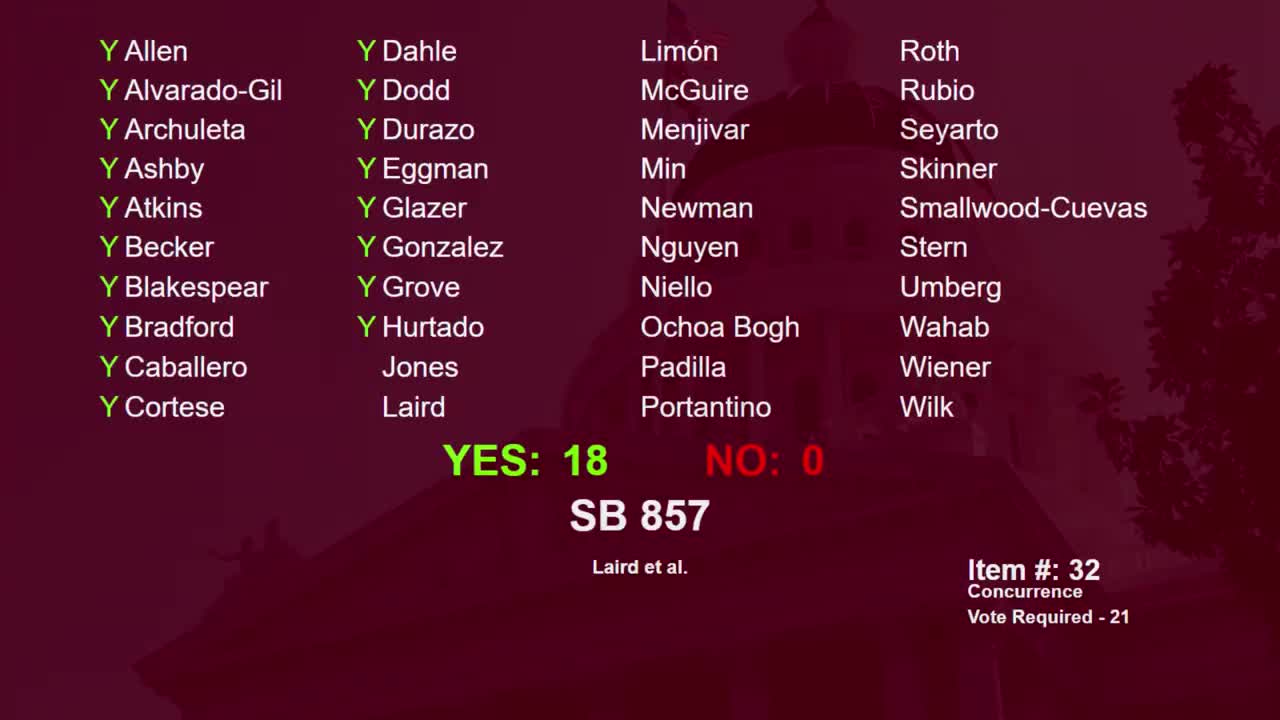 34SEC
Senate Floor
 1MIN
Assembly Floor
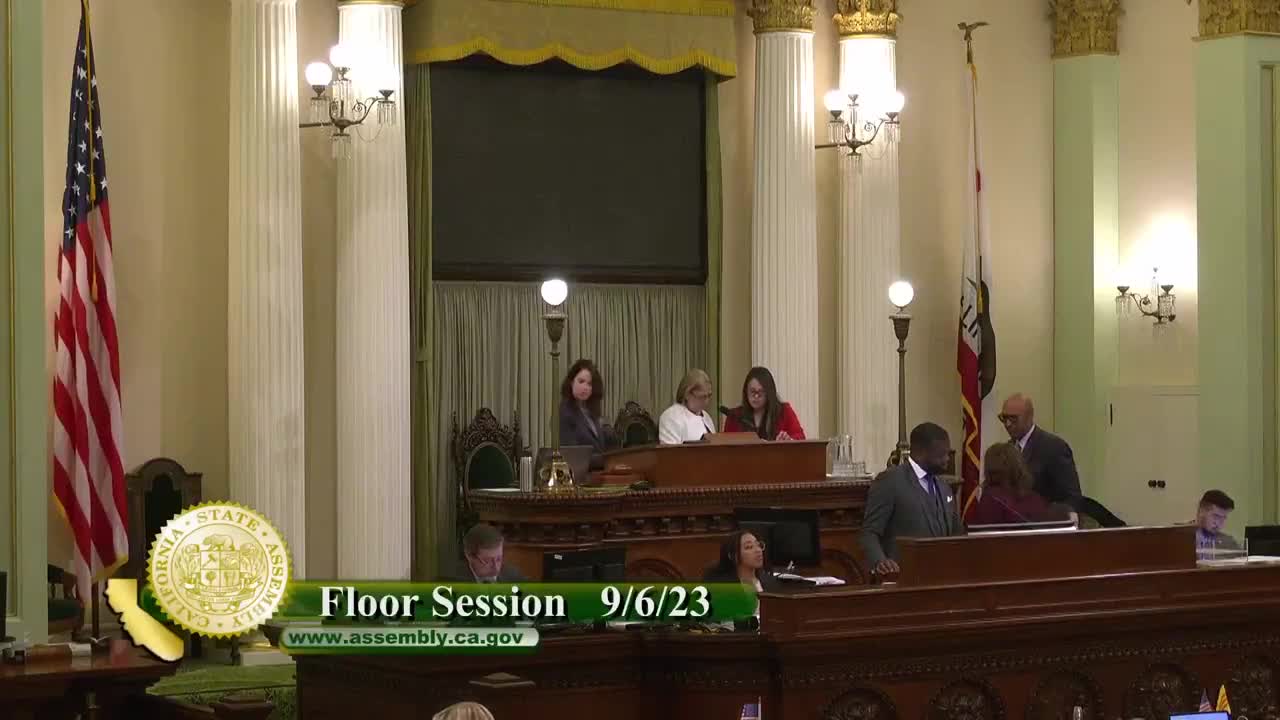 36SEC
Assembly Floor
 7MIN
Senate Standing Committee on Public Safety
Bill Author

Bill Co-Author(s):