SB 972: Methane emissions: organic waste: landfills.
- Session Year: 2023-2024
- House: Senate
- Latest Version Date: 2024-08-30
Current Status:
Failed
(2024-09-20: In Senate. Consideration of Governor's veto pending.)
Introduced
In Committee
First Chamber
In Committee
Second Chamber
Enacted
What does this bill do?
The bill requires the state recycling department (CalRecycle) to create and post procedures so local governments can request technical help on organic-waste and methane‑reduction rules and related regulations. CalRecycle must provide that help—for example, data reporting, education, local program development, procurement guidance, and policy coordination—may provide regional support to multiple jurisdictions, and should consider offering help before using enforcement when a jurisdiction has requested assistance.
The summary is provided by generative AI which can make mistakes. For original language, please view the details in the table below.
Existing law requires the State Air Resources Board to approve and begin implementing a comprehensive strategy to reduce emissions of short-lived climate pollutants in the state and to achieve a reduction in specified emissions, including methane, as provided. Existing law requires the methane reduction goals to include a 75% reduction target from the 2014 level by 2025. Existing law requires the Department of Resources Recycling and Recovery, in consultation with the state board, to adopt regulations, as provided, that achieve the goals for reducing organic waste in landfills.
This bill would require the department to develop procedures for local jurisdictions to request technical assistance from the department regarding organic waste and methane reduction requirements from the department, to post those procedures on its internet website, and to provide that technical assistance, as specified.
Existing law requires the State Air Resources Board to approve and begin implementing a comprehensive strategy to reduce emissions of short-lived climate pollutants in the state and to achieve a reduction in specified emissions, including methane, as provided. Existing law requires the methane reduction goals to include a 75% reduction target from the 2014 level by 2025. Existing law requires the Department of Resources Recycling and Recovery, in consultation with the state board, to adopt regulations, as provided, that achieve the targets for reducing organic waste in landfills.
This bill would require the department to provide procedures for local jurisdictions to request technical assistance regarding organic waste and methane reduction requirements from the department, to post those procedures on its internet website, and to provide that technical assistance, as specified. The bill would require the department to report to the Legislature, on or before January 1, 2028, on, among other things relating to organic waste and methane reduction, the status of the technical assistance provided to local jurisdictions and, on or before January 1, 2031, on the states ability to meet the targets for reducing the disposal of organic waste in landfills and any recommendations to modify the program to achieve those goals.
Existing law requires the State Air Resources Board to approve and begin implementing a comprehensive strategy to reduce emissions of short-lived climate pollutants in the state and to achieve a reduction in specified emissions, including methane, as provided. Existing law requires the methane reduction goals to include a 75% reduction target from the 2014 level by 2025. Existing law requires the Department of Resources Recycling and Recovery, in consultation with the state board, to adopt regulations, as provided, that achieve the targets for reducing organic waste in landfills.
This bill would require the department to provide procedures for local jurisdictions to request technical assistance regarding organic waste and methane reduction requirements from the department, to post those procedures on its internet website, and to provide that technical assistance, as specified. The bill would require the department to provide 2 reports to the Legislature. The bill would require the first report to be due report to the Legislature, on or before January 1, 2028, and to be on, among other things, things relating to organic waste and methane reduction, the status of the technical assistance provided to local jurisdictions. The bill would require the 2nd report to be due jurisdictions and, on or before January 1, 2031, and to be on the states ability to meet the targets for reducing the disposal of organic waste in landfills and any recommendations to modify the program to achieve those goals. The bill would require the department, the state board, and the California Environmental Protection Agency to hold at least 2 joint meetings per calendar year to coordinate their implementation of policies that affect those specified targets for reducing organic waste in landfills and the departments regulations adopted to achieve those goals, as specified.
Existing law requires the State Air Resources Board to approve and begin implementing a comprehensive strategy to reduce emissions of short-lived climate pollutants in the state and to achieve a reduction in specified emissions, including methane, as provided. Existing law requires the methane reduction goals to include a 75% reduction target from the 2014 level by 2025. Existing law requires the Department of Resources Recycling and Recovery, in consultation with the State Air Resources Board, state board, to adopt regulations regulations, as provided, that achieve the specified targets for reducing organic waste in landfills. The California Global Warming Solutions Act of 2006 designates the state board as the state agency charged with monitoring and regulating sources of emissions of greenhouse gases.
TheThis bill would require the department to provide procedures for local jurisdictions to request technical assistance from the department, to post those procedures on its internet website, and to provide that technical assistance, as specified. The bill would require the department to provide 2 reports to the Legislature. The bill would require the first report to be due on or before January 1, 2028, and to be on, among other things, the status of the technical assistance provided to local jurisdictions. The bill would require the 2nd report to be due on or before January 1, 2031, and to be on the states ability to meet the targets for reducing the disposal of organic waste in landfills and any recommendations to modify the program to achieve those goals. The bill would require the department, the state board, and the California Environmental Protection Agency to hold at least 2 joint meetings per calendar year to coordinate their implementation of policies that affect those specified targets for reducing organic waste in landfills and the departments regulations adopted to achieve those goals, as specified.
Existing law requires the Department of Resources Recycling and Recovery, in consultation with the State Air Resources Board, to adopt regulations that achieve the specified targets for reducing organic waste in landfills. The California Global Warming Solutions Act of 2006 designates the state board as the state agency charged with monitoring and regulating sources of emissions of greenhouse gases.
The bill would require the department, the state board, and the California Environmental Protection Agency to hold at least 2 joint meetings per calendar year to coordinate their implementation of policies that affect those specified targets for reducing organic waste in landfills and the departments regulations adopted to achieve those goals, as specified.
(a)The department shall develop procedures for local jurisdictions to request technical assistance from the department regarding the requirements of this chapter, including any regulations adopted by the department pursuant to Section 42652.5. The department shall post the procedures on its internet website.
(b)The department shall provide technical assistance to support local jurisdictions. The department shall consider providing technical assistance before exercising its enforcement authority if a local jurisdiction has submitted a technical assistance request. The technical assistance may include data reporting, education programming, local program development, procurement target clarification support, and coordination of state policy goals that affect organic waste.
(c)The department may offer technical assistance at a regional scale to multiple local jurisdictions to build capacity, coordinate and streamline resources, and support overall compliance under Section 42652.5, and to help achieve the reductions specified in Section 39730.6 of the Health and Safety Code.
(a)(1)The department shall submit to the Legislature on or before January 1, 2028, a report on all of the following:
(A)The status of current implementation efforts related to Section 39730.6 of the Health and Safety Code.
(B)The status of compliance related to Section 42652.5.
(C)The status on technical assistance provided to local jurisdictions related to Section 42655.1.
(D)Recommendations to continue advancing the program, reductions in organic waste disposal, including the coordination and implementation of policies by the department, the State Air Resources Board, State Water Resources Control Board, and the California Environmental Protection Agency that affect the disposal management of organic waste.
(2)The department shall submit to the Legislature on or before January 1, 2031, a report on the states ability to meet the targets for reducing the disposal of organic waste in landfills that are identified in subdivision (a) of Section 39730.6 of the Health and Safety Code and any recommendations to modify the program to achieve the intended goals.
(b)(1)A report to be submitted pursuant to subdivision (a) shall be submitted in compliance with Section 9795 of the Government Code.
(2)Pursuant to Section 10231.5 of the Government Code, this section is repealed on January 1, 2035.
SEC. 2.Section 42655.1 is added to the Public Resources Code, to read:42655.1.(a)The department shall develop procedures for local jurisdictions to request technical assistance from the department regarding the requirements of this chapter, including any regulations adopted by the department pursuant to Section 42652.5. The department shall post the procedures on its internet website.
(b)The department shall provide technical assistance to support local jurisdictions. The department shall consider providing technical assistance before exercising its enforcement authority if a local jurisdiction has submitted a technical assistance request. The technical assistance may include data reporting, education programming, local program development, procurement target clarification support, and coordination of state policy goals that affect organic waste.
(c)The department may offer technical assistance at a regional scale to multiple local jurisdictions to build capacity, coordinate and streamline resources, and support overall compliance under Section 42652.5, and to help achieve the reductions specified in Section 39730.6 of the Health and Safety Code.
(a)(1)The department shall submit to the Legislature on or before January 1, 2028, a report on all of the following:
(A)The status of current implementation efforts related to Section 39730.6 of the Health and Safety Code.
(B)The status of compliance related to Section 42652.5.
(C)The status on technical assistance provided to local jurisdictions related to Section 42655.1.
(D)Recommendations to continue advancing the program, including the coordination and implementation of policies by the department, the State Air Resources Board, State Water Resources Control Board, and the California Environmental Protection Agency that affect the disposal of organic waste.
(2)The department shall submit to the Legislature on or before January 1, 2031, a report on the states ability to meet the targets for reducing the disposal of organic waste in landfills that are identified in subdivision (a) of Section 39730.6 of the Health and Safety Code and any recommendations to modify the program to achieve the intended goals.
(b)(1)A report to be submitted pursuant to subdivision (a) shall be submitted in compliance with Section 9795 of the Government Code.
(2)Pursuant to Section 10231.5 of the Government Code, this section is repealed on January 1, 2035.
SEC. 2.Section 42655.1 is added to the Public Resources Code, to read:42655.1.(a)The department shall develop procedures for local jurisdictions to request technical assistance from the department regarding the requirements of this chapter, including any regulations adopted by the department pursuant to Section 42652.5. The department shall post the procedures on its internet website.
(b)The department shall provide technical assistance to support local jurisdictions. The department shall consider providing technical assistance before exercising its enforcement authority if a local jurisdiction has submitted a technical assistance request. The technical assistance may include data reporting, education programming, local program development, procurement target clarification support, and coordination of state policy goals that affect organic waste.
(c)The department may offer technical assistance at a regional scale to multiple local jurisdictions to build capacity, coordinate and streamline resources, and support overall compliance under Section 42652.5, and to help achieve the reductions specified in Section 39730.6 of the Health and Safety Code.
SEC. 3.Section 42655.2 is added to the Public Resources Code, to read:42655.2.The department, the State Air Resources Board, and the California Environmental Protection Agency shall hold at least two joint meetings per calendar year to coordinate their implementation of policies that affect the organic waste reduction goals for 2020 and 2025 established in Section 39730.6 of the Health and Safety Code and the departments regulations adopted to achieve those goals. In those meetings, the agencies shall specifically address duplicative permitting processes for organic waste facilities and conflicting state directives to local governments on renewable natural gas and zero-emission vehicles.(a)(1)The department shall submit to the Legislature on or before January 1, 2028, a report on all of the following:
(A)The status of current implementation efforts related to Section 39730.6 of the Health and Safety Code.
(B)The status of compliance related to Section 42652.5.
(C)The status on technical assistance provided to local jurisdictions related to Section 42655.1.
(D)Recommendations to continue advancing the program, including the coordination and implementation of policies by the department, the State Air Resources Board, State Water Resources Control Board, and the California Environmental Protection Agency that affect the disposal of organic waste.
(2)The department shall submit to the Legislature on or before January 1, 2031, a report on the states ability to meet the targets for reducing the disposal of organic waste in landfills that are identified in subdivision (a) of Section 39730.6 of the Health and Safety Code and any recommendations to modify the program to achieve the intended goals.
(b)(1)A report to be submitted pursuant to subdivision (a) shall be submitted in compliance with Section 9795 of the Government Code.
(2)Pursuant to Section 10231.5 of the Government Code, this section is repealed on January 1, 2035.
SEC. 2.Section 42655.1 is added to the Public Resources Code, to read:42655.1.(a)The department shall develop procedures for local jurisdictions to request technical assistance from the department regarding the requirements of this chapter, including any regulations adopted by the department pursuant to Section 42652.5. The department shall post the procedures on its internet website.
(b)The department shall provide technical assistance to support local jurisdictions. The department shall consider providing technical assistance before exercising its enforcement authority if a local jurisdiction has submitted a technical assistance request. The technical assistance may include data reporting, education programming, local program development, procurement target clarification support, and coordination of state policy goals that affect organic waste.
(c)The department may offer technical assistance at a regional scale to multiple local jurisdictions to build capacity, coordinate and streamline resources, and support overall compliance under Section 42652.5, and to help achieve the reductions specified in Section 39730.6 of the Health and Safety Code.
SECTION 1.Section 42657 is added to the Public Resources Code, to read:42657.SEC. 3.Section 42655.2 is added to the Public Resources Code, to read:42655.2.The department, the State Air Resources Board, and the California Environmental Protection Agency shall hold at least two joint meetings per calendar year to coordinate their implementation of policies that affect the organic waste reduction goals for 2020 and 2025 established in Section 39730.6 of the Health and Safety Code and the departments regulations adopted to achieve those goals. In those meetings, the agencies shall specifically address duplicative permitting processes for organic waste facilities and conflicting state directives to local governments on renewable natural gas and zero-emission vehicles.
The department, the State Air Resources Board, and the California Environmental Protection Agency shall hold at least two joint meetings per calendar year to coordinate their implementation of policies that affect the organic waste reduction goals for 2020 and 2025 established in Section 39730.6 of the Health and Safety Code and the departments regulations adopted to achieve those goals. In those meetings, the agencies shall specifically address duplicative permitting processes for organic waste facilities and conflicting state directives to local governments on renewable natural gas and zero-emission vehicles.
|
Date
|
Status
|
|---|---|
| Sep 20, 2024 | In Senate. Consideration of Governor's veto pending. |
| Sep 20, 2024 | Vetoed by the Governor. |
| Sep 4, 2024 | Enrolled and presented to the Governor at 4 p.m. |
| Aug 28, 2024 | Assembly amendments concurred in. (Ayes 39. Noes 0. Page 5612.) Ordered to engrossing and enrolling. |
| Aug 27, 2024 | Ordered to special consent calendar. |
| Aug 26, 2024 | In Senate. Concurrence in Assembly amendments pending. |
| Aug 26, 2024 | Read third time. Passed. (Ayes 77. Noes 0. Page 6550.) Ordered to the Senate. |
| Aug 20, 2024 | Read second time. Ordered to third reading. |
| Aug 19, 2024 | Read second time and amended. Ordered to second reading. |
| Aug 15, 2024 | From committee: Do pass as amended. (Ayes 11. Noes 0.) (August 15). |
| Jul 2, 2024 | July 2 set for first hearing. Placed on suspense file. |
| Jun 19, 2024 | Read second time and amended. Re-referred to Com. on APPR. |
| Jun 18, 2024 | From committee: Do pass as amended and re-refer to Com. on APPR. with recommendation: To consent calendar. (Ayes 10. Noes 0.) (June 17). |
| Jun 3, 2024 | Referred to Com. on NAT. RES. |
| May 24, 2024 | In Assembly. Read first time. Held at Desk. |
| May 24, 2024 | Read third time. Passed. (Ayes 38. Noes 0. Page 4208.) Ordered to the Assembly. |
| May 22, 2024 | Ordered to special consent calendar. |
| May 20, 2024 | Read second time. Ordered to third reading. |
| May 16, 2024 | Read second time and amended. Ordered to second reading. |
| May 16, 2024 | From committee: Do pass as amended. (Ayes 7. Noes 0. Page 3966.) (May 16). |
| May 14, 2024 | Set for hearing May 16. |
| May 13, 2024 | May 13 hearing: Placed on APPR suspense file. |
| May 3, 2024 | Set for hearing May 13. |
| Apr 25, 2024 | From committee: Do pass and re-refer to Com. on APPR with recommendation: To consent calendar. (Ayes 7. Noes 0. Page 3753.) (April 24). Re-referred to Com. on APPR. |
| Apr 15, 2024 | From committee with author's amendments. Read second time and amended. Re-referred to Com. on E.Q. |
| Mar 12, 2024 | Set for hearing April 24. |
| Feb 14, 2024 | Referred to Com. on E.Q. |
| Jan 26, 2024 | From printer. May be acted upon on or after February 25. |
| Jan 25, 2024 | Introduced. Read first time. To Com. on RLS. for assignment. To print. |
|
Date
|
Description
|
Location
|
Votes
|
|
|---|---|---|---|---|
| Aug 28, 2024 | Special Consent SB972 Min | Senate Floor |
Passed |
|
| Aug 26, 2024 | SB 972 Min Senate Third Reading | Assembly Floor |
Passed |
|
| Aug 15, 2024 | Do pass as amended. | Assembly Standing Committee on Appropriations |
Passed |
|
| Jun 17, 2024 | Do pass as amended, and be re-referred to the Committee on [Appropriations] with recommendation: To Consent Calendar | Assembly Standing Committee on Natural Resources |
Passed |
|
| May 24, 2024 | Special Consent SB972 Min | Senate Floor |
Passed |
|
| May 16, 2024 | Do pass as amended | Senate Standing Committee on Appropriations |
Passed |
|
| May 13, 2024 | Placed on suspense file | Senate Standing Committee on Appropriations |
Passed |
|
| Apr 24, 2024 | Do pass, but first be re-referred to the Committee on [Appropriations] with the recommendation: To Consent Calendar | Senate Standing Committee on Environmental Quality |
Passed |
This list shows positions taken on this bill by organizations on the date displayed, which is linked to the original source.
Positions by individuals are not included.
|
Organization
|
Position
|
Date
|
|---|---|---|
| Beverly Hills City Of | ** Support | |
| California Environmental Voters | ** Support | |
| Chino Hills City Of | ** Support | |
| City of Thousand Oaks | ** Support | |
| Goleta City Of | ** Support | |
| League Of California Cities | ** Support | |
| Little Hoover Commission | ** Support | |
| Pleasanton City Of | ** Support | |
| Rural County Representatives of California | ** Support |
SENATE RULES COMMITTEE Office of Senate Floor Analyses (916) 651-1520 Fax: (916) 327-4478 | SB 972 |
VETO
Bill No: SB 972
Author: Min (D)
Enrolled: 8/30/24
Vote: 27
SENATE ENVIRONMENTAL QUALITY COMMITTEE: 7-0, 4/24/24
AYES: Allen, Dahle, Gonzalez, Hurtado, Menjivar, Nguyen, Skinner
SENATE APPROPRIATIONS COMMITTEE: 7-0, 5/16/24
AYES: Caballero, Jones, Ashby, Becker, Bradford, Seyarto, Wahab
SENATE FLOOR: 38-0, 5/24/24
AYES: Alvarado-Gil, Ashby, Atkins, Becker, Blakespear, Bradford, Caballero, Cortese, Dahle, Dodd, Durazo, Eggman, Glazer, Gonzalez, Grove, Hurtado, Jones, Laird, Limón, McGuire, Menjivar, Min, Newman, Nguyen, Niello, Ochoa Bogh, Padilla, Portantino, Roth, Rubio, Seyarto, Skinner, Smallwood-Cuevas, Stern, Umberg, Wahab, Wiener, Wilk
NO VOTE RECORDED: Allen, Archuleta
SENATE FLOOR: 39-0, 8/28/24
AYES: Allen, Archuleta, Ashby, Atkins, Becker, Blakespear, Bradford, Caballero, Cortese, Dahle, Dodd, Durazo, Eggman, Glazer, Gonzalez, Grove, Hurtado, Jones, Laird, Limón, McGuire, Menjivar, Min, Newman, Nguyen, Niello, Ochoa Bogh, Padilla, Portantino, Roth, Rubio, Seyarto, Skinner, Smallwood-Cuevas, Stern, Umberg, Wahab, Wiener, Wilk
NO VOTE RECORDED: Alvarado-Gil
ASSEMBLY FLOOR: 77-0, 8/26/24 - See last page for vote
SUBJECT: Methane emissions: organic waste: landfills
SOURCE: League of California Cities
DIGEST:
This bill requires the California Department of Resources Recycling and Recovery (CalRecycle) to provide technical assistance to local jurisdictions to help them achieve state organic waste recycling requirements.
ANALYSIS:
Existing law:
- Requires the California Air Resources Board (CARB) to complete, approve, and implement a comprehensive strategy to reduce emissions of short-lived climate pollutants (SLCPs) in the state to achieve, among other things, a reduction in the statewide emissions of methane by 40%. (Health and Safety Code (HSC) §39730 et seq.)
- Requires that methane emissions reduction goals include specified targets to reduce the landfill disposal of organic waste by 50% relative to its 2014 level by 2020, and achieve a 75% reduction relative to 2014 by 2025. (HSC §39730.6)
- Requires the Department of Resources Recycling and Recovery (CalRecycle), in consultation with CARB, to adopt regulations to achieve those targets for reducing organic waste in landfills referred to as SB 1383 regulations. (Public Resources Code (PRC) §42652.5 et seq.).
- Requires CalRecycle, in consultation with CARB, to provide assistance to local jurisdictions for organic waste diversion programs, including SB 1383 regulations. (PRC §42655)
This bill:
- Requires CalRecycle to develop procedures for local jurisdictions to request technical assistance on implementing SB 1383 regulations.
- Requires CalRecycle to consider giving technical assistance before exercising its enforcement authority if a local jurisdiction has submitted a technical assistance request.
- Authorizes CalRecycle to offer technical assistance at a regional scale to multiple local jurisdictions.
Background
- Organic Waste and Short-Lived Climate Pollutants. An estimated 35 million tons of waste are disposed of in California’s landfills annually. Organic material accounts for more than a third of California’s waste stream: the nearly 6 million tons of food waste that Californians dispose of alone accounts for approximately 18% of landfilled material, and yard waste accounts for another seven percent of the total waste stream. CalRecycle reports that 2.5 billion meals worth of potentially donatable food is landfilled in a year. Organic waste is not only a high volume problem in landfills— it also has an oversized impact on climate. According to CalRecycle, methane emissions from decomposing organic waste in landfills account for approximately 20% of the State’s total methane emissions. Methane is a climate “super pollutant” that is 84 times more potent than carbon dioxide over a 20-year timescale.
- Organic waste and methane emission reduction goals (SB 1383 Regulations). In 2016, the Legislature passed SB 1383 (Lara, Chapter 395, Statutes of 2016), which established emission reduction targets for short-lived climate pollutants. SB 1383 required CARB to approve and implement a comprehensive short-lived climate pollutant strategy that included a 2030 target of reducing methane emissions by 40% relative to 2014 levels. In order to achieve these reductions in methane emissions, SB 1383 set a goal of reducing landfill disposal of organic waste 50% by 2020 and 75% by 2025 from 2014 levels. The organic waste diverted from landfills will instead go to organics recovery facilities to make useful products. In addition, at least 20 percent of the edible food in the organic waste stream must be recovered to feed people by 2025.
While most modern landfills have systems in place to capture methane, significant amounts continue to escape into the atmosphere. According to CARB’s Green House Gas inventory, approximately 8.5 million tons of carbon dioxide equivalent were released by landfills in 2020. Composting and other organics waste processing technologies have a much smaller carbon footprint. CalRecycle reports that meeting the goals of SB 1383 would be equivalent to removing 3 million cars worth of climate pollution. CalRecycle was given the authority to adopt regulations that would achieve these organic waste reduction requirements. After extensive public engagement, in 2020, CalRecycle adopted its regulations for Short-lived Climate Pollutants (SB 1383 Regulations). - Progress towards SB 1383 goals. The ambitious waste diversion goals established in 1383 have necessitated significant changes to California’s organic waste management infrastructure. Since its January 2022 implementation, 75% of California communities (464 out of 616 jurisdictions) report that they have residential organic waste collection in place.
According to CalRecycle, California now has over 200 organic waste processing facilities, including composting facilities, anaerobic digestion facilities, and biomass operations, and is building more. CalRecycle reports having invested over $220 million in grants and loans for SB 1383 infrastructure. CalRecycle has issued permits for seven solid waste facilities from October 2022 to December 2023 that included new compost, in-vessel digestion, and transfer/processing facilities. However, it is clear that there is still more work to be done in investing in organics infrastructure. Numerous local jurisdictions throughout the state have raised concerns that the lack of flexibility in the current program hinders their ability to achieve the targets. Rural areas, particularly, struggle to comply with the procurement requirements given the lack of local infrastructure and distance from organics recycling facilities.
- CalRecycle’s SB 1383 technical assistance. In recognition of the significant investments needed to implement SB 1383, the 2021-22 Budget appropriated $168 million for organic waste infrastructure and implementation, including $60 million to CalRecycle for noncompetitive grants to local jurisdictions to assist with the implementation of SB 1383 regulations. SB 45 (Portantino, Chapter 445, Statutes of 2022) was also signed into law requiring CalRecycle, in consultation with CARB, to assist local jurisdictions in complying with SB 1383 implementation. CalRecycle has implemented several programs intended to help local jurisdictions implement SB 1383 requirements including, the Local Assistance and Market Development (LAMD) Branch.
- SB 1383 compliance process. As a part of SB 1383, CalRecycle was given the authority to issue administrative civil penalties to jurisdictions for noncompliance. According to CalRecycle, “[t]he SB 1383 enforcement structure allows CalRecycle to focus on compliance assistance first and dedicate enforcement efforts to serious offenders.” The enforcement process is an escalating process. If CalRecycle determines that a jurisdiction is violating one or more requirements of SB 1383 regulations and decides to take an enforcement action, it must issue a notice of violation (NOV). A jurisdiction has 90 days to correct the violation, or CalRecycle can issue an additional 90-day extension. For violations outside a jurisdiction’s control and when a substantial effort is made towards compliance, jurisdictions can be placed on a Corrective Action Plan (CAP), which can be an additional 24-month extension. If a jurisdiction does not meet NOV or CAP deadlines, CalRecycle has another opportunity to exercise enforcement discretion by determining when to commence an action to impose administrative civil penalties. If CalRecycle imposes an administrative civil penalty, it must serve an accusation and, if requested by the respondent, hold a hearing.
Comments
- Purpose of Bill. According to the author, “Methane emissions are about 80 times more powerful than CO2 emissions, and a large portion of these emissions come from organic waste in landfills. In 2016, California enacted SB 1383, which established goals to reduce both the organic waste in our landfills and methane emissions. While the goals created in SB 1383 are commendable, the implementation to achieve these goals has been slow and difficult for some local jurisdictions. In June 2023, the Little Hoover Commission released a report showing how California has missed its methane reduction goals for 2020 and is on track to miss its 2025 goals as well. SB 972 will bolster our organic waste reduction efforts by providing more technical assistance to local jurisdictions. Additionally, the bill requires CalRecycle to provide progress reports on implementation, enforcement, and technical assistance provided for the program.”
- I need somebody, help. As described above, CalRecycle provides various forms of technical assistance to local jurisdictions to aid with SB 1383 implementation. The LAMD Branch of CalRecycle has included a program to facilitate compliance with SB 1383 by having department representatives provide tailored assistance to local jurisdictions on implementation. However, according to the author and sponsor of this bill, accessing this assistance can be a complex process and meetings with representatives can be too infrequent. Given the significant investments needed to meet SB 1383 regulation specifications, this bill seeks to provide a streamlined and centralized pathway for jurisdictions trying to meet their goals to get the help they need. This bill also allows CalRecycle to exercise discretion about whether to exercise its enforcement authority if a local jurisdiction has submitted a technical assistance request. This would give jurisdictions more time to become compliant before administrative civil penalties are issued.
FISCAL EFFECT: Appropriation: No Fiscal Com.: Yes Local: No
According to the Assembly Appropriations Committee:
- CalRecycle reports costs of about $557,000 ongoing from the Greenhouse Gas Reduction Fund for three new full-time positions starting in FY 2025-26 to draft and revise regulations, develop and provide technical assistance, conduct stakeholder outreach, and develop reports to the Legislature.
- ARB reports costs of about $450,000 ongoing from the Cost of Implementation Account (special fund) for two full-time positions (Air Pollution Specialist and Air Resources Engineer) starting in FY 2025-26 to coordinate activities, contribute to reports and recommendations, and support CalRecycle in providing technical assistance on all state policy goals that affect organic waste.
SUPPORT: (Verified 9/26/24)
League of California Cities (source)
Beverly Hills; City of
California Environmental Voters
Chino Hills; City of
City of Thousand Oaks
Goleta; City of
Little Hoover Commission
Pleasanton; City of
Rural County Representatives of California
OPPOSITION: (Verified 9/26/24)
None received
ARGUMENTS IN SUPPORT: According to a coalition of supporters listed in this bill, including the sponsor of this bill, “SB 972 would address four of the twelve recommendations included in the LHC report through two key components of the bill. First, the bill would bolster the existing technical assistance provided by CalRecycle to local jurisdictions implementing organic waste programs to meet the state’s 1383 goals of reducing methane emissions from landfills. The bill would require CalRecycle to develop procedures on its website to allow local jurisdictions to request support based on the local challenges their community is facing with implementation. This approach will help local governments express what their greatest concerns are and empower CalRecycle to focus assistance on addressing those challenges. Further, CalRecycle could address challenges that multiple jurisdictions face and build local capacity if multiple jurisdictions have similar technical assistance needs. The bill would have CalRecycle consider addressing a technical assistance request prior to exercising enforcement authority, if a request is already submitted. Technical assistance could include data reporting, education programming, local program development, procurement target clarification support, and coordination of state policy goals that affect organic waste.”
GOVERNOR'S VETO MESSAGE:
I am returning Senate Bill 972 without my signature.
This bill requires the Department of Resources Recycling and Recovery (CalRecycle) to develop procedures for local jurisdictions to request technical assistance regarding the disposal of organic material in landfills. It also requires CalRecycle to consider providing technical assistance before exercising its enforcement authority, if a local jurisdiction has submitted a technical assistance request.
While I appreciate the author's intent to assist local jurisdictions in meeting California's organic waste reduction and diversion targets established in Senate Bill 1383 (Lara, 2016), this bill is unnecessary and duplicative of existing efforts. CalRecycle currently offers a suite of technical assistance materials and comprehensive staff assistance for all jurisdictions in the state specific to Senate Bill 1383. Further, the Local Assistance and Market Development branch within CalRecycle regularly meets with local jurisdictions, including monthly Senate Bill 1383 roundtables, and conducts annual site visits to provide customized assistance consistent with each jurisdiction's needs.
For this reason, I cannot sign this bill.
ASSEMBLY FLOOR: 77-0, 8/26/24
AYES: Addis, Aguiar-Curry, Alanis, Alvarez, Arambula, Bains, Bauer-Kahan, Bennett, Berman, Boerner, Bonta, Bryan, Calderon, Juan Carrillo, Wendy Carrillo, Chen, Connolly, Megan Dahle, Davies, Dixon, Essayli, Flora, Mike Fong, Friedman, Gabriel, Gallagher, Garcia, Gipson, Grayson, Haney, Hart, Holden, Hoover, Irwin, Jackson, Jones-Sawyer, Kalra, Lackey, Lee, Low, Lowenthal, Maienschein, Mathis, McCarty, McKinnor, Muratsuchi, Stephanie Nguyen, Pacheco, Papan, Jim Patterson, Joe Patterson, Pellerin, Petrie-Norris, Quirk-Silva, Ramos, Rendon, Reyes, Luz Rivas, Rodriguez, Blanca Rubio, Sanchez, Santiago, Schiavo, Soria, Ta, Ting, Valencia, Villapudua, Waldron, Wallis, Ward, Weber, Wicks, Wilson, Wood, Zbur, Robert Rivas
NO VOTE RECORDED: Cervantes, Ortega
Prepared by: Holly Rudel / E.Q. / (916) 651-4108
10/8/24 11:18:52
**** END ****
SENATE RULES COMMITTEE Office of Senate Floor Analyses (916) 651-1520 Fax: (916) 327-4478 | SB 972 |
UNFINISHED BUSINESS
Bill No: SB 972
Author: Min (D)
Amended: 8/19/24
Vote: 21
SENATE ENVIRONMENTAL QUALITY COMMITTEE: 7-0, 4/24/24
AYES: Allen, Dahle, Gonzalez, Hurtado, Menjivar, Nguyen, Skinner
SENATE APPROPRIATIONS COMMITTEE: 7-0, 5/16/24
AYES: Caballero, Jones, Ashby, Becker, Bradford, Seyarto, Wahab
SENATE FLOOR: 38-0, 5/24/24
AYES: Alvarado-Gil, Ashby, Atkins, Becker, Blakespear, Bradford, Caballero, Cortese, Dahle, Dodd, Durazo, Eggman, Glazer, Gonzalez, Grove, Hurtado, Jones, Laird, Limón, McGuire, Menjivar, Min, Newman, Nguyen, Niello, Ochoa Bogh, Padilla, Portantino, Roth, Rubio, Seyarto, Skinner, Smallwood-Cuevas, Stern, Umberg, Wahab, Wiener, Wilk
NO VOTE RECORDED: Allen, Archuleta
ASSEMBLY FLOOR: 77-0, 8/26/24 - See last page for vote
SUBJECT: Methane emissions: organic waste: landfills
SOURCE: League of California Cities
DIGEST:
This bill requires the California Department of Resources Recycling and Recovery (CalRecycle) to provide technical assistance to local jurisdictions to help them achieve state organic waste recycling requirements.
Assembly Amendments
remove the requirement for CalRecycle to submit reports regarding the progress of implementing California’s short-lived climate pollutants strategy, including the status of technical assistance provided to local jurisdictions required by this bill.
ANALYSIS:
Existing law:
- Requires the California Air Resources Board (CARB) to complete, approve, and implement a comprehensive strategy to reduce emissions of short-lived climate pollutants (SLCPs) in the state to achieve, among other things, a reduction in the statewide emissions of methane by 40%. (Health and Safety Code (HSC) §39730 et seq.)
- Requires that methane emissions reduction goals include specified targets to reduce the landfill disposal of organic waste by 50% relative to its 2014 level by 2020, and achieve a 75% reduction relative to 2014 by 2025. (HSC §39730.6)
- Requires the Department of Resources Recycling and Recovery (CalRecycle), in consultation with CARB, to adopt regulations to achieve those targets for reducing organic waste in landfills (SB 1383 regulations) (Public Resources Code (PRC) §42652.5 et seq.).
- Requires CalRecycle, in consultation with CARB, to provide assistance to local jurisdictions for organic waste diversion programs, including SB 1383 regulations. (PRC §42655)
This bill:
- Requires CalRecycle to develop procedures for local jurisdictions to request technical assistance on implementing SB 1383 regulations.
- Requires CalRecycle to consider giving technical assistance before exercising its enforcement authority if a local jurisdiction has submitted a technical assistance request.
- Authorizes CalRecycle to offer technical assistance at a regional scale to multiple local jurisdictions.
Background
- Organic Waste and Short-Lived Climate Pollutants. An estimated 35 million tons of waste are disposed of in California’s landfills annually. Organic material accounts for more than a third of California’s waste stream: the nearly 6 million tons of food waste that Californians dispose of alone accounts for approximately 18% of landfilled material, and yard waste accounts for another seven percent of the total waste stream. CalRecycle reports that 2.5 billion meals worth of potentially-donatable food is landfilled in a year. Organic waste is not only a high volume problem in landfills— it also has an oversized impact on climate. According to CalRecycle, methane emissions from decomposing organic waste in landfills account for approximately 20% of the State’s total methane emissions. Methane is a climate “super pollutant” that is 84 times more potent than carbon dioxide over a 20-year timescale.
- Organic waste and methane emission reduction goals (SB 1383 Regulations). In 2016, the Legislature passed SB 1383 (Lara, Chapter 395, Statutes of 2016), which established emission reduction targets for short-lived climate pollutants. SB 1383 required CARB to approve and implement a comprehensive short-lived climate pollutant strategy that included a 2030 target of reducing methane emissions by 40% relative to 2014 levels. In order to achieve these reductions in methane emissions, SB 1383 set a goal of reducing landfill disposal of organic waste 50% by 2020 and 75% by 2025 from 2014 levels. The organic waste diverted from landfills will instead go to organics recovery facilities to make useful products. In addition, at least 20 percent of the edible food in the organic waste stream must be recovered to feed people by 2025.
While most modern landfills have systems in place to capture methane, significant amounts continue to escape into the atmosphere. According to CARB’s Green House Gas inventory, approximately 8.5 million tons of carbon dioxide equivalent were released by landfills in 2020. Composting and other organics waste processing technologies have a much smaller carbon footprint. CalRecycle reports that meeting the goals of SB 1383 would be equivalent to removing 3 million cars worth of climate pollution. CalRecycle was given the authority to adopt regulations that would achieve these organic waste reduction requirements. After extensive public engagement, in 2020, CalRecycle adopted its regulations for Short-lived Climate Pollutants (SB 1383 Regulations). - Progress towards SB 1383 goals. The ambitious waste diversion goals established in 1383 have necessitated significant changes to California’s organic waste management infrastructure. Since its January 2022 implementation, 75% of California communities (464 out of 616 jurisdictions) report that they have residential organic waste collection in place.
According to CalRecycle, California now has over 200 organic waste processing facilities, including composting facilities, anaerobic digestion facilities, and biomass operations, and is building more. CalRecycle reports having invested over $220 million in grants and loans for SB 1383 infrastructure. CalRecycle has issued permits for seven solid waste facilities from October 2022 to December 2023 that included new compost, in-vessel digestion, and transfer/processing facilities. However, it is clear that there is still more work to be done in investing in organics infrastructure. Numerous local jurisdictions throughout the state have raised concerns that the lack of flexibility in the current program hinders their ability to achieve the targets. Rural areas, particularly, struggle to comply with the procurement requirements given the lack of local infrastructure and distance from organics recycling facilities.
- CalRecycle’s SB 1383 technical assistance. In recognition of the significant investments needed to implement SB 1383, the 2021-22 Budget appropriated $168 million for organic waste infrastructure and implementation, including $60 million to CalRecycle for noncompetitive grants to local jurisdictions to assist with the implementation of SB 1383 regulations. SB 45 (Portantino, Chapter 445, Statutes of 2022) was also signed into law requiring CalRecycle, in consultation with CARB, to assist local jurisdictions in complying with SB 1383 implementation. CalRecycle has implemented several programs intended to help local jurisdictions implement SB 1383 requirements including, the Local Assistance and Market Development (LAMD) Branch.
- SB 1383 compliance process. As a part of SB 1383, CalRecycle was given the authority to issue administrative civil penalties to jurisdictions for noncompliance. According to CalRecycle, “[t]he SB 1383 enforcement structure allows CalRecycle to focus on compliance assistance first and dedicate enforcement efforts to serious offenders.” The enforcement process is an escalating process. If CalRecycle determines that a jurisdiction is violating one or more requirements of SB 1383 regulations and decides to take an enforcement action, it must issue a notice of violation (NOV). A jurisdiction has 90 days to correct the violation, or CalRecycle can issue an additional 90 day extension. For violations outside a jurisdiction’s control and when a substantial effort is made towards compliance, jurisdictions can be placed on a Corrective Action Plan (CAP), which can be an additional 24 month extension. If a jurisdiction does not meet NOV or CAP deadlines, CalRecycle has another opportunity to exercise enforcement discretion by determining when to commence an action to impose administrative civil penalties. If CalRecycle imposes an administrative civil penalty, it must serve an accusation and, if requested by the respondent, hold a hearing.
Comments
- Purpose of Bill. According to the author, “Methane emissions are about 80 times more powerful than CO2 emissions, and a large portion of these emissions come from organic waste in landfills. In 2016, California enacted SB 1383, which established goals to reduce both the organic waste in our landfills and methane emissions. While the goals created in SB 1383 are commendable, the implementation to achieve these goals has been slow and difficult for some local jurisdictions. In June 2023, the Little Hoover Commission released a report showing how California has missed its methane reduction goals for 2020 and is on track to miss its 2025 goals as well. SB 972 will bolster our organic waste reduction efforts by providing more technical assistance to local jurisdictions. Additionally, the bill requires CalRecycle to provide progress reports on implementation, enforcement, and technical assistance provided for the program.”
- I need somebody, help. As described above, CalRecycle provides various forms of technical assistance to local jurisdictions to aid with SB 1383 implementation. The LAMD Branch of CalRecycle has included a program to facilitate compliance with SB 1383 by having department representatives provide tailored assistance to local jurisdictions on implementation. However, according to the author and sponsor of SB 972, accessing this assistance can be a complex process and meetings with representatives can be too infrequent. Given the significant investments needed to meet SB 1383 regulation specifications, SB 972 seeks to provide a streamlined and centralized pathway for jurisdictions trying to meet their goals to get the help they need. SB 972 also allows CalRecycle to exercise discretion about whether to exercise its enforcement authority if a local jurisdiction has submitted a technical assistance request. This would give jurisdictions more time to become compliant before administrative civil penalties are issued.
FISCAL EFFECT: Appropriation: No Fiscal Com.: Yes Local: No
According to the Assembly Appropriations Committee:
- CalRecycle reports costs of about $557,000 ongoing from the Greenhouse Gas Reduction Fund for three new full-time positions starting in FY 2025-26 to draft and revise regulations, develop and provide technical assistance, conduct stakeholder outreach, and develop reports to the Legislature.
- ARB reports costs of about $450,000 ongoing from the Cost of Implementation Account (special fund) for two full-time positions (Air Pollution Specialist and Air Resources Engineer) starting in FY 2025-26 to coordinate activities, contribute to reports and recommendations, and support CalRecycle in providing technical assistance on all state policy goals that affect organic waste.
SUPPORT: (Verified 8/27/24)
League of California Cities (source)
California Environmental Voters
Chino Hills; City of
City of Thousand Oaks
Goleta; City of
Little Hoover Commission
Pleasanton; City of
Rural County Representatives of California
OPPOSITION: (Verified 8/27/24)
None received
ARGUMENTS IN SUPPORT: According to a coalition of supporters listed in this bill, including the sponsor of this bill, “SB 972 would address four of the twelve recommendations included in the LHC report through two key components of the bill. First, the bill would bolster the existing technical assistance provided by CalRecycle to local jurisdictions implementing organic waste programs to meet the state’s 1383 goals of reducing methane emissions from landfills. The bill would require CalRecycle to develop procedures on its website to allow local jurisdictions to request support based on the local challenges their community is facing with implementation. This approach will help local governments express what their greatest concerns are and empower the CalRecycle to focus assistance on addressing those challenges. Further, CalRecycle could address challenge that multiple jurisdictions face and build local capacity if multiple jurisdictions have similar technical assistance needs. The bill would have CalRecycle consider addressing a technical assistance request prior to exercising enforcement authority, if a request is already submitted. Technical assistance could include data reporting, education programming, local program development, procurement target clarification support, and coordination of state policy goals that affect organic waste.”
ASSEMBLY FLOOR: 77-0, 8/26/24
AYES: Addis, Aguiar-Curry, Alanis, Alvarez, Arambula, Bains, Bauer-Kahan, Bennett, Berman, Boerner, Bonta, Bryan, Calderon, Juan Carrillo, Wendy Carrillo, Chen, Connolly, Megan Dahle, Davies, Dixon, Essayli, Flora, Mike Fong, Friedman, Gabriel, Gallagher, Garcia, Gipson, Grayson, Haney, Hart, Holden, Hoover, Irwin, Jackson, Jones-Sawyer, Kalra, Lackey, Lee, Low, Lowenthal, Maienschein, Mathis, McCarty, McKinnor, Muratsuchi, Stephanie Nguyen, Pacheco, Papan, Jim Patterson, Joe Patterson, Pellerin, Petrie-Norris, Quirk-Silva, Ramos, Rendon, Reyes, Luz Rivas, Rodriguez, Blanca Rubio, Sanchez, Santiago, Schiavo, Soria, Ta, Ting, Valencia, Villapudua, Waldron, Wallis, Ward, Weber, Wicks, Wilson, Wood, Zbur, Robert Rivas
NO VOTE RECORDED: Cervantes, Ortega
Prepared by: Holly Rudel / E.Q. / (916) 651-4108
8/27/24 13:59:32
**** END ****
SENATE THIRD READING
STR Bill Id:SB 972
Author:(Min)
As Amended Ver:August 19, 2024
Majority vote
SUMMARY
Requires the California Department of Resources Recycling and Recovery (CalRecycle) to provide technical assistance to local jurisdictions to help them achieve state organic waste recycling requirements.
Major Provisions
- Requires CalRecycle to develop procedures for local jurisdictions to request technical assistance regarding the state's short-lived climate pollutant (SLCP) reduction requirements, including any related regulations adopted by CalRecycle. Requires the procedures to be posted on CalRecycle's website.
- Requires CalRecycle to provide technical assistance to support local jurisdictions, including considering providing technical assistance before exercising its enforcement authority if the local jurisdiction has submitted a technical assistance request. Specifies that the technical assistance may include data reporting, education programming, local program development, procurement target clarification support, and coordination of the state policy goals.
- Authorizes CalRecycle to offer technical assistance at a regional scale to multiple local jurisdictions.
COMMENTS
- Organic waste recycling. An estimated 35 million tons of waste are disposed of in California's landfills annually. More than half of the materials landfilled are organics. CalRecycle's 2021 waste characterization study found that 34% of disposed waste is organic waste. According to University of California Los Angeles Center for Health Policy Research, more than a third of Californians (39%) can't afford enough food. In spite of widespread food insecurity, 11.2 billion pounds of food is disposed of annually in the state.
SB 1383 (Lara), Chapter 395, Statutes of 2016, requires ARB to approve and implement a comprehensive SLCP strategy to achieve, from 2013 levels, a 40% reduction in methane, a 40% reduction in hydrofluorocarbon gases, and a 50% reduction in anthropogenic black carbon, by 2030. In order to accomplish these goals, the law specifies that the methane emission reduction goals include targets to reduce the landfill disposal of organic waste, including food, 50% by 2020 and 75% by 2025 from the 2014 level. SB 1383 also requires that by 2025, 20% of edible food that would otherwise be sent to landfills is redirected to feed people.
To achieve this, California's waste management infrastructure is going to have to process and recycle much higher quantities of organic materials, involving significant investments in additional processing infrastructure. Organic waste is primarily recycled by composting the material, which generates compost that can be used in gardening and agriculture as a soil amendment and engineering purposes for things like slope stabilization. Anaerobic digestion is also widely used to recycle organic wastes. This technology uses bacteria to break down the material in the absence of oxygen and produces biogas, which can be used as fuel, and digestate, which can also be used as a soil amendment. Tree trimmings and prunings can also be mulched.
In order to ensure that there are adequate markets for the state's increasing quantities of products made from organic waste, like mulch, compost, and digestate, CalRecycle established procurement requirements for local jurisdictions. The procurement targets are based on the average amount of organic waste generated by Californians annually multiplied by the population of a jurisdiction. Jurisdictions can meet the target by procuring, giving away, or arranging for the use of the material through contracts with direct service providers. Eligible materials include compost, mulch, biomass electricity, or renewable gas, as specified.
Though California has made significant progress toward achieving its SLCP reduction goals, more needs to be done. Since the program's implementation in 2022, 75% of California communities (464 out of 616 jurisdictions) report that they have residential organic waste collection in place. According to CalRecycle, California now has 206 organic waste processing facilities and is building 20 more, and CalRecycle has invested over $220 million in grants and loans for organics processing infrastructure. CalRecycle states that the state needs approximately 50 to 100 new or expanded organics facilities to recycle the additional 20-25 million tons of organic waste that will be collected to meet the SB 1383 organic waste reduction targets. Expanding collection and siting new facilities is a challenge for many local jurisdictions.
- Local assistance. The Local Government Central page on CalRecycle's website provides information for local governments relating to various programs and responsibilities, including information about the state's organic waste recycling requirements. The website includes contacts for designated staff assigned to each local jurisdiction to provide local assistance.
CalRecycle also has a Resources for Jurisdictions page on their website to assist local governments with complying with the state's organic waste recycling requirements. The site provides an overview of requirements for local governments with guidance on collection, education and outreach, edible food recovery, procurement requirements, capacity planning, recordkeeping, and reporting.
While CalRecycle has made efforts to provide local jurisdictions with assistance to understand and implement the statutory and regulatory requirements associated with SB 1383, many local governments are still struggling to achieve them.
- This bill. This bill is intended to amplify CalRecycle's local assistance efforts by requiring CalRecycle to establish a process for local jurisdictions to request technical assistance and to provide technical assistance when requested.
According to the Author
Methane emissions are about 80 times more powerful than CO2 emissions, and a large portion of these emissions come from organic waste in landfills. In 2016, California enacted SB 1383, which established goals to reduce both the organic waste in our landfills and methane emissions. While the goals created in SB 1383 are commendable, the implementation to achieve these goals has been slow and difficult for some local jurisdictions. In June 2023, the Little Hoover Commission released a report showing how California has missed its methane reduction goals for 2020 and is on track to miss its 2025 goals as well. SB 972 will bolster our organic waste reduction efforts by providing more technical assistance to local jurisdictions.
Arguments in Support
A coalition of supporters state:
SB 972 would address four of the twelve recommendations included in the LHC report through two key components of the bill. First, the bill would bolster the existing technical assistance provided by CalRecycle to local jurisdictions implementing organic waste programs to meet the state's 1383 goals of reducing methane emissions from landfills. The bill would require CalRecycle to develop procedures on its website to allow local jurisdictions to request support based on the local challenges their community is facing with implementation. This approach will help local governments express what theirgreatest concerns are and empower the CalRecycle to focus assistance on addressing those challenges. Further, CalRecycle could address challenge that multiple jurisdictions face and build local capacity if multiple jurisdictions have similar technical assistance needs. The bill would have CalRecycle consider addressing a technicalassistance request prior to exercising enforcement authority, if a request is already submitted. Technical assistance could include data reporting, education programming, local program development, procurement target clarification support, and coordination of state policy goals that affect organic waste.
Arguments in Opposition
None on file.
FISCAL COMMENTS
According to the Assembly Appropriations Committee, CalRecycle reports costs of less than 500,000 ongoing from the Greenhouse Gas Reduction Fund for three new full-time positions starting in FY 2025-26 to draft and revise regulations, develop and provide technical assistance, and conduct stakeholder outreach. ARB reports costs less than $400,000 ongoing from the Cost of Implementation Account (special fund) for two full-time positions (Air Pollution Specialist and Air Resources Engineer) starting in FY 2025-26 to coordinate activities, and support CalRecycle in providing technical assistance on all state policy goals that affect organic waste.
VOTES
SENATE FLOOR: 38-0-2
YES: Alvarado-Gil, Ashby, Atkins, Becker, Blakespear, Bradford, Caballero, Cortese, Dahle, Dodd, Durazo, Eggman, Glazer, Gonzalez, Grove, Hurtado, Jones, Laird, Limón, McGuire, Menjivar, Min, Newman, Nguyen, Niello, Ochoa Bogh, Padilla, Portantino, Roth, Rubio, Seyarto, Skinner, Smallwood-Cuevas, Stern, Umberg, Wahab, Wiener, Wilk
ABS, ABST OR NV: Allen, Archuleta
ASM NATURAL RESOURCES: 10-0-1
YES: Bryan, Flora, Bauer-Kahan, Friedman, Hoover, Kalra, Lackey, Muratsuchi, Pellerin, Wicks
ABS, ABST OR NV: Wood
ASM APPROPRIATIONS: 11-0-4
YES: Wicks, Arambula, Bryan, Calderon, Wendy Carrillo, Mike Fong, Grayson, Haney, Hart, Pellerin, Villapudua
ABS, ABST OR NV: Sanchez, Dixon, Jim Patterson, Ta
UPDATED
VERSION: August 19, 2024
CONSULTANT: Elizabeth MacMillan / NAT. RES. / (916) 319-2092 FN: 0004100
Date of Hearing: July 2, 2024
ASSEMBLY COMMITTEE ON APPROPRIATIONS
Buffy Wicks, Chair
SBPCA Bill Id:SB 972
Author:(Min) – As Amended Ver:June 19, 2024
Policy Committee: | Natural Resources | Vote: | 10 - 0 |
|
| ||
|
|
Urgency: No State Mandated Local Program: No Reimbursable: No
SUMMARY:
This bill requires the California Department of Resources Recycling and Recovery (CalRecycle) to (1) provide technical assistance to local jurisdictions to help them meet state organic waste recycling requirements, and (2) report to the Legislature on the state’s progress toward meeting organic waste recycling targets.
Specifically, this bill:
- Requires CalRecycle to develop, and post on its website, procedures for local jurisdictions to request technical assistance regarding the state requirements to reduce short-lived climate pollutants (SLPCs) from organic waste and related CalRecycle regulations.
- Requires CalRecycle to provide this assistance, including at a regional scale to multiple jurisdictions, and to consider providing it before exercising its enforcement authority if a local jurisdiction has requested technical assistance.
- Requires CalRecycle to submit two reports to the Legislature – one by January 1, 2028, and one by January 1, 2031 -- on the status of efforts to achieve organic waste reduction requirements, the status of providing technical assistance, recommendations to achieve state organic waste goals, and coordination with the Air Resources Board (ARB), State Water Resources Control Board, and California Environmental Protection Agency.
FISCAL EFFECT:
CalRecycle reports costs of about $557,000 ongoing from the Greenhouse Gas Reduction Fund for three new full-time positions starting in FY 2025-26 to draft and revise regulations, develop and provide technical assistance, conduct stakeholder outreach, and develop reports to the Legislature.
ARB reports costs of about $450,000 ongoing from the Cost of Implementation Account (special fund) for two full-time positions (Air Pollution Specialist and Air Resources Engineer) starting in FY 2025-26 to coordinate activities, contribute to reports and recommendations, and support CalRecycle in providing technical assistance on all state policy goals that affect organic waste.
COMMENTS:
- Purpose. According to the author:
Methane emissions are about 80 times more powerful than CO2 emissions, and a large portion of these emissions come from organic waste in landfills. In 2016, California enacted SB 1383, which established goals to reduce both the organic waste in our landfills and methane emissions. While the goals created in SB 1383 are commendable, the implementation to achieve these goals has been slow and difficult for some local jurisdictions. In June 2023, the Little Hoover Commission released a report showing how California has missed its methane reduction goals for 2020 and is on track to miss its 2025 goals as well. SB 972 will bolster our organic waste reduction efforts by providing more technical assistance to local jurisdictions. Additionally, the bill requires CalRecycle to provide progress reports on implementation, enforcement, and technical assistance provided for the program.
- Background. Current law requires ARB to implement a comprehensive strategy to reduce emissions of SCLPs, including methane from organic waste, and sets state goals. CalRecycle regulations include requirements on local jurisdictions related to generators and organic waste procurement and recovery targets. It is widely recognized that, despite significant progress, California is not on track to meet its methane reduction and organic waste goals. For example, CalRecycle states that about 50 to 100 new or expanded organics facilities are needed to recycle the additional 20 million to 25 million tons of organic waste that will be collected to meet organic waste reduction targets. Expanding organic waste collection and siting new facilities is a challenge for many local jurisdictions.
CalRecycle’s website currently provides information about organic waste recycling requirements and contacts for staff assigned to provide assistance to each local jurisdiction. The website provides an overview of requirements for local governments with guidance on collection, education and outreach, edible food recovery, procurement requirements, capacity planning, recordkeeping, and reporting. This bill is intended to amplify these efforts by requiring CalRecycle to establish a process for local jurisdictions to request technical assistance and to provide that assistance when requested. This bill specifies that technical assistance may include data reporting, education programming, local program development, procurement target clarification support, and coordination of state policy goals. The required reports to the Legislature aim to improve progress toward meeting state goals.
- Related Legislation. Several bills on organic waste management introduced this year, when viewed individually, may have modest impacts on the state’s efforts to achieve its SLCP reduction goals; however, added together, they may result in further hindering the state’s ability to reduce these critical GHG emissions. Bills still under active consideration include AB 2311 (Bennett), AB 2346 (Lee), AB 2514 (Aguiar Curry), AB 2902 (Wood), SB 972 (Min), SB 1045 (Blakespear), and SB 1046 (Laird).
- Prior Legislation. SB 1383 (Lara), Chapter 395, Statutes of 2016, requires ARB to implement a comprehensive SLCP strategy to achieve, from 2013 levels, a 40% reduction in methane by 2030, and specifies targets to reduce the landfill disposal of organic waste 50% by 2020 and 75% by 2025 from the 2014 level.
Analysis Prepared by: Jacqueline Kinney / APPR. / (916) 319-2081
Date of Hearing: June 17, 2024
ASSEMBLY COMMITTEE ON NATURAL RESOURCES
Isaac G. Bryan, Chair
SBPCA Bill Id:SB 972
Author:(Min) – As Amended Ver:May 16, 2024
SENATE VOTE: 38-0
SUBJECT: Methane emissions: organic waste: landfills
SUMMARY: Requires the California Department of Resources Recycling and Recovery (CalRecycle) to develop procedures for local jurisdictions to request technical assistance with meeting the state’s organic waste recycling requirements. Requires CalRecycle to submit two reports to the Legislature providing the status of the state’s progress with meeting the state’s organic waste recycling targets and the state’s ability to meet those targets.
EXISTING LAW:
- Requires the Air Resources Board (ARB) to develop a comprehensive strategy to reduce the emissions of short-lived climate pollutants (SLCP) to achieve a 40% reduction in methane emissions, 40% reduction in hydrofluorocarbon gases, and 50% reduction in anthropogenic black carbon below 2013 levels by 2030. (Health and Safety Code (HSC) 39730-39730.5)
- Requires the state to reduce the disposal of organic waste by 40% from the 2014 level by 2020 and 75% by 2025 to help achieve the state's methane reduction goal. (HSC 39730.6)
- Requires CalRecycle, in consultation with ARB, to adopt regulations to achieve the targets for reducing the disposal of organic waste in landfills. (Public Resources Code (PRC) 42652.5) The regulations include:
- Requirements for local jurisdictions to impose requirements on generators and authorize local jurisdictions to impose penalties for noncompliance with those requirements.
- A process for local jurisdictions facing penalties for violations of these requirements to obtain relief by submitting a notice of intent to comply that includes an explanation of why they were unable to comply and a description of the proposed actions to come into compliance in a timely manner.
- Specifications that penalties for the organic waste procurement target established by CalRecycle shall be imposed on a phased schedule.
- A process for rural jurisdictions to obtain a rural exemption from the organic procurement targets until January 1, 2026, and a provision for rural counties to have an extended organic procurement schedule on and after January 1, 2027.
- Waivers for low population, elevation, and rural local jurisdictions.
- Enforcement provisions. (14 California Code of Regulations 18981.1 et seq.)
- Requirements for local jurisdictions to impose requirements on generators and authorize local jurisdictions to impose penalties for noncompliance with those requirements.
- Requires CalRecycle, in consultation with ARB, to provide assistance to local jurisdictions for organic waste diversion programs, including regulations. (PRC 42655)
THIS BILL:
- Requires CalRecycle to develop procedures for local jurisdictions to request technical assistance regarding the state’s SLCP reduction requirements, including any related regulations adopted by CalRecycle. Requires the procedures to be posted on CalRecycle’s website.
- Requires CalRecycle to provide technical assistance to support local jurisdictions, including considering providing technical assistance before exercising its enforcement authority if the local jurisdiction has submitted a technical assistance request. Specifies that the technical assistance may include data reporting, education programming, local program development, procurement target clarification support, and coordination of the state policy goals.
- Authorizes CalRecycle to offer technical assistance at a regional scale to multiple local jurisdictions.
- Requires CalRecycle to submit a report to the Legislature on or before January 1, 2028, on:
- The status of current implementation efforts to achieve the state’s organic waste reduction goals;
- The status of compliance related to the state’s SLCP reduction regulations;
- The status of compliance with this bill’s technical assistance requirements; and,
- Recommendations to continue advancing “the program,” including the coordination and implementation of policies by CalRecycle, ARB, the State Water Resources Control Board, and the California Environmental Protection Agency (CalEPA) that affect the disposal of organic waste.
- Requires CalRecycle to submit a report to the Legislature on or before January 1, 2031, on the state’s ability to meet the targets for reducing the disposal of organic waste and any recommendations to modify the program to achieve the goals.
FISCAL EFFECT: According to the Senate Appropriations Committee:
- Unknown, potentially significant ongoing costs (Greenhouse Gas Reduction Fund) for CalRecycle to implement the provisions of this bill.
- Unknown ongoing costs, potentially in the hundreds of thousands of dollars annually (General Fund, Greenhouse Gas Reduction Fund, Cost of Implementation Account, or other special fund) for CalRecycle, ARB, CalEPA, and other departments to coordinate activities, contribute to the report to be submitted to the Legislature on status of program implementation, make additional recommendations related to organic waste management and progress toward achieving methane reduction targets, and support CalRecycle technical assistance, among other things.
COMMENTS:
- Organic waste recycling. An estimated 35 million tons of waste are disposed of in California's landfills annually. More than half of the materials landfilled are organics. CalRecycle’s 2021 waste characterization study found that 34% of disposed waste is organic waste. According to University of California Los Angeles Center for Health Policy Research, more than a third of Californians (39%) can’t afford enough food. In spite of widespread food insecurity, 11.2 billion pounds of food is disposed of annually in the state.
SB 1383 (Lara), Chapter 395, Statutes of 2016, requires ARB to approve and implement a comprehensive SLCP strategy to achieve, from 2013 levels, a 40% reduction in methane, a 40% reduction in hydrofluorocarbon gases, and a 50% reduction in anthropogenic black carbon, by 2030. In order to accomplish these goals, the law specifies that the methane emission reduction goals include targets to reduce the landfill disposal of organic waste, including food, 50% by 2020 and 75% by 2025 from the 2014 level. SB 1383 also requires that by 2025, 20% of edible food that would otherwise be sent to landfills is redirected to feed people.
To achieve this, California’s waste management infrastructure is going to have to process and recycle much higher quantities of organic materials, involving significant investments in additional processing infrastructure. Organic waste is primarily recycled by composting the material, which generates compost that can be used in gardening and agriculture as a soil amendment and engineering purposes for things like slope stabilization. Anaerobic digestion is also widely used to recycle organic wastes. This technology uses bacteria to break down the material in the absence of oxygen and produces biogas, which can be used as fuel, and digestate, which can also be used as a soil amendment. Tree trimmings and prunings can also be mulched.
In order to ensure that there are adequate markets for the state’s increasing quantities of products made from organic waste, like mulch, compost, and digestate, CalRecycle established procurement requirements for local jurisdictions. The procurement targets are based on the average amount of organic waste generated by Californians annually multiplied by the population of a jurisdiction. Jurisdictions can meet the target by procuring, giving away, or arranging for the use of the material through contracts with direct service providers. Eligible materials include compost, mulch, biomass electricity, or renewable gas, as specified.
Though California has made significant progress toward achieving its SLCP reduction goals, more needs to be done. Since the program’s implementation in 2022, 75% of California communities (464 out of 616 jurisdictions) report that they have residential organic waste collection in place. According to CalRecycle, California now has 206 organic waste processing facilities and is building 20 more, and CalRecycle has invested over $220 million in grants and loans for organics processing infrastructure. CalRecycle states that the state needs approximately 50 to 100 new or expanded organics facilities to recycle the additional 20-25 million tons of organic waste that will be collected to meet the SB 1383 organic waste reduction targets. Expanding collection and siting new facilities is a challenge for many local jurisdictions.
- Local assistance. The Local Government Central page on CalRecycle’s website provides information for local governments relating to various programs and responsibilities, including information about the state’s organic waste recycling requirements. The website includes contacts for designated staff assigned to each local jurisdiction to provide local assistance.
CalRecycle also has a Resources for Jurisdictions page on their website to assist local governments with complying with the state’s organic waste recycling requirements. The site provides an overview of requirements for local governments with guidance on collection, education and outreach, edible food recovery, procurement requirements, capacity planning, recordkeeping, and reporting.
While CalRecycle has made efforts to provide local jurisdictions with assistance to understand and implement the statutory and regulatory requirements associated with SB 1383, many local governments are still struggling to achieve them. - This bill. This bill is intended to amplify CalRecycle’s local assistance efforts by requiring CalRecycle to establish a process for local jurisdictions to request technical assistance and to provide technical assistance when requested. This bill further requires CalRecycle to submit two reports to the Legislature. One, due in 2028, to provide the status of organic waste reduction targets, technical assistance provided, and recommendations to continue the reduction of organic waste disposal. The second, due in 2031, to provide an update on the state’s ability to achieve the state’s SLCP targets and recommendations to modify the program to achieve the intended goals. This bill also requires CalRecycle to take into account whether a jurisdiction has requested technical assistance before commencing enforcement action.
- Author’s statement:
Methane emissions are about 80 times more powerful than CO2 emissions, and a large portion of these emissions come from organic waste in landfills. In 2016, California enacted SB 1383, which established goals to reduce both the organic waste in our landfills and methane emissions. While the goals created in SB 1383 are commendable, the implementation to achieve these goals has been slow and difficult for some local jurisdictions. In June 2023, the Little Hoover Commission released a report showing how California has missed its methane reduction goals for 2020 and is on track to miss its 2025 goals as well. SB 972 will bolster our organic waste reduction efforts by providing more technical assistance to local jurisdictions. Additionally, the bill requires CalRecycle to provide progress reports on implementation, enforcement, and technical assistance provided for the program.
- Cumulative impacts. A number of bills relating to organic waste management have been introduced this year. While viewed individually, these bills have modest impacts on the state’s efforts to achieve its SLCP reduction goals; however, added together, they may result in further hindering the state’s ability to reduce these critical greenhouse gas emissions. As the bills move through the process, the authors should work together and with CalRecycle, stakeholders, and the relevant policy committees to ensure that the bills are complimentary and not duplicative or conflicting and that they do not negatively affect the state’s SLCP reduction efforts. The bills include:
AB 2311 (Bennett) adds edible food recovery activities to the activities eligible for funding from CalRecycle’s grant program that provides financial assistance to promote the development of organic waste infrastructure and waste reduction programs (infrastructure grant program). This bill has been referred to the Senate Environmental Quality Committee.
AB 2346 (Lee) authorizes local jurisdictions to be credited for the procurement of recovered organic waste products through contracts with direct service providers, and authorizes jurisdictions to receive procurement credit for investments made in projects that increase organic waste recycling capacity. This bill has been referred to the Senate Environmental Quality Committee.
AB 2514 (Aguiar Curry) exempts small counties with a population less than 70,000 from the state’s organic waste reduction requirements. This bill defines pyrolysis as the thermal decomposition of organic material at elevated temperatures in the absence of oxygen. This bill also requires CalRecycle to include hydrogen and pipeline biomethane converted from organic waste as eligible for procurement credit by local jurisdictions and requires CalRecycle to consider life cycle impacts when providing incentives to facilitate progress toward the organic waste reduction targets. This bill has been referred to the Senate Environmental Quality Committee.
AB 2902 (Wood) indefinitely extends the exemption for small rural counties with a population below 70,000 from the state’s organic waste reduction requirements, as specified. This bill provides additional compliance flexibility for small counties that produce less than 200,000 tons of solid waste annually. This bill also provides a process by which jurisdictions located at higher altitudes may receive an exemption from CalRecycle where food waste collection bins pose a threat to public health or animal safety due to bears. This bill has been referred to the Senate Environmental Quality Committee.
SB 1045 (Blakespear) requires the Office of Planning and Research, in consultation with CalRecycle, to develop a model zoning ordinance that facilitates the siting of compost facilities and requires local jurisdictions, when amending a zoning ordinance to also amend an appropriate zoning ordinance based on the model ordinance. This bill also requires district or regional water boards to act on permits for compost facilities within 30 days. This bill has been referred to the Assembly Natural Resources Committee and the Assembly Local Government Committee.
SB 1046 (Laird) requires CalRecycle to develop a Program Environmental Impact Report for small and medium sized compost facilities by January 1, 2027. This bill has been referred to the Assembly Appropriations Committee.
SB 1175 (Ochoa Bogh) requires CalRecycle to consider alternatives to census tracts when establishing the boundaries for a low-population or elevation waiver from the state’s organic waste reduction requirements. This bill has been referred to the Assembly Appropriations Committee.
- Suggested amendments. The committee may wish to make the following amendments to this bill:
- This bill requires one of the reports to make recommendations to continue to advance “the program,” but does not specify what program. The committee may wish to replace “the program” with “reductions in organic waste disposal” on page 2, line 10 of the bill.
- Replace “disposal” with “management” on page 2, line 14.
- This bill requires one of the reports to make recommendations to continue to advance “the program,” but does not specify what program. The committee may wish to replace “the program” with “reductions in organic waste disposal” on page 2, line 10 of the bill.
REGISTERED SUPPORT / OPPOSITION:
Support
California Environmental Voters
California State Association of Counties
Californians Against Waste
City of Chino Hills
League of California Cities
Republic Services, Inc.
Stopwaste
Opposition
None on file
Analysis Prepared by: Elizabeth MacMillan / NAT. RES. /
SENATE RULES COMMITTEE Office of Senate Floor Analyses (916) 651-1520 Fax: (916) 327-4478 | SB 972 |
THIRD READING
Bill No: SB 972
Author: Min (D)
Amended: 5/16/24
Vote: 21
SENATE ENVIRONMENTAL QUALITY COMMITTEE: 7-0, 4/24/24
AYES: Allen, Dahle, Gonzalez, Hurtado, Menjivar, Nguyen, Skinner
SENATE APPROPRIATIONS COMMITTEE: 7-0, 5/16/24
AYES: Caballero, Jones, Ashby, Becker, Bradford, Seyarto, Wahab
SUBJECT: Methane emissions: organic waste: landfills
SOURCE: League of California Cities
DIGEST:
Directs the California Department of Resources Recycling and Recovery (CalRecycle) to develop procedures for local jurisdictions to request technical assistance from the department on SB 1383 implementation. Requires the department to submit two reports to the Legislature on SB 1383 implementation.
ANALYSIS:
Existing law:
- Requires the California Air Resources Board (CARB) to complete, approve, and implement a comprehensive strategy to reduce emissions of short-lived climate pollutants (SLCPs) in the state to achieve, among other things, a reduction in the statewide emissions of methane by 40%. (Health and Safety Code (HSC) §39730 et seq.)
- Requires that methane emissions reduction goals include specified targets to reduce the landfill disposal of organic waste by 50% relative to its 2014 level by 2020, and achieve a 75% reduction relative to 2014 by 2025. (HSC §39730.6)
- Requires the Department of Resources Recycling and Recovery (CalRecycle), in consultation with CARB, to adopt regulations to achieve those targets for reducing organic waste in landfills (SB 1383 regulations) (Public Resources Code (PRC) §42652.5 et seq.). These regulations include:
- Requirements for local jurisdictions to impose requirements on generators and authorize local jurisdictions to impose penalties for noncompliance with those requirements.
- A process for local jurisdictions facing penalties for violations of these requirements to obtain relief by submitting a notice of intent to comply that includes an explanation of why they were unable to comply and a description of the proposed actions to come into compliance in a timely manner.
- Specifications that penalties for the organic waste procurement target established by CalRecycle shall be imposed on a phased schedule.
- A process for rural jurisdictions to obtain a rural exemption from the organic procurement targets until January 1, 2026, and a provision for rural counties to have an extended organic procurement schedule on and after January 1, 2027.
- Waivers for low population, elevation, and rural local jurisdictions. (14 California Code of Regulations (C.C.R.) § 18984.12)
- Prescriptions on CalRecycle’s enforcement actions over local jurisdictions. (14 C.C.R. §18996.2)
- Requires CalRecycle, in consultation with CARB, to provide assistance to local jurisdictions for organic waste diversion programs, including SB 1383 regulations. (PRC §42655)
This bill:
- Directs CalRecycle, on or before January 1, 2028, to submit a report on the status of implementation efforts to meet SB 1383 goals, including: compliance of local jurisdictions and technical assistance provided to local jurisdictions; and recommendations to continue advancing the program, including coordination and implementation of policies between CalRecycle CARB, the State Water Resources Control Board (State Water Board), and California Environmental Protection Agency (Cal EPA).
- Directs CalRecycle, on or before January 1, 2031, to submit a report on the state’s ability to meet the SB 1383 targets to reduce the landfill disposal of organics, and provide recommendations to modify the program to achieve the intended goals.
- Requires CalRecycle to develop procedures for local jurisdictions to request technical assistance on implementing SB 1383 regulations. Specifies that CalRecycle may consider giving technical assistance before exercising its enforcement authority if a local jurisdiction has submitted a technical assistance request. Specifies that CalRecycle may offer technical assistance at a regional scale to multiple local jurisdictions.
Background
- Organic Waste and Short-Lived Climate Pollutants. An estimated 35 million tons of waste are disposed of in California’s landfills annually. Organic material accounts for more than a third of California’s waste stream: the nearly 6 million tons of food waste that Californians dispose of alone accounts for approximately 18% of landfilled material, and yard waste accounts for another seven percent of the total waste stream. CalRecycle reports that 2.5 billion meals worth of potentially-donatable food is landfilled in a year. Organic waste is not only a high volume problem in landfills— it also has an oversized impact on climate. According to CalRecycle, methane emissions from decomposing organic waste in landfills account for approximately 20% of the State’s total methane emissions. Methane is a climate “super pollutant” that is 84 times more potent than carbon dioxide over a 20-year timescale.
- Organic waste and methane emission reduction goals. (SB 1383 Regulations). In 2016, the Legislature passed SB 1383 (Lara, Chapter 395, Statutes of 2016), which established emission reduction targets for short-lived climate pollutants including hydrofluorocarbon gasses, anthropogenic black carbon, and methane. SB 1383 required CARB to approve and implement a comprehensive short-lived climate pollutant strategy that included a 2030 target of reducing methane emissions by 40% relative to 2014 levels. In order to achieve these reductions in methane emissions, SB 1383 set a goal of reducing landfill disposal of organic waste 50% by 2020 and 75% by 2025 from 2014 levels. The organic waste diverted from landfills will instead go to organics recovery facilities to make useful products, including compost, fertilizer, fuel, or energy. In addition, at least 20 percent of the edible food in the organic waste stream must be recovered to feed people by 2025.
While most modern landfills have systems in place to capture methane, significant amounts continue to escape into the atmosphere. According to CARB’s Green House Gas (GHG) inventory, approximately 8.5 million tons of carbon dioxide equivalent were released by landfills in 2020. Composting and other organics waste processing technologies have a much smaller carbon footprint. CalRecycle reports that meeting the goals of SB 1383 would be equivalent to removing 3 million cars worth of climate pollution. CalRecycle was given the authority to adopt regulations that would achieve these organic waste reduction requirements. After extensive public engagement, in 2020, CalRecycle adopted its regulations for Short-lived Climate Pollutants (SB 1383 Regulations).
CalRecycle set requirements for organic waste collection and consumption such that jurisdictions must:
- Provide organic waste collection services to all residents and businesses.
- Procure 0.08 tons of organic waste per resident per year. The recovered organic waste products that can be procured to comply with this requirement compost that is produced at a permitted compostable material handling operation or facility or a permitted large volume in-vessel digestion facility; renewable gas used for fuel for transportation, electricity, or heating applications; electricity from biomass conversion; or mulch.
- Establish an edible food recovery program.
- Conduct education and outreach to all affected parties.
Jurisdictions are also required to maintain accurate and timely records of SB 1383 compliance and reporting, including a yearly report on its implementation and compliance with the requirements of 1383.
- Progress towards SB 1383 goals. The ambitious waste diversion goals established in 1383 have necessitated significant changes to California’s organic waste management infrastructure. Since its January 2022 implementation, 75% of California communities (464 out of 616 jurisdictions) report that they have residential organic waste collection in place.
According to CalRecycle, California now has over 200 organic waste processing facilities, including composting facilities, anaerobic digestion facilities, and biomass operations, and is building more. CalRecycle reports having invested over $220 million in grants and loans for SB 1383 infrastructure. CalRecycle has issued permits for seven solid waste facilities from October 2022 to December 2023 that included new compost, in-vessel digestion, and transfer/processing facilities. However, it is clear that there is still more work to be done in investing in organics infrastructure. Numerous local jurisdictions throughout the state have raised concerns that the lack of flexibility in the current program hinders their ability to achieve the targets. Rural areas, particularly, struggle to comply with the procurement requirements given the lack of local infrastructure and distance from organics recycling facilities.
- CalRecycle’s SB 1383 technical assistance. In recognition of the significant investments needed to implement SB 1383, the 2021-22 Budget appropriated $168 million for organic waste infrastructure and implementation, including $60 million to CalRecycle for noncompetitive grants to local jurisdictions to assist with the implementation of SB 1383 regulations. SB 45 (Portantino, Chapter 445, Statutes of 2022) was also signed into law requiring CalRecycle, in consultation with CARB, to assist local jurisdictions in complying with SB 1383 implementation. CalRecycle has implemented several programs intended to help local jurisdictions implement SB 1383 requirements including, the Local Assistance and Market Development (LAMD) Branch, where CalRecycle staff is assigned to a jurisdiction to help local governments meet their planning and diversion mandates of the Integrated Waste Management Act of 1989, provide assistance for compliance with other environmental regulations, and serve as a liaison between local governments and CalRecycle’s program areas.
- Little Hoover Commission report. In 2023, the Little Hoover Commission released a report entitled “Reducing California’s Landfill Methane Emissions: SB 13833 Implementation.” The report notes that the state missed its 2020 target for diverting organics and is unlikely to meet its 2025 goals. The report highlights more specific challenges in SB 1383 implementation and makes several recommendations, including to pause the implementation of SB 1383. Of note, SB 1383 regulations officially went into effect on January 1, 2022, but 126 jurisdictions (out of 616 total jurisdictions) were given an additional year to comply as a result of SB 619 (Laird, Chapter 508, Statutes of 2021). The Little Hoover Commission report was released just six months after these jurisdictions were subject to compliance.
- SB 1383 compliance process. As a part of SB 1383, CalRecycle was given the authority to issue administrative civil penalties to jurisdictions for noncompliance. According to CalRecycle, “[t]he SB 1383 enforcement structure allows CalRecycle to focus on compliance assistance first and dedicate enforcement efforts to serious offenders.” The enforcement process is an escalating process. If CalRecycle determines that a jurisdiction is violating one or more requirements of SB 1383 regulations and decides to take an enforcement action, it must issue a notice of violation (NOV). A jurisdiction has 90 days to correct the violation, or CalRecycle can issue an additional 90 day extension. For violations outside a jurisdiction’s control and when a substantial effort is made towards compliance, jurisdictions can be placed on a Corrective Action Plan (CAP), which can be an additional 24 month extension. If a jurisdiction does not meet NOV or CAP deadlines, CalRecycle has another opportunity to exercise enforcement discretion by determining when to commence an action to impose administrative civil penalties. If CalRecycle imposes an administrative civil penalty, it must serve an accusation and, if requested by the respondent, hold a hearing.
Comments
- Purpose of Bill. According to the author:
“Methane emissions are about 80 times more powerful than CO2 emissions, and a large portion of these emissions come from organic waste in landfills. In 2016, California enacted SB 1383, which established goals to reduce both the organic waste in our landfills and methane emissions. While the goals created in SB 1383 are commendable, the implementation to achieve these goals has been slow and difficult for some local jurisdictions. In June 2023, the Little Hoover Commission released a report showing how California has missed its methane reduction goals for 2020 and is on track to miss its 2025 goals as well. SB 972 will bolster our organic waste reduction efforts by providing more technical assistance to local jurisdictions. Additionally, the bill requires CalRecycle to provide progress reports on implementation, enforcement, and technical assistance provided for the program.”
- I need somebody, help. As described above, CalRecycle provides various forms of technical assistance to local jurisdictions to aid with SB 1383 implementation. The Local Assistance and Market Development Branch of CalRecycle, since 2014, has included a program to facilitate compliance with SB 1383 by having department representatives provide tailored assistance to local jurisdictions on implementation. However, according to the author and sponsor of SB 972, accessing this assistance can be a complex process and meetings with representatives can be too infrequent. Given the significant and varied investments needed to meet SB 1383 regulation specifications, SB 972 seeks to provide a streamlined and centralized pathway for jurisdictions trying to meet their goals to get the help they need. SB 972 also stipulates that CalRecycle may offer technical assistance at a regional scale, perhaps giving even more granular assistance. This may facilitate constructive conversations and greater accountability, likely helping all parties involved collaborate to meet the ambitious goals of SB 1383.
SB 972 also allows CalRecycle to exercise discretion about whether to exercise its enforcement authority if a local jurisdiction has submitted a technical assistance request. This would give jurisdictions more time to become compliant before administrative civil penalties are issued. Given that CalRecycle’s regulations already allow for extended compliance timelines and give jurisdictions additional flexibility to come into compliance before penalties are issued, it is unclear what additional flexibility this provision would add.
- Status report. SB 972 requires CalRecycle to submit two reports on the state’s progress to meet 1383 goals, one by 2028 and one by 2031. The 2028 report will include recommendations to continue advancing the program given implementation progress up until that point, and the 2031 report will include any recommendations to modify the program in order to achieve the intended goals. Both of these reports would be a health status check on the implementation of SB 1383 after CalRecycle and local jurisdictions have had sufficient time to implement its ambitious goals. This would aid in highlighting the progress of the program and ensure overall accountability in meeting the critical climate goals laid out by SB 1383.
FISCAL EFFECT: Appropriation: No Fiscal Com.: Yes Local: No
According to the Senate Appropriations Committee:
- Unknown, potentially significant ongoing costs (Greenhouse Gas Reduction Fund) for CalRecycle to implement the provisions of this bill.
- Unknown ongoing costs, potentially in the hundreds of thousands of dollars annually (General Fund, Greenhouse Gas Reduction Fund, Cost of Implementation Account, or other special fund) for CalRecycle, the California Air Resources Board (CARB), the California Environmental Protection Agency, and other departments to coordinate activities, contribute to the report to be submitted to the legislature on status of program implementation, make additional recommendations related to organic waste management and progress toward achieving methane reduction targets, and support CalRecycle technical assistance, among other things.
SUPPORT: (Verified 5/16/24)
California Environmental Voters (formerly Clcv)
League of California Cities
Little Hoover Commission
Rural County Representatives of California (RCRC)
OPPOSITION: (Verified 5/16/24)
None received
ARGUMENTS IN SUPPORT: According to a coalition of supporters, including the sponsor of the bill, “SB 972 would address four of the twelve recommendations included in the LHC report through two key components of the bill. First, the bill would bolster the existing technical assistance provided by CalRecycle to local jurisdictions implementing organic waste programs to meet the state’s 1383 goals of reducing methane emissions from landfills. The bill would require CalRecycle to develop procedures on its website to allow local jurisdictions to request support based on the local challenges their community is facing with implementation. This approach will help local governments express what their greatest concerns are and empower the CalRecycle to focus assistance on addressing those challenges. Further, CalRecycle could address challenge that multiple jurisdictions face and build local capacity if multiple jurisdictions have similar technical assistance needs. The bill would have CalRecycle consider addressing a technical assistance request prior to exercising enforcement authority, if a request is already submitted. Technical assistance could include data reporting, education programming, local program development, procurement target clarification support, and coordination of state policy goals that affect organic waste.”
Prepared by: Holly Rudel / E.Q. / (916) 651-4108
5/18/24 16:20:42
**** END ****
SENATE COMMITTEE ON
Senator Anna Caballero, Chair
2023 - 2024 Regular Session
SB 972 (Min) - Methane emissions: organic waste: landfills
Version: | Policy Vote: |
Urgency: | Mandate: |
Hearing Date: | Consultant: |
Bill Summary:
This bill would direct the California Department of Resources Recycling and Recovery (CalRecycle) to develop procedures for local jurisdictions to request technical assistance from the department on SB 1383 implementation. It would also require the department to submit two reports to the Legislature on SB 1383 implementation.
*********** ANALYSIS ADDENDUM – SUSPENSE FILE ***********
The following information is revised to reflect amendments
adopted by the committee on May 16, 2024
Fiscal Impact:
- Unknown, potentially significant ongoing costs (Greenhouse Gas Reduction Fund) for CalRecycle to implement the provisions of this bill.
- Unknown ongoing costs, potentially in the hundreds of thousands of dollars annually (General Fund, Greenhouse Gas Reduction Fund, Cost of Implementation Account, or other special fund) for CalRecycle, the California Air Resources Board (ARB), the California Environmental Protection Agency, and other departments to coordinate activities, contribute to the report to be submitted to the legislature on status of program implementation, make additional recommendations related to organic waste management and progress toward achieving methane reduction targets, and support CalRecycle technical assistance, among other things.
Author Amendments:
The author’s amendments would strike requirements (1) for the above agencies and departments to hold two joint meetings per year, and (2) for a 2nd report.
-- END --
SENATE COMMITTEE ON
Senator Anna Caballero, Chair
2023 - 2024 Regular Session
SB 972 (Min) - Methane emissions: organic waste: landfills
Version: | Policy Vote: |
Urgency: | Mandate: |
Hearing Date: | Consultant: |
Bill Summary:
This bill would direct the California Department of Resources Recycling and Recovery (CalRecycle) to develop procedures for local jurisdictions to request technical assistance from the department on SB 1383 implementation. It would also require the department to submit two reports to the Legislature on SB 1383 implementation.
Fiscal Impact:
- CalRecycle estimates ongoing costs of about $320,000 annually (Greenhouse Gas Reduction Fund [GGRF]) to implement the provisions of this bill.
- The California Air Resources Board (ARB) estimates ongoing costs of about $890,000 annually (Cost of Implementation Account [COIA]) to coordinate activities and contribute to reports to be submitted to the legislature on status of program implementation, make additional recommendations related to organic waste management and progress toward achieving methane reduction targets, support CalRecycle technical assistance, and prepare for and conduct at least two meetings annually, among other things.
- Unknown costs for the California Environmental Protection Agency and other departments to coordinate on and support to the reports, meetings, and other activities.
Background:
Organic Waste and Short-Lived Climate Pollutants. An estimated 35 million tons of waste are disposed of in California’s landfills annually. Organic material accounts for more than a third of California’s waste stream: the nearly 6 million tons of food waste that Californians dispose of alone accounts for approximately 18% of landfilled material, and yard waste accounts for another seven percent of the total waste stream. Organic waste is not only a high volume problem in landfills— it also has an oversized impact on climate. According to CalRecycle, methane emissions from decomposing organic waste in landfills account for approximately 20% of the State’s total methane emissions. Methane is a climate “super pollutant” that is 84 times more potent than carbon dioxide over a 20-year timescale.
Organic waste and methane emission reduction goals (SB 1383 Regulations). In 2016, the Legislature passed SB 1383 (Lara, Chapter 395, Statutes of 2016), which established emission reduction targets for short-lived climate pollutants including hydrofluoro carbon gasses, anthropogenic black carbon, and methane. SB 1383 required ARB to approve and implement a comprehensive short-lived climate pollutant strategy that included a 2030 target of reducing methane emissions by 40% relative to 2014 levels. In order to achieve these reductions in methane emissions, SB 1383 set a goal of reducing landfill disposal of organic waste 50% by 2020 and 75% by 2025 from 2014 levels. The organic waste diverted from landfills will instead go to organics recovery facilities to make useful products, including compost, fertilizer, fuel, or energy. In addition, at least 20 percent of the edible food in the organic waste stream must be recovered to feed people by 2025.
While most modern landfills have systems in place to capture methane, significant amounts continue to escape into the atmosphere. According to ARB’s Green House Gas (GHG) inventory, approximately 8.5 million tons of carbon dioxide equivalent were released by landfills in 2020. Composting and other organics waste processing technologies have a much smaller carbon footprint. CalRecycle reports that meeting the goals of SB 1383 would be equivalent to removing 3 million cars worth of climate pollution. CalRecycle was given the authority to adopt regulations that would achieve these organic waste reduction requirements. After extensive public engagement, in 2020, CalRecycle adopted its regulations for Short-lived Climate Pollutants (SB 1383 Regulations).
Progress towards SB 1383 goals. The ambitious waste diversion goals established in 1383 have necessitated significant changes to California’s organic waste management infrastructure. Since its January 2022 implementation, 75% of California communities (464 out of 616 jurisdictions) report that they have residential organic waste collection in place.
According to CalRecycle, California now has over 200 organic waste processing facilities, including composting facilities, anaerobic digestion facilities, and biomass operations, and is building more. CalRecycle reports having invested over $220 million in grants and loans for SB 1383 infrastructure. CalRecycle has issued permits for seven solid waste facilities from October 2022 to December 2023 that included new compost, in-vessel digestion, and transfer/processing facilities. However, it is clear that there is still more work to be done in investing in organics infrastructure. Numerous local jurisdictions throughout the state have raised concerns that the lack of flexibility in the current program hinders their ability to achieve the targets. Rural areas, particularly, struggle to comply with the procurement requirements given the lack of local infrastructure and distance from organics recycling facilities.
CalRecycle’s 1383 technical assistance. In recognition of the significant investments needed to implement SB 1383, the 2021-22 Budget appropriated $168 million for organic waste infrastructure and implementation, including $60 million to CalRecycle for noncompetitive grants to local jurisdictions to assist with the implementation of SB 1383 regulations. SB 45 (Portantino, Chapter 445, Statutes of 2022) was also signed into law requiring CalRecycle, in consultation with ARB, to assist local jurisdictions in complying with SB 1383 implementation.
Little Hoover Commission Report. In 2023, the Little Hoover Commission released a report entitled “Reducing California’s Landfill Methane Emissions: SB 13833 Implementation.” The report notes that the state missed its 2020 target for diverting organics and is unlikely to meet its 2025 goals. The report highlights more specific challenges in SB 1383 implementation and makes several recommendations, including to pause the implementation of SB 1383. Of note, SB 1383 regulations officially went into effect on January 1, 2022, but 126 jurisdictions (out of 616 total jurisdictions) were given an additional year to comply as a result of SB 619 (Laird, Chapter 508, Statutes of 2021). The Little Hoover Commission report was released just six months after these jurisdictions were subject to compliance.
SB 1383 compliance process. As a part of SB 1383, CalRecycle was given the authority to issue administrative civil penalties to jurisdictions for noncompliance. According to CalRecycle, “[t]he SB 1383 enforcement structure allows CalRecycle to focus on compliance assistance first and dedicate enforcement efforts to serious offenders.” The enforcement process is an escalating process. If CalRecycle determines that a jurisdiction is violating one or more requirements of SB 1383 regulations and decides to take an enforcement action, it must issue a notice of violation (NOV). A jurisdiction has 90 days to correct the violation, or CalRecycle can issue an additional 90 day extension. For violations outside a jurisdiction’s control and when a substantial effort is made towards compliance, jurisdictions can be placed on a Corrective Action Plan (CAP), which can be an additional 24 month extension. If a jurisdiction does not meet NOV or CAP deadlines, CalRecycle has another opportunity to exercise enforcement discretion by determining when to commence an action to impose administrative civil penalties. If CalRecycle imposes an administrative civil penalty, it must serve an accusation and, if requested by the respondent, hold a hearing.
Proposed Law:
This bill would direct CalRecycle to develop procedures for local jurisdictions to request technical assistance from the department on SB 1383 implementation, and to submit two reports to the Legislature on SB 1383 implementation. Specifically, this bill would:
- Direct CalRecycle, on or before January 1, 2028, to submit a report on the status of implementation efforts to meet SB 1383 goals, including: compliance of local jurisdictions and technical assistance provided to local jurisdictions; and recommendations to continue advancing the program, including coordination and implementation of policies between CalRecycle ARB, the State Water Resources Control Board (State Water Board), and California Environmental Protection Agency (Cal EPA).
- Direct CalRecycle, on or before January 1, 2031, to submit a report on the state’s ability to meet the SB 1383 targets to reduce the landfill disposal of organics, and provide recommendations to modify the program to achieve the intended goals.
- Require CalRecycle to develop procedures for local jurisdictions to request technical assistance on implementing SB 1383 regulations. Specifies that CalRecycle may consider giving technical assistance before exercising its enforcement authority if a local jurisdiction has submitted a technical assistance request. Specifies that CalRecycle may offer technical assistance at a regional scale to multiple local jurisdictions.
- Direct Cal Recycle, ARB, and Cal EPA to hold at least two joint meetings per calendar year to coordinate their implementation of SB 1383 policies.
Related Legislation:
AB 2311 (Bennett) would add edible food recovery activities to the activities eligible for funding from the CalRecycle grant program that provides financial assistance to promote the development of organic waste infrastructure and waste reduction programs (infrastructure grant program).
AB 2346 (Lee) would authorize local jurisdictions to be credited for the procurement of recovered organic waste products through contracts with direct service providers, and authorizes jurisdictions to receive procurement credit for investments made in projects that increase organic waste recycling capacity.
AB 2514 (Aguiar Curry) would exempt small counties with a population under 70,000 from the state’s organic waste reduction requirements. This bill defines pyrolysis as the thermal decomposition of organic material at elevated temperatures in the absence of oxygen. This bill would also require CalRecycle to include hydrogen and pipeline biomethane converted from organic waste as eligible for procurement credit by local jurisdictions and require CalRecycle to consider “life-cycle carbon intensity” when providing incentives to facilitate progress toward the organic waste reduction targets. Finally, this bill would require CalRecycle, in consultation with ARB, to report to the Legislature on the amount of methane emissions leaked from “different recovered organic waste product procurement target compliance pathways” and measures to reduce methane leakage.
AB 2577 (Irwin) would require the regulations adopted by CalRecycle to meet the state’s edible food recovery goal to include product labeling requirements that reduce food waste.
AB 2658 (Bains) would exempt food processing establishments that do not “divert organic waste to landfills” from the state’s organic waste diversion targets.
AB 2902 (Wood) would extend the exemption for small rural counties with a population below 70,000 from the state’s organic waste reduction requirements until 2037. This bill provides additional compliance flexibility for small counties that produce less than 200,000 tons of solid waste annually. This bill also would provide a process by which jurisdictions located at higher altitudes may receive an exemption from CalRecycle where food waste collection bins pose a threat to public health or animal safety due to bears.
SB 1045 (Blakespear) would require the Office of Planning and Research, in consultation with CalRecycle, to develop a model zoning ordinance that facilitates the siting of compost facilities and requires local jurisdictions, when amending a zoning ordinance to also amend an appropriate zoning ordinance based on the model ordinance. This bill also requires district or regional water boards to act on permits for compost facilities within 30 days.
SB 1046 (Laird) would require CalRecycle to prepare a program environmental impact report that streamlines the California Environmental Quality Act process for small and medium sized compost facilities.
SB 1175 (Ochoa Bogh) would require CalRecycle to consider alternatives to census tracts when establishing the boundaries for a low-population or elevation waiver from the state’s organic waste reduction requirements.
-- END --
SENATE COMMITTEE ON ENVIRONMENTAL QUALITY
Senator Allen, Chair
2023 - 2024 Regular
Bill No: SB 972
Author: | Min | ||
Version: | 4/15/2024 | Hearing Date: | 4/24/2024 |
Urgency: | No | Fiscal: | Yes |
Consultant: | Holly Rudel | ||
SUBJECT: Methane emissions: organic waste: landfills
DIGEST: Directs the California Department of Resources Recycling and Recovery (CalRecycle) to develop procedures for local jurisdictions to request technical assistance from the department on SB 1383 implementation. Requires the department to submit two reports to the Legislature on SB 1383 implementation.
ANALYSIS:
Existing law:
- Requires the California Air Resources Board (CARB) to complete, approve, and implement a comprehensive strategy to reduce emissions of short-lived climate pollutants (SLCPs) in the state to achieve, among other things, a reduction in the statewide emissions of methane by 40%. (Health and Safety Code (HSC) §39730 et seq.)
- Requires that methane emissions reduction goals include specified targets to reduce the landfill disposal of organic waste by 50% relative to its 2014 level by 2020, and achieve a 75% reduction relative to 2014 by 2025. (HSC §39730.6)
- Requires the Department of Resources Recycling and Recovery (CalRecycle), in consultation with CARB, to adopt regulations to achieve those targets for reducing organic waste in landfills (SB 1383 regulations) (Public Resources Code (PRC) §42652.5 et seq.). These regulations include:
- Requirements for local jurisdictions to impose requirements on generators and authorize local jurisdictions to impose penalties for noncompliance with those requirements.
- A process for local jurisdictions facing penalties for violations of these requirements to obtain relief by submitting a notice of intent to comply that includes an explanation of why they were unable to comply and a description of the proposed actions to come into compliance in a timely manner.
- Specifications that penalties for the organic waste procurement target established by CalRecycle shall be imposed on a phased schedule.
- A process for rural jurisdictions to obtain a rural exemption from the organic procurement targets until January 1, 2026, and a provision for rural counties to have an extended organic procurement schedule on and after January 1, 2027.
- Waivers for low population, elevation, and rural local jurisdictions. (14 California Code of Regulations (C.C.R.) § 18984.12)
- Prescriptions on CalRecycle’s enforcement actions over local jurisdictions. (14 C.C.R. §18996.2)
- Requires CalRecycle, in consultation with CARB, to provide assistance to local jurisdictions for organic waste diversion programs, including SB 1383 regulations. (PRC §42655)
This bill:
- Directs CalRecycle, on or before January 1, 2028, to submit a report on the status of implementation efforts to meet SB 1383 goals, including: compliance of local jurisdictions and technical assistance provided to local jurisdictions; and recommendations to continue advancing the program, including coordination and implementation of policies between CalRecycle CARB, the State Water Resources Control Board (State Water Board), and California Environmental Protection Agency (Cal EPA).
- Directs CalRecycle, on or before January 1, 2031, to submit a report on the state’s ability to meet the SB 1383 targets to reduce the landfill disposal of organics, and provide recommendations to modify the program to achieve the intended goals.
- Requires CalRecycle to develop procedures for local jurisdictions to request technical assistance on implementing SB 1383 regulations. Specifies that CalRecycle may consider giving technical assistance before exercising its enforcement authority if a local jurisdiction has submitted a technical assistance request. Specifies that CalRecycle may offer technical assistance at a regional scale to multiple local jurisdictions.
- Directs Cal Recycle, CARB, and Cal EPA to hold at least two joint meetings per calendar year to coordinate their implementation of SB 1383 policies.
Background
- Organic Waste and Short-Lived Climate Pollutants. An estimated 35 million tons of waste are disposed of in California’s landfills annually. Organic material accounts for more than a third of California’s waste stream: the nearly 6 million tons of food waste that Californians dispose of alone accounts for approximately 18% of landfilled material, and yard waste accounts for another seven percent of the total waste stream. CalRecycle reports that 2.5 billion meals worth of potentially-donatable food is landfilled in a year. Organic waste is not only a high volume problem in landfills— it also has an oversized impact on climate. According to CalRecycle, methane emissions from decomposing organic waste in landfills account for approximately 20% of the State’s total methane emissions. Methane is a climate “super pollutant” that is 84 times more potent than carbon dioxide over a 20-year timescale.
- Organic waste and methane emission reduction goals (SB 1383 Regulations). In 2016, the Legislature passed SB 1383 (Lara, Chapter 395, Statutes of 2016), which established emission reduction targets for short-lived climate pollutants including hydrofluorocarbon gasses, anthropogenic black carbon, and methane. SB 1383 required CARB to approve and implement a comprehensive short-lived climate pollutant strategy that included a 2030 target of reducing methane emissions by 40% relative to 2014 levels. In order to achieve these reductions in methane emissions, SB 1383 set a goal of reducing landfill disposal of organic waste 50% by 2020 and 75% by 2025 from 2014 levels. The organic waste diverted from landfills will instead go to organics recovery facilities to make useful products, including compost, fertilizer, fuel, or energy. In addition, at least 20 percent of the edible food in the organic waste stream must be recovered to feed people by 2025.
While most modern landfills have systems in place to capture methane, significant amounts continue to escape into the atmosphere. According to CARB’s Green House Gas (GHG) inventory, approximately 8.5 million tons of carbon dioxide equivalent were released by landfills in 2020. Composting and other organics waste processing technologies have a much smaller carbon footprint. CalRecycle reports that meeting the goals of SB 1383 would be equivalent to removing 3 million cars worth of climate pollution. CalRecycle was given the authority to adopt regulations that would achieve these organic waste reduction requirements. After extensive public engagement, in 2020, CalRecycle adopted its regulations for Short-lived Climate Pollutants (SB 1383 Regulations).
CalRecycle set requirements for organic waste collection and consumption such that jurisdictions must:
- Provide organic waste collection services to all residents and businesses.
- Procure 0.08 tons of organic waste per resident per year. The recovered organic waste products that can be procured to comply with this requirement compost that is produced at a permitted compostable material handling operation or facility or a permitted large volume in-vessel digestion facility; renewable gas used for fuel for transportation, electricity, or heating applications; electricity from biomass conversion; or mulch.
- Establish an edible food recovery program.
- Conduct education and outreach to all affected parties.
Jurisdictions are also required to maintain accurate and timely records of SB 1383 compliance and reporting, including a yearly report on its implementation and compliance with the requirements of 1383.
- Progress towards SB 1383 goals. The ambitious waste diversion goals established in 1383 have necessitated significant changes to California’s organic waste management infrastructure. Since its January 2022 implementation, 75% of California communities (464 out of 616 jurisdictions) report that they have residential organic waste collection in place.
According to CalRecycle, California now has over 200 organic waste processing facilities, including composting facilities, anaerobic digestion facilities, and biomass operations, and is building more. CalRecycle reports having invested over $220 million in grants and loans for SB 1383 infrastructure. CalRecycle has issued permits for seven solid waste facilities from October 2022 to December 2023 that included new compost, in-vessel digestion, and transfer/processing facilities. However, it is clear that there is still more work to be done in investing in organics infrastructure. Numerous local jurisdictions throughout the state have raised concerns that the lack of flexibility in the current program hinders their ability to achieve the targets. Rural areas, particularly, struggle to comply with the procurement requirements given the lack of local infrastructure and distance from organics recycling facilities.
- CalRecycle’s 1383 technical assistance. In recognition of the significant investments needed to implement SB 1383, the 2021-22 Budget appropriated $168 million for organic waste infrastructure and implementation, including $60 million to CalRecycle for noncompetitive grants to local jurisdictions to assist with the implementation of SB 1383 regulations. SB 45 (Portantino, Chapter 445, Statutes of 2022) was also signed into law requiring CalRecycle, in consultation with CARB, to assist local jurisdictions in complying with SB 1383 implementation. CalRecycle has implemented several programs intended to help local jurisdictions implement SB 1383 requirements including, but not limited to:
- The Local Assistance and Market Development (LAMD) Branch. CalRecycle staff is assigned to a jurisdiction to help local governments meet their planning and diversion mandates of the Integrated Waste Management Act of 1989, provide assistance for compliance with other environmental regulations, and serve as a liaison between local governments and CalRecycle’s program areas. The branch also offers webpages and educational materials with the goal of providing tailored assistance for local jurisdictions. According to CalRecycle, LAMD staff meet with each jurisdiction and conduct site visits annually to provide assistance based on jurisdiction needs.
- Model reporting tools. There are two reoccurring reports required by 1383 regulations: 1) the Electronic Annual Report; and 2) capacity planning reports. To aid local jurisdictions with this reporting, CalRecycle created a page dedicated to Model Reporting Tools. CalRecycle also has resources available, including model tools, for jurisdictions to use in maintaining an implementation record.
- Education and outreach resources. The SB 1383 regulations require that jurisdictions conduct education and outreach on organics recycling to affected stakeholders. CalRecycle has developed resources and implementation examples on their “Education and Outreach Resources” webpage.
- Little Hoover Commission Report. In 2023, the Little Hoover Commission released a report entitled “Reducing California’s Landfill Methane Emissions: SB 13833 Implementation.” The report notes that the state missed its 2020 target for diverting organics and is unlikely to meet its 2025 goals. The report highlights more specific challenges in SB 1383 implementation and makes several recommendations, including to pause the implementation of SB 1383. Of note, SB 1383 regulations officially went into effect on January 1, 2022, but 126 jurisdictions (out of 616 total jurisdictions) were given an additional year to comply as a result of SB 619 (Laird, Chapter 508, Statutes of 2021). The Little Hoover Commission report was released just six months after these jurisdictions were subject to compliance.
- SB 1383 compliance process. As a part of SB 1383, CalRecycle was given the authority to issue administrative civil penalties to jurisdictions for noncompliance. According to CalRecycle, “[t]he SB 1383 enforcement structure allows CalRecycle to focus on compliance assistance first and dedicate enforcement efforts to serious offenders.” The enforcement process is an escalating process. If CalRecycle determines that a jurisdiction is violating one or more requirements of SB 1383 regulations and decides to take an enforcement action, it must issue a notice of violation (NOV). A jurisdiction has 90 days to correct the violation, or CalRecycle can issue an additional 90 day extension. For violations outside a jurisdiction’s control and when a substantial effort is made towards compliance, jurisdictions can be placed on a Corrective Action Plan (CAP), which can be an additional 24 month extension. If a jurisdiction does not meet NOV or CAP deadlines, CalRecycle has another opportunity to exercise enforcement discretion by determining when to commence an action to impose administrative civil penalties. If CalRecycle imposes an administrative civil penalty, it must serve an accusation and, if requested by the respondent, hold a hearing.
Comments
- Purpose of Bill. According to the author, “Methane emissions are about 80 times more powerful than CO2 emissions, and a large portion of these emissions come from organic waste in landfills. In 2016, California enacted SB 1383, which established goals to reduce both the organic waste in our landfills and methane emissions. While the goals created in SB 1383 are commendable, the implementation to achieve these goals has been slow and difficult for some local jurisdictions. In June 2023, the Little Hoover Commission released a report showing how California has missed its methane reduction goals for 2020 and is on track to miss its 2025 goals as well. SB 972 will bolster our organic waste reduction efforts by providing more technical assistance to local jurisdictions. Additionally, the bill requires CalRecycle to provide progress reports on implementation, enforcement, and technical assistance provided for the program.”
- I need somebody, help. As described above, CalRecycle provides various forms of technical assistance to local jurisdictions to aid with SB 1383 implementation. The Local Assistance and Market Development Branch of CalRecycle, since 2014, has included a program to facilitate compliance with SB 1383 by having department representatives provide tailored assistance to local jurisdictions on implementation. However, according to the author and sponsor of SB 972, accessing this assistance can be a complex process and meetings with representatives can be too infrequent. Given the significant and varied investments needed to meet SB 1383 regulation specifications, SB 972 seeks to provide a streamlined and centralized pathway for jurisdictions trying to meet their goals to get the help they need. SB 972 also stipulates that CalRecycle may offer technical assistance at a regional scale, perhaps giving even more granular assistance. This may facilitate constructive conversations and greater accountability, likely helping all parties involved collaborate to meet the ambitious goals of SB 1383.
SB 972 also allows CalRecycle to exercise discretion about whether to exercise its enforcement authority if a local jurisdiction has submitted a technical assistance request. This would give jurisdictions more time to become compliant before administrative civil penalties are issued. Given that CalRecycle’s regulations already allow for extended compliance timelines and give jurisdictions additional flexibility to come into compliance before penalties are issued, it is unclear what additional flexibility this provision would add.
- Status report. SB 972 requires CalRecycle to submit two reports on the state’s progress to meet 1383 goals, one by 2028 and one by 2031. The 2028 report will include recommendations to continue advancing the program given implementation progress up until that point, and the 2031 report will include any recommendations to modify the program in order to achieve the intended goals. Both of these reports would be a health status check on the implementation of SB 1383 after CalRecycle and local jurisdictions have had sufficient time to implement its ambitious goals. This would aid in highlighting the progress of the program and ensure overall accountability in meeting the critical climate goals laid out by SB 1383.
SB 972 also requires CalRecycle, CARB, Cal EPA, to hold two meetings per year to coordinate implementation of SB 1383 policies that affect organic waste reduction goals for 2020 and 2025. Given that the bill focuses on providing resources and recommendations to assist in the ongoing and future implementation of the bill, having biannual meetings to discuss past targets may be extraneous. Going forward, the author may wish to consider striking this section of the bill.
Related/Prior Legislation
A number of bills relating to organic waste management have been introduced this year. As the bills move through the process, the authors should work together and with CalRecycle, stakeholders, and the relevant policy committees to ensure that the bills are complimentary and not duplicative or conflicting. The bills include:
AB 2311 (Bennett) adds edible food recovery activities to the activities eligible for funding from the Department of Resources Recycling and Recovery’s (CalRecycle) grant program that provides financial assistance to promote the development of organic waste infrastructure and waste reduction programs (infrastructure grant program). This bill has been referred to the Assembly Appropriations Committee
AB 2346 (Lee) authorizes local jurisdictions to be credited for the procurement of recovered organic waste products through contracts with direct service providers, and authorizes jurisdictions to receive procurement credit for investments made in projects that increase organic waste recycling capacity. This bill has been referred to the Assembly Appropriations Committee.
AB 2514 (Aguiar Curry) exempts small counties with a population under 70,000 from the state’s organic waste reduction requirements. This bill defines pyrolysis as the thermal decomposition of organic material at elevated temperatures in the absence of oxygen. This bill also requires CalRecycle to include hydrogen and pipeline biomethane converted from organic waste as eligible for procurement credit by local jurisdictions and requires CalRecycle to consider “life-cycle carbon intensity” when providing incentives to facilitate progress toward the organic waste reduction targets. Finally, this bill requires CalRecycle, in consultation with ARB, to report to the Legislature on the amount of methane emissions leaked from “different recovered organic waste product procurement target compliance pathways” and measures to reduce methane leakage. This bill has been referred to the Assembly Appropriations Committee.
AB 2577 (Irwin) requires the regulations adopted by CalRecycle to meet the state’s edible food recovery goal to include product labeling requirements that reduce food waste. This bill has been referred to the Assembly Appropriations Committee.
AB 2658 (Bains) exempts food processing establishments that do not “divert organic waste to landfills” from the state’s organic waste diversion targets. This bill has been referred to the Assembly Natural Resources Committee.
AB 2902 (Wood) extends the exemption for small rural counties with a population below 70,000 from the state’s organic waste reduction requirements until 2037. This bill provides additional compliance flexibility for small counties that produce less than 200,000 tons of solid waste annually. This bill also provides a process by which jurisdictions located at higher altitudes may receive an exemption from CalRecycle where food waste collection bins pose a threat to public health or animal safety due to bears. This bill has been referred to the Assembly Appropriations Committee.
SB 1045 (Blakespear) requires the Office of Planning and Research, in consultation with CalRecycle, to develop a model zoning ordinance that facilitates the siting of compost facilities and requires local jurisdictions, when amending a zoning ordinance to also amend an appropriate zoning ordinance based on the model ordinance. This bill also requires district or regional water boards to act on permits for compost facilities within 30 days. This bill has been referred to the Senate Environmental Quality Committee.
SB 1046 (Laird) requires CalRecycle to prepare a program environmental impact report that streamlines the California Environmental Quality Act process for small and medium sized compost facilities. This bill passed out of Senate Environmental Quality Committee and has been referred to Senate Appropriations Committee.
SB 1175 (Ochoa Bogh) requires CalRecycle to consider alternatives to census tracts when establishing the boundaries for a low-population or elevation waiver from the state’s organic waste reduction requirements. This bill has been referred to the Senate Appropriations Committee.
SOURCE:
League of California Cities
SUPPORT:
California Environmental Voters (formerly Clcv)
League of California Cities
Rural County Representatives of California (RCRC)
OPPOSITION:
None received
ARGUMENTS IN SUPPORT:
According to a coalition of supporters, including the sponsor of the bill, “SB 972 would address four of the twelve recommendations included in the LHC report through two key components of the bill. First, the bill would bolster the existing technical assistance provided by CalRecycle to local jurisdictions implementing organic waste programs to meet the state’s 1383 goals of reducing methane emissions from landfills. The bill would require CalRecycle to develop procedures on its website to allow local jurisdictions to request support based on the local challenges their community is facing with implementation. This approach will help local governments express what their greatest concerns are and empower the CalRecycle to focus assistance on addressing those challenges. Further, CalRecycle could address challenge that multiple jurisdictions face and build local capacity if multiple jurisdictions have similar technical assistance needs. The bill would have CalRecycle consider addressing a technical assistance request prior to exercising enforcement authority, if a request is already submitted. Technical assistance could include data reporting, education programming, local program development, procurement target clarification support, and coordination of state policy goals that affect organic waste.”
-- END --
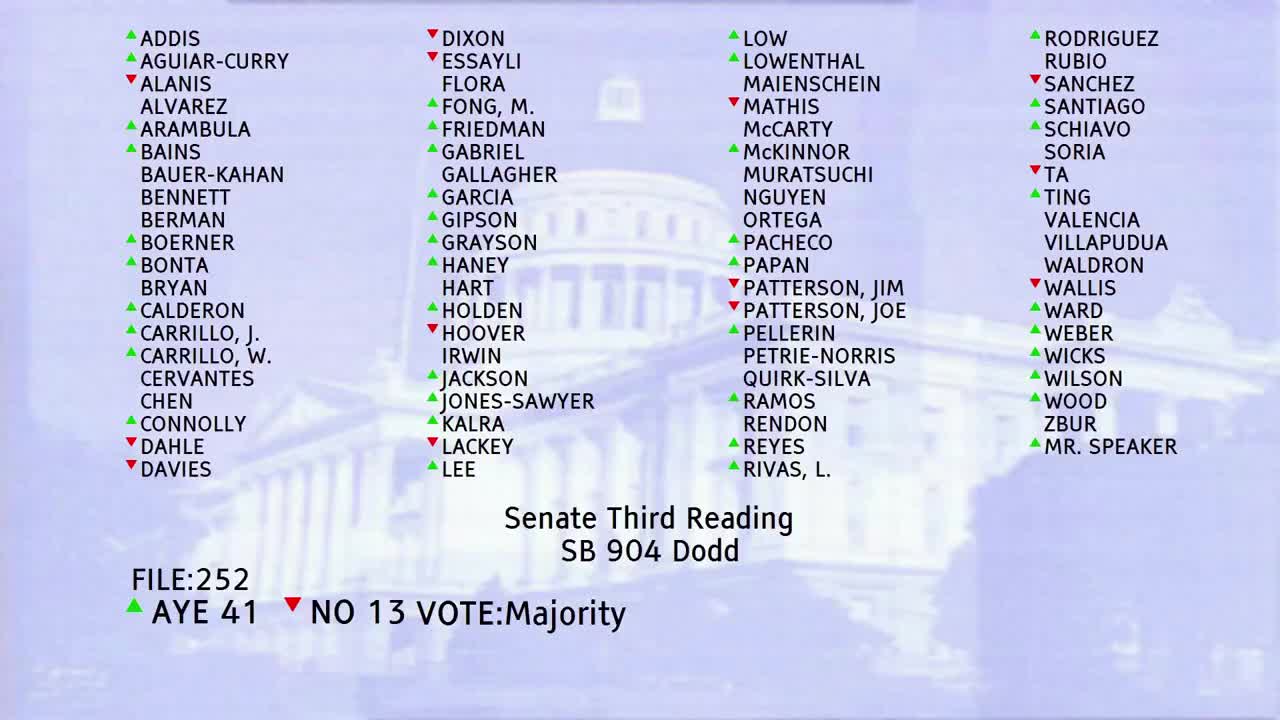
Bill Author

Bill Co-Author(s):