SB 988: Freelance Worker Protection Act.
- Session Year: 2023-2024
- House: Senate
- Latest Version Date: 2024-09-28
Current Status:
Passed
(2024-09-28: Chaptered by Secretary of State. Chapter 870, Statutes of 2024.)
Introduced
In Committee
First Chamber
In Committee
Second Chamber
Enacted
Existing law generally regulates employment and, with certain exceptions, requires a 3-part test, commonly known as the ABC test, to determine if workers are employees or independent contractors for purposes of the Labor Code, the Unemployment Insurance Code, and the wage orders of the Industrial Welfare Commission.
This bill would impose minimum requirements, commencing January 1, 2025, relating to contracts between a hiring party and a freelance worker, defined as a person, as specified, that is hired or retained as a bona fide independent contractor by a hiring party to provide professional services in exchange for an amount equal to or greater than $250, as specified. Specifically, the bill would require a hiring party to pay a freelance worker the compensation specified by a contract for professional services on or before the date specified by the contract or, if the contract does not specify a date, no later than 30 days after completion of the freelance workers services. The bill would require a contract between a hiring party and a freelance worker to be in writing and would require a hiring party to retain the contract for no less than 4 years. The bill would prohibit a hiring party from discriminating or taking adverse action against a freelance worker for taking specified actions relating to the enforcement of these provisions. The bill would authorize an aggrieved freelance worker or a public prosecutor to bring a civil action to enforce these provisions, as specified.
Existing law generally regulates employment and, with certain exceptions, requires a 3-part test, commonly known as the ABC test, to determine if workers are employees or independent contractors for purposes of the Labor Code, the Unemployment Insurance Code, and the wage orders of the Industrial Welfare Commission. Existing law authorizes the Division of Labor Standards Enforcement, the head of which is the Labor Commissioner, to enforce the Labor Code and all labor laws of the state the enforcement of which is not specifically vested in any other officer, board, or commission.
This bill would impose minimum requirements, commencing January 1, 2025, relating to contracts between a hiring party and a freelance worker, defined as a person, as specified, that is hired or retained as an a bona fide independent contractor by a hiring party to provide professional services in exchange for an amount equal to or greater than $250, as specified. Specifically, the bill would require a hiring entity party to pay a freelance worker the compensation specified by a contract for professional services on or before the date specified by the contract or, if the contract does not specify a date, no later than 30 days after completion of the freelance workers services. The bill would require a contract between a hiring party and a freelance worker to be in writing and would require a hiring party to retain a copy of the contract for no less than 4 years. The bill would prohibit a hiring party from discriminating or taking adverse action against a freelance worker for taking specified actions relating to the enforcement of these provisions. The bill would authorize an aggrieved freelance worker, the Labor Commissioner, worker or a public prosecutor to bring a civil action to enforce these provisions, as specified.
Existing law generally regulates employment and, with certain exceptions, requires a 3-part test, commonly known as the ABC test, to determine if workers are employees or independent contractors for purposes of the Labor Code, the Unemployment Insurance Code, and the wage orders of the Industrial Welfare Commission. Existing law authorizes the Division of Labor Standards Enforcement, the head of which is the Labor Commissioner, to enforce the Labor Code and all labor laws of the state the enforcement of which is not specifically vested in any other officer, board, or commission.
This bill would impose minimum requirements, commencing January 1, 2025, relating to contracts between a hiring party and a freelance worker, defined as a person, as specified, that is hired or retained as an independent contractor by a hiring party to provide professional services in exchange for an amount equal to or greater than $250, as specified. Specifically, the bill would require a hiring entity to pay a freelance worker the compensation specified by a contract for professional services on or before the date specified by the contract or, if the contract does not specify a date, no later than 30 days after completion of the freelance workers services. The bill would require a contract between a hiring party and a freelance worker to be in writing and would require a hiring party to retain a copy of the contract for no less than 4 years. The bill would prohibit a hiring party from discriminating or taking adverse action against a freelance worker for taking specified actions relating to the enforcement of these provisions. The bill would authorize an aggrieved freelance worker, the Labor Commissioner, or a public prosecutor to bring a civil action to enforce these provisions, as specified.
Existing law generally regulates employment and, with certain exceptions, requires a 3-part test, commonly known as the ABC test, to determine if workers are employees or independent contractors for purposes of the Labor Code, the Unemployment Insurance Code, and the wage orders of the Industrial Welfare Commission. Existing law authorizes the Division of Labor Standards Enforcement, the head of which is the Labor Commissioner, to enforce the Labor Code and all labor laws of the state the enforcement of which is not specifically vested in any other officer, board, or commission.
This bill would impose minimum requirements, commencing January 1, 2025, relating to contracts between a hiring party and a freelance worker, defined as a person, as specified, that is hired or retained as an independent contractor by a hiring party to provide professional services in exchange for an amount equal to or greater than $250, as specified. Specifically, the bill would require a hiring entity to pay a freelance worker the compensation specified by a contract for professional services on or before the date specified by the contract or, if the contract does not specify a date, no later than 30 days after completion of the freelance workers services. The bill would require a contract between a hiring party and a freelance worker to be in writing and would require a hiring party to retain a copy of the contract for no less than 6 4 years. The bill would prohibit a hiring party from discriminating or taking adverse action against a freelance worker for taking specified actions relating to the enforcement of these provisions. The bill would authorize an aggrieved freelance worker, the Labor Commissioner, or a public prosecutor to bring a civil action to enforce these provisions, as specified.
Existing law generally regulates employment and, with certain exceptions, requires a 3-part test, commonly known as the ABC test, to determine if workers are employees or independent contractors for purposes of the Labor Code, the Unemployment Insurance Code, and the wage orders of the Industrial Welfare Commission. Existing law authorizes the Division of Labor Standards Enforcement, the head of which is the Labor Commissioner, to enforce the Labor Code and all labor laws of the state the enforcement of which is not specifically vested in any other officer, board, or commission.
This bill would impose minimum requirements, commencing January 1, 2025, relating to contracts between a hiring party and a freelance worker, defined as a person, as specified, that is hired or retained as an independent contractor by a hiring party to provide professional services in exchange for an amount equal to or greater than $250, as specified. Specifically, the bill would require a hiring entity to pay a freelance worker the compensation specified by a contract for professional services on or before the date specified by the contract or, if the contract does not specify a date, no later than 30 days after completion of the freelance workers services. The bill would require a contract between a hiring party and a freelance worker to be in writing and would require a hiring party to retain a copy of the contract for no less than 6 years. The bill would prohibit a hiring party from discriminating or taking adverse action against a freelance worker for taking specified actions relating to the enforcement of these provisions. The bill would authorize an aggrieved freelance worker, the Labor Commissioner, or a public prosecutor to bring a civil action to enforce these provisions, as specified.
This part shall be known, and may be cited, as the Freelance Worker Protection Act.
18101.For purposes of this part, the following definitions apply:
(a)Freelance worker means a person or organization composed of no more than one person, whether or not incorporated or employing a trade name, that is hired or retained as a bona fide independent contractor by a hiring party to provide professional services in exchange for an amount equal to or greater than two hundred and fifty dollars ($250), either by itself or when aggregated with all contracts for services between the same hiring party and independent contractor during the immediately preceding 120 days.
(b)Hiring party means a person or organization in the State of California that retains a freelance worker to provide professional services, except any of the following:
(1)The United States government.
(2)The State of California or any subdivision thereof.
(3)A foreign government.
(4)An individual hiring services for the personal benefit of themselves, their family members, or their homestead.
(c)Professional services has the same meaning as paragraph (2) of subdivision (b) of Section 2778 of the Labor Code.
(d)Public prosecutor has the same meaning as Section 180 of the Labor Code.
18102.(a)Except as otherwise provided by law, a hiring party shall pay a freelance worker the compensation specified by a contract for professional services:
(1)On or before the date compensation is due pursuant to the contract.
(2)If the contract does not specify when the hiring party shall pay, no later than 30 days after the completion of the freelance workers services under the contract.
(b)Once a freelance worker has commenced performance of services under a contract, a hiring party shall not require as a condition of timely payment that the freelance worker do either of the following:
(1)Accept less compensation than the amount of compensation specified by the contract.
(2)Provide more goods or services or grant more intellectual property rights than agreed to in the contract.
18103.(a)Whenever a hiring party retains the services of a freelance worker, the contract between the hiring party and the freelance worker shall be in writing. The hiring party shall furnish a signed copy of the written contract, either physically or electronically, to the freelance worker. The hiring party shall retain the contract for no less than four years.
(b)The contract shall include, at minimum, all of the following information:
(1)The name and mailing address of each party.
(2)An itemized list of all services to be provided by the freelance worker, including the value of those services and the rate and method of compensation.
(3)The date on which the hiring party shall pay the contracted compensation or the mechanism by which the date shall be determined.
(4)The date by which a freelance worker shall submit a list of services rendered under the contract to the hiring party to meet the hiring partys internal processing deadlines for purposes of timely payment of compensation.
(c)This section does not limit existing contract law, including, but not limited to, that it does not prevent a freelance worker from enforcing an oral contract or recovering under the doctrine of promissory estoppel. Notwithstanding a refusal by the hiring party to provide a written contract as required by subdivision (a), the following may be evidence that a contract was formed between the parties:
(1)The hiring party made representations to the freelance worker regarding the rate for services to be performed.
(2)The freelance worker provided in writing any document to the hiring party, including email, text message, or other electronic communication, a summary of the rate and work to be performed prior to performing the work.
(3)The freelance worker performed the work that the freelance worker understood was to be performed.
18104.A waiver of any provision in this part shall be deemed contrary to public policy and is void and unenforceable.
18105.A hiring party shall not discriminate or take any adverse action against a freelance worker that penalizes a freelance worker for, or is reasonably likely to deter a freelance worker from, taking any of the following actions:
(a)Opposing any practice prohibited by this part.
(b)Participating in proceedings related to the enforcement of this part.
(c)Seeking to enforce rights provided by this part.
(d)Otherwise asserting or attempting to assert rights provided by this part.
18106.(a)An aggrieved freelance worker or a public prosecutor may bring a civil action to enforce this part.
(b)A prevailing plaintiff in an action alleging a violation of this part is entitled to reasonable attorneys fees and costs, injunctive relief, and any other remedies deemed appropriate by the court. Damages shall be awarded to an aggrieved freelance worker as follows:
(1)If the freelance worker requested a written contact prior to commencing work under the contract and the hiring party refused in violation of Section 18103, the freelance worker shall be awarded an additional one thousand dollars ($1,000).
(2)If the hiring party failed to pay the freelance worker the contracted compensation by the time required under Section 18102, the freelance worker shall be awarded damages up to twice the amount that remained unpaid at the time payment was due. If the freelance worker requested a written contract prior to commencing work under the contract and the hiring party refused in violation of Section 18103, the amount unpaid shall be determined by the rate the freelance worker reasonably understood to apply to the work.
(3)If the hiring party violates any other provision of this part, the freelance worker may be awarded damages equal to the value of the contract or the work performed, whichever is greater.
18107.This part applies only to contracts entered into or renewed on or after January 1, 2025.
This part shall be known, and may be cited, as the Freelance Worker Protection Act.
10501.18101.For purposes of this division, part, the following definitions apply:
(a)Freelance worker means a person or organization composed of no more than one person, whether or not incorporated or employing a trade name, that is hired or retained as an a bona fide independent contractor by a hiring party to provide professional services in exchange for an amount equal to or greater than two hundred and fifty dollars ($250), either by itself or when aggregated with all contracts for services between the same hiring party and independent contractor during the immediately preceding 120 days.
(b)Hiring party means a person or organization in the State of California that retains a freelance worker to provide professional services, except any of the following:
(1)The United States government.
(2)The State of California or any subdivision thereof.
(3)A foreign government.
(4)An individual hiring services for the personal benefit of themselves, their family members, or their homestead.
(c)Professional services has the same meaning as paragraph (2) of subdivision (b) of Section 2778. 2778 of the Labor Code.
(d)Public prosecutor has the same meaning as Section 180. 180 of the Labor Code.
10502.18102.(a)Except as otherwise provided by law, a hiring party shall pay a freelance worker the compensation specified by a contract for professional services:
(1)On or before the date compensation is due pursuant to the contract.
(2)If the contract does not specify when the hiring party shall pay, no later than 30 days after the completion of the freelance workers services under the contract.
(b)Once a freelance worker has commenced performance of services under a contract, a hiring party shall not require as a condition of timely payment that the freelance worker do either of the following:
(1)Accept less compensation than the amount of compensation specified by the contract.
(2)Provide more goods or services or grant more intellectual property rights than agreed to in the contract.
10503.18103.(a)Whenever a hiring party retains the services of a freelance worker, the contract between the hiring party and the freelance worker shall be in writing. The hiring party shall furnish a signed copy of the written contract, either physically or electronically, to the freelance worker. The hiring party shall retain the contract for no less than four years.
(b)The contract shall include, at minimum, all of the following information:
(1)The name and mailing address of each party.
(2)An itemized list of all services to be provided by the freelance worker, including the value of those services and the rate and method of compensation.
(3)The date on which the hiring party shall pay the contracted compensation or the mechanism by which the date shall be determined.
(4)The date by which a freelance worker shall submit a list of services rendered under the contract to the hiring party to meet the hiring partys internal processing deadlines for purposes of timely payment of compensation.
(c)This section does not limit existing contract law, including, but not limited to, that it does not prevent a freelance worker from enforcing an oral contract or recovering under the doctrine of promissory estoppel. Notwithstanding a refusal by the hiring party to provide a written contract as required by subdivision (a), the following may be evidence that a contract was formed between the parties:
(1)The hiring party made representations to the freelance worker regarding the rate for services to be performed.
(2)The freelance worker provided in writing any document to the hiring party, including email, text message, or other electronic communication, a summary of the rate and work to be performed prior to performing the work.
(3)The freelance worker performed the work that the freelance worker understood was to be performed.
10504.18104.A waiver of any provision in this division part shall be deemed contrary to public policy and is void and unenforceable.
10505.18105.A hiring entity party shall not discriminate or take any adverse action against a freelance worker that penalizes a freelance worker for, or is reasonably likely to deter a freelance worker from, taking any of the following actions:
(a)Opposing any practice prohibited by this division. part.
(b)Participating in proceedings related to the enforcement of this division. part.
(c)Seeking to enforce rights provided by this division. part.
(d)Otherwise asserting or attempting to assert rights provided by this division. part.
10506.18106.(a)An aggrieved freelance worker, the Labor Commissioner, worker or a public prosecutor may bring a civil action to enforce this division. part.
(b)A prevailing plaintiff in an action alleging a violation of this division part is entitled to reasonable attorneys fees and costs, injunctive relief, and any other remedies deemed appropriate by the court. Damages shall be awarded to an aggrieved freelance worker as follows:
(1)If the freelance worker requested a written contact prior to commencing work under the contract and the hiring entity party refused in violation of Section 10503, 18103, the freelance worker shall be awarded an additional one thousand dollars ($1,000).
(2)If the hiring entity party failed to pay the freelance worker the contracted compensation by the time required under Section 10502, 18102, the freelance worker shall be awarded damages up to twice the amount that remained unpaid at the time payment was due. If the freelance worker requested a written contract prior to commencing work under the contract and the hiring entity party refused in violation of Section 10503, 18103, the amount unpaid shall be determined by the rate the freelance worker reasonably understood to apply to the work.
(3)If the hiring entity party violates any other provision of this division, part, the freelance worker may be awarded damages equal to the value of the contract or the work performed, whichever is greater.
10507.18107.This division part applies only to contracts entered into or renewed on or after January 1, 2025.
This division shall be known, and may be cited, as the Freelance Worker Protection Act.
10501.For purposes of this division, the following definitions apply:
(a)Freelance worker means a person or organization composed of no more than one person, whether or not incorporated or employing a trade name, that is hired or retained as an independent contractor by a hiring party to provide professional services in exchange for an amount equal to or greater than two hundred and fifty dollars ($250), either by itself or when aggregated with all contracts for services between the same hiring party and independent contractor during the immediately preceding 120 days.
(b)Hiring party means a person or organization in the State of California that retains a freelance worker to provide professional services, except any of the following:
(1)The United States government.
(2)The State of California or any subdivision thereof.
(3)A foreign government.
(4)An individual hiring services for the personal benefit of themselves, their family members, or their homestead.
(c)Professional services has the same meaning as paragraph (2) of subdivision (b) of Section 2778.
(d)Public prosecutor has the same meaning as Section 180.
10502.(a)Except as otherwise provided by law, a hiring party shall pay a freelance worker the compensation specified by a contract for professional services:
(1)On or before the date compensation is due pursuant to the contract.
(2)If the contract does not specify when the hiring party shall pay, no later than 30 days after the completion of the freelance workers services under the contract.
(b)Once a freelance worker has commenced performance of services under a contract, a hiring party shall not require as a condition of timely payment that the freelance worker do either of the following:
(1)Accept less compensation than the amount of compensation specified by the contract.
(2)Provide more goods or services or grant more intellectual property rights than agreed to in the contract.
10503.(a)Whenever a hiring party retains the services of a freelance worker, the contract between the hiring party and the freelance worker shall be in writing. The hiring party shall furnish a signed copy of the written contract, either physically or electronically, to the freelance worker. The hiring party shall retain the contract for no less than four years.
(b)The contract shall include, at minimum, all of the following information:
(1)The name and mailing address of each party.
(2)An itemized list of all services to be provided by the freelance worker, including the value of those services and the rate and method of compensation.
(3)The date on which the hiring party shall pay the contracted compensation or the mechanism by which the date shall be determined.
(4)The date by which a freelance worker shall submit a list of services rendered under the contract to the hiring party to meet the hiring partys internal processing deadlines for purposes of timely payment of compensation.
(c)This section does not limit existing contract law, including, but not limited to, that it does not prevent a freelance worker from enforcing an oral contract or recovering under the doctrine of promissory estoppel. Notwithstanding a refusal by the hiring party to provide a written contract as required by subdivision (a), there shall be sufficient evidence that a contract exists for purposes of enforcement by the freelance worker if all of the following are met: the following may be evidence that a contract was formed between the parties:
(1)The hiring party made representations to the freelance worker regarding the rate for services to be performed.
(2)The freelance worker provided in writing any document to the hiring party, including email, text message, or other electronic communication, a summary of the rate and work to be performed prior to performing the work.
(3)The freelance worker performed the work that the freelance worker understood was to be performed.
10504.A waiver of any provision in this division shall be deemed contrary to public policy and is void and unenforceable.
10505.A hiring entity shall not discriminate or take any adverse action against a freelance worker that penalizes a freelance worker for, or is reasonably likely to deter a freelance worker from, taking any of the following actions:
(a)Opposing any practice prohibited by this division.
(b)Participating in proceedings related to the enforcement of this division.
(c)Seeking to enforce rights provided by this division.
(d)Otherwise asserting or attempting to assert rights provided by this division.
10506.(a)An aggrieved freelance worker, the Labor Commissioner, or a public prosecutor may bring a civil action to enforce this division.
(b)A prevailing plaintiff in an action alleging a violation of this division is entitled to reasonable attorneys fees and costs, injunctive relief, and any other remedies deemed appropriate by the court. Damages shall be awarded to an aggrieved freelance worker as follows:
(1)If the freelance worker requested a written contact prior to commencing work under the contract and the hiring entity refused in violation of Section 10503, the freelance worker shall be awarded an additional one thousand dollars ($1,000).
(2)If the hiring entity failed to pay the freelance worker the contracted compensation by the time required under Section 10502, the freelance worker shall be awarded damages up to twice the amount that remained unpaid at the time payment was due. If the freelance worker requested a written contract prior to commencing work under the contract and the hiring entity refused in violation of Section 10503, the amount unpaid shall be determined by the rate the freelance worker reasonably understood to apply to the work.
(3)If the hiring entity violates any other provision of this division, the freelance worker shall may be awarded damages equal to the value of the contract or the work performed, whichever is greater.
10507.This division applies only to contracts entered into or renewed on or after January 1, 2025.
This division shall be known, and may be cited, as the Freelance Worker Protection Act.
10501.For purposes of this division, the following definitions apply:
(a)Freelance worker means a person or organization composed of no more than one person, whether or not incorporated or employing a trade name, that is hired or retained as an independent contractor by a hiring party to provide professional services in exchange for an amount equal to or greater than two hundred and fifty dollars ($250), either by itself or when aggregated with all contracts for services between the same hiring party and independent contractor during the immediately preceding 120 days.
(b)Hiring party means a person who or organization in the State of California that retains a freelance worker to provide professional services, except any of the following:
(1)The United States government.
(2)The State of California or any subdivision thereof.
(3)A foreign government.
(4)An individual hiring services for the personal benefit of themselves, their family members, or their homestead.
(c)Professional services has the same meaning as paragraph (2) of subdivision (b) of Section 2778.
(d)Public prosecutor has the same meaning as Section 180.
10502.(a)Except as otherwise provided by law, a hiring party shall pay a freelance worker the compensation specified by a contract for professional services:
(1)On or before the date compensation is due pursuant to the contract.
(2)If the contract does not specify when the hiring party shall pay, no later than 30 days after the completion of the freelance workers services under the contract.
(b)Once a freelance worker has commenced performance of services under a contract, a hiring party shall not require as a condition of timely payment that the freelance worker accept do either of the following:
(1)Accept less compensation than the amount of compensation specified by the contract.
(2)Provide more goods or services or grant more intellectual property rights than agreed to in the contract.
10503.(a)Whenever a hiring party retains the services of a freelance worker, the contract between the hiring party and the freelance worker shall be in writing. The hiring party shall furnish a signed copy of the written contract, either physically or electronically, to the freelance worker. The hiring party shall retain the contract for no less than six four years.
(b)The contract shall include, at minimum, all of the following information:
(1)The name and mailing address of each party.
(2)An itemized list of all services to be provided by the freelance worker, including the value of those services and the rate and method of compensation.
(3)The date on which the hiring party shall pay the contracted compensation or the mechanism by which the date shall be determined.
(4)The date by which a freelance worker shall submit a list of services rendered under the contract to the hiring party to meet the hiring partys internal processing deadlines for purposes of timely payment of compensation.
(c)This section does not limit existing contract law, including, but not limited to, that it does not prevent a freelance worker from enforcing an oral contract or recovering under the doctrine of promissory estoppel. Notwithstanding a refusal by the hiring party to provide a written contract as required by subdivision (a), there shall be sufficient evidence that a contract exists for purposes of enforcement by the freelance worker if all of the following are met:
(1)The hiring party made representations to the freelance worker regarding the rate for services to be performed.
(2)The freelance worker provided in writing any document to the hiring party, including email, text message, or other electronic communication, a summary of the rate and work to be performed prior to performing the work.
(3)The freelance worker performed the work that the freelance worker understood was to be performed.
10504.A waiver of any provision in this division shall be deemed contrary to public policy and is void and unenforceable.
10505.A hiring entity shall not discriminate or take any adverse action against a freelance worker that penalizes a freelance worker for, or is reasonably likely to deter a freelance worker from, taking any of the following actions:
(a)Opposing any practice prohibited by this division.
(b)Participating in proceedings related to the enforcement of this division.
(c)Seeking to enforce rights provided by this division.
(d)Otherwise asserting or attempting to assert rights provided by this division.
10506.(a)An aggrieved freelance worker, the Labor Commissioner, or a public prosecutor may bring a civil action to enforce this division.
(b)A prevailing plaintiff in an action alleging a violation of this division is entitled to reasonable attorneys fees and costs, injunctive relief, and any other remedies deemed appropriate by the court. Damages shall be awarded to an aggrieved freelance worker as follows:
(1)If the freelance worker requested a written contact prior to commencing work under the contract and the hiring entity refused in violation of Section 10503, the freelance worker shall be awarded an additional one thousand dollars ($1,000).
(2)If the hiring entity failed to pay the freelance worker the contracted compensation by the time required under Section 10502, the freelance worker shall be awarded damages up to twice the amount that remained unpaid at the time payment was due. If the freelance worker requested a written contract prior to commencing work under the contract and the hiring entity refused in violation of Section 10503, the amount unpaid shall be determined by the rate the freelance worker reasonably understood to apply to the work.
(3)If the hiring entity violates any other provision of this division, the freelance worker shall be awarded damages equal to the value of the contract or the work performed, whichever is greater.
10507.This division applies only to contracts entered into or renewed on or after January 1, 2025.
This division shall be known, and may be cited, as the Freelance Worker Protection Act.
10501.For purposes of this division, the following definitions apply:
(a)Freelance worker means a person or organization composed of no more than one person, whether or not incorporated or employing a trade name, that is hired or retained as an independent contractor by a hiring party to provide professional services in exchange for an amount equal to or greater than two hundred and fifty dollars ($250), either by itself or when aggregated with all contracts for services between the same hiring party and independent contractor during the immediately preceding 120 days.
(b)Hiring party means a person who retains a freelance worker to provide professional services, except any of the following:
(1)The United States government.
(2)The State of California or any subdivision thereof.
(3)A foreign government.
(c)Professional services has the same meaning as paragraph (2) of subdivision (b) of Section 2778.
(d)Public prosecutor has the same meaning as Section 180.
10502.(a)Except as otherwise provided by law, a hiring party shall pay a freelance worker the compensation specified by a contract for professional services:
(1)On or before the date compensation is due pursuant to the contract.
(2)If the contract does not specify when the hiring party shall pay, no later than 30 days after the completion of the freelance workers services under the contract.
(b)Once a freelance worker has commenced performance of services under a contract, a hiring party shall not require as a condition of timely payment that the freelance worker accept less compensation than the amount of compensation specified by the contract.
10503.(a)Whenever a hiring party retains the services of a freelance worker, the contract between the hiring party and the freelance worker shall be in writing. The hiring party shall furnish a copy of the written contract, either physically or electronically, to the freelance worker. The hiring party shall retain the contract for no less than six years.
(b)The contract shall include, at minimum, all of the following information:
(1)The name and mailing address of each party.
(2)An itemized list of all services to be provided by the freelance worker, including the value of those services and the rate and method of compensation.
(3)The date on which the hiring party shall pay the contracted compensation or the mechanism by which the date shall be determined.
(4)The date by which a freelance worker shall submit a list of services rendered under the contract to the hiring party to meet the hiring partys internal processing deadlines for purposes of timely payment of compensation.
10504.A waiver of any provision in this division shall be deemed contrary to public policy and is void and unenforceable.
10505.A hiring entity shall not discriminate or take any adverse action against a freelance worker that penalizes a freelance worker for, or is reasonably likely to deter a freelance worker from, taking any of the following actions:
(a)Opposing any practice prohibited by this division.
(b)Participating in proceedings related to the enforcement of this division.
(c)Seeking to enforce rights provided by this division.
(d)Otherwise asserting or attempting to assert rights provided by this division.
10506.(a)An aggrieved freelance worker, the Labor Commissioner, or a public prosecutor may bring a civil action to enforce this division.
(b)A prevailing plaintiff in an action alleging a violation of this division is entitled to reasonable attorneys fees and costs, injunctive relief, and any other remedies deemed appropriate by the court. Damages shall be awarded to an aggrieved freelance worker as follows:
(1)If the freelance worker requested a written contact prior to commencing work under the contract and the hiring entity refused in violation of Section 10503, the freelance worker shall be awarded an additional one thousand dollars ($1,000).
(2)If the hiring entity failed to pay the freelance worker the contracted compensation by the time required under Section 10502, the freelance worker shall be awarded damages up to twice the amount that remained unpaid at the time payment was due.
(3)If the hiring entity violates any other provision of this division, the freelance worker shall be awarded damages equal to the value of the contract or the work performed, whichever is greater.
10507.This division applies only to contracts entered into or renewed on or after January 1, 2025.
|
Date
|
Status
|
|---|---|
| Sep 28, 2024 | Chaptered by Secretary of State. Chapter 870, Statutes of 2024. |
| Sep 28, 2024 | Approved by the Governor. |
| Sep 4, 2024 | Enrolled and presented to the Governor at 4 p.m. |
| Aug 28, 2024 | Assembly amendments concurred in. (Ayes 34. Noes 3. Page 5560.) Ordered to engrossing and enrolling. |
| Aug 26, 2024 | In Senate. Concurrence in Assembly amendments pending. |
| Aug 26, 2024 | Read third time. Passed. (Ayes 70. Noes 0. Page 6550.) Ordered to the Senate. |
| Aug 20, 2024 | Read second time. Ordered to third reading. |
| Aug 19, 2024 | Read second time and amended. Ordered to second reading. |
| Aug 15, 2024 | From committee: Do pass as amended. (Ayes 12. Noes 0.) (August 15). |
| Aug 7, 2024 | August 7 set for first hearing. Placed on suspense file. |
| Jun 25, 2024 | From committee: Do pass and re-refer to Com. on APPR. (Ayes 9. Noes 0.) (June 25). Re-referred to Com. on APPR. |
| Jun 20, 2024 | From committee: Do pass and re-refer to Com. on JUD. (Ayes 7. Noes 0.) (June 19). Re-referred to Com. on JUD. |
| May 28, 2024 | Referred to Coms. on L. & E. and JUD. |
| May 21, 2024 | In Assembly. Read first time. Held at Desk. |
| May 20, 2024 | Read third time. Passed. (Ayes 33. Noes 3. Page 4023.) Ordered to the Assembly. |
| May 16, 2024 | Read second time. Ordered to third reading. |
| May 16, 2024 | From committee: Do pass. (Ayes 5. Noes 2. Page 3967.) (May 16). |
| May 10, 2024 | Set for hearing May 16. |
| Apr 29, 2024 | April 29 hearing: Placed on APPR suspense file. |
| Apr 23, 2024 | Set for hearing April 29. |
| Apr 18, 2024 | Read second time and amended. Re-referred to Com. on APPR. |
| Apr 17, 2024 | From committee: Do pass as amended and re-refer to Com. on APPR. (Ayes 10. Noes 0. Page 3634.) (April 16). |
| Apr 10, 2024 | From committee: Do pass and re-refer to Com. on JUD. (Ayes 5. Noes 0. Page 3562.) (April 10). Re-referred to Com. on JUD. |
| Apr 3, 2024 | Set for hearing April 16 in JUD. pending receipt. |
| Apr 1, 2024 | From committee with author's amendments. Read second time and amended. Re-referred to Com. on L., P.E. & R. |
| Mar 26, 2024 | Set for hearing April 10. |
| Feb 14, 2024 | Referred to Coms. on L., P.E. & R. and JUD. |
| Jan 31, 2024 | From printer. May be acted upon on or after March 1. |
| Jan 30, 2024 | Introduced. Read first time. To Com. on RLS. for assignment. To print. |
|
Date
|
Description
|
Location
|
Votes
|
|
|---|---|---|---|---|
| Aug 28, 2024 | Unfinished Business SB988 Wiener Concurrence | Senate Floor |
Passed |
|
| Aug 26, 2024 | SB 988 Wiener Senate Third Reading By Lee | Assembly Floor |
Passed |
|
| Aug 15, 2024 | Do pass as amended. | Assembly Standing Committee on Appropriations |
Passed |
|
| Jun 25, 2024 | Do pass and be re-referred to the Committee on [Appropriations] | Assembly Standing Committee on Judiciary |
Passed |
|
| Jun 19, 2024 | Do pass and be re-referred to the Committee on [Judiciary] | Assembly Standing Committee on Labor and Employment |
Passed |
|
| May 20, 2024 | Senate 3rd Reading SB988 Wiener | Senate Floor |
Passed |
|
| May 16, 2024 | Do pass | Senate Standing Committee on Appropriations |
Passed |
|
| Apr 29, 2024 | Placed on suspense file | Senate Standing Committee on Appropriations |
Passed |
|
| Apr 16, 2024 | Do pass as amended, but first amend, and re-refer to the Committee on [Appropriations] | Senate Standing Committee on Judiciary |
Passed |
|
| Apr 10, 2024 | Do pass, but first be re-referred to the Committee on [Judiciary] | Senate Standing Committee on Labor, Public Employment and Retirement |
Passed |
This list shows positions taken on this bill by organizations on the date displayed, which is linked to the original source.
Positions by individuals are not included.
|
Organization
|
Position
|
Date
|
|---|---|---|
| American Photographic Artists of San Francisco | ** Support | |
| American Photographic Artists, Inc. | ** Support | |
| American Photographic Artists, Inc. Los Angeles Chapter | ** Support | |
| American Photographic Artists, Inc. San Diego | ** Support | |
| Authors Guild | ** Support | |
| California Association for Micro Enterprise Opportunity | ** Support | |
| California Chamber Of Commerce | ** Against | |
| California Teamsters Public Affairs Council | ** Support | |
| CAMEO | ** Support | |
| Family Business Association Of California | * Against | Apr 10, 2024 |
| Justice At Last | ** Support | |
| Media Alliance | ** Support | |
| National Press Photographers Association | ** Support | |
| National Writers Union | ** Support | |
| The Authors Guild | ** Support |
SENATE RULES COMMITTEE Office of Senate Floor Analyses (916) 651-1520 Fax: (916) 327-4478 | SB 988 |
UNFINISHED BUSINESS
Bill No: SB 988
Author: Wiener (D)
Amended: 8/19/24
Vote: 21
SENATE LABOR, PUB. EMP. & RET. COMMITTEE: 5-0, 4/10/24
AYES: Smallwood-Cuevas, Wilk, Cortese, Durazo, Laird
SENATE JUDICIARY COMMITTEE: 10-0, 4/16/24
AYES: Umberg, Wilk, Allen, Ashby, Caballero, Durazo, Laird, Min, Stern, Wahab
NO VOTE RECORDED: Niello
SENATE APPROPRIATIONS COMMITTEE: 5-2, 5/16/24
AYES: Caballero, Ashby, Becker, Bradford, Wahab
NOES: Jones, Seyarto
SENATE FLOOR: 33-3, 5/20/24
AYES: Allen, Alvarado-Gil, Archuleta, Ashby, Atkins, Becker, Blakespear, Bradford, Caballero, Cortese, Dodd, Durazo, Eggman, Glazer, Gonzalez, Hurtado, Laird, Limón, McGuire, Menjivar, Newman, Ochoa Bogh, Padilla, Portantino, Roth, Rubio, Skinner, Smallwood-Cuevas, Stern, Umberg, Wahab, Wiener, Wilk
NOES: Jones, Nguyen, Seyarto
NO VOTE RECORDED: Dahle, Grove, Min, Niello
ASSEMBLY FLOOR: 70-0, 8/26/24 - See last page for vote
SUBJECT: Freelance Worker Protection Act
SOURCE: California Teamsters Public Affairs Council
DIGEST:
This bill establishes the Freelance Worker Protection Act to impose minimum requirements relating to contracts between a hiring party and a freelance worker, as defined. Among other things, the Act requires a hiring entity to 1) provide a written contract to the freelance worker; 2) pay a freelance worker the compensation specified by such contract, as provided; and 3) authorizes an aggrieved freelance worker or a public prosecutor to bring a civil action to enforce these provisions.
Assembly Amendments
move the provisions of the bill from the Labor Code to the Business and Professions Code and removed the authorization that the Labor Commissioner be able to bring a civil action for violations.
ANALYSIS:
Existing law:
- Establishes a comprehensive set of protections for employees, including a time-sure minimum wage, meal and rest periods, workers’ compensation coverage in the event of an industrial injury, sick leave, disability insurance (DI) in the event of a non-industrial disability, paid family leave, and unemployment insurance (UI).
(Labor Code §§201, 226.7, 246, 512, 1182.12, & 3600 and UI Code §§1251 & 2601) - Addresses the “employment status” of workers when the hiring entity classifies a worker as an “independent contractor” and not an employee, as specified. (Labor Code §2775-2787)
- Provides that for purposes of the Labor Code and the Unemployment Insurance Code, where another definition of “employee” is not otherwise specified, and for the wage orders of the Industrial Welfare Commission (IWC), a person providing labor or services for remuneration shall be considered an employee (and not an independent contractor) unless the hiring entity satisfies the three-part ABC test:
- The person is free from the control and direction of the hiring entity in connection with the performance of the work, both under the contract for the performance of the work and in fact.
- The person performs work that is outside the usual course of the hiring entity’s business.
- The person is customarily engaged in an independently established trade, occupation, or business of the same nature as that involved in the work performed. (Labor Code §2775)
- Exempts from the application of the ABC test, and instead, applies the definition of an employee as set forth in S. G. Borello & Sons, Inc. v. Department of Industrial Relations (1989) (Borello), to specified occupations and business relationships, including newspaper distributors working under contract with a newspaper publisher, as defined, or newspaper carriers. This newspaper distributor exemption expires on January 1, 2022. (Labor Code §2783)
- Prohibits the willful misclassification of individuals as independent contractors and establishes penalties for violations. Willful misclassification is defined as voluntarily and knowingly misclassifying an employee as an independent contractor. (Labor Code §226.8)
- Establishes within the Department of Industrial Relations (DIR) various entities, including the Division of Labor Standards Enforcement (DLSE), under the direction of the Labor Commissioner (LC), and empowers the LC with ensuring a just day’s pay in every workplace and promoting economic justice through robust enforcement of labor laws. (Labor Code §79-107)
- Defines, for purposes of independent contractor provisions (AB 5), “professional services” to mean specified services including marketing, human resources, travel agents, graphic design, grant writer, fine artist, IRS enrolled agents, photographer, photojournalist, videographer, photo editor, freelance writers, editors, licensed estheticians, electrologist, barber, licensed cosmetologist, and others, all as specified. (Labor Code §2778)
This bill:
- Establishes the Freelance Worker Protection Act to, beginning on January 1, 2025, impose minimum requirements relating to contracts between a hiring party and a freelance worker.
- Provides the following definitions:
- “Freelance worker” means a person or organization composed of no more than one person, whether or not incorporated or employing a trade name, that is hired or retained as a bona fide independent contractor by a hiring party to provide professional services in exchange for an amount equal to or greater than $250, either by itself or when aggregated with all contracts for services between the same hiring party and independent contractor during the immediately preceding 120 days.
- “Hiring party” to mean a person or organization in the State of California that retains a freelance worker to provide professional services, except any of the following:
- The United States government.
- The State of California or any subdivision thereof.
- A foreign government.
- An individual hiring services for the personal benefit of themselves, their family members, or their homestead.
- “Professional services” has the same meaning as Labor Code Section 2778.
- Except as otherwise provided by law, requires a hiring party to pay a freelance worker the compensation specified by a contract for professional services as follows:
- On or before the date compensation is due pursuant to the contract.
- If the contract does not specify when the hiring party shall pay, no later than 30 days after the completion of the freelance worker’s services under the contract.
- Specifies that once a freelance worker has commenced performance of services under a contract, a hiring party shall not require as a condition of timely payment that the freelance worker do either of the following:
- Accept less compensation than the amount of compensation specified by the contract.
- Provide more goods or services or grant more intellectual property rights than agreed to in the contract.
- Requires a hiring party to furnish a signed copy of the written contract, either physically or electronically, to the freelance worker and requires the hiring party to retain the contract for no less than four years.
- Requires the written contract to include, at a minimum, all of the following information:
- The name and mailing address of each party.
- An itemized list of all services to be provided, including the value of those services and the rate and method of compensation.
- The date on which the hiring party shall pay the contracted compensation or the mechanism by which the date shall be determined.
- The date by which a freelance worker shall submit a list of services rendered under the contract to the hiring party to meet the hiring party’s internal processing deadlines for purposes of timely payment of compensation.
- Provides that these provisions do not limit existing contract law, as specified, and does not prevent a freelance worker from enforcing an oral contract or recovering under the doctrine of promissory estoppel.
- Specifies that, notwithstanding a refusal by the hiring party to provide a written contract as required by these provisions, the following may be evidence that a contract was formed between the parties:
- The hiring party made representations to the freelance worker regarding the rate for services to be performed.
- The freelance worker provided in writing any document to the hiring party, including email, text message, or other electronic communication, a summary of the rate and work to be performed prior to performing the work.
- The freelance worker performed the work that the freelance worker understood was to be performed.
- Provides that a waiver of any of these provisions shall be deemed contrary to public policy and is void and unenforceable.
- Prohibits a hiring entity from discriminating or taking any adverse action against a freelance worker that penalizes, or is reasonably likely to deter, a freelance worker from taking any of the following actions:
- Opposing any practice prohibited by these provisions.
- Participating in proceedings related to the enforcement of these provisions.
- Seeking to enforce rights provided by these provisions.
- Otherwise asserting or attempting to assert rights provided by these provisions.
- Authorizes an aggrieved freelance worker or a public prosecutor to bring a civil action to enforce these provisions and specifies that a prevailing plaintiff is entitled to reasonable attorney’s fees and costs, injunctive relief, and any other remedies deemed appropriate by the court.
- Provides that damages shall be awarded to an aggrieved freelance worker as follows:
- If the freelance worker requested a written contact prior to commencing work and the hiring party refused in violation, the freelance worker shall be awarded an additional $1,000.
- If the hiring party failed to pay the freelance worker the contracted compensation by the time required, the freelance worker shall be awarded damages up to twice the amount that remained unpaid at the time payment was due.
- If the freelance worker requested a written contract prior to commencing work and the hiring party refused in violation, the amount unpaid shall be determined by the rate the freelance worker reasonably understood to apply to the work.
- If the hiring party violates any other provision in this bill, the freelance worker may be awarded damages equal to the value of the contract or the work performed, whichever is greater.
Background
The employer-employee relationship is at the core of the rights and obligations found within Labor Code. Being classified as an employee is essential to trigger most of the employer mandates and worker protections found within existing law. California’s wage and hour laws (e.g., minimum wage, overtime, meal periods and rest breaks, workers’ compensation etc.), workplace safety laws, and retaliation laws protect employees, but not independent contractors. Additionally, employees can go to state agencies such as the Labor Commissioner’s office to seek enforcement of these laws, whereas independent contractors must resolve their disputes or enforce their rights under their contracts through other means.
Freelance workers contribute essential services to our homes and businesses and are one of the fastest growing sectors of the workforce. Because freelance workers are not employees but independent contractors, they typically do not receive the same protections against wage theft. Efforts to enact laws protecting freelance workers have begun to pass in several states and localities.
Los Angeles City Freelance Worker Protections Ordinance: In February 2023, the City of Los Angeles’ adopted the Freelance Worker Protections Ordinance requiring that certain contracts between a hiring entity and a freelance worker be in writing and meet specified criteria. Among other things, the ordinance applies to work performed in the City of Los Angeles valued at $600 or more in a calendar year, by either an individual job or cumulative jobs. The ordinance requires that the contracts be in writing and that it contain basic information such as contact information, itemization of services, value of services, rate of compensation and the date that the hiring entity must pay the freelance worker. The ordinance also requires that the hiring entities timely pay for completed work, that they retain records for four years and contains anti-retaliation provisions that protect freelance workers who assert their rights. Additionally, failure to timely provide information to the City during an investigation will create a rebuttable presumption that the hiring entity violated the ordinance. These requirements do not apply to hiring entities that hire app-based transportation or delivery drivers for prearranged services.
[NOTE: Please see the Senate Labor, Public Employment and Retirement Committee analysis on this bill for more background information and prior related legislation.]
Need for this bill? According to the author,“Senate Bill 988 will protect freelancers from exploitation by providing them with the basic protections and ensuring prompt payment. Freelance workers frequently report experiencing months of late or non-payment, which is a significant financial hardship. Most freelance workers don’t have a written contract and are often living paycheck-to-paycheck. Just like any other type of worker, they deserve to be compensated fairly for their work and to have recourse if they’re mistreated.”
FISCAL EFFECT: Appropriation: No Fiscal Com.: Yes Local: No
According to the Assembly Appropriations Committee:
“Annual cost pressures (General Fund (GF) or Trial Court Trust Fund (TCTF)) of an unknown amount, potentially up to $150,000, to the courts in additional workload by allowing an aggrieved freelance worker, or a public prosecutor to bring a civil action to enforce freelance worker contract protections. It is unclear how many civil actions may be filed statewide, but the estimated workload cost of one hour of court time is $1,000. Although courts are not funded on the basis of workload, increased pressure on staff and the TCTF may create a need for increased court funding from the GF to perform existing duties. The Budget Act of 2024 includes $37.3 million ongoing GF to backfill declining TCTF revenue.”
SUPPORT: (Verified 8/22/24)
California Teamsters Public Affairs Council (source)
American Photographic Artists of San Francisco
American Photographic Artists, Inc.
American Photographic Artists, Inc. Los Angeles Chapter
American Photographic Artists, Inc. San Diego
California Association for Micro Enterprise Opportunity (CAMEO)
Media Alliance
National Press Photographers Association
National Writers Union
The Authors Guild
OPPOSITION: (Verified 8/22/24)
None received.
ARGUMENTS IN SUPPORT: According to the sponsors:
The California Teamsters Public Affairs Council, “In 2022, 60 million Americans freelanced, making up 39% of the total workforce and contributing $1.35 trillion to the national economy. Unfortunately, most freelancers lack basic worker protections, most notably, the right to be paid for their work on time. According to the Freelancers Union, 71% of workers experienced late or non-payment. 59% report living paycheck to paycheck, and most do not have written contracts.
In 2017, New York City passed the first ‘Freelance Isn’t Free Act’ in the U.S., creating a pathway for freelancers to recoup wages due to non-payment. Since then, freelance workers have recovered over $2.5 million in unpaid invoices. While impressive, this is just a fraction of the total amount owed to freelance workers. Since that time, both Illinois and the City of Los Angeles have passed similar legislation. While this is great, much more needs to be done to prevent exploitation. We believe the next step is having statewide protections for these workers and SB 988 does just that.”
ASSEMBLY FLOOR: 70-0, 8/26/24
AYES: Addis, Aguiar-Curry, Alanis, Alvarez, Arambula, Bains, Bauer-Kahan, Bennett, Berman, Boerner, Bonta, Bryan, Calderon, Juan Carrillo, Wendy Carrillo, Chen, Connolly, Megan Dahle, Davies, Dixon, Mike Fong, Friedman, Gabriel, Garcia, Gipson, Grayson, Haney, Hart, Holden, Irwin, Jackson, Jones-Sawyer, Kalra, Lackey, Lee, Low, Lowenthal, Maienschein, Mathis, McCarty, McKinnor, Muratsuchi, Stephanie Nguyen, Pacheco, Papan, Jim Patterson, Pellerin, Petrie-Norris, Quirk-Silva, Ramos, Rendon, Reyes, Luz Rivas, Rodriguez, Blanca Rubio, Santiago, Schiavo, Ta, Ting, Valencia, Villapudua, Waldron, Wallis, Ward, Weber, Wicks, Wilson, Wood, Zbur, Robert Rivas
NO VOTE RECORDED: Cervantes, Essayli, Flora, Gallagher, Hoover, Ortega, Joe Patterson, Sanchez, Soria
Prepared by: Alma Perez-Schwab / L., P.E. & R. / (916) 651-1556
8/27/24 12:04:22
**** END ****
SENATE THIRD READING
STR Bill Id:SB 988
Author:(Wiener)
As Amended Ver:August 19, 2024
Majority vote
SUMMARY
Establishes the Freelance Worker Protection Act to impose minimum requirements for contracts between hiring parties and freelance workers for professional services of a specified amount. Requires, among other things, hiring parties to: 1) provide freelance workers with a written contract with specified terms; 2) pay freelance workers by the date specified in the contract or no later than 30 days after the work is completed; and 3) not discriminate or take any adverse action against freelance workers for exercising their rights. Provides for enforcement and specified damages in court by an aggrieved freelance worker or a public prosecutor.
Major Provisions
- Requires a hiring party to pay a freelance worker the compensation specified by a contract for professional services on or before the date specified by the contract or, if the contract does not specify a date, no later than 30 days after completion of the freelance worker's services.
- Prohibits, once the freelance worker has commenced performance of services under a contract, a hiring party from requiring as a condition of timely payment that the freelance worker accept less compensation than specified by contract, or provide more goods or services or grant more intellectual property rights than specified by contract.
- Requires a contract between a hiring party and a freelance worker to be in writing, with specified minimum requirements, and requires a hiring party to provide a copy to the freelance worker and retain a copy of the contract for no less than four years.
- Provides that these provisions do not limit existing contract law, as specified.
- Provides that, notwithstanding a refusal by the hiring party to provide a written contract as required, the following may be evidence that a contract was formed between the parties:
- The hiring party made representations to the freelance worker regarding the rate for services to be performed.
- The freelance worker provided in writing any documentation, including email, text message, or other electronic communication, a summary of the rate and the work to be performed prior to performing the work.
- The freelance worker performed the work that the freelance worker understood was to be performed.
- Provides that a waiver of these provisions shall be deemed contrary to public policy and is void and unenforceable.
- Prohibits a hiring party from discriminating or taking adverse action against a freelance worker for taking specified actions relating to the enforcement of these provisions.
- Authorizes an aggrieved freelance worker or a public prosecutor to bring a civil action to enforce these provisions, as specified, and provides that a prevailing plaintiff is entitled to reasonable attorney's fees and costs, injunctive relief, and any other remedies deemed by the court.
- Requires damages to be awarded to an aggrieved freelance worker as follows:
- If the freelance worker requested a written contract prior to commencing work and the hiring party refused in violation, the freelance worker shall be awarded an additional $1,000.
- If the hiring party failed to pay the freelance worker the contracted compensation by the time required, the freelance worker shall be awarded damages up to twice the amount that remained unpaid at the time payment was due.
- If the freelance worker requested a written contract prior to commencing work and the hiring party refused in violation, the amount unpaid shall be determined by the rate the freelance worker reasonably understood to apply to the work.
- If the hiring party violates any other provision, the freelance worker may be awarded damages equal to the value of the contract or the work performed, whichever is greater.
- Provides that these provisions apply only to contracts entered into or renewed on or after January 1, 2025.
- Defines "freelance worker" to mean a person or organization composed of no more than one person, whether or not incorporated or using a trade name, that is hired or retained as a bona fide independent contractor by a hiring party to provide professional services, as defined, in exchange for an amount equal to or greater than $250, on its own or in total between all agreements between the parties during the immediately preceding 120 days.
- Defines "hiring party" to mean a person or organization in the State of California that retains a freelance worker to provide professional services, except for the United States government, the State of California or its subdivisions, a foreign government, or an individual hiring services for the personal benefit of themselves, their family, or their homestead.
- Defines "professional services" to have the same meaning as in Labor Code Section 2778(b)(2).
COMMENTS
In 2019, California enacted AB 5 (Gonzalez, Chapter 296, Statutes of 2019), which codified a 2018 Supreme Court decision in Dynamex Operations West, Inc. v. Superior Court (2018) 4 Cal.5th 903, establishing a new test for whether a worker is an independent contractor or an employee. Known as the "ABC" test, this three-part analysis requires employers to prove that their workers meet each of the following elements in order to be lawfully classified as independent contractors:
- The worker is free from the control and direction of the hiring entity in connection with the performance of the work, both under the contract for the performance of the work and in fact;
- The worker performs work that is outside the usual course of the hiring entity's business; and
- The worker is customarily engaged in an independently established trade, occupation, or business of the same nature as that involved in the work performed.
AB 5 exempts from the ABC test certain professions and business-to-business relationships, and instead applies an employment status analysis known as the "Borello" test. In S. G. Borello & Sons, Inc. v Dept. of Industrial Relations (1989) 48 Cal.3d 341, the California Supreme Court created an 11-point "economic realities" test to determine whether someone could lawfully be considered an independent contractor.
One such exemption in AB 5 was for contracts for "professional services." Individuals providing these professional services are often called "freelance workers" and are typically hired as independent contractors.
When workers are classified as independent contractors, they are not covered by basic worker protections such as minimum wage, paid sick days, workplace health and safety law, and protection against employer retaliation. Independent contractors also do not have access to workers' compensation coverage, unemployment insurance, or family leave. Workers classified as employees can seek enforcement of these laws through state agencies such as the Department of Industrial Relations' Division of Labor Standards Enforcement and Division of Occupational Safety and Health, whereas independent contractors must resolve their disputes or enforce their rights under their contracts through other means.
This lack of recourse is especially problematic for freelance workers given the frequency of nonpayment within the industry. A 2015 study by the Freelancers Union found that 71% of freelance workers experienced late or non-payment. The same study found that only 28% of freelance workers consistently enter into written contracts for their services.[1]
In recent years, other states and cities have passed legislation establishing protections for freelance workers after which this bill is modeled. Similar laws were enacted by New York City in 2017, and in 2023 by Illinois, New York State and the City of Los Angeles.
According to the Author
"Senate Bill 988 will protect freelancers from exploitation by providing them with the basic protections and ensuring prompt payment. Freelance workers frequently report experiencing months of late or non-payment, which is a significant financial hardship. Most freelance workers don't have a written contract and are often living paycheck-to-paycheck. Just like any other type of worker, they deserve to be compensated fairly for their work and to have recourse if they're mistreated. Senate Bill 988 provides basic protections for freelance workers by requiring mandatory contracts, 30-day payment terms, payment agreement protections, anti-retaliation measures and damages protections."
Arguments in Support
The Teamsters, co-sponsor of this bill, state that "In 2017, New York City passed the first 'Freelance Isn't Free Act' in the U.S., creating a pathway for freelancers to recoup wages due to non-payment. Since then, freelance workers have recovered over $2.5 million in unpaid invoices. While impressive, this is just a fraction of the total amount owed to freelance workers. Since that time both Illinois and the City of Los Angeles have passed similar legislation. While this is great, much more needs to be done to prevent exploitation. We believe the next step is having statewide protections for these workers and SB 988 does just that."
Arguments in Opposition
None on file.
FISCAL COMMENTS
According to the Assembly Appropriations Committee:
"Annual cost pressures (General Fund (GF) or Trial Court Trust Fund (TCTF)) of an unknown amount, potentially up to $150,000, to the courts in additional workload by allowing an aggrieved freelance worker, or a public prosecutor to bring a civil action to enforce freelance worker contract protections. It is unclear how many civil actions may be filed statewide, but the estimated workload cost of one hour of court time is $1,000. Although courts are not funded on the basis of workload, increased pressure on staff and the TCTF may create a need for increased court funding from the GF to perform existing duties. The Budget Act of 2024 includes $37.3 million ongoing GF to backfill declining TCTF revenue."
VOTES
SENATE FLOOR: 33-3-4
YES: Allen, Alvarado-Gil, Archuleta, Ashby, Atkins, Becker, Blakespear, Bradford, Caballero, Cortese, Dodd, Durazo, Eggman, Glazer, Gonzalez, Hurtado, Laird, Limón, McGuire, Menjivar, Newman, Ochoa Bogh, Padilla, Portantino, Roth, Rubio, Skinner, Smallwood-Cuevas, Stern, Umberg, Wahab, Wiener, Wilk
NO: Jones, Nguyen, Seyarto
ABS, ABST OR NV: Dahle, Grove, Min, Niello
ASM LABOR AND EMPLOYMENT: 7-0-0
YES: Ortega, Flora, Alanis, Lowenthal, Lee, Ward, Zbur
ASM JUDICIARY: 9-0-3
YES: Kalra, Bauer-Kahan, Bryan, Connolly, Haney, Maienschein, McKinnor, Pacheco, Reyes
ABS, ABST OR NV: Dixon, Joe Patterson, Sanchez
ASM APPROPRIATIONS: 12-0-3
YES: Wicks, Arambula, Bryan, Calderon, Wendy Carrillo, Dixon, Mike Fong, Grayson, Haney, Hart, Pellerin, Villapudua
ABS, ABST OR NV: Sanchez, Jim Patterson, Ta
UPDATED
VERSION: August 19, 2024
CONSULTANT: Erin Hickey / L. & E. / (916) 319-2091 FN: 0003989
Freelancers Union, 2015, "The Costs of Nonpayment: A study of Nonpayment and Late Payment in the Freelance Workforce," https://www.onlabor.org/wp-content/uploads/2017/05/FU_NonpaymentReport_r3.pdf ↑
SENATE THIRD READING
STR Bill Id:SB 988
Author:(Wiener)
As Amended Ver:April 18, 2024
Majority vote
SUMMARY
Establishes the Freelance Worker Protection Act to impose minimum requirements for contracts between hiring parties and freelance workers for professional services of a specified amount. Requires, among other things, hiring parties to: 1) provide freelance workers with a written contract with specified terms; 2) pay freelance workers by the date specified in the contract or no later than 30 days after the work is completed; and 3) not discriminate or take any adverse action against freelance workers for exercising their rights. Provides for enforcement and specified damages in court by an aggrieved freelance worker or a public prosecutor.
Major Provisions
- Requires a hiring party to pay a freelance worker the compensation specified by a contract for professional services on or before the date specified by the contract or, if the contract does not specify a date, no later than 30 days after completion of the freelance worker's services.
- Prohibits, once the freelance worker has commenced performance of services under a contract, a hiring party from requiring as a condition of timely payment that the freelance worker accept less compensation than specified by contract, or provide more goods or services or grant more intellectual property rights than specified by contract.
- Requires a contract between a hiring party and a freelance worker to be in writing, with specified minimum requirements, and requires a hiring party to provide a copy to the freelance worker and retain a copy of the contract for no less than four years.
- Provides that these provisions do not limit existing contract law, as specified.
- Provides that, notwithstanding a refusal by the hiring party to provide a written contract as required, the following may be evidence that a contract was formed between the parties:
- The hiring party made representations to the freelance worker regarding the rate for services to be performed.
- The freelance worker provided in writing any documentation, including email, text message, or other electronic communication, a summary of the rate and the work to be performed prior to performing the work.
- The freelance worker performed the work that the freelance worker understood was to be performed.
- Provides that a waiver of these provisions shall be deemed contrary to public policy and is void and unenforceable.
- Prohibits a hiring party from discriminating or taking adverse action against a freelance worker for taking specified actions relating to the enforcement of these provisions.
- Authorizes an aggrieved freelance worker or a public prosecutor to bring a civil action to enforce these provisions, as specified, and provides that a prevailing plaintiff is entitled to reasonable attorney's fees and costs, injunctive relief, and any other remedies deemed by the court.
- Requires damages to be awarded to an aggrieved freelance worker as follows:
- If the freelance worker requested a written contract prior to commencing work and the hiring party refused in violation, the freelance worker shall be awarded an additional $1,000.
- If the hiring party failed to pay the freelance worker the contracted compensation by the time required, the freelance worker shall be awarded damages up to twice the amount that remained unpaid at the time payment was due.
- If the freelance worker requested a written contract prior to commencing work and the hiring party refused in violation, the amount unpaid shall be determined by the rate the freelance worker reasonably understood to apply to the work.
- If the hiring party violates any other provision, the freelance worker may be awarded damages equal to the value of the contract or the work performed, whichever is greater.
- Provides that these provisions apply only to contracts entered into or renewed on or after January 1, 2025.
- Defines "freelance worker" to mean a person or organization composed of no more than one person, whether or not incorporated or using a trade name, that is hired or retained as a bona fide independent contractor by a hiring party to provide professional services, as defined, in exchange for an amount equal to or greater than $250, on its own or in total between all agreements between the parties during the immediately preceding 120 days.
- Defines "hiring party" to mean a person or organization in the State of California that retains a freelance worker to provide professional services, except for the United States government, the State of California or its subdivisions, a foreign government, or an individual hiring services for the personal benefit of themselves, their family, or their homestead.
- Defines "professional services" to have the same meaning as in Labor Code Section 2778(b)(2).
COMMENTS
In 2019, California enacted AB 5 (Gonzalez, Chapter 296, Statutes of 2019), which codified a 2018 Supreme Court decision in Dynamex Operations West, Inc. v. Superior Court (2018) 4 Cal.5th 903, establishing a new test for whether a worker is an independent contractor or an employee. Known as the "ABC" test, this three-part analysis requires employers to prove that their workers meet each of the following elements in order to be lawfully classified as independent contractors:
- The worker is free from the control and direction of the hiring entity in connection with the performance of the work, both under the contract for the performance of the work and in fact;
- The worker performs work that is outside the usual course of the hiring entity's business; and
- The worker is customarily engaged in an independently established trade, occupation, or business of the same nature as that involved in the work performed.
AB 5 exempts from the ABC test certain professions and business-to-business relationships, and instead applies an employment status analysis known as the "Borello" test. In S. G. Borello & Sons, Inc. v Dept. of Industrial Relations (1989) 48 Cal.3d 341, the California Supreme Court created an 11-point "economic realities" test to determine whether someone could lawfully be considered an independent contractor.
One such exemption in AB 5 was for contracts for "professional services." Individuals providing these professional services are often called "freelance workers" and are typically hired as independent contractors.
When workers are classified as independent contractors, they are not covered by basic worker protections such as minimum wage, paid sick days, workplace health and safety law, and protection against employer retaliation. Independent contractors also do not have access to workers' compensation coverage, unemployment insurance, or family leave. Workers classified as employees can seek enforcement of these laws through state agencies such as the Department of Industrial Relations' Division of Labor Standards Enforcement and Division of Occupational Safety and Health, whereas independent contractors must resolve their disputes or enforce their rights under their contracts through other means.
This lack of recourse is especially problematic for freelance workers given the frequency of nonpayment within the industry. A 2015 study by the Freelancers Union found that 71% of freelance workers experienced late or non-payment. The same study found that only 28% of freelance workers consistently enter into written contracts for their services.[1]
In recent years, other states and cities have passed legislation establishing protections for freelance workers after which this bill is modeled. Similar laws were enacted by New York City in 2017, and in 2023 by Illinois, New York State and the City of Los Angeles.
According to the Author
"Senate Bill 988 will protect freelancers from exploitation by providing them with the basic protections and ensuring prompt payment. Freelance workers frequently report experiencing months of late or non-payment, which is a significant financial hardship. Most freelance workers don't have a written contract and are often living paycheck-to-paycheck. Just like any other type of worker, they deserve to be compensated fairly for their work and to have recourse if they're mistreated. Senate Bill 988 provides basic protections for freelance workers by requiring mandatory contracts, 30-day payment terms, payment agreement protections, anti-retaliation measures and damages protections."
Arguments in Support
The Teamsters, co-sponsor of this bill, state that "In 2017, New York City passed the first 'Freelance Isn't Free Act' in the U.S., creating a pathway for freelancers to recoup wages due to non-payment. Since then, freelance workers have recovered over $2.5 million in unpaid invoices. While impressive, this is just a fraction of the total amount owed to freelance workers. Since that time both Illinois and the City of Los Angeles have passed similar legislation. While this is great, much more needs to be done to prevent exploitation. We believe the next step is having statewide protections for these workers and SB 988 does just that."
Arguments in Opposition
None on file.
FISCAL COMMENTS
According to the Assembly Appropriations Committee:
"Annual cost pressures (General Fund (GF) or Trial Court Trust Fund (TCTF)) of an unknown amount, potentially up to $150,000, to the courts in additional workload by allowing an aggrieved freelance worker, or a public prosecutor to bring a civil action to enforce freelance worker contract protections. It is unclear how many civil actions may be filed statewide, but the estimated workload cost of one hour of court time is $1,000. Although courts are not funded on the basis of workload, increased pressure on staff and the TCTF may create a need for increased court funding from the GF to perform existing duties. The Budget Act of 2024 includes $37.3 million ongoing GF to backfill declining TCTF revenue."
VOTES
SENATE FLOOR: 33-3-4
YES: Allen, Alvarado-Gil, Archuleta, Ashby, Atkins, Becker, Blakespear, Bradford, Caballero, Cortese, Dodd, Durazo, Eggman, Glazer, Gonzalez, Hurtado, Laird, Limón, McGuire, Menjivar, Newman, Ochoa Bogh, Padilla, Portantino, Roth, Rubio, Skinner, Smallwood-Cuevas, Stern, Umberg, Wahab, Wiener, Wilk
NO: Jones, Nguyen, Seyarto
ABS, ABST OR NV: Dahle, Grove, Min, Niello
ASM LABOR AND EMPLOYMENT: 7-0-0
YES: Ortega, Flora, Alanis, Lowenthal, Lee, Ward, Zbur
ASM JUDICIARY: 9-0-3
YES: Kalra, Bauer-Kahan, Bryan, Connolly, Haney, Maienschein, McKinnor, Pacheco, Reyes
ABS, ABST OR NV: Dixon, Joe Patterson, Sanchez
ASM APPROPRIATIONS: 12-0-3
YES: Wicks, Arambula, Bryan, Calderon, Wendy Carrillo, Dixon, Mike Fong, Grayson, Haney, Hart, Pellerin, Villapudua
ABS, ABST OR NV: Sanchez, Jim Patterson, Ta
UPDATED
VERSION: April 18, 2024
CONSULTANT: Erin Hickey / L. & E. / (916) 319-2091 FN: 0003989
Freelancers Union, 2015, "The Costs of Nonpayment: A study of Nonpayment and Late Payment in the Freelance Workforce," https://www.onlabor.org/wp-content/uploads/2017/05/FU_NonpaymentReport_r3.pdf ↑
Date of Hearing: August 7, 2024
ASSEMBLY COMMITTEE ON APPROPRIATIONS
Buffy Wicks, Chair
SBPCA Bill Id:SB 988
Author:(Wiener) – As Amended Ver:April 18, 2024
Policy Committee: | Labor and Employment | Vote: | 7 - 0 |
Judiciary | 9 - 0 | ||
|
|
Urgency: No State Mandated Local Program: No Reimbursable: No
SUMMARY:
This bill enacts the Freelance Worker Protection Act and imposes minimum requirements on contracts between a hiring party and a freelance worker providing professional services.
Specifically, this bill:
- Requires, for a contract entered into or renewed beginning January 1, 2025, a hiring party to pay a freelance worker the compensation specified in the contract for professional services by the date specified in the contract, or 30 days after completion of the freelance worker’s services if no date is provided, in addition to imposing other minimum requirements in a written contract for professional services in exchange of $250 or more.
- Defines a “hiring party” to mean a person or organization in California that retains a freelance worker to provide professional services, except governmental entities, including the State of California or any subdivision thereof, or an individual hiring services for the personal benefit of themselves, their family members, or their homestead.
- Provides that a waiver of any such contract provisions are contrary to public policy and void and unenforceable, and prohibits a hiring party from discriminating or taking adverse action against a freelance worker for taking actions to enforce contract provisions.
- Authorizes an aggrieved freelance worker, the Labor Commissioner (LC), or a public prosecutor to bring a civil action to enforce these protections. A prevailing plaintiff is entitled to reasonable attorney’s fees and costs, injunctive relief, and specified damages for certain violations by the hiring party.
FISCAL EFFECT:
- Costs of approximately $8.3 million in the first year and $7.9 million ongoing to the LC to provide enforcement of the Freelance Worker Protection Act by representing an aggrieved freelance worker in a civil action (special fund). The LC anticipates receiving a significant volume of complaints from freelance workers, including complaints against California-based hiring parties from workers based around the country and world. While the LC currently represents workers in wage and hour cases and other matters within the LC’s existing jurisdiction, representing independent contractors on matters outside the LC’s jurisdiction would necessitate significant legal and staff resources.
- Annual cost pressures (General Fund (GF) or Trial Court Trust Fund (TCTF)) of an unknown amount, potentially up to $150,000, to the courts in additional workload by allowing an aggrieved freelance worker, the LC, or a public prosecutor to bring a civil action to enforce freelance worker contract protections. It is unclear how many civil actions may be filed statewide, but the estimated workload cost of one hour of court time is $1,000. Although courts are not funded on the basis of workload, increased pressure on staff and the TCTF may create a need for increased court funding from the GF to perform existing duties. The Budget Act of 2024 includes $37.3 million ongoing GF to backfill declining TCTF revenue.
According to the Legislative Analyst’s Office, the GF faces a structural deficit in the tens of billions of dollars over the next several fiscal years.
COMMENTS:
- Purpose. According to the author:
Freelance workers frequently report experiencing months of late or non-payment, which is a significant financial hardship. Most freelance workers don’t have a written contract and are often living paycheck-to-paycheck. Just like any other type of worker, they deserve to be compensated fairly for their work and to have recourse if they’re mistreated. [SB] 988 provides basic protections for freelance workers by requiring mandatory contracts, 30-day payment terms, payment agreement protections, anti-retaliation measures and damages protections.
This bill is sponsored by the California Teamsters Public Affairs Council and supported by associations of photographers and writers.
- Freelance Workers. AB 5 (Gonzalez), Chapter 296, Statutes of 2019, codified the decision of the California Supreme Court in Dynamex Operations West, Inc. v. Superior Court of Los Angeles, requiring that an employer prove workers meet a three-part “ABC test” to be classified as independent contractors, and exempted from the test certain professions and business-to-business relationships, including contracts for “professional services.” Individuals providing such professional services are often referred to as “freelance workers” and hired as independent contractors. Workers classified as independent contractors are not covered by standard worker protections such as minimum wage and workers’ compensation and cannot seek enforcement of labor laws through state agencies such as the LC.
According to a 2015 study by the Freelancers Union, 71% of freelance workers experienced late payment or non-payment. Modeled after similar laws enacted by the states of Illinois and New York in 2023, this bill does not seek to define freelance workers as employees for purposes of labor law protections, but provides freelance workers with labor protections through minimum requirements in written contracts for their services, including requiring prompt payment for work performed. This bill also prohibits a hiring party from discriminating or taking adverse action against a freelance worker for exercising these rights and authorizes an aggrieved freelance worker, the LC, or a public prosecutor to bring a civil action to provide enforcement and seek appropriate remedies.
Analysis Prepared by: Irene Ho / APPR. / (916) 319-2081
Date of Hearing: June 25, 2024
ASSEMBLY COMMITTEE ON JUDICIARY
Ash Kalra, Chair
SBPCA Bill Id:SB 988
Author:(Wiener) – As Amended Ver:April 18, 2024
SENATE VOTE: 33-3
SUBJECT: Freelance Worker Protection Act
KEY ISSUE: should a contract between a freelance worker and a hiring party be in writing and contain minimum protections, including guarantees of prompt payment for professional services rendered?
SYNOPSIS
According to the author, most freelance workers who provide professional services lack basic protections afforded to most other workers. Supporters note that many freelancers work without a written contract and not infrequently endure late payments (or no payment at all). As “independent contractors,” freelancers do not qualify as “employees” under the Labor Code and therefore do not benefit from the state’s robust labor laws. This bill seeks to address this problem by requiring a written contract between the hiring party and freelance worker. The bill would require the contract to contain specified elements, including: an itemized list of all services that the freelance worker will provide; the rate of compensation; the date of payment; and a statement that the freelance worker shall not be required to provide more goods, services, or intellectual property rights than agreed to in the contract. The bill requires the hiring party to pay the compensation on or before the date specified in the contract, and if the contract fails to include such a date, then no later than 30 days after performance of the work. The bill authorizes an aggrieved freelancer, the Labor Commissioner, or a public prosecutor to bring a civil action to enforce the bill’s provisions and seek appropriate remedies.
The bill is co-sponsored by the California Teamsters Public Affairs Council and the National Writers Union; several other groups representing various independent professions support the measure. There is no registered opposition to the bill, which recently passed unanimously out of the Assembly Labor Committee on a 7-0 vote.
SUMMARY: Requires minimum requirements for contracts between a hiring party and a freelance worker, as defined. Specifically, this bill:
- Requires a hiring party to pay a freelance worker the compensation specified by a contract for professional services on or before the date compensation is due pursuant to the contract or, if the contract does not specify when the hiring party shall pay, no later than 30 days after the completion of the freelance worker’s services under the contract.
- Specifies that once a freelance worker has commenced performance of services under a contract, a hiring party shall not require as a condition of timely payment that the freelancer accept less compensation, or provide more goods, services, or intellectual property rights, than agreed to in the contract.
- Requires the contract between the hiring party and the freelance worker to be in writing and requires the hiring party to provide a written or electronic copy of the contract to the freelance worker. Requires the contract to contain, at a minimum, the following:
- An itemized list of all services that the freelance worker will provide, including the value of those services and the rate and method of compensation.
- The date on which the hiring party shall pay the contracted compensation or the mechanism by which the date shall be determined.
- The date by which a freelance worker shall submit a list of services rendered under the contract to the hiring party to meet the hiring party’s internal processing deadlines for purposes of timely payment of compensation.
- Specifies that the provisions of this bill do not limit existing contract law or prevent a freelance worker from enforcing an oral contract or recovering under the doctrine of promissory estoppel. If the hiring party refuses to provide a written contract as required, the following may be evidence that a contract was formed:
- The hiring party made representations to the freelance worker regarding the rate for services performed.
- The freelance worker provided in writing a summary of the rate and work to be performed prior to performing the work.
- The freelance worker performed the work, as the freelance worker understood it was to be performed.
- Prohibits the hiring entity from discriminating or taking an adverse action against a freelance worker for opposing any practice prohibited by this bill or exercising rights provided by this bill.
- Permits an aggrieved freelance worker, the Labor Commissioner, or a public prosecutor to bring a civil action to enforce this division and seek remedies, as specified.
- Defines the following for purposes of the above:
- “Freelance worker” means a person hired or retained as an independent contractor to provide professional services, as defined, in exchange for an amount equal to or greater than two hundred and fifty dollars ($250), either by itself or when aggregated with all contracts for services between the hiring party and independent contractor during the immediately preceding 120 days.
- “Hiring party” means a person or organization in the State of California that retains a freelance worker to provide professional services, except a hiring party does not include the United States government, the California state government or any of its subdivisions, or a foreign government.
EXISTING LAW:
- Establishes the Division of Labor Standards Enforcement (DLSE), within the Department of Industrial Relations (DIR), to enforce the Labor Code and all labor laws not enforced by any other officer, board, or commission. (Labor Code Section 79 et seq.)
- Establishes a three-part test known as the “ABC” test to determine if workers are employees or independent contractors for purposes of the Labor Code, the Unemployment Insurance Code, and the wage orders of the Industrial Welfare Commission, which specifies that a person providing labor or services for remuneration is considered an employee rather than an independent contractor, unless the hiring entity demonstrates all of the following:
- The person is free from the control and direction of the hiring entity in connection with the performance of the work, both under the contract and in fact.
- The person performs work that is outside the usual course of the hiring entity’s business.
- The person is customarily engaged in an independently established trade, occupation, or business of the same nature as that involved in the work performed. (Labor Code Section 2775.)
- Exempts from the application of the ABC test, and instead applies the definition of an employee set forth in S.G. Borello & Sons, Inc. v. the Department of Industrial Relations (1989) 48 Cal.3d 341, for specified occupations and business arrangements, including contracts for “professional services,” as specified. (Labor Code Sections 2776-2783.)
FISCAL EFFECT: As currently in print this bill is keyed fiscal.
COMMENTS: According to the author, most freelancers lack basic worker protections, most notably, the right to timely payment for their work. The author writes that “SB 988 will protect freelancers from exploitation by providing them with the basic protections and ensuring prompt payment.” The bill will provide those basic protections, the author believes, “by requiring mandatory contracts, 30-day payment terms, payment agreement protections, anti-retaliation measures and damages protections.”
Background: Freelance Workers as Independent Contractors. According to the Freelancers Union, a non-profit group that supports the independent workforce, “late payment and nonpayment is one of the top challenges facing the independent workforce today.” A 2015 survey of freelance workers conducted by the Freelancers Union found that 71% of the workers reported having trouble collecting payments at some point in their careers, and 50% reported having trouble collecting payment in the last year. Of those, 81% reported late payments and 34% cited instances of not receiving any payment at all. The survey found that problems of late payment and nonpayment existed across all industries and types of work. In addition to the problem of nonpayment, and no doubt closely related to it, only 28% of the freelancers surveyed reported that they “regularly” worked under a written contract. (Freelancers Union, Cost of Nonpayment: A Study of Nonpayment and Late Payment in the Freelance Workforce, p. 8, copy in possession of the Committee.) The author has provided the Committee with other sources suggesting similar patterns of late payment and nonpayment among freelance workers, and the absence of written contracts.
According to one of the co-sponsors of this bill, freelancing is a growing sector of the economy that, in 2022, made up 39% of the workforce and contributed $1.35 trillion to the U.S. economy. Freelancers work in many different businesses and industries, but some of the most common industries for freelance workers include grant writing, journalism and mass media, film and video, graphic and web design, home contracting and repair, photography, and translation among others. The bill, quite simply, defines “freelance worker” to mean any person hired or retained as an independent contractor to provide professional services in exchange for an amount equal to or greater than $250.
Like other independent contractors, freelance workers do not qualify as “employees” under existing law and therefore do not benefit from worker protections in the Labor Code. The California Legislature, and this Committee in particular, has long been concerned with problems arising from the distinction between “employees” and “independent contractors,” with only the former protected by Labor Code provisions. Most notably, concern over the “misclassification” of employees as independent contractors led to the passage of AB 5 (Chap. 296, Stats. 2019). AB 5 made it more difficult to misclassify workers as “independent contractors” by codifying the so-called “ABC test” set forth by the California Supreme Court’s decision in Dynamex Operations West, Inc. v. Superior Court of Los Angeles (2018) 4 Cal.5th 903. However, existing law still exempts from the ABC test certain occupations and business arrangements, including “professional services” provided by freelance workers. (Labor Code Sections 2776-2778, 2783.) Therefore, the law deems, and this bill defines, freelance workers as “independent contractors” rather than employees.
While this bill does not seek to define freelance workers as employees for purposes of the Labor Code protections, it does seek to give freelance workers the security of written contracts that provide certain protections, including requiring prompt payment for work performed. The bill does this, first, by requiring the contract between the hiring party and the freelance worker be in writing. It also requires that this written contract include an itemized list of the services that the freelance worker will perform, the rate and method of compensation, the date by which the worker must complete the work, and the date by which the hiring party must make payment. If the contract fails to provide a date for compensation, the bill requires payment no later than 30 days after performance of the contract.
The bill also specifies that once a freelance worker has commenced performance of services under a contract, a hiring party shall not require as a condition of timely payment that the freelancer accept less compensation, or provide more goods, services, or intellectual property rights, than agreed to in the contract. In the event that the hiring party fails to provide a written contract, the bill specifies that the freelance worker could prove the existence of a contract by the usual means, including representations made by the hiring party or any work performed by the freelancer pursuant to their reasonably presuming the existence of a contract.
Finally, the bill would prohibit a hiring entity from discriminating or taking an adverse against a freelance worker for opposing any practice prohibited by this bill or exercising rights permitted by this bill. It would authorize an aggrieved freelance worker, the Labor Commissioner, or a public prosecutor to bring a civil action to enforce the bill and seek appropriate remedies.
ARGUMENTS IN SUPPORT: The California Teamsters Public Affairs Council (Teamsters) supports this bill because it “would establish prompt payment rules for certain freelance professionals” and “require written contracts when professional services reach a specified dollar amount.” The Teamsters contend that while freelancing is a growing and important part of the U.S. economy, “most freelancers lack basic worker protections, most notably, the right to be paid for their work on time.” The Teamsters also note that New York City passed a similar measure in 2017 and, since that time, the state of Illinois and the City of Los Angeles have passed similar legislation. “While this is great,” the Teamsters conclude, “much more needs to be done to prevent exploitation,” including having the kinds of statewide protections afforded by this bill.
REGISTERED SUPPORT / OPPOSITION:
Support
American Photographic Artists of San Francisco
American Photographic Artists, Inc.
American Photographic Artists, Inc., Los Angeles Chapter
American Photographic Artists, Inc., San Diego
California Teamsters Public Affairs Council
Cameo - California Association for Micro Enterprise Opportunity
Media Alliance
National Press Photographers Association
The Authors Guild
Opposition
None on file
Analysis Prepared by: Tom Clark / JUD. / (916) 319-2334
Date of Hearing: June 19, 2024
ASSEMBLY COMMITTEE ON LABOR AND EMPLOYMENT
Liz Ortega, Chair
SBPCA Bill Id:SB 988
Author:(Wiener) – As Amended Ver:April 18, 2024
SENATE VOTE: 33-3
SUBJECT: Freelance Worker Protection Act
SUMMARY: Establishes the Freelance Worker Protection Act to impose minimum requirements for contracts between hiring parties and freelance workers for professional services of a specified amount. Requires, among other things, hiring parties to: 1) provide freelance workers with a written contract with specified terms; 2) pay freelance workers by the date specified in the contract or no later than 30 days after the work is completed; and 3) not discriminate or take any adverse action against freelance workers for exercising their rights. Provides for enforcement and specified damages in court by an aggrieved freelance worker, the Labor Commissioner (LC), or a public prosecutor. Specifically, this bill:
- Requires a hiring entity to pay a freelance worker the compensation specified by a contract for professional services on or before the date specified by the contract or, if the contract does not specify a date, no later than 30 days after completion of the freelance worker’s services.
- Prohibits, once the freelance worker has commenced performance of services under a contract, a hiring party from requiring as a condition of timely payment that the freelance worker accept less compensation than specified by contract, or provide more goods or services or grant more intellectual property rights than specified by contract.
- Requires a contract between a hiring party and a freelance worker to be in writing, with specified minimum requirements, and requires a hiring party to provide a copy to the freelance worker and retain a copy of the contract for no less than four years.
- Provides that these provisions do not limit existing contract law, as specified.
- Provides that, notwithstanding a refusal by the hiring party to provide a written contract as required, the following may be evidence that a contract was formed between the parties:
- The hiring party made representations to the freelance worker regarding the rate for services to be performed.
- The freelance worker provided in writing any documentation, including email, text message, or other electronic communication, a summary of the rate and the work to be performed prior to performing the work.
- The freelance worker performed the work that the freelance worker understood was to be performed.
- Provides that a waiver of these provisions shall be deemed contrary to public policy and is void and unenforceable.
- Prohibits a hiring party from discriminating or taking adverse action against a freelance worker for taking specified actions relating to the enforcement of these provisions.
- Authorizes an aggrieved freelance worker, the LC, or a public prosecutor to bring a civil action to enforce these provisions, as specified, and provides that a prevailing plaintiff is entitled to reasonable attorney’s fees and costs, injunctive relief, and any other remedies deemed by the court.
- Requires damages to be awarded to an aggrieved freelance worker as follows:
- If the freelance worker requested a written contract prior to commencing work and the hiring entity refused in violation, the freelance worker shall be awarded an additional $1,000.
- If the hiring entity failed to pay the freelance worker the contracted compensation by the time required, the freelance worker shall be awarded damages up to twice the amount that remained unpaid at the time payment was due.
- If the freelance worker requested a written contract prior to commencing work and the hiring entity refused in violation, the amount unpaid shall be determined by the rate the freelance worker reasonably understood to apply to the work.
- If the hiring entity violates any other provision, the freelance worker may be awarded damages equal to the value of the contract or the work performed, whichever is greater.
- Provides that these provisions apply only to contracts entered into or renewed on or after January 1, 2025.
- Defines “freelance worker” to mean a person or organization composed of no more than one person, whether or not incorporated or using a trade name, that is hired or retained as an independent contractor by a hiring party to provide professional services, as defined, in exchange for an amount equal to or greater than $250, on its own or in total between all agreements between the parties during the immediately preceding 120 days.
- Defines “hiring party” to mean a person or organization in the State of California that retains a freelance worker to provide professional services, except for the United States government, the State of California or its subdivisions, a foreign government, or an individual hiring services for the personal benefit of themselves, their family, or their homestead.
- Defines “professional services” to have the same meaning as in Labor Code Section 2778(b)(2).
EXISTING LAW:
- Establishes the Division of Labor Standards Enforcement (DLSE), the head of which is the LC, within the Department of Industrial Relations (DIR), to enforce the Labor Code and all labor laws of the state the enforcement of which is not specifically vested in any other officer, board, or commission. Labor Code § 79 et seq.
- Establishes a three-part test known as the “ABC” test to determine if workers are employees or independent contractors for purposes of the Labor Code, the Unemployment Insurance Code, and the wage orders of the Industrial Welfare Commission, which specifies that a person providing labor or services for remuneration is considered an employee rather than an independent contractor, unless the hiring entity demonstrates all of the following:
- The person is free from the control and direction of the hiring entity in connection with the performance of the work, both under the contract and in fact;
- The person performs work that is outside the usual course of the hiring entity’s business; and
- The person is customarily engaged in an independently established trade, occupation, or business of the same nature as that involved in the work performed. Labor Code § 2775.
- Exempts from the application of the ABC test, and instead applies the definition of an employee set forth in S.G. Borello & Sons, Inc. v. the Department of Industrial Relations (1989) 48 Cal.3d 341, specified occupations and business arrangements, including contracts for “professional services,” as specified. Labor Code §§ 2776, 2777, 2778, 2783.
- Defines “professional services” for the purpose of 3) above to mean the following services and occupations:
- marketing, as specified;
- administrator of human resources, as specified;
- travel agent services, as specified;
- graphic design;
- grant writer;
- fine artist, as specified;
- services of an individual licensed to practice before the Internal Revenue Service, such as a licensed tax attorney or preparer;
- payment processing agent through an independent sales organization;
- services by still photographers, photojournalists, videographer, or photo editors, as specified;
- services provided by a freelance writer, translator, editor, copy editor, illustrator, or newspaper cartoonist, as specified;
- services provided by an individual as a content contributor, advisor, producer, narrator, or cartographer for a journal, book, periodical, evaluation, or other publication, as specified;
- services by a licensed esthetician, electrologist, manicurist, barber, or cosmetologist, as specified;
- a specialized performer hired by a performing arts company or organization to teach a master class for no more than one week;
- services by an appraiser, as defined;
- services by a registered professional forester. Labor Code § 2778(b)(2).
- Defines a “public prosecutor” to mean the Attorney General, a district attorney, a city attorney, a county counsel, or any other city or county prosecutor. Labor Code § 180.
FISCAL EFFECT: According to According to the Senate Appropriations Committee, the administrative costs to the Department of Industrial Relations (DIR) resulting from this bill have yet to be determined. However, the magnitude of these costs would likely be, at a minimum, in the hundreds of thousands of dollars annually (special fund).
COMMENTS: This bill is double referred to the Assembly Judiciary Committee upon passage out of this Committee.
In 2019, California enacted AB 5 (Gonzalez, Chapter 296, Statutes of 2019), which codified a 2018 Supreme Court decision in Dynamex Operations West, Inc. v. Superior Court (2018) 4 Cal.5th 903, establishing a new test for whether a worker is an independent contractor or an employee. Known as the “ABC” test, this three-part analysis requires employers to prove that their workers meet each of the following elements in order to be lawfully classified as independent contractors:
- The worker is free from the control and direction of the hiring entity in connection with the performance of the work, both under the contract for the performance of the work and in fact;
- The worker performs work that is outside the usual course of the hiring entity’s business; and
- The worker is customarily engaged in an independently established trade, occupation, or business of the same nature as that involved in the work performed.
AB 5 exempts from the ABC test certain professions and business-to-business relationships, and instead applies an employment status analysis known as the “Borello” test. In S. G. Borello & Sons, Inc. v Dept. of Industrial Relations (1989) 48 Cal.3d 341, the California Supreme Court created an 11-point “economic realities” test to determine whether someone could lawfully be considered an independent contractor.
One such exemption in AB 5 was for contracts for “professional services.” Individuals providing these professional services are often called “freelance workers” and are typically hired as independent contractors.
When workers are classified as independent contractors, they are not covered by basic worker protections such as minimum wage, paid sick days, workplace health and safety law, and protection against employer retaliation. Independent contractors also do not have access to workers’ compensation coverage, unemployment insurance, or family leave. Workers classified as employees can seek enforcement of these laws through state agencies such as the DLSE and Cal/OSHA, whereas independent contractors must resolve their disputes or enforce their rights under their contracts through other means.
This lack of recourse is especially problematic for freelance workers given the frequency of nonpayment within the industry. A 2015 study by the Freelancers Union found that 71 percent of freelance workers experienced late or non-payment. The same study found that only 28 percent of freelance workers consistently enter into written contracts for their services.[1]
In recent years, other states and cities have passed legislation establishing protections for freelance workers after which this bill is modeled. Similar laws were enacted by New York City in 2017, and in 2023 by Illinois, New York State and the City of Los Angeles.
According to the author, “Senate Bill 988 will protect freelancers from exploitation by providing them with the basic protections and ensuring prompt payment. Freelance workers frequently report experiencing months of late or non-payment, which is a significant financial hardship. Most freelance workers don’t have a written contract and are often living paycheck-to-paycheck. Just like any other type of worker, they deserve to be compensated fairly for their work and to have recourse if they’re mistreated. Senate Bill 988 provides basic protections for freelance workers by requiring mandatory contracts, 30-day payment terms, payment agreement protections, anti-retaliation measures and damages protections.”
Arguments in Support
The Teamsters, co-sponsor of this bill, state that “In 2017, New York City passed the first ‘Freelance Isn’t Free Act’ in the U.S., creating a pathway for freelancers to recoup wages due to non-payment. Since then, freelance workers have recovered over $2.5 million in unpaid invoices. While impressive, this is just a fraction of the total amount owed to freelance workers. Since that time both Illinois and the City of Los Angeles have passed similar legislation. While this is great, much more needs to be done to prevent exploitation. We believe the next step is having statewide protections for these workers and SB 988 does just that.”
Arguments in Opposition
None on file.
Prior Legislation
AB 5 (Gonzalez) Chapter 296, Statutes of 2019 codified the decision of the California Supreme Court in Dynamex Operations West, Inc. v. Superior Court (2018) 4 Cal.5th 903 requiring that employers prove that their workers can meet a three-part ‘ABC’ test in order to be lawfully classified as independent contractors, and exempted from the test certain professions and business-to-business relationships.
REGISTERED SUPPORT / OPPOSITION:
Support
California Teamsters Public Affairs Council (Co-Sponsor)
American Photographic Artists of San Francisco
American Photographic Artists, Inc, Los Angeles Chapter
American Photographic Artists, Inc, San Diego
Cameo - California Association for Micro Enterprise Opportunity
Media Alliance
National Press Photographers Association
National Writers Union
The Authors Guild
Other (Neutral)
CalChamber
Opposition
None on file
Analysis Prepared by: Erin Hickey / L. & E. /
Freelancers Union, 2015, “The Costs of Nonpayment: A study of Nonpayment and Late Payment in the Freelance Workforce,” https://www.onlabor.org/wp-content/uploads/2017/05/FU_NonpaymentReport_r3.pdf ↑
SENATE RULES COMMITTEE Office of Senate Floor Analyses (916) 651-1520 Fax: (916) 327-4478 | SB 988 |
THIRD READING
Bill No: SB 988
Author: Wiener (D)
Amended: 4/18/24
Vote: 21
SENATE LABOR, PUB. EMP. & RET. COMMITTEE: 5-0, 4/10/24
AYES: Smallwood-Cuevas, Wilk, Cortese, Durazo, Laird
SENATE JUDICIARY COMMITTEE: 10-0, 4/16/24
AYES: Umberg, Wilk, Allen, Ashby, Caballero, Durazo, Laird, Min, Stern, Wahab
NO VOTE RECORDED: Niello
SENATE APPROPRIATIONS COMMITTEE: 5-2, 5/16/24
AYES: Caballero, Ashby, Becker, Bradford, Wahab
NOES: Jones, Seyarto
SUBJECT: Freelance Worker Protection Act
SOURCE: California Teamsters Public Affairs Council
DIGEST:
This bill establishes the Freelance Worker Protection Act to impose minimum requirements relating to contracts between a hiring party and a freelance worker, as defined. Among other things, the Act requires a hiring entity to 1) provide a written contract to the freelance worker; 2) pay a freelance worker the compensation specified by such contract, as provided; and 3) authorizes an aggrieved freelance worker, the Labor Commissioner, or a public prosecutor to bring a civil action to enforce these provisions.
ANALYSIS:
Existing law:
- Establishes a comprehensive set of protections for employees, including a time-sure minimum wage, meal and rest periods, workers’ compensation coverage in the event of an industrial injury, sick leave, disability insurance (DI) in the event of a non-industrial disability, paid family leave, and unemployment insurance (UI).
(Labor Code §§201, 226.7, 246, 512, 1182.12, & 3600 and UI Code §§1251 & 2601) - Addresses the “employment status” of workers when the hiring entity classifies a worker as an “independent contractor” and not an employee, as specified. (Labor Code §2775-2787)
- Provides that for purposes of the Labor Code and the Unemployment Insurance Code, where another definition of “employee” is not otherwise specified, and for the wage orders of the Industrial Welfare Commission (IWC), a person providing labor or services for remuneration shall be considered an employee (and not an independent contractor) unless the hiring entity satisfies the three-part ABC test:
- The person is free from the control and direction of the hiring entity in connection with the performance of the work, both under the contract for the performance of the work and in fact.
- The person performs work that is outside the usual course of the hiring entity’s business.
- The person is customarily engaged in an independently established trade, occupation, or business of the same nature as that involved in the work performed. (Labor Code §2775)
- Exempts from the application of the ABC test, and instead, applies the definition of an employee as set forth in S. G. Borello & Sons, Inc. v. Department of Industrial Relations (1989) (Borello), to specified occupations and business relationships, including newspaper distributors working under contract with a newspaper publisher, as defined, or newspaper carriers. This newspaper distributor exemption expires on January 1, 2022. (Labor Code §2783)
- Prohibits the willful misclassification of individuals as independent contractors and establishes penalties for violations. Willful misclassification is defined as voluntarily and knowingly misclassifying an employee as an independent contractor. (Labor Code §226.8)
- Establishes within the Department of Industrial Relations (DIR) various entities, including the Division of Labor Standards Enforcement (DLSE), under the direction of the Labor Commissioner (LC), and empowers the LC with ensuring a just day’s pay in every workplace and promoting economic justice through robust enforcement of labor laws. (Labor Code §79-107)
- Defines, for purposes of independent contractor provisions (AB 5), “professional services” to mean specified services including marketing, human resources, travel agents, graphic design, grant writer, fine artist, IRS enrolled agents, photographer, photojournalist, videographer, photo editor, freelance writers, editors, licensed estheticians, electrologist, barber, licensed cosmetologist, and others, all as specified. (Labor Code §2778)
This bill:
- Establishes the Freelance Worker Protection Act to, beginning on January 1, 2025, impose minimum requirements relating to contracts between a hiring party and a freelance worker.
- Provides the following definitions:
- “Freelance worker” means a person or organization composed of no more than one person, whether or not incorporated or employing a trade name, that is hired or retained as an independent contractor by a hiring party to provide professional services in exchange for an amount equal to or greater than $250, either by itself or when aggregated with all contracts for services between the same hiring party and independent contractor during the immediately preceding 120 days.
- “Hiring party” to mean a person or organization in the State of California that retains a freelance worker to provide professional services, except any of the following:
- The United States government.
- The State of California or any subdivision thereof.
- A foreign government.
- An individual hiring services for the personal benefit of themselves, their family members, or their homestead.
- “Professional services” has the same meaning as Labor Code Section 2778.
- Except as otherwise provided by law, requires a hiring party to pay a freelance worker the compensation specified by a contract for professional services as follows:
- On or before the date compensation is due pursuant to the contract.
- If the contract does not specify when the hiring party shall pay, no later than 30 days after the completion of the freelance worker’s services under the contract.
- Specifies that once a freelance worker has commenced performance of services under a contract, a hiring party shall not require as a condition of timely payment that the freelance worker do either of the following:
- Accept less compensation than the amount of compensation specified by the contract.
- Provide more goods or services or grant more intellectual property rights than agreed to in the contract.
- Requires a hiring party to furnish a signed copy of the written contract, either physically or electronically, to the freelance worker and requires the hiring party to retain the contract for no less than four years.
- Requires the written contract to include, at a minimum, all of the following information:
- The name and mailing address of each party.
- An itemized list of all services to be provided, including the value of those services and the rate and method of compensation.
- The date on which the hiring party shall pay the contracted compensation or the mechanism by which the date shall be determined.
- The date by which a freelance worker shall submit a list of services rendered under the contract to the hiring party to meet the hiring party’s internal processing deadlines for purposes of timely payment of compensation.
- Provides that these provisions do not limit existing contract law, as specified, and does not prevent a freelance worker from enforcing an oral contract or recovering under the doctrine of promissory estoppel.
- Specifies that, notwithstanding a refusal by the hiring party to provide a written contract as required by these provisions, the following may be evidence that a contract was formed between the parties:
- The hiring party made representations to the freelance worker regarding the rate for services to be performed.
- The freelance worker provided in writing any document to the hiring party, including email, text message, or other electronic communication, a summary of the rate and work to be performed prior to performing the work.
- The freelance worker performed the work that the freelance worker understood was to be performed.
- Provides that a waiver of any of these provisions shall be deemed contrary to public policy and is void and unenforceable.
- Prohibits a hiring entity from discriminating or taking any adverse action against a freelance worker that penalizes, or is reasonably likely to deter, a freelance worker from taking any of the following actions:
- Opposing any practice prohibited by these provisions.
- Participating in proceedings related to the enforcement of these provisions.
- Seeking to enforce rights provided by these provisions.
- Otherwise asserting or attempting to assert rights provided by these provisions.
- Authorizes an aggrieved freelance worker, the Labor Commissioner, or a public prosecutor to bring a civil action to enforce these provisions and specifies that a prevailing plaintiff is entitled to reasonable attorney’s fees and costs, injunctive relief, and any other remedies deemed appropriate by the court.
- Provides that damages shall be awarded to an aggrieved freelance worker as follows:
- If the freelance worker requested a written contact prior to commencing work and the hiring entity refused in violation, the freelance worker shall be awarded an additional $1,000.
- If the hiring entity failed to pay the freelance worker the contracted compensation by the time required, the freelance worker shall be awarded damages up to twice the amount that remained unpaid at the time payment was due.
- If the freelance worker requested a written contract prior to commencing work and the hiring entity refused in violation, the amount unpaid shall be determined by the rate the freelance worker reasonably understood to apply to the work.
- If the hiring entity violates any other provision in this bill, the freelance worker may be awarded damages equal to the value of the contract or the work performed, whichever is greater.
Background
The employer-employee relationship is at the core of the rights and obligations found within Labor Code. Being classified as an employee is essential to trigger most of the employer mandates and worker protections found within existing law. California’s wage and hour laws (e.g., minimum wage, overtime, meal periods and rest breaks, workers’ compensation etc.), workplace safety laws, and retaliation laws protect employees, but not independent contractors. Additionally, employees can go to state agencies such as the Labor Commissioner’s office to seek enforcement of these laws, whereas independent contractors must resolve their disputes or enforce their rights under their contracts through other means.
Freelance Worker Protections across the Country and California: Freelance workers contribute essential services to our homes and businesses and are one of the fastest growing sectors of the workforce. Because freelance workers are not employees but independent contractors, they typically do not receive the same protections against wage theft. Efforts to enact laws protecting freelance workers have begun to pass in several states and localities.
Examples from other States: In 2017, New York City was the first to pass a law, the “Freelance Isn’t Free Act,” which made significant changes to entities utilizing independent contractors for projects costing $800 or more. Specifically, the law requires a written contract, timely and full payment, and protection from retaliation. The law also establishes penalties for violations of these rights, including statutory damages, double damages, injunctive relief, and attorney’s fees.
In 2023, Illinois enacted similar protections by adopting the “Freelance Worker Protection Act,” to take effect July 1, 2024. This law requires entities contracting with freelance workers to provide written contracts and timely compensation and also authorizes administrative and civil actions for violations. These new laws will apply to products or services costing at least $500 in a single contract or in the aggregate of all contracts within a 120-day period. Once the freelance worker begins performing the contracted services, the law prohibits a hiring party from conditioning timely payment on the freelance worker’s acceptance of less compensation than contracted. The Illinois law further prohibits a hiring party from taking any action to penalize a freelance worker for exercising their rights under the Act.
Los Angeles City Freelance Worker Protections Ordinance: In February 2023, the City of Los Angeles’ adopted the Freelance Worker Protections Ordinance requiring that certain contracts between a hiring entity and a freelance worker be in writing and meet specified criteria. Among other things, the ordinance applies to work performed in the City of Los Angeles valued at $600 or more in a calendar year, by either an individual job or cumulative jobs. The ordinance requires that the contracts be in writing and that it contain basic information such as contact information, itemization of services, value of services, rate of compensation and the date that the hiring entity must pay the freelance worker. The ordinance also requires that the hiring entities timely pay for completed work, that they retain records for four years and contains anti-retaliation provisions that protect freelance workers who assert their rights. Additionally, failure to timely provide information to the City during an investigation will create a rebuttable presumption that the hiring entity violated the ordinance. These requirements do not apply to hiring entities that hire app-based transportation or delivery drivers for prearranged services.
Need for this bill? According to the author:
“Senate Bill 988 will protect freelancers from exploitation by providing them with the basic protections and ensuring prompt payment. Freelance workers frequently report experiencing months of late or non-payment, which is a significant financial hardship. Most freelance workers don’t have a written contract and are often living paycheck-to-paycheck. Just like any other type of worker, they deserve to be compensated fairly for their work and to have recourse if they’re mistreated.”
FISCAL EFFECT: Appropriation: No Fiscal Com.: Yes Local: No
According to the Senate Appropriations Committee:
The administrative costs to the Department of Industrial Relations (DIR) resulting from this bill have yet to be determined. However, the magnitude of these costs would likely be, at a minimum, in the hundreds of thousands of dollars annually (special fund).
SUPPORT: (Verified 5/16/24)
California Teamsters Public Affairs Council (source)
American Photographic Artists of San Francisco
American Photographic Artists, Inc.
American Photographic Artists, Inc. Los Angeles Chapter
American Photographic Artists, Inc. San Diego
California Association for Micro Enterprise Opportunity (CAMEO)
Media Alliance
National Press Photographers Association
National Writers Union
The Authors Guild
OPPOSITION: (Verified 5/16/24)
None received
ARGUMENTS IN SUPPORT: According to the sponsors:
The California Teamsters Public Affairs Council, “In 2022, 60 million Americans freelanced, making up 39% of the total workforce and contributing $1.35 trillion to the national economy. Unfortunately, most freelancers lack basic worker protections, most notably, the right to be paid for their work on time. According to the Freelancers Union, 71% of workers experienced late or non-payment. 59% report living paycheck to paycheck, and most do not have written contracts.
In 2017, New York City passed the first ‘Freelance Isn’t Free Act’ in the U.S., creating a pathway for freelancers to recoup wages due to non-payment. Since then, freelance workers have recovered over $2.5 million in unpaid invoices. While impressive, this is just a fraction of the total amount owed to freelance workers. Since that time, both Illinois and the City of Los Angeles have passed similar legislation. While this is great, much more needs to be done to prevent exploitation. We believe the next step is having statewide protections for these workers and SB 988 does just that.”
Prepared by: Alma Perez-Schwab / L., P.E. & R. / (916) 651-1556
5/17/24 10:09:15
**** END ****
SENATE COMMITTEE ON
Senator Anna Caballero, Chair
2023 - 2024 Regular Session
SB 988 (Wiener) - Freelance Worker Protection Act
Version: | Policy Vote: |
Urgency: | Mandate: |
Hearing Date: | Consultant: |
Bill Summary:
SB 988 would establish the Freelance Worker Protection Act, as specified.
Fiscal Impact:
The administrative costs to the Department of Industrial Relations (DIR) resulting from this bill have yet to be determined. However, the magnitude of these costs would likely be, at a minimum, in the hundreds of thousands of dollars annually (special fund).
Background:
New business models and communications technologies have led many workers to supply their labor outside of the traditional employment relationship in recent years. An incentive exists for employers to misclassify their employees as independent contractors and illegally avoid paying the cost of benefits. Misclassified employees often are denied access to critical benefits and protections they are entitled to by law, such as the minimum wage, overtime compensation, family and medical leave, unemployment insurance, and safe workplaces. Employee misclassification generates substantial losses to the federal government and state governments in the form of lower tax revenues, as well as to state unemployment insurance and workers’ compensation funds. Thus, the misclassification of employees represents a cost-shift from an employer to the employee and state taxpayers. Additionally, employees can go to state agencies such as the Labor Commissioner’s office to seek enforcement of these laws, whereas independent contractors must resolve their disputes or enforce their rights under their contracts through other means.
The issue of increased use of independent contractors and the misclassification of employees with a 2018 Supreme Court decision, Dynamex Operations West, Inc. v. Superior Court (2018) 4 Cal.5th 903. Under Dynamex, the test for whether a worker is an independent contractor or an employee was simplified to a three-prong test:
- A - The worker is free from the control and direction of the hirer in connection with the performance of the work, both under the contract for the performance of such work and in fact.
- B - The worker performs work that is outside the usual course of the hiring entity’s business
- C - The worker is customarily engaged in an independently established trade, occupation, or business of the same nature as the work performed for the hiring entity.
In 2019, AB 5 (Gonzalez) codified the Dynamex decision requiring that employers prove that their workers can meet the ABC test in order to be lawfully classified as independent contractors, and exempted from the test certain professions and business-to-business relationships. AB 5 also provided specified industrial categories where the long-standing Borello test would remain the standard for determining who is an employee. Under Borello, in S. G. Borello & Sons, Inc. v Dept. of Industrial Relations (1989) 48 Cal.3d 341, the California Supreme Court created an 11 point “economic realities” test on whether someone could lawfully be considered an independent contractor.
Freelance workers, or workers who engage in temporary, supplemental, or project- or contract-based work, are becoming an increasingly larger portion of the workforce. In 2023, there were an estimated nearly 64 million Americans who engaged in freelance work (up from 53 million in 2014), accounting for 38 percent of the United States workforce. Freelance workers perform a variety of types of work and services. Almost half provide what are called “knowledge services;” services like computer programming, marketing, information technology, and consulting. About a quarter create social media content or sell goods, respectively. About 34 percent provide other services or manual labor.
Freelance work also has significant differences and legal distinctions from traditional work arrangements. Freelance workers usually create their own schedules, choose their clients and projects, and operate independently of their clients. However, freelance workers also typically do not have access to many of the benefits that traditional employees do, such as unemployment benefits, healthcare covered by their employers, paid time off, employer-sponsored retirement programs, workers’ compensation, and overtime and minimum wage protections. This is because freelance workers are typically not considered an employee under the law, and thus they are not covered by the same protections, and do not pay into and have access to, the same benefits programs provided to employees.
Because freelance workers typically work project-to-project, and are paid per service rather than as part of a continued employment arrangement, they also are more vulnerable to issues of nonpayment or late payment for their work. Freelance workers also can have more informal arrangements, where contracts either are not written or do not specify all details relating to payment and timelines for paying invoices. Even when agreements are clear, freelance workers often must invoice their clients on their own for payment, and wait for the client to pay the bill.
Proposed Law:
This bill would, among other things, do the following:
- Establish the Freelance Worker Protection Act to, beginning on January 1, 2025, impose minimum requirements relating to contracts between a hiring party and a freelance worker.
- Define “freelance worker” to mean a person or organization composed of no more than one person, whether or not incorporated or employing a trade name, that is hired or retained as an independent contractor by a hiring party to provide professional services, as specified, in exchange for an amount equal to or greater than $250, either by itself or when aggregated with all contracts for services between the same hiring party and independent contractor during the immediately preceding 120 days.
- Define “hiring party” to mean a person or organization in the State of California that retains a freelance worker to provide professional services, except any of the following: (1) the United States government, (2) the State of California or any subdivision thereof, (3) a foreign government, or (4) an individual hiring services for the personal benefit of themselves, their family members, or their homestead.
- Except as otherwise provided by law, require a hiring party to pay a freelance worker the compensation specified by a contract for professional services as follows:
- On or before the date compensation is due pursuant to the contract.
- If the contract does not specify when the hiring party shall pay, no later than 30 days after the completion of the freelance worker’s services under the contract.
- Specify that once a freelance worker has commenced performance of services under a contract, a hiring party shall not require as a condition of timely payment that the freelance worker do either of the following: (1) accept less compensation than the amount of compensation specified by the contract, or (2) provide more goods or services or grant more intellectual property rights than agreed to in the contract.
- Require a hiring party to furnish a signed copy of the written contract, either physically or electronically, to the freelance worker and require the hiring party to retain the contract for no less than four years. Require the written contract to include specified information.
- Provide that these provisions do not limit existing contract law, as specified, and does not prevent a freelance worker from enforcing an oral contract or recovering under the doctrine of promissory estoppel.
- Specify that, notwithstanding a refusal by the hiring party to provide a written contract as required by this bill, the following may be evidence that a contract was formed between the parties: (1) the hiring party made representations to the freelance worker regarding the rate for services to be performed, (2) the freelance worker provided in writing any document to the hiring party, including email, text message, or other electronic communication, a summary of the rate and work to be performed prior to performing the work, and (3) the freelance worker performed the work that the freelance worker understood was to be performed.
- Provide that a waiver of any of these provisions shall be deemed contrary to public policy and is void and unenforceable.
- Prohibit a hiring entity from discriminating or taking any adverse action against a freelance worker that penalizes, or is reasonably likely to deter, a freelance worker from taking any of the following actions: (1) opposing any practice prohibited by these provisions, (2) participating in proceedings related to the enforcement of these provisions, (3) seeking to enforce rights provided by these provisions, (4) otherwise asserting or attempting to assert rights provided by these provisions.
- Authorize an aggrieved freelance worker, the Labor Commissioner, or a public prosecutor to bring a civil action to enforce these provisions and specify that a prevailing plaintiff is entitled to reasonable attorney’s fees and costs, injunctive relief, and any other remedies deemed appropriate by the court.
- Provide that damages shall be awarded to an aggrieved freelance worker as follows:
- If the freelance worker requested a written contact prior to commencing work and the hiring entity refused in violation, the freelance worker shall be awarded an additional $1,000.
- If the hiring entity failed to pay the freelance worker the contracted compensation by the time required, the freelance worker shall be awarded damages up to twice the amount that remained unpaid at the time payment was due.
- If the freelance worker requested a written contract prior to commencing work and the hiring entity refused in violation, the amount unpaid shall be determined by the rate the freelance worker reasonably understood to apply to the work.
- If the hiring entity violates any other provision in this bill, the freelance worker shall be awarded damages equal to the value of the contract or the work performed, whichever is greater.
Related Legislation:
AB 5 (Gonzalez, Chapter 296, Statutes of 2019) codified the decision of the California Supreme Court in Dynamex Operations West, Inc. v. Superior Court of Los Angeles (2018) requiring that employers prove that their workers can meet a three-part ‘ABC’ test in order to be lawfully classified as independent contractors, and exempted from the test certain professions and business-to-business relationships.
-- END --
Senator Thomas Umberg, Chair
2023-2024 Regular Session
Bill No: SB 988 (Author:Wiener)
Version: April 1, 2024
Hearing Date: April 16, 2024
Fiscal: Yes
Urgency: No
Consultant: ID
SUBJECT
Freelance Worker Protection Act
DIGEST
This bill establishes the Freelance Worker Protection Act to require that hiring parties of freelance workers for professional services of a specified amount provide freelance workers with a written contract with specified terms, pay freelance workers by the date specified in the contract or no later than 30 days after the work is completed, and to retain a copy of the contract for at least four years. This bill would also prohibit a hiring party from discriminating or taking an adverse action against a freelance worker for exercising their rights, and provides for enforcement and specified damages in court by an aggrieved freelance worker, the Labor Commissioner, or a public prosecutor.
EXECUTIVE SUMMARY
More and more Californians are engaging in freelance work every year. However, because freelance workers are not employees and often do not have written contracts when they provide services, they can be vulnerable to late or non-payment by a hiring party. In order to provide freelance workers with more protections and rights, this bill requires that a hiring party provide a written contract with specified information to a freelance worker when the contract is for 250 dollars or more of services, or when the parties have contracts totaling 250 dollars or more over four months. This bill also requires a hiring party pay a freelance worker by the date specified in the contract, or no later than 30 days after the work has been completed, if no date is specified. This bill prohibits a hiring party from retaliating against a freelance worker for exercising their rights, and from requiring freelance workers to accept less compensation or perform more work or grant more intellectual property rights in exchange for timely payment. This bill provides for enforcement by an aggrieved freelance worker, the Labor Commissioner, or a public prosecutor, and provides for damages as specified. SB 988 is sponsored by the California Teamsters Public Affairs Council, and is supported by the National Writer’s Union, National Press Photographer’s Association, the American Photographic Artists, Inc., the American Photographic Artists of San Francisco, Inc., Media Alliance, and CAMEO. It is opposed by the California Chamber of Commerce.
PROPOSED CHANGES TO THE LAW
Existing law:
- Establishes the Department of Industrial Relations (DIR) in the Labor and Workforce Development Agency (LWDA), and vests it with authority to foster, promote, and develop the welfare of the wage earners of California, to improve their working conditions, and to advance their opportunities for profitable employment. (Labor Code § 50.5.)
- Establishes within the DIR various entities, including the Labor Commissioner (LC), the Division of Workers Compensation (DWC), and the California Division of Occupational Safety and Health. (Labor Code § 56.)
- For the purposes of the Labor Code, the Unemployment Insurance Code, and of wage orders of the Industrial Welfare Commission, specifies that a person providing labor or services for remuneration is considered an employee rather than an independent contractor, unless the hiring entity demonstrates all of the following:
- that the person is free from the control and direction of the hiring entity in connection with the performance of the work, both under the contract and in fact;
- that the person performs work that is outside the usual course of the hiring entity’s business; and
- that the person is customarily engaged in an independently established trade, occupation, or business of the same nature as that involved in the work performed. (Labor Code § 2775.)
- Excludes an itemized list of occupations and arrangements from the test for determining if an individual is an employee or an independent contractor described in (3), above, and provides that the standard is instead the standard in the California Supreme Court case S. G. Borello & Sons, Inc. v. Department of Industrial Relations (1989) 48 Cal.3d 341, if a specified list of conditions are met. The exclusions include:
- bona fide business-to-business contracting relationships, as specified;
- referral agency and service provider relationships, as specified;
- recording artists, songwriters, record producers, and others involved in the creating, marketing, promoting, or distributing of sound recordings or compositions;
- a physician or surgeon or similar medical professional as specified; and
- contracts for “professional services,” as specified.
- Defines “professional services,” for the purpose of excluding contracts for professional services from the test in (3), above, for determining whether a person providing labor or services is an employee or independent contractor, as the following services:
- marketing, as specified;
- administrator of human resources, as specified;
- travel agent services, as specified;
- graphic design;
- grant writer
- fine artist, as specified;
- services of an individual licensed to practice before the Internal Revenue Service, such as a licensed tax attorney or preparer;
- payment processing agent through an independent sales organization;
- services by still photographers, photojournalists, videographer, or photo editors, as specified;
- services provided by a freelance writer, translator, editor, copy editor, illustrator, or newspaper cartoonist, as specified;
- services provided by an individual as a content contributor, advisor, producer, narrator, or cartographer for a journal, book, periodical, evaluation, or other publication, as specified;
- services by a licensed esthetician, electrologist, manicurist, barber, or cosmetologist, as specified;
- a specialized performer hired by a performing arts company or organization to teach a master class for no more than one week;
- services by an appraiser, as defined;
- services by a registered professional forester.
- Defines a “public prosecutor” as the Attorney General, a district attorney, a city attorney, a county counsel, or any other city or county prosecutor, for the purposes of alternative enforcement of labor laws under Sections 180 to 182. (Labor Code § 180.)
This bill:
- Defines, for the purposes of the provisions of this bill, the following terms:
- “freelance worker” to mean a person or organization composed of no more than one person, whether or not incorporated or using a trade name, that is hired or retained as an independent contractor by a hiring party to provide professional services, as defined, in exchange for an amount equal to or greater than $250, on its own or in total between all agreements between the parties over a four month period;
- “hiring party” to mean a person or organization in the State of California that retains a freelance worker to provide professional services, except for the United States government, the state of California or its subdivisions, a foreign government, or an individual hiring services for the personal benefit of themselves, their family, or their homestead;
- “professional services” to mean the same as they are defined in Labor Code Section 2778(b)(2);
- “public prosecutor” as is defined in Labor Code Section 180.
- Requires a hiring party to pay a freelance worker the compensation specified by their contract either:
- on or before the date that compensation is due pursuant to the contract;
- no later than 30 days after the completion of the contracted for services, if the contract does not specify when payment should be made.
- Prohibits a hiring party, once a freelance worker has begun performance under the contract, from requiring as a condition of timely payment either that:
- the freelance worker accept less compensation than the amount specified by the contract;
- the freelance worker provide more goods or services, or provide more intellectual property rights than agreed to in the contract.
- Requires that, whenever a hiring party has retained the services of a freelance worker, the contract between both parties be put into writing, with a signed copy of the contract provided by the hiring party to the freelance worker either physically or electronically. Requires that the hiring party retain a copy of the contract for at least four years.
- Requires that written contracts required pursuant to (4), above, include at a minimum the following information:
- the name and mailing address of each party to the contract;
- an itemized list of all services to be provided by the freelance worker, including the value of the services and rate and method of compensation;
- the date on which the hiring party is required to pay the freelance worker, or the mechanism by which the date for payment will be determined; and
- the date by which a freelance worker must submit to the hiring party a list of services rendered, in order to meet the hiring party’s internal processing deadlines for timely payment.
- States that any waiver of any provisions of this bill is to be deemed contrary to public policy and is void and unenforceable.
- Prohibits a hiring party from discriminating or taking any adverse action against the freelance worker that penalizes the freelance worker for, or is reasonably likely to deter the freelance worker from, doing any of the following:
- opposing any practice prohibited by this bill’s provisions;
- participating in proceedings related to the enforcement of this bill’s provisions;
- seeking to enforce any rights provided by this bill; and
- otherwise asserting or attempting to assert rights provided by this bill.
- Permits an aggrieved freelance worker, the Labor Commissioner, or a public prosecutor to bring a civil action to enforce the above provisions.
- Specifies that a prevailing plaintiff in an action alleging a violation of this bill’s provisions is entitled to receive reasonable attorney’s fees and costs, injunctive relief, and any other remedies deemed appropriate by the court.
- Specifies that an aggrieved freelance worker is entitled to the following damages:
- when a freelance worker requests prior to commencing work that the hiring party provide a written contract, and the hiring party refuses, damages in the amount of $1,000;
- when a hiring party fails to pay the freelance worker the contracted for compensation by the time required under (2), above, damages up to double the amount that remained unpaid at the time that payment was due, and specifies that, when a freelance worker requested a written contract and the hiring party refused, the amount unpaid is determined by the rate the freelance worker reasonably understood to apply to the work; and
- when a hiring party violates any other provision of this bill, damages equal to the value of the contract or work to be performed by the freelance worker, whichever is greater.
- Specifies that nothing in this bill limits existing contract law, and does not prevent a freelance worker from enforcing an oral contract or recovering under the doctrine of promissory estoppel.
- States that there shall be sufficient evidence that a contract exists when no written contract was provided, for the purposes of enforcement by the freelance worker, if:
- the hiring party made representations to the freelance worker regarding the rate for services to be performed;
- the freelance worker provided in writing any documentation, including email, text message, or other electronic communication, a summary of the rate and the work to be performed prior to performing the work; and
- the freelance worker performed the work that the freelance worker understood was to be performed.
- Specifies that the provisions of this bill only apply to contracts entered into or renewed between hiring parties and freelance workers on or after January 1, 2025.
COMMENTS
- Author’s statement
According to the author:
Senate Bill 988 will protect freelancers from exploitation by providing them with basic protections and ensuring prompt payment. Freelance workers frequently report experiencing months of late or non-payment, which is a significant financial hardship. Most freelance workers don’t have a written contract and are often living paycheck-to-paycheck. Just like any other type of worker, they deserve to be compensated fairly for their work and to have recourse if they’re mistreated. Senate Bill 988 provides basic protections for freelance workers by requiring mandatory contracts, 30-day payment terms, payment agreement protections, anti-retaliation measures and damages protections.
- Freelancers are an increasingly significant portion of the workforce
Freelance workers, or workers who engage in temporary, supplemental, or project- or contract-based work, are becoming an increasingly larger portion of the workforce. In 2023, there were an estimated nearly 64 million Americans who engaged in freelance work, accounting for 38 percent of the United States workforce.[1] These numbers of freelance workers have only increased over the past few years, up from 60 million in 2022 and 53 million in 2014. In 2023, these freelance workers contributed 1.27 trillion dollars to the United States economy in annual earnings.
Freelancers engage in a variety of types of work and services. Almost half provide what are called “knowledge services;” services like computer programming, marketing, information technology, and consulting.[2] About a quarter create social media content or sell goods, respectively. About 34 percent provide other services or manual labor.
Freelance work has significant differences and legal distinctions from traditional work arrangements. Freelance workers usually create their own schedules, choose their clients and projects, and operate independently of their clients. However, freelance workers also typically do not have access to many of the benefits that traditional employees do, such as unemployment benefits, healthcare covered by their employers, paid time off, employer-sponsored retirement programs, workers’ compensation, and overtime and minimum wage protections. This is because freelance workers are typically not considered an employee under the law, and thus they are not covered by the same protections, and do not pay into and have access to, the same benefits programs provided to employees.
- Freelancers are not protected under current labor law
Because freelance workers typically work project-to-project, and are paid per service rather than as part of a continued employment arrangement, they also are more vulnerable to issues of nonpayment or late payment for their work. Freelance workers also can have more informal arrangements, where contracts either are not written or do not specify all details relating to payment and timelines for paying invoices. Even when agreements are clear, freelance workers often must invoice their clients on their own for payment, and wait for the client to pay the bill.
During the COVID-19 pandemic, many freelance workers were severely impacted by the government closures needed to stop the spread of the coronavirus. This was because freelance workers could not qualify for unemployment benefits when their freelance work dried up due to the shut downs, since they are not considered employees and do not pay part of a paycheck into the system. In light of this, a push was made to extend various forms of relief, including unemployment insurance, to independent contractors or freelance workers. As part of the CARES Act, Congress enacted the Pandemic Unemployment Assistance Program to specifically provide unemployment benefits to self-employed workers and independent contractors otherwise not eligible for such benefits.[3] While these efforts helped during the pandemic, they also demonstrate the precarious and insecure position freelance workers face as individuals responsible for finding and making their own income.
According to the author, many freelance workers experience being paid late or not being paid at all for their work. The author asserts that many are working without written contracts, and live paycheck-to-paycheck. Indeed, some data supports these assertions. One survey found that 74 percent of freelance workers surveyed do not get paid on time, with 16 percent reporting not getting paid for more than two months or more.[4] Furthermore, 72 percent reported having outstanding invoices that have gone unpaid, 59 percent of whom reported being owed 50,000 or more for work they have already completed. The Freelancers Union, a sponsor of this bill, also report that 71 percent of their members report experiencing late or non-payment for their work, with 59 percent reporting living paycheck-to-paycheck.[5] Moreover, they explain that only 25 percent report consistently having written contracts.
- Efforts to provide freelance workers with greater protections
Over the last few years, various states and local jurisdictions have endeavored to protect freelance workers’ rights through policy. The first freelance worker protections were enacted by New York City in 2017.[6] New York City’s Freelance Isn’t Free Act required all contracts worth more than $800 to be in writing, including when an employer and a freelance worker have multiple agreements that total $800 collectively over four months. In addition, New York City’s law required payment for a freelance work contract of any value be made on or before the date agreed to in the contract, or otherwise within 30 days after the work is completed if the contract is silent on the date for payment. The law also included prohibitions on retaliation by hiring parties for a freelance worker exercising their rights, and provided freelance workers an avenue to file complaints of violations with the city’s employment law enforcement agency. That enforcement agency was required to run a “navigation program” to educate the public, respond to general inquiries about pursuing claims in court, provide legal referrals for freelancers with potential claims, and administer a complaint resolution process. Under the complaint resolution process, the city reported receiving 2,542 complaints of violations of the law between 2019 and 2023.[7] To help implement the law, the city also created a model contract for freelance workers and their hiring parties to use.
On February 24, 2023, the city of Los Angeles passed its own freelance worker protection law, the Freelance Workers Protection Ordinance. Los Angeles’ ordinance went into effect July 1 of 2023, and requires employers to provide freelance workers with a written contract for all freelance projects worth $600 or more over a calendar year and make full payment by the date specified in the contract or no later than 30 days after the work is completed.[8] It also requires both parties of the contract to retain records relating to such contracts for four years, and prohibits employers from punishing, penalizing, retaliating against, or taking adverse actions against any freelance worker who exercises their rights.
Even more recently, two states – New York and Illinois – passed statewide laws enacting protections for freelance workers. The law enacted by the state of Illinois was substantially similar to New York City and Los Angeles’ ordinances.[9] New York’s law is similar to the freelance worker protections enacted by the city of New York, but also requires the state commissioner to receive, investigate, and enforce violations of the law’s protections for freelance workers, and provides for specified damages.[10] Additionally, it provides authority to the state’s attorney general to commence a civil action against a hiring party engaged in a pattern or practice of violations of freelance worker protections and seek a civil penalty of $25,000.
- SB 988 attempts to ensure freelance workers in California are protected from wage theft and other harms
SB 988 aims to enact similar protections for freelance workers throughout the state of California. It requires that a hiring party of a freelance worker to pay the freelance worker the specified-for compensation on or before the date compensation is due in the contract, or if the contract does not specify when payment shall be made, no later than 30 days after the completion of the work under the contract. It also requires that any contract for freelance services be in writing, furnished by the hiring party, and that the contract contain at a minimum: the name and mailing address of each party; an itemized list of all services to be provided; the value of the services to be provided and the rate and method of calculating compensation; the date on which the hiring party must pay the freelance worker the agreed-to compensation, the mechanism to determine this date; and the date by which the freelance worker must submit a list of services rendered to the hiring party.
To ensure that freelance workers’ rights under its provisions are not curtailed by employers, SB 988 includes provisions deeming any waiver of its provisions as contrary to public policy and void and unenforceable, prohibiting a hiring party from requiring a freelance worker to accept less compensation or provide more work or intellectual property rights in order to receive timely payment, and provisions prohibiting a hiring party from discriminating against or taking adverse action against a freelance worker for asserting their rights. It specifically prohibits a hiring party from discriminating or taking any adverse action for a freelance worker for opposing any practice that is prohibited by this bill’s provisions, participating in proceedings to enforce the freelance worker’s rights, seeking to enforce those rights, or otherwise asserting the freelance worker’s rights. SB 988 also requires the hiring party to retain the contract for at least four years, an amount of time equal to the California statute of limitations for conflicts arising from written contracts.
SB 988’s protections do not apply to every contract entered into by a freelance worker. Instead, it applies its provisions only to freelance workers whose services are made in exchange for at least $250, either for one project or agreement or for an aggregate of all contracts between the parties within a period of four months. Additionally, it excludes from the definition of “hiring party” the United States government, the state of California or any of its subdivisions, a foreign government, or an individual who is hiring personal services for themselves, their family, or their homestead. SB 988 also does not apply its provisions to all types of services, but rather only to freelancers providing professional services as defined in Section 2778 of the Labor Code, which defines professional services as: marketing; an administrator of human services; travel agent services; graphic design; grant writing; a fine artist; a licensed tax preparer; a payment processing agent; a freelance writer or related services; appraisal services; registered professional foresters; a photographer or photojournalist; a content contributor or producer; cosmetology services; and other similar services. Thus, SB 988’s provisions do not cover every freelance worker, if they provide services other than those defined as professional services, or if their contracts do not meet the monetary threshold.
- SB 988’s provisions will be enforced by the Labor Commissioner, by the aggrieved freelance worker, or a public prosecutor
SB 988 provides that an aggrieved freelance worker, the Labor Commissioner, or a public prosecutor can bring a civil action in court to enforce SB 988’s provisions. A public prosecutor for the purposes of SB 988’s provisions permitting a civil action means the Attorney General, a district attorney, city attorney, county counsel, or any other city or county prosecutor.
A prevailing plaintiff in any such civil case may obtain attorney’s fees and costs, injunctive relief, and any other remedies the court deems appropriate. However, SB 988 also prescribes specific damages that must be awarded for different violations of its provisions. If a hiring party refuses to provide a written contract after the freelance worker requests one prior to commencing work, the freelance worker is to be awarded $1,000. If the hiring party fails to pay the freelance worker by the required time under the contract or SB 988’s provisions, the freelance worker is entitled to damages of up to double the amount that remained unpaid at the time the payment was due. For situations where the contract was not committed to writing, this amount is determined by the rate the freelance worker reasonably understood to apply. In addition to damages under these two specified circumstances, SB 988 provides for damages equal to the value of the contract or work performed, whichever is greater, for all other violations of SB 988’s provisions. This means that a freelance worker who is retaliated against for exercising their rights under this bill could be entitled to damages in the amount of the contract or the value of the services provided. It could also mean that, if the hiring party does not provide a contract with the minimum required information, or does not retain a copy of the contract for four years, a freelance worker could also potentially receive damages equal to the contract or value of the services they provided. Through these provisions, SB 988 provides an avenue for an aggrieved freelance worker, to pursue and potentially obtain damages from a hiring party who violates the requirements and protections provided in SB 988.
The author argues that the damages provided in this bill will serve to ensure that hiring parties provide a contract and pay freelance workers on time. Certainly, damages of double the value of the contract are significant, and could serve as a significant disincentive to paying a freelance worker late. Any late payment, even if just a day or two late, could trigger such damages, therefore encouraging hiring parties to ensure that payment is on time by the date required in the contract, or the statutory 30 days if the contract is silent. Opposition may argue that these damages are excessive if a hiring party is only late by a short period of time, but proponents argue that double damages are needed to act as a sufficient deterrent to hiring parties for not paying their freelance workers on time. As previously discussed, a significant percentage of freelance workers report being paid late. Moreover, when freelance workers are working project to project, and must cover all of their business expenses and health insurance costs, receiving timely payment for their work is even more important. In contrast, California employment law requires employers to pay employees at least every two weeks, a level of regularity and certainty that freelance workers do not enjoy. It is also worth noting that two parties in any professional services contract likely negotiated over the timing for invoicing and payment, such that a late payment is a breach of the agreement the two parties previously made. Thus, SB 988’s damages provisions arguably represent a reasonable public policy choice to incentivize compliance with the law and recognize the unique and vulnerable position of freelance workers.
- SB 988 includes provisions regarding the bill’s relation to contract law
SB 988 includes a provision that specifies how its provisions relate to current contract law. The provision clarifies that nothing in SB 988’s provisions are meant to limit existing contract law or prevent a freelance worker from enforcing an oral contract or recovering under the doctrine of promissory estoppel. This provision makes clear that SB 988’s provisions are not meant to override normal contract law or preclude a freelance worker from also pursuing any action related to contract disputes and contract law. Such a provision is useful, considering SB 988 mandates that the contracts for covered freelance work be written, yet it is entirely possible that a hiring party will nonetheless not provide a contract and a dispute relating to the contract made will arise. Just because, in that circumstance, a written contract has not been made as required by this bill, a freelance worker should not be foreclosed from enforcing their rights to payment or showing in court that there was a valid contract. Thus, SB 988 makes clear that its provisions do not foreclose enforcement through normal contract law as well.
This provision of SB 988 also includes a provision relating to the evidence that is sufficient to prove a contract exists when no written contract was provided by the hiring party. It specifies that sufficient evidence is met if: the hiring party made representations regarding the rate for services to be performed; the freelance worker provided in writing prior to performing the work any document to the hiring party, including by electronic communication or text message, that summarizes the rate and work to be performed; and the freelance worker performed the work that the freelance worker understood was to be performed.
Under traditional contract law, a contract is formed when a party makes an offer, the other party accepts, and there is consideration in exchange for the goods or services promised. An offer must give the other party the power to accept and create a contract between the parties. Some acts are not offers because they do not provide the other party with the power to accept, even if they provide some amount of information about what the acting party would accept for a contract to be made.
SB 988 does not change the elements of a contract. It is meant to clarify the evidence that may be sufficient to show that the parties reached an agreement when there is no written contract as otherwise required by the bill. A freelance worker would still need to demonstrate that the essential elements of a contract were met. The California Statute of Frauds, contained in Civil Code Section 1624, contains similar language regarding the evidence that is sufficient to show that a contract was made, and lists a number of circumstances including electronic communications and a confirmation in writing indicating that a contract was made between the parties. (Civ. Code § 1624(b)(3).) SB 988’s language in Section 10505, subdivision (c) is modeled after this language.
- Amendments
In order to clarify that SB 988’s above-mentioned provisions regarding the evidence of an oral contract relate to the evidence that a contract was formed, and do not change the elements of a contract, the author has agreed to the amendments contained in the mock-up at the end of this analysis. In addition, the author has agreed to accept the opposition’s amendments to Section 10506(b)(3) to address their concerns. A full mock-up of these amendments are at the end of this analysis.
- Arguments in support
According to the California Teamsters Public Affairs Council, the sponsor of SB 988:
SB 988 would establish prompt payment rules for certain freelance professionals. The bill would also require written contracts when professional services reach a specified dollar amount.
Freelancing is rapidly growing sector of the economy. In 2022, 60 million Americans freelanced, making up 39% of the total workforce and contributing $1.35 trillion to the national economy. Unfortunately, most freelancers lack basic worker protections, most notably, the right to be paid for their work on time. According to the Freelancers Union, 71% of workers experienced late or non-payment. 59% report living paycheck to paycheck, and most do not have written contracts.
In 2017, New York City passed the first ‘Freelance Isn’t Free Act’ in the U.S., creating a pathway for freelancers to recoup wages due to non-payment. Since then, freelance workers have recovered over $2.5 million in unpaid invoices. While impressive, this is just a fraction of the total amount owed to freelance workers. Since that time both Illinois and the City of Los Angeles have passed similar legislation. While this is great, much more needs to be done to prevent exploitation. We believe the next step is having statewide protections for these workers and SB 988 does just that.
- Arguments in opposition
According to the California Chamber of Commerce, which is opposed to SB 988:
The California Chamber of Commerce respectfully OPPOSES SB 988 (Wiener). Our concern is limited to bill’s proposed enforcement provisions, specifically section 10506(b)(3). That section provides that damages equal to the value of the contract or work performed are due if a hiring entity violates any provision of the law. That provision applies regardless of whether there was any harm. For example, if the freelance worker does not request a written contract, they are paid in full and on time for their work, and there is no dispute, the freelance worker can still sue the hiring entity and recover those damages if there was no written contract or if the contract does not perfectly conform to the law. If there is no harm, there should not be liability or, at the very least, there should not be an automatic award of damages equivalent to the price of the work performed. Otherwise, this incentivizes litigation where there is no injury.
SUPPORT
California Teamsters Public Affairs Council (sponsor)
American Photographic Artists, Inc.
American Photographic Artists, Los Angeles Chapter
American Photographic Artists of San Francisco, Inc.
Authors Guild
CAMEO
Justice at Last
Media Alliance
National Press Photographers Association
National Writers’ Union
OPPOSITION
California Chamber of Commerce
RELATED LEGISLATION
Pending Legislation: None known.
Prior Legislation:
SB 1423 (Galgiani, 2020) would have required changed the test for determining when an individual is an independent contractor, would have required the independent contractor to be covered by a workers’ compensation policy, and would have required the contracting entity to maintain a policy against discrimination against independent contractors. SB 1423 died in the Senate Rules Committee.
PRIOR VOTES:
Senate Labor, Public Employment, and Retirement Committee (Ayes 5, Noes 0)
**************
MOCK-UP OF PROPOSED SENATE JUDICIARY COMMITTEE AMENDMENTS
SECTION 1.
Division 7 (commencing with Section 10500) is added to the Labor Code, immediately following Division 6, to read:
DIVISION 7. Independent Contractors
10500.
This division shall be known, and may be cited, as the Freelance Worker Protection Act.
10501.
For purposes of this division, the following definitions apply:
(a) “Freelance worker” means a person or organization composed of no more than one person, whether or not incorporated or employing a trade name, that is hired or retained as an independent contractor by a hiring party to provide professional services in exchange for an amount equal to or greater than two hundred and fifty dollars ($250), either by itself or when aggregated with all contracts for services between the same hiring party and independent contractor during the immediately preceding 120 days.
(b) “Hiring party” means a person or organization in the State of California that retains a freelance worker to provide professional services, except any of the following:
(1) The United States government.
(2) The State of California or any subdivision thereof.
(3) A foreign government.
(4) An individual hiring services for the personal benefit of themselves, their family members, or their homestead.
(c) “Professional services” has the same meaning as paragraph (2) of subdivision (b) of Section 2778.
(d) “Public prosecutor” has the same meaning as Section 180.
10502.
(a) Except as otherwise provided by law, a hiring party shall pay a freelance worker the compensation specified by a contract for professional services:
(1) On or before the date compensation is due pursuant to the contract.
(2) If the contract does not specify when the hiring party shall pay, no later than 30 days after the completion of the freelance worker’s services under the contract.
(b) Once a freelance worker has commenced performance of services under a contract, a hiring party shall not require as a condition of timely payment that the freelance worker do either of the following:
(1) Accept less compensation than the amount of compensation specified by the contract.
(2) Provide more goods or services or grant more intellectual property rights than agreed to in the contract.
10503.
(a) Whenever a hiring party retains the services of a freelance worker, the contract between the hiring party and the freelance worker shall be in writing. The hiring party shall furnish a signed copy of the written contract, either physically or electronically, to the freelance worker. The hiring party shall retain the contract for no less than four years.
(b) The contract shall include, at minimum, all of the following information:
(1) The name and mailing address of each party.
(2) An itemized list of all services to be provided by the freelance worker, including the value of those services and the rate and method of compensation.
(3) The date on which the hiring party shall pay the contracted compensation or the mechanism by which the date shall be determined.
(4) The date by which a freelance worker shall submit a list of services rendered under the contract to the hiring party to meet the hiring party’s internal processing deadlines for purposes of timely payment of compensation.
(c) This section does not limit existing contract law, including, but not limited to, that it does not prevent a freelance worker from enforcing an oral contract or recovering under the doctrine of promissory estoppel. Notwithstanding a refusal by the hiring party to provide a written contract as required by subdivision (a), there shall be sufficient evidence that a contract exists for purposes of enforcement by the freelance worker if all of the following are metthe following may be evidence that a contract was formed between the parties:
(1) The hiring party made representations to the freelance worker regarding the rate for services to be performed.
(2) The freelance worker provided in writing any document to the hiring party, including email, text message, or other electronic communication, a summary of the rate and work to be performed prior to performing the work.
(3) The freelance worker performed the work that the freelance worker understood was to be performed.
10504.
A waiver of any provision in this division shall be deemed contrary to public policy and is void and unenforceable.
10505.
A hiring entity shall not discriminate or take any adverse action against a freelance worker that penalizes a freelance worker for, or is reasonably likely to deter a freelance worker from, taking any of the following actions:
(a) Opposing any practice prohibited by this division.
(b) Participating in proceedings related to the enforcement of this division.
(c) Seeking to enforce rights provided by this division.
(d) Otherwise asserting or attempting to assert rights provided by this division.
10506.
(a) An aggrieved freelance worker, the Labor Commissioner, or a public prosecutor may bring a civil action to enforce this division.
(b) A prevailing plaintiff in an action alleging a violation of this division is entitled to reasonable attorney’s fees and costs, injunctive relief, and any other remedies deemed appropriate by the court. Damages shall be awarded to an aggrieved freelance worker as follows:
(1) If the freelance worker requested a written contact prior to commencing work under the contract and the hiring entity refused in violation of Section 10503, the freelance worker shall be awarded an additional one thousand dollars ($1,000).
(2) If the hiring entity failed to pay the freelance worker the contracted compensation by the time required under Section 10502, the freelance worker shall be awarded damages up to twice the amount that remained unpaid at the time payment was due. If the freelance worker requested a written contract prior to commencing work under the contract and the hiring entity refused in violation of Section 10503, the amount unpaid shall be determined by the rate the freelance worker reasonably understood to apply to the work.
(3) If the hiring entity violates any other provision of this division, the freelance worker shallmay be awarded damages equal to the value of the contract or the work performed, whichever is greater.
10507.
This division applies only to contracts entered into or renewed on or after January 1, 2025.
Edelman Data & Intelligence, Freelance Forward 2023, Upwork (2023), available at https://www.upwork.com/research/freelance-forward-2023-research-report. ↑
Id. ↑
S. 3548 (McConnell, 116th Cong. 2020); Labor & Workforce Development Agency, Pandemic Unemployment Assistance (PUA) Program (accessed Mar. 31, 2024), available at https://www.labor.ca.gov/pandemic-unemployment-assistance-pua-program/. ↑
Independent Economy Council, Getting Paid in the Independent Economy: Insights from 400+ 1099 Workers (Feb. 16, 2022), available at https://www.independenteconomy.org/our-blog/getting-paid-in-the-independent-economy. ↑
Rafael Espinal, New Legislation Introduced to Expand Freelance Protections to California State, Freelancers Union (Feb. 8, 2024), available at https://blog.freelancersunion.org/2024/02/08/new-legislation-introduced-to-expand-freelance-protections-to-california-state/. ↑
Freelance Workers, New York City Department of Consumer and Worker Protection (accessed Mar. 31, 2024), available at https://www.nyc.gov/site/dca/workers/workersrights/freelancer-workers.page. ↑
Consumer & Worker Protection Dept., 5-Year Report on NYC’s Freelance Isn’t Free Act, New York City (Nov. 1, 2023) p. 3. ↑
Los Angeles Municipal Code § 189.100 et seq. ↑
820 Illinois Compiled Statutes (ILCS) § 193 (H.B. 1122, Pub. Act 103-0417). ↑
New York Labor Law § 191-d (S. 5026), Governor Kathy Hochul, Governor Hochul Signs Legislation to Protect the Rights of Freelance Workers (Nov. 22, 2023), available at https://www.governor.ny.gov/news/governor-hochul-signs-legislation-protect-rights-freelance-workers. ↑
SENATE COMMITTEE ON LABOR, PUBLIC EMPLOYMENT AND RETIREMENT
Senator Lola Smallwood-Cuevas, Chair
2023 - 2024 Regular
Bill No: SB 988 Hearing Date: April 10, 2024
Author: | Wiener | ||
Version: | April 1, 2024 | ||
Urgency: | No | Fiscal: | Yes |
Consultant: | Alma Perez-Schwab | ||
SUBJECT: Freelance Worker Protection Act
KEY ISSUES
This bill establishes the Freelance Worker Protection Act to, beginning on January 1, 2025, impose minimum requirements relating to contracts between a hiring party and a freelance worker, as defined. Among other things, the Act requires a hiring entity to 1) provide a written contract to the freelance worker; 2) pay a freelance worker the compensation specified by such contract, as provided, 3) not discriminate or take adverse actions against a freelance worker for exerting these rights; and 4) authorizes an aggrieved freelance worker, the Labor Commissioner, or a public prosecutor to bring a civil action to enforce these provisions.
ANALYSIS
Existing law:
- Establishes a comprehensive set of protections for employees, including a time-sure minimum wage, meal and rest periods, workers’ compensation coverage in the event of an industrial injury, sick leave, disability insurance (DI) in the event of a non-industrial disability, paid family leave, and unemployment insurance (UI).
(Labor Code §§201, 226.7, 246, 512, 1182.12, & 3600 and UI Code §§1251 & 2601) - Addresses the “employment status” of workers when the hiring entity classifies a worker as an “independent contractor” and not an employee, as specified. (Labor Code §2775-2787)
- Provides that for purposes of the Labor Code and the Unemployment Insurance Code, where another definition of “employee” is not otherwise specified, and for the wage orders of the Industrial Welfare Commission (IWC), a person providing labor or services for remuneration shall be considered an employee (and not an independent contractor) unless the hiring entity satisfies the three-part ABC test:
- The person is free from the control and direction of the hiring entity in connection with the performance of the work, both under the contract for the performance of the work and in fact.
- The person performs work that is outside the usual course of the hiring entity’s business.
- The person is customarily engaged in an independently established trade, occupation, or business of the same nature as that involved in the work performed. (Labor Code §2775)
- Exempts from the application of the ABC test, and instead, applies the definition of an employee as set forth in S. G. Borello & Sons, Inc. v. Department of Industrial Relations (1989) (Borello), to specified occupations and business relationships, including newspaper distributors working under contract with a newspaper publisher, as defined, or newspaper carriers. This newspaper distributor exemption expires on January 1, 2022. (Labor Code §2783)
- Prohibits the willful misclassification of individuals as independent contractors and establishes penalties for violations. Willful misclassification is defined as voluntarily and knowingly misclassifying an employee as an independent contractor. (Labor Code §226.8)
- Establishes within the Department of Industrial Relations (DIR) various entities, including the Division of Labor Standards Enforcement (DLSE), under the direction of the Labor Commissioner (LC), and empowers the LC with ensuring a just day’s pay in every workplace and promoting economic justice through robust enforcement of labor laws. (Labor Code §79-107)
- Defines, for purposes of independent contractor provisions (AB 5), “professional services” to mean specified services including marketing, human resources, travel agents, graphic design, grant writer, fine artist, IRS enrolled agents, photographer, photojournalist, videographer, photo editor, freelance writers, editors, licensed estheticians, electrologist, barber, licensed cosmetologist, and others, all as specified. (Labor Code §2778)
This bill:
- Establishes the Freelance Worker Protection Act to, beginning on January 1, 2025, impose minimum requirements relating to contracts between a hiring party and a freelance worker.
- Provides the following definitions:
- “Freelance worker” means a person or organization composed of no more than one person, whether or not incorporated or employing a trade name, that is hired or retained as an independent contractor by a hiring party to provide professional services in exchange for an amount equal to or greater than $250, either by itself or when aggregated with all contracts for services between the same hiring party and independent contractor during the immediately preceding 120 days.
- “Hiring party” to mean a person or organization in the State of California that retains a freelance worker to provide professional services, except any of the following:
- The United States government.
- The State of California or any subdivision thereof.
- A foreign government.
- An individual hiring services for the personal benefit of themselves, their family members, or their homestead.
- “Professional services” has the same meaning as Labor Code Section 2778.
- Except as otherwise provided by law, requires a hiring party to pay a freelance worker the compensation specified by a contract for professional services as follows:
- On or before the date compensation is due pursuant to the contract.
- If the contract does not specify when the hiring party shall pay, no later than 30 days after the completion of the freelance worker’s services under the contract.
- Specifies that once a freelance worker has commenced performance of services under a contract, a hiring party shall not require as a condition of timely payment that the freelance worker do either of the following:
- Accept less compensation than the amount of compensation specified by the contract.
- Provide more goods or services or grant more intellectual property rights than agreed to in the contract.
- Requires a hiring party to furnish a signed copy of the written contract, either physically or electronically, to the freelance worker and requires the hiring party to retain the contract for no less than four years.
- Requires the written contract to include, at a minimum, all of the following information:
- The name and mailing address of each party.
- An itemized list of all services to be provided, including the value of those services and the rate and method of compensation.
- The date on which the hiring party shall pay the contracted compensation or the mechanism by which the date shall be determined.
- The date by which a freelance worker shall submit a list of services rendered under the contract to the hiring party to meet the hiring party’s internal processing deadlines for purposes of timely payment of compensation.
- Provides that these provisions do not limit existing contract law, as specified, and does not prevent a freelance worker from enforcing an oral contract or recovering under the doctrine of promissory estoppel.
- Specifies that, notwithstanding a refusal by the hiring party to provide a written contract as required by this bill, there shall be sufficient evidence that a contract exists for purposes of enforcement by the freelance worker if all of the following are met:
- The hiring party made representations to the freelance worker regarding the rate for services to be performed.
- The freelance worker provided in writing any document to the hiring party, including email, text message, or other electronic communication, a summary of the rate and work to be performed prior to performing the work.
- The freelance worker performed the work that the freelance worker understood was to be performed.
- Provides that a waiver of any of these provisions shall be deemed contrary to public policy and is void and unenforceable.
- Prohibits a hiring entity from discriminating or taking any adverse action against a freelance worker that penalizes, or is reasonably likely to deter, a freelance worker from taking any of the following actions:
- Opposing any practice prohibited by these provisions.
- Participating in proceedings related to the enforcement of these provisions.
- Seeking to enforce rights provided by these provisions.
- Otherwise asserting or attempting to assert rights provided by these provisions.
- Authorizes an aggrieved freelance worker, the Labor Commissioner, or a public prosecutor to bring a civil action to enforce these provisions and specifies that a prevailing plaintiff is entitled to reasonable attorney’s fees and costs, injunctive relief, and any other remedies deemed appropriate by the court.
- Provides that damages shall be awarded to an aggrieved freelance worker as follows:
- If the freelance worker requested a written contact prior to commencing work and the hiring entity refused in violation, the freelance worker shall be awarded an additional $1,000.
- If the hiring entity failed to pay the freelance worker the contracted compensation by the time required, the freelance worker shall be awarded damages up to twice the amount that remained unpaid at the time payment was due.
- If the freelance worker requested a written contract prior to commencing work and the hiring entity refused in violation, the amount unpaid shall be determined by the rate the freelance worker reasonably understood to apply to the work.
- If the hiring entity violates any other provision in this bill, the freelance worker shall be awarded damages equal to the value of the contract or the work performed, whichever is greater.
COMMENTS
1. Background: Dynamex and AB 5
The employer-employee relationship is at the core of the rights and obligations found within Labor Code. Being classified as an employee is essential to trigger most of the employer mandates and worker protections found within existing law. California’s wage and hour laws (e.g., minimum wage, overtime, meal periods and rest breaks, workers’ compensation etc.), workplace safety laws, and retaliation laws protect employees, but not independent contractors. Additionally, employees can go to state agencies such as the Labor Commissioner’s office to seek enforcement of these laws, whereas independent contractors must resolve their disputes or enforce their rights under their contracts through other means.
For several decades, the employer-employee relationship was put under pressure due to the increased use of independent contractors and the misclassification of employees. The issue culminated with a 2018 Supreme Court decision, Dynamex Operations West, Inc. v. Superior Court (2018) 4 Cal.5th 903. Under Dynamex, the test for whether a worker is an independent contractor or an employee was simplified to a three-prong test:
(A) The worker is free from the control and direction of the hirer in connection with the performance of the work, both under the contract for the performance of such work and in fact
(B) The worker performs work that is outside the usual course of the hiring entity’s business
(C) The worker is customarily engaged in an independently established trade, occupation, or business of the same nature as the work performed for the hiring entity.
In 2019, AB 5 (Gonzalez, Chapter 296, Statutes of 2019) codified the Dynamex decision requiring that employers prove that their workers can meet the ABC test in order to be lawfully classified as independent contractors, and exempted from the test certain professions and business-to-business relationships. AB 5 also provided specified industrial categories where the long-standing Borello test would remain the standard for determining who is an employee. Under Borello, in S. G. Borello & Sons, Inc. v Dept. of Industrial Relations (1989) 48 Cal.3d 341, the California Supreme Court created an 11 point “economic realities” test on whether someone could lawfully be considered an independent contractor.
AB 5 addressed the classification of individuals as employees versus independent contractors to provide clarity and ensure that legitimate employees are provided the rights and protections that the law requires. While using independent contractors can relieve employers of labor law requirements, because these independent contractors are not covered by workers’ compensation, an independent contractor or their employee can sue the hiring entity for personal injuries sustained on the worksite. Additionally, all businesses and government entities who hire independent contractors must file reports, as specified, with the Employment Development Department designed to assist in locating parents who are delinquent in their child support obligations (Unemployment Insurance Code Section 1088.8). Unfortunately, without a contract, not much exists to protect independent contractors from wage theft, including delayed payment, less than full payment or non-payment.
2. Freelance Worker Protections across the Country and California
Freelance workers contribute essential services to our homes and businesses and are one of the fastest growing sectors of the workforce. As noted above, because freelance workers are not employees but independent contractors, they typically do not receive the same protections against wage theft. Efforts to enact laws protecting freelance workers have begun to pass in several states and localities.
Examples from other States:
In 2017, New York City was the first to pass a law, the “Freelance Isn’t Free Act,” which made significant changes to entities utilizing independent contractors for projects costing $800 or more. Specifically, the law requires a written contract, timely and full payment, and protection from retaliation. The law also establishes penalties for violations of these rights, including statutory damages, double damages, injunctive relief, and attorney’s fees.
In 2023, Illinois enacted similar protections by adopting the “Freelance Worker Protection Act,” to take effect July 1, 2024. This law requires entities contracting with freelance workers to provide written contracts and timely compensation and also authorizes administrative and civil actions for violations. These new laws will apply to products or services costing at least $500 in a single contract or in the aggregate of all contracts within a 120-day period. Once the freelance worker begins performing the contracted services, the law prohibits a hiring party from conditioning timely payment on the freelance worker’s acceptance of less compensation than contracted. The Illinois law further prohibits a hiring party from taking any action to penalize a freelance worker for exercising their rights under the Act.
Los Angeles City Freelance Worker Protections Ordinance
In February 2023, the City of Los Angeles’ adopted the Freelance Worker Protections Ordinance requiring that certain contracts between a hiring entity and a freelance worker be in writing and meet specified criteria. Among other things, the ordinance applies to work performed in the City of Los Angeles valued at $600 or more in a calendar year, by either an individual job or cumulative jobs. The ordinance requires that the contracts be in writing and that it contain basic information such as contact information, itemization of services, value of services, rate of compensation and the date that the hiring entity must pay the freelance worker. The ordinance also requires that the hiring entities timely pay for completed work, that they retain records for four years and contains anti-retaliation provisions that protect freelance workers who assert their rights. Additionally, failure to timely provide information to the City during an investigation will create a rebuttable presumption that the hiring entity violated the ordinance. These requirements do not apply to hiring entities that hire app-based transportation or delivery drivers for prearranged services.
3. Need for this bill?
According to the author, “Senate Bill 988 will protect freelancers from exploitation by providing them with the basic protections and ensuring prompt payment. Freelance workers frequently report experiencing months of late or non-payment, which is a significant financial hardship. Most freelance workers don’t have a written contract and are often living paycheck-to-paycheck. Just like any other type of worker, they deserve to be compensated fairly for their work and to have recourse if they’re mistreated.
Senate Bill 988 provides basic protections for freelance workers by requiring mandatory contracts, 30-day payment terms, payment agreement protections, anti-retaliation measures and damages protections. SB 988 gives the State Labor Commissioner the authority to enforce these protections; and gives the Attorney General the ability to investigate and initiate civil action against hiring entities which have violated the law. Otherwise, the contracts can be enforced by freelancers in civil court.”
4. Proponent Arguments:
According to the sponsors, the California Teamsters Public Affairs Council, “In 2022, 60 million Americans freelanced, making up 39% of the total workforce and contributing $1.35 trillion to the national economy. Unfortunately, most freelancers lack basic worker protections, most notably, the right to be paid for their work on time. According to the Freelancers Union, 71% of workers experienced late or non-payment. 59% report living paycheck to paycheck, and most do not have written contracts.
In 2017, New York City passed the first ‘Freelance Isn’t Free Act’ in the U.S., creating a pathway for freelancers to recoup wages due to non-payment. Since then, freelance workers have recovered over $2.5 million in unpaid invoices. While impressive, this is just a fraction of the total amount owed to freelance workers. Since that time, both Illinois and the City of Los Angeles have passed similar legislation. While this is great, much more needs to be done to prevent exploitation. We believe the next step is having statewide protections for these workers and SB 988 does just that.”
5. Opponent Arguments:
The California Chamber of Commerce is opposed to the measure arguing, “Our concern is limited to bill’s proposed enforcement provisions, specifically section 10506(b)(3). That section provides that damages equal to the value of the contract or work performed are due if a hiring entity violates any provision of the law. That provision applies regardless of whether there was any harm. For example, if the freelance worker does not request a written contract, they are paid in full and on time for their work, and there is no dispute, the freelance worker can still sue the hiring entity and recover those damages if there was no written contract or if the contract does not perfectly conform to the law. If there is no harm, there should not be liability or, at the very least, there should not be an automatic award of damages equivalent to the price of the work performed. Otherwise, this incentivizes litigation where there is no injury.”
6. Double Referral:
This bill has been double referred and if approved by this Committee today, will be sent to Senate Judiciary Committee for a hearing.
7. Prior/Related Legislation:
AB 5 (Gonzalez, Chapter 296, Statutes of 2019) codified the decision of the California Supreme Court in Dynamex Operations West, Inc. v. Superior Court of Los Angeles (2018) requiring that employers prove that their workers can meet a three-part ‘ABC’ test in order to be lawfully classified as independent contractors, and exempted from the test certain professions and business-to-business relationships.
SUPPORT
California Teamsters Public Affairs Council – Sponsor
American Photographic Artists of San Francisco
American Photographic Artists, Inc.
American Photographic Artists, Inc. Los Angeles Chapter
American Photographic Artists, Inc. San Diego
California Association for Micro Enterprise Opportunity (CAMEO)
National Press Photographers Association
National Writers Union
The Authors Guild
OPPOSITION
California Chamber of Commerce
-- END --
Discussed in Hearing
 2MIN
Senate Floor
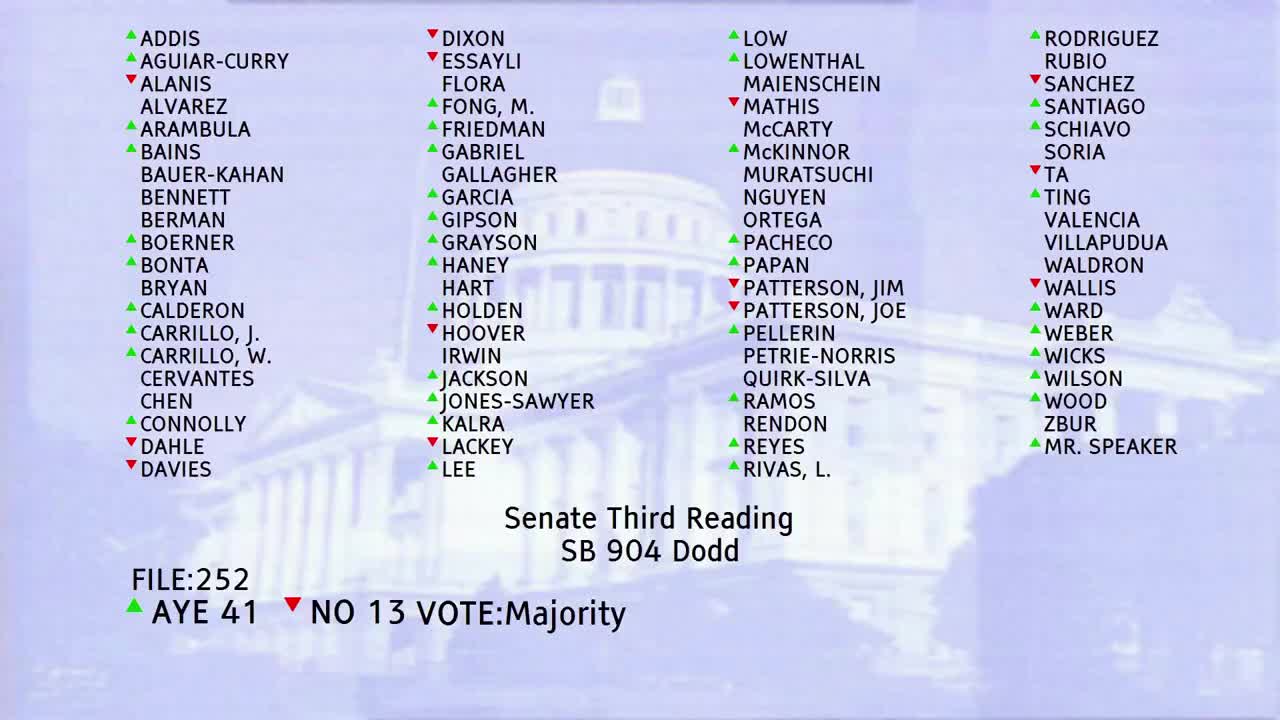 1MIN
Assembly Floor
 3MIN
Assembly Standing Committee on Judiciary
 4MIN
Assembly Standing Committee on Labor and Employment
 2MIN
Senate Floor
 4MIN
Senate Standing Committee on Judiciary
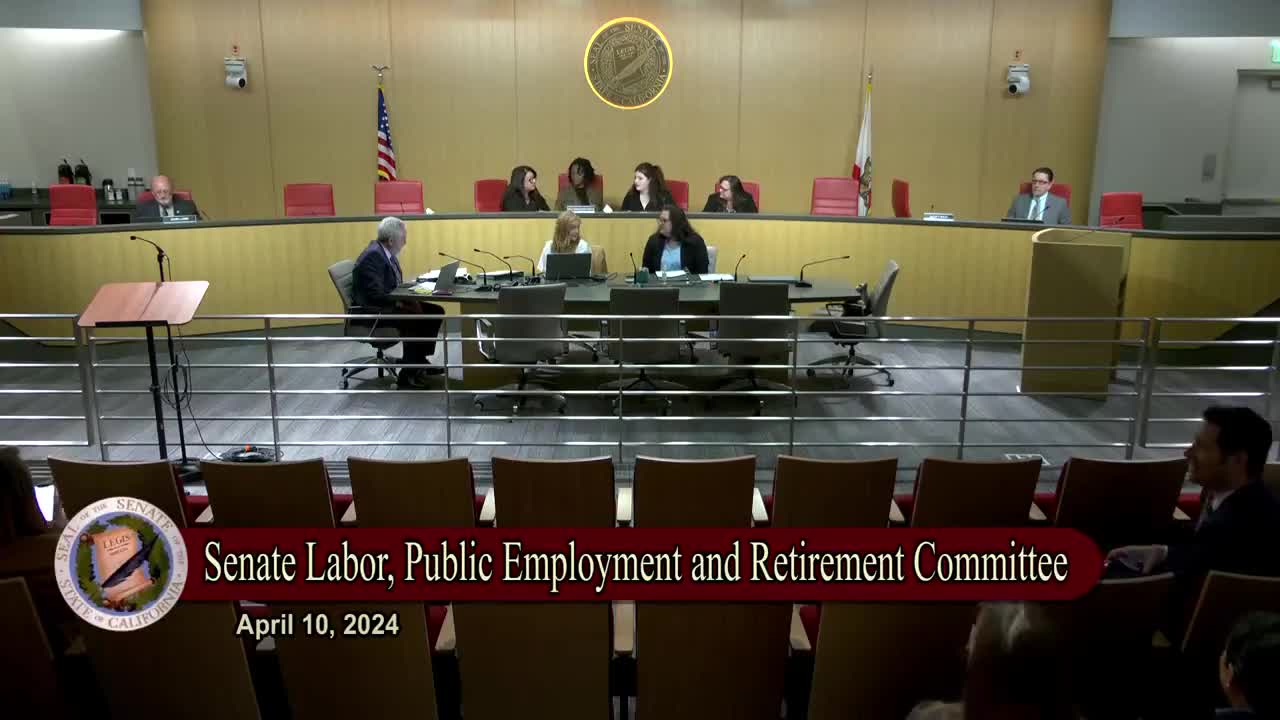 7MIN
Senate Standing Committee on Labor, Public Employment and Retirement
Bill Author

Bill Co-Author(s):