SCA 3: Elections: initiatives and referenda.
- Session Year: 2023-2024
- House: Senate
- Latest Version Date: 2023-03-20
Current Status:
Failed
(2023-09-01: September 1 hearing: Held in committee and under submission.)
Introduced
In Committee
First Chamber
In Committee
Second Chamber
Enacted
What does this bill do?
This measure shifts the job of writing the short title, summary, and ballot label for proposed statewide measures from the Attorney General to the Legislative Analyst, affecting sponsors of initiatives (voter‑proposed laws), referenda (voter challenges to laws), and the voter information provided to Californians. It also requires that a copy of an initiative or referendum petition be submitted to the Legislative Analyst before the petition is circulated for signatures.
The summary is provided by generative AI which can make mistakes. For original language, please view the details in the table below.
The California Constitution provides that the electors may propose a statute or an amendment to the California Constitution by initiative and approve or reject a statute by referendum. An initiative measure may be proposed by presenting to the Secretary of State a petition that sets forth the text of the proposed statute or amendment to the Constitution and is certified to have been signed by the required number of electors, as prescribed. A referendum measure may be proposed by presenting to the Secretary of State a petition that sets forth the statute or part of the statute to be submitted to the electors, and is certified to have been signed by the required number of electors. Before the circulation of an initiative or referendum petition for signatures, the California Constitution requires that a copy of the petition be submitted to the Attorney General, who must prepare a title and summary of the measure. Existing statutory law also directs the Attorney General to prepare the ballot label and the ballot title and summary that is included in the state voter information guide for each measure that appears on a statewide ballot.
This measure would transfer from the Attorney General to the Legislative Analyst the duty of preparing the title and summary for a proposed initiative or referendum. The measure would also require, for each measure that appears on a statewide ballot, the Legislative Analyst to prepare the ballot label and the ballot title and summary for the state voter information guide.
Resolved by the Assembly, the Senate concurring, That the Legislature of the State of California at its 202324 Regular Session commencing on the fifth day of December 2022, two-thirds of the membership of each house concurring, hereby proposes to the people of the State of California, that the Constitution of the State be amended as follows:
For each measure that appears on a statewide ballot, the Legislative Analyst shall prepare the ballot label, label and the ballot title and summary for the state voter information guide.
(a)The referendum is the power of the electors to approve or reject statutes or parts of statutes except urgency statutes, statutes calling elections, and statutes providing for tax levies or appropriations for usual current expenses of the State.
(b)A referendum measure may be proposed by presenting to the Secretary of State, within 90 days after the enactment date of the statute, a petition certified to have been signed by electors equal in number to 5 percent of the votes for all candidates for Governor at the last gubernatorial election, asking that the statute or part of it be submitted to the electors. In the case of a statute enacted by a bill passed by the Legislature on or before the date the Legislature adjourns for a joint recess to reconvene in the second calendar year of the biennium of the legislative session, and in the possession of the Governor after that date, the petition may not be presented on or after January 1 next following the enactment date unless a copy of the petition is submitted to the Legislative Analyst pursuant to subdivision (d) of Section 10 before January 1.
(c)The Secretary of State shall then submit the measure at the next general election held at least 31 days after it qualifies or at a special statewide election held prior to that general election. The Governor may call a special statewide election for the measure.
(a)An initiative statute or referendum approved by a majority of votes cast thereon takes effect on the fifth day after the Secretary of State files the statement of the vote for the election at which the measure is voted on, but the measure may provide that it becomes operative after its effective date. If a referendum petition is filed against a part of a statute, the remainder of the statute shall not be delayed from going into effect.
(b)If provisions of two or more measures approved at the same election conflict, the provisions of the measure receiving the highest number of affirmative votes shall prevail.
(c)The Legislature may amend or repeal a referendum statute. The Legislature may amend or repeal an initiative statute by another statute that becomes effective only when approved by the electors unless the initiative statute permits amendment or repeal without the electors approval.
(d)Before circulation of an initiative or referendum petition for signatures, a copy shall be submitted to the Legislative Analyst, who shall prepare a title and summary of the measure as provided by law.
(e)The Legislature shall provide for the manner in which a petition shall be circulated, presented, and certified, and the manner in which a measure shall be submitted to the electors.
(a)At regular sessions a bill other than the budget bill may not be heard or acted on by committee or either house until the 31st day after the bill is introduced unless the house dispenses with this requirement by rollcall vote entered in the journal, three-fourths of the membership concurring.
(b)(1)The Legislature may make no law except by statute and may enact no statute except by bill. A bill may not be passed unless it is read by title on three days in each house except that the house may dispense with this requirement by rollcall vote entered in the journal, two-thirds of the membership concurring.
(2)A bill may not be passed or ultimately become a statute unless the bill with any amendments has been printed, distributed to the members, and published on the Internet, in its final form, for at least 72 hours before the vote, except that this notice period may be waived if the Governor has submitted to the Legislature a written statement that dispensing with this notice period for that bill is necessary to address a state of emergency, as defined in paragraph (2) of subdivision (c) of Section 3 of Article XIIIB, that has been declared by the Governor, and the house considering the bill thereafter dispenses with the notice period for that bill by a separate rollcall vote entered in the journal, two-thirds of the membership concurring, before the vote on the bill.
(3)A bill may not be passed unless, by rollcall vote entered in the journal, a majority of the membership of each house concurs.
(c)(1)Except as provided in paragraphs (2) and (3), a statute enacted at a regular session shall go into effect on January 1 next following a 90-day period from the date of enactment of the statute and a statute enacted at a special session shall go into effect on the 91st day after adjournment of the special session at which the bill was passed.
(2)A statute, other than a statute establishing or changing boundaries of a legislative, congressional, or other election district, enacted by a bill passed by the Legislature on or before the date the Legislature adjourns for a joint recess to reconvene in the second calendar year of the biennium of the legislative session, and in the possession of the Governor after that date, shall go into effect on January 1 next following the enactment date of the statute unless, before January 1, a copy of a referendum petition affecting the statute is submitted to the Legislative Analyst pursuant to subdivision (d) of Section 10 of Article II, in which event the statute shall go into effect on the 91st day after the enactment date unless the petition has been presented to the Secretary of State pursuant to subdivision (b) of Section 9 of Article II.
(3)Statutes calling elections, statutes providing for tax levies or appropriations for the usual current expenses of the State, and urgency statutes shall go into effect immediately upon their enactment.
(d)Urgency statutes are those necessary for immediate preservation of the public peace, health, or safety. A statement of facts constituting the necessity shall be set forth in one section of the bill. In each house the section and the bill shall be passed separately, each by rollcall vote entered in the journal, two-thirds of the membership concurring. An urgency statute may not create or abolish any office or change the salary, term, or duties of any office, or grant any franchise or special privilege, or create any vested right or interest.
Resolved by the Assembly, the Senate concurring, That the Legislature of the State of California at its 202324 Regular Session commencing on the fifth day of December 2022, two-thirds of the membership of each house concurring, hereby proposes to the people of the State of California, that the Constitution of the State be amended as follows:
For each measure that appears on a statewide ballot, the Legislative Analyst shall prepare the ballot label, and the ballot title and summary for the state voter information guide.
(a)The referendum is the power of the electors to approve or reject statutes or parts of statutes except urgency statutes, statutes calling elections, and statutes providing for tax levies or appropriations for usual current expenses of the State.
(b)A referendum measure may be proposed by presenting to the Secretary of State, within 90 days after the enactment date of the statute, a petition certified to have been signed by electors equal in number to 5 percent of the votes for all candidates for Governor at the last gubernatorial election, asking that the statute or part of it be submitted to the electors. In the case of a statute enacted by a bill passed by the Legislature on or before the date the Legislature adjourns for a joint recess to reconvene in the second calendar year of the biennium of the legislative session, and in the possession of the Governor after that date, the petition may not be presented on or after January 1 next following the enactment date unless a copy of the petition is submitted to the Attorney General Legislative Analyst pursuant to subdivision (d) of Section 10 of Article II before January 1.
(c)The Secretary of State shall then submit the measure at the next general election held at least 31 days after it qualifies or at a special statewide election held prior to that general election. The Governor may call a special statewide election for the measure.
(a)An initiative statute or referendum approved by a majority of votes cast thereon takes effect on the fifth day after the Secretary of State files the statement of the vote for the election at which the measure is voted on, but the measure may provide that it becomes operative after its effective date. If a referendum petition is filed against a part of a statute, the remainder of the statute shall not be delayed from going into effect.
(b)If provisions of two or more measures approved at the same election conflict, the provisions of the measure receiving the highest number of affirmative votes shall prevail.
(c)The Legislature may amend or repeal a referendum statute. The Legislature may amend or repeal an initiative statute by another statute that becomes effective only when approved by the electors unless the initiative statute permits amendment or repeal without the electors approval.
(d)Before circulation of an initiative or referendum petition for signatures, a copy shall be submitted to the Attorney General Legislative Analyst, who shall prepare a title and summary of the measure as provided by law.
(e)The Legislature shall provide for the manner in which a petition shall be circulated, presented, and certified, and the manner in which a measure shall be submitted to the electors.
(a)At regular sessions no a bill other than the budget bill may not be heard or acted on by committee or either house until the 31st day after the bill is introduced unless the house dispenses with this requirement by rollcall vote entered in the journal, three fourths three-fourths of the membership concurring.
(b)(1)The Legislature may make no law except by statute and may enact no statute except by bill. No A bill may not be passed unless it is read by title on 3 three days in each house except that the house may dispense with this requirement by rollcall vote entered in the journal, two thirds two-thirds of the membership concurring.
(2)No A bill may not be passed or ultimately become a statute unless the bill with any amendments has been printed, distributed to the members, and published on the Internet, in its final form, for at least 72 hours before the vote, except that this notice period may be waived if the Governor has submitted to the Legislature a written statement that dispensing with this notice period for that bill is necessary to address a state of emergency, as defined in paragraph (2) of subdivision (c) of Section 3 of Article XIIIB, that has been declared by the Governor, and the house considering the bill thereafter dispenses with the notice period for that bill by a separate rollcall vote entered in the journal, two thirds two-thirds of the membership concurring, prior to before the vote on the bill.
(3)No A bill may not be passed unless, by rollcall vote entered in the journal, a majority of the membership of each house concurs.
(c)(1)Except as provided in paragraphs (2) and (3) of this subdivision, (3), a statute enacted at a regular session shall go into effect on January 1 next following a 90-day period from the date of enactment of the statute and a statute enacted at a special session shall go into effect on the 91st day after adjournment of the special session at which the bill was passed.
(2)A statute, other than a statute establishing or changing boundaries of any a legislative, congressional, or other election district, enacted by a bill passed by the Legislature on or before the date the Legislature adjourns for a joint recess to reconvene in the second calendar year of the biennium of the legislative session, and in the possession of the Governor after that date, shall go into effect on January 1 next following the enactment date of the statute unless, before January 1, a copy of a referendum petition affecting the statute is submitted to the Attorney General Legislative Analyst pursuant to subdivision (d) of Section 10 of Article II, in which event the statute shall go into effect on the 91st day after the enactment date unless the petition has been presented to the Secretary of State pursuant to subdivision (b) of Section 9 of Article II.
(3)Statutes calling elections, statutes providing for tax levies or appropriations for the usual current expenses of the State, and urgency statutes shall go into effect immediately upon their enactment.
(d)Urgency statutes are those necessary for immediate preservation of the public peace, health, or safety. A statement of facts constituting the necessity shall be set forth in one section of the bill. In each house the section and the bill shall be passed separately, each by rollcall vote entered in the journal, two thirds two-thirds of the membership concurring. An urgency statute may not create or abolish any office or change the salary, term, or duties of any office, or grant any franchise or special privilege, or create any vested right or interest.
|
Date
|
Status
|
|---|---|
| Sep 1, 2023 | September 1 hearing: Held in committee and under submission. |
| Aug 29, 2023 | Set for hearing September 1. |
| Aug 28, 2023 | August 28 hearing: Placed on APPR suspense file. |
| Aug 24, 2023 | Set for hearing August 28. |
| May 9, 2023 | From committee: Be adopted and re-refer to Com. on APPR. (Ayes 7. Noes 0. Page 1026.) (May 8). Re-referred to Com. on APPR. |
| Apr 25, 2023 | Set for hearing May 8. |
| Mar 20, 2023 | From committee with author's amendments. Read second time and amended. Re-referred to Com. on E. & C.A. |
| Mar 1, 2023 | Referred to Com. on E. & C.A. |
| Feb 21, 2023 | From printer. May be acted upon on or after March 20. |
| Feb 17, 2023 | Introduced. Read first time. To Com. on RLS. for assignment. To print. |
|
Date
|
Description
|
Location
|
Votes
|
|
|---|---|---|---|---|
| Aug 28, 2023 | Placed on suspense file | Senate Standing Committee on Appropriations |
Passed |
|
| May 8, 2023 | Be adopted, but first be re-referred to the Committee on [Appropriations] | Senate Standing Committee on Elections and Constitutional Amendments |
Passed |
This list shows positions taken on this bill by organizations on the date displayed, which is linked to the original source.
Positions by individuals are not included.
|
Organization
|
Position
|
Date
|
|---|---|---|
| California Builders Alliance | ** Support | |
| California Chamber Of Commerce | ** Support | |
| California Nurses Association/National Nurses United | ** Against | |
| Common Cause California | * Support | May 8, 2023 |
| Election Integrity Project California, Inc. | ** Support | |
| League Of Women Voters Of California | ** Support | |
| Sacramento Regional Builders Exchange | ** Support | |
| VALLEY INDUSTRY AND COMMERCE ASSOCIATION | * Support | Aug 28, 2023 |
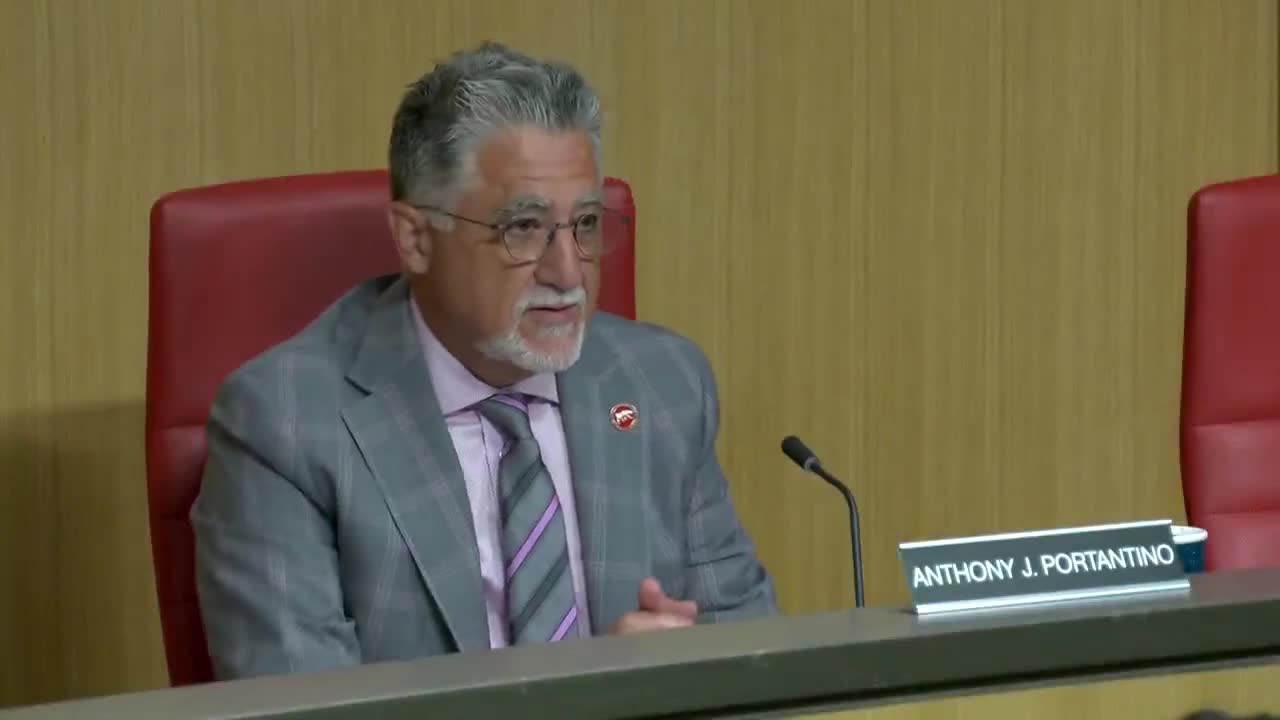
SENATE COMMITTEE ON APPROPRIATIONS
Senator Anthony Portantino, Chair
2023 - 2024 Regular Session
SCA 3 (Niello) - Elections: initiatives and referenda
Version: March 20, 2023 | Policy Vote: E. & C.A. 7 - 0 |
Urgency: | Mandate: No |
Hearing Date: August 28, 2023 | Consultant: Robert Ingenito |
Bill Summary:
SCA 3 would, if approved by voters, transfer from the Attorney General (AG) to the Legislative Analyst’s Office (LAO) the duties of (1) preparing the circulating title and summary for statewide ballot measures, and (2) preparing the ballot label and the title and summary for the state voter information guide for measures appearing on a statewide ballot.
Fiscal Impact:
- This measure would result in one-time General Fund costs to the Secretary of State (SOS) in the range of $738,000 to $984,000, likely in 2024-25, for printing and mailing costs to place the measure on the ballot in a statewide election. Actual costs may be higher or lower, depending on the length of required elements and the overall size of the ballot.
- Viewed by itself, this measure could be implemented in a variety of ways, each with differing fiscal impacts to the LAO. Staff assumes that this measure’s statutory implementation would occur through SB 858 (Niello). Under this assumption, the LAO would incur increased administrative costs, potentially up to the low hundreds of thousands of dollars annually (General Fund). The LAO’s funding comes from the Legislature’s budget, which is capped by Proposition 140 (1990). Thus, to the extent the Legislature provides additional funding to the LAO to perform the duties required by the bill, less resources would be available for the remainder of its budget.
- The measure’s fiscal impact to the Department of Justice (DOJ) has yet to be determined; however, it would result in decreased workload to the department (General Fund).
Background:
Current law requires the proponent(s) of a proposed initiative or referendum to submit the proposal to the AG to prepare a circulating title and summary of its chief points and purposes. The AG is required to provide a copy of the circulating title and summary to SOS within 15 days after receipt of the fiscal estimate prepared by the Department of Finance (DOF) and the LAO. This fiscal estimate must be delivered to the AG within 50 days of the date of initial receipt.
Existing law further requires the AG to provide a copy of the circulating title and summary of a proposed referendum measure to the proponents of the measure and SOS within 10 days after receipt of the proposed referendum. The circulating title and summary of a proposed statewide ballot measure is required to appear on the measure’s petitions.
Finally, existing law requires the AG to provide a ballot label and a ballot title for each measure to be submitted to the voters at a statewide election for inclusion in the state ballot pamphlet and the actual ballots.
In 1941, the Legislature created the LAO through a joint rule of the Senate and Assembly. The LAO was the first legislative fiscal office of its kind in the nation. The joint rule establishing the office set forth its mission: “to ascertain the facts and make recommendations to the Joint Legislative Budget Committee (JLBC) and, under its direction, to the committees of the Legislature concerning (1) the state budget, (2) the revenues and expenditures of the State, and (3) the organization and functions of the State and its departments, subdivisions, and agencies.” The office is overseen by the Joint Legislative Budget Committee and is funded jointly by the Senate and the Assembly.
The LAO is known for (1) its fiscal and programmatic expertise, and (2) nonpartisan analyses of the state budget. Historically, one of the most important responsibilities of the LAO has been to analyze the annual Governor's Budget. In recent years, the Office has presented a series of analyses from the beginning to the end of the budget process on overarching fiscal issues as well as specific departmental budget proposals and offered its recommendations for legislative action.
Among its other functions, the LAO has responsibilities concerning state elections. Specifically, the Political Reform Act of 1974 requires (as noted earlier) the Office to prepare (1) an impartial analysis of each state ballot measure, including a fiscal analysis of the impact of the measure on the state and local governments, and (2) initial fiscal analyses of proposed state ballot initiatives before being circulated for signatures.
Proposed Law:
This measure, if approved by the voters, would do the following:
- Transfer from the AG to the LAO the duties of preparing the circulating title and summary for statewide ballot measures.
- Transfer from the AG to the LAO the duties of preparing the ballot label and the title and summary for the state voter information guide for measures appearing on a statewide ballot.
- Require, prior to circulating for signatures, a copy of an initiative or referendum petition be submitted to the LAO instead of the AG for the purpose of preparing the circulating title and summary for a statewide ballot measure.
Related Legislation:
Over the last 15 years, various proposals have been introduced seeking to transfer some or all of the AG’s role in the initiative and referendum process to the LAO. Some of these measures were not heard, and others were heard and subsequently defeated. Specifically:
- SB 858 (Niello) would transfer statutorily from the AG to the LAO the duty of preparing the circulating title and summary, the ballot label and the title and summary for inclusion in the state voter information guide contingent upon voter approval of SCA 3. The bill is currently on the Suspense File of this Committee.
- ACA 4 (Kiley, 2021) substantively similar to this measure, would have transferred from the AG to the LAO the duty of preparing both the circulating title and summary for a proposed initiative or referendum and the ballot label and the ballot title and summary for the state voter information guide. The measure was not heard.
- SB 283 (Nielsen, 2015) was also substantively similar to this measure, but differed in that it would not have affected the existing role of the AG in preparing the circulating title and summary of proposed ballot measures. The measure was not heard.
- SB 1253 (Steinberg, Chapter 697, Statutes of 2014), imposed additional requirements on the AG when preparing ballot titles and summaries.
- SB 1294 (Huff, 2014) was substantively similar to SB 283, and failed passage in the Senate Committee on Elections and Constitutional Amendments.
- AB 2394 (Gorell, 2014) would have required the SOS, instead of the AG, to prepare the circulating title and summary for initiative and referendum measures and the ballot label and the ballot title and summary for all state measures submitted to the voters. AB 2394 was not heard and subsequently died in the Assembly.
- SCA 19 (Fuller, 2012) and SB 1296 (Fuller, 2012) were substantively similar to this measure and would have transferred the duty of preparing the circulating title and summary for proposed initiative or referendum measures and the ballot title and summary from the AG to the LAO. Both measures failed passage in the Senate Committee on Elections and Constitutional Amendments.
- AB 1968 (Niello, 2010), among other provisions, would have required the LAO, instead of the AG, prepare a circulating title and summary of the chief purpose and points of a proposed state initiative or referendum measure and a ballot label. The measure failed passage in the Assembly Committee on Appropriations.
- ACA 20 and AB 319 (Niello, 2009) were substantively similar to AB 1968 in that they would have required the LAO, instead of the AG, to prepare a circulating title and summary of the chief purpose and points of a proposed state initiative or referendum measure and a ballot label. Both measures failed passage in the Assembly Committee on Elections and Redistricting.
- AB 2209 (Niello, 2008) was substantively similar to AB 319 and AB 1968. The measure failed passage in the Assembly Committee on Elections and Redistricting.
Staff Comments:
SOS indicates that printing and mailing costs associated with placing a measure on the statewide ballot are approximately $123,000 per page, depending on the length of the ballot. The fiscal estimates noted above reflect the addition of 6-8 pages in the Voter Information Guide. Actual costs would depend upon the length of the title and summary, analysis by the LAO, proponent and opponent arguments, and text of the proposal.
As noted previously, the LAO itself is a part of the Legislature; it is funded from the Legislature’s budget. Specifically, the LAO receives an annual transfer from both the Senate and the Assembly to fund its operations. Proposition 140, approved by the voters in 1990, capped the Legislature’s budget. Since that time, funding for the LAO has accounted for less than 3 percent of the Legislature’s annual budget. Under the requirements of Proposition 140, any additional resources required by the LAO for administrative duties required under this bill would have to come from the Legislature’s budget.
-- END --
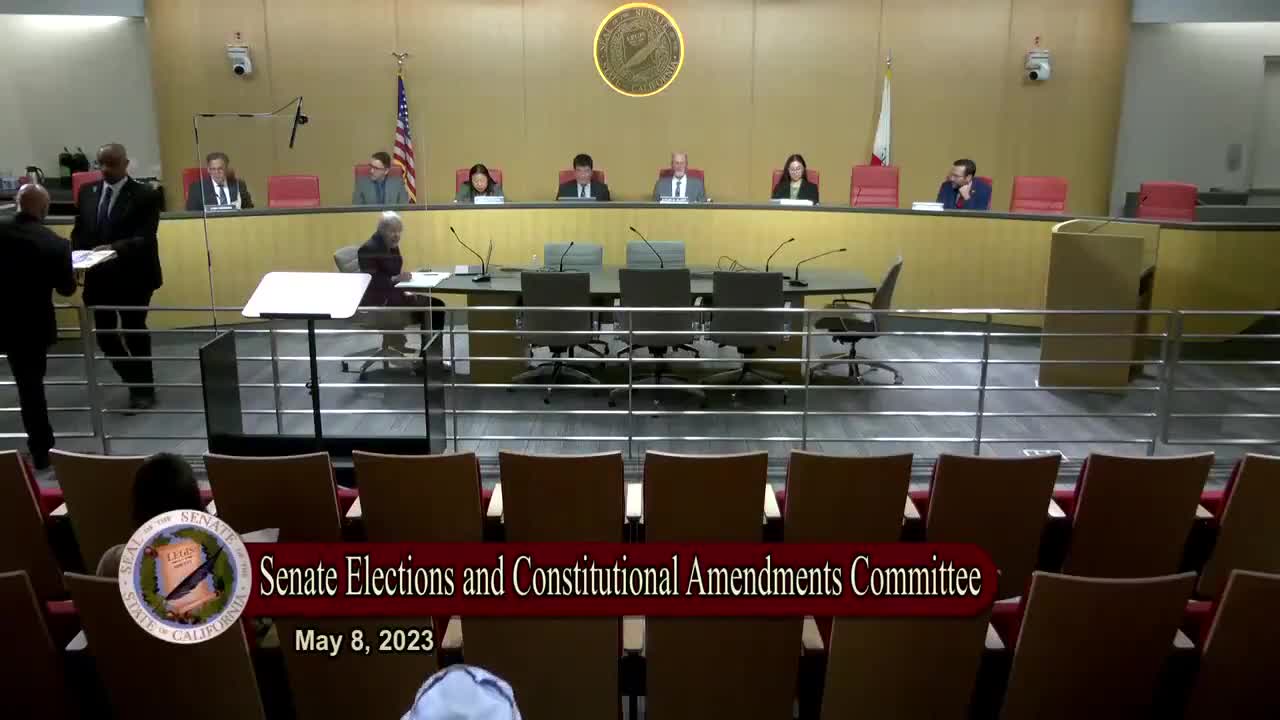
SENATE COMMITTEE ON
ELECTIONS AND CONSTITUTIONAL AMENDMENTS
Senator Steven Glazer, Chair
2023 - 2024 Regular
Bill No: SCA Hearing Date: 5/8/23
Author: | |||
Version: | 3/20/23 | ||
Urgency: |
| Fiscal: | Yes |
Consultant: | Karen French | ||
Subject: Elections: initiatives and referenda
DIGEST
This measure, if approved by voters, transfers from the Attorney General (AG) to the Legislative Analyst the duties of preparing the circulating title and summary for statewide ballot measures. This measure also transfers from the AG to the Legislative Analyst the duties of preparing the ballot label and the title and summary for the state voter information guide for measures appearing on a statewide ballot.
ANALYSIS
Existing law:
- Requires, pursuant to both the California Constitution and specified statutes, the proponent(s) of a proposed initiative or referendum to submit the proposal to the AG to prepare a circulating title and summary of its chief points and purposes. Requires the AG to provide a copy of the circulating title and summary to the Secretary of State (SOS) within 15 days after receipt of the fiscal estimate or opinion prepared by the Department of Finance (DOF) and the Legislative Analyst. Provides that the date the copy is delivered is the “official summary date.” Requires the fiscal estimate prepared by the DOF and the Legislative Analyst to be delivered to the AG within 50 days of the date of receipt of the proposed initiative measure by the AG.
- Defines the referendum as the power of the electors to approve or reject statutes, as specified. Provides that a referendum measure may be proposed by presenting a petition to the SOS, within 90 days after enactment of the statute, and requires the AG to provide a copy of the circulating title and summary of a proposed referendum measure to the proponents of the measure and the SOS within 10 days after receipt of the proposed referendum. Requires the circulating title and summary of a proposed statewide ballot measure to appear on the measure’s petitions.
- Requires the AG to provide a ballot label and a ballot title for each measure to be submitted to the voters at a statewide election for inclusion in the state ballot pamphlet and on the actual ballots.
This measure:
- Transfers from the AG to the Legislative Analyst the duties of preparing the circulating title and summary for statewide ballot measures.
- Transfers from the AG to the Legislative Analyst the duties of preparing the ballot label and the title and summary for the state voter information guide for measures appearing on a statewide ballot.
- Requires, prior to circulating for signatures, a copy of an initiative or referendum petition be submitted to the Legislative Analyst instead of the AG for the purpose of preparing the circulating title and summary for a statewide ballot measure.
- Makes other technical and conforming changes.
BACKGROUND
The DOF and the Legislative Analyst Office. The DOF serves as the Governor’s chief fiscal policy advisor in fiscal matters. The Legislative Analyst is appointed by the Joint Legislative Budget Committee (JLBC), a 16-member bipartisan joint committee of the Legislature. According to their website, the Legislative Analyst’s Office (LAO) has provided nonpartisan fiscal and policy analysis to the California Legislature since 1941. Currently, 43 analytical staff cover several budget and policy areas: criminal justice, state finance, education (including K-12 and higher education), health and human services, natural resources and environment, general government (including local government), transportation, and capital outlay and infrastructure.
Historically, one of the most important responsibilities of the LAO has been to analyze the annual Governor’s budget. More generally, the office is a staff resource to all legislators. The LAO also performs the following functions:
• Budget “Control.” The LAO reviews requests by the administration to make changes to the budget after it is enacted. These reviews are used primarily by members of the JLBC and the fiscal committees.
• Special Reports. Throughout the year, the office prepares special reports on the state budget and topics of interest to the Legislature.
• Initiatives and Ballot Measures. The office estimates the fiscal effect on state and local government of all proposed initiatives (prior to circulation) and prepares analyses of all measures that qualify for the statewide ballot.
• Forecasting. The LAO forecasts the state revenues and expenditures.
History of Similar Proposals. Over the last 15 years, various proposals have been introduced seeking to transfer some or all of the AG’s role in the initiative and referendum process to the Legislative Analyst. Some of these measures were not heard, and others were heard and subsequently defeated. Please see RELATED/PRIOR LEGISATION for a list of prior legislative efforts.
COMMENTS
- According to the author: The initiative process is an integral and vital component of direct democracy in California, and is being exercised with increased frequency. An effective initiative process necessitates a non-partisan entity, without political pressures, to draft the ballot title and summary. However, the soundness of our initiative process is compromised when the ballot title and summary is partial. Unfortunately, ballot language is susceptible to politicization, causing it to be inaccurate and misleading. This leads to a confused and frustrated, rather than educated and engaged, electorate. While initiatives themselves are inherently political, the ballot title and summary should not be. To maintain good governance and impartiality in California’s initiatives process, the duty of drafting title and summary should be moved from the AG and placed under the jurisdiction of the Legislative Analyst.
SCA 3 transfers the constitutional authority to write the ballot title and summary from the AG’s office to the Legislative Analyst. The LAO is an independent, non-partisan and trusted organization that provides credible and impartial analysis for the Legislature. The LAO currently provides an unbiased and honest analysis of each initiative. With this new duty, the LAO will create a fair and balanced ballot title and summary for each initiative. As the non-partisan entity that advises the Legislature and prepares fiscal analyses of measures, the LAO already has a solid track record of providing important information on behalf of voters.
- Argument in Support. In a letter supporting SCA 3, the California Chamber of Commerce stated, in part, the following:
SCA 3 (Niello)…would ensure fairness and objectivity in the process of preparing the ballot title and summary for each statewide measure that the SOS determines will appear on the ballot in a statewide election. Currently, the responsibility lies with the elected position of the AG. These proposals would transfer that responsibility to the independent Legislative Analyst.
[…]
Statewide measures before the voters have wide-ranging and very serious consequences, impacting almost every aspect of the daily lives of Californians. It is long past time that we remove the politics from this process and ensure that a non-partisan entity perform this incredibly important task.
3) Argument in Opposition. In a letter opposing SCA 3, the California Nurses Association/National Nurses United stated, in part, the following:
This legislation would inappropriately shift the duty of preparing titles and summaries for initiatives and ballot measures from the AG to the LAO, insulating these duties from political accountability and shifting time-consuming responsibilities to an office with staff that already has tremendous responsibilities to provide advice to the Legislature. Given the wide-reaching effect that both ballot measures and the initiative process can have on California, robust systemic protections are necessary to ensure fairness and accountability. This bill serves to undermine those protections in California’s ballot measure and initiative process.
RELATED/PRIOR LEGISLATION
SB 858 (Niello) of 2023 transfers statutorily from the AG to the Legislative Analyst, the duty of preparing the circulating title and summary, the ballot label and the title and summary for inclusion in the state voter information guide contingent upon voter approval of SCA 3. SB 858 is currently in the Senate Committee on Appropriations.
ACA 4 (Kiley) of 2021, substantively similar to this measure, would have transferred from the AG to the Legislative Analyst, the duty of preparing both the circulating title and summary for a proposed initiative or referendum and the ballot label and the ballot title and summary for the state voter information guide. ACA 4 was not heard and was returned to the Assembly Desk.
SB 283 (Nielsen) of 2015 was also substantively similar to this measure, but differed in that it would not have affected the existing role of the AG in preparing the circulating title and summary of proposed ballot measures. SB 283 was not taken up in this committee and returned to the Secretary of the Senate.
SB 1253 (Steinberg), Chapter 697, Statutes of 2014, imposed additional requirements on the AG when preparing ballot titles and summaries.
SB 1294 (Huff) of 2014 was substantively similar to SB 283. SB 1294 failed passage in this committee.
AB 2394 (Gorell) of 2014 would have required the SOS, instead of the AG, to prepare the circulating title and summary for initiative and referendum measures and the ballot label and the ballot title and summary for all state measures submitted to the voters. AB 2394 was not heard and subsequently died in the Assembly.
SCA 19 (Fuller) of 2012 and SB 1296 (Fuller) of 2012 were substantively similar to this measure and would have transferred the duty of preparing the circulating title and summary for proposed initiative or referendum measures and the ballot title and summary from the AG to the Legislative Analyst. Both measures failed passage in this committee.
AB 1968 (Niello) of 2010, among other provisions, would have required the Legislative Analyst, instead of the AG, to prepare a circulating title and summary of the chief purpose and points of a proposed state initiative or referendum measure and a ballot label. AB 1968 failed passage in the Assembly Committee on Appropriations.
ACA 20 & AB 319 (Niello) of 2009 were substantively similar to AB 1968 (Niello) in that they would have required the Legislative Analyst, instead of the AG, to prepare a circulating title and summary of the chief purpose and points of a proposed state initiative or referendum measure and a ballot label. Both measures failed passage in the Assembly Committee on Elections and Redistricting.
AB 2209 (Niello) of 2008 was substantively similar to AB 319 and AB 1968. AB 2209 failed passage in the Assembly Committee on Elections and Redistricting.
POSITIONS
Sponsor: Author
Support: California Builders Alliance
California Chamber of Commerce
California Common Cause
Election Integrity Project California, Inc.
League of Women Voters of California
Sacramento Regional Builders Exchange
Two Individuals
Oppose: California Nurses Association/National Nurses United
-- END --
Discussed in Hearing
 1MIN
Senate Standing Committee on Appropriations
 7MIN
Senate Standing Committee on Elections and Constitutional Amendments
Bill Author