SCA 5: Educational expenses: education savings accounts.
- Session Year: 2023-2024
- House: Senate
- Latest Version Date: 2023-03-08
Current Status:
Failed
(2024-02-08: Returned to Secretary of Senate pursuant to Joint Rule 62(a).)
Introduced
In Committee
First Chamber
In Committee
Second Chamber
Enacted
What does this bill do?
This measure would let the state and its local agencies give money or tax and other public benefits to parents for tuition and education-related costs, and to private schools or colleges (including religious schools), through an Education Savings Account program. It also says children who use those accounts would be counted when measuring school attendance for funding formulas and allows the Legislature to require local property tax money be allocated to support the program.
The summary is provided by generative AI which can make mistakes. For original language, please view the details in the table below.
(1)The California Constitution requires the Legislature to encourage, by all suitable means, the promotion of intellectual, scientific, moral, and agricultural improvement. The California Constitution also requires the Legislature to provide for a system of common schools by which a free school is kept up and supported in each district at least 6 months in every year. The California Constitution prohibits public money from being appropriated for the support of any sectarian or denominational school or any school not under the exclusive control of the officers of the public schools.
This measure, notwithstanding the constitutional provisions referenced above or any other provision of the California Constitution, would authorize the state, and every agency or political subdivision of the state, to disburse funds pursuant to an agreement between the state and a parent or legal guardian of an eligible child for tuition and education-related expenses, as provided by statute, and provide tax or other public benefits to private schools, private colleges, private universities, or private vocational educational or training institutions, irrespective of religious affiliation, to further the promotion of intellectual, scientific, moral, and agricultural improvement.
(2)The Classroom Instructional Improvement and Accountability Act, an initiative approved by the voters as Proposition 98 at the November 8, 1988, statewide general election, amended the California Constitution to, among other things, set forth a formula for computing the minimum amount of revenues that the state is required to appropriate for the support of school districts and community college districts based on one of 3 tests in any given fiscal year, one of which is based on the percentage of General Fund revenues appropriated for school districts and community college districts, respectively, in fiscal year 198687, and two of which are based on, among other things, changes in enrollment. The California Constitution measures changes in enrollment by the percentage change in average daily attendance.
The California Constitution generally prohibits the total annual appropriations subject to limitation of the state and each local government from exceeding the appropriations limit of the entity of government for the prior fiscal year, adjusted for the change in the cost of living and the change in population, and prescribes procedures for making adjustments to the appropriations limit. The California Constitution defines the change in population of a school district or community college district as the percentage change in the average daily attendance of the school district or community college district from the preceding fiscal year, as determined by a method prescribed by the Legislature.
For purposes of measuring changes in enrollment as they relate to computing the minimum amount of revenues the state is required to appropriate for the support of school districts and community college districts, and for purposes of measuring the change in population of a school district or community college district to determine the total annual appropriations limit for school districts and community college districts, this measure would define average daily attendance to include all children enrolled in public kindergarten schools, elementary schools, and secondary schools and all children who are eligible to enroll in public kindergarten schools, elementary schools, and secondary schools but have chosen to fund their kindergarten, elementary, or secondary education with an Education Savings Account, as provided.
(3)The California Constitution generally prohibits the Legislature from enacting a statute to modify or change the manner in which ad valorem property tax revenues are allocated to local agencies, except as provided.
This measure would authorize the Legislature, by statute, to require the allocation of ad valorem property tax revenue in the manner described in the Education Savings Account Act of 2024.
(4)The measure would provide that its provisions are severable and would require the Attorney General to defend against any action challenging the validity of the measure, as provided.
Resolved by the Senate, the Assembly concurring, That the Legislature of the State of California at its 202324 Regular Session commencing on the fifth day of December 2022, two-thirds of the membership of each house concurring, hereby proposes to the people of the State of California, that the Constitution of the State be amended as follows:
Notwithstanding any other provision of this Constitution, including Section 8 of this article and Section 5 of Article XVI, the State, and every agency or political subdivision of the State, may disburse funds pursuant to an agreement between the State and a parent or legal guardian of an eligible child for tuition and education-related expenses, as provided by statute, and may provide tax or other public benefits to private schools, private colleges, private universities, or private vocational educational or training institutions, irrespective of religious affiliation, to further the purposes of Section 1 of this article.
For purposes of Section 8 of this article and Section 8 of Article XIIIB, the term average daily attendance shall include the average daily attendance of all children enrolled in public kindergarten schools, elementary schools, and secondary schools and the average daily attendance of all children who are otherwise eligible to enroll in public kindergarten schools, elementary schools, and secondary schools but have chosen to fund their kindergarten, elementary, or secondary education with an Education Savings Account established pursuant to Article 19.1 (commencing with Section 69995) of Chapter 2 of Part 42 of Division 5 of Title 3 of the Education Code. Notwithstanding any other provision of this Constitution, including Section 25.5 of Article XIII, the Legislature may, by statute, require the allocation of ad valorem property tax revenue pursuant to Section 69995.11 of the Education Code.
(a)The provisions of this measure are severable. If any provision of this measure or its application is for any reason held to be invalid or unconstitutional by a final judgment of a court of competent jurisdiction, that decision shall not affect any other provision or application that can be given effect without the invalid provision or application. The Legislature hereby finds and declares that it would have adopted this measure and each and every portion, section, subdivision, paragraph, clause, sentence, phrase, word, and application not declared invalid or unconstitutional irrespective of whether any portion of this measure, or application thereof, is subsequently declared invalid or unconstitutional.
(b)This measure is intended to be comprehensive. It is the intent of the Legislature that if this measure, and acts relating to the same subject, appear on the same statewide election ballot, the provisions of the other act or acts shall be deemed to be in conflict with this measure. If this measure, and one or more conflicting acts, are adopted by the voters in the same election, and this measure receives a greater number of affirmative votes, the provisions of this measure shall prevail in their entirety, and all provisions of the conflicting acts shall be null and void.
(c)(1)Except as provided in paragraph (2), the Attorney General shall defend against any action challenging, in whole or in part, the validity of this measure, and shall have an unconditional right to intervene in any action to defend the validity of this measure.
(2)If the Attorney General declines to defend the validity of the measure in any action, the Attorney General shall nonetheless file an appeal from, or seek review of, any judgment of any court that determines that the measure is invalid, in whole or in part, if necessary or appropriate to preserve the states standing to defend the law in conformity with the Attorney Generals constitutional duty to see that the laws of the state are adequately enforced.
|
Date
|
Status
|
|---|---|
| Feb 8, 2024 | Returned to Secretary of Senate pursuant to Joint Rule 62(a). |
| Jan 10, 2024 | January 10 set for second hearing. Failed passage in committee. (Ayes 2. Noes 4. Page 2970.) |
| Dec 21, 2023 | Set for hearing January 10. |
| Apr 19, 2023 | April 19 set for second hearing. Failed passage in committee. (Ayes 2. Noes 5. Page 791.) Reconsideration granted. |
| Apr 3, 2023 | Set for hearing April 19. |
| Mar 27, 2023 | April 12 set for first hearing canceled at the request of author. |
| Mar 21, 2023 | Set for hearing April 12. |
| Mar 15, 2023 | Referred to Coms. on ED. and E. & C.A. |
| Mar 9, 2023 | From printer. May be acted upon on or after April 8. |
| Mar 8, 2023 | Introduced. Read first time. To Com. on RLS. for assignment. To print. |
|
Date
|
Description
|
Location
|
Votes
|
|
|---|---|---|---|---|
| Jan 10, 2024 | Be adopted, but first be re-referred to the Committee on [Appropriations] | Senate Standing Committee on Education |
Failed |
|
| Apr 19, 2023 | [Second] hearing set for [04-19-2023]: Failed passage in Committee. Reconsideration granted | Senate Standing Committee on Education |
Passed |
|
| Apr 19, 2023 | Be adopted, but first be re-referred to the Committee on [Elections and Constitutional Amendments] | Senate Standing Committee on Education |
Failed |
This list shows positions taken on this bill by organizations on the date displayed, which is linked to the original source.
Positions by individuals are not included.
|
Organization
|
Position
|
Date
|
|---|---|---|
| AFSCME California | ** Against | |
| American Atheists | ** Against | |
| Association of Christian Schools International | ** Support | |
| California Catholic Conference | ** Support | |
| California Faculty Association | ** Against | |
| California Federation Of Teachers | ** Against | |
| California for Equal Rights Foundation | ** Support | |
| California Labor Federation | ** Against | |
| California Policy Center | ** Support | |
| California Resident | * Support | Apr 19, 2023 |
| California School Boards Association | ** Against | |
| California School Choice Foundation | ** Support | |
| California School Employees Association | ** Against | |
| California Teachers Association | ** Against | |
| Moms for Liberty Placer County | * Support | Apr 19, 2023 |
| Natomas USD for Freedom | ** Support | |
| Not On Our Watch | * Support | Apr 19, 2023 |
| Orange County Resident | * Support | Apr 19, 2023 |
| Orange County Resident | * Against | Apr 19, 2023 |
| Placer County Moms for Liberty | * Support | Apr 19, 2023 |
| Protection of The Educational Rights of Kids | ** Support | |
| SEIU California | ** Against | |
| Silicon Valley Association of Republican Women | ** Support | |
| Stand Up Sacramento County | ** Support |
SENATE COMMITTEE ON EDUCATION
Senator Josh Newman, Chair
2023 - 2024 Regular
Bill No: SCA 5 Hearing Date: January 10, 2024
Author: | |||
Version: | March 8, 2023 | ||
Urgency: |
| Fiscal: | Yes |
Consultant: | Ian Johnson | ||
Subject: Educational expenses: education savings accounts.
NOTE: This measure was previously heard by this Committee on April 19, 2023, and failed passage, but reconsideration was requested and granted.
This measure has been referred to the Committees on Education and Elections. A "do pass" motion should include referral to the Committee on Elections.
SUMMARY
This bill proposes to amend Article IX and Article XVI of the State Constitution to: (1) allow the state to disburse funds and other public benefits to educational institutions irrespective of their religious affiliation, and (2) include the average daily attendance (ADA) of all children who are otherwise eligible to enroll in public kindergarten schools, elementary schools, and secondary schools but have chosen to fund their kindergarten, elementary, or secondary education with an Education Savings Account (ESA) at a private school.
BACKGROUND
The California Constitution establishes the Proposition 98 Guarantee, a minimum funding requirement for schools and community colleges, with three main tests for calculating the guarantee based on inputs such as General Fund revenue, per capita personal income, and ADA.
Section 8 of Article IX and Section 5 of Article XVI of the California Constitution both bar state support for religious schools. Put simply, these sections state that no public money shall ever be appropriated for the support of any sectarian or denominational school, or any school not under the exclusive control of officers of the public schools.
Section 8 of Article XIII B and Section 8 of Article XVI of the California Constitution specify ADA to mean the average daily attendance of school districts in kindergarten and grades one to 12, inclusive, and the community colleges.
ANALYSIS
This bill:
- Authorizes the state, and every agency or political subdivision of the state, to disburse funds pursuant to an agreement between the state and a parent or legal guardian of an eligible child for tuition and education-related expenses, as provided by statute, and provide tax or other public benefits to private schools, private colleges, private universities, or private vocational educational or training institutions, irrespective of religious affiliation, to further the promotion of intellectual, scientific, moral, and agricultural improvement.
- Defines ADA to include all children enrolled in public kindergarten schools, elementary schools, and secondary schools and all children who are eligible to enroll in public kindergarten schools, elementary schools, and secondary schools but have chosen to fund their kindergarten, elementary, or secondary education with an ESA, for purposes of measuring changes in enrollment as they relate to computing the Proposition 98 Guarantee.
- Authorizes the Legislature, by statute, to require the allocation of ad valorem property tax revenue in the manner described in the ESA Act of 2024.
- Specifies that its provisions are severable and require the Attorney General to defend against any action challenging the validity of the measure.
STAFF COMMENTS
- Need for the bill. According to the author, “California’s government-run schools are failing too many students. Any company that failed 84% of its customers would be run out of business, but in California the legislature rewards failing schools with even more funding. The government focuses more on funding institutions than students, and most parents have no other options. SCA 5, The Education Savings Account Act of 2024, will introduce more choice into California’s school system, giving parents and students more educational options. This bill will empower students to enroll in schools better suited for their educational needs. SCA 5 puts children first.
- Companion legislation would create state voucher program and place restrictions on nonresident enrollment in public higher education. This constitutional amendment is a companion measure to SB 292 (Grove, 2023), which would establishes the ESA Act of 2024 and require the Legislature to recalculate the Proposition 98 Guarantee, as specified. SB 292 would only become operative if this measure is approved as part of the November 2024 election. Under SB 292, the Proposition 98 Guarantee would be “rebased” to include private school student ADA but public funding would then be diverted away from traditional public schools to parents that currently enroll their children in private schools. The policy changes and state and local mechanisms required to implement this measure and SB 292 are very complex and would profoundly change how public (and private) education is currently funded. Given that no one knows how many parents and schools would apply for vouchers or move their children from public to private schools, it is difficult to assess the impact of this measure and SB 292 with any meaningful precision.
- State funding for religious schools. In California, roughly 7.5 percent of students, totaling about 500,000, attend private schools. Of those students, many attend a private school that is affiliated with a church or religion. In most states, private school tuition is paid by parents, without significant government support or subsidy. Private schools tend to be costly, not generally tax-deductible, and heavily reliant on donations to support their capital needs. Some private school students may receive certain services from a public school, including services for a student with a disability or check-ins for a student that is home-schooled. The line between private and public schooling becomes more blurred when considering school voucher programs, which SB 292 would establish. In these programs, parents receive state-funded vouchers for use toward payment of tuition costs at a private school. Because many private schools have a religious affiliation, considerations about the separation of church and state arise. Like most states, California’s constitution prohibits the use of public money for religious schools.
- The Proposition 98 Guarantee. Each year, the state calculates a “minimum guarantee” for school and community college funding based upon a set of formulas established by Proposition 98 (1988). The California Constitution sets forth three main tests for calculating the Proposition 98 minimum guarantee. Each test takes into account certain inputs, including General Fund revenue, per capita personal income, and public school ADA. Test 1 links school funding to a minimum share of General Fund revenue, whereas Test 2 and Test 3 build upon the amount of funding provided the previous year. The Constitution sets forth rules for comparing the tests, with one of the tests becoming operative and used for calculating the minimum guarantee that year. Although the state can provide more funding than required, it usually funds at or near the guarantee. With a two‑thirds vote of each house of the Legislature, the state can suspend the guarantee and provide less funding than the formulas require that year. The guarantee consists of state General Fund and local property tax revenue.
- This bill would create costs between $4 and $6 billion, paid by cuts to public education or other areas in the state budget. This bill is substantially similar to a recent proposed constitutional and statutory initiative related to funding for students attending private schools (A.G. File No. 21-0011, Amendment #1). In its analysis of that initiative, the Legislative Analyst’s Office states the following:
“This measure would affect the state budget and the budgets of public schools. The magnitude of these effects largely depends on (1) the number of participating students, and (2) how public and private schools respond to the measure.
The 471,000 students who already attend private schools likely would be the first students to register for this program. In addition, some of the 84,000 students currently attending homeschool probably would switch to participating private schools. Since these students currently receive no state funding, their participation represents an additional cost to the state. Participation probably would be less than 100 percent, however, on the lower end, if 308,000 students participated (representing 60 percent of current private school students and 30 percent of homeschool students switching to private schools), the annual state cost at full implementation would be about $4 billion. On the high end, if 462,000 students participated (representing 90 percent of current private school students and 45 percent of homeschool students switching), the annual state cost would be about $6 billion. The state generally would pay for these costs through reductions to funding for public schools (as the measure allows) and/or reductions to other state programs supported by the state General Fund.”
- Related Legislation
SB 292 (Grove, 2023) would establish the ESA Act of 2024 only if this Senate Constitutional Amendment is approved as part of the November 2024 election.
SUPPORT
California Policy Center (Sponsor)
Association of Christian Schools International
California Catholic Conference
Californians for Equal Rights Foundation
Natomas USD for Freedom
Protection of the Educational Rights for Kids
Silicon Valley Association of Republican Women
Stand Up Sacramento County
5 individuals
OPPOSITION
AFSCME California
American Atheists
California Faculty Association
California Federation of Teachers
California Labor Federation
California School Boards Association
California School Employees Association
California Teachers Association
SEIU California
-- END --
SENATE COMMITTEE ON EDUCATION
Senator Josh Newman, Chair
2023 - 2024 Regular
Bill No: SCA 5 Hearing Date: April 19, 2023
Author: | |||
Version: | March 8, 2023 | ||
Urgency: |
| Fiscal: | Yes |
Consultant: | Ian Johnson | ||
Subject: Educational expenses: education savings accounts.
NOTE: This measure has been referred to the Committees on Education and Elections. A "do pass" motion should include referral to the Committee on Elections.
SUMMARY
This bill proposes to amend Article IX and Article XVI of the State Constitution to: (1) allow the state to disburse funds and other public benefits to educational institutions irrespective of their religious affiliation, and (2) include the average daily attendance (ADA) of all children who are otherwise eligible to enroll in public kindergarten schools, elementary schools, and secondary schools but have chosen to fund their kindergarten, elementary, or secondary education with an Education Savings Account (ESA) at a private school.
BACKGROUND
The California Constitution establishes the Proposition 98 Guarantee, a minimum funding requirement for schools and community colleges, with three main tests for calculating the guarantee based on inputs such as General Fund revenue, per capita personal income, and ADA.
Section 8 of Article IX and Section 5 of Article XVI of the California Constitution both bar state support for religious schools. Put simply, these sections state that no public money shall ever be appropriated for the support of any sectarian or denominational school, or any school not under the exclusive control of officers of the public schools.
Section 8 of Article XIII B and Section 8 of Article XVI of the California Constitution specify ADA to mean the average daily attendance of school districts in kindergarten and grades one to 12, inclusive, and the community colleges.
ANALYSIS
This bill:
- Authorizes the state, and every agency or political subdivision of the state, to disburse funds pursuant to an agreement between the state and a parent or legal guardian of an eligible child for tuition and education-related expenses, as provided by statute, and provide tax or other public benefits to private schools, private colleges, private universities, or private vocational educational or training institutions, irrespective of religious affiliation, to further the promotion of intellectual, scientific, moral, and agricultural improvement.
- Defines ADA to include all children enrolled in public kindergarten schools, elementary schools, and secondary schools and all children who are eligible to enroll in public kindergarten schools, elementary schools, and secondary schools but have chosen to fund their kindergarten, elementary, or secondary education with an ESA, for purposes of measuring changes in enrollment as they relate to computing the Proposition 98 Guarantee.
- Authorizes the Legislature, by statute, to require the allocation of ad valorem property tax revenue in the manner described in the ESA Act of 2024.
- Specifies that its provisions are severable and require the Attorney General to defend against any action challenging the validity of the measure.
STAFF COMMENTS
- Need for the bill. According to the author, “California’s government-run schools are failing too many students. Any company that failed 84% of its customers would be run out of business, but in California the legislature rewards failing schools with even more funding. The government focuses more on funding institutions than students, and most parents have no other options. SCA 5, The Education Savings Account Act of 2024, will introduce more choice into California’s school system, giving parents and students more educational options. This bill will empower students to enroll in schools better suited for their educational needs. SCA 5 puts children first.
- Companion legislation would create state voucher program and place restrictions on nonresident enrollment in public higher education. This constitutional amendment is a companion measure to SB 292 (Grove, 2023), which would establishes the ESA Act of 2024 and require the Legislature to recalculate the Proposition 98 Guarantee, as specified. SB 292 would only become operative if this measure is approved as part of the November 2024 election. Under SB 292, the Proposition 98 Guarantee would be “rebased” to include private school student ADA but public funding would then be diverted away from traditional public schools to parents that currently enroll their children in private schools. The policy changes and state and local mechanisms required to implement this measure and SB 292 are very complex and would profoundly change how public (and private) education is currently funded. Given that no one knows how many parents and schools would apply for vouchers or move their children from public to private schools, it is difficult to assess the impact of this measure and SB 292 with any meaningful precision.
- State funding for religious schools. In California, roughly 7.5 percent of students, totaling about 500,000, attend private schools. Of those students, many attend a private school that is affiliated with a church or religion. In most states, private school tuition is paid by parents, without significant government support or subsidy. Private schools tend to be costly, not generally tax-deductible, and heavily reliant on donations to support their capital needs. Some private school students may receive certain services from a public school, including services for a student with a disability or check-ins for a student that is home-schooled. The line between private and public schooling becomes more blurred when considering school voucher programs, which SB 292 would establish. In these programs, parents receive state-funded vouchers for use toward payment of tuition costs at a private school. Because many private schools have a religious affiliation, considerations about the separation of church and state arise. Like most states, California’s constitution prohibits the use of public money for religious schools.
- The Proposition 98 Guarantee. Each year, the state calculates a “minimum guarantee” for school and community college funding based upon a set of formulas established by Proposition 98 (1988). The California Constitution sets forth three main tests for calculating the Proposition 98 minimum guarantee. Each test takes into account certain inputs, including General Fund revenue, per capita personal income, and public school ADA. Test 1 links school funding to a minimum share of General Fund revenue, whereas Test 2 and Test 3 build upon the amount of funding provided the previous year. The Constitution sets forth rules for comparing the tests, with one of the tests becoming operative and used for calculating the minimum guarantee that year. Although the state can provide more funding than required, it usually funds at or near the guarantee. With a two‑thirds vote of each house of the Legislature, the state can suspend the guarantee and provide less funding than the formulas require that year. The guarantee consists of state General Fund and local property tax revenue.
- This bill would create costs between $4 and $6 billion, paid by cuts to public education or other areas in the state budget. This bill is substantially similar to a recent proposed constitutional and statutory initiative related to funding for students attending private schools (A.G. File No. 21-0011, Amendment #1). In its analysis of that initiative, the Legislative Analyst’s Office states the following:
“This measure would affect the state budget and the budgets of public schools. The magnitude of these effects largely depends on (1) the number of participating students, and (2) how public and private schools respond to the measure.
The 471,000 students who already attend private schools likely would be the first students to register for this program. In addition, some of the 84,000 students currently attending homeschool probably would switch to participating private schools. Since these students currently receive no state funding, their participation represents an additional cost to the state. Participation probably would be less than 100 percent, however, on the lower end, if 308,000 students participated (representing 60 percent of current private school students and 30 percent of homeschool students switching to private schools), the annual state cost at full implementation would be about $4 billion. On the high end, if 462,000 students participated (representing 90 percent of current private school students and 45 percent of homeschool students switching), the annual state cost would be about $6 billion. The state generally would pay for these costs through reductions to funding for public schools (as the measure allows) and/or reductions to other state programs supported by the state General Fund.”
- Related Legislation
SB 292 (Grove, 2023) would establish the ESA Act of 2024 only if this Senate Constitutional Amendment is approved as part of the November 2024 election.
SUPPORT
California Policy Center (sponsor)
Association of Christian Schools International
California Catholic Conference
California School Choice Foundation
Californians for Equal Rights Foundation
Natomas USD for Freedom
Protection of the Educational Rights for Kids
Silicon Valley Association of Republican Women
Stand Up Sacramento County
OPPOSITION
California School Boards Association
California School Employees Association
California Teachers Association
-- END --
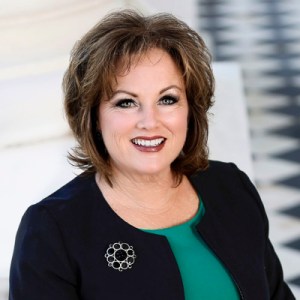
Bill Author
Bill Co-Author(s):