SJR 14: Deferred compensation.
- Session Year: 2023-2024
- House: Senate
- Latest Version Date: 2024-03-04
Current Status:
Failed
(2024-07-01: July 1 hearing canceled at the request of author.)
Introduced
In Committee
First Chamber
In Committee
Second Chamber
Enacted
This measure would urge the Congress of the United States to establish a reasonable cap on deferred compensation.
WHEREAS, In December 2023, the Los Angeles Dodgers baseball team signed a 10-year, $700,000,000 contract with pitcher and hitter Shohei Ohtani; and
WHEREAS, The current contract is structured so that Ohtani will defer $68,000,000 annually, receiving only $2,000,000 per year for 10 years and potentially saving Ohtani over $90,000,000 in state taxes if he were to reside outside of California when the deferred compensation is paid; and
WHEREAS, The current tax system can allow for unlimited deferrals for high-income earners, establishing an unbalanced tax structure and income inequality; and
WHEREAS, There is a 1996 federal law that bars states from taxing retirement income on out-of-state residents when their payments are made in equal periodic amounts over at least 10 years; and
WHEREAS, The absence of a cap on deferred compensation for high-income earners has created further repercussions on the fair distribution of taxes; and
WHEREAS, Potential limits on deferred compensation for high-income earners can establish an equitable tax system for all and maintain potential state revenue; now, therefore, be it
Resolved by the Senate and the Assembly of the State of California, jointly, That the Legislature urges the Congress of the United States to establish a reasonable cap on deferred compensation to rectify this imbalance; and be it further
Resolved, That the Secretary of the Senate transmit copies of this resolution to the President and Vice President of the United States, to the Speaker of the House of Representatives, to the Majority Leader of the Senate, to each Senator and Representative from California in the Congress of the United States, and to the author for appropriate distribution.
|
Date
|
Status
|
|---|---|
| Jul 1, 2024 | July 1 hearing canceled at the request of author. |
| Jun 10, 2024 | June 10 hearing canceled at the request of author. |
| May 6, 2024 | Referred to Com. on REV. & TAX. |
| Apr 15, 2024 | In Assembly. Held at Desk. |
| Apr 15, 2024 | Read. Adopted. (Ayes 32. Noes 6. Page 3603.) Ordered to the Assembly. |
| Apr 10, 2024 | From committee: Be adopted. Ordered to third reading. (Ayes 6. Noes 1. Page 3565.) (April 10). |
| Mar 19, 2024 | Set for hearing April 10. |
| Mar 13, 2024 | Re-referred to Com. on REV. & TAX. |
| Mar 4, 2024 | Introduced. Referred to Com. on RLS. |
|
Date
|
Description
|
Location
|
Votes
|
|
|---|---|---|---|---|
| Apr 15, 2024 | Senate 3rd Reading SJR14 Becker | Senate Floor |
Passed |
|
| Apr 10, 2024 | Be adopted. Ordered to third reading | Senate Standing Committee on Revenue and Taxation |
Passed |
This list shows positions taken on this bill by organizations on the date displayed, which is linked to the original source.
Positions by individuals are not included.
|
Organization
|
Position
|
Date
|
|---|---|---|
| State Controller Malia M. Cohen | ** Support | |
| UC Davis School of Law | * Support | Apr 10, 2024 |
Date of Hearing: June 10, 2024
ASSEMBLY COMMITTEE ON REVENUE AND TAXATION
Jacqui Irwin, Chair
SBPCA Bill Id:SJR 14
Author:(Becker) – As Introduced Ver:March 4, 2024
Majority vote.
SENATE VOTE: 32-6
SUBJECT: Deferred compensation
SUMMARY: Urges the Congress of the United States to establish a reasonable cap on deferred compensation.
EXISTING FEDERAL LAW:
- Prohibits states from imposing an income tax on any "retirement income" of an individual who is not a resident or domiciliary of that state. (4 U.S. Code Section 114(a).)
- Defines "retirement income" as any income from:
- A qualified trust under Internal Revenue Code (IRC) Section 401(a) that is exempt under IRC Section 501(a) from taxation;
- A simplified employee pension as defined in IRC Section 408(k);
- An annuity plan described in IRC Section 403(a);
- An annuity contract described in IRC Section 403(b);
- An individual retirement plan described in IRC Section 7701(a)(37);
- An eligible deferred compensation plan (as defined in IRC Section 457);
- A governmental plan (as defined in IRC Section 414(d));
- A trust described in IRC Section 501(c)(18); or,
- Any plan, program, or arrangement described in IRC Section 3121(v)(2)(C) (or any plan, program, or arrangement that is in writing, that provides for retirement payments in recognition of prior service to be made to a retired partner, and that is in effect immediately before retirement begins), if such income is either:
- Part of a series of substantially equal periodic payments (not less frequently than annually) made for the life or life expectancy of the recipient or a period of not less than 10 years; or,
- A payment received after termination of employment and under a plan, program, or arrangement (to which such employment relates) maintained solely for the purpose of providing retirement benefits for employees in excess of the limitations imposed by any of the following IRC Sections: 401(a)(17), 401(k), 401(m), 402(g), 403(b), 408(k), and 415.
FISCAL EFFECT: Unknown
COMMENTS:
- The author has provided the following statement in support of this resolution:
In December, the Los Angeles Dodgers baseball team signed a ten year, $700 million contract with pitcher and hitter Shohei Ohtani. That current contract is structured so that Ohtani will defer $68 million dollars annually, only receiving $2 million per year for ten years and potentially save Ohtani over $90 million in state taxes, if he were to reside out of California when the deferred compensation is paid. This process of deferred compensation is allowed under current federal law and conforming state law and lets high income earners have unlimited deferrals of compensation. This creates an unbalanced tax structure and contributes to income inequality. The absence of a cap on deferring compensation for high income earners has created further repercussions for the fair distribution of taxes, and potential limits on deferred compensation for high income earners can establish a more equitable tax system for all. I have introduced SJR 14 to urge Congress to establish a reasonable cap on deferred compensation to rectify this imbalance.
- This resolution is sponsored by California State Controller Malia Cohen, who notes, in part:
The current tax system allows for the deferrals of certain compensation in specific situations, such as the example above, for those fortunate enough to be in the highest tax brackets. This deferral is allowed regardless of the amount of income being deferred or the income generated by the individual, which tends to create a significant imbalance in the tax structure. The absence of reasonable caps on deferral on this type of deferred compensation for the wealthiest individuals exacerbates income inequality and hinders the fair distribution of taxes. I support tax planning. What I cannot support is tax avoidance.
- Committee Staff Comments:
- What is deferred compensation? Deferred compensation is part of an employee's regular compensation that is set aside to be paid at a later date, usually at retirement. In many cases, taxes on this income are deferred until it is paid out. There are many forms of deferred compensation, including various retirement plans, pension plans, and stock-option plans. Both qualified and non-qualified deferred compensation plans exist, each with various advantages and disadvantages depending on an individual's situation and goals.
- Qualified deferred compensation plans: A qualified deferred compensation plan is one that meets the criteria established by the Employee Retirement Income Security Act (ERISA), which was passed by Congress in 1974 and was intended to protect workers' retirement income through transparency and fiduciary standards. Qualified plans include, but are not limited to, 401(k) plans, 457 plans, 403(b) plans, and some profit-sharing agreements.[1] Because qualified plans are designed to meet ERISA guidelines, they qualify for tax benefits on top of those received by regular retirement plans, such as individual retirement accounts (IRAs). In many cases, employers deduct an allowable portion of pretax dollars from the employee's wages for investment in the qualified plan. The contributions and earnings then grow tax-deferred until withdrawal. The Internal Revenue Service (IRS) sets limits on the maximum employee contributions allowed each year. All employees who meet the eligibility requirements of a qualified retirement plan must be allowed to participate in it, and benefits must be proportionately equal for all plan participants.
- Non-qualified deferred compensation (NQDC) plans: Unlike qualified deferred compensation plans, NQDC plans are not designed to meet ERISA guidelines and therefore do not qualify for the same tax benefits as qualified plans. Consequently, NQDC plans use after-tax dollars to fund them; and in most cases, employers cannot claim their contributions as a tax deduction. Compensation is usually paid out when the employee retires, although there can be provisions for earlier payouts in case of certain events such a change in ownership of the company or a strictly defined emergency. Depending on the terms of the contract, deferred compensation might be canceled by the company if the employee is fired, moves to a competitor, or otherwise forfeits the benefit.
From the participant's perspective, NQDC plans offer a reduced tax burden and a retirement savings bonus, especially valued by highly compensated employees because qualified 401(k) plans have annual contribution limits. On the other hand, the money in NQDC plans does not have the same protection as a 401(k) balance. If the company goes bankrupt, creditors can seize funds from NQDC plans. Thus, while qualified deferred compensation plans are available to many employees, NQDC plans cater mainly to high-income earners who want to save funds for retirement and find the company 401(k) plan inadequate for their needs.
- Home field advantage: In general, states have broad authority to raise revenue and are entitled to tax nonresidents on income earned in their state. In other words, if a taxpayer lives outside the state and receives income from services completed in California, that income is subject to California income tax even though they are not domiciled in, or a resident of, California. Historically, many states have sought to tax the retirement income of those who earned the income while living in the state, but who directed the money into a tax-deferred retirement plan until they had moved away.[2] Some taxpayers with a tax-deferred retirement plan moved to a state that did not impose an income tax, or imposed the tax at a lower rate, in hopes of stretching their retirement savings by reducing their tax liability. Despite these efforts to reduce their tax obligations, some taxpayers were pursued by states such as California that argued the income was earned within the state and thus subject to tax.
- Going, going, gone: California's efforts to collect income taxes from such individuals caught the attention of Nevada's congressional delegation, including Representative Barbara Vucanovich and Senator Harry Reid, who proposed legislation, the Pension Income Tax Limits Act (PITLA), in 1995 that was eventually signed into law by President Bill Clinton in 1996. Senator Reid at the time stated that 38,000 retired residents of his state were being sent tax bills by California. According to Bill Hoffman, then president of a group that opposed interstate taxation of pensions, the collection actions by the FTB stirred anger among many Nevadans, especially those living on the edge of poverty. Hoffman estimated that if California collected all the taxes just from people who moved to Nevada to retire, the total would exceed $50 million annually.[3]
- Hit and run: While PITLA may have been primarily motivated by stories of retirees with qualified deferred compensation plans that sought to retain as much of their modest retirement savings as possible, the law also applies to NQDC plans if certain conditions are met. As described by the author and sponsor above, various media outlets have reported that Shohei Ohtani's contract is structured as a NQDC that likely satisfies the additional criteria relating to substantially periodic equal payments of a period of at least 10 years. If Ohtani moves out of California and no longer resides in the state when the deferred compensation is actually received, that income may not be subject to California income tax.
- What does this resolution do? As currently drafted, this resolution urges the Congress of the United States "to establish a reasonable cap on deferred compensation." SJR 14 does not urge Congress to change Federal law regarding the ability of states to tax income that results from a deferred compensation plan. In other words, this resolution urges Congress to impose a cap on how much any individual could be paid through a deferred compensation plan.
- What is deferred compensation? Deferred compensation is part of an employee's regular compensation that is set aside to be paid at a later date, usually at retirement. In many cases, taxes on this income are deferred until it is paid out. There are many forms of deferred compensation, including various retirement plans, pension plans, and stock-option plans. Both qualified and non-qualified deferred compensation plans exist, each with various advantages and disadvantages depending on an individual's situation and goals.
REGISTERED SUPPORT / OPPOSITION:
Support
California State Controller Malia Cohen
Opposition
None on file
Analysis Prepared by: Wesley Whitaker / REV. & TAX. / (916) 319-2098
Myers, Pensions and Individual Retirement Accounts (IRAs): An Overview, Congressional Research Service (June 1, 2022). https://crsreports.congress.gov/product/pdf/R/R47119. ↑
Comeau, NEW FEDERAL LAW PROHIBITS STATE TAXATION OF NONRESIDENTS' RETIREMENT INCOME, CPA Journal. http://archives.cpajournal.com/1996/1296/depts/
statelocal.htm. ↑Johnston, David Cay. "Clinton Signs Law Barring Some State Tax on Retirees." The New York Times. January 11, 1996. https://www.nytimes.com/1996/01/11/business/clinton-signs-law-barring-some-state-tax-on-retirees.html. ↑
SENATE RULES COMMITTEE Office of Senate Floor Analyses (916) 651-1520 Fax: (916) 327-4478 | SJR 14 |
THIRD READING
Bill No: SJR 14
Author: Becker (D)
Introduced: 3/4/24
Vote: 21
SENATE REVENUE AND TAXATION COMMITTEE: 6-1, 4/10/24
AYES: Glazer, Ashby, Bradford, Dodd, Padilla, Skinner
NOES: Dahle
SUBJECT: Deferred compensation
SOURCE: State Controller Malia M. Cohen
DIGEST:
This resolution urges the Congress of the United States to establish a reasonable cap on its preemption of state taxation of deferred compensation.
ANALYSIS:
Existing law:
- Provides that California residents are taxed on all income regardless of source, including income derived from other states.
- States that non-residents only pay tax on taxable income from California sources, such as from services performed in California, rental income from real property located in California, the sale or transfer of real California property, or income from a California business, trade or profession.
- Preempts state tax authority by prohibiting states from taxing certain forms of pension income (Section 114 of Chapter 4 of Title 4 of the United States Code), including distributions from non-qualified plans, so long as distributions are made in substantially equal installments not less frequently than annually for ten years or for the life of the beneficiary.
This resolution:
- States that, among other findings, the current tax system can allow for unlimited deferrals for high-income earners, establishing an unbalanced tax structure and income inequality.
- Urges the Congress of the United States to establish a reasonable cap on deferred compensation to rectify this imbalance.
- Directs the Secretary of the Senate to transmit copies of this resolution to the President and Vice President of the United States, to the Speaker of the House of Representatives, to the Majority Leader of the Senate, to each Senator and Representative from California in the Congress of the United States, and to the author for appropriate distribution.
Background
In 1996, Congress enacted HR 394, which preempted state tax authority by prohibiting states from taxing certain forms of pension income. The preemption applied to payments made under “qualified plans” – meaning employer-sponsor plans that meet the requirements under the Internal Revenue Code – as well as “nonqualified plans” that meet different requirements. One of those different requirements is that distributions must be made in substantially equal installments not less frequently than annually for ten years or for the life of the beneficiary. The preemption also explicitly applies when the plan contributions exceed those that apply to qualified plans.
HR 394 was a significant preemption of state tax authority, in this case barring states from taxing pension or retirement income paid from sources within the taxing state. The U.S. House of Representatives’ Judiciary Committee Report on HR 394 states the reason for enacting the measure was largely due to California. Tax experts objected to preemption, stating the pension and retirement income HR 394 removes from the reach of state taxation was earned while the taxpayers was a resident of the state. Citing arguments from retirees that the taxing state no longer provides them benefits now that they left and became non-residents, and record keeping burdens on private sector employers, Congress enacted the preemption anyway. Additionally, Congress enacted the preemption without limiting it to qualified plans, or a cap on the amount of deferred income subject its preemption.
According to several news reports, baseball player Shohei Ohtani last year agreed to a contract to play for the Los Angeles Dodgers for a decade at $70 million per season. However, the compensation structure is uncommon for professional sports contracts, even for a player of Ohtani’s skill and stature. According to news reports, the Dodgers will pay Ohtani $2 million per season for the first ten years of the contract, well below his reported market value, but the contract defers $680 million in compensation – more than 97% of its total value – until after his 10-year playing contract expires, structured in equal annual payments from 2034-43.
If Ohtani becomes a non-resident, it’s possible the income would be exempt from California taxation due to the federal preemption even though the income is paid from a California source – the Dodgers. Whether the preemption applies depends on the facts and circumstances of his case and the specific provisions of his contract with the Dodgers. With California’s 13.3% marginal tax rate on income over $1 million, the preemption could provide a benefit to Ohtani of several hundred million dollars, although the top income tax rate is due to revert to 10.3% after the 2030 taxable year (Proposition 55, 2016).
FISCAL EFFECT: Appropriation: No Fiscal Com.: No Local: No
SUPPORT: (Verified 4/10/24)
State Controller Malia M. Cohen (source)
OPPOSITION: (Verified 4/10/24)
None received
ARGUMENTS IN SUPPORT: According to the author:
In December, the Los Angeles Dodgers baseball team signed a ten year, $700 million contract with pitcher and hitter Shohei Ohtani. That current contract is structured so that Ohtani will defer $68 million dollars annually, only receiving $2 million per year for ten years and potentially save Ohtani over $90 million in state taxes, if he were to reside out of California when the deferred compensation is paid. This process of deferred compensation is allowed under current federal law and conforming state law and lets high income earners have unlimited deferrals of compensation. This creates an unbalanced tax structure and contributes to income inequality. The absence of a cap on deferring compensation for high income earners has created further repercussions for the fair distribution of taxes, and potential limits on deferred compensation for high income earners can establish a more equitable tax system for all. I have
introduced SJR 14 to urge Congress to establish a reasonable cap on deferred compensation to rectify this imbalance.
Prepared by: Colin Grinnell / REV. & TAX. / (916) 651-4117
4/10/24 16:10:18
**** END ****
SENATE COMMITTEE ON REVENUE AND TAXATION
Senator Steven Glazer, Chair
2023 - 2024 Regular
Bill No: | SJR 14 | Hearing Date: | 4/10/24 |
Author: | Becker | Tax Levy: | No |
Version: | 3/4/24 | Fiscal: | No |
Consultant: | Grinnell | ||
Deferred compensation
Urges the Congress of the United States to establish a reasonable cap on its preemption of state taxation of deferred compensation.
Background
California residents are taxed on all income regardless of source, including income derived from other states. Non-residents only pay tax on taxable income from California sources, such as from services performed in California, rental income from real property located in California, the sale or transfer of real California property, or income from a California business, trade or profession.
In 1996, Congress enacted HR 394, which added Section 114 to Chapter 4 of Title 4 of the United States Code to preempt state tax authority by prohibiting states from taxing certain forms of pension income. The preemption applied to payments made under “qualified plans” – meaning employer-sponsor plans that meet the requirements under the Internal Revenue Code – as well as “nonqualified plans” that meet different requirements. One of those different requirements is that distributions must be made in substantially equal installments not less frequently than annually for ten years or for the life of the beneficiary. The preemption also explicitly applies when the plan contributions exceed those that apply to qualified plans.
According to several news reports, baseball player Shohei Ohtani last year agreed to a contract to play for the Los Angeles Dodgers for a decade at $70 million per season. However, the compensation structure is uncommon for professional sports contracts, even for a player of Ohtani’s skill and stature. According to news reports, the Dodgers will pay Ohtani $2 million per season for the first ten years of the contract, well below his reported market value, but the contract defers $680 million in compensation – more than 97% of its total value – until after his 10-year playing contract expires, structured in equal annual payments from 2034-43.
If Ohtani becomes a non-resident, it’s possible the income would be exempt from California taxation due to the federal preemption even though the income is paid from a California source – the Dodgers. Whether the preemption applies depends on the facts and circumstances of his case and the specific provisions of his contract with the Dodgers. With California’s 13.3% marginal tax rate on income over $1 million, the preemption could provide a benefit to Ohtani of several hundred million dollars, although the top income tax rate is due to revert to 10.3% after the 2030 taxable year (Proposition 55, 2016).
The author and State Controller Malia Cohen want Congress to amend the preemption to insert a reasonable cap.
Proposed Law
Senate Joint Resolution 14 states that, among other findings, the current tax system can allow for unlimited deferrals for high-income earners, establishing an unbalanced tax structure and income inequality. SJR 14 urges the Congress of the United States to establish a reasonable cap on deferred compensation to rectify this imbalance. The measure directs the Secretary of the Senate to transmit copies of this resolution to the President and Vice President of the United States, to the Speaker of the House of Representatives, to the Majority Leader of the Senate, to each Senator and Representative from California in the Congress of the United States, and to the author for appropriate distribution
State Revenue Impact
No estimate.
Comments
1. Purpose of the bill. According to the author, “in December, the Los Angeles Dodgers baseball team signed a ten year, $700 million contract with pitcher and hitter Shohei Ohtani. That current contract is structured so that Ohtani will defer $68 million dollars annually, only receiving $2 million per year for ten years and potentially save Ohtani over $90 million in state taxes, if he were to reside out of California when the deferred compensation is paid. This process of deferred compensation is allowed under current federal law and conforming state law and lets high income earners have unlimited deferrals of compensation. This creates an unbalanced tax structure and contributes to income inequality. The absence of a cap on deferring compensation for high income earners has created further repercussions for the fair distribution of taxes, and potential limits on deferred compensation for high income earners can establish a more equitable tax system for all. I have introduced SJR 14 to urge Congress to establish a reasonable cap on deferred compensation to rectify this imbalance.”
2. Squeeze play. Generally, a state can tax its residents on all their income, regardless of source, and can tax non-residents on income derived from sources within that state. HR 394 was a significant preemption of state tax authority, in this case barring states from taxing pension or retirement income paid from sources within the taxing state. The U.S. House of Representatives’ Judiciary Committee Report on HR 394 states the reason for enacting the measure was largely due to one state:[1]
“States have typically followed the Federal practice of deferring income taxes on pension contributions and related investment earnings until they are distributed to the taxpayer after his or her retirement. Objections arise, however, when at that point the retiree has relocated to another State. One State in particular, California, has aggressively sought to tax annuity payments made to retirees who have moved elsewhere.”
Tax experts objected to the argument for preemption, stating the pension and retirement income HR 394 removes from the reach of state taxation was earned while the taxpayers was a resident of the state:
“The State could have taxed the pension rights prior to retirement, when they were earned. Had it done so, thereby recouping a fair share of the costs of government while the taxpayer was still a resident and still employed, no objection on the basis of lack of benefit or fairness could conceivably have arisen.”[2]
Citing arguments from retirees that the taxing state no longer provides them benefits now that they left and became non-residents, and record keeping burdens on private sector employers, Congress enacted the preemption anyway.
3. Relief pitcher. The U.S. House of Representatives’ Judiciary Committee Report on HR 394 details other objections to the preemption, which seem prescient in light of the Ohtani contract:
“Non-qualified plans are not recognized as pension plans under federal law, and are not subject to any rules, regulations, guidelines or limitations on their use. They are typically used by a small number of highly compensated executives to defer taxes on large sums of compensation … by including non-qualified plans in the legislation, Congress will be opening broad new loopholes for lucrative compensation arrangements, such as golden parachutes, partnership buy-outs, and large severance packages.”[3]
Objections to the preemption also focused on the need for a reasonable cap, as urged by SJR 14:
“H.R. 394 also fails to specify any dollar limit on the exemption from state income tax for pension income. Last year the House unanimously agreed on a bill which provided for a $30,000 cap on pension payments in a given year … this Congress fails to include a cap of any kind or any magnitude. The tax exemption under the bill will apply whether one earns $10,000 per year or $3,000,000 per year. It is one thing to protect the vast majority of our citizens from complicated administrative burdens, but it is another to open up massive new loopholes which benefit the wealthy, as H.R. 394 does.”[4]
The extent of tax avoidance resulting from compensation agreements leveraging the federal preemption is unclear, but SJR 14 revives the debate over whether a reasonable cap would reduce any impact.
4. Happy Bobby Bonilla day (to those who celebrate). The Ohtani contract was not the first, and unlikely to be the last, professional sports contract that defers significant amounts of compensation. Baseball historians (and long-suffering fans of the New York Mets) celebrate “Bobby Bonilla day” each July 1. In 1999, the Mets bought out the aging player’s contract. Instead of paying the buyout amount up front, the Mets pay Bonilla installments, with annual interest, every July 1, commencing in 2011 and ending in 2035. The Mets used the saved buyout amount to purchase an annuity from a well-known investor who they thought would generate returns above the installment payment amounts. Unfortunately, a federal court convicted that investor of various frauds in 2009, and sentenced him to 150 years in federal prison – Bernie Madoff.
Support and Opposition
(4/5/24)
Support: None submitted.
Opposition: None submitted.
-- END --
U.S. House of Representatives Committee on Judiciary Report, December 7, 1995: https://www.govinfo.gov/content/pkg/CRPT-104hrpt389/pdf/CRPT-104hrpt389.pdf ↑
Ibid. ↑
Ibid. ↑
Ibid. ↑
Discussed in Hearing
View Older Hearings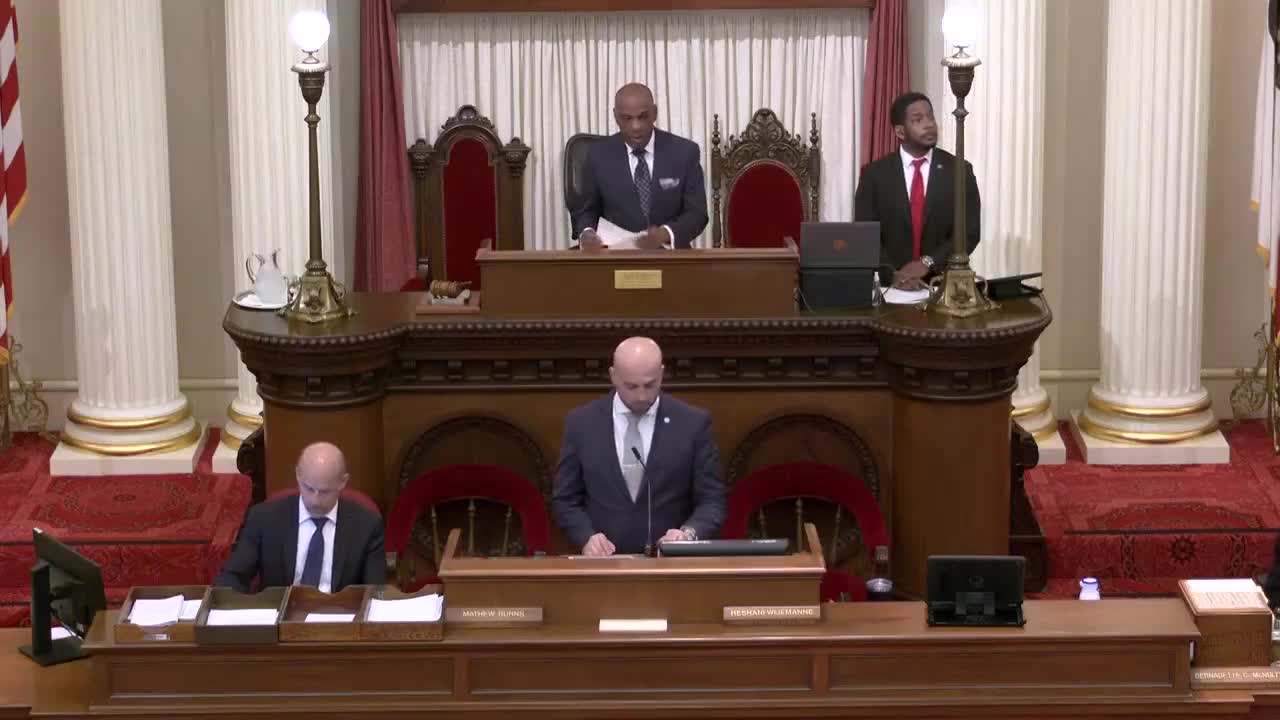

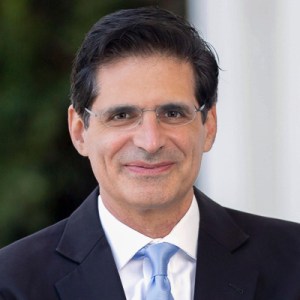
Bill Author
Bill Co-Author(s):