AB 1076: Qualified ABLE Program: CalABLE accounts: funding.
- Session Year: 2025-2026
- House: Assembly
- Latest Version Date: 2025-10-13
Current Status:
Passed
(2025-10-13: Chaptered by Secretary of State - Chapter 722, Statutes of 2025.)
Introduced
In Committee
Awaiting First Chamber Vote
Passed First Chamber
In Committee
Awaiting Second Chamber Vote
Passed Second Chamber
Enacted
(1)Existing federal law, the Stephen Beck, Jr., Achieving a Better Life Experience Act of 2014 (ABLE Act), encourages and assists individuals and families to save private funds for the purpose of supporting eligible individuals with disabilities to maintain their health, independence, and quality of life by excluding from gross income distributions used for qualified disability expenses by a beneficiary of a Qualified ABLE Program established and maintained by a state, as specified.
Existing law establishes the Qualified ABLE Program for purposes of implementing the federal ABLE Act in this state, and creates the California ABLE Program Trust with the purposes, powers, and duties of the trust to be vested in and exercised by the California ABLE Act Board. Existing law requires the board to segregate the moneys coming into the ABLE program trust into 2 funds: the program fund, which is continuously appropriated, for specified purposes of the act, and the administrative fund, which is available upon appropriation by the Legislature for administration of the act. Existing law requires all moneys paid by designated beneficiaries or eligible individuals in connection with ABLE accounts to be deposited, as received, into the program fund, promptly invested, and accounted for separately. Existing law grants the board the power to accept grants, gifts, appropriations, and other moneys from any unit of federal, state, or local government, among other specified entities, for deposit to specified funds.
This bill would authorize the California ABLE Act Board to additionally accept grants, gifts, legislative appropriations, and other moneys from a philanthropic entity, and would specify that the program can receive legislative appropriations. The bill would authorize the board to target specific subgroups of eligible individuals, as specified, and would authorize the board to use those moneys received to encourage eligible individuals to create an ABLE account or maximize account participation by engaging public awareness about the program. By authorizing new uses of moneys in a continuously appropriated fund, the bill would make an appropriation.
(2)Existing law requires the Franchise Tax Board to include, on a taxpayers form instructions for filing a return, information about the ability of a taxpayer to directly deposit a portion of their refund into the Golden State Scholarshare College Savings Trust, as specified.
This bill would additionally require the Franchise Tax Board to include, on a taxpayers form instructions for filing a return, information about the ability of a taxpayer to directly deposit a portion of their refund into the California ABLE Program Trust.
(1)Existing federal law, the Stephen Beck, Jr., Achieving a Better Life Experience Act of 2014 (ABLE Act), encourages and assists individuals and families to save private funds for the purpose of supporting eligible individuals with disabilities to maintain their health, independence, and quality of life by excluding from gross income distributions used for qualified disability expenses by a beneficiary of a Qualified ABLE Program established and maintained by a state, as specified.
Existing law establishes the Qualified ABLE Program for purposes of implementing the federal ABLE Act in this state, and creates the California ABLE Program Trust with the purposes, powers, and duties of the trust to be vested in and exercised by the California ABLE Act Board. Existing law requires the board to segregate the moneys coming into the ABLE program trust into 2 funds: the program fund, which is continuously appropriated, for specified purposes of the act, and the administrative fund, which is available upon appropriation by the Legislature for administration of the act. Existing law requires all moneys paid by designated beneficiaries or eligible individuals in connection with ABLE accounts to be deposited, as received, into the program fund, promptly invested, and accounted for separately. Existing law grants the board the power to accept grants, gifts, appropriations, and other moneys from any unit of federal, state, or local government, among other specified entities, for deposit to specified funds.
This bill would authorize the California ABLE Act Board to additionally accept grants, gifts, legislative appropriations, and other moneys from a philanthropic entity, and would specify that the program can receive legislative appropriations. The bill would authorize the board to target specific subgroups of eligible individuals, as specified, and would authorize the board to use those moneys received to encourage eligible individuals to create an ABLE account or maximize account use by raising participation by engaging public awareness about the program. By authorizing new uses of moneys in a continuously appropriated fund, the bill would make an appropriation.
(2)Existing law requires the Franchise Tax Board to include, on a taxpayers form instructions for filing a return, information about the ability of a taxpayer to directly deposit a portion of their refund into the Golden State Scholarshare College Savings Trust, as specified.
This bill would additionally require the Franchise Tax Board to include, on a taxpayers form instructions for filing a return, information about the ability of a taxpayer to directly deposit a portion of their refund into the California ABLE Program Trust.
(1)Existing federal law, the Stephen Beck, Jr., Achieving a Better Life Experience Act of 2014 (ABLE Act), encourages and assists individuals and families to save private funds for the purpose of supporting eligible individuals with disabilities to maintain their health, independence, and quality of life by excluding from gross income distributions used for qualified disability expenses by a beneficiary of a Qualified ABLE Program established and maintained by a state, as specified.
Existing law establishes the Qualified ABLE Program for purposes of implementing the federal ABLE Act in this state, and creates the California ABLE Program Trust with the purposes, powers, and duties of the trust to be vested in and exercised by the California ABLE Act Board. Existing law requires the board to segregate the moneys coming into the ABLE program trust into 2 funds: the program fund, which is continuously appropriated, for specified purposes of the act, and the administrative fund, which is available upon appropriation by the Legislature for administration of the act. Existing law requires all moneys paid by designated beneficiaries or eligible individuals in connection with ABLE accounts to be deposited, as received, into the program fund, promptly invested, and accounted for separately. Existing law grants the board the power to accept grants, gifts, appropriations, and other moneys from any unit of federal, state, or local government, among other specified entities, for deposit to specified funds.
This bill would authorize the California ABLE Act Board to additionally accept grants, gifts, legislative appropriations, and other moneys from a philanthropic entity, and would specify that the program can receive legislative appropriations. The bill would authorize the board to delegate specific amounts of grants, gifts, legislative appropriations, or other moneys into the administrative fund or the program fund at its discretion, and would allow the board to use those moneys target specific subgroups of eligible individuals, as specified, and would authorize the board to use those moneys received to encourage eligible individuals to create an ABLE account or maximize account use, including through offering financial incentives in an amount determined by the board. The bill would authorize the board to adopt eligibility criteria for individuals to receive financial incentives, and would require the financial incentives be provided directly to the designated beneficiary or their authorized legal representative. use by raising awareness about the program. By authorizing new uses of moneys in a continuously appropriated fund, the bill would make an appropriation.
(2)Existing law requires the Franchise Tax Board to include, on a taxpayers form instructions for filing a return, information about the ability of a taxpayer to directly deposit a portion of their refund into the Golden State Scholarshare College Savings Trust, as specified.
This bill would additionally require the Franchise Tax Board to include, on a taxpayers form instructions for filing a return, information about the ability of a taxpayer to directly deposit a portion of their refund into the California ABLE Program Trust.
(1)Existing federal law, the Stephen Beck, Jr., Achieving a Better Life Experience Act of 2014 (ABLE Act), encourages and assists individuals and families to save private funds for the purpose of supporting eligible individuals with disabilities to maintain their health, independence, and quality of life by excluding from gross income distributions used for qualified disability expenses by a beneficiary of a qualified ABLE program Qualified ABLE Program established and maintained by a state, as specified.
Existing law establishes the Qualified ABLE Program for purposes of implementing the federal ABLE Act in this state, and creates the California ABLE Program Trust with the purposes, powers, and duties of the trust to be vested in and exercised by the California ABLE Act Board. Existing law requires the board to segregate the moneys coming into the ABLE program trust into 2 funds: the program fund, which is continuously appropriated, for specified purposes of the act, and the administrative fund, which is available upon appropriation by the Legislature for administration of the act. Existing law requires all moneys paid by designated beneficiaries or eligible individuals in connection with ABLE accounts to be deposited, as received, into the program fund, promptly invested, and accounted for separately.
This bill would authorize the California ABLE Act Board to additionally accept grants, gifts, appropriations, and other moneys from a philanthropic entity, and would specify that the program can receive legislative appropriations. The bill would authorize the board to delegate specific amounts of grants, gifts, legislative appropriations, or other moneys into the administrative fund or the program fund at its discretion, and would allow the board to use those moneys to encourage eligible individuals to create an ABLE account or maximize account use, including through offering financial incentives in an amount determined by the board. The bill would authorize the board to adopt eligibility criteria for individuals to receive financial incentives, and would require the financial incentives be provided directly to the designated beneficiary or their authorized legal representative. By authorizing new uses of moneys in a continuously appropriated fund, the bill would make an appropriation.
(2)Existing law requires the Franchise Tax Board to include, on a taxpayers form instructions for filing a return, information about the ability of a taxpayer to directly deposit a portion of their refund into the Golden State Scholarshare College Savings Trust, as specified.
This bill would additionally require the Franchise Tax Board to include, on a taxpayers form instructions for filing a return, information about the ability of a taxpayer to directly deposit a portion of their refund into the California ABLE Program Trust.
(3)Existing law establishes the California Kids Investment and Development Savings (KIDS) Program, under the administration of the Scholarshare Investment Board, for purposes of expanding access to higher education through savings.This bill would authorize the Scholarshare Investment Board to establish a process to allow a beneficiary, to the extent permitted under law, to transfer moneys designated for the beneficiary in a KIDS Account into a qualifying ABLE account.(1)Existing federal law, the Stephen Beck, Jr., Achieving a Better Life Experience Act of 2014 (ABLE Act), encourages and assists individuals and families to save private funds for the purpose of supporting eligible individuals with disabilities to maintain their health, independence, and quality of life by excluding from gross income distributions used for qualified disability expenses by a beneficiary of a qualified ABLE program established and maintained by a state, as specified.
Existing law establishes the Qualified ABLE Program for purposes of implementing the federal ABLE Act in this state, and creates the California ABLE Program Trust with the purposes, powers, and duties of the trust to be vested in and exercised by the California ABLE Act Board. Existing law requires the board to segregate the moneys coming into the ABLE program trust into 2 funds: the program fund, which is continuously appropriated, for specified purposes of the act, and the administrative fund, which is available upon appropriation by the Legislature for administration of the act. Existing law requires all moneys paid by designated beneficiaries or eligible individuals in connection with ABLE accounts to be deposited, as received, into the program fund, promptly invested, and accounted for separately.
This bill would authorize the California ABLE Act Board to additionally accept grants, gifts, appropriations, and other moneys from a philanthropic entity, and would specify that the program can receive legislative appropriations. The bill would authorize the board to delegate specific amounts of grants, gifts, legislative appropriations, or other moneys into the administrative fund or the program fund at its discretion, and would allow the board to use those moneys to encourage eligible individuals to create an ABLE account or maximize account use, including through offering financial incentives in an amount determined by the board. The bill would authorize the board to adopt eligibility criteria for individuals to receive financial incentives, and would require the financial incentives be provided directly to the designated beneficiary or their authorized legal representative. By authorizing new uses of moneys in a continuously appropriated fund, the bill would make an appropriation.
(2)Existing law requires the Franchise Tax Board to include, on a taxpayers form instructions for filing a return, information about the ability of a taxpayer to directly deposit a portion of their refund into the Golden State Scholarshare College Savings Trust, as specified.
This bill would additionally require the Franchise Tax Board to include, on a taxpayers form instructions for filing a return, information about the ability of a taxpayer to directly deposit a portion of their refund into the California ABLE Program Trust.
(3)Existing law establishes the California Kids Investment and Development Savings (KIDS) Program, under the administration of the Scholarshare Investment Board, for purposes of expanding access to higher education through savings.
This bill would authorize the Scholarshare Investment Board to establish a process to allow a beneficiary, to the extent permitted under law, to transfer moneys designated for the beneficiary in a KIDS Account into a qualifying ABLE account.
(a)The Franchise Tax Board shall revise taxpayer form instructions, for returns required to be filed, pursuant to Article 1 (commencing with Section 18501) of Chapter 2, to include information about the ability of a taxpayer to directly deposit a portion of the refund into the Golden State Scholarshare College Savings Trust or into the California ABLE Program Trust.
(b)The Scholarshare Investment Board shall provide the Franchise Tax Board with a description of the Golden State Scholarshare College Savings Trust on or before a specified date provided by the Franchise Tax Board. The length of the description shall be five lines or less.
(c)The California ABLE Act Board shall provide the Franchise Tax Board with a description of the California ABLE Program Trust on or before a specified date provided by the Franchise Tax Board. The length of the description shall be five lines or less.
(d)The Franchise Tax Board shall revise the taxpayer form instructions in the most cost-effective manner.
(e)For purposes of this section, Golden State Scholarshare College Savings Trust has the meaning set forth in subdivision (e) of Section 69980 of the Education Code.
(f)For purposes of this section, California ABLE Program Trust has the meaning set forth in Section 4875 of the Welfare and Institutions Code.
SEC. 2.Section 4877 of the Welfare and Institutions Code is amended to read:4877.(a)There is hereby created an instrumentality of the State of California to be known as the California ABLE Program Trust.
(b)The purposes, powers, and duties of the California ABLE Program Trust are vested in, and shall be exercised by, the board.
(c)The board, in the capacity of trustee, shall have the power and authority to do all of the following:
(1)Sue and be sued.
(2)(A)Make and enter into contracts necessary for the administration of the ABLE program trust, and engage personnel, including consultants, actuaries, managers, counsel, and auditors, as necessary for the purpose of rendering professional, managerial, and technical assistance and advice.
(B)Subdivision (a) of Section 10365.5 of the Public Contract Code shall not apply to a contract with a program consultant for the Qualified ABLE Program. Any contract with a program consultant for the Qualified ABLE Program that would have been prohibited by that subdivision shall be publicly disclosed in a manner specified by the board prior to entering into the contract.
(3)Adopt a corporate seal and change and amend it from time to time.
(4)Cause moneys in the program fund to be held and invested and reinvested.
(5)(A)Accept any grants, gifts, legislative appropriations, and other moneys from any unit of federal, state, or local government or any other person, firm, partnership, philanthropic entity, or corporation for deposit to the administrative fund or the program fund.
(B)The board may also target specific subgroups of eligible individuals, as described in paragraph (C), provided that they are not limited in such a way that would conflict with the intent of the Legislature in establishing the program or other applicable law.
(C)Grants, gifts, legislative appropriations, and other moneys may be used, to the extent permitted under federal and state law, to encourage eligible individuals to create an account or maximize account participation by engaging public awareness about the program. The board may partner with other public, private, or nonprofit entities to facilitate or administer such moneys.
(6)Enter into agreements with designated beneficiaries or eligible individuals to establish and maintain an ABLE account.
(7)Make provisions for the payment of costs of administration and operation of the ABLE program trust.
(8)Carry out the duties and obligations of the ABLE program trust pursuant to this chapter and the federal ABLE Act pursuant to Section 529A of the Internal Revenue Code and federal regulations issued pursuant to that code, and have any other powers as may be reasonably necessary for the effectuation of the purposes, objectives, and provisions of this chapter.
(9)Carry out studies and projections in order to advise designated beneficiaries or eligible individuals regarding present and estimated future qualified disability expenses and the levels of financial participation in the ABLE program trust required in order to assist designated beneficiaries or eligible individuals.
(10)Participate in any other way in any federal, state, or local governmental program for the benefit of the ABLE program trust.
(11)Promulgate, impose, and collect administrative fees and charges in connection with transactions of the ABLE program trust, and provide for reasonable service charges, including penalties for cancellations.
(12)Set minimum and maximum investment levels.
(13)Administer the funds of the ABLE program trust.
(14)Procure insurance against any loss in connection with the property, assets, or activities of the ABLE program trust.
(15)Procure insurance indemnifying any member of the board from personal loss or liability resulting from a members action or inaction as a member of the board.
(d)The Treasurer shall, on behalf of the board, appoint an executive director, who shall not be a member of the board and who shall serve at the pleasure of the board. The Treasurer shall determine the duties of the executive director and other staff as necessary and set their compensation. The board may authorize the executive director to enter into contracts on behalf of the board or conduct any business necessary for the efficient operation of the board.
(a)The Franchise Tax Board shall revise taxpayer form instructions, for returns required to be filed, pursuant to Article 1 (commencing with Section 18501) of Chapter 2, to include information about the ability of a taxpayer to directly deposit a portion of the refund into the Golden State Scholarshare College Savings Trust or into the California ABLE Program Trust.
(b)The Scholarshare Investment Board shall provide the Franchise Tax Board with a description of the Golden State Scholarshare College Savings Trust on or before a specified date provided by the Franchise Tax Board. The length of the description shall be five lines or less.
(c)The California ABLE Act Board shall provide the Franchise Tax Board with a description of the California ABLE Program Trust on or before a specified date provided by the Franchise Tax Board. The length of the description shall be five lines or less.
(d)The Franchise Tax Board shall revise the taxpayer form instructions in the most cost-effective manner.
(e)For purposes of this section, Golden State Scholarshare College Savings Trust has the meaning set forth in subdivision (e) of Section 69980 of the Education Code.
(f)For purposes of this section, California ABLE Program Trust has the meaning set forth in Section 4875 of the Welfare and Institutions Code.
SEC. 2.Section 4877 of the Welfare and Institutions Code is amended to read:4877.(a)There is hereby created an instrumentality of the State of California to be known as the California ABLE Program Trust.
(b)The purposes, powers, and duties of the California ABLE Program Trust are vested in, and shall be exercised by, the board.
(c)The board, in the capacity of trustee, shall have the power and authority to do all of the following:
(1)Sue and be sued.
(2)(A)Make and enter into contracts necessary for the administration of the ABLE program trust, and engage personnel, including consultants, actuaries, managers, counsel, and auditors, as necessary for the purpose of rendering professional, managerial, and technical assistance and advice.
(B)Subdivision (a) of Section 10365.5 of the Public Contract Code shall not apply to a contract with a program consultant for the Qualified ABLE Program. Any contract with a program consultant for the Qualified ABLE Program that would have been prohibited by that subdivision shall be publicly disclosed in a manner specified by the board prior to entering into the contract.
(3)Adopt a corporate seal and change and amend it from time to time.
(4)Cause moneys in the program fund to be held and invested and reinvested.
(5)(A)Accept any grants, gifts, legislative appropriations, and other moneys from any unit of federal, state, or local government or any other person, firm, partnership, philanthropic entity, or corporation for deposit to the administrative fund or the program fund.
(B)The board may also target specific subgroups of eligible individuals, as described in paragraph (C), provided that they are not limited in such a way that would conflict with the intent of the Legislature in establishing the program or other applicable law.
(C)Grants, gifts, legislative appropriations, and other moneys may be used, to the extent permitted under federal and state law, to encourage eligible individuals to create an account or maximize account use by raising participation by engaging public awareness about the program. The board may partner with other public, private, or nonprofit entities to facilitate or administer such moneys.
(6)Enter into agreements with designated beneficiaries or eligible individuals to establish and maintain an ABLE account.
(7)Make provisions for the payment of costs of administration and operation of the ABLE program trust.
(8)Carry out the duties and obligations of the ABLE program trust pursuant to this chapter and the federal ABLE Act pursuant to Section 529A of the Internal Revenue Code and federal regulations issued pursuant to that code, and have any other powers as may be reasonably necessary for the effectuation of the purposes, objectives, and provisions of this chapter.
(9)Carry out studies and projections in order to advise designated beneficiaries or eligible individuals regarding present and estimated future qualified disability expenses and the levels of financial participation in the ABLE program trust required in order to assist designated beneficiaries or eligible individuals.
(10)Participate in any other way in any federal, state, or local governmental program for the benefit of the ABLE program trust.
(11)Promulgate, impose, and collect administrative fees and charges in connection with transactions of the ABLE program trust, and provide for reasonable service charges, including penalties for cancellations.
(12)Set minimum and maximum investment levels.
(13)Administer the funds of the ABLE program trust.
(14)Procure insurance against any loss in connection with the property, assets, or activities of the ABLE program trust.
(15)Procure insurance indemnifying any member of the board from personal loss or liability resulting from a members action or inaction as a member of the board.
(d)The Treasurer shall, on behalf of the board, appoint an executive director, who shall not be a member of the board and who shall serve at the pleasure of the board. The Treasurer shall determine the duties of the executive director and other staff as necessary and set their compensation. The board may authorize the executive director to enter into contracts on behalf of the board or conduct any business necessary for the efficient operation of the board.
(a)The Franchise Tax Board shall revise taxpayer form instructions, for returns required to be filed, pursuant to Article 1 (commencing with Section 18501) of Chapter 2, to include information about the ability of a taxpayer to directly deposit a portion of the refund into the Golden State Scholarshare College Savings Trust or into the California ABLE Program Trust.
(b)The Scholarshare Investment Board shall provide the Franchise Tax Board with a description of the Golden State Scholarshare College Savings Trust on or before a specified date provided by the Franchise Tax Board. The length of the description shall be five lines or less.
(c)The California ABLE Act Board shall provide the Franchise Tax Board with a description of the California ABLE Program Trust on or before a specified date provided by the Franchise Tax Board. The length of the description shall be five lines or less.
(d)The Franchise Tax Board shall revise the taxpayer form instructions in the most cost-effective manner.
(e)For purposes of this section, Golden State Scholarshare College Savings Trust has the meaning set forth in subdivision (e) of Section 69980 of the Education Code.
(f)For purposes of this section, California ABLE Program Trust has the meaning set forth in Section 4875 of the Welfare and Institutions Code.
SEC. 2.Section 4877 of the Welfare and Institutions Code is amended to read:4877.(a)There is hereby created an instrumentality of the State of California to be known as the California ABLE Program Trust.
(b)The purposes, powers, and duties of the California ABLE Program Trust are vested in, and shall be exercised by, the board.
(c)The board, in the capacity of trustee, shall have the power and authority to do all of the following:
(1)Sue and be sued.
(2)(A)Make and enter into contracts necessary for the administration of the ABLE program trust, and engage personnel, including consultants, actuaries, managers, counsel, and auditors, as necessary for the purpose of rendering professional, managerial, and technical assistance and advice.
(B)Subdivision (a) of Section 10365.5 of the Public Contract Code shall not apply to a contract with a program consultant for the Qualified ABLE Program. Any contract with a program consultant for the Qualified ABLE Program that would have been prohibited by that subdivision shall be publicly disclosed in a manner specified by the board prior to entering into the contract.
(3)Adopt a corporate seal and change and amend it from time to time.
(4)Cause moneys in the program fund to be held and invested and reinvested.
(5)(A)Accept any grants, gifts, legislative appropriations, and other moneys from any unit of federal, state, or local government or any other person, firm, partnership, philanthropic entity, or corporation for deposit to the administrative fund or the program fund.
(B)The board may delegate, to the extent permitted under federal law, specific amounts of grants, gifts, legislative appropriations, or other moneys to be divided or wholly deposited into the administrative fund or the program fund accordingly. The board may also target specific subgroups of eligible individuals individuals, as described in paragraph (C), provided that they are not limited in such a way that would conflict with the intent of the Legislature in establishing the program or other applicable law.
(C)Grants, gifts, legislative appropriations, and other moneys may be used, to the extent permitted under federal and state law, to encourage eligible individuals to create an account or maximize account use, including financial incentives deposited into accounts and efforts to raise use by raising awareness about the program. The board may partner with other public, private, or nonprofit entities to facilitate or administer such moneys.
(i)The board may adopt eligibility criteria for individuals to receive financial incentives in accordance with this subparagraph. Eligibility criteria may include, but is not limited to, opening a new account, depositing money into an account, establishing a reoccurring deposit, participating in financial literacy or other education opportunities, or being a state resident.(ii)Financial incentives shall be provided directly to the designated beneficiary or their authorized legal representative that meets the eligibility criteria, as determined by the board.(iii)The amount of any financial incentives shall be at the discretion of the board. Specific financial incentive amounts shall be communicated to the public and shall be applied equally to the designated beneficiaries identified as eligible for each specific financial incentive opportunity. Information including eligibility and actions needed to earn financial incentives shall be posted on the program internet website.(6)Enter into agreements with designated beneficiaries or eligible individuals to establish and maintain an ABLE account.
(7)Make provisions for the payment of costs of administration and operation of the ABLE program trust.
(8)Carry out the duties and obligations of the ABLE program trust pursuant to this chapter and the federal ABLE Act pursuant to Section 529A of the Internal Revenue Code and federal regulations issued pursuant to that code, and have any other powers as may be reasonably necessary for the effectuation of the purposes, objectives, and provisions of this chapter.
(9)Carry out studies and projections in order to advise designated beneficiaries or eligible individuals regarding present and estimated future qualified disability expenses and the levels of financial participation in the ABLE program trust required in order to assist designated beneficiaries or eligible individuals.
(10)Participate in any other way in any federal, state, or local governmental program for the benefit of the ABLE program trust.
(11)Promulgate, impose, and collect administrative fees and charges in connection with transactions of the ABLE program trust, and provide for reasonable service charges, including penalties for cancellations.
(12)Set minimum and maximum investment levels.
(13)Administer the funds of the ABLE program trust.
(14)Procure insurance against any loss in connection with the property, assets, or activities of the ABLE program trust.
(15)Procure insurance indemnifying any member of the board from personal loss or liability resulting from a members action or inaction as a member of the board.
(d)The Treasurer shall, on behalf of the board, appoint an executive director, who shall not be a member of the board and who shall serve at the pleasure of the board. The Treasurer shall determine the duties of the executive director and other staff as necessary and set their compensation. The board may authorize the executive director to enter into contracts on behalf of the board or conduct any business necessary for the efficient operation of the board.
(a)The Franchise Tax Board shall revise taxpayer form instructions, for returns required to be filed, pursuant to Article 1 (commencing with Section 18501) of Chapter 2, to include information about the ability of a taxpayer to directly deposit a portion of the refund into the Golden State Scholarshare College Savings Trust or into the California ABLE Program Trust.
(b)The Scholarshare Investment Board shall provide the Franchise Tax Board with a description of the Golden State Scholarshare College Savings Trust on or before a specified date provided by the Franchise Tax Board. The length of the description shall be five lines or less.
(c)The California ABLE Act Board shall provide the Franchise Tax Board with a description of the California ABLE Program Trust on or before a specified date provided by the Franchise Tax Board. The length of the description shall be five lines or less.
(d)The Franchise Tax Board shall revise the taxpayer form instructions in the most cost-effective manner.
(e)For purposes of this section, Golden State Scholarshare College Savings Trust has the meaning set forth in subdivision (e) of Section 69980 of the Education Code.
(f)For purposes of this section, California ABLE Program Trust has the meaning set forth in Section 4875 of the Welfare and Institutions Code.
SEC. 3.SEC. 2.Section 4877 of the Welfare and Institutions Code is amended to read:4877.(a)There is hereby created an instrumentality of the State of California to be known as the California ABLE Program Trust.
(b)The purposes, powers, and duties of the California ABLE Program Trust are vested in, and shall be exercised by, the board.
(c)The board, in the capacity of trustee, shall have the power and authority to do all of the following:
(1)Sue and be sued.
(2)(A)Make and enter into contracts necessary for the administration of the ABLE program trust, and engage personnel, including consultants, actuaries, managers, counsel, and auditors, as necessary for the purpose of rendering professional, managerial, and technical assistance and advice.
(B)Subdivision (a) of Section 10365.5 of the Public Contract Code shall not apply to a contract with a program consultant for the qualified ABLE program. Qualified ABLE Program. Any contract with a program consultant for the qualified ABLE program Qualified ABLE Program that would have been prohibited by that subdivision shall be publicly disclosed in a manner specified by the board prior to entering into the contract.
(3)Adopt a corporate seal and change and amend it from time to time.
(4)Cause moneys in the program fund to be held and invested and reinvested.
(5)(A)Accept any grants, gifts, legislative appropriations, and other moneys from any unit of federal, state, or local government or any other person, firm, partnership, philanthropic entity, or corporation for deposit to the administrative fund or the program fund.
(B)The board may delegate, to the extent permitted under federal law, specific amounts of grants, gifts, legislative appropriations, or other moneys to be divided or wholly deposited into the administrative fund or the program fund accordingly. The board may also target specific subgroups of eligible individuals provided that they are not limited in such a way that would conflict with the intent of the Legislature in establishing the program or other applicable law.
(C)Grants, gifts, legislative appropriations, and other moneys may be used, to the extent permitted under federal law, to encourage eligible individuals to create an account or maximize account use, including financial incentives deposited into accounts and efforts to raise awareness about the program. The board may partner with other public, private, or nonprofit entities to facilitate or administer such moneys.
(i)The board may adopt eligibility criteria for individuals to receive financial incentives in accordance with this subparagraph. Eligibility criteria may include, but is not limited to, opening a new account, depositing money into an account, establishing a reoccurring deposit, participating in financial literacy or other education opportunities, or being a state resident.
(ii)Financial incentives shall be provided directly to the designated beneficiary or their authorized legal representative that meets the eligibility criteria, as determined by the board.
(iii)The amount of any financial incentives shall be at the discretion of the board. Specific financial incentive amounts shall be communicated to the public and shall be applied equally to the designated beneficiaries identified as eligible for each specific financial incentive opportunity. Information including eligibility and actions needed to earn financial incentives shall be posted on the program internet website.
(6)Enter into agreements with designated beneficiaries or eligible individuals to establish and maintain an ABLE account.
(7)Make provisions for the payment of costs of administration and operation of the ABLE program trust.
(8)Carry out the duties and obligations of the ABLE program trust pursuant to this chapter and the federal ABLE Act pursuant to Section 529A of the Internal Revenue Code and federal regulations issued pursuant to that code, and have any other powers as may be reasonably necessary for the effectuation of the purposes, objectives, and provisions of this chapter.
(9)Carry out studies and projections in order to advise designated beneficiaries or eligible individuals regarding present and estimated future qualified disability expenses and the levels of financial participation in the ABLE program trust required in order to assist designated beneficiaries or eligible individuals.
(10)Participate in any other way in any federal, state, or local governmental program for the benefit of the ABLE program trust.
(11)Promulgate, impose, and collect administrative fees and charges in connection with transactions of the ABLE program trust, and provide for reasonable service charges, including penalties for cancellations.
(12)Set minimum and maximum investment levels.
(13)Administer the funds of the ABLE program trust.
(14)Procure insurance against any loss in connection with the property, assets, or activities of the ABLE program trust.
(15)Procure insurance indemnifying any member of the board from personal loss or liability resulting from a members action or inaction as a member of the board.
(d)The Treasurer shall, on behalf of the board, appoint an executive director, who shall not be a member of the board and who shall serve at the pleasure of the board. The Treasurer shall determine the duties of the executive director and other staff as necessary and set their compensation. The board may authorize the executive director to enter into contracts on behalf of the board or conduct any business necessary for the efficient operation of the board.
(a)(1)Each child born on or after a date determined by the board pursuant to paragraph (2) who is a California resident at the time of birth is eligible for the program.
(2)The date designated by the board for which eligibility commences shall be no later than July 1, 2022.
(b)No later than 90 days after a birth certificate is registered for a child described in subdivision (a), the State Department of Public Health shall provide the board with identifiable birth data for the child in a file format as defined by the board. The birth data shall include the childs name and birth date and the name and contact information of each parent of the child, including the parents street address and, if provided to the department, the parents mobile telephone number and email address. In addition, upon request by the board, the department shall include, in the birth data it provides to the board, information collected pursuant to subparagraph (C) of paragraph (2) of subdivision (a) of Section 102426 of the Health and Safety Code. The department may provide additional identifiable birth data to the board, upon request, and upon a determination by the State Registrar, in consultation with the board, that the data is necessary for administration of the program. To the extent permitted by state and federal law, the department shall provide amended birth record information of a child to the board in order to assist the board in verifying a legal name change of the child, and any other information necessary, for the administration of the program. The department is not required to provide the board amended birth record information of a child that would reveal information that was sealed by statute or court order. The birth data is confidential and shall not be disclosed except as necessary for the program. No more than 90 days after receiving the birth data from the department, the board shall notify at least one parent of each eligible child about the program. The notification shall include information on all of the following:
(1)How the parent may opt out of the program.
(2)The KIDS Account opened for the child pursuant to subdivision (f).
(3)How the parent may establish a separate account pursuant to Article 19 (commencing with Section 69980) and additional financial incentives provided pursuant to that article.
(c)The board shall make a childs designated balance in a KIDS Account viewable by the childs parent or legal guardian through a secured internet link.
(d)The board shall establish rules and regulations for a program recipient child, and the childs parents or legal guardians, to be notified of the moneys deposited and accrued in the childs KIDS Account, and rules and regulations regarding the establishment and operation of program components, including, but not limited to, the claims process, necessary documentation, deadlines for the claims, an appeals procedure, and any forfeiture procedures. A KIDS Account recipient child and each of the childs parents or legal guardians shall be informed of the establishment of the childs KIDS Account, provided information on how the parent or legal guardian may establish a separate account pursuant to Article 19 (commencing with Section 69980), and provided information on opportunities for financial incentives provided pursuant to that article.
(e)The board shall translate program notifications and information provided pursuant to subdivisions (b) to (d), inclusive, into languages pursuant to Section 7295.2 of the Government Code.
(f)Upon appropriation by the Legislature, the board shall establish one or more accounts and shall make a separately accounted-for seed deposit from the fund into a KIDS Account established within an account in an amount determined by the board. Each seed deposit shall be designated for a particular child for whom the board receives birth data pursuant to subdivision (b), if no parent or legal guardian has opted that child out of the program. Moneys in a KIDS Account designated for a child, including any investment earnings attributed to the amount of the childs seed deposit since the date of the deposit as calculated by the board, shall be used for the purpose of providing awards for qualified higher education expenses associated with the attendance of the child at an eligible institution of higher education. Before the 202324 fiscal year, each seed deposit shall be at least twenty-five dollars ($25). Commencing with the 202324 fiscal year, each seed deposit shall be at least one hundred dollars ($100). The board may provide additional financial incentives designated for a child into a KIDS Account if the parent or legal guardian of the child engages with the KIDS Account by verifying receipt of information provided pursuant to paragraph (2) of subdivision (b), establishing a separate account pursuant to Article 19 (commencing with Section 69980), or engaging with the KIDS Account by other means approved by the board.
(g)Upon the student self-certifying that they are enrolled at an institution of higher education and that they have resided in the state for at least one year immediately preceding the payment of qualified higher education expenses on the students behalf, the board shall make a payment to that institution in an amount determined by the student or their parent or legal guardian, which may include the total or a partial amount of the seed deposit, enhanced deposit, if applicable, and any additional financial incentives designated for the child pursuant to subdivision (f), plus any investment earnings attributed to that amount since the date of that deposit as calculated by the board, for qualified higher education expenses associated with the childs attendance at that institution. If the child has no account balance with the institution, the institution may distribute funds received for the child pursuant to this subdivision directly to the child for the purpose of paying the childs qualified higher education expenses.
(h)Subject to available money in the fund, the board may provide additional incentives from the fund for children participating in the program, including, but not limited to, incentives targeting low-income households.
(i)(1)Subject to available funding, a parent or legal guardian, residing in California, of a child who meets the criteria in paragraph (2) may apply to the board to enroll the child into the program. Subject to available funding, the enrollee shall be eligible for any incentives described in subdivision (h), as applicable, but is not eligible for a seed deposit.
(2)The child is a current California resident under six years of age who was both of the following:
(A)Born on or after the date designated by the board for which eligibility commences.
(B)Not a California resident at the time of birth.
(j)(1)A KIDS Account established pursuant to this article, and its investment earnings, shall remain assets of, and owned by, the state until used for the payment of qualified higher education expenses at an institution of higher education, and funds shall remain invested until they are used for the purposes authorized by this article or until the recipient achieves 26 years of age, whichever occurs first. If a beneficiary does not use any portion, or all, of the moneys intended for the beneficiary in a KIDS Account for a qualified higher education expense for any reason, including the death or disability of the beneficiary, before the beneficiary turns 26 years of age, all contributions made for the beneficiary into the KIDS Account and any earnings from those moneys shall be forfeited and deposited into the fund for the program.
(2)Notwithstanding paragraph (1), subject to available funding, the board may establish an appeal process to allow a beneficiary to use the moneys designated for the beneficiary in a KIDS Account after the beneficiary turns 26 years of age.
(3)The board may establish a process to allow a beneficiary, to the extent permitted under federal law, to transfer moneys designated for the beneficiary in a KIDS Account into a qualifying ABLE account established pursuant to Chapter 15 (commencing with Section 4875) of Division 4.5 of the Welfare and Institutions Code.
(3)(4)Moneys, less applicable penalties, collected pursuant to Section 529 of the Internal Revenue Code not used within the time period described in paragraph (1) shall revert to the fund after the payment of any amount determined to be due to the federal government as a result of the reversion.
(4)(5)All contributions made into a KIDS Account for a child who has opted out of the program pursuant to subdivision (b), including any investment earnings attributed to the amount of the childs seed deposit since the date of the deposit as calculated by the board, shall be forfeited and deposited into the fund for the program in a timely manner.
(k)The board shall encourage each parent and legal guardian of a beneficiary, including each parent and legal guardian of a child who applies to enroll the child into the program as a beneficiary pursuant to subdivision (i), to establish a separate account pursuant to Article 19 (commencing with Section 69980). The board shall provide assistance on how to establish the separate account.
(l)The board may use up to 5 percent of state appropriations provided for purposes of the program for administrative costs. Unless otherwise specified in the annual Budget Act, this subdivision shall not apply to any one-time or ongoing local assistance funds first appropriated in support of the program beginning in the 202122 fiscal year.
(m)It is the intent of the Legislature that both of the following occur:
(1)The State Department of Public Health and the board share the information described in subdivision (b) in a manner that promotes data privacy and security.
(2)The State Department of Public Health and the board enter into memoranda of understanding or participation agreements for data sharing purposes, as necessary, for the implementation and operation of this article.
SEC. 2.Section 19304 of the Revenue and Taxation Code is amended to read:19304.(a)The Franchise Tax Board shall revise taxpayer form instructions, for returns required to be filed, pursuant to Article 1 (commencing with Section 18501) of Chapter 2, to include information about the ability of a taxpayer to directly deposit a portion of the refund into the Golden State Scholarshare College Savings Trust. Trust or into the California ABLE Program Trust.
(b)The Scholarshare Investment Board shall provide the Franchise Tax Board with a description of the Golden State Scholarshare College Savings Trust on or before a specified date provided by the Franchise Tax Board. The length of the description shall be five lines or less.
(c)The California ABLE Act Board shall provide the Franchise Tax Board with a description of the California ABLE Program Trust on or before a specified date provided by the Franchise Tax Board. The length of the description shall be five lines or less.
(c)(d)The Franchise Tax Board shall revise the taxpayer form instructions in the most cost-effective manner.
(d)(e)For purposes of this section, Golden State Scholarshare College Savings Trust has the meaning set forth in subdivision (e) of Section 69980 of the Education Code.
(f)For purposes of this section, California ABLE Program Trust has the meaning set forth in Section 4875 of the Welfare and Institutions Code.
SEC. 3.Section 4877 of the Welfare and Institutions Code is amended to read:4877.(a)There is hereby created an instrumentality of the State of California to be known as the California ABLE Program Trust.
(b)The purposes, powers, and duties of the California ABLE Program Trust are vested in, and shall be exercised by, the board.
(c)The board, in the capacity of trustee, shall have the power and authority to do all of the following:
(1)Sue and be sued.
(2)(A)Make and enter into contracts necessary for the administration of the ABLE program trust, and engage personnel, including consultants, actuaries, managers, counsel, and auditors, as necessary for the purpose of rendering professional, managerial, and technical assistance and advice.
(B)Subdivision (a) of Section 10365.5 of the Public Contract Code shall not apply to a contract with a program consultant for the qualified ABLE program. Any contract with a program consultant for the qualified ABLE program that would have been prohibited by that subdivision shall be publicly disclosed in a manner specified by the board prior to entering into the contract.
(3)Adopt a corporate seal and change and amend it from time to time.
(4)Cause moneys in the program fund to be held and invested and reinvested.
(5)(A)Accept any grants, gifts, legislative appropriations, and other moneys from any unit of federal, state, or local government or any other person, firm, partnership, philanthropic entity, or corporation for deposit to the administrative fund or the program fund.
(B)The board may delegate, to the extent permitted under federal law, specific amounts of grants, gifts, legislative appropriations, or other moneys to be divided or wholly deposited into the administrative fund or the program fund accordingly. The board may also target specific subgroups of eligible individuals provided that they are not limited in such a way that would conflict with the intent of the Legislature in establishing the program or other applicable law.
(C)Grants, gifts, legislative appropriations, and other moneys may be used, to the extent permitted under federal law, to encourage eligible individuals to create an account or maximize account use, including financial incentives deposited into accounts and efforts to raise awareness about the program. The board may partner with other public, private, or nonprofit entities to facilitate or administer such moneys.
(i)The board may adopt eligibility criteria for individuals to receive financial incentives in accordance with this subparagraph. Eligibility criteria may include, but is not limited to, opening a new account, depositing money into an account, establishing a reoccurring deposit, participating in financial literacy or other education opportunities, or being a state resident.
(ii)Financial incentives shall be provided directly to the designated beneficiary or their authorized legal representative that meets the eligibility criteria, as determined by the board.
(iii)The amount of any financial incentives shall be at the discretion of the board. Specific financial incentive amounts shall be communicated to the public and shall be applied equally to the designated beneficiaries identified as eligible for each specific financial incentive opportunity. Information including eligibility and actions needed to earn financial incentives shall be posted on the program internet website.
(6)Enter into agreements with designated beneficiaries or eligible individuals to establish and maintain an ABLE account.
(7)Make provisions for the payment of costs of administration and operation of the ABLE program trust.
(8)Carry out the duties and obligations of the ABLE program trust pursuant to this chapter and the federal ABLE Act pursuant to Section 529A of the Internal Revenue Code and federal regulations issued pursuant to that code, and have any other powers as may be reasonably necessary for the effectuation of the purposes, objectives, and provisions of this chapter.
(9)Carry out studies and projections in order to advise designated beneficiaries or eligible individuals regarding present and estimated future qualified disability expenses and the levels of financial participation in the ABLE program trust required in order to assist designated beneficiaries or eligible individuals.
(10)Participate in any other way in any federal, state, or local governmental program for the benefit of the ABLE program trust.
(11)Promulgate, impose, and collect administrative fees and charges in connection with transactions of the ABLE program trust, and provide for reasonable service charges, including penalties for cancellations.
(12)Set minimum and maximum investment levels.
(13)Administer the funds of the ABLE program trust.
(14)Procure insurance against any loss in connection with the property, assets, or activities of the ABLE program trust.
(15)Procure insurance indemnifying any member of the board from personal loss or liability resulting from a members action or inaction as a member of the board.
(d)The Treasurer shall, on behalf of the board, appoint an executive director, who shall not be a member of the board and who shall serve at the pleasure of the board. The Treasurer shall determine the duties of the executive director and other staff as necessary and set his or her their compensation. The board may authorize the executive director to enter into contracts on behalf of the board or conduct any business necessary for the efficient operation of the board.
|
Date
|
Status
|
|---|---|
| Oct 13, 2025 | Chaptered by Secretary of State - Chapter 722, Statutes of 2025. |
| Oct 13, 2025 | Approved by the Governor. |
| Sep 15, 2025 | Enrolled and presented to the Governor at 4:30 p.m. |
| Sep 8, 2025 | Senate amendments concurred in. To Engrossing and Enrolling. (Ayes 79. Noes 0. Page 3036.). |
| Sep 4, 2025 | In Assembly. Concurrence in Senate amendments pending. |
| Sep 4, 2025 | Read third time. Passed. Ordered to the Assembly. (Ayes 39. Noes 0. Page 2523.). |
| Sep 2, 2025 | Ordered to special consent calendar. |
| Aug 29, 2025 | Read second time. Ordered to third reading. |
| Aug 29, 2025 | From committee: Do pass. (Ayes 7. Noes 0.) (August 29). |
| Aug 18, 2025 | In committee: Referred to suspense file. |
| Jul 9, 2025 | From committee: Do pass and re-refer to Com. on APPR. with recommendation: To Consent Calendar. (Ayes 5. Noes 0.) (July 9). Re-referred to Com. on APPR. |
| Jul 2, 2025 | From committee chair, with author's amendments: Amend, and re-refer to committee. Read second time, amended, and re-referred to Com. on REV. & TAX. |
| Jul 1, 2025 | From committee: Do pass and re-refer to Com. on REV. & TAX. (Ayes 5. Noes 0.) (June 30). Re-referred to Com. on REV. & TAX. |
| Jun 18, 2025 | Referred to Coms. on HUMAN S. and REV. & TAX. |
| Jun 4, 2025 | In Senate. Read first time. To Com. on RLS. for assignment. |
| Jun 3, 2025 | Read third time. Passed. Ordered to the Senate. (Ayes 79. Noes 0. Page 2012.) |
| May 27, 2025 | Read second time. Ordered to third reading. |
| May 23, 2025 | Read second time and amended. Ordered returned to second reading. |
| May 23, 2025 | From committee: Amend, and do pass as amended. (Ayes 11. Noes 0.) (May 23). |
| May 23, 2025 | Assembly Rule 63 suspended. (Ayes 51. Noes 16. Page 1644.) |
| Apr 23, 2025 | In committee: Set, first hearing. Referred to suspense file. |
| Apr 8, 2025 | From committee: Do pass and re-refer to Com. on APPR. (Ayes 6. Noes 0.) (April 7). Re-referred to Com. on APPR. |
| Apr 1, 2025 | Re-referred to Com. on REV. & TAX. |
| Mar 28, 2025 | From committee chair, with author's amendments: Amend, and re-refer to Com. on REV. & TAX. Read second time and amended. |
| Mar 17, 2025 | Referred to Com. on REV. & TAX. |
| Feb 21, 2025 | From printer. May be heard in committee March 23. |
| Feb 20, 2025 | Read first time. To print. |
|
Date
|
Description
|
Location
|
Votes
|
|
|---|---|---|---|---|
| Sep 8, 2025 | AB 1076 Addis Concurrence in Senate Amendments | Assembly Floor |
Passed |
|
| Sep 4, 2025 | Special Consent AB1076 Addis | Senate Floor |
Passed |
|
| Aug 29, 2025 | Do pass | Senate Standing Committee on Appropriations |
Passed |
|
| Aug 18, 2025 | Placed on suspense file | Senate Standing Committee on Appropriations |
Passed |
|
| Jul 9, 2025 | Do pass, but first be re-referred to the Committee on [Appropriations] with the recommendation: To Consent Calendar | Senate Standing Committee on Revenue and Taxation |
Passed |
|
| Jun 30, 2025 | Do pass, but first be re-referred to the Committee on [Revenue and Taxation] | Senate Standing Committee on Human Services |
Passed |
|
| Jun 3, 2025 | AB 1076 Addis Assembly Third Reading | Assembly Floor |
Passed |
|
| May 23, 2025 | Do pass as amended. | Assembly Standing Committee on Appropriations |
Passed |
|
| Apr 7, 2025 | Do pass and be re-referred to the Committee on [Appropriations] | Assembly Standing Committee on Revenue and Taxation |
Passed |
This list shows positions taken on this bill by organizations on the date displayed, which is linked to the original source.
Positions by individuals are not included.
|
Organization
|
Position
|
Date
|
|---|---|---|
| Addis (Author) | ** Support | |
| California Advocates for Nursing Home Reform | ** Support | |
| California State Treasurer (sponsor) | ** Support | |
| Easterseals Northern California | ** Support | |
| State Treasurer Fiona Ma | ** Support |
CONCURRENCE IN SENATE AMENDMENTS
CSA1 Bill Id:AB 1076
Author:(Addis)
As Amended Ver:July 2, 2025
2/3 vote
SUMMARY
Authorizes the California Achieving a Better Life Experience (ABLE) Act Board (ABLE Act Board) to accept grants, gifts, and other moneys from a philanthropic entity.
Senate Amendments
Clarify that the ABLE Act Board may use moneys to maximize account participation by engaging public awareness about the program.
COMMENTS
- The federal ABLE Act: The federal ABLE Act authorizes eligible individuals to open an account in an ABLE program to help pay for the qualified disability expenses of a designated beneficiary. To qualify, the eligible individual must be disabled or blind, with the onset of disability or blindness occurring before the individual attains age 26 (or age 46 for tax years beginning after 2025).
Any person may make a nondeductible contribution to an ABLE account for the benefit of a designated beneficiary. Contributions must be in cash and the aggregate amount of contributions from all sources for the tax year cannot exceed the annual gift tax exclusion amount for the year (e.g., $19,000 for 2025). For tax years beginning before January 1, 2026, specified beneficiaries may make additional contributions to the account up to the lesser of their compensation includible in gross income, or the federal poverty line for a one-person household for the year. In addition, for tax years beginning before January 1, 2026, the retirement savings contribution credit can be claimed by a designated beneficiary for contributions to an ABLE account.
The cumulative balance in an ABLE account is disregarded for purposes of determining a designated beneficiary's eligibility for Supplemental Security Income benefits and certain other means-tested programs. Distributions from an ABLE account are excluded from gross income to the extent they do not exceed the qualified disability expenses of the beneficiary. Qualified disability expenses, in turn, include expenses for education, housing, transportation, employment training, health, financial management, legal fees, and funeral and burial expenses.
- What would this bill do? This bill contains a number of provisions designed to buttress the ABLE Act Board's administration of the state's ABLE Act program. Specifically, this bill explicitly authorizes the ABLE Act Board to accept both legislative appropriations and moneys from a philanthropic entity. Additionally, this bill requires the FTB to include, on a taxpayer's form instructions for filing a return, information on the ability of the taxpayer to deposit a portion of their refund directly into the California ABLE Program Trust.
According to the Author
The author has provided the following statement in support of this bill:
AB 1076 strengthens financial security for people with disabilities by expanding contribution options and increasing awareness of CalABLE. By breaking down barriers to savings and support, we're empowering individuals to plan for their futures without fear of losing essential benefits.
Arguments in Support
This bill is sponsored by the California State Treasurer, who notes:
To better support the disability community and improve CalABLE's outreach capabilities, AB 1076 allows CalABLE to solicit philanthropic support and use donated funds to raise awareness about the program and best practices for managing savings. This clarified authority will provide a way for CalABLE to bridge the information gap. In addition, AB 1076 would share information about CalABLE in state tax returns to increase awareness, following a similar model currently used by Scholarshare529 college savings plan.
Arguments in Opposition
None on file
FISCAL COMMENTS
According to the Senate Committee on Appropriations:
- Unknown potential General Fund cost pressures to provide additional funding for public awareness activities.
- The State Treasurer's Office indicates minor and absorbable costs for state operations.
- The Franchise Tax Board anticipates minimal costs for implementation.
VOTES:
ASM REVENUE AND TAXATION: 6-0-1
YES: Gipson, Bains, DeMaio, Garcia, McKinnor, Quirk-Silva
ABS, ABST OR NV: Ta
ASM APPROPRIATIONS: 11-0-4
YES: Wicks, Arambula, Calderon, Caloza, Elhawary, Fong, Mark González, Hart, Pacheco, Pellerin, Solache
ABS, ABST OR NV: Sanchez, Dixon, Ta, Tangipa
ASSEMBLY FLOOR: 79-0-0
YES: Addis, Aguiar-Curry, Ahrens, Alanis, Alvarez, Arambula, Ávila Farías, Bains, Bauer-Kahan, Bennett, Berman, Boerner, Bonta, Bryan, Calderon, Caloza, Carrillo, Castillo, Chen, Connolly, Davies, DeMaio, Dixon, Elhawary, Ellis, Flora, Fong, Gabriel, Gallagher, Garcia, Gipson, Jeff Gonzalez, Mark González, Hadwick, Haney, Harabedian, Hart, Hoover, Irwin, Jackson, Kalra, Krell, Lackey, Lee, Lowenthal, Macedo, McKinnor, Muratsuchi, Nguyen, Ortega, Pacheco, Papan, Patel, Patterson, Pellerin, Petrie-Norris, Quirk-Silva, Ramos, Ransom, Celeste Rodriguez, Michelle Rodriguez, Rogers, Blanca Rubio, Sanchez, Schiavo, Schultz, Sharp-Collins, Solache, Soria, Stefani, Ta, Tangipa, Valencia, Wallis, Ward, Wicks, Wilson, Zbur, Rivas
SENATE FLOOR: 39-0-1
YES: Allen, Alvarado-Gil, Archuleta, Arreguín, Ashby, Becker, Blakespear, Cabaldon, Caballero, Cervantes, Choi, Cortese, Dahle, Durazo, Gonzalez, Grayson, Grove, Hurtado, Jones, Laird, Limón, McGuire, McNerney, Menjivar, Niello, Ochoa Bogh, Padilla, Pérez, Richardson, Rubio, Seyarto, Smallwood-Cuevas, Stern, Strickland, Umberg, Valladares, Wahab, Weber Pierson, Wiener
ABS, ABST OR NV: Reyes
UPDATED
VERSION: July 2, 2025
CONSULTANT: M. David Ruff / REV. & TAX. / (916) 319-2098 FN: 0001504
SENATE RULES COMMITTEE Office of Senate Floor Analyses (916) 651-1520 Fax: (916) 327-4478 | AB 1076 |
THIRD READING
Bill No: AB 1076
Author: Addis (D)
Amended: 7/2/25 in Senate
Vote: 27
SENATE HUMAN SERVICES COMMITTEE: 5-0, 6/30/25
AYES: Arreguín, Ochoa Bogh, Becker, Limón, Pérez
SENATE REVENUE AND TAXATION COMMITTEE: 5-0, 7/9/25
AYES: McNerney, Valladares, Ashby, Grayson, Umberg
SENATE APPROPRIATIONS COMMITTEE: 7-0, 8/29/25
AYES: Caballero, Seyarto, Cabaldon, Dahle, Grayson, Richardson, Wahab
ASSEMBLY FLOOR: 79-0, 6/3/25 - See last page for vote
SUBJECT: Qualified ABLE Program: CalABLE accounts: funding
SOURCE: California State Treasurer
DIGEST:
This bill requires the Franchise Tax Board (FTB) to include, on a taxpayer's form instructions for filing a return, information on the ability of a taxpayer to directly deposit a portion of their refund into the California ABLE (CalABLE) Program Trust and authorizes the CalABLE Board to accept grants, gifts, and moneys from philanthropic entities.
ANALYSIS:
Existing law:
- Establishes the CalABLE Program Trust, administered by the CalABLE Act Board. (Welfare and Institutions Code (WIC) section 4877)
- Defines individuals eligible for CalABLE accounts as someone who developed their disability before the age of 26. The individual must have been living with their disability for at least one year, or they must expect their disability to last for at least a year. (WIC section 4875)
- Requires the CalABLE Act Board to segregate moneys coming into the CalABLE program trust into the following two funds:
- The Program fund, which is continuously appropriated; and,
- The administrative fund, which is available upon appropriation by the Legislature. (WIC section 4877)
- Requires all moneys paid by designated beneficiaries or eligible individuals in connection with CalABLE accounts to be deposited and received into the CalABLE Program fund, promptly invested, and accounted for separately. (WIC 4878)
- Provides that up to $100,000 can be in a CalABLE account without counting toward determining eligibility for a state or local means-tested program. (WIC section 4880)
This bill:
- Requires the FTB to include, on a taxpayer's form instructions for filing a return, information on the ability of a taxpayer to directly deposit a portion of their refund into the CalABLE Program Trust.
- Requires the CalABLE Act Board to provide the FTB with a description, no longer than five lines in length, of the CalABLE Program Trust on or before a specified date provided by the FTB.
- Specifies that the CalABLE Act Board may accept grants, gifts, and moneys from philanthropic entities.
- Authorizes the CalABLE Act Board to target specific subgroups of eligible individuals provided that they are not limited in such a way that would conflict with the intent of the Legislature in establishing the program or other applicable law.
- Provides that grants, gifts, legislative appropriations, and other moneys may be used, to the extent permitted under federal and state law, to encourage eligible individuals to create an account or maximize account participation by engaging public awareness about the program. The CalABLE Act Board may partner with other public, private, or nonprofit entities to facilitate or administer such moneys.
Comments
According to the author. “AB 1076 strengthens financial security for people with disabilities increasing awareness of CalABLE. By increasing awareness, we’re empowering individuals to plan for their futures without fear of losing essential benefits”
CalABLE Program. Individuals with disabilities are disproportionately living in poverty. In California, almost one-quarter of individuals with disabilities live in poverty. According to the State Council on Developmental Disabilities, Californians with disabilities earn $5,213 less on average than Californians without disabilities. Prior to the ABLE program, individuals receiving federal benefits were restricted in the amount of money they could save to $2,000. This helped to keep many in poverty without the ability to save and plan for the future. In 2014, President Obama signed the Stephen Beck Jr. Achieving a Better Life Experience (ABLE) Act which provided that individuals with disabilities could save more than $2,000 without impacting eligibility for means-tested public benefits, such as Medicaid/Medi-Cal and Supplemental Social Security (SSI).
The California version of the ABLE act, CalABLE Savings Plan, opened to the public in December of 2018. To qualify for a CalABLE account, a person must have a disability that began before the age of 26 and they must be eligible for SSI or SSDI due to their disability or have a physician's certification of their significant disability. An initial deposit of at least $25 is required to open an account, and a $1 minimum for all further contributions. There is an annual fee of $30, which is deducted in quarterly installments. If an individual wants paper statements that is an additional $10 a year fee.
Funds from a CalABLE account can be used for a wide range of qualified disability expenses, which include but are not limited to education, housing, transportation, employment training and support, assistive technology, personal support services, health care expenses, and financial management. For SSI recipients, the first $100,000 in an ABLE account is not counted as a resource. Balances above this amount may cause the SSI payments to be suspended, but not the eligibility for SSI itself. Eligibility for Medicaid is not affected by the amount in a CalABLE account, regardless of the total balance. These policies aim to offer individuals with disabilities a powerful tool for financial independence and security while ensuring they retain access to vital public benefits.
This bill seeks to strengthen the CalABLE program by requiring the Franchise Tax Board to include, on tax return instructions, information about eligibility and how individuals can participate in CalABLE. This would also include information about a taxpayer’s ability to directly deposit a portion of their refund into the California ABLE Program Trust. This bill also seeks to maximize funds to the program by allowing CalABLE to accept grants, gifts, and other money from philanthropic entities to encourage specific subgroups to open and maximize their accounts.
Related/Prior Legislation:
AB 984 (Nguyen, 2025) would have created an above-the-line deduction for contributions made to a CalABLE account. This bill was held in the Assembly Appropriations Committee.
SB 1362 (Newman) of 2024 would have required the CalABLE program to deposit at least $250 into new CalABLE accounts. This bill was held in the Senate Appropriations Committee.
AB 339 (Irwin, Chapter 324, Statutes of 2023) beginning January 1, 2026, revises the definition of “eligible individual” under the Qualified ABLE Program by increasing the age limit for when an eligible individual’s blindness or disability occurred to 46 years of age to conform with the federal ABLE Act.
AB 2216 (Irwin, Chapter 896, Statutes of 2022) made technical changes to the CalABLE Act to better align with the Federal ABLE Act.
AB 91 (Burke, Chapter 39, Statutes of 2019) eliminated differences in qualification criteria for ABLE accounts between federal and California tax law to increase contribution limits to up to the federal poverty level and allow taxpayers to roll-over Section 529 plans to ABLE accounts.
FISCAL EFFECT: Appropriation: Yes Fiscal Com.: Yes Local: No
According to the Senate Appropriations Committee:
- Unknown potential General Fund cost pressures to provide additional funding for public awareness activities.
- The State Treasurer’s Office indicates minor and absorbable costs for state operations.
- The Franchise Tax Board anticipates minimal costs for implementation.
SUPPORT: (Verified 8/29/25)
California State Treasurer (source)
California Advocates for Nursing Home Reform
Easterseals Northern California
OPPOSITION: (Verified 8/29/25)
None received
ASSEMBLY FLOOR: 79-0, 6/3/25
AYES: Addis, Aguiar-Curry, Ahrens, Alanis, Alvarez, Arambula, Ávila Farías, Bains, Bauer-Kahan, Bennett, Berman, Boerner, Bonta, Bryan, Calderon, Caloza, Carrillo, Castillo, Chen, Connolly, Davies, DeMaio, Dixon, Elhawary, Ellis, Flora, Fong, Gabriel, Gallagher, Garcia, Gipson, Jeff Gonzalez, Mark González, Hadwick, Haney, Harabedian, Hart, Hoover, Irwin, Jackson, Kalra, Krell, Lackey, Lee, Lowenthal, Macedo, McKinnor, Muratsuchi, Nguyen, Ortega, Pacheco, Papan, Patel, Patterson, Pellerin, Petrie-Norris, Quirk-Silva, Ramos, Ransom, Celeste Rodriguez, Michelle Rodriguez, Rogers, Blanca Rubio, Sanchez, Schiavo, Schultz, Sharp-Collins, Solache, Soria, Stefani, Ta, Tangipa, Valencia, Wallis, Ward, Wicks, Wilson, Zbur, Rivas
Prepared by: Heather Hopkins / HUMAN S. / (916) 651-1524
8/30/25 18:58:38
**** END ****
SENATE COMMITTEE ON APPROPRIATIONS
Senator Anna Caballero, Chair
2025 - 2026 Regular Session
AB 1076 (Addis) - Qualified ABLE Program: CalABLE accounts: funding
Version: July 2, 2025 | Policy Vote: HUMAN S. 5 - 0, REV. & TAX. 5 - 0 |
Urgency: No | Mandate: No |
Hearing Date: August 18, 2025 | Consultant: Agnes Lee |
Bill Summary:
AB 1076 would authorize CalABLE moneys to be used to encourage eligible individuals to create a CalABLE account or maximize account participation by engaging public awareness about the CalABLE program.
Fiscal Impact:
- Unknown potential General Fund cost pressures to provide additional funding for public awareness activities.
- The State Treasurer’s Office indicates minor and absorbable costs for state operations.
- The Franchise Tax Board anticipates minimal costs for implementation.
Background:
In 2014, the federal Achieving a Better Life Experience (ABLE) Act was signed into law and provided that individuals with disabilities could save moneys without impacting eligibility for means-tested public benefits, such as Medicaid and Supplemental Social Security (SSI). California’s version, the CalABLE program, is administered by the CalABLE Act Board within the State Treasurer’s Office. Current law defines individuals eligible for CalABLE accounts as someone who developed their disability before the age of 26. Effective January 1, 2026, an individual may be eligible before the age of 46.
Current law requires the CalABLE Act Board to segregate moneys coming into the ABLE program trust into the following two funds:
- The program fund, which is continuously appropriated; and,
- The administrative fund, which is available upon appropriation by the Legislature.
All moneys paid by designated beneficiaries or eligible individuals in connection with ABLE accounts must be deposited and received into the program fund, promptly invested, and accounted for separately. Funds from a CalABLE account can be used for a wide range of qualified disability expenses, which include but are not limited to education, housing, transportation, employment training and support, assistive technology, personal support services, health care expenses, and financial management. Current law requires the CalABLE Act Board to market this program to the extent funds are available to do so.
Proposed Law:
Specific provisions of the bill would:
- Require the Franchise Tax Board to revise taxpayer form instructions, for returns required to be filed, to include information about the ability of a taxpayer to directly deposit a portion of the refund into the CalABLE Program Trust, as defined.
- Require the CalABLE Act Board to provide the Franchise Tax Board with a description of the CalABLE Program Trust on or before a specified date provided by the Franchise Tax Board.
- Authorize CalABLE grants, gifts, legislative appropriations, and other moneys to also be used to encourage eligible individuals to create an account or maximize account participation by engaging public awareness about the program; authorize the CalABLE Act Board to target specific subgroups of eligible individuals; and authorize the CalABLE Act Board to partner with other public, private, or nonprofit entities to facilitate or administer such moneys.
-- END --
SENATE COMMITTEE ON HUMAN SERVICES
Senator Arreguín, Chair
2025 - 2026 Regular
Bill No: | AB 1076 | ||
Author: | Addis | ||
Version: | May 23, 2025 | Hearing Date: | June 30, 2025 |
Urgency: | No | Fiscal: | Yes |
Consultant: | Heather Hopkins | ||
Subject: Qualified ABLE Program: CalABLE accounts: funding
SUMMARY
This bill requires the Franchise Tax Board (FTB) to include, on a taxpayer's form instructions for filing a return, information on the ability of a taxpayer to directly deposit a portion of their refund into the California ABLE (CalABLE) Program Trust and authorizes the CalABLE Board to accept grants, gifts, and moneys from philanthropic entities.
ABSTRACT
Existing Law:
- Establishes the CalABLE Program Trust, administered by the CalABLE Act Board. (Welfare and Institutions Code (WIC) 4877)
- Defines individuals eligible for CalABLE accounts as someone who developed their disability before the age of 26. The individual must have been living with their disability for at least one year, or they must expect their disability to last for at least a year. (WIC 4875)
- Requires the CalABLE Act Board to segregate moneys coming into the CalABLE program trust into the following two funds:
- The Program fund, which is continuously appropriated; and,
- The administrative fund, which is available upon appropriation by the Legislature. (WIC 4877)
- Requires all moneys paid by designated beneficiaries or eligible individuals in connection with CalABLE accounts to be deposited and received into the CalABLE Program fund, promptly invested, and accounted for separately. (WIC 4878)
- Provides that up to $100,000 can be in a CalABLE account without counting toward determining eligibility for a state or local means-tested program. (WIC 4880)
This Bill:
- Requires the Franchise Tax Board (FTB) to include, on a taxpayer's form instructions for filing a return, information on the ability of a taxpayer to directly deposit a portion of their refund into the CalABLE Program Trust.
- Requires the CalABLE Act Board to provide the FTB with a description, no longer than five lines in length, of the CalABLE Program Trust on or before a specified date provided by the FTB.
- Specifies that the CalABLE Act Board may accept grants, gifts, and moneys from philanthropic entities.
- Authorizes the CalABLE Act Board to target specific subgroups of eligible individuals provided that they are not limited in such a way that would conflict with the intent of the Legislature in establishing the program or other applicable law.
- Provides that grants, gifts, legislative appropriations, and other moneys may be used, to the extent permitted under federal and state law, to encourage eligible individuals to create an account or maximize account use by raising awareness about the program. The CalABLE Act Board may partner with other public, private, or nonprofit entities to facilitate or administer such moneys.
FISCAL IMPACT
According to the Assembly Appropriations Committee analysis:
- Cost pressures of an unknown amount, potentially in the low hundreds of thousands of dollars, to appropriate money to the Board to provide eligible individuals with financial incentives, dependent on the eligibility criteria and incentive amount ultimately set by the Board (General Fund). The author and sponsor of this bill have not requested an appropriation for this purpose in the 2025-26 state budget. However, even if state funds are never appropriated for this purpose, authorizing the Board to use donated funds for financial incentives may divert such funds away from current administrative or programmatic uses, constituting a potentially significant fiscal effect.
- Likely absorbable costs to the Board to establish eligibility criteria for individuals to receive financial incentives and report specified information to the public.
- Likely minor and absorbable costs to the FTB to revise PIT return instructions to include CalABLE program information.
BACKGROUND AND DISCUSSION
Purpose of the Bill:
According to the author, “AB 1076 strengthens financial security for people with disabilities increasing awareness of CalABLE. By increasing awareness, we’re empowering individuals to plan for their futures without fear of losing essential benefits”
CalABLE Program
Individuals with disabilities are disproportionately living in poverty. In California, almost one-quarter of individuals with disabilities live in poverty. According to the State Council on Developmental Disabilities, Californians with disabilities earn $5,213 less on average than Californians without disabilities. Prior to the ABLE program, individuals receiving federal benefits were restricted in the amount of money they could save to $2,000. This helped to keep many in poverty without the ability to save and plan for the future. In 2014, President Obama signed the Stephen Beck Jr. Achieving a Better Life Experience (ABLE) Act which provided that individuals with disabilities could save more than $2,000 without impacting eligibility for means-tested public benefits, such as Medicaid/Medi-Cal and Supplemental Social Security (SSI).
The California version of the ABLE act, CalABLE Savings Plan, opened to the public in December of 2018. To qualify for a CalABLE account, a person must have a disability that began before the age of 26 and they must be eligible for SSI or SSDI due to their disability or have a physician's certification of their significant disability. An initial deposit of at least $25 is required to open an account, and a $1 minimum for all further contributions. There is an annual fee of $30, which is deducted in quarterly installments. If an individual wants paper statements that is an additional $10 a year fee.
Funds from a CalABLE account can be used for a wide range of qualified disability expenses, which include but are not limited to education, housing, transportation, employment training and support, assistive technology, personal support services, health care expenses, and financial management. For SSI recipients, the first $100,000 in an ABLE account is not counted as a resource. Balances above this amount may cause the SSI payments to be suspended, but not the eligibility for SSI itself. Eligibility for Medicaid is not affected by the amount in a CalABLE account, regardless of the total balance. These policies aim to offer individuals with disabilities a powerful tool for financial independence and security while ensuring they retain access to vital public benefits.
This bill seeks to strengthen the CalABLE program by requiring the Franchise Tax Board to include, on tax return instructions, information about eligibility and how individuals can participate in CalABLE. This would also include information about a taxpayer’s ability to directly deposit a portion of their refund into the California ABLE Program Trust. This bill also seeks to maximize funds to the program by allowing CalABLE to accept grants, gifts, and other money from philanthropic entities to encourage specific subgroups to open and maximize their accounts.
Related/Prior Legislation:
AB 984 (Nguyen, 2025) would have created an above-the-line deduction for contributions made to a CalABLE account. This bill was held in the Assembly Appropriations Committee.
SB 1362 (Newman, 2024) would have required the CalABLE program to deposit at least $250 into new CalABLE accounts. This bill was held in the Senate Appropriations Committee.
AB 339 (Irwin, Chapter 324, Statutes of 2023) beginning January 1, 2026, revises the definition of “eligible individual” under the Qualified ABLE Program by increasing the age limit for when an eligible individual’s blindness or disability occurred to 46 years of age to conform with the federal ABLE Act.
AB 2216 (Irwin, Chapter 896, Statutes of 2022) made technical changes to the CalABLE Act to better align with the Federal ABLE Act.
AB 91 (Burke, Chapter 39, Statutes of 2019) eliminated differences in qualification criteria for ABLE accounts between federal and California tax law to increase contribution limits to up to the federal poverty level and allow taxpayers to roll-over Section 529 plans to ABLE accounts.
SB 218 (Dodd, Chapter 482, Statutes of 2017) allows assets in a CalABLE account to be transferred to another CalABLE account upon the death of the designated beneficiary and prohibits the state from recovering the balance of a CalABLE account to recoup Medi-Cal spending by the state.
AB 384 (Irwin, Chapter 470, Statutes of 2017) allows CalABLE to administer ABLE accounts for beneficiaries in other states, and eliminates the $100,000 cap on the exclusion from countable resources for Medi-Cal eligibility purposes.
AB 688 (Calderon, Chapter 529, Statutes of 2017) provides that moneys in an ABLE account, not to exceed $100,000, shall be exempt from a money judgment without making a claim.
SB 324 (Pavley, Chapter 796, Statutes of 2015) and AB 449 (Irwin, Chapter 774, Statutes of 2015) established a CalABLE program, and conformed income tax law to the federal income tax treatment of ABLE accounts.
COMMENTS
People with disabilities disproportionately live in poverty. CalABLE accounts are an important tool to help this population save more money and secure a more stable financial future is beneficial. This bill seeks to increase raise awareness of this important program.
Double Referral: This bill has been double-referred. Should this bill pass out of this Committee, it will be referred to the Senate Committee on Revenue and Taxation.
PRIOR VOTES
| |
Assembly Floor: | 79 - 0 |
Assembly Appropriations Committee: | 11 - 0 |
Assembly Revenue and Taxation Committee: | 6 - 0 |
POSITIONS
Support:
California State Treasurer (Sponsor)
Oppose:
None received
-- END --
ASSEMBLY THIRD READING
ATR Bill Id:AB 1076
Author:(Addis)
As Amended Ver:May 23, 2025
2/3 vote
SUMMARY
Authorizes the California Achieving a Better Life Experience (ABLE) Act Board (ABLE Act Board) to accept grants, gifts, and other moneys from a philanthropic entity.
Major Provisions
- Specifies that the ABLE Act Board may accept legislative appropriations.
- Authorizes the ABLE Act Board to target specific subgroups of eligible individuals provided that they are not limited in such a way that would conflict with the intent of the Legislature in establishing the program or other applicable law.
- Provides that grants, gifts, legislative appropriations, and other moneys may be used, to the extent permitted under federal and state law, to encourage eligible individuals to create an account or maximize account use by raising awareness about the program. The ABLE Act Board may partner with other public, private, or nonprofit entities to facilitate or administer such moneys.
- Requires the Franchise Tax Board (FTB) to include, on a taxpayer's form instructions for filing a return, information on the ability of a taxpayer to directly deposit a portion of their refund into the California ABLE Program Trust.
- Requires the California ABLE Act Board to provide the FTB with a description, no longer than five lines in length, of the California ABLE Program Trust on or before a specified date provided by the FTB.
COMMENTS
- The federal ABLE Act: The federal ABLE Act authorizes eligible individuals to open an account in an ABLE program to help pay for the qualified disability expenses of a designated beneficiary. To qualify, the eligible individual must be disabled or blind, with the onset of disability or blindness occurring before the individual attains age 26 (or age 46 for tax years beginning after 2025).
Any person may make a nondeductible contribution to an ABLE account for the benefit of a designated beneficiary. Contributions must be in cash and the aggregate amount of contributions from all sources for the tax year cannot exceed the annual gift tax exclusion amount for the year (e.g., $19,000 for 2025). For tax years beginning before January 1, 2026, specified beneficiaries may make additional contributions to the account up to the lesser of their compensation includible in gross income, or the federal poverty line for a one-person household for the year. In addition, for tax years beginning before January 1, 2026, the retirement savings contribution credit can be claimed by a designated beneficiary for contributions to an ABLE account.
The cumulative balance in an ABLE account is disregarded for purposes of determining a designated beneficiary's eligibility for Supplemental Security Income (SSI) benefits and certain other means-tested programs. Distributions from an ABLE account are excluded from gross income to the extent they do not exceed the qualified disability expenses of the beneficiary. Qualified disability expenses, in turn, include expenses for education, housing, transportation, employment training, health, financial management, legal fees, and funeral and burial expenses.
- What would this bill do? This bill contains a number of provisions designed to buttress the ABLE Act Board's administration of the state's ABLE Act program. Specifically, this bill explicitly authorizes the ABLE Act Board to accept both legislative appropriations and moneys from a philanthropic entity. Additionally, this bill requires the FTB to include, on a taxpayer's form instructions for filing a return, information on the ability of the taxpayer to deposit a portion of their refund directly into the California ABLE Program Trust.
According to the Author
The author has provided the following statement in support of this bill:
AB 1076 strengthens financial security for people with disabilities by expanding contribution options and increasing awareness of CalABLE. By breaking down barriers to savings and support, we're empowering individuals to plan for their futures without fear of losing essential benefits.
Arguments in Support
None pertaining to the most recent version of this bill.
Arguments in Opposition
None on file.
FISCAL COMMENTS
According to the Assembly Committee on Appropriations:
- Cost pressures of an unknown amount to appropriate money to the ABLE Act Board for efforts to raise awareness about the ABLE Act Program (General Fund).
- Minor and absorbable costs to the ABLE Act Board.
- Likely minor and absorbable costs to the FTB to revise PIT return instructions to include CalABLE Program information.
VOTES
ASM REVENUE AND TAXATION: 6-0-1
YES: Gipson, Bains, DeMaio, Garcia, McKinnor, Quirk-Silva
ABS, ABST OR NV: Ta
ASM APPROPRIATIONS: 11-0-4
YES: Wicks, Arambula, Calderon, Caloza, Elhawary, Fong, Mark González, Hart, Pacheco, Pellerin, Solache
ABS, ABST OR NV: Sanchez, Dixon, Ta, Tangipa
UPDATED
VERSION: May 23, 2025
CONSULTANT: M. David Ruff / REV. & TAX. / (916) 319-2098 FN: 0000846
Date of Hearing: April 23, 2025
ASSEMBLY COMMITTEE ON APPROPRIATIONS
Buffy Wicks, Chair
ABPCA Bill Id:AB 1076
Author:(Addis) – As Amended Ver:March 28, 2025
Policy Committee: | Revenue and Taxation | Vote: | 6 - 0 |
|
| ||
|
|
Urgency: No State Mandated Local Program: No Reimbursable: No
SUMMARY:
This bill clarifies the California ABLE Act Board (Board) may accept legislative appropriations and moneys from a philanthropic entity, and authorizes the Board to provide eligible individuals with financial incentives to maximize state Qualified ABLE (CalABLE) Program participation.
Specifically, this bill:
- Requires the Franchise Tax Board (FTB) to include information on the personal income tax (PIT) form instructions about the ability of a taxpayer to directly deposit a portion of the taxpayer’s refund into the California ABLE Program Trust.
- Clarifies that the Board may accept moneys from a philanthropic entity, not just from the government or other corporate entities, and clarifies that the Board may accept legislative appropriations, not just appropriations generally.
- Authorizes the Board to use appropriated and donated funds to encourage eligible individuals to create an account or maximize account use, including depositing financial incentives into eligible individuals’ accounts and raising awareness about the CalABLE program.
- Requires the amount of any financial incentives to be at the discretion of the Board and requires the specific amounts to be communicated to the public. The Board must post information about how to earn financial incentives on the CalABLE program’s website.
FISCAL EFFECT:
- Cost pressures of an unknown amount, potentially in the low hundreds of thousands of dollars, to appropriate money to the Board to provide eligible individuals with financial incentives, dependent on the eligibility criteria and incentive amount ultimately set by the Board (General Fund). The author and sponsor of this bill have not requested an appropriation for this purpose in the 2025-26 state budget. However, even if state funds are never appropriated for this purpose, authorizing the Board to use donated funds for financial incentives may divert such funds away from current administrative or programmatic uses, constituting a potentially significant fiscal effect.
- Likely absorbable costs to the Board to establish eligibility criteria for individuals to receive financial incentives and report specified information to the public.
- Likely minor and absorbable costs to the FTB to revise PIT return instructions to include CalABLE program information.
COMMENTS:
- Purpose. According to the author, this bill “strengthens financial security for people with disabilities by expanding contribution options and increasing awareness of CalABLE.” This bill is sponsored by State Treasurer Fiona Ma and supported by groups that provide services to individuals with disabilities.
- CalABLE Program. Federal law authorizes each state to establish a program allowing individuals to contribute to an ABLE account to support “qualified disability expenses” of the account’s designated beneficiary. After-tax contributions allow earnings to grow tax-deferred, and withdrawals, when used for qualified disability expenses, are federal and state tax-free. Qualified disability expenses include any expenses related to the designated beneficiary’s blindness or disability, including expenses for education, housing, transportation, employment training, assistive technology, health, financial management, and legal fees. ABLE accounts also enable eligible individuals to build savings without impacting their eligibility for means-tested public benefits, such as Medicaid/Medi-Cal.
The CalABLE Board, chaired by the State Treasurer, sets investment policies and oversees program activities. This bill explicitly authorizes the Board to accept both legislative appropriations and philanthropic money and provides that the Board may delegate, at the Board’s discretion, grants, gifts, legislative appropriations, and other moneys into the CalABLE administrative or program fund and use such moneys to encourage eligible individuals to create an account or maximize account use, including via financial incentives deposited into accounts and efforts to raise awareness about the program. As noted in the Assembly Revenue and Taxation Committee’s analysis of this bill:
The [Board] appears to have complete discretion concerning this allocation. As such, the [Board] could decide that a certain grant should exclusively promote administrative costs associated with education campaigns designed to promote the program. Another grant could ostensibly be used exclusively to seed new accounts in the program itself. However, if a legislative appropriation were made to the program for a specific purpose, would the [Board] still have discretion to use the moneys as they see fit?
- Related Legislation. AB 984 (Nguyen) allows an above-the-line deduction for contributions made to a CalABLE account. AB 984 is pending on the Assembly Revenue and Taxation Committee’s suspense file.
Analysis Prepared by: Irene Ho / APPR. / (916) 319-2081
Date of Hearing: April 7, 2025
ASSEMBLY COMMITTEE ON REVENUE AND TAXATION
Mike Gipson, Chair
ABPCA Bill Id:AB 1076 (
Author:Addis) – As Amended Ver:March 28, 2025
2/3 vote. Fiscal committee.
SUBJECT: Qualified ABLE Program: CalABLE accounts: funding
SUMMARY: Authorizes the California Achieving a Better Life Experience (ABLE) Act Board (ABLE Act Board) to accept grants, gifts, and other moneys from a philanthropic entity. Specifically, this bill:
- Specifies that the ABLE Act Board may accept legislative appropriations.
- Authorizes the ABLE Act Board to delegate, to the extent permitted under federal law, specific amounts of grants, gifts, legislative appropriations, or other moneys into the administrative fund or the program fund at its discretion.
- Authorizes the ABLE Act Board to target specific subgroups of eligible individuals provided that they are not limited in such a way that would conflict with the intent of the Legislature in establishing the program or other applicable law.
- Provides that grants, gifts, legislative appropriations, and other moneys may be used, to the extent permitted under federal law, to encourage eligible individuals to create an account or maximize account use, including financial incentives deposited into accounts and efforts to raise awareness about the program. The ABLE Act Board may partner with other public, private, or nonprofit entities to facilitate or administer such moneys.
- Authorizes the ABLE Act Board to adopt eligibility criteria for individuals to receive financial incentives in accordance with this bill. Eligibility criteria may include, without limitation:
- Opening a new account;
- Depositing money into an account;
- Establishing a reoccurring deposit;
- Participating in financial literacy or other education opportunities; or,
- Being a state resident.
- Specifies that financial incentives shall be provided directly to the designated beneficiary or their authorized legal representative that meets the eligibility criteria, as determined by the ABLE Act Board.
- Provides that the amount of any financial incentives shall be at the discretion of the ABLE Act Board. Specific financial incentive amounts shall be communicated to the public and shall be applied equally to the designated beneficiaries identified as eligible for each specific financial incentive opportunity. Information, including eligibility and actions needed to earn financial incentives, shall be posted on the program internet website.
- Requires the Franchise Tax Board (FTB) to include, on a taxpayer's form instructions for filing a return, information on the ability of a taxpayer to directly deposit a portion of their refund into the California ABLE Program Trust.
- Requires the California ABLE Act Board to provide the FTB with a description, no longer than five lines in length, of the California ABLE Program Trust on or before a specified date provided by the FTB.
EXISTING FEDERAL LAW enacts the Stephen Beck, Jr., ABLE Act of 2014 (ABLE Act), which helps individuals and families save private funds to support eligible individuals with disabilities, as specified, by excluding from gross income distributions used for qualified disability expenses by a beneficiary of a qualified ABLE program established and maintained by a state. (Internal Revenue Code Section 529A.)
EXISTING STATE LAW:
- Establishes the Qualified ABLE Program to implement the federal ABLE Act in this state, and creates the California ABLE Program Trust with the purposes, powers, and duties of the trust to be vested in and exercised by the California ABLE Act Board. (Welfare and Institutions Code (W&IC) Section 4877.)
- Requires the California ABLE Act Board to segregate the moneys coming into the ABLE Program Trust into the following two funds:
- The program fund, which is continuously appropriated for specified purposes of the act; and,
- The administrative fund, which is available upon appropriation by the Legislature for administration of the act. (W&IC Section 4878.)
- Requires all moneys paid by designated beneficiaries or eligible individuals in connection with ABLE accounts to be deposited, as received, into the program fund, promptly invested, and accounted for separately. (Id.)
- Requires the FTB to include, on a taxpayer's form instructions for filing a return, information about the ability of a taxpayer to directly deposit a portion of their refund into the Golden State Scholarshare College Savings Trust, as specified. (Revenue and Taxation Code (R&TC) Section 19304.)
FISCAL EFFECT: According to the FTB, this bill would not impact state income or franchise tax revenue.
COMMENTS:
- The author has provided the following statement in support of this bill:
AB 1076 strengthens financial security for people with disabilities by expanding contribution options and increasing awareness of CalABLE. By breaking down barriers to savings and support, we're empowering individuals to plan for their futures without fear of losing essential benefits.
- This bill is sponsored by State Treasurer Fiona Ma, who notes the following:
To better support the disability community and improve CalABLE's outreach capabilities, AB 1076 allows CalABLE to solicit philanthropic support and use donated funds for marketing and seed funding. This clarified authority will provide a way for CalABLE to bridge the information gap while also helping prospective account holders to start
saving. In addition, AB 1076 would share information about CalABLE in state tax returns to increase awareness, following a similar model currently used by Scholarshare529 college savings plan.
- This bill is supported by California Advocates for Nursing Home Reform (CANHR), which notes the following:
For over 40 years, CANHR has been advocating for the rights of California's seniors and dependent adults. One of the key issues we've encountered is the risk of low-income adults with disabilities losing their government benefits, like Medi-Cal and Supplemental Security Income (SSI), after receiving funds from personal injury settlements or inheritances. These benefits are crucial lifelines for these individuals, and we must do everything we can to preserve them.
One effective solution is CalABLE, a tax-advantaged savings and investment program for low-income people with disabilities. This program provides a straightforward and cost-effective way for individuals with disabilities to manage their funds while preserving their government benefits. AB 1076 has the potential to significantly improve the lives of individuals with disabilities by increasing funding opportunities, promoting account usage, and enhancing accessibility.
- Committee Staff Comments:
- The federal ABLE Act: The federal ABLE Act authorizes eligible individuals to open an account in an ABLE program to help pay for the qualified disability expenses of a designated beneficiary. To qualify, the eligible individual must be disabled or blind, with the onset of disability or blindness occurring before the individual attains age 26 (or age 46 for tax years beginning after 2025).
Any person may make a nondeductible contribution to an ABLE account for the benefit of a designated beneficiary. Contributions must be in cash and the aggregate amount of contributions from all sources for the tax year cannot exceed the annual gift tax exclusion amount for the year (e.g., $19,000 for 2025). For tax years beginning before January 1, 2026, specified beneficiaries may make additional contributions to the account up to the lesser of their compensation includible in gross income, or the federal poverty line for a one-person household for the year. In addition, for tax years beginning before January 1, 2026, the retirement savings contribution credit can be claimed by a designated beneficiary for contributions to an ABLE account.
The cumulative balance in an ABLE account is disregarded for purposes of determining a designated beneficiary's eligibility for Supplemental Security Income (SSI) benefits and certain other means-tested programs. Distributions from an ABLE account are excluded from gross income to the extent they do not exceed the qualified disability expenses of the beneficiary. Qualified disability expenses, in turn, include expenses for education, housing, transportation, employment training, health, financial management, legal fees, and funeral and burial expenses.
- What would this bill do? This bill contains a number of provisions designed to buttress the ABLE Act Board's administration of the state's ABLE Act program. First, this bill explicitly authorizes the ABLE Act Board to accept both legislative appropriations and moneys from a philanthropic entity. Second, this bill authorizes the ABLE Act Board to delegate, at its discretion, specific amounts of grants, gifts, legislative appropriations, or other moneys into either the act's administrative fund or the program fund. Third, this bill provides that grants, gifts, legislative appropriations, and other moneys may be used to encourage eligible individuals to create an account or maximize account use, including via financial incentives deposited into accounts and efforts to raise awareness about the program. Finally, this bill requires the FTB to include, on a taxpayer's form instructions for filing a return, information on the ability of the taxpayer to deposit a portion of their refund directly into the California ABLE Program Trust. To that end, the author's office notes:
CalABLE accounts can be contributed to through personal contributions, Social Security Administration (SSA) direct deposits, payroll direct deposits, or deposited gifts from family and friends. However, existing law is unclear as to how the CalABLE Act Board can receive and use grants, gifts, appropriations, or other funds from philanthropic entities and does not explicitly allow for legislative appropriations. This bill seeks to remedy the limitation in existing law that prevents organizations and companies from contributing to CalABLE accounts, thereby expanding financial support options for individuals with disabilities without jeopardizing their benefits.
- A question of discretion: As noted above, this bill authorizes the ABLE Act Board to delegate, to the extent permitted by federal law, specific amounts of grants, gifts, legislative appropriations, or other moneys into either the program's administrative fund or program fund. The ABLE Act Board appears to have complete discretion concerning this allocation. As such, the board could decide that a certain grant should exclusively promote administrative costs associated with education campaigns designed to promote the program. Another grant could ostensibly be used exclusively to seed new accounts in the program itself. However, if a legislative appropriation were made to the program for a specific purpose, would the ABLE Act Board still have discretion to use the moneys as they see fit? Would the ABLE Act Board be required to use the funds as specified in a particular philanthropic bequest?
- Related legislation: AB 984 (Nguyen) would allow an above-the-line deduction for contributions made to a California ABLE Act account. AB 984 is currently pending on this Committee's Suspense File.
REGISTERED SUPPORT / OPPOSITION:
Support
State Treasurer Fiona Ma (Sponsor)
California Advocates for Nursing Home Reform
Opposition
None on file
Analysis Prepared by: M. David Ruff / REV. & TAX. / (916) 319-2098
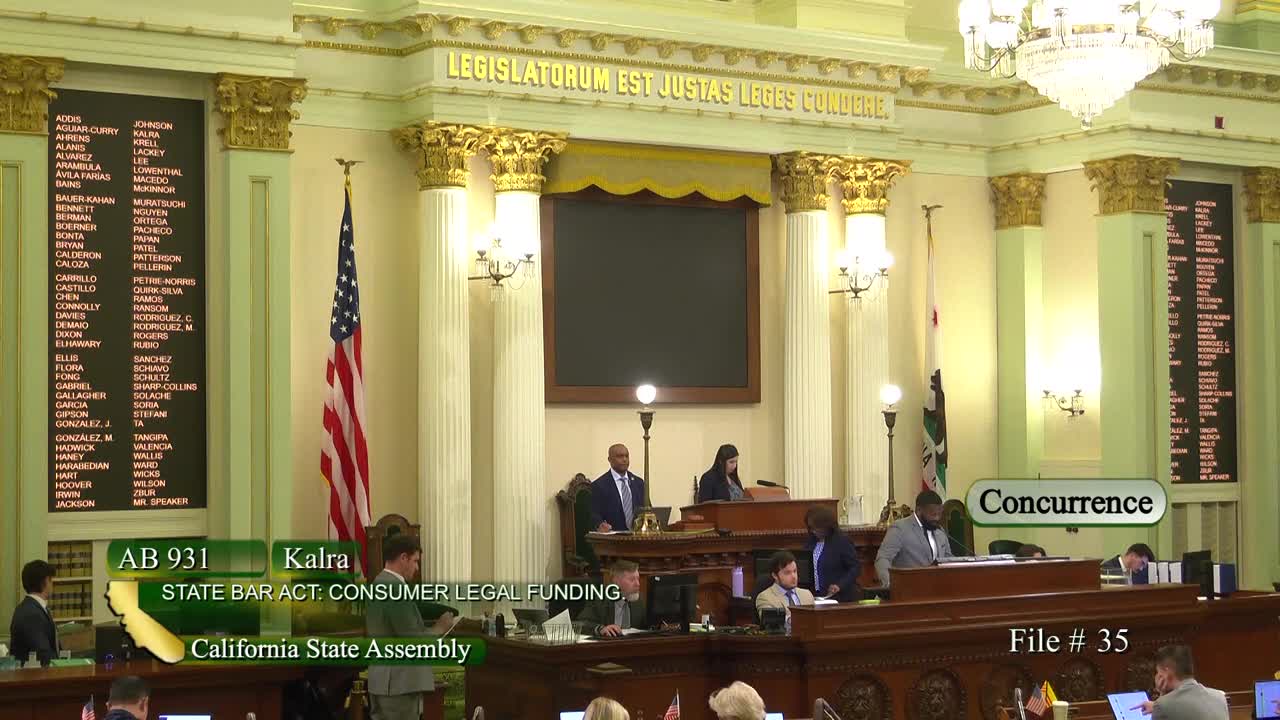


Bill Author

Bill Co-Author(s):