AB 1119: Teacher credentialing: dual credentialing.
- Session Year: 2025-2026
- House: Assembly
- Latest Version Date: 2025-10-06
Current Status:
Passed
(2025-10-06: Chaptered by Secretary of State - Chapter 390, Statutes of 2025.)
Introduced
In Committee
Awaiting First Chamber Vote
Passed First Chamber
In Committee
Awaiting Second Chamber Vote
Passed Second Chamber
Enacted
What does this bill do?
The Commission on Teacher Credentialing must create more efficient pathways so teacher candidates and current California teachers can more easily earn both a multiple‑ or single‑subject (including PK–3 early childhood) credential and an education specialist credential — in other words, to become dually credentialed to teach general and special education. The commission must review current programs and authorizations, identify overlapping coursework and barriers, consider supplementary authorizations, study other states’ approaches, and point out any needed changes to state law to make dual credentialing more feasible.
The summary is provided by generative AI which can make mistakes. For original language, please view the details in the table below.
Existing law requires the Commission on Teacher Credentialing to establish standards for the issuance and renewal of credentials, certificates, and permits. Existing law requires, as a minimum requirement for a preliminary multiple subject, single subject, or education specialist teaching credential, the satisfactory completion of a program of professional preparation, as specified. Existing law also authorizes the commission to issue a PK3 early childhood education specialist instruction credential, as provided.
This bill would require the commission, on or before March 1, 2027, to develop, establish, and promulgate through the regulatory process efficient routes for (1) teacher candidates to obtain (A) a multiple subject credential, a single subject credential, or a PK3 early childhood education specialist instruction credential, and (B) an education specialist credential, known as dual credentialing, as provided, (2) existing teachers who hold a multiple subject credential, a single subject credential, or a PK3 early childhood education specialist instruction credential to obtain an education specialist credential, and (3) existing teachers who hold an education specialist credential to obtain a multiple subject credential, a single subject credential, or a PK3 early childhood education specialist instruction credential, as provided.
Existing law requires the Commission on Teacher Credentialing to establish standards for the issuance and renewal of credentials, certificates, and permits. Existing law requires, as a minimum requirement for a preliminary multiple subject, single subject, or education specialist teaching credential, the satisfactory completion of a program of professional preparation, as specified. Existing law also authorizes the commission to issue an early childhood education specialist instruction credential and a PK-3 PK3 early childhood education specialist instruction credential, as provided.
This bill would, upon appropriation by the Legislature for this purpose, would require the commission, on or before July 1, 2026, to convene a workgroup composed of current classroom teachers and other representatives, as specified, to recommend measures to develop and establish March 1, 2027, to develop, establish, and promulgate through the regulatory process efficient routes for (1) teacher candidates to obtain (A) a multiple subject credential, a single subject credential, or a PK-3 PK3 early childhood education specialist instruction credential, and (B) an education specialist credential or an early childhood education specialist instruction credential, known as dual credentialing, as provided, (2) existing teachers who hold a multiple subject credential, a single subject credential, or a PK-3 PK3 early childhood education specialist instruction credential to obtain an education specialist credential or an early childhood education specialist instruction credential, and (3) existing teachers who hold an education specialist credential or an early childhood education specialist instruction credential to obtain a multiple subject credential, a single subject credential, or a PK-3 PK3 early childhood education specialist instruction credential. The bill would require the commission, on or before July 1, 2027, to provide a report of the workgroups findings and recommendations, as provided. The bill would repeal these provisions as of January 1, 2029. credential, as provided.
Existing law requires the Commission on Teacher Credentialing to establish standards for the issuance and renewal of credentials, certificates, and permits. Existing law requires, as a minimum requirement for a preliminary multiple subject, single subject, or education specialist teaching credential, the satisfactory completion of a program of professional preparation, as specified. Existing law also authorizes the commission to issue an early childhood education specialist instruction credential and a PK-3 early childhood education specialist instruction credential, as provided.
This bill would, upon appropriation by the Legislature for this purpose, require the commission, on or before July 1, 2026, to convene a workgroup composed of current classroom teachers and other representatives, as specified, to recommend measures to develop and establish efficient routes for (1) teacher candidates to obtain (A) a multiple subject or credential, a single subject credential credential, or a PK-3 early childhood education specialist instruction credential, and (B) an education specialist credential, credential or an early childhood education specialist instruction credential, known as dual credentialing, as provided, and (2) existing teachers who only have hold a multiple subject or single subject credential credential, a single subject credential, or a PK-3 early childhood education specialist instruction credential to obtain an education specialist credential. credential or an early childhood education specialist instruction credential, and (3) existing teachers who hold an education specialist credential or an early childhood education specialist instruction credential to obtain a multiple subject credential, a single subject credential, or a PK-3 early childhood education specialist instruction credential. The bill would require the commission, on or before December 31, 2026, July 1, 2027, to provide a report of the workgroups findings and recommendations, as provided. The bill would repeal these provisions as of January 1, 2029.
Existing law requires the Commission on Teacher Credentialing to establish standards for the issuance and renewal of credentials, certificates, and permits. Existing law requires, as a minimum requirement for a preliminary multiple subject, single subject, or education specialist teaching credential, the satisfactory completion of a program of professional preparation, as specified.
This bill would, upon appropriation by the Legislature for this purpose, require the commission, on or before July 1, 2026, to convene a workgroup composed of current classroom teachers and other representatives, as specified, to recommend measures to develop and establish efficient routes for (1) teacher candidates to obtain a multiple subject or single subject credential and an education specialist credential, known as dual credentialing, as provided, and (2) existing teachers who only have a multiple subject or single subject credential to obtain an education specialist credential. The bill would require the commission, on or before December 31, 2026, to provide a report of the workgroups findings and recommendations, as provided. The bill would repeal these provisions as of January 1, 2029.
(a)The Legislature finds and declares all of the following:
(1)The State of California has established a goal of working toward one system of education for all pupils with and without disabilities, reflecting the value that all pupils are general education pupils first. To this end, the state has established goals, made investments, and provided technical assistance and support to increase inclusion, access to grade level content, and belonging of pupils with disabilities in all educational settings.
(2)The state has also had a shortage of education specialists for many decades, leading pupils to be served by individuals lacking full preparation.
(3)Dual credentialing, which permits teachers to instruct all pupils in multiple settings and subject areas holds great promise as a strategy for increasing rates of inclusion and equipping teachers to meet the needs of a diverse group of learners. Dual credentialing also supports the staffing of co-taught classrooms, which is a highly effective strategy for pupils with and without disabilities.
(4)California recently reformed its credentialing system to establish a common trunk of preparation that single subject or multiple subject credential candidates and education specialist credential candidates complete. This reformed system also provides an opportunity for programs to make obtaining a second credential more efficient.
(5)California also recently established alternate routes to a high school diploma for pupils with disabilities, which will provide all pupils the opportunity to earn a high school diploma. This policy creates an expectation that all pupils, including those with extensive support needs, will have access to content required for graduation, and underscores the need for all teachers to have the capacity to deliver high-quality first instruction in grade-level content, regardless of the setting the pupil is in.
(b)It is the intent of the Legislature to provide efficient and accessible routes for educators to become dually credentialed and to ensure that input from relevant stakeholders is sought and considered in the process of developing and establishing routes to become dually credentialed.
SEC. 2.Section 44238.5 is added to the Education Code, to read:44238.5.(a)On or before March 1, 2027, the commission shall, with input from the education field, develop, establish, and promulgate, through the regulatory process pursuant to Chapter 3.5 (commencing with Section 11340) of Part 1 of Division 3 of Title 2 of the Government Code, efficient routes for the following:
(1)Teacher candidates to obtain a multiple subject credential, a single subject credential, or a PK3 early childhood education specialist instruction credential, and an education specialist credential, known as dual credentialing.
(2)Existing teachers who hold a multiple subject credential, a single subject credential, or a PK3 early childhood education specialist instruction credential to obtain an education specialist credential.
(3)Existing teachers who hold an education specialist credential to obtain a multiple subject credential, a single subject credential, or a PK3 early childhood education specialist instruction credential.
(b)In developing efficient routes pursuant to subdivision (a), the commission shall do all of the following:
(1)Review current routes that holders of multiple subject and single subject credentials have to earn additional credentials and supplementary authorizations, pursuant to the commissions authorization provided in subdivision (e) of Section 44225.
(2)Determine which content of preparation in multiple subject and single subject programs and education specialist programs could satisfy the requirements for both credentials to create efficiencies toward earning dual credentials.
(3)Review whether supplementary authorizations to an existing credential, authorizing the teaching of pupils with or without disabilities, could be developed.
(4)Identify barriers and opportunities for teachers to become dually credentialed and barriers and opportunities for programs of preparation to prepare dually credentialed teachers.
(5)Review any readily available information about other states routes to dual credentialing through programs of preparation or for existing holders of credentials specified in subdivision (a).
(6)Identify any necessary statutory changes to establish routes to dual credentialing.
(a)The Legislature finds and declares all of the following:
(a)(1)The State of California has established a goal of working toward one system of education for all pupils with and without disabilities, reflecting the value that all pupils are general education pupils first. To this end, the state has established goals, made investments, and provided technical assistance and support to increase inclusion, access to grade level content, and belonging of pupils with disabilities in all educational settings.
(b)(2)The state has also had a shortage of education specialists for many decades, leading pupils to be served by individuals lacking full preparation.
(c)(3)Dual credentialing, which permits teachers to instruct all pupils in multiple settings and subject areas holds great promise as a strategy for increasing rates of inclusion and equipping teachers to meet the needs of a diverse group of learners. Dual credentialing also supports the staffing of co-taught classrooms, which is a highly effective strategy for pupils with and without disabilities.
(d)(4)California recently reformed its credentialing system to establish a common trunk of preparation that single subject or multiple subject credential candidates and education specialist credential candidates complete. This reformed system also provides an opportunity for programs to make obtaining a second credential more efficient.
(e)(5)California also recently established alternate routes to a high school diploma for pupils with disabilities, which will provide all pupils the opportunity to earn a high school diploma. This policy creates an expectation that all pupils, including those with extensive support needs, will have access to content required for graduation, and underscores the need for all teachers to have the capacity to deliver high-quality first instruction in grade-level content, regardless of the setting the pupil is in.
(b)It is the intent of the Legislature to provide efficient and accessible routes for educators to become dually credentialed and to ensure that input from relevant stakeholders is sought and considered in the process of developing and establishing routes to become dually credentialed.
SEC. 2.Section 44238.5 is added to the Education Code, to read:44238.5.(a)On or before July 1, 2026, March 1, 2027, the commission shall convene a workgroup to recommend measures to develop and establish shall, with input from the education field, develop, establish, and promulgate, through the regulatory process pursuant to Chapter 3.5 (commencing with Section 11340) of Part 1 of Division 3 of Title 2 of the Government Code, efficient routes for the following:
(1)Teacher candidates to obtain a multiple subject credential, a single subject credential, or a PK-3 PK3 early childhood education specialist instruction credential, and an education specialist credential or an early childhood education specialist instruction credential, known as dual credentialing, through preservice programs of preparation. credentialing.
(2)Existing teachers who hold a multiple subject credential, a single subject credential, or a PK-3 PK3 early childhood education specialist instruction credential to obtain an education specialist credential or an early childhood education specialist instruction credential. credential.
(3)Existing teachers who hold an education specialist credential or an early childhood education specialist instruction credential to obtain a multiple subject credential, a single subject credential, or a PK-3 PK3 early childhood education specialist instruction credential.
(b)In developing recommendations efficient routes pursuant to subdivision (a), the workgroup commission shall do all of the following:
(1)Review current routes that holders of multiple subject and single subject credentials have to earn additional credentials and supplementary authorizations, pursuant to the commissions authorization provided in subdivision (e) of Section 44225.
(2)Determine which content of preparation in multiple subject and single subject programs and education specialist programs could satisfy the requirements for both credentials to create efficiencies toward earning dual credentials.
(3)Review whether supplementary authorizations to an existing credential, authorizing the teaching of pupils with or without disabilities, could be developed.
(4)Identify barriers and opportunities for teachers to become dually credentialed and barriers and opportunities for programs of preparation to prepare dually credentialed teachers.
(5)Review any readily available information about other states routes to dual credentialing through programs of preparation and or for existing holders of credentials specified in subdivision (a).
(6)Review routes for dually credentialed teachers prepared outside of the state to become dually credentialed in California.(7)Make recommendations on statutory changes, fiscal support or incentives, and other strategies necessary to promote opportunities for teachers to become dually credentialed.(c)At least one-half of the workgroup shall be composed of current classroom teachers who hold a multiple subject, single subject, education specialist, PK-3 early childhood education specialist instruction, or an early childhood education specialist instruction credential, including those who have completed a dual credential program and those who have obtained an additional credential enabling them to teach all pupils as described in subdivision (a). The workgroup shall also include representatives from all of the following:(1)School administrators.(2)Institutions of higher education involved in the preparation of teachers, including institutions that currently provide routes to dual credentialing.(3)A local educational agency that prepares teachers through internship programs.(d)On or before July 1, 2027, the commission shall provide a report of the workgroups findings and recommendations to the appropriate policy and fiscal committees of the Legislature, consistent with Section 9795 of the Government Code.(e)This section shall remain in effect only until January 1, 2029, and as of that date is repealed.(f)The implementation of this section is contingent upon an appropriation for its purposes in the annual Budget Act or another statute.(6)Identify any necessary statutory changes to establish routes to dual credentialing.
The Legislature finds and declares all of the following:
(a)The State of California has established a goal of working toward one system of education for all pupils, pupils with and without disabilities, reflecting the value that all pupils are general education pupils first. To this end, the state has established goals, made investments, and provided technical assistance and support to increase inclusion inclusion, access to grade level content, and belonging of pupils with disabilities in all educational settings.
(b)The state has also had a shortage of education specialists for many decades, leading pupils to be served by individuals lacking full preparation.
(c)Dual credentialing, which permits teachers to instruct all pupils in all settings multiple settings and subject areas holds great promise as a strategy for increasing rates of inclusion and equipping teachers to meet the needs of a diverse group of learners. Dual credentialing also supports the staffing of co-taught classrooms, which is a highly effective strategy for pupils with and without disabilities.
(d)California recently reformed its credentialing system to establish a common trunk of preparation that single subject or multiple subject credential candidates and education specialist credential candidates complete. This reformed system also provides an opportunity for programs to make obtaining a second credential more efficient.
(e)California also recently established alternate routes to a high school diploma for pupils with disabilities, which will provide all pupils the opportunity to earn a high school diploma. This policy creates an expectation that all pupils, including those with extensive support needs, will have access to content required for graduation, and underscores the need for all teachers to have the capacity to deliver high-quality first instruction in grade-level content, regardless of the setting the pupil is in.
SEC. 2.Section 44238.5 is added to the Education Code, to read:44238.5.(a)On or before July 1, 2026, the commission shall convene a workgroup to recommend measures to develop and establish efficient routes for (1) teacher the following:
(1)Teacher candidates to obtain a multiple subject or credential, a single subject credential credential, or a PK-3 early childhood education specialist instruction credential, and an education specialist credential, credential or an early childhood education specialist instruction credential, known as dual credentialing, through preservice programs of preparation and (2) existing preparation.
(2)Existing teachers who only have hold a multiple subject or credential, a single subject credential credential, or a PK-3 early childhood education specialist instruction credential to obtain an education specialist credential. credential or an early childhood education specialist instruction credential.
(3)Existing teachers who hold an education specialist credential or an early childhood education specialist instruction credential to obtain a multiple subject credential, a single subject credential, or a PK-3 early childhood education specialist instruction credential.
(b)In developing recommendations pursuant to subdivision (a), the workgroup shall do all of the following:
(1)Review current routes that holders of multiple subject and single subject credentials have to earn additional credentials and supplementary authorizations, pursuant to the commissions authorization provided in subdivision (e) of Section 44225.
(2)Determine which content of preparation in multiple subject and single subject programs and education specialist programs, known as the common trunk, programs could satisfy the requirements for both credentials to create efficiencies toward earning dual credentials.
(3)Review whether supplementary authorizations to an existing credential, authorizing the teaching of pupils with or without disabilities, could be developed.
(3)(4)Identify barriers and opportunities for teachers to become dually credentialed and barriers and opportunities for programs of preparation to prepare dually credentialed teachers.
(4)(5)Review other states routes to dual credentialing through programs of preparation and for existing holders of multiple subject and single subject credentials. credentials specified in subdivision (a).
(5)(6)Review routes for dually credentialed teachers prepared outside of the state to become dually credentialed in California.
(6)(7)Make recommendations on statutory changes changes, fiscal support or incentives, and other strategies necessary to promote opportunities for teachers to become dually credentialed.
(c)At least one-half of the workgroup shall be composed of current classroom teachers who hold a multiple subject, single subject, or education specialist credentials, specialist, PK-3 early childhood education specialist instruction, or an early childhood education specialist instruction credential, including those who have completed a dual credential program. program and those who have obtained an additional credential enabling them to teach all pupils as described in subdivision (a). The workgroup shall also include representatives from all of the following:
(1)School administration. administrators.
(2)Institutions of higher education involved in the preparation of teachers, including institutions that currently provide routes to dual credentialing.
(3)A regionally accredited institution of higher education that is a division within a county office of education. local educational agency that prepares teachers through internship programs.
(d)On or before December 31, 2026, July 1, 2027, the commission shall provide a report of the workgroups findings and recommendations to the appropriate policy and fiscal committees of the Legislature, consistent with Section 9795 of the Government Code.
(e)This section shall remain in effect only until January 1, 2029, and as of that date is repealed.
(f)The implementation of this section is contingent upon an appropriation for its purposes in the annual Budget Act or another statute.
The Legislature finds and declares all of the following:
(a)The State of California has established a goal of working toward one system of education for all pupils, reflecting the value that all pupils are general education pupils first. To this end, the state has established goals, made investments, and provided technical assistance and support to increase inclusion and belonging of pupils with disabilities in all educational settings.
(b)The state has also had a shortage of education specialists for many decades, leading pupils to be served by individuals lacking full preparation.
(c)Dual credentialing, which permits teachers to instruct all pupils in all settings holds great promise as a strategy for increasing rates of inclusion and equipping teachers to meet the needs of a diverse group of learners. Dual credentialing also supports the staffing of co-taught classrooms, which is a highly effective strategy for pupils with and without disabilities.
(d)California recently reformed its credentialing system to establish a common trunk of preparation that single subject or multiple subject credential candidates and education specialist credential candidates complete. This reformed system also provides an opportunity for programs to make obtaining a second credential more efficient.
(e)California also recently established alternate routes to a high school diploma for pupils with disabilities, which will provide all pupils the opportunity to earn a high school diploma. This policy creates an expectation that all pupils, including those with extensive support needs, will have access to content required for graduation, and underscores the need for all teachers to have the capacity to deliver high-quality first instruction in grade-level content, regardless of the setting the pupil is in.
SEC. 2.Section 44238.5 is added to the Education Code, to read:44238.5.(a)On or before July 1, 2026, the commission shall convene a workgroup to recommend measures to develop and establish efficient routes for (1) teacher candidates to obtain a multiple subject or single subject credential and an education specialist credential, known as dual credentialing, through preservice programs of preparation and (2) existing teachers who only have a multiple subject or single subject credential to obtain an education specialist credential.
(b)In developing recommendations pursuant to subdivision (a), the workgroup shall do all of the following:
(1)Review current routes that holders of multiple subject and single subject credentials have to earn additional credentials and supplementary authorizations, pursuant to the commissions authorization provided in subdivision (e) of Section 44225.
(2)Determine which content of preparation in multiple subject and single subject programs and education specialist programs, known as the common trunk, could satisfy the requirements for both credentials to create efficiencies toward earning dual credentials.
(3)Identify barriers and opportunities for teachers to become dually credentialed and barriers and opportunities for programs of preparation to prepare dually credentialed teachers.
(4)Review other states routes to dual credentialing through programs of preparation and for existing holders of multiple subject and single subject credentials.
(5)Review routes for dually credentialed teachers prepared outside of the state to become dually credentialed in California.
(6)Make recommendations on statutory changes and other strategies necessary to promote opportunities for teachers to become dually credentialed.
(c)At least one-half of the workgroup shall be composed of current classroom teachers who hold multiple subject, single subject, or education specialist credentials, including those who have completed a dual credential program. The workgroup shall also include representatives from all of the following:
(1)School administration.
(2)Institutions of higher education involved in the preparation of teachers, including institutions that currently provide routes to dual credentialing.
(3)A regionally accredited institution of higher education that is a division within a county office of education.
(d)On or before December 31, 2026, the commission shall provide a report of the workgroups findings and recommendations to the appropriate policy and fiscal committees of the Legislature, consistent with Section 9795 of the Government Code.
(e)This section shall remain in effect only until January 1, 2029, and as of that date is repealed.
(f)The implementation of this section is contingent upon an appropriation for its purposes in the annual Budget Act or another statute.
|
Date
|
Status
|
|---|---|
| Oct 6, 2025 | Chaptered by Secretary of State - Chapter 390, Statutes of 2025. |
| Oct 6, 2025 | Approved by the Governor. |
| Sep 4, 2025 | Enrolled and presented to the Governor at 4 p.m. |
| Aug 29, 2025 | Senate amendments concurred in. To Engrossing and Enrolling. (Ayes 70. Noes 0. Page 2792.). |
| Aug 26, 2025 | In Assembly. Concurrence in Senate amendments pending. |
| Aug 25, 2025 | Read third time. Passed. Ordered to the Assembly. (Ayes 37. Noes 0. Page 2251.). |
| Aug 20, 2025 | Read second time. Ordered to Consent Calendar. |
| Aug 19, 2025 | From committee: Be ordered to second reading file pursuant to Senate Rule 28.8 and ordered to Consent Calendar. |
| Jul 9, 2025 | From committee: Do pass and re-refer to Com. on APPR. with recommendation: To Consent Calendar. (Ayes 7. Noes 0.) (July 9). Re-referred to Com. on APPR. |
| Jun 27, 2025 | From committee chair, with author's amendments: Amend, and re-refer to committee. Read second time, amended, and re-referred to Com. on ED. |
| Jun 18, 2025 | Referred to Com. on ED. |
| Jun 5, 2025 | In Senate. Read first time. To Com. on RLS. for assignment. |
| Jun 4, 2025 | Read third time. Passed. Ordered to the Senate. (Ayes 79. Noes 0. Page 2058.) |
| May 27, 2025 | Read second time. Ordered to third reading. |
| May 23, 2025 | From committee: Do pass. (Ayes 14. Noes 0.) (May 23). |
| Apr 30, 2025 | In committee: Set, first hearing. Referred to suspense file. |
| Apr 1, 2025 | Re-referred to Com. on APPR. |
| Mar 28, 2025 | Read second time and amended. |
| Mar 27, 2025 | From committee: Amend, and do pass as amended and re-refer to Com. on APPR. (Ayes 9. Noes 0.) (March 26). |
| Mar 10, 2025 | Referred to Com. on ED. |
| Feb 21, 2025 | From printer. May be heard in committee March 23. |
| Feb 20, 2025 | Read first time. To print. |
|
Date
|
Description
|
Location
|
Votes
|
|
|---|---|---|---|---|
| Aug 29, 2025 | AB 1119 Patel Concurrence in Senate Amendments | Assembly Floor |
Passed |
|
| Aug 25, 2025 | Consent Calendar 2nd AB1119 Patel | Senate Floor |
Passed |
|
| Jul 9, 2025 | Do pass, but first be re-referred to the Committee on [Appropriations] with the recommendation: To Consent Calendar | Senate Standing Committee on Education |
Passed |
|
| Jun 4, 2025 | AB 1119 Patel Assembly Third Reading | Assembly Floor |
Passed |
|
| May 23, 2025 | Do pass. | Assembly Standing Committee on Appropriations |
Passed |
|
| Mar 26, 2025 | Do pass as amended and be re-referred to the Committee on [Appropriations] | Assembly Standing Committee on Education |
Passed |
This list shows positions taken on this bill by organizations on the date displayed, which is linked to the original source.
Positions by individuals are not included.
|
Organization
|
Position
|
Date
|
|---|---|---|
| Alameda County Office Of Education | ** Support | |
| California Charter Schools Association | ** Support | |
| California County Superintendents | ** Support | |
| California Teachers Association | ** Support | |
| Californians Together | ** Support | |
| cleanearth4kids.org | ** Support | |
| Delta Kappa Gamma International - Chi State | ** Support | |
| Disability Rights California | ** Support | |
| San Diego Unified School District | ** Support | |
| Teach for America | ** Support | |
| Teach Plus - Calfornia | ** Support |
CONCURRENCE IN SENATE AMENDMENTS
CSA1 Bill Id:AB 1119
Author:(Patel)
As Amended Ver:June 27, 2025
Majority vote
SUMMARY
Requires the Commission on Teacher Credentialing (CTC), by March 1, 2027, to develop, establish, and promulgate through the regulatory process, efficient routes to dual credentialing for teacher candidates and existing credential holders.
Senate Amendments
- Removed the requirement that the CTC convene a workgroup, and replaced it with a requirement that the CTC develop, establish, and promulgate through the regulatory process routes to dual credentialing with input from the education field.
- Removed requirements that the CTC:
- Review routes for dually credentialed teachers prepared outside of the state to become dually credentialed in California; and
- Make recommendations on statutory changes, fiscal support or incentives, and other strategies necessary to promote opportunities for teachers to become dually credentialed, and instead require that the CTC identify any necessary statutory changes to establish routes to dual credentialing.
COMMENTS
Statewide Special Education Task Force finds that the most successful learning environments leverage the expertise from both general and special education working together. According to the 2015 report, One System: Reforming Education to Serve All Students report, authored by the State Board of Education (SBE), the CTC, and the California Department of Education (CDE):
The most successful educational models call for an integrated system that makes the most of fully prepared special educators working side-by-side with highly knowledgeable general educators, together meeting the needs of all students, regardless of their formal designations as having disabilities or not. These collaborative general and special education practices support the creation of one coherent system; they include a thorough understanding of and ability to apply instruction and intervention that adhere to universal design for learning (UDL) strategies; and they align with a multi-tiered system of supports (MTSS) that addresses both academics and behavior in the use of response to intervention (RtI) strategies.
Dual credentialing is a promising strategy for meeting the needs of all students. Dual credentialing is viewed as a promising strategy to address numerous policy objectives, including:
- Equipping teachers to meet the needs of all students in a classroom, as every general education classroom has students with disabilities as well as students who require additional support to successfully access the curriculum;
- Facilitating greater inclusion of students with disabilities in general education classrooms by enabling teachers to meet the needs of all students;
- Supporting co-teaching models, in which general education and education specialists work together in a classroom to meet the needs of all students. Co-teaching is also viewed as a means of addressing the retention of special education teachers;
- Enabling educators to support students who are eligible to pursue an alternate path to a high school diploma by helping them access content required for graduation; and
- Providing educators flexibility in their employment, as they are qualified to work in more educational settings.
Statewide special education task force supports dual credentialing programs. The One System report also noted that:
A growing number of states have encouraged blended or dual-credentialing programs that purposefully ensure that teachers acquire both general and special education expertise within a program that is integrated... California currently does neither of these, although a few forward-looking blended or dual programs have emerged under the leadership of pioneering teacher educators and are preparing specialists who also have a general education background.
Additionally, the report expressed support for incentive grants to colleges and universities, LEAs and county offices of education (COEs) to develop innovative programs that combine preparation to become general and special education teachers.
According to the Author
"AB 1119 addresses California's long-standing special education teacher shortage by directing the Commission on Teacher Credentialing (CTC) to form a workgroup tasked with understanding ways to bolster California's special education workforce and work toward inclusive classroom environments for all students. Under current conditions, California will not have the supply of special education teachers needed to address the large increase in students with disabilities or achieve its goal of 100% integration of students with disabilities in general education classrooms. This workgroup will analyze how to effectively and appropriately improve dual credentialing programs to meet California's needs and goals."
Arguments in Support
Teach Plus - California writes, "As teachers who are in the classroom with California students every day, we know better than anyone the skills needed to educate our diverse students. Creating a clear pathway for dual credentialing would give teacher candidates the ability to extend their expertise in both general and special education. This will increase their versatility in the classroom and allow for greater employment opportunities. For school districts this would mean a larger pool of well-prepared candidates to fill difficult-to-staff positions.
By expanding access to dual credentials, schools can strengthen inclusive practices, such as co-teaching and integrated classrooms, that benefit all students. When students are placed in inclusive environments with highly trained educators, they receive the individualized support they need while also engaging with their peers in meaningful ways.
Every student deserves to be in the least restrictive environment possible, and equipping more teachers with dual credentials will help make that a reality. This bill takes a modest but important step to help state leaders better understand what it will take and the implications of establishing a pathway for dual credentials."
Arguments in Opposition
None on file
FISCAL COMMENTS
According to the Senate Appropriations Committee, pursuant to Senate Rule 28.8, negligible state costs.
VOTES:
ASM EDUCATION: 9-0-0
YES: Muratsuchi, Hoover, Addis, Alvarez, Bonta, Castillo, Garcia, Lowenthal, Patel
ASM APPROPRIATIONS: 14-0-1
YES: Wicks, Arambula, Calderon, Caloza, Dixon, Elhawary, Fong, Mark González, Hart, Pacheco, Pellerin, Solache, Ta, Tangipa
ABS, ABST OR NV: Sanchez
ASSEMBLY FLOOR: 79-0-0
YES: Addis, Aguiar-Curry, Ahrens, Alanis, Alvarez, Arambula, Ávila Farías, Bains, Bauer- Kahan, Bennett, Berman, Boerner, Bonta, Bryan, Calderon, Caloza, Carrillo, Castillo, Chen, Connolly, Davies, DeMaio, Dixon, Elhawary, Ellis, Flora, Fong, Gabriel, Gallagher, Garcia, Gipson, Jeff Gonzalez, Mark González, Hadwick, Haney, Harabedian, Hart, Hoover, Irwin, Jackson, Kalra, Krell, Lackey, Lee, Lowenthal, Macedo, McKinnor, Muratsuchi, Nguyen, Ortega, Pacheco, Papan, Patel, Patterson, Pellerin, Petrie-Norris, Quirk-Silva, Ramos, Ransom, Celeste Rodriguez, Michelle Rodriguez, Rogers, Blanca Rubio, Sanchez, Schiavo, Schultz, Sharp-Collins, Solache, Soria, Stefani, Ta, Tangipa, Valencia, Wallis, Ward, Wicks, Wilson, Zbur, Rivas
SENATE FLOOR: 37-0-3
YES: Allen, Archuleta, Arreguín, Ashby, Becker, Blakespear, Cabaldon, Caballero, Cervantes, Choi, Cortese, Dahle, Durazo, Gonzalez, Grayson, Grove, Jones, Laird, Limón, McGuire, McNerney, Menjivar, Niello, Ochoa Bogh, Padilla, Pérez, Reyes, Richardson, Seyarto, Smallwood-Cuevas, Stern, Strickland, Umberg, Valladares, Wahab, Weber Pierson, Wiener
ABS, ABST OR NV: Alvarado-Gil, Hurtado, Rubio
UPDATED
VERSION: June 27, 2025
CONSULTANT: Tanya Lieberman / ED. / (916) 319-2087 FN: 0001267
SENATE RULES COMMITTEE Office of Senate Floor Analyses (916) 651-1520 Fax: (916) 327-4478 | AB 1119 |
CONSENT
Bill No: AB 1119
Author: Patel (D)
Amended: 6/27/25 in Senate
Vote: 21
SENATE EDUCATION COMMITTEE: 7-0, 7/9/25
AYES: Pérez, Ochoa Bogh, Cabaldon, Choi, Cortese, Gonzalez, Laird
SENATE APPROPRIATIONS COMMITTEE: Senate Rule 28.8
ASSEMBLY FLOOR: 79-0, 6/4/25 - See last page for vote
SUBJECT: Teacher credentialing: dual credentialing
SOURCE: Author
DIGEST:
This bill requires the Commission on Teacher Credentialing (CTC), by March 1, 2027, to develop, establish, and promulgate regulations to create efficient routes to dual credentialing for teacher candidates and existing credential holders.
ANALYSIS:
Existing law:
- Establishes minimum requirements for obtaining a multiple subject, single subject, or education specialist credential. (Education Code (EC) § 44259)
- Authorizes the CTC to establish standards for teacher preparation programs and to approve and oversee those programs. (EC §§ 44225, 44372)
- Requires the CTC to adopt performance expectations for teacher candidates and credentialing requirements based on a candidate’s area of instruction. (EC § 44225)
- Establishes a “common trunk” approach to credentialing to align general and special education preparation around a shared set of core competencies.
This bill:
- Requires the CTC, by March 1, 2027, to establish and adopt, through the regulatory process, efficient routes to dual credentialing, with input from the education field. These routes must apply to:
- Teacher candidates pursuing any combination of a multiple subject, single subject, or PK–3 early childhood education specialist instruction credential and an education specialist credential.
- Existing holders of multiple subject, single subject, or PK–3 early childhood education specialist instruction credentials seeking an education specialist credential.
- Existing holders of education specialist credentials seeking a multiple subject, single subject, or PK–3 early childhood education specialist instruction credential.
- Requires CTC to consider the following in developing these routes:
- Existing routes and supplementary authorizations already available.
- Shared content across credential types to create efficiencies.
- Possibility of developing supplementary authorizations that apply to teaching pupils with or without disabilities.
- Barriers and opportunities for both teacher candidates and preparation programs.
- Relevant practices in other states.
- Any necessary statutory changes to establish the new routes.
Comments
- Need for this bill. According to the author, “AB 1119 addresses California’s long-standing special education teacher shortage by directing the CTC to form a workgroup tasked with understanding ways to bolster California’s special education workforce and work toward inclusive classroom environments for all students. Under current conditions, California will not have the supply of special education teachers needed to address the large increase in students with disabilities or achieve its goal of 100% integration of students with disabilities in general education classrooms. This workgroup will analyze how to effectively and appropriately improve dual credentialing programs to meet California’s needs and goals.”
- What is dual credentialing, and why does it matter? California’s teacher credentialing system is divided into general education credentials—such as multiple subject, single subject, and PK–3 early childhood instruction—and education specialist instruction credentials, which authorize educators to teach students with disabilities. Education specialists may serve students in a range of settings, from general education classrooms to specialized programs, and within defined specialty areas, such as mild to moderate support needs, extensive support needs, or early childhood special education.
Dual credentialing refers to teachers who hold both a general education credential and an education specialist credential. These educators are authorized to serve all students, including those with disabilities, across a variety of instructional settings. From a policy perspective, dual credentialing represents a promising approach to workforce development and inclusive education. It increases staffing flexibility, supports the implementation of co-teaching models, and strengthens schools’ capacity to meet the individualized needs of diverse learners in the least restrictive environment.
Research suggests that dually credentialed teachers are more likely to integrate Universal Design for Learning strategies, participate in collaborative instructional teams, and hold more positive dispositions toward inclusive education. Studies also associate dual credentialing with stronger instructional differentiation and improved outcomes for students with disabilities, particularly in content areas like mathematics.
However, relatively few candidates pursue dual credentials in California. While a handful of teacher preparation programs—primarily at California State University (CSU) campuses—offer integrated pathways, most candidates must earn each credential separately. For in-service teachers, adding a second credential typically involves navigating a separate clinical placement, meeting additional testing and assessment requirements, and shouldering additional cost and time commitments. AB 1119 seeks to address these barriers by requiring the CTC to establish more efficient, scalable routes to dual credentialing through regulation.
- Current dual credentialing landscape. While California has taken steps in recent years to promote inclusive practices—most notably through the 2016 adoption of a “common trunk” of teaching performance expectations—there is still no standardized, systemwide approach to dual credentialing. A small number of institutions, including several CSU campuses, offer programs that allow teacher candidates to earn both a general education and an education specialist credential concurrently. However, these programs are limited in number, and access varies significantly across the state. Existing teachers who seek a second credential often face duplicative coursework, rigid clinical placement requirements, and structural hurdles such as internship eligibility and misaligned assessment processes. As a result, most teachers in California still hold only a single credential, and the state continues to face challenges in staffing inclusive classrooms with dually credentialed educators.
- What this bill would do. This bill directs the CTC to systematically identify and address the structural and regulatory barriers that limit broader implementation of dual credentialing. By requiring the development and promulgation of regulations establishing efficient pathways for both teacher candidates and current credential holders, this bill seeks to create a more coherent and accessible dual credentialing system statewide. It also charges the CTC with reviewing national models, identifying potential statutory changes, and gathering input from educators, administrators, and preparation programs. If implemented effectively, these efforts could reduce time and cost burdens for credential seekers, expand the pool of qualified staff for inclusive classrooms, and increase instructional flexibility across the educator workforce.
- CTC authority without legislation. The CTC already holds broad authority under existing law to revise credentialing standards and adopt new regulations through the formal rulemaking process. Nothing in current statute prevents the CTC from undertaking the type of regulatory and stakeholder engagement work outlined in this bill. In fact, the CTC has previously led similar reform efforts, including development of the common trunk framework and the redesign of education specialist credentials. As such, this bill does not confer new authority but rather imposes a timeline, structure, and reporting obligation on work the CTC could undertake on its own initiative.
- Legislative reporting as a mechanism for change. This bill requires the CTC to submit a report of the workgroup’s findings and recommendations to the appropriate fiscal and policy committees of the Legislature by July 1, 2027. This reporting requirement serves as a formal mechanism for the CTC to elevate any statutory changes it identifies as necessary to support dual credentialing reforms. In practice, such reports often serve as a basis for subsequent legislation or budget proposals. Outside of this bill, the CTC may also communicate statutory or funding needs through its annual legislative priorities, budget change proposals, or by sponsoring legislation in coordination with the Administration or legislative members.
FISCAL EFFECT: Appropriation: No Fiscal Com.: Yes Local: No
SUPPORT: (Verified 8/18/25)
Alameda County Office of Education
California Charter Schools Association
California County Superintendents
California Teachers Association
CleanEarth4/Kids.org
Delta Kappa Gamma International - Chi State
San Diego Unified School District
Teach for America
Teach Plus California
OPPOSITION: (Verified 8/18/25)
None received
ASSEMBLY FLOOR: 79-0, 6/4/25
AYES: Addis, Aguiar-Curry, Ahrens, Alanis, Alvarez, Arambula, Ávila Farías, Bains, Bauer-Kahan, Bennett, Berman, Boerner, Bonta, Bryan, Calderon, Caloza, Carrillo, Castillo, Chen, Connolly, Davies, DeMaio, Dixon, Elhawary, Ellis, Flora, Fong, Gabriel, Gallagher, Garcia, Gipson, Jeff Gonzalez, Mark González, Hadwick, Haney, Harabedian, Hart, Hoover, Irwin, Jackson, Kalra, Krell, Lackey, Lee, Lowenthal, Macedo, McKinnor, Muratsuchi, Nguyen, Ortega, Pacheco, Papan, Patel, Patterson, Pellerin, Petrie-Norris, Quirk-Silva, Ramos, Ransom, Celeste Rodriguez, Michelle Rodriguez, Rogers, Blanca Rubio, Sanchez, Schiavo, Schultz, Sharp-Collins, Solache, Soria, Stefani, Ta, Tangipa, Valencia, Wallis, Ward, Wicks, Wilson, Zbur, Rivas
Prepared by: Ian Johnson / ED. / (916) 651-4105
8/21/25 16:45:41
**** END ****
SENATE COMMITTEE ON EDUCATION
Senator Sasha Renée Pérez, Chair
2025 - 2026 Regular
Bill No: Hearing Date: July 9, 2025
Author: | Patel | ||
Version: |
| ||
Urgency: | Fiscal: | ||
Consultant: | |||
Subject: .
SUMMARY
This bill requires the Commission on Teacher Credentialing (CTC), by March 1, 2027, to develop, establish, and promulgate regulations to create efficient routes to dual credentialing for teacher candidates and existing credential holders.
BACKGROUND
Existing law:
- Establishes minimum requirements for obtaining a multiple subject, single subject, or education specialist credential. (Education Code (EC) § 44259)
- Authorizes the CTC to establish standards for teacher preparation programs and to approve and oversee those programs. (EC §§ 44225, 44372)
- Requires the CTC to adopt performance expectations for teacher candidates and credentialing requirements based on a candidate’s area of instruction. (EC § 44225)
- Establishes a “common trunk” approach to credentialing to align general and special education preparation around a shared set of core competencies.
ANALYSIS
This bill:
- Requires the CTC, by March 1, 2027, to establish and adopt, through the regulatory process, efficient routes to dual credentialing, with input from the education field. These routes must apply to:
- Teacher candidates pursuing any combination of a multiple subject, single subject, or PK–3 early childhood education specialist instruction credential and an education specialist credential.
- Existing holders of multiple subject, single subject, or PK–3 early childhood education specialist instruction credentials seeking an education specialist credential.
- Existing holders of education specialist credentials seeking a multiple subject, single subject, or PK–3 early childhood education specialist instruction credential.
- Requires CTC to consider the following in developing these routes:
- Existing routes and supplementary authorizations already available.
- Shared content across credential types to create efficiencies.
- Possibility of developing supplementary authorizations that apply to teaching pupils with or without disabilities.
- Barriers and opportunities for both teacher candidates and preparation programs.
- Relevant practices in other states.
- Any necessary statutory changes to establish the new routes.
STAFF COMMENTS
- Need for the bill. According to the author, “AB 1119 addresses California’s long-standing special education teacher shortage by directing the Commission on Teacher Credentialing (CTC) to form a workgroup tasked with understanding ways to bolster California’s special education workforce and work toward inclusive classroom environments for all students. Under current conditions, California will not have the supply of special education teachers needed to address the large increase in students with disabilities or achieve its goal of 100% integration of students with disabilities in general education classrooms. This workgroup will analyze how to effectively and appropriately improve dual credentialing programs to meet California’s needs and goals.”
- What is dual credentialing, and why does it matter? California’s teacher credentialing system is divided into general education credentials—such as multiple subject, single subject, and PK–3 early childhood instruction—and education specialist instruction credentials, which authorize educators to teach students with disabilities. Education specialists may serve students in a range of settings, from general education classrooms to specialized programs, and within defined specialty areas, such as mild to moderate support needs, extensive support needs, or early childhood special education.
Dual credentialing refers to teachers who hold both a general education credential and an education specialist credential. These educators are authorized to serve all students, including those with disabilities, across a variety of instructional settings. From a policy perspective, dual credentialing represents a promising approach to workforce development and inclusive education. It increases staffing flexibility, supports the implementation of co-teaching models, and strengthens schools’ capacity to meet the individualized needs of diverse learners in the least restrictive environment.
Research suggests that dually credentialed teachers are more likely to integrate Universal Design for Learning (UDL) strategies, participate in collaborative instructional teams, and hold more positive dispositions toward inclusive education. Studies also associate dual credentialing with stronger instructional differentiation and improved outcomes for students with disabilities, particularly in content areas like mathematics.
However, relatively few candidates pursue dual credentials in California. While a handful of teacher preparation programs—primarily at California State University (CSU) campuses—offer integrated pathways, most candidates must earn each credential separately. For in-service teachers, adding a second credential typically involves navigating a separate clinical placement, meeting additional testing and assessment requirements, and shouldering additional cost and time commitments. AB 1119 seeks to address these barriers by requiring the CTC to establish more efficient, scalable routes to dual credentialing through regulation.
- Current dual credentialing landscape. While California has taken steps in recent years to promote inclusive practices—most notably through the 2016 adoption of a “common trunk” of teaching performance expectations—there is still no standardized, systemwide approach to dual credentialing. A small number of institutions, including several CSU campuses, offer programs that allow teacher candidates to earn both a general education and an education specialist credential concurrently. However, these programs are limited in number, and access varies significantly across the state. Existing teachers who seek a second credential often face duplicative coursework, rigid clinical placement requirements, and structural hurdles such as internship eligibility and misaligned assessment processes. As a result, most teachers in California still hold only a single credential, and the state continues to face challenges in staffing inclusive classrooms with dually credentialed educators.
- What this bill would do. This bill directs the CTC to systematically identify and address the structural and regulatory barriers that limit broader implementation of dual credentialing. By requiring the development and promulgation of regulations establishing efficient pathways for both teacher candidates and current credential holders, the bill seeks to create a more coherent and accessible dual credentialing system statewide. It also charges the CTC with reviewing national models, identifying potential statutory changes, and gathering input from educators, administrators, and preparation programs. If implemented effectively, these efforts could reduce time and cost burdens for credential seekers, expand the pool of qualified staff for inclusive classrooms, and increase instructional flexibility across the educator workforce.
- CTC authority without legislation. The CTC already holds broad authority under existing law to revise credentialing standards and adopt new regulations through the formal rulemaking process. Nothing in current statute prevents the CTC from undertaking the type of regulatory and stakeholder engagement work outlined in this bill. In fact, the CTC has previously led similar reform efforts, including development of the common trunk framework and the redesign of education specialist credentials. As such, this bill does not confer new authority but rather imposes a timeline, structure, and reporting obligation on work the CTC could undertake on its own initiative.
- Legislative reporting as a mechanism for change. This bill requires the CTC to submit a report of the workgroup’s findings and recommendations to the appropriate fiscal and policy committees of the Legislature by July 1, 2027. This reporting requirement serves as a formal mechanism for the CTC to elevate any statutory changes it identifies as necessary to support dual credentialing reforms. In practice, such reports often serve as a basis for subsequent legislation or budget proposals. Outside of this bill, the CTC may also communicate statutory or funding needs through its annual legislative priorities, budget change proposals, or by sponsoring legislation in coordination with the Administration or legislative members.
SUPPORT
Alameda County Office of Education
California Charter Schools Association
California County Superintendents
California Teachers Association
San Diego Unified School District
Teach Plus California
OPPOSITION
None received
-- END --
ASSEMBLY THIRD READING
ATR Bill Id:AB 1119
Author:(Patel)
As Amended Ver:March 28, 2025
Majority vote
SUMMARY
Requires the Commission on Teacher Credentialing (CTC), by July 1, 2026, to convene a workgroup to recommend measures to develop and establish efficient routes for teacher candidates and existing teachers to obtain a credentials authorizing them to teach students with and without disabilities, known as dual credentialing.
Major Provisions
- Requires the CTC, by July 1, 2026, to convene a workgroup to recommend measures to develop and establish efficient routes for:
- Teacher candidates to obtain a multiple subject, single subject, or Pre-K to 3rd grade credential and an education specialist credential or an early childhood education specialist credential, a practice known as known as dual credentialing, through preservice programs of preparation;
- Existing teachers who have a multiple subject, single subject, or Pre-K to 3rd grade credential to obtain an education specialist credential or early childhood education specialist credential; and
- Existing teachers who hold an education specialist credential or an early childhood education specialist instruction credential to obtain a multiple subject credential, a single subject credential, or a PK-3 early childhood education specialist instruction credential.
- Requires the CTC, in developing recommendations to do all of the following:
- Review current routes that holders of multiple subject and single subject credentials have to earn additional credentials and supplementary authorizations;
- Determine which content of preparation in multiple subject and single subject programs and education specialist programs could satisfy the requirements for both credentials to create efficiencies toward earning dual credentials;
- Review whether supplementary authorizations to an existing credential, authorizing the teaching of pupils with or without disabilities, could be developed;
- Identify barriers and opportunities for teachers to become dually credentialed, and barriers and opportunities for programs of preparation to prepare dually credentialed teachers;
- Review other states' routes to dual credentialing through programs of preparation, and for existing holders of the credentials specified in the measure;
- Review routes for dually credentialed teachers prepared outside of the state to become dually credentialed in California; and
- Make recommendations on statutory changes, fiscal support or incentives, and other strategies necessary to promote opportunities for teachers to become dually credentialed.
- Requires that at least one-half of the workgroup be composed of current classroom teachers who hold multiple subject, single subject, education specialist, PK-3 early childhood education specialist instruction, or an early childhood education specialist instruction credentials, including those who have completed a dual credential program, and those who have obtained an additional credential enabling them to teach all pupils.
- Requires the workgroup to also include representatives from all of the following:
- School administrators;
- Institutions of higher education involved in the preparation of teachers, including institutions that currently provide routes to dual credentialing; and
- A local educational agency (LEA) that prepares teachers through internship programs.
- Requires the CTC, on or before July 1, 2027, to provide a report of the workgroup's findings and recommendations to the appropriate policy and fiscal Committees of the Legislature.
- Sunsets the measure on January 1, 2029.
- Makes the implementation of the measure contingent upon an appropriation for its purposes in the annual Budget Act or another statute.
COMMENTS
Statewide Special Education Task Force finds that the most successful learning environments leverage the expertise from both general and special education working together. According to the 2015 report, One System: Reforming Education to Serve All Students report, authored by the State Board of Education (SBE), the CTC, and the California Department of Education (CDE):
The most successful educational models call for an integrated system that makes the most of fully prepared special educators working side-by-side with highly knowledgeable general educators, together meeting the needs of all students, regardless of their formal designations as having disabilities or not. These collaborative general and special education practices support the creation of one coherent system; they include a thorough understanding of and ability to apply instruction and intervention that adhere to universal design for learning (UDL) strategies; and they align with a multi-tiered system of supports (MTSS) that addresses both academics and behavior in the use of response to intervention (RtI) strategies.
Dual credentialing is a promising strategy for meeting the needs of all students. Dual credentialing is viewed as a promising strategy to address numerous policy objectives, including:
- Equipping teachers to meet the needs of all students in a classroom, as every general education classroom has students with disabilities as well as students who require additional support to successfully access the curriculum;
- Facilitating greater inclusion of students with disabilities in general education classrooms by enabling teachers to meet the needs of all students;
- Supporting co-teaching models, in which general education and education specialists work together in a classroom to meet the needs of all students. Co-teaching is also viewed as a means of addressing the retention of special education teachers;
- Enabling educators to support students who are eligible to pursue an alternate path to a high school diploma by helping them access content required for graduation; and
- Providing educators flexibility in their employment, as they are qualified to work in more educational settings.
Statewide special education task force supports dual credentialing programs. The One System report also noted that:
A growing number of states have encouraged blended or dual-credentialing programs that purposefully ensure that teachers acquire both general and special education expertise within a program that is integrated... California currently does neither of these, although a few forward-looking blended or dual programs have emerged under the leadership of pioneering teacher educators and are preparing specialists who also have a general education background.
Additionally, the report expressed support for incentive grants to colleges and universities, LEAs and county offices of education (COEs) to develop innovative programs that combine preparation to become general and special education teachers.
According to the Author
"AB 1119 addresses California's long-standing special education teacher shortage by directing the Commission on Teacher Credentialing (CTC) to form a workgroup tasked with understanding ways to bolster California's special education workforce and work toward inclusive classroom environments for all students. Under current conditions, California will not have the supply of special education teachers needed to address the large increase in students with disabilities or achieve its goal of 100% integration of students with disabilities in general education classrooms. This workgroup will analyze how to effectively and appropriately improve dual credentialing programs to meet California's needs and goals."
Arguments in Support
Teach Plus - California writes, "As teachers who are in the classroom with California students every day, we know better than anyone the skills needed to educate our diverse students. Creating a clear pathway for dual credentialing would give teacher candidates the ability to extend their expertise in both general and special education. This will increase their versatility in the classroom and allow for greater employment opportunities. For school districts this would mean a larger pool of well-prepared candidates to fill difficult-to-staff positions.
By expanding access to dual credentials, schools can strengthen inclusive practices, such as co-teaching and integrated classrooms, that benefit all students. When students are placed in inclusive environments with highly trained educators, they receive the individualized support they need while also engaging with their peers in meaningful ways.
Every student deserves to be in the least restrictive environment possible, and equipping more teachers with dual credentials will help make that a reality. This bill takes a modest but important step to help state leaders better understand what it will take and the implications of establishing a pathway for dual credentials."
Arguments in Opposition
None on file
FISCAL COMMENTS
According to the Assembly Appropriations Committee:
- One-time General Fund costs of about $50,000 to convene the workgroup. Any cost to report the workgroup's findings and recommendations to the Legislature would be minor and absorbable.
- One-time General Fund costs of $129,000 for the 2026-27 fiscal year to hire one additional staff support the work of the workgroup and CTC consultants. These costs could become permanent depending upon implementation of workgroup recommendations.
VOTES
ASM EDUCATION: 9-0-0
YES: Muratsuchi, Hoover, Addis, Alvarez, Bonta, Castillo, Garcia, Lowenthal, Patel
ASM APPROPRIATIONS: 14-0-1
YES: Wicks, Arambula, Calderon, Caloza, Dixon, Elhawary, Fong, Mark González, Hart, Pacheco, Pellerin, Solache, Ta, Tangipa
ABS, ABST OR NV: Sanchez
UPDATED
VERSION: March 28, 2025
CONSULTANT: Tanya Lieberman / ED. / (916) 319-2087 FN: 0000645
Date of Hearing: April 30, 2025
ASSEMBLY COMMITTEE ON APPROPRIATIONS
Buffy Wicks, Chair
ABPCA Bill Id:AB 1119
Author:(Patel) – As Amended Ver:March 28, 2025
Policy Committee: | Education | Vote: | 9 - 0 |
|
| ||
|
|
Urgency: No State Mandated Local Program: No Reimbursable: No
SUMMARY:
This bill requires the California Commission on Teacher Credentialing (CTC) to convene a workgroup, on or before July 1, 2026, to recommend measures to develop and establish efficient routes for teacher candidates and existing teachers to obtain a “dual credential” with an education specialist credential, including a “PK-3” early childhood education credential and an early childhood education specialist instruction credential.
Specifically, this bill requires, contingent upon an appropriation, the CTC to convene a workgroup to recommend measures to develop and establish efficient routes for (a) teacher candidates to obtain a multiple subject or single subject credential and an education specialist credential, a Prekindergarten-through-third-grade (PK-3) early childhood education credential, or an early childhood education specialist instruction credential, known as a “dual credential,” through preservice preparation programs, and (b) existing teachers with a multiple subject or single subject credential to obtain an education specialist credential, a PK-3 early childhood education credential, or an early childhood education specialist instruction credential. The bill makes several requirements of the recommendations, including that they identify barriers and opportunities for dual credentialing and potential statutory changes and other strategies necessary to promote dual credential opportunities. The bill also requires the CTC to provide a report of the workgroup’s findings to the Legislature on or before July 1, 2027, and sunsets the provisions of the bill January 1, 2029.
FISCAL EFFECT:
One-time General Fund costs of about $50,000 to convene the workgroup. Any cost to report the workgroup’s findings and recommendations to the Legislature would be minor and absorbable.
One-time General Fund costs of $129,000 for the 2026-27 fiscal year to hire one additional staff support the work of the workgroup and CTC consultants. These costs could become permanent depending upon implementation of workgroup recommendations.
COMMENTS:
- Purpose. According to the author:
AB 1119 addresses California’s long-standing special education teacher shortage by directing the Commission on Teacher Credentialing (CTC) to form a workgroup tasked with understanding ways to bolster California’s special education workforce and work toward inclusive classroom environments for all students. Under current conditions, California will not have the supply of special education teachers needed to address the large increase in students with disabilities or achieve its goal of 100% integration of students with disabilities in general education classrooms. This workgroup will analyze how to effectively and appropriately improve dual credentialing programs to meet California’s needs and goals.
- Background. Research suggests that dual credentialed teachers maintain a more positive disposition towards students with disabilities and collaborate better with their colleagues and the students they teach tend to score better in math. Additionally, according to the report, “One System: Reforming Education to Serve All Students,” authored by the State Board of Education, the CTC, and the California Department of Education in 2015:
The most successful educational models call for an integrated system that makes the most of fully prepared special educators working side-by-side with highly knowledgeable general educators, together meeting the needs of all students, regardless of their formal designations as having disabilities or not. These collaborative general and special education practices support the creation of one coherent system; they include a thorough understanding of and ability to apply instruction and intervention that adhere to universal design for learning (UDL) strategies; and they align with a multi-tiered system of supports (MTSS) that addresses both academics and behavior in the use of response to intervention (RtI) strategies.
Prior to 1996, special education teachers had to earn a general education credential prior to obtaining a special education credential. The Legislature removed this requirement with the intent of streamlining the special education credentialing process and reducing the special education teacher shortage. However, research suggests this bifurcation had no meaningful impact on the special education teacher shortage. Instead, the split increased the pedagogical divide between general education teachers and special education teachers because the latter lack training and qualifications to work with general education students, which creates barriers for schools to create coherent systems of instruction that meet the needs of all students.
According to the California State University (CSU), seven campuses currently offer dual credentialing programs. The CTC’s approved teacher preparation list for all credential programs includes 252 institutions (institutions of higher education and local education agencies).
Analysis Prepared by: Aaron Heredia / APPR. / (916) 319-2081
Date of Hearing: March 26, 2025
ASSEMBLY COMMITTEE ON EDUCATION
Al Muratsuchi, Chair
ABPCA Bill Id:AB 1119 (
Author:Patel) – As Introduced Ver:February 20, 2025
SUBJECT: Teacher credentialing: dual credentialing: workgroup
SUMMARY: Requires the Commission on Teacher Credentialing (CTC), by July 1, 2026, to convene a workgroup to recommend measures to develop and establish efficient routes for teacher candidates to obtain a multiple subject or single subject credential and an education specialist credential, known as dual credentialing, through preservice programs of preparation; and for existing teachers who have a multiple subject or single subject credential to obtain an education specialist credential. Specifically, this bill:
- Requires the CTC, by July 1, 2026, to convene a workgroup to recommend measures to develop and establish efficient routes for 1) teacher candidates to obtain a multiple subject or single subject credential and an education specialist credential, known as dual credentialing, through preservice programs of preparation, and 2) existing teachers who have a multiple subject or single subject credential to obtain an education specialist credential.
- Requires the CTC, in developing recommendations to do all of the following:
- Review current routes that holders of multiple subject and single subject credentials have to earn additional credentials and supplementary authorizations;
- Determine which content of preparation in multiple subject and single subject programs and education specialist programs, known as the common trunk, could satisfy the requirements for both credentials to create efficiencies toward earning dual credentials;
- Identify barriers and opportunities for teachers to become dually credentialed, and barriers and opportunities for programs of preparation to prepare dually credentialed teachers;
- Review other states’ routes to dual credentialing through programs of preparation, and for existing holders of multiple subject and single subject credentials;
- Review routes for dually credentialed teachers prepared outside of the state to become dually credentialed in California; and
- Make recommendations on statutory changes and other strategies necessary to promote opportunities for teachers to become dually credentialed.
- Requires that at least one-half of the workgroup be composed of current classroom teachers who hold multiple subject, single subject, or education specialist credentials, including those who have completed a dual credential program.
- Requires the workgroup to also include representatives from all of the following:
- School administration;
- Institutions of higher education involved in the preparation of teachers, including institutions that currently provide routes to dual credentialing; and
- A regionally accredited institution of higher education that is a division within a COE.
- Requires the CTC, on or before December 31, 2026, to provide a report of the workgroup’s findings and recommendations to the appropriate policy and fiscal Committees of the Legislature.
- Sunsets the measure on January 1, 2029.
- Makes the implementation of the measure contingent upon an appropriation for its purposes in the annual Budget Act or another statute.
EXISTING LAW:
- Establishes the minimum criteria for issuance of a preliminary multiple subject, single subject, or education specialist credential as follows:
- A baccalaureate degree or higher degree from a regionally accredited institution of higher education;
- Satisfactory completion of a program of professional preparation that has been accredited by the Committee on Accreditation on the basis of standards of program quality and effectiveness that have been adopted by the CTC;
- Study of effective means of teaching literacy;
- Verification of subject matter competence. For education specialist credentials, either a major in one of the subject areas in which the commission credentials candidates or a liberal studies or other major that includes coursework in specified content areas;
- Demonstration that the candidate, has met or exceeded each of the domains of the subject matter requirements adopted by the CTC in the content area of the credential;
- Demonstration of a knowledge of the principles and provisions of the Constitution of the United States; and
- Demonstration, in accordance with the commission’s standards of program quality and effectiveness, of basic competency in the use of computers in the classroom.
FISCAL EFFECT: Unknown
COMMENTS:
Need for the bill. According to the author, “AB 1119 addresses California’s long-standing special education teacher shortage by directing the Commission on Teacher Credentialing (CTC) to form a workgroup tasked with understanding ways to bolster California’s special education workforce and work toward inclusive classroom environments for all students. Under current conditions, California will not have the supply of special education teachers needed to address the large increase in students with disabilities or achieve its goal of 100% integration of students with disabilities in general education classrooms. This workgroup will analyze how to effectively and appropriately improve dual credentialing programs to meet California’s needs and goals.”
Statewide Special Education Task Force finds that the most successful learning environments leverage the expertise from both general and special education working together. According to the One System: Reforming Education to Serve All Students report, authored by the State Board of Education (SBE), the CTC, and the California Department of Education (CDE) in 2015:
The most successful educational models call for an integrated system that makes the most of fully prepared special educators working side-by-side with highly knowledgeable general educators, together meeting the needs of all students, regardless of their formal designations as having disabilities or not. These collaborative general and special education practices support the creation of one coherent system; they include a thorough understanding of and ability to apply instruction and intervention that adhere to universal design for learning (UDL) strategies; and they align with a multi-tiered system of supports (MTSS) that addresses both academics and behavior in the use of response to intervention (RtI) strategies.
Dual credentialing is a promising strategy for meeting the needs of all students. Dual credentialing is viewed as a promising strategy to address numerous policy objectives, including:
- Equipping teachers to meet the needs of all students in a classroom, as every general education classroom has students with disabilities as well as students who require additional support to successfully access the curriculum;
- Facilitating greater inclusion of students with disabilities in general education classrooms by enabling teachers to meet the needs of all students;
- Supporting co-teaching models, in which general education and education specialists work together in a classroom to meet the needs of all students. Co-teaching is also viewed as a means of addressing the retention of special education teachers;
- Enabling educators to support students who are eligible to pursue an alternate path to a high school diploma by helping them access content required for graduation; and
- Providing educators flexibility in their employment, as they are qualified to work in more educational settings.
Research on dual credentialing has found that:
- Students with disabilities taught by teachers with dual certification score better in math, and teachers with dual certification exhibit more positive dispositions related to teaching students with disabilities. (Kirksey, 2022)
- Collaborative teacher education programs are challenging to implement, but beneficial to the preparation of new content area teachers. The field experiences in a variety of classroom settings provided better preparation for preservice teachers to face the challenges of working with a diverse population of students in general education classrooms. (Kent, 2016)
- Teachers in dual credentialing programs develop competency in differentiated planning, assessment, and instruction in content area classrooms and were able to embed the provision of accommodations into their planning process and collaboratively engage with colleagues. (Fullerton, 2011).
- Preservice teachers who graduated from teacher preparation programs in which both general education and special education teacher preparation curricula were infused had significantly more positive attitudes toward inclusion than preservice teachers who graduated from discrete programs. (Kim, 2011)
Statewide special education task force supports dual credentialing programs. The One System report also noted that:
A growing number of states have encouraged blended or dual-credentialing programs that purposefully ensure that teachers acquire both general and special education expertise within a program that is integrated... California currently does neither of these, although a few forward-looking blended or dual programs have emerged under the leadership of pioneering teacher educators and are preparing specialists who also have a general education background.
Additionally, the report expressed support for incentive grants to colleges and universities, local education agencies (LEAs) and COEs to develop innovative programs that combine preparation to become general and special education teachers.
History of special education credentialing in California. Prior to the mid-1990’s, California teachers earned a multiple or single subject credential prior to earning an education specialist credential, which made all education specialists dually credentialed.
According to the CTC’s invaluable 419-page history of teacher credentialing in California, A History of Policies and Forces Shaping California Teacher Credentialing, special education teaching credential policy has gone through several phases:
- The Fisher Act of 1961 authorized special education teachers to obtain a credential without first obtaining a basic teaching credential. By the time of the Ryan Act in 1970, there were 28 special education authorizations.
- The Ryan Act of 1970 required that all teachers earn a general education teaching credential as a pre-requisite for earning a special education credential. It also consolidated the special education credentials into four Specialist Instruction Credentials.
- In 1996, the requirement that teachers first earn a general education credential was eliminated in light of “the widespread shortage of qualified teachers for special education assignments.” Elimination of the prerequisite teaching credential requirement was intended to reduce these shortages.
- In 2016, as described below, the CTC adopted a “common trunk” approach to teacher preparation, by adopting a set of “universal” teaching performance expectations (TPEs) for multiple subject, single subject, and education specialist teaching credentials. It also based credentials on support needs rather than disability, and included more focus on inclusion.
What did the bifurcation of the general and special education credentials achieve? As noted above, the splitting of the two credentials in 1996 was intended to make it easier for candidates to earn a special education credential, in hopes that this would ease the teacher shortage. According to the One System report, “unfortunately, that decision has had little, if any, effect on teacher shortages, which continue unabated.” It did, however mean that:
Education Specialists no longer had to learn about general pedagogy, standards, or content in depth and thus were no longer deemed by the CTC to be authorized to teach students who do not have disabilities. As a result, many of the most productive service models, as outlined in the previous section, cannot be easily implemented in many California districts because the very professionals who can help make these models work—special educators— are not authorized to work with general education students, unless they have separately acquired a general education credential.
This restriction creates a significant barrier to developing coherent systems of instruction. Those very teachers—special educators, who are trained to provide supports to struggling students and to differentiate instruction— cannot work with general education students who, with a little special and targeted help, may never need to be referred to the special education system. The current credentialing and funding system does not champion or invest in these collaborative, tiered approaches, despite the extensive and proven research base of their efficacy. The current divide within general education and special education teacher credentialing undermines any type of coherent system. Many students remain inadequately served as a result.
The report also highlighted the effects of inadequate preparation on inclusion:
The [least restrictive environment] for most students can be created when both the classroom teacher and the special education teacher have the requisite knowledge and skills to effectively instruct both students with and without disabilities as well as the strategies to collaborate effectively with one another and with the students’ family members. Because generalist teachers typically do not have enough training in special education, and specialist teachers often do not have enough training in general education, most prospective educators in California are left without a clear, common credentialing pathway to learn these kinds of skills.
The splitting of the two credentials also occurred at the same time as the state adopted a major effort to reduce class sizes in kindergarten through 3rd grade, creating an immediate and acute teacher shortage.
In response to these concerns, state adopts “common trunk” reform. The One System report set forth a vision for teacher preparation in which “general and special education preparation programs require all aspiring teachers to master content standards, evidence-based strategies, pedagogy, intervention strategies, and collaboration among teachers and across assignments— essentially in a ‘common trunk.’”
Spurred by the One System report, the CTC engaged in a multi-year effort to address needed changes to the ways in which students with disabilities were served in California schools.
In 2016, the CTC adopted new a new “universal” set of TPEs for all preliminary multiple subject, single subject, and education specialist candidates. These TPES reflect a redesigned “common trunk” approach, which requires education specialist candidates to master general pedagogical principles common to teaching all students. The new TPEs also have increased expectations regarding how new single and multiple subject credentialed teachers teach students with disabilities in the general education classroom. At the same time, CTC adopted a new credentialing structure designed to provide more flexibility to meet the needs of students with disabilities.
Number of dual credentialing programs in California. According to the California State University (CSU), the following CSU campuses offer dual credentialing programs of various types:
- CSU Chico
- CSU Fresno
- CSU Long Beach
- CSU Los Angeles
- CSU Northridge
- CSU San Marcos
- CSU Stanislaus
It is not known how many other dual credentialing programs exist at the University of California (UC) or independent colleges and universities in California. In total, there are 246 institutions (institutions of higher education and local education agencies) approved by the CTC to provide teacher preparation.
Barriers and opportunities for dual credential programs. According to a recent presentation by CSU Vice Chancellor Dr. Shireen Pavri to the California Council on Teacher Education, some of the key barriers to dual credentialing include:
- The number and depth of TPEs across the two credentials;
- Clinical practice challenges: breadth of clinical requirements in education specialist programs, additional semester, inclusive settings, loss of salary, securing placements;
- Candidates can only accept a state authorized internship in one area; and
- Completing Teaching Performance Assessments (TPAs)
Some opportunities to make obtaining two credentials easier include though changes to licensure include:
- Integrating and aligning standards and TPEs across credentials;
- Streamlining TPA cycles for dual credentials;
- Revisiting clinical practice requirements for both general and special education credentials;
- Revisiting subject matter requirement for education specialists;
- Simplifying adding education specialist credentials to existing credentials; and
- Avenues for dual credential students to work and earn while in their preparation program.
Additionally, grants to develop dual credential programs, district partnerships for inclusive placements, and hiring incentives for dually credentialed teachers could support growth in the number of dually credentialed teachers.
Arguments in support. Teach Plus - California writes “As teachers who are in the classroom with California students every day, we know better than anyone the skills needed to educate our diverse students. Creating a clear pathway for dual credentialing would give teacher candidates the ability to extend their expertise in both general and special education. This will increase their versatility in the classroom and allow for greater employment opportunities. For school districts this would mean a larger pool of well-prepared candidates to fill difficult-to-staff positions.
By expanding access to dual credentials, schools can strengthen inclusive practices, such as co-teaching and integrated classrooms, that benefit all students. When students are placed in inclusive environments with highly trained educators, they receive the individualized support they need while also engaging with their peers in meaningful ways.
Every student deserves to be in the least restrictive environment possible, and equipping more teachers with dual credentials will help make that a reality. This bill takes a modest but important step to help state leaders better understand what it will take and the implications of establishing a pathway for dual credentials.”
Recommended Committee amendments. Staff recommends that the bill be amended to:
- Add the PK-3 Early Childhood Education credentials to the list of general education credentials, and add the Early Childhood Education Specialist Instruction credential, to the list of education specialist credentials reviewed by the workgroup;
- Add a requirement that the workgroup consider efficient routes for existing education specialists to earn general education credentials (in addition to general education teachers earning education specialist credentials);
- Change the dates by which the workgroup would need to submit its report of recommendations to July 1, 2027;
- Add supplementary authorizations to the workgroup’s review of current means by which credential holders earn additional credentials; and
- Make minor changes to the findings and declarations, and other clarifying changes.
Related legislation. SB 354 (Ochoa Bogh) of the 2023-24 Session would have required the Commission on Teacher Credentialing (CTC) to revise its administrative services credential standards and performance expectations with a focus on inclusive learning environments; and (2) required the CDE, in consultation with the CTC, to develop and disseminate guidance on the ways in which inclusive classrooms may be staffed. This bill was vetoed by the Governor with the following message:
Serving students with disabilities in inclusive settings is an essential strategy for improving the academic achievement of these and all students, and one that my Administration, like the author, is committed to advancing. However, this bill is substantially similar to SB 1113 of 2022, which I vetoed, and several of the same concerns remain. In particular, portions of this bill are subject to an appropriation and should be considered as part of the annual budget process.
In partnership with the Legislature, we enacted a budget that closed a shortfall of more than $30 billion through balanced solutions that avoided deep program cuts and protected education, health care, climate, public safety, and social service programs that are relied on by millions of Californians. This year, however, the Legislature sent me bills outside of this budget process that, if all enacted, would add nearly $19 billion of unaccounted costs in the budget, of which $11 billion would be ongoing.
With our state facing continuing economic risk and revenue uncertainty, it is important to remain disciplined when considering bills with significant fiscal implications, such as this measure. For these reasons, I cannot sign this bill.
AB 1914 (O’Donnell) of the 2019-20 Session would have established the Supporting Inclusive Practices project, to be administered by the CDE; required the CDE and the CTC to issue guidance on clarifying the ways in which inclusive classrooms and placements may be staffed under current law; required that one member of the Instructional Quality Commission (IQC) have expertise in UDL, and required the CDE to issue guidance clarifying the ways in which early education inclusive placements may be established and expanded under current law. This bill was held in the Assembly Education Committee.
REGISTERED SUPPORT / OPPOSITION:
Support
Alameda County Office of Education
California Charter Schools Association
Californians Together
Disability Rights California
San Diego Unified School District
Teach Plus - California
Opposition
None on file
Analysis Prepared by: Tanya Lieberman / ED. / (916) 319-2087
Discussed in Hearing
View Older Hearings
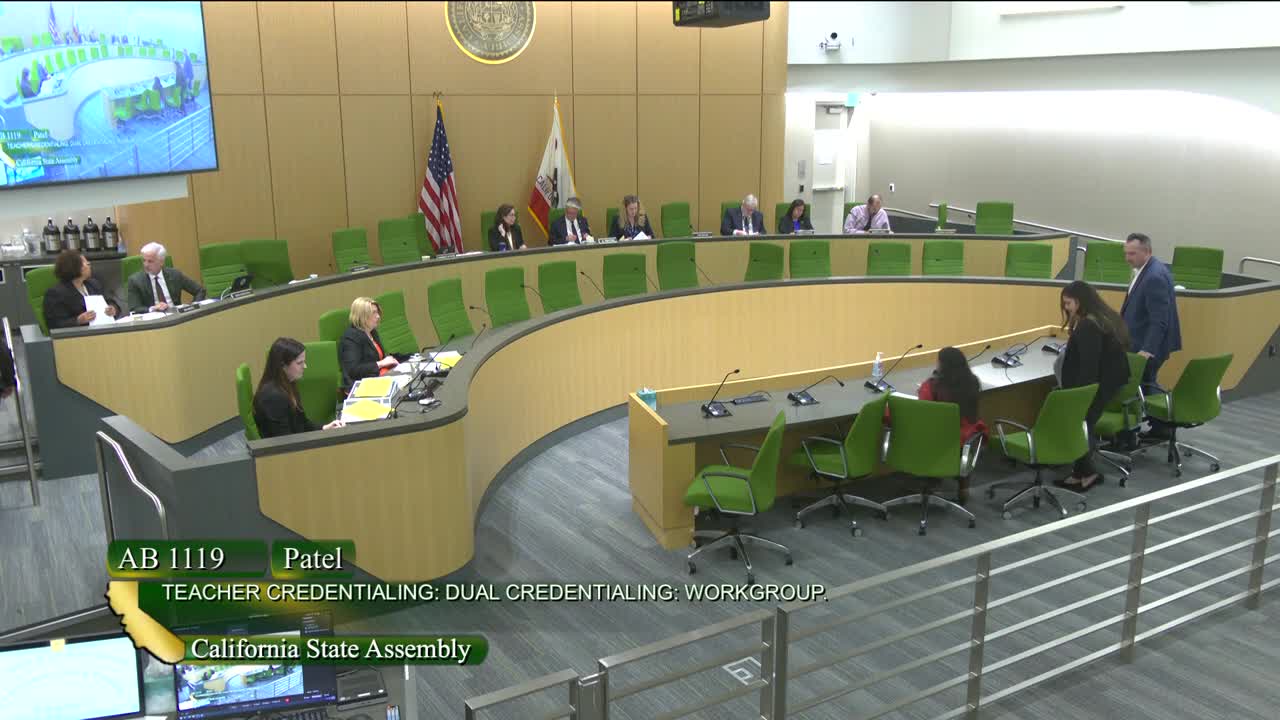
Bill Author
Bill Co-Author(s):