AB 1123: Commission on Teacher Credentialing: membership.
- Session Year: 2025-2026
- House: Assembly
- Latest Version Date: 2025-10-01
Current Status:
Passed
(2025-10-01: Chaptered by Secretary of State - Chapter 181, Statutes of 2025.)
Introduced
In Committee
Awaiting First Chamber Vote
Passed First Chamber
In Committee
Awaiting Second Chamber Vote
Passed Second Chamber
Enacted
What does this bill do?
The bill changes who can sit on the state Commission on Teacher Credentialing by allowing one of the six practicing-teacher seats to be filled by a teacher with a commission-issued child development teacher permit who teaches at a licensed, state-funded preschool or prekindergarten. It also reduces the number of public representative members from three to two. When the first public representative vacancy occurs on or after January 1, 2026, the governor must fill that seat instead with an early childhood higher-education faculty member who teaches in a CSU or UC baccalaureate program or a community college associate degree early childhood program.
The summary is provided by generative AI which can make mistakes. For original language, please view the details in the table below.
Existing law establishes the Commission on Teacher Credentialing, consisting of 15 voting members, including the Superintendent of Public Instruction as a permanent member and 14 other members, including 6 practicing teachers from public elementary and secondary schools and 3 representatives of the public, appointed by the Governor with the advice and consent of the Senate, serving staggered 4-year terms, as provided.
The bill would authorize the governor to appoint to the commission, as one of the 6 practicing teachers, a teacher with a commission-issued child development teacher permit who teaches at a licensed state-funded preschool or prekindergarten program, as provided. The bill would, upon the occurrence of the first vacancy of a public representative position on or after January 1, 2026, reduce the number of public representatives on the commission from 3 to 2 and require the governor to appoint instead one early childhood faculty member representing the early childhood higher education systems who teaches at either (1) an early childhood or child development baccalaureate degree program at one of the California State University or University of California campuses or (2) an associate degree program in one of the California Community Colleges early childhood education programs.
Existing law establishes the Commission on Teacher Credentialing, consisting of 15 voting members, including the Superintendent of Public Instruction as a permanent member and 14 other members, including 6 practicing teachers from public elementary and secondary schools and 3 representatives of the public, appointed by the Governor with the advice and consent of the Senate, serving staggered 4-year terms, as provided.
The bill would add 3 voting members to the commission, to be appointed by the Governor with the advice and consent of the Senate, as follows: (1) an early childhood faculty member representing the early childhood higher education systems, who teaches at (A) an early childhood or child development baccalaureate degree program at one of the California State University or University of California campuses or (B) an associate degree program in one of the California Community Colleges early childhood education programs; (2) a teacher with a commission-issued child development teacher permit who teaches at a licensed state-funded preschool or prekindergarten program; and (3) a child development site supervisor with a commission-issued child development site supervisor permit or a child development program director with a commission-issued child development program director permit, employed at a licensed state-funded preschool or prekindergarten program. The bill would require initial appointees for the added members to be appointed on or before January 1, 2027, to a staggered term of 2, 3, or 4 years, with all subsequent appointees appointed to a term of 4 years, as provided. authorize the governor to appoint to the commission, as one of the 6 practicing teachers, a teacher with a commission-issued child development teacher permit who teaches at a licensed state-funded preschool or prekindergarten program, as provided. The bill would, upon the occurrence of the first vacancy of a public representative position on or after January 1, 2026, reduce the number of public representatives on the commission from 3 to 2 and require the governor to appoint instead one early childhood faculty member representing the early childhood higher education systems who teaches at either (1) an early childhood or child development baccalaureate degree program at one of the California State University or University of California campuses or (2) an associate degree program in one of the California Community Colleges early childhood education programs.
Existing law establishes the Commission on Teacher Credentialing, consisting of 15 voting members, including the Superintendent of Public Instruction as a permanent member and 14 other members, appointed by the Governor with the advice and consent of the Senate, serving staggered 4-year terms, as provided.
The bill would add 3 voting members to the commission, to be appointed by the Governor with the advice and consent of the Senate, as follows: (1) a faculty member from a California State University campus, a University of California campus, or a California community colleges early childhood education or child development department who teaches in a baccalaureate program at the California State University or University of California campus or at the California community college; an early childhood faculty member representing the early childhood higher education systems, who teaches at (A) an early childhood or child development baccalaureate degree program at one of the California State University or University of California campuses or (B) an associate degree program in one of the California Community Colleges early childhood education programs; (2) a teacher with a commission-issued child development teacher permit who teaches at a licensed state-funded preschool or prekindergarten program; and (3) a child development site supervisor with a commission-issued child development site supervisor permit or a child development program director with a commission-issued child development program director permit, employed at a licensed state-funded preschool or prekindergarten program. The bill would require initial appointees for the added members to be appointed on or before January 1, 2027, to a staggered term of 2, 3, or 4 years, with all subsequent appointees appointed to a term of 4 years, as provided.
Existing law establishes the Commission on Teacher Credentialing, consisting of 15 voting members, including the Superintendent of Public Instruction as a permanent member and 14 other members, appointed by the Governor with the advice and consent of the Senate, serving staggered 4-year terms, as provided.
The bill would add 3 voting members to the commission, to be appointed by the Governor with the advice and consent of the Senate, as follows: (1) a faculty member from a California State University campus, a University of California campus, or a California community colleges early childhood education or child development department who teaches in a baccalaureate program at the California State University or University of California campus or at the California community college; (2) a teacher with a commission-issued child development teacher permit who teaches at a licensed state-funded preschool or prekindergarten program; and (3) a child development site supervisor with a commission-issued child development site supervisor permit or a child development program director with a commission-issued child development program director permit, employed at a licensed state-funded preschool or prekindergarten program. The bill would require initial appointees for the added members to be appointed on or before January 1, 2027, to a staggered term of 2, 3, or 4 years, with all subsequent appointees appointed to a term of 4 years, as provided.
Existing law establishes a public school financing system that requires state funding for county superintendents of schools, school districts, and charter schools to be calculated pursuant to a local control funding formula, as specified.Existing law, as a condition of apportionments, prescribes minimum instructional minutes and minimum days of instruction requirements for school districts and county offices of education, as applicable, and requires the Superintendent to withhold certain local control funding formula apportionments if a school district or county office of education fails to meet those requirements, as provided.This bill, notwithstanding any other law, would authorize school districts and county offices of education, commencing with the 202627 school year, to use up to 5 days of instruction for purposes of professional development for all school staff without incurring any otherwise applicable financial penalties due to that missed instructional time, including, but not limited to, penalties relating to instructional minute and instructional day requirements, provided that specified conditions are met, including, among others, that the school district or county office of education, as applicable, offers onsite care for all pupils in kindergarten and any of grades 1 to 6, inclusive, on those days of instruction used for professional development, as provided.This bill would make these provisions inoperative on July 1, 2031, and would repeal them as of January 1, 2032.Existing law establishes a public school financing system that requires state funding for county superintendents of schools, school districts, and charter schools to be calculated pursuant to a local control funding formula, as specified.
Existing law, as a condition of apportionments, prescribes minimum instructional minutes and minimum days of instruction requirements for school districts and county offices of education, as applicable, and requires the Superintendent to withhold certain local control funding formula apportionments if a school district or county office of education fails to meet those requirements, as provided.
This bill, notwithstanding any other law, would authorize school districts and county offices of education, commencing with the 202627 school year, to use up to 5 days of instruction for purposes of professional development for all school staff without incurring any otherwise applicable financial penalties due to that missed instructional time, including, but not limited to, penalties relating to instructional minute and instructional day requirements, provided that specified conditions are met, including, among others, that the school district or county office of education, as applicable, offers onsite care for all pupils in kindergarten and any of grades 1 to 6, inclusive, on those days of instruction used for professional development, as provided.
This bill would make these provisions inoperative on July 1, 2031, and would repeal them as of January 1, 2032.
(a)There is hereby established in the state government the Commission on Teacher Credentialing, to consist of 15 voting members, 14 of whom shall be appointed by the Governor with the advice and consent of the Senate, as specified in paragraphs (2) to (9), inclusive. The commission shall consist of the following members:
(1)The Superintendent or the Superintendents designee.
(2)(A)Six practicing teachers from public elementary and secondary schools in California, except as provided in subparagraph (B).
(B)Of the six members appointed pursuant to this paragraph, one member may be a teacher holding a commission-issued child development teacher permit who teaches at a state-funded preschool program or prekindergarten program licensed pursuant to Chapter 19 of Division 1 of Title 5 of the California Code of Regulations.
(3)One person who is employed on the basis of a services credential other than an administrative services credential.
(4)One member of the governing board of a school district.
(5)One early childhood faculty member representing the early childhood higher education systems who teaches at either (A) an early childhood or child development baccalaureate degree program at one of the California State University or University of California campuses or (B) an associate degree program in one of the California Community Colleges early childhood education programs. The Governor shall make the initial appointment pursuant to this paragraph upon the occurrence of the first vacancy of a public representative position, as described in paragraph (6), that occurs on or after January 1, 2026.
(6) Three representatives of the public, until the first vacancy of a member appointed pursuant to this paragraph that occurs on or after January 1, 2026, after which there shall be two representatives of the public. The occurrence of this vacancy shall not affect the status of the remaining two public representatives that had previously been appointed. None of these persons shall have been employed by an elementary or secondary school district in a position requiring certification, or shall have served as a school district governing board member in the five-year period immediately before the public members appointment to the commission.
(7)One school administrator in a public elementary or secondary school in California.
(8)One certificated human resources administrator in a public elementary or secondary school in California.
(9)One faculty member from a college or university that grants baccalaureate degrees.
(b)With the exception of the representatives of the public and the Superintendent, the appointment of a member shall terminate if the member is no longer a practicing teacher in a public elementary or secondary school or a teacher holding a commission-issued child development permit as described in paragraph (2) of subdivision (a), a person who is employed on the basis of a valid services credential, a school administrator, a certificated human resources administrator, a faculty member of a college or university that grants baccalaureate degrees, a faculty member as described in paragraph (5) of subdivision (a), or a member of the governing board of a school district, as may be the case, in California.
(c)Not more than one member of the commission is to be appointed from the same school district or college or university campus.
(d) Commencing July 1, 1989, four members shall be appointed to the commission for terms of two years, five members for terms of three years, and five members for terms of four years.
(e)Each appointment pursuant to this section shall expire on November 20 of the year of expiration of the applicable term. All appointments made pursuant to this section are subject to Section 44213.
(a)There is hereby established in the state government the Commission on Teacher Credentialing, to consist of 15 voting members, 14 of whom shall be appointed by the Governor with the advice and consent of the Senate, as specified in paragraphs (2) to (8), (9), inclusive. The commission shall consist of the following members:
(1)The Superintendent or the Superintendents designee.
(2)(A)Six practicing teachers from public elementary and secondary schools in California. California, except as provided in subparagraph (B).
(B)Of the six members appointed pursuant to this paragraph, one member may be a teacher holding a commission-issued child development teacher permit who teaches at a state-funded preschool program or prekindergarten program licensed pursuant to Chapter 19 of Division 1 of Title 5 of the California Code of Regulations.
(3)One person who is employed on the basis of a services credential other than an administrative services credential.
(4)One member of the governing board of a school district.
(5)One early childhood faculty member representing the early childhood higher education systems who teaches at either (A) an early childhood or child development baccalaureate degree program at one of the California State University or University of California campuses or (B) an associate degree program in one of the California Community Colleges early childhood education programs. The Governor shall make the initial appointment pursuant to this paragraph upon the occurrence of the first vacancy of a public representative position, as described in paragraph (6), that occurs on or after January 1, 2026.
(5)(6) Three representatives of the public. public, until the first vacancy of a member appointed pursuant to this paragraph that occurs on or after January 1, 2026, after which there shall be two representatives of the public. The occurrence of this vacancy shall not affect the status of the remaining two public representatives that had previously been appointed. None of these persons shall have been employed by an elementary or secondary school district in a position requiring certification, or shall have served as a school district governing board member in the five-year period immediately before the public members appointment to the commission.
(6)(7)One school administrator in a public elementary or secondary school in California.
(7)(8)One certificated human resources administrator in a public elementary or secondary school in California.
(8)(9)One faculty member from a college or university that grants baccalaureate degrees.
(b)With the exception of the three representatives of the public and the Superintendent, the appointment of a member shall terminate if the member is no longer a practicing teacher in a public elementary or secondary school, school or a teacher holding a commission-issued child development permit as described in paragraph (2) of subdivision (a), a person who is employed on the basis of a valid services credential, a school administrator, a certificated human resources administrator, a faculty member of a college or university that grants baccalaureate degrees, a faculty member as described in paragraph (5) of subdivision (a), or a member of the governing board of a school district, as may be the case, in California.
(c)Not more than one member of the commission is to be appointed from the same school district or college or university campus.
(d) Commencing July 1, 1989, four members shall be appointed to the commission for terms of two years, five members for terms of three years, and five members for terms of four years.
(e)Each appointment pursuant to this section shall expire on November 20 of the year of expiration of the applicable term. All appointments made pursuant to this section are subject to Section 44213.
(a)There is hereby established in the state government the Commission on Teacher Credentialing, to consist of 18 voting members, 17 of whom shall be appointed by the Governor with the advice and consent of the Senate, as specified in paragraphs (2) to (11), inclusive. The commission shall consist of the following members:
(1)The Superintendent or the Superintendents designee.
(2)Six practicing teachers from public elementary and secondary schools in California.
(3)One person who is employed on the basis of a services credential other than an administrative services credential.
(4)One member of the governing board of a school district.
(5)Three representatives of the public. None of these persons shall have been employed by an elementary or secondary school district in a position requiring certification, or shall have served as a school district governing board member in the five-year period immediately before the public members appointment to the commission.
(6)One school administrator in a public elementary or secondary school in California.
(7)One certificated human resources administrator in a public elementary or secondary school in California.
(8)One faculty member from a college or university that grants baccalaureate degrees.
(9)One faculty member from a California State University campus, University of California campus, or California community colleges early childhood education or a child development department who teaches in a baccalaureate degree program at the California State University or University of California campus or at the California community college, as applicable.(9)One early childhood faculty member representing the early childhood higher education systems, who teaches at (A) an early childhood or child development baccalaureate degree program at one of the California State University or University of California campuses or (B) an associate degree program in one of the California Community Colleges early childhood education programs.
(10)One teacher holding a commission-issued child development teacher permit who teaches at a state-funded preschool program or prekindergarten program licensed pursuant to Chapter 19 of Division 1 of Title 5 of the California Code of Regulations.
(11)One child development site supervisor holding a commission-issued child development site supervisor permit, or one child development program director holding a commission-issued child development program director permit, who is employed at a state-funded preschool program or prekindergarten program licensed pursuant to Chapter 19 of Division 1 of Title 5 of the California Code of Regulations.
(b)With the exception of the three representatives of the public and the Superintendent, the appointment of a member shall terminate if the member is no longer a practicing teacher in a public elementary or secondary school, a person who is employed on the basis of a valid services credential, a school administrator, a certificated human resources administrator, a faculty member of a college or university that grants baccalaureate degrees, a faculty member described in paragraph (9), a teacher described in paragraph (10), a child development site supervisor or child development program director described in paragraph (11), or a member of the governing board of a school district, as may be the case, in California.
(c)Not more than one member of the commission is to be appointed from the same school district or college or university campus.
(d)(1)Commencing July 1, 1989, four members shall be appointed to the commission for terms of two years, five members for terms of three years, and five members for terms of four years.
(2)The initial members appointed to the commission pursuant to paragraphs (9) to (11), inclusive, of subdivision (a) shall be appointed on or before January 1, 2027, with their terms beginning on July 1, 2027, and expiring as follows consistent with subdivision (e):
(A)One members term shall expire on November 20, 2029.
(B)One members term shall expire on November 20, 2030.
(C)One members term shall expire on November 20, 2031.
(e)Each appointment pursuant to this section shall expire on November 20 of the year of expiration of the applicable term. All appointments made pursuant to this section are subject to Section 44213.
(a)There is hereby established in the state government the Commission on Teacher Credentialing, to consist of 15 18 voting members, 14 17 of whom shall be appointed by the Governor with the advice and consent of the Senate, as specified in paragraphs (2) to (8), (11), inclusive. The commission shall consist of the following members:
(1)The Superintendent or the Superintendents designee.
(2)Six practicing teachers from public elementary and secondary schools in California.
(3)One person who is employed on the basis of a services credential other than an administrative services credential.
(4)One member of the governing board of a school district.
(5)Three representatives of the public. None of these persons shall have been employed by an elementary or secondary school district in a position requiring certification, or shall have served as a school district governing board member in the five-year period immediately before the public members appointment to the commission.
(6)One school administrator in a public elementary or secondary school in California.
(7)One certificated human resources administrator in a public elementary or secondary school in California.
(8)One faculty member from a college or university that grants baccalaureate degrees.
(9)One faculty member from a California State University campus, University of California campus, or California community colleges early childhood education or a child development department who teaches in a baccalaureate degree program at the California State University or University of California campus or at the California community college, as applicable.
(10)One teacher holding a commission-issued child development teacher permit who teaches at a state-funded preschool program or prekindergarten program licensed pursuant to Chapter 19 of Division 1 of Title 5 of the California Code of Regulations.
(11)One child development site supervisor holding a commission-issued child development site supervisor permit, or one child development program director holding a commission-issued child development program director permit, who is employed at a state-funded preschool program or prekindergarten program licensed pursuant to Chapter 19 of Division 1 of Title 5 of the California Code of Regulations.
(b)With the exception of the three representatives of the public and the Superintendent, the appointment of a member shall terminate if the member is no longer a practicing teacher in a public elementary or secondary school, a person who is employed on the basis of a valid services credential, a school administrator, a certificated human resources administrator, a faculty member of a college or university that grants baccalaureate degrees, or a member of the governing board of a school district, as may be the case, in California.
(c)Not more than one member of the commission is to be appointed from the same school district or college or university campus.
(d)(1)Commencing July 1, 1989, four members shall be appointed to the commission for terms of two years, five members for terms of three years, and five members for terms of four years.
(2)The initial members appointed to the commission pursuant to paragraphs (9) to (11), inclusive, of subdivision (a) shall be appointed on or before January 1, 2027, with their terms beginning on July 1, 2027, and expiring as follows consistent with subdivision (e):
(A)One members term shall expire on November 20, 2029.
(B)One members term shall expire on November 20, 2030.
(C)One members term shall expire on November 20, 2031.
(e)Each appointment pursuant to this section shall expire on November 20 of the year of expiration of the applicable term. All appointments made pursuant to this section are subject to Section 44213.
SECTION 1.Section 46201.3 is added to the Education Code, to read:46201.3.(a)Notwithstanding any other law, a school district or county office of education may, commencing with the 202627 school year, use up to five days of instruction for purposes of professional development for all school staff without incurring any otherwise applicable financial penalties due to that missed instructional time, including, but not limited to, penalties relating to instructional minute and instructional day requirements, provided that all of the following conditions are met:(1)The planned professional development reflects the standards of high-quality professional development established pursuant to Section 44472.(2)The days of instruction used for professional development are scheduled to occur on days just before, or just after, regular school breaks or the beginning or end of the school year, and are specified in the annual calendar adopted by the governing board of the school district or the county board of education, as applicable.(3)The school district or county office of education, as applicable, offers onsite care for all pupils in kindergarten and any of grades 1 to 6, inclusive, on those days of instruction used for professional development through the Expanded Learning Opportunities Program established pursuant to Section 46120 or another similar program.(b)This section shall become inoperative on July 1, 2031, and, as of January 1, 2032, is repealed.(a)Notwithstanding any other law, a school district or county office of education may, commencing with the 202627 school year, use up to five days of instruction for purposes of professional development for all school staff without incurring any otherwise applicable financial penalties due to that missed instructional time, including, but not limited to, penalties relating to instructional minute and instructional day requirements, provided that all of the following conditions are met:
(1)The planned professional development reflects the standards of high-quality professional development established pursuant to Section 44472.
(2)The days of instruction used for professional development are scheduled to occur on days just before, or just after, regular school breaks or the beginning or end of the school year, and are specified in the annual calendar adopted by the governing board of the school district or the county board of education, as applicable.
(3)The school district or county office of education, as applicable, offers onsite care for all pupils in kindergarten and any of grades 1 to 6, inclusive, on those days of instruction used for professional development through the Expanded Learning Opportunities Program established pursuant to Section 46120 or another similar program.
(b)This section shall become inoperative on July 1, 2031, and, as of January 1, 2032, is repealed.
|
Date
|
Status
|
|---|---|
| Oct 1, 2025 | Chaptered by Secretary of State - Chapter 181, Statutes of 2025. |
| Oct 1, 2025 | Approved by the Governor. |
| Sep 16, 2025 | Enrolled and presented to the Governor at 2 p.m. |
| Sep 9, 2025 | Senate amendments concurred in. To Engrossing and Enrolling. (Ayes 78. Noes 0. Page 3118.). |
| Sep 8, 2025 | In Assembly. Concurrence in Senate amendments pending. |
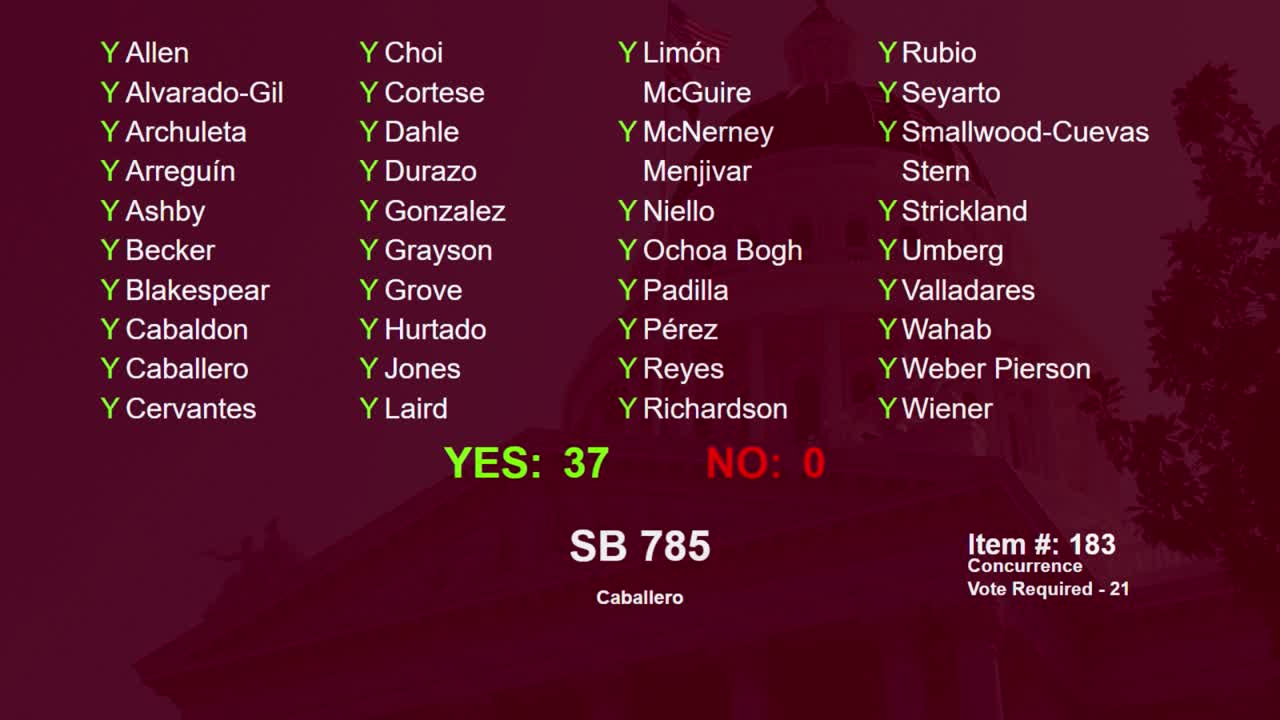
| Sep 8, 2025 | Read third time. Passed. Ordered to the Assembly. (Ayes 37. Noes 0. Page 2580.). |
| Jul 1, 2025 | Read second time. Ordered to third reading. |
| Jun 30, 2025 | From committee: Be ordered to second reading pursuant to Senate Rule 28.8. |
| Jun 18, 2025 | From committee: Do pass and re-refer to Com. on APPR. (Ayes 6. Noes 0.) (June 18). Re-referred to Com. on APPR. |
| Jun 9, 2025 | From committee chair, with author's amendments: Amend, and re-refer to committee. Read second time, amended, and re-referred to Com. on ED. |
| May 21, 2025 | Referred to Com. on ED. |
| May 8, 2025 | In Senate. Read first time. To Com. on RLS. for assignment. |
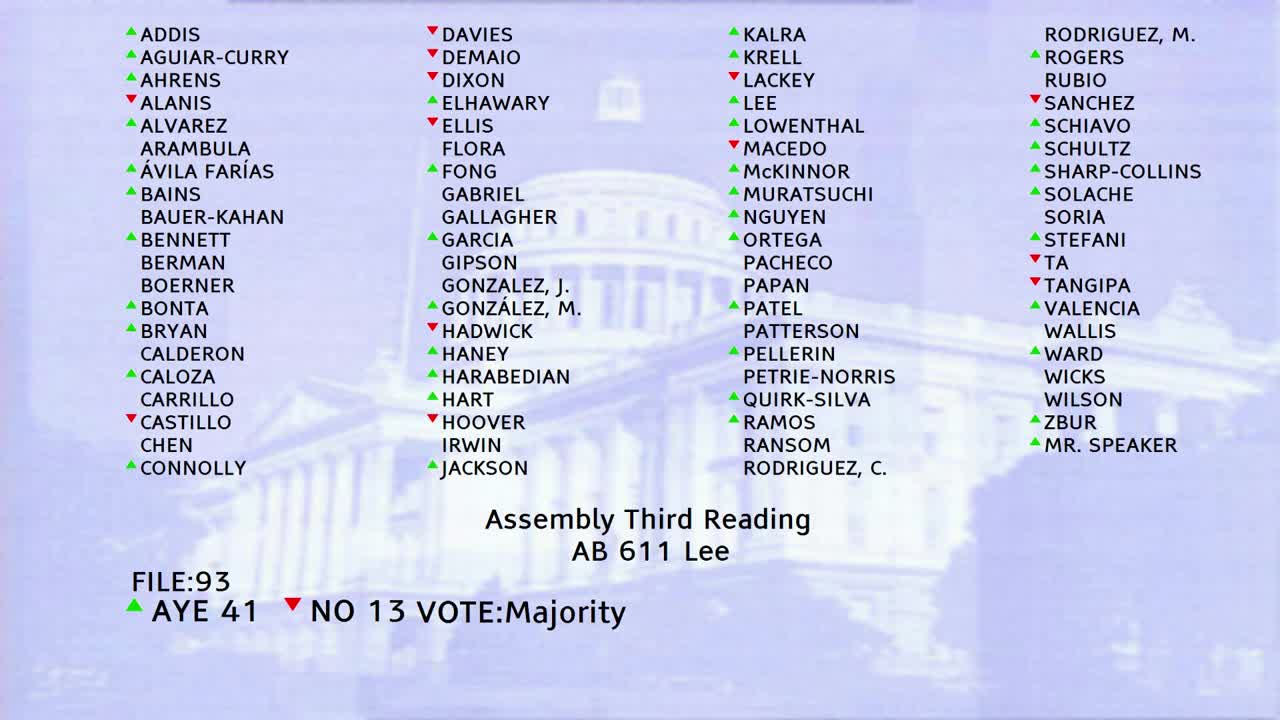
| May 8, 2025 | Read third time. Passed. Ordered to the Senate. (Ayes 72. Noes 0. Page 1481.) |
| May 1, 2025 | Read second time. Ordered to third reading. |
| Apr 30, 2025 | From committee: Do pass. (Ayes 14. Noes 0.) (April 30). |
| Apr 22, 2025 | Re-referred to Com. on APPR. |
| Apr 21, 2025 | Read second time and amended. |
| Apr 10, 2025 | From committee: Amend, and do pass as amended and re-refer to Com. on APPR. (Ayes 9. Noes 0.) (April 9). |
| Mar 19, 2025 | Re-referred to Com. on ED. |
| Mar 18, 2025 | From committee chair, with author's amendments: Amend, and re-refer to Com. on ED. Read second time and amended. |
| Mar 10, 2025 | Referred to Com. on ED. |
| Feb 21, 2025 | From printer. May be heard in committee March 23. |
| Feb 20, 2025 | Read first time. To print. |
|
Date
|
Description
|
Location
|
Votes
|
|
|---|---|---|---|---|
| Sep 9, 2025 | AB 1123 Muratsuchi Concurrence in Senate Amendments | Assembly Floor |
Passed |
|
| Sep 8, 2025 | Assembly 3rd Reading AB1123 Muratsuchi By Limón | Senate Floor |
Passed |
|
| Jun 18, 2025 | Do pass, but first be re-referred to the Committee on [Appropriations] | Senate Standing Committee on Education |
Passed |
|
| May 8, 2025 | AB 1123 Muratsuchi Assembly Third Reading | Assembly Floor |
Passed |
|
| Apr 30, 2025 | Do pass. | Assembly Standing Committee on Appropriations |
Passed |
|
| Apr 9, 2025 | Do pass as amended and be re-referred to the Committee on [Appropriations] | Assembly Standing Committee on Education |
Passed |
This list shows positions taken on this bill by organizations on the date displayed, which is linked to the original source.
Positions by individuals are not included.
|
Organization
|
Position
|
Date
|
|---|---|---|
| Alameda County Office Of Education | ** Support | |
| Association of California Community College Teacher Education Programs | ** Support | |
| California Child Care Resource and Referral Network | ** Support | |
| California Community College Early Childhood Educators | ** Support | |
| California Federation Of Teachers | ** Support | |
| California Teachers Association | ** Against | |
| Californians Together | ** Support | |
| Child Action, Inc. | ** Support | |
| Child Care Alliance of Los Angeles | ** Support | |
| Child Care Resource Center | ** Support | |
| Delta Kappa Gamma International - Chi State | ** Support | |
| Early Edge California | ** Support | |
| EveryChild California | ** Support | |
| Head Start California | ** Support | |
| Las Positas College Early Care and Education Program | ** Support | |
| Local Planning Council of Ventura County | ** Support | |
| Los Angeles County Office Of Education | ** Support | |
| Options for Learning | ** Support | |
| PEACH | ** Support | |
| San Diego for Every Child | ** Support | |
| Ventura County Office of Education | ** Support |
CONCURRENCE IN SENATE AMENDMENTS
CSA1 Bill Id:AB 1123
Author:(Muratsuchi)
As Amended Ver:June 9, 2025
Majority vote
SUMMARY
Modifies the composition of the Commission on Teacher Credentialing (CTC) to allow for early childhood education (ECE) representation without expanding the total number of commissioners.
Senate Amendments
- Remove the requirement that new members be added to the CTC, and instead:
- Authorize the governor to appoint, as one of the 6 practicing teachers, a teacher with a CTC-issued child development teacher permit who teaches at a licensed state-funded preschool or prekindergarten program; and
- Upon the occurrence of the first vacancy of a public representative position on or after January 1, 2026, reduce the number of public representatives on the CTC from 3 to 2 and require the Governor to appoint instead one ECE faculty member representing the ECE higher education systems who teaches at either an ECE or child development baccalaureate degree program at one of the California State University (CSU) or University of California (UC) campuses or an associate degree program in one of the California Community Colleges' (CCC) ECE programs.
COMMENTS
CTC has issued ECE permits for over 60 years, but has never had dedicated voting ECE representation. California began issuing teacher credentials in 1917, and issued its first Child Development Permit in 1961, when it became one of the first states to subsidize public preschool enrollment. In the 108-year history of educator credentialing in California there have never been dedicated voting members on the CTC to represent ECE educators or faculty.
CTC frequently acts on significant policy related to ECE qualifications and preparation.
The CTC frequently acts on consequential issues pertaining to the ECE profession. Below is a list of major issues and initiatives relating to the preparation and licensing of ECE educators that have come before the CTC over the last 10 years:
- Child Development Permit Matrix
- Review of the Child Development Permit
- Regulations for Teaching Permit for Statutory Leave
- Child Development Advisory Panel
- Teaching Performance Expectations (TPEs) for the Child Development Permit
- Program Guidelines for preparation leading to the Child Development Permit
- Candidate Performance Expectations and Preparation Program Guidelines
- Program Standards for Early Childhood Special Education Added Authorization Programs
- The Master Plan for Early Learning and Care
- Preschool Development Grant-Renewal
- Establishing Multiple, Accessible Pathways to a Permit or Credential
- ECE Design Teams under the Preschool Development Grant-Renewal and Proposed Program Quality Peer Review
- PK-3 Early Childhood Education Specialist Credential
- TPEs and Program Standards for the PK-3 Early Childhood Education Specialist Credential
- Regulations Pertaining to Credential Requirements for the PK-3 Early Childhood Education Specialist Instruction Credential
- Commission Approved Teaching and Administrator Performance Assessments
- ECE Formative Teaching Performance Assessment
- Child Development Permit Workgroup Field Survey
- Teacher Supply reports to the Legislature
The CTC's membership and role. The major purposes of the current CTC are to serve as a state standards board for educator preparation for the public schools of California, the licensing and credentialing of professional educators, the enforcement of professional practices of educators, and the discipline of credential holders.
The CTC membership currently consists of 19 members, 15 voting members and four ex-officio, non-voting members, appointed as follows:
- The Governor appoints 14 voting commissioners and the Superintendent of Public Instruction (SPI) or his/her designee serves as the 15th voting member;
- The four ex-officio members are selected one each by the major elements of the California higher education constituency: Association of Independent California Colleges and Universities; Regents of the UC; the CSU; and CCC Chancellor's Office; and
- The Governor-appointed commissioners consist of six classroom teachers, one school administrator, one school board member, one school counselor or services credential holder, one higher education faculty member from an institution for teacher education, and four public members.
Governor-appointed Commissioners are typically appointed to four-year terms, and serve as volunteers in unpaid positions.
According to the Author
"The State of California issued the first Child Development Permits to early childhood educators in 1961, making it the first state to professionalize this critical workforce. But in the six decades since, early childhood education (ECE) professionals in California have never had a voting member on the commission which governs their licensure and preparation.
By adding ECE appointments to the Commission on Teacher Credentialing (CTC), AB 1123 will ensure that ECE educators, administrators, and the faculty who prepare them have a voice on issues of direct consequence to them and the families they serve. By adding these professionals to the CTC, this bill will bring valuable expertise, experience, and perspectives to the CTC.
Over the years, ECE teachers have been without a voting voice on the CTC when significant issues have arisen. Indeed, the Child Development Permit has been updated numerous times without the voting participation of ECE educators. In a recent example, stakeholders expressed concern that Child Development Permit holders had minimal opportunity to engage in the CTC's Child Development Permit Workgroup.
AB 1123 is a long overdue measure that will provide a voice for ECE educators, administrators, and faculty on the future of their profession."
Arguments in Support
The Child Care Resource Center writes, "In recent years, the CTC has adopted Early Childhood Education (ECE) Teaching Performance Expectations and ECE Program Guidelines, and created a new credential, the PK-3 ECE Specialist Instruction Credential. These are highly consequential decisions affecting the entire ECE sector, workforce, and children and families throughout California. According to decades of research, content expertise in early childhood education (ECE) provides a critical foundation to ensure successful implementation of these changes, yet there are currently no voting individuals serving on the CTC who have ECE content expertise.
AB 1123 would require that the CTC include three voting members designated to represent ECE. The goal of this modification is to support the Commission's purpose of serving as a state standards board for educator preparation for the public schools of California. We commend the Commission's work thus far and are certain that this work will be stronger with the added voting representation of early childhood voices. Approving this amendment would also support the Governor's Master Plan for Early Learning and Care and, most importantly, lift up the children and families of California."
Arguments in Opposition
None on file
FISCAL COMMENTS
According to the Senate Appropriations Committee, pursuant to Senate Rule 28.8, negligible state costs.
VOTES:
ASM EDUCATION: 9-0-0
YES: Muratsuchi, Hoover, Addis, Alvarez, Bonta, Castillo, Garcia, Lowenthal, Patel
ASM APPROPRIATIONS: 14-0-1
YES: Wicks, Sanchez, Arambula, Calderon, Caloza, Dixon, Elhawary, Fong, Mark González, Hart, Pacheco, Solache, Ta, Alanis
ABS, ABST OR NV: Pellerin
ASSEMBLY FLOOR: 72-0-7
YES: Addis, Aguiar-Curry, Ahrens, Alanis, Alvarez, Ávila Farías, Bains, Bauer-Kahan, Bennett, Berman, Bonta, Bryan, Calderon, Caloza, Castillo, Chen, Connolly, Davies, DeMaio, Dixon, Elhawary, Ellis, Flora, Fong, Gabriel, Gallagher, Garcia, Gipson, Mark González, Hadwick, Haney, Harabedian, Hart, Hoover, Jackson, Kalra, Krell, Lackey, Lee, Lowenthal, Macedo, McKinnor, Muratsuchi, Nguyen, Ortega, Pacheco, Papan, Patel, Patterson, Pellerin, Petrie-Norris, Quirk-Silva, Ramos, Ransom, Michelle Rodriguez, Rogers, Blanca Rubio, Sanchez, Schiavo, Schultz, Sharp-Collins, Solache, Soria, Stefani, Ta, Tangipa, Valencia, Ward, Wicks, Wilson, Zbur, Rivas
ABS, ABST OR NV: Arambula, Boerner, Carrillo, Jeff Gonzalez, Irwin, Celeste Rodriguez, Wallis
UPDATED
VERSION: June 9, 2025
CONSULTANT: Tanya Lieberman / ED. / (916) 319-2087 FN: 0001858
SENATE COMMITTEE ON EDUCATION
Senator Sasha Renée Pérez, Chair
2025 - 2026 Regular
Bill No: AB 1123 Hearing Date: June 18, 2025
Author: | |||
Version: | June 9, 2025 | ||
Urgency: | No | Fiscal: | Yes |
Consultant: | Ian Johnson | ||
Subject: Commission on Teacher Credentialing: membership.
SUMMARY
This bill modifies the composition of the Commission on Teacher Credentialing (CTC) to allow for early childhood education (ECE) representation without expanding the total number of commissioners.
BACKGROUND
Existing law:
- Establishes the CTC as an independent state agency consisting of 15 voting members, 14 of whom are appointed by the Governor with Senate confirmation. (Education Code (EC) § 44210)
- Requires the commission to include:
- Six practicing public school teachers;
- One person employed under a services credential (excluding administrative services);
- One public school administrator;
- One certificated human resources administrator;
- One governing board member of a school district;
- Three public representatives with no recent K-12 employment or board service;
- One higher education faculty member;
- The Superintendent of Public Instruction (or designee).
- Terminates commission membership if appointees no longer meet the eligibility criteria.
- Prohibits more than one member from being appointed from the same school district or university campus.
- Sets staggered terms for appointed members and limits them to two consecutive full terms. (EC §§ 44210, 44213)
- Requires the CTC to establish and renew child development permits and to approve related alternative training and experience. (EC § 8301; Title 5, California Code of Regulations (CCR) §§ 80107, 80111)
ANALYSIS
This bill:
- Allows one of the six teacher positions on the Commission to be filled by a teacher who holds a CTC-issued child development permit and teaches at a state-funded preschool or prekindergarten program licensed under Title 5 regulations.
- Converts, upon the first vacancy, one of the three public member seats into a designated seat for a faculty member from the early childhood education system. This faculty member must teach either:
- In a child development or ECE baccalaureate program at a University of California (UC) or California State University (CSU), or;
- In an associate degree ECE program at a California Community College (CCC).
STAFF COMMENTS
- Need for the bill. According to the author, “The State of California issued the first Child Development Permits to early childhood educators in 1961, making it the first state to professionalize this critical workforce. But in the six decades since, early childhood education (ECE) professionals in California have never had a voting member on the commission which governs their licensure and preparation.
“By adding ECE appointments to the Commission on Teacher Credentialing (CTC), AB 1123 will ensure that ECE educators, administrators, and the faculty who prepare them have a voice on issues of direct consequence to them and the families they serve. By adding these professionals to the CTC, this bill will bring valuable expertise, experience, and perspectives to the CTC.
“Over the years, ECE teachers have been without a voting voice on the CTC when significant issues have arisen. Indeed, the Child Development Permit has been updated numerous times without the voting participation of ECE educators. In a recent example, stakeholders expressed concern that Child Development Permit holders had minimal opportunity to engage in the CTC’s Child Development Permit Workgroup.
AB 1123 is a long overdue measure that will provide a voice for ECE educators, administrators, and faculty on the future of their profession.”
- ECE Stakeholder Inclusion without Commission Expansion. This bill reflects a strategic shift from its earlier version, which proposed adding three new members to the CTC. In response to concerns from CTC staff and other stakeholders about increasing the Commission’s already complex structure, the current version reallocates two existing seats to incorporate ECE perspectives. This approach introduces ECE expertise into the Commission while preserving its current size, mitigating administrative and logistical burdens.
- Addressing a Longstanding Representation Gap. The CTC has regulated child development permits since the 1960s, yet early childhood educators and faculty have never held voting seats on the Commission. In recent years, the CTC has adopted policies that directly affect the ECE workforce, including revising the Child Development Permit structure, establishing Teaching Performance Expectations for preschool educators, and adopting the PK–3 Early Childhood Education Specialist Credential. The absence of ECE voices in these deliberations has been a recurring concern among stakeholders. By reassigning existing seats, this bill provides a targeted remedy to a historical gap in representation.
- Maintaining Structural Integrity of the Commission. CTC staff previously expressed concern that expanding the size of the Commission would create governance and logistical challenges. These include more complex scheduling, increased costs, and potential dilution of core roles. The bill’s recent amendments address these concerns by preserving the current 15-member size, which CTC staff has indicated is already at the upper bound of functionality.
- Precedent for Future Representation Requests? The inclusion of ECE professionals on the CTC may prompt other stakeholder groups—such as those representing English learners, special education, or rural educators—to seek guaranteed representation in the future. While that is a possibility, the circumstances surrounding this bill are unique: early childhood educators have existed under the Commission’s jurisdiction for over 60 years without voting representation, despite having their own permit structure, preparation pipelines, and ongoing regulatory changes. The long-standing exclusion of ECE voices, despite the scale of CTC activity affecting their workforce, creates a compelling rationale for inclusion that does not necessarily extend to all educator subgroups.
- Representation Supports Better Governance. The inclusion of ECE educators is not just symbolic—it may improve policy development and implementation. The CTC frequently adopts preparation standards, program guidelines, and credentialing regulations with direct implications for the ECE workforce. Having practitioners and faculty from that sector present during deliberations can lead to more practical, informed, and equitable decision-making. As California expands transitional kindergarten and invests in a more professionalized ECE system, embedding these voices within the CTC is aligned with the state’s broader education priorities.
SUPPORT
California Community College Early Childhood Educators (Co-Sponsor)
Child Care Alliance of Los Angeles (Co-Sponsor)
Alameda County Office of Education
Association of California Community College Teacher Education Programs
California Child Care Resource and Referral Network
California Federation of Teachers
Californians Together
Child Action, Inc.
Delta Kappa Gamma International - Chi State
Early Edge California
EveryChild California
Local Planning Council of Ventura County
Los Angeles County Office of Education
Options for Learning
Ventura County Office of Education
1 Individual
OPPOSITION
California Teachers Association
-- END --
ASSEMBLY THIRD READING
ATR Bill Id:AB 1123
Author:(Muratsuchi)
As Amended Ver:April 21, 2025
Majority vote
SUMMARY
Increases the membership of the Commission on Teacher Credentialing (CTC) from 15 to 18 members in order to include representation from early childhood education (ECE) professionals, as specified.
Major Provisions
- Requires that the membership of the CTC be increased from 15 to 18 members, by adding three voting members as follows:
- One early childhood faculty member representing the early childhood higher education systems, who teaches at an early childhood or child development baccalaureate degree program at one of the California State University (CSU) or University of California (UC) campuses or an associate degree program in one of the California Community Colleges' (CCC) ECE programs;
- One teacher holding a CTC-issued child development teacher permit who teaches at a state-funded preschool program or prekindergarten program licensed pursuant to Chapter 19 of Division 1 of Title 5 of the California Code of Regulations (CCR); and
- One child development site supervisor holding a CTC-issued child development site supervisor permit, or one child development program director holding a CTC-issued child development program director permit, who is employed at a state-funded preschool program or prekindergarten program licensed pursuant to Chapter 19 of Division 1 of Title 5 of the CCR.
- Requires that these members above be appointed on or before January 1, 2027, with their terms beginning on July 1, 2027, and expiring as follows:
- One member's term on November 20, 2029;
- One member's term on November 20, 2030; and
- One member's term on November 20, 2031.
COMMENTS
CTC has issued ECE permits for over 60 years, but has never had dedicated voting ECE representation. California began issuing teacher credentials in 1917, and issued its first Child Development Permit in 1961, when it became one of the first states to subsidize public preschool enrollment. The Assembly may wish to consider that in the 108-year history of educator credentialing in California there have never been dedicated voting members on the CTC to represent ECE educators or faculty.
CTC frequently acts on significant policy related to ECE qualifications and preparation.
The CTC frequently acts on consequential issues pertaining to the ECE profession. Below is a list of major issues and initiatives relating to the preparation and licensing of ECE educators that have come before the CTC over the last ten years:
- Child Development Permit Matrix
- Review of the Child Development Permit
- Regulations for Teaching Permit for Statutory Leave
- Child Development Advisory Panel
- Teaching Performance Expectations (TPEs) for the Child Development Permit
- Program Guidelines for preparation leading to the Child Development Permit
- Candidate Performance Expectations and Preparation Program Guidelines
- Program Standards for Early Childhood Special Education Added Authorization Programs
- The Master Plan for Early Learning and Care
- Preschool Development Grant-Renewal
- Establishing Multiple, Accessible Pathways to a Permit or Credential
- ECE Design Teams under the Preschool Development Grant-Renewal and Proposed Program Quality Peer Review
- PK-3 Early Childhood Education Specialist Credential
- TPEs and Program Standards for the PK-3 Early Childhood Education Specialist Credential
- Regulations Pertaining to Credential Requirements for the PK-3 Early Childhood Education Specialist Instruction Credential
- Commission Approved Teaching and Administrator Performance Assessments
- ECE Formative Teaching Performance Assessment
- Child Development Permit Workgroup Field Survey
- Teacher Supply reports to the Legislature
The CTC's membership and role. The major purposes of the current CTC are to serve as a state standards board for educator preparation for the public schools of California, the licensing and credentialing of professional educators, the enforcement of professional practices of educators, and the discipline of credential holders.
The CTC membership currently consists of nineteen members, fifteen voting members and four ex-officio, non-voting members, appointed as follows:
- The Governor appoints fourteen voting commissioners and the Superintendent of Public Instruction (SPI) or his/her designee serves as the fifteenth voting member;
- The four ex-officio members are selected one each by the major elements of the California higher education constituency: Association of Independent California Colleges and Universities; Regents of the UC; the CSU; and CCC Chancellor's Office; and
- The Governor-appointed commissioners consist of six classroom teachers, one school administrator, one school board member, one school counselor or services credential holder, one higher education faculty member from an institution for teacher education, and four public members.
Governor-appointed Commissioners are typically appointed to four-year terms, and serve as volunteers in unpaid positions.
According to the Author
″The State of California issued the first Child Development Permits to early childhood educators in 1961, making it the first state to professionalize this critical workforce. But in the six decades since, early childhood education (ECE) professionals in California have never had a voting member on the commission which governs their licensure and preparation.
By adding ECE appointments to the Commission on Teacher Credentialing (CTC), AB 1123 will ensure that ECE educators, administrators, and the faculty who prepare them have a voice on issues of direct consequence to them and the families they serve. By adding these professionals to the CTC, this bill will bring valuable expertise, experience, and perspectives to the CTC.
Over the years, ECE teachers have been without a voting voice on the CTC when significant issues have arisen. Indeed, the Child Development Permit has been updated numerous times without the voting participation of ECE educators. In a recent example, stakeholders expressed concern that Child Development Permit holders had minimal opportunity to engage in the CTC's Child Development Permit Workgroup.
AB 1123 is a long overdue measure that will provide a voice for ECE educators, administrators, and faculty on the future of their profession.″
Arguments in Support
The Child Care Resource Center writes, ″In recent years, the CTC has adopted Early Childhood Education (ECE) Teaching Performance Expectations and ECE Program Guidelines, and created a new credential, the PK-3 ECE Specialist Instruction Credential. These are highly consequential decisions affecting the entire ECE sector, workforce, and children and families throughout California. According to decades of research, content expertise in early childhood education (ECE) provides a critical foundation to ensure successful implementation of these changes, yet there are currently no voting individuals serving on the CTC who have ECE content expertise.
AB 1123 would require that the CTC include three voting members designated to represent ECE. The goal of this modification is to support the Commission's purpose of serving as a state standards board for educator preparation for the public schools of California. We commend the Commission's work thus far and are certain that this work will be stronger with the added voting representation of early childhood voices. Approving this amendment would also support the Governor's Master Plan for Early Learning and Care and, most importantly, lift up the children and families of California.″
Arguments in Opposition
None on file
FISCAL COMMENTS
According to the Assembly Appropriations Committee, General Fund costs of $28,000 in the first year and $26,000 ongoing for CTC to pay for travel, lodging, per diem, and technology and software acquisition costs required for the additional commissioners.
VOTES
ASM EDUCATION: 9-0-0
YES: Muratsuchi, Hoover, Addis, Alvarez, Bonta, Castillo, Garcia, Lowenthal, Patel
ASM APPROPRIATIONS: 14-0-1
YES: Wicks, Sanchez, Arambula, Calderon, Caloza, Dixon, Elhawary, Fong, Mark González, Hart, Pacheco, Solache, Ta, Alanis
ABS, ABST OR NV: Pellerin
UPDATED
VERSION: April 21, 2025
CONSULTANT: Tanya Lieberman / ED. / (916) 319-2087 FN: 0000323
Date of Hearing: April 30, 2025
ASSEMBLY COMMITTEE ON APPROPRIATIONS
Buffy Wicks, Chair
ABPCA Bill Id:AB 1123
Author:(Muratsuchi) – As Amended Ver:April 21, 2025
Policy Committee: | Education | Vote: | 9 - 0 |
|
| ||
|
|
Urgency: No State Mandated Local Program: No Reimbursable: No
SUMMARY:
This bill expands the membership of Governor appointees on the California Commission on Teacher Credentialing (CTC) to include a faculty member of an early childhood education higher education institution (University of California (UC), California State University (CSU), or a California Community College (CCC)), one teacher from a state-funded preschool or prekindergarten program, and one site supervisor or program director of a state-funded preschool or prekindergarten program.
Specifically, this bill requires appointment of the three new members on or before January 1, 2027, with terms beginning on July 1, 2027.
FISCAL EFFECT:
General Fund costs of $28,000 in the first year and $26,000 ongoing for CTC to pay for travel, lodging, per diem, and technology and software acquisition costs required for the additional commissioners.
COMMENTS:
- Purpose. According to the author:
By adding ECE appointments to the Commission on Teacher Credentialing (CTC), AB 1123 will ensure that ECE educators, administrators, and the faculty who prepare them have a voice on issues of direct consequence to them and the families they serve. By adding these professionals to the CTC, this bill will bring valuable expertise, experience, and perspectives to the CTC.
- Background. The CTC serves as a state standards board for educator preparation for the public schools of California, licenses and credentials professional educators, enforces professional practices of educators, and oversees discipline of credential holders.
CTC membership consists of nineteen members, fifteen voting members and four ex-officio, non-voting members, appointed as follows:
- Fourteen voting commissioners appointed by the Governor and one member appointed by the Superintendent of Public Instruction (SPI) or the SPI’s designee. The Governor’s appointees must include Governor-appointed commissioners consisting of six classroom teachers, one school administrator, one school board member, one school counselor or services credential holder, one higher education faculty member from an institution for teacher education, and four public members.
- Four ex-officio members selected by the major elements of the California higher education constituency: Association of Independent California Colleges and Universities; Regents of the UC, the CSU, and CCC Chancellor's Office.
Governor-appointed Commissioners are typically appointed to four-year terms, and serve as volunteers in unpaid positions. The CTC frequently discusses and votes on issues that affect early childhood education (ECE) educators directly but current law does not explicitly require its membership include an ECE educator or administrator. This bill adds three voting commissioners representing the ECE and child development workforce.
Analysis Prepared by: Aaron Heredia / APPR. / (916) 319-2081
Date of Hearing: April 9, 2025
ASSEMBLY COMMITTEE ON EDUCATION
Al Muratsuchi, Chair
ABPCA Bill Id:AB 1123 (
Author:Muratsuchi) – As Amended Ver:March 18, 2025
SUBJECT: Commission on Teacher Credentialing: membership
SUMMARY: Increases the membership of the Commission on Teacher Credentialing (CTC) from 15 to 18 members in order to include representation from early childhood education (ECE) professionals, as specified. Specifically, this bill:
- Requires that the membership of the CTC be increased from 15 to 18 members, by adding three voting members as follows:
- One faculty member from an ECE or a child development department who teaches in a baccalaureate degree program at a California State University (CSU) campus or a University of California (UC) campus, or teaches at a California Community College (CCC);
- One teacher holding a CTC-issued child development teacher permit who teaches at a state-funded preschool program or prekindergarten program licensed pursuant to Chapter 19 of Division 1 of Title 5 of the California Code of Regulations (CCR); and
- One child development site supervisor holding a CTC-issued child development site supervisor permit, or one child development program director holding a CTC-issued child development program director permit, who is employed at a state-funded preschool program or prekindergarten program licensed pursuant to Chapter 19 of Division 1 of Title 5 of the California Code of Regulations (CCR).
- Requires that these members above be appointed on or before January 1, 2027, with their terms beginning on July 1, 2027, and expiring as follows:
- One member’s term on November 20, 2029;
- One member’s term on November 20, 2030; and
- One member’s term on November 20, 2031.
EXISTING LAW:
- Establishes the CTC, consisting of 15 voting members, 14 of whom to be appointed by the Governor, with the advice and consent of the Senate. (Education Code (EC) 44210)
- Requires that the CTC consist of the following members:
- The Superintendent or the Superintendent’s designee;
- Six practicing teachers from public elementary and secondary schools in California;
- One person who is employed on the basis of a services credential other than an administrative services credential;
- One member of the governing board of a school district;
- Three representatives of the public. None of these persons may have been employed by an elementary or secondary school district in a position requiring certification, or have served as a school district governing board member in the five-year period immediately before the public member’s appointment;
- One school administrator in a public elementary or secondary school in California;
- One certificated human resources administrator in a public elementary or secondary school in California; and
- One faculty member from a college or university that grants baccalaureate degrees. (EC 44210)
- Requires that, with the exception of the three representatives of the public and the Superintendent, the appointment of a member terminate if the member is no longer a practicing teacher in a public elementary or secondary school, a person who is employed on the basis of a valid services credential, a school administrator, a certificated human resources administrator, a faculty member of a college or university that grants baccalaureate degrees, or a member of the governing board of a school district, as may be the case, in California. (EC 44210)
- Prohibits more than one member of the CTC from being appointed from the same school district or college or university campus. (EC 44210)
- Requires that, commencing July 1, 1989, four members be appointed for terms of two years, five members for terms of three years, and five members for terms of four years. (EC 44210)
- Requires that each appointment expire on November 20 of the year of expiration of the applicable term, upon the expiration of the term of office of an appointive member of the CTC, requires that the member’s successor be appointed for a term of four years. Prohibits individuals from being appointed by the Governor to serve more than two consecutive full terms. (EC 44210, 44213)
- Requires the CTC to establish the requirements for the following:
- The issuance and the renewal of permits authorizing service and supervision in the care, development, and instruction of children in childcare and development programs, as well as the issuance of emergency permits for this purpose; and
- The periods of duration of the permits. (EC 8301)
- Requires applicants for a Child Development Permit of any type, or any renewal, to submit an application to the CTC or to the county office of education (COE) in which they are employed, and requires the application to be accompanied by a fingerprint clearance, the applicable fees, transcripts, verification of training completed through CTC-approved non-college based training, if appropriate. (5 CCR, Section 80107)
- Requires applicants for a Child Development Associate Teacher Permit to comply with the application requirements specified in (2) above, and in addition, requires the applicant to meet one of the following:
- Completion of a minimum of 12 units in early childhood education/child development and 50 days of experience in an instructional capacity in a childcare and development program, working at least three hours per day within the last two years;
- Completion of the Child Development Associate Credential; or
- Completion of equivalent training approved by the CTC, which may include traditional college coursework and CTC-approved alternative education programs. (5 CCR 80111)
- Authorizes the holder of a Child Development Associate Teacher Permit to provide service in the care, development, and instruction of children in a childcare and development program, and to supervise Child Development Assistant Permit Holders and aides. (5 CCR 80111)
FISCAL EFFECT: Unknown
COMMENTS:
Need for the bill. According to the author, “The State of California issued the first Child Development Permits to early childhood educators in 1961, making it the first state to professionalize this critical workforce. But in the six decades since, early childhood education (ECE) professionals in California have never had a voting member on the commission which governs their licensure and preparation.
By adding ECE appointments to the Commission on Teacher Credentialing (CTC), AB 1123 will ensure that ECE educators, administrators, and the faculty who prepare them have a voice on issues of direct consequence to them and the families they serve. By adding these professionals to the CTC, this bill will bring valuable expertise, experience, and perspectives to the CTC.
Over the years, ECE teachers have been without a voting voice on the CTC when significant issues have arisen. Indeed, the Child Development Permit has been updated numerous times without the voting participation of ECE educators. In a recent example, stakeholders expressed concern that Child Development Permit holders had minimal opportunity to engage in the CTC’s Child Development Permit Workgroup.
AB 1123 is a long overdue measure that will provide a voice for ECE educators, administrators, and faculty on the future of their profession.”
History of the composition of the CTC. According to the indispensable 419-page history of teacher credentialing in California, A History of Policies and Forces Shaping California Teacher Credentialing, starting at the turn of the last century, the State Board of Education (SBE) was given responsibility for establishing minimum standards for teachers. In 1917, the SBE was authorized to establish a Commission of Credentials, consisting of the three commissioners of education. For most of the 20th century, the responsibility for teacher credentialing was vested with the SBE and the CDE. In 1961, the SBE began issuing Child Development Permits (initially known as Children’s Center Permits), the first such authorization in the nation.
In 1970, over the vehement and persistent opposition of the SBE, the Ryan Act established the CTC (initially as the Commission on Teacher Preparation and Licensing), as an independent entity, as part of a host of reforms to teacher preparation and licensing. The CTC was composed primarily of educators to oversee the professional preparation and certification of all educators. This was the first agency of its kind in the country. From its inception, the CTC had representation from teachers and faculty involved in teacher preparation. The Committee may wish to consider that, in the six decades since the first child development permits were issued, there have been no voting members on the CTC representing ECE educators or faculty.
The CTC’s membership and role. The major purposes of the current CTC are to serve as a state standards board for educator preparation for the public schools of California, the licensing and credentialing of professional educators, the enforcement of professional practices of educators, and the discipline of credential holders.
The CTC membership currently consists of nineteen members, fifteen voting members and four ex-officio, non-voting members, appointed as follows:
- The Governor appoints fourteen voting commissioners and the Superintendent of Public Instruction (SPI) or his/her designee serves as the fifteenth voting member;
- The four ex-officio members are selected one each by the major elements of the California higher education constituency: Association of Independent California Colleges and Universities; Regents of the UC; the CSU; and CCC Chancellor's Office; and
- The Governor-appointed commissioners consist of six classroom teachers, one school administrator, one school board member, one school counselor or services credential holder, one higher education faculty member from an institution for teacher education, and four public members.
Governor-appointed Commissioners are typically appointed to four-year terms, and serve as volunteers in unpaid positions.
CTC frequently acts on significant policy related to ECE qualifications and preparation. As noted above, the Child Development Permit was initially developed in 1961, when California became one of the first states to subsidize public preschool enrollment, but there have been never been voting members of the CTC to represent ECE educators or faculty.
The CTC frequently discusses and votes on issues that affect ECE educators directly. Below is a list of major issues and initiatives relating to the preparation and licensing of ECE educators that have come before the CTC over the last ten years:
- Child Development Permit Matrix
- Review of the Child Development Permit
- Regulations for Teaching Permit for Statutory Leave
- Child Development Advisory Panel
- Teaching Performance Expectations (TPEs) for the Child Development Permit
- Program Guidelines for preparation leading to the Child Development Permit
- Candidate Performance Expectations and Preparation Program Guidelines
- Program Standards for Early Childhood Special Education Added Authorization Programs
- The Master Plan for Early Learning and Care
- Preschool Development Grant-Renewal
- Establishing Multiple, Accessible Pathways to a Permit or Credential
- ECE Design Teams under the Preschool Development Grant-Renewal and Proposed Program Quality Peer Review
- PK-3 Early Childhood Education Specialist Credential
- TPEs and Program Standards for the PK-3 Early Childhood Education Specialist Credential
- Regulations Pertaining to Credential Requirements for the PK-3 Early Childhood Education Specialist Instruction Credential
- Commission Approved Teaching and Administrator Performance Assessments
- ECE Formative Teaching Performance Assessment
- Child Development Permit Workgroup Field Survey
- Teacher Supply reports to the Legislature
ECE permits issued by the CTC. The CTC issues the following ECE permits:
- Child Development Assistant Permit;
- Child Development Associate Teacher Permit;
- Child Development Teacher Permit;
- Child Development Master Teacher Permit;
- Child Development Site Supervisor Permit; and
- Child Development Program Director Permit.
Additionally, a School-Age Emphasis Authorization may be added to any level Child Development Permit, authorizing the holder to provide services in the care, development, and instruction of children in before-school, after-school, and other school-age childcare programs.
Status of existing ECE workforce. In California, women of color make up about two thirds (65%) of the ECE workforce, largely mirroring the racial and ethnic backgrounds of the children and families they serve. Despite the crucial role early educators play in young children’s development, the field has always struggled with poor compensation and inadequate support (McLean, 2021). Educators from the various racial and ethnic backgrounds are not represented equitably across job roles relative to their population within the workforce. Black educators are overrepresented among family child care providers, and in center director positions, Latina educators are underrepresented, and white educators are overrepresented. (Center for the Study of Child Care Employment, 2024)
Arguments in support. The Child Care Resource Center writes, “In recent years, the CTC has adopted Early Childhood Education (ECE) Teaching Performance Expectations and ECE Program Guidelines, and created a new credential, the PK-3 ECE Specialist Instruction Credential. These are highly consequential decisions affecting the entire ECE sector, workforce, and children and families throughout California. According to decades of research, content expertise in early childhood education (ECE) provides a critical foundation to ensure successful implementation of these changes, yet there are currently no voting individuals serving on the CTC who have ECE content expertise.
AB 1123 would require that the CTC include three voting members designated to represent ECE. The goal of this modification is to support the Commission’s purpose of serving as a state standards board for educator preparation for the public schools of California. We commend the Commission’s work thus far and are certain that this work will be stronger with the added voting representation of early childhood voices. Approving this amendment would also support the Governor’s Master Plan for Early Learning and Care and, most importantly, lift up the children and families of California.”
Recommended Committee amendments. Staff recommends that this bill be amended to clarify that the appointment from an institution of higher education would be to represent all higher education institutions, not just the institution of origin.
Related legislation. AB 1930 (Reyes), Chapter 687, Statues of 2024, requires the CTC to authorize a holder of a Child Development Associate Teacher permit to renew their permit without a limit on the number of renewals, provided they complete the required hours of professional growth activities, as specified.
AB 123 (McCarty) of the 2019-20 Session would have established the Pre-K for All Act; expanded the eligibility for CSPP; increased the reimbursement rate for the CSPP and required a portion of the increase to be used to increase teacher pay; required CSPP lead teachers to hold a Bachelor’s degree by a specified date; and established a program to provide financial support to childcare workers pursuing a Bachelor’s degree. This bill was held in the Senate Appropriations Committee.
REGISTERED SUPPORT / OPPOSITION:
Support
California Community College Early Childhood Educators
Child Action
Child Care Alliance of Los Angeles
Child Care Resource Center
Early Edge California
Head Start California
Las Positas College Early Care and Education Program
Options for Learning
PEACH
San Diego for Every Child
Opposition
None on file
Analysis Prepared by: Tanya Lieberman / ED. / (916) 319-2087

Bill Author

Bill Co-Author(s):