AB 1180: Department of Financial Protection and Innovation: state payments.
- Session Year: 2025-2026
- House: Assembly
- Latest Version Date: 2026-09-27
Current Status:
Passed
(2026-09-27: Chaptered by Secretary of State - Chapter 512, Statutes of 2026.)
Introduced
In Committee
Awaiting First Chamber Vote
Passed First Chamber
In Committee
Awaiting Second Chamber Vote
Passed Second Chamber
Enacted
The Digital Financial Assets Law (DFAL) generally regulates digital financial asset business activity, including by prohibiting a covered person from taking certain actions with digital financial assets if that asset is a stablecoin, as defined and prescribed. The DFAL requires, among other charges, an applicant for a license to include a nonrefundable fee with an application, as specified.
This bill would authorize the Department of Financial Protection and Innovation to adopt regulations to allow specified payments required under the DFAL to be made with stablecoins, as specified. This bill would become operative on July 1, 2027, and sunset its provisions on January 1, 2032.
The Digital Financial Assets Law (DFAL) generally regulates digital financial asset business activity, including by prohibiting a covered person from taking certain actions with digital financial assets if that asset is a stablecoin, as defined and prescribed. The DFAL requires, among other charges, an applicant for a license to include a nonrefundable fee with an application, as specified.
This bill would require authorize the Department of Financial Protection and Innovation, in consultation with the Treasurer and the Controller, Innovation to adopt regulations to allow specified payments required under the DFAL to be made with stablecoins. The bill would require the department to submit, on or before January 1, 2029, a report to the Legislature on those regulations, as specified. The bill would require the Treasurer and the Controller to submit, on or before January 1, 2028, a report to the Legislature containing specified recommendations. stablecoins, as specified. This bill would become operative on July 1, 2027, and sunset its provisions on January 1, 2032.
The Digital Financial Assets Law (DFAL) generally regulates digital financial asset business activity, including by prohibiting a covered person from engaging in digital financial asset business activity, or holding itself out as being able to engage in digital financial asset business activity, with or on behalf of a resident, unless the person is licensed by the Department of Financial Protection and Innovation, as prescribed. The DFAL defines digital financial asset to mean a digital representation of value that is used as a medium of exchange, unit of account, or store of value, and that is not legal tender, whether or not denominated in legal tender, as specified. taking certain actions with digital financial assets if that asset is a stablecoin, as defined and prescribed. The DFAL requires, among other charges, an applicant for a license to include a nonrefundable fee with an application, as specified.
This bill would require the department Department of Financial Protection and Innovation, in consultation with the Treasurer and the Controller, to adopt regulations to allow any payment specified payments required under the DFAL to be made with digital financial assets and stablecoins. The bill would require the department to submit, on or before January 1, 2028, 2029, a report to the Legislature on those regulations, as specified. The bill would require the Treasurer and the Controller to submit, on or before January 1, 2028, a report to the Legislature containing specified recommendations. This bill would become operative on July 1, 2026, 2027, and sunset its provisions on January 1, 2031. 2032.
The Digital Financial Assets Law (DFAL) generally regulates digital financial asset business activity, including by prohibiting a person from engaging in digital financial asset business activity, or holding itself out as being able to engage in digital financial asset business activity, with or on behalf of a resident, unless the person is licensed by the Department of Financial Protection and Innovation, as prescribed. The DFAL defines digital financial asset to mean a digital representation of value that is used as a medium of exchange, unit of account, or store of value, and that is not legal tender, whether or not denominated in legal tender, as specified. The DFAL requires, among other charges, an applicant for a license to include a nonrefundable fee with an application, as specified.
This bill would require the department to adopt regulations to allow any payment required under the DFAL to be made with digital financial assets and would require the department to submit, on or before January 1, 2028, a report to the Legislature on those regulations, as specified. This bill would become operative on July 1, 2026, and sunset its provisions on January 1, 2031.
The Digital Financial Assets Law (DFAL) generally regulates digital financial asset business activity, including by prohibiting a person from engaging in digital financial asset business activity, or holding itself out as being able to engage in digital financial asset business activity, with or on behalf of a resident, unless the person is licensed by the Department of Financial Protection and Innovation, as prescribed. The DFAL defines digital financial asset to mean a digital representation of value that is used as a medium of exchange, unit of account, or store of value, and that is not legal tender, whether or not denominated in legal tender, as specified. The DFAL requires, among other charges, an applicant for a license to include a nonrefundable fee with an application, as specified.
This bill would require the department to adopt regulations to allow any payment required under the DFAL to be made with digital financial assets and would require the department to submit, on or before January 1, 2027, 2028, a report to the Legislature on those regulations, as specified. This bill would sunset its provisions on January 1, 2031.
The Digital Financial Assets Law (DFAL) generally regulates digital financial asset business activity, including by prohibiting a person from engaging in digital financial asset business activity, or holding itself out as being able to engage in digital financial asset business activity, with or on behalf of a resident, unless the person is licensed by the Department of Financial Protection and Innovation, as prescribed. The DFAL defines digital financial asset to mean a digital representation of value that is used as a medium of exchange, unit of account, or store of value, and that is not legal tender, whether or not denominated in legal tender, as specified. The DFAL requires, among other charges, an applicant for a license to include a nonrefundable fee with an application, as specified.
This bill would require the department to adopt regulations to allow any payment required under the DFAL to be made with digital financial assets and would require the department to submit, on or before January 1, 2027, a report to the Legislature on those regulations, as specified.
The Passenger Charter-party Carriers Act provides for the regulation of charter-party carriers of passengers by the Public Utilities Commission and includes specific requirements for liability insurance coverage, background checks, and other regulatory matters applicable to transportation network companies, which are defined as certain organizations that, using an online-enabled application or platform, connect passengers with drivers using a personal vehicle. For purposes of the regulation of transportation network companies, the act defines personal vehicle to mean a vehicle that is used by a participating driver to provide prearranged transportation services for compensation that meets certain requirements including, among others, that it is owned, leased, rented for a term that does not exceed 30 days, or otherwise authorized for use by the participating driver.This bill would revise the definition of personal vehicle by allowing a rented vehicle to qualify as a personal vehicle regardless of the length of the term of rental.The Passenger Charter-party Carriers Act provides for the regulation of charter-party carriers of passengers by the Public Utilities Commission and includes specific requirements for liability insurance coverage, background checks, and other regulatory matters applicable to transportation network companies, which are defined as certain organizations that, using an online-enabled application or platform, connect passengers with drivers using a personal vehicle. For purposes of the regulation of transportation network companies, the act defines personal vehicle to mean a vehicle that is used by a participating driver to provide prearranged transportation services for compensation that meets certain requirements including, among others, that it is owned, leased, rented for a term that does not exceed 30 days, or otherwise authorized for use by the participating driver.
This bill would revise the definition of personal vehicle by allowing a rented vehicle to qualify as a personal vehicle regardless of the length of the term of rental.
Existing law vests the Public Utilities Commission with regulatory authority over public utilities, as defined. Existing law authorizes the commission to fix the rates and charges for every public utility, and requires that those rates and charges be just and reasonable. Existing law, with certain exceptions, prohibits a public utility from changing a rate, except upon a showing before the commission and a finding by the commission that the new rate is justified.This bill would make nonsubstantive changes to that prohibition.Existing law vests the Public Utilities Commission with regulatory authority over public utilities, as defined. Existing law authorizes the commission to fix the rates and charges for every public utility, and requires that those rates and charges be just and reasonable. Existing law, with certain exceptions, prohibits a public utility from changing a rate, except upon a showing before the commission and a finding by the commission that the new rate is justified.
This bill would make nonsubstantive changes to that prohibition.
(a)(1)The department may adopt regulations to allow a payment required under this division to be made with a stablecoin that is issued by a licensee of this division and that may be redeemed directly from the issuer.
(2)If the department adopts regulations pursuant to paragraph (1), the regulations shall only allow payments made by an applicant or licensee to the department and shall not allow payments related to any enforcement measure taken pursuant to Chapter 4 (commencing with Section 3401).
(3)If the department adopts regulations pursuant to paragraph (1), the regulations shall not allow a payment to be made with a stablecoin if the Controller, the Treasurer, or the department determines the payment would interfere or conflict with the requirements in any of the following:
(A)Article 2 (commencing with Section 12320) of Chapter 4 of Part 2 of Division 3 of Title 2 of the Government Code.
(B)Article 2 (commencing with Section 12410) of Chapter 5 of Part 2 of Division 3 of Title 2 of the Government Code.
(C)Part 2 (commencing with Section 16300) of Division 4 of Title 2 of the Government Code.
(4)The department may consult with the Treasurer and the Controller in adopting any regulations pursuant to paragraph (1).
(b)The cost to the department of implementing and administering this section shall be recovered in accordance with subdivision (c) of Section 3211.
(c)For purposes of this section, stablecoin has the same meaning as defined in Section 3601.
(d)(1)This section shall become operative on July 1, 2027.
(2)This section shall be operative only until January 1, 2032, and as of that date is repealed.
(a)(1)Except as provided in paragraphs (2) and (3), in consultation with the Treasurer and the Controller, the department shall The department may adopt regulations to allow a payment required under this division to be made with a stablecoin that is issued by a licensee of this division and that may be redeemed directly from the issuer.
(2)The regulations required by paragraph (1) If the department adopts regulations pursuant to paragraph (1), the regulations shall only allow payments made by an applicant or licensee to the department and shall not allow payments related to any enforcement measure taken pursuant to Chapter 4 (commencing with Section 3401).
(3)The regulations required by paragraph (1) If the department adopts regulations pursuant to paragraph (1), the regulations shall not allow a payment to be made with a stablecoin if the Controller, the Treasurer, or the department determines the payment would interfere or conflict with the requirements in any of the following:
(A)Article 2 (commencing with Section 12320) of Chapter 4 of Part 2 of Division 3 of Title 2 of the Government Code.
(B)Article 2 (commencing with Section 12410) of Chapter 5 of Part 2 of Division 3 of Title 2 of the Government Code.
(C)Part 2 (commencing with Section 16300) of Division 4 of Title 2 of the Government Code.
(b)On or before January 1, 2029, the department shall submit a report to the Legislature, pursuant to Section 9795 of the Government Code, containing all of the following:(1)The number and value of stablecoin transactions processed.(2)Technical and regulatory challenges encountered.(c)On or before January 1, 2028, the Treasurer and the Controller, in consultation with the department, shall submit a report to the Legislature, pursuant to Section 9795 of the Government Code, containing recommendations for payments under other laws and to other state governmental agencies to be made using stablecoins.(4)The department may consult with the Treasurer and the Controller in adopting any regulations pursuant to paragraph (1).
(d)(b)The cost to the department of implementing and administering this section shall be recovered in accordance with subdivision (c) of Section 3211.
(e)(c)For purposes of this section, stablecoin has the same meaning as defined in Section 3601.
(f)(d)(1)This section shall become operative on July 1, 2027.
(2)This section shall be operative only until January 1, 2032, and as of that date is repealed.
(a)The (1)Except as provided in paragraphs (2) and (3), in consultation with the Treasurer and the Controller, the department shall adopt regulations to allow any a payment required under this division to be made with digital financial assets. a stablecoin that is issued by a licensee of this division and that may be redeemed directly from the issuer.
(2)The regulations required by paragraph (1) shall only allow payments made by an applicant or licensee to the department and shall not allow payments related to any enforcement measure taken pursuant to Chapter 4 (commencing with Section 3401).
(3)The regulations required by paragraph (1) shall not allow a payment to be made with a stablecoin if the Controller, the Treasurer, or the department determines the payment would interfere or conflict with the requirements in any of the following:
(A)Article 2 (commencing with Section 12320) of Chapter 4 of Part 2 of Division 3 of Title 2 of the Government Code.
(B)Article 2 (commencing with Section 12410) of Chapter 5 of Part 2 of Division 3 of Title 2 of the Government Code.
(C)Part 2 (commencing with Section 16300) of Division 4 of Title 2 of the Government Code.
(b)On or before January 1, 2028, 2029, the department shall submit a report to the Legislature, pursuant to Section 9795 of the Government Code, containing all of the following:
(1)The number and value of cryptocurrency stablecoin transactions processed.
(2)Technical and regulatory challenges encountered.
(3)Recommendations(c)On or before January 1, 2028, the Treasurer and the Controller, in consultation with the department, shall submit a report to the Legislature, pursuant to Section 9795 of the Government Code, containing recommendations for payments under other laws and to other state government governmental agencies to be made using digital financial assets. stablecoins.
(d)The cost to the department of implementing and administering this section shall be recovered in accordance with subdivision (c) of Section 3211.
(e)For purposes of this section, stablecoin has the same meaning as defined in Section 3601.
(c)(f)(1)This section shall become operative on July 1, 2026. 2027.
(2)This section shall be operative only until January 1, 2031, 2032, and as of that date is repealed.
(a)The department shall adopt regulations to allow any payment required under this division to be made with digital financial assets.
(b)On or before January 1, 2028, the department shall submit a report to the Legislature, pursuant to Section 9795 of the Government Code, containing all of the following:
(1)The number and value of cryptocurrency transactions processed.
(2)Technical and regulatory challenges encountered.
(3)Recommendations for payments under other laws and to other state government agencies to be made using digital financial assets.
(c)(1)This section shall become operative on July 1, 2026.
(c)(2)This section shall be operative only until January 1, 2031, and as of that date is repealed.
(a)The department shall adopt regulations to allow any payment required under this division to be made with digital financial assets.
(b)On or before January 1, 2027, 2028, the department shall submit a report to the Legislature, pursuant to Section 9795 of the Government Code, containing all of the following:
(1)The number and value of cryptocurrency transactions processed.
(2)Technical and regulatory challenges encountered.
(3)Recommendations for payments under other laws and to other state government agencies to be made using digital financial assets.
(c)This section shall be operative only until January 1, 2031, and as of that date is repealed.
(a)The department shall adopt regulations to allow any payment required under this division to be made with digital financial assets.
(b)On or before January 1, 2027, the department shall submit a report to the Legislature, pursuant to Section 9795 of the Government Code, containing all of the following:
(1)The number and value of cryptocurrency transactions processed.
(2)Technical and regulatory challenges encountered.
(3)Recommendations for payments under other laws and to other state government agencies to be made using digital financial assets.
SECTION 1.Section 5431 of the Public Utilities Code is amended to read:5431.For purposes of this article, the following definitions apply:(a)Participating driver or driver means a person who uses a vehicle in connection with a transportation network companys online-enabled application or platform to connect with passengers.(b)Personal vehicle means a vehicle that is used by a participating driver to provide prearranged transportation services for compensation that meets all of the following requirements:(1)Has a passenger capacity of eight persons or fewer, including the driver.(2)Is owned, leased, rented, or otherwise authorized for use by the participating driver.(3)Meets all inspection and other safety requirements imposed by the commission.(4)Is not a taxicab or limousine.(c)Transportation network company means an organization, including, but not limited to, a corporation, limited liability company, partnership, sole proprietor, or any other entity, operating in California that provides prearranged transportation services for compensation using an online-enabled application or platform to connect passengers with drivers using a personal vehicle.(d)Transportation network company insurance means a liability insurance policy that specifically covers liabilities arising from a drivers use of a vehicle in connection with a transportation network companys online-enabled application or platform.(e)Zero-emission vehicle has the same meaning as in Section 44258 of the Health and Safety Code.For purposes of this article, the following terms have the following meanings: definitions apply:
(a)Participating driver or driver means any a person who uses a vehicle in connection with a transportation network companys online-enabled application or platform to connect with passengers.
(b)Personal vehicle means a vehicle that is used by a participating driver to provide prearranged transportation services for compensation that meets all of the following requirements:
(1)Has a passenger capacity of eight persons or less, fewer, including the driver.
(2)Is owned, leased, rented for a term that does not exceed 30 days, rented, or otherwise authorized for use by the participating driver.
(3)Meets all inspection and other safety requirements imposed by the commission.
(4)Is not a taxicab or limousine.
(c)Transportation network company means an organization, including, but not limited to, a corporation, limited liability company, partnership, sole proprietor, or any other entity, operating in California that provides prearranged transportation services for compensation using an online-enabled application or platform to connect passengers with drivers using a personal vehicle.
(d)Transportation network company insurance means a liability insurance policy that specifically covers liabilities arising from a drivers use of a vehicle in connection with a transportation network companys online-enabled application or platform.
(e)Zero-emission vehicle has the same meaning as in Section 44258 of the Health and Safety Code.
SECTION 1.Section 454 of the Public Utilities Code is amended to read:454.(a)Except as provided in Section 455, a public utility shall not change any rate or alter any classification, contract, practice, or rule to result in a new rate, except upon a showing before the commission and a finding by the commission that the new rate is justified. Whenever an electrical, gas, heat, telephone, water, or sewer system corporation files an application to change a rate, other than a change reflecting and passing through to customers only new costs to the corporation that do not result in changes in revenue allocation, for the services or commodities furnished by it, the corporation shall furnish to its customers affected by the proposed rate change notice of its application to the commission for approval of the new rate. This notice requirement does not apply to a rate change proposed by a corporation pursuant to an advice letter submitted to the commission in accordance with commission procedures for this means of submission. The procedures for advice letters may include provision for notice to customers or subscribers on a case-by-case basis, as determined by the commission. The corporation may include the notice with the regular bill for charges transmitted to the customers within 45 days if the corporation operates on a 30-day billing cycle, or within 75 days if the corporation operates on a 60-day billing cycle. If more than one application to change a rate is filed within a single billing cycle, the corporation may combine the notices into a single notice if the applications are separately identified. The notice shall state the amount of the proposed rate change expressed in both dollar and percentage terms for the entire rate change and for each customer classification, a brief statement of the reasons the change is required or sought, and the mailing and, if available, email address of the commission to which customer inquiries may be directed regarding how to participate in, or receive further notices regarding the date, time, or place of a hearing on the application, and the mailing address of the corporation to which customer inquiries relative to the proposed rate change may be directed.(b)For a water corporation with more than 2,000 service connections, the notice required in subdivision (a) shall include estimated rate impacts on the various customer classes of the corporation. The commission may require the corporation to inform customers in a separate letter or through a bill insert, at the corporations discretion, of the outcome of the general rate case, within 60 days if the corporation operates on a 30-day billing cycle, or within 90 days if the corporation operates on a 60-day billing cycle, of the commissions final decision, including the approved rates and the approved capital projects that will subsequently be executed by way of an advice letter.(c)The commission may adopt rules it considers reasonable and proper for each class of public utility providing for the nature of the showing required to be made in support of proposed rate changes, the form and manner of the presentation of the showing, with or without a hearing, and the procedure to be followed in the consideration thereof. Rules applicable to common carriers may provide for the publication and filing of a proposed rate change together with a written showing in support thereof, giving notice of the filing and showing in support thereof to the public, granting an opportunity for protests thereto, and to the consideration of, and action on, the showing and any protests filed thereto by the commission, with or without hearing. However, the proposed rate change does not become effective until it has been approved by the commission.(d)The commission shall permit individual public utility customers and subscribers affected by a proposed rate change, and organizations formed to represent their interests, to testify at a hearing on the proposed rate change, except that the presiding officer need not allow repetitive or irrelevant testimony and may conduct the hearing in an efficient manner.(a)Except as provided in Section 455, a public utility shall not change any rate or so alter any classification, contract, practice, or rule as to result in any a new rate, except upon a showing before the commission and a finding by the commission that the new rate is justified. Whenever any an electrical, gas, heat, telephone, water, or sewer system corporation files an application to change any a rate, other than a change reflecting and passing through to customers only new costs to the corporation which that do not result in changes in revenue allocation, for the services or commodities furnished by it, the corporation shall furnish to its customers affected by the proposed rate change notice of its application to the commission for approval of the new rate. This notice requirement does not apply to any a rate change proposed by a corporation pursuant to an advice letter submitted to the commission in accordance with commission procedures for this means of submission. The procedures for advice letters may include provision for notice to customers or subscribers on a case-by-case basis, as determined by the commission. The corporation may include the notice with the regular bill for charges transmitted to the customers within 45 days if the corporation operates on a 30-day billing cycle, or within 75 days if the corporation operates on a 60-day billing cycle. If more than one application to change any a rate is filed within a single billing cycle, the corporation may combine the notices into a single notice if the applications are separately identified. The notice shall state the amount of the proposed rate change expressed in both dollar and percentage terms for the entire rate change as well as and for each customer classification, a brief statement of the reasons the change is required or sought, and the mailing, and mailing and, if available, the email address of the commission to which any customer inquiries may be directed regarding how to participate in, or receive further notices regarding the date, time, or place of, any of a hearing on the application, and the mailing address of the corporation to which any customer inquiries relative to the proposed rate change may be directed.
(b)For a water corporation with more than 2,000 service connections, the notice required in subdivision (a) shall include estimated rate impacts on the various customer classes of the corporation. The commission may require the corporation to inform customers in a separate letter or through a bill insert, at the corporations discretion, of the outcome of the general rate case, within 60 days if the corporation operates on a 30-day billing cycle, or within 90 days if the corporation operates on a 60-day billing cycle, of the commissions final decision, including the approved rates and the approved capital projects that will subsequently be executed by way of an advice letter.
(c)The commission may adopt rules it considers reasonable and proper for each class of public utility providing for the nature of the showing required to be made in support of proposed rate changes, the form and manner of the presentation of the showing, with or without a hearing, and the procedure to be followed in the consideration thereof. Rules applicable to common carriers may provide for the publication and filing of any a proposed rate change together with a written showing in support thereof, giving notice of the filing and showing in support thereof to the public, granting an opportunity for protests thereto, and to the consideration of, and action on, the showing and any protests filed thereto by the commission, with or without hearing. However, the proposed rate change does not become effective until it has been approved by the commission.
(d)The commission shall permit individual public utility customers and subscribers affected by a proposed rate change, and organizations formed to represent their interests, to testify at any a hearing on the proposed rate change, except that the presiding officer need not allow repetitive or irrelevant testimony and may conduct the hearing in an efficient manner.
|
Date
|
Status
|
|---|---|
| Sep 27, 2026 | Chaptered by Secretary of State - Chapter 512, Statutes of 2026. |
| Sep 27, 2026 | Approved by the Governor. |
| Sep 3, 2026 | Enrolled and presented to the Governor at 4 p.m. |
| Aug 26, 2026 | Senate amendments concurred in. To Engrossing and Enrolling. (Ayes 78. Noes 0.). |
| Aug 26, 2026 | Senate amendments concurred in. To Engrossing and Enrolling. (Ayes 78. Noes 0. Page 6558.). |
| Aug 24, 2026 | In Assembly. Concurrence in Senate amendments pending. |
| Aug 24, 2026 | Read third time. Passed. Ordered to the Assembly. (Ayes 40. Noes 0.). |
| Aug 24, 2026 | Read third time. Passed. Ordered to the Assembly. (Ayes 40. Noes 0. Page 5706.). |
| Aug 17, 2026 | Read second time. Ordered to third reading. |
| Aug 13, 2026 | Read second time and amended. Ordered returned to second reading. |
| Aug 13, 2026 | From committee: Amend, and do pass as amended. (Ayes 7. Noes 0.) (August 13). |
| Aug 29, 2025 | In committee: Held under submission. |
| Aug 18, 2025 | In committee: Referred to suspense file. |
| Jul 16, 2025 | From committee: Do pass and re-refer to Com. on APPR. with recommendation: To Consent Calendar. (Ayes 13. Noes 0.) (July 15). Re-referred to Com. on APPR. |
| Jul 7, 2025 | Read second time and amended. Re-referred to Com. on JUD. |
| Jul 3, 2025 | From committee: Amend, and do pass as amended and re-refer to Com. on JUD. with recommendation: To Consent Calendar. (Ayes 7. Noes 0.) (July 2). |
| Jun 11, 2025 | Referred to Coms. on B. & F.I. and JUD. |
| Jun 3, 2025 | In Senate. Read first time. To Com. on RLS. for assignment. |
| Jun 2, 2025 | Read third time. Passed. Ordered to the Senate. (Ayes 78. Noes 0. Page 1881.) |
| May 27, 2025 | Read second time. Ordered to third reading. |
| May 23, 2025 | From committee: Do pass. (Ayes 14. Noes 0.) (May 23). |
| May 14, 2025 | In committee: Set, first hearing. Referred to APPR. suspense file. |
| Apr 24, 2025 | Re-referred to Com. on APPR. |
| Apr 23, 2025 | Read second time and amended. |
| Apr 22, 2025 | From committee: Amend, and do pass as amended and re-refer to Com. on APPR. (Ayes 9. Noes 0.) (April 21). |
| Apr 21, 2025 | Re-referred to Com. on B. & F. |
| Apr 10, 2025 | Re-referred to Com. on B. & F. pursuant to Assembly Rule 96. |
| Apr 10, 2025 | From committee chair, with author's amendments: Amend, and re-refer to Com. on B. & F. Read second time and amended. |
| Mar 28, 2025 | Re-referred to Com. on C. & C. |
| Mar 27, 2025 | From committee chair, with author's amendments: Amend, and re-refer to Com. on C. & C. Read second time and amended. |
| Mar 18, 2025 | Re-referred to Com. on C. & C. |
| Mar 17, 2025 | Referred to Com. on C. & C. |
| Mar 17, 2025 | From committee chair, with author's amendments: Amend, and re-refer to Com. on C. & C. Read second time and amended. |
| Feb 24, 2025 | Read first time. |
| Feb 22, 2025 | From printer. May be heard in committee March 24. |
| Feb 21, 2025 | Introduced. To print. |
|
Date
|
Description
|
Location
|
Votes
|
|
|---|---|---|---|---|
| Aug 26, 2026 | AB 1180 Valencia Concurrence in Senate Amendments | Assembly Floor |
Passed |
|
| Aug 24, 2026 | Assembly 3rd Reading AB1180 Valencia By Niello | Senate Floor |
Passed |
|
| Aug 13, 2026 | Do pass as amended | Senate Standing Committee on Appropriations |
Passed |
|
| Aug 18, 2025 | Placed on suspense file | Senate Standing Committee on Appropriations |
Passed |
|
| Jul 15, 2025 | Do pass, but first be re-referred to the Committee on [Appropriations] with the recommendation: To Consent Calendar | Senate Standing Committee on Judiciary |
Passed |
|
| Jul 2, 2025 | Do pass as amended, but first amend, and re-refer to the Committee on [Judiciary] with the recommendation: To Consent Calendar | Senate Standing Committee on Banking and Financial Institutions |
Passed |
|
| Jun 2, 2025 | AB 1180 Valencia Assembly Third Reading | Assembly Floor |
Passed |
|
| May 23, 2025 | Do pass. | Assembly Standing Committee on Appropriations |
Passed |
|
| Apr 21, 2025 | Do pass as amended and be re-referred to the Committee on [Appropriations] | Assembly Standing Committee on Banking and Finance |
Passed |
This list shows positions taken on this bill by organizations on the date displayed, which is linked to the original source.
Positions by individuals are not included.
|
Organization
|
Position
|
Date
|
|---|---|---|
| California Blockchain Advocacy Coalition | ** Support |
CONCURRENCE IN SENATE AMENDMENTS
CSA1 Bill Id:AB 1180
Author:(Valencia)
As Amended Ver:August 13, 2026
Majority vote
SUMMARY
Requires the Department of Financial Protection and Innovation (DFPI) to adopt regulations permitting payments required under the Digital Financial Assets Law (DFAL) to be made using stablecoin that is issued by a licensee of this division and that may be redeemed directly from the issuer.
Senate Amendments
- Narrows the currency options for payment from digital financial assets to stablecoin.
- Prohibits payment in stablecoin if the State Treasure's Office (STO), State Controller's Office (SCO), or Department of Financial Protection and Innovation (DFPI or Department) determine that the payments would interfere with duties of: the Treasure (per Article 2 of Chapter 4 of Part 2 of Division 3 of Title 2 of the Government Code), the Controller (per Article 2, of Chapter 5 of Part 2 of Division 3 of Title 2 of the Government Code), or the General Fund (per Part 2 (commencing with Section 16300) of Division 4 of Title 2 of the Government Code.)
- Clarifies that stablecoin payments shall not be allowed for any enforcement measures against a licensee.
- Permits the DFPI to consult with the STO and the SCO when adopting any regulations as specified.
- Extends all relative dates by one year. This is a technical change.
- Requires costs of implementation administration to be recovered in accordance with the Digital Financial Asset Law (DFAL).
- Removes the reporting requirement for the DFPI to provide information about the number and value of stablecoin transacted, and technical and regulatory challenges encountered.
- NOTE: Senate amendments reference a repealed code section for the definition of stablecoin, a correction to reference code section 5901 of Title 12 of the United States Code is needed.
COMMENTS
- Background
In response to the widespread consumer harm occurring in the under-regulated crypto market, the Legislature passed AB 39 (Valencia) Chapter 792, Statutes of 2023. This legislation created the DFAL and established a licensing program for digital asset companies serving California customers. Under the DFAL, crypto companies must obtain or have applied for a license by July 1, 2026, and adhere to new regulations covering policies and procedures, customer service standards, and financial stability. Under and urgency measure in June 2026, SB 97 was chaptered to bring parity with the federal GENUIS Act, which overseas payment stablecoin.
This bill is measured bill proposing a narrow use case in state integration of payment with digital financial asset, specifically stablecoin. Stablecoin is a type of cryptocurrency designed to maintain a stable value by pegging its value to a reserve asset like the U.S. dollar. Fittingly, the bill proposes to limit payment for licensure with stablecoin to those licensees subject to the California Digital Financial Asset Law.
- Senate amendments
Senate amendments took place as the GENUIS Act took passage in D.C. The GENIUS Act is the federal law governing stablecoin, with explicit preemption. Narrowing payment options to stablecoin helps avoid market fluctuation with other non-pegged currencies, ensuring that the Department receives an accurate total for licensee; an essential component for budget planning and expenses. The amendments clarify that stablecoin cannot be used to pay the Department for any enforcement measures. The operative date has been pushed to July 1, 2027.
According to the Author
AB 1180 would establish a pilot program authorizing the Dept. of Financial Protection & Innovation to allow the payment of fees using digital financial assets, specifically stablecoins. This ensures that California's economy remains at the forefront of financial innovation and continues to adapt to evolving consumer preferences.
Arguments in Support
None Received. Last verified 8/24/2026.
Arguments in Opposition
None Received. Last verified 8/24/2026.
FISCAL COMMENTS
The following comments are from the analysis of the Senate Committee on Appropriations, hearing date August 13, 2026:
Unknown cost pressures, likely ranging from the high hundreds of thousands to low millions of dollars (Financial Protection Fund), to the extent DFPI adopts regulations to allow the alternative payment option proposed in this bill, as well as for contract costs with a vendor to enable DFPI to accept, hold, and transfer stablecoin.
VOTES:
ASM BANKING AND FINANCE: 9-0-0
YES: Valencia, Chen, Dixon, Fong, Krell, Michelle Rodriguez, Blanca Rubio, Schiavo, Soria
ASM APPROPRIATIONS: 14-0-1
YES: Wicks, Arambula, Calderon, Caloza, Dixon, Elhawary, Fong, Mark González, Hart, Pacheco, Pellerin, Solache, Ta, Tangipa
ABS, ABST OR NV: Sanchez
ASSEMBLY FLOOR: 78-0-1
YES: Addis, Aguiar-Curry, Ahrens, Alanis, Alvarez, Arambula, Ávila Farías, Bains, Bauer-Kahan, Bennett, Berman, Boerner, Bonta, Bryan, Calderon, Caloza, Carrillo, Castillo, Chen, Connolly, Davies, DeMaio, Dixon, Elhawary, Ellis, Flora, Fong, Gabriel, Gallagher, Garcia, Gipson, Jeff Gonzalez, Mark González, Hadwick, Haney, Harabedian, Hart, Hoover, Irwin, Jackson, Kalra, Krell, Lackey, Lee, Lowenthal, Macedo, McKinnor, Muratsuchi, Nguyen, Ortega, Pacheco, Papan, Patel, Patterson, Petrie-Norris, Quirk-Silva, Ramos, Ransom, Celeste Rodriguez, Michelle Rodriguez, Rogers, Blanca Rubio, Sanchez, Schiavo, Schultz, Sharp-Collins, Solache, Soria, Stefani, Ta, Tangipa, Valencia, Wallis, Ward, Wicks, Wilson, Zbur, Rivas
ABS, ABST OR NV: Pellerin
SENATE FLOOR: 40-0-0
YES: Allen, Alvarado-Gil, Archuleta, Arreguín, Ashby, Becker, Blakespear, Cabaldon, Caballero, Cervantes, Choi, Cortese, Dahle, Durazo, Gonzalez, Grayson, Grove, Hurtado, Jones, Laird, Limón, McGuire, McNerney, Menjivar, Niello, Ochoa Bogh, Padilla, Pérez, Reyes, Richardson, Rubio, Seyarto, Smallwood-Cuevas, Stern, Strickland, Umberg, Valladares, Wahab, Weber Pierson, Wiener
UPDATED
VERSION: August 13, 2026
CONSULTANT: Desiree NguyenOrth / B. & F. / (916) 319-3081 FN: 0004060
CONCURRENCE IN SENATE AMENDMENTS
CSA1 Bill Id:AB 1180
Author:(Valencia)
As Amended Ver:August 13, 2026
Majority vote
SUMMARY
Requires the Department of Financial Protection and Innovation (DFPI) to adopt regulations permitting payments required under the Digital Financial Assets Law (DFAL) to be made using stablecoin that is issued by a licensee of this division and that may be redeemed directly from the issuer.
Senate Amendments
- Narrows the currency options for payment from digital financial assets to stablecoin.
- Prohibits payment in stablecoin if the State Treasure's Office (STO), State Controller's Office (SCO), or Department of Financial Protection and Innovation (DFPI or Department) determine that the payments would interfere with duties of: the Treasure (per Article 2 of Chapter 4 of Part 2 of Division 3 of Title 2 of the Government Code), the Controller (per Article 2, of Chapter 5 of Part 2 of Division 3 of Title 2 of the Government Code), or the General Fund (per Part 2 (commencing with Section 16300) of Division 4 of Title 2 of the Government Code.)
- Clarifies that stablecoin payments shall not be allowed for any enforcement measures against a licensee.
- Permits the DFPI to consult with the STO and the SCO when adopting any regulations as specified.
- Extends all relative dates by one year. This is a technical change.
- Requires costs of implementation administration to be recovered in accordance with the Digital Financial Asset Law (DFAL).
- Removes the reporting requirement for the DFPI to provide information about the number and value of stablecoin transacted, and technical and regulatory challenges encountered.
- NOTE: Senate amendments reference a repealed code section for the definition of stablecoin, a correction to reference code section 5901 of Title 12 of the United States Code is needed.
COMMENTS
- Background
In response to the widespread consumer harm occurring in the under-regulated crypto market, the Legislature passed AB 39 (Valencia) Chapter 792, Statutes of 2023. This legislation created the DFAL and established a licensing program for digital asset companies serving California customers. Under the DFAL, crypto companies must obtain or have applied for a license by July 1, 2026, and adhere to new regulations covering policies and procedures, customer service standards, and financial stability. Under and urgency measure in June 2026, SB 97 was chaptered to bring parity with the federal GENUIS Act, which overseas payment stablecoin.
This bill is measured bill proposing a narrow use case in state integration of payment with digital financial asset, specifically stablecoin. Stablecoin is a type of cryptocurrency designed to maintain a stable value by pegging its value to a reserve asset like the U.S. dollar. Fittingly, the bill proposes to limit payment for licensure with stablecoin to those licensees subject to the California Digital Financial Asset Law.
- Senate amendments
Senate amendments took place as the GENUIS Act took passage in D.C. The GENIUS Act is the federal law governing stablecoin, with explicit preemption. Narrowing payment options to stablecoin helps avoid market fluctuation with other non-pegged currencies, ensuring that the Department receives an accurate total for licensee; an essential component for budget planning and expenses. The amendments clarify that stablecoin cannot be used to pay the Department for any enforcement measures. The operative date has been pushed to July 1, 2027.
According to the Author
AB 1180 would establish a pilot program authorizing the Dept. of Financial Protection & Innovation to allow the payment of fees using digital financial assets, specifically stablecoins. This ensures that California's economy remains at the forefront of financial innovation and continues to adapt to evolving consumer preferences.
Arguments in Support
None Received. Last verified 8/24/2026.
Arguments in Opposition
None Received. Last verified 8/24/2026.
FISCAL COMMENTS
The following comments are from the analysis of the Senate Committee on Appropriations, hearing date August 13, 2026:
Unknown cost pressures, likely ranging from the high hundreds of thousands to low millions of dollars (Financial Protection Fund), to the extent DFPI adopts regulations to allow the alternative payment option proposed in this bill, as well as for contract costs with a vendor to enable DFPI to accept, hold, and transfer stablecoin.
VOTES:
ASM BANKING AND FINANCE: 9-0-0
YES: Valencia, Chen, Dixon, Fong, Krell, Michelle Rodriguez, Blanca Rubio, Schiavo, Soria
ASM APPROPRIATIONS: 14-0-1
YES: Wicks, Arambula, Calderon, Caloza, Dixon, Elhawary, Fong, Mark González, Hart, Pacheco, Pellerin, Solache, Ta, Tangipa
ABS, ABST OR NV: Sanchez
ASSEMBLY FLOOR: 78-0-1
YES: Addis, Aguiar-Curry, Ahrens, Alanis, Alvarez, Arambula, Ávila Farías, Bains, Bauer-Kahan, Bennett, Berman, Boerner, Bonta, Bryan, Calderon, Caloza, Carrillo, Castillo, Chen, Connolly, Davies, DeMaio, Dixon, Elhawary, Ellis, Flora, Fong, Gabriel, Gallagher, Garcia, Gipson, Jeff Gonzalez, Mark González, Hadwick, Haney, Harabedian, Hart, Hoover, Irwin, Jackson, Kalra, Krell, Lackey, Lee, Lowenthal, Macedo, McKinnor, Muratsuchi, Nguyen, Ortega, Pacheco, Papan, Patel, Patterson, Petrie-Norris, Quirk-Silva, Ramos, Ransom, Celeste Rodriguez, Michelle Rodriguez, Rogers, Blanca Rubio, Sanchez, Schiavo, Schultz, Sharp-Collins, Solache, Soria, Stefani, Ta, Tangipa, Valencia, Wallis, Ward, Wicks, Wilson, Zbur, Rivas
ABS, ABST OR NV: Pellerin
UPDATED
VERSION: August 13, 2026
CONSULTANT: Desiree NguyenOrth / B. & F. / (916) 319-3081 FN: 0004060
SENATE RULES COMMITTEE Office of Senate Floor Analyses (916) 651-4171 | AB 1180 |
THIRD READING
Bill No: AB 1180
Author: Valencia (D)
Amended: 7/7/25 in Senate
Vote: 21
SENATE BANKING & F.I. COMMITTEE: 7-0, 7/2/25
AYES: Grayson, Niello, Cervantes, Hurtado, Limón, Richardson, Strickland
SENATE JUDICIARY COMMITTEE: 13-0, 7/15/25
AYES: Umberg, Niello, Allen, Arreguín, Ashby, Caballero, Durazo, Laird, Stern, Valladares, Wahab, Weber Pierson, Wiener
ASSEMBLY FLOOR: 78-0, 6/2/25 - See last page for vote
SUBJECT: Department of Financial Protection and Innovation: state payments
SOURCE: Author
DIGEST:
This bill authorizes the Department of Financial Protection and Innovation to adopt regulations to allow a payment required by the Digital Financial Assets Law to be made with a stablecoin, as specified.
ANALYSIS:
Existing law:
- Establishes the Digital Financial Assets Law (DFAL), a licensing and regulatory framework, administered by the Department of Financial Protection and Innovation (DFPI), for digital financial asset business activity. (Financial Code Section 3101 et seq.)
- Requires a licensee to pay the following to DFPI:
- A fee to cover the reasonable costs of application review. (Financial Code Section 3203(a)(3))
- The reasonable costs of an investigation related to an applicant satisfying conditions required for licensure. (Financial Code Section 3203(e))
- A pro rata cost share of all costs and expenses reasonably incurred in the administration of DFAL, as specified. (Financial Code Section 3211(c))
- The reasonable and necessary costs of an examination conducted to ascertain whether the licensee is conducting business in a lawful manner. (Financial Code Section 3301)
- Related to an enforcement measure, a civil penalty, as authorized by DFAL and specified in the enforcement action. (Financial Code Section 3407)
- Requires agencies of the state to deposit their money in trust with the Treasurer. (Government Code Section 16305)
This bill:
- Authorizes DFPI to adopt regulations to allow a payment required under DFAL to be made with a stablecoin that is issued by a DFAL licensee and that may be redeemed directly from the issuer. Authorizes DFPI to consult with the Treasurer and the Controller in adopting such regulations.
- Requires any regulations adopted pursuant to #1, above, to:
- Only allow payments made by an applicant or licensee to the department and shall not allow payment related to any enforcement measure.
- Prohibit a payment to be made with a stablecoin if the Controller, the Treasurer, or the department determines the payment would interfere or conflict with the requirements or duties, as codified in specified statute, of the Controller, the Treasurer, or state funds.
- Requires DFPI to recover the costs of implementing and administering this bill from DFAL licensees.
- Provides that this bill is operative on July 1, 2027, and is repealed on January 1, 2032.
Comments
Background. The term “digital financial asset” describes a range of digital representations of value that are not considered legal tender and are not issued by a central bank of a sovereign nation, but are used as a medium of exchange, store of value, or both. Similar terms that describe this concept include cryptocurrencies, virtual currencies, crypto assets, and digital assets.
Digital financial assets span a range of use cases, features, and risks. One category of digital financial assets – called stablecoins – have tight connections with the value of the United States dollar, acting as a functional substitute to common bank products, like a deposit account or debit card. Other digital financial assets have commodity-like characteristics, some of which are akin to “digital gold.” Bitcoin and some related tokens fit this category and are often purchased with the expectation of future price increases, despite minimal reliance on others to directly generate profits. On the further end of the spectrum, some digital financial assets are similar to holding securities issued by a business, with an expectation of profits based on the efforts of a common enterprise.
The Digital Financial Assets Law (DFAL) is a licensure program for digital financial asset companies administered by the Department of Financial Protection and Innovation (DFPI). The law is intended to protect consumers by regulating the business activity of companies that offer to exchange, store, or transfer digital assets on behalf of California residents. DFAL was enacted in direct response to high-profile frauds, scams, and failures of crypto companies that resulted in billions of dollars of losses to consumers, including the Terra Luna Crash,[1] major stablecoins depegging (i.e,, trading for less than the expected 1:1 trading rate)[2], and the FTX fraud orchestrated by Sam Bankman-Fried.[3]
How does DPFI accept payment from licensees today? DFPI administers licensing or registration programs covering a broad array of financial services. For many such programs covering non-depository institutions (i.e., not banks or credit unions), the department and licensees rely heavily on the National Multistate Licensing System and Registry (NMLS). NMLS is an online platform used to manage state license application and annual renewal for companies and individuals in the mortgage, debt, consumer finance, and money services business industries. The goal of NMLS is to employ the benefits of local, state-based financial services regulation on a nationwide platform that provides for improved coordination and information sharing among regulators, increased efficiencies for industry, and enhanced consumer protection.[4]
Users of NMLS have the ability to pay application fees, annual renewal fees, or annual assessments to DPFI through the NMLS platform using bank transfer or credit card. There is no fee associated with the bank transfer, while payment with a credit card adds a 2.5% service fee.[5] Payments through NMLS are the predominant way that DFPI collects amounts owed from licensees that have access to NMLS.[6]
Once a payment initiated through NMLS settles, the funds are credited to a zero balance account (ZBA) maintained by DFPI that accepts incoming funds but allows no withdrawals or disbursements. Each night, the balance of the ZBA account is transferred to the Centralized Treasury System (CTS), managed by the State Treasurer and State Controller. The Treasurer is responsible for safeguarding the money and making safe and prudent investments. The purpose of the CTS is to maximize the earning of interest, provide a safe and prudent treasury management, and assure that depository banks provide the state with proper and adequate security for deposits of state moneys.[7]
Implementation challenges and costs. This bill authorizes DFPI to allow certain payments required under DFAL to be made with a stablecoin that meets specified criteria. In order to comply with this bill and existing laws related to state funds, DFPI would need to contract with a payment processor that can accept one or more stablecoins and convert those assets to bank credit to be deposited in DFPI’s ZBA account. Because NMLS does not offer this service within its platform, DFPI would need to create a separate payments portal and establish accounting, reporting, and control systems and procedures to ensure payments are appropriately collected from and credited to the payor.
NMLS is a shared platform that is used by dozens of state regulatory agencies across the country, and no one state can dictate a change in the digital payment options made available through NMLS. It is worth noting that a licensee cannot pay DFPI via NMLS using a variety of popular payment services, such as Zelle, PayPal, CashApp, Western Union, or Stripe. This is not necessarily due to NMLS being technologically incapable or resistant to adopt new capabilities, but rather, it is a reflection of the preferences of payors (the licensees) and payees (the state financial regulators). Payment services are not free and implementing additional options adds costs that the payors and payees may be unwilling to bear.
If this bill is enacted, DFAL licensees and applicants will be charged for the costs borne by DFPI to establish and maintain the ability to accept stablecoins as payment. Additionally, it is expected that licensees will bear transaction costs for using this payment method. The transaction costs may be in the neighborhood of the 2.5% fee charged currently for credit card payments.
It is not clear that allowing a DFAL licensee or applicant to make a payment with a stablecoin will result in many such payments being made. All licensees and applicants presumably have banks accounts from which they can make a payment to DFPI with no marginal transaction costs. While stablecoins may have relative advantages over alternatives in some payments use cases, it is not clear that stablecoins provide a compelling advantage for the purpose of paying licensing fees to DFPI.
FISCAL EFFECT: Appropriation: No Fiscal Com.: Yes Local: No
According to the Senate Appropriations Committee, unknown cost pressures, likely ranging from the high hundreds of thousands to low millions of dollars (Financial Protection Fund), to the extent DFPI adopts regulations to allow the alternative payment option proposed in this bill, as well as for contract costs with a vendor to enable DFPI to accept, hold, and transfer stablecoin.
SUPPORT: (Verified 8/14/2026)
California Blockchain Advocacy Coalition
OPPOSITION: (Verified 8/14/2026)
None received
ARGUMENTS IN SUPPORT: The California Blockchain Advocacy Coalition “is pleased to support AB 1180, which would establish a pilot program to allow the use of state payments using digital financial assets. This forward-thinking legislation acknowledges the growing role of cryptocurrency in our financial ecosystem and positions California to remain a leader in financial innovation.”
ASSEMBLY FLOOR: 78-0, 6/2/25
AYES: Addis, Aguiar-Curry, Ahrens, Alanis, Alvarez, Arambula, Ávila Farías, Bains, Bauer-Kahan, Bennett, Berman, Boerner, Bonta, Bryan, Calderon, Caloza, Carrillo, Castillo, Chen, Connolly, Davies, DeMaio, Dixon, Elhawary, Ellis, Flora, Fong, Gabriel, Gallagher, Garcia, Gipson, Jeff Gonzalez, Mark González, Hadwick, Haney, Harabedian, Hart, Hoover, Irwin, Jackson, Kalra, Krell, Lackey, Lee, Lowenthal, Macedo, McKinnor, Muratsuchi, Nguyen, Ortega, Pacheco, Papan, Patel, Patterson, Petrie-Norris, Quirk-Silva, Ramos, Ransom, Celeste Rodriguez, Michelle Rodriguez, Rogers, Blanca Rubio, Sanchez, Schiavo, Schultz, Sharp-Collins, Solache, Soria, Stefani, Ta, Tangipa, Valencia, Wallis, Ward, Wicks, Wilson, Zbur, Rivas
NO VOTE RECORDED: Pellerin
Prepared by: Michael Burdick / B. & F.I. / 916-651-4102
8/17/26 10:34:25
**** END ****
https://corpgov.law.harvard.edu/2023/05/22/anatomy-of-a-run-the-terra-luna-crash/ ↑
https://www.pymnts.com/cryptocurrency/2022/tether-breaks-buck-stablecoin-panic-spreads/ ↑
https://www.justice.gov/archives/opa/pr/samuel-bankman-fried-sentenced-25-years-his-orchestration-multiple-fraudulent-schemes ↑
https://mortgage.nationwidelicensingsystem.org/about/SitePages/default.aspx ↑
https://mortgage.nationwidelicensingsystem.org/slr/resources/Help%20Resources/Payment%20Information.pdf ↑
Government Code section 6157 allows the DFPI to accept payments by cash, certified check, cashier’s check, or money order under specified circumstances. ↑
SENATE COMMITTEE ON
Senator Sabrina Cervantes, Chair
2025 - 2026 Regular Session
AB 1180 (Valencia) - Department of Financial Protection and Innovation: state payments
Version: | Policy Vote: |
Urgency: | Mandate: |
Hearing Date: | Consultant: |
Bill Summary:
AB 1180 requires the Department of Financial Protection and Innovation (DFPI) to adopt regulations to allow a payment for license or other fees required under the Digital Financial Assets Law (DFAL) to be made with a stablecoin, as specified. AB 1180 also requires the Treasurer and the Controller to submit a report to the Legislature on recommendations for payments under other laws and to other state governmental agencies using stablecoins.
*********** ANALYSIS ADDENDUM – SUSPENSE FILE ***********
The following information is revised to reflect amendments
adopted by the committee on August 13, 2026
Fiscal Impact:
Unknown cost pressures, likely ranging from the high hundreds of thousands to low millions of dollars (Financial Protection Fund), to the extent DFPI adopts regulations to allow the alternative payment option proposed in this bill, as well as for contract costs with a vendor to enable DFPI to accept, hold, and transfer stablecoin.
Committee Amendments:
- Authorize, rather than require, DFPI to adopt regulations and make conforming changes.
- Delete Treasurer, Controller, and DFPI reporting requirements.
-- END --
SENATE COMMITTEE ON APPROPRIATIONS
Senator Anna Caballero, Chair
2025 - 2026 Regular Session
AB 1180 (Valencia) - Department of Financial Protection and Innovation: state payments
Version: July 7, 2025 | Policy Vote: B. & F.I. 7 - 0, JUD. 13 - 0 |
Urgency: No | Mandate: No |
Hearing Date: August 18, 2025 | Consultant: Janelle Miyashiro |
Bill Summary:
AB 1180 requires the Department of Financial Protection and Innovation (DFPI) to adopt regulations to allow a payment for license or other fees required under the Digital Financial Assets Law (DFAL) to be made with a stablecoin, as specified. AB 1180 also requires the Treasurer and the Controller to submit a report to the Legislature on recommendations for payments under other laws and to other state governmental agencies using stablecoins.
Fiscal Impact:
- DFPI reports costs of approximately $1 million in the first year and $965,000 annually ongoing (Financial Protection Fund). Costs include workload to promulgate regulations to allow the alternative payment option proposed in this bill, to develop the report, and for contract costs with a vendor to enable DFPI to accept, hold, and transfer stablecoin.
It is unknown if or to what extent there may be transaction fees associated with transferring various stablecoins or exchanging stablecoins for fiat currency. It is unclear if these costs would be passed onto licensees through increased fees; however, to the extent these costs are not passed onto licensees then there will be ongoing cost pressures to DFPI. It is unknown how many DFAL licensees may opt to pay fees with a stablecoin.
Staff notes DFPI is a special fund agency whose activities are funded by regulatory and license fees and generally the department does not receive support from the General Fund. To the extent costs to stand up and maintain a new payment option for DFAL licensees is not absorbable within existing resources, there may be new cost pressures that impact DFPI’s operating costs, future budget requests, or license fees.
- Unknown, potentially significant costs to the State Controller’s Office (SCO) and the State Treasurer’s Office (STO) to develop the report, either through the development of internal expertise or through contract with a third-party consultant.
Background:
The DFAL is a licensure program for digital financial asset companies currently under development by the DFPI. DFAL is intended to protect consumers by regulating the business activity of companies that offer to exchange, store, or transfer digital assets on behalf of California residents. DFAL was enacted in direct response to high-profile frauds, scams, and failures of crypto companies that resulted in billions of dollars of losses to consumers.
Proposed Law:
- Requires DFPI, in consultation with the Treasurer and Controller, to adopt regulations to allow a payment required under the DFAL to be made with a stablecoin issued by a digital financial assets licensee and that may be redeemed directly from the issuer.
- Requires the regulations only allow payments made by an applicant or licensee to DFPI.
- Prohibits the regulations to allow payments related to any enforcement measures taken under the DFAL or if the payment made with a stablecoin would interfere or conflict with the duties of the Controller, Treasurer or other provisions in current law relating to state funds.
- By January 1, 2029, requires DFPI to submit a report to the Legislature on the number and value of stablecoin transactions processed and any technical and regulatory challenges encountered.
- By January 1, 2028, requires the Treasurer and the Controller, in consultation with DFPI, to submit a report to the Legislature on recommendations for payments under other laws and to other state governmental agencies using stablecoins.
- Provides the cost to DFPI to promulgate regulations and submit the report be recovered on a pro rata basis by licensees and license applicants under the DFAL.
- Makes the provisions of the bill operative on July 1, 2027, and sunsets these requirements on January 1, 2032.
-- END --
Senator Thomas Umberg, Chair
2025-2026 Regular Session
Bill No: AB 1180 (Author:Valencia)
Version: July 7, 2025
Hearing Date: July 15, 2025
Fiscal: Yes
Urgency: No
Consultant: AWM
SUBJECT
Department of Financial Protection and Innovation: state payments
DIGEST
This bill, beginning July 1, 2026, requires the Department of Financial Protection and Innovation (DFPI), in consultation with the Controller and the Treasurer, to adopt regulations to allow a license fee or other fee under the DFAL to be paid with a stablecoin, as defined.
EXECUTIVE SUMMARY
California’s DFAL regulates digital financial assets—primarily cryptocurrency—that are offered to, traded by, or exchanged by Californians. Under the DFAL, digital financial asset businesses, as defined, will have to obtain a license to operate from the DFPI beginning July 1, 2026. The DFAL includes regulations for the licensure of the issuer of a stablecoin, which is a type of digital financial asset intended to maintain a specific value relative to a specified fiat currency.
This bill requires the DFPI, in consultation with the Controller and the Treasurer, to adopt regulations to allow a license fee or other fee under the DFAL to be paid with a stablecoin, as defined. The bill provides that the requirement takes effect on July 1, 2027, and will be repealed on January 1, 2032, and that it shall not become operative if the Controller, Treasurer, or DFPI determines that it is contrary to their duties or to provisions relating to State Funds. The bill also requires the DPFI to provide reports to the Legislature regarding any stablecoin payments made and any technical and regulatory challenges encountered, as well as regarding recommendations for payments under other laws and to other state agencies to be made using stablecoins.
This bill is sponsored by the author. The Committee has not received timely opposition to this bill. The Senate Banking and Financial Institutions Committee passed this bill with a vote of 5-2.
PROPOSED CHANGES TO THE LAW
Existing law:
- Establishes the DFAL, which establishes regulations for persons engaging in digital financial business activity in the state, as defined. (Fin. Code, div. 1.25, §§ 3101 et seq.)
- Defines “digital financial asset” as a digital representation of value that is used as a medium of exchange, unit of account, or store of value, and that is not legal tender, whether or not denominated in legal tender; but “digital financial asset” does not include any of the following:
- A transaction in which a merchant grants, as part of an affinity or rewards program, value that cannot be taken from or exchanged with the merchant for legal tender, bank or credit union credit, or a digital financial asset.
- A digital representation of value issued on or behalf of a publisher and used solely within an online game, game platform, or family of games sold by the same publisher or offered on the same game platform.
- A security registered with or exempt from registration with the United States Securities and Exchange Commission or a security qualified with or exempt from qualifications with the DFPI. (Fin. Code, § 3102(g).)
- Defines “digital financial asset business activity” to mean any of the following:
- Exchanging, transferring, or storing a digital financial asset or engaging in digital financial asset administration, whether directly or through an agreement with a digital financial asset control services vendor.
- Holding electronic precious metals or electronic certificates representing interests in precious metals on behalf of another person or issuing shares or electronic certificates representing interests in precious metals.
- Exchanging one or more digital representations of value used within one or more online games, fame platforms, or family of games for either (1) a digital financial asset offered by or on behalf of the same publisher from which the original digital representation of value was received, or (2) legal tender or bank or credit union credit outside the online game, game platform, or family offered by or on behalf of the same publisher from which the original digital representation of value was received. (Fin. Code, § 3102(i).)
- Provides that, on or after July 1, 2026, a person shall not engage in digital financial asset business activity, or hold itself out as being able to engage in digital financial asset business activity, with or on behalf of a resident of the state unless any of the following is true:
- The person is licensed in this state under the DFAL.
- The person submits an application on or before July 1, 2026, and is awaiting approval or denial of that application.
- The person is exempt from licensure under the DFAL, as provided. (Fin. Code, § 3201.)
- Establishes the procedures and requirements for licensure under the DFAL and enforcement for licensure violations and unlicensed digital financial asset activity business. (Fin. Code, div. 1.25, chs. 3 & 4, §§ 3301 et seq.)
- Defines “stablecoin” as a digital financial asset that is pegged to the United States dollar or another national currency and is marketed in a manner that intends to establish a reasonable expectation or belief among the general public that the instrument will retain a nominal value that is so stable as to render the nominal value effectively fixed. (Fin. Code, § 3601(b).)
- Imposes additional regulatory requirements for persons engaging in the exchange, transfer, storage, or administration of digital financial assets that are stablecoins, including restricting who may engage in stablecoin activity as follows:
- If the issuer of the stablecoin is a licensee, applicant for a license, or financial entity authorized to do business under federal law, and the issuer at all times owns eligible securities having an aggregate market value computed in accordance with United States generally accepted accounting principles of not less than the aggregate amount of all of its outstanding stablecoins issued or sold, the issuer need not obtain additional approval.
- If the issuer does not satisfy the criteria in 9)(a), the issuer must obtain approval from the Commissioner of the DFPI. (Fin. Code, §§ 3601, 3603.)
- Establishes a two-tiered regime for the licensure and exchange of a stablecoin within the state, as follows:
- If the issuer of the stablecoin is (1) licensed under the DFAL or a financial institution under specified state or federal law, and (2) the issuer at all times owns eligible securities having an aggregate market value of not less than the aggregate amount of all of its outstanding stablecoins issued, the stablecoin may be issued and transferred under the DFAL without additional steps to obtain approval.
- If the stablecoin does not satisfy the requirements in 10)(a), DFPI may grant approval of the stablecoin if DFPI determines that the stablecoin does not compromise the interests of residents who may use the stablecoin as a payment for goods and services or as a store of value. The DFPI may, as part of its approval under this provision, require the stablecoin issuer to obtain a license and may impose additional requirements, restrictions, or prohibitions on the activities of the issuer or persons exchanging, transferring, or storing the stablecoin in order to protect the interests of residents. (Fin. Code, §§ 3601, 3603.)
- Sets forth the factors that the DFPI must consider when determining whether to approve the exchange, transfer, or store of a stablecoin under 10)(b), as follows:
- Any legally enforceable rights provided by the issuer of the stablecoin, including, but not limited to, rights to redeem the stablecoin for legal tender or bank or credit union credit.
- The amount, nature, and quality of assets owned or held by the issuer of the stablecoin that may be used to fund any redemption requests from residents.
- Any risks related to how the assets in 11)(b) are owned or held by the issuer that may impair the ability of the issuer of the stablecoin to meet any redemption requests from residents.
- Any representations made by the issuer of the stablecoin related to the potential uses of the stablecoin.
- Any representations made by the issuer of the stablecoin related to the risks of using the stablecoin as payment for goods or services or as a store of value.
- Any other factors the Commissioner of the DFPI deems material to making their determination. (Fin. Code, § 3603(b).)
This bill:
- Requires the DFPI, in consultation with the Controller and the Treasurer, to adopt regulations to allow a payment required under the DFAL to be made with a stablecoin that is issued by a licensee under the DFAL and that may be redeemed directly from the issuer.
- Requires the regulations required under 1) to include only payments made by an applicant or licensee to the DFPI and shall not include payments related to any enforcement measure, as defined.
- Requires the DFPI, on or before January 1, 2028, to submit a report to the Legislature containing all of the following:
- The number and value of stablecoin transactions processed.
- Technical and regulatory challenges encountered.
- Requires the Treasurer and the Controller, on or before January 1, 2028, in consultation with the DFPI, to submit a report to the Legislature containing recommendations for payments under other laws and to other state government agencies to be made using stablecoins.
- Provides that the cost to the DFPI of implementing 1)-4) shall be recovered on a pro rata basis from the licensees and applicants operating without a license, as specified, as estimated by the DFPI, as specified.
- Provides that 1)-5) shall not be operative if the Controller, Treasurer, or DFPI determines that allowing a payment to be made with a stablecoin interferes or conflicts with any of the following:
- The duties of the Controller, as defined.
- The duties of the Treasurer, as defined.
- Specified provisions relating to State Funds.
- Provides that 1)-6) shall become operative on July 1, 2027, and shall sunset on January 1, 2032.
COMMENTS
- Author’s comment
According to the author:
AB 1180 puts California at the forefront of digital asset innovation. This pilot program will ensure that the process and challenges of paying state fees with cryptocurrency can be studied, and improved upon. Colorado, Utah, and Louisiana already accept crypto payments, and this measure would allow California to keep pace with evolving consumer preferences. AB 1180 will serve as a blueprint for a potential statewide integration of cryptocurrency payments, opening up opportunities to work with digital asset innovators, and putting the state on a path toward the future.
2. Cryptocurrency, the DFAL, and the status of implementation
A digital financial asset is, broadly speaking, a digital representation of value that is not issued or backed by a government or central bank. Unlike the dollar, cryptocurrency is not considered legal tender, but private parties may agree to use it to facilitate an economic exchange. Also unlike the dollar, there is no physical manifestation of a digital financial asset that can be possessed in the physical realm; it exists only virtually. Bitcoin, the most well-known virtual currency, and many other virtual currencies are created and tracked via a decentralized protocol, rather than the centralized issuance model that prevails in the world of fiat money.
In 2023, the Legislature enacted AB 39 (Grayson, Ch. 792, Stats. 2023) and SB 401 (Limón, Ch. 871, Stats. 2023) which together comprise the DFAL, a comprehensive licensing and regulation regime for cryptocurrency and other digital financial assets.[1] The DFAL requires, beginning July 1, 2026, any person engaging in digital financial asset business activity with residents of this state must have a license obtained from the DFPI.[2] The DFAL also establishes criteria for obtaining a license and grants the DFPI enforcement authority over the DFAL’s provisions.[3] Additionally, the DFAL regulates digital financial asset transaction kiosks—kiosks that are kind of like an ATM, except instead of allowing a user to access fiat currency from a bank account, they let a user convert fiat currency into a digital asset or vice versa.[4]
The DFPI is currently in the rulemaking process in anticipation of the July 1, 2026, digital financial asset licensing date.[5] The kiosk-specific requirements are already in effect.[6]
3. This bill requires the DFPI to adopt regulations to enable a payment under the DFAL to be paid with a stablecoin, as specified
This bill requires the DFPI, in consultation with the Controller and the Treasurer, to adopt regulations that would allow the DFPI to accept a DFAL license fee or other payment—not including a penalty or other enforcement charge—to be made with a stablecoin, provided that the stablecoin is licensed under the DFAL and that may be redeemed directly from the issuer. This requirement shall not take effect if the Controller, Treasurer, or DFPI determine that it is contrary to their statutory duties or provisions relating to the State Funds.
Stablecoins are a subcategory of cryptocurrency; unlike most cryptocurrencies, whose value is intended to go up over time, the value of a stablecoin is intended to remain fixed to the value of a fiat currency, usually the U.S. dollar. Stablecoins receive extra scrutiny under the DFAL because they promise more stability, yet that stability can be difficult to maintain, as demonstrated by Terra’s crash and burn in May 2022.[7] Under the DFAL, a stablecoin is entitled to licensure only if it is fully backed by high-quality reserves, as defined.[8] Stablecoins that do not meet the statutory security requirements may be approved for issuance or exchange at the discretion of the DFPI, based on the DFPI’s determination of whether the stablecoin does not compromise the interests of California residents who may use the stablecoin.[9] Because this bill requires the DFAL to adopt regulations to allow payments only for licensed stablecoins, the bill protects the DFAL from having to accept payments in more volatile forms of digital financial assets.
To ensure that the Legislature is informed about this endeavor, the bill requires two reports to be submitted the Legislature on or before January 1, 2028:
- A report issued by the DFPI detailing the number and value of stablecoin transactions processed, and technical and regulatory challenges encountered; and
- A report issued by the Controller and the Treasurer, developed in consultation with the DFPI, making recommendations for payments under other laws and to other state government agencies to be made using stablecoins.
The bill’s provisions for the acceptance of a stablecoin in connection with DFAL fees will sunset on January 1, 2032.
SUPPORT
None received
OPPOSITION
None received
RELATED LEGISLATION
Pending legislation:
SB 97 (Grayson, 2025) makes changes to the DFAL, in anticipation of the July 1, 2026, date at which point digital financial asset companies must apply for licensure, including the provisions related to stablecoins. SB 97 is pending before the Assembly Appropriations Committee.
AB 236 (Chen, 2025) caps the application fee the DFPI may charge for a DFAL licensing application at $5,000. AB 236 is pending before the Assembly Appropriations Committee.
Prior legislation:
AB 1934 (Grayson, Ch. 945, Stats. 2024) added and clarified requirements for issuers of stablecoins, as defined, under the DFAL, and delays the effective date of DFAL’s licensing, disclosure, consumer protection, and stablecoin provisions, from July 1, 2025, to July 1, 2026
SB 401 (Limón, Ch. 871, Stats. 2023) authorized DFPI to regulate digital financial asset kiosks and imposed certain requirements on kiosk operators.
AB 39 (Grayson, Ch. 792, Stats. 2023) enacted the DFAL, discussed in greater detail in Part 2 of this analysis.
AB 2269 (Grayson, 2022) was similar to AB 39 and would have implemented a regulatory and licensing regime for specified digital financial asset business activities administered by the DFPI, to take effect January 1, 2024. AB 2269 was vetoed by the Governor, who stated in his veto message that it was premature to implement a licensing structure for digital financial asset activity in statute in light of work being conducted by the executive branch and by the federal government.
PRIOR VOTES:
Senate Banking and Financial Institutions Committee (Ayes 5, Noes 2)
Assembly Floor (Ayes 78, Noes 0)
Assembly Appropriations Committee (Ayes 14, Noes 0)
Assembly Banking and Finance Committee (Ayes 9, Noes 0)
**************
See Fin. Code, div. 1.25, §§ 3101 et seq. ↑
Id., § 3201. The DFAL’s licensing requirements were originally set to take effect on July 1, 2025, but they were extended by one year to give the DFPI more time to ramp up its digital-asset-related operations. (See AB 1934 (Grayson, Ch. 945, Stats. 2024).) ↑
Id., §§ 3202, 3225. ↑
See id, div. 1.25, Ch. 9, §§ 3901 et seq. ↑
See DFPI, Digital Financial Assets, https://dfpi.ca.gov/regulated-industries/digital-financial-assets/. All links in this analysis are current as of July 11, 2025. ↑
See Fin. Code, §§ 3901-3907. To the extent any digital financial asset kiosk operator also engages in digital financial asset business activity, that operator will also be required to comply with the DFAL’s broader licensing requirements. (Id., § 3907.) ↑
Yaffe-Bellany & Griffith, How a Trash-Talking Crypto Founder Caused a $40 Billion Crash (May 18, 2022; updated May 20, 2022) N.Y. Times, available at https://web.archive.org/web/20220526125450/https://www.nytimes.com/2022/05/18/technology/terra-luna-cryptocurrency-do-kwon.html. ↑
Fin. Code, § 3601. ↑
Id., § 3603. ↑
ASSEMBLY THIRD READING
ATR Bill Id:AB 1180
Author:(Valencia)
As Amended Ver:April 23, 2025
Majority vote
SUMMARY
Requires the Department of Financial Protection and Innovation (DFPI) to adopt regulations permitting payments required under the Digital Financial Assets Law (DFAL) to be made using digital financial assets (cryptocurrency).
Major Provisions
- Requires DFPI to submit a report to the Legislature on or before January 1, 2028 containing all of the following:
- The number and value of cryptocurrency transactions processed.
- Technical and regulatory challenges encountered.
- Recommendations for payments under other laws and to other state government agencies to be made using digital financial assets.
- The bill is operative on July 1, 2026 and shall sunset on July 1, 2031.
COMMENTS
- Overview of Digital Financial Assets. A digital financial asset (also referred to as "cryptocurrency," "crypto asset," or "virtual currency," terms used interchangeably in this analysis) is a digital representation of value that is not issued or backed by a government or central bank. Unlike the dollar, cryptocurrency is not considered legal tender, but private parties may agree to it to facilitate an economic exchange. Bitcoin, the most well-known virtual currency, and many other virtual currencies are created and tracked via a decentralized protocol rather than the centralized issuance model that prevails in the world of fiat money.
In response to the widespread consumer harm occurring in the under-regulated crypto market, the Legislature passed AB 39, (Grayson), Chapter 792, Statutes of 2023. This legislation created the DFAL and established a licensing program for digital asset companies serving California customers. Under the DFAL, crypto companies must obtain or have applied for a license by July 1, 2026, and adhere to new regulations covering policies and procedures, customer service standards, and financial stability.
- Cryptocurrency and States. If California begins accepting payments, it will join Colorado, Florida, Louisiana, and Utah. All states accepting cryptocurrency convert it into dollars using a payment processor. The use of a payment processor adds additional charges. PayPal payment processing is used in Colorado and Utah.[1]
Colorado requires that the cryptocurrency amount cover taxes, obligations, and fees. Services fees to convert into dollars are $1.00 plus 1.83% of the payment amount and require the use of PayPal Currency Hub.[2]
The State of California is not set up to accept cryptocurrency payments. There is also no mechanism to convert cryptocurrency payments to dollars, which is the basis of the state budget.
AB 1180 uses a smaller group of payees whose primary business activity is cryptocurrency and is regulated by DFPI, whose mission is overseeing financial service providers and protecting consumers. This gives the state an opportunity to see if any concerns may arise with deploying this payment option.
According to the Author
AB 1180 puts California at the forefront of digital asset innovation. This pilot program will ensure that the process and challenges of paying state fees with cryptocurrency can be studied, and improved upon. Colorado, Utah, and Louisiana already accept crypto payments, and this measure would allow California to keep pace with evolving consumer preferences. AB 1180 will serve as a blueprint for a potential statewide integration of cryptocurrency payments, opening up opportunities to work with digital asset innovators, and putting the state on a path toward the future.
Arguments in Support
The California Blockchain Advocacy Coalition writes in support:
The pilot program established by AB 1180 provides a structured framework to explore these benefits while addressing technical and regulatory challenges. By gathering data on cryptocurrency transactions, California can make informed decisions about expanding digital asset integration across other state agencies, potentially leading to greater efficiency and accessibility in government services.
Arguments in Opposition
None on file.
FISCAL COMMENTS
- One-time costs of an unknown amount, potentially in excess of $150,000, to DFPI to develop regulations and prepare the report (Financial Protection Fund).
- As noted by DFPI in its 2024 budget change proposal (BCP) regarding the significant workload associated with DFAL implementation:
The DFAL covers several distinct and complex crypto asset products, which are constantly evolving in the marketplace. The Department will therefore be required to assess a dynamic variety of financial companies and their safety and soundness status in a way that is unprecedented in financial regulation. Unlike banks or credit unions, there are no federal agencies that are regulating the same institutions and using their extensive resources to oversee these companies.
- Although this BCP was not specific to DFPI costs relating to the acceptance DFA payments, DFPI will likely encounter similar challenges in developing DFA payment regulations, given the complexity and fluctuations of the DFA market and the limited number of comparable regulations on which to rely on for guidance.
VOTES
ASM BANKING AND FINANCE: 9-0-0
YES: Valencia, Chen, Dixon, Fong, Krell, Michelle Rodriguez, Blanca Rubio, Schiavo, Soria
ASM APPROPRIATIONS: 14-0-1
YES: Wicks, Arambula, Calderon, Caloza, Dixon, Elhawary, Fong, Mark González, Hart, Pacheco, Pellerin, Solache, Ta, Tangipa
ABS, ABST OR NV: Sanchez
UPDATED
VERSION: April 23, 2025
CONSULTANT: Darci Sears / B. & F. / (916) 319-3081 FN: 0000835
Date of Hearing: May 14, 2025
ASSEMBLY COMMITTEE ON APPROPRIATIONS
Buffy Wicks, Chair
ABPCA Bill Id:AB 1180
Author:(Valencia) – As Amended Ver:April 23, 2025
Policy Committee: | Banking and Finance | Vote: | 9 - 0 |
|
| ||
|
|
Urgency: No State Mandated Local Program: No Reimbursable: No
SUMMARY:
This bill requires the Department of Financial Protection and Innovation (DFPI) to adopt regulations to allow a payment required under the Digital Financial Assets Law (DFAL) be made with digital financial assets (DFAs).
This bill is operative beginning July 1, 2026, until January 1, 2031. DFPI must submit a report to the Legislature by January 1, 2028, regarding: (1) the number and value of DFA transactions processed, (2) technical and regulatory challenges encountered, and (3) recommendations for payments under other laws and to other state government agencies to be made using DFAs.
FISCAL EFFECT:
One-time costs of an unknown amount, potentially in excess of $150,000, to DFPI to develop regulations and prepare the report (Financial Protection Fund).
As noted by DFPI in its 2024 budget change proposal (BCP) regarding the significant workload associated with DFAL implementation:
The DFAL covers several distinct and complex crypto asset products, which are constantly evolving in the marketplace. The Department will therefore be required to assess a dynamic variety of financial companies and their safety and soundness status in a way that is unprecedented in financial regulation. Unlike banks or credit unions, there are no federal agencies that are regulating the same institutions and using their extensive resources to oversee these companies.
Although this BCP was not specific to DFPI costs relating to the acceptance DFA payments, DFPI will likely encounter similar challenges in developing DFA payment regulations, given the complexity and fluctuations of the DFA market and the limited number of comparable regulations on which to rely on for guidance.
COMMENTS:
- Purpose. According to the author, AB 1180 is a “pilot program” that will “ensure that the process and challenges of paying state fees with cryptocurrency can be studied, and improved upon” and “serve as a blueprint for a potential statewide integration of cryptocurrency payments.” The author contends that “Colorado, Utah, and Louisiana already accept crypto payments, and this measure would allow California to keep pace with evolving consumer preferences.” This bill is supported by the California Blockchain Advocacy Coalition.
- Background. DFAs. A DFA, also referred to as “cryptocurrency” or “crypto,” is a digital representation of value that is not issued or backed by a government or central bank. Unlike the dollar, a DFA is not considered legal tender, but private parties may agree to use a DFA to facilitate an economic exchange. Proponents believe that DFAs offer a viable alternative to traditional financial systems, allowing for decentralized, fast peer-to-peer transactions, among other benefits. However, others believe that DFAs pose significant consumer risks, such as fraud, extreme volatility in value, and a lack of clear federal and state legal protections.
DFAL Implementation. To help guard against these risks, AB 39 (Grayson), Chapter 792, Statutes of 2023, established a licensing program for DFA companies serving California customers. Under the DFAL, companies must apply for licensure by July 1, 2026, and adhere to new regulations governing operating procedures, customer service standards, and financial stability. DFPI has released proposed regulations to implement DFAL, with the first public comment period closing on May 19, 2025.
This bill enacts a pilot program requiring DFPI to accept DFAs for payments made under the DFAL. The pilot program would be operative from July 1, 2026, to January 1, 2031, and DFPI must report certain findings and recommendations regarding the pilot program by January 1, 2028.
- Related Legislation. AB 1052 (Valencia) authorizes individuals and businesses in California to accept DFAs as payment for goods and services and adds DFAs to the unclaimed property program administered by the State Controller. AB 1052 is pending hearing by this committee.
Analysis Prepared by: Irene Ho / APPR. / (916) 319-2081
Date of Hearing: April 21, 2025
ASSEMBLY COMMITTEE ON BANKING AND FINANCE
Avelino Valencia, Chair
ABPCA Bill Id:AB 1180 (
Author:Valencia) – As Amended Ver:April 10, 2025
SUBJECT: Department of Financial Protection and Innovation: state payments
SUMMARY: Requires the Department of Financial Protection and Innovation (DFPI) to adopt regulations permitting payments required under the Digital Financial Assets Law (DFAL) to be made using digital financial assets (cryptocurrency).
Specifically, this bill:
- Requires the Department of Financial Protection and Innovation (DFPI) to adopt regulations allowing payments required under the Digital Financial Assets Law (DFAL) to be made with digital financial assets.
- Requires DFPI to submit a report to the Legislature on or before January 1, 2028 containing all of the following:
- The number and value of cryptocurrency transactions processed.
- Technical and regulatory challenges encountered.
- Recommendations for payments under other laws and to other state government agencies to be made using digital financial assets.
- The bill sunset on July 1, 2031.
EXISTING LAW:
- Establishes the Digital Financial Assets Law (DFAL), a licensing and regulatory framework, administered by the Department of Financial Protection and Innovation (DFPI), for digital financial asset business activity. (Financial Code Section 3101 et seq.)
- Prohibits, on or after July 1, 2025, a person from engaging in digital financial asset business activity without a license from DFPI, as specified. (Financial Code Section 3201)
- Requires a licensee to maintain specified records related to digital financial asset business activity with a California resident for five years after the date of activity. (Financial Code Section 3303)
- Prohibits a covered person from exchanging, transferring, or storing a stablecoin or engaging in digital financial asset administration unless (a) the issuer of the stablecoin is a licensee, a person that applies for a license, a bank, or a California or federal trust, and (b) the issuer of the stablecoin at all times owns eligible securities that fully back the stablecoin, as specified. Provides a process whereby a stablecoin that does not meet specified requirements may be issued and made available for exchange, transfer, or storing, subject to approval by the commissioner. (Financial Code Sections 3601 and 3603)
- Provides that specified sections of the DFAL related to disclosures, consumer protections, and stablecoin requirements shall be operative on July 1, 2025. (Financial Code Sections 3509 and 3605)
FISCAL EFFECT: Unknown. This bill is keyed Fiscal by Legislative Counsel.
COMMENTS:
- Purpose. According to the author:
AB 1180 puts California at the forefront of digital asset innovation. This pilot program will ensure that the process and challenges of paying state fees with cryptocurrency can be studied, and improved upon. Colorado, Utah, and Louisiana already accept crypto payments, and this measure would allow California to keep pace with evolving consumer preferences. AB 1180 will serve as a blueprint for a potential statewide integration of cryptocurrency payments, opening up opportunities to work with digital asset innovators, and putting the state on a path toward the future. - Overview of Digital Financial Assets. A digital financial asset (also referred to as "cryptocurrency," "crypto asset," or "virtual currency," terms used interchangeably in this analysis) is a digital representation of value that is not issued or backed by a government or central bank. Unlike the dollar, cryptocurrency is not considered legal tender, but private parties may agree to it to facilitate an economic exchange. Bitcoin, the most well-known virtual currency, and many other virtual currencies are created and tracked via a decentralized protocol rather than the centralized issuance model that prevails in the world of fiat money.
Proponents of cryptocurrency believe that these products and systems offer viable alternatives to traditional financial systems. They argue that cryptocurrency is beneficial because it is decentralized, allowing for peer-to-peer transactions, easy and fast transactions, portfolio diversification, acts as an inflation hedge, encourages cross-border payments, promotes financial inclusion, and provides transactional freedom.
However, these assets pose significant consumer risks due to the lack of regulatory clarity and established rules for companies operating in this space. In recent years, market turmoil has exposed a host of consumer and investor risks in the crypto market. These risks include fraud, hacks, scam products, extreme volatility, insider trading, information asymmetry, and a lack of clear federal and state legal protections. Such risks expose everyday investors and consumers to financial losses beyond their control. In late 2022, the well-known company FTX collapsed, and its CEO, Sam Bankman-Fried, was arrested.
- DFAL Implementation. In response to the widespread consumer harm occurring in the under-regulated crypto market, the Legislature passed AB 39, Chapter 792, Statutes of 2023. This legislation created the DFAL and established a licensing program for digital asset companies serving California customers. Under the DFAL, crypto companies must obtain or have applied for a license by July 1, 2026, and adhere to new regulations covering policies and procedures, customer service standards, and financial stability.
DFPI sent out two invitations for comments ahead of the formal rulemaking process.
- In December 2023, DFPI sent out an Invitation for Comments to seek public comment on topics related to the DEFAL application, licensure requirements, and stablecoin approval. Those comments were published in March 2024.
- On October 2, 2024 the DFPI invited public comments related to the DFAL license application, application fees, and other topics. Those comments were published on November 18, 2024 [1]
On April 4, 2025, DFPI began the formal rulemaking process and released regulations to implement the provisions of the Digital Financial Assets Law. Comments must be submitted by May 19, 2025. DFPI has not scheduled a public hearing on this proposed action. DFPI will then decide if they should change the proposed regulations, which may trigger additional public comment periods. [2]
- Cryptocurrency and States. The California Blockchain Advocacy Coalition notes in support, “Despite being home to numerous cryptocurrency companies and serving as a global financial and technology leader, California does not accept cryptocurrency for government payments.” If California begins accepting payments, it will join Colorado, Florida, Louisiana, and Utah. All states accepting cryptocurrency convert it into dollars using a payment processor. The use of a payment processor adds additional charges. PayPal payment processing is used in Colorado and Utah.[3]
Colorado requires that the cryptocurrency amount cover taxes, obligations, and fees. Services fees to convert into dollars are $1.00 plus 1.83% of the payment amount and require the use of PayPal Currency Hub.[4]
The State of California is not set up to accept cryptocurrency payments. There is also no mechanism to convert cryptocurrency payments to dollars, which is the basis of the state budget.
- Prior and Related Legislation. P Previous legislation allowing the use of cryptocurrency for state payments failed. Those bills include:
AB 953 (Ting/McCarty, 2019) authorizes a city or county and requires the California Department of Tax and Fee Administration to accept stablecoins for tax payments from licensed cannabis businesses. This bill was referred to Assembly Banking and Finance and Revenue and Taxation. The bill was gut and amended related to land use.
AB 3090 (Ting, 2020) requires the California Department of Tax and Fee Administration to issue and deliver to the Legislature a report on how the state, cities, and counties could receive any cannabis tax amounts due by payment using stablecoins. This bill died.
SB 1275 (Kamlager, 2022) authorizes a state agency to accept cryptocurrency as a payment method to provide government services. This bill failed passage out of the Senate Governmental Organization.
AB 1180 differs in that this pilot project uses a smaller group of payees whose primary business activity is cryptocurrency and is regulated by DFPI, whose mission is overseeing financial service providers and protecting consumers. This gives the state an opportunity to see if any concerns may arise with deploying this payment option.
- Amendment.
The author has agreed to add amendments to align the implementation date of this bill with the licensing of digital financial asset business activity, which begins on July 1, 2026.
REGISTERED SUPPORT / OPPOSITION:
Support
California Blockchain Advocacy Coalition
Opposition
None on file
Analysis Prepared by: Darci Sears / B. & F. / (916) 319-3081
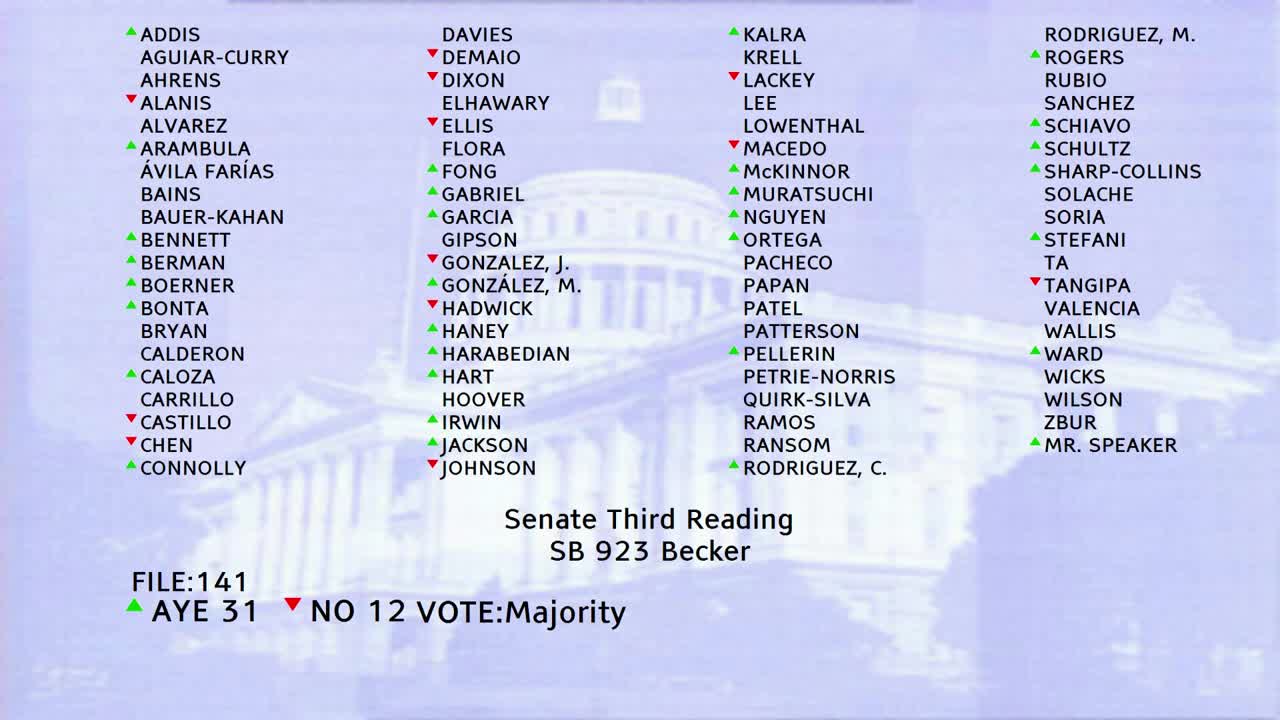
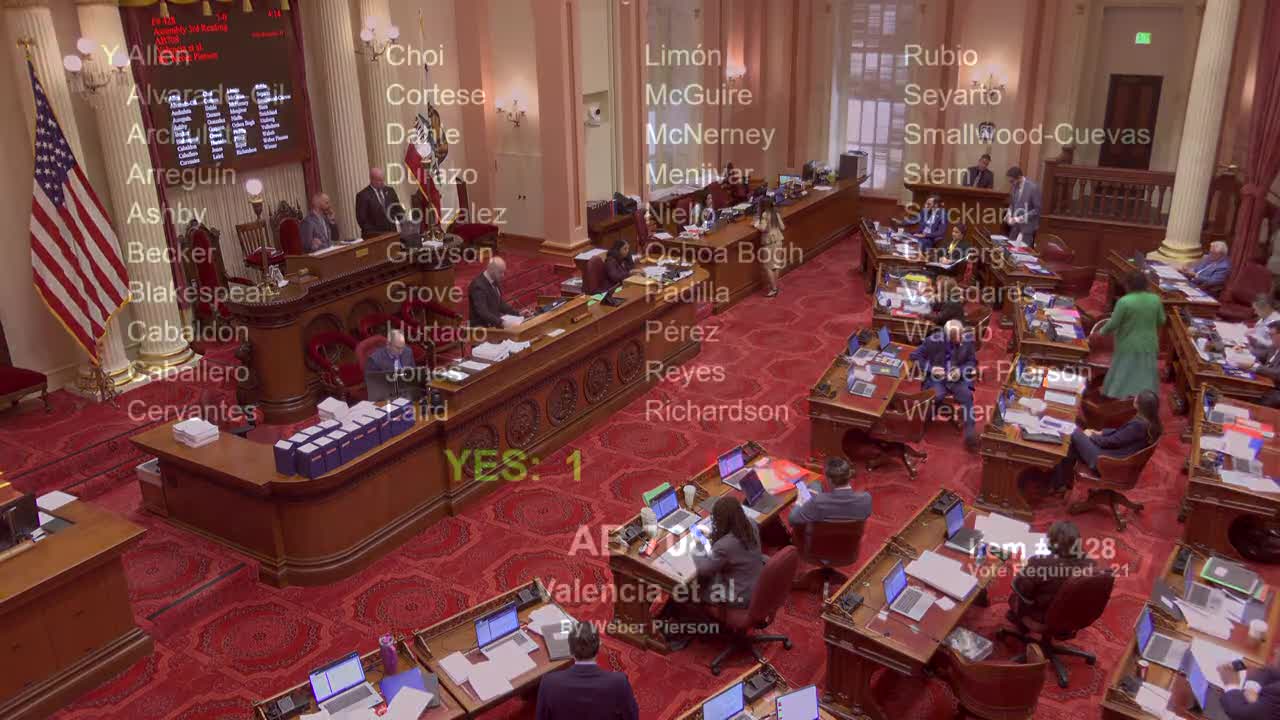
Bill Author

Bill Co-Author(s):