AB 1278: Mortgages: hazard insurance proceeds: interest.
- Session Year: 2025-2026
- House: Assembly
- Latest Version Date: 2026-09-30
Current Status:
Passed
(2026-09-30: Chaptered by Secretary of State - Chapter 877, Statutes of 2026.)
Introduced
In Committee
Awaiting First Chamber Vote
Passed First Chamber
In Committee
Awaiting Second Chamber Vote
Passed Second Chamber
Enacted
What does this bill do?
The bill requires banks, credit unions, and other lenders that hold insurance money in an account while repairs are made on one- to four‑family homes to pay at least 2% simple interest and lets them either credit the interest to that account or pay it directly to the borrower. If paid directly, the payment must be by check, electronic transfer, or another method the borrower agrees to; checks uncashed after 90 days are canceled and returned to the account, and lenders may not charge fees that reduce the interest below 2%.
The summary is provided by generative AI which can make mistakes. For original language, please view the details in the table below.
Existing law establishes the Department of Financial Protection and Innovation, which is under the direction of the Commissioner of Financial Protection and Innovation, and makes the department responsible for administering various laws relating to financial institutions and products, including mortgages. Existing law defines and regulates mortgages. Existing law requires a financial institution that makes loans upon the security of real property containing only a one- to 4-family residence in this state or purchases obligations secured by the property and that holds hazard insurance proceeds in a loss draft account pending property rebuilding or repair to pay interest on those funds at a rate of at least 2% simple interest per annum, as specified. Existing law requires that interest to be credited to the above-described loss draft account annually or upon termination of the account, whichever is earlier.
This bill would, instead, require that interest to be credited to the above-described loss draft account, or paid directly to the borrower, annually or upon termination of the account, whichever is earlier, as specified. The bill would require payments made directly to the borrower as described above to be made by check, electronic funds transfer, or another payment method agreed to by the borrower, as specified. The bill would make a check issued pursuant to the above-described provision that is uncashed 90 calendar days after delivery canceled, as specified.
Existing law establishes the Department of Financial Protection and Innovation, which is under the direction of the Commissioner of Financial Protection and Innovation, and makes the department responsible for administering various laws relating to financial institutions and products, including mortgages. Existing law defines and regulates mortgages. Existing law requires a financial institution that makes loans upon the security of real property containing only a one- to 4-family residence in this state or purchases obligations secured by the property and that holds hazard insurance proceeds in a loss draft account pending property rebuilding or repair to pay interest on those funds at a rate of at least 2% simple interest per annum, as specified. Existing law requires that interest to be credited to the above-described loss draft account annually or upon termination of the account, whichever is earlier.
This bill would, instead, require that interest to be credited to the above-described loss draft account, or paid directly to the borrower, annually or upon termination of the account, whichever is earlier, as specified. The bill would require payments made directly to the borrower as described above to be made by check, electronic funds transfer, or another payment method agreed to by the borrower, as specified. The bill would make a check issued pursuant to the above-described provision that is uncashed 90 calendar days after delivery canceled, as specified.
Existing law establishes the Department of Financial Protection and Innovation, which is under the direction of the Commissioner of Financial Protection and Innovation, and makes the department responsible for administering various laws relating to financial institutions and products, including mortgages. Existing law defines and regulates mortgages. Existing law requires a financial institution that makes loans upon the security of real property containing only a one- to 4-family residence in this state or purchases obligations secured by the property and that holds hazard insurance proceeds in a loss draft account pending property rebuilding or repair to pay interest on those funds at a rate of at least 2% simple interest per annum, as specified. Existing law requires that interest to be credited to the above-described loss draft account annually or upon termination of the account, whichever is earlier.
This bill would, instead, require that interest to be credited to the above-described loss draft account, or paid with a check, as defined, drawn by a financial institution payable at or through a bank directly to the borrower, annually or upon termination of the account, whichever is earlier. earlier, as specified. The bill would require payments made directly to the borrower as described above to be made by check, electronic funds transfer, or another payment method agreed to by the borrower, as specified. The bill would make a check issued pursuant to the above-described provision that is uncashed 90 calendar days after delivery canceled, as specified.
Existing law establishes the Department of Financial Protection and Innovation, which is under the direction of the Commissioner of Financial Protection and Innovation, and makes the department responsible for administering various laws relating to financial institutions and products, including mortgages. Existing law defines and regulates mortgages. Existing law requires a financial institution that makes loans upon the security of real property containing only a one- to 4-family residence in this state or purchases obligations secured by the property and that holds hazard insurance proceeds in a loss draft account pending property rebuilding or repair to pay interest on those funds at a rate of at least 2% simple interest per annum, as specified. Existing law requires that interest to be credited to the above-described loss draft account annually or upon termination of the account, whichever is earlier.
This bill would, instead, require that interest to be credited to the above-described loss draft account, or otherwise paid with a check, as defined, drawn by a financial institution payable at or through a bank directly to the borrower, annually or upon termination of the account, whichever is earlier. The bill would make a check issued pursuant to the above-described provision that is uncashed 90 calendar days after delivery canceled, as specified.
Existing law establishes the Department of Financial Protection and Innovation, which is under the direction of the Commissioner of Financial Protection and Innovation, and makes the department responsible for administering various laws relating to financial institutions and products, including mortgages. Existing law defines and regulates mortgages. Existing law requires a financial institution that makes loans upon the security of real property containing only a one- to 4-family residence in this state or purchases obligations secured by the property and that holds hazard insurance proceeds in a loss draft account pending property rebuilding or repair to pay interest on those funds at a rate of at least 2% simple interest per annum, as specified. Existing law requires that interest to be credited to the above-described loss draft account annually or upon termination of the account, whichever is earlier.
This bill would, instead, require that interest to be credited to the above-described loss draft account, or otherwise paid directly to the borrower, annually or upon termination of the account, whichever is earlier.
Existing law ratifies the Emergency Management Assistance Compact entered into by California and other party states for the provision of mutual assistance in managing emergencies or disasters, as specified. Existing law sets forth the intent of the state to continue its long history of sharing emergency response resources with other states during times of disaster.This bill would make a technical, nonsubstantive change to these provisions.Existing law ratifies the Emergency Management Assistance Compact entered into by California and other party states for the provision of mutual assistance in managing emergencies or disasters, as specified. Existing law sets forth the intent of the state to continue its long history of sharing emergency response resources with other states during times of disaster.
This bill would make a technical, nonsubstantive change to these provisions.
(a)(1)A financial institution that makes loans upon the security of real property containing only a one- to four-family residence and located in this state or purchases obligations secured by the property and that holds hazard insurance proceeds in a loss draft account pending property rebuilding or repair shall pay interest on those funds at a rate of at least 2 percent simple interest per annum. That interest shall be credited to the loss draft account, or paid directly to the borrower, annually or upon termination of the account, whichever is earlier.
(2)(A)A payment made directly to the borrower pursuant to paragraph (1) shall be made by check, electronic funds transfer, including automated clearing house transfers, or another payment method agreed to by the borrower.
(B)A check issued pursuant to this paragraph that is uncashed 90 calendar days after delivery shall be canceled at no cost to the borrower and the amount credited to the loss draft account.
(C)For purposes of this paragraph, check means a draft, other than a documentary draft, payable on demand and drawn on a bank and which can be canceled by the issuer. Check shall not include a cashiers check, money order, or other instrument that cannot be canceled by the issuer.
(b)A financial institution shall not impose a fee or charge in connection with the maintenance or disbursement of hazard insurance proceeds held in a loss draft account pending rebuilding or repair of the real property securing loans made by the financial institution that will result in an interest rate of less than 2 percent per annum being paid on the hazard insurance proceeds held.
(c)For the purposes of this section, financial institution means a bank, savings and loan association, or credit union chartered under the laws of this state or the United States, or any other person or organization making loans upon the security of real property containing only a one- to four-family residence.
(d)This section shall not apply to hazard insurance proceeds held in a loss draft account that are required by a state or federal regulatory authority to be placed by a financial institution other than a bank in a non-interest-bearing demand trust fund account of a bank.
(e)Notwithstanding any other law, a financial institution may deposit hazard insurance proceeds in an interest-bearing account in a federally insured depository institution, a federal home loan bank, a federal reserve bank, or another similar government-sponsored enterprise.
(f)For funds held in a loss draft account as of the effective date of this section, the interest described in subdivision (a) shall begin to accrue on the effective date of this section.
(g)The provisions of this section are severable. If any provision of this section or its application is held invalid, that invalidity shall not affect other provisions or applications that can be given effect without the invalid provision or application.
(a)(1)A financial institution that makes loans upon the security of real property containing only a one- to four-family residence and located in this state or purchases obligations secured by the property and that holds hazard insurance proceeds in a loss draft account pending property rebuilding or repair shall pay interest on those funds at a rate of at least 2 percent simple interest per annum. That interest shall be credited to the loss draft account, or paid directly to the borrower, annually or upon termination of the account, whichever is earlier.
(2)(A)A payment made directly to the borrower pursuant to paragraph (1) shall be made by check, electronic funds transfer, including automated clearing house transfers, or another payment method agreed to by the borrower.
(B)A check issued pursuant to this paragraph that is uncashed 90 calendar days after delivery shall be canceled at no cost to the borrower and the amount credited to the loss draft account.
(C)For purposes of this paragraph, check means a draft, other than a documentary draft, payable on demand and drawn on a bank and which can be canceled by the issuer. Check shall not include a cashiers check, money order, or other instrument that cannot be canceled by the issuer.
(b)A financial institution shall not impose a fee or charge in connection with the maintenance or disbursement of hazard insurance proceeds held in a loss draft account pending rebuilding or repair of the real property securing loans made by the financial institution that will result in an interest rate of less than 2 percent per annum being paid on the hazard insurance proceeds held.
(c)For the purposes of this section, financial institution means a bank, savings and loan association, or credit union chartered under the laws of this state or the United States, or any other person or organization making loans upon the security of real property containing only a one- to four-family residence.
(d)This section shall not apply to hazard insurance proceeds held in a loss draft account that are required by a state or federal regulatory authority to be placed by a financial institution other than a bank in a non-interest-bearing demand trust fund account of a bank.
(e)Notwithstanding any other law, a financial institution may deposit hazard insurance proceeds in an interest-bearing account in a federally insured depository institution, a federal home loan bank, a federal reserve bank, or another similar government-sponsored enterprise.
(f)For funds held in a loss draft account as of the effective date of this section, the interest described in subdivision (a) shall begin to accrue on the effective date of this section.
(g)The provisions of this section are severable. If any provision of this section or its application is held invalid, that invalidity shall not affect other provisions or applications that can be given effect without the invalid provision or application.
(a)(1)A financial institution that makes loans upon the security of real property containing only a one- to four-family residence and located in this state or purchases obligations secured by the property and that holds hazard insurance proceeds in a loss draft account pending property rebuilding or repair shall pay interest on those funds at a rate of at least 2 percent simple interest per annum. That interest shall be credited to the loss draft account, or paid with a check drawn by a financial institution payable at or through a bank directly to the borrower, annually or upon termination of the account, whichever is earlier.
(2)(A)A payment made directly to the borrower pursuant to paragraph (1) shall be made by check, electronic funds transfer, including automated clearing house transfers, or another payment method agreed to by the borrower.
(2)(B)A check issued pursuant to this subdivision paragraph that is uncashed 90 calendar days after delivery shall be canceled at no cost to the borrower and the amount credited to the loss draft account.
(3)(C)For purposes of this subdivision, paragraph, check means a draft, other than a documentary draft, payable on demand and drawn on a bank and which can be canceled by the issuer. Check shall not include a cashiers check, money order, or other instrument that cannot be canceled by the issuer.
(b)A financial institution shall not impose a fee or charge in connection with the maintenance or disbursement of hazard insurance proceeds held in a loss draft account pending rebuilding or repair of the real property securing loans made by the financial institution that will result in an interest rate of less than 2 percent per annum being paid on the hazard insurance proceeds held.
(c)For the purposes of this section, financial institution means a bank, savings and loan association, or credit union chartered under the laws of this state or the United States, or any other person or organization making loans upon the security of real property containing only a one- to four-family residence.
(d)This section shall not apply to hazard insurance proceeds held in a loss draft account that are required by a state or federal regulatory authority to be placed by a financial institution other than a bank in a non-interest-bearing demand trust fund account of a bank.
(e)Notwithstanding any other law, a financial institution may deposit hazard insurance proceeds in an interest-bearing account in a federally insured depository institution, a federal home loan bank, a federal reserve bank, or another similar government-sponsored enterprise.
(f)For funds held in a loss draft account as of the effective date of this section, the interest described in subdivision (a) shall begin to accrue on the effective date of this section.
(g)The provisions of this section are severable. If any provision of this section or its application is held invalid, that invalidity shall not affect other provisions or applications that can be given effect without the invalid provision or application.
(a)(1)A financial institution that makes loans upon the security of real property containing only a one- to four-family residence and located in this state or purchases obligations secured by the property and that holds hazard insurance proceeds in a loss draft account pending property rebuilding or repair shall pay interest on those funds at a rate of at least 2 percent simple interest per annum. That interest shall be credited to the loss draft account, or otherwise paid with a check drawn by a financial institution payable at or through a bank directly to the borrower, annually or upon termination of the account, whichever is earlier.
(2)A check issued pursuant to this subdivision that is uncashed 90 calendar days after delivery shall be canceled at no cost to the borrower and the amount credited to the loss draft account.
(3)For purposes of this subdivision, check means a draft, other than a documentary draft, payable on demand and drawn on a bank and which can be canceled by the issuer. Check shall not include a cashiers check, money order, or other instrument that cannot be canceled by the issuer.
(b)A financial institution shall not impose a fee or charge in connection with the maintenance or disbursement of hazard insurance proceeds held in a loss draft account pending rebuilding or repair of the real property securing loans made by the financial institution that will result in an interest rate of less than 2 percent per annum being paid on the hazard insurance proceeds held.
(c)For the purposes of this section, financial institution means a bank, savings and loan association, or credit union chartered under the laws of this state or the United States, or any other person or organization making loans upon the security of real property containing only a one- to four-family residence.
(d)This section shall not apply to hazard insurance proceeds held in a loss draft account that are required by a state or federal regulatory authority to be placed by a financial institution other than a bank in a non-interest-bearing demand trust fund account of a bank.
(e)Notwithstanding any other law, a financial institution may deposit hazard insurance proceeds in an interest-bearing account in a federally insured depository institution, a federal home loan bank, a federal reserve bank, or another similar government-sponsored enterprise.
(f)For funds held in a loss draft account as of the effective date of this section, the interest described in subdivision (a) shall begin to accrue on the effective date of this section.
(g)The provisions of this section are severable. If any provision of this section or its application is held invalid, that invalidity shall not affect other provisions or applications that can be given effect without the invalid provision or application.
(a)A financial institution that makes loans upon the security of real property containing only a one- to four-family residence and located in this state or purchases obligations secured by the property and that holds hazard insurance proceeds in a loss draft account pending property rebuilding or repair shall pay interest on those funds at a rate of at least 2 percent simple interest per annum. That interest shall be credited to the loss draft account account, or otherwise paid directly to the borrower, annually or upon termination of the account, whichever is earlier.
(b)A financial institution shall not impose a fee or charge in connection with the maintenance or disbursement of hazard insurance proceeds held in a loss draft account pending rebuilding or repair of the real property securing loans made by the financial institution that will result in an interest rate of less than 2 percent per annum being paid on the hazard insurance proceeds held.
(c)For the purposes of this section, financial institution means a bank, savings and loan association, or credit union chartered under the laws of this state or the United States, or any other person or organization making loans upon the security of real property containing only a one- to four-family residence.
(d)This section shall not apply to hazard insurance proceeds held in a loss draft account that are required by a state or federal regulatory authority to be placed by a financial institution other than a bank in a non-interest-bearing demand trust fund account of a bank.
(e)Notwithstanding any other law, a financial institution may deposit hazard insurance proceeds in an interest-bearing account in a federally insured depository institution, a federal home loan bank, a federal reserve bank, or another similar government-sponsored enterprise.
(f)For funds held in a loss draft account as of the effective date of this section, the interest described in subdivision (a) shall begin to accrue on the effective date of this section.
(g)The provisions of this section are severable. If any provision of this section or its application is held invalid, that invalidity shall not affect other provisions or applications that can be given effect without the invalid provision or application.
SECTION 1.Section 179 of the Government Code is amended to read:179.(a)It is the intent of the State of California to continue its long history of sharing emergency response resources with other states during times of disaster. Californians have benefited from the assistance provided by firefighters, law enforcement officers, emergency medical personnel, and other emergency staff received from other states during our calamitous fires, earthquakes, winter storms, and other disasters. We must now join our sister states in ensuring we are prepared to aid our people during emergencies by entering into the Emergency Management Assistance Compact as it was adopted by Congress.(b)The Emergency Management Assistance Compact as set forth in Section 179.5 is hereby ratified and approved.(a)It is the intent of the State of California to continue its long history of sharing emergency response resources with other states during times of disaster. Californians have benefited from the assistance provided by the firefighters, law enforcement officers, emergency medical personnel personnel, and other emergency staff received from other states during our calamitous fires, earthquakes, winter storms, and other disasters. We must now join our sister states in ensuring we are prepared to aid our people during emergencies by entering into the Emergency Management Assistance Compact as it was adopted by Congress.
(b)The Emergency Management Assistance Compact as set forth in Section 179.5 is hereby ratified and approved.
|
Date
|
Status
|
|---|---|
| Sep 30, 2026 | Chaptered by Secretary of State - Chapter 877, Statutes of 2026. |
| Sep 30, 2026 | Approved by the Governor. |
| Aug 20, 2026 | Enrolled and presented to the Governor at 4 p.m. |
| Aug 13, 2026 | Senate amendments concurred in. To Engrossing and Enrolling. (Ayes 74. Noes 0.). |
| Aug 13, 2026 | Senate amendments concurred in. To Engrossing and Enrolling. (Ayes 74. Noes 0. Page 6137.). |
| Aug 11, 2026 | In Assembly. Concurrence in Senate amendments pending. |
| Aug 10, 2026 | Read third time. Passed. Ordered to the Assembly. (Ayes 39. Noes 0.). |
| Aug 10, 2026 | Read third time. Passed. Ordered to the Assembly. (Ayes 39. Noes 0. Page 5321.). |
| Aug 4, 2026 | Read second time. Ordered to Consent Calendar. |
| Aug 3, 2026 | From committee: Be ordered to second reading file pursuant to Senate Rule 28.8 and ordered to Consent Calendar. |
| Jul 1, 2026 | From committee: Do pass and re-refer to Com. on APPR. with recommendation: To Consent Calendar. (Ayes 13. Noes 0.) (June 30). Re-referred to Com. on APPR. |
| Jun 22, 2026 | Read second time and amended. Re-referred to Com. on JUD. |
| Jun 18, 2026 | From committee: Amend, and do pass as amended and re-refer to Com. on JUD. (Ayes 7. Noes 0.) (June 17). |
| May 6, 2026 | Referred to Coms. on B. & F.I. and JUD. |
| Jan 29, 2026 | In Senate. Read first time. To Com. on RLS. for assignment. |
| Jan 29, 2026 | Read third time. Passed. Ordered to the Senate. (Ayes 70. Noes 0. Page 3885.) |
| Jan 26, 2026 | Read second time. Ordered to Consent Calendar. |
| Jan 22, 2026 | From committee: Do pass. To Consent Calendar. (Ayes 15. Noes 0.) (January 22). |
| Jan 15, 2026 | Re-referred to Com. on APPR. |
| Jan 14, 2026 | Read second time and amended. |
| Jan 13, 2026 | From committee: Amend, and do pass as amended and re-refer to Com. on APPR. with recommendation: To Consent Calendar. (Ayes 8. Noes 0.) (January 12). |
| Jan 6, 2026 | Re-referred to Com. on B. & F. |
| Jan 5, 2026 | Referred to Com. on B. & F. |
| Jan 5, 2026 | From committee chair, with author's amendments: Amend, and re-refer to Com. on B. & F. Read second time and amended. |
| Feb 24, 2025 | Read first time. |
| Feb 22, 2025 | From printer. May be heard in committee March 24. |
| Feb 21, 2025 | Introduced. To print. |
|
Date
|
Description
|
Location
|
Votes
|
|
|---|---|---|---|---|
| Aug 13, 2026 | AB 1278 Harabedian Concurrence in Senate Amendments | Assembly Floor |
Passed |
|
| Aug 10, 2026 | Consent Calendar 2nd AB1278 Harabedian | Senate Floor |
Passed |
|
| Jun 30, 2026 | Do pass, but first be re-referred to the Committee on [Appropriations] with the recommendation: To Consent Calendar | Senate Standing Committee on Judiciary |
Passed |
|
| Jun 17, 2026 | Do pass as amended, but first amend, and re-refer to the Committee on [Judiciary] | Senate Standing Committee on Banking and Financial Institutions |
Passed |
|
| Jan 29, 2026 | AB 1278 Harabedian Consent Calendar Second Day Regular Session | Assembly Floor |
Passed |
|
| Jan 22, 2026 | Do pass. To Consent Calendar. | Assembly Standing Committee on Appropriations |
Passed |
|
| Jan 12, 2026 | Do pass as amended, and be re-referred to the Committee on [Appropriations] with recommendation: To Consent Calendar | Assembly Standing Committee on Banking and Finance |
Passed |
This list shows positions taken on this bill by organizations on the date displayed, which is linked to the original source.
Positions by individuals are not included.
|
Organization
|
Position
|
Date
|
|---|---|---|
| California Association Of Realtors | ** Support | |
| California Credit Union League | ** Support | |
| California Credit Unions | ** Support |
CONCURRENCE IN SENATE AMENDMENTS
CSA1 Bill Id:AB 1278
Author:(Harabedian)
As Amended Ver:June 22, 2026
Majority vote
SUMMARY
This bill specifies the allowable payment methods by which a financial institution can satisfy its obligation to pay interest on funds held in a loss draft account, as specified.
Senate Amendments
Expands payment options available from "check" to "check, electronic funds transfer, including automated clearing house transfers, or another payment method agreed to by the borrower."
COMMENTS
Existing law requires a financial institution that makes loans upon the security of real property containing only a one- to four-family residence and located in this state or purchases obligations secured by the property and that holds hazard insurance proceeds in a loss draft account pending property rebuilding or repair shall pay interest on those funds at a rate of at least 2% simple interest per annum. Requires the interest to be credited to the loss draft account annually or upon termination of the account, whichever is earlier. (Civil Code Section 2954.85).
This bill:
- Allows the interest on hazard insurance proceeds to be paid with a check, as specified, drawn by a financial institution payable at or through a bank directly to the borrower.
- Provides that a check that is uncashed 90 calendar days after delivery be cancelled at no cost to the borrower and the amount credited to the loss draft account.
Background
California has faced an alarming increase in destructive wildfires. Most of the largest and devastating fires have taken place within the last decade, culminating in a particularly severe outbreak in recent years. This period has witnessed some of the worst wildfires in the state's recorded history.
More recently, January 2025 wildfires, often referred to as firestorms due to the intense hurricane-force winds that helped the fires quickly spread, destroyed more than 16,000 structures and has led to widespread hardship for victims and the surrounding communities. According to the most recently available data from the Department of Insurance, a total of 39,171 residential insurance claims were filed with over $20.8 billion paid as of November 2025.[1]
Insurance Payouts
An escrow account for insurance claims is a temporary financial account used to hold insurance payout funds, ensuring they are properly used for property repairs. This is commonly required in homeowners’ insurance claims, especially when the property has a mortgage. Instead of paying the homeowner directly, the insurer deposits the funds into an escrow account managed by the mortgage lender or a third-party administrator.
While the terms of each policy is different, the following is a general description of the steps involved in the escrow process. After the claim is approved, funds are placed in escrow rather than given directly to the homeowner. The lender then releases payments in stages as repairs progress, ensuring the work is completed properly and contractors are paid. Once the final repairs are inspected and verified, the remaining balance is released to the homeowner or contractor. This prevents misuse of funds and ensures the property is restored.
Escrow accounts protect lenders by ensuring their collateral (the home) is properly repaired. However, if a property does not have a mortgage or if the claim is small, insurers typically pay the homeowner directly without requiring escrow.
No Likely Preemption Issue
In its 2024 holding, the United States Supreme Court unanimously held "in applying the significant-interference test under Barnett Bank, 116 S.Ct. 1103… to the issue of whether the National Bank Act preempts a state law must make a practical assessment of the nature and degree of the interference caused by the state law; if the state law prevents or significantly interferes with the national bank's exercise of its powers, the law is preempted, but if the state law does not prevent or significantly interfere with the national bank's exercise of its powers, the law is not preempted"[2]
The Court's decision provides a clear framework for determining the question of federal preemption of state laws regulating banks in relation to the Dodd-Frank Wall Street Reform and Consumer Protection Act of 2010, which ruled out field preemption.
"Instead, Dodd-Frank provides that the National Bank Act preempts a state law "only if" the state law (i) discriminates against national banks as compared to state banks; or (ii) "prevents or significantly interferes with the exercise by the national bank of its powers," as determined "in accordance with the legal standard for preemption"[3]
Because section 2954.84 does not apply to a financial institution based on its charter, potential questions of preemption can only be raised on the "prevents or significantly interferes" preemption standard. Furthermore, there is no clear demarcation of where a state law significantly interferes with a national bank's ability to exercise its powers, and thus prior decisions must be taken into account. For example, in the Barnett case, a dispute arose because a national bank wanted to sell insurance in a small Florida town, but the state prohibited most banks from selling insurance. The Court held the Florida law was preempted because it significantly interfered with the national bank's ability to sell insurance—a federally authorized power. The Court reasoned that "normally Congress would not want states to forbid, or to impair significantly, the exercise of a power that Congress explicitly granted."[4] However, in National Bank v. Commonwealth, the Court determined that a Kentucky tax law was not preempted. The Kentucky law at issue taxed the shareholders of all banks on their shares of bank stock.
"The Court explained that national banks are "exempted from State legislation, so far as that legislation may interfere with, or impair their efficiency in performing the functions” that federal law authorizes them to perform. But national banks are not "wholly withdrawn from the operation of State legislation"; rather, they remain subject to state law governing "their daily course of business” such as generally applicable state contract, property, and debt-collection laws."[5] (Emphasis added)
As applied to section 2954.84(a) in its previous form, any issues of preemption would hinder on whether or not a mandate to credit a loss draft account that the financial institution is already managing prevents or significantly interferes with the financial institution’s ability to exercise its powers. This seems unlikely considering that to make payment any other way would be creating an extra step for the financial institution.
Similarly, the Banking and Finance Committee amendments would likely yield the same preemption outcome. Specifically, the issue of preemption would hinder on whether or not to the mandate to cancel a check that remained uncashed for 90 days and crediting a borrowers loss draft account for accrued simple interest prevents or significantly interferes with a financial institution’s ability to exercise its powers. Considering the fact that check cancellation and crediting accounts are basic functions of financial institutions, such a mandate is unlikely to be preempted under the Barnette analysis.
According to the Author
Existing law requires financial institutions to pay borrowers 2% simple interest on post-loss insurance proceeds held in escrow following property damage or loss for certain properties impacted by the January 2025 Los Angeles-area wildfires. AB 1278 expands the methods by which borrowers may receive that accrued interest by authorizing financial institutions to pay interest directly to homeowners by check, electronic funds transfer, or another payment method agreed to by the borrower, ensuring disaster survivors can fully access the funds owed to them during the rebuilding process.
Arguments in Support
"On behalf of California's Credit Unions (CCU), representing credit unions serving more than 14 million Californians, we write to express our support for AB 1278, with the recent amendments. AB 1278 will give lenders and borrowers flexibility on how they wish to receive post-loss insurance payouts from an escrow account.
Credit unions share the author's goal of ensuring that homeowners receive hazard insurance proceeds in a timely manner following a wildfire, natural disaster, or other catastrophic loss. Prompt access to these funds is critical to helping families rebuild their homes and recover from devastating events.
The amendments that expressly authorize the distribution of funds through electronic funds transfers (EFTs), Automated Clearing House (ACH) transactions, in addition to the bill's existing authorization for payment by check. Will give both borrowers and lenders flexibility in how post-loss insurance proceeds shall be paid. CCU appreciates the author’s willingness to amend the bill and his leadership on the issue.”- California Credit Unions
Arguments in Opposition
None received. Last verified 8/11/2026
FISCAL COMMENTS
The following is from the analysis of the Assembly Committee on Appropriations, hearing date 1/22/2026.
Minor and absorbable costs to the Department of Financial Protection and Innovation to update related manuals, exam procedures, and trainings.
VOTES:
ASM BANKING AND FINANCE: 8-0-1
YES: Valencia, Dixon, Fong, Krell, Michelle Rodriguez, Blanca Rubio, Schiavo, Soria
ABS, ABST OR NV: Chen
ASM APPROPRIATIONS: 15-0-0
YES: Wicks, Hoover, Stefani, Calderon, Caloza, Dixon, Fong, Mark González, Krell, Bauer-Kahan, Pacheco, Pellerin, Solache, Ta, Tangipa
ASSEMBLY FLOOR: 70-0-10
YES: Addis, Aguiar-Curry, Ahrens, Alanis, Alvarez, Ávila Farías, Bains, Bennett, Berman, Boerner, Bonta, Bryan, Calderon, Caloza, Carrillo, Castillo, Connolly, Davies, DeMaio, Dixon, Elhawary, Fong, Gabriel, Gallagher, Garcia, Jeff Gonzalez, Mark González, Hadwick, Haney, Harabedian, Hart, Hoover, Irwin, Jackson, Johnson, Kalra, Krell, Lackey, Lowenthal, Macedo, McKinnor, Muratsuchi, Nguyen, Ortega, Pacheco, Papan, Patel, Patterson, Pellerin, Petrie-Norris, Quirk-Silva, Ramos, Michelle Rodriguez, Rogers, Blanca Rubio, Sanchez, Schiavo, Schultz, Sharp-Collins, Solache, Soria, Stefani, Ta, Tangipa, Wallis, Ward, Wicks, Wilson, Zbur, Rivas
ABS, ABST OR NV: Arambula, Bauer-Kahan, Chen, Ellis, Flora, Gipson, Lee, Ransom, Celeste Rodriguez, Valencia
SENATE FLOOR: 39-0-1
YES: Allen, Archuleta, Arreguín, Ashby, Becker, Blakespear, Cabaldon, Caballero, Cervantes, Choi, Cortese, Dahle, Durazo, Gonzalez, Grayson, Grove, Hurtado, Jones, Laird, Limón, McGuire, McNerney, Menjivar, Niello, Ochoa Bogh, Padilla, Pérez, Reyes, Richardson, Rubio, Seyarto, Smallwood-Cuevas, Stern, Strickland, Umberg, Valladares, Wahab, Weber Pierson, Wiener
ABS, ABST OR NV: Alvarado-Gil
UPDATED
VERSION: June 22, 2026
CONSULTANT: Desiree Nguyen Orth / B. & F. / (916) 319-3081 FN: 0003436
https://www.insurance.ca.gov/01-consumers/180-climate-change/Wildfire-Claims-Tracker.cfm ↑
Cantero v. Bank of America, N. A. (2024) 144 S.Ct. 1290 ↑
Id. citing Barnett Bank of Marion Cty., N. A. v. Nelson, 517 U.S. 25, 116 S.Ct. 1103 ↑
Barnett Bank of Marion Cty., N. A. v. Nelson, 517 U.S. 25, 116 S.Ct. 1103 ↑
National Bank v. Commonwealth, 9 Wall. 353, 76 U.S. 353, 361-362 (1870) ↑
SENATE RULES COMMITTEE Office of Senate Floor Analyses (916) 651-4171 | AB 1278 |
CONSENT
Bill No: AB 1278
Author: Harabedian (D)
Amended: 6/22/26 in Senate
Vote: 21
SENATE BANKING & F.I. COMMITTEE: 7-0, 6/17/26
AYES: Grayson, Niello, Cervantes, Hurtado, Reyes, Richardson, Strickland
SENATE JUDICIARY COMMITTEE: 13-0, 6/30/26
AYES: Umberg, Niello, Allen, Ashby, Caballero, Durazo, Laird, Reyes, Stern, Valladares, Wahab, Weber Pierson, Wiener
ASSEMBLY FLOOR: 70-0, 1/29/26 (Consent) - See last page for vote
SUBJECT: Mortgages: hazard insurance proceeds: interest
SOURCE: Author
DIGEST:
This bill specifies the allowable payment methods by which a financial institution can satisfy its obligation to pay interest on funds held in a loss draft account, as specified.
ANALYSIS:
Existing law requires a financial institution that makes loans upon the security of real property containing only a one- to four-family residence and located in this state or purchases obligations secured by the property and that holds hazard insurance proceeds in a loss draft account pending property rebuilding or repair shall pay interest on those funds at a rate of at least 2% simple interest per annum. Requires the interest to be credited to the loss draft account annually or upon termination of the account, whichever is earlier. (Civil Code Section 2954.85)
This bill:
- Allows the interest on hazard insurance proceeds to be paid with a check, as specified, drawn by a financial institution payable at or through a bank directly to the borrower.
- Provides that a check that is uncashed 90 calendar days after delivery be cancelled at no cost to the borrower and the amount credited to the loss draft account.
Comments
According to the author:
Beginning January 1, 2026, existing law requires financial institutions to pay borrowers 2% simple interest on post-loss insurance proceeds held in escrow following property damage or loss for certain properties impacted by the January 2025 Los Angeles-area wildfires. AB 1278 expands the methods by which borrowers may receive that accrued interest by authorizing financial institutions to pay interest directly to homeowners by check, ensuring disaster survivors can fully access the funds owed to them during the rebuilding process.
Background
Last year, the author of this bill authored AB 493 (Harabedian, Chapter 103, Statutes of 2025), which was one of many bills introduced in response to the wildfires in Los Angeles in January 2025. AB 493 requires that mortgage servicers pay at least 2% interest on funds held by the mortgage servicer that were paid by an insurer related to property damage caused by the fires.
When a home with an outstanding mortgage is damaged or destroyed, the insurance company typically pays out the claim to the lender, not directly to the homeowner who is the borrower on the mortgage loan. This practice is compelled by property insurance contracts that often contain a mortgagee, loss payee, or lenders loss payable clause, which are designed to protect a mortgage lender in the event that the property securing the mortgage is damaged, known as an insured loss event. Navigating through an insured loss event requires actions of the borrower/property owner, the insurer, and the mortgage servicer.[1]
The mortgage servicer plays a key role, along with the insurance company, in working with a borrower when the borrower’s property experiences an insured loss event. Mortgage servicers are expected to ensure the proof of loss claim is filed timely with the insurer and to monitor the disbursement of insurance loss proceeds. Mortgage servicers undertake a variety of activities in this process, including the following:
- Determining if the property can be legally rebuilt.
- Obtaining complete details on the damage to the property and determining the needed repairs.
- Discussing with the borrower any plans for repairing the property.
- Immediately issuing the borrower a check for any amount designated for contents (for example personal property) or living expenses.
- Depositing insurance funds retained by the servicer pending disbursement for repair or reconstruction.
- Reviewing and approving the final plans for repair, including obtaining the necessary bids to repair the property.
- Monitoring and inspecting repairs as completed to verify the repairs comply with the final repair plan.
- Disbursing funds for repairs, often based on periodic inspections of the progress of the repair work.[2]
The process for repairing or rebuilding a damaged home, particularly in an area affected by a widespread disaster, is often time-consuming and cumbersome. While the insurance proceeds usually arrive within weeks or a few months, the process for clearing debris, rebuilding damaged infrastructure, finding contractors, developing plans, and constructing the repair or rebuild of the home often takes more than a year, sometimes stretching over several years. During this time, the insurance proceeds are placed in a bank account by the mortgage servicer.
This bill allows the interest that accrues on hazard insurance proceeds to be paid to the borrower with a check or electronic payment methods. This change provides more flexibility to mortgage servicers in how they comply with the required payment of interest.
FISCAL EFFECT: Appropriation: No Fiscal Com.: Yes Local: No
This bill was ordered to the floor by the Senate Appropriations Committee pursuant to Senate Rule 28.8.
SUPPORT: (Verified 8/3/26)
California Association of Realtors
California Credit Union League
OPPOSITION: (Verified 8/3/26)
None received
ARGUMENTS IN SUPPORT: California Credit Union League writes in support, “representing credit unions serving more than 14 million Californians, we write to express our support for AB 1278, with the recent amendments. AB 1278 will give lenders and borrowers flexibility on how they wish to receive post-loss insurance payouts from an escrow account.”
ASSEMBLY FLOOR: 70-0, 1/29/26
AYES: Addis, Aguiar-Curry, Ahrens, Alanis, Alvarez, Ávila Farías, Bains, Bennett, Berman, Boerner, Bonta, Bryan, Calderon, Caloza, Carrillo, Castillo, Connolly, Davies, DeMaio, Dixon, Elhawary, Fong, Gabriel, Gallagher, Garcia, Jeff Gonzalez, Mark González, Hadwick, Haney, Harabedian, Hart, Hoover, Irwin, Jackson, Johnson, Kalra, Krell, Lackey, Lowenthal, Macedo, McKinnor, Muratsuchi, Nguyen, Ortega, Pacheco, Papan, Patel, Patterson, Pellerin, Petrie-Norris, Quirk-Silva, Ramos, Michelle Rodriguez, Rogers, Blanca Rubio, Sanchez, Schiavo, Schultz, Sharp-Collins, Solache, Soria, Stefani, Ta, Tangipa, Wallis, Ward, Wicks, Wilson, Zbur, Rivas
NO VOTE RECORDED: Arambula, Bauer-Kahan, Chen, Ellis, Flora, Gipson, Lee, Ransom, Celeste Rodriguez, Valencia
Prepared by: Michael Burdick / B. & F.I. /
8/5/26 14:57:29
**** END ****
A mortgage servicer is an entity that interacts with borrowers after a loan has been originated and the borrower begins to repay the loan. A mortgage servicer collects payments from the borrower and manages any associated escrow account. ↑
These activities were taken from the Fannie Mae servicing guide, which provides the duties and expectations for mortgage servicers who are servicing loans purchased by Fannie Mae, a government-sponsored enterprise that supports liquidity within the mortgage financing system. https://servicing-guide.fanniemae.com/svc/b-5-01/insured-loss-events ↑
Senator Thomas Umberg, Chair
2025-2026 Regular Session
Bill No: AB 1278 (Author:Harabedian)
Version: June 22, 2026
Hearing Date: June 30, 2026
Fiscal: Yes
Urgency: No
Consultant: ID
SUBJECT
Mortgages: hazard insurance proceeds: interest
DIGEST
This bill permits a financial institution to disburse directly to a borrower the required two percent interest on any hazard insurance proceeds that the financial institution holds in a loss draft account pending property rebuilding or repair, as specified.
EXECUTIVE SUMMARY
When homes are damaged or destroyed by a disaster, the process of rebuilding is often a long and arduous one. When homeowners receive insurance payouts to cover the cost to rebuild, the funds are typically held in a loss draft account by their mortgage servicer and are disbursed as needed as construction progresses. During that time, which may be many months or years, the funds may or may not be accruing interest. In 2025, the Legislature enacted AB 493 (Harabedian, Ch. 103, Stats 2025) to require financial institutions that make loans on properties of one- to four-family residences to pay two percent simple annual interest on hazard insurance proceeds while they are held by the financial institution pending the property rebuilding or repair. It also prohibited the financial institution from charging any fee or charge related to the maintenance or disbursement of the insurance proceeds that would result in an interest rate of less than two percent. AB 493 required the financial institution to credit this interest to the borrower’s loss draft account. This bill would permit the financial institution to also disburse the interest directly to the borrower through a check or electronic funds transfer, as specified.
AB 1278 is author-sponsored, and is supported by the California Credit Union League. The Committee has received no timely letters of opposition. AB 1278 previously passed the Senate Banking and Financial Institutions Committee by a vote of 7 to 0.
PROPOSED CHANGES TO THE LAW
Existing law:
- Requires a financial institution that makes loans upon the security of real property to pay simple interest of at least two percent per annum on amounts received in advance for the payment of taxes and assessments, the payment of insurance, or for other purposes relating to such real property. Provides that the interest shall be credited to the borrower’s account annually or upon termination of such account, whichever is earlier. (Civ. Code § 2954.8(a).)
- Prohibits a financial institution from imposing any fee or charge in connection with the maintenance or disbursement of the funds described in (1), above, that will result in an interest rate of less than two percent per annum being paid on the funds received. (Civ. Code § 2954.8(b).)
- Exempts from these requirements funds that are required by a state or federal regulatory authority to be placed by a financial institution other than a bank in a non-interest-bearing demand trust fund account of a bank. (Civ. Code § 2954.8(d).)
- Requires a financial institution that makes loans upon security of real property containing one to four residences, or that purchases obligations secured by such property, and that holds hazard insurance proceeds in a loss draft account pending property rebuilding or repair, to pay two percent simple annual interest on those proceeds, and requires this interest to be credited to the loss draft account annually or upon termination of the account, whichever is earlier. (Civ. Code § 2954.85.)
- Prohibits a financial institution subject to the requirement in (2), above, from imposing a fee or charge in connection with the maintenance or disbursement of insurance proceeds following property damage or loss that would result in an interest rate of less than two percent per annum being paid to the borrower. (Civ. Code § 2954.85(b).)
- Specifies that the provisions in (2) and (3), above, do not apply to hazard insurance proceeds held in a loss draft account that are required by a state or federal regulatory authority to be placed in a financial institution other than a bank in a non-interest-bearing demand trust fund account of a bank. (Civ. Code § 2954.85(d).)
- Permits a financial institution, notwithstanding any other law, to deposit hazard insurance proceeds in an interest-bearing account in a federally insured depository institution, federal home loan bank, federal reserve bank, or another similar government-sponsored enterprise. (Civ. Code § 2954.85(e).)
- For funds held in a loss draft account as of the effective date of the provisions described in (2) through (5), above, requires interest to begin to accrue on the effective date of these provisions. (Civ. Code § 2954.85(f).)
- Defines, for the purposes of (2) through (5), “financial institution” to mean a bank, savings and loan association, or credit union chartered under the law of the state or the United States, or any person or organization that makes loans upon the security of real property containing one- to four-family residences. (Civ. Code § 2954.85(c).)
This bill:
- Specifies that the interest required by (2), above, may also be paid back directly to the borrower, annually or upon termination of the account.
- Specifies that a payment made directly to the borrower shall be made by check, electronic funds transfer, including automated clearing house transfers, or another payment method agreed to by the borrower.
- Requires the financial institution to cancel a check issued pursuant to (1), above, that is uncashed 90 calendar days after delivery at no cost to the borrower, and to credit the amount to the loss draft account.
- Defines, for the purposes of its provisions, “check” to mean a draft, other than a documentary draft, payable on demand and drawn on a bank and which can be cancelled by the issuer. Specifies that “check” does not include a cashier’s check, money order, or other instrument that cannot be cancelled by the issuer.
COMMENTS
- Author’s statement
In support of this measure, the author states:
AB 1278 makes technical clarifications to AB 493 from last year, which ensured homeowners receive interest on post-loss insurance payouts. Providing homeowners with every possible resource is critical to supporting recovery after a disaster, and AB 1278 makes it easier for banks to deliver post-loss insurance payouts to survivors.
- California law and the requirement to pay interest on insurance proceeds held in escrow
When a homeowner with an outstanding mortgage is rebuilding with insurance proceeds, the insurance proceeds are typically disbursed not directly to the borrower, but instead to the company servicing their mortgage (the mortgage servicer). This is because the mortgage lender has a financial interest in the homeowner’s property as the security for the loan that the mortgage lender provided. Thus, the lender has an interest in protecting the property and ensuring that the reconstruction or repairs are completed appropriately. When the mortgage servicer receives the insurance proceeds, it will typically hold the proceeds in an escrow account, and will disburse the funds as needed through the construction process.
During that time, which may be many months or years, the funds may or may not be accruing interest. California law requires financial institutions that make or purchase mortgage loans on property with four or fewer residential units to provide interest on various funds that it receives in advance. (Civ. Code § 2954.8.) This provision, Civil Code section 2954.8, applies to funds received for the advance payment of taxes and assessments on the property, insurance, or for other purposes related to the property, and requires that the interest rate paid to the borrower on such amounts be a simple annual interest rate of at least two percent. In addition, a financial institution is prohibited from imposing any fee or charge in connection with the maintenance or disbursement of funds that the institution holds for disbursement and the required interest that would result in the interest rate on the held funds being less than the required two percent. (Civ. Code § 2954.8(b).)
- AB 493 required financial institutions to pay two percent interest on insurance hazard proceeds held by the institution for the borrower
While Civil Code section 2954.8 mentions insurance in its provisions, a question has arisen regarding whether it required that insurance proceeds from a property loss accrue interest. To correct this, last year the Legislature passed AB 493 (Harabedian, Ch. 103, Stats. 2025). AB 493 required a financial institution that provides loans for one- to four-family residences or purchases obligations secured by such properties to provide two percent annual interest on any hazard insurance proceeds that the financial institution holds in a loss draft account for the borrower during the rebuilding or repair process. AB 493 also prohibited a financial institution in that case from charging any fee or other charge that would result in an interest rate less than two percent. It exempted any hazard insurance proceeds that are required by a state or federal regulatory authority to be placed in a financial institution other than a bank in a non-interest-bearing demand trust fund account.
- AB 1278 permits the financial institution to disburse this interest directly to the borrower
Yet AB 493 required that the financial institution credit the interest to the loss draft account annually or upon termination of the account, and did not permit the financial institution to disburse the interest directly to the borrower. AB 1278 aims to correct this by permitting the financial institution to disburse the interest directly to the borrower by check, electronic funds transfer (such as an ACH transfer), or another payment method agreed to by the borrower. AB 1278 specifies that a “check” for disbursing interest does not include a cashier’s check, money order, or other instrument that cannot be canceled by the issuer. If the financial institution issues a check and the borrower does not cash it within 90 days, AB 1278 would require the financial institution to cancel the check and instead deposit the interest funds into the borrower’s loss draft account.
SUPPORT
California Credit Union League
OPPOSITION
None received
RELATED LEGISLATION
Pending Legislation: None known.
Prior Legislation:
AB 493 (Harabedian, Ch. 103, Stats. 2025) required mortgage lenders that make loans secured by property containing one- to four-family residences pay two percent interest on any insurance proceeds following property damage or loss that is held by the mortgage lender, as specified. Required the financial institution to credit this interest to the loss draft account for the borrower. See Comment 3.
AB 238 (Harabedian, Ch. 128, Stats. 2025) authorized a borrower experiencing financial hardship due to the wildfire disasters in Los Angeles County in January 2025 to request forbearance on their residential mortgage loan, and required a mortgage servicer to offer mortgage payment forbearance of up to an initial 90 days, up to 12 months.
SB 455 (McGuire, Ch. 873, Stats. 2023) required that, when a mortgage on a property located within the geographic area of a declared state of emergency or local emergency is transferred to a new mortgage servicer, the transferor mortgage servicer provide the new mortgage servicer with any written records between the borrower and the mortgage servicer relating to the borrower’s use of insurance proceeds to repair or replace property damaged or destroyed by the disaster, and required the new mortgage servicer to honor any previous written agreements between the borrower and the previous mortgage servicer.
PRIOR VOTES:
Senate Banking and Financial Institutions Committee (Ayes 7, Noes 0)
Assembly Floor (Ayes 70, Noes 0)
Assembly Appropriations Committee (Ayes 15, Noes 0)
Assembly Banking and Finance Committee (Ayes 8, Noes 0)
**************
SENATE COMMITTEE ON
BANKING AND FINANCIAL INSTITUTIONS
Senator Timothy Grayson, Chair
2025 - 2026 Regular
Bill No: AB 1278 Hearing Date: June 17, 2026
Author: | Harabedian | ||
Version: | January 14, 2026 Amended | ||
Urgency: | No | Fiscal: | Yes |
Consultant: | Michael Burdick | ||
Subject: Mortgages: hazard insurance proceeds: interest
SUMMARY
This bill specifies the allowable payment methods by which a financial institution can satisfy its obligation to pay interest on funds held in a loss draft account, as specified.
EXISTING LAW
Requires a financial institution that makes loans upon the security of real property containing only a one- to four-family residence and located in this state or purchases obligations secured by the property and that holds hazard insurance proceeds in a loss draft account pending property rebuilding or repair shall pay interest on those funds at a rate of at least 2 percent simple interest per annum. Requires the interest to be credited to the loss draft account annually or upon termination of the account, whichever is earlier. (Civil Code Section 2954.85)
THIS BILL
- Allows the interest on hazard insurance proceeds to be paid with a check, as specified, drawn by a financial institution payable at or through a bank directly to the borrower.
- Provides that a check that is uncashed 90 calendar days after delivery be cancelled at no cost to the borrower and the amount credited to the loss draft account.
COMMENTS
- Purpose
According to the author:
Beginning January 1, 2026, existing law requires financial institutions to pay borrowers 2% simple interest on post-loss insurance proceeds held in escrow following property damage or loss for certain properties impacted by the January 2025 Los Angeles-area wildfires. AB 1278 expands the methods by which borrowers may receive that accrued interest by authorizing financial institutions to pay interest directly to homeowners by check, ensuring disaster survivors can fully access the funds owed to them during the rebuilding process.
- Background
Last year, the author of this bill authored AB 493 (Harabedian, Chapter 103, Statutes of 2025), which was one of many bills introduced in response to the wildfires in Los Angeles in January 2025. AB 493 requires that mortgage servicers pay at least 2% interest on funds held by the mortgage servicer that were paid by an insurer related to property damage caused by the fires.
When a home with an outstanding mortgage is damaged or destroyed, the insurance company typically pays out the claim to the lender, not directly to the homeowner who is the borrower on the mortgage loan. This practice is compelled by property insurance contracts that often contain a mortgagee, loss payee, or lenders loss payable clause, which are designed to protect a mortgage lender in the event that the property securing the mortgage is damaged, known as an insured loss event. Navigating through an insured loss event requires actions of the borrower/property owner, the insurer, and the mortgage servicer.[1]
The mortgage servicer plays a key role, along with the insurance company, in working with a borrower when the borrower’s property experiences an insured loss event. Mortgage servicers are expected to ensure the proof of loss claim is filed timely with the insurer and to monitor the disbursement of insurance loss proceeds. Mortgage servicers undertake a variety of activities in this process, including the following:
- Determining if the property can be legally rebuilt.
- Obtaining complete details on the damage to the property and determining the needed repairs.
- Discussing with the borrower any plans for repairing the property.
- Immediately issuing the borrower a check for any amount designated for contents (for example personal property) or living expenses.
- Depositing insurance funds retained by the servicer pending disbursement for repair or reconstruction.
- Reviewing and approving the final plans for repair, including obtaining the necessary bids to repair the property.
- Monitoring and inspecting repairs as completed to verify the repairs comply with the final repair plan.
- Disbursing funds for repairs, often based on periodic inspections of the progress of the repair work.[2]
The process for repairing or rebuilding a damaged home, particularly in an area affected by a widespread disaster, is often time-consuming and cumbersome. While the insurance proceeds usually arrive within weeks or a few months, the process for clearing debris, rebuilding damaged infrastructure, finding contractors, developing plans, and constructing the repair or rebuild of the home often takes more than a year, sometimes stretching over several years. During this time, the insurance proceeds are placed in a bank account by the mortgage servicer.
This bill allows the interest that accrues on hazard insurance proceeds to be paid to the borrower with a check, rather than requiring the interest be credited to the loss draft account. This change provides more flexibility to mortgage servicers in how they comply with the required payment of interest. If desired by the Committee, the bill could be further amended to add electronic payment options.
- Amendments
Committee staff recommends the following amendment to allow interest payments to be made by automated clearing house or electronic funds transfer.
2954.85. (a) (1) A financial institution that makes loans upon the security of real property containing only a one- to four-family residence and located in this state or purchases obligations secured by the property and that holds hazard insurance proceeds in a loss draft account pending property rebuilding or repair shall pay interest on those funds at a rate of at least 2 percent simple interest per annum. That interest shall be credited to the loss draft account, or paid with a check drawn by a financial institution payable at or through a bank directly to the borrower, annually or upon termination of the account, whichever is earlier.
(2) A payment made directly to the borrower under paragraph (1) shall be made by check, electronic funds transfer, including ACH transfer, or another payment method agreed to by the borrower.
LIST OF REGISTERED SUPPORT/OPPOSITION
Support
California Association of Realtors
Opposition
None received
-- END --
A mortgage servicer is an entity that interacts with borrowers after a loan has been originated and the borrower begins to repay the loan. A mortgage servicer collects payments from the borrower and manages any associated escrow account. ↑
These activities were taken from the Fannie Mae servicing guide, which provides the duties and expectations for mortgage servicers who are servicing loans purchased by Fannie Mae, a government-sponsored enterprise that supports liquidity within the mortgage financing system. https://servicing-guide.fanniemae.com/svc/b-5-01/insured-loss-events ↑
Date of Hearing: January 22, 2026
ASSEMBLY COMMITTEE ON APPROPRIATIONS
Buffy Wicks, Chair
ABPCA Bill Id:AB 1278
Author:(Harabedian) – As Amended Ver:January 14, 2026
Policy Committee: | Banking and Finance | Vote: | 8 - 0 |
|
| ||
|
|
Urgency: No State Mandated Local Program: No Reimbursable: No
SUMMARY:
This bill revises how a financial institution that receives certain property insurance proceeds in a borrower’s escrow account must pay interest on such proceed amounts to the borrower.
Instead of the existing requirement that the interest be credited to the borrower’s account, this bill alternatively allows interest to be paid with a check subject to certain conditions.
FISCAL EFFECT:
Minor and absorbable costs to the Department of Financial Protection and Innovation to update related manuals, exam procedures, and trainings.
COMMENTS:
- Purpose. According to the author:
AB 1278 makes technical clarifications to AB 493 from last year, which ensured homeowners receive interest on post-loss insurance payouts. Providing homeowners with every possible resource is critical to supporting recovery after a disaster, and AB 1278 makes it easier for banks to deliver post-loss insurance payouts to survivors.
- Escrow Accounts for Insurance Claims. When a property is secured by a mortgage, a lender often utilizes an escrow account to hold insurance payout funds from a homeowner insurance claim. This process protects the lender by ensuring funds are appropriately used for repairs on the lender’s collateral (the property). After a claim is approved, funds placed in escrow are released by the lender in stages as repairs progress, ensuring the work is completed properly and contractors are paid. After final repairs are verified, the remaining fund balance is released to the homeowner or contractor.
In Gray v. Quicken Loans, Inc. (2021) 62 Cal.App.5th 920, the California Court of Appeals upheld that a mortgage lender had no obligation to pay interest on insurance proceeds held in escrow to a homeowner impacted by the 2017 Thomas Fire. AB 493 (Harabedian), Chapter 103, Statutes of 2025, requires a financial institution to pay at least 2% simple interest per annum when insurance proceeds due to property damage or loss are held in a borrower’s escrow account. The interest must be credited to the account. This bill adds an alternative payment method by also allowing a financial institution to pay interest via a check drawn directly to the borrower. If the check is uncashed 90 days after delivery, the check must be cancelled and the interest credited to the borrower’s account.
Analysis Prepared by: Irene Ho / APPR. / (916) 319-2081
Date of Hearing: January 12, 2026
ASSEMBLY COMMITTEE ON BANKING AND FINANCE
Avelino Valencia, Chair
ABPCA Bill Id:AB 1278 (
Author:Harabedian) – As Amended Ver:January 5, 2026
SUBJECT: Mortgages: hazard insurance proceeds: interest
SUMMARY: Starting January 1, 2026, financial institutions are required to pay 2% simple interest to the borrower for insurance proceeds following property damage or loss held in escrow. This requirement applies to loans executed before January 1, 2026 to specified properties impacted by the January 2025 Los Angeles-area wildfires. This law will broaden the methods by which a borrower may be paid the interest accrued. Specifically, this bill: Permits an applicable financial institution to pay interest from hazard insurance proceeds directly to a borrower with a check.
EXISTING LAW:
- Requires financial institutions that make mortgage loans to pay at least 2% interest on amounts received in advance for payment of taxes and assessments on the property, insurance, or other purposes related to the property. Civil Code Section 2954.8.
To prepare for the anticipated large volume of insurance payouts to be held in escrow during post-wildfire property reconstruction, the Legislature enacted an urgency measure during the 2025 legislative year. Specifically, the law that took effect on Jan 1, 2026:
- Requires a financial institution that makes loans upon the security of real property containing only a one- to four-family residence or purchases obligations secured by property and holds hazard insurance proceeds in a loss draft account pending property rebuilding or repair to pay at least 2% simple interest per annum. Civil Code Section 2954.85(a).
- Interest is required to be paid annually or upon termination of the account, whichever is earlier. Id.
- Interest is to be credited to the loss draft account. Id.
FISCAL EFFECT: None.
COMMENTS:
Statement from the Author
AB 1278 makes technical clarifications to AB 493 from last year, which ensured homeowners receive interest on post-loss insurance payouts. Providing homeowners with every possible resource is critical to supporting recovery after a disaster, and AB 1278 makes it easier for banks to deliver post-loss insurance payouts to survivors.
Background
California has faced an alarming increase in destructive wildfires. Most of the largest and devastating fires have taken place within the last decade, culminating in a particularly severe outbreak in recent years. This period has witnessed some of the worst wildfires in the state's recorded history.
More recently, January 2025 wildfires, often referred to as firestorms due to the intense hurricane-force winds that helped the fires quickly spread, destroyed more than 16,000 structures and has led to widespread hardship for victims and the surrounding communities. According to the most recently available data from the Department of Insurance, a total of 39,171 residential insurance claims were filed with over $20.8 billion paid as of November 2025.[1]
Escrow Accounts and Insurance Payouts
An escrow account for insurance claims is a temporary financial account used to hold insurance payout funds, ensuring they are properly used for property repairs. This is commonly required in homeowners insurance claims, especially when the property has a mortgage. Instead of paying the homeowner directly, the insurer deposits the funds into an escrow account managed by the mortgage lender or a third-party administrator.
While the terms of each policy is different, the following is a general description of the steps involved in the escrow process. After the claim is approved, funds are placed in escrow rather than given directly to the homeowner. The lender then releases payments in stages as repairs progress, ensuring the work is completed properly and contractors are paid. Once the final repairs are inspected and verified, the remaining balance is released to the homeowner or contractor. This prevents misuse of funds and ensures the property is restored.
Escrow accounts protect lenders by ensuring their collateral (the home) is properly repaired. However, if a property does not have a mortgage or if the claim is small, insurers typically pay the homeowner directly without requiring escrow.
This Bill
Section 2954.84(a) of the Civil Code pertains to specific circumstances– specifically financial institutions that 1) make loans of real property 2) containing a one- to four- family residence located in California or that purchase obligations secured by property and 3) that holds hazard insurance proceeds in a loss draft account during property rebuilding or repair. Under these conditions, the financial institution is required to pay interest of no less than 2% simple interest per annum, to be paid on the sooner of annually or upon termination. The accrual date for applicable accounts is January 1, 2026. This bill will allow financial institutions to pay borrowers interest as required from this code section in a manner other than crediting the loss draft account.
Stakeholders seeking this change claim that sending borrowers a check for interest is a method that has historically been used exclusively for interest payments on other property related advanced payments such as over payment of tax assessments. However, section 2954.84(a) borrowers are categorically unique in that they are physically displaced from their home, which is most borrowers’ mailing address. Following a natural disaster, while it is encouraged by some service providers to obtain a Post Office box (P.O. box) and have one’s mail forwarded, is an uncommon practice and depending on the location it can be cost prohibitive. Additionally, these particular borrowers are likely to be in a financial position where the 2% payment can be very helpful for living expenses, as usually, property is not the only thing these borrowers are rebuilding.
Preemption
In its the 2024 holding, the Supreme Court unanimously held “in applying the significant-interference test under Barnett Bank, 116 S.Ct. 1103… to the issue of whether the National Bank Act preempts a state law must make a practical assessment of the nature and degree of the interference caused by the state law; if the state law prevents or significantly interferes with the national bank's exercise of its powers, the law is preempted, but if the state law does not prevent or significantly interfere with the national bank's exercise of its powers, the law is not preempted”.[2]
The Court’s decision provides a clear framework for determining the question of federal preemption of state laws regulating banks in relation to the Dodd-Frank Wall Street Reform and Consumer Protection Act of 2010, which ruled out field preemption.
“Instead, Dodd-Frank provides that the National Bank Act preempts a state law “only if” the state law (i) discriminates against national banks as compared to state banks; or (ii) “prevents or significantly interferes with the exercise by the national bank of its powers,” as determined “in accordance with the legal standard for preemption”[3]
Because section 2954.84 does not apply to a financial institution based on its charter, potential questions of preemption can only be raised on the “prevents or significantly interferes” preemption standard. Furthermore, there is no clear demarcation of where a state law significantly interferes with a national bank’s ability to exercise its powers, and thus prior decisions must be taken into account. For example, in the Barnett case, a dispute arose because a national bank wanted to sell insurance in a small Florida town, but the state prohibited most banks from selling insurance. The Court held the Florida law preempted because it significantly interfered with the national bank's ability to sell insurance—a federally authorized power. The Court reasoned that “normally Congress would not want states to forbid, or to impair significantly, the exercise of a power that Congress explicitly granted.”[4] However, in National Bank v. Commonwealth, the Court determined that a Kentucky tax law was not preempted. The Kentucky law at issue there taxed the shareholders of all banks on their shares of bank stock.
“The Court explained that national banks are “exempted from State legislation, so far as that legislation may interfere with, or impair their efficiency in performing the functions” that federal law authorizes them to perform. But national banks are not “wholly withdrawn from the operation of State legislation”; rather, they remain subject to state law governing “their daily course of business” such as generally applicable state contract, property, and debt-collection laws.”[5]
As applied to section 2954.84(a) in its current form, any issues of preemption would hinder on whether or not a mandate to credit a loss draft account that the financial institution is already managing prevents or significantly interferes with the financial institution’s ability to exercise its powers. This seems unlikely considering that to make payment any other way would be creating an extra step for the financial institution.
Similarly, this Committee has provided amendments. And a preemption analysis is likely to produce similar results. Based on the recommended amendments of this Committee, and issues of preemption would hinder on whether or not to the mandate to cancel a check that remained uncashed for 90 days and crediting a borrowers loss draft account for accrued simple interest prevents or significantly interferes with a financial institution’s ability to exercise its powers. Considering the fact that check cancellation and crediting accounts are basic functions of financial institutions, such a mandate is unlikely to be preempted under the Barnette analysis.
AMENDMENTS FOR CONSIDERATION
Because a borrower subject to Section 2954.84(4) is highly likely to be temporarily displaced from their primary mailing address, the Committee should consider the following amendments:
- Amend Cal. Civ. Code Section 2954.85(a) to become (a)(1), delete “otherwise” and add “with a check drawn by a financial institution payable at or through a bank”
A financial institution that makes loans upon the security of real property containing only a one- to four-family residence and located in this state or purchases obligations secured by the property and that holds hazard insurance proceeds in a loss draft account pending property rebuilding or repair shall pay interest on those funds at a rate of at least 2 percent simple interest per annum. That interest shall be credited to the loss draft account, or otherwise with a check drawn by a financial institution payable at or through a bank paid directly to the borrower annually or upon termination of the account, whichever is earlier.
- Add (2). “A check issued pursuant to this subsection that is uncashed 90 calendar days after delivery shall be cancelled at no cost to the borrower and the amount credited to the loss draft account.”
- Add (3) to read: “For purposes of this subdivision, “check” means a draft, other than a documentary draft, payable on demand and drawn on a bank which can be canceled by the issuer. “Check” shall not include a cashier’s check, money order, or other instruments that cannot be cancelled by the issuer.”
REGISTERED SUPPORT / OPPOSITION:
Support
None received.
Verified 1/8/2026
Opposition
None received.
Verified 1/8/2026
Analysis Prepared by: Desiree Nguyen Orth / B. & F. / (916) 319-3081
https://www.insurance.ca.gov/01-consumers/180-climate-change/Wildfire-Claims-Tracker.cfm ↑
Cantero v. Bank of America, N. A. (2024) 144 S.Ct. 1290 ↑
Id. citing Barnett Bank of Marion Cty., N. A. v. Nelson, 517 U.S. 25, 116 S.Ct. 1103 ↑
Barnett Bank of Marion Cty., N. A. v. Nelson, 517 U.S. 25, 116 S.Ct. 1103 ↑
National Bank v. Commonwealth, 9 Wall. 353, 76 U.S. 353, 361-362 (1870) ↑
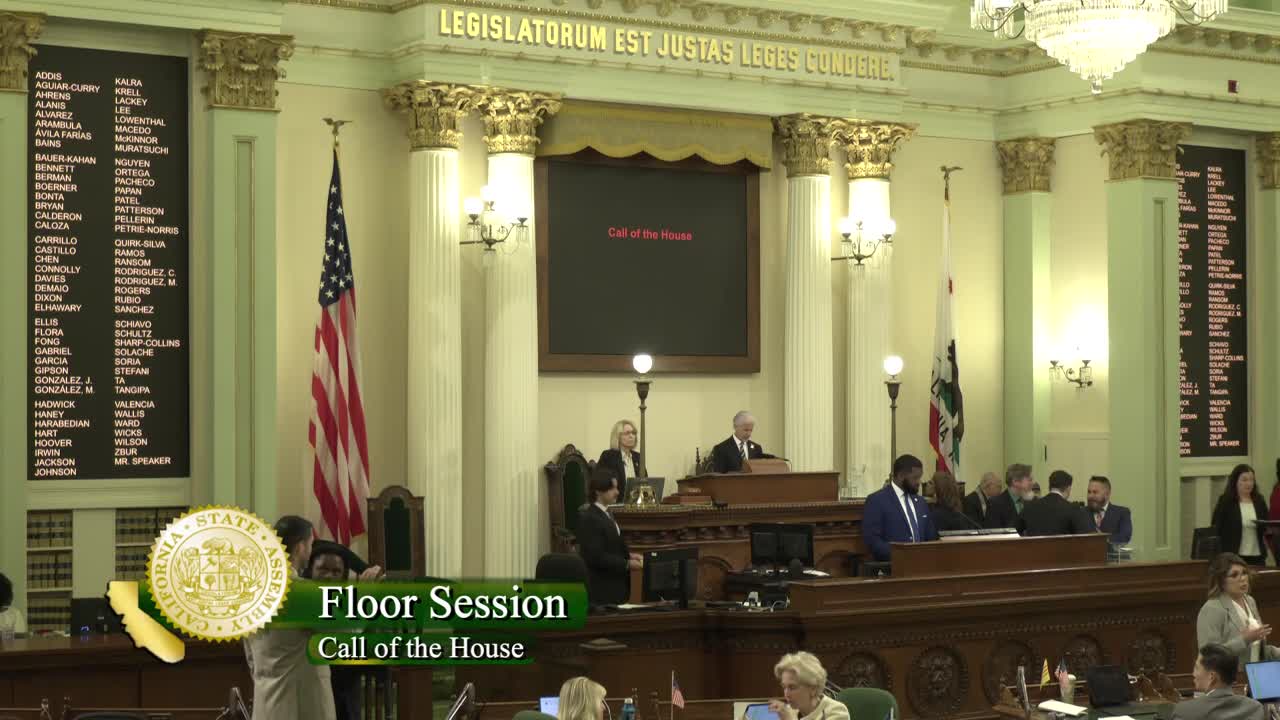
Bill Author

Bill Co-Author(s):