AB 1515: Professional employer organizations.
- Session Year: 2025-2026
- House: Assembly
- Latest Version Date: 2026-08-10
Current Status:
In Progress
(2026-08-24: Ordered to inactive file at the request of Senator Smallwood-Cuevas.)
Introduced
In Committee
Awaiting First Chamber Vote
Passed First Chamber
In Committee
Awaiting Second Chamber Vote
Passed Second Chamber
Enacted
Existing federal law provides for certification of a professional employer organization (PEO) by the Secretary of the Treasury and, for purposes of specified taxes and other obligations, treats a PEO as the employer of any work site employee performing services for any customer of the PEO. Existing law establishes the Division of Labor Standards Enforcement, headed by the Labor Commissioner, within the Department of Industrial Relations, for the purpose of enforcing labor laws.
Existing law authorizes the Director of Industrial Relations to adopt regulations reasonably necessary to carry out certain laws relating to workers compensation insurance requirements, including regulations regulating the workers compensation self-insurance obligations of professional employer organizations.
This bill would prohibit a person from providing, advertising, or otherwise holding oneself out as providing professional employer services, as defined, in the state unless the person is registered with the division. The bill would require a PEO, as defined, upon registration, to pay an initial registration fee established by the division not to exceed the reasonable cost of registration. define the terms professional employer organization and professional employer services for purposes of the Labor Code.
Existing federal law provides for certification of a professional employer organization (PEO) by the Secretary of the Treasury and, for purposes of specified taxes and other obligations, treats a PEO as the employer of any work site employee performing services for any customer of the PEO. Existing law establishes the Division of Labor Standards Enforcement, headed by the Labor Commissioner, within the Department of Industrial Relations, for the purpose of enforcing labor laws.
This bill would prohibit a person from providing, advertising, or otherwise holding oneself out as providing professional employer services, as defined, in the state unless the person is registered with the division. The bill would require a PEO, as defined, upon registration, to pay an initial registration fee established by the division not to exceed the reasonable cost of registration.
Existing law establishes the Division of Occupational Safety and Health in the Department of Industrial Relations, and charges the division with the enforcement of various laws affecting safe working conditions, including the California Occupational Safety and Health Act of 1973. Existing law requires the Director of Industrial Relations to prepare and submit to the Legislature an annual report on the activities of the division, as specified.This bill would additionally require the director to submit the report to the Governor and post the report on the departments internet website. This bill would also make nonsubstantive changes to those provisions.Existing law establishes the Division of Occupational Safety and Health in the Department of Industrial Relations, and charges the division with the enforcement of various laws affecting safe working conditions, including the California Occupational Safety and Health Act of 1973. Existing law requires the Director of Industrial Relations to prepare and submit to the Legislature an annual report on the activities of the division, as specified.
This bill would additionally require the director to submit the report to the Governor and post the report on the departments internet website. This bill would also make nonsubstantive changes to those provisions.
For purposes of this chapter: code, the following definitions apply:
(a)Division means the Division of Labor Standards Enforcement. (b)(a)(1)Professional employer organization (PEO) or PEO means a person that meets any of the following criteria:
(1)Is certified by the Secretary of the Treasury pursuant to Section 7705 of Title 26 of the United States Code.(A)The person is certified by the Internal Revenue Service as described in Section 301.7705-1(b) of Title 26 of the Code of Federal Regulations.
(2)Is(B)The person is accredited by the Employer Services Assurance Corporation.
(3)Provides professional employer services to a client pursuant(C)Pursuant to a written professional employer agreement intended by the parties to create an ongoing relationship. relationship, the person provides professional employer services to a client.
(2)Professional employer organization or PEO does not include any of the following:
(A)A person, including temporary staffing or trade associations, whose principal business activity is not entering into agreements for the provision of professional employment services, who does not hold themselves out as a professional employer organization, and who shares employees with a company that is a member of a controlled group of corporations or company that is under common control, as those terms are used in Section 414(b) and (c), respectively, of the Internal Revenue Code of 1986 (26 U.S.C. Sec. 414(b) and (c)), as amended from time to time.
(B)A temporary services employer, as defined in Section 201.3.
(C)A motion picture payroll services company, as defined in subparagraph (A) of paragraph (5) of subdivision (f) of Section 679 of the Unemployment Insurance Code.
(c)(b)Professional employer services means services provided pursuant to a professional services agreement that provides for all or substantially all employees of a client and that includes all of the following:
(1)Reporting employee wages for purposes of federal law using the professional employer organizations federal employer identification number of the PEO. number.
(2)Securing workers compensation insurance insurance, as specified in the professional employer agreement, in compliance with paragraph (1) of subdivision (d) of Section 3602 and Section 3700.
(3)Offering employee benefit plans.
1651.A person shall not provide, advertise, or otherwise hold oneself out as providing professional employer services in the state unless the person is registered with the division under this chapter.1652.Upon registration, a PEO shall pay an initial registration fee established by the division not to exceed the reasonable cost of providing the registration under this chapter.For purposes of this chapter:
(a)Division means the Division of Labor Standards Enforcement.
(b)Professional employer organization (PEO) means a person that meets any of the following criteria:
(1)Is certified by the Secretary of the Treasury pursuant to Section 7705 of Title 26 of the United States Code.
(2)Is accredited by the Employer Services Assurance Corporation.
(3)Provides professional employer services to a client pursuant to a written professional employer agreement intended by the parties to create an ongoing relationship.
(c)Professional employer services means services pursuant to a professional services agreement that provides for all or substantially all employees of a client and includes all of the following:
(1)Reporting employee wages using the federal employer identification number of the PEO.
(2)Securing workers compensation insurance in compliance with paragraph (1) of subdivision (d) of Section 3602 and Section 3700.
(3)Offering employee benefit plans.
1651.A person shall not provide, advertise, or otherwise hold oneself out as providing professional employer services in the state unless the person is registered with the division under this chapter.
1652.Upon registration, a PEO shall pay an initial registration fee established by the division not to exceed the reasonable cost of providing the registration under this chapter.
SECTION 1.Section 6330 of the Labor Code is amended to read:6330.(a)The director shall prepare and submit to the Governor and the Legislature, not later than March 1, an annual report on the division activities. The report shall include, but not be limited to, the following information for the previous calendar year:(1)The amount of funds allocated and spent in enforcement, education and research, and administration by the division.(2)The number of inspections made, and citations issued, by the division.(3)The number of civil penalties assessed, total amount of fines collected, and the number of appeals heard.(4)The number of contractors referred to the Contractors State License Board for hearing, pursuant to Section 7109.5 of the Business and Professions Code, and the total number of these cases resulting in suspension or revocation of a license.(5)The report from the division prepared by the Bureau of Investigations for submission to the director pursuant to Section 6315.3.(6)Recommendations for legislation that would improve the ability of the division to provide safety in places of employment.(b)The report shall be made to the Speaker of the Assembly and the Chairman of the Rules Committee of the Senate, for assignment to the appropriate committee or committees for evaluation.(c)The director shall post the report on the departments internet website.(a)The director shall prepare and submit to the Governor and the Legislature, not later than March 1, an annual report on the division activities. The report shall include, but need not be limited to, the following information for the previous calendar year:
(a)(1)The amount of funds allocated and spent in enforcement, education and research, and administration by the division.
(b)Total(2)The number of inspections made, and citations issued issued, by the division.
(c)(3)The number of civil penalties assessed, total amount of fines collected collected, and the number of appeals heard.
(d)(4)The number of contractors referred to the Contractors Contractors State License Board for hearing, pursuant to Section 7109.5 of the Business and Professions Code, and the total number of these cases resulting in suspension or revocation of a license.
(e)(5)The report from the division prepared by the Bureau of Investigations for submission to the director pursuant to Section 6315.3.
(f)(6)Recommendations for legislation which improves that would improve the ability of the division to provide safety in places of employment.
The(b)The report shall be made to the Speaker of the Assembly and the Chairman of the Rules Committee of the Senate, for assignment to the appropriate committee or committees for evaluation.
(c)The director shall post the report on the departments internet website.
|
Date
|
Status
|
|---|---|
| Aug 24, 2026 | Ordered to inactive file at the request of Senator Smallwood-Cuevas. |
| Aug 11, 2026 | Read second time. Ordered to third reading. |
| Aug 10, 2026 | Read second time and amended. Ordered returned to second reading. |
| Aug 10, 2026 | Ordered to second reading. |
| Aug 10, 2026 | From inactive file. |
| Sep 8, 2025 | Ordered to inactive file at the request of Senator Smallwood-Cuevas. |
| Aug 29, 2025 | Read second time. Ordered to third reading. |
| Aug 29, 2025 | From committee: Do pass. (Ayes 5. Noes 2.) (August 29). |
| Aug 18, 2025 | In committee: Referred to suspense file. |
| Jul 9, 2025 | From committee: Do pass and re-refer to Com. on APPR. (Ayes 4. Noes 1.) (July 9). Re-referred to Com. on APPR. |
| Jun 23, 2025 | From committee chair, with author's amendments: Amend, and re-refer to committee. Read second time, amended, and re-referred to Com. on L., P.E. & R. |
| May 28, 2025 | Referred to Com. on L., P.E. & R. |
| May 15, 2025 | In Senate. Read first time. To Com. on RLS. for assignment. |
| May 15, 2025 | Read third time. Passed. Ordered to the Senate. (Ayes 69. Noes 0. Page 1570.) |
| May 8, 2025 | Read second time. Ordered to Consent Calendar. |
| May 7, 2025 | From committee: Do pass. To Consent Calendar. (Ayes 15. Noes 0.) (May 7). |
| Apr 24, 2025 | From committee: Do pass and re-refer to Com. on APPR. with recommendation: To Consent Calendar. (Ayes 7. Noes 0.) (April 23). Re-referred to Com. on APPR. |
| Mar 17, 2025 | Referred to Com. on L. & E. |
| Mar 11, 2025 | From printer. May be heard in committee April 10. |
| Mar 10, 2025 | Read first time. To print. |
|
Date
|
Description
|
Location
|
Votes
|
|
|---|---|---|---|---|
| Aug 29, 2025 | Do pass | Senate Standing Committee on Appropriations |
Passed |
|
| Aug 18, 2025 | Placed on suspense file | Senate Standing Committee on Appropriations |
Passed |
|
| Jul 9, 2025 | Do pass, but first be re-referred to the Committee on [Appropriations] | Senate Standing Committee on Labor, Public Employment and Retirement |
Passed |
|
| May 15, 2025 | AB 1515 Labor and Employment Consent Calendar Second Day Regular Session | Assembly Floor |
Passed |
|
| May 7, 2025 | Do pass. To Consent Calendar. | Assembly Standing Committee on Appropriations |
Passed |
|
| Apr 23, 2025 | Do pass and be re-referred to the Committee on [Appropriations] with recommendation: To Consent Calendar | Assembly Standing Committee on Labor and Employment |
Passed |
This list shows positions taken on this bill by organizations on the date displayed, which is linked to the original source.
Positions by individuals are not included.
|
Organization
|
Position
|
Date
|
|---|---|---|
| National Association Of Professional Employer Organizations | ** Support |
SENATE RULES COMMITTEE Office of Senate Floor Analyses (916) 651-4171 | AB 1515 |
THIRD READING
Bill No: AB 1515
Author: Committee on Labor and Employment
Amended: 6/23/25 in Senate
Vote: 21
SENATE LABOR, PUB. EMP. & RET. COMMITTEE: 4-1, 7/9/25
AYES: Smallwood-Cuevas, Cortese, Durazo, Laird
NOES: Strickland
SENATE APPROPRIATIONS COMMITTEE: 5-2, 8/29/25
AYES: Caballero, Cabaldon, Grayson, Richardson, Wahab
NOES: Seyarto, Dahle
ASSEMBLY FLOOR: 69-0, 5/15/25 (Consent) - See last page for vote
SUBJECT: Professional employer organizations
SOURCE: Author
DIGEST:
This bill defines the terms professional employer organization (PEO) and professional employer services.
Senate Floor Amendments of 8/10/26 clarify the definition of PEO and strike provisions of the bill that require PEOs to register with the Division of Labor Standards Enforcement (DLSE) and that prohibit unregistered PEOs from operating.
ANALYSIS:
Existing federal law:
- Defines a certified professional employer organization as a person who applies to be treated as a certified professional employer organization and has been certified by the Treasury Secretary as meeting specified requirements. (26 U.S.C §301.7705(b))
- Provides that a certified professional employer organization shall be treated as the employer (and no other person shall be treated as the employer) of any work site employee performing services for any customer of such organization, but only with respect to remuneration remitted by such organization to such work site employee. (26 U.S.C §3511(a))
Existing state law:
- Defines a “temporary services employer,” also known as a “leasing employer,” as an employing unit that contracts with clients or customers to supply workers to perform services for the clients or customers, as well as to perform the following functions:
- Negotiate with clients or customers for such matters as time, place, type of work, working conditions, quality, and price of the services;
- Determine assignments or reassignments of workers, even though workers retain the right to refuse specific assignments;
- Retain the authority to assign or reassign a worker to other clients or customers when a worker is determined unacceptable by a specific client or customer;
- Assign or reassign the worker to perform services for a client or customer;
- Set the rate of pay of the worker, whether or not through negotiation;
- Pay the worker from their own account or accounts;
- Retain the right to hire and terminate workers.
(Labor Code §201.3 and Unemployment Insurance Code §606.5)
- Defines a “motion picture payroll services company” as any employing unit that directly or through its affiliated entities meets all of the following criteria:
- Contractually provides the services of motion picture production workers to a motion picture production company or to an allied motion picture services company, or provides payments to a loan-out company as directed by a motion picture production company or an allied motion picture services company.
- Is a signatory to a collective bargaining agreement for one or more of its clients.
- Controls the payment of wages to the motion picture production workers and pays those wages from its own account or accounts.
- Is contractually obligated to pay wages to the motion picture production workers without regard to payment or reimbursement by the motion picture production company or allied motion picture services company.
- At least 80 percent of the wages paid by the motion picture payroll services company each calendar year are paid to workers associated between contracts with motion picture production companies and motion picture payroll services companies. (Unemployment Insurance Code §679(f)(5)(A))
This bill:
- Defines “professional employer organization” (PEO) as a person that meets any of the following criteria:
- The person is certified by the Internal Revenue Service as described in Section 301.7705-1(b) of Title 26 of the Code of Federal Regulations.
- The person is accredited by the Employer Services Assurance Corporation.
- Pursuant to a written professional employer agreement intended by the parties to create an ongoing relationship, the person provides professional employer services to a client.
- Specifies that a PEO does not include any of the following:
- A person, including temporary staffing or trade associations, whose principal business activity is not entering into agreements for the provision of professional employment services, who does not hold themselves out as a PEO, and who shares employees with a company that is a member of a controlled group of corporations or company that is under common control, as those terms are used in Section 414(b) and (c), respectively, of the Internal Revenue Code of 1986 (26 U.S.C. Sec. 414(b) and (c)), as amended from time to time.
- A temporary services employer, as defined in the Labor Code.
- A motion picture payroll services company, as defined in the Unemployment Insurance Code.
- Defines “professional employer services” as services provided pursuant to a professional services agreement for all or substantially all employees of a client that includes all of the following:
- Reporting employee wages for purposes of federal law using the PEO’s federal employer identification number.
- Securing workers’ compensation insurance, as specified.
- Offering employee benefit plans.
Background
Professional Employer Organizations (PEOs). The PEO industry originated in the 1970s with the rise of leasing employers. Under this model, employers would terminate their workforce, a leasing company would employ that workforce, and then the leasing company would provide that same workforce back to the client as leased employees. This enabled employers to cut costs. As the popularity of this model increased, businesses began to see other benefits to leasing employees. Today, the modern PEO industry provides human resources, payroll, and employment tax services to small and mid-size businesses. Ideally, the PEO model relieves clients of administrative responsibilities so that they can focus on their core business. PEOs can issue payroll, remit employment tax payments, administer employee benefits and workers’ compensation, and recruit, hire, and onboard workers. When PEOs pay wages and taxes, they use their own employer identification number, not the client’s. The National Association of Professional Employer Organizations (NAPEO) estimates that more than 200,000 business across the country use a PEO.[1]
A PEO and its client structure their relationship through a client services agreement that specifies how the two will delineate employer responsibilities and liabilities. The NAPEO refers to the relationship between a PEO and its client as “co-employment.” The U.S. Code, however, does not define the term, nor does federal tax law recognize the concept. Instead, Treasury Regulation 31.3504-2 authorizes a person that pays wages or compensation to the individuals performing services for any client pursuant to a service agreement to perform the acts required of an employer with respect to the wages or compensation paid. In a “co-employment” agreement, the client company maintains responsibility for and manages product development and production, business operations, marketing, sales, and service, while the PEO provides services related to employment.
Across the country, PEO regulations and licensing requirements vary. In California, PEOs are not statutorily defined or regulated.
In 2011, AB 975 (Ma) sought to regulate the PEO industry with similar language to AB 1515. Instead of registering with DLSE, AB 975 would have required PEOs to register with the Employment Development Department (EDD). This previous attempt stalled in the Senate Appropriations Committee.
Related/Prior Legislation
AB 975 (Ma, 2011) would have prohibited a person or entity from providing professional employer services, advertising for professional employer services, or otherwise holding itself out as providing professional employer services in the state unless that person or entity registers as a PEO with EDD, as specified. The bill would have directed EDD to prescribe rules establishing the method for PEOs to report quarterly wages and contributions for worksite employees. The Senate Appropriations Committee held this bill on suspense.
AB 2570 (Ma, 2010) would have regulated PEOs by recognizing, for the purposes of the remittance of payroll taxes, a ‘co-employment’ contractual relationship between a Professional Employer Organization and a business employer. The Senate Appropriations Committee held this bill on suspense.
FISCAL EFFECT: Appropriation: No Fiscal Com.: Yes Local: No
According to the Senate Appropriations Committee:
“Administrative costs to the Department of Industrial Relations (DIR), including but not limited to developing and maintaining a registration system, have yet to be determined, but could exceed $150,000 annually (special fund).”
*The above fiscal analysis is for a prior version of the bill.
SUPPORT: (Verified 8/10/26)
National Association of Professional Employer Organizations
OPPOSITION: (Verified 8/10/26)
None received
ARGUMENTS IN SUPPORT: According to the National Association of Professional Employer Organizations:
“PEOs provide human resource services to small and mid-size businesses—paying wages and taxes under the PEO’s EIN, offering workers’ compensation and risk management services, and providing compliance assistance with employment-related rules and regulations. In addition, many PEOs provide HR technology systems and access to 401(k) plans, health, dental, and life insurance, dependent care, and other benefits. In doing so, PEOs help businesses take care of employees by enabling them to offer Fortune 500-level benefits at an affordable cost and providing access to experienced HR professionals. PEOs also help business owners and executives save time by taking administrative and HR related tasks off their plates, allowing them to focus on the success of their businesses.
Across the U.S., PEOs provide services to 200,000 small and mid-sized businesses, employing 4.5 million people. More than 21,000 California businesses – employing more than 470,000 people partner with a PEO.
Since 1991, 38 states have adopted comprehensive legislation to bring regulatory certainty to the industry, to clearly define PEOs and differentiate them from other business models, and to raise industry standards to the benefit of PEOs, their clients, employees of their clients, and state regulators.
The goal of AB 1515 is to enact similar statutory recognition and regulation of the PEO industry in California. We have been working collaboratively this year with the California Federation of Labor Unions, AFL-CIO and other interested stakeholders and those discussions are ongoing. AB 1515 is an Assembly Labor Committee bill intended to facilitate these discussions and serve as a placeholder for final legislative language as these productive discussions continue.”
ASSEMBLY FLOOR: 69-0, 5/15/25
AYES: Addis, Aguiar-Curry, Ahrens, Alvarez, Ávila Farías, Bains, Bauer-Kahan, Berman, Boerner, Bonta, Bryan, Calderon, Carrillo, Chen, Connolly, Davies, DeMaio, Dixon, Elhawary, Ellis, Flora, Fong, Gabriel, Gallagher, Garcia, Gipson, Mark González, Hadwick, Haney, Harabedian, Hoover, Irwin, Jackson, Kalra, Krell, Lackey, Lee, Lowenthal, Macedo, McKinnor, Muratsuchi, Nguyen, Ortega, Pacheco, Papan, Patel, Patterson, Pellerin, Petrie-Norris, Ransom, Celeste Rodriguez, Michelle Rodriguez, Rogers, Blanca Rubio, Sanchez, Schiavo, Schultz, Sharp-Collins, Solache, Soria, Ta, Tangipa, Valencia, Wallis, Ward, Wicks, Wilson, Zbur, Rivas
NO VOTE RECORDED: Alanis, Arambula, Bennett, Caloza, Castillo, Jeff Gonzalez, Hart, Quirk-Silva, Ramos, Stefani
Prepared by: Emma Bruce / L., P.E. & R. / (916) 651-1556
8/12/26 16:18:47
**** END ****
NAPEO, Frequently Asked Questions About PEOs, https://napeo.org/intro-to-peos/faqs/ ` ↑
SENATE RULES COMMITTEE Office of Senate Floor Analyses (916) 651-1520 Fax: (916) 327-4478 | AB 1515 |
THIRD READING
Bill No: AB 1515
Author: Committee on Labor and Employment
Amended: 6/23/25 in Senate
Vote: 21
SENATE LABOR, PUB. EMP. & RET. COMMITTEE: 4-1, 7/9/25
AYES: Smallwood-Cuevas, Cortese, Durazo, Laird
NOES: Strickland
SENATE APPROPRIATIONS COMMITTEE: 5-2, 8/29/25
AYES: Caballero, Cabaldon, Grayson, Richardson, Wahab
NOES: Seyarto, Dahle
ASSEMBLY FLOOR: 69-0, 5/15/25 (Consent) - See last page for vote
SUBJECT: Professional employer organizations
SOURCE: Author
DIGEST:
This bill attempts to regulate the professional employer organization (PEO) industry by defining key terms and prohibiting a person from providing, advertising, or otherwise holding oneself out as providing professional employer services in the state unless the person registers with the Division of Labor Standards Enforcement.
ANALYSIS:
Existing federal law:
- Defines a certified professional employer organization as a person who applies to be treated as a certified professional employer organization and has been certified by the Treasury Secretary as meeting specified requirements. (26 United States Code (U.S.C) §7705(a))
- Provides that a certified professional employer organization shall be treated as the employer (and no other person shall be treated as the employer) of any work site employee performing services for any customer of such organization, but only with respect to remuneration remitted by such organization to such work site employee. (26 U.S.C §3511(a))
Existing state law:
- Establishes within the Department of Industrial Relations the Division of Labor Standards Enforcement (DLSE) under the direction of the Labor Commissioner (LC), and empowers the LC to ensure a just day’s pay in every work place and to promote justice through robust enforcement of labor laws. (Labor Code §79-107)
- Defines a “temporary services employer,” also known as a “leasing employer,” as an employing unit that contracts with clients or customers to supply workers to perform services for the clients or customers, as well as to perform the following functions:
- Negotiate with clients or customers for such matters as time, place, type of work, working conditions, quality, and price of the services;
- Determine assignments or reassignments of workers, even though workers retain the right to refuse specific assignments;
- Retain the authority to assign or reassign a worker to other clients or customers when a worker is determined unacceptable by a specific client or customer;
- Assign or reassign the worker to perform services for a client or customer;
- Set the rate of pay of the worker, whether or not through negotiation;
- Pay the worker from their own account or accounts;
- Retain the right to hire and terminate workers.
(Labor Code §201.3 and Unemployment Insurance Code §606.5)
- Provides that if an individual or entity contracts to supply an employee to perform services for a customer or client, and is a temporary services employer or a leasing employer, the individual or entity is the employer of the employee who performs the services. (Unemployment Insurance Code §606.5(c))
- Provides that if an individual or entity contracts to supply an employee to perform services for a client or customer and is not a temporary services employer or a leasing employer, the client or customer is the employer of the employee who performs the services. (Unemployment Insurance Code §606.5(c))
- Provides that an individual or entity that contracts to supply an employee to perform services for a customer or client and pays wages to the employee for the services, but is not a leasing employer or a temporary services employer, pays the wages as the agent of the employer. (Unemployment Insurance Code §606.5(c))
- Provides that whether an individual or entity is the employer of specific employees shall be determined by the ABC Test (AB 5, Chapter 296, Statutes of 2019), except as provided in 2)- 6), above. (Unemployment Insurance Code §606.5(a))
This bill:
- Defines “professional employer organization (PEO)” as a person that meets any of the following criteria:
- Is certified by the Secretary of the Treasury pursuant to Section 7705 of Title 26 of the United States Code.
- Is accredited by the Employer Assurance Corporation
- Provides professional employer services to a client pursuant to a written professional employer agreement intended by the parties to create an ongoing relationship.
- Defines “professional employer services” as services pursuant to a professional services agreement that provides for all or substantially all employees of a client and includes all of the following:
- Reporting employee wages using the federal employer identification number of the PEO.
- Securing workers’ compensation insurance, as specified.
- Offering employee benefit plans.
- Prohibits a person from providing, advertising, or otherwise holding oneself out as providing professional employer services in the state unless the person registers with DLSE.
- Requires a PEO, upon registration, to pay an initial registration fee established by DLSE not to exceed the reasonable cost of providing the registration.
Background
Professional Employer Organizations (PEOs).The PEO industry originated in the 1970s with the rise of leasing employers. Under this model, employers would terminate their workforce, a leasing company would employ that workforce, and then the leasing company would provide that same workforce back to the client as leased employees. This enabled employers to cut costs. As the popularity of this model increased, businesses began to see other benefits to leasing employees. Today, the modern PEO industry provides human resources, payroll, and employment tax services to small and mid-size businesses. Ideally, the PEO model relieves clients of administrative responsibilities so that they can focus on their core business. PEOs can issue payroll, remit employment tax payments, administer employee benefits and workers’ compensation, and recruit, hire, and onboard workers. When PEOs pay wages and taxes, they use their own employer identification number, not the client’s. The National Association of Professional Employer Organizations (NAPEO) estimates that more than 200,000 business across the country use a PEO.[1]
A PEO and its client structure their relationship through a client services agreement that specifies how the two will delineate employer responsibilities and liabilities. The NAPEO refers to the relationship between a PEO and its client as “co-employment.” The U.S. Code, however, does not define the term, nor does federal tax law recognize the concept. Instead, Treasury Regulation 31.3504-2 authorizes a person that pays wages or compensation to the individuals performing services for any client pursuant to a service agreement to perform the acts required of an employer with respect to the wages or compensation paid. In a “co-employment” agreement, the client company maintains responsibility for and manages product development and production, business operations, marketing, sales, and service, while the PEO provides services related to employment.
Across the country, PEO regulations and licensing requirements vary. In California, PEOs are not statutorily defined or regulated.
Comments
In 2011, AB 975 (Ma) sought to regulate the PEO industry with similar language to AB 1515. Instead of registering with DLSE, AB 975 would have required PEOs to register with the Employment Development Department (EDD). This previous attempt stalled in the Senate Appropriations Committee.
AB 1515 would attempt to regulate the industry by defining key terms and prohibiting a person from providing, advertising, or otherwise holding oneself out as providing professional employer services in the state unless the person registers with DLSE. This bill in print contains few details on the proposed registration requirement and offers no enforcement mechanism. The author’s office is committed to working with industry stakeholders to refine this bill’s provisions.
Related Legislation
AB 975 (Ma, 2011) would have prohibited a person or entity from providing professional employer services, advertising for professional employer services, or otherwise holding itself out as providing professional employer services in the state unless that person or entity registers as a PEO with EDD, as specified. The bill would have directed EDD to prescribe rules establishing the method for PEOs to report quarterly wages and contributions for worksite employees. The Senate Appropriations Committee held this bill on suspense.
AB 2570 (Ma, 2010) would have regulated PEOs by recognizing, for the purposes of the remittance of payroll taxes, a ‘co-employment’ contractual relationship between a Professional Employer Organization and a business employer. The Senate Appropriations Committee held this bill on suspense.
FISCAL EFFECT: Appropriation: No Fiscal Com.: Yes Local: No
According to the Senate Appropriations Committee:
“Administrative costs to the Department of Industrial Relations (DIR), including but not limited to developing and maintaining a registration system, have yet to be determined, but could exceed $150,000 annually (special fund).”
SUPPORT: (Verified 8/29/25)
National Association of Professional Employer Organizations
OPPOSITION: (Verified 8/29/25)
None received
ARGUMENTS IN SUPPORT:
According to the National Association of Professional Employer Organizations:
“PEOs provide human resource services to small and mid-size businesses—paying wages and taxes under the PEO’s EIN, offering workers’ compensation and risk management services, and providing compliance assistance with employment-related rules and regulations. In addition, many PEOs provide HR technology systems and access to 401(k) plans, health, dental, and life insurance, dependent care, and other benefits. In doing so, PEOs help businesses take care of employees by enabling them to offer Fortune 500-level benefits at an affordable cost and providing access to experienced HR professionals. PEOs also help business owners and executives save time by taking administrative and HR related tasks off their plates, allowing them to focus on the success of their businesses.
Across the U.S., PEOs provide services to 200,000 small and mid-sized businesses, employing 4.5 million people. More than 21,000 California businesses – employing more than 470,000 people partner with a PEO.
Since 1991, 38 states have adopted comprehensive legislation to bring regulatory certainty to the industry, to clearly define PEOs and differentiate them from other business models, and to raise industry standards to the benefit of PEOs, their clients, employees of their clients, and state regulators.
The goal of AB 1515 is to enact similar statutory recognition and regulation of the PEO industry in California. We have been working collaboratively this year with the California Federation of Labor Unions, AFL-CIO and other interested stakeholders and those discussions are ongoing. AB 1515 is an Assembly Labor Committee bill intended to facilitate these discussions and serve as a placeholder for final legislative language as these productive discussions continue.”
ASSEMBLY FLOOR: 69-0, 5/15/25
AYES: Addis, Aguiar-Curry, Ahrens, Alvarez, Ávila Farías, Bains, Bauer-Kahan, Berman, Boerner, Bonta, Bryan, Calderon, Carrillo, Chen, Connolly, Davies, DeMaio, Dixon, Elhawary, Ellis, Flora, Fong, Gabriel, Gallagher, Garcia, Gipson, Mark González, Hadwick, Haney, Harabedian, Hoover, Irwin, Jackson, Kalra, Krell, Lackey, Lee, Lowenthal, Macedo, McKinnor, Muratsuchi, Nguyen, Ortega, Pacheco, Papan, Patel, Patterson, Pellerin, Petrie-Norris, Ransom, Celeste Rodriguez, Michelle Rodriguez, Rogers, Blanca Rubio, Sanchez, Schiavo, Schultz, Sharp-Collins, Solache, Soria, Ta, Tangipa, Valencia, Wallis, Ward, Wicks, Wilson, Zbur, Rivas
NO VOTE RECORDED: Alanis, Arambula, Bennett, Caloza, Castillo, Jeff Gonzalez, Hart, Quirk-Silva, Ramos, Stefani
Prepared by: Emma Bruce / L., P.E. & R. / (916) 651-1556
8/29/25 21:23:46
**** END ****
NAPEO, Frequently Asked Questions About PEOs, https://napeo.org/intro-to-peos/faqs/ ` ↑
SENATE COMMITTEE ON APPROPRIATIONS
Senator Anna Caballero, Chair
2025 - 2026 Regular Session
AB 1515 (Committee on Labor and Employment) - Professional employer organizations
Version: June 23, 2025 | Policy Vote: L., P.E. & R. 4 - 1 |
Urgency: No | Mandate: No |
Hearing Date: August 18, 2025 | Consultant: Robert Ingenito |
Bill Summary:
AB 1515 would regulate the professional employer organization (PEO) industry by defining key terms and prohibiting a person from providing, advertising, or otherwise holding oneself out as providing professional employer services in the State unless the person registers with the Division of Labor Standards Enforcement (DLSE).
Fiscal Impact:
Administrative costs to the Department of Industrial Relations (DIR), including but not limited to developing and maintaining a registration system, have yet to be determined, but could exceed $150,000 annually (special fund).
Background:
Under the PEO model, which originated roughly 50 years ago, employers would terminate their workforce, a leasing company would employ that workforce, and then the leasing company would provide that same workforce back to the client as leased employees. This arrangement enabled employers to cut costs. Today, the modern PEO industry provides human resources, payroll, and employment tax services to small and mid-size businesses. The PEO model generally relieves clients of administrative responsibilities so that they can focus on their core business. PEOs can issue payroll, remit employment tax payments, administer employee benefits and workers’ compensation, and recruit, hire, and onboard workers. When PEOs pay wages and taxes, they use their own employer identification number, not the client’s. The National Association of Professional Employer Organizations (NAPEO) estimates that more than 200,000 business across the country use a PEO.
A PEO and its client structure their relationship through a client services agreement that specifies how the two will delineate employer responsibilities and liabilities. The NAPEO refers to the relationship between a PEO and its client as “co-employment.” The U.S. Code, however, does not define the term, nor does federal tax law recognize the concept. Instead, Treasury Regulation 31.3504-2 authorizes a person that pays wages or compensation to the individuals performing services for any client pursuant to a service agreement to perform the acts required of an employer with respect to the wages or compensation paid. In a “co-employment” agreement, the client company maintains responsibility for and manages product development and production, business operations, marketing, sales, and service, while the PEO provides services related to employment.
In other states, PEO regulations and licensing requirements vary. In California, PEOs are not statutorily defined or regulated.
Proposed Law:
This bill would do the following:
- Define “professional employer organization (PEO)” as a person that meets any of the following criteria: (1) is certified by the Secretary of the Treasury pursuant to Section 7705 of Title 26 of the United States Code, (2) is accredited by the Employer Assurance Corporation, or (3) provides professional employer services to a client pursuant to a written professional employer agreement intended by the parties to create an ongoing relationship.
- Define “professional employer services” as services pursuant to a professional services agreement that provides for all or substantially all employees of a client and includes all of the following: (1) reporting employee wages using the federal employer identification number of the PEO, (2) securing workers’ compensation insurance, as specified, and (3) offering employee benefit plans.
- Prohibit a person from providing, advertising, or otherwise holding oneself out as providing professional employer services in the state unless the person registers with DLSE.
- Require a PEO, upon registration, to pay an initial registration fee established by DLSE not to exceed the reasonable cost of providing the registration.
Related Legislation:
- AB 975 (Ma, 2011) would have prohibited a person or entity from providing professional employer services, advertising for professional employer services, or otherwise holding itself out as providing professional employer services in the state unless that person or entity registers as a PEO with EDD, as specified. The bill would have directed EDD to prescribe rules establishing the method for PEOs to report quarterly wages and contributions for worksite employees. The bill was held under submission on the Suspense File of this Committee.
- AB 2570 (Ma, 2010) would have regulated PEOs by recognizing, for the purposes of the remittance of payroll taxes, a ‘co-employment’ contractual relationship between a Professional Employer Organization and a business employer. The bill was held under submission on the Suspense File of this Committee.
-- END --
SENATE COMMITTEE ON LABOR, PUBLIC EMPLOYMENT AND RETIREMENT
Senator Lola Smallwood-Cuevas, Chair
2025 - 2026 Regular
Bill No: AB 1515 Hearing Date: July 9, 2025
Author: | Committee on Labor and Employment | ||
Version: | June 23, 2025 | ||
Urgency: | No | Fiscal: | Yes |
Consultant: | Emma Bruce | ||
SUBJECT: Professional employer organizations
KEY ISSUE
This bill attempts to regulate the professional employer organization (PEO) industry by defining key terms and prohibiting a person from providing, advertising, or otherwise holding oneself out as providing professional employer services in the state unless the person registers with the Division of Labor Standards Enforcement.
ANALYSIS
Existing federal law:
- Defines a certified professional employer organization as a person who applies to be treated as a certified professional employer organization and has been certified by the Treasury Secretary as meeting specified requirements. (26 U.S.C §7705(a))
- Provides that a certified professional employer organization shall be treated as the employer (and no other person shall be treated as the employer) of any work site employee performing services for any customer of such organization, but only with respect to remuneration remitted by such organization to such work site employee. (26 U.S.C §3511(a))
Existing state law:
- Establishes within the Department of Industrial Relations the Division of Labor Standards Enforcement (DLSE) under the direction of the Labor Commissioner (LC), and empowers the LC to ensure a just day’s pay in every work place and to promote justice through robust enforcement of labor laws. (Labor Code §79-107)
- Defines a “temporary services employer,” also known as a “leasing employer,” as an employing unit that contracts with clients or customers to supply workers to perform services for the clients or customers, as well as to perform the following functions:
- Negotiate with clients or customers for such matters as time, place, type of work, working conditions, quality, and price of the services;
- Determine assignments or reassignments of workers, even though workers retain the right to refuse specific assignments;
- Retain the authority to assign or reassign a worker to other clients or customers when a worker is determined unacceptable by a specific client or customer;
- Assign or reassign the worker to perform services for a client or customer;
- Set the rate of pay of the worker, whether or not through negotiation;
- Pay the worker from their own account or accounts;
- Retain the right to hire and terminate workers.
(Labor Code §201.3 and Unemployment Insurance Code §606.5)
- Provides that if an individual or entity contracts to supply an employee to perform services for a customer or client, and is a temporary services employer or a leasing employer, the individual or entity is the employer of the employee who performs the services. (Unemployment Insurance Code §606.5(c))
- Provides that if an individual or entity contracts to supply an employee to perform services for a client or customer and is not a temporary services employer or a leasing employer, the client or customer is the employer of the employee who performs the services. (Unemployment Insurance Code §606.5(c))
- Provides that an individual or entity that contracts to supply an employee to perform services for a customer or client and pays wages to the employee for the services, but is not a leasing employer or a temporary services employer, pays the wages as the agent of the employer. (Unemployment Insurance Code §606.5(c))
- Provides that whether an individual or entity is the employer of specific employees shall be determined by the ABC Test (AB 5, Chapter 296, Statutes of 2019), except as provided in 2)- 6), above. (Unemployment Insurance Code §606.5(a))
This bill:
- Defines “professional employer organization (PEO)” as a person that meets any of the following criteria:
- Is certified by the Secretary of the Treasury pursuant to Section 7705 of Title 26 of the United States Code.
- Is accredited by the Employer Assurance Corporation
- Provides professional employer services to a client pursuant to a written professional employer agreement intended by the parties to create an ongoing relationship.
- Defines “professional employer services” as services pursuant to a professional services agreement that provides for all or substantially all employees of a client and includes all of the following:
- Reporting employee wages using the federal employer identification number of the PEO.
- Securing workers’ compensation insurance, as specified.
- Offering employee benefit plans.
- Prohibits a person from providing, advertising, or otherwise holding oneself out as providing professional employer services in the state unless the person registers with DLSE.
- Requires a PEO, upon registration, to pay an initial registration fee established by DLSE not to exceed the reasonable cost of providing the registration.
COMMENTS
1. Background:
Professional Employer Organizations (PEOs)
The PEO industry originated in the 1970s with the rise of leasing employers. Under this model, employers would terminate their workforce, a leasing company would employ that workforce, and then the leasing company would provide that same workforce back to the client as leased employees. This enabled employers to cut costs. As the popularity of this model increased, businesses began to see other benefits to leasing employees. Today, the modern PEO industry provides human resources, payroll, and employment tax services to small and mid-size businesses. Ideally, the PEO model relieves clients of administrative responsibilities so that they can focus on their core business. PEOs can issue payroll, remit employment tax payments, administer employee benefits and workers’ compensation, and recruit, hire, and onboard workers. When PEOs pay wages and taxes, they use their own employer identification number, not the client’s. The National Association of Professional Employer Organizations (NAPEO) estimates that more than 200,000 business across the country use a PEO.[1]
A PEO and its client structure their relationship through a client services agreement that specifies how the two will delineate employer responsibilities and liabilities. The NAPEO refers to the relationship between a PEO and its client as “co-employment.” The U.S. Code, however, does not define the term, nor does federal tax law recognize the concept. Instead, Treasury Regulation 31.3504-2 authorizes a person that pays wages or compensation to the individuals performing services for any client pursuant to a service agreement to perform the acts required of an employer with respect to the wages or compensation paid. In a “co-employment” agreement, the client company maintains responsibility for and manages product development and production, business operations, marketing, sales, and service, while the PEO provides services related to employment.
Across the country, PEO regulations and licensing requirements vary. In California, PEOs are not statutorily defined or regulated.
2. Comments:
In 2011, AB 975 (Ma) sought to regulate the PEO industry with similar language to AB 1515. Instead of registering with DLSE, AB 975 would have required PEOs to register with the Employment Development Department (EDD). This previous attempt stalled in the Senate Appropriations Committee.
AB 1515 would attempt to regulate the industry by defining key terms and prohibiting a person from providing, advertising, or otherwise holding oneself out as providing professional employer services in the state unless the person registers with DLSE. The bill in print contains few details on the proposed registration requirement and offers no enforcement mechanism. The author’s office is committed to working with industry stakeholders to refine the bill’s provisions.
3. Need for this bill?
According to the author:
“The PEO industry has been operating lawfully in California for over 30 years. However, unlike most other states, California statutory law generally does not formally define PEOs. This bill seeks to establish a clear statutory definition of PEOs and require them to be registered with the state in order to do business. This is consistent with the regulatory approach taken in approximately 40 other states that define and regulate PEOs in this fashion.
Lack of formal statutory recognition can lead to confusion among regulators and others regarding the status of PEOs, their relationships to their clients, and their relationship to other business models. In addition, establishing a registration requirement with minimum standards for the industry will ensure that only legitimate and good-actor PEOs are able to do business in the state, raising standards for the industry and the state as a whole.
[AB 1515] creates a registration process for PEOs through the DLSE with a fee that shall be determined by the DLSE [and] defines key terms such as what qualifies as a PEO.”
4. Proponent Arguments:
According to the National Association of Professional Employer Organizations:
“PEOs provide human resource services to small and mid-size businesses—paying wages and taxes under the PEO’s EIN, offering workers’ compensation and risk management services, and providing compliance assistance with employment-related rules and regulations. In addition, many PEOs provide HR technology systems and access to 401(k) plans, health, dental, and life insurance, dependent care, and other benefits. In doing so, PEOs help businesses take care of employees by enabling them to offer Fortune 500-level benefits at an affordable cost and providing access to experienced HR professionals. PEOs also help business owners and executives save time by taking administrative and HR related tasks off their plates, allowing them to focus on the success of their businesses.
Across the U.S., PEOs provide services to 200,000 small and mid-sized businesses, employing 4.5 million people. More than 21,000 California businesses – employing more than 470,000 people partner with a PEO.
Since 1991, 38 states have adopted comprehensive legislation to bring regulatory certainty to the industry, to clearly define PEOs and differentiate them from other business models, and to raise industry standards to the benefit of PEOs, their clients, employees of their clients, and state regulators.
The goal of AB 1515 is to enact similar statutory recognition and regulation of the PEO industry in California. We have been working collaboratively this year with the California Federation of Labor Unions, AFL-CIO and other interested stakeholders and those discussions are ongoing. AB 1515 is an Assembly Labor Committee bill intended to facilitate these discussions and serve as a placeholder for final legislative language as these productive discussions continue.”
5. Opponent Arguments:
None received.
6. Prior Legislation:
AB 975 (Ma, 2011) would have prohibited a person or entity from providing professional employer services, advertising for professional employer services, or otherwise holding itself out as providing professional employer services in the state unless that person or entity registers as a PEO with EDD, as specified. The bill would have directed EDD to prescribe rules establishing the method for PEOs to report quarterly wages and contributions for worksite employees. The Senate Appropriations Committee held this bill on suspense.
AB 2570 (Ma, 2010) would have regulated PEOs by recognizing, for the purposes of the remittance of payroll taxes, a ‘co-employment’ contractual relationship between a Professional Employer Organization and a business employer. The Senate Appropriations Committee held this bill on suspense.
SUPPORT
National Association of Professional Employer Organizations
OPPOSITION
None received.
-- END --
NAPEO, Frequently Asked Questions About PEOs, https://napeo.org/intro-to-peos/faqs/ ` ↑
Date of Hearing: May 7, 2025
ASSEMBLY COMMITTEE ON APPROPRIATIONS
Buffy Wicks, Chair
ABPCA Bill Id:AB 1515
Author:(Committee on Labor and Employment) – As Introduced Ver:March 10, 2025
Policy Committee: | Labor and Employment | Vote: | 7 - 0 |
|
| ||
|
|
Urgency: No State Mandated Local Program: No Reimbursable: No
SUMMARY:
This bill requires the Department of Industrial Relations (DIR) director to submit an existing annual report on the activities of the Division of Occupational Safety and Health (Cal/OSHA) to the Governor and post the report on DIR’s website.
FISCAL EFFECT:
Minor and absorbable costs to DIR.
COMMENTS:
- Purpose. According to the author:
AB 1515 provides additional transparency regarding Cal/OSHA’s enforcement activities and results by requiring that its annual report to the Legislature be placed on DIR’s website and be submitted to the Governor. It is critical that the public can see the key indicators of whether Cal/OSHA is adequately ensuring the health and safety of California’s workers because Cal/OSHA can’t and won’t do its job.
- Cal/OSHA Annual Report. Existing law requires DIR to prepare and submit to the Legislature an annual report regarding Cal/OSHA’s activities. Among other provisions, the report must include the amount of funds allocated and spent on enforcement, education and research, and administration; the number of inspections made and citations issued; and the number of civil penalties assessed, total amount of fines collected, and number of appeals heard. This bill requires DIR to additionally submit the report to the Governor and post the report on DIR’s website.
Analysis Prepared by: Irene Ho / APPR. / (916) 319-2081
Date of Hearing: April 23, 2025
ASSEMBLY COMMITTEE ON LABOR AND EMPLOYMENT
Liz Ortega, Chair
ABPCA Bill Id:AB 1515 (
Author:Committee on Labor and Employment) – As Introduced Ver:March 10, 2025
SUBJECT: Division of Occupational Safety and Health: report
SUMMARY: Requires the Division of Occupational Safety and Health’s (Cal/OSHA) annual report to the Legislature on its activities to be placed on the Department of Industrial Relations’ (DIR) website and be submitted to the Governor.
EXISTING LAW:
- Requires the director of the DIR to prepare and submit to the Legislature, not later than March 1, an annual report on Cal/OSHA’s activities. The report shall include, but need not be limited to, the following information for the previous calendar year:
- The amount of funds allocated and spent in enforcement, education and research, and administration by Cal/OSHA.
- Total inspections made, and citations issued by Cal/OSHA.
- The number of civil penalties assessed, total amount of fines collected and the number of appeals heard.
- The number of contractors referred to the Contractor’s State License Board for hearing and the total number of these cases resulting in suspension or revocation of a license.
- The report from Cal/OSHA prepared by the Bureau of Investigations for submission to the director, as specified.
- Recommendations for legislation which improves the ability of Cal/OSHA to provide safety in places of employment. Labor Code §6330.
- Requires the report to be made to the Speaker of the Assembly and the Chairman of the Rules Committee of the Senate, for assignment to the appropriate committee or committees for evaluation. Labor Code §6330.
FISCAL EFFECT: Unknown
COMMENTS: According to the author, “AB 1515 provides additional transparency regarding Cal/OSHA’s enforcement activities and results by requiring that its annual report to the Legislature be placed on DIR’s website and be submitted to the Governor. It is critical that the public can see the key indicators of whether Cal/OSHA is adequately ensuring the health and safety of California’s workers because Cal/OSHA can’t and won’t do its job.”
The author further states, “this bill promotes equity by ensuring that all workers-- especially low-income and immigrant workers who are the most vulnerable to health and safety violations--have access to an annual report providing critical data on the effectiveness of Cal/OSHA’s inspections and assessment of penalties.”
Arguments in Support
None on file.
Arguments in Opposition
None on file.
REGISTERED SUPPORT / OPPOSITION:
Support
None on file.
Opposition
None on file.
Analysis Prepared by: Megan Lane / L. & E. /
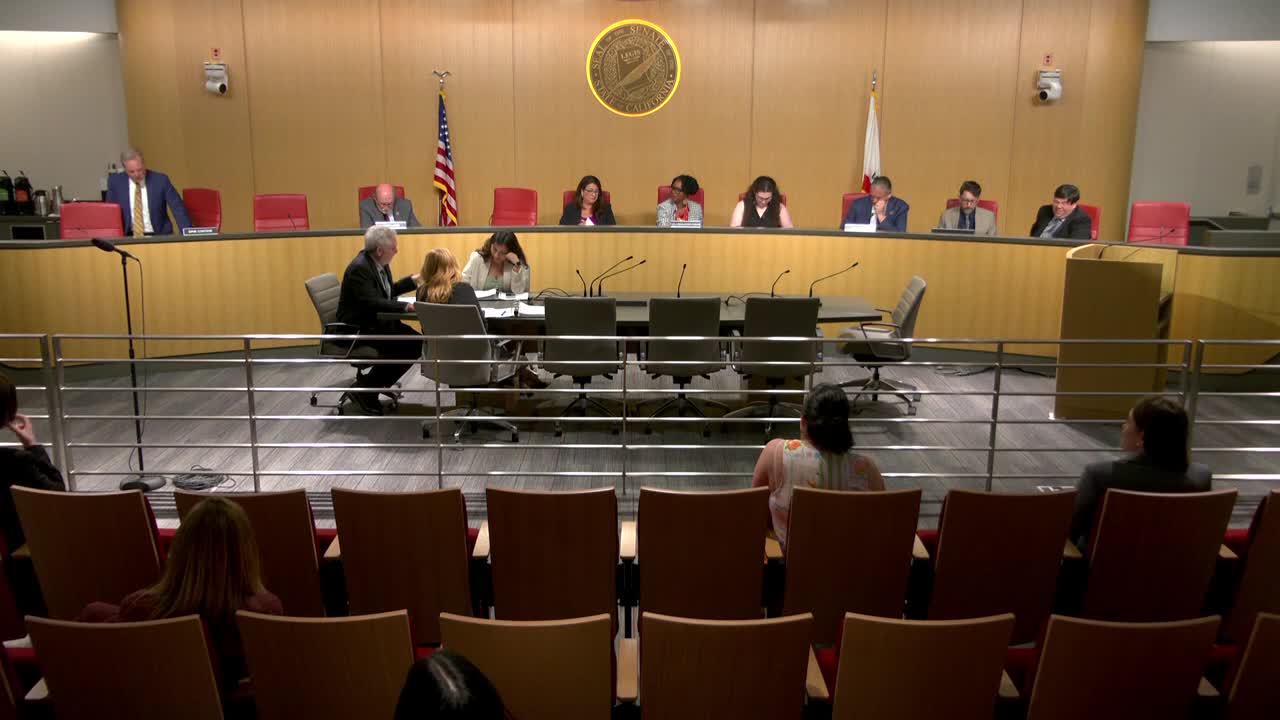
Discussed in Hearing
 11MIN
Senate Standing Committee on Labor, Public Employment and Retirement
Bill Author
Bill Co-Author(s):