AB 1530: California Disaster Assistance Act.
- Session Year: 2025-2026
- House: Assembly
- Latest Version Date: 2025-05-23
Current Status:
In Progress
(2025-08-29: In committee: Held under submission.)
Introduced
In Committee
Awaiting First Chamber Vote
Passed First Chamber
In Committee
Awaiting Second Chamber Vote
Passed Second Chamber
Enacted
What does this bill do?
This bill lets state disaster funds be used to pay for “unmet needs,” meaning help a local agency says is urgently needed to help people and community-based organizations recover after a disaster, and adds a definition of that term. It also requires the Office of Emergency Services to create a model community recovery process that encourages private nonprofit groups to participate and to issue guidelines on how those nonprofits can get state help to distribute supplies and cover other costly disaster-response activities.
The summary is provided by generative AI which can make mistakes. For original language, please view the details in the table below.
Existing law, the California Disaster Assistance Act, authorizes the Director of Emergency Services to allocate certain funds to meet the cost of a project, defined as the repair, restoration, or replacement of real property of a local agency used for essential government services that are damaged or destroyed by a disaster, subject to specified conditions. as defined.
This bill would also authorize those funds to be used for unmet needs identified by a local agency that may be immediately required to help individuals and community-based organizations quickly recover from a disaster, and would make related and conforming changes.Existing law requires the director to adopt regulations as necessary to govern the administration of the act in accordance with the Administrative Procedure Act.This bill would instead require the director to issue guidelines to govern the administration of the act.Existing law authorizes the Office of Emergency Services to establish a model process to assist a community in recovering from an emergency proclaimed by the Governor that includes, among other information, measures to encourage the participation of nongovernmental organizations in the community recovery process to supplement recovery activities undertaken by federal or local agencies.
This bill would instead require the office to establish that model process, and would require the model process to also include measures to encourage the participation of private nonprofit organizations and how they may be eligible to receive state assistance for distribution of supplies and other disaster or emergency assistance activities resulting in extraordinary cost.
Existing law, if a state of emergency is proclaimed, authorizes an eligible private nonprofit organization to receive state assistance for distribution of supplies and other disaster or emergency assistance activities resulting in extraordinary cost subject to specified eligibility and other requirements. Existing law requires the office to adopt regulations to implement those provisions.
This bill would instead require the office to issue guidelines to implement those provisions.
Existing law, the California Disaster Assistance Act, authorizes the Director of Emergency Services to allocate certain funds to meet the cost of a project, defined as the repair, restoration, or replacement of real property of a local agency used for essential government services that are damaged or destroyed by a disaster, subject to specified conditions.
This bill would also authorize those funds to be used for unmet needs identified by a local agency that may be immediately required to help individuals and community-based organizations quickly recover from a disaster, and would make related and conforming changes.
Existing law requires the director to adopt regulations as necessary to govern the administration of the act in accordance with the Administrative Procedure Act.
This bill would instead require the director to issue guidelines to govern the administration of the act.
Existing law authorizes the Office of Emergency Services to establish a model process to assist a community in recovering from an emergency proclaimed by the Governor that includes, among other information, measures to encourage the participation of nongovernmental organizations in the community recovery process to supplement recovery activities undertaken by federal or local agencies.
This bill would instead require the office to establish that model process, and would require the model process to also include measures to encourage the participation of private nonprofit organizations and how they may be eligible to receive state assistance for distribution of supplies and other disaster or emergency assistance activities resulting in extraordinary cost.
Existing law, if a state of emergency is proclaimed, authorizes an eligible private nonprofit organization to receive state assistance for distribution of supplies and other disaster or emergency assistance activities resulting in extraordinary cost subject to specified eligibility and other requirements. Existing law requires the office to adopt regulations to implement those provisions.
This bill would instead require the office to issue guidelines to implement those provisions.
(a)As used in this section, the following terms have the following meanings:
(1)Agency or office means the Office of Emergency Services.
(2)Community means a geographic area impacted by an emergency proclaimed by the Governor that includes the jurisdiction of one or more local agencies.
(3)Community recovery partners means local, state, and federal agencies, private nonprofit organizations, nongovernmental agencies, faith-based organizations, and other private entities.
(b)The office shall establish a model process that would be made available to assist a community in recovering from an emergency proclaimed by the Governor. The model process shall include the following:
(1)The role of the office in the community recovery process.
(2)Procedures for the office to have representation onsite as soon as practicable after the Governor proclaims a state of emergency.
(3)The role of the office to facilitate the use of temporary services, including, but not limited to, direct assistance to individuals, families, and businesses, crisis counseling, disaster unemployment assistance, food and clothing vouchers, communications systems, replacement of personal identification documents, provision of potable water, housing, farm service assistance, tax relief, insurance, and legal services.
(4)The role of the office to facilitate the establishment of temporary structures, including local assistance centers, showers and bathroom facilities, and temporary administrative offices.
(5)Measures to encourage the participation of nongovernmental organizations in the community recovery process to supplement recovery activities undertaken by federal or local agencies.
(6)Measures to encourage the participation of private nonprofit organizations and how they may be eligible to receive state assistance for distribution of supplies and other disaster or emergency assistance activities resulting in extraordinary cost.
(c)The office may refer the model process to the standardized Standardized Emergency Management System (SEMS) Advisory Board, or any other advisory board it deems appropriate, for review and modifications.
(d)It is the intent of the Legislature that the model process assists and complements local procedures. The model process should allow the office to offer additional assistance when that assistance is needed but not available through local agencies.
SEC. 6.SEC. 2.Section 8692 of the Government Code is amended to read:8692.(a)If a state of emergency is proclaimed, an eligible private nonprofit organization may receive state assistance for distribution of supplies and other disaster or emergency assistance activities resulting in extraordinary cost.
(b)A private nonprofit organization is eligible for assistance under this section if it is eligible for disaster assistance under the federal Robert T. Stafford Disaster Relief and Emergency Assistance Act (42 U.S.C. Sec. 5121).
(c)An organization is not eligible for assistance under this section if it employs religious content in the provision of emergency assistance.
(d) Any grant of assistance under this section shall comply with Section 4 of Article I and Section 5 of Article XVI of the California Constitution, state and federal civil rights laws, and the First Amendment to the United States Constitution in regard to the funding of religious organizations and activities. These legal constraints include prohibitions on the discrimination against beneficiaries and staff based on protected categories, on the use of public funds for proselytizing of religious doctrine, religious instruction, or worship, and on the use of other religious means to accomplish programmatic goals.
(e)The Office of Emergency Services shall issue guidelines to implement this section.
Project means the repair or restoration, or both, other than normal maintenance, or the replacement of, real property of a local agency used for essential governmental services, including, but not limited to, buildings, levees, flood control works, channels, irrigation works, streets, roads, bridges, highways, and other public works, that are damaged or destroyed by a disaster. disaster and any other unmet needs as identified by a local agency. Project also includes those activities and expenses allowed under subdivisions (a), (c), (d), and (e) of Section 8685. Except as provided in Section 8686.3, the completion of all or part of a project prior to application for funds pursuant to this chapter shall not disqualify the project or any part thereof.
SEC. 2.Section 8680.10 is added to the Government Code, to read:8680.10.Unmet needs means assistance that may be immediately required to help individuals and community-based organizations to quickly recover from a disaster.
SEC. 3.Section 8682.9 of the Government Code is amended to read:8682.9.The director shall adopt regulations, issue guidelines, as necessary, to govern the administration of the disaster assistance program authorized by this chapter in accordance with the Administrative Procedure Act (Chapter 3.5 (commencing with Section 11340) of Part 1 of Division 3). chapter. These regulations guidelines shall include specific project eligibility requirements, a procedure for local governments to request the implementation of programs under this chapter, and a method for evaluating these requests by the Office of Emergency Services.
SEC. 4.Section 8685 of the Government Code is amended to read:8685.From any moneys appropriated for that purpose, and subject to the conditions specified in this article, the director shall allocate funds to meet the cost of any one or more projects as defined in Section 8680.4. Applications by school districts shall be submitted to the Superintendent of Public Instruction for review and approval, in accordance with instructions or regulations developed by the Office of Emergency Services, prior to the allocation of funds by the director.
Moneys appropriated for the purposes of this chapter may be used to provide financial assistance for the following local agency and state costs:
(a)Local agency personnel costs, equipment costs, and the cost of supplies and materials used during disaster response activities, incurred as a result of a state of emergency proclaimed by the Governor, excluding the normal hourly wage costs of employees engaged in emergency work activities.
(b)To repair, restore, reconstruct, or replace facilities belonging to local agencies damaged as a result of disasters as defined in Section 8680.3. Mitigation measures performed pursuant to subdivision (b) of Section 8686.4 shall qualify for funding pursuant to this chapter.
(c)Matching fund assistance for cost sharing required under federal disaster assistance programs, as otherwise eligible under this act.
(d)Unmet needs identified by a local agency that may be immediately required to help individuals and community-based organizations to quickly recover from a disaster.
(d)(e)Indirect administrative costs and any other assistance deemed necessary by the director.
(e)(f)Necessary and required site preparation costs for mobilehomes, travel trailers, and other manufactured housing units provided and operated by the Federal Emergency Management Agency.
SEC. 5.Section 8687.7 of the Government Code is amended to read:8687.7.(a)As used in this section, the following terms have the following meanings:
(1)Agency or office means the Office of Emergency Services.
(2)Community means a geographic area impacted by an emergency proclaimed by the Governor that includes the jurisdiction of one or more local agencies.
(3)Community recovery partners means local, state, and federal agencies, private nonprofit organizations, nongovernmental agencies, faith-based organizations, and other private entities.
(b)The office may shall establish a model process that would be made available to assist a community in recovering from an emergency proclaimed by the Governor. The model process may shall include the following:
(1)The role of the office in the community recovery process.
(2)Procedures for the office to have representation onsite as soon as practicable after the Governor proclaims a state of emergency.
(3)The role of the office to facilitate the use of temporary services, including, but not limited to, direct assistance to individuals, families, and businesses, crisis counseling, disaster unemployment assistance, food and clothing vouchers, communications systems, replacement of personal identification documents, provision of potable water, housing, farm service assistance, tax relief, insurance, and legal services.
(4)The role of the office to facilitate the establishment of temporary structures, including local assistance centers, showers and bathroom facilities, and temporary administrative offices.
(5)Measures to encourage the participation of nongovernmental organizations in the community recovery process to supplement recovery activities undertaken by federal or local agencies.
(6)Measures to encourage the participation of private nonprofit organizations and how they may be eligible to receive state assistance for distribution of supplies and other disaster or emergency assistance activities resulting in extraordinary cost.
(6)(c)The office may refer the model process to the standardized Emergency Management System (SEMS) Advisory Board, or any other advisory board it deems appropriate, for review and modifications.
(7)(d)It is the intent of the Legislature that the model process assists and complements local procedures. The model process should allow the office to offer additional assistance when that assistance is needed but not available through local agencies.
SEC. 6.Section 8692 of the Government Code is amended to read:8692.(a)If a state of emergency is proclaimed, an eligible private nonprofit organization may receive state assistance for distribution of supplies and other disaster or emergency assistance activities resulting in extraordinary cost.
(b)A private nonprofit organization is eligible for assistance under this section if it is eligible for disaster assistance under the federal Robert T. Stafford Disaster Relief and Emergency Assistance Act (42 U.S.C. Sec. 5121).
(c)An organization is not eligible for assistance under this section if it employs religious content in the provision of emergency assistance.
(d) Any grant of assistance under this section shall comply with Section 4 of Article I and Section 5 of Article XVI of the California Constitution, state and federal civil rights laws, and the First Amendment to the United States Constitution in regard to the funding of religious organizations and activities. These legal constraints include prohibitions on the discrimination against beneficiaries and staff based on protected categories, on the use of public funds for proselytizing of religious doctrine, religious instruction, or worship, and on the use of other religious means to accomplish programmatic goals.
(e)The Office of Emergency Services shall adopt regulations issue guidelines to implement this section.
|
Date
|
Status
|
|---|---|
| Aug 29, 2025 | In committee: Held under submission. |
| Aug 18, 2025 | In committee: Referred to suspense file. |
| Jul 8, 2025 | From committee: Do pass and re-refer to Com. on APPR. with recommendation: To Consent Calendar. (Ayes 15. Noes 0.) (July 8). Re-referred to Com. on APPR. |
| Jun 18, 2025 | Referred to Com. on G.O. |
| Jun 5, 2025 | In Senate. Read first time. To Com. on RLS. for assignment. |
| Jun 4, 2025 | Read third time. Passed. Ordered to the Senate. (Ayes 79. Noes 0. Page 2071.) |
| May 27, 2025 | Read second time. Ordered to third reading. |
| May 23, 2025 | From committee: Amend, and do pass as amended. (Ayes 11. Noes 0.) (May 23). |
| May 23, 2025 | Read second time and amended. Ordered returned to second reading. |
| May 23, 2025 | Assembly Rule 63 suspended. (Ayes 51. Noes 16. Page 1644.) |
| May 21, 2025 | Joint Rule 62(a), file notice suspended. (Page 1627.) |
| May 21, 2025 | In committee: Set, first hearing. Referred to APPR. suspense file. |
| May 14, 2025 | In committee: Hearing postponed by committee. |
| Apr 29, 2025 | From committee: Do pass and re-refer to Com. on APPR. with recommendation: To Consent Calendar. (Ayes 7. Noes 0.) (April 28). Re-referred to Com. on APPR. |
| Mar 28, 2025 | Referred to Com. on E.M. |
| Mar 27, 2025 | From printer. May be heard in committee April 26. |
| Mar 26, 2025 | Read first time. To print. |
|
Date
|
Description
|
Location
|
Votes
|
|
|---|---|---|---|---|
| Aug 18, 2025 | Placed on suspense file | Senate Standing Committee on Appropriations |
Passed |
|
| Jul 8, 2025 | Do pass, but first be re-referred to the Committee on [Appropriations] with the recommendation: To Consent Calendar | Senate Standing Committee on Governmental Organization |
Passed |
|
| Jun 4, 2025 | AB 1530 Emergency Management Assembly Third Reading By RANSOM | Assembly Floor |
Passed |
|
| May 23, 2025 | Do pass as amended. | Assembly Standing Committee on Appropriations |
Passed |
|
| Apr 28, 2025 | Do pass and be re-referred to the Committee on [Appropriations] with recommendation: To Consent Calendar | Assembly Standing Committee on Emergency Management |
Passed |
This list shows positions taken on this bill by organizations on the date displayed, which is linked to the original source.
Positions by individuals are not included.
SENATE COMMITTEE ON
Senator Anna Caballero, Chair
2025 - 2026 Regular Session
AB 1530 (Committee on Emergency Management) - California Disaster Assistance Act
Version: | Policy Vote: |
Urgency: | Mandate: |
Hearing Date: | Consultant: |
Bill Summary:
AB 1530 requires, rather than authorizes, the Office of Emergency Services (OES) to establish a model process that would be made available to assist a community in recovering from an emergency proclaimed by the Governor, as specified. AB 1530 also requires OES to issue guidelines, rather than adopt regulations, related to provisions of the California Disaster Assistance Act (CDAA) authorizing eligible nonprofits to receive state assistance for the distribution of supplies and other disaster or emergency assistance during a declared state of emergency.
Fiscal Impact:
OES reports:
- Total ongoing annual costs of approximately $3.77 million for 17 additional positions to its Public Assistance and Individual Assistance Units and Financial Processing Unit (General Fund).
- Unknown significant increased General Fund cost pressures, ranging in the hundreds of millions of dollars, depending on future disaster response activity by community recovery partners. OES notes requiring the use of guidelines in lieu of formal regulations may accelerate implementation of CDAA programs, but may also increase demand for immediate state support and further increase General Fund exposure.
Background:
The CDAA authorizes the Director of OES to administer a disaster assistance program that provides financial assistance from the state for costs incurred by local governments as a result of a disaster event. Funding for the repair, restoration, or replacement of public real property damaged or destroyed by a disaster is made available when the director concurs with a local emergency proclamation requesting state disaster assistance. The program also provides for the reimbursement of local government costs associated with certain emergency activities undertaken in response to a state of emergency proclaimed by the Governor. In addition, the program may provide matching fund assistance for cost sharing required under federal public assistance programs in response to a Presidential Major Disaster or Emergency Declaration.
Proposed Law:
- Requires, rather than authorizes, OES to establish a model process that would be made available to assist a community in recovering from an emergency proclaimed by the Governor.
- Requires, rather than authorizes, the model process to include specified elements, including measures to encourage the participation of private nonprofit organizations and how they may be eligible to receive state assistance for distribution of supplies and other disaster or emergency assistance activities resulting in extraordinary costs.
- Requires OES to issue guidelines, rather than adopt regulations, related to provisions of the CDAA authorizing eligible nonprofits to receive state assistance for the distribution of supplies and other disaster or emergency assistance during a declared state of emergency.
-- END --
ASSEMBLY THIRD READING
ATR Bill Id:AB 1530
Author:(Committee on Emergency Management)
As Amended Ver:May 23, 2025
Majority vote
SUMMARY
Requires the California Office of Emergency Services (Cal OES) to establish a model process to assist a community in recovery from an emergency that includes, among other information, measures to encourage the participation of nongovernmental organizations and provides greater flexibility to Cal OES in administering the private nonprofit organization program under the California Disaster Assistance Act (CDAA), as specified.
Major Provisions
1) Requires Cal OES to establish a model recovery process that would be available to assist a community in recovering from a disaster.
2) Requires the model recovery process to include among other things, measures to encourage the participation of private nonprofit organizations and how they may be eligible to receive state assistance, as specified.
3) Requires Cal OES to issue guidelines to implement the process under CDAA for eligible private nonprofit organizations to receive state assistance for distribution of supplies and other disaster activities, as specified.
COMMENTS
California has faced an increasing number of disasters in recent years, including catastrophic wildfires, earthquakes, and extreme weather events. These events result in significant loss of life, displacement of residents, and extensive damage to housing and infrastructure. Vulnerable communities, particularly those with lower socioeconomic status, are disproportionately affected. They face challenges such as homelessness, long-term financial hardship, and difficulty accessing recovery resources. Disasters often exacerbate existing inequalities, entrenching disadvantaged populations in cycles of poverty and vulnerability.
Federal and state disaster assistance and recovery programs leave some behind: Although the state has a robust and sophisticated emergency response and management system, there are individuals and communities that do not meet the criteria for federal or state disaster assistance programs. For example, several counties proclaimed a local emergency due to winter storms this year and have requested the Governor issue a state of emergency proclamation and recovery assistance under the California Disaster Assistance Act, but may not have extensive enough damages (in Cal OES's determination) to be granted assistance.
The extent of damages to public infrastructure and residences within a county is one of the factors FEMA considers in evaluating a Governor's request for a major disaster declaration and requests public and individual assistance programs. If the damages, to homes and public infrastructure, do not meet the federal criteria, the county and individuals will not be eligible for disaster assistance.
Disaster response and recovery: Cal OES serves as the state's leadership hub during all major emergencies and disasters. This includes responding, directing, and coordinating local, state and federal resources and mutual aid assets across all regions to support the diverse communities across the state. Cal OES is also responsible for developing and maintaining the State Emergency Plan (SEP) and the Disaster Recovery Framework. Cal OES serves as the state's overall coordinator and agent to secure federal government resources through the Federal Emergency Management Agency. Cal OES also administers the California Disaster Assistance Acts funds and several federal emergency preparedness grant programs.
The California Disaster Assistance Act (CDAA): The CDAA authorizes the Director of the Cal OES to administer a disaster assistance program that provides financial assistance from the state for costs incurred by local governments as a result of a disaster event. CDAA provides for the reimbursement of local government costs including funding for the repair, restoration, or replacement of public real property damaged or destroyed by a disaster.
CDAA Authorizes Spending From Special Disaster and Emergency Account: CDAA provides a variety of authorities to respond to emergencies. Most notably, the statute authorizes the Department of Finance (DOF) to transfer funds from the Special Fund for Economic Uncertainties (SFEU) to the Disaster Response‑Emergency Operations Account (DREOA) and allocate funds from DREOA to state departments for disaster response operations costs. (The SFEU is the state's discretionary budget reserve of the General Fund.) Funds are allocated from DREOA immediately upon notification to the Joint Legislative Budget Committee (JLBC) by DOF. Initially, the use of DREOA for each emergency is limited to 120 days following the Governor's declaration of the emergency. However, the Governor can extend the use of DREOA for emergency‑related activities in 120‑day increments—even if the proclaimed state of emergency has ended. In this way, DREOA funds can be available for response operations that might arise beyond the state of emergency.
State Assistance for Private Nonprofit Organizations via CDAA: The CDDA provides if a state of emergency is proclaimed, an eligible private nonprofit organization may receive state assistance for distribution of supplies and other disaster or emergency assistance activities resulting in extraordinary cost. This program is known as the State Private Non-Profit (PNP) Organization Assistance Program and Cal OES governs it through California Code of Regulations Title 19, Division 2, Chapter 6, Article 2, Sections 2991 – 2999. Although this program is authorized, CDAA funds have not been used for this purpose in the last three fiscal years.
According to the Author
"The purpose of this bill is to ensure communities have a model process to quickly recover from emergencies by leveraging partnerships with nongovernmental organizations to expedite the delivery of disaster assistance. This bill also provides Cal OES with greater flexibility to administer part of the California Disaster Assistance Act funds by guidelines as opposed to regulations. In doing so, Cal OES will now have the ability to revitalize the State Private Non-Profit (PNP) Organization Assistance Program to encourage greater participation with non-profits and voluntary organizations active in disasters."
Arguments in Support
None on file.
Arguments in Opposition
None on file.
FISCAL COMMENTS
According to the Assembly Committee on Appropriations, "Costs of an unknown amount to OES to establish a model process to assist community recovery that meets certain requirements, including measures to encourage participation from private nonprofit organizations (General Fund (GF)). The magnitude of costs depends on whether OES has already established such a process and the extent to which the established process differs from this bill's requirements. Additionally, cost pressures of an unknown amount to provide private nonprofit organizations with state assistance for distribution of supplies and other activities."
VOTES
ASM EMERGENCY MANAGEMENT: 7-0-0
YES: Ransom, Hadwick, Arambula, Bains, Bennett, Calderon, DeMaio
ASM APPROPRIATIONS: 11-0-4
YES: Wicks, Arambula, Calderon, Caloza, Elhawary, Fong, Mark González, Hart, Pacheco, Pellerin, Solache
ABS, ABST OR NV: Sanchez, Dixon, Ta, Tangipa
UPDATED
VERSION: May 23, 2025
CONSULTANT: Mike Dayton / E.M. / (916) 319-3802 FN: 0000908
Date of Hearing: May 21, 2025
ASSEMBLY COMMITTEE ON APPROPRIATIONS
Buffy Wicks, Chair
ABPCA Bill Id:AB 1530
Author:(Committee on Emergency Management) – As Introduced Ver:March 26, 2025
Policy Committee: | Emergency Management | Vote: | 7 - 0 |
|
| ||
|
|
Urgency: No State Mandated Local Program: No Reimbursable: No
SUMMARY:
This bill modifies the priorities of the California Disaster Assistance Act (CDAA) and modifies CDAA administration by the Office of Emergency Services (OES).
Specifically, this bill:
- Authorizes CDAA funds to be used for unmet needs identified by a local agency that may be immediately required to help individuals and community-based organizations (CBOs) quickly recover from a disaster.
- Requires, instead of authorizes, OES to establish a model process to assist a community in recovering from an emergency proclaimed by the Governor. The model process must include measures to encourage the participation of private non-profit organizations and how such organizations may be eligible to receive state assistance for distribution of supplies and other disaster or emergency assistance activities resulting in extraordinary cost.
- Requires the OES director to issue guidelines, instead of adopt regulations, to implement certain CDAA provisions.
FISCAL EFFECT:
Annual ongoing costs of approximately $3.8 million to OES for 17 positions, including two disaster program specialists, one program manager, and two attorneys, by expanding the scope of the CDAA to broadly apply to unmet needs identified by a local agency (General Fund (GF)).
OES notes that this bill will create GF cost pressures to the extent local governments increase their reliance on CDAA funds to address previously ineligible unmet needs, or needs that do not meet federal thresholds for support. By expanding the scope of eligible uses and requiring OES to establish a formal fund recovery process for certain individuals and CBOs after a disaster, this bill will increase the frequency and scale of CDAA claims. While precise figures are difficult to project, given the uncertainty around future disaster activity, OES anticipates exposure in the hundreds of millions in additional financial liability. OES also contends that requiring the use of “guidelines,” instead of formal regulations, may accelerate CDAA program expansion, but also heighten demand for immediate state support, further increasing GF exposure.
COMMENTS:
- Purpose. According to the author, this bill’s purpose “is to expedite the delivery of disaster assistance to communities that have suffered from disasters” by providing OES “with greater flexibility to administer the [CDAA] program.”
- Background. Federal IA Program. When the U.S. president declares an emergency or major disaster has occurred, the Federal Emergency Management Agency (FEMA) may assist individuals with recovery through its IA program. Available IA services include crisis counseling assistance, legal services, unemployment assistance, and financial assistance for housing or other needs. However, if the damage to homes is not significant enough to meet federal criteria, an individual will not be eligible for federal disaster assistance. Other factors considered by FEMA include state fiscal capacity and resource availability, uninsured home and personal property losses, and impact to community infrastructure.
CDAA. FEMA also has a public assistance (PA) program to provide assistance to state, tribal, and local governments and certain private nonprofit organizations for emergency work and the repair or replacement of disaster-damaged facilities. Similarly, under the CDAA, when the OES director concurs with a local emergency proclamation requesting state disaster assistance, a state PA program provides funding for the repair, restoration, or replacement of public real property damaged or destroyed. The state PA program provides funding to cities, counties, special districts, school districts, community colleges, and certain private nonprofit organizations in the event of a state disaster.
Thus, while there is a state PA program similar to the federal PA program, there is no state IA program similar to the federal IA program. This bill modifies CDAA priorities and allows CDAA funds to be used for unmet needs identified by a local agency that may be immediately required to help individuals and CBOs quickly recover from a disaster, similar to a state IA program.
State Private Non-profit Organization Assistance Program (PNP Program). The CDAA provides for the PNP Program, allowing an eligible private non-profit organization to receive state assistance for distribution of supplies and other disaster or emergency assistance activities resulting in extraordinary cost. As noted in the Assembly Emergency Management Committee’s analysis of this bill, CDAA funds have not been used for this purpose in the last three fiscal years. This bill requires OES to establish a model process for community recovery that includes utilization of the PNP Program, and requires OES to issue related implementation guidelines.
- Related Legislation. AB 262 (Caloza) enacts the California Individual Assistance Act to provide financial assistance to certain entities and individuals after a disaster. AB 262 is pending on this committee’s suspense file.
Analysis Prepared by: Irene Ho / APPR. / (916) 319-2081
Date of Hearing: April 28, 2025
ASSEMBLY COMMITTEE ON EMERGENCY MANAGEMENT
Rhodesia Ransom, Chair
ABPCA Bill Id:AB 1530 (
Author:Committee on Emergency Management) – As Introduced Ver:March 26, 2025
SUBJECT: California Disaster Assistance Act
SUMMARY: Provides greater flexibility to the California Office of Emergency Services to administer California Disaster Assistance Act (CDAA) funds and allow local agencies to identify and apply for unmet disaster needs, as specified. Specifically, this bill:
- Modifies the definition of project under the CDAA to include “disaster and any other unmet needs as identified by a local agency.”
- Specifies “unmet needs” means assistance that may be immediately required to help individuals and community-based organizations to quickly recover from a disaster.
- Provides the Cal OES Director shall issue guidelines to administer the CDAA program, as opposed to regulations.
- Adds “unmet needs” as defined above to the list of eligible programs for financial assistance that may be provided under the CDAA.
- Requires Cal OES to establish a model recovery process that would be available to assist a community in recovering from a disaster.
- Requires the model recovery process to include among other things, measures to encourage the participation of private nonprofit organizations and how they may be eligible to receive state assistance, as specified.
- Requires Cal OES to issue guidelines to implement the process under CDAA for eligible private nonprofit organizations to receive state assistance for distribution of supplies and other disaster activities, as specified.
EXISTING LAW:
- Under the California Emergency Services Act, defines a state of emergency to mean the duly proclaimed existence of conditions of disaster or of extreme peril to the safety of persons and property within the state caused by conditions such as, among others, air pollution, fire, flood, and storm. (Government Code 8558)
- Under the California Emergency Services Act, defines a local emergency to mean the duly proclaimed existence of conditions of disaster or of extreme peril to the safety of persons and property within the territorial limits of a county, city and county, or city, caused by conditions such as, among others, air pollution, fire, flood, and storm. (Government Code 8558)
- Under the California Emergency Services Act, establishes the California Office of Emergency Services (Cal OES) within the office of the Governor for the purpose of mitigating the effects of natural, manmade, or war-caused emergencies. (Government Code 8550)
- Under the California Disaster Assistance Act (CDAA), requires the Director of Cal OES to provide financial assistance to local agencies for their personnel costs, equipment costs, and the cost of supplies and materials used during disaster response activities, incurred as a result of a state of emergency proclaimed by the Governor, subject to specified criteria. (Government Code Section 8680)
- The CDAA authorizes the Office of Emergency Services (Cal OES) to administer a disaster assistance program that provides financial assistance for the costs incurred by local governments as a result of a disaster. Typically, if the President declares a major disaster, the Federal Emergency Management Agency (FEMA) will provide financial assistance to local governments for 75% of eligible costs associated and the state will provide financial assistance for 75% of the remaining costs (18.75% of the total). (Ibid)
- The CDAA provides if a state of emergency is proclaimed, an eligible private nonprofit organization may receive state assistance for distribution of supplies and other disaster or emergency assistance activities resulting in extraordinary cost. (Government Code Section 8692)
- Under the Federal Robert T. Stafford Disaster Relief and Emergency Assistance Act, authorizes the Federal Emergency Management Agency (FEMA) to provide emergency assistance to states and local entities impacted by disasters. In any emergency, the President may, among other things, authorize public assistance programs aimed at providing essential emergency assistance, repairing and restoring damaged public facilities and removing debris. (Public Law 100707)
- Under the Sandy Recovery Improvement Act of 2013, requires FEMA, in cooperation with State, local, and Tribal emergency management agencies, to review, update, and revise through rulemaking the factors that FEMA uses to determine whether to recommend provision of Individual Assistance (IA) during a major disaster. (Public Law 113-2, Section 1109).
FISCAL EFFECT: Unknown. This bill has not been analyzed by a fiscal committee.
COMMENTS:
Purpose of the bill: According to the author, “The purpose of this bill is to expedite the delivery of disaster assistance to communities that have suffered from disasters. This bill accomplished this by provided Cal OES with greater flexibility to administer the CDDA program. This bill also empowers local emergency managers, who know their communities the best, by broadening the eligible activities under the CDDA program to include unmet needs as identified by local agencies. Finally, this bill will give Cal OES the ability to revitalize the State Private Non-Profit (PNP) Organization Assistance Program to encourage greater participation with non-profits and voluntary organizations active in disasters.”
Equity impact: According to the author’s staff, “people of low socioeconomic status are more likely to live in homes that are vulnerable to disasters and to have their homes damaged or destroyed in the event of a disaster. When an emergency strikes, vulnerable populations, including low income individuals, undocumented individuals, and access and functional needs populations, face the highest risk. This bill will ensure Cal OES and local emergency managers can assist vulnerable populations.”
Background: California has faced an increasing number of disasters in recent years, including catastrophic wildfires, earthquakes, and extreme weather events. These events result in significant loss of life, displacement of residents, and extensive damage to housing and infrastructure. Vulnerable communities, particularly those with lower socioeconomic status, are disproportionately affected. They face challenges such as homelessness, long-term financial hardship, and difficulty accessing recovery resources. Disasters often exacerbate existing inequalities, entrenching disadvantaged populations in cycles of poverty and vulnerability.
Federal and state disaster assistance and recovery programs leave some behind: Although the state has a robust and sophisticated emergency response and management system, there are individuals and communities that do not meet the criteria for federal or state disaster assistance programs. For example, several counties proclaimed a local emergency due to winter storms this year and have requested the Governor issue a state of emergency proclamation and recovery assistance under the California Disaster Assistance Act, but may not have extensive enough damages (in Cal OES’s determination) to be granted assistance.
The extent of damages to public infrastructure and residences within a county is one of the factors FEMA considers in evaluating a Governor’s request for a major disaster declaration and requests public and individual assistance programs. If the damages, to homes and public infrastructure, do not meet the federal criteria, the county and individuals will not be eligible for disaster assistance.
Disaster response and recovery: Cal OES serves as the state’s leadership hub during all major emergencies and disasters. This includes responding, directing, and coordinating local, state and federal resources and mutual aid assets across all regions to support the diverse communities across the state. Cal OES is also responsible for developing and maintaining the State Emergency Plan (SEP) and the Disaster Recovery Framework. Cal OES serves as the state’s overall coordinator and agent to secure federal government resources through the Federal Emergency Management Agency. Cal OES also administers the California Disaster Assistance Acts funds and several federal emergency preparedness grant programs.
The California Disaster Assistance Act (CDAA): The CDAA authorizes the Director of the Cal OES to administer a disaster assistance program that provides financial assistance from the state for costs incurred by local governments as a result of a disaster event. CDAA provides for the reimbursement of local government costs including funding for the repair, restoration, or replacement of public real property damaged or destroyed by a disaster.
CDAA Authorizes Spending From Special Disaster and Emergency Account: CDAA provides a variety of authorities to respond to emergencies. Most notably, the statute authorizes the Department of Finance (DOF) to transfer funds from the Special Fund for Economic Uncertainties (SFEU) to the Disaster Response‑Emergency Operations Account (DREOA) and allocate funds from DREOA to state departments for disaster response operations costs. (The SFEU is the state’s discretionary budget reserve of the General Fund.) Funds are allocated from DREOA immediately upon notification to the Joint Legislative Budget Committee (JLBC) by DOF. Initially, the use of DREOA for each emergency is limited to 120 days following the Governor’s declaration of the emergency. However, the Governor can extend the use of DREOA for emergency‑related activities in 120‑day increments—even if the proclaimed state of emergency has ended. In this way, DREOA funds can be available for response operations that might arise beyond the state of emergency.
State Assistance for Private Nonprofit Organizations via CDAA: The CDDA provides if a state of emergency is proclaimed, an eligible private nonprofit organization may receive state assistance for distribution of supplies and other disaster or emergency assistance activities resulting in extraordinary cost. This program is known as the State Private Non-Profit (PNP) Organization Assistance Program and Cal OES governs it through California Code of Regulations Title 19, Division 2, Chapter 6, Article 2, Sections 2991 – 2999. Although this program is authorized, CDAA funds have not been used for this purpose in the last three fiscal years.
Related legislation: AB 294 (Gallagher) of this Session. Would allow the California Office of Emergency Services (Cal OES) to prioritize funding and technical assistance for infrastructure and housing recovery projects in communities that suffered losses of population and business due to a local, state, or federal emergency or disaster. (Pending in the Assembly Committee on Appropriations)
REGISTERED SUPPORT / OPPOSITION:
Support
None on file.
Opposition
None on file.
Analysis Prepared by: Mike Dayton / E.M. / (916) 319-3802
Discussed in Hearing
View Older Hearings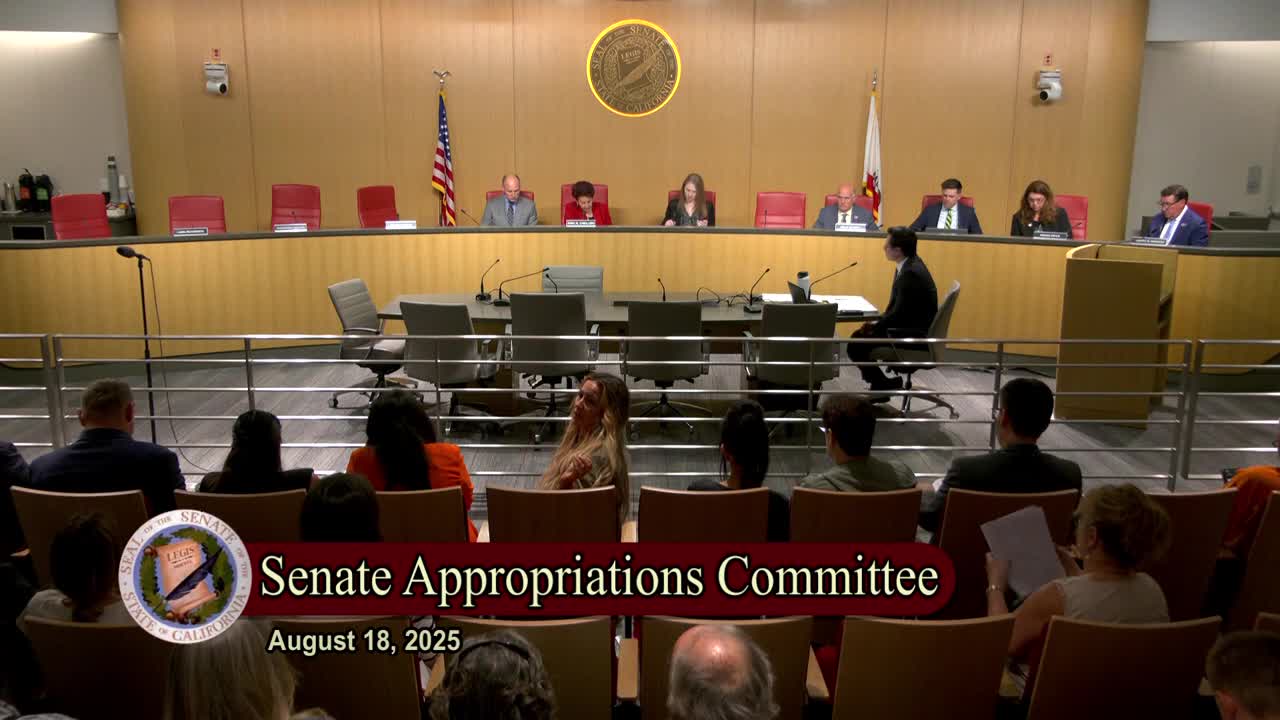
Bill Author
Bill Co-Author(s):