AB 1591: California Podiatric Pipeline Program.
- Session Year: 2025-2026
- House: Assembly
- Latest Version Date: 2026-08-26
Current Status:
Failed
(2026-09-18: Vetoed by Governor.)
Introduced
In Committee
Awaiting First Chamber Vote
Passed First Chamber
In Committee
Awaiting Second Chamber Vote
Passed Second Chamber
Enacted
Existing law establishes the Department of Health Care Access and Information under the control of the Director of the Department of Health Care Access and Information, to administer various health professions development programs. Existing law requires the department to maintain a Health Professions Career Opportunity Program to, among other things, implement programs at colleges and universities selected by the department and include in those programs pipeline programs that provide comprehensive academic enrichment, career development, mentorship, and advising in order to support students from underrepresented regions and backgrounds to pursue health careers.
Existing law creates within the department the Health Professions Education Fund, for the primary purpose of providing scholarships and loans to students from underrepresented groups who are accepted to or enrolled in schools of medicine, dentistry, nursing, or other health professions. Existing law authorizes the department to receive private donations to be deposited into the fund and continuously appropriates all moneys in the fund to the department for those purposes.
This bill would enact the California Podiatric Pipeline Program Act, to require the department to establish and administer the California Podiatric Pipeline Program to promote careers in podiatric medicine and support the educational advancement of California residents pursuing the doctor of podiatric medicine degree, as specified. The bill would specify that the department may use funds from the Health Professions Education Fund or Health Professions Pathways Program for the purposes of this bill, subject to the requirements of the fund.
This bill would authorize the department to award planning or coordination grants to participating universities or colleges to support implementation of the program as funding is made available. The bill would also require the department, subject to an appropriation by the Legislature, to annually report to the Legislature regarding the number of students participating, the number matriculating into doctor of podiatric medicine programs, and recommendations for expanding residency opportunities for podiatric graduates. The bill would make implementation of these provisions contingent upon appropriation by the Legislature.
The bill would repeal these provisions on January 1, 2032.
Existing law establishes the Department of Health Care Access and Information under the control of the Director of the Department of Health Care Access and Information, to administer various health professions development programs. Existing law requires the department to maintain a Health Professions Career Opportunity Program to, among other things, implement programs at colleges and universities selected by the department and include in those programs pipeline programs that provide comprehensive academic enrichment, career development, mentorship, and advising in order to support students from underrepresented regions and backgrounds to pursue health careers.
Existing law creates within the department the Health Professions Education Fund, for the primary purpose of providing scholarships and loans to students from underrepresented groups who are accepted to or enrolled in schools of medicine, dentistry, nursing, or other health professions. Existing law authorizes the department to receive private donations to be deposited into the fund and continuously appropriates all moneys in the fund to the department for those purposes.
This bill would enact the California Podiatric Pipeline Program Act, to require the department to establish and administer the California Podiatric Pipeline Program to promote careers in podiatric medicine and support the educational advancement of California residents pursuing the doctor of podiatric medicine degree, as specified. The bill would specify that the department may use funds from the Health Professions Education Fund for the purposes of this bill, subject to the requirements of the fund.
This bill would authorize the department to award planning or coordination grants to participating universities or colleges to support implementation of the program as funding is made available. The bill would also require the department, subject to an appropriation by the Legislature, to annually report to the Legislature regarding the number of students participating, the number matriculating into doctor of podiatric medicine programs, and recommendations for expanding residency opportunities for podiatric graduates.
This act shall be known, and may be cited, as the California Podiatric Pipeline Program Act.
SEC. 2.The Legislature finds and declares all of the following:
(a)Many undergraduate students are unaware of podiatric medicine as a career path and lack opportunities for mentorship and exposure to the field.
(b)Establishing an undergraduate-to-podiatric-medical-school pathway will increase awareness, diversity, and the number of students entering podiatric programs in California.
(c)Two accredited podiatric medical schools operate in California, the California School of Podiatric Medicine at Samuel Merritt University and the Western University of Health Sciences College of Podiatric Medicine, and can serve as anchor partners for such a pipeline.
SEC. 3.Article 6 (commencing with Section 128055) is added to Chapter 2 of Part 3 of Division 107 of the Health and Safety Code, to read:6.California Podiatric Pipeline Program128055.(a)The Department of Health Care Access and Information shall establish and administer the California Podiatric Pipeline Program to promote careers in podiatric medicine and support the educational advancement of California residents pursuing the doctor of podiatric medicine degree.
(b)In consultation with the California State University, the University of California, the Podiatric Medical Board of California, the California Podiatric Medical Association, and accredited schools of podiatric medicine in California, the department shall take actions that include, but are not limited to, all of the following:
(1)Developing partnerships and agreements that link undergraduate institutions with California podiatric medical schools.
(2)Providing mentorship, outreach, and clinical-shadowing opportunities for undergraduate students interested in podiatric medicine.
(3)Creating a structured pathway for eligible students to receive early admission consideration to participating podiatric medical schools, contingent on meeting academic and professional benchmarks.
(4)Prioritizing recruitment of students from underrepresented, rural, or medically underserved areas of the state.
(c)The department may award planning or coordination grants to participating universities or colleges to support implementation of this program as funding is made available.
(d)The department may use funds from the Health Professions Education Fund or Health Professions Pathways Program for the purposes of this article, subject to the requirements of Article 1 (commencing with Section 128330) of Chapter 5.
(e)(1)Notwithstanding Section 10231.5 of the Government Code, the department, subject to an appropriation by the Legislature, shall annually report to the Legislature on the number of students participating, the number matriculating into doctor of podiatric medicine programs, and recommendations for expanding residency opportunities for podiatric graduates.
(2)A report submitted to the Legislature pursuant to this subdivision shall be submitted in compliance with Section 9795 of the Government Code.
128056.Implementation of this article shall be contingent upon appropriation by the Legislature.
128057.This article shall remain in effect only until January 1, 2032, and as of that date is repealed.
This act shall be known, and may be cited, as the California Podiatric Pipeline Program Act.
SEC. 2.The Legislature finds and declares all of the following:
(a)California faces a growing shortage of Doctors of Podiatric Medicine particularly in rural and underserved communities. (b)(a)Many undergraduate students are unaware of podiatric medicine as a career path and lack opportunities for mentorship and exposure to the field.
(c)(b)Establishing an undergraduate-to-podiatric-medical-school pathway will increase awareness, diversity, and the number of students entering podiatric programs in California.
(d)(c)Two accredited podiatric medical schools operate in California, the California School of Podiatric Medicine at Samuel Merritt University and the Western University of Health Sciences College of Podiatric Medicine, and can serve as anchor partners for such a pipeline.
SEC. 3.Article 6 (commencing with Section 128055) is added to Chapter 2 of Part 3 of Division 107 of the Health and Safety Code, to read:6.California Podiatric Pipeline Program128055.(a)The Department of Health Care Access and Information shall establish and administer the California Podiatric Pipeline Program to promote careers in podiatric medicine and support the educational advancement of California residents pursuing the doctor of podiatric medicine degree.
(b)In consultation with the California State University, the University of California, the Podiatric Medical Board of California, the California Podiatric Medical Association, and accredited schools of podiatric medicine in California, the department shall take actions that include, but are not limited to, all of the following:
(1)Developing partnerships and agreements that link undergraduate institutions with California podiatric medical schools.
(2)Providing mentorship, outreach, and clinical-shadowing opportunities for undergraduate students interested in podiatric medicine.
(3)Creating a structured pathway for eligible students to receive early admission consideration to participating podiatric medical schools, contingent on meeting academic and professional benchmarks.
(4)Prioritizing recruitment of students from underrepresented, rural, or medically underserved areas of the state.
(c)The department may award planning or coordination grants to participating universities or colleges to support implementation of this program as funding is made available.
(d)The department may use funds from the Health Professions Education Fund or Health Professions Pathways Program for the purposes of this article, subject to the requirements of Article 1 (commencing with Section 128330) of Chapter 5.
(e)(1)Notwithstanding Section 10231.5 of the Government Code, the department, subject to an appropriation by the Legislature, shall annually report to the Legislature on the number of students participating, the number matriculating into doctor of podiatric medicine programs, and recommendations for expanding residency opportunities for podiatric graduates.
(2)A report submitted to the Legislature pursuant to this subdivision shall be submitted in compliance with Section 9795 of the Government Code.
128056.Implementation of this article shall be contingent upon appropriation by the Legislature.
128057.This article shall remain in effect only until January 1, 2032, and as of that date is repealed.
This act shall be known, and may be cited, as the California Podiatric Pipeline Program Act.
SEC. 2.The Legislature finds and declares all of the following:
(a)California faces a growing shortage of Doctors of Podiatric Medicine particularly in rural and underserved communities.
(b)Many undergraduate students are unaware of podiatric medicine as a career path and lack opportunities for mentorship and exposure to the field.
(c)Establishing an undergraduate-to-podiatric-medical-school pathway will increase awareness, diversity, and the number of students entering podiatric programs in California.
(d)Two accredited podiatric medical schools operate in California, the California School of Podiatric Medicine at Samuel Merritt University and the Western University of Health Sciences College of Podiatric Medicine, and can serve as anchor partners for such a pipeline.
SEC. 3.Article 6 (commencing with Section 128055) is added to Chapter 2 of Part 3 of Division 107 of the Health and Safety Code, to read:6.California Podiatric Pipeline Program128055.(a)The Department of Health Care Access and Information shall establish and administer the California Podiatric Pipeline Program to promote careers in podiatric medicine and support the educational advancement of California residents pursuing the doctor of podiatric medicine degree.
(b)In consultation with the California State University, the University of California, the Podiatric Medical Board of California, the California Podiatric Medical Association, and accredited schools of podiatric medicine in California, the department shall take actions that include, but are not limited to, all of the following:
(1)Developing partnerships and agreements that link undergraduate institutions with California podiatric medical schools.
(2)Providing mentorship, outreach, and clinical-shadowing opportunities for undergraduate students interested in podiatric medicine.
(3)Creating a structured pathway for eligible students to receive early admission consideration to participating podiatric medical schools, contingent on meeting academic and professional benchmarks.
(4)Prioritizing recruitment of students from underrepresented, rural, or medically underserved areas of the state.
(c)The department may award planning or coordination grants to participating universities or colleges to support implementation of this program as funding is made available.
(d)The department may use funds from the Health Professions Education Fund for the purposes of this article, subject to the requirements of Article 1 (commencing with Section 128330) of Chapter 5.
(e)(1)Notwithstanding Section 10231.5 of the Government Code, the department, subject to an appropriation by the Legislature, shall annually report to the Legislature on the number of students participating, the number matriculating into doctor of podiatric medicine programs, and recommendations for expanding residency opportunities for podiatric graduates.
(2)A report submitted to the Legislature pursuant to this subdivision shall be submitted in compliance with Section 9795 of the Government Code.
|
Date
|
Status
|
|---|---|
| Sep 18, 2026 | Vetoed by Governor. |
| Aug 28, 2026 | Enrolled and presented to the Governor at 3:30 p.m. |
| Aug 24, 2026 | Senate amendments concurred in. To Engrossing and Enrolling. (Ayes 78. Noes 0.). |
| Aug 24, 2026 | Senate amendments concurred in. To Engrossing and Enrolling. (Ayes 78. Noes 0. Page 6401.). |
| Aug 24, 2026 | Senate amendments concurred in. To Engrossing and Enrolling. |
| Aug 20, 2026 | In Assembly. Concurrence in Senate amendments pending. |
| Aug 20, 2026 | Read third time. Passed. Ordered to the Assembly. (Ayes 39. Noes 0.). |
| Aug 20, 2026 | Read third time. Passed. Ordered to the Assembly. (Ayes 39. Noes 0. Page 5589.). |
| Aug 18, 2026 | Ordered to special consent calendar. |
| Aug 13, 2026 | Read second time. Ordered to third reading. |
| Aug 13, 2026 | From committee: Do pass. (Ayes 7. Noes 0.) (August 13). |
| Aug 3, 2026 | In committee: Referred to APPR. suspense file. |
| Jul 2, 2026 | From committee: Amend, and do pass as amended and re-refer to Com. on APPR. with recommendation: To Consent Calendar. (Ayes 10. Noes 0.) (July 1). |
| Jul 2, 2026 | Read second time and amended. Re-referred to Com. on APPR. |
| Jun 3, 2026 | Referred to Com. on HEALTH. |
| May 27, 2026 | In Senate. Read first time. To Com. on RLS. for assignment. |
| May 26, 2026 | Read third time. Passed. Ordered to the Senate. (Ayes 78. Noes 0.) |
| May 26, 2026 | Read third time. Passed. Ordered to the Senate. (Ayes 78. Noes 0. Page 5356.) |
| May 26, 2026 | Read third time. Passed. Ordered to the Senate. |
| May 19, 2026 | Read second time. Ordered to third reading. |
| May 18, 2026 | Read second time and amended. Ordered returned to second reading. |
| May 14, 2026 | From committee: Amend, and do pass as amended. (Ayes 11. Noes 0.) (May 14). |
| Apr 22, 2026 | In committee: Set, first hearing. Referred to APPR. suspense file. |
| Apr 8, 2026 | From committee: Do pass and re-refer to Com. on APPR. with recommendation: To Consent Calendar. (Ayes 10. Noes 0.) (April 7). Re-referred to Com. on APPR. |
| Mar 25, 2026 | From committee: Do pass and re-refer to Com. on HIGHER ED. (Ayes 16. Noes 0.) (March 24). Re-referred to Com. on HIGHER ED. |
| Feb 17, 2026 | Referred to Coms. on HEALTH and HIGHER ED. |
| Jan 16, 2026 | From printer. May be heard in committee February 15. |
| Jan 15, 2026 | Read first time. To print. |
|
Date
|
Description
|
Location
|
Votes
|
|
|---|---|---|---|---|
| Aug 24, 2026 | AB 1591 Michelle Rodriguez Concurrence in Senate Amendments | Assembly Floor |
Passed |
|
| Aug 20, 2026 | Special Consent AB1591 Michelle Rodriguez By Caballero | Senate Floor |
Passed |
|
| Aug 13, 2026 | Do pass | Senate Standing Committee on Appropriations |
Passed |
|
| Aug 3, 2026 | Placed on suspense file | Senate Standing Committee on Appropriations |
Passed |
|
| Jul 1, 2026 | Do pass as amended, but first amend, and re-refer to the Committee on [Appropriations] with the recommendation: To Consent Calendar | Senate Standing Committee on Health |
Passed |
|
| May 26, 2026 | AB 1591 Michelle Rodriguez Assembly Third Reading | Assembly Floor |
Passed |
|
| May 14, 2026 | Do pass as amended. | Assembly Standing Committee on Appropriations |
Passed |
|
| Apr 7, 2026 | Do pass and be re-referred to the Committee on [Appropriations] with recommendation: To Consent Calendar | Assembly Standing Committee on Higher Education |
Passed |
|
| Mar 24, 2026 | Do pass and be re-referred to the Committee on [Higher Education] | Assembly Standing Committee on Health |
Passed |
This list shows positions taken on this bill by organizations on the date displayed, which is linked to the original source.
Positions by individuals are not included.
|
Organization
|
Position
|
Date
|
|---|---|---|
| Association of Independent California Colleges & Universities | ** Support | |
| California Podiatric Medical Association | ** Support | |
| CALIFORNIA PRIMARY CARE ASSOCIATION ADVOCATES | ** Support | |
| Samuel Merritt University | ** Support | |
| Western University Of Health Sciences | ** Support |
GOVERNOR′S VETO
GV Bill Id:AB 1591
Author:(Michelle Rodriguez)
As Enrolled Ver:August 26, 2026
2/3 vote
SUMMARY
Requires the Department of Health Care Access and Information (HCAI) to establish and administer the California Podiatric Pipeline Program to promote careers in podiatric medicine and support the educational advancement of California residents pursuing the doctor of podiatric medicine degree. Authorizes HCAI to use funds from the Health Professions Education Fund or Health Professions Pathways Program. Makes implementation of this bill contingent upon appropriation by the Legislature and repeals the provisions of this bill on January 1, 2032.
Senate Amendments
Make technical and clarifying changes to the intent language.
Governor′s Veto Message
While well-intentioned, this bill duplicates existing efforts. HCAI already administers workforce pathway programs that offer exposure to health professions, including podiatric medicine. Additionally, the two special funds referenced in the bill are already allocated for other purposes and thus cannot support this program, and no additional funds were made available for this specific purpose in this year′s final budget agreement.
In partnership with the Legislature this year, my administration has enacted a balanced budget that recognizes the challenging fiscal landscape our state faces while maintaining our commitment to working families and our most vulnerable communities. With significant fiscal pressures and the federal government′s hostile economic policies, it is vital that we remain disciplined when considering bills with significant fiscal implications that are not included in the budget, such as this measure.
COMMENTS
DOPMs. Doctors of Podiatric Medicine (DOPMs) are podiatric physicians and surgeons, qualified by their education, training, and experience to diagnose and treat conditions affecting the foot, ankle, and related structures of the leg. Podiatric medicine is a medical sub-specialty, focused on a specific part of the anatomy similar to other sub-specialties, such as ophthalmology and cardiology. Within the field of podiatric medicine and surgery, podiatrists can focus on specialty areas such as surgery, sports medicine, biomechanics, geriatrics, pediatrics, orthopedics, or primary care. DOPMs receive basic and clinical science education and training comparable to that of medical doctors including: four years of undergraduate education focusing on life sciences; four years of graduate study in one of the nine podiatric medical colleges; and, at least three years of postgraduate, hospital–based residency training.
Diabetes. Approximately 3.5 million adults in California, or 10.5% of the adult population, have diagnosed diabetes, with significant economic impacts and health complications associated with the disease. According to the American Diabetes Association in California, diagnosed diabetes costs an estimated $47.5 billion each year. In 2022, total direct medical expenses for diagnosed diabetes in California were estimated to be $34.1 billion. In addition, there were $13.4 billion in estimated indirect costs from lost productivity due to diabetes. According to a 2017 University of California Los Angeles Center for Health Policy Research brief, ″Podiatric foot health screening could save millions by preventing diabetic amputations,″ allowing podiatrists to give diabetic patients regular foot health screenings, which are usually done by primary care doctors, could save limbs, lives and money. As many as 1 in 4 diabetic Californians develop damaging toe, foot and leg ulcers which could lead to amputation and elevated risk of death, according to the brief.
Declining DOPM school enrollment. California is home to two schools of podiatric medicine, Western U College of Podiatric Medicine in Pomona, and the California School of Podiatric Medicine at Samuel Merritt University in Oakland. In 2024-2025, Western U was at 62% capacity (38% of seats open) for the matriculating first year cohort. Samuel Merritt was at 52% capacity the same year.
HCAI. HCAI administers numerous workforce programs, as well as providing loans and scholarships to health care professionals.
- The Health Professions Pathways Program (HPPP) is designed to recruit and support students from underrepresented regions and backgrounds to pursue health careers. HPPP includes pipeline programs, summer internships, and post undergraduate fellowships. HPPP is a competitive grant opportunity to award organizations that will develop and implement health professions pathways programs that can include pipeline programs, summer internships, and post undergraduate fellowships. Including podiatrists, the following disciplines are eligible HPPP, Primary Care, Behavioral Health, Nursing, Oral Health, and Allied Health. Awarded programs were eligible to receive up to $575,000 annually for up to 5 years to support at least 240 students per academic year. Based on previous award levels, each pipeline program awarded for 5 years would require approximately $2.9 million per pipeline program.
- The Allied Healthcare Scholarship Program (AHSP) has historically supported podiatrists, among other health care professions. This program is no longer active, as it was funded exclusively through donations, and all available funds have been exhausted. Over the past five years, program records indicate that no podiatrists have applied for or received awards from the AHSP.
- The Allied Healthcare Loan Repayment Program (AHLRP) also supports podiatrists. Over the past five years this program made several awards to podiatrists, including one award of $16,000 in 2021, two awards of $16,000 each in 2022 (totaling $32,000), and one award of $16,000 in 2025. In total, the AHLRP has awarded $64,000 to podiatrists during this period.
- The Health Professions Education Fund (HPEF) is funded solely through donations. All donated funds have been fully allocated, and HPEF has not received any new contributions to support new programs. HPEF previously supported the following programs:
- Licensed Mental Health Services Provider Education Program Loan Repayment;
- Bachelor of Science Nursing Loan Repayment Program;
- Licensed Vocational Nurse Loan Repayment Program;
- Steven M. Thompson Physician Corps Loan Repayment Program;
- Associate Degree Nursing Scholarship Program;
- Bachelor of Science Nursing Scholarship Program;
- Licensed Vocational Nurse to Associate Degree Nursing Scholarship Program;
- Vocational Nurse Scholarship Program;
- Advanced Practice Healthcare Scholarship Program; and,
- Allied Healthcare Scholarship Program.
HPEF does not receive General Fund support, it has been supported solely through donations. HPEF currently has an estimated $8.2 million in funds. Of the total funds, $5 million belongs to Covered California′s Population Health Investments program, and $3.2 million is designated for scholarships and loan repayment purposes. HCAI does not consider these funds to be usable or available for discretionary spending, as they are restricted to their dedicated purposes.
Prior to 2023, HCAI received $15.2 million annually in General Fund support for the Health Professions Careers Opportunity Program (HPCOP). HPCOP funds support the HPPP, the Health Careers Exploration Program (HCEP), and the Justice-System Involvement Youth: Behavioral Health Pipeline (JSIY BH Pipeline). In the 2023 Budget Act, $12.3 million of the annual $15.2 million allocation was cut, and ongoing HPCOP funding was discontinued. As a result, HCAI does not currently have sufficient funding to open a new HPPP application cycle. Based on prior award levels and program costs, HCAI estimates it would need approximately $5 million to consider launching a cycle and even at that level, the program would likely be limited to a small number of awards.
According to the Author
California is facing a growing shortage of Doctors of Podiatric Medicine (DOPMs′), particularly in rural and underserved communities. More than half of our counties lack adequate podiatric coverage, and nearly one quarter of the current workforce is expected to retire within five years. At the same time, enrollment in podiatric medical schools is declining, threatening our ability to meet future demands. The author states that this shortage has serious consequences. Diabetes disproportionately impacts low-income communities and communities of color, and limited access to specialized foot care contributes to preventable hospitalizations and amputations. Yet, current law does not provide a structured pathway to recruit and prepare students, especially those from underrepresented backgrounds, for careers in podiatric medicine. The author concludes that this bill is a proactive step toward protecting mobility, preventing amputations, and ensuring equitable access to essential podiatric services statewide.
Arguments in Support
The California Podiatric Medical Association (CPMA) is the sponsor of this bill and states that more than half of California counties have fewer than one licensed podiatrist per 25,000 residents, and nearly one-quarter of practicing DOPMs plan to retire within the next five years – the highest projected retirement rate among health care provider groups. At the same time, the educational pipeline into the profession is shrinking. CPMA notes that there are currently two podiatric medical schools in California. During the 2024–2025 academic year, one school operated at 62% capacity for incoming students while the other was at 52% capacity. These trends signal that California is not producing enough new doctors of podiatric medicine to replace those leaving the workforce.
Arguments in Opposition
None on file.
FISCAL COMMENTS
According to the Senate Appropriations Committee, HCAI estimates annual General Fund (GF) costs of $899,000 for state administration. Unknown GF cost pressures to provide funding for grants. HCAI indicates that the two special funds referenced in the bill cannot support the California Podiatric Pipeline Program because those resources are already allocated for other purposes, and no discretionary funds are available.
VOTES
ASM HEALTH: 16-0-0
YES: Bonta, Chen, Addis, Aguiar-Curry, Pacheco, Caloza, Carrillo, Mark González, Johnson, Patel, Patterson, Rogers, Sanchez, Schiavo, Sharp-Collins, Stefani
ASM HIGHER EDUCATION: 10-0-0
YES: Fong, DeMaio, Boerner, Jeff Gonzalez, Jackson, Irwin, Patel, Bennett, Sharp-Collins, Tangipa
ASM APPROPRIATIONS: 11-0-4
YES: Wicks, Aguiar-Curry, Calderon, Caloza, Fong, Mark González, Krell, Pacheco, Pellerin, Sharp-Collins, Solache
ABS, ABST OR NV: Hoover, Dixon, Ta, Tangipa
ASSEMBLY FLOOR: 78-0-2
YES: Addis, Aguiar-Curry, Ahrens, Alanis, Alvarez, Arambula, Ávila Farías, Bains, Bauer-Kahan, Bennett, Berman, Boerner, Bonta, Bryan, Calderon, Caloza, Carrillo, Castillo, Chen, Connolly, Davies, DeMaio, Dixon, Elhawary, Ellis, Flora, Fong, Gabriel, Gallagher, Garcia, Gipson, Jeff Gonzalez, Mark González, Hadwick, Haney, Harabedian, Hart, Hoover, Irwin, Jackson, Johnson, Kalra, Krell, Lackey, Lee, Lowenthal, Macedo, McKinnor, Nguyen, Ortega, Pacheco, Papan, Patel, Patterson, Pellerin, Petrie-Norris, Quirk-Silva, Ramos, Ransom, Michelle Rodriguez, Rogers, Blanca Rubio, Sanchez, Schiavo, Schultz, Sharp-Collins, Solache, Soria, Stefani, Ta, Tangipa, Valencia, Wallis, Ward, Wicks, Wilson, Zbur, Rivas
ABS, ABST OR NV: Muratsuchi, Celeste Rodriguez
SENATE FLOOR: 39-0-1
YES: Allen, Alvarado-Gil, Archuleta, Arreguín, Ashby, Becker, Blakespear, Cabaldon, Caballero, Cervantes, Choi, Cortese, Dahle, Durazo, Gonzalez, Grayson, Grove, Hurtado, Jones, Laird, Limón, McGuire, McNerney, Menjivar, Niello, Ochoa Bogh, Padilla, Pérez, Richardson, Rubio, Seyarto, Smallwood-Cuevas, Stern, Strickland, Umberg, Valladares, Wahab, Weber Pierson, Wiener
ABS, ABST OR NV: Reyes
ASSEMBLY FLOOR: 78-0-1
YES: Addis, Aguiar-Curry, Ahrens, Alanis, Alvarez, Arambula, Ávila Farías, Bains, Bauer-Kahan, Bennett, Berman, Boerner, Bonta, Bryan, Calderon, Caloza, Carrillo, Castillo, Chen, Connolly, Davies, DeMaio, Dixon, Elhawary, Ellis, Flora, Fong, Gabriel, Garcia, Gipson, Jeff Gonzalez, Mark González, Hadwick, Haney, Harabedian, Hart, Hoover, Irwin, Jackson, Johnson, Kalra, Krell, Lackey, Lee, Lowenthal, Macedo, Muratsuchi, Nguyen, Ortega, Pacheco, Papan, Patel, Patterson, Pellerin, Petrie-Norris, Quirk-Silva, Ramos, Ransom, Celeste Rodriguez, Michelle Rodriguez, Rogers, Blanca Rubio, Sanchez, Schiavo, Schultz, Sharp-Collins, Solache, Soria, Stefani, Ta, Tangipa, Valencia, Wallis, Ward, Wicks, Wilson, Zbur, Rivas
ABS, ABST OR NV: McKinnor
UPDATED
VERSION: August 26, 2026
CONSULTANT: Lara Flynn / HEALTH / (916) 319-2097 FN: 0004603
CONCURRENCE IN SENATE AMENDMENTS
CSA1 Bill Id:AB 1591
Author:(Michelle Rodriguez)
As Amended Ver:July 2, 2026
Majority vote
SUMMARY
Requires the Department of Health Care Access and Information (HCAI) to establish and administer the California Podiatric Pipeline Program to promote careers in podiatric medicine and support the educational advancement of California residents pursuing the doctor of podiatric medicine degree. Authorizes HCAI to use funds from the Health Professions Education Fund or Health Professions Pathways Program. Makes implementation of this bill contingent upon appropriation by the Legislature and repeals the provisions of this bill on January 1, 2032.
Senate Amendments
Make technical and clarifying changes to the intent language.
COMMENTS
DOPMs. Doctors of Podiatric Medicine (DOPMs) are podiatric physicians and surgeons, qualified by their education, training, and experience to diagnose and treat conditions affecting the foot, ankle, and related structures of the leg. Podiatric medicine is a medical sub-specialty, focused on a specific part of the anatomy similar to other sub-specialties, such as ophthalmology and cardiology. Within the field of podiatric medicine and surgery, podiatrists can focus on specialty areas such as surgery, sports medicine, biomechanics, geriatrics, pediatrics, orthopedics, or primary care. DOPMs receive basic and clinical science education and training comparable to that of medical doctors including: four years of undergraduate education focusing on life sciences; four years of graduate study in one of the nine podiatric medical colleges; and, at least three years of postgraduate, hospital–based residency training.
Diabetes. Approximately 3.5 million adults in California, or 10.5% of the adult population, have diagnosed diabetes, with significant economic impacts and health complications associated with the disease. According to the American Diabetes Association in California, diagnosed diabetes costs an estimated $47.5 billion each year. In 2022, total direct medical expenses for diagnosed diabetes in California were estimated to be $34.1 billion. In addition, there were $13.4 billion in estimated indirect costs from lost productivity due to diabetes. According to a 2017 University of California Los Angeles Center for Health Policy Research brief, "Podiatric foot health screening could save millions by preventing diabetic amputations," allowing podiatrists to give diabetic patients regular foot health screenings, which are usually done by primary care doctors, could save limbs, lives and money. As many as 1 in 4 diabetic Californians develop damaging toe, foot and leg ulcers which could lead to amputation and elevated risk of death, according to the brief.
Declining DOPM school enrollment. California is home to two schools of podiatric medicine, Western U College of Podiatric Medicine in Pomona, and the California School of Podiatric Medicine at Samuel Merritt University in Oakland. In 2024-2025, Western U was at 62% capacity (38% of seats open) for the matriculating first year cohort. Samuel Merritt was at 52% capacity the same year.
HCAI. HCAI administers numerous workforce programs, as well as providing loans and scholarships to health care professionals.
- The Health Professions Pathways Program (HPPP) is designed to recruit and support students from underrepresented regions and backgrounds to pursue health careers. HPPP includes pipeline programs, summer internships, and post undergraduate fellowships. HPPP is a competitive grant opportunity to award organizations that will develop and implement health professions pathways programs that can include pipeline programs, summer internships, and post undergraduate fellowships. Including podiatrists, the following disciplines are eligible HPPP, Primary Care, Behavioral Health, Nursing, Oral Health, and Allied Health. Awarded programs were eligible to receive up to $575,000 annually for up to 5 years to support at least 240 students per academic year. Based on previous award levels, each pipeline program awarded for five years would require approximately $2.9 million per pipeline program.
- The Allied Healthcare Scholarship Program (AHSP) has historically supported podiatrists, among other health care professions. This program is no longer active, as it was funded exclusively through donations, and all available funds have been exhausted. Over the past five years, program records indicate that no podiatrists have applied for or received awards from the AHSP.
- The Allied Healthcare Loan Repayment Program (AHLRP) also supports podiatrists. Over the past five years this program made several awards to podiatrists, including one award of $16,000 in 2021, two awards of $16,000 each in 2022 (totaling $32,000), and one award of $16,000 in 2025. In total, the AHLRP has awarded $64,000 to podiatrists during this period.
- The Health Professions Education Fund (HPEF) is funded solely through donations. All donated funds have been fully allocated, and HPEF has not received any new contributions to support new programs. HPEF previously supported the following programs:
- Licensed Mental Health Services Provider Education Program Loan Repayment;
- Bachelor of Science Nursing Loan Repayment Program;
- Licensed Vocational Nurse Loan Repayment Program;
- Steven M. Thompson Physician Corps Loan Repayment Program;
- Associate Degree Nursing Scholarship Program;
- Bachelor of Science Nursing Scholarship Program;
- Licensed Vocational Nurse to Associate Degree Nursing Scholarship Program;
- Vocational Nurse Scholarship Program;
- Advanced Practice Healthcare Scholarship Program; and,
- Allied Healthcare Scholarship Program.
HPEF does not receive General Fund support, it has been supported solely through donations. HPEF currently has an estimated $8.2 million in funds. Of the total funds, $5 million belongs to Covered California's Population Health Investments program, and $3.2 million is designated for scholarships and loan repayment purposes. HCAI does not consider these funds to be usable or available for discretionary spending, as they are restricted to their dedicated purposes.
Prior to 2023, HCAI received $15.2 million annually in General Fund support for the Health Professions Careers Opportunity Program (HPCOP). HPCOP funds support the HPPP, the Health Careers Exploration Program (HCEP), and the Justice-System Involvement Youth: Behavioral Health Pipeline (JSIY BH Pipeline). In the 2023 Budget Act, $12.3 million of the annual $15.2 million allocation was cut, and ongoing HPCOP funding was discontinued. As a result, HCAI does not currently have sufficient funding to open a new HPPP application cycle. Based on prior award levels and program costs, HCAI estimates it would need approximately $5 million to consider launching a cycle and even at that level, the program would likely be limited to a small number of awards.
According to the Author
California is facing a growing shortage of Doctors of Podiatric Medicine (DOPMs'), particularly in rural and underserved communities. More than half of our counties lack adequate podiatric coverage, and nearly one quarter of the current workforce is expected to retire within five years. At the same time, enrollment in podiatric medical schools is declining, threatening our ability to meet future demands. The author states that this shortage has serious consequences. Diabetes disproportionately impacts low-income communities and communities of color, and limited access to specialized foot care contributes to preventable hospitalizations and amputations. Yet, current law does not provide a structured pathway to recruit and prepare students, especially those from underrepresented backgrounds, for careers in podiatric medicine. The author concludes that this bill is a proactive step toward protecting mobility, preventing amputations, and ensuring equitable access to essential podiatric services statewide.
Arguments in Support
The California Podiatric Medical Association (CPMA) is the sponsor of this bill and states that more than half of California counties have fewer than one licensed podiatrist per 25,000 residents, and nearly one-quarter of practicing DOPMs plan to retire within the next five years – the highest projected retirement rate among health care provider groups. At the same time, the educational pipeline into the profession is shrinking. CPMA notes that there are currently two podiatric medical schools in California. During the 2024–2025 academic year, one school operated at 62% capacity for incoming students while the other was at 52% capacity. These trends signal that California is not producing enough new doctors of podiatric medicine to replace those leaving the workforce. CPMA contends that to address this gap, California needs a coordinated, state-supported pathway to recruit and prepare undergraduate students for podiatric medical education.
Arguments in Opposition
None on file.
FISCAL COMMENTS
According to the Senate Appropriations Committee, HCAI estimates annual General Fund (GF) costs of $899,000 for state administration. Unknown GF cost pressures to provide funding for grants. HCAI indicates that the two special funds referenced in the bill cannot support the California Podiatric Pipeline Program because those resources are already allocated for other purposes, and no discretionary funds are available.
VOTES:
ASM HEALTH: 16-0-0
YES: Bonta, Chen, Addis, Aguiar-Curry, Pacheco, Caloza, Carrillo, Mark González, Johnson, Patel, Patterson, Rogers, Sanchez, Schiavo, Sharp-Collins, Stefani
ASM HIGHER EDUCATION: 10-0-0
YES: Fong, DeMaio, Boerner, Jeff Gonzalez, Jackson, Irwin, Patel, Bennett, Sharp-Collins, Tangipa
ASM APPROPRIATIONS: 11-0-4
YES: Wicks, Aguiar-Curry, Calderon, Caloza, Fong, Mark González, Krell, Pacheco, Pellerin, Sharp-Collins, Solache
ABS, ABST OR NV: Hoover, Dixon, Ta, Tangipa
ASSEMBLY FLOOR: 78-0-2
YES: Addis, Aguiar-Curry, Ahrens, Alanis, Alvarez, Arambula, Ávila Farías, Bains, Bauer-Kahan, Bennett, Berman, Boerner, Bonta, Bryan, Calderon, Caloza, Carrillo, Castillo, Chen, Connolly, Davies, DeMaio, Dixon, Elhawary, Ellis, Flora, Fong, Gabriel, Gallagher, Garcia, Gipson, Jeff Gonzalez, Mark González, Hadwick, Haney, Harabedian, Hart, Hoover, Irwin, Jackson, Johnson, Kalra, Krell, Lackey, Lee, Lowenthal, Macedo, McKinnor, Nguyen, Ortega, Pacheco, Papan, Patel, Patterson, Pellerin, Petrie-Norris, Quirk-Silva, Ramos, Ransom, Michelle Rodriguez, Rogers, Blanca Rubio, Sanchez, Schiavo, Schultz, Sharp-Collins, Solache, Soria, Stefani, Ta, Tangipa, Valencia, Wallis, Ward, Wicks, Wilson, Zbur, Rivas
ABS, ABST OR NV: Muratsuchi, Celeste Rodriguez
SENATE FLOOR: 39-0-1
YES: Allen, Alvarado-Gil, Archuleta, Arreguín, Ashby, Becker, Blakespear, Cabaldon, Caballero, Cervantes, Choi, Cortese, Dahle, Durazo, Gonzalez, Grayson, Grove, Hurtado, Jones, Laird, Limón, McGuire, McNerney, Menjivar, Niello, Ochoa Bogh, Padilla, Pérez, Richardson, Rubio, Seyarto, Smallwood-Cuevas, Stern, Strickland, Umberg, Valladares, Wahab, Weber Pierson, Wiener
ABS, ABST OR NV: Reyes
UPDATED
VERSION: July 2, 2026
CONSULTANT: Lara Flynn / HEALTH / (916) 319-2097 FN: 0003842
SENATE RULES COMMITTEE Office of Senate Floor Analyses (916) 651-4171 | AB 1591 |
THIRD READING
Bill No: AB 1591
Author: Michelle Rodriguez (D)
Amended: 7/2/26 in Senate
Vote: 21
SENATE HEALTH COMMITTEE: 10-0, 7/1/26
AYES: Weber Pierson, Valladares, Caballero, Durazo, Gonzalez, Grove, Menjivar, Padilla, Pérez, Smallwood-Cuevas
NO VOTE RECORDED: Rubio
SENATE APPROPRIATIONS COMMITTEE: 7-0, 8/13/26
AYES: Cervantes, Seyarto, Cabaldon, Dahle, Grayson, Richardson, Wahab
ASSEMBLY FLOOR: 78-0, 5/26/26 - See last page for vote
SUBJECT: California Podiatric Pipeline Program
SOURCE: California Podiatric Medical Association
DIGEST:
This bill (1) creates the California Podiatric Pipeline Program to support and promote careers in podiatric medicine; (2) authorizes the Department of Health Care Access and Information (HCAI) to use funds from the Health Professions Education Fund or Health Professions Pathways Program to implement the program; and (3) requires HCAI to annually, upon appropriation, report performance metrics to the Legislature, along with recommendations for expanding opportunities for podiatric graduates.
ANALYSIS:
Existing law:
- Establishes HCAI and requires it to establish a health care workforce research and data center to serve as the central source of health care workforce and educational data in the state, responsible for the collection, analysis, and distribution of information on the educational and employment trends and distribution of health care occupations in the state. Establishes the Health Workforce Education and Training Council within HCAI to coordinate California’s health workforce education and training to meet the state’s health care needs. [Health & Safety Code (HSC) §127000, §128050, and §128250]
- Requires HCAI to maintain a Health Professions Career Opportunity Program to, among other things, implement programs at colleges and universities and include in those programs pipeline programs to support students from underrepresented regions and backgrounds to pursue health careers. [HSC §127885]
- Creates the Health Professions Education Fund, for the primary purpose of providing scholarships and loans to students from underrepresented groups who are accepted to or enrolled in schools of medicine, dentistry, nursing, or other health professions. Authorizes HCAI to receive private donations to be deposited into the fund and continuously appropriates all moneys in the fund to HCAI. [HSC §128355]
This bill:
- Requires HCAI to establish and administer the California Podiatric Pipeline Program to promote careers in podiatric medicine and support the educational advancement of California residents pursuing the doctor of podiatric medicine degree.
- Requires HCAI to consult the California State University, the University of California, the Podiatric Medical Board of California (PMBC), the California Podiatric Medical Association, and accredited schools of podiatric medicine in California to:
- Develop partnerships and agreements that link undergraduate institutions with California podiatric medical schools;
- Provide mentorship, outreach, and clinical-shadowing opportunities for undergraduate students interested in podiatric medicine;
- Create a structured pathway for eligible students to receive early admission consideration to participating podiatric medical schools, contingent on meeting academic and professional benchmarks; and,
- Prioritize recruitment of students from underrepresented, rural, or medically underserved areas of the state.
- Permits HCAI to use funds from the Health Professions Education Fund or Health Professions Pathways Program for the purposes of this bill.
- Requires HCAI, subject to appropriation by the Legislature, to annually report to the Legislature the number of students participating, the number matriculating into doctor of podiatric medicine programs, and recommendations for expanding residency opportunities for podiatric graduates.
- Makes the implementation of this bill contingent upon appropriation by the Legislature and sunsets its provisions on January 1, 2032.
Background
According to the author of this bill:
California is facing a growing shortage of Doctors of Podiatric Medicine (DPMs), particularly in rural and underserved communities. More than half of our counties lack adequate podiatric coverage, and nearly one quarter of the current workforce is expected to retire within five years. At the same time, enrollment in podiatric medical schools is declining, threatening our ability to meet future demand. This shortage has serious consequences. Diabetes disproportionately impacts low-income communities and communities of color, and limited access to specialized foot care contributes to preventable hospitalizations and amputations. Yet, current law does not provide a structured pathway to recruit and prepare students, especially those from underrepresented backgrounds, for careers in podiatric medicine. The California Podiatric Pipeline Program Act creates a coordinated undergraduate to medical school pathway to expand the workforce, increase diversity in the profession, and improve access to preventive care in underserved areas. This bill is a proactive step toward protecting mobility, preventing amputations, and ensuring equitable access to essential podiatric services statewide.
Podiatrists. According to the PMBC, DPMs are licensed to diagnose and treat conditions affecting the foot, ankle and related structures including the tendons that insert into the foot. DPMs receive their degree from a four-year accredited college of podiatric medicine. According to the Bureau of Labor Statistics (BLS), courses for a DPM are similar to those for other medical degrees, and students complete clinical rotations while in school. After earning a DPM, podiatrists must complete a hospital-based podiatric medicine and surgery residency program, and some podiatrists further specialize with fellowships in would care, diabetic foot care, or limb preservation. Podiatrists practice in a variety of settings, hospitals, health system clinics, multispecialty groups or standalone practices. BLS projects that the national job outlook is expected to grow by 2% between 2024-2034, slightly slower than the 3% average increase for all occupations. The PMBC currently licenses over 2,200 podiatric practitioners. According to the Department of Consumer Affairs, DPM license renewals have remained steady since 2021, at about 1,055 licenses renewed each year. The PMBC also reports a relatively stable rate of new DPM license approvals over the past decade, approving between 75 to 112 licenses annually since 2016, with new approvals hovering around 95 per year since 2022.
According to the Centers for Disease Control (CDC), podiatrists play a crucial role in detecting and treating foot problems in people with diabetes, which affects about 10% of the adult population in California, according to the American Diabetes Association. Diabetes complications can include nerve damage, joint damage, and blood vessel damage, which increase the risk for developing foot ulcers that, in some cases, cause infections that may result in the need for amputation. The CDC, on their webpage for providers about foot health, recommends asking patients with diabetes if they visit a podiatrist for a comprehensive foot exam at least once a year, and to consider referring patients to podiatrists or providing them with more information about recommended foot care for people with diabetes.
Funding sources. While this bill includes HCAI’s Health Professions Education Fund as a source of funding, the program it supports is primarily an individual loan repayment and scholarship program for licensed or future medical professionals who commit to working in medically underserved areas. Its primary purpose is to recruit and retain providers in areas with workforce shortages. According to HCAI, the Health Professions Pathways Program, part of the Health Professions Careers Opportunity Program, is designed to build the long-term health workforce pipeline by recruiting and supporting students from underrepresented regions and backgrounds at earlier stages of their careers. Rather than providing loan repayment to individual practitioners, the program awards grants to organizations that develop and implement pathway programs. Eligible activities include pipeline initiatives, summer internships, hands-on learning experiences, post-undergraduate fellowships, and post-baccalaureate preparation programs that help students enter health professional training. For the upcoming grant cycle, the program has also partnered with Covered California to offer post-baccalaureate scholarships.
FISCAL EFFECT: Appropriation: No Fiscal Com.: Yes Local: No
According to the Senate Appropriations Committee:
- The Department of Health Care Access and Information (HCAI) estimates annual General Fund costs of $899,000 for state administration.
- Unknown General Fund cost pressures to provide funding for grants. The HCAI indicates that the two special funds referenced in the bill cannot support the California Podiatric Pipeline Program because those resources are already allocated for other purposes, and no discretionary funds are available.
SUPPORT: (Verified 8/13/26)
California Podiatric Medical Association (source)
Association of Independent California Colleges & Universities
California Primary Care Association Advocates
Samuel Merritt University
Western University of Health Sciences
OPPOSITION: (Verified 8/13/26)
None received
ARGUMENTS IN SUPPORT: The California Podiatric Medical Association, the source of this bill, writes that California is facing a significant and growing shortage of DPMs, highlighting that more than half of California counties have fewer than one licensed podiatrist per 25,000 residents, and nearly one-quarter of practicing podiatrists plan to retire within the next five years. At the same time, the educational pipeline into the profession is shrinking: during the 2024–2025 academic year, California’s podiatric medical schools operated at between 52% to 62% capacity for incoming students. They assert that this bill creates a state-supported pathway to recruit and prepare undergraduate students for podiatric medical education and is designed to strengthen the diversity and cultural competency of California’s health care workforce. The Association of Independent California Colleges and Universities reiterate that the state’s two accredited podiatric medical schools are experiencing declining application numbers in line with national trends, resulting in fewer new DPMs entering the workforce. These schools, Samuel Merritt University and the Western University of Health Sciences, write to support efforts to increase awareness of podiatric medicine, strengthen educational pathways, and support long-term workforce sustainability. Lastly, California Primary Care Association Advocates write that, for community health center patients dealing with diabetes, access to a podiatrist is critical to access specialized foot care to prevent hospitalization and amputations. Prioritizing recruitment of students from rural and medically underserved communities and providing mentorship and early clinical exposure will help remove barriers to entry into podiatric medical education and encourage students to practice in the communities that need them most.
ASSEMBLY FLOOR: 78-0, 5/26/26
AYES: Addis, Aguiar-Curry, Ahrens, Alanis, Alvarez, Arambula, Ávila Farías, Bains, Bauer-Kahan, Bennett, Berman, Boerner, Bonta, Bryan, Calderon, Caloza, Carrillo, Castillo, Chen, Connolly, Davies, DeMaio, Dixon, Elhawary, Ellis, Flora, Fong, Gabriel, Gallagher, Garcia, Gipson, Jeff Gonzalez, Mark González, Hadwick, Haney, Harabedian, Hart, Hoover, Irwin, Jackson, Johnson, Kalra, Krell, Lackey, Lee, Lowenthal, Macedo, McKinnor, Nguyen, Ortega, Pacheco, Papan, Patel, Patterson, Pellerin, Petrie-Norris, Quirk-Silva, Ramos, Ransom, Michelle Rodriguez, Rogers, Blanca Rubio, Sanchez, Schiavo, Schultz, Sharp-Collins, Solache, Soria, Stefani, Ta, Tangipa, Valencia, Wallis, Ward, Wicks, Wilson, Zbur, Rivas
NO VOTE RECORDED: Muratsuchi, Celeste Rodriguez
Prepared by: Natalie Gehred / HEALTH / (916) 651-4111
8/14/26 10:24:31
**** END ****
SENATE COMMITTEE ON
Senator Sabrina Cervantes, Chair
2025 - 2026 Regular Session
AB 1591 (Michelle Rodriguez) - California Podiatric Pipeline Program
Version: | Policy Vote: |
Urgency: | Mandate: |
Hearing Date: | Consultant: |
Bill Summary:
AB 1591 would establish the California Podiatric Pipeline Program.
Fiscal Impact:
- The Department of Health Care Access and Information (HCAI) estimates annual General Fund costs of $899,000 for state administration.
- Unknown General Fund cost pressures to provide funding for grants. The HCAI indicates that the two special funds referenced in the bill cannot support the California Podiatric Pipeline Program because those resources are already allocated for other purposes, and no discretionary funds are available.
Background:
According to the Podiatric Medical Board of California (PMBC), which licenses and regulates Doctors of Podiatric Medicine (DPMs), podiatric medicine means “the diagnosis, medical, surgical, mechanical, manipulative, and electrical treatment of the human foot, including the ankle and tendons that insert into the foot and the nonsurgical treatment of the muscles and tendons of the leg governing the functions of the foot." One of the many important treatments provided by DPMs is wound care in the lower limb, which is commonly a result of the diabetes epidemic.
The HCAI administers various programs that provide scholarships, loan repayments, and grants to students, graduates, and institutions providing direct patient care in areas of unmet need. These programs support health care professionals including physicians, nurses, behavioral health professionals, and allied health professionals. Current law establishes the Health Professions Education Fund to provide scholarships and loans to students from underrepresented groups who are accepted to or enrolled in schools of medicine, dentistry, nursing, or other health professions.
The HCAI is also responsible for various healthcare workforce initiatives. This includes the Health Professions Pathways Program (HPPP) which is designed to recruit and support students from underrepresented regions and backgrounds to pursue careers in health professions. HPPP is a competitive grant opportunity for organizations that develop and implement health professions pathways programs. Eligible programs may include pipeline initiatives, summer internship models, hands-on learning experiences, post‑undergraduate fellowships, and post‑baccalaureate preparation programs designed to advance students into health professional training.
Proposed Law:
Specific provisions of the bill would:
- Require the HCAI to establish and administer the California Podiatric Pipeline Program to promote careers in podiatric medicine and support the educational advancement of California residents pursuing the doctor of podiatric medicine degree.
- Require the HCAI to take actions that include, but are not limited to, all of the following:
- Developing partnerships and agreements that link undergraduate institutions with California podiatric medical schools.
- Providing mentorship, outreach, and clinical-shadowing opportunities for undergraduate students interested in podiatric medicine.
- Creating a structured pathway for eligible students to receive early admission consideration to participating podiatric medical schools, contingent on meeting academic and professional benchmarks.
- Prioritizing recruitment of students from underrepresented, rural, or medically underserved areas of the state.
- Authorize the HCAI to award planning or coordination grants to participating universities or colleges to support implementation of this program as funding is made available; and provide that the HCAI may use funds from the Health Professions Education Fund or Health Professions Pathways Program.
- Require the HCAI, subject to an appropriation by the Legislature, to annually report to the Legislature on the number of students participating, the number matriculating into doctor of podiatric medicine programs, and recommendations for expanding residency opportunities for podiatric graduates.
- Make implementation contingent upon appropriation by the Legislature.
- Sunset the provisions on January 1, 2032.
-- END --
SENATE COMMITTEE ON HEALTH
Senator Akilah Weber Pierson, Chair
BILL NO: AB 1591
AUTHOR: | Michelle Rodriguez | ||
VERSION: | May 18, 2026 | ||
HEARING DATE: | July 1, 2026 | ||
CONSULTANT: | Natalie Gehred | ||
SUBJECT: California Podiatric Pipeline Program
SUMMARY:
Creates the California Podiatric Pipeline Program to support and promote careers in podiatric medicine. Authorizes the Department of Health Care Access and Information (HCAI) to use funds from the Health Professions Education Fund or Health Professions Pathways Program to implement the program. Requires HCAI to annually, upon appropriation, report performance metrics to the Legislature, along with recommendations for expanding opportunities for podiatric graduates.
Existing law:
- Establishes HCAI and requires it to establish a health care workforce research and data center to serve as the central source of health care workforce and educational data in the state, responsible for the collection, analysis, and distribution of information on the educational and employment trends and distribution of health care occupations in the state. Establishes the Health Workforce Education and Training Council within HCAI to coordinate California’s health workforce education and training to meet the state’s health care needs. [HSC §127000, §128050, and §128250]
- Requires HCAI to maintain a Health Professions Career Opportunity Program to, among other things, implement programs at colleges and universities and include in those programs pipeline programs to support students from underrepresented regions and backgrounds to pursue health careers. [HSC §127885]
- Creates the Health Professions Education Fund, for the primary purpose of providing scholarships and loans to students from underrepresented groups who are accepted to or enrolled in schools of medicine, dentistry, nursing, or other health professions. Authorizes HCAI to receive private donations to be deposited into the fund and continuously appropriates all moneys in the fund to HCAI. [HSC §128355]
This bill:
- Requires HCAI to establish and administer the California Podiatric Pipeline Program to promote careers in podiatric medicine and support the educational advancement of California residents pursuing the doctor of podiatric medicine degree.
- Requires HCAI to consult the California State University, the University of California, the Podiatric Medical Board of California (PMBC), the California Podiatric Medical Association, and accredited schools of podiatric medicine in California to:
- Develop partnerships and agreements that link undergraduate institutions with California podiatric medical schools;
- Provide mentorship, outreach, and clinical-shadowing opportunities for undergraduate students interested in podiatric medicine;
- Create a structured pathway for eligible students to receive early admission consideration to participating podiatric medical schools, contingent on meeting academic and professional benchmarks; and,
- Prioritize recruitment of students from underrepresented, rural, or medically underserved areas of the state.
- Permits HCAI to use funds from the Health Professions Education Fund or Health Professions Pathways Program for the purposes of this bill.
- Requires HCAI, subject to appropriation by the Legislature, to annually report to the Legislature the number of students participating, the number matriculating into doctor of podiatric medicine programs, and recommendations for expanding residency opportunities for podiatric graduates.
- Makes the implementation of this bill contingent upon appropriation by the Legislature and sunsets its provisions on January 1, 2032.
FISCAL EFFECT:
According to the Assembly Appropriations Committee, HCAI estimates General Fund costs of $899,000 in fiscal year 2026-27 and ongoing for administration, program oversight, and monitoring. To award planning and coordination grants to universities and colleges, staff would need to establish grant standards and procedures, review and approve grant applications, issue funds to awardees, monitor the awarded funds, and annually develop a report for the Legislature. HCAI anticipates it would need five staff.
PRIOR VOTES:
Assembly Floor: | 78 - 0 |
Assembly Appropriations Committee: | 11 - 0 |
Assembly Higher Education Committee: | 10 - 0 |
Assembly Health Committee: | 16 - 0 |
COMMENTS:
- Author’s statement. According to the author, California is facing a growing shortage of Doctors of Podiatric Medicine (DPMs), particularly in rural and underserved communities. More than half of our counties lack adequate podiatric coverage, and nearly one quarter of the current workforce is expected to retire within five years. At the same time, enrollment in podiatric medical schools is declining, threatening our ability to meet future demand. This shortage has serious consequences. Diabetes disproportionately impacts low-income communities and communities of color, and limited access to specialized foot care contributes to preventable hospitalizations and amputations. Yet, current law does not provide a structured pathway to recruit and prepare students, especially those from underrepresented backgrounds, for careers in podiatric medicine. The California Podiatric Pipeline Program Act creates a coordinated undergraduate to medical school pathway to expand the workforce, increase diversity in the profession, and improve access to preventive care in underserved areas. This bill is a proactive step toward protecting mobility, preventing amputations, and ensuring equitable access to essential podiatric services statewide.
- Podiatrists. According to the PMBC, DPMs are licensed to diagnose and treat conditions affecting the foot, ankle and related structures including the tendons that insert into the foot. DPMs receive their degree from a four-year accredited college of podiatric medicine. According to the Bureau of Labor Statistics (BLS), courses for a DPM are similar to those for other medical degrees, and students complete clinical rotations while in school. After earning a DPM, podiatrists must complete a hospital-based podiatric medicine and surgery residency program, and some podiatrists further specialize with fellowships in would care, diabetic foot care, or limb preservation. Podiatrists practice in a variety of settings, hospitals, health system clinics, multispecialty groups or standalone practices. BLS projects that the national job outlook is expected to grow by 2% between 2024-2034, slightly slower than the 3% average increase for all occupations. The PMBC currently licenses over 2,200 podiatric practitioners. According to the Department of Consumer Affairs, DPM license renewals have remained steady since 2021, at about 1,055 licenses renewed each year. The PMBC also reports a relatively stable rate of new DPM license approvals over the past decade, approving between 75 to 112 licenses annually since 2016, with new approvals hovering around 95 per year since 2022.
According to the Centers for Disease Control (CDC), podiatrists play a crucial role in detecting and treating foot problems in people with diabetes, which affects about 10% of the adult population in California, according to the American Diabetes Association. Diabetes complications can include nerve damage, joint damage, and blood vessel damage, which increase the risk for developing foot ulcers that, in some cases, cause infections that may result in the need for amputation. The CDC, on their webpage for providers about foot health, recommends asking patients with diabetes if they visit a podiatrist for a comprehensive foot exam at least once a year, and to consider referring patients to podiatrists or providing them with more information about recommended foot care for people with diabetes.
- Funding sources. While this bill includes HCAI’s Health Professions Education Fund as a source of funding, the program it supports is primarily an individual loan repayment and scholarship program for licensed or future medical professionals who commit to working in medically underserved areas. Its primary purpose is to recruit and retain providers in areas with workforce shortages. According to HCAI, the Health Professions Pathways Program, part of the Health Professions Careers Opportunity Program, is designed to build the long-term health workforce pipeline by recruiting and supporting students from underrepresented regions and backgrounds at earlier stages of their careers. Rather than providing loan repayment to individual practitioners, the program awards grants to organizations that develop and implement pathway programs. Eligible activities include pipeline initiatives, summer internships, hands-on learning experiences, post-undergraduate fellowships, and post-baccalaureate preparation programs that help students enter health professional training. For the upcoming grant cycle, the program has also partnered with Covered California to offer post-baccalaureate scholarships.
- Related legislation. AB 2398 (Alvarez) would have required HCAI to convene a workgroup to discuss graduate medical education capacity in California, with a focus on access to residency positions, and, in consultation with the Medical Board of California, to report recommendations for increasing residency capacity in California, improving geographic and specialty distribution, and reducing barriers to entry, including for international medical graduates. AB 2398 was held in the Assembly Appropriations Committee suspense file.
- Support. The California Podiatric Medical Association, the sponsors of the bill, writes that California is facing a significant and growing shortage of DPMs, particularly in rural and medically underserved communities. They highlight that more than half of California counties have fewer than one licensed podiatrist per 25,000 residents, and nearly one-quarter of practicing podiatrists plan to retire within the next five years—the highest projected retirement rate among health care provider groups. At the same time, the educational pipeline into the profession is shrinking: during the 2024–2025 academic year, California’s podiatric medical schools operated at between 52% to 62% capacity for incoming students. They assert this bill addresses a declining workforce by creating a coordinated, state-supported pathway to recruit and prepare undergraduate students for podiatric medical education and is designed to strengthen the diversity and cultural competency of California’s health care workforce. The Association of Independent California Colleges and Universities reiterate that two of their member universities, the state’s only accredited podiatric medical schools, are experiencing declining application numbers in line with national trends, resulting in fewer new DPMs entering the workforce. These two schools, Samuel Merritt University and the Western University of Health Sciences, write to support efforts to increase awareness of podiatric medicine, strengthening educational pathways, and supporting long-term workforce sustainability for individuals pursuing careers in podiatric medicine in California. Lastly, California Primary Care Association Advocates write that, for community health center patients dealing with diabetes, access to a podiatrist is critical to access specialized foot care to prevent hospitalization and amputations. Prioritizing recruitment of students from rural and medically underserved communities and providing mentorship and early clinical exposure will help remove barriers to entry into podiatric medical education and encourage students to practice in the communities that need them most.
- Amendments. The Chair requests an amendment to more closely align the findings and declarations with current state workforce data:
SEC. 2. The Legislature finds and declares all of the following:
(a) California faces a growing shortage of Doctors of Podiatric Medicine particularly in rural and underserved communities.
(ba) Many undergraduate students are unaware of podiatric medicine as a career path and lack opportunities for mentorship and exposure to the field.
(cb) Establishing an undergraduate-to-podiatric-medical-school pathway will increase awareness, diversity, and the number of students entering podiatric programs in California.
(dc) Two accredited podiatric medical schools operate in California, the California School of Podiatric Medicine at Samuel Merritt University and the Western University of Health Sciences College of Podiatric Medicine, and can serve as anchor partners for such a pipeline.
SUPPORT AND OPPOSITION:
Support: California Podiatric Medical Association (sponsor)
Association of Independent California Colleges & Universities
California Primary Care Association Advocates
Samuel Merritt University
Western University of Health Sciences
Oppose: None received
-- END --
ASSEMBLY THIRD READING
ATR Bill Id:AB 1591
Author:(Michelle Rodriguez)
As Amended Ver:May 18, 2026
Majority vote
SUMMARY
Requires the Department of Health Care Access and Information (HCAI) to establish and administer the California Podiatric Pipeline Program to promote careers in podiatric medicine and support the educational advancement of California residents pursuing the doctor of podiatric medicine degree. Authorizes HCAI to use funds from the Health Professions Education Fund or Health Professions Pathways Program. Makes implementation of this bill contingent upon appropriation by the Legislature and repeals the provisions of this bill on January 1, 2032.
Major Provisions
COMMENTS
DOPMs. Doctors of Podiatric Medicine (DOPMs) are podiatric physicians and surgeons, qualified by their education, training, and experience to diagnose and treat conditions affecting the foot, ankle, and related structures of the leg. Podiatric medicine is a medical sub-specialty, focused on a specific part of the anatomy similar to other sub-specialties, such as ophthalmology and cardiology. Within the field of podiatric medicine and surgery, podiatrists can focus on specialty areas such as surgery, sports medicine, biomechanics, geriatrics, pediatrics, orthopedics, or primary care. DOPMs receive basic and clinical science education and training comparable to that of medical doctors including: four years of undergraduate education focusing on life sciences; four years of graduate study in one of the nine podiatric medical colleges; and, at least three years of postgraduate, hospital–based residency training.
According to the 2026 National Diabetes Statistics Report from the Centers of Disease Control and Prevention (CDC) over 40 million Americans, or 12% of the population, are living with diabetes. Over 2 million Americans are living with type 1 diabetes, including about 314,000 children and adolescents. Of the 40.1 million people living with diabetes, 29.1 million have been diagnosed, and 11 million are undiagnosed. Just over 28% are 65 and older. An estimated 1.5 million Americans are diagnosed every year. Over 115 million Americans age 18 and older are living with prediabetes. About 364,000 Americans under age 20 are estimated to have diagnosed diabetes, approximately 0.45% of that population. The rates of diagnosed diabetes in adults for 2021-2023:
- 15.7% American Indian or Alaskan Native;
- 12.2% Black, non-Hispanic;
- 11.8% Hispanic, overall;
- 9.7% Asian, non-Hispanic; and,
- 7.1% white, non-Hispanic.
Approximately 3.5 million adults in California, or 10.5% of the adult population, have diagnosed diabetes, with significant economic impacts and health complications associated with the disease. According to the American Diabetes Association in California, diagnosed diabetes costs an estimated $47.5 billion each year. In 2022, total direct medical expenses for diagnosed diabetes in California were estimated to be $34.1 billion. In addition, there were $13.4 billion in estimated indirect costs from lost productivity due to diabetes. According to a 2017 University of California Los Angeles Center for Health Policy Research brief, ″Podiatric foot health screening could save millions by preventing diabetic amputations,″ allowing podiatrists to give diabetic patients regular foot health screenings, which are usually done by primary care doctors, could save limbs, lives and money. As many as 1 in 4 diabetic Californians develop damaging toe, foot and leg ulcers which could lead to amputation and elevated risk of death, according to the brief.
Declining DOPM school enrollment. California is home to two schools of podiatric medicine, Western U College of Podiatric Medicine in Pomona, and the California School of Podiatric Medicine at Samuel Merritt University in Oakland. In 2024-2025, Western U was at 62% capacity (38% of seats open) for the matriculating first year cohort. Samuel Merritt was at 52% capacity the same year.
HCAI. HCAI administers numerous workforce programs, as well as providing loans and scholarships to health care professionals.
- The Health Professions Pathways Program (HPPP) is designed to recruit and support students from underrepresented regions and backgrounds to pursue health careers. HPPP includes pipeline programs, summer internships, and post undergraduate fellowships. HPPP is a competitive grant opportunity to award organizations that will develop and implement health professions pathways programs that can include pipeline programs, summer internships, and post undergraduate fellowships.
Including podiatrists, the following disciplines are eligible HPPP, Primary Care, Behavioral Health, Nursing, Oral Health, and Allied Health. Awarded programs were eligible to receive up to $575,000 annually for up to 5 years to support at least 240 students per academic year. Based on previous award levels, each pipeline program awarded for 5 years would require approximately $2.9 million per pipeline program.
- The Allied Healthcare Scholarship Program (AHSP) has historically supported podiatrists, among other health care professions. This program is no longer active, as it was funded exclusively through donations, and all available funds have been exhausted. Over the past five years, program records indicate that no podiatrists have applied for or received awards from the AHSP.
- The Allied Healthcare Loan Repayment Program (AHLRP) also supports podiatrists. Over the past five years this program made several awards to podiatrists, including one award of $16,000 in 2021, two awards of $16,000 each in 2022 (totaling $32,000), and one award of $16,000 in 2025. In total, the AHLRP has awarded $64,000 to podiatrists during this period.
- The Health Professions Education Fund (HPEF) is funded solely through donations. All donated funds have been fully allocated, and HPEF has not received any new contributions to support new programs. HPEF previously supported the following programs:
- Licensed Mental Health Services Provider Education Program Loan Repayment;
- Bachelor of Science Nursing Loan Repayment Program;
- Licensed Vocational Nurse Loan Repayment Program;
- Steven M. Thompson Physician Corps Loan Repayment Program;
- Associate Degree Nursing Scholarship Program;
- Bachelor of Science Nursing Scholarship Program;
- Licensed Vocational Nurse to Associate Degree Nursing Scholarship Program;
- Vocational Nurse Scholarship Program;
- Advanced Practice Healthcare Scholarship Program; and,
- Allied Healthcare Scholarship Program.
HPEF does not receive General Fund support, it has been supported solely through donations. HPEF currently has an estimated $8.2 million in funds. Of the total funds, $5 million belongs to Covered California’s Population Health Investments program, and $3.2 million is designated for scholarships and loan repayment purposes. HCAI does not consider these funds to be usable or available for discretionary spending, as they are restricted to their dedicated purposes.
Prior to 2023, HCAI received $15.2 million annually in General Fund support for the Health Professions Careers Opportunity Program (HPCOP). HPCOP funds support the HPPP, the Health Careers Exploration Program (HCEP), and the Justice-System Involvement Youth: Behavioral Health Pipeline (JSIY BH Pipeline). In the 2023 Budget Act, $12.3 million of the annual $15.2 million allocation was cut, and ongoing HPCOP funding was discontinued. As a result, HCAI does not currently have sufficient funding to open a new HPPP application cycle. Based on prior award levels and program costs, HCAI estimates it would need approximately $5 million to consider launching a cycle and even at that level, the program would likely be limited to a small number of awards.
However, HCAI has received $5 million from Covered California to administer a customized variation of HPPP called HPPP-Population Health Investments (PopHI). Covered California directed several of its Qualified Health Plans to transmit funds to HCAI totaling $5 million. HCAI intends to open its first HPPP-PopHI cycle on August 16, 2026. This initiative is aimed at improving health outcomes and reducing disparities for enrollees. It establishes direct financial incentives (up to 4% of premiums) for contracted health insurance companies to meet specified quality benchmarks. The health outcome measures assessed include blood pressure and diabetes control, colorectal cancer screenings and childhood immunizations.
According to the Author
California is facing a growing shortage of Doctors of Podiatric Medicine (DOPMs’), particularly in rural and underserved communities. More than half of our counties lack adequate podiatric coverage, and nearly one quarter of the current workforce is expected to retire within five years. At the same time, enrollment in podiatric medical schools is declining, threatening our ability to meet future demands. The author states that this shortage has serious consequences. Diabetes disproportionately impacts low-income communities and communities of color, and limited access to specialized foot care contributes to preventable hospitalizations and amputations. Yet, current law does not provide a structured pathway to recruit and prepare students, especially those from underrepresented backgrounds, for careers in podiatric medicine. The author concludes that this bill is a proactive step toward protecting mobility, preventing amputations, and ensuring equitable access to essential podiatric services statewide.
Arguments in Support
The California Podiatric Medical Association (CPMA) is the sponsor of this bill and states that California is facing a significant and growing shortage of DOPMs, particularly in rural and medically underserved communities. More than half of California counties have fewer than one licensed podiatrist per 25,000 residents, and nearly one-quarter of practicing DOPMs plan to retire within the next five years – the highest projected retirement rate among health care provider groups. At the same time, the educational pipeline into the profession is shrinking. CPMA notes that there are currently two podiatric medical schools in California. During the 2024–2025 academic year, one school operated at 62% capacity for incoming students while the other was at 52% capacity. These trends signal that California is not producing enough new doctors of podiatric medicine to replace those leaving the workforce. CPMA contends that to address this gap, California needs a coordinated, state-supported pathway to recruit and prepare undergraduate students for podiatric medical education.
Arguments in Opposition
None on file.
FISCAL COMMENTS
According to the Assembly Appropriations Committee, HCAI estimates General Fund costs of $899,000 in fiscal year 2026-27 and ongoing for administration, program oversight, and monitoring. To award planning and coordination grants to universities and colleges, staff would need to establish grant standards and procedures, review and approve grant applications, issue funds to awardees, monitor the awarded funds, and annually develop a report for the Legislature. HCAI anticipates it would need five staff.
VOTES
ASM HEALTH: 16-0-0
YES: Bonta, Chen, Addis, Aguiar-Curry, Pacheco, Caloza, Carrillo, Mark González, Johnson, Patel, Patterson, Rogers, Sanchez, Schiavo, Sharp-Collins, Stefani
ASM HIGHER EDUCATION: 10-0-0
YES: Fong, DeMaio, Boerner, Jeff Gonzalez, Jackson, Irwin, Patel, Bennett, Sharp-Collins, Tangipa
ASM APPROPRIATIONS: 11-0-4
YES: Wicks, Aguiar-Curry, Calderon, Caloza, Fong, Mark González, Krell, Pacheco, Pellerin, Sharp-Collins, Solache
ABS, ABST OR NV: Hoover, Dixon, Ta, Tangipa
UPDATED
VERSION: May 18, 2026
CONSULTANT: Lara Flynn / HEALTH / (916) 319-2097 FN: 0002999
Date of Hearing: April 22, 2026
ASSEMBLY COMMITTEE ON APPROPRIATIONS
Buffy Wicks, Chair
ABPCA Bill Id:AB 1591
Author:(Michelle Rodriguez) – As Introduced Ver:January 15, 2026
Policy Committee: | Health | Vote: | 16 - 0 |
Higher Education | 10 - 0 | ||
|
|
Urgency: No State Mandated Local Program: No Reimbursable: No
SUMMARY:
This bill requires the Department of Health Care Access and Information (HCAI) to establish and administer the California Podiatric Pipeline Program (program) to support the educational advancement of California residents pursuing a doctor of podiatric medicine (DPM) degree.
Specifically, this bill:
- Requires HCAI, in consultation with the California State University (CSU), the University of California (UC), the Podiatric Medical Board of California (PMBC), the California Podiatric Medical Association (CPMA), and accredited schools of podiatric medicine in California, to do all of the following:
- Develop partnerships and agreements that link undergraduate institutions with California podiatric medical schools.
- Provide mentorship, outreach, and clinical-shadowing opportunities for undergraduate students interested in podiatric medicine.
- Create a structured pathway for eligible students to receive early admission consideration to participating podiatric medical schools, contingent on meeting academic and professional benchmarks.
- Prioritize recruitment of students from underrepresented, rural, or medically underserved areas of the state.
- Authorizes HCAI to award planning or coordination grants to participating universities or colleges to support implementation of this program as funding is made available.
- Authorizes HCAI to use funds from the Health Professions Education Fund (HPEF) for the purposes of this bill.
- Subject to an appropriation by the Legislature, requires HCAI to annually report to the Legislature on the program and recommendations for expanding residency opportunities for podiatric graduates.
FISCAL EFFECT:
HCAI estimates General Fund costs of $899,000 in fiscal year 2026-27 and ongoing for administration, program oversight, and monitoring. To award planning and coordination grants to universities and colleges, staff would need to establish grant standards and procedures, review and approve grant applications, issue funds to awardees, monitor the awarded funds, and annually develop a report for the Legislature. HCAI anticipates it would need five staff.
HCAI states all funds in the HPEF are allocated and not available for discretionary spending.
COMMENTS:
- Purpose. This bill is sponsored by the California Podiatric Medical Association (CPMA). According to the author:
California is facing a growing shortage of [DPMs], particularly in rural and underserved communities. More than half of our counties lack adequate podiatric coverage, and nearly one quarter of the current workforce is expected to retire within five years. At the same time, enrollment in podiatric medical schools is declining, threatening our ability to meet future demand.
This shortage has serious consequences. Diabetes disproportionately impacts low-income communities and communities of color, and limited access to specialized foot care contributes to preventable hospitalizations and amputations. Yet, current law does not provide a structured pathway to recruit and prepare students, especially those from underrepresented backgrounds, for careers in podiatric medicine.
[This bill] creates a coordinated undergraduate to medical school pathway to expand the workforce, increase diversity in the profession, and improve access to preventive care in underserved areas.
- Background. DPMs. DPMs, known as podiatrists, are podiatric physicians and surgeons, qualified by their education, training, and experience to diagnose and treat conditions affecting the foot, ankle, and related structures of the leg. A podiatrist may focus on specialty areas such as surgery, sports medicine, biomechanics, geriatrics, pediatrics, orthopedics, or primary care. DPMs receive basic and clinical science education and training comparable to that of medical doctors, including four years of undergraduate education focusing on life sciences, four years of graduate study in a podiatric medical college, and at least three years of postgraduate, hospital–based residency training.
Declining DOPM School Enrollment. California has two schools of podiatric medicine, Western University College of Podiatric Medicine (WesternU) in Pomona, and the California School of Podiatric Medicine at Samuel Merritt University in Oakland. In 2024-25, WesternU was at 62% of its enrollment capacity of 50 for the first year cohort and Samuel Merritt was at 52% of its enrollment capacity of 48 per class.
HPEF. HCAI administers numerous workforce programs and provides loans and scholarships for health care professionals, including HPEF. HPEF is funded solely through donations. All donated funds have been fully allocated, and HPEF has not received any new contributions to support new programs. HPEF previously supported loan repayment programs for mental health services providers, nurses, and physicians, as well as scholarship programs for nurses and other professions. HPEF has an estimated $8.2 million in funds, all of which are designated for other programs. HCAI does not consider these funds to be usable or available for discretionary spending.
Health Professions Pathways Program (HPPP). HPPP was created to recruit and support students from underrepresented regions and backgrounds to pursue health careers. HPPP includes pipeline programs, summer internships, and post undergraduate fellowships. HPPP is a competitive grant opportunity to award organizations that will develop and implement health professions pathways programs that can include pipeline programs, summer internships, and post undergraduate fellowships. Podiatry training is eligible for HPPP. In the past, awarded programs were eligible to receive up to $575,000 annually for up to five years to support at least 240 students per academic year, for a total of approximately $2.9 million per pipeline program.
Analysis Prepared by: Allegra Kim / APPR. / (916) 319-2081
Date of Hearing: April 7, 2026
ASSEMBLY COMMITTEE ON HIGHER EDUCATION
Mike Fong, Chair
ABPCA Bill Id:AB 1591 (
Author:Michelle Rodriguez) – As Introduced Ver:January 15, 2026
SUBJECT: California Podiatric Pipeline Program
SUMMARY: Requires the Department of Health Care Access and Information (HCAI) to
establish and administer the California Podiatric Pipeline Program to promote careers in
podiatric medicine and support the educational advancement of California residents pursuing the
doctor of podiatric medicine degree. Specifically, this bill:
- Requires HCAI, in consultation with the California State University (CSU), the University of California (UC), the Podiatric Medical Board of California, the California Podiatric Medical Association, and accredited schools of podiatric medicine in California, to take actions that include, but are not limited to, all of the following:
- Developing partnerships and agreements that link undergraduate institutions with California podiatric medical schools;
- Providing mentorship, outreach, and clinical-shadowing opportunities for undergraduate students interested in podiatric medicine;
- Creating a structured pathway for eligible students to receive early admission consideration to participating podiatric medical schools, contingent on meeting academic and professional benchmarks; and,
- Prioritizing recruitment of students from underrepresented, rural, or medically underserved areas of the state.
- Authorizes HCAI to award planning or coordination grants to participating universities or colleges to support implementation of this program as funding is made available.
- Authorizes HCAI to use funds from the Health Professions Education Fund (HPEF) for the purposes of this bill.
- Requires HCAI, subject to an appropriation by the Legislature, to annually report to the
Legislature on the number of students participating, the number matriculating into doctor of podiatric medicine programs, and recommendations for expanding residency opportunities for podiatric graduates.
EXISTING LAW:
- Differentiates the missions and functions of public and independent institutions of higher education. Under these provisions:
- The primary mission of the CSU is to offer undergraduate and graduate instruction through the master’s degree in the liberal arts and sciences and professional education including teacher education. The CSU is authorized to establish two-year programs only when mutually agreed upon by the Trustees and the CCC Board of Governors (BOG). The CSU is also authorized to jointly award the doctoral degree with the UC and with one or more independent institutions of higher education;
- The UC is authorized to provide undergraduate and graduate instruction and has exclusive jurisdiction in public higher education over graduate instruction in the professions of law, medicine, dentistry and veterinary medicine. The UC is also the primary state-supported academic agency for research;
- The independent institutions of higher education are required to provide undergraduate and graduate instruction and research in accordance with their respective missions; and
- The mission and function of the California Community Colleges (CCC) is the offering of academic and vocational instruction at the lower division level, and the CCC are authorized to grant the Associate in Arts and the Associate in Science degrees. The community colleges are also required to offer learning supports to close learning gaps, English as a Second Language instruction, and adult noncredit instruction, and support services which help students succeed at the postsecondary level. (Education Code (EDC) Section 66010.4)
- Establishes HCAI to, among other functions, collect, analyze, and publish data about healthcare workforce and health professional training, identify areas of health workforce shortages, and provide scholarships, loan repayments, and grants to students, graduates, and institutions providing direct patient care in areas of unmet need. (Health and Safety Code
(HSC) Section 127000, Section 127825, et seq.)
- Establishes the Health Professions Education Fund within HCAI to provide loans to students. Authorizes HCAI to receive private donations and specifies that all money in the fund is continuously appropriated to HCAI. (HSC Section 128355)
FISCAL EFFECT: Unknown.
COMMENTS: Double-referral. AB 1591 (M. Rodriguez) was heard by the Assembly Committee on Health, where it passed with a 16-0 vote.
Purpose. According to the author, “California is facing a growing shortage of Doctors of Podiatric Medicine, particularly in rural and underserved communities. More than half of our counties lack adequate podiatric coverage, and nearly one quarter of the current workforce is expected to retire within five years. At the same time, enrollment in podiatric medical schools is declining, threatening our ability to meet future demand. This shortage has serious consequences. Diabetes disproportionately impacts low-income communities and communities of color, and limited access to specialized foot care contributes to preventable hospitalizations and amputations. Yet, current law does not provide a structured pathway to recruit and prepare students, especially those from underrepresented backgrounds, for careers in podiatric medicine.”
The author contends that AB 1591 (M. Rodriguez), “…creates a coordinated undergraduate to medical school pathway to expand the workforce, increase diversity in the profession, and improve access to preventive care in underserved areas. This bill is a proactive step toward protecting mobility, preventing amputations, and ensuring equitable access to essential podiatric services statewide.”
Doctors of Podiatric Medicine (DOPMs). DOPMs are podiatric physicians and surgeons, qualified by their education, training, and experience to diagnose and treat conditions affecting the foot, ankle, and related structures of the leg. Podiatric medicine is a medical sub-specialty, focused on a specific part of the anatomy similar to other sub-specialties, such as ophthalmology and cardiology. Within the field of podiatric medicine and surgery, podiatrists can focus on specialty areas such as surgery, sports medicine, biomechanics, geriatrics, pediatrics, orthopedics, or primary care. DOPMs receive basic and clinical science education and training comparable to that of medical doctors including: four years of undergraduate education focusing on life sciences; four years of graduate study in one of the nine podiatric medical colleges; and, at least three years of postgraduate, hospital–based residency training.
Declining DOPM school enrollment. California is home to two schools of podiatric medicine, Western U College of Podiatric Medicine in Pomona, and the California School of Podiatric Medicine at Samuel Merritt University in Oakland. In 2024-2025, Western U was at 62% capacity (38% of seats open) for the matriculating first year cohort. Samuel Merritt was at 52% capacity the same year.
Department of Health Care Access and Information (HCAI). As noted in Existing Law above, HCAI was established to, among other functions, collect, analyze, and publish data about healthcare workforce and health professional training, identify areas of health workforce shortages, and provide scholarships, loan repayments, and grants to students, graduates, and institutions providing direct patient care in areas of unmet need.
HCAI administers numerous workforce programs, as well as providing loans and scholarships to health care professionals.
Health Professions Education Fund (HPEF). HPEF is funded solely through donations. All donated funds have been fully allocated, and HPEF has not received any new contributions to support new programs. HPEF previously supported the following programs:
- Licensed Mental Health Services Provider Education Program Loan Repayment.
- Bachelor of Science Nursing Loan Repayment Program.
- Licensed Vocational Nurse Loan Repayment Program.
- Steven M. Thompson Physician Corps Loan Repayment Program.
- Associate Degree Nursing Scholarship Program.
- Bachelor of Science Nursing Scholarship Program.
- Licensed Vocational Nurse to Associate Degree Nursing Scholarship Program.
- Vocational Nurse Scholarship Program;
- Advanced Practice Healthcare Scholarship Program; and,
- Allied Healthcare Scholarship Program.
HPEF currently has an estimated $8.2 million in funds. Of the total funds, $5 million belongs to Covered California’s Population Health Investments program, and $3.2 million is designated for scholarships and loan repayment purposes. HCAI does not consider these funds to be usable or available for discretionary spending, as they are restricted to their dedicated purposes.
Health Professions Pathways Program (HPPP). HPPP is designed to recruit and support students from underrepresented regions and backgrounds to pursue health careers. HPPP includes pipeline programs, summer internships, and post undergraduate fellowships. HPPP is a competitive grant opportunity to award organizations that will develop and implement health professions pathways programs that can include pipeline programs, summer internships, and post undergraduate fellowships. Including podiatrists, the following disciplines are HPPP-eligible: Primary Care, Behavioral Health, Nursing, Oral Health, and Allied Health.
Awarded programs were eligible to receive up to $575,000 annually for up to 5 years to support at least 240 students per academic year. Based on previous award levels, each pipeline program awarded for 5 years would require approximately $2.9 million per pipeline program.
Committee comments. As noted in the Assembly Committee on Health analysis, this bill authorizes HCAI to use funds from the HPEF for the purpose of this bill, however HCAI does not believe those funds are available for this purpose and has identified the HPPP as a more appropriate pathway. Moving forward, the author should work with HCAI to clarify the potential funding source for the program proposed by this bill.
Arguments in support. According to the California Podiatric Medical Association (CPMA), DOPMs “…play a critical role in the health care system. Once licensed, they independently diagnose and treat human ailments within their specialty, including performing surgery in hospital and ambulatory settings, prescribing medications, ordering diagnostic studies, and interpreting imaging. They diagnose and treat a wide range of conditions affecting the foot, ankle, and lower extremities, including diabetic foot ulcers, infections, fractures, deformities, nerve disorders, sports injuries, chronic wounds, and mobility impairments. Their expertise is particularly essential in the management of diabetes, where early intervention and specialized care can prevent severe complications.”
CPMA continues that “California is facing a significant and growing shortage of doctors of podiatric medicine, particularly in rural and medically underserved communities. More than half of California counties have fewer than one licensed podiatrist per 25,000 residents, and nearly one-quarter of practicing DPMs plan to retire within the next five years… AB 1591, the California Podiatric Pipeline Program Act, addresses this gap by directing the Office of Health Care Access and Information to work with stakeholders and establish a structured undergraduate-to-podiatric medical school pathway through coordinated educational institutional partnerships, increase awareness and introduce students to the profession, support student’s academic and clinical development, create early or conditional admission incentives for qualified applicants tied to workforce needs, and promote mentorship opportunities, internships, and clinical shadowing experiences with licensed [DOPMs].”
Prior legislation. SB 909 (Umberg), Chapter 594, Statutes of 2024 made numerous changes to the parameters of the Steven M. Thompson Physician Corps Loan Repayment Program (STLRP).
AB 1306 (Arambula, 2021) would have authorized HCAI to address identified barriers to entry in the health professions for students from underrepresented and low-income backgrounds by funding internships and fellowships and by establishing pilot programs UC, California State University, CSU, and private university campuses to serve 4,800 students. AB 1306 was held on the Senate Appropriations Committee suspense file.
REGISTERED SUPPORT / OPPOSITION:
Support
California Podiatric Medical Association
Opposition
None on file
Analysis Prepared by: Kevin J. Powers / HIGHER ED. / (916) 319-3960
Date of Hearing: March 24, 2026
ASSEMBLY COMMITTEE ON HEALTH
Mia Bonta, Chair
ABPCA Bill Id:AB 1591
Author:(Michelle Rodriguez) – As Introduced Ver:January 15, 2026
SUBJECT: California Podiatric Pipeline Program.
SUMMARY: Requires the Department of Health Care Access and Information (HCAI) to establish and administer the California Podiatric Pipeline Program to promote careers in podiatric medicine and support the educational advancement of California residents pursuing the doctor of podiatric medicine degree. Specifically, this bill:
- Requires HCAI, in consultation with the California State University, the University of California, the Podiatric Medical Board of California, the California Podiatric Medical Association, and accredited schools of podiatric medicine in California, to take actions that include, but are not limited to, all of the following:
- Developing partnerships and agreements that link undergraduate institutions with California podiatric medical schools;
- Providing mentorship, outreach, and clinical-shadowing opportunities for undergraduate students interested in podiatric medicine;
- Creating a structured pathway for eligible students to receive early admission consideration to participating podiatric medical schools, contingent on meeting academic and professional benchmarks; and,
- Prioritizing recruitment of students from underrepresented, rural, or medically underserved areas of the state.
- Authorizes HCAI to award planning or coordination grants to participating universities or colleges to support implementation of this program as funding is made available.
- Authorizes HCAI to use funds from the Health Professions Education Fund (HPEF) for the purposes of this bill.
- Requires HCAI, subject to an appropriation by the Legislature, to annually report to the Legislature on the number of students participating, the number matriculating into doctor of podiatric medicine programs, and recommendations for expanding residency opportunities for podiatric graduates.
EXISTING LAW:
- Establishes HCAI to, among other functions, collect, analyze, and publish data about healthcare workforce and health professional training, identify areas of health workforce shortages, and provide scholarships, loan repayments, and grants to students, graduates, and institutions providing direct patient care in areas of unmet need. [Health and Safety Code (HSC) § 127000, § 127825, et seq.]
- Establishes the Health Professions Education Fund within HCAI to provide loans to students. Authorizes HCAI to receive private donations and specifies that all money in the fund is continuously appropriated to HCAI. [HSC § 128355]
FISCAL EFFECT: Unknown. This bill has not been analyzed by a fiscal committee.
COMMENTS:
PURPOSE OF THIS BILL. According to the author, California is facing a growing shortage of Doctors of Podiatric Medicine (DOPMs’), particularly in rural and underserved communities. More than half of our counties lack adequate podiatric coverage, and nearly one quarter of the current workforce is expected to retire within five years. At the same time, enrollment in podiatric medical schools is declining, threatening our ability to meet future demands. The author states that this shortage has serious consequences. Diabetes disproportionately impacts low-income communities and communities of color, and limited access to specialized foot care contributes to preventable hospitalizations and amputations. Yet, current law does not provide a structured pathway to recruit and prepare students, especially those from underrepresented backgrounds, for careers in podiatric medicine. The author states that this bill creates a coordinated undergraduate to medical school pathway to expand the workforce, increase diversity in the profession, and improve access to preventive care in underserved areas. The author concludes that this bill is a proactive step toward protecting mobility, preventing amputations, and ensuring equitable access to essential podiatric services statewide.
- BACKGROUND.
- DOPMs. DOPMs are podiatric physicians and surgeons, qualified by their education, training, and experience to diagnose and treat conditions affecting the foot, ankle, and related structures of the leg. Podiatric medicine is a medical sub-specialty, focused on a specific part of the anatomy similar to other sub-specialties, such as ophthalmology and cardiology. Within the field of podiatric medicine and surgery, podiatrists can focus on specialty areas such as surgery, sports medicine, biomechanics, geriatrics, pediatrics, orthopedics, or primary care. DOPMs receive basic and clinical science education and training comparable to that of medical doctors including: four years of undergraduate education focusing on life sciences; four years of graduate study in one of the nine podiatric medical colleges; and, at least three years of postgraduate, hospital–based residency training.
According to the 2026 National Diabetes Statistics Report from the Centers of Disease Control and Prevention (CDC) over 40 million Americans, or 12% of the population, are living with diabetes. Over 2 million Americans are living with type 1 diabetes, including about 314,000 children and adolescents. Of the 40.1 million people living with diabetes, 29.1 million have been diagnosed, and 11 million are undiagnosed. Just over 28% are 65 and older. An estimated 1.5 million Americans are diagnosed every year. Over 115 million Americans age 18 and older are living with prediabetes. About 364,000 Americans under age 20 are estimated to have diagnosed diabetes, approximately 0.45% of that population. The rates of diagnosed diabetes in adults for 2021-2023:
- 15.7% American Indian or Alaskan Native;
- 12.2% Black, non-Hispanic;
- 11.8% Hispanic, overall;
- 9.7% Asian, non-Hispanic; and,
- 7.1% white, non-Hispanic.
Approximately 3.5 million adults in California, or 10.5% of the adult population, have diagnosed diabetes, with significant economic impacts and health complications associated with the disease. According to the American Diabetes Association in California, diagnosed diabetes costs an estimated $47.5 billion each year. In 2022, total direct medical expenses for diagnosed diabetes in California were estimated to be $34.1 billion. In addition, there were $13.4 billion in estimated indirect costs from lost productivity due to diabetes. According to a 2017 University of California Los Angeles Center for Health Policy Research brief, “Podiatric foot health screening could save millions by preventing diabetic amputations,” allowing podiatrists to give diabetic patients regular foot health screenings, which are usually done by primary care doctors, could save limbs, lives and money. As many as 1 in 4 diabetic Californians develop damaging toe, foot and leg ulcers which could lead to amputation and elevated risk of death, according to the brief.
- Declining DOPM school enrollment. California is home to two schools of podiatric medicine, Western U College of Podiatric Medicine in Pomona, and the California School of Podiatric Medicine at Samuel Merritt University in Oakland. In 2024-2025, Western U was at 62% capacity (38% of seats open) for the matriculating first year cohort. Samuel Merritt was at 52% capacity the same year.
- HCAI. HCAI administers numerous workforce programs, as well as providing loans and scholarships to health care professionals.
- The Health Professions Pathways Program (HPPP) is designed to recruit and support students from underrepresented regions and backgrounds to pursue health careers. HPPP includes pipeline programs, summer internships, and post undergraduate fellowships. HPPP is a competitive grant opportunity to award organizations that will develop and implement health professions pathways programs that can include pipeline programs, summer internships, and post undergraduate fellowships.
Including podiatrists, the following disciplines are eligible HPPP, Primary Care, Behavioral Health, Nursing, Oral Health, and Allied Health. Awarded programs were eligible to receive up to $575,000 annually for up to 5 years to support at least 240 students per academic year. Based on previous award levels, each pipeline program awarded for 5 years would require approximately $2.9 million per pipeline program.
- The Allied Healthcare Scholarship Program (AHSP) has historically supported podiatrists, among other health care professions. This program is no longer active, as it was funded exclusively through donations, and all available funds have been exhausted. Over the past five years, program records indicate that no podiatrists have applied for or received awards from the AHSP.
- The Allied Healthcare Loan Repayment Program (AHLRP) also supports podiatrists. Over the past five years this program made several awards to podiatrists, including one award of $16,000 in 2021, two awards of $16,000 each in 2022 (totaling $32,000), and one award of $16,000 in 2025. In total, the AHLRP has awarded $64,000 to podiatrists during this period.
- The Health Professions Education Fund (HPEF) is funded solely through donations. All donated funds have been fully allocated, and HPEF has not received any new contributions to support new programs. HPEF previously supported the following programs:
- Licensed Mental Health Services Provider Education Program Loan Repayment;
- Bachelor of Science Nursing Loan Repayment Program;
- Licensed Vocational Nurse Loan Repayment Program;
- Steven M. Thompson Physician Corps Loan Repayment Program;
- Associate Degree Nursing Scholarship Program;
- Bachelor of Science Nursing Scholarship Program;
- Licensed Vocational Nurse to Associate Degree Nursing Scholarship Program;
- Vocational Nurse Scholarship Program;
- Advanced Practice Healthcare Scholarship Program; and,
- Allied Healthcare Scholarship Program.
HPEF does not receive General Fund support, it has been supported solely through donations. HPEF currently has an estimated $8.2 million in funds. Of the total funds, $5 million belongs to Covered California’s Population Health Investments program, and $3.2 million is designated for scholarships and loan repayment purposes. HCAI does not consider these funds to be usable or available for discretionary spending, as they are restricted to their dedicated purposes.
Prior to 2023, HCAI received $15.2 million annually in General Fund support for the Health Professions Careers Opportunity Program (HPCOP). HPCOP funds support the Health Professions Pathway Program (HPPP), the Health Careers Exploration Program (HCEP), and the Justice-System Involvement Youth: Behavioral Health Pipeline (JSIY BH Pipeline). In the 2023 Budget Act, $12.3 million of the annual $15.2 million allocation was cut, and ongoing HPCOP funding was discontinued. As a result, HCAI does not currently have sufficient funding to open a new HPPP application cycle. Based on prior award levels and program costs, HCAI estimates it would need approximately $5 million to consider launching a cycle and even at that level, the program would likely be limited to a small number of awards.
However, HCAI has received $5 million from Covered California to administer a customized variation of HPPP called HPPP-Population Health Investments (PopHI). Covered California directed several of its Qualified Health Plans to transmit funds to HCAI totaling $5 million. HCAI intends to open its first HPPP-PopHI cycle on August 16, 2026. This initiative is aimed at improving health outcomes and reducing disparities for enrollees. It establishes direct financial incentives (up to 4% of premiums) for contracted health insurance companies to meet specified quality benchmarks. The health outcome measures assessed include blood pressure and diabetes control, colorectal cancer screenings and childhood immunizations.
- SUPPORT. The California Podiatric Medical Association (CPMA) is the sponsor of this bill and states that California is facing a significant and growing shortage of DOPMs, particularly in rural and medically underserved communities. More than half of California counties have fewer than one licensed podiatrist per 25,000 residents, and nearly one-quarter of practicing DOPMs plan to retire within the next five years – the highest projected retirement rate among health care provider groups. At the same time, the educational pipeline into the profession is shrinking. CPMA notes that there are currently two podiatric medical schools in California. During the 2024–2025 academic year, one school operated at 62% capacity for incoming students while the other was at 52% capacity. These trends signal that California is not producing enough new doctors of podiatric medicine to replace those leaving the workforce. CPMA contends that to address this gap, California needs a coordinated, state-supported pathway to recruit and prepare undergraduate students for podiatric medical education. CPMA argues that this bill will establish a structured undergraduate-to-podiatric medical school pathway through coordinated educational institutional partnerships, increase awareness and introduce students to the profession, support student’s academic and clinical development, create early or conditional admission incentives for qualified applicants tied to workforce needs, and promote mentorship opportunities, internships, and clinical shadowing experiences with licensed DOPMs. CPMA concludes that by prioritizing recruitment of students from rural and medically underserved communities and providing mentorship and early clinical exposure, the program will help remove barriers to entry into podiatric medical education and encourage students to return and practice in the communities that need them most.
- PREVIOUS LEGISLATION.
- SB 909 (Umberg), Chapter 594, Statutes of 2024 makes changes to the parameters of the Steven M. Thompson Physician Corps Loan Repayment Program (STLRP) including: Removing the requirement for HCAI to establish an advisory committee for the STLRP and updating the definition of the practice setting in which a physician can practice. Decreases the service obligation to two years in a medically underserved area (MUA). Authorizes HCAI to award up to 20% of the funds established with the Medically Underserved Account for Physician (Account) for applicants from specialties outside of the primary specialties, and authorizes HCAI to create additional positions, not using funds from the account. Removes the maximum limit for loan repayments per individual physician who has completed three consecutive years of services in an MUA.
- AB 1306 (Arambula) of 2021 would have authorized HCAI to address identified barriers to entry in the health professions for students from underrepresented and low-income backgrounds by funding internships and fellowships and by establishing pilot programs at University of California, California State University, California Community College, and private university campuses to serve 4,800 students. AB 1306 was held on the Senate Appropriations Committee suspense file.
- DOUBLE REFERRAL. This bill is double-referred, upon passage of this committee, it will be referred to the Assembly Committee on Higher Education.
- POLICY COMMENT. This bill authorizes HCAI to use funds from the HPEF for the purpose of this bill, however HCAI does not believe those funds are available for this purpose and has identified the HPPP as a more appropriate pathway. Moving forward, the author should work with HCAI to clarify the potential funding source for the program proposed by this bill.
REGISTERED SUPPORT / OPPOSITION:
Support
California Podiatric Medical Association (sponsor)
Opposition
None on file
Analysis Prepared by: Lara Flynn / HEALTH / (916) 319-2097

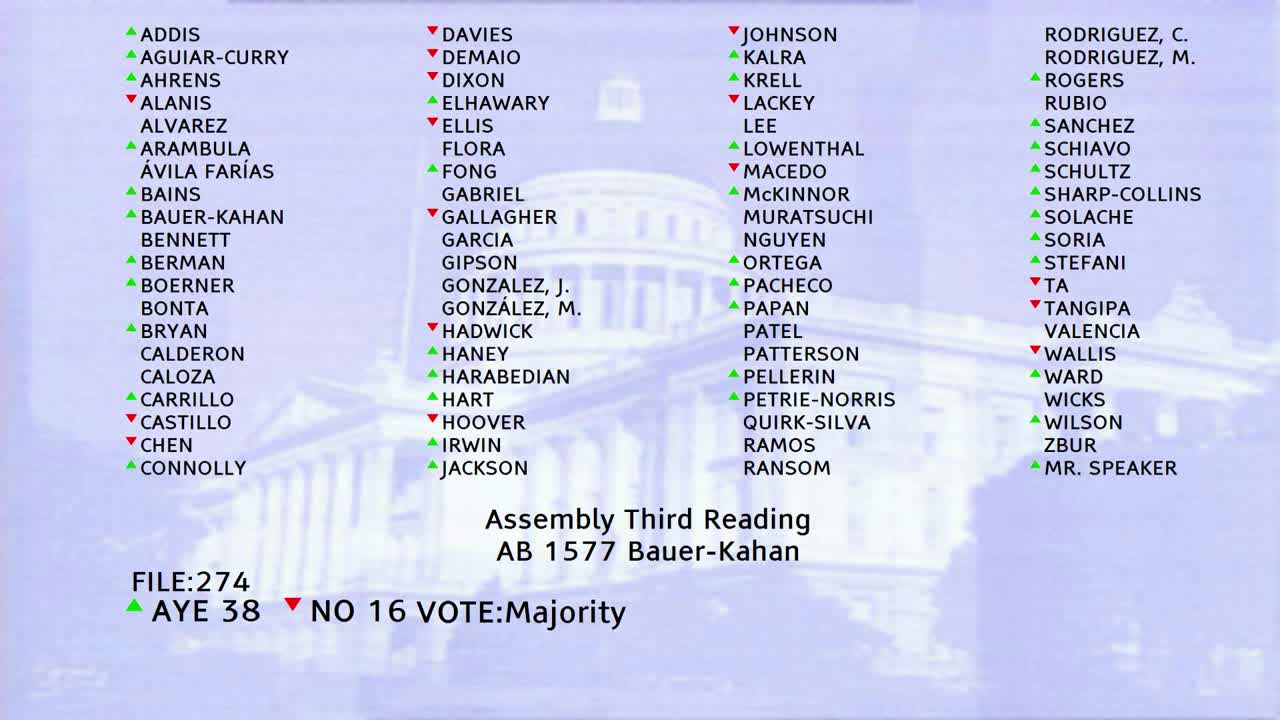


Bill Author

Bill Co-Author(s):