AB 1642: Wildfires: contamination standards.
- Session Year: 2025-2026
- House: Assembly
- Latest Version Date: 2026-09-15
Current Status:
Passed
(2026-09-15: Chaptered by Secretary of State - Chapter 239, Statutes of 2026.)
Introduced
In Committee
Awaiting First Chamber Vote
Passed First Chamber
In Committee
Awaiting Second Chamber Vote
Passed Second Chamber
Enacted
What does this bill do?
This bill requires the Department of Toxic Substances Control to set rules for testing, cleanup, and when properties are safe to reoccupy after wildfires, affecting residents, workers, property owners, and schools in wildfire-impacted areas. It also directs the State Air Resources Board to publish guidance on indoor air after smoke damage, asks the department to publish guidance on other wildfire-related contaminants and advisory (nonbinding) guidance for schools, and provides that existing federal and state lead and asbestos standards apply until the new rules are adopted.
The summary is provided by generative AI which can make mistakes. For original language, please view the details in the table below.
Existing law establishes the Department of Toxic Substances Control, which regulates the handling and management of hazardous waste and hazardous materials, and establishes the Office of Environmental Health Hazard Assessment and the State Air Resources Board. Existing federal law sets action levels for lead in dust and emission standards for asbestos, and existing state law sets workplace standards for asbestos. Existing law authorizes local health officers to take specified actions to protect public health and establishes procedures for the remediation of certain contaminated properties.
This bill would require the Department of Toxic Substances Control, in consultation with the Office of Environmental Health Hazard Assessment and other relevant coordinating agencies, on or before December 31, 2028, to develop and adopt regulations pertaining to lead and asbestos testing, remediation, and restoration after a wildfire and, on or before December 31, 2029, to develop and publish guidance pertaining to specified other contaminants, as provided. The bill would require the State Air Resources Board, on or before December 31, 2028, to develop and publish guidance on indoor air contaminants following residential smoke damage from a wildfire, as provided. The bill would provide that, until the adoption of the regulations and guidance, specified lead and asbestos standards shall apply for wildfire-caused lead and asbestos remediation, as provided. The bill would require the department, in collaboration with the State Department of Education and other relevant state agencies, no later than July 1, 2028, to develop advisory, nonregulatory guidance for schools after a wildfire, as provided. The bill would exempt the regulations and guidance from the Administrative Procedure Act.
The bill would become operative only if AB 1795 of the 202526 Regular Session is enacted and takes effect on or before January 1, 2027.
Existing law establishes the Office of the State Fire Marshal in the Department of Forestry and Fire Protection and establishes the Deputy Director of Community Wildfire Preparedness and Mitigation within the office. Existing law makes the deputy director responsible for fire preparedness and mitigation missions of the department, as provided. The Department of Toxic Substances Control regulates the handling and management of hazardous waste and hazardous materials.This bill would establish a nonrebuttable presumption that a home, school, workplace, or other structure is safe for human occupancy after a wildfire only if the level of lead on an indoor surface meets specified conditions, as provided. The bill would require the Department of Toxic Substances Control to adopt, no later than July 1, 2027, emergency regulations specifying the science-informed, health-based standards for investigation, environmental testing, and clearance, to guide the removal of lead and asbestos inside and outside of homes, schools, workplaces, and other structures in residential areas after a wildfire, as provided. The bill would also require the department, in consultation with the Office of Environmental Health Hazard Assessment, to adopt regulations by July 1, 2028, specifying science-informed, health-based standards for hazardous chemicals following a wildfire, and would require those standards to be established at chemical levels to ensure safe reoccupancy and reduce cancer and noncancer health risks attributable to such fires, as provided. The bill would define terms for purposes of these provisions, including downward ash zone and would require the department to determine the downwind ash zone for each WUI fire using methodologies and data sources from the National Oceanic and Atmospheric Administration, as provided.Existing law establishes the Office of the State Fire Marshal in the Department of Forestry and Fire Protection and establishes the Deputy Director of Community Wildfire Preparedness and Mitigation within the office. Existing law makes the deputy director responsible for fire preparedness and mitigation missions of the department, as provided. The Department of Toxic Substances Control regulates the handling and management of hazardous waste and hazardous materials.
This bill would establish a nonrebuttable presumption that a home, school, workplace, or other structure is safe for human occupancy after a wildfire only if the levels level of lead and TEM-identified asbestos on an indoor surface meet meets specified conditions, as provided. The bill would require the Department of Toxic Substances Control to adopt, no later than July 1, 2027, emergency regulations specifying the science-informed, health-based standards for investigation, environmental testing, and clearance, to guide the removal of lead and asbestos inside and outside of homes, schools, workplaces, and other structures in residential areas after a wildfire, as provided. The bill would also require the department, in consultation with the Office of Environmental Health Hazard Assessment, to adopt regulations by July 1, 2028, specifying science-informed, health-based standards for hazardous chemicals following a wildfire, and would require those standards to be established at chemical levels to ensure safe reoccupancy and prevent new reduce cancer cases and noncancer health risks attributable to such fires, as provided. The bill would define terms for purposes of these provisions, including downward ash zone and would require the department to determine the downwind ash zone for each WUI fire using methodologies and data sources from the National Oceanic and Atmospheric Administration, as provided.
Existing law establishes the Office of the State Fire Marshal in the Department of Forestry and Fire Protection and establishes the Deputy Director of Community Wildfire Preparedness and Mitigation within the office. Existing law makes the deputy director responsible for fire preparedness and mitigation missions of the department, as provided. The Department of Toxic Substances Control regulates the handling and management of hazardous waste and hazardous materials.
This bill would establish a nonrebuttable presumption that a home, school, workplace, or other structure is safe for human occupancy after a wildfire only if the levels of lead and TEM-identified asbestos on an indoor surface meet specified conditions, as provided. The bill would require the Department of Toxic Substances Control to adopt, no later than July 1, 2027, emergency regulations specifying the science-informed, health-based standards for investigation, environmental testing, and clearance, to guide the removal of lead and asbestos inside and outside of homes, schools, workplaces, and other structures in residential areas after a wildfire, as provided. The bill would also require the department, in consultation with the Office of Environmental Health Hazard Assessment, to adopt regulations by July 1, 2028, specifying science-informed, health-based standards for hazardous chemicals following a wildfire, and would require those standards to be established at chemical levels to ensure safe reoccupancy and prevent new cancer cases attributable to such fires, as provided. The bill would define terms for purposes of these provisions, including downward ash zone and would require the department to determine the downwind ash zone for each WUI fire using methodologies and data sources from the National Oceanic and Atmospheric Administration, as provided.
Existing law establishes the Office of the State Fire Marshal in the Department of Forestry and Fire Protection and establishes the Deputy Director of Community Wildfire Preparedness and Mitigation within the office. Existing law makes the deputy director responsible for fire preparedness and mitigation missions of the department, as provided. The Department of Toxic Substances Control regulates the handling and management of hazardous waste and hazardous materials.
This bill would require the Department of Toxic Substances Control to adopt, no later than July 1, 2027, emergency regulations specifying the science-informed, health-based standards for investigation, environmental testing, and clearance, to guide the removal of lead and asbestos inside and outside of homes, schools, workplaces, and other structures in residential areas after a wildfire, as provided. The bill would also require the department, in consultation with the Office of Environmental Health Hazard Assessment, to adopt regulations by July 1, 2028, specifying science-informed, health-based standards for hazardous chemicals following a wildfire, and would require those standards to be established at chemical levels to ensure safe reoccupancy and prevent new cancer cases attributable to such fires, as provided.
This bill would declare that it is to take effect immediately as an urgency statute.Existing law establishes the Office of the State Fire Marshal in the Department of Forestry and Fire Protection and establishes the Deputy Director of Community Wildfire Preparedness and Mitigation within the office. Existing law makes the deputy director responsible for fire preparedness and mitigation missions of the department, as provided. The Department of Toxic Substances Control regulates the handling and management of hazardous waste and hazardous materials.
This bill would require the Department of Toxic Substances Control to adopt, no later than July 1, 2027, emergency regulations specifying the science-informed, health-based standards for investigation, environmental testing, and clearance, to guide the removal of lead and asbestos inside and outside of homes, schools, workplaces, and other structures in residential areas after a wildfire, as provided. The bill would also require the department, in consultation with the Office of Environmental Health Hazard Assessment, to adopt regulations by July 1, 2028, specifying science-informed, health-based standards for hazardous chemicals following a wildfire, and would require those standards to be established at chemical levels to ensure safe reoccupancy and prevent new cancer cases attributable to such fires, as provided.
This bill would declare that it is to take effect immediately as an urgency statute.
Existing law establishes the Office of the State Fire Marshal in the Department of Forestry and Fire Protection and establishes the Deputy Director of Community Wildfire Preparedness and Mitigation within the office. Existing law makes the deputy director responsible for fire preparedness and mitigation missions of the department, as provided. The Department of Toxic Substances Control regulates the handling and management of hazardous waste and hazardous materials.
This bill would require the Department of Toxic Substances Control to adopt, no later than July 1, 2027, emergency regulations specifying the science-informed, health-based standards for investigation, environmental testing, and removal of contaminants clearance, to guide the removal of lead and asbestos inside and outside of homes, schools, and workplaces workplaces, and other structures in residential areas after a wildfire. The bill would require the adopted standards to include health-based clearance standards, as specified. wildfire, as provided. The bill would also require the department, in consultation with the Office of Environmental Health Hazard Assessment, to adopt regulations by July 1, 2028, specifying science-informed, health-based standards for hazardous chemicals following a wildfire, and would require those standards to be established at chemical levels to ensure safe reoccupancy and prevent new cancer cases attributable to such fires, as provided.
This bill would declare that it is to take effect immediately as an urgency statute.
Existing law establishes the Office of the State Fire Marshal in the Department of Forestry and Fire Protection and establishes the Deputy Director of Community Wildfire Preparedness and Mitigation within the office. Existing law makes the deputy director responsible for fire preparedness and mitigation missions of the department, as provided. The Department of Toxic Substances Control regulates the handling and management of hazardous waste and hazardous materials.
This bill would require the Department of Toxic Substances Control to adopt, no later than July 1, 2027, emergency regulations specifying the standards for investigation, environmental testing, and removal of contaminants inside and outside of homes, schools, and workplaces in residential areas after a wildfire. The bill would require the adopted standards to include health-based clearance standards, as specified.
This bill would declare that it is to take effect immediately as an urgency statute.
This act shall be known, and may be cited, as the Wildfire Environmental Safety and Testing Act.
SEC. 2.The Legislature finds and declares both of the following:
(a)Wildfires are increasingly frequent and severe, exposing Californians to hazardous smoke, ash, debris, and toxic contamination that pose serious short- and long-term health risks.
(b)Following wildfires, residents, workers, students, and vulnerable populations are often compelled to return to homes, schools, and workplaces without adequate environmental testing, remediation, or health-based standards.
SEC. 3.Chapter 6.9.2 (commencing with Section 25402.1) is added to Division 20 of the Health and Safety Code, to read:6.9.2.Wildfire Contamination25402.1.For purposes of this chapter, the following definitions apply:
(a)Department means the Department of Toxic Substances Control.
(b)OEHHA means the Office of Environmental Health Hazard Assessment.
(c)Screening level means the threshold concentration of a chemical that serves as a comparison value for exposures to soil, air, and tap or drinking water and below which further site assessment for that single chemical alone is often not warranted.
(d)State board means the State Air Resources Board.
(e)Wildfire means a wildland-urban interface fire, an urban conflagration, or a forest fire as defined in Section 4103 of the Public Resources Code.
25402.3.Until the adoption of the regulations required pursuant to paragraph (1) of subdivision (a) of Section 25402.4 and the issuance of the guidance described in paragraph (2) of subdivision (a) of Section 25402.4 and in Section 25402.5, the following standards shall apply for the purposes of determining clearance for human occupancy for residential properties located within a wildfire impact zone, as defined in Section 2060.1 of the Insurance Code, relative to wildfire-caused lead and asbestos remediation only:
(a)The detected chemical concentration of lead dust in the propertys interior shall not exceed the action levels for lead in dust set forth in Section 745.227(e)(8)(viii) of Title 40 of the Code of Federal Regulations, or any more stringent applicable standard, including a standard developed pursuant to subdivision (a) of Section 25402.4.
(b)The property shall be evaluated for asbestos and remediated and restored in compliance with applicable standards in the California asbestos standard set forth in Section 1529 of Title 8 of the California Code of Regulations and the National Emission Standards for Hazardous Air Pollutants for asbestos set forth in Subpart M (commencing with Section 61.140) of Part 61 Subchapter C of Chapter I of Title 40 of the Code of Federal Regulations or any more stringent applicable standard, including a standard developed pursuant to subdivision (a) of Section 25402.4.
25402.4.(a)The department, in consultation with the OEHHA and other relevant coordinating agencies, shall do both of the following:
(1)On or before December 31, 2028, and after hosting a public workshop, develop and adopt regulations pertaining to lead and asbestos testing, and remediation and restoration for unrestricted use, including for residential properties, and for other locations as appropriate, after a wildfire. The regulations shall include all of the following, to the extent there is, in the departments discretion, sufficient supporting scientific evidence:
(A)Background and educational information on all of the following:
(i)Key entities involved in postwildfire remediation and restoration.
(ii)Risk and data interpretation to help understand indoor and outdoor sampling results after a wildfire.
(iii)Common scenarios that warrant consultation with an environmental professional.
(B)Strategies to reduce contaminant exposure indoors and outdoors in the aftermath of a wildfire.
(C)Tables containing any updated or tiered screening levels for lead and asbestos for soil, air, and wipe samples.
(D)Procedures, as determined by the department, for sampling contents and indoor floors, windowsills, and other hard surfaces.
(E)Procedures, as determined by the department, for sampling outdoor soils.
(F)Information on remediation and restoration techniques recommended by professionals.
(G)Standards for chemical concentrations of lead dust in residential property interiors that are clear for human occupancy.
(2)On or before December 31, 2029, and after hosting a public workshop, develop and publish on its internet website guidance pertaining to contaminants listed pursuant to subparagraph (B) for testing and remediation and restoration for unrestricted use, including for residential properties, and for other locations as appropriate, after a wildfire. The guidance shall include all of the following, to the extent there is, in the departments discretion, sufficient supporting scientific evidence:
(A)Any additional educational information the department determines is necessary to supplement the regulations adopted under paragraph (1).
(B)Tables containing tiered screening levels for each of the following contaminants for soil, air, and wipe samples:
(i)CAM 17 heavy metals.
(ii)Cyanide.
(iii)Lithium.
(iv)Manganese.
(v)Dioxins and furans.
(vi)Polycyclic aromatic hydrocarbons.
(C)Procedures, as determined by the department, for sampling indoor floors, windowsills, contents, and other hard surfaces.
(D)Procedures, as determined by the department, for sampling outdoor soils.
(E)Information on remediation and restoration techniques recommended by professionals.
(F)Standards for postremediation testing.
(b)In the departments discretion, based on scientific changes or need, the department may do both of the following:
(1)Make technical determinations to add or remove contaminants from the guidance documents and information developed pursuant to paragraph (2) of subdivision (a) based on the relevance and priority of those contaminants for postwildfire remediation and restoration.
(2)Update the guidance documents developed pursuant to this section every five years from completion of the guidance due on or before December 31, 2029, to incorporate the latest data and science on postwildfire remediation and restoration.
(c)Standards for testing and remediation and restoration adopted pursuant to this section shall be no less stringent than those in other applicable state or federal law.
(d)The regulations and guidance developed pursuant to this section shall be exempt from the requirements of the Administrative Procedure Act (Chapter 3.5 (commencing with Section 11340) of Part 1 of Division 3 of Title 2 of the Government Code) and from the California Environmental Quality Act (Division 13 (commencing with Section 21000) of the Public Resources Code).
(e)The department shall post recordings of the public workshops and public comments pursuant to subdivision (a) on the departments internet website.
25402.5.(a)Based on the best available existing science, on or before December 31, 2028, and after hosting a public workshop, the state board shall develop and publish on its internet website guidance on levels for indoor air contaminants following residential smoke damage from a wildfire, implications for health or health outcomes, and possible protective measures to reduce health impacts.
(b)The state board may release interim guidance prior to December 31, 2028.
(c)The state board may revise and update the guidance as new research and data become available.
(d)The guidance developed pursuant to this section shall be exempt from the requirements of the Administrative Procedure Act (Chapter 3.5 (commencing with Section 11340) of Part 1 of Division 3 of Title 2 of the Government Code) and from the California Environmental Quality Act (Division 13 (commencing with Section 21000) of the Public Resources Code).
(e)The department shall post recordings of the public workshops and public comments pursuant to subdivision (a) on the departments internet website.
25402.6.(a)The department, in collaboration with the State Department of Education, and other relevant state agencies, no later than July 1, 2028, shall develop advisory, nonregulatory guidance for schools to support local educational agencies after a wildfire. This guidance shall include, but not be limited to, all of the following:
(1)Information on the balance between the protection of the public health of pupils, school staff, and community members, and the reopening of schools as expeditiously as possible to promote pupil and school community stability.
(2)Suggested best practices for preremediation and postremediation testing and remediation and restoration of known wildfire hazards, including how to find, evaluate, and select appropriately licensed personnel.
(3)Information regarding wildfire hazards, including, but not limited to, their human health implications, how to interpret wildfire hazard results to inform school closure and reopening decisions, and how to reduce human exposure to wildfire hazards and recontamination.
(4)Information about federal, state, and local entities that can provide information and expertise on wildfire recovery, including information on available state or federal emergency funds, to local educational agencies in the aftermath of a wildfire.
(b)The adoption of guidance pursuant to subdivision (a) is exempt from Chapter 3.5 (commencing with Section 11340) of Part 1 of Division 3 of Title 2 of the Government Code.
(c)For purposes of this section, local educational agency means a school, school district, charter school, or county office of education.
25402.7.Nothing in this chapter shall be construed to supersede or limit any other authority or remedy of any regulatory agency to protect public health and the environment.
SEC. 4.This act shall become operative only if Assembly Bill 1795 of the 202526 Regular Session is enacted and takes effect on or before January 1, 2027.
This act shall be known, and may be cited, as the Wildfire Environmental Safety and Testing Act.
SEC. 2.The Legislature finds and declares both of the following:
(a)Wildfires are increasingly frequent and severe, exposing Californians to hazardous smoke, ash, debris, and toxic contamination that pose serious short- and long-term health risks.
(b)Following wildfires, residents, workers, students, and vulnerable populations are often compelled to return to homes, schools, and workplaces without adequate environmental testing, remediation, or health-based clearance standards.
(c)Existing law does not provide a uniform statewide framework to address postwildfire habitability and reoccupancy based on public health exposure.SEC. 3.Part 3 (commencing with Section 13980) is added to Division 12 of the Health and Safety Code, to read:3.Wildfires Contamination13980.For purposes of this part, the following definitions shall apply:(a)Clearance means a formal determination that a home, school, workplace, or other structure has been cleared of WUI debris and that any remaining hazardous chemicals meet the standards established pursuant to this part.(b)Contamination means property polluted by WUI debris.(c)Department means the Department of Toxic Substances Control.(d)Downwind ash zone means the geographic area downwind from the wildfires burn perimeter that the department determines pursuant to Section 13985 is reasonably likely to have received ash, soot, or char, or other WUI debris carried by wind. Downwind ash zone includes the structures within that geographic area.(e)Hazardous chemical means a chemical that is determined by the department to be toxic, carcinogenic, explosive, corrosive, or flammable.(f)Office means the Office of Environmental Health Hazard Assessment.(g)TEM-identified asbestos means Transmission Electron Microscopy-identified asbestos.(h)WUI means the term used by the United States Fire Administration and the Federal Emergency Management Agency to mean the wildland urban interface, or the zone of transition between unoccupied land and human development. WUI includes the line, area, or zone where structures and other human development meet or intermingle with undeveloped wildland or vegetative fuels.(i)WUI debris includes, but is not limited to, ash, soot, or char, combustion byproducts, TEM-identified asbestos, CAM 17 heavy metals, cyanide, lithium, manganese, dioxins, furans, and polycyclic aromatic hydrocarbons (PAHs), and volatile organic compounds in indoor air.(j)WUI fire or wildfire means a fire in the WUI that may result in the release and deposit of WUI debris.(k)WUI impact zone means the area within the fire perimeter as determined and mapped by the Department of Forestry and Fire Protection and the adjacent downwind ash zone, as defined by the department pursuant to Section 13985.13981.(a)There is a nonrebuttable presumption that a home, school, workplace, or other structure is safe for human occupancy after a wildfire only if the level of lead is less than, or equal to, 5 micrograms per square foot on floors, and less than, or equal to, 40 micrograms per square foot on window sills.(b)The department may adopt nonemergency regulations pursuant to Section 13984 for science-informed, health-based standards for lead that are stricter than those specified in subdivision (a). Upon adoption of those nonemergency regulations, this section shall become inoperative.13982.(a)The department, in consultation with relevant coordinating agencies, shall, no later than July 1, 2027, adopt emergency regulations specifying the science-informed, health-based standards for investigation, environmental testing, and clearance, to guide the adequate removal of lead and TEM-identified asbestos inside and outside of homes, schools, workplaces, and other structures in residential areas after a wildfire.(b)The adoption and readoption of regulations consistent with this section shall be deemed to be an emergency and necessary for the immediate preservation of the public peace, health and safety, or general welfare for purposes of Sections 11346.1 and 11349.6 of the Government Code, and the department is hereby exempted from the requirement that it describe facts showing the need for immediate action.13983.Emergency regulations adopted by the department pursuant to Section 13982, in order to protect the public health of residents of standing homes, schools, workplaces, or other structures after a WUI fire and to reduce cancer and noncancer health risks attributable to a WUI fire, shall include all of the following:(a)A rebuttable presumption that if WUI debris is present in a surviving home, school, workplace, or other structure after a WUI fire, any identified hazardous contamination in the WUI impact zone is the result of that WUI fire.(b)(1)Requirements for testing for lead and TEM-identified asbestos in a surviving home, school, workplace, or other structure that include, at a minimum, testing of all of the following locations:(A)Indoor floors, window sills, and interior horizontal hard surfaces.(B)Garage floors and garage horizontal hard surfaces.(C)Attics, and heating, ventilation, and air-conditioning systems.(2)Testing standards shall also include conditions in which testing behind drywall is required.(c)(1)Requirements for preremediation testing to understand where contaminants are present to guide appropriately licensed cleanup efforts and ensure worker safety.(2)Requirements for postremediation testing after debris cleanup to confirm that lead and TEM-identified asbestos have been removed from the home, school, workplace, or other structure and that clearance has been achieved, or to determine that further remediation efforts are required.(3)Requirements for postremediation testing after debris cleanup to confirm whether remediation reduced the levels of chemicals identified in subparagraphs (C) to (F), inclusive, of paragraph (4).(4)Preremediation and postremediation testing guidelines that shall establish specific protocols and methodologies used to evaluate known WUI fire hazards, which include, but are not limited to, all of the following:(A)Lead.(B)TEM-identified asbestos.(C)Combustion byproducts.(D)CAM 17 heavy metals.(E)Cyanide, lithium, manganese, dioxins, furans, and PAHs.(F)Volatile organic compounds in indoor air. (d)The standards set forth in the departments Residential Soil Evaluation Guidance for the 2025 Los Angeles Wildfires, including the standards for soil sampling based on property damage levels.(e)Guidance on the use of other restoration strategies, including, but not limited to, the repair or replacement of damaged structures if remediation cannot achieve clearance.(f)Guidance on methods and routines to reduce indoor exposure to the contamination of hazardous chemicals, or any residual contamination following remediation, resulting from a WUI fire.13984.(a)The department shall, no later than July 1, 2028, adopt regulations specifying science-informed, health-based standards for hazardous chemicals, including levels for these chemicals that are required to achieve clearance for a home, school, workplace, or other structure, as well as standards for investigation, environmental testing, and to guide the removal of hazardous chemicals inside and outside of a home, school, workplace, or other structure in a residential area after a wildfire. The adopted science-informed, health-based standards for hazardous chemicals shall be established at levels intended to ensure that residents can safely reoccupy their homes, schools, workplaces, and other structures and to reduce cancer and noncancer health risks attributable to a WUI fire. The department shall develop these standards in consultation with the office.(b)Regulations adopted by the department pursuant to this section, in order to protect the public health of residents of standing homes, schools, workplaces, or other structures after a WUI fire, shall include all of the following:(1)Adoption of nonemergency regulations from regulations adopted pursuant to Sections 13982 and 13983, and standards for levels of lead on an indoor surface pursuant to subdivision (b) of Section 13981, if applicable and appropriate.(2)A rebuttable presumption that if WUI debris is present in a surviving home, school, workplace, or other structure after a WUI fire, any identified hazardous contamination in the WUI impact zone is the result of that WUI fire.(3)(A)Requirements for testing in a surviving home, school, workplace, or other structure that include, at a minimum, testing of all of the following locations:(i)Indoor floors, window sills, and interior horizontal hard surfaces.(ii)Garage floors and garage horizontal hard surfaces.(iii)Attics and heating, ventilation, and air-conditioning systems.(B)Testing standards shall also include conditions in which testing behind drywall is required.(4)(A)Requirements for preremediation testing to understand what hazardous chemicals are present to guide appropriately licensed cleanup efforts and ensure worker safety.(B)Requirements for postremediation testing after debris cleanup to confirm that WUI debris and contamination have been removed from the home, school, workplace, or other structure, or to determine that further remediation efforts are required.(C)Preremediation and postremediation testing standards shall include testing and health-based thresholds for known WUI fire hazards, including, but not limited to, all of the following:(i)TEM-identified asbestos.(ii)Combustion byproducts.(iii)CAM 17 heavy metals.(iv)Cyanide, lithium, manganese, dioxins, furans, and PAHs.(v)Volatile organic compounds in indoor air.(5)Standards to ensure that individuals can inhabit a home, school, workplace, or other structure safely. The standards shall include steps to ensure that a home, school, workplace, or other structure is habitable to prefire conditions and that the home, school, workplace, or other structure has reached clearance before a resident is required to move back into the residents home or return to a structure.13985.The department shall determine the downwind ash zone for each WUI fire using methodologies and data sources, including maps, from the National Oceanic and Atmospheric Administration, within 45 days of the wildfire reaching 100 percent containment.SEC. 3.Chapter 6.9.2 (commencing with Section 25402.1) is added to Division 20 of the Health and Safety Code, to read:6.9.2.Wildfire Contamination25402.1.For purposes of this chapter, the following definitions apply:
(a)Department means the Department of Toxic Substances Control.
(b)OEHHA means the Office of Environmental Health Hazard Assessment.
(c)Screening level means the threshold concentration of a chemical that serves as a comparison value for exposures to soil, air, and tap or drinking water and below which further site assessment for that single chemical alone is often not warranted.
(d)State board means the State Air Resources Board.
(e)Wildfire means a wildland-urban interface fire, an urban conflagration, or a forest fire as defined in Section 4103 of the Public Resources Code.
25402.3.Until the adoption of the regulations required pursuant to paragraph (1) of subdivision (a) of Section 25402.4 and the issuance of the guidance described in paragraph (2) of subdivision (a) of Section 25402.4 and in Section 25402.5, the following standards shall apply for the purposes of determining clearance for human occupancy for residential properties located within a wildfire impact zone, as defined in Section 2060.1 of the Insurance Code, relative to wildfire-caused lead and asbestos remediation only:
(a)The detected chemical concentration of lead dust in the propertys interior shall not exceed the action levels for lead in dust set forth in Section 745.227(e)(8)(viii) of Title 40 of the Code of Federal Regulations, or any more stringent applicable standard, including a standard developed pursuant to subdivision (a) of Section 25402.4.
(b)The property shall be evaluated for asbestos and remediated and restored in compliance with applicable standards in the California asbestos standard set forth in Section 1529 of Title 8 of the California Code of Regulations and the National Emission Standards for Hazardous Air Pollutants for asbestos set forth in Subpart M (commencing with Section 61.140) of Part 61 Subchapter C of Chapter I of Title 40 of the Code of Federal Regulations or any more stringent applicable standard, including a standard developed pursuant to subdivision (a) of Section 25402.4.
25402.4.(a)The department, in consultation with the OEHHA and other relevant coordinating agencies, shall do both of the following:
(1)On or before December 31, 2028, and after hosting a public workshop, develop and adopt regulations pertaining to lead and asbestos testing, and remediation and restoration for unrestricted use, including for residential properties, and for other locations as appropriate, after a wildfire. The regulations shall include all of the following, to the extent there is, in the departments discretion, sufficient supporting scientific evidence:
(A)Background and educational information on all of the following:
(i)Key entities involved in postwildfire remediation and restoration.
(ii)Risk and data interpretation to help understand indoor and outdoor sampling results after a wildfire.
(iii)Common scenarios that warrant consultation with an environmental professional.
(B)Strategies to reduce contaminant exposure indoors and outdoors in the aftermath of a wildfire.
(C)Tables containing any updated or tiered screening levels for lead and asbestos for soil, air, and wipe samples.
(D)Procedures, as determined by the department, for sampling contents and indoor floors, windowsills, and other hard surfaces.
(E)Procedures, as determined by the department, for sampling outdoor soils.
(F)Information on remediation and restoration techniques recommended by professionals.
(G)Standards for chemical concentrations of lead dust in residential property interiors that are clear for human occupancy.
(2)On or before December 31, 2029, and after hosting a public workshop, develop and publish on its internet website guidance pertaining to contaminants listed pursuant to subparagraph (B) for testing and remediation and restoration for unrestricted use, including for residential properties, and for other locations as appropriate, after a wildfire. The guidance shall include all of the following, to the extent there is, in the departments discretion, sufficient supporting scientific evidence:
(A)Any additional educational information the department determines is necessary to supplement the regulations adopted under paragraph (1).
(B)Tables containing tiered screening levels for each of the following contaminants for soil, air, and wipe samples:
(i)CAM 17 heavy metals.
(ii)Cyanide.
(iii)Lithium.
(iv)Manganese.
(v)Dioxins and furans.
(vi)Polycyclic aromatic hydrocarbons.
(C)Procedures, as determined by the department, for sampling indoor floors, windowsills, contents, and other hard surfaces.
(D)Procedures, as determined by the department, for sampling outdoor soils.
(E)Information on remediation and restoration techniques recommended by professionals.
(F)Standards for postremediation testing.
(b)In the departments discretion, based on scientific changes or need, the department may do both of the following:
(1)Make technical determinations to add or remove contaminants from the guidance documents and information developed pursuant to paragraph (2) of subdivision (a) based on the relevance and priority of those contaminants for postwildfire remediation and restoration.
(2)Update the guidance documents developed pursuant to this section every five years from completion of the guidance due on or before December 31, 2029, to incorporate the latest data and science on postwildfire remediation and restoration.
(c)Standards for testing and remediation and restoration adopted pursuant to this section shall be no less stringent than those in other applicable state or federal law.
(d)The regulations and guidance developed pursuant to this section shall be exempt from the requirements of the Administrative Procedure Act (Chapter 3.5 (commencing with Section 11340) of Part 1 of Division 3 of Title 2 of the Government Code) and from the California Environmental Quality Act (Division 13 (commencing with Section 21000) of the Public Resources Code).
(e)The department shall post recordings of the public workshops and public comments pursuant to subdivision (a) on the departments internet website.
25402.5.(a)Based on the best available existing science, on or before December 31, 2028, and after hosting a public workshop, the state board shall develop and publish on its internet website guidance on levels for indoor air contaminants following residential smoke damage from a wildfire, implications for health or health outcomes, and possible protective measures to reduce health impacts.
(b)The state board may release interim guidance prior to December 31, 2028.
(c)The state board may revise and update the guidance as new research and data become available.
(d)The guidance developed pursuant to this section shall be exempt from the requirements of the Administrative Procedure Act (Chapter 3.5 (commencing with Section 11340) of Part 1 of Division 3 of Title 2 of the Government Code) and from the California Environmental Quality Act (Division 13 (commencing with Section 21000) of the Public Resources Code).
(e)The department shall post recordings of the public workshops and public comments pursuant to subdivision (a) on the departments internet website.
25402.6.(a)The department, in collaboration with the State Department of Education, and other relevant state agencies, no later than July 1, 2028, shall develop advisory, nonregulatory guidance for schools to support local educational agencies after a wildfire. This guidance shall include, but not be limited to, all of the following:
(1)Information on the balance between the protection of the public health of pupils, school staff, and community members, and the reopening of schools as expeditiously as possible to promote pupil and school community stability.
(2)Suggested best practices for preremediation and postremediation testing and remediation and restoration of known wildfire hazards, including how to find, evaluate, and select appropriately licensed personnel.
(3)Information regarding wildfire hazards, including, but not limited to, their human health implications, how to interpret wildfire hazard results to inform school closure and reopening decisions, and how to reduce human exposure to wildfire hazards and recontamination.
(4)Information about federal, state, and local entities that can provide information and expertise on wildfire recovery, including information on available state or federal emergency funds, to local educational agencies in the aftermath of a wildfire.
(b)The adoption of guidance pursuant to subdivision (a) is exempt from Chapter 3.5 (commencing with Section 11340) of Part 1 of Division 3 of Title 2 of the Government Code.
(c)For purposes of this section, local educational agency means a school, school district, charter school, or county office of education.
25402.7.Nothing in this chapter shall be construed to supersede or limit any other authority or remedy of any regulatory agency to protect public health and the environment.
SEC. 4.This act shall become operative only if Assembly Bill 1795 of the 202526 Regular Session is enacted and takes effect on or before January 1, 2027.
This act shall be known, and may be cited, as the Wildfire Environmental Safety and Testing Act.
SEC. 2.The Legislature finds and declares the following:
(a)Wildfires are increasingly frequent and severe, exposing Californians to hazardous smoke, ash, debris, and toxic contamination that pose serious short- and long-term health risks.
(b)Following wildfires, residents, workers, students, and vulnerable populations are often compelled to return to homes, schools, and workplaces without adequate environmental testing, remediation, or health-based clearance standards.
(c)Existing law does not provide a uniform statewide framework to address postwildfire habitability and reoccupancy based on public health exposure.
SEC. 3.Part 3 (commencing with Section 13980) is added to Division 12 of the Health and Safety Code, to read:3.Wildfires Contamination13980.For purposes of this part, the following definitions shall apply:
(a)Clearance means a formal determination that a home, school, workplace, or other structure has been cleared of WUI debris and that any remaining hazardous chemicals meet the standards established pursuant to this part.
(b)Contamination means property polluted by WUI debris.
(c)Department means the Department of Toxic Substances Control.
(d)Downwind ash zone means the geographic area downwind from the wildfires burn perimeter that the department determines pursuant to Section 13985 is reasonably likely to have received ash, soot, or char, or other WUI debris carried by wind. Downwind ash zone includes the structures within that geographic area.
(e)Hazardous chemical means a chemical that is determined by the department to be toxic, carcinogenic, explosive, corrosive, or flammable.
(f)Office means the Office of Environmental Health Hazard Assessment.
(g)TEM-identified asbestos means Transmission Electron Microscopy-identified asbestos.
(h)WUI means the term used by the United States Fire Administration and the Federal Emergency Management Agency to mean the wildland urban interface, or the zone of transition between unoccupied land and human development. WUI includes the line, area, or zone where structures and other human development meet or intermingle with undeveloped wildland or vegetative fuels.
(i)WUI debris includes, but is not limited to, ash, soot, or char, combustion byproducts, TEM-identified asbestos, CAM 17 heavy metals, cyanide, lithium, manganese, dioxins, furans, and polycyclic aromatic hydrocarbons (PAHs), and volatile organic compounds in indoor air.
(j)WUI fire or wildfire means a fire in the WUI that may result in the release and deposit of WUI debris.
(j)(k)WUI impact zone means the WUI area plus within the maximum fire perimeter of as determined and mapped by the Department of Forestry and Fire Protections Damage Inspection Data map area Protection and the adjacent downwind ash zone, as defined by the department pursuant to Section 13985.
13981.(a)There is a nonrebuttable presumption that a home, school, workplace, or other structure is safe for human occupancy after a wildfire only if the levels level of lead and TEM-identified asbestos on an indoor surface meet both of the following conditions: is less than, or equal to, 5 micrograms per square foot on floors, and less than, or equal to, 40 micrograms per square foot on window sills.
(1)For lead, less than, or equal to, 5 micrograms per square foot on floors, and less than, or equal to, 40 micrograms per square foot on window sills.(2)For TEM-identified asbestos, less than, or equal to, one structure per square centimeter.(b)The department may adopt nonemergency regulations pursuant to Section 13984 through the regular rulemaking process for science-informed, health-based standards for lead and TEM-identified asbestos that are stricter than those specified in subdivision (a). Upon adoption of those nonemergency regulations, this section shall become inoperative.
13982.(a)The department, in consultation with relevant coordinating agencies, shall, no later than July 1, 2027, adopt emergency regulations specifying the science-informed, health-based standards for investigation, environmental testing, and clearance, to guide the adequate removal of lead and TEM-identified asbestos inside and outside of homes, schools, workplaces, and other structures in residential areas after a wildfire.
(b)The adoption and readoption of regulations consistent with this section shall be deemed to be an emergency and necessary for the immediate preservation of the public peace, health and safety, or general welfare for purposes of Sections 11346.1 and 11349.6 of the Government Code, and the department is hereby exempted from the requirement that it describe facts showing the need for immediate action.
13983.Emergency regulations adopted by the department pursuant to Section 13982, in order to protect the public health of residents of standing homes, schools, workplaces, or other structures after a WUI fire and to prevent the onset of new reduce cancer cases and noncancer health risks attributable to a WUI fire, shall include all of the following:
(a)A rebuttable presumption that if WUI debris is present in a surviving home, school, workplace, or other structure after a WUI fire, any identified hazardous contamination in the WUI impact zone is the result of that WUI fire.
(b)(1)Requirements for testing for lead and TEM-identified asbestos in a surviving home, school, workplace, or other structure that include, at a minimum, testing of all of the following locations:
(A)Indoor floors, window sills, and interior horizontal hard surfaces.
(B)Garage floors and garage horizontal hard surfaces.
(C)Attics, and heating, ventilation, and air-conditioning systems.
(2)Testing standards shall also include conditions in which testing behind drywall is required.
(c)(1)Requirements for preremediation testing to understand where contaminants are present to guide appropriately licensed cleanup efforts and ensure worker safety.
(2)Requirements for postremediation testing after debris cleanup to confirm that lead and TEM-identified asbestos have been removed from the home, school, workplace, or other structure and that clearance has been achieved, or to determine that further remediation efforts are required.
(3)Requirements for postremediation testing after debris cleanup to confirm whether remediation reduced the levels of chemicals identified in subparagraphs (C) to (F), inclusive, of paragraph (4).
(4)Preremediation and postremediation testing standards shall include testing for guidelines that shall establish specific protocols and methodologies used to evaluate known WUI fire hazards, including which include, but are not limited to, all of the following:
(A)Lead.
(B)TEM-identified asbestos.
(C)Combustion byproducts.
(D)CAM 17 heavy metals.
(E)Cyanide, lithium, manganese, dioxins, furans, and PAHs.
(F)Volatile organic compounds in indoor air.
(d)The standards set forth in the departments Residential Soil Evaluation Guidance for the 2025 Los Angeles Wildfires, including the standards for soil sampling based on property damage levels.
(e)Guidance on the use of other restoration strategies, including, but not limited to, the repair or replacement of damaged structures if remediation cannot achieve clearance.
(f)Guidance on methods and routines to reduce indoor exposure to the contamination of hazardous chemicals, or any residual contamination following remediation, resulting from a WUI fire.
13984.(a)The department shall, no later than July 1, 2028, adopt regulations specifying science-informed, health-based standards for hazardous chemicals, including levels for these chemicals that are required to achieve clearance for a home, school, workplace, or other structure, as well as standards for investigation, environmental testing, and to guide the removal of hazardous chemicals inside and outside of a home, school, workplace, or other structure in a residential area after a wildfire. The adopted science-informed, health-based standards for hazardous chemicals shall be established at levels intended to ensure that residents can safely reoccupy their homes, schools, workplaces, and other structures and to prevent the onset of new reduce cancer cases and noncancer health risks attributable to a WUI fire. The department shall develop these standards in consultation with the office.
(b)Regulations adopted by the department pursuant to this section, in order to protect the public health of residents of standing homes, schools, workplaces, or other structures after a WUI fire, shall include all of the following:
(1)Adoption of nonemergency regulations from regulations adopted pursuant to Sections 13982 and 13983, and standards for levels of lead and TEM-identified asbestos on an indoor surface pursuant to subdivision (b) of Section 13981, if applicable. applicable and appropriate.
(2)A rebuttable presumption that if WUI debris is present in a surviving home, school, workplace, or other structure after a WUI fire, any identified hazardous contamination in the WUI impact zone is the result of that WUI fire.
(3)(A)Requirements for testing in a surviving home, school, workplace, or other structure that include, at a minimum, testing of all of the following locations:
(i)Indoor floors, window sills, and interior horizontal hard surfaces.
(ii)Garage floors and garage horizontal hard surfaces.
(iii)Attics and heating, ventilation, and air-conditioning systems.
(B)Testing standards shall also include conditions in which testing behind drywall is required.
(4)(A)Requirements for preremediation testing to understand what hazardous chemicals are present to guide appropriately licensed cleanup efforts and ensure worker safety.
(B)Requirements for postremediation testing after debris cleanup to confirm that WUI debris and contamination have been removed from the home, school, workplace, or other structure, or to determine that further remediation efforts are required.
(C)Preremediation and postremediation testing standards shall include testing and health-based thresholds for known WUI fire hazards, including including, but not limited to, all of the following:
(i)TEM-identified asbestos.
(ii)Combustion byproducts.
(iii)CAM 17 heavy metals.
(iv)Cyanide, lithium, manganese, dioxins, furans, and PAHs.
(v)Volatile organic compounds in indoor air.
(5)Standards to ensure that individuals can inhabit a home, school, workplace, or other structure is safe to inhabit. safely. The standards shall include steps to ensure that a home, school, workplace, or other structure is habitable to prefire conditions and that the home, school, workplace, or other structure has reached clearance before a resident is required to move back into the residents home or return to a structure.
13985.The department shall determine the downwind ash zone for each WUI fire using methodologies and data sources, including maps, from the National Oceanic and Atmospheric Administration, within 45 days of the wildfire reaching 100 percent containment.
This act shall be known, and may be cited, as the Wildfire Environmental Safety and Testing Act.
SEC. 2.The Legislature finds and declares the following:
(a)Wildfires are increasingly frequent and severe, exposing Californians to hazardous smoke, ash, debris, and toxic contamination that pose serious short- and long-term health risks.
(b)Following wildfires, residents, workers, students, and vulnerable populations are often compelled to return to homes, schools, and workplaces without adequate environmental testing, remediation, or health-based clearance standards.
(c)Existing law does not provide a uniform statewide framework to address postwildfire habitability and reoccupancy based on public health exposure.
SEC. 3.Part 3 (commencing with Section 13980) is added to Division 12 of the Health and Safety Code, to read:3.Wildfires Contamination13980.For purposes of this part, the following definitions shall apply:
(a)Clearance means a formal determination that a home, school, workplace, or other structure has been cleared of WUI debris and that any remaining hazardous chemicals meet the standards established pursuant to this part.
(b)Contamination means property polluted by WUI debris.
(c)Department means the Department of Toxic Substances Control.
(d)Downwind ash zone means the geographic area downwind from the wildfires burn perimeter that the department determines pursuant to Section 13985 is reasonably likely to have received ash, soot, or char, or other WUI debris carried by wind. Downwind ash zone includes the structures within that geographic area.
(d)(e)Hazardous chemical means a chemical that is determined by the department to be toxic, carcinogenic, explosive, corrosive, or flammable.
(e)(f)Office means the Office of Environmental Health Hazard Assessment.
(f)(g)TEM-identified asbestos means Transmission Electron Microscopy-identified asbestos.
(g)(h)WUI means the term used by the United States Fire Administration and the Federal Emergency Management Agency to mean the wildland urban interface, or the zone of transition between unoccupied land and human development. WUI includes the line, area, or zone where structures and other human development meet or intermingle with undeveloped wildland or vegetative fuels.
(h)(i)WUI debris includes, but is not limited to, ash, soot, and or char, combustion byproducts, TEM-identified asbestos, CAM 17 heavy metals, cyanide, lithium, manganese, dioxins, furans, and polycyclic aromatic hydrocarbons (PAHs), and volatile organic compounds in indoor air, resulting from a wildfire event. air.
(i)(j)WUI impact zone means the WUI area plus the maximum perimeter of the Department of Forestry and Fire Protections Damage Inspection Data map area and the adjacent downwind ash zone. zone, as defined by the department pursuant to Section 13985.
13981.(a)There is a nonrebuttable presumption that a home, school, workplace, or other structure is safe for human occupancy after a wildfire only if the levels of lead and TEM-identified asbestos on an indoor surface meet both of the following conditions:
(1)For lead, less than, or equal to, 5 micrograms per square foot on floors, and less than, or equal to, 40 micrograms per square foot on window sills.
(2)For TEM-identified asbestos, less than, or equal to, one structure per square centimeter.
(b)The department may adopt nonemergency regulations pursuant to Section 13984 through the regular rulemaking process for science-informed, health-based standards for lead and TEM-identified asbestos that are stricter than those specified in subdivision (a). Upon adoption of those nonemergency regulations, this section shall become inoperative.
13981.13982.(a)The department, in consultation with relevant coordinating agencies, shall, no later than July 1, 2027, adopt emergency regulations specifying the science-informed, health-based standards for investigation, environmental testing, and clearance, to guide the adequate removal of lead and TEM-identified asbestos inside and outside of homes, schools, workplaces, and other structures in residential areas after a wildfire.(b)The adoption and readoption of regulations consistent with this section shall be deemed to be an emergency and necessary for the immediate preservation of the public peace, health and safety, or general welfare for purposes of Sections 11346.1 and 11349.6 of the Government Code, and the department is hereby exempted from the requirement that it describe facts showing the need for immediate action.13982.13983.Emergency regulations adopted by the department pursuant to Section 13981, 13982, in order to protect the public health of residents of standing homes, schools, workplaces, or other structures after a WUI fire and to prevent the onset of new cancer cases attributable to a WUI fire, shall include all of the following:
(a)(1)A presumption that a home, school, workplace, or other structure is safe for human occupancy only if the levels of lead and TEM-identified asbestos on an indoor surface meet both of the following conditions:(A)For lead, less than, or equal to, 5 micrograms per square foot on floors, and less than, or equal to, 40 micrograms per square foot on window sills.(B)For TEM-identified asbestos, less than, or equal to, one structure per square centimeter.(2)The department shall adopt nonemergency regulations pursuant to Section 13983 through the regular rulemaking process for science-informed, health-based standards for lead and TEM-identified asbestos. The standards in those regulations may be stricter than those specified in paragraph (1).(b)(a)A rebuttable presumption that if WUI debris is present in a surviving home, school, workplace, or other structure after a WUI fire, any identified hazardous contamination in the WUI impact zone is the result of that WUI fire.
(c)(b)(1)Requirements for testing for lead and TEM-identified asbestos in a surviving home, school, workplace, or other structure that include, at a minimum, testing of all of the following locations:
(A)Indoor floors, window sills, and interior horizontal hard surfaces.
(B)Garage floors and garage horizontal hard surfaces.
(C)Attics, and heating, ventilation, and air-conditioning systems.
(2)Testing standards shall also include conditions in which testing behind drywall is required.
(d)(c)(1)Requirements for preremediation testing to understand where contaminants are present to guide appropriately licensed cleanup efforts and ensure worker safety.
(2)Requirements for postremediation testing after debris cleanup to confirm that lead and TEM-identified asbestos have been removed from the home, school, workplace, or other structure and that clearance has been achieved, or to determine that further remediation efforts are required.
(3)Requirements for postremediation testing after debris cleanup to confirm whether remediation reduced the levels of chemicals identified in subparagraphs (C) to (F), inclusive, of paragraph (4).
(4)Preremediation and postremediation testing standards shall include testing for known WUI fire hazards, including all of the following:
(A)Lead.
(B)TEM-identified asbestos.
(C)Combustion byproducts.
(D)CAM 17 heavy metals.
(E)Cyanide, lithium, manganese, dioxins, furans, and PAHs.
(F)Volatile organic compounds in indoor air.
(e)(d)The standards set forth in the departments Residential Soil Evaluation Guidance for the 2025 Los Angeles Wildfires, including the standards for soil sampling based on property damage levels.
(f)(e)Guidance on the use of other restoration strategies, including, but not limited to, the repair or replacement of damaged structures if remediation cannot achieve clearance.
13983.13984.(a)The department shall, no later than July 1, 2028, adopt regulations specifying science-informed, health-based standards for hazardous chemicals, including levels for these chemicals that are required to achieve clearance for a home, school, workplace, or other structure, as well as standards for investigation, environmental testing, and to guide the removal of hazardous chemicals inside and outside of a home, school, workplace, or other structure in a residential area after a wildfire. The adopted science-informed, health-based standards for hazardous chemicals shall be established at levels intended to ensure that residents can safely reoccupy their homes, schools, workplaces, and other structures and to prevent the onset of new cancer cases attributable to a WUI fire. The department shall develop these standards in consultation with the office.
(b)Regulations adopted by the department pursuant to this section, in order to protect the public health of residents of standing homes, schools, workplaces, or other structures after a WUI fire, shall include all of the following:
(1)Adoption of nonemergency regulations from regulations adopted pursuant to Section 13981, including Sections 13982 and 13983, and standards for levels of lead and TEM-identified asbestos on an indoor surface pursuant to subdivision (a) (b) of Section 13982. 13981, if applicable.
(2)A rebuttable presumption that if WUI debris is present in a surviving home, school, workplace, or other structure after a WUI fire, any identified hazardous contamination in the WUI impact zone is the result of that WUI fire.
(3)(A)Requirements for testing in a surviving home, school, workplace, or other structure that include, at a minimum, testing of all of the following locations:
(i)Indoor floors, window sills, and interior horizontal hard surfaces.
(ii)Garage floors and garage horizontal hard surfaces.
(iii)Attics and heating, ventilation, and air-conditioning systems.
(B)Testing standards shall also include conditions in which testing behind drywall is required.
(4)(A)Requirements for preremediation testing to understand what hazardous chemicals are present to guide appropriately licensed cleanup efforts and ensure worker safety.
(B)Requirements for postremediation testing after debris cleanup to confirm that WUI debris and contamination have been removed from the home, school, workplace, or other structure, or to determine that further remediation efforts are required.
(C)Preremediation and postremediation testing standards shall include testing for known WUI fire hazards, including all of the following:
(i)TEM-identified asbestos.
(ii)Combustion byproducts.
(iii)CAM 17 heavy metals.
(iv)Cyanide, lithium, manganese, dioxins, furans, and PAHs.
(v)Volatile organic compounds in indoor air.
(5)Standards to ensure that a home, school, workplace, or other structure is safe to inhabit. The standards shall include steps to ensure that a home, school, workplace, or other structure is habitable to prefire conditions and that the home, school, workplace, or other structure has reached clearance before a resident is required to move back into the residents home or return to a structure.
13985.The department shall determine the downwind ash zone for each WUI fire using methodologies and data sources, including maps, from the National Oceanic and Atmospheric Administration, within 45 days of the wildfire reaching 100 percent containment.
This act shall be known, and may be cited, as the Wildfire Environmental Safety and Testing Act.
SEC. 2.The Legislature finds and declares the following:
(a)Wildfires are increasingly frequent and severe, exposing Californians to hazardous smoke, ash, debris, and toxic contamination that pose serious short- and long-term health risks.
(b)Following wildfires, residents, workers, students, and vulnerable populations are often compelled to return to homes, schools, and workplaces without adequate environmental testing, remediation, or health-based clearance standards.
(c)Existing law does not provide a uniform statewide framework to address postwildfire habitability and reoccupancy based on public health exposure.
SEC. 3.Part 3 (commencing with Section 13980) is added to Division 12 of the Health and Safety Code, to read:3.Wildfires Contamination13980.For purposes of this part, the following definitions shall apply:
(a)Clearance means a formal determination that a home, school, workplace, or other structure has been cleared of WUI debris and that any remaining hazardous chemicals meet the standards established pursuant to this part.
(b)Contamination means property polluted by WUI debris.
(c)Department means the Department of Toxic Substances Control.
(d)Hazardous chemical means a chemical that is determined by the department to be toxic, carcinogenic, explosive, corrosive, or flammable.
(e)Office means the Office of Environmental Health Hazard Assessment.
(f)TEM-identified asbestos means Transmission Electron Microscopy-identified asbestos.
(g)WUI means the term used by the United States Fire Administration and the Federal Emergency Management Agency to mean the wildland urban interface, or the zone of transition between unoccupied land and human development. WUI includes the line, area, or zone where structures and other human development meet or intermingle with undeveloped wildland or vegetative fuels.
(h)WUI debris includes, but is not limited to, ash, soot, and char, combustion byproducts, TEM-identified asbestos, CAM 17 heavy metals, cyanide, lithium, manganese, dioxins, furans, and polycyclic aromatic hydrocarbons (PAHs), and volatile organic compounds in indoor air, resulting from a wildfire event.
(i)WUI impact zone means the WUI area plus the maximum perimeter of the Department of Forestry and Fire Protections Damage Inspection Data map area and the adjacent downwind ash zone.
13981.(a)The department, in consultation with relevant coordinating agencies, shall, no later than July 1, 2027, adopt emergency regulations specifying the science-informed, health-based standards for investigation, environmental testing, and clearance, to guide the adequate removal of lead and TEM-identified asbestos inside and outside of homes, schools, workplaces, and other structures in residential areas after a wildfire.
(b)The adoption and readoption of regulations consistent with this section shall be deemed to be an emergency and necessary for the immediate preservation of the public peace, health and safety, or general welfare for purposes of Sections 11346.1 and 11349.6 of the Government Code, and the department is hereby exempted from the requirement that it describe facts showing the need for immediate action.
13982.Emergency regulations adopted by the department pursuant to Section 13981, in order to protect the public health of residents of standing homes, schools, workplaces, or other structures after a WUI fire and to prevent the onset of new cancer cases attributable to a WUI fire, shall include all of the following:
(a)(1)A presumption that a home, school, workplace, or other structure is safe for human occupancy only if the levels of lead and TEM-identified asbestos on an indoor surface meet both of the following conditions:
(A)For lead, less than, or equal to, 5 micrograms per square foot on floors, and less than, or equal to, 40 micrograms per square foot on window sills.
(B)For TEM-identified asbestos, less than, or equal to, one structure per square centimeter.
(2)The department shall adopt nonemergency regulations pursuant to Section 13983 through the regular rulemaking process for science-informed, health-based standards for lead and TEM-identified asbestos. The standards in those regulations may be stricter than those specified in paragraph (1).
(b)A presumption that if WUI debris is present in a surviving home, school, workplace, or other structure after a WUI fire, any identified hazardous contamination in the WUI impact zone is the result of that WUI fire.
(c)(1)Requirements for testing for lead and TEM-identified asbestos in a surviving home, school, workplace, or other structure that include, at a minimum, testing of all of the following locations:
(A)Indoor floors, window sills, and interior horizontal hard surfaces.
(B)Garage floors and garage horizontal hard surfaces.
(C)Attics, and heating, ventilation, and air-conditioning systems.
(2)Testing standards shall also include conditions in which testing behind drywall is required.
(d)(1)Requirements for preremediation testing to understand where contaminants are present to guide appropriately licensed cleanup efforts and ensure worker safety.
(2)Requirements for postremediation testing after debris cleanup to confirm that lead and TEM-identified asbestos have been removed from the home, school, workplace, or other structure and that clearance has been achieved, or to determine that further remediation efforts are required.
(3)Requirements for postremediation testing after debris cleanup to confirm whether remediation reduced the levels of chemicals identified in subparagraphs (C) to (F), inclusive, of paragraph (4).
(4)Preremediation and postremediation testing standards shall include testing for known WUI fire hazards, including all of the following:
(A)Lead.
(B)TEM-identified asbestos.
(C)Combustion byproducts.
(D)CAM 17 heavy metals.
(E)Cyanide, lithium, manganese, dioxins, furans, and PAHs.
(F)Volatile organic compounds in indoor air.
(e)The standards set forth in the departments Residential Soil Evaluation Guidance for the 2025 Los Angeles Wildfires, including the standards for soil sampling based on property damage levels.
(f)Guidance on the use of other restoration strategies, including, but not limited to, the repair or replacement of damaged structures if remediation cannot achieve clearance.
13983.(a)The department shall, no later than July 1, 2028, adopt regulations specifying science-informed, health-based standards for hazardous chemicals, including levels for these chemicals that are required to achieve clearance for a home, school, workplace, or other structure, as well as standards for investigation, environmental testing, and to guide the removal of hazardous chemicals inside and outside of a home, school, workplace, or other structure in a residential area after a wildfire. The adopted science-informed, health-based standards for hazardous chemicals shall be established at levels intended to ensure that residents can safely reoccupy their homes, schools, workplaces, and other structures and to prevent the onset of new cancer cases attributable to a WUI fire. The department shall develop these standards in consultation with the office.
(b)Regulations adopted by the department pursuant to this section, in order to protect the public health of residents of standing homes, schools, workplaces, or other structures after a WUI fire, shall include all of the following:
(1)Adoption of nonemergency regulations from regulations adopted pursuant to Section 13981, including standards for levels of lead and TEM-identified asbestos on an indoor surface pursuant to subdivision (a) of Section 13982.
(2)A presumption that if WUI debris is present in a surviving home, school, workplace, or other structure after a WUI fire, any identified hazardous contamination in the WUI impact zone is the result of that WUI fire.
(3)(A)Requirements for testing in a surviving home, school, workplace, or other structure that include, at a minimum, testing of all of the following locations:
(i)Indoor floors, window sills, and interior horizontal hard surfaces.
(ii)Garage floors and garage horizontal hard surfaces.
(iii)Attics and heating, ventilation, and air-conditioning systems.
(B)Testing standards shall also include conditions in which testing behind drywall is required.
(4)(A)Requirements for preremediation testing to understand what hazardous chemicals are present to guide appropriately licensed cleanup efforts and ensure worker safety.
(B)Requirements for postremediation testing after debris cleanup to confirm that WUI debris and contamination have been removed from the home, school, workplace, or other structure, or to determine that further remediation efforts are required.
(C)Preremediation and postremediation testing standards shall include testing for known WUI fire hazards, including all of the following:
(i)TEM-identified asbestos.
(ii)Combustion byproducts.
(iii)CAM 17 heavy metals.
(iv)Cyanide, lithium, manganese, dioxins, furans, and PAHs.
(v)Volatile organic compounds in indoor air.
(5)Standards to ensure that a home, school, workplace, or other structure is safe to inhabit. The standards shall include steps to ensure that a home, school, workplace, or other structure is habitable to prefire conditions and that the home, school, workplace, or other structure has reached clearance before a resident is required to move back into the residents home or return to a structure.
SEC. 4.This act is an urgency statute necessary for the immediate preservation of the public peace, health, or safety within the meaning of Article IV of the California Constitution and shall go into immediate effect. The facts constituting the necessity are:Because of the immediate need to remediate contamination and rebuild housing in communities in the Counties of Los Angeles and Ventura impacted by the wildfires that began on January 7, 2025, in the County of Los Angeles, it is necessary that this act take effect immediately.This act shall be known, and may be cited, as the Wildfire Environmental Safety and Testing Act.
SEC. 2.The Legislature finds and declares the following:
(a)Wildfires are increasingly frequent and severe, exposing Californians to hazardous smoke, ash, debris, and toxic contamination that pose serious short- and long-term health risks.
(b)Following wildfires, residents, workers, students, and vulnerable populations are often compelled to return to homes, schools, and workplaces without adequate environmental testing, remediation, or health-based clearance standards.
(c)Existing law does not provide a uniform statewide framework to address postwildfire habitability and reoccupancy based on public health exposure.
SEC. 3.Part 3 (commencing with Section 13980) is added to Division 12 of the Health and Safety Code, to read:3.Wildfires Contamination13980.For purposes of this part, the following definitions shall apply:
(a)Clearance means a formal determination that a home, school, workplace, or other structure has been cleared of WUI debris and that any remaining hazardous chemicals meet the standards established pursuant to this part.
(b)Contamination means property polluted by WUI debris.
(c)Department means the Department of Toxic Substances Control.
(d)Hazardous chemical means a chemical that is determined by a local health officer or the department to be toxic, carcinogenic, explosive, corrosive, or flammable.
(e)Office means the Office of Environmental Health Hazard Assessment.
(f)TEM-identified asbestos means Transmission Electron Microscopy-identified asbestos.
(g)WUI means the term used by the United States Fire Administration and the Federal Emergency Management Agency to mean the wildland urban interface, or the zone of transition between unoccupied land and human development. WUI includes the line, area, or zone where structures and other human development meet or intermingle with undeveloped wildland or vegetative fuels.
(h)WUI debris includes, but is not limited to, ash, soot, and char, combustion byproducts, TEM-identified asbestos, CAM 17 heavy metals, cyanide, lithium, manganese, dioxins, furans, and polycyclic aromatic hydrocarbons (PAHs), and volatile organic compounds in indoor air, resulting from a wildfire event.
(i)WUI impact zone means the WUI area plus the maximum perimeter of the Department of Forestry and Fire Protections Damage Inspection Data map area and the adjacent downwind ash zone.
13981.(a)The department, in consultation with relevant coordinating agencies, shall, no later than July 1, 2027, adopt emergency regulations specifying the science-informed, health-based standards for investigation, environmental testing, and clearance, to guide the adequate removal of lead and TEM-identified asbestos inside and outside of homes, schools, workplaces, and other structures in residential areas after a wildfire.
(b)The adoption and readoption of regulations consistent with this section shall be deemed to be an emergency and necessary for the immediate preservation of the public peace, health and safety, or general welfare for purposes of Sections 11346.1 and 11349.6 of the Government Code, and the department is hereby exempted from the requirement that it describe facts showing the need for immediate action.
13982.Emergency regulations adopted by the department pursuant to Section 13981, in order to protect the public health of residents of standing homes, schools, workplaces, or other structures after a WUI fire and to prevent the onset of new cancer cases attributable to a WUI fire, shall include all of the following:
(a)(1)A presumption that a home, school, workplace, or other structure is safe for human occupancy only if the levels of lead and TEM-identified asbestos on an indoor surface meet both of the following conditions:
(A)For lead, less than, or equal to, 5 micrograms per square foot on floors, and less than, or equal to, 40 micrograms per square foot on window sills.
(B)For TEM-identified asbestos, less than, or equal to, one structure per square centimeter.
(2)The department shall adopt nonemergency regulations pursuant to Section 13983 through the regular rulemaking process for science-informed, health-based standards for lead and TEM-identified asbestos. The standards in those regulations may be stricter than those specified in paragraph (1).
(b)A presumption that if WUI debris is present in a surviving home, school, workplace, or other structure after a WUI fire, any identified hazardous contamination in the WUI impact zone is the result of that WUI fire.
(c)(1)Requirements for testing for lead and TEM-identified asbestos in a surviving home, school, workplace, or other structure that include, at a minimum, testing of all of the following locations:
(A)Indoor floors, window sills, and interior horizontal hard surfaces.
(B)Garage floors and garage horizontal hard surfaces.
(C)Attics, and heating, ventilation, and air-conditioning systems.
(2)Testing standards shall also include conditions in which testing behind drywall is required.
(d)(1)Requirements for preremediation testing to understand where contaminants are present to guide appropriately licensed cleanup efforts and ensure worker safety.
(2)Requirements for postremediation testing after debris cleanup to confirm that lead and TEM-identified asbestos have been removed from the home, school, workplace, or other structure and that clearance has been achieved, or to determine that further remediation efforts are required.
(3)Requirements for postremediation testing after debris cleanup to confirm whether remediation reduced the levels of chemicals identified in subparagraphs (C) to (F), inclusive, of paragraph (4).
(4)Preremediation and postremediation testing standards shall include testing for known WUI fire hazards, including all of the following:
(A)Lead.
(B)TEM-identified asbestos.
(C)Combustion byproducts.
(D)CAM 17 heavy metals.
(E)Cyanide, lithium, manganese, dioxins, furans, and PAHs.
(F)Volatile organic compounds in indoor air.
(e)The standards set forth in the departments Residential Soil Evaluation Guidance for the 2025 Los Angeles Wildfires, including the standards for soil sampling based on property damage levels.
(f)Guidance on the use of other restoration strategies, including, but not limited to, the repair or replacement of damaged structures if remediation cannot achieve clearance.
13983.(a)The department shall, no later than July 1, 2028, adopt regulations specifying science-informed, health-based standards for hazardous chemicals, including levels for these chemicals that are required to achieve clearance for a home, school, workplace, or other structure, as well as standards for investigation, environmental testing, and to guide the removal of hazardous chemicals inside and outside of a home, school, workplace, or other structure in a residential area after a wildfire. The adopted science-informed, health-based standards for hazardous chemicals shall be established at levels intended to ensure that residents can safely reoccupy their homes, schools, workplaces, and other structures and to prevent the onset of new cancer cases attributable to a WUI fire. The department shall develop these standards in consultation with the office.
(b)Regulations adopted by the department pursuant to this section, in order to protect the public health of residents of standing homes, schools, workplaces, or other structures after a WUI fire, shall include all of the following:
(1)Adoption of nonemergency regulations from regulations adopted pursuant to Section 13981, including standards for levels of lead and TEM-identified asbestos on an indoor surface pursuant to subdivision (a) of Section 13982.
(2)A presumption that if WUI debris is present in a surviving home, school, workplace, or other structure after a WUI fire, any identified hazardous contamination in the WUI impact zone is the result of that WUI fire.
(3)(A)Requirements for testing in a surviving home, school, workplace, or other structure that include, at a minimum, testing of all of the following locations:
(i)Indoor floors, window sills, and interior horizontal hard surfaces.
(ii)Garage floors and garage horizontal hard surfaces.
(iii)Attics and heating, ventilation, and air-conditioning systems.
(B)Testing standards shall also include conditions in which testing behind drywall is required.
(4)(A)Requirements for preremediation testing to understand what hazardous chemicals are present to guide appropriately licensed cleanup efforts and ensure worker safety.
(B)Requirements for postremediation testing after debris cleanup to confirm that WUI debris and contamination have been removed from the home, school, workplace, or other structure, or to determine that further remediation efforts are required.
(C)Preremediation and postremediation testing standards shall include testing for known WUI fire hazards, including all of the following:
(i)TEM-identified asbestos.
(ii)Combustion byproducts.
(iii)CAM 17 heavy metals.
(iv)Cyanide, lithium, manganese, dioxins, furans, and PAHs.
(v)Volatile organic compounds in indoor air.
(5)Standards to ensure that a home, school, workplace, or other structure is safe to inhabit. The standards shall include steps to ensure that a home, school, workplace, or other structure is habitable to prefire conditions and that the home, school, workplace, or other structure has reached clearance before a resident is required to move back into the residents home or return to a structure.
SEC. 4.This act is an urgency statute necessary for the immediate preservation of the public peace, health, or safety within the meaning of Article IV of the California Constitution and shall go into immediate effect. The facts constituting the necessity are:
Because of the immediate need to remediate contamination and rebuild housing in communities in the Counties of Los Angeles and Ventura impacted by the wildfires that began on January 7, 2025, in the County of Los Angeles, it is necessary that this act take effect immediately.
This act shall be known, and may be cited, as the Wildfire Environmental Safety and Testing Act.
SEC. 2.The Legislature finds and declares the following:
(a)Wildfires are increasingly frequent and severe, exposing Californians to hazardous smoke, ash, debris, and toxic contamination that pose serious short- and long-term health risks.
(b)Following wildfires, residents, workers, students, and vulnerable populations are often compelled to return to homes, schools, and workplaces without adequate environmental testing, remediation, or health-based clearance standards.
(c)Existing law does not provide a uniform statewide framework to address postwildfire habitability and reoccupancy based on public health exposure.
SEC. 3.Part 3 (commencing with Section 13980) is added to Division 12 of the Health and Safety Code, to read:3.Wildfires Contamination13980.For purposes of this part, the following definitions shall apply:
(a)Clearance means a formal determination that a home, school, workplace, or other structure has been cleared of WUI debris and that any remaining hazardous chemicals meet the standards established pursuant to this part.
(b)Contamination means property polluted by WUI debris.
(c)Department means the Department of Toxic Substances Control.
(d)Hazardous chemical means a chemical that is determined by a local health officer or the department to be toxic, carcinogenic, explosive, corrosive, or flammable.
(e)Office means the Office of Environmental Health Hazard Assessment.
(f)TEM-identified asbestos means Transmission Electron Microscopy-identified asbestos.
(g)WUI means the term used by the United States Fire Administration and the Federal Emergency Management Agency to mean the wildland urban interface, or the zone of transition between unoccupied land and human development. WUI includes the line, area, or zone where structures and other human development meet or intermingle with undeveloped wildland or vegetative fuels.
(h)WUI debris includes, but is not limited to, ash, soot, and char, combustion byproducts, TEM-identified asbestos, CAM 17 heavy metals, cyanide, lithium, manganese, dioxins, furans, and polycyclic aromatic hydrocarbons (PAHs), and volatile organic compounds in indoor air, resulting from a wildfire event.
(i)WUI impact zone means the WUI area plus the maximum perimeter of the Department of Forestry and Fire Protections Damage Inspection Data map area and the adjacent downwind ash zone.
13980.13981.(a)The Department of Toxic Substances Control shall, department, in consultation with relevant coordinating agencies, shall, no later than July 1, 2027, adopt emergency regulations specifying the science-informed, health-based standards for investigation, environmental testing, and clearance, to guide the adequate removal of contaminants lead and TEM-identified asbestos inside and outside of homes, schools, and workplaces workplaces, and other structures in residential areas after a wildfire. The adopted standards shall include health-based clearance standards to help ensure that residents can safely reoccupy their homes, schools, and workplaces.
(b)The adoption and readoption of regulations consistent with this section shall be deemed to be an emergency and necessary for the immediate preservation of the public peace, health and safety, or general welfare for purposes of Sections 11346.1 and 11349.6 of the Government Code, and the department is hereby exempted from the requirement that it describe facts showing the need for immediate action.
13982.Emergency regulations adopted by the department pursuant to Section 13981, in order to protect the public health of residents of standing homes, schools, workplaces, or other structures after a WUI fire and to prevent the onset of new cancer cases attributable to a WUI fire, shall include all of the following:
(a)(1)A presumption that a home, school, workplace, or other structure is safe for human occupancy only if the levels of lead and TEM-identified asbestos on an indoor surface meet both of the following conditions:
(A)For lead, less than, or equal to, 5 micrograms per square foot on floors, and less than, or equal to, 40 micrograms per square foot on window sills.
(B)For TEM-identified asbestos, less than, or equal to, one structure per square centimeter.
(2)The department shall adopt nonemergency regulations pursuant to Section 13983 through the regular rulemaking process for science-informed, health-based standards for lead and TEM-identified asbestos. The standards in those regulations may be stricter than those specified in paragraph (1).
(b)A presumption that if WUI debris is present in a surviving home, school, workplace, or other structure after a WUI fire, any identified hazardous contamination in the WUI impact zone is the result of that WUI fire.
(c)(1)Requirements for testing for lead and TEM-identified asbestos in a surviving home, school, workplace, or other structure that include, at a minimum, testing of all of the following locations:
(A)Indoor floors, window sills, and interior horizontal hard surfaces.
(B)Garage floors and garage horizontal hard surfaces.
(C)Attics, and heating, ventilation, and air-conditioning systems.
(2)Testing standards shall also include conditions in which testing behind drywall is required.
(d)(1)Requirements for preremediation testing to understand where contaminants are present to guide appropriately licensed cleanup efforts and ensure worker safety.
(2)Requirements for postremediation testing after debris cleanup to confirm that lead and TEM-identified asbestos have been removed from the home, school, workplace, or other structure and that clearance has been achieved, or to determine that further remediation efforts are required.
(3)Requirements for postremediation testing after debris cleanup to confirm whether remediation reduced the levels of chemicals identified in subparagraphs (C) to (F), inclusive, of paragraph (4).
(4)Preremediation and postremediation testing standards shall include testing for known WUI fire hazards, including all of the following:
(A)Lead.
(B)TEM-identified asbestos.
(C)Combustion byproducts.
(D)CAM 17 heavy metals.
(E)Cyanide, lithium, manganese, dioxins, furans, and PAHs.
(F)Volatile organic compounds in indoor air.
(e)The standards set forth in the departments Residential Soil Evaluation Guidance for the 2025 Los Angeles Wildfires, including the standards for soil sampling based on property damage levels.
(f)Guidance on the use of other restoration strategies, including, but not limited to, the repair or replacement of damaged structures if remediation cannot achieve clearance.
13983.(a)The department shall, no later than July 1, 2028, adopt regulations specifying science-informed, health-based standards for hazardous chemicals, including levels for these chemicals that are required to achieve clearance for a home, school, workplace, or other structure, as well as standards for investigation, environmental testing, and to guide the removal of hazardous chemicals inside and outside of a home, school, workplace, or other structure in a residential area after a wildfire. The adopted science-informed, health-based standards for hazardous chemicals shall be established at levels intended to ensure that residents can safely reoccupy their homes, schools, workplaces, and other structures and to prevent the onset of new cancer cases attributable to a WUI fire. The department shall develop these standards in consultation with the office.
(b)Regulations adopted by the department pursuant to this section, in order to protect the public health of residents of standing homes, schools, workplaces, or other structures after a WUI fire, shall include all of the following:
(1)Adoption of nonemergency regulations from regulations adopted pursuant to Section 13981, including standards for levels of lead and TEM-identified asbestos on an indoor surface pursuant to subdivision (a) of Section 13982.
(2)A presumption that if WUI debris is present in a surviving home, school, workplace, or other structure after a WUI fire, any identified hazardous contamination in the WUI impact zone is the result of that WUI fire.
(3)(A)Requirements for testing in a surviving home, school, workplace, or other structure that include, at a minimum, testing of all of the following locations:
(i)Indoor floors, window sills, and interior horizontal hard surfaces.
(ii)Garage floors and garage horizontal hard surfaces.
(iii)Attics and heating, ventilation, and air-conditioning systems.
(B)Testing standards shall also include conditions in which testing behind drywall is required.
(4)(A)Requirements for preremediation testing to understand what hazardous chemicals are present to guide appropriately licensed cleanup efforts and ensure worker safety.
(B)Requirements for postremediation testing after debris cleanup to confirm that WUI debris and contamination have been removed from the home, school, workplace, or other structure, or to determine that further remediation efforts are required.
(C)Preremediation and postremediation testing standards shall include testing for known WUI fire hazards, including all of the following:
(i)TEM-identified asbestos.
(ii)Combustion byproducts.
(iii)CAM 17 heavy metals.
(iv)Cyanide, lithium, manganese, dioxins, furans, and PAHs.
(v)Volatile organic compounds in indoor air.
(5)Standards to ensure that a home, school, workplace, or other structure is safe to inhabit. The standards shall include steps to ensure that a home, school, workplace, or other structure is habitable to prefire conditions and that the home, school, workplace, or other structure has reached clearance before a resident is required to move back into the residents home or return to a structure.
SEC. 4.This act is an urgency statute necessary for the immediate preservation of the public peace, health, or safety within the meaning of Article IV of the California Constitution and shall go into immediate effect. The facts constituting the necessity are:
Because of the immediate need to remediate contamination and rebuild housing in communities in the Counties of Los Angeles and Ventura impacted by the wildfires that began on January 7, 2025, in the County of Los Angeles, it is necessary that this act take effect immediately.
This act shall be known, and may be cited, as the Wildfire Environmental Safety and Testing Act.
SEC. 2.The Legislature finds and declares the following:
(a)Wildfires are increasingly frequent and severe, exposing Californians to hazardous smoke, ash, debris, and toxic contamination that pose serious short- and long-term health risks.
(b)Following wildfires, residents, workers, students, and vulnerable populations are often compelled to return to homes, schools, and workplaces without adequate environmental testing, remediation, or health-based clearance standards.
(c)Existing law does not provide a uniform statewide framework to address postwildfire habitability and reoccupancy based on public health exposure.
SEC. 3.Part 3 (commencing with Section 13980) is added to Division 12 of the Health and Safety Code, to read:3.Wildfires Contamination13980.(a)The Department of Toxic Substances Control shall, no later than July 1, 2027, adopt emergency regulations specifying the standards for investigation, environmental testing, and removal of contaminants inside and outside of homes, schools, and workplaces in residential areas after a wildfire. The adopted standards shall include health-based clearance standards to help ensure that residents can safely reoccupy their homes, schools, and workplaces.
(b)The adoption and readoption of regulations consistent with this section shall be deemed to be an emergency and necessary for the immediate preservation of the public peace, health and safety, or general welfare for purposes of Sections 11346.1 and 11349.6 of the Government Code, and the department is hereby exempted from the requirement that it describe facts showing the need for immediate action.
SEC. 4.This act is an urgency statute necessary for the immediate preservation of the public peace, health, or safety within the meaning of Article IV of the California Constitution and shall go into immediate effect. The facts constituting the necessity are:
Because of the immediate need to remediate contamination and rebuild housing in communities in the Counties of Los Angeles and Ventura impacted by the wildfires that began on January 7, 2025, in the County of Los Angeles, it necessary that this act take effect immediately.
|
Date
|
Status
|
|---|---|
| Sep 15, 2026 | Chaptered by Secretary of State - Chapter 239, Statutes of 2026. |
| Sep 15, 2026 | Approved by the Governor. |
| Sep 11, 2026 | Enrolled and presented to the Governor at 10 a.m. |
| Aug 31, 2026 | Assembly Rule 63 suspended. (Page 7054.) |
| Aug 31, 2026 | Assembly Rule 63 suspended. |
| Aug 31, 2026 | In Assembly. Concurrence in Senate amendments pending. |
| Aug 31, 2026 | Senate amendments concurred in. To Engrossing and Enrolling. |
| Aug 31, 2026 | Senate amendments concurred in. To Engrossing and Enrolling. (Ayes 61. Noes 1. Page 7054.). |
| Aug 31, 2026 | Senate amendments concurred in. To Engrossing and Enrolling. (Ayes 61. Noes 1.). |
| Aug 31, 2026 | Read third time. Passed. Ordered to the Assembly. (Ayes 29. Noes 2.). |
| Aug 30, 2026 | Read second time. Ordered to third reading. |
| Aug 28, 2026 | Read third time and amended. Ordered to second reading. |
| Aug 13, 2026 | Read second time. Ordered to third reading. |
| Aug 13, 2026 | From committee: Do pass. (Ayes 5. Noes 0.) (August 13). |
| Aug 3, 2026 | In committee: Referred to APPR. suspense file. |
| Jul 2, 2026 | Read second time and amended. Re-referred to Com. on APPR. |
| Jul 2, 2026 | From committee: Amend, and do pass as amended and re-refer to Com. on APPR. (Ayes 5. Noes 0.) (July 1). |
| Jun 22, 2026 | From committee chair, with author's amendments: Amend, and re-refer to committee. Read second time, amended, and re-referred to Com. on E.Q. |
| Jun 10, 2026 | Referred to Com. on E.Q. |
| May 28, 2026 | In Senate. Read first time. To Com. on RLS. for assignment. |
| May 27, 2026 | Read third time. Passed. Ordered to the Senate. (Ayes 59. Noes 3.) |
| May 27, 2026 | Read third time. Passed. Ordered to the Senate. (Ayes 59. Noes 3. Page 5469.) |
| May 27, 2026 | Read third time. Passed. Ordered to the Senate. |
| May 22, 2026 | Read third time and amended. Ordered to third reading. (Page 5271.) |
| May 22, 2026 | Read third time and amended. Ordered to third reading. |
| May 19, 2026 | Read second time. Ordered to third reading. |
| May 18, 2026 | Read second time and amended. Ordered returned to second reading. |
| May 14, 2026 | From committee: Amend, and do pass as amended. (Ayes 11. Noes 0.) (May 14). |
| Apr 8, 2026 | In committee: Set, first hearing. Referred to APPR. suspense file. |
| Mar 11, 2026 | From committee: Do pass and re-refer to Com. on APPR. (Ayes 5. Noes 0.) (March 10). Re-referred to Com. on APPR. |
| Mar 3, 2026 | Re-referred to Com. on E.S & T.M. |
| Mar 2, 2026 | From committee chair, with author's amendments: Amend, and re-refer to Com. on E.S & T.M. Read second time and amended. |
| Feb 9, 2026 | Referred to Com. on E.S & T.M. |
| Jan 28, 2026 | From printer. May be heard in committee February 27. |
| Jan 27, 2026 | Read first time. To print. |
|
Date
|
Description
|
Location
|
Votes
|
|
|---|---|---|---|---|
| Aug 31, 2026 | AB 1642 HARABEDIAN Concurrence in Senate Amendments | Assembly Floor |
Passed |
|
| Aug 31, 2026 | Assembly 3rd Reading AB1642 Harabedian et al. By Allen | Senate Floor |
Passed |
|
| Aug 13, 2026 | Do pass | Senate Standing Committee on Appropriations |
Passed |
|
| Aug 3, 2026 | Placed on suspense file | Senate Standing Committee on Appropriations |
Passed |
|
| Jul 1, 2026 | Do pass as amended, but first amend, and re-refer to the Committee on [Appropriations] | Senate Standing Committee on Environmental Quality |
Passed |
|
| May 27, 2026 | AB 1642 Harabedian Assembly Third Reading | Assembly Floor |
Passed |
|
| May 14, 2026 | Do pass as amended. | Assembly Standing Committee on Appropriations |
Passed |
|
| Mar 10, 2026 | Do pass and be re-referred to the Committee on [Appropriations] | Assembly Standing Committee on Environmental Safety and Toxic Materials |
Passed |
This list shows positions taken on this bill by organizations on the date displayed, which is linked to the original source.
Positions by individuals are not included.
|
Organization
|
Position
|
Date
|
|---|---|---|
| 301 Organics | ** Support | |
| 350 Conejo / San Fernando Valley | ** Support | |
| 350 South Bay Los Angeles | ** Support | |
| 350 Southland Legislative Alliance | ** Support | |
| 40 Individuals | ** Support | |
| 805 UndocuFund | ** Support | |
| AAM Eaton Fire Recovery Advocates | ** Support | |
| After The Fire | ** Support | |
| Alpha Kappa Alpha Sorority, Inc, Mu Lambda Omega Chapter | ** Support | |
| Altadena ACT | ** Support | |
| Altadena Arts | ** Support | |
| Altadena Colab | ** Support | |
| Altadena Community Land Trust | ** Support | |
| Altadena Earthseed Community Land Trust | ** Support | |
| Altadena Recovery Team | ** Support | |
| Altadena Rising | ** Support | |
| Altadena Tenants Union | ** Support | |
| Altagether | ** Support | |
| American Property Casualty Insurance Association | ** Against | |
| Asbestos Disease Awareness Organization | ** Support | |
| Asian Pacific Environmental Network | ** Support | |
| Beautiful Altadena | ** Support | |
| Biomax Environmental | ** Support | |
| BW Builder | ** Support | |
| California Association Of Realtors | ** Against | |
| California Black Power Network | ** Support | |
| California Building Industry Association | ** Against | |
| California Community Foundation | ** Support | |
| California Environmental Voters | ** Support | |
| California Green New Deal Coalition | ** Support | |
| California Integrative Therapy | ** Support | |
| California Interfaith Power & Light | ** Support | |
| California Teachers Association | ** Support | |
| Camp Fire | ** Support | |
| Camp Fire Collaborative | ** Support | |
| Catalyst California | ** Support | |
| CCC | ** Support | |
| Center For Biological Diversity | ** Support | |
| Centre for Applied Ecological Remediation | ** Support | |
| Champion Cleaners INC. | ** Support | |
| Christopherson Builders | ** Support | |
| City of Thousand Oaks | ** Support | |
| Civic Sundays | ** Support | |
| Clergy Community Coalition | ** Support | |
| Climate and Wildfire Institute | ** Support | |
| Coalition for a Safe Fire Recovery | ** Support | |
| Coalition for Humane Immigrant Rights | ** Support | |
| Collaborate PASadena | ** Support | |
| Community 3.0x | ** Support | |
| Conservation Strategies | ** Support | |
| Consumer Watchdog | ** Support | |
| Courage California | ** Support | |
| Day One | ** Support | |
| Eaton Fire Collaborative | ** Support | |
| Eaton Fire Renters Coalition | ** Support | |
| Eaton Fire Residents United | ** Support | |
| Eaton Fire Survivors Network | ** Support | |
| End Child Poverty CA Powered by Grace | ** Support | |
| End Child Poverty California Powered by Grace | ** Support | |
| Enviroscience, INC | ** Support | |
| ETS Lambda Omega Chapter/Alpha Kappa Alpha Sorority Inc. | ** Support | |
| Fire Safe Palisades | ** Support | |
| First Unitarian Church of San Jose, Environmental Justice Ministry Team | ** Support | |
| Glendale Environmental Coalition | ** Support | |
| Greenfaith | ** Support | |
| Hollly Wyman Design | ** Support | |
| HPP Cares | ** Support | |
| Huntington Asthma and Allergy Center | ** Support | |
| Idle Dot | ** Support | |
| Indivisible Alta-Pasadena | ** Support | |
| JOAN Collaborative | ** Support | |
| Kids and Teens Medical Group | ** Support | |
| L.A. Voice | ** Support | |
| L.Z. Design Group | ** Support | |
| LA Region Community Recovery Organization | ** Support | |
| Lao Vargas | ** Support | |
| League Of California Cities | ** Support | |
| Leap of Faith Family to Family Support | ** Support | |
| LIFT LA | ** Support | |
| Little Tokyo Service Center | ** Support | |
| Long Beach Alliance for Clean Energy | ** Support | |
| Los Angeles County Office of Violence Prevention | ** Support | |
| Marshall Roc | ** Support | |
| McCain Consulting Services, Inc | ** Support | |
| McClain Consulting Services | ** Support | |
| Meteorite Real Estate | ** Support | |
| Miramar Hoa | ** Support | |
| My Tribe Rise | ** Support | |
| NAACP Altadena | ** Support | |
| National Association of Mutual Insurance Companies | ** Against | |
| National Day Laborer Organizing Network (NDLON) | ** Support | |
| Natural Resources Defense Council | ** Support | |
| Nefesh LA | ** Support | |
| Nefresh | ** Support | |
| Neighborhood First Responders | ** Support | |
| Nrdc Action Fund | ** Support | |
| P.e.a.r.l.s. of Compassion-patient, Equity, Advocates, Relationships, Love & Support | ** Support | |
| Pacific Association Of Domestic Insurance Companies | ** Against | |
| Pacific Association Of Domestic Insurers | ** Against | |
| Pacific Film Foundation | ** Support | |
| pacific palisades community council | ** Support | |
| PAILPOWER | ** Support | |
| Palipower | ** Support | |
| Palisades Recovery Coalition | ** Support | |
| Pasadena Community Job Center | ** Support | |
| Pasadena Job Center | ** Support | |
| Pasadena Tenant Union | ** Support | |
| Pasadena/Altadena Ivy Foundation | ** Support | |
| Pasadenans Organizing for Progress (POP!) | ** Support | |
| Pediatric Firestorm Team | ** Support | |
| Personal Insurance Federation Of California | ** Against | |
| Physicians for Social Responsibility - Los Angeles | ** Support | |
| Physicians Organizing Progress | ** Support | |
| Plant Community LA | ** Support | |
| Public Counsel | ** Support | |
| Reclaim Our Power: Utility Justice Campaign | ** Support | |
| Resilient Palisades | ** Support | |
| Rise Economy | ** Support | |
| Rogue Food Unites | ** Support | |
| San Diego Gas and Electric Company | ** Against | |
| San Diego350 | ** Support | |
| Sander Architects | ** Support | |
| Sonoma County Climate Activist Network | ** Support | |
| Sonoma County Climate Activist Network (SOCOCAN!) | ** Support | |
| Sunita Jain Anti-Trafficking Initiative | ** Support | |
| The Change Reaction | ** Support | |
| The Coalition for Humane Immigrant Rights | ** Support | |
| The Neighborhood/Dena Holidays | ** Support | |
| The Utility Wildfire Survivor Coalition | ** Support | |
| Town of Superior | ** Support | |
| United Policyholders | ** Support | |
| Uriu Architecture | ** Support | |
| Utility Wildfire Survivor Coalition | ** Support | |
| Vida Mobil Clinic | ** Support | |
| Vida Mobile Clinic | ** Support | |
| Xtreme Athletics | ** Support |
CONCURRENCE IN SENATE AMENDMENTS
CSA1 Bill Id:AB 1642
Author:(Harabedian)
As Amended Ver:August 28, 2026
Majority vote
SUMMARY
Requires the Department of Toxic Substances Control (DTSC) and the California Air Resources Board (CARB) to develop, as specified, regulations and guidance pertaining to indoor and outdoor contaminants after a wildfire, to include sampling procedures, remediation and restoration techniques, and strategies for reducing human exposure. Recent harmonizing amendments to Assembly Bill (AB) 1642 and AB 1795 (Gipson) of the current legislative session articulate how the contaminant standards will be developed (AB 1642) and how these will apply to residential property insurance claims for smoke damage resulting from a wildfire (AB 1795). AB 1642's enactment is contingent upon AB 1795's enactment, and vice versa.
Senate Amendments
- Provide that AB 1642 shall only become operative if AB 1795 is enacted and takes effect on or before January 1, 2027.
- Delete both of the following:
- Requirement that DTSC, by July 1, 2027, adopt emergency regulations establishing science-informed, health-based standards to guide the adequate removal of lead and asbestos inside and outside of standing homes, schools, workplaces, and other structures after a wildland urban interface (WUI) fire, as specified; and,
- Requirement that DTSC, by July 1, 2028, adopt non-emergency regulations specifying science-informed, health-based standards for hazardous chemicals, including levels required to achieve clearance for a home, school, workplace or other structure, as well as standards for investigation, environmental testing, and to guide removal of hazardous chemicals inside and outside of a home, school, workplace, or other structure in a residential area after a wildfire, as specified.
- Provide that, until the adoption of state regulations and guidance (described below), specified federal standards for lead and asbestos shall apply for the purposes of determining clearance for human occupancy for residential properties located within a wildfire impact zone, as defined in AB 1795, relative to wildfire-caused lead and asbestos remediation only.
- Require DTSC, in consultation with the Office of Environmental Health Hazard Assessment (OEHHA) and other relevant coordinating agencies, to do both of the following:
- On or before December 31, 2028, after hosting a public workshop, develop and adopt regulations, as specified, pertaining to lead and asbestos testing, and remediation and restoration for unrestricted use, including for residential properties and other locations, after a wildfire.
- On or before December 31, 2029, after hosting a public workshop, develop and publish on its internet website guidance pertaining to specified contaminants, for testing, and remediation and restoration for unrestricted use, including for residential properties and for other locations as appropriate, after a wildfire; requires this guidance to pertain to the following contaminants: CAM 17 heavy metals, cyanide, lithium, manganese, dioxins and furans, and polycyclic aromatic hydrocarbons.
- Authorize DTSC, in its discretion, based on scientific changes or need, to make technical determinations to add or remove contaminants from the guidance described above, and to update the guidance every five years, as specified.
- Prohibit testing, remediation, and restoration standards adopted pursuant to AB 1642 from being less stringent than those in other applicable state or federal laws.
- Require CARB, on or before December 31, 2028 and after hosting a public workshop, to develop and publish on its internet website guidance on levels for indoor air contaminants following residential smoke damage from a wildfire, implications for health or health outcomes, and possible protective measures to reduce health impacts; authorize CARB to release interim guidance before December 31, 2028.
- Exempt the regulations and guidance developed pursuant to AB 1642 from rulemaking requirements established under the state's Administrative Procedure Act, and from the California Environmental Quality Act, as specified.
- Require DTSC to post recordings of public workshops and public comments pertaining to the regulations and guidance developed pursuant to AB 1642 on its internet website.
- Require DTSC, no later than July 1, 2028 and in collaboration with the California Department of Education and other relevant state agencies, to develop advisory, nonregulatory guidance for schools to support local educational agencies (LEAs; defined to mean a school, school district, charter school, or county office of education) after a wildfire by, among other things, providing LEAs with information about wildfire hazards and resources that can support recovery.
COMMENTS
This bill and harmonizing amendments with AB 1795: As noted below, there are no pre-existing state or federal standards for indoor contaminants from smoke damage. With the rise in destructive WUI fires, there is an urgent need to protect public health by developing health-based standards for these contaminants. There is also an urgent need for a regulatory framework that articulates how these standards will apply to residential property insurance claims for smoke damage.
This year, AB 1642 and AB 1795 took up the challenge of tackling these issues and advancing critical conversations about how to approach them. Amendments taken in the Senate harmonize the two bills, such that they each now hold a critical piece of California's—and the nation's—first wildfire smoke damage policy. AB 1642 requires DTSC to establish standards for lead, asbestos, and several other post-wildfire contaminants, and AB 1795 articulates how these standards will apply to residential property insurance claims.
WUI fire implications for communities: The frequency and severity of wildfires have been increasing, both in the state and all over the world. The Camp, Tubbs, and Eaton and Palisades fires (LA fires), as well as major wildfires in other states, including the 2023 Lahaina fire in Hawaii and 2021 Marshall Fire in Colorado, are all examples of WUI fires. The United States Fire Administration defines "WUI fire" to mean a type of wildfire that burns in the "zone of transition between unoccupied land and human development…the line, area or zone where structures and other human development meet or intermingle with undeveloped wildland or vegetative fuels."
Although the area burned in the WUI comprises a relatively small percentage of the overall burn area caused by wildfires, the majority of damage to human structures, including homes, businesses, and schools, occurs in the WUI. When fires in the WUI burn into densely populated areas, wildfires can transition into urban conflagrations, in which fires spread rapidly from structure-to-structure. In the wake of these fires, both the interiors and exteriors of structures can become polluted by smoke residue, ash, and debris, which in turn can contain toxic chemicals.
Indoor contaminants after WUI fires: In December 2025, the New York Times (NYT) article "How did this family end up back in a toxic house?" reported findings from an investigation, in which the NYT asked a family impacted by the Eaton Fire for permission to have a certified professional test for lead and other heavy metals in each room of their house, and to submit strands of hair so scientists could measure the family's exposure to metals over time. The family's home had already undergone cleaning recommended by their insurance company, which included ripping out their attic insulation; vacuuming and mopping their floors; wiping countertops and other surfaces; laundering carpets and drapes; and using air scrubbers in every room. The readings, taken a month after the family had moved back into their home, showed that six out of 11 samples collected in the house had "unsafe levels of contaminants, including extremely high levels of lead." The NYT also found that readings for lead on the floor next to the refrigerator and where the kitchen tile met the dining room floor were 27 times and seven times, respectively, the federal hazard limit for lead established under the United States Environmental Protection Agency's (US EPA) lead-based paint program. In addition, the investigation found a lead level near 8,000 micrograms/square foot (µg/ft2) in a sample taken from the home's heating, ventilation, and air conditioning system in the attic. For context, the US EPA's action levels—the level at which the US EPA recommends abatement under its lead-based paint program—for lead in dust on floors, window sills, and window troughs are 5 µg/ft2, 40 µg/ft2, and 100 µg/ft2, respectively. Hair samples from the family showed "measurable spikes in heavy metals after [the family] returned to the home in August, indicating a period of elevated exposure."
The need for uniform, health-protective standards: For homes, schools, and workplaces that remain standing, but have been impacted by WUI fire smoke and debris, there are no uniform state or federal standards pertaining to investigation, testing, and remediation for indoor chemical hazards. While there are screening and remediation goals for soil contaminants, testing protocols have been inconsistently applied. Residents returning to their homes have reported feeling concerned about whether it is safe to do so, as illustrated in the NYT article described above:
"Every day, he vacuums, mops and wipes every surface in his house, which stands on one of the blocks in Altadena, Calif., that survived the flames of the Los Angeles wildfires, but not the smoke.
He works in deliberate lines across the kitchen tile, then along the baseboards, then into the corners where the smoke pooled nearly a year ago—following a map only he can see.
It's the only way to quiet his thoughts: Is it safe for his children, 6-year-old Sylvia and 9-year-old Milo, to walk barefoot on the kitchen tiles? Should he wash the toys they drop on the floor with bleach, or with soap and water? The darkest thoughts are about his wife, Cathlene Pineda, 41, a jazz pianist who is on medication for cancer. If the toxins were in the house, he wonders, could they bring the cancer back?"
The Smoke Claims and Remediation Task Force: Recognizing the need for statewide standards, in May 2025 the California Department of Insurance (CDI) established the Smoke Claims and Remediation Task Force (Task Force). The Task Force's final report highlights areas of agreement and disagreement on how to address smoke damage. There was general consensus regarding the relatively greater potential for harm from toxins resulting from WUI fires; the need for standards for contaminants of concern; the utility of a tiered classification system for smoke damage claims with varying protocols; and the importance of training and certification programs for personnel involved in the insurance claim and remediation process, including, but not limited to insurance adjusters, industrial hygienists, remediation experts, and testing laboratories.
According to the Author
"The 2025 Los Angeles Wildfires exposed the enormous gaps in our wildfire recovery protocol, specifically around testing and remediation for smoke damaged properties. There are currently no statewide standards for how to handle smoke damaged homes, what contaminants to test for, and what levels are unsafe for re-occupancy. This bill makes one thing clear: when it comes to our families' health we trust science. AB 1642 will create a statewide scientific standard for when it's safe to return to a home after an urban wildfire. Public health will be the standard, not the exception."
Arguments in Support
According to a coalition of environmental groups, public health advocates, residents, and community organizations that include survivors from the LA fires:
"Many of us signed a letter supporting AB 1642 in June and many also signed a letter opposing AB 1795 unless it was amended. Both bills have harmonized since then. We urge you to vote yes on both bills when they come to you on the floor.
The two bills now travel together. Neither one takes effect unless both are enacted. AB 1642 writes the science. It creates the first standards in the nation for testing and remediating homes of toxic contaminants after a wildfire. AB 1795 requires insurance companies to follow them within the impact zone. Apart, each bill is half an answer. Together they are the first real wildfire smoke damage standards this country has…
California has the chance to write the rules the rest of the country will use as their north star. Wildfires are not going away. They are only increasing in severity and geographic diversity. Yet, no state has put standards in place to ensure there is clarity on when it is safe to return to a smoke damaged home. We have spent a year and a half learning what happens when there is no standard. Now is the time to lean into scientific advances in the identification, measurement, and remediation of toxic contaminants in smoke damaged homes."
Arguments in Opposition
Writing on a prior version of AB 1642, a coalition of insurance industry groups comprised of the American Property Casualty Insurance Association, the National Association of Mutual Insurance Companies, Pacific Association of Domestic Insurers, and the Personal Insurance Federation of California states:
"Determination of how an insurance claim is carried out, what is covered by an insurance policy, and the impact of expanded requirements on the rate an insurer can charge are all regulated by [CDI], not DTSC…we support DTSC establishing safety thresholds for various toxins. But how those are applied within the scope of an insurance transaction and/or claim must be considered within the ecosystem of insurance regulation.
Smoke claims have become a difficult issue over the past few years as the impacts of climate change cause larger and faster wildfires that have become urban conflagrations, such as the 2025 Los Angeles fires. Given the complexity of smoke within insurance claims, CDI convened a Smoke Claims and Remediation Task Force in the Summer of 2025. The primary questions posed to the Task Force were how to establish what is covered by an insurance policy for smoke damage following a wildfire, what should be tested for, who should do testing, and what 'safe' levels should be…[AB 1642] usurps the continued work of the CDI and subsequent policy negotiations by inappropriately granting overlapping and conflicting authority over claims handling to DTSC."
FISCAL COMMENTS
According to the Senate Appropriations Committee, writing on a prior version of AB 1642, enactment of this bill could generate one-time costs to DTSC of at least $1.8 million in 2027-28 for research and regulation development and adoption; ongoing costs to CDI of $727,500 in 2026-27, $1.4 million in 2027-28, and $1.2 million annually thereafter to implement AB 1642; and ongoing costs to OEHHA of $1.2 million to maintain and update standards once they are developed, or to develop additional standards as new WUI-related fire hazards are identified.
VOTES:
ASM ENVIRONMENTAL SAFETY AND TOXIC MATERIALS: 5-0-2
YES: Connolly, Bauer-Kahan, Lee, McKinnor, Papan
ABS, ABST OR NV: Ellis, Castillo
ASM APPROPRIATIONS: 11-0-4
YES: Wicks, Aguiar-Curry, Calderon, Caloza, Fong, Mark González, Krell, Pacheco, Pellerin, Sharp-Collins, Solache
ABS, ABST OR NV: Hoover, Dixon, Ta, Tangipa
ASSEMBLY FLOOR: 59-3-18
YES: Addis, Aguiar-Curry, Ahrens, Alvarez, Arambula, Ávila Farías, Bains, Bauer-Kahan, Bennett, Berman, Boerner, Bonta, Bryan, Calderon, Caloza, Carrillo, Connolly, Elhawary, Fong, Gabriel, Gallagher, Garcia, Gipson, Mark González, Haney, Harabedian, Hart, Irwin, Jackson, Kalra, Krell, Lee, Lowenthal, McKinnor, Muratsuchi, Ortega, Pacheco, Papan, Patel, Pellerin, Petrie-Norris, Quirk-Silva, Ramos, Ransom, Michelle Rodriguez, Rogers, Blanca Rubio, Sanchez, Schiavo, Schultz, Sharp-Collins, Solache, Soria, Stefani, Ward, Wicks, Wilson, Zbur, Rivas
NO: Chen, DeMaio, Johnson
ABS, ABST OR NV: Alanis, Castillo, Davies, Dixon, Ellis, Flora, Jeff Gonzalez, Hadwick, Hoover, Lackey, Macedo, Nguyen, Patterson, Celeste Rodriguez, Ta, Tangipa, Valencia, Wallis
UPDATED
VERSION: August 28, 2026
CONSULTANT: Naomi Ondrasek / E.S. & T.M. / (916) 319-3965 FN: 0004565
SENATE RULES COMMITTEE Office of Senate Floor Analyses (916) 651-4171 | AB 1642 |
THIRD READING
Bill No: AB 1642
Author: Harabedian (D), et al.
Amended: 8/28/26 in Senate
Vote: 21
SENATE ENVIRONMENTAL QUALITY COMMITTEE: 5-0, 7/1/26
AYES: Blakespear, Valladares, Allen, Gonzalez, Menjivar
NO VOTE RECORDED: Dahle, Hurtado
SENATE APPROPRIATIONS COMMITTEE: 5-0, 8/13/26
AYES: Cervantes, Cabaldon, Grayson, Richardson, Wahab
NO VOTE RECORDED: Seyarto, Dahle
ASSEMBLY FLOOR: 59-3, 5/27/26 - See last page for vote
SUBJECT: Wildfires: contamination standards
SOURCE: Eaton Fire Residents United
DIGEST:
This bill requires the Department of Toxic Substances Control (DTSC) and the California Air Resources Board (CARB) to develop regulations and guidance for testing, remediation, and restoration of wildfire smoke contamination, as specified, and DTSC to develop advisory guidance for schools to support local educational agencies after a wildfire.
Senate Floor Amendments of 8/28/26 establish interim standards for lead and asbestos for residential properties within a wildfire impact zone; require DTSC to adopt regulations for lead and asbestos testing and remediation; require DTSC to develop guidance for testing and remediating specified contaminants at the department’s discretion; require CARB to develop guidance on indoor air contaminants following a wildfire; require DTSC, in collaboration with the Department of Education, to develop advisory guidance for schools to support local educational agencies after a wildfire; and make the enactment of these provisions contingent on the enactment of AB 1795 (Gipson).
ANALYSIS:
Existing federal law:
- Establishes the federal Toxic Substances Control Act (TSCA), which, among other things, empowers the United States Environmental Protection Agency (U.S. EPA) with the authority to require reporting, record-keeping, and testing requirements, and restrictions relating to chemical substances and mixtures. (15 United States Code (USC) §§ 2601 et seq.)
- Establishes, under TSCA, dust-lead hazard standards, post-abatement clearance levels, and abatement requirements for lead-based paint in certain residential structures. (40 Code of Federal Regulations (CFR) §§ 745.61 et seq.)
Existing state law:
- Establishes the Hazardous Waste Control Law (HWCL) to authorize the Department of Toxic Substances Control (DTSC) to regulate the management of hazardous wastes in California. (Health and Safety Code (HSC) §§ 25100 et seq.)
- Defines “hazardous waste” as waste, that, because of its quantity, concentration, or physical, chemical, or infectious characteristics:
- Causes, or significantly contributes to, an increase in mortality or an increase in serious irreversible, or incapacitating reversible, illness; or
- Poses a substantial present or potential hazard to human health or the environment, as specified. (HSC § 25141(b))
- Requires the DTSC, under the HWCL, to adopt, and revise when appropriate, standards and regulations for the management of hazardous wastes to protect against hazards to public health, domestic livestock, wildlife, or the environment. (HSC § 25150)
- Establishes DTSC’s Toxicity Criteria for Human Health Risk Assessments, Screening Levels, and Remediation Goals (Toxicity Criteria Rule) for hazardous waste and hazardous substance cleanup sites; requires, among other things, that human health risk assessment calculations—including, but not limited to, all cancer risk and non-cancer hazard screening levels and corrective action objectives—use the toxicity criteria specified under the Toxicity Criteria Rule and attain human health protection, as specified. (22 California Code of Regulations (CCR) § 68400.5).
- Specifies, under the Toxicity Criteria Rule, criteria for all human health risk assessments, human health risk-based screening levels, and human health risk-based remediation goals statewide, for the cleanup of releases of hazardous waste or hazardous substances to the environment. (22 CCR §§ 69020-69022)
- Defines, under DTSC’s health standards for the management of hazardous waste, “remediation goal” to mean a contaminant concentration that is media-specific (e.g., for air, groundwater, surface water, or soil affected by a release), site-specific, protective of human health and the environment, and used as a final cleanup goal for a response or corrective action. (22 CCR § 69020(c)(5))
- Defines, under DTSC’s health standards for the management of hazardous waste, “screening level” to mean a risk-based, contaminant concentration, calculated as specified and considered to be protective for humans (including sensitive groups) over a lifetime. (22 CCR § 69020(c)(6))
- Establishes CARB as the air pollution control agency in California and requires CARB, among other things, to control emissions from a wide array of mobile sources and coordinate with local air districts to control emissions from stationary sources in order to implement the CAA. (HSC § 39000 et seq.)
This bill:
- Requires, for the purposes of determining clearance for human occupancy for residential properties located within a wildfire impact zone, as defined, a lead and asbestos standard, as specified, to apply relative to wildfire-cased lead and asbestos remediation only.
- Requires DTSC, in consultation with the Office of Environmental Health Hazard Assessment to do both of the following:
- Develop and adopt regulations pertaining to lead and asbestos testing, remediation, and restoration after a wildfire, as described, on or before December 31, 2028; and
- Develop and publish on its website guidance pertaining to specified contaminants for testing, remediation, and restoration after hosting a public workshop on or before December 31, 2029.
- Authorizes DTSC to make technical determinations to add or remove contaminants from the guidance documents and update the guidance documents every five years based on scientific changes and in DTSC’s discretion.
- Requires DTSC to post recordings of the public workshops and public comments on its website.
- Requires CARB to develop and publish on its website guidance on levels for indoor air contaminants following residential smoke damage from a wildfire, implications for health or health outcomes, and possible protective measures to reduce health impacts based on the best available science and after hosting a public workshop on or before December 31, 2028.
- Authorizes CARB to release interim guidance prior to December 31, 2028, and revise and update the guidance as new research and data become available.
- Requires DTSC, in collaboration with the State Department of Education and other relevant state agencies, to develop advisory, nonregulatory guidance, for schools to support local educational agencies, as defined, after a wildfire no later than July 1, 2028.
- Exempts all regulations and guidance required in these provisions from the requirements of the Administrative Procedure Act and the California Environmental Quality Act.
- Requires the act to become operative only if AB 1795 (Gipson) is enacted and takes effect on or before January 1, 2027.
Background
Fires in the wildland urban interface. Due to climate change, the frequency and severity of wildfires have been increasing in the state and globally.[1] Four out of the five most destructive wildfires in California history have occurred in the last 10 years.[2] In 2025, the Eaton and Palisades fires in Los Angeles County destroyed over 16,000 structures and burned nearly 38,000 acres combined; in 2018, the Camp Fire in Butte County destroyed nearly 19,000 structures and burned 153,000 acres; and in 2017, the Tubbs Fire in Napa and Sonoma counties destroyed more than 5,500 structures and burned nearly 37,000 acres.
These fires are all examples of wildland urban interface (WUI) fires, which means a zone of transition between unoccupied land and human development. It is known as the line, area, or zone where structures and other human development meet or intermingle with undeveloped wildland or vegetative fuels.[3] California is first among the top 5 states with the most homes in WUI areas, with 30-45% of all homes in the state in WUI areas.
Where there’s smoke, there’s toxins. When fires in the WUI burn into densely populated areas, wildfires can transition into urban conflagrations, in which fires spread rapidly from structure-to-structure. In the wake of these fires, both the interiors and exteriors of structures can become polluted by smoke residue, ash, and debris, which can contain toxic chemicals. The smoke from these fires doesn’t just consist of the chemicals from plant-fueled fires, but also of various toxic compounds from lead-based paint, lithium batteries, vinyl siding, fiberglass insultation, electrical wiring, rubber tires, and more.[4]
Fires have been blamed for a long list of health illnesses. Wildland fire smoke has been linked to increased hospital admissions for asthma, strokes, and heart attacks. House fires have been associated with higher levels of cancer in firefighters. But new hazards arise when these types of fires are combined and amplified by burning entire neighborhoods. Health risks associated with WUI fire toxicants can persist beyond the active burning of the fire, due to contamination of the ecosystem and built environment. Exposure to these toxicants and health impacts can also extend well beyond the WUI communities, as smoke can be transported for hundreds to thousands of kilometers.[5]
Studies have reported that several types of chemicals can be found at elevated concentrations inside of structures following WUI fires, including volatile organic compounds (VOCs) and heavy metals.[6],[7],[8] Reports and independent studies have also demonstrated that unsafe levels of toxins can remain in homes after professional cleaning and can be redistributed throughout the home by the HVAC systems.[9] Some types of contamination from WUI fire smoke damage may cause permanent physical damage to property and pose potential acute and chronic health impacts if it goes without sufficient remediation.[10]
For homes that remain standing but have been impacted by WUI fire smoke and debris, there are no uniform state or federal standards pertaining to investigation, testing, and remediation for indoor chemical hazards. Residents returning to their homes have reported feeling concerned about whether it is safe to do so. In the absence of such standards, various entities have developed professional standards and certifications to guide the work of remediation and testing by contractors and hygienists, as well as recommendations for residents. Some guidance has been released from the state for soil contamination following WUI fires.[11] The state has not released similar guidance for indoor contaminants. This bill would establish regulations and guidance on the testing and remediation of contamination from smoke damage, as specified, following a wildfire.
Smoke Claims and Remediation Task Force. Out of recognition of the need for statewide standards for investigating and addressing smoke damage, CDI established the Smoke Claims and Remediation Task Force (Task Force) in May 2025. Key takeaways of the report from the Task Force highlighted areas of agreement and disagreement on how to address smoke damage. There was general consensus regarding the relatively greater potential for harm from toxins resulting from WUI fires; the need for standards for contaminants of concern in addition to existing standards; the utility of a tiered classification system for smoke damage claims with varying protocols; and the importance of training and certification programs for personnel involved in the insurance claim and remediation process, including, but not limited to insurance adjusters, industrial hygienists, remediation experts, and testing laboratories.
This bill, and a related bill AB 1795 (Gipson), are proposed to address many of the issues raised during the Task Force. While AB 1642 establishes requirements and guidance around testing and remediation for smoke contamination, AB 1795 links those regulations and guidance to insurance claims and processes and establishes training and certification requirements, amongst other provisions. Both bills contain contingency provisions such that each bill will become operative only if the other bill is enacted.
Comments
Purpose of Bill. According to the author, “The 2025 Los Angeles Wildfires exposed the enormous gaps in our wildfire recovery protocol, specifically around testing and remediation for smoke damaged properties. There are currently no statewide standards for how to handle smoke damaged homes, what contaminants to test for, and what levels are unsafe for re-occupancy. This bill makes one thing clear: when it comes to our families’ health we trust science. AB 1642 will create a statewide scientific standard for when it's safe to return to a home after an urban wildfire. Public health will be the standard, not the exception.”
FISCAL EFFECT: Appropriation: No Fiscal Com.: Yes Local: No
According to the Senate Appropriations Committee:
- DTSC estimates one-time costs of at least $1.8 million in fiscal year 2027-28 (Toxic Substances Control Account [TSCA]), which includes funding for research as well as regulation development and adoption.
- The California Department of Insurance (CDI) estimates ongoing costs of $727,5000 in fiscal year 2026-27, $1.4 million in 2027-28, and $1.2 million annually thereafter (Insurance Fund—Proposition 103 sub-account) to implement the provisions of this bill. CDI notes that Proposition 103 funds may not be able to absorb these additional costs, and that these costs would put additional pressure on Proposition 103, which could accelerate the need for a fee increase in the future.
- The Office of Environmental Health Hazard Assessment (OEHHA) estimates ongoing costs of $1.2 million (General Fund) to maintain and update standards once they are developed, as needed and supported by the science, or the identification and development of additional needed standards as new WUI-related fire hazards are identified.
SUPPORT: (Verified 8/28/2026)
301 Organics
350 Conejo / San Fernando Valley
350 South Bay Los Angeles
350 Southland Legislative Alliance
805 Undocufund
After the Fire
Alpha Kappa Alpha Sorority, Inc, Mu Lambda Omega Chapter
Altadena ACT
Altadena Arts
Altadena Colab
Altadena Community Land Trust
Altadena Earthseed Community Land Trust
Altadena Recovery Team
Altadena Tenants Union
Altagether
Asbestos Disease Awareness Organization
Asian Pacific Environmental Network
Beautiful Altadena
Biomax Environmental
Bw Builder
California Black Power Network
California Environmental Voters
California Green New Deal Coalition
California Integrative Therapy
California Interfaith Power & Light
California Teachers Association
Camp Fire
Catalyst California
Center for Biological Diversity
Centre for Applied Ecological Remediation
Champion Cleaners INC.
Christopherson Builders
City of Thousand Oaks
Civic Sundays
Clergy Community Coalition
Climate and Wildfire Institute
Coalition for a Safe Fire Recovery
Collaborate Pasadena
Community 3.0x
Conservation Strategies
Courage California
Day One
Eaton Fire Collaborative
Eaton Fire Renters Coalition
Eaton Fire Residents United
End Child Poverty CA Powered by Grace
Enviroscience, INC
Fire Safe Palisades
First Unitarian Church of San Jose, Environmental Justice Ministry Team
Glendale Environmental Coalition
Greenfaith
Hollly Wyman Design
Hpp Cares
Huntington Asthma and Allergy Center
Idle DOT
Indivisible Alta-pasadena
Joan Collaborative
Kids and Teens Medical Group
L.a. Voice
L.z. Design Group
LA Region Community Recovery Organization
League of California Cities
Leap of Faith Family to Family Support
Lift LA
Little Tokyo Service Center
Long Beach Alliance for Clean Energy
Los Angeles County Office of Violence Prevention
Mcclain Consulting Services
Meteorite Real Estate
Miramar Hoa
NAACP Altadena
National Day Laborer Organizing Network (NDLON)
Nefesh LA
Neighborhood First Responders
Nrdc Action Fund
P.e.a.r.l.s. of Compassion-patient, Equity, Advocates, Relationships, Love & Support
Pacific Film Foundation
Pacific Palisades Community Council
Palipower
Palisades Recovery Coalition
Pasadena Community Job Center
Pasadena Tenant Union
Pasadena/altadena Ivy Foundation
Pasadenans Organizing for Progress (POP!)
Pediatric Firestorm Team
Physicians for Social Responsibility - Los Angeles
Plant Community LA
Public Counsel
Reclaim Our Power: Utility Justice Campaign
Resilient Palisades
Rise Economy
Rogue Food Unites
San Diego350
Sander Architects
Sonoma County Climate Activist Network (SOCOCAN!)
Sunita Jain Anti-trafficking Initiative
The Change Reaction
The Utility Wildfire Survivor Coalition
Town of Superior
United Policyholders
Uriu Architecture
Vida Mobile Clinic
Xtreme Athletics
OPPOSITION: (Verified 8/28/2026)
American Property Casualty Insurance Association
California Association of Realtors
California Building Industry Association
National Association of Mutual Insurance Companies
Pacific Association of Domestic Insurance Companies
Personal Insurance Federation of California
San Diego Gas and Electric Company
ASSEMBLY FLOOR: 59-3, 5/27/26
AYES: Addis, Aguiar-Curry, Ahrens, Alvarez, Arambula, Ávila Farías, Bains, Bauer-Kahan, Bennett, Berman, Boerner, Bonta, Bryan, Calderon, Caloza, Carrillo, Connolly, Elhawary, Fong, Gabriel, Gallagher, Garcia, Gipson, Mark González, Haney, Harabedian, Hart, Irwin, Jackson, Kalra, Krell, Lee, Lowenthal, McKinnor, Muratsuchi, Ortega, Pacheco, Papan, Patel, Pellerin, Petrie-Norris, Quirk-Silva, Ramos, Ransom, Michelle Rodriguez, Rogers, Blanca Rubio, Sanchez, Schiavo, Schultz, Sharp-Collins, Solache, Soria, Stefani, Ward, Wicks, Wilson, Zbur, Rivas
NOES: Chen, DeMaio, Johnson
NO VOTE RECORDED: Alanis, Castillo, Davies, Dixon, Ellis, Flora, Jeff Gonzalez, Hadwick, Hoover, Lackey, Macedo, Nguyen, Patterson, Celeste Rodriguez, Ta, Tangipa, Valencia, Wallis
Prepared by: Taylor McKie / E.Q. / (916) 651-4108
8/30/26 15:17:32
California Air Resources Board. (2026). Wildfires & Climate Change. ↑
CAL FIRE. (2025). Top 20 Most Destructive California Wildfires. ↑
U.S. Fire Administration. (2026). What is the WUI?. ↑
Cornwall, W. (2025). In the Ashes. ↑
National Academies of Sciences, Engineering, and Medicine. (2022). The Chemistry of Fires at the Wildland-Urban Interface. ↑
LA Fire Health Study. (2026). LA Fire HEALTH Study. ↑
Jech, S., et. al. (2024). Determination of Soil Contamination at the Wildland-Urban Interface after the 2021 Marchall Fire in Colorado, USA. ↑
Allen, J. et. al. (2025). Post-fire soil hazards: recommendations for updated soil testing protocols and clearance thresholds. ↑
Callimachi, R. and Migliozzi, B. (2025). How Did This Family End Up Back in a Toxic House?. ↑
California Department of Insurance. (2026). Report of the Smoke Claims and Remediation Task Force. ↑
Department of Toxic Substances Control. (2025). Residential Soil Evaluation. ↑
SENATE RULES COMMITTEE Office of Senate Floor Analyses (916) 651-4171 | AB 1642 |
THIRD READING
Bill No: AB 1642
Author: Harabedian (D), et al.
Amended: 7/2/26 in Senate
Vote: 21
SENATE ENVIRONMENTAL QUALITY COMMITTEE: 5-0, 7/1/26
AYES: Blakespear, Valladares, Allen, Gonzalez, Menjivar
NO VOTE RECORDED: Dahle, Hurtado
SENATE APPROPRIATIONS COMMITTEE: 5-0, 8/13/26
AYES: Cervantes, Cabaldon, Grayson, Richardson, Wahab
NO VOTE RECORDED: Seyarto, Dahle
ASSEMBLY FLOOR: 59-3, 5/27/26 - See last page for vote
SUBJECT: Wildfires: contamination standards
SOURCE: Eaton Fire Residents United
DIGEST:
This bill requires the Department of Toxic Substances Control (DTSC) to adopt regulations that specify standards for investigation, environmental testing, and clearance to guide the removal of contamination from wildland urban interface (WUI) fire debris in residential areas after a wildfire.
ANALYSIS:
Existing federal law:
- Establishes the federal Toxic Substances Control Act (TSCA), which, among other things, empowers the United States Environmental Protection Agency (U.S. EPA) with the authority to require reporting, record-keeping, and testing requirements, and restrictions relating to chemical substances and mixtures. (15 United States Code (USC) §§ 2601 et seq.)
- Establishes, under TSCA, dust-lead hazard standards, post-abatement clearance levels, and abatement requirements for lead-based paint in certain residential structures. (40 Code of Federal Regulations (CFR) §§ 745.61 et seq.)
Existing state law:
- Establishes the Hazardous Waste Control Law (HWCL) to authorize the Department of Toxic Substances Control (DTSC) to regulate the management of hazardous wastes in California. (Health and Safety Code (HSC) §§ 25100 et seq.)
- Defines “hazardous waste” as waste, that, because of its quantity, concentration, or physical, chemical, or infectious characteristics:
- Causes, or significantly contributes to, an increase in mortality or an increase in serious irreversible, or incapacitating reversible, illness; or
- Poses a substantial present or potential hazard to human health or the environment, as specified. (HSC § 25141(b))
- Requires the DTSC, under the HWCL, to adopt, and revise when appropriate, standards and regulations for the management of hazardous wastes to protect against hazards to public health, domestic livestock, wildlife, or the environment. (HSC § 25150)
- Establishes DTSC’s Toxicity Criteria for Human Health Risk Assessments, Screening Levels, and Remediation Goals (Toxicity Criteria Rule) for hazardous waste and hazardous substance cleanup sites; requires, among other things, that human health risk assessment calculations—including, but not limited to, all cancer risk and non-cancer hazard screening levels and corrective action objectives—use the toxicity criteria specified under the Toxicity Criteria Rule and attain human health protection, as specified. (22 California Code of Regulations (CCR) § 68400.5).
- Specifies, under the Toxicity Criteria Rule, criteria for all human health risk assessments, human health risk-based screening levels, and human health risk-based remediation goals statewide, for the cleanup of releases of hazardous waste or hazardous substances to the environment. (22 CCR §§ 69020-69022)
- Defines, under DTSC’s health standards for the management of hazardous waste, “remediation goal” to mean a contaminant concentration that is media-specific (e.g., for air, groundwater, surface water, or soil affected by a release), site-specific, protective of human health and the environment, and used as a final cleanup goal for a response or corrective action. (22 CCR § 69020(c)(5))
- Defines, under DTSC’s health standards for the management of hazardous waste, “screening level” to mean a risk-based, contaminant concentration, calculated as specified and considered to be protective for humans (including sensitive groups) over a lifetime. (22 CCR § 69020(c)(6))
This bill:
- Provides that there is a nonrebuttable presumption that a structure is safe for human occupancy only if the level of lead on an indoor surface meet specified conditions and authorizes DTSC to adopt regulations for standards that are stricter than these specified conditions;
- Requires DTSC to adopt emergency regulations specifying the science-informed, health-based standards for investigation, environmental testing, and clearance, to guide the adequate removal of lead and TEM-identified asbestos (asbestos) inside and outside structures in residential areas after a wildfire in consultation with relevant coordinating agencies no later than July 1, 2027.
- Requires the emergency regulations to include all of the following:
- A rebuttable presumption that if the WUI debris is present in a structure after a WUI fire, any identified hazardous contamination in the WUI impact zone is the result of that WUI fire;
- Requirements for testing lead and asbestos in specified locations of a surviving structure;
- Specified requirements for preremediation testing to understand where contaminants are present to guide cleanup efforts and ensure worker safety, and post-remediation testing to confirm that lead and asbestos have been removed from the structure and that clearance has been achieved, or to determine that further remediation efforts are required;
- Preremediation and postremedation testing guidelines establishing protocols and methodologies to evaluate specified WUI fire hazards.
- The standards set forth in DTSC’s Residential Soil Evaluation Guidance for the 2025 LA Wildfires; and
- Guidance on the use of other restoration strategies and methods and routines to reduce indoor exposures to the residual contamination following remediation.
- Requires DTSC to adopt regulations specifying science-informed, health-based standards for hazardous chemicals, including levels that are required to achieve clearance for a structure and standards for investigation, environmental testing, and removal of hazardous chemicals inside and outside of a structure in a residential area no later than July 1, 2028.
- Requires the adopted regulations to include all of the following:
- The emergency regulations adopted for standards for levels of lead on an indoor surface;
- A rebuttable presumption that if WUI debris is present in a surviving structure after a WUI fire, that any identified hazardous contamination in the WUI impact zone is the result of that fire;
- Requirements for testing in specified locations of a surviving structure;
- Specified requirements for preremediation testing to understand what hazardous chemicals are present to guide cleanup efforts and ensure worker safety, post-remediation testing after cleanup to confirm that WUI debris and contamination have been removed from the structure or to determine that further remediation efforts are required, and health-based thresholds for specified WUI fire hazards; and
- Standards to ensure that individuals can inhabit a structure safely, including steps to ensure that a structure is habitable to pre-fire conditions and has reached clearance before a resident is required to move back into the resident's home or return to a structure.
- Requires DTSC to determine the downwind ash zone for each WUI fire using methodologies and data sources, including maps, from the National Oceanic and Atmospheric Administration, within 45 days of the wildfire reaching 100% containment.
- Defines “clearance” to mean a formal determination that a home, school, workplace, or other structure has been cleared of WUI debris and that any remaining hazardous chemicals meet the standards established in regulation.
- Makes related findings and declarations.
Background
Fires in the wildland urban interface. Due to climate change, the frequency and severity of wildfires have been increasing in the state and globally.[1] Four out of the five most destructive wildfires in California history have occurred in the last 10 years.[2] In 2025, the Eaton and Palisades fires in Los Angeles County destroyed over 16,000 structures and burned nearly 38,000 acres combined; in 2018, the Camp Fire in Butte County destroyed nearly 19,000 structures and burned 153,000 acres; and in 2017, the Tubbs Fire in Napa and Sonoma counties destroyed more than 5,500 structures and burned nearly 37,000 acres.
These fires are all examples of WUI fires, which means a zone of transition between unoccupied land and human development. It is known as the line, area, or zone where structures and other human development meet or intermingle with undeveloped wildland or vegetative fuels.[3] California is first among the top 5 states with the most homes in WUI areas, with 30-45% of all homes in the state in WUI areas.
Where there’s smoke, there’s toxins. When fires in the WUI burn into densely populated areas, wildfires can transition into urban conflagrations, in which fires spread rapidly from structure-to-structure. In the wake of these fires, both the interiors and exteriors of structures can become polluted by smoke residue, ash, and debris, which can contain toxic chemicals. The smoke from these fires doesn’t just consist of the chemicals from plant-fueled fires, but also of various toxic compounds from lead-based paint, lithium batteries, vinyl siding, fiberglass insultation, electrical wiring, rubber tires, and more.[4]
Fires have been blamed for a long list of health illnesses. Wildland fire smoke has been linked to increased hospital admissions for asthma, strokes, and heart attacks. House fires have been associated with higher levels of cancer in firefighters. But new hazards arise when these types of fires are combined and amplified by burning entire neighborhoods. Health risks associated with WUI fire toxicants can persist beyond the active burning of the fire, due to contamination of the ecosystem and built environment. Exposure to these toxicants and health impacts can also extend well beyond the WUI communities, as smoke can be transported for hundreds to thousands of kilometers.[5]
Studies have reported that several types of chemicals can be found at elevated concentrations inside of structures following WUI fires, including volatile organic compounds (VOCs) and heavy metals.[6],[7],[8] Reports and independent studies have also demonstrated that unsafe levels of toxins can remain in homes after professional cleaning and can be redistributed throughout the home by the HVAC systems.[9] Some types of contamination from WUI fire smoke damage may cause permanent physical damage to property and pose potential acute and chronic health impacts if it goes without sufficient remediation.[10]
For homes that remain standing but have been impacted by WUI fire smoke and debris, there are no uniform state or federal standards pertaining to investigation, testing, and remediation for indoor chemical hazards. Residents returning to their homes have reported feeling concerned about whether it is safe to do so. In the absence of such standards, various entities have developed professional standards and certifications to guide the work of remediation and testing by contractors and hygienists, as well as recommendations for residents. Some guidance has been released from the state for soil contamination following WUI fires.[11] The state has not released similar guidance for indoor contaminants. This bill creates standards for investigation, environmental testing, and clearance to remove contamination, as specified, inside and outside of residential structures following a WUI fire.
Smoke Claims and Remediation Task Force. Out of recognition of the need for statewide standards for investigating and addressing smoke damage, CDI established the Smoke Claims and Remediation Task Force (Task Force) in May 2025. Key takeaways of the report from the Task Force highlighted areas of agreement and disagreement on how to address smoke damage. There was general consensus regarding the relatively greater potential for harm from toxins resulting from WUI fires; the need for standards for contaminants of concern in addition to existing standards; the utility of a tiered classification system for smoke damage claims with varying protocols; and the importance of training and certification programs for personnel involved in the insurance claim and remediation process, including, but not limited to insurance adjusters, industrial hygienists, remediation experts, and testing laboratories.
Areas of contention included the necessity for pre-remediation testing; the applicability of additional remediation and repeated clearance testing under an insurance claim; and the development of the tiered classification system for smoke damage claims and the activities that apply to the varying protocols. The provisions of this bill reflect some of the more cautious perspectives expressed during the Task Force’s activities. For example, the presumptions of safety and attribution in this bill could require additional testing and remediation to achieve what is considered an acceptable level for clearance.
While this bill does not directly address how the standards would apply in an insurance context, its implications should be considered within the broader policy framework of insurance to address smoke damage. There are broad, yet uncertain, implications to various entities that testing and remediation requirements would apply to, including homeowners, schools, and businesses. The presumptions warrant considerations within each of those contexts, and it is unclear how the regulations would apply them. A related bill, AB 1795 (Gipson, 2026), does address how health-based standards would apply within an insurance context in addition to the policy solutions set forth in this bill, however duplicative efforts between these two bills would need to be resolved.
[NOTE: See the Senate Environmental Quality Committee analysis for detailed background of this bill.]
Comments
- Purpose of Bill. According to the author, “The 2025 Los Angeles Wildfires exposed the enormous gaps in our wildfire recovery protocol, specifically around testing and remediation for smoke damaged properties. There are currently no statewide standards for how to handle smoke damaged homes, what contaminants to test for, and what levels are unsafe for re-occupancy. This bill makes one thing clear: when it comes to our families’ health we trust science. AB 1642 will create a statewide scientific standard for when it's safe to return to a home after an urban wildfire. Public health will be the standard, not the exception.”
FISCAL EFFECT: Appropriation: No Fiscal Com.: Yes Local: No
According to the Senate Appropriations Committee:
- DTSC estimates one-time costs of at least $1.8 million in fiscal year 2027-28 (Toxic Substances Control Account [TSCA]), which includes funding for research as well as regulation development and adoption.
- The California Department of Insurance (CDI) estimates ongoing costs of $727,5000 in fiscal year 2026-27, $1.4 million in 2027-28, and $1.2 million annually thereafter (Insurance Fund—Proposition 103 sub-account) to implement the provisions of this bill. CDI notes that Proposition 103 funds may not be able to absorb these additional costs, and that these costs would put additional pressure on Proposition 103, which could accelerate the need for a fee increase in the future.
- The Office of Environmental Health Hazard Assessment (OEHHA) estimates ongoing costs of $1.2 million (General Fund) to maintain and update standards once they are developed, as needed and supported by the science, or the identification and development of additional needed standards as new WUI-related fire hazards are identified.
SUPPORT: (Verified 8/14/26)
301 Organics
350 Conejo / San Fernando Valley
350 South Bay Los Angeles
350 Southland Legislative Alliance
805 Undocufund
After the Fire
Alpha Kappa Alpha Sorority, Inc, Mu Lambda Omega Chapter
Altadena ACT
Altadena Arts
Altadena Colab
Altadena Community Land Trust
Altadena Earthseed Community Land Trust
Altadena Recovery Team
Altadena Tenants Union
Altagether
Asbestos Disease Awareness Organization
Asian Pacific Environmental Network
Beautiful Altadena
Biomax Environmental
Bw Builder
California Black Power Network
California Environmental Voters
California Green New Deal Coalition
California Integrative Therapy
California Interfaith Power & Light
California Teachers Association
Camp Fire
Catalyst California
Center for Biological Diversity
Centre for Applied Ecological Remediation
Champion Cleaners INC.
Christopherson Builders
City of Thousand Oaks
Civic Sundays
Clergy Community Coalition
Climate and Wildfire Institute
Coalition for a Safe Fire Recovery
Collaborate Pasadena
Community 3.0x
Conservation Strategies
Courage California
Day One
Eaton Fire Collaborative
Eaton Fire Renters Coalition
Eaton Fire Residents United
End Child Poverty CA Powered by Grace
Enviroscience, INC
Fire Safe Palisades
First Unitarian Church of San Jose, Environmental Justice Ministry Team
Glendale Environmental Coalition
Greenfaith
Hollly Wyman Design
Hpp Cares
Huntington Asthma and Allergy Center
Idle DOT
Indivisible Alta-pasadena
Joan Collaborative
Kids and Teens Medical Group
L.a. Voice
L.z. Design Group
LA Region Community Recovery Organization
League of California Cities
Leap of Faith Family to Family Support
Lift LA
Little Tokyo Service Center
Long Beach Alliance for Clean Energy
Los Angeles County Office of Violence Prevention
Mcclain Consulting Services
Meteorite Real Estate
Miramar Hoa
NAACP Altadena
National Day Laborer Organizing Network (NDLON)
Nefesh LA
Neighborhood First Responders
Nrdc Action Fund
P.e.a.r.l.s. of Compassion-patient, Equity, Advocates, Relationships, Love & Support
Pacific Film Foundation
Pacific Palisades Community Council
Palipower
Palisades Recovery Coalition
Pasadena Community Job Center
Pasadena Tenant Union
Pasadena/altadena Ivy Foundation
Pasadenans Organizing for Progress (POP!)
Pediatric Firestorm Team
Physicians for Social Responsibility - Los Angeles
Plant Community LA
Public Counsel
Reclaim Our Power: Utility Justice Campaign
Resilient Palisades
Rise Economy
Rogue Food Unites
San Diego350
Sander Architects
Sonoma County Climate Activist Network (SOCOCAN!)
Sunita Jain Anti-trafficking Initiative
The Change Reaction
The Utility Wildfire Survivor Coalition
Town of Superior
United Policyholders
Uriu Architecture
Vida Mobile Clinic
Xtreme Athletics
OPPOSITION: (Verified 8/14/26)
American Property Casualty Insurance Association
California Association of Realtors
California Building Industry Association
National Association of Mutual Insurance Companies
Pacific Association of Domestic Insurance Companies
Personal Insurance Federation of California
ASSEMBLY FLOOR: 59-3, 5/27/26
AYES: Addis, Aguiar-Curry, Ahrens, Alvarez, Arambula, Ávila Farías, Bains, Bauer-Kahan, Bennett, Berman, Boerner, Bonta, Bryan, Calderon, Caloza, Carrillo, Connolly, Elhawary, Fong, Gabriel, Gallagher, Garcia, Gipson, Mark González, Haney, Harabedian, Hart, Irwin, Jackson, Kalra, Krell, Lee, Lowenthal, McKinnor, Muratsuchi, Ortega, Pacheco, Papan, Patel, Pellerin, Petrie-Norris, Quirk-Silva, Ramos, Ransom, Michelle Rodriguez, Rogers, Blanca Rubio, Sanchez, Schiavo, Schultz, Sharp-Collins, Solache, Soria, Stefani, Ward, Wicks, Wilson, Zbur, Rivas
NOES: Chen, DeMaio, Johnson
NO VOTE RECORDED: Alanis, Castillo, Davies, Dixon, Ellis, Flora, Jeff Gonzalez, Hadwick, Hoover, Lackey, Macedo, Nguyen, Patterson, Celeste Rodriguez, Ta, Tangipa, Valencia, Wallis
Prepared by: Taylor McKie / E.Q. / (916) 651-4108
8/15/26 11:38:34
**** END ****
California Air Resources Board. (2026). Wildfires & Climate Change. ↑
CAL FIRE. (2025). Top 20 Most Destructive California Wildfires. ↑
U.S. Fire Administration. (2026). What is the WUI?. ↑
Cornwall, W. (2025). In the Ashes. ↑
National Academies of Sciences, Engineering, and Medicine. (2022). The Chemistry of Fires at the Wildland-Urban Interface. ↑
LA Fire Health Study. (2026). LA Fire HEALTH Study. ↑
Jech, S., et. al. (2024). Determination of Soil Contamination at the Wildland-Urban Interface after the 2021 Marchall Fire in Colorado, USA. ↑
Allen, J. et. al. (2025). Post-fire soil hazards: recommendations for updated soil testing protocols and clearance thresholds. ↑
Callimachi, R. and Migliozzi, B. (2025). How Did This Family End Up Back in a Toxic House?. ↑
California Department of Insurance. (2026). Report of the Smoke Claims and Remediation Task Force. ↑
Department of Toxic Substances Control. (2025). Residential Soil Evaluation. ↑
SENATE COMMITTEE ON
Senator Sabrina Cervantes, Chair
2025 - 2026 Regular Session
AB 1642 (Harabedian) - Wildfires: contamination standards
Version: | Policy Vote: |
Urgency: | Mandate: |
Hearing Date: | Consultant: |
Bill Summary:
This bill would require the Department of Toxic Substances Control (DTSC) to adopt regulations that specify standards for investigation, environmental testing, and clearance to guide the removal of contamination from wildland urban interface (WUI) fire debris in residential areas after a wildfire, among other things.
Fiscal Impact:
- DTSC estimates one-time costs of at least $1.8 million in fiscal year 2027-28 (Toxic Substances Control Account [TSCA]), which includes funding for research as well as regulation development and adoption.
- The California Department of Insurance (CDI) estimates ongoing costs of $727,5000 in fiscal year 2026-27, $1.4 million in 2027-28, and $1.2 million annually thereafter (Insurance Fund—Proposition 103 sub-account) to implement the provisions of this bill. CDI notes that Proposition 103 funds may not be able to absorb these additional costs, and that these costs would put additional pressure on Proposition 103, which could accelerate the need for a fee increase in the future.
- The Office of Environmental Health Hazard Assessment (OEHHA) estimates ongoing costs of $1.2 million (General Fund) to maintain and update standards once they are developed, as needed and supported by the science, or the identification and development of additional needed standards as new WUI-related fire hazards are identified.
Background:
Wildland urban interface (WUI) fires. Climate change has driven increases in both the frequency and severity of wildfires in California and worldwide, and four of the five most destructive fires in state history have occurred within the past decade. The 2025 Eaton and Palisades fires in Los Angeles County together destroyed more than 16,000 structures across nearly 38,000 acres; the 2018 Camp Fire in Butte County destroyed close to 19,000 structures across 153,000 acres; and the 2017 Tubbs Fire in Napa and Sonoma counties destroyed over 5,500 structures across nearly 37,000 acres. Each was a wildland urban interface (WUI) fire — the WUI being the transitional zone where structures and other human development meet or mix with undeveloped wildland and vegetative fuels. While the WUI accounts for only a small share of total acreage burned, most structural damage occurs there. California leads the nation in homes located in the WUI, with an estimated 30% to 45% of all homes in the state situated in these areas.
Toxic contamination from smoke. When WUI fires reach densely developed areas, they can become urban conflagrations that spread structure to structure. Afterward, smoke residue, ash, and debris containing toxic chemicals can contaminate both the interiors and exteriors of buildings. The resulting smoke carries not only the byproducts of burning vegetation, but also toxic compounds released from lead-based paint, lithium batteries, vinyl siding, fiberglass insulation, electrical wiring, rubber tires, and similar materials — compounds that the intensity of the fire can chemically alter and that can react with one another as they are emitted. Wildland smoke has been tied to increased hospitalizations for asthma, stroke, and heart attack, and structure fires have been linked to elevated cancer rates among firefighters, but burning whole neighborhoods combines and magnifies these hazards in new ways. Because contamination persists in the ecosystem and built environment, health risks can outlast the fire itself, and because smoke can travel hundreds to thousands of kilometers, exposure is not confined to WUI communities. Studies have documented elevated indoor concentrations of volatile organic compounds and heavy metals following WUI fires, and both reports and independent research have shown that unsafe toxin levels can persist after professional cleaning and be redistributed through a home's HVAC system. Some smoke damage may permanently harm property and pose acute and chronic health risks if not adequately remediated.
For homes left standing but affected by WUI fire smoke and debris, no uniform state or federal standards govern investigation, testing, or remediation of indoor chemical hazards, and returning residents have voiced uncertainty about whether reoccupancy is safe. In that vacuum, various organizations have issued professional standards and certifications for contractors and industrial hygienists along with guidance for residents. The state has published guidance addressing post-fire soil contamination — including screening levels for soil contaminants, sampling instructions for survivors and local authorities keyed to damage levels, help interpreting results, and an overview of professional remediation methods — but has issued no comparable guidance for indoor contaminants. This bill would establish standards for investigation, environmental testing, and clearance for removing contamination inside and outside residential structures after a wildfire.
Smoke Claims and Remediation Task Force. Recognizing the need for statewide standards, CDI created the Smoke Claims and Remediation Task Force in May 2025 and charged it with evaluating existing best practices and recommending uniform standards for inspecting, testing, and remediating smoke-damaged properties; recommending standards for determining whether damaged structures fall below, at, or above established occupant health and safety thresholds; and identifying which state and local agencies would need to participate in developing and enforcing those standards. CDI published the Task Force's findings on March 9, 2026. The report describes the Task Force's work, including its deliberations on how smoke damage and contaminants should be handled after WUI fires and urban conflagrations, informed by testimony from affected homeowners and survivor groups, consumer advocates, academics, industrial hygienists, restoration specialists, state and local public health experts, insurance industry representatives, and attorneys representing policyholders and insurers.
The report identifies both consensus and disagreement. Participants generally agreed that toxins from WUI fires carry comparatively greater potential for harm, that standards are needed for contaminants of concern beyond those already covered, that a tiered classification system for smoke damage claims with protocols varying by tier would be useful, and that training and certification are important for personnel involved in claims and remediation, including insurance adjusters, industrial hygienists, remediation experts, and testing laboratories. Points of contention included whether pre-remediation testing is necessary, whether additional remediation and repeated clearance testing should be covered under an insurance claim, and how to design the tiered classification system and assign activities to each protocol.
Proposed Law:
This bill would:
- Establish a nonrebuttable presumption that a home, school, workplace, or other structure is safe for human occupancy after a wildfire only if the level of lead on an indoor surface meets specified conditions, as provided.
- Require DTSC to adopt, no later than July 1, 2027, emergency regulations specifying the science-informed, health-based standards for investigation, environmental testing, and clearance, to guide the removal of lead and asbestos inside and outside of homes, schools, workplaces, and other structures in residential areas after a wildfire, as provided.
- Require DTSC, in consultation with OEHHA, to adopt regulations by July 1, 2028, specifying science-informed, health-based standards for hazardous chemicals following a wildfire.
- Require those standards to be established at chemical levels to ensure safe reoccupancy and reduce cancer cases and noncancer health risks attributable to such fires, as provided.
- Define terms for purposes of these provisions, including “downward ash zone.”
- Require DTSC to determine the downwind ash zone for each WUI fire using methodologies and data sources from the National Oceanic and Atmospheric Administration, as provided.
Related Legislation:
AB 1795 (Gipson) would require CalEPA to develop health-based standards and requirements for minimum sampling, testing, and chemical screening levels for residential properties that have sustained smoke damage as a result of a wildfire; require CalEPA in consultation with CDI to establish training and certification requirements; and apply the established standards to all covered smoke damage claims submitted under policies of residential property insurance.
AB 1 (Connolly, Chapter 472, Statutes of 2025) required, by January 1, 2030 and every five years thereafter, CDI to consider whether to update the Safer from Wildfires regulations to include certain building hardening measures.
SB 1176 (Niello, 2024) would have required CalFire, the California Governor's Office of Emergency Services, and DTSC, in consultation with academic and research institutions with demonstrated relevant expertise, and any other governmental agency or educational institution that may have experience in public health and wildfires, to form a workgroup related to toxic heavy metal exposure after a wildfire. This bill was held on the suspense file in the Assembly Appropriations Committee.
AB 541 (Wood, Chapter 530, Statutes of 2023) required the State Water Resources Control Board (State Water Board) to require a public water system that has experienced a major wildfire event of 300 acres or more and under specified conditions to perform sample collection and analysis of its source waters for the presence of benzene as soon as it is safe to do so. It also authorized the State Water Board to require the public water system to take specified response actions if benzene is detected.
Staff Comments: OEHHA notes that, under this bill as currently written, it would need to prepare chemicals assessments for chemicals that currently lack them, and develop and oversee contracts to complete this work. Because chemical assessments are developed through a rigorous scientific and public process, and because OEHHA does not currently have resources for wildfire clean-up standard development, the July 1, 2028 deadline would not be feasible.
OEHHA also estimates an absorbable fiscal impact for external affairs, to provide public information and engage with interested parties, and for legal support including to interpret the law, respond to Public Records Act requests concerning OEHHA’s work, and to review contracts public-facing work product. If multiple bills pass that have a fractional impact, OEHHA may need to request staff resources to fulfill the additional workload.
-- END --
SENATE COMMITTEE ON ENVIRONMENTAL QUALITY
Senator Blakespear, Chair
2025 - 2026 Regular
Bill No: AB 1642
Author: | Harabedian | ||
Version: | 5/22/2026 | Hearing Date: | 6/24/2026 |
Urgency: | No | Fiscal: | Yes |
Consultant: | Taylor McKie | ||
SUBJECT: Wildfires: contamination standards
DIGEST: This bill requires the Department of Toxic Substances Control (DTSC) to adopt regulations that specify standards for investigation, environmental testing, and clearance to guide the removal of contamination from wildland urban interface (WUI) fire debris in residential areas after a wildfire.
ANALYSIS:
Existing federal law:
- Establishes the federal Toxic Substances Control Act (TSCA), which, among other things, empowers the United States Environmental Protection Agency (U.S. EPA) with the authority to require reporting, record-keeping, and testing requirements, and restrictions relating to chemical substances and mixtures. (15 United States Code (USC) §§ 2601 et seq.)
- Establishes, under TSCA, dust-lead hazard standards, post-abatement clearance levels, and abatement requirements for lead-based paint in certain residential structures. (40 Code of Federal Regulations (CFR) §§ 745.61 et seq.)
Existing state law:
- Establishes the Hazardous Waste Control Law (HWCL) to authorize the Department of Toxic Substances Control (DTSC) to regulate the management of hazardous wastes in California. (Health and Safety Code (HSC) §§ 25100 et seq.)
- Defines “hazardous waste” as waste, that, because of its quantity, concentration, or physical, chemical, or infectious characteristics:
- Causes, or significantly contributes to, an increase in mortality or an increase in serious irreversible, or incapacitating reversible, illness; or,
- Poses a substantial present or potential hazard to human health or the environment, as specified. (HSC § 25141(b))
- Requires the DTSC, under the HWCL, to adopt, and revise when appropriate, standards and regulations for the management of hazardous wastes to protect against hazards to public health, domestic livestock, wildlife, or the environment. (HSC § 25150)
- Establishes DTSC’s Toxicity Criteria for Human Health Risk Assessments, Screening Levels, and Remediation Goals (Toxicity Criteria Rule) for hazardous waste and hazardous substance cleanup sites; requires, among other things, that human health risk assessment calculations—including, but not limited to, all cancer risk and non-cancer hazard screening levels and corrective action objectives—use the toxicity criteria specified under the Toxicity Criteria Rule and attain human health protection, as specified. (22 California Code of Regulations (CCR) § 68400.5).
- Specifies, under the Toxicity Criteria Rule, criteria for all human health risk assessments, human health risk-based screening levels, and human health risk-based remediation goals statewide, for the cleanup of releases of hazardous waste or hazardous substances to the environment. (22 CCR §§ 69020-69022)
- Defines, under DTSC’s health standards for the management of hazardous waste, “remediation goal” to mean a contaminant concentration that is media-specific (e.g., for air, groundwater, surface water, or soil affected by a release), site-specific, protective of human health and the environment, and used as a final cleanup goal for a response or corrective action. (22 CCR § 69020(c)(5))
- Defines, under DTSC’s health standards for the management of hazardous waste, “screening level” to mean a risk-based, contaminant concentration, calculated as specified and considered to be protective for humans (including sensitive groups) over a lifetime. (22 CCR § 69020(c)(6))
This bill:
- Provides that there is a nonrebuttable presumption that a structure is safe for human occupancy only if the levels of lead and asbestos on an indoor surface meet specified conditions and authorizes DTSC to adopt regulations for standards that are stricter than these specified conditions;
- Requires DTSC to adopt emergency regulations specifying the science-informed, health-based standards for investigation, environmental testing, and clearance, to guide the adequate removal of lead and TEM-identified asbestos (asbestos) inside and outside structures in residential areas after a wildfire in consultation with relevant coordinating agencies no later than July 1, 2027.
- Requires the adoption and readoption of regulations to be deemed to be an emergency and necessary for the immediate preservation of the public peace, health and safety, or general welfare, and that DTSC is exempted from the requirement that it describes facts showing the need for immediate action.
- Requires the emergency regulations to include all of the following:
- A rebuttable presumption that if the wildland urban interface (WUI) debris is present in a structure after a WUI fire, any identified hazardous contamination in the WUI impact zone is the result of that WUI fire;
- Requirements for testing lead and asbestos in specified locations of a surviving structure;
- Specified requirements for preremediation testing to understand where contaminants are present to guide cleanup efforts and ensure worker safety, and post-remediation testing to confirm that lead and asbestos have been removed from the structure and that clearance has been achieved, or to determine that further remediation efforts are required;
- The standards set forth in DTSC's Residential Soil Evaluation Guidance for the 2025 LA Wildfires; and
- Guidance on the use of other restoration strategies, including the repair or replacement of damaged structures if remediation cannot achieve clearance.
- Requires DTSC to adopt regulations specifying science-informed, health-based standards for hazardous chemicals, including levels that are required to achieve clearance for a structure and standards for investigation, environmental testing, and removal of hazardous chemicals inside and outside of a structure in a residential area no later than July 1, 2028.
- Requires the adopted regulations to include all of the following:
- The emergency regulations adopted for standards for levels of lead and asbestos on an indoor surface;
- A rebuttable presumption that if WUI debris is present in a surviving structure after a WUI fire, that any identified hazardous contamination in the WUI impact zone is the result of that fire;
- Requirements for testing in specified locations of a surviving structure;
- Specified requirements for preremediation testing to understand what hazardous chemicals are present to guide cleanup efforts and ensure worker safety, and post-remediation testing after cleanup to confirm that WUI debris and contamination have been removed from the structure or to determine that further remediation efforts are required;
- Standards to ensure that a structure is safe to inhabit, including steps to ensure that a structure is habitable to pre-fire conditions and has reached clearance before a resident is required to move back into the resident's home or return to a structure.
- Requires DTSC to determine the downwind ash zone for each WUI fire using methodologies and data sources, including maps, from the National Oceanic and Atmospheric Administration, within 45 days of the wildfire reaching 100 percent containment.
- Defines “clearance” to mean a formal determination that a home, school, workplace, or other structure has been cleared of WUI debris and that any remaining hazardous chemicals meet the standards established in regulation.
- Defines “WUI” to mean the term used by the United States Fire Administration (USFA) and the Federal Emergency Management Agency (FEMA) to mean the wildland urban interface, or the zone of transition between unoccupied land and human development, including the line, area, or zone where structures and other human development meet or intermingle with undeveloped wildland or vegetative fuels.
- Makes related findings and declarations.
Background
- Fires in the wildland urban interface. Due to climate change, the frequency and severity of wildfires have been increasing in the state and globally.[1] Four out of the five most destructive wildfires in California history have occurred in the last 10 years.[2] In 2025, the Eaton and Palisades fires in Los Angeles County destroyed over 16,000 structures and burned nearly 38,000 acres combined; in 2018, the Camp Fire in Butte County destroyed nearly 19,000 structures and burned 153,000 acres; and in 2017, the Tubbs Fire in Napa and Sonoma counties destroyed more than 5,500 structures and burned nearly 37,000 acres.
These fires are all examples of wildland urban interface (WUI) fires, which means a zone of transition between unoccupied land and human development. It is known as the line, area, or zone where structures and other human development meet or intermingle with undeveloped wildland or vegetative fuels.[3] Although the area burned in the WUI comprises a relatively small percentage of the overall burn area, the majority of damage to human structures occurs in the WUI. California is first among the top five states with the most homes in WUI areas, with 30-45% of all homes in the state in WUI areas.
- Where there’s smoke, there’s toxins. When fires in the WUI burn into densely populated areas, wildfires can transition into urban conflagrations, in which fires spread rapidly from structure-to-structure. In the wake of these fires, both the interiors and exteriors of structures can become polluted by smoke residue, ash, and debris, which can contain toxic chemicals. The smoke from these fires doesn’t just consist of the chemicals from plant-fueled fires, but also of various toxic compounds from lead-based paint, lithium batteries, vinyl siding, fiberglass insultation, electrical wiring, rubber tires, and more.[4] These chemicals can also be altered from the high intensity of the wildfire and interact with each other as they are being emitted.
Fires have been blamed for a long list of health illnesses. Wildland fire smoke has been linked to increased hospital admissions for asthma, strokes, and heart attacks. House fires have been associated with higher levels of cancer in firefighters. But new hazards arise when these types of fires are combined and amplified by burning entire neighborhoods. Health risks associated with WUI fire toxicants can persist beyond the active burning of the fire, due to contamination of the ecosystem and built environment. Exposure to these toxicants and health impacts can also extend well beyond the WUI communities, as smoke can be transported for hundreds to thousands of kilometers.[5]
Studies have reported that several types of chemicals can be found at elevated concentrations inside of structures following WUI fires, including volatile organic compounds (VOCs) and heavy metals.[6],[7],[8] Reports and independent studies have also demonstrated that unsafe levels of toxins can remain in homes after professional cleaning and can be redistributed throughout the home by the HVAC systems.[9] Some types of contamination from WUI fire smoke damage may cause permanent physical damage to property and pose potential acute and chronic health impacts if it goes without sufficient remediation.[10]
For homes that remain standing but have been impacted by WUI fire smoke and debris, there are no uniform state or federal standards pertaining to investigation, testing, and remediation for indoor chemical hazards. Residents returning to their homes have reported feeling concerned about whether it is safe to do so. In the absence of such standards, various entities have developed professional standards and certifications to guide the work of remediation and testing by contractors and hygienists, as well as recommendations for residents. Some guidance has been released from the state for soil contamination following WUI fires, which contains screening levels for various soil contaminants, step-by-step instructions for survivors and local authorities for soil sampling based on property damage levels, information on how to interpret results, and an overview of professional remediation methods.[11] The state has not released similar guidance for indoor contaminants.
This bill would create standards for investigation, environmental testing, and clearance to remove contamination, as specified, inside and outside of residential structures following a wildfire.
- Smoke Claims and Remediation Task Force. Out of recognition of the need for statewide standards for investigating and addressing smoke damage, CDI established the Smoke Claims and Remediation Task Force (Task Force) in May 2025. The Task Force was charged with the following:
- Evaluating existing methods of best practices and recommending uniform standards for inspecting, testing, and remediating properties with smoke damage;
- Recommending standards for determining whether structures damaged are below, at, or above, established levels for health and safety of occupants; and
- Determining which state and local government agencies must be involved in creating and enforcing these standards.
On March 9, 2026, CDI released the Task Force’s findings in a report. The report documents various activities of the Task Force, including discussions on how smoke damage and contaminants should be addressed in the wake of WUI fires and urban conflagrations. Throughout the discussions, the Task Force heard from numerous stakeholders, including impacted homeowners and survivor groups, consumer advocates, academics, industrial hygienists, restoration specialists, local and state public health experts, insurance industry representatives, an attorney on behalf of policyholders, and an attorney on behalf of the insurance industry.
Key takeaways of the report highlighted areas of agreement and disagreement on how to address smoke damage. There was general consensus regarding the relatively greater potential for harm from toxins resulting from WUI fires; the need for standards for contaminants of concern in addition to existing standards; the utility of a tiered classification system for smoke damage claims with varying protocols; and the importance of training and certification programs for personnel involved in the insurance claim and remediation process, including, but not limited to insurance adjusters, industrial hygienists, remediation experts, and testing laboratories.
Areas of contention included the necessity for pre-remediation testing; the applicability of additional remediation and repeated clearance testing under an insurance claim; and the development of the tiered classification system for smoke damage claims and the activities that apply to the varying protocols.
The provisions of this bill reflect some of the more cautious perspectives expressed during the Task Force’s activities. For example, the presumptions of safety and attribution in this bill could require additional testing and remediation to achieve an acceptable level for clearance.
While this bill does not directly address how the standards would apply in an insurance context, its implications are considered within the broader policy framework to address smoke damage. A related bill, AB 1795, set to be heard in this committee does address how standards would apply within an insurance context in addition to the policy solutions set forth in this bill.
Comments
- Purpose of Bill. According to the author, “The 2025 Los Angeles Wildfires exposed the enormous gaps in our wildfire recovery protocol, specifically around testing and remediation for smoke damaged properties. There are currently no statewide standards for how to handle smoke damaged homes, what contaminants to test for, and what levels are unsafe for re-occupancy. This bill makes one thing clear: when it comes to our families’ health we trust science. AB 1642 will create a statewide scientific standard for when it's safe to return to a home after an urban wildfire. Public health will be the standard, not the exception.”
- Setting the standard. This bill requires two sets of regulations for two areas of focus: 1) Emergency regulations with prescriptively set standards for lead and asbestos and 2) Regulations that require the adoption of standards for a set list of hazardous chemicals.
The prescriptively set standards for lead and asbestos are linked to a presumption that a structure is safe for human occupancy, however, these standards are not based off of wildfire scenarios nor scenarios that consider human occupancy. The standard for lead is based on a hazard standard and clearance level for lead in the context of lead paint abatement in homes.[12] While this could serve as a starting point, it is unclear whether the considerations that led to the determination of this threshold would be the same considerations within a wildfire or WUI fire context.
Similarly, the standard set for asbestos mirrors state regulations of asbestos exposure in construction work (8 CCR § 1529). These regulations only consider airborne concentrations and occupational settings which may only consider the 8-hour workday. This bill attempts to set a standard for indoor surfaces within homes in addition to workplaces, which may take additional considerations around exposures into account. Further, the airborne concentration threshold for asbestos may not translate to a threshold for the amount of asbestos on a surface. The author and committee may wish to consider removing the threshold for asbestos and maintaining the requirement for DTSC to set a standard for asbestos.
Additionally, in the proposed regulations that adopt standards for hazardous chemicals beyond lead and asbestos, the bill explicitly lists the chemicals for pre-remediation and post-remediation testing. This list, while comprehensive, may exclude secondary byproducts from the reactions of wildfire smoke that may be more toxic5 or encompass contaminants that the agencies may not consider to be necessary as part of any testing protocol.
Prescriptively laying out the standards—including set thresholds—without flexibility may limit DTSC and the other engaged agencies from comprehensively assessing the science and developing suitable standards for testing for smoke damage post-wildfire in surviving structures. Legislation may still guide the agencies in what could be considered and included in the standards, at minimum, but should not restrict their ability to define the standards based on their scientific assessments. The author and committee may wish to consider adjusting the language that prescriptively defines the standards to allow room for agency discretion and expertise.
Lastly, this bill requires DTSC to adopt emergency regulations by July 1, 2027, to establish standards for pre-remediation and post-remediation testing for the listed hazardous chemicals outside of lead and asbestos. The bill also requires DTSC to adopt the same standards during regular rulemaking by July 1, 2028. This would duplicate efforts and require DTSC to establish standards for dozens of chemicals within six months. The sponsors have indicated that it is more important to have testing methods and protocols established during the emergency regulations while acknowledging that standards, which may require the development of thresholds, could take more time. Information on the appropriate testing protocols for the hazardous chemicals listed would support those that are currently impacted by WUI fire smoke contamination with efforts to remediate sooner. The author and committee may wish to consider including guidelines on pre-remediation and post-remediation testing protocols for hazardous chemicals associated with WUI fire smoke contamination in the emergency regulations and reserve the adoption of any standard during regular rulemaking.
- The impact zone. This bill includes a presumption that if WUI debris, as defined, is present in a structure within the “WUI impact zone,” then it is a result of the WUI fire. To ensure such a presumption maintains credibility, it is essential to get the definition of “WUI impact zone” right. As currently defined, “WUI impact zone” means “the WUI area plus the maximum perimeter of the Damage Inspection Data map area and the adjacent downwind ash zone.” There is no definition for WUI area, but “WUI” is defined as the term used by USFA and FEMA to mean the wildland urban interface or zone of transition between unoccupied land and human development. This leaves some ambiguity when applying this definition in addition to the maximum perimeter for the impact zone. The WUI area could be considered to be sprawling and potentially much broader than fire-impacted areas or smoke impacted areas. To understand the bounds of the “WUI impact zone” it would be important to further define “WUI area,” or remove this portion of the definition and base the impact zone off another GIS data tool.
Additionally, this definition utilizes CAL FIRE’s Damage Inspection Data map. This map is used to visualize the data that documents all structures damaged or destroyed by wildland fire within the Statewide Responsibility Area (CAL FIRE’s activity jurisdiction) that are inside or within 300 feet of the fire perimeter.[13] The data within this database represents individual homes and the extent of their damage, not a perimeter. Even if these individual data points were extrapolated to an area with a perimeter using this data, the impact zone would be limited and homes that may have experienced smoke damage and are not downwind would be left out. This data is, however, based on CAL FIRE fire perimeter data,[14] which is more encompassing since it represents the actual fire. Using this data may lead to more precision and inclusivity of homes impacted by smoke damage. The author and committee may wish to consider redefining the “WUI impact zone” to mean the maximum fire perimeter as mapped by CAL FIRE and the adjacent downwind ash zone.
Lastly, this bill uses wildfire and WUI fire interchangeably. The debris and contamination profiles that result from wildfires and WUI fires can be quite different and DTSC may have to consider the contamination profiles of both in setting the standards since the language isn’t clear. The author’s staff and sponsors have indicated that the intent of the bill is to only apply these standards to fires that have occurred within the WUI. To provide clarity and consistency, the author and committee may wish to consider defining wildfire to mean a WUI fire.
- Preventing the onset of cancer. Studies have indicated that wildfires and structural fires are associated with elevated risks of cancer, particularly for firefighters.5 While the scientific understanding of health-related impacts of WUI fires is continuing to be developed, precautions have been taken to reduce exposure to contaminants connected with WUI fires.
This bill’s stated intent is that the regulations function to prevent the onset of new cancer cases attributable to a WUI fire, and the bill requires the standards for hazardous chemicals to be established at levels to prevent the onset of new cancer cases attributed to a WUI fire. Standards that consider exposure levels would likely not be able to “prevent” the onset of cancer but rather mitigate or reduce its likelihood to occur. It is also important to note that the regulations would involve an assessment of hazardous chemicals of which the current science consists of knowledge gaps. Further research is needed generally on the effects of exposure to WUI fire debris and contamination. The standards established as a result of this statute would be based on current science and its limitations. This would make it even more challenging, if not impossible, to establish standards that “prevent” the onset of cancer. Additionally, contamination from WUI debris can lead to other adverse health outcomes outside of cancer, and though DTSC will likely consider those hazard endpoints, referencing both may allow for equal consideration. The author and committee may wish to consider guiding the regulations to reduce health risks associated with cancer and non-cancer impacts instead of preventing the onset of new cancer cases.
Additionally, this bill includes presumptions and requirements surrounding the safety of inhabiting or reoccupying a home. During the Smoke Claims & Remediation Task Force, public health experts advised against the designations of whether a home would be “safe” or “unsafe.”10 A declaration of safety would indicate that there is no risk, when in reality, the standards are likely to consider the levels and pathways of exposure and minimize the risk of adverse health outcomes, even for vulnerable populations. Especially given the knowledge gap in this area of research, it is important to acknowledge that safety cannot be definitive, especially in a legal context, though the goal will always be to work towards it. The author and committee may wish to consider reframing language around safety given the reality of scientific uncertainty and constraints in establishing standards based on exposure and risk.
- Guidance to mitigate exposures. Following the 2025 Palisades and Eaton wildfires, DTSC, in coordination with CalRecycle, released guidance to evaluate post-fire contamination in residential soil.11 This guidance included instructions for outdoor soil sampling and testing resources available to the local jurisdictions. It also included a section that outlined how to reduce exposure to contaminated soil. This bill references the guidance and the proponents of the bill have expressed how well this guidance has served them and a desire for an indoor version. The bill also focuses on both indoor and outdoor settings and requires this established outdoor soil guidance to become part of the standard.
The bill primarily focuses on standards for investigation, environmental testing, remediation, restoration, and clearance, yet neglects what may be of utmost importance following any remediation: practices and routines to reduce long-term indoor exposure to any residual contamination. During the Smoke Claims & Remediation Task Force, representatives from the California Department of Public Health advised that the focus should be on limiting exposure and mitigation, especially following any remediation, to reduce the potential risk of long-term health effects.10 Including guidance to reduce long-term indoor exposure to any residual contamination post-remediation in line with any established standard would be more health protective than any standard alone. The author and committee may wish to consider including guidance to reduce indoor exposure to contamination following a WUI fire.
- Establishing elevated levels. This bill includes a presumption that if WUI debris is present in a surviving structure within the WUI impact zone, then it is the result of a WUI fire. For the regulations establishing standards for the list of hazardous chemicals, requirements are to be included for post-remediation testing after cleanup that confirms that WUI debris and contamination have been removed from the home. Because any standard established will be based on certain levels of exposure, their pathways, and associated risk, the presence of WUI debris will likely not be eliminated after remediation and in accordance with the standards. There should also be consideration of any background presence of these contaminants prior to wildfires.
Proponents of the bill have indicated that the proposed presumption holds importance, as efforts to file insurance claims and other forms of support have been denied as contamination was said to be pre-existing when it may have been attributable to wildfires. Establishing an elevated, yet stringent level for contamination within WUI debris could provide a consistent baseline of which to make such a presumption. Alternatively, the presumption could be based on detection sampling indicators rather than presence. Similarly, the requirements for post-remediation testing after cleanup to confirm the removal of WUI debris should be based off a similar threshold or maintain the language associating this removal of WUI debris with established clearance standards, consistent with the emergency regulations for lead and asbestos. Going forward, the author may wish to consider establishing an elevated level for WUI debris to be attached to the presumption and making post-remediation testing requirements that confirm the removal of contamination consistent with clearance standards.
- Twin flames: AB 1642 & AB 1795. Another bill currently pending hearing in this committee, AB 1795 (Gipson) addresses wildfire smoke contamination through establishing health-based standards, similar to this bill, except it includes provisions that link the standards to insurance claims. AB 1795, sponsored by the California Department of Insurance, was born out of the Smoke Claims and Remediation Task Force, which was convened by Insurance Commissioner Ricardo Lara in June 2025. Both bills require the establishment of health-based standards for testing, remediation, and clearance, but AB 1642 houses this work at DTSC in coordination with the Office of Environmental Health Hazard Assessment (OEHHA) and AB 1795 houses this work at the California Environmental Protection Agency (CalEPA), which houses both DTSC and OEHHA. If both bills are passed by the Legislature in their current form and signed by the Governor, they have the potential to duplicate efforts under CalEPA. While proponents have expressed that the intent differs between the two bills, there may still be jurisdictional overlap and questions regarding how any established standard will apply in the real-world, especially in the context of insurance.
Because of the wide-reaching implications and domestic importance of both bills, conversations regarding how they will fit together or co-exist will continue beyond this committee with coordination between both authors and the respective agencies. For the purpose of this analysis, below are considerations that could resolve areas of conflict or duplication:
- Presumptions and proxies. AB 1642, which is primarily supported by wildfire survivors, includes a presumption that if WUI debris is present in a surviving structure after a WUI fire, then any identified contamination is a result of that WUI fire. This presumption has been deemed necessary due to experiences of insurance claim denials when a homeowner suspects their home has been contaminated with WUI debris and detection sampling results are ignored. The evaluations of contamination or smoke damage have also been contingent on visual and olfactory assessment, which can be more subjective than testing results for contaminants. If the inspector does not sense smoke damage or contamination, this could also lead to a decision to deny further testing and/or a denial of an insurance claim.
AB 1795 does not currently have such a presumption, although commitments for one may be forthcoming. It should be noted that the sponsors of AB 1795 have indicated that a presumption is built into the bill, as the adopted standards would apply to any residence within the impact zone, though it is uncertain what those standards will look like. There have also been concerns about the design of the impact zone and whether the standards would apply to potentially impacted homes. Generally, there are costs concerns associated with the presumption AB 1642 proposes as well concerns that opportunists may abuse it. There are also concerns with the number of tests that would need to be conducted as part of the presumption and pre-remediation testing.
To balance the concerns for costs and testing requirements with assurance that contamination will be addressed appropriately, agencies could be authorized to include a proxy (or proxies) in the standards that could act as a substitute for other types of contamination and indicate a certain likelihood that sampled contamination is associated with wildfire or WUI debris. There are various types of contaminants and contamination profiles associated with pre-existing background conditions, wildfires, and WUI fires.5 The regulators could determine whether one type of contaminant has a likelihood of co-existing with other types of contamination or debris, which could strengthen any argument of presumption or attribution. This proxy could be paired with an established elevated level described in comment 6 to provide a level of certainty to the attribution of the contamination to the wildfire or WUI fire.
Testing one proxy (or a limited set of proxies) could mitigate any concerns around the costs of multiple tests of contaminants and subsequent increases in insurance costs. The utilization of the proxy could also be distance-dependent, as a blanket presumption may be of more utility closer to the fire perimeter, whereas a proxy may be more useful much further downwind. It is important to note that this proxy would not substitute the need or determination for pre-remediation testing, however, it could serve as a cost-effective, scientifically based metric to base a presumption on and be more stringent than current industry inspection standards.
- Standards and guidance. Although it has been indicated that AB 1642 does not apply in an insurance context, the current language does suggest implications for insurance protocols. AB 1642 is intended to focus on the development and adoption of health-based standards and guidance. AB 1795 is intended to focus on the same, but in conjunction with insurance protocols. Both standards are likely to assess some, if not the same, level of risk and could possibly take economic considerations into account.
Standards are typically applied within a regulatory framework with various considerations at play. AB 1642 could focus more on developing guidance with health-based thresholds that will not take economic considerations into account. This could be similar to thresholds OEHHA established as public health goals for drinking water that considers “no significant risk.” The State Water Board then sets drinking water standards as close to the public health goal as economically and technologically feasible with a stringent assessment of risk. A similar structure could be outlined here, with the health-based thresholds established for scientific clarity and standards developed that consider risk, the technological limitations of testing, and feasibility under the existing insurance framework. If AB 1642 were to reflect guidance instead of standards, it would be more in alignment with the author’s expressed intent. It should be noted, however, that guidance is not typically enforceable, whereas a standard set by AB 1795 would be.
- Committee amendments. Staff recommend the committee adopt the bolded amendments contained in comments 2, 3, 4, and 5 above.
Related/Prior Legislation
AB 1795 (Gipson) requires CalEPA to develop health-based standards and requirements for minimum sampling, testing, and chemical screening levels for residential properties that have sustained smoke damage as a result of a wildfire; requires CalEPA in consultation with the Department of Insurance to establish training and certification requirements; and applies the established standards to all covered smoke damage claims submitted under policies of residential property insurance. This bill is currently pending in the Senate Environmental Quality Committee.
AB 1 (Connolly, Chapter 472, Statutes of 2025) required, by January 1, 2030 and every five years thereafter, CDI to consider whether to update the Safer from Wildfires regulations to include certain building hardening measures.
SB 1176 (Niello, 2024) would have required CalFire, the California Governor's Office of Emergency Services, and DTSC, in consultation with academic and research institutions with demonstrated relevant expertise, and any other governmental agency or educational institution that may have experience in public health and wildfires, to form a workgroup related to toxic heavy metal exposure after a wildfire. This bill was held on the suspense file in the Assembly Appropriations Committee.
AB 541 (Wood, Chapter 530, Statutes of 2023) required the State Water Resources Control Board (State Water Board) to require a public water system that has experienced a major wildfire event of 300 acres or more and under specified conditions to perform sample collection and analysis of its source waters for the presence of benzene as soon as it is safe to do so. Authorizes the State Water Board to require the public water system to take specified response actions if benzene is detected.
SOURCE:
Eaton Fire Residents United
SUPPORT:
301 Organics
350 Conejo / San Fernando Valley
350 South Bay Los Angeles
350 Southland Legislative Alliance
805 Undocufund
After the Fire
Alpha Kappa Alpha Sorority, Inc, Mu Lambda Omega Chapter
Altadena ACT
Altadena Arts
Altadena Colab
Altadena Community Land Trust
Altadena Earthseed Community Land Trust
Altadena Recovery Team
Altadena Tenants Union
Altagether
Asbestos Disease Awareness Organization
Asian Pacific Environmental Network
Beautiful Altadena
Biomax Environmental
Bw Builder
California Black Power Network
California Environmental Voters
California Green New Deal Coalition
California Integrative Therapy
California Interfaith Power & Light
California Teachers Association
Camp Fire
Catalyst California
Center for Biological Diversity
Centre for Applied Ecological Remediation
Champion Cleaners INC.
Christopherson Builders
Civic Sundays
Clergy Community Coalition
Climate and Wildfire Institute
Coalition for a Safe Fire Recovery
Collaborate Pasadena
Community 3.0x
Conservation Strategies
Courage California
Day One
Eaton Fire Collaborative
Eaton Fire Renters Coalition
Eaton Fire Residents United
End Child Poverty CA Powered by Grace
Enviroscience, INC
Fire Safe Palisades
First Unitarian Church of San Jose, Environmental Justice Ministry Team
Glendale Environmental Coalition
Greenfaith
Hollly Wyman Design
Hpp Cares
Huntington Asthma and Allergy Center
Idle DOT
Indivisible Alta-pasadena
Joan Collaborative
Kids and Teens Medical Group
L.a. Voice
L.z. Design Group
LA Region Community Recovery Organization
League of California Cities
Leap of Faith Family to Family Support
Lift LA
Little Tokyo Service Center
Long Beach Alliance for Clean Energy
Los Angeles County Office of Violence Prevention
Mcclain Consulting Services
Meteorite Real Estate
Miramar Hoa
NAACP Altadena
National Day Laborer Organizing Network (NDLON)
Nefesh LA
Neighborhood First Responders
Nrdc Action Fund
P.e.a.r.l.s. of Compassion-patient, Equity, Advocates, Relationships, Love & Support
Pacific Film Foundation
Pacific Palisades Community Council
Palipower
Palisades Recovery Coalition
Pasadena Community Job Center
Pasadena Tenant Union
Pasadena/altadena Ivy Foundation
Pasadenans Organizing for Progress (POP!)
Pediatric Firestorm Team
Physicians for Social Responsibility - Los Angeles
Plant Community LA
Public Counsel
Reclaim Our Power: Utility Justice Campaign
Resilient Palisades
Rise Economy
Rogue Food Unites
San Diego350
Sander Architects
Sonoma County Climate Activist Network (SOCOCAN!)
Sunita Jain Anti-trafficking Initiative
The Change Reaction
The Utility Wildfire Survivor Coalition
Town of Superior
United Policyholders
Uriu Architecture
Vida Mobile Clinic
Xtreme Athletics
OPPOSITION:
American Property Casualty Insurance Association
California Association of Realtors
California Building Industry Association
National Association of Mutual Insurance Companies
Pacific Association of Domestic Insurance Companies
Personal Insurance Federation of California
-- END --
California Air Resources Board. (2026). Wildfires & Climate Change. ↑
CAL FIRE. (2025). Top 20 Most Destructive California Wildfires. ↑
U.S. Fire Administration. (2026). What is the WUI?. ↑
Cornwall, W. (2025). In the Ashes. ↑
National Academies of Sciences, Engineering, and Medicine. (2022). The Chemistry of Fires at the Wildland-Urban Interface. ↑
LA Fire Health Study. (2026). LA Fire HEALTH Study. ↑
Jech, S., et. al. (2024). Determination of Soil Contamination at the Wildland-Urban Interface after the 2021 Marchall Fire in Colorado, USA. ↑
Allen, J. et. al. (2025). Post-fire soil hazards: recommendations for updated soil testing protocols and clearance thresholds. ↑
Callimachi, R. and Migliozzi, B. (2025). How Did This Family End Up Back in a Toxic House?. ↑
California Department of Insurance. (2026). Report of the Smoke Claims and Remediation Task Force. ↑
Department of Toxic Substances Control. (2025). Residential Soil Evaluation. ↑
U.S. Environmental Protection Agency. (2026). Hazard Standards and Clearance Levels for Lead in Paint, Dust and Soil. ↑
California Open Data Portal. (2026). CAL FIRE Damage Inspection (DINS) Data. ↑
CAL FIRE. (2026). Historical Fire Perimeters. ↑
ASSEMBLY THIRD READING
ATR Bill Id:AB 1642
Author:(Harabedian)
As Amended Ver:May 22, 2026
Majority vote.
SUMMARY
Establishes the Wildfire Environmental Safety and Testing Act (Act), which, among other things, requires, by July 1, 2027, the Department of Toxic Substances Control (DTSC) to adopt emergency regulations specifying science-informed, health-based standards to guide the adequate removal of lead and asbestos inside and outside of standing homes, schools, workplaces, and other structures after a wildland urban interface (WUI) fire; requires, by July 1, 2028, DTSC to adopt non-emergency regulations specifying standards for additional contaminants.
Major Provisions
- Requires DTSC, by July 1, 2027 and in consultation with relevant coordinating agencies, to adopt emergency regulations specifying science-informed, health-based standards for investigation, environmental testing, and clearance, to guide the adequate removal of lead and transmission electron microscopy (TEM)-identified asbestos inside and outside of homes, schools, workplaces, and other structures in residential areas after a wildfire.
- Requires, by July 1, 2028, DTSC to adopt nonemergency regulations specifying science-informed, health-based standards for hazardous chemicals, including levels for these chemicals that are required to achieve clearance for a home, school, workplace, or other structure, as well as standards for investigation, environmental testing, and to guide the removal of hazardous chemicals inside and outside of a home, school, workplace, or other structure in a residential area after a wildfire; requires the adopted standards to be established at levels intended to ensure that residents can safely reoccupy their homes, schools, workplaces, and other structures and to prevent the onset of new cancer cases attributable to a WUI fire; requires DTSC to adopt these standards in consultation with the Office of Environmental Health Hazard Assessment (OEHHA).
- Requires, in order to protect the public health of residents of standing homes, schools, workplaces, or other structures after a WUI fire, that the nonemergency regulations adopted by DTSC include all of the following:
- Adoption of the emergency regulations described above, including standards for the levels of lead and TEM-identified asbestos on an indoor surface;
- A presumption that if WUI debris is present in a surviving home, school, workplace, or other structure after a WUI fire, any identified hazardous contamination in the WUI impact zone is a result of that WUI fire;
- Requirements for testing in a surviving home, school, workplace, or other structure that include, at a minimum, testing of all of the following locations: indoor floors, window sills, and interior horizontal hard surfaces; garage floors and garage horizontal hard surfaces; attics; and heating, ventilation, and air-conditioning (HVAC) systems;
- Requirements for pre-remediation testing to understand what hazardous chemicals are present, to guide appropriately licensed cleanup efforts and ensure worker safety;
- Requirements for post-remediation testing after debris cleanup, to confirm that WUI debris and contamination have been removed from the home, school, workplace, or other structure, or to determine that further remediation efforts are required; and,
- Standards to ensure that a home, school, workplace, or other structure is safe to inhabit; requires the standards to include steps to ensure that a home, school, workplace, or other structure is habitable to pre-fire conditions and that the home, school, workplace, or other structure has reached clearance before a resident is required to move back into the resident's home or return to a structure.
- Requires that testing standards adopted under DTSC's non-emergency regulations include conditions in which testing behind drywall is required, and that pre-remediation and post-remediation testing standards include testing for known WUI fire hazards, including TEM-identified asbestos, combustion byproducts, California Administrative Manual 17 heavy metals, cyanide, lithium, manganese, dioxins, furans, polycyclic aromatic hydrocarbons, and volatile organic compounds in indoor air.
- Establishes several definitions, including that "clearance" means a formal determination that a home, school, workplace, or other structure has been cleared of WUI debris and that any remaining hazardous chemicals meet the standards established pursuant to this bill.
COMMENTS
WUI fire implications for communities: According to the California Air Resources Board, the frequency and severity of wildfires have been increasing, both in the state and all over the world. The Eaton, Palisades, Camp, and Tubbs fires, as well as major wildfires in other states, including the 2023 Lahaina fire in Hawaii and 2021 Marshall Fire in Colorado, are all examples of WUI fires. The United States Fire Administration defines "WUI fire" to mean a type of wildfire that burns in the "zone of transition between unoccupied land and human development…the line, area or zone where structures and other human development meet or intermingle with undeveloped wildland or vegetative fuels."
Although the area burned in the WUI comprises a relatively small percentage of the overall burn area caused by wildfires, the majority of damage to human structures, including homes, businesses, and schools, occurs in the WUI. When fires in the WUI burn into densely populated areas, wildfires can transition into urban conflagrations, in which fires spread rapidly from structure-to-structure. In the wake of these fires, both the interiors and exteriors of structures can become polluted by smoke residue, ash, and debris, which in turn can contain toxic chemicals.
Indoor contaminants after WUI fires: In December 2025, the New York Times (NYT) article "How did this family end up back in a toxic house?" reported findings from an investigation, in which the NYT asked a family impacted by the Eaton Fire for permission to have a certified professional test for lead and other heavy metals in each room of their house, and to submit strands of hair so scientists could measure the family's exposure to metals over time. The family's home had already undergone cleaning recommended by their insurance company, which included ripping out their attic insulation; vacuuming and mopping their floors; wiping countertops and other surfaces; laundering carpets and drapes; and using air scrubbers in every room. The readings, taken a month after the family had moved back into their home, showed that six out of 11 samples collected in the house had "unsafe levels of contaminants, including extremely high levels of lead." The NYT also found that readings for lead on the floor next to the refrigerator and where the kitchen tile met the dining room floor were 27 times and seven times, respectively, the federal hazard limit for lead established under the United States Environmental Protection Agency's (US EPA) lead-based paint program. In addition, the investigation found a lead level near 8,000 micrograms/square foot (µg/ft2) in a sample taken from the HVAC in the attic. For context, the US EPA's action levels—the level at which the US EPA recommends abatement under its lead-based paint program—for lead in dust on floors, window sills, and window troughs are 5 µg/ft2, 40 µg/ft2, and 100 µg/ft2, respectively. Hair samples from the family showed "measurable spikes in heavy metals after [the family] returned to the home in August, indicating a period of elevated exposure."
The need for uniform, health-protective standards: For homes, schools, and workplaces that remain standing, but have been impacted by WUI fire smoke and debris, there are no uniform state or federal standards pertaining to investigation, testing, and remediation for indoor chemical hazards. While there are screening and remediation goals for soil contaminants, testing protocols have been inconsistently applied. Residents returning to their homes have reported feeling concerned about whether it is safe to do so, as illustrated in the NYT article described above:
"Every day, he vacuums, mops and wipes every surface in his house, which stands on one of the blocks in Altadena, Calif., that survived the flames of the Los Angeles wildfires, but not the smoke.
He works in deliberate lines across the kitchen tile, then along the baseboards, then into the corners where the smoke pooled nearly a year ago—following a map only he can see.
It's the only way to quiet his thoughts: Is it safe for his children, 6-year-old Sylvia and 9-year-old Milo, to walk barefoot on the kitchen tiles? Should he wash the toys they drop on the floor with bleach, or with soap and water? The darkest thoughts are about his wife, Cathlene Pineda, 41, a jazz pianist who is on medication for cancer. If the toxins were in the house, he wonders, could they bring the cancer back?"
The Smoke Claims and Remediation Task Force: In May 2025, the California Department of Insurance (CDI) established the Smoke Claims and Remediation Task Force (Task Force). The Task Force was charged with: 1) evaluating existing best practices and recommending uniform standards for inspecting, testing, and remediating properties with smoke damage; 2) recommending standards for determining whether structures damaged are below, at, or above, established levels for health and safety of occupants; and 3) determining which state and local government agencies must be involved in creating and enforcing these standards, including to mitigate the submission of fraudulent or exaggerated smoke claims.
In July 2025, CDI announced appointments to the Task Force. The Task Force was comprised of representatives from CDI, the California Department of Public Health (CDPH), the Los Angeles County Department of Public Health, the Department of Forestry and Fire Protection, United Policyholders, the Consumer Federation of California Education Foundation; Safeguard EnviroGroup, Inc.; Anderson Group International; HRA Environmental Consultants, Inc.; Forensic Analytical Consulting Services; Personal Insurance Federation of California; and the American Property Casualty Insurance Association.
On March 9, 2026, CDI released the Task Force's findings in a report. According to the report, the topic that elicited the most discussion involved a "tiered classification" concept, which posits that "the degree of smoke damage to an impacted home varies by the density of smoke in the area, direction of the wind, proximity of the home to the wildfire burn zone, duration of the fire, characteristics of the home, and other factors." With this concept in mind, the Task Force discussed a potential framework comprised of an "objective standard," based on the distance of homes from the fire perimeter, and a "wildfire-specific standard," based on designation of an "ash zone," defined as the area covered by settled, fine particulate residue, including soot, char, and ash carried by a smoke plume and winds. The aim of this tiered framework is to ensure that there are "default" standards available for immediate implementation in the wake of a WUI fire or urban conflagration (achieved through the impact zone approach), while allowing for flexibility via an alternative approach (the designation of a smoke exposure zone) in cases where major wind events disperse contaminants in ways that cannot be captured by the default impact zones.
This bill: As noted above, there are no pre-existing, wildfire-specific state or federal standards for indoor contaminants, and the science underlying these contaminants and their health implications is complex and emerging. Despite these challenges, there is a critical need for health-based standards and an associated regulatory framework to protect the health and safety of California's residents and communities, in an era of increasingly severe and frequent wildfires. Two bills this year—AB 1642 and AB 1795 (Gipson)—have taken up the challenge of tackling this issue and advancing critical conversations about how to approach it.
AB 1642 aims to fill this gap by requiring DTSC to adopt regulations specifying science-informed, health-based standards, to guide pre- and post-remediation investigation and testing practices; remediation efforts; and clearance determinations for homes, schools, workplaces, and other structures after WUI fire events.
According to the Author
"The 2025 Los Angeles Wildfires exposed the enormous gaps in our wildfire recovery protocol, specifically around testing and remediation for smoke damaged properties. There are currently no statewide standards for how to handle smoke damaged homes, what contaminants to test for, and what levels are unsafe for re-occupancy. This bill makes one thing clear: when it comes to our families' health we trust science. AB 1642 will create a statewide scientific standard for when it's safe to return to a home after an urban wildfire. Public health will be the standard, not the exception."
Arguments in Support
Writing in support, a coalition that includes wildfire survivor, community-based, environmental, public health, housing, and advocacy organizations, states:
"The January 2025 Los Angeles fires left behind more than burned structures. Wildfire smoke deposits hazardous contaminants on surfaces throughout affected areas, including lead, asbestos, heavy metals, cyanide, dioxins, and PAHs. These are not trace amounts. They persist in dust on floors, windowsills, and everyday objects long after the visible signs of fire are gone. Right now, more than 13,000 standing home smoke damage claims from the January fires remain unresolved, out of more than 40,000 total. Families are making decisions about where to live, work, and send their children to school without the information they need to stay safe.
AB 1642 fixes that. It requires [DTSC] to establish emergency regulations for science-based testing and clearance standards, with full OEHHA-aligned standards in place by 2028. It creates a Clearance Before Occupancy framework so that health-protective thresholds are met before families return home…California has an opportunity to lead. Wildfires are not going away, and no statewide standard currently exists for smoke contamination testing and clearance. AB 1642 sets that standard, protects public health, and provides a replicable model for communities across the state."
Arguments in Opposition
Writing in opposition, a coalition of insurance industry groups comprised of the American Property Casualty Insurance Association, the National Association of Mutual Insurance Companies, Pacific Association of Domestic Insurers, and the Personal Insurance Federation of California states:
"Determination of how an insurance claim is carried out, what is covered by an insurance policy, and the impact of expanded requirements on the rate an insurer can charge are all regulated by the California Department of Insurance (CDI), not DTSC…we support DTSC establishing safety thresholds for various toxins. But how those are applied within the scope of an insurance transaction and/or claim must be considered within the ecosystem of insurance regulation.
Smoke claims have become a difficult issue over the past few years as the impacts of climate change cause larger and more urban adjacent fires, particularly the LA Fires in 2025. Given the complexity of smoke within insurance claims, CDI convened a Smoke Claims Task Force in the Summer of 2025. The question posed to this group was how to establish what is covered by an insurance policy for smoke damage following a wildfire, what should be tested for, who should do testing, and what 'safe' levels should be…[AB 1642] usurps the ongoing work of the CDI and subsequent policy negotiations by inappropriately granting overlapping and conflicting authority over claims handling to DTSC."
FISCAL COMMENTS
According to the Assembly Appropriations Committee, writing on AB 1642 before the urgency clause was amended out of the bill, DTSC estimates ongoing annual costs of at least $1.8 million to develop and adopt regulations, conduct research, coordinate with other state and local entities, conduct literature reviews, and perform other necessary tasks. OEHHA estimates ongoing annual costs of $624,000 to assist DTSC with the development of standards, and to maintain and update standards as needed as OEHHA identifies new WUI fire hazards.
VOTES
ASM ENVIRONMENTAL SAFETY AND TOXIC MATERIALS: 5-0-2
YES: Connolly, Bauer-Kahan, Lee, McKinnor, Papan
ABS, ABST OR NV: Ellis, Castillo
ASM APPROPRIATIONS: 11-0-4
YES: Wicks, Aguiar-Curry, Calderon, Caloza, Fong, Mark González, Krell, Pacheco, Pellerin, Sharp-Collins, Solache
ABS, ABST OR NV: Hoover, Dixon, Ta, Tangipa
UPDATED
VERSION: May 22, 2026
CONSULTANT: Naomi Ondrasek / E.S. & T.M. / (916) 319-3965 FN: 0003112
ASSEMBLY THIRD READING
ATR Bill Id:AB 1642
Author:(Harabedian)
As Amended Ver:May 22, 2026
2/3 vote. Urgency
SUMMARY
Establishes the Wildfire Environmental Safety and Testing Act (Act), which, among other things, requires, by July 1, 2027, the Department of Toxic Substances Control (DTSC) to adopt emergency regulations specifying science-informed, health-based standards to guide the adequate removal of lead and asbestos inside and outside of standing homes, schools, workplaces, and other structures after a wildland urban interface (WUI) fire; requires, by July 1, 2028, DTSC to adopt non-emergency regulations specifying standards for additional contaminants.
Major Provisions
- Requires DTSC, by July 1, 2027 and in consultation with relevant coordinating agencies, to adopt emergency regulations specifying science-informed, health-based standards for investigation, environmental testing, and clearance, to guide the adequate removal of lead and transmission electron microscopy (TEM)-identified asbestos inside and outside of homes, schools, workplaces, and other structures in residential areas after a wildfire.
- Requires, by July 1, 2028, DTSC to adopt nonemergency regulations specifying science-informed, health-based standards for hazardous chemicals, including levels for these chemicals that are required to achieve clearance for a home, school, workplace, or other structure, as well as standards for investigation, environmental testing, and to guide the removal of hazardous chemicals inside and outside of a home, school, workplace, or other structure in a residential area after a wildfire; requires the adopted standards to be established at levels intended to ensure that residents can safely reoccupy their homes, schools, workplaces, and other structures and to prevent the onset of new cancer cases attributable to a WUI fire; requires DTSC to adopt these standards in consultation with the Office of Environmental Health Hazard Assessment (OEHHA).
- Requires, in order to protect the public health of residents of standing homes, schools, workplaces, or other structures after a WUI fire, that the nonemergency regulations adopted by DTSC include all of the following:
- Adoption of the emergency regulations described above, including standards for the levels of lead and TEM-identified asbestos on an indoor surface;
- A presumption that if WUI debris is present in a surviving home, school, workplace, or other structure after a WUI fire, any identified hazardous contamination in the WUI impact zone is a result of that WUI fire;
- Requirements for testing in a surviving home, school, workplace, or other structure that include, at a minimum, testing of all of the following locations: indoor floors, window sills, and interior horizontal hard surfaces; garage floors and garage horizontal hard surfaces; attics; and heating, ventilation, and air-conditioning (HVAC) systems;
- Requirements for pre-remediation testing to understand what hazardous chemicals are present, to guide appropriately licensed cleanup efforts and ensure worker safety;
- Requirements for post-remediation testing after debris cleanup, to confirm that WUI debris and contamination have been removed from the home, school, workplace, or other structure, or to determine that further remediation efforts are required; and,
- Standards to ensure that a home, school, workplace, or other structure is safe to inhabit; requires the standards to include steps to ensure that a home, school, workplace, or other structure is habitable to pre-fire conditions and that the home, school, workplace, or other structure has reached clearance before a resident is required to move back into the resident's home or return to a structure.
- Requires that testing standards adopted under DTSC's non-emergency regulations include conditions in which testing behind drywall is required, and that pre-remediation and post-remediation testing standards include testing for known WUI fire hazards, including TEM-identified asbestos, combustion byproducts, California Administrative Manual 17 heavy metals, cyanide, lithium, manganese, dioxins, furans, polycyclic aromatic hydrocarbons, and volatile organic compounds in indoor air.
- Establishes several definitions, including that "clearance" means a formal determination that a home, school, workplace, or other structure has been cleared of WUI debris and that any remaining hazardous chemicals meet the standards established pursuant to this bill.
COMMENTS
WUI fire implications for communities: According to the California Air Resources Board, the frequency and severity of wildfires have been increasing, both in the state and all over the world. The Eaton, Palisades, Camp, and Tubbs fires, as well as major wildfires in other states, including the 2023 Lahaina fire in Hawaii and 2021 Marshall Fire in Colorado, are all examples of WUI fires. The United States Fire Administration defines "WUI fire" to mean a type of wildfire that burns in the "zone of transition between unoccupied land and human development…the line, area or zone where structures and other human development meet or intermingle with undeveloped wildland or vegetative fuels."
Although the area burned in the WUI comprises a relatively small percentage of the overall burn area caused by wildfires, the majority of damage to human structures, including homes, businesses, and schools, occurs in the WUI. When fires in the WUI burn into densely populated areas, wildfires can transition into urban conflagrations, in which fires spread rapidly from structure-to-structure. In the wake of these fires, both the interiors and exteriors of structures can become polluted by smoke residue, ash, and debris, which in turn can contain toxic chemicals.
Indoor contaminants after WUI fires: In December 2025, the New York Times (NYT) article "How did this family end up back in a toxic house?" reported findings from an investigation, in which the NYT asked a family impacted by the Eaton Fire for permission to have a certified professional test for lead and other heavy metals in each room of their house, and to submit strands of hair so scientists could measure the family's exposure to metals over time. The family's home had already undergone cleaning recommended by their insurance company, which included ripping out their attic insulation; vacuuming and mopping their floors; wiping countertops and other surfaces; laundering carpets and drapes; and using air scrubbers in every room. The readings, taken a month after the family had moved back into their home, showed that six out of 11 samples collected in the house had "unsafe levels of contaminants, including extremely high levels of lead." The NYT also found that readings for lead on the floor next to the refrigerator and where the kitchen tile met the dining room floor were 27 times and seven times, respectively, the federal hazard limit for lead established under the United States Environmental Protection Agency's (US EPA) lead-based paint program. In addition, the investigation found a lead level near 8,000 micrograms/square foot (µg/ft2) in a sample taken from the HVAC in the attic. For context, the US EPA's action levels—the level at which the US EPA recommends abatement under its lead-based paint program—for lead in dust on floors, window sills, and window troughs are 5 µg/ft2, 40 µg/ft2, and 100 µg/ft2, respectively. Hair samples from the family showed "measurable spikes in heavy metals after [the family] returned to the home in August, indicating a period of elevated exposure."
The need for uniform, health-protective standards: For homes, schools, and workplaces that remain standing, but have been impacted by WUI fire smoke and debris, there are no uniform state or federal standards pertaining to investigation, testing, and remediation for indoor chemical hazards. While there are screening and remediation goals for soil contaminants, testing protocols have been inconsistently applied. Residents returning to their homes have reported feeling concerned about whether it is safe to do so, as illustrated in the NYT article described above:
"Every day, he vacuums, mops and wipes every surface in his house, which stands on one of the blocks in Altadena, Calif., that survived the flames of the Los Angeles wildfires, but not the smoke.
He works in deliberate lines across the kitchen tile, then along the baseboards, then into the corners where the smoke pooled nearly a year ago—following a map only he can see.
It's the only way to quiet his thoughts: Is it safe for his children, 6-year-old Sylvia and 9-year-old Milo, to walk barefoot on the kitchen tiles? Should he wash the toys they drop on the floor with bleach, or with soap and water? The darkest thoughts are about his wife, Cathlene Pineda, 41, a jazz pianist who is on medication for cancer. If the toxins were in the house, he wonders, could they bring the cancer back?"
The Smoke Claims and Remediation Task Force: In May 2025, the California Department of Insurance (CDI) established the Smoke Claims and Remediation Task Force (Task Force). The Task Force was charged with: 1) evaluating existing best practices and recommending uniform standards for inspecting, testing, and remediating properties with smoke damage; 2) recommending standards for determining whether structures damaged are below, at, or above, established levels for health and safety of occupants; and 3) determining which state and local government agencies must be involved in creating and enforcing these standards, including to mitigate the submission of fraudulent or exaggerated smoke claims.
In July 2025, CDI announced appointments to the Task Force. The Task Force was comprised of representatives from CDI, the California Department of Public Health (CDPH), the Los Angeles County Department of Public Health, the Department of Forestry and Fire Protection, United Policyholders, the Consumer Federation of California Education Foundation; Safeguard EnviroGroup, Inc.; Anderson Group International; HRA Environmental Consultants, Inc.; Forensic Analytical Consulting Services; Personal Insurance Federation of California; and the American Property Casualty Insurance Association.
On March 9, 2026, CDI released the Task Force's findings in a report. According to the report, the topic that elicited the most discussion involved a "tiered classification" concept, which posits that "the degree of smoke damage to an impacted home varies by the density of smoke in the area, direction of the wind, proximity of the home to the wildfire burn zone, duration of the fire, characteristics of the home, and other factors." With this concept in mind, the Task Force discussed a potential framework comprised of an "objective standard," based on the distance of homes from the fire perimeter, and a "wildfire-specific standard," based on designation of an "ash zone," defined as the area covered by settled, fine particulate residue, including soot, char, and ash carried by a smoke plume and winds. The aim of this tiered framework is to ensure that there are "default" standards available for immediate implementation in the wake of a WUI fire or urban conflagration (achieved through the impact zone approach), while allowing for flexibility via an alternative approach (the designation of a smoke exposure zone) in cases where major wind events disperse contaminants in ways that cannot be captured by the default impact zones.
This bill: As noted above, there are no pre-existing, wildfire-specific state or federal standards for indoor contaminants, and the science underlying these contaminants and their health implications is complex and emerging. Despite these challenges, there is a critical need for health-based standards and an associated regulatory framework to protect the health and safety of California's residents and communities, in an era of increasingly severe and frequent wildfires. Two bills this year—AB 1642 and AB 1795 (Gipson)—have taken up the challenge of tackling this issue and advancing critical conversations about how to approach it.
AB 1642 aims to fill this gap by requiring DTSC to adopt regulations specifying science-informed, health-based standards, to guide pre- and post-remediation investigation and testing practices; remediation efforts; and clearance determinations for homes, schools, workplaces, and other structures after WUI fire events.
According to the Author
"The 2025 Los Angeles Wildfires exposed the enormous gaps in our wildfire recovery protocol, specifically around testing and remediation for smoke damaged properties. There are currently no statewide standards for how to handle smoke damaged homes, what contaminants to test for, and what levels are unsafe for re-occupancy. This bill makes one thing clear: when it comes to our families' health we trust science. AB 1642 will create a statewide scientific standard for when it's safe to return to a home after an urban wildfire. Public health will be the standard, not the exception."
Arguments in Support
Writing in support, a coalition that includes wildfire survivor, community-based, environmental, public health, housing, and advocacy organizations, states:
"The January 2025 Los Angeles fires left behind more than burned structures. Wildfire smoke deposits hazardous contaminants on surfaces throughout affected areas, including lead, asbestos, heavy metals, cyanide, dioxins, and PAHs. These are not trace amounts. They persist in dust on floors, windowsills, and everyday objects long after the visible signs of fire are gone. Right now, more than 13,000 standing home smoke damage claims from the January fires remain unresolved, out of more than 40,000 total. Families are making decisions about where to live, work, and send their children to school without the information they need to stay safe.
AB 1642 fixes that. It requires [DTSC] to establish emergency regulations for science-based testing and clearance standards, with full OEHHA-aligned standards in place by 2028. It creates a Clearance Before Occupancy framework so that health-protective thresholds are met before families return home…California has an opportunity to lead. Wildfires are not going away, and no statewide standard currently exists for smoke contamination testing and clearance. AB 1642 sets that standard, protects public health, and provides a replicable model for communities across the state."
Arguments in Opposition
Writing in opposition, a coalition of insurance industry groups comprised of the American Property Casualty Insurance Association, the National Association of Mutual Insurance Companies, Pacific Association of Domestic Insurers, and the Personal Insurance Federation of California states:
"Determination of how an insurance claim is carried out, what is covered by an insurance policy, and the impact of expanded requirements on the rate an insurer can charge are all regulated by the California Department of Insurance (CDI), not DTSC…we support DTSC establishing safety thresholds for various toxins. But how those are applied within the scope of an insurance transaction and/or claim must be considered within the ecosystem of insurance regulation.
Smoke claims have become a difficult issue over the past few years as the impacts of climate change cause larger and more urban adjacent fires, particularly the LA Fires in 2025. Given the complexity of smoke within insurance claims, CDI convened a Smoke Claims Task Force in the Summer of 2025. The question posed to this group was how to establish what is covered by an insurance policy for smoke damage following a wildfire, what should be tested for, who should do testing, and what 'safe' levels should be…[AB 1642] usurps the ongoing work of the CDI and subsequent policy negotiations by inappropriately granting overlapping and conflicting authority over claims handling to DTSC."
FISCAL COMMENTS
According to the Assembly Appropriations Committee, writing on AB 1642 before the urgency clause was amended out of the bill, DTSC estimates ongoing annual costs of at least $1.8 million to develop and adopt regulations, conduct research, coordinate with other state and local entities, conduct literature reviews, and perform other necessary tasks. OEHHA estimates ongoing annual costs of $624,000 to assist DTSC with the development of standards, and to maintain and update standards as needed as OEHHA identifies new WUI fire hazards.
VOTES
ASM ENVIRONMENTAL SAFETY AND TOXIC MATERIALS: 5-0-2
YES: Connolly, Bauer-Kahan, Lee, McKinnor, Papan
ABS, ABST OR NV: Ellis, Castillo
ASM APPROPRIATIONS: 11-0-4
YES: Wicks, Aguiar-Curry, Calderon, Caloza, Fong, Mark González, Krell, Pacheco, Pellerin, Sharp-Collins, Solache
ABS, ABST OR NV: Hoover, Dixon, Ta, Tangipa
UPDATED
VERSION: May 22, 2026
CONSULTANT: Naomi Ondrasek / E.S. & T.M. / (916) 319-3965 FN: 0003112
ASSEMBLY THIRD READING
ATR Bill Id:AB 1642
Author:(Harabedian)
As Amended Ver:May 18, 2026
2/3 vote. Urgency
SUMMARY
Establishes the Wildfire Environmental Safety and Testing Act (Act), which, among other things, requires, by July 1, 2027, the Department of Toxic Substances Control (DTSC) to adopt emergency regulations specifying science-informed, health-based standards to guide the adequate removal of lead and asbestos inside and outside of standing homes, schools, workplaces, and other structures after a wildland urban interface (WUI) fire; requires, by July 1, 2028, DTSC to adopt non-emergency regulations specifying standards for additional contaminants; provides that the Act is an urgency statute.
Major Provisions
- Requires DTSC, by July 1, 2027 and in consultation with relevant coordinating agencies, to adopt emergency regulations specifying science-informed, health-based standards for investigation, environmental testing, and clearance, to guide the adequate removal of lead and transmission electron microscopy (TEM)-identified asbestos inside and outside of homes, schools, workplaces, and other structures in residential areas after a wildfire.
- Requires, by July 1, 2028, DTSC to adopt nonemergency regulations specifying science-informed, health-based standards for hazardous chemicals, including levels for these chemicals that are required to achieve clearance for a home, school, workplace, or other structure, as well as standards for investigation, environmental testing, and to guide the removal of hazardous chemicals inside and outside of a home, school, workplace, or other structure in a residential area after a wildfire; requires the adopted standards to be established at levels intended to ensure that residents can safely reoccupy their homes, schools, workplaces, and other structures and to prevent the onset of new cancer cases attributable to a WUI fire; requires DTSC to adopt these standards in consultation with the Office of Environmental Health Hazard Assessment (OEHHA).
- Requires, in order to protect the public health of residents of standing homes, schools, workplaces, or other structures after a WUI fire, that the nonemergency regulations adopted by DTSC include all of the following:
- Adoption of the emergency regulations described above, including standards for the levels of lead and TEM-identified asbestos on an indoor surface;
- A presumption that if WUI debris is present in a surviving home, school, workplace, or other structure after a WUI fire, any identified hazardous contamination in the WUI impact zone is a result of that WUI fire;
- Requirements for testing in a surviving home, school, workplace, or other structure that include, at a minimum, testing of all of the following locations: indoor floors, window sills, and interior horizontal hard surfaces; garage floors and garage horizontal hard surfaces; attics; and heating, ventilation, and air-conditioning (HVAC) systems;
- Requirements for pre-remediation testing to understand what hazardous chemicals are present, to guide appropriately licensed cleanup efforts and ensure worker safety;
- Requirements for post-remediation testing after debris cleanup, to confirm that WUI debris and contamination have been removed from the home, school, workplace, or other structure, or to determine that further remediation efforts are required; and,
- Standards to ensure that a home, school, workplace, or other structure is safe to inhabit; requires the standards to include steps to ensure that a home, school, workplace, or other structure is habitable to pre-fire conditions and that the home, school, workplace, or other structure has reached clearance before a resident is required to move back into the resident′s home or return to a structure.
- Requires that testing standards adopted under DTSC′s non-emergency regulations include conditions in which testing behind drywall is required, and that pre-remediation and post-remediation testing standards include testing for known WUI fire hazards, including TEM-identified asbestos, combustion byproducts, California Administrative Manual 17 heavy metals, cyanide, lithium, manganese, dioxins, furans, polycyclic aromatic hydrocarbons, and volatile organic compounds in indoor air.
- Establishes several definitions, including that "clearance" means a formal determination that a home, school, workplace, or other structure has been cleared of WUI debris and that any remaining hazardous chemicals meet the standards established pursuant to AB 1642.
COMMENTS
WUI fire implications for communities: According to the California Air Resources Board, the frequency and severity of wildfires have been increasing, both in the state and all over the world. The Eaton, Palisades, Camp, and Tubbs fires, as well as major wildfires in other states, including the 2023 Lahaina fire in Hawaii and 2021 Marshall Fire in Colorado, are all examples of WUI fires. The United States Fire Administration defines "WUI fire" to mean a type of wildfire that burns in the "zone of transition between unoccupied land and human development…the line, area or zone where structures and other human development meet or intermingle with undeveloped wildland or vegetative fuels."
Although the area burned in the WUI comprises a relatively small percentage of the overall burn area caused by wildfires, the majority of damage to human structures, including homes, businesses, and schools, occurs in the WUI. When fires in the WUI burn into densely populated areas, wildfires can transition into urban conflagrations, in which fires spread rapidly from structure-to-structure. In the wake of these fires, both the interiors and exteriors of structures can become polluted by smoke residue, ash, and debris, which in turn can contain toxic chemicals.
Indoor contaminants after WUI fires: In December 2025, the New York Times (NYT) article "How did this family end up back in a toxic house?" reported findings from an investigation, in which the NYT asked a family impacted by the Eaton Fire for permission to have a certified professional test for lead and other heavy metals in each room of their house, and to submit strands of hair so scientists could measure the family′s exposure to metals over time. The family′s home had already undergone cleaning recommended by their insurance company, which included ripping out their attic insulation; vacuuming and mopping their floors; wiping countertops and other surfaces; laundering carpets and drapes; and using air scrubbers in every room. The readings, taken a month after the family had moved back into their home, showed that six out of 11 samples collected in the house had "unsafe levels of contaminants, including extremely high levels of lead." The NYT also found that readings for lead on the floor next to the refrigerator and where the kitchen tile met the dining room floor were 27 times and seven times, respectively, the federal hazard limit for lead established under the United States Environmental Protection Agency′s (US EPA) lead-based paint program. In addition, the investigation found a lead level near 8,000 micrograms/square foot (µg/ft2) in a sample taken from the HVAC in the attic. For context, the US EPA′s action levels—the level at which the US EPA recommends abatement under its lead-based paint program—for lead in dust on floors, window sills, and window troughs are 5 µg/ft2, 40 µg/ft2, and 100 µg/ft2, respectively. Hair samples from the family showed "measurable spikes in heavy metals after [the family] returned to the home in August, indicating a period of elevated exposure."
The need for uniform, health-protective standards: For homes, schools, and workplaces that remain standing, but have been impacted by WUI fire smoke and debris, there are no uniform state or federal standards pertaining to investigation, testing, and remediation for indoor chemical hazards. While there are screening and remediation goals for soil contaminants, testing protocols have been inconsistently applied. Residents returning to their homes have reported feeling concerned about whether it is safe to do so, as illustrated in the NYT article described above:
"Every day, he vacuums, mops and wipes every surface in his house, which stands on one of the blocks in Altadena, Calif., that survived the flames of the Los Angeles wildfires, but not the smoke.
He works in deliberate lines across the kitchen tile, then along the baseboards, then into the corners where the smoke pooled nearly a year ago—following a map only he can see.
It′s the only way to quiet his thoughts: Is it safe for his children, 6-year-old Sylvia and 9-year-old Milo, to walk barefoot on the kitchen tiles? Should he wash the toys they drop on the floor with bleach, or with soap and water? The darkest thoughts are about his wife, Cathlene Pineda, 41, a jazz pianist who is on medication for cancer. If the toxins were in the house, he wonders, could they bring the cancer back?"
The Smoke Claims and Remediation Task Force: In May 2025, the California Department of Insurance (CDI) established the Smoke Claims and Remediation Task Force (Task Force). The Task Force was charged with: 1) evaluating existing best practices and recommending uniform standards for inspecting, testing, and remediating properties with smoke damage; 2) recommending standards for determining whether structures damaged are below, at, or above, established levels for health and safety of occupants; and 3) determining which state and local government agencies must be involved in creating and enforcing these standards, including to mitigate the submission of fraudulent or exaggerated smoke claims.
In July 2025, CDI announced appointments to the Task Force. The Task Force was comprised of representatives from CDI, the California Department of Public Health (CDPH), the Los Angeles County Department of Public Health, the Department of Forestry and Fire Protection, United Policyholders, the Consumer Federation of California Education Foundation; Safeguard EnviroGroup, Inc.; Anderson Group International; HRA Environmental Consultants, Inc.; Forensic Analytical Consulting Services; Personal Insurance Federation of California; and the American Property Casualty Insurance Association.
On March 9, 2026, CDI released the Task Force′s findings in a report. According to the report, the topic that elicited the most discussion involved a "tiered classification" concept, which posits that "the degree of smoke damage to an impacted home varies by the density of smoke in the area, direction of the wind, proximity of the home to the wildfire burn zone, duration of the fire, characteristics of the home, and other factors." With this concept in mind, the Task Force discussed a potential framework comprised of an "objective standard," based on the distance of homes from the fire perimeter, and a "wildfire-specific standard," based on designation of an "ash zone," defined as the area covered by settled, fine particulate residue, including soot, char, and ash carried by a smoke plume and winds. The aim of this tiered framework is to ensure that there are "default" standards available for immediate implementation in the wake of a WUI fire or urban conflagration (achieved through the impact zone approach), while allowing for flexibility via an alternative approach (the designation of a smoke exposure zone) in cases where major wind events disperse contaminants in ways that cannot be captured by the default impact zones.
This bill: As noted above, there are no pre-existing, wildfire-specific state or federal standards for indoor contaminants, and the science underlying these contaminants and their health implications is complex and emerging. Despite these challenges, there is a critical need for health-based standards and an associated regulatory framework to protect the health and safety of California′s residents and communities, in an era of increasingly severe and frequent wildfires. Two bills this year—AB 1642 and AB 1795 (Gipson)—have taken up the challenge of tackling this issue and advancing critical conversations about how to approach it.
AB 1642 aims to fill this gap by requiring DTSC to adopt regulations specifying science-informed, health-based standards, to guide pre- and post-remediation investigation and testing practices; remediation efforts; and clearance determinations for homes, schools, workplaces, and other structures after WUI fire events.
According to the Author
"The 2025 Los Angeles Wildfires exposed the enormous gaps in our wildfire recovery protocol, specifically around testing and remediation for smoke damaged properties. There are currently no statewide standards for how to handle smoke damaged homes, what contaminants to test for, and what levels are unsafe for re-occupancy. This bill makes one thing clear: when it comes to our families′ health we trust science. AB 1642 will create a statewide scientific standard for when it′s safe to return to a home after an urban wildfire. Public health will be the standard, not the exception."
Arguments in Support
Writing in support, a coalition that includes wildfire survivor, community-based, environmental, public health, housing, and advocacy organizations, states:
"The January 2025 Los Angeles fires left behind more than burned structures. Wildfire smoke deposits hazardous contaminants on surfaces throughout affected areas, including lead, asbestos, heavy metals, cyanide, dioxins, and PAHs. These are not trace amounts. They persist in dust on floors, windowsills, and everyday objects long after the visible signs of fire are gone. Right now, more than 13,000 standing home smoke damage claims from the January fires remain unresolved, out of more than 40,000 total. Families are making decisions about where to live, work, and send their children to school without the information they need to stay safe.
AB 1642 fixes that. It requires [DTSC] to establish emergency regulations for science-based testing and clearance standards, with full OEHHA-aligned standards in place by 2028. It creates a Clearance Before Occupancy framework so that health-protective thresholds are met before families return home…California has an opportunity to lead. Wildfires are not going away, and no statewide standard currently exists for smoke contamination testing and clearance. AB 1642 sets that standard, protects public health, and provides a replicable model for communities across the state."
Arguments in Opposition
Writing in opposition, a coalition of insurance industry groups comprised of the American Property Casualty Insurance Association, the National Association of Mutual Insurance Companies, Pacific Association of Domestic Insurers, and the Personal Insurance Federation of California states:
"Determination of how an insurance claim is carried out, what is covered by an insurance policy, and the impact of expanded requirements on the rate an insurer can charge are all regulated by the California Department of Insurance (CDI), not DTSC…we support DTSC establishing safety thresholds for various toxins. But how those are applied within the scope of an insurance transaction and/or claim must be considered within the ecosystem of insurance regulation.
Smoke claims have become a difficult issue over the past few years as the impacts of climate change cause larger and more urban adjacent fires, particularly the LA Fires in 2025. Given the complexity of smoke within insurance claims, CDI convened a Smoke Claims Task Force in the Summer of 2025. The question posed to this group was how to establish what is covered by an insurance policy for smoke damage following a wildfire, what should be tested for, who should do testing, and what ′safe′ levels should be…[AB 1642] usurps the ongoing work of the CDI and subsequent policy negotiations by inappropriately granting overlapping and conflicting authority over claims handling to DTSC."
FISCAL COMMENTS
According to the Assembly Appropriations Committee analysis, DTSC estimates ongoing annual costs of at least $1.8 million to develop and adopt regulations, conduct research, coordinate with other state and local entities, conduct literature reviews, and perform other necessary tasks. OEHHA estimates ongoing annual costs of $624,000 to assist DTSC with the development of standards, and to maintain and update standards as needed as OEHHA identifies new WUI fire hazards.
VOTES
ASM ENVIRONMENTAL SAFETY AND TOXIC MATERIALS: 5-0-2
YES: Connolly, Bauer-Kahan, Lee, McKinnor, Papan
ABS, ABST OR NV: Ellis, Castillo
ASM APPROPRIATIONS: 11-0-4
YES: Wicks, Aguiar-Curry, Calderon, Caloza, Fong, Mark González, Krell, Pacheco, Pellerin, Sharp-Collins, Solache
ABS, ABST OR NV: Hoover, Dixon, Ta, Tangipa
UPDATED
VERSION: May 18, 2026
CONSULTANT: Naomi Ondrasek / E.S. & T.M. / (916) 319-3965 FN: 0003010
Date of Hearing: April 8, 2026
ASSEMBLY COMMITTEE ON APPROPRIATIONS
Buffy Wicks, Chair
ABPCA Bill Id:AB 1642
Author:(Harabedian) – As Amended Ver:March 2, 2026
Policy Committee: | Environmental Safety and Toxic Materials | Vote: | 5 - 0 |
|
| ||
|
|
Urgency: Yes State Mandated Local Program: No Reimbursable: No
SUMMARY:
This bill requires the Department of Toxic Substances Control (DTSC) to adopt regulations specifying science-informed, health-based standards to guide investigation, testing, and remediation efforts after wildland urban interface (WUI) fire events.
Specifically, this bill, among other things:
- Requires DTSC, by July 1, 2027, and in consultation with relevant coordinating agencies, to adopt emergency regulations specifying science-informed, health-based standards for investigation, environmental testing, and clearance, to guide the adequate removal of lead and Transmission Electron Microscopy (TEM)-identified asbestos inside and outside of homes, schools, workplaces, and other structures (HSWU) in residential areas after a wildfire.
- Specifies numerous presumptions and requirements for the aforementioned emergency regulations, including specified standards and requirements for pre-remediation and post-remediation testing; a presumption that a HSWU is safe for human occupancy only if the levels of lead and TEM-identified asbestos on an indoor surface meet specified conditions; and a presumption that if WUI debris is present in a surviving HSWU after a WUI fire, any identified hazardous contamination in the WUI impact zone is the result of that WUI fire.
- Requires DTSC, by July 1, 2028, to adopt regulations specifying science-informed, health-based standards for hazardous chemicals, including levels for these chemicals that are required to achieve clearance for a HSWU, as well as standards for investigation, environmental testing, and to guide the removal of hazardous chemicals inside and outside of a HSWU in a residential area after a wildfire.
- Requires DTSC to adopt the standards in item 3, above, in consultation with the Office of Environmental Health Hazard Assessment (OEHHA). Specifies numerous other requirements and standards for the regulations referenced in item 3, above.
For a detailed summary of the bill’s provisions, please see the Assembly Environmental Safety and Toxic Materials (ESTM) Committee’s analysis of this bill.
FISCAL EFFECT:
1) DTSC estimates ongoing annual costs of at least $1.8 million for seven positions (Toxic Substances Control Account (TSCA) to develop and adopt regulations, conduct research, coordinate with other state and local entities, conduct literature reviews, and perform other necessary tasks. Given the deadline and urgency clause in the bill, DTSC notes it would need to begin implementation as soon as the bill goes into effect and likely reassign staff from other programs (most likely its Site Mitigation and Restoration Program and Office of Legal Counsel) to meet the bill’s requirements before the department is able to request additional resources through the state budget process. Absent a different fund source, DTSC notes its costs will be borne by TSCA and will result in a 2% increase to fee payers.
2) OEHHA estimates ongoing annual costs of $624,000 (General Fund) for one new position and contract funds to assist DTSC in the development of standards and maintain and update standards as needed and as OEHHA identifies new WUI fire hazards.
OEHHA has performed chemical assessments for several of the chemicals named in the bill (such as lead, cadmium, and arsenic) as part of its existing programs like Proposition 65, the Air Toxics Hot Spots Program, and the Study of Neighborhood Air near Petroleum Sources project. Where available, OEHHA plans to apply these assessments towards the development of the standards required by this bill. However, OEHHA will need to prepare chemicals assessments and sampling methods for chemicals that currently lack these components. OEHHA contends that because chemical assessments are developed via a rigorous scientific and public process, and because it does not currently have resources for wildfire clean-up standard development, the July 1, 2028, deadline in the bill is likely infeasible.
The Legislative Analyst’s Office recently warned of structural deficits of around $35 billion per year in the 2027-28 FY and ongoing.
The author has submitted an associated budget request for $10 million for DTSC and OEHHA to develop science-backed smoke damage testing and remediation standards.
COMMENTS:
1) Purpose. According to the author:
The 2025 Los Angeles Wildfires exposed the enormous gaps in our wildfire recovery protocol, specifically around testing and remediation for smoke damaged properties. There are currently no statewide standards for how to handle smoke damaged homes, what contaminants to test for, and what levels are unsafe for re-occupancy. This bill makes one thing clear: when it comes to our families' health we trust science. AB 1642 will create a statewide scientific standard for when it's safe to return to a home after an urban wildfire. Public health will be the standard, not the exception.
2) Background. WUI Fires and Chemical Hazards. The frequency and severity of wildfires have been increasing, both in California and all over the world. In 2025, the Eaton and Palisades fires in Los Angeles (LA) County destroyed over 16,000 structures and burned 38,000 acres combined. The LA fires, as well as many major wildfires in other states, are examples of WUI fires. According to the U.S. Fire Administration, the WUI is the line, area, or zone where structures and other human development meet or intermingle with undeveloped wildland or vegetative fuels.
As detailed in the ESTM Committee analysis of this bill, in the wake of WUI fires, both the interiors and exteriors of structures can become polluted by smoke residue, ash, and debris, which in turn can contain toxic chemicals.
For homes, schools, and workplaces that remain standing, but have been impacted by WUI fire smoke and debris, there are no uniform state or federal standards pertaining to investigation, testing, and remediation for indoor chemical hazards. While there are screening and remediation goals for soil contaminants, testing protocols have been inconsistently applied. As widely reported after the LA fires, residents returning to their homes have reported feeling concerned about whether it is safe to do so.
Among others in support of this bill, Eaton Fire Residents United (EFRO) writes:
Currently, there are few statewide standards governing the recovery of standing structures and soil after a wildland–urban interface (WUI) fire. AB 1642 prioritizes science and human health in setting testing protocols and determining when it is safe to return home. Our community needs a safe return, a safe rebuild, and a safe recovery. The goal should be the complete restoration of our communities, and a key path to getting there is to understand the damage and then to remove the disaster-related debris and hazardous chemicals to health-based federal and/or state regulatory levels, offering the greatest protection for community members.
The American Property Casualty Insurance Association, the National Association of Mutual Insurance Companies, the Pacific Association of Domestic Insurers, and the Personal Insurance Federation of California are opposed to this bill. Among numerous other concerns, the coalition argues the bill establishes an automatic presumption of toxic conditions for virtually all structures affected by WUI fires based solely on the presence of debris, without requiring any showing of actual exposure or chemical intrusion, and that the bill defines “clearance” in a way that lacks thresholds for most contaminants. The coalition contends the bill “usurps the ongoing work of the CDI and subsequent policy negotiations by inappropriately granting overlapping and conflicting authority over claims handling to DTSC.”
Smoke Claims and Remediation Task Force. In May 2025, out of recognition that the state needs consistent statewide standards for investigating and paying smoke damage claims, the California Department of Insurance (CDI) established the Smoke Claims and Remediation Task Force (Task Force). In March 2026, The Task Force issued its formal report. CDI reports that, based on the report’s findings, consumer complaints, and meetings with wildfire survivor groups, the department is sponsoring AB 1795 (Gipson). CDI contends AB 1795 is intended to fill in the gaps that currently exist in how smoke-damaged homes are restored by “establishing uniform statewide standards for the inspection, testing, and remediation of residential properties damaged by smoke exposure from wildfires and will require insurers to follow consistent remediation protocols.” AB 1795 is pending in the ESTM Committee.
Analysis Prepared by: Nikita Koraddi / APPR. / (916) 319-2081
Date of Hearing: March 10, 2026
ASSEMBLY COMMITTEE ON ENVIRONMENTAL SAFETY AND TOXIC MATERIALS
Damon Connolly, Chair
ABPCA Bill Id:AB 1642 (
Author:Harabedian) – As Amended Ver:March 2, 2026
SUBJECT: Wildfires: contamination standards
SUMMARY: Establishes the Wildfire Environmental Safety and Testing Act (Act), which, among other things, requires, by July 1, 2027, the Department of Toxic Substances Control (DTSC) to adopt emergency regulations specifying science-informed, health-based standards to guide the adequate removal of lead and asbestos inside and outside of standing homes, schools, workplaces, and other structures after a wildland urban interface (WUI) fire; requires, by July 1, 2028, DTSC to adopt non-emergency regulations specifying standards for additional contaminants; provides that the Act is an urgency statute. Specifically, this bill:
- Establishes the Wildfire Environmental Safety and Testing Act.
- Makes several findings and declarations, including that existing law does not provide a uniform statewide framework to address post-wildfire habitability and reoccupancy based on public health exposure.
- Establishes the following definitions:
- "WUI" means "wildland urban interface," the term used by the United States (U.S.) Fire Administration and the Federal Emergency Management Agency (FEMA) to mean the zone of transition between unoccupied land and human development, including the line, area, or zone where structures and other human development meet or intermingle with undeveloped wildland or vegetative fuels;
- "WUI debris" includes, but is not limited to, ash, soot, and char; combustion byproducts; transmission electron microscopy (TEM)-identified asbestos; California Administrative Manual 17 (CAM 17) heavy metals; cyanide; lithium; manganese; dioxins; furans; polycyclic aromatic hydrocarbons (PAHs); and volatile organic compounds (VOCs) in indoor air, resulting from a wildfire event;
- "WUI impact zone" means the WUI area plus the maximum perimeter of the Department of Forestry and Fire Protection’s (CalFire) Damage Inspection Data map area and the adjacent downwind ash zone;
- "Contamination" means property polluted by WUI debris;
- "Hazardous chemical" means a chemical that is determined by a local health officer or DTSC to be toxic, carcinogenic, explosive, corrosive, or flammable;
- "TEM-identified asbestos" means transmission electron microscopy-identified asbestos;
- "Clearance" means a formal determination that a home, school, workplace, or other structure has been cleared of WUI debris and that any remaining hazardous chemicals meet the standards established pursuant to AB 1642.
- "Department" means DTSC; and,
- "Office" means the Office of Environmental Health Hazard Assessment (OEHHA).
- Requires DTSC, by July 1, 2027 and in consultation with relevant coordinating agencies, to adopt emergency regulations specifying science-informed, health-based standards for investigation, environmental testing, and clearance, to guide the adequate removal of lead and TEM-identified asbestos inside and outside of homes, schools, workplaces, and other structures in residential areas after a wildfire; provides that the adoption and readoption of the emergency regulations shall be deemed to be an emergency and necessary for the immediate preservation of the public peace, health and safety, or general welfare, as specified, and DTSC shall be exempted from the requirement that it describe facts showing the need for immediate action.
- Requires, in order to protect the public health of residents of standing homes, schools, workplaces, or other structures after a WUI fire and to prevent the onset of new cancer cases attributable to a WUI fire, that the emergency regulations adopted by DTSC include all of the following:
- A presumption that a home, school, workplace, or other structure is safe for human occupancy only if the levels of lead and TEM-identified asbestos on an indoor surface meet both of the following conditions:
- For lead, less than or equal to 5 micrograms per square foot (µg/ft2) on floors, and less than or equal to 40 µg/ft2 on windowsills; and,
ii) For TEM-identified asbestos, less than or equal to 1 structure per square centimeter;
- A presumption that, if WUI debris is present in a surviving home, school, workplace, or other structure after a WUI fire, any identified hazardous contamination in the WUI impact zone is the result of that WUI fire;
- Requirements for testing for lead and TEM-identified asbestos in a surviving home, school, workplace, or other structure that include, at a minimum, testing of all of the following locations: indoor floors, window sills, and interior horizontal hard surfaces; garage floors and garage horizontal hard surfaces; attics; and heating, ventilation, and air-conditioning (HVAC) systems;
- Requirements for pre-remediation testing to understand where contaminants are present, to guide appropriately licensed cleanup efforts and ensure worker safety;
- Requirements for post-remediation testing after debris cleanup, to confirm whether:
- Lead and TEM-identified asbestos have been removed from the home, school, workplace, or other structure and clearance has been achieved, or to determine that further remediation efforts are required; and,
- Remediation reduced the levels of combustion byproducts, CAM 17 heavy metals, cyanide, lithium, manganese, dioxins, furans, PAHs, and VOCs in indoor air;
- Standards set forth in DTSC’s "Residential soil evaluation guidance for the 2025 Los Angeles wildfires," including the standards for soil sampling based on property damage levels; and,
- Guidance on the use of other restoration strategies, including, but not limited to, the repair or replacement of damaged structures if remediation cannot achieve clearance.
- Requires that testing standards adopted under DTSC's emergency regulations include conditions in which testing behind drywall is required, and that pre-remediation and post-remediation testing standards include testing for known WUI fire hazards, including lead, TEM-identified asbestos, combustion byproducts, CAM 17 heavy metals, cyanide, lithium, manganese, dioxins, furans, PAHs, and VOCs in indoor air.
- Requires DTSC to adopt nonemergency regulations, as specified, through the regular rulemaking process for science-informed, health-based standards for lead and TEM-identified asbestos; authorizes these standards to be stricter than those stated above under (5)(a).
- Requires, by July 1, 2028, DTSC to adopt nonemergency regulations specifying science-informed, health-based standards for hazardous chemicals, including levels for these chemicals that are required to achieve clearance for a home, school, workplace, or other structure, as well as standards for investigation, environmental testing, and to guide the removal of hazardous chemicals inside and outside of a home, school, workplace, or other structure in a residential area after a wildfire; requires the adopted standards to be established at levels intended to ensure that residents can safely reoccupy their homes, schools, workplaces, and other structures and to prevent the onset of new cancer cases attributable to a WUI fire; requires DTSC to adopt these standards in consultation with OEHHA.
- Requires, in order to protect the public health of residents of standing homes, schools, workplaces, or other structures after a WUI fire, that the nonemergency regulations adopted by DTSC include all of the following:
- Adoption of the emergency regulations described above, including standards for the levels of lead and TEM-identified asbestos on an indoor surface;
- A presumption that if WUI debris is present in a surviving home, school, workplace, or other structure after a WUI fire, any identified hazardous contamination in the WUI impact zone is a result of that WUI fire;
- Requirements for testing in a surviving home, school, workplace, or other structure that include, at a minimum, testing of all of the following locations: indoor floors, window sills, and interior horizontal hard surfaces; garage floors and garage horizontal hard surfaces; attics; and HVAC systems;
- Requirements for pre-remediation testing to understand what hazardous chemicals are present, to guide appropriately licensed cleanup efforts and ensure worker safety;
- Requirements for post-remediation testing after debris cleanup, to confirm that WUI debris and contamination have been removed from the home, school, workplace, or other structure, or to determine that further remediation efforts are required; and,
- Standards to ensure that a home, school, workplace, or other structure is safe to inhabit; requires the standards to include steps to ensure that a home, school, workplace, or other structure is habitable to pre-fire conditions and that the home, school, workplace, or other structure has reached clearance before a resident is required to move back into the resident's home or return to a structure.
- Requires that testing standards adopted under DTSC's non-emergency regulations include conditions in which testing behind drywall is required, and that pre-remediation and post-remediation testing standards include testing for known WUI fire hazards, including TEM-identified asbestos, combustion byproducts, CAM 17 heavy metals, cyanide, lithium, manganese, dioxins, furans, PAHs, and VOCs in indoor air.
- Provides that the Wildfire Environmental Safety and Testing Act is an urgency statute necessary for the immediate preservation of the public peace, health, or safety, as specified, due to the immediate need to remediate contamination and rebuild housing in the communities of Los Angeles and Ventura counties that were impacted by the wildfires that began on January 7, 2025.
EXISTING LAW:
- Establishes the Hazardous Waste Control Law (HWCL) to authorize DTSC to regulate the management of hazardous wastes in California. (Health and Safety Code (HSC) § 25100, et seq.)
- Defines "hazardous waste" as waste, that, because of its quantity, concentration, or physical, chemical, or infectious characteristics:
- Causes, or significantly contributes to, an increase in mortality or an increase in serious irreversible, or incapacitating reversible, illness; or,
- Poses a substantial present or potential hazard to human health or the environment, due to factors including, but not limited to, carcinogenicity, acute toxicity, chronic toxicity, bio accumulative properties, or persistence in the environment, when improperly treated, stored, transported, disposed of, or otherwise managed. (HSC § 25141(b))
- Requires DTSC, under the HWCL, to adopt, and revise when appropriate, standards and regulations for the management of hazardous wastes to protect against hazards to public health, domestic livestock, wildlife, or the environment. (HSC § 25150)
- Establishes DTSC's Toxicity Criteria for Human Health Risk Assessments, Screening Levels, and Remediation Goals (Toxicity Criteria Rule) for hazardous waste and hazardous substance cleanup sites; requires, among other things, that human health risk assessment calculations—including, but not limited to, all cancer risk and non-cancer hazard screening levels and corrective action objectives—use the toxicity criteria specified under the Toxicity Criteria Rule and attain human health protection, as specified. (22 California Code of Regulations (CCR) § 68400.5).
- Specifies, under the Toxicity Criteria Rule, criteria for all human health risk assessments, human health risk-based screening levels, and human health risk-based remediation goals statewide, for the cleanup of releases of hazardous waste or hazardous substances to the environment. (22 CCR § 69020-69022)
- Defines, under DTSC's health standards for the management of hazardous waste, "remediation goal" to mean a contaminant concentration that is media-specific (e.g., for air, groundwater, surface water, or soil affected by a release), site-specific, protective of human health and the environment, and used as a final cleanup goal for a response or corrective action. (22 CCR § 69020(c)(5))
- Defines, under DTSC's health standards for the management of hazardous waste, "screening level" to mean a risk-based, contaminant concentration, calculated as specified and considered to be protective for humans (including sensitive groups) over a lifetime. (22 CCR § 69020(c)(6))
- Requires DTSC to develop sampling and analytical methods for the collection of methamphetamine residue; requires DTSC, to the extent funding is available, to develop health-based target remediation standards for iodine, methyl iodide, and phosphine; authorizes DTSC, to the extent funding is available and using guidance developed by OEHHA, to develop additional health-based target remediation standards for additional precursors and byproducts of methamphetamine; requires DTSC to adopt investigation and cleanup procedures for use in the remediation of sites contaminated by the illegal manufacturing of methamphetamine; requires the procedures to ensure that contamination can be remediated to meet DTSC's remediation standards, to protect the health and safety of all future occupants of the site. (HSC § 79380)
- Establishes the federal Toxic Substances Control Act (TSCA), which, among other things, empowers the United States Environmental Protection Agency (US EPA) with the authority to require reporting, record-keeping, and testing requirements, and restrictions relating to chemical substances and mixtures. (15 U.S.C. § 2601, et seq.)
- Establishes, under TSCA, dust-lead hazard standards, post-abatement clearance levels, and abatement requirements for lead-based paint in certain residential structures. (40 Code of Federal Regulations (CFR) § 745.61, et seq.)
FISCAL EFFECT: Unknown.
COMMENTS:
Need for the bill: According to the author:
"The 2025 Los Angeles Wildfires exposed the enormous gaps in our wildfire recovery protocol, specifically around testing and remediation for smoke damaged properties. There are currently no statewide standards for how to handle smoke damaged homes, what contaminants to test for, and what levels are unsafe for re-occupancy. This bill makes one thing clear: when it comes to our families' health we trust science. AB 1642 will create a statewide scientific standard for when it's safe to return to a home after an urban wildfire. Public health will be the standard, not the exception."
Wildfires are increasing in frequency and severity: According to the California Air Resources Board, the frequency and severity of wildfires have been increasing, both in the state and all over the world. Since 1950, the area burned annually by California wildfires has grown, as spring and summer temperatures increase and spring snowmelt occurs earlier. CalFire data show that four out of the five most destructive wildfires in California history happened in just the last 10 years. In 2025, the Eaton and Palisades fires in Los Angeles County destroyed over 16,000 structures and burned 38,000 acres combined; in 2018, the Camp Fire in Butte County destroyed nearly 19,000 structures and burned 153,000 acres; and in 2017, the Tubbs Fire in Napa and Sonoma counties destroyed more than 5,500 structures and burned nearly 37,000 acres.
WUI fire implications for communities: The Eaton, Palisades, Camp, and Tubbs fires, as well as major wildfires in other states, including the 2023 Lahaina fire in Hawaii and 2021 Marshall Fire in Colorado, are all examples of WUI fires. According to the U.S. Fire Administration, the WUI is the "zone of transition between unoccupied land and human development…the line, area or zone where structures and other human development meet or intermingle with undeveloped wildland or vegetative fuels."
Although the area burned in the WUI comprises a relatively small percentage of the overall burn area caused by wildfires, the majority of damage to human structures, including homes, businesses, and schools, occurs in the WUI, as summarized by the U.S. Department of Agriculture and Forest Service on its webpage "Interface areas are critical to wildfire losses: Half of all buildings lost in these WUI areas with relatively low fuels":
"In California and the entire United States, wildfire management has become more complex, costly and dangerous. Research by a Northern Research Station scientist and her partners found that wildfire losses in California are most common in interface areas, which lack dense wildland fuels. Interface WUI, i.e. settled areas with little wildland vegetation that are near large blocks of wildland vegetation, contained over 50% of all buildings lost to wildfire while making up only 2% of all wildfire perimeters by area (fires from 1985-2013)."
According to the U.S. Fire Administration, more than 60,000 communities across the U.S. are at risk for WUI fires; between 2002 and 2016, an average of over 3,000 structures per year were lost to WUI fires; and the WUI area continues to grow by about 2 million acres per year. California—where between 30% and 45% of houses are in the WUI—is among the top five states with the most homes in WUI areas.
Urban conflagrations pose unique human health risks: When fires in the WUI burn into densely populated areas, wildfires can transition into urban conflagrations, in which fires spread rapidly from structure-to-structure. In the wake of these fires, both the interiors and exteriors of structures can become polluted by smoke residue, ash, and debris, which in turn can contain toxic chemicals. The 2025 article, "In the ashes," published in the journal Science, describes the unique health concerns posed by these types of fires, using the Eaton fire as an example:
"The blaze that consumed parts of Altadena started as a brush fire on a hillside near Eaton Canyon. At first, the smoke would have been a predictable mixture of hundreds of chemicals that are known to emanate from plant-fueled fires, including microscopic particles, toxic gases, and nitrogen-based molecules such as ammonia.
But within hours, the nature of the fire—and the smoke—changed dramatically. Winds gusting at more than 100 kilometers per hour showered nearby homes with embers, igniting blazes that overwhelmed firefighters. As entire blocks burned through the night, the billowing smoke became more complex and mysterious—filled with a range of toxic compounds from the burning of lead-based paint, lithium batteries, vinyl siding, fiberglass insulation, electrical wiring, nylon clothes, rubber tires, and more…
Fires have been blamed for a long list of health ills. Wildland fire smoke has been linked to increased hospital admissions for asthma, strokes, and heart attacks. House fires have been associated with higher levels of cancer in firefighters.
But new hazards arise when those two things meet and a wildfire consumes an entire neighborhood. The high intensity of wildfire can alter the chemicals swirling in the air after they are emitted from burning houses. The number of people affected when wildfire sweeps into urban areas also dwarfs the number exposed during a typical house fire. More than 18 million people live in the greater LA metropolitan area, and a huge swath of them were bathed in hazardous levels of air pollution in January. Tests at the California Institute of Technology, for instance, 4 kilometers from Altadena, found elevated levels of lead in ash that seeped into campus buildings."
Emerging science reveals indoor and outdoor chemical hazards after WUI fires: In its 2022 report, "The chemistry of fires at the wildland-urban interface," the National Academies of Sciences, Engineering, and Medicine note the significant human health threats posed by WUI fire chemical hazards, as well as some of the challenges associated with investigating these hazards after fire events:
"Health risks associated with toxicants from WUI fires can persist well beyond the active burning of the fire, due to contamination of the ecosystem (water and soil) and built environments. Health impacts can also extend well beyond the WUI communities, as smoke can be transported for hundreds to thousands of kilometers. While toxicants from WUI fires are a recognized problem, their variability and complexity present significant challenges. For example, the emissions from a WUI fire can vary depending on whether the fire burns homes, cars, or commercial areas; even a subset of these fuel types can vary, such as homes of different ages made of different materials. Emissions vary depending on fuel composition, fire characteristics, and the heating dynamics that the fuels experience. Human exposure can vary greatly, depending on weather patterns during and after the fire, personal activities, and the living and working circumstances of the people exposed."
Despite the challenges, emerging science points to the presence of toxic chemicals after WUI fire events. In the wake of the Eaton and Palisades fires, researchers from multiple research institutions—including Harvard University; the University of Southern California; Stanford University; the University of California (UC), Davis; UC, Irvine; UC, Los Angeles; the University of Texas at Austin; and Yale University—launched a collective scientific effort to investigate the short- and long-term health impacts of the fires. The 10-year study, called the LA Fire Health Study, aims to evaluate the types, levels, locations, and human health impacts of pollutants associated with the fires. So far, the collaborative has reported, through a series of briefs, the discovery of several types of concerning chemicals inside and outside of structures, including VOCs in indoor and outdoor air; chromium-6 in outdoor air; and benzene and other VOCs in tap water.
A 2024 study by Jech, et al., published in Environmental Science and Technology, reports that residential properties affected by the Marshall Fire had elevated concentrations of heavy metals in soil, including zinc, copper, chromium, and lead, though the levels were below soil standards established by the US EPA for sites contaminated by hazardous waste. Another study by Allen et al., published in 2025 in The Journal of Exposure Science and Environmental Epidemiology, summarizes research showing that there was a 110-fold increase in atmospheric lead levels (documented through initial air monitoring after the fires), and elevated lead levels in soil in areas downwind of the Eaton Fire. Allen et al. conclude that this lead "poses a long-term risk of exposure, particularly for biologically sensitive populations like children, through contact with contaminated soil or inhalation of lead dust."
In December 2025, the New York Times (NYT) article "How did this family end up back in a toxic house?" reported findings from an investigation, in which the NYT asked a family impacted by the Eaton Fire for permission to have a certified professional test for lead and other heavy metals in each room of their house, and to submit strands of hair so scientists could measure the family's exposure to metals over time. The family's home had already undergone cleaning recommended by their insurance company, which included ripping out their attic insulation; vacuuming and mopping their floors; wiping countertops and other surfaces; laundering carpets and drapes; and using air scrubbers in every room. The readings, taken a month after the family had moved back into their home, showed that six out of 11 samples collected in the house had "unsafe levels of contaminants, including extremely high levels of lead." The NYT also found that readings for lead on the floor next to the refrigerator and where the kitchen tile met the dining room floor were 27 times and seven times, respectively, the federal hazard limit for lead established under the US EPA's lead-based paint program. In addition, the investigation found a lead level near 8,000 µg/ft2 in a sample taken from the HVAC in the attic. For context, the US EPA's action levels—the level at which the US EPA recommends abatement under its lead-based paint program—for lead in dust on floors, window sills, and window troughs are 5 µg/ft2, 40 µg/ft2, and 100 µg/ft2, respectively. Hair samples from the family showed "measurable spikes in heavy metals after [the family] returned to the home in August, indicating a period of elevated exposure."
The need for uniform, health-protective standards: For homes that have burned, the Department of Resources, Recycling and Recovery (CalRecycle) and DTSC, along with federal partners, implement a phased approach to clearing properties. Typically, Phase 2 of this approach includes soil testing and the removal of contaminated debris, ash, and soil. However, in the case of the Los Angeles fires, FEMA assigned Phase 2 to the U.S. Army Corps of Engineers, and California formally requested, but the federal government denied, confirmation soil sampling as part of the debris removal process.
For homes, schools, and workplaces that remain standing, but have been impacted by WUI fire smoke and debris, there are no uniform state or federal standards pertaining to investigation, testing, and remediation for indoor chemical hazards. While there are screening and remediation goals for soil contaminants, testing protocols have been inconsistently applied; as noted above, FEMA and the U.S. Army Corps of Engineers did not perform post-remediation testing to confirm that soil removal was successful at addressing soil contaminants. Residents returning to their homes have reported feeling concerned about whether it is safe to do so, as illustrated in the NYT article described above:
"Every day, he vacuums, mops and wipes every surface in his house, which stands on one of the blocks in Altadena, Calif., that survived the flames of the Los Angeles wildfires, but not the smoke.
He works in deliberate lines across the kitchen tile, then along the baseboards, then into the corners where the smoke pooled nearly a year ago—following a map only he can see.
It’s the only way to quiet his thoughts: Is it safe for his children, 6-year-old Sylvia and 9-year-old Milo, to walk barefoot on the kitchen tiles? Should he wash the toys they drop on the floor with bleach, or with soap and water? The darkest thoughts are about his wife, Cathlene Pineda, 41, a jazz pianist who is on medication for cancer. If the toxins were in the house, he wonders, could they bring the cancer back?"
In the absence of state and federal health-based standards, various entities have developed professional standards and certifications to guide the work of remediation and testing by contractors and hygienists, as well as recommendations for residents. In August 2025, DTSC and CalRecycle released their "Residential soil guidance for the 2025 Los Angeles wildfires," which contains screening levels for various soil contaminants (screening levels are used to help determine if the amount of chemicals in a sample indicates a health risk), step-by-step instructions for survivors and local authorities for soil sampling based on property damage levels, information on how to interpret results, and an overview of professional remediation methods. After the Los Angeles wildfires, the Los Angeles County Department of Public Health also developed tips to guide contamination assessments and cleanup efforts by residents.
State expertise on toxic chemicals and human health: Many of California's laws and regulations pertaining to toxic chemicals and human health are enforced or implemented by DTSC and OEHHA. Among other things, DTSC is responsible for enforcing laws and regulations aimed at preventing the release of hazardous waste into the environment, cleaning up contamination at hazardous waste sites, and ensuring hazardous waste is handled safely. To further the aim of protecting human health, DTSC implements its Toxicity Criteria Rule, which specifies the toxicity criteria that must be used to prepare human health risk assessments and calculate screening levels and remediation goals (also referred to as cleanup levels), based on human health risks at hazardous waste and hazardous substance release sites. DTSC is also responsible for implementing the state's Illegal Drug Lab Removal Program, which involves the cleanup of a range of toxic chemicals, including VOCs, corrosive chemicals, illicit drugs, and other chemical by-products. Under this program, DTSC worked with OEHHA to develop a clean-up level for homes identified as former methamphetamine labs.
OEHHA is California's lead state agency for the scientific evaluation of health risks posed by environmental contaminants and hazardous substances. Among other things, OEHHA compiles the state's list of substances that cause cancer or reproductive harm under the state's Safe Drinking Water and Toxic Enforcement Act of 1986, commonly known as Proposition 65. OEHHA also develops health-protective exposure levels for contaminants in air, water, and soil as guidance for regulatory agencies and the public. To accomplish their work, DTSC employs industrial hygienists, and both DTSC and OEHHA employ scientists and toxicologists.
The Smoke Claims and Remediation Task Force: In May 2025, out of recognition that California needs consistent statewide standards for investigating and paying smoke damage claims, the California Department of Insurance (CDI) established the Smoke Claims and Remediation Task Force (Task Force). The Task Force was charged with:
- Evaluating existing methods of best practices and recommending uniform standards for inspecting, testing, and remediating properties with smoke damage;
- Recommending standards for determining whether structures damaged are below, at, or above, established levels for health and safety of occupants; and,
- Determining which state and local government agencies must be involved in creating and enforcing these standards, including to mitigate the submission of fraudulent or exaggerated smoke claims.
In July 2025, CDI announced appointments to the Task Force. The Task Force is comprised of representatives from CDI, the California Department of Public Health, the Los Angeles County Department of Public Health, CalFIRE, United Policyholders, the Consumer Federation of California Education Foundation; Safeguard EnviroGroup, Inc.; Anderson Group International; HRA Environmental Consultants, Inc.; Forensic Analytical Consulting Services; Personal Insurance Federation of California; and the American Property Casualty Insurance Association. According to CDI, the Task Force will finalize its recommendations in March 2026.
This bill: The science on toxic chemicals after WUI fires and urban conflagrations is complex and emerging, and yet residents impacted by these events urgently need science-based standards to ensure that they can safely return to their homes and their communities. This is a cutting-edge issue with major human health implications, underscoring the importance of having chemical hazard and scientific experts play a role in developing these standards. AB 1642 aims to fill this gap by requiring DTSC to adopt regulations specifying science-informed, health-based standards, to guide investigation, testing, and remediation efforts after WUI fire events.
Arguments in support: Writing in support, Eaton Fire Residents United (a coalition of more than 4,000 residents impacted by the Eaton Fire) states:
"Multiple carcinogenic substances have been found in the indoor 'dust' particles and ash soil deposits, including asbestos, arsenic, beryllium, chromium-6, dioxins, PAHs, and VOCs. These environmental hazards can lead to skin and lung irritation, lesions in the lungs, chest pain, immune suppression, gastrointestinal conditions, reproductive issues, headaches and dizziness, cardiovascular damage to the heart and blood vessels, organ damage, mesothelioma, and skin, lung, stomach, bladder, and intestinal cancer…For certain toxic substances, such as asbestos, there is NO safe level, and once inside your body, it can never be removed from your lung tissue (American Lung Association, 2023).
Other toxic substances, such as antimony, barium, cadmium, cobalt, copper, cyanide, furans, lead, lithium, mercury, molybdenum, nickel, selenium, silver, thallium, vanadium, and zinc, are found in homes post-fire, as confirmed in over 300 independent industrial hygienist reports of indoor contamination in Eaton Fire-affected communities of Altadena, Pasadena, and Sierra Madre (Maccalla et al., 2026)…Across studies, lead is showing up above EPA dust lead action levels 75-100% of the time, often at levels thousands of times higher than what is deemed safe for human exposure (Goftari et al., 2026; Maccalla et al., 2025; Tissot et al., 2025). Lead is particularly concerning because of the risk for multigenerational harm, as it is stored in a mother’s bones and can be released into the bloodstream and passed to the fetus during pregnancy (Gooma et al., 2002; Gulsson et al., 1997; Hu et al., 1998; Sen et al., 2015; Silbergeld, 1991). EFRU’s data (Maccalla et al., 2026) shows that 6 out of 10 homes that have been remediated are still not habitable due to lead and/or asbestos levels, demonstrating the severity of the matter and the urgent need for actionable health-based standards and clear investigative guidance…
The toxicity of wildfire smoke and urban conflagrations is well documented (Aguilera et al., 2021; Benmarhnia et al., 2025; Boaggio et al., 2022; Gould et al., 2024; Lopez et al., 2023; Reid et al., 2016; Johnston et al., 2012). Without testing and investigation standards for the recovery of a standing building that survived the fire, or the soil around it, WUI fire-related contamination poses a serious public health threat to our communities. Recent studies, associated with the 2025 LA megafires, have already documented the adverse effects of exposure to wildfire smoke and returning home, including increased heart rate, reduced rates of cellular repair, metabolic changes, protein changes (oxidative stress, energy metabolism, nucleotide synthesis and repair), immune and inflammatory responses, sleep disturbances, physiological stress, compromised physical and mental health, increased health care utilization, and excess mortality (Desai et al., 2026; Jung et al., 2026; Lee et al., 2026; Liao et al., 2026; Toepperwien et al., 2026; Toprani et al., 2026; Xiang et al., 2026).
With the growing frequency and severity of the wildland-urban interface (WUI) fires, residents, public health departments, and insurance companies need standards to navigate disaster recovery. Currently, there are few statewide standards governing the recovery of standing structures and soil after a wildland–urban interface (WUI) fire. AB 1642 prioritizes science and human health in setting testing protocols and determining when it is safe to return home. Our community needs a safe return, a safe rebuild, and a safe recovery. The goal should be the complete restoration of our communities, and a key path to getting there is to understand the damage and then to remove the disaster-related debris and hazardous chemicals to health-based federal and/or state regulatory levels, offering the greatest protection for community members. Surviving a WUI fire should not be a death sentence. EFRU supports a clearance-before-occupancy approach to WUI fire recovery."
Arguments in opposition: Writing in opposition, a coalition of groups comprised of the American Property Casualty Insurance Association, the National Association of Mutual Insurance Companies, Pacific Association of Domestic Insurers, and the Personal Insurance Federation of California states:
"Smoke claims have become a difficult issue over the past few years as the impacts of climate change cause larger and more urban adjacent fires, particularly the LA Fires in 2025. Given the complexity of smoke within insurance claims, CDI convened a Smoke Claims Task Force in the Summer of 2025. The question posed to this group was how to establish what is covered by an insurance policy for smoke damage following a wildfire, what should be tested for, who should do testing, and what 'safe' levels should be. This Task Force is nearing the completion of that work.
The new language usurps the ongoing work of the CDI and subsequent policy negotiations by inappropriately granting overlapping and conflicting authority over claims handling to DTSC. Specifically, AB 1642 would do the following:
- Establishes an automatic presumption of toxic conditions for virtually all structures affected by WUI fires based solely on the presence of debris, without requiring any showing of actual exposure or chemical intrusion.
- Mandates pre-remediation and post-remediation testing, including invasive sampling of drywall, HVAC systems, attics, and other building components—despite no scientific consensus that these methods are appropriate or necessary for wildfire impacts.
- Defines 'clearance' in a way that lacks thresholds for most contaminants, effectively requiring cleanup to background-free conditions or 'zero,' which is scientifically unrealistic and inconsistent with normal built-environment chemical baselines.
- Ignores established background levels of chemicals that exist even in unaffected homes, schools, and workplaces.
- Uses vague terms such as 'science-informed' without requiring peer review, consensus standards, or validation through recognized scientific bodies.
- Risks bypassing consensus-based standards organizations such as the American Industrial Hygiene Association (AIHA) and Institute for Inspection, Cleaning, and Remediation Certification (IICRC) in favor of ad hoc or advocacy-driven criteria.
- Assigns DTSC a central role in developing standards for indoor contamination—despite DTSC’s limited expertise in indoor air quality, building science, and habitability assessments.
- Fails to distinguish between homes, schools, and workplaces, which differ substantially in exposure pathways, occupancy patterns, and applicable regulatory frameworks.
- Will significantly increase costs both to insurers and policyholders, exacerbate expert shortages, slow reoccupancy, and ultimately impede recovery for affected communities.
With the Task Force’s work anticipated to be completed this month, we feel that this policy, which has not been able to consider the recommendations of that group, is premature."
Related legislation:
- AB 1795 (Gipson). States the intent of the Legislature to set forth standards and protocols to ensure the health and safety of residents, and for the proper handling of smoke damaged residential property insurance claims caused by wildfires, after consideration of recommendations in the Task Force Report, as well as other relevant scientific and health-based sources. This bill is pending referral by the Assembly Rules Committee.
- AB 1 (Connolly, Chapter 472, Statutes of 2025). Requires, by January 1, 2030 and every five years thereafter, CDI to consider whether to update the Safer from Wildfires regulations to include certain building hardening measures.
- SB 1176 (Niello, 2024). Would have required CalFire, the California Governor's Office of Emergency Services, and DTSC, in consultation with academic and research institutions with demonstrated relevant expertise, and any other governmental agency or educational institution that may have experience in public health and wildfires, to form a workgroup related to toxic heavy metal exposure after a wildfire. This bill was held on the suspense file in the Assembly Appropriations Committee.
- AB 541 (Wood, Chapter 530, Statutes of 2023). Requires the State Water Resources Control Board (State Water Board) to require a public water system that has experienced a major wildfire event of 300 acres or more and under specified conditions to perform sample collection and analysis of its source waters for the presence of benzene as soon as it is safe to do so. Authorizes the State Water Board to require the public water system to take specified response actions if benzene is detected.
REGISTERED SUPPORT / OPPOSITION:
Support
301 Organics
350 Southland Legislative Alliance
AAM Eaton Fire Recovery Advocates
After The Fire
Altadena ACT
Altadena Community Land Trust
Altadena Earthseed Community Land Trust
Altadena NAACP
Altadena Recovery Team
Altadena Rising
Altadena Tenants Union
Altagether
Asbestos Disease Awareness Organization
Asian Pacific Environmental Network Action
BW Builder
California Black Power Network
California Community Foundation
California Interfaith Power & Light
Camp Fire Collaborative
Catalyst California
CCC
Center for Biological Diversity
Centre for Applied Ecological Remediation
Champion Cleaners Inc
Christopherson Builders
Clergy Community Coalition
Climate and Wildfire Institute
Coalition for Humane Immigrant Rights
Coalition for a Safe Fire Recovery
Collaborate PASadena
Community 3.0x
Consumer Watchdog
Conservation Strategies
Courage California
Day One
Eaton Fire Collaborative
Eaton Fire Renters Collation
Eaton Fire Residents United
Eaton Fire Survivors Network
End Child Poverty California powered by GRACE
ETS Lambda Omega Chapter/Alpha Kappa Alpha Sorority Inc.
Fire Safe Palisades
First Unitarian Church of SanJose, Environmental Justice
GreenFaith
HPP CARES
Idle Dot
Indivisible Alta-Pasadena
JOAN Collaborative
L.Z. Design Group
L.A. Region Community Recovery Organization
LA Voice
Lao Vargas
Leap of Faith Family to Family Support
LIFT LA
Little Tokyo Service Center
Marshall Roc
McCain Consulting Services, Inc
Meteorite Rea Estate
My Tribe Rise
National Day Laborer Organizing Network
Natural Resources Defense Council
Nefresh
P.E.A.R.L.S. of Compassion
Pacific Film Foundation
PAILPOWER
Palisades Recovery Coalition
Pasadena Community Job Center/NDLON
Pasadena Job Center
Pasadena/Altadena Ivy Foundation
Pasadenans Organizing for Progress
Physicians Organizing Progress
Physicians for Social Responsibility Los Angeles
Plant Community LA
Public Counsel
Reclaim Our Power: Utility Justice Campaign
Resilient Palisades
Rise Economy
Rogue Food Unites
Sander Architects
Sonoma County Climate Activist Network
Sunita Jain Anti-trafficking Initiative
The Coalition for Humane Immigrant Rights
The Neighborhood/Dena Holidays
The Change Reaction
Town of Superior
United Policyholders
Utility Wildfire Survivor Coalition
Vida Mobil Clinic
Xtreme Athletics Org
640 Individuals
Opposition
American Property Casualty Insurance Association
National Association of Mutual Insurance Companies
Pacific Association of Domestic Insurance Companies
Personal Insurance Federation of California
Analysis Prepared by: Naomi Ondrasek / E.S. & T.M. / (916) 319-3965
Date of Hearing: March 10, 2026
ASSEMBLY COMMITTEE ON ENVIRONMENTAL SAFETY AND TOXIC MATERIALS
Damon Connolly, Chair
ABPCA Bill Id:AB 1642 (
Author:Harabedian) – As Amended Ver:March 2, 2026
SUBJECT: Wildfires: contamination standards
SUMMARY: Establishes the Wildfire Environmental Safety and Testing Act (Act), which, among other things, requires, by July 1, 2027, the Department of Toxic Substances Control (DTSC) to adopt emergency regulations specifying science-informed, health-based standards to guide the adequate removal of lead and asbestos inside and outside of standing homes, schools, workplaces, and other structures after a wildland urban interface (WUI) fire; requires, by July 1, 2028, DTSC to adopt non-emergency regulations specifying standards for additional contaminants; provides that the Act is an urgency statute. Specifically, this bill:
- Establishes the Wildfire Environmental Safety and Testing Act.
- Makes several findings and declarations, including that existing law does not provide a uniform statewide framework to address post-wildfire habitability and reoccupancy based on public health exposure.
- Establishes the following definitions:
- "WUI" means "wildland urban interface," the term used by the United States (U.S.) Fire Administration and the Federal Emergency Management Agency (FEMA) to mean the zone of transition between unoccupied land and human development, including the line, area, or zone where structures and other human development meet or intermingle with undeveloped wildland or vegetative fuels;
- "WUI debris" includes, but is not limited to, ash, soot, and char; combustion byproducts; transmission electron microscopy (TEM)-identified asbestos; California Administrative Manual 17 (CAM 17) heavy metals; cyanide; lithium; manganese; dioxins; furans; polycyclic aromatic hydrocarbons (PAHs); and volatile organic compounds (VOCs) in indoor air, resulting from a wildfire event;
- "WUI impact zone" means the WUI area plus the maximum perimeter of the Department of Forestry and Fire Protection’s (CalFire) Damage Inspection Data map area and the adjacent downwind ash zone;
- "Contamination" means property polluted by WUI debris;
- "Hazardous chemical" means a chemical that is determined by a local health officer or DTSC to be toxic, carcinogenic, explosive, corrosive, or flammable;
- "TEM-identified asbestos" means transmission electron microscopy-identified asbestos;
- "Clearance" means a formal determination that a home, school, workplace, or other structure has been cleared of WUI debris and that any remaining hazardous chemicals meet the standards established pursuant to AB 1642.
- "Department" means DTSC; and,
- "Office" means the Office of Environmental Health Hazard Assessment (OEHHA).
- Requires DTSC, by July 1, 2027 and in consultation with relevant coordinating agencies, to adopt emergency regulations specifying science-informed, health-based standards for investigation, environmental testing, and clearance, to guide the adequate removal of lead and TEM-identified asbestos inside and outside of homes, schools, workplaces, and other structures in residential areas after a wildfire; provides that the adoption and readoption of the emergency regulations shall be deemed to be an emergency and necessary for the immediate preservation of the public peace, health and safety, or general welfare, as specified, and DTSC shall be exempted from the requirement that it describe facts showing the need for immediate action.
- Requires, in order to protect the public health of residents of standing homes, schools, workplaces, or other structures after a WUI fire and to prevent the onset of new cancer cases attributable to a WUI fire, that the emergency regulations adopted by DTSC include all of the following:
- A presumption that a home, school, workplace, or other structure is safe for human occupancy only if the levels of lead and TEM-identified asbestos on an indoor surface meet both of the following conditions:
- For lead, less than or equal to 5 micrograms per square foot (µg/ft2) on floors, and less than or equal to 40 µg/ft2 on windowsills; and,
ii) For TEM-identified asbestos, less than or equal to 1 structure per square centimeter;
- A presumption that, if WUI debris is present in a surviving home, school, workplace, or other structure after a WUI fire, any identified hazardous contamination in the WUI impact zone is the result of that WUI fire;
- Requirements for testing for lead and TEM-identified asbestos in a surviving home, school, workplace, or other structure that include, at a minimum, testing of all of the following locations: indoor floors, window sills, and interior horizontal hard surfaces; garage floors and garage horizontal hard surfaces; attics; and heating, ventilation, and air-conditioning (HVAC) systems;
- Requirements for pre-remediation testing to understand where contaminants are present, to guide appropriately licensed cleanup efforts and ensure worker safety;
- Requirements for post-remediation testing after debris cleanup, to confirm whether:
- Lead and TEM-identified asbestos have been removed from the home, school, workplace, or other structure and clearance has been achieved, or to determine that further remediation efforts are required; and,
- Remediation reduced the levels of combustion byproducts, CAM 17 heavy metals, cyanide, lithium, manganese, dioxins, furans, PAHs, and VOCs in indoor air;
- Standards set forth in DTSC’s "Residential soil evaluation guidance for the 2025 Los Angeles wildfires," including the standards for soil sampling based on property damage levels; and,
- Guidance on the use of other restoration strategies, including, but not limited to, the repair or replacement of damaged structures if remediation cannot achieve clearance.
- Requires that testing standards adopted under DTSC's emergency regulations include conditions in which testing behind drywall is required, and that pre-remediation and post-remediation testing standards include testing for known WUI fire hazards, including lead, TEM-identified asbestos, combustion byproducts, CAM 17 heavy metals, cyanide, lithium, manganese, dioxins, furans, PAHs, and VOCs in indoor air.
- Requires DTSC to adopt nonemergency regulations, as specified, through the regular rulemaking process for science-informed, health-based standards for lead and TEM-identified asbestos; authorizes these standards to be stricter than those stated above under (5)(a).
- Requires, by July 1, 2028, DTSC to adopt nonemergency regulations specifying science-informed, health-based standards for hazardous chemicals, including levels for these chemicals that are required to achieve clearance for a home, school, workplace, or other structure, as well as standards for investigation, environmental testing, and to guide the removal of hazardous chemicals inside and outside of a home, school, workplace, or other structure in a residential area after a wildfire; requires the adopted standards to be established at levels intended to ensure that residents can safely reoccupy their homes, schools, workplaces, and other structures and to prevent the onset of new cancer cases attributable to a WUI fire; requires DTSC to adopt these standards in consultation with OEHHA.
- Requires, in order to protect the public health of residents of standing homes, schools, workplaces, or other structures after a WUI fire, that the nonemergency regulations adopted by DTSC include all of the following:
- Adoption of the emergency regulations described above, including standards for the levels of lead and TEM-identified asbestos on an indoor surface;
- A presumption that if WUI debris is present in a surviving home, school, workplace, or other structure after a WUI fire, any identified hazardous contamination in the WUI impact zone is a result of that WUI fire;
- Requirements for testing in a surviving home, school, workplace, or other structure that include, at a minimum, testing of all of the following locations: indoor floors, window sills, and interior horizontal hard surfaces; garage floors and garage horizontal hard surfaces; attics; and HVAC systems;
- Requirements for pre-remediation testing to understand what hazardous chemicals are present, to guide appropriately licensed cleanup efforts and ensure worker safety;
- Requirements for post-remediation testing after debris cleanup, to confirm that WUI debris and contamination have been removed from the home, school, workplace, or other structure, or to determine that further remediation efforts are required; and,
- Standards to ensure that a home, school, workplace, or other structure is safe to inhabit; requires the standards to include steps to ensure that a home, school, workplace, or other structure is habitable to pre-fire conditions and that the home, school, workplace, or other structure has reached clearance before a resident is required to move back into the resident's home or return to a structure.
- Requires that testing standards adopted under DTSC's non-emergency regulations include conditions in which testing behind drywall is required, and that pre-remediation and post-remediation testing standards include testing for known WUI fire hazards, including TEM-identified asbestos, combustion byproducts, CAM 17 heavy metals, cyanide, lithium, manganese, dioxins, furans, PAHs, and VOCs in indoor air.
- Provides that the Wildfire Environmental Safety and Testing Act is an urgency statute necessary for the immediate preservation of the public peace, health, or safety, as specified, due to the immediate need to remediate contamination and rebuild housing in the communities of Los Angeles and Ventura counties that were impacted by the wildfires that began on January 7, 2025.
EXISTING LAW:
- Establishes the Hazardous Waste Control Law (HWCL) to authorize DTSC to regulate the management of hazardous wastes in California. (Health and Safety Code (HSC) § 25100, et seq.)
- Defines "hazardous waste" as waste, that, because of its quantity, concentration, or physical, chemical, or infectious characteristics:
- Causes, or significantly contributes to, an increase in mortality or an increase in serious irreversible, or incapacitating reversible, illness; or,
- Poses a substantial present or potential hazard to human health or the environment, due to factors including, but not limited to, carcinogenicity, acute toxicity, chronic toxicity, bio accumulative properties, or persistence in the environment, when improperly treated, stored, transported, disposed of, or otherwise managed. (HSC § 25141(b))
- Requires DTSC, under the HWCL, to adopt, and revise when appropriate, standards and regulations for the management of hazardous wastes to protect against hazards to public health, domestic livestock, wildlife, or the environment. (HSC § 25150)
- Establishes DTSC's Toxicity Criteria for Human Health Risk Assessments, Screening Levels, and Remediation Goals (Toxicity Criteria Rule) for hazardous waste and hazardous substance cleanup sites; requires, among other things, that human health risk assessment calculations—including, but not limited to, all cancer risk and non-cancer hazard screening levels and corrective action objectives—use the toxicity criteria specified under the Toxicity Criteria Rule and attain human health protection, as specified. (22 California Code of Regulations (CCR) § 68400.5).
- Specifies, under the Toxicity Criteria Rule, criteria for all human health risk assessments, human health risk-based screening levels, and human health risk-based remediation goals statewide, for the cleanup of releases of hazardous waste or hazardous substances to the environment. (22 CCR § 69020-69022)
- Defines, under DTSC's health standards for the management of hazardous waste, "remediation goal" to mean a contaminant concentration that is media-specific (e.g., for air, groundwater, surface water, or soil affected by a release), site-specific, protective of human health and the environment, and used as a final cleanup goal for a response or corrective action. (22 CCR § 69020(c)(5))
- Defines, under DTSC's health standards for the management of hazardous waste, "screening level" to mean a risk-based, contaminant concentration, calculated as specified and considered to be protective for humans (including sensitive groups) over a lifetime. (22 CCR § 69020(c)(6))
- Requires DTSC to develop sampling and analytical methods for the collection of methamphetamine residue; requires DTSC, to the extent funding is available, to develop health-based target remediation standards for iodine, methyl iodide, and phosphine; authorizes DTSC, to the extent funding is available and using guidance developed by OEHHA, to develop additional health-based target remediation standards for additional precursors and byproducts of methamphetamine; requires DTSC to adopt investigation and cleanup procedures for use in the remediation of sites contaminated by the illegal manufacturing of methamphetamine; requires the procedures to ensure that contamination can be remediated to meet DTSC's remediation standards, to protect the health and safety of all future occupants of the site. (HSC § 79380)
- Establishes the federal Toxic Substances Control Act (TSCA), which, among other things, empowers the United States Environmental Protection Agency (US EPA) with the authority to require reporting, record-keeping, and testing requirements, and restrictions relating to chemical substances and mixtures. (15 U.S.C. § 2601, et seq.)
- Establishes, under TSCA, dust-lead hazard standards, post-abatement clearance levels, and abatement requirements for lead-based paint in certain residential structures. (40 Code of Federal Regulations (CFR) § 745.61, et seq.)
FISCAL EFFECT: Unknown.
COMMENTS:
Need for the bill: According to the author:
"The 2025 Los Angeles Wildfires exposed the enormous gaps in our wildfire recovery protocol, specifically around testing and remediation for smoke damaged properties. There are currently no statewide standards for how to handle smoke damaged homes, what contaminants to test for, and what levels are unsafe for re-occupancy. This bill makes one thing clear: when it comes to our families' health we trust science. AB 1642 will create a statewide scientific standard for when it's safe to return to a home after an urban wildfire. Public health will be the standard, not the exception."
Wildfires are increasing in frequency and severity: According to the California Air Resources Board, the frequency and severity of wildfires have been increasing, both in the state and all over the world. Since 1950, the area burned annually by California wildfires has grown, as spring and summer temperatures increase and spring snowmelt occurs earlier. CalFire data show that four out of the five most destructive wildfires in California history happened in just the last 10 years. In 2025, the Eaton and Palisades fires in Los Angeles County destroyed over 16,000 structures and burned 38,000 acres combined; in 2018, the Camp Fire in Butte County destroyed nearly 19,000 structures and burned 153,000 acres; and in 2017, the Tubbs Fire in Napa and Sonoma counties destroyed more than 5,500 structures and burned nearly 37,000 acres.
WUI fire implications for communities: The Eaton, Palisades, Camp, and Tubbs fires, as well as major wildfires in other states, including the 2023 Lahaina fire in Hawaii and 2021 Marshall Fire in Colorado, are all examples of WUI fires. According to the U.S. Fire Administration, the WUI is the "zone of transition between unoccupied land and human development…the line, area or zone where structures and other human development meet or intermingle with undeveloped wildland or vegetative fuels."
Although the area burned in the WUI comprises a relatively small percentage of the overall burn area caused by wildfires, the majority of damage to human structures, including homes, businesses, and schools, occurs in the WUI, as summarized by the U.S. Department of Agriculture and Forest Service on its webpage "Interface areas are critical to wildfire losses: Half of all buildings lost in these WUI areas with relatively low fuels":
"In California and the entire United States, wildfire management has become more complex, costly and dangerous. Research by a Northern Research Station scientist and her partners found that wildfire losses in California are most common in interface areas, which lack dense wildland fuels. Interface WUI, i.e. settled areas with little wildland vegetation that are near large blocks of wildland vegetation, contained over 50% of all buildings lost to wildfire while making up only 2% of all wildfire perimeters by area (fires from 1985-2013)."
According to the U.S. Fire Administration, more than 60,000 communities across the U.S. are at risk for WUI fires; between 2002 and 2016, an average of over 3,000 structures per year were lost to WUI fires; and the WUI area continues to grow by about 2 million acres per year. California—where between 30% and 45% of houses are in the WUI—is among the top five states with the most homes in WUI areas.
Urban conflagrations pose unique human health risks: When fires in the WUI burn into densely populated areas, wildfires can transition into urban conflagrations, in which fires spread rapidly from structure-to-structure. In the wake of these fires, both the interiors and exteriors of structures can become polluted by smoke residue, ash, and debris, which in turn can contain toxic chemicals. The 2025 article, "In the ashes," published in the journal Science, describes the unique health concerns posed by these types of fires, using the Eaton fire as an example:
"The blaze that consumed parts of Altadena started as a brush fire on a hillside near Eaton Canyon. At first, the smoke would have been a predictable mixture of hundreds of chemicals that are known to emanate from plant-fueled fires, including microscopic particles, toxic gases, and nitrogen-based molecules such as ammonia.
But within hours, the nature of the fire—and the smoke—changed dramatically. Winds gusting at more than 100 kilometers per hour showered nearby homes with embers, igniting blazes that overwhelmed firefighters. As entire blocks burned through the night, the billowing smoke became more complex and mysterious—filled with a range of toxic compounds from the burning of lead-based paint, lithium batteries, vinyl siding, fiberglass insulation, electrical wiring, nylon clothes, rubber tires, and more…
Fires have been blamed for a long list of health ills. Wildland fire smoke has been linked to increased hospital admissions for asthma, strokes, and heart attacks. House fires have been associated with higher levels of cancer in firefighters.
But new hazards arise when those two things meet and a wildfire consumes an entire neighborhood. The high intensity of wildfire can alter the chemicals swirling in the air after they are emitted from burning houses. The number of people affected when wildfire sweeps into urban areas also dwarfs the number exposed during a typical house fire. More than 18 million people live in the greater LA metropolitan area, and a huge swath of them were bathed in hazardous levels of air pollution in January. Tests at the California Institute of Technology, for instance, 4 kilometers from Altadena, found elevated levels of lead in ash that seeped into campus buildings."
Emerging science reveals indoor and outdoor chemical hazards after WUI fires: In its 2022 report, "The chemistry of fires at the wildland-urban interface," the National Academies of Sciences, Engineering, and Medicine note the significant human health threats posed by WUI fire chemical hazards, as well as some of the challenges associated with investigating these hazards after fire events:
"Health risks associated with toxicants from WUI fires can persist well beyond the active burning of the fire, due to contamination of the ecosystem (water and soil) and built environments. Health impacts can also extend well beyond the WUI communities, as smoke can be transported for hundreds to thousands of kilometers. While toxicants from WUI fires are a recognized problem, their variability and complexity present significant challenges. For example, the emissions from a WUI fire can vary depending on whether the fire burns homes, cars, or commercial areas; even a subset of these fuel types can vary, such as homes of different ages made of different materials. Emissions vary depending on fuel composition, fire characteristics, and the heating dynamics that the fuels experience. Human exposure can vary greatly, depending on weather patterns during and after the fire, personal activities, and the living and working circumstances of the people exposed."
Despite the challenges, emerging science points to the presence of toxic chemicals after WUI fire events. In the wake of the Eaton and Palisades fires, researchers from multiple research institutions—including Harvard University; the University of Southern California; Stanford University; the University of California (UC), Davis; UC, Irvine; UC, Los Angeles; the University of Texas at Austin; and Yale University—launched a collective scientific effort to investigate the short- and long-term health impacts of the fires. The 10-year study, called the LA Fire Health Study, aims to evaluate the types, levels, locations, and human health impacts of pollutants associated with the fires. So far, the collaborative has reported, through a series of briefs, the discovery of several types of concerning chemicals inside and outside of structures, including VOCs in indoor and outdoor air; chromium-6 in outdoor air; and benzene and other VOCs in tap water.
A 2024 study by Jech, et al., published in Environmental Science and Technology, reports that residential properties affected by the Marshall Fire had elevated concentrations of heavy metals in soil, including zinc, copper, chromium, and lead, though the levels were below soil standards established by the US EPA for sites contaminated by hazardous waste. Another study by Allen et al., published in 2025 in The Journal of Exposure Science and Environmental Epidemiology, summarizes research showing that there was a 110-fold increase in atmospheric lead levels (documented through initial air monitoring after the fires), and elevated lead levels in soil in areas downwind of the Eaton Fire. Allen et al. conclude that this lead "poses a long-term risk of exposure, particularly for biologically sensitive populations like children, through contact with contaminated soil or inhalation of lead dust."
In December 2025, the New York Times (NYT) article "How did this family end up back in a toxic house?" reported findings from an investigation, in which the NYT asked a family impacted by the Eaton Fire for permission to have a certified professional test for lead and other heavy metals in each room of their house, and to submit strands of hair so scientists could measure the family's exposure to metals over time. The family's home had already undergone cleaning recommended by their insurance company, which included ripping out their attic insulation; vacuuming and mopping their floors; wiping countertops and other surfaces; laundering carpets and drapes; and using air scrubbers in every room. The readings, taken a month after the family had moved back into their home, showed that six out of 11 samples collected in the house had "unsafe levels of contaminants, including extremely high levels of lead." The NYT also found that readings for lead on the floor next to the refrigerator and where the kitchen tile met the dining room floor were 27 times and seven times, respectively, the federal hazard limit for lead established under the US EPA's lead-based paint program. In addition, the investigation found a lead level near 8,000 µg/ft2 in a sample taken from the HVAC in the attic. For context, the US EPA's action levels—the level at which the US EPA recommends abatement under its lead-based paint program—for lead in dust on floors, window sills, and window troughs are 5 µg/ft2, 40 µg/ft2, and 100 µg/ft2, respectively. Hair samples from the family showed "measurable spikes in heavy metals after [the family] returned to the home in August, indicating a period of elevated exposure."
The need for uniform, health-protective standards: For homes that have burned, the Department of Resources, Recycling and Recovery (CalRecycle) and DTSC, along with federal partners, implement a phased approach to clearing properties. Typically, Phase 2 of this approach includes soil testing and the removal of contaminated debris, ash, and soil. However, in the case of the Los Angeles fires, FEMA assigned Phase 2 to the U.S. Army Corps of Engineers, and California formally requested, but the federal government denied, confirmation soil sampling as part of the debris removal process.
For homes, schools, and workplaces that remain standing, but have been impacted by WUI fire smoke and debris, there are no uniform state or federal standards pertaining to investigation, testing, and remediation for indoor chemical hazards. While there are screening and remediation goals for soil contaminants, testing protocols have been inconsistently applied; as noted above, FEMA and the U.S. Army Corps of Engineers did not perform post-remediation testing to confirm that soil removal was successful at addressing soil contaminants. Residents returning to their homes have reported feeling concerned about whether it is safe to do so, as illustrated in the NYT article described above:
"Every day, he vacuums, mops and wipes every surface in his house, which stands on one of the blocks in Altadena, Calif., that survived the flames of the Los Angeles wildfires, but not the smoke.
He works in deliberate lines across the kitchen tile, then along the baseboards, then into the corners where the smoke pooled nearly a year ago—following a map only he can see.
It’s the only way to quiet his thoughts: Is it safe for his children, 6-year-old Sylvia and 9-year-old Milo, to walk barefoot on the kitchen tiles? Should he wash the toys they drop on the floor with bleach, or with soap and water? The darkest thoughts are about his wife, Cathlene Pineda, 41, a jazz pianist who is on medication for cancer. If the toxins were in the house, he wonders, could they bring the cancer back?"
In the absence of state and federal health-based standards, various entities have developed professional standards and certifications to guide the work of remediation and testing by contractors and hygienists, as well as recommendations for residents. In August 2025, DTSC and CalRecycle released their "Residential soil guidance for the 2025 Los Angeles wildfires," which contains screening levels for various soil contaminants (screening levels are used to help determine if the amount of chemicals in a sample indicates a health risk), step-by-step instructions for survivors and local authorities for soil sampling based on property damage levels, information on how to interpret results, and an overview of professional remediation methods. After the Los Angeles wildfires, the Los Angeles County Department of Public Health also developed tips to guide contamination assessments and cleanup efforts by residents.
State expertise on toxic chemicals and human health: Many of California's laws and regulations pertaining to toxic chemicals and human health are enforced or implemented by DTSC and OEHHA. Among other things, DTSC is responsible for enforcing laws and regulations aimed at preventing the release of hazardous waste into the environment, cleaning up contamination at hazardous waste sites, and ensuring hazardous waste is handled safely. To further the aim of protecting human health, DTSC implements its Toxicity Criteria Rule, which specifies the toxicity criteria that must be used to prepare human health risk assessments and calculate screening levels and remediation goals (also referred to as cleanup levels), based on human health risks at hazardous waste and hazardous substance release sites. DTSC is also responsible for implementing the state's Illegal Drug Lab Removal Program, which involves the cleanup of a range of toxic chemicals, including VOCs, corrosive chemicals, illicit drugs, and other chemical by-products. Under this program, DTSC worked with OEHHA to develop a clean-up level for homes identified as former methamphetamine labs.
OEHHA is California's lead state agency for the scientific evaluation of health risks posed by environmental contaminants and hazardous substances. Among other things, OEHHA compiles the state's list of substances that cause cancer or reproductive harm under the state's Safe Drinking Water and Toxic Enforcement Act of 1986, commonly known as Proposition 65. OEHHA also develops health-protective exposure levels for contaminants in air, water, and soil as guidance for regulatory agencies and the public. To accomplish their work, DTSC employs industrial hygienists, and both DTSC and OEHHA employ scientists and toxicologists.
The Smoke Claims and Remediation Task Force: In May 2026, out of recognition that California needs consistent statewide standards for investigating and paying smoke damage claims, the California Department of Insurance (CDI) established the Smoke Claims and Remediation Task Force (Task Force). The Task Force was charged with:
- Evaluating existing methods of best practices and recommending uniform standards for inspecting, testing, and remediating properties with smoke damage;
- Recommending standards for determining whether structures damaged are below, at, or above, established levels for health and safety of occupants; and,
- Determining which state and local government agencies must be involved in creating and enforcing these standards, including to mitigate the submission of fraudulent or exaggerated smoke claims.
In July 2025, CDI announced appointments to the Task Force. The Task Force is comprised of representatives from CDI, the California Department of Public Health, the Los Angeles County Department of Public Health, CalFIRE, United Policyholders, the Consumer Federation of California Education Foundation; Safeguard EnviroGroup, Inc.; Anderson Group International; HRA Environmental Consultants, Inc.; Forensic Analytical Consulting Services; Personal Insurance Federation of California; and the American Property Casualty Insurance Association. According to CDI, the Task Force will finalize its recommendations in March 2026.
This bill: The science on toxic chemicals after WUI fires and urban conflagrations is complex and emerging, and yet residents impacted by these events urgently need science-based standards to ensure that they can safely return to their homes and their communities. This is a cutting-edge issue with major human health implications, underscoring the importance of having chemical hazard and scientific experts play a role in developing these standards. AB 1642 aims to fill this gap by requiring DTSC to adopt regulations specifying science-informed, health-based standards, to guide investigation, testing, and remediation efforts after WUI fire events.
Arguments in support: Writing in support, Eaton Fire Residents United (a coalition of more than 4,000 residents impacted by the Eaton Fire) states:
"Multiple carcinogenic substances have been found in the indoor 'dust' particles and ash soil deposits, including asbestos, arsenic, beryllium, chromium-6, dioxins, PAHs, and VOCs. These environmental hazards can lead to skin and lung irritation, lesions in the lungs, chest pain, immune suppression, gastrointestinal conditions, reproductive issues, headaches and dizziness, cardiovascular damage to the heart and blood vessels, organ damage, mesothelioma, and skin, lung, stomach, bladder, and intestinal cancer…For certain toxic substances, such as asbestos, there is NO safe level, and once inside your body, it can never be removed from your lung tissue (American Lung Association, 2023).
Other toxic substances, such as antimony, barium, cadmium, cobalt, copper, cyanide, furans, lead, lithium, mercury, molybdenum, nickel, selenium, silver, thallium, vanadium, and zinc, are found in homes post-fire, as confirmed in over 300 independent industrial hygienist reports of indoor contamination in Eaton Fire-affected communities of Altadena, Pasadena, and Sierra Madre (Maccalla et al., 2026)…Across studies, lead is showing up above EPA dust lead action levels 75-100% of the time, often at levels thousands of times higher than what is deemed safe for human exposure (Goftari et al., 2026; Maccalla et al., 2025; Tissot et al., 2025). Lead is particularly concerning because of the risk for multigenerational harm, as it is stored in a mother’s bones and can be released into the bloodstream and passed to the fetus during pregnancy (Gooma et al., 2002; Gulsson et al., 1997; Hu et al., 1998; Sen et al., 2015; Silbergeld, 1991). EFRU’s data (Maccalla et al., 2026) shows that 6 out of 10 homes that have been remediated are still not habitable due to lead and/or asbestos levels, demonstrating the severity of the matter and the urgent need for actionable health-based standards and clear investigative guidance…
The toxicity of wildfire smoke and urban conflagrations is well documented (Aguilera et al., 2021; Benmarhnia et al., 2025; Boaggio et al., 2022; Gould et al., 2024; Lopez et al., 2023; Reid et al., 2016; Johnston et al., 2012). Without testing and investigation standards for the recovery of a standing building that survived the fire, or the soil around it, WUI fire-related contamination poses a serious public health threat to our communities. Recent studies, associated with the 2025 LA megafires, have already documented the adverse effects of exposure to wildfire smoke and returning home, including increased heart rate, reduced rates of cellular repair, metabolic changes, protein changes (oxidative stress, energy metabolism, nucleotide synthesis and repair), immune and inflammatory responses, sleep disturbances, physiological stress, compromised physical and mental health, increased health care utilization, and excess mortality (Desai et al., 2026; Jung et al., 2026; Lee et al., 2026; Liao et al., 2026; Toepperwien et al., 2026; Toprani et al., 2026; Xiang et al., 2026).
With the growing frequency and severity of the wildland-urban interface (WUI) fires, residents, public health departments, and insurance companies need standards to navigate disaster recovery. Currently, there are few statewide standards governing the recovery of standing structures and soil after a wildland–urban interface (WUI) fire. AB 1642 prioritizes science and human health in setting testing protocols and determining when it is safe to return home. Our community needs a safe return, a safe rebuild, and a safe recovery. The goal should be the complete restoration of our communities, and a key path to getting there is to understand the damage and then to remove the disaster-related debris and hazardous chemicals to health-based federal and/or state regulatory levels, offering the greatest protection for community members. Surviving a WUI fire should not be a death sentence. EFRU supports a clearance-before-occupancy approach to WUI fire recovery."
Arguments in opposition: Writing in opposition, a coalition of groups comprised of the American Property Casualty Insurance Association, the National Association of Mutual Insurance Companies, Pacific Association of Domestic Insurers, and the Personal Insurance Federation of California states:
"Smoke claims have become a difficult issue over the past few years as the impacts of climate change cause larger and more urban adjacent fires, particularly the LA Fires in 2025. Given the complexity of smoke within insurance claims, CDI convened a Smoke Claims Task Force in the Summer of 2025. The question posed to this group was how to establish what is covered by an insurance policy for smoke damage following a wildfire, what should be tested for, who should do testing, and what 'safe' levels should be. This Task Force is nearing the completion of that work.
The new language usurps the ongoing work of the CDI and subsequent policy negotiations by inappropriately granting overlapping and conflicting authority over claims handling to DTSC. Specifically, AB 1642 would do the following:
- Establishes an automatic presumption of toxic conditions for virtually all structures affected by WUI fires based solely on the presence of debris, without requiring any showing of actual exposure or chemical intrusion.
- Mandates pre-remediation and post-remediation testing, including invasive sampling of drywall, HVAC systems, attics, and other building components—despite no scientific consensus that these methods are appropriate or necessary for wildfire impacts.
- Defines 'clearance' in a way that lacks thresholds for most contaminants, effectively requiring cleanup to background-free conditions or 'zero,' which is scientifically unrealistic and inconsistent with normal built-environment chemical baselines.
- Ignores established background levels of chemicals that exist even in unaffected homes, schools, and workplaces.
- Uses vague terms such as 'science-informed' without requiring peer review, consensus standards, or validation through recognized scientific bodies.
- Risks bypassing consensus-based standards organizations such as the American Industrial Hygiene Association (AIHA) and Institute for Inspection, Cleaning, and Remediation Certification (IICRC) in favor of ad hoc or advocacy-driven criteria.
- Assigns DTSC a central role in developing standards for indoor contamination—despite DTSC’s limited expertise in indoor air quality, building science, and habitability assessments.
- Fails to distinguish between homes, schools, and workplaces, which differ substantially in exposure pathways, occupancy patterns, and applicable regulatory frameworks.
- Will significantly increase costs both to insurers and policyholders, exacerbate expert shortages, slow reoccupancy, and ultimately impede recovery for affected communities.
With the Task Force’s work anticipated to be completed this month, we feel that this policy, which has not been able to consider the recommendations of that group, is premature."
Related legislation:
- AB 1795 (Gipson). States the intent of the Legislature to set forth standards and protocols to ensure the health and safety of residents, and for the proper handling of smoke damaged residential property insurance claims caused by wildfires, after consideration of recommendations in the Task Force Report, as well as other relevant scientific and health-based sources. This bill is pending referral by the Assembly Rules Committee.
- AB 1 (Connolly, Chapter 472, Statutes of 2025). Requires, by January 1, 2030 and every five years thereafter, CDI to consider whether to update the Safer from Wildfires regulations to include certain building hardening measures.
- SB 1176 (Niello, 2024). Would have required CalFire, the California Governor's Office of Emergency Services, and DTSC, in consultation with academic and research institutions with demonstrated relevant expertise, and any other governmental agency or educational institution that may have experience in public health and wildfires, to form a workgroup related to toxic heavy metal exposure after a wildfire. This bill was held on the suspense file in the Assembly Appropriations Committee.
- AB 541 (Wood, Chapter 530, Statutes of 2023). Requires the State Water Resources Control Board (State Water Board) to require a public water system that has experienced a major wildfire event of 300 acres or more and under specified conditions to perform sample collection and analysis of its source waters for the presence of benzene as soon as it is safe to do so. Authorizes the State Water Board to require the public water system to take specified response actions if benzene is detected.
REGISTERED SUPPORT / OPPOSITION:
Support
301 Organics
350 Southland Legislative Alliance
AAM Eaton Fire Recovery Advocates
After The Fire
Altadena ACT
Altadena Community Land Trust
Altadena Earthseed Community Land Trust
Altadena NAACP
Altadena Recovery Team
Altadena Rising
Altadena Tenants Union
Altagether
Asbestos Disease Awareness Organization
Asian Pacific Environmental Network Action
BW Builder
California Black Power Network
California Community Foundation
California Interfaith Power & Light
Camp Fire Collaborative
Catalyst California
CCC
Center for Biological Diversity
Centre for Applied Ecological Remediation
Champion Cleaners Inc
Christopherson Builders
Clergy Community Coalition
Climate and Wildfire Institute
Coalition for Humane Immigrant Rights
Coalition for a Safe Fire Recovery
Collaborate PASadena
Community 3.0x
Consumer Watchdog
Conservation Strategies
Courage California
Day One
Eaton Fire Collaborative
Eaton Fire Renters Collation
Eaton Fire Residents United
Eaton Fire Survivors Network
End Child Poverty California powered by GRACE
ETS Lambda Omega Chapter/Alpha Kappa Alpha Sorority Inc.
Fire Safe Palisades
First Unitarian Church of SanJose, Environmental Justice
GreenFaith
HPP CARES
Idle Dot
Indivisible Alta-Pasadena
JOAN Collaborative
L.Z. Design Group
L.A. Region Community Recovery Organization
LA Voice
Lao Vargas
Leap of Faith Family to Family Support
LIFT LA
Little Tokyo Service Center
Marshall Roc
McCain Consulting Services, Inc
Meteorite Rea Estate
My Tribe Rise
National Day Laborer Organizing Network
Natural Resources Defense Council
Nefresh
P.E.A.R.L.S. of Compassion
Pacific Film Foundation
PAILPOWER
Palisades Recovery Coalition
Pasadena Community Job Center/NDLON
Pasadena Job Center
Pasadena/Altadena Ivy Foundation
Pasadenans Organizing for Progress
Physicians Organizing Progress
Physicians for Social Responsibility Los Angeles
Plant Community LA
Public Counsel
Reclaim Our Power: Utility Justice Campaign
Resilient Palisades
Rise Economy
Rogue Food Unites
Sander Architects
Sonoma County Climate Activist Network
Sunita Jain Anti-trafficking Initiative
The Coalition for Humane Immigrant Rights
The Neighborhood/Dena Holidays
The Change Reaction
Town of Superior
United Policyholders
Utility Wildfire Survivor Coalition
Vida Mobil Clinic
Xtreme Athletics Org
640 Individuals
Opposition
American Property Casualty Insurance Association
National Association of Mutual Insurance Companies
Pacific Association of Domestic Insurance Companies
Personal Insurance Federation of California
Analysis Prepared by: Naomi Ondrasek / E.S. & T.M. / (916) 319-3965
Discussed in Hearing
 1MIN
Assembly Floor
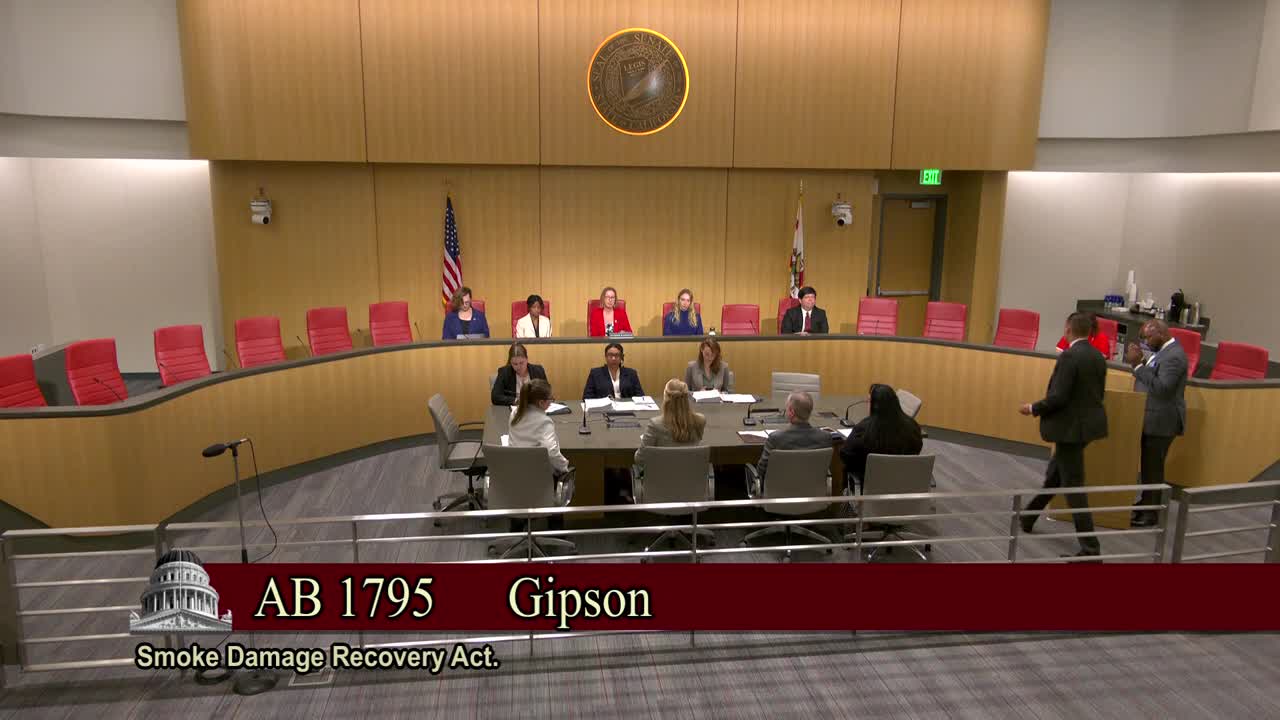 46MIN
Senate Standing Committee on Environmental Quality
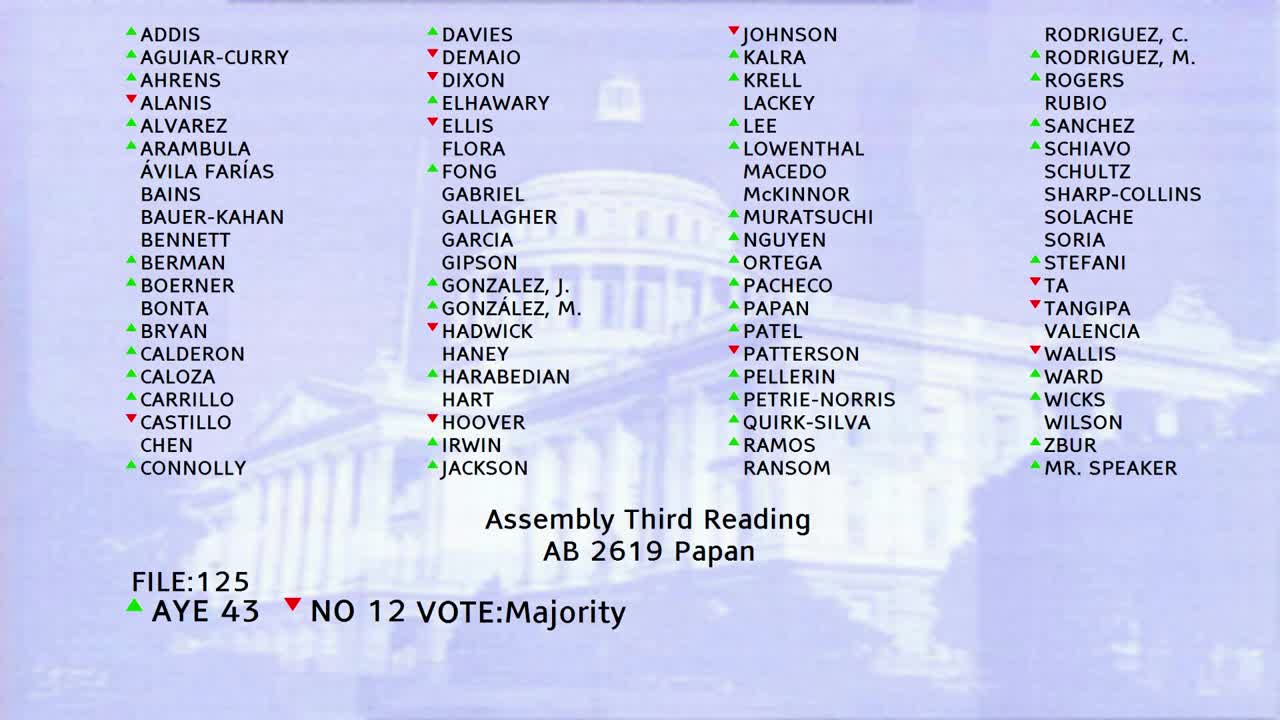 1MIN
Assembly Floor
 30MIN
Assembly Standing Committee on Environmental Safety and Toxic Materials
Bill Author