AB 1662: Misdemeanor diversion.
- Session Year: 2025-2026
- House: Assembly
- Latest Version Date: 2026-06-03
Current Status:
In Progress
(2026-08-13: In committee: Held under submission.)
Introduced
In Committee
Awaiting First Chamber Vote
Passed First Chamber
In Committee
Awaiting Second Chamber Vote
Passed Second Chamber
Enacted
Existing law authorizes a judge in a case where a misdemeanor is being prosecuted, over the objection of the prosecuting attorney, to offer diversion to the defendant. Existing law prohibits this type of diversion when, among other things, the current charged offense is willfully, maliciously, and repeatedly following or willfully and maliciously harassing another person while making a credible threat toward that person, as specified.
Existing law requires the clerk of a court, in which a person was convicted of a violation of the Vehicle Code or other specified provisions, to prepare within 5 days after conviction and immediately forward to the Department of Motor Vehicles an abstract of the record of the court covering the case in which the person was convicted.
This bill would require the court, if the court grants diversion to a defendant who, if they had been convicted, would have had an abstract of record forwarded to the department pursuant to the above provisions, to instead direct that the prosecuting attorney ensure notice of the arrest or incident is provided to the department, as specified. By increasing the duties on local officials, this bill would impose a state-mandated local program.
The California Constitution requires the state to reimburse local agencies and school districts for certain costs mandated by the state. Statutory provisions establish procedures for making that reimbursement.
This bill would provide that, if the Commission on State Mandates determines that the bill contains costs mandated by the state, reimbursement for those costs shall be made pursuant to the statutory provisions noted above.
Existing law imposes various violation points against a drivers record for purposes of the suspension or revocation of the privilege to drive by the Department of Motor Vehicles (DMV) if a driver is convicted of a number of specified violations, including a conviction of driving under the influence or vehicular manslaughter. Existing law authorizes a judge in the superior court in which a misdemeanor is being prosecuted to offer diversion to a defendant, and requires the judge, at the end of the diversion period and if the defendant has complied with the imposed terms and conditions, to dismiss the action against the defendant.This bill would require a court that has, upon the above-described diversion, dismissed a misdemeanor case that includes a violation that is required to be assessed points to transmit that information to the DMV, and would require the DMV to assess the applicable points on the drivers record.Existing law imposes various violation points against a drivers record for purposes of the suspension or revocation of the privilege to drive by the Department of Motor Vehicles (DMV) if a driver is convicted of a number of specified violations, including a conviction of driving under the influence or vehicular manslaughter. Existing law authorizes a judge in the superior court in which a misdemeanor is being prosecuted to offer diversion to a defendant, and requires the judge, at the end of the diversion period and if the defendant has complied with the imposed terms and conditions, to dismiss the action against the defendant.
This bill would require a court that has, upon the above-described diversion, dismissed a misdemeanor case that includes a violation that is required to be assessed points to transmit that information to the DMV, and would require the DMV to assess the applicable points on the drivers record.
Existing law imposes various violation points against a drivers record for purposes of the suspension or revocation of the privilege to drive by the Department of Motor Vehicles (DMV) if a driver is convicted of a number of specified violations, including a conviction of driving under the influence or vehicular manslaughter. Existing law authorizes a judge in the superior court in which a misdemeanor is being prosecuted to offer diversion to a defendant, and requires the judge, at the end of the diversion period and if the defendant has complied with the imposed terms and conditions, to dismiss the action against the defendant.
This bill would require a court that has, upon the above-described diversion, dismissed a misdemeanor case that includes a violation that is required to be assessed points to transmit that information to the DMV, and would require the DMV to assess the applicable points on the drivers record.
(a)A judge in the superior court in which a misdemeanor is being prosecuted may, at the judges discretion, and over the objection of a prosecuting attorney, offer diversion to a defendant pursuant to these provisions.
(b)A judge may continue a diverted case for a period not to exceed 24 months and order the defendant to comply with terms, conditions, or programs that the judge deems appropriate based on the defendants specific situation.
(c)If the defendant has complied with the imposed terms and conditions, at the end of the period of diversion, the judge shall dismiss the action against the defendant.
(d)If it appears to the court that the defendant is not complying with the terms and conditions of diversion, after notice to the defendant, the court shall hold a hearing to determine whether the criminal proceedings should be reinstituted. If the court finds that the defendant has not complied with the terms and conditions of diversion, the court may end the diversion and order resumption of the criminal proceedings.
(e)A defendant may not be offered diversion pursuant to this section for any of the following current charged offenses:
(1)Any offense for which a person, if convicted, would be required to register pursuant to Section 290.
(2)Any offense involving domestic violence, as defined in Section 6211 of the Family Code or subdivision (b) of Section 13700 of this code.
(3)A violation of Section 646.9.
(f)If the court grants diversion pursuant to this section for a violation the court would be required to report to the Department of Motor Vehicles pursuant to Section 1803 of the Vehicle Code, the court shall direct the prosecuting attorney to ensure the arresting agency provides notice to the Department of Motor Vehicles of the arrest or incident.
SEC. 2.If the Commission on State Mandates determines that this act contains costs mandated by the state, reimbursement to local agencies and school districts for those costs shall be made pursuant to Part 7 (commencing with Section 17500) of Division 4 of Title 2 of the Government Code.
SECTION 1.Section 12810 of the Vehicle Code is amended to read:12810.In determining the violation point count, the following shall apply:(a)A conviction of failure to stop in the event of an accident in violation of Section 20001 or 20002 shall be given a value of two points.(b)A conviction of a violation of Section 23152 or 23153 shall be given a value of two points.(c)A conviction of reckless driving shall be given a value of two points.(d)(1)A conviction of a violation of subdivision (b) of Section 191.5 or subdivision (c) of Section 192 of the Penal Code, or of Section 2800.2 or 2800.3, subdivision (b) of Section 21651, subdivision (b) of Section 22348, subdivision (a) or (c) of Section 23109, Section 23109.1, or Section 31602 of this code, shall be given a value of two points.(2)A conviction of a violation of subdivision (a) or (b) of Section 23140 shall be given a value of two points.(e)A conviction of a violation of Section 14601, 14601.1, 14601.2, 14601.3, or 14601.5 shall be given a value of two points.(f)Except as provided in subdivision (i), any other traffic conviction involving the safe operation of a motor vehicle upon the highway shall be given a value of one point.(g)A traffic accident in which the operator is deemed by the department to be responsible shall be given a value of one point.(h)A conviction of a violation of Section 27360 or 27360.5 shall be given a value of one point.(i)(1)A violation of paragraph (1), (2), (3), or (5) of subdivision (b) of Section 40001 shall not result in a violation point count being given to the driver if the driver is not the owner of the vehicle.(2)A conviction of a violation of paragraph (1) or (2) of subdivision (b) of Section 12814.6, subdivision (a) of Section 21116, Section 21207.5, 21708, 21710, 21716, 23120, 24800, or 26707 shall not be given a violation point count.(3)A violation of subdivision (d) of Section 21712 shall not result in a violation point count.(4)A violation of Section 23136 shall not result in a violation point count.(5)A violation of Section 38301, 38301.3, 38301.5, 38304.1, or 38504.1 shall not result in a violation point count.(j)A conviction for only one violation arising from one occasion of arrest or citation shall be counted in determining the violation point count for the purposes of this section.(k)A court that has dismissed a case, pursuant to Section 1001.95 of the Penal Code, that includes a violation described in this section shall transmit that information to the department, and the department shall assess points on the drivers record, as applicable under this article. A court shall submit the information in the same manner and format in which it submits information of a conviction of a traffic violation.In determining the violation point count, the following shall apply:
(a)A conviction of failure to stop in the event of an accident in violation of Section 20001 or 20002 shall be given a value of two points.
(b)A conviction of a violation of Section 23152 or 23153 shall be given a value of two points.
(c)A conviction of reckless driving shall be given a value of two points.
(d)(1)A conviction of a violation of subdivision (b) of Section 191.5 or subdivision (c) of Section 192 of the Penal Code, or of Section 2800.2 or 2800.3, subdivision (b) of Section 21651, subdivision (b) of Section 22348, subdivision (a) or (c) of Section 23109, Section 23109.1, or Section 31602 of this code, shall be given a value of two points.
(2)A conviction of a violation of subdivision (a) or (b) of Section 23140 shall be given a value of two points.
(e)A conviction of a violation of Section 14601, 14601.1, 14601.2, 14601.3, or 14601.5 shall be given a value of two points.
(f)Except as provided in subdivision (i), any other traffic conviction involving the safe operation of a motor vehicle upon the highway shall be given a value of one point.
(g)A traffic accident in which the operator is deemed by the department to be responsible shall be given a value of one point.
(h)A conviction of a violation of Section 27360 or 27360.5 shall be given a value of one point.
(i)(1)A violation of paragraph (1), (2), (3), or (5) of subdivision (b) of Section 40001 shall not result in a violation point count being given to the driver if the driver is not the owner of the vehicle.
(2)A conviction of a violation of paragraph (1) or (2) of subdivision (b) of Section 12814.6, subdivision (a) of Section 21116, Section 21207.5, 21708, 21710, 21716, 23120, 24800, or 26707 shall not be given a violation point count.
(3)A violation of subdivision (d) of Section 21712 shall not result in a violation point count.
(4)A violation of Section 23136 shall not result in a violation point count.
(5)A violation of Section 38301, 38301.3, 38301.5, 38304.1, or 38504.1 shall not result in a violation point count.
(j)A conviction for only one violation arising from one occasion of arrest or citation shall be counted in determining the violation point count for the purposes of this section.
(k)A court that has dismissed a case, pursuant to Section 1001.95 of the Penal Code, that includes a violation described in this section shall transmit that information to the department, and the department shall assess points on the drivers record, as applicable under this article. A court shall submit the information in the same manner and format in which it submits information of a conviction of a traffic violation.
In determining the violation point count, the following shall apply:
(a)A conviction of failure to stop in the event of an accident in violation of Section 20001 or 20002 shall be given a value of two points.
(b)A conviction of a violation of Section 23152 or 23153 shall be given a value of two points.
(c)A conviction of reckless driving shall be given a value of two points.
(d)(1)A conviction of a violation of subdivision (b) of Section 191.5 or subdivision (c) of Section 192 of the Penal Code, or of Section 2800.2 or 2800.3, subdivision (b) of Section 21651, subdivision (b) of Section 22348, subdivision (a) or (c) of Section 23109, Section 23109.1, or Section 31602 of this code, shall be given a value of two points.
(2)A conviction of a violation of subdivision (a) or (b) of Section 23140 shall be given a value of two points.
(e)A conviction of a violation of Section 14601, 14601.1, 14601.2, 14601.3, or 14601.5 shall be given a value of two points.
(f)Except as provided in subdivision (i), any other traffic conviction involving the safe operation of a motor vehicle upon the highway shall be given a value of one point.
(g)A traffic accident in which the operator is deemed by the department to be responsible shall be given a value of one point.
(h)A conviction of a violation of Section 27360 or 27360.5 shall be given a value of one point.
(i)(1)A violation of paragraph (1), (2), (3), or (5) of subdivision (b) of Section 40001 shall not result in a violation point count being given to the driver if the driver is not the owner of the vehicle.
(2)A conviction of a violation of paragraph (1) or (2) of subdivision (b) of Section 12814.6, subdivision (a) of Section 21116, Section 21207.5, 21708, 21710, 21716, 23120, 24800, or 26707 shall not be given a violation point count.
(3)A violation of subdivision (d) of Section 21712 shall not result in a violation point count.
(4)A violation of Section 23136 shall not result in a violation point count.
(5)A violation of Section 38301, 38301.3, 38301.5, 38304.1, or 38504.1 shall not result in a violation point count.
(j)A conviction for only one violation arising from one occasion of arrest or citation shall be counted in determining the violation point count for the purposes of this section.
(k)A court that has dismissed a case, pursuant to Section 1001.95 of the Penal Code, that includes a violation described in this section shall transmit that information to the department, and the department shall assess points on the drivers record, as applicable under this article.
REVISIONS: HeadingLine 2.|
Date
|
Status
|
|---|---|
| Aug 13, 2026 | In committee: Held under submission. |
| Jun 29, 2026 | In committee: Referred to APPR. suspense file. |
| Jun 22, 2026 | Withdrawn from committee. |
| Jun 22, 2026 | Re-referred to Com. on APPR. |
| Jun 16, 2026 | From committee: Do pass and re-refer to Com. on TRANS. (Ayes 6. Noes 0.) (June 16). Re-referred to Com. on TRANS. |
| Jun 3, 2026 | Referred to Coms. on PUB. S. and TRANS. |
| Jun 3, 2026 | From committee chair, with author's amendments: Amend, and re-refer to committee. Read second time, amended, and re-referred to Com. on PUB. S. |
| May 27, 2026 | In Senate. Read first time. To Com. on RLS. for assignment. |
| May 26, 2026 | Read third time. Passed. Ordered to the Senate. |
| May 26, 2026 | Read third time. Passed. Ordered to the Senate. (Ayes 75. Noes 0.) |
| May 26, 2026 | Read third time. Passed. Ordered to the Senate. (Ayes 75. Noes 0. Page 5358.) |
| May 19, 2026 | Read second time. Ordered to third reading. |
| May 18, 2026 | Read second time and amended. Ordered returned to second reading. |
| May 14, 2026 | From committee: Amend, and do pass as amended. (Ayes 11. Noes 0.) (May 14). |
| May 6, 2026 | In committee: Set, first hearing. Referred to APPR. suspense file. |
| Mar 24, 2026 | From committee: Do pass and re-refer to Com. on APPR. (Ayes 16. Noes 0.) (March 23). Re-referred to Com. on APPR. |
| Mar 24, 2026 | Coauthors revised. |
| Mar 4, 2026 | From committee: Do pass and re-refer to Com. on TRANS. (Ayes 8. Noes 0.) (March 3). Re-referred to Com. on TRANS. |
| Mar 4, 2026 | Coauthors revised. |
| Feb 17, 2026 | Referred to Coms. on PUB. S. and TRANS. |
| Jan 30, 2026 | From printer. May be heard in committee March 1. |
| Jan 29, 2026 | Read first time. To print. |
|
Date
|
Description
|
Location
|
Votes
|
|
|---|---|---|---|---|
| Jun 29, 2026 | Placed on suspense file | Senate Standing Committee on Appropriations |
Passed |
|
| Jun 16, 2026 | Do pass, but first be re-referred to the Committee on [Transportation] | Senate Standing Committee on Public Safety |
Passed |
|
| May 26, 2026 | AB 1662 Wilson Assembly Third Reading | Assembly Floor |
Passed |
|
| May 14, 2026 | Do pass as amended. | Assembly Standing Committee on Appropriations |
Passed |
|
| Mar 23, 2026 | Do pass and be re-referred to the Committee on [Appropriations] | Assembly Standing Committee on Transportation |
Passed |
|
| Mar 3, 2026 | Do pass and be re-referred to the Committee on [Transportation] | Assembly Standing Committee on Public Safety |
Passed |
This list shows positions taken on this bill by organizations on the date displayed, which is linked to the original source.
Positions by individuals are not included.
|
Organization
|
Position
|
Date
|
|---|---|---|
| AAA Northern California, Nevada & Utah | ** Support | |
| Aclu California Action | ** Against | |
| AMERICAN AUTOMOBILE ASSOCIATION OF NORTHERN CALIFORNIA, NEVADA & UTAH | ** Support | |
| Arcadia Police Officers’ Association | ** Support | |
| Auto Club of Southern California | ** Support | |
| Automobile Club of Southern California | ** Support | |
| Brea Police Association | ** Support | |
| Burbank Police Officers’ Association | ** Support | |
| California Association Of Highway Patrolmen | ** Support | |
| California Association of School Police Chiefs | ** Support | |
| California Coalition of School Safety Professionals | ** Support | |
| California Consortium of Addiction Programs and Professionals | ** Support | |
| California District Attorneys Association | ** Support | |
| California Narcotic Officers’ Association | ** Support | |
| California Police Chiefs Association | ** Support | |
| California Reserve Peace Officers Association | ** Support | |
| California State Sheriffs’ Association | ** Support | |
| CLAREMONT POLICE OFFICERS ASSOCIATION | ** Support | |
| Corona Police Officers Association | ** Support | |
| Culver City Police Officers’ Association | ** Support | |
| Debt Free Justice California | ** Against | |
| Fullerton Police Officers’ Association | ** Support | |
| Initiate Justice | ** Against | |
| Justice2jobs Coalition | ** Against | |
| LA Defensa | ** Against | |
| League Of California Cities | ** Support | |
| Legal Services for Prisoners With Children / All of Us or None | ** Against | |
| Legislative Analyst's Office | ** Against | |
| Local 148 La County Public Defenders Union | ** Against | |
| Los Angeles School Police Management Association | ** Support | |
| los angeles school police officers association | ** Support | |
| Murrieta Police Officers’ Association | ** Support | |
| Newport Beach Police Association | ** Support | |
| Palos Verdes Police Officers Association | ** Support | |
| Placer County Deputy Sheriffs’ Association | ** Support | |
| Pomona Police Officers’ Association | ** Support | |
| RIVERSIDE POLICE OFFICERS ASSOCIATION | ** Support | |
| Riverside Sheriffs’ Association | ** Support | |
| Safety and Advocacy for Empowerment | ** Support | |
| Safety And Advocacy For Empowerment Safe | ** Support | |
| Sister Warriors Freedom Coalition | ** Against | |
| Streets for All | ** Support | |
| Two individuals | ** Support | |
| western center on law and poverty | ** Against |
SENATE COMMITTEE ON
Senator Sabrina Cervantes, Chair
2025 - 2026 Regular Session
AB 1662 (Wilson) - Misdemeanor diversion
Version: | Policy Vote: |
Urgency: | Mandate: |
Hearing Date: June 29, 2026 | Consultant: |
Bill Summary:
AB 1662 would require the court, when granting diversion to a defendant who would have had an abstract of record forwarded to the Department of Motor Vehicles (DMV), if they had been convicted, to instead direct the prosecuting attorney to ensure the arresting agency provides notice to the DMV of the arrest or incident. If the Commission on State Mandates determines that this bill contains costs mandated by the state, reimbursement to local agencies shall be made.
Fiscal Impact:
Minor, absorbable to potentially significant implementation costs to DMV associated with distributing memos and updating publications. DMV may have ongoing costs to the extent that this record transfer process increases the number of cases referred to DMV for review. There is limited data available on the quantity of cases that are granted diversion and many of these cases will have already been referred through existing law enforcement reporting processes for priority referrals and fatal accidents (Motor Vehicle Account).
Major court calendaring cost pressure. Although courts are not funded on the basis of workload, increased cost pressures on the Trial Court Trust Fund may create a demand for increased funding for courts. The FY 2026-27 Budget contains $70 million to backfill the declining revenue to the Trail Court Trust Fund (General Fund).
Unknown, potentially major costs if the Commission on State Mandates determines this bill imposes new duties or costs on prosecuting attorneys and arresting agencies (General Fund).
Background:
An abstract of record is a document that summarizes the essential details of a court case. It typically includes the facts of the case, the proceedings to date, the trial court’s decision, and the legal issues to be determined.
Court calendaring cost pressure results from adding time onto a hearing and is a way to illustrate costs to operate the courts. Based on 2026 Judicial Council calculations, the calendaring cost is approximately $22 per minute ($4.00 for judge time, $18 for court staff). The DMV dashboard indicates there were approximately 80,000 misdemeanor traffic cases that were not DUI related in 2022. The Judicial Council statistics report indicates approximately 180,000 traffic misdemeanors in the same year. Thus, there are potentially 100,000 cases where the proposed record transfer process would apply. If 20 percent to 50 percent of DUI cases are granted diversion, calendaring cost pressure would range between $400,000 and $2.2 million.
Proposed Law:
Penal Code 1001.95 is amended to add:
(f) If the court grants diversion pursuant to this section for a violation the court would be requested to report to the Department of Motor Vehicles pursuant to Section 1803 of the Vehicle Code, the court shall direct the prosecuting attorney to ensure the arresting agency provides notice to the Department of Motor Vehicles of the arrest or incident.
Staff Comments:
It is unclear what authority or process the court holds over the prosecuting attorney in this context. Furthermore, it is unclear what responsibility or oversight authority prosecuting attorneys have to ensure the arresting agency provides notice to the DMV.
The Motor Vehicle Account (MVA) which funds the DMV is facing insolvency. In a report, the Legislative Analyst’s Office noted that, “Until a plan is put in place to address MVA’s structural deficit, we recommend the Legislature set a high bar for considering approval of any proposals that create additional MVA cost pressures and accelerate the risk of insolvency.”
SENATE COMMITTEE ON PUBLIC SAFETY
Senator Jesse Arreguín, Chair
2025 - 2026 Regular
Bill No: AB 1662 Hearing Date: June 16, 2026
Author: | Wilson | ||
Version: | June 3, 2026 | ||
Urgency: | No | Fiscal: | Yes |
Consultant: | SJ | ||
Subject: Misdemeanor diversion
HISTORY
Source: Author
Prior Legislation: AB 282 (Lackey), failed passage in Assembly Public Safety, 2021
AB 421 (Bradford), held in Senate Appropriations, 2021
AB 3234 (Ting), Ch. 334, Stats. of 2020
SB 725 (Jackson), Ch. 179, Stats. of 2017
SB 1227 (Hancock), Ch. 658, Stats. of 2014
Support: American Automobile Association of Northern California, Nevada & Utah; Arcadia Police Officers’ Association; Brea Police Association; Burbank Police Officers’ Association; California Association of School Police Chiefs; California Coalition of School Safety Professionals; California Consortium of Addiction Programs and Professionals; California District Attorneys Association; California Narcotic Officers’ Association; California Police Chiefs Association; California Reserve Peace Officers Association; Claremont Police Officers Association; Corona Police Officers Association; Culver City Police Officers’ Association; Fullerton Police Officers’ Association; League of California Cities; Los Angeles School Police Management Association; Los Angeles School Police Officers Association; Murrieta Police Officers’ Association; Newport Beach Police Association; Palos Verdes Police Officers Association; Placer County Deputy Sheriffs’ Association; Pomona Police Officers’ Association; Riverside Police Officers Association; Riverside Sheriffs’ Association; Safety and Advocacy for Empowerment; Streets for All
Opposition: None known
Assembly Floor Vote: 75 - 0
PURPOSE
The purpose of this bill is to require the court, when it grants diversion to a defendant who would have had an abstract of record forwarded to the Department of Motor Vehicles (DMV) if they had been convicted, to instead direct the prosecuting attorney to ensure the arresting agency provides notice to DMV of the arrest or incident.
Existing law authorizes a judge in the superior court in which a misdemeanor is being prosecuted to, at the judge’s discretion, and over the objection of a prosecuting attorney, offer diversion to a defendant pursuant to these provisions. (Pen. Code, § 1001.95, subd. (a).)
Existing law authorizes a judge to continue a diverted case for a period not to exceed 24 months and order the defendant to comply with terms, conditions, or programs that the judge deems appropriate based on the defendant’s specific situation. (Pen. Code, § 1001.95, subd. (b).)
Existing law requires a judge to dismiss the action against the defendant at the end of the period of diversion if the defendant has complied with the imposed terms and conditions. (Pen. Code, § 1001.95, subd. (c).)
Existing law requires the court, if it appears that the defendant is not complying with the terms and conditions of diversion, after notice to the defendant, to hold a hearing to determine whether the criminal proceedings should be reinstituted. Authorizes the court to end the diversion and order resumption of the criminal proceedings if the court finds that the defendant has not complied with the terms and conditions of diversion. (Pen. Code, § 1001.95, subd. (d).)
Existing law prohibits a defendant from being offered diversion for any of the following current charged offenses:
- Any offense for which a person, if convicted, would be required to register as a sex offender.
- Any offense involving domestic violence, as defined.
- Stalking. (Pen. Code, § 1001.95, subd. (e).)
Existing law prohibits the court from suspending or staying the proceedings, in any case in which a person is charged with DUI, for the purpose of allowing the accused person to attend or participate, or considering dismissal of or entertaining a motion to dismiss the proceedings because the accused person attends or participates during that suspension, in any one or more education, training, or treatment programs, including, but not limited to, a driver improvement program, a treatment program for persons who are habitual users of alcohol or other alcoholism program, a program designed to offer alcohol services to problem drinkers, an alcohol or drug education program, or a treatment program for persons who are habitual users of drugs or other drug-related program. (Veh. Code, § 23640.)
Existing law requires the clerk of a court in which a person was convicted of specified driving-related offenses, including a violation of any statute relating to the safe operation of vehicles, to prepare an abstract of the record within five days after conviction and to immediately forward it to the DMV headquarters. Requires the abstract to be forwarded to the DMV within five days after sentencing if sentencing is not pronounced in conjunction with the conviction. Requires the abstract to be certified by the person required to prepare it to be true and correct. (Veh. Code, § 1803, subd. (a)(1).)
This bill requires the court, when it grants diversion to a defendant who would have had an abstract of record forwarded to the DMV if they had been convicted, to instead direct the prosecuting attorney to ensure the arresting agency provides notice to DMV of the arrest or incident.
COMMENTS
- Need For This Bill
According to the author:
When serious driving offenses disappear from the record, the public pays the price. AB 1662 closes a loophole that previously let individuals avoid points on their driving record if their case was dismissed through diversion. This bill ensures dangerous conduct is counted, not covered up.
- Diversion
Diversion is the suspension of criminal proceedings for a prescribed period of time with certain conditions. A defendant may not be required to admit guilt as a prerequisite for placement in a pretrial diversion program. If diversion is successfully completed, the criminal charges are dismissed and the defendant may, with certain exceptions, legally answer that they have never been arrested or charged for the diverted offense. If diversion is not successfully completed, the criminal proceedings resume.
Diversion programs may be pre-plea or post-plea (often called deferred entry of judgment). Pre-plea programs allow a defendant to participate in the program without admitting guilt. In post-plea programs, the defendant must first admit guilt before participating in the program. The primary difference between the two types of diversion is that in a pre-plea program, criminal proceedings resume if the defendant does not successfully complete the program, and the defendant has the option to plead guilty or pursue a defense against their case. In a post-plea diversion program, the defendant (having already pled guilty) would be sentenced if they do not successfully complete the program.
- Court-Initiated Misdemeanor Diversion
AB 3234 (Ting), Chapter 334, Statutes of 2020, created a court-initiated misdemeanor diversion program. (Pen. Code, §§ 1001.95-1001.97.) Under this program, a superior court judge is authorized to divert a misdemeanor defendant outside of a prosecutor approved program. Unlike existing prosecutor-approved misdemeanor diversion programs, the court-initiated program has no requirements for the defendant to satisfy in order to be eligible. However, several offenses are excluded from court-initiated misdemeanor diversion, including domestic violence, stalking, and registrable sex offenses.
Although the court has discretion regarding whether to divert otherwise eligible misdemeanor defendants, that judicial discretion is not without limits. “[A]ll exercises of legal discretion must be grounded in reasoned judgment and guided by legal principles and policies appropriate to the particular matter at issue.” (People v. Russel (1968) 69 Cal.2d 187, 195.) A trial court abuses its discretion when it exceeds the bounds of reason, all of the circumstances before it being considered. (Id. at p. 194.)
After the creation of court-initiated diversion in 2021, it was unclear if DUIs were eligible for judicial diversion. Vehicle Code section 23640 prohibits a court, if a person is charged with a DUI offense, from suspending or dismissing the criminal proceedings for the purposes of allowing the accused to participate in specified education, training, or treatment programs. However, DUIs were not explicitly excluded from court-initiated misdemeanor diversion, as they had been from prosecutor-initiated diversion. (Pen. Code, § 1001.51, subd. (b).) This led one of the state’s superior courts to find that misdemeanor DUIs were eligible for court-initiated misdemeanor diversion. (People v. Superior Court (Diaz-Armstrong) (2021) 67 Cal.App.5th Supp. 10.)
In recent years, the state’s intermediate appellate courts have largely brought clarity to this matter, consistently finding that DUIs are not eligible for court-initiated diversion. (See Grassi v. Superior Court (2021) 73 Cal.App.5th 283, 308 [finding that court-initiated diversion “authorizes diversion for all misdemeanor defendants except those listed in subdivision (e) and misdemeanor DUI defendants pursuant to Vehicle Code section 23640”]; See also Tan v. Appellate Division of Superior Court (2022) 76 Cal.App.5th 130, 148; Islas v. Appellate Division of Superior Court (2022) 78 Cal.App.5th 1104, 1110.) Accordingly, the changes made by this bill generally will not apply to individuals arrested for DUIs.
- Effect of This Bill
This bill was introduced following the publication of the Cal Matter series “License to Kill” which highlighted lapses in communication between the state’s courts and the DMV for a variety of concerning driving incidents. (Lauren Helper & Robert Lewis, They were convicted of killing with their cars. No one told the California DMV (Jun. 25, 2025) <https://calmatters.org/investigation/2025/06/california-courts-dmv/?series=license-to-kill>.)To ensure that records are being timely transmitted to the DMV in cases that are diverted via the court-initiated diversion program, this bill requires the court to direct the prosecuting attorney to ensure the arresting agency provides notice to the DMV of an arrest or incident if the abstract of record would have been forwarded to the DMV had the person been convicted. As introduced, the bill contained a provision directing the DMV to assess points in specified cases but the current version of the bill no longer directs the DMV to take action. However, the DMV is authorized to take administrative actions permitted under existing law in response to the information that this bill requires to be transmitted to the DMV.
- Argument in Support
Cal Cities writes:
California Vehicle Code Section 12810 mandates the California Department of Motor Vehicles (DMV) to assign violation points to driving records for convictions involving the unsafe operation of a motor vehicle. An accumulation of points can lead to license suspension, increased insurance, or probation. Existing law allows drivers who commit serious driving related offenses to sometimes avoid points on their record if their misdemeanor case is dismissed through diversion, meaning the DMV may never see the conduct, even when public safety was at risk.
AB 1662 would provide that if the court grants diversion for a DUI offense the court must ensure that the arresting agency provides notice to the DMV of the arrest or incident.
…Accurate and complete driving records are essential to identifying dangerous driving patterns and ensuring that habitual reckless drivers are held accountable and removed from the road before additional lives are put at risk. According to the “License to Kill” reports from CalMatters, “nearly 40% of the drivers charged with vehicular manslaughter since 2019 have a valid license.” Also in this report, nearly a third of the three dozen drivers who were granted diversion for manslaughter have gotten a ticket or been involved in another collision after their initial fatal crash.
Data clearly shows that reform is needed, as repeated dangerous and reckless drivers are not consistently held to standards that prevent traffic deaths in our cities. To address this, it is essential that the DMV be fully informed about the driving records of the individuals to whom it issues licenses.
-- END --
ASSEMBLY THIRD READING
ATR Bill Id:AB 1662
Author:(Wilson)
As Amended Ver:May 18, 2026
Majority vote
SUMMARY
Provides that if a defendant's case is dismissed because they completed misdemeanor diversion and the case involved a violation that ordinarily requires points to be added to the defendant's driving record, the Department of Motor Vehicles (DMV) must assess points on the defendant's driving record.
Major Provisions
- Provides that if a court dismisses a defendant's case because the defendant completes court-initiated misdemeanor diversion, and the case includes a specified violation, which, ordinarily, requires points to be added to the defendant's driving record, then the court shall nonetheless transmit that information to the DMV, and the DMV shall assess points on the defendant's driving record.
- Requires a court to submit the information in the same manner and format in which it submits information of a conviction of a traffic violation.
COMMENTS
According to the Author
"When serious driving offenses disappear from the record, the public pays the price. AB 1662 closes a loophole that previously let individuals avoid points on their driving record if their case was dismissed through diversion. This bill ensures dangerous conduct is counted, not covered up."
Arguments in Support
According to the California Police Chiefs Association, "AB 1662 would ensure that traffic safety accountability is preserved when a misdemeanor diversion results in dismissal of a case involving a point-assessable driving offense."
"Under current law, drivers who successfully complete diversion under Penal Code Section 1001.95 may avoid a criminal conviction; however, dismissal of these cases can also result in the DMV not assessing violation points that are otherwise critical to maintaining accurate driver safety records. AB 1662 clarifies that when a court dismisses a qualifying misdemeanor following diversion, the DMV must still assess the applicable violation points."
"This measure strengthens California's traffic safety framework by ensuring that serious driving conduct remains reflected in a driver's official record for purposes of negligent operator determinations and license suspension. Without this clarification, diversion may unintentionally undermine the integrity of the state's point system and weaken deterrence for repeat or dangerous drivers. Maintaining accurate driving histories is essential to protecting the public and preventing recidivism on California roadways."
Arguments in Opposition
According to Western Center on Law and Poverty, "If AB 1662 is passed, people who are charged with driving-related offenses and complete a diversion program would, nonetheless, be assessed points on their license, as though they were convicted. Western Center opposes AB 1662 because it punishes legally innocent people for a crime they were never convicted of."
"Diversion is an "exit ramp" to the criminal legal system – which "minimize[s] people's exposure to the criminal legal system." Pretrial diversion programs allow people charged with crimes to complete a rehabilitation program in lieu of prosecution. Upon successful completion of the program, the judge dismisses their case. Under California Penal Code section 1001.95, judges have the discretion to offer diversion to people charged with most misdemeanors. Diversion is a crucial criminal justice tool: it can clear court calendars and reduce jail and prison overcrowding. Diversion also advances public safety – research shows that diversion programs cut recidivism by half. Policies that weaken or remove these incentives to complete diversion programs undermine these benefits, harming people charged with crimes, straining an already overburdened criminal legal system, and diminishing public safety."
"Receiving points on a driving record can have devastating consequences for low-income Californians and their families, including increased costs of insurance and even the loss of a driver's license. The loss of a driver's license is a major threat to economic security, particularly for low-income Californians and their families:"
"Numerous studies have found a direct correlation between driving and employment. A task force report to the Governor of New Jersey cited a survey of suspended drivers conducted by Rutgers University researchers, which found that following a license suspension, 42% of people lost their jobs as a result of the suspension. Of those who lost their jobs, 45% could not find another job, and this effect was most pronounced for seniors and low-income people. Of those who were able to find new employment, 88% reported decreased wages."
"People who successfully complete diversion programs are legally innocent. They have not been convicted of any crime. Punishing people who complete diversion cuts against the presumption of innocence that lies at the core of the United States criminal legal system."
"Finally, this legislative session there are numerous efforts to reform and update (Driving Under the Influence )DUI laws in California. We strongly believe that a broader discussion on existing DUI statutes should take place among key legislators and a wide array of stakeholders in order to possibly identify a more comprehensive and balanced approach to the larger policy issue. We encourage this author and others to help bring us together for this convening."
FISCAL COMMENTS
According to the Assembly Appropriations Committee, "Costs of an unknown, but potentially significant amount to the Department of Motor Vehicles (DMV) (Motor Vehicle Account). According to the DMV, it does not currently receive data on dismissed violations from the courts, for diversion or otherwise. The DMV notes that implementation would require the DMV to modify its core legacy systems to receive, maintain, and disclose diversion information. The DMV reports that it may have further costs to the extent it may be required to hold hearings for drivers prior to the assessment of points on their license or any subsequent licensing action based on a dismissed violation. The DMV is unaware of the number of violations dismissed under Penal Code section 1001.95 that would be reported to the DMV.
"The department is undertaking an Enterprise Modernization Project – the Digital eXperience Platform Project (DXP), and resources are fully committed to the project. Coordinating implementation of this bill within DXP might delay bill implementation and increase DXP Platform costs. Most changes to the department's services will have to be built outside the core legacy system. If the department is required to implement this bill by January 1, 2027, the DMV will be required to build a temporary solution outside of the core legacy system. Programming outside the core legacy system will be costly and redundant, and will require the DMV to acquire new technology and services. Acquiring new technology and services will require Project Approval Lifecycle Information Technology Project approval.
"The bill contains no cost recovery for implementation efforts. The Motor Vehicle Account (MVA), the primary funding account for the California Highway Patrol and the DMV is facing insolvency. In a report, the LAO noted that, "Until a plan is put in place to address MVA's structural deficit, we recommend the Legislature set a high bar for considering approval of any proposals that create additional MVA cost pressures and accelerate the risk of insolvency." In the Governor's proposed 2026-2027 budget, the Governor stated that, "the Budget currently projects that the MVA will be insolvent as soon as 2028-29. Given the ongoing fiscal constraints in the MVA, the Administration will continue to limit new workload or initiatives, including those with delayed implementation dates that would create additional cost pressures over time."
"The Legislative Analyst's Office recently warned of General Fund structural deficits of around $35 billion per year beginning in the 2027-28 fiscal year."
VOTES
ASM PUBLIC SAFETY: 8-0-1
YES: Schultz, Alanis, Mark González, Haney, Harabedian, Lackey, Ramos, Wilson
ABS, ABST OR NV: Nguyen
ASM TRANSPORTATION: 16-0-0
YES: Wilson, Davies, Aguiar-Curry, Ahrens, Carrillo, Harabedian, Hart, Hoover, Jackson, Lackey, Macedo, Papan, Ransom, Rogers, Sharp-Collins, Ward
ASM APPROPRIATIONS: 11-0-4
YES: Wicks, Aguiar-Curry, Calderon, Caloza, Fong, Mark González, Krell, Pacheco, Pellerin, Sharp-Collins, Solache
ABS, ABST OR NV: Hoover, Dixon, Ta, Tangipa
UPDATED
VERSION: May 18, 2026
CONSULTANT: Ilan Zur / PUB. S. / (916) 319-3744 FN: 0002932
Date of Hearing: May 6, 2026
ASSEMBLY COMMITTEE ON APPROPRIATIONS
Buffy Wicks, Chair
ABPCA Bill Id:AB 1662
Author:(Wilson) – As Introduced Ver:January 29, 2026
Policy Committee: | Public Safety | Vote: | 8 - 0 |
Transportation | 16 - 0 | ||
|
|
Urgency: No State Mandated Local Program: No Reimbursable: No
SUMMARY:
This bill requires that points be added to a driver’s record for specified driving-related violations even when the underlying case is dismissed following successful completion of court-initiated misdemeanor diversion.
FISCAL EFFECT:
Costs of an unknown, but potentially significant amount to the Department of Motor Vehicles (DMV) (Motor Vehicle Account). According to the DMV, it does not currently receive data on dismissed violations from the courts, for diversion or otherwise. The DMV notes that implementation would require the DMV to modify its core legacy systems to receive, maintain, and disclose these dismissed violations. It is unclear why the DMV could not receive the data in same manner and format that it receives conviction data from courts. The DMV reports that it may have further costs to the extent it may be required to hold hearings for drivers prior to the assessment of points on their license or any subsequent licensing action based on a dismissed violation. The DMV is unaware of the number of violations dismissed under Penal Code section 1001.95 that would be reported to the DMV.
The department is undertaking an Enterprise Modernization Project – the Digital eXperience Platform Project (DXP), and resources are fully committed to the project. Coordinating implementation of this bill within DXP might delay bill implementation and increase DXP Platform costs. Most changes to the department’s services will have to be built outside the core legacy system. If the department is required to implement this bill by January 1, 2027, the DMV will be required to build a temporary solution outside of the core legacy system. Programming outside the core legacy system will be costly and redundant, and will require the DMV to acquire new technology and services. Acquiring new technology and services will require Project Approval Lifecycle Information Technology Project approval.
The bill contains no cost recovery for implementation efforts. The Motor Vehicle Account (MVA), the primary funding account for the California Highway Patrol and the DMV is facing insolvency. In a report, the LAO noted that, “Until a plan is put in place to address MVA’s structural deficit, we recommend the Legislature set a high bar for considering approval of any proposals that create additional MVA cost pressures and accelerate the risk of insolvency.” In the Governor’s proposed 2026-2027 budget, the Governor stated that, “the Budget currently projects that the MVA will be insolvent as soon as 2028-29. Given the ongoing fiscal constraints in the MVA, the Administration will continue to limit new workload or initiatives, including those with delayed implementation dates that would create additional cost pressures over time.”
COMMENTS:
- Purpose. According to the author:
When serious driving offenses disappear from the record, the public pays the price. AB 1662 closes a loophole that previously let individuals avoid points on their driving record if their case was dismissed through diversion. This bill ensures dangerous conduct is counted, not covered up.
- Background. The DMV will, generally, assign one or more “negligent operator points” to the driver license of a person convicted of certain moving traffic violations. Accumulation of points may result in DMV restricting or suspending a person’s driver license. Most driving offenses in the vehicle code are a single point. The two-point violations are generally misdemeanor offenses. Misdemeanor offenses, which are eligible for diversion, are distinct from most traffic offenses in the fact that most require a prosecutor to prove mens rea, or “a guilty mind.” For traffic infractions, prosecutors do not need to prove the driver knew they were speeding or knew they ran a stop sign. However, to be eligible for the jail time that comes with a misdemeanor offense, prosecutors must prove some sort of intent along with bad driving behavior. AB 3234 (Ting), Chapter 334, Statutes of 2020, created a court-initiated misdemeanor diversion program. Since then, all two-point misdemeanor eligible offenses, except DUIs, have become eligible for misdemeanor diversion, allowing some of the more serious driving offenses to not appear on a person’s driving record, including ones that resulted in killing someone, while still placing points on their record for more minor offenses like failing to use a turn signal. This bill allows the state and insurance companies to continue to assess a person’s risks as a driver by keeping their driving offenses on their driving record. The person’s eligibility for misdemeanor diversion remains unchanged.
As noted above, the DMV states that it does not currently receive data on dismissed violations from the courts, for diversion or otherwise. Courts and law enforcement have existing methods of reporting offenders to DMV outside the judicial process (not as part of a conviction). DMV may receive request for driver re-examination using the DS 699, Request for Driver Re-examination. Law enforcement also may request a priority reexamination of a driver, as being done with the DMV/CHP FAST Program. DMV has existing authority in Vehicle Code sections 12818, 13800 et seq., and 13950 et seq. to investigate and act on driving behavior.
Analysis Prepared by: Shiran Zohar / APPR. / (916) 319-2081
Date of Hearing: March 23, 2026
ASSEMBLY COMMITTEE ON TRANSPORTATION
Lori D. Wilson, Chair
ABPCA Bill Id:AB 1662 (
Author:Wilson) – As Introduced Ver:January 29, 2026
SUBJECT: Driving record: points: misdemeanor diversion
SUMMARY: Provides that if a court dismisses a defendant’s case because the defendant completes court-initiated misdemeanor diversion, and the case includes a specified violation, which, ordinarily, requires points to be added to the defendant’s driving record, then the court shall nonetheless transmit that information to the Department of Motor Vehicles (DMV), and the DMV shall assess points on the defendant’s driving record.
EXISTING LAW:
- Authorizes the DMV to suspend, revoke, or refuse to issue a driver’s license if a person accumulates a certain number of points on their driving record, as follows:
- Provides that a person whose driving record shows a violation point count of four or more points in 12 months, six or more points in 24 months, or eight or more points in 36 months shall be prima facie presumed to be a negligent operator of a motor vehicle, except as otherwise specified. (Vehicle Code Section (VEH) 12810.5)
- Requires the DMV, in making a negligent operator determination, to give due consideration to the amount of use or mileage traveled in the operation of a vehicle if the person requests and appears at a DMV hearing. (VEH 12810.5)
- Authorizes the DMV to require a negligent operator whose driving privilege is suspended or revoked to submit proof of financial responsibility, as specified. (VEH 12810.5)
- Authorizes the DMV to suspend or revoke the privilege of any person to operate a vehicle upon any grounds that authorizes the refusal to issue a license, including when a person is deemed a negligent operator. (VEH 13359, 12809)
- Authorizes the DMV to refuse to issue or renew a driver’s license if the DMV determines the applicant is a negligent or incompetent operator of a vehicle. (VEH 12809)
- Provides that whenever the DMV has discretionary authority to suspend or revoke the privilege of a person to operate a vehicle, the DMV may in lieu of suspension or revocation, place the person on probation, as specified, and issue a restricted driver’s license as a condition of probation where that person is presumed to be a negligent operator. (VEH 14250, 12812)
- Provides that the point count, for purposes of determining if a driver is a negligent operator, is determined as follows:
- Violations that receive one point:
- Any traffic conviction involving the safe operation of a vehicle upon the highway, except as specified. (VEH 12810)
- A traffic accident in which the DMV deems the operator responsible. (VEH 12810)
- A conviction for failing to properly secure a child under eight years old in a rear seat in an appropriate child passenger restraint system, as specified. (VEH 12810)
- A conviction for transporting a child between eight and 16 years old, without properly securing that child in an appropriate child passenger restraint system, as specified. (VEH 12810)
- Convictions that receive two points:
- A hit and run resulting in only property damage, or a hit and run resulting in injury or death to another person.
- Driving under the influence (DUI), DUI causing bodily injury to another, or driving a vehicle with a blood alcohol content (BAC) of .05 or more, for a person under the age of 21, even where a chemical test was not made to determine that person’s BAC, as specified.
- Reckless driving.
- Intoxicated vehicular manslaughter, without gross negligence.
- Vehicular manslaughter, with or without gross negligence.
- Fleeing or attempting to elude a peace officer where the pursued vehicle is driven in willful or wanton disregard for the safety of persons or property, including where this offense causes serious bodily injury or death.
- Driving a vehicle upon a highway, except to the right of an intermittent barrier or dividing section which separates two or more lanes of opposing traffic.
- Driving a vehicle on a highway at a speed greater than 100 miles per hour.
- Engaging in a motor vehicle speed contest or exhibition of speed or aiding and abetting a motor vehicle exhibition of speed.
- Engaging in a motor vehicle speed contest that proximately causes specified injuries to another person.
- Driving on a highway for the purpose of transporting explosives, except as specified.
- Driving on a suspended or revoked license, driving on a license that was suspended or revoked due to a DUI, DUI causing bodily injury, reckless driving, or refusal or failure to complete a chemical test or alcohol screening test, or accumulating a driving record that results from driving when a person has a suspended or revoked license. (VEH 12810)
- Provides that a conviction for only one violation arising from one occasion of arrest or citation shall be counted in determining the violation point count. (VEH 12810)
- Violations that receive one point:
- Establishes Court-Initiated Misdemeanor Diversion, as follows:
- Authorizes a judge in the superior court in which a misdemeanor is being prosecuted to, at the judge’s discretion, and over the objection of a prosecuting attorney, offer diversion to a defendant. (Penal Code Section (PEN) 1001.95)
- Authorizes a judge to continue a diverted case for a period not to exceed 24 months and to order the defendant to comply with terms, conditions, or programs that the judge deems appropriate based on the defendant’s specific situation. (PEN 1001.95)
- Requires the judge, if the defendant has complied with the imposed terms and conditions, to dismiss the action against the defendant at the end of the period of diversion. (PEN 1001.95)
- Requires the court, if it appears to the court that the defendant is not complying with the terms and conditions of diversion, after notice to the defendant, to hold a hearing to determine whether the criminal proceedings should be reinstituted. (PEN 1001.95)
- Authorizes the court, if it finds that the defendant has not complied with the terms and conditions of diversion, to end the diversion and order resumption of the criminal proceedings. (PEN 1001.95)
- Provides that a defendant may not be offered diversion for any of the following current charged offenses:
- Any offense for which a person, if convicted, would be required to register as a sex offender;
- Any offense involving domestic violence, as specified; and,
- Stalking. (PEN 1001.95)
- Any offense for which a person, if convicted, would be required to register as a sex offender;
- Requires a defendant who is diverted under court-initiated diversion to complete all of the following to have their action dismissed:
- Complete all conditions ordered by the court.
- Make full restitution, although a defendant’s inability to pay restitution due to indigence shall not be grounds for denial of diversion or a finding that the defendant has failed to comply with the terms of diversion.
- Comply with a court-ordered protective order, stay-away order, or order prohibiting firearm possession, if applicable. (PEN 1001.95)
- Provides that upon successful completion of the terms, conditions, or programs ordered by the court pursuant to court-initiated misdemeanor diversion, the arrest upon which diversion was imposed shall be deemed to have never occurred, and the defendant may indicate, in response to any question concerning their prior criminal record, that they were not arrested. (PEN 1001.95)
- Prohibits a record pertaining to an arrest resulting in successful completion of the terms, conditions, or programs ordered by the court from, without the defendant’s consent, being used in any way that could result in the denial of any employment, benefit, license, or certificate. (PEN 1001.97)
- Requires the defendant to be advised that, regardless of their successful completion of diversion, the arrest upon which the diversion was based may be disclosed by the Department of Justice in response to a peace officer application request and that completion of diversion does not relieve them of the obligation to disclose the arrest in response to a direct question contained in a questionnaire or application for a position as a peace officer. (PEN 1001.97)
FISCAL EFFECT: Unknown
COMMENTS: In California, if you run a stop sign, you can receive a negligent operator point on your driver’s license. If you run a stop sign and kill someone and go through the misdemeanor diversion program, no negligent operator points are assessed on your driving record.
According to the National Highway Traffic Safety Administration, 39,474 people died in traffic collisions in California between 2014 and 2023. 10,034 of those deaths were pedestrians, and 12,056 of those deaths were alcohol related. 4,270 of those deaths were drivers under the age of 21. In the United States, motor vehicle crashes account for 20% of all children's and adolescent deaths. In 2023, the primary crash factor in California was the influence of alcohol, followed by improper turns, failure to yield, speeding, and other violations.
Except for driving while using a cell phone, all moving violations are eligible for a negligent operator point for the first offense. Most offenses permit a person to take traffic violator school to avoid a point on their license if they have no prior offense on their record within the previous 18 months.
In addition to traffic fines, another method to encourage compliance with road rules includes assessing negligent operator points on a driver’s license. The point system is used by DMV to determine if a driver should be considered a negligent operator. DMV may suspend or revoke a person’s driving privilege for being a negligent operator. Negligent operator points are also used by insurance companies to assess a driver’s risk. Drivers with two points on their license lose the “good driver” discount required by law and can have their insurance premiums increase by at least 20%.
An individual is considered a negligent operator if they receive four or more points in 12 months, six in 24 months, or eight in 36 months. In addition, a minor may receive a 30-day restriction on his or her license for two points in 12 months, or a suspension for three points in 12 months. Commercial drivers are allowed to receive two additional points; a violation received while using a commercial vehicle carries 1.5 times the point count normally assessed. Except for DUIs, points remain on record for a total of 36 months.
The DMV sends out a series of warning letters once a person gets close to a driver’s license suspension because of negligent operator points. According to a DMV-commissioned report,
The Effectiveness of Theory Based Letters: An Evaluation of California’s Negligent Operator Treatment System’s Advisory Letters, negligent operator points coupled with the warning letters have had a statistically significant reduction in traffic collisions. Level 1 warning letters, which are sent out when a person is two points away from having their license suspended, achieved a 4.62% reduction in crash-involved drivers. Level 2 warning letters, which are sent out when a person is one point away from a driver’s license suspension, achieved an 8.04% reduction in crash-involved drivers.
Most driving offenses in the vehicle code are a single point. The two-point violations are generally misdemeanor offenses. Misdemeanor offenses, which are eligible for diversion, are distinct from most traffic offenses in the fact that most require a prosecutor to prove mens rea, or “a guilty mind.” For traffic infractions, prosecutors do not need to prove you knew you were speeding or knew you ran a stop sign. However, to be eligible for the jail time that comes with a misdemeanor offense, prosecutors must prove some sort of intent along with bad driving behavior.
Examples of two-point misdemeanor eligible offenses include reckless driving (driving with a willful and wanton disregard for human life), motor vehicle speed contests, motor vehicle exhibitions of speed (including sideshows and street takeovers), vehicular manslaughter (where a person violated a rule of the road and as a result killed someone but lacked the intent to kill them and was not intoxicated), fleeing from a police officer, hit and run causing only property damage, and driving on a suspended or revoked driver’s license. Unlike one-point offenses, two-point offenses are not eligible for traffic violator schools.
AB 3234 (Ting), Chapter 334, Statutes of 2020, created a court-initiated misdemeanor diversion program. Since then, all of the offenses above, except DUIs, have become eligible for misdemeanor diversion, allowing some of the more serious driving offenses to not appear on a person’s driving record, including ones that resulted in killing someone, while still placing points on their record for more minor offenses like failing to use a turn signal.
This bill would still permit a person to be eligible for misdemeanor diversion, while allowing the state and insurance companies to continue to assess their risks as a driver by keeping their driving offenses on their driving record.
According to the author, “When serious driving offenses disappear from the record, the public pays the price. AB 1662 closes a loophole that previously let individuals avoid points on their driving record if their case was dismissed through diversion. This bill ensures dangerous conduct is counted, not covered up.”
The California Police Chiefs Association, writing in support of this bill, argue “AB 1662 would ensure that traffic safety accountability is preserved when a misdemeanor diversion results in dismissal of a case involving a point-assessable driving offense.
“Under current law, drivers who successfully complete diversion under Penal Code Section 1001.95 may avoid a criminal conviction; however, dismissal of these cases can also result in the DMV not assessing violation points that are otherwise critical to maintaining accurate driver safety records. AB 1662 clarifies that when a court dismisses a qualifying misdemeanor following diversion, the DMV must still assess the applicable violation points.
“This measure strengthens California’s traffic safety framework by ensuring that serious driving conduct remains reflected in a driver’s official record for purposes of negligent operator determinations and license suspension. Without this clarification, diversion may unintentionally undermine the integrity of the state’s point system and weaken deterrence for repeat or dangerous drivers. Maintaining accurate driving histories is essential to protecting the public and preventing recidivism on California roadways.”
Western Center on Law and Poverty, writing in opposition to this bill, argues “If AB 1662 is passed, people who are charged with driving-related offenses and complete a diversion program would, nonetheless, be assessed points on their license, as though they were convicted. Western Center opposes AB 1662 because it punishes legally innocent people for a crime they were never convicted of.
“Diversion is an “exit ramp” to the criminal legal system – which “minimize[s] people’s exposure to the criminal legal system.” Pretrial diversion programs allow people charged with crimes to complete a rehabilitation program in lieu of prosecution. Upon successful completion of the program, the judge dismisses their case. Under California Penal Code section 1001.95, judges have the discretion to offer diversion to people charged with most misdemeanors. Diversion is a crucial criminal justice tool: it can clear court calendars and reduce jail and prison overcrowding. Diversion also advances public safety – research shows that diversion programs cut recidivism by half. Policies that weaken or remove these incentives to complete diversion programs undermine these benefits, harming people charged with crimes, straining an already overburdened criminal legal system, and diminishing public safety.
“Receiving points on a driving record can have devastating consequences to low-income Californians and their families, including increased costs of insurance and even the loss of a driver’s license. The loss of a driver's license is a major threat to economic security, particularly for low-income Californians and their families.”
Double referral: This bill was first heard in Assembly Public Safety Committee. Please see the analysis of this bill from that committee for a fuller explanation of misdemeanor diversion and how it works.
Committee comments: DMV has raised with the committee challenges related to implementation of this bill, including how the offenses will be reported to the DMV when a conviction of the offense has not occurred. The author should continue to work with DMV to receive technical assistance on how to best implement this bill should it continue to move through the process. DMV already has a communication system established with courthouses across the state on reporting offenses to be included on a person’s driving record.
According to the Legislative Analyst's Office (LAO), the Motor Vehicle Account (MVA), the primary funding source for DMV, has been experiencing a structural imbalance for many years, with expenditures consistently outpacing revenues. The state has been able to delay the account’s insolvency through various budget adjustments, policy changes, and temporary transfers from other special funds. Several underlying causes of the MVA’s structural deficit remain unaddressed, and the account is projected to become insolvent from the 2028-29 budget year onward. Moreover, given the scale of the state’s projected budget shortfall in the coming years, relying on the General Fund or other special funds to help cover the MVA expenditure will be challenging. The LAO argues that every new expenditure from the account—especially those that are comparatively large—should be well justified and clear a high bar for approval.
In the Governor’s proposed 2026-2027 budget, the Governor warned that “the Budget currently projects that the MVA will be insolvent as soon as 2028-29. Given the ongoing fiscal constraints in the MVA, the Administration will continue to limit new workload or initiatives, including those with delayed implementation dates that would create additional cost pressures over time.”
Related and Previous legislation: AB 1685 (Lackey) would increase the number of points that must be added to a person’s driving record for the crimes of intoxicated vehicular manslaughter without gross negligence and vehicular manslaughter. AB 1685 is pending a hearing in this Committee.
SB 953 (Niello) would require a violation for vehicular manslaughter to be given a value of two driving record points, even if the defendant’s case is dismissed because they completed court-initiated misdemeanor diversion. SB 953 is pending a hearing in Senate Transportation.
AB 3234 (Ting), Chapter 334, Statutes of 2020, created a court-initiated misdemeanor diversion program.
AB 2519 (Maienschein), of the 2023-2024 Legislative Session, would have prohibited individuals diverted for a misdemeanor, for which there would be a 10-year prohibition on possessing a firearm if convicted, from possessing a firearm until they successfully complete diversion. AB 2519 was held in the Senate Appropriations Committee.
SB 1282 (Smallwood-Cuevas), of the 2023-2024 Legislative Session, would have authorized a county that opts to create a diversion or deferred entry of judgment program for theft offenses to have their program conducted by a county department providing pretrial or health care services or a nonprofit contract agency, and expanded the court-initiated misdemeanor diversion program to felonies, except those specified. SB 1282 failed passage on the Senate Floor.
AB 282 (Lackey), of the 2021-2022 Legislative Session, would have DUI and other offenses relating to reckless operation of a vehicle excluded from court-initiated misdemeanor diversion. AB 282 failed passage in the Senate Public Safety Committee.
SB 421 (Bradford), of the 2021-2022 Legislative Session, would have established a pretrial diversion scheme with specific conditions for misdemeanor DUI violations. SB 421 was held in the Senate Appropriations Committee.
REGISTERED SUPPORT / OPPOSITION:
Support
AAA Northern California, Nevada & Utah
Arcadia Police Officers' Association
Auto Club of Southern California
Brea Police Association
Burbank Police Officers' Association
California Association of Highway Patrolmen
California Association of School Police Chiefs
California Coalition of School Safety Professionals
California Consortium of Addiction Programs and Professionals
California State Sheriffs’ Association
California Narcotic Officers' Association
California Police Chiefs Association
California Reserve Peace Officers Association
Claremont Police Officers Association
Corona Police Officers Association
Culver City Police Officers' Association
Fullerton Police Officers' Association
League of California Cities
Los Angeles School Police Management Association
Los Angeles School Police Officers Association
Murrieta Police Officers' Association
Newport Beach Police Association
Palos Verdes Police Officers Association
Placer County Deputy Sheriffs' Association
Pomona Police Officers' Association
Riverside Police Officers Association
Riverside Sheriffs' Association
Safety and Advocacy for Empowerment
Streets for All
Two Individuals
Oppose
ACLU California Action
Western Center on Law & Poverty
Analysis Prepared by: David Sforza / TRANS. / (916) 319-2093
Date of Hearing:
Counsel: Ilan Zur
ASSEMBLY COMMITTEE ON
Nick Schultz, Chair
ABPCA Bill Id:
Author:() – As Ver:
SUMMARY:
Provides that if a court dismisses a defendant’s case because the defendant completes court-initiated misdemeanor diversion, and the case includes a specified violation, which, ordinarily, requires points to be added to the defendant’s driving record, then the court shall nonetheless transmit that information to the Department of Motor Vehicles (DMV), and the DMV shall assess points on the defendant’s driving record.
EXISTING LAW:
- Authorizes the DMV to suspend, revoke, or refuse to issue a driver’s license if a person accumulates a certain number of points on their driving record, as follows:
- Provides that a person whose driving record shows a violation point count of four or more points in 12 months, six or more points in 24 months, or eight or more points in 36 months shall be prima facie presumed to be a negligent operator of a motor vehicle, except as otherwise specified. (Veh. Code, § 12810.5, subds. (a) & (b).)
- Requires the DMV, in making a negligent operator determination, to give due consideration to the amount of use or mileage traveled in the operation of a vehicle if the person requests and appears at a DMV hearing. (Veh. Code, § 12810.5, subd. (a).)
- Authorizes the DMV to require a negligent operator whose driving privilege is suspended or revoked to submit proof of financial responsibility, as specified. (Veh. Code, § 12810.5, subd. (c).)
- Authorizes the DMV to suspend or revoke the privilege of any person to operate a vehicle upon any grounds that authorizes the refusal to issue a license, including when a person is deemed a negligent operator. (Veh. Code, §§ 13359, 12809, subd. (e).)
- Authorizes the DMV to refuse to issue or renew a driver’s license if the DMV determines the applicant is a negligent or incompetent operator of a vehicle. (Veh. Code, § 12809, subd. (e).)
- Provides that whenever the DMV has discretionary authority to suspend or revoke the privilege of a person to operate a vehicle, the DMV may in lieu of suspension or revocation, place the person on probation, as specified, and issue a restricted driver’s license as a condition of probation where that person is presumed to be a negligent operator. (Veh. Code, §§ 14250, 12812.)
- Provides that the point count, for purposes of determining if a driver is a negligent operator, is determined as follows:
- Violations that receive one point:
- Any traffic conviction involving the safe operation of a vehicle upon the highway, except as specified. (Veh. Code, § 12810, subd. (f).)
- A traffic accident in which the DMV deems the operator responsible. (Veh. Code, § 12810, subd. (g).)
- A conviction for failing to properly secure a child under eight years old in a rear seat in an appropriate child passenger restraint system, as specified. (Veh. Code, § 12810, subd. (h).)
- A conviction for transporting a child between eight and 16 years old, without properly securing that child in an appropriate child passenger restraint system, as specified. (Veh. Code, § 12810, subd. (h).)
- Convictions that receive two points:
- A hit and run resulting in only property damage, or a hit and run resulting in injury or death to another person. (Veh. Code, § 12810, subd. (a).)
- Driving under the influence (DUI), DUI causing bodily injury to another, or driving a vehicle with a blood alcohol content (BAC) of .05 or more, for a person under the age of 21, even where a chemical test was not made to determine that person’s BAC, as specified. (Veh. Code, § 12810, subds. (b) & (d)(2).)
- Reckless driving. (Veh. Code, § 12810, subd. (c).)
- Intoxicated vehicular manslaughter, without gross negligence. (Veh. Code, § 12810, subd. (d)(1).)
- Vehicular manslaughter, with or without gross negligence. (Veh. Code, § 12810, subd. (d)(1).)
- Fleeing or attempting to elude a peace officer where the pursued vehicle is driven in willful or wanton disregard for the safety of persons or property, including where this offense causes serious bodily injury or death. (Veh. Code, § 12810, subd. (d)(1).)
- Driving a vehicle upon a highway, except to the right of an intermittent barrier or dividing section which separates two or more lanes of opposing traffic. (Veh. Code, § 12810, subd. (d)(1).)
- Driving a vehicle on a highway at a speed greater than 100 miles per hour. (Veh. Code, § 12810, subd. (d)(1).)
- Engaging in a motor vehicle speed contest or exhibition of speed or aiding and abetting a motor vehicle exhibition of speed. (Veh. Code, § 12810, subd. (d)(1).)
- Engaging in a motor vehicle speed contest that proximately causes specified injuries to another person. (Veh. Code, § 12810, subd. (d)(1).)
- Driving on a highway for the purpose of transporting explosives, except as specified. (Veh. Code, § 12810, subd. (d)(1).)
- Driving on a suspended or revoked license, driving on a license that was suspended or revoked due to a DUI, DUI causing bodily injury, reckless driving, or refusal or failure to complete a chemical test or alcohol screening test, or accumulating a driving record that results from driving when a person has a suspended or revoked license. (Veh. Code, § 12810, subd. (e).)
- Provides that a conviction for only one violation arising from one occasion of arrest or citation shall be counted in determining the violation point count. (Veh. Code, § 12810, subd. (j).)
- Violations that receive one point:
- Establishes Court-Initiated Misdemeanor Diversion, as follows:
- Authorizes a judge in the superior court in which a misdemeanor is being prosecuted to, at the judge’s discretion, and over the objection of a prosecuting attorney, offer diversion to a defendant. (Pen. Code, § 1001.95, subd. (a).)
- Authorizes a judge to continue a diverted case for a period not to exceed 24 months and to order the defendant to comply with terms, conditions, or programs that the judge deems appropriate based on the defendant’s specific situation. (Pen. Code, § 1001.95, subd. (b).)
- Requires the judge, if the defendant has complied with the imposed terms and conditions, to dismiss the action against the defendant at the end of the period of diversion. (Pen. Code, § 1001.95, subd. (c).)
- Requires the court, if it appears to the court that the defendant is not complying with the terms and conditions of diversion, after notice to the defendant, to hold a hearing to determine whether the criminal proceedings should be reinstituted. (Pen. Code, § 1001.95, subd. (d).)
- Authorizes the court, if it finds that the defendant has not complied with the terms and conditions of diversion, to end the diversion and order resumption of the criminal proceedings. (Pen. Code, § 1001.95, subd. (d).)
- Provides that a defendant may not be offered diversion for any of the following current charged offenses:
- Any offense for which a person, if convicted, would be required to register as a sex offender;
- Any offense involving domestic violence, as specified; and,
- Stalking. (Pen. Code, § 1001.95, subd. (e).)
- Any offense for which a person, if convicted, would be required to register as a sex offender;
- Requires a defendant who is diverted under court-initiated diversion to complete all of the following to have their action dismissed:
- Complete all conditions ordered by the court.
- Make full restitution, although a defendant’s inability to pay restitution due to indigence shall not be grounds for denial of diversion or a finding that the defendant has failed to comply with the terms of diversion.
- Comply with a court-ordered protective order, stay-away order, or order prohibiting firearm possession, if applicable. (Pen. Code, § 1001.96.)
- Provides that upon successful completion of the terms, conditions, or programs ordered by the court pursuant to court-initiated misdemeanor diversion, the arrest upon which diversion was imposed shall be deemed to have never occurred, and the defendant may indicate, in response to any question concerning their prior criminal record, that they were not arrested. (Pen. Code, § 1001.97, subds. (a).)
- Prohibits a record pertaining to an arrest resulting in successful completion of the terms, conditions, or programs ordered by the court from, without the defendant’s consent, being used in any way that could result in the denial of any employment, benefit, license, or certificate. (Pen. Code, § 1001.97, subd. (a).)
- Requires the defendant to be advised that, regardless of their successful completion of diversion, the arrest upon which the diversion was based may be disclosed by the Department of Justice in response to a peace officer application request and that completion of diversion does not relieve them of the obligation to disclose the arrest in response to a direct question contained in a questionnaire or application for a position as a peace officer. (Pen. Code, § 1001.97, subd. (b).)
FISCAL EFFECT:
Unknown
COMMENTS:
- Author's Statement: According to the author, “When serious driving offenses disappear from the record, the public pays the price. AB 1662 closes a loophole that previously let individuals avoid points on their driving record if their case was dismissed through diversion. This bill ensures dangerous conduct is counted, not covered up.”
- Court-Initiated Diversion: Existing law authorizes a judge to divert a misdemeanor defendant, over the objection of the prosecution, except in cases of stalking, domestic violence, and any offense requiring sex offender registration. (Pen. Code, §§ 1001.95, subds. (a) & (e).) Unlike other existing pre-plea diversion programs, court-initiated diversion contains no statutory requirements for the defendant to satisfy in order to be eligible, except that the defendant cannot have committed one of the crimes that are specifically excluded. (Pen. Code, §§ 1001.95; 1001.96; 1001.97.) The judge has broad authority to order the defendant to comply with terms, conditions, or programs that the judge deems appropriate based on the specific situation; however, the case may not be diverted for a period exceeding 24 months. (Pen. Code, § 1001.95, subd. (b).) Similar to other diversion programs, if the defendant has complied with the imposed terms and conditions, the judge is required to dismiss the action against the defendant at the end of the period of diversion. (Pen. Code, § 1001.95, subd. (c).) If it appears to the court that the defendant is not complying with the terms and conditions of diversion, after notice to the defendant, the court must hold a hearing to determine whether the criminal proceedings should be reinstituted. (Pen. Code, § 1001.95, subd. (d).) If the court finds that the defendant has not complied with the applicable terms and conditions, it may end the diversion and order resumption of the criminal proceedings. (Pen. Code, § 1001.95, subd. (d).)
Whether or not to divert a misdemeanor defendant is in the trial court's discretion. However, judicial discretion is not without limits. "[A]ll exercises of legal discretion must be grounded in reasoned judgment and guided by legal principles and policies appropriate to the particular matter at issue." (People v. Russel (1968) 69 Cal.2d 187, 195 (superseded by statute on other grounds).) A court abuses its discretion when it “exceeds the bounds of reason, all of the circumstances before it being considered.” (Id. at p. 194) (quoting State Farm Mut. Auto. Ins. Co. v. Superior Court of San Francisco (1956) 47 Cal.2d 428, 432.)
- Driving Record Points and Related Sanctions: If a driver accumulates four or more points in 12 months, six or more points in 24 months, or eight or more points in 36 months, they shall be prima facie presumed to be a negligent operator of a vehicle (Veh. Code, § 12810.5, subds. (a) & (b).) This authorizes the DMV to suspend or revoke the negligent operator’s driving privilege or refuse to issue or renew their driver’s license. (Veh. Code, §§ 12809, subd. (e), 13359). The DMV may, instead of suspension or revocation, place the person on probation, as specified, and issue a restricted driver’s license as a condition of probation. (Veh. Code, §§ 14250, 12812.) Whether a negligent operator’s license will be suspended, and for how long, is primarily determined by the DMV, not by statute. In practice, a driver who accumulates the point levels described above will typically be subject to a one-year probationary period that includes a six-month suspension.[1]
According to the DMV, if a person is deemed a negligent operator, there are four levels of Negligent Operator Treatment System (NOTS) actions.[2] Level I – if a person receives two points within 12 months, four within 24 months, or six within 36 months, they will receive a warning letter.[3] Level II – if a person receives three or more points within 12 months, five or more within 24 months, or seven or more within 36 months, they will receive a notice of intent to suspend their license.[4] Level III is the point total that establishes a person as a prima facie negligent operator pursuant to Vehicle Code 12810.5. Here, if a person receives four points within 12 months, six within 24 months, or eight within 36 months, that person will receive a one-year probation that includes a six-month license suspension.[5] The action is effective 34 days from the date the order is mailed.[6] Additionally, under Level IV, if a person who is on NOTS probation receives a violation while operating a vehicle or is involved in a collision, regardless of fault, then an additional six-month suspension shall be imposed, and the probation will be extended for one year from the violation of probation.[7]
Certain traffic violations and crimes add points to a person’s driving record, which can lead to that person being deemed a negligent operator. More minor offenses, such as a traffic conviction involving the safe operation of a vehicle, a traffic accident in which the DMV deems that person responsible, or failing to properly secure a child in a child passenger restraint system, receive one point. (Veh. Code, § 12810, subds. (f), (g) & (h).) More serious traffic offenses, such as convictions for a hit and run, DUI, DUI causing bodily injury, reckless driving, intoxicated vehicular manslaughter without gross negligence, vehicular manslaughter, engaging in a speed contest, and driving in excess of 100 miles per hour, among others, result in two points. (Veh. Code, § 12810, subds. (a)-(d).)
Negligent operator-based suspensions are administrative in nature, are imposed at the discretion of the DMV, and are distinct from the criminal license suspensions or revocations that can result from a vehicle-related conviction. Certain criminal license revocations require the DMV to revoke a person's driver’s license for one year or three years, depending on the nature of the conviction. (Veh. Code, §§ 13350, 13351.) Other convictions, such as those for a DUI or a DUI causing bodily injury, result in progressively longer license suspensions or revocations depending on the person’s number of prior DUIs. (Veh. Code, § 13352.) Notably, many of the offenses that add points to a person's driving record carry separate, and lengthier, criminal license revocation mandates. For example, gross vehicular manslaughter adds two points to a person’s driving record. (Veh. Code, § 12810, subd. (d)(1).) It also results in a three-year criminal license revocation, irrespective of the number of points on the defendant’s record. (Veh. Code, § 13351, subd. (a).)
- Effect of this Bill: Most of the offenses that add points to a person's record require a criminal conviction. (Veh. Code, § 12810, subds. (a), (b), (c), (d), (e), (f), & (h).) Accordingly, a person who is arrested and charged for an offense that would ordinarily add points to their driving record, if convicted, but who avoids a conviction for the offense by completing court-initiated diversion, typically will not receive those points on their driving record. Accordingly, this bill states that if a court dismisses a defendant’s case because the defendant completed court-initiated misdemeanor diversion, and the case included a specified violation, which, ordinarily, would add points to the defendant’s driving record, then the court shall nonetheless transmit that information to the DMV, and the DMV shall assess points on the defendant’s driving record.
For example, if a person is arrested and charged for misdemeanor reckless driving, and completes diversion 12 months later, this bill would require the DMV to add two points to that person’s driving record in the same manner as if they had been convicted of reckless driving. (Veh. Code, § 12810, subd. (c).) This would apply even if the person was not adjudicated guilty before being granted diversion; court-initiated diversion does not require that the defendant enter a guilty plea. (Pen. Code, §§ 1001.95; 1001.96; 1001.97.)
The impact of this bill may be limited. First, some of the point-adding convictions listed in Vehicle Code section 12810 may not be eligible for court-initiated diversion if prosecuted as a felony. Court-initiated diversion is confined to misdemeanors. (Pen. Code, § 1001.95, subd. (a).) The list of convictions that add points to a driver's record includes many offenses that are alternate-felony misdemeanors. These include: 1) a hit and run resulting in injury or death; 2) a fourth or subsequent DUI; 3) a DUI causing bodily injury; 4) intoxicated vehicular manslaughter, without gross negligence; 5) gross vehicular manslaughter; 6) fleeing or attempting to elude a peace officer, as specified; 7) fleeing or attempting to elude a peace officer which causes serious bodily injury or death; 8) driving a vehicle upon a highway, except to the right of an intermittent barrier or dividing section which separates two or more lanes of opposing traffic, resulting in injury or death; and 9) engaging in a motor vehicle speed contest that proximately causes specified injuries to another person. To the extent that these offenses are charged as felonies and are not reduced to misdemeanors, they are not eligible for diversion and therefore will not be affected by this bill.
Further, DUIs have been found ineligible for court-initiated misdemeanor diversion. After the creation of court-initiated diversion in 2021, it was initially unclear if DUIs were eligible for judicial diversion. A longstanding statute prohibits a court, if a person is charged with a DUI offense, from suspending or dismissing the criminal proceedings for the purposes of allowing the accused to participate in specified education, training, or treatment programs. (Veh. Code, § 23640, subd. (a).) On the other hand, DUIs were not explicitly excluded from court-initiated misdemeanor diversion, as they had been from prosecutor-initiated diversion. (Pen. Code, § 1001.51, subd. (b).) This led a California superior court to find that misdemeanor DUIs were eligible for court-initiated misdemeanor diversion. (People v. Superior Court (Diaz-Armstrong) (2021) 67 Cal.App.5th Supp. 10, 20.)
However, in recent years, courts of appeals have largely brought clarity to this matter, consistently finding that DUIs are not eligible for court-initiated diversion. (See Grassi v. Superior Court (2021) 73 Cal.App.5th 283, 308 [finding that court-initiated diversion “authorizes diversion for all misdemeanor defendants except those listed in subdivision (e) and misdemeanor DUI defendants pursuant to Vehicle Code section 23640”]. See also Tan v. Appellate Division of Superior Court (2022) 76 Cal.App.5th 130, 148; Islas v. Appellate Division of Superior Court (2022) 78 Cal.App.5th 1104, 1110.) Accordingly, the changes made by this bill generally will not apply to persons arrested for DUIs.
- Inconsistency With the Benefits of Diversion: This bill may be inconsistent with the function and purpose of completing court-initiated diversion; that “the arrest…shall be deemed to have never occurred.” (Pen. Code, § 1001.97, subds. (a) (emphasis added).) Upon successful completion of court-initiated diversion, the arrest upon which diversion was imposed shall be deemed to have never occurred, and the defendant may indicate, in response to any question concerning their prior criminal record, that they were not arrested. (Ibid.) Further, existing law prohibits a record pertaining to an arrest resulting in successful completion of court-initiated misdemeanor diversion from, without the defendant’s consent, being used in any way that could result in the denial of any employment, benefit, license, or certificate (Pen. Code, § 1001.97, subd. (a).) The only exemption to this prohibition is for peace officer applications. (Pen. Code, § 1001.97, subds. (a) & (b).) Requiring points to be added to a person’s driving record, even after completing diversion, creates another exemption to the strict record-clearing benefits associated with court-initiated diversion.
Further, this bill may conflict with the existing law’s prohibition against an arrest record being used in “any way that could result in the denial of any employment, benefit, license, or certificate.” (Pen. Code, § 1001.97, subd. (a) (emphasis added).) The term “license” as used in Penal Code section 1001.97 is not defined. This was likely intended to extend the record-clearing benefits of diversion to employment-related licenses, such as professional licenses.[8] However, a plain reading of the statute broadly prohibits, where a person successfully completes diversion, the underlying arrest from being used in any way that could result in the denial of a license. Adding points to a person’s driving record after they complete diversion, which could contribute to that person receiving a DMV-imposed license suspension, could reasonably be interpreted to be using that underlying arrest in a way that results in a denial of a license. Accordingly, this bill may create an inconsistency in the law.
- Argument in Support: According to the California Police Chiefs Association, “AB 1662 would ensure that traffic safety accountability is preserved when a misdemeanor diversion results in dismissal of a case involving a point-assessable driving offense.
“Under current law, drivers who successfully complete diversion under Penal Code Section 1001.95 may avoid a criminal conviction; however, dismissal of these cases can also result in the DMV not assessing violation points that are otherwise critical to maintaining accurate driver safety records. AB 1662 clarifies that when a court dismisses a qualifying misdemeanor following diversion, the DMV must still assess the applicable violation points.
“This measure strengthens California’s traffic safety framework by ensuring that serious driving conduct remains reflected in a driver’s official record for purposes of negligent operator determinations and license suspension. Without this clarification, diversion may unintentionally undermine the integrity of the state’s point system and weaken deterrence for repeat or dangerous drivers. Maintaining accurate driving histories is essential to protecting the public and preventing recidivism on California roadways.”
- Argument in Opposition: According to Western Center on Law and Poverty, “If AB 1662 is passed, people who are charged with driving-related offenses and complete a diversion program would, nonetheless, be assessed points on their license, as though they were convicted. Western Center opposes AB 1662 because it punishes legally innocent people for a crime they were never convicted of.
“Diversion is an “exit ramp” to the criminal legal system – which “minimize[s] people’s exposure to the criminal legal system.” Pretrial diversion programs allow people charged with crimes to complete a rehabilitation program in lieu of prosecution. Upon successful completion of the program, the judge dismisses their case. Under California Penal Code section 1001.95, judges have the discretion to offer diversion to people charged with most misdemeanors. Diversion is a crucial criminal justice tool: it can clear court calendars and reduce jail and prison overcrowding. Diversion also advances public safety – research shows that diversion programs cut recidivism by half. Policies that weaken or remove these incentives to complete diversion programs undermine these benefits, harming people charged with crimes, straining an already overburdened criminal legal system, and diminishing public safety.
“Receiving points on a driving record can have devastating consequences to low-income Californians and their families, including increased costs of insurance and even the loss of a driver’s license. The loss of a driver's license is a major threat to economic security, particularly for low-income Californians and their families:
“Numerous studies have found a direct correlation between driving and employment. A task force report to the Governor of New Jersey cited a survey of suspended drivers conducted by Rutgers University researchers, which found that following a license suspension, 42% of people lost their jobs as a result of the suspension. Of those who lost their jobs, 45% could not find another job, and this effect was most pronounced for seniors and low income people. Of those who were able to find new employment, 88% reported decreased wages.
“People who successfully complete diversion programs are legally innocent. They have not been convicted of any crime. Punishing people who complete diversion cuts against the presumption of innocence that lies at the core of the U.S. criminal legal system.
“Finally, this legislative session there are numerous efforts to reform and update DUI laws in California. We strongly believe that a broader discussion on existing DUI statutes should take place among key legislators and a wide array of stakeholders in order to possibly identify a more comprehensive and balanced approach to the larger policy issue. We encourage this author and others to help bring us together for this convening.”
- Related Legislation:
- AB 1685 (Lackey) would increase the number of points that must be added to a person’s driving record for the crimes of intoxicated vehicular manslaughter without gross negligence and vehicular manslaughter. AB 1685 is pending a hearing in this Committee.
- SB 953 (Niello) would require a violation for vehicular manslaughter to be given a value of two driving record points, even if the defendant’s case is dismissed because they completed court-initiated misdemeanor diversion. SB 953 is pending a hearing in Senate Transportation.
- Prior Legislation:
- AB 2519 (Maienschein), of the 2023-2024 Legislative Session, would have prohibited individuals diverted for a misdemeanor, for which there would be a 10-year prohibition on possessing a firearm if convicted, from possessing a firearm until they successfully complete diversion. AB 2519 was held in the Senate Appropriations Committee.
- SB 1282 (Smallwood-Cuevas), of the 2023-2024 Legislative Session, would have authorized a county that opts to create a diversion or deferred entry of judgment program for theft offenses to have their program conducted by a county department providing pretrial or health care services or a nonprofit contract agency, and expanded the court-initiated misdemeanor diversion program to felonies, except those specified. SB 1282 failed passage on the Senate Floor.
- AB 74 (Muratsuchi), of the 2023-2024 Legislative Session, would have added the proposed crime of knowingly attending, participating, or aiding and abetting the commission of a vehicle sideshow or street takeover to the list of convictions that require two points to be added to the defendant’s driving record. AB 74 was never heard.
- AB 282 (Lackey), of the 2021-2022 Legislative Session, would have DUI and other offenses relating to reckless operation of a vehicle excluded from court-initiated misdemeanor diversion. AB 282 failed passage in the Senate Public Safety Committee.
- SB 421 (Bradford), of the 2021-2022 Legislative Session, would have established a pretrial diversion scheme with specific conditions for misdemeanor DUI violations. SB 421 was held in the Senate Appropriations Committee.
- AB 3234 (Ting), Chapter 334, Statutes of 2020, created a court-initiated misdemeanor diversion program.
- AB 47 (Daly), Chapter 603, Statutes of 2019, removed the prohibition on the DMV assessing a point on a driver’s license if they are convicted of a violation of operating a handheld wireless or communication device while driving and required DMV to assess a point for a second violation in three years occurring after January 1, 2021.
- SB 725 (Jackson), Chapter 179, Statutes of 2017, specified that a trial court can grant military pretrial diversion on a misdemeanor DUI.
REGISTERED SUPPORT / OPPOSITION:
Support
AAA Northern California, Nevada & Utah
Automobile Club of Southern California
California Police Chiefs Association
Safety and Advocacy for Empowerment (SAFE)
Opposition
ACLU California Action
Debt Free Justice California
Initiate Justice
Justice2jobs Coalition
LA Defensa
Legal Services for Prisoners With Children / All of US or None
Local 148 LA County Public Defenders Union
Sister Warriors Freedom Coalition
Western Center on Law & Poverty, INC.
Analysis Prepared by:
DMV, Negligent Operator Actions <https://www.dmv.ca.gov/portal/driver-education-and-safety/dmv-safety-guidelines-actions/negligence/negligent-operator-actions/> [as of Feb. 19, 2026]. ↑
Ibid. ↑
Ibid. ↑
Ibid. ↑
Ibid. ↑
Ibid. ↑
Ibid. ↑
The author’s statement of the enacting statute emphasizes that diversion “allow[s] a person to avoid the lifelong collateral consequences associated with a criminal record when they are seeking employment or housing.” See AB 3234 (Ting), Senate Floor Analysis (accessed Feb. 19, 2025), available at: https://leginfo.legislature.ca.gov/faces/billAnalysisClient.xhtml?bill_id=201920200AB3234# ↑
Discussed in Hearing
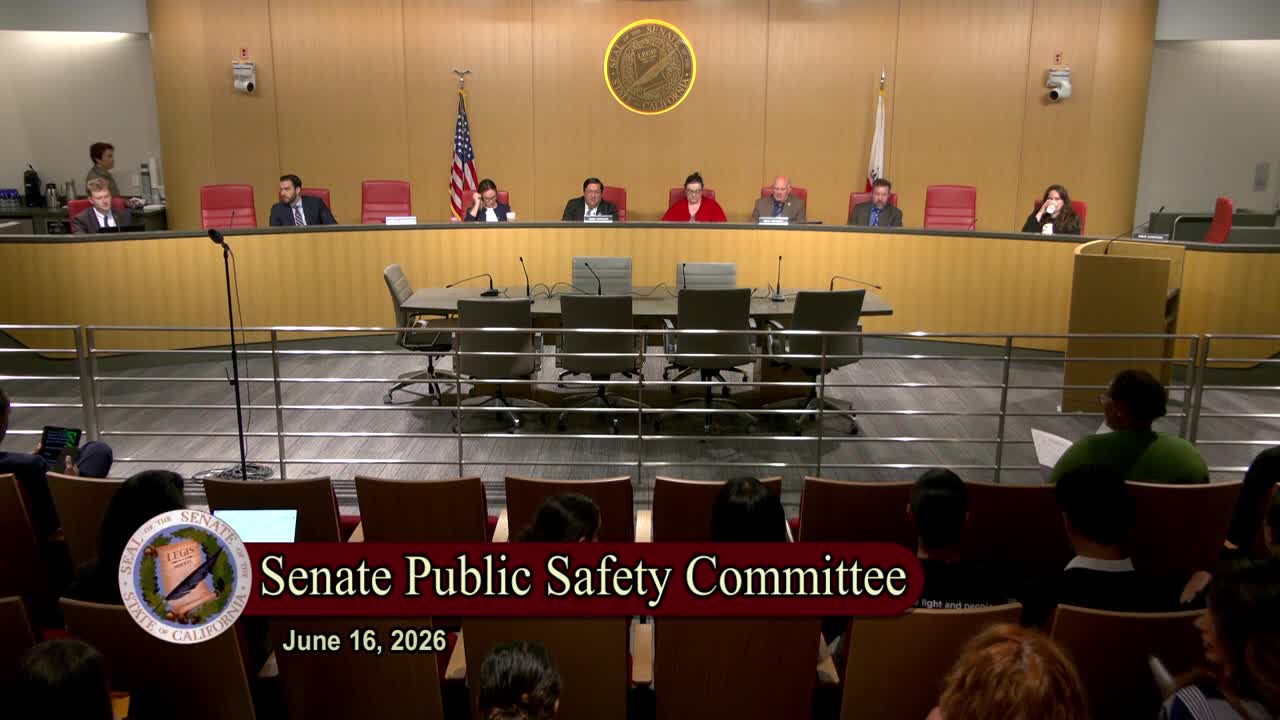 9MIN
Senate Standing Committee on Public Safety
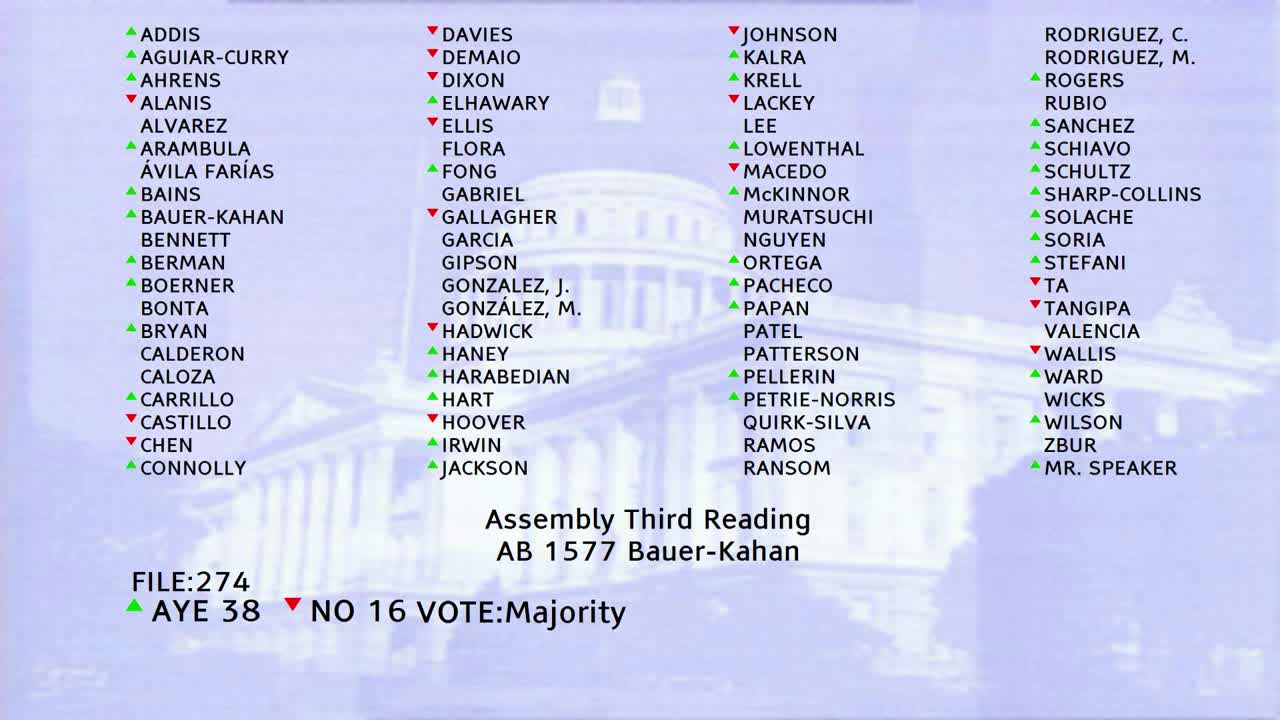 1MIN
Assembly Floor
 22MIN
Assembly Standing Committee on Transportation
 17MIN
Assembly Standing Committee on Public Safety
Bill Author

Bill Co-Author(s):