AB 1666: Forest management: biomass innovation parks: wood products.
- Session Year: 2025-2026
- House: Assembly
- Latest Version Date: 2026-08-30
Current Status:
Failed
(2026-09-30: Vetoed by Governor.)
Introduced
In Committee
Awaiting First Chamber Vote
Passed First Chamber
In Committee
Awaiting Second Chamber Vote
Passed Second Chamber
Enacted
Existing law establishes the Department of Forestry and Fire Protection (CAL-FIRE) in the Natural Resources Agency and requires CAL-FIRE to coordinate programs of fire protection, fire prevention, pest control, and forest and range maintenance and enhancement. Existing law requires the Secretary of the Natural Resources Agency to establish a working group on expanding wood product markets that can utilize woody biomass, especially biomass removed from high fire hazard zones, as determined by CAL-FIRE.
This bill would enact the Biomass Innovation Parks Act, which would establish the Biomass Innovation Park Grants and Financing Program, to be administered by the agency. The bill would require the agency, in coordination with the Department of Food and Agriculture (department) and CAL-FIRE, on or before September 30, 2027, to identify one or more biomass innovation parks, as provided. The bill would require the agency, in coordination with the department and CAL-FIRE, to develop guidelines and solicit proposals from an eligible applicant, as defined, to develop, operate, and manage a biomass innovation park, as provided. The bill would require the guidelines to include specified things, including, among other things, that each park shall only process wood waste, as defined, that originated in California, that each park only host projects that use a noncombustion technology to convert wood waste into carbon-beneficial products or end uses, as specified, and that each park establish a community benefits program. In order to facilitate a planning process for identifying parks, the bill would authorize the agency, in coordination with the department and CAL-FIRE, to develop guidance on specified things, including, among others, guidance for a public agency and private industry to partner on a park proposal.
This bill would additionally require the agency, in coordination with the Office of Land Use and Climate Innovation and CAL-FIRE, to, among other things, develop regional wood availability assessments and to adopt a tracking system to trace and authenticate forest biomass origins. The bill would require the agency to deliver a report to the Legislature on or before December 31, 2027, containing information pertaining to the identified parks.
Existing law establishes the Department of Forestry and Fire Protection (CAL-FIRE) in the Natural Resources Agency and requires CAL-FIRE to coordinate programs of fire protection, fire prevention, pest control, and forest and range maintenance and enhancement. Existing law requires the Secretary of the Natural Resources Agency to establish a working group on expanding wood product markets that can utilize woody biomass, especially biomass removed from high fire hazard zones, as determined by CAL-FIRE.
This bill would enact the Biomass Innovation Parks Act, which would establish the Biomass Innovation Park Grants and Financing Program, to be administered by the agency. The bill would require the agency, in coordination with the Department of Food and Agriculture (department) and CAL-FIRE, on or before September 30, 2027, to identify one or more biomass innovation parks, as provided. The bill would require the agency, in coordination with the department and CAL-FIRE, to develop guidelines and solicit proposals from an eligible applicant, as defined, to develop, operate, and manage a biomass innovation park, as provided. The bill would require the guidelines to include specified things, including, among other things, that each park shall only process wood waste, as defined, that originated in California, that each park only host projects that use a noncombustion technology to convert wood waste into carbon-beneficial products or end uses, as specified, and that each park establish a community benefits program. In order to facilitate a planning process for identifying parks, the bill would authorize the agency, in coordination with the department and CAL-FIRE, to develop guidance on specified things, including, among others, guidance for a public agency and private industry to partner on a park proposal.
This bill would additionally require the agency, in coordination with the Office of Land Use and Climate Innovation and CAL-FIRE, to, among other things, develop regional wood availability assessments and to adopt a tracking system to trace and authenticate forest biomass origins. The bill would require the Strategic Growth Council and the Department of Housing and Community Development to consider incorporating the use of wood products in housing grant programs, as provided. The bill would require the California Building Standards Commission to identify and adopt new measures that incentivize wood products produced in California. The bill would require the State Board of Forestry and Fire Protection, in coordination with the Department of General Services, on or before September 30, 2027, to develop a strategy to support the procurement of wood products, including, but not limited to, mass timber, in relation to state-funded projects involving the construction or reconstruction of buildings. The bill would require the agency to deliver a report to the Legislature on or before December 31, 2027, containing information pertaining to the identified parks.
Existing law establishes the Department of Forestry and Fire Protection (CAL-FIRE) in the Natural Resources Agency and requires CAL-FIRE to coordinate programs of fire protection, fire prevention, pest control, and forest and range maintenance and enhancement. Existing law requires the Secretary of the Natural Resources Agency to establish a working group on expanding wood product markets that can utilize woody biomass, especially biomass removed from high fire hazard zones, as determined by CAL-FIRE.
This bill would enact the Biomass Innovation Parks Act, which would establish the Biomass Innovation Park Grants and Financing Program, to be administered by the agency. The bill would require the agency, in coordination with the Department of Food and Agriculture (department) and CAL-FIRE, on or before September 30, 2027, to identify one or more biomass innovation parks, as provided. The bill would require the agency, in coordination with the department and CAL-FIRE, to develop guidelines and facilitate a planning process for the purposes of identifying the parks and guidelines for purposes of soliciting solicit proposals from an eligible applicant, as defined, as provided. to develop, operate, and manage a biomass innovation park, as provided. The bill would require the guidelines to include specified things, including, among other things, that each park shall only process wood waste, as defined, that originated in California, that each park only host projects that use a noncombustion technology to convert wood waste into carbon-beneficial products or end uses, as specified, and that each park establish a community benefits program. In order to facilitate the a planning process described above, for identifying parks, the bill would authorize the agency, in coordination with the department and CAL-FIRE, to develop guidance on specified things, including, among others, guidance for a public agency and private industry to partner on a park proposal.
This bill would additionally require the agency, in coordination with the Office of Land Use and Climate Innovation and CAL-FIRE, to, among other things, develop regional wood availability assessments and to adopt a tracking system to trace and authenticate forest biomass origins. The bill would require the Strategic Growth Council and the Department of Housing and Community Development to consider incorporating the use of wood products in housing grant programs, as provided. The bill would require the California Building Standards Commission to identify and adopt new measures that incentivize wood products produced in California. The bill would require the State Board of Forestry and Fire Protection, in coordination with the Department of General Services, on or before September 30, 2027, to develop a strategy to support the procurement of wood products, including, but not limited to, mass timber, in relation to state-funded projects involving the construction or reconstruction of buildings. The bill would require the agency to deliver a report to the Legislature on or before December 31, 2027, containing information pertaining to the identified parks.
Existing law establishes the Department of Forestry and Fire Protection (CAL-FIRE) in the Natural Resources Agency and requires CAL-FIRE to coordinate programs of fire protection, fire prevention, pest control, and forest and range maintenance and enhancement. Existing law requires the Secretary of the Natural Resources Agency to establish a working group on expanding wood product markets that can utilize woody biomass, especially biomass removed from high fire hazard zones, as determined by CAL-FIRE.
This bill would enact the Biomass Innovation Parks Act, which would establish the Biomass Innovation Park Grants and Financing Program, to be administered by the agency. The bill would require the agency, in coordination with the Department of Food and Agriculture (department) and CAL-FIRE, on or before September 30, 2027, to identify one or more biomass innovation parks, as provided. The bill would require the agency, in coordination with the department and CAL-FIRE, to develop guidelines and facilitate a planning process for the purposes of identifying the parks and guidelines for purposes of soliciting proposals from an eligible applicant, as defined, as provided. The bill would require the guidelines to include specified things, including, among other things, that each park shall only process wood waste, as defined, that originated in California, that each park only host projects that use a noncombustion technology to convert wood waste into carbon-beneficial products or end uses, as specified, and that each park establish a community benefits program. In order to facilitate the planning process described above, the bill would authorize the agency, in coordination with the department and CAL-FIRE, to develop guidance on specified things, including, among others, guidance for a public agency and private industry to partner on a park proposal.
This bill would additionally require the agency, in coordination with the Office of Land Use and Climate Innovation and CAL-FIRE, to, among other things, develop regional wood availability assessments and to adopt a tracking system to trace and authenticate forest biomass origins. The bill would require the Strategic Growth Council and the Department of Housing and Community Development to consider incorporating the use of wood products in housing grant programs, as provided. The bill would require the California Building Standards Commission to identify and adopt new measures that incentivize wood products produced in California. The bill would require the State Board of Forestry and Fire Protection, in coordination with the Department of General Services, on or before September 30, 2027, to develop a strategy to support the procurement of wood products, including, but not limited to, mass timber, in relation to state-funded projects involving the construction or reconstruction of buildings. The bill would require the agency to deliver a report to the Legislature on or before December 31, 2027, containing information pertaining to the identified parks.
Existing law establishes the Department of Forestry and Fire Protection (CAL-FIRE) in the Natural Resources Agency and requires the department CAL-FIRE to coordinate programs of fire protection, fire prevention, pest control, and forest and range maintenance and enhancement. Existing law requires the Secretary of the Natural Resources Agency to establish a working group on expanding wood product markets that can utilize woody biomass, especially biomass removed from high fire hazard zones, as determined by the department. CAL-FIRE.
This bill would enact the Biomass Innovation Parks Act, which would establish the Biomass Innovation Park Grants and Financing Program, to be administered by the agency. The bill would require the agency, in coordination with the Department of Food and Agriculture (department) and the Department of Forestry and Fire Protection (CAL-FIRE), CAL-FIRE, on or before September 30, 2027, to identify one or more biomass innovation parks, as provided. The bill would require the agency, in coordination with the department and CAL-FIRE, to develop guidelines and facilitate a planning process for the purposes of identifying the parks and guidelines for purposes of soliciting proposals from an eligible applicant, as defined, as provided. The bill would require the guidelines to include specified things, including, among other things, that each park shall only process wood waste, as defined, that originated in California, that each park only host projects that use a noncombustion technology to convert wood waste into carbon-beneficial products or end uses, as specified, and that each park establish a community benefits program. In order to facilitate the planning process described above, the bill would authorize the agency, in coordination with the department and CAL-FIRE, to develop guidance on specified things, including, among others, guidance for a public agency and private industry to partner on a park proposal.
This bill would additionally require the agency, in coordination with the Office of Land Use and Climate Innovation and CAL-FIRE, to, among other things, develop regional wood availability assessments and to adopt a tracking system to trace and authenticate forest biomass origins. The bill would require the Strategic Growth Council and the Department of Housing and Community Development to consider incorporating the use of wood products in housing grant programs, as provided. The bill would require the California Building Standards Commission to identify and adopt new measures that incentivize wood products produced in California. The bill would require the State Board of Forestry and Fire Protection, in coordination with the Department of General Services, on or before September 30, 2027, to develop a strategy to support the procurement of wood products, including, but not limited to, mass timber, in relation to state-funded projects involving the construction or reconstruction of buildings. The bill would require the agency to deliver a report to the Legislature on or before December 31, 2027, containing information pertaining to the identified parks.
(1)Existing
Existing law establishes the Department of Forestry and Fire Protection in the Natural Resources Agency and requires the department to coordinate programs of fire protection, fire prevention, pest control, and forest and range maintenance and enhancement. Existing law requires the Secretary of the Natural Resources Agency to establish a working group on expanding wood product markets that can utilize woody biomass, especially biomass removed from high fire hazard zones, as determined by the department.
This bill would enact the Biomass Innovation Parks Act, which would establish the Biomass Innovation Park Grants and Financing Program, to be administered by the agency. The bill would require the agency, in coordination with the Department of Food and Agriculture (department) and the Department of Forestry and Fire Protection (CAL-FIRE), to identify one or more biomass innovation parks, as provided. The bill would require the agency, in coordination with the department and CAL-FIRE, to develop guidelines and facilitate a planning process for the purposes of identifying the parks and guidelines for purposes of soliciting proposals from an eligible applicant, as defined, as provided. The bill would require the guidelines to include specified things, including, among other things, that each park shall only process wood waste, as defined, that originated in California, that each park only host projects that use a noncombustion technology to convert wood waste into carbon-beneficial products or end uses, as specified, and that each park establish a community benefits program. In order to facilitate the planning process described above, the bill would authorize the agency, in coordination with the department and CAL-FIRE, to develop guidance on specified things, including, among others, guidance for a public agency and private industry to partner on a park proposal.
This bill would additionally require the agency, in coordination with the Office of Land Use and Climate Innovation and CAL-FIRE, to, among other things, develop regional wood availability assessments and to adopt a tracking system to trace and authenticate forest biomass origins. The bill would require the State Air Resources Board, among other things, to publish on its internet website an assessment of life-cycle emissions from alternative uses of California-sourced wood waste. The bill would require the Strategic Growth Council and the Department of Housing and Community Development to consider incorporating the use of wood products in housing grant programs, as provided. The bill would require the California Building Standards Commission to identify and adopt new measures that incentivize wood products produced in California. The bill would require the agency to deliver a report to the Legislature on or before December 31, 2027, containing information pertaining to the identified parks.
(2)The Safe Drinking Water, Wildfire Prevention, Drought Preparedness, and Clean Air Bond Act of 2024 (bond act), approved by the voters as Proposition 4 at the November 5, 2024, statewide general election, authorized the issuance of bonds in the amount of $10,000,000,000 pursuant to the State General Obligation Bond Law to finance projects for safe drinking water, drought, flood, and water resilience, wildfire and forest resilience, coastal resilience, extreme heat mitigation, biodiversity and nature-based climate solutions, climate-smart, sustainable, and resilient farms, ranches, and working lands, park creation and outdoor access, and clean air programs. Of these funds, the bond act makes $50,000,000 available for projects in California that provide long-term capital infrastructure to use forest and other vegetative waste removed for wildfire mitigation for noncombustible uses that maximize reductions in greenhouse gas emissions, provide local air quality benefits, and increase local community resilience against climate change impacts, as specified. This bill would appropriate an unspecified sum of money from the $50,000,000 made available as described above to the agency for the agency to support the Biomass Innovation Park Grants and Financing Program, as provided, thereby making an appropriation.(1)Existing law establishes the Department of Forestry and Fire Protection in the Natural Resources Agency and requires the department to coordinate programs of fire protection, fire prevention, pest control, and forest and range maintenance and enhancement. Existing law requires the Secretary of the Natural Resources Agency to establish a working group on expanding wood product markets that can utilize woody biomass, especially biomass removed from high fire hazard zones, as determined by the department.
This bill would enact the Biomass Innovation Parks Act, which would establish the Biomass Innovation Park Grants and Financing Program, to be administered by the agency. The bill would require the agency, in coordination with the Department of Food and Agriculture, Agriculture (department) and the Department of Forestry and Fire Protection (CAL-FIRE), to identify one or more biomass innovation parks. parks, as provided. The bill would require the agency agency, in coordination with the department and CAL-FIRE, to develop guidelines and facilitate a planning process for the purposes of identifying the parks and guidelines for purposes of soliciting proposals from an eligible applicant, as defined, as provided. The bill would require the guidelines to include specified things, including, among other things, that each park shall only process wood waste, as defined, that originated in California, that each park only host projects that use a noncombustion technology to convert wood waste into carbon-beneficial products or end uses, as specified, and that each park establish a community benefits program. In order to facilitate the planning process described above, the bill would authorize the agency, in coordination with the department and CAL-FIRE, to develop guidance on specified things, including, among others, guidance for a public agency and private industry to partner on a park proposal.
This bill would additionally require the agency, in coordination with the Office of Land Use and Climate Innovation, Innovation and CAL-FIRE, to, among other things, develop regional wood availability assessments and to adopt a tracking system to trace and authenticate forest biomass origins. The bill would require the State Air Resources Board, among other things, to publish on its internet website an assessment of life-cycle emissions from alternative uses of California-sourced wood waste. The bill would require the Strategic Growth Council and the Department of Housing and Community Development to consider incorporating the use of durable wood products in housing grant programs. programs, as provided. The bill would require the California Building Standards Commission to identify and adopt new measures that incentivize durable wood products. products produced in California. The bill would require the agency to deliver a report to the Legislature on or before December 31, 2027, containing information pertaining to the identified parks.
(2)The Safe Drinking Water, Wildfire Prevention, Drought Preparedness, and Clean Air Bond Act of 2024 (bond act), approved by the voters as Proposition 4 at the November 5, 2024, statewide general election, authorized the issuance of bonds in the amount of $10,000,000,000 pursuant to the State General Obligation Bond Law to finance projects for safe drinking water, drought, flood, and water resilience, wildfire and forest resilience, coastal resilience, extreme heat mitigation, biodiversity and nature-based climate solutions, climate-smart, sustainable, and resilient farms, ranches, and working lands, park creation and outdoor access, and clean air programs. Of these funds, the bond act makes $50,000,000 available for projects in California that provide long-term capital infrastructure to use forest and other vegetative waste removed for wildfire mitigation for noncombustible uses that maximize reductions in greenhouse gas emissions, provide local air quality benefits, and increase local community resilience against climate change impacts, as specified.
This bill would appropriate an unspecified sum of money from the $50,000,000 made available as described above to the agency for the agency to support the Biomass Innovation Park Grants and Financing Program, as provided, thereby making an appropriation.
(1)Existing law establishes the Department of Forestry and Fire Protection in the Natural Resources Agency and requires the department to coordinate programs of fire protection, fire prevention, pest control, and forest and range maintenance and enhancement. Existing law requires the Secretary of the Natural Resources Agency to establish a working group on expanding wood product markets that can utilize woody biomass, especially biomass removed from high fire hazard zones, as determined by the department.
This bill would enact the Biomass Innovation Parks Act, which would establish the Biomass Innovation Park Grants and Financing Program, to be administered by the agency. The bill would require the agency, in coordination with the Department of Food and Agriculture, to identify one or more biomass innovation parks. The bill would require the agency to develop guidelines and facilitate a planning process for the purposes of identifying the parks and guidelines for purposes of soliciting proposals from an eligible applicant, as defined, as provided. The bill would require the guidelines to include specified things, including, among other things, that each park shall only process wood waste, as defined, that originated in California, that each park only host projects that use a noncombustion technology to convert wood waste into carbon-beneficial products or end uses, and that each park establish a community benefits program.
This bill would additionally require the agency, in coordination with the Office of Land Use and Climate Innovation, to, among other things, develop regional wood availability assessments and to adopt a tracking system to trace and authenticate forest biomass origins. The bill would require the State Air Resources Board, among other things, to publish on its internet website an assessment of life-cycle emissions from alternative uses of California-sourced wood waste. The bill would require the Strategic Growth Council and the Department of Housing and Community Development to consider incorporating the use of durable wood products in housing grant programs. The bill would require the California Building Standards Commission to identify and adopt new measures that incentivize durable wood products. The bill would require the agency to deliver a report to the Legislature on or before December 31, 2027, containing information pertaining to the identified parks.
(2)The Safe Drinking Water, Wildfire Prevention, Drought Preparedness, and Clean Air Bond Act of 2024 (bond act), approved by the voters as Proposition 4 at the November 5, 2024, statewide general election, authorized the issuance of bonds in the amount of $10,000,000,000 pursuant to the State General Obligation Bond Law to finance projects for safe drinking water, drought, flood, and water resilience, wildfire and forest resilience, coastal resilience, extreme heat mitigation, biodiversity and nature-based climate solutions, climate-smart, sustainable, and resilient farms, ranches, and working lands, park creation and outdoor access, and clean air programs. Of these funds, the bond act makes $50,000,000 available for projects in California that provide long-term capital infrastructure to use forest and other vegetative waste removed for wildfire mitigation for noncombustible uses that maximize reductions in greenhouse gas emissions, provide local air quality benefits, and increase local community resilience against climate change impacts, as specified.
This bill would appropriate an unspecified sum of money from the $50,000,000 made available as described above to the agency for the agency to support the Biomass Innovation Park Grants and Financing Program, as provided, thereby making an appropriation.
Existing law establishes the state flag and the states emblems, including, among other things, the golden poppy as the official state flower and the California redwood as the official state tree.This bill would state the intent of the Legislature to enact legislation that would designate Bigfoot as the official state cryptid.Existing law establishes the state flag and the states emblems, including, among other things, the golden poppy as the official state flower and the California redwood as the official state tree.
This bill would state the intent of the Legislature to enact legislation that would designate Bigfoot as the official state cryptid.
(a)The Legislature finds and declares all of the following:
(1)California is currently facing a wood waste crisis, whereby tens of millions of tons of forest biomass from wildfire prevention, wildfire recovery, and agricultural biomass from crops, orchards, and vineyards are being piled and burned or left to decay in place every year, causing significant carbon and air pollution.
(2)Existing state policy, including the 2022 Climate Change Scoping Plan for Achieving Carbon Neutrality adopted by the State Air Resources Board, identifies the need to collect and convert these residues into carbon-beneficial end uses, including wood products, including mass timber, clean fuels, including biomethane, clean hydrogen, and sustainable aviation fuel, and carbon dioxide removal.
(3)Existing state policy, Resolution 22-21 2022 Climate Change Scoping Plan for Achieving Carbon Neutrality, adopted December 15, 2022, by the State Air Resources Board, provides that the state board has determined that the expansion of biomass combustion for energy production should not be pursued and opportunities for noncombustion biomass solutions should be prioritized.
(4)Existing state policy, Enhancing Californias Resiliency to Natural Catastrophes developed by the California Earthquake Authority pursuant to Senate Bill 254 (Chapter 119 of the Statutes of 2025) and Californias Wildfire and Forest Resilience Action Plan developed by the Governors Wildfire and Forest Resilience Task Force, both identify the establishment of an in-state bioeconomy as a key strategy to reduce catastrophic wildfire risk by removing hazardous residues and reducing the cost of forest treatments.
(5)Existing state policy, including approved Jobs First regional plans for the Sierra Nevada, north state, northern San Joaquin Valley, central San Joaquin Valley, and County of Kern, identify biomass solutions as a strategic priority to reduce pollution, reduce catastrophic wildfire risk, and create economic and workforce development opportunities.
(b)It is the intent of the Legislature to incubate and expand a sustainable bioeconomy in California, consistent with existing state plans and goals, by establishing one or more biomass innovation parks in regions that serve as centralized hubs to deliver and efficiently process residues into a suite of needed clean products and end uses that reduce wildfire risk, reduce air and carbon pollution, provide jobs and community benefits, and support world-leading clean technology innovation. In order to support broader bioeconomy development, additional state policies that establish low-carbon product revenue incentives and offtake opportunities and secure long-term forest biomass feedstock supply are needed to address key obstacles to project financing.
SEC. 2.Chapter 7 (commencing with Section 4820) is added to Part 2.5 of Division 4 of the Public Resources Code, to read:7.Biomass Innovation Parks4820.This chapter shall be known, and may be cited, as the Biomass Innovation Parks Act.
4821.For purposes of this chapter, the following definitions shall apply:
(a)Agency means the Natural Resources Agency.
(b)Agricultural biomass residues means crop, orchard, vineyard, or other agricultural residues, and excludes dairy manure and crops grown for the primary purpose of producing energy.
(c)Biomass program means the Biomass Innovation Park Grants and Financing Program established pursuant to Section 4829.
(d)Board means the State Board of Forestry and Fire Protection.
(e)California Native American tribe has the same meaning as in Section 21073.
(f)Clean hydrogen means hydrogen derived from a production facility and associated onsite storage and processing facilities that is solely derived from biomass feedstock or renewable energy sources covered under the California Renewables Portfolio Standard Program pursuant to Article 16 (commencing with Section 399.11) of Chapter 2.3 of Part 1 of Division 1 of the Public Utilities Code.
(g)Commission means the California Building Standards Commission.
(h)Council means the Strategic Growth Council.
(i)Eligible applicant includes, but is not limited to, state or local agencies, California Native American tribes, nongovernmental organizations, joint powers authorities, or special districts.
(j)Forest biomass residues means material removed for wildfire mitigation, forest restoration projects, or the protection of public safety and infrastructure. Forest biomass residues does not include trees grown for the primary purpose of producing energy.
(k)Office means the Office of Land Use and Climate Innovation.
(l)Park means a biomass innovation park identified by the agency pursuant to Section 4822.
(m)Wood waste means forest biomass residues or agricultural biomass residues.
4822.(a)The agency, on or before September 30, 2027, in coordination with the Department of Food and Agriculture and the department, shall identify one or more parks pursuant to subdivisions (b) and (c).
(b)The agency, in coordination with the Department of Food and Agriculture and the department, for the purpose of identifying parks pursuant to subdivision (a), shall develop guidelines and solicit proposals from eligible applicants to develop, operate, and manage a park. The guidelines shall include all of the following requirements:
(1)Each park shall only process wood waste that originated in California.
(2)(A)Each park shall only host projects that use a noncombustion technology to convert wood waste into carbon-beneficial products or end uses, including, but not limited to, wood products produced by small-diameter sawmills, biomethane, clean hydrogen, and carbon dioxide removal determined to be appropriate by the State Air Resources Board.
(B)This paragraph does not prohibit the use of ancillary systems that support a noncombustion technology, including, but not limited to, the provision of process heat for the manufacture of wood products.
(3)Each park shall require compliance with the applicable regional air quality management district or air pollution control district regulations in order to minimize air pollution.
(4)Each park shall establish a community benefits program.
(5)Evaluation criteria that provides a preference for projects that are developed by, or in partnership with, a California Native American tribe.
(c)In order to facilitate a planning process for identifying parks, the agency, in coordination with the Department of Food and Agriculture and the department, may develop guidance on all of the following:
(1)The relevant state and local permitting agencies that would need to provide the requisite permits in order to site and develop a park.
(2)Guidance for a public agency and private industry to partner on a park proposal.
(3)Pathways for marketing park-generated products or end uses, including, but not limited to, in-state feedstock buyers for biomethane and clean hydrogen.
(d)(1)The agency may establish additional requirements that are related to the planning and solicitation process described in subdivision (b) at its discretion.
(2)The agencys guidelines developed pursuant to subdivision (b) shall allow existing facilities to submit a proposal to expand into a park in order to accept additional wood waste if the expansion complies with the requirements of subdivision (b).
(3)The agencys guidelines developed pursuant to subdivision (b) shall allow eligible projects to include facilities that use mobile processing technologies.
(e)The agency may perform additional activities to facilitate park identification and early-stage development, including, but not limited to, coordinating stakeholders, engaging communities, providing technical assistance, and reporting to the Legislature.
4823.The agency, in coordination with the office and the department, shall do all of the following:
(a)Develop regional wood waste availability assessments.
(b)Develop new, or support existing, public agencies to facilitate long-term forest biomass residues feedstock supply from federal government and nonindustrial private lands. This support may include, but is not limited to, technical assistance.
(c)Adopt a tracking system to trace and authenticate forest biomass origins.
4824.The Biomass Innovation Park Grants and Financing Program is hereby established, to be administered by the agency, for purposes of this chapter.
4825.(a)The agency shall deliver a report to the Legislature on or before December 31, 2027, containing information pertaining to the parks identified pursuant to Section 4822.
(b)A report submitted to the Legislature pursuant to this section shall be submitted in compliance with Section 9795 of the Government Code.
(c)This section shall remain in effect only until January 1, 2032, and as of that date is repealed.
(a)The Legislature finds and declares all of the following:
(1)California is currently facing a wood waste crisis, whereby tens of millions of tons of forest biomass from wildfire prevention, wildfire recovery, and agricultural biomass from crops, orchards, and vineyards are being piled and burned or left to decay in place every year, causing significant carbon and air pollution.
(2)Existing state policy, including the 2022 Climate Change Scoping Plan for Achieving Carbon Neutrality adopted by the State Air Resources Board, identifies the need to collect and convert these residues into carbon-beneficial end uses, including wood products, including mass timber, clean fuels, including biomethane, clean hydrogen, and sustainable aviation fuel, and carbon dioxide removal.
(3)Existing state policy, Resolution 22-21 2022 Climate Change Scoping Plan for Achieving Carbon Neutrality, adopted December 15, 2022, by the State Air Resources Board, provides that the state board has determined that the expansion of biomass combustion for energy production should not be pursued and opportunities for noncombustion biomass solutions should be prioritized.
(4)Existing state policy, Enhancing Californias Resiliency to Natural Catastrophes developed by the California Earthquake Authority pursuant to Senate Bill 254 (Chapter 119 of the Statutes of 2025) and Californias Wildfire and Forest Resilience Action Plan developed by the Governors Wildfire and Forest Resilience Task Force, both identify the establishment of an in-state bioeconomy as a key strategy to reduce catastrophic wildfire risk by removing hazardous residues and reducing the cost of forest treatments.
(5)Existing state policy, including approved Jobs First regional plans for the Sierra Nevada, north state, northern San Joaquin Valley, central San Joaquin Valley, and County of Kern, identify biomass solutions as a strategic priority to reduce pollution, reduce catastrophic wildfire risk, and create economic and workforce development opportunities.
(b)It is the intent of the Legislature to incubate and expand a sustainable bioeconomy in California, consistent with existing state plans and goals, by establishing one or more biomass innovation parks in regions that serve as centralized hubs to deliver and efficiently process residues into a suite of needed clean products and end uses that reduce wildfire risk, reduce air and carbon pollution, provide jobs and community benefits, and support world-leading clean technology innovation. In order to support broader bioeconomy development, additional state policies that establish low-carbon product revenue incentives and offtake opportunities and secure long-term forest biomass feedstock supply are needed to address key obstacles to project financing.
SEC. 2.Chapter 7 (commencing with Section 4820) is added to Part 2.5 of Division 4 of the Public Resources Code, to read:7.Biomass Innovation Parks4820.This chapter shall be known, and may be cited, as the Biomass Innovation Parks Act.
4821.For purposes of this chapter, the following definitions shall apply:
(a)Agency means the Natural Resources Agency.
(b)Agricultural biomass residues means crop, orchard, vineyard, or other agricultural residues, and excludes dairy manure and crops grown for the primary purpose of producing energy.
(c)Biomass program means the Biomass Innovation Park Grants and Financing Program established pursuant to Section 4829.
(d)Board means the State Board of Forestry and Fire Protection.
(e)California Native American tribe has the same meaning as in Section 21073.
(f)Clean hydrogen means hydrogen derived from a production facility and associated onsite storage and processing facilities that is solely derived from biomass feedstock or renewable energy sources covered under the California Renewables Portfolio Standard Program pursuant to Article 16 (commencing with Section 399.11) of Chapter 2.3 of Part 1 of Division 1 of the Public Utilities Code.
(g)Commission means the California Building Standards Commission.
(h)Council means the Strategic Growth Council.
(i)Eligible applicant includes, but is not limited to, state or local agencies, California Native American tribes, nongovernmental organizations, joint powers authorities, or special districts.
(j)Forest biomass residues means material removed for wildfire mitigation, forest restoration projects, or the protection of public safety and infrastructure. Forest biomass residues does not include trees grown for the primary purpose of producing energy.
(k)Office means the Office of Land Use and Climate Innovation.
(l)Park means a biomass innovation park identified by the agency pursuant to Section 4822.
(m)Wood waste means forest biomass residues or agricultural biomass residues.
4822.(a)The agency, on or before September 30, 2027, in coordination with the Department of Food and Agriculture and the department, shall identify one or more parks pursuant to subdivisions (b) and (c).
(b)The agency, in coordination with the Department of Food and Agriculture and the department, for the purpose of identifying parks pursuant to subdivision (a), shall develop guidelines and solicit proposals from eligible applicants to develop, operate, and manage a park. The guidelines shall include all of the following requirements:
(1)Each park shall only process wood waste that originated in California.
(2)(A)Each park shall only host projects that use a noncombustion technology to convert wood waste into carbon-beneficial products or end uses, including, but not limited to, wood products produced by small-diameter sawmills, biomethane, clean hydrogen, and carbon dioxide removal determined to be appropriate by the State Air Resources Board.
(B)This paragraph does not prohibit the use of ancillary systems that support a noncombustion technology, including, but not limited to, the provision of process heat for the manufacture of wood products.
(3)Each park shall require compliance with the applicable regional air quality management district or air pollution control district regulations in order to minimize air pollution.
(4)Each park shall establish a community benefits program.
(5)Evaluation criteria that provides a preference for projects that are developed by, or in partnership with, a California Native American tribe.
(c)In order to facilitate a planning process for identifying parks, the agency, in coordination with the Department of Food and Agriculture and the department, may develop guidance on all of the following:
(1)The relevant state and local permitting agencies that would need to provide the requisite permits in order to site and develop a park.
(2)Guidance for a public agency and private industry to partner on a park proposal.
(3)Pathways for marketing park-generated products or end uses, including, but not limited to, in-state feedstock buyers for biomethane and clean hydrogen.
(d)(1)The agency may establish additional requirements that are related to the planning and solicitation process described in subdivision (b) at its discretion.
(2)The agencys guidelines developed pursuant to subdivision (b) shall allow existing facilities to submit a proposal to expand into a park in order to accept additional wood waste if the expansion complies with the requirements of subdivision (b).
(3)The agencys guidelines developed pursuant to subdivision (b) shall allow eligible projects to include facilities that use mobile processing technologies.
(e)The agency may perform additional activities to facilitate park identification and early-stage development, including, but not limited to, coordinating stakeholders, engaging communities, providing technical assistance, and reporting to the Legislature.
4823.The agency, in coordination with the office and the department, shall do all of the following:
(a)Develop regional wood waste availability assessments.
(b)Develop new, or support existing, public agencies to facilitate long-term forest biomass residues feedstock supply from federal government and nonindustrial private lands. This support may include, but is not limited to, technical assistance.
(c)Adopt a tracking system to trace and authenticate forest biomass origins.
4824.The board, in coordination with the Department of General Services, on or before September 30, 2027, shall develop a strategy to support the procurement of wood products, including, but not limited to, mass timber, for use in state-funded projects involving the construction or reconstruction of buildings. The strategy shall prioritize wood products that achieve low embodied greenhouse gas emissions.4825.The council and the Department of Housing and Community Development shall consider incorporating the use of wood products produced in California in housing grant programs and, if wood products produced in California are incorporated in housing grant programs, shall give preference to wood products produced in California by a California-based company.4826.The commission shall identify and adopt new measures that incentivize wood products produced in California.4827.4824.The Biomass Innovation Park Grants and Financing Program is hereby established, to be administered by the agency, for purposes of this chapter.
4828.4825.(a)The agency shall deliver a report to the Legislature on or before December 31, 2027, containing information pertaining to the parks identified pursuant to Section 4822.
(b)A report submitted to the Legislature pursuant to this section shall be submitted in compliance with Section 9795 of the Government Code.
(c)This section shall remain in effect only until January 1, 2032, and as of that date is repealed.
(a)The Legislature finds and declares all of the following:
(a)(1)California is currently facing a wood waste crisis, whereby tens of millions of tons of forest biomass from wildfire prevention, wildfire recovery, and agricultural biomass from crops, orchards, and vineyards are being piled and burned or left to decay in place every year, causing significant carbon and air pollution.
(b)(2)Existing state policy, including the 2022 Climate Change Scoping Plan for Achieving Carbon Neutrality adopted by the State Air Resources Board, identifies the need to collect and convert these residues into carbon-beneficial end uses, including low-carbon wood products, including mass timber, clean fuels, including biomethane, clean hydrogen, and sustainable aviation fuel, and hydrogen, wood products, including mass timber, and carbon dioxide removal.
(c)(3)Existing state policy, Resolution 22-21 2022 Climate Change Scoping Plan for Achieving Carbon Neutrality, adopted December 15, 2022, by the State Air Resources Board, provides that the state board has determined that the expansion of biomass combustion for energy production should not be pursued and opportunities for noncombustion biomass solutions should be prioritized.
(4)Existing state policy, Enhancing Californias Resiliency to Natural Catastrophes developed by the California Earthquake Authority pursuant to Senate Bill 254 (Chapter 119 of the Statutes of 2025) and Californias Wildfire and Forest Resilience Action Plan developed by the Governors Wildfire and Forest Resilience Task Force, both identify the establishment of an in-state bioeconomy as a key strategy to reduce catastrophic wildfire risk by removing hazardous residues and reducing the cost of forest treatments.
(5)Existing state policy, including approved Jobs First regional plans for the Sierra Nevada, north state, northern San Joaquin Valley, central San Joaquin Valley, and County of Kern, identify biomass solutions as a strategic priority to reduce pollution, reduce catastrophic wildfire risk, and create economic and workforce development opportunities.
(b)It is the intent of the Legislature to incubate and expand a sustainable bioeconomy in California, consistent with existing state plans and goals, by establishing one or more biomass innovation parks in regions that serve as centralized hubs to deliver and efficiently process residues into a suite of needed clean products and end uses that reduce wildfire risk, reduce air and carbon pollution, provide jobs and community benefits, and support world-leading clean technology innovation. In order to support broader bioeconomy development, additional state policies that establish low-carbon product revenue incentives and offtake opportunities and secure long-term forest biomass feedstock supply are needed to address key obstacles to project financing.
SEC. 2.Chapter 7 (commencing with Section 4820) is added to Part 2.5 of Division 4 of the Public Resources Code, to read:7.Biomass Innovation Parks4820.This chapter shall be known, and may be cited, as the Biomass Innovation Parks Act.
4821.For purposes of this chapter, the following definitions shall apply:
(a)Agency means the Natural Resources Agency.
(b)Agricultural biomass residues means crop, orchard, vineyard, or other agricultural residues, and excludes dairy manure and crops grown for the primary purpose of producing energy.
(c)Biomass program means the Biomass Innovation Park Grants and Financing Program established pursuant to Section 4829.
(d)Board means the State Board of Forestry and Fire Protection.
(e)California Native American tribe has the same meaning as in Section 21073.
(f)Clean hydrogen means hydrogen derived from a production facility and associated onsite storage and processing facilities that is solely derived from biomass feedstock or renewable energy sources covered under the California Renewables Portfolio Standard Program pursuant to Article 16 (commencing with Section 399.11) of Chapter 2.3 of Part 1 of Division 1 of the Public Utilities Code.
(g)Commission means the California Building Standards Commission.
(h)Council means the Strategic Growth Council.
(i)Eligible applicant includes, but is not limited to, state or local agencies, California Native American tribes, nongovernmental organizations, joint powers authorities, or special districts.
(j)Forest biomass residues means material removed for wildfire mitigation, forest restoration projects, or the protection of public safety and infrastructure. Forest biomass residues does not include trees grown for the primary purpose of producing energy.
(k)Office means the Office of Land Use and Climate Innovation.
(l)Park means a biomass innovation park identified by the agency pursuant to Section 4822.
(m)Wood waste means forest biomass residues or agricultural biomass residues.
4822.(a)The agency, on or before September 30, 2027, in coordination with the Department of Food and Agriculture and the department, shall identify one or more parks pursuant to subdivisions (b) and (c).
(b)The agency, in coordination with the Department of Food and Agriculture and the department, for the purpose of identifying parks pursuant to subdivision (a), shall develop guidelines and facilitate a planning process for purposes of identifying parks pursuant to subdivision (a) and guidelines for purposes of soliciting solicit proposals from eligible applicants to develop, operate, and manage a park. The guidelines shall include all of the following requirements:
(1)Each park shall only process wood waste that originated in California.
(2)(A)Each park shall only host projects that use a noncombustion technology to convert wood waste into carbon-beneficial products or end uses, including, but not limited to, wood products produced by small-diameter sawmills, biomethane, clean hydrogen, and carbon dioxide removal determined to be appropriate by the State Air Resources Board.
(B)This paragraph does not prohibit the use of ancillary systems that support a noncombustion technology, including, but not limited to, the provision of process heat for the manufacture of wood products.
(3)Each park shall require compliance with the applicable regional air quality management district or air pollution control district regulations in order to minimize air pollution.
(4)Each park shall establish a community benefits program.
(5)Evaluation criteria that provides a preference for projects that are developed by, or in partnership with, a California Native American tribe.
(c)In order to facilitate a planning process for identifying parks, the agency, in coordination with the Department of Food and Agriculture and the department, may develop guidance on all of the following:
(1)The relevant state and local permitting agencies that would need to provide the requisite permits in order to site and develop a park.
(2)Guidance for a public agency and private industry to partner on a park proposal.
(3)Pathways for marketing park-generated products or end uses, including, but not limited to, in-state feedstock buyers for biomethane and clean hydrogen.
(d)(1)The agency may establish additional requirements that are related to the planning and solicitation process described in subdivision (b) at its discretion.
(2)The agencys guidelines developed pursuant to subdivision (b) shall allow existing facilities to submit a proposal to expand into a park in order to accept additional wood waste if the expansion complies with the requirements of subdivision (b).
(3)The agencys guidelines developed pursuant to subdivision (b) shall include a preference for projects that allow eligible projects to include facilities that use mobile processing technologies.
(e)The agency may perform additional activities to facilitate park identification and early-stage development, including, but not limited to, coordinating stakeholders, engaging communities, providing technical assistance, and reporting to the Legislature.
4823.The agency, in coordination with the office and the department, shall do all of the following:
(a)Develop regional wood waste availability assessments.
(b)Develop new, or support existing, public agencies to facilitate long-term forest biomass residues feedstock supply from federal government and nonindustrial private lands. This support may include, but is not limited to, technical assistance.
(c)Adopt a tracking system to trace and authenticate forest biomass origins.
4824.The board, in coordination with the Department of General Services, on or before September 30, 2027, shall develop a strategy to support the procurement of wood products, including, but not limited to, mass timber, for use in state-funded projects involving the construction or reconstruction of buildings. The strategy shall prioritize wood products that achieve low embodied greenhouse gas emissions.
4825.The council and the Department of Housing and Community Development shall consider incorporating the use of wood products produced in California in housing grant programs and, if wood products produced in California are incorporated in housing grant programs, shall give preference to wood products produced in California by a California-based company.
4826.The commission shall identify and adopt new measures that incentivize wood products produced in California.
4827.The Biomass Innovation Park Grants and Financing Program is hereby established, to be administered by the agency, for purposes of this chapter.
4828.(a)The agency shall deliver a report to the Legislature on or before December 31, 2027, containing information pertaining to the parks identified pursuant to Section 4822.
(b)A report submitted to the Legislature pursuant to this section shall be submitted in compliance with Section 9795 of the Government Code.
(c)This section shall remain in effect only until January 1, 2032, and as of that date is repealed.
The Legislature finds and declares all of the following:
(a)California is currently facing a wood waste crisis, whereby tens of millions of tons of forest biomass from wildfire prevention, wildfire recovery, and agricultural biomass from crops, orchards, and vineyards are being piled and burned or left to decay in place every year, causing significant carbon and air pollution.
(b)Existing state policy, including the 2022 Climate Change Scoping Plan for Achieving Carbon Neutrality adopted by the State Air Resources Board, identifies the need to collect and convert these residues into carbon-beneficial end uses, including low-carbon fuels, including biomethane, sustainable aviation fuel, and hydrogen, wood products, including mass timber, and carbon dioxide removal.
(c)Existing state policy, Resolution 22-21 2022 Climate Change Scoping Plan for Achieving Carbon Neutrality, adopted December 15, 2022, by the State Air Resources Board, provides that the state board has determined that the expansion of biomass combustion for energy production should not be pursued and opportunities for noncombustion biomass solutions should be prioritized.
SEC. 2.Chapter 7 (commencing with Section 4820) is added to Part 2.5 of Division 4 of the Public Resources Code, to read:7.Biomass Innovation Parks4820.This chapter shall be known, and may be cited, as the Biomass Innovation Parks Act.
4821.For purposes of this chapter, the following definitions shall apply:
(a)Agency means the Natural Resources Agency.
(b)Agricultural biomass residues means crop, orchard, vineyard, or other agricultural residues, and excludes dairy manure and crops grown for the primary purpose of producing energy.
(c)Biomass program means the Biomass Innovation Park Grants and Financing Program established pursuant to Section 4829.
(d)Board means the State Board of Forestry and Fire Protection.
(e)CAL-FIRE means the Department of Forestry and Fire Protection.(f)(e)California Native American tribe has the same meaning as in Section 21073.
(g)(f)Clean hydrogen means hydrogen derived from a production facility and associated onsite storage and processing facilities that is solely derived from biomass feedstock and/or or renewable energy sources covered under the California Renewables Portfolio Standard Program pursuant to Article 16 (commencing with Section 399.11) of Chapter 2.3 of Part 1 of Division 1 of the Public Utilities Code.
(h)(g)Commission means the California Building Standards Commission.
(i)(h)Council means the Strategic Growth Council.
(j)Department means the Department of Food and Agriculture.(k)(i)Eligible applicant includes, but is not limited to, state or local agencies, California Native American tribes, nongovernmental organizations, joint powers authorities, or special districts.
(l)(j)Forest biomass residues means material removed for wildfire mitigation, forest restoration projects, or the protection of public safety and infrastructure. Forest biomass residues does not include trees grown for the primary purpose of producing energy.
(m)(k)Office means the Office of Land Use and Climate 40 Innovation.
(n)(l)Park means a biomass innovation park identified by the agency pursuant to Section 4822.
(o)(m)Wood waste means forest biomass residues or agricultural biomass residues.
4822.(a)The agency, on or before September 30, 2027, in coordination with the department Department of Food and Agriculture and CAL-FIRE, the department, shall identify one or more parks pursuant to subdivisions (b) and (c).
(b)The agency, in coordination with the department Department of Food and Agriculture and CAL-FIRE, the department, shall develop guidelines and facilitate a planning process for purposes of identifying parks pursuant to subdivision (a) and guidelines for purposes of soliciting proposals from eligible applicants to develop, operate, and manage a park. The guidelines shall include all of the following requirements:
(1)Each park shall only process wood waste that originated in California.
(2)(A)Each park shall only host projects that use a noncombustion technology to convert wood waste into carbon-beneficial products or end uses, including, but not limited to, wood products produced by small-diameter sawmills, biomethane, clean hydrogen, and carbon dioxide removal determined to be appropriate by the State Air Resources Board.
(B)This paragraph does not prohibit the use of ancillary systems that support a noncombustion technology, including, but not limited to, the provision of process heat for the manufacture of wood products.
(3)Each park shall require compliance with the applicable regional air quality management district or air pollution control district regulations in order to minimize air pollution.
(4)Each park shall establish a community benefits program.
(5)Evaluation criteria that provides a preference for projects that are developed by, or in partnership with, a California Native American tribe.
(c)In order to facilitate a planning process for identifying parks, the agency, in coordination with the department Department of Food and Agriculture and CAL-FIRE, the department, may develop guidance on all of the following:
(1)The relevant state and local permitting agencies that would need to provide the requisite permits in order to cite site and develop a park.
(2)Guidance for a public agency and private industry to partner on a park proposal.
(3)Pathways for marketing park-generated products or end uses, including, but not limited to, in-state feedstock buyers for biomethane and clean hydrogen.
(d)(1)The agency may establish additional requirements that are related to the planning and solicitation process described in subdivision (b) at its discretion.
(2)The agencys guidelines developed pursuant to subdivision (b) shall allow existing facilities to submit a proposal to expand into a park in order to accept additional wood waste if the expansion complies with the requirements of subdivision (b).
(3)The agencys guidelines developed pursuant to subdivision (b) shall include a preference for projects that use mobile processing technologies.
(e)The agency may perform additional activities to facilitate park identification and early-stage development, including, but not limited to, coordinating stakeholders, engaging communities, providing technical assistance, and reporting to the Legislature.
4823.The agency, in coordination with the office and CAL-FIRE, the department, shall do all of the following:
(a)Develop regional wood waste availability assessments.
(b)Develop new, or support existing, public agencies to facilitate long-term forest biomass residues feedstock supply from federal government and nonindustrial private lands. This support may include, but is not limited to, technical assistance.
(c)Adopt a tracking system to trace and authenticate forest biomass origins.
4824.The board, in coordination with the Department of General Services, on or before September 30, 2027, shall develop a strategy to support the procurement of wood products, including, but not limited to, mass timber, for use in state-funded projects involving the construction or reconstruction of buildings. The strategy shall prioritize wood products that achieve low embodied greenhouse gas emissions.
4825.The council and the Department of Housing and Community Development shall consider incorporating the use of wood products produced in California in housing grant programs and, if wood products produced in California are incorporated in housing grant programs, shall give preference to wood products produced in California by a California-based company.
4826.The commission shall identify and adopt new measures that incentivize wood products produced in California.
4827.The Biomass Innovation Park Grants and Financing Program is hereby established, to be administered by the agency, for purposes of this chapter.
4828.(a)The agency shall deliver a report to the Legislature on or before December 31, 2027, containing information pertaining to the parks identified pursuant to Section 4822.
(b)A report submitted to the Legislature pursuant to this section shall be submitted in compliance with Section 9795 of the Government Code.
(c)This section shall remain in effect only until January 1, 2032, and as of that date is repealed.
The Legislature finds and declares all of the following:
(a)California is currently facing a wood waste crisis, whereby tens of millions of tons of forest biomass from wildfire prevention, wildfire recovery, and agricultural biomass from crops, orchards, and vineyards are being piled and burned or left to decay in place every year, causing significant carbon and air pollution.
(b)Existing state policy, including the 2022 Climate Change Scoping Plan for Achieving Carbon Neutrality adopted by the State Air Resources Board, identifies the need to collect and convert these residues into carbon-beneficial end uses, including low-carbon fuels, including biomethane, sustainable aviation fuel, and hydrogen, wood products, including mass timber, and carbon dioxide removal.
(c)Existing state policy, Resolution 22-21 2022 Climate Change Scoping Plan for Achieving Carbon Neutrality, adopted December 15, 2022, by the State Air Resources Board, provides that the state board has determined that the expansion of biomass combustion for energy production should not be pursued and opportunities for noncombustion biomass solutions should be prioritized.
SEC. 2.Chapter 7 (commencing with Section 4820) is added to Part 2.5 of Division 4 of the Public Resources Code, to read:7.Biomass Innovation Parks4820.This chapter shall be known, and may be cited, as the Biomass Innovation Parks Act.
4821.For purposes of this chapter, the following definitions shall apply:
(a)Agency means the Natural Resources Agency.
(b)Agricultural biomass residues means crop, orchard, vineyard, or other agricultural residues, and excludes dairy manure and crops grown for the primary purpose of producing energy.
(c)Biomass program means the Biomass Innovation Park Grants and Financing Program established pursuant to Section 4827. 4829.
(d)Board means the State Board of Forestry and Fire Protection.
(d)(e)CAL-FIRE means the Department of Forestry and Fire Protection.
(e)(f)California Native American tribe has the same meaning as in Section 21073.
(f)(g)Clean hydrogen means hydrogen derived from a production facility and associated onsite storage and processing facilities that meets the requirements of paragraph (6) of subdivision (b) of Section 25545. is solely derived from biomass feedstock and/or renewable energy sources covered under the California Renewables Portfolio Standard Program pursuant to Article 16 (commencing with Section 399.11) of Chapter 2.3 of Part 1 of Division 1 of the Public Utilities Code.
(g)(h)Commission means the California Building Standards Commission.
(h)(i)Council means the Strategic Growth Council.
(i)(j)Department means the Department of Food and Agriculture.
(j)District means an air quality management district or air pollution control district.(k)Eligible applicant includes, but is not limited to, state or local agencies, California Native American tribes, nongovernmental organizations, joint powers authorities, or special districts.
(l)Forest biomass residues means material removed for wildfire mitigation, forest restoration projects, or the protection of public safety and infrastructure. Forest biomass residues does not include trees grown for the primary purpose of producing energy.
(m)Office means the Office of Land Use and Climate 40 Innovation.
(m)
(n)Park means a biomass innovation park identified by the agency pursuant to subdivision (a) of Section 4822.
(n)Office means the Office of Land Use and Climate Innovation.(o)Wood waste means forest biomass residues or agricultural biomass residues.
4822.(a)The agency, on or before September 30, 2027, in coordination with the department and CAL-FIRE, shall identify one or more parks pursuant to subdivisions (b) and (c).
(b)The agency, in coordination with the department and CAL-FIRE, shall develop guidelines and facilitate a planning process for purposes of identifying parks pursuant to subdivision (a) and guidelines for purposes of soliciting proposals from eligible applicants to develop, operate, and manage a park. The guidelines shall include all of the following requirements:
(1)Each park shall only process wood waste that originated in California.
(2)(A)Each park shall only host projects that use a noncombustion technology to convert wood waste into carbon-beneficial products or end uses, including, but not limited to, wood products produced by small-diameter sawmills, biomethane, clean hydrogen, and carbon dioxide removal determined to be appropriate by the State Air Resources Board.
(B)This paragraph does not prohibit the use of ancillary systems that support a noncombustion technology, including, but not limited to, the provision of process heat for the manufacture of wood products.
(3)Each park shall require its facilities to use the best available control technologies compliance with the applicable regional air quality management district or air pollution control district regulations in order to minimize air pollution in compliance with the applicable district regulations. pollution.
(4)Each park shall establish a community benefits program.
(5)Evaluation criteria that provides a preference for projects that are developed by, or in partnership with, a California Native American tribe.
(6)Evaluation criteria that provides a preference for projects that use mobile processing technologies.(c)In order to facilitate a planning process for identifying parks, the agency, in coordination with the department and CAL-FIRE, may develop guidance on all of the following:
(1)The relevant state and local permitting agencies that would need to provide the requisite permits in order to cite and develop a park.
(2)Guidance for a public agency and private industry to partner on a park proposal.
(3)Pathways for marketing park-generated products or end uses, including, but not limited to, in-state feedstock buyers for biomethane and clean hydrogen.
(d)(1)The agency may establish additional requirements that are related to the planning and solicitation process described in subdivision (b) at its discretion.
(2)The agencys guidelines developed pursuant to subdivision (b) shall allow existing facilities to submit a proposal to expand into a park in order to accept additional wood waste if the expansion complies with the requirements of subdivision (b).
(3)The agencys guidelines developed pursuant to subdivision (b) shall include a preference for projects that use mobile processing technologies.
(e)The agency may perform additional activities to facilitate park identification and early-stage development, including, but not limited to, coordinating stakeholders, engaging communities, providing technical assistance, and reporting to the Legislature.
4823.The agency, in coordination with the office and CAL-FIRE, shall do all of the following:
(a)Develop regional wood waste availability assessments.
(b)Develop new, or support existing, public agencies to facilitate long-term forest biomass residues feedstock supply from federal government and nonindustrial private lands. This support may include, but is not limited to, technical assistance.
(c)Adopt a tracking system to trace and authenticate forest biomass origins.
4824.The board, in coordination with the Department of General Services, on or before September 30, 2027, shall develop a strategy to support the procurement of wood products, including, but not limited to, mass timber, for use in state-funded projects involving the construction or reconstruction of buildings. The strategy shall prioritize wood products that achieve low embodied greenhouse gas emissions.
4824.4825.The council and the Department of Housing and Community Development shall consider incorporating the use of wood products produced in California in housing grant programs and, if wood products produced in California are incorporated in housing grant programs, shall give preference to wood products produced in California by a California-based company.
4825.4826.The commission shall identify and adopt new measures that incentivize wood products produced in California.
4826.4827.The Biomass Innovation Park Grants and Financing Program is hereby established, to be administered by the agency, for purposes of this chapter.
4827.4828.(a)The agency shall deliver a report to the Legislature on or before December 31, 2027, containing information pertaining to the parks identified pursuant to Section 4822.
(b)A report submitted to the Legislature pursuant to this section shall be submitted in compliance with Section 9795 of the Government Code.
(c)This section shall remain in effect only until January 1, 2032, and as of that date is repealed.
The Legislature finds and declares all of the following:
(a)California is currently facing a wood waste crisis, whereby tens of millions of tons of forest biomass from wildfire prevention, wildfire recovery, and agricultural biomass from crops, orchards, and vineyards are being piled and burned or left to decay in place every year, causing significant carbon and air pollution.
(b)Existing state policy, including the 2022 Climate Change Scoping Plan for Achieving Carbon Neutrality adopted by the State Air Resources Board, identifies the need to collect and convert these residues into carbon-beneficial end uses, including low-carbon fuels, including biomethane, sustainable aviation fuel, and hydrogen, wood products, including mass timber, and carbon dioxide removal.
(c)Existing state policy, Resolution 22-21 2022 Climate Change Scoping Plan for Achieving Carbon Neutrality, adopted December 15, 2022, by the State Air Resources Board, provides that the state board has determined that the expansion of biomass combustion for energy production should not be pursued and opportunities for noncombustion biomass solutions should be prioritized.
SEC. 2.Chapter 7 (commencing with Section 4820) is added to Part 2.5 of Division 4 of the Public Resources Code, to read:7.Biomass Innovation Parks4820.This chapter shall be known, and may be cited, as the Biomass Innovation Parks Act.
4821.For purposes of this chapter, the following definitions shall apply:
(a)Agency means the Natural Resources Agency.
(b)Agricultural biomass residues means crop, orchard, vineyard, or other agricultural residues, and excludes dairy manure and crops grown for the primary purpose of producing energy.
(c)Biomass program means the Biomass Innovation Park Grants and Financing Program established pursuant to Section 4827.
(d)CAL-FIRE means the Department of Forestry and Fire Protection.
(e)California Native American tribe has the same meaning as in Section 21073.
(f)Clean hydrogen means hydrogen derived from a facility and associated onsite storage and processing facilities that meets the requirements of paragraph (6) of subdivision (b) of Section 25545.
(g)Commission means the California Building Standards Commission.
(h)Council means the Strategic Growth Council.
(i)Department means the Department of Food and Agriculture.
(j)District means an air quality management district or air pollution control district.
(k)Eligible applicant includes, but is not limited to, state or local agencies, California Native American tribes, nongovernmental organizations, joint powers authorities, or special districts.
(l)Forest biomass residues means material removed for wildfire mitigation, forest restoration projects, or the protection of public safety and infrastructure. Forest biomass residues does not include trees grown for the primary purpose of producing energy.
(m)Park means a biomass innovation park identified by the agency pursuant to subdivision (a) of Section 4822.
(n)Office means the Office of Land Use and Climate Innovation.
(o)State board means the State Air Resources Board.(p)(o)Wood waste means forest biomass residues or agricultural biomass residues.
4822.(a)The agency, in coordination with the department and CAL-FIRE, shall identify one or more parks pursuant to subdivisions (b) and (c).
(b)The agency, in coordination with the department and CAL-FIRE, shall develop guidelines and facilitate a planning process for purposes of identifying parks pursuant to subdivision (a) and guidelines for purposes of soliciting proposals from eligible applicants to develop, operate, and manage a park. The guidelines shall include all of the following requirements:
(1)Each park shall only process wood waste that originated in California.
(2)Each park shall only host projects that use a noncombustion technology to convert wood waste into carbon-beneficial products or end uses, including, but not limited to, wood products produced by small-diameter sawmills, biomethane, clean hydrogen, and carbon dioxide removal determined to be appropriate by the state board. State Air Resources Board.
(3)Each park shall require its facilities to use the best available control technologies in order to minimize air pollution in compliance with the applicable district regulations.
(4)Each park shall establish a community benefits program.
(5)Evaluation criteria that provides a preference for projects that are developed by, or in partnership with, a California Native American tribe.
(6)Evaluation criteria that provides a preference for projects that use mobile processing technologies.
(c)In order to facilitate a planning process for identifying parks, the agency, in coordination with the department and CAL-FIRE, may develop guidance on all of the following:
(1)The relevant state and local permitting agencies that would need to provide the requisite permits in order to cite and develop a park.
(2)Guidance for a public agency and private industry to partner on a park proposal.
(3)Pathways for marketing park-generated products or end uses, including, but not limited to, in-state feedstock buyers for biomethane and clean hydrogen.
(d)(1)The agency may establish additional requirements that are related to the planning and solicitation process described in subdivision (b) at its discretion.
(2)The agencys guidelines developed pursuant to subdivision (b) shall allow existing facilities to submit a proposal to expand into a park in order to accept additional wood waste if the expansion complies with the requirements of subdivision (b).
(e)The agency may perform additional activities to facilitate park identification and early-stage development, including, but not limited to, coordinating stakeholders, engaging communities, providing technical assistance, and reporting to the Legislature.
4823.The agency, in coordination with the office and CAL-FIRE, shall do all of the following:
(a)Develop regional wood waste availability assessments.
(b)Develop new, or support existing, public agencies to facilitate long-term forest biomass residues feedstock supply from federal government and nonindustrial private lands. This support may include, but is not limited to, technical assistance.
(c)Adopt a tracking system to trace and authenticate forest biomass origins.
4824.The state board shall do both of the following:(a)Publish on its internet website an assessment of life-cycle emissions from alternative uses of California-sourced wood waste.(b)Ensure that wood products are included in the embodied carbon trading system pursuant to Section 38561.6 of the Health and Safety Code, if an embodied trading system is adopted.4825.4824.The council and the Department of Housing and Community Development shall consider incorporating the use of wood products produced in California in housing grant programs and, if wood products produced in California are incorporated in housing grant programs, shall give preference to wood products produced in California by a California-based company.
4826.4825.The commission shall identify and adopt new measures that incentivize wood products produced in California.
4827.4826.The Biomass Innovation Park Grants and Financing Program is hereby established, to be administered by the agency, for purposes of this chapter.
4828.4827.(a)The agency shall deliver a report to the Legislature on or before December 31, 2027, containing information pertaining to the parks identified pursuant to Section 4822.
(b)A report submitted to the Legislature pursuant to this section shall be submitted in compliance with Section 9795 of the Government Code.
(c)This section shall remain in effect only until January 1, 2032, and as of that date is repealed.
SEC. 3.Section 91530 of the Public Resources Code is amended to read:91530.(a)Of the funds made available by Section 91500, fifty million dollars ($50,000,000) shall be available, upon appropriation by the Legislature, to the Department of Conservation or State Energy Resources Conservation and Development Commission for projects in California that provide long-term capital infrastructure to use forest and other vegetative waste removed for wildfire mitigation for noncombustible uses that maximize reductions in greenhouse gas emissions, provide local air quality benefits, and increase local community resilience against climate change impacts.(b)Of the funds made available by subdivision (a), the sum of ____ dollars ($____) is hereby appropriated to the Natural Resources Agency to support the Biomass Innovation Park Grants and Financing Program established pursuant to Section 4827, to the extent consistent with the intent of this division, as approved by the voters.The Legislature finds and declares all of the following:
(a)California is currently facing a wood waste crisis, whereby tens of millions of tons of forest biomass from wildfire prevention prevention, wildfire recovery, and agricultural biomass from crops, orchards, and vineyards are being piled and burned or left to decay in place every year, causing significant carbon and air pollution.
(b)Existing state policy, including the 2022 Climate Change Scoping Plan for Achieving Carbon Neutrality adopted by the State Air Resources Board, identifies the need to collect and convert these residues into carbon-beneficial end uses, including low-carbon fuels, including biomethane, sustainable aviation fuel, and hydrogen, engineered wood products, including mass timber, and carbon dioxide removal.
(c)Existing state policy, Resolution 22-21 2022 Climate Change Scoping Plan for Achieving Carbon Neutrality, adopted December 15, 2022, by the State Air Resources Board, provides that the state board has determined that the expansion of biomass combustion for energy production should not be pursued and opportunities for noncombustion biomass solutions should be prioritized. prioritized.
SEC. 2.Chapter 7 (commencing with Section 4820) is added to Part 2.5 of Division 4 of the Public Resources Code, to read:7.Biomass Innovation Parks4820.This chapter shall be known, and may be cited, as the Biomass Innovation Parks Act.
4821.For purposes of this chapter, the following definitions shall apply:
(a)Agency means the Natural Resources Agency.
(b)Agricultural biomass residues means crop, orchard, vineyard, or other agricultural residues, and excludes dairy manure and crops grown for the primary purpose of producing energy.
(c)Biomass program means the Biomass Innovation Park Grants and Financing Program established pursuant to Section 4827.
(d)CAL-FIRE means the Department of Forestry and Fire Protection.
(e)California Native American tribe has the same meaning as in Section 21073.
(f)Clean hydrogen means hydrogen derived from a facility and associated onsite storage and processing facilities that meets the requirements of paragraph (6) of subdivision (b) of Section 25545.
(g)Commission means the California Building Standards Commission.
(h)Council means the Strategic Growth Council.
(i)Department means the Department of Food and Agriculture.
(j)District means an air quality management district or air pollution control district.
(d)(k)Eligible applicant includes, but is not limited to, state or local agencies, California Indian Native American tribes, nongovernmental organizations, joint powers authorities, or special districts.
(e)(l)Forest biomass residues means material removed for wildfire mitigation, forest restoration projects, or the protection of public safety and infrastructure. Forest biomass residues does not include trees grown for the primary purpose of producing energy.
(f)(m)Park means a biomass innovation park identified by the Natural Resources Agency agency pursuant to subdivision (a) of Section 4822.
(n)Office means the Office of Land Use and Climate Innovation.
(o)State board means the State Air Resources Board.
(g)(p)Wood waste means forest biomass residues or agricultural biomass residues.
4822.(a)The agency, in coordination with the Department of Food and Agriculture, department and CAL-FIRE, shall identify one or more parks pursuant to subdivision (b). subdivisions (b) and (c).
(b)The agency agency, in coordination with the department and CAL-FIRE, shall develop guidelines and facilitate a planning process for purposes of identifying parks pursuant to subdivision (a) and guidelines for purposes of soliciting proposals from eligible applicants to develop, operate, and manage a park. The guidelines shall include all of the following requirements:
(1)Each park shall only process wood waste that originated in California.
(2)Each park shall only host projects that use a noncombustion technology to convert wood waste into carbon-beneficial products or end uses, including, but not limited to, engineered wood products, products produced by small-diameter sawmills, biomethane, clean hydrogen, and carbon dioxide removal. removal determined to be appropriate by the state board.
(3)Each park shall require its facilities to use the best available control technologies in order to minimize air pollution. pollution in compliance with the applicable district regulations.
(4)Each park shall establish a community benefits program.
(5)Evaluation criteria that provides a preference for projects that are developed by, or in partnership with, a California Native American tribe.
(6)Evaluation criteria that provides a preference for projects that use mobile processing technologies.
(c)In order to facilitate a planning process for identifying parks, the agency, in coordination with the department and CAL-FIRE, may develop guidance on all of the following:
(1)The relevant state and local permitting agencies that would need to provide the requisite permits in order to cite and develop a park.
(2)Guidance for a public agency and private industry to partner on a park proposal.
(3)Pathways for marketing park-generated products or end uses, including, but not limited to, in-state feedstock buyers for biomethane and clean hydrogen.
(c)(d)(1)The agency may establish additional requirements that are related to the planning and solicitation process described in subdivision (b) at its discretion.
(2)The agencys guidelines developed pursuant to subdivision (b) shall allow existing facilities to submit a proposal to expand into a park in order to accept additional wood waste if the expansion complies with the requirements of subdivision (b).
(d)(e)The agency may perform additional activities to facilitate park identification and early-stage development, including, but not limited to, coordinating stakeholders, engaging communities, providing technical assistance, and reporting to the Legislature.
4823.The agency, in coordination with the Office of Land Use and Climate Innovation, office and CAL-FIRE, shall do all of the following:
(a)Develop regional wood waste availability assessments.
(b)Develop new, or support existing, public agencies to facilitate long-term forest biomass residues feedstock supply from federal government and nonindustrial private lands. This support may include, but is not limited to, technical assistance.
(c)Adopt a tracking system to trace and authenticate forest biomass origins.
4824.The State Air Resources Board state board shall do both of the following:
(a)Publish on its internet website an assessment of life-cycle emissions from alternative uses of California-sourced wood waste.
(b)Ensure that engineered wood products, including, but not limited to, mass timber, products are included in the embodied carbon trading system pursuant to Section 38561.6 of the Health and Safety Code. Code, if an embodied trading system is adopted.
4825.The Strategic Growth Council council and the Department of Housing and Community Development shall consider incorporating the use of engineered wood products produced in California in housing grant programs. programs and, if wood products produced in California are incorporated in housing grant programs, shall give preference to wood products produced in California by a California-based company.
4826.The California Building Standards Commission commission shall identify and adopt new measures that incentivize engineered wood products. products produced in California.
4827.The Biomass Innovation Park Grants and Financing Program is hereby established, to be administered by the agency, for purposes of this chapter.
4828.(a)The agency shall deliver a report to the Legislature on or before December 31, 2027, containing information pertaining to the parks identified pursuant to Section 4822.
(b)A report submitted to the Legislature pursuant to this section shall be submitted in compliance with Section 9795 of the Government Code.
(c)Pursuant to Section 10231.5 of the Government Code, this section shall become inoperative on December 31, 2031.(c)This section shall remain in effect only until January 1, 2032, and as of that date is repealed.
SEC. 3.Section 91530 of the Public Resources Code is amended to read:91530.(a)Of the funds made available by Section 91500, fifty million dollars ($50,000,000) shall be available, upon appropriation by the Legislature, to the Department of Conservation or State Energy Resources Conservation and Development Commission for projects in California that provide long-term capital infrastructure to use forest and other vegetative waste removed for wildfire mitigation for noncombustible uses that maximize reductions in greenhouse gas emissions, provide local air quality benefits, and increase local community resilience against climate change impacts.
(b)Of the funds made available by subdivision (a), the sum of ____ dollars ($____) is hereby appropriated to the Natural Resources Agency to support the Biomass Innovation Park Grants and Financing Program established pursuant to Section 4827. 4827, to the extent consistent with the intent of this division, as approved by the voters.
The Legislature finds and declares all of the following:
(a)California is currently facing a wood waste crisis, whereby tens of millions of tons of forest biomass from wildfire prevention and agricultural biomass from crops, orchards, and vineyards are being piled and burned or left to decay in place every year, causing significant carbon and air pollution.
(b)Existing state policy, including the 2022 Climate Change Scoping Plan for Achieving Carbon Neutrality adopted by the State Air Resources Board, identifies the need to collect and convert these residues into carbon-beneficial end uses, including low-carbon fuels, including biomethane, sustainable aviation fuel, and hydrogen, engineered wood products, including mass timber, and carbon dioxide removal.
(c)Existing state policy, Resolution 22-21 2022 Climate Change Scoping Plan for Achieving Carbon Neutrality, adopted December 15, 2022, by the State Air Resources Board, provides that the state board has determined that the expansion of biomass combustion for energy production should not be pursued and opportunities for noncombustion biomass solutions should be prioritized.
SEC. 2.Chapter 7 (commencing with Section 4820) is added to Part 2.5 of Division 4 of the Public Resources Code, to read:7.Biomass Innovation Parks4820.This chapter shall be known, and may be cited, as the Biomass Innovation Parks Act.
4821.For purposes of this chapter, the following definitions shall apply:
(a)Agency means the Natural Resources Agency.
(b)Agricultural biomass residues means crop, orchard, vineyard, or other agricultural residues, and excludes dairy manure and crops grown for the primary purpose of producing energy.
(c)Biomass program means the Biomass Innovation Park Grants and Financing Program established pursuant to Section 4827.
(d)Eligible applicant includes, but is not limited to, state or local agencies, California Indian tribes, nongovernmental organizations, joint powers authorities, or special districts.
(e)Forest biomass residues means material removed for wildfire mitigation, forest restoration projects, or the protection of public safety and infrastructure. Forest biomass residues does not include trees grown for the primary purpose of producing energy.
(f)Park means a biomass innovation park identified by the Natural Resources Agency pursuant to subdivision (a) of Section 4822.
(g)Wood waste means forest biomass residues or agricultural biomass residues.
4822.(a)The agency, in coordination with the Department of Food and Agriculture, shall identify one or more parks pursuant to subdivision (b).
(b)The agency shall develop guidelines and facilitate a planning process for purposes of identifying parks pursuant to subdivision (a) and guidelines for purposes of soliciting proposals from eligible applicants to develop, operate, and manage a park. The guidelines shall include all of the following requirements:
(1)Each park shall only process wood waste that originated in California.
(2)Each park shall only host projects that use a noncombustion technology to convert wood waste into carbon-beneficial products or end uses, including, but not limited to, engineered wood products, biomethane, clean hydrogen, and carbon dioxide removal.
(3)Each park shall require its facilities to use the best available control technologies in order to minimize air pollution.
(4)Each park shall establish a community benefits program.
(c)The agency may establish additional requirements that are related to the planning and solicitation process described in subdivision (b) at its discretion.
(d)The agency may perform additional activities to facilitate park identification and early-stage development, including, but not limited to, coordinating stakeholders, engaging communities, providing technical assistance, and reporting to the Legislature.
4823.The agency, in coordination with the Office of Land Use and Climate Innovation, shall do all of the following:
(a)Develop regional wood waste availability assessments.
(b)Develop new, or support existing, public agencies to facilitate long-term forest biomass residues feedstock supply from federal government and nonindustrial private lands. This support may include, but is not limited to, technical assistance.
(c)Adopt a tracking system to trace and authenticate forest biomass origins.
4824.The State Air Resources Board shall do both of the following:
(a)Publish on its internet website an assessment of life-cycle emissions from alternative uses of California-sourced wood waste.
(b)Ensure that engineered wood products, including, but not limited to, mass timber, are included in the embodied carbon trading system pursuant to Section 38561.6 of the Health and Safety Code.
4825.The Strategic Growth Council and the Department of Housing and Community Development shall consider incorporating the use of engineered wood products in housing grant programs.
4826.The California Building Standards Commission shall identify and adopt new measures that incentivize engineered wood products.
4827.The Biomass Innovation Park Grants and Financing Program is hereby established, to be administered by the agency, for purposes of this chapter.
4828.(a)The agency shall deliver a report to the Legislature on or before December 31, 2027, containing information pertaining to the parks identified pursuant to Section 4822.
(b)A report submitted to the Legislature pursuant to this section shall be submitted in compliance with Section 9795 of the Government Code.
(c)Pursuant to Section 10231.5 of the Government Code, this section shall become inoperative on December 31, 2031.
SEC. 3.Section 91530 of the Public Resources Code is amended to read:91530.(a)Of the funds made available by Section 91500, fifty million dollars ($50,000,000) shall be available, upon appropriation by the Legislature, to the Department of Conservation or State Energy Resources Conservation and Development Commission for projects in California that provide long-term capital infrastructure to use forest and other vegetative waste removed for wildfire mitigation for noncombustible uses that maximize reductions in greenhouse gas emissions, provide local air quality benefits, and increase local community resilience against climate change impacts.
(b)Of the funds made available by subdivision (a), the sum of ____ dollars ($____) is hereby appropriated to the Natural Resources Agency to support the Biomass Innovation Park Grants and Financing Program established pursuant to Section 4827.
SECTION 1.It is the intent of the Legislature to enact legislation that would designate Bigfoot as the official state cryptid.It is the intent of the Legislature to enact legislation that would designate Bigfoot as the official state cryptid.
|
Date
|
Status
|
|---|---|
| Sep 30, 2026 | Vetoed by Governor. |
| Sep 3, 2026 | Enrolled and presented to the Governor at 4 p.m. |
| Aug 26, 2026 | Senate amendments concurred in. To Engrossing and Enrolling. (Ayes 78. Noes 0.). |
| Aug 26, 2026 | Senate amendments concurred in. To Engrossing and Enrolling. (Ayes 78. Noes 0. Page 6632.). |
| Aug 26, 2026 | In Assembly. Concurrence in Senate amendments pending. |
| Aug 26, 2026 | Read third time. Passed. Ordered to the Assembly. (Ayes 40. Noes 0.). |
| Aug 24, 2026 | Read second time. Ordered to third reading. |
| Aug 21, 2026 | Read third time and amended. Ordered to second reading. |
| Aug 19, 2026 | Read second time. Ordered to third reading. |
| Aug 18, 2026 | Read third time and amended. Ordered to second reading. |
| Aug 13, 2026 | Read second time. Ordered to third reading. |
| Aug 13, 2026 | From committee: Do pass. (Ayes 7. Noes 0.) (August 13). |
| Aug 3, 2026 | In committee: Referred to APPR. suspense file. |
| Jul 2, 2026 | Read second time and amended. Re-referred to Com. on APPR. |
| Jul 2, 2026 | From committee: Amend, and do pass as amended and re-refer to Com. on APPR. (Ayes 7. Noes 0.) (July 1). |
| Jun 25, 2026 | From committee chair, with author's amendments: Amend, and re-refer to committee. Read second time, amended, and re-referred to Com. on N.R. & W. |
| Jun 10, 2026 | Referred to Com. on N.R. & W. |
| May 28, 2026 | In Senate. Read first time. To Com. on RLS. for assignment. |
| May 27, 2026 | Read third time. Passed. Ordered to the Senate. (Ayes 78. Noes 0.) |
| May 27, 2026 | Read third time. Passed. Ordered to the Senate. (Ayes 78. Noes 0. Page 5472.) |
| May 27, 2026 | Read third time. Passed. Ordered to the Senate. |
| May 19, 2026 | Read second time. Ordered to third reading. |
| May 18, 2026 | Read second time and amended. Ordered returned to second reading. |
| May 14, 2026 | From committee: Amend, and do pass as amended. (Ayes 11. Noes 0.) (May 14). |
| May 6, 2026 | In committee: Set, first hearing. Referred to APPR. suspense file. |
| Apr 28, 2026 | Re-referred to Com. on APPR. |
| Apr 27, 2026 | Read second time and amended. |
| Apr 23, 2026 | From committee: Amend, and do pass as amended and re-refer to Com. on APPR. (Ayes 13. Noes 0.) (April 20). |
| Mar 23, 2026 | Re-referred to Com. on NAT. RES. |
| Mar 19, 2026 | Referred to Com. on NAT. RES. |
| Mar 19, 2026 | From committee chair, with author's amendments: Amend, and re-refer to Com. on NAT. RES. Read second time and amended. |
| Jan 30, 2026 | From printer. May be heard in committee March 1. |
| Jan 29, 2026 | Read first time. To print. |
|
Date
|
Description
|
Location
|
Votes
|
|
|---|---|---|---|---|
| Aug 26, 2026 | AB 1666 Rogers Concurrence in Senate Amendments | Assembly Floor |
Passed |
|
| Aug 26, 2026 | Assembly 3rd Reading AB1666 Rogers By McNerney | Senate Floor |
Passed |
|
| Aug 13, 2026 | Do pass | Senate Standing Committee on Appropriations |
Passed |
|
| Aug 3, 2026 | Placed on suspense file | Senate Standing Committee on Appropriations |
Passed |
|
| Jul 1, 2026 | Do pass as amended, but first amend, and re-refer to the Committee on [Appropriations] | Senate Standing Committee on Natural Resources and Water |
Passed |
|
| May 27, 2026 | AB 1666 Rogers Assembly Third Reading | Assembly Floor |
Passed |
|
| May 14, 2026 | Do pass as amended. | Assembly Standing Committee on Appropriations |
Passed |
|
| Apr 20, 2026 | Do pass as amended and be re-referred to the Committee on [Appropriations] | Assembly Standing Committee on Natural Resources |
Passed |
This list shows positions taken on this bill by organizations on the date displayed, which is linked to the original source.
Positions by individuals are not included.
|
Organization
|
Position
|
Date
|
|---|---|---|
| 350 Bay Area Action | ** Against | |
| 3point.xyz | ** Support | |
| Biofuelwatch | ** Against | |
| Building Owners and Managers Association of California | ** Against | |
| California Business Properties Association | ** Against | |
| California Chamber Of Commerce | ** Against | |
| California Construction And Industrial Materials Association | ** Against | |
| California Democratic Party Rural Caucus | ** Support | |
| California Department of Finance | ** Against | |
| California Forward | ** Support | |
| California Manufacturers & Technology Association | ** Against | |
| California Metals Coalition | ** Against | |
| CALIFORNIA NEVADA CEMENT ASSOCIATION (CNCA) | ** Against | |
| CDP Rural Caucus | ** Support | |
| Center For Biological Diversity | ** Against | |
| Charm Industrial | ** Support | |
| Clean Air Task Force | ** Support | |
| Commercial Real Estate Development Association, NAIOP of California | ** Against | |
| County Of Placer | ** Support | |
| East Bay Regional Park District | ** Support | |
| Environmental Defense Fund | ** Support | |
| Forests Forever | ** Against | |
| Life Cycle Associates | ** Support | |
| Little Manila Rising | ** Against | |
| Mariposa County Resource Conservation District | ** Support | |
| Mote Hydrogen | ** Support | |
| Mount Shasta Bioregional Ecology Center | ** Against | |
| National Ready Mixed Concrete Association | ** Against | |
| National Stone, Sand & Gravel Association | ** Against | |
| NET-ZERO CALIFORNIA | ** Support | |
| Northern Sonoma County Air Pollution Control District | ** Support | |
| Placer County Air Pollution Control District | ** Support | |
| RNG Coalition | ** Support | |
| Santa Cruz Climate Action Network | ** Against | |
| Sierra Business Council | ** Support | |
| Sierra Club California | ** Against | |
| Sierra Institute for Community and Environment | ** Support | |
| Sonoma County Climate Activist Network (SOCOCAN!) | ** Against | |
| Sunflower Alliance | ** Against | |
| The Nature Conservancy | ** Support | |
| The Watershed Research and Training Center | ** Support | |
| Valley Improvement Projects | ** Against | |
| Watershed Center | ** Support | |
| We Advocate Thorough Environmental Review | ** Against | |
| World Resources Institute | ** Support | |
| Yurok Tribe | ** Support | |
| Zere LLC | ** Support |
GOVERNOR′S VETO
GV Bill Id:AB 1666
Author:(Rogers)
As Enrolled Ver:August 30, 2026
2/3 vote
SUMMARY
Directs the California Natural Resources Agency (NRA) to identify biomass innovation parks (parks) to convert California-sourced wood waste into carbon-beneficial products or end uses and requires numerous state entities to undertake actions related to biomass and wood products.
Senate Amendments
- Modify the findings and declarations.
- Revise the definition of ″clean hydrogen.″
- Establish a September 30, 2027, deadline for NRA to identify one or more parks.
- Strike requirement for NRA to facilitate a planning process for purposes of identifying parks.
- Provide that each park hosting projects that use a noncombustion technology does not prohibit the use of ancillary systems that support a noncombustion technology.
- Require each park to comply with the applicable local air district regulations and strike requirement to for a park to use the best available air control technologies.
- Require guidelines to allow eligible projects to include facilities that use mobile processing technologies.
- Require the Board of Forestry (Board), in coordination with the Department of General Services (DGS), on or before September 30, 2027, to develop a strategy to support the procurement of wood products, as provided.
- Remove the following requirements:
- For the Strategic Growth Council and the Department of Housing and Community Development to consider incorporating the use of wood products in housing grant programs, as provided.
- For the California Building Standards Commission to identify and adopt new measures that incentivize wood products produced in California.
- For the Board and the Department of Forestry and Fire Protection (CAL FIRE), in coordination with DGS, to develop a strategy to support the procurement of wood products, including, but not limited to, mass timber, in relation to state-funded projects involving the construction or reconstruction of buildings.
- Revise the finding and declarations.
- Make technical changes.
Governor′s Veto Message
I thank the author for his commitment to advancing the use of wood biomass to improve forest health and build wildfire resilience. In partnership with the Legislature, my administration allocated $50 million from the Climate Bond to the Department of Conservation to develop a program to fund the development of large-scale biomass facilities and identify opportunities to accelerate the utilization of wood waste biomass.
The program proposed in this measure would require additional resources not included in this year′s budget. With significant fiscal pressures and the federal government′s hostile economic policies, it is vital that we remain disciplined when considering bills with significant fiscal implications that are not included in the budget.
COMMENTS
California covers about 100 million acres and approximately 40% of the state is forest. State, federal, and private forest operations such as logging, thinning, fuels reduction programs, and ecosystem restoration create a huge amount of woody biomass. Some of this is brought out of the forest for use, but as much as half of the biomass is left in the forest. When residues from mastication and slash from timber harvests are left scattered throughout the forest, they act as additional dry surface fuel and serve to increase intensity and severity if a wildfire burns through the area. Often woody biomass materials are piled and burned creating air pollution, such as black carbon, or left to decay, creating methane, which has a global warming potential 28 times more powerful than carbon dioxide.
Implementing innovative and recommended strategies for forest fuel load reduction and creating end-use markets for biomass can encourage and ideally accelerate healthy forest management to prevent wildfire spread while ideally reducing greenhouse gas emissions.
AB 1666 directs NRA to identify at least one park that processes wood waste that originated in California. Any biomass innovation park identified by the state would be required to use best available control technologies and limited to hosting projects that use a noncombustion technology to convert wood waste into carbon-beneficial products or end uses, including, but not limited to, engineered wood products, biomethane, clean hydrogen, and carbon dioxide removal.
According to the Author
This bill addresses a growing need to manage this wood waste biomass in a sustainable and economically beneficial manner. It centers California in the developing industries of utilizing wood waste for engineered wood products, green hydrogen production, and encourages consolidation of currently disparate efforts. We know there is too much biomass in our natural landscapes and this bill starts us on a path to finally do something about it.
Arguments in Support
Net-Zero California writes that the current main option – direct combustion for electricity – is shown to be a high-cost form of power generation and is not modeled to expand as part of state energy planning processes. In contrast, in its 2022 Scoping Plan, the Air Resources Board identifies a number of non-combustion technologies to manage the state′s wood waste problem going forward. These include: durable wood products such as mass timber; zero-carbon fuels such as hydrogen, biomethane, and sustainable aviation fuel; and carbon dioxide removal, such as biochar, biomass burial, or geologic sequestration of carbon dioxide. In support of existing state plans, AB 1666 would establish a number of targeted policies to incubate and scale a sustainable, non-combustion, wood waste bioeconomy in California.
Arguments in Opposition
Biofuelwatch writes, ″AB 1666 promotes costly and polluting biomass processes that do not offer climate benefits, but do promise an array of harms to public health and the environment.″
FISCAL COMMENTS
According to the Senate Appropriations Committee′s analysis of the current version of the bill:
- NRA estimates ongoing costs of $495,000 each year for the first 3 years and $240,000 annually thereafter to stand up and administer a new Biomass Innovation Park Grants and Financing Program, develop guidelines and evaluation criteria, and coordinate with CAL FIRE, California Department of Food and Agriculture (CDFA), Governor′s Office of Land Use and Climate Innovation (LCI), and the California Air Resources Board (ARB) on various activities.
- ARB estimates ongoing costs of $326,000 (Cost of Implementation Account) to determine appropriate carbon-beneficial products or end uses of the projects in the biomass parks, among other things.
- LCI and the Strategic Growth Council collectively estimate ongoing costs of approximately $115,000 annually (General Fund) to coordinate and consult on activities outlined in the bill.
- CDFA, Department of Conservation, and the California Energy Commission anticipate minor and absorbable costs (various funds).
- Cost pressures of an unknown but likely significant amount, possibly in the tens of millions of dollars (Proposition 4 bond funds and other funds) to provide funding and support for the new program established by this bill and to the extent that existing funding is redirected or the makeup of funded activities changes as a result of this bill.
VOTES
ASM NATURAL RESOURCES: 13-0-1
YES: Bryan, Ellis, Alanis, Connolly, Garcia, Haney, Hoover, Kalra, Macedo, Muratsuchi, Pellerin, Schultz, Wicks
ABS, ABST OR NV: Zbur
ASM APPROPRIATIONS: 11-0-4
YES: Wicks, Aguiar-Curry, Calderon, Caloza, Fong, Mark González, Krell, Pacheco, Pellerin, Sharp-Collins, Solache
ABS, ABST OR NV: Hoover, Dixon, Ta, Tangipa
ASSEMBLY FLOOR: 78-0-2
YES: Addis, Aguiar-Curry, Ahrens, Alanis, Alvarez, Arambula, Ávila Farías, Bains, Bauer-Kahan, Bennett, Berman, Boerner, Bonta, Bryan, Calderon, Caloza, Carrillo, Castillo, Chen, Connolly, Davies, DeMaio, Dixon, Elhawary, Ellis, Flora, Fong, Gabriel, Gallagher, Garcia, Gipson, Jeff Gonzalez, Mark González, Hadwick, Haney, Harabedian, Hart, Hoover, Irwin, Jackson, Johnson, Kalra, Krell, Lackey, Lee, Lowenthal, Macedo, McKinnor, Muratsuchi, Nguyen, Ortega, Pacheco, Papan, Patel, Patterson, Pellerin, Petrie-Norris, Quirk-Silva, Ramos, Ransom, Michelle Rodriguez, Rogers, Blanca Rubio, Sanchez, Schiavo, Schultz, Sharp-Collins, Solache, Soria, Stefani, Ta, Tangipa, Valencia, Wallis, Ward, Wicks, Wilson, Rivas
ABS, ABST OR NV: Celeste Rodriguez, Zbur
SENATE FLOOR: 40-0-0
YES: Allen, Alvarado-Gil, Archuleta, Arreguín, Ashby, Becker, Blakespear, Cabaldon, Caballero, Cervantes, Choi, Cortese, Dahle, Durazo, Gonzalez, Grayson, Grove, Hurtado, Jones, Laird, Limón, McGuire, McNerney, Menjivar, Niello, Ochoa Bogh, Padilla, Pérez, Reyes, Richardson, Rubio, Seyarto, Smallwood-Cuevas, Stern, Strickland, Umberg, Valladares, Wahab, Weber Pierson, Wiener
ASSEMBLY FLOOR: 78-0-1
YES: Addis, Aguiar-Curry, Ahrens, Alanis, Alvarez, Arambula, Ávila Farías, Bains, Bauer-Kahan, Bennett, Berman, Boerner, Bonta, Bryan, Calderon, Caloza, Carrillo, Castillo, Connolly, Davies, DeMaio, Dixon, Elhawary, Ellis, Flora, Fong, Gabriel, Garcia, Gipson, Jeff Gonzalez, Mark González, Hadwick, Haney, Harabedian, Hart, Hoover, Irwin, Jackson, Johnson, Kalra, Krell, Lackey, Lee, Lowenthal, Macedo, McKinnor, Muratsuchi, Nguyen, Ortega, Pacheco, Papan, Patel, Patterson, Pellerin, Petrie-Norris, Quirk-Silva, Ramos, Ransom, Celeste Rodriguez, Michelle Rodriguez, Rogers, Blanca Rubio, Sanchez, Schiavo, Schultz, Sharp-Collins, Solache, Soria, Stefani, Ta, Tangipa, Valencia, Wallis, Ward, Wicks, Wilson, Zbur, Rivas
ABS, ABST OR NV: Chen
UPDATED
VERSION: August 30, 2026
CONSULTANT: Paige Brokaw / NAT. RES. / (916) 319-2092 FN: 0004621
CONCURRENCE IN SENATE AMENDMENTS
CSA1 Bill Id:AB 1666
Author:(Rogers)
As Amended Ver:August 21, 2026
Majority vote
SUMMARY
Directs the California Natural Resources Agency (NRA) to identify biomass innovation parks (parks) to convert California-sourced wood waste into carbon-beneficial products or end uses and requires numerous state entities to undertake actions related to biomass and wood products.
Senate Amendments
- Modify the findings and declarations.
- Revise the definition of "clean hydrogen."
- Establish a September 30, 2027, deadline for NRA to identify one or more parks.
- Strike requirement for NRA to facilitate a planning process for purposes of identifying parks.
- Provide that each park hosting projects that use a noncombustion technology does not prohibit the use of ancillary systems that support a noncombustion technology.
- Require each park to comply with the applicable local air district regulations and strike requirement to for a park to use the best available air control technologies.
- Require guidelines to allow eligible projects to include facilities that use mobile processing technologies.
- Require the Board of Forestry (Board), in coordination with the Department of General Services (DGS), on or before September 30, 2027, to develop a strategy to support the procurement of wood products, as provided.
- Remove the following requirements:
- For the Strategic Growth Council and the Department of Housing and Community Development to consider incorporating the use of wood products in housing grant programs, as provided.
- For the California Building Standards Commission to identify and adopt new measures that incentivize wood products produced in California.
- For the Board and the Department of Forestry and Fire Protection (CAL FIRE), in coordination with DGS, to develop a strategy to support the procurement of wood products, including, but not limited to, mass timber, in relation to state-funded projects involving the construction or reconstruction of buildings.
- Revise the finding and declarations.
- Make technical changes.
COMMENTS
California covers about 100 million acres and approximately 40% of the state is forest. State, federal, and private forest operations such as logging, thinning, fuels reduction programs, and ecosystem restoration create a huge amount of woody biomass. Some of this is brought out of the forest for use, but as much as half of the biomass is left in the forest. When residues from mastication and slash from timber harvests are left scattered throughout the forest, they act as additional dry surface fuel and serve to increase intensity and severity if a wildfire burns through the area. Often woody biomass materials are piled and burned creating air pollution, such as black carbon, or left to decay, creating methane, which has a global warming potential 28 times more powerful than carbon dioxide.
Implementing innovative and recommended strategies for forest fuel load reduction and creating end-use markets for biomass can encourage and ideally accelerate healthy forest management to prevent wildfire spread while ideally reducing greenhouse gas emissions.
AB 1666 directs NRA to identify at least one park that processes wood waste that originated in California. Any biomass innovation park identified by the state would be required to use best available control technologies and limited to hosting projects that use a noncombustion technology to convert wood waste into carbon-beneficial products or end uses, including, but not limited to, engineered wood products, biomethane, clean hydrogen, and carbon dioxide removal.
According to the Author
This bill addresses a growing need to manage this wood waste biomass in a sustainable and economically beneficial manner. It centers California in the developing industries of utilizing wood waste for engineered wood products, green hydrogen production, and encourages consolidation of currently disparate efforts. We know there is too much biomass in our natural landscapes and this bill starts us on a path to finally do something about it.
Arguments in Support
Net-Zero California writes that the current main option – direct combustion for electricity – is shown to be a high-cost form of power generation and is not modeled to expand as part of state energy planning processes. In contrast, in its 2022 Scoping Plan, the Air Resources Board identifies a number of non-combustion technologies to manage the state's wood waste problem going forward. These include: durable wood products such as mass timber; zero-carbon fuels such as hydrogen, biomethane, and sustainable aviation fuel; and carbon dioxide removal, such as biochar, biomass burial, or geologic sequestration of carbon dioxide. In support of existing state plans, AB 1666 would establish a number of targeted policies to incubate and scale a sustainable, non-combustion, wood waste bioeconomy in California.
Arguments in Opposition
Biofuelwatch writes, "AB 1666 promotes costly and polluting biomass processes that do not offer climate benefits, but do promise an array of harms to public health and the environment."
FISCAL COMMENTS
According to the Senate Appropriations Committee's analysis of the current version of the bill:
- NRA estimates ongoing costs of $495,000 each year for the first three years and $240,000 annually thereafter to stand up and administer a new Biomass Innovation Park Grants and Financing Program, develop guidelines and evaluation criteria, and coordinate with CAL FIRE, California Department of Food and Agriculture (CDFA), Governor's Office of Land Use and Climate Innovation (LCI), and the California Air Resources Board (ARB) on various activities.
- ARB estimates ongoing costs of $326,000 (Cost of Implementation Account) to determine appropriate carbon-beneficial products or end uses of the projects in the biomass parks, among other things.
- LCI and the Strategic Growth Council collectively estimate ongoing costs of approximately $115,000 annually (General Fund) to coordinate and consult on activities outlined in the bill.
- CDFA, Department of Conservation, and the California Energy Commission anticipate minor and absorbable costs (various funds).
- Cost pressures of an unknown but likely significant amount, possibly in the tens of millions of dollars (Proposition 4 bond funds and other funds) to provide funding and support for the new program established by this bill and to the extent that existing funding is redirected or the makeup of funded activities changes as a result of this bill.
VOTES:
ASM NATURAL RESOURCES: 13-0-1
YES: Bryan, Ellis, Alanis, Connolly, Garcia, Haney, Hoover, Kalra, Macedo, Muratsuchi, Pellerin, Schultz, Wicks
ABS, ABST OR NV: Zbur
ASM APPROPRIATIONS: 11-0-4
YES: Wicks, Aguiar-Curry, Calderon, Caloza, Fong, Mark González, Krell, Pacheco, Pellerin, Sharp-Collins, Solache
ABS, ABST OR NV: Hoover, Dixon, Ta, Tangipa
ASSEMBLY FLOOR: 78-0-2
YES: Addis, Aguiar-Curry, Ahrens, Alanis, Alvarez, Arambula, Ávila Farías, Bains, Bauer-Kahan, Bennett, Berman, Boerner, Bonta, Bryan, Calderon, Caloza, Carrillo, Castillo, Chen, Connolly, Davies, DeMaio, Dixon, Elhawary, Ellis, Flora, Fong, Gabriel, Gallagher, Garcia, Gipson, Jeff Gonzalez, Mark González, Hadwick, Haney, Harabedian, Hart, Hoover, Irwin, Jackson, Johnson, Kalra, Krell, Lackey, Lee, Lowenthal, Macedo, McKinnor, Muratsuchi, Nguyen, Ortega, Pacheco, Papan, Patel, Patterson, Pellerin, Petrie-Norris, Quirk-Silva, Ramos, Ransom, Michelle Rodriguez, Rogers, Blanca Rubio, Sanchez, Schiavo, Schultz, Sharp-Collins, Solache, Soria, Stefani, Ta, Tangipa, Valencia, Wallis, Ward, Wicks, Wilson, Rivas
ABS, ABST OR NV: Celeste Rodriguez, Zbur
UPDATED
VERSION: August 21, 2026
CONSULTANT: Paige Brokaw / NAT. RES. / (916)319-2092 FN: 0004277
SENATE RULES COMMITTEE Office of Senate Floor Analyses (916) 651-4171 | AB 1666 |
THIRD READING
Bill No: AB 1666
Author: Rogers (D)
Amended: 8/21/26 in Senate
Vote: 21
SENATE NATURAL RES. & WATER COMMITTEE: 7-0, 7/1/26
AYES: Becker, Seyarto, Allen, Cabaldon, Grove, Laird, Stern
SENATE APPROPRIATIONS COMMITTEE: 7-0, 8/13/26
AYES: Cervantes, Seyarto, Cabaldon, Dahle, Grayson, Richardson, Wahab
ASSEMBLY FLOOR: 78-0, 5/27/26 - See last page for vote
SUBJECT: Forest management: biomass innovation parks: wood products
SOURCE: Author
DIGEST:
This bill enacts the Biomass Innovation Parks Act, which would establish the Biomass Innovation Parks Grants and Financing Program, to be administered by the California Natural Resources Agency.
Senate Floor Amendments of 8/21/26 repeal proposed provisions relating to the use of wood products in state-funded building construction projects and housing grant programs.
ANALYSIS:
Existing law:
- Requires the Secretary of the California Natural Resources Agency (CNRA) to establish a working group on expanding wood product markets that can utilize woody biomass, especially biomass removed from high fire hazard zones, as determined by the Department of Forestry and Fire Protection. (Public Resources Code (PRC) §717)
- Requires the Air Resources Board (ARB) to establish a Carbon Capture, Removal, Utilization, and Storage Program to, among other things, evaluate the efficacy, safety, and viability of carbon capture and storage and carbon dioxide removal (CDR) technologies and facilitate the capture and sequestration of carbon dioxide from these technologies, where appropriate. (Health and Safety Code (HSC) §39741.1)
- Authorizes ARB to establish an embodied carbon trading system in compliance with specified requirements. (HSC §38561.6)
- Authorizes, pursuant to the Safe Drinking Water, Wildfire Prevention, Drought Preparedness, and Clean Air Bond Act of 2024 (Proposition 4), $50 million to be available, upon appropriation by the Legislature, to the Department of Conservation or CEC for projects in California that provide long-term capital infrastructure to use forest and other vegetative waste removed for wildfire mitigation for noncombustible uses that maximize reductions in GHG emissions, provide local air quality benefits, and increase local community resilience against climate change impacts. (PRC §91530)
This bill:
- Establishes the Biomass Innovation Parks Act.
- Defines relevant terms, including:
- “Agricultural biomass residues” means crop, orchard, vineyard, or other agricultural residues, and excludes dairy manure and crops grown for the primary purpose of producing energy.
- “Clean hydrogen” means hydrogen derived from a production facility and associated onsite storage and processing facilities that is solely derived from biomass feedstock and/or renewable energy sources covered under the California Renewables Portfolio Standard Program.
- “Forest biomass residues” means material removed for wildfire mitigation, forest restoration projects, or the protection of public safety and infrastructure. “Forest biomass residues” does not include trees grown for the primary purpose of producing energy.
- “Wood waste” means forest biomass residues or agricultural biomass residues.
- Requires CNRA, in coordination with the Departments of Food and Agriculture and Forestry and Fire Protection, to identify one or more parks, as provided, on or before September 30, 2027.
- Requires CNRA, in coordination with the Departments of Food and Agriculture and Forestry and Fire Protection, to develop guidelines for the purposes of identifying parks.
- Requires CNRA, in coordination with the Departments of Food and Agriculture and Forestry and Fire Protection, to solicit proposals from eligible applicants to develop, operate, and manage a park. Require the guidelines to include all of the following requirements:
- Each park shall only process wood waste that originated in California.
- Each park shall only host projects that use a noncombustion technology to convert wood waste into carbon-beneficial products or end uses.
- Each park shall require compliance with the air pollution regulations.
- Each park shall establish a community benefits program.
- Evaluation criteria that provides a preference for projects that are developed by, or in partnership with, a California Native American tribe.
- Authorizes CNRA, in coordination with the Departments of Food and Agriculture and Forestry and Fire Protection, to develop guidance on the following:
- The relevant state and local permitting agencies that would need to provide the requisite permits in order to site and develop a park.
- Guidance for a public agency and private industry to partner on a park proposal.
- Pathways for marketing park-generated products or end uses, including, but not limited to, in-state feedstock buyers for biomethane and clean hydrogen.
- Authorizes CNRA to establish additional requirements relating to the planning and solicitation process.
- Requires CNRA to include guidelines that allow existing facilities to submit a proposal to expand into a park.
- Requires CNRA’s guidelines to allow eligible projects to include facilities that use mobile processing technologies.
- Authorizes CNRA to perform additional activities to facilitate park identification and early-stage development, including, but not limited to, coordinating stakeholders, engaging communities, providing technical assistance, and reporting to the Legislature.
- Requires CNRA, in coordination with the Departments of Food and Agriculture and Forestry and Fire Protection, to
- Develop regional wood waste availability assessments.
- Develop new, or support existing, public agencies to facilitate long-term forest biomass residues feedstock supply from federal government and nonindustrial private lands. This support may include, but is not limited to, technical assistance.
- Adopt a tracking system to trace and authenticate forest biomass origins.
- Establishes the Biomass Innovation Park Grants and Financing program, to be administered by CNRA.
- Requires CNRA to deliver a report to the Legislature on or before December 31, 2027.
- The report shall contain information pertaining to the parks identified pursuant to 3).
What is biomass? Biomass is renewable organic material that comes from plants and animals. Biomass can be burned directly for heat and energy or converted to liquid and gaseous fuels through different processes. In 2023, biomass accounted for about 5% of US energy consumption. Biomass sources include wood and wood processing waste, and agricultural crops and waste materials.
Relevance to forest health. Removing small diameter woody biomass from forests through prescribed fire or mechanical or manual means can mimic natural fire regimes to restore a healthier balance of material in the forests, improving forest health and especially resiliency to wildfires. This small diameter biomass, however, does not have a high economic value, as its uses are limited for wood products. After being removed mechanically or by hand, the biomass is often pile burned. This pile burning releases carbon emissions that may be avoided by incentivizing the conversion of this biomass into energy via pyrolysis (the heating of organic material in the absence of oxygen) or other means. Incentivizing biomass conversion may also help forest health projects “pencil out,” by providing economic incentives to remove non-merchantable biomass from forests.
Implementing innovative and recommended strategies for forest fuel load reduction and creating end-use markets for biomass can encourage and ideally accelerate healthy forest management to prevent wildfire spread while ideally reducing greenhouse gas (GHG) emissions.
FISCAL EFFECT: Appropriation: No Fiscal Com.: Yes Local: No
- The California Natural Resources Agency (CNRA) estimates ongoing costs of $495,000 each year for the first 3 years and $240,000 annually thereafter to stand up and administer a new Biomass Innovation Park Grants and Financing Program, develop guidelines and evaluation criteria, and coordinate with the California Department of Forestry and Fire Protection (the Department), California Department of Food and Agriculture (CDFA), Governor’s Office of Land Use and Climate Innovation (LCI), and the California Air Resources Board (CARB) on various activities, including the development of regional feedstock assessments, and the establishment of a forest biomass tracking system, among other things. CNRA notes that the Climate Bond (Proposition 4) does not designate funds to CNRA for administering this program, and it’s unclear if the voter-approved bond act could be amended in a way to reassign administration of these funds to CNRA.
- CARB estimates ongoing costs of $326,000 (Cost of Implementation Account) to determine appropriate carbon-beneficial products or end uses of the projects in the biomass parks, among other things.
- LCI and the Strategic Growth Council (SGC) collectively estimate ongoing costs of approximately $115,000 annually (General Fund) to coordinate and consult on activities outlined in the bill. While LCI staff have expertise in issues related to forestry and biomass supply, data science, land use planning, and program management. LCI notes its costs would be much higher if it is expected to take on a larger grant management and implementation role (beyond coordination and consultation).
- The Building Standards Commission (BSC) within the Department of General Services (DGS) anticipates the increased workload to research, develop, and propose for adoption new measures that incentivize engineered wood products pursuant to AB 1666 would range in cost from minor and absorbable to up to approximately $66,250 annually (General Fund).
- HCD estimates increased costs of an unknown amount to incorporate the use of and give preference to California-sourced wood products in its housing grant programs (General Fund or special fund).
- The Department estimates ongoing costs of $1.2 million in the first year and $750,000 annually thereafter (General Fund) until the 2032 sunset in order to work with BSC to develop a strategy to support the procurement of wood products (including mass timber) for State-funded construction projects by September 30, 2027, as well as to provide subject-matter expertise in areas such as innovative wood products and their societal benefits, the wood-product market and supply chain, and procurement processes.
- CDFA, DOC, and the California Energy Commission (CEC) anticipate minor and absorbable costs (various funds).
- Cost pressures of an unknown but likely significant amount, possibly in the tens of millions of dollars (Proposition 4 bond funds and other funds) to provide funding and support for the new program established by this bill and to the extent that existing funding is redirected or the makeup of funded activities changes as a result of this bill.
SUPPORT: (Verified 8/21/26)
Net-zero California (source)
3point.xyz
California Forward
Cdp Rural Caucus
Charm Industrial
Clean Air Task Force
County of Placer
East Bay Regional Park District
Environmental Defense Fund
Life Cycle Associates
Mariposa County Resource Conservation District
Mote Hydrogen
Northern Sonoma County Air Pollution Control District
Placer County Air Pollution Control District
Rng Coalition
Sierra Business Council
Sierra Institute for Community and Environment
The Nature Conservancy
The Watershed Research and Training Center
World Resources Institute
Yurok Tribe
Zere LLC
OPPOSITION: (Verified 8/21/26)
Biofuelwatch
California Department of Finance
Oppose Unless Amended
Building Owners and Managers Association of California
California Business Properties Association
California Chamber of Commerce
California Construction and Industrial Materials Association
California Manufacturers & Technology Association
California Metals Coalition
California Nevada Cement Association (CNCA)
Commercial Real Estate Development Association, Naiop of California
National Ready Mixed Concrete Association
National Stone, Sand & Gravel Association
ARGUMENTS IN SUPPORT: According to the author, “California has come a long way in the response and management of large scale wildfires. We have developed a robust and well funded response system. Local communities have stepped up to increase safety by doing more vegetation management and prescribed burns, while also conducting community preparedness exercises. But one area that hasn’t received as much attention is the management of the woody waste that often serves as fuel for wildfires. This bill addresses a growing need to manage this wood waste biomass in a sustainable and economically beneficial manner. It centers California in the developing industries of utilizing wood waste for engineered wood products, green hydrogen production, and encourages consolidation of currently disparate efforts. We know there is too much biomass in our natural landscapes and this bill starts us on a path to finally do something about it.”
ARGUMENTS IN OPPOSITION: In an opposition letter, Biofuelwatch writes, “[This] bill promotes costly and polluting biomass processes that do not offer climate benefits, but do promise an array of harms to public health and the environment. For instance, if technologies like ‘biomass to hydrogen’ were brought up to scale such an increase in extraction and industrial forest management to secure necessary feedstock will only exacerbate the multitude of challenges facing forest ecosystems in our state.”
Biofuelwatch investigated a proposed biomass to hydrogen project: “Driving the investigation that led to the report was the discovery by our organization that in the summer of 2024 one of the biggest timber companies in California informed state climate authorities that they were considering a US$400 million investment in a woody biomass to hydrogen facility in Mendocino County. […]
Our review of these documents resulting from a publicly funded feasibility study exposed the reality that converting woody biomass into hydrogen is hard, expensive, dirty and dangerous.”
ASSEMBLY FLOOR: 78-0, 5/27/26
AYES: Addis, Aguiar-Curry, Ahrens, Alanis, Alvarez, Arambula, Ávila Farías, Bains, Bauer-Kahan, Bennett, Berman, Boerner, Bonta, Bryan, Calderon, Caloza, Carrillo, Castillo, Chen, Connolly, Davies, DeMaio, Dixon, Elhawary, Ellis, Flora, Fong, Gabriel, Gallagher, Garcia, Gipson, Jeff Gonzalez, Mark González, Hadwick, Haney, Harabedian, Hart, Hoover, Irwin, Jackson, Johnson, Kalra, Krell, Lackey, Lee, Lowenthal, Macedo, McKinnor, Muratsuchi, Nguyen, Ortega, Pacheco, Papan, Patel, Patterson, Pellerin, Petrie-Norris, Quirk-Silva, Ramos, Ransom, Michelle Rodriguez, Rogers, Blanca Rubio, Sanchez, Schiavo, Schultz, Sharp-Collins, Solache, Soria, Stefani, Ta, Tangipa, Valencia, Wallis, Ward, Wicks, Wilson, Rivas
NO VOTE RECORDED: Celeste Rodriguez, Zbur
Prepared by: Edith Hannigan / N.R. & W. / (916) 651-4116
8/24/26 12:05:25
**** END ****
SENATE RULES COMMITTEE Office of Senate Floor Analyses (916) 651-4171 | AB 1666 |
THIRD READING
Bill No: AB 1666
Author: Rogers (D)
Amended: 8/18/26 in Senate
Vote: 21
SENATE NATURAL RES. & WATER COMMITTEE: 7-0, 7/1/26
AYES: Becker, Seyarto, Allen, Cabaldon, Grove, Laird, Stern
SENATE APPROPRIATIONS COMMITTEE: 7-0, 8/13/26
AYES: Cervantes, Seyarto, Cabaldon, Dahle, Grayson, Richardson, Wahab
ASSEMBLY FLOOR: 78-0, 5/27/26 - See last page for vote
SUBJECT: Forest management: biomass innovation parks: wood products
SOURCE: Author
DIGEST:
This bill enacts the Biomass Innovation Parks Act, which establishes the Biomass Innovation Parks Grants and Financing Program, to be administered by the California Natural Resources Agency.
ANALYSIS:
Existing law:
- Requires the Secretary of the California Natural Resources Agency (CNRA) to establish a working group on expanding wood product markets that can utilize woody biomass, especially biomass removed from high fire hazard zones, as determined by the Department of Forestry and Fire Protection. (Public Resources Code (PRC) §717)
- Requires the Air Resources Board (ARB) to establish a Carbon Capture, Removal, Utilization, and Storage Program to, among other things, evaluate the efficacy, safety, and viability of carbon capture and storage and carbon dioxide removal (CDR) technologies and facilitate the capture and sequestration of carbon dioxide from these technologies, where appropriate. (Health and Safety Code (HSC) §39741.1)
- Authorizes ARB to establish an embodied carbon trading system in compliance with specified requirements. (HSC §38561.6)
- Authorizes, pursuant to the Safe Drinking Water, Wildfire Prevention, Drought Preparedness, and Clean Air Bond Act of 2024 (Proposition 4), $50 million to be available, upon appropriation by the Legislature, to the Department of Conservation or CEC for projects in California that provide long-term capital infrastructure to use forest and other vegetative waste removed for wildfire mitigation for noncombustible uses that maximize reductions in GHG emissions, provide local air quality benefits, and increase local community resilience against climate change impacts. (PRC §91530)
This bill:
- Establishes the Biomass Innovation Parks Act.
- Defines relevant terms, including:
- “Agricultural biomass residues” means crop, orchard, vineyard, or other agricultural residues, and excludes dairy manure and crops grown for the primary purpose of producing energy.
- “Clean hydrogen” means hydrogen derived from a production facility and associated onsite storage and processing facilities that is solely derived from biomass feedstock and/or renewable energy sources covered under the California Renewables Portfolio Standard Program.
- “Forest biomass residues” means material removed for wildfire mitigation, forest restoration projects, or the protection of public safety and infrastructure. “Forest biomass residues” does not include trees grown for the primary purpose of producing energy.
- “Wood waste” means forest biomass residues or agricultural biomass residues.
- Requires CNRA, in coordination with the Departments of Food and Agriculture and Forestry and Fire Protection, to identify one or more parks, as provided, on or before September 30, 2027.
- Requires CNRA, in coordination with the Departments of Food and Agriculture and Forestry and Fire Protection, to develop guidelines for the purposes of identifying parks.
- Requires CNRA, in coordination with the Departments of Food and Agriculture and Forestry and Fire Protection, to solicit proposals from eligible applicants to develop, operate, and manage a park. Require the guidelines to include all of the following requirements:
- Each park shall only process wood waste that originated in California.
- Each park shall only host projects that use a noncombustion technology to convert wood waste into carbon-beneficial products or end uses.
- Each park shall require compliance with the air pollution regulations.
- Each park shall establish a community benefits program.
- Evaluation criteria that provides a preference for projects that are developed by, or in partnership with, a California Native American tribe.
- Authorizes CNRA, in coordination with the Departments of Food and Agriculture and Forestry and Fire Protection, to develop guidance on the following:
- The relevant state and local permitting agencies that would need to provide the requisite permits in order to site and develop a park.
- Guidance for a public agency and private industry to partner on a park proposal.
- Pathways for marketing park-generated products or end uses, including, but not limited to, in-state feedstock buyers for biomethane and clean hydrogen.
- Authorizes CNRA to establish additional requirements relating to the planning and solicitation process.
- Requires CNRA to include guidelines that allow existing facilities to submit a proposal to expand into a park.
- Requires CNRA’s guidelines to allow eligible projects to include facilities that use mobile processing technologies.
- Authorizes CNRA to perform additional activities to facilitate park identification and early-stage development, including, but not limited to, coordinating stakeholders, engaging communities, providing technical assistance, and reporting to the Legislature.
- Requires CNRA, in coordination with the Departments of Food and Agriculture and Forestry and Fire Protection, to
- Develop regional wood waste availability assessments.
- Develop new, or support existing, public agencies to facilitate long-term forest biomass residues feedstock supply from federal government and nonindustrial private lands. This support may include, but is not limited to, technical assistance.
- Adopt a tracking system to trace and authenticate forest biomass origins.
- Requires the Board of Forestry and Fire Protection, in coordination with the Department of General Services, on or before September 30, 2027, to develop a strategy to support the procurement of wood products for use in state-funded projects involving the construction or reconstruction of buildings.
- Require this strategy to prioritize wood products that achieve low embodied greenhouse gas emissions.
- Requires the Council and the Department of Housing and Community Development to consider incorporating the use of wood products produced in California in housing grant programs and, if wood products produced in California are incorporated in housing grant programs, give preference to wood products produced in California by a California-based company.
- Requires the California Building Standards Commission to identify and adopt new measure that incentivize wood products produced in California.
- Establishes the Biomass Innovation Park Grants and Financing program, to be administered by CNRA.
- Requires CNRA to deliver a report to the Legislature on or before December 31, 2027.
- The report shall contain information pertaining to the parks identified pursuant to 3).
Background
What is biomass? Biomass is renewable organic material that comes from plants and animals. Biomass can be burned directly for heat and energy or converted to liquid and gaseous fuels through different processes. In 2023, biomass accounted for about 5% of US energy consumption. Biomass sources include wood and wood processing waste, and agricultural crops and waste materials.
Relevance to forest health. Removing small diameter woody biomass from forests through prescribed fire or mechanical or manual means can mimic natural fire regimes to restore a healthier balance of material in the forests, improving forest health and especially resiliency to wildfires. This small diameter biomass, however, does not have a high economic value, as its uses are limited for wood products. After being removed mechanically or by hand, the biomass is often pile burned. This pile burning releases carbon emissions that may be avoided by incentivizing the conversion of this biomass into energy via pyrolysis (the heating of organic material in the absence of oxygen) or other means. Incentivizing biomass conversion may also help forest health projects “pencil out,” by providing economic incentives to remove non-merchantable biomass from forests.
Implementing innovative and recommended strategies for forest fuel load reduction and creating end-use markets for biomass can encourage and ideally accelerate healthy forest management to prevent wildfire spread while ideally reducing greenhouse gas (GHG) emissions.
FISCAL EFFECT: Appropriation: No Fiscal Com.: Yes Local: No
- The California Natural Resources Agency (CNRA) estimates ongoing costs of $495,000 each year for the first 3 years and $240,000 annually thereafter to stand up and administer a new Biomass Innovation Park Grants and Financing Program, develop guidelines and evaluation criteria, and coordinate with the California Department of Forestry and Fire Protection (the Department), California Department of Food and Agriculture (CDFA), Governor’s Office of Land Use and Climate Innovation (LCI), and the California Air Resources Board (CARB) on various activities, including the development of regional feedstock assessments, and the establishment of a forest biomass tracking system, among other things. CNRA notes that the Climate Bond (Proposition 4) does not designate funds to CNRA for administering this program, and it’s unclear if the voter-approved bond act could be amended in a way to reassign administration of these funds to CNRA.
- CARB estimates ongoing costs of $326,000 (Cost of Implementation Account) to determine appropriate carbon-beneficial products or end uses of the projects in the biomass parks, among other things.
- LCI and the Strategic Growth Council (SGC) collectively estimate ongoing costs of approximately $115,000 annually (General Fund) to coordinate and consult on activities outlined in the bill. While LCI staff have expertise in issues related to forestry and biomass supply, data science, land use planning, and program management. LCI notes its costs would be much higher if it is expected to take on a larger grant management and implementation role (beyond coordination and consultation).
- The Building Standards Commission (BSC) within the Department of General Services (DGS) anticipates the increased workload to research, develop, and propose for adoption new measures that incentivize engineered wood products pursuant to AB 1666 would range in cost from minor and absorbable to up to approximately $66,250 annually (General Fund).
- HCD estimates increased costs of an unknown amount to incorporate the use of and give preference to California-sourced wood products in its housing grant programs (General Fund or special fund).
- The Department estimates ongoing costs of $1.2 million in the first year and $750,000 annually thereafter (General Fund) until the 2032 sunset in order to work with BSC to develop a strategy to support the procurement of wood products (including mass timber) for State-funded construction projects by September 30, 2027, as well as to provide subject-matter expertise in areas such as innovative wood products and their societal benefits, the wood-product market and supply chain, and procurement processes.
- CDFA, DOC, and the California Energy Commission (CEC) anticipate minor and absorbable costs (various funds).
- Cost pressures of an unknown but likely significant amount, possibly in the tens of millions of dollars (Proposition 4 bond funds and other funds) to provide funding and support for the new program established by this bill and to the extent that existing funding is redirected or the makeup of funded activities changes as a result of this bill.
SUPPORT: (Verified 8/18/26)
Net-zero California (sponsor)
3point.xyz
California Forward
CDP Rural Caucus
Charm Industrial
Clean Air Task Force
County of Placer
East Bay Regional Park District
Environmental Defense Fund
Life Cycle Associates
Mariposa County Resource Conservation District
Mote Hydrogen
Northern Sonoma County Air Pollution Control District
Placer County Air Pollution Control District
RNG Coalition
Sierra Business Council
Sierra Institute for Community and Environment
The Nature Conservancy
The Watershed Research and Training Center
World Resources Institute
Yurok Tribe
OPPOSITION: (Verified 8/18/26)
Biofuelwatch
California Department of Finance
ARGUMENTS IN SUPPORT: According to the author, “California has come a long way in the response and management of large scale wildfires. We have developed a robust and well funded response system. Local communities have stepped up to increase safety by doing more vegetation management and prescribed burns, while also conducting community preparedness exercises. But one area that hasn’t received as much attention is the management of the woody waste that often serves as fuel for wildfires. This bill addresses a growing need to manage this wood waste biomass in a sustainable and economically beneficial manner. It centers California in the developing industries of utilizing wood waste for engineered wood products, green hydrogen production, and encourages consolidation of currently disparate efforts. We know there is too much biomass in our natural landscapes and this bill starts us on a path to finally do something about it.”
ARGUMENTS IN OPPOSITION: In an opposition letter, Biofuelwatch writes, “[This] bill promotes costly and polluting biomass processes that do not offer climate benefits, but do promise an array of harms to public health and the environment. For instance, if technologies like ‘biomass to hydrogen’ were brought up to scale such an increase in extraction and industrial forest management to secure necessary feedstock will only exacerbate the multitude of challenges facing forest ecosystems in our state.”
Biofuelwatch investigated a proposed biomass to hydrogen project: “Driving the investigation that led to the report was the discovery by our organization that in the summer of 2024 one of the biggest timber companies in California informed state climate authorities that they were considering a US$400 million investment in a woody biomass to hydrogen facility in Mendocino County. […]
Our review of these documents resulting from a publicly funded feasibility study exposed the reality that converting woody biomass into hydrogen is hard, expensive, dirty and dangerous.”
ASSEMBLY FLOOR: 78-0, 5/27/26
AYES: Addis, Aguiar-Curry, Ahrens, Alanis, Alvarez, Arambula, Ávila Farías, Bains, Bauer-Kahan, Bennett, Berman, Boerner, Bonta, Bryan, Calderon, Caloza, Carrillo, Castillo, Chen, Connolly, Davies, DeMaio, Dixon, Elhawary, Ellis, Flora, Fong, Gabriel, Gallagher, Garcia, Gipson, Jeff Gonzalez, Mark González, Hadwick, Haney, Harabedian, Hart, Hoover, Irwin, Jackson, Johnson, Kalra, Krell, Lackey, Lee, Lowenthal, Macedo, McKinnor, Muratsuchi, Nguyen, Ortega, Pacheco, Papan, Patel, Patterson, Pellerin, Petrie-Norris, Quirk-Silva, Ramos, Ransom, Michelle Rodriguez, Rogers, Blanca Rubio, Sanchez, Schiavo, Schultz, Sharp-Collins, Solache, Soria, Stefani, Ta, Tangipa, Valencia, Wallis, Ward, Wicks, Wilson, Rivas
NO VOTE RECORDED: Celeste Rodriguez, Zbur
Prepared by: Edith Hannigan / N.R. & W. / (916) 651-4116
8/19/26 9:47:17
**** END ****
SENATE RULES COMMITTEE Office of Senate Floor Analyses (916) 651-4171 | AB 1666 |
THIRD READING
Bill No: AB 1666
Author: Rogers (D)
Amended: 7/2/26 in Senate
Vote: 21
SENATE NATURAL RES. & WATER COMMITTEE: 7-0, 7/1/26
AYES: Becker, Seyarto, Allen, Cabaldon, Grove, Laird, Stern
SENATE APPROPRIATIONS COMMITTEE: 7-0, 8/13/26
AYES: Cervantes, Seyarto, Cabaldon, Dahle, Grayson, Richardson, Wahab
ASSEMBLY FLOOR: 78-0, 5/27/26 - See last page for vote
SUBJECT: Forest management: biomass innovation parks: wood products
SOURCE: Net-zero California
DIGEST:
This bill enacts the Biomass Innovation Parks Act, which establishes the Biomass Innovation Parks Grants and Financing Program, to be administered by the California Natural Resources Agency.
ANALYSIS:
Existing law:
- Requires the Secretary of the California Natural Resources Agency (CNRA) to establish a working group on expanding wood product markets that can utilize woody biomass, especially biomass removed from high fire hazard zones, as determined by the Department of Forestry and Fire Protection. (Public Resources Code (PRC) §717)
- Requires the Air Resources Board (ARB) to establish a Carbon Capture, Removal, Utilization, and Storage Program to, among other things, evaluate the efficacy, safety, and viability of carbon capture and storage and carbon dioxide removal (CDR) technologies and facilitate the capture and sequestration of carbon dioxide from these technologies, where appropriate. (Health and Safety Code (HSC) §39741.1)
- Authorizes ARB to establish an embodied carbon trading system in compliance with specified requirements. (HSC §38561.6)
- Authorizes, pursuant to the Safe Drinking Water, Wildfire Prevention, Drought Preparedness, and Clean Air Bond Act of 2024 (Proposition 4), $50 million to be available, upon appropriation by the Legislature, to the Department of Conservation or CEC for projects in California that provide long-term capital infrastructure to use forest and other vegetative waste removed for wildfire mitigation for noncombustible uses that maximize reductions in GHG emissions, provide local air quality benefits, and increase local community resilience against climate change impacts. (PRC §91530)
This bill:
- Establishes the Biomass Innovation Parks Act.
- Defines relevant terms, including:
- “Agricultural biomass residues” means crop, orchard, vineyard, or other agricultural residues, and excludes dairy manure and crops grown for the primary purpose of producing energy.
- “Clean hydrogen” means hydrogen derived from a production facility and associated onsite storage and processing facilities that is solely derived from biomass feedstock and/or renewable energy sources covered under the California Renewables Portfolio Standard Program.
- “Forest biomass residues” means material removed for wildfire mitigation, forest restoration projects, or the protection of public safety and infrastructure. “Forest biomass residues” does not include trees grown for the primary purpose of producing energy.
- “Wood waste” means forest biomass residues or agricultural biomass residues.
- Requires CNRA, in coordination with the Departments of Food and Agriculture and Forestry and Fire Protection, to identify one or more parks, as provided, on or before September 30, 2027.
- Requires CNRA, in coordination with the Departments of Food and Agriculture and Forestry and Fire Protection, to develop guidelines and facilitate a planning process for the purposes of identifying parks.
- Requires CNRA, in coordination with the Departments of Food and Agriculture and Forestry and Fire Protection, to develop guidelines for the purposes of soliciting proposals from eligible applicants to develop, operate, and manage a park. Require the guidelines to include all of the following requirements:
- Each park shall only process wood waste that originated in California.
- Each park shall only host projects that use a noncombustion technology to convert wood waste into carbon-beneficial products or end uses.
- Each park shall require compliance with the air pollution regulations.
- Each park shall establish a community benefits program.
- Evaluation criteria that provides a preference for projects that are developed by, or in partnership with, a California Native American tribe.
- Authorizes CNRA, in coordination with the Departments of Food and Agriculture and Forestry and Fire Protection, to develop guidance on the following:
- The relevant state and local permitting agencies that would need to provide the requisite permits in order to site and develop a park.
- Guidance for a public agency and private industry to partner on a park proposal.
- Pathways for marketing park-generated products or end uses, including, but not limited to, in-state feedstock buyers for biomethane and clean hydrogen.
- Authorizes CNRA to establish additional requirements relating to the planning and solicitation process.
- Requires CNRA to include guidelines that allow existing facilities to submit a proposal to expand into a park.
- Requires CNRA’s guidelines to include a preference for projects that use mobile processing technologies.
- Authorizes CNRA to perform additional activities to facilitate park identification and early-stage development, including, but not limited to, coordinating stakeholders, engaging communities, providing technical assistance, and reporting to the Legislature.
- Requires CNRA, in coordination with the Departments of Food and Agriculture and Forestry and Fire Protection, to;
- Develop regional wood waste availability assessments.
- Develop new, or support existing, public agencies to facilitate long-term forest biomass residues feedstock supply from federal government and nonindustrial private lands. This support may include, but is not limited to, technical assistance.
- Adopt a tracking system to trace and authenticate forest biomass origins.
- Requires the Board of Forestry and Fire Protection, in coordination with the Department of General Services, on or before September 30, 2027, to develop a strategy to support the procurement of wood products for use in state-funded projects involving the construction or reconstruction of buildings.
- Require this strategy to prioritize wood products that achieve low embodied greenhouse gas emissions.
- Requires the Council and the Department of Housing and Community Development to consider incorporating the use of wood products produced in California in housing grant programs and, if wood products produced in California are incorporated in housing grant programs, give preference to wood products produced in California by a California-based company.
- Requires the California Building Standards Commission to identify and adopt new measure that incentivize wood products produced in California.
- Establishes the Biomass Innovation Park Grants and Financing program, to be administered by CNRA.
- Requires CNRA to deliver a report to the Legislature on or before December 31, 2027.
- The report shall contain information pertaining to the parks identified pursuant to 3).
Background
What is biomass? Biomass is renewable organic material that comes from plants and animals. Biomass can be burned directly for heat and energy or converted to liquid and gaseous fuels through different processes. In 2023, biomass accounted for about 5% of US energy consumption. Biomass sources include wood and wood processing waste, and agricultural crops and waste materials.
Relevance to forest health. Removing small diameter woody biomass from forests through prescribed fire or mechanical or manual means can mimic natural fire regimes to restore a healthier balance of material in the forests, improving forest health and especially resiliency to wildfires. This small diameter biomass, however, does not have a high economic value, as its uses are limited for wood products. After being removed mechanically or by hand, the biomass is often pile burned. This pile burning releases carbon emissions that may be avoided by incentivizing the conversion of this biomass into energy via pyrolysis (the heating of organic material in the absence of oxygen) or other means. Incentivizing biomass conversion may also help forest health projects “pencil out,” by providing economic incentives to remove non-merchantable biomass from forests.
Implementing innovative and recommended strategies for forest fuel load reduction and creating end-use markets for biomass can encourage and ideally accelerate healthy forest management to prevent wildfire spread while ideally reducing greenhouse gas (GHG) emissions.
FISCAL EFFECT: Appropriation: No Fiscal Com.: Yes Local: No
- The California Natural Resources Agency (CNRA) estimates ongoing costs of $495,000 each year for the first 3 years and $240,000 annually thereafter to stand up and administer a new Biomass Innovation Park Grants and Financing Program, develop guidelines and evaluation criteria, and coordinate with the California Department of Forestry and Fire Protection (CalFire), California Department of Food and Agriculture (CDFA), Governor’s Office of Land Use and Climate Innovation (LCI), and the California Air Resources Board (CARB) on various activities, including the development of regional feedstock assessments, and the establishment of a forest biomass tracking system, among other things. CNRA notes that the Climate Bond (Proposition 4) does not designate funds to CNRA for administering this program, and it’s unclear if the voter-approved bond act could be amended in a way to reassign administration of these funds to CNRA.
- CARB estimates ongoing costs of $326,000 (Cost of Implementation Account) to determine appropriate carbon-beneficial products or end uses of the projects in the biomass parks, among other things.
- LCI and the Strategic Growth Council (SGC) collectively estimate ongoing costs of approximately $115,000 annually (General Fund) to coordinate and consult on activities outlined in the bill. While LCI staff have expertise in issues related to forestry and biomass supply, data science, land use planning, and program management. LCI notes its costs would be much higher if it is expected to take on a larger grant management and implementation role (beyond coordination and consultation).
- The Building Standards Commission (BSC) within the Department of General Services (DGS) anticipates the increased workload to research, develop, and propose for adoption new measures that incentivize engineered wood products pursuant to AB 1666 would range in cost from minor and absorbable to up to approximately $66,250 annually (General Fund).
- HCD estimates increased costs of an unknown amount to incorporate the use of and give preference to California-sourced wood products in its housing grant programs (General Fund or special fund).
- CalFire estimates ongoing costs of $1.2 million in the first year and $750,000 annually thereafter (General Fund) until the 2032 sunset in order to work with BSC to develop a strategy to support the procurement of wood products (including mass timber) for State-funded construction projects by September 30, 2027, as well as to provide subject-matter expertise in areas such as innovative wood products and their societal benefits, the wood-product market and supply chain, and procurement processes.
- CDFA, DOC, and the California Energy Commission (CEC) anticipate minor and absorbable costs (various funds).
- Cost pressures of an unknown but likely significant amount, possibly in the tens of millions of dollars (Proposition 4 bond funds and other funds) to provide funding and support for the new program established by this bill and to the extent that existing funding is redirected or the makeup of funded activities changes as a result of this bill.
SUPPORT: (Verified 8/14/16)
Net-zero California (sponsor)
3point.xyz
California Forward
CDP Rural Caucus
Charm Industrial
Clean Air Task Force
County of Placer
East Bay Regional Park District
Environmental Defense Fund
Life Cycle Associates
Mariposa County Resource Conservation District
Mote Hydrogen
Northern Sonoma County Air Pollution Control District
Placer County Air Pollution Control District
RNG Coalition
Sierra Business Council
Sierra Institute for Community and Environment
The Nature Conservancy
The Watershed Research and Training Center
World Resources Institute
Yurok Tribe
OPPOSITION: (Verified 8/14/26)
Biofuelwatch
California Department of Finance
ARGUMENTS IN SUPPORT: According to the author, “California has come a long way in the response and management of large scale wildfires. We have developed a robust and well funded response system. Local communities have stepped up to increase safety by doing more vegetation management and prescribed burns, while also conducting community preparedness exercises. But one area that hasn’t received as much attention is the management of the woody waste that often serves as fuel for wildfires. This bill addresses a growing need to manage this wood waste biomass in a sustainable and economically beneficial manner. It centers California in the developing industries of utilizing wood waste for engineered wood products, green hydrogen production, and encourages consolidation of currently disparate efforts. We know there is too much biomass in our natural landscapes and this bill starts us on a path to finally do something about it.”
ARGUMENTS IN OPPOSITION: In an opposition letter, Biofuelwatch writes, “[This] bill promotes costly and polluting biomass processes that do not offer climate benefits, but do promise an array of harms to public health and the environment. For instance, if technologies like ‘biomass to hydrogen’ were brought up to scale such an increase in extraction and industrial forest management to secure necessary feedstock will only exacerbate the multitude of challenges facing forest ecosystems in our state.”
Biofuelwatch investigated a proposed biomass to hydrogen project: “Driving the investigation that led to the report was the discovery by our organization that in the summer of 2024 one of the biggest timber companies in California informed state climate authorities that they were considering a US$400 million investment in a woody biomass to hydrogen facility in Mendocino County. […]
Our review of these documents resulting from a publicly funded feasibility study exposed the reality that converting woody biomass into hydrogen is hard, expensive, dirty and dangerous.”
ASSEMBLY FLOOR: 78-0, 5/27/26
AYES: Addis, Aguiar-Curry, Ahrens, Alanis, Alvarez, Arambula, Ávila Farías, Bains, Bauer-Kahan, Bennett, Berman, Boerner, Bonta, Bryan, Calderon, Caloza, Carrillo, Castillo, Chen, Connolly, Davies, DeMaio, Dixon, Elhawary, Ellis, Flora, Fong, Gabriel, Gallagher, Garcia, Gipson, Jeff Gonzalez, Mark González, Hadwick, Haney, Harabedian, Hart, Hoover, Irwin, Jackson, Johnson, Kalra, Krell, Lackey, Lee, Lowenthal, Macedo, McKinnor, Muratsuchi, Nguyen, Ortega, Pacheco, Papan, Patel, Patterson, Pellerin, Petrie-Norris, Quirk-Silva, Ramos, Ransom, Michelle Rodriguez, Rogers, Blanca Rubio, Sanchez, Schiavo, Schultz, Sharp-Collins, Solache, Soria, Stefani, Ta, Tangipa, Valencia, Wallis, Ward, Wicks, Wilson, Rivas
NO VOTE RECORDED: Celeste Rodriguez, Zbur
Prepared by: Edith Hannigan / N.R. & W. / (916) 651-4116
8/15/26 16:09:56
**** END ****
SENATE COMMITTEE ON
Senator Sabrina Cervantes, Chair
2025 - 2026 Regular Session
AB 1666 (Rogers) - Forest management: biomass innovation parks: wood products
Version: | Policy Vote: |
Urgency: | Mandate: |
Hearing Date: | Consultant: |
Bill Summary:
This bill would establish the Biomass Innovation Parks Grants and Financing Program to identify biomass innovation parks to process wood waste that originates in California and find other uses for these materials.
Fiscal Impact:
- The California Natural Resources Agency (CNRA) estimates ongoing costs of $495,000 each year for the first 3 years and $240,000 annually thereafter to stand up and administer a new Biomass Innovation Park Grants and Financing Program, develop guidelines and evaluation criteria, and coordinate with the California Department of Forestry and Fire Protection (CalFire), California Department of Food and Agriculture (CDFA), Governor’s Office of Land Use and Climate Innovation (LCI), and the California Air Resources Board (CARB) on various activities, including the development of regional feedstock assessments, and the establishment of a forest biomass tracking system, among other things. CNRA notes that the Climate Bond (Proposition 4) does not designate funds to CNRA for administering this program, and it’s unclear if the voter-approved bond act could be amended in a way to reassign administration of these funds to CNRA.
- CARB estimates ongoing costs of $326,000 (Cost of Implementation Account) to determine appropriate carbon-beneficial products or end uses of the projects in the biomass parks, among other things.
- LCI and the Strategic Growth Council (SGC) collectively estimate ongoing costs of approximately $115,000 annually (General Fund) to coordinate and consult on activities outlined in the bill. While LCI staff have expertise in issues related to forestry and biomass supply, data science, land use planning, and program management. LCI notes its costs would be much higher if it is expected to take on a larger grant management and implementation role (beyond coordination and consultation).
- The Building Standards Commission (BSC) within the Department of General Services (DGS) anticipates the increased workload to research, develop, and propose for adoption new measures that incentivize engineered wood products pursuant to AB 1666 would range in cost from minor and absorbable to up to approximately $66,250 annually (General Fund).
- HCD estimates increased costs of an unknown amount to incorporate the use of and give preference to California-sourced wood products in its housing grant programs (General Fund or special fund).
- CalFire estimates ongoing costs of $1.2 million in the first year and $750,000 annually thereafter (General Fund) until the 2032 sunset in order to work with BSC to develop a strategy to support the procurement of wood products (including mass timber) for State-funded construction projects by September 30, 2027, as well as to provide subject-matter expertise in areas such as innovative wood products and their societal benefits, the wood-product market and supply chain, and procurement processes.
- CDFA, DOC, and the California Energy Commission (CEC) anticipate minor and absorbable costs (various funds).
- Cost pressures of an unknown but likely significant amount, possibly in the tens of millions of dollars (Proposition 4 bond funds and other funds) to provide funding and support for the new program established by this bill and to the extent that existing funding is redirected or the makeup of funded activities changes as a result of this bill.
Background:
Biomass is renewable organic material derived from plants and animals that can be burned directly for heat and energy or processed into liquid and gaseous fuels. It supplied roughly 5% of U.S. energy consumption in 2023, drawing on sources such as wood and wood processing waste and agricultural crops and residues.
For forest health, removing small-diameter woody biomass through prescribed fire or mechanical and manual treatment can approximate natural fire regimes, restoring a healthier balance of forest material and improving resilience to wildfire. That material carries little economic value, however, because its uses in wood products are limited, so it is frequently pile burned after removal — releasing carbon emissions that could be avoided by incentivizing conversion into energy through pyrolysis (heating organic material in the absence of oxygen) or comparable methods. Such incentives could also help forest health projects "pencil out" by creating an economic reason to remove non-merchantable biomass.
Roughly 40% of California's approximately 100 million acres is forest, and state, federal, and private operations — logging, thinning, fuels reduction, and ecosystem restoration — generate enormous volumes of woody biomass. Some is removed for use, but as much as half stays in the forest, where scattered mastication residues and timber harvest slash become additional dry surface fuel that raises the intensity and severity of any wildfire moving through. Woody biomass is also commonly piled and burned, producing air pollution including black carbon, or left to decay, producing methane, a greenhouse gas 28 times more potent than carbon dioxide.
Drought and tree mortality have increased California's forestry waste while adding fuel for fires. The California Energy Commission estimates about 47 million bone dry tons of biomass resource potential statewide, and the Board of Forestry and Fire Protection projects that state requirements to treat forest fuels across a combined one million acres annually will yield 10 to 15 million bone dry tons of forest waste biomass each year. Pursuing innovative and recommended fuel load reduction strategies alongside end-use markets for biomass could encourage and accelerate healthy forest management that limits wildfire spread while reducing greenhouse gas emissions.
Proposed Law:
Existing law directs CNRA to convene a working group focused on expanding markets for wood products capable of using woody biomass, particularly material removed from high fire hazard zones as identified by the Department of Forestry and Fire Protection (PRC §717). It also tasks CARB with creating a Carbon Capture, Removal, Utilization, and Storage Program required, in part, to assess the effectiveness, safety, and viability of carbon capture, storage, and removal technologies and, where appropriate, facilitate the capture and sequestration of carbon dioxide from them (HSC §39741.1). Separately, CARB is authorized to establish an embodied carbon trading system subject to specified requirements (HSC §38561.6). The Safe Drinking Water, Wildfire Prevention, Drought Preparedness, and Clean Air Bond Act of 2024 (Proposition 4) makes $50 million available, upon appropriation, to DOC or the CEC for California projects providing long-term capital infrastructure to put forest and other vegetative waste removed for wildfire mitigation to noncombustible uses that maximize GHG emission reductions, deliver local air quality benefits, and strengthen local community resilience to climate change impacts (PRC §91530).
This bill would:
- Enact the Biomass Innovation Parks Act, which would establish the Biomass Innovation Park Grants and Financing Program, to be administered by CNRA.
- Require CNRA, in coordination with the CDFA and CalFire, on or before September 30, 2027, to identify one or more biomass innovation parks, as provided.
- Require CNRA, in coordination with CDFA and CalFire, to develop guidelines and facilitate a planning process for the purposes of identifying the parks and guidelines for purposes of soliciting proposals from an eligible applicant.
- Require the guidelines to include specified things, including, among other things, that each park shall only process wood waste, as defined, that originated in California, that each park only host projects that use a noncombustion technology to convert wood waste into carbon-beneficial products or end uses, as specified, and that each park establish a community benefits program.
- In order to facilitate the planning process, authorize CNRA, in coordination with CDFA and CalFire, to develop guidance on specified things, including, among others, guidance for a public agency and private industry to partner on a park proposal.
- Require CNRA, in coordination with LCI and CalFire, to develop regional wood availability assessments and to adopt a tracking system to trace and authenticate forest biomass origins, among other things.
- Require the Strategic Growth Council and the Department of Housing and Community Development to consider incorporating the use of wood products in housing grant programs, as provided.
- Require the California Building Standards Commission to identify and adopt new measures that incentivize wood products produced in California.
- Require the State Board of Forestry and Fire Protection, in coordination with the Department of General Services, on or before September 30, 2027, to develop a strategy to support the procurement of wood products, including, but not limited to, mass timber, in relation to state-funded projects involving the construction or reconstruction of buildings.
- Require CNRA to report to the Legislature on or before December 31, 2027, specified information pertaining to the identified parks.
Related Legislation:
AB 998 (Conolly, 2023) would have required the CEC to report on the utility-scale biomass combustion facilities still in operation as of January 1, 2024, and specifies information the report must contain. The bill died in this committee
AB 625 (Aguiar Curry) would have established the Forest Waste Biomass Utilization Program to develop an implementation plan to meet the goals and recommendations of the state’s wood utilization policies and priorities and focused market strategy of specified statewide forest management plans, and to develop a workforce training program to complement the workforce needs associated with the implementation plan. The bill died in this committee.
Staff Comments: BSC notes that in the event that additional legislation chapters this session that would affect BSC (e.g. AB 1915, AB 2252, etc.), the compounding fiscal impacts of AB 1666 and these other bills, taken together, may cease to be absorbable and could necessitate hiring a limited-term or permanent PY, likely at the Associate Architect level. This would necessitate an increase to the DGS Service Revolving Fund (Fund 0666), which would result in a corresponding increase to the total amount state agencies would need to pay their proportionate share of beginning in Fiscal Year 2027-28. In this event, AB 1666 would not only affect BSC and HCD, but would also have an unknown fiscal impact to the State Fire Marshal, Office of Statewide Hospital Planning and Development, Division of the State Architect, Energy Commission, and other proposing and adopting agencies.
-- END --
SENATE COMMITTEE ON NATURAL RESOURCES AND WATER
Senator Josh Becker, Chair
2025 - 2026 Regular
Bill No: AB Hearing Date: July 1, 2026
Author: | |||
Version: | Amended | ||
Urgency: | Fiscal: | ||
Consultant: | |||
Subject: Forest management: biomass innovation parks: wood products
SUMMARY
This bill would enact the Biomass Innovation Parks Act, which would establish the Biomass Innovation Parks Grants and Financing Program, to be administered by the California Natural Resources Agency.
BACKGROUND AND EXISTING LAW
What is biomass? Biomass is renewable organic material that comes from plants and animals. Biomass can be burned directly for heat and energy or converted to liquid and gaseous fuels through different processes. In 2023, biomass accounted for about 5% of US energy consumption. Biomass sources include wood and wood processing waste, and agricultural crops and waste materials.
Relevance to forest health. Removing small diameter woody biomass from forests through prescribed fire or mechanical or manual means can mimic natural fire regimes to restore a healthier balance of material in the forests, improving forest health and especially resiliency to wildfires. This small diameter biomass, however, does not have a high economic value, as its uses are limited for wood products. After being removed mechanically or by hand, the biomass is often pile burned. This pile burning releases carbon emissions that may be avoided by incentivizing the conversion of this biomass into energy via pyrolysis (the heating of organic material in the absence of oxygen) or other means. Incentivizing biomass conversion may also help forest health projects “pencil out,” by providing economic incentives to remove non-merchantable biomass from forests.
California covers about 100 million acres and approximately 40% of the state is forest. State, federal, and private forest operations such as logging, thinning, fuels reduction programs, and ecosystem restoration create a huge amount of woody biomass. Some of this is brought out of the forest for use, but as much as half of the biomass is left in the forest. When residues from mastication and slash from timber harvests are left scattered throughout the forest, they act as additional dry surface fuel and serve to increase intensity and severity if a wildfire burns through the area. Often woody biomass materials are piled and burned creating air pollution, such as black carbon, or left to decay, creating methane, which has a global warming potential 28 times more powerful than carbon dioxide.
California’s forestry waste has increased as drought and tree die-off have provided large amounts of fuel for forest fires. According to the California Energy Commission (CEC), there are approximately 47 million bone dry tones (BDT) of biomass resource potential in California. According to the Board of Forestry and Fire Protection, state requirements to remove forest fuels on a combined one million acres per year will lead to 10 to 15 million BDT of forest waste biomass annually.
Implementing innovative and recommended strategies for forest fuel load reduction and creating end-use markets for biomass can encourage and ideally accelerate healthy forest management to prevent wildfire spread while ideally reducing greenhouse gas (GHG) emissions.
Existing Law
- Requires the Secretary of the California Natural Resources Agency (CNRA) to establish a working group on expanding wood product markets that can utilize woody biomass, especially biomass removed from high fire hazard zones, as determined by the Department of Forestry and Fire Protection. (Public Resources Code (PRC) §717)
- Requires the Air Resources Board (ARB) to establish a Carbon Capture, Removal, Utilization, and Storage Program to, among other things, evaluate the efficacy, safety, and viability of carbon capture and storage and carbon dioxide removal (CDR) technologies and facilitate the capture and sequestration of carbon dioxide from these technologies, where appropriate. (Health and Safety Code (HSC) §39741.1)
- Authorizes ARB to establish an embodied carbon trading system in compliance with specified requirements. (HSC §38561.6)
- Authorizes, pursuant to the Safe Drinking Water, Wildfire Prevention, Drought Preparedness, and Clean Air Bond Act of 2024 (Proposition 4), $50 million to be available, upon appropriation by the Legislature, to the Department of Conservation or CEC for projects in California that provide long-term capital infrastructure to use forest and other vegetative waste removed for wildfire mitigation for noncombustible uses that maximize reductions in GHG emissions, provide local air quality benefits, and increase local community resilience against climate change impacts. (PRC §91530)
PROPOSED LAW
This bill would:
- Establish the Biomass Innovation Parks Act.
- Define relevant terms, including:
- “Agricultural biomass residues” means crop, orchard, vineyard, or other agricultural residues, and excludes dairy manure and crops grown for the primary purpose of producing energy.
- “Clean hydrogen” means hydrogen derived from a production facility and associated onsite storage and processing facilities that is solely derived from biomass feedstock and/or renewable energy sources covered under the California Renewables Portfolio Standard Program.
- “Forest biomass residues” means material removed for wildfire mitigation, forest restoration projects, or the protection of public safety and infrastructure. “Forest biomass residues” does not include trees grown for the primary purpose of producing energy.
- “Wood waste” means forest biomass residues or agricultural biomass residues.
- Require CNRA, in coordination with the Departments of Food and Agriculture and Forestry and Fire Protection, to identify one or more parks, as provided, on or before September 30, 2027.
- Require CNRA, in coordination with the Departments of Food and Agriculture and Forestry and Fire Protection, to develop guidelines and facilitate a planning process for the purposes of identifying parks.
- Require CNRA, in coordination with the Departments of Food and Agriculture and Forestry and Fire Protection, to develop guidelines for the purposes of soliciting proposals from eligible applicants to develop, operate, and manage a park. Require the guidelines to include all of the following requirements:
- Each park shall only process wood waste that originated in California.
- Each park shall only host projects that use a noncombustion technology to convert wood waste into carbon-beneficial products or end uses.
- Each park shall require compliance with the air pollution regulations.
- Each park shall establish a community benefits program.
- Evaluation criteria that provides a preference for projects that are developed by, or in partnership with, a California Native American tribe.
- Authorize CNRA, in coordination with the Departments of Food and Agriculture and Forestry and Fire Protection, to develop guidance on the following:
- The relevant state and local permitting agencies that would need to provide the requisite permits in order to site and develop a park.
- Guidance for a public agency and private industry to partner on a park proposal.
- Pathways for marketing park-generated products or end uses, including, but not limited to, in-state feedstock buyers for biomethane and clean hydrogen.
- Authorize CNRA to establish additional requirements relating to the planning and solicitation process.
- Require CNRA to include guidelines that allow existing facilities to submit a proposal to expand into a park.
- Require CNRA’s guidelines to include a preference for projects that use mobile processing technologies.
- Authorize CNRA to perform additional activities to facilitate park identification and early-stage development, including, but not limited to, coordinating stakeholders, engaging communities, providing technical assistance, and reporting to the Legislature.
- Require CNRA, in coordination with the Departments of Food and Agriculture and Forestry and Fire Protection, to
- Develop regional wood waste availability assessments.
- Develop new, or support existing, public agencies to facilitate long-term forest biomass residues feedstock supply from federal government and nonindustrial private lands. This support may include, but is not limited to, technical assistance.
- Adopt a tracking system to trace and authenticate forest biomass origins.
- Require the Board of Forestry and Fire Protection, in coordination with the Department of General Services, on or before September 30, 2027, to develop a strategy to support the procurement of wood products for use in state-funded projects involving the construction or reconstruction of buildings.
- Require this strategy to prioritize wood products that achieve low embodied greenhouse gas emissions.
- Require the Council and the Department of Housing and Community Development to consider incorporating the use of wood products produced in California in housing grant programs and, if wood products produced in California are incorporated in housing grant programs, give preference to wood products produced in California by a California-based company.
- Require the California Building Standards Commission to identify and adopt new measure that incentivize wood products produced in California.
- Establishes the Biomass Innovation Park Grants and Financing program, to be administered by CNRA.
- Require CNRA to deliver a report to the Legislature on or before December 31, 2027.
- The report shall contain information pertaining to the parks identified pursuant to 3).
ARGUMENTS IN SUPPORT
According to the author, “California has come a long way in the response and management of large scale wildfires. We have developed a robust and well funded response system. Local communities have stepped up to increase safety by doing more vegetation management and prescribed burns, while also conducting community preparedness exercises. But one area that hasn’t received as much attention is the management of the woody waste that often serves as fuel for wildfires. This bill addresses a growing need to manage this wood waste biomass in a sustainable and economically beneficial manner. It centers California in the developing industries of utilizing wood waste for engineered wood products, green hydrogen production, and encourages consolidation of currently disparate efforts. We know there is too much biomass in our natural landscapes and this bill starts us on a path to finally do something about it.”
ARGUMENTS IN OPPOSITION
In an opposition letter, Biofuelwatch writes, “[This] bill promotes costly and polluting biomass processes that do not offer climate benefits, but do promise an array of harms to public health and the environment. For instance, if technologies like ‘biomass to hydrogen’ were brought up to scale such an increase in extraction and industrial forest management to secure necessary feedstock will only exacerbate the multitude of challenges facing forest ecosystems in our state.”
Biofuelwatch investigated a proposed biomass to hydrogen project: “Driving the investigation that led to the report was the discovery by our organization that in the summer of 2024 one of the biggest timber companies in California informed state climate authorities that they were considering a US$400 million investment in a woody biomass to hydrogen facility in Mendocino County. […]
Our review of these documents resulting from a publicly funded feasibility study exposed the reality that converting woody biomass into hydrogen is hard, expensive, dirty and dangerous.”
COMMENTS
Biomass Business Parks. This bill directs CNRA to identify at least one biomass innovation park that processes wood waste that originated in California. Any biomass innovation park identified by the state would be required to use best available control technologies and limited to hosting projects that use a noncombustion technology to convert wood waste into carbon-beneficial products or end uses, including, but not limited to, engineered wood products, biomethane, clean hydrogen, and carbon dioxide removal.
Scaling up a biomass economy. The bill further establishes a number of targeted policies to incubate and scale a sustainable, noncombustion, wood waste bioeconomy in California, including:
- Directing CNRA, among others, to address barriers to long-term forest biomass feedstock supply from federal and non-industrial private lands.
- Directing the Board of Forestry and Fire Protection to develop a strategy to support the procurement of wood products for use in state-funded projects involving the construction or reconstruction of buildings.
- Directing the Strategic Growth Council and other agencies to incorporate the use of wood products in state grant programs.
- Directing the California Building Standards Commission to identify and adopt new measures that incentivize wood products.
Clean-up amendments. The Committee may wish to amend the bill to address the use of a trademarked term, editorial errors, and typos. [SEE Amendments ##1-4]
SUGGESTED AMENDMENTS
AMENDMENT 1
Replace “CAL-FIRE” with “the Department of Forestry and Fire Protection” throughout.
AMENDMENT 2
Replace “the department” with “the Department of Food and Agriculture” throughout
AMENDMENT 3
Amend section 4821 as follows:
[…]
(m) “Office” means the Office of Land Use and Climate 40 Innovation.
[…]
AMENDMENT 4
Amend section 4822 as follows:
[…]
(c) In order to facilitate a planning process for identifying parks, the agency, in coordination with the department and CAL-FIRE, may develop guidance on all of the following:
(1) The relevant state and local permitting agencies that would need to provide the requisite permits in order to cite site and develop a park.
[…]
SUPPORT
Net-zero California (sponsor)
3point.xyz
California Forward
California Democratic Party Rural Caucus
Charm Industrial
Clean Air Task Force
County of Placer
East Bay Regional Park District
Environmental Defense Fund
Life Cycle Associates
Mariposa County Resource Conservation District
Mote Hydrogen
Northern Sonoma County Air Pollution Control District
Placer County Air Pollution Control District
RNG Coalition
Sierra Business Council
Sierra Institute for Community and Environment
The Nature Conservancy
The Watershed Research and Training Center
World Resources Institute
Yurok Tribe
OPPOSITION
Biofuelwatch
-- END --
ASSEMBLY THIRD READING
ATR Bill Id:AB 1666
Author:(Rogers)
As Amended Ver:May 18, 2026
Majority vote
SUMMARY
Directs the California Natural Resources Agency (NRA) to identify biomass innovation parks to convert California-sourced wood waste into carbon-beneficial products or end uses, and requires numerous state entities to undertake actions related to biomass and wood products.
Major Provisions
- Requires NRA, in coordination with California Department of Food and Agriculture (CDFA) and the Department of Forestry and Fire Protection (CAL FIRE), to identify one or more biomass innovation parks pursuant to developed guidelines.
- Requires NRA to develop guidelines and facilitate a planning process for purposes of identifying parks and guidelines for purposes of soliciting proposals from eligible applicants to develop, operate, and manage a park.
- Requires NRA, in coordination with the Office of Land Use and Climate Innovation (LUCI) and CLA FIRE, to do all of the following:
- Develop regional wood waste availability assessments;
- Develop new, or support existing, public agencies to facilitate long-term forest biomass residues feedstock supply from federal government and nonindustrial private lands; and,
- Adopt a tracking system to trace and authenticate forest biomass origins.
- Requires the Strategic Growth Council (SGC) and the Department of Housing and Community Development (HCD) to consider incorporating the use of wood products produced in California in housing grant programs and, if wood products produced in California are incorporated in housing grant programs, shall give preference to wood products produced in California by a California-based company.
- Requires the California Building Standards Commission (BSC) to identify and adopt new measures that incentivize wood products produced in California.
- Establishes the Biomass Innovation Park Grants and Financing Program to be administered by NRA.
- Requires NRA to deliver a report to the Legislature on or before December 31, 2027, containing information pertaining to the biomass innovation park. Sunsets this requirement on January 1, 2032.
COMMENTS
California covers about 100 million acres and approximately 40% of the state is forest. State, federal, and private forest operations such as logging, thinning, fuels reduction programs, and ecosystem restoration create a huge amount of woody biomass. Some of this is brought out of the forest for use, but as much as half of the biomass is left in the forest. When residues from mastication and slash from timber harvests are left scattered throughout the forest, they act as additional dry surface fuel and serve to increase intensity and severity if a wildfire burns through the area. Often woody biomass materials are piled and burned creating air pollution, such as black carbon, or left to decay, creating methane, which has a global warming potential 28 times more powerful than carbon dioxide.
Implementing innovative and recommended strategies for forest fuel load reduction and creating end-use markets for biomass can encourage and ideally accelerate healthy forest management to prevent wildfire spread while ideally reducing greenhouse gas emissions.
AB 1666 directs NRA to identify at least one biomass innovation park that processes wood waste that originated in California. Any biomass innovation park identified by the state would be required to use best available control technologies and limited to hosting projects that use a noncombustion technology to convert wood waste into carbon-beneficial products or end uses, including, but not limited to, engineered wood products, biomethane, clean hydrogen, and carbon dioxide removal.
According to the Author
This bill addresses a growing need to manage this wood waste biomass in a sustainable and economically beneficial manner. It centers California in the developing industries of utilizing wood waste for engineered wood products, green hydrogen production, and encourages consolidation of currently disparate efforts. We know there is too much biomass in our natural landscapes and this bill starts us on a path to finally do something about it.
Arguments in Support
Net-Zero California writes that the current main option – direct combustion for electricity – is shown to be a high-cost form of power generation and is not modeled to expand as part of state energy planning processes. In contrast, in its 2022 Scoping Plan, the Air Resources Board identifies a number of non-combustion technologies to manage the state's wood waste problem going forward. These include: durable wood products such as mass timber; zero-carbon fuels such as hydrogen, biomethane, and sustainable aviation fuel; and carbon dioxide removal, such as biochar, biomass burial, or geologic sequestration of carbon dioxide. In support of existing state plans, AB 1666 would establish a number of targeted policies to incubate and scale a sustainable, non-combustion, wood waste bioeconomy in California.
Arguments in Opposition
Center for Biological Diversity argues that appropriating precious funds to benefit a few private businesses that are not helping to address the core intention of Prop 4—wildfire mitigation—while diverting other state resources is the wrong move. California must instead invest in proven solutions like community-focused home hardening, defensible space, mulching/chipping of woody residues, and true renewables-led solutions involving wind and solar.
FISCAL COMMENTS
According to the Assembly Appropriations Committee:
- NRA estimates General Fund costs of approximately $365,000 annually for the first three years (for one senior environmental scientist specialist and IT system support) followed by ongoing annual costs of $240,000 (for the one position).
- LUCI and SGC collectively estimate ongoing annual General Fund costs of approximately $115,000 to coordinate and consult on activities outlined in the bill.
- BSC anticipates its increased workload to research, develop, and propose for adoption new measures that incentivize engineered wood products pursuant to this bill may range from minor and absorbable to up to approximately $66,000 annually (for 25% of an associate architect's time).
- HCD estimates increased costs of an unknown amount to incorporate the use of and give preference to California-sourced wood products in its housing grant programs (General Fund or special fund).
- CAL FIRE did not have a cost estimate available for the Appropriations Committee.
- CDFA, DOC, and the California Energy Commission anticipate minor and absorbable costs (various funds).
VOTES
ASM NATURAL RESOURCES: 13-0-1
YES: Bryan, Ellis, Alanis, Connolly, Garcia, Haney, Hoover, Kalra, Macedo, Muratsuchi, Pellerin, Schultz, Wicks
ABS, ABST OR NV: Zbur
ASM APPROPRIATIONS: 11-0-4
YES: Wicks, Aguiar-Curry, Calderon, Caloza, Fong, Mark González, Krell, Pacheco, Pellerin, Sharp-Collins, Solache
ABS, ABST OR NV: Hoover, Dixon, Ta, Tangipa
UPDATED
VERSION: May 18, 2026
CONSULTANT: Paige Brokaw / NAT. RES. / (916) 319-2092 FN: 0002760
Date of Hearing: May 6, 2026
ASSEMBLY COMMITTEE ON APPROPRIATIONS
Buffy Wicks, Chair
ABPCA Bill Id:AB 1666
Author:(Rogers) – As Amended Ver:April 27, 2026
Policy Committee: | Natural Resources | Vote: | 13 - 0 |
|
| ||
|
|
Urgency: No State Mandated Local Program: No Reimbursable: No
SUMMARY:
This bill directs the California Natural Resources Agency (CNRA) to identify biomass innovation parks (BIP) to convert California-sourced wood waste into carbon-beneficial products or end uses, requires numerous state entities to undertake actions related to biomass and wood products, and appropriates funding from the Proposition 4 climate bond to support a new BIP Grants and Financing Program.
Specifically, this bill, among other things:
1) Requires CNRA, in coordination with the California Department of Food and Agriculture (CDFA) and the California Department of Forestry and Fire Protection (CAL FIRE), to identify one or more BIPs; requires these entities to develop guidelines and facilitate a planning process to identify BIPs and guidelines for the solicitation of proposals from eligible applicants to develop, operate, and manage a BIP; and specifies various requirements related to these guidelines.
2) Requires CNRA, in coordination with the Office of Land Use and Climate Innovation (LCI) and CAL FIRE, to (a) develop regional wood waste availability assessments; (b) develop new, or support existing, public agencies to facilitate long-term forest biomass residues feedstock supply from federal government and nonindustrial private lands; and (c) adopt a tracking system to trace and authenticate forest biomass origins.
3) Requires the Air Resources Board (ARB) to (a) publish on its website an assessment of life-cycle emissions from alternative uses of California-sourced wood waste and (b) ensure that wood products are included in the embodied carbon trading system pursuant to existing law, if such a system is adopted.
4) Requires the Strategic Growth Council (SGC) and the Department of Housing and Community Development (HCD) to consider incorporating the use of wood products produced in California in housing grant programs and, if wood products produced in California are incorporated in housing grant programs, to give preference to wood products produced in California by a California-based company.
5) Requires the California Building Standards Commission (BSC) to identify and adopt new measures that incentivize wood products produced in California.
6) Establishes the BIP Grants and Financing Program (BIPGFP) to be administered by CNRA for purposes of this bill and requires CNRA to deliver a report to the Legislature by December 31, 2027, containing information pertaining to BIPs.
7) Appropriates an unspecified amount from the $50 million allocated in Proposition 4 to the Department of Conservation (DOC) or the California Energy Commission (CEC) – for projects that provide long-term capital infrastructure to use forest and vegetative waste removed for wildfire mitigation for noncombustible uses – to CNRA to support the BIP Grants and Financing Program, to the extent consistent with the intent of Proposition 4, as approved by voters.
FISCAL EFFECT:
1) Redirection of an unspecified amount of funding (up to $40 million) from the climate bond to CNRA for the BIP Grants and Financing Program. While the bill specifies that the allocation of funds to CNRA must be consistent with the “intent” of Proposition 4, it is not clear to the committee if a voter-approved bond may be amended in this way to reassign administration of funds to a different entity.
According to DOC, of the $50 million allocated to it in Prop 4 for forest and vegetative waste removal for wildfire mitigation (building on DOC’s existing Biomass Utilization Program), $10 million was allocated in the fiscal year (FY) 2025-26 budget and $15 million has been proposed in the Governor’s budget for FY 2026-27. The department plans on providing a single round of implementation funding for the large, non-combustion energy infrastructure component of the allocation. The department also plans on launching two other smaller programs with this suballocation for (a) mass timber buildings and (b) funding for research supporting wood utilization infrastructure.
2) CNRA estimates General Fund costs of approximately $365,000 annually for the first three years (for one senior environmental scientist specialist and IT system support) followed by ongoing annual costs of $240,000 (for the one position) to identify BIPs, establish and administer a new BIP Grants and Financing Program, develop guidelines and evaluation criteria, and coordinate with various state entities on numerous activities, including the development of regional feedstock assessments and the establishment of a forest biomass tracking system.
3) ARB estimates ongoing annual costs of $1.2 million (Cost of Implementation Account) for about five positions to (a) publish on its website an assessment of life-cycle emissions from alternative uses of California-sourced wood waste (which will involve stakeholder and industry outreach, data collection and preparation, technology monitoring and research, and modeling and assessment) and (b) ensure wood products are included in the embodied carbon trading system pursuant to existing law, if such a system is adopted (which will involve product monitoring and research and community and industry outreach). The committee notes that AB 1704 (Mark González) of the current legislative session, among other things, effectively delays implementation of the embodied carbon trading system up to 10 years if ARB makes a certain determination. Should AB 1704 be enacted and if ARB pauses implementation of the trading system, ARB’s costs associated with this bill may be reduced by an indeterminate amount for several years.
4) LCI and SGC collectively estimate ongoing annual General Fund costs of approximately $115,000 to coordinate and consult on activities outlined in the bill. While LCI staff have expertise in issues related to forestry and biomass supply, data science, land use planning, and program management, LCI notes its existing staff capacity is insufficient to absorb the level of engagement required by the bill. LCI further notes its costs would be much higher if it is expected to take on a larger grant management and implementation role (beyond coordination and consultation).
5) BSC anticipates its increased workload to research, develop, and propose for adoption new measures that incentivize engineered wood products pursuant to this bill may range from minor and absorbable to up to approximately $66,000 annually (for 25% of an associate architect’s time). However, BSC notes that if multiple bills affecting the commission are enacted this session, it may need to hire a limited-term or permanent position, which would necessitate an increase to the Department of General Services’ Service Revolving Fund and a corresponding increase to the total amount state agencies may pay for their proportionate share, beginning in FY 2027-28.
6) HCD estimates increased costs of an unknown amount to incorporate the use of and give preference to California-sourced wood products in its housing grant programs (General Fund or special fund).
7) CAL FIRE did not have a cost estimate available at the time of the writing of this analysis. However, the committee anticipates the department will incur ongoing General Fund costs to consult and coordinate with partner agencies on numerous deliverables.
8) CDFA, DOC, and CEC anticipate minor and absorbable costs (various funds).
The Legislative Analyst’s Office recently warned of General Fund structural deficits of around $35 billion per year in the 2027-28 FY and ongoing.
COMMENTS:
1) Purpose. According to the author:
This bill addresses a growing need to manage this wood waste biomass in a sustainable and economically beneficial manner. It centers California in the developing industries of utilizing wood waste for engineered wood products, green hydrogen production, and encourages consolidation of currently disparate efforts. We know there is too much biomass in our natural landscapes and this bill starts us on a path to finally do something about it.
2) Background. According to the California Forest Foundation, California covers about 100 million acres, about 33% of which is classified as forestland. State, federal, and private forest operations such as logging, thinning, fuels reduction programs, and ecosystem restoration create a huge amount of woody biomass. Some of this biomass is brought out of the forest for use, but as much as half is left in the forest, often acting as additional dry surface fuel that can increase the intensity and severity of a wildfire if it burns through the area. Often woody biomass materials are piled and burned, creating air pollution, or left to decay, creating methane, which has a global warming potential 28 times more powerful than carbon dioxide.
One key obstacle to effectively using woody biomass is the cost of loading and transportation, since forested areas tend to be rural, mountainous, and remote. The main use of biomass today is as fuel for California's existing biomass power plants. Currently, there are fewer than 30 direct-combustion biomass facilities in operation with a collective capacity of 640 megawatts. These biomass plants use about five million bone dry tones (BDT) of biomass per year – or about 10% of the state’s total BDT biomass resource potential. Implementing innovative and recommended strategies for forest fuel load reduction and creating end-use markets for biomass may encourage and accelerate healthy forest management to prevent wildfire spread while ideally reducing greenhouse gas emissions.
Writing in support, a coalition of organizations argues the state is facing a wood waste crisis, “whereby tens of millions of tons of forest biomass from wildfire prevention and agricultural biomass from crops, orchards, and vineyards are being piled and burned or left to decay in place every year, causing significant carbon and air pollution.” The coalition notes that ARB’s 2022 Scoping Plan identifies a number of non-combustion technologies to manage the state's wood waste problem going forward, including durable wood products such as mass timber; zero-carbon fuels such as hydrogen, biomethane, and sustainable aviation fuel; and carbon dioxide removal, such as biochar, biomass burial, or geologic sequestration of carbon dioxide. In support of existing state plans, the coalition contends this bill establishes “a number of targeted policies to incubate and scale a sustainable, non-combustion, wood waste bioeconomy in California.”
Writing in opposition, a coalition of environmental organizations argues BIPs would “convert trees and other forest vegetation into expensive, polluting hydrogen and methane. This would be a bad use of taxpayer money and would fail to meet Prop 4 requirements.” The organizations argue that even if the bill specifies that projects will not use combustion, alternative processes (like pyrolysis and gasification) to make hydrogen, methane, and engineered wood products from woody biomass still release large amounts of carbon dioxide and health-harming pollutants. Instead, the coalition argues, California should invest in “proven solutions like community-focused home hardening, defensible space, mulching/chipping of woody residues, and true renewables-led solutions involving wind and solar.”
Analysis Prepared by: Nikita Koraddi / APPR. / (916) 319-2081
Date of Hearing: April 20, 2026
ASSEMBLY COMMITTEE ON NATURAL RESOURCES
Isaac G. Bryan, Chair
ABPCA Bill Id:AB 1666 (
Author:Rogers) – As Amended Ver:March 19, 2026
SUBJECT: Forest management: biomass innovation parks
SUMMARY: Establishes the Biomass Innovation Parks Act to be administered by the California Natural Resources Agency (NRA) to identify biomass innovation parks to process wood waste, as defined, that originates in California to convert wood waste into carbon-beneficial products or end uses.
EXISTING LAW:
- Requires the Secretary of the Natural Resources Agency (NRA) to establish a working group on expanding wood product markets that can utilize woody biomass, especially biomass removed from high fire hazard zones, as determined by the Department of Forestry and Fire Protection (CAL FIRE). (Public Resources Code (PRC) 717)
- Requires the Air Resources Board (ARB) to establish a Carbon Capture, Removal, Utilization, and Storage Program to, among other things, evaluate the efficacy, safety, and viability of carbon capture and storage and carbon dioxide removal (CDR) technologies and facilitate the capture and sequestration of carbon dioxide from these technologies, where appropriate. (Health and Safety Code (HSC) 39741.1)
- Authorizes ARB to establish an embodied carbon trading system in compliance with specified requirements. (HSC 38561.6)
- Authorizes, pursuant to the Safe Drinking Water, Wildfire Prevention, Drought Preparedness, and Clean Air Bond Act of 2024 (Proposition 4), $50 million to be available, upon appropriation by the Legislature, to the Department of Conservation or State Energy Resources Conservation and Development Commission for projects in California that provide long-term capital infrastructure to use forest and other vegetative waste removed for wildfire mitigation for noncombustible uses that maximize reductions in greenhouse gas emissions, provide local air quality benefits, and increase local community resilience against climate change impacts. (PRC 91530)
THIS BILL:
- Defines the following terms:
- “Agricultural biomass residues” as crop, orchard, vineyard, or other agricultural residues, and excludes dairy manure and crops grown for the primary purpose of producing energy;
- “Eligible applicant” includes, but is not limited to, state or local agencies, California Indian tribes, nongovernmental organizations, joint powers authorities, or special districts;
- “Forest biomass residues” means material removed for wildfire mitigation, forest restoration projects, or the protection of public safety and infrastructure, and excludes trees grown for the primary purpose of producing energy; and,
- “Wood waste” as forest biomass residues or agricultural biomass residues.
- Requires NRA, in coordination with California Department of Food and Agriculture (CDFA), to identify one or more biomass innovation parks pursuant to developed guidelines.
- Requires NRA to develop guidelines and facilitate a planning process for purposes of identifying parks and guidelines for purposes of soliciting proposals from eligible applicants to develop, operate, and manage a park. Requires the guidelines to include all of the following requirements:
- Each park shall only process wood waste that originated in California;
- Each park shall only host projects that use a noncombustion technology to convert wood waste into carbon-beneficial products or end uses, including, but not limited to, engineered wood products, biomethane, clean hydrogen, and CDR.
- Each park shall require its facilities to use the best available control technologies in order to minimize air pollution; and,
- Each park shall establish a community benefits program.
- Authorizes NRA to establish additional requirements that are related to the planning and solicitation process at its discretion.
- Authorizes NRA to perform additional activities to facilitate park identification and early-stage development, including, but not limited to, coordinating stakeholders, engaging communities, providing technical assistance, and reporting to the Legislature.
- Requires NRA, in coordination with the Office of Land Use and Climate Innovation, to do all of the following:
- Develop regional wood waste availability assessments;
- Develop new, or support existing, public agencies to facilitate long-term forest biomass residues feedstock supply from federal government and nonindustrial private lands; and,
- Adopt a tracking system to trace and authenticate forest biomass origins.
- Requires ARB to do both of the following:
- Publish on its internet website an assessment of life-cycle emissions from alternative uses of California-sourced wood waste; and,
- Ensure that engineered wood products, including, but not limited to, mass timber, are included in the embodied carbon trading system.
- Requires the Strategic Growth Council and the Department of Housing and Community Development to consider incorporating the use of engineered wood products in housing grant programs.
- Requires the California Building Standards Commission to identify and adopt new measures that incentivize engineered wood products.
- Establishes the Biomass Innovation Park Grants and Financing Program to be administered by NRA.
- Requires NRA to deliver a report to the Legislature on or before December 31, 2027, containing information pertaining to the biomass innovation park. Sunsets this requirement on December 31, 2031.
- Appropriates an unspecified amount of funds from the $50 million authorized in Proposition 4 for the Biomass Innovation Park Grants and Financing Program.
FISCAL EFFECT: Unknown
COMMENTS:
- Author’s statement:
California has come a long way in the response and management of large scale wildfires. We have developed a robust and well funded response system. Local communities have stepped up to increase safety by doing more vegetation management and prescribed burns, while also conducting community preparedness exercises. But one area that hasn’t received as much attention is the management of the woody waste that often serves as fuel for wildfires. This bill addresses a growing need to manage this wood waste biomass in a sustainable and economically beneficial manner. It centers California in the developing industries of utilizing wood waste for engineered wood products, green hydrogen production, and encourages consolidation of currently disparate efforts. We know there is too much biomass in our natural landscapes and this bill starts us on a path to finally do something about it.
- Biomass. California covers about 100 million acres and approximately 40% of the state is forest. State, federal, and private forest operations such as logging, thinning, fuels reduction programs, and ecosystem restoration create a huge amount of woody biomass. Some of this is brought out of the forest for use, but as much as half of the biomass is left in the forest. When residues from mastication and slash from timber harvests are left scattered throughout the forest, they act as additional dry surface fuel and serve to increase intensity and severity if a wildfire burns through the area. Often woody biomass materials are piled and burned creating air pollution, such as black carbon, or left to decay, creating methane, which has a global warming potential 28 times more powerful than carbon dioxide.
California’s forestry waste has increased as drought and tree die-off have provided large amounts of fuel for forest fires. According to the California Energy Commission (CEC), there are approximately 47 million bone dry tones (BDT) of biomass resource potential in California. According to the Board of Forestry, state requirements to remove forest fuels on a combined one million acres per year will lead to 10 to 15 million BDT of forest waste biomass annually.
Implementing innovative and recommended strategies for forest fuel load reduction and creating end-use markets for biomass can encourage and ideally accelerate healthy forest management to prevent wildfire spread while ideally reducing greenhouse gas (GHG) emissions.
- Biomass markets. Biomass piles reflect the severely underdeveloped forest biomass supply chain in California. One key obstacle to effectively using them is the cost of loading and transportation, since forested areas tend to be rural, mountainous, and remote. The main use of biomass today is as a fuel for California's existing biomass power plants. Currently, there are about 30 direct-combustion biomass facilities in operation with a capacity of 640 megawatts. These biomass plants use about five million BDT of biomass per year – or about 10% of the total BDT biomass resource potential.
SB 859 (Committee on Budget), Chapter 368, Statutes of 2016, directed NRA to establish a working group on expanding wood product markets. The working group focused on the development of markets for biomass, such as biochar, cross-laminated timber, mulch, and veneer, particularly from high-hazard zones. The working group’s October 2017 report, Recommendations to Expand Wood Products in California[1], noted that increased forest management and associated wood and biomass processing infrastructure is needed in every forest-dependent region of the state. Expanding markets for higher-value wood products and promoting localized manufacturing would help serve parts of the Sierra hardest hit by tree mortality and other forested regions where limited wood processing infrastructure exist.
According to the CEC’s September 2020 report Utility-Scale Renewable Energy Generation Technology Roadmap, forest fire prevention through bioenergy systems is limited by cost. While wood residue and thinning collection is one of the most noticeable and currently relevant aspects of bioenergy conversion, the cost of collecting and delivering distributed wood resources remains prohibitively expensive. Air quality presents another challenge. Biomass conversion systems produce air emissions due to the combustion of biomass or through production of syngas or biogas followed by their combustion, and California’s air quality standards can be prohibitive to the location and permitting of these facilities.
In its 2022 Scoping Plan Resolution 22-21, ARB stated that “expansion of biomass combustion for energy production should not be pursued and opportunities for non-combustion biomass solutions should be prioritized”.[2] ARB modeled a series of advanced end-uses for woody biomass, consistent with International Panel on Climate Change science,[3] that play a key role in the state achieving its greenhouse gas and air pollution mitigation goals, including biomass-wood products to be used in building materials and biomass-fuels, such as hydrogen,
- Biomass Business Parks. AB 1666 directs NRA to identify at least one biomass innovation park that processes wood waste that originated in California. Any biomass innovation park identified by the state would be required to use best available control technologies and limited to hosting projects that use a noncombustion technology to convert wood waste into carbon-beneficial products or end uses, including, but not limited to, engineered wood products, biomethane, clean hydrogen, and carbon dioxide removal.
- Understanding biomass. The bill further establishes a number of targeted policies to incubate and scale a sustainable, non-combustion, wood waste bioeconomy in California, including:
- Directing NRA, among others, to address barriers to long-term forest biomass feedstock supply from federal and non-industrial private lands.
- Directing ARB to develop a lifecycle assessment of alternative uses of California-sourced wood waste as well as incorporate wood products into the new Embodied Carbon program.
- Directing the Strategic Growth Council and other agencies to incorporate the use of wood products in state grant programs.
- Directing the Building Standards Commission to identify and adopt new measures that incentivize wood products.
- Proposition 4. Proposition 4 authorizes $50 million to be available to the Department of Conservation or State Energy Resources Conservation and Development Commission for projects in California that provide long-term capital infrastructure to use forest and other vegetative waste removed for wildfire mitigation for noncombustible uses that maximize reductions in greenhouse gas emissions, provide local air quality benefits, and increase local community resilience against climate change impacts.
AB 1666 creates the Biomass Innovation Park Grants and Financing Program at NRA and appropriates an unspecified amount of funds from the $50 million authorized in Proposition 4 for the Biomass Innovation Park Grants and Financing Program. Notably, Proposition 4 authorized the funding for the Department of Conservation and CEC.
Appropriations for state funds are adopted through the annual State Budget Act. The Legislative Budget Committees are currently considering Proposition 4 allocations for the fiscal year 2026-27 Budget. The author may wish to work with the Assembly Appropriations and Budget Committees on proposed priorities for Proposition 4 funding for biomass purposes, and ensure any appropriation is consistent with the voter’s intent for Proposition 4 funding.
- Related legislation:
AB 998 (Conolly, 2023) requires the CEC to report on the utility-scale biomass combustion facilities still in operation as of January 1, 2024, and specifies information the report must contain. This bill was held in the Senate Appropriations Committee.
AB 625 (Aguiar Curry) establishes the Forest Waste Biomass Utilization Program to develop an implementation plan to meet the goals and recommendations of the state’s wood utilization policies and priorities and focused market strategy of specified statewide forest management plans, and to develop a workforce training program to complement the workforce needs associated with the implementation plan. This bill was held in the Senate Appropriations Committee.
- Committee amendments. The committee may wish to consider amending the bill to:
- Require NRA to coordinate with CAL FIRE on the selection of the biomass innovation parks and the development of the guidelines.
- Require all biomass parks to comply with state and regional air quality laws and regulations.
- Provide direction to NRA, in coordination with CAL FIRE, on how to facilitate planning for biomass parks.
- Change the term “engineered wood products” to “innovative wood products.”
- Prioritize wood products produced in California.
- Ensure Proposition 4 allocation is consistent with the intent of the bond as approved by the voters.
REGISTERED SUPPORT / OPPOSITION:
Support
3point.xyz
Charm Industrial
Environmental Defense Fund
Life Cycle Associates
Mariposa County Resource Conservation District
Mote Hydrogen
Net-zero California
Northern Sonoma County Air Pollution Control District
Placer County Air Pollution Control District
RNG Coalition
Sierra Business Council
Sierra Institute for Community and Environment
Watershed Center
World Resources Institute
Opposition
350 Bay Area Action
Biofuelwatch
Center for Biological Diversity
Forests Forever
Little Manila Rising
Mount Shasta Bioregional Ecology Center
Santa Cruz Climate Action Network
Sierra Club California
Sonoma County Climate Activist Network (SOCOCAN!)
Sunflower Alliance
Valley Improvement Projects
We Advocate Thorough Environmental Review
Analysis Prepared by: Paige Brokaw / NAT. RES. /
Recommendations to Expand Wood Products Markets in California ↑
CARB, 2022 Scoping Plan – Resolution 22-21: https://ww2.arb.ca.gov/sites/default/files/barcu/board/res/2022/res22-21.pdf. ↑
IPCC, Working Group III, Mitigation of Climate Change: https://www.ipcc.ch/working-group/wg3/. ↑
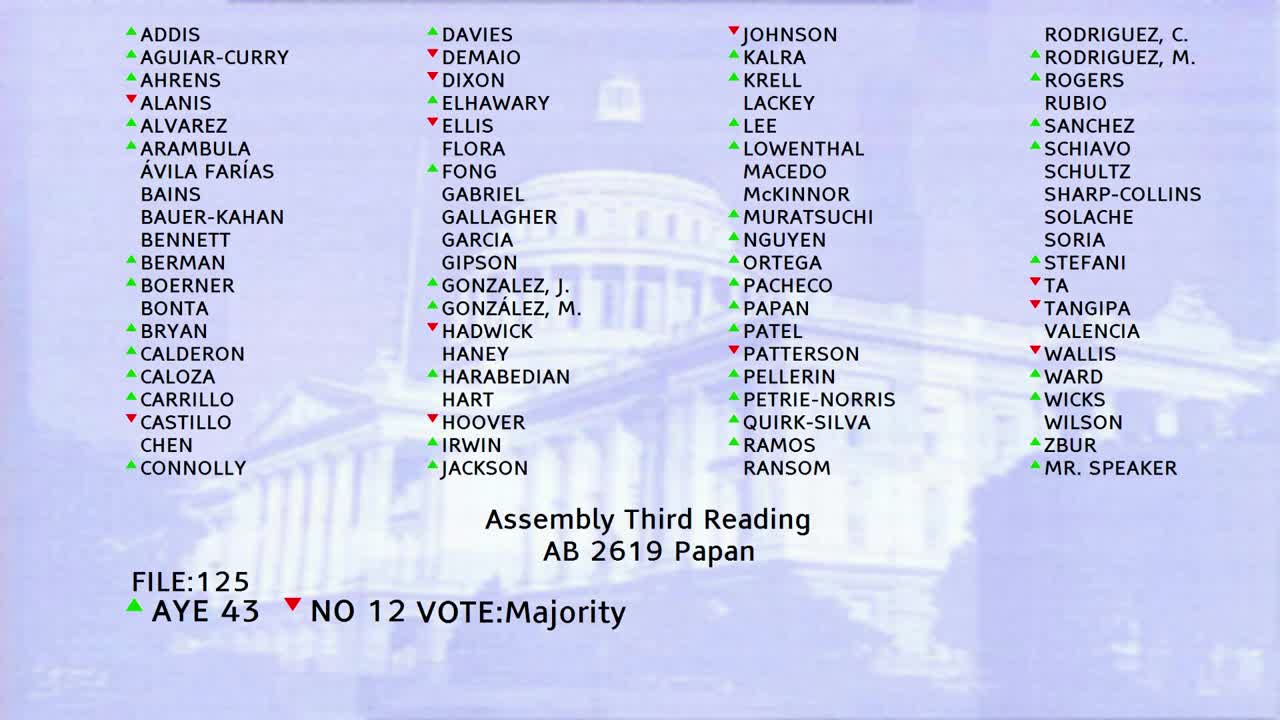
Bill Author

Bill Co-Author(s):