AB 1685: Driving privilege: points.
- Session Year: 2025-2026
- House: Assembly
- Latest Version Date: 2026-09-25
Current Status:
Passed
(2026-09-25: Chaptered by Secretary of State - Chapter 445, Statutes of 2026.)
Introduced
In Committee
Awaiting First Chamber Vote
Passed First Chamber
In Committee
Awaiting Second Chamber Vote
Passed Second Chamber
Enacted
Existing law requires all records of the Department of Motor Vehicles relating to the registration of vehicles, other information contained on an application for a drivers license, abstracts of convictions, and certain abstracts of accident reports to be open to public inspection during office hours, except when a specific provision of law prohibits the disclosure of records or information or provides for confidentiality. Of these records, existing law requires the department to make available or disclose abstracts of convictions and abstracts of accident reports if, for driving under the influence-related violations, the date of occurrence is not later than 10 years.
This bill would also require the department to make available or disclose these abstracts or reports within 10 years of the occurrence for a violation of gross vehicular manslaughter while intoxicated and with gross negligence.
Existing law establishes that specified convictions, violations, and traffic-related incidents count as points against a drivers record for purposes of the suspension or revocation of the privilege to drive. Existing law imposes 2 violation points against a drivers record for purposes of the suspension or revocation of the privilege to drive if a driver is convicted of vehicular manslaughter while intoxicated but without gross negligence.
This bill would impose 3 violation points against a drivers record for a conviction of gross vehicular manslaughter while intoxicated and with gross negligence.
This bill would make its provisions operative January 1, 2031.
Existing law requires all records of the Department of Motor Vehicles relating to the registration of vehicles, other information contained on an application for a drivers license, abstracts of convictions, and certain abstracts of accident reports to be open to public inspection during office hours, except when a specific provision of law prohibits the disclosure of records or information or provides for confidentiality. Of these records, existing law requires the department to make available or disclose abstracts of convictions and abstracts of accident reports if, for driving under the influence-related violations, the date of occurrence is not later than 10 years.
This bill would also require the department to make available or disclose these abstracts or reports within 10 years of the occurrence for a violation of gross vehicular manslaughter while intoxicated and with gross negligence.
Existing law establishes that specified convictions, violations, and traffic-related incidents count as points against a drivers record for purposes of the suspension or revocation of the privilege to drive. Existing law imposes 2 violation points against a drivers record for purposes of the suspension or revocation of the privilege to drive if a driver is convicted of vehicular manslaughter while intoxicated but without gross negligence.
This bill would impose 3 violation points against a drivers record for a conviction of the gross vehicular manslaughter while intoxicated and with gross negligence.
This bill would make its provisions operative January 1, 2031.
Existing law requires all records of the Department of Motor Vehicles relating to the registration of vehicles, other information contained on an application for a drivers license, abstracts of convictions, and certain abstracts of accident reports to be open to public inspection during office hours, except when a specific provision of law prohibits the disclosure of records or information or provides for confidentiality. Of these records, existing law requires the department to make available or disclose abstracts of convictions and abstracts of accident reports if, for driving under the influence-related violations, the date of occurrence is not later than 10 years.
This bill would also require the department to make available or disclose these abstracts or reports within 10 years of the occurrence for a violation of gross vehicular manslaughter while intoxicated and with gross negligence.
Existing law establishes that specified convictions, violations, and traffic-related incidents count as points against a drivers record for purposes of the suspension or revocation of the privilege to drive. Existing law imposes 2 violation points each against a drivers record for purposes of the suspension or revocation of the privilege to drive if a driver is convicted of vehicular manslaughter, including driving a vehicle in the commission of an unlawful act, not amounting to a felony, and with gross negligence, or driving a vehicle in connection with automobile insurance fraud where the vehicular collision or accident was knowingly caused for financial gain and proximately resulted in the death of any person. manslaughter while intoxicated but without gross negligence.
This bill would increase the violation points to 3 impose 3 violation points against a drivers record for a conviction of the above-described driving offenses. gross vehicular manslaughter while intoxicated and with gross negligence.
Existing law establishes that specified convictions, violations, and traffic-related incidents count as points against a drivers record for purposes of the suspension or revocation of the privilege to drive. Existing law imposes 2 violation points each against a drivers record for purposes of the suspension or revocation of the privilege to drive if a driver is convicted of vehicular manslaughter while intoxicated, as defined, or of vehicular manslaughter, as specified. manslaughter, including driving a vehicle in the commission of an unlawful act, not amounting to a felony, and with gross negligence, or driving a vehicle in connection with automobile insurance fraud where the vehicular collision or accident was knowingly caused for financial gain and proximately resulted in the death of any person.
This bill would increase the violation points to 3 against a drivers record for a conviction of the above-described driving offenses.
Existing law establishes that specified convictions, violations, and traffic-related incidents count as points against a drivers record for purposes of the suspension or revocation of the privilege to drive. Existing law imposes 2 violation points each against a drivers record for purposes of the suspension or revocation of the privilege to drive if a driver is convicted of vehicular manslaughter while intoxicated, as defined, or of vehicular manslaughter, as specified.
This bill would increase the violation points to 3 against a drivers record for a conviction of the above-described driving offenses.
(a)Except where a specific provision of law prohibits the disclosure of records or information or provides for confidentiality, all records of the department relating to the registration of vehicles, other information contained on an application for a drivers license, abstracts of convictions, and abstracts of accident reports required to be sent to the department in Sacramento, except for abstracts of accidents where, in the opinion of a reporting officer, another individual was at fault, shall be open to public inspection during office hours. All abstracts of accident reports shall be available to law enforcement agencies and courts of competent jurisdiction.
(b)The department shall make available or disclose abstracts of convictions and abstracts of accident reports required to be sent to the department in Sacramento, as described in subdivision (a), if the date of the occurrence is not later than the following:
(1)Ten years for a violation pursuant to Section 23140, 23152, or 23153.
(2)Seven years for a violation designated as two points pursuant to Section 12810, except as provided in paragraph (1) of this subdivision.
(3)Three years for accidents and all other violations.
(c)The department shall make available or disclose suspensions and revocations of the driving privilege while the suspension or revocation is in effect and for three years following termination of the action or reinstatement of the privilege, except that drivers license suspension actions taken pursuant to former Sections 13202.6 and 13202.7, Section 17520 of the Family Code, or Section 256 or former Section 11350.6 of the Welfare and Institutions Code shall be disclosed only during the actual time period in which the suspension is in effect.
(d)The department shall not make available or disclose a suspension or revocation that has been judicially set aside or stayed.
(e)The department shall not make available or disclose personal information about a person unless the disclosure is in compliance with the Drivers Privacy Protection Act of 1994 (18 U.S.C. Sec. 2721 et seq.). However, a disclosure is subject to the prohibition in paragraph (2) of subdivision (a) of Section 12800.5.
(f)The department shall make available or disclose to the courts and law enforcement agencies a conviction of Section 23103, as specified in Section 23103.5, or a conviction of Section 23140, 23152, or 23153, or Section 655 of the Harbors and Navigation Code, or paragraph (1) of subdivision (c) of Section 192 of the Penal Code for a period of 10 years from the date of the offense for the purpose of imposing penalties mandated by this code, or by other applicable provisions of California law.
(g)The department shall make available or disclose to the courts and law enforcement agencies a conviction of Section 191.5, or subdivision (a) of Section 192.5 of the Penal Code, punished as a felony, for the purpose of imposing penalties mandated by Section 23550.5, or by other applicable provisions of California law.
(h)This section shall remain in effect only until January 1, 2031, and as of that date is repealed.
SEC. 2.Section 1808 is added to the Vehicle Code, to read:1808.(a)Except where a specific provision of law prohibits the disclosure of records or information or provides for confidentiality, all records of the department relating to the registration of vehicles, other information contained on an application for a drivers license, abstracts of convictions, and abstracts of accident reports required to be sent to the department in Sacramento, except for abstracts of accidents where, in the opinion of a reporting officer, another individual was at fault, shall be open to public inspection during office hours. All abstracts of accident reports shall be available to law enforcement agencies and courts of competent jurisdiction.
(b)The department shall make available or disclose abstracts of convictions and abstracts of accident reports required to be sent to the department in Sacramento, as described in subdivision (a), if the date of the occurrence is not later than the following:
(1)Ten years for a violation pursuant to subdivision (a) of Section 191.5 of the Penal Code or Section 23140, 23152, or 23153.
(2)Seven years for a violation designated as two points pursuant to Section 12810, except as provided in paragraph (1) of this subdivision.
(3)Three years for accidents and all other violations.
(c)The department shall make available or disclose suspensions and revocations of the driving privilege while the suspension or revocation is in effect and for three years following termination of the action or reinstatement of the privilege, except that drivers license suspension actions taken pursuant to former Sections 13202.6 and 13202.7, Section 17520 of the Family Code, or Section 256 or former Section 11350.6 of the Welfare and Institutions Code shall be disclosed only during the actual time period in which the suspension is in effect.
(d)The department shall not make available or disclose a suspension or revocation that has been judicially set aside or stayed.
(e)The department shall not make available or disclose personal information about a person unless the disclosure is in compliance with the Drivers Privacy Protection Act of 1994 (18 U.S.C. Sec. 2721 et seq.). However, a disclosure is subject to the prohibition in paragraph (2) of subdivision (a) of Section 12800.5.
(f)The department shall make available or disclose to the courts and law enforcement agencies a conviction of Section 23103, as specified in Section 23103.5, or a conviction of Section 23140, 23152, or 23153, or Section 655 of the Harbors and Navigation Code, or paragraph (1) of subdivision (c) of Section 192 of the Penal Code for a period of 10 years from the date of the offense for the purpose of imposing penalties mandated by this code, or by other applicable provisions of California law.
(g)The department shall make available or disclose to the courts and law enforcement agencies a conviction of Section 191.5, or subdivision (a) of Section 192.5 of the Penal Code, punished as a felony, for the purpose of imposing penalties mandated by Section 23550.5, or by other applicable provisions of California law.
(h)This section shall become operative on January 1, 2031.
SEC. 3.Section 12810 of the Vehicle Code is amended to read:12810.In determining the violation point count, the following shall apply:
(a)A conviction of failure to stop in the event of an accident in violation of Section 20001 or 20002 shall be given a value of two points.
(b)A conviction of a violation of Section 23152 or 23153 shall be given a value of two points.
(c)A conviction of reckless driving shall be given a value of two points.
(d)(1)A conviction of a violation of subdivision (b) of Section 191.5 or subdivision (c) of Section 192 of the Penal Code, or of Section 2800.2 or 2800.3, subdivision (b) of Section 21651, subdivision (b) of Section 22348, subdivision (a) or (c) of Section 23109, Section 23109.1, or Section 31602 of this code, shall be given a value of two points.
(2)A conviction of a violation of subdivision (a) or (b) of Section 23140 shall be given a value of two points.
(e)A conviction of a violation of Section 14601, 14601.1, 14601.2, 14601.3, or 14601.5 shall be given a value of two points.
(f)Except as provided in subdivision (i), any other traffic conviction involving the safe operation of a motor vehicle upon the highway shall be given a value of one point.
(g)A traffic accident in which the operator is deemed by the department to be responsible shall be given a value of one point.
(h)A conviction of a violation of Section 27360 or 27360.5 shall be given a value of one point.
(i)(1)A violation of paragraph (1), (2), (3), or (5) of subdivision (b) of Section 40001 shall not result in a violation point count being given to the driver if the driver is not the owner of the vehicle.
(2)A conviction of a violation of paragraph (1) or (2) of subdivision (b) of Section 12814.6, subdivision (a) of Section 21116, Section 21207.5, 21708, 21710, 21716, 23120, 24800, or 26707 shall not be given a violation point count.
(3)A violation of subdivision (d) of Section 21712 shall not result in a violation point count.
(4)A violation of Section 23136 shall not result in a violation point count.
(5)A violation of Section 38301, 38301.3, 38301.5, 38304.1, or 38504.1 shall not result in a violation point count.
(j)A conviction for only one violation arising from one occasion of arrest or citation shall be counted in determining the violation point count for the purposes of this section.
(k)This section shall remain in effect only until January 1, 2031, and as of that date is repealed.
SEC. 4.Section 12810 is added to the Vehicle Code, to read:12810.In determining the violation point count, the following shall apply:
(a)A conviction of failure to stop in the event of an accident in violation of Section 20001 or 20002 shall be given a value of two points.
(b)A conviction of a violation of Section 23152 or 23153 shall be given a value of two points.
(c)A conviction of reckless driving shall be given a value of two points.
(d)(1)A conviction of a violation of subdivision (b) of Section 191.5 or subdivision (c) of Section 192 of the Penal Code, or of Section 2800.2 or 2800.3, subdivision (b) of Section 21651, subdivision (b) of Section 22348, subdivision (a) or (c) of Section 23109, Section 23109.1, or Section 31602 of this code, shall be given a value of two points.
(2)A conviction of a violation of subdivision (a) or (b) of Section 23140 shall be given a value of two points.
(3)A conviction of a violation of subdivision (a) of Section 191.5 of the Penal Code shall be given a value of three points.
(e)A conviction of a violation of Section 14601, 14601.1, 14601.2, 14601.3, or 14601.5 shall be given a value of two points.
(f)Except as provided in subdivision (i), any other traffic conviction involving the safe operation of a motor vehicle upon the highway shall be given a value of one point.
(g)A traffic accident in which the operator is deemed by the department to be responsible shall be given a value of one point.
(h)A conviction of a violation of Section 27360 or 27360.5 shall be given a value of one point.
(i)(1)A violation of paragraph (1), (2), (3), or (5) of subdivision (b) of Section 40001 shall not result in a violation point count being given to the driver if the driver is not the owner of the vehicle.
(2)A conviction of a violation of paragraph (1) or (2) of subdivision (b) of Section 12814.6, subdivision (a) of Section 21116, Section 21207.5, 21708, 21710, 21716, 23120, 24800, or 26707 shall not be given a violation point count.
(3)A violation of subdivision (d) of Section 21712 shall not result in a violation point count.
(4)A violation of Section 23136 shall not result in a violation point count.
(5)A violation of Section 38301, 38301.3, 38301.5, 38304.1, or 38504.1 shall not result in a violation point count.
(j)A conviction for only one violation arising from one occasion of arrest or citation shall be counted in determining the violation point count for the purposes of this section.
(k)This section shall become operative on January 1, 2031.
(a)Except where a specific provision of law prohibits the disclosure of records or information or provides for confidentiality, all records of the department relating to the registration of vehicles, other information contained on an application for a drivers license, abstracts of convictions, and abstracts of accident reports required to be sent to the department in Sacramento, except for abstracts of accidents where, in the opinion of a reporting officer, another individual was at fault, shall be open to public inspection during office hours. All abstracts of accident reports shall be available to law enforcement agencies and courts of competent jurisdiction.
(b)The department shall make available or disclose abstracts of convictions and abstracts of accident reports required to be sent to the department in Sacramento, as described in subdivision (a), if the date of the occurrence is not later than the following:
(1)Ten years for a violation pursuant to subdivision (a) of Section 191.5 of the Penal Code, or Section 23140, 23152, or 23153.
(2)Seven years for a violation designated as two points pursuant to Section 12810, except as provided in paragraph (1) of this subdivision.
(3)Three years for accidents and all other violations.
(c)The department shall make available or disclose suspensions and revocations of the driving privilege while the suspension or revocation is in effect and for three years following termination of the action or reinstatement of the privilege, except that drivers license suspension actions taken pursuant to former Sections 13202.6 and 13202.7, Section 17520 of the Family Code, or Section 256 or former Section 11350.6 of the Welfare and Institutions Code shall be disclosed only during the actual time period in which the suspension is in effect.
(d)The department shall not make available or disclose a suspension or revocation that has been judicially set aside or stayed.
(e)The department shall not make available or disclose personal information about a person unless the disclosure is in compliance with the Drivers Privacy Protection Act of 1994 (18 U.S.C. Sec. 2721 et seq.). However, a disclosure is subject to the prohibition in paragraph (2) of subdivision (a) of Section 12800.5.
(f)The department shall make available or disclose to the courts and law enforcement agencies a conviction of Section 23103, as specified in Section 23103.5, or a conviction of Section 23140, 23152, or 23153, or Section 655 of the Harbors and Navigation Code, or paragraph (1) of subdivision (c) of Section 192 of the Penal Code for a period of 10 years from the date of the offense for the purpose of imposing penalties mandated by this code, or by other applicable provisions of California law.
(g)The department shall make available or disclose to the courts and law enforcement agencies a conviction of Section 191.5, or subdivision (a) of Section 192.5 of the Penal Code, punished as a felony, for the purpose of imposing penalties mandated by Section 23550.5, or by other applicable provisions of California law.
(h)This section shall remain in effect only until January 1, 2031, and as of that date is repealed.
SEC. 2.Section 1808 is added to the Vehicle Code, to read:1808.(a)Except where a specific provision of law prohibits the disclosure of records or information or provides for confidentiality, all records of the department relating to the registration of vehicles, other information contained on an application for a drivers license, abstracts of convictions, and abstracts of accident reports required to be sent to the department in Sacramento, except for abstracts of accidents where, in the opinion of a reporting officer, another individual was at fault, shall be open to public inspection during office hours. All abstracts of accident reports shall be available to law enforcement agencies and courts of competent jurisdiction.
(b)The department shall make available or disclose abstracts of convictions and abstracts of accident reports required to be sent to the department in Sacramento, as described in subdivision (a), if the date of the occurrence is not later than the following:
(1)Ten years for a violation pursuant to subdivision (a) of Section 191.5 of the Penal Code or Section 23140, 23152, or 23153.
(2)Seven years for a violation designated as two points pursuant to Section 12810, except as provided in paragraph (1) of this subdivision.
(3)Three years for accidents and all other violations.
(c)The department shall make available or disclose suspensions and revocations of the driving privilege while the suspension or revocation is in effect and for three years following termination of the action or reinstatement of the privilege, except that drivers license suspension actions taken pursuant to former Sections 13202.6 and 13202.7, Section 17520 of the Family Code, or Section 256 or former Section 11350.6 of the Welfare and Institutions Code shall be disclosed only during the actual time period in which the suspension is in effect.
(d)The department shall not make available or disclose a suspension or revocation that has been judicially set aside or stayed.
(e)The department shall not make available or disclose personal information about a person unless the disclosure is in compliance with the Drivers Privacy Protection Act of 1994 (18 U.S.C. Sec. 2721 et seq.). However, a disclosure is subject to the prohibition in paragraph (2) of subdivision (a) of Section 12800.5.
(f)The department shall make available or disclose to the courts and law enforcement agencies a conviction of Section 23103, as specified in Section 23103.5, or a conviction of Section 23140, 23152, or 23153, or Section 655 of the Harbors and Navigation Code, or paragraph (1) of subdivision (c) of Section 192 of the Penal Code for a period of 10 years from the date of the offense for the purpose of imposing penalties mandated by this code, or by other applicable provisions of California law.
(g)The department shall make available or disclose to the courts and law enforcement agencies a conviction of Section 191.5, or subdivision (a) of Section 192.5 of the Penal Code, punished as a felony, for the purpose of imposing penalties mandated by Section 23550.5, or by other applicable provisions of California law.
(h)This section shall become operative on January 1, 2031.
SEC. 2.SEC. 3.Section 12810 of the Vehicle Code is amended to read:12810.In determining the violation point count, the following shall apply:
(a)A conviction of failure to stop in the event of an accident in violation of Section 20001 or 20002 shall be given a value of two points.
(b)A conviction of a violation of Section 23152 or 23153 shall be given a value of two points.
(c)A conviction of reckless driving shall be given a value of two points.
(d)(1)A conviction of a violation of subdivision (b) of Section 191.5 or subdivision (c) of Section 192 of the Penal Code, or of Section 2800.2 or 2800.3, subdivision (b) of Section 21651, subdivision (b) of Section 22348, subdivision (a) or (c) of Section 23109, Section 23109.1, or Section 31602 of this code, shall be given a value of two points.
(2)A conviction of a violation of subdivision (a) or (b) of Section 23140 shall be given a value of two points.
(3)A conviction of a violation of subdivision (a) of Section 191.5 of the Penal Code shall be given a value of three points.(e)A conviction of a violation of Section 14601, 14601.1, 14601.2, 14601.3, or 14601.5 shall be given a value of two points.
(f)Except as provided in subdivision (i), any other traffic conviction involving the safe operation of a motor vehicle upon the highway shall be given a value of one point.
(g)A traffic accident in which the operator is deemed by the department to be responsible shall be given a value of one point.
(h)A conviction of a violation of Section 27360 or 27360.5 shall be given a value of one point.
(i)(1)A violation of paragraph (1), (2), (3), or (5) of subdivision (b) of Section 40001 shall not result in a violation point count being given to the driver if the driver is not the owner of the vehicle.
(2)A conviction of a violation of paragraph (1) or (2) of subdivision (b) of Section 12814.6, subdivision (a) of Section 21116, Section 21207.5, 21708, 21710, 21716, 23120, 24800, or 26707 shall not be given a violation point count.
(3)A violation of subdivision (d) of Section 21712 shall not result in a violation point count.
(4)A violation of Section 23136 shall not result in a violation point count.
(5)A violation of Section 38301, 38301.3, 38301.5, 38304.1, or 38504.1 shall not result in a violation point count.
(j)A conviction for only one violation arising from one occasion of arrest or citation shall be counted in determining the violation point count for the purposes of this section.
(k)This section shall remain in effect only until January 1, 2031, and as of that date is repealed.
SEC. 4.Section 12810 is added to the Vehicle Code, to read:12810.In determining the violation point count, the following shall apply:
(a)A conviction of failure to stop in the event of an accident in violation of Section 20001 or 20002 shall be given a value of two points.
(b)A conviction of a violation of Section 23152 or 23153 shall be given a value of two points.
(c)A conviction of reckless driving shall be given a value of two points.
(d)(1)A conviction of a violation of subdivision (b) of Section 191.5 or subdivision (c) of Section 192 of the Penal Code, or of Section 2800.2 or 2800.3, subdivision (b) of Section 21651, subdivision (b) of Section 22348, subdivision (a) or (c) of Section 23109, Section 23109.1, or Section 31602 of this code, shall be given a value of two points.
(2)A conviction of a violation of subdivision (a) or (b) of Section 23140 shall be given a value of two points.
(3)A conviction of a violation of subdivision (a) of Section 191.5 of the Penal Code shall be given a value of three points.
(e)A conviction of a violation of Section 14601, 14601.1, 14601.2, 14601.3, or 14601.5 shall be given a value of two points.
(f)Except as provided in subdivision (i), any other traffic conviction involving the safe operation of a motor vehicle upon the highway shall be given a value of one point.
(g)A traffic accident in which the operator is deemed by the department to be responsible shall be given a value of one point.
(h)A conviction of a violation of Section 27360 or 27360.5 shall be given a value of one point.
(i)(1)A violation of paragraph (1), (2), (3), or (5) of subdivision (b) of Section 40001 shall not result in a violation point count being given to the driver if the driver is not the owner of the vehicle.
(2)A conviction of a violation of paragraph (1) or (2) of subdivision (b) of Section 12814.6, subdivision (a) of Section 21116, Section 21207.5, 21708, 21710, 21716, 23120, 24800, or 26707 shall not be given a violation point count.
(3)A violation of subdivision (d) of Section 21712 shall not result in a violation point count.
(4)A violation of Section 23136 shall not result in a violation point count.
(5)A violation of Section 38301, 38301.3, 38301.5, 38304.1, or 38504.1 shall not result in a violation point count.
(j)A conviction for only one violation arising from one occasion of arrest or citation shall be counted in determining the violation point count for the purposes of this section.
(k)This section shall become operative on January 1, 2031.
(a)Except where a specific provision of law prohibits the disclosure of records or information or provides for confidentiality, all records of the department relating to the registration of vehicles, other information contained on an application for a drivers license, abstracts of convictions, and abstracts of accident reports required to be sent to the department in Sacramento, except for abstracts of accidents where, in the opinion of a reporting officer, another individual was at fault, shall be open to public inspection during office hours. All abstracts of accident reports shall be available to law enforcement agencies and courts of competent jurisdiction.
(b)The department shall make available or disclose abstracts of convictions and abstracts of accident reports required to be sent to the department in Sacramento, as described in subdivision (a), if the date of the occurrence is not later than the following:
(1)Ten years for a violation pursuant to subdivision (a) of Section 191.5 of the Penal Code, or Section 23140, 23152, or 23153.
(2)Seven years for a violation designated as two points pursuant to Section 12810, except as provided in paragraph (1) of this subdivision.
(3)Three years for accidents and all other violations.
(c)The department shall make available or disclose suspensions and revocations of the driving privilege while the suspension or revocation is in effect and for three years following termination of the action or reinstatement of the privilege, except that drivers license suspension actions taken pursuant to former Sections 13202.6 and 13202.7, Section 17520 of the Family Code, or Section 256 or former Section 11350.6 of the Welfare and Institutions Code shall be disclosed only during the actual time period in which the suspension is in effect.
(d)The department shall not make available or disclose a suspension or revocation that has been judicially set aside or stayed.
(e)The department shall not make available or disclose personal information about a person unless the disclosure is in compliance with the Drivers Privacy Protection Act of 1994 (18 U.S.C. Sec. 2721 et seq.). However, a disclosure is subject to the prohibition in paragraph (2) of subdivision (a) of Section 12800.5.
(f)The department shall make available or disclose to the courts and law enforcement agencies a conviction of Section 23103, as specified in Section 23103.5, or a conviction of Section 23140, 23152, or 23153, or Section 655 of the Harbors and Navigation Code, or paragraph (1) of subdivision (c) of Section 192 of the Penal Code for a period of 10 years from the date of the offense for the purpose of imposing penalties mandated by this code, or by other applicable provisions of California law.
(g)The department shall make available or disclose to the courts and law enforcement agencies a conviction of Section 191.5, or subdivision (a) of Section 192.5 of the Penal Code, punished as a felony, for the purpose of imposing penalties mandated by Section 23550.5, or by other applicable provisions of California law.
SECTION 1.SEC. 2.Section 12810 of the Vehicle Code is amended to read:12810.In determining the violation point count, the following shall apply:
(a)A conviction of failure to stop in the event of an accident in violation of Section 20001 or 20002 shall be given a value of two points.
(b)A conviction of a violation of Section 23152 or 23153 shall be given a value of two points.
(c)A conviction of reckless driving shall be given a value of two points.
(d)(1)A conviction of a violation of subdivision (b) of Section 191.5 or paragraph (2) of subdivision (c) of Section 192 of the Penal Code, or of Section 2800.2 or 2800.3, subdivision (b) of Section 21651, subdivision (b) of Section 22348, subdivision (a) or (c) of Section 23109, Section 23109.1, or Section 31602 of this code, shall be given a value of two points.
(2)A conviction of a violation of subdivision (a) or (b) of Section 23140 shall be given a value of two points.
(3)A conviction of a violation of paragraph (1) or (3) of subdivision (c) of Section 192 subdivision (a) of Section 191.5 of the Penal Code shall be given a value of three points.
(e)A conviction of a violation of Section 14601, 14601.1, 14601.2, 14601.3, or 14601.5 shall be given a value of two points.
(f)Except as provided in subdivision (i), any other traffic conviction involving the safe operation of a motor vehicle upon the highway shall be given a value of one point.
(g)A traffic accident in which the operator is deemed by the department to be responsible shall be given a value of one point.
(h)A conviction of a violation of Section 27360 or 27360.5 shall be given a value of one point.
(i)(1)A violation of paragraph (1), (2), (3), or (5) of subdivision (b) of Section 40001 shall not result in a violation point count being given to the driver if the driver is not the owner of the vehicle.
(2)A conviction of a violation of paragraph (1) or (2) of subdivision (b) of Section 12814.6, subdivision (a) of Section 21116, Section 21207.5, 21708, 21710, 21716, 23120, 24800, or 26707 shall not be given a violation point count.
(3)A violation of subdivision (d) of Section 21712 shall not result in a violation point count.
(4)A violation of Section 23136 shall not result in a violation point count.
(5)A violation of Section 38301, 38301.3, 38301.5, 38304.1, or 38504.1 shall not result in a violation point count.
(j)A conviction for only one violation arising from one occasion of arrest or citation shall be counted in determining the violation point count for the purposes of this section.
REVISIONS: HeadingLine 3.In determining the violation point count, the following shall apply:
(a)A conviction of failure to stop in the event of an accident in violation of Section 20001 or 20002 shall be given a value of two points.
(b)A conviction of a violation of Section 23152 or 23153 shall be given a value of two points.
(c)A conviction of reckless driving shall be given a value of two points.
(d)(1)A conviction of a violation of subdivision (b) of Section 191.5 or paragraph (2) of subdivision (c) of Section 192 of the Penal Code, or of Section 2800.2 or 2800.3, subdivision (b) of Section 21651, subdivision (b) of Section 22348, subdivision (a) or (c) of Section 23109, Section 23109.1, or Section 31602 of this code, shall be given a value of two points.
(2)A conviction of a violation of subdivision (a) or (b) of Section 23140 shall be given a value of two points.
(3)A conviction of a violation of subdivision (b) of Section 191.5 or paragraph (1) or (3) of subdivision (c) of Section 192 of the Penal Code shall be given a value of three points.
(e)A conviction of a violation of Section 14601, 14601.1, 14601.2, 14601.3, or 14601.5 shall be given a value of two points.
(f)Except as provided in subdivision (i), any other traffic conviction involving the safe operation of a motor vehicle upon the highway shall be given a value of one point.
(g)A traffic accident in which the operator is deemed by the department to be responsible shall be given a value of one point.
(h)A conviction of a violation of Section 27360 or 27360.5 shall be given a value of one point.
(i)(1)A violation of paragraph (1), (2), (3), or (5) of subdivision (b) of Section 40001 shall not result in a violation point count being given to the driver if the driver is not the owner of the vehicle.
(2)A conviction of a violation of paragraph (1) or (2) of subdivision (b) of Section 12814.6, subdivision (a) of Section 21116, Section 21207.5, 21708, 21710, 21716, 23120, 24800, or 26707 shall not be given a violation point count.
(3)A violation of subdivision (d) of Section 21712 shall not result in a violation point count.
(4)A violation of Section 23136 shall not result in a violation point count.
(5)A violation of Section 38301, 38301.3, 38301.5, 38304.1, or 38504.1 shall not result in a violation point count.
(j)A conviction for only one violation arising from one occasion of arrest or citation shall be counted in determining the violation point count for the purposes of this section.
In determining the violation point count, the following shall apply:
(a)A conviction of failure to stop in the event of an accident in violation of Section 20001 or 20002 shall be given a value of two points.
(b)A conviction of a violation of Section 23152 or 23153 shall be given a value of two points.
(c)A conviction of reckless driving shall be given a value of two points.
(d)(1)A conviction of a violation of subdivision (b) of Section 191.5 or subdivision (c) of Section 192 of the Penal Code, or of Section 2800.2 or 2800.3, subdivision (b) of Section 21651, subdivision (b) of Section 22348, subdivision (a) or (c) of Section 23109, Section 23109.1, or Section 31602 of this code, shall be given a value of two points.
(2)A conviction of a violation of subdivision (a) or (b) of Section 23140 shall be given a value of two points.
(3)A conviction of a violation of subdivision (b) of Section 191.5 or subdivision (c) of Section 192 of the Penal Code shall be given a value of three points.
(e)A conviction of a violation of Section 14601, 14601.1, 14601.2, 14601.3, or 14601.5 shall be given a value of two points.
(f)Except as provided in subdivision (i), any other traffic conviction involving the safe operation of a motor vehicle upon the highway shall be given a value of one point.
(g)A traffic accident in which the operator is deemed by the department to be responsible shall be given a value of one point.
(h)A conviction of a violation of Section 27360 or 27360.5 shall be given a value of one point.
(i)(1)A violation of paragraph (1), (2), (3), or (5) of subdivision (b) of Section 40001 shall not result in a violation point count being given to the driver if the driver is not the owner of the vehicle.
(2)A conviction of a violation of paragraph (1) or (2) of subdivision (b) of Section 12814.6, subdivision (a) of Section 21116, Section 21207.5, 21708, 21710, 21716, 23120, 24800, or 26707 shall not be given a violation point count.
(3)A violation of subdivision (d) of Section 21712 shall not result in a violation point count.
(4)A violation of Section 23136 shall not result in a violation point count.
(5)A violation of Section 38301, 38301.3, 38301.5, 38304.1, or 38504.1 shall not result in a violation point count.
(j)A conviction for only one violation arising from one occasion of arrest or citation shall be counted in determining the violation point count for the purposes of this section.
|
Date
|
Status
|
|---|---|
| Sep 25, 2026 | Chaptered by Secretary of State - Chapter 445, Statutes of 2026. |
| Sep 25, 2026 | Approved by the Governor. |
| Sep 3, 2026 | Enrolled and presented to the Governor at 4 p.m. |
| Aug 26, 2026 | Senate amendments concurred in. To Engrossing and Enrolling. (Ayes 75. Noes 0.). |
| Aug 26, 2026 | Senate amendments concurred in. To Engrossing and Enrolling. (Ayes 75. Noes 0. Page 6634.). |
| Aug 26, 2026 | In Assembly. Concurrence in Senate amendments pending. |
| Aug 26, 2026 | Read third time. Passed. Ordered to the Assembly. (Ayes 37. Noes 0.). |
| Aug 26, 2026 | Read third time. Passed. Ordered to the Assembly. (Ayes 37. Noes 0. Page 5851.). |
| Aug 24, 2026 | Read second time. Ordered to third reading. |
| Aug 21, 2026 | Read third time and amended. Ordered to second reading. |
| Aug 13, 2026 | Read second time. Ordered to third reading. |
| Aug 13, 2026 | From committee: Do pass. (Ayes 6. Noes 0.) (August 13). |
| Aug 3, 2026 | In committee: Referred to APPR. suspense file. |
| Jul 1, 2026 | From committee: Do pass and re-refer to Com. on APPR. (Ayes 12. Noes 0.) (June 30). Re-referred to Com. on APPR. |
| Jun 24, 2026 | From committee: Do pass and re-refer to Com. on TRANS. (Ayes 6. Noes 0.) (June 23). Re-referred to Com. on TRANS. |
| Jun 10, 2026 | In committee: Set, first hearing. Hearing canceled at the request of author. |
| Jun 3, 2026 | Referred to Coms. on PUB. S. and TRANS. |
| May 27, 2026 | In Senate. Read first time. To Com. on RLS. for assignment. |
| May 26, 2026 | Read third time. Passed. Ordered to the Senate. (Ayes 72. Noes 0.) |
| May 26, 2026 | Read third time. Passed. Ordered to the Senate. (Ayes 72. Noes 0. Page 5296.) |
| May 26, 2026 | Read third time. Passed. Ordered to the Senate. |
| May 18, 2026 | Read second time. Ordered to third reading. |
| May 14, 2026 | From committee: Do pass. (Ayes 15. Noes 0.) (May 14). |
| May 6, 2026 | In committee: Set, first hearing. Referred to APPR. suspense file. |
| Apr 21, 2026 | From committee: Do pass and re-refer to Com. on APPR. (Ayes 15. Noes 0.) (April 20). Re-referred to Com. on APPR. |
| Apr 21, 2026 | Coauthors revised. |
| Apr 14, 2026 | Re-referred to Com. on TRANS. |
| Apr 13, 2026 | From committee chair, with author's amendments: Amend, and re-refer to Com. on TRANS. Read second time and amended. |
| Apr 6, 2026 | Re-referred to Com. on TRANS. |
| Apr 6, 2026 | In committee: Hearing postponed by committee. |
| Mar 26, 2026 | Read second time and amended. |
| Mar 25, 2026 | From committee: Amend, and do pass as amended and re-refer to Com. on TRANS. (Ayes 8. Noes 0.) (March 24). |
| Mar 17, 2026 | In committee: Set, second hearing. Hearing canceled at the request of author. |
| Mar 6, 2026 | In committee: Set, first hearing. Hearing canceled at the request of author. |
| Feb 17, 2026 | Referred to Coms. on PUB. S. and TRANS. |
| Feb 3, 2026 | From printer. May be heard in committee March 5. |
| Feb 2, 2026 | Read first time. To print. |
|
Date
|
Description
|
Location
|
Votes
|
|
|---|---|---|---|---|
| Aug 26, 2026 | AB 1685 Lackey Concurrence in Senate Amendments | Assembly Floor |
Passed |
|
| Aug 26, 2026 | Assembly 3rd Reading AB1685 Lackey et al. By Archuleta | Senate Floor |
Passed |
|
| Aug 13, 2026 | Do pass | Senate Standing Committee on Appropriations |
Passed |
|
| Aug 3, 2026 | Placed on suspense file | Senate Standing Committee on Appropriations |
Passed |
|
| Jun 30, 2026 | Do pass, but first be re-referred to the Committee on [Appropriations] | Senate Standing Committee on Transportation |
Passed |
|
| Jun 30, 2026 | Set For Hearing [06-30-2026] | Senate Standing Committee on Transportation |
Passed |
|
| Jun 30, 2026 | Do pass, but first be re-referred to the Committee on [Appropriations] | Senate Standing Committee on Transportation |
Passed |
|
| Jun 23, 2026 | Do pass, but first be re-referred to the Committee on [Transportation] | Senate Standing Committee on Public Safety |
Passed |
|
| May 26, 2026 | AB 1685 Lackey Assembly Third Reading | Assembly Floor |
Passed |
|
| May 14, 2026 | Do pass. | Assembly Standing Committee on Appropriations |
Passed |
|
| Apr 20, 2026 | Do pass and be re-referred to the Committee on [Appropriations] | Assembly Standing Committee on Transportation |
Passed |
|
| Mar 24, 2026 | Do pass as amended and be re-referred to the Committee on [Transportation] | Assembly Standing Committee on Public Safety |
Passed |
This list shows positions taken on this bill by organizations on the date displayed, which is linked to the original source.
Positions by individuals are not included.
|
Organization
|
Position
|
Date
|
|---|---|---|
| Aclu California Action | ** Against | |
| Active San Gabriel Valley | ** Support | |
| American Medical Response West | ** Support | |
| Arcadia Police Officers’ Association | ** Support | |
| Association For Los Angeles Deputy Sheriffs | ** Support | |
| Bahati foundation | ** Support | |
| Bethel Unspeakable Joy Christian Church | ** Support | |
| Bike Oven | ** Support | |
| BikeLA | ** Support | |
| Brea Police Association | ** Support | |
| Burbank Police Officers’ Association | ** Support | |
| California Association Of Drinking Driver Treatment Programs | ** Support | |
| California Association Of Highway Patrolmen | ** Support | |
| California Association of School Police Chiefs | ** Support | |
| California Coalition of School Safety Professionals | ** Support | |
| California Consortium of Addiction Programs and Professionals | ** Support | |
| California District Attorneys Association | ** Support | |
| California Narcotic Officers’ Association | ** Support | |
| California Peace Officers Association | ** Support | |
| California Police Chiefs Association | ** Support | |
| California Reserve Peace Officers Association | ** Support | |
| California State Sheriffs' Association | ** Support | |
| California State Sheriffs’ Association | ** Support | |
| Car-Lite Long Beach | ** Support | |
| Center on Juvenile and Criminal Justice | ** Against | |
| CLAREMONT POLICE OFFICERS ASSOCIATION | ** Support | |
| Corona Police Officers Association | ** Support | |
| Culver City Police Officers’ Association | ** Support | |
| Debt Free Justice California | ** Against | |
| Ella Baker Center For Human Rights | ** Against | |
| Fullerton Police Officers’ Association | ** Support | |
| Healthy Active Street | ** Support | |
| Initiate Justice | ** Against | |
| Justice2jobs Coalition | ** Against | |
| LA Critical Mass | ** Support | |
| LA Defensa | ** Against | |
| League Of California Cities | ** Support | |
| Liam's Life Foundation | ** Support | |
| Liam’s Life Foundation | ** Support | |
| Livable Communities Initiative | ** Support | |
| Los Angeles County District Attorney’s Office | ** Support | |
| Los Angeles County Public Defender’s Union, Local 148 | ** Against | |
| Los Angeles County Sheriff'S Department | ** Support | |
| Los Angeles County Sheriff’s Department | ** Support | |
| Los Angeles School Police Management Association | ** Support | |
| los angeles school police officers association | ** Support | |
| Mothers Against Drunk Driving | ** Support | |
| Move LA | ** Support | |
| Move Santa Barbara County | ** Support | |
| Murrieta Police Officers’ Association | ** Support | |
| Napa County Bicycle Coalition | ** Support | |
| National Coalition for Safer Roads | ** Support | |
| Newport Beach Police Association | ** Support | |
| Novato Police Officers' Association | ** Support | |
| Palos Verdes Police Officers Association | ** Support | |
| Pasadena Rider of Silence | ** Support | |
| Peace Officers' Research Association of California | ** Support | |
| PeopleforBikes | ** Support | |
| Placer County Deputy Sheriffs’ Association | ** Support | |
| Pomona Police Officers’ Association | ** Support | |
| Ride of Silence | ** Support | |
| Riverside County District Attorney's Office | ** Support | |
| RIVERSIDE POLICE OFFICERS ASSOCIATION | ** Support | |
| Riverside Sheriffs’ Association | ** Support | |
| Safety and Advocacy for Empowerment | ** Support | |
| Safety and Advocacy for Empowerment (SAFE) | ** Support | |
| San Bernardino County | ** Support | |
| San Diego County District Attorney’s Office | ** Support | |
| San Francisco Bay Area Families for Safe Streets | ** Support | |
| Santa Ana Police Officers Association | ** Support | |
| South Pas Active | ** Support | |
| Stop 4 Aidan | ** Support | |
| Street Racing Kills | ** Support | |
| Streets Are For Everyone | ** Support | |
| Streets are for Everyone Inland Empire | ** Support | |
| Streets for All | ** Support | |
| The River's Edge Ranch | ** Support | |
| Upland Police Officers Association | ** Support | |
| Upland Police Officers’ Association | ** Support | |
| Vivid Candi | ** Support | |
| Walk 'n Rollers | ** Support | |
| Walk San Francisco | ** Support | |
| Walk San Francisco Foundation | ** Support | |
| Walk ’n Rollers | ** Support | |
| We Save Lives | ** Support | |
| Western Center on Law & Poverty, INC. | ** Against |
CONCURRENCE IN SENATE AMENDMENTS
CSA1 Bill Id:AB 1685
Author:(Lackey and Petrie-Norris)
As Amended Ver:August 21, 2026
Majority vote
SUMMARY
Increases the number of points that must be added to a person's driving record, from one to three, for the crime of gross vehicular manslaughter while intoxicated, and requires the Department of Motor Vehicles (DMV) to make available or disclose the abstract of the conviction and abstract of the accident report for ten years, as specified, for the crime of gross vehicular manslaughter while intoxicated.
Senate Amendments
Make the provisions of this bill operative on January 1, 2031.
COMMENTS
As Passed by the Assembly, this bill: Increased the number of points that must be added to a person's driving record, from one to three, for the crime of gross vehicular manslaughter while intoxicated, and requires the Department of Motor Vehicles (DMV) to make available or disclose the abstract of the conviction and abstract of the accident report for ten years, as specified, for the crime of gross vehicular manslaughter while intoxicated.
According to the Author
"As a California Highway Patrol (CHP) officer, I have stood on the side of the road with families who have just lost loved ones to drunk drivers. Those scenes will never leave me. We owe it to those families to hold repeat offenders accountable. AB 1685 does this by increasing the points for vehicular manslaughter and vehicular manslaughter while intoxicated from two to three points, bringing repeat offenders one step closer to license suspension."
Arguments in Support
According to the Peace Officers' Research Association of California, "AB 1685 enhances access to critical public safety information by ensuring that records related to serious driving offenses—specifically gross vehicular manslaughter while intoxicated and with gross negligence—are available within the same 10-year timeframe as driving under the influence-related violations. Aligning these disclosure standards promotes consistency in the law and ensures that relevant information is accessible when evaluating dangerous driving behavior.
"From a law enforcement perspective, access to accurate and complete records is essential to protecting public safety, supporting investigations, and informing decision-making related to enforcement and accountability. Expanding the availability of these records for one of the most serious impaired driving offenses helps ensure that the full scope of an individual's conduct is appropriately considered."
Arguments in Opposition
According to ACLU California Action, "If AB 1685 is passed, people convicted of gross vehicular homicide while intoxicated will receive three points on their driving record. The additional point is a duplicative administrative penalty that will result in more unnecessary costs, all while not addressing the root cause of unsafe driving in California
"In California, accumulating points on one's driving record can result in license suspension, increased insurance costs, and other administrative hurdles. A person's license may be suspended if they accumulate four points in twelve months, six points in 24 months, or eight points in 36 months. Courts and the Department of Motor Vehicles (DMV) may also suspend a person's driving record for receiving a conviction for several offenses, including vehicular homicide. Assessing an additional point on a person's driving record for a conviction of vehicular manslaughter is therefore duplicative.
"Further, the assessment of points and the suspension of driver's licenses do not get at the root causes of unsafe driving. In-car safety mechanisms, such as pedestrian-crash avoidance systems, and road design changes are all proven to provide lower instances of car crashes and fewer fatalities. In contrast, no evidence similarly shows that adding points improves safety. Rather, receiving points on a driving record can have devastating consequences to low-income Californians and their families, including increased costs of insurance and even the loss of a driver's license. The loss of a driver's license is a major threat to economic security, particularly for low-income Californians and their families. Numerous studies have found a direct correlation between driving and employment.
"A task force report to the Governor of New Jersey cited a survey of suspended drivers conducted by Rutgers University researchers, which found that following a license suspension, 42% of people lost their jobs as a result of the suspension. Of those who lost their jobs, 45% could not find another job, and this effect was most pronounced for seniors and low-income people. Of those who were able to find new employment, 88% reported decreased wages."
FISCAL COMMENTS
According to the Senate Appropriations Committee, "The DMV indicates that it would incur significant one-time costs to make necessary IT systems changes to enable the creation of a new violation point count for specified offenses and to update driving records accordingly. DMV's legacy systems have limited capacity to accommodate new functionality and are currently being replaced through the Enterprise Modernization Project (the Digital eXperience Platform, or DXP). As a result, implementation would either require modifications within DXP, potentially increasing project costs and/or delaying implementation, or development of a temporary solution outside the legacy environment, resulting in duplicative costs, additional technology procurement, and approvals. Assuming a temporary solution is required, implementation costs are expected to be at least in the low millions, and potentially higher depending on the final scope of work, implementation timelines, and the technology solution ultimately required. Direct modifications to legacy systems would likely result in significantly higher costs. Staff notes that DMV would be unable to make the necessary programming changes by the January 1, 2027 operative date of this bill. (Motor Vehicle Account)"
VOTES:
ASM PUBLIC SAFETY: 8-0-1
YES: Schultz, Alanis, Mark González, Harabedian, Lackey, Nguyen, Ramos, Sharp-Collins
ABS, ABST OR NV: Haney
ASM TRANSPORTATION: 15-0-1
YES: Wilson, Davies, Aguiar-Curry, Ahrens, Carrillo, Harabedian, Hart, Hoover, Jackson, Lackey, Macedo, Papan, Ransom, Rogers, Sharp-Collins
ABS, ABST OR NV: Ávila Farías
ASM APPROPRIATIONS: 15-0-0
YES: Wicks, Hoover, Aguiar-Curry, Calderon, Caloza, Dixon, Fong, Mark González, Krell, Pacheco, Pellerin, Sharp-Collins, Solache, Ta, Tangipa
ASSEMBLY FLOOR: 72-0-8
YES: Addis, Aguiar-Curry, Ahrens, Alanis, Alvarez, Arambula, Ávila Farías, Bains, Bauer-Kahan, Bennett, Berman, Boerner, Bonta, Calderon, Carrillo, Castillo, Chen, Connolly, Davies, DeMaio, Dixon, Ellis, Flora, Fong, Gabriel, Gallagher, Garcia, Gipson, Jeff Gonzalez, Mark González, Hadwick, Haney, Harabedian, Hart, Hoover, Irwin, Jackson, Johnson, Krell, Lackey, Lowenthal, Macedo, Nguyen, Ortega, Pacheco, Papan, Patel, Patterson, Pellerin, Petrie-Norris, Quirk-Silva, Ramos, Ransom, Michelle Rodriguez, Rogers, Blanca Rubio, Sanchez, Schiavo, Schultz, Sharp-Collins, Solache, Soria, Stefani, Ta, Tangipa, Valencia, Wallis, Ward, Wicks, Wilson, Zbur, Rivas
ABS, ABST OR NV: Bryan, Caloza, Elhawary, Kalra, Lee, McKinnor, Muratsuchi, Celeste Rodriguez
UPDATED
VERSION: August 21, 2026
CONSULTANT: Ilan Zur / PUB. S. / (916) 319-3744 FN: 0004290
SENATE RULES COMMITTEE Office of Senate Floor Analyses (916) 651-4171 | AB 1685 |
THIRD READING
Bill No: AB 1685
Author: Lackey (R) and Petrie-Norris (D), et al.
Amended: 8/21/26 in Senate
Vote: 21
SENATE PUBLIC SAFETY COMMITTEE: 6-0, 6/23/26
AYES: Arreguín, Seyarto, Caballero, Cortese, Pérez, Wiener
SENATE TRANSPORTATION COMMITTEE: 12-0, 6/30/26
AYES: Cortese, Strickland, Archuleta, Arreguín, Blakespear, Dahle, Grayson, Menjivar, Richardson, Seyarto, Valladares, Wiener
NO VOTE RECORDED: Gonzalez
SENATE APPROPRIATIONS COMMITTEE: 6-0, 8/13/26
AYES: Cervantes, Seyarto, Cabaldon, Dahle, Grayson, Richardson
NO VOTE RECORDED: Wahab
ASSEMBLY FLOOR: 72-0, 5/26/26 - See last page for vote
SUBJECT: Driving privilege: points
SOURCE: Author
DIGEST:
This bill increases the number of points that must be added to a person’s driving record, from two to three, for gross vehicular manslaughter while intoxicated and with gross negligence.
Senate Floor Amendments of 8/21/26 delay this bill’s implementation to January 1, 2031.
ANALYSIS:
Existing law:
- Provides that gross vehicular manslaughter while intoxicated is the unlawful killing of a human being without malice aforethought, in the driving of a vehicle, where the driving was driving under the influence, and the killing was either the proximate result of the commission of an unlawful act, not amounting to a felony, and with gross negligence, or the proximate result of the commission of a lawful act that might produce death, in an unlawful manner, and with gross negligence. Provides that gross vehicular manslaughter while intoxicated is punishable by imprisonment in the state prison for 4, 6, or 10 years. (Penal (Pen.) Code, § 191.5, subds. (a), (c).)
- Prohibits the Department of Motor Vehicles (DMV) from issuing or renewing a driver’s license to any person:
- When a license previously issued to the person has been suspended until the expiration of the period of the suspension, unless cause for suspension has been removed.
- When a license previously issued to the person has been revoked until the expiration of one year after the date of the revocation, except where a different period of revocation is prescribed by law, or unless the cause for revocation has been removed. (Vehicle (Veh.) Code, § 12807.)
- Requires the DMV to check the record of the applicant for conviction of traffic violations and traffic accidents before issuing or renewing any license. (Veh. Code, § 12808.)
- Outlines the circumstance under which the DMV may refuse to issue or renew a driver’s license to a person, including that the department has determined that the applicant is a negligent or incompetent operator of a motor vehicle. (Veh. Code, § 12809.)
- Provides that the following vehicle-related convictions are assigned points as follows:
- A conviction for failure to stop in the event of an accident is given a value of two points.
- A conviction for driving under the influence (DUI) is given a value of two points.
- A conviction for reckless driving is given a value of two points.
- A conviction for vehicular manslaughter while intoxicated, gross vehicular manslaughter, fleeing from an officer, driving on the wrong side of a divided highway, driving in excess of 100 miles per hour, engaging in a speed contest, engaging in a speed contest that causes an injury, or transporting an explosive is given a value of two points.
- A conviction for driving with a suspended or revoked license is given a value of two points.
- Any other traffic conviction involving the safe operation of a motor vehicle upon the highway is given a value of one point, except as provided.
- A traffic accident in which the operator is deemed by the department to be responsible is given a value of one point.
- A conviction for failing to properly secure a child is given a value of one point. (Veh. Code, § 12810.)
- Provides that a person whose driving record shows a violation point count of four or more points in 12 months, six or more points in 24 months, or eight or more points in 36 months is prima facie presumed to be a negligent operator of a motor vehicle. (Veh. Code, § 12810.5.)
- Requires, except where a specific provision of law prohibits the disclosure of records or information or provides for confidentiality, that all DMV records relating to the registration of vehicles, other information contained on an application for a driver’s license, abstracts of convictions, and abstracts of accident reports required to be sent to the department in Sacramento, except as specified, are open to public inspection during office hours. (Veh. Code, § 1808, subd. (a).)
- Requires the DMV make available or disclose abstracts of convictions and abstracts of accident reports if the date of the occurrence is not later than the following: 10 years for a DUI; seven years for a violation designated as two points pursuant to Section 12810, except when the violation is a DUI; and three years for accidents and all other violations. (Veh. Code, § 1808, subd. (b).)
- Requires the DMV to make available or disclose suspensions and revocations of the driving privilege while the suspension or revocation is in effect and for three years following termination of the action or reinstatement of the privilege, except as specified. (Veh. Code, § 1808, subd. (c).)
- Prohibits the DMV from making available or disclosing a suspension or revocation that has been judicially set aside or stayed. (Veh. Code, § 1808, subd. (d).)
- Requires the DMV to make available or disclose to the courts and law enforcement agencies a conviction for a “wet reckless,” DUI (including boating under the influence), or gross vehicular manslaughter, for a period of 10 years from the date of the offense for the purpose of imposing mandated penalties. (Veh. Code, § 1808, subd. (f).)
- Requires the DMV to make available or disclose to the courts and law enforcement agencies a conviction for gross vehicular manslaughter while intoxicated, vehicular manslaughter while intoxicated, or vehicular manslaughter while operating a vessel under the influence alcohol or drugs and with gross negligence, punished as a felony, for the purpose of imposing mandated penalties. (Veh. Code, § 1808, subd. (g).)
This bill:
- Requires that a conviction for gross vehicular manslaughter while intoxicated be given a value of three points.
- Requires the DMV to make available or disclose abstracts of convictions and abstracts of accident reports for 10 years from the date of a violation for gross vehicular manslaughter while intoxicated.
Background
The DMV uses a points system to determine when a driver’s license must be suspended or revoked. If a driver accumulates four or more points in 12 months, six or more points in 24 months, or eight or more points in 36 months, the driver is presumed to be a negligent operator of a vehicle. (Veh. Code, § 12810.5.) This determination authorizes the DMV to suspend or revoke the negligent operator’s driving privilege or refuse to issue or renew their driver’s license. (Veh. Code, §§ 12809, subd. (e), 13359.) In lieu of suspending or revoking a person’s license, the DMV may place the person on probation and issue a restricted driver’s license as a condition of probation. (Veh. Code, §§ 12812, 14250.) Whether a negligent operator’s license will be suspended, and for how long, is generally determined by the DMV. In practice, a driver who accumulates the point levels described above will typically be subject to a one-year probationary period that includes a six-month suspension.
There are four levels of Negligent Operator Treatment System (NOTS) actions. A Level I action occurs if a person receives two points within 12 months, four within 24 months, or six within 36 months, and will result in a warning letter. A Level II action occurs if a person receives three or more points within 12 months, five or more within 24 months, or seven or more within 36 months, and will result in a notice of intent to suspend the person’s license. A Level III action is the point total that establishes a person as a prima facie negligent operator pursuant to Vehicle Code section 12810.5 (i.e., a person receives four points within 12 months, six within 24 months, or eight within 36 months). A Level III action will result in the person receiving probation for one year which includes a six-month license suspension. Finally, under Level IV, a person on NOTS probation who receives a violation while operating a vehicle or is involved in a collision (regardless of fault) will receive an additional six-month suspension and probation will be extended for one year from the violation of probation.
Certain traffic violations and crimes add points to a person’s driving record, which can lead to that person being deemed a negligent operator. Less serious offenses, such as a traffic conviction involving the safe operation of a vehicle, a traffic accident in which the DMV deems that person responsible, or failing to properly secure a child in a child passenger restraint system, receive one point. (Veh. Code, § 12810, subds. (f), (g) & (h).) More serious traffic offenses, such as any vehicular manslaughter offense, vehicular manslaughter while intoxicated, a hit and run, DUI, DUI causing bodily injury, reckless driving, engaging in a speed contest, and driving in excess of 100 miles per hour, among others, result in two points. (Veh. Code, § 12810, subds. (a)-(d).)
Negligent operator-based actions are administrative in nature, imposed at the discretion of the DMV, and distinct from the criminal license suspensions or revocations that can result from a vehicle-related conviction. Certain criminal convictions require the DMV to revoke a person’s driver’s license for one year or three years, depending on the nature of the conviction. (Veh. Code, §§ 13350, 13351.) Other convictions, such as those for a DUI or a DUI causing bodily injury, result in progressively longer license suspensions or revocations depending on the number of prior DUIs. (Veh. Code, § 13352.)
This bill requires that a conviction for gross vehicular manslaughter while intoxicated be given a value of three points for purposes of a person’s driving record. This bill also requires the DMV to make available or disclose abstracts of convictions and abstracts of accident reports for 10 years from the date of a violation for gross vehicular manslaughter while intoxicated.
It is worth noting that many of the offenses that add points to a person’s driving record carry separate, lengthier license suspensions or revocations, including gross vehicular manslaughter while intoxicated. Specifically, a conviction for gross vehicular manslaughter while intoxicated requires the DMV to revoke the person’s license for three years. (Veh. Code, § 13351, subd. (a)(1).) This revocation requirement applies irrespective of the number of points on the defendant’s record or the point value assigned to this particular type of conviction.
FISCAL EFFECT: Appropriation: No Fiscal Com.: Yes Local: No
According to the Senate Appropriation Committee:
The DMV indicates that it would incur significant one-time costs to make necessary IT systems changes to enable the creation of a new violation point count for specified offenses and to update driving records accordingly. DMV’s legacy systems have limited capacity to accommodate new functionality and are currently being replaced through the Enterprise Modernization Project (the Digital eXperience Platform, or DXP). As a result, implementation would either require modifications within DXP, potentially increasing project costs and/or delaying implementation, or development of a temporary solution outside the legacy environment, resulting in duplicative costs, additional technology procurement, and approvals. Assuming a temporary solution is required, implementation costs are expected to be at least in the low millions, and potentially higher depending on the final scope of work, implementation timelines, and the technology solution ultimately required. Direct modifications to legacy systems would likely result in significantly higher costs. Staff notes that DMV would be unable to make the necessary programming changes by the January 1, 2027 operative date of this bill. (Motor Vehicle Account)
SUPPORT: (Verified 8/21/26)
Active San Gabriel Valley
Arcadia Police Officers’ Association
Bahati Foundation
Bethel Unspeakable Joy Christian Church
Bike Oven
BikeLA
Brea Police Association
Burbank Police Officers’ Association
California Association of Highway Patrolmen
California Association of School Police Chiefs
California Coalition of School Safety Professionals
California Consortium of Addiction Programs and Professionals
California District Attorneys Association
California Narcotic Officers’ Association
California Police Chiefs Association
California Reserve Peace Officers Association
California State Sheriffs’ Association
Car-Lite Long Beach
Claremont Police Officers Association
Corona Police Officers Association
Culver City Police Officers’ Association
Fullerton Police Officers’ Association
Healthy Active Street
LA Critical Mass
League of California Cities
Liam’s Life Foundation
Livable Communities Initiative
Los Angeles County District Attorney’s Office
Los Angeles County Sheriff’s Department
Los Angeles School Police Management Association
Los Angeles School Police Officers Association
Move LA
Move Santa Barbara County
Murrieta Police Officers’ Association
Napa County Bicycle Coalition
National Coalition for Safer Roads
Newport Beach Police Association
Palos Verdes Police Officers Association
Pasadena Rider of Silence
Peace Officers Research Association of California
Placer County Deputy Sheriffs’ Association
Pomona Police Officers’ Association
Ride of Silence
Riverside Police Officers Association
Riverside Sheriffs’ Association
Safety and Advocacy for Empowerment
San Bernardino County
San Diego County District Attorney’s Office
San Francisco Bay Area Families for Safe Streets
Santa Ana Police Officers Association
South Pas Active
Stop 4 Aidan
Street Racing Kills
Streets are for Everyone
Streets for All
Upland Police Officers Association
Vivid Candi
Walk ’n Rollers
Walk San Francisco
OPPOSITION: (Verified 8/21/26)
ACLU California Action
Debt Free Justice California
Initiate Justice
Los Angeles County Public Defender’s Union, Local 148
ASSEMBLY FLOOR: 72-0, 5/26/26
AYES: Addis, Aguiar-Curry, Ahrens, Alanis, Alvarez, Arambula, Ávila Farías, Bains, Bauer-Kahan, Bennett, Berman, Boerner, Bonta, Calderon, Carrillo, Castillo, Chen, Connolly, Davies, DeMaio, Dixon, Ellis, Flora, Fong, Gabriel, Gallagher, Garcia, Gipson, Jeff Gonzalez, Mark González, Hadwick, Haney, Harabedian, Hart, Hoover, Irwin, Jackson, Johnson, Krell, Lackey, Lowenthal, Macedo, Nguyen, Ortega, Pacheco, Papan, Patel, Patterson, Pellerin, Petrie-Norris, Quirk-Silva, Ramos, Ransom, Michelle Rodriguez, Rogers, Blanca Rubio, Sanchez, Schiavo, Schultz, Sharp-Collins, Solache, Soria, Stefani, Ta, Tangipa, Valencia, Wallis, Ward, Wicks, Wilson, Zbur, Rivas
NO VOTE RECORDED: Bryan, Caloza, Elhawary, Kalra, Lee, McKinnor, Muratsuchi, Celeste Rodriguez
Prepared by: Stephanie Jordan / PUB. S. /
8/24/26 14:08:33
**** END ****
SENATE RULES COMMITTEE Office of Senate Floor Analyses (916) 651-4171 | AB 1685 |
THIRD READING
Bill No: AB 1685
Author: Lackey (R) and Petrie-Norris (D), et al.
Amended: 4/13/26 in Assembly
Vote: 21
SENATE PUBLIC SAFETY COMMITTEE: 6-0, 6/23/26
AYES: Arreguín, Seyarto, Caballero, Cortese, Pérez, Wiener
SENATE TRANSPORTATION COMMITTEE: 12-0, 6/30/26
AYES: Cortese, Strickland, Archuleta, Arreguín, Blakespear, Dahle, Grayson, Menjivar, Richardson, Seyarto, Valladares, Wiener
NO VOTE RECORDED: Gonzalez
SENATE APPROPRIATIONS COMMITTEE: 6-0, 8/13/26
AYES: Cervantes, Seyarto, Cabaldon, Dahle, Grayson, Richardson
NO VOTE RECORDED: Wahab
ASSEMBLY FLOOR: 72-0, 5/26/26 - See last page for vote
SUBJECT: Driving privilege: points
SOURCE: Author
DIGEST:
This bill increases the number of points that must be added to a person’s driving record, from two to three, for gross vehicular manslaughter while intoxicated and with gross negligence.
ANALYSIS:
Existing law:
- Provides that gross vehicular manslaughter while intoxicated is the unlawful killing of a human being without malice aforethought, in the driving of a vehicle, where the driving was driving under the influence, and the killing was either the proximate result of the commission of an unlawful act, not amounting to a felony, and with gross negligence, or the proximate result of the commission of a lawful act that might produce death, in an unlawful manner, and with gross negligence. Provides that gross vehicular manslaughter while intoxicated is punishable by imprisonment in the state prison for 4, 6, or 10 years. (Penal (Pen.) Code, § 191.5, subds. (a), (c).)
- Prohibits the Department of Motor Vehicles (DMV) from issuing or renewing a driver’s license to any person:
- When a license previously issued to the person has been suspended until the expiration of the period of the suspension, unless cause for suspension has been removed.
- When a license previously issued to the person has been revoked until the expiration of one year after the date of the revocation, except where a different period of revocation is prescribed by law, or unless the cause for revocation has been removed. (Vehicle (Veh.) Code, § 12807.)
- Requires the DMV to check the record of the applicant for conviction of traffic violations and traffic accidents before issuing or renewing any license. (Veh. Code, § 12808.)
- Outlines the circumstance under which the DMV may refuse to issue or renew a driver’s license to a person, including that the department has determined that the applicant is a negligent or incompetent operator of a motor vehicle. (Veh. Code, § 12809.)
- Provides that the following vehicle-related convictions are assigned points as follows:
- A conviction for failure to stop in the event of an accident is given a value of two points.
- A conviction for driving under the influence (DUI) is given a value of two points.
- A conviction for reckless driving is given a value of two points.
- A conviction for vehicular manslaughter while intoxicated, gross vehicular manslaughter, fleeing from an officer, driving on the wrong side of a divided highway, driving in excess of 100 miles per hour, engaging in a speed contest, engaging in a speed contest that causes an injury, or transporting an explosive is given a value of two points.
- A conviction for driving with a suspended or revoked license is given a value of two points.
- Any other traffic conviction involving the safe operation of a motor vehicle upon the highway is given a value of one point, except as provided.
- A traffic accident in which the operator is deemed by the department to be responsible is given a value of one point.
- A conviction for failing to properly secure a child is given a value of one point. (Veh. Code, § 12810.)
- Provides that a person whose driving record shows a violation point count of four or more points in 12 months, six or more points in 24 months, or eight or more points in 36 months is prima facie presumed to be a negligent operator of a motor vehicle. (Veh. Code, § 12810.5.)
- Requires, except where a specific provision of law prohibits the disclosure of records or information or provides for confidentiality, that all DMV records relating to the registration of vehicles, other information contained on an application for a driver’s license, abstracts of convictions, and abstracts of accident reports required to be sent to the department in Sacramento, except as specified, are open to public inspection during office hours. (Veh. Code, § 1808, subd. (a).)
- Requires the DMV make available or disclose abstracts of convictions and abstracts of accident reports if the date of the occurrence is not later than the following: 10 years for a DUI; seven years for a violation designated as two points pursuant to Section 12810, except when the violation is a DUI; and three years for accidents and all other violations. (Veh. Code, § 1808, subd. (b).)
- Requires the DMV to make available or disclose suspensions and revocations of the driving privilege while the suspension or revocation is in effect and for three years following termination of the action or reinstatement of the privilege, except as specified. (Veh. Code, § 1808, subd. (c).)
- Prohibits the DMV from making available or disclosing a suspension or revocation that has been judicially set aside or stayed. (Veh. Code, § 1808, subd. (d).)
- Requires the DMV to make available or disclose to the courts and law enforcement agencies a conviction for a “wet reckless,” DUI (including boating under the influence), or gross vehicular manslaughter, for a period of 10 years from the date of the offense for the purpose of imposing mandated penalties. (Veh. Code, § 1808, subd. (f).)
- Requires the DMV to make available or disclose to the courts and law enforcement agencies a conviction for gross vehicular manslaughter while intoxicated, vehicular manslaughter while intoxicated, or vehicular manslaughter while operating a vessel under the influence alcohol or drugs and with gross negligence, punished as a felony, for the purpose of imposing mandated penalties. (Veh. Code, § 1808, subd. (g).)
This bill:
- Requires that a conviction for gross vehicular manslaughter while intoxicated be given a value of three points.
- Requires the DMV to make available or disclose abstracts of convictions and abstracts of accident reports for 10 years from the date of a violation for gross vehicular manslaughter while intoxicated.
Background
The DMV uses a points system to determine when a driver’s license must be suspended or revoked. If a driver accumulates four or more points in 12 months, six or more points in 24 months, or eight or more points in 36 months, the driver is presumed to be a negligent operator of a vehicle. (Veh. Code, § 12810.5.) This determination authorizes the DMV to suspend or revoke the negligent operator’s driving privilege or refuse to issue or renew their driver’s license. (Veh. Code, §§ 12809, subd. (e), 13359.) In lieu of suspending or revoking a person’s license, the DMV may place the person on probation and issue a restricted driver’s license as a condition of probation. (Veh. Code, §§ 12812, 14250.) Whether a negligent operator’s license will be suspended, and for how long, is generally determined by the DMV. In practice, a driver who accumulates the point levels described above will typically be subject to a one-year probationary period that includes a six-month suspension.
There are four levels of Negligent Operator Treatment System (NOTS) actions. A Level I action occurs if a person receives two points within 12 months, four within 24 months, or six within 36 months, and will result in a warning letter. A Level II action occurs if a person receives three or more points within 12 months, five or more within 24 months, or seven or more within 36 months, and will result in a notice of intent to suspend the person’s license. A Level III action is the point total that establishes a person as a prima facie negligent operator pursuant to Vehicle Code section 12810.5 (i.e., a person receives four points within 12 months, six within 24 months, or eight within 36 months). A Level III action will result in the person receiving probation for one year which includes a six-month license suspension. Finally, under Level IV, a person on NOTS probation who receives a violation while operating a vehicle or is involved in a collision (regardless of fault) will receive an additional six-month suspension and probation will be extended for one year from the violation of probation.
Certain traffic violations and crimes add points to a person’s driving record, which can lead to that person being deemed a negligent operator. Less serious offenses, such as a traffic conviction involving the safe operation of a vehicle, a traffic accident in which the DMV deems that person responsible, or failing to properly secure a child in a child passenger restraint system, receive one point. (Veh. Code, § 12810, subds. (f), (g) & (h).) More serious traffic offenses, such as any vehicular manslaughter offense, vehicular manslaughter while intoxicated, a hit and run, DUI, DUI causing bodily injury, reckless driving, engaging in a speed contest, and driving in excess of 100 miles per hour, among others, result in two points. (Veh. Code, § 12810, subds. (a)-(d).)
Negligent operator-based actions are administrative in nature, imposed at the discretion of the DMV, and distinct from the criminal license suspensions or revocations that can result from a vehicle-related conviction. Certain criminal convictions require the DMV to revoke a person’s driver’s license for one year or three years, depending on the nature of the conviction. (Veh. Code, §§ 13350, 13351.) Other convictions, such as those for a DUI or a DUI causing bodily injury, result in progressively longer license suspensions or revocations depending on the number of prior DUIs. (Veh. Code, § 13352.)
This bill requires that a conviction for gross vehicular manslaughter while intoxicated be given a value of three points for purposes of a person’s driving record. This bill also requires the DMV to make available or disclose abstracts of convictions and abstracts of accident reports for 10 years from the date of a violation for gross vehicular manslaughter while intoxicated.
It is worth noting that many of the offenses that add points to a person’s driving record carry separate, lengthier license suspensions or revocations, including gross vehicular manslaughter while intoxicated. Specifically, a conviction for gross vehicular manslaughter while intoxicated requires the DMV to revoke the person’s license for three years. (Veh. Code, § 13351, subd. (a)(1).) This revocation requirement applies irrespective of the number of points on the defendant’s record or the point value assigned to this particular type of conviction.
FISCAL EFFECT: Appropriation: No Fiscal Com.: Yes Local: No
According to the Senate Appropriation Committee:
The DMV indicates that it would incur significant one-time costs to make necessary IT systems changes to enable the creation of a new violation point count for specified offenses and to update driving records accordingly. DMV’s legacy systems have limited capacity to accommodate new functionality and are currently being replaced through the Enterprise Modernization Project (the Digital eXperience Platform, or DXP). As a result, implementation would either require modifications within DXP, potentially increasing project costs and/or delaying implementation, or development of a temporary solution outside the legacy environment, resulting in duplicative costs, additional technology procurement, and approvals. Assuming a temporary solution is required, implementation costs are expected to be at least in the low millions, and potentially higher depending on the final scope of work, implementation timelines, and the technology solution ultimately required. Direct modifications to legacy systems would likely result in significantly higher costs. Staff notes that DMV would be unable to make the necessary programming changes by the January 1, 2027 operative date of this bill. (Motor Vehicle Account)
SUPPORT: (Verified 8/13/26)
Active San Gabriel Valley
Arcadia Police Officers’ Association
Bahati Foundation
Bethel Unspeakable Joy Christian Church
Bike Oven
BikeLA
Brea Police Association
Burbank Police Officers’ Association
California Association of Highway Patrolmen
California Association of School Police Chiefs
California Coalition of School Safety Professionals
California Consortium of Addiction Programs and Professionals
California District Attorneys Association
California Narcotic Officers’ Association
California Police Chiefs Association
California Reserve Peace Officers Association
California State Sheriffs’ Association
Car-Lite Long Beach
Claremont Police Officers Association
Corona Police Officers Association
Culver City Police Officers’ Association
Fullerton Police Officers’ Association
Healthy Active Street
LA Critical Mass
League of California Cities
Liam’s Life Foundation
Livable Communities Initiative
Los Angeles County District Attorney’s Office
Los Angeles County Sheriff’s Department
Los Angeles School Police Management Association
Los Angeles School Police Officers Association
Move LA
Move Santa Barbara County
Murrieta Police Officers’ Association
Napa County Bicycle Coalition
National Coalition for Safer Roads
Newport Beach Police Association
Palos Verdes Police Officers Association
Peace Officers Research Association of California
Placer County Deputy Sheriffs’ Association
Pomona Police Officers’ Association
Ride of Silence
Riverside Police Officers Association
Riverside Sheriffs’ Association
Safety and Advocacy for Empowerment
San Bernardino County
San Diego County District Attorney’s Office
San Francisco Bay Area Families for Safe Streets
Santa Ana Police Officers Association
South Pas Active
Stop 4 Aidan
Street Racing Kills
Streets are for Everyone
Streets for All
Upland Police Officers Association
Vivid Candi
Walk ’n Rollers
Walk San Francisco
OPPOSITION: (Verified 8/13/26)
ACLU California Action
Debt Free Justice California
Initiate Justice
Los Angeles County Public Defender’s Union, Local 148
ASSEMBLY FLOOR: 72-0, 5/26/26
AYES: Addis, Aguiar-Curry, Ahrens, Alanis, Alvarez, Arambula, Ávila Farías, Bains, Bauer-Kahan, Bennett, Berman, Boerner, Bonta, Calderon, Carrillo, Castillo, Chen, Connolly, Davies, DeMaio, Dixon, Ellis, Flora, Fong, Gabriel, Gallagher, Garcia, Gipson, Jeff Gonzalez, Mark González, Hadwick, Haney, Harabedian, Hart, Hoover, Irwin, Jackson, Johnson, Krell, Lackey, Lowenthal, Macedo, Nguyen, Ortega, Pacheco, Papan, Patel, Patterson, Pellerin, Petrie-Norris, Quirk-Silva, Ramos, Ransom, Michelle Rodriguez, Rogers, Blanca Rubio, Sanchez, Schiavo, Schultz, Sharp-Collins, Solache, Soria, Stefani, Ta, Tangipa, Valencia, Wallis, Ward, Wicks, Wilson, Zbur, Rivas
NO VOTE RECORDED: Bryan, Caloza, Elhawary, Kalra, Lee, McKinnor, Muratsuchi, Celeste Rodriguez
Prepared by: Stephanie Jordan / PUB. S. /
8/14/26 11:01:23
**** END ****
SENATE COMMITTEE ON
Senator Sabrina Cervantes, Chair
2025 - 2026 Regular Session
AB 1685 (Lackey) - Driving privilege: points
Version: | Policy Vote: |
Urgency: | Mandate: |
Hearing Date: | Consultant: |
Bill Summary:
AB 1685 would increase the number of violation points imposed against a driver’s record, from two to three, for a conviction of gross vehicular manslaughter while intoxicated and with gross negligence, as specified, and require the Department of Motor Vehicles (DMV) to keep a record of such a conviction for 10 years.
Fiscal Impact:
- The DMV indicates that it would incur significant one-time costs to make necessary IT systems changes to enable the creation of a new violation point count for specified offenses and to update driving records accordingly. DMV’s legacy systems have limited capacity to accommodate new functionality and are currently being replaced through the Enterprise Modernization Project (the Digital eXperience Platform, or DXP). As a result, implementation would either require modifications within DXP, potentially increasing project costs and/or delaying implementation, or development of a temporary solution outside the legacy environment, resulting in duplicative costs, additional technology procurement, and approvals. Assuming a temporary solution is required, implementation costs are expected to be at least in the low millions, and potentially higher depending on the final scope of work, implementation timelines, and the technology solution ultimately required. Direct modifications to legacy systems would likely result in significantly higher costs. Staff notes that DMV would be unable to make the necessary programming changes by the January 1, 2027 operative date of this bill. (Motor Vehicle Account)
Background:
DMV assigns violation points against a driver’s license record for convictions of certain traffic offenses to identify an individual as a negligent operator. Violation points vary with the gravity of the offense; for example, a “fix-it” ticket does not count for any violation points, a traffic infraction involving the safe operation of a vehicle, such as most speeding tickets, counts for one violation point, and convictions for more serious violations, such as driving while under the influence of alcohol or drugs (DUI), reckless driving, vehicular manslaughter, and speeding in excess of 100 miles per hour, count for two violation points. There are currently no violations that result in the assignment of more than two violation points. A driver is considered “negligent,” and DMV may suspend a driver’s license for six months, if they accumulate four or more violation points in a 12 month period, six or more points in two years, or eight or more points in three years.
Existing law specifies that gross vehicular manslaughter while intoxicated is the unlawful killing of a human being without premedicated malice aforethought while driving a vehicle, where the driving was driving under the influence, and the killing was either the proximate result of the commission of an unlawful act that is not a felony, and with gross negligence, or the proximate result of the commission of a lawful act that might produce death, in an unlawful manner, and with gross negligence. Gross negligence may include participation in a sideshow, engaging in a motor vehicle speed contest, or speeding over 100 miles per hour. Gross vehicular manslaughter while intoxicated is punishable by imprisonment in the state prison for 4, 6, or 10 years. Multiple offenses can be punished by imprisonment in the state prison for a term of 15 years to life. In addition, existing law requires the DMV to revoke the driver’s license of a person convicted on gross vehicular manslaughter while intoxicated for three years. Existing law requires the assignment of two violation points on a driver’s record for a conviction of a violation of vehicular manslaughter.
Existing law requires the DMV to make available or disclose abstracts of convictions and abstracts of accident reports if the date of the occurrence is no later than the following: ten years for DUI violations; seven years for a violation designated as two points, except DUI violationsa; three years for accidents and all other violations.
Proposed Law:
AB 1685 would require the DMV to impose three violation points to the driver’s record of a person convicted of gross vehicular manslaughter while intoxicated and with gross negligence. The bill would also require the DMV to retain and make available a record of a conviction of gross vehicular manslaughter while intoxicated, and with gross negligence, for ten years.
Related Legislation:
AB 1687 (Lackey), which is pending in this Committee, would authorize the DMV to revoke a person’s driver's license for eight years if they are convicted of three or more impaired driving offenses within a ten-year period.
SB 953 (Niello), which is currently pending in the Assembly Appropriations Committee, would require the assignment of two violation points against a driver’s record for a vehicular manslaughter violation in which the case was dismissed as a result of the driver successfully completing court-initiated misdemeanor diversion.
Staff Comments:
According to the DMV, resources are fully committed to current IT modernization efforts, and coordinating implementation of this bill within DXP may delay the IT efforts necessary to implement the bill and/or increase DXP Platform costs. In order to implement this bill by January 1, 2027, DMV would have to build a temporary solution outside of the core legacy systems, which will be costly, redundant, and will require the department to acquire new technology and services.
The Motor Vehicle Account (MVA) is the primary funding source for the California Highway Patrol and DMV. The MVA has had a structural deficit since the 2021-22 fiscal year, with expenditures exceeding revenues by approximately $60 million in the current year, and approximately $112 million in the budget year (projected). Absent further actions to address the MVA fund condition, approving any new proposals that increase MVA expenditures would exacerbate the current structural imbalance of the fund. The Budget Summary published for the proposed 2026-27 Budget notes that “the MVA will be insolvent as soon as 2028-29. Given the ongoing fiscal constraints in the MVA, the Administration will continue to limit new workload or initiatives, including those with delayed implementation dates that would create additional cost pressures over time.”
-- END --
SENATE COMMITTEE ON TRANSPORTATION
Senator Dave Cortese, Chair
2025 - 2026 Regular
Bill No: Hearing Date: 6/30/2026
Author: | Lackey | ||
Version: | 4/13/2026 Amended | ||
Urgency: | No | Fiscal: | Yes |
Consultant: | Isabelle LaSalle | ||
SUBJECT:
DIGEST: This bill increases the number of points that must be added to a person’s driving record to three for the crime of gross vehicular manslaughter while intoxicated and requires the Department of Motor Vehicles (DMV) to keep record of the offense for 10 years.
ANALYSIS:
Existing law:
- Establishes the crime of gross vehicular manslaughter as follows:
- Defines this offense to mean driving a vehicle in the commission of an unlawful act, not amounting to a felony, and with gross negligence, or driving a vehicle in the commission of a lawful act which might produce death, in an unlawful manner, and with gross negligence. (Penal Code Section (PEN) 191.5)
- Authorizes DMV to suspend, revoke, or refuse to issue a driver’s license if a person accumulates a certain number of points on their driving record.
- Provides that a person whose driving record shows a violation point count of four or more points in 12 months, six or more points in 24 months, or eight or more points in 36 months shall be prima facie presumed to be a negligent operator of a motor vehicle, except as otherwise specified. (Vehicle Code (VEH) section 12810.5)
- Requires DMV, in making a negligent operator determination, to give due consideration to the amount of use or mileage traveled in the operation of a vehicle if the person requests and appears at a DMV hearing. (VEH 12810.5)
- Authorizes DMV to require a negligent operator whose driving privilege is suspended or revoked to submit proof of financial responsibility, as specified. (VEH 12810.5)
- Authorizes DMV to suspend or revoke the privilege of any person to operate a vehicle upon any grounds that authorizes the refusal to issue a license, including when a person is deemed a negligent operator. (VEH 13359, 12809)
- Authorizes DMV to refuse to issue or renew a driver’s license if DMV determines the applicant is a negligent or incompetent operator of a vehicle. (VEH 12809)
- Provides that whenever DMV has discretionary authority to suspend or revoke the privilege of a person to operate a vehicle, DMV may in lieu of suspension or revocation, place the person on probation, as specified, and issue a restricted driver’s license as a condition of probation where that person is presumed to be a negligent operator. (VEH 14250, 12812.)
- Provides the point count for the purpose of determining if a driver is a negligent operator. (VEH 12810)
- Requires DMV to revoke the driver’s license of a person convicted of gross vehicular manslaughter while intoxicated for three years. (VEH 13351)
This bill:
- Provides that for a conviction for gross vehicular manslaughter while intoxicated, DMV must impose three points on a driver’s record.
- Requires DMV to retain and make available a record of a conviction of gross vehicular manslaughter while intoxicated for ten years.
COMMENTS:
- Purpose of the bill. According to the author, “As a CHP officer, I have stood on the side of the road with families who have just lost loved ones to drunk drivers. Those scenes will never leave me. We owe it to those families to hold repeat offenders accountable. AB 1685 does this by increasing the points for gross vehicular manslaughter while intoxicated to three points, bringing repeat offenders one step closer to license suspension.”
- Negligent operator points. Negligent operator points (NOTS) are points that are added to a driver’s record if law enforcement finds them responsible for a collision or traffic violation. If reports from law enforcement indicate that a driver contributed, was at fault, or was responsible for the collision or traffic violation, DMV then applies negligent operator points against their license. For example, a typical speeding violation is one point. Vehicular manslaughter is two points. Driving under the influence (DUI) is two points. NOTS actions are then based on the number of points added to a driver’s record within specified time periods. The first action DMV takes is to send a warning letter. If a driver continues to accumulate points, DMV will send a notice of intent to suspend. Then, if the driver accumulates more points, their driving privilege will be suspended. For example, if you receive four points in 12 months, your driver’s license will be suspended for six months.
- Impaired driving data. According to DMV, in 2021 there were 110,017 DUI arrests in California, and 81,248 DUI convictions.[1] DUI was the second most common misdemeanor arrest in California in 2024, accounting for 18% of the state’s misdemeanor arrests that year.[2] In 2023, DUI accounted for 19.2 percent of California’s misdemeanor arrests.[3] Alcohol- and drug-impaired driving contribute significantly to traffic deaths and injuries in California. According to the California Office of Traffic Safety, 1,355 people were killed in alcohol-impaired traffic crashes in 2023 in the state. Like other fatal crashes, alcohol-impaired fatalities decreased in California 4.5 percent between 2022 and 2023 while decreasing nationally by 7.6 percent in the same timeframe. In 2024, California saw 4,445 alcohol-involved fatalities and serious injuries on the roadway, as compared to 713 drug-involved fatalities and serious injuries.
- What happens when someone gets a DUI? A DUI arrest triggers two separate and parallel processes: an administrative action by DMV and a criminal case in court. Shortly after arrest, DMV begins an administrative action based on receipt of a law enforcement Administrative Per Se (APS) report (0.08% Blood Alcohol Concentration [BAC], zero tolerance, DUI probation violation, or chemical test refusal). Upon arrest, the driver typically receives a temporary license and has 10 days to request a DMV hearing to challenge the license suspension. If no hearing is requested, or if DMV upholds the action, a license suspension or other restriction goes into effect regardless of what happens in court. If the driver’s test results showed a blood alcohol content of 0.08% or more, their license will be suspended for four months for a first offense, and a second or subsequent offense within 10 years will result in a one-year suspension.
Separately, the court process determines whether the person has committed a criminal offense and a conviction may result in penalties such as fines, probation, DUI education programs, ignition interlock requirements, or incarceration.
- Gross vehicular manslaughter while intoxicated. Gross vehicular manslaughter while intoxicated is one of three DUI homicide crimes in California. It is a felony defined as the unlawful killing of a human being without malice aforethought, in the driving of a vehicle. It requires a person to have been intoxicated and operate the vehicle in an unlawful manner with gross negligence. Gross negligence may include participation in a sideshow, engaging in a motor vehicle speed contest, speeding over 100 miles per hour, or other negligent behaviors. A first offense is punishable by imprisonment in state prison for 4, 6, or 10 years. Multiple offenses can be punished by imprisonment in the state prison for a term of 15 years to life. Furthermore, current law requires DMV to revoke the driver’s license of a person convicted of gross vehicular manslaughter while intoxicated for three years.
- This bill creates a 3-point offense. This bill would become the first three-point violation for non-commercial vehicles under California law. Like a DUI, the three points would stay on a person’s license for 10 years. Should the person receive a single negligent operator point after that, their license may be suspended again for an additional six months. Single point violations, like speeding or failing to signal, are eligible for traffic violator school every 18 months, so a person may still need two traffic convictions before their license is suspended again.
As mentioned, a conviction for gross vehicular manslaughter while intoxicated currently requires the DMV to revoke the person’s license for three years. This revocation requirement applies irrespective of the number of points on the defendant’s record or the point value assigned to this particular type of conviction.
- Opponents question efficacy, impacts of license suspension. Local 148, a union representing over 600 attorneys at the Los Angeles County Public Defender’s Office, writes in opposition, “[h]aving a car can be the difference between keeping and losing your job. It be the difference between having access to fresh fruits and vegetables and living in a food desert. Increasing the likelihood that someone will lose their driver’s license means that their ability to work will be compromised. It will make adjustment into society incredibly difficult. It also increases the likelihood of repeated criminal justice contacts.” Opponents additionally raise concerns that NOTS points do not address the root causes of unsafe driving and suggest that the state should instead focus on infrastructure improvements and vehicle safety features to address deaths and injuries on the roadway. However, street safety advocates argue that license restriction and probation actions are proven to effectively reduce alcohol-impaired driving.[4]
- Double referral. This bill was double referred to the Senate Public Safety Committee, where it passed out on a vote of 6-0 at their June 23, 2026, hearing.
Related/Previous Legislation:
AB 1830 (Petrie-Norris) – Substantially recasts statewide penalties and licensing actions for DUI. This bill is currently in the Senate Public Safety Committee.
AB 1662 (Wilson) – Provides that if a court dismisses a defendant’s case because the defendant completes court-initiated misdemeanor diversion, and the case includes a specified violation, which, ordinarily, requires points to be added to the defendant’s driving record, then the court shall nonetheless transmit that information to DMV, and DMV shall assess points on the defendant’s driving record. This bill is currently in the Senate Public Safety Committee.
SB 953 (Niello) – Requires DMV to assess two points on a defendant’s driving record if a court dismisses a vehicular manslaughter charge after the defendant successfully completes court-ordered misdemeanor diversion. This bill is currently in the Assembly Public Safety Committee.
FISCAL EFFECT: Appropriation: Fiscal Com.: Local:
POSITIONS: (Communicated to the committee before noon on Wednesday, June 24, 2026.)
SUPPORT:
Active San Gabriel Valley
Arcadia Police Officers' Association
Bahati Foundation
Bethel Unspeakable Joy Christian Church
Bike Oven
Bikela
Brea Police Association
Burbank Police Officers' Association
California Association of Drinking Driver Treatment Programs
California Association of Highway Patrolmen
California Association of School Police Chiefs
California Coalition of School Safety Professionals
California Consortium of Addiction Programs and Professionals
California District Attorneys Association
California Narcotic Officers' Association
California Police Chiefs Association
California Reserve Peace Officers Association
California State Sheriffs' Association
Car-lite Long Beach
Claremont Police Officers Association
Corona Police Officers Association
Culver City Police Officers' Association
Fullerton Police Officers' Association
Healthy Active Street
LA Critical Mass
League of California Cities
Liam's Life Foundation
Livable Communities Initiative
Los Angeles County District Attorney's Office
Los Angeles County Sheriff's Department
Los Angeles School Police Management Association
Los Angeles School Police Officers Association
Move LA
Move Santa Barbara County
Murrieta Police Officers' Association
Napa County Bicycle Coalition
National Coalition for Safer Roads
Newport Beach Police Association
Novato Police Officers Association
Palos Verdes Police Officers Association
Peace Officers Research Association of California
Placer County Deputy Sheriffs' Assocation
Pomona Police Officers' Association
Ride of Silence
Riverside Police Officers Association
Riverside Sheriffs' Association
Safety and Advocacy for Empowerment (SAFE)
San Bernardino County
San Diego County District Attorney's Office
Santa Ana Police Officers Association
South Pas Active
Stop 4 Aidan
Street Racing Kills
Streets are for Everyone
Streets for All
Upland Police Officers Association
Vivid Candi
Walk 'n Rollers
Walk San Francisco Foundation
OPPOSITION:
ACLU California Action
Debt Free Justice California
Initiate Justice
Local 148 Los Angeles County Public Defender's Union
ARGUMENTS IN SUPPORT: Writing in support, the California District Attorneys Association states, “[u]nder existing law, two violation points are imposed for those convicted of driving under the influence, reckless driving, or a hit and run. Surprisingly, however, if your grossly negligent driving results in a fatality, the penalty is the same. AB 1685, rightly recognizes that the devastation of a fatal accident warrants an escalation in violation points for those convicted of gross vehicular manslaughter. By increasing the violation points from two to three, AB 1685 better reflects the severity of the crime, will help accelerate license suspensions for those who pose a real and present danger on the road, and will make our roads safer.”
ARGUMENTS IN OPPOSITION: Writing in opposition, ACLU California Action states, “[f]urther, the assessment of points and the suspension of driver’s licenses do not get at the root causes of unsafe driving. In-car safety mechanisms, such as pedestrian-crash avoidance systems, and road design changes are all proven to provide lower instances of car crashes and fewer fatalities. In contrast, no evidence similarly shows that adding points improves safety. Rather, receiving points on a driving record can have devastating consequences to low-income Californians and their families, including increased costs of insurance and even the loss of a driver’s license. The loss of a driver's license is a major threat to economic security, particularly for low-income Californians and their families. Numerous studies have found a direct correlation between driving and employment.
“A task force report to the Governor of New Jersey cited a survey of suspended drivers conducted by Rutgers University researchers, which found that following a license suspension, 42% of people lost their jobs as a result of the suspension. Of those who lost their jobs, 45% could not find another job, and this effect was most pronounced for seniors and low-income people. Of those who were able to find new employment, 88% reported decreased wages.”
-- END --
SENATE COMMITTEE ON PUBLIC SAFETY
Senator Jesse Arreguín, Chair
2025 - 2026 Regular
Bill No: AB 1685 Hearing Date: June 23, 2026
Author: | Lackey | ||
Version: | April 13, 2026 | ||
Urgency: | No | Fiscal: | Yes |
Consultant: | SJ | ||
Subject: Driving privilege: points
HISTORY
Source: Author
Prior Legislation: AB 1087 (Patterson), Ch. 180, Stats. of 2025
AB 47 (Daly), Ch. 603, Stats. of 2019
AB 430 (Benoit), Ch. 682, Stats. of 2007
AB 2669 (Krekorian), vetoed, 2008
Support: Active San Gabriel Valley; Arcadia Police Officers’ Association; Bahati Foundation; Bethel Unspeakable Joy Christian Church; Bike Oven; BikeLA; Brea Police Association; Burbank Police Officers’ Association; California Association of Highway Patrolmen; California Association of School Police Chiefs; California Coalition of School Safety Professionals; California Consortium of Addiction Programs and Professionals; California District Attorneys Association; California Narcotic Officers’ Association; California Police Chiefs Association; California Reserve Peace Officers Association; California State Sheriffs’ Association; Car-Lite Long Beach; Claremont Police Officers Association; Corona Police Officers Association; Culver City Police Officers’ Association; Fullerton Police Officers’ Association; Healthy Active Street; LA Critical Mass; League of California Cities; Liam’s Life Foundation; Livable Communities Initiative; Los Angeles County District Attorney’s Office; Los Angeles County Sheriff’s Department; Los Angeles School Police Management Association; Los Angeles School Police Officers Association; Move LA; Move Santa Barbara County; Murrieta Police Officers’ Association; Napa County Bicycle Coalition; National Coalition for Safer Roads; Newport Beach Police Association; Palos Verdes Police Officers Association; Peace Officers Research Association of California; Placer County Deputy Sheriffs’ Association; Pomona Police Officers’ Association; Ride of Silence; Riverside Police Officers Association; Riverside Sheriffs’ Association; Safety and Advocacy for Empowerment; San Bernardino County; San Diego County District Attorney’s Office; Santa Ana Police Officers Association; South Pas Active; Stop 4 Aidan; Street Racing Kills; Streets are for Everyone; Streets for All; Upland Police Officers Association; Vivid Candi; Walk ’n Rollers; Walk San Francisco
Opposition: ACLU California Action; Debt Free Justice California; Initiate Justice; Los Angeles County Public Defender’s Union, Local 148
Assembly Floor Vote: 72 - 0
PURPOSE
The purpose of this bill is to increase the number of points that must be added to a person’s driving record, from two to three, for gross vehicular manslaughter while intoxicated and with gross negligence.
Existing law provides that gross vehicular manslaughter while intoxicated is the unlawful killing of a human being without malice aforethought, in the driving of a vehicle, where the driving was driving under the influence, and the killing was either the proximate result of the commission of an unlawful act, not amounting to a felony, and with gross negligence, or the proximate result of the commission of a lawful act that might produce death, in an unlawful manner, and with gross negligence. Provides that gross vehicular manslaughter while intoxicated is punishable by imprisonment in the state prison for 4, 6, or 10 years. (Pen. Code, § 191.5, subds. (a), (c).)
Existing law prohibits the Department of Motor Vehicles (DMV) from issuing or renewing a driver’s license to any person:
- When a license previously issued to the person has been suspended until the expiration of the period of the suspension, unless cause for suspension has been removed.
- When a license previously issued to the person has been revoked until the expiration of one year after the date of the revocation, except where a different period of revocation is prescribed by law, or unless the cause for revocation has been removed. (Veh. Code, § 12807.)
Existing law requires the DMV to check the record of the applicant for conviction of traffic violations and traffic accidents before issuing or renewing any license. (Veh. Code, § 12808.)
Existing law outlines the circumstance under which the DMV may refuse to issue or renew a driver’s license to a person, including that the department has determined that the applicant is a negligent or incompetent operator of a motor vehicle. (Veh. Code, § 12809.)
Existing law provides that the following vehicle-related convictions are assigned points as follows:
- A conviction for failure to stop in the event of an accident is given a value of two points.
- A conviction for DUI is given a value of two points.
- A conviction for reckless driving is given a value of two points.
- A conviction for vehicular manslaughter while intoxicated, gross vehicular manslaughter, fleeing from an officer, driving on the wrong side of a divided highway, driving in excess of 100 miles per hour, engaging in a speed contest, engaging in a speed contest that causes an injury, or transporting an explosive is given a value of two points.
- A conviction for driving with a suspended or revoked license is given a value of two points.
- Any other traffic conviction involving the safe operation of a motor vehicle upon the highway is given a value of one point, except as provided.
- A traffic accident in which the operator is deemed by the department to be responsible is given a value of one point.
- A conviction for failing to properly secure a child is given a value of one point. (Veh. Code, § 12810.)
Existing law generally provides that a person whose driving record shows a violation point count of four or more points in 12 months, six or more points in 24 months, or eight or more points in 36 months is prima facie presumed to be a negligent operator of a motor vehicle. (Veh. Code, § 12810.5.)
Existing law requires, except where a specific provision of law prohibits the disclosure of records or information or provides for confidentiality, that all DMV records relating to the registration of vehicles, other information contained on an application for a driver’s license, abstracts of convictions, and abstracts of accident reports required to be sent to the department in Sacramento, except as specified, are open to public inspection during office hours. (Veh. Code, § 1808, subd. (a).)
Existing law requires the DMV make available or disclose abstracts of convictions and abstracts of accident reports if the date of the occurrence is not later than the following:
- Ten years for a DUI.
- Seven years for a violation designated as two points pursuant to Section 12810, except when the violation is a DUI.
- Three years for accidents and all other violations. (Veh. Code, § 1808, subd. (b).)
Existing law requires the DMV to make available or disclose suspensions and revocations of the driving privilege while the suspension or revocation is in effect and for three years following termination of the action or reinstatement of the privilege, except as specified. (Veh. Code, § 1808, subd. (c).)
Existing law prohibits the DMV from making available or disclosing a suspension or revocation that has been judicially set aside or stayed. (Veh. Code, § 1808, subd. (d).)
Existing law requires the DMV to make available or disclose to the courts and law enforcement agencies a conviction for a “wet reckless,” DUI (including boating under the influence), or gross vehicular manslaughter, for a period of 10 years from the date of the offense for the purpose of imposing mandated penalties. (Veh. Code, § 1808, subd. (f).)
Existing law requires the DMV to make available or disclose to the courts and law enforcement agencies a conviction for gross vehicular manslaughter while intoxicated, vehicular manslaughter while intoxicated, or vehicular manslaughter while operating a vessel under the influence alcohol or drugs and with gross negligence, punished as a felony, for the purpose of imposing mandated penalties. (Veh. Code, § 1808, subd. (g).)
This bill requires that a conviction for gross vehicular manslaughter while intoxicated be given a value of three points.
This bill requires the DMV to make available or disclose abstracts of convictions and abstracts of accident reports for 10 years from the date of a violation for gross vehicular manslaughter while intoxicated.
COMMENTS
- Need For This Bill
According to the author:
As a CHP officer, I have stood on the side of the road with families who have just lost loved ones to drunk drivers. Those scenes will never leave me. We owe it to those families to hold repeat offenders accountable. AB 1685 does this by increasing the points for gross vehicular manslaughter while intoxicated to three points, bringing repeat offenders one step closer to license suspension.
- Alcohol-Involved Traffic Fatalities
According to the most recent annual report on DUIs published by the California Department of Motor Vehicles (DMV), there were 110,017 DUI arrests in 2021.[1] Alcohol- and drug-impaired driving contribute significantly to traffic deaths and injuries in California. According to the California Office of Traffic Safety (OTS), 1,355 people were killed in alcohol-involved traffic crashes in 2023 in the state.[2] After a decade of increasing alcohol-involved crash fatalities, the latest data suggest this trend may be reversing. Like other fatal crashes, alcohol-involved crash fatalities decreased in California 4.5 percent between 2022 and 2023.[3]
Alcohol- and drug-involved crash fatalities (hereafter, “DUI crash fatalities”), which have historically comprised a significant portion of total crash fatalities, peaked at 2,065 in 2005, before declining to a multi-decade low of 1,416 in 2010.[4] While DUI crash fatalities have steadily increased since then, DUI crash fatalities comprise an increasingly smaller proportion of total crash fatalities. In 2013, DUI crash fatalities were responsible for 54.7% of all crash fatalities.[5] That percentage dropped to 41.7% in 2021—the lowest proportion of total crash fatalities since 2001.[6]
- Driving Record Points
The DMV uses a points system to determine when a driver’s license must be suspended or revoked. If a driver accumulates four or more points in 12 months, six or more points in 24 months, or eight or more points in 36 months, the driver is presumed to be a negligent operator of a vehicle. (Veh. Code, § 12810.5.) This determination authorizes the DMV to suspend or revoke the negligent operator’s driving privilege or refuse to issue or renew their driver’s license. (Veh. Code, §§ 12809, subd. (e), 13359.) In lieu of suspending or revoking a person’s license, the DMV may place the person on probation and issue a restricted driver’s license as a condition of probation. (Veh. Code, §§ 12812, 14250.) Whether a negligent operator’s license will be suspended, and for how long, is generally determined by the DMV. In practice, a driver who accumulates the point levels described above will typically be subject to a one-year probationary period that includes a six-month suspension.[7]
There are four levels of Negligent Operator Treatment System (NOTS) actions.[8] A Level I action occurs if a person receives two points within 12 months, four within 24 months, or six within 36 months, and will result in a warning letter.[9] A Level II action occurs if a person receives three or more points within 12 months, five or more within 24 months, or seven or more within 36 months, and will result in a notice of intent to suspend the person’s license.[10] A Level III action is the point total that establishes a person as a prima facie negligent operator pursuant to Vehicle Code section 12810.5 (i.e., a person receives four points within 12 months, six within 24 months, or eight within 36 months). A Level III action will result in the person receiving probation for one year which includes a six-month license suspension.[11] Finally, under Level IV, a person on NOTS probation who receives a violation while operating a vehicle or is involved in a collision (regardless of fault) will receive an additional six-month suspension and probation will be extended for one year from the violation of probation.[12]
Certain traffic violations and crimes add points to a person’s driving record, which can lead to that person being deemed a negligent operator. Less serious offenses, such as a traffic conviction involving the safe operation of a vehicle, a traffic accident in which the DMV deems that person responsible, or failing to properly secure a child in a child passenger restraint system, receive one point. (Veh. Code, § 12810, subds. (f), (g) & (h).) More serious traffic offenses, such as any vehicular manslaughter offense, vehicular manslaughter while intoxicated, a hit and run, DUI, DUI causing bodily injury, reckless driving, engaging in a speed contest, and driving in excess of 100 miles per hour, among others, result in two points. (Veh. Code, § 12810, subds. (a)-(d).)
Negligent operator-based actions are administrative in nature, imposed at the discretion of the DMV, and distinct from the criminal license suspensions or revocations that can result from a vehicle-related conviction. Certain criminal convictions require the DMV to revoke a person’s driver’s license for one year or three years, depending on the nature of the conviction. (Veh. Code, §§ 13350, 13351.) Other convictions, such as those for a DUI or a DUI causing bodily injury, result in progressively longer license suspensions or revocations depending on the number of prior DUIs. (Veh. Code, § 13352.)
- Effect of This Bill
This bill requires that a conviction for gross vehicular manslaughter while intoxicated be given a value of three points for purposes of a person’s driving record. This bill also requires the DMV to make available or disclose abstracts of convictions and abstracts of accident reports for 10 years from the date of a violation for gross vehicular manslaughter while intoxicated.
It is worth noting that many of the offenses that add points to a person’s driving record carry separate, lengthier license suspensions or revocations, including gross vehicular manslaughter while intoxicated. Specifically, a conviction for gross vehicular manslaughter while intoxicated requires the DMV to revoke the person’s license for three years. (Veh. Code, § 13351, subd. (a)(1).) This revocation requirement applies irrespective of the number of points on the defendant’s record or the point value assigned to this particular type of conviction.
- Argument in Support
A coalition of organizations, including Streets Are For Everyone and Los Angeles Critical
Mass, writes:
Current California law fails to match the severity of DUI crimes to fair consequences; a factor that impedes both offender accountability and the public safety of Californians. Today, reckless, impaired drivers who take the lives of innocent citizens can be charged with the same point reductions as those convicted of reckless driving and excessive speeding. This signals a failure in Californian public policy systems that can no longer go unchecked.
With more than 1,300 DUI-related fatalities occurring annually in California, a staggering 55% increase from data in 2014, stronger deterrence and accountability frameworks are urgently needed. California legislators have carelessly ignored the thousands of lives that are lost each year, a predictor that has allowed alcohol-related deaths to increase by more than 50% in the last decade. When policymakers repeatedly fail to address preventable traffic collisions, the #1 killer of children aged 5-14 in Los Angeles, action must be demanded. To them, the lives that have been and will continue to be lost are just numbers; to us, they are our friends, our families, and our community members. There must be change.
The state of California is devastatingly late to addressing one of its most severe problems: traffic violence. That is why we are in support of AB 1685, a bill that represents true progress towards improving roadway safety for Californians. Increasing the driver record point system from 2 to 3 for these crimes, not only removes dangerous drivers from our roads sooner, it also leads to prevention, a factor that has been explicitly acknowledged by the DMV.
AB 1685 represents both a shift of state-wide legislative priorities and a call to action that enforces consequences which meet the gravity of offender crimes. To deny the citizens of California justice, while putting innocent lives at risk by failing to enforce proper regulations and consequences, would be a failure of transportation and public safety policy.
- Argument in Opposition
According to Debt Free Justice California:
The assessment of points and the suspension of driver’s licenses do not get at the root causes of unsafe driving. In-car safety mechanisms, such as pedestrian-crash avoidance systems, speed limiters, in-car speed limit warnings, and road design changes, are all proven to provide lower instances of car crashes and fewer fatalities.
In contrast, no evidence similarly shows that adding driving record points improves safety. In California, accumulating points on one’s driving record can result in license suspension, increased insurance costs, and other administrative hurdles. A person’s license may be suspended if they accumulate four points in twelve months, six months in 24 months, or eight points in 36 months. Courts and the DMV may also suspend a person’s driving record for receiving a conviction for a number of offenses, including vehicular manslaughter. Assessing an additional point on a person’s driving record for a conviction of vehicular manslaughter is therefore duplicative. Further, receiving points on a driving record can have devastating consequences to low-income Californians and their families, including increased costs of insurance and even the loss of a driver’s license. The loss of a driver’s license is a major threat to economic security, particularly for low-income Californians and their families:
Numerous studies have found a direct correlation between driving and employment. A task force report to the Governor of New Jersey cited a survey of suspended drivers conducted by Rutgers University researchers, which found that following a license suspension, 42% of people lost their jobs as a result of the suspension. Of those who lost their jobs, 45% could not find another job, and this effect was most pronounced for seniors and low-income people. Of those who were able to find new employment, 88% reported decreased wages.
Finally, this legislative session there are numerous efforts to reform and update DUI laws in California. We strongly believe that a broader discussion on existing DUI statutes should take place among key legislators and a wide array of stakeholders in order to possibly identify a more comprehensive and balanced approach to the larger policy issue. We encourage this author and others to help bring us together for this convening.
-- END --
DMV, 32nd Annual Report of the California DUI Management Information System (Oct. 2025), summary statistics <https://www.dmv.ca.gov/portal/file/32nd-annual-report-dui-management-information-system-pdf>. ↑
OTS, California’s Annual Report Fiscal Year 2025 (Mar. 2026), p. 8 <https://www.ots.ca.gov/wp-content/uploads/sites/67/2026/03/FY_2025_Annual_Report_Final.pdf>; OTS, California Traffic Safety Quick Stats available at <https://www.ots.ca.gov/ots-and-traffic-safety/score-card/>. ↑
OTS, Annual Report, supra, at p. 8. ↑
DMV, DUI Summary Statistics <https://www.dmv.ca.gov/portal/dmv-research-reports/research-development-data-dashboards/dui-management-information-system-dashboards/dui-summary-statistics/>. ↑
Ibid. ↑
Ibid. ↑
DMV, Negligent Operator Actions <https://www.dmv.ca.gov/portal/driver-education-and-safety/dmv-safety-guidelines-actions/negligence/negligent-operator-actions/>. ↑
Ibid. ↑
Ibid. ↑
Ibid. ↑
Ibid. ↑
Ibid. ↑
ASSEMBLY THIRD READING
ATR Bill Id:AB 1685
Author:(Lackey and Petrie-Norris)
As Amended Ver:April 13, 2026
Majority vote
SUMMARY
Increases the number of points that must be added to a person’s driving record, from one to three, for the crime of gross vehicular manslaughter while intoxicated, and requires the Department of Motor Vehicles (DMV) to make available or disclose the abstract of the conviction and abstract of the accident report for ten years, as specified, for the crime of gross vehicular manslaughter while intoxicated.
COMMENTS
According to the Author
"As a CHP officer, I have stood on the side of the road with families who have just lost loved ones to drunk drivers. Those scenes will never leave me. We owe it to those families to hold repeat offenders accountable. AB 1685 does this by increasing the points for vehicular manslaughter and vehicular manslaughter while intoxicated from two to three points, bringing repeat offenders one step closer to license suspension."
Arguments in Support
According to the Peace Officers' Research Association of California, "AB 1685 enhances access to critical public safety information by ensuring that records related to serious driving offenses—specifically gross vehicular manslaughter while intoxicated and with gross negligence—are available within the same 10-year timeframe as driving under the influence-related violations. Aligning these disclosure standards promotes consistency in the law and ensures that relevant information is accessible when evaluating dangerous driving behavior."
"From a law enforcement perspective, access to accurate and complete records is essential to protecting public safety, supporting investigations, and informing decision-making related to enforcement and accountability. Expanding the availability of these records for one of the most serious impaired driving offenses helps ensure that the full scope of an individual's conduct is appropriately considered."
Arguments in Opposition
According to ACLU California Action, "In California, accumulating points on one’s driving record can result in license suspension, increased insurance costs, and other administrative hurdles. A person's license may be suspended if they accumulate four points in twelve months, six points in 24 months, or eight points in 36 months. Courts and the Department of Motor Vehicles (DMV) may also suspend a person’s driving record for receiving a conviction for several offenses, including vehicular manslaughter. Assessing an additional point on a person's driving record for a conviction of vehicular manslaughter is therefore duplicative.
"Further, the assessment of points and the suspension of driver's licenses do not get at the root causes of unsafe driving. In-car safety mechanisms, such as pedestrian-crash avoidance systems and in-car speed limit warnings, and road design changes, are all proven to provide lower instances of car crashes and fewer fatalities. In contrast, no evidence similarly shows that adding points improves safety. Rather, receiving points on a driving record can have devastating consequences to low-income Californians and their families, including increased costs of insurance and even the loss of a driver's license. The loss of a driver's license is a major threat to economic security, particularly for low-income. Californians and their families. Numerous studies have found a direct correlation between driving and employment."
"A task force report to the Governor of New Jersey cited a survey of suspended drivers conducted by Rutgers University researchers, which found that following a license suspension, 42% of people lost their jobs as a result of the suspension. Of those who lost their jobs, 45% could not find another job, and this effect was most pronounced for seniors and low-income people. Of those who were able to find new employment, 88% reported decreased wages."
FISCAL COMMENTS
According to the Assembly Committee on Appropriations, "Implementation would require the DMV to make modifications to its core legacy system to assign three Negligent Operator Treatment System (NOTS) points to Penal Code Section 191.5(a) convictions and retain them on the driving record for 10 years. The DMV has not reported a cost associated with making this modification, but reports that it cannot complete the required programming by the January 1, 2027, operative date.
"According to the DMV, its core systems technology has reached its outer limits. Any change to, or expansion of, functionality jeopardizes continuity of services, systems, data integrity, and costs. The DMV has instituted a containment strategy designed to limit changes to the legacy system or risk catastrophic system failure.
"The DMV is undertaking an Enterprise Modernization Project – the Digital eXperience Platform Project (DXP), and resources are fully committed to the project. Coordinating implementation of this bill within DXP might delay bill implementation and increase DXP Platform costs. Most changes to the DMV’s services will have to be built outside the core legacy system. If the DMV is to implement this bill by January 1, 2027, it reports that it will be required to build a temporary solution outside of the core legacy system. Programming outside the core legacy system will be costly, redundant, and will require the department to acquire new technology and services. Acquiring new technology and services will require Project Approval Lifecycle Information Technology Project approval.
"The bill contains no cost recovery for implementation efforts. The Motor Vehicle Account, the primary funding account for the California Highway Patrol and the department is facing insolvency. In a report, the LAO noted that, "Until a plan is put in place to address MVA's structural deficit, we recommend the Legislature set a high bar for considering approval of any proposals that create additional MVA cost pressures and accelerate the risk of insolvency." In the Governor's proposed 2026-2027 budget, the Governor stated that, "the Budget currently projects that the MVA will be insolvent as soon as 2028-29. Given the ongoing fiscal constraints in the MVA, the Administration will continue to limit new workload or initiatives, including those with delayed implementation dates that would create additional cost pressures over time."
VOTES
ASM PUBLIC SAFETY: 8-0-1
YES: Schultz, Alanis, Mark González, Harabedian, Lackey, Nguyen, Ramos, Sharp-Collins
ABS, ABST OR NV: Haney
ASM TRANSPORTATION: 15-0-1
YES: Wilson, Davies, Aguiar-Curry, Ahrens, Carrillo, Harabedian, Hart, Hoover, Jackson, Lackey, Macedo, Papan, Ransom, Rogers, Sharp-Collins
ABS, ABST OR NV: Ávila Farías
ASM APPROPRIATIONS: 15-0-0
YES: Wicks, Hoover, Aguiar-Curry, Calderon, Caloza, Dixon, Fong, Mark González, Krell, Pacheco, Pellerin, Sharp-Collins, Solache, Ta, Tangipa
UPDATED
VERSION: April 13, 2026
CONSULTANT: Ilan Zur / PUB. S. / (916) 319-3744 FN: 0002806
Date of Hearing: May 6, 2026
ASSEMBLY COMMITTEE ON APPROPRIATIONS
Buffy Wicks, Chair
ABPCA Bill Id:AB 1685
Author:(Lackey) – As Amended Ver:April 13, 2026
Policy Committee: | Public Safety | Vote: | 8 - 0 |
Transportation | 15 - 0 | ||
|
|
Urgency: No State Mandated Local Program: No Reimbursable: No
SUMMARY:
This bill increases the number of points that must be added to a person’s driving record, from one to three, for the crimes of gross vehicular manslaughter while intoxicated and requires the Department of Motor Vehicles (DMV) to keep record of the offense for 10 years.
FISCAL EFFECT:
Implementation would require the DMV to make modifications to its core legacy system to assign three Negligent Operator Treatment System (NOTS) points to Penal Code Section 191.5(a) convictions and retain them on the driving record for 10 years. The DMV has not reported a cost associated with making this modification, but reports that it cannot complete the required programming by the January 1, 2027, operative date.
According to the DMV, its core systems technology has reached its outer limits. Any change to, or expansion of, functionality jeopardizes continuity of services, systems, data integrity, and costs. The DMV has instituted a containment strategy designed to limit changes to the legacy system or risk catastrophic system failure.
The DMV is undertaking an Enterprise Modernization Project – the Digital eXperience Platform Project (DXP), and resources are fully committed to the project. Coordinating implementation of this bill within DXP might delay bill implementation and increase DXP Platform costs. Most changes to the DMV’s services will have to be built outside the core legacy system. If the DMV is to implement this bill by January 1, 2027, it reports that it will be required to build a temporary solution outside of the core legacy system. Programming outside the core legacy system will be costly, redundant, and will require the department to acquire new technology and services. Acquiring new technology and services will require Project Approval Lifecycle Information Technology Project approval.
The bill contains no cost recovery for implementation efforts. The Motor Vehicle Account, the primary funding account for the California Highway Patrol and the department is facing insolvency. In a report, the LAO noted that, “Until a plan is put in place to address MVA’s structural deficit, we recommend the Legislature set a high bar for considering approval of any proposals that create additional MVA cost pressures and accelerate the risk of insolvency.” In the Governor’s proposed 2026-2027 budget, the Governor stated that, “the Budget currently projects that the MVA will be insolvent as soon as 2028-29. Given the ongoing fiscal constraints in the MVA, the Administration will continue to limit new workload or initiatives, including those with delayed implementation dates that would create additional cost pressures over time.”
COMMENTS:
- Purpose. According to the author:
As a CHP officer, I have stood on the side of the road with families who have just lost loved ones to drunk drivers. Those scenes will never leave me. We owe it to those families to hold repeat offenders accountable. AB 1685 does this by increasing the points for vehicular manslaughter and vehicular manslaughter while intoxicated from two to three points, bringing repeat offenders one step closer to license suspension.
- Background. The DMV will, generally, assign one or more “negligent operator points” to the driver license of a person convicted of certain moving traffic violations. Accumulation of points may result in DMV restricting or suspending a person’s driver license. An individual is considered a negligent operator if they receive four or more points in 12 months, six in 24 months, or eight in 36 months. Most driving offenses in the vehicle code are a single point. The two-point violations are generally misdemeanor offenses but include many crimes that may be charged as felonies. This includes numerous wobblers such as: (a) a hit and run resulting in injury or death; (b) a fourth or subsequent DUI; (c) a DUI causing bodily injury; (d) fleeing or attempting to elude a peace officer, as specified; (e) fleeing or attempting to elude a peace officer which causes serious bodily injury; (f) driving a vehicle upon a highway, except to the right of an intermittent barrier or dividing section which separates two or more lanes of opposing traffic, resulting in injury or death; and (g) engaging in a motor vehicle speed contest that proximately causes specified injuries to another person. It also includes some straight felonies, such as fleeing a peace officer that proximately causes death or a DUI causing injury to another with two or more priors. Under existing law, vehicular manslaughter while intoxicated carries two points on a driver’s license and stays on a driving record for seven years. However, gross vehicular manslaughter while intoxicated — the more serious offense — only carries one negligent operator point. Gross vehicular manslaughter requires a person to have been intoxicated and operate the vehicle in an unlawful manner with gross negligence. Gross negligence may include participation in a sideshow, engaging in a motor vehicle speed contest, or speeding over 100 miles per hour.
This bill would change that by making gross vehicular manslaughter a three-point violation—the very first of its kind under California law. The three points would stay on a person’s license for 10 years. As noted by the Public Safety Committee’s analysis, other crimes that carry similar or more severe sentences, such as fleeing a peace officer that proximately causes death, would remain unchanged at two points.
- Related Legislation. AB 1687 (Lackey) imposes eight-year license revocations for drivers convicted of three or more specified impaired driving offenses within a ten-year period. The bill is pending in this committee.
Analysis Prepared by: Shiran Zohar / APPR. / (916) 319-2081
Date of Hearing: April 6, 2026
ASSEMBLY COMMITTEE ON TRANSPORTATION
Lori D. Wilson, Chair
ABPCA Bill Id:AB 1685 (
Author:Lackey) – As Amended Ver:April 13, 2026
SUBJECT: Driving privilege: points
SUMMARY: Increases the number of points that must be added to a person’s driving record, from one to three, for the crimes of gross vehicular manslaughter while intoxicated and requires the Department of Motor Vehicles (DMV) to keep record of the offense for 10 years.
EXISTING LAW:
- Establishes the crime of gross vehicular manslaughter as follows:
- Defines this offense to mean driving a vehicle in the commission of an unlawful act, not amounting to a felony, and with gross negligence, or driving a vehicle in the commission of a lawful act which might produce death, in an unlawful manner, and with gross negligence. (Penal Code Section (PEN) 191.5)
- Authorizes the DMV to suspend, revoke, or refuse to issue a driver’s license if a person accumulates a certain number of points on their driving record, as follows:
- Provides that a person whose driving record shows a violation point count of four or more points in 12 months, six or more points in 24 months, or eight or more points in 36 months shall be prima facie presumed to be a negligent operator of a motor vehicle, except as otherwise specified; (Vehicle Code (VEH) section 12810.5)
- Requires the DMV, in making a negligent operator determination, to give due consideration to the amount of use or mileage traveled in the operation of a vehicle if the person requests and appears at a DMV hearing; (VEH 12810.5)
- Authorizes the DMV to require a negligent operator whose driving privilege is suspended or revoked to submit proof of financial responsibility, as specified; (VEH 12810.5)
- Authorizes the DMV to suspend or revoke the privilege of any person to operate a vehicle upon any grounds that authorizes the refusal to issue a license, including when a person is deemed a negligent operator; (VEH 13359, 12809)
- Authorizes the DMV to refuse to issue or renew a driver’s license if the DMV determines the applicant is a negligent or incompetent operator of a vehicle; (VEH 12809)
- Provides that whenever the DMV has discretionary authority to suspend or revoke the privilege of a person to operate a vehicle, the DMV may in lieu of suspension or revocation, place the person on probation, as specified, and issue a restricted driver’s license as a condition of probation where that person is presumed to be a negligent operator; (VEH 14250, 12812.)
- Provides that the point count, for purposes of determining if a driver is a negligent operator, is determined as follows:
- Violations that receive one point:
- Any traffic conviction involving the safe operation of a vehicle upon the highway, except as specified. (VEH 12810)
- A traffic accident in which the DMV deems the operator responsible. (VEH 12810)
- A conviction for failing to properly secure a child under eight years old in a rear seat in an appropriate child passenger restraint system, as specified. (VEH 12810)
- A conviction for transporting a child between eight and 16 years old, without properly securing that child in an appropriate child passenger restraint system, as specified. (VEH 12810)
- Convictions that receive two points:
- A hit and run resulting in only property damage, or a hit and run resulting in injury or death to another person.
- Driving under the influence (DUI), DUI causing bodily injury to another, or driving a vehicle with a blood alcohol content (BAC) of .05 or more, for a person under the age of 21, even where a chemical test was not made to determine that person’s BAC, as specified.
- Reckless driving.
- Intoxicated vehicular manslaughter, without gross negligence.
- Vehicular manslaughter, with or without gross negligence.
- Fleeing or attempting to elude a peace officer where the pursued vehicle is driven in willful or wanton disregard for the safety of persons or property, including where this offense causes serious bodily injury or death.
- Driving a vehicle upon a highway, except to the right of an intermittent barrier or dividing section which separates two or more lanes of opposing traffic.
- Driving a vehicle on a highway at a speed greater than 100 miles per hour.
- Engaging in a motor vehicle speed contest or exhibition of speed or aiding and abetting a motor vehicle exhibition of speed.
- Engaging in a motor vehicle speed contest that proximately causes specified injuries to another person.
- Driving on a highway for the purpose of transporting explosives, except as specified.
- Driving on a suspended or revoked license, driving on a license that was suspended or revoked due to a DUI, DUI causing bodily injury, reckless driving, or refusal or failure to complete a chemical test or alcohol screening test, or accumulating a driving record that results from driving when a person has a suspended or revoked license. (VEH 12810)
- Provides that a conviction for only one violation arising from one occasion of arrest or citation shall be counted in determining the violation point count. (VEH 12810)
- Violations that receive one point:
FISCAL EFFECT: Unknown
COMMENTS: According to the DMV’s most recent annual report on DUIs, there were 110,017 DUI arrests in 2021. Alcohol- and drug-impaired driving contributed significantly to traffic deaths and injuries in California. According to the DMV, from 1995 to 2021, 44,616 were killed in an alcohol or drug involved crash. The number of alcohol-involved crash fatalities in 2021 was the highest recorded in at least a decade, and drug-involved fatalities were the third highest in that time.

A DUI arrest triggers two separate and parallel processes: an administrative action by DMV and a criminal case in court. Shortly after arrest, the DMV begins an administrative action based on receipt of a law enforcement Administrative Per Se (APS) report (0.08% Blood Alcohol Concentration [BAC], zero tolerance, DUI probation violation, or chemical test refusal). Upon arrest, the driver typically receives a temporary license and has 10 days to request a DMV hearing to challenge the license suspension. If no hearing is requested, or if the DMV upholds the action, a license suspension or other restriction goes into effect regardless of what happens in court. If the driver’s test results showed a blood alcohol content of 0.08% or more, their license will be suspended for four months for a first offense, and a second or subsequent offense within 10 years will result in a one-year suspension. Separately, the court process determines whether the person has committed a criminal offense and a conviction may result in penalties such as fines, probation, DUI education programs, ignition interlock requirements, or incarceration.
In 2021, 102,442 APS license actions were taken, representing a 12.2% relative increase from 2020. Of these actions, 73.3% were first-offender actions and 26.7% were repeat-offender actions. From 2011 to 2021, a total of 1.425 million licenses were suspended due to an APS action. 1.2 million driver’s licenses were suspended or revoked by DMV post DUI conviction.
Except for driving while using a cell phone, all moving violations are eligible for a negligent operator point for the first offense. Most offenses permit a person to take traffic violator school to avoid a point on their license if they have no prior offense on their record within the previous 18 months.
Examples of two-point misdemeanor eligible offenses include reckless driving (driving with a willful and wanton disregard for human life), motor vehicle speed contests, motor vehicle exhibitions of speed (including sideshows and street takeovers), vehicular manslaughter (where a person violated a rule of the road and as a result killed someone but lacked the intent to kill them and was not intoxicated), fleeing from a police officer, hit and run causing only property damage, and driving on a suspended or revoked driver’s license. Unlike one-point offenses, two-point offenses are not eligible for traffic violator schools.
An individual is considered a negligent operator if they receive four or more points in 12 months, six in 24 months, or eight in 36 months. In addition, a minor may receive a 30-day restriction on his or her license for two points in 12 months, or a suspension for three points in 12 months. Commercial drivers are allowed to receive two additional points; a violation received while using a commercial vehicle carries 1.5 times the point count normally assessed. Except for DUIs, points remain on record for a total of 36 months.
The DMV sends out a series of warning letters once a person gets close to a driver’s license suspension because of negligent operator points.
According to a DMV-commissioned report, The Effectiveness of Theory Based Letters: An Evaluation of California’s Negligent Operator Treatment System’s Advisory Letters, negligent operator points coupled with the warning letters have had a statistically significant reduction in traffic collisions. Level 1 warning letters, which are sent out when a person is two points away from having their license suspended, achieved a 4.6% reduction in crash-involved drivers. Level 2 warning letters, which are sent out when a person is one point away from a driver’s license suspension, achieved an 8.0% reduction in crash-involved drivers.
Under existing law, vehicular manslaughter while intoxicated carries two points on your license and stays on your record for seven years. However, gross vehicular manslaughter while intoxicated, the more serious offense, only carries one negligent operator point. Gross vehicular manslaughter requires a person to have been intoxicated and operate the vehicle in an unlawful manner with gross negligence. Gross negligence may include participation in a sideshow, engaging in a motor vehicle speed contest, or speeding over 100 miles per hour. Under the Judicial Council of California Criminal Jury Instructions, “Gross negligence involves more than ordinary carelessness, inattention, or mistake in judgment. A person acts with gross negligence when:
“1. He or she acts in a reckless way that creates a high risk of death or great bodily injury; and
2. A reasonable person would have known that acting in that way would create such a risk.
In other words, a person acts with gross negligence when the way he or she acts is so different from the way an ordinarily careful person would act in the same situation that his or her act amounts to disregard for human life or indifference to the consequences of that act.”
According to the author, as a CHP officer, I have stood on the side of the road with families who have just lost loved ones to drunk drivers. Those scenes will never leave me. We owe it to those families to hold repeat offenders accountable. AB 1685 does this by increasing the points for gross vehicular manslaughter from two to three points, bringing repeat offenders one step closer to license suspension.”
The California Police Chiefs, writing in support of this bill, argue “AB 1685 makes a targeted and important improvement to California law by increasing the number of Department of Motor Vehicles (DMV) violation points assessed for convictions of vehicular manslaughter, including those involving intoxication, from two points to three. This change ensures that individuals responsible for the most severe and often fatal consequences of impaired driving are more quickly subject to license suspension or revocation.
“Current law does not adequately distinguish between levels of harm. As noted in recent policy discussions, California assigns the same number of points for a fatal vehicular manslaughter incident as it does for less serious driving offenses, including non-injury DUI-related violations. AB 1685 corrects this imbalance by appropriately elevating the consequences for conduct that results in loss of life.” (March 5 version of the bill)
Debt Free Justice California, writing in opposition to this bill, argues “On behalf of Debt Free Justice California (DFJC) we write in respectful opposition to AB 1685. DFJC is a statewide coalition focused on ending the ways in which the criminal legal system extracts wealth and resources from people and communities. If AB 1685 is passed, people convicted of vehicular manslaughter will receive three points on their driving record, as opposed to two points. The additional point is a duplicative administrative penalty, which does not get at the root causes of unsafe driving in California.
“The assessment of points and the suspension of driver’s licenses do not get at the root causes of unsafe driving. In-car safety mechanisms, such as pedestrian-crash avoidance systems, speed limiters, in-car speed limit warnings, and road design changes, are all proven to provide lower instances of car crashes and fewer fatalities.
“In contrast, no evidence similarly shows that adding driving record points improves safety. In California, accumulating points on one’s driving record can result in license suspension, increased insurance costs, and other administrative hurdles.2 A person’s license may be suspended if they accumulate four points in twelve months, six months in 24 months, or eight points in 36 months.3 Courts and the DMV may also suspend a person’s driving record for receiving a conviction for a number of offenses, including vehicular manslaughter.4 Assessing an additional point on a person’s driving record for a conviction of vehicular manslaughter is therefore duplicative.
“Further, receiving points on a driving record can have devastating consequences to low-income Californians and their families, including increased costs of insurance and even the loss of a driver’s license. The loss of a driver's license is a major threat to economic security, particularly for low-income Californians and their families.”
Committee comments. This bill would become the first three-point violation under California law. Like a DUI, the three points would stay on a person’s license for 10 years. Should the person receive a single negligent operator point after that, their license may be suspended again for an additional six months. Single point violations, like speeding or failing to signal, are eligible for traffic violator school every 18 months, so a person may still need two traffic convictions before their license is suspended again. Under existing law, a person’s license is revoked for three years for the violation covered under this bill. However, a person can still receive a restricted license should they comply with the state’s ignition interlock device requirements.
Related and previous legislation. AB 1748 (Sanchez) of 2026 increases the length of the driver’s license suspensions and revocations that apply to a conviction for a DUI or a conviction for a DUI causing bodily injury. AB 1748 died in Assembly Public Safety Committee.
AB 1546 (Schultz) of 2026 increases the punishment for a DUI with two priors from a misdemeanor to a wobbler and increases the punishment for a DUI with four or more priors from a wobbler to a straight felony and increases the license revocation period for a DUI with four or more priors from four years to five years, among other changes. AB 1546 is pending a hearing in the Assembly Appropriations Committee.
AB 1874 (Wilson) of 2026 provides that when a court imposes a suspension or revocation of a person’s driver’s license as part of a criminal sentence, the period of suspension or revocation shall commence upon the person’s release from custody. AB 1874 is pending a hearing in Assembly Appropriations Committee.
AB 1723 (Ellis) of 2026 specifies that the “date of revocation,” for purposes of the prohibition against the DMV reinstating a person’s driving privilege until the expiration of three years after the date of revocation, for persons convicted of certain vehicle-related crimes, means the date the DMV revokes a person’s privilege to drive a motor vehicle, as specified, and not the date of conviction. AB 1723 is pending a hearing in the Assembly Transportation Committee.
AB 401 (Flora) of the 2019-2020 Legislative Session would have made a DUI conviction that occurs within 10 years after four or more previous specified convictions, only punishable as a felony, among other changes. AB 401 failed passage in Public Safety Committee.
AB 2337 (Linder), of the 2013-2014 Legislative Session, would have extended, by one year, the revocation period of an individual’s driver’s license if they were convicted of a hit-and-run accident in which another individual is killed or seriously injured. AB 2337 was vetoed.
AB 1104 (Pan), of the 2011-2012 Legislative Session, would have required, rather than allowed, driver’s license revocations for specified DUIs to be delayed until offenders are released from prison or county jail. AB 1104 was never heard in the Assembly Appropriations Committee.
AB 1601 (Hill), Chapter 301, Statutes of 2010, permits a court to order a 10-year revocation of a driver's license for a person convicted of three or more separate DUIs.
AB 2258 (Benoit), of the 2005-2006 Legislative Session, would have created an alternate misdemeanor-felony and mandatory jail time for a fourth offense of driving on a suspended license, and required a four-year license revocation for this offense, as specified. AB 2258 failed passage in Assembly Public Safety Committee.
SB 1694 (Torlakson), Chapter 550, Statutes of 2004, increased, from seven to 10 years, the "washout" period in which a person convicted of DUI would no longer be subject to increased penalties for having a prior specified DUI.
AB 4 (Bogh) of the 2004-2005 Legislative Session would have permanently revoked the driver's license of a person convicted of a third or subsequent violation of specified DUI provisions. AB 4 was held in the Assembly Appropriations Committee.
REGISTERED SUPPORT / OPPOSITION:
Support
American Medical Response West
Arcadia Police Officers' Association
Association for Los Angeles Deputy Sheriffs
Brea Police Association
Burbank Police Officers' Association
California Association of Drinking Driver Treatment Programs
California Association of Highway Patrolmen
California Association of School Police Chiefs
California Coalition of School Safety Professionals
California Consortium of Addiction Programs and Professionals
California District Attorneys Association
California Narcotic Officers' Association
California Peace Officers Association
California Police Chiefs Association
California Reserve Peace Officers Association
California State Sheriffs' Association
Claremont Police Officers Association
Corona Police Officers Association
Culver City Police Officers' Association
Fullerton Police Officers' Association
League of California Cities
Los Angeles County Sheriff's Department
Los Angeles School Police Management Association
Los Angeles School Police Officers Association
Mothers Against Drunk Driving
Murrieta Police Officers' Association
Newport Beach Police Association
Palos Verdes Police Officers Association
Peace Officers Research Association of California
PeopleForBikes
Placer County Deputy Sheriffs' Association
Pomona Police Officers' Association
Riverside County District Attorney
Riverside Police Officers Association
Riverside Sheriffs' Association
Safety and Advocacy for Empowerment
San Diego County District Attorney's Office
Streets are for Everyone
Streets are for Everyone Inland Empire
Streets for All
The River's Edge Ranch
We Save Lives
Opposition
ACLU California Action
Analysis Prepared by: David Sforza / TRANS. / (916) 319-2093
Date of Hearing:
Counsel: Ilan Zur
ASSEMBLY COMMITTEE ON
Nick Schultz, Chair
ABPCA Bill Id:
Author:() – As Ver:
As Proposed to be Amended in Committee
SUMMARY:
Increases the number of points that must be added to a person’s driving record, from two to three, for the crimes of gross vehicular manslaughter and vehicular manslaughter for financial gain.
EXISTING LAW:
- Establishes the crime of gross vehicular manslaughter as follows:
- Defines this offense to mean driving a vehicle in the commission of an unlawful act, not amounting to a felony, and with gross negligence, or driving a vehicle in the commission of a lawful act which might produce death, in an unlawful manner, and with gross negligence. (Pen. Code, § 192, subd. (c)(1).)
- Makes this crime an alternate felony-misdemeanor (hereafter, “wobbler”), punishable by imprisonment in a county jail for up to one year or by imprisonment in state prison for two, four, or six years, and by a three-year license revocation. (Pen. Code, § 193, subd. (c)(1); Veh. Code, § 13351, subd. (a)(1).)
- Establishes the crime of vehicular manslaughter for financial gain, as follows:
- Defines this offense as driving a vehicle in connection with a violation of knowingly causing or participating in a vehicular collision for the purpose of presenting any false or fraudulent claim, where the collision was knowingly caused for financial gain and proximately resulted in the death of any person. (Pen. Code, § 192, subd. (c)(3).)
- Makes this crime a felony punishable by four, six, or 10 years in state prison, and by a three-year license revocation. (Pen. Code, § 193, subd. (c)(3); Veh. Code, § 13351, subd. (a)(1).)
- Establishes the crime of vehicular manslaughter without gross negligence, as follows:
- Defines this offense to mean driving a vehicle in the commission of an unlawful act, not amounting to a felony, but without gross negligence, or driving a vehicle in the commission of a lawful act which might produce death, in an unlawful manner, but without gross negligence. (Pen. Code, § 192, subd. (c)(2).)
- Makes this crime a misdemeanor punishable by up to one year in a county jail, and up to a six or 12-month license suspension, as specified, at the discretion of the Department of Motor Vehicles (DMV). (Pen. Code, § 193, subd. (c)(2); Veh. Code, §§ 13361, subd. (c); 13556, subd. (a).)
- Authorizes the DMV to suspend, revoke, or refuse to issue a driver’s license if a person accumulates a certain number of points on their driving record, as follows:
- Provides that a person whose driving record shows a violation point count of four or more points in 12 months, six or more points in 24 months, or eight or more points in 36 months shall be prima facie presumed to be a negligent operator of a motor vehicle, except as otherwise specified. (Veh. Code, § 12810.5, subds. (a) & (b).)
- Requires the DMV, in making a negligent operator determination, to give due consideration to the amount of use or mileage traveled in the operation of a vehicle if the person requests and appears at a DMV hearing. (Veh. Code, § 12810.5, subd. (a).)
- Authorizes the DMV to require a negligent operator whose driving privilege is suspended or revoked to submit proof of financial responsibility, as specified. (Veh. Code, § 12810.5, subd. (c).)
- Authorizes the DMV to suspend or revoke the privilege of any person to operate a vehicle upon any grounds that authorizes the refusal to issue a license, including when a person is deemed a negligent operator. (Veh. Code, §§ 13359, 12809, subd. (e).)
- Authorizes the DMV to refuse to issue or renew a driver’s license if the DMV determines the applicant is a negligent or incompetent operator of a vehicle. (Veh. Code, § 12809, subd. (e).)
- Provides that whenever the DMV has discretionary authority to suspend or revoke the privilege of a person to operate a vehicle, the DMV may in lieu of suspension or revocation, place the person on probation, as specified, and issue a restricted driver’s license as a condition of probation where that person is presumed to be a negligent operator. (Veh. Code, §§ 14250, 12812.)
- Provides that the point count, for purposes of determining if a driver is a negligent operator, is determined as follows:
- Violations that receive one point:
- Any traffic conviction involving the safe operation of a vehicle upon the highway, except as specified. (Veh. Code, § 12810, subd. (f).)
- A traffic accident in which the DMV deems the operator responsible. (Veh. Code, § 12810, subd. (g).)
- A conviction for failing to properly secure a child under eight years old in a rear seat in an appropriate child passenger restraint system, as specified. (Veh. Code, § 12810, subd. (h).)
- A conviction for transporting a child between eight and 16 years old, without properly securing that child in an appropriate child passenger restraint system, as specified. (Veh. Code, § 12810, subd. (h).)
- Convictions that receive two points:
- Intoxicated vehicular manslaughter, without gross negligence. (Veh. Code, § 12810, subd. (d)(1).)
- Vehicular manslaughter, with or without gross negligence, and vehicular manslaughter for financial gain. (Veh. Code, § 12810, subd. (d)(1).)
- A hit and run resulting in only property damage, or a hit and run resulting in injury or death to another person. (Veh. Code, § 12810, subd. (a).)
- Driving under the influence (DUI), DUI causing bodily injury to another, or driving a vehicle with a blood alcohol content (BAC) of .05 or more, for a person under the age of 21, even where a chemical test was not made to determine that person’s BAC, as specified. (Veh. Code, § 12810, subds. (b) & (d)(2).)
- Reckless driving. (Veh. Code, § 12810, subd. (c).)
- Fleeing or attempting to elude a peace officer where the pursued vehicle is driven in willful or wanton disregard for the safety of persons or property, including where this offense causes serious bodily injury or death. (Veh. Code, § 12810, subd. (d)(1).)
- Driving a vehicle upon a highway, except to the right of an intermittent barrier or dividing section which separates two or more lanes of opposing traffic. (Veh. Code, § 12810, subd. (d)(1).)
- Driving a vehicle on a highway at a speed greater than 100 miles per hour. (Veh. Code, § 12810, subd. (d)(1).)
- Engaging in a motor vehicle speed contest or exhibition of speed or aiding and abetting a motor vehicle exhibition of speed. (Veh. Code, § 12810, subd. (d)(1).)
- Engaging in a motor vehicle speed contest that proximately causes specified injuries to another person. (Veh. Code, § 12810, subd. (d)(1).)
- Driving on a highway for the purpose of transporting explosives, except as specified. (Veh. Code, § 12810, subd. (d)(1).)
- Driving on a suspended or revoked license, driving on a license that was suspended or revoked due to a DUI, DUI causing bodily injury, reckless driving, or refusal or failure to complete a chemical test or alcohol screening test, or accumulating a driving record that results from driving when a person has a suspended or revoked license. (Veh. Code, § 12810, subd. (e).)
- Provides that a conviction for only one violation arising from one occasion of arrest or citation shall be counted in determining the violation point count. (Veh. Code, § 12810, subd. (j).)
- Violations that receive one point:
FISCAL EFFECT:
Unknown
COMMENTS:
- Author's Statement: According to the author, “As a CHP officer, I have stood on the side of the road with families who have just lost loved ones to drunk drivers. Those scenes will never leave me. We owe it to those families to hold repeat offenders accountable. AB 1685 does this by increasing the points for vehicular manslaughter and vehicular manslaughter while intoxicated from two to three points, bringing repeat offenders one step closer to license suspension.”
- Driving Record Points and Related Sanctions: If a driver accumulates four or more points in 12 months, six or more points in 24 months, or eight or more points in 36 months, they shall be prima facie presumed to be a negligent operator of a vehicle. (Veh. Code, § 12810.5, subds. (a) & (b).) This authorizes the DMV to suspend or revoke the negligent operator’s driving privilege or refuse to issue or renew their driver’s license. (Veh. Code, §§ 12809, subd. (e), 13359). The DMV may, instead of suspension or revocation, place the person on probation, as specified, and issue a restricted driver’s license as a condition of probation. (Veh. Code, §§ 14250, 12812.) Whether a negligent operator’s license will be suspended, and for how long, is primarily determined by the DMV, not by statute. In practice, a driver who accumulates the point levels described above will typically be subject to a one-year probationary period that includes a six-month suspension.[1]
According to the DMV, if a person is deemed a negligent operator, there are four levels of Negligent Operator Treatment System (NOTS) actions.[2] Level I – if a person receives two points within 12 months, four within 24 months, or six within 36 months, they will receive a warning letter.[3] Level II – if a person receives three or more points within 12 months, five or more within 24 months, or seven or more within 36 months, they will receive a notice of intent to suspend their license.[4] Level III is the point total that establishes a person as a prima facie negligent operator pursuant to Vehicle Code 12810.5. Here, if a person receives four points within 12 months, six within 24 months, or eight within 36 months, that person will receive a one-year probation that includes a six-month license suspension.[5] The action is effective 34 days from the date the order is mailed.[6] Additionally, under Level IV, if a person who is on NOTS probation receives a violation while operating a vehicle or is involved in a collision, regardless of fault, then an additional six-month suspension shall be imposed, and the probation will be extended for one year from the violation of probation.[7]
Certain traffic violations and crimes add points to a person’s driving record, which can lead to that person being deemed a negligent operator. More minor offenses, such as a traffic conviction involving the safe operation of a vehicle, a traffic accident in which the DMV deems that person responsible, or failing to properly secure a child in a child passenger restraint system, receive one point. (Veh. Code, § 12810, subds. (f), (g) & (h).) More serious traffic offenses, such as any vehicular manslaughter offense, intoxicated vehicular manslaughter without gross negligence, a hit and run, DUI, DUI causing bodily injury, reckless driving, engaging in a speed contest, and driving in excess of 100 miles per hour, among others, result in two points. (Veh. Code, § 12810, subds. (a)-(d).)
Negligent operator-based suspensions are administrative in nature, are imposed at the discretion of the DMV, and are distinct from the criminal license suspensions or revocations that can result from a vehicle-related conviction. Certain criminal license revocations require the DMV to revoke a person's driver’s license for one year or three years, depending on the nature of the conviction. (Veh. Code, §§ 13350, 13351.) Other convictions, such as those for a DUI or a DUI causing bodily injury, result in progressively longer license suspensions or revocations depending on the person’s number of prior DUIs. (Veh. Code, § 13352.)
Many of the offenses that add points to a person's driving record carry separate, lengthier license suspensions or revocations. This is true for the offenses singled out by this bill. Gross vehicular manslaughter and vehicular manslaughter for financial gain both require a three-year license revocation. (Veh. Code, § 13351, subd. (a)(1).) These suspensions and revocations apply irrespective of the number of points on the defendant’s record.
- Effect of this Bill: Currently, the crimes impacted by this bill – gross vehicular manslaughter and vehicular manslaughter for financial gain – add two points to a person’s driving record. (Veh. Code, § 12810, subd. (d)(1).) This bill increases, from two to three, the points that must be added to a person’s driving record for these offenses.
Vehicle offenses that require points to be added to a person’s driving record pursuant to Vehicle Code section 12810 are divided into two categories: offenses that generate one point and those that generate two points. (Veh. Code, § 12810, subds. (a)-(h).) The need to create a third category of three points is unclear. This is particularly true given that the offenses impacted by this bill already carry separate and lengthier license suspensions and revocations.
Further, this bill may create some inconsistency in the law by singling out certain crimes to receive three points, whereas other offenses that are punished similarly would continue to receive two points. Committee amendments partially remedy this issue by limiting the offenses that receive three points to some of the most severely punished offenses listed in Vehicle Code section 12810.
As previously noted, whether a traffic violation or conviction adds one or two points to a person’s driving record largely depends upon the severity of the offense. (Veh. Code, § 12810.) More minor offenses, such as a traffic accident where a person was responsible, receive one point, while convictions for more serious offenses, such as a DUI, manslaughter offenses, and a hit-and-run, among others, receive two points. (Veh. Code, § 12810, subds. (a)-(h).) Gross vehicular manslaughter is a wobbler, punishable by county jail or by imprisonment in state prison for two, four, or six years. (Pen. Code, § 193, subd. (c)(1). Vehicular manslaughter for financial gain is a felony punishable by four, six, or 10 years in state prison. (Pen. Code, § 193, subd. (c)(3).)
The list of convictions that add two points to a person's driving record includes many crimes that may be charged as felonies. This includes numerous wobblers such as: 1) a hit and run resulting in injury or death; 2) a fourth or subsequent DUI; 3) a DUI causing bodily injury; 4) fleeing or attempting to elude a peace officer, as specified; 5) fleeing or attempting to elude a peace officer which causes serious bodily injury; 6) driving a vehicle upon a highway, except to the right of an intermittent barrier or dividing section which separates two or more lanes of opposing traffic, resulting in injury or death; and 7) engaging in a motor vehicle speed contest that proximately causes specified injuries to another person. (Veh. Code, § 12810, subds. (a)-(e).) It also includes some straight felonies, such as fleeing a peace officer that proximately causes death or a DUI causing injury to another with two or more priors. (Veh. Code, §§ 2800.3, subd. (b); 12810, subds. (b) & (d)(1); 23566.)
Notably, some of the crimes that add two points to a person’s driving record are punished more severely than gross vehicular manslaughter and are punished similarly to vehicular manslaughter for financial gain. Willfully fleeing or attempting to elude a peace officer that proximately causes serious bodily injury is a wobbler punishable by up to three, five, or seven years in state prison. (Veh. Code, §§ 2800.3, subd. (a); 12810, subd. (d)(1).) If this offense proximately causes death, it is a felony punishable by four, six, or 10 years in state prison. (Veh. Code, §§ 2800.3, subd. (b); 12810, subd. (d)(1).)
Currently, under Vehicle Code section 12810, all specified convictions that may result in felony charges require the addition of two driving record points. (Veh. Code, § 12810, subds. (a)-(d).) The need to single out certain crimes to receive three points, while other crimes that are punished similarly, or more severely, would still receive two points, is unclear. This may create inconsistent treatment across comparably similar crimes.
- Argument in Support: According to the California District Attorneys Association, AB 1685 “would amend Section 12810 of the California Vehicle Code to increase the violation points from two to three for convictions related to vehicular manslaughter while intoxicated or vehicular manslaughter.
“According to an ongoing CalMatters investigation, over the past decade nearly 40,000 people have died and more than 2 million have been injured on California roads. Since 2010, California has seen more than a 60% increase in traffic fatalities. Impaired driving, distracted driving, chronic speeders, and overall recklessness behind the wheel have all contributed to this disturbing increase in traffic fatalities and accidents. AB 1685 helps reverse this trend by increasing the violation points for those impaired or negligent drivers that kill behind the wheel.
“Under existing law, two violation points are imposed for those convicted of driving under the influence, reckless driving, or a hit and run. Surprisingly, however, if your impaired or reckless driving results in a fatality the penalty is the same. AB 1685 rightly recognizes that the devastation of a fatal accident warrants an escalation in violation points for those convicted of vehicular manslaughter. By increasing the violation points from two to three, AB 1685 better reflects the severity of the crime, will help accelerate license suspensions for those who pose a real and present danger on the road, and will make our roads safer.”
- Argument in Opposition: According to the Western Center on Law & Poverty, “If AB 1685 is passed, people convicted of vehicular manslaughter will receive three points on their driving record, as opposed to two points. The additional point is a duplicative administrative penalty, which does not get at the root cause of unsafe driving in California.
“In California, accumulating points on one’s driving record can result in license suspension, increased insurance costs, and other administrative hurdles. A person’s license may be suspended if they accumulate four points in twelve months, six months in 24 months, or eight points in 36 months. Courts and the DMV may also suspend a person’s driving record for receiving a conviction for a number of offenses, including vehicular manslaughter. Assessing an additional point on a person’s driving record for a conviction of vehicular manslaughter is therefore duplicative.
“Further, the assessment of points and the suspension of driver’s licenses do not get at the root causes of unsafe driving. In-car safety mechanisms, such as pedestrian-crash avoidance systems and in-car speed limit warnings, and road design changes, are all proven to provide lower instances of car crashes and fewer fatalities.
“Receiving points on a driving record can have devastating consequences to low-income Californians and their families, including increased costs of insurance and even the loss of a driver’s license. The loss of a driver's license is a major threat to economic security, particularly for low-income Californians and their families:
“Numerous studies have found a direct correlation between driving and employment. A task force report to the Governor of New Jersey cited a survey of suspended drivers conducted by Rutgers University researchers, which found that following a license suspension, 42% of people lost their jobs as a result of the suspension. Of those who lost their jobs, 45% could not find another job, and this effect was most pronounced for seniors and low-income people. Of those who were able to find new employment, 88% reported decreased wages.
“Finally, this legislative session there are numerous efforts to reform and update DUI laws in California. We strongly believe that a broader discussion on existing DUI statutes should take place among key legislators and a wide array of stakeholders in order to possibly identify a more comprehensive and balanced approach to the larger policy issue. We encourage this author and others to help bring us together for this convening.”
- Related Legislation:
- AB 1662 (Wilson) provides that if a court dismisses a defendant’s case because the defendant completes court-initiated misdemeanor diversion, and the case includes a specified violation, which, ordinarily, requires points to be added to the defendant’s driving record, then DMV shall nonetheless assess points on the defendant’s driving record. AB 1662 is pending in the Assembly Appropriations Committee.
- SB 953 (Niello) would require a violation for vehicular manslaughter to be given a value of two driving record points, even if the defendant’s case is dismissed because they completed court-initiated misdemeanor diversion. SB 953 is pending a hearing in the Senate Transportation Committee.
- AB 1747 (Sanchez) increases the punishment for intoxicated vehicular manslaughter without gross negligence from a wobbler to a straight felony. AB 1747 is being heard in this Committee today.
- Prior Legislation:
- AB 1087 (Patterson), Chapter 180, Statutes of 2025, increases the term of probation from two years to three to five years for a person convicted of vehicular manslaughter while intoxicated or gross vehicular manslaughter while intoxicated.
- AB 2823 (Patterson), of the 2023-2024 Legislative Session, was substantially similar to AB 1087. AB 2823 was never heard.
- AB 74 (Muratsuchi), of the 2023-2024 Legislative Session, would have added the proposed crime of knowingly attending, participating, or aiding and abetting the commission of a vehicle sideshow or street takeover to the list of convictions that require two points to be added to the defendant’s driving record. AB 74 was never heard.
- AB 1699 (Maienschein), of the 2021-2022 Legislative Session, would have added organized retail theft involving the use or acquisition of a vehicle to the list of convictions that require one point to be added to the defendant’s driving record, among other changes. AB 1699 was never heard.
- AB 711 (Patterson), of the 2021-2022 Legislative Session, would have added failing to provide evidence of financial responsibility for a vehicle, when demanded by a peace officer, to the list of convictions that require one point to be added to the defendant’s driving record. AB 711 was never heard.
- AB 47 (Daly), Chapter 603, Statutes of 2019, removed the prohibition on the DMV assessing a point on a driver’s license if they are convicted of a violation of operating a handheld wireless or communication device while driving and required DMV to assess a point for a second violation in three years occurring after January 1, 2021.
- AB 1462 (Mendoza), of the 2011-2012 Legislative Session, would have reduced worktime credits and imposed minimum mandatory fines for those convicted of specified vehicular manslaughter offenses. AB 1462 failed passage in this Committee.
- AB 303 (Spitzer), of the 2007-2008 Legislative Session, would have increased the penalty for vehicular manslaughter while intoxicated from a wobbler to a straight felony. AB 303 was held in the Assembly Appropriations Committee.
- AB 430 (Benoit), Chapter 682, Statutes of 2007, added a speed contest with specified serious injuries to the list of convictions that require two points to be added to the defendant’s driving record, among other changes.
- AB 2669 (Krekorian), of the 2007-2008 Legislative Session, would have assigned a value of two violation points for a conviction for driving a vehicle 26 or more miles per hour over the speed limit on a highway. AB 1669 was vetoed.
REGISTERED SUPPORT / OPPOSITION:
Support
Arcadia Police Officers' Association
Brea Police Association
Burbank Police Officers' Association
California Association of Drinking Driver Treatment Programs
California Association of Highway Patrolmen
California Association of School Police Chiefs
California Coalition of School Safety Professionals
California Consortium of Addiction Programs and Professionals
California District Attorneys Association
California Narcotic Officers' Association
California Police Chiefs Association
California Reserve Peace Officers Association
California State Sheriffs' Association
Claremont Police Officers Association
Corona Police Officers Association
Culver City Police Officers' Association
Fullerton Police Officers' Association
Los Angeles County Sheriff's Department
Los Angeles School Police Management Association
Los Angeles School Police Officers Association
Mothers Against Drunk Driving
Murrieta Police Officers' Association
Newport Beach Police Association
Palos Verdes Police Officers Association
Placer County Deputy Sheriffs' Assocation
Pomona Police Officers' Association
Riverside Police Officers Association
Riverside Sheriffs' Association
Safety and Advocacy for Empowerment (SAFE)
San Bernardino County
San Diego County District Attorney's Office
Streets are for Everyone Inland Empire
The River's Edge Ranch
We Save Lives
1 Private Individual
Opposition
ACLU California Action
Center on Juvenile and Criminal Justice
Debt Free Justice California
Ella Baker Center for Human Rights
Initiate Justice
Justice2jobs Coalition
LA Defensa
Local 148 Los Angeles County Public Defender's Union
Western Center on Law & Poverty, INC.
Analysis Prepared by:
Discussed in Hearing
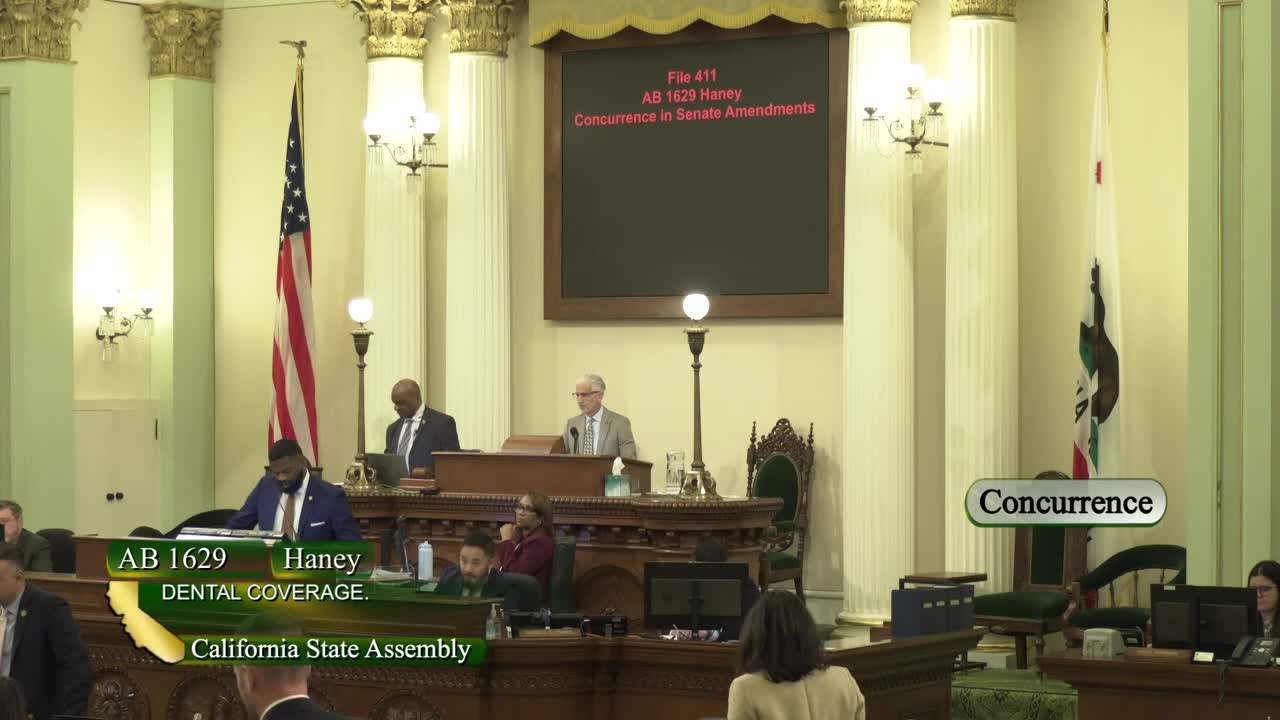 1MIN
Assembly Floor
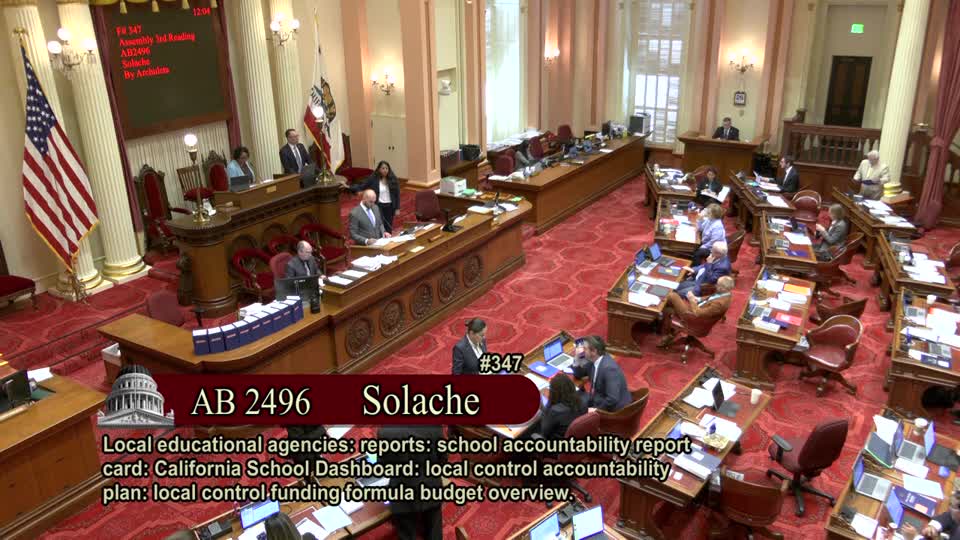 4MIN
Senate Floor
 1MIN
Senate Standing Committee on Appropriations
 10MIN
Senate Standing Committee on Public Safety
 1MIN
Assembly Floor
 9MIN
Assembly Standing Committee on Transportation
 15MIN