AB 1687: Driver’s licenses: revocation.
- Session Year: 2025-2026
- House: Assembly
- Latest Version Date: 2026-09-25
Current Status:
Passed
(2026-09-25: Chaptered by Secretary of State - Chapter 446, Statutes of 2026.)
Introduced
In Committee
Awaiting First Chamber Vote
Passed First Chamber
In Committee
Awaiting Second Chamber Vote
Passed Second Chamber
Enacted
Existing law requires the Department of Motor Vehicles to immediately revoke the driving privilege of a person upon receipt of a duly certified abstract of the record of a court showing that the person has been convicted of, among other things, gross vehicular manslaughter while intoxicated. Existing law requires a person who has been convicted of driving a motor vehicle while intoxicated, as specified, to install an interlock ignition device on the vehicle they operate for a mandatory period of time as ordered by the court.
This bill, Irenes Law, would require the department, commencing on January 1, 2031, to revoke the driving privilege of a person upon a showing that the person has been convicted of a violation of driving while intoxicated that proximately causes bodily injury to any person other than the driver and has 4 or more prior convictions within a 10-year period for, among other things, driving while under the influence of an alcoholic beverage. The bill would additionally prohibit the department from reinstating that persons driving privileges until the expiration of 72 months after the date of revocation, subject to certain requirements, including, among others, agreeing to maintain a functioning, certified ignition interlock device, for a mandatory term of 72 months.
Existing law requires the Department of Motor Vehicles to immediately revoke the driving privilege of a person upon receipt of a duly certified abstract of the record of a court showing that the person has been convicted of, among other things, gross vehicular manslaughter while intoxicated. Existing law requires a person who has been convicted of driving a motor vehicle while intoxicated, as specified, to install an interlock ignition device on the vehicle they operate for a mandatory period of time as ordered by the court.
This bill would, beginning January 1, 2031, bill, Irenes Law, would require the department department, commencing on January 1, 2031, to revoke the driving privilege of a person upon a showing that the person has been convicted of a violation of driving while intoxicated that proximately causes bodily injury to any person other than the driver and has 4 or more prior convictions within a 10-year period for, among other things, driving while under the influence of an alcoholic beverage. The bill would additionally prohibit the department from reinstating that persons driving privileges until the expiration of 72 months after the date of revocation, subject to certain requirements, including, among others, agreeing to install and maintain a functioning, certified ignition interlock device. The bill would, until January 1, 2033, require a person convicted of a specified violation of driving while intoxicated that proximately causes bodily injury to a person other than the driver, with 4 prior qualifying convictions within a 10-year period, to install and maintain an ignition interlock device for 72 months, as specified. device, for a mandatory term of 72 months.
Existing law requires the Department of Motor Vehicles to immediately revoke the driving privilege of a person upon receipt of a duly certified abstract of the record of a court showing that the person has been convicted of, among other things, gross vehicular manslaughter while intoxicated. If the person can provide proof of financial responsibility, as defined, existing law authorizes the department to reinstate those driving privileges 3 years after the date of revocation. Existing law requires a person who has been convicted of driving a motor vehicle while intoxicated, as specified, to install an interlock ignition device on the vehicle they operate for a mandatory period of time as ordered by the court.
This bill would authorize would, beginning January 1, 2031, require the department to revoke the driving privilege of a person upon a showing that the person has been convicted of a violation of driving while intoxicated that proximately causes bodily injury to any person other than the driver and has 3 4 or more prior convictions within a 10-year period for, among other things, driving while under the influence of an alcoholic beverage. If the department revokes a persons driving privileges pursuant to this authority, the The bill would prohibit the department from reinstating that persons driving privileges until the expiration of 8 years 72 months after the date of revocation, subject to certain requirements. However, the bill would make an exception to this prohibition and require the department to reinstate the driving privileges of an above-described person if the person has satisfied certain conditions, including agreeing to install and maintain an ignition interlock device, among other requirements. requirements, including, among others, agreeing to install and maintain a functioning, certified ignition interlock device. The bill would, until January 1, 2033, require a person convicted of a specified violation of driving while intoxicated that proximately causes bodily injury to a person other than the driver, with 4 prior qualifying convictions within a 10-year period, to install and maintain an ignition interlock device for 72 months, as specified.
Existing law requires the Department of Motor Vehicles to immediately revoke the driving privilege of a person upon receipt of a duly certified abstract of the record of a court showing that the person has been convicted of, among other things, gross vehicular manslaughter while intoxicated. If the person can provide proof of financial responsibility, as defined, existing law authorizes the department to reinstate those driving privileges 3 years after the date of revocation.
This bill would authorize the department to revoke the driving privilege of a person upon a showing that the person has 3 or more convictions within a 10-year period for, among other things, driving while under the influence of an alcoholic beverage. If the department revokes a persons driving privileges pursuant to this authority, the bill would prohibit the department from reinstating that persons driving privileges until the expiration of 8 years after the date of revocation, subject to certain requirements. However, the bill would make an exception to this prohibition and require the department to reinstate the driving privileges of an above-described person if the person has satisfied certain conditions, including agreeing to install and maintain an ignition interlock device, among other requirements.
Existing law requires the Department of Motor Vehicles to immediately revoke the driving privilege of a person upon receipt of a duly certified abstract of the record of a court showing that the person has been convicted of, among other things, gross vehicular manslaughter while intoxicated. If the person can provide proof of financial responsibility, as defined, existing law authorizes the department to reinstate those driving privileges 3 years after the date of revocation.
This bill would require authorize the department to immediately revoke the driving privilege of a person upon a showing that the person has 3 or more convictions within a 10-year period for, among other things, driving while under the influence of an alcoholic beverage. The If the department revokes a persons driving privileges pursuant to this authority, the bill would prohibit the department from reinstating these that persons driving privileges for the above-described person until the expiration of 8 years after the date of revocation, subject to certain requirements. However, the bill would make an exception to this prohibition and require the department to reinstate the driving privileges of an above-described person if the person has satisfied certain conditions, including agreeing to install and maintain an ignition interlock device, among other requirements.
Existing law requires the Department of Motor Vehicles to immediately revoke the driving privilege of a person upon receipt of a duly certified abstract of the record of a court showing that the person has been convicted of, among other things, gross vehicular manslaughter while intoxicated. If the person can provide proof of financial responsibility, as defined, existing law authorizes the department to reinstate those driving privileges 3 years after the date of revocation.
This bill would require the department to immediately revoke the driving privilege of a person upon a showing that the person has 3 or more convictions for, among other things, driving while under the influence of an alcoholic beverage. The bill would prohibit the department from reinstating these driving privileges for the above-described person until the expiration of 8 years after the date of revocation, subject to certain requirements.
This act shall be known, and may be cited, as Irenes Law.
SEC. 2.Section 13352.7 is added to the Vehicle Code, to read:13352.7.(a)Notwithstanding any other law, upon a conviction or finding of a violation of subdivision (a), (b), (d), (e), or (g) of Section 23153 and if the offense occurred within 10 years of four or more separate violations of Section 23103, as specified in Section 23103.5, 23152, 23153, or any combination thereof, that resulted in a conviction, the privilege of a person to operate a motor vehicle shall be suspended for 72 months.
(b)(1)The privilege shall not be reinstated until the person files proof of financial responsibility and gives proof satisfactory to the department of successful completion any of the following:
(A)A 30-month driving-under-the-influence program in the persons county of residence or employment licensed pursuant to Chapter 9 (commencing with Section 11836) of Part 2 of Division 10.5 of the Health and Safety Code.
(B)If a 30-month program is unavailable in the persons county of residence or employment, an 18-month driving-under-the-influence program licensed pursuant to Chapter 9 (commencing with Section 11836) of Part 2 of Division 10.5 of the Health and Safety Code.
(C)A program specified in Section 8001 of the Penal Code.
(2)Credit shall not be given to program activities completed prior to the date of the current violation.
(3)For the purposes of this subdivision, enrollment in, participation in, and completion of an approved program shall occur subsequent to the date of the current violation.
(c)The department shall advise the person that after completion of 12 months of the revocation period, which may include credit for a suspension period served under subdivision (c) of Section 13353.3, they may apply to the department for a restricted drivers license if they meet all of the following requirements:
(1)The person satisfactorily provides, subsequent to the violation date of the current underlying conviction, either of the following:
(A)The initial 12 months of an 18-month driving-under-the-influence program licensed pursuant to Chapter 9 (commencing with Section 11836) of Part 2 of Division 10.5 of the Health and Safety Code, if a 30-month program is unavailable in the persons county of residence or employment.
(B)The initial 12 months of a 30-month driving-under-the-influence program licensed pursuant to Chapter 9 (commencing with Section 11836) of Part 2 of Division 10.5 of the Health and Safety Code, if available in the county of the persons residence or employment.
(2)The person agrees, as a condition of the restriction, to continue satisfactory participation in the program described in paragraph (1).
(3)The person submits the Verification of Installation form described in paragraph (2) of subdivision (g) of Section 13386.
(4)The person agrees to maintain a functioning, certified ignition interlock device for a mandatory term of 72 months.
(5)The person provides proof of financial responsibility as defined in Section 16430.
(6)The person pays all applicable reinstatement or reissue fees and any restriction fee required by the department.
(d)This section shall become operative January 1, 2031.
All matter omitted in this version of the bill appears in the bill as amended in the Senate, August 21, 2026. (JR11)This act shall be known, and may be cited, as Irenes Law.
SEC. 2.Section 13352 of the Vehicle Code, as amended by Section 1 of Chapter 689 of the Statutes of 2025, is amended to read:13352.(a)The department shall immediately suspend or revoke the privilege of a person to operate a motor vehicle upon the receipt of an abstract of the record of a court showing that the person has been convicted of a violation of Section 23152 or 23153, subdivision (a) of Section 23109, or Section 23109.1, or upon the receipt of a report of a judge of the juvenile court, a juvenile traffic hearing officer, or a referee of a juvenile court showing that the person has been found to have committed a violation of Section 23152 or 23153, subdivision (a) of Section 23109, or Section 23109.1. If an offense specified in this section occurs in a vehicle defined in Section 15210, the suspension or revocation specified in this subdivision applies also to the noncommercial driving privilege. The commercial driving privilege shall be disqualified as specified in Sections 15300 to 15302, inclusive. For the purposes of this section, suspension or revocation shall be as follows:
(1)(A)Except as provided in this subparagraph, or as required under Section 13352.1 or 13352.4, upon a conviction or finding of a violation of Section 23152 punishable under Section 23536, the privilege shall be suspended for a period of six months. The privilege shall not be reinstated until the person gives proof of financial responsibility and gives proof satisfactory to the department of successful completion of a driving-under-the-influence program licensed pursuant to Section 11836 of the Health and Safety Code described in subdivision (b) of Section 23538 of this code. If the court, as authorized under paragraph (3) of subdivision (b) of Section 23646, elects to order a person to enroll in, participate in, and complete either program described in subdivision (b) of Section 23542, the department shall require that program in lieu of the program described in subdivision (b) of Section 23538. For the purposes of this paragraph, enrollment in, participation in, and completion of an approved program shall occur subsequent to the date of the current violation. Credit shall not be given to any program activities completed prior to the date of the current violation. Except when the court has ordered installation of a functioning, certified ignition interlock device pursuant to Section 23575.3, the department shall advise the person that they may apply to the department for a restricted drivers license if the person meets all of the following requirements:
(i)The underlying conviction was not only for the use of drugs, as defined in Section 312, at the time of the violation.
(ii)The person satisfactorily provides to the department, subsequent to the violation date of the current underlying conviction, enrollment in, or completion of, a driving-under-the-influence program licensed pursuant to Section 11836 of the Health and Safety Code, as described in subdivision (b) of Section 23538 of this code.
(iii)The person agrees, as a condition of the restriction, to continue satisfactory participation in the program described in clause (ii).
(iv)The person does both of the following:
(I)Submits the Verification of Installation form described in paragraph (2) of subdivision (g) of Section 13386.
(II)Agrees to maintain the functioning, certified ignition interlock device as required under subdivision (i).
(v)The person provides proof of financial responsibility, as defined in Section 16430.
(vi)The person pays all reissue fees and any restriction fee required by the department.
(vii)The person pays to the department a fee sufficient to cover the reasonable costs of administering the requirements of this paragraph, as determined by the department.
(B)The restrictions described in this paragraph shall remain in effect for the period required in subdivision (e).
(2)(A)Except as provided in this paragraph, upon a conviction or finding of a violation of Section 23153 punishable under Section 23554, the privilege shall be suspended for a period of one year. The privilege shall not be reinstated until the person gives proof of financial responsibility and gives proof satisfactory to the department of successful completion of a driving-under-the-influence program licensed pursuant to Section 11836 of the Health and Safety Code as described in subdivision (b) of Section 23556 of this code. If the court, as authorized under paragraph (3) of subdivision (b) of Section 23646, elects to order a person to enroll in, participate in, and complete either program described in subdivision (b) of Section 23542, the department shall require that program in lieu of the program described in Section 23556. For the purposes of this paragraph, enrollment in, participation in, and completion of an approved program shall occur subsequent to the date of the current violation. Credit shall not be given to any program activities completed prior to the date of the current violation. The department shall advise the person that they may apply to the department for a restricted drivers license if the person meets all of the following requirements:
(i)The underlying conviction was not only for the use of drugs, as defined in Section 312, at the time of the violation.
(ii)The person satisfactorily provides, subsequent to the violation date of the current underlying conviction, either of the following:
(I)Proof of enrollment in a driving-under-the-influence program licensed pursuant to Section 11836 of the Health and Safety Code, as described in subdivision (b) of Section 23556 of this code.
(II)Proof of enrollment in a program described in subdivision (b) of Section 23542, if the court has ordered the person to enroll in, participate in, and complete either program described in that section, in which case the person shall not be required to provide the proof described in subclause (I).
(iii)The person agrees, as a condition of the restriction, to continue satisfactory participation in the program described in clause (ii).
(iv)The person complies with Section 23575.3.
(v)The person does both of the following:
(I)Submits the Verification of Installation form described in paragraph (2) of subdivision (g) of Section 13386.
(II)Agrees to maintain the functioning, certified ignition interlock device as required under subdivision (i).
(vi)The person provides proof of financial responsibility, as defined in Section 16430.
(vii)The person pays all reissue fees and any restriction fee required by the department.
(viii)The person pays to the department a fee sufficient to cover the reasonable costs of administering the requirements of this paragraph, as determined by the department.
(B)The restriction shall remain in effect for the period required in subdivision (e).
(3)(A)Except as provided in this paragraph or in Section 13352.5, upon a conviction or finding of a violation of Section 23152 punishable under Section 23540, the privilege shall be suspended for two years. The privilege shall not be reinstated until the person gives proof of financial responsibility and gives proof satisfactory to the department of successful completion of a driving-under-the-influence program licensed pursuant to Section 11836 of the Health and Safety Code as described in subdivision (b) of Section 23542 of this code. For the purposes of this paragraph, enrollment in, participation in, and completion of an approved program shall occur subsequent to the date of the current violation. Credit shall not be given to any program activities completed prior to the date of the current violation. The department shall advise the person that they may apply to the department for a restricted drivers license if the person meets all of the following requirements:
(i)Completion of 12 months of the suspension period if the underlying conviction was only for the use of drugs, as defined in Section 312, at the time of the violation.
(ii)The person satisfactorily provides, subsequent to the violation date of the current underlying conviction, either of the following:
(I)Proof of enrollment in an 18-month driving-under-the-influence program licensed pursuant to Section 11836 of the Health and Safety Code if a 30-month program is unavailable in the persons county of residence or employment.
(II)Proof of enrollment in a 30-month driving-under-the-influence program licensed pursuant to Section 11836 of the Health and Safety Code, if available in the county of the persons residence or employment.
(iii)The person agrees, as a condition of the restriction, to continue satisfactory participation in the program described in clause (ii).
(iv)The person complies with Section 23575.3, if the underlying conviction involved the use of alcohol.
(v)The person does both of the following:
(I)Submits the Verification of Installation form described in paragraph (2) of subdivision (g) of Section 13386.
(II)Agrees to maintain the functioning, certified ignition interlock device as required under subdivision (i).
(vi)The person provides proof of financial responsibility, as defined in Section 16430.
(vii)The person pays all reissue fees and any restriction fee required by the department.
(viii)The person pays to the department a fee sufficient to cover the reasonable costs of administering the requirements of this paragraph, as determined by the department.
(B)The restriction shall remain in effect for the period required in subdivision (e).
(4)(A)Except as provided in this paragraph, upon a conviction or finding of a violation of Section 23153 punishable under Section 23560, the privilege shall be revoked for a period of three years. The privilege may not be reinstated until the person gives proof of financial responsibility, and the person gives proof satisfactory to the department of successful completion of a driving-under-the-influence program licensed pursuant to Section 11836 of the Health and Safety Code, as described in paragraph (4) of subdivision (b) of Section 23562 of this code. For the purposes of this paragraph, enrollment in, participation in, and completion of an approved program shall occur subsequent to the date of the current violation. Credit shall not be given to any program activities completed prior to the date of the current violation. The department shall advise the person that they may apply to the department for a restricted drivers license if the person meets all of the following requirements:
(i)Completion of 12 months of the suspension period if the underlying conviction was only for the use of drugs, as defined in Section 312, at the time of the violation.
(ii)The person satisfactorily provides, subsequent to the violation date of the current underlying conviction, either of the following:
(I)Proof of enrollment in an 18-month driving-under-the-influence program licensed pursuant to Section 11836 of the Health and Safety Code if a 30-month program is unavailable in the persons county of residence or employment.
(II)Proof of enrollment in a 30-month driving-under-the-influence program licensed pursuant to Section 11836 of the Health and Safety Code, if available in the county of the persons residence or employment.
(iii)The person agrees, as a condition of the restriction, to continue satisfactory participation in the program described in clause (ii).
(iv)The person complies with Section 23575.3, if the underlying conviction involved the use of alcohol.
(v)The person does both of the following:
(I)Submits the Verification of Installation form described in paragraph (2) of subdivision (g) of Section 13386.
(II)Agrees to maintain the functioning, certified ignition interlock device as required under subdivision (i).
(vi)The person provides proof of financial responsibility, as defined in Section 16430.
(vii)The person pays all applicable reinstatement or reissue fees and any restriction fee required by the department.
(viii)The person pays to the department a fee sufficient to cover the reasonable costs of administering the requirements of this paragraph, as determined by the department.
(B)The restriction shall remain in effect for the period required in subdivision (e).
(5)(A)Except as provided in this paragraph, upon a conviction or finding of a violation of Section 23152 punishable under Section 23546, the privilege shall be revoked for a period of three years. The privilege shall not be reinstated until the person files proof of financial responsibility and gives proof satisfactory to the department of successful completion of an 18-month driving-under-the-influence program licensed pursuant to Section 11836 of the Health and Safety Code, as described in subdivision (b) or (c) of Section 23548 of this code, if a 30-month program is unavailable in the persons county of residence or employment, or, if available in the county of the persons residence or employment, a 30-month driving-under-the-influence program licensed pursuant to Section 11836 of the Health and Safety Code, or a program specified in Section 8001 of the Penal Code. For the purposes of this paragraph, enrollment in, participation in, and completion of an approved program shall occur subsequent to the date of the current violation. Credit shall not be given to any program activities completed prior to the date of the current violation. The department shall advise the person that they may apply to the department for a restricted drivers license if the person meets all of the following requirements:
(i)Completion of 12 months of the suspension period if the underlying conviction was only for the use of drugs, as defined in Section 312, at the time of the violation.
(ii)The person satisfactorily provides, subsequent to the violation date of the current underlying conviction, either of the following:
(I)Proof of enrollment in an 18-month driving-under-the-influence program licensed pursuant to Section 11836 of the Health and Safety Code if a 30-month program is unavailable in the persons county of residence or employment.
(II)Proof of enrollment in a 30-month driving-under-the-influence program licensed pursuant to Section 11836 of the Health and Safety Code, if available in the county of the persons residence or employment.
(iii)The person agrees, as a condition of the restriction, to continue satisfactory participation in the program described in clause (ii).
(iv)The person complies with Section 23575.3, if the underlying conviction involved the use of alcohol.
(v)The person does both of the following:
(I)Submits the Verification of Installation form described in paragraph (2) of subdivision (g) of Section 13386.
(II)Agrees to maintain the functioning, certified ignition interlock device as required under Section 23575.3, if applicable.
(vi)The person provides proof of financial responsibility, as defined in Section 16430.
(vii)An individual convicted of a violation of Section 23152 punishable under Section 23546 may also, at any time after sentencing, petition the court for referral to an 18-month driving-under-the-influence program licensed pursuant to Section 11836 of the Health and Safety Code, or, if available in the county of the persons residence or employment, a 30-month driving-under-the-influence program licensed pursuant to Section 11836 of the Health and Safety Code. Unless good cause is shown, the court shall order the referral.
(viii)The person pays all applicable reinstatement or reissue fees and any restriction fee required by the department.
(ix)The person pays to the department a fee sufficient to cover the reasonable costs of administering the requirements of this paragraph, as determined by the department.
(B)The restriction shall remain in effect for the period required in subdivision (e).
(6)(A)Except as provided in this paragraph, upon a conviction or finding of a violation of Section 23153 punishable under Section 23550.5 or 23566, the privilege shall be revoked for a period of five years. The privilege may not be reinstated until the person gives proof of financial responsibility and gives proof satisfactory to the department of successful completion of a driving-under-the-influence program licensed pursuant to Section 11836 of the Health and Safety Code as described in subdivision (b) of Section 23568 of this code, or if available in the county of the persons residence or employment, a 30-month driving-under-the-influence program licensed pursuant to Section 11836 of the Health and Safety Code, or a program specified in Section 8001 of the Penal Code. For the purposes of this paragraph, enrollment in, participation in, and completion of an approved program shall be subsequent to the date of the current violation. Credit shall not be given to any program activities completed prior to the date of the current violation. The department shall advise the person that they may apply to the department for a restricted drivers license if the person meets all of the following requirements:
(i)Completion of 12 months of the suspension period if the underlying conviction was only for the use of drugs, as defined in Section 312, at the time of the violation.
(ii)The person satisfactorily provides, subsequent to the violation date of the current underlying conviction, either of the following:
(I)Proof of enrollment in a 30-month driving-under-the-influence program licensed pursuant to Section 11836 of the Health and Safety Code, if available in the county of the persons residence or employment.
(II)Proof of enrollment in an 18-month driving-under-the-influence program licensed pursuant to Section 11836 of the Health and Safety Code, if a 30-month program is unavailable in the persons county of residence or employment.
(iii)The person agrees, as a condition of the restriction, to continue satisfactory participation in the program described in clause (ii).
(iv)The person complies with Section 23575.3, if the underlying conviction involved alcohol.
(v)The person does both of the following:
(I)Submits the Verification of Installation form described in paragraph (2) of subdivision (g) of Section 13386.
(II)Agrees to maintain the functioning, certified ignition interlock device as required under subdivision (i).
(vi)The person provides proof of financial responsibility, as defined in Section 16430.
(vii)An individual convicted of a violation of Section 23153 punishable under Section 23566 may also, at any time after sentencing, petition the court for referral to an 18-month driving-under-the-influence program licensed pursuant to Section 11836 of the Health and Safety Code, or, if available in the county of the persons residence or employment, a 30-month driving-under-the-influence program licensed pursuant to Section 11836 of the Health and Safety Code. Unless good cause is shown, the court shall order the referral.
(viii)The person pays all applicable reinstatement or reissue fees and any restriction fee required by the department.
(ix)The person pays to the department a fee sufficient to cover the reasonable costs of administering the requirements of this paragraph, as determined by the department.
(B)The restriction shall remain in effect for the period required in subdivision (e).
(7)(A)Except as provided in this paragraph, upon a conviction or finding of a violation of Section 23152 punishable under Section 23550 or 23550.5, or of a violation of Section 23153 punishable under Section 23550.5, the privilege shall be revoked for a period of four years. The privilege shall not be reinstated until the person files proof of financial responsibility and gives proof satisfactory to the department of successful completion of an 18-month driving-under-the-influence program licensed pursuant to Section 11836 of the Health and Safety Code, if a 30-month program is unavailable in the persons county of residence or employment, or, if available in the county of the persons residence or employment, a 30-month driving-under-the-influence program licensed pursuant to Section 11836 of the Health and Safety Code, or a program specified in Section 8001 of the Penal Code. For the purposes of this paragraph, enrollment in, participation in, and completion of an approved program shall occur subsequent to the date of the current violation. Credit shall not be given to any program activities completed prior to the date of the current violation. The department shall advise the person that they may apply to the department for a restricted drivers license if the person meets all of the following requirements:
(i)Completion of 12 months of the suspension period if the underlying conviction was only for the use of drugs, as defined in Section 312, at the time of the violation.
(ii)The person satisfactorily provides, subsequent to the violation date of the current underlying conviction, either of the following:
(I)Proof of enrollment in an 18-month driving-under-the-influence program licensed pursuant to Section 11836 of the Health and Safety Code, if a 30-month program is unavailable in the persons county of residence or employment.
(II)Proof of enrollment in a 30-month driving-under-the-influence program licensed pursuant to Section 11836 of the Health and Safety Code, if available in the county of the persons residence or employment.
(iii)The person agrees, as a condition of the restriction, to continue satisfactory participation in the program described in clause (ii).
(iv)The person complies with Section 23575.3, if the underlying conviction involved alcohol.
(v)The person does both of the following:
(I)Submits the Verification of Installation form described in paragraph (2) of subdivision (g) of Section 13386.
(II)Agrees to maintain the functioning, certified ignition interlock device as required under subdivision (i).
(vi)The person provides proof of financial responsibility, as defined in Section 16430.
(vii)An individual convicted of a violation of Section 23152 punishable under Section 23550 may also, at any time after sentencing, petition the court for referral to an 18-month driving-under-the-influence program licensed pursuant to Section 11836 of the Health and Safety Code, or, if available in the county of the persons residence or employment, a 30-month driving-under-the-influence program licensed pursuant to Section 11836 of the Health and Safety Code. Unless good cause is shown, the court shall order the referral.
(viii)The person pays all applicable reinstatement or reissue fees and any restriction fee required by the department.
(ix)The person pays to the department a fee sufficient to cover the reasonable costs of administering the requirements of this paragraph, as determined by the department.
(B)The restriction shall remain in effect for the period required in subdivision (e).
(8)(A)Upon a conviction or finding of a violation of subdivision (a) of Section 23109 that is punishable under subdivision (e) of that section or Section 23109.1, the privilege shall be suspended for a period of 90 days to six months, if ordered by the court. The privilege shall not be reinstated until the person gives proof of financial responsibility, as defined in Section 16430.
(B)Commencing January 1, 2029, upon a finding of a violation of subdivision (c) of Section 23109 for engaging in a motor vehicle exhibition of speed, as described in paragraph (2) of subdivision (i) of Section 23109, the privilege shall be suspended for a period of 90 days to six months, if ordered by the court. The privilege shall not be reinstated until the person gives proof of financial responsibility, as defined in Section 16430.
(9)Upon a conviction or finding of a violation of subdivision (a) of Section 23109 that is punishable under subdivision (f) of that section, the privilege shall be suspended for a period of six months, if ordered by the court. The privilege shall not be reinstated until the person gives proof of financial responsibility, as defined in Section 16430.
(b)For the purposes of paragraphs (2) to (9), inclusive, of subdivision (a), the finding of the juvenile court judge, the juvenile hearing officer, or the referee of a juvenile court of a commission of a violation of Section 23152 or 23153, subdivision (a) of Section 23109, or Section 23109.1, as specified in subdivision (a) of this section, is a conviction.
(c)A judge of a juvenile court, juvenile hearing officer, or referee of a juvenile court shall immediately report the findings specified in subdivision (a) to the department.
(d)A conviction of an offense in a state, territory, or possession of the United States, the District of Columbia, the Commonwealth of Puerto Rico, or Canada that, if committed in this state, would be a violation of Section 23152, is a conviction of Section 23152 for the purposes of this section, and a conviction of an offense that, if committed in this state, would be a violation of Section 23153, is a conviction of Section 23153 for the purposes of this section. The department shall suspend or revoke the privilege to operate a motor vehicle pursuant to this section upon receiving notice of that conviction.
(e)(1)The restricted driving privilege shall become effective when the department receives all of the documents and fees required under paragraphs (1) to (7), inclusive, of subdivision (a) and, except as specified in paragraph (2) or (3), shall remain in effect until all reinstatement requirements are satisfied.
(2)For the purposes of the restriction conditions specified in paragraphs (1) to (7), inclusive, of subdivision (a), the department shall terminate the restriction imposed pursuant to this section and shall suspend or revoke the persons driving privilege upon receipt of notification from the driving-under-the-influence program that the person has failed to comply with the program requirements. The persons driving privilege shall remain suspended or revoked for the remaining period of the original suspension or revocation imposed under this section and until all reinstatement requirements described in this section are met.
(3)The department shall immediately suspend or revoke the privilege to operate a motor vehicle of a person who, with respect to an ignition interlock device installed pursuant to this section attempts to remove, bypass, or tamper with the device, has the device removed prior to the termination date of the restriction, or fails three or more times to comply with any requirement for the maintenance or calibration of the device. The privilege shall remain suspended or revoked for the remaining period of the originating suspension or revocation and until all reinstatement requirements in this section are satisfied, provided, however, that if the person provides proof to the satisfaction of the department that the person is in compliance with the restriction issued pursuant to this section, the department may, in its discretion, restore the privilege to operate a motor vehicle and reimpose the remaining term of the restriction.
(f)Notwithstanding the suspension periods specified in paragraphs (1) to (7), inclusive, of subdivision (a) or Section 13352.1, if the person maintains a functioning, certified ignition interlock device for the mandatory term required under Section 23575.3, inclusive of any term credit earned under Section 13353.6 or 13353.75, the department shall reinstate the persons privilege to operate a motor vehicle at the time the other reinstatement requirements are satisfied.
(g)For the purposes of this section, completion of a program is the following:
(1)Satisfactory completion of all program requirements approved pursuant to program licensure, as evidenced by a certificate of completion issued, under penalty of perjury, by the licensed program.
(2)Certification, under penalty of perjury, by the director of a program specified in Section 8001 of the Penal Code, that the person has completed a program specified in Section 8001 of the Penal Code.
(h)(1)The holder of a commercial drivers license who was operating a motor vehicle other than a commercial vehicle, or a driver who was operating a commercial vehicle, as defined in Section 15210, at the time of the violation that resulted in the suspension of that persons driving privilege pursuant to this section is not eligible for the restricted drivers license authorized under paragraphs (1) to (7), inclusive, of subdivision (a).
(2)Notwithstanding paragraph (1), as authorized under this section, the department shall issue the person a noncommercial drivers license restricted in the same manner and subject to the same conditions and requirements as specified in paragraphs (1) to (7), inclusive, of subdivision (a).
(i)A person whose driving privilege is restricted by the Department of Motor Vehicles pursuant to this section shall arrange for each vehicle with a functioning, certified ignition interlock device to be serviced by the installer at least once every 60 days in order for the installer to recalibrate the device and monitor the operation of the device. The installer shall notify the department if the device is removed or indicates that the person has attempted to remove, bypass, or tamper with the device, or if the person fails three or more times to comply with any requirement for the maintenance or calibration of the ignition interlock device.
(j)The reinstatement of the driving privilege pursuant to this section does not abrogate a persons continuing duty to comply with any restriction imposed pursuant to Section 23575.3.
(k)For purposes of this section, bypass means either of the following:
(1)Failure to take any random retest.
(2)Failure to pass a random retest with a breath alcohol concentration not exceeding 0.03 percent, by weight of alcohol, in the persons blood.
(l)For purposes of this section, random retest means a breath test performed by the driver upon a certified ignition interlock device at random intervals after the initial engine startup breath test and while the vehicles motor is running.
(m)The restriction conditions specified in paragraphs (1) to (7), inclusive, of subdivision (a) shall apply only to a person who is convicted for a violation of Section 23152 or 23153 that occurred on or after January 1, 2019.
(n)This section shall become operative on January 1, 2019.
(o)This section shall remain in effect only until January 1, 2033, 2031, and as of that date is repealed, unless a later enacted statute that is enacted before January 1, 2033, 2031, deletes or extends that date.
SEC. 3.Section 13352 is added to the Vehicle Code, to read:13352.(a)The department shall immediately suspend or revoke the privilege of a person to operate a motor vehicle upon the receipt of an abstract of the record of a court showing that the person has been convicted of a violation of Section 23152 or 23153, subdivision (a) of Section 23109, or Section 23109.1, or upon the receipt of a report of a judge of the juvenile court, a juvenile traffic hearing officer, or a referee of a juvenile court showing that the person has been found to have committed a violation of Section 23152 or 23153, subdivision (a) of Section 23109, or Section 23109.1. If an offense specified in this section occurs in a vehicle defined in Section 15210, the suspension or revocation specified in this subdivision applies also to the noncommercial driving privilege. The commercial driving privilege shall be disqualified as specified in Sections 15300 to 15302, inclusive. For the purposes of this section, suspension or revocation shall be as follows:
(1)(A)Except as provided in this subparagraph, or as required under Section 13352.1 or 13352.4, upon a conviction or finding of a violation of Section 23152 punishable under Section 23536, the privilege shall be suspended for a period of six months. The privilege shall not be reinstated until the person gives proof of financial responsibility and gives proof satisfactory to the department of successful completion of a driving-under-the-influence program licensed pursuant to Section 11836 of the Health and Safety Code described in subdivision (b) of Section 23538 of this code. If the court, as authorized under paragraph (3) of subdivision (b) of Section 23646, elects to order a person to enroll in, participate in, and complete either program described in subdivision (b) of Section 23542, the department shall require that program in lieu of the program described in subdivision (b) of Section 23538. For the purposes of this paragraph, enrollment in, participation in, and completion of an approved program shall occur subsequent to the date of the current violation. Credit shall not be given to any program activities completed prior to the date of the current violation. Except when the court has ordered installation of a functioning, certified ignition interlock device pursuant to Section 23575.3, the department shall advise the person that they may apply to the department for a restricted drivers license if the person meets all of the following requirements:
(i)The underlying conviction was not only for the use of drugs, as defined in Section 312, at the time of the violation.
(ii)The person satisfactorily provides to the department, subsequent to the violation date of the current underlying conviction, enrollment in, or completion of, a driving-under-the-influence program licensed pursuant to Section 11836 of the Health and Safety Code, as described in subdivision (b) of Section 23538 of this code.
(iii)The person agrees, as a condition of the restriction, to continue satisfactory participation in the program described in clause (ii).
(iv)The person does both of the following:
(I)Submits the Verification of Installation form described in paragraph (2) of subdivision (g) of Section 13386.
(II)Agrees to maintain the functioning, certified ignition interlock device as required under subdivision (i).
(v)The person provides proof of financial responsibility, as defined in Section 16430.
(vi)The person pays all reissue fees and any restriction fee required by the department.
(vii)The person pays to the department a fee sufficient to cover the reasonable costs of administering the requirements of this paragraph, as determined by the department.
(B)The restrictions described in this paragraph shall remain in effect for the period required in subdivision (e).
(2)(A)Except as provided in this paragraph, upon a conviction or finding of a violation of Section 23153 punishable under Section 23554, the privilege shall be suspended for a period of one year. The privilege shall not be reinstated until the person gives proof of financial responsibility and gives proof satisfactory to the department of successful completion of a driving-under-the-influence program licensed pursuant to Section 11836 of the Health and Safety Code as described in subdivision (b) of Section 23556 of this code. If the court, as authorized under paragraph (3) of subdivision (b) of Section 23646, elects to order a person to enroll in, participate in, and complete either program described in subdivision (b) of Section 23542, the department shall require that program in lieu of the program described in Section 23556. For the purposes of this paragraph, enrollment in, participation in, and completion of an approved program shall occur subsequent to the date of the current violation. Credit shall not be given to any program activities completed prior to the date of the current violation. The department shall advise the person that they may apply to the department for a restricted drivers license if the person meets all of the following requirements:
(i)The underlying conviction was not only for the use of drugs, as defined in Section 312, at the time of the violation.
(ii)The person satisfactorily provides, subsequent to the violation date of the current underlying conviction, either of the following:
(I)Proof of enrollment in a driving-under-the-influence program licensed pursuant to Section 11836 of the Health and Safety Code, as described in subdivision (b) of Section 23556 of this code.
(II)Proof of enrollment in a program described in subdivision (b) of Section 23542, if the court has ordered the person to enroll in, participate in, and complete either program described in that section, in which case the person shall not be required to provide the proof described in subclause (I).
(iii)The person agrees, as a condition of the restriction, to continue satisfactory participation in the program described in clause (ii).
(iv)The person complies with Section 23575.3.
(v)The person does both of the following:
(I)Submits the Verification of Installation form described in paragraph (2) of subdivision (g) of Section 13386.
(II)Agrees to maintain the functioning, certified ignition interlock device as required under subdivision (i).
(vi)The person provides proof of financial responsibility, as defined in Section 16430.
(vii)The person pays all reissue fees and any restriction fee required by the department.
(viii)The person pays to the department a fee sufficient to cover the reasonable costs of administering the requirements of this paragraph, as determined by the department.
(B)The restriction shall remain in effect for the period required in subdivision (e).
(3)(A)Except as provided in this paragraph or in Section 13352.5, upon a conviction or finding of a violation of Section 23152 punishable under Section 23540, the privilege shall be suspended for two years. The privilege shall not be reinstated until the person gives proof of financial responsibility and gives proof satisfactory to the department of successful completion of a driving-under-the-influence program licensed pursuant to Section 11836 of the Health and Safety Code as described in subdivision (b) of Section 23542 of this code. For the purposes of this paragraph, enrollment in, participation in, and completion of an approved program shall occur subsequent to the date of the current violation. Credit shall not be given to any program activities completed prior to the date of the current violation. The department shall advise the person that they may apply to the department for a restricted drivers license if the person meets all of the following requirements:
(i)Completion of 12 months of the suspension period if the underlying conviction was only for the use of drugs, as defined in Section 312, at the time of the violation.
(ii)The person satisfactorily provides, subsequent to the violation date of the current underlying conviction, either of the following:
(I)Proof of enrollment in an 18-month driving-under-the-influence program licensed pursuant to Section 11836 of the Health and Safety Code if a 30-month program is unavailable in the persons county of residence or employment.
(II)Proof of enrollment in a 30-month driving-under-the-influence program licensed pursuant to Section 11836 of the Health and Safety Code, if available in the county of the persons residence or employment.
(iii)The person agrees, as a condition of the restriction, to continue satisfactory participation in the program described in clause (ii).
(iv)The person complies with Section 23575.3, if the underlying conviction involved the use of alcohol.
(v)The person does both of the following:
(I)Submits the Verification of Installation form described in paragraph (2) of subdivision (g) of Section 13386.
(II)Agrees to maintain the functioning, certified ignition interlock device as required under subdivision (i).
(vi)The person provides proof of financial responsibility, as defined in Section 16430.
(vii)The person pays all reissue fees and any restriction fee required by the department.
(viii)The person pays to the department a fee sufficient to cover the reasonable costs of administering the requirements of this paragraph, as determined by the department.
(B)The restriction shall remain in effect for the period required in subdivision (e).
(4)(A)Except as provided in this paragraph, upon a conviction or finding of a violation of Section 23153 punishable under Section 23560, the privilege shall be revoked for a period of three years. The privilege may not be reinstated until the person gives proof of financial responsibility, and the person gives proof satisfactory to the department of successful completion of a driving-under-the-influence program licensed pursuant to Section 11836 of the Health and Safety Code, as described in paragraph (4) of subdivision (b) of Section 23562 of this code. For the purposes of this paragraph, enrollment in, participation in, and completion of an approved program shall occur subsequent to the date of the current violation. Credit shall not be given to any program activities completed prior to the date of the current violation. The department shall advise the person that they may apply to the department for a restricted drivers license if the person meets all of the following requirements:
(i)Completion of 12 months of the suspension period if the underlying conviction was only for the use of drugs, as defined in Section 312, at the time of the violation.
(ii)The person satisfactorily provides, subsequent to the violation date of the current underlying conviction, either of the following:
(I)Proof of enrollment in an 18-month driving-under-the-influence program licensed pursuant to Section 11836 of the Health and Safety Code if a 30-month program is unavailable in the persons county of residence or employment.
(II)Proof of enrollment in a 30-month driving-under-the-influence program licensed pursuant to Section 11836 of the Health and Safety Code, if available in the county of the persons residence or employment.
(iii)The person agrees, as a condition of the restriction, to continue satisfactory participation in the program described in clause (ii).
(iv)The person complies with Section 23575.3, if the underlying conviction involved the use of alcohol.
(v)The person does both of the following:
(I)Submits the Verification of Installation form described in paragraph (2) of subdivision (g) of Section 13386.
(II)Agrees to maintain the functioning, certified ignition interlock device as required under subdivision (i).
(vi)The person provides proof of financial responsibility, as defined in Section 16430.
(vii)The person pays all applicable reinstatement or reissue fees and any restriction fee required by the department.
(viii)The person pays to the department a fee sufficient to cover the reasonable costs of administering the requirements of this paragraph, as determined by the department.
(B)The restriction shall remain in effect for the period required in subdivision (e).
(5)(A)Except as provided in this paragraph, upon a conviction or finding of a violation of Section 23152 punishable under Section 23546, the privilege shall be revoked for a period of three years. The privilege shall not be reinstated until the person files proof of financial responsibility and gives proof satisfactory to the department of successful completion of an 18-month driving-under-the-influence program licensed pursuant to Section 11836 of the Health and Safety Code, as described in subdivision (b) or (c) of Section 23548 of this code, if a 30-month program is unavailable in the persons county of residence or employment, or, if available in the county of the persons residence or employment, a 30-month driving-under-the-influence program licensed pursuant to Section 11836 of the Health and Safety Code, or a program specified in Section 8001 of the Penal Code. For the purposes of this paragraph, enrollment in, participation in, and completion of an approved program shall occur subsequent to the date of the current violation. Credit shall not be given to any program activities completed prior to the date of the current violation. The department shall advise the person that they may apply to the department for a restricted drivers license if the person meets all of the following requirements:
(i)Completion of 12 months of the suspension period if the underlying conviction was only for the use of drugs, as defined in Section 312, at the time of the violation.
(ii)The person satisfactorily provides, subsequent to the violation date of the current underlying conviction, either of the following:
(I)Proof of enrollment in an 18-month driving-under-the-influence program licensed pursuant to Section 11836 of the Health and Safety Code if a 30-month program is unavailable in the persons county of residence or employment.
(II)Proof of enrollment in a 30-month driving-under-the-influence program licensed pursuant to Section 11836 of the Health and Safety Code, if available in the county of the persons residence or employment.
(iii)The person agrees, as a condition of the restriction, to continue satisfactory participation in the program described in clause (ii).
(iv)The person complies with Section 23575.3, if the underlying conviction involved the use of alcohol.
(v)The person does both of the following:
(I)Submits the Verification of Installation form described in paragraph (2) of subdivision (g) of Section 13386.
(II)Agrees to maintain the functioning, certified ignition interlock device as required under Section 23575.3, if applicable.
(vi)The person provides proof of financial responsibility, as defined in Section 16430.
(vii)An individual convicted of a violation of Section 23152 punishable under Section 23546 may also, at any time after sentencing, petition the court for referral to an 18-month driving-under-the-influence program licensed pursuant to Section 11836 of the Health and Safety Code, or, if available in the county of the persons residence or employment, a 30-month driving-under-the-influence program licensed pursuant to Section 11836 of the Health and Safety Code. Unless good cause is shown, the court shall order the referral.
(viii)The person pays all applicable reinstatement or reissue fees and any restriction fee required by the department.
(ix)The person pays to the department a fee sufficient to cover the reasonable costs of administering the requirements of this paragraph, as determined by the department.
(B)The restriction shall remain in effect for the period required in subdivision (e).
(6)(A)Except as provided in this paragraph, upon a conviction or finding of a violation of Section 23153 punishable under Section 23550.5 or 23566, the privilege shall be revoked for a period of five years. The privilege may not be reinstated until the person gives proof of financial responsibility and gives proof satisfactory to the department of successful completion of a driving-under-the-influence program licensed pursuant to Section 11836 of the Health and Safety Code as described in subdivision (b) of Section 23568 of this code, or if available in the county of the persons residence or employment, a 30-month driving-under-the-influence program licensed pursuant to Section 11836 of the Health and Safety Code, or a program specified in Section 8001 of the Penal Code. For the purposes of this paragraph, enrollment in, participation in, and completion of an approved program shall be subsequent to the date of the current violation. Credit shall not be given to any program activities completed prior to the date of the current violation. The department shall advise the person that they may apply to the department for a restricted drivers license if the person meets all of the following requirements:
(i)Completion of 12 months of the suspension period if the underlying conviction was only for the use of drugs, as defined in Section 312, at the time of the violation.
(ii)The person satisfactorily provides, subsequent to the violation date of the current underlying conviction, either of the following:
(I)Proof of enrollment in a 30-month driving-under-the-influence program licensed pursuant to Section 11836 of the Health and Safety Code, if available in the county of the persons residence or employment.
(II)Proof of enrollment in an 18-month driving-under-the-influence program licensed pursuant to Section 11836 of the Health and Safety Code, if a 30-month program is unavailable in the persons county of residence or employment.
(iii)The person agrees, as a condition of the restriction, to continue satisfactory participation in the program described in clause (ii).
(iv)The person complies with Section 23575.3, if the underlying conviction involved alcohol.
(v)The person does both of the following:
(I)Submits the Verification of Installation form described in paragraph (2) of subdivision (g) of Section 13386.
(II)Agrees to maintain the functioning, certified ignition interlock device as required under subdivision (i).
(vi)The person provides proof of financial responsibility, as defined in Section 16430.
(vii)An individual convicted of a violation of Section 23153 punishable under Section 23566 may also, at any time after sentencing, petition the court for referral to an 18-month driving-under-the-influence program licensed pursuant to Section 11836 of the Health and Safety Code, or, if available in the county of the persons residence or employment, a 30-month driving-under-the-influence program licensed pursuant to Section 11836 of the Health and Safety Code. Unless good cause is shown, the court shall order the referral.
(viii)The person pays all applicable reinstatement or reissue fees and any restriction fee required by the department.
(ix)The person pays to the department a fee sufficient to cover the reasonable costs of administering the requirements of this paragraph, as determined by the department.
(B)The restriction shall remain in effect for the period required in subdivision (e).
(7)(A)Except as provided in this paragraph, upon a conviction or finding of a violation of Section 23152 punishable under Section 23550 or 23550.5, or of a violation of Section 23153 punishable under Section 23550.5, the privilege shall be revoked for a period of four years. The privilege shall not be reinstated until the person files proof of financial responsibility and gives proof satisfactory to the department of successful completion of an 18-month driving-under-the-influence program licensed pursuant to Section 11836 of the Health and Safety Code, if a 30-month program is unavailable in the persons county of residence or employment, or, if available in the county of the persons residence or employment, a 30-month driving-under-the-influence program licensed pursuant to Section 11836 of the Health and Safety Code, or a program specified in Section 8001 of the Penal Code. For the purposes of this paragraph, enrollment in, participation in, and completion of an approved program shall occur subsequent to the date of the current violation. Credit shall not be given to any program activities completed prior to the date of the current violation. The department shall advise the person that they may apply to the department for a restricted drivers license if the person meets all of the following requirements:
(i)Completion of 12 months of the suspension period if the underlying conviction was only for the use of drugs, as defined in Section 312, at the time of the violation.
(ii)The person satisfactorily provides, subsequent to the violation date of the current underlying conviction, either of the following:
(I)Proof of enrollment in an 18-month driving-under-the-influence program licensed pursuant to Section 11836 of the Health and Safety Code, if a 30-month program is unavailable in the persons county of residence or employment.
(II)Proof of enrollment in a 30-month driving-under-the-influence program licensed pursuant to Section 11836 of the Health and Safety Code, if available in the county of the persons residence or employment.
(iii)The person agrees, as a condition of the restriction, to continue satisfactory participation in the program described in clause (ii).
(iv)The person complies with Section 23575.3, if the underlying conviction involved alcohol.
(v)The person does both of the following:
(I)Submits the Verification of Installation form described in paragraph (2) of subdivision (g) of Section 13386.
(II)Agrees to maintain the functioning, certified ignition interlock device as required under subdivision (i).
(vi)The person provides proof of financial responsibility, as defined in Section 16430.
(vii)An individual convicted of a violation of Section 23152 punishable under Section 23550 may also, at any time after sentencing, petition the court for referral to an 18-month driving-under-the-influence program licensed pursuant to Section 11836 of the Health and Safety Code, or, if available in the county of the persons residence or employment, a 30-month driving-under-the-influence program licensed pursuant to Section 11836 of the Health and Safety Code. Unless good cause is shown, the court shall order the referral.
(viii)The person pays all applicable reinstatement or reissue fees and any restriction fee required by the department.
(ix)The person pays to the department a fee sufficient to cover the reasonable costs of administering the requirements of this paragraph, as determined by the department.
(B)The restriction shall remain in effect for the period required in subdivision (e).
(8)(A)Upon a conviction or finding of a violation of subdivision (a), (b), (d), (e), or (g) of Section 23153 and the offense occurred within 10 years of four or more separate violations of Section 23103, as specified in Section 23103.5, 23152, 23153, or any combination thereof, that resulted in a conviction, the privilege shall be suspended for 72 months. The privilege shall not be reinstated until the person files proof of financial responsibility and gives proof satisfactory to the department of successful completion of an 18-month driving-under-the-influence program licensed pursuant to Section 11836 of the Health and Safety Code, if a 30-month program is unavailable in the persons county of residence or employment, or, if available in the county of the persons residence or employment, a 30-month driving-under-the-influence program licensed pursuant to Section 11836 of the Health and Safety Code, or a program specified in Section 8001 of the Penal Code. For the purposes of this paragraph, enrollment in, participation in, and completion of an approved program shall occur subsequent to the date of the current violation. Credit shall not be given to any program activities completed prior to the date of the current violation. The department shall advise the person that they may apply to the department for a restricted drivers license if the person meets all of the following requirements:
(i)Completion of 12 months of the suspension period if the underlying conviction was only for the use of drugs, as defined in Section 312, at the time of the violation.
(ii)The person satisfactorily provides, subsequent to the violation date of the current underlying conviction, either of the following:
(I)Proof of enrollment in an 18-month driving-under-the-influence program licensed pursuant to Section 11836 of the Health and Safety Code, if a 30-month program is unavailable in the persons county of residence or employment.
(II)Proof of enrollment in a 30-month driving-under-the-influence program licensed pursuant to Section 11836 of the Health and Safety Code, if available in the county of the persons residence or employment.
(iii)The person agrees, as a condition of the restriction, to continue satisfactory participation in the program described in clause (ii).
(iv)The person complies with Section 23575.3, if the underlying conviction involved alcohol.
(v)The person does both of the following:
(I)Submits the Verification of Installation form described in paragraph (2) of subdivision (g) of Section 13386.
(II)Agrees to maintain the functioning, certified ignition interlock device as required under subdivision (i).
(vi)The person provides proof of financial responsibility, as defined in Section 16430.
(B)The restriction shall remain in effect for the period required in subdivision (e).
(9)(A)Upon a conviction or finding of a violation of subdivision (a) of Section 23109 that is punishable under subdivision (e) of that section or Section 23109.1, the privilege shall be suspended for a period of 90 days to six months, if ordered by the court. The privilege shall not be reinstated until the person gives proof of financial responsibility, as defined in Section 16430.
(B)Commencing January 1, 2029, upon a finding of a violation of subdivision (c) of Section 23109 for engaging in a motor vehicle exhibition of speed, as described in paragraph (2) of subdivision (i) of Section 23109, the privilege shall be suspended for a period of 90 days to six months, if ordered by the court. The privilege shall not be reinstated until the person gives proof of financial responsibility, as defined in Section 16430.
(10)Upon a conviction or finding of a violation of subdivision (a) of Section 23109 that is punishable under subdivision (f) of that section, the privilege shall be suspended for a period of six months, if ordered by the court. The privilege shall not be reinstated until the person gives proof of financial responsibility, as defined in Section 16430.
(b)For the purposes of paragraphs (2) to (9), inclusive, of subdivision (a), the finding of the juvenile court judge, the juvenile hearing officer, or the referee of a juvenile court of a commission of a violation of Section 23152 or 23153, subdivision (a) of Section 23109, or Section 23109.1, as specified in subdivision (a) of this section, is a conviction.
(c)A judge of a juvenile court, juvenile hearing officer, or referee of a juvenile court shall immediately report the findings specified in subdivision (a) to the department.
(d)A conviction of an offense in a state, territory, or possession of the United States, the District of Columbia, the Commonwealth of Puerto Rico, or Canada that, if committed in this state, would be a violation of Section 23152, is a conviction of Section 23152 for the purposes of this section, and a conviction of an offense that, if committed in this state, would be a violation of Section 23153, is a conviction of Section 23153 for the purposes of this section. The department shall suspend or revoke the privilege to operate a motor vehicle pursuant to this section upon receiving notice of that conviction.
(e)(1)The restricted driving privilege shall become effective when the department receives all of the documents and fees required under paragraphs (1) to (7), inclusive, of subdivision (a) and, except as specified in paragraph (2) or (3), shall remain in effect until all reinstatement requirements are satisfied.
(2)For the purposes of the restriction conditions specified in paragraphs (1) to (7), inclusive, of subdivision (a), the department shall terminate the restriction imposed pursuant to this section and shall suspend or revoke the persons driving privilege upon receipt of notification from the driving-under-the-influence program that the person has failed to comply with the program requirements. The persons driving privilege shall remain suspended or revoked for the remaining period of the original suspension or revocation imposed under this section and until all reinstatement requirements described in this section are met.
(3)The department shall immediately suspend or revoke the privilege to operate a motor vehicle of a person who, with respect to an ignition interlock device installed pursuant to this section attempts to remove, bypass, or tamper with the device, has the device removed prior to the termination date of the restriction, or fails three or more times to comply with any requirement for the maintenance or calibration of the device. The privilege shall remain suspended or revoked for the remaining period of the originating suspension or revocation and until all reinstatement requirements in this section are satisfied, provided, however, that if the person provides proof to the satisfaction of the department that the person is in compliance with the restriction issued pursuant to this section, the department may, in its discretion, restore the privilege to operate a motor vehicle and reimpose the remaining term of the restriction.
(f)Notwithstanding the suspension periods specified in paragraphs (1) to (8), inclusive, of subdivision (a) or Section 13352.1, if the person maintains a functioning, certified ignition interlock device for the mandatory term required under Section 23575.3, inclusive of any term credit earned under Section 13353.6 or 13353.75, the department shall reinstate the persons privilege to operate a motor vehicle at the time the other reinstatement requirements are satisfied.
(g)For the purposes of this section, completion of a program is the following:
(1)Satisfactory completion of all program requirements approved pursuant to program licensure, as evidenced by a certificate of completion issued, under penalty of perjury, by the licensed program.
(2)Certification, under penalty of perjury, by the director of a program specified in Section 8001 of the Penal Code, that the person has completed a program specified in Section 8001 of the Penal Code.
(h)(1)The holder of a commercial drivers license who was operating a motor vehicle other than a commercial vehicle, or a driver who was operating a commercial vehicle, as defined in Section 15210, at the time of the violation that resulted in the suspension of that persons driving privilege pursuant to this section is not eligible for the restricted drivers license authorized under paragraphs (1) to (7), inclusive, of subdivision (a).
(2)Notwithstanding paragraph (1), as authorized under this section, the department shall issue the person a noncommercial drivers license restricted in the same manner and subject to the same conditions and requirements as specified in paragraphs (1) to (7), inclusive, of subdivision (a).
(i)A person whose driving privilege is restricted by the Department of Motor Vehicles pursuant to this section shall arrange for each vehicle with a functioning, certified ignition interlock device to be serviced by the installer at least once every 60 days in order for the installer to recalibrate the device and monitor the operation of the device. The installer shall notify the department if the device is removed or indicates that the person has attempted to remove, bypass, or tamper with the device, or if the person fails three or more times to comply with any requirement for the maintenance or calibration of the ignition interlock device.
(j)The reinstatement of the driving privilege pursuant to this section does not abrogate a persons continuing duty to comply with any restriction imposed pursuant to Section 23575.3.
(k)For purposes of this section, bypass means either of the following:
(1)Failure to take any random retest.
(2)Failure to pass a random retest with a breath alcohol concentration not exceeding 0.03 percent, by weight of alcohol, in the persons blood.
(l)For purposes of this section, random retest means a breath test performed by the driver upon a certified ignition interlock device at random intervals after the initial engine startup breath test and while the vehicles motor is running.
(m)The restriction conditions specified in paragraphs (1) to (8), inclusive, of subdivision (a) shall apply only to a person who is convicted for a violation of Section 23152 or 23153 that occurred on or after January 1, 2019.
(n)This section shall become operative on January 1, 2031.
(o)This section shall remain in effect only until January 1, 2033, and as of that date is repealed, unless a later enacted statute that is enacted before January 1, 2033, deletes or extends that date.
SEC. 4.Section 13352 of the Vehicle Code, as amended by Section 2 of Chapter 689 of the Statutes of 2025, is amended to read:13352.(a)The department shall immediately suspend or revoke the privilege of a person to operate a motor vehicle upon the receipt of an abstract of the record of a court showing that the person has been convicted of a violation of Section 23152 or 23153, subdivision (a) of Section 23109, or Section 23109.1, or upon the receipt of a report of a judge of the juvenile court, a juvenile traffic hearing officer, or a referee of a juvenile court showing that the person has been found to have committed a violation of Section 23152 or 23153, subdivision (a) of Section 23109, or Section 23109.1. If an offense specified in this section occurs in a vehicle defined in Section 15210, the suspension or revocation specified in this subdivision also applies to the noncommercial driving privilege. The commercial driving privilege shall be disqualified as specified in Sections 15300 to 15302, inclusive. For the purposes of this section, suspension or revocation shall be as follows:
(1)Except as required under Section 13352.1 or 13352.4, upon a conviction or finding of a violation of Section 23152 punishable under Section 23536, the privilege shall be suspended for a period of six months. The privilege shall not be reinstated until the person gives proof of financial responsibility and gives proof satisfactory to the department of successful completion of a driving-under-the-influence program licensed pursuant to Section 11836 of the Health and Safety Code described in subdivision (b) of Section 23538 of this code. If the court, as authorized under paragraph (3) of subdivision (b) of Section 23646, elects to order a person to enroll in, participate in, and complete either program described in subdivision (b) of Section 23542, the department shall require that program in lieu of the program described in subdivision (b) of Section 23538. For the purposes of this paragraph, enrollment in, participation in, and completion of an approved program shall occur subsequent to the date of the current violation. Credit shall not be given to any program activities completed prior to the date of the current violation.
(2)Upon a conviction or finding of a violation of Section 23153 punishable under Section 23554, the privilege shall be suspended for a period of one year. The privilege shall not be reinstated until the person gives proof of financial responsibility and gives proof satisfactory to the department of successful completion of a driving-under-the-influence program licensed pursuant to Section 11836 of the Health and Safety Code as described in subdivision (b) of Section 23556 of this code. If the court, as authorized under paragraph (3) of subdivision (b) of Section 23646, elects to order a person to enroll in, participate in, and complete either program described in subdivision (b) of Section 23542, the department shall require that program in lieu of the program described in Section 23556. For the purposes of this paragraph, enrollment, participation, and completion of an approved program shall occur subsequent to the date of the current violation. Credit shall not be given to any program activities completed prior to the date of the current violation.
(3)Except as provided in Section 13352.5, upon a conviction or finding of a violation of Section 23152 punishable under Section 23540, the privilege shall be suspended for two years. The privilege shall not be reinstated until the person gives proof of financial responsibility and gives proof satisfactory to the department of successful completion of a driving-under-the-influence program licensed pursuant to Section 11836 of the Health and Safety Code as described in subdivision (b) of Section 23542 of this code. For the purposes of this paragraph, enrollment in, participation in, and completion of an approved program shall be subsequent to the date of the current violation. Credit shall not be given to any program activities completed prior to the date of the current violation. The department shall advise the person that they may apply to the department for a restriction of the driving privilege if the person meets all of the following requirements:
(A)Completion of 12 months of the suspension period, or completion of 90 days of the suspension period if the underlying conviction did not include the use of drugs as defined in Section 312 and the person was found to be only under the influence of an alcoholic beverage at the time of the violation.
(B)The person satisfactorily provides, subsequent to the violation date of the current underlying conviction, either of the following:
(i)Proof of enrollment in an 18-month driving-under-the-influence program licensed pursuant to Section 11836 of the Health and Safety Code if a 30-month program is unavailable in the persons county of residence or employment.
(ii)Proof of enrollment in a 30-month driving-under-the-influence program licensed pursuant to Section 11836 of the Health and Safety Code, if available in the county of the persons residence or employment.
(C)The person agrees, as a condition of the restriction, to continue satisfactory participation in the program described in subparagraph (B).
(D)The person submits the Verification of Installation form described in paragraph (2) of subdivision (g) of Section 13386.
(E)The person agrees to maintain the ignition interlock device as required under subdivision (g) of Section 23575.
(F)The person provides proof of financial responsibility, as defined in Section 16430.
(G)The person pays all reissue fees and any restriction fee required by the department.
(H)The person pays to the department a fee sufficient to cover the costs of administration of this paragraph, as determined by the department.
(I)The restriction shall remain in effect for the period required in subdivision (f) of Section 23575.
(4)Except as provided in this paragraph, upon a conviction or finding of a violation of Section 23153 punishable under Section 23560, the privilege shall be revoked for a period of three years. The privilege may not be reinstated until the person gives proof of financial responsibility, and the person gives proof satisfactory to the department of successful completion of a driving-under-the-influence program licensed pursuant to Section 11836 of the Health and Safety Code, as described in paragraph (4) of subdivision (b) of Section 23562 of this code. For the purposes of this paragraph, enrollment in, participation in, and completion of an approved program shall occur subsequent to the date of the current violation. Credit shall not be given to any program activities completed prior to the date of the current violation. The department shall advise the person that after the completion of 12 months of the revocation period, which may include credit for a suspension period served under subdivision (c) of Section 13353.3, they may apply to the department for a restricted drivers license if the person meets all of the following requirements:
(A)The person satisfactorily provides, subsequent to the violation date of the current underlying conviction, either of the following:
(i)The initial 12 months of an 18-month driving-under-the-influence program licensed pursuant to Section 11836 of the Health and Safety Code if a 30-month program is unavailable in the persons county of residence or employment.
(ii)The initial 12 months of a 30-month driving-under-the-influence program licensed pursuant to Section 11836 of the Health and Safety Code, if available in the county of the persons residence or employment.
(B)The person agrees, as a condition of the restriction, to continue satisfactory participation in the program described in subparagraph (A).
(C)The person submits the Verification of Installation form described in paragraph (2) of subdivision (g) of Section 13386.
(D)The person agrees to maintain the ignition interlock device as required under subdivision (g) of Section 23575.
(E)The person provides proof of financial responsibility, as defined in Section 16430.
(F)The person pays all applicable reinstatement or reissue fees and any restriction fee required by the department.
(G)The restriction shall remain in effect for the period required in subdivision (f) of Section 23575.
(5)Except as provided in this paragraph, upon a conviction or finding of a violation of Section 23152 punishable under Section 23546, the privilege shall be revoked for a period of three years. The privilege shall not be reinstated until the person files proof of financial responsibility and gives proof satisfactory to the department of successful completion of an 18-month driving-under-the-influence program licensed pursuant to Section 11836 of the Health and Safety Code, as described in subdivision (b) or (c) of Section 23548 of this code, if a 30-month program is unavailable in the persons county of residence or employment, or, if available in the county of the persons residence or employment, a 30-month driving-under-the-influence program licensed pursuant to Section 11836 of the Health and Safety Code, or a program specified in Section 8001 of the Penal Code. For the purposes of this paragraph, enrollment in, participation in, and completion of an approved program shall occur subsequent to the date of the current violation. Credit shall not be given to any program activities completed prior to the date of the current violation. The department shall advise the person that they may apply to the department for a restricted drivers license, which may include credit for a suspension period served under subdivision (c) of Section 13353.3, if the person meets all of the following requirements:
(A)Completion of 12 months of the suspension period, or completion of six months of the suspension period if the underlying conviction did not include the use of drugs as defined in Section 312 and the person was found to be only under the influence of an alcoholic beverage at the time of the violation.
(B)The person satisfactorily provides, subsequent to the violation date of the current underlying conviction, either of the following:
(i)Proof of enrollment in an 18-month driving-under-the-influence program licensed pursuant to Section 11836 of the Health and Safety Code if a 30-month program is unavailable in the persons county of residence or employment.
(ii)Proof of enrollment in a 30-month driving-under-the-influence program licensed pursuant to Section 11836 of the Health and Safety Code, if available in the county of the persons residence or employment.
(C)The person agrees, as a condition of the restriction, to continue satisfactory participation in the program described in subparagraph (B).
(D)The person submits the Verification of Installation form described in paragraph (2) of subdivision (g) of Section 13386.
(E)The person agrees to maintain the ignition interlock device as required under subdivision (g) of Section 23575.
(F)The person provides proof of financial responsibility, as defined in Section 16430.
(G)An individual convicted of a violation of Section 23152 punishable under Section 23546 may also, at any time after sentencing, petition the court for referral to an 18-month driving-under-the-influence program licensed pursuant to Section 11836 of the Health and Safety Code, or, if available in the county of the persons residence or employment, a 30-month driving-under-the-influence program licensed pursuant to Section 11836 of the Health and Safety Code. Unless good cause is shown, the court shall order the referral.
(H)The person pays all applicable reinstatement or reissue fees and any restriction fee required by the department.
(I)The person pays to the department a fee sufficient to cover the costs of administration of this paragraph, as determined by the department.
(J)The restriction shall remain in effect for the period required in subdivision (f) of Section 23575.
(6)Except as provided in this paragraph, upon a conviction or finding of a violation of Section 23153 punishable under Section 23550.5 or 23566, the privilege shall be revoked for a period of five years. The privilege may not be reinstated until the person gives proof of financial responsibility and gives proof satisfactory to the department of successful completion of a driving-under-the-influence program licensed pursuant to Section 11836 of the Health and Safety Code as described in subdivision (b) of Section 23568 of this code, or if available in the county of the persons residence or employment, a 30-month driving-under-the-influence program licensed pursuant to Section 11836 of the Health and Safety Code, or a program specified in Section 8001 of the Penal Code. For the purposes of this paragraph, enrollment in, participation in, and completion of an approved program shall be subsequent to the date of the current violation. Credit shall not be given to any program activities completed prior to the date of the current violation. The department shall advise the person that after completion of 12 months of the revocation period, which may include credit for a suspension period served under subdivision (c) of Section 13353.3, they may apply to the department for a restricted drivers license if the person meets all of the following requirements:
(A)The person satisfactorily provides, subsequent to the violation date of the current underlying conviction, either of the following:
(i)Completion of the initial 12 months of a 30-month driving-under-the-influence program licensed pursuant to Section 11836 of the Health and Safety Code, if available in the county of the persons residence or employment.
(ii)Completion of the initial 12 months of an 18-month driving-under-the-influence program licensed pursuant to Section 11836 of the Health and Safety Code, if a 30-month program is unavailable in the persons county of residence or employment.
(B)The person agrees, as a condition of the restriction, to continue satisfactory participation in the program described in subparagraph (A).
(C)The person submits the Verification of Installation form described in paragraph (2) of subdivision (g) of Section 13386.
(D)The person agrees to maintain the ignition interlock device as required under subdivision (g) of Section 23575.
(E)The person provides proof of financial responsibility, as defined in Section 16430.
(F)An individual convicted of a violation of Section 23153 punishable under Section 23566 may also, at any time after sentencing, petition the court for referral to an 18-month driving-under-the-influence program licensed pursuant to Section 11836 of the Health and Safety Code, or, if available in the county of the persons residence or employment, a 30-month driving-under-the-influence program licensed pursuant to Section 11836 of the Health and Safety Code. Unless good cause is shown, the court shall order the referral.
(G)The person pays all applicable reinstatement or reissue fees and any restriction fee required by the department.
(H)The restriction shall remain in effect for the period required in subdivision (f) of Section 23575.
(7)Except as provided in this paragraph, upon a conviction or finding of a violation of Section 23152 punishable under Section 23550 or 23550.5, or of a violation of Section 23153 punishable under Section 23550.5, the privilege shall be revoked for a period of four years. The privilege shall not be reinstated until the person files proof of financial responsibility and gives proof satisfactory to the department of successful completion of an 18-month driving-under-the-influence program licensed pursuant to Section 11836 of the Health and Safety Code, if a 30-month program is unavailable in the persons county of residence or employment, or, if available in the county of the persons residence or employment, a 30-month driving-under-the-influence program licensed pursuant to Section 11836 of the Health and Safety Code, or a program specified in Section 8001 of the Penal Code. For the purposes of this paragraph, enrollment in, participation in, and completion of an approved program shall occur subsequent to the date of the current violation. Credit shall not be given to any program activities completed prior to the date of the current violation. The department shall advise the person that after completion of 12 months of the revocation period, which may include credit for a suspension period served under subdivision (c) of Section 13353.3, they may apply to the department for a restricted drivers license if the person meets all of the following requirements:
(A)The person satisfactorily provides, subsequent to the violation date of the current underlying conviction, either of the following:
(i)The initial 12 months of an 18-month driving-under-the-influence program licensed pursuant to Section 11836 of the Health and Safety Code, if a 30-month program is unavailable in the persons county of residence or employment.
(ii)The initial 12 months of a 30-month driving-under-the-influence program licensed pursuant to Section 11836 of the Health and Safety Code, if available in the county of the persons residence or employment.
(B)The person agrees, as a condition of the restriction, to continue satisfactory participation in the program described in subparagraph (A).
(C)The person submits the Verification of Installation form described in paragraph (2) of subdivision (g) of Section 13386.
(D)The person agrees to maintain the ignition interlock device as required under subdivision (g) of Section 23575.
(E)The person provides proof of financial responsibility, as defined in Section 16430.
(F)An individual convicted of a violation of Section 23152 punishable under Section 23550 may also, at any time after sentencing, petition the court for referral to an 18-month driving-under-the-influence program licensed pursuant to Section 11836 of the Health and Safety Code, or, if available in the county of the persons residence or employment, a 30-month driving-under-the-influence program licensed pursuant to Section 11836 of the Health and Safety Code. Unless good cause is shown, the court shall order the referral.
(G)The person pays all applicable reinstatement or reissue fees and any restriction fee required by the department.
(H)The restriction shall remain in effect for the period required in subdivision (f) of Section 23575.
(8)(A)Upon a conviction or finding of a violation of subdivision (a), (b), (d), (e), or (g) of Section 23153 and the offense occurred within 10 years of four or more separate violations of Section 23103, as specified in Section 23103.5, 23152, 23153, or any combination thereof, that resulted in a conviction, the privilege shall be suspended for 72 months. The privilege shall not be reinstated until the person files proof of financial responsibility and gives proof satisfactory to the department of successful completion of an 18-month driving-under-the-influence program licensed pursuant to Section 11836 of the Health and Safety Code, if a 30-month program is unavailable in the persons county of residence or employment, or, if available in the county of the persons residence or employment, a 30-month driving-under-the-influence program licensed pursuant to Section 11836 of the Health and Safety Code, or a program specified in Section 8001 of the Penal Code. For the purposes of this paragraph, enrollment in, participation in, and completion of an approved program shall occur subsequent to the date of the current violation. Credit shall not be given to any program activities completed prior to the date of the current violation. The department shall advise the person that after completion of 12 months of the revocation period, which may include credit for a suspension period served under subdivision (c) of Section 13353.3, they may apply to the department for a restricted drivers license if the person meets all of the following requirements:
(A)The person satisfactorily provides, subsequent to the violation date of the current underlying conviction, either of the following:
(i)The initial 12 months of an 18-month driving-under-the-influence program licensed pursuant to Section 11836 of the Health and Safety Code, if a 30-month program is unavailable in the persons county of residence or employment.
(ii)The initial 12 months of a 30-month driving-under-the-influence program licensed pursuant to Section 11836 of the Health and Safety Code, if available in the county of the persons residence or employment.
(B)The person agrees, as a condition of the restriction, to continue satisfactory participation in the program described in subparagraph (A).
(C)The person submits the Verification of Installation form described in paragraph (2) of subdivision (g) of Section 13386.
(D)The person agrees to maintain the ignition interlock device as required under subdivision (g) of Section 23575.
(E)The person provides proof of financial responsibility, as defined in Section 16430.
(F)The person pays all applicable reinstatement or reissue fees and any restriction fee required by the department.
(8)(9)(A)Upon a conviction or finding of a violation of subdivision (a) of Section 23109 that is punishable under subdivision (e) of that section or Section 23109.1, the privilege shall be suspended for a period of 90 days to six months, if ordered by the court. The privilege shall not be reinstated until the person gives proof of financial responsibility, as defined in Section 16430.
(B)Commencing January 1, 2029, upon a finding of a violation of subdivision (c) of Section 23109 for engaging in a motor vehicle exhibition of speed, as described in paragraph (2) of subdivision (i) of Section 23109, the privilege shall be suspended for a period of 90 days to six months, if ordered by the court. The privilege shall not be reinstated until the person gives proof of financial responsibility, as defined in Section 16430.
(9)(10)Upon a conviction or finding of a violation of subdivision (a) of Section 23109 that is punishable under subdivision (f) of that section, the privilege shall be suspended for a period of six months, if ordered by the court. The privilege shall not be reinstated until the person gives proof of financial responsibility, as defined in Section 16430.
(b)For the purpose of paragraphs (2) to (9), (10), inclusive, of subdivision (a), the finding of the juvenile court judge, the juvenile hearing officer, or the referee of a juvenile court of a commission of a violation of Section 23152 or 23153, subdivision (a) of Section 23109, or Section 23109.1, as specified in subdivision (a) of this section, is a conviction.
(c)A judge of a juvenile court, juvenile hearing officer, or referee of a juvenile court shall immediately report the findings specified in subdivision (a) to the department.
(d)A conviction of an offense in a state, territory, or possession of the United States, the District of Columbia, the Commonwealth of Puerto Rico, or Canada that, if committed in this state, would be a violation of Section 23152, is a conviction of Section 23152 for the purposes of this section, and a conviction of an offense that, if committed in this state, would be a violation of Section 23153, is a conviction of Section 23153 for the purposes of this section. The department shall suspend or revoke the privilege to operate a motor vehicle pursuant to this section upon receiving notice of that conviction.
(e)For the purposes of the restriction conditions specified in paragraphs (3) to (7), (8), inclusive, of subdivision (a), the department shall terminate the restriction imposed pursuant to this section and shall suspend or revoke the persons driving privilege upon receipt of notification from the driving-under-the-influence program that the person has failed to comply with the program requirements. The persons driving privilege shall remain suspended or revoked for the remaining period of the original suspension or revocation imposed under this section and until all reinstatement requirements described in this section are met.
(f)For the purposes of this section, completion of a program is the following:
(1)Satisfactory completion of all program requirements approved pursuant to program licensure, as evidenced by a certificate of completion issued, under penalty of perjury, by the licensed program.
(2)Certification, under penalty of perjury, by the director of a program specified in Section 8001 of the Penal Code, that the person has completed a program specified in Section 8001 of the Penal Code.
(g)The holder of a commercial drivers license who was operating a commercial motor vehicle, as defined in Section 15210, at the time of a violation that resulted in a suspension or revocation of the persons noncommercial driving privilege under this section is not eligible for the restricted drivers license authorized under paragraphs (3) to (7), inclusive, of subdivision (a).
(h)This section shall become operative January 1, 2033.
SEC. 5.Section 23575.3 of the Vehicle Code is amended to read:23575.3.(a)In addition to any other requirement imposed by law, a court shall notify a person convicted of a violation listed in subdivision (h) that the person is required to install a functioning, certified ignition interlock device on any vehicle that the person operates and that the person is prohibited from operating a motor vehicle unless that vehicle is equipped with a functioning, certified ignition interlock device in accordance with this section.
(b)The Department of Motor Vehicles, upon receipt of the courts abstract of conviction for a violation listed in subdivision (h), shall inform the convicted person of the requirements of this section, including the term for which the person is required to have a certified ignition interlock device installed. The records of the department shall reflect the mandatory use of the device for the term required and the time when the device is required to be installed by this code.
(c)The department shall advise the person that installation of a functioning, certified ignition interlock device on a vehicle does not allow the person to drive without a valid drivers license.
(d)(1)A person who is notified by the department pursuant to subdivision (b) shall do all of the following:
(A)Arrange for each vehicle operated by the person to be equipped with a functioning, certified ignition interlock device by a certified ignition interlock device provider under Section 13386.
(B)Provide to the department proof of installation by submitting the Verification of Installation form described in paragraph (2) of subdivision (g) of Section 13386.
(C)Pay a fee, determined by the department, that is sufficient to cover the costs of administration of this section.
(2)A person who is notified by the department pursuant to subdivision (b), is exempt from the requirements of this subdivision until the time the person purchases or has access to a vehicle if, within 30 days of the notification, the person certifies to the department all of the following:
(A)The person does not own a vehicle.
(B)The person does not have access to a vehicle at their residence.
(C)The person no longer has access to the vehicle they were driving at the time they were arrested for a violation that subsequently resulted in a conviction for a violation listed in subdivision (h).
(D)The person acknowledges that they are only allowed to drive a vehicle that is equipped with a functioning, certified ignition interlock device.
(E)The person acknowledges that they are required to have a valid drivers license before they can drive.
(F)The person acknowledges that they are subject to the requirements of this section when the person purchases or has access to a vehicle.
(e)In addition to any other restrictions the department places on the drivers license record of the convicted person when the person is issued a restricted drivers license pursuant to Section 13352 or 13352.4, the department shall place a restriction on the drivers license record of the person that states the driver is restricted to driving only vehicles equipped with a functioning, certified ignition interlock device for the applicable term.
(f)(1)A person who is notified by the department pursuant to subdivision (b) shall arrange for each vehicle with a functioning, certified ignition interlock device to be serviced by the installer at least once every 60 days in order for the installer to recalibrate and monitor the operation of the device.
(2)The installer shall notify the department if the device is removed or indicates that the person has attempted to remove, bypass, or tamper with the device, or if the person fails three or more times to comply with any requirement for the maintenance or calibration of the ignition interlock device.
(g)The department shall monitor the installation and maintenance of the ignition interlock device installed pursuant to subdivision (d).
(h)A person is required to install a functioning, certified ignition interlock device pursuant to this section for the applicable term, as follows:
(1)A person convicted of a violation of subdivision (a), (b), (d), (e), or (g) of Section 23152 shall be required to do the following, as applicable:
(A)Upon a conviction with no priors, punishable under Section 23536, only one of the following may occur:
(i)The court may order installation of a functioning, certified ignition interlock device on any vehicle that the person operates and prohibit that person from operating a motor vehicle unless that vehicle is equipped with a functioning, certified ignition interlock device. If the court orders the ignition interlock device restriction, the term shall be determined by the court for a period not to exceed six months from the date of conviction. The court shall notify the department of the conviction as specified in subdivision (a) of Section 1803 or Section 1816, and shall specify the terms of the ignition interlock device restriction in accordance with subdivision (a) of Section 1804. The department shall place the restriction on the drivers license record of the person that states the driver is restricted to driving only vehicles equipped with a functioning, certified ignition interlock device for the applicable term.
(ii)The person may apply to the department for a restriction of the driving privilege under Section 13352.4.
(iii)The person may apply to the department for a restriction of the driving privilege under paragraph (1) of subdivision (a) of Section 13352 or subdivision (c) of Section 13352.1.
(B)Upon a conviction with one prior, punishable under Section 23540, the person shall install a functioning, certified ignition interlock device in the vehicle, as ordered by the court, that is operated by that person for a mandatory term of 12 months.
(C)Upon a conviction with two priors, punishable under Section 23546, the person shall install a functioning, certified ignition interlock device in the vehicle, as ordered by the court, that is operated by that person for a mandatory term of 24 months.
(D)Upon a conviction with three or more priors punishable under Section 23550, or a conviction punishable under Section 23550.5, the person shall install a functioning, certified ignition interlock device in the vehicle, as ordered by the court, that is operated by that person for a mandatory term of 36 months.
(2)A person convicted of a violation of subdivision (a), (b), (d), (e), or (g) of Section 23153 shall install a functioning, certified ignition interlock device, as follows:
(A)Upon a conviction with no priors, punishable under Section 23554, the person shall install a functioning, certified ignition interlock device in the vehicle, as ordered by the court, that is operated by that person for a mandatory term of 12 months.
(B)Upon a conviction with one prior, punishable under Section 23560, the person shall install a functioning, certified ignition interlock device in the vehicle, as ordered by the court, that is operated by that person for a mandatory term of 24 months.
(C)Upon a conviction with two priors, punishable under Section 23550 or 23566, the person shall install a functioning, certified ignition interlock device in the vehicle, as ordered by the court, that is operated by that person for a mandatory term of 36 months.
(D)Upon a conviction with one prior punishable under Section 23550.5, the person shall install a functioning, certified ignition interlock device in the vehicle, as ordered by the court, that is operated by that person for a mandatory term of 48 months.
(3)For the purposes of paragraphs (1) and (2), prior means a conviction for a separate violation of Section 23103, as specified in Section 23103.5, or Section 23152 or 23153, subdivision (a) or (b) of Section 191.5 of, or subdivision (a) of Section 192.5 of, the Penal Code, or subdivision (b), (c), (d), (e), or (f) of Section 655 of the Harbors and Navigation Code, that occurred within 10 years of the current violation.
(4)The terms prescribed in this subdivision shall begin once a person has complied with subparagraph (B) of paragraph (1) of subdivision (d) and either upon the reinstatement of the privilege to drive pursuant to Section 13352 or the issuance of a restricted drivers license pursuant to Section 13352. A person shall receive credit for any period in which they had a restricted drivers license issued pursuant to Section 13353.6 or 13353.75.
(i)Subdivisions (g), (h), (j), and (k) of Section 23575 apply to this section.
(j)If a person fails to comply with any of the requirements regarding ignition interlock devices, the period in which the person was not in compliance shall not be credited towards the mandatory term for which the ignition interlock device is required to be installed.
(k)(1)Every manufacturer and manufacturers agent certified by the department to provide ignition interlock devices, under Section 13386, shall adopt the following fee schedule that provides for the payment of the costs of the certified ignition interlock device by offenders subject to this chapter in amounts commensurate with that persons income relative to the federal poverty level, as defined in Section 127400 of the Health and Safety Code:
(A)A person with an income at 100 percent of the federal poverty level or below and who provides income verification pursuant to paragraph (2) is responsible for 10 percent of the cost of the manufacturers standard ignition interlock device program costs, and any additional costs accrued by the person for noncompliance with program requirements.
(B)A person with an income at 101 to 200 percent of the federal poverty level and who provides income verification pursuant to paragraph (2) is responsible for 25 percent of the cost of the manufacturers standard ignition interlock device program costs, and any additional costs accrued by the person for noncompliance with program requirements.
(C)A person with an income at 201 to 300 percent of the federal poverty level and who provides income verification pursuant to paragraph (2) is responsible for 50 percent of the cost of the manufacturers standard ignition interlock device program costs, and any additional costs accrued by the person for noncompliance with program requirements.
(D)A person who is receiving CalFresh benefits and who provides proof of those benefits to the manufacturer or manufacturers agent or authorized installer is responsible for 50 percent of the cost of the manufacturers standard ignition interlock device program costs, and any additional costs accrued by the person for noncompliance with program requirements.
(E)A person with an income at 301 to 400 percent of the federal poverty level and who provides income verification pursuant to paragraph (2) is responsible for 90 percent of the cost of the manufacturers standard ignition interlock device program costs, and any additional costs accrued by the person for noncompliance with program requirements.
(F)All other offenders are responsible for 100 percent of the cost of the ignition interlock device.
(G)The manufacturer is responsible for the percentage of costs that the offender is not responsible for pursuant to subparagraphs (A) to (E), inclusive.
(2)The ignition interlock device provider shall verify the offenders income to determine the cost of the ignition interlock device pursuant to this subdivision by verifying one of the following documents from the offender:
(A)The previous years federal income tax return.
(B)The previous three months of weekly or monthly income statements.
(C)Employment Development Department verification of unemployment benefits.
(l)The Department of Consumer Affairs may impose a civil assessment not to exceed one thousand dollars ($1,000) upon a manufacturer or manufacturers agent certified to provide ignition interlock devices who fails to inform an offender subject to this chapter of the provisions of subdivision (k), or who fails to comply with the provisions of subdivision (k).
(m)This section does not permit a person to drive without a valid drivers license.
(n)The requirements of this section are in addition to any other requirements of law.
(o)For the purposes of this section, the following definitions apply:
(1)Bypass means either of the following:
(A)Failure to take any random retest.
(B)Failure to pass a random retest with a breath alcohol concentration not exceeding 0.03 percent, by weight of alcohol, in the persons blood.
(2)Operates includes operating a vehicle that is not owned by the person subject to this section.
(3)Owned means solely owned or owned in conjunction with another person or legal entity.
(4)Random retest means a breath test performed by the driver upon a certified ignition interlock device at random intervals after the initial engine startup breath test and while the vehicles motor is running.
(5)Vehicle does not include a motorcycle until the state certifies an ignition interlock device that can be installed on a motorcycle. A person subject to an ignition interlock device restriction shall not operate a motorcycle for the duration of the ignition interlock device restriction period.
(p)The requirements of this section shall apply only to a person who is convicted for a violation of Section 23152 or 23153 that occurred on or after January 1, 2019.
(q)This section shall become operative on January 1, 2019.
(r)This section shall remain in effect only until January 1, 2033, 2031, and as of that date is repealed, unless a later enacted statute, that is enacted before January 1, 2033, 2031, deletes or extends that date.
SEC. 6.Section 23575.3 is added to the Vehicle Code, to read:23575.3.(a)In addition to any other requirement imposed by law, a court shall notify a person convicted of a violation listed in subdivision (h) that the person is required to install a functioning, certified ignition interlock device on any vehicle that the person operates and that the person is prohibited from operating a motor vehicle unless that vehicle is equipped with a functioning, certified ignition interlock device in accordance with this section.
(b)The Department of Motor Vehicles, upon receipt of the courts abstract of conviction for a violation listed in subdivision (h), shall inform the convicted person of the requirements of this section, including the term for which the person is required to have a certified ignition interlock device installed. The records of the department shall reflect the mandatory use of the device for the term required and the time when the device is required to be installed by this code.
(c)The department shall advise the person that installation of a functioning, certified ignition interlock device on a vehicle does not allow the person to drive without a valid drivers license.
(d)(1)A person who is notified by the department pursuant to subdivision (b) shall do all of the following:
(A)Arrange for each vehicle operated by the person to be equipped with a functioning, certified ignition interlock device by a certified ignition interlock device provider under Section 13386.
(B)Provide to the department proof of installation by submitting the Verification of Installation form described in paragraph (2) of subdivision (g) of Section 13386.
(C)Pay a fee, determined by the department, that is sufficient to cover the costs of administration of this section.
(2)A person who is notified by the department pursuant to subdivision (b), is exempt from the requirements of this subdivision until the time the person purchases or has access to a vehicle if, within 30 days of the notification, the person certifies to the department all of the following:
(A)The person does not own a vehicle.
(B)The person does not have access to a vehicle at their residence.
(C)The person no longer has access to the vehicle they were driving at the time they were arrested for a violation that subsequently resulted in a conviction for a violation listed in subdivision (h).
(D)The person acknowledges that they are only allowed to drive a vehicle that is equipped with a functioning, certified ignition interlock device.
(E)The person acknowledges that they are required to have a valid drivers license before they can drive.
(F)The person acknowledges that they are subject to the requirements of this section when the person purchases or has access to a vehicle.
(e)In addition to any other restrictions the department places on the drivers license record of the convicted person when the person is issued a restricted drivers license pursuant to Section 13352 or 13352.4, the department shall place a restriction on the drivers license record of the person that states the driver is restricted to driving only vehicles equipped with a functioning, certified ignition interlock device for the applicable term.
(f)(1)A person who is notified by the department pursuant to subdivision (b) shall arrange for each vehicle with a functioning, certified ignition interlock device to be serviced by the installer at least once every 60 days in order for the installer to recalibrate and monitor the operation of the device.
(2)The installer shall notify the department if the device is removed or indicates that the person has attempted to remove, bypass, or tamper with the device, or if the person fails three or more times to comply with any requirement for the maintenance or calibration of the ignition interlock device.
(g)The department shall monitor the installation and maintenance of the ignition interlock device installed pursuant to subdivision (d).
(h)A person is required to install a functioning, certified ignition interlock device pursuant to this section for the applicable term, as follows:
(1)A person convicted of a violation of subdivision (a), (b), (d), (e), or (g) of Section 23152 shall be required to do the following, as applicable:
(2)Upon a conviction with no priors, punishable under Section 23536, only one of the following may occur:
(i)The court may order installation of a functioning, certified ignition interlock device on any vehicle that the person operates and prohibit that person from operating a motor vehicle unless that vehicle is equipped with a functioning, certified ignition interlock device. If the court orders the ignition interlock device restriction, the term shall be determined by the court for a period not to exceed six months from the date of conviction. The court shall notify the department of the conviction as specified in subdivision (a) of Section 1803 or Section 1816, and shall specify the terms of the ignition interlock device restriction in accordance with subdivision (a) of Section 1804. The department shall place the restriction on the drivers license record of the person that states the driver is restricted to driving only vehicles equipped with a functioning, certified ignition interlock device for the applicable term.
(ii)The person may apply to the department for a restriction of the driving privilege under Section 13352.4.
(iii)The person may apply to the department for a restriction of the driving privilege under paragraph (1) of subdivision (a) of Section 13352 or subdivision (c) of Section 13352.1.
(B)Upon a conviction with one prior, punishable under Section 23540, the person shall install a functioning, certified ignition interlock device in the vehicle, as ordered by the court, that is operated by that person for a mandatory term of 12 months.
(C)Upon a conviction with two priors, punishable under Section 23546, the person shall install a functioning, certified ignition interlock device in the vehicle, as ordered by the court, that is operated by that person for a mandatory term of 24 months.
(D)Upon a conviction with three or more priors punishable under Section 23550, or a conviction punishable under Section 23550.5, the person shall install a functioning, certified ignition interlock device in the vehicle, as ordered by the court, that is operated by that person for a mandatory term of 36 months.
(2)A person convicted of a violation of subdivision (a), (b), (d), (e), or (g) of Section 23153 shall install a functioning, certified ignition interlock device, as follows:
(A)Upon a conviction with no priors, punishable under Section 23554, the person shall install a functioning, certified ignition interlock device in the vehicle, as ordered by the court, that is operated by that person for a mandatory term of 12 months.
(B)Upon a conviction with one prior, punishable under Section 23560, the person shall install a functioning, certified ignition interlock device in the vehicle, as ordered by the court, that is operated by that person for a mandatory term of 24 months.
(C)Upon a conviction with two priors, punishable under Section 23550 or 23566, the person shall install a functioning, certified ignition interlock device in the vehicle, as ordered by the court, that is operated by that person for a mandatory term of 36 months.
(D)Upon a conviction with one prior punishable under Section 23550.5, the person shall install a functioning, certified ignition interlock device in the vehicle, as ordered by the court, that is operated by that person for a mandatory term of 48 months.
(E)Upon a conviction with four prior convictions, the person shall install a functioning, certified ignition interlock device in the vehicle, as ordered by the court, that is operated by that person for a mandatory term of 72 months.
(3)For the purposes of paragraphs (1) and (2), prior means a conviction for a separate violation of Section 23103, as specified in Section 23103.5, or Section 23152 or 23153, subdivision (a) or (b) of Section 191.5 of, or subdivision (a) of Section 192.5 of, the Penal Code, or subdivision (b), (c), (d), (e), or (f) of Section 655 of the Harbors and Navigation Code, that occurred within 10 years of the current violation.
(4)The terms prescribed in this subdivision shall begin once a person has complied with subparagraph (B) of paragraph (1) of subdivision (d) and either upon the reinstatement of the privilege to drive pursuant to Section 13352 or the issuance of a restricted drivers license pursuant to Section 13352. A person shall receive credit for any period in which they had a restricted drivers license issued pursuant to Section 13353.6 or 13353.75.
(i)Subdivisions (g), (h), (j), and (k) of Section 23575 apply to this section.
(j)If a person fails to comply with any of the requirements regarding ignition interlock devices, the period in which the person was not in compliance shall not be credited towards the mandatory term for which the ignition interlock device is required to be installed.
(k)(1)Every manufacturer and manufacturers agent certified by the department to provide ignition interlock devices, under Section 13386, shall adopt the following fee schedule that provides for the payment of the costs of the certified ignition interlock device by offenders subject to this chapter in amounts commensurate with that persons income relative to the federal poverty level, as defined in Section 127400 of the Health and Safety Code:
(A)A person with an income at 100 percent of the federal poverty level or below and who provides income verification pursuant to paragraph (2) is responsible for 10 percent of the cost of the manufacturers standard ignition interlock device program costs, and any additional costs accrued by the person for noncompliance with program requirements.
(B)A person with an income at 101 to 200 percent of the federal poverty level and who provides income verification pursuant to paragraph (2) is responsible for 25 percent of the cost of the manufacturers standard ignition interlock device program costs, and any additional costs accrued by the person for noncompliance with program requirements.
(C)A person with an income at 201 to 300 percent of the federal poverty level and who provides income verification pursuant to paragraph (2) is responsible for 50 percent of the cost of the manufacturers standard ignition interlock device program costs, and any additional costs accrued by the person for noncompliance with program requirements.
(D)A person who is receiving CalFresh benefits and who provides proof of those benefits to the manufacturer or manufacturers agent or authorized installer is responsible for 50 percent of the cost of the manufacturers standard ignition interlock device program costs, and any additional costs accrued by the person for noncompliance with program requirements.
(E)A person with an income at 301 to 400 percent of the federal poverty level and who provides income verification pursuant to paragraph (2) is responsible for 90 percent of the cost of the manufacturers standard ignition interlock device program costs, and any additional costs accrued by the person for noncompliance with program requirements.
(F)All other offenders are responsible for 100 percent of the cost of the ignition interlock device.
(G)The manufacturer is responsible for the percentage of costs that the offender is not responsible for pursuant to subparagraphs (A) to (E), inclusive.
(2)The ignition interlock device provider shall verify the offenders income to determine the cost of the ignition interlock device pursuant to this subdivision by verifying one of the following documents from the offender:
(A)The previous years federal income tax return.
(B)The previous three months of weekly or monthly income statements.
(C)Employment Development Department verification of unemployment benefits.
(l)The Department of Consumer Affairs may impose a civil assessment not to exceed one thousand dollars ($1,000) upon a manufacturer or manufacturers agent certified to provide ignition interlock devices who fails to inform an offender subject to this chapter of the provisions of subdivision (k), or who fails to comply with the provisions of subdivision (k).
(m)This section does not permit a person to drive without a valid drivers license.
(n)The requirements of this section are in addition to any other requirements of law.
(o)For the purposes of this section, the following definitions apply:
(1)Bypass means either of the following:
(A)Failure to take any random retest.
(B)Failure to pass a random retest with a breath alcohol concentration not exceeding 0.03 percent, by weight of alcohol, in the persons blood.
(2)Operates includes operating a vehicle that is not owned by the person subject to this section.
(3)Owned means solely owned or owned in conjunction with another person or legal entity.
(4)Random retest means a breath test performed by the driver upon a certified ignition interlock device at random intervals after the initial engine startup breath test and while the vehicles motor is running.
(5)Vehicle does not include a motorcycle until the state certifies an ignition interlock device that can be installed on a motorcycle. A person subject to an ignition interlock device restriction shall not operate a motorcycle for the duration of the ignition interlock device restriction period.
(p)The requirements of this section shall apply only to a person who is convicted for a violation of Section 23152 or 23153 that occurred on or after January 1, 2019.
(q)This section shall become operative on January 1, 2031.
(r)This section shall remain in effect only until January 1, 2033, and as of that date is repealed, unless a later enacted statute, that is enacted before January 1, 2033, deletes or extends that date.
SEC. 2.Section 13351 of the Vehicle Code is amended to read:13351.(a)The department immediately shall revoke the privilege of a person to drive a motor vehicle upon receipt of a duly certified abstract of the record of a court showing that the person has been convicted of any of the following crimes or offenses:(1)Manslaughter resulting from the operation of a motor vehicle, except when convicted under paragraph (2) of subdivision (c) of Section 192 of the Penal Code.(2)Conviction of three or more violations of Section 20001, 20002, 23103, 23104, or 23105 within a period of 12 months from the time of the first offense to the third or subsequent offense, or a combination of three or more convictions of violations within the same period.(3)Violation of subdivision (a) of Section 191.5 or subdivision (a) of Section 192.5 of the Penal Code or of Section 2800.3 causing serious bodily injury resulting in a serious impairment of physical condition, including, but not limited to, loss of consciousness, concussion, serious bone fracture, protracted loss or impairment of function of any bodily member or organ, and serious disfigurement.(b)The department shall not reinstate the privilege revoked under subdivision (a) until the expiration of three years after the date of revocation and until the person whose privilege was revoked gives proof of financial responsibility, as defined in Section 16430.(c)(1)If a person is convicted of three or more violations of subdivision (a) of Section 191.5 of, or subdivision (a) of Section 192.5 of, the Penal Code or of Section 23152 punishable under Section 23546, 23550, or 23550.5, or Section 23153 punishable under Section 23550.5 or 23566, including a violation of subdivision (b) of Section 191.5 of the Penal Code as provided in Section 193.7 of that code, or of a combination of three or more violations of these provisions, and each of the three or more violations occurred within a 10-year period, the department may revoke the privilege of a person to drive a motor vehicle subject to the same procedural requirements described in subdivision (a). If the department revokes the privilege of a person to drive a motor vehicle pursuant to this paragraph, the department shall not reinstate the privilege revoked under this subdivision until the expiration of eight years after the date of revocation and until the person whose privilege was revoked gives proof of financial responsibility, as defined in Section 16430, except as provided in paragraph (2).(2)Four years from the date of the last conviction of a violation of an offense described in paragraph (1), a person whose license was revoked pursuant to paragraph (1) may apply to the department to have the persons privilege to operate a motor vehicle reinstated, subject to the conditions that the person submits the Verification of Installation form described in paragraph (2) of subdivision (g) of Section 13386 and agrees to install and maintain an ignition interlock device as required under subdivision (g) of Section 23575. Notwithstanding Article 5 (commencing with Section 23573) of Chapter 2 of Division 11.5, the ignition interlock device shall remain on the persons motor vehicle for two years following the reinstatement of the persons driving privilege pursuant to this subdivision.(3)The department shall reinstate the persons license pursuant to paragraph (2) if the person satisfies all of the following conditions:(A)The person was not convicted of any drug- or alcohol-related offenses, under state law, during the drivers license revocation period.(B)The person successfully completed a driving-under-the-influence program, licensed pursuant to Section 11836 of the Health and Safety Code, following the date of the last conviction of a violation of an offense described in paragraph (1), if such a program is required.(C)The person was not convicted of violating Section 14601, 14601.1, 14601.2, 14601.4, or 14601.5 during the drivers license revocation period.(4)The department shall immediately terminate the restrictions issued pursuant to paragraph (2) and shall immediately revoke the privilege to operate a motor vehicle of a person who attempts to remove, bypass, or tamper with the device, who has the device removed prior to the termination date of the restriction, or who fails three or more times to comply with any requirement for the maintenance or calibration of the ignition interlock device. The privilege shall remain revoked for the remaining period of the original revocation and until all reinstatement requirements are met.This act shall be known, and may be cited, as Irenes Law.
SECTION 1.SEC. 2.Section 13351 of the Vehicle Code is amended to read:13351.(a)The department immediately shall revoke the privilege of a person to drive a motor vehicle upon receipt of a duly certified abstract of the record of a court showing that the person has been convicted of any of the following crimes or offenses:
(1)Manslaughter resulting from the operation of a motor vehicle, except when convicted under paragraph (2) of subdivision (c) of Section 192 of the Penal Code.
(2)Conviction of three or more violations of Section 20001, 20002, 23103, 23104, or 23105 within a period of 12 months from the time of the first offense to the third or subsequent offense, or a combination of three or more convictions of violations within the same period.
(3)Violation of subdivision (a) of Section 191.5 or subdivision (a) of Section 192.5 of the Penal Code or of Section 2800.3 causing serious bodily injury resulting in a serious impairment of physical condition, including, but not limited to, loss of consciousness, concussion, serious bone fracture, protracted loss or impairment of function of any bodily member or organ, and serious disfigurement.
(b)The department shall not reinstate the privilege revoked under subdivision (a) until the expiration of three years after the date of revocation and until the person whose privilege was revoked gives proof of financial responsibility, as defined in Section 16430.
(c)(1)If a person is convicted of three or more violations of subdivision (a) of Section 191.5 of, or subdivision (a) of Section 192.5 of, the Penal Code or of Section 23152 punishable under Section 23546, 23550, or 23550.5, or Section 23153 punishable under Section 23550.5 or 23566, including a violation of subdivision (b) of Section 191.5 of the Penal Code as provided in Section 193.7 of that code, or of a combination of three or more violations of these provisions, and each of the three or more violations occurred within a 10-year period, the department may revoke the privilege of a person to drive a motor vehicle subject to the same procedural requirements described in subdivision (a). If the department revokes the privilege of a person to drive a motor vehicle pursuant to this paragraph, the department shall not reinstate the privilege revoked under this subdivision until the expiration of eight years after the date of revocation and until the person whose privilege was revoked gives proof of financial responsibility, as defined in Section 16430, except as provided in paragraph (2).
(2)Four years from the date of the last conviction of a violation of an offense described in paragraph (1), a person whose license was revoked pursuant to paragraph (1) may apply to the department to have the persons privilege to operate a motor vehicle reinstated, subject to the conditions that the person submits the Verification of Installation form described in paragraph (2) of subdivision (g) of Section 13386 and agrees to install and maintain an ignition interlock device as required under subdivision (g) of Section 23575. Notwithstanding Article 5 (commencing with Section 23573) of Chapter 2 of Division 11.5, the ignition interlock device shall remain on the persons motor vehicle for two years following the reinstatement of the persons driving privilege pursuant to this subdivision.
(3)The department shall reinstate the persons license pursuant to paragraph (2) if the person satisfies all of the following conditions:
(A)The person was not convicted of any drug- or alcohol-related offenses, under state law, during the drivers license revocation period.
(B)The person successfully completed a driving-under-the-influence program, licensed pursuant to Section 11836 of the Health and Safety Code, following the date of the last conviction of a violation of an offense described in paragraph (1), if such a program is required.
(C)The person was not convicted of violating Section 14601, 14601.1, 14601.2, 14601.4, or 14601.5 during the drivers license revocation period.
(4)The department shall immediately terminate the restrictions issued pursuant to paragraph (2) and shall immediately revoke the privilege to operate a motor vehicle of a person who attempts to remove, bypass, or tamper with the device, who has the device removed prior to the termination date of the restriction, or who fails three or more times to comply with any requirement for the maintenance or calibration of the ignition interlock device. The privilege shall remain revoked for the remaining period of the original revocation and until all reinstatement requirements are met.
(a)The department immediately shall revoke the privilege of a person to drive a motor vehicle upon receipt of a duly certified abstract of the record of a court showing that the person has been convicted of any of the following crimes or offenses:
(1)Manslaughter resulting from the operation of a motor vehicle, except when convicted under paragraph (2) of subdivision (c) of Section 192 of the Penal Code.
(2)Conviction of three or more violations of Section 20001, 20002, 23103, 23104, or 23105 within a period of 12 months from the time of the first offense to the third or subsequent offense, or a combination of three or more convictions of violations within the same period.
(3)Violation of subdivision (a) of Section 191.5 or subdivision (a) of Section 192.5 of the Penal Code or of Section 2800.3 causing serious bodily injury resulting in a serious impairment of physical condition, including, but not limited to, loss of consciousness, concussion, serious bone fracture, protracted loss or impairment of function of any bodily member or organ, and serious disfigurement.
(b)The department shall not reinstate the privilege revoked under subdivision (a) until the expiration of three years after the date of revocation and until the person whose privilege was revoked gives proof of financial responsibility, as defined in Section 16430.
(c)(1)If a person is convicted of three or more violations of subdivision (a) of Section 191.5 of, or subdivision (a) of Section 192.5 of, the Penal Code or of Section 23152 punishable under Section 23546, 23550, or 23550.5, or a violation of Section 23153 punishable under Section 23550.5 or 23566, including a violation of subdivision (b) of Section 191.5 of the Penal Code as provided in Section 193.7 of that code, or of a combination of three or more violations of these provisions, and each of the three or more violations occurred within a 10-year period, the department immediately shall may revoke the privilege of a person to drive a motor vehicle subject to the same procedural requirements described in subdivision (a). The If the department revokes the privilege of a person to drive a motor vehicle pursuant to this paragraph, the department shall not reinstate the privilege revoked under this subdivision until the expiration of eight years after the date of revocation and until the person whose privilege was revoked gives proof of financial responsibility, as defined in Section 16430. 16430, except as provided in paragraph (2).
(2)Four years from the date of the last conviction of a violation of an offense described in paragraph (1), a person whose license was revoked pursuant to paragraph (1) may apply to the department to have the persons privilege to operate a motor vehicle reinstated, subject to the conditions that the person submits the Verification of Installation form described in paragraph (2) of subdivision (g) of Section 13386 and agrees to install and maintain an ignition interlock device as required under subdivision (g) of Section 23575. Notwithstanding Article 5 (commencing with Section 23573) of Chapter 2 of Division 11.5, the ignition interlock device shall remain on the persons motor vehicle for two years following the reinstatement of the persons driving privilege pursuant to this subdivision.
(3)The department shall reinstate the persons license pursuant to paragraph (2) if the person satisfies all of the following conditions:
(A)The person was not convicted of any drug- or alcohol-related offenses, under state law, during the drivers license revocation period.
(B)The person successfully completed a driving-under-the-influence program, licensed pursuant to Section 11836 of the Health and Safety Code, following the date of the last conviction of a violation of an offense described in paragraph (1), if such a program is required.
(C)The person was not convicted of violating Section 14601, 14601.1, 14601.2, 14601.4, or 14601.5 during the drivers license revocation period.
(4)The department shall immediately terminate the restrictions issued pursuant to paragraph (2) and shall immediately revoke the privilege to operate a motor vehicle of a person who attempts to remove, bypass, or tamper with the device, who has the device removed prior to the termination date of the restriction, or who fails three or more times to comply with any requirement for the maintenance or calibration of the ignition interlock device. The privilege shall remain revoked for the remaining period of the original revocation and until all reinstatement requirements are met.
REVISIONS: HeadingLine 4.(a)The department immediately shall revoke the privilege of a person to drive a motor vehicle upon receipt of a duly certified abstract of the record of a court showing that the person has been convicted of any of the following crimes or offenses:
(1)Manslaughter resulting from the operation of a motor vehicle, except when convicted under paragraph (2) of subdivision (c) of Section 192 of the Penal Code.
(2)Conviction of three or more violations of Section 20001, 20002, 23103, 23104, or 23105 within a period of 12 months from the time of the first offense to the third or subsequent offense, or a combination of three or more convictions of violations within the same period.
(3)Violation of subdivision (a) of Section 191.5 or subdivision (a) of Section 192.5 of the Penal Code or of Section 2800.3 causing serious bodily injury resulting in a serious impairment of physical condition, including, but not limited to, loss of consciousness, concussion, serious bone fracture, protracted loss or impairment of function of any bodily member or organ, and serious disfigurement.
(b)The department shall not reinstate the privilege revoked under subdivision (a) until the expiration of three years after the date of revocation and until the person whose privilege was revoked gives proof of financial responsibility, as defined in Section 16430.
(c)If a person is convicted of three or more violations of subdivision (a) of Section 191.5 of, or subdivision (a) of Section 192.5 of, the Penal Code or of Section 23152 punishable under Section 23546, 23550, or 23550.5, or a violation of Section 23153 punishable under Section 23550.5 or 23566, including a violation of subdivision (b) of Section 191.5 of the Penal Code as provided in Section 193.7 of that code, or of a combination of three or more violations of these provisions, the department immediately shall revoke the privilege of a person to drive a motor vehicle subject to the same procedural requirements described in subdivision (a). The department shall not reinstate the privilege revoked under this subdivision until the expiration of eight years after the date of revocation and until the person whose privilege was revoked gives proof of financial responsibility, as defined in Section 16430.
|
Date
|
Status
|
|---|---|
| Sep 25, 2026 | Chaptered by Secretary of State - Chapter 446, Statutes of 2026. |
| Sep 25, 2026 | Approved by the Governor. |
| Sep 9, 2026 | Enrolled and presented to the Governor at 1 p.m. |
| Aug 30, 2026 | Senate amendments concurred in. To Engrossing and Enrolling. (Ayes 75. Noes 0.). |
| Aug 30, 2026 | Senate amendments concurred in. To Engrossing and Enrolling. (Ayes 75. Noes 0. Page 6910.). |
| Aug 30, 2026 | Senate amendments concurred in. To Engrossing and Enrolling. |
| Aug 30, 2026 | In Assembly. Concurrence in Senate amendments pending. |
| Aug 30, 2026 | Read third time. Passed. Ordered to the Assembly. (Ayes 39. Noes 0.). |
| Aug 28, 2026 | Read second time. Ordered to third reading. |
| Aug 27, 2026 | Read third time and amended. Ordered to second reading. |
| Aug 24, 2026 | Read second time. Ordered to third reading. |
| Aug 21, 2026 | Read third time and amended. Ordered to second reading. |
| Aug 13, 2026 | Read second time. Ordered to third reading. |
| Aug 13, 2026 | From committee: Do pass. (Ayes 6. Noes 0.) (August 13). |
| Aug 3, 2026 | In committee: Referred to APPR. suspense file. |
| Jul 1, 2026 | From committee: Do pass and re-refer to Com. on APPR. (Ayes 12. Noes 0.) (June 30). Re-referred to Com. on APPR. |
| Jun 24, 2026 | From committee: Do pass and re-refer to Com. on TRANS. (Ayes 6. Noes 0.) (June 23). Re-referred to Com. on TRANS. |
| Jun 10, 2026 | In committee: Set, first hearing. Hearing canceled at the request of author. |
| Jun 4, 2026 | From committee chair, with author's amendments: Amend, and re-refer to committee. Read second time, amended, and re-referred to Com. on PUB. S. |
| Jun 3, 2026 | Referred to Coms. on PUB. S. and TRANS. |
| May 27, 2026 | In Senate. Read first time. To Com. on RLS. for assignment. |
| May 26, 2026 | Read third time. Passed. Ordered to the Senate. (Ayes 73. Noes 0.) |
| May 26, 2026 | Read third time. Passed. Ordered to the Senate. (Ayes 73. Noes 0. Page 5297.) |
| May 26, 2026 | Read third time. Passed. Ordered to the Senate. |
| May 18, 2026 | Read second time. Ordered to third reading. |
| May 14, 2026 | From committee: Do pass. (Ayes 15. Noes 0.) (May 14). |
| May 6, 2026 | In committee: Set, first hearing. Referred to APPR. suspense file. |
| Apr 21, 2026 | From committee: Do pass and re-refer to Com. on APPR. (Ayes 15. Noes 0.) (April 20). Re-referred to Com. on APPR. |
| Apr 21, 2026 | Coauthors revised. |
| Apr 6, 2026 | Re-referred to Com. on TRANS. |
| Mar 26, 2026 | Read second time and amended. |
| Mar 25, 2026 | From committee: Amend, and do pass as amended and re-refer to Com. on TRANS. (Ayes 8. Noes 0.) (March 24). |
| Mar 17, 2026 | In committee: Set, first hearing. Hearing canceled at the request of author. |
| Mar 2, 2026 | Referred to Coms. on PUB. S. and TRANS. |
| Feb 3, 2026 | From printer. May be heard in committee March 5. |
| Feb 2, 2026 | Read first time. To print. |
|
Date
|
Description
|
Location
|
Votes
|
|
|---|---|---|---|---|
| Aug 30, 2026 | AB 1687 Lackey Concurrence in Senate Amendments | Assembly Floor |
Passed |
|
| Aug 30, 2026 | Assembly 3rd Reading AB1687 Lackey et al. By Archuleta | Senate Floor |
Passed |
|
| Aug 13, 2026 | Do pass | Senate Standing Committee on Appropriations |
Passed |
|
| Aug 3, 2026 | Placed on suspense file | Senate Standing Committee on Appropriations |
Passed |
|
| Jun 30, 2026 | Do pass, but first be re-referred to the Committee on [Appropriations] | Senate Standing Committee on Transportation |
Passed |
|
| Jun 30, 2026 | Set For Hearing [06-30-2026] | Senate Standing Committee on Transportation |
Passed |
|
| Jun 30, 2026 | Do pass, but first be re-referred to the Committee on [Appropriations] | Senate Standing Committee on Transportation |
Passed |
|
| Jun 23, 2026 | Do pass, but first be re-referred to the Committee on [Transportation] | Senate Standing Committee on Public Safety |
Passed |
|
| May 26, 2026 | AB 1687 Lackey Assembly Third Reading | Assembly Floor |
Passed |
|
| May 14, 2026 | Do pass. | Assembly Standing Committee on Appropriations |
Passed |
|
| Apr 20, 2026 | Do pass and be re-referred to the Committee on [Appropriations] | Assembly Standing Committee on Transportation |
Passed |
|
| Mar 24, 2026 | Do pass as amended and be re-referred to the Committee on [Transportation] | Assembly Standing Committee on Public Safety |
Passed |
This list shows positions taken on this bill by organizations on the date displayed, which is linked to the original source.
Positions by individuals are not included.
|
Organization
|
Position
|
Date
|
|---|---|---|
| Aclu California Action | ** Against | |
| Active San Gabriel | ** Support | |
| Active San Gabriel Valley | ** Support | |
| American Medical Response West | ** Support | |
| Arcadia Police Officers’ Association | ** Support | |
| Associated General Contractors, California Chapters | ** Support | |
| Association for Los Angeles Deputy Sheriffs (ALADS) | ** Support | |
| Bahati foundation | ** Support | |
| Bethel Unspeakable Joy Christian Church | ** Support | |
| Bike Oven | ** Support | |
| BikeLA | ** Support | |
| Brea Police Association | ** Support | |
| Burbank Police Officers’ Association | ** Support | |
| California Association Of Drinking Driver Treatment Programs | ** Support | |
| California Association Of Highway Patrolmen | ** Support | |
| California Association of School Police Chiefs | ** Support | |
| California Coalition of School Safety Professionals | ** Support | |
| California Consortium of Addiction Programs and Professionals | ** Support | |
| California District Attorneys Association | ** Support | |
| California Narcotic Officers’ Association | ** Support | |
| California Peace Officers Association | ** Support | |
| California Police Chiefs Association | ** Support | |
| California Public Defenders Association | ** Against | |
| California Reserve Peace Officers Association | ** Support | |
| California State Sheriffs' Association | ** Support | |
| California State Sheriffs’ Association | ** Support | |
| Car-Lite Long Beach | ** Support | |
| City of Seal Beach | ** Support | |
| Claremont Police Officers’ Association | ** Support | |
| Corona Police Officers’ Association | ** Support | |
| Culver City Police Officers’ Association | ** Support | |
| Debt Free Justice California | ** Against | |
| Ella Baker Center For Human Rights | ** Against | |
| Fullerton Police Officers’ Association | ** Support | |
| Healthy Active Street | ** Support | |
| Initiate Justice | ** Against | |
| Justice2jobs Coalition | ** Against | |
| LA Critical Mass | ** Support | |
| LA Defensa | ** Against | |
| League Of California Cities | ** Support | |
| Liam's Life Foundation | ** Support | |
| Liam’s Life Foundation | ** Support | |
| Livable Communities Initiative | ** Support | |
| Los Angeles County District Attorney’s Office | ** Support | |
| Los Angeles County Public Defender’s Union, Local 148 | ** Against | |
| Los Angeles County Sheriff'S Department | ** Support | |
| Los Angeles County Sheriff’s Department | ** Support | |
| Los Angeles School Police Management Association | ** Support | |
| los angeles school police officers association | ** Support | |
| Mothers Against Drunk Driving (MADD) | ** Support | |
| Move LA | ** Support | |
| Move Santa Barbara County | ** Support | |
| Murrieta Police Officers’ Association | ** Support | |
| Napa County Bicycle Coalition | ** Support | |
| National Coalition for Safer Roads | ** Support | |
| Newport Beach Police Association | ** Support | |
| Novato Police Officers' Association | ** Support | |
| Palos Verdes Police Officers Association | ** Support | |
| Peace Officers Research Association Of California | ** Support | |
| Placer County Deputy Sheriffs’ Association | ** Support | |
| Pomona Police Officers’ Association | ** Support | |
| Ride of Silence | ** Support | |
| Riverside Police Officers’ Association | ** Support | |
| Riverside Sheriffs’ Association | ** Support | |
| Safety and Advocacy for Empowerment | ** Support | |
| Safety and Advocacy for Empowerment (SAFE) | ** Support | |
| San Bernardino County | ** Support | |
| San Diego County District Attorney’s Office | ** Support | |
| San Francisco Bay Area Families for Safe Streets | ** Support | |
| San Francisco Public Defender | ** Against | |
| Santa Ana Police Officers Association | ** Support | |
| South Pas Active | ** Support | |
| South Pas Active Streets | ** Support | |
| Stop 4 Aidan | ** Support | |
| Street Racing Kills | ** Support | |
| Streets Are For Everyone | ** Support | |
| Streets are for Everyone Inland Empire | ** Support | |
| Streets for All | ** Support | |
| The River's Edge Ranch | ** Support | |
| Upland Police Officers Association | ** Support | |
| Upland Police Officers’ Association | ** Support | |
| Vivid Candi | ** Support | |
| Walk 'n Rollers | ** Support | |
| Walk San Francisco Foundation | ** Support | |
| Walk ’n Rollers | ** Support | |
| We Save Lives | ** Support |
CONCURRENCE IN SENATE AMENDMENTS
CSA1 Bill Id:AB 1687
Author:(Lackey)
As Amended Ver:August 27, 2026
Majority vote
SUMMARY
Provides that commencing on January 1, 2031, a person convicted of driving under the influence (DUI) causing bodily injury involving alcohol within 10 years of four or more prior DUI convictions shall be subject to a 72-month license suspension.
Senate Amendments
- State that this bill shall be known, and may be cited, as "Irene's Law."
- Delete the contents of the bill and provide the following:
- Requires, operative January 1, 2031, that upon a conviction or finding of a DUI causing bodily injury involving alcohol, where the offense occurred within 10 years of four or more DUI convictions, as specified, that a person's driving privileges be suspended for 72 months.
- States that a person's driving privilege shall not be reinstated until the person files proof of financial responsibility and gives proof satisfactory to the department of successful completion of any of the following:
- A 30-month DUI program in the person's county of residence or employment, as specified.
- If a 30-month program is unavailable in the person's county of residence or employment, an 18-month DUI program, as specified.
- A specified live-in alternative to incarceration rehabilitation program.
- States that credit shall not be given to program activities completed before the date of the current violation.
- States that enrollment in, participation in, and completion of an approved program shall occur subsequent to the date of the current violation.
- Requires the Department of Motor Vehicles (DMV) to advise the person that after completion of 12 months of the revocation period, which may include credit for an Administrative Per Se (APS) suspension period, as specified, they may apply to the DMV for a restricted driver's license if they meet all of the following requirements:
- The person satisfactorily provides, after the violation date of the current underlying conviction, either of the following:
- The initial 12 months of an 18-month DUI program licensed, if a 30-month program is unavailable in the person's county of residence or employment.
- The initial 12 months of a 30-month DUI program, if available in the county of the person's residence or employment.
- The person agrees, as a condition of the restriction, to continue satisfactory participation in the program.
- The person submits an ignition interlock device (IID) "Verification of Installation" form, as specified.
- The person agrees to maintain a functioning, certified IID for a mandatory term of 72 months.
- The person provides proof of financial responsibility as defined.
- The person pays all applicable reinstatement or reissue fees and any restriction fee required by the DMV
- The person satisfactorily provides, after the violation date of the current underlying conviction, either of the following:
COMMENTS
As Passed by the Assembly, this bill: Authorized the DMV to revoke a person's driver's license for eight years if they are convicted of three or more specified impaired driving offenses within a ten-year period.
Major Provisions
- Authorized the DMV to immediately revoke the privilege of a person to drive a motor vehicle upon receipt of a duly certified abstract of the record of a court showing that the person has been convicted of three or more of the following violations, or a combination of three or more of these violations, where each of the three or more violations occurred within a 10-year period:
- Driving under the influence (DUI)[1] with two priors.[2]
- A DUI with three or more priors.
- A DUI causing bodily injury with two or more priors.
- A DUI or DUI causing bodily injury within 10 years of the following felonies: a DUI with three or more priors, a DUI causing bodily injury, or gross vehicular manslaughter.
- A DUI or DUI causing bodily injury with a prior conviction for felony intoxicated vehicular manslaughter or intoxicated vehicular manslaughter while operating a vessel.
- A DUI causing bodily injury, where the violation proximately causes great bodily injury (GBI) to another person, and the offense occurred within 10 years of two or more priors.
- Gross vehicular manslaughter while intoxicated.
- Vehicular manslaughter while intoxicated, without gross negligence, within seven years of two or more priors.
- Intoxicated vehicular manslaughter while operating a vessel and with gross negligence, as specified.
- Specified that if the DMV revokes the privileges of a person to drive a motor vehicle pursuant to the above, the DMV shall not reinstate the privilege revoked until the expiration of eight years after the date of revocation and until the person whose privilege was revoked gives proof of financial responsibility, as defined, except as specified below.
- Authorized, four years from the date of the last conviction of an offense specified above, a person whose license was revoked pursuant to the above to apply to the DMV to have their privilege to operate a motor vehicle reinstated, subject to the condition that the person submits an ignition interlock device (IID) "Verification of Installation" form and agrees to install and maintain an IID, as specified.
- Required the IID to remain on the person's motor vehicle for two years following the reinstatement of the person's driving privilege pursuant to this bill.
- Required the DMV to reinstate the person's license pursuant to the above, if the person satisfies all of the following conditions:
- The person was not convicted of any drug- or alcohol-related offenses under state law, during the driver's license revocation period.
- The person successfully completed a specified licensed DUI program, following the date of the last conviction of an offense specified above, if such a program is required.
- The person was not convicted of violating specified prohibitions against driving a vehicle on a suspended or revoked license, including driving on a suspended or revoked license because of a DUI conviction, during the revocation period.
- Required the DMV to immediately terminate the restriction issued pursuant to the above and immediately revoke the privilege to operate a motor vehicle of a person who attempts to remove, bypass, or tamper with the IID, who has the device removed prior to the termination date of the restriction, or who fails three or more times to comply with any requirement for the maintenance or calibration of the ignition interlock device, and specifies that the privilege shall remain revoked for the remaining period of the original revocation and until all reinstatement requirements are met.
According to the Author
"As a California Highway Patrol (CHP) officer, I have stood on the side of the road with families who have just lost loved ones to drunk drivers. Those scenes will never leave me. We owe it to those families to hold repeat offenders accountable. AB 1687 will help by increasing the revocation period for a third DUI conviction from three years to eight years. This stronger deterrent reduces the likelihood of repeat offenses, keeps high-risk drivers off the road, and helps prevent alcohol-related injuries and fatalities, ultimately improving public safety across the state."
Arguments in Support
According to Mothers Against Drunk Driving (MADD), "AB 1687 changes the timeframe for how long the DMV can revoke person's license after they have been convicted of their third DUI and also allows the use of ignition interlocks for these persons. Enclosed is a chart showing the checks and balances a person with a revoked licenses faces vs that of a person restricted to utilizing an ignition interlock.
"Specifically, Irene's Law contains the following provisions:
- Requires the Department of Motor Vehicles (DMV), beginning January 1, 2031, to revoke a person's driving privilege upon conviction of a DUI causing bodily injury when the person has four or more prior convictions within a 10-year period for impaired driving offenses; prohibits DMV from reinstating that person's driving privileges until the expiration of 72 months after the date of revocation, subject to certain requirements including the installation of an ignition interlock device (IID).
- Requires, until January 1, 2033, a person convicted of DUI causing bodily injury with four or more prior convictions within a 10-year period for impaired driving offenses to install and maintain an IID for 72 months.
"Drunk driving is a problem in California. The bills put forward by Assemblymember Lackey will help stop this problem. Since the pandemic, drunk driving deaths have spiked. Since 2019, according to the National Highway Traffic Safety Administration (NHTSA), drunk driving deaths in California have increased 36%, resulting in 1,311 preventable deaths in 2024."
Arguments in Opposition
According to Initiate Justice, "Punitive measures, such as increased license suspension, only harm low and middle-income people, while not providing any impact on alcoholism or repeated drunk driving. Alternative, non-carceral measures, such as DUI courts, diversion, and free IID installation, are the most effective approaches to DUI prevention, and they provide real solutions to the root causes of drunk driving and alcohol-related vehicle fatalities…
"The effectiveness of ignition interlock devices (IIDs) is mixed. IID installation has demonstrated a reduction in fatal crashes. One study found states with mandatory IID installation laws had 26% fewer impaired-driving fatal crashes compared to states without mandatory IID installation. Additionally, some studies demonstrate a decline in subsequent DUI arrests during the installation period. While these benefits should not be understated, research does not suggest IID installation as a long-term solution for repeat DUI offenses.
"Despite a few individual studies determining there were positive benefits after installation, the weight of the evidence demonstrates that the benefits of IIDs are limited to the period of installation. Several studies demonstrated IID installation "by itself does not generally lead to longer-term changes in the propensity to drink and drive that last beyond the period of interlock installation" and "recidivism rates increased once the device was removed" and there were no long-term effects. Without behavior and attitude changes, individuals may "simply continue driving impaired once the interlock is removed." These limitations were only mitigated upon incorporating treatment. In Florida, there was a 32% lower recidivism rate for IID installation when paired with alcohol use disorder treatment.
"Cost is cited as a "barrier to greater use of interlocks." IIDs cost Californians $1,000 or more per year, including: a $75 installation fee, $75-100 per month in maintenance fees, and a removal fee, typically costing $50-150. Despite these concerns, there is almost no research on the benefits of providing free IID installation and maintenance. One research review even acknowledged "no studies of the costs or economic efficiency of ignition interlock programs" met the meta-analysis review guidelines. The only available study determined two-thirds of States offer financial support programs for IID program participants, which only 10% of individuals utilized. However, there are concerns about whether these rates of indigency are accurate. In California, legal service providers report the sliding fee scale is chronically underused and any additional payments can burden some individuals. This lack of regulation has also contributed to faulty devices, false positives, and dangerous "rolling retest" requirements that pose their own roadway safety risks."
FISCAL COMMENTS
According to the Senate Appropriations Committee, "The DMV indicates that it would incur significant one-time costs to make necessary IT systems changes to create a new permissive license revocation and restricted license program. DMV's legacy systems have limited capacity to accommodate new functionality and are currently being replaced through the Enterprise Modernization Project (the Digital eXperience Platform, or DXP). As a result, implementation would either require modifications within DXP, potentially increasing project costs and/or delaying implementation, or development of a temporary solution outside the legacy environment, resulting in duplicative costs, additional technology procurement, and requiring additional approvals. Assuming a temporary solution is required, implementation costs are expected to be at least in the low millions, and potentially higher, depending on the final scope of work, implementation timelines, and the technology solution ultimately required. Direct modifications to legacy systems would likely result in significantly higher costs. Staff notes that DMV would be unable to make the necessary programming changes by the January 1, 2027 operative date of this bill. (Motor Vehicle Account)"
VOTES:
ASM PUBLIC SAFETY: 8-0-1
YES: Schultz, Alanis, Mark González, Harabedian, Lackey, Nguyen, Ramos, Sharp-Collins
ABS, ABST OR NV: Haney
ASM TRANSPORTATION: 15-0-1
YES: Wilson, Davies, Aguiar-Curry, Ahrens, Carrillo, Harabedian, Hart, Hoover, Jackson, Lackey, Macedo, Papan, Ransom, Rogers, Sharp-Collins
ABS, ABST OR NV: Ávila Farías
ASM APPROPRIATIONS: 15-0-0
YES: Wicks, Hoover, Aguiar-Curry, Calderon, Caloza, Dixon, Fong, Mark González, Krell, Pacheco, Pellerin, Sharp-Collins, Solache, Ta, Tangipa
ASSEMBLY FLOOR: 73-0-7
YES: Addis, Aguiar-Curry, Ahrens, Alanis, Alvarez, Arambula, Ávila Farías, Bains, Bauer-Kahan, Bennett, Berman, Boerner, Bonta, Calderon, Caloza, Carrillo, Castillo, Chen, Connolly, Davies, DeMaio, Dixon, Ellis, Flora, Fong, Gabriel, Gallagher, Garcia, Gipson, Jeff Gonzalez, Mark González, Hadwick, Haney, Harabedian, Hart, Hoover, Irwin, Jackson, Johnson, Krell, Lackey, Lowenthal, Macedo, Nguyen, Ortega, Pacheco, Papan, Patel, Patterson, Pellerin, Petrie-Norris, Quirk-Silva, Ramos, Ransom, Michelle Rodriguez, Rogers, Blanca Rubio, Sanchez, Schiavo, Schultz, Sharp-Collins, Solache, Soria, Stefani, Ta, Tangipa, Valencia, Wallis, Ward, Wicks, Wilson, Zbur, Rivas
ABS, ABST OR NV: Bryan, Elhawary, Kalra, Lee, McKinnor, Muratsuchi, Celeste Rodriguez
SENATE FLOOR: 39-0-1
YES: Allen, Alvarado-Gil, Archuleta, Arreguín, Ashby, Becker, Blakespear, Cabaldon, Caballero, Cervantes, Choi, Cortese, Dahle, Durazo, Gonzalez, Grayson, Grove, Hurtado, Jones, Laird, Limón, McGuire, McNerney, Menjivar, Niello, Ochoa Bogh, Padilla, Pérez, Reyes, Richardson, Rubio, Seyarto, Stern, Strickland, Umberg, Valladares, Wahab, Weber Pierson, Wiener
ABS, ABST OR NV: Smallwood-Cuevas
UPDATED
VERSION: June 4, 2026
CONSULTANT: Ilan Zur / PUB. S. / (916) 319-3744 FN: 0004550
For purposes of this analysis, a "DUI" refers to a DUI punishable under Vehicle Code section 23152 that does not cause bodily injury. A DUI causing bodily injury is punished separately under Vehicle Code section 23153. ↑
For purposes of this analysis and unless otherwise specified, a "prior" means a separate DUI conviction under Vehicle Code sections 23152 (DUI), 23153 (DUI causing bodily injury), or a "wet reckless" conviction under 23103.5 (plea to reckless driving in satisfaction of an original DUI charge) that occurred within 10 years of the current violation. ↑
CONCURRENCE IN SENATE AMENDMENTS
CSA1 Bill Id:AB 1687
Author:(Lackey)
As Amended Ver:August 27, 2026
Majority vote
SUMMARY
Subjects a person convicted of a DUI causing bodily injury involving alcohol within 10 years of four or more prior DUI convictions to a 72-month license suspension.
Senate Amendments
- State that this bill shall be known, and may be cited, as "Irene's Law."
- Delete the contents of the bill and provide the following:
- Requires, operative January 1, 2031, that upon a conviction or finding of a DUI causing bodily injury involving alcohol, where the offense occurred within 10 years of four or more DUI convictions, as specified, that a person's driving privileges be suspended for 72 months.
- Provides that such a suspension shall be subject to existing license suspension procedures that apply to a DUI causing bodily injury with two or more priors, which include the following:
- Prohibit the privilege from being reinstated until the person files proof of financial responsibility and gives proof satisfactory to the DMV of successful completion of a specified DUI program.
- Permit a person to apply to the DMV for a restricted driver’s license if the person meets all of the following requirements:
- Completion of 12 months of the suspension period if the underlying conviction was only for the use of drugs, at the time of the violation;
- The person provides proof of enrollment in a specified DUI program and agrees to continue satisfactory participation in the program;
- The person complies with specified ignition interlock device (IID) requirements if the conviction involved alcohol; and
- The person provides proof of financial responsibility, as defined.
- Conforms the suspension requirement in this bill, commencing January 1, 2033, to substantially similar license suspension procedures that become effective for all DUI crimes in 2033.
- Requires, operative January 1, 2031, until January 1, 2033, a person convicted of a DUI causing bodily injury, who has four prior convictions to install an IID in the vehicle, as ordered by the court, that is operated by that person, for a mandatory term of 72 months.
- Recasts the provisions of this bill into a new Vehicle Code section.
COMMENTS
As Passed by the Assembly, this bill: Authorized the DMV to revoke a person's driver's license for eight years if they are convicted of three or more specified impaired driving offenses within a ten-year period.
Major Provisions
- Authorized the DMV to immediately revoke the privilege of a person to drive a motor vehicle upon receipt of a duly certified abstract of the record of a court showing that the person has been convicted of three or more of the following violations, or a combination of three or more of these violations, where each of the three or more violations occurred within a 10-year period:
- Driving under the influence (DUI)[1] with two priors.[2]
- A DUI with three or more priors.
- A DUI causing bodily injury with two or more priors.
- A DUI or DUI causing bodily injury within 10 years of the following felonies: a DUI with three or more priors, a DUI causing bodily injury, or gross vehicular manslaughter.
- A DUI or DUI causing bodily injury with a prior conviction for felony intoxicated vehicular manslaughter or intoxicated vehicular manslaughter while operating a vessel.
- A DUI causing bodily injury, where the violation proximately causes great bodily injury (GBI) to another person, and the offense occurred within 10 years of two or more priors.
- Gross vehicular manslaughter while intoxicated.
- Vehicular manslaughter while intoxicated, without gross negligence, within seven years of two or more priors.
- Intoxicated vehicular manslaughter while operating a vessel and with gross negligence, as specified.
- Specified that if the DMV revokes the privileges of a person to drive a motor vehicle pursuant to the above, the DMV shall not reinstate the privilege revoked until the expiration of eight years after the date of revocation and until the person whose privilege was revoked gives proof of financial responsibility, as defined, except as specified below.
- Authorized, four years from the date of the last conviction of an offense specified above, a person whose license was revoked pursuant to the above to apply to the DMV to have their privilege to operate a motor vehicle reinstated, subject to the condition that the person submits an ignition interlock device (IID) "Verification of Installation" form and agrees to install and maintain an IID, as specified.
- Required the IID to remain on the person's motor vehicle for two years following the reinstatement of the person's driving privilege pursuant to this bill.
- Required the DMV to reinstate the person's license pursuant to the above, if the person satisfies all of the following conditions:
- The person was not convicted of any drug- or alcohol-related offenses under state law, during the driver's license revocation period.
- The person successfully completed a specified licensed DUI program, following the date of the last conviction of an offense specified above, if such a program is required.
- The person was not convicted of violating specified prohibitions against driving a vehicle on a suspended or revoked license, including driving on a suspended or revoked license because of a DUI conviction, during the revocation period.
- Required the DMV to immediately terminate the restriction issued pursuant to the above and immediately revoke the privilege to operate a motor vehicle of a person who attempts to remove, bypass, or tamper with the IID, who has the device removed prior to the termination date of the restriction, or who fails three or more times to comply with any requirement for the maintenance or calibration of the ignition interlock device, and specifies that the privilege shall remain revoked for the remaining period of the original revocation and until all reinstatement requirements are met.
According to the Author
"As a CHP officer, I have stood on the side of the road with families who have just lost loved ones to drunk drivers. Those scenes will never leave me. We owe it to those families to hold repeat offenders accountable. AB 1687 will help by increasing the revocation period for a third DUI conviction from three years to eight years. This stronger deterrent reduces the likelihood of repeat offenses, keeps high-risk drivers off the road, and helps prevent alcohol-related injuries and fatalities, ultimately improving public safety across the state."
Arguments in Support
According to Mothers Against Drunk Driving (MADD), "AB 1687 changes the timeframe for how long the DMV can revoke person's license after they have been convicted of their third DUI and also allows the use of ignition interlocks for these persons. Enclosed is a chart showing the checks and balances a person with a revoked licenses faces vs that of a person restricted to utilizing an ignition interlock.
"Specifically, Irene's Law contains the following provisions:
- Requires the Department of Motor Vehicles (DMV), beginning January 1, 2031, to revoke a person's driving privilege upon conviction of a DUI causing bodily injury when the person has four or more prior convictions within a 10-year period for impaired driving offenses; prohibits DMV from reinstating that person's driving privileges until the expiration of 72 months after the date of revocation, subject to certain requirements including the installation of an ignition interlock device (IID).
- Requires, until January 1, 2033, a person convicted of DUI causing bodily injury with four or more prior convictions within a 10-year period for impaired driving offenses to install and maintain an IID for 72 months.
"Drunk driving is a problem in California. The bills put forward by Assemblymember Lackey will help stop this problem. Since the pandemic, drunk driving deaths have spiked. Since 2019, according to the National Highway Traffic Safety Administration (NHTSA), drunk driving deaths in California have increased 36%, resulting in 1,311 preventable deaths in 2024."
Arguments in Opposition
No longer applicable.
FISCAL COMMENTS
According to the Senate Appropriations Committee, "The DMV indicates that it would incur significant one-time costs to make necessary IT systems changes to create a new permissive license revocation and restricted license program. DMV's legacy systems have limited capacity to accommodate new functionality and are currently being replaced through the Enterprise Modernization Project (the Digital eXperience Platform, or DXP). As a result, implementation would either require modifications within DXP, potentially increasing project costs and/or delaying implementation, or development of a temporary solution outside the legacy environment, resulting in duplicative costs, additional technology procurement, and requiring additional approvals. Assuming a temporary solution is required, implementation costs are expected to be at least in the low millions, and potentially higher, depending on the final scope of work, implementation timelines, and the technology solution ultimately required. Direct modifications to legacy systems would likely result in significantly higher costs. Staff notes that DMV would be unable to make the necessary programming changes by the January 1, 2027 operative date of this bill. (Motor Vehicle Account)"
VOTES:
ASM PUBLIC SAFETY: 8-0-1
YES: Schultz, Alanis, Mark González, Harabedian, Lackey, Nguyen, Ramos, Sharp-Collins
ABS, ABST OR NV: Haney
ASM TRANSPORTATION: 15-0-1
YES: Wilson, Davies, Aguiar-Curry, Ahrens, Carrillo, Harabedian, Hart, Hoover, Jackson, Lackey, Macedo, Papan, Ransom, Rogers, Sharp-Collins
ABS, ABST OR NV: Ávila Farías
ASM APPROPRIATIONS: 15-0-0
YES: Wicks, Hoover, Aguiar-Curry, Calderon, Caloza, Dixon, Fong, Mark González, Krell, Pacheco, Pellerin, Sharp-Collins, Solache, Ta, Tangipa
ASSEMBLY FLOOR: 73-0-7
YES: Addis, Aguiar-Curry, Ahrens, Alanis, Alvarez, Arambula, Ávila Farías, Bains, Bauer-Kahan, Bennett, Berman, Boerner, Bonta, Calderon, Caloza, Carrillo, Castillo, Chen, Connolly, Davies, DeMaio, Dixon, Ellis, Flora, Fong, Gabriel, Gallagher, Garcia, Gipson, Jeff Gonzalez, Mark González, Hadwick, Haney, Harabedian, Hart, Hoover, Irwin, Jackson, Johnson, Krell, Lackey, Lowenthal, Macedo, Nguyen, Ortega, Pacheco, Papan, Patel, Patterson, Pellerin, Petrie-Norris, Quirk-Silva, Ramos, Ransom, Michelle Rodriguez, Rogers, Blanca Rubio, Sanchez, Schiavo, Schultz, Sharp-Collins, Solache, Soria, Stefani, Ta, Tangipa, Valencia, Wallis, Ward, Wicks, Wilson, Zbur, Rivas
ABS, ABST OR NV: Bryan, Elhawary, Kalra, Lee, McKinnor, Muratsuchi, Celeste Rodriguez
UPDATED
VERSION: August 27, 2026
CONSULTANT: Ilan Zur / PUB. S. / (916) 319-3744 FN: 0004523
For purposes of this analysis, a “DUI” refers to a DUI punishable under Vehicle Code section 23152 that does not cause bodily injury. A DUI causing bodily injury is punished separately under Vehicle Code section 23153. ↑
For purposes of this analysis and unless otherwise specified, a “prior” means a separate DUI conviction under Vehicle Code sections 23152 (DUI), 23153 (DUI causing bodily injury), or a “wet reckless” conviction under 23103.5 (plea to reckless driving in satisfaction of an original DUI charge) that occurred within 10 years of the current violation. ↑
SENATE RULES COMMITTEE Office of Senate Floor Analyses (916) 651-4171 | AB 1687 |
THIRD READING
Bill No: AB 1687
Author: Lackey (R), et al.
Amended: 8/27/26 in Senate
Vote: 21
SENATE PUBLIC SAFETY COMMITTEE: 6-0, 6/23/26
AYES: Arreguín, Seyarto, Caballero, Cortese, Pérez, Wiener
SENATE TRANSPORTATION COMMITTEE: 12-0, 6/30/26
AYES: Cortese, Strickland, Archuleta, Arreguín, Blakespear, Dahle, Grayson, Menjivar, Richardson, Seyarto, Valladares, Wiener
NO VOTE RECORDED: Gonzalez
SENATE APPROPRIATIONS COMMITTEE: 6-0, 8/13/26
AYES: Cervantes, Seyarto, Cabaldon, Dahle, Grayson, Richardson
NO VOTE RECORDED: Wahab
ASSEMBLY FLOOR: 73-0, 5/26/26 - See last page for vote
SUBJECT: Driver’s licenses: revocation
SOURCE: Author
DIGEST:
This bill requires, beginning January 1, 2031: 1) the Department of Motor Vehicles (DMV) to suspend a person’s driving privilege for 72 months upon conviction of a DUI causing bodily injury when the person has four or more prior convictions within a 10-year period for impaired driving offenses; and 2) permits such a person to apply for a restricted license after 12 months which requires installation and maintenance of an ignition interlock device (IID).
Senate Floor Amendments of 8/27/26 relocate the substantive language in the bill to a new code section to avoid chaptering issues with other bills.
Senate Floor Amendments of 8/21/26 revise the license revocation period and the covered impaired driving offenses, and delay the bill’s implementation date.
ANALYSIS:
Existing law:
- Makes it unlawful for any person who is under the influence of any alcoholic beverage or drug, or under the combined influence of any alcoholic beverage and drug, or who has 0.08% or more, by weight, of alcohol (BAC) in their blood, to drive a vehicle (hereafter, “DUI”). (Vehicle (Veh.) Code, § 23152, subds. (a), (b), (f), & (g).)
- Establishes graduated penalties for a first DUI, DUI with one prior, DUI with two priors, and DUI with three or more priors, including jail time, fines, IID installation, license suspension or revocation, and completion of a DUI program. (Veh. Code, §§ 13352, 13352.1, 23538, 23540, 23542, 23546, 23550, 23552, 23548, 23575.3.)
- Requires a 10-year license revocation if a person has been convicted of three or more DUIs or DUIs causing bodily injury, the last of which was punishable as a DUI or DUI causing bodily injury with two priors, a DUI with three or more priors, or as an alternate-felony misdemeanor because of a prior specified felony. (Veh. Code, § 23597, subd. (a).)
- Makes it unlawful for any person who is under the influence of any alcoholic beverage or drug, or the combined influence of the two, or who has a BAC of .08 or more, to drive a vehicle, and concurrently do any act forbidden by law or neglect any duty imposed by law in driving the vehicle, which proximately causes bodily injury to any person other than the driver (hereafter, “DUI causing bodily injury.”) (Veh. Code, § 23153 subds. (a), (f), & (g).)
- Establishes graduated penalties for a first DUI causing bodily injury, DUI causing bodily injury with one prior, and DUI causing bodily injury with two or more priors, including jail or prison time, fines, IID installation, license suspension or revocation, and completion of a DUI program. (Veh. Code, §§ 13352, 23554, 23556, 23560, 23562, 23566, 23568, 23575.3.)
- Provides that a person who proximately causes bodily injury or death to more than one victim in any one instance that results in a felony conviction of a DUI causing bodily injury, gross vehicular manslaughter while intoxicated, or vehicular manslaughter while intoxicated, shall receive a one-year sentence enhancement in state prison for each additional victim injured (maximum of three). (Veh. Code, § 23558.)
- Punishes a person convicted of a DUI causing bodily injury, where the violation proximately causes great bodily injury to any person other than the driver, and the offense occurred within 10 years of two or more priors, as a felony by imprisonment for two, three, or four years in state prison, a $1,015 to $5,000 fine, and a five-year license revocation (Veh. Code, §§ 23566, subd. (b), 13352 subd. (a)(6).)
- Provides that if a person is convicted for the above offense, and the underlying offense occurred within 10 years of four or more priors, there shall be an additional punishment of three years in state prison, which shall be served in addition and consecutive to the sentence imposed above. (Veh. Code, § 23566, subd. (c).)
- Makes any DUI or DUI causing bodily injury (hereafter, “any DUI”) an alternate felony-misdemeanor if that person has previously been convicted of certain impaired driving crimes:
- Punishes a person convicted of any DUI within 10 years of specified felonies – a DUI with three or more priors, a DUI causing bodily injury, or gross vehicular manslaughter – as an alternate-felony misdemeanor, a $390 to $1,000 fine, a four- or five-year license revocation (including a three-year designation as a habitual traffic offender ), and a three- or four-year IID mandate. (Veh. Code, §§ 13352, subd. (a)(6)-(7); 23550.5, subds. (a), (c) & (d); 23575.3, subd. (h)(1)-(2).)
- Punishes a person convicted of any DUI, who has a prior conviction for felony vehicular manslaughter while intoxicated, as an alternate felony-misdemeanor, a fine of $390 to $1,000, a four- or five-year license revocation, and a three- or four-year IID mandate. (Veh. Code, §§ 13352 subd. (a)(6)-(7); 23550.5, subds. (b), (c) & (d); 23575.3, subd. (h)(1)-(2).)
- Requires the prosecutor, if the prosecution agrees to a plea of guilty or no contest to reckless driving in satisfaction of, or as a substitute for, an original charge of a DUI—also known as a wet reckless—to state for the record a factual basis for the satisfaction or substitution, including whether or not there had been consumption of an alcoholic beverage or ingestion or administration of a drug, or both, by the defendant in connection with the offense. Provides that a wet reckless is punishable by imprisonment in a county jail for 5 to 90 days, or by a fine of $145-1,000, or both. (Veh. Code, §§ 23103.5, subd. (a); 23103, subd. (c).)
This bill:
- Requires the DMV, beginning January 1, 2031, to suspend a person’s driving privilege for 72 months upon conviction of a DUI causing bodily injury when the person has four or more prior convictions within a 10-year period for impaired driving offenses
- Permits such a person to apply for a restricted license after 12 months which requires installation and maintenance of an IID.
Background
Existing law requires the DMV to immediately suspend or revoke the privilege of a person to operate a motor vehicle upon the receipt of an abstract of the record of a court showing that the person has been convicted of DUI or DUI causing bodily injury. (Veh. Code, § 13352, subd. (a).) Current law outlines the following suspension and revocation periods for a person upon conviction of a DUI, and prohibits the driving privilege from being reinstated until the person submits proof of financial responsibility and successful completion of a DUI program, as specified:
- For a first DUI, 6-month license suspension.
- For a first DUI causing bodily injury, 1-year license suspension.
- For a DUI with one prior, 2-year license suspension.
- For a DUI causing bodily injury with one prior, 3-year license revocation.
- For a DUI with two priors, 3-year license revocation.
- For a DUI causing bodily injury with two priors or punishable as a felony, 5-year license revocation.
- For a DUI with three priors or punishable as a felony, 4-year license revocation. (Veh. Code, § 13352, subd. (a)(1)-(7).)
A person may apply for a restricted license following a DUI conviction if certain requirements are met, including installing an IID. (Veh. Code, § 13352, subds. (a) & (e).) A person convicted of a DUI involving alcohol and causing bodily injury is subject to the following IID terms:
- For a person convicted of a violation with no priors, the person is subject to a mandatory 12-month IID term.
- For a person convicted of a violation with one prior, the person is subject to a mandatory 24-month IID term.
- For a person convicted of a violation with two priors, the person is subject to a mandatory 36-month IID term.
- For a person convicted of a violation with one prior in the previous 10 years punishable as a felony, the person is subject to a mandatory 48-month IID term. (Veh. Code, § 13353.75, subd. (h)(2).)
This bill requires the DMV, beginning January 1, 2031, to suspend a person’s driving privilege for 72 months upon conviction of a DUI causing bodily injury when the person has four or more prior convictions within a 10-year period for impaired driving offenses. A person would be able to apply for a restricted license after 12 months which requires the installation and maintenance of an IID.
FISCAL EFFECT: Appropriation: No Fiscal Com.: Yes Local: No
According to the Senate Appropriations Committee:
The DMV indicates that it would incur significant one-time costs to make necessary IT systems changes to create a new permissive license revocation and restricted license program. DMV’s legacy systems have limited capacity to accommodate new functionality and are currently being replaced through the Enterprise Modernization Project (the Digital eXperience Platform, or DXP). As a result, implementation would either require modifications within DXP, potentially increasing project costs and/or delaying implementation, or development of a temporary solution outside the legacy environment, resulting in duplicative costs, additional technology procurement, and requiring additional approvals. Assuming a temporary solution is required, implementation costs are expected to be at least in the low millions, and potentially higher, depending on the final scope of work, implementation timelines, and the technology solution ultimately required. Direct modifications to legacy systems would likely result in significantly higher costs. Staff notes that DMV would be unable to make the necessary programming changes by the January 1, 2027 operative date of this bill. (Motor Vehicle Account)
SUPPORT: (Verified 8/27/26)
Active San Gabriel Valley
Arcadia Police Officers’ Association
Associated General Contractors, California Chapters
Bahati Foundation
Bethel Unspeakable Joy Christian Church
Bike Oven
BikeLA
Brea Police Association
Burbank Police Officers’ Association
California Association of Highway Patrolmen
California Association of School Police Chiefs
California Coalition of School Safety Professionals
California Consortium of Addiction Programs and Professionals
California District Attorneys Association
California Narcotic Officers’ Association
California Police Chiefs Association
California Reserve Peace Officers Association
California State Sheriffs’ Association
Car-Lite Long Beach
Claremont Police Officers Association
Corona Police Officers Association
Culver City Police Officers’ Association
Fullerton Police Officers’ Association
Healthy Active Street
LA Critical Mass
League of California Cities
Liam’s Life Foundation
Livable Communities Initiative
Los Angeles County District Attorney’s Office
Los Angeles County Sheriff’s Department
Los Angeles School Police Management Association
Los Angeles School Police Officers Association
Move LA
Move Santa Barbara County
Murrieta Police Officers’ Association
Napa County Bicycle Coalition
National Coalition for Safer Roads
Newport Beach Police Association
Palos Verdes Police Officers Association
Peace Officers Research Association of California
Placer County Deputy Sheriffs’ Association
Pomona Police Officers’ Association
Ride of Silence
Riverside Police Officers Association
Riverside Sheriffs’ Association
Safety and Advocacy for Empowerment
San Bernardino County
San Diego County District Attorney’s Office
San Francisco Bay Area Families for Safe Streets
Santa Ana Police Officers Association
South Pas Active
Stop 4 Aidan
Street Racing Kills
Streets are for Everyone
Streets for All
Upland Police Officers Association
Vivid Candi
Walk ’n Rollers
Walk San Francisco Foundation
OPPOSITION: (Verified 8/27/26)
ACLU California Action
California Public Defenders Association
Ella Baker Center for Human Rights
La Defensa
Los Angeles County Public Defender’s Union, Local 148
ASSEMBLY FLOOR: 73-0, 5/26/26
AYES: Addis, Aguiar-Curry, Ahrens, Alanis, Alvarez, Arambula, Ávila Farías, Bains, Bauer-Kahan, Bennett, Berman, Boerner, Bonta, Calderon, Caloza, Carrillo, Castillo, Chen, Connolly, Davies, DeMaio, Dixon, Ellis, Flora, Fong, Gabriel, Gallagher, Garcia, Gipson, Jeff Gonzalez, Mark González, Hadwick, Haney, Harabedian, Hart, Hoover, Irwin, Jackson, Johnson, Krell, Lackey, Lowenthal, Macedo, Nguyen, Ortega, Pacheco, Papan, Patel, Patterson, Pellerin, Petrie-Norris, Quirk-Silva, Ramos, Ransom, Michelle Rodriguez, Rogers, Blanca Rubio, Sanchez, Schiavo, Schultz, Sharp-Collins, Solache, Soria, Stefani, Ta, Tangipa, Valencia, Wallis, Ward, Wicks, Wilson, Zbur, Rivas
NO VOTE RECORDED: Bryan, Elhawary, Kalra, Lee, McKinnor, Muratsuchi, Celeste Rodriguez
Prepared by: Stephanie Jordan / PUB. S. /916-651-4118
8/28/26 11:28:42
**** END ****
SENATE RULES COMMITTEE Office of Senate Floor Analyses (916) 651-4171 | AB 1687 |
THIRD READING
Bill No: AB 1687
Author: Lackey (R), et al.
Amended: 8/21/26 in Senate
Vote: 21
SENATE PUBLIC SAFETY COMMITTEE: 6-0, 6/23/26
AYES: Arreguín, Seyarto, Caballero, Cortese, Pérez, Wiener
SENATE TRANSPORTATION COMMITTEE: 12-0, 6/30/26
AYES: Cortese, Strickland, Archuleta, Arreguín, Blakespear, Dahle, Grayson, Menjivar, Richardson, Seyarto, Valladares, Wiener
NO VOTE RECORDED: Gonzalez
SENATE APPROPRIATIONS COMMITTEE: 6-0, 8/13/26
AYES: Cervantes, Seyarto, Cabaldon, Dahle, Grayson, Richardson
NO VOTE RECORDED: Wahab
ASSEMBLY FLOOR: 73-0, 5/26/26 - See last page for vote
SUBJECT: Driver’s licenses: revocation
SOURCE: Author
DIGEST:
This bill 1) requires the Department of Motor Vehicles (DMV), beginning January 1, 2031, to revoke a person’s driving privilege upon conviction of a DUI causing bodily injury when the person has four or more prior convictions within a 10-year period for impaired driving offenses; prohibits DMV from reinstating that person’s driving privileges until the expiration of 72 months after the date of revocation, subject to certain requirements including the installation of an ignition interlock device (IID); and 2) requires, until January 1, 2033, a person convicted of DUI causing bodily injury with four or more prior convictions within a 10-year period for impaired driving offenses to install and maintain an IID for 72 months.
Senate Floor Amendments of 8/21/26 revise the license revocation period and the covered impaired driving offenses, and delay the bill’s implementation date.
ANALYSIS:
Existing law:
- Makes it unlawful for any person who is under the influence of any alcoholic beverage or drug, or under the combined influence of any alcoholic beverage and drug, or who has 0.08% or more, by weight, of alcohol (BAC) in their blood, to drive a vehicle (hereafter, “DUI”). (Vehicle (Veh.) Code, § 23152, subds. (a), (b), (f), & (g).)
- Establishes graduated penalties for a first DUI, DUI with one prior, DUI with two priors, and DUI with three or more priors, including jail time, fines, IID installation, license suspension or revocation, and completion of a DUI program. (Veh. Code, §§ 13352, 13352.1, 23538, 23540, 23542, 23546, 23550, 23552, 23548, 23575.3.)
- Requires a 10-year license revocation if a person has been convicted of three or more DUIs or DUIs causing bodily injury, the last of which was punishable as a DUI or DUI causing bodily injury with two priors, a DUI with three or more priors, or as an alternate-felony misdemeanor because of a prior specified felony. (Veh. Code, § 23597, subd. (a).)
- Makes it unlawful for any person who is under the influence of any alcoholic beverage or drug, or the combined influence of the two, or who has a BAC of .08 or more, to drive a vehicle, and concurrently do any act forbidden by law or neglect any duty imposed by law in driving the vehicle, which proximately causes bodily injury to any person other than the driver (hereafter, “DUI causing bodily injury.”) (Veh. Code, § 23153 subds. (a), (f), & (g).)
- Establishes graduated penalties for a first DUI causing bodily injury, DUI causing bodily injury with one prior, and DUI causing bodily injury with two or more priors, including jail or prison time, fines, IID installation, license suspension or revocation, and completion of a DUI program. (Veh. Code, §§ 13352, 23554, 23556, 23560, 23562, 23566, 23568, 23575.3.)
- Provides that a person who proximately causes bodily injury or death to more than one victim in any one instance that results in a felony conviction of a DUI causing bodily injury, gross vehicular manslaughter while intoxicated, or vehicular manslaughter while intoxicated, shall receive a one-year sentence enhancement in state prison for each additional victim injured (maximum of three). (Veh. Code, § 23558.)
- Punishes a person convicted of a DUI causing bodily injury, where the violation proximately causes great bodily injury to any person other than the driver, and the offense occurred within 10 years of two or more priors, as a felony by imprisonment for two, three, or four years in state prison, a $1,015 to $5,000 fine, and a five-year license revocation (Veh. Code, §§ 23566, subd. (b), 13352 subd. (a)(6).)
- Provides that if a person is convicted for the above offense, and the underlying offense occurred within 10 years of four or more priors, there shall be an additional punishment of three years in state prison, which shall be served in addition and consecutive to the sentence imposed above. (Veh. Code, § 23566, subd. (c).)
- Makes any DUI or DUI causing bodily injury (hereafter, “any DUI”) an alternate felony-misdemeanor if that person has previously been convicted of certain impaired driving crimes:
- Punishes a person convicted of any DUI within 10 years of specified felonies – a DUI with three or more priors, a DUI causing bodily injury, or gross vehicular manslaughter – as an alternate-felony misdemeanor, a $390 to $1,000 fine, a four- or five-year license revocation (including a three-year designation as a habitual traffic offender ), and a three- or four-year IID mandate. (Veh. Code, §§ 13352, subd. (a)(6)-(7); 23550.5, subds. (a), (c) & (d); 23575.3, subd. (h)(1)-(2).)
- Punishes a person convicted of any DUI, who has a prior conviction for felony vehicular manslaughter while intoxicated, as an alternate felony-misdemeanor, a fine of $390 to $1,000, a four- or five-year license revocation, and a three- or four-year IID mandate. (Veh. Code, §§ 13352 subd. (a)(6)-(7); 23550.5, subds. (b), (c) & (d); 23575.3, subd. (h)(1)-(2).)
- Requires the prosecutor, if the prosecution agrees to a plea of guilty or no contest to reckless driving in satisfaction of, or as a substitute for, an original charge of a DUI—also known as a wet reckless—to state for the record a factual basis for the satisfaction or substitution, including whether or not there had been consumption of an alcoholic beverage or ingestion or administration of a drug, or both, by the defendant in connection with the offense. Provides that a wet reckless is punishable by imprisonment in a county jail for 5 to 90 days, or by a fine of $145-1,000, or both. (Veh. Code, §§ 23103.5, subd. (a); 23103, subd. (c).)
- Provides that gross vehicular manslaughter while intoxicated is the unlawful killing of a human being without malice aforethought, in the driving of a vehicle, where the driving was driving under the influence, and the killing was either the proximate result of the commission of an unlawful act, not amounting to a felony, and with gross negligence, or the proximate result of the commission of a lawful act that might produce death, in an unlawful manner, and with gross negligence. Provides that gross vehicular manslaughter while intoxicated is punishable by imprisonment in the state prison for 4, 6, or 10 years. (Penal (Pen.) Code, § 191.5, subds. (a), (c).)
- Provides that vehicular manslaughter while intoxicated is the unlawful killing of a human being without malice aforethought, in the driving of a vehicle, where the driving was driving under the influence, and the killing was either the proximate result of the commission of an unlawful act, not amounting to a felony, but without gross negligence, or the proximate result of the commission of a lawful act that might produce death, in an unlawful manner, but without gross negligence. Provides that vehicular manslaughter while intoxicated is punishable by imprisonment in a county jail for not more than one year, or imprisonment in the county jail for 16 months, 2 years, or 4 years. (Pen. Code, § 191.5, subd. (b).)
- Requires that a person convicted of a violation of vehicular manslaughter while intoxicated that occurred within seven years of two or more separate convictions for wet reckless or DUI, or any combination, be designated as a habitual traffic offender for three years subsequent to the conviction. (Pen. Code, § 193.7.)
- Requires the DMV to immediately to revoke the privilege of a person to drive a motor vehicle upon receipt of a duly certified abstract of the record of a court showing that the person has been convicted of any of the following crimes or offenses:
- Vehicular manslaughter, except vehicular manslaughter without gross negligence.
- Conviction of three or more violations of hit and run, hit and run causing injury, reckless driving, or reckless driving causing injury, great bodily injury, or specified injuries, within a period of 12 months from the time of the first offense to the third or subsequent offense, or a combination of three or more convictions of violations within the same period.
- Gross vehicular manslaughter while intoxicated, gross vehicular manslaughter while intoxicated when the person was operating a vessel, or fleeing or attempting to elude a pursuing peace officer, causing serious bodily injury resulting in a serious impairment of physical condition, including, but not limited to, loss of consciousness, concussion, serious bone fracture, protracted loss or impairment of function of any bodily member or organ, and serious disfigurement. (Veh. Code, § 13351, subd. (a).)
- Prohibits the DMV from reinstating the person’s revoked driving privilege until the expiration of three years after the date of revocation and until the person whose privilege was revoked gives proof of financial responsibility, as defined. (Veh. Code, § 13351, subd. (b).)
This bill:
- Requires the DMV, beginning January 1, 2031, to revoke a person’s driving privilege upon conviction of a DUI causing bodily injury when the person has four or more prior convictions within a 10-year period for impaired driving offenses
- Prohibits DMV from reinstating that person’s driving privileges until the expiration of 72 months after the date of revocation, subject to certain requirements including the installation of IID.
- Requires, until January 1, 2033, a person convicted of DUI causing bodily injury with four or more prior convictions within a 10-year period for impaired driving offenses to install and maintain an IID for 72 months.
Background
This bill authorizes the DMV to revoke a person’s driver’s license for eight years if the person is convicted of three or more specified impaired driving offenses. This bill authorizes the DMV to revoke a person’s driving privileges for eight years if they are convicted of three or more of the following offenses, or any combination, where each of the three or more violations occurred within 10 years: 1) gross vehicular manslaughter while intoxicated, 2) vehicular manslaughter while intoxicated within seven years of two or more priors; 3) vehicular manslaughter while intoxicated while operating a vessel; 4) a DUI with two priors; 5) a DUI with three or more priors; 6) a DUI causing bodily injury with two or more priors; 7) a DUI or DUI causing bodily injury within 10 years of certain impaired driving felonies; and 8) a DUI causing bodily injury, where the violation proximately causes great bodily injury and occurred within 10 years of two or more priors. If a revocation is ordered, the DMV is prohibited from reinstating the person’s driving privileges until the expiration of eight years after the date of revocation and until the person provides proof of financial responsibility, except as specified below.
Similar to existing DUI license suspensions and revocations, and particularly, the existing 10-year revocation option, this bill authorizes a person to apply for a restricted license. Specifically, it authorizes a person to apply to have their driving privileges reinstated four years from the date of the last conviction of an offense specified above, conditioned on the requirement that the person agrees to install and maintain an IID. The IID must remain on the person’s motor vehicle for two years following reinstatement.
Most of the convictions that this bill applies to already receive either a four- or five-year license revocation. In addition, Vehicle Code section 23597 authorizes a court to order a 10-year license revocation for individuals convicted of three or more DUIs (the last of which is punishable pursuant to one of the repeat offender statutes). (Veh. Code, § 23597, subd. (a).) Similar to the provisions of this bill, a person subject to a 10-year license revocation may apply for a restricted license, conditioned on the installation of an IID on that person’s vehicle, five years from the date of their last conviction. (Veh. Code, § 23597, subd. (c)(1).)
FISCAL EFFECT: Appropriation: No Fiscal Com.: Yes Local: No
According to the Senate Appropriations Committee:
The DMV indicates that it would incur significant one-time costs to make necessary IT systems changes to create a new permissive license revocation and restricted license program. DMV’s legacy systems have limited capacity to accommodate new functionality and are currently being replaced through the Enterprise Modernization Project (the Digital eXperience Platform, or DXP). As a result, implementation would either require modifications within DXP, potentially increasing project costs and/or delaying implementation, or development of a temporary solution outside the legacy environment, resulting in duplicative costs, additional technology procurement, and requiring additional approvals. Assuming a temporary solution is required, implementation costs are expected to be at least in the low millions, and potentially higher, depending on the final scope of work, implementation timelines, and the technology solution ultimately required. Direct modifications to legacy systems would likely result in significantly higher costs. Staff notes that DMV would be unable to make the necessary programming changes by the January 1, 2027 operative date of this bill. (Motor Vehicle Account)
SUPPORT: (Verified 8/21/26)
Active San Gabriel Valley
Arcadia Police Officers’ Association
Bahati Foundation
Bethel Unspeakable Joy Christian Church
Bike Oven
BikeLA
Brea Police Association
Burbank Police Officers’ Association
California Association of Highway Patrolmen
California Association of School Police Chiefs
California Coalition of School Safety Professionals
California Consortium of Addiction Programs and Professionals
California District Attorneys Association
California Narcotic Officers’ Association
California Police Chiefs Association
California Reserve Peace Officers Association
California State Sheriffs’ Association
Car-Lite Long Beach
Claremont Police Officers Association
Corona Police Officers Association
Culver City Police Officers’ Association
Fullerton Police Officers’ Association
Healthy Active Street
LA Critical Mass
League of California Cities
Liam’s Life Foundation
Livable Communities Initiative
Los Angeles County District Attorney’s Office
Los Angeles County Sheriff’s Department
Los Angeles School Police Management Association
Los Angeles School Police Officers Association
Move LA
Move Santa Barbara County
Murrieta Police Officers’ Association
Napa County Bicycle Coalition
National Coalition for Safer Roads
Newport Beach Police Association
Palos Verdes Police Officers Association
Peace Officers Research Association of California
Placer County Deputy Sheriffs’ Association
Pomona Police Officers’ Association
Ride of Silence
Riverside Police Officers Association
Riverside Sheriffs’ Association
Safety and Advocacy for Empowerment
San Bernardino County
San Diego County District Attorney’s Office
San Francisco Bay Area Families for Safe Streets
Santa Ana Police Officers Association
South Pas Active
Stop 4 Aidan
Street Racing Kills
Streets are for Everyone
Streets for All
Upland Police Officers Association
Vivid Candi
Walk ’n Rollers
Walk San Francisco Foundation
OPPOSITION: (Verified 8/21/26)
ACLU California Action
California Public Defenders Association
Ella Baker Center for Human Rights
La Defensa
Los Angeles County Public Defender’s Union, Local 148
ASSEMBLY FLOOR: 73-0, 5/26/26
AYES: Addis, Aguiar-Curry, Ahrens, Alanis, Alvarez, Arambula, Ávila Farías, Bains, Bauer-Kahan, Bennett, Berman, Boerner, Bonta, Calderon, Caloza, Carrillo, Castillo, Chen, Connolly, Davies, DeMaio, Dixon, Ellis, Flora, Fong, Gabriel, Gallagher, Garcia, Gipson, Jeff Gonzalez, Mark González, Hadwick, Haney, Harabedian, Hart, Hoover, Irwin, Jackson, Johnson, Krell, Lackey, Lowenthal, Macedo, Nguyen, Ortega, Pacheco, Papan, Patel, Patterson, Pellerin, Petrie-Norris, Quirk-Silva, Ramos, Ransom, Michelle Rodriguez, Rogers, Blanca Rubio, Sanchez, Schiavo, Schultz, Sharp-Collins, Solache, Soria, Stefani, Ta, Tangipa, Valencia, Wallis, Ward, Wicks, Wilson, Zbur, Rivas
NO VOTE RECORDED: Bryan, Elhawary, Kalra, Lee, McKinnor, Muratsuchi, Celeste Rodriguez
Prepared by: Stephanie Jordan / PUB. S. /916-651-4118
8/24/26 13:44:10
**** END ****
SENATE RULES COMMITTEE Office of Senate Floor Analyses (916) 651-4171 | AB 1687 |
THIRD READING
Bill No: AB 1687
Author: Lackey (R), et al.
Amended: 6/4/26 in Senate
Vote: 21
SENATE PUBLIC SAFETY COMMITTEE: 6-0, 6/23/26
AYES: Arreguín, Seyarto, Caballero, Cortese, Pérez, Wiener
SENATE TRANSPORTATION COMMITTEE: 12-0, 6/30/26
AYES: Cortese, Strickland, Archuleta, Arreguín, Blakespear, Dahle, Grayson, Menjivar, Richardson, Seyarto, Valladares, Wiener
NO VOTE RECORDED: Gonzalez
SENATE APPROPRIATIONS COMMITTEE: 6-0, 8/13/26
AYES: Cervantes, Seyarto, Cabaldon, Dahle, Grayson, Richardson
NO VOTE RECORDED: Wahab
ASSEMBLY FLOOR: 73-0, 5/26/26 - See last page for vote
SUBJECT: Driver’s licenses: revocation
SOURCE: Author
DIGEST:
This bill authorizes the Department of Motor Vehicles (DMV) to revoke a driver’s license for eight years if the person is convicted of three or more specified impaired driving offenses within a 10-year period.
ANALYSIS:
Existing law:
- Makes it unlawful for any person who is under the influence of any alcoholic beverage or drug, or under the combined influence of any alcoholic beverage and drug, or who has 0.08% or more, by weight, of alcohol (BAC) in their blood, to drive a vehicle (hereafter, “DUI”). (Vehicle (Veh.) Code, § 23152, subds. (a), (b), (f), & (g).)
- Establishes graduated penalties for a first DUI, DUI with one prior, DUI with two priors, and DUI with three or more priors, including jail time, fines, IID installation, license suspension or revocation, and completion of a DUI program. (Veh. Code, §§ 13352, 13352.1, 23538, 23540, 23542, 23546, 23550, 23552, 23548, 23575.3.)
- Requires a 10-year license revocation if a person has been convicted of three or more DUIs or DUIs causing bodily injury, the last of which was punishable as a DUI or DUI causing bodily injury with two priors, a DUI with three or more priors, or as an alternate-felony misdemeanor because of a prior specified felony. (Veh. Code, § 23597, subd. (a).)
- Makes it unlawful for any person who is under the influence of any alcoholic beverage or drug, or the combined influence of the two, or who has a BAC of .08 or more, to drive a vehicle, and concurrently do any act forbidden by law or neglect any duty imposed by law in driving the vehicle, which proximately causes bodily injury to any person other than the driver (hereafter, “DUI causing bodily injury.”) (Veh. Code, § 23153 subds. (a), (f), & (g).)
- Establishes graduated penalties for a first DUI causing bodily injury, DUI causing bodily injury with one prior, and DUI causing bodily injury with two or more priors, including jail or prison time, fines, IID installation, license suspension or revocation, and completion of a DUI program. (Veh. Code, §§ 13352, 23554, 23556, 23560, 23562, 23566, 23568, 23575.3.)
- Provides that a person who proximately causes bodily injury or death to more than one victim in any one instance that results in a felony conviction of a DUI causing bodily injury, gross vehicular manslaughter while intoxicated, or vehicular manslaughter while intoxicated, shall receive a one-year sentence enhancement in state prison for each additional victim injured (maximum of three). (Veh. Code, § 23558.)
- Punishes a person convicted of a DUI causing bodily injury, where the violation proximately causes great bodily injury to any person other than the driver, and the offense occurred within 10 years of two or more priors, as a felony by imprisonment for two, three, or four years in state prison, a $1,015 to $5,000 fine, and a five-year license revocation (Veh. Code, §§ 23566, subd. (b), 13352 subd. (a)(6).)
- Provides that if a person is convicted for the above offense, and the underlying offense occurred within 10 years of four or more priors, there shall be an additional punishment of three years in state prison, which shall be served in addition and consecutive to the sentence imposed above. (Veh. Code, § 23566, subd. (c).)
- Makes any DUI or DUI causing bodily injury (hereafter, “any DUI”) an alternate felony-misdemeanor if that person has previously been convicted of certain impaired driving crimes:
- Punishes a person convicted of any DUI within 10 years of specified felonies – a DUI with three or more priors, a DUI causing bodily injury, or gross vehicular manslaughter – as an alternate-felony misdemeanor, a $390 to $1,000 fine, a four- or five-year license revocation (including a three-year designation as a habitual traffic offender ), and a three- or four-year IID mandate. (Veh. Code, §§ 13352, subd. (a)(6)-(7); 23550.5, subds. (a), (c) & (d); 23575.3, subd. (h)(1)-(2).)
- Punishes a person convicted of any DUI, who has a prior conviction for felony vehicular manslaughter while intoxicated, as an alternate felony-misdemeanor, a fine of $390 to $1,000, a four- or five-year license revocation, and a three- or four-year IID mandate. (Veh. Code, §§ 13352 subd. (a)(6)-(7); 23550.5, subds. (b), (c) & (d); 23575.3, subd. (h)(1)-(2).)
- Requires the prosecutor, if the prosecution agrees to a plea of guilty or no contest to reckless driving in satisfaction of, or as a substitute for, an original charge of a DUI—also known as a wet reckless—to state for the record a factual basis for the satisfaction or substitution, including whether or not there had been consumption of an alcoholic beverage or ingestion or administration of a drug, or both, by the defendant in connection with the offense. Provides that a wet reckless is punishable by imprisonment in a county jail for 5 to 90 days, or by a fine of $145-1,000, or both. (Veh. Code, §§ 23103.5, subd. (a); 23103, subd. (c).)
- Provides that gross vehicular manslaughter while intoxicated is the unlawful killing of a human being without malice aforethought, in the driving of a vehicle, where the driving was driving under the influence, and the killing was either the proximate result of the commission of an unlawful act, not amounting to a felony, and with gross negligence, or the proximate result of the commission of a lawful act that might produce death, in an unlawful manner, and with gross negligence. Provides that gross vehicular manslaughter while intoxicated is punishable by imprisonment in the state prison for 4, 6, or 10 years. (Pen. Code, § 191.5, subds. (a), (c).)
- Provides that vehicular manslaughter while intoxicated is the unlawful killing of a human being without malice aforethought, in the driving of a vehicle, where the driving was driving under the influence, and the killing was either the proximate result of the commission of an unlawful act, not amounting to a felony, but without gross negligence, or the proximate result of the commission of a lawful act that might produce death, in an unlawful manner, but without gross negligence. Provides that vehicular manslaughter while intoxicated is punishable by imprisonment in a county jail for not more than one year, or imprisonment in the county jail for 16 months, 2 years, or 4 years. (Pen. Code, § 191.5, subd. (b).)
- Requires that a person convicted of a violation of vehicular manslaughter while intoxicated that occurred within seven years of two or more separate convictions for wet reckless or DUI, or any combination, be designated as a habitual traffic offender for three years subsequent to the conviction. (Pen. Code, § 193.7.)
- Requires the DMV to immediately to revoke the privilege of a person to drive a motor vehicle upon receipt of a duly certified abstract of the record of a court showing that the person has been convicted of any of the following crimes or offenses:
- Vehicular manslaughter, except vehicular manslaughter without gross negligence.
- Conviction of three or more violations of hit and run, hit and run causing injury, reckless driving, or reckless driving causing injury, great bodily injury, or specified injuries, within a period of 12 months from the time of the first offense to the third or subsequent offense, or a combination of three or more convictions of violations within the same period.
- Gross vehicular manslaughter while intoxicated, gross vehicular manslaughter while intoxicated when the person was operating a vessel, or fleeing or attempting to elude a pursuing peace officer, causing serious bodily injury resulting in a serious impairment of physical condition, including, but not limited to, loss of consciousness, concussion, serious bone fracture, protracted loss or impairment of function of any bodily member or organ, and serious disfigurement. (Veh. Code, § 13351, subd. (a).)
- Prohibits the DMV from reinstating the person’s revoked driving privilege until the expiration of three years after the date of revocation and until the person whose privilege was revoked gives proof of financial responsibility, as defined. (Veh. Code, § 13351, subd. (b).)
This bill:
- Authorizes the DMV to revoke the privilege of a person to drive a motor vehicle upon receipt of a duly certified abstract of the record of a court showing that the person has been convicted of three or more of the following violations, or a combination of three or more of these violations, where each of the violations occurred within a 10-year period:
- A DUI with two priors.
- A DUI with three or more priors.
- A DUI causing bodily injury with two or more priors.
- A DUI or DUI causing bodily injury within 10 years of the following felonies: a DUI with three or more priors, a DUI causing bodily injury, or gross vehicular manslaughter.
- A DUI causing bodily injury, where the violation proximately causes great bodily injury (GBI) to another person, and the offense occurred within 10 years of two or more priors.
- Gross vehicular manslaughter while intoxicated.
- Gross vehicular manslaughter while intoxicated while operating a vessel.
- Vehicular manslaughter while intoxicated within seven years of two or more priors.
- Provides that if the DMV revokes the privilege of a person to drive a motor vehicle pursuant to the provision above, the DMV is prohibited from reinstating the revoked privilege until the expiration of eight years after the date of revocation and until the person whose privilege was revoked gives proof of financial responsibility, as defined, except as specified below.
- Authorizes, four years from the date of the last conviction of an offense specified above, a person whose license was revoked to apply to the DMV to have their privilege to operate a motor vehicle reinstated, subject to the condition that the person submits an ignition interlock device (IID) “Verification of Installation” form and agrees to install and maintain an IID, as specified.
- Requires the IID to remain on the person’s motor vehicle for two years following the reinstatement of the person’s driving privilege.
- Requires the DMV to reinstate the person’s license if the person satisfies all of the following conditions:
- The person was not convicted of any drug- or alcohol-related offenses during the driver’s license revocation period.
- The person successfully completed a DUI program, following the date of the last conviction of an offense specified above, if such a program is required.
- The person was not convicted of violating specified prohibitions against driving a vehicle on a suspended or revoked license, including driving on a suspended or revoked license because of a DUI conviction, during the revocation period.
- Requires the DMV to immediately revoke the privilege to operate a motor vehicle of a person who attempts to remove, bypass, or tamper with the IID, who has the device removed prior to the termination date of the restriction, or who fails three or more times to comply with any requirement for the maintenance or calibration of the IID. Requires that that the person’s driving privilege remain revoked for the remaining period of the original revocation and until all reinstatement requirements are met.
Background
This bill authorizes the DMV to revoke a person’s driver’s license for eight years if the person is convicted of three or more specified impaired driving offenses. This bill authorizes the DMV to revoke a person’s driving privileges for eight years if they are convicted of three or more of the following offenses, or any combination, where each of the three or more violations occurred within 10 years: 1) gross vehicular manslaughter while intoxicated, 2) vehicular manslaughter while intoxicated within seven years of two or more priors; 3) vehicular manslaughter while intoxicated while operating a vessel; 4) a DUI with two priors; 5) a DUI with three or more priors; 6) a DUI causing bodily injury with two or more priors; 7) a DUI or DUI causing bodily injury within 10 years of certain impaired driving felonies; and 8) a DUI causing bodily injury, where the violation proximately causes great bodily injury and occurred within 10 years of two or more priors. If a revocation is ordered, the DMV is prohibited from reinstating the person’s driving privileges until the expiration of eight years after the date of revocation and until the person provides proof of financial responsibility, except as specified below.
Similar to existing DUI license suspensions and revocations, and particularly, the existing 10-year revocation option, this bill authorizes a person to apply for a restricted license. Specifically, it authorizes a person to apply to have their driving privileges reinstated four years from the date of the last conviction of an offense specified above, conditioned on the requirement that the person agrees to install and maintain an IID. The IID must remain on the person’s motor vehicle for two years following reinstatement.
Most of the convictions that this bill applies to already receive either a four- or five-year license revocation. In addition, Vehicle Code section 23597 authorizes a court to order a 10-year license revocation for individuals convicted of three or more DUIs (the last of which is punishable pursuant to one of the repeat offender statutes). (Veh. Code, § 23597, subd. (a).) Similar to the provisions of this bill, a person subject to a 10-year license revocation may apply for a restricted license, conditioned on the installation of an IID on that person’s vehicle, five years from the date of their last conviction. (Veh. Code, § 23597, subd. (c)(1).)
FISCAL EFFECT: Appropriation: No Fiscal Com.: Yes Local: No
According to the Senate Appropriations Committee:
The DMV indicates that it would incur significant one-time costs to make necessary IT systems changes to create a new permissive license revocation and restricted license program. DMV’s legacy systems have limited capacity to accommodate new functionality and are currently being replaced through the Enterprise Modernization Project (the Digital eXperience Platform, or DXP). As a result, implementation would either require modifications within DXP, potentially increasing project costs and/or delaying implementation, or development of a temporary solution outside the legacy environment, resulting in duplicative costs, additional technology procurement, and requiring additional approvals. Assuming a temporary solution is required, implementation costs are expected to be at least in the low millions, and potentially higher, depending on the final scope of work, implementation timelines, and the technology solution ultimately required. Direct modifications to legacy systems would likely result in significantly higher costs. Staff notes that DMV would be unable to make the necessary programming changes by the January 1, 2027 operative date of this bill. (Motor Vehicle Account)
SUPPORT: (Verified 8/13/26)
Active San Gabriel Valley
Arcadia Police Officers’ Association
Bahati Foundation
Bethel Unspeakable Joy Christian Church
Bike Oven
BikeLA
Brea Police Association
Burbank Police Officers’ Association
California Association of Highway Patrolmen
California Association of School Police Chiefs
California Coalition of School Safety Professionals
California Consortium of Addiction Programs and Professionals
California District Attorneys Association
California Narcotic Officers’ Association
California Police Chiefs Association
California Reserve Peace Officers Association
California State Sheriffs’ Association
Car-Lite Long Beach
Claremont Police Officers Association
Corona Police Officers Association
Culver City Police Officers’ Association
Fullerton Police Officers’ Association
Healthy Active Street
LA Critical Mass
League of California Cities
Liam’s Life Foundation
Livable Communities Initiative
Los Angeles County District Attorney’s Office
Los Angeles County Sheriff’s Department
Los Angeles School Police Management Association
Los Angeles School Police Officers Association
Move LA
Move Santa Barbara County
Murrieta Police Officers’ Association
Napa County Bicycle Coalition
National Coalition for Safer Roads
Newport Beach Police Association
Palos Verdes Police Officers Association
Peace Officers Research Association of California
Placer County Deputy Sheriffs’ Association
Pomona Police Officers’ Association
Ride of Silence
Riverside Police Officers Association
Riverside Sheriffs’ Association
Safety and Advocacy for Empowerment
San Bernardino County
San Diego County District Attorney’s Office
San Francisco Bay Area Families for Safe Streets
Santa Ana Police Officers Association
South Pas Active
Stop 4 Aidan
Street Racing Kills
Streets are for Everyone
Streets for All
Upland Police Officers Association
Vivid Candi
Walk ’n Rollers
Walk San Francisco Foundation
OPPOSITION: (Verified 8/13/26)
ACLU California Action
California Public Defenders Association
Ella Baker Center for Human Rights
La Defensa
Los Angeles County Public Defender’s Union, Local 148
ASSEMBLY FLOOR: 73-0, 5/26/26
AYES: Addis, Aguiar-Curry, Ahrens, Alanis, Alvarez, Arambula, Ávila Farías, Bains, Bauer-Kahan, Bennett, Berman, Boerner, Bonta, Calderon, Caloza, Carrillo, Castillo, Chen, Connolly, Davies, DeMaio, Dixon, Ellis, Flora, Fong, Gabriel, Gallagher, Garcia, Gipson, Jeff Gonzalez, Mark González, Hadwick, Haney, Harabedian, Hart, Hoover, Irwin, Jackson, Johnson, Krell, Lackey, Lowenthal, Macedo, Nguyen, Ortega, Pacheco, Papan, Patel, Patterson, Pellerin, Petrie-Norris, Quirk-Silva, Ramos, Ransom, Michelle Rodriguez, Rogers, Blanca Rubio, Sanchez, Schiavo, Schultz, Sharp-Collins, Solache, Soria, Stefani, Ta, Tangipa, Valencia, Wallis, Ward, Wicks, Wilson, Zbur, Rivas
NO VOTE RECORDED: Bryan, Elhawary, Kalra, Lee, McKinnor, Muratsuchi, Celeste Rodriguez
Prepared by: Stephanie Jordan / PUB. S. /
8/14/26 11:05:40
**** END ****
SENATE COMMITTEE ON
Senator Sabrina Cervantes, Chair
2025 - 2026 Regular Session
AB 1687 (Lackey) - Driver’s licenses: revocation
Version: | Policy Vote: |
Urgency: | Mandate: |
Hearing Date: | Consultant: |
Bill Summary:
AB 1687 would authorize the Department of Motor Vehicles (DMV) to revoke a person’s driving privileges for eight years if they are convicted of three or more specified impaired driving offenses (commonly referred to as DUI offenses) within a ten-year period.
Fiscal Impact:
- The DMV indicates that it would incur significant one-time costs to make necessary IT systems changes to create a new permissive license revocation and restricted license program. DMV’s legacy systems have limited capacity to accommodate new functionality and are currently being replaced through the Enterprise Modernization Project (the Digital eXperience Platform, or DXP). As a result, implementation would either require modifications within DXP, potentially increasing project costs and/or delaying implementation, or development of a temporary solution outside the legacy environment, resulting in duplicative costs, additional technology procurement, and requiring additional approvals. Assuming a temporary solution is required, implementation costs are expected to be at least in the low millions, and potentially higher, depending on the final scope of work, implementation timelines, and the technology solution ultimately required. Direct modifications to legacy systems would likely result in significantly higher costs. Staff notes that DMV would be unable to make the necessary programming changes by the January 1, 2027 operative date of this bill. (Motor Vehicle Account)
Background:
Existing law makes it unlawful for any person under the influence or alcohol or a drug to drive a motor vehicle, which is generally referred to as a DUI offense. Existing law specifies numerous types of DUI offenses, based primarily on whether the offense results in any damage, injury, or death caused while driving intoxicated, or on the number of prior DUI violations.
California’s administration suspension laws require DMV to suspend a person’s license, prior to a conviction, if they refuse to submit to or fail to complete a chemical test or alcohol screening test, or if law enforcement reports indicate that the person had blood alcohol content (BAC) in excess of specified thresholds. The DMV must hold an administrative review to determine if facts warrant a driver’s license suspension, and if the department upholds the action, or if no hearing is requested, a license suspension goes into effect, regardless of whether a court convicts the person of a specified DUI violation. The suspension period is for a period of four months for a first DUI offense, and one year for a second or subsequent offense within a 10-year period. Upon suspension, a person may apply for a restricted driver’s license if they enroll in a specified DUI program, install and maintain an “ignition interlock device” (IID), and pay specified fees.
In addition to this administrative process, a criminal process plays out in which the court determines whether the person has committed a criminal offense. A conviction may then result in some combination of jail or prison time, fines, participation in a DUI program, further license suspensions, and enrollment in IID programs, with penalties increasing in severity based on the number and type of prior convictions. Generally, for license suspensions, a first offense comes with a suspension of up to one year, depending on specified circumstances. A second DUI results in a two- to three-year suspension, a third DUI results in a three- to five-year suspension, and a fourth or subsequent DUI results in a minimum four-year suspension.
Additional license suspension terms may apply if the person has certain previous felony convictions for impaired driving, which generally results in a suspension period of at least four years. Courts also have discretion to order a 10-year license revocation period if a person has been convicted of three or more separate DUIs, under specified circumstances. Finally, courts can order that the term of license suspension does not begin until any jail or prison sentence is served.
Proposed Law:
AB 1687, “Irene’s Law,” would authorize DMV to revoke a person’s driving privileges for eight years if they are convicted of three or more specified DUI offenses within a ten-year period. Specifically, this bill would:
- Authorize DMV to revoke the driving privileges of a person convicted of three or more of the following violations, or a combination of those violations, within a ten-year period:
- A DUI, including those related to prior DUI offenses and a DUI causing bodily injury or great bodily injury, as specified.
- Vehicular manslaughter while intoxicated, as specified.
- Gross vehicular manslaughter while intoxicated, as specified.
- Gross vehicular manslaughter while intoxicated while operating a vessel, as specified.
- Prohibit DMV from reinstating those revoked privileges for eight years and until the person gives proof of financial responsibility, as specified.
- Authorize a person whose driving privileges were revoked to apply to the DMV to have their license reinstated four years from the date of the last conviction of a specified DUI offense, subject to the condition that the person files specified paperwork and agrees to install and maintain an IID. The IID must remain on the person’s vehicle for two years following reinstatement of driving privileges.
- Require DMV to reinstate driving privileges if the person satisfies all of the following conditions:
- The person was not convicted of any drug or alcohol related offenses under state law during the driver’s license revocation period.
- The person successfully completed a specified DUI program following the date of the last DUI violation, if completion of such a program is required
- The person was not convicted of violating specified prohibitions against driving on a suspended or revoked license, as specified, during the revocation period.
- Require DMV to immediately revoke the person’s restricted driving privileges if they attempt to remove, bypass, or tamper with the IID, or fails three or more times to comply with any requirement for the maintenance or calibration of the IID, as specified.
Related Legislation:
AB 1546 (Schultz), which is currently pending in this Committee, would increase the penalty for a DUI conviction with two prior convictions from a misdemeanor to a wobbler and increase the penalty for a DUI with four or more priors from a wobbler to a felony, and increase the license revocation period for those violations from four years to five years, as specified.
AB 1685 (Lackey), which is currently pending in this Committee, would require DMV to assign three violation points against a driver’s record for a conviction of gross vehicular manslaughter while intoxicated and with gross negligence, as specified, and require the DMV to keep a record of such a conviction for 10 years.
Staff Comments:
According to the DMV, resources are fully committed to current IT modernization efforts, and coordinating implementation of this bill within DXP may delay the IT efforts necessary to implement the bill and/or increase DXP Platform costs. In order to implement this bill by January 1, 2027, DMV would have to build a temporary solution outside of the core legacy systems, which will be costly, redundant, and will require the department to acquire new technology and services. Additionally, DMV notes that it is unclear how the license revocation authorized under this bill will work with existing license actions related to those convicted of a DUI. Currently, under the Statewide IID Pilot Program, multiple and injury-involved DUI offenders are required to immediately install an IID for a specified period of time upon conviction.
The Motor Vehicle Account (MVA) is the primary funding source for the California Highway Patrol and DMV. The MVA has had a structural deficit since the 2021-22 fiscal year, with expenditures exceeding revenues by approximately $60 million in the current year, and approximately $112 million in the budget year (projected). Absent further actions to address the MVA fund condition, approving any new proposals that increase MVA expenditures would exacerbate the current structural imbalance of the fund. The Budget Summary published for the proposed 2026-27 Budget notes that “the MVA will be insolvent as soon as 2028-29. Given the ongoing fiscal constraints in the MVA, the Administration will continue to limit new workload or initiatives, including those with delayed implementation dates that would create additional cost pressures over time.”
-- END --
SENATE COMMITTEE ON TRANSPORTATION
Senator Dave Cortese, Chair
2025 - 2026 Regular
Bill No: Hearing Date: 6/30/2026
Author: | Lackey | ||
Version: | 6/4/2026 Amended | ||
Urgency: | No | Fiscal: | Yes |
Consultant: | Samuel Myers | ||
SUBJECT:
DIGEST: This bill authorizes the Department of Motor Vehicles (DMV) to revoke a person’s driver's license for eight years if they are convicted of three or more impaired driving offenses within a ten-year period.
ANALYSIS:
Existing law:
- Prohibits any person who is under the influence of any alcoholic beverage or drug, or who has a Blood Alcohol Concentration (BAC) of 0.08 percent or more, from driving a vehicle. (VEH 23152)
- This offense is generally referred to as driving under the influence (DUI).
- This offense is generally referred to as driving under the influence (DUI).
- Punishes DUIs based on the number of prior DUI convictions.
- First DUI: Punished as a misdemeanor with a requirement of up to six months of jail time, up to a $1,000 fine, a license suspension of up to 10 months, and the completion of a DUI program. At the court’s discretion, they may require the installation of an Ignition Interlock Device (IID) for up to six months. (VEH 13352, 13352.1, 23536, 23538 23575.3)
- Second DUI: Punished as a misdemeanor with a requirement of up to one year of jail time, up to a $1,000 fine, a requirement to install an IID for one year, a two-year license suspension, and the completion of a DUI program. (VEH 13352, 23540, 23542, 23575.3)
- Third DUI: Punished as a misdemeanor with a requirement of up to one year of jail time, up to a $1,000 fine, a requirement to install an IID for two years, a three-year license suspension, a three-year designation as a habitual traffic offender, and the completion of a DUI program. (VEH 13352, 23546; 23548, 23575.3)
- Fourth and above DUI: Punished as an alternate felony-misdemeanor (commonly called a “wobbler”) with a requirement of up to three years of jail/prison time, up to a $1,000 fine, a requirement to install an IID for three years, a four-year license suspension, a three-year designation as a habitual traffic offender, and the completion of a DUI program. (VEH 13352, 23550, 23552, 23575.3)
- First DUI: Punished as a misdemeanor with a requirement of up to six months of jail time, up to a $1,000 fine, a license suspension of up to 10 months, and the completion of a DUI program. At the court’s discretion, they may require the installation of an Ignition Interlock Device (IID) for up to six months. (VEH 13352, 13352.1, 23536, 23538 23575.3)
- Imposes additional penalties for a DUI that happens concurrently with the commission of another crime which proximately causes bodily injury to another person. (VEH 23153)
- This offense is generally referred to as a DUI causing bodily injury.
- First DUI causing bodily injury: Punished as a wobbler with a requirement of up to three years of jail/prison time, up to a $1,000 fine, a requirement to install an IID for one year, a one-year license suspension, and the completion of a DUI program. (VEH 13352, 23554, 23556, 23575.3)
- Second DUI causing bodily injury: Punished as a wobbler with a requirement of up to three years of jail/prison time, up to a $5,000 fine, a requirement to install an IID for two years, a three-year license suspension, and the completion of a DUI program. (VEH 13352, 23560, 23562, 23575.3)
- Third and above DUI causing bodily injury: Punished as a felony with a requirement of up to four years of prison time, up to a $5,000 fine, a requirement to install an IID for three years, a five-year license suspension, a three-year designation as a habitual traffic offender, and the completion of a DUI program. (VEH 13352, 23566; 23568, 23575.3)
- This offense is generally referred to as a DUI causing bodily injury.
- Imposes additional penalties for a DUI that occurs under specified circumstances.
- DUI that causes great bodily injury and occurred within 10 years of two or more priors: Punished as a felony with a five-year license suspension and a requirement to install an IID for three years. (VEH 23566, 13352)
- DUI that occurs within 10 years of a DUI with three or more priors, a DUI causing bodily injury, or gross vehicular manslaughter: Punished as a wobbler with up to a five-year license suspension and a requirement to install an IID for up to four years. (VEH 13352, 23550.5)
- DUI committed by a person with a prior conviction for felony intoxicated manslaughter or intoxicated vehicular manslaughter while operating a vessel: Punished as a wobbler with up to a five-year license suspension and a requirement to install an IID for up to four years. (VEH 13352, 23550.5)
- DUI that causes great bodily injury and occurred within 10 years of two or more priors: Punished as a felony with a five-year license suspension and a requirement to install an IID for three years. (VEH 23566, 13352)
- Requires DMV to administratively suspend the driving privileges of drivers who exceed the legal BAC limit or who fail or refuse to complete a chemical or alcohol screening test, before any criminal conviction, as specified. (VEH 13353.2; 13353.3.)
- Authorizes a court to order a 10-year license revocation if a person has been convicted of three or more separate DUIs, as specified. (VEH 23597)
- Establishes a mandatory one-year license suspension for the following convictions: (VEH 13350)
- Failure of a driver involved in an accident resulting in injury or death to stop and perform specified duties;
- A felony in the commission of which a motor vehicle is used, except as specified; or,
- Reckless driving causing bodily injury.
- Failure of a driver involved in an accident resulting in injury or death to stop and perform specified duties;
- Establishes a mandatory three-year license suspension for the following convictions: (VEH 13351)
- Manslaughter, except for misdemeanor vehicular manslaughter;
- Three or more specified hit-and-run or reckless driving violations within 12 months; or,
- Gross vehicular manslaughter while intoxicated, intoxicated vehicular manslaughter while operating a vessel, or fleeing or attempting to elude a peace officer, causing serious bodily injury, as specified.
- Manslaughter, except for misdemeanor vehicular manslaughter;
- Provides that if a person is convicted of a DUI or a hit-and-run and is sentenced to at least one year of jail/prison time, the court may postpone the suspension of the person’s driving privilege until the term of imprisonment is served. (VEH 23665)
- Prohibits a DUI license suspension from being reinstated until the person gives proof of financial responsibility and of successful completion of their DUI program. (VEH 13352)
- Authorizes DMV to issue a restricted license to a person convicted of a DUI, contingent on the following: (VEH 13352)
- The person was not convicted for drug use only; the person completes a DUI program; the person verifies they have installed, are maintaining, and are not interfering with an IID device; the person provides proof of financial responsibility; and the person pays specified fees; and,
- The person completes 12 months of their suspension period if one of their DUIs, other than their first DUI, was only for drugs.
- The person was not convicted for drug use only; the person completes a DUI program; the person verifies they have installed, are maintaining, and are not interfering with an IID device; the person provides proof of financial responsibility; and the person pays specified fees; and,
This bill:
- Revokes a person’s driving privilege for eight years when they have been convicted of any combination of three or more of the following within a 10-year period, as specified.
- DUI or DUI causing bodily injury,
- Gross vehicular manslaughter while intoxicated,
- Vehicular manslaughter while intoxicated,
- Intoxicated vehicular manslaughter while operating a vessel.
- DUI or DUI causing bodily injury,
- Authorizes, four years from the date of the last conviction of an offense specified above, a person whose license was revoked pursuant to the above to apply to DMV to have their privilege to operate a motor vehicle reinstated, subject to the condition that the person installs an IID.
- Requires IID to remain on the person’s motor vehicle for a minimum of two years.
- Requires DMV to reinstate the person’s driving privilege if the person satisfies all of the following conditions:
- The person was not convicted of any drug or alcohol related offenses under state law, during the driver’s license revocation period;
- The person successfully completed a specified DUI program; and,
- The person was not convicted of driving a vehicle on a suspended license during the revocation period.
- The person was not convicted of any drug or alcohol related offenses under state law, during the driver’s license revocation period;
- Requires DMV to immediately revoke the person’s restricted driving privilege if they attempt to remove, bypass, or tamper with the IID.
COMMENTS:
- Purpose of the bill. According to the author, “As a CHP officer, I have stood on the side of the road with families who have just lost loved ones to drunk drivers. Those scenes will never leave me. We owe it to those families to hold repeat offenders accountable. AB 1687 will help by increasing the revocation period for a third DUI. This stronger deterrent reduces the likelihood of repeat offenses, keeps high-risk drivers off the road, and helps prevent alcohol-related injuries and fatalities, ultimately improving public safety across the state.”
- DUI in California. California law makes it unlawful for any person under the influence of alcohol or a drug to drive a vehicle. This violation is generally referred to as a DUI. State law specifies numerous different types of DUI offenses, based primarily on any damage, injury, or death caused while driving under the influence, and on the number of prior DUI convictions.
A DUI arrest triggers two separate and parallel processes. First, DMV begins an administrative action based on receipt of a law enforcement report that a driver had a BAC of 0.08 percent, refused a chemical test, or already had their driving privileges revoked. The driver typically receives a temporary license and has 10 days to request a DMV hearing to challenge the license suspension. If no hearing is requested, or if the DMV upholds the action, a license suspension or other driving restriction goes into effect regardless of what happens in court. This restriction is for a period of four months for a first offense and one year for a second or subsequent offense within a 10-year period.
Separate to this process, a criminal process plays out in which the court determines whether the person has committed a criminal offense. A conviction may then result in some combination of jail or prison time, fines, participation in a DUI program, further license suspensions, and IID programs, with penalties increasing in severity based on the number of prior convictions. Generally, for license suspensions, a first offense comes with a suspension of up to one year, depending on the circumstances. A second DUI results in a two-to-three-year suspension, a third DUI in a three-to-five-year suspension, and a fourth or subsequent DUI in a minimum four-year suspension.
Additional license suspension terms may apply if the person has certain previous felony convictions for impaired driving. In general, these circumstances will bring the period of license suspension up to a minimum of four years. Courts also have discretion to order a 10-year license revocation if a person has been convicted of three or more separate DUIs, under specified circumstances. Finally, courts can order that the term of license suspension does not begin until any jail or prison sentence is served.
According to the most recent annual report on DUIs published by DMV[1] between 2011 and 2021, 1.425 million licenses were suspended administratively, of which 1.2 million were further suspended or revoked following a court conviction for DUI. Notably, most DUI related convictions are first time offenses. For example, in 2020, first time offenses accounted for 73.5% of arrests, while third and fourth time offenders accounted for only 6.7% of arrests. - Ignition Interlock Devices. Beyond full license suspensions, many people convicted of a DUI have the option to apply for a restricted license. To obtain such a license, the person must meet several requirements, including installing and maintaining an IID on every vehicle they operate for a specified period. These devices are an individual breathalyzer wired directly into a car’s ignition system. In order to start the vehicle, the driver must blow into the device and verify that their BAC is below a specified limit. Many IIDs further require the driver to blow into the device every 15 to 20 minutes while the vehicle is operating.
In California, in order to qualify for using an IID in place of a full license suspension, certain requirements must be met. These include requiring that the DUI conviction was not for drug use, proof of enrollment or completion of a DUI program, the payment of fees, and proof of financial responsibility. If a person maintains their IID for the mandatory term, DMV must then reinstate their driving privileges at the time the other reinstatement requirements are satisfied. Given that the duration of IID mandates are generally capped at three years and are thus shorter than license suspension periods, this can permit a person who has completed their mandated IID installation term, and who has otherwise met all their reinstatement requirements to return to driving, without an IID, before the original license sanction date expires.
First-time DUI offenders have an additional avenue to receive a restricted license without having to install an IID. Specifically, they can be issued a restricted driver’s license that permits them to engage in limited driving to and from their work and their DUI program. However, a court may disallow the issuance of a restricted license if it finds that the person would present a traffic safety or public safety risk if authorized to operate a motor vehicle. - Effectiveness of license suspensions. According to the National Highway Traffic Safety Administration (NHTSA), research suggests that individuals are less likely to commit driving offenses when they believe sanctions will be swift and certain.[2] This finding is specifically relevant for administrative license suspensions, which are near immediate, as opposed to suspensions resulting from criminal conviction, which can take considerably more time. For instance, the same NHTSA report stated that administrative license suspensions can reduce fatal crashes by 5% and overall crashes by 13%. Conversely, other reports have found that postconviction license suspensions have no discernable effects on deterrence.[3]
Beyond license suspension in and of themselves, the deterrent effects of suspensions can be further bolstered by vehicle impoundment. Research shows that impounding the vehicles of those driving with a suspended or unlicensed status leads to a substantial decrease in recidivism and future traffic incidents. Specifically, first-time offenders whose vehicles were impounded showed 24.7% fewer crashes and 18.1% fewer traffic convictions compared to similar drivers who were not sanctioned with impoundment. These benefits are even more pronounced for repeat offenders, who saw a 37.6% reduction in crashes. By physically removing the vehicle, the state creates a powerful deterrent that effectively reduces the subsequent crash and conviction rates of the highest-risk populations.
However, license suspensions, and especially impoundments, can have more widespread and negative impacts on individuals beyond simply deterring unsafe driving behavior. In particular, license suspensions may negatively impact individuals who rely on their vehicles to drive to work, take their children to school, and attend medical appointments, among other life necessities. According to a study on the impacts of license suspension in New Jersey conducted by Rutgers, 42% of individuals with a history of license suspension lost their jobs when they had their driving privileges suspended.[4] Job loss was most significant among low-income and younger drivers. 45% of those who lost their job because of the suspension could not find another job, a trend that was most pronounced among low-income and older drivers. Further, of those who were able to find another job, 88% reported a decrease in income. This was most true for low-income drivers.
While restricted license programs, such as requiring the installation of IIDs, can help mitigate these effects, these programs come with their own costs. IIDs can be expensive to install and maintain and people who wish to use them must pay for their installation and upkeep out of pocket. While the exact costs vary across region and device manufacturer, it is generally accepted that the annual cost of having an IID can easily exceed $1,000. Thus, the option to use an IID may still be a major economic hit for some individuals, even if it does allow them to maintain their driving privileges. - Effects of AB 1687. AB 1687 would increase the length of postconviction license suspensions, without touching on administrative suspensions. Specifically, this bill authorizes DMV to revoke a person’s driver's license for eight years if they are convicted of three or more specified impaired driving offenses. Similar to existing DUI license suspensions, AB 1687 also allows a person to apply for a restricted license. Namely, they can have their driving privileges reinstated after four years if they install an IID. They are required to maintain the IID on their vehicle for a minimum of two years.
Notably, all of the provisions described in this bill already come with a license suspension. Indeed, many of the specified offenses have a minimum four-year license suspension. Furthermore, existing law authorizes the court, for many of these cases, to order a 10-year license suspension. Thus, the primary effect of this bill would be to increase the minimum suspension period for a subset of these offenders.
According to the California Police Chiefs Association, writing in support of AB 1687, “Repeat impaired drivers represent a disproportionate risk on California roadways. Individuals who continue to drive under the influence despite prior convictions have demonstrated an ongoing disregard for the law and the safety of others. AB 1687 appropriately recognizes that chronic DUI offenders warrant heightened intervention and oversight to prevent future incidents that may result in serious injury or death.”
Writing in opposition, the California Public Defenders Associations states, “Suspending a driver’s license for DUI offenses often imposes severe and disproportionate economic consequences, particularly for low-income individuals who depend on driving to maintain employment. For many workers—especially those in rural areas or in occupations such as delivery, construction, and sales—the loss of a license effectively means the loss of a job. Studies in some jurisdictions show that more than 40% of individuals lose employment after a license suspension. Rather than promoting stability or accountability, license suspensions frequently trigger a cycle of poverty by cutting off access to work while fines, fees, and program costs continue to accumulate.” - Related legislation this session. Currently, two other bills directly affecting license suspensions for repeat DUI offenders are making their way through the Legislature. AB 1546 (Schultz, 2026) is substantially similar to AB 1687. AB 1546 would mandate a four-year suspension for a fourth DUI and a five‑year suspension for a fifth or subsequent DUI, within a 10-year period. AB 1546 would also increase the minimum IID requirement for a restricted license to four years for a fifth or subsequent DUI. AB 1546 is currently before the Senate Appropriations Committee.
Furthermore, AB 1830 (Petrie-Norris, 2026) would overhaul California’s DUI law. Namely, AB 1830 would shift the state away from license suspensions and towards statewide, mandatory IID restricted license terms. Drivers would still be subject to immediate, administrative license suspensions, but postconviction they would be immediately eligible for a restricted license with installation of an IID. The length of time of the restricted license would start at six to ten months for a first-time offender and increase to five years for a fourth or subsequent offense. AB 1830 is currently before the Senate Public Safety Committee. - Double referral. This bill was double referred to the Senate Public Safety Committee, where it passed out on a vote of 6-0 at their 6/23/2026, hearing.
Related/previous Legislation:
AB 1546 (Schultz, 2026) – Would increase the punishment for a DUI with two priors from a misdemeanor to a wobbler, increase the punishment for a DUI with four or more priors from a wobbler to a straight felony, and increase the license revocation period for a DUI with four or more priors from four years to five years, among other changes. This bill is pending in the Senate Appropriations Committee.
AB 1723 (Ellis, 2026) – Would have specified that the “date of revocation,” for purposes of the prohibition against DMV reinstating a person’s driving privilege until the expiration of three years after the date of revocation means the date DMV revokes a person’s privilege to drive a motor vehicle and not the date of conviction. This bill was held in the Assembly Transportation Committee.
AB 1748 (Sanchez, 2026) – Would have increased the length of the driver’s license suspensions and revocations that apply to a conviction for a DUI or a conviction for a DUI causing bodily injury. This bill was held in Assembly Public Safety Committee.
AB 1830 (Petrie-Norris, 2026) – Would make sweeping changes to DUI, IID, and license suspension law. This bill is pending in the Senate Public Safety Committee.
AB 1874 (Wilson, 2026) – Would have provided that when a court imposes a suspension or revocation of a person’s driver’s license as part of a criminal sentence, the period of suspension or revocation shall commence upon the person’s release from custody. This bill was held in Assembly Appropriations Committee.
AB 401 (Flora, 2019) - Would have made a DUI conviction that occurs within 10 years after four or more previous specified convictions, only punishable as a felony, among other changes. This bill was held in Assembly Public Safety Committee.
AB 2337 (Linder, 2014) - Would have extended, by one year, the revocation period of an individual’s driver’s license if they were convicted of a hit-and-run accident in which another individual is killed or seriously injured. This bill was vetoed by the Governor.
AB 1104 (Pan, 2011) - Would have required driver’s license revocations for specified DUIs to be delayed until offenders are released from prison or county jail. This bill was held in the Assembly Appropriations Committee.
AB 1601 (Hill, Chapter 301, Statutes of 2010) - Permits a court to order a 10 year revocation of a driver's license for a person convicted of three or more separate DUIs.
AB 4 (Bogh, 2005) - Would have permanently revoked the driver's license of a person convicted of a third or subsequent DUI. This bill was held in the Assembly Appropriations Committee.
FISCAL EFFECT: Appropriation: Fiscal Com.: Local:
POSITIONS: (Communicated to the committee before noon on Wednesday,
June 24, 2026.)
SUPPORT:
Active San Gabriel
Arcadia Police Officers' Association
Bahati Foundation
Bethel Unspeakable Joy Christian Church
Bike LA
Bike Oven
Brea Police Association
Burbank Police Officers' Association
California Association of Drinking Driver Treatment Programs
California Association of Highway Patrolmen
California Association of School Police Chiefs
California Coalition of School Safety Professionals
California Consortium of Addiction Programs and Professionals
California District Attorneys Association
California Narcotic Officers' Association
California Police Chiefs Association
California Reserve Peace Officers Association
California State Sheriffs' Association
Car-lite Long Beach
Claremont Police Officers Association
Corona Police Officers Association
Culver City Police Officers' Association
Fullerton Police Officers' Association
LA Critical Mass
League of California Cities
Liam's Life Foundation
Livable Communities Initiative
Los Angeles County District Attorney's Office
Los Angeles County Sheriff's Department
Los Angeles School Police Management Association
Los Angeles School Police Officers Association
Move LA
Move Santa Barbara County
Murrieta Police Officers' Association
Napa County Bicycle Coalition
National Coalition for Safer Roads
Newport Beach Police Association
Novato Police Officers Association
Palos Verdes Police Officers Association
Peace Officers Research Association of California
Placer County Deputy Sheriffs' Assocation
Pomona Police Officers' Association
Ride of Silence
Riverside Police Officers Association
Riverside Sheriffs' Association
Safety and Advocacy for Empowerment (SAFE)
San Bernardino County
San Diego County District Attorney's Office
South Pas Active Streets
Stop4aidan
Street Racing Kills
Streets are for Everyone
Streets for All
Vivid Candi
Walk 'n Rollers
Walk San Francisco Foundation
OPPOSITION:
ACLU California Action
California Public Defenders Association
Ella Baker Center for Human Rights
La Defensa
Local 148 Los Angeles County Public Defender's Union
-- END --
California Department of Motor Vehicles, 32nd Annual Report of the California DUI Management
Information System (Oct. 2025) ↑
National Highway Traffic Safety Administration, Countermeasures that Work; A Highway Safety Countermeasure Guide for State Highway Safety Offices (2023) ↑
Wagenaar, A.C. and Maldonado-Molina, M.M, Effects of Drivers' License Suspension Policies on Alcohol-Related Crash Involvement: Long-Term Follow-Up in Forty-Six States, Alcoholism: Clinical and Experimental Research (2007) ↑
Driver’s License Suspensions, Impacts and Fairness Study, New Jersey Department of Transportation (Aug. 2007) ↑
SENATE COMMITTEE ON PUBLIC SAFETY
Senator Jesse Arreguín, Chair
2025 - 2026 Regular
Bill No: AB 1687 Hearing Date: June 23, 2026
Author: | Lackey | ||
Version: | June 4, 2026 | ||
Urgency: | No | Fiscal: | Yes |
Consultant: | SJ | ||
Subject: Driver’s licenses: revocation
HISTORY
Source: Author
Prior Legislation: AB 401 (Flora), failed passage in Assembly Public Safety, 2019
AB 2337 (Linder), vetoed, 2014
AB 1601 (Hill), Ch. 301, Stats. of 2010
AB 2558 (Benoit), failed passage in Assembly Public Safety, 2006
SB 1694 (Torlakson), Ch. 550, Stats. of 2004
AB 4 (Bogh), failed passage in Assembly Public Safety, 2005
Support: Active San Gabriel Valley; Arcadia Police Officers’ Association; Bahati Foundation; Bethel Unspeakable Joy Christian Church; Bike Oven; BikeLA; Brea Police Association; Burbank Police Officers’ Association; California Association of Highway Patrolmen; California Association of School Police Chiefs; California Coalition of School Safety Professionals; California Consortium of Addiction Programs and Professionals; California District Attorneys Association; California Narcotic Officers’ Association; California Police Chiefs Association; California Reserve Peace Officers Association; California State Sheriffs’ Association; Car-Lite Long Beach; Claremont Police Officers Association; Corona Police Officers Association; Culver City Police Officers’ Association; Fullerton Police Officers’ Association; Healthy Active Street; LA Critical Mass; League of California Cities; Liam’s Life Foundation; Livable Communities Initiative; Los Angeles County District Attorney’s Office; Los Angeles County Sheriff’s Department; Los Angeles School Police Management Association; Los Angeles School Police Officers Association; Move LA; Move Santa Barbara County; Murrieta Police Officers’ Association; Napa County Bicycle Coalition; National Coalition for Safer Roads; Newport Beach Police Association; Palos Verdes Police Officers Association; Peace Officers Research Association of California; Placer County Deputy Sheriffs’ Association; Pomona Police Officers’ Association; Ride of Silence; Riverside Police Officers Association; Riverside Sheriffs’ Association; Safety and Advocacy for Empowerment; San Bernardino County; San Diego County District Attorney’s Office; Santa Ana Police Officers Association; South Pas Active; Stop 4 Aidan; Street Racing Kills; Streets are for Everyone; Streets for All; Upland Police Officers Association; Vivid Candi; Walk ’n Rollers; Walk San Francisco Foundation
Opposition: ACLU California Action; California Public Defenders Association; Ella Baker Center for Human Rights; La Defensa; Los Angeles County Public Defender’s Union, Local 148
Assembly Floor Vote: 73 - 0
PURPOSE
The purpose of this bill is to authorize the Department of Motor Vehicles (DMV) to revoke a driver’s license for eight years if the person is convicted of three or more specified impaired driving offenses within a ten-year period.
Existing law makes it unlawful for any person who is under the influence of any alcoholic beverage or drug, or under the combined influence of any alcoholic beverage and drug, or who has 0.08 percent or more, by weight, of alcohol (BAC) in their blood, to drive a vehicle (hereafter, “DUI”). (Veh. Code, § 23152, subds. (a), (b), (f), & (g).)
Existing law establishes graduated penalties for a first DUI, DUI with one prior, DUI with two priors, and DUI with three or more priors, including jail time, fines, IID installation, license suspension or revocation, and completion of a DUI program. (Veh. Code, §§ 13352, 13352.1, 23538, 23540, 23542, 23546, 23550, 23552, 23548, 23575.3.)
Existing law requires a 10-year license revocation if a person has been convicted of three or more DUIs or DUIs causing bodily injury, the last of which was punishable as a DUI or DUI causing bodily injury with two priors, a DUI with three or more priors, or as an alternate-felony misdemeanor because of a prior specified felony. (Veh. Code, § 23597, subd. (a).)
Existing law makes it unlawful for any person who is under the influence of any alcoholic beverage or drug, or the combined influence of the two, or who has a BAC of .08 or more, to drive a vehicle, and concurrently do any act forbidden by law or neglect any duty imposed by law in driving the vehicle, which proximately causes bodily injury to any person other than the driver (hereafter, “DUI causing bodily injury.”) (Veh. Code, § 23153 subds. (a), (f), & (g).)
Existing law establishes graduated penalties for a first DUI causing bodily injury, DUI causing bodily injury with one prior, and DUI causing bodily injury with two or more priors, including jail or prison time, fines, IID installation, license suspension or revocation, and completion of a DUI program. (Veh. Code, §§ 13352, 23554, 23556, 23560, 23562, 23566, 23568, 23575.3.)
Existing law provides that a person who proximately causes bodily injury or death to more than one victim in any one instance that results in a felony conviction of a DUI causing bodily injury, gross vehicular manslaughter while intoxicated, or vehicular manslaughter while intoxicated, shall receive a one-year sentence enhancement in state prison for each additional victim injured (maximum of three). (Veh. Code, § 23558.)
Existing law punishes a person convicted of a DUI causing bodily injury, where the violation proximately causes great bodily injury to any person other than the driver, and the offense occurred within 10 years of two or more priors, as a felony by imprisonment for two, three, or four years in state prison, a $1,015 to $5,000 fine, and a five-year license revocation (Veh. Code, §§ 23566, subd. (b), 13352 subd. (a)(6).)
Existing law provides that if a person is convicted for the above offense, and the underlying offense occurred within 10 years of four or more priors, there shall be an additional punishment of three years in state prison, which shall be served in addition and consecutive to the sentence imposed above. (Veh. Code, § 23566, subd. (c).)
Existing law makes any DUI or DUI causing bodily injury (hereafter, “any DUI”) an alternate felony-misdemeanor if that person has previously been convicted of certain impaired driving crimes:
- Punishes a person convicted of any DUI within 10 years of specified felonies – a DUI with three or more priors, a DUI causing bodily injury, or gross vehicular manslaughter – as an alternate-felony misdemeanor, a $390 to $1,000 fine, a four- or five-year license revocation (including a three-year designation as a habitual traffic offender ), and a three- or four-year IID mandate.[1] (Veh. Code, §§ 13352, subd. (a)(6)-(7); 23550.5, subds. (a), (c) & (d); 23575.3, subd. (h)(1)-(2).)
- Punishes a person convicted of any DUI, who has a prior conviction for felony vehicular manslaughter while intoxicated, as an alternate felony-misdemeanor, a fine of $390 to $1,000, a four- or five-year license revocation, and a three- or four-year IID mandate. (Veh. Code, §§ 13352 subd. (a)(6)-(7); 23550.5, subds. (b), (c) & (d); 23575.3, subd. (h)(1)-(2).)
Existing law requires the court, if a person is convicted of a DUI or a DUI causing bodily injury, to consider a BAC of .15 percent or more, or a person’s refusal to take a breath or urine test, as a special factor that may justify enhancing the penalties in sentencing, in determining whether to grant probation, and, if probation is granted, in determining additional or enhanced terms and conditions of probation. (Veh. Code, § 23578.)
Existing law requires the prosecutor, if the prosecution agrees to a plea of guilty or no contest to reckless driving in satisfaction of, or as a substitute for, an original charge of a DUI—also known as a wet reckless—to state for the record a factual basis for the satisfaction or substitution, including whether or not there had been consumption of an alcoholic beverage or ingestion or administration of a drug, or both, by the defendant in connection with the offense. (Veh. Code, § 23103.5, subd. (a).)
Existing law provides that a wet reckless is punishable by imprisonment in a county jail for 5 to 90 days, or by a fine of $145-1,000, or both. (Veh. Code, § 23103, subd. (c).)
Existing law provides that gross vehicular manslaughter while intoxicated is the unlawful killing of a human being without malice aforethought, in the driving of a vehicle, where the driving was driving under the influence, and the killing was either the proximate result of the commission of an unlawful act, not amounting to a felony, and with gross negligence, or the proximate result of the commission of a lawful act that might produce death, in an unlawful manner, and with gross negligence. Provides that gross vehicular manslaughter while intoxicated is punishable by imprisonment in the state prison for 4, 6, or 10 years. (Pen. Code, § 191.5, subds. (a), (c).)
Existing law provides that vehicular manslaughter while intoxicated is the unlawful killing of a human being without malice aforethought, in the driving of a vehicle, where the driving was driving under the influence, and the killing was either the proximate result of the commission of an unlawful act, not amounting to a felony, but without gross negligence, or the proximate result of the commission of a lawful act that might produce death, in an unlawful manner, but without gross negligence. Provides that vehicular manslaughter while intoxicated is punishable by imprisonment in a county jail for not more than one year, or imprisonment in the county jail for 16 months, 2 years, or 4 years. (Pen. Code, § 191.5, subd. (b).)
Existing law requires that a person convicted of a violation of vehicular manslaughter while intoxicated that occurred within seven years of two or more separate convictions for wet reckless or DUI, or any combination, be designated as a habitual traffic offender for three years subsequent to the conviction. (Pen. Code, § 193.7.)
Existing law requires the DMV to immediately to revoke the privilege of a person to drive a motor vehicle upon receipt of a duly certified abstract of the record of a court showing that the person has been convicted of any of the following crimes or offenses:
- Vehicular manslaughter, except vehicular manslaughter without gross negligence.
- Conviction of three or more violations of hit and run, hit and run causing injury, reckless driving, or reckless driving causing injury, great bodily injury, or specified injuries, within a period of 12 months from the time of the first offense to the third or subsequent offense, or a combination of three or more convictions of violations within the same period.
- Gross vehicular manslaughter while intoxicated, gross vehicular manslaughter while intoxicated when the person was operating a vessel, or fleeing or attempting to elude a pursuing peace officer, causing serious bodily injury resulting in a serious impairment of physical condition, including, but not limited to, loss of consciousness, concussion, serious bone fracture, protracted loss or impairment of function of any bodily member or organ, and serious disfigurement. (Veh. Code, § 13351, subd. (a).)
Existing law prohibits the DMV from reinstating the person’s revoked driving privilege until the expiration of three years after the date of revocation and until the person whose privilege was revoked gives proof of financial responsibility, as defined. (Veh. Code, § 13351, subd. (b).)
This bill authorizes the DMV to revoke the privilege of a person to drive a motor vehicle upon receipt of a duly certified abstract of the record of a court showing that the person has been convicted of three or more of the following violations, or a combination of three or more of these violations, where each of the violations occurred within a 10-year period:
- A DUI with two priors.[2]
- A DUI with three or more priors.
- A DUI causing bodily injury with two or more priors.
- A DUI or DUI causing bodily injury within 10 years of the following felonies: a DUI with three or more priors, a DUI causing bodily injury, or gross vehicular manslaughter.
- A DUI causing bodily injury, where the violation proximately causes great bodily injury (GBI) to another person, and the offense occurred within 10 years of two or more priors.
- Gross vehicular manslaughter while intoxicated.
- Gross vehicular manslaughter while intoxicated while operating a vessel.
- Vehicular manslaughter while intoxicated within seven years of two or more priors.
This bill provides that if the DMV revokes the privilege of a person to drive a motor vehicle pursuant to the provision above, the DMV is prohibited from reinstating the revoked privilege until the expiration of eight years after the date of revocation and until the person whose privilege was revoked gives proof of financial responsibility, as defined, except as specified below.
This bill authorizes, four years from the date of the last conviction of an offense specified above, a person whose license was revoked to apply to the DMV to have their privilege to operate a motor vehicle reinstated, subject to the condition that the person submits an ignition interlock device (IID) “Verification of Installation” form and agrees to install and maintain an IID, as specified.
This bill requires the IID to remain on the person’s motor vehicle for two years following the reinstatement of the person’s driving privilege.
This bill requires the DMV to reinstate the person’s license if the person satisfies all of the following conditions:
- The person was not convicted of any drug- or alcohol-related offenses during the driver’s license revocation period.
- The person successfully completed a DUI program, following the date of the last conviction of an offense specified above, if such a program is required.
- The person was not convicted of violating specified prohibitions against driving a vehicle on a suspended or revoked license, including driving on a suspended or revoked license because of a DUI conviction, during the revocation period.
This bill requires the DMV to immediately revoke the privilege to operate a motor vehicle of a person who attempts to remove, bypass, or tamper with the IID, who has the device removed prior to the termination date of the restriction, or who fails three or more times to comply with any requirement for the maintenance or calibration of the IID. Requires that that the person’s driving privilege remain revoked for the remaining period of the original revocation and until all reinstatement requirements are met.
This bill provides that it shall be known, and may be cited, as Irene’s Law.
COMMENTS
- Need For This Bill
According to the author:
As a CHP officer, I have stood on the side of the road with families who have just lost loved ones to drunk drivers. Those scenes will never leave me. We owe it to those families to hold repeat offenders accountable. AB 1687 will help by increasing the revocation period for a third DUI conviction from three years to eight years. This stronger deterrent reduces the likelihood of repeat offenses, keeps high-risk drivers off the road, and helps prevent alcohol-related injuries and fatalities, ultimately improving public safety across the state.
- Alcohol-Involved Traffic Fatalities
According to the most recent annual report on DUIs published by the California Department of Motor Vehicles (DMV), there were 110,017 DUI arrests in 2021.[3] Alcohol- and drug-impaired driving contribute significantly to traffic deaths and injuries in California. According to the California Office of Traffic Safety (OTS), 1,355 people were killed in alcohol-involved traffic crashes in 2023 in the state.[4] After a decade of increasing alcohol-involved crash fatalities, the latest data suggest this trend may be reversing. Like other fatal crashes, alcohol-involved crash fatalities decreased in California 4.5 percent between 2022 and 2023.[5]
Alcohol- and drug-involved crash fatalities (hereafter, “DUI crash fatalities”), which have historically comprised a significant portion of total crash fatalities, peaked at 2,065 in 2005, before declining to a multi-decade low of 1,416 in 2010.[6] While DUI crash fatalities have steadily increased since then, DUI crash fatalities comprise an increasingly smaller proportion of total crash fatalities. In 2013, DUI crash fatalities were responsible for 54.7% of all crash fatalities.[7] That percentage dropped to 41.7% in 2021—the lowest proportion of total crash fatalities since 2001.[8]
- License Suspension and Revocation
Existing law makes it unlawful for a person who is under the influence of any alcoholic beverage or drug, or under the combined influence of any alcoholic beverage and drug, or who has 0.08 percent or more, by weight, of alcohol (BAC) in their blood, to drive a vehicle (known as DUI with no injury). (Veh. Code, § 23152, subds. (a), (b) (f), & (g).) It is also unlawful to drive impaired while concurrently doing an act forbidden by law or neglecting a duty imposed by law, which proximately causes bodily injury to another (known as DUI causing bodily injury). (Veh. Code, § 23153, subds. (a), (f), & (g).)
The punishment for a DUI or DUI causing bodily injury generally depends on the defendant’s number of separate prior convictions within 10 years of the current offense. Convictions that are considered “priors” are convictions for DUI with no injury, DUI causing bodily injury, and “wet reckless.” (Veh. Code, §§ 23550, 23152, 23153, 23103.5.) A wet reckless occurs when the prosecution agrees to allow the defendant plead guilty to a charge of reckless driving under Vehicle Code section 23103, in satisfaction of, or as a substitute for, an original DUI charge, as specified. (Veh. Code, § 23103.5.)
A person convicted of a DUI or DUI causing bodily injury is subject to numerous criminal penalties, including jail or prison time, fines, participation in a DUI program, installation and maintenance of an IID, and license suspensions or revocations. This bill pertains to criminal license revocations (i.e., sanctions that are imposed after a person’s conviction for a DUI). These license sanctions are distinct from pre-conviction administrative suspensions that the DMV may impose on individuals who drive in violation of the legal BAC threshold or who fail or refuse to complete a chemical or alcohol screening test. (Veh. Code, §§ 13353, 13353.1, 13353.2, 13353.3)
The duration of a criminal DUI license suspension or revocation increases with each prior offense. (Veh. Code, § 13352, subd. (a).) A first DUI is subject to a six-month license suspension or a 10-month suspension if probation is given and a 9-month DUI program is ordered. (Veh. Code, §§ 13352, subd. (a)(1); 13352.1, subd. (a).) A DUI with one prior is subject to a two-year license suspension, a DUI with two priors results in a three-year license revocation, and a DUI with three or more priors results in a four-year license revocation. (Veh. Code, §§ 13352, subd. (a)(1), (3), (5) & (7).) The license suspension and revocation periods are longer for a DUI causing bodily injury. A first-time DUI causing bodily injury is subject to a one-year license suspension, a DUI causing bodily injury with one prior receives a three-year license revocation, and a DUI causing bodily injury with two or more priors is subject to a five-year license revocation. (Veh. Code, §§ 13352, subd. (a)(2), (4), (6), (7).) Courts may postpone the commencement of a license revocation or suspension arising from a DUI conviction until the term of imprisonment is served, for individuals sentenced to one year in county jail or to more than one year in state prison. (Veh. Code, § 23665, subd. (a).)
Additional license revocations apply to DUIs where the person has specified prior impaired driving felonies, DUIs that cause certain injuries, and to serious repeat DUI offenders. For example, a person convicted of a DUI causing bodily injury that proximately causes GBI to another person that occurs 10 years of two or more priors is subject to a five-year license revocation. (Veh. Code, §§ 23566, subd. (b); 13352 subd. (a)(6).) An individual convicted of any DUI within 10 years of specified impaired driving felonies is subject to a four- or five-year license revocation. (Veh. Code, §§ 13352 subd. (a)(6), (7); 23550.5, subds. (a), (c), (d).) And, a person convicted of any DUI who has a prior conviction for felony intoxicated vehicular manslaughter or intoxicated vehicular manslaughter while operating a vessel is subject to a four- or five-year license revocation. (Veh. Code, §§ 13352 subd. (a)(6), (7); 23550.5, subds. (b), (c), (d).)
Finally, courts have discretion to order a 10-year license revocation if a person has been convicted of three or more separate DUIs or DUIs causing bodily injury. (Veh. Code, § 23597, subd. (a).) This only applies if the last offense was punishable as a DUI with two priors, a DUI with three or more priors, a DUI causing bodily injury with two or more priors, a DUI or DUI causing bodily injury within 10 years of a prior specified felony, a DUI or DUI causing bodily injury with a prior conviction for felony intoxicated vehicular manslaughter, or a DUI causing bodily injury, where the violation proximately caused GBI and occurred within 10 years of two or more priors. (Veh. Code, § 23597, subd. (a).) This license sanction does not have a washout period; however, most of the last triggering convictions require multiple impaired driving offenses within 10 years. (Veh. Code, §§ 23566; 23550.5.) In determining whether to issue a 10-year revocation, the court must consider the person’s level of remorse, the time between the previous convictions, BAC at the time of violation, participation in an alcohol treatment program, risk to traffic or public safety, and the person’s ability to install an IID. (Veh. Code, § 23597, subd. (a).) A person may apply to have their driving privileges reinstated, contingent on the installation of an IID, five years from the date of the last conviction. (Veh. Code, § 23597, subd. (c)(1).)
Notably, DUI criminal license sanctions do not completely prohibit the defendant from driving. Generally, a person convicted of a DUI can apply to the DMV for a restricted license. (Veh. Code, § 13352, subds. (a)(1)(A).) To obtain a restricted license, the defendant must meet several requirements, including installing and maintaining an IID on every vehicle the person operates for a specified period. (Veh. Code, § 13352, subds. (a)(1)(A).) Additionally, the underlying conviction cannot have been only for drugs (for first-time offenders), and the person must provide proof of enrollment or completion of a specified DUI program, agree to continue satisfactory participation in the DUI program, provide proof of financial responsibility, and pay specified fees. (Ibid.) If the DUI was not the person’s first offense and the underlying conviction was only for drugs, the defendant must complete 12 months of the suspension period. (Veh. Code, § 13352, subds. (a)(3)(A)(i).) If the person meets these requirements, they may receive a restricted license, which shall remain in effect until all reinstatement requirements are satisfied. (Veh. Code, § 13352, subd. (e)(1). However, if a person maintains their IID for the mandatory term, the DMV shall reinstate their driving privileges at the time the other reinstatement requirements are satisfied. (Veh. Code, § 13352, subd. (f).) Given that the duration of IID mandates are generally shorter than license suspension or revocation periods, this can permit a person who has completed their mandated IID installation term, and who has otherwise met all their reinstatement requirements to return to driving, without an IID, before the original license sanction date expires.
First-time DUI offenders have an additional avenue to receive a restricted license without having to install an IID. Specifically, the DMV must issue a restricted driver’s license to a person convicted of their first DUI upon proof of enrollment in a DUI program, proof of financial responsibility, and payment of fees. (Veh. Code, §§ 13352.4, subd. (a).) This permits the person to engage in limited driving to and from their work and their DUI program. (Veh. Code, §§ 13352.4, subd. (c).) However, a court may disallow the issuance of a restricted license if it finds that the person would present a traffic safety or public safety risk if authorized to operate a motor vehicle. (Veh. Code, §§ 13352.4, subd. (h); 23536, subd. (d).)
- Administrative Sanctions
California’s administrative suspension laws require the DMV to suspend a person’s license, prior to any conviction, if they refuse to submit to or fail to complete a chemical test or alcohol screening test, or drive in excess of specified BAC thresholds. (Veh. Code, §§ 13353, 13353.1, 13353.2, subd. (a).) If a person’s BAC exceeds the legal limit, the arresting peace officer must personally serve a notice of suspension or revocation on the arrested person, take possession of their driver’s license, and issue the person a temporary license, which is valid for 30 days from the date of arrest. (Veh. Code, § 13382, subds (a) & (b).) The suspension becomes effective 30 days after such service. (Veh. Code, § 13353.3, subds. (a).) The DMV, upon receiving a sworn peace officer report relating to the arrest and suspension, must conduct an administrative review to determine if the facts warrant a suspension. (Veh. Code, §§ 13353.2, subd. (d); 13557; 13380.) For individuals with no prior DUIs, who did not refuse a chemical test, and were not previously determined to have driven impaired, the suspension is four months. (Veh. Code, § 13353.3, subd. (b)(1).) If the driver has prior DUIs, refused a chemical test, or has previously been determined to have driven impaired, the suspension is for one year. (Veh. Code, § 13353.3, subd. (b)(2).) Upon suspension, an individual may apply for a restricted driver’s license if they enroll in a specified DUI program, install and maintain an IID, and pay specified fees. (Veh. Code, § 13353.6, subd. (a).) Notably, administrative and criminal license sanctions run concurrently. If the DMV administratively suspends a person’s driver’s license because they exceeded the legal BAC limit, and that person is later convicted of a DUI, arising out of the same occurrence, the two suspension or revocation periods run concurrently, and the total period of the license sanction cannot exceed the longer of the two suspension or revocation periods. (Veh. Code, § 13353.3, subd. (c).)
The traffic safety benefits of administrative license suspensions are well-documented. A 2000 report found that administrative license suspensions and revocations “reduced crashes of different types by an average of 13%.”[9] Another study that analyzed the long-term impacts of license suspensions across the U.S. found that administrative license revocations reduced alcohol-related fatal crash involvement by 5%, resulting in an estimated 800 saved lives annually.[10] A study in Ontario, Canada, found that a law requiring immediate roadside license suspensions for drivers with BACs from .05 to .08 resulted in a 17% decrease in fatalities and injuries.[11]
The swift and certain penalties of administrative suspensions can be contrasted with the “lengthy and uncertain outcomes in criminal courts.”[12] While the benefits of quick administrative license sanctions are well-established, the value of lengthy post-conviction license suspensions is less clear. According to the National Highway Traffic Safety Administration (NHTSA), “[a]lthough administrative license actions are highly effective in reducing crashes…. court-imposed license actions appear less effective” and “long court-imposed license suspensions may do little to reduce recidivism.”[13] This conclusion is supported by a study on the effects of DUI mandatory pre-conviction and post-conviction driver’s license suspension laws in 46 U.S. states.[14] That study found that “[a]dministrative or preconviction drivers license suspension policies have statistically significant and substantively important effects in reducing alcohol-related fatal crash involvement by 5%” but that “[i]n clear contrast, postconviction license suspension policies have no discernable effects.”[15] The study concluded that “[t]he effectiveness of a deterrence policy appears to be more strongly affected by celerity—the speed by which punishment is applied after the offending behavior—than by the high severity of the penalty.”[16]
- Effect of This Bill
This bill authorizes the DMV to revoke a person’s driver’s license for eight years if the person is convicted of three or more specified impaired driving offenses. Specifically, this bill authorizes the DMV to revoke a person’s driving privileges for eight years if they are convicted of three or more of the following offenses, or any combination, where each of the three or more violations occurred within 10 years: 1) gross vehicular manslaughter while intoxicated, 2) vehicular manslaughter while intoxicated within seven years of two or more priors; 3) vehicular manslaughter while intoxicated while operating a vessel; 4) a DUI with two priors; 5) a DUI with three or more priors; 6) a DUI causing bodily injury with two or more priors; 7) a DUI or DUI causing bodily injury within 10 years of certain impaired driving felonies; and 8) a DUI causing bodily injury, where the violation proximately causes great bodily injury and occurred within 10 years of two or more priors. If a revocation is ordered, the DMV is prohibited from reinstating the person’s driving privileges until the expiration of eight years after the date of revocation and until the person provides proof of financial responsibility, except as specified below.
Similar to existing DUI license suspensions and revocations, and particularly, the existing 10-year revocation option, this bill authorizes a person to apply for a restricted license. Specifically, it authorizes a person to apply to have their driving privileges reinstated four years from the date of the last conviction of an offense specified above, conditioned on the requirement that the person agrees to install and maintain an IID. The IID must remain on the person’s motor vehicle for two years following reinstatement.
The DMV is required to reinstate a person’s license if: the person was not convicted of any drug- or alcohol-related offenses during the revocation period; the person completed a specified licensed DUI program, if such a program is required; and the person was not convicted of violating specified prohibitions against driving a vehicle on a suspended or revoked license during the revocation period. The DMV must immediately revoke the driving privilege to operate a vehicle of a person who attempts to remove, bypass, or tamper with the IID, who has the device removed prior to the termination date of the restriction, or who fails three or more times to comply with any requirement for the maintenance or calibration of the IID. The driving privilege must remain revoked for the remaining period of the original revocation and until all reinstatement requirements are met.
The offenses that this bill applies to already receive independent license revocations. In fact, most of the convictions that this bill applies to already receive either a four- or five-year license revocation. Offenses that can result in a four-year license revocation include a DUI with three or more priors, a DUI or DUI causing bodily injury with a prior felony intoxicated vehicular manslaughter conviction, or a DUI within 10 years of specified impaired driving felonies. (Veh. Code, §§ 13352, subd. (a)(7); 23550; 23550.5, subds. (b), (c), (d).) Offenses subject to a five-year license revocation include a DUI causing bodily injury with two or more priors, a DUI causing bodily injury, where the violation proximately causes GBI to another and occurred within 10 years of two or more priors, a DUI causing bodily injury with a prior felony intoxicated vehicular manslaughter conviction, or a DUI causing bodily injury within 10 years of a specified felony. (Veh. Code, §§ 13352 subd. (a)(6); 23550.5; 23566, subd. (b).) A conviction for gross vehicular manslaughter while intoxicated results in a three-year license revocation. (Veh. Code, § 13351, subds. (a), (b).) This bill may increase the length of the license revocation for a conviction for any of these offenses to eight years, instead of the existing applicable revocation term, if the defendant has committed at least two other of the above-listed impaired driving offenses, where each offense occurred within a 10-year period.
It is worth noting that existing law gives courts the discretion to order a 10-year license revocation for serial repeat DUI offenders. Specifically, Vehicle Code section 23597 authorizes a 10-year license revocation for individuals convicted of three or more DUIs (the last of which is punishable pursuant to one of the repeat offender statutes). (Veh. Code, § 23597, subd. (a).) Similar to the provisions of this bill, a person subject to a ten-year license revocation may apply for a restricted license, conditioned on the installation of an IID on that person’s vehicle, five years from the date of their last conviction. (Veh. Code, § 23597, subd. (c)(1).)
- Argument in Support
The California District Attorneys Association writes:
AB 1687 … would authorize the Department of Motor Vehicles to revoke the driving privilege of offenders who commit three or more offenses that involve driving under the influence or vehicular manslaughter while intoxicated.
California has some of the weakest DUI laws in the country, especially as it relates to repeat offenders. Approximately one-third of all non-injury DUI convictions are by repeat offenders but repeat offenders account for two-third of DUIs causing injuries or deaths.
These repeat DUI offenders are killing innocent California citizens at an increasingly alarming rate. In 2023, 1,355 people were killed in alcohol-involved crashes, a nearly 55% increase from 2014. This increase is more than double the national average over the same time period.
AB 1687 ensures that these repeat offenders are not permitted to continue driving and endangering innocent civilians. This bill will enforce these provisions only on those most likely to cause fatal collisions and those who have proven unreceptive to milder forms of deterrence on three separate occasions. The bill also provides an ability to regain driving privileges earlier by completing required alcohol courses and installing an Ignition Interlock Device. This commonsense provision maintains public safety while allowing the defendant to drive in a productive manner.
- Argument in Opposition
According to the California Public Defenders Association:
Suspending a driver’s license for DUI offenses often imposes severe and disproportionate economic consequences, particularly for low-income individuals who depend on driving to maintain employment. For many workers—especially those in rural areas or in occupations such as delivery, construction, and sales—the loss of a license effectively means the loss of a job. Studies in some jurisdictions show that more than 40% of individuals lose employment after a license suspension. Rather than promoting stability or accountability, license suspensions frequently trigger a cycle of poverty by cutting off access to work while fines, fees, and program costs continue to accumulate.
These policies also create a debt trap. Individuals must often pay hundreds or thousands of dollars in fines, reinstatement fees, and mandatory programs—costs that can range from $400 to more than $3,000—before they can legally drive again. Without the ability to drive to work, many cannot earn the income necessary to repay these obligations. As a result, some individuals drive out of necessity, exposing themselves to additional criminal penalties and further compounding their financial hardship.
License suspensions also disproportionately impact rural, low-income and minority communities, which are less likely to have access to reliable public transportation and less able to afford costly rehabilitation requirements. Research further suggests that suspensions imposed for financial reasons—such as unpaid fines or fees—do not increase repayment rates. Instead, they make repayment less likely by preventing individuals from working.
Additionally, research has identified troubling racial disparities in DUI license suspension practices. The study “Trends and disparities in alcohol-DWI license suspensions by suspension duration, North Carolina, 2007–2016,” by Bhavna Singichetti and colleagues (September 20, 2024), found evidence of disparities in suspension duration across race, ethnicity, and sex, and noted that structural factors such as residential segregation may contribute to unequal outcomes. …
Suspending a driver’s license for DUI offenses often produces severe economic consequences without improving public safety. Instead, CPDA supports more balanced alternatives that protect public safety without pushing individuals into economic hardship, including allowing restricted licenses for employment and eliminating debt-based license suspensions, which promote accountability while allowing individuals to remain employed and support their families.
Furthermore, although this bill as amended now merely permits rather than requires the DMV to revoke licenses for eight years it provides no criteria and no forum for the exercise of its discretion, and the driver has no opportunity to be heard. This type of discretionary process is more appropriately the function of the sentencing court rather than the DMV. Likewise the DMV is unsuited to rule on any reduction of the revocation after four years because, unlike courts, it has no ready access to information about disqualifying events, such as alcohol or drug offenses. It is also unlikely that the DMV will advise the driver after four years that he can apply for reinstatement or give him an opportunity to be heard. The sentencing court should make the original decision to revoke or not, and for what period of time. Likewise the court should schedule a probation termination hearing after four years and decide at that time whether a revocation still in effect should be terminated.
-- END --
If the conviction is for a DUI, it is a three-year IID term. (Veh. Code, §23575.3, subd. (h)(1)(D).) If it is for a DUI causing bodily injury, then it is a four-year IID term. (Veh. Code, §23575.3, subd. (h)(2)(D).) ↑
For purposes of this analysis and unless otherwise specified, a “prior” means a separate DUI conviction under Vehicle Code sections 23152 (DUI), 23153 (DUI causing bodily injury), or a “wet reckless” conviction under 23103.5 (plea to reckless driving in satisfaction of an original DUI charge) that occurred within 10 years of the current violation. ↑
DMV, 32nd Annual Report of the California DUI Management Information System (Oct. 2025), summary statistics <https://www.dmv.ca.gov/portal/file/32nd-annual-report-dui-management-information-system-pdf>. ↑
OTS, California’s Annual Report Fiscal Year 2025 (Mar. 2026), p. 8 <https://www.ots.ca.gov/wp-content/uploads/sites/67/2026/03/FY_2025_Annual_Report_Final.pdf>; OTS, California Traffic Safety Quick Stats available at <https://www.ots.ca.gov/ots-and-traffic-safety/score-card/>. ↑
OTS, Annual Report, supra, at p. 8. ↑
DMV, DUI Summary Statistics <https://www.dmv.ca.gov/portal/dmv-research-reports/research-development-data-dashboards/dui-management-information-system-dashboards/dui-summary-statistics/>. ↑
Ibid. ↑
Ibid. ↑
National Highway Traffic Safety Administration, Countermeasures that Work; A Highway Safety Countermeasure Guide for State Highway Safety Offices (2023), at p. 1-11, available at <https://www.nhtsa.gov/sites/nhtsa.gov/files/2023-12/countermeasures-that-work-11th-2023-tag_0.pdf>. ↑
Ibid. ↑
Ibid. ↑
Ibid. ↑
Id. at pp. 1-62. ↑
Wagenaar, A.C. and Maldonado-Molina, M.M, Effects of Drivers’ License Suspension Policies on Alcohol-Related Crash Involvement: Long-Term Follow-Up in Forty-Six States, Alcoholism: Clinical and Experimental Research (2007), 31: 1399-1406, available at: https://onlinelibrary.wiley.com/doi/10.1111/j.1530-0277.2007.00441.x ↑
Ibid. ↑
Ibid. ↑
ASSEMBLY THIRD READING
ATR Bill Id:AB 1687
Author:(Lackey)
As Amended Ver:March 26, 2026
Majority vote
SUMMARY
Authorizes the Department of Motor Vehicles (DMV) to revoke a person's driver's license for eight years if they are convicted of three or more specified impaired driving offenses within a ten-year period.
Major Provisions
- Authorizes the DMV to immediately revoke the privilege of a person to drive a motor vehicle upon receipt of a duly certified abstract of the record of a court showing that the person has been convicted of three or more of the following violations, or a combination of three or more of these violations, where each of the three or more violations occurred within a 10-year period:
- Driving under the influence (DUI)[1] with two priors.[2]
- A DUI with three or more priors.
- A DUI causing bodily injury with two or more priors.
- A DUI or DUI causing bodily injury within 10 years of the following felonies: a DUI with three or more priors, a DUI causing bodily injury, or gross vehicular manslaughter.
- A DUI or DUI causing bodily injury with a prior conviction for felony intoxicated vehicular manslaughter or intoxicated vehicular manslaughter while operating a vessel.
- A DUI causing bodily injury, where the violation proximately causes great bodily injury (GBI) to another person, and the offense occurred within 10 years of two or more priors.
- Gross vehicular manslaughter while intoxicated.
- Vehicular manslaughter while intoxicated, without gross negligence, within seven years of two or more priors.
- Intoxicated vehicular manslaughter while operating a vessel and with gross negligence, as specified.
- Specifies that if the DMV revokes the privileges of a person to drive a motor vehicle pursuant to the above, the DMV shall not reinstate the privilege revoked until the expiration of eight years after the date of revocation and until the person whose privilege was revoked gives proof of financial responsibility, as defined, except as specified below.
- Authorizes, four years from the date of the last conviction of an offense specified above, a person whose license was revoked pursuant to the above to apply to the DMV to have their privilege to operate a motor vehicle reinstated, subject to the condition that the person submits an ignition interlock device (IID) "Verification of Installation" form and agrees to install and maintain an IID, as specified.
- Requires the IID to remain on the person's motor vehicle for two years following the reinstatement of the person's driving privilege pursuant to this bill.
- Requires the DMV to reinstate the person's license pursuant to the above, if the person satisfies all of the following conditions:
- The person was not convicted of any drug- or alcohol-related offenses under state law, during the driver’s license revocation period.
- The person successfully completed a specified licensed DUI program, following the date of the last conviction of an offense specified above, if such a program is required.
- The person was not convicted of violating specified prohibitions against driving a vehicle on a suspended or revoked license, including driving on a suspended or revoked license because of a DUI conviction, during the revocation period.
- Requires the DMV to immediately terminate the restriction issued pursuant to the above and immediately revoke the privilege to operate a motor vehicle of a person who attempts to remove, bypass, or tamper with the IID, who has the device removed prior to the termination date of the restriction, or who fails three or more times to comply with any requirement for the maintenance or calibration of the ignition interlock device, and specifies that the privilege shall remain revoked for the remaining period of the original revocation and until all reinstatement requirements are met.
COMMENTS
According to the Author
"As a CHP officer, I have stood on the side of the road with families who have just lost loved ones to drunk drivers. Those scenes will never leave me. We owe it to those families to hold repeat offenders accountable. AB 1687 will help by increasing the revocation period for a third DUI conviction from three years to eight years. This stronger deterrent reduces the likelihood of repeat offenses, keeps high-risk drivers off the road, and helps prevent alcohol-related injuries and fatalities, ultimately improving public safety across the state."
Arguments in Support
According to the Peace Officers' Research Association of California (PORAC), "AB 1687 strengthens penalties for repeat DUI offenders by requiring the Department of Motor Vehicles to immediately revoke the driver's license of individuals with three or more DUI-related convictions. The bill also prohibits reinstatement of the license for at least eight years following the revocation, ensuring longer-term removal of dangerous drivers from California roadways.
"PORAC supports AB 1687 because it increases accountability for repeat impaired drivers and helps keep dangerous offenders off the road. Stronger license revocation provisions enhance public safety and support the work of peace officers who respond to DUI incidents and work to prevent serious injuries and fatalities on California's roadways."
Arguments in Opposition
According to the California Public Defenders Association, AB 1687 "would require the Department of Motor Vehicles ("DMV") to immediately revoke the driving privilege of a person upon a showing that the person has 3 or more convictions for, among other things, driving while under the influence of an alcoholic beverage and prohibit the DMV from reinstating their driving privileges until 8 years after the date of revocation.
"Suspending a driver's license for DUI offenses often imposes severe and disproportionate economic consequences, particularly for low-income individuals who depend on driving to maintain employment. For many workers—especially those in rural areas or in occupations such as delivery, construction, and sales—the loss of a license effectively means the loss of a job. Studies in some jurisdictions show that more than 40% of individuals lose employment after a license suspension. Rather than promoting stability or accountability, license suspensions frequently trigger a cycle of poverty by cutting off access to work while fines, fees, and program costs continue to accumulate.
"These policies also create a debt trap. Individuals must often pay hundreds or thousands of dollars in fines, reinstatement fees, and mandatory programs—costs that can range from $400 to more than $3,000—before they can legally drive again. Without the ability to drive to work, many cannot earn the income necessary to repay these obligations. As a result, some individuals drive out of necessity, exposing themselves to additional criminal penalties and further compounding their financial hardship.
"License suspensions also disproportionately impact rural, low-income and minority communities, which are less likely to have access to reliable public transportation and less able to afford costly rehabilitation requirements. Research further suggests that suspensions imposed for financial reasons—such as unpaid fines or fees—do not increase repayment rates. Instead, they make repayment less likely by preventing individuals from working.
"Additionally, research has identified troubling racial disparities in DUI license suspension practices. The study "Trends and disparities in alcohol-DWI license suspensions by suspension duration, North Carolina, 2007–2016," by Bhavna Singichetti and colleagues (September 20, 2024), found evidence of disparities in suspension duration across race, ethnicity, and sex, and noted that structural factors such as residential segregation may contribute to unequal outcomes. This study can be found at https://doi.org/10.1371/journal.pone.0310270 [https://journals.plos.org/plosone/article?id=10.1371/journal.pone.0310270].
"Suspending a driver's license for DUI offenses often produces severe economic consequences without improving public safety. Instead, CPDA supports more balanced alternatives that protect public safety without pushing individuals into economic hardship, including allowing restricted licenses for employment and eliminating debt-based license suspensions, which promote accountability while allowing individuals to remain employed and support their families."
FISCAL COMMENTS
According to the Assembly Committee on Appropriations, "This bill creates significant new administrative and regulatory workload for the DMV, as well as the need for related information technology (IT) resources. Costs to the DMV will be significant, likely in the low millions of dollars, with costs greater during the period of initial implementation.
"The DMV confirms this bill will create significant costs; however, the DMV was unable to provide the committee, by the time this analysis was prepared, with its estimate of those costs or a description of the drivers of those costs. The DMV has generally warned, in relation to any bill that the DMV concludes will require it to modify its IT systems, that it is undertaking a comprehensive modernization of its IT systems and accommodating new requirements into that modernization effort would delay overall implementation and increase costs of the upgrade considerably.
"The DMV's costs, whatever they may, would likely be funded from the Motor Vehicle Account, the main funding source for both the DMV and the California Highway Patrol, which is facing insolvency. The Legislative Analyst's Office (LAO) advises, "Until a plan is put in place to address MVA's structural deficit, we recommend the Legislature set a high bar for considering approval of any proposals that create additional MVA cost pressures and accelerate the risk of insolvency."
VOTES
ASM PUBLIC SAFETY: 8-0-1
YES: Schultz, Alanis, Mark González, Harabedian, Lackey, Nguyen, Ramos, Sharp-Collins
ABS, ABST OR NV: Haney
ASM TRANSPORTATION: 15-0-1
YES: Wilson, Davies, Aguiar-Curry, Ahrens, Carrillo, Harabedian, Hart, Hoover, Jackson, Lackey, Macedo, Papan, Ransom, Rogers, Sharp-Collins
ABS, ABST OR NV: Ávila Farías
ASM APPROPRIATIONS: 15-0-0
YES: Wicks, Hoover, Aguiar-Curry, Calderon, Caloza, Dixon, Fong, Mark González, Krell, Pacheco, Pellerin, Sharp-Collins, Solache, Ta, Tangipa
UPDATED
VERSION: March 26, 2026
CONSULTANT: Ilan Zur / PUB. S. / (916) 319-3744 FN: 0002807
For purposes of this analysis, a “DUI” refers to a DUI punishable under Vehicle Code section 23152 that does not cause bodily injury. A DUI causing bodily injury is punished separately under Vehicle Code section 23153. ↑
For purposes of this analysis and unless otherwise specified, a “prior” means a separate DUI conviction under Vehicle Code sections 23152 (DUI), 23153 (DUI causing bodily injury), or a “wet reckless” conviction under 23103.5 (plea to reckless driving in satisfaction of an original DUI charge) that occurred within 10 years of the current violation. ↑
Date of Hearing: May 6, 2026
ASSEMBLY COMMITTEE ON APPROPRIATIONS
Buffy Wicks, Chair
ABPCA Bill Id:AB 1687
Author:(Lackey) – As Amended Ver:March 26, 2026
Policy Committee: | Public Safety | Vote: | 8 - 0 |
Transportation | 15 - 0 | ||
|
|
Urgency: No State Mandated Local Program: No Reimbursable: No
SUMMARY:
This bill allows the Department of Motor Vehicles (DMV) to revoke the privilege to drive of a person who has been convicted within a 10-year period of three or more offenses commonly referred to as driving under the influence of drugs or alcohol (DUI).
Specifically, this bill authorizes DMV to revoke the privilege to drive of a person convicted of three or more of any of several specified DUI-related offenses, including three or more convictions for the same offense, within a 10-year period.
The bill allows a person whose driving privilege DMV revoked, as described above, to apply to DMV, four years from the date of the person’s last conviction, to have their driving privilege reinstated, provided the person submits to DMV an ignition interlock device (IID) “Verification of Installation” form and agrees to install and maintain the device, which is to remain on the person’s car for two years following reinstatement of the driving privilege. The bill also provides that DMV is to immediately revoke the person’s driving privilege if the person in any way tampers with the IID, and that the privilege is to remain revoked for the remaining period of the original revocation and until all reinstatement requirements are met.
The bill also requires DMV to reinstate a person’s driving privilege if the person was not convicted of one of the offenses listed above, if certain conditions are met.
FISCAL EFFECT:
This bill creates significant new administrative and regulatory workload for the DMV, as well as the need for related information technology (IT) resources. Costs to the DMV will be significant, likely in the low millions of dollars, with costs greater during the period of initial implementation.
The DMV confirms this bill will create significant costs; however, the DMV was unable to provide the committee, by the time this analysis was prepared, with its estimate of those costs or a description of the drivers of those costs. The DMV has generally warned, in relation to any bill that the DMV concludes will require it to modify its IT systems, that it is undertaking a comprehensive modernization of its IT systems and accommodating new requirements into that modernization effort would delay overall implementation and increase costs of the upgrade considerably.
The DMV’s costs, whatever they may, would likely be funded from the Motor Vehicle Account, the main funding source for both the DMV and the California Highway Patrol, which is facing insolvency. The Legislative Analyst’s Office (LAO) advises, “Until a plan is put in place to address MVA’s structural deficit, we recommend the Legislature set a high bar for considering approval of any proposals that create additional MVA cost pressures and accelerate the risk of insolvency.”
COMMENTS:
As noted in earlier analyses of this bill, the DMV reports that, from 1995 to 2021, 44,616 were killed in an alcohol- or drug-involved crashes in California; alcohol-involved crash fatalities in 2021 were the most recorded in at least a decade; and drug-involved fatalities that year were among the highest ever. (See https://www.dmv.ca.gov/portal/dmv-research-reports/research-development-data-dashboards/dui-management-information-system-dashboards/dui-summary-statistics/.)
Existing law makes it illegal to drive while under the influence of alcohol or drugs and provides for various penalties for violations, including administrative license suspensions and restrictions, fines, incarceration and obligatory installation of an IID, with the more severe sanctions generally applied to repeat offenders and offenses that resulted in harm to others.
The author contends the new penalties against repeat offenders created by this bill will better deter additional offenses and “[reduce] the likelihood of repeat offenses, [keep] high-risk drivers off the road, and [help] prevent alcohol-related injuries and fatalities, ultimately improving public safety across the state.” Many law enforcement organizations agree, with some echoing the author’s assertion of the bill’s deterrent effect. Other, such as the California District Attorneys Association contend the bill’s restrictions apply “only on those most likely to cause fatal collisions and those who have proven unreceptive to milder forms of deterrence on three separate occasions.”
Others disagree. For example, ACLU California Action contends punitive measures, such as those created by this bill “only harm low- and middle-income people, while not providing any impact on alcoholism or repeated drunk driving,” and that:
Many people who repeatedly drive impaired are struggling with substance use disorders. Punishing impaired driving purely through a technical legal sanction without addressing underlying health conditions will not make our roads safer. Connecting people to treatment, counseling, and support — before and after incidents — is the humane and effective path to safety. Prevention efforts give people off-ramps before a mistake becomes a tragedy.
Analysis Prepared by: Jay Dickenson / APPR. / (916) 319-2081
Date of Hearing: April 20, 2026
ASSEMBLY COMMITTEE ON TRANSPORTATION
Lori D. Wilson, Chair
ABPCA Bill Id:AB 1687 (
Author:Lackey) – As Amended Ver:March 26, 2026
SUBJECT: Driver’s licenses: revocation
SUMMARY: Authorizes the Department of Motor Vehicles (DMV) to revoke a person’s driver's license for eight years if they are convicted of three or more specified impaired driving offenses within a ten-year period. Specifically, this bill:
- Authorizes the DMV to immediately revoke the privilege of a person to drive a motor vehicle upon receipt of a duly certified abstract of the record of a court showing that the person has been convicted of three or more of the following violations, or a combination of three or more of these violations, where each of the three or more violations occurred within a 10-year period:
- Driving under the influence (DUI) with two priors;
- A DUI with three or more priors;
- A DUI causing bodily injury with two or more priors;
- A DUI or DUI causing bodily injury within 10 years of the following felonies: a DUI with three or more priors, a DUI causing bodily injury, or gross vehicular manslaughter;
- A DUI or DUI causing bodily injury with a prior conviction for felony intoxicated vehicular manslaughter or intoxicated vehicular manslaughter while operating a vessel;
- A DUI causing bodily injury, where the violation proximately causes great bodily injury (GBI) to another person, and the offense occurred within 10 years of two or more priors.
- Gross vehicular manslaughter while intoxicated;
- Vehicular manslaughter while intoxicated, without gross negligence, within seven years of two or more priors; and,
- Intoxicated vehicular manslaughter while operating a vessel and with gross negligence, as specified.
- Specifies that if the DMV revokes the privileges of a person to drive a motor vehicle pursuant to the above, the DMV shall not reinstate the privilege revoked until the expiration of eight years after the date of revocation and until the person whose privilege was revoked gives proof of financial responsibility, as defined, except as specified below.
- Authorizes, four years from the date of the last conviction of an offense specified above, a person whose license was revoked pursuant to the above to apply to the DMV to have their privilege to operate a motor vehicle reinstated, subject to the condition that the person submits an ignition interlock device (IID) “Verification of Installation” form and agrees to install and maintain an IID, as specified.
- Requires the IID to remain on the person’s motor vehicle for two years following the reinstatement of the person’s driving privilege pursuant to this bill.
- Requires the DMV to reinstate the person’s license pursuant to the above, if the person satisfies all of the following conditions:
- The person was not convicted of any drug- or alcohol-related offenses under state law, during the driver’s license revocation period;
- The person successfully completed a specified licensed DUI program, following the date of the last conviction of an offense specified above, if such a program is required; and,
- The person was not convicted of violating specified prohibitions against driving a vehicle on a suspended or revoked license, including driving on a suspended or revoked license because of a DUI conviction, during the revocation period.
- Requires the DMV to immediately terminate the restriction issued pursuant to the above and immediately revoke the privilege to operate a motor vehicle of a person who attempts to remove, bypass, or tamper with the IID, who has the device removed prior to the termination date of the restriction, or who fails three or more times to comply with any requirement for the maintenance or calibration of the ignition interlock device, and specifies that the privilege shall remain revoked for the remaining period of the original revocation and until all reinstatement requirements are met.
EXISTING LAW:
- Makes it unlawful for any person who is under the influence of any alcoholic beverage or drug, or under the combined influence of any alcoholic beverage and drug, or who has 0.08 percent or more, by weight, of alcohol (BAC) in their blood, to drive a vehicle (generally referred to as a DUI). (Veh. Code section (VEH) 23152)
- Punishes a DUI as follows:
- A first DUI is a misdemeanor punishable by imprisonment for four days to six months in county jail, a fine of $390 to $1,000, an order to install a functioning, certified IID on any vehicle that person operates for up to six months,[1] at the court’s discretion, a six-month license suspension or a 10-month suspension if probation is given and a 9-month DUI program is ordered, and completion of a three-month (30-hour) DUI program, or a nine-month (60-hour) program if the person’s BAC was .20% or more, or they refused to take a chemical test, if given probation. (VEH 13352, 13352.1, 23536, 23538 23575.3.
- A DUI with one prior is a misdemeanor punishable by imprisonment for three months to one year in county jail, a fine of $390 to $1,000, a one-year IID installation mandate, a two-year license suspension, and completion of an 18-month or 30-month DUI program, as specified, if given probation. (VEH 1335223540, 23542, 23575.3)
- A DUI with two priors is a misdemeanor punishable by imprisonment for four months to one year in county jail, a fine of $390 to $1,000, a two-year IID installation mandate, a three-year license revocation, and three-year designation as a habitual traffic offender, and an 18- or 30-month DUI program, as specified, if given probation and at the court's discretion. (VEH 13352); 23546; 23548, 23575.3)
- A DUI with three or more priors is an alternate felony-misdemeanor (hereafter, “wobbler”) punishable by imprisonment for six months to one year in jail, or as a jail-eligible felony by 16 months, or two or three years, a fine of $390 to $1,000, a three-year IID installation mandate, a four-year license revocation, and three-year designation as a habitual traffic offender, and an 18- or 30-month DUI program, as specified, if given probation and at the court’s discretion. (VEH 13352); 23550; 23552, 23575.3)
- Makes it unlawful for any person who is under the influence of any alcoholic beverage or drug, or the combined influence of the two, or who has a BAC of .08 or more, to drive a vehicle, and concurrently do any act forbidden by law or neglect any duty imposed by law in driving the vehicle, which proximately causes bodily injury to any person other than the driver (generally referred to as a DUI causing bodily injury.) (VEH 23153)
- Punishes a DUI causing bodily injury, as follows:
- A first DUI causing bodily injury is a wobbler punishable by imprisonment for three months to one year in county jail or 16 months, or two or three years in state prison, a fine of $390 to $1,000, a one-year IID installation mandate, a one-year license suspension, and completion of a three-month (30-hour) DUI treatment program, or a nine-month (60-hour) program if the person’s BAC was .20% or more or they refused to take a chemical test, if given probation. (VEH 13352, 23554, 23556, 23575.3)
- A DUI causing bodily injury with one prior is a wobbler punishable by imprisonment for four months to one year in county jail or 16 months, or two or three years in state prison, a fine of $390 to $5,000, a two-year IID installation mandate, a three-year license revocation, and an 18- or 30-month DUI program, as specified, if given probation and at the court's discretion. (VEH 13352, 23560, 23562, 23575.3)
- A DUI causing bodily injury with two or more priors is a felony punishable by imprisonment in state prison by two, three, or four years, a fine of $1,015 to $5,000, a three-year IID installation mandate, a five-year license revocation and three-year designation as a habitual traffic offender, and an 18- or 30-month DUI program, as specified, if given probation. (VEH 13352, 23566; 23568, 23575.3)
- Punishes a DUI with specified prior felonies, or those that cause certain injury, as follows:
- Punishes a person convicted of a DUI causing bodily injury, where the violation proximately causes great bodily injury (GBI) to another person, and the offense occurred within 10 years of two or more priors, as a felony with a five-year license revocation, and a three-year IID installation mandate. (VEH 23566, 13352)
- Punishes a person convicted of any DUI within 10 years of specified felonies – a DUI with three or more priors, a DUI causing bodily injury, or gross vehicular manslaughter – as a wobbler with a four or five-year license revocation and a three or four-year IID mandate. (VEH 13352, 23550.5)
- Punishes a person convicted of any DUI who has a prior conviction for felony intoxicated vehicular manslaughter or intoxicated vehicular manslaughter while operating a vessel as a wobbler with a four or five-year license revocation and a three or four-year IID
- mandate. (VEH 13352, 23550.5)
- Authorizes a court, notwithstanding the above, to order a 10-year license revocation if a person has been convicted of three or more separate DUIs or DUIs causing bodily injury, the last of which was punishable as a DUI with two priors, a DUI with three or more priors, a DUI causing bodily injury with two or more priors, a DUI or DUI causing bodily injury with a prior specified felony, a DUI or DUI causing bodily injury with a prior conviction for felony intoxicated vehicular manslaughter, as specified, or a DUI causing bodily injury, where the violation proximately caused GBI and occurred within 10 years of two or more priors. (VEH 23597)
- Prohibits a DUI license suspension or revocation from being reinstated until the person gives proof of financial responsibility and of successful completion of their DUI program. (VEH 13352)
- Authorizes the DMV to issue a restricted license to a person convicted of a DUI or DUI causing bodily injury, contingent on that person installing an IID, as follows:
- Requires, generally, the DMV to advise the person that they may apply for a restricted license if they meet certain requirements: 1) the conviction was not only for drugs (for first-time offenders); 2) they provide proof of enrollment or completion of a DUI program; 3) they agree to continue satisfactory participation in the program; 4) they verify that they installed an IID, agree to maintain the IID for the required installation period, and comply with associated IID requirements 5) they provide proof of financial responsibility; and 6) they pay specified fees. (VEH 13352)
- Specifies that if a person was convicted of a DUI other than their first DUI offense, and the conviction was only for drugs, they must complete 12 months of the suspension period. (VEH 13352)
- Provides that the restricted driving privilege shall become effective when the DMV receives all required documents and fees, and shall remain in effect until all reinstatement requirements are satisfied, except the DMV must terminate the privilege if the person fails to comply with their DUI program’s requirements or attempts to remove, bypass, or tamper with their mandated IID, or fails three or more time to maintain their IID, as specified. (VEH 13352)
- Provides that, irrespective of the above, if a person maintains an IID for the mandatory required term, the DMV shall reinstate the person’s privilege to operate a vehicle at the time the other reinstatement requirements are satisfied. (VEH 13352)
- Requires the DMV to administratively suspend the driving privileges of drivers who exceed the legal BAC limit or who fail or refuse to complete a chemical or alcohol screening test, before any criminal conviction, as specified. (VEH 13353.2; 13353.3.)
- Provides that if a person is convicted of a DUI, DUI causing bodily injury, or a hit and run, and is sentenced to one year in jail or more than one year in state prison under specified DUI sentencing statutes, the court may postpone the revocation or suspension of the person’s driving privilege until the term of imprisonment is served. (VEH 23665)
- Establishes a mandatory one-year criminal license revocation for the following convictions:
1) failure of a driver involved in an accident resulting in injury or death to stop and perform specified duties; 2) a felony in the commission of which a motor vehicle is used, except as specified; 3) reckless driving causing bodily injury. (VEH 13350)
- Establishes a mandatory three-year license revocation for the following convictions: 1) manslaughter (except for misdemeanor vehicular manslaughter; 2) three or more specified hit and run or reckless driving violations within 12 months; and 3) gross vehicular manslaughter while intoxicated, intoxicated vehicular manslaughter while operating a vessel, or fleeing or attempting to elude a peace officer, causing serious bodily injury, as specified. (VEH 13351)
FISCAL EFFECT: Unknown
COMMENTS: According to the DMV’s most recent annual report on DUIs, there were 110,017 DUI arrests in 2021. Alcohol- and drug-impaired driving contributed significantly to traffic deaths and injuries in California. According to the DMV, from 1995 to 2021, 44,616 were killed in an alcohol or drug involved crash. The number of alcohol-involved crash fatalities in 2021 was the highest recorded in at least a decade, and drug-involved fatalities were the third highest in that time.

A DUI arrest triggers two separate and parallel processes: an administrative action by DMV and a criminal case in court. Shortly after arrest, the DMV begins an administrative action based on receipt of a law enforcement Administrative Per Se (APS) report (0.08% Blood Alcohol Concentration [BAC], zero tolerance, DUI probation violation, or chemical test refusal). Upon arrest, the driver typically receives a temporary license and has 10 days to request a DMV hearing to challenge the license suspension. If no hearing is requested, or if the DMV upholds the action, a license suspension or other restriction goes into effect regardless of what happens in court. If the driver’s test results showed a blood alcohol content of 0.08% or more, their license will be suspended for four months for a first offense, and a second or subsequent offense within 10 years will result in a one-year suspension. Separately, the court process determines whether the person has committed a criminal offense and a conviction may result in penalties such as fines, probation, DUI education programs, ignition interlock requirements, or incarceration.
In 2021, 102,442 APS license actions were taken, representing a 12.2% relative increase from 2020. Of these actions, 73.3% were first-offender actions and 26.7% were repeat-offender actions. From 2011 to 2021, a total of 1.425 million licenses were suspended due to an APS action. 1.2 million driver’s licenses were suspended or revoked by DMV post DUI conviction.
Most DUI related convictions are first time offenses. In 2020, first time offenses accounted for 73.5% of arrests, while third- and fourth-time offenders accounted for 6.7% of arrests. In total, 68,290 were arrested for DUI, 18,103 of which were repeat offenders.
According to DMV report Recidivism and Crash Risk Among California’s Drug-Involved DUI Offenders, “For offenders whose conviction was alcohol-focused, several factors are associated with recidivism risk… Prior open suspensions and prior convictions are associated with increased recidivism risk: each additional open prior suspension is associated with a 31.3% increased risk of recidivism in the first year after the index offense, while each additional prior traffic violation is associated with an 18.5% increased risk of recidivism….For each additional traffic violation conviction an individual with a drug-involved DUI had, the likelihood of recidivism increased by 10.80%.”
The report notes that drivers convicted of drug-involved or alcohol related DUI offenses have crash rates that are approximately twice that of the average California driver.
This bill only applies to license revocations that occur after conviction. DMV is still authorized to administratively suspend a person’s license after a person has been arrested for DUI or a traffic collision that results in a person’s death that they have been determined to be at fault for.
License suspensions and revocations have proven to be a successful deterrent. According to An Evaluation of the Specific Deterrent Effect of Vehicle Impoundment on Suspended, Revoked and Unlicensed Drivers in California by David J. Deyoung license suspensions and vehicle-based sanctions are among the most effective tools for reducing the risk posed by high-risk drivers. While it is estimated that up to 75% of suspended or revoked drivers may continue to drive illegally, they typically drive more carefully and less frequently during their period of disqualification. These license actions are critical because California drivers whose licenses have been suspended and revoked have been found to have a fatal crash rate 3.7 times higher than that of the average driver. By formally disqualifying these individuals, the state can significantly attenuate the traffic safety risk they pose to the public.
The effectiveness of these suspensions is further bolstered by the downstream effects of vehicle impoundment, which serves to both incapacitate and deter offenders. Research shows that impounding the vehicles of those driving with a suspended or unlicensed status leads to a substantial decrease in recidivism and future traffic incidents. Specifically, first-time offenders whose vehicles were impounded showed 24.7% fewer crashes and 18.1% fewer traffic convictions compared to similar drivers who were not sanctioned with impoundment. These benefits are even more pronounced for repeat offenders, who saw a 37.6% reduction in crashes. By physically removing the vehicle, the state creates a powerful deterrent that effectively reduces the subsequent crash and conviction rates of the highest-risk populations.
This bill authorizes the DMV to revoke a person’s driver's license for eight years if they are convicted of three or more specified impaired driving offenses. Specifically, it authorizes the DMV to revoke a person’s driving privileges for eight years if they are convicted of three or more of the following offenses, or any combination thereof, where each of the three or more violations occurred within 10 years: 1) gross vehicular manslaughter while intoxicated, 2) vehicular manslaughter while intoxicated, without gross negligence, within seven years of two or more priors; 3) intoxicated vehicular manslaughter while operating a vessel; 4) a DUI with two priors; 5) a DUI with three or more priors; 6) a DUI causing bodily injury with two or more priors; 7) a DUI or DUI causing bodily injury within 10 years of certain impaired driving felonies; and 8) a DUI causing bodily injury, where the violation proximately causes GBI and occurred within 10 years of two or more priors. If a revocation is ordered, the DMV is prohibited from reinstating the person’s driving privileges until the expiration of eight years after the date of revocation and until the person provides proof of financial responsibility, except as specified below.
Similar to existing DUI license suspensions and revocations, and particularly, the existing 10-year revocation option, this bill authorizes a person to apply for a restricted license. Specifically, it authorizes a person subject to an above revocation to apply to have their driving privileges reinstated four years from the date of the last conviction of an offense specified above, conditioned on the requirement that the person submits an IID “Verification of Installation” form and agrees to install and maintain an IID. The IID must remain on the person’s motor vehicle for two years following reinstatement.
The DMV is required to reinstate a person's license if: 1) the person was not convicted of any drug- or alcohol-related offenses during the revocation period; 2) the person completed a specified licensed DUI program, if such a program is required; and 3) the person was not convicted of violating specified prohibitions against driving a vehicle on a suspended or revoked license during the revocation period. The DMV must immediately terminate the restriction issued pursuant to the above and revoke the privilege to operate a vehicle of a person who attempts to remove, bypass, or tamper with the IID, who has the device removed prior to the termination date of the restriction, or who fails three or more times to comply with any requirement for the maintenance or calibration of the IID. The privilege shall remain revoked for the remaining period of the original revocation and until all reinstatement requirements are met.
Many of these provisions already come with a license suspension or revocation. Offenses that can result in a four-year license revocation include a DUI with three or more priors, a DUI or DUI causing bodily injury with a prior felony intoxicated vehicular manslaughter conviction, or a DUI within 10 years of specified impaired driving felonies. Offenses subject to a five-year license revocation include a DUI causing bodily injury with two or more priors, a DUI causing bodily injury, where the violation proximately causes GBI to another and occurred within 10 years of two or more priors, a DUI causing bodily injury with a prior felony intoxicated vehicular manslaughter conviction, or a DUI causing bodily injury within 10 years of a specified felony. A conviction for gross vehicular manslaughter results in a three-year license revocation.
This bill may increase the length of the license revocation for a conviction for any of these offenses to eight years, instead of the existing applicable revocation term, if the defendant has committed at least two other of the above-listed impaired driving offenses, where each offense occurred within a 10-year period.
Existing law already gives courts discretion to order a 10-year license revocation for serial repeat DUI offenders. Specifically, Vehicle Code section 23597 authorizes a 10-year license revocation for individuals convicted of three or more DUIs, with specific requirements as to the last offense. Similar to the provisions of this bill, a person subject to a ten-year license revocation may apply for a restricted license, conditioned on the installation of an IID on that person’s vehicle, five years from the date of their last conviction.
According to the author, “As a CHP officer, I have stood on the side of the road with families who have just lost loved ones to drunk drivers. Those scenes will never leave me. We owe it to those families to hold repeat offenders accountable. AB 1687 will help by increasing the revocation period for a third DUI conviction from three years to eight years. This stronger deterrent reduces the likelihood of repeat offenses, keeps high-risk drivers off the road, and helps prevent alcohol-related injuries and fatalities, ultimately improving public safety across the state.”
According to the Peace Officers’ Research Association of California (PORAC), “AB 1687 strengthens penalties for repeat DUI offenders by requiring the Department of Motor Vehicles to immediately revoke the driver’s license of individuals with three or more DUI-related convictions. The bill also prohibits reinstatement of the license for at least eight years following the revocation, ensuring longer-term removal of dangerous drivers from California roadways.
“PORAC supports AB 1687 because it increases accountability for repeat impaired drivers and helps keep dangerous offenders off the road. Stronger license revocation provisions enhance public safety and support the work of peace officers who respond to DUI incidents and work to prevent serious injuries and fatalities on California’s roadways.”
According to the California Public Defenders Association, AB 1687 “would require the Department of Motor Vehicles (“DMV”) to immediately revoke the driving privilege of a person upon a showing that the person has 3 or more convictions for, among other things, driving while under the influence of an alcoholic beverage and prohibit the DMV from reinstating their driving privileges until 8 years after the date of revocation.
“Suspending a driver’s license for DUI offenses often imposes severe and disproportionate economic consequences, particularly for low-income individuals who depend on driving to maintain employment. For many workers—especially those in rural areas or in occupations such as delivery, construction, and sales—the loss of a license effectively means the loss of a job. Studies in some jurisdictions show that more than 40% of individuals lose employment after a license suspension. Rather than promoting stability or accountability, license suspensions frequently trigger a cycle of poverty by cutting off access to work while fines, fees, and program costs continue to accumulate.
“These policies also create a debt trap. Individuals must often pay hundreds or thousands of dollars in fines, reinstatement fees, and mandatory programs—costs that can range from $400 to more than $3,000—before they can legally drive again. Without the ability to drive to work, many cannot earn the income necessary to repay these obligations. As a result, some individuals drive out of necessity, exposing themselves to additional criminal penalties and further compounding their financial hardship.
“License suspensions also disproportionately impact rural, low-income and minority communities, which are less likely to have access to reliable public transportation and less able to afford costly rehabilitation requirements. Research further suggests that suspensions imposed for financial reasons—such as unpaid fines or fees—do not increase repayment rates. Instead, they make repayment less likely by preventing individuals from working.
“Additionally, research has identified troubling racial disparities in DUI license suspension practices. The study “Trends and disparities in alcohol-DWI license suspensions by suspension duration, North Carolina, 2007–2016,” by Bhavna Singichetti and colleagues (September 20, 2024), found evidence of disparities in suspension duration across race, ethnicity, and sex, and noted that structural factors such as residential segregation may contribute to unequal outcomes. This study can be found at https://doi.org/10.1371/journal.pone.0310270.
“Suspending a driver’s license for DUI offenses often produces severe economic consequences without improving public safety. Instead, CPDA supports more balanced alternatives that protect public safety without pushing individuals into economic hardship, including allowing restricted licenses for employment and eliminating debt-based license suspensions, which promote accountability while allowing individuals to remain employed and support their families.”
Prior and related legislation: AB 1748 (Sanchez) of 2026 increases the length of the driver’s license suspensions and revocations that apply to a conviction for a DUI or a conviction for a DUI causing bodily injury. AB 1748 died in Assembly Public Safety Committee.
AB 1546 (Schultz) of 2026 increases the punishment for a DUI with two priors from a misdemeanor to a wobbler and increases the punishment for a DUI with four or more priors from a wobbler to a straight felony, and increases the license revocation period for a DUI with four or more priors from four years to five years, among other changes. AB 1546 is pending a hearing in the Assembly Appropriations Committee.
AB 1874 (Wilson) of 2026 provides that when a court imposes a suspension or revocation of a person’s driver’s license as part of a criminal sentence, the period of suspension or revocation shall commence upon the person’s release from custody. AB 1874 is pending a hearing in Assembly Appropriations Committee.
AB 1723 (Ellis) of 2026 specifies that the “date of revocation,” for purposes of the prohibition against the DMV reinstating a person’s driving privilege until the expiration of three years after the date of revocation, for persons convicted of certain vehicle-related crimes, means the date the DMV revokes a person’s privilege to drive a motor vehicle, as specified, and not the date of conviction. AB 1723 is pending a hearing in the Assembly Transportation Committee.
AB 401 (Flora) of the 2019-2020 Legislative Session would have made a DUI conviction that occurs within 10 years after four or more previous specified convictions, only punishable as a felony, among other changes. AB 401 failed passage in Public Safety Committee.
AB 2337 (Linder), of the 2013-2014 Legislative Session, would have extended, by one year, the revocation period of an individual’s driver’s license if they were convicted of a hit-and-run accident in which another individual is killed or seriously injured. AB 2337 was vetoed.
AB 1104 (Pan), of the 2011-2012 Legislative Session, would have required, rather than allowed, driver’s license revocations for specified DUIs to be delayed until offenders are released from prison or county jail. AB 1104 was never heard in the Assembly Appropriations Committee.
AB 1601 (Hill), Chapter 301, Statutes of 2010, permits a court to order a 10-year revocation of a driver's license for a person convicted of three or more separate DUIs.
AB 2258 (Benoit), of the 2005-2006 Legislative Session, would have created an alternate misdemeanor-felony and mandatory jail time for a fourth offense of driving on a suspended license, and required a four-year license revocation for this offense, as specified. AB 2258 failed passage in Assembly Public Safety Committee.
SB 1694 (Torlakson), Chapter 550, Statutes of 2004, increased, from seven to 10 years, the "washout" period in which a person convicted of DUI would no longer be subject to increased penalties for having a prior specified DUI.
AB 4 (Bogh) of the 2004-2005 Legislative Session would have permanently revoked the driver's license of a person convicted of a third or subsequent violation of specified DUI provisions. AB 4 was held in the Assembly Appropriations Committee.
REGISTERED SUPPORT / OPPOSITION:
Support
American Medical Response West
Arcadia Police Officers' Association
Association for Los Angeles Deputy Sheriffs (ALADS)
Brea Police Association
Burbank Police Officers' Association
California Association of Drinking Driver Treatment Programs
California Association of Highway Patrolmen
California Association of School Police Chiefs
California Coalition of School Safety Professionals
California District Attorneys Association
California Narcotic Officers' Association
California Peace Officers Association
California Police Chiefs Association
California Reserve Peace Officers Association
California State Sheriffs' Association
City of Seal Beach
Claremont Police Officers Association
Corona Police Officers Association
Culver City Police Officers' Association
Fullerton Police Officers' Association
League of California Cities
Los Angeles County Sheriff's Department
Los Angeles School Police Management Association
Los Angeles School Police Officers Association
Murrieta Police Officers' Association
Newport Beach Police Association
Palos Verdes Police Officers Association
Peace Officers Research Association of California (PORAC)
Placer County Deputy Sheriffs' Assocation
Pomona Police Officers' Association
Riverside Police Officers Association
Riverside Sheriffs' Association
San Diego County District Attorney's Office
Streets are for Everyone (SAFE) (ORG)
Streets are for Everyone Inland Empire
Streets for All
The River's Edge Ranch
We Save Lives
Support If Amended
Mothers Against Drunk Driving
Opposition
ACLU California Action
California Public Defenders Association
Debt Free Justice California
Ella Baker Center for Human Rights
Local 148 Los Angeles County Public Defender's Union
San Francisco Public Defender
Analysis Prepared by: David Sforza / TRANS. / (916) 319-2093
Only if the offense involved alcohol. ↑
Date of Hearing:
Counsel: Ilan Zur
ASSEMBLY COMMITTEE ON
Nick Schultz, Chair
ABPCA Bill Id:
Author:() – As Ver:
As Proposed to be Amended in Committee
SUMMARY:
Authorizes the Department of Motor Vehicles (DMV) to revoke a person’s driver's license for eight years if they are convicted of three or more specified impaired driving offenses within a ten-year period. Specifically, this bill:
- Authorizes the DMV to immediately revoke the privilege of a person to drive a motor vehicle upon receipt of a duly certified abstract of the record of a court showing that the person has been convicted of three or more of the following violations, or a combination of three or more of these violations, where each of the three or more violations occurred within a 10-year period:
- Driving under the influence (DUI)[1] with two priors.[2]
- A DUI with three or more priors.
- A DUI causing bodily injury with two or more priors.
- A DUI or DUI causing bodily injury within 10 years of the following felonies: a DUI with three or more priors, a DUI causing bodily injury, or gross vehicular manslaughter.
- A DUI or DUI causing bodily injury with a prior conviction for felony intoxicated vehicular manslaughter or intoxicated vehicular manslaughter while operating a vessel.
- A DUI causing bodily injury, where the violation proximately causes great bodily injury (GBI) to another person, and the offense occurred within 10 years of two or more priors.
- Gross vehicular manslaughter while intoxicated.
- Vehicular manslaughter while intoxicated, without gross negligence, within seven years of two or more priors.
- Intoxicated vehicular manslaughter while operating a vessel and with gross negligence, as specified.
- Specifies that if the DMV revokes the privileges of a person to drive a motor vehicle pursuant to the above, the DMV shall not reinstate the privilege revoked until the expiration of eight years after the date of revocation and until the person whose privilege was revoked gives proof of financial responsibility, as defined, except as specified below.
- Authorizes, four years from the date of the last conviction of an offense specified above, a person whose license was revoked pursuant to the above to apply to the DMV to have their privilege to operate a motor vehicle reinstated, subject to the condition that the person submits an ignition interlock device (IID) “Verification of Installation” form and agrees to install and maintain an IID, as specified.
- Requires the IID to remain on the person’s motor vehicle for two years following the reinstatement of the person’s driving privilege pursuant to this bill.
- Requires the DMV to reinstate the person’s license pursuant to the above, if the person satisfies all of the following conditions:
- The person was not convicted of any drug- or alcohol-related offenses under state law, during the driver’s license revocation period.
- The person successfully completed a specified licensed DUI program, following the date of the last conviction of an offense specified above, if such a program is required.
- The person was not convicted of violating specified prohibitions against driving a vehicle on a suspended or revoked license, including driving on a suspended or revoked license because of a DUI conviction, during the revocation period.
- Requires the DMV to immediately terminate the restriction issued pursuant to the above and immediately revoke the privilege to operate a motor vehicle of a person who attempts to remove, bypass, or tamper with the IID, who has the device removed prior to the termination date of the restriction, or who fails three or more times to comply with any requirement for the maintenance or calibration of the ignition interlock device, and specifies that the privilege shall remain revoked for the remaining period of the original revocation and until all reinstatement requirements are met.
EXISTING LAW:
- Makes it unlawful for any person who is under the influence of any alcoholic beverage or drug, or under the combined influence of any alcoholic beverage and drug, or who has 0.08 percent or more, by weight, of alcohol (BAC) in their blood, to drive a vehicle (generally referred to as a DUI). (Veh. Code, § 23152 subds. (a), (b) (f), & (g).)
- Punishes a DUI as follows:
- A first DUI is a misdemeanor punishable by imprisonment for four days to six months in county jail, a fine of $390 to $1,000, an order to install a functioning, certified IID on any vehicle that person operates for up to six months,[3] at the court’s discretion, a six-month license suspension or a 10-month suspension if probation is given and a 9-month DUI program is ordered, and completion of a three-month (30-hour) DUI program, or a nine-month (60-hour) program if the person’s BAC was .20% or more, or they refused to take a chemical test, if given probation. (Veh. Code, §§ 13352, subd. (a)(1); 13352.1, subd. (a); 23536, subds. (a) & (c); 23538, subds. (a) & (b); 23575.3, subd. (h)(1)(A)(i).)
- A DUI with one prior is a misdemeanor punishable by imprisonment for three months to one year in county jail, a fine of $390 to $1,000, a one-year IID installation mandate, a two-year license suspension, and completion of an 18-month or 30-month DUI program, as specified, if given probation. (Veh. Code, §§ 13352, subd. (a)(3); 23540, subd. (a); 23542, subds. (a) & (b); 23575.3, subd. (h)(1)(B).)
- A DUI with two priors is a misdemeanor punishable by imprisonment for four months to one year in county jail, a fine of $390 to $1,000, a two-year IID installation mandate, a three-year license revocation, and three-year designation as a habitual traffic offender, and an 18- or 30-month DUI program, as specified, if given probation and at the court's discretion. (Veh. Code, §§ 13352, subd. (a)(5); 23546; 23548, subds. (a) & (b); 23575.3, subd. (h)(1)(C).)
- A DUI with three or more priors is an alternate felony-misdemeanor (hereafter, “wobbler”) punishable by imprisonment for six months to one year in jail, or as a jail-eligible felony by 16 months, or two or three years, a fine of $390 to $1,000, a three-year IID installation mandate, a four-year license revocation, and three-year designation as a habitual traffic offender, and an 18- or 30-month DUI program, as specified, if given probation and at the court’s discretion. (Veh. Code, §§ 13352, subd. (a)(7); 23550; 23552, subds. (a) & (b); 23575.3, subd. (h)(1)(D).)
- Makes it unlawful for any person who is under the influence of any alcoholic beverage or drug, or the combined influence of the two, or who has a BAC of .08 or more, to drive a vehicle, and concurrently do any act forbidden by law or neglect any duty imposed by law in driving the vehicle, which proximately causes bodily injury to any person other than the driver (generally referred to as a DUI causing bodily injury.) (Veh. Code, § 23153 subds. (a), (f), & (g).)
- Punishes a DUI causing bodily injury, as follows:
- A first DUI causing bodily injury is a wobbler punishable by imprisonment for three months to one year in county jail or 16 months, or two or three years in state prison, a fine of $390 to $1,000, a one-year IID installation mandate, a one-year license suspension, and completion of a three-month (30-hour) DUI treatment program, or a nine-month (60-hour) program if the person’s BAC was .20% or more or they refused to take a chemical test, if given probation. (Veh. Code, §§ 13352 subd. (a)(2), 23554; 23556, subds. (a) & (b); 23575.3, subd. (h)(2)(A).)
- A DUI causing bodily injury with one prior is a wobbler punishable by imprisonment for four months to one year in county jail or 16 months, or two or three years in state prison, a fine of $390 to $5,000, a two-year IID installation mandate, a three-year license revocation, and an 18- or 30-month DUI program, as specified, if given probation and at the court's discretion. (Veh. Code, §§ 13352 subd. (a)(4); 23560; 23562, subds. (a) & (b); 23575.3, subd. (h)(2)(B).)
- A DUI causing bodily injury with two or more priors is a felony punishable by imprisonment in state prison by two, three, or four years, a fine of $1,015 to $5,000, a three-year IID installation mandate, a five-year license revocation and three-year designation as a habitual traffic offender, and an 18- or 30-month DUI program, as specified, if given probation. (Veh. Code, §§ 13352 subd. (a)(6); 23566; 23568, subds. (a) & (b); 23575.3, subd. (h)(2)(C.)
- Punishes a DUI with specified prior felonies, or those that cause certain injury, as follows:
- Punishes a person convicted of a DUI causing bodily injury, where the violation proximately causes great bodily injury (GBI) to another person, and the offense occurred within 10 years of two or more priors, as a felony with a five-year license revocation, and a three-year IID installation mandate. (Veh. Code, §§ 23566, subd. (b); 13352 subd. (a)(6).)
- Punishes a person convicted of any DUI within 10 years of specified felonies – a DUI with three or more priors, a DUI causing bodily injury, or gross vehicular manslaughter – as a wobbler with a four or five-year license revocation and a three or four-year IID mandate. (Veh. Code, §§ 13352 subd. (a)(6)-(7); 23550.5, subds. (a), (c) & (d).)
- Punishes a person convicted of any DUI who has a prior conviction for felony intoxicated vehicular manslaughter or intoxicated vehicular manslaughter while operating a vessel as a wobbler with a four or five-year license revocation and a three or four-year IID mandate. (Veh. Code, §§ 13352 subd. (a)(6)-(7); 23550.5, subds. (b), (c) & (d).)
- Authorizes a court, notwithstanding the above, to order a 10-year license revocation if a person has been convicted of three or more separate DUIs or DUIs causing bodily injury, the last of which was punishable as a DUI with two priors, a DUI with three or more priors, a DUI causing bodily injury with two or more priors, a DUI or DUI causing bodily injury with a prior specified felony, a DUI or DUI causing bodily injury with a prior conviction for felony intoxicated vehicular manslaughter, as specified, or a DUI causing bodily injury, where the violation proximately caused GBI and occurred within 10 years of two or more priors. (Veh. Code, § 23597, subd. (a).)
- Prohibits a DUI license suspension or revocation from being reinstated until the person gives proof of financial responsibility and of successful completion of their DUI program. (Veh. Code, § 13352, subds. (a)(1)(A).)
- Authorizes the DMV to issue a restricted license to a person convicted of a DUI or DUI causing bodily injury, contingent on that person installing an IID, as follows:
- Requires, generally, the DMV to advise the person that they may apply for a restricted license if they meet certain requirements: 1) the conviction was not only for drugs (for first-time offenders); 2) they provide proof of enrollment or completion of a DUI program; 3) they agree to continue satisfactory participation in the program; 4) they verify that they installed an IID, agree to maintain the IID for the required installation period, and comply with associated IID requirements 5) they provide proof of financial responsibility; and 6) they pay specified fees. (Veh. Code, § 13352, subds. (a)(1)(A), (a)(2)(A), (a)(3)(A), (a)(4)(A), (a)(5)(A), (a)(6)(A), (a)(7)(A).)
- Specifies that if a person was convicted of a DUI other than their firstDUI offense, and the conviction was only for drugs, they must complete 12 months of the suspension period. (Veh. Code, § 13352, subds. (a)(3)(A)(i).)
- Provides that the restricted driving privilege shall become effective when the DMV receives all required documents and fees, and shall remain in effect until all reinstatement requirements are satisfied, except the DMV must terminate the privilege if the person fails to comply with their DUI program’s requirements or attempts to remove, bypass, or tamper with their mandated IID, or fails three or more time to maintain their IID, as specified. (Veh. Code, § 13352, subd. (e.)
- Provides that, irrespective of the above, if a person maintains an IID for the mandatory required term, the DMV shall reinstate the person’s privilege to operate a vehicle at the time the other reinstatement requirements are satisfied. (Veh. Code, § 13352, subd. (f).)
- Requires the DMV to administratively suspend the driving privileges of drivers who exceed the legal BAC limit or who fail or refuse to complete a chemical or alcohol screening test, before any criminal conviction, as specified. (Veh. Code, §§ 13353.2; 13353.3.)
- Provides that if a person is convicted of a DUI, DUI causing bodily injury, or a hit and run, and is sentenced to one year in jail or more than one year in state prison under specified DUI sentencing statutes, the court may postpone the revocation or suspension of the person’s driving privilege until the term of imprisonment is served. (Veh. Code, § 23665, subd. (a).)
- Establishes a mandatory one-year criminal license revocation for the following convictions: 1) failure of a driver involved in an accident resulting in injury or death to stop and perform specified duties; 2) a felony in the commission of which a motor vehicle is used, except as specified; 3) reckless driving causing bodily injury. (Veh. Code, § 13350, subds. (a) & (b).)
- Establishes a mandatory three-year license revocation for the following convictions: 1) manslaughter (except for misdemeanor vehicular manslaughter; 2) three or more specified hit and run or reckless driving violations within 12 months; and 3) gross vehicular manslaughter while intoxicated, intoxicated vehicular manslaughter while operating a vessel, or fleeing or attempting to elude a peace officer, causing serious bodily injury, as specified. (Veh. Code, § 13351, subds. (a) & (b).)
FISCAL EFFECT:
Unknown
COMMENTS:
- Author's Statement: According to the author, “As a CHP officer, I have stood on the side of the road with families who have just lost loved ones to drunk drivers. Those scenes will never leave me. We owe it to those families to hold repeat offenders accountable. AB 1687 will help by increasing the revocation period for a third DUI conviction from three years to eight years. This stronger deterrent reduces the likelihood of repeat offenses, keeps high-risk drivers off the road, and helps prevent alcohol-related injuries and fatalities, ultimately improving public safety across the state.”
- License Suspensions and Revocations for DUIs: Existing law makes it unlawful for any person who is under the influence of any alcoholic beverage or drug, or under the combined influence of any alcoholic beverage and drug, or who has 0.08 percent or more, by weight, of alcohol (BAC) in their blood, to drive a vehicle. (Veh. Code, § 23152 subds. (a), (b) (f), & (g).) This establishes the crime of a DUI that does not cause bodily injury. California also makes it unlawful to drive impaired while concurrently doing an act forbidden by law or neglecting a duty imposed by law, which proximately causes bodily injury to another. (Veh. Code, § 23153 subds. (a), (f), & (g).) This is the crime of a DUI causing bodily injury. The punishment for a DUI or DUI causing bodily injury generally depends on the defendant’s number of separate “priors” within 10 years of the current offense. (Veh. Code, § 23540.) Convictions that are considered “priors” are a DUI under Vehicle Code section 23152, a DUI causing bodily injury under Vehicle Code section 23153, and a “wet reckless” conviction under Vehicle Code section 23103.5. (Ibid.) A wet reckless occurs where the prosecution agrees to a plea to a charge of reckless driving under Vehicle Code 23103, in satisfaction of, or as a substitute for, an original DUI charge, as specified. (Veh. Code, § 23103.5.)
A person convicted of a DUI or DUI causing bodily injury is subject to numerous criminal penalties, including jail or prison time, specified fines, participation in a DUI program, installation and maintenance of an IID mandate, and license suspensions or revocations. This bill pertains to criminal license revocations, meaning those sanctions that are imposed after a person’s conviction for a DUI. These license sanctions are distinct from pre-conviction administrative suspensions that the DMV may impose on individuals who drive in violation of the legal BAC threshold or who fail or refuse to complete a chemical or alcohol screening test, as discussed more below (Veh. Code, §§ 13353; 13353.1; 13353.2; 13353.3)
The duration of a criminal DUI license suspension or revocation increases with each prior offense. (Veh. Code, §§ 13352, subd. (a)(1)-(7).) A first DUI is subject to a six-month license suspension or a 10-month suspension if probation is given and a 9-month DUI program is ordered. (Veh. Code, §§ 13352, subd. (a)(1); 13352.1, subd. (a).) A DUI with one prior is subject to a two-year license suspension, a DUI with two priors results in a three-year license revocation, and a DUI with three or more priors results in a four-year license revocation. (Veh. Code, §§ 13352, subd. (a)(1), (3), (5) & (7).) License suspensions and revocations for a DUI causing bodily injury are even longer. A first-time DUI causing bodily injury is subject to a one-year license suspension, a DUI causing bodily injury with one prior receives a three-year license revocation, and a DUI causing bodily injury with two or more priors is subject to a five-year license revocation. (Veh. Code, §§ 13352, subd. (a)(2), (4), (6) & (7).) Courts may postpone the commencement of a license revocation or suspension arising from a DUI conviction until the term of imprisonment is served, for individuals sentenced to one year in county jail or to more than one year in state prison. (Veh. Code, § 23665, subd. (a).)
Additional license revocations apply to DUIs where the person has specified prior impaired driving felonies, DUIs that cause certain injuries, and to serious repeat DUI offenders. First, a person convicted of a DUI causing bodily injury that proximately causes GBI to another person that occurs 10 years of two or more priors is subject to a five-year license revocation. (Veh. Code, §§ 23566, subd. (b); 13352 subd. (a)(6).) Second, an individual convicted of any DUI within 10 years of specified impaired driving felonies is subject to a four or five-year license revocation. (Veh. Code, §§ 13352 subd. (a)(6)-(7); 23550.5, subds. (a), (c) & (d).) Third, a person convicted of any DUI who has a prior conviction for felony intoxicated vehicular manslaughter or intoxicated vehicular manslaughter while operating a vessel is subject to a four or five-year license revocation. (Veh. Code, §§ 13352 subd. (a)(6)-(7); 23550.5, subds. (b), (c) & (d).)
Finally, courts have discretion to order a 10-year license revocation if a person has been convicted of three or more separate DUIs or DUIs causing bodily injury. (Veh. Code, § 23597, subd. (a).) This only applies if the last offense was punishable as a DUI with two priors, a DUI with three or more priors, a DUI causing bodily injury with two or more priors, a DUI or DUI causing bodily injury within 10 years of a prior specified felony, a DUI or DUI causing bodily injury with a prior conviction for felony intoxicated vehicular manslaughter, or a DUI causing bodily injury, where the violation proximately caused GBI and occurred within 10 years of two or more priors. (Veh. Code, § 23597, subd. (a).) This license sanction doesn’t have a washout period; however, most of the last triggering convictions require multiple impaired driving offenses within 10 years. (Veh. Code, §§ 23566; 23550.5.) In determining whether to issue a 10-year revocation, the court shall consider the person’s level of remorse, the time between the previous convictions, BAC at the time of violation, participation in an alcohol treatment program, risk to traffic or public safety, and the person’s ability to install an IID. (Veh. Code, § 23597, subd. (a).) A person may apply to have their driving privileges reinstated, contingent on the installation of an IID, five years from the date of the last conviction. (Veh. Code, § 23597, subd. (c)(1).)
Notably, DUI criminal license sanctions do not completely prohibit the defendant from driving. Generally, a person convicted of a DUI can apply to the DMV for a restricted license. (Veh. Code, § 13352, subds. (a)(1)(A).) To obtain such a license, the defendant must meet several requirements, including installing and maintaining an IID on every vehicle they operate for a specified period. (Veh. Code, § 13352, subds. (a)(1)(A).) Additionally, the underlying conviction cannot have been only for drugs (for first-time offenders), and they must provide proof of enrollment or completion of a specified DUI program, agree to continue satisfactory participation in the DUI program, provide proof of financial responsibility, and pay specified fees. (Ibid.) If the DUI was not that person’s first offense and the underlying conviction was only for drugs, the defendant must complete 12 months of the suspension period. (Veh. Code, § 13352, subds. (a)(3)(A)(i).) If the person meets these requirements, they may receive a restricted license, which shall remain in effect until all reinstatement requirements are satisfied. (Veh. Code, § 13352, subd. (e)(1). However, if a person maintains their IID for the mandatory term, the DMV shall reinstate their driving privileges at the time the other reinstatement requirements are satisfied. (Veh. Code, § 13352, subd. (f).) Given that the duration of IID mandates are generally shorter than license suspension or revocation periods, this can permit a person who has completed their mandated IID installation term, and who has otherwise met all their reinstatement requirements to return to driving, without an IID, before the original license sanction date expires.
First-time DUI offenders have an additional avenue to receive a restricted license without having to install an IID. Specifically, the DMV must issue a restricted driver’s license to a person convicted of their first DUI upon proof of enrollment in a DUI program, proof of financial responsibility, and payment of fees. (Veh. Code, §§ 13352.4, subd. (a).) This permits the person to engage in limited driving to and from their work and their DUI program. (Veh. Code, §§ 13352.4, subd. (c).) However, a court may disallow the issuance of a restricted license if it finds that the person would present a traffic safety or public safety risk if authorized to operate a motor vehicle. (Veh. Code, §§ 13352.4, subd. (h); 23536, subd. (d).)
- Effect of this Bill: This bill authorizes the DMV to revoke a person’s driver's license for eight years if they are convicted of three or more specified impaired driving offenses. Specifically, it authorizes the DMV to revoke a person’s driving privileges for eight years if they are convicted of three or more of the following offenses, or any combination thereof, where each of the three or more violations occurred within 10 years: 1) gross vehicular manslaughter while intoxicated, 2) vehicular manslaughter while intoxicated, without gross negligence, within seven years of two or more priors; 3) intoxicated vehicular manslaughter while operating a vessel; 4) a DUI with two priors; 5) a DUI with three or more priors; 6) a DUI causing bodily injury with two or more priors; 7) a DUI or DUI causing bodily injury within 10 years of certain impaired driving felonies; and 8) a DUI causing bodily injury, where the violation proximately causes GBI and occurred within 10 years of two or more priors. If a revocation is ordered, the DMV is prohibited from reinstating the person’s driving privileges until the expiration of eight years after the date of revocation and until the person provides proof of financial responsibility, except as specified below.
Similar to existing DUI license suspensions and revocations, and particularly, the existing 10-year revocation option, this bill authorizes a person to apply for a restricted license. Specifically, it authorizes a person subject to an above revocation to apply to have their driving privileges reinstated four years from the date of the last conviction of an offense specified above, conditioned on the requirement that the person submits an IID “Verification of Installation” form and agrees to install and maintain an IID. The IID must remain on the person’s motor vehicle for two years following reinstatement. The DMV is required to reinstate a person's license if: 1) the person was not convicted of any drug- or alcohol-related offenses during the revocation period; 2) the person completed a specified licensed DUI program, if such a program is required; and 3) the person was not convicted of violating specified prohibitions against driving a vehicle on a suspended or revoked license during the revocation period. The DMV must immediately terminate the restriction issued pursuant to the above and revoke the privilege to operate a vehicle of a person who attempts to remove, bypass, or tamper with the IID, who has the device removed prior to the termination date of the restriction, or who fails three or more times to comply with any requirement for the maintenance or calibration of the IID. The privilege shall remain revoked for the remaining period of the original revocation and until all reinstatement requirements are met.
The need for this bill is somewhat unclear. First, the offenses this bill applies to already receive independent license revocations. Indeed, most of the convictions encompassed by this bill already receive either a four or five-year license revocation. Offenses that can result in a four-year license revocation include a DUI with three or more priors, a DUI or DUI causing bodily injury with a prior felony intoxicated vehicular manslaughter conviction, or a DUI within 10 years of specified impaired driving felonies. (Veh. Code, §§ 13352, subds. (a)(7); 23550; 23550.5, subds. (b), (c) & (d).) Offenses subject to a five-year license revocation include a DUI causing bodily injury with two or more priors, a DUI causing bodily injury, where the violation proximately causes GBI to another and occurred within 10 years of two or more priors, a DUI causing bodily injury with a prior felony intoxicated vehicular manslaughter conviction, or a DUI causing bodily injury within 10 years of a specified felony. (Veh. Code, §§ 13352 subd. (a)(6); 23550.5; 23566, subd. (b).) A conviction for gross vehicular manslaughter results in a three-year license revocation. (Veh. Code, § 13351, subds. (a) & (b).) This bill may increase the length of the license revocation for a conviction for any of these offenses to eight years, instead of the existing applicable revocation term, if the defendant has committed at least two other of the above-listed impaired driving offenses, where each offense occurred within a 10-year period.
Second, existing law already gives courts discretion to order a 10-year license revocation for serial repeat DUI offenders. Specifically, Vehicle Code section 23597 authorizes a 10-year license revocation for individuals convicted of three or more DUIs, with specific requirements as to the last offense. (Veh. Code, § 23597, subd. (a).) Similar to the provisions of this bill, a person subject to a ten-year license revocation may apply for a restricted license, conditioned on the installation of an IID on that person’s vehicle, five years from the date of their last conviction. (Veh. Code, § 23597, subd. (c)(1).)
- Benefits of Swift and Certain License Sanctions: Individuals are less likely to commit driving offenses when they believe sanctions will be swift and certain.[4] According to the National Highway Traffic Safety Administration (NHTSA), research suggests that “swift and certain administrative sanctions—such as [administrative license suspension] and vehicle impoundment—can be highly effective in reducing alcohol impaired-driving crashes and fatalities, and in reducing further impaired driving by DWI offenders.”[5] California’s administrative suspension laws require the DMV to suspend a person’s license, prior to any conviction, if they refuse to submit to or fail to complete a chemical test or alcohol screening test, or drive in excess of specified BAC thresholds. (Veh. Code, §§ 13353; 13353.1; 13353.2, subd. (a).) If a person’s BAC exceeds the legal limit, the arresting peace officer must personally serve a notice of suspension or revocation on the arrested person, take possession of their driver’s license, and issue the person a temporary license, which shall be valid for 30 days from the date of arrest. (Veh. Code, § 13382, subds (a) & (b).) The suspension becomes effective 30 days after such service. (Veh. Code, § 13353.3, subds. (a).) The DMV, upon receiving a sworn peace officer report relating to the arrest and suspension, shall conduct an administrative review to determine if the facts warrant a suspension. (Veh. Code, §§ 13353.2, subd. (d); 13557; 13380.) For individuals with no prior DUIs, who did not refuse a chemical test, and were not previously determined to have driven impaired, the suspension shall be for four months. (Veh. Code, § 13353.3, subd. (b)(1).) If the driver has prior DUIs, refused a chemical test, or has previously been determined to have driven impaired, as specified, the suspension shall be for one year. (Veh. Code, § 13353.3, subd. (b)(2).) Upon suspension, an individual may apply for a restricted driver’s license if they enroll in a specified DUI program, install and maintain an IID, and pay specified fees. (Veh. Code, § 13353.6, subd. (a).) Notably, administrative and criminal license sanctions run concurrently. If the DMV administratively suspends a person’s driver’s license because they exceeded the legal BAC limit, and that person is later convicted of a DUI, arising out of the same occurrence, the two suspension or revocation periods run concurrently, and the total period of the license sanction shall not exceed the longer of the two suspension or revocation periods. (Veh. Code, § 13353.3, subd. (c).)
The traffic safety benefits of administrative license suspensions are well-documented. A 2000 report found that administrative license suspensions and revocations “reduced crashes of different types by an average of 13%.”[6] Another study that analyzed the long-term impacts of license suspensions across the U.S. found that administrative license revocations reduced alcohol-related fatal crash involvement by 5%, resulting in an estimated 800 saved lives annually.[7] A study in Ontario, Canada, found that a law requiring immediate roadside license suspensions for drivers with BACs from .05 to .08 resulted in a 17% decrease in fatalities and injuries.[8]
The swift and certain penalties of administrative suspensions can be contrasted with the "lengthy and uncertain outcomes in criminal courts.”[9] While the benefits of quick administrative license sanctions are well-established, the value of lengthy post-conviction license suspensions is less clear. According to NHTSA, “[a]lthough administrative license actions are highly effective in reducing crashes…. court-imposed license actions appear less effective” and “long court-imposed license suspensions may do little to reduce recidivism.”[10] This is supported by a 2007 study on the effects of DUI mandatory pre-conviction and post-conviction driver’s license suspension laws in 46 U.S. states.[11] That study found that “[a]dministrative or preconviction drivers license suspension policies have statistically significant and substantively important effects in reducing alcohol-related fatal crash involvement by 5%” but that “[i]n clear contrast, postconviction license suspension policies have no discernable effects.”[12] This led the study to conclude that “[t]he effectiveness of a deterrence policy appears to be more strongly affected by celerity—the speed by which punishment is applied after the offending behavior—than by the high severity of the penalty.”[13]
A person who drives impaired and is ultimately convicted of a DUI is already subject to administrative and criminal license suspensions or revocations. The primary effect of this bill is to authorize an extension of the length of the criminal license revocation for specified repeat DUI offenders. Accordingly, while this bill guarantees greater punishment for certain repeat impaired drivers, it is less clear whether it will effectively deter impaired driving behavior.
- Impact of License Suspensions on Jobs and Wages. Creating an eight-year license revocation for certain repeat impaired driving offenders, which permits application for a restricted license approximately four years into the revocation, may negatively impact individuals who rely on their vehicles to drive to work, take their children to school, and attend medical appointments, among other life necessities. A license suspension “can make it harder to find and keep a job, can increase one’s exposure to the criminal legal system, and can generally place a great strain on one’s life and the life of one’s family.”[14] Research has found that “having a valid driver’s license and possession of a car is a stronger predictor of finding employment and leaving public assistance than a high school diploma.”[15] Almost 30% of jobs require some amount of driving, and 75% of workers commute to work in a car.[16]
According to a study on the impacts of license suspension in New Jersey conducted by Rutgers, the New Jersey Department of Transportation, and the Federal Highway Administration, 42% of individuals with a history of license suspension lost their jobs when they had their driving privileges suspended.[17] Job loss was most significant among low-income and younger drivers.[18] 45% of those who lost their job because of the suspension could not find another job, a trend that was most pronounced among low-income and older drivers.[19] Further, of those who were able to find another job, 88% reported a decrease in income.[20] This was most true for low-income drivers. Finally, more than half of those with a history of license suspension reported that they could not afford the increased cost of auto insurance as a result of the suspension.[21]
Research suggests that an estimated 75% of suspended drivers continue to drive.[22] Individuals who have their licenses suspended may simply “choose to keep driving because they have to work, which puts them at serious legal risk if they are caught driving with suspended licenses.”[23] In California, individuals who drive on a suspended or revoked license, or fail to comply with the conditions of a restricted license, can be subject to additional criminal penalties and fines. Existing law makes it a misdemeanor to drive on a license that was suspended or revoked because of a DUI conviction. (Veh. Code, § 14601.2, subd. (a).) The first offense is punishable by 10 days to six months in county jail and a $300 to $1,000 fine, and a second offense within five years of a prior violation is punishable by 30 days to one year in county jail and a $500 to $2,000 fine. (Veh. Code, § 14601.2, subd. (d).) Similarly, it is a misdemeanor, punishable by up to six months in county jail and a $5,000 fine for a person to fail to install an IID when required to do so, to operate a vehicle not equipped with an IID, or to remove, bypass, or tamper with an IID. (Veh. Code, §§ 23573, subd. (i), 23247, subds. (d) & (e).)
- Argument in Support: According to the Peace Officers’ Research Association of California (PORAC), “AB 1687 strengthens penalties for repeat DUI offenders by requiring the Department of Motor Vehicles to immediately revoke the driver’s license of individuals with three or more DUI-related convictions. The bill also prohibits reinstatement of the license for at least eight years following the revocation, ensuring longer-term removal of dangerous drivers from California roadways.
“PORAC supports AB 1687 because it increases accountability for repeat impaired drivers and helps keep dangerous offenders off the road. Stronger license revocation provisions enhance public safety and support the work of peace officers who respond to DUI incidents and work to prevent serious injuries and fatalities on California’s roadways.”
- Argument in Opposition: According to the California Public Defenders Association, AB 1687 “would require the Department of Motor Vehicles (“DMV”) to immediately revoke the driving privilege of a person upon a showing that the person has 3 or more convictions for, among other things, driving while under the influence of an alcoholic beverage and prohibit the DMV from reinstating their driving privileges until 8 years after the date of revocation.
“Suspending a driver’s license for DUI offenses often imposes severe and disproportionate economic consequences, particularly for low-income individuals who depend on driving to maintain employment. For many workers—especially those in rural areas or in occupations such as delivery, construction, and sales—the loss of a license effectively means the loss of a job. Studies in some jurisdictions show that more than 40% of individuals lose employment after a license suspension. Rather than promoting stability or accountability, license suspensions frequently trigger a cycle of poverty by cutting off access to work while fines, fees, and program costs continue to accumulate.
“These policies also create a debt trap. Individuals must often pay hundreds or thousands of dollars in fines, reinstatement fees, and mandatory programs—costs that can range from $400 to more than $3,000—before they can legally drive again. Without the ability to drive to work, many cannot earn the income necessary to repay these obligations. As a result, some individuals drive out of necessity, exposing themselves to additional criminal penalties and further compounding their financial hardship.
“License suspensions also disproportionately impact rural, low-income and minority communities, which are less likely to have access to reliable public transportation and less able to afford costly rehabilitation requirements. Research further suggests that suspensions imposed for financial reasons—such as unpaid fines or fees—do not increase repayment rates. Instead, they make repayment less likely by preventing individuals from working.
“Additionally, research has identified troubling racial disparities in DUI license suspension practices. The study “Trends and disparities in alcohol-DWI license suspensions by suspension duration, North Carolina, 2007–2016,” by Bhavna Singichetti and colleagues (September 20, 2024), found evidence of disparities in suspension duration across race, ethnicity, and sex, and noted that structural factors such as residential segregation may contribute to unequal outcomes. This study can be found at https://doi.org/10.1371/journal.pone.0310270.
“Suspending a driver’s license for DUI offenses often produces severe economic consequences without improving public safety. Instead, CPDA supports more balanced alternatives that protect public safety without pushing individuals into economic hardship, including allowing restricted licenses for employment and eliminating debt-based license suspensions, which promote accountability while allowing individuals to remain employed and support their families.”
- Related Legislation:
- AB 1748 (Sanchez) increases the length of the driver’s license suspensions and revocations that apply to a conviction for a DUI or a conviction for a DUI causing bodily injury. AB 1748 is being heard in this Committee today.
- AB 1546 (Schultz) increases the punishment for a DUI with two priors from a misdemeanor to a wobbler and increases the punishment for a DUI with four or more priors from a wobbler to a straight felony, and increases the license revocation period for a DUI with four or more priors from four years to five years, among other changes. AB 1546 is pending a hearing in the Assembly Appropriations Committee.
- AB 1874 (Wilson) provides that when a court imposes a suspension or revocation of a person’s driver’s license as part of a criminal sentence, the period of suspension or revocation shall commence upon the person’s release from custody. AB 1874 is being heard in this Committee today.
- AB 1723 (Ellis), specifies that the “date of revocation,” for purposes of the prohibition against the DMV reinstating a person’s driving privilege until the expiration of three years after the date of revocation, for persons convicted of certain vehicle-related crimes, means the date the DMV revokes a person’s privilege to drive a motor vehicle, as specified, and not the date of conviction. AB 1723 is pending a hearing in the Assembly Appropriations Committee.
- Prior Legislation:
- AB 401 (Flora) of the 2019-2020 Legislative Session would have made a DUI conviction that occurs within 10 years after four or more previous specified convictions, only punishable as a felony, among other changes. AB 401 failed passage in this Committee.
- AB 2337 (Linder), of the 2013-2014 Legislative Session, would have extended, by one year, the revocation period of an individual’s driver’s license if they were convicted of a hit-and-run accident in which another individual is killed or seriously injured. AB 2337 was vetoed.
- AB 1104 (Pan), of the 2011-2012 Legislative Session, would have required, rather than allowed, driver’s license revocations for specified DUIs to be delayed until offenders are released from prison or county jail. AB 1104 was never heard in the Assembly Appropriations Committee.
- AB 1601 (Hill), Chapter 301, Statutes of 2010, permits a court to order a 10-year revocation of a driver's license for a person convicted of three or more separate DUIs.
- AB 2258 (Benoit), of the 2005-2006 Legislative Session, would have created an alternate misdemeanor-felony and mandatory jail time for a fourth offense of driving on a suspended license, and required a four-year license revocation for this offense, as specified. AB 2258 failed passage in this Committee.
- SB 1694 (Torlakson), Chapter 550, Statutes of 2004, increased, from seven to 10 years, the "washout" period in which a person convicted of DUI would no longer be subject to increased penalties for having a prior specified DUI.
- AB 4 (Bogh) of the 2004-2005 Legislative Session would have permanently revoked the driver's license of a person convicted of a third or subsequent violation of specified DUI provisions. AB 4 was held in the Assembly Appropriations Committee.
REGISTERED SUPPORT / OPPOSITION:
Support
Arcadia Police Officers' Association
Brea Police Association
Burbank Police Officers' Association
California Association of Drinking Driver Treatment Programs
California Association of Highway Patrolmen
California Association of School Police Chiefs
California Coalition of School Safety Professionals
California Consortium of Addiction Programs and Professionals
California District Attorneys Association
California Narcotic Officers' Association
California Police Chiefs Association
California Reserve Peace Officers Association
California State Sheriffs' Association
Claremont Police Officers Association
Corona Police Officers Association
Culver City Police Officers' Association
Fullerton Police Officers' Association
Los Angeles County Sheriff's Department
Los Angeles School Police Management Association
Los Angeles School Police Officers Association
Murrieta Police Officers' Association
Newport Beach Police Association
Palos Verdes Police Officers Association
Peace Officers Research Association of California (PORAC)
Placer County Deputy Sheriffs' Assocation
Pomona Police Officers' Association
Riverside Police Officers Association
Riverside Sheriffs' Association
Safety and Advocacy for Empowerment (SAFE)
San Bernardino County
San Diego County District Attorney's Office
Streets are for Everyone (SAFE) (ORG)
Streets are for Everyone Inland Empire
Streets for All
The River's Edge Ranch
We Save Lives
Opposition
ACLU California Action
California Public Defenders Association
Debt Free Justice California
Ella Baker Center for Human Rights
Justice2jobs Coalition
LA Defensa
Local 148 Los Angeles County Public Defender's Union
San Francisco Public Defender
Analysis Prepared by:
For purposes of this analysis, a “DUI” refers to a DUI punishable under Vehicle Code section 23152 that does not cause bodily injury. A DUI causing bodily injury is punished separately under Vehicle Code section 23153. ↑
For purposes of this analysis and unless otherwise specified, a “prior” means a separate DUI conviction under Vehicle Code sections 23152 (DUI), 23153 (DUI causing bodily injury), or a “wet reckless” conviction under 23103.5 (plea to reckless driving in satisfaction of an original DUI charge) that occurred within 10 years of the current violation. ↑
Only if the offense involved alcohol. ↑
National Highway Traffic Safety Administration, Countermeasures that Work; A Highway Safety Countermeasure Guide for State Highway Safety Offices (2023), at p. 1-11, available at: https://www.nhtsa.gov/sites/nhtsa.gov/files/2023-12/countermeasures-that-work-11th-2023-tag_0.pdf ↑
Ibid. ↑
National Highway Traffic Safety Administration, supra, at p. 1-11. ↑
Ibid. ↑
Ibid. ↑
Ibid. ↑
Id. at p. 1-62. ↑
Wagenaar, A.C. and Maldonado-Molina, M.M, Effects of Drivers' License Suspension Policies on Alcohol-Related Crash Involvement: Long-Term Follow-Up in Forty-Six States, Alcoholism: Clinical and Experimental Research (2007), 31: 1399-1406, available at: https://onlinelibrary.wiley.com/doi/10.1111/j.1530-0277.2007.00441.x ↑
Ibid. ↑
Ibid. ↑
U.S. Department of Health & Human Services, Challenges to Employment: Fines, Fees, and License Suspensions (Dec. 2022), available at: https://acf.gov/opre/report/challenges-employment-fines-fees-license-suspensions ↑
Leiva and Marano, Challenges to Employment: Fines, Fees, and License Suspensions, Building Evidence of Employment Strategies (Nov. 2022), at p. 4, available at: https://acf.gov/sites/default/files/documents/opre/bees_orlando_brief.pdf ↑
Id. at p. 1. ↑
Driver’s License Suspensions, Impacts and Fairness Study, New Jersey Department of Transportation (Aug. 2007), at p. 56, available at: https://vtc.rutgers.edu/wp-content/uploads/2014/04/MVC-DL-Suspension-Study-Final-Report-Vol1_9-13-07_.pdf ↑
Ibid. ↑
Ibid. ↑
Ibid. ↑
Ibid. ↑
American Association of Motor Vehicle Administrators, Reducing Suspended Drivers and Alternative Reinstatement Best Practices: Edition 3 (May 2021), at p. 3, available at: https://www.aamva.org/getmedia/b92cc79d-560f-4def-879c-6d6e430e4f4d/Reducing-Suspended-Drivers-and-Alternative-Reinstatement-Best-Practices-Edition-3.pdf ↑
Leiva and Marano, supra, at p. 1. ↑
Discussed in Hearing
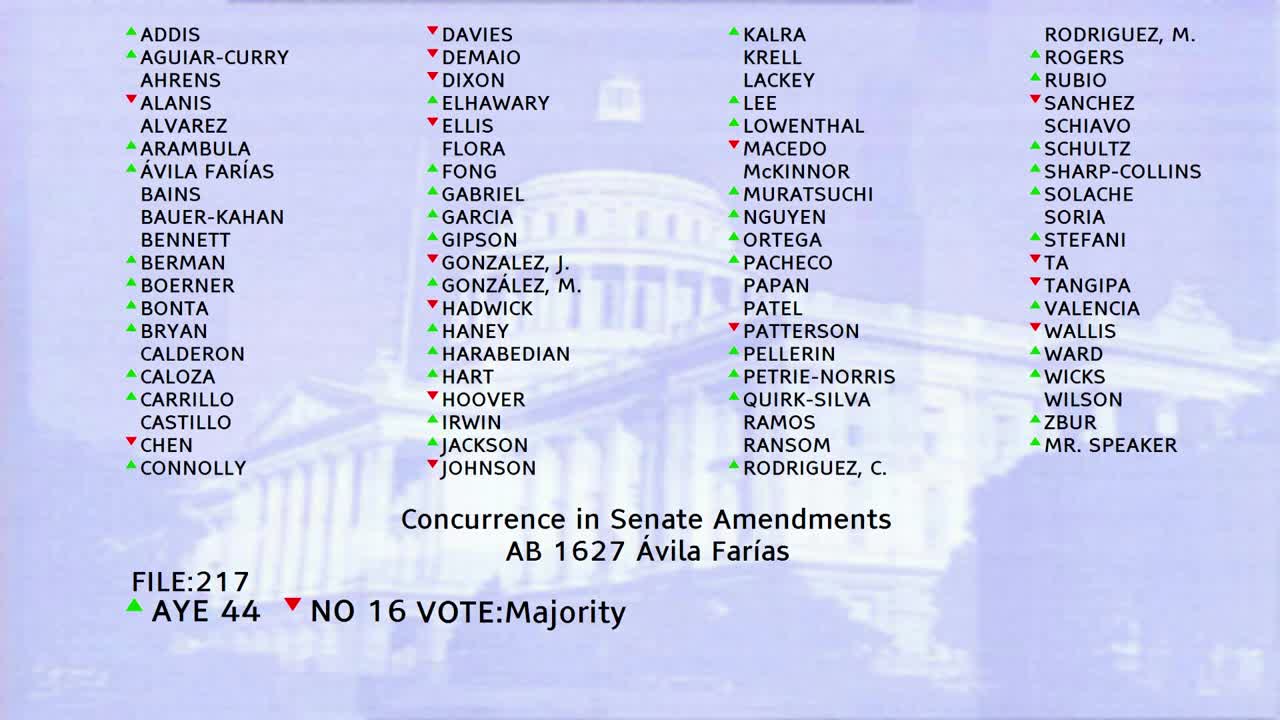 2MIN
Assembly Floor
 2MIN
Senate Floor
 46SEC
Senate Standing Committee on Appropriations
 9MIN
Senate Standing Committee on Transportation
 15MIN
Senate Standing Committee on Public Safety
 1MIN
Assembly Floor
 21MIN
Assembly Standing Committee on Transportation
 15MIN
Assembly Standing Committee on Public Safety
Bill Author