AB 1729: State employment: telework programs.
- Session Year: 2025-2026
- House: Assembly
- Latest Version Date: 2026-09-01
Current Status:
Failed
(2026-09-18: Vetoed by Governor.)
Introduced
In Committee
Awaiting First Chamber Vote
Passed First Chamber
In Committee
Awaiting Second Chamber Vote
Passed Second Chamber
Enacted
Existing law requires every state agency to develop and implement a telecommuting plan as part of its telecommuting program in work areas where telecommuting is identified as being both practical and beneficial to the organization. Existing law requires the Department of General Services to establish a unit for purposes of overseeing telecommuting programs that is required to, among other things, develop and update policy, procedures, and guidelines to assist agencies in the planning and implementation of telecommuting programs. Existing law requires the department to establish criteria for evaluating the states telecommuting program. Existing law defines telecommuting for purposes of those provisions.
This bill would revise and recast those provisions. The bill would replace the term telecommuting with telework, as defined. The bill would also require the Department of General Services to establish a telework dashboard that displays the cost-effectiveness and efficiency benefits of state telework programs, including documenting annual savings to the state of reduced office space and operating costs. The bill would additionally require each state agency, every 10 years, to evaluate its telework program to ensure that it aligns with the state agencys unique operational needs to carry out its programmatic missions and to help recruit and retain a qualified workforce.
This bill would declare that it is to take effect immediately as an urgency statute.
As used in this chapter, telework means the partial or total substitution of computers or teleworking technologies, or both, for the commute to work by employees residing in California.
SEC. 3.Section 14200.1 of the Government Code is amended to read:14200.1.(a)The Legislature finds and declares the following:
(1)Telework can be an important means to reduce air pollution and traffic congestion and to reduce the high costs of highway commuting.
(2)Telework stimulates employee productivity while giving workers more flexibility and control over their lives.
(b)It is the intent of the Legislature to encourage state agencies to adopt policies that encourage teleworking by state employees to ensure the cost-effective and efficient delivery of services to taxpayers.
(c)Telework schedules could reduce state-owned and leased office space by approximately 30 percent according to the Department of General Services, which the California State Auditor estimates could generate annual cost savings of as much as two hundred twenty-five million dollars ($225,000,000).
SEC. 4.Section 14201 of the Government Code is amended to read:14201.(a)Each state agency shall develop and implement a telework plan as part of its teleworking program in work areas where teleworking is identified as being both practical and beneficial to the organization.
(b)Where a state agencys unique operational needs and programmatic mission require employees to report to a workplace, the agency shall provide a detailed, written justification to the department and to the agencys employees.
SEC. 5.Section 14202 of the Government Code is amended to read:14202.The Department of General Services shall establish a unit for the purpose of overseeing telework programs established pursuant to this chapter. This unit shall do all of the following:
(a)Coordinate and facilitate the interagency exchange of information regarding the states telework program, and establish and lead a multiagency telework advisory group for these purposes.
(b)Develop and update policy, procedures, and guidelines to assist agencies in the planning and implementation of telework programs.
(c)Assist state agencies in requesting the siting of satellite work stations and develop procedures to track the needs of agencies and identify potential office locations.
(d)Establish a telework dashboard that displays the cost-effectiveness and efficiency benefits of state telework programs, including documenting the annual savings to the state of reduced office space and operating costs, cuts in emissions and energy use, the decrease in vehicle miles traveled, and other benefits that save taxpayer dollars while delivering high-quality services to taxpayers.
SEC. 6.Section 14203 of the Government Code is amended to read:14203.Every 10 years, each state agency shall evaluate its telework program to ensure that it aligns with the state agencys unique operational needs to carry out its programmatic missions and to help recruit and retain a qualified workforce. The Department of General Services shall establish criteria for evaluating the states teleworking program and recommend modifications, if necessary.
SEC. 7.This act is an urgency statute necessary for the immediate preservation of the public peace, health, or safety within the meaning of Article IV of the California Constitution and shall go into immediate effect. The facts constituting the necessity are:
The state faces projected budget deficits that will benefit from the existing and projected budget savings of reducing state agencies facility costs, while ensuring the long-term commitment to recruitment and retention advantages of a rational telework policy. Any delay in demonstrating the states commitment to a telework policy meeting these goals will cost the state budget and each agencys effort to attract and keep expert employees.
As used in this chapter, telework means the partial or total substitution of computers or teleworking technologies, or both, for the commute to work by employees residing in California.
SEC. 3.Section 14200.1 of the Government Code is amended to read:14200.1.(a)The Legislature finds and declares the following:
(1)Telework can be an important means to reduce air pollution and traffic congestion and to reduce the high costs of highway commuting.
(2)Telework stimulates employee productivity while giving workers more flexibility and control over their lives.
(b)It is the intent of the Legislature to encourage state agencies to adopt policies that encourage teleworking by state employees to ensure the cost-effective and efficient delivery of services to taxpayers.
(c)Telework schedules could reduce state-owned and leased office space by approximately 30 percent according to the Department of General Services, which the California State Auditor estimates could generate annual cost savings of as much as two hundred twenty-five million dollars ($225,000,000).
SEC. 4.Section 14201 of the Government Code is amended to read:14201.(a)Each state agency shall develop and implement a telework plan as part of its teleworking program in work areas where teleworking is identified as being both practical and beneficial to the organization.
(b)Where a state agencys unique operational needs and programmatic mission require employees to report to a workplace, the agency shall provide a detailed, written justification to the department and to the agencys employees.
(c)Subdivision (b) shall not apply to the Department of the California Highway Patrol, the Department of Forestry and Fire Protection, or the Department of Corrections and Rehabilitation.SEC. 5.Section 14202 of the Government Code is amended to read:14202.The Department of General Services shall establish a unit for the purpose of overseeing telework programs established pursuant to this chapter. This unit shall do all of the following:
(a)Coordinate and facilitate the interagency exchange of information regarding the states telework program, and establish and lead a multiagency telework advisory group for these purposes.
(b)Develop and update policy, procedures, and guidelines to assist agencies in the planning and implementation of telework programs.
(c)Assist state agencies in requesting the siting of satellite work stations and develop procedures to track the needs of agencies and identify potential office locations.
(d)Establish a telework dashboard that displays the cost-effectiveness and efficiency benefits of state telework programs, including documenting the annual savings to the state of reduced office space and operating costs, cuts in emissions and energy use, the decrease in vehicle miles traveled, and other benefits that save taxpayer dollars while delivering high quality high-quality services to taxpayers.
SEC. 6.Section 14203 of the Government Code is amended to read:14203.Every 10 years, each state agency shall evaluate its telework program to ensure that it aligns with the state agencys unique operational needs to carry out its programmatic missions and to help recruit and retain a qualified workforce. The Department of General Services shall establish criteria for evaluating the states teleworking program and recommend modifications, if necessary.
SEC. 7.This act is an urgency statute necessary for the immediate preservation of the public peace, health, or safety within the meaning of Article IV of the California Constitution and shall go into immediate effect. The facts constituting the necessity are:
The state faces projected budget deficits that will benefit from the existing and projected budget savings of reducing state agencies facility costs, while ensuring the long-term commitment to recruitment and retention advantages of a rational telework policy. Any delay in demonstrating the states commitment to a telework policy meeting these goals will cost the state budget and each agencys effort to attract and keep expert employees.
As used in this chapter, telecommuting telework means the partial or total substitution of computers or telecommunication teleworking technologies, or both, for the commute to work by employees residing in California.
SEC. 3.Section 14200.1 of the Government Code is amended to read:14200.1.(a)The Legislature finds and declares the following:
(1)Telecommuting Telework can be an important means to reduce air pollution and traffic congestion and to reduce the high costs of highway commuting.
(2)Telecommuting Telework stimulates employee productivity while giving workers more flexibility and control over their lives.
(b)It is the intent of the Legislature to encourage state agencies to adopt policies that encourage telecommuting teleworking by state employees. employees to ensure the cost-effective and efficient delivery of services to taxpayers.
(c)Telework schedules could reduce state-owned and leased office space by approximately 30 percent according to the Department of General Services, which the California State Auditor estimates could generate annual cost savings of as much as two hundred twenty-five million dollars ($225,000,000).
SEC. 4.Section 14201 of the Government Code is amended to read:14201.Every state agency shall review its work operations to determine where in its organization telecommuting can be of practical benefit to the agency. On or before July 1, 1995, each (a)Each state agency shall develop and implement a telecommuting telework plan as part of its telecommuting teleworking program in work areas where telecommuting teleworking is identified as being both practical and beneficial to the organization.
Agencies that participated in the experimental studies described in Section 15276 may continue and expand those telecommuting programs in accordance with the policy, procedures, and guidelines developed by the Department of General Services in conjunction with those participating agencies. Those agencies not having participated in the initial experimental studies described in Section 15276 may comply with the policy, procedures, and guidelines developed by the Department of General Services in conjunction with a multiagency group that participated in those studies.(b)Where a state agencys unique operational needs and programmatic mission require employees to report to a workplace, the agency shall provide a detailed, written justification to the department and to the agencys employees.
(c)Subdivision (b) shall not apply to the Department of the California Highway Patrol, the Department of Forestry and Fire Protection, or the Department of Corrections and Rehabilitation.
SEC. 5.Section 14202 of the Government Code is amended to read:14202.The Department of General Services shall establish a unit for the purpose of overseeing telecommuting telework programs established pursuant to this chapter. This unit shall do all of the following:
(a)Coordinate and facilitate the interagency exchange of information regarding the states telecommuting telework program, and establish and lead a multiagency telecommuting telework advisory group for these purposes.
(b)Develop and update policy, procedures, and guidelines to assist agencies in the planning and implementation of telecommuting telework programs.
(c)Assist state agencies in requesting the siting of satellite work stations and develop procedures to track the needs of agencies and identify potential office locations.
(d)Establish a telework dashboard that displays the cost-effectiveness and efficiency benefits of state telework programs, including documenting the annual savings to the state of reduced office space and operating costs, cuts in emissions and energy use, the decrease in vehicle miles traveled, and other benefits that save taxpayer dollars while delivering high quality services to taxpayers.
SEC. 6.Section 14203 of the Government Code is amended to read:14203.Each Every 10 years, each state agency shall evaluate its telecommuting program. telework program to ensure that it aligns with the state agencys unique operational needs to carry out its programmatic missions and to help recruit and retain a qualified workforce. The Department of General Services shall establish criteria for evaluating the states telecommuting teleworking program and recommend modifications, if necessary.
SEC. 7.This act is an urgency statute necessary for the immediate preservation of the public peace, health, or safety within the meaning of Article IV of the California Constitution and shall go into immediate effect. The facts constituting the necessity are:
The state faces projected budget deficits that will benefit from the existing and projected budget savings of reducing state agencies facility costs, while ensuring the long-term commitment to recruitment and retention advantages of a rational telework policy. Any delay in demonstrating the states commitment to a telework policy meeting these goals will cost the state budget and each agencys effort to attract and keep expert employees.
REVISIONS: HeadingLine 2.|
Date
|
Status
|
|---|---|
| Sep 18, 2026 | Vetoed by Governor. |
| Sep 4, 2026 | Enrolled and presented to the Governor at 4 p.m. |
| Aug 27, 2026 | In Assembly. Ordered to Engrossing and Enrolling. |
| Aug 27, 2026 | Read third time. Urgency clause adopted. Passed. Ordered to the Assembly. (Ayes 31. Noes 6.). |
| Aug 13, 2026 | Read second time. Ordered to third reading. |
| Aug 13, 2026 | From committee: Do pass. (Ayes 5. Noes 0.) (August 13). |
| Aug 3, 2026 | In committee: Referred to APPR. suspense file. |
| Jun 23, 2026 | From committee: Do pass and re-refer to Com. on APPR. (Ayes 13. Noes 0.) (June 23). Re-referred to Com. on APPR. |
| Jun 17, 2026 | From committee: Do pass and re-refer to Com. on G.O. (Ayes 4. Noes 1.) (June 17). Re-referred to Com. on G.O. |
| Jun 10, 2026 | Referred to Coms. on L., P.E. & R. and G.O. |
| May 28, 2026 | In Senate. Read first time. To Com. on RLS. for assignment. |
| May 27, 2026 | Read third time. Urgency clause adopted. Passed. Ordered to the Senate. (Ayes 67. Noes 7.). |
| May 27, 2026 | Read third time. Urgency clause adopted. Passed. Ordered to the Senate. (Ayes 67. Noes 7. Page 5477.). |
| May 27, 2026 | Read third time. Urgency clause adopted. Passed. Ordered to the Senate. |
| May 19, 2026 | Read second time. Ordered to third reading. |
| May 18, 2026 | Read second time and amended. Ordered returned to second reading. |
| May 14, 2026 | From committee: Amend, and do pass as amended. (Ayes 11. Noes 0.) (May 14). |
| May 6, 2026 | In committee: Set, first hearing. Referred to APPR. suspense file. |
| Apr 8, 2026 | From committee: Do pass and re-refer to Com. on APPR. (Ayes 6. Noes 0.) (April 8). Re-referred to Com. on APPR. |
| Apr 8, 2026 | Coauthors revised. |
| Mar 2, 2026 | Referred to Com. on P. E. & R. |
| Feb 6, 2026 | From printer. May be heard in committee March 8. |
| Feb 5, 2026 | Read first time. To print. |
|
Date
|
Description
|
Location
|
Votes
|
|
|---|---|---|---|---|
| Aug 27, 2026 | Assembly 3rd Reading AB1729 Lee et al. By Ashby Urgency Clause | Senate Floor |
Passed |
|
| Aug 13, 2026 | Do pass | Senate Standing Committee on Appropriations |
Passed |
|
| Aug 3, 2026 | Placed on suspense file | Senate Standing Committee on Appropriations |
Passed |
|
| Jun 23, 2026 | Do pass, but first be re-referred to the Committee on [Appropriations] | Senate Standing Committee on Governmental Organization |
Passed |
|
| Jun 17, 2026 | Do pass, but first be re-referred to the Committee on [Governmental Organization] | Senate Standing Committee on Labor, Public Employment and Retirement |
Passed |
|
| May 27, 2026 | AB 1729 Lee Third Reading Urgency | Assembly Floor |
Passed |
|
| May 14, 2026 | Do pass as amended. | Assembly Standing Committee on Appropriations |
Passed |
|
| Apr 8, 2026 | Do pass and be re-referred to the Committee on [Appropriations] | Assembly Standing Committee on Public Employment and Retirement |
Passed |
This list shows positions taken on this bill by organizations on the date displayed, which is linked to the original source.
Positions by individuals are not included.
|
Organization
|
Position
|
Date
|
|---|---|---|
| 10 Individuals | ** Support | |
| American Federation of State, County and Municipal Employees | ** Support | |
| Association of California State Employees with Disabilities | ** Support | |
| Association Of California State Supervisors | ** Support | |
| California Association of Professional Scientists, UAW Local 1115 | ** Support | |
| California Association of Professional Scientists, UAW Local 1115 (Co-source) | ** Support | |
| California Attorneys Administrative Law Judges and Hearing Officers in State Employment | ** Support | |
| California Faculty Association | ** Support | |
| California Federation of Labor Unions | ** Support | |
| City Of Sacramento | ** Support | |
| downtown sacramento partnership | ** Against | |
| Engineers & Architects Association | ** Support | |
| Fossil Free California | ** Support | |
| Professional Engineers In California Government | ** Support | |
| Sacramento City Councilmember Phil Pluckebaum | ** Support | |
| Service Employees International Union, California | ** Support | |
| Service Employees International Union, Local 1000 | ** Support | |
| Several individuals | ** Support | |
| Statewide Disability Advisory Council | ** Support | |
| UAW Region 6 | ** Support | |
| WorkLife Law | ** Support |
GOVERNOR'S VETO
GV Bill Id:AB 1729
Author:(Lee)
As Enrolled Ver:September 1, 2026
2/3 vote
SUMMARY
Makes changes to existing law known as the "State Employee Telecommuting Program” by renaming it the "State of California Flexible Telework Policy to Ensure Cost-Effective and Efficient Government Act," among other provisions.
Major Provisions
- Amend the existing codified legislative findings and declarations by adding that telework schedules could reduce state-owned and leased office space by approximately 40 percent according to the Department of General Services (DGS), which the California State Auditor (State Auditor) estimates could generate annual costs savings of as much as $225 million. In addition, amend legislative intent to encourage state agencies to adopt policies that encourage teleworking by state employees to ensure cost-effective and efficient delivery of services to taxpayers.
- Amend the existing policy to require each state agency to develop and implement a telework plan as part of its teleworking program in work areas where such teleworking is identified as being both practical and beneficial to the organization.
- Remove provisions providing discretionary authority granted to agencies that participated in experimental studies, as provided, to continue to expand telecommuting programs in accordance with this policy, procedures, and guidelines developed by the DGS in conjunction with participating agencies, as well as provisions applicable to agencies that did not participate.
- Require a state agency to provide a detailed written justification to the DGS and the agency’s employees where the agency’s unique operations needs and programmatic mission require employees to report to a workplace.
- Add a requirement that the DGS establish a telework dashboard that displays the cost-effectiveness and efficiency benefits of state telework programs, including documenting annual savings to the state of reduced office space and operating costs, cuts in emissions and energy use, decrease in vehicle miles traveled, and other benefits that save taxpayer dollars while delivering high-quality services to taxpayers.
- Amend existing law by requiring each state agency, every 10 years, to evaluate its telework program to ensure that it aligns with the agency’s unique operational needs to carry out its programmatic missions and to help recruit and retain a qualified workforce.
- Include an urgency clause for stated purposes.
Governor’s Veto Message
This bill would require a state agency to provide a detailed written justification to the agency's employees if the agency's unique operational needs and programmatic mission require employees to report to the workplace. This measure would also require each state agency to decennially updates its telework program.
I deeply admire our state workforce's dedication to public service and all that they achieve on behalf of the people of California. While I fundamentally believe in-person collaboration is an essential part of a productive and effective workplace, the state's existing telework policy includes a process for departments to consider exemptions on a case-by-case basis. This measure, by limiting departmental flexibility and encouraging telework to be the default work arrangement, takes the state's telework policy in the wrong direction.
COMMENTS
The COVID-19 Global Health Pandemic and Telecommuting
While the state's telecommuting policy has existed and not been updated for decades, its broad use became a staple at the outset of, and during, the COVID-19 global health pandemic. To ensure the health, welfare, and safety of the public as well as numerous state employees, its broad implementation was a critical necessity to safeguard those interests while also ensuring the continuity of public service provision.
After the pandemic was largely deemed to have subsided or over, state employees were able to continue telecommuting and, in many instances, perform their duties via a hybrid form of work, i.e., a combination of telecommuting and in-person days in the office, which was continued and relatively become normalized.
Return to Office Letter to California Agency Leaders
In April 2024, the Governor's Office issued a letter to Cabinet Secretaries directing all state agencies and departments to "…implement a hybrid telework policy with the expectation of at least two in-person days pers week, with case-by-case exceptions to be considered…."[1] Less than one year later, this was followed by the Governor's Executive Order that mandated an increase in the number of days per week that state employees must be in the office.[2]
The Governor's Executive Order
Although telecommuting was largely successful on multiple fronts, including supporting goals previously espoused or proclaimed as state goals by the Governor (e.g., address traffic congestion/reduce emissions, make government more effective through efficiency, generate taxpayer savings, etc.), on March 3, 2025, the Governor announced that state employees must return to office in person four days per week, effective July 1, 2025. The Executive Order resulted in substantial confusion and concern to many state employees as it appeared to contradict various goals previously espoused or proclaimed by the Governor. Many state employees questioned the rationale for, and prudence of, the departure, including where the state has reduced its real estate occupancy footprint, which raised additional concerns and questions as to where state employees were supposed to return when insufficient office space exists to meet the change.[3]
On March 4, 2025, after an unfair practice charge filed with the PERB by an employee organization representing state employees against the Governor, the PERB's Office of General Counsel opined that the Governor's directive may have violated the Dills Act as it appeared the Administration "…failed and refused to meet and confer in good faith…," which denied the employee organization its right to represent its members. Subsequently, the Governor delayed the order for one year.
Given and following the uncertainty and concerns raised by state employees and various public officials, the Joint Legislative Audit Committee subsequently directed the State Auditor to review the matter, discussed further below.
The State Auditor's Report on State Telework Policies
As directed by the Joint Legislative Audit Committee, the State Auditor conducted an audit of the rationales that informed changes that the DGS, CalHR, and other departments made to their telework policies, as well as reviewed the state's costs for maintaining office space for state employees in various telework or hybrid work arrangements.[4]
Among other things, the State Auditor noted that, "[we] evaluated the evidence the Governor cited to support his return-to-office directive and order and determined that they could have made better use of information about departments' office space needs or the associated costs of those space needs before directing state employees to work an increasing number of days per week in the office." Further, "based on the two-day in-office requirement from the April 2024 directive, it estimated that "in fiscal year 2024-25, 19 selected departments spent almost $117 million on nearly 3.2 million square feet of office space that was often unused in the seven large state-owned office properties [it] reviewed…," and "DGS has not established criteria required by state law that would facilitate departments' evaluations of their telework programs, and departments relied on intangible factors and direction from external entities when changing their telework policies.
Summary of Key Findings:
- The Governor’s return-to-office order could have made better use of important information regarding department's needs and costs where, among other things, the Governor's Office could have used available information about the effects of returning state employees to the office when making such mandates.
- Telework can generate significant savings for state in office costs, if state employees telework three or more days per week.
- Some of the departments reviewed partially evaluated their telework programs to inform their past return-to-office decisions.
- DGS's oversight of telework policies was effective.
The State Auditor also provided the following recommendations to the Legislature and the DGS stating:
"If the Legislature would like to achieve some of the potential savings that we have identified in our assessment of the use of office space under teleworking conditions, it should amend state law to require departments to identify positions that can successfully telework three or more days per week and to offer this level of telework to those employees. The law should also require these departments to then reduce their overall office space usage, if prudent, such as by consolidating office space in state-owned buildings and ending leases in commercially owned buildings. To facilitate departments in measuring whether their telework programs benefit the State and its employees, DGS should update the statewide telework policy to provide guidance for departments to follow when evaluating their telework programs' effectiveness in meeting the goals of the statewide telework policy."
In response to the State Auditor's recommendation to the DGS, the DGS response states:
"DGS has reviewed the findings, conclusions and recommendation presented in Report No. 2024-118. DGS will take appropriate action to the extent possible to implement the recommendation and collaborate with those departments that have expertise in the areas of performance management measures. As noted in the audit, DGS lacks funding to conduct oversight of telework programs."
This Bill
Although telecommuting is, and more recently has been demonstrated to be, a subject of bargaining under the Dills Act, this bill does not amend that act concerning the collective bargaining of this subject relative to the act’s mandatory subjects of bargaining, i.e., wages, hours, and other terms and conditions of employment. In addition, this bill neither specifies, prescribes, offers, nor suggests an exacting number of days that state employees must be teleworking or in-person at work. Instead, it proposes to modify the existing law program; includes tracking telework and other benefits derived therefrom for best practice purposes via the telework dashboard towards ensuring efficiency, ongoing taxpayer savings and, importantly, relies on state agencies to justify their specific workplace needs based on their unique operational requirements and programmatic missions that are best positioned to make that determination, rather than a single, central unit doing so by fiat in a manner that would be applicable to all without additional or further considerations. As to these, this bill may be considered as aligned with the various findings in the State Auditor's report, including that a "one-sized-fits all approach is counter to state policy and may limit opportunities for significant cost savings."
Please refer to the various policy committee analyses for a full discussion of this bill.
According to the Author
"[This bill] empowers and supports our state workers by ensuring transparency about their agency's telework policy. The State Auditor has shown that telework could save upwards of $225 million annually, while significantly reducing carbon emissions. These environmental benefits and cost savings directly benefit the public. As such, [this bill] will pave the way for increased transparency of state agencies’ telework policies."
Arguments in Support
Generally, supporters express that telework has been proven to be beneficial to state government and its workforce by reducing burnout; addressing persistent staffing shortages; allowing disabled employees, including those with chronic health conditions, to perform at a higher level without navigating undue burdens or barriers that have excluded them from equal workforce participation; continuing high quality service provision to the public, and allows for meaningful work-life balance, among various other positive attributes.
They further express that this bill will help the state to remain competitive in recruitment and retention to address vacancies; generate hundreds of millions annually in ongoing budgetary savings that benefit taxpayers; reduce personal expenses associated with transportation; reduce emissions that support the state's goals, and is a practical and transparent framework for modernizing the state's workplace standards.
Arguments in Opposition
None on file.
FISCAL COMMENTS
According to the Senate Committee on Appropriations:
- The DGS indicates that it would incur one-time costs of $663,000 in 2026-27 for contracted information technology staff to develop the required telework reporting system. DGS estimates ongoing costs of $1.2 million annually for six positions to maintain the system, coordinate statewide data collection efforts, manage reporting requirements, and oversee implementation of the bill (General Fund).
- The DGS also indicates that the bill could result in ongoing costs of $8.9 million annually to other state departments, boards, and commissions for an estimated 50 analyst positions statewide. This estimate assumes each of the approximately 200 affected entities would require one-quarter of an analyst position to collect and submit required telework data to DGS. However, while the bill imposes data collection and reporting responsibilities on DGS, it does not expressly require other state entities to provide data to DGS.
- Any potential cost pressures to DGS or other state entities associated with expanded telework data collection, reporting requirements, and development of a statewide telework dashboard may be partially or fully offset by savings generated through maintaining or expanding telework programs.
VOTES
ASM PUBLIC EMPLOYMENT AND RETIREMENT: 6-0-1
YES: McKinnor, Lackey, Boerner, Garcia, Nguyen, Michelle Rodriguez
ABS, ABST OR NV: Alanis
ASM APPROPRIATIONS: 11-0-4
YES: Wicks, Aguiar-Curry, Calderon, Caloza, Fong, Mark González, Krell, Pacheco, Pellerin, Sharp-Collins, Solache
ABS, ABST OR NV: Hoover, Dixon, Ta, Tangipa
ASSEMBLY FLOOR: 67-7-6
YES: Addis, Ahrens, Alanis, Alvarez, Arambula, Ávila Farías, Bains, Bauer-Kahan, Bennett, Berman, Boerner, Bonta, Bryan, Calderon, Caloza, Carrillo, Chen, Connolly, Davies, Elhawary, Flora, Fong, Gabriel, Garcia, Gipson, Jeff Gonzalez, Mark González, Hadwick, Haney, Harabedian, Hart, Hoover, Irwin, Jackson, Kalra, Krell, Lackey, Lee, Lowenthal, McKinnor, Muratsuchi, Nguyen, Ortega, Pacheco, Papan, Patel, Patterson, Pellerin, Quirk-Silva, Ramos, Ransom, Michelle Rodriguez, Rogers, Schiavo, Schultz, Sharp-Collins, Solache, Soria, Stefani, Tangipa, Valencia, Wallis, Ward, Wicks, Wilson, Zbur, Rivas
NO: DeMaio, Dixon, Gallagher, Macedo, Petrie-Norris, Blanca Rubio, Sanchez
ABS, ABST OR NV: Aguiar-Curry, Castillo, Ellis, Johnson, Celeste Rodriguez, Ta
SENATE FLOOR: 31-6-3
YES: Allen, Archuleta, Arreguín, Ashby, Becker, Cabaldon, Cervantes, Cortese, Dahle, Durazo, Gonzalez, Grayson, Grove, Hurtado, Laird, Limón, McGuire, McNerney, Menjivar, Niello, Padilla, Pérez, Reyes, Richardson, Rubio, Smallwood-Cuevas, Stern, Umberg, Valladares, Weber Pierson, Wiener
NO: Alvarado-Gil, Blakespear, Caballero, Choi, Seyarto, Strickland
ABS, ABST OR NV: Jones, Ochoa Bogh, Wahab
UPDATED
VERSION: September 1, 2026
CONSULTANT: Michael Bolden / P. E. & R. / (916) 319-3957 FN: 0004572
Return to Office Letter to California Agency Leaders, from the Office of the Governor, April 10, 2024. ↑
Executive Order N-22-25. Also visit https:// www.gov.ca.gov/wp-content/uploads/2025/03/RTO-EO-3.3.25_-GGN-signed.pdf. Also see “ “Gavin Newsom orders California state workers back to offices in person four days a week.” Sacramento Bee, March 4, 2025. Visit: https://www.sacbee.com/news/politics-government/the-state-worker/article301353839.html ↑
“CA departments lacked thousands of workstations before RTO order, documents show.” Sacramento Bee, January 6, 2026. Visit: https://www.sacbee.com/news/politics-government/the-state-worker/article314432697.html ↑
“Report No. 2024-118 State Telework Policies.” California State Auditor, August 12, 2025. Visit https:://www.auditor.ca.gov/reports/2024-118/ ↑
SENATE RULES COMMITTEE Office of Senate Floor Analyses (916) 651-4171 | AB 1729 |
THIRD READING
Bill No: AB 1729
Author: Lee (D), et al.
Amended: 5/18/26 in Assembly
Vote: 27 - Urgency
SENATE LABOR, PUB. EMP. & RET. COMMITTEE: 4-1, 6/17/26
AYES: Smallwood-Cuevas, Cortese, Durazo, Laird
NOES: Strickland
SENATE GOVERNMENTAL ORG. COMMITTEE: 13-0, 6/23/26
AYES: Rubio, Archuleta, Ashby, Blakespear, Cervantes, Dahle, Hurtado, Ochoa Bogh, Padilla, Richardson, Smallwood-Cuevas, Wahab, Weber Pierson
NO VOTE RECORDED: Valladares, Alvarado-Gil
SENATE APPROPRIATIONS COMMITTEE: 5-0, 8/13/26
AYES: Cervantes, Cabaldon, Dahle, Grayson, Richardson
NO VOTE RECORDED: Seyarto, Wahab
ASSEMBLY FLOOR: 67-7, 5/27/26 - See last page for vote
SUBJECT: State employment: telework programs
Association of California State Supervisors
American Federation of State, County and Municipal Employees
California Association of Professional Scientists
California Attorneys Administrative Law Judges and Hearing Officers in State Employment
Professional Engineers in California Government
Service Employees International Union, California
Service Employees International Union, Local 1000
DIGEST:
This bill amends and renames the existing State Employee Telecommuting Program; requires state agencies to evaluate their (now named) telework programs every 10 years, as specified; requires state agencies to provide a detailed, written justification to CalHR and to the agency’s employees if the agency requires its employees to report to a workplace; and requires the Department of General Services (DGS) to establish a telework dashboard displaying the cost benefits of state telework programs.
ANALYSIS:
Existing law:
- Defines “telecommuting” to mean the partial or total substitution of computers or telecommunication technologies, or both, for the commute to work by employees residing in California. (Government Code § 14200)
- Finds and declares the following:
- Telecommuting can be an important means to reduce air pollution and traffic congestion and to reduce the high costs of highway commuting.
- Telecommuting stimulates employee productivity while giving workers more flexibility and control over their lives.
- It is the intent of the Legislature to encourage state agencies to adopt policies that encourage telecommuting by state employees to ensure the cost-effective and efficient delivery of services to taxpayers. (Government Code § 14200.1)
- Requires state agencies to review work operations to determine where telecommuting provides them a practical benefit, and on or before July 1, 1995, to develop and implement a telecommuting plan, as specified. (Government Code § 142001)
- Requires agencies that participated in specified experimental telework studies to continue and expand those programs, allows other agencies to offer telecommuting programs by partnering with a multiagency group that participated in the experimental studies, as specified, and requires the Department of General Services to establish an internal unit to oversee agency telecommuting programs and perform specified duties. (Government Code § 142001)
- Requires each state agency to evaluate its telecommuting program and requires DGS to establish criteria for evaluating the state’s telecommuting program and recommend modifications, if necessary. (Government Code § 142003)
This bill:
- Denominates the “telecommute” program as the “telework” program and makes conforming changes to existing statute.
- Finds and declares that telework schedules could reduce state-owned and leased office space by approximately 30% according to the Department of General Services, which the California State Auditor estimates could generate annual cost savings of as much as two hundred twenty-five million dollars ($225,000,000).
- Updates statutory provisions by:
- Replacing references to reviewing telecommuting programs and with language that requires the development and implementation of telework programs, as specified.
- Requiring an agency to provide a detailed, written justification to CalHR and to the agency’s employees where its unique operational needs and programmatic mission require employees to report to a workplace.
- Requires DGS’ specified unit responsible for developing telework guidelines to establish a telework dashboard that displays the cost-effectiveness and efficiency benefits of state telework programs, including documenting the annual savings to the state of reduced office space and operating costs, cuts in emissions and energy use, the decrease in vehicle miles traveled, and other benefits that save taxpayer dollars while delivering high-quality services to taxpayers.
- Requires each state agency, every 10 years, to evaluate its telework program to ensure that it aligns with the state agency’s unique operational needs to carry out its programmatic missions and to help recruit and retain a qualified workforce.
- Contains an urgency clause, as specified.
Background
Dual Referral. The Senate Rules Committee referred this bill to the Senate Labor, Public Employment and Retirement Committee and to the Senate Governmental Organization Committee.
Related/Prior Legislation
AB 2672 (Cortese, Chapter 1209, Statutes of 1994) authorized state agencies to incorporate a telecommuting work option as an element of its transportation management programs, required state agencies to review work operations to determine where telecommuting provides them a practical benefit, and on or before July 1, 1995, to develop and implement a telecommuting plan, as specified.
AB 2963 (Klehs, Chapter 1389, Statutes of 1990) authorized agencies that participated in specified experimental telework studies to continue and expand those programs, as specified, and required the Department of General Services to establish an internal unit to oversee agency telecommuting programs and perform specified duties.
FISCAL EFFECT: Appropriation: No Fiscal Com.: Yes Local: No
According to the Senate Appropriations Committee:
“Current law requires state agencies to develop and implement telecommuting programs where telework is practical and beneficial, and requires the Department of General Services (DGS) to oversee statewide telework policies. Although these statutes date back to the 1990s, they have not been substantially updated despite the widespread expansion of telework during and after the COVID-19 pandemic.
Following the pandemic, many state employees continued working under hybrid telework schedules. In April 2024, Governor Newsom directed most state agencies to require employees to work in the office at least two days per week. In March 2025, the Governor issued Executive Order N-22-25 increasing the in-office requirement to four days per week. The order prompted collective bargaining disputes, an unfair practice charge before the Public Employment Relations Board, and a subsequent one-year delay in implementation. In response, the Joint Legislative Audit Committee directed the State Auditor to review the state's telework policies and return-to-office decisions.
In August 2025, the State Auditor concluded that the Administration could have made better use of available information on departmental operational needs, office space utilization, and costs before expanding return-to-office requirements. The audit found that 19 departments spent approximately $117 million in 2024-25 to maintain underutilized office space under the two-day-per-week policy and estimated statewide savings from broader telework could reach approximately $225 million. The Auditor also found that DGS had not established the telework evaluation criteria required by existing law, limiting departments' ability to assess the effectiveness and fiscal impacts of their telework programs.”
SUPPORT: (Verified 8/12/26)
Association of California State Supervisors (co-source)
American Federation of State, County and Municipal Employees (co-source)
California Association of Professional Scientists, UAW Local 1115 (co-source)
California Attorneys Administrative Law Judges and Hearing Officers in State Employment (co-source)
Professional Engineers in California Government (co-source)
Service Employees International Union, California (co-source)
Service Employees International Union, Local 1000 (co-source)
Association of California State Employees With Disabilities
California Faculty Association
California Federation of Labor Unions
City of Sacramento
Engineers & Architects Association
Statewide Disability Advisory Council
UAW Region 6
Worklife Law
OPPOSITION: (Verified 8/12/26)
Downtown Sacramento Partnership
ARGUMENTS IN SUPPORT: According to the Professional Engineers in California Government: “AB 1729 will save taxpayers hundreds of millions of dollars, reduce traffic congestion and emissions, and allows the state to hire and retain state qualified staff during a period of ongoing wage freezes.”
According to the Service Employees International Union, California: “Telework has proven to be a reliable and effective tool to maintain service delivery while improving working conditions and operational efficiency. AB 1729 helps ensure that these programs are guided by data, consistency, and accountability across departments.”
“Findings from the California State Auditor reinforce the value of telework. The Auditor identified that expanded telework can generate significant cost savings for the state, estimating up to $225 million annually, while also reducing the need for leased office space. At a time when the state must be thoughtful about both fiscal stewardship and workforce stability, this bill moves us in the right direction.”
According to the American Federation of State, County and Municipal Employees: “AB 1729 also advances fairness and consistency across state service by establishing clearer expectations around telework eligibility and implementation. Our members have demonstrated their ability to meet performance standards and public service obligations while teleworking, and this bill helps ensure telework decisions are made transparently and equitably.”
According to the Association of California State Supervisors: “AB 1729 will help maintain flexible telework policies for eligible state employees, including state supervisors and managers.”
“AB 1729 reiterates legislative support for telework and recognizes that it has proven to be a cost-effective and efficient way to deliver services to California taxpayers. This bill also clarifies the existing telework statutes to require a state agency to identify operational needs, and provide detailed, written justification when employees are required to report to a workplace.”
ARGUMENTS IN OPPOSITION:
According to the Downtown Sacramento Partnership: “At a time when state and local governments face persistent structural budget challenges, AB 1729 undermines taxpayer investments, weakens California’s most productive economic centers, and erodes the tax base that funds essential public services.
State agencies serve as anchor institutions in employment centers throughout California. In Sacramento, they occupy more than 60% of the downtown office market, according to Department of General Services (DGS) and CoStar data.i As a result, state workplace policies carry significant economic and fiscal consequences – impacts that AB 1729 largely ignores.
While AB 1729 requires reporting on projected savings within state agencies, it provides no mechanism to evaluate the corresponding fiscal impacts shifted onto local governments and taxpayers. Property tax, sales tax, transit occupancy tax, and related revenues that fund essential public services throughout entire jurisdictions depend on healthy, circular economic activity in high occupancy commercial centers. These fiscal outcomes are closely tied to land use and transportation policies that shape residential and employment patterns, infrastructure utilization, and regional mobility.
Policies that encourage permanent or predominantly remote work diminish the value of employment centers, weakening the economic clustering that drives commercial investment, business activity, and local tax generation. State telework policies reduce Sacramento’s economic activity by more than $218.5 million annually, according to an estimate in a 2023 report by Varshey & Associates.ii Moreover, downtown Sacramento commercial office values have declined by $800 million since 2020.iii Those effects ultimately weaken the tax base local governments rely upon to fund police, fire, parks, education, infrastructure, and other essential services. These indicators demonstrate why evaluating only state-level office savings provides an incomplete fiscal picture.”
ASSEMBLY FLOOR: 67-7, 5/27/26
AYES: Addis, Ahrens, Alanis, Alvarez, Arambula, Ávila Farías, Bains, Bauer-Kahan, Bennett, Berman, Boerner, Bonta, Bryan, Calderon, Caloza, Carrillo, Chen, Connolly, Davies, Elhawary, Flora, Fong, Gabriel, Garcia, Gipson, Jeff Gonzalez, Mark González, Hadwick, Haney, Harabedian, Hart, Hoover, Irwin, Jackson, Kalra, Krell, Lackey, Lee, Lowenthal, McKinnor, Muratsuchi, Nguyen, Ortega, Pacheco, Papan, Patel, Patterson, Pellerin, Quirk-Silva, Ramos, Ransom, Michelle Rodriguez, Rogers, Schiavo, Schultz, Sharp-Collins, Solache, Soria, Stefani, Tangipa, Valencia, Wallis, Ward, Wicks, Wilson, Zbur, Rivas
NOES: DeMaio, Dixon, Gallagher, Macedo, Petrie-Norris, Blanca Rubio, Sanchez
NO VOTE RECORDED: Aguiar-Curry, Castillo, Ellis, Johnson, Celeste Rodriguez, Ta
Prepared by: Glenn Miles / L., P.E. & R. / (916) 651-1556
8/14/26 11:25:00
**** END ****
SENATE COMMITTEE ON
Senator Sabrina Cervantes, Chair
2025 - 2026 Regular Session
AB 1729 (Lee) - State employment: telework programs
Version: | Policy Vote: |
Urgency: | Mandate: |
Hearing Date: | Consultant: |
Bill Summary:
AB 1729 would (1) amend and rename the existing State Employee Telecommuting Program, (2) require state agencies to evaluate their telework programs every 10 years, as specified, (3) require state agencies to provide a detailed, written justification to the California Department of Human Resources (CalHR) and to their employees if the agency requires its employees to report to a workplace, and (4) require the Department of General Services (DGS) to establish a telework dashboard displaying the cost benefits of state telework programs.
Fiscal Impact:
- DGS indicates that it would incur one-time costs of $663,000 in 2026-27 for contracted information technology staff to develop the required telework reporting system. DGS estimates ongoing costs of $1.2 million annually for six positions to maintain the system, coordinate statewide data collection efforts, manage reporting requirements, and oversee implementation of the bill (General Fund).
- DGS also indicates that the bill could result in ongoing costs of $8.9 million annually to other state departments, boards, and commissions for an estimated 50 analyst positions statewide. This estimate assumes each of the approximately 200 affected entities would require one-quarter of an analyst position to collect and submit required telework data to DGS. However, while the bill imposes data collection and reporting responsibilities on DGS, it does not expressly require other state entities to provide data to DGS.
- Any potential cost pressures to DGS or other state entities associated with expanded telework data collection, reporting requirements, and development of a statewide telework dashboard may be partially or fully offset by savings generated through maintaining or expanding telework programs.
Background:
Current law requires state agencies to develop and implement telecommuting programs where telework is practical and beneficial, and requires the Department of General Services (DGS) to oversee statewide telework policies. Although these statutes date back to the 1990s, they have not been substantially updated despite the widespread expansion of telework during and after the COVID-19 pandemic.
Following the pandemic, many state employees continued working under hybrid telework schedules. In April 2024, Governor Newsom directed most state agencies to require employees to work in the office at least two days per week. In March 2025, the Governor issued Executive Order N-22-25 increasing the in-office requirement to four days per week. The order prompted collective bargaining disputes, an unfair practice charge before the Public Employment Relations Board, and a subsequent one-year delay in implementation. In response, the Joint Legislative Audit Committee directed the State Auditor to review the state's telework policies and return-to-office decisions.
In August 2025, the State Auditor concluded that the Administration could have made better use of available information on departmental operational needs, office space utilization, and costs before expanding return-to-office requirements. The audit found that 19 departments spent approximately $117 million in 2024-25 to maintain underutilized office space under the two-day-per-week policy and estimated statewide savings from broader telework could reach approximately $225 million. The Auditor also found that DGS had not established the telework evaluation criteria required by existing law, limiting departments' ability to assess the effectiveness and fiscal impacts of their telework programs.
Proposed Law:
This bill, among other things, would do the following:
- Replace references to reviewing telecommuting programs and with language that requires the development and implementation of telework programs, as specified.
- Require an agency to provide a detailed, written justification to CalHR and to the agency’s employees where its unique operational needs and programmatic mission require employees to report to a workplace.
- Require DGS’ specified unit responsible for developing telework guidelines to establish a telework dashboard that displays the cost-effectiveness and efficiency benefits of state telework programs, including documenting the annual savings to the state of reduced office space and operating costs, cuts in emissions and energy use, the decrease in vehicle miles traveled, and other benefits that save taxpayer dollars while delivering high-quality services to taxpayers.
- Require each state agency, every 10 years, to evaluate its telework program to ensure that it aligns with the state agency’s unique operational needs to carry out its programmatic missions and to help recruit and retain a qualified workforce.
Related Legislation:
- AB 2672 (Cortese, Chapter 1209, Statutes of 1994) authorized state agencies to incorporate a telecommuting work option as an element of its transportation management programs, required state agencies to review work operations to determine where telecommuting provides them a practical benefit, and on or before July 1, 1995, to develop and implement a telecommuting plan, as specified.
- AB 2963 (Klehs, Chapter 1389, Statutes of 1990), authorized agencies that participated in specified experimental telework studies to continue and expand those programs, as specified, and required the Department of General Services to establish an internal unit to oversee agency telecommuting programs and perform specified duties.
Staff Comments:
This bill would update the State's telework statutes without prescribing a required number of in-office or telework days or modifying collective bargaining rights under the Dills Act. Instead, it would require agencies to provide written justification when operational or programmatic needs require employees to report to the workplace, require periodic evaluation of agency telework programs, and direct DGS to establish a statewide telework dashboard reporting operational, fiscal, and environmental outcomes, including office space savings, reduced operating costs, energy use, greenhouse gas emissions, and vehicle miles traveled.
-- END --
SENATE COMMITTEE ON GOVERNMENTAL ORGANIZATION
Senator Susan Rubio
Chair
2025 - 2026 Regular
Bill No: Hearing Date: 6/23/2026
Author: | , et al. | ||
Version: | Amended | ||
Urgency: | Fiscal: | ||
Consultant: | |||
SUBJECT:
DIGEST: This bill requires the Department of General Services (DGS) to establish a telework dashboard displaying the cost-effectiveness and efficiency benefits of state telework programs, as specified; requires, where a state agency’s unique operational needs require employees to report to the workplace, that state agency to provide detailed and written justification to DGS and the agency’s employees; requires each state agency to evaluate its telework program every 10 years; and, replaces the term “telecommuting” with “telework” in the relevant Government Code sections.
ANALYSIS:
Existing law:
- Requires every state agency to develop and implement a telecommuting plan as part of its telecommuting program in work areas where telecommuting is identified as being both practical and beneficial to the organization.
- Requires DGS to establish a unit for purposes of overseeing telecommuting programs that is required to, among other things, develop and update policy, procedures, and guidelines to assist agencies in the planning and implementation of telecommuting programs.
- Requires DGS to establish criteria for evaluating the state’s telecommuting program, as specified.
- Defines “telecommuting” to mean the partial or total substitution of computers or teleworking technologies, or both, for the commute to work by employees residing in California.
This bill:
- Provides that where a state agency’s unique operational needs and programmatic mission require employees to report to a workplace, the agency shall provide a detailed, written justification to DGS and to the agency’s employees.
- Requires the unit established by DGS for the purpose of overseeing telework to establish a telework dashboard that displays the cost-effectiveness and efficiency benefits of state telework programs, including documenting the annual savings to the state of reduced office space and operating costs, cuts in emissions and energy use, the decrease in vehicle miles traveled, and other benefits that save taxpayer dollars while delivering high-quality services to taxpayers.
- Requires, every 10 years, each state agency to evaluate its telework program to ensure that it aligns with the state agency’s unique operational needs to carry out its programmatic missions and to help recruit and retain a qualified workforce.
- Replaces the term “telecommuting” with “telework.”
- Makes various changes to related Legislative findings and declarations.
- Includes an urgency clause, to take effect immediately.
Background
Author Statement. According to the author’s office, “AB 1729 empowers and supports our state workers by ensuring transparency about their agency’s telework policy. The State Auditor has shown that telework could save upwards of $225 million annually, while significantly reducing carbon emissions. These environmental benefits and cost savings directly benefit the public. As such, this bill will pave the way for increased transparency of state agencies’ telework policies.”
State Employee Telework and the COVID-19 Pandemic. Existing law, dating back to the 1900s, requires all state agencies to develop and implement a telecommuting plan as part of its telecommuting program in work areas where telecommuting is identified as being both practical and beneficial to the organization. Additionally, existing law requires DGS to establish a unit for the purpose of overseeing telecommuting programs, as specified. The Statewide Telework Policy can be found on DGS’s internet website.
During the COVID-19 Pandemic, in order to protect public health and ensure the safety of state employees, departments and agencies broadly implemented telecommuting arrangements while maintaining government operations and public services. As pandemic-related restrictions eased, many state employees continued working remotely or under hybrid schedules that combined telecommuting with in-office work. Over time, these hybrid arrangements have largely become common and normalized as a component of state employment.
Return-to-Office Directives. In April 2024, Governor Newsom issued a letter to Cabinet Secretaries directing state agencies and departments to implement hybrid telework policies that generally required employees to report to the office at least two days per week, while allowing for case-by-case exceptions. Less than a year later, the Administration took additional action to increase in-person work requirements.
Despite the state’s experience with telecommuting and its perceived success in supporting goals such as reducing traffic congestion and greenhouse gas emissions, improving operational efficiency, and generating taxpayer savings, Governor Newsom announced in March of 2025, that state employees would be required to work in person four days per week by signing Executive Order (EO) N-22-25.
Following the filing of an unfair practice charge by a state employee organization with the Public Employment Relations Board (PERB), PERB’s Office of General Counsel issued an opinion indicating the Administration may have violated the Dills Act by failing to meet and confer in good faith, thereby potentially interfering with the employee organization’s right to represent its members. Following these developments, implementation of the Governor’s return-to-office directive was delayed for one year. In response to concerns raised by state employees, employee organizations, and public officials, the Joint Legislative Audit Committee subsequently directed the State Auditor to review the matter.
State Auditor’s Report on State Telework Policies. Among its findings, the State Auditor concluded that the Administration could have made better use of available information regarding departmental office space needs and the cost associated with those needs before directing state employees to increase the number of days worked in person. Specifically, the audit found that under the two-day-per-week in-office requirement established by the Governor’s April 2024 directive, 19 selected departments spent nearly $117 million during fiscal year 2024-25 to maintain approximately 3.2 million square feet of office space across seven large state-owned office properties that was frequently underutilized.
The audit also found that DGS had not established the telework evaluation criteria required by state law to assist departments in assessing the effectiveness of their telework programs. As a result, departments often relied on less quantifiable considerations, including intangible factors and direction from external entities, when making decisions regarding changes to their telework policies.
Summary of Key Findings:
- The Governor’s return-to-office order could have made better use of important information regarding departments’ needs and costs where, among other things, the Governor’s Office could have used available information about the effects of returning state employees to the office when making such mandates.
- Telework can generate significant savings for state office costs, if state employees telework three or more days per week.
- Some of the departments reviewed partially evaluated their telework programs to inform their past return-to-office decisions.
- DGS’s oversight of telework policies was effective.
Revised Telework Provisions. Although telecommuting has increasingly been recognized as a subject of bargaining under the Dills Act, this bill does not amend the Act or alter the existing collective bargaining, including wages, hours, and other terms and conditions of employment. Notably, this bill applies only to California state employees. This bill does not apply to any municipal staff or Legislative staff, neither of which are considered “state employees.”
Further, the bill does not mandate, prescribe, or suggest a specific number of days that state employees must telework or report to a physical workplace. Rather, this bill seeks to modernize and recast portions of the state’s existing telecommuting program by what supporters argue is improved accountability, transparency, and data collection regarding telework and the benefits associated with it. Among other things, the bill expands the use of the state’s Statewide Hybrid Workforce Data Set by requiring DGS to establish a telework dashboard that displays the cost-effectiveness and efficiency benefits of state telework programs. The dashboard will document annual savings to the state of reduced office space and operating costs, cuts in emissions and energy use, the decrease in vehicle miles traveled, and other benefits that save taxpayer dollars while delivering high-quality services to taxpayers.
This bill, where a state agency’s unique operational needs and programmatic mission require employees to report to a workplace, requires the agency to provide a detailed, written justification to DGS and the agency’s employees. This bill also revises Legislative findings and declarations related to telework and includes an urgency clause, to take effect immediately.
Prior/Related Legislation
AB 2672 (Cortese, Chapter 1209, Statutes of 1994) authorized every state agency to incorporate the telecommuting work option as an element of its transportation management programs, which are designed to reduce the number of commute trips by state employees, and required every state agency to review its work operations to determine where in its organization telecommuting can be of practical benefit to the agency, as specified.
AB 2963 (Klehs, Chapter 1389, Statutes of 1990) authorized every state agency, board and commission to incorporate the telecommuting work option as an element of its transportation management system. Agencies that participated in specified experimental studies were authorized to continue and expand those programs, and those who did not participate were authorized to comply with policy, procedures, and guidelines developed by the DGS. Also required the DGS to establish an internal unit to oversee agency telecommuting programs and perform specified duties.
FISCAL EFFECT: Appropriation: Fiscal Com.: Local:
SUPPORT:
American Federation of State, County and Municipal Employees, AFL-CIO (Co-source)
Association of California State Supervisors (Co-source)
California Association of Professional Scientists, UAW Local 1115 (Co-source) California Attorneys Administrative Law Judges and Hearing Officers in State
California
Employment (Co-source)
Professional Engineers in California Government (Co-source)
SEIU California (Co-source)
Service Employees International Union, Local 1000 (Co-source)
Association of California State Employees With Disabilities
California Faculty Association
California Federation of Labor Unions, AFL-CIO
California Labor Federation, AFL-CIO
Fossil Free California
Sacramento City Councilmember Phil Pluckebaum
UAW Region 6
WorkLife Law
Several Individuals
OPPOSITION:
None received
ARGUMENTS IN SUPPORT: In support of the bill, SEIU California writes, in part, “[o]ur members include thousands of public workers who deliver essential services every day, from processing benefits to protecting public health and safety. Telework has proven to be a reliable and effective tool to maintain service delivery while improving working conditions and operational efficiency. AB 1729 helps ensure that these programs are guided by data, consistency, and accountability across departments.”
Further, “findings from the California State Auditor reinforced the value of telework. The Auditor identified that expanded telework can generate significant cost savings for the state, estimating up to $225 million annually, while also reducing the need for leased office space. At a time when the state must be thoughtful about both fiscal stewardship and workforce stability, this bill moves us in the right direction.”
And finally, “[t]his measure also reflects the reality of today’s workforce. State government has evolved, and policies must keep pace. Providing clear statutory direction helps avoid inconsistent implementation across departments and protects against abrupt changes that can disrupt workers and the services Californians rely on.”
DUAL REFERRAL: Senate Labor, Public Employment & Retirement Committee (4-1) and Senate Governmental Organization Committee
SENATE COMMITTEE ON LABOR, PUBLIC EMPLOYMENT AND RETIREMENT
Senator Lola Smallwood-Cuevas, Chair
2025 - 2026 Regular
Bill No: AB 1729 Hearing Date: June 17, 2026
Author: | Lee | ||
Version: | May 18, 2026 | ||
Urgency: | Yes | Fiscal: | Yes |
Consultant: | Glenn Miles | ||
SUBJECT: State employment: telework programs
KEY ISSUE
This bill amends and renames the existing State Employee Telecommuting Program; requires state agencies to evaluate their (now named) telework programs every 10 years, as specified; requires state agencies to provide a detailed, written justification to CalHR and to the agency’s employees if the agency requires its employees to report to a workplace; and requires the Department of General Services (DGS) to establish a telework dashboard displaying the cost benefits of state telework programs.
ANALYSIS
Existing law:
- Defines “telecommuting” to mean the partial or total substitution of computers or telecommunication technologies, or both, for the commute to work by employees residing in California. (Government Code § 14200)
- Finds and declares the following:
- Telecommuting can be an important means to reduce air pollution and traffic congestion and to reduce the high costs of highway commuting.
- Telecommuting stimulates employee productivity while giving workers more flexibility and control over their lives.
- It is the intent of the Legislature to encourage state agencies to adopt policies that encourage telecommuting by state employees to ensure the cost-effective and efficient delivery of services to taxpayers. (Government Code § 14200.1)
- Requires state agencies to review work operations to determine where telecommuting provides them a practical benefit, and on or before July 1, 1995, to develop and implement a telecommuting plan, as specified. (Government Code § 142001)
- Requires agencies that participated in specified experimental telework studies to continue and expand those programs, allows other agencies to offer telecommuting programs by partnering with a multiagency group that participated in the experimental studies, as specified, and requires the Department of General Services to establish an internal unit to oversee agency telecommuting programs and perform specified duties. (Government Code § 142001)
- Requires each state agency to evaluate its telecommuting program and requires DGS to establish criteria for evaluating the state’s telecommuting program and recommend modifications, if necessary. (Government Code § 142003)
This bill:
- Denominates the “telecommute” program as the “telework” program and makes conforming changes to existing statute.
- Finds and declares that telework schedules could reduce state-owned and leased office space by approximately 30 percent according to the Department of General Services, which the California State Auditor estimates could generate annual cost savings of as much as two hundred twenty-five million dollars ($225,000,000).
- Updates statutory provisions by:
- Replacing references to reviewing telecommuting programs and with language that requires the development and implementation of telework programs, as specified.
- Requiring an agency to provide a detailed, written justification to CalHR and to the agency’s employees where its unique operational needs and programmatic mission require employees to report to a workplace.
- Requires DGS’ specified unit responsible for developing telework guidelines to establish a telework dashboard that displays the cost-effectiveness and efficiency benefits of state telework programs, including documenting the annual savings to the state of reduced office space and operating costs, cuts in emissions and energy use, the decrease in vehicle miles traveled, and other benefits that save taxpayer dollars while delivering high-quality services to taxpayers.
- Requires each state agency, every 10 years, to evaluate its telework program to ensure that it aligns with the state agency’s unique operational needs to carry out its programmatic missions and to help recruit and retain a qualified workforce.
- Contains an urgency clause, as specified.
COMMENTS
- Background:
This bill comes before the committee in the context of the Governor’s return to work order aimed at ending state government telework programs that the state implemented during the COVID-19 pandemic. That context also includes state employees efforts to retain those telework programs, the state employee unions’ ongoing collective bargaining with the Administration over state employee MOUs, pressure from both private and public sector actors to require public employees to return to commercial centers in order to aid in those centers’ economic recovery, and existing disputes as to whether the Governor sufficiently weighed the economic and environmental costs of eliminating or restricting the state telework programs.
According to the Assembly Appropriations Committee:
“In 1990, the Legislature established the State Employee Telecommuting Program as a voluntary pilot program and in 1995 all state agencies were required to develop and implement a telecommuting plan for work areas where telecommuting is identified as practical and beneficial. While telecommuting has proliferated significantly in the intervening years, particularly post the COVID-19 Pandemic, this program has yet to be updated by subsequent legislation.”
“In August of 2025, the California State Auditor (CSA) released a report on state telework policies. While the report is extensive and contains various findings, one of the most pertinent points for this bill is the finding that “the Governor’s return-to-office order could have made better use of important information regarding departments’ needs and costs” in regard to the Governor’s April 2024 directive for state employees to return-to-office two days per week and the March 2025 executive order directing return-to-office four days per week. The report cites an estimated $117 million in fiscal year 2024-25 spent by the 19 departments reviewed on unused office space facilitated by the two-day in-office schedule. The CSA warns that such savings, potentially as much as $225 million statewide for all agencies, are not possible under a four-day in-office schedule.”
“This bill, among other things, requires each state agency to provide justification for requiring employees to report to the workplace based on operational needs and programmatic mission requirements and requires each state agency to evaluate its existing telework program every 10 years.”
2. Need for this bill?
According to the author:
“This bill updates state telework statutes to reflect the reality that large portions of the state workforce are teleworking and have been doing so for approximately six years.”
3. Proponent Arguments:
According to the Professional Engineers in California Government:
“AB 1729 will save taxpayers hundreds of millions of dollars, reduce traffic congestion and emissions, and allows the state to hire and retain state qualified staff during a period of ongoing wage freezes.”
According to the Service Employees International Union, California:
“Telework has proven to be a reliable and effective tool to maintain service delivery while improving working conditions and operational efficiency. AB 1729 helps ensure that these programs are guided by data, consistency, and accountability across departments.”
“Findings from the California State Auditor reinforce the value of telework. The Auditor identified that expanded telework can generate significant cost savings for the state, estimating up to $225 million annually, while also reducing the need for leased office space. At a time when the state must be thoughtful about both fiscal stewardship and workforce stability, this bill moves us in the right direction.”
According to the American Federation of State, County and Municipal Employees:
AB 1729 also advances fairness and consistency across state service by establishing clearer expectations around telework eligibility and implementation. Our members have demonstrated their ability to meet performance standards and public service obligations while teleworking, and this bill helps ensure telework decisions are made transparently and equitably.
According to the Association of California State Supervisors:
“AB 1729 will help maintain flexible telework policies for eligible state employees, including state supervisors and managers.”
“AB 1729 reiterates legislative support for telework and recognizes that it has proven to be a cost-effective and efficient way to deliver services to California taxpayers. This bill also clarifies the existing telework statutes to require a state agency to identify operational needs, and provide detailed, written justification when employees are required to report to a workplace.”
4. Opponent Arguments:
None received.
5. Dual Referral: The Senate Rules Committee referred this bill to the Senate Labor, Public Employment and Retirement Committee and to the Senate Governmental Organization Committee.
6. Prior Legislation:
AB 2672 (Cortese), Chapter 1209, Statutes of 1994, authorized state agencies to incorporate a telecommuting work option as an element of its transportation management programs, required state agencies to review work operations to determine where telecommuting provides them a practical benefit, and on or before July 1, 1995, to develop and implement a telecommuting plan, as specified.
AB 2963 (Klehs), Chapter 1389, Statutes of 1990, authorized agencies that participated in specified experimental telework studies to continue and expand those programs, as specified, and required the Department of General Services to establish an internal unit to oversee agency telecommuting programs and perform specified duties.
SUPPORT
Professional Engineers in California Government (Co-Sponsor)
Association of California State Supervisors (Co-Sponsor)
American Federation of State, County and Municipal Employees (co-sponsor)
California Association of Professional Scientists (co-sponsor)
California Attorneys Administrative Law Judges and Hearing Officers in State Employment (co-sponsor)
Service Employees International Union, California (co-sponsor)
Service Employees International Union, Local 1000 (co-sponsor)
Association of California State Employees With Disabilities
California Faculty Association
California Federation of Labor Unions
Statewide Disability Advisory Council
UAW Region 6
7 individuals
OPPOSITION
None received
-- END --
ASSEMBLY THIRD READING
ATR Bill Id:AB 1729
Author:(Lee)
As Amended Ver:May 18, 2026
2/3 vote
SUMMARY
Makes changes to existing law known as the "State Employee Telecommuting Program" by renaming it the "State of California Flexible Telework Policy to Ensure Cost-Effective and Efficient Government Act," among other provisions.
Major Provisions
- Amend the existing codified legislative findings and declarations by adding that telework schedules could reduce state-owned and leased office space by approximately 40% according to the Department of General Services (DGS), which the California State Auditor (State Auditor) estimates could generate annual costs savings of as much as $225 million. In addition, amend legislative intent to encourage state agencies to adopt policies that encourage teleworking by state employees to ensure cost-effective and efficient delivery of services to taxpayers.
- Amend the existing policy to require each state agency to develop and implement a telework plan as part of its teleworking program in work areas where such teleworking is identified as being both practical and beneficial to the organization.
- Remove provisions providing discretionary authority granted to agencies that participated in experimental studies, as provided, to continue to expand telecommuting programs in accordance with this policy, procedures, and guidelines developed by the DGS in conjunction with participating agencies, as well as provisions applicable to agencies that did not participate.
- Require a state agency to provide a detailed written justification to the DGS and the agency's employees where the agency's unique operations needs and programmatic mission require employees to report to a workplace.
- Add a requirement that the DGS establish a telework dashboard that displays the cost-effectiveness and efficiency benefits of state telework programs, including documenting annual savings to the state of reduced office space and operating costs, cuts in emissions and energy use, decrease in vehicle miles traveled, and other benefits that save taxpayer dollars while delivering high-quality services to taxpayers.
- Amend existing law by requiring each state agency, every 10 years, to evaluate its telework program to ensure that it aligns with the agency's unique operational needs to carry out its programmatic missions and to help recruit and retain a qualified workforce.
- Include an urgency clause for stated purposes.
COMMENTS
The COVID-19 Global Health Pandemic and Telecommuting
While the state's telecommuting policy has existed and not been updated for decades, its broad use became a staple at the outset of, and during, the COVID-19 global health pandemic. To ensure the health, welfare, and safety of the public as well as numerous state employees, its broad implementation was a critical necessity to safeguard those interests while also ensuring the continuity of public service provision.
After the pandemic was largely deemed to have subsided or over, state employees were able to continue telecommuting and, in many instances, perform their duties via a hybrid form of work, i.e., a combination of telecommuting and in-person days in the office, which was continued and relatively become normalized.
Return to Office Letter to California Agency Leaders
In April 2024, the Governor's Office issued a letter to Cabinet Secretaries directing all state agencies and departments to "…implement a hybrid telework policy with the expectation of at least two in-person days pers week, with case-by-case exceptions to be considered…."[1] Less than one year later, this was followed by the Governor's Executive Order that mandated an increase in the number of days per week that state employees must be in the office.[2]
The Governor's Executive Order
Although telecommuting was largely successful on multiple fronts, including supporting goals previously espoused or proclaimed as state goals by the Governor (e.g., address traffic congestion/reduce emissions, make government more effective through efficiency, generate taxpayer savings, etc.), on March 3, 2025, the Governor announced that state employees must return to office in person four days per week, effective July 1, 2025. The Executive Order resulted in substantial confusion and concern to many state employees as it appeared to contradict various goals previously espoused or proclaimed by the Governor. Many state employees questioned the rationale for, and prudence of, the departure, including where the state has reduced its real estate occupancy footprint, which raised additional concerns and questions as to where state employees were supposed to return when insufficient office space exists to meet the change.[3]
On March 4, 2025, after an unfair practice charge filed with the California Public Employment Relations Board (PERB) by an employee organization representing state employees against the Governor, the PERB's Office of General Counsel opined that the Governor's directive may have violated the Dills Act as it appeared the Administration "…failed and refused to meet and confer in good faith…," which denied the employee organization its right to represent its members. Subsequently, the Governor delayed the order for one year.
Given and following the uncertainty and concerns raised by state employees and various public officials, the Joint Legislative Audit Committee subsequently directed the State Auditor to review the matter, discussed further below.
The State Auditor's Report on State Telework Policies
As directed by the Joint Legislative Audit Committee, the State Auditor conducted an audit of the rationales that informed changes that the DGS, CalHR, and other departments made to their telework policies, as well as reviewed the state's costs for maintaining office space for state employees in various telework or hybrid work arrangements.[4]
Among other things, the State Auditor noted that, "[we] evaluated the evidence the Governor cited to support his return-to-office directive and order and determined that they could have made better use of information about departments' office space needs or the associated costs of those space needs before directing state employees to work an increasing number of days per week in the office." Further, "based on the two-day in-office requirement from the April 2024 directive, it estimated that "in fiscal year 2024-25, 19 selected departments spent almost $117 million on nearly 3.2 million square feet of office space that was often unused in the seven large state-owned office properties [it] reviewed…," and "DGS has not established criteria required by state law that would facilitate departments' evaluations of their telework programs, and departments relied on intangible factors and direction from external entities when changing their telework policies.
Summary of Key Findings:
- The Governor's return-to-office order could have made better use of important information regarding department's needs and costs where, among other things, the Governor's Office could have used available information about the effects of returning state employees to the office when making such mandates.
- Telework can generate significant savings for state in office costs, if state employees telework three or more days per week.
- Some of the departments reviewed partially evaluated their telework programs to inform their past return-to-office decisions.
- DGS's oversight of telework policies was effective.
The State Auditor also provided the following recommendations to the Legislature and the DGS stating:
"If the Legislature would like to achieve some of the potential savings that we have identified in our assessment of the use of office space under teleworking conditions, it should amend state law to require departments to identify positions that can successfully telework three or more days per week and to offer this level of telework to those employees. The law should also require these departments to then reduce their overall office space usage, if prudent, such as by consolidating office space in state-owned buildings and ending leases in commercially owned buildings. To facilitate departments in measuring whether their telework programs benefit the State and its employees, DGS should update the statewide telework policy to provide guidance for departments to follow when evaluating their telework programs' effectiveness in meeting the goals of the statewide telework policy."
In response to the State Auditor's recommendation to the DGS, the DGS response states:
"DGS has reviewed the findings, conclusions and recommendations presented in Report No. 2024-118. DGS will take appropriate action to the extent possible to implement the recommendation and collaborate with those departments that have expertise in the areas of performance management measures. As noted in the audit, DGS lacks funding to conduct oversight of telework programs."
This Bill
Although telecommuting is, and more recently has been demonstrated to be, a subject of bargaining under the Dills Act, this bill does not amend that act concerning the collective bargaining of this subject relative to the act's mandatory subjects of bargaining, i.e., wages, hours, and other terms and conditions of employment. In addition, this bill neither specifies, prescribes, offers, nor suggests an exacting number of days that state employees must be teleworking or in-person at work. Instead, it proposes to modify the existing law program; includes tracking telework and other benefits derived therefrom for best practice purposes via the telework dashboard towards ensuring efficiency, ongoing taxpayer savings and, importantly, relies on state agencies to justify their specific workplace needs based on their unique operational requirements and programmatic missions that are best positioned to make that determination, rather than a single, central unit doing so by fiat in a manner that would be applicable to all without additional or further considerations. As to these, this bill may be considered as aligned with the various findings in the State Auditor's report, including that a "one-sized-fits all approach is counter to state policy and may limit opportunities for significant cost savings."
Please refer to the policy committee analysis for a full discussion of this bill.
According to the Author
"[This bill] empowers and supports our state workers by ensuring transparency about their agency's telework policy. The State Auditor has shown that telework could save upwards of $225 million annually, while significantly reducing carbon emissions. These environmental benefits and cost savings directly benefit the public. As such, [this bill] will pave the way for increased transparency of state agencies' telework policies."
Arguments in Support
Generally, supporters express that telework has been proven to be beneficial to state government and its workforce by reducing burnout; addressing persistent staffing shortages; allowing disabled employees, including those with chronic health conditions, to perform at a higher level without navigating undue burdens or barriers that have excluded them from equal workforce participation; continuing high quality service provision to the public, and allows for meaningful work-life balance, among various other positive attributes.
They further express that this bill will help the state to remain competitive in recruitment and retention to address vacancies; generate hundreds of millions annually in ongoing budgetary savings that benefit taxpayers; reduce personal expenses associated with transportation; reduce emissions that support the state's goals, and is a practical and transparent framework for modernizing the state's workplace standards.
Arguments in Opposition
None on file.
FISCAL COMMENTS
According to the Assembly Committee on Appropriations, this bill would result in the following:
- One-time General Fund costs of $1.8 million, and $1.2 million ongoing annually, for the DGS to procure a project contract, hire additional staff to implement and maintain the state telework dashboard, collect and update DGS's own data on its employees as well as coordinate with the approximate 200 departments, boards, and commissions covered under the telework policy, and oversee telework programs established pursuant to this bill and lead the telework advisory group.
According to the DGS, the Legislature provided limited-term funding for the telework unit at DGS to oversee the expansion of telework post-COVID-19 pandemic but that funding was allowed to expire in fiscal year 2024-25 and DGS now has no dedicated resources for these activities, even those required under existing law.
- The DGS estimates approximately $8.9 million in ongoing annual costs collectively to the approximately 200 other departments, boards, and commission to support an estimated 50 additional staff needed to collect data on employees and report to DGS. It is unclear to the committee whether this bill's requirements are commensurate with this amount of additional staffing at all affected government entities. While the bill places various data collection requirements upon DGS, it does not compel other affected government entities to report information to the DGS.
Any potential cost exposure to DGS or other departments, boards, and commissions from increased data reporting, including establishment of the state telework dashboard, may be offset by savings achieved from maintaining or expanding telework programs.
VOTES
ASM PUBLIC EMPLOYMENT AND RETIREMENT: 6-0-1
YES: McKinnor, Lackey, Boerner, Garcia, Nguyen, Michelle Rodriguez
ABS, ABST OR NV: Alanis
ASM APPROPRIATIONS: 11-0-4
YES: Wicks, Aguiar-Curry, Calderon, Caloza, Fong, Mark González, Krell, Pacheco, Pellerin, Sharp-Collins, Solache
ABS, ABST OR NV: Hoover, Dixon, Ta, Tangipa
UPDATED
VERSION: May 18, 2026
CONSULTANT: Michael Bolden / P. E. & R. / (916) 319-3957 FN: 0002887
Return to Office Letter to California Agency Leaders, from the Office of the Governor, April 10, 2024. ↑
Executive Order N-22-25. Also visit https:// www.gov.ca.gov/wp-content/uploads/2025/03/RTO-EO-3.3.25_-GGN-signed.pdf. Also see " "Gavin Newsom orders California state workers back to offices in person four days a week." Sacramento Bee, March 4, 2025. Visit: https://www.sacbee.com/news/politics-government/the-state-worker/article301353839.html ↑
"CA departments lacked thousands of workstations before RTO order, documents show." Sacramento Bee, January 6, 2026. Visit: https://www.sacbee.com/news/politics-government/the-state-worker/article314432697.html ↑
"Report No. 2024-118 State Telework Policies." California State Auditor, August 12, 2025. Visit https:://www.auditor.ca.gov/reports/2024-118/ ↑
Date of Hearing: May 6, 2026
ASSEMBLY COMMITTEE ON APPROPRIATIONS
Buffy Wicks, Chair
ABPCA Bill Id:AB 1729
Author:(Lee) – As Introduced Ver:February 5, 2026
Policy Committee: | Public Employment and Retirement | Vote: | 6 - 0 |
|
| ||
|
|
Urgency: Yes State Mandated Local Program: No Reimbursable: No
SUMMARY:
This bill establishes the State of California Flexible Telework Policy to Ensure Cost-Effective and Efficient Government Act to replace the existing State Employee Telecommuting Program. The bill requires evaluation of a state agency’s telework program every 10 years and requires, if a state agency’s operational needs and programmatic mission require employees report to a workplace, a state agency to provide a detailed, written justification to the department and to the agency’s employees. The bill also requires the Department of General Services (DGS) to establish a telework dashboard displaying the cost benefits of state telework programs. The bill takes effect immediately as an urgency measure.
FISCAL EFFECT:
- One-time General Fund costs of $1.8 million, and $1.2 million ongoing annually, for DGS to procure a project contract, hire additional staff to implement and maintain the state telework dashboard, collect and update both DGS’s own data on its employees as well as coordinate with the approximate 200 departments, boards, and commissions covered under the telework policy, and oversee telework programs established pursuant to this bill and lead the telework advisory group.
According to DGS, the Legislature provided limited-term funding for the telework unit at DGS to oversee the expansion of telework post-COVID-19 pandemic but that funding was allowed to expire in fiscal year 2024-25 and DGS now has no dedicated resources for these activities, even those required under existing law.
- DGS estimates approximately $8.9 million in ongoing annual costs collectively to the approximately 200 other departments, boards, and commission to support an estimated 50 additional staff needed to collect data on employees and report to DGS. It is unclear to the committee whether this bill’s requirements are commensurate with this amount of additional staffing at all affected government entities. While the bill places various data collection requirements upon DGS, it does not compel other affected government entities to report information to DGS.
Any potential cost exposure to DGS or other departments, boards, and commissions from increased data reporting, including establishment of the state telework dashboard, may be offset by savings achieved from maintaining or expanding telework programs.
COMMENTS:
- Purpose. The California Federation of Labor Unions writes in support of this bill:
For public sector workers across the state, telework has been a useful method of reducing burnout, addressing persistent staffing shortages, and maintaining quality continuity of care. These benefits directly support safer institutions, improved patient outcomes, and a more stable public workforce. AB 1729 also advances fairness and consistency across state service by establishing clearer expectations around telework eligibility and implementation. Public sector workers have demonstrated their ability to meet performance standards and public service obligations while teleworking, and this bill helps ensure teleworking decisions are made transparently and equitably.
- Background. In 1990, the Legislature established the State Employee Telecommuting Program as a voluntary pilot program and in 1995 all state agencies were required to develop and implement a telecommuting plan for work areas where telecommuting is identified as practical and beneficial. While telecommuting has proliferated significantly in the intervening years, particularly post the COVID-19 Pandemic, this program has yet to be updated by subsequent legislation.
In August of 2025, the California State Auditor (CSA) released a report on state telework policies. While the report is extensive and contains various findings, one of the most pertinent points for this bill is the finding that “the Governor’s return-to-office order could have made better use of important information regarding departments’ needs and costs” in regard to the Governor’s April 2024 directive for state employees to return-to-office two days per week and the March 2025 executive order directing return-to-office four days per week. The report cites an estimated $117 million in fiscal year 2024-25 spent by the 19 departments reviewed on unused office space facilitated by the two-day in-office schedule. The CSA warns that such savings, potentially as much as $225 million statewide for all agencies, are not possible under a four-day in-office schedule.
This bill, among other things, requires each state agency to provide justification for requiring employees to report to the workplace based on operational needs and programmatic mission requirements and requires each state agency to evaluate its existing telework program every 10 years.
Analysis Prepared by: Aaron Heredia / APPR. / (916) 319-2081
Date of Hearing: April 8, 2026
ASSEMBLY COMMITTEE ON PUBLIC EMPLOYMENT AND RETIREMENT
Tina S. McKinnor, Chair
ABPCA Bill Id:AB 1729 (
Author:Lee) – As Introduced Ver:February 5, 2026
SUBJECT: State employment: telework programs
SUMMARY: Makes changes to existing law relating to the State Employee Telecommuting Program. Specifically, this bill:
- Amends the existing codified legislative findings and declarations by adding that telework schedules could reduce state-owned and leased office space by approximately 40 percent according to the Department of General Services (DGS), which the California State Auditor (State Auditor) estimates could generate annual costs savings of as much as $225 million. In addition, amends legislative intent to encourage state agencies to adopt policies that encourage teleworking by state employees to ensure cost-effective and efficient delivery of services to taxpayers.
- Renames the “State Employee Telecommuting Program” to be the “State of California Flexible Telework Policy to Ensure Cost-Effective and Efficient Government Act,” and changes the term “telecommuting” to read “telework” or “teleworking,” where appropriate.
- Amends the existing policy to require each state agency to develop and implement a telework plan as part of its teleworking program in work areas where such teleworking is identified as being both practical and beneficial to the organization.
- Removes provisions providing discretionary authority granted to agencies that participated in experimental studies, as provided, to continue to expand telecommuting programs in accordance with this policy, procedures, and guidelines developed by the DGS in conjunction with participating agencies, as well as provisions applicable to agencies that did not participate.
- Requires a state agency to provide a detailed, written justification to the DGS and the agency’s employees where the agency’s unique operations needs and programmatic mission require employees to report to a workplace, but excludes the California Highway Patrol (CHP), Department of Forestry and Fire Protection (CAL FIRE), and the Department of Corrections and Rehabilitation (CDCR) from this requirement.
- Adds a requirement that the DGS establish a telework dashboard that displays the cost-effectiveness and efficiency benefits of state telework programs, including documenting annual savings to the state of reduced office space and operating costs, cuts in emissions and energy use, decrease in vehicle miles traveled, and other benefits that save taxpayer dollars while delivering high quality services to taxpayers.
- Amends existing law by requiring each state agency, every 10 years, to evaluate its telework program to ensure that it aligns with the agency’s unique operational needs to carry out its programmatic missions and to help recruit and retain a qualified workforce.
- Includes an urgency clause for the immediate preservation of public peace, health, or safety for immediate effect, as well as facts constituting the necessity, as provided.
EXISTING LAW:
- Requires every state agency to develop and implement a telecommuting plan as part of its telecommuting program in work areas where telecommuting is identified as being both practical and beneficial to the organization. (Section 14201, Gov. Code.)
- Requires the DGS to establish a unit to oversee telecommuting programs that must, among other things, develop and update policy, procedures, and guidelines to assist agencies in the planning and implementation of such programs. (Section 14202, Gov. Code.)
- Requires each state agency evaluate its telecommuting program, and the DGS to establish criteria for evaluating the state’s telecommuting program and recommend modifications, if necessary. (Section 14203, Gov. Code.)
- Governs collective bargaining in the private sector under the federal National Labor Relations Act (NLRA) but leaves to the states the regulation of collective bargaining in their respective public sectors. (Sections 151 et seq., Title 29, United States Code.) While the NLRA and the decisions of its National Labor Relations Board (NLRB) often provide persuasive precedent in interpreting state collective bargaining law, public employees generally have no collective bargaining rights absent specific statutory authority establishing those rights.
- Provides several statutory frameworks under California law to provide public employees collective bargaining rights, govern public employer-employee relations, and limit labor strife and economic disruption in the public sector through a reasonable method of resolving disputes regarding wages, hours and other terms and conditions of employment between public employers and recognized public employee organizations or their exclusive representatives. These include the Ralph C. Dills Act (“Dills Act”) that provides collective bargaining for certain state employees of the executive branch and establishes a process for determining wages, hours, and other terms and conditions of employment for represented employees. (Sections 3512 et seq., Gov. Code.)
- Requires the Governor and the recognized state employee organizations to meet and confer in good faith regarding wages, hours, and other terms and conditions of employment and, if they reach an agreement, to jointly prepare a written memorandum of understanding (MOU), which the Governor shall present, when appropriate, to the Legislature for determination. (Sections 3517 et seq., Gov. Code.)
- Establishes the Public Employment Relations Board (PERB) – a quasi-judicial administrative agency charged with administering the several statutory frameworks governing employer-employee relations, resolving disputes, and enforcing the statutory duties and rights of public agency employers, employees, and employee organizations, but provides the City and County of Los Angeles a local alternative to PERB oversight. (Sections 3541 et seq., Government (Gov.) Code.)
- Establishes, pursuant to Section 1 of Article VII of the Constitution of California, that the civil service includes every officer and employee of the state, except as otherwise provided.
- Creates the state civil service that includes every officer and employee of the State except a limited number of specified, exempted officers and employees. Existing law also requires that the state make “permanent appointment and promotion in the civil service under a general system based on merit ascertained by competitive examination.” Case law and custom refer to this provision as the merit principle and it governs the administration of the state’s civil service system. (Sections 1 and 4, art. VII, Cal. Const.)
- Establishes the State Civil Service Act to facilitate the operation of the Constitution’s merit principle for the state civil service, and requires that state employment be based on the merit principle; appointments are based upon merit and fitness ascertained through practical and competitive examination; tenure of civil service employment is subject to good behavior, and among other provisions, applicants and employees are treated in an equitable manner without regard to political affiliation, race, color, sex, religious creed, national origin, ancestry, marital status, age, sexual orientation, disability, political or religious opinions or non-job related factors. (Section 18500, Gov. Code.)
- Establishes, pursuant to Section 3, art. VII, Cal. Const., the State Personnel Board (SPB) which must enforce civil service statutes, and by majority vote of all its members, prescribe probationary periods and classifications, adopt other rules authorized by statute, and review disciplinary actions. In addition, the Executive Officer of the SPB is required to administer civil service statutes under the rules of the SPB.
- Establishes the Department of Human Resources (CalHR), which succeeds to and is vested with the powers and duties of the former Department of Personnel Administration, to operate the state civil service system pursuant to Article VII of the California Constitution, applicable sections of the Gov. Code, the merit principle, and applicable rules adopted by the SPB. (Section 18502(a), Gov. Code.)
- Requires the SPB to prescribe rules consistent with a merit based civil service system to govern appointments classifications, examinations, probationary periods, disciplinary actions, and other matters related to the SPB’s authority under Article VII of the California Constitution. Also authorizes the SPB to conduct audits and investigations of the personnel practices of the CalHR and appointing authorities to ensure compliance with civil service policies, procedures, and statutes, and to post notices of proposed changes to regulations for public comment. (Section 18502(b), Gov. Code.)
FISCAL EFFECT: Unknown. This bill is flagged as fiscal by Legislative Counsel.
COMMENTS:
Among other things, information provided by the author states, “[c]urrent state telecommuting law has not been updated in approximately 30 years, and does not reflect current telecommunication technology or work environments. This bill updates state telework statutes to reflect the reality that large portions of the state workforce are teleworking and have been doing so for approximately six years.
The COVID-19 Global Health Pandemic and Telecommuting
While the state’s telecommuting policy has existed and not been updated for decades, its broad use became a staple at the outset of, and during, the COVID-19 global health pandemic. To ensure the health, welfare, and safety of the public as well as numerous state employees, its broad implementation was a critical necessity to safeguard those interests while also ensuring the continuity of public service provision.
After the pandemic was largely deemed to have subsided or over, state employees were able to continue telecommuting and, in many instances, perform their duties via a hybrid form of work, i.e., a combination of telecommuting and in-person days in the office, which was continued and relatively become normalized.
Return to Office Letter to California Agency Leaders
In April 2024, the Governor’s Office issued a letter to Cabinet Secretaries directing all state agencies and departments to “…implement a hybrid telework policy with the expectation of at least two in-person days pers week, with case-by-case exceptions to be considered….”[1] Less than one year later, this was followed by the Governor’s Executive Order that mandated an increase in the number of days per week that state employees must be in the office.[2]
The Governor’s Executive Order
Although telecommuting was largely successful on multiple fronts, including supporting goals previously espoused or proclaimed as state goals by the Governor (e.g., address traffic congestion/reduce emissions, make government more effective through efficiency, generate taxpayer savings, etc.), on March 3, 2025, the Governor announced that state employees must return to office in person four days per week, effective July 1, 2025. The Executive Order resulted in substantial confusion and concern to many state employees as tit appeared to contradict various goals previously espoused or proclaimed by the Governor. Many state employees questioned the rationale for, and prudence of, the departure, including where the state has reduced its real estate occupancy footprint, which raised additional concerns and questions as to where state employees were supposed to return when insufficient office space exists to meet the change.[3]
On March 4, 2025, after an unfair practice charge filed with the PERB by an employee organization representing state employees against the Governor, the PERB’s Office of General Counsel opined that the Governor’s directive may have violated the Dills Act as it appeared the Administration “…failed and refused to meet and confer in good faith…,” which denied the employee organization its right to represent its members. Subsequently, the Governor delayed the order for one year.
Given and following the uncertainty and concerns raised by state employees and various public officials, the Joint Legislative Audit Committee subsequently directed the State Auditor to review the matter, discussed further below.
Collective Bargaining Under the Dills Act and Relation to Telecommuting
As previously enumerated, the Dills Act provides for its primary purposes and objectives.[4]
In the public sector, the core mechanics of collective bargaining are twofold: (i) Each party must give up something to receive something in return to, (ii) achieve the manifestation of the art of compromise represented by a written and signed agreement that is formally executed as a MOU. Achieving the agreement, i.e., contract, is identical to the common law principles of the formation of a contract, i.e., offer, acceptance, and exchange of consideration. However, to achieve an agreement assumes that the collective bargaining process and negotiation strategy or tactics used by both the employer and employee organization are in good faith and not to reach an impasse, nor the employer driving negotiations in a manner ultimately to be able to unilaterally implement (also commonly referred to by employee organizations as “impose”) what might be considered by the employee organization as an unfair or objectionable contract.
What is “good faith”? “The phrase “good faith” is used in a variety of contexts, and its meaning varies somewhat with the context. Good faith performance or enforcement of a contract emphasizes faithfulness to an agreed common purpose and consistency with the justified expectations of the other party; it excludes a variety of types of conduct characterized as involving “bad faith” because they violate community standards of decency, fairness, and reasonableness. The appropriate remedy for a breach of the duty of good faith also varies with the circumstances.”[5] “[G]ood faith is an elusive idea, taking on different meanings and emphases as we move from one context to another – whether the particular context is supplied by the type of legal system (e.g., common law, civilian, or hybrid), the type of contract (e.g., commercial or consumer), or the nature of the subject matter of the contract (e.g., insurance, employment, sale of goods, financial services, and so on).” [6] Generally, “good faith” means a state of mind consisting in: i) honesty in belief or purpose, ii) faithfulness to one’s duty or obligation, iii) observance of reasonable commercial standards of fair dealing in a given trade or business, or iv) absence of intent to defraud or to seek unconscionable advantage.
What is “bad faith”? A complete catalogue of types of bad faith is impossible, but the following are among those which have been recognized in judicial decisions: evasion of the spirit of the bargain, lack of diligence and slacking off, willful rendering of imperfect performance, abuse of a power to specify terms, and interference with or failure to cooperate in the other party’s performance.”[7] Generally, “bad faith” means the opposite of good faith. That is, dishonesty of belief, purpose, or motive.
The mandatory subjects of collective bargaining under the Dills Act’s scope of representation covers “wages, hours, and other terms and conditions of employment,” and excludes certain matters. (Section 3516, Gov. Code.)
The subject of “wages” under the scope is relatively self-explanatory. Generally, this refers to pay, salary, wages, compensation, or remuneration for official work performed by the employee for, or on behalf of, the employer. The subject of “hours” under the scope also is relatively self-explanatory. Generally, this refers to the hours in which an employee works to perform official work for, or on behalf of, the employer. The category of “other terms of conditions of employment” is not as readily self-explanatory. Here, “terms and conditions of employment” acts similarly as a category of “other” when compared to the specific categories of “hours” and “wages.” It is not specifically defined, but the PERB has interpreted the Dills Act’s scope of representation which has resulted in what is largely a well-settled rule. That is, subjects are within the scope of bargaining “if they involve the employment relationship and are of such concern to both management and employees that conflict is likely to occur, and if the mediatory influence of collective negotiation is an appropriate means of resolving the conflict.” However, decisions that concern “essential managerial prerogatives” are not within the scope of representation under the (Dills) Act.” (California State Employees Assn. v. State of California (Dept. of Transportation) (1983) PERB Decision No. 361.) Based on the rationale for, and totality of, the Dills Act, including the PERB’s administration and enforcement of that statute, since the Governor’s issuance and subsequent implementation delay of the Executive Order, a number of state bargaining units have collectively bargained over various matters, including telecommuting.[8]
The State Auditor’s Report on State Telework Policies
As directed by the Joint Legislative Audit Committee, the State Auditor conducted an audit of the rationales that informed changes that the DGS, CalHR, and other departments made to their telework policies, as well as reviewed the state’s costs for maintaining office space for state employees in various telework or hybrid work arrangements.[9]
Among other things, the State Auditor noted that, “[we] evaluated the evidence the Governor cited to support his return-to-office directive and order and determined that they could have made better use of information about departments’ office space needs or the associated costs of those space needs before directing state employees to work an increasing number of days per week in the office.” Further, “based on the two-day in-office requirement from the April 2024 directive, it estimated that “in fiscal year 2024-25, 19 selected departments spent almost $117 million on nearly 3.2 million square feet of office space that was often unused in the seven large state-owned office properties [it] reviewed…,” and “DGS has not established criteria required by state law that would facilitate departments’ evaluations of their telework programs, and departments relied on intangible factors and direction from external entities when changing their telework policies.
Summary of Key Findings:
- The Governor’s return-to-office order could have made better use of important information regarding department’s needs and costs where, among other things, the Governor’s Office could have used available information about the effects of returning state employees to the office when making such mandates.
- Telework can generate significant savings for state in office costs, if state employees telework three or more days per week.
- Some of the departments reviewed partially evaluated their telework programs to inform their past return-to-office decisions.
- DGS’s oversight of telework policies was effective.
The State Auditor also provided the following recommendations to the Legislature and the Department of General Services (DGS) stating:
“If the Legislature would like to achieve some of the potential savings that we have identified in our assessment of the use of office space under teleworking conditions, it should amend state law to require departments to identify positions that can successfully telework three or more days per week and to offer this level of telework to those employees. The law should also require these departments to then reduce their overall office space usage, if prudent, such as by consolidating office space in state-owned buildings and ending leases in commercially owned buildings. To facilitate departments in measuring whether their telework programs benefit the State and its employees, DGS should update the statewide telework policy to provide guidance for departments to follow when evaluating their telework programs’ effectiveness in meeting the goals of the statewide telework policy.”
In response to the State Auditor’s recommendation to the DGS, the DGS response states:
“DGS has reviewed the findings, conclusions and recommendation presented in Report No. 2024-118. DGS will take appropriate action to the extent possible to implement the recommendation and collaborate with those departments that have expertise in the areas of performance management measures. As noted in the audit, DGS lacks funding to conduct oversight of telework programs.”
This Bill
Although telecommuting is, and more recently has been demonstrated to be, a subject of bargaining under the Dills Act, this bill does not amend that act concerning the collective bargaining of this subject relative to the act’s scope or representation, i.e., wages, hours, and other terms and conditions of employment.
In addition, this bill neither specifies, prescribes, offers, or suggests an exacting number of days that state employees must be teleworking or in-person at work. Instead, it proposes to modify the existing law program; includes tracking telework and other benefits derived therefrom for best practice purposes via the telework dashboard towards ensuring efficiency and ongoing taxpayer savings and, importantly, relies on state agencies – with a few specific state agency exceptions – to justify their specific workplace needs based on their unique operational requirements and programmatic missions that are best positioned to make that determination, rather than a single, central unit doing so by fiat in a manner that would be applicable to all without additional or further considerations. As to these, this bill may be viewed as aligned with various findings of the State Auditor and that a “one-sized-fits all approach is counter to state policy and may limit opportunities for significant cost savings.”
Author’s Statement
“[This bill] empowers and supports our state workers by ensuring transparency about their agency’s telework policy. The State Auditor has shown that telework could save upwards of $225 million annually, while significantly reducing carbon emissions. These environmental benefits and cost savings directly benefit the public. As such, [this bill] will pave the way for increased transparency of state agencies’ telework policies.”
Comments by Supporters
Generally, supporters express that telework has been proven to be beneficial to state government and its workforce by reducing burnout; addressing persistent staffing shortages; allowing disabled employees, including those with chronic health conditions, to perform at a higher level without navigating undue burdens or barriers that have excluded them from equal workforce participation; continuing high quality service provision to the public, and allows for meaningful work-life balance, among various other positive attributes.
They further express that this bill will help the state to remain competitive in recruitment and retention to address vacancies; generate hundreds of millions annually in ongoing budgetary savings that benefit taxpayers; reduce personal expenses associated with transportation; reduce emissions that support the state’s goals, and is a practical and transparent framework for modernizing the state’s workplace standards.
Comments by Opponents
None on file.
Prior or Related Legislation
Chapter 1209, Statutes of 1994 (Assembly Bill 2672, Cortese) authorized every state agency to incorporate the telecommuting work option as an element of its transportation management programs, which are designed to reduce the number of commute trips by state employees; removed the authorization in Chapter 1389, Statues of 1990 (below) and, instead, required every state agency to review its work operations to determine where in its organization telecommuting can be of practical benefit to the agency, and on or before July 1, 1995, to develop and implement a telecommuting plan, as specified.
Chapter 1389, Statutes of 1990 (Assembly Bill 2963, Klehs) authorized every state agency, board and commission to incorporate the telecommuting work option as an element of its transportation management system. Agencies that participated in specified experimental studies were authorized to continue and expand those programs, and those who did not participate were authorized to comply with policy, procedures, and guidelines developed by the DGS. Also required the DGS to establish an internal unit to oversee agency telecommuting programs and perform specified duties.
REGISTERED SUPPORT / OPPOSITION:
Support
Professional Engineers in California Government (Sponsor)
American Federation of State, County and Municipal Employees, AFL-CIO (Co-Sponsor)
California Attorneys, Administrative Law Judges and Hearing Officers in State Employment
(Co-Sponsor)
Association of California State Employees with Disabilities
California Association of Professional Scientists, UAW Local 1115
California Faculty Association
California State Council of Service Employees International Union
Fossil Free California
Service Employees International Union, Local 1000
Statewide Disability Advisory Council
UAW Region 6
10 Individuals
Opposition
None on file.
Analysis Prepared by: Michael Bolden / P. E. & R. / (916) 319-3957
Return to Office Letter to California Agency Leaders, from the Office of the Governor, April 10, 2024. ↑
Executive Order N-22-25. Visit: https:// www.gov.ca.gov/wp-content/uploads/2025/03/RTO-EO-3.3.25_-GGN-signed.pdf. Also see “ “Gavin Newsom orders California state workers back to offices in person four days a week.” Sacramento Bee, March 4, 2025. ↑
“CA departments lacked thousands of workstations before RTO order, documents show.” Sacramento Bee, January 6, 2026. ↑
Ref. “Existing Law,” No. “5).” ↑
Section 205, Restatement (Second) of Contracts, cmt. a (1979). ↑
“Good Faith in Contract,” in Good Faith in Contract: Concept and Context 1, 3. Roger Brownsword, et al. (Roger Brownsword, ed., 1999). ↑
Section 205, Restatement (Second) of Contracts, cmt. d (1979). ↑
“The Bargaining Process: A Historical Perspective.” CalHR. Visit: https://www.calhr.ca.gov/about-calhr/divisions-programs/labor-relations/bargaining-contracts/ ↑
Report No. 2024-118 State Telework Policies. California State Auditor, August 12, 2025. ↑
Date of Hearing: April 8, 2026
ASSEMBLY COMMITTEE ON PUBLIC EMPLOYMENT AND RETIREMENT
Tina S. McKinnor, Chair
ABPCA Bill Id:AB 1729 (
Author:Lee) – As Introduced Ver:February 5, 2026
SUBJECT: State employment: telework programs
SUMMARY: Makes changes to existing law relating to the State Employee Telecommuting Program. Specifically, this bill:
- Amends the existing codified legislative findings and declarations by adding that telework schedules could reduce state-owned and leased office space by approximately 40 percent according to the Department of General Services (DGS), which the California State Auditor (State Auditor) estimates could generate annual costs savings of as much as $225 million. In addition, amends legislative intent to encourage state agencies to adopt policies that encourage teleworking by state employees to ensure cost-effective and efficient delivery of services to taxpayers.
- Renames the “State Employee Telecommuting Program” to be the “State of California Flexible Telework Policy to Ensure Cost-Effective and Efficient Government Act,” and changes the term “telecommuting” to read “telework” or “teleworking,” where appropriate.
- Amends the existing policy to require each state agency to develop and implement a telework plan as part of its teleworking program in work areas where such teleworking is identified as being both practical and beneficial to the organization.
- Removes provisions providing discretionary authority granted to agencies that participated in experimental studies, as provided, to continue to expand telecommuting programs in accordance with this policy, procedures, and guidelines developed by the DGS in conjunction with participating agencies, as well as provisions applicable to agencies that did not participate.
- Requires a state agency to provide a detailed, written justification to the DGS and the agency’s employees where the agency’s unique operations needs and programmatic mission require employees to report to a workplace, but excludes the California Highway Patrol (CHP), Department of Forestry and Fire Protection (CAL FIRE), and the Department of Corrections and Rehabilitation (CDCR) from this requirement.
- Adds a requirement that the DGS establish a telework dashboard that displays the cost-effectiveness and efficiency benefits of state telework programs, including documenting annual savings to the state of reduced office space and operating costs, cuts in emissions and energy use, decrease in vehicle miles traveled, and other benefits that save taxpayer dollars while delivering high quality services to taxpayers.
- Amends existing law by requiring each state agency, every 10 years, to evaluate its telework program to ensure that it aligns with the agency’s unique operational needs to carry out its programmatic missions and to help recruit and retain a qualified workforce.
- Includes an urgency clause for the immediate preservation of public peace, health, or safety for immediate effect, as well as facts constituting the necessity, as provided.
EXISTING LAW:
- Requires every state agency to develop and implement a telecommuting plan as part of its telecommuting program in work areas where telecommuting is identified as being both practical and beneficial to the organization. (Section 14201, Gov. Code.)
- Requires the DGS to establish a unit to oversee telecommuting programs that must, among other things, develop and update policy, procedures, and guidelines to assist agencies in the planning and implementation of such programs. (Section 14202, Gov. Code.)
- Requires each state agency evaluate its telecommuting program, and the DGS to establish criteria for evaluating the state’s telecommuting program and recommend modifications, if necessary. (Section 14203, Gov. Code.)
- Governs collective bargaining in the private sector under the federal National Labor Relations Act (NLRA) but leaves to the states the regulation of collective bargaining in their respective public sectors. (Sections 151 et seq., Title 29, United States Code.) While the NLRA and the decisions of its National Labor Relations Board (NLRB) often provide persuasive precedent in interpreting state collective bargaining law, public employees generally have no collective bargaining rights absent specific statutory authority establishing those rights.
- Provides several statutory frameworks under California law to provide public employees collective bargaining rights, govern public employer-employee relations, and limit labor strife and economic disruption in the public sector through a reasonable method of resolving disputes regarding wages, hours and other terms and conditions of employment between public employers and recognized public employee organizations or their exclusive representatives. These include the Ralph C. Dills Act (“Dills Act”) that provides collective bargaining for certain state employees of the executive branch and establishes a process for determining wages, hours, and other terms and conditions of employment for represented employees. (Sections 3512 et seq., Gov. Code.)
- Requires the Governor and the recognized state employee organizations to meet and confer in good faith regarding wages, hours, and other terms and conditions of employment and, if they reach an agreement, to jointly prepare a written memorandum of understanding (MOU), which the Governor shall present, when appropriate, to the Legislature for determination. (Sections 3517 et seq., Gov. Code.)
- Establishes the Public Employment Relations Board (PERB) – a quasi-judicial administrative agency charged with administering the several statutory frameworks governing employer-employee relations, resolving disputes, and enforcing the statutory duties and rights of public agency employers, employees, and employee organizations, but provides the City and County of Los Angeles a local alternative to PERB oversight. (Sections 3541 et seq., Government (Gov.) Code.)
- Establishes, pursuant to Section 1 of Article VII of the Constitution of California, that the civil service includes every officer and employee of the state, except as otherwise provided.
- Creates the state civil service that includes every officer and employee of the State except a limited number of specified, exempted officers and employees. Existing law also requires that the state make “permanent appointment and promotion in the civil service under a general system based on merit ascertained by competitive examination.” Case law and custom refer to this provision as the merit principle and it governs the administration of the state’s civil service system. (Sections 1 and 4, art. VII, Cal. Const.)
- Establishes the State Civil Service Act to facilitate the operation of the Constitution’s merit principle for the state civil service, and requires that state employment be based on the merit principle; appointments are based upon merit and fitness ascertained through practical and competitive examination; tenure of civil service employment is subject to good behavior, and among other provisions, applicants and employees are treated in an equitable manner without regard to political affiliation, race, color, sex, religious creed, national origin, ancestry, marital status, age, sexual orientation, disability, political or religious opinions or non-job related factors. (Section 18500, Gov. Code.)
- Establishes, pursuant to Section 3, art. VII, Cal. Const., the State Personnel Board (SPB) which must enforce civil service statutes, and by majority vote of all its members, prescribe probationary periods and classifications, adopt other rules authorized by statute, and review disciplinary actions. In addition, the Executive Officer of the SPB is required to administer civil service statutes under the rules of the SPB.
- Establishes the Department of Human Resources (CalHR), which succeeds to and is vested with the powers and duties of the former Department of Personnel Administration, to operate the state civil service system pursuant to Article VII of the California Constitution, applicable sections of the Gov. Code, the merit principle, and applicable rules adopted by the SPB. (Section 18502(a), Gov. Code.)
- Requires the SPB to prescribe rules consistent with a merit based civil service system to govern appointments classifications, examinations, probationary periods, disciplinary actions, and other matters related to the SPB’s authority under Article VII of the California Constitution. Also authorizes the SPB to conduct audits and investigations of the personnel practices of the CalHR and appointing authorities to ensure compliance with civil service policies, procedures, and statutes, and to post notices of proposed changes to regulations for public comment. (Section 18502(b), Gov. Code.)
FISCAL EFFECT: Unknown. This bill is flagged as fiscal by Legislative Counsel.
COMMENTS:
Among other things, information provided by the author states, “[c]urrent state telecommuting law has not been updated in approximately 30 years, and does not reflect current telecommunication technology or work environments. This bill updates state telework statutes to reflect the reality that large portions of the state workforce are teleworking and have been doing so for approximately six years.
The COVID-19 Global Health Pandemic and Telecommuting
While the state’s telecommuting policy has existed and not been updated for decades, its broad use became a staple at the outset of, and during, the COVID-19 global health pandemic. To ensure the health, welfare, and safety of the public as well as numerous state employees, its broad implementation was a critical necessity to safeguard those interests while also ensuring the continuity of public service provision.
After the pandemic was largely deemed to have subsided or over, state employees were able to continue telecommuting and, in many instances, perform their duties via a hybrid form of work, i.e., a combination of telecommuting and in-person days in the office, which was continued and relatively become normalized.
Return to Office Letter to California Agency Leaders
In April 2024, the Governor’s Office issued a letter to Cabinet Secretaries directing all state agencies and departments to “…implement a hybrid telework policy with the expectation of at least two in-person days pers week, with case-by-case exceptions to be considered….”[1] Less than one year later, this was followed by the Governor’s Executive Order that mandated an increase in the number of days per week that state employees must be in the office.[2]
The Governor’s Executive Order
Although telecommuting was largely successful on multiple fronts, including supporting goals previously espoused or proclaimed as state goals by the Governor (e.g., address traffic congestion/reduce emissions, make government more effective through efficiency, generate taxpayer savings, etc.), on March 3, 2025, the Governor announced that state employees must return to office in person four days per week, effective July 1, 2025. The Executive Order resulted in substantial confusion and concern to many state employees as tit appeared to contradict various goals previously espoused or proclaimed by the Governor. Many state employees questioned the rationale for, and prudence of, the departure, including where the state has reduced its real estate occupancy footprint, which raised additional concerns and questions as to where state employees were supposed to return when insufficient office space exists to meet the change.[3]
On March 4, 2025, after an unfair practice charge filed with the PERB by an employee organization representing state employees against the Governor, the PERB’s Office of General Counsel opined that the Governor’s directive may have violated the Dills Act as it appeared the Administration “…failed and refused to meet and confer in good faith…,” which denied the employee organization its right to represent its members. Subsequently, the Governor delayed the order for one year.
Given and following the uncertainty and concerns raised by state employees and various public officials, the Joint Legislative Audit Committee subsequently directed the State Auditor to review the matter, discussed further below.
Collective Bargaining Under the Dills Act and Relation to Telecommuting
As previously enumerated, the Dills Act provides for its primary purposes and objectives.[4]
In the public sector, the core mechanics of collective bargaining are twofold: (i) Each party must give up something to receive something in return to, (ii) achieve the manifestation of the art of compromise represented by a written and signed agreement that is formally executed as a MOU. Achieving the agreement, i.e., contract, is identical to the common law principles of the formation of a contract, i.e., offer, acceptance, and exchange of consideration. However, to achieve an agreement assumes that the collective bargaining process and negotiation strategy or tactics used by both the employer and employee organization are in good faith and not to reach an impasse, nor the employer driving negotiations in a manner ultimately to be able to unilaterally implement (also commonly referred to by employee organizations as “impose”) what might be considered by the employee organization as an unfair or objectionable contract.
What is “good faith”? “The phrase “good faith” is used in a variety of contexts, and its meaning varies somewhat with the context. Good faith performance or enforcement of a contract emphasizes faithfulness to an agreed common purpose and consistency with the justified expectations of the other party; it excludes a variety of types of conduct characterized as involving “bad faith” because they violate community standards of decency, fairness, and reasonableness. The appropriate remedy for a breach of the duty of good faith also varies with the circumstances.”[5] “[G]ood faith is an elusive idea, taking on different meanings and emphases as we move from one context to another – whether the particular context is supplied by the type of legal system (e.g., common law, civilian, or hybrid), the type of contract (e.g., commercial or consumer), or the nature of the subject matter of the contract (e.g., insurance, employment, sale of goods, financial services, and so on).” [6] Generally, “good faith” means a state of mind consisting in: i) honesty in belief or purpose, ii) faithfulness to one’s duty or obligation, iii) observance of reasonable commercial standards of fair dealing in a given trade or business, or iv) absence of intent to defraud or to seek unconscionable advantage.
What is “bad faith”? A complete catalogue of types of bad faith is impossible, but the following are among those which have been recognized in judicial decisions: evasion of the spirit of the bargain, lack of diligence and slacking off, willful rendering of imperfect performance, abuse of a power to specify terms, and interference with or failure to cooperate in the other party’s performance.”[7] Generally, “bad faith” means the opposite of good faith. That is, dishonesty of belief, purpose, or motive.
The mandatory subjects of collective bargaining under the Dills Act’s scope of representation covers “wages, hours, and other terms and conditions of employment,” and excludes certain matters. (Section 3516, Gov. Code.)
The subject of “wages” under the scope is relatively self-explanatory. Generally, this refers to pay, salary, wages, compensation, or remuneration for official work performed by the employee for, or on behalf of, the employer. The subject of “hours” under the scope also is relatively self-explanatory. Generally, this refers to the hours in which an employee works to perform official work for, or on behalf of, the employer. The category of “other terms of conditions of employment” is not as readily self-explanatory. Here, “terms and conditions of employment” acts similarly as a category of “other” when compared to the specific categories of “hours” and “wages.” It is not specifically defined, but the PERB has interpreted the Dills Act’s scope of representation which has resulted in what is largely a well-settled rule. That is, subjects are within the scope of bargaining “if they involve the employment relationship and are of such concern to both management and employees that conflict is likely to occur, and if the mediatory influence of collective negotiation is an appropriate means of resolving the conflict.” However, decisions that concern “essential managerial prerogatives” are not within the scope of representation under the (Dills) Act.” (California State Employees Assn. v. State of California (Dept. of Transportation) (1983) PERB Decision No. 361.) Based on the rationale for, and totality of, the Dills Act, including the PERB’s administration and enforcement of that statute, since the Governor’s issuance and subsequent implementation delay of the Executive Order, a number of state bargaining units have collectively bargained over various matters, including telecommuting.[8]
The State Auditor’s Report on State Telework Policies
As directed by the Joint Legislative Audit Committee, the State Auditor conducted an audit of the rationales that informed changes that the DGS, CalHR, and other departments made to their telework policies, as well as reviewed the state’s costs for maintaining office space for state employees in various telework or hybrid work arrangements.[9]
Among other things, the State Auditor noted that, “[we] evaluated the evidence the Governor cited to support his return-to-office directive and order and determined that they could have made better use of information about departments’ office space needs or the associated costs of those space needs before directing state employees to work an increasing number of days per week in the office.” Further, “based on the two-day in-office requirement from the April 2024 directive, it estimated that “in fiscal year 2024-25, 19 selected departments spent almost $117 million on nearly 3.2 million square feet of office space that was often unused in the seven large state-owned office properties [it] reviewed…,” and “DGS has not established criteria required by state law that would facilitate departments’ evaluations of their telework programs, and departments relied on intangible factors and direction from external entities when changing their telework policies.
Summary of Key Findings:
- The Governor’s return-to-office order could have made better use of important information regarding department’s needs and costs where, among other things, the Governor’s Office could have used available information about the effects of returning state employees to the office when making such mandates.
- Telework can generate significant savings for state in office costs, if state employees telework three or more days per week.
- Some of the departments reviewed partially evaluated their telework programs to inform their past return-to-office decisions.
- DGS’s oversight of telework policies was effective.
The State Auditor also provided the following recommendations to the Legislature and the Department of General Services (DGS) stating:
“If the Legislature would like to achieve some of the potential savings that we have identified in our assessment of the use of office space under teleworking conditions, it should amend state law to require departments to identify positions that can successfully telework three or more days per week and to offer this level of telework to those employees. The law should also require these departments to then reduce their overall office space usage, if prudent, such as by consolidating office space in state-owned buildings and ending leases in commercially owned buildings. To facilitate departments in measuring whether their telework programs benefit the State and its employees, DGS should update the statewide telework policy to provide guidance for departments to follow when evaluating their telework programs’ effectiveness in meeting the goals of the statewide telework policy.”
In response to the State Auditor’s recommendation to the DGS, the DGS response states:
“DGS has reviewed the findings, conclusions and recommendation presented in Report No. 2024-118. DGS will take appropriate action to the extent possible to implement the recommendation and collaborate with those departments that have expertise in the areas of performance management measures. As noted in the audit, DGS lacks funding to conduct oversight of telework programs.”
This Bill
Although telecommuting is, and more recently has been demonstrated to be, a subject of bargaining under the Dills Act, this bill does not amend that act concerning the collective bargaining of this subject relative to the act’s scope or representation, i.e., wages, hours, and other terms and conditions of employment.
In addition, this bill neither specifies, prescribes, offers, or suggests an exacting number of days that state employees must be teleworking or in-person at work. Instead, it proposes to modify the existing law program; includes tracking telework and other benefits derived therefrom for best practice purposes via the telework dashboard towards ensuring efficiency and ongoing taxpayer savings and, importantly, relies on state agencies – with a few specific state agency exceptions – to justify their specific workplace needs based on their unique operational requirements and programmatic missions that are best positioned to make that determination, rather than a single, central unit doing so by fiat in a manner that would be applicable to all without additional or further considerations. As to these, this bill may be viewed as aligned with various findings of the State Auditor and that a “one-sized-fits all approach is counter to state policy and may limit opportunities for significant cost savings.”
Author’s Statement
“[This bill] empowers and supports our state workers by ensuring transparency about their agency’s telework policy. The State Auditor has shown that telework could save upwards of $225 million annually, while significantly reducing carbon emissions. These environmental benefits and cost savings directly benefit the public. As such, [this bill] will pave the way for increased transparency of state agencies’ telework policies.”
Comments by Supporters
Generally, supporters express that telework has been proven to be beneficial to state government and its workforce by reducing burnout; addressing persistent staffing shortages; allowing disabled employees, including those with chronic health conditions, to perform at a higher level without navigating undue burdens or barriers that have excluded them from equal workforce participation; continuing high quality service provision to the public, and allows for meaningful work-life balance, among various other positive attributes.
They further express that this bill will help the state to remain competitive in recruitment and retention to address vacancies; generate hundreds of millions annually in ongoing budgetary savings that benefit taxpayers; reduce personal expenses associated with transportation; reduce emissions that support the state’s goals, and is a practical and transparent framework for modernizing the state’s workplace standards.
Comments by Opponents
None on file.
Prior or Related Legislation
Chapter 1209, Statutes of 1994 (Assembly Bill 2672, Cortese) authorized every state agency to incorporate the telecommuting work option as an element of its transportation management programs, which are designed to reduce the number of commute trips by state employees; removed the authorization in Chapter 1389, Statues of 1990 (below) and, instead, required every state agency to review its work operations to determine where in its organization telecommuting can be of practical benefit to the agency, and on or before July 1, 1995, to develop and implement a telecommuting plan, as specified.
Chapter 1389, Statutes of 1990 (Assembly Bill 2963, Klehs) authorized every state agency, board and commission to incorporate the telecommuting work option as an element of its transportation management system. Agencies that participated in specified experimental studies were authorized to continue and expand those programs, and those who did not participate were authorized to comply with policy, procedures, and guidelines developed by the DGS. Also required the DGS to establish an internal unit to oversee agency telecommuting programs and perform specified duties.
REGISTERED SUPPORT / OPPOSITION:
Support
American Federation of State, County and Municipal Employees, AFL-CIO (Co-Sponsor)
California Attorneys, Administrative Law Judges and Hearing Officers in State Employment
(Co-Sponsor)
Association of California State Employees With Disabilities
California Association of Professional Scientists, UAW Local 1115
California Faculty Association
California State Council of Service Employees International Union
Fossil Free California
Professional Engineers in California Government
Service Employees International Union, Local 1000
Statewide Disability Advisory Council
UAW Region 6
Opposition
None on file.
Analysis Prepared by: Michael Bolden / P. E. & R. / (916) 319-3957
Return to Office Letter to California Agency Leaders, from the Office of the Governor, April 10, 2024. ↑
Executive Order N-22-25. Visit: https:// www.gov.ca.gov/wp-content/uploads/2025/03/RTO-EO-3.3.25_-GGN-signed.pdf. Also see “ “Gavin Newsom orders California state workers back to offices in person four days a week.” Sacramento Bee, March 4, 2025. ↑
“CA departments lacked thousands of workstations before RTO order, documents show.” Sacramento Bee, January 6, 2026. ↑
Ref. “Existing Law,” No. “5).” ↑
Section 205, Restatement (Second) of Contracts, cmt. a (1979). ↑
“Good Faith in Contract,” in Good Faith in Contract: Concept and Context 1, 3. Roger Brownsword, et al. (Roger Brownsword, ed., 1999). ↑
Section 205, Restatement (Second) of Contracts, cmt. d (1979). ↑
“The Bargaining Process: A Historical Perspective.” CalHR. Visit: https://www.calhr.ca.gov/about-calhr/divisions-programs/labor-relations/bargaining-contracts/ ↑
Report No. 2024-118 State Telework Policies. California State Auditor, August 12, 2025. ↑
Discussed in Hearing
 11MIN
Senate Floor
 2MIN
Senate Standing Committee on Appropriations
 11MIN
Senate Standing Committee on Governmental Organization
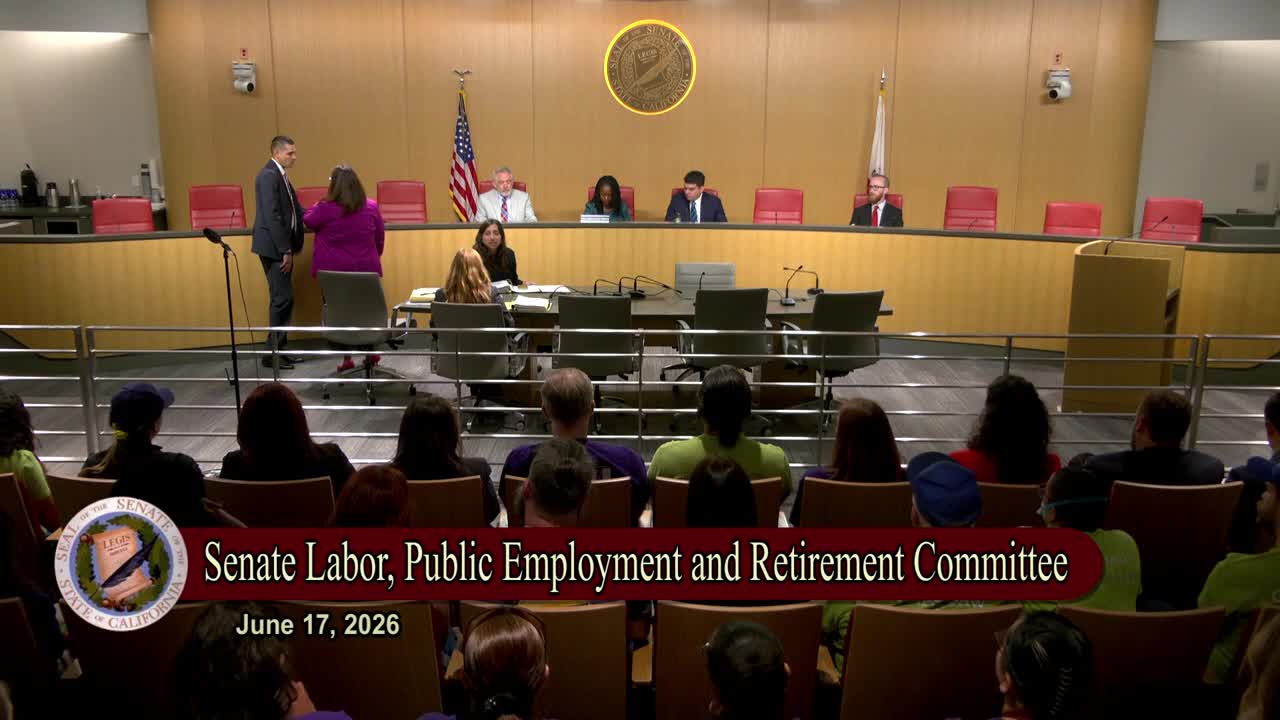 35MIN
Senate Standing Committee on Labor, Public Employment and Retirement
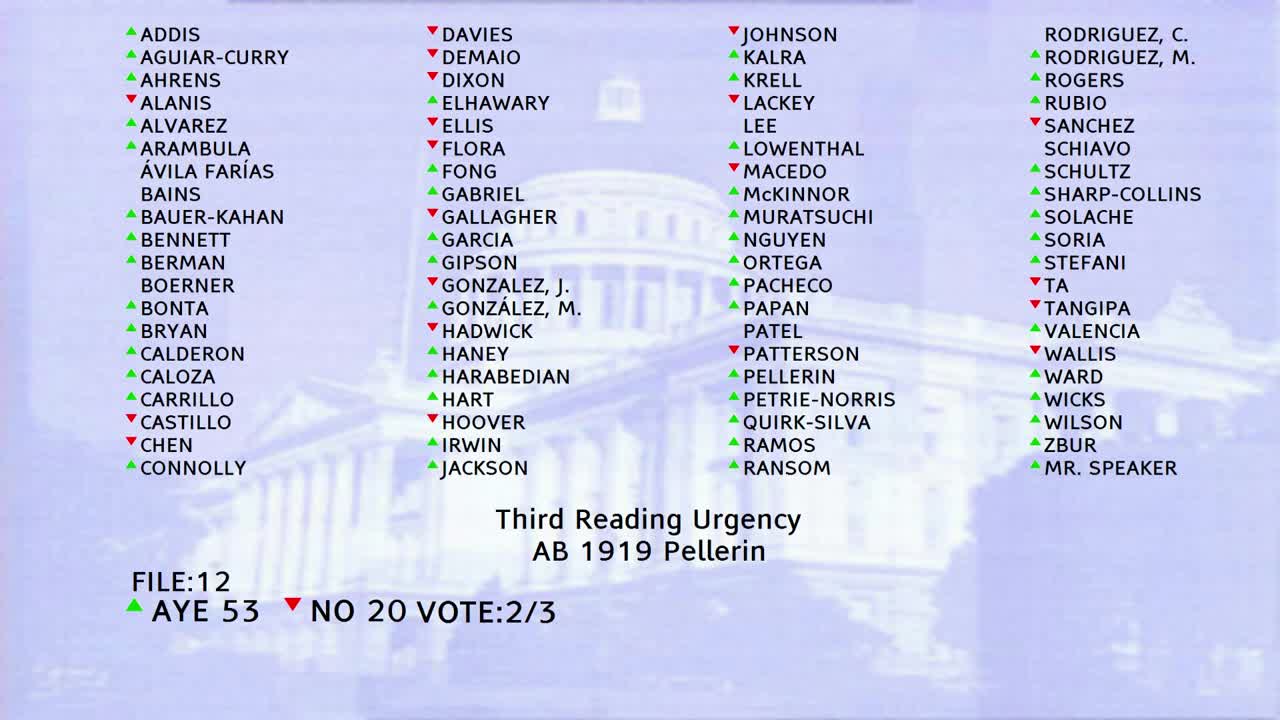 15MIN
Assembly Floor
 46MIN
Assembly Standing Committee on Public Employment and Retirement
Bill Author