AB 1743: Firearms.
- Session Year: 2025-2026
- House: Assembly
- Latest Version Date: 2026-09-26
Current Status:
Passed
(2026-09-26: Chaptered by Secretary of State - Chapter 457, Statutes of 2026.)
Introduced
In Committee
Awaiting First Chamber Vote
Passed First Chamber
In Committee
Awaiting Second Chamber Vote
Passed Second Chamber
Enacted
Existing law requires law enforcement agencies to enter each firearm into the Department of Justice Automated Firearms System that has been reported stolen, lost, found, recovered, held for safekeeping, surrendered, relinquished, or under observation. Existing law requires these law enforcement agencies to report to the Department of Justice all available information necessary to identify and trace the history of all recovered firearms that are illegally possessed, have been used in a crime, or are suspected of having been used in a crime, within 7 calendar days of obtaining the information. Existing law requires that the information collected be maintained by the department for a period of not less than 10 years, and to be available, under guidelines set forth by the Attorney General, for academic and policy research purposes. Existing law also requires the department to, on an ongoing basis, analyze the information collected for patterns and trends relating to recovered firearms that have been illegally possessed, used in a crime, or suspected to have been used in a crime, including the leading sources and origins of those firearms.
This bill would clarify that the information relied on by the department for its analysis of patterns and trends be available, upon request, to any California town, city, county, or state government agency, the California State University, the University of California, or specified private postsecondary educational institutions in California, under conditions and format options set forth by the Attorney General, as specified.
Existing law requires law enforcement agencies to enter each firearm into the Department of Justice Automated Firearms System that has been reported stolen, lost, found, recovered, held for safekeeping, surrendered, relinquished, or under observation. Existing law requires these law enforcement agencies to report to the Department of Justice all available information necessary to identify and trace the history of all recovered firearms that are illegally possessed, have been used in a crime, or are suspected of having been used in a crime, within 7 calendar days of obtaining the information. Existing law requires that the information collected be maintained by the department for a period of not less than 10 years, and to be available, under guidelines set forth by the Attorney General, for academic and policy research purposes. Existing law also requires the department to, on an ongoing basis, analyze the information collected for patterns and trends relating to recovered firearms that have been illegally possessed, used in a crime, or suspected to have been used in a crime, including the leading sources and origins of those firearms.
This bill would clarify that the information collected relied on by the department and analyzed for for its analysis of patterns and trends be available, upon request, to any California town, city, county, or state government agency, the California State University, the University of California, or specified private postsecondary educational institutions in California, under conditions and format options set forth by the Attorney General, as specified.
Existing law requires law enforcement agencies to enter each firearm into the Department of Justice Automated Firearms System that has been reported stolen, lost, found, recovered, held for safekeeping, surrendered, relinquished, or under observation. Existing law requires these law enforcement agencies to report to the Department of Justice all available information necessary to identify and trace the history of all recovered firearms that are illegally possessed, have been used in a crime, or are suspected of having been used in a crime, within 7 calendar days of obtaining the information. Existing law requires that the information collected be maintained by the department for a period of not less than 10 years, and to be available, under guidelines set forth by the Attorney General, for academic and policy research purposes. Existing law also requires the department to, on an ongoing basis, analyze the information collected for patterns and trends relating to recovered firearms that have been illegally possessed, used in a crime, or suspected to have been used in a crime, including the leading sources and origins of those firearms.
This bill would clarify that the information collected by the department and analyzed for patterns and trends be available, upon request, to any California town, city, county, or state government agency, the California State University, the University of California, or any specified private nonprofit university postsecondary educational institutions in California, under guidelines conditions and format options set forth by the Attorney General, as specified.
Existing law requires law enforcement agencies to enter each firearm into the Department of Justice Automated Firearms System that has been reported stolen, lost, found, recovered, held for safekeeping, surrendered, relinquished, or under observation. Existing law requires these law enforcement agencies to report to the Department of Justice all available information necessary to identify and trace the history of all recovered firearms that are illegally possessed, have been used in a crime, or are suspected of having been used in a crime, within 7 calendar days of obtaining the information. Existing law requires that the information collected be maintained by the department for a period of not less than 10 years, and to be available, under guidelines set forth by the Attorney General, for academic and policy research purposes.
This bill would clarify that the information be available available, upon request, to any California town, city, or county, any or state government agency, a California community college or the California State University, or the University of California, or any private nonprofit university in California, under guidelines and format options set forth by the Attorney General, for academic and policy research purposes, and would require the Attorney General to make this information available, upon request by any of these specified entities, in a format conducive to the requesters needs. General, as specified.
Existing law requires law enforcement agencies to enter each firearm into the Department of Justice Automated Firearms System that has been reported stolen, lost, found, recovered, held for safekeeping, surrendered, relinquished, or under observation. Existing law requires these law enforcement agencies to report to the Department of Justice all available information necessary to identify and trace the history of all recovered firearms that are illegally possessed, have been used in a crime, or are suspected of having been used in a crime, within 7 calendar days of obtaining the information. Existing law requires that the information collected be maintained by the department for a period of not less than 10 years, and to be available, under guidelines set forth by the Attorney General, for academic and policy research purposes.
This bill would clarify that the information be available to any town, city, or county, any state government agency, a California community college or California State University, or the University of California, under guidelines set forth by the Attorney General, for academic and policy research purposes, and would require the Attorney General to make this information available, upon request by any of these specified entities, in a format conducive to the requesters needs.
(a)In addition to the requirements of Section 11108.2 that apply to a law enforcement agencys duty to report to the Department of Justice the recovery of a firearm, a law enforcement agency described in Section 11108.2 shall, and any other law enforcement agency or agent, including, but not limited to, a federal or tribal law enforcement agency or agent, may, report to the department in a manner determined by the Attorney General in consultation with the Bureau of Alcohol, Tobacco, Firearms and Explosives all available information necessary to identify and trace the history of all recovered firearms that are illegally possessed, have been used in a crime, or are suspected of having been used in a crime, within seven calendar days of obtaining the information.
(b)When the department receives information from a law enforcement agency pursuant to subdivision (a), it shall promptly forward this information to the National Tracing Center of the federal Bureau of Alcohol, Tobacco, Firearms and Explosives to the extent practicable.
(c)In implementing this section, the Attorney General shall ensure to the maximum extent practical that both of the following apply:
(1)The information provided to the federal Bureau of Alcohol, Tobacco, Firearms and Explosives enables that agency to trace the ownership of the firearm described in subdivision (a).
(2)Law enforcement agencies can report all relevant information without being unduly burdened by this reporting function.
(d)Information collected pursuant to this section shall be maintained by the department for a period of not less than 10 years.
(e)(1)The department shall, on an ongoing basis, analyze the information collected pursuant to this section for patterns and trends relating to recovered firearms that have been illegally possessed, used in a crime, or suspected to have been used in a crime, including the leading sources and origins of those firearms.
(2)Information relied on by the department for its analysis pursuant to paragraph (1) shall be available, upon request, to the University of California, the California State University, or a private postsecondary educational institution that is formed as a nonprofit corporation in the state and is accredited by an accrediting agency that is recognized by the United States Department of Education or the Council for Higher Education Accreditation, under the conditions and pursuant to format options set forth by the Attorney General, for academic and policy research purposes.
(3)Information relied on by the department for its analysis pursuant to paragraph (1) shall be available, upon request, to any town, city, county, or state government agency within the state under the conditions and pursuant to format options set forth by the Attorney General.
(f)(1)The department shall, by no later than July 1, 2023, and annually thereafter, prepare and submit a report to the Legislature summarizing the analysis completed pursuant to subdivisions (e) and (g). This report shall be submitted in compliance with Section 9795 of the Government Code.
(2)The report shall, without limitation and to the extent possible, include all of the following:
(A)The total number of firearms recovered in the state.
(B)The number of firearms recovered, disaggregated by county and by city.
(C)The number of firearms recovered, disaggregated by the firearms dealer where the most recent sale or transfer of the firearm occurred. This shall include the full name and address of the firearms dealer.
(D)The number of firearms recovered, disaggregated by manufacturer.
(E)The total number of unserialized firearms recovered in the state.
(F)The number of unserialized firearms recovered, disaggregated by county and by city.
(3)The department shall make the report described in this subdivision available to the public.
(g)The report described in subdivision (f) shall also contain all of the following information from the applicable time period described in subdivision (h):
(1)The departments staffing levels for conducting firearms dealer inspections pursuant to Section 26720 and ammunition vendor inspections pursuant to Section 30345, to include both allocated positions and filled positions.
(2)The number of firearms dealer inspections conducted and, for each inspection, all of the following information:
(A)The name of the dealer.
(B)The dealers license number.
(C)The business address of the dealer.
(D)The number of hours spent to complete the inspection.
(E)A list of violations identified through the inspection, whether those violations were subsequently resolved and, if so, the date they were resolved, and any fines or penalties assessed.
(F)The date of reinspection, if applicable, and any violations identified during reinspection.
(G)The dates of any prior inspections.
(H)The number of Dealers Record of Sale (DROS) background checks submitted by the dealer during the one-year period prior to the inspection, and the outcome of those background checks.
(I)The total number of firearms used in crimes that were traced back to the dealer during the one-year period prior to the inspection, and the percentage of total sales by the dealer in the same period of time that the traced firearms represent.
(J)The number of firearms that the dealer reported or discovered lost or stolen during the one-year period prior to the inspection.
(3)The number of ammunition vendor inspections conducted and, for each inspection, all of the following information:
(A)The name of the vendor.
(B)The vendors license number.
(C)The business address of the vendor.
(D)The number of hours spent to complete the inspection.
(E)A list of violations identified through the inspection, whether those violations were subsequently resolved and, if so, the date they were resolved, and any fines or penalties assessed.
(F)The date of reinspection, if applicable, and any violations identified during reinspection.
(G)The dates of any prior inspections.
(H)The number of ammunition purchaser background checks submitted by the vendor during the one-year period prior to the inspection, and the outcome of those background checks.
(I)The amount of ammunition that the vendor reported or discovered lost or stolen during the one-year period prior to the inspection.
(4)All of the following information regarding the roster of handguns that have been determined not to be unsafe handguns, as described in Section 32015:
(A)The total number of handguns on the roster.
(B)The number of handguns added to the roster during the applicable time period.
(C)The number of handguns removed from the roster during the applicable time period, including the reasons for removal.
(D)The number of handguns that were denied approval to be listed on the roster during the applicable time period, including the reasons for denial.
(h)The report described in subdivision (f) that is due by no later than July 1, 2025, shall include the data described in subdivision (g) from January 1, 2020, to December 31, 2024, inclusive. Each annual report thereafter shall include the data described in subdivision (g) from the previous year.
(i)The Attorney General may issue regulations to further the purposes of this section.
(a)In addition to the requirements of Section 11108.2 that apply to a law enforcement agencys duty to report to the Department of Justice the recovery of a firearm, a law enforcement agency described in Section 11108.2 shall, and any other law enforcement agency or agent, including including, but not limited to to, a federal or tribal law enforcement agency or agent, may, report to the department in a manner determined by the Attorney General in consultation with the Bureau of Alcohol, Tobacco, Firearms and Explosives all available information necessary to identify and trace the history of all recovered firearms that are illegally possessed, have been used in a crime, or are suspected of having been used in a crime, within seven calendar days of obtaining the information.
(b)When the department receives information from a law enforcement agency pursuant to subdivision (a), it shall promptly forward this information to the National Tracing Center of the federal Bureau of Alcohol, Tobacco, Firearms and Explosives to the extent practicable.
(c)In implementing this section, the Attorney General shall ensure to the maximum extent practical that both of the following apply:
(1)The information provided to the federal Bureau of Alcohol, Tobacco, Firearms and Explosives enables that agency to trace the ownership of the firearm described in subdivision (a).
(2)Law enforcement agencies can report all relevant information without being unduly burdened by this reporting function.
(d)Information collected pursuant to this section shall be maintained by the department for a period of not less than 10 years.
(e)(1)The department shall, on an ongoing basis, analyze the information collected pursuant to this section for patterns and trends relating to recovered firearms that have been illegally possessed, used in a crime, or suspected to have been used in a crime, including the leading sources and origins of those firearms.
(2)Information collected by the department and analyzed for patterns and trends pursuant to paragraph (1) Information relied on by the department for its analysis pursuant to paragraph (1) shall be available, upon request, to the University of California, the California State University, or a private postsecondary educational institution that is formed as a nonprofit corporation in the state and is accredited by an accrediting agency that is recognized by the United States Department of Education or the Council for Higher Education Accreditation, under the conditions and pursuant to format options set forth by the Attorney General, for academic and policy research purposes.
(3)Information collected by the department and analyzed for patterns and trends pursuant to paragraph (1) Information relied on by the department for its analysis pursuant to paragraph (1) shall be available, upon request, to any town, city, county, or state government agency within the state under the conditions and pursuant to format options set forth by the Attorney General.
(f)(1)The department shall, by no later than July 1, 2023, and annually thereafter, prepare and submit a report to the Legislature summarizing the analysis completed pursuant to subdivisions (e) and (g). This report shall be submitted in compliance with Section 9795 of the Government Code.
(2)The report shall, without limitation and to the extent possible, include all of the following:
(A)The total number of firearms recovered in the state.
(B)The number of firearms recovered, disaggregated by county and by city.
(C)The number of firearms recovered, disaggregated by the firearms dealer where the most recent sale or transfer of the firearm occurred. This shall include the full name and address of the firearms dealer.
(D)The number of firearms recovered, disaggregated by manufacturer.
(E)The total number of unserialized firearms recovered in the state.
(F)The number of unserialized firearms recovered, disaggregated by county and by city.
(3)The department shall make the report described in this subdivision available to the public.
(g)The report described in subdivision (f) shall also contain all of the following information from the applicable time period described in subdivision (h):
(1)The departments staffing levels for conducting firearms dealer inspections pursuant to Section 26720 and ammunition vendor inspections pursuant to Section 30345, to include both allocated positions and filled positions.
(2)The number of firearms dealer inspections conducted and, for each inspection, all of the following information:
(A)The name of the dealer.
(B)The dealers license number.
(C)The business address of the dealer.
(D)The number of hours spent to complete the inspection.
(E)A list of violations identified through the inspection, whether those violations were subsequently resolved and, if so, the date they were resolved, and any fines or penalties assessed.
(F)The date of reinspection, if applicable, and any violations identified during reinspection.
(G)The dates of any prior inspections.
(H)The number of Dealers Record of Sale (DROS) background checks submitted by the dealer during the one-year period prior to the inspection, and the outcome of those background checks.
(I)The total number of firearms used in crimes that were traced back to the dealer during the one-year period prior to the inspection, and the percentage of total sales by the dealer in the same period of time that the traced firearms represent.
(J)The number of firearms that the dealer reported or discovered lost or stolen during the one-year period prior to the inspection.
(3)The number of ammunition vendor inspections conducted and, for each inspection, all of the following information:
(A)The name of the vendor.
(B)The vendors license number.
(C)The business address of the vendor.
(D)The number of hours spent to complete the inspection.
(E)A list of violations identified through the inspection, whether those violations were subsequently resolved and, if so, the date they were resolved, and any fines or penalties assessed.
(F)The date of reinspection, if applicable, and any violations identified during reinspection.
(G)The dates of any prior inspections.
(H)The number of ammunition purchaser background checks submitted by the vendor during the one-year period prior to the inspection, and the outcome of those background checks.
(I)The amount of ammunition that the vendor reported or discovered lost or stolen during the one-year period prior to the inspection.
(4)All of the following information regarding the roster of handguns that have been determined not to be unsafe handguns, as described in Section 32015:
(A)The total number of handguns on the roster.
(B)The number of handguns added to the roster during the applicable time period.
(C)The number of handguns removed from the roster during the applicable time period, including the reasons for removal.
(D)The number of handguns that were denied approval to be listed on the roster during the applicable time period, including the reasons for denial.
(h)The report described in subdivision (f) that is due by no later that than July 1, 2025, shall include the data described in subdivision (g) from January 1, 2020, to December 31, 2024, inclusive. Each annual report thereafter shall include the data described in subdivision (g) from the previous year.
(i)The Attorney General may issue regulations to further the purposes of this section.
(a)In addition to the requirements of Section 11108.2 that apply to a law enforcement agencys duty to report to the Department of Justice the recovery of a firearm, a law enforcement agency described in Section 11108.2 shall, and any other law enforcement agency or agent, including but not limited to a federal or tribal law enforcement agency or agent, may, report to the department in a manner determined by the Attorney General in consultation with the Bureau of Alcohol, Tobacco, Firearms and Explosives all available information necessary to identify and trace the history of all recovered firearms that are illegally possessed, have been used in a crime, or are suspected of having been used in a crime, within seven calendar days of obtaining the information.
(b)When the department receives information from a law enforcement agency pursuant to subdivision (a), it shall promptly forward this information to the National Tracing Center of the federal Bureau of Alcohol, Tobacco, Firearms and Explosives to the extent practicable.
(c)In implementing this section, the Attorney General shall ensure to the maximum extent practical that both of the following apply:
(1)The information provided to the federal Bureau of Alcohol, Tobacco, Firearms and Explosives enables that agency to trace the ownership of the firearm described in subdivision (a).
(2)Law enforcement agencies can report all relevant information without being unduly burdened by this reporting function.
(d)(1)Information collected pursuant to this section shall be available, upon request, to the University of California, the California State University, or any private nonprofit university in California, under guidelines and pursuant to format options set forth by the Attorney General, for academic and policy research purposes.(2)Information collected pursuant to this section shall be available, upon request, to any town, city, county, or state government agency in California under guidelines and pursuant to format options set forth by the Attorney General.(3)(d)Information collected pursuant to this section shall be maintained by the department for a period of not less than 10 years.
(e)(1)The department shall, on an ongoing basis, analyze the information collected pursuant to this section for patterns and trends relating to recovered firearms that have been illegally possessed, used in a crime, or suspected to have been used in a crime, including the leading sources and origins of those firearms.
(2)Information collected by the department and analyzed for patterns and trends pursuant to paragraph (1) shall be available, upon request, to the University of California, the California State University, or a private postsecondary educational institution that is formed as a nonprofit corporation in the state and is accredited by an accrediting agency that is recognized by the United States Department of Education or the Council for Higher Education Accreditation, under the conditions and pursuant to format options set forth by the Attorney General, for academic and policy research purposes.
(3)Information collected by the department and analyzed for patterns and trends pursuant to paragraph (1) shall be available, upon request, to any town, city, county, or state government agency within the state under the conditions and pursuant to format options set forth by the Attorney General.
(f)(1)The department shall, by no later than July 1, 2023, and annually thereafter, prepare and submit a report to the Legislature summarizing the analysis completed pursuant to subdivisions (e) and (g). This report shall be submitted in compliance with Section 9795 of the Government Code.
(2)The report shall, without limitation and to the extent possible, include all of the following:
(A)The total number of firearms recovered in the state.
(B)The number of firearms recovered, disaggregated by county and by city.
(C)The number of firearms recovered, disaggregated by the firearms dealer where the most recent sale or transfer of the firearm occurred. This shall include the full name and address of the firearms dealer.
(D)The number of firearms recovered, disaggregated by manufacturer.
(E)The total number of unserialized firearms recovered in the state.
(F)The number of unserialized firearms recovered, disaggregated by county and by city.
(3)The department shall make the report described in this subdivision available to the public.
(g)The report described in subdivision (f) shall also contain all of the following information from the applicable time period described in subdivision (h):
(1)The departments staffing levels for conducting firearms dealer inspections pursuant to Section 26720 and ammunition vendor inspections pursuant to Section 30345, to include both allocated positions and filled positions.
(2)The number of firearms dealer inspections conducted and, for each inspection, all of the following information:
(A)The name of the dealer.
(B)The dealers license number.
(C)The business address of the dealer.
(D)The number of hours spent to complete the inspection.
(E)A list of violations identified through the inspection, whether those violations were subsequently resolved and, if so, the date they were resolved, and any fines or penalties assessed.
(F)The date of reinspection, if applicable, and any violations identified during reinspection.
(G)The dates of any prior inspections.
(H)The number of Dealers Record of Sale (DROS) background checks submitted by the dealer during the one-year period prior to the inspection, and the outcome of those background checks.
(I)The total number of firearms used in crimes that were traced back to the dealer during the one-year period prior to the inspection, and the percentage of total sales by the dealer in the same period of time that the traced firearms represent.
(J)The number of firearms that the dealer reported or discovered lost or stolen during the one-year period prior to the inspection.
(3)The number of ammunition vendor inspections conducted and, for each inspection, all of the following information:
(A)The name of the vendor.
(B)The vendors license number.
(C)The business address of the vendor.
(D)The number of hours spent to complete the inspection.
(E)A list of violations identified through the inspection, whether those violations were subsequently resolved and, if so, the date they were resolved, and any fines or penalties assessed.
(F)The date of reinspection, if applicable, and any violations identified during reinspection.
(G)The dates of any prior inspections.
(H)The number of ammunition purchaser background checks submitted by the vendor during the one-year period prior to the inspection, and the outcome of those background checks.
(I)The amount of ammunition that the vendor reported or discovered lost or stolen during the one-year period prior to the inspection.
(4)All of the following information regarding the roster of handguns that have been determined not to be unsafe handguns, as described in Section 32015:
(A)The total number of handguns on the roster.
(B)The number of handguns added to the roster during the applicable time period.
(C)The number of handguns removed from the roster during the applicable time period, including the reasons for removal.
(D)The number of handguns that were denied approval to be listed on the roster during the applicable time period, including the reasons for denial.
(h)The report described in subdivision (f) that is due by no later that July 1, 2025, shall include the data described in subdivision (g) from January 1, 2020, to December 31, 2024, inclusive. Each annual report thereafter shall include the data described in subdivision (g) from the previous year.
(i)The Attorney General may issue regulations to further the purposes of this section.
(a)In addition to the requirements of Section 11108.2 that apply to a law enforcement agencys duty to report to the Department of Justice the recovery of a firearm, a law enforcement agency described in Section 11108.2 shall, and any other law enforcement agency or agent, including but not limited to a federal or tribal law enforcement agency or agent, may, report to the department in a manner determined by the Attorney General in consultation with the Bureau of Alcohol, Tobacco, Firearms and Explosives all available information necessary to identify and trace the history of all recovered firearms that are illegally possessed, have been used in a crime, or are suspected of having been used in a crime, within seven calendar days of obtaining the information.
(b)When the department receives information from a law enforcement agency pursuant to subdivision (a), it shall promptly forward this information to the National Tracing Center of the federal Bureau of Alcohol, Tobacco, Firearms and Explosives to the extent practicable.
(c)In implementing this section, the Attorney General shall ensure to the maximum extent practical that both of the following apply:
(1)The information provided to the federal Bureau of Alcohol, Tobacco, Firearms and Explosives enables that agency to trace the ownership of the firearm described in subdivision (a).
(2)Law enforcement agencies can report all relevant information without being unduly burdened by this reporting function.
(d)(1)Information collected pursuant to this section shall be maintained by the department for a period of not less than 10 years, and shall be available, including, without limitation, to any town, city, or county, any state government agency, upon request, to the University of California, the California State University, or a California community college, any private nonprofit university in California, under guidelines and pursuant to format options set forth by the Attorney General, for academic and policy research purposes.
(2)The Attorney General shall make the information collected pursuant to this section available, upon request, to any town, city, county, state government agency, the University of California, the California State University, or a California community college, in a format conducive to the requesters needs.(2)Information collected pursuant to this section shall be available, upon request, to any town, city, county, or state government agency in California under guidelines and pursuant to format options set forth by the Attorney General.
(3)Information collected pursuant to this section shall be maintained by the department for a period of not less than 10 years.
(e)The department shall, on an ongoing basis, analyze the information collected pursuant to this section for patterns and trends relating to recovered firearms that have been illegally possessed, used in a crime, or suspected to have been used in a crime, including the leading sources and origins of those firearms.
(f)(1)The department shall, by no later than July 1, 2023, and annually thereafter, prepare and submit a report to the Legislature summarizing the analysis completed pursuant to subdivisions (e) and (g). This report shall be submitted in compliance with Section 9795 of the Government Code.
(2)The report shall, without limitation and to the extent possible, include all of the following:
(A)The total number of firearms recovered in the state.
(B)The number of firearms recovered, disaggregated by county and by city.
(C)The number of firearms recovered, disaggregated by the firearms dealer where the most recent sale or transfer of the firearm occurred. This shall include the full name and address of the firearms dealer.
(D)The number of firearms recovered, disaggregated by manufacturer.
(E)The total number of unserialized firearms recovered in the state.
(F)The number of unserialized firearms recovered, disaggregated by county and by city.
(3)The department shall make the report described in this subdivision available to the public.
(g)The report described in subdivision (f) shall also contain all of the following information from the applicable time period described in subdivision (h):
(1)The departments staffing levels for conducting firearms dealer inspections pursuant to Section 26720 and ammunition vendor inspections pursuant to Section 30345, to include both allocated positions and filled positions.
(2)The number of firearms dealer inspections conducted and, for each inspection, all of the following information:
(A)The name of the dealer.
(B)The dealers license number.
(C)The business address of the dealer.
(D)The number of hours spent to complete the inspection.
(E)A list of violations identified through the inspection, whether those violations were subsequently resolved and, if so, the date they were resolved, and any fines or penalties assessed.
(F)The date of reinspection, if applicable, and any violations identified during reinspection.
(G)The dates of any prior inspections.
(H)The number of Dealers Record of Sale (DROS) background checks submitted by the dealer during the one-year period prior to the inspection, and the outcome of those background checks.
(I)The total number of firearms used in crimes that were traced back to the dealer during the one-year period prior to the inspection, and the percentage of total sales by the dealer in the same period of time that the traced firearms represent.
(J)The number of firearms that the dealer reported or discovered lost or stolen during the one-year period prior to the inspection.
(3)The number of ammunition vendor inspections conducted and, for each inspection, all of the following information:
(A)The name of the vendor.
(B)The vendors license number.
(C)The business address of the vendor.
(D)The number of hours spent to complete the inspection.
(E)A list of violations identified through the inspection, whether those violations were subsequently resolved and, if so, the date they were resolved, and any fines or penalties assessed.
(F)The date of reinspection, if applicable, and any violations identified during reinspection.
(G)The dates of any prior inspections.
(H)The number of ammunition purchaser background checks submitted by the vendor during the one-year period prior to the inspection, and the outcome of those background checks.
(I)The amount of ammunition that the vendor reported or discovered lost or stolen during the one-year period prior to the inspection.
(4)All of the following information regarding the roster of handguns that have been determined not to be unsafe handguns, as described in Section 32015:
(A)The total number of handguns on the roster.
(B)The number of handguns added to the roster during the applicable time period.
(C)The number of handguns removed from the roster during the applicable time period, including the reasons for removal.
(D)The number of handguns that were denied approval to be listed on the roster during the applicable time period, including the reasons for denial.
(h)The report described in subdivision (f) that is due by no later that July 1, 2025, shall include the data described in subdivision (g) from January 1, 2020, to December 31, 2024, inclusive. Each annual report thereafter shall include the data described in subdivision (g) from the previous year.
(i)The Attorney General may issue regulations to further the purposes of this section.
(a)In addition to the requirements of Section 11108.2 that apply to a law enforcement agencys duty to report to the Department of Justice the recovery of a firearm, a law enforcement agency described in Section 11108.2 shall, and any other law enforcement agency or agent, including but not limited to a federal or tribal law enforcement agency or agent, may, report to the department in a manner determined by the Attorney General in consultation with the Bureau of Alcohol, Tobacco, Firearms and Explosives all available information necessary to identify and trace the history of all recovered firearms that are illegally possessed, have been used in a crime, or are suspected of having been used in a crime, within seven calendar days of obtaining the information.
(b)When the department receives information from a law enforcement agency pursuant to subdivision (a), it shall promptly forward this information to the National Tracing Center of the federal Bureau of Alcohol, Tobacco, Firearms and Explosives to the extent practicable.
(c)In implementing this section, the Attorney General shall ensure to the maximum extent practical that both of the following apply:
(1)The information provided to the federal Bureau of Alcohol, Tobacco, Firearms and Explosives enables that agency to trace the ownership of the firearm described in subdivision (a).
(2)Law enforcement agencies can report all relevant information without being unduly burdened by this reporting function.
(d)(1)Information collected pursuant to this section shall be maintained by the department for a period of not less than 10 years, and shall be available, including, without limitation, to any town, city, or county, any state government agency, the University of California, the California State University, or a California community college, under guidelines set forth by the Attorney General, for academic and policy research purposes.
(2)The Attorney General shall make the information collected pursuant to this section available, upon request, to any town, city, county, state government agency, the University of California, the California State University, or a California community college, in a format conducive to the requesters needs.
(e)The department shall, on an ongoing basis, analyze the information collected pursuant to this section for patterns and trends relating to recovered firearms that have been illegally possessed, used in a crime, or suspected to have been used in a crime, including the leading sources and origins of those firearms.
(f)(1)The department shall, by no later than July 1, 2023, and annually thereafter, prepare and submit a report to the Legislature summarizing the analysis completed pursuant to subdivisions (e) and (g). This report shall be submitted in compliance with Section 9795 of the Government Code.
(2)The report shall, without limitation and to the extent possible, include all of the following:
(A)The total number of firearms recovered in the state.
(B)The number of firearms recovered, disaggregated by county and by city.
(C)The number of firearms recovered, disaggregated by the firearms dealer where the most recent sale or transfer of the firearm occurred. This shall include the full name and address of the firearms dealer.
(D)The number of firearms recovered, disaggregated by manufacturer.
(E)The total number of unserialized firearms recovered in the state.
(F)The number of unserialized firearms recovered, disaggregated by county and by city.
(3)The department shall make the report described in this subdivision available to the public.
(g)The report described in subdivision (f) shall also contain all of the following information from the applicable time period described in subdivision (h):
(1)The departments staffing levels for conducting firearms dealer inspections pursuant to Section 26720 and ammunition vendor inspections pursuant to Section 30345, to include both allocated positions and filled positions.
(2)The number of firearms dealer inspections conducted and, for each inspection, all of the following information:
(A)The name of the dealer.
(B)The dealers license number.
(C)The business address of the dealer.
(D)The number of hours spent to complete the inspection.
(E)A list of violations identified through the inspection, whether those violations were subsequently resolved and, if so, the date they were resolved, and any fines or penalties assessed.
(F)The date of reinspection, if applicable, and any violations identified during reinspection.
(G)The dates of any prior inspections.
(H)The number of Dealers Record of Sale (DROS) background checks submitted by the dealer during the one-year period prior to the inspection, and the outcome of those background checks.
(I)The total number of firearms used in crimes that were traced back to the dealer during the one-year period prior to the inspection, and the percentage of total sales by the dealer in the same period of time that the traced firearms represent.
(J)The number of firearms that the dealer reported or discovered lost or stolen during the one-year period prior to the inspection.
(3)The number of ammunition vendor inspections conducted and, for each inspection, all of the following information:
(A)The name of the vendor.
(B)The vendors license number.
(C)The business address of the vendor.
(D)The number of hours spent to complete the inspection.
(E)A list of violations identified through the inspection, whether those violations were subsequently resolved and, if so, the date they were resolved, and any fines or penalties assessed.
(F)The date of reinspection, if applicable, and any violations identified during reinspection.
(G)The dates of any prior inspections.
(H)The number of ammunition purchaser background checks submitted by the vendor during the one-year period prior to the inspection, and the outcome of those background checks.
(I)The amount of ammunition that the vendor reported or discovered lost or stolen during the one-year period prior to the inspection.
(4)All of the following information regarding the roster of handguns that have been determined not to be unsafe handguns, as described in Section 32015:
(A)The total number of handguns on the roster.
(B)The number of handguns added to the roster during the applicable time period.
(C)The number of handguns removed from the roster during the applicable time period, including the reasons for removal.
(D)The number of handguns that were denied approval to be listed on the roster during the applicable time period, including the reasons for denial.
(h)The report described in subdivision (f) that is due by no later that July 1, 2025, shall include the data described in subdivision (g) from January 1, 2020, to December 31, 2024, inclusive. Each annual report thereafter shall include the data described in subdivision (g) from the previous year.
(i)The Attorney General may issue regulations to further the purposes of this section.
|
Date
|
Status
|
|---|---|
| Sep 26, 2026 | Chaptered by Secretary of State - Chapter 457, Statutes of 2026. |
| Sep 26, 2026 | Approved by the Governor. |
| Aug 28, 2026 | Enrolled and presented to the Governor at 3:30 p.m. |
| Aug 24, 2026 | Senate amendments concurred in. To Engrossing and Enrolling. (Ayes 60. Noes 18.). |
| Aug 24, 2026 | Senate amendments concurred in. To Engrossing and Enrolling. (Ayes 60. Noes 18. Page 6417.). |
| Aug 24, 2026 | Senate amendments concurred in. To Engrossing and Enrolling. |
| Aug 20, 2026 | In Assembly. Concurrence in Senate amendments pending. |
| Aug 20, 2026 | Read third time. Passed. Ordered to the Assembly. (Ayes 28. Noes 10.). |
| Aug 20, 2026 | Read third time. Passed. Ordered to the Assembly. (Ayes 28. Noes 10. Page 5585.). |
| Aug 17, 2026 | Read second time. Ordered to third reading. |
| Aug 13, 2026 | Read second time and amended. Ordered returned to second reading. |
| Aug 13, 2026 | From committee: Amend, and do pass as amended. (Ayes 5. Noes 2.) (August 13). |
| Jun 29, 2026 | In committee: Referred to APPR. suspense file. |
| Jun 16, 2026 | From committee: Do pass and re-refer to Com. on APPR. (Ayes 5. Noes 1.) (June 16). Re-referred to Com. on APPR. |
| Jun 4, 2026 | From committee chair, with author's amendments: Amend, and re-refer to committee. Read second time, amended, and re-referred to Com. on PUB. S. |
| Jun 3, 2026 | Referred to Com. on PUB. S. |
| May 27, 2026 | In Senate. Read first time. To Com. on RLS. for assignment. |
| May 26, 2026 | Read third time. Passed. Ordered to the Senate. (Ayes 59. Noes 18.) |
| May 26, 2026 | Read third time. Passed. Ordered to the Senate. (Ayes 59. Noes 18. Page 5398.) |
| May 26, 2026 | Read third time. Passed. Ordered to the Senate. |
| May 19, 2026 | Read second time. Ordered to third reading. |
| May 18, 2026 | Read second time and amended. Ordered returned to second reading. |
| May 14, 2026 | From committee: Amend, and do pass as amended. (Ayes 11. Noes 3.) (May 14). |
| Apr 22, 2026 | In committee: Set, first hearing. Referred to APPR. suspense file. |
| Mar 10, 2026 | From committee: Do pass and re-refer to Com. on APPR. (Ayes 7. Noes 1.) (March 10). Re-referred to Com. on APPR. |
| Feb 23, 2026 | Referred to Com. on PUB. S. |
| Feb 6, 2026 | From printer. May be heard in committee March 8. |
| Feb 5, 2026 | Read first time. To print. |
|
Date
|
Description
|
Location
|
Votes
|
|
|---|---|---|---|---|
| Aug 24, 2026 | AB 1743 Wicks Concurrence in Senate Amendments | Assembly Floor |
Passed |
|
| Aug 20, 2026 | Assembly 3rd Reading AB1743 Wicks et al. By Grayson | Senate Floor |
Passed |
|
| Aug 13, 2026 | Do pass as amended | Senate Standing Committee on Appropriations |
Passed |
|
| Jun 29, 2026 | Placed on suspense file | Senate Standing Committee on Appropriations |
Passed |
|
| Jun 16, 2026 | Do pass, but first be re-referred to the Committee on [Appropriations] | Senate Standing Committee on Public Safety |
Passed |
|
| May 26, 2026 | AB 1743 Wicks Assembly Third Reading | Assembly Floor |
Passed |
|
| May 14, 2026 | Do pass as amended. | Assembly Standing Committee on Appropriations |
Passed |
|
| Mar 10, 2026 | Do pass and be re-referred to the Committee on [Appropriations] | Assembly Standing Committee on Public Safety |
Passed |
This list shows positions taken on this bill by organizations on the date displayed, which is linked to the original source.
Positions by individuals are not included.
|
Organization
|
Position
|
Date
|
|---|---|---|
| Brady California | ** Support | |
| Brady United to End Gun Violence | ** Support | |
| California Civil Liberties Advocacy | ** Against | |
| California Rifle And Pistol Association, Inc. | ** Against | |
| California Rifle and Pistol Association, Inc. (CRPA) | ** Against | |
| City of Emeryville | ** Support | |
| City Of Oakland | ** Support | |
| Consumer Protection Policy Center/USD School of Law | ** Support | |
| Everytown for Gun Safety Action Fund | ** Support | |
| Giffords | ** Support | |
| GUN OWNERS OF CALIFORNIA, INC. | ** Against | |
| Moms Demand Action for Gun Sense in America | ** Support | |
| National Rifle Association - Institute For Legislative Action | ** Against | |
| Students Demand Action for Gun Sense in America | ** Support |
CONCURRENCE IN SENATE AMENDMENTS
CSA1 Bill Id:AB 1743
Author:(Wicks)
As Amended Ver:August 13, 2026
Majority vote
SUMMARY
Clarifies that identification and tracing information for illegal firearms recovered during criminal investigations be made available, upon request, to any town, city, or county in California, any state government agency, the California University, the California State University, or any private postsecondary institution, formed as a nonprofit corporation in the state and are accredited by an accrediting agency that is recognized by the United States Department of Education or the Council for Higher Education Accreditation, for academic and policy research purposes.
Senate Amendments
- Modify information sharing authorization to state that information relied on by the Department of Justice (DOJ) for its analysis of patterns and trends relating to recovered firearms that have been illegally possessed, used in crime, or suspected to have been used in crime shall be available, upon request, to designated entities.
- Add educational institutions that are formed as a nonprofit corporation in the state and are accredited by an accrediting agency that is recognized by the United States Department of Education or the Council for Higher Education Accreditation under the conditions set forth by the Attorney General to the qualifying institutions that may request defined information collected by the DOJ.
- Clarify that information collected by DOJ shall be available to defined agencies under the conditions set forth by the Attorney General.
- Make technical changes.
COMMENTS
As Passed by the Assembly, this bill: Clarified that identification and tracing information for illegal firearms recovered during criminal investigations be made available, upon request, to any town, city, or county in California, any state government agency, the California University, the California State University, or any private nonprofit university in California for academic and policy research purposes.
Major Provisions:
- Stated that information collected shall be maintained by the Department of Justice (DOJ) for a period of not less than 10 years, and shall be available to any town, city, or county in California, any state government agency, the University of California, the California State University, or any private nonprofit university in California, under guidelines and format options set forth by the Attorney General, for academic and policy research purposes.
- Required the Attorney General (AG) to make the information available, upon request, to any town, city, county in California, state government agency, the University of California, the California State University, or a private nonprofit university in California, in a format set by the AG.
According to the Author
″The State has invested significant resources into a robust database of information about guns that have caused harm in our communities. That data is powerful, and allowing our trusted partners in local government and higher education to request it will give them one more tool to end gun violence.″
Arguments in Support
According to Brady United to End Gun Violence, ″In furtherance of our goal to reduce firearm violence across the state, Brady and Brady California are proud to sponsor AB 1743.″
″What is Firearm Trace Data: ″
″Every gun recovered on California streets starts somewhere, and the overwhelming majority have their origins in the legal marketplace. Understanding how guns — particularly those that have been diverted from legal commerce to the underground market — make their way to crime scenes is essential to crafting evidence-based and life-saving solutions to the American gun violence epidemic. Firearm trace data, which identifies the flow of that firearm from its legal construction or importation by a manufacturer/importer, wholesaler, or distributor, to a federally licensed firearms dealer, and finally to the firearm’s original purchaser, is key.″
″Are the guns coming from in state? Are they coming from a specific county? Are they coming from nearby or far away? Are they coming from a specific dealer? Firearm Trace data, which is information about where firearms are purchased, is key to understanding where crime guns are coming from. This data is a vital investigative tool, providing the historical sales record of a gun, tracked from its manufacturing to its first retail sale. It can help find the original purchaser, link suspects to crimes, identify traffickers, and uncover patterns in crime gun sources, revealing how guns move from legal commerce into illegal hands. ″
″In short, firearm trace data is an essential tool for identifying and holding accountable the minority of irresponsible gun dealers and manufacturers who cater to the illegal gun trafficking market. It is only with this knowledge that they can take action to prevent further tragedy.″
″California's Firearm Trace Date System:″
″The Bureau of Alcohol, Tobacco, Firearms and Explosives' (ATF) annual crime gun tracing report from 2023 identified that approximately 54% of all California crime guns originate from within the state, however ATF’s reports do not identify the individual dealers. The vast majority of gun dealers in this country and in California sell guns responsibly and make every effort to comply with federal, state, and local law. However, a small minority of gun dealers supply the criminal market. Prior to 2003, ATF conducted a nationwide analysis on crime gun tracing and made that analysis public. In fact, early ATF reports show that about 5% of gun dealers are responsible for about 90% of recovered crime guns. In 2003, the Tiahrt Amendment was added to the 2003 federal appropriations bill and because of ATF's interpretation of the amendment, policymakers and the general public no longer have any visibility into how crime guns flood into their communities or which irresponsible gun dealers supply them.″
″Thankfully, the California Department of Justice's (Cal DOJ) Automated Firearms System (AFS) contains a database with information on all crime guns recovered in California. Because of California's unique firearms databases and systems, California has its own crime gun tracing program, independent and outside the restrictions set by ATF and the Tiahrt Amendment, allowing California to take meaningful and immediate action in reducing the effects of crime guns in its communities.″
″Why this Bill is Needed:″
″The firearm trace data is housed within Cal DOJ, and it can be shared with localities as part of an investigation in real time, which is incredibly important. Additionally, pursuant to existing law statute firearm trace data is published in an annual report. However, despite the availability of the information and ability to share in those circumstances, the ability for Cal DOJ to share cumulative trace data with cities or counties, even if requested by a city or county counsel is not as clear or streamlined in California code. This information is incredibly important not only for solving violent crimes and understanding patterns of where crime guns are coming from but is becoming increasingly more relevant as localities consider litigation against gun industry members for irresponsible and dangerous business practices.″
″AB 1743 is simple; it makes clear and streamlined in statute that Cal DOJ can share this key data with localities upon request. California has invested in a system that ensures it has access to this vital data and information, and it is important that all levels of government in the state can utilize it to keep their constituents safe and to prevent gun violence.″
Arguments in Opposition
According to the California Rifle and Pistol Association, ″On behalf of the California Rifle & Pistol Association, Inc. (CRPA), representing millions of law-abiding gun owners statewide, CRPA is dedicated to defending the rights of law-abiding firearms owners, promoting firearms safety and education, and fostering the shooting sports. On behalf of our members and supporters, we respectfully oppose AB 1743. CRPA promotes recreational shooting sports and provides safety, education, and skills training to enable all persons a safer recreational experience and the ability to defend themselves and others. CRPA has promoted firearms safety for 150 years.″
″AB 1743 seeks to expand access to sensitive firearms tracing data maintained in the Department of Justice's Automated Firearms System (AFS) to a broader array of entities, including towns, cities, counties, state agencies, the University of California, California State University, and community colleges, for ″academic and policy research purposes.″ It further mandates that the Attorney General provides this data in a format ″conducive to the requester's needs.″ While presented as a measure to facilitate research, this bill poses significant risks to the privacy and safety of California's law-abiding gun owners and could be weaponized to advance anti-gun agendas.″
″CRPA has long advocated for the protection of gun owners' personal information, as evidenced by our strong response to the 2022 DOJ data breach that exposed confidential details of hundreds of thousands of concealed carry permit holders. That incident, which CRPA condemned and demanded immediate remediation for, highlighted the dangers of mishandling firearms-related data, including risks of identity theft, harassment, and targeted burglaries. Expanding access to AFS data— which includes detailed histories of recovered, stolen, or crime-related firearms—without robust safeguards exacerbates these vulnerabilities. The bill's vague ″guidelines set forth by the Attorney General″ offer insufficient protection against potential leaks or misuse, especially given past failures in data security.″
″Moreover, this expanded access could enable biased ″research″ aimed at justifying further infringements on Second Amendment rights. Academic and policy studies funded or conducted by entities with anti-gun predispositions have historically been used to push for restrictive legislation, chilling lawful firearms ownership. CRPA opposes measures that facilitate such outcomes, as they undermine the privacy rights of individuals exercising their constitutional freedoms. Existing law already requires data retention for 10 years and allows limited access under controlled guidelines; AB 1743's broadening of eligibility and format requirements is unnecessary and burdensome, potentially straining DOJ resources and increasing error risks.″
FISCAL COMMENTS
According to the Senate Appropriations Committee, ″Significant costs annually to the DOJ Firearms Records Unit within the Division of Law Enforcement to process firearm data requests, provide subject matter expertise, and perform research, formatting and validating of data for accuracy.
″Significant costs annually to the DOJ Office of General Counsel for legal, information security and research services (General Fund).″
VOTES:
ASM PUBLIC SAFETY: 7-1-1
YES: Schultz, Mark González, Haney, Harabedian, Nguyen, Ramos, Sharp-Collins
NO: Lackey
ABS, ABST OR NV: Alanis
ASM APPROPRIATIONS: 11-3-1
YES: Wicks, Aguiar-Curry, Calderon, Caloza, Fong, Mark González, Krell, Pacheco, Pellerin, Sharp-Collins, Solache
NO: Hoover, Ta, Tangipa
ABS, ABST OR NV: Dixon
ASSEMBLY FLOOR: 59-18-3
YES: Addis, Aguiar-Curry, Ahrens, Alvarez, Arambula, Ávila Farías, Bains, Bauer-Kahan, Bennett, Berman, Boerner, Bonta, Bryan, Calderon, Caloza, Carrillo, Connolly, Davies, Elhawary, Fong, Gabriel, Garcia, Gipson, Mark González, Haney, Harabedian, Hart, Irwin, Jackson, Kalra, Krell, Lee, Lowenthal, McKinnor, Nguyen, Ortega, Pacheco, Papan, Patel, Pellerin, Petrie-Norris, Quirk-Silva, Ramos, Ransom, Michelle Rodriguez, Rogers, Blanca Rubio, Schiavo, Schultz, Sharp-Collins, Solache, Soria, Stefani, Valencia, Ward, Wicks, Wilson, Zbur, Rivas
NO: Alanis, Castillo, DeMaio, Dixon, Ellis, Flora, Gallagher, Jeff Gonzalez, Hadwick, Hoover, Johnson, Lackey, Macedo, Patterson, Sanchez, Ta, Tangipa, Wallis
ABS, ABST OR NV: Chen, Muratsuchi, Celeste Rodriguez
SENATE FLOOR: 28-10-2
YES: Allen, Archuleta, Arreguín, Ashby, Becker, Blakespear, Cabaldon, Caballero, Cervantes, Cortese, Durazo, Gonzalez, Grayson, Hurtado, Laird, Limón, McGuire, McNerney, Menjivar, Pérez, Richardson, Rubio, Smallwood-Cuevas, Stern, Umberg, Wahab, Weber Pierson, Wiener
NO: Alvarado-Gil, Choi, Dahle, Grove, Jones, Niello, Ochoa Bogh, Seyarto, Strickland, Valladares
ABS, ABST OR NV: Padilla, Reyes
UPDATED
VERSION: June 4, 2026
CONSULTANT: Dustin Weber / PUB. S. / (916) 319-3744 FN: 0003901
SENATE RULES COMMITTEE Office of Senate Floor Analyses (916) 651-4171 | AB 1743 |
THIRD READING
Bill No: AB 1743
Author: Wicks (D), et al.
Amended: 8/13/26 in Senate
Vote: 21
SENATE PUBLIC SAFETY COMMITTEE: 5-1, 6/16/26
AYES: Arreguín, Caballero, Cortese, Pérez, Wiener
NOES: Seyarto
SENATE APPROPRIATIONS COMMITTEE: 5-2, 8/13/26
AYES: Cervantes, Cabaldon, Grayson, Richardson, Wahab
NOES: Seyarto, Dahle
ASSEMBLY FLOOR: 59-18, 5/26/26 - See last page for vote
SUBJECT: Firearms
SOURCE: Brady Campaign
Brady California
DIGEST:
This bill clarifies that identification and tracing information related to crime guns, as defined, shall be made available, upon request, to any town, city, or county in California, any state government agency, the University of California, the California State University, or any private nonprofit university in California for academic and policy research purposes.
ANALYSIS:
Existing law:
- Prohibits, generally, the sale, lease or transfer of firearms unless the person has been issued a license by the Department of Justice (DOJ) and establishes various exceptions to this prohibition. (Penal [Pen.] Code, §§ 26500-26625.)
- Requires DOJ to keep a centralized list of all persons licensed to sell, lease or transfer firearms at retail. (Pen. Code, § 26715 subd. (a).)
- Specifies the circumstances under which the DOJ may, or in some cases, shall, remove licensees from the centralized list. (Pen. Code, § 26715 subd. (b).)
- Specifies that information compiled from the centralized list of licensees shall be made available, upon request, only for specified purposes, and shall be limited to information necessary to corroborate an individual’s current license status, as specified. (Pen. Code, § 26715 subd. (c), (d).)
- Requires the DOJ to make information maintained in the California Restraining and Protective Order System or any other data relating to prohibitions on firearm ownership, available to researchers affiliated with the California Firearm Violence Research Center at UC Davis (FVRC) upon proper request and following approval by the center’s governing institutional review board when required, and at the department’s discretion, to any other nonprofit bona fide research institution, as specified. (Pen. Code, § 14231.5.)
- Requires the DOJ to keep and properly file a complete record of specified information reported to it regarding concealed carry permits, specified firearm transfers and sales, serialization of firearms and ownership records, and other firearm-related actions (Pen. Code, § 11106, subd. (a).)
- Requires the Attorney General to permanently keep and properly file and maintain all information reported to the DOJ pursuant to specified firearm provisions and maintain a registry thereof. (Pen. Code, § 11106, subd. (b).)
- Provides that all information collected shall be maintained by the DOJ and shall be available to researchers affiliated with the FVRC for academic and policy research purposes upon proper request and following approval by the center’s governing institutional review board. Material identifying individuals shall only be provided for research or statistical activities and shall not be transferred, revealed, or used for purposes other than research or statistical activities, and reports or publications derived therefrom shall not identify specific individuals. (Pen. Code, § 11106, subd. (d).)
- Requires law enforcement agencies to enter into the DOJ Automated Firearms System (AFS) each firearm that has been reported stolen, lost, found, recovered, held for safekeeping, surrendered or relinquished, as specified. (Pen. Code, §§ 11108.2, 25260.)
- States that information about a firearm entered into the AFS for firearms shall remain in the system until the reported firearm has been found, recovered, is no longer under observation, or the record is determined to have been entered in error. (Pen. Code, § 11108.2, subd. (b).)
- Specifies that nothing in specified provisions related to criminal offender record information shall be construed to authorize access of any person or public agency to such information unless such access is otherwise authorized by law. (Pen. Code, § 13201.)
- Provides that every public agency or bona fide research institution concerned with the prevention or control of crime, the quality of criminal justice, or the custody or correction of offenders may be provided with criminal offender record information, including criminal court records, as required for the performance of its duties, including the conduct of research. The FVRC and researchers affiliated with the center shall be provided with criminal offender record information as required for its research, and material identifying individuals shall only be provided for research and statistical activities and shall not be transferred, revealed, or used for purposes other than research or statistical activities. (Pen. Code, § 13202.)
- Provides that certain information collected by the DOJ related to licensed ammunition vendors shall be available to researchers affiliated with the FVRC following approval by the institution’s governing institutional review board, when required, and that at the department’s discretion, the data may be provided to any other nonprofit bona fide research institution, as specified. (Pen. Code, § 30352, subd. (b)(2).)
- Provides that law enforcement agencies subject to the above requirement shall, and other specified agencies may, report to the DOJ in a manner determined by the Attorney General in consultation with the Bureau of Alcohol, Tobacco, Firearms and Explosives (ATF) all available information necessary to identify and trace the history of all recovered firearms that are illegally possessed, have been used in a crime, or are suspected of having been used in a crime (hereinafter, “crime guns”), within 7 calendar days of obtaining the information (Pen. Code, § 11108.3, subd. (a).)
- Provides that the Attorney General shall ensure to the maximum extent practical that both of the following apply regarding the implementation of the above and below provisions pertaining to crime guns:
- The information provided to the federal ATF enables that agency to trace the ownership of the defined firearm; and,
- Law enforcement agencies can report all relevant information without being unduly burdened by this reporting function. (Pen. Code, § 11108.3, subd. (c).)
- Provides that information collected pursuant to the above provisions related to crime guns shall be maintained by the DOJ for a period of not less than 10 years, and shall be available, under guidelines set forth by the Attorney General, for academic and policy research purposes. (Pen. Code, § 11108.3, subd. (d).)
- Requires the DOJ to, on an ongoing basis, analyze the information collected pursuant to the above provisions for patterns and trends relating to recovered crime guns, including the leading sources and origins of those firearms. (Pen. Code, § 11108.3, subd. (e).)
This bill:
- Provides that information relied on by DOJ for its analysis regarding crime gun trends and patterns shall be available, upon request, to the University of California, the California State University, or any private postsecondary educational institution in California, as specified, for academic and research purposes, or to any town, city, county, or state government agency in California, under the conditions and pursuant to format options set forth by the Attorney General.
Comments
In 2021, the Legislature passed AB 1191 (McCarty, Chapter 683, Statutes of 2021), which required the DOJ to analyze patterns and trends relating to crime guns, including the sources and origins of those firearms, and report its findings to the Legislature. In its latest report, published in July 2025, DOJ found that in 2024, just over one-third of crime guns recovered had a prior sale or transaction record confirmed in AFS, and over a quarter could be traced to a specific dealer in California. It is worth noting that while this data is significant, its inverse – that the vast majority of crime guns reported to the DOJ have no record of sale in AFS – is equally troubling. These include firearms that were acquired to illegal sales, imported illegally, manufactured in California as unserialized “ghost guns,” or not subject to transaction reports.
In 2016, the Legislature created the Firearm Violence Research Center (FVRC) at the University of California, Davis, and provided in statute that the work of the center address the nature of firearm violence, including individual and societal determinants of risk for involvement, the individual, community, and societal consequences of firearm violence, and prevention and treatment of firearm violence at the individual level. The statute establishing the FVRC also declared the intent of the Legislature that the center be provided with access to data kept by state agencies that is necessary for its research, including from the DOJ, but specified that material identifying individuals shall only be provided for research or statistical activities and not be transferred, revealed or used for purposes other than these. Since the center’s establishment, its access to state-level data has expanded to include criminal offender record information, armed prohibited persons data, data related to ammunition transfers and vendors, and an array of information related to firearms, including AFS data.
As mentioned above, AB 1191 required the DOJ, on an ongoing basis, to analyze crime gun information for patterns and trends related to such firearms. This provision also requires the DOJ to maintain this information for a period of at least 10 years, and make the information available, under guidelines set forth by the Attorney General, for academic and policy research purposes. This bill builds on that requirement and specifies that the DOJ make information relied upon for its crime gun analysis available, upon request, to the University of California, the California State University, or any private postsecondary educational institution in California for academic or research purposes, as well as to any town, city, county, or state government agency in California. The bill also specifies that the sharing of this data is subject to conditions and format options set forth by the Attorney General. Given DOJ’s past efforts to limit data sharing with the FVRC, the author and committee should consider limiting its discretion to impose conditions on the sharing of this information, provided it is clear that the sharing is done strictly for academic and policy research purposes.
FISCAL EFFECT: Appropriation: No Fiscal Com.: Yes Local: No
According to the Senate Appropriations Committee:
Significant costs annually to the DOJ Firearms Records Unit within the Division of Law Enforcement to process firearm data requests, provide subject matter expertise, and perform research, formatting and validating of data for accuracy.
Significant costs annually to the DOJ Office of General Counsel for legal, information security and research services (General Fund).
SUPPORT: (Verified 8/13/26)
Brady California (co-source)
Brady United Against Gun Violence (co-source)
City of Emeryville
City of Oakland
Consumer Protection Policy Center/USD School of Law
Everytown for Gun Safety Action Fund
Giffords
Moms Demand Action for Gun Sense in America
Students Demand Action for Gun Sense in America
OPPOSITION: (Verified 8/13/26)
California Rifle and Pistol Association, INC.
National Rifle Association - Institute for Legislative Action
ASSEMBLY FLOOR: 59-18, 5/26/26
AYES: Addis, Aguiar-Curry, Ahrens, Alvarez, Arambula, Ávila Farías, Bains, Bauer-Kahan, Bennett, Berman, Boerner, Bonta, Bryan, Calderon, Caloza, Carrillo, Connolly, Davies, Elhawary, Fong, Gabriel, Garcia, Gipson, Mark González, Haney, Harabedian, Hart, Irwin, Jackson, Kalra, Krell, Lee, Lowenthal, McKinnor, Nguyen, Ortega, Pacheco, Papan, Patel, Pellerin, Petrie-Norris, Quirk-Silva, Ramos, Ransom, Michelle Rodriguez, Rogers, Blanca Rubio, Schiavo, Schultz, Sharp-Collins, Solache, Soria, Stefani, Valencia, Ward, Wicks, Wilson, Zbur, Rivas
NOES: Alanis, Castillo, DeMaio, Dixon, Ellis, Flora, Gallagher, Jeff Gonzalez, Hadwick, Hoover, Johnson, Lackey, Macedo, Patterson, Sanchez, Ta, Tangipa, Wallis
NO VOTE RECORDED: Chen, Muratsuchi, Celeste Rodriguez
Prepared by: Alex Barnett / PUB. S. /
8/17/26 10:42:48
**** END ****
SENATE COMMITTEE ON
Senator Sabrina Cervantes, Chair
2025 - 2026 Regular Session
AB 1743 (Wicks) - Firearms
Version: | Policy Vote: |
Urgency: | Mandate: |
Hearing Date: | Consultant: |
Bill Summary:
AB 1743 would require the Department of Justice (DOJ) to make identification and tracing information for illegal firearms available under conditions set forth by the Attorney General.
*********** ANALYSIS ADDENDUM – SUSPENSE FILE ***********
The following information is revised to reflect amendments
adopted by the committee on August 13, 2026
Fiscal Impact:
Significant costs annually to the DOJ Firearms Records Unit within the Division of Law Enforcement to process firearm data requests, provide subject matter expertise, and perform research, formatting and validating of data for accuracy.
Significant costs annually to the DOJ Office of General Counsel for legal, information security and research services (General Fund).
Author Amendments:
Clarify that the information relied on by the DOJ for its analysis of patterns and trends be available, upon request, to any California town, city, county, or state government agency, the California State University, the University of California.
-- END --
SENATE COMMITTEE ON
Senator Sabrina Cervantes, Chair
2025 - 2026 Regular Session
AB 1743 (Wicks) - Firearms
Version: | Policy Vote: |
Urgency: | Mandate: |
Hearing Date: | Consultant: |
Bill Summary:
AB 1743 would require the Department of Justice (DOJ) to make identification and tracing information for illegal firearms available under conditions set forth by the Attorney General.
Fiscal Impact:
Significant costs annually to the DOJ Firearms Records Unit within the Division of Law Enforcement to process firearm data requests, provide subject matter expertise, and perform research, formatting and validating of data for accuracy.
Significant costs annually to the DOJ Office of General Counsel for legal, information security and research services (General Fund).
Background:
AB 1191 (McCarty), Chapter 683/2021 required DOJ to analyze patterns and trends relating to recovered firearms that have been illegally possessed, used in a crime, or suspected to have been used in a crime, including the leading sources and origins of those firearms. DOJ is required to maintain this information for a period of at least 10 years, make the information available, under guidelines set forth by the Attorney General, for academic and policy research purposes, and report its findings.
In its July 2025 report, DOJ found that in 2024, approximately one third of crime guns recovered had a prior sale or transaction record confirmed in the Automated Firearms System (AFS) and over one quarter of crime guns could be traced to a specific dealer in the state. Thus, most crime guns reported to DOJ have no record of sale in the AFS. These include firearms that were acquired in illegal sales, imported illegally, manufactured in the state as unserialized ghost guns or not subject to transaction reports.
Proposed Law:
This bill would require that the information shall be available, upon request, to the University of California, the California State University, or an accredited, nonprofit private postsecondary educational institution pursuant to format options set forth by the Attorney General, for academic and policy research purposes.
This information shall be available, upon request, to any town, city, county, or state government agency within the state under the conditions and pursuant to format options set forth by the Attorney General.
SENATE COMMITTEE ON PUBLIC SAFETY
Senator Jesse Arreguín, Chair
2025 - 2026 Regular
Bill No: AB 1743 Hearing Date: June 16, 2026
Author: | Wicks | ||
Version: | June 4, 2026 | ||
Urgency: | No | Fiscal: | Yes |
Consultant: | AB | ||
Subject: Firearms
HISTORY
Source: Brady Campaign and Brady California
Prior Legislation: SB 965 (Min), Ch. 546, Stats. of 2024
AB 1191 (McCarty), Ch. 693, Stats. of 2021
AB 1237 (Ting), held in Assembly Appropriations, 2021
AB 173 (Committee on Budget), Ch. 253, Stats. of 2021
Support: City of Emeryville; City of Oakland; Consumer Protection Policy Center, University of San Diego School of Law; Everytown for Gun Safety Action Fund; Giffords; Moms Demand Action for Gun Sense in America; Students Demand Action for Gun Sense in America
Opposition: California Rifle and Pistol Association; National Rifle Association – Institute for Legislative Action
Assembly Floor Vote: 59 - 18
PURPOSE
The purpose of this bill is to clarify that identification and tracing information related to crime guns, as defined, shall be made available, upon request, to any town, city, or county in California, any state government agency, the University of California, the California State University, or any private nonprofit university in California for academic and policy research purposes.
Existing law generally prohibits the sale, lease or transfer of firearms unless the person has been issued a license by the Department of Justice (DOJ) and establishes various exceptions to this prohibition. (Pen. Code, §§ 26500-26625.)
Existing law requires DOJ to keep a centralized list of all persons licensed to sell, lease or transfer firearms at retail. (Pen. Code, § 26715 subd. (a).)
Existing law specifies the circumstances under which the DOJ may, or in some cases, shall, remove licensees from the centralized list. (Pen. Code, § 26715 subd. (b).)
Existing law specifies that information compiled from the centralized list of licensees shall be made available, upon request, only for specified purposes, and shall be limited to information necessary to corroborate an individual’s current license status, as specified. (Pen. Code, § 26715 subd. (c), (d).)
Existing law requires the DOJ to make information maintained in the California Restraining and Protective Order System or any other data relating to prohibitions on firearm ownership, available to researchers affiliated with the California Firearm Violence Research Center at UC Davis (FVRC) upon proper request and following approval by the center’s governing institutional review board when required, and at the department’s discretion, to any other nonprofit bona fide research institution, as specified. (Pen. Code, § 14231.5.)
Existing law requires the DOJ to keep and properly file a complete record of specified information reported to it regarding concealed carry permits, specified firearm transfers and sales, serialization of firearms and ownership records, and other firearm-related actions (Pen. Code, § 11106, subd. (a).)
Existing law requires the Attorney General to permanently keep and properly file and maintain all information reported to the DOJ pursuant to specified firearm provisions and maintain a registry thereof. (Pen. Code, § 11106, subd. (b).)
Existing law provides that all information collected shall be maintained by the DOJ and shall be available to researchers affiliated with the FVRC for academic and policy research purposes upon proper request and following approval by the center’s governing institutional review board. Material identifying individuals shall only be provided for research or statistical activities and shall not be transferred, revealed, or used for purposes other than research or statistical activities, and reports or publications derived therefrom shall not identify specific individuals. (Pen. Code, § 11106, subd. (d).)
Existing law requires law enforcement agencies to enter into the DOJ Automated Firearms System (AFS) each firearm that has been reported stolen, lost, found, recovered, held for safekeeping, surrendered or relinquished, as specified. (Pen. Code, §§ 11108.2, 25260.)
Existing law states that information about a firearm entered into the AFS for firearms shall remain in the system until the reported firearm has been found, recovered, is no longer under observation, or the record is determined to have been entered in error. (Pen. Code, § 11108.2, subd. (b).)
Existing law specifies that nothing in specified provisions related to criminal offender record information shall be construed to authorize access of any person or public agency to such information unless such access is otherwise authorized by law. (Pen. Code, § 13201.)
Existing law provides that every public agency or bona fide research institution concerned with the prevention or control of crime, the quality of criminal justice, or the custody or correction of offenders may be provided with criminal offender record information, including criminal court records, as required for the performance of its duties, including the conduct of research. The FVRC and researchers affiliated with the center shall be provided with criminal offender record information as required for its research, and material identifying individuals shall only be provided for research and statistical activities and shall not be transferred, revealed, or used for purposes other than research or statistical activities. (Pen. Code, § 13202.)
Existing law provides that certain information collected by the DOJ related to licensed ammunition vendors shall be available to researchers affiliated with the FVRC following approval by the institution’s governing institutional review board, when required, and that at the department’s discretion, the data may be provided to any other nonprofit bona fide research institution, as specified. (Pen. Code, § 30352, subd. (b)(2).)
Existing law provides that law enforcement agencies subject to the above requirement shall, and other specified agencies may, report to the DOJ in a manner determined by the Attorney General in consultation with the Bureau of Alcohol, Tobacco, Firearms and Explosives (ATF) all available information necessary to identify and trace the history of all recovered firearms that are illegally possessed, have been used in a crime, or are suspected of having been used in a crime (hereinafter, “crime guns”), within 7 calendar days of obtaining the information (Pen. Code, § 11108.3, subd. (a).)
Existing law provides that when the DOJ receives information from a defined law enforcement agency, DOJ shall promptly forward this information to the National Tracing Center (NTC) of the ATF to the extent practicable. (Pen. Code, § 11108.3, subd. (b).)
Existing law provides that the Attorney General shall ensure to the maximum extent practical that both of the following apply regarding the implementation of the above and below provisions pertaining to crime guns:
- The information provided to the federal ATF enables that agency to trace the ownership of the defined firearm; and,
- Law enforcement agencies can report all relevant information without being unduly burdened by this reporting function. (Pen. Code, § 11108.3, subd. (c).)
Existing law requires the DOJ to submit an annual report to the Legislature with specified data regarding crime guns and licensed firearm dealer inspections required under existing law. (Pen. Code, § 11108.3, subds. (f), (g).)
Existing law provides that information collected pursuant to the above provisions related to crime guns shall be maintained by the DOJ for a period of not less than 10 years, and shall be available, under guidelines set forth by the Attorney General, for academic and policy research purposes. (Pen. Code, § 11108.3, subd. (d).)
Existing law requires the DOJ to, on an ongoing basis, analyze the information collected pursuant to the above provisions for patterns and trends relating to recovered crime guns, including the leading sources and origins of those firearms. (Pen. Code, § 11108.3, subd. (e).)
This bill provides that information collected and analyzed for trends and patterns pursuant to the above provision shall be available, upon request, to the University of California, the California State University, or any private postsecondary educational institution in California, as specified, for academic and research purposes, or to any town, city, county, or state government agency in California, under the conditions and pursuant to format options set forth by the Attorney General.
COMMENTS
- Need for This Bill
According to the author:
The State has invested significant resources into a robust database of information about guns that have caused harm in our communities. That data is powerful, and allowing our trusted partners in California’s local governments, state agencies, and institutions of higher education to request it will give them one more tool to end gun violence.
- Crime Gun Tracing in California
Over several decades, California has developed a robust system of firearm databases, managed by DOJ, which together store a vast breadth and depth of firearm-related data and records. These records pertain to firearms surrendered to or recovered by law enforcement, issuance of concealed carry permits, firearms voluntarily registered by their owners, dealer records of sale (DROS) (including records of private party transfers), importation of firearms by new residents, persons prohibited from purchasing or possessing firearms, and ownership of relics, curios and other now-prohibited weapons, such as assault weapons.[1] Perhaps the largest and most relevant of these databases to the instant case is the Automated Firearms System (AFS), which was created in 1980 to identify lost or stolen firearms and connect firearms with persons. Currently, AFS tracks serial numbers of every firearm that is owned by government agencies, handled by law enforcement (seized, destroyed, held in evidence, reported stolen, recovered), voluntarily recorded in AFS, required to be registered with the DOJ (i.e., assault weapons or imported weapons), or handled by a firearms dealer through transactions, as well as concealed carry permit records.[2]
Recently, California put AFS to work as part of its effort in tracking “crime guns,” which under California law are defined as firearms that was recovered by law enforcement after it was used in a crime, suspected to have been used in a crime, or illegally possessed.[3] By cross-referencing DOJ record systems, law enforcement can match crime gun records with sale or acquisition records for that same firearm, a process known as “tracing,” which can provide valuable information about how and when a specific firearm transitioned from legal to illegal uses. Tracing can also identify crime gun patterns in relation to specific firearm manufacturers or licensed dealers. California law generally requires law enforcement agencies to report to the DOJ the recovery of all available firearm trace data relating to recovered crime guns and enter recovered or relinquished firearms into AFS.[4]
In 2021, the Legislature passed AB 1191 (McCarty), Chapter 683, Statutes of 2021, which required the DOJ to analyze patterns and trends relating to crime guns, including the sources and origins of those firearms, and report its findings to the Legislature. In its latest report, published in July 2025, DOJ found that in 2024, just over one-third of crime guns recovered had a prior sale or transaction record confirmed in AFS, and over a quarter could be traced to a specific dealer in California.[5] It is worth noting that while this data is significant, its inverse – that the vast majority of crime guns reported to the DOJ have no record of sale in AFS – is equally troubling. These include firearms that were acquired to illegal sales, imported illegally, manufactured in California as unserialized “ghost guns,” or not subject to transaction reports.
- Firearm Data Sharing and Effect of This Bill
In 2016, the Legislature created the Firearm Violence Research Center (FVRC) at the University of California, Davis, and provided in statute that the work of the center address the nature of firearm violence, including individual and societal determinants of risk for involvement, the individual, community, and societal consequences of firearm violence, and prevention and treatment of firearm violence at the individual level.[6] The statute establishing the FVRC also declared the intent of the Legislature that the center be provided with access to data kept by state agencies that is necessary for its research, including from the DOJ, but specified that material identifying individuals shall only be provided for research or statistical activities and not be transferred, revealed or used for purposes other than these.[7] Since the center’s establishment, its access to state-level data has expanded to include criminal offender record information, armed prohibited persons data, data related to ammunition transfers and vendors, and an array of information related to firearms, including AFS data.[8]
Shortly after the creation of the FVRC, the DOJ began restricting the center’s access to certain data citing privacy concerns. In response, the Legislature passed AB 173 (Committee on Budget), Chapter 235, Statutes of 2021, which reiterated the duty of DOJ to provide the center with requested data. In 2022, a group of gun owners filed lawsuits in both state and federal court challenging AB 173 on several grounds, including that the law violates, or at least chills, their Second Amendment right to keep and bear arms and that it violates privacy and due process protections guaranteed to them by the Fourteenth Amendment.[9] While the Ninth Circuit acknowledged a Fourteenth Amendment right to informational privacy, the court held the firearms owners could not show that the data shared under the law was sufficiently sensitive to implicate Fourteenth Amendment privacy protections.[10] Furthermore, the court found no cognizable Second Amendment injury for the firearms owners because their injury – risk of public harassment due to the data being made public that chills their exercise of Second Amendment rights – was not “certainly impending” as required for standing.[11] (Id. at pp. 639-40; see also Lujan v. Defenders of Wildlife (1992) 504 U.S. 555.) Moreover, the same law was challenged on state constitutional grounds in state court and while the challengers secured a preliminary injunction in Superior Court, the Court of Appeal sided with DOJ and ultimately reversed the injunction.[12]
As mentioned above, AB 1191 required the DOJ, on an ongoing basis, to analyze crime gun information for patterns and trends related to such firearms. This provision also requires the DOJ to maintain this information for a period of at least 10 years, and make the information available, under guidelines set forth by the Attorney General, for academic and policy research purposes. This bill builds on that requirement and specifies that the DOJ make crime gun information available, upon request, to the University of California, the California State University, or any private postsecondary educational institution[13] in California for academic or research purposes, as well as to any town, city, county, or state government agency in California. The bill also specifies that the sharing of this data is subject to conditions and format options set forth by the Attorney General. Given DOJ’s past efforts to limit data sharing with the FVRC, the author and committee should consider limiting its discretion to impose conditions on the sharing of this information, provided it is clear that the sharing is done strictly for academic and policy research purposes.
- Argument in Support
According to the City of Oakland:
Firearm Trace data, which is information about where firearms are purchased, is key to understanding where crime guns are coming from. This data is a vital investigative tool, providing the historical sales record of a gun, tracked from its manufacturing to its first retail sale. It can help find the original purchaser, link suspects to crimes, identify traffickers, and uncover patterns in crime gun sources, revealing how guns move from legal commerce into illegal hands. In short, firearm trace data is an essential tool for identifying and holding accountable the minority of irresponsible gun dealers and manufacturers who cater to the illegal gun trafficking market. It is only with this knowledge that they can take action to prevent further tragedy. This information is incredibly important not only for solving violent crimes and understanding patterns of where crime guns are coming from but is becoming increasingly more relevant as localities consider litigation against gun industry members for irresponsible and dangerous business practices.
The Bureau of Alcohol, Tobacco, Firearms and Explosives’ (ATF) annual crime gun tracing report from 2023 identified that approximately 54% of all California crime guns originate from within the state, however ATF’s reports do not identify the individual dealers. The vast majority of gun dealers in this country and in California sell guns responsibility and make every effort to comply with federal, state, and local law. However, a small minority of gun dealers supply the criminal market. Prior to 2003, ATF conducted a nationwide analysis on crime gun tracing and made that analysis public. In fact, early ATF reports show that about 5% of gun dealers are responsible for about 90% of recovered crime guns. In 2003, the Tiahrt Amendment was added to the 2003 federal appropriations bill and because of ATF’s interpretation of the amendment, policymakers and the general public no longer have any visibility into how crime guns flood into their communities or which irresponsible gun dealers supply them.
Thankfully, Cal DOJ’s Automated Firearms System (AFS) contains a database with information on all crime guns recovered in California. The firearm trace data is housed within Cal DOJ, and it can be shared with localities as part of an investigation in real time, which is incredibly important. Additionally, pursuant to existing law statute firearm trace data is published in an annual report. However, despite the availability of the information and ability to share in those circumstances, the ability for Cal DOJ to share cumulative trace data with cities or counties, even if requested by a city or county counsel is not as clear or streamlined in California code. AB 1743 is simple; it makes clear and streamlined in statute that Cal DOJ can share this key data with localities upon request. California has invested in a system that ensures it has access to this vital data and information, and it is important that all levels of government in the state can utilize it to keep their constituents safe and to prevent gun violence.
- Argument in Opposition
According to the California Rifle and Pistol Association:
CRPA has long championed responsible firearms ownership, safety training, and the shooting sports while vigorously defending the privacy and constitutional rights of lawful gun owners. AB 1743 expands access to sensitive data in the Department of Justice’s Automated Firearms System (AFS) — including detailed tracing information on recovered, stolen, lost, found, and crime-related firearms — to a significantly broader range of entities. This includes towns, cities, counties, state agencies, the University of California, California State University, community colleges, and specified private nonprofit postsecondary institutions for “academic and policy research purposes.” The bill also requires the Attorney General to provide the data in formats “conducive to the requester’s needs,” with only vague guidelines for safeguards.
While the bill is framed as promoting research and analysis of crime gun patterns, it poses serious risks to the privacy and safety of California’s law-abiding firearms owners.
Key Concerns with the Amended Bill:
- Expanded Data Access and Privacy Risks: Broadening access to AFS data heightens the potential for breaches, leaks, or misuse. CRPA strongly condemned the 2022 DOJ data breach that exposed hundreds of thousands of concealed carry permit holders’ information, leading to risks of identity theft, harassment, and targeted crime. Further dissemination of sensitive firearms ownership and tracing data without ironclad protections exacerbates these vulnerabilities.
- Potential for Politicized “Research”: The bill facilitates data sharing with academic institutions and government entities that may have institutional biases. Past studies funded or conducted by anti-gun advocates have been used to justify additional restrictions on lawful gun ownership. This expanded access could generate skewed “policy research” aimed at advancing further infringements on Second Amendment rights rather than focusing on prosecuting prohibited persons.
- Insufficient Safeguards: Reliance on “guidelines and conditions set forth by the Attorney General” provides inadequate protection against unauthorized disclosure or misuse, especially given DOJ’s track record. The bill strains resources, increases error risks, and burdens the system without demonstrable benefits to public safety.
- Unnecessary Expansion: Existing law already allows controlled access for legitimate purposes and requires DOJ to analyze patterns and trends. AB 1743’s broadening of eligibility and format mandates is redundant and risks turning confidential law enforcement data into a tool for advocacy rather than enforcement.
-- END --
Penal Code §§ 11106, 11108.2, 11108.3, 28100 et. seq, 17000, 27560, 27565, 28000, 30900. For a relational diagram of DOJ’s Firearms Databases and Applications, see the Departments 2025 Armed and Prohibited Persons Report, p. 59. https://oag.ca.gov/system/files/media/2025-apps-report.pdf ↑
The AFS is codified at Penal Code § 11106. Prior to 2014, most entries in AFS were handguns. Now, all newly acquired firearms, both handguns and long guns, are entered into AFS. See the DOJ AFS page for more info: https://www.oag.ca.gov/firearms/afspi ↑
Pen. Code, § 11108.3. ↑
Pen. Code, §§ 11108.2, 11108.3, subd. (a). ↑
“Crime Guns, Inspections, and Handguns in California. Department of Justice. July 1, 2025. https://oag.ca.gov/system/files/media/ab1191-crime-gun-report-2025.pdf ↑
Pen. Code, § 14231, subd. (a). ↑
Pen. Code, § 14231, subd. (c). ↑
Pen. Code, §§ 13202, 30000, 11106. ↑
Doe v. Bonta (9th Cir. 2024) 101 F.4th 633, 635. ↑
Id. at pp. 638-639. ↑
Id. at pp. 639-640; see also Lujan v. Defenders of Wildlife (1992) 504 U.S. 555. ↑
Barba v. Bonta (Cal. 4th Dist. Nov. 7, 2023) Case No: D081194 ↑
Such an institution must be formed as a nonprofit corporation in the state and be accredited by an accrediting agency that is recognized by the United States Department of Education or the Council for Higher Education Accreditation ↑
ASSEMBLY THIRD READING
ATR Bill Id:AB 1743
Author:(Wicks)
As Amended Ver:May 18, 2026
Majority vote
SUMMARY
Clarifies that identification and tracing information for illegal firearms recovered during criminal investigations be made available, upon request, to any town, city, or county in California, any state government agency, the California University, the California State University, or any private nonprofit university in California for academic and policy research purposes.
Major Provisions
- States that information collected shall be maintained by the Department of Justice (DOJ) for a period of not less than 10 years, and shall be available to any town, city, or county in California, any state government agency, the University of California, the California State University, or any private nonprofit university in California, under guidelines and format options set forth by the Attorney General, for academic and policy research purposes.
- Requires the Attorney General (AG) to make the information available, upon request, to any town, city, county in California, state government agency, the University of California, the California State University, or a private nonprofit university in California, in a format set by the AG.
COMMENTS
According to the Author
"The State has invested significant resources into a robust database of information about guns that have caused harm in our communities. That data is powerful, and allowing our trusted partners in local government and higher education to request it will give them one more tool to end gun violence."
Arguments in Support
According to Brady United to End Gun Violence, "In furtherance of our goal to reduce firearm violence across the state, Brady and Brady California are proud to sponsor AB 1743."
"What is Firearm Trace Data: "
"Every gun recovered on California streets starts somewhere, and the overwhelming majority have their origins in the legal marketplace. Understanding how guns — particularly those that have been diverted from legal commerce to the underground market — make their way to crime scenes is essential to crafting evidence-based and life-saving solutions to the American gun violence epidemic. Firearm trace data, which identifies the flow of that firearm from its legal construction or importation by a manufacturer/importer, wholesaler, or distributor, to a federally licensed firearms dealer, and finally to the firearm’s original purchaser, is key."
"Are the guns coming from in state? Are they coming from a specific county? Are they coming from nearby or far away? Are they coming from a specific dealer? Firearm Trace data, which is information about where firearms are purchased, is key to understanding where crime guns are coming from. This data is a vital investigative tool, providing the historical sales record of a gun, tracked from its manufacturing to its first retail sale. It can help find the original purchaser, link suspects to crimes, identify traffickers, and uncover patterns in crime gun sources, revealing how guns move from legal commerce into illegal hands. "
"In short, firearm trace data is an essential tool for identifying and holding accountable the minority of irresponsible gun dealers and manufacturers who cater to the illegal gun trafficking market. It is only with this knowledge that they can take action to prevent further tragedy."
"California's Firearm Trace Date System:"
"The Bureau of Alcohol, Tobacco, Firearms and Explosives' (ATF) annual crime gun tracing report from 2023 identified that approximately 54% of all California crime guns originate from within the state, however ATF’s reports do not identify the individual dealers. The vast majority of gun dealers in this country and in California sell guns responsibility and make every effort to comply with federal, state, and local law. However, a small minority of gun dealers supply the criminal market. Prior to 2003, ATF conducted a nationwide analysis on crime gun tracing and made that analysis public. In fact, early ATF reports show that about 5% of gun dealers are responsible for about 90% of recovered crime guns. In 2003, the Tiahrt Amendment was added to the 2003 federal appropriations bill and because of ATF's interpretation of the amendment, policymakers and the general public no longer have any visibility into how crime guns flood into their communities or which irresponsible gun dealers supply them."
"Thankfully, the California Department of Justice's (Cal DOJ) Automated Firearms System (AFS) contains a database with information on all crime guns recovered in California. Because of California's unique firearms databases and systems, California has its own crime gun tracing program, independent and outside the restrictions set by ATF and the Tiahrt Amendment, allowing California to take meaningful and immediate action in reducing the effects of crime guns in its communities."
“Why this Bill is Needed:"
"The firearm trace data is housed within Cal DOJ, and it can be shared with localities as part of an investigation in real time, which is incredibly important. Additionally, pursuant to existing law statute firearm trace data is published in an annual report. However, despite the availability of the information and ability to share in those circumstances, the ability for Cal DOJ to share cumulative trace data with cities or counties, even if requested by a city or county counsel is not as clear or streamlined in California code. This information is incredibly important not only for solving violent crimes and understanding patterns of where crime guns are coming from but is becoming increasingly more relevant as localities consider litigation against gun industry members for irresponsible and dangerous business practices."
"AB 1743 is simple; it makes clear and streamlined in statute that Cal DOJ can share this key data with localities upon request. California has invested in a system that ensures it has access to this vital data and information, and it is important that all levels of government in the state can utilize it to keep their constituents safe and to prevent gun violence."
Arguments in Opposition
According to the California Rifle and Pistol Association, "On behalf of the California Rifle & Pistol Association, Inc. (CRPA), representing millions of law-abiding gun owners statewide, CRPA is dedicated to defending the rights of law-abiding firearms owners, promoting firearms safety and education, and fostering the shooting sports. On behalf of our members and supporters, we respectfully oppose AB 1743. CRPA promotes recreational shooting sports and provides safety, education, and skills training to enable all persons a safer recreational experience and the ability to defend themselves and others. CRPA has promoted firearms safety for 150 years."
"AB 1743 seeks to expand access to sensitive firearms tracing data maintained in the Department of Justice's Automated Firearms System (AFS) to a broader array of entities, including towns, cities, counties, state agencies, the University of California, California State University, and community colleges, for "academic and policy research purposes." It further mandates that the Attorney General provides this data in a format "conducive to the requester's needs." While presented as a measure to facilitate research, this bill poses significant risks to the privacy and safety of California's law-abiding gun owners and could be weaponized to advance anti-gun agendas."
"CRPA has long advocated for the protection of gun owners' personal information, as evidenced by our strong response to the 2022 DOJ data breach that exposed confidential details of hundreds of thousands of concealed carry permit holders. That incident, which CRPA condemned and demanded immediate remediation for, highlighted the dangers of mishandling firearms-related data, including risks of identity theft, harassment, and targeted burglaries. Expanding access to AFS data— which includes detailed histories of recovered, stolen, or crime-related firearms—without robust safeguards exacerbates these vulnerabilities. The bill's vague "guidelines set forth by the Attorney General" offer insufficient protection against potential leaks or misuse, especially given past failures in data security."
"Moreover, this expanded access could enable biased "research" aimed at justifying further infringements on Second Amendment rights. Academic and policy studies funded or conducted by entities with anti-gun predispositions have historically been used to push for restrictive legislation, chilling lawful firearms ownership. CRPA opposes measures that facilitate such outcomes, as they undermine the privacy rights of individuals exercising their constitutional freedoms. Existing law already requires data retention for 10 years and allows limited access under controlled guidelines; AB 1743's broadening of eligibility and format requirements is unnecessary and burdensome, potentially straining DOJ resources and increasing error risks."
FISCAL COMMENTS
According to the Assembly Appropriations Committee, "Costs of $600,000 to DOJ (General Fund) ongoing annually. DOJ reports needing to hire one new permanent analyst in the Firearms Records Unit within the Division of Law Enforcement to collaborate with the Office of General Counsel. This analyst will be responsible for receiving and processing firearm and ammunition data requests, acting as the subject matter expert, and consulting, performing research and queries, and formatting and validating the data for accuracy. The Division of Law Enforcement anticipates needing ongoing funding for deputy attorney general consultation relating to crime gun data requests. Additionally, the Office of General Counsel will need to promulgate regulations to implement the bill, and coordinate with DOJ for proper implementation. The Office of General Counsel anticipates significant increases in workload, necessitating two additional full-time positions, as well as additional deputy attorney general support from the DOJ.
"The Legislative Analyst's Office recently warned of General Fund structural deficits of around $35 billion per year beginning in the 2027-28 fiscal year."
VOTES
ASM PUBLIC SAFETY: 7-1-1
YES: Schultz, Mark González, Haney, Harabedian, Nguyen, Ramos, Sharp-Collins
NO: Lackey
ABS, ABST OR NV: Alanis
ASM APPROPRIATIONS: 11-3-1
YES: Wicks, Aguiar-Curry, Calderon, Caloza, Fong, Mark González, Krell, Pacheco, Pellerin, Sharp-Collins, Solache
NO: Hoover, Ta, Tangipa
ABS, ABST OR NV: Dixon
UPDATED
VERSION: May 18, 2026
CONSULTANT: Dustin Weber / PUB. S. / (916) 319-3744 FN: 0002909
Date of Hearing: April 22, 2026
ASSEMBLY COMMITTEE ON APPROPRIATIONS
Buffy Wicks, Chair
ABPCA Bill Id:AB 1743
Author:(Wicks) – As Introduced Ver:February 5, 2026
Policy Committee: | Public Safety | Vote: | 7 - 1 |
|
| ||
|
|
Urgency: No State Mandated Local Program: No Reimbursable: No
SUMMARY:
This bill requires the Department of Justice (DOJ) to make identification and tracing information for illegal firearms recovered during criminal investigations available for academic and policy research to local governments, state agencies, and California public universities in a format conducive to the requestor’s needs.
FISCAL EFFECT:
Costs of $600,000 to DOJ (General Fund) ongoing annually. DOJ reports needing to hire one new permanent analyst in the Firearms Records Unit within the Division of Law Enforcement to collaborate with the Office of General Counsel. This analyst will be responsible for receiving and processing firearm and ammunition data requests, acting as the subject matter expert, and consulting, performing research and queries, and formatting and validating the data for accuracy. The Division of Law Enforcement anticipates needing ongoing funding for deputy attorney general consultation relating to crime gun data requests. Additionally, the Office of General Counsel will need to promulgate regulations to implement the bill, and coordinate with DOJ for proper implementation. The Office of General Counsel anticipates significant increases in workload, necessitating two additional full-time positions, as well as additional deputy attorney general support from the DOJ.
The Legislative Analyst’s Office recently warned of General Fund structural deficits of around $35 billion per year beginning in the 2027-28 fiscal year.
COMMENTS:
- Purpose. According to the author:
The State has invested significant resources into a robust database of information about guns that have caused harm in our communities. That data is powerful, and allowing our trusted partners in local government and higher education to request it will give them one more tool to end gun violence.
- Background. Existing law requires law enforcement agencies to enter recovered, misplaced, or surrendered firearm data in the DOJ Automated Firearms System (AFS) within seven days of becoming notified of the information. DOJ must analyze the data collected for identification of patterns or trends and keep the data for at least 10 years. The scope and amount of data collected is vast: it includes data related to firearms purchases, ammunition purchases, background checks, background check results, and dealer inspections, including “staffing levels” for inspections and “the number of hours spent to complete the inspection.” That data may be used for criminal investigations, identification of patterns relating to unlawful firearms conduct, directing resources to disproportionately impacted communities and regions, and internal systems improvement. AB 1743 would attempt to expand the uses for public safety data the DOJ already collects, pursuant to current law, by permitting state agencies, municipalities, and universities to receive this data for academic and policy research purposes. Opposition from advocates for gun owners raises concerns that this bill could enable biased research aimed at infringing Second Amendment rights.
Analysis Prepared by: Shiran Zohar / APPR. / (916) 319-2081
Date of Hearing:
Counsel: Dustin Weber
ASSEMBLY COMMITTEE ON
Nick Schultz, Chair
ABPCA Bill Id:
Author:() – As Ver:
SUMMARY:
Clarifies that identification and tracing information for illegal firearms recovered during criminal investigations be made available to any town, city, or county, any state government agency, a California community college or California State University, or the University of California for academic and policy research purposes. Specifically, this bill:
- States that information collected shall be maintained by the Department of Justice (DOJ) for a period of not less than 10 years, and shall be available to any town, city, or county, any state government agency, the University of California, the California State University, or a California community college, under guidelines set forth by the Attorney General, for academic and policy research purposes.
- Requires the Attorney General to make the information available, upon request, to any town, city, county, state government agency, the University of California, the California State University, or a California community college, in a format conducive to the requester’s needs.
EXISTING LAW:
- Establishes that in addition to specified requirements, defined law enforcement agencies shall, and any other law enforcement agency or agent may, report to the DOJ in a manner determined by the AG in consultation with the Bureau of Alcohol, Tobacco, Firearms and Explosives (ATF) all available information necessary to identify and trace the history of all recovered firearms that are illegally possessed, have been used in a crime, or are suspected of having been used in a crime, within seven calendar days of obtaining the information. (Pen. Code, § 11108.3, subd. (a).)
- Provides that when the DOJ receives information from a defined law enforcement agency, DOJ shall promptly forward this information to the National Tracing Center (NTC) of the ATF to the extent practicable. (Pen. Code, § 11108.3, subd. (b).)
- Establishes that in implementing this section, the AG shall ensure to the maximum extent practical that both of the following apply:
- The information provided to the federal ATF enables that agency to trace the ownership of the defined firearm; and,
- Law enforcement agencies can report all relevant information without being unduly burdened by this reporting function. (Pen. Code, § 11108.3, subd. (c).)
- States that specified information shall be maintained by the DOJ for a period of not less than 10 years, and shall be available, under guidelines set forth by the Attorney General, for academic and policy research purposes. (Pen. Code, § 11108.3, subd. (d).)
- Requires the DOJ to, on an ongoing basis, analyze the information collected pursuant to this section for patterns and trends relating to recovered firearms that have been illegally possessed, used in a crime, or suspected to have been used in a crime, including the leading sources and origins of those firearms. (Pen. Code, § 11108.3, subd. (e).)
- Requires the DOJ to prepare and submit a report to the Legislature summarizing the analysis completed. (Pen. Code, § 11108.3, subd. (f)(1).)
- States the report shall, without limitation and to the extent possible, include all of the following:
- The total number of firearms recovered in the state;
- The number of firearms recovered, disaggregated by county and by city;
- The number of firearms recovered, disaggregated by the firearms dealer where the most recent sale or transfer of the firearm occurred. This shall include the full name and address of the firearms dealer;
- The number of firearms recovered, disaggregated by manufacturers;
- The total number of unserialized firearms recovered in the state; and,
- The number of unserialized firearms recovered, disaggregated by county and by city. (Pen. Code, § 11108.3, subd. (f)(2).)
- States the DOJ shall make the report described in this subdivision available to the public. (Pen. Code, § 11108.3, subd. (f)(3).)
- States the report shall, without limitation and to the extent possible, include all of the following:
- States the specified report shall also contain all of the following information from the applicable time period:
- The department’s staffing levels for conducting firearms dealer inspections pursuant to Section 26720 and ammunition vendor inspections pursuant to Section 30345, to include both allocated positions and filled positions. (Pen. Code, § 11108.3, subd. (g)(1).)
- The number of firearms dealer inspections conducted and, for each inspection, all of the following information:
- The name of the dealer;
- The dealer’s license number;
- The business address of the dealer;
- The number of hours spent to complete the inspection;
- A list of violations identified through the inspection, whether those violations were subsequently resolved and, if so, the date they were resolved, and any fines or penalties assessed;
- The date of reinspection, if applicable, and any violations identified during reinspection;
- The dates of any prior inspections;
- The number of Dealers’ Record of Sale (DROS) background checks submitted by the dealer during the one-year period prior to the inspection, and the outcome of those background checks;
- The total number of firearms used in crimes that were traced back to the dealer during the one-year period prior to the inspection, and the percentage of total sales by the dealer in the same period of time that the traced firearms represent; and,
- The number of firearms that the dealer reported or discovered lost or stolen during the one-year period prior to the inspection. (Pen. Code, § 11108.3, subd. (g)(2).)
- All of the following information regarding the roster of handguns that have been determined not to be unsafe handguns, as described in Section 32015:
- The total number of handguns on the roster;
- The number of handguns added to the roster during the applicable time period;
- The number of handguns removed from the roster during the applicable time period, including the reasons for removal;and,
- The number of handguns that were denied approval to be listed on the roster during the applicable time period, including the reasons for denial. (Pen. Code, § 11108.3, subd. (g)(4).)
- Requires the Attorney General to permanently keep and properly file and maintain all information reported to DOJ pursuant to defined provisions, and any other laws as the information applies to firearms. (Pen. Code, § 11106, subds. (b)(1)(A)-(I).)
- States that all information collected shall be maintained by the DOJ and shall be available to researchers affiliated with the California Firearm Violence Research Center at UC Davis for academic and policy research purposes upon proper request and following approval by the center’s governing institutional review board. Material identifying individuals shall only be provided for research or statistical activities and shall not be transferred, revealed, or used for purposes other than research or statistical activities, and reports or publications derived therefrom shall not identify specific individuals. (Pen. Code, § 11106, subd. (d).)
- Requires a law enforcement agency to enter or cause to be entered into the DOJ Automated Firearms System (AFS) each firearm that has been reported stolen, lost, found, recovered, held for safekeeping, surrendered as specified, or any other section of law that requires relinquishment or surrender of firearms to that law enforcement agency, or under observation, within seven calendar days after being notified of the precipitating event. (Pen. Code, § 11108.2, subd. (a).)
- States that information about a firearm entered into the AFS for firearms shall remain in the system until the reported firearm has been found, recovered, is no longer under observation, or the record is determined to have been entered in error. (Pen. Code, § 11108.2, subd. (b).)
- Defines “law enforcement agency” to mean a police or sheriff’s department, or any department or agency of the state or any political subdivision thereof that employs any specified peace officer including, but not limited to, the Department of the California Highway Patrol, the Department of Fish and Wildlife, the University of California or California State University Police Departments, and the police department of any school district, transit district, airport, and harbor, port, or housing authority. (Pen. Code, § 11108.2, subd. (d).)
FISCAL EFFECT:
Unknown
COMMENTS:
- Author's Statement: According to the author, “The State has invested significant resources into a robust database of information about guns that have caused harm in our communities. That data is powerful, and allowing our trusted partners in local government and higher education to request it will give them one more tool to end gun violence.”
- Effect of the Bill: AB 1743 would make available firearm trace data to most municipalities, California universities (UC), State universities (CSU), community colleges, and state government agencies for academic or policy research purposes. The bill would require DOJ to send the data in a format conducive to the requestor’s needs.
Current law generally requires law enforcement agencies to report to DOJ the recovery of all available firearm trace data relating to firearms recovered resulting from crime, or suspected of having been used in crime, within seven calendar days of obtaining the information. (Pen. Code, § 11108.3, subd. (a).) Law enforcement agencies generally are required to enter recovered, misplaced, or surrendered firearm data in the DOJ Automated Firearms System (AFS) within seven days of becoming notified (Pen. Code, § 11108.2, subd. (a).). This was passed into law in 2024 via SB 899 (Skinner), Ch. 544, Stat. of 2024. The law, however, only became operative on January 1, 2026. (Pen. Code, § 11108.2, subd. (e).) DOJ is also required to send that information to ATF’s National Tracing Center (NTS). (Pen. Code, § 11108.3, subd. (b).) DOJ must analyze the data collected for identification of patterns or trends and keep the data for at least 10 years. (Pen. Code, § 11108.3, subds. (d)-(e).)
The AFS is a collection of firearm records maintained by DOJ.[1] The AFS data is collected from firearm purchases or transfers at a California licensed firearm dealer, registration of assault weapons during specified registration periods, an individual’s report of firearm ownership to DOJ, Carry Concealed Weapons Permit records, or records entered by law enforcement agencies.[2] Individuals can electronically update AFS records through the California Firearms Application Reporting System (CFARS).[3]
Enormous amounts of firearms data are required to be collected and shared under California law. One dataset required is a report for the Legislature that must describe “information regarding the roster of handguns that have been determined to be ‘not unsafe’ handguns.” (Pen. Code, § 11108.3, subd. (f)(4).) Other data collected includes data related to firearms purchases, ammunition purchases, background checks, background check results, dealer inspections, including “staffing levels” for inspections and “the number of hours spent to complete the inspection.” (See Pen. Code, § 11108.3, subds. (e)-(i).) There is at least colorable public safety uses for most of the data collected. Those uses can include supporting criminal investigations, identification of patterns relating to unlawful firearms conduct, directing resources to disproportionately impacted communities and regions, and internal systems improvement.
Concern over surrendering to the government even greater volumes of personal data is understandable, especially considering the general controversy over firearms and DOJ’s improper exposure of the confidential personal data for more than 190,000 concealed carry applicants.[4] It is also important to note that the sections of the law being amended in this bill are still new in this statutory scheme, having just been passed in 2024. There does not appear to be any case law where courts have had the opportunity to delineate bounds of these newer requirements.
Yet, there are some understandable public safety uses and some relevant limitations in this bill. Specifically, this bill would provide only for data sharing with government-affiliated institutions and the purpose for use of the data is limited to academic and policy research. Given the data mandated to be captured, collected, and shared already under California law, this bill is a relatively modest extension of conduct that is already permitted under the law. AB 1743 would attempt to expand the public safety uses for existing data collection and sharing requirements by permitting state agencies, municipalities, and universities to receive this data for academic and policy research purposes.
- Californians’ Constitutional Rights to Privacy and Public Access: The California Constitution provides for an individual right to privacy. (U.S. Const. Art. I, § 1.) The “‘principal mischiefs’ at which the constitutional right to privacy was directed were the uncontrolled collection and use of personal information gathered by government . . ..” (Robbins v. Superior Court (Cal. 1985) 38 Cal.3d 199, 211.) Our right of privacy sometimes conflicts with our right to access information related to public affairs. (Cal. Const. Art. I, § 3, subd. (b)(1)) [“The people have the right of access to information concerning the conduct of the people’s business, and therefore . . . the writings of public officials and agencies shall be open to public scrutiny.”].
There is a potential privacy right infringement with AB 1743. The firearms data sharing provisions, in combination with the existing statutory scheme authorizing robust firearms data collection and sharing, arguably exacerbate the principal mischief for which the privacy right was designed to combat. The courts in our jurisdiction, however, have addressed this issue in similar legislative contexts and have broadly upheld the constitutionality of firearms data collection sharing.
In a federal appellate case, registered gun owners challenged the firearms data provisions authorized by AB 173 (Comm. On Budget), Chapter 253, Statutes of 2021. (Pen. Code, § 11106, subd. (d); See also Doe v. Bonta (9th Cir. 2024) 101 F.4th 633, 635.) While the Ninth Circuit acknowledged a Fourteenth Amendment right to informational privacy, the court held the firearms owners could not show the data shared under the law was sufficiently sensitive to implicate the protections found in the Fourteenth Amendment. (Id. at pp. 638-39.) Furthermore, the court found no cognizable Second Amendment injury for the firearms owners because their injury – risk of public harassment due to the data being made public that chills their exercise of Second Amendment rights – was not “certainly impending” as required for standing. (Id. at pp. 639-40; see also Lujan v. Defenders of Wildlife (1992) 504 U.S. 555.) Moreover, the same law was challenged on state constitutional grounds in state court and while the challengers secured a preliminary injunction in Superior Court, the Court of Appeal sided with DOJ and ultimately reversed the injunction.[5]
Current legal precedent suggests constitutional challenges to AB 1743 are unlikely to void the law, at least in the near term.
- Federal Law and the Tiahrt Amendments: AB 1743 interacts and intersects with areas of federal law that may impact its enforcement.
The ATF is the agency authorized to trace firearms, which it administers through its National Tracing Center (NTC).[6] Tracing is a systematic process of tracking the movement of a firearm from its manufacture or from its introduction into U.S. commerce by the importer through the distribution chain (wholesalers and retailers), to identify an unlicensed purchaser.[7] Firearm tracing provides critical information to assist domestic and international law enforcement agencies investigate and solve firearms crimes.[8] NTC additionally supports detection of firearms trafficking, tracking the intrastate, interstate and international movement of crime guns.[9] All firearms traced must have been used, or suspected to have been used, in a crime.[10] The NTC oversees numerous firearms, including eTrace, Obliterated Serial number Program, Interstate Theft Program, Out-of-Business Records management, Multiple Sales Program, and the NTC Connect program, which stores descriptive forearm and disposition data.[11] Unlike California, participation in the program is voluntary.[12] But all federal firearms licensees (FFLs) are required to report a theft or loss within 48 hours of discovery. (27 C.F.R. § 478.39a, subd. (a)(1).)
ATF’s 2024 Theft and Loss Report shows that just 10 FFLs with the most firearms reported in Theft/Loss Reports are associated with 6,187 firearms reported lost or stolen.[13] The next 90 highest FFLs are associated with approximately 4,000 more firearms reported lost or stolen.[14] ATF processed nearly 640,000 crime gun traces in 2024. They were successful in tracing nearly 80% of those crime guns.[15] While no overall total of crimes solved exists that are linked to these traces, over 9,000 law enforcement agencies used ATF trace data to assist in identifying firearms traffickers, homicides, and aggravated assaults.[16]
Congress can direct agencies to engage, or to refrain from engaging, in certain activities to receive appropriated funds.[17] Congress has included firearms riders into appropriations bills. A recent firearms rider includes the Tiahrt Amendments.[18] The Tiahrt Amendments are a series of riders attached to appropriations for ATF and FBI.[19] Initially introduced in 2003, and successively amended over the next two decades, the Tiahrt Amendments currently prohibit the ATF from engaging in specified firearms-related activities.[20] The ATF is barred from “consolidating or centralizing” records held by FFLs.[21] The ATF additionally cannot disclose to anyone the contents from the trace database maintained by the NTC, including when subjected to legal process in civil actions.[22] Exceptions for these restrictions are made for law enforcement and national security purposes.[23] The ATF also cannot implement a regulation that would require FFLs to take a physical inventory of their businesses, in addition to requiring that the FBI destroy identifying information submitted during a background check within 24 hours of notifying an FFL that a firearm transfer may proceed.[24] Due to Congress’ inclusion of added futurity language[25] to the Tiahrt Amendments, they are considered permanent restrictions on the ATF and FBI unless Congress eliminate them.[26] A bill was introduced in 2025 by Rep. Madeleine Dean (D-PA) to repeal certain provisions of the Tiahrt Amendments, however, there appears to have been no action taken since its referral to the House Judiciary Committee in June 2025.[27]
California law aligns with federal law in parts of this space but is more comprehensive in its reporting requirements. The DOJ, upon receiving crime gun information under this law, must promptly forward it to the NTC of the ATF to the extent practicable. (Pen. Code, § 11108.3, subd. (a)(2).) California law generally provides for more aggressive firearms restrictions relative to federal law, but must do so without directly conflicting with pre-empting federal law. (See U.S. Const. amend. VI.) While more cases would be helpful in evaluating these newer firearms data sharing laws, AB 1743 does not appear to directly conflict with contrary federal law, at least not more so than current California law in this statutory scheme.
- Argument in Support: According to Brady United to End Gun Violence, “In furtherance of our goal to reduce firearm violence across the state, Brady and Brady California are proud to sponsor AB 1743.
“What is Firearm Trace Data:
“Every gun recovered on California streets starts somewhere, and the overwhelming majority have their origins in the legal marketplace. Understanding how guns — particularly those that have been diverted from legal commerce to the underground market — make their way to crime scenes is essential to crafting evidence-based and life-saving solutions to the American gun violence epidemic. Firearm trace data, which identifies the flow of that firearm from its legal construction or importation by a manufacturer/importer, wholesaler, or distributor, to a federally licensed firearms dealer, and finally to the firearm’s original purchaser, is key.
“Are the guns coming from in state? Are they coming from a specific county? Are they coming from nearby or far away? Are they coming from a specific dealer? Firearm Trace data, which is information about where firearms are purchased, is key to understanding where crime guns are coming from. This data is a vital investigative tool, providing the historical sales record of a gun, tracked from its manufacturing to its first retail sale. It can help find the original purchaser, link suspects to crimes, identify traffickers, and uncover patterns in crime gun sources, revealing how guns move from legal commerce into illegal hands.
“In short, firearm trace data is an essential tool for identifying and holding accountable the minority of irresponsible gun dealers and manufacturers who cater to the illegal gun trafficking market. It is only with this knowledge that they can take action to prevent further tragedy.
“California’s Firearm Trace Date System:
“The Bureau of Alcohol, Tobacco, Firearms and Explosives’ (ATF) annual crime gun tracing report from 2023 identified that approximately 54% of all California crime guns originate from within the state, however ATF’s reports do not identify the individual dealers. The vast majority of gun dealers in this country and in California sell guns responsibility and make every effort to comply with federal, state, and local law. However, a small minority of gun dealers supply the criminal market. Prior to 2003, ATF conducted a nationwide analysis on crime gun tracing and made that analysis public. In fact, early ATF reports show that about 5% of gun dealers are responsible for about 90% of recovered crime guns. In 2003, the Tiahrt Amendment was added to the 2003 federal appropriations bill and because of ATF’s interpretation of the amendment, policymakers and the general public no longer have any visibility into how crime guns flood into their communities or which irresponsible gun dealers supply them.
“Thankfully, the California Department of Justice’s (Cal DOJ) Automated Firearms System (AFS) contains a database with information on all crime guns recovered in California. Because of California’s unique firearms databases and systems, California has its own crime gun tracing program, independent and outside the restrictions set by ATF and the Tiahrt Amendment, allowing California to take meaningful and immediate action in reducing the effects of crime guns in its communities.
“Why this Bill is Needed:
“The firearm trace data is housed within Cal DOJ, and it can be shared with localities as part of an investigation in real time, which is incredibly important. Additionally, pursuant to existing law statute firearm trace data is published in an annual report. However, despite the availability of the information and ability to share in those circumstances, the ability for Cal DOJ to share cumulative trace data with cities or counties, even if requested by a city or county counsel is not as clear or streamlined in California code. This information is incredibly important not only for solving violent crimes and understanding patterns of where crime guns are coming from but is becoming increasingly more relevant as localities consider litigation against gun industry members for irresponsible and dangerous business practices.
“AB 1743 is simple; it makes clear and streamlined in statute that Cal DOJ can share this key data with localities upon request. California has invested in a system that ensures it has access to this vital data and information, and it is important that all levels of government in the state can utilize it to keep their constituents safe and to prevent gun violence.”
- Argument in Opposition: According to the California Rifle and Pistol Association, “On behalf of the California Rifle & Pistol Association, Inc. (CRPA), representing millions of law-abiding gun owners statewide, CRPA is dedicated to defending the rights of law-abiding firearms owners, promoting firearms safety and education, and fostering the shooting sports. On behalf of our members and supporters, we respectfully oppose AB 1743. CRPA promotes recreational shooting sports and provides safety, education, and skills training to enable all persons a safer recreational experience and the ability to defend themselves and others. CRPA has promoted firearms safety for 150 years.
“AB 1743 seeks to expand access to sensitive firearms tracing data maintained in the Department of Justice's Automated Firearms System (AFS) to a broader array of entities, including towns, cities, counties, state agencies, the University of California, California State University, and community colleges, for "academic and policy research purposes." It further mandates that the Attorney General provides this data in a format "conducive to the requester’s needs." While presented as a measure to facilitate research, this bill poses significant risks to the privacy and safety of California's law-abiding gun owners and could be weaponized to advance anti-gun agendas.
“CRPA has long advocated for the protection of gun owners' personal information, as evidenced by our strong response to the 2022 DOJ data breach that exposed confidential details of hundreds of thousands of concealed carry permit holders. That incident, which CRPA condemned and demanded immediate remediation for, highlighted the dangers of mishandling firearms-related data, including risks of identity theft, harassment, and targeted burglaries. Expanding access to AFS data— which includes detailed histories of recovered, stolen, or crime-related firearms—without robust safeguards exacerbates these vulnerabilities. The bill's vague "guidelines set forth by the Attorney General" offer insufficient protection against potential leaks or misuse, especially given past failures in data security.
“Moreover, this expanded access could enable biased "research" aimed at justifying further infringements on Second Amendment rights. Academic and policy studies funded or conducted by entities with anti-gun predispositions have historically been used to push for restrictive legislation, chilling lawful firearms ownership. CRPA opposes measures that facilitate such outcomes, as they undermine the privacy rights of individuals exercising their constitutional freedoms. Existing law already requires data retention for 10 years and allows limited access under controlled guidelines; AB 1743's broadening of eligibility and format requirements is unnecessary and burdensome, potentially straining DOJ resources and increasing error risks.”
- Related Legislation:
- AB 1948 (Ramos) would extend the licensure duration of concealed carry licenses from two years to six years. AB 1948 is pending hearing in the Assembly Public Safety Committee.
- AB 1974 (Stefani) would authorize a law enforcement agency, as defined, to create a voluntary firearm storage program that allows a person to voluntarily transfer custody of their firearm to the local law enforcement agency for temporary safekeeping purposes to prevent firearm violence, suicide, or other injury. AB 1948 is pending hearing in the Assembly Public Safety Committee.
- SB 948 (Arreguin) would require a personal firearm importer to obtain a valid firearm safety certificate and include a copy of the valid firearm safety certificate within the report. SB 948 also would require an applicant for a firearm safety certificate to complete a training course no less than 8 hours in length that, among other things, includes instruction on firearm safety and handling and live-fire shooting exercises on a firing range. SB 948 is pending hearing in the Senate Public Safety Committee.
- Prior Legislation:
- SB 965 (Min), Chapter 546, Statutes of 2024, requires DOJ to include in report to the Legislature information about DOJ staffing for conducting inspections of firearms dealers and ammunition vendors, detailed information about each such inspection conducted, including violations and the resolution of those violations, and specified information about the roster of handguns, including information about handguns added to, removed from, or denied addition to, the roster.
- SB 899 (Skinner), Chapter 544, Statutes of 2024, among other things, requires the court to provide the person subject to the order with information on how any firearms or ammunition still in their possession are to be relinquished, as specified.
- SB 1038 (Blakespear), of the 2023-2024 Legislative Session, would have amended Proposition 63 by requiring a person to report the loss or theft within 48 hours of the time that the owner or possessor knew or should have known that the firearm had been stolen or lost. SB 1038 also would have required a firearm dealer to annually certify their inventory to the Department of Justice, as specified. SB 1038 was held in the Senate Appropriations Committee.
- AB 1191 (McCarty), Chapter 693, Statutes of 2021, requires DOJ to analyze firearms trace data, as specified. The analysis must be submitted as a report to the Legislature and the report made available to the public.
- AB 1237 (Ting), of the 2021-2022 Legislative Session, would have required all firearms trace information collected to be maintained by DOJ for a period of not less than 25 years. The data may be made available to the California Firearm Violence Research Center at UC Davis, provided to any other nonprofit bona fide research institution or public agency concerned with the study and prevention of violence, for academic and policy research purposes. Material identifying individuals shall only be provided for research or statistical activities and shall not be revealed or used for purposes other than research or statistical activities, and reports or publications derived therefrom shall not identify specific individuals. This bill died in the Assembly Appropriations Committee.
- AB 173 (Comm. on Budget), Chapter 253, Statutes of 2021, requires certain firearms information above to be made available to the center and researchers affiliated with the center and any other nonprofit bona fide research institution accredited by the United States Department of Education or the Council for Higher Education Accreditation, as specified, for the study of the prevention of violence. The bill requires that material identifying individuals only be provided for research or statistical activities and requires that information to only be used for those purposes and would prohibit reports or publications derived from that information from identifying specific individuals.
- AB 2222 (Quirk), Chapter 864, Statutes of 2018, would have extended firearms trace data reporting requirements to all law enforcement agencies in the state, as defined, and would require that the report be entered within 7 days of the agency being notified of the precipitating event.
REGISTERED SUPPORT / OPPOSITION:
Support
Brady California
Brady Campaign
Consumer Protection Policy Center/usd School of Law
Everytown for Gun Safety Action Fund
Giffords
Moms Demand Action for Gun Sense in America
Students Demand Action
Opposition
California Civil Liberties Advocacy
California Rifle and Pistol Association, INC.
Gun Owners of California, INC.
National Rifle Association - Institute for Legislative Action
Analysis Prepared by:
Automated Firearms System Personal Information Update (2026) California Department of Justice <https://oag.ca.gov/firearms/afspi> [as of Mar. 5, 2026]. ↑
Ibid. ↑
Ibid. ↑
California Department of Justice Releases Results of Independent Investigation of Firearms Dashboard Data Exposure (Nov. 30, 2022) California Department of Justice < https://oag.ca.gov/news/press-releases/california-department-justice-releases-results-independent-investigation#:~:text=The%20California%20Department%20of%20Justice%20(DOJ)%20released,on%20June%2027%20and%20June%2028,%202022> {as of Mar. 5, 2026] [Press release sharing the outcome of an independent investigation conducted by legal and forensic cyber experts that found some confidential personal data of roughly 192,000 individuals, who applied for a concealed carry weapons (CCW) permit from approximately 2012-2021, was unintentionally disclosed due to an error updating the 2022 Firearms Dashboard]. ↑
Barba v. Bonta (Cal. 4th Dist. Nov. 7, 2023) Case No: D081194 <https://www.courts.ca.gov/opinions/nonpub/D081194.PDF> [as of Mar. 5, 2026]. ↑
National Tracing Center (Sep. 19, 2024) Bureau of Alcohol, Tobacco, Firearms, and Explosives <https://www.atf.gov/firearms/tools-services-law-enforcement/national-tracing-center> [as of Mar. 5, 2026]. ↑
Ibid. ↑
Ibid. ↑
Ibid. ↑
Ibid. ↑
Ibid. ↑
Ibid. ↑
2024 - Federal Firearms Licensee Theft/Loss Report (Feb. 2025) Bureau of Alcohol, Tobacco, Firearms, and Explosives <https://www.atf.gov/firearms/report/firearms-theft-loss/2024-federal-firearms-licensee-theft/loss-report#summation> [as of Mar. 5, 2026]. ↑
Ibid. ↑
Ibid. ↑
Ibid. ↑
Schwartz, M. Firearms-Related Appropriations Riders (Nov. 22, 2019) Congressional research Service <https://www.congress.gov/crs-product/IF11371> [as of Mar. 5, 2026]. ↑
Ibid. ↑
Ibid. ↑
Ibid. ↑
Ibid. ↑
Ibid. ↑
Ibid. ↑
Ibid. ↑
Ibid. ↑
Ibid. ↑
H.R.4223 - Gun Records Restoration and Preservation Act. (2025-26) 119th Congress <https://www.congress.gov/bill/119th-congress/house-bill/4223/committees> [as of Mar. 5, 2026]. ↑
Discussed in Hearing
 1MIN
Assembly Floor
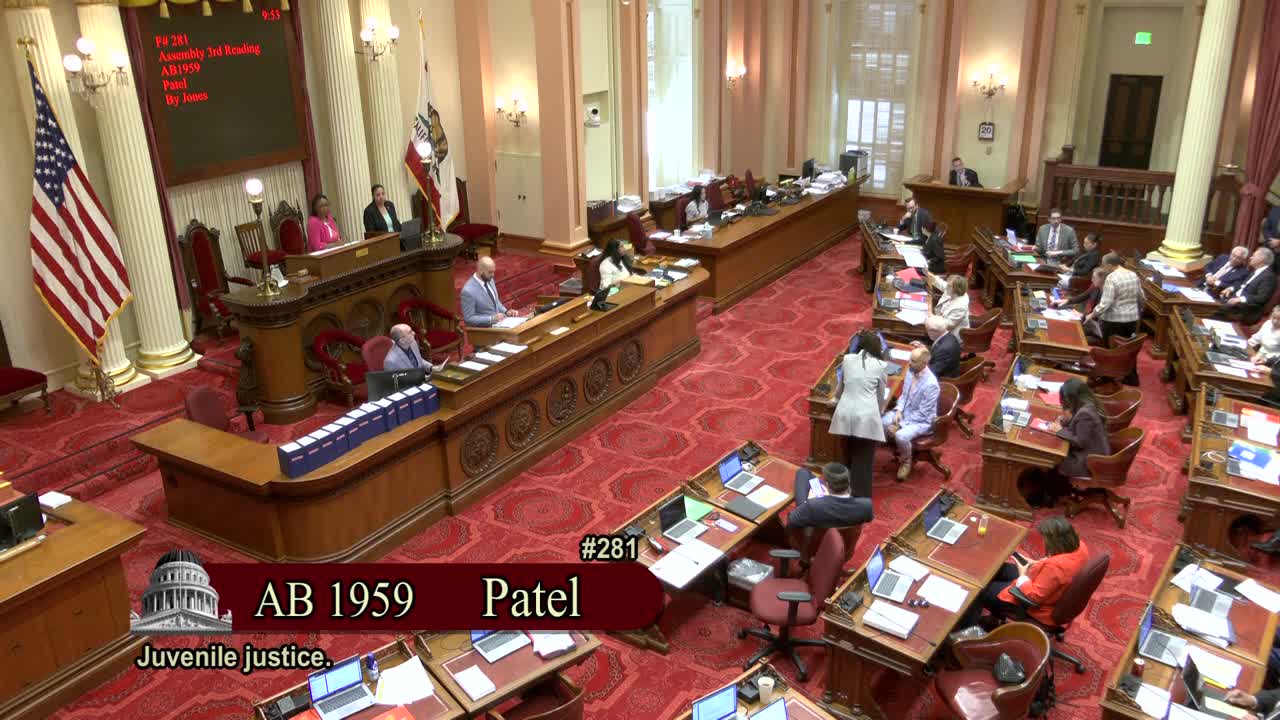 3MIN
Senate Floor
 8MIN
Senate Standing Committee on Public Safety
 1MIN
Assembly Floor
 32MIN
Assembly Standing Committee on Appropriations
 10MIN
Assembly Standing Committee on Public Safety
Bill Author