AB 1783: Vehicle miles traveled: local tax and state fund prohibition.
- Session Year: 2025-2026
- House: Assembly
- Latest Version Date: 2026-03-19
Current Status:
Failed
(2026-05-12: From committee: Without further action pursuant to Joint Rule 62(a).)
Introduced
In Committee
Awaiting First Chamber Vote
Passed First Chamber
In Committee
Awaiting Second Chamber Vote
Passed Second Chamber
Enacted
What does this bill do?
This bill bars cities, counties, and other local governments from imposing any tax, fee, assessment, or charge that is calculated, in whole or in part, by the number of miles a motor vehicle travels. It also prohibits state agencies from spending money to study, plan, test, design, implement, administer, or evaluate such mileage-based charges. The bill defines mileage-based charges to include per-mile fees and charges that use odometer, GPS, or telematics data, voids inconsistent pilot programs or regulations, allows ordinary tolls for specific facilities, and requires funds already set aside for these purposes to be returned to the General Fund.
The summary is provided by generative AI which can make mistakes. For original language, please view the details in the table below.
(1)Existing law sets forth various provisions on the use of state funds, including by prohibiting the use of a grant of state funds to assist, promote, or deter union organizing.
This bill would prohibit a state agency from expending funds for the study, planning, testing, design, implementation, administration, or evaluation of a tax, fee, assessment, or charge based on vehicle miles traveled (vehicle miles purposes). The bill would require the reversion of funds appropriated from the General Fund to another fund for vehicle miles purposes and would require the deobligation of encumbered but unexpended funds for those purposes. The bill would require the Department of Finance to, within 60 days of January 1, 2027, identify all relevant appropriations and ensure their reversion or transfer. The bill would additionally prohibit any future Budget Act from appropriating funds for vehicle miles purposes unless expressly authorized by statute, as described.
Existing(2)Existing law authorizes the legislative body of a city or county to impose various taxes, including occupancy taxes and sales and use taxes. Existing law also prohibits a city and county form imposing certain taxes, such as a tax upon income.
This bill would prohibit a city, county, or any political subdivision thereof from imposing a tax, fee, assessment, or charge, that is calculated, in whole or in part, based on the number of miles traveled by a motor vehicle. The bill would not prohibit the collection of tolls for the use of specific facilities, as provided. The bill would provide that any existing program, pilot program, regulation, or administrative action inconsistent with this prohibition is void and unenforceable.
The bill would include findings that changes proposed by this bill address a matter of statewide concern rather than a municipal affair and, therefore, apply to all cities, including charter cities.
Existing law authorizes the legislative body of a city or county to impose various taxes, including occupancy taxes and sales and use taxes. Existing law also prohibits a city and county form imposing certain taxes, such as a tax upon income.
This bill would prohibit a city, county, or any political subdivision thereof from imposing a tax, fee, assessment, or charge, that is calculated, in whole or in part, based on the number of miles traveled by a motor vehicle. The bill would not prohibit the collection of tolls for the use of specific facilities, as provided. The bill would provide that any existing program, pilot program, regulation, or administrative action inconsistent with this prohibition is void and unenforceable.
The bill would include findings that changes proposed by this bill address a matter of statewide concern rather than a municipal affair and, therefore, apply to all cities, including charter cities.
(a)Notwithstanding any other law, including any provision of the annual Budget Act or any other statute making an appropriation, a state agency shall not expend funds for the study, planning, testing, design, implementation, administration, or evaluation of a tax, fee, assessment, or charge based on vehicle miles traveled.
(b)Any funds appropriated from the General Fund to another fund for the purposes described in subdivision (a) that remain unencumbered as of January 1, 2027, shall revert to the General Fund to the extent permissible by law.
(c)Any encumbered but unexpended funds for the purposes described in subdivision (a) shall be deobligated to the extent permissible by law and returned to the General Fund.
(d)The Department of Finance shall, within 60 days of January 1, 2027, identify all appropriations subject to this section and ensure their reversion or transfer pursuant to subdivisions (b) and (c).
(e)Any future Budget Act shall not appropriate funds for the purposes described in subdivision (a) unless expressly authorized by statute that is enacted after January 1, 2027, and that specifically references this section.
SECTION 1.SEC. 2.Chapter 1.2 (commencing with Section 7283.61) is added to Part 1.7 of Division 2 of the Revenue and Taxation Code, to read:1.2.Vehicle Miles Traveled Tax7283.61.(a)Notwithstanding any other law, a city, county, or any political subdivision thereof, shall not impose, administer, collect, or enforce a vehicle miles traveled tax or a mileage-based tax.
(b)For purposes of this section, a vehicle miles traveled tax or mileage-based tax means a tax, fee, assessment, or charge that is calculated, in whole or in part, based on the number of miles traveled by a motor vehicle, and shall include, but not be limited to, any tax, fee, assessment, or charge that is:
(1)Directly assessed per mile traveled.
(2)Calculated using odometer readings, telematics data, Global Positioning System (GPS) data, or any similar mileage-tracking method.
(3)Imposed as a replacement for, supplement to, or offset of fuel excise taxes, registration fees, or other transportation-related charges.
(c)This section does not prohibit the collection of tolls for the use of specific facilities, provided the tolls are not calculated based on total vehicle miles traveled beyond the tolled facility.
(d)Any program, pilot program, regulation, or administrative action inconsistent with this section is void and unenforceable.
SEC. 2.SEC. 3.The Legislature finds and declares that Section 1 of this act adding Section 7283.61 of the Revenue and Taxation Code address a matter of statewide concern rather than a municipal affair as that term is used in Section 5 of Article XI of the California Constitution. Therefore, Section 1 of this act applies to all cities, including charter cities.
(a)Notwithstanding any other law, a city, county, or any political subdivision thereof, shall not impose, administer, collect, or enforce a vehicle miles traveled tax or a mileage-based tax.
(b)For purposes of this section, a vehicle miles traveled tax or mileage-based tax means a tax, fee, assessment, or charge that is calculated, in whole or in part, based on the number of miles traveled by a motor vehicle, and shall include, but not be limited to, any tax, fee, assessment, or charge that is:
(1)Directly assessed per mile traveled.
(2)Calculated using odometer readings, telematics data, Global Positioning System (GPS) data, or any similar mileage-tracking method.
(3)Imposed as a replacement for, supplement to, or offset of fuel excise taxes, registration fees, or other transportation-related charges.
(c)This section does not prohibit the collection of tolls for the use of specific facilities, provided the tolls are not calculated based on total vehicle miles traveled beyond the tolled facility.
(d)Any program, pilot program, regulation, or administrative action inconsistent with this section is void and unenforceable.
SEC. 2.The Legislature finds and declares that Section 1 of this act adding Section 7283.61 of the Revenue and Taxation Code address a matter of statewide concern rather than a municipal affair as that term is used in Section 5 of Article XI of the California Constitution. Therefore, Section 1 of this act applies to all cities, including charter cities.
|
Date
|
Status
|
|---|---|
| May 12, 2026 | From committee: Without further action pursuant to Joint Rule 62(a). |
| Apr 15, 2026 | In committee: Set, first hearing. Failed passage. |
| Mar 23, 2026 | Re-referred to Com. on L. GOV. |
| Mar 19, 2026 | From committee chair, with author's amendments: Amend, and re-refer to Com. on L. GOV. Read second time and amended. |
| Mar 16, 2026 | Referred to Coms. on L. GOV. and REV. & TAX. |
| Feb 10, 2026 | From printer. May be heard in committee March 12. |
| Feb 9, 2026 | Read first time. To print. |
|
Date
|
Description
|
Location
|
Votes
|
|
|---|---|---|---|---|
| Apr 15, 2026 | Do pass and be re-referred to the Committee on [Revenue and Taxation] | Assembly Standing Committee on Local Government |
Failed |
This list shows positions taken on this bill by organizations on the date displayed, which is linked to the original source.
Positions by individuals are not included.
|
Organization
|
Position
|
Date
|
|---|---|---|
| Center For Biological Diversity | ** Against | |
| Center for Community Action and Environmental Justice | ** Against | |
| ClimatePlan | ** Against | |
| Coalition For Clean Air | ** Against | |
| Natural Resources Defense Council | ** Against | |
| Planning And Conservation League | ** Against | |
| Public Advocates | ** Against | |
| San Diego350 | ** Against | |
| State Building & Construction Trades Council Of California | ** Against | |
| Streets for All | ** Against | |
| Transbay Coalition | ** Against |
Date of Hearing: April 15, 2026
ASSEMBLY COMMITTEE ON LOCAL GOVERNMENT
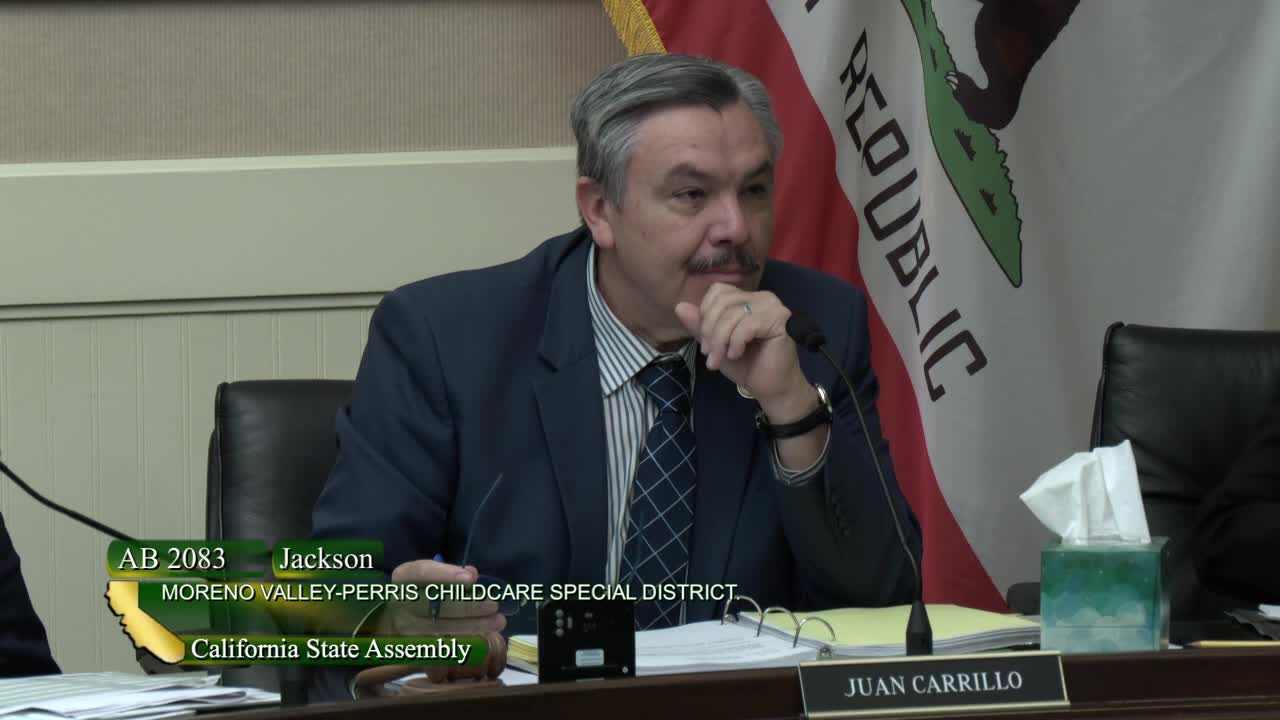
Juan Carrillo, Chair
ABPCA Bill Id:AB 1783 (
Author:DeMaio) – As Amended Ver:March 19, 2026
SUBJECT: Vehicle miles traveled: local tax and state fund prohibition.
SUMMARY: Prohibits a city, county, or any political subdivision from imposing a vehicle miles traveled (VMT) tax or a mileage-based tax and prohibits a state agency from expending funds for the study, planning, or administration of a tax, fee, assessment, or charge based on VMT. Specifically, this bill:
- Provides that, notwithstanding any other law, including any provision of the annual Budget Act or any other statute making an appropriation, a state agency shall not expend funds for the study, planning, testing, design, implementation, administration, or evaluation of a tax, fee, assessment, or charge based on VMT.
- Requires any funds appropriated from the General Fund to another fund for the purpose described in 1), above, that remain unencumbered as of January 1, 2027, to revert to the General Fund to the extent permissible by law.
- Specifies that any unencumbered but unexpended funds for the purposes described in 1), above, shall be deobligated to the extent permissible by law and returned to the General Fund.
- Requires the Department of Finance to, within 60 days of January 1, 2027, identify all appropriations subject to this bill and ensure their reversion or transfer pursuant to 2) and 3), above.
- Provides that any future Budget Act shall not appropriate funds for the purposes described in 1), above, unless expressly authorized by statute that is enacted after January 1, 2027, and that specifically references this bill.
- Prohibits a city, county, or any political subdivision thereof, from imposing, administering, collecting, or enforcing a VMT tax or a mileage-based tax.
- Provides that for the purposes of the portion of this bill that applies to local VMT taxes, a “VMT tax” or “mileage-based tax” means a tax, fee, assessment, or charge that is calculated, in whole or in part, based on the number of miles traveled by a motor vehicle, and shall include, but not be limited to, any tax, fee, assessment, or charge that is:
- Directly assessed per mile traveled.
- Calculated using odometer readings, telematics data, Global Positioning System (GPS) data, or any similar mileage-tracking method.
- Imposed as a replacement for, supplement to, or offset of fuel excise taxes, registration fees, or other transportation-related charges.
- Specifies that the portion of this bill that applies to local VMT taxes does not prohibit the collection of tolls for the use of specific facilities, provided the tolls are not calculated based on total VMT beyond the tolled facility.
- Provides that any program, pilot program, regulation, or administrative action inconsistent with the portion of this bill that applies to local VMT taxes is void and unenforceable.
- Finds and declares that the portion of this bill that applies to local VMT taxes addresses a matter of statewide concern rather than a municipal affair. Therefore, this bill applies to all cities, including charter cities.
FISCAL EFFECT: This bill is keyed fiscal.
COMMENTS:
- Bill Summary. This bill prohibits a state agency from expending funds for the study, planning, testing, design, implementation, administration, or evaluation of a tax, fee assessment, or charge based on VMT, and requires any funds appropriated from the General Fund to another fund for such purposes that remain unencumbered as of January 1, 2027, to revert to the General Fund. This bill also requires any encumbered but unexpended funds for such purposes to be deboligated to the extent permissible by law and returned to the General Fund. Additionally, this bill prohibits any future Budget Act from appropriating funds towards the study or administration of a VMT tax or charge unless expressly authorized by statute that is enacted after January 1, 2027.
This bill also prohibits a city, county, or any political subdivision thereof from imposing, administering, collecting, or enforcing a VMT tax or mileage-based tax, as specified. The author is the sponsor of this bill.
- Author’s Statement. According to the author, “Californians continue to be some of the most taxed people in the United States, with countless taxes in every aspect of life. As the cost-of-living crisis continues to grow, it is imperative that measures to create new taxes or increase taxes be stopped, whether statewide or at the local level. Californians pay the highest gas tax and car tax in the nation, and those funds are regularly diverted, preventing proper maintenance and repair of our roads. With local jurisdictions looking to impose mileage taxes, it is essential that Californians are financially protected from another misleading tax.”
- Current Transportation Funding. Transportation funding in California comes from federal, state, and local sources and was estimated to total $44 billion in 2022‑23. Roughly one‑fifth of funding comes from the federal government, primarily from federal excise taxes on gasoline and diesel. Federal funds are distributed on both a formula and competitive basis to the state and local governments. The state suballocates a portion of the federal funds it receives to local governments. Approximately one‑third of funding comes from state revenue sources—primarily state fuel taxes and vehicle fees. Most of these funds remain at the state level, with a smaller portion provided to local governments on both a formula and competitive basis. Slightly less than half of funding comes from local sources—such as local sales taxes and transit fares.
State transportation funding is primarily supported by six different fuel taxes and vehicle fees. These sources are projected to generate $14.4 billion in 2024‑25 as shown in the figure below. In recognition of the increased need for additional funding to maintain California’s transportation infrastructure, in 2017, the Legislature passed SB 1 (Beall), Chapter 5, Statutes of 2017, the Road Repair and Accountability Act (SB 1). SB 1 is forecast to provide roughly $6 billion in 2023-24 for road maintenance and additional funding for transit and safety projects. SB 1 also provided for an annual adjustment for inflation.
The gas tax is the primary source of state funding for the state’s transportation infrastructure system. Article XIX of the California Constitution mandates that the gas tax revenue be used exclusively for “research, planning, construction, improvement, maintenance, and operations of public streets and highways (and their related public facilities for nonmotorized traffic)” and the “research, planning, construction, and improvement of exclusive public mass transit guideways (and their related fixed facilities).” In addition to funding road maintenance, the gas tax funds transportation programs such as the State Highway System and Local Streets and Roads programs that support state, regional, and local government transportation projects.
- Changes in Technology. Advancements in the automotive industry and a desire to reduce the dependence on fossil fuels have led to the development of more fuel-efficient vehicles, such as hybrids and zero-emission vehicles (ZEVs). Recently, California’s goals to reduce greenhouse gas (GHG) emissions have driven the adoption of more fuel-efficient vehicles, which has reduced fuel consumption. The growing adoption of zero‑emission vehicles and increasing fuel efficiency in internal combustion engine vehicles will lead to a decline in state transportation revenues over the long run, particularly from the gasoline excise tax. These revenue declines will affect state transportation programs. Funding provided to Caltrans’ highway maintenance and rehabilitation programs and to cities and counties to support local streets and roads will be heavily impacted.
According to a preliminary estimate by the California Transportation Commission, the state and local communities are facing a $31 billion shortfall over the next 10 years due to declining gas tax revenues.
This problem is not unique to California. For example, Connecticut estimates that their gas tax revenues fell by 4.2% between 2012 and 2021 due primarily to vehicle electrification. West Virginia estimates that their gas tax revenue will fall 11–20% by 2030 and 31–50% by 2050 due to vehicle electrification. A recent study in Michigan estimated that despite ZEVs representing only 6% of the new vehicle market, vehicle electrification resulted in a funding deficit of $20.8 million in 2022. That funding deficit is expected to increase to over $95 million per year by 2030.
In addition to the loss of revenue, the transition to cleaner and more fuel-efficient vehicles is not benefitting all income groups equally. Lower-income individuals tend to drive older, less fuel-efficient vehicles and sometimes have to commute farther to work. Moreover, higher income persons have purchased a disproportionate share of ZEVs in the state. As a result, lower-income populations over time will pay more in gas taxes than moderate and high-income individuals. SB 1 included a transportation improvement fee that EV owners pay as part of the vehicle licensing process. However, this fee is relatively small compared to the average annual amount a combustion-engine vehicle’s owner pays in gas taxes in a year. This disparity emphasizes the critical need to reevaluate the current gas tax model.
- Local VMT Taxes. Committee staff has only been made aware of one instance where a VMT tax has been discussed at the local level. The San Diego Association of Governments (SANDAG) proposed a VMT tax in its 2021 regional transportation plan. According to a September 22, 2023 San Diego Union Tribue Article, “SANDAG’s current transportation plan, adopted in December 2021, reimagines much of the San Diego region by 2050 as a collection of pedestrian-friendly villages complemented by a far more robust bike and rail network, and a Grand Central Station with a direct transit connection to the airport.
“It originally anticipated charging drivers 3.3 cents per mile traveled by 2030 to generate $14.2 billion to pay for some of the transportation projects included in the visioning document. However, the per-mile driving fee is in the process of being stripped from the 2021 plan after the board voted in September 2022 to nix it. An amendment striking the road user charge as a financing strategy from the planning document will go to the board on Oct. 27.
“Friday’s board action, taken up at the request of San Marcos Mayor Rebecca Jones, was meant to prevent the regional road user charge from resurfacing in the 2025 Regional Plan. That plan is in the early stages of being drafted and is expected to go before the board at the end of 2025.”[1]
SANDAG ultimately did not move forward with a VMT tax, and it is unclear if any other local agency has moved forward with a similar proposal.
- Policy Consideration. The statewide road user charge (RUC) continues to be studied and only one instance of a local VMT tax has been brought to the attention of this Committee. Additionally, the local VMT tax proposed by SANDAG was ultimately removed from its 2025 Regioanl Transportation plan prior to being brought to the voters. Given these facts, the Committee may wish to consider if this bill is premature.
- Related Legisltion. AB 1421 (Wilson) requires the California Transportation Commission (CTC), in consultation with the Transportation Agency (CalSTA), to consolidate and prepare research and recommendations related to a road user charge or a mileage-based fee system. This bill is currently in the Senate Rules Committee.
- Previous Legislation. SB 1077 (DeSaulnier), Chapter 835, Statutes of 2013, created the RUC Technical Advisory Committee (Committee) to guide development and implementation of a pilot program to study the potential for RUC as an alternative to the gas tax.
SB 1328 (Beall), Chapter 698, Statutes of 2017, extended the life of the RUC Committee for four additional years and requires it to continue assessing the potential for mechanisms such as a mileage-based revenue system to use as an alternative to the gas tax for generating the revenues necessary to maintain and operate the state’s transportation system.
SB 339 (Wiener), Chapter 308, Statutes of 2021, extended the RUC Committee until January 1, 2027, and requires the state Transportation Agency to implement a pilot program to test a road usage charge that assesses a mileage-based fee and has two study groups with different mileage-based fees.
- Arguments in Support. None on file.
- Arguments in Opposition. According to the State Building & Construction Trades Council of California, “While we share the goal of protecting working families from undue financial burdens, AB 1783 is fundamentally flawed in both its policy approach and its real-world consequences for infrastructure investment, job creation, and long-term economic stability.
“California’s transportation system relies on sustainable funding mechanisms. As fuel efficiency increases and electric vehicle adoption accelerates, traditional gas tax revenues are declining. AB 1783 would prohibit the state from even studying or developing potential vehicle miles traveled (VMT) alternatives.
“AB 1783 avoids the real conversation. It imposes a rigid prohibition that ignores evolving transportation realities.”
- Double-referral. This bill has been double referred to the Assembly Committee on Revenue and Taxation.
REGISTERED SUPPORT / OPPOSITION:
Support
None on file
Opposition
Center for Biological Diversity
Center for Community Action and Environmental Justice
ClimatePlan
Coalition for Clean Air
Natural Resources Defense Council
Planning and Conservation League
Public Advocates
San Diego350
State Building & Construction Trades Council of California
Streets For All
Transbay Coalition
Analysis Prepared by: Jimmy MacDonald / L. GOV. / (916) 319-3958
https://www.sandiegouniontribune.com/2023/09/23/the-people-hate-this-san-diego-county-leaders-vote-to-exclude-controversial-mileage-tax-from-future-transportation-plans-7/ ↑
Discussed in Hearing
 22MIN
Assembly Standing Committee on Local Government
Bill Author

Bill Co-Author(s):