AB 1809: Public contracts: school and community college districts.
- Session Year: 2025-2026
- House: Assembly
- Latest Version Date: 2026-09-27
Current Status:
Passed
(2026-09-27: Chaptered by Secretary of State - Chapter 548, Statutes of 2026.)
Introduced
In Committee
Awaiting First Chamber Vote
Passed First Chamber
In Committee
Awaiting Second Chamber Vote
Passed Second Chamber
Enacted
What does this bill do?
This bill extends job order contracting—a master contract used to award smaller public works—to California school districts and community college districts through January 1, 2037 and keeps the requirement for project labor agreements on covered projects. It bars a school district from using job order contracting if the district finds it would raise a project’s total cost without adequate written justification, and requires the district to prepare its independent cost estimate before receiving contractor proposals. It also caps task order and job order contracts at five years while allowing individual orders to remain valid after the master contract ends, and requires contractors on larger orders to commit to using a skilled, trained workforce unless a project labor agreement already does.
The summary is provided by generative AI which can make mistakes. For original language, please view the details in the table below.
(1)Existing law, the Local Agency Public Construction Act, authorizes job order contracting, as defined, for school districts until January 1, 2027. Existing law requires job order contractors to submit a questionnaire to the school district containing specified information verified under oath, under penalty of perjury.
This bill would extend the termination date for these provisions until January 1, 2037.
Existing law authorizes a school district to utilize job order contracting only if the school district has entered into a project labor agreement or agreements that will apply to all public works awarded through job order contracting and to all other public works of the school district that exceed a monetary threshold set by the school district until January 1, 2027, regardless of what contracting procedure is used to award that work.
This bill would extend the termination date for these provisions until January 1, 2037. The bill would also prohibit job order contracting by a school district if the district finds, based on criteria and methodology established by the school district, that it will increase the total cost of the project without sufficient documented justification.
Existing law requires a school district to prepare an execution plan for all modernization projects that may be eligible for job order contracting. Existing law requires the school district to select from that plan a sufficient number of projects to be initiated as job order contracts during each calendar year and to determine for each selected project that job order contracting will reduce the total cost of that project, as specified.
This bill would delete the above provisions.
Existing law requires school districts adopting job order contracting to, among other things, prepare an independent estimate for each individual job order developed under a job order contract. The estimate must be prepared prior to the receipt of the contractors offer to perform work and must be compared to the contractors proposed price to determine the reasonableness of that price before the issuance of any job order.
This bill, instead, would require that the school districts estimate be prepared prior to the receipt of the contractors proposal. The bill would delete the requirement for the school district to compare its estimate to the contractors proposed price, as described.
Existing law also authorizes job order contracting for community college districts until January 1, 2027. Existing law requires job order contractors to submit a questionnaire to the community college district containing specified information verified under oath, under penalty of perjury.
This bill would extend the termination date for these provisions until January 1, 2037.
Existing law authorizes a community college district to utilize job order contracting only if the community college district has entered into a project labor agreement or agreements that will apply to all public works awarded through job order contracting and to all other public works of the district that exceed a monetary threshold set by the district until January 1, 2027, regardless of what contracting procedure is used to award that work.
This bill would extend the termination date for these provisions until January 1, 2037.
By extending the operation of those provisions that expand the crime of perjury, this bill would impose a state-mandated local program.
(2)Existing law authorizes continuing contracts for a school district to be made with an accepted vendor for work or services, or for apparatus or equipment, not to exceed 5 years, or for materials or supplies, not to exceed 3 years.
This bill would prohibit the duration of any task order procurement contract or job order contract issued pursuant to specified Public Contract Code provisions from exceeding 5 years. The bill would additionally provide that any individual task order or job order issued pursuant to those contracts shall remain valid and enforceable despite the expiration of the term of the task order procurement contract or job order contract pursuant to which the individual task order or job order was validly issued.
The California Constitution requires the state to reimburse local agencies and school districts for certain costs mandated by the state. Statutory provisions establish procedures for making that reimbursement.
This bill would provide that no reimbursement is required by this act for a specified reason.
(1)Existing law, the Local Agency Public Construction Act, authorizes job order contracting, as defined, for school districts until January 1, 2027. Existing law requires job order contractors to submit a questionnaire to the school district containing specified information verified under oath, under penalty of perjury.
This bill would delete the January 1, 2027, repeal date for these provisions, thereby making them operative indefinitely. extend the termination date for these provisions until January 1, 2037.
Existing law authorizes a school district to utilize job order contracting only if the school district has entered into a project labor agreement or agreements that will apply to all public works awarded through job order contracting and to all other public works of the school district that exceed a monetary threshold set by the school district until January 1, 2027, regardless of what contracting procedure is used to award that work.
This bill would delete the January 1, 2027, date for the above provisions, thereby making them operative indefinitely. extend the termination date for these provisions until January 1, 2037. The bill would also prohibit job order contracting by a school district if the district finds finds, based on criteria and methodology established by the school district, that it will increase the total cost of the project. project without sufficient documented justification.
Existing law requires a school district to prepare an execution plan for all modernization projects that may be eligible for job order contracting. Existing law requires the school district to select from that plan a sufficient number of projects to be initiated as job order contracts during each calendar year and to determine for each selected project that job order contracting will reduce the total cost of that project, as specified.
This bill would delete the above provisions.
Existing law requires school districts adopting job order contracting to, among other things, prepare an independent estimate for each individual job order developed under a job order contract. The estimate must be prepared prior to the receipt of the contractors offer to perform work and must be compared to the contractors proposed price to determine the reasonableness of that price before the issuance of any job order.
This bill, instead, would require that the school districts estimate be prepared prior to the receipt of the contractors proposal. The bill would delete the requirement for the school district to compare its estimate to the contractors proposed price, as described.
Existing law also authorizes job order contracting for community college districts until January 1, 2027. Existing law requires job order contractors to submit a questionnaire to the community college district containing specified information verified under oath, under penalty of perjury.
This bill would delete the January 1, 2027, repeal date for these provisions, thereby making them operative indefinitely. extend the termination date for these provisions until January 1, 2037.
Existing law authorizes a community college district to utilize job order contracting only if the community college district has entered into a project labor agreement or agreements that will apply to all public works awarded through job order contracting and to all other public works of the district that exceed a monetary threshold set by the district until January 1, 2027, regardless of what contracting procedure is used to award that work.
This bill would delete the January 1, 2027, date for the above provisions, thereby making them operative indefinitely. extend the termination date for these provisions until January 1, 2037.
By extending the operation of those provisions that expand the crime of perjury, this bill would impose a state-mandated local program.
(2)Existing law authorizes continuing contracts for a school district to be made with an accepted vendor for work or services, or for apparatus or equipment, not to exceed 5 years, or for materials or supplies, not to exceed 3 years.
This bill would prohibit the duration of any task order procurement contract or job order contract issued pursuant to specified Public Contract Code provisions from exceeding 5 years. The bill would additionally provide that any individual task order or job order issued pursuant to those contracts shall remain valid and enforceable despite the expiration of the term of the task order procurement contract or job order contract pursuant to which the individual task order or job order was validly issued.
The California Constitution requires the state to reimburse local agencies and school districts for certain costs mandated by the state. Statutory provisions establish procedures for making that reimbursement.
This bill would provide that no reimbursement is required by this act for a specified reason.
(1)Existing law, the Local Agency Public Construction Act, authorizes job order contracting, as defined, for school districts until January 1, 2027. Existing law requires job order contractors to submit a questionnaire to the school district containing specified information verified under oath, under penalty of perjury.
This bill would delete the January 1, 2027, repeal date for these provisions, thereby making them operative indefinitely.
Existing law authorizes a school district to utilize job order contracting only if the school district has entered into a project labor agreement or agreements that will apply to all public works awarded through job order contracting and to all other public works of the school district that exceed a monetary threshold set by the school district until January 1, 2027, regardless of what contracting procedure is used to award that work.
This bill would delete the January 1, 2027, date for the above provisions, thereby making them operative indefinitely. The bill would also prohibit job order contracting by a school district if the district finds that it will increase the total cost of the project.
Existing law requires a school district to prepare an execution plan for all modernization projects that may be eligible for job order contracting. Existing law requires the school district to select from that plan a sufficient number of projects to be initiated as job order contracts during each calendar year and to determine for each selected project that job order contracting will reduce the total cost of that project, as specified.
This bill would delete the above provisions.
Existing law also authorizes job order contracting for community college districts until January 1, 2027. Existing law requires job order contractors to submit a questionnaire to the community college district containing specified information verified under oath, under penalty of perjury.
This bill would delete the January 1, 2027, repeal date for these provisions, thereby making them operative indefinitely.
Existing law authorizes a community college district to utilize job order contracting only if the community college district has entered into a project labor agreement or agreements that will apply to all public works awarded through job order contracting and to all other public works of the district that exceed a monetary threshold set by the district until January 1, 2027, regardless of what contracting procedure is used to award that work.
This bill would delete the January 1, 2027, date for the above provisions, thereby making them operative indefinitely.
By extending the operation of those provisions that expand the crime of perjury, this bill would impose a state-mandated local program.
(2)Existing law authorizes continuing contracts for a school district to be made with an accepted vendor for work or services, or for apparatus or equipment, not to exceed 5 years, or for materials or supplies, not to exceed 3 years.
This bill would prohibit the duration of any task order procurement contract or job order contract issued pursuant to specified Public Contract Code provisions from exceeding 5 years. The bill would additionally provide that any individual task order or job order issued pursuant to those contracts shall remain valid and enforceable despite the expiration of the term of the task order procurement contract or job order contract pursuant to which the individual task order or job order was validly issued.
The California Constitution requires the state to reimburse local agencies and school districts for certain costs mandated by the state. Statutory provisions establish procedures for making that reimbursement.
This bill would provide that no reimbursement is required by this act for a specified reason.
(1)Existing law, the Local Agency Public Construction Act, authorizes job order contracting, as defined, for school districts until January 1, 2027. Existing law requires job order contractors to submit a questionnaire to the school district containing specified information verified under oath, under penalty of perjury.
This bill would delete the January 1, 2027, repeal date for these provisions, thereby making them operative indefinitely.
Existing law authorizes a school district to utilize job order contracting only if the school district has entered into a project labor agreement or agreements that will apply to all public works awarded through job order contracting and to all other public works of the school district that exceed a monetary threshold set by the school district until January 1, 2027, regardless of what contracting procedure is used to award that work.
This bill would delete the January 1, 2027, date for the above provisions, thereby making them operative indefinitely.
Existing law requires a school district to prepare an execution plan for all modernization projects that may be eligible for job order contracting. Existing law requires the school district to select from that plan a sufficient number of projects to be initiated as job order contracts during each calendar year and to determine for each selected project that job order contracting will reduce the total cost of that project, as specified.
This bill would delete the above provisions.
Existing law also authorizes job order contracting for community college districts until January 1, 2027. Existing law requires job order contractors to submit a questionnaire to the community college district containing specified information verified under oath, under penalty of perjury.
This bill would delete the January 1, 2027, repeal date for these provisions, thereby making them operative indefinitely.
Existing law authorizes a community college district to utilize job order contracting only if the community college district has entered into a project labor agreement or agreements that will apply to all public works awarded through job order contracting and to all other public works of the district that exceed a monetary threshold set by the district until January 1, 2027, regardless of what contracting procedure is used to award that work.
This bill would delete the January 1, 2027, date for the above provisions, thereby making them operative indefinitely.
By extending the operation of those provisions that expand the crime of perjury, this bill would impose a state-mandated local program.
(2)Existing law authorizes continuing contracts for a school district to be made with an accepted vendor for work or services, or for apparatus or equipment, not to exceed 5 years, or for materials or supplies, not to exceed 3 years.
This bill would prohibit the duration of any task order procurement contract or job order contract issued pursuant to specified Public Contract Code provisions from exceeding 5 years. The bill would additionally provide that any individual task order or job order issued pursuant to those contracts shall remain valid and enforceable despite the expiration of the term of the task order procurement contract or job order contract pursuant to which the individual task order or job order was validly issued.
The California Constitution requires the state to reimburse local agencies and school districts for certain costs mandated by the state. Statutory provisions establish procedures for making that reimbursement.
This bill would provide that no reimbursement is required by this act for a specified reason.
(a)Continuing contracts for work to be done, services to be performed, or for apparatus or equipment to be furnished, sold, built, installed, or repaired for the district, or for materials or supplies to be furnished or sold to the district may be made with an accepted vendor as follows: for work or services, or for apparatus or equipment, not to exceed five years; for materials or supplies, not to exceed three years.
(b)The duration of any task order procurement contract issued pursuant to Article 3.1 (commencing with Section 20118.5) of Chapter 1 of Part 3 of Division 2 of the Public Contract Code, or job order contract issued pursuant to Article 60.4 (commencing with Section 20919.20) of Chapter 1 of Part 3 of Division 2 of the Public Contract Code, shall not exceed five years. Any individual task order or job order issued pursuant to these contracts shall remain valid and enforceable despite the expiration of the term of the task order procurement contract or job order contract pursuant to which the individual task order or job order was validly issued.
SEC. 2.Section 20665.23 of the Public Contract Code is amended to read:20665.23.(a)A community college district may utilize job order contracting pursuant to this article only if the community college district has entered into a project labor agreement or agreements that will apply to all public works awarded through job order contracting and to all other public works of the community college district that exceed a monetary threshold set by the community college district, until January 1, 2037, regardless of what contracting procedure is used to award that work.
(b)A community college district shall prepare an execution plan for all modernization projects that may be eligible for job order contracting pursuant to this article. The community college district shall select from that plan a sufficient number of projects to be initiated as job order contracts during each calendar year and shall determine for each selected project that job order contracting will reduce the total cost of that project. Job order contracting shall not be used if the community college district finds that it will increase the total cost of the project.
(c)(1)An entity awarded a job order contract in excess of twenty-five thousand dollars ($25,000) shall provide an enforceable commitment to the community college district that the entity and its subcontractors at every tier will use a skilled and trained workforce to perform all work on the job order contract that falls within an apprenticeable occupation in the building and construction trades, in accordance with Chapter 2.9 (commencing with Section 2600) of Part 1.
(2)Paragraph (1) shall not apply if the job order contract is subject to a project labor agreement that will bind all contractors and subcontractors performing work on the job order contract to use a skilled and trained workforce to perform the job order contract.
SEC. 3.Section 20665.33 of the Public Contract Code is amended to read:20665.33.This article shall remain in effect only until January 1, 2037, and as of that date is repealed.
SEC. 4.Section 20919.23 of the Public Contract Code is amended to read:20919.23.(a)The school district may utilize job order contracting pursuant to this article only if the school district has entered into a project labor agreement or agreements that will apply to all public works awarded through job order contracting and to all other public works of the school district that exceed a monetary threshold set by the school district until January 1, 2037, regardless of what contracting procedure is used to award that work.
(b)Job order contracting shall not be used if the school district finds, based on criteria and methodology established by the school district, that it will increase the total cost of the project without sufficient documented justification.
(c)(1)An entity awarded a job order contract in excess of twenty-five thousand dollars ($25,000) shall provide an enforceable commitment to the school district that the entity and its subcontractors at every tier will use a skilled and trained workforce to perform all work on the job order contract that falls within an apprenticeable occupation in the building and construction trades, in accordance with Chapter 2.9 (commencing with Section 2600) of Part 1.
(2)Paragraph (1) shall not apply if the job order contract is subject to a project labor agreement that will bind all contractors and subcontractors performing work on the job order contract to use a skilled and trained workforce to perform the job order contract.
SEC. 5.Section 20919.31 of the Public Contract Code is amended to read:20919.31.In order to prevent fraud, waste, and abuse, the school district adopting job order contracting shall do all of the following:
(a)Prepare for each individual job order developed under a job order contract an independent school district estimate. The estimate shall be prepared prior to the receipt of the contractors proposal. The basis for any adjustments to the school district estimate is to be documented. In the event that the contractors proposal for a given job order is found to be unreasonable, not cost effective, or undesirable, the school district is under no obligation to issue the job order to the job order contractor, and may instead utilize any other available procurement procedures.
(b)The school district shall not issue a job order until the job order has been reviewed and approved by the appropriate level of management.
(c)Once a job order has been issued, all documents pertaining to preparation and approval of the job order, including the independent school district estimate, shall be available for public review.
SEC. 6.Section 20919.33 of the Public Contract Code is amended to read:20919.33.This article shall remain in effect only until January 1, 2037, and as of that date is repealed.
SEC. 7.No reimbursement is required by this act pursuant to Section 6 of Article XIIIB of the California Constitution because the only costs that may be incurred by a local agency or school district will be incurred because this act creates a new crime or infraction, eliminates a crime or infraction, or changes the penalty for a crime or infraction, within the meaning of Section 17556 of the Government Code, or changes the definition of a crime within the meaning of Section 6 of Article XIIIB of the California Constitution.
(a)Continuing contracts for work to be done, services to be performed, or for apparatus or equipment to be furnished, sold, built, installed, or repaired for the district, or for materials or supplies to be furnished or sold to the district may be made with an accepted vendor as follows: for work or services, or for apparatus or equipment, not to exceed five years; for materials or supplies, not to exceed three years.
(b)The duration of any task order procurement contract issued pursuant to Article 3.1 (commencing with Section 20118.5) of Chapter 1 of Part 3 of Division 2 of the Public Contract Code, or job order contract issued pursuant to Article 60.4 (commencing with Section 20919.20) of Chapter 1 of Part 3 of Division 2 of the Public Contract Code, shall not exceed five years. Any individual task order or job order issued pursuant to these contracts shall remain valid and enforceable despite the expiration of the term of the task order procurement contract or job order contract pursuant to which the individual task order or job order was validly issued.
SEC. 2.Section 20665.23 of the Public Contract Code is amended to read:20665.23.(a)A community college district may utilize job order contracting pursuant to this article only if the community college district has entered into a project labor agreement or agreements that will apply to all public works awarded through job order contracting and to all other public works of the community college district that exceed a monetary threshold set by the community college district, until January 1, 2037, regardless of what contracting procedure is used to award that work.
(b)A community college district shall prepare an execution plan for all modernization projects that may be eligible for job order contracting pursuant to this article. The community college district shall select from that plan a sufficient number of projects to be initiated as job order contracts during each calendar year and shall determine for each selected project that job order contracting will reduce the total cost of that project. Job order contracting shall not be used if the community college district finds that it will increase the total cost of the project.
(c)(1)An entity awarded a job order contract in excess of twenty-five thousand dollars ($25,000) shall provide an enforceable commitment to the community college district that the entity and its subcontractors at every tier will use a skilled and trained workforce to perform all work on the job order contract that falls within an apprenticeable occupation in the building and construction trades, in accordance with Chapter 2.9 (commencing with Section 2600) of Part 1.
(2)Paragraph (1) shall not apply if the job order contract is subject to a project labor agreement that will bind all contractors and subcontractors performing work on the job order contract to use a skilled and trained workforce to perform the job order contract.
SEC. 3.Section 20665.33 of the Public Contract Code is repealed.SEC. 3.Section 20665.33 of the Public Contract Code is amended to read:20665.33.This article shall remain in effect only until January 1, 2027, 2037, and as of that date is repealed.
SEC. 4.Section 20919.23 of the Public Contract Code is amended to read:20919.23.(a)The school district may utilize job order contracting pursuant to this article only if the school district has entered into a project labor agreement or agreements that will apply to all public works awarded through job order contracting and to all other public works of the school district that exceed a monetary threshold set by the school district, district until January 1, 2037, regardless of what contracting procedure is used to award that work.
(b)Job order contracting shall not be used if the school district finds finds, based on criteria and methodology established by the school district, that it will increase the total cost of the project. project without sufficient documented justification.
(c)(1)An entity awarded a job order contract in excess of twenty-five thousand dollars ($25,000) shall provide an enforceable commitment to the school district that the entity and its subcontractors at every tier will use a skilled and trained workforce to perform all work on the job order contract that falls within an apprenticeable occupation in the building and construction trades, in accordance with Chapter 2.9 (commencing with Section 2600) of Part 1.
(2)Paragraph (1) shall not apply if the job order contract is subject to a project labor agreement that will bind all contractors and subcontractors performing work on the job order contract to use a skilled and trained workforce to perform the job order contract.
SEC. 5.Section 20919.33 of the Public Contract Code is repealed.SEC. 5.Section 20919.31 of the Public Contract Code is amended to read:20919.31.In order to prevent fraud, waste, and abuse, the school district adopting job order contracting shall do all of the following:
(a)Prepare for each individual job order developed under a job order contract an independent school district estimate. The estimate will shall be prepared prior to the receipt of the contractors offer to perform work and will be compared to the contractors proposed price to determine the reasonableness of that price before issuance of any job order. proposal. The basis for any adjustments to the school district estimate is to be documented. In the event that the contractors proposal for a given job order is found to be unreasonable, not cost effective, or undesirable, the school district is under no obligation to issue the job order to the job order contractor, and may instead utilize any other available procurement procedures.
(b)The school district shall not issue a job order until the job order has been reviewed and approved by the appropriate level of management.
(c)Once a job order has been issued, all documents pertaining to preparation and approval of the job order, including the independent school district estimate, shall be available for public review.
SEC. 6.Section 20919.33 of the Public Contract Code is amended to read:20919.33.This article shall remain in effect only until January 1, 2027, 2037, and as of that date is repealed, unless a later enacted statute, that is enacted before January 1, 2027, deletes or extends that date. repealed.
SEC. 6.SEC. 7.No reimbursement is required by this act pursuant to Section 6 of Article XIIIB of the California Constitution because the only costs that may be incurred by a local agency or school district will be incurred because this act creates a new crime or infraction, eliminates a crime or infraction, or changes the penalty for a crime or infraction, within the meaning of Section 17556 of the Government Code, or changes the definition of a crime within the meaning of Section 6 of Article XIIIB of the California Constitution.
(a)Continuing contracts for work to be done, services to be performed, or for apparatus or equipment to be furnished, sold, built, installed, or repaired for the district, or for materials or supplies to be furnished or sold to the district may be made with an accepted vendor as follows: for work or services, or for apparatus or equipment, not to exceed five years; for materials or supplies, not to exceed three years.
(b)The duration of any task order procurement contract issued pursuant to Article 3.1 (commencing with Section 20118.5) of Chapter 1 of Part 3 of Division 2 of the Public Contract Code, or job order contract issued pursuant to Article 60.4 (commencing with Section 20919.20) of Chapter 1 of Part 3 of Division 2 of the Public Contract Code, shall not exceed five years. Any individual task order or job order issued pursuant to these contracts shall remain valid and enforceable despite the expiration of the term of the task order procurement contract or job order contract pursuant to which the individual task order or job order was validly issued.
SEC. 2.Section 20665.23 of the Public Contract Code is amended to read:20665.23.(a)A community college district may utilize job order contracting pursuant to this article only if the community college district has entered into a project labor agreement or agreements that will apply to all public works awarded through job order contracting and to all other public works of the community college district that exceed a monetary threshold set by the community college district, regardless of what contracting procedure is used to award that work.
(b)A community college district shall prepare an execution plan for all modernization projects that may be eligible for job order contracting pursuant to this article. The community college district shall select from that plan a sufficient number of projects to be initiated as job order contracts during each calendar year and shall determine for each selected project that job order contracting will reduce the total cost of that project. Job order contracting shall not be used if the community college district finds that it will increase the total cost of the project.
(c)(1)An entity awarded a job order contract in excess of twenty-five thousand dollars ($25,000) shall provide an enforceable commitment to the community college district that the entity and its subcontractors at every tier will use a skilled and trained workforce to perform all work on the job order contract that falls within an apprenticeable occupation in the building and construction trades, in accordance with Chapter 2.9 (commencing with Section 2600) of Part 1.
(2)Paragraph (1) shall not apply if the job order contract is subject to a project labor agreement that will bind all contractors and subcontractors performing work on the job order contract to use a skilled and trained workforce to perform the job order contract.
SEC. 3.Section 20665.33 of the Public Contract Code is repealed.SEC. 4.Section 20919.23 of the Public Contract Code is amended to read:20919.23.(a)The school district may utilize job order contracting pursuant to this article only if the school district has entered into a project labor agreement or agreements that will apply to all public works awarded through job order contracting and to all other public works of the school district that exceed a monetary threshold set by the school district, regardless of what contracting procedure is used to award that work.
(b)Job order contracting shall not be used if the school district finds that it will increase the total cost of the project.
(b)(c)(1)An entity awarded a job order contract in excess of twenty-five thousand dollars ($25,000) shall provide an enforceable commitment to the school district that the entity and its subcontractors at every tier will use a skilled and trained workforce to perform all work on the job order contract that falls within an apprenticeable occupation in the building and construction trades, in accordance with Chapter 2.9 (commencing with Section 2600) of Part 1.
(2)Paragraph (1) shall not apply if the job order contract is subject to a project labor agreement that will bind all contractors and subcontractors performing work on the job order contract to use a skilled and trained workforce to perform the job order contract.
SEC. 5.Section 20919.33 of the Public Contract Code is repealed.SEC. 6.No reimbursement is required by this act pursuant to Section 6 of Article XIIIB of the California Constitution because the only costs that may be incurred by a local agency or school district will be incurred because this act creates a new crime or infraction, eliminates a crime or infraction, or changes the penalty for a crime or infraction, within the meaning of Section 17556 of the Government Code, or changes the definition of a crime within the meaning of Section 6 of Article XIIIB of the California Constitution.
(a)Continuing contracts for work to be done, services to be performed, or for apparatus or equipment to be furnished, sold, built, installed, or repaired for the district, or for materials or supplies to be furnished or sold to the district may be made with an accepted vendor as follows: for work or services, or for apparatus or equipment, not to exceed five years; for materials or supplies, not to exceed three years.
(b)The duration of any task order procurement contract issued pursuant to Article 3.1 (commencing with Section 20118.5) of Chapter 1 of Part 3 of Division 2 of the Public Contract Code, or job order contract issued pursuant to Article 60.4 (commencing with Section 20919.20) of Chapter 1 of Part 3 of Division 2 of the Public Contract Code, shall not exceed five years. Any individual task order or job order issued pursuant to these contracts shall remain valid and enforceable despite the expiration of the term of the task order procurement contract or job order contract pursuant to which the individual task order or job order was validly issued.
SEC. 2.Section 20665.23 of the Public Contract Code is amended to read:20665.23.(a)A community college district may utilize job order contracting pursuant to this article only if the community college district has entered into a project labor agreement or agreements that will apply to all public works awarded through job order contracting and to all other public works of the community college district that exceed a monetary threshold set by the community college district until January 1, 2027, district, regardless of what contracting procedure is used to award that work.
(b)A community college district shall prepare an execution plan for all modernization projects that may be eligible for job order contracting pursuant to this article. The community college district shall select from that plan a sufficient number of projects to be initiated as job order contracts during each calendar year and shall determine for each selected project that job order contracting will reduce the total cost of that project. Job order contracting shall not be used if the community college district finds that it will increase the total cost of the project.
(c)(1)An entity awarded a job order contract in excess of twenty-five thousand dollars ($25,000) shall provide an enforceable commitment to the community college district that the entity and its subcontractors at every tier will use a skilled and trained workforce to perform all work on the job order contract that falls within an apprenticeable occupation in the building and construction trades, in accordance with Chapter 2.9 (commencing with Section 2600) of Part 1.
(2)Paragraph (1) shall not apply if the job order contract is subject to a project labor agreement that will bind all contractors and subcontractors performing work on the job order contract to use a skilled and trained workforce to perform the job order contract.
SEC. 3.Section 20665.33 of the Public Contract Code is repealed.20665.33.This article shall remain in effect only until January 1, 2027, and as of that date is repealed.SEC. 4.Section 20919.23 of the Public Contract Code is amended to read:20919.23.(a)The school district may utilize job order contracting pursuant to this article only if the school district has entered into a project labor agreement or agreements that will apply to all public works awarded through job order contracting and to all other public works of the school district that exceed a monetary threshold set by the school district until January 1, 2027, district, regardless of what contracting procedure is used to award that work.
(b)The school district shall prepare an execution plan for all modernization projects that may be eligible for job order contracting pursuant to this article. The school district shall select from that plan a sufficient number of projects to be initiated as job order contracts during each calendar year and shall determine for each selected project that job order contracting will reduce the total cost of that project. Job order contracting shall not be used if the school district finds that it will increase the total cost of the project.(c)(b)(1)An entity awarded a job order contract in excess of twenty-five thousand dollars ($25,000) shall provide an enforceable commitment to the school district that the entity and its subcontractors at every tier will use a skilled and trained workforce to perform all work on the job order contract that falls within an apprenticeable occupation in the building and construction trades, in accordance with Chapter 2.9 (commencing with Section 2600) of Part 1.
(2)Paragraph (1) shall not apply if the job order contract is subject to a project labor agreement that will bind all contractors and subcontractors performing work on the job order contract to use a skilled and trained workforce to perform the job order contract.
SEC. 5.Section 20919.33 of the Public Contract Code is repealed.20919.33.This article shall remain in effect only until January 1, 2027, and as of that date is repealed, unless a later enacted statute, that is enacted before January 1, 2027, deletes or extends that date.SEC. 6.No reimbursement is required by this act pursuant to Section 6 of Article XIIIB of the California Constitution because the only costs that may be incurred by a local agency or school district will be incurred because this act creates a new crime or infraction, eliminates a crime or infraction, or changes the penalty for a crime or infraction, within the meaning of Section 17556 of the Government Code, or changes the definition of a crime within the meaning of Section 6 of Article XIIIB of the California Constitution.
|
Date
|
Status
|
|---|---|
| Sep 27, 2026 | Chaptered by Secretary of State - Chapter 548, Statutes of 2026. |
| Sep 27, 2026 | Approved by the Governor. |
| Aug 27, 2026 | Enrolled and presented to the Governor at 4 p.m. |
| Aug 20, 2026 | Senate amendments concurred in. To Engrossing and Enrolling. (Ayes 61. Noes 12.). |
| Aug 20, 2026 | Senate amendments concurred in. To Engrossing and Enrolling. (Ayes 61. Noes 12. Page 6319.). |
| Aug 20, 2026 | Senate amendments concurred in. To Engrossing and Enrolling. |
| Aug 19, 2026 | In Assembly. Concurrence in Senate amendments pending. |
| Aug 19, 2026 | Read third time. Passed. Ordered to the Assembly. (Ayes 29. Noes 9.). |
| Aug 19, 2026 | Read third time. Passed. Ordered to the Assembly. (Ayes 29. Noes 9. Page 5546.). |
| Jun 23, 2026 | Read second time. Ordered to third reading. |
| Jun 22, 2026 | From committee: Be ordered to second reading pursuant to Senate Rule 28.8. |
| Jun 10, 2026 | From committee: Do pass and re-refer to Com. on APPR. (Ayes 6. Noes 1.) (June 10). Re-referred to Com. on APPR. |
| Jun 1, 2026 | From committee chair, with author's amendments: Amend, and re-refer to committee. Read second time, amended, and re-referred to Com. on ED. |
| May 27, 2026 | Referred to Com. on ED. |
| May 18, 2026 | In Senate. Read first time. To Com. on RLS. for assignment. |
| May 18, 2026 | Read third time. Passed. Ordered to the Senate. (Ayes 57. Noes 11.) |
| May 18, 2026 | Read third time. Passed. Ordered to the Senate. (Ayes 57. Noes 11. Page 5142.) |
| May 14, 2026 | Read second time. Ordered to third reading. |
| May 13, 2026 | From committee: Do pass. (Ayes 12. Noes 3.) (May 13). |
| May 6, 2026 | In committee: Hearing postponed by committee. |
| Apr 15, 2026 | From committee: Do pass and re-refer to Com. on APPR. (Ayes 6. Noes 3.) (April 14). Re-referred to Com. on APPR. |
| Mar 24, 2026 | Re-referred to Com. on HIGHER ED. |
| Mar 23, 2026 | Read second time and amended. |
| Mar 19, 2026 | From committee: Amend, and do pass as amended and re-refer to Com. on HIGHER ED. (Ayes 7. Noes 0.) (March 18). |
| Mar 2, 2026 | Referred to Coms. on ED. and HIGHER ED. |
| Feb 11, 2026 | From printer. May be heard in committee March 13. |
| Feb 10, 2026 | Read first time. To print. |
|
Date
|
Description
|
Location
|
Votes
|
|
|---|---|---|---|---|
| Aug 20, 2026 | AB 1809 Fong Concurrence in Senate Amendments | Assembly Floor |
Passed |
|
| Aug 19, 2026 | Assembly 3rd Reading AB1809 Fong By Durazo | Senate Floor |
Passed |
|
| Jun 10, 2026 | Do pass, but first be re-referred to the Committee on [Appropriations] | Senate Standing Committee on Education |
Passed |
|
| May 18, 2026 | AB 1809 Fong Assembly Third Reading | Assembly Floor |
Passed |
|
| May 13, 2026 | Do pass. | Assembly Standing Committee on Appropriations |
Passed |
|
| Apr 14, 2026 | Do pass and be re-referred to the Committee on [Appropriations] | Assembly Standing Committee on Higher Education |
Passed |
|
| Mar 18, 2026 | Do pass as amended and be re-referred to the Committee on [Higher Education] | Assembly Standing Committee on Education |
Passed |
This list shows positions taken on this bill by organizations on the date displayed, which is linked to the original source.
Positions by individuals are not included.
|
Organization
|
Position
|
Date
|
|---|---|---|
| California Association Of School Business Officials | ** Support | |
| California School Boards Association | ** Support | |
| Gordian Group | ** Support | |
| Los Angeles Unified School District | ** Support | |
| The Gordian Group | ** Support | |
| Western Electrical Contractors Association | ** Against |
CONCURRENCE IN SENATE AMENDMENTS
CSA1 Bill Id:AB 1809
Author:(Fong)
As Amended Ver:June 1, 2026
Majority vote
SUMMARY
Extends, until January 1, 2037, the authority for school districts and community college districts to use job order contracting (JOC) for public works projects. Modifies JOC requirements by eliminating certain project planning and cost-comparison requirements, prohibiting use of JOC when a district determines it would increase project costs without sufficient documented justification, clarifying contract duration limits, and making related conforming changes.
Senate Amendments
Extends the authorization for JOC until January 1, 2037, rather than make the authorization permanent.
COMMENTS
Public project competitive bidding. Current law establishes the Local Agency Public Construction Act, which requires the governing boards of school districts to let contracts involving an expenditure of more than $50,000 for specified purposes (including the purchase of equipment, materials, or supplies to be furnished, sold, or leased to the school district) to the lowest responsible bidder. School districts are also required to competitively bid any public works contract over $15,000 (relating to construction, renovation, demolition, repair work, and painting, but excluding maintenance work) and award the contract to the lowest responsible bidder. Under this process for school construction, a school district would first hire an architect to design a school facility and then issue a bid for the construction phase, awarding the contract to the lowest responsible bidder. This process is commonly called "design-bid-build."
Alternative methods for awarding contracts include: a) design-build, with a school district issuing a request for proposal for both the design and construction of projects for projects in excess of $1 million; b) best value, allowing school districts to consider factors other than cost; and c) JOC, based on prices for specific construction tasks.
Job order contracting. JOC is a procedure that allows for the awarding of contracts based on prices for specific construction tasks, rather than bids for a specific project. A catalog or book identifies all work that could be performed, typically maintenance or modernization, and the unit prices for each of those tasks. The tasks are based on accepted industry standards, and prices include the cost of materials, labor, and equipment for performing the work, but exclude overhead and profit. A prequalified contractor, rather than bid a total price for the project, will bid an adjustment factor to the preset unit prices, which reflects all the contractor's costs (indirect and direct), and profit not included in the preset unit prices. Task orders are the individual projects assigned under a JOC. A unique aspect of JOC is that the contracts are awarded prior to when the services are needed, whereas other contract types are typically awarded at the time when services are needed.
Selection of the contractors is based on the lowest responsible bidder; however, a school district may select more than one contractor. When the school district has a project that requires the tasks for which a contractor has been awarded, the school district will provide a job order with the details of the job. JOC allows a school district to identify contractors for specific tasks and lock in the price for up to $5 million of work. This process is intended to reduce costs and accelerate completion of smaller projects; it is not generally viewed as an appropriate method of contracting for large, complex construction projects that require extensive or innovative design or are likely to encounter changes and revisions during constructions. Current law authorizes JOC for school districts and community colleges until January 1, 2027. This bill would extend the authorization for JOC until January 1, 2037.
The bill also includes a safeguard intended to protect against unnecessary costs by prohibiting use of JOC when a district determines that the contracting method would increase total project costs without sufficient documented justification. Amendments in the Assembly and Senate narrow the bill and preserve legislative oversight of the program through a future sunset review while maintaining an expectation that districts consider project cost impacts when selecting a procurement method.
According to the Author
"AB 1809 extends the sunset for school districts and community college districts to use Job Order Contracting (JOC). JOC was initially authorized as a pilot for the Los Angeles Unified School District over 20 years ago and subsequently extended to all school districts and community college districts. JOC enables school and community college districts to secure contracts for maintenance or repair work for any of the districts' facilities based on specific tasks and agreed upon prices. When services are needed, repair can begin immediately without going out for bid for each project, which saves districts time and money, and enables districts to address potentially hazardous conditions immediately. JOC has been reauthorized four times since 2003 and has shown to be effective."
Arguments in Support
The LAUSD writes, "The JOC statue was first enacted as a Los Angeles Unified pilot in 2004 and expanded to all school districts in 2016. The Community College statue was first enacted in 2018. Without legislative action, the current authorizations are set to sunset on January 1, 2027. Assembly Bill 1809 permanently authorizes school districts and community colleges to award job order procurement contracts for public works projects for the purpose of performing services, repairs, and construction. To ensure public trust, school district and community colleges are required to adhere to all existing public procurement laws and maintain a project labor agreement. Contracts are awarded to the most qualified bidder who is licensed, bonded, and general liability insured. The bidder agrees to a fixed period, fixed unit price, and indefinite quantity contract for public works or maintenance projects. This bill also clarifies that "individual" contracts issued under a "master" contract are valid for five years, as is the case for other public works contracts."
Arguments in Opposition
The Western Electrical Contractors Association writes, "Under existing law, a school district or community college district may only use JOC if it has entered into a PLA that applies broadly to district public works above a locally determined threshold. This mandate excludes many qualified contractors who choose not to operate under PLAs, thereby reducing the bidder pool and limiting school districts' access to the full construction marketplace. JOC is intended to provide flexibility, efficiency, and cost-effectiveness for routine construction work. Conditioning its use on a PLA requirement runs counter to those goals by: discouraging participation by experienced merit shop contractors; reducing competitive pressure that helps control project costs; and limiting opportunities for small and locally owned businesses. Extending the sunset without addressing this structural barrier would continue to disadvantage a significant portion of the construction industry."
FISCAL COMMENTS
According to the Senate Appropriations Committee, pursuant to Senate Rule 28.8, negligible state costs.
VOTES:
ASM EDUCATION: 7-0-1
YES: Patel, Hoover, Alvarez, Bonta, Garcia, Lowenthal, Zbur
ABS, ABST OR NV: Castillo
ASM HIGHER EDUCATION: 6-3-1
YES: Fong, Boerner, Jackson, Muratsuchi, Patel, Sharp-Collins
NO: DeMaio, Jeff Gonzalez, Tangipa
ABS, ABST OR NV: Celeste Rodriguez
ASM APPROPRIATIONS: 12-3-0
YES: Wicks, Hoover, Bauer-Kahan, Calderon, Caloza, Fong, Mark González, Krell, Pacheco, Pellerin, Sharp-Collins, Solache
NO: Ellis, Ta, Tangipa
ASSEMBLY FLOOR: 57-11-12
YES: Addis, Aguiar-Curry, Ahrens, Alanis, Alvarez, Arambula, Ávila Farías, Bains, Bauer-Kahan, Bennett, Berman, Boerner, Bonta, Bryan, Caloza, Carrillo, Connolly, Elhawary, Fong, Gabriel, Garcia, Gipson, Mark González, Haney, Harabedian, Hart, Hoover, Irwin, Jackson, Kalra, Krell, Lowenthal, McKinnor, Muratsuchi, Nguyen, Ortega, Pacheco, Papan, Patel, Pellerin, Petrie-Norris, Ramos, Ransom, Michelle Rodriguez, Rogers, Blanca Rubio, Schiavo, Schultz, Sharp-Collins, Solache, Soria, Valencia, Wallis, Ward, Wilson, Zbur, Rivas
NO: Davies, DeMaio, Ellis, Jeff Gonzalez, Hadwick, Johnson, Macedo, Patterson, Sanchez, Ta, Tangipa
ABS, ABST OR NV: Calderon, Castillo, Chen, Dixon, Flora, Gallagher, Lackey, Lee, Quirk-Silva, Celeste Rodriguez, Stefani, Wicks
UPDATED
VERSION: June 1, 2026
CONSULTANT: Marguerite Ries / ED. / (916) 319-2087 FN: 0003792
SENATE RULES COMMITTEE Office of Senate Floor Analyses (916) 651-4171 | AB 1809 |
THIRD READING
Bill No: AB 1809
Author: Fong (D)
Amended: 6/1/26 in Senate
Vote: 21
SENATE EDUCATION COMMITTEE: 6-1, 6/10/26
AYES: Pérez, Cabaldon, Choi, Cortese, Menjivar, Reyes
NOES: Ochoa Bogh
SENATE APPROPRIATIONS COMMITTEE: Senate Rule 28.8
ASSEMBLY FLOOR: 57-11, 5/18/26 - See last page for vote
SUBJECT: Public contracts: school and community college districts
SOURCE: Los Angeles Unified School District
DIGEST:
This bill (1) extends, until January 1, 2037, the authority for school districts and community college districts to use job order contracting (JOC) for public works projects; (2) modifies JOC requirements by eliminating certain project planning and cost-comparison requirements, prohibiting use of JOC when a district determines it would increase project costs without sufficient documented justification, clarifying contract duration limits, and making related conforming changes.
ANALYSIS:
Existing law:
- Authorizes school districts to use JOC as an alternative public works contracting method until January 1, 2027.
- Authorizes community college districts to use JOC until January 1, 2027.
- Requires school districts and community college districts utilizing JOC to maintain project labor agreements (PLAs) that apply to JOC projects and other district public works above a locally established threshold.
- Requires contractors performing JOC projects above specified thresholds to utilize a skilled and trained workforce unless the applicable PLA satisfies that requirement.
- Requires school districts utilizing JOC to prepare an execution plan for modernization projects that may be eligible for JOC and to determine that selected projects will reduce total project costs through the use of JOC.
- Requires school districts adopting JOC to prepare an independent estimate for each individual job order and compare that estimate to the contractor’s proposed price before issuing the job order.
- Authorizes continuing contracts for work, services, equipment, or apparatus for up to five years.
This bill:
- Extends the sunset date for school district and community college district authority to utilize JOC from January 1, 2027, to January 1, 2037.
- Extends until January 1, 2037, the requirement that districts utilizing JOC maintain a PLA that applies to JOC projects and other district public works above a locally established threshold.
- Prohibits a school district from utilizing JOC if the district determines, based on criteria and methodology established by the district, that use of JOC would increase total project costs without sufficient documented justification.
- Deletes the requirement that school districts prepare execution plans for modernization projects that may be eligible for JOC.
- Deletes the requirement that school districts annually select modernization projects for JOC and determine that JOC will reduce total project costs for those projects.
- Requires school districts utilizing JOC to prepare an independent estimate prior to receipt of the contractor’s proposal, rather than prior to receipt of the contractor’s offer.
- Deletes the requirement that a school district compare its independent estimate to the contractor’s proposed price before issuing a job order.
- Provides that task order procurement contracts and job order contracts issued pursuant to specified provisions may not exceed five years in duration.
- Clarifies that an individual task order or job order remains valid and enforceable even if the underlying task order procurement contract or job order contract expires after the task order or job order was validly issued.
- Makes conforming and technical changes.
Comments
- Need for the bill. According to the author, “AB 1809 extends the sunset for school districts and community college districts to use Job Order Contracting (JOC). JOC was initially authorized as a pilot for the Los Angeles Unified School District over 20 years ago and subsequently extended to all school districts and community college districts. JOC enables school and community college districts to secure contracts for maintenance or repair work for any of the districts’ facilities based on specific tasks and agreed upon prices. When services are needed, repair can begin immediately without going out for bid for each project, which saves districts time and money, and enables districts to address potentially hazardous conditions immediately. JOC has been reauthorized four times since 2003 and has shown to be effective.”
- Job order contracting as an alternative procurement tool. JOC is one of several alternative project delivery methods available to school districts and community college districts. Unlike traditional design-bid-build contracting, JOC allows districts to competitively procure contractors in advance using predetermined unit prices and then issue individual job orders as maintenance, repair, or modernization needs arise. Proponents argue that the approach can reduce procurement timelines and allow districts to address routine facilities needs more quickly, particularly where projects are relatively small, repetitive, or time-sensitive. This bill would extend the existing authorization for JOC by an additional ten years, allowing policymakers to continue evaluating the effectiveness of the procurement method while avoiding the recurring need to revisit the authority through periodic sunset extensions.
- Author amendments narrow the measure and retain a cost-control safeguard. As introduced, this bill would have made JOC authority permanent and removed existing statutory provisions requiring school districts to evaluate whether the use of JOC would reduce project costs. Concerns raised resulted in several significant amendments. Rather than permanently authorizing JOC, this bill now extends the authorization until January 1, 2037. In addition, this bill retains a safeguard intended to protect against unnecessary costs by prohibiting use of JOC when a district determines that the contracting method would increase total project costs without sufficient documented justification. These amendments narrow this bill and preserve legislative oversight of the program through a future sunset review while maintaining an expectation that districts consider project cost impacts when selecting a procurement method.
- Shifting from prescriptive process requirements to local discretion. While retaining the prohibition against unjustified cost increases, this bill eliminates several procedural requirements currently applicable to school district JOC projects, including requirements related to modernization project execution plans, annual project selection processes, and certain cost-comparison procedures. The measure therefore reflects a policy judgment that districts with experience using JOC may not require the same level of statutory direction that accompanied earlier pilot and demonstration programs. The trade-off is that fewer statewide procedural requirements may provide districts with greater flexibility, but also place greater responsibility on local governing boards to ensure that JOC is being used appropriately and cost-effectively relative to other available procurement methods.
- Clarifying contract duration and project completion. This bill also addresses an ambiguity in existing law regarding the relationship between master JOC agreements and the individual job orders issued under those agreements. By limiting master contracts to five years while expressly allowing validly issued job orders to remain enforceable after expiration of the master agreement, this bill provides greater certainty for districts and contractors managing multi-year facilities projects. These provisions appear intended to ensure that projects already underway can be completed without disruption while maintaining consistency with existing limitations on the duration of public contracts.
FISCAL EFFECT: Appropriation: No Fiscal Com.: Yes Local: Yes
SUPPORT: (Verified 6/22/26)
Los Angeles Unified School District (source)
California Association of School Business Officials
California School Boards Association
Gordian Group
OPPOSITION: (Verified 6/22/26)
Western Electrical Contractors Association
ASSEMBLY FLOOR: 57-11, 5/18/26
AYES: Addis, Aguiar-Curry, Ahrens, Alanis, Alvarez, Arambula, Ávila Farías, Bains, Bauer-Kahan, Bennett, Berman, Boerner, Bonta, Bryan, Caloza, Carrillo, Connolly, Elhawary, Fong, Gabriel, Garcia, Gipson, Mark González, Haney, Harabedian, Hart, Hoover, Irwin, Jackson, Kalra, Krell, Lowenthal, McKinnor, Muratsuchi, Nguyen, Ortega, Pacheco, Papan, Patel, Pellerin, Petrie-Norris, Ramos, Ransom, Michelle Rodriguez, Rogers, Blanca Rubio, Schiavo, Schultz, Sharp-Collins, Solache, Soria, Valencia, Wallis, Ward, Wilson, Zbur, Rivas
NOES: Davies, DeMaio, Ellis, Jeff Gonzalez, Hadwick, Johnson, Macedo, Patterson, Sanchez, Ta, Tangipa
NO VOTE RECORDED: Calderon, Castillo, Chen, Dixon, Flora, Gallagher, Lackey, Lee, Quirk-Silva, Celeste Rodriguez, Stefani, Wicks
Prepared by: Ian Johnson / ED. / (916) 651-4105
6/24/26 16:32:19
**** END ****
SENATE COMMITTEE ON EDUCATION
Senator Sasha Renée Pérez, Chair
2025 - 2026 Regular
Bill No: Hearing Date: June 10, 2026
Author: | |||
Version: |
| ||
Urgency: | Fiscal: | ||
Consultant: | |||
Subject: .
SUMMARY
This bill extends, until January 1, 2037, the authority for school districts and community college districts to use job order contracting (JOC) for public works projects. The bill also modifies JOC requirements by eliminating certain project planning and cost-comparison requirements, prohibiting use of JOC when a district determines it would increase project costs without sufficient documented justification, clarifying contract duration limits, and making related conforming changes.
BACKGROUND
Existing law:
- Authorizes school districts to use JOC as an alternative public works contracting method until January 1, 2027.
- Authorizes community college districts to use JOC until January 1, 2027.
- Requires school districts and community college districts utilizing JOC to maintain project labor agreements (PLAs) that apply to JOC projects and other district public works above a locally established threshold.
- Requires contractors performing JOC projects above specified thresholds to utilize a skilled and trained workforce unless the applicable PLA satisfies that requirement.
- Requires school districts utilizing JOC to prepare an execution plan for modernization projects that may be eligible for JOC and to determine that selected projects will reduce total project costs through the use of JOC.
- Requires school districts adopting JOC to prepare an independent estimate for each individual job order and compare that estimate to the contractor’s proposed price before issuing the job order.
- Authorizes continuing contracts for work, services, equipment, or apparatus for up to five years.
ANALYSIS
This bill:
- Extends the sunset date for school district and community college district authority to utilize JOC from January 1, 2027, to January 1, 2037.
- Extends until January 1, 2037, the requirement that districts utilizing JOC maintain a PLA that applies to JOC projects and other district public works above a locally established threshold.
- Prohibits a school district from utilizing JOC if the district determines, based on criteria and methodology established by the district, that use of JOC would increase total project costs without sufficient documented justification.
- Deletes the requirement that school districts prepare execution plans for modernization projects that may be eligible for JOC.
- Deletes the requirement that school districts annually select modernization projects for JOC and determine that JOC will reduce total project costs for those projects.
- Requires school districts utilizing JOC to prepare an independent estimate prior to receipt of the contractor’s proposal, rather than prior to receipt of the contractor’s offer.
- Deletes the requirement that a school district compare its independent estimate to the contractor’s proposed price before issuing a job order.
- Provides that task order procurement contracts and job order contracts issued pursuant to specified provisions may not exceed five years in duration.
- Clarifies that an individual task order or job order remains valid and enforceable even if the underlying task order procurement contract or job order contract expires after the task order or job order was validly issued.
- Makes conforming and technical changes.
STAFF COMMENTS
- Need for the bill. According to the author, “AB 1809 extends the sunset for school districts and community college districts to use Job Order Contracting (JOC). JOC was initially authorized as a pilot for the Los Angeles Unified School District over 20 years ago and subsequently extended to all school districts and community college districts. JOC enables school and community college districts to secure contracts for maintenance or repair work for any of the districts’ facilities based on specific tasks and agreed upon prices. When services are needed, repair can begin immediately without going out for bid for each project, which saves districts time and money, and enables districts to address potentially hazardous conditions immediately. JOC has been reauthorized four times since 2003 and has shown to be effective.”
- Job order contracting as an alternative procurement tool. JOC is one of several alternative project delivery methods available to school districts and community college districts. Unlike traditional design-bid-build contracting, JOC allows districts to competitively procure contractors in advance using predetermined unit prices and then issue individual job orders as maintenance, repair, or modernization needs arise. Proponents argue that the approach can reduce procurement timelines and allow districts to address routine facilities needs more quickly, particularly where projects are relatively small, repetitive, or time-sensitive. This bill would extend the existing authorization for JOC by an additional ten years, allowing policymakers to continue evaluating the effectiveness of the procurement method while avoiding the recurring need to revisit the authority through periodic sunset extensions.
- Author amendments narrow the measure and retain a cost-control safeguard. As introduced, the bill would have made JOC authority permanent and removed existing statutory provisions requiring school districts to evaluate whether the use of JOC would reduce project costs. Concerns raised resulted in several significant amendments. Rather than permanently authorizing JOC, the bill now extends the authorization until January 1, 2037. In addition, the bill retains a safeguard intended to protect against unnecessary costs by prohibiting use of JOC when a district determines that the contracting method would increase total project costs without sufficient documented justification. These amendments narrow the bill and preserve legislative oversight of the program through a future sunset review while maintaining an expectation that districts consider project cost impacts when selecting a procurement method.
- Shifting from prescriptive process requirements to local discretion. While retaining the prohibition against unjustified cost increases, the bill eliminates several procedural requirements currently applicable to school district JOC projects, including requirements related to modernization project execution plans, annual project selection processes, and certain cost-comparison procedures. The measure therefore reflects a policy judgment that districts with experience using JOC may not require the same level of statutory direction that accompanied earlier pilot and demonstration programs. The trade-off is that fewer statewide procedural requirements may provide districts with greater flexibility, but also place greater responsibility on local governing boards to ensure that JOC is being used appropriately and cost-effectively relative to other available procurement methods.
- Clarifying contract duration and project completion. The bill also addresses an ambiguity in existing law regarding the relationship between master JOC agreements and the individual job orders issued under those agreements. By limiting master contracts to five years while expressly allowing validly issued job orders to remain enforceable after expiration of the master agreement, the bill provides greater certainty for districts and contractors managing multi-year facilities projects. These provisions appear intended to ensure that projects already underway can be completed without disruption while maintaining consistency with existing limitations on the duration of public contracts.
SUPPORT
Los Angeles Unified School District (sponsor)
California Association of School Business Officials
California School Boards Association
Gordian Group
OPPOSITION
Western Electrical Contractors Association
-- END --
ASSEMBLY THIRD READING
ATR Bill Id:AB 1809
Author:(Fong)
As Amended Ver:March 23, 2026
Majority vote
SUMMARY
Removes the sunset provision for school district and community college utilization of job order contracting (JOC), thereby making the authorization permanent.
Major Provisions
- Removes the sunset provision for school district and community college utilization of JOC if only if the school district has entered into a project labor agreement (PLA) or agreements that will apply to all public works awarded through JOC and to all other public works of the school district that exceed a monetary threshold set by the school district, regardless of what contracting procedure is used to award that work, thereby making the authorization permanent.
- Requires the duration of any task order procurement contract issued, as specified, to not exceed five years. Requires any individual task order or job order issued pursuant to these contracts to remain valid and enforceable despite the expiration of the term of the task order procurement contract or JOC pursuant to which the individual task order or job order was validly issued.
- Removes a requirement for the school district to prepare an execution plan for all modernization projects that may be eligible for JOC. Removes a requirement for the school district to select from that plan a sufficient number of projects to be initiated as job order contracts during each calendar year and to determine for each selected project that JOC will reduce the total cost of that project.
COMMENTS
Public project competitive bidding. Current law establishes the Local Agency Public Construction Act, which requires the governing boards of school districts to let contracts involving an expenditure in excess of $50,000 for specified purposes (including the purchase of equipment, materials, or supplies to be furnished, sold, or leased to the school district) to the lowest responsible bidder. School districts are also required to competitively bid any public works contract over $15,000 (relating to construction, renovation, demolition, repair work, and painting, but excluding maintenance work) and award the contract to the lowest responsible bidder. Under this process for school construction, a school district would first hire an architect to design a school facility and then issue a bid for the construction phase, awarding the contract to the lowest responsible bidder. This process is commonly called "design-bid-build."
Alternative methods for awarding contracts include: (a) design-build, with a school district issuing a request for proposal for both the design and construction of projects for projects in excess of $1 million; (b) best value, allowing school districts to consider factors other than cost; and (c) JOC, based on prices for specific construction tasks.
Job order contracting. JOC is a procedure that allows for the awarding of contracts based on prices for specific construction tasks, rather than bids for a specific project. A catalog or book identifies all work that could be performed, typically maintenance or modernization, and the unit prices for each of those tasks. The tasks are based on accepted industry standards, and prices include the cost of materials, labor, and equipment for performing the work, but exclude overhead and profit. A prequalified contractor, rather than bid a total price for the project, will bid an adjustment factor to the preset unit prices, which reflects all the contractor's costs (indirect and direct), and profit not included in the preset unit prices. Task orders are the individual projects assigned under a JOC. A unique aspect of JOC is that the contracts are awarded prior to when the services are needed, whereas other contract types are typically awarded at the time when services are needed.
Selection of the contractors is based on the lowest responsible bidder; however, a school district may select more than one contractor. When the school district has a project that requires the tasks for which a contractor has been awarded, the school district will provide a job order with the details of the job. JOC allows a school district to identify contractors for specific tasks and lock in the price for up to $5 million of work.
This process is intended to reduce costs and accelerate completion of smaller projects; it is not generally viewed as an appropriate method of contracting for large, complex construction projects that require extensive or innovative design or are likely to encounter changes and revisions during constructions.
Current law authorizes JOC for school districts and community colleges until January 1, 2027. This bill would remove the authorization end date for JOC, thereby making the authorization permanent.
This bill also removes a requirement for the school district to prepare an execution plan for all modernization projects that may be eligible for JOC. This requirement was put in place to provide information to the school district to compare the price of JOC versus standard contracts to ensure the most cost-effective delivery method was chosen. According to the sponsor, since the school district typically determines that JOC will be used before a contract is executed, this requirement is no longer useful.
"Individual" or "daughter" contracts. JOC is considered a master contract and contains "individual" or "daughter" contracts for each job or task. Current law authorizes continuing contracts for work, services, materials, or equipment not to exceed five years, and for materials or supplies not to exceed three years. The duration of those contracts is five years under current law, however, it is silent as to whether it also applies to the individual contracts. Some school districts expressed concern over this point and sought clarity as to the maximum duration of individual contracts.
This bill clarifies that the term for an individual contract under the Master JOC contract is five years, consistent with EC 17596. This is to ensure that a contractor is able to complete work being done under an individual contract even if the primary contract expires.
Project labor agreements. Current law requires the school boards utilizing JOC to have a PLA in place. The term "project labor agreement" describes a category of agreements between a construction project's managers and its workers. Individual agreements within this class vary widely. They are pre-hire collective bargaining agreements, meaning they are signed before the project is started, and before workers are hired. They include an agreement by the union signatories to not conduct any strikes or work stoppages, while the contractors and their subcontractors agree to no lockouts during the length of the construction project.
According to the Author
According to the author, "AB 1809 removes the sunset for school districts and community college districts to use JOC, thereby allowing the use of JOC indefinitely. JOC was initially authorized as a pilot for the LAUSD over 20 years ago and subsequently extended to all school districts and community college districts. JOC enables school and community college districts to secure contracts for maintenance or repair work for any of the districts' facilities based on specific tasks and agreed upon prices. When services are needed, repair can begin immediately without going out for bid for each project, which saves districts time and money, and enables districts to address potentially hazardous conditions immediately. JOC has been reauthorized four times since 2003. It is time to stop wasting legislative resources by making it permanent."
Arguments in Support
The LAUSD writes, "The JOC statue was first enacted as a Los Angeles Unified pilot in 2004 and expanded to all school districts in 2016. The Community College statue was first enacted in 2018. Without legislative action, the current authorizations are set to sunset on January 1, 2027. Assembly Bill 1809 permanently authorizes school districts and community colleges to award job order procurement contracts for public works projects for the purpose of performing services, repairs, and construction. To ensure public trust, school district and community colleges are required to adhere to all existing public procurement laws and maintain a project labor agreement. Contracts are awarded to the most qualified bidder who is licensed, bonded, and general liability insured. The bidder agrees to a fixed period, fixed unit price, and indefinite quantity contract for public works or maintenance projects. This bill also clarifies that "individual" contracts issued under a "master" contract are valid for five years, as is the case for other public works contracts."
Arguments in Opposition
The Western Electrical Contractors Association writes, "Under existing law, a school district or community college district may only use JOC if it has entered into a PLA that applies broadly to district public works above a locally determined threshold. This mandate excludes many qualified contractors who choose not to operate under PLAs, thereby reducing the bidder pool and limiting school districts' access to the full construction marketplace. JOC is intended to provide flexibility, efficiency, and cost-effectiveness for routine construction work. Conditioning its use on a PLA requirement runs counter to those goals by: discouraging participation by experienced merit shop contractors; reducing competitive pressure that helps control project costs; and limiting opportunities for small and locally owned businesses. Extending the sunset without addressing this structural barrier would continue to disadvantage a significant portion of the construction industry."
FISCAL COMMENTS
According to the Assembly Appropriations Committee:
No new state costs.
VOTES
ASM EDUCATION: 7-0-1
YES: Patel, Hoover, Alvarez, Bonta, Garcia, Lowenthal, Zbur
ABS, ABST OR NV: Castillo
ASM HIGHER EDUCATION: 6-3-1
YES: Fong, Boerner, Jackson, Muratsuchi, Patel, Sharp-Collins
NO: DeMaio, Jeff Gonzalez, Tangipa
ABS, ABST OR NV: Celeste Rodriguez
ASM APPROPRIATIONS: 12-3-0
YES: Wicks, Hoover, Bauer-Kahan, Calderon, Caloza, Fong, Mark González, Krell, Pacheco, Pellerin, Sharp-Collins, Solache
NO: Ellis, Ta, Tangipa
UPDATED
VERSION: March 23, 2026
CONSULTANT: Marguerite Ries / ED. / (916) 319-2087 FN: 0002560
Date of Hearing: May 13, 2026
ASSEMBLY COMMITTEE ON APPROPRIATIONS
Buffy Wicks, Chair
ABPCA Bill Id:AB 1809
Author:(Fong) – As Amended Ver:March 23, 2026
Policy Committee: | Education | Vote: | 7 - 0 |
Higher Education | 6 - 3 | ||
|
|
Urgency: No State Mandated Local Program: Yes Reimbursable: Yes
SUMMARY:
This bill makes several changes to existing statutes governing job order contracting (JOC) authority for school districts and community college districts (CCDs), including, but not limited to, permanently extending the allowance for school districts and CCDs to use JOC.
The bill also maintains the existing requirement that a school district or CCD utilizing JOC authority must have project labor agreements (PLAs) covering applicable public works projects.
FISCAL EFFECT:
No new state costs.
COMMENTS:
- Purpose. According to the author:
JOC was initially authorized as a pilot for the Los Angeles Unified School District over 20 years ago and subsequently extended to all school districts and community college districts. JOC enables school and community college districts to secure contracts for maintenance or repair work for any of the districts’ facilities based on specific tasks and agreed upon prices. When services are needed, repair can begin immediately without going out for bid for each project, which saves districts time and money, and enables districts to address potentially hazardous conditions immediately. JOC has been reauthorized four times since 2003 and has been shown to be effective. It is time to stop wasting legislative resources by making it permanent.
- Background. Job Order Contracting. JOC is a way of procuring project work. Under job order contracting, a procuring entity, such as a school district or CCD, develops a catalog of projects that it often needs completed, such as repairing an HVAC system or laying carpet, and assigns a per-unit price for each project based on industry standards. When the procuring entity needs a specific project done, it puts the project out for bid using the catalogue. Contractors then bid for the work based on the catalogue prices.
Project Labor Agreements. A PLA is “a prehire collective bargaining agreement that establishes terms and conditions of employment for a specific construction project or projects” (Pub. Con. Code Sec. 2500(b)(1).) PLAs vary, but typically a PLA will commit a contractor performing work for an entity, such as a school district or CCD, to using a unionized workforce and the union will agree that there will be no work stoppage on the project. In addition, PLAs often contain provisions related to participation in apprenticeship programs, scheduling and safety protocols.
Analysis Prepared by: Aaron Heredia / APPR. / (916) 319-2081
Date of Hearing: April 14, 2026
ASSEMBLY COMMITTEE ON HIGHER EDUCATION
Mike Fong, Chair
ABPCA Bill Id:AB 1809 (
Author:Fong) – As Amended Ver:March 23, 2026
SUBJECT: Public contracts: school and community college districts.
SUMMARY: Extends and modifies job order contracting (JOC) authority for school and community college districts (CCDs), establishes contract duration limits, and updates project and cost oversight provisions. Specifically, this bill:
- Removes the sunset of January 1, 2027, making job order contracting authority for school districts and CCDs permanent.
- Maintains the requirement that districts utilizing JOC must have project labor agreements (PLAs) covering applicable public works projects.
- Prohibits the use of job order contracting if the district determines it would increase the total project costs.
- Deletes requirements for:
- Annual execution plans for modernization projects; and,
- Mandatory selection of projects for JOC based on cost-reduction determinations.
- Limits the duration of job order contracts and task order procurement contracts to five years.
- Clarifies that individual tasks or job orders remain valid even after the master contract expires.
- Maintains workforce requirements, including use of a skilled and trained workforce or compliance through PLAs.
EXISTING LAW:
- Authorizes JOC for school districts until January 1, 2027 (Public Contract Code (PCC) Section 20919.20, et seq.).
- Authorizes JOC for CCDs until January 1, 2027 (PCC Section 20665.20, et seq.).
- Restricts JOC to school districts that have entered into PLAs that will apply to all public works awarded through JOC and to all other public works of the school district that exceed a monetary threshold set by the school district through at least January 1, 2027, regardless of what contracting procedure is used to award that work (PCC Section 20919.23).
- Restricts JOC to CCDs that have entered into PLAs that will apply to all public works awarded through JOC and to all other public works of the CCD that exceed a monetary threshold set by the school district through at least January 1, 2027, regardless of what contracting procedure is used to award that work (PCC Section 20665.23).
- Requires an entity awarded a JOC in excess of $25,000 to provide an enforceable commitment to the school district or CCD that the entity and its subcontractors at every tier will use a skilled and trained workforce to perform all work on the job order contract that falls within an apprenticeable occupation in the building and construction trades. This provision is not applicable if the JOC is subject to a PLA that will bind all contractors and subcontractors performing work on the JOC to use a skilled and trained workforce to perform the JOC (PCC Sections 20665.23 and 20919.23).
- Requires continuing contracts for work to be done, services to be performed, or for the apparatus or equipment to be furnished, sold, built, installed, or repaired for the district, or for materials or supplies to be furnished or sold to the district may be made with an accepted vendor as follows: for work or services, or for apparatus or equipment, not to exceed five years; for materials or supplies, not to exceed three years (Education Code (EC) Section 17596).
FISCAL EFFECT: Unknown.
COMMENTS: Double-referred. This measure passed out of the Assembly Committee on Education on March 18, 2026, with a 7-0 vote.
Need for the measure. According to the author, “AB 1809 removes the sunset for school districts and community college districts to use Job Order Contracting (JOC), thereby allowing the use of JOC indefinitely.”
The author notes that, “JOC was initially authorized as a pilot for the Los Angeles Unified School District over 20 years ago and subsequently extended to all school districts and community college districts. JOC enables school and community college districts to secure contracts for maintenance or repair work for any of the districts’ facilities based on specific tasks and agreed upon prices.”
Lastly, the author states that, “when services are needed, repair can begin immediately without going out for bid for each project, which saves districts time and money, and enables districts to address potentially hazardous conditions immediately. JOC has been reauthorized four times since 2003 and has shown to be effective. It is time to stop wasting legislative resources by making it permanent.”
Job order contracting. JOC is a contracting procedure that allows for the awarding of contracts based on prices for specific construction tasks rather than bids for a specific project. A catalog or book identifies all work that could be performed (typically maintenance or modernization projects) and the unit prices for each of those tasks. The tasks are based on accepted industry standards and prices include the cost of materials, labor, and equipment for performing the work, but exclude overhead and profit. A contractor, who has been prequalified, rather than bid a total price for the project, will bid an adjustment factor, which reflects specified costs, to the pre-set unit prices.
Selection of the contractors is based on the lowest responsible bidder. JOC is intended to reduce costs and accelerate completion of smaller projects; it is not generally viewed as an appropriate method of contracting for large, complex construction projects that require extensive or innovative design or are likely to encounter changes and revisions during constructions.
Project labor agreements. The PLAs describes a category of agreements between a construction project’s managers and its workers. Individual agreements within this class vary widely. They are pre-hire collective bargaining agreements, meaning they are signed before the project is actually started, and before workers are hired. They include an agreement by the union signatories to not conduct any strikes or work stoppages, while the contractors and their subcontractors agree to no lockouts during the length of the construction project. Other provisions commonly found in a PLA include:
- A requirement that new employees, within a certain period of time, pay dues to the union for representing their interests before the employer;
- A requirement that contractors use a local, centralized union job referral system;
- Management rights including hiring, promotion, transfer, discipline or discharge of employees, and the right to reject any job applicant referred by a union;
- A uniform workday, workweek, overtime, holiday and payday schedules;
- Standardized work rules and regulations posted on the job site; and,
- Standardized and often very quick dispute resolution procedures to resolve employee, contractor and/or inter-union disputes.
Committee comments. This measure makes it clear that JOC cannot be used if it increases project costs, which appears to serve as an important fiscal safeguard. Further, the measure contains continued requirements for PLAs or skilled and trained workforce standards which reflects ongoing state priorities related to labor protections and workforce quality in CCD projects.
Establishing a five-year cap on master contracts while allowing task orders to continue beyond contract expiration provides operational clarity and reduces disruption for ongoing projects.
As noted by the author, it appears that after 20 years of pilot programs, eliminating the 2027 sunset signals legislative confidence in JOC as a standard contracting method.
Arguments in support. According to California Association of School Business Officials (CASBO), “AB 1809 removes the sunset on the Job Order Contracting statutes for school districts and community colleges, allowing them to continue using this procurement method for school construction and maintenance projects. AB 1809 also clarifies that ‘individual’ contracts issued under a “master” contract are valid for five years, like other public works contracts.
Job Order Contracting is a cost-effective procedure for bidding public works projects known for accelerating completion, reducing project costs, and reducing construction contracting complexity. With a master contract in place beforehand, Job Order Contracting reduces project costs and expedites project completion while complying with competitive bidding laws.”
Prior legislation. AB 439 (Wendy Carrillo), Chapter 523, Statutes of 2023, extends the pilot program authorizing the Los Angeles Unified School District (LAUSD) to award multiple annual task order procurement contracts for the purposes that include services, repairs, and construction until January 1, 2034.
AB 846 (Low), Chapter 303, Statutes of 2021, extends the existing authority for school and community college districts to administer JOC, an alternative construction contracting agreement, until January 1, 2027.
AB 618 (Low), Chapter 296, Statutes of 2017, authorizes community college districts to enter into JOC, an alternative construction contracting agreement then only available to school districts, until January 1, 2022.
AB 1431 (Gomez), Chapter 753, Statutes of 2015, extends the authority to utilize JOC to all school districts.
AB 2580 (Furutani), Chapter 825, Statutes of 2012, extends the sunset date on the LAUSD JOC pilot project from December 1, 2012, to December 31, 2020.
AB 2362 (Horton), Chapter 570, Statutes of 2006 extends the sunset date on the LAUSD project from December 1, 2007, to December 1, 2012.
AB 14 (Horton), Chapter 889, Statutes of 2003, authorizes the LAUSD to engage in JOC as an alternative to traditional competitive bidding for smaller modernization and maintenance contracts.
REGISTERED SUPPORT / OPPOSITION:
Support
California Association of School Business Officials (CASBO)
California School Boards Association
Los Angeles Unified School District
The Gordian Group
Opposition
None on file.
Analysis Prepared by: Jeanice Warden / HIGHER ED. / (916) 319-3960
Date of Hearing: March 18, 2026
ASSEMBLY COMMITTEE ON EDUCATION
Darshana Patel, Chair
ABPCA Bill Id:AB 1809 (
Author:Fong) – As Introduced Ver:February 10, 2026
[Note: This bill is double referred to the Assembly Higher Education Committee and will be heard by that Committee as it relates to issues under its jurisdiction.]
SUBJECT: Public contracts: school and community college districts
SUMMARY: Removes the sunset provision for school district and community college utilization of job order contracting (JOC), thereby making the authorization permanent. Specifically, this bill:
- Removes the sunset provision for school district and community college utilization of JOC if only if the school district has entered into a project labor agreement (PLA) or agreements that will apply to all public works awarded through JOC and to all other public works of the school district that exceed a monetary threshold set by the school district, regardless of what contracting procedure is used to award that work, thereby making the authorization permanent.
- Requires the duration of any task order procurement contract issued, as specified, to not exceed five years. Requires any individual task order or job order issued pursuant to these contracts to remain valid and enforceable despite the expiration of the term of the task order procurement contract or JOC pursuant to which the individual task order or job order was validly issued.
- Removes a requirement for the school district to prepare an execution plan for all modernization projects that may be eligible for JOC. Removes a requirement for the school district to select from that plan a sufficient number of projects to be initiated as job order contracts during each calendar year and to determine for each selected project that JOC will reduce the total cost of that project. Removes a requirement for JOC to not be used if the school district finds that it will increase the total cost of the project.
EXISTING LAW:
- Authorizes JOC for school districts until January 1, 2027. (Public Contract Code (PCC) 20919.20 et seq.)
- Authorizes JOC for community college districts until January 1, 2027. (PCC 20665.20 et seq.)
- Restricts JOC to school districts that have entered into PLAs that will apply to all public works awarded through JOC and to all other public works of the school district that exceed a monetary threshold set by the school district through at least January 1, 2027, regardless of what contracting procedure is used to award that work. (PCC 20919.23)
- Restricts JOC to community college districts that have entered into PLAs that will apply to all public works awarded through JOC and to all other public works of the community college district that exceed a monetary threshold set by the school district through at least January 1, 2027, regardless of what contracting procedure is used to award that work. (PCC 20665.23)
- Requires an entity awarded a JOC in excess of $25,000 to provide an enforceable commitment to the school district or community college that the entity and its subcontractors at every tier will use a skilled and trained workforce to perform all work on the job order contract that falls within an apprenticeable occupation in the building and construction trades. This provision is not applicable if the JOC is subject to a PLA that will bind all contractors and subcontractors performing work on the JOC to use a skilled and trained workforce to perform the JOC. (PCC 20665.23 and 20919.23)
- Requires the governing board of a school district to competitively bid and award to the lowest bidder contracts involving the following:
- An expenditure of $50,000 or more for the purchase of equipment, materials, or supplies, services (except for construction services), and repairs; and
- An expenditure of $15,000 or more for a public contract project defined as construction, reconstruction, erection, alteration, renovation, improvement, demolition, repair, painting or repainting of any publicly owned, leased, or operated facility. (PCC 20111 and 22002)
- Establishes alternative methods for awarding school construction contracts, including lease-leaseback, design-build, best value, and job order contracting. (Education Code (EC) 17406 and 17250.10, PCC 20119 and 20919.20)
- Authorizes contracting for services customarily performed by classified school employees only based on specified conditions. (EC 45103.1)
- Requires continuing contracts for work to be done, services to be performed, or for apparatus or equipment to be furnished, sold, built, installed, or repaired for the district, or for materials or supplies to be furnished or sold to the district may be made with an accepted vendor as follows: for work or services, or for apparatus or equipment, not to exceed five years; for materials or supplies, not to exceed three years. (EC 17596)
- Authorizes the governing board of the Los Angeles Unified School District (LAUSD) to award multiple task order procurement contracts for the repair and renovation of school buildings and grounds, each not exceeding $3 million, through a single request for bid. States that task order procurement contracts may include, but are not limited to, services, repairs, including maintenance, and construction, paid for with moneys from the LAUSD’s general fund, a local school construction bond, or federal or state funds. Requires the scope of a contract awarded to be limited to the purposes authorized by its funding source. Requires the contracts to be awarded to the lowest responsible bidder, and to be based primarily on plans and specifications for typical work.
- Requires, before entering into a task order procurement contract, the LAUSD to ensure that it is in compliance with the requirement of contracting for services customarily performed by classified school employees only when based on specified conditions, including cost savings to the school district;
- Requires a task order procurement contract to only be awarded to supplement existing personnel and to not be used to supplant existing personnel;
- Requires a task order procurement contract to not include services currently or customarily performed by represented employees who are in the LAUSD’s Collective Bargaining Unit B, C, D, G, F, or S; and
- Authorizes the LAUSD to utilize task order procurement contracting only if the school district has entered into a PLA. (PCC 20118.6)
FISCAL EFFECT: Unknown
COMMENTS:
Need for the bill. According to the author, “AB 1809 removes the sunset for school districts and community college districts to use JOC, thereby allowing the use of JOC indefinitely. JOC was initially authorized as a pilot for the LAUSD over 20 years ago and subsequently extended to all school districts and community college districts. JOC enables school and community college districts to secure contracts for maintenance or repair work for any of the districts’ facilities based on specific tasks and agreed upon prices. When services are needed, repair can begin immediately without going out for bid for each project, which saves districts time and money, and enables districts to address potentially hazardous conditions immediately. JOC has been reauthorized four times since 2003. It is time to stop wasting legislative resources by making it permanent.”
Public project competitive bidding. Current law establishes the Local Agency Public Construction Act, which requires the governing boards of school districts to let contracts involving an expenditure in excess of $50,000 for specified purposes (including the purchase of equipment, materials, or supplies to be furnished, sold, or leased to the school district) to the lowest responsible bidder. School districts are also required to competitively bid any public works contract over $15,000 (relating to construction, renovation, demolition, repair work, and painting, but excluding maintenance work) and award the contract to the lowest responsible bidder. Under this process for school construction, a school district would first hire an architect to design a school facility and then issue a bid for the construction phase, awarding the contract to the lowest responsible bidder. This process is commonly called “design-bid-build.”
Alternative methods for awarding contracts include: (a) design-build, with a school district issuing a request for proposal for both the design and construction of projects for projects in excess of $1 million; (b) best value, allowing school districts to consider factors other than cost; and (c) JOC, based on prices for specific construction tasks.
Job order contracting. JOC is a procedure that allows for the awarding of contracts based on prices for specific construction tasks, rather than bids for a specific project. A catalog or book identifies all work that could be performed, typically maintenance or modernization, and the unit prices for each of those tasks. The tasks are based on accepted industry standards, and prices include the cost of materials, labor, and equipment for performing the work, but exclude overhead and profit. A prequalified contractor, rather than bid a total price for the project, will bid an adjustment factor to the preset unit prices, which reflects all the contractor’s costs (indirect and direct), and profit not included in the preset unit prices. Task orders are the individual projects assigned under a JOC. A unique aspect of JOC is that the contracts are awarded prior to when the services are needed, whereas other contract types are typically awarded at the time when services are needed.
Selection of the contractors is based on the lowest responsible bidder; however, a school district may select more than one contractor. When the school district has a project that requires the tasks for which a contractor has been awarded, the school district will provide a job order with the details of the job. JOC allows a school district to identify contractors for specific tasks and lock in the price for up to $5 million of work.
This process is intended to reduce costs and accelerate completion of smaller projects; it is not generally viewed as an appropriate method of contracting for large, complex construction projects that require extensive or innovative design or are likely to encounter changes and revisions during constructions.
Current law authorizes JOC for school districts and community colleges until January 1, 2027. This bill would remove the authorization end date for JOC, thereby making the authorization permanent.
This bill also removes a requirement for the school district to prepare an execution plan for all modernization projects that may be eligible for JOC. This requirement was put in place to provide information to the school district to compare the price of JOC versus standard contracts to ensure the most cost-effective delivery method was chosen. According to the sponsor, since the school district typically determines that JOC will be used before a contract is executed, this requirement is no longer useful.
The bill also proposes to remove a requirement for JOC to not be used if the school district finds that it will increase the total cost of the project. Staff recommends that the bill be amended to not remove this requirement, thereby continuing the requirement in existing law prohibiting the use of JOC if the school district finds that it will increase the total cost of the project.
“Individual” or “daughter” contracts. JOC is considered a master contract and contains “individual” or “daughter” contracts for each job or task. Current law authorizes continuing contracts for work, services, materials, or equipment not to exceed five years, and for materials or supplies not to exceed three years. The duration of those contracts is five years under current law, however, it is silent as to whether it also applies to the individual contracts. Some school districts expressed concern over this point and sought clarity as to the maximum duration of individual contracts.
This bill clarifies that the term for an individual contract under the Master JOC contract is five years, consistent with EC 17596. This is to ensure that a contractor is able to complete work being done under an individual contract even if the primary contract expires.
Project labor agreements. Current law requires the school boards utilizing JOC to have a PLA in place. The term “project labor agreement” describes a category of agreements between a construction project’s managers and its workers. Individual agreements within this class vary widely. They are pre-hire collective bargaining agreements, meaning they are signed before the project is started, and before workers are hired. They include an agreement by the union signatories to not conduct any strikes or work stoppages, while the contractors and their subcontractors agree to no lockouts during the length of the construction project.
Other provisions commonly found in a PLA include:
- A requirement that new employees, within a certain period of time, pay dues to the union for representing their interests before the employer;
- A requirement that contractors use a local, centralized union job referral system;
- Management rights, including hiring, promotion, transfer, discipline or discharge of employees, and the right to reject any job applicant referred by a union;
- A uniform workday, workweek, overtime, holiday and payday schedules;
- Standardized work rules and regulations posted on the job site; and
- Standardized and often very quick dispute resolution procedures to resolve employee, contractor and/or inter-union disputes.
LAUSD task order procurement pilot program. The LAUSD is authorized to have a pilot program, extended until January 1, 2034, to award multiple annual task order procurement contracts for the purposes that include services, repairs, and construction, each not exceeding $3 million, through a single request for bid. The pilot authorization from 2019 resembles JOC, but whereas JOC issued for capital infrastructure – new construction and modernization projects that are funded with state or local bonds, developer fees or other types of property assessments – the pilot authorizes the LAUSD to award multiple contracts through a single request for bid for services, maintenance and repair work that are funded by the district’s general funds, a local school construction bond, or federal or state funds. The LAUSD is required to adhere to all existing public procurement laws and maintain a project labor agreement.
As a condition of the pilot, LAUSD is required to submit a report, prepared by an independent third party, to the appropriate policy and fiscal committees of the Legislature by January 15, 2023. The LAUSD chose Sjoberg Evashenk Consulting, Inc. to conduct the review and paid $78,625 in district funds for the report.
The third-party review found that LAUSD implemented and followed robust and compliant processes and practices over its task order contracting method, such as requiring bidders to be prequalified, obtaining appropriate approvals for and publishing invitations for bids, advertising the protest process, evaluating bids, and ensuring key information was posted to the website. From Section 4 of the report, “Overall, our review found the task order contracting program has proven to be an efficient and effective process allowing LAUSD to supplement staff and make needed repairs, complete maintenance, and provide services at its many facilities for the safety of students and employees.”
Current law allows contracting for work customarily performed by classified employees only to achieve cost savings and only if specified conditions are met, including, in part, the following: the contractor’s wages are at the industry’s level and do not undercut school district pay rates, the contract does not cause the displacement of school district employees, the services contracted are not available within the district, the services are needed for emergency appointments, and the contractor has equipment, materials or support services that could not feasibly be provided by the school district in the location where services are to be performed. The LAUSD pilot reiterates these requirements.
Arguments in support. The LAUSD writes, “The JOC statue was first enacted as a Los Angeles Unified pilot in 2004 and expanded to all school districts in 2016. The Community College statue was first enacted in 2018. Without legislative action, the current authorizations are set to sunset on January 1, 2027. Assembly Bill 1809 permanently authorizes school districts and community colleges to award job order procurement contracts for public works projects for the purpose of performing services, repairs, and construction.
To ensure public trust, school district and community colleges are required to adhere to all existing public procurement laws and maintain a project labor agreement. Contracts are awarded to the most qualified bidder who is licensed, bonded, and general liability insured. The bidder agrees to a fixed period, fixed unit price, and indefinite quantity contract for public works or maintenance projects.
This bill also clarifies that “individual” contracts issued under a “master” contract are valid for five years, as is the case for other public works contracts.”
Arguments in opposition. The Western Electrical Contractors Association writes, “Under existing law, a school district or community college district may only use JOC if it has
entered into a PLA that applies broadly to district public works above a locally determined
threshold. This mandate excludes many qualified contractors who choose not to operate
under PLAs, thereby reducing the bidder pool and limiting school districts’ access to the full
construction marketplace. JOC is intended to provide flexibility, efficiency, and cost-effectiveness for routine construction work. Conditioning its use on a PLA requirement runs counter to those goals by: discouraging participation by experienced merit shop contractors; reducing competitive pressure that helps control project costs; and limiting opportunities for small and locally owned businesses. Extending the sunset without addressing this structural barrier would continue to disadvantage a significant portion of the construction industry.”
Recommended Committee Amendments. Staff recommends that the bill be amended as follows:
- Maintain, rather than remove, the final sentence of subdivision (b) of PCC 20919.23, therefore continuing to prohibit the use of a JOC if the school district finds that the contract will increase the total cost of the project.
Related legislation. AB 439 (Wendy Carrillo), Chapter 523, Statutes of 2023, extends the pilot program authorizing the Los Angeles Unified School District (LAUSD) to award multiple annual task order procurement contracts for the purposes that include services, repairs, and construction until January 1, 2034.
AB 846 (Low), Chapter 303, Statutes of 2021, extends the existing authority for school and community college districts to administer JOC, an alternative construction contracting agreement, until January 1, 2027.
AB 618 (Low), Chapter 296, Statutes of 2017, authorizes community college districts to enter into JOC, an alternative construction contracting agreement then only available to school districts, until January 1, 2022.
AB 1431 (Gomez), Chapter 753, Statutes of 2015, extends the authority to utilize JOC to all school districts.
AB 2580 (Furutani), Chapter 825, Statutes of 2012, extends the sunset date on the LAUSD JOC pilot project from December 1, 2012, to December 31, 2020.
AB 2362 (Horton), Chapter 570, Statutes of 2006 extends the sunset date on the LAUSD project from December 1, 2007, to December 1, 2012.
AB 14 (Horton), Chapter 889, Statutes of 2003, authorizes the LAUSD to engage in JOC as an alternative to traditional competitive bidding for smaller modernization and maintenance contracts.
REGISTERED SUPPORT / OPPOSITION:
Support
California Association of School Business Officials (CASBO)
Gordian Group; the
Los Angeles Unified School District
Opposition
Western Electrical Contractors Association
Analysis Prepared by: Marguerite Ries / ED. / (916) 319-2087
Discussed in Hearing
 44SEC
Assembly Floor
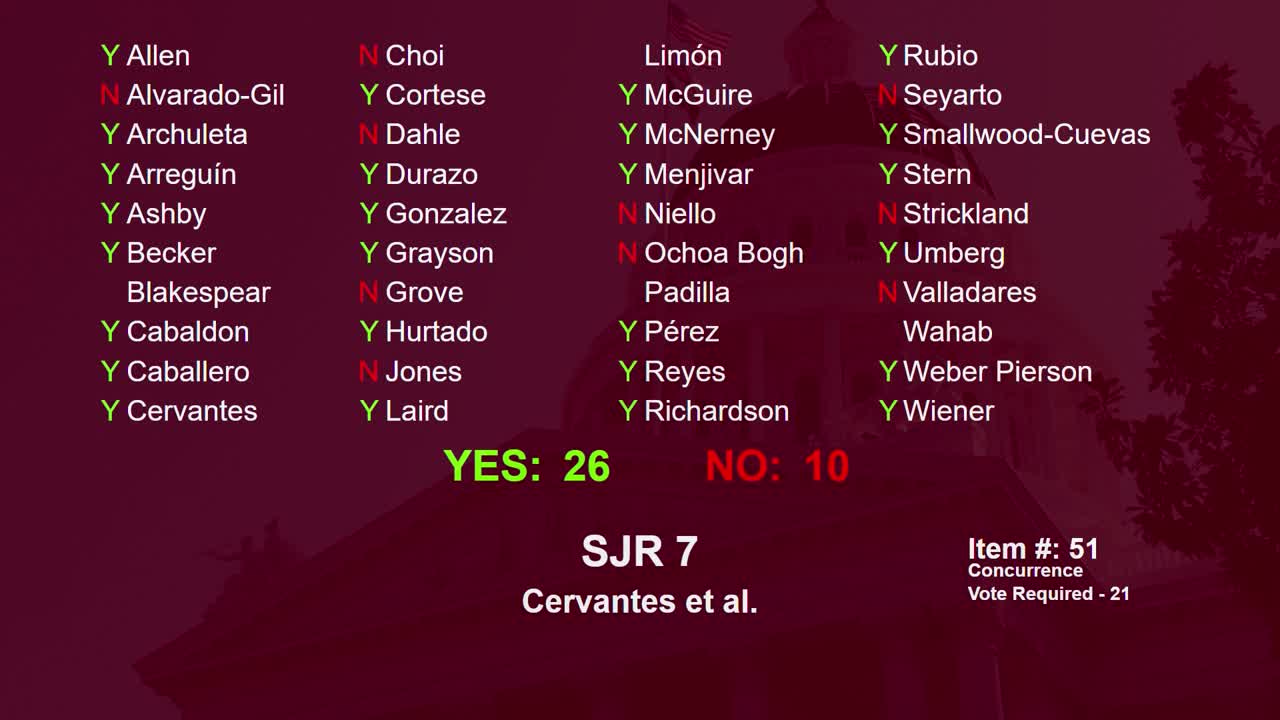 2MIN
Senate Floor
 7MIN
Senate Standing Committee on Education
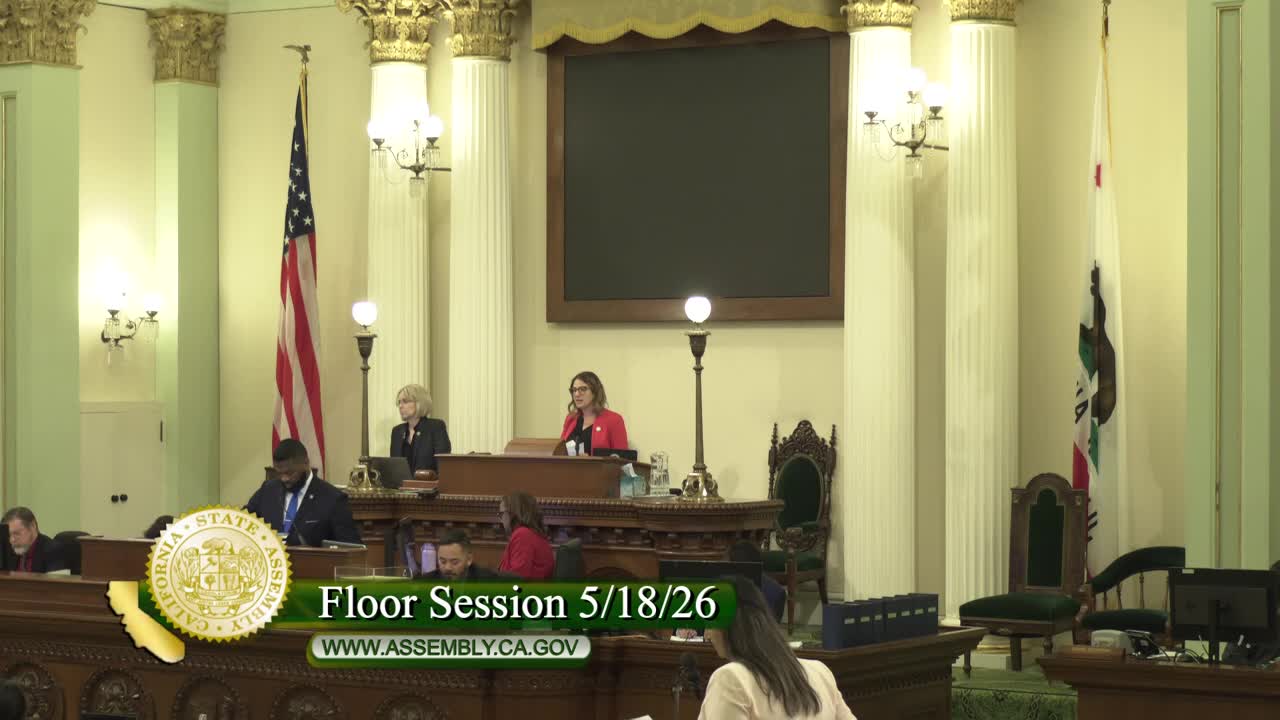 1MIN
Assembly Floor
 1MIN
Assembly Standing Committee on Appropriations
 14MIN
Assembly Standing Committee on Higher Education
 7MIN
Assembly Standing Committee on Education
Bill Author

Bill Co-Author(s):