AB 1816: Probation: duration.
- Session Year: 2025-2026
- House: Assembly
- Latest Version Date: 2026-09-30
Current Status:
Passed
(2026-09-30: Chaptered by Secretary of State - Chapter 833, Statutes of 2026.)
Introduced
In Committee
Awaiting First Chamber Vote
Passed First Chamber
In Committee
Awaiting Second Chamber Vote
Passed Second Chamber
Enacted
What does this bill do?
This bill lets judges extend probation by up to one extra year for people who must register as sex offenders if they haven’t completed probation and need more time to finish required treatment or rehabilitation programs. In deciding whether to extend probation, the court may consider the person’s progress in treatment, compliance with supervision rules, and whether an extension protects public safety.
The summary is provided by generative AI which can make mistakes. For original language, please view the details in the table below.
Existing law authorizes courts that have jurisdiction in misdemeanor cases to suspend the sentence and make and enforce terms of probation in those cases, for a period not to exceed one year, except as specified. Existing law authorizes the court, in an order granting probation, to suspend the imposition or execution of the sentence and direct the suspension to continue for a period of time not exceeding 2 years, except for specified offenses, including, among others, violent felonies and embezzlement.
This bill would, for an offender required to register as a sex offender, if the probation department files a petition to the court and the court makes a finding the defendant has not successfully completed probation and additional time is necessary for programming, as specified, authorize the court to order the term of probation to continue for a period not exceeding one additional year.
The California Constitution requires the state to reimburse local agencies and school districts for certain costs mandated by the state. Statutory provisions establish procedures for making that reimbursement.
This bill would provide that, if the Commission on State Mandates determines that the bill contains costs mandated by the state, reimbursement for those costs shall be made pursuant to the statutory provisions noted above.
Existing law authorizes courts that have jurisdiction in misdemeanor cases to suspend the sentence and make and enforce terms of probation in those cases, for a period not to exceed one year, except as specified. Existing law authorizes the court, in an order granting probation, to suspend the imposition or execution of the sentence and direct the suspension to continue for a period of time not exceeding 2 years, except for specified offenses, including, among others, violent felonies and embezzlement.
This bill would, for an offender required to register as a sex offender as a condition of probation, offender, if the probation department files a petition to the court and the court makes a finding the defendant has not successfully completed probation and additional time is necessary for programming, authorize the court to order the term of probation to continue for a period not exceeding one additional year.
The California Constitution requires the state to reimburse local agencies and school districts for certain costs mandated by the state. Statutory provisions establish procedures for making that reimbursement.
This bill would provide that, if the Commission on State Mandates determines that the bill contains costs mandated by the state, reimbursement for those costs shall be made pursuant to the statutory provisions noted above.
Existing law authorizes courts that have jurisdiction in misdemeanor cases to suspend the sentence and make and enforce terms of probation in those cases, for a period not to exceed one year, except as specified. Existing law authorizes the court, in an order granting probation, to suspend the imposition or execution of the sentence and direct the suspension to continue for a period of time not exceeding 2 years, except for specified offenses, including, among others, violent felonies and embezzlement.
This bill would remove the 2-year limit for specified sex crimes, serious felonies, and offenses for which the probation department files a petition to the court and the court makes a finding that the defendant has not successfully completed probation and needs additional time for programming. The bill would instead authorize probation for a period of time not to exceed the maximum possible term of the sentence, as specified. By increasing the duration of probation, this bill would impose a state-mandated local program.This bill would, for an offender required to register as a sex offender as a condition of probation, if the probation department files a petition to the court and the court makes a finding the defendant has not successfully completed probation and additional time is necessary for programming, authorize the court to order the term of probation to continue for a period not exceeding one additional year.
The California Constitution requires the state to reimburse local agencies and school districts for certain costs mandated by the state. Statutory provisions establish procedures for making that reimbursement.
This bill would provide that, if the Commission on State Mandates determines that the bill contains costs mandated by the state, reimbursement for those costs shall be made pursuant to the statutory provisions noted above.
Existing law authorizes courts that have jurisdiction in misdemeanor cases to suspend the sentence and make and enforce terms of probation in those cases, for a period not to exceed one year, except as specified. Existing law authorizes the court, in an order granting probation, to suspend the imposition or execution of the sentence and direct the suspension to continue for a period of time not exceeding 2 years, except for specified offenses, including, among others, violent felonies and embezzlement.
This bill would remove the 2-year limit for specified sex crimes, serious felonies, and offenses for which the probation department files a petition to the court and the court makes a finding that the defendant has not successfully completed probation and needs additional time for programming. The bill would instead authorize probation for a period of time not to exceed the maximum possible term of the sentence, as specified. By increasing the duration of probation, this bill would impose a state-mandated local program.
The California Constitution requires the state to reimburse local agencies and school districts for certain costs mandated by the state. Statutory provisions establish procedures for making that reimbursement.
This bill would provide that, if the Commission on State Mandates determines that the bill contains costs mandated by the state, reimbursement for those costs shall be made pursuant to the statutory provisions noted above.
(a)The court, or judge thereof, in the order granting probation, may suspend the imposing or the execution of the sentence and may direct that the suspension may continue for a period of time not exceeding two years, and upon those terms and conditions as it shall determine. The court, or judge thereof, in the order granting probation and as a condition thereof, may imprison the defendant in a county jail for a period not exceeding the maximum time fixed by law in the case. The following shall apply to this subdivision:
(1)The court may fine the defendant in a sum not to exceed the maximum fine provided by law in the case.
(2)The court may, in connection with granting probation, impose either imprisonment in a county jail or a fine, both, or neither.
(3)The court shall provide for restitution in proper cases. The restitution order shall be fully enforceable as a civil judgment forthwith and in accordance with Section 1202.4 of the Penal Code.
(4)The court may require bonds for the faithful observance and performance of any or all of the conditions of probation.
(b)The court shall consider whether the defendant as a condition of probation shall make restitution to the victim or the Restitution Fund. Any restitution payment received by a court or probation department in the form of cash or money order shall be forwarded to the victim within 30 days from the date the payment is received by the department. Any restitution payment received by a court or probation department in the form of a check or draft shall be forwarded to the victim within 45 days from the date the payment is received, provided, that payment need not be forwarded to a victim until 180 days from the date the first payment is received, if the restitution payments for that victim received by the court or probation department total less than fifty dollars ($50). In cases where the court has ordered the defendant to pay restitution to multiple victims and where the administrative cost of disbursing restitution payments to multiple victims involves a significant cost, any restitution payment received by a probation department shall be forwarded to multiple victims when it is cost effective to do so, but in no event shall restitution disbursements be delayed beyond 180 days from the date the payment is received by the probation department.
(c)In counties or cities and counties where road camps, farms, or other public work is available the court may place the probationer in the road camp, farm, or other public work instead of in jail. In this case, Section 25359 of the Government Code shall apply to probation and the court shall have the same power to require adult probationers to work, as prisoners confined in the county jail are required to work, at public work. Each county board of supervisors may fix the scale of compensation of the adult probationers in that county.
(d)In all cases of probation the court may require as a condition of probation that the probationer go to work and earn money for the support of the probationers dependents or to pay any fine imposed or reparation condition, to keep an account of the probationers earnings, to report them to the probation officer and apply those earnings as directed by the court.
(e)The court shall also consider whether the defendant as a condition of probation shall make restitution to a public agency for the costs of an emergency response pursuant to Article 8 (commencing with Section 53150) of Chapter 1 of Part 1 of Division 2 of the Government Code.
(f)In all felony cases in which, as a condition of probation, a judge of the superior court sitting by authority of law elsewhere than at the county seat requires a convicted person to serve their sentence at intermittent periods the sentence may be served on the order of the judge at the city jail nearest to the place at which the court is sitting, and the cost of the convicted persons maintenance shall be a county charge.
(g)(1)The court and prosecuting attorney shall consider whether any defendant who has been convicted of a nonviolent or nonserious offense and ordered to participate in community service as a condition of probation shall be required to engage in the removal of graffiti in the performance of the community service. For the purpose of this subdivision, a nonserious offense shall not include the following:
(A)Offenses in violation of the Dangerous Weapons Control Law, as defined in Section 23500.
(B)Offenses involving the use of a dangerous or deadly weapon, including all violations of Section 417.
(C)Offenses involving the use or attempted use of violence against the person of another or involving injury to a victim.
(D)Offenses involving annoying or molesting children.
(2)Notwithstanding subparagraph (A) of paragraph (1), any person who violates Chapter 1 (commencing with Section 29610) of Division 9 of Title 4 of Part 6 shall be ordered to perform not less than 100 hours and not more than 500 hours of community service as a condition of probation.
(3)The court and the prosecuting attorney need not consider a defendant pursuant to paragraph (1) if the following circumstances exist:
(A)The defendant was convicted of any offense set forth in subdivision (c) of Section 667.5 or subdivision (c) of Section 1192.7.
(B)The judge believes that the public safety may be endangered if the person is ordered to do community service or the judge believes that the facts or circumstances or facts and circumstances call for imposition of a more substantial penalty.
(h)The probation officer or their designated representative shall consider whether any defendant who has been convicted of a nonviolent and nonserious offense and ordered to participate in community service as a condition of probation shall be required to engage in the performance of house repairs or yard services for senior citizens and the performance of repairs to senior centers through contact with local senior service organizations in the performance of the community service.
(i)(1)Upon conviction of any offense involving child abuse or neglect, the court may require, in addition to any or all of the terms of imprisonment, fine, and other reasonable conditions specified in this section, that the defendant participate in counseling or education programs, or both, including, but not limited to, parent education or parenting programs operated by community colleges, school districts, other public agencies, or private agencies.
(2)Upon conviction of any sex offense subjecting the defendant to the registration requirements of Section 290, the court may order as a condition of probation, at the request of the victim or in the courts discretion, that the defendant stay away from the victim and the victims residence or place of employment, and that the defendant have no contact with the victim in person, by telephone or electronic means, or by mail.
(j)The court may impose and require any or all of the terms of imprisonment, fine, and conditions specified in this section, and other reasonable conditions, as it may determine are fitting and proper to the end that justice may be done, that amends may be made to society for the breach of the law, for any injury done to any person resulting from that breach, and generally and specifically for the reformation and rehabilitation of the probationer, and that should the probationer violate any of the terms or conditions imposed by the court in the matter, it shall have authority to modify and change any and all the terms and conditions and to reimprison the probationer in the county jail within the limitations of the penalty of the public offense involved. Upon the defendant being released from the county jail under the terms of probation as originally granted or any modification subsequently made, and in all cases where confinement in a county jail has not been a condition of the grant of probation, the court shall place the defendant or probationer in and under the charge of the probation officer of the court, for the period or term fixed for probation. However, upon the payment of any fine imposed and the fulfillment of all conditions of probation, probation shall cease at the end of the term of probation, or sooner, in the event of modification. In counties and cities and counties in which there are facilities for taking fingerprints, those of each probationer shall be taken and a record of them kept and preserved.
(k)Notwithstanding any other provisions of law to the contrary, except as provided in Section 13967, as operative on or before September 28, 1994, of the Government Code and Section 13967.5 of the Government Code and Sections 1202.4, 1463.16, paragraph (1) of subdivision (a) of Section 1463.18, and Section 1464, and Section 1203.04, as operative on or before August 2, 1995, all fines collected by a county probation officer in any of the courts of this state, as a condition of the granting of probation or as a part of the terms of probation, shall be paid into the county treasury and placed in the general fund for the use and benefit of the county.
(l)(1)The two-year probation limit in subdivision (a) shall not apply to:
(A)An offense listed in subdivision (c) of Section 667.5 and an offense that includes specific probation lengths within its provisions. For these offenses, the court, or judge thereof, in the order granting probation, may suspend the imposing or the execution of the sentence and may direct that the suspension may continue for a period of time not exceeding the maximum possible term of the sentence and under conditions as it shall determine. All other provisions of subdivision (a) shall apply.
(B)A felony conviction for paragraph (3) of subdivision (b) of Section 487, Section 503, and Section 532a, if the total value of the property taken exceeds twenty-five thousand dollars ($25,000). For these offenses, the court, or judge thereof, in the order granting probation, may suspend the imposing or the execution of the sentence and may direct that the suspension may continue for a period of time not exceeding three years, and upon those terms and conditions as it shall determine. All other provisions of subdivision (a) shall apply.
(C)An offender granted probation and ordered to register pursuant to subdivision (c) of Section 290, where the probation department files a petition to the court and the court makes a finding that the defendant has not successfully completed probation and additional time is necessary for programming, in which case the court may order the term of probation to continue as necessary to complete programming for a period not exceeding one additional year and under the conditions as it shall determine.
(2)In making the finding described in subparagraph (C) of paragraph (1), the court may consider the probationers progress in treatment, compliance with other terms of supervision, and whether an extension serves the interests of public safety and rehabilitation.
SEC. 2.If the Commission on State Mandates determines that this act contains costs mandated by the state, reimbursement to local agencies and school districts for those costs shall be made pursuant to Part 7 (commencing with Section 17500) of Division 4 of Title 2 of the Government Code.
(a)The court, or judge thereof, in the order granting probation, may suspend the imposing or the execution of the sentence and may direct that the suspension may continue for a period of time not exceeding two years, and upon those terms and conditions as it shall determine. The court, or judge thereof, in the order granting probation and as a condition thereof, may imprison the defendant in a county jail for a period not exceeding the maximum time fixed by law in the case. The following shall apply to this subdivision:
(1)The court may fine the defendant in a sum not to exceed the maximum fine provided by law in the case.
(2)The court may, in connection with granting probation, impose either imprisonment in a county jail or a fine, both, or neither.
(3)The court shall provide for restitution in proper cases. The restitution order shall be fully enforceable as a civil judgment forthwith and in accordance with Section 1202.4 of the Penal Code.
(4)The court may require bonds for the faithful observance and performance of any or all of the conditions of probation.
(b)The court shall consider whether the defendant as a condition of probation shall make restitution to the victim or the Restitution Fund. Any restitution payment received by a court or probation department in the form of cash or money order shall be forwarded to the victim within 30 days from the date the payment is received by the department. Any restitution payment received by a court or probation department in the form of a check or draft shall be forwarded to the victim within 45 days from the date the payment is received, provided, that payment need not be forwarded to a victim until 180 days from the date the first payment is received, if the restitution payments for that victim received by the court or probation department total less than fifty dollars ($50). In cases where the court has ordered the defendant to pay restitution to multiple victims and where the administrative cost of disbursing restitution payments to multiple victims involves a significant cost, any restitution payment received by a probation department shall be forwarded to multiple victims when it is cost effective to do so, but in no event shall restitution disbursements be delayed beyond 180 days from the date the payment is received by the probation department.
(c)In counties or cities and counties where road camps, farms, or other public work is available the court may place the probationer in the road camp, farm, or other public work instead of in jail. In this case, Section 25359 of the Government Code shall apply to probation and the court shall have the same power to require adult probationers to work, as prisoners confined in the county jail are required to work, at public work. Each county board of supervisors may fix the scale of compensation of the adult probationers in that county.
(d)In all cases of probation the court may require as a condition of probation that the probationer go to work and earn money for the support of the probationers dependents or to pay any fine imposed or reparation condition, to keep an account of the probationers earnings, to report them to the probation officer and apply those earnings as directed by the court.
(e)The court shall also consider whether the defendant as a condition of probation shall make restitution to a public agency for the costs of an emergency response pursuant to Article 8 (commencing with Section 53150) of Chapter 1 of Part 1 of Division 2 of the Government Code.
(f)In all felony cases in which, as a condition of probation, a judge of the superior court sitting by authority of law elsewhere than at the county seat requires a convicted person to serve their sentence at intermittent periods the sentence may be served on the order of the judge at the city jail nearest to the place at which the court is sitting, and the cost of the convicted persons maintenance shall be a county charge.
(g)(1)The court and prosecuting attorney shall consider whether any defendant who has been convicted of a nonviolent or nonserious offense and ordered to participate in community service as a condition of probation shall be required to engage in the removal of graffiti in the performance of the community service. For the purpose of this subdivision, a nonserious offense shall not include the following:
(A)Offenses in violation of the Dangerous Weapons Control Law, as defined in Section 23500.
(B)Offenses involving the use of a dangerous or deadly weapon, including all violations of Section 417.
(C)Offenses involving the use or attempted use of violence against the person of another or involving injury to a victim.
(D)Offenses involving annoying or molesting children.
(2)Notwithstanding subparagraph (A) of paragraph (1), any person who violates Chapter 1 (commencing with Section 29610) of Division 9 of Title 4 of Part 6 shall be ordered to perform not less than 100 hours and not more than 500 hours of community service as a condition of probation.
(3)The court and the prosecuting attorney need not consider a defendant pursuant to paragraph (1) if the following circumstances exist:
(A)The defendant was convicted of any offense set forth in subdivision (c) of Section 667.5 or subdivision (c) of Section 1192.7.
(B)The judge believes that the public safety may be endangered if the person is ordered to do community service or the judge believes that the facts or circumstances or facts and circumstances call for imposition of a more substantial penalty.
(h)The probation officer or their designated representative shall consider whether any defendant who has been convicted of a nonviolent and nonserious offense and ordered to participate in community service as a condition of probation shall be required to engage in the performance of house repairs or yard services for senior citizens and the performance of repairs to senior centers through contact with local senior service organizations in the performance of the community service.
(i)(1)Upon conviction of any offense involving child abuse or neglect, the court may require, in addition to any or all of the terms of imprisonment, fine, and other reasonable conditions specified in this section, that the defendant participate in counseling or education programs, or both, including, but not limited to, parent education or parenting programs operated by community colleges, school districts, other public agencies, or private agencies.
(2)Upon conviction of any sex offense subjecting the defendant to the registration requirements of Section 290, the court may order as a condition of probation, at the request of the victim or in the courts discretion, that the defendant stay away from the victim and the victims residence or place of employment, and that the defendant have no contact with the victim in person, by telephone or electronic means, or by mail.
(j)The court may impose and require any or all of the terms of imprisonment, fine, and conditions specified in this section, and other reasonable conditions, as it may determine are fitting and proper to the end that justice may be done, that amends may be made to society for the breach of the law, for any injury done to any person resulting from that breach, and generally and specifically for the reformation and rehabilitation of the probationer, and that should the probationer violate any of the terms or conditions imposed by the court in the matter, it shall have authority to modify and change any and all the terms and conditions and to reimprison the probationer in the county jail within the limitations of the penalty of the public offense involved. Upon the defendant being released from the county jail under the terms of probation as originally granted or any modification subsequently made, and in all cases where confinement in a county jail has not been a condition of the grant of probation, the court shall place the defendant or probationer in and under the charge of the probation officer of the court, for the period or term fixed for probation. However, upon the payment of any fine imposed and the fulfillment of all conditions of probation, probation shall cease at the end of the term of probation, or sooner, in the event of modification. In counties and cities and counties in which there are facilities for taking fingerprints, those of each probationer shall be taken and a record of them kept and preserved.
(k)Notwithstanding any other provisions of law to the contrary, except as provided in Section 13967, as operative on or before September 28, 1994, of the Government Code and Section 13967.5 of the Government Code and Sections 1202.4, 1463.16, paragraph (1) of subdivision (a) of Section 1463.18, and Section 1464, and Section 1203.04, as operative on or before August 2, 1995, all fines collected by a county probation officer in any of the courts of this state, as a condition of the granting of probation or as a part of the terms of probation, shall be paid into the county treasury and placed in the general fund for the use and benefit of the county.
(l)(1)The two-year probation limit in subdivision (a) shall not apply to:
(1)(A)An offense listed in subdivision (c) of Section 667.5 and an offense that includes specific probation lengths within its provisions. For these offenses, the court, or judge thereof, in the order granting probation, may suspend the imposing or the execution of the sentence and may direct that the suspension may continue for a period of time not exceeding the maximum possible term of the sentence and under conditions as it shall determine. All other provisions of subdivision (a) shall apply.
(2)(B)A felony conviction for paragraph (3) of subdivision (b) of Section 487, Section 503, and Section 532a, if the total value of the property taken exceeds twenty-five thousand dollars ($25,000). For these offenses, the court, or judge thereof, in the order granting probation, may suspend the imposing or the execution of the sentence and may direct that the suspension may continue for a period of time not exceeding three years, and upon those terms and conditions as it shall determine. All other provisions of subdivision (a) shall apply.
(3)(C)An offender granted probation and ordered to register pursuant to subdivision (c) of Section 290, where the probation department files a petition to the court and the court makes a finding that the defendant has not successfully completed probation and additional time is necessary for programming, in which case the court may order the term of probation to continue as necessary to complete programming for a period not exceeding one additional year and under the conditions as it shall determine.
(2)In making the finding described in subparagraph (C) of paragraph (1), the court may consider the probationers progress in treatment, compliance with other terms of supervision, and whether an extension serves the interests of public safety and rehabilitation.
SEC. 2.If the Commission on State Mandates determines that this act contains costs mandated by the state, reimbursement to local agencies and school districts for those costs shall be made pursuant to Part 7 (commencing with Section 17500) of Division 4 of Title 2 of the Government Code.
(a)The court, or judge thereof, in the order granting probation, may suspend the imposing or the execution of the sentence and may direct that the suspension may continue for a period of time not exceeding two years, and upon those terms and conditions as it shall determine. The court, or judge thereof, in the order granting probation and as a condition thereof, may imprison the defendant in a county jail for a period not exceeding the maximum time fixed by law in the case. The following shall apply to this subdivision:
(1)The court may fine the defendant in a sum not to exceed the maximum fine provided by law in the case.
(2)The court may, in connection with granting probation, impose either imprisonment in a county jail or a fine, both, or neither.
(3)The court shall provide for restitution in proper cases. The restitution order shall be fully enforceable as a civil judgment forthwith and in accordance with Section 1202.4 of the Penal Code.
(4)The court may require bonds for the faithful observance and performance of any or all of the conditions of probation.
(b)The court shall consider whether the defendant as a condition of probation shall make restitution to the victim or the Restitution Fund. Any restitution payment received by a court or probation department in the form of cash or money order shall be forwarded to the victim within 30 days from the date the payment is received by the department. Any restitution payment received by a court or probation department in the form of a check or draft shall be forwarded to the victim within 45 days from the date the payment is received, provided, that payment need not be forwarded to a victim until 180 days from the date the first payment is received, if the restitution payments for that victim received by the court or probation department total less than fifty dollars ($50). In cases where the court has ordered the defendant to pay restitution to multiple victims and where the administrative cost of disbursing restitution payments to multiple victims involves a significant cost, any restitution payment received by a probation department shall be forwarded to multiple victims when it is cost effective to do so, but in no event shall restitution disbursements be delayed beyond 180 days from the date the payment is received by the probation department.
(c)In counties or cities and counties where road camps, farms, or other public work is available the court may place the probationer in the road camp, farm, or other public work instead of in jail. In this case, Section 25359 of the Government Code shall apply to probation and the court shall have the same power to require adult probationers to work, as prisoners confined in the county jail are required to work, at public work. Each county board of supervisors may fix the scale of compensation of the adult probationers in that county.
(d)In all cases of probation the court may require as a condition of probation that the probationer go to work and earn money for the support of the probationers dependents or to pay any fine imposed or reparation condition, to keep an account of the probationers earnings, to report them to the probation officer and apply those earnings as directed by the court.
(e)The court shall also consider whether the defendant as a condition of probation shall make restitution to a public agency for the costs of an emergency response pursuant to Article 8 (commencing with Section 53150) of Chapter 1 of Part 1 of Division 2 of the Government Code.
(f)In all felony cases in which, as a condition of probation, a judge of the superior court sitting by authority of law elsewhere than at the county seat requires a convicted person to serve their sentence at intermittent periods the sentence may be served on the order of the judge at the city jail nearest to the place at which the court is sitting, and the cost of the convicted persons maintenance shall be a county charge.
(g)(1)The court and prosecuting attorney shall consider whether any defendant who has been convicted of a nonviolent or nonserious offense and ordered to participate in community service as a condition of probation shall be required to engage in the removal of graffiti in the performance of the community service. For the purpose of this subdivision, a nonserious offense shall not include the following:
(A)Offenses in violation of the Dangerous Weapons Control Law, as defined in Section 23500.
(B)Offenses involving the use of a dangerous or deadly weapon, including all violations of Section 417.
(C)Offenses involving the use or attempted use of violence against the person of another or involving injury to a victim.
(D)Offenses involving annoying or molesting children.
(2)Notwithstanding subparagraph (A) of paragraph (1), any person who violates Chapter 1 (commencing with Section 29610) of Division 9 of Title 4 of Part 6 shall be ordered to perform not less than 100 hours and not more than 500 hours of community service as a condition of probation.
(3)The court and the prosecuting attorney need not consider a defendant pursuant to paragraph (1) if the following circumstances exist:
(A)The defendant was convicted of any offense set forth in subdivision (c) of Section 667.5 or subdivision (c) of Section 1192.7.
(B)The judge believes that the public safety may be endangered if the person is ordered to do community service or the judge believes that the facts or circumstances or facts and circumstances call for imposition of a more substantial penalty.
(h)The probation officer or their designated representative shall consider whether any defendant who has been convicted of a nonviolent and nonserious offense and ordered to participate in community service as a condition of probation shall be required to engage in the performance of house repairs or yard services for senior citizens and the performance of repairs to senior centers through contact with local senior service organizations in the performance of the community service.
(i)(1)Upon conviction of any offense involving child abuse or neglect, the court may require, in addition to any or all of the terms of imprisonment, fine, and other reasonable conditions specified in this section, that the defendant participate in counseling or education programs, or both, including, but not limited to, parent education or parenting programs operated by community colleges, school districts, other public agencies, or private agencies.
(2)Upon conviction of any sex offense subjecting the defendant to the registration requirements of Section 290, the court may order as a condition of probation, at the request of the victim or in the courts discretion, that the defendant stay away from the victim and the victims residence or place of employment, and that the defendant have no contact with the victim in person, by telephone or electronic means, or by mail.
(j)The court may impose and require any or all of the terms of imprisonment, fine, and conditions specified in this section, and other reasonable conditions, as it may determine are fitting and proper to the end that justice may be done, that amends may be made to society for the breach of the law, for any injury done to any person resulting from that breach, and generally and specifically for the reformation and rehabilitation of the probationer, and that should the probationer violate any of the terms or conditions imposed by the court in the matter, it shall have authority to modify and change any and all the terms and conditions and to reimprison the probationer in the county jail within the limitations of the penalty of the public offense involved. Upon the defendant being released from the county jail under the terms of probation as originally granted or any modification subsequently made, and in all cases where confinement in a county jail has not been a condition of the grant of probation, the court shall place the defendant or probationer in and under the charge of the probation officer of the court, for the period or term fixed for probation. However, upon the payment of any fine imposed and the fulfillment of all conditions of probation, probation shall cease at the end of the term of probation, or sooner, in the event of modification. In counties and cities and counties in which there are facilities for taking fingerprints, those of each probationer shall be taken and a record of them kept and preserved.
(k)Notwithstanding any other provisions of law to the contrary, except as provided in Section 13967, as operative on or before September 28, 1994, of the Government Code and Section 13967.5 of the Government Code and Sections 1202.4, 1463.16, paragraph (1) of subdivision (a) of Section 1463.18, and Section 1464, and Section 1203.04, as operative on or before August 2, 1995, all fines collected by a county probation officer in any of the courts of this state, as a condition of the granting of probation or as a part of the terms of probation, shall be paid into the county treasury and placed in the general fund for the use and benefit of the county.
(l)The two-year probation limit in subdivision (a) shall not apply to:
(1)An offense listed in subdivision (c) of Section 667.5 and an offense that includes specific probation lengths within its provisions. For these offenses, the court, or judge thereof, in the order granting probation, may suspend the imposing or the execution of the sentence and may direct that the suspension may continue for a period of time not exceeding the maximum possible term of the sentence and under conditions as it shall determine. All other provisions of subdivision (a) shall apply.
(2)A felony conviction for paragraph (3) of subdivision (b) of Section 487, Section 503, and Section 532a, if the total value of the property taken exceeds twenty-five thousand dollars ($25,000). For these offenses, the court, or judge thereof, in the order granting probation, may suspend the imposing or the execution of the sentence and may direct that the suspension may continue for a period of time not exceeding three years, and upon those terms and conditions as it shall determine. All other provisions of subdivision (a) shall apply.
(3)An offender granted probation and ordered to register pursuant to subdivision (c) of Section 290, as a condition of probation, where the probation department files a petition to the court and the court makes a finding that the defendant has not successfully completed probation and additional time is necessary for programming, in which case the court may order the term of probation to continue as necessary to complete programming for a period not exceeding one additional year and under the conditions as it shall determine.
SEC. 2.If the Commission on State Mandates determines that this act contains costs mandated by the state, reimbursement to local agencies and school districts for those costs shall be made pursuant to Part 7 (commencing with Section 17500) of Division 4 of Title 2 of the Government Code.
(a)The court, or judge thereof, in the order granting probation, may suspend the imposing or the execution of the sentence and may direct that the suspension may continue for a period of time not exceeding two years, and upon those terms and conditions as it shall determine. The court, or judge thereof, in the order granting probation and as a condition thereof, may imprison the defendant in a county jail for a period not exceeding the maximum time fixed by law in the case. The following shall apply to this subdivision:
(1)The court may fine the defendant in a sum not to exceed the maximum fine provided by law in the case.
(2)The court may, in connection with granting probation, impose either imprisonment in a county jail or a fine, both, or neither.
(3)The court shall provide for restitution in proper cases. The restitution order shall be fully enforceable as a civil judgment forthwith and in accordance with Section 1202.4 of the Penal Code.
(4)The court may require bonds for the faithful observance and performance of any or all of the conditions of probation.
(b)The court shall consider whether the defendant as a condition of probation shall make restitution to the victim or the Restitution Fund. Any restitution payment received by a court or probation department in the form of cash or money order shall be forwarded to the victim within 30 days from the date the payment is received by the department. Any restitution payment received by a court or probation department in the form of a check or draft shall be forwarded to the victim within 45 days from the date the payment is received, provided, that payment need not be forwarded to a victim until 180 days from the date the first payment is received, if the restitution payments for that victim received by the court or probation department total less than fifty dollars ($50). In cases where the court has ordered the defendant to pay restitution to multiple victims and where the administrative cost of disbursing restitution payments to multiple victims involves a significant cost, any restitution payment received by a probation department shall be forwarded to multiple victims when it is cost effective to do so, but in no event shall restitution disbursements be delayed beyond 180 days from the date the payment is received by the probation department.
(c)In counties or cities and counties where road camps, farms, or other public work is available the court may place the probationer in the road camp, farm, or other public work instead of in jail. In this case, Section 25359 of the Government Code shall apply to probation and the court shall have the same power to require adult probationers to work, as prisoners confined in the county jail are required to work, at public work. Each county board of supervisors may fix the scale of compensation of the adult probationers in that county.
(d)In all cases of probation the court may require as a condition of probation that the probationer go to work and earn money for the support of the probationers dependents or to pay any fine imposed or reparation condition, to keep an account of the probationers earnings, to report them to the probation officer and apply those earnings as directed by the court.
(e)The court shall also consider whether the defendant as a condition of probation shall make restitution to a public agency for the costs of an emergency response pursuant to Article 8 (commencing with Section 53150) of Chapter 1 of Part 1 of Division 2 of the Government Code.
(f)In all felony cases in which, as a condition of probation, a judge of the superior court sitting by authority of law elsewhere than at the county seat requires a convicted person to serve their sentence at intermittent periods the sentence may be served on the order of the judge at the city jail nearest to the place at which the court is sitting, and the cost of the convicted persons maintenance shall be a county charge.
(g)(1)The court and prosecuting attorney shall consider whether any defendant who has been convicted of a nonviolent or nonserious offense and ordered to participate in community service as a condition of probation shall be required to engage in the removal of graffiti in the performance of the community service. For the purpose of this subdivision, a nonserious offense shall not include the following:
(A)Offenses in violation of the Dangerous Weapons Control Law, as defined in Section 23500.
(B)Offenses involving the use of a dangerous or deadly weapon, including all violations of Section 417.
(C)Offenses involving the use or attempted use of violence against the person of another or involving injury to a victim.
(D)Offenses involving annoying or molesting children.
(2)Notwithstanding subparagraph (A) of paragraph (1), any person who violates Chapter 1 (commencing with Section 29610) of Division 9 of Title 4 of Part 6 shall be ordered to perform not less than 100 hours and not more than 500 hours of community service as a condition of probation.
(3)The court and the prosecuting attorney need not consider a defendant pursuant to paragraph (1) if the following circumstances exist:
(A)The defendant was convicted of any offense set forth in subdivision (c) of Section 667.5 or subdivision (c) of Section 1192.7.
(B)The judge believes that the public safety may be endangered if the person is ordered to do community service or the judge believes that the facts or circumstances or facts and circumstances call for imposition of a more substantial penalty.
(h)The probation officer or their designated representative shall consider whether any defendant who has been convicted of a nonviolent and nonserious offense and ordered to participate in community service as a condition of probation shall be required to engage in the performance of house repairs or yard services for senior citizens and the performance of repairs to senior centers through contact with local senior service organizations in the performance of the community service.
(i)(1)Upon conviction of any offense involving child abuse or neglect, the court may require, in addition to any or all of the terms of imprisonment, fine, and other reasonable conditions specified in this section, that the defendant participate in counseling or education programs, or both, including, but not limited to, parent education or parenting programs operated by community colleges, school districts, other public agencies, or private agencies.
(2)Upon conviction of any sex offense subjecting the defendant to the registration requirements of Section 290, the court may order as a condition of probation, at the request of the victim or in the courts discretion, that the defendant stay away from the victim and the victims residence or place of employment, and that the defendant have no contact with the victim in person, by telephone or electronic means, or by mail.
(j)The court may impose and require any or all of the terms of imprisonment, fine, and conditions specified in this section, and other reasonable conditions, as it may determine are fitting and proper to the end that justice may be done, that amends may be made to society for the breach of the law, for any injury done to any person resulting from that breach, and generally and specifically for the reformation and rehabilitation of the probationer, and that should the probationer violate any of the terms or conditions imposed by the court in the matter, it shall have authority to modify and change any and all the terms and conditions and to reimprison the probationer in the county jail within the limitations of the penalty of the public offense involved. Upon the defendant being released from the county jail under the terms of probation as originally granted or any modification subsequently made, and in all cases where confinement in a county jail has not been a condition of the grant of probation, the court shall place the defendant or probationer in and under the charge of the probation officer of the court, for the period or term fixed for probation. However, upon the payment of any fine imposed and the fulfillment of all conditions of probation, probation shall cease at the end of the term of probation, or sooner, in the event of modification. In counties and cities and counties in which there are facilities for taking fingerprints, those of each probationer shall be taken and a record of them kept and preserved.
(k)Notwithstanding any other provisions of law to the contrary, except as provided in Section 13967, as operative on or before September 28, 1994, of the Government Code and Section 13967.5 of the Government Code and Sections 1202.4, 1463.16, paragraph (1) of subdivision (a) of Section 1463.18, and Section 1464, and Section 1203.04, as operative on or before August 2, 1995, all fines collected by a county probation officer in any of the courts of this state, as a condition of the granting of probation or as a part of the terms of probation, shall be paid into the county treasury and placed in the general fund for the use and benefit of the county.
(l)The two-year probation limit in subdivision (a) shall not apply to:
(1)An offense listed in subdivision (c) of Section 667.5 and an offense that includes specific probation lengths within its provisions. For these offenses, the court, or judge thereof, in the order granting probation, may suspend the imposing or the execution of the sentence and may direct that the suspension may continue for a period of time not exceeding the maximum possible term of the sentence and under conditions as it shall determine. All other provisions of subdivision (a) shall apply.
(2)A felony conviction for paragraph (3) of subdivision (b) of Section 487, Section 503, and Section 532a, if the total value of the property taken exceeds twenty-five thousand dollars ($25,000). For these offenses, the court, or judge thereof, in the order granting probation, may suspend the imposing or the execution of the sentence and may direct that the suspension may continue for a period of time not exceeding three years, and upon those terms and conditions as it shall determine. All other provisions of subdivision (a) shall apply.
(3)Registerable sex offenses as listed in subdivision (c) of Section 290 of the Penal Code. For these offenses, the court, or judge thereof, in the order granting probation, may suspend the imposing or the execution of the sentence and may direct that the suspension may continue for a period of time not exceeding the maximum possible term of the sentence and under conditions as it shall determine. All other provisions of subdivision (a) shall apply.(4)Serious felonies as defined in Section 1192.7 of the Penal Code. For these offenses, the court, or judge thereof, in the order granting probation, may suspend the imposing or the execution of the sentence and may direct that the suspension may continue for a period of time not exceeding the maximum possible term of the sentence and under conditions as it shall determine. All other provisions of subdivision (a) shall apply.(5)Offenses in which the probation department files a petition to the court and the court makes a finding that the defendant has not successfully completed probation and additional time is necessary for programming, in which case the term of probation may continue for a period of time not exceeding the maximum possible term of the sentence and under conditions as it shall determine.(3)An offender granted probation and ordered to register pursuant to subdivision (c) of Section 290, as a condition of probation, where the probation department files a petition to the court and the court makes a finding that the defendant has not successfully completed probation and additional time is necessary for programming, in which case the court may order the term of probation to continue as necessary to complete programming for a period not exceeding one additional year and under the conditions as it shall determine.
SEC. 2.If the Commission on State Mandates determines that this act contains costs mandated by the state, reimbursement to local agencies and school districts for those costs shall be made pursuant to Part 7 (commencing with Section 17500) of Division 4 of Title 2 of the Government Code.
(a)The court, or judge thereof, in the order granting probation, may suspend the imposing or the execution of the sentence and may direct that the suspension may continue for a period of time not exceeding two years, and upon those terms and conditions as it shall determine. The court, or judge thereof, in the order granting probation and as a condition thereof, may imprison the defendant in a county jail for a period not exceeding the maximum time fixed by law in the case. The following shall apply to this subdivision:
(1)The court may fine the defendant in a sum not to exceed the maximum fine provided by law in the case.
(2)The court may, in connection with granting probation, impose either imprisonment in a county jail or a fine, both, or neither.
(3)The court shall provide for restitution in proper cases. The restitution order shall be fully enforceable as a civil judgment forthwith and in accordance with Section 1202.4 of the Penal Code.
(4)The court may require bonds for the faithful observance and performance of any or all of the conditions of probation.
(b)The court shall consider whether the defendant as a condition of probation shall make restitution to the victim or the Restitution Fund. Any restitution payment received by a court or probation department in the form of cash or money order shall be forwarded to the victim within 30 days from the date the payment is received by the department. Any restitution payment received by a court or probation department in the form of a check or draft shall be forwarded to the victim within 45 days from the date the payment is received, provided, that payment need not be forwarded to a victim until 180 days from the date the first payment is received, if the restitution payments for that victim received by the court or probation department total less than fifty dollars ($50). In cases where the court has ordered the defendant to pay restitution to multiple victims and where the administrative cost of disbursing restitution payments to multiple victims involves a significant cost, any restitution payment received by a probation department shall be forwarded to multiple victims when it is cost effective to do so, but in no event shall restitution disbursements be delayed beyond 180 days from the date the payment is received by the probation department.
(c)In counties or cities and counties where road camps, farms, or other public work is available the court may place the probationer in the road camp, farm, or other public work instead of in jail. In this case, Section 25359 of the Government Code shall apply to probation and the court shall have the same power to require adult probationers to work, as prisoners confined in the county jail are required to work, at public work. Each county board of supervisors may fix the scale of compensation of the adult probationers in that county.
(d)In all cases of probation the court may require as a condition of probation that the probationer go to work and earn money for the support of the probationers dependents or to pay any fine imposed or reparation condition, to keep an account of the probationers earnings, to report them to the probation officer and apply those earnings as directed by the court.
(e)The court shall also consider whether the defendant as a condition of probation shall make restitution to a public agency for the costs of an emergency response pursuant to Article 8 (commencing with Section 53150) of Chapter 1 of Part 1 of Division 2 of the Government Code.
(f)In all felony cases in which, as a condition of probation, a judge of the superior court sitting by authority of law elsewhere than at the county seat requires a convicted person to serve their sentence at intermittent periods the sentence may be served on the order of the judge at the city jail nearest to the place at which the court is sitting, and the cost of the convicted persons maintenance shall be a county charge.
(g)(1)The court and prosecuting attorney shall consider whether any defendant who has been convicted of a nonviolent or nonserious offense and ordered to participate in community service as a condition of probation shall be required to engage in the removal of graffiti in the performance of the community service. For the purpose of this subdivision, a nonserious offense shall not include the following:
(A)Offenses in violation of the Dangerous Weapons Control Law, as defined in Section 23500.
(B)Offenses involving the use of a dangerous or deadly weapon, including all violations of Section 417.
(C)Offenses involving the use or attempted use of violence against the person of another or involving injury to a victim.
(D)Offenses involving annoying or molesting children.
(2)Notwithstanding subparagraph (A) of paragraph (1), any person who violates Chapter 1 (commencing with Section 29610) of Division 9 of Title 4 of Part 6 shall be ordered to perform not less than 100 hours and not more than 500 hours of community service as a condition of probation.
(3)The court and the prosecuting attorney need not consider a defendant pursuant to paragraph (1) if the following circumstances exist:
(A)The defendant was convicted of any offense set forth in subdivision (c) of Section 667.5 or subdivision (c) of Section 1192.7.
(B)The judge believes that the public safety may be endangered if the person is ordered to do community service or the judge believes that the facts or circumstances or facts and circumstances call for imposition of a more substantial penalty.
(h)The probation officer or their designated representative shall consider whether any defendant who has been convicted of a nonviolent and nonserious offense and ordered to participate in community service as a condition of probation shall be required to engage in the performance of house repairs or yard services for senior citizens and the performance of repairs to senior centers through contact with local senior service organizations in the performance of the community service.
(i)(1)Upon conviction of any offense involving child abuse or neglect, the court may require, in addition to any or all of the terms of imprisonment, fine, and other reasonable conditions specified in this section, that the defendant participate in counseling or education programs, or both, including, but not limited to, parent education or parenting programs operated by community colleges, school districts, other public agencies, or private agencies.
(2)Upon conviction of any sex offense subjecting the defendant to the registration requirements of Section 290, the court may order as a condition of probation, at the request of the victim or in the courts discretion, that the defendant stay away from the victim and the victims residence or place of employment, and that the defendant have no contact with the victim in person, by telephone or electronic means, or by mail.
(j)The court may impose and require any or all of the terms of imprisonment, fine, and conditions specified in this section, and other reasonable conditions, as it may determine are fitting and proper to the end that justice may be done, that amends may be made to society for the breach of the law, for any injury done to any person resulting from that breach, and generally and specifically for the reformation and rehabilitation of the probationer, and that should the probationer violate any of the terms or conditions imposed by the court in the matter, it shall have authority to modify and change any and all the terms and conditions and to reimprison the probationer in the county jail within the limitations of the penalty of the public offense involved. Upon the defendant being released from the county jail under the terms of probation as originally granted or any modification subsequently made, and in all cases where confinement in a county jail has not been a condition of the grant of probation, the court shall place the defendant or probationer in and under the charge of the probation officer of the court, for the period or term fixed for probation. However, upon the payment of any fine imposed and the fulfillment of all conditions of probation, probation shall cease at the end of the term of probation, or sooner, in the event of modification. In counties and cities and counties in which there are facilities for taking fingerprints, those of each probationer shall be taken and a record of them kept and preserved.
(k)Notwithstanding any other provisions of law to the contrary, except as provided in Section 13967, as operative on or before September 28, 1994, of the Government Code and Section 13967.5 of the Government Code and Sections 1202.4, 1463.16, paragraph (1) of subdivision (a) of Section 1463.18, and Section 1464, and Section 1203.04, as operative on or before August 2, 1995, all fines collected by a county probation officer in any of the courts of this state, as a condition of the granting of probation or as a part of the terms of probation, shall be paid into the county treasury and placed in the general fund for the use and benefit of the county.
(l)The two-year probation limit in subdivision (a) shall not apply to:
(1) An offense listed in subdivision (c) of Section 667.5 and an offense that includes specific probation lengths within its provisions. For these offenses, the court, or judge thereof, in the order granting probation, may suspend the imposing or the execution of the sentence and may direct that the suspension may continue for a period of time not exceeding the maximum possible term of the sentence and under conditions as it shall determine. All other provisions of subdivision (a) shall apply.
(2)A felony conviction for paragraph (3) of subdivision (b) of Section 487, Section 503, and Section 532a, if the total value of the property taken exceeds twenty-five thousand dollars ($25,000). For these offenses, the court, or judge thereof, in the order granting probation, may suspend the imposing or the execution of the sentence and may direct that the suspension may continue for a period of time not exceeding three years, and upon those terms and conditions as it shall determine. All other provisions of subdivision (a) shall apply.
(m)This section shall become operative on January 1, 2022.(3)Registerable sex offenses as listed in subdivision (c) of Section 290 of the Penal Code. For these offenses, the court, or judge thereof, in the order granting probation, may suspend the imposing or the execution of the sentence and may direct that the suspension may continue for a period of time not exceeding the maximum possible term of the sentence and under conditions as it shall determine. All other provisions of subdivision (a) shall apply.
(4)Serious felonies as defined in Section 1192.7 of the Penal Code. For these offenses, the court, or judge thereof, in the order granting probation, may suspend the imposing or the execution of the sentence and may direct that the suspension may continue for a period of time not exceeding the maximum possible term of the sentence and under conditions as it shall determine. All other provisions of subdivision (a) shall apply.
(5)Offenses in which the probation department files a petition to the court and the court makes a finding that the defendant has not successfully completed probation and additional time is necessary for programming, in which case the term of probation may continue for a period of time not exceeding the maximum possible term of the sentence and under conditions as it shall determine.
SEC. 2.If the Commission on State Mandates determines that this act contains costs mandated by the state, reimbursement to local agencies and school districts for those costs shall be made pursuant to Part 7 (commencing with Section 17500) of Division 4 of Title 2 of the Government Code.
|
Date
|
Status
|
|---|---|
| Sep 30, 2026 | Chaptered by Secretary of State - Chapter 833, Statutes of 2026. |
| Sep 30, 2026 | Approved by the Governor. |
| Sep 14, 2026 | Enrolled and presented to the Governor at 1:30 p.m. |
| Aug 31, 2026 | Senate amendments concurred in. To Engrossing and Enrolling. (Ayes 70. Noes 0.). |
| Aug 31, 2026 | Senate amendments concurred in. To Engrossing and Enrolling. (Ayes 70. Noes 0. Page 6972.). |
| Aug 31, 2026 | Senate amendments concurred in. To Engrossing and Enrolling. |
| Aug 26, 2026 | In Assembly. Concurrence in Senate amendments pending. |
| Aug 25, 2026 | Read third time. Passed. Ordered to the Assembly. (Ayes 36. Noes 2.). |
| Aug 17, 2026 | Read second time. Ordered to third reading. |
| Aug 13, 2026 | Read second time and amended. Ordered returned to second reading. |
| Aug 13, 2026 | From committee: Amend, and do pass as amended. (Ayes 7. Noes 0.) (August 13). |
| Aug 3, 2026 | In committee: Referred to APPR. suspense file. |
| Jun 25, 2026 | Read second time and amended. Re-referred to Com. on APPR. |
| Jun 24, 2026 | From committee: Amend, and do pass as amended and re-refer to Com. on APPR. (Ayes 4. Noes 1.) (June 23). |
| Jun 16, 2026 | In committee: Set, first hearing. Hearing canceled at the request of author. |
| May 27, 2026 | Referred to Com. on PUB. S. |
| May 14, 2026 | In Senate. Read first time. To Com. on RLS. for assignment. |
| May 14, 2026 | Read third time. Passed. Ordered to the Senate. (Ayes 69. Noes 11.) |
| May 14, 2026 | Read third time. Passed. Ordered to the Senate. (Ayes 69. Noes 11. Page 5039.) |
| Apr 23, 2026 | Read second time. Ordered to third reading. |
| Apr 22, 2026 | From committee: Do pass. (Ayes 13. Noes 0.) (April 22). |
| Apr 6, 2026 | Re-referred to Com. on APPR. |
| Mar 26, 2026 | Read second time and amended. |
| Mar 25, 2026 | From committee: Amend, and do pass as amended and re-refer to Com. on APPR. (Ayes 8. Noes 0.) (March 24). |
| Mar 9, 2026 | In committee: Hearing postponed by committee. |
| Feb 23, 2026 | Referred to Com. on PUB. S. |
| Feb 11, 2026 | From printer. May be heard in committee March 13. |
| Feb 10, 2026 | Read first time. To print. |
|
Date
|
Description
|
Location
|
Votes
|
|
|---|---|---|---|---|
| Aug 31, 2026 | AB 1816 Davies Concurrence in Senate Amendments | Assembly Floor |
Passed |
|
| Aug 25, 2026 | Assembly 3rd Reading AB1816 Davies By Rubio | Senate Floor |
Passed |
|
| Aug 13, 2026 | Do pass as amended | Senate Standing Committee on Appropriations |
Passed |
|
| Aug 3, 2026 | Placed on suspense file | Senate Standing Committee on Appropriations |
Passed |
|
| Jun 23, 2026 | Do pass as amended, but first amend, and re-refer to the Committee on [Appropriations] | Senate Standing Committee on Public Safety |
Passed |
|
| May 14, 2026 | AB 1816 Davies Assembly Third Reading | Assembly Floor |
Passed |
|
| Apr 22, 2026 | Do pass. | Assembly Standing Committee on Appropriations |
Passed |
|
| Mar 24, 2026 | Do pass as amended and be re-referred to the Committee on [Appropriations] | Assembly Standing Committee on Public Safety |
Passed |
This list shows positions taken on this bill by organizations on the date displayed, which is linked to the original source.
Positions by individuals are not included.
|
Organization
|
Position
|
Date
|
|---|---|---|
| 1 individual | ** Against | |
| Aclu California Action | ** Against | |
| CA Sex Offender Management Board | ** Support | |
| California Attorneys For Criminal Justice | ** Against | |
| California District Attorneys Association | ** Support | |
| California Police Chiefs Association | ** Support | |
| California Public Defenders Association | ** Against | |
| California Sex Offender Management Board | ** Support | |
| California State Sheriffs' Association | ** Support | |
| California State Sheriffs’ Association | ** Support | |
| Californians for Safety and Justice (CSJ) | ** Against | |
| Californians United for a Responsible Budget | ** Against | |
| Chief Probation Officers Of California | ** Support | |
| Communities United for Restorative Youth Justice (CURYJ) | ** Against | |
| Ella Baker Center For Human Rights | ** Against | |
| Initiate Justice | ** Against | |
| Justice2jobs Coalition | ** Against | |
| LA Defensa | ** Against | |
| Local 148 Los Angeles County Public Defender's Union | ** Against | |
| Los Angeles County District Attorney'S Office | ** Support | |
| Los Angeles County Probation Officers Union, Afscme Local 685 | ** Support | |
| Peace Officers Research Association Of California | ** Support | |
| San Francisco Public Defender | ** Against | |
| Smart Justice California | ** Against | |
| Teamsters Local 986 | ** Support | |
| The Chief Probation of Officers of California | ** Support | |
| Vera Institute Of Justice | ** Against |
CONCURRENCE IN SENATE AMENDMENTS
CSA1 Bill Id:AB 1816
Author:(Davies)
As Amended Ver:August 13, 2026
Majority vote
SUMMARY
Provides that, for an offender granted probation and ordered to register as sex offender, as specified, where the probation department files a petition to the court and the court makes a finding that the defendant has not successfully completed probation and additional time is necessary for programming, the court may order the term of probation to continue as necessary to complete programming for a period not exceeding one additional year and under the conditions as it shall determine.
Senate Amendments
- Provide that, in making the finding that the term of probation continue for a probationer to complete programming, the court may consider the probationer′s progress in treatment, compliance with other terms of supervision, and whether an extension serves the interests of public safety and rehabilitation.
- Make technical changes.
COMMENTS
As Passed by the Assembly, this bill: Provided that, for an offender granted probation and ordered to register as sex offender, as specified, as a condition of probation, where the probation department files a petition to the court and the court makes a finding that the defendant has not successfully completed probation and additional time is necessary for programming, the court may order the term of probation to continue as necessary to complete programming for a period not exceeding one additional year and under the conditions as it shall determine.
According to the Author
″Currently, California′s arbitrary two-year cap on probation often results in the premature release of serious offenders before they have successfully completed rehabilitative programming or demonstrated they no longer pose a threat to our communities. AB 1816 fixes this broken system by removing that one-size-fits-all limit for sex crimes and serious felonies, allowing probation to extend for the full length of a potential sentence when necessary for public safety. By ensuring that high-risk individuals remain under supervision until they are truly prepared to reintegrate, we are prioritizing the rights of victims and the security of our neighborhoods over administrative convenience.″
Arguments in Support
According to The Chief Probation of Officers of California, the bill′s sponsor, ″Assembly Bill 1950, [(Kamlager)], Chapter 328, Statutes of 2020, set the maximum term of probation for most misdemeanor crimes at one year and the maximum term of probation for most felonies at two years. There are certain crimes which are excluded from AB 1950 such as violent felonies, specified domestic violence offenses, and other crimes. This arbitrary cap set by AB 1950 shifted probation from an evidence-based model to a time-based model, which resulted in limiting the time to reasonably complete treatment for these specified offenses. ″
″Other states have already adjusted to lessons learned in California by passing legislation regarding probation term lengths that took into account rehabilitative and treatment needs, and risk factors. Rather than a specific cap regardless of rehabilitation or risk factors, legislation has utilized approaches such as allowing individuals to become eligible for a review after a specified period of time to determine suitability to terminate earlier based on rehabilitative goals and safety considerations, or setting a probation term but allowing for court extensions/modifications in order to meet specific rehabilitation goals that have not yet been achieved. ″
″AB 1816 would establish an appropriate pathway for courts to extend probation beyond two years when rehabilitative goals have not yet been met for individuals convicted of these serious offenses. Rehabilitation related to these criminogenic needs often require targeted, structured, and closely monitored programming to address underlying risks and needs. This approach is consistent with evidence-based practices, which emphasize that supervision should end based on progress, stability, and successful completion rather than the simple passage of time.″
″AB 1816 ensures that registerable sex offenses and serious felonies are not subject to the arbitrary two-year maximum probation term and authorizes courts to extend a term of probation beyond the two years when the court determines that the person has not successfully completed probation and their required rehabilitative programming.″
Arguments in Opposition
According to the San Francisco Public Defender, ″California has implemented various criminal justice reforms following decades of over-incarceration and misallocation of state funds into jails and prisons rather than prevention, intervention, and treatment services. A few years ago, we passed a historic reform, AB 1950 (Kamlager-Dove) Chapter 328, Statutes of 2020, that limited the term of probation to no more than two years for a felony conviction and one year for a misdemeanor conviction, with limited exceptions. AB 1816 seeks to reverse this progress.
″A 2018 Justice Center of the Council of State Governments study found that a large portion of people violate probation and end up incarcerated as a result. The study revealed that 24% of prison admissions in California are the result of supervised violations, vastly increasing amount of money we spend annually to incarcerate people for these violations. Prior to the AB 1950 reform, 20% of people incarcerated in a California prison were behind bars for supervised probation violations. Most violations are ′technical′ and minor in nature, such as missing a drug rehab appointment or socializing with a friend who has a criminal record. Probation — originally meant to reduce recidivism — has instead become a pipeline for reentry into the carceral system.
″Supervision revocations, especially for technical violations, are a major driver of costly jail and prison admissions, and even short jail stays can create serious hardships for individuals, including loss of employment, decreased wages, housing insecurity, and family instability. Prior to the AB 1950 reform, incarceration for supervision revocations cost California taxpayers at least $2 billion annually. We encourage the legislature to allow for the recent reform to continue taking effect before we make any further changes.″
FISCAL COMMENTS
According to the Senate Appropriations Committee, ″Unknown costs to the counties if an extended term of probation is imposed. Formal (felony) probation generally involves strict conditions, regular check-ins, drug testing, counseling, community services and fees. Informal (summary) probation is lighter supervision and often only requires compliance with court terms. The average annual cost for all forms of probation is an estimated $20,000 to $40,000 annually compared to approximately $78,000 for a year in county jail. In 2021 Los Angeles County budgeted $1.3 billion for jail costs with $90,000 per incarcerated person. Actual incarceration costs will depend on the number of convictions and the length of each sentence up to one year. Generally, county probation costs are not reimbursable state mandates pursuant to Proposition 30 (2012). However, increased local incarceration increases pressure to provide funding to alleviate jail overcrowding. (General Fund)
″Potentially significant costs to the courts to adjudicate new petitions depending on unknowns, including the numbers of people charged and the factors unique to each case. An eight-hour court day costs approximately $10,500 based on the hourly rate of court personnel including at minimum the judge, clerk, bailiff, court reporter, jury administrator, administrative staff, and jury per-diems. While the courts are not funded on a workload basis, an increase in workload could result in delayed court services and increase pressure to fund additional staff and resources. The fiscal year (FY) 2026-27 Budget appropriated $70 million General Fund for this purpose (Trial Court Trust Fund, General Fund).
″Unknown, potentially minor costs to county probation departments for continued supervision of offenders whose probation is extended by up to one year under this bill. The bill′s fiscal impact depends on the number of felony probationers with a Section 290(c) registration requirement whose probation departments petition for an extension. That figure is not tracked but is likely small given the narrow trigger: the probation department must file a petition, and the court must find that the defendant has not successfully completed probation and that additional time is necessary for programming. Probation supervision costs are borne by county general funds and are potentially reimbursable as a state-mandated local program.″
VOTES:
ASM PUBLIC SAFETY: 8-0-1
YES: Schultz, Alanis, Mark González, Harabedian, Lackey, Nguyen, Ramos, Sharp-Collins
ABS, ABST OR NV: Haney
ASM APPROPRIATIONS: 13-0-2
YES: Wicks, Hoover, Arambula, Caloza, Dixon, Fong, Mark González, Krell, Pacheco, Pellerin, Solache, Ta, Tangipa
ABS, ABST OR NV: Calderon, Muratsuchi
ASSEMBLY FLOOR: 69-0-11
YES: Addis, Aguiar-Curry, Ahrens, Alanis, Alvarez, Ávila Farías, Bains, Bauer-Kahan, Berman, Boerner, Calderon, Carrillo, Castillo, Chen, Connolly, Davies, DeMaio, Dixon, Ellis, Flora, Fong, Gabriel, Gallagher, Garcia, Gipson, Jeff Gonzalez, Mark González, Hadwick, Haney, Harabedian, Hart, Hoover, Irwin, Johnson, Krell, Lackey, Lowenthal, Macedo, McKinnor, Muratsuchi, Nguyen, Ortega, Pacheco, Papan, Patel, Patterson, Pellerin, Petrie-Norris, Quirk-Silva, Ramos, Ransom, Michelle Rodriguez, Rogers, Blanca Rubio, Sanchez, Schiavo, Schultz, Sharp-Collins, Solache, Soria, Stefani, Ta, Tangipa, Valencia, Wallis, Ward, Wicks, Wilson, Rivas
ABS, ABST OR NV: Arambula, Bennett, Bonta, Bryan, Caloza, Elhawary, Jackson, Kalra, Lee, Celeste Rodriguez, Zbur
SENATE FLOOR: 37-2-1
YES: Allen, Alvarado-Gil, Archuleta, Arreguín, Ashby, Blakespear, Cabaldon, Caballero, Cervantes, Choi, Cortese, Dahle, Durazo, Gonzalez, Grayson, Grove, Hurtado, Jones, Laird, Limón, McGuire, McNerney, Menjivar, Niello, Ochoa Bogh, Padilla, Pérez, Reyes, Richardson, Rubio, Seyarto, Stern, Strickland, Umberg, Valladares, Wahab, Weber Pierson
NO: Smallwood-Cuevas, Wiener
ABS, ABST OR NV: Becker
UPDATED
VERSION: June 25, 2026
CONSULTANT: Andrew Ironside / PUB. S. / (916) 319-3744 FN: 0004217
SENATE RULES COMMITTEE Office of Senate Floor Analyses (916) 651-4171 | AB 1816 |
THIRD READING
Bill No: AB 1816
Author: Davies (R)
Amended: 8/13/26 in Senate
Vote: 21
SENATE PUBLIC SAFETY COMMITTEE: 4-1, 6/23/26
AYES: Arreguín, Seyarto, Caballero, Pérez
NOES: Wiener
NO VOTE RECORDED: Cortese
SENATE APPROPRIATIONS COMMITTEE: 7-0, 8/13/26
AYES: Cervantes, Seyarto, Cabaldon, Dahle, Grayson, Richardson, Wahab
ASSEMBLY FLOOR: 69-0, 5/14/26 - See last page for vote
SUBJECT: Probation: duration
SOURCE: Chief Probation Officers of California
DIGEST:
This bill authorizes a court to extend probation, up to one year beyond its statutory limits, for certain sex offenders when programming goals have not been met, exempting those sex offenders from the time-based probation model used for most criminal offenses that mandates termination of supervision after a certain number of years regardless of whether rehabilitative goals were achieved, treatment was completed, or risk factors were sufficiently addressed. This bill allows the court to consider the probationer’s progress in treatment, compliance with other terms of supervision, and whether an extension serves the interests of public safety and rehabilitation.
ANALYSIS:
Existing law:
- Defines probation as “the suspension of the imposition or execution of a sentence and the order of conditional and revocable release in the community under the supervision of a probation officer.” (Penal (Pen.) Code, § 1203, subd. (a).)
- Authorizes the court to impose and require any or all of the terms of imprisonment, fine, and other reasonable conditions as it may determine are fitting and proper to the end that justice may be done, that amends may be made to society for the breach of the law, for any injury done to any person resulting from that breach, and generally and specifically for the reformation and rehabilitation of the probationer, and that should the probationer violate any of the terms or conditions imposed by the court in the matter, the court shall have authority to modify and change any and all the terms and conditions and to reimprison the probationer in the county jail within the limitations of the penalty of the public offense involved. (Pen. Code, § 1203.1, subd. (j).)
- Requires that, upon the defendant being released from the county jail under the terms of probation as originally granted or any modification subsequently made, and in all cases where confinement in a county jail has not been a condition of the grant of probation, the court shall place the defendant or probationer in and under the charge of the probation officer of the court, for the period or term fixed for probation.. (Pen. Code, § 1203.1, subd. (j).)
- Provides that the two-year felony probation limit does not apply to:
- A violent felony, as specified, and an offense that includes specific probation lengths within its provisions. For these offenses, the court, or judge thereof, in the order granting probation, may suspend the imposing or the execution of the sentence and may direct that the suspension may continue for a period of time not exceeding the maximum possible term of the sentence and under conditions as it shall determine.
- A felony conviction for grand theft, as specified, embezzlement, and fraudulently obtaining money, property, or labor, if the total value of the property taken exceeds twenty-five thousand dollars ($25,000). For these offenses, the court, or judge thereof, in the order granting probation, may suspend the imposing or the execution of the sentence and may direct that the suspension may continue for a period of time not exceeding three years, and upon those terms and conditions as it shall determine. (Pen. Code, § 1203.1, subd. (l)(1)-(2).)
- Requires certain sex offenders to register with the chief of police of the city in which the person is residing, or the sheriff of the county if the person is residing in an unincorporated area or city that has no police department, and, additionally, with the chief of police of a campus of the University of California, the California State University, or community college if the person is residing upon the campus or in any of its facilities, within five working days of coming into, or changing the person’s residence within, any city, county, or city and county, or campus in which the person temporarily resides. (Pen. Code, § 290.)
- Requires registered sex offenders to complete an approved sex offender management treatment program. (Pen. Code, § 3008.)
This bill:
- Authorizes the court to order the term of probation to continue for a period not exceeding one additional year for an offender required to register as a sex offender as a condition of probation, if certain conditions are met.
- Requires the probation department to file a petition to the court and the court make a finding that the defendant has not successfully completed probation and that additional time is necessary to complete the programming for the term of probation to be extended.
- Allows the court to consider the probationer’s progress in treatment, compliance with other terms of supervision, and whether an extension serves the interests of public safety and rehabilitation.
Background
Supervision Reform. Probation is the suspension of a custodial sentence and a conditional release of a defendant into the community. Probation can be “formal” or “informal.” Formal probation is under the direction supervision of a probation officer. The level of supervision is linked to the level of risk the probationer presents to the community.
Defendants convicted of misdemeanors, and most felonies, are eligible for probation based on the discretion of the court. When considering the imposition of probation, the court evaluates the safety of the public, the nature of the offense, the interests of justice, the loss to the victim, and the needs of the defendant. (Pen. Code, § 1202.7.) The court also has broad discretion to impose conditions that foster the defendant’s rehabilitation and protect public safety. (People v. Carbajal (1995) 10 Cal.4th 1114, 1120.) A valid condition must be reasonably related to the offense and aimed at deterring misconduct in the future. (Id. at p. 1121.)
Prior to 2021, when a defendant was convicted of a felony, the court could impose a term of probation for up to five years, or no longer than the prison term that can be imposed if the maximum prison term exceeds five years. (Pen. Code, § 1203.1.) In misdemeanor cases, the court could impose a term of probation for up to three years, or no longer than the maximum term of imprisonment if more than three years. (Pen. Code, § 1203a.) Under this scheme, a study by the Justice Center of the Council of State Governments found that a large portion of people violated probation and end up incarcerated as a result; 24% of prison admissions in California are the result of supervision violations, many of which were for technical reasons. (The Council of State Governments, Justice Center (June 2019). Confined and Costly: How Supervision Violations are Filling Prisons and Burdening Budgets https://csgjusticecenter.org/publications/confined-costly/.) Prior to AB 1950, incarceration for supervision revocations cost California taxpayers at least $2 billion annually. After 2021, AB 1950 (Kamlager, Chapter 328, Statutes of 2020, limited probation to two years for a felony and one year for a misdemeanor), except where an offense is a specified violent felony and includes specific probation lengths within its provisions or for certain felony theft offenses where the total value of the property taken exceeds $25,000. (Pen. Code, § 1203.1, subd. (l).)
Extending probation terms does not reliably reduce recidivism and instead increases the likelihood of technical violations and unnecessary incarceration. (National Institute of Justice (June 2016). Five Things About Deterrence https://nij.ojp.gov/topics/articles/five-things-about-deterrence.) Analyses of felony probation outcomes have found that the vast majority of arrests among individuals who recidivate occur during the first year of supervision, suggesting that longer probation periods primarily extend the window for technical violations rather than meaningfully improving safety.
Extended probation results in increased surveillance, more opportunities for technical violations, and greater system entanglement, particularly for people with unstable housing, employment challenges, or limited access to resources. (Pew Charitable Trusts (July 2019). To Safely Cut Incarceration, States Rethink Responses to Supervision Violations https://www.pew.org/en/research-and-analysis/issue-briefs/2019/07/to-safely-cut-incarceration-states-rethink-responses-to-supervision-violations.) Data shows that the state’s shift toward evidence-based supervision practices has reduced incarceration while maintaining public safety. The Community Corrections Performance Incentives Act was enacted to reduce prison admissions from probation revocations by encouraging counties to adopt practices proven to lower recidivism. (SB 678, Leno, Chapter 608, Statutes of 2009.) In its most recent report to the Legislature, the Judicial Council found that the program has successfully reduced prison commitments resulting from probation violations while supporting expanded use of risk-and-needs assessments, treatment programs, and collaborative supervision strategies. (Judicial Council of California (Oct. 2025). California Community Corrections Performance Incentives Act of 2009: 2025 Report to the Legislature https://courts.ca.gov/system/files/legislative-reports/lr-2025-ca-community-corrections-performance-incentives-act-2025.pdf.) The report further notes that the program has distributed more than $1.6 billion to counties to support evidence-based probation practices, including $116.1 million in fiscal year 2024-25. The Judicial Council found no evidence that these reforms have compromised public safety.
Probation impacts every aspect of a person’s life. Requirements, such as frequent reporting, ongoing and random drug testing, curfews, electronic monitoring, and the payment of fines and fees, make it difficult for many people on probation and parole to keep a job, maintain stable housing, participate in drug or mental health treatment, or fulfill financial obligations, such as child support. (Pew Charitable Trusts (April 2020). Policy Reforms Can Strengthen Community Supervision https://www.pew.org/en/research-and-analysis/reports/2020/04/policy-reforms-can-strengthen-community-supervision.)
FISCAL EFFECT: Appropriation: No Fiscal Com.: Yes Local: Yes
According to the Senate Committee on Appropriations:
Unknown costs to the counties if an extended term of probation is imposed. Formal (felony) probation generally involves strict conditions, regular check-ins, drug testing, counseling, community services and fees. Informal (summary) probation is lighter supervision and often only requires compliance with court terms. The average annual cost for all forms of probation is an estimated $20,000 to $40,000 annually compared to approximately $78,000 for a year in county jail. In 2021 Los Angeles County budgeted $1.3 billion for jail costs with $90,000 per incarcerated person. Actual incarceration costs will depend on the number of convictions and the length of each sentence up to one year. Generally, county probation costs are not reimbursable state mandates pursuant to Proposition 30 (2012). However, increased local incarceration increases pressure to provide funding to alleviate jail overcrowding. (General Fund)
Potentially significant costs to the courts to adjudicate new petitions depending on unknowns, including the numbers of people charged and the factors unique to each case. An eight-hour court day costs approximately $10,500 based on the hourly rate of court personnel including at minimum the judge, clerk, bailiff, court reporter, jury administrator, administrative staff, and jury per-diems. While the courts are not funded on a workload basis, an increase in workload could result in delayed court services and increase pressure to fund additional staff and resources. The FY 2026-27 Budget appropriated $70 million General Fund for this purpose (Trial Court Trust Fund, General Fund).
Unknown, potentially minor costs to county probation departments for continued supervision of offenders whose probation is extended by up to one year under this bill. The bill’s fiscal impact depends on the number of felony probationers with a Section 290(c) registration requirement whose probation departments petition for an extension. That figure is not tracked but is likely small given the narrow trigger: the probation department must file a petition, and the court must find that the defendant has not successfully completed probation and that additional time is necessary for programming. Probation supervision costs are borne by county general funds and are potentially reimbursable as a state-mandated local program.
SUPPORT: (Verified 8/13/26)
Chief Probation Officers of California (source)
CA Sex Offender Management Board
California District Attorneys Association
California Police Chiefs Association
California State Sheriffs' Association
Los Angeles County District Attorney's Office
Peace Officers Research Association of California
OPPOSITION: (Verified 8/13/26)
ACLU California Action
California Attorneys for Criminal Justice
California Public Defenders Association
Californians United for a Responsible Budget
Ella Baker Center for Human Rights
Initiate Justice
Justice2Jobs Coalition
La Defensa
Local 148 Los Angeles County Public Defender's Union
Smart Justice California
ASSEMBLY FLOOR: 69-0, 5/14/26
AYES: Addis, Aguiar-Curry, Ahrens, Alanis, Alvarez, Ávila Farías, Bains, Bauer-Kahan, Berman, Boerner, Calderon, Carrillo, Castillo, Chen, Connolly, Davies, DeMaio, Dixon, Ellis, Flora, Fong, Gabriel, Gallagher, Garcia, Gipson, Jeff Gonzalez, Mark González, Hadwick, Haney, Harabedian, Hart, Hoover, Irwin, Johnson, Krell, Lackey, Lowenthal, Macedo, McKinnor, Muratsuchi, Nguyen, Ortega, Pacheco, Papan, Patel, Patterson, Pellerin, Petrie-Norris, Quirk-Silva, Ramos, Ransom, Michelle Rodriguez, Rogers, Blanca Rubio, Sanchez, Schiavo, Schultz, Sharp-Collins, Solache, Soria, Stefani, Ta, Tangipa, Valencia, Wallis, Ward, Wicks, Wilson, Rivas
NO VOTE RECORDED: Arambula, Bennett, Bonta, Bryan, Caloza, Elhawary, Jackson, Kalra, Lee, Celeste Rodriguez, Zbur
Prepared by: Natalia DaSilva Telles / PUB. S. /
8/17/26 10:42:53
**** END ****
SENATE COMMITTEE ON
Senator Sabrina Cervantes, Chair
2025 - 2026 Regular Session
AB 1816 (Davies) - Probation: duration
Version: | Policy Vote: |
Urgency: | Mandate: |
Hearing Date: | Consultant: |
Bill Summary:
AB 1816 would, for an offender required to register as a sex offender, authorize the court to order the term of probation to continue for a period not exceeding one year upon a finding and filing by the probation department.
*********** ANALYSIS ADDENDUM – SUSPENSE FILE ***********
The following information is revised to reflect amendments
adopted by the committee on August 13, 2026
Fiscal Impact:
Unknown costs to the counties if an extended term of probation is imposed. Formal (felony) probation generally involves strict conditions, regular check-ins, drug testing, counseling, community services and fees. Informal (summary) probation is lighter supervision and often only requires compliance with court terms. The average annual cost for all forms of probation is an estimated $20,000 to $40,000 annually compared to approximately $78,000 for a year in county jail. In 2021 Los Angeles County budgeted $1.3 billion for jail costs with $90,000 per incarcerated person. Actual incarceration costs will depend on the number of convictions and the length of each sentence up to one year. Generally, county probation costs are not reimbursable state mandates pursuant to Proposition 30 (2012). However, increased local incarceration increases pressure to provide funding to alleviate jail overcrowding. (General Fund)
Potentially significant costs to the courts to adjudicate new petitions depending on unknowns, including the numbers of people charged and the factors unique to each case. An eight-hour court day costs approximately $10,500 based on the hourly rate of court personnel including at minimum the judge, clerk, bailiff, court reporter, jury administrator, administrative staff, and jury per-diems. While the courts are not funded on a workload basis, an increase in workload could result in delayed court services and increase pressure to fund additional staff and resources. The FY 2026-27 Budget appropriated $70 million General Fund for this purpose (Trial Court Trust Fund, General Fund).
Unknown, potentially minor costs to county probation departments for continued supervision of offenders whose probation is extended by up to one year under this bill. The bill’s fiscal impact depends on the number of felony probationers with a Section 290(c) registration requirement whose probation departments petition for an extension. That figure is not tracked but is likely small given the narrow trigger: the probation department must file a petition, and the court must find that the defendant has not successfully completed probation and that additional time is necessary for programming. Probation supervision costs are borne by county general funds and are potentially reimbursable as a state-mandated local program.
Author Amendments:
Allow the court to consider the probationer’s progress in treatment, compliance with other terms of supervision, and whether and extension serves the interests of public safety.
-- END --
SENATE COMMITTEE ON
Senator Sabrina Cervantes, Chair
2025 - 2026 Regular Session
AB 1816 (Davies) - Probation: duration
Version: | Policy Vote: |
Urgency: | Mandate: |
Hearing Date: | Consultant: |
Bill Summary:
AB 1816 would, for an offender required to register as a sex offender, authorize the court to order the term of probation to continue for a period not exceeding one year upon a finding and filing by the probation department.
Fiscal Impact:
Unknown costs to the counties if an extended term of probation is imposed. Formal (felony) probation generally involves strict conditions, regular check-ins, drug testing, counseling, community services and fees. Informal (summary) probation is lighter supervision and often only requires compliance with court terms. The average annual cost for all forms of probation is an estimated $20,000 to $40,000 annually compared to approximately $78,000 for a year in county jail. In 2021 Los Angeles County budgeted $1.3 billion for jail costs with $90,000 per incarcerated person. Actual incarceration costs will depend on the number of convictions and the length of each sentence up to one year. Generally, county probation costs are not reimbursable state mandates pursuant to Proposition 30 (2012). However, increased local incarceration increases pressure to provide funding to alleviate jail overcrowding. (General Fund)
Potentially significant costs to the courts to adjudicate new petitions depending on unknowns, including the numbers of people charged and the factors unique to each case. An eight-hour court day costs approximately $10,500 based on the hourly rate of court personnel including at minimum the judge, clerk, bailiff, court reporter, jury administrator, administrative staff, and jury per-diems. While the courts are not funded on a workload basis, an increase in workload could result in delayed court services and increase pressure to fund additional staff and resources. The FY 2026-27 Budget appropriated $70 million General Fund for this purpose (Trial Court Trust Fund, General Fund).
Unknown, potentially minor costs to county probation departments for continued supervision of offenders whose probation is extended by up to one year under this bill. The bill’s fiscal impact depends on the number of felony probationers with a Section 290(c) registration requirement whose probation departments petition for an extension. That figure is not tracked but is likely small given the narrow trigger: the probation department must file a petition, and the court must find that the defendant has not successfully completed probation and that additional time is necessary for programming. Probation supervision costs are borne by county general funds and are potentially reimbursable as a state-mandated local program.
Background:
Existing law requires registered sex offenders to complete an approved sex offender management treatment program; the probation period may end before this requirement is met. Defendants convicted of misdemeanors, and most felonies, are eligible for probation based on the discretion of the court. When considering the imposition of probation, the court evaluates the safety of the public, the nature of the offense, the interests of justice, the loss to the victim, and the needs of the defendant.
According to the Public Safety Committee, in California, about 382,700 adults were under correctional supervision at the state or county level in 2024. This included 255,100 people at the county level and 127,600 at the state level. At the state level, 92,600 adults were held in prison, while 35,000 adults were supervised in the community on parole. In county jails, 196,700 adults were supervised in the community while on probation for a felony or misdemeanor, including 37,000 adults in Post-Release Community Supervision and 7,800 adults in mandatory supervision; the remainder of adults, 58,300 were held in county jails.
Proposed Law:
This bill expands the number of offenses that are exempt from the current term limits on probation. This bill applies to defendants granted probation and ordered to register as sex offenders, as specified. For those defendants, the probation cap could increase by up to a year if the court makes a finding that a defendant has not successfully completed probation and needs additional time for programming. This bill, therefore, could increase the number of incarcerated persons as violation of probation is a crime.
Proposed Author Amendments:
The author has suspense file amendments which would authorize the court to consider the probationer’s progress in treatment, compliance with other terms of supervision, and whether an extension serves in the interest of public safety and rehabilitation.
SENATE COMMITTEE ON PUBLIC SAFETY
Senator Jesse Arreguín, Chair
2025 - 2026 Regular
Bill No: AB 1816 Hearing Date: June 23, 2026
Author: | Davies | ||
Version: | March 26, 2026 | ||
Urgency: | No | Fiscal: | Yes |
Consultant: | NDT | ||
Subject: Probation: duration
HISTORY
Source: Chief Probation Officers of California
Prior Legislation: AB 1087 (Joe Patterson), Ch. 180, Stats. of 2025
AB 2823 (Joe Patterson), not heard in Assembly Public Safety, 2024
AB 2106 (McCarty), Ch. 1007, Stats. of 2024
AB 2943 (Zbur), Ch. 168, Stats. of 2024
AB 1744 (Levine), Ch. 756, Stats. of 2022
AB 1950 (Kamlager), Ch. 328, Stats. of 2020
AB 484 (Jones-Sawyer), Ch. 578, Stats. of 2019
AB 597 (Levine), Ch. 44, Stats. of 2019
SB 678 (Leno), Ch. 608, Stats. of 2009
Support: California District Attorneys Association; California Police Chiefs Association; California Sex Offender Management Board; California State Sheriffs’ Association; Los Angeles County District Attorney’s office; Peace Officers Research Association of California
Opposition: ACLU California Action; California Attorneys for Criminal Justice;
California Public Defenders Association; Californians United for a Responsible Budget; Ella Baker Center for Human Rights; Initiate Justice; Justice2Jobs Coalition; La Defensa; Los Angeles County Public Defender’s Union, Local 148; Smart Justice California; 1 individual
Assembly Floor Vote: 69 - 0
PURPOSE
The purpose of this bill is to authorize a court to extend probation, up to one year beyond its statutory limits, for certain sex offenders when programming goals have not been met, exempting those sex offenders from the time-based probation model used for most criminal offenses that mandates termination of supervision after a certain number of years regardless of whether rehabilitative goals were achieved, treatment was completed, or risk factors were sufficiently addressed.
Existing law defines probation as “the suspension of the imposition or execution of a sentence and the order of conditional and revocable release in the community under the supervision of a probation officer.” (Pen. Code, § 1203, subd. (a).)
Existing law authorizes the court to impose and require any or all of the terms of imprisonment, fine, and other reasonable conditions as it may determine are fitting and proper to the end that justice may be done, that amends may be made to society for the breach of the law, for any injury done to any person resulting from that breach, and generally and specifically for the reformation and rehabilitation of the probationer, and that should the probationer violate any of the terms or conditions imposed by the court in the matter, the court shall have authority to modify and change any and all the terms and conditions and to reimprison the probationer in the county jail within the limitations of the penalty of the public offense involved. (Pen. Code, § 1203.1, subd. (j).)
Existing law requires that, upon the defendant being released from the county jail under the terms of probation as originally granted or any modification subsequently made, and in all cases where confinement in a county jail has not been a condition of the grant of probation, the court shall place the defendant or probationer in and under the charge of the probation officer of the court, for the period or term fixed for probation.. (Pen. Code, § 1203.1, subd. (j).)
Existing law provides that the two-year felony probation limit does not apply to:
- A violent felony, as specified, and an offense that includes specific probation lengths within its provisions. For these offenses, the court, or judge thereof, in the order granting probation, may suspend the imposing or the execution of the sentence and may direct that the suspension may continue for a period of time not exceeding the maximum possible term of the sentence and under conditions as it shall determine.
- A felony conviction for grand theft, as specified, embezzlement, and fraudulently obtaining money, property, or labor, if the total value of the property taken exceeds twenty-five thousand dollars ($25,000). For these offenses, the court, or judge thereof, in the order granting probation, may suspend the imposing or the execution of the sentence and may direct that the suspension may continue for a period of time not exceeding three years, and upon those terms and conditions as it shall determine. (Pen. Code, § 1203.1, subd. (l)(1)-(2).)
Existing law, the Sex Offender Registration Act, requires certain sex offenders to register with the chief of police of the city in which the person is residing, or the sheriff of the county if the person is residing in an unincorporated area or city that has no police department, and, additionally, with the chief of police of a campus of the University of California, the California State University, or community college if the person is residing upon the campus or in any of its facilities, within five working days of coming into, or changing the person’s residence within, any city, county, or city and county, or campus in which the person temporarily resides. (Pen. Code, § 290.)
Existing law requires registered sex offenders to complete an approved sex offender management treatment program; the probation period may end before this requirement is met. (Pen. Code, § 3008.)
This bill authorizes the court to order the term of probation to continue for a period not exceeding one additional year for an offender required to register as a sex offender as a condition of probation, if certain conditions are met.
This bill requires the probation department to file a petition to the court and the court make a finding that the defendant has not successfully completed probation and that additional time is necessary to complete the programming for the term of probation to be extended.
This bill applies to mandatory sex offender registration for the enumerated offenses listed in Penal Code section 290.
This bill does not apply to discretionary sex offender registration under Penal Code section 290.006.
COMMENTS
- Need For This Bill
According to the author:
Currently, California’s arbitrary two-year cap on probation often results in the premature release of serious offenders before they have successfully completed rehabilitative programming or demonstrated they no longer pose a threat to our communities. AB 1816 fixes this broken system by removing that one-size-fits-all limit for sex crimes and serious felonies, allowing probation to extend for the full length of a potential sentence when necessary for public safety. By ensuring that high-risk individuals remain under supervision until they are truly prepared to reintegrate, we are prioritizing the rights of victims and the security of our neighborhoods over administrative convenience.
- Recent Changes to Probation Terms
Defendants convicted of misdemeanors, and most felonies, are eligible for probation based on the discretion of the court. When considering the imposition of probation, the court evaluates the safety of the public, the nature of the offense, the interests of justice, the loss to the victim, and the needs of the defendant. (Pen. Code, § 1202.7.) The court also has broad discretion to impose conditions that foster the defendant’s rehabilitation and protect public safety. (People v. Carbajal (1995) 10 Cal.4th 1114, 1120.) A valid condition must be reasonably related to the offense and aimed at deterring misconduct in the future. (Id. at p. 1121.)
Prior to 2021, when a defendant was convicted of a felony, the court could impose a term of probation for up to five years, or no longer than the prison term that can be imposed if the maximum prison term exceeds five years. (Pen. Code, § 1203.1.) In misdemeanor cases, the court could impose a term of probation for up to three years, or no longer than the maximum term of imprisonment if more than three years. (Pen. Code, § 1203a.) Under this scheme, a study by the Justice Center of the Council of State Governments found that a large portion of people violated probation and end up incarcerated as a result; 24% of prison admissions in California are the result of supervision violations, many of which were for technical reasons.[1] Prior to AB 1950, incarceration for supervision revocations cost California taxpayers at least $2 billion annually.
After 2021, AB 1950 (Kamlager), Chapter 328, Statutes of 2020, limited probation to two years for a felony and one year for a misdemeanor, except where an offense is a specified violent felony and includes specific probation lengths within its provisions or for certain felony theft offenses where the total value of the property taken exceeds $25,000. (Pen. Code, § 1203.1, subd. (l).)
After 2021, prison and jail populations decreased; this can be attributed partly to AB 1950 and partly to various changes made during the pandemic, including pre-trial releases from jails, stoppage of in-take from jail to prison, and accelerated prison releases.[2] In California, about 382,700 adults were under correctional supervision at the state or county level in 2024. This included 255,100 people (67%) at the county level and 127,600 (33%) at the state level. At the state level, 92,600 (73%) adults were held in prison, while 35,000 (27%) adults were supervised in the community on parole. In county jails, 196,700 (77%) adults were supervised in the community while on probation for a felony or misdemeanor, including 37,000 adults in Post-Release Community Supervision and 7,800 adults in mandatory supervision; the remainder of adults, 58,300 (23%), were held in county jails.
- Supervision Reform
Extending probation terms does not reliably reduce recidivism and instead increases the likelihood of technical violations and unnecessary incarceration. Research examining probation outcomes has repeatedly found that the risk of reoffending is concentrated in the early months of supervision and declines significantly over time, meaning that prolonged supervision produces diminishing public safety benefits while increasing the likelihood of violations unrelated to new criminal conduct.[3] Analyses of felony probation outcomes have found that the vast majority of arrests among individuals who recidivate occur during the first year of supervision, suggesting that longer probation periods primarily extend the window for technical violations rather than meaningfully improving safety.
California’s own data show that the state’s shift toward evidence-based supervision practices has reduced incarceration while maintaining public safety. The Community Corrections Performance Incentives Act (SB 678) was enacted to reduce prison admissions from probation revocations by encouraging counties to adopt practices proven to lower recidivism. In its most recent report to the Legislature, the Judicial Council found that the program has successfully reduced prison commitments resulting from probation violations while supporting expanded use of risk-and-needs assessments, treatment programs, and collaborative supervision strategies.[4] The report further notes that the program has distributed more than $1.6 billion to counties to support evidence-based probation practices, including $116.1 million in fiscal year 2024-25. The Judicial Council found no evidence that these reforms have compromised public safety.
Probation reform advocates state that being on probation impacts every aspect of a person’s life. Requirements, such as frequent reporting, ongoing and random drug testing, curfews, electronic monitoring, and the payment of fines and fees, make it difficult for many people on probation and parole to keep a job, maintain stable housing, participate in drug or mental health treatment, or fulfill financial obligations, such as child support. [5] Even short jail stays can create serious hardships for individuals, including loss of employment, decreased wages, housing insecurity, and family instability.
- Effect of This Bill
This bill expands the number of offenses that are exempt from the current term limits on probation. This bill only applies to defendants granted probation and ordered to register as sex offenders, as specified. For those defendants, the probation cap could increase by up to a year if the court makes a finding that a defendant has not successfully completed probation and needs additional time for programming.
This bill, therefore, could increase the number of incarcerated individuals in California as violation of probation is a crime. However, while this bill seeks to exclude individuals required to register as sex offenders from current probation term limits, many sex offenses are already considered violent felonies and, therefore, those offenses may already be exempted from the current probation term cap.
The California District Attorneys Association has suggested the following amendment to clarify an element of the bill that the Committee may wish to consider:
CDAA requests a minor amendment that we believe would be necessary to achieve the goals of AB 1816. Specifically, CDAA requests striking the language: “as a condition of probation,” in proposed § 1203.1(l)(3). The reason for this request is that the court’s order of registration pursuant to § 290 is not made “as a condition of probation,” and thus, this clause could be read as a condition which in practice prevents the bill from having its intended effect. (See People v. Eastman (2018) 26 Cal.App.5th 638, 644 [Heading in the case stating: “Sex Offender Registration May Not Be Imposed as a Probation Condition”].) In other words, although a sentencing court can place a person on probation who the court has also ordered to register as a sex offender pursuant to § 290, the registration order is something distinct from a condition of probation. By striking the language “as a condition of probation,” this bill would have the effect of allowing for the extension of probation for a person who was ordered to register pursuant to § 290 as a sex offender, was placed on probation, and for whom probation and the court believes additional time is necessary for programing.
- Argument in Support
According to the California Police Chiefs Association:
AB 1816 makes a targeted and important improvement to California law by authorizing courts to extend probation beyond current statutory limits for certain serious offenses, including specified sex offenses and serious felonies. This approach recognizes that some offenders require longer periods of supervision to successfully complete treatment programs, satisfy restitution obligations, demonstrate sustained compliance with court orders, and reduce the risk of
reoffending.
Current law imposes rigid limitations on probation duration that may not adequately account for the complexity of certain cases or the needs of victims and communities. While probation reform has appropriately focused on reducing unnecessary supervision for lower-risk offenders, a one-size-fits-all approach can undermine accountability in cases involving more serious criminal conduct. In many instances, courts, probation departments, and treatment providers need
additional time to ensure meaningful compliance with rehabilitative programming and other court-ordered requirements. AB 1816 addresses this concern by restoring limited judicial discretion to extend supervision when warranted by the facts of a particular case.
From a law enforcement perspective, this bill advances both accountability and public safety. Continued supervision allows probation departments to monitor compliance, enforce court-imposed conditions, and intervene when concerning behavior emerges. Extended probation may also help ensure completion of treatment programs, payment of victim restitution, compliance with registration or counseling requirements, and adherence to other conditions specifically designed to reduce recidivism and promote long-term behavioral change.
Law enforcement agencies across California routinely encounter individuals who continue to pose elevated risks after the expiration of abbreviated probation terms. In some cases, offenders have not completed treatment, have failed to satisfy restitution obligations, or continue to exhibit behaviors that raise legitimate public-safety concerns. AB 1816 provides courts with a practical and measured tool to address those circumstances while maintaining individualized judicial review and oversight.
Importantly, AB 1816 does not mandate longer probation terms. Instead, it preserves judicial discretion to determine when additional supervision is necessary based on the unique facts of each case. This flexibility allows courts to balance rehabilitation, accountability, victim interests, and public safety while ensuring that probation resources remain focused on offenders who present the greatest need for continued oversight.
- Argument in Opposition
According to the California Public Defenders Association:
The central premise of AB 1816 is that probation should be extended when a person has not completed required programming. However, failure to complete programming is not always a reflection of unwillingness or noncompliance. Individuals frequently encounter barriers beyond their control, including waitlists, transportation challenges, housing instability, employment obligations, financial hardship, and limited program availability. Extending probation because treatment or programming remains unfinished risks penalizing individuals for systemic shortcomings rather than addressing the barriers themselves.
AB 1816 risks legislating further inequality based on socioeconomic status. In other words, an affluent individual with full insurance coverage or the means to pay for sex offender treatment and reliable transportation or the means to pay for a car service, may complete the sex offender treatment program within the probationary period. In contrast, an economically challenged individual with no insurance who may have to wait for a sliding scale fee opening in a program and lacking a reliable vehicle or even access to public transportation in rural California will have their probation extended.
Research consistently demonstrates that the public safety benefits of probation supervision are concentrated in the earliest period of supervision and diminish substantially over time. The Pew Charitable Trusts has found that most recidivism occurs during the first year of supervision and that unnecessarily prolonged probation increases opportunities for technical violations without corresponding improvements in public safety. (Pew Charitable Trusts, States Can Shorten Probation and Protect Public Safety (Dec. 2020), available at: https://www.pewtrusts.org/en/research-and-analysis/reports/2020/12/states-can-shorten-probation-and-protect-public-safety.)
AB 1816 would create an offense-specific exception to California’s probation reforms without demonstrating that longer supervision is necessary to achieve rehabilitation or improve public safety outcomes. If additional programming is needed, the more effective solution is to increase access to evidence-based treatment and services during the probation period already authorized by law rather than extending court supervision beyond the limits established by the Legislature.
California has spent the last decade moving toward a probation system grounded in evidence, targeted interventions, and efficient use of limited resources. Although the amended bill is significantly narrower than its original form, it nevertheless represents a step away from those reforms by authorizing additional supervision based on program completion rather than demonstrated risk or new misconduct.
-- END --
The Council of State Governments, Justice Center (June 2019). Confined and Costly: How Supervision Violations are Filling Prisons and Burdening Budgets https://csgjusticecenter.org/publications/confined-costly/ ↑
California Legislative Analyst’s Office (Dec. 2025). How many adults are in California’s state and county correctional systems and how has this changed over time? https://lao.ca.gov/PolicyAreas/CJ/5_cj_inmates ↑
Pew Charitable Trusts (Dec. 2020). States Can Shorten Probation and Protect Public Safety https://www.pewtrusts.org/en/research-and-analysis/reports/2020/12/states-can-shorten-probation-and-protect-public-safety. ↑
Judicial Council of California (Oct. 2025). California Community Corrections Performance Incentives Act of 2009: 2025 Report to the Legislature https://courts.ca.gov/system/files/legislative-reports/lr-2025-ca-community-corrections-performance-incentives-act-2025.pdf ↑
Pew Charitable Trusts (April 2020). Policy Reforms Can Strengthen Community Supervision https://www.pew.org/en/research-and-analysis/reports/2020/04/policy-reforms-can-strengthen-community-supervision ↑
SENATE COMMITTEE ON PUBLIC SAFETY
Senator Jesse Arreguín, Chair
2025 - 2026 Regular
Bill No: AB 1816 Hearing Date: June 16, 2026
Author: | Davies | ||
Version: | March 26, 2026 | ||
Urgency: | No | Fiscal: | Yes |
Consultant: | NDT | ||
Subject: Probation: duration
HISTORY
Source: Chief Probation Officers of California
Prior Legislation: AB 1087 (Joe Patterson), Ch. 180, Stats. of 2025
AB 2823 (Joe Patterson), not heard in Assembly Public Safety, 2024
AB 2106 (McCarty), Ch. 1007, Stats. of 2024
AB 2943 (Zbur), Ch. 168, Stats. of 2024
AB 1744 (Levine), Ch. 756, Stats. of 2022
AB 1950 (Kamlager), Ch. 328, Stats. of 2020
AB 484 (Jones-Sawyer), Ch. 578, Stats. of 2019
AB 597 (Levine), Ch. 44, Stats. of 2019
SB 678 (Leno), Ch. 608, Stats. of 2009
Support: CA Sex Offender Management Board; California District Attorneys Association;
California Police Chiefs Association; California State Sheriffs’ Association;
Peace Officers Research Association of California
Opposition: ACLU California Action; California Attorneys for Criminal Justice;
California Public Defenders Association; Californians United for a Responsible Budget; Ella Baker Center for Human Rights; Justice2Jobs Coalition; La Defensa; Los Angeles County Public Defender’s Union, Local 148; Smart Justice California
Assembly Floor Vote: 69 - 0
PURPOSE
The purpose of this bill is to authorize a court to extend probation, up to one year beyond its statutory limits, for certain sex offenders when programming goals have not been met, exempting those sex offenders from the time-based probation model used for most criminal offenses that mandates termination of supervision after a certain number of years regardless of whether rehabilitative goals were achieved, treatment was completed, or risk factors were sufficiently addressed.
Existing law defines probation as “the suspension of the imposition or execution of a sentence and the order of conditional and revocable release in the community under the supervision of a probation officer.” (Pen. Code, § 1203, subd. (a).)
Existing law authorizes the court to impose and require any or all of the terms of imprisonment, fine, and other reasonable conditions as it may determine are fitting and proper to the end that justice may be done, that amends may be made to society for the breach of the law, for any injury done to any person resulting from that breach, and generally and specifically for the reformation and rehabilitation of the probationer, and that should the probationer violate any of the terms or conditions imposed by the court in the matter, the court shall have authority to modify and change any and all the terms and conditions and to reimprison the probationer in the county jail within the limitations of the penalty of the public offense involved. (Pen. Code, § 1203.1, subd. (j).)
Existing law requires that, upon the defendant being released from the county jail under the terms of probation as originally granted or any modification subsequently made, and in all cases where confinement in a county jail has not been a condition of the grant of probation, the court shall place the defendant or probationer in and under the charge of the probation officer of the court, for the period or term fixed for probation.. (Pen. Code, § 1203.1, subd. (j).)
Existing law provides that the two-year felony probation limit does not apply to:
- A violent felony, as specified, and an offense that includes specific probation lengths within its provisions. For these offenses, the court, or judge thereof, in the order granting probation, may suspend the imposing or the execution of the sentence and may direct that the suspension may continue for a period of time not exceeding the maximum possible term of the sentence and under conditions as it shall determine.
- A felony conviction for grand theft, as specified, embezzlement, and fraudulently obtaining money, property, or labor, if the total value of the property taken exceeds twenty-five thousand dollars ($25,000). For these offenses, the court, or judge thereof, in the order granting probation, may suspend the imposing or the execution of the sentence and may direct that the suspension may continue for a period of time not exceeding three years, and upon those terms and conditions as it shall determine. (Pen. Code, § 1203.1, subd. (l)(1)-(2).)
Existing law, the Sex Offender Registration Act, requires certain sex offenders to register with the chief of police of the city in which the person is residing, or the sheriff of the county if the person is residing in an unincorporated area or city that has no police department, and, additionally, with the chief of police of a campus of the University of California, the California State University, or community college if the person is residing upon the campus or in any of its facilities, within five working days of coming into, or changing the person’s residence within, any city, county, or city and county, or campus in which the person temporarily resides. (Pen. Code, § 290.)
Existing law requires registered sex offenders to complete an approved sex offender management treatment program; the probation period may end before this requirement is met. (Pen. Code, § 3008.)
This bill authorizes the court to order the term of probation to continue for a period not exceeding one additional year for an offender required to register as a sex offender as a condition of probation, if certain conditions are met.
This bill requires the probation department to file a petition to the court and the court make a finding that the defendant has not successfully completed probation and that additional time is necessary to complete the programming for the term of probation to be extended.
This bill applies to mandatory sex offender registration for the enumerated offenses listed in Penal Code section 290.
This bill does not apply to discretionary sex offender registration under Penal Code section 290.006.
COMMENTS
- Need For This Bill
According to the author:
Currently, California’s arbitrary two-year cap on probation often results in the premature release of serious offenders before they have successfully completed rehabilitative programming or demonstrated they no longer pose a threat to our communities. AB 1816 fixes this broken system by removing that one-size-fits-all limit for sex crimes and serious felonies, allowing probation to extend for the full length of a potential sentence when necessary for public safety. By ensuring that high-risk individuals remain under supervision until they are truly prepared to reintegrate, we are prioritizing the rights of victims and the security of our neighborhoods over administrative convenience.
- Recent Changes to Probation Terms
Defendants convicted of misdemeanors, and most felonies, are eligible for probation based on the discretion of the court. When considering the imposition of probation, the court evaluates the safety of the public, the nature of the offense, the interests of justice, the loss to the victim, and the needs of the defendant. (Pen. Code, § 1202.7.) The court also has broad discretion to impose conditions that foster the defendant’s rehabilitation and protect public safety. (People v. Carbajal (1995) 10 Cal.4th 1114, 1120.) A valid condition must be reasonably related to the offense and aimed at deterring misconduct in the future. (Id. at p. 1121.)
Prior to 2021, when a defendant was convicted of a felony, the court could impose a term of probation for up to five years, or no longer than the prison term that can be imposed if the maximum prison term exceeds five years. (Pen. Code, § 1203.1.) In misdemeanor cases, the court could impose a term of probation for up to three years, or no longer than the maximum term of imprisonment if more than three years. (Pen. Code, § 1203a.) Under this scheme, a study by the Justice Center of the Council of State Governments found that a large portion of people violated probation and end up incarcerated as a result; 24% of prison admissions in California are the result of supervision violations, many of which were for technical reasons.[1] Prior to AB 1950, incarceration for supervision revocations cost California taxpayers at least $2 billion annually.
After 2021, AB 1950 (Kamlager), Chapter 328, Statutes of 2020, limited probation to two years for a felony and one year for a misdemeanor, except where an offense is a specified violent felony and includes specific probation lengths within its provisions or for certain felony theft offenses where the total value of the property taken exceeds $25,000. (Pen. Code, § 1203.1, subd. (l).)
After 2021, prison and jail populations decreased; this can be attributed partly to AB 1950 and partly to various changes made during the pandemic, including pre-trial releases from jails, stoppage of in-take from jail to prison, and accelerated prison releases.[2] In California, about 382,700 adults were under correctional supervision at the state or county level in 2024. This included 255,100 people (67%) at the county level and 127,600 (33%) at the state level. At the state level, 92,600 (73%) adults were held in prison, while 35,000 (27%) adults were supervised in the community on parole. In county jails, 196,700 (77%) adults were supervised in the community while on probation for a felony or misdemeanor, including 37,000 adults in Post-Release Community Supervision and 7,800 adults in mandatory supervision; the remainder of adults, 58,300 (23%), were held in county jails.
- Supervision Reform
Extending probation terms does not reliably reduce recidivism and instead increases the likelihood of technical violations and unnecessary incarceration. Research examining probation outcomes has repeatedly found that the risk of reoffending is concentrated in the early months of supervision and declines significantly over time, meaning that prolonged supervision produces diminishing public safety benefits while increasing the likelihood of violations unrelated to new criminal conduct.[3] Analyses of felony probation outcomes have found that the vast majority of arrests among individuals who recidivate occur during the first year of supervision, suggesting that longer probation periods primarily extend the window for technical violations rather than meaningfully improving safety.
California’s own data show that the state’s shift toward evidence-based supervision practices has reduced incarceration while maintaining public safety. The Community Corrections Performance Incentives Act (SB 678) was enacted to reduce prison admissions from probation revocations by encouraging counties to adopt practices proven to lower recidivism. In its most recent report to the Legislature, the Judicial Council found that the program has successfully reduced prison commitments resulting from probation violations while supporting expanded use of risk-and-needs assessments, treatment programs, and collaborative supervision strategies.[4] The report further notes that the program has distributed more than $1.6 billion to counties to support evidence-based probation practices, including $116.1 million in fiscal year 2024-25. The Judicial Council found no evidence that these reforms have compromised public safety.
Probation reform advocates state that being on probation impacts every aspect of a person’s life. Requirements, such as frequent reporting, ongoing and random drug testing, curfews, electronic monitoring, and the payment of fines and fees, make it difficult for many people on probation and parole to keep a job, maintain stable housing, participate in drug or mental health treatment, or fulfill financial obligations, such as child support. [5] Even short jail stays can create serious hardships for individuals, including loss of employment, decreased wages, housing insecurity, and family instability.
- Effect of This Bill
This bill expands the number of offenses that are exempt from the current term limits on probation. This bill only applies to defendants granted probation and ordered to register as sex offenders, as specified. For those defendants, the probation cap could increase by up to a year if the court makes a finding that a defendant has not successfully completed probation and needs additional time for programming.
This bill, therefore, could increase the number of incarcerated individuals in California as violation of probation is a crime. However, while this bill seeks to exclude individuals required to register as sex offenders from current probation term limits, many sex offenses are already considered violent felonies and, therefore, those offenses may already be exempted from the current probation term cap.
The California District Attorneys Association has suggested the following amendment to clarify an element of the bill that the Committee may wish to consider:
CDAA requests a minor amendment that we believe would be necessary to achieve the goals of AB 1816. Specifically, CDAA requests striking the language: “as a condition of probation,” in proposed § 1203.1(l)(3). The reason for this request is that the court’s order of registration pursuant to § 290 is not made “as a condition of probation,” and thus, this clause could be read as a condition which in practice prevents the bill from having its intended effect. (See People v. Eastman (2018) 26 Cal.App.5th 638, 644 [Heading in the case stating: “Sex Offender Registration May Not Be Imposed as a Probation Condition”].) In other words, although a sentencing court can place a person on probation who the court has also ordered to register as a sex offender pursuant to § 290, the registration order is something distinct from a condition of probation. By striking the language “as a condition of probation,” this bill would have the effect of allowing for the extension of probation for a person who was ordered to register pursuant to § 290 as a sex offender, was placed on probation, and for whom probation and the court believes additional time is necessary for programing.
- Argument in Support
According to the California Police Chiefs Association:
AB 1816 makes a targeted and important improvement to California law by authorizing courts to extend probation beyond current statutory limits for certain serious offenses, including specified sex offenses and serious felonies. This approach recognizes that some offenders require longer periods of supervision to successfully complete treatment programs, satisfy restitution obligations, demonstrate sustained compliance with court orders, and reduce the risk of
reoffending.
Current law imposes rigid limitations on probation duration that may not adequately account for the complexity of certain cases or the needs of victims and communities. While probation reform has appropriately focused on reducing unnecessary supervision for lower-risk offenders, a one-size-fits-all approach can undermine accountability in cases involving more serious criminal conduct. In many instances, courts, probation departments, and treatment providers need
additional time to ensure meaningful compliance with rehabilitative programming and other court-ordered requirements. AB 1816 addresses this concern by restoring limited judicial discretion to extend supervision when warranted by the facts of a particular case.
From a law enforcement perspective, this bill advances both accountability and public safety. Continued supervision allows probation departments to monitor compliance, enforce court-imposed conditions, and intervene when concerning behavior emerges. Extended probation may also help ensure completion of treatment programs, payment of victim restitution, compliance with registration or counseling requirements, and adherence to other conditions specifically designed to reduce recidivism and promote long-term behavioral change.
Law enforcement agencies across California routinely encounter individuals who continue to pose elevated risks after the expiration of abbreviated probation terms. In some cases, offenders have not completed treatment, have failed to satisfy restitution obligations, or continue to exhibit behaviors that raise legitimate public-safety concerns. AB 1816 provides courts with a practical and measured tool to address those circumstances while maintaining individualized judicial review and oversight.
Importantly, AB 1816 does not mandate longer probation terms. Instead, it preserves judicial discretion to determine when additional supervision is necessary based on the unique facts of each case. This flexibility allows courts to balance rehabilitation, accountability, victim interests, and public safety while ensuring that probation resources remain focused on offenders who present the greatest need for continued oversight.
- Argument in Opposition
According to the California Public Defenders Association:
The central premise of AB 1816 is that probation should be extended when a person has not completed required programming. However, failure to complete programming is not always a reflection of unwillingness or noncompliance. Individuals frequently encounter barriers beyond their control, including waitlists, transportation challenges, housing instability, employment obligations, financial hardship, and limited program availability. Extending probation because treatment or programming remains unfinished risks penalizing individuals for systemic shortcomings rather than addressing the barriers themselves.
AB 1816 risks legislating further inequality based on socioeconomic status. In other words, an affluent individual with full insurance coverage or the means to pay for sex offender treatment and reliable transportation or the means to pay for a car service, may complete the sex offender treatment program within the probationary period. In contrast, an economically challenged individual with no insurance who may have to wait for a sliding scale fee opening in a program and lacking a reliable vehicle or even access to public transportation in rural California will have their probation extended.
Research consistently demonstrates that the public safety benefits of probation supervision are concentrated in the earliest period of supervision and diminish substantially over time. The Pew Charitable Trusts has found that most recidivism occurs during the first year of supervision and that unnecessarily prolonged probation increases opportunities for technical violations without corresponding improvements in public safety. (Pew Charitable Trusts, States Can Shorten Probation and Protect Public Safety (Dec. 2020), available at: https://www.pewtrusts.org/en/research-and-analysis/reports/2020/12/states-can-shorten-probation-and-protect-public-safety.)
AB 1816 would create an offense-specific exception to California’s probation reforms without demonstrating that longer supervision is necessary to achieve rehabilitation or improve public safety outcomes. If additional programming is needed, the more effective solution is to increase access to evidence-based treatment and services during the probation period already authorized by law rather than extending court supervision beyond the limits established by the Legislature.
California has spent the last decade moving toward a probation system grounded in evidence, targeted interventions, and efficient use of limited resources. Although the amended bill is significantly narrower than its original form, it nevertheless represents a step away from those reforms by authorizing additional supervision based on program completion rather than demonstrated risk or new misconduct.
-- END --
The Council of State Governments, Justice Center (June 2019). Confined and Costly: How Supervision Violations are Filling Prisons and Burdening Budgets https://csgjusticecenter.org/publications/confined-costly/ ↑
California Legislative Analyst’s Office (Dec. 2025). How many adults are in California’s state and county correctional systems and how has this changed over time? https://lao.ca.gov/PolicyAreas/CJ/5_cj_inmates ↑
Pew Charitable Trusts (Dec. 2020). States Can Shorten Probation and Protect Public Safety https://www.pewtrusts.org/en/research-and-analysis/reports/2020/12/states-can-shorten-probation-and-protect-public-safety. ↑
Judicial Council of California (Oct. 2025). California Community Corrections Performance Incentives Act of 2009: 2025 Report to the Legislature https://courts.ca.gov/system/files/legislative-reports/lr-2025-ca-community-corrections-performance-incentives-act-2025.pdf ↑
Pew Charitable Trusts (April 2020). Policy Reforms Can Strengthen Community Supervision https://www.pew.org/en/research-and-analysis/reports/2020/04/policy-reforms-can-strengthen-community-supervision ↑
ASSEMBLY THIRD READING
ATR Bill Id:AB 1816
Author:(Davies)
As Amended Ver:March 26, 2026
Majority vote
SUMMARY
Provides that, for an offender granted probation and ordered to register as sex offender, as specified, as a condition of probation, where the probation department files a petition to the court and the court makes a finding that the defendant has not successfully completed probation and additional time is necessary for programming, the court may order the term of probation to continue as necessary to complete programming for a period not exceeding one additional year and under the conditions as it shall determine.
Major Provisions
COMMENTS
According to the Author
"Currently, California's arbitrary two-year cap on probation often results in the premature release of serious offenders before they have successfully completed rehabilitative programming or demonstrated they no longer pose a threat to our communities. AB 1816 fixes this broken system by removing that one-size-fits-all limit for sex crimes and serious felonies, allowing probation to extend for the full length of a potential sentence when necessary for public safety. By ensuring that high-risk individuals remain under supervision until they are truly prepared to reintegrate, we are prioritizing the rights of victims and the security of our neighborhoods over administrative convenience."
Arguments in Support
According to The Chief Probation of Officers of California, the bill's sponsor, "Assembly Bill 1950, [(Kamlager)], Chapter 328, Statutes of 2020, set the maximum term of probation for most misdemeanor crimes at one year and the maximum term of probation for most felonies at two years. There are certain crimes which are excluded from AB 1950 such as violent felonies, specified domestic violence offenses, and other crimes. This arbitrary cap set by AB 1950 shifted probation from an evidence-based model to a time-based model, which resulted in limiting the time to reasonably complete treatment for these specified offenses. "
"Other states have already adjusted to lessons learned in California by passing legislation regarding probation term lengths that took into account rehabilitative and treatment needs, and risk factors. Rather than a specific cap regardless of rehabilitation or risk factors, legislation has utilized approaches such as allowing individuals to become eligible for a review after a specified period of time to determine suitability to terminate earlier based on rehabilitative goals and safety considerations, or setting a probation term but allowing for court extensions/modifications in order to meet specific rehabilitation goals that have not yet been achieved. "
"AB 1816 would establish an appropriate pathway for courts to extend probation beyond two years when rehabilitative goals have not yet been met for individuals convicted of these serious offenses. Rehabilitation related to these criminogenic needs often require targeted, structured, and closely monitored programming to address underlying risks and needs. This approach is consistent with evidence-based practices, which emphasize that supervision should end based on progress, stability, and successful completion rather than the simple passage of time."
"AB 1816 ensures that registerable sex offenses and serious felonies are not subject to the arbitrary two-year maximum probation term and authorizes courts to extend a term of probation beyond the two years when the court determines that the person has not successfully completed probation and their required rehabilitative programming."
Arguments in Opposition
According to the San Francisco Public Defender, "California has implemented various criminal justice reforms following decades of over-incarceration and misallocation of state funds into jails and prisons rather than prevention, intervention, and treatment services. A few years ago, we passed a historic reform, AB 1950 (Kamlager-Dove), that limited the term of probation to no more than two years for a felony conviction and one year for a misdemeanor conviction, with limited exceptions. AB 1816 seeks to reverse this progress.
"A 2018 Justice Center of the Council of State Governments study found that a large portion of people violate probation and end up incarcerated as a result. The study revealed that 24% of prison admissions in California are the result of supervised violations, vastly increasing amount of money we spend annually to incarcerate people for these violations. Prior to the AB 1950 reform, 20% of people incarcerated in a California prison were behind bars for supervised probation violations. Most violations are 'technical' and minor in nature, such as missing a drug rehab appointment or socializing with a friend who has a criminal record. Probation — originally meant to reduce recidivism — has instead become a pipeline for reentry into the carceral system.
"Supervision revocations, especially for technical violations, are a major driver of costly jail and prison admissions, and even short jail stays can create serious hardships for individuals, including loss of employment, decreased wages, housing insecurity, and family instability. Prior to the AB 1950 reform, incarceration for supervision revocations cost California taxpayers at least $2 billion annually. We encourage the legislature to allow for the recent reform to continue taking effect before we make any further changes."
FISCAL COMMENTS
According to the Assembly Appropriations Committee:
- Unknown, potentially minor costs to county probation departments for continued supervision of offenders whose probation is extended by up to one year under this bill. The bill's fiscal impact depends on the number of felony probationers with a Section 290(c) registration requirement whose probation departments petition for an extension. That figure is not tracked but is likely small given the narrow trigger: the probation department must file a petition and the court must find that the defendant has not successfully completed probation and that additional time is necessary for programming. Probation supervision costs are borne by county general funds and are potentially reimbursable as a state-mandated local program.
- Unknown, potentially minor costs to trial courts (Trial Court Trust Fund) for additional hearings on petitions to extend probation and for other probationary review hearings that would occur during the extended supervision period. According to the Judicial Council, additional court workload would be minor. The Judicial Council did not identify costs on AB 1087 (Joe Patterson), Chapter 180, Statutes of 2025, which extended probation by a longer period for vehicular manslaughter while intoxicated.
- Unknown cost pressure on county jails. To the extent the bill results in longer probation terms, it increases the likelihood that offenders will violate probation and be incarcerated in county jail — even for technical violations that are not criminal offenses. These county jail costs are not reimbursable state mandates but place additional pressure on the General Fund to provide funding to alleviate jail overcrowding. The bill provides that, if the Commission on State Mandates determines that it contains costs mandated by the state, reimbursement shall be made pursuant to existing statutory provisions.
VOTES
ASM PUBLIC SAFETY: 8-0-1
YES: Schultz, Alanis, Mark González, Harabedian, Lackey, Nguyen, Ramos, Sharp-Collins
ABS, ABST OR NV: Haney
ASM APPROPRIATIONS: 13-0-2
YES: Wicks, Hoover, Arambula, Caloza, Dixon, Fong, Mark González, Krell, Pacheco, Pellerin, Solache, Ta, Tangipa
ABS, ABST OR NV: Calderon, Muratsuchi
UPDATED
VERSION: March 26, 2026
CONSULTANT: Andrew Ironside / PUB. S. / (916) 319-3744 FN: 0002401
Date of Hearing: April 22, 2026
ASSEMBLY COMMITTEE ON APPROPRIATIONS
Buffy Wicks, Chair
ABPCA Bill Id:AB 1816
Author:(Davies) – As Amended Ver:March 26, 2026
Policy Committee: | Public Safety | Vote: | 8 - 0 |
|
| ||
|
|
Urgency: No State Mandated Local Program: Yes Reimbursable: Yes
SUMMARY:
This bill authorizes courts to extend probation by up to one additional year for an offender granted probation and ordered to register as a sex offender pursuant to Penal Code Section 290(c), where the probation department files a petition and the court finds that the defendant has not successfully completed probation and additional time is necessary to complete programming.
FISCAL EFFECT:
- Unknown, potentially minor costs to county probation departments for continued supervision of offenders whose probation is extended by up to one year under this bill. The bill’s fiscal impact depends on the number of felony probationers with a Section 290(c) registration requirement whose probation departments petition for an extension. That figure is not tracked but is likely small given the narrow trigger: the probation department must file a petition and the court must find that the defendant has not successfully completed probation and that additional time is necessary for programming. Probation supervision costs are borne by county general funds and are potentially reimbursable as a state-mandated local program.
- Unknown, potentially minor costs to trial courts (Trial Court Trust Fund) for additional hearings on petitions to extend probation and for other probationary review hearings that would occur during the extended supervision period. According to the Judicial Council, additional court workload would be minor. The Judicial Council did not identify costs on AB 1087 (Joe Patterson), Chapter 180, Statutes of 2025, which extended probation by a longer period for vehicular manslaughter while intoxicated.
- Unknown cost pressure on county jails. To the extent the bill results in longer probation terms, it increases the likelihood that offenders will violate probation and be incarcerated in county jail — even for technical violations that are not criminal offenses. These county jail costs are not reimbursable state mandates but place additional pressure on the General Fund to provide funding to alleviate jail overcrowding. The bill provides that, if the Commission on State Mandates determines that it contains costs mandated by the state, reimbursement shall be made pursuant to existing statutory provisions.
COMMENTS:
- Purpose. According to the author, existing law’s two-year cap on felony probation results in the premature release of sex offenders before they have completed required rehabilitative programming. This bill provides a pathway for courts to extend probation when programming goals have not been met.
- Background. AB 1950 (Kamlager), Chapter 328, Statutes of 2020, limited felony probation to two years and misdemeanor probation to one year, with exceptions for violent felonies and offenses with specific probation lengths. The bill’s sponsor, the Chief Probation Officers of California, argues that AB 1950’s two-year cap shifted probation from an evidence-based model to a time-based model, limiting the time available to complete statutorily required sex offender treatment programs. This bill applies to offenders ordered to register under Penal Code Section 290(c), which governs discretionary registration — cases where the court determines registration is warranted based on the circumstances of the offense, as opposed to mandatory registration under Section 290(b) for enumerated sex offenses. Because the 290(c) population is a subset of all sex offense probationers, the number of individuals affected by this bill is relatively small. Existing law requires sex offenders who must register under Section 290 to complete an approved sex offender management treatment program; the probation period may end before this requirement is met.
- Related Legislation. AB 2237 (Patterson) exempts sex offense probationers ordered to register under Section 290(c) from the felony and misdemeanor probation caps established by AB 1950, allowing courts to impose probation terms of up to three years. That bill failed passage in Assembly Public Safety.
Analysis Prepared by: Shiran Zohar / APPR. / (916) 319-2081
Date of Hearing:
Chief Counsel: Andrew Ironside
ASSEMBLY COMMITTEE ON
Nick Schultz, Chair
ABPCA Bill Id:
Author:() – As Ver:
As Proposed to Be Amended in Committee
SUMMARY:
Provides that, for an offender granted probation and ordered to register as sex offender, as specified, as a condition of probation, where the probation department files a petition to the court and the court makes a finding that the defendant has not successfully completed probation and additional time is necessary for programming, the court may order the term of probation to continue as necessary to complete programming for a period not exceeding one additional year and under the conditions as it shall determine.
EXISTING LAW:
- Provides that the court, or judge thereof, in the order granting probation, may suspend the imposing or the execution of the sentence and may direct that the suspension may continue for a period of time not exceeding two years, and upon those terms and conditions as it shall determine. (Pen. Code, § 1203.1, subd. (a).)
- Provides that the court, or judge thereof, in the order granting probation and as a condition thereof, may imprison the defendant in a county jail for a period not exceeding the maximum time fixed by law in the case. (Pen. Code, § 1203.1, subd. (a).)
- Authorizes the court to impose and require any or all of the terms of imprisonment, fine, and conditions specified in this section, and other reasonable conditions, as it may determine are fitting and proper to the end that justice may be done, that amends may be made to society for the breach of the law, for any injury done to any person resulting from that breach, and generally and specifically for the reformation and rehabilitation of the probationer, and that should the probationer violate any of the terms or conditions imposed by the court in the matter, it shall have authority to modify and change any and all the terms and conditions and to reimprison the probationer in the county jail within the limitations of the penalty of the public offense involved. (Pen. Code, § 1203.1, subd. (j).)
- Upon the defendant being released from the county jail under the terms of probation as originally granted or any modification subsequently made, and in all cases where confinement in a county jail has not been a condition of the grant of probation, the court shall place the defendant or probationer in and under the charge of the probation officer of the court, for the period or term fixed for probation. (Pen. Code, § 1203.1, subd. (j).)
- Provides that, upon the payment of any fine imposed and the fulfillment of all conditions of probation, probation shall cease at the end of the term of probation, or sooner, in the event of modification. (Pen. Code, § 1203.1, subd. (j).)
- Provides that the two-year felony probation limit shall not apply to:
- A violent felony, as specified, and an offense that includes specific probation lengths within its provisions. For these offenses, the court, or judge thereof, in the order granting probation, may suspend the imposing or the execution of the sentence and may direct that the suspension may continue for a period of time not exceeding the maximum possible term of the sentence and under conditions as it shall determine.
- A felony conviction for grand theft, as specified, embezzlement, and fraudulently obtaining money, property, or labor, if the total value of the property taken exceeds twenty-five thousand dollars ($25,000). For these offenses, the court, or judge thereof, in the order granting probation, may suspend the imposing or the execution of the sentence and may direct that the suspension may continue for a period of time not exceeding three years, and upon those terms and conditions as it shall determine. (Pen. Code, § 1203.1, subd. (l)(1)-(2).)
- A violent felony, as specified, and an offense that includes specific probation lengths within its provisions. For these offenses, the court, or judge thereof, in the order granting probation, may suspend the imposing or the execution of the sentence and may direct that the suspension may continue for a period of time not exceeding the maximum possible term of the sentence and under conditions as it shall determine.
- Provides that the following shall apply to felony probation, as specified:
- The court may fine the defendant in a sum not to exceed the maximum fine provided by law in the case.
- The court may, in connection with granting probation, impose either imprisonment in a county jail or a fine, both, or neither.
- The court shall provide for restitution in proper cases.
- The court may require bonds for the faithful observance and performance of any or all of the conditions of probation. (Pen. Code, § 1203.1, subd. (a)(1)-(4).)
- The court may fine the defendant in a sum not to exceed the maximum fine provided by law in the case.
- Requires the court to consider whether the defendant as a condition of probation shall make restitution to the victim or the Restitution Fund. (Pen. Code, § 1203.1, subd. (b).)
- Provides that, in counties or cities and counties where road camps, farms, or other public work is available the court may place the probationer in the road camp, farm, or other public work instead of in jail. (Pen. Code, § 1203.1, subd. (c).)
- Provides that, in all cases of probation the court may require as a condition of probation that the probationer go to work and earn money for the support of the probationer’s dependents or to pay any fine imposed or reparation condition, to keep an account of the probationer’s earnings, to report them to the probation officer and apply those earnings as directed by the court. (Pen. Code, § 1203.1, subd. (d).)
- Requires the court to consider whether the defendant as a condition of probation shall make restitution to a public agency for the costs of an emergency response, as specified. (Pen. Code, § 1203.1, subd. (e).)
- Provides that, in all felony cases in which, as a condition of probation, a judge of the superior court sitting by authority of law elsewhere than at the county seat requires a convicted person to serve their sentence at intermittent periods the sentence may be served on the order of the judge at the city jail nearest to the place at which the court is sitting, and the cost of the convicted person’s maintenance shall be a county charge. (Pen. Code, § 1203.1, subd. (f).)
- Authorizes the court, upon conviction of any sex offense subjecting the defendant to the registration requirements of Section 290, to order as a condition of probation, at the request of the victim or in the court’s discretion, that the defendant stay away from the victim and the victim’s residence or place of employment, and that the defendant have no contact with the victim in person, by telephone or electronic means, or by mail. (Pen. Code, § 1203.1, subd. (h)(2).)
FISCAL EFFECT:
Unknown
COMMENTS:
- Author's Statement: According to the author, “Currently, California’s arbitrary two-year cap on probation often results in the premature release of serious offenders before they have successfully completed rehabilitative programming or demonstrated they no longer pose a threat to our communities. AB 1816 fixes this broken system by removing that one-size-fits-all limit for sex crimes and serious felonies, allowing probation to extend for the full length of a potential sentence when necessary for public safety. By ensuring that high-risk individuals remain under supervision until they are truly prepared to reintegrate, we are prioritizing the rights of victims and the security of our neighborhoods over administrative convenience.”
- Effect of this Bill: Probation is the suspension of a custodial sentence and a conditional release of a defendant into the community. Probation can be “formal” or “informal.” “Formal” probation is under the direction and supervision of a probation officer. As a general proposition, the level of probation supervision will be linked to the level of risk the probationer presents to the community.
Defendants convicted of misdemeanors, and most felonies, are eligible for probation based on the discretion of the court. When considering the imposition of probation, the court evaluates the safety of the public, the nature of the offense, the interests of justice, the loss to the victim, and the needs of the defendant. (Pen. Code, § 1202.7.) The court also has broad discretion to impose conditions that foster the defendant’s rehabilitation and protect public safety. (People v. Carbajal (1995) 10 Cal.4th 1114, 1120.) A valid condition must be reasonably related to the offense and aimed at deterring misconduct in the future. (Id. at 1121.)
Prior to 2021, when a defendant was convicted of a felony, the court could impose a term of probation for up to five years, or no longer than the prison term that can be imposed if the maximum prison term exceeds five years. (Pen. Code, § 1203.1.) In misdemeanor cases, the court could impose a term of probation for up to three years, or no longer than the maximum term of imprisonment if more than three years. (Pen. Code, § 1203a.) AB 1950 (Kamlager), Chapter 328, Statutes of 2020, limited probation to two years for a felony and one year for a misdemeanor, except where “an offense that includes specific probation lengths within its provisions.” (Pen. Code, § 1203.1, subd. (l)(1).) According to AB 1950’s author:
Probation - originally meant to reduce recidivism - has instead become a pipeline for re-entry into the carceral system.
Research by the California Budget & Policy Center shows that probation services, such as mental healthcare and addiction treatment, are most effective during the first 18 months of supervision. Research also indicates that providing increased supervision and services earlier reduces an individual’s likelihood to recidivate. A shorter term of probation, allowing for an increased emphasis on services, should lead to improved outcomes for both people on misdemeanor and felony probation while reducing the number of people on probation returning to incarceration.
AB 1950 would restrict the period of adult probation for a misdemeanor to no longer than one year, and no longer than two years for a felony. In doing so, AB 1950 allows for the reinvestment of funding into supportive services for people on misdemeanor and felony probation rather than keeping this population on supervision for extended periods.
This bill would provide that, for an offender granted probation and ordered to register as sex offender, as specified, as a condition of probation, where the probation department files a petition to the court and the court makes a finding that the defendant has not successfully completed probation and additional time is necessary for programming, the court may order the term of probation to continue as necessary to complete programming for a period not exceeding one additional year and under the conditions as it shall determine.
- Argument in Support: According to The Chief Probation of Officers of California, the bill’s sponsor, “Assembly Bill 1950, (Chapter 328, Statutes of 2020), set the maximum term of probation for most misdemeanor crimes at one year and the maximum term of probation for most felonies at two years. There are certain crimes which are excluded from AB 1950 such as violent felonies, specified domestic violence offenses, and other crimes. This arbitrary cap set by AB 1950 shifted probation from an evidence-based model to a time-based model, which resulted in limiting the time to reasonably complete treatment for these specified offenses.
“Other states have already adjusted to lessons learned in California by passing legislation regarding probation term lengths that took into account rehabilitative and treatment needs, and risk factors. Rather than a specific cap regardless of rehabilitation or risk factors, legislation has utilized approaches such as allowing individuals to become eligible for a review after a specified period of time to determine suitability to terminate earlier based on rehabilitative goals and safety considerations, or setting a probation term but allowing for court extensions/modifications in order to meet specific rehabilitation goals that have not yet been achieved.
“AB 1816 would establish an appropriate pathway for courts to extend probation beyond two years when rehabilitative goals have not yet been met for individuals convicted of these serious offenses. Rehabilitation related to these criminogenic needs often require targeted, structured, and closely monitored programming to address underlying risks and needs. This approach is consistent with evidence-based practices, which emphasize that supervision should end based on progress, stability, and successful completion rather than the simple passage of time.
“AB 1816 ensures that registerable sex offenses and serious felonies are not subject to the arbitrary two-year maximum probation term and authorizes courts to extend a term of probation beyond the two years when the court determines that the person has not successfully completed probation and their required rehabilitative programming.” - Argument in Opposition: According to the San Francisco Public Defender, “California has implemented various criminal justice reforms following decades of over-incarceration and misallocation of state funds into jails and prisons rather than prevention, intervention, and treatment services. A few years ago, we passed a historic reform, AB 1950 (Kamlager-Dove), that limited the term of probation to no more than two years for a felony conviction and one year for a misdemeanor conviction, with limited exceptions. AB 1816 seeks to reverse this progress.
“A 2018 Justice Center of the Council of State Governments study found that a large portion of people violate probation and end up incarcerated as a result. The study revealed that 24% of prison admissions in California are the result of supervised violations, vastly increasing amount of money we spend annually to incarcerate people for these violations. Prior to the AB 1950 reform, 20% of people incarcerated in a California prison were behind bars for supervised probation violations. Most violations are ‘technical’ and minor in nature, such as missing a drug rehab appointment or socializing with a friend who has a criminal record. Probation — originally meant to reduce recidivism — has instead become a pipeline for reentry into the carceral system.
“Supervision revocations, especially for technical violations, are a major driver of costly jail and prison admissions, and even short jail stays can create serious hardships for individuals, including loss of employment, decreased wages, housing insecurity, and family instability. Prior to the AB 1950 reform, incarceration for supervision revocations cost California taxpayers at least $2 billion annually. We encourage the legislature to allow for the recent reform to continue taking effect before we make any further changes.” - Related Legislation:
- AB 2237 (Patterson) would authorize a court, in an order granting probation for an offender required to register as a sex offender, to suspend the imposition or the execution of the sentence and to direct that the suspension may continue for a period of time not exceeding three years, and upon those terms and condition as it shall determine. AB 2237 is pending a hearing in this committee.
- SB 906 (Jones) would authorize the court to grant an extension of the erm of probation for a period of time necessary to permit a defendant to complete a collaborative justice court program, not to exceed 18 months; and would authorize the defendant to bring a motion for an extension of the beyond the probation term limit in order to complete a collaborative justice program.
- AB 2237 (Patterson) would authorize a court, in an order granting probation for an offender required to register as a sex offender, to suspend the imposition or the execution of the sentence and to direct that the suspension may continue for a period of time not exceeding three years, and upon those terms and condition as it shall determine. AB 2237 is pending a hearing in this committee.
- Prior Legislation:
- AB 1087 (Joe Patterson), Chapter 180, Statutes of 2025, provided for a period of probation of between three and five years for vehicular manslaughter while intoxicated and gross vehicular manslaughter while intoxicated.
- AB 2823 (Joe Patterson), of the 2023-2024 Legislative Session, was identical to AB 1087. AB 2823 did not receive a hearing in this committee.
- AB 2943 (Zbur), Chapter 168, Statutes of 2024, among other things, increased the maximum term of probation for shoplifting from up to one year to a period not exceed two years.
- AB 1950 (Kamlager), Chapter 328, Statutes of 2020, specifies that a court may not impose a term of probation longer than two years for a felony conviction and one year for a misdemeanor conviction
- AB 1087 (Joe Patterson), Chapter 180, Statutes of 2025, provided for a period of probation of between three and five years for vehicular manslaughter while intoxicated and gross vehicular manslaughter while intoxicated.
REGISTERED SUPPORT / OPPOSITION:
Support
Chief Probation Officers' of California (CPOC) (Sponsor)
California Police Chiefs Association
California State Sheriffs' Association
Los Angeles County Probation Officers Union, Afscme Local 685
Peace Officers Research Association of California (PORAC)
Teamsters Local 986
Oppose
ACLU California Action
California Public Defenders Association
Californians for Safety and Justice (CSJ)
Californians United for a Responsible Budget
Communities United for Restorative Youth Justice (CURYJ)
Ella Baker Center for Human Rights
Initiate Justice
Justice2jobs Coalition
LA Defensa
Local 148 Los Angeles County Public Defender's Union
San Francisco Public Defender
Smart Justice California, a Project of Beyond Impact
Vera Institute of Justice
Analysis Prepared by:
Discussed in Hearing
 1MIN
Assembly Floor
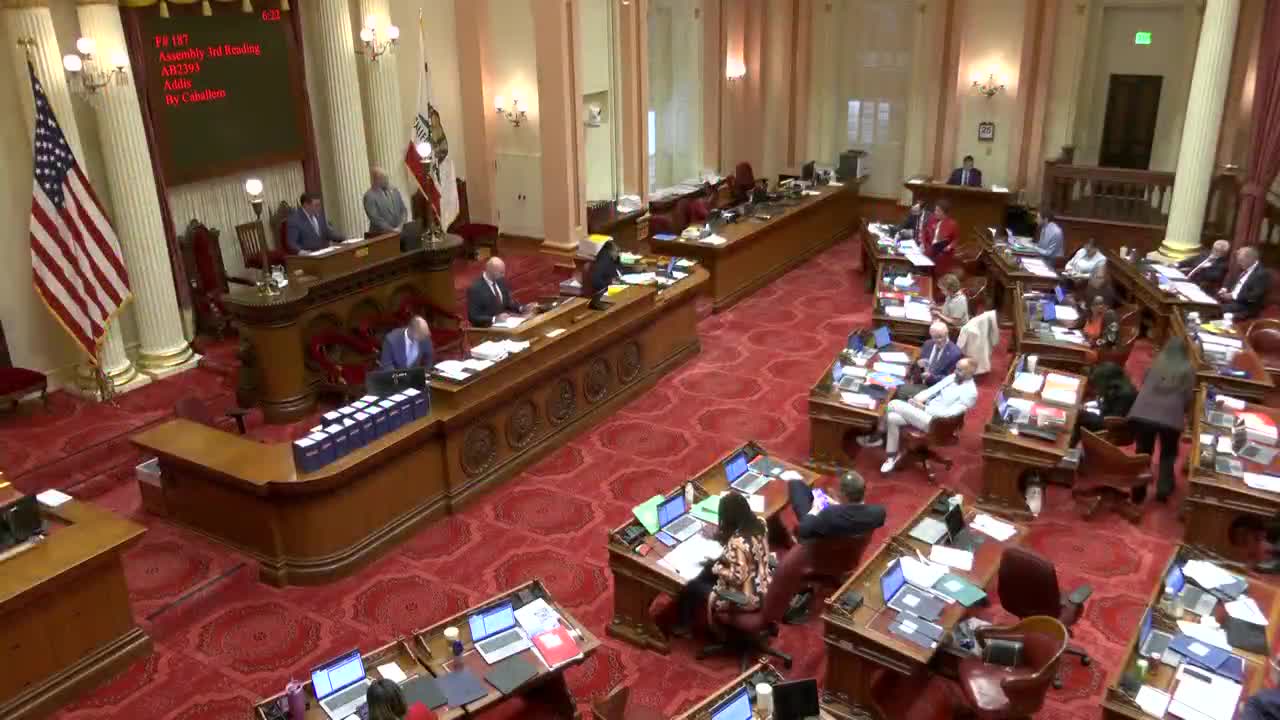 2MIN
Senate Floor
 1MIN
Senate Standing Committee on Appropriations
 27MIN
Senate Standing Committee on Public Safety
 1MIN
Assembly Floor
 32MIN
Assembly Standing Committee on Appropriations
 13MIN
Assembly Standing Committee on Public Safety
Bill Author

Bill Co-Author(s):