AB 1818: California State University: employer-employee relations: meeting and conferring.
- Session Year: 2025-2026
- House: Assembly
- Latest Version Date: 2026-09-30
Current Status:
Passed
(2026-09-30: Chaptered by Secretary of State - Chapter 898, Statutes of 2026.)
Introduced
In Committee
Awaiting First Chamber Vote
Passed First Chamber
In Committee
Awaiting Second Chamber Vote
Passed Second Chamber
Enacted
Existing law grants to higher education employees the right to form, join, and participate in the activities of employee organizations for purposes of representation on all matters of employer-employee relations and for the purpose of meeting and conferring.
Existing law, for the California State University, prohibits written memoranda reached that require budgetary or curative action by the Legislature or other agencies from being effective unless that action has been taken, and requires an appropriate request for financing or budgetary funding for all state-funded employees or for necessary legislation to be forwarded to the Legislature and the Governor or other funding agencies. Existing law requires the entire memorandum to be referred back to the parties for further meeting and conferring when the memorandum requires legislative action and the Legislature or the Governor fails to fully fund the memorandum or take the requisite curative action, except as specified.
This bill would require the above-described determination of whether a memorandum requires legislative action and the Legislature or the Governor fails to fully fund the memorandum or take the requisite curative action to be made by the Public Employment Relations Board by written notification to the parties.
Existing law grants to higher education employees the right to form, join, and participate in the activities of employee organizations for purposes of representation on all matters of employer-employee relations and for the purpose of meeting and conferring.
Existing law, for the California State University, prohibits written memoranda reached that require budgetary or curative action by the Legislature or other agencies from being effective unless that action has been taken, and requires an appropriate request for financing or budgetary funding for all state-funded employees or for necessary legislation to be forwarded to the Legislature and the Governor or other funding agencies. Existing law requires the entire memoranda memorandum to be referred back to the parties for further meeting and conferring when the memoranda require memorandum requires legislative action and the Legislature or the Governor fails to fully fund the memoranda memorandum or take the requisite curative action, except as specified.
This bill would require the above-described determination of whether the memoranda require a memorandum requires legislative action and the Legislature or the Governor fails to fully fund the memoranda memorandum or take the requisite curative action to be made by the Director of Finance Public Employment Relations Board by written notification to the parties.
Existing law grants to higher education employees the right to form, join, and participate in the activities of employee organizations for purposes of representation on all matters of employer-employee relations and for the purpose of meeting and conferring.
Existing law, for the California State University, prohibits written memoranda reached that require budgetary or curative action by the Legislature or other agencies from being effective unless that action has been taken, and requires an appropriate request for financing or budgetary funding for all state-funded employees or for necessary legislation to be forwarded to the Legislature and the Governor or other funding agencies. Existing law requires the entire memoranda to be referred back to the parties for further meeting and conferring when the memoranda require legislative action and the Legislature or the Governor fail fails to fully fund the memoranda or take the requisite curative action, except as specified.
This bill would delete the above-described prohibition and requirements relating to written memoranda of the California State University. require the above-described determination of whether the memoranda require legislative action and the Legislature or the Governor fails to fully fund the memoranda or take the requisite curative action to be made by the Director of Finance by written notification to the parties.
Existing law provides that, for the California State University, the duty to meet and confer in good faith requires the parties to begin negotiations before the adoption of the final budget for the ensuing year sufficiently in advance of the adoption date, and requires the California State University to maintain close liaison with the Department of Finance and the Legislature relative to the meeting and conferring on provisions of the written memoranda that have fiscal ramifications. Existing law requires the Governor to appoint one representative to attend the meeting and conferring and authorizes the Speaker of the Assembly and the Senate Committee on Rules to each appoint one representative to attend the meeting and conferring to advise on the Legislatures views on matters that would require an appropriation or legislative action.This bill would specify that those provisions related to the duty to meet and confer in good faith do not relieve the California State University from complying with its obligations under a collectively bargained agreement negotiated with a labor organization and duly ratified by the parties.Existing law grants to higher education employees the right to form, join, and participate in the activities of employee organizations for purposes of representation on all matters of employer-employee relations and for the purpose of meeting and conferring.
Existing law, for the California State University, prohibits written memoranda reached that require budgetary or curative action by the Legislature or other agencies from being effective unless that action has been taken, and requires an appropriate request for financing or budgetary funding for all state-funded employees or for necessary legislation to be forwarded to the Legislature and the Governor or other funding agencies. Existing law requires the entire memoranda to be referred back to the parties for further meeting and conferring when the memoranda require legislative action and the Legislature or the Governor fail to fully fund the memoranda or take the requisite curative action, except as specified.
This bill would delete the above-described prohibition and requirements relating to written memoranda of the California State University.
Existing law provides that, for the California State University, the duty to meet and confer in good faith requires the parties to begin negotiations before the adoption of the final budget for the ensuing year sufficiently in advance of the adoption date, and requires the California State University to maintain close liaison with the Department of Finance and the Legislature relative to the meeting and conferring on provisions of the written memoranda that have fiscal ramifications. Existing law requires the Governor to appoint one representative to attend the meeting and conferring and authorizes the Speaker of the Assembly and the Senate Committee on Rules to each appoint one representative to attend the meeting and conferring to advise on the Legislatures views on matters that would require an appropriation or legislative action.
This bill would specify that those provisions related to the duty to meet and confer in good faith do not relieve the California State University from complying with its obligations under a collectively bargained agreement negotiated with a labor organization and duly ratified by the parties.
This section shall apply only to the California State University.
(a)The duty to meet and confer in good faith requires the parties to begin negotiations before the adoption of the final budget for the ensuing year sufficiently in advance of the adoption date so that there is adequate time for agreement to be reached, or for the resolution of an impasse. The California State University shall maintain close liaison with the Department of Finance and the Legislature relative to the meeting and conferring on provisions of the written memoranda that have fiscal ramifications. The Governor shall appoint one representative to attend the meeting and conferring, including the impasse procedure, to advise the parties on the views of the Governor on matters that would require an appropriation or legislative action, and the Speaker of the Assembly and the Senate Committee on Rules may each appoint one representative to attend the meeting and conferring to advise the parties on the views of the Legislature on matters that would require an appropriation or legislative action.
(b)No written memoranda reached pursuant to this chapter that require budgetary or curative action by the Legislature or other funding agencies shall be effective unless and until that action has been taken. Following execution of written memoranda of understanding, an appropriate request for financing or budgetary funding for all state-funded employees or for necessary legislation shall be forwarded promptly to the Legislature and the Governor or other funding agencies. When a memorandum requires legislative action pursuant to this section, if the Legislature or the Governor fails to fully fund the memorandum or to take the requisite curative action, as determined by written notification from the board to the parties, the entire memorandum shall be referred back to the parties for further meeting and conferring unless the parties agree that provisions of the memorandum that are nonbudgetary and do not require funding shall take effect whether or not the funding requests submitted to the Legislature are approved.
This section shall apply only to the California State University.
(a)The duty to meet and confer in good faith requires the parties to begin negotiations prior to before the adoption of the final budget for the ensuing year sufficiently in advance of the adoption date so that there is adequate time for agreement to be reached, or for the resolution of an impasse. The California State University shall maintain close liaison with the Department of Finance and the Legislature relative to the meeting and conferring on provisions of the written memoranda that have fiscal ramifications. The Governor shall appoint one representative to attend the meeting and conferring, including the impasse procedure, to advise the parties on the views of the Governor on matters that would require an appropriation or legislative action, and the Speaker of the Assembly and the Senate Committee on Rules may each appoint one representative to attend the meeting and conferring to advise the parties on the views of the Legislature on matters that would require an appropriation or legislative action.
(b)No written memoranda reached pursuant to this chapter that require budgetary or curative action by the Legislature or other funding agencies shall be effective unless and until that action has been taken. Following execution of written memoranda of understanding, an appropriate request for financing or budgetary funding for all state-funded employees or for necessary legislation shall be forwarded promptly to the Legislature and the Governor or other funding agencies. When memoranda require a memorandum requires legislative action pursuant to this section, if the Legislature or the Governor fails to fully fund the memoranda memorandum or to take the requisite curative action, as determined by written notification from the Director of Finance board to the parties, the entire memoranda memorandum shall be referred back to the parties for further meeting and conferring unless the parties agree that provisions of the memoranda memorandum that are nonbudgetary and do not require funding shall take effect whether or not the funding requests submitted to the Legislature are approved.
This section shall apply only to the California State University.
(a)The duty to meet and confer in good faith requires the parties to begin negotiations prior to the adoption of the final budget for the ensuing year sufficiently in advance of the adoption date so that there is adequate time for agreement to be reached, or for the resolution of an impasse. The California State University shall maintain close liaison with the Department of Finance and the Legislature relative to the meeting and conferring on provisions of the written memoranda that have fiscal ramifications. The Governor shall appoint one representative to attend the meeting and conferring, including the impasse procedure, to advise the parties on the views of the Governor on matters that would require an appropriation or legislative action, and the Speaker of the Assembly and the Senate Committee on Rules may each appoint one representative to attend the meeting and conferring to advise the parties on the views of the Legislature on matters that would require an appropriation or legislative action.
(b)No written memoranda reached pursuant to this chapter that require budgetary or curative action by the Legislature or other funding agencies shall be effective unless and until that action has been taken. Following execution of written memoranda of understanding, an appropriate request for financing or budgetary funding for all state-funded employees or for necessary legislation shall be forwarded promptly to the Legislature and the Governor or other funding agencies. When memoranda require legislative action pursuant to this section, if the Legislature or the Governor fail fails to fully fund the memoranda or to take the requisite curative action, as determined by written notification from the Director of Finance to the parties, the entire memoranda shall be referred back to the parties for further meeting and conferring unless the parties agree that provisions of the memoranda that are nonbudgetary and do not require funding shall take effect whether or not the funding requests submitted to the Legislature are approved.
SECTION 1.Section 3572 of the Government Code is amended to read:3572.(a)This section shall apply only to the California State University.(b)The duty to meet and confer in good faith requires the parties to begin negotiations before the adoption of the final budget for the ensuing year sufficiently in advance of the adoption date so that there is adequate time for agreement to be reached, or for the resolution of an impasse. The California State University shall maintain close liaison with the Department of Finance and the Legislature relative to the meeting and conferring on provisions of the written memoranda that have fiscal ramifications. The Governor shall appoint one representative to attend the meeting and conferring, including the impasse procedure, to advise the parties on the views of the Governor on matters that would require an appropriation or legislative action, and the Speaker of the Assembly and the Senate Committee on Rules may each appoint one representative to attend the meeting and conferring to advise the parties on the views of the Legislature on matters that would require an appropriation or legislative action.(c)This section shall not relieve the California State University from complying with its obligations under a collectively bargained agreement negotiated with a labor organization and duly ratified by the parties.(a)This section shall apply only to the California State University.
(a)(b)The duty to meet and confer in good faith requires the parties to begin negotiations prior to before the adoption of the final budget for the ensuing year sufficiently in advance of the adoption date so that there is adequate time for agreement to be reached, or for the resolution of an impasse. The California State University shall maintain close liaison with the Department of Finance and the Legislature relative to the meeting and conferring on provisions of the written memoranda that have fiscal ramifications. The Governor shall appoint one representative to attend the meeting and conferring, including the impasse procedure, to advise the parties on the views of the Governor on matters that would require an appropriation or legislative action, and the Speaker of the Assembly and the Senate Committee on Rules may each appoint one representative to attend the meeting and conferring to advise the parties on the views of the Legislature on matters that would require an appropriation or legislative action.
(b)No written memoranda reached pursuant to this chapter that require budgetary or curative action by the Legislature or other funding agencies shall be effective unless and until that action has been taken. Following execution of written memoranda of understanding, an appropriate request for financing or budgetary funding for all state-funded employees or for necessary legislation shall be forwarded promptly to the Legislature and the Governor or other funding agencies. When memoranda require legislative action pursuant to this section, if the Legislature or the Governor fail to fully fund the memoranda or to take the requisite curative action, the entire memoranda shall be referred back to the parties for further meeting and conferring unless the parties agree that provisions of the memoranda that are nonbudgetary and do not require funding shall take effect whether or not the funding requests submitted to the Legislature are approved.(c)This section shall not relieve the California State University from complying with its obligations under a collectively bargained agreement negotiated with a labor organization and duly ratified by the parties.
REVISIONS: HeadingLine 2.|
Date
|
Status
|
|---|---|
| Sep 30, 2026 | Chaptered by Secretary of State - Chapter 898, Statutes of 2026. |
| Sep 30, 2026 | Approved by the Governor. |
| Aug 28, 2026 | Enrolled and presented to the Governor at 3:30 p.m. |
| Aug 24, 2026 | Senate amendments concurred in. To Engrossing and Enrolling. (Ayes 66. Noes 8.). |
| Aug 24, 2026 | Senate amendments concurred in. To Engrossing and Enrolling. (Ayes 66. Noes 8. Page 6404.). |
| Aug 24, 2026 | Senate amendments concurred in. To Engrossing and Enrolling. |
| Aug 20, 2026 | In Assembly. Concurrence in Senate amendments pending. |
| Aug 20, 2026 | Read third time. Passed. Ordered to the Assembly. (Ayes 27. Noes 10.). |
| Aug 20, 2026 | Read third time. Passed. Ordered to the Assembly. (Ayes 27. Noes 10. Page 5583.). |
| Aug 13, 2026 | Read second time. Ordered to third reading. |
| Aug 13, 2026 | From committee: Do pass. (Ayes 5. Noes 2.) (August 13). |
| Aug 3, 2026 | In committee: Referred to APPR. suspense file. |
| Jul 1, 2026 | From committee: Do pass and re-refer to Com. on APPR. (Ayes 4. Noes 1.) (July 1). Re-referred to Com. on APPR. |
| Jun 17, 2026 | In committee: Hearing postponed by committee. |
| Jun 8, 2026 | From committee chair, with author's amendments: Amend, and re-refer to committee. Read second time, amended, and re-referred to Com. on L., P.E. & R. |
| Jun 3, 2026 | Referred to Com. on L., P.E. & R. |
| May 27, 2026 | In Senate. Read first time. To Com. on RLS. for assignment. |
| May 26, 2026 | Read third time. Passed. Ordered to the Senate. (Ayes 62. Noes 8.) |
| May 26, 2026 | Read third time. Passed. Ordered to the Senate. (Ayes 62. Noes 8. Page 5363.) |
| May 26, 2026 | Read third time. Passed. Ordered to the Senate. |
| May 19, 2026 | Read second time. Ordered to third reading. |
| May 18, 2026 | Read second time and amended. Ordered returned to second reading. |
| May 14, 2026 | From committee: Amend, and do pass as amended. (Ayes 11. Noes 3.) (May 14). |
| Apr 22, 2026 | In committee: Set, first hearing. Referred to APPR. suspense file. |
| Mar 18, 2026 | From committee: Do pass and re-refer to Com. on APPR. (Ayes 7. Noes 0.) (March 18). Re-referred to Com. on APPR. |
| Mar 18, 2026 | Coauthors revised. |
| Feb 23, 2026 | Referred to Com. on P. E. & R. |
| Feb 11, 2026 | From printer. May be heard in committee March 13. |
| Feb 10, 2026 | Read first time. To print. |
|
Date
|
Description
|
Location
|
Votes
|
|
|---|---|---|---|---|
| Aug 24, 2026 | AB 1818 Ortega Concurrence in Senate Amendments | Assembly Floor |
Passed |
|
| Aug 20, 2026 | Assembly 3rd Reading AB1818 Ortega et al. By Smallwood-Cuevas | Senate Floor |
Passed |
|
| Aug 13, 2026 | Do pass | Senate Standing Committee on Appropriations |
Passed |
|
| Aug 3, 2026 | Placed on suspense file | Senate Standing Committee on Appropriations |
Passed |
|
| Jul 1, 2026 | Do pass, but first be re-referred to the Committee on [Appropriations] | Senate Standing Committee on Labor, Public Employment and Retirement |
Passed |
|
| May 26, 2026 | AB 1818 Ortega Assembly Third Reading | Assembly Floor |
Passed |
|
| May 14, 2026 | Do pass as amended. | Assembly Standing Committee on Appropriations |
Passed |
|
| Mar 18, 2026 | Do pass and be re-referred to the Committee on [Appropriations] | Assembly Standing Committee on Public Employment and Retirement |
Passed |
This list shows positions taken on this bill by organizations on the date displayed, which is linked to the original source.
Positions by individuals are not included.
|
Organization
|
Position
|
Date
|
|---|---|---|
| Academic Professionals of California | ** Support | |
| AFL-CIO | ** Support | |
| American Federation of State, County and Municipal Employees | ** Support | |
| Board of Supervisors for the City and County of San Francisco | ** Support | |
| California Faculty Association | ** Support | |
| California Federation of Labor Unions | ** Support | |
| California Federation Of Teachers | ** Support | |
| California State University | ** Against | |
| California State University Employees Union | ** Support | |
| California State University, Office Of The Chancellor | ** Against | |
| California State University, Office Of The Chancellor | ** Against | |
| Service Employees International Union, California | ** Support | |
| Teamsters California | ** Support | |
| The author's office | ** Against |
CONCURRENCE IN SENATE AMENDMENTS
CSA1 Bill Id:AB 1818
Author:(Ortega)
As Amended Ver:June 8, 2026
Majority vote
SUMMARY
Amends the Higher Education Employer-Employee Relations Act (HEERA) relating to the California State University (CSU), a written memorandum of understanding (MOU), and the state Budget Act by requiring written notification to the parties of a determination as to whether the Legislature fails to fully fund a MOU or taken requisite curative action.
Senate Amendments
Shift the determination by written notification to the parties from the Director of Finance to, instead, be from the Public Employment Retirement Board (PERB), among related technical changes.
COMMENTS
Under existing law, any written MOU reached pursuant to the HEERA that requires budgetary or curative action by the Legislature or other funding agencies must not become effective unless and until that action has been taken. In addition, if the Legislature or the Governor fail to fully fund the parties' agreement or to take the requisite curative action, the entire agreement must be referred back to the parties for further meeting and conferring unless the parties agree that provisions of the MOU that are nonbudgetary and do not require funding must take effect whether or not the funding requests submitted to the Legislature are approved.
This bill is intended to resolve periodic, if not regular, labor strife events regarding an MOU in effect between the CSU and labor unions due to the CSU solely determining that the Legislature has not fully funded the MOU's provisions or certain provisions thereof. Overall, it accomplishes this by removing the determination from a party having direct interest in the performance of MOU terms and, instead, provides the PERB – a neutral and objective entity that is not a party to the MOU – the authority to make that determination.
It is noted that, although the PERB – an entity within the executive branch of state government – would be granted such authority, it is the Legislature that holds the constitutional "power of the purse." In the event that the PERB and the Legislature differ as to the Legislature's intent and action (including curative) to fund the implementation of a MOU, this may raise constitutional separation of powers questions or concerns that could potentially result in litigation (e.g., legislative branch v. executive branch).
Please refer to the various policy committee analyses for a full discussion of this bill.
According to the Author
"The State has honored the five-year budget compact, increasing CSU's annual base funding by five percent each year. CSU is projecting higher revenue from tuition increases and has reserves of reportedly $8 billion in cash investments with $2.4 billion in surplus/designated balances and reserves. And yet, CSU – citing funding deferrals in the 2025-26 state budget – used its statutory authority to refuse to pay raises agreed to in 2024 collective bargaining agreements and reopen negotiations, affecting 16,000 workers. CSU has engaged in multiple violations of state labor law, including bargaining in bad faith, distributing anti-union mass communications, and refusal to provide contractually agreed-upon raises. Beyond betraying workers, CSU’s actions have and continue to create learning disruptions for students as well as delays and stoppages of construction and maintenance."
Arguments in Support
According to the California State University Employees Union, "[u]ntil 2024, CSU was the only State employer to deny their employees merit salary step increases. CSU's denial of these steps left their employees far behind other similarly situated public employees in California, a reality put forth by the authorized employee representatives and confirmed in a study funded through the state budget and completed by Mercer. Following decades of dead ends in bargaining, several efforts in the Legislature, and multiple strikes, the CSU finally agreed to implement merit salary steps. Now, CSU is refusing to honor what they agreed to, declining to give modest wage increases and salary steps to hard-working employees. Without legislative action, workers at CSU are at risk of having their demands agreed to in bargaining and then denied in practice when CSU claims inadequate funds to honor it, regardless of budget reality. When faculty and staff are not paid a living wage, students are directly harmed as well. Without faculty, the CSU must cease instruction in the classroom. Without non-faculty staff, support services that are critical to student success such as healthcare, academic support, and IT disappear. Our dedicated members love their jobs, but stagnant wages have left many struggling to make ends meet and unable to afford to stay."
Arguments in Opposition
None.
FISCAL COMMENTS
According to the Senate Committee on Appropriations, the CSU indicates that the current version of the bill would not result in administrative costs, and the PERB would incur a one-time General Fund cost of $50,000 to promulgate regulations.
VOTES:
ASM PUBLIC EMPLOYMENT AND RETIREMENT: 7-0-0
YES: McKinnor, Lackey, Alanis, Boerner, Garcia, Nguyen, Michelle Rodriguez
ASM APPROPRIATIONS: 11-3-1
YES: Wicks, Aguiar-Curry, Calderon, Caloza, Fong, Mark González, Krell, Pacheco, Pellerin, Sharp-Collins, Solache
NO: Hoover, Dixon, Tangipa
ABS, ABST OR NV: Ta
ASSEMBLY FLOOR: 62-8-10
YES: Addis, Aguiar-Curry, Ahrens, Alanis, Alvarez, Arambula, Ávila Farías, Bains, Bauer-Kahan, Bennett, Berman, Boerner, Bonta, Bryan, Calderon, Caloza, Carrillo, Chen, Connolly, Davies, Elhawary, Fong, Gabriel, Garcia, Gipson, Mark González, Haney, Harabedian, Hart, Irwin, Jackson, Kalra, Krell, Lackey, Lee, Lowenthal, McKinnor, Nguyen, Ortega, Pacheco, Papan, Patel, Pellerin, Petrie-Norris, Quirk-Silva, Ramos, Ransom, Rogers, Blanca Rubio, Schiavo, Schultz, Sharp-Collins, Solache, Soria, Stefani, Valencia, Wallis, Ward, Wicks, Wilson, Zbur, Rivas
NO: DeMaio, Dixon, Ellis, Hadwick, Johnson, Macedo, Sanchez, Tangipa
ABS, ABST OR NV: Castillo, Flora, Gallagher, Jeff Gonzalez, Hoover, Muratsuchi, Patterson, Celeste Rodriguez, Michelle Rodriguez, Ta
SENATE FLOOR: 27-10-3
YES: Allen, Archuleta, Arreguín, Ashby, Becker, Blakespear, Cabaldon, Caballero, Cervantes, Cortese, Durazo, Gonzalez, Grayson, Hurtado, Laird, Limón, McGuire, McNerney, Menjivar, Pérez, Richardson, Rubio, Smallwood-Cuevas, Umberg, Wahab, Weber Pierson, Wiener
NO: Alvarado-Gil, Choi, Dahle, Grove, Jones, Niello, Ochoa Bogh, Seyarto, Strickland, Valladares
ABS, ABST OR NV: Padilla, Reyes, Stern
UPDATED
VERSION: June 8, 2026
CONSULTANT: Michael Bolden / P. E. & R. / (916) 319-3957 FN: 0003873
SENATE RULES COMMITTEE Office of Senate Floor Analyses (916) 651-4171 | AB 1818 |
THIRD READING
Bill No: AB 1818
Author: Ortega (D), et al.
Amended: 6/8/26 in Senate
Vote: 21
SENATE LABOR, PUB. EMP. & RET. COMMITTEE: 4-1, 7/1/26
AYES: Smallwood-Cuevas, Cortese, Durazo, Laird
NOES: Strickland
SENATE APPROPRIATIONS COMMITTEE: 5-2, 8/13/26
AYES: Cervantes, Cabaldon, Grayson, Richardson, Wahab
NOES: Seyarto, Dahle
ASSEMBLY FLOOR: 62-8, 5/26/26 - See last page for vote
SUBJECT: California State University: employer-employee relations: meeting and conferring
SOURCE: Teamsters California
DIGEST:
This bill shift the determinations from the California State University (CSU) to Public Employment Retirement Board (PERB), of whether the state has funded or acted on changes to law necessary to implement a memorandum of agreement (MOU) between CSU and its employee unions. Under current law, when CSU determines that the state has not made such financing or legislative changes, it must send the MOU back to the bargaining parties for renegotiation.
ANALYSIS:
Existing law:
- Establishes the Higher Education Employer-Employee Relations Act (HEERA) which provides a statutory framework to regulate labor relations between CSU (as well as the University of California (UC) and the University of California College of the Law, San Francisco (UC Law SF)) and their respective employees. (Government Code § 3560 et seq.)
- Defines “Higher Education Employer” to mean, among others, the CSU Board of Trustees, or a person acting as its agent. (Government Code §3562 (g))
- Defines “scope of representation” for HEERA’s application to CSU to mean, and be limited to, wages, hours of employment, and other terms and conditions of employment and excludes certain topics, as specified. (Government Code § 3562 (r))
- Establishes the Public Employment Relations Board (PERB) to administer the several collective bargaining statutes covering specified California public employees. PERB functions as a quasi-judicial administrative agency responsible for adjudicating employer-employee relations, resolving disputes, and enforcing the statutory duties and rights of public agency employers and employee organizations (Government Code §3541).
- Requires CSU and its employees’ exclusive representatives to begin negotiations prior to the adoption of the final budget for the ensuing year sufficiently in advance of the adoption date so that there is adequate time for agreement to be reached, or for the resolution of an impasse. (Government Code §3572 (a)).
- Requires CSU to maintain close liaison with the Department of Finance and the Legislature relative to the meeting and conferring on provisions of the written memoranda that have fiscal ramifications. (Government Code §3572 (a)).
- Prohibits any written memoranda reached pursuant to HEERA that require budgetary or curative action by the Legislature or other funding agencies to be effective unless and until that action has been taken. (Government Code §3572 (b)).
- Provides that if the Legislature or the Governor fail to fully fund the parties’ agreement or to take the requisite curative action, the entire agreement shall be referred back to the parties for further meeting and conferring unless the parties agree that provisions of the memoranda that are nonbudgetary and do not require funding shall take effect whether or not the funding requests submitted to the Legislature are approved. (Government Code §3572 (b)).
This bill amends HEERA to specify that the Public Employment Relations Board (PERB) shall make the determination whether the state “fails to fully fund the agreement or take the requisite curative action to make the agreement effective, thereby transferring from CSU to PERB the responsibility for triggering the agreement’s implementation or its reopening for negotiations pursuant to existing law.
Comments
Need for this bill? According to the author: “The State has honored the five-year budget compact, increasing CSU’s annual base funding by five percent each year. CSU is projecting higher revenue from tuition increases and has reserves of reportedly $8 billion in cash investments with $2.4 billion in surplus/designated balances and reserves. And yet, CSU – citing funding deferrals in the 2025-26 state budget – used its statutory authority to refuse to pay raises agreed to in 2024 CBAs and reopen negotiations, affecting 16,000 workers.
CSU has engaged in multiple violations of state labor law, including bargaining in bad faith, distributing anti-union mass communications, and refusal to provide contractually agreed-upon raises. Beyond betraying workers, CSU’s actions have and continue to create learning disruptions for students as well as delays and stoppages of construction and maintenance.”
CSU Withdrawal of Opposition. According to the California State University (CSU), the university “has adopted a neutral position on Assembly Bill 1818 (Ortega). The CSU was previously opposed, but with the author’s amendments on June 8, 2026, we have updated our position.”
Related/ Prior Legislation
AB 1582 (Ortega, 2026) would make HEERA employers who disregard arbitration decisions related to CBA violation disputes over outsourcing “the same or similar services” of bargaining unit work, subject to PERB unfair labor practice charges and penalties for repeat offenders, as specified. AB 1582 is currently pending hearing in the Seante Appropriations committee.
AB 1630 (Caloza, 2026), would make changes to HEERA regarding observation of the meet and confer process. AB 1630 is currently pending hearing in the Seante Appropriations committee.
FISCAL EFFECT: Appropriation: No Fiscal Com.: Yes Local: No
SUPPORT: (Verified 8/12/26)
Teamsters California (source)
Academic Professionals of California
American Federation of State, County and Municipal Employees
Board of Supervisors for the City and County of San Francisco
California Faculty Association
California Federation of Labor Unions
California Federation of Teachers
California State University Employees Union
Service Employees International Union, California
OPPOSITION: (Verified 8/12/26)
None received.
ARGUMENTS IN SUPPORT:
According to the California State University Employees Union: “Until 2024, CSU was the only State employer to deny their employees merit salary step increases. CSU’s denial of these steps left their employees far behind other similarly situated public employees in California, a reality put forth by the authorized employee representatives and confirmed in a study funded through the state budget and completed by Mercer. Following decades of dead ends in bargaining, several efforts in the Legislature, and multiple strikes, the CSU finally agreed to implement merit salary steps. Now, CSU is refusing to honor what they agreed to, declining to give modest wage increases and salary steps to hard-working employees. Without legislative action, workers at CSU are at risk of having their demands agreed to in bargaining and then denied in practice when CSU claims inadequate funds to honor it, regardless of budget reality.
When faculty and staff are not paid a living wage, students are directly harmed as well. Without faculty, the CSU must cease instruction in the classroom. Without non-faculty staff, support services that are critical to student success such as healthcare, academic support, and IT disappear. Our dedicated members love their jobs, but stagnant wages have left many struggling to make ends meet and unable to afford to stay.”
ASSEMBLY FLOOR: 62-8, 5/26/26
AYES: Addis, Aguiar-Curry, Ahrens, Alanis, Alvarez, Arambula, Ávila Farías, Bains, Bauer-Kahan, Bennett, Berman, Boerner, Bonta, Bryan, Calderon, Caloza, Carrillo, Chen, Connolly, Davies, Elhawary, Fong, Gabriel, Garcia, Gipson, Mark González, Haney, Harabedian, Hart, Irwin, Jackson, Kalra, Krell, Lackey, Lee, Lowenthal, McKinnor, Nguyen, Ortega, Pacheco, Papan, Patel, Pellerin, Petrie-Norris, Quirk-Silva, Ramos, Ransom, Rogers, Blanca Rubio, Schiavo, Schultz, Sharp-Collins, Solache, Soria, Stefani, Valencia, Wallis, Ward, Wicks, Wilson, Zbur, Rivas
NOES: DeMaio, Dixon, Ellis, Hadwick, Johnson, Macedo, Sanchez, Tangipa
NO VOTE RECORDED: Castillo, Flora, Gallagher, Jeff Gonzalez, Hoover, Muratsuchi, Patterson, Celeste Rodriguez, Michelle Rodriguez, Ta
Prepared by: Glenn Miles / L., P.E. & R. / (916) 651-1556
8/14/26 16:38:59
**** END ****
SENATE COMMITTEE ON
Senator Sabrina Cervantes, Chair
2025 - 2026 Regular Session
AB 1818 (Ortega) - California State University: employer-employee relations: meeting and conferring
Version: | Policy Vote: |
Urgency: | Mandate: |
Hearing Date: | Consultant: |
Bill Summary:
AB 1818 would shift the determination from the California State University (CSU) to the Public Employment Retirement Board (PERB), of whether the State has funded or acted on changes to law necessary to implement a memorandum of agreement (MOU) between CSU and its employee unions.
Fiscal Impact:
- CSU indicates that the current version of the bill would not result in administrative costs.
- PERB would incur a one-time General Fund cost of $50,000 to promulgate regulations.
Background:
The Higher Education Employer-Employee Relations Act (HEERA), enacted in 1978, establishes the collective bargaining framework for California's public higher education institutions and is administered by the Public Employment Relations Board (PERB). Unlike other public sector labor agreements, memoranda of understanding (MOUs) negotiated under HEERA are not subject to legislative approval. Current law includes specific provisions governing the California State University (CSU) when a negotiated agreement assumes additional state funding. If the Legislature and Governor do not provide the funding assumed in the agreement or take other corrective action, the agreement may be returned to the parties for further negotiations. This bill would modify these provisions by requiring the CSU to continue complying with its collective bargaining obligations even if the state does not provide the level of funding assumed during negotiations.
State support for the CSU has increased in recent budget years, although budget actions have included funding deferrals that affect the timing of available resources. In response to a dispute regarding funding assumed in a recently negotiated collective bargaining agreement, the CSU asserted that a state funding shortfall triggered reopened salary negotiations. The Legislature subsequently provided the CSU with a one-time, zero-interest loan to address the deferred funding amount.
CSU expenditures for core operations have grown at a rate below inflation in recent years, although salary-related costs have increased more rapidly, driven primarily by negotiated compensation increases. The Legislative Analyst’s Office estimates that each 1 percent increase in CSU employee salaries results in approximately $59 million in ongoing costs, while projected employee health benefit increases create additional financial pressures. Although CSU maintains significant total reserves, its unrestricted core reserves remain below its targeted level, providing limited flexibility to absorb additional ongoing costs without corresponding state funding or expenditure reductions.
Proposed Law:
This bill would amend HEERA to specify that PERB shall make the determination whether the State “fails to fully fund the agreement or take the requisite curative action to make the agreement effective, thereby transferring from CSU to PERB the responsibility for triggering the agreement’s implementation or its reopening for negotiations pursuant to existing law.
Related Legislation:
- AB 1582 (Ortega) would make HEERA employers who disregard arbitration decisions related to CBA violation disputes over outsourcing “the same or similar services” of bargaining unit work, subject to PERB unfair labor practice charges and penalties for repeat offenders, as specified. The bill is currently pending in this Committee.
- AB 1630 (Caloza), would make changes to HEERA regarding observation of the meet and confer process. The bill is currently pending in this Committee.
Staff Comments:
As noted above, this bill would shift the determination from CSU to PERB of whether the State has funded or acted on changes to law necessary to implement an MOU between CSU and its employee unions. CSU indicates that the current version of the bill codifies its existing practice and, therefore, would have no fiscal impact.
-- END --
SENATE COMMITTEE ON LABOR, PUBLIC EMPLOYMENT AND RETIREMENT
Senator Lola Smallwood-Cuevas, Chair
2025 - 2026 Regular
Bill No: AB 1818 Hearing Date: July 1, 2026
Author: | Ortega | ||
Version: | June 8, 2026 | ||
Urgency: | No | Fiscal: | Yes |
Consultant: | Glenn Miles | ||
SUBJECT: California State University: employer-employee relations: meeting and conferring
KEY ISSUE
This bill would shift the determination from the California State University (CSU) to Public Employment Retirement Board (PERB), of whether the state has funded or acted on changes to law necessary to implement a memorandum of agreement (MOU) between CSU and its employee unions. Under current law, when CSU determines that the state has not made such financing or legislative changes, it must send the MOU back to the bargaining parties for renegotiation.
ANALYSIS
Existing law:
- Establishes the Higher Education Employer-Employee Relations Act (HEERA) which provides a statutory framework to regulate labor relations between CSU (as well as the University of California (UC) and the University of California College of the Law, San Francisco (UC Law SF)) and their respective employees. (Government Code § 3560 et seq.)
- Defines “Higher Education Employer” to mean, among others, the CSU Board of Trustees, or a person acting as its agent. (Government Code §3562 (g))
- Defines “scope of representation” for HEERA’s application to CSU to mean, and be limited to, wages, hours of employment, and other terms and conditions of employment and excludes certain topics, as specified. (Government Code § 3562 (r))
- Establishes the Public Employment Relations Board (PERB) to administer the several collective bargaining statutes covering specified California public employees. PERB functions as a quasi-judicial administrative agency responsible for adjudicating employer-employee relations, resolving disputes, and enforcing the statutory duties and rights of public agency employers and employee organizations (Government Code §3541).
- Requires CSU and its employees’ exclusive representatives to begin negotiations prior to the adoption of the final budget for the ensuing year sufficiently in advance of the adoption date so that there is adequate time for agreement to be reached, or for the resolution of an impasse. (Government Code §3572 (a)).
- Requires CSU to maintain close liaison with the Department of Finance and the Legislature relative to the meeting and conferring on provisions of the written memoranda that have fiscal ramifications. (Government Code §3572 (a)).
- Prohibits any written memoranda reached pursuant to HEERA that require budgetary or curative action by the Legislature or other funding agencies to be effective unless and until that action has been taken. (Government Code §3572 (b)).
- Provides that if the Legislature or the Governor fail to fully fund the parties’ agreement or to take the requisite curative action, the entire agreement shall be referred back to the parties for further meeting and conferring unless the parties agree that provisions of the memoranda that are nonbudgetary and do not require funding shall take effect whether or not the funding requests submitted to the Legislature are approved. (Government Code §3572 (b)).
This bill:
- Amends HEERA to specify that the Public Employment Relations Board (PERB) shall make the determination whether the state “fails to fully fund the agreement or take the requisite curative action to make the agreement effective, thereby transferring from CSU to PERB the responsibility for triggering the agreement’s implementation or its reopening for negotiations pursuant to existing law.
COMMENTS
1. Need for this bill?
According to the author:
“The State has honored the five-year budget compact, increasing CSU’s annual base funding by five percent each year. CSU is projecting higher revenue from tuition increases and has reserves of reportedly $8 billion in cash investments with $2.4 billion in surplus/designated balances and reserves. And yet, CSU – citing funding deferrals in the 2025-26 state budget – used its statutory authority to refuse to pay raises agreed to in 2024 CBAs and reopen negotiations, affecting 16,000 workers.
CSU has engaged in multiple violations of state labor law, including bargaining in bad faith, distributing anti-union mass communications, and refusal to provide contractually agreed-upon raises. Beyond betraying workers, CSU’s actions have and continue to create learning disruptions for students as well as delays and stoppages of construction and maintenance.”
2. Proponent Arguments:
According to the California State University Employees Union:
“Until 2024, CSU was the only State employer to deny their employees merit salary step increases. CSU’s denial of these steps left their employees far behind other similarly situated public employees in California, a reality put forth by the authorized employee representatives and confirmed in a study funded through the state budget and completed by Mercer. Following decades of dead ends in bargaining, several efforts in the Legislature, and multiple strikes, the CSU finally agreed to implement merit salary steps. Now, CSU is refusing to honor what they agreed to, declining to give modest wage increases and salary steps to hard-working employees. Without legislative action, workers at CSU are at risk of having their demands agreed to in bargaining and then denied in practice when CSU claims inadequate funds to honor it, regardless of budget reality.
When faculty and staff are not paid a living wage, students are directly harmed as well. Without faculty, the CSU must cease instruction in the classroom. Without non-faculty staff, support services that are critical to student success such as healthcare, academic support, and IT disappear. Our dedicated members love their jobs, but stagnant wages have left many struggling to make ends meet and unable to afford to stay.”
3. Opponent Arguments:
According to the California State University:
“At the heart of AB 1818 is the question of whether the CSU complied with the terms of the 2024 collective bargaining agreement (CBA) negotiated and ratified by Teamsters Local 2010 and the CSU. That agreement included clear provisions tying certain salary increases to the receipt of $239.7 million in new, unallocated, ongoing state funding in the 2025–26 budget. Those funding conditions were not met. Instead, the enacted state budget included a $143.8 million reduction to the CSU and provided one-time funding through a loan that must be repaid. As a result, the agreement’s mutually negotiated salary reopening provisions were triggered.
Under the terms of the agreement, Teamsters Local 2010 filed a grievance over the issue. The CSU and Teamsters Local 2010 have participated in mediation through the Public Employment Relations Board (PERB) and a recently issued fact-finding report confirms that the CSU did not receive the funding required under the agreement to trigger those salary increases.”
Moreover, CSU states, “ The CSU is concerned by continued efforts to address individual labor disputes through statute rather than through the collective bargaining process. If either party believes the existing mechanisms for resolving disputes are inadequate, those concerns should be addressed at the bargaining table during future negotiations. Establishing new statutory requirements in response to a specific contractual disagreement risks undermining the integrity of the collective bargaining process and the agreements reached by both parties.”
4. Related/ Prior Legislation:
AB 1582 (Ortega, 2026) would make HEERA employers who disregard arbitration decisions related to CBA violation disputes over outsourcing “the same or similar services” of bargaining unit work, subject to PERB unfair labor practice charges and penalties for repeat offenders, as specified. AB 1582 is currently pending hearing in the Seante Appropriations committee.
AB 1630 (Caloza, 2026), would make changes to HEERA regarding observation of the meet and confer process. AB 1630 is currently pending hearing in the Seante Appropriations committee.
SUPPORT
Teamsters California (Sponsor)
California Faculty Association
California Federation of Labor Unions
California Federation of Teachers
California State University Employees Union
San Francisco Board of Supervisors
Service Employees International, California
OPPOSITION
California State University,
-- END --
ASSEMBLY THIRD READING
ATR Bill Id:AB 1818
Author:(Ortega)
As Amended Ver:May 18, 2026
Majority vote
SUMMARY
Amends the Higher Education Employer-Employee Relations Act (HEERA) relating to the California State University (CSU), a written memorandum of understanding (MOU), and funding of the MOU via the annual state Budget Act.
Major Provisions
Require, as to whether a MOU requires legislative action or if the Legislature or Governor fail to fully funder the MOU or take requisite curative action, the determination to be made by the Director of Finance by written notification to parties.
COMMENTS
Meeting and Conferring Under the HEERA
In the public sector, including the HEERA, the core mechanics of collective bargaining are twofold: (i) Each party must give up something to receive something in return to, (ii) achieve the manifestation of the art of compromise represented by a written and signed agreement that is formally executed as a MOU. Achieving the agreement, i.e., contract, is identical to the common law principles of the formation of a contract, i.e., offer, acceptance, and exchange of consideration. However, to achieve an agreement assumes that the collective bargaining process and negotiation strategy or tactics used by both the employer and employee organization are in good faith and not to reach an impasse, nor the employer driving negotiations in a manner ultimately to be able to unilaterally implement (also commonly referred to by employee organizations as "impose") what might be considered by the employee organization as an unfair or objectionable contract.
While the employer and exclusive representative are the only parties to the agreed-upon and executed MOU, pursuant to the HEERA, the CSU is required to maintain close liaison with the Department of Finance and the Legislature relative to that process on provisions of the written MOU that have fiscal, i.e., state budgetary, ramifications. In addition, the Governor is required to appoint one person to attend the meeting and conferring as well as impasse procedures who provides advice to the parties of the Governor's views on matters that require appropriation or legislative action. The Speaker of the Assembly and the Senate Committee on Rules are each authorized to appoint one representative to attend the meet and confer process to advise the parties on the views of the Legislature on matters that require an appropriation or legislative action. Unlike the Dills Act governing employment relations for executive branch civil service employees, the HEERA does not require an agreed-upon MOU between the CSU and an employee organization to be presented to, and approved by, the Legislature. Where the acts differ in this regard, they are similar with respect to those MOU provisions that may be implemented if they do not require legislative action. Thus, although the procedural manner by which a MOU becomes effective among both acts differ, the means of their effectuation are both governed by legislative action via the annual state Budget Act consistent with the Legislature’s plenary constitutional "power of the purse." (Section 12, art. IV, Cal. Const.)
Current CSU State Funding
Ongoing CSU core funds increased by just over $400 million annually from fiscal year 2024-25 to 2025-26, and by $765 million from fiscal year 2025-26 to the Governor's proposed amount for 2026-27, including the restoration of a $143.8 million funding deferral of 2025-26 into 2026-27 that was enacted as part of the 2025 Budget Act. However, the Governor’s proposal for fiscal year 2026-27 maintained an additional year of the $143.8 million funding deferral, which the Governor’s administration intends to retire in fiscal year 2027-28. In the case of labor strife between the CSU and Teamsters Local 2010 regarding an MOU within a recently ratified CBA, the CSU claims, because of this 2025-26 deferral, the CSU failed to receive a "defined level of new, ongoing state funding" agreed upon in CSU’s CBA; as a result, salary negotiations reopened. The Legislature provided the CSU with a one-time zero-interest loan for the amount of the deferral, which the CSU requested and received in the fall of 2025.
CSU Spending and Reserves
The LAO finds that, since the 2019-20 fiscal year, the CSU's spending on core operating expenses has not kept pace with inflation and increased at an average annual rate of 3.6 percent between 2019-20 and 2024-25. However, in that same period, CSU's spending for salaries increased by $805 million, or 23 percent total, slightly outpacing inflation, with the bulk of this spending represented by salary increases. According to the LAO, the cost to increase salaries at the CSU by 1 percent is $59 million and the CSU expects employee health premiums in fiscal year 2026-27 to increase by $21 million. Salary negotiations for fiscal year 2025-26 are still ongoing but nonrepresented employees received a one-time salary increase of 3 percent in fiscal year 2025-26, which was also offered to represented employees. Notably, as of June 30, 2025, the CSU fell short of its targeted uncommitted reserve amount, with $760 billion in uncommitted core funding reserves, slightly below an estimated month of expenses, but $2.3 billion in total core funding reserves.
The CSU and CSU Bargaining Unit 6: Relevant MOU Provisions and Recent Labor Strife at the CSU Regarding an MOU
An MOU between the CSU and CSU Bargaining Unit 6 (Teamsters, Local 2010) covers a range of matters of interest to both the employer and employees represented by the employee organization. Within this agreement, Article 24 provides for the salary of bargaining unit members. Various matters relating to salary pursuant to that Article explicitly state that their effectuation is contingent upon the "State of California's final Budget Act of 2024…," and establish that if the specific contingency is not met, the CSU and the union must reopen negotiations." In addition, Section 32.3 of Article 32 of this MOU expressly states, “[any] term(s) of this Agreement which is deemed by the Employer to carry an economic cost shall not be implemented until the Employer determines that the amount required therefore has been appropriated and makes such amount available for expenditure for such purpose. If the Employer determines that less than the amount needed to implement this Agreement or any provision herein has been appropriated or makes available less than the amount needed to implement this Agreement or any provision herein, the term(s) of this Agreement deemed by the CSU to carry economic cost shall automatically be subject to the meet and confer process.”
In an update regarding the Teamsters, Local 2010's labor action, the CSU stated that, "[this] labor action stems from a dispute over salary provisions for the 2025-26 fiscal year. Teamsters' leadership has publicly claimed that the CSU received full state funding for that year and that salary increases provided for in the agreement should therefore be implemented. This claim is incorrect. Under the parties' agreement, the salary provisions for 2025-26 were expressly contingent upon the CSU receiving a defined level of new, ongoing state funding, approximately $250 million. Instead, the enacted state budget reduced CSU’s ongoing base by $143.8 million. While the Legislature subsequently provided CSU with a zero-interest loan in the same amount as the reduction, that funding is one-time and must be repaid. Because the loan is not permanent, it cannot be used to support ongoing salary increases. For this reason, the CSU authorized the use of the loan for one-time payments to employees, subject to the collective bargaining process. The contingent salary increases outlined in the Teamsters agreement depended on the receipt of the sufficient new, ongoing funding, which the CSU did not receive, even with the loan. As a result the CSU notified the Teamsters of its request for a salary reopener as required by the parties' agreement…[.]"
Please refer to the policy committee analysis for a full discussion of this bill.
According to the Author
“Once a contract is signed, it is up to both employer and employee to uphold their end of the [agreement]. However, the CSU has been using an antiquated section of law which gives them sole authority to interpret the State Budget and decide whether or not they received enough funding to keep their end of the CBAs they reach with employees. As it stands, CSU has a legal backdoor to deny employees the raises they have agreed to give. [This bill] will eliminate this section of code so that the CSU cannot break the contracts they have made with their employees. In the instance the CSU cannot meet their agreements, they will have recourse with the [PERB] to renegotiate contracts, just like any other public employer.”
Arguments in Support
In part, Teamsters California states, “[the] hardworking employees of the CSU are what make the affectionately known people's university great. Every day, on all 22 campuses, the people's university reaps the benefits of their tireless workforce. The loophole [the] CSU exploits was intended to protect higher education institutions in California from unforeseen budget emergencies or policy changes initiated by the Legislature. In such instances, the CSU can refuse to honor their collective bargaining agreements, a decision made at their sole discretion. The California Legislature and the Governor have honored the five-year budget compact, increasing CSU's annual base funding by five percent each year. CSU has raised tuition by 36% by 2029. The resulting revenue increase is projected to be […] of $1.2 billion systemwide. According to the CSU budget summaries published on their own website, in the 2024-2025 fiscal year they allocated $8,466,495,000 of the $8,471,495,000 in state support, indicating a $5,000,000 surplus. They also report having significant reserves north of $8 billion in cash investments and $2.4 billion in surplus/designated balances and reserves. This makes their reserves equal to the entirety of their state allocated funds in the prior fiscal year. Still, citing funding deferrals in the 2025-26 state budget, CSU used its statutory authority to refuse to pay raises it agreed to in 2024. In the same month, they increased executive compensation by 5-17% for the CSU presidents. “[…] The actions of [the] CSU go beyond betraying workers; they are betraying their students. Without qualified mechanics and technicians at work, this means deliveries turned away and construction delayed. It leaves elevators, lighting, heating, and cooling, electrical systems, and restrooms potentially inoperable. Students already face enough challenges. Students attending any public school in California deserve freedom from learning disruptions caused by poor management. [The] CSU's behavior pollutes the very spirit of HEERA and is antithetical to California's long history of protecting workers. This unconscionable mismanagement is poisoning [the] CSU and the State of California's reputation as an employer. California, amid this national affordability crisis, must ensure it remains a place where workers are paid and treated fairly. California must stand in its values. [This bill] is essential to close this dangerous loophole and protect workers, students, and California values.
The California Federation of Teachers – a Union of Educators and Classified Professionals, AFT, AFL-CIO, the California State Council of the Service Employees International Union, and the California State University Employees Union offer similar statements in support of this bill.
Arguments in Opposition
The CSU states that, "[it] relies on a combination of tuition and state General Fund support to balance the system's operating budget. State appropriations make up 60 percent of the CSU's operating budget. The volatility of the annual state budget has had a significant effect on the CSU and its year-to-year budget. For example, in 2024–25 the CSU absorbed a one-time $75 million reduction and in 2025–26 the enacted state budget included a $143.8 million one-time reduction. These appropriations are foundational to the university’s financial planning, as the CSU cannot responsibly commit to ongoing compensation costs without certainty regarding the level of state funding ultimately provided. When state appropriations are reduced, the CSU has no mechanism to replace that revenue. Moreover, the state budget is not finalized until June, and public institutions like the CSU must retain the ability to reasonably adjust budgets once final funding levels are known. Approximately 75 percent of CSU operating expenditure is dedicated to salaries and benefits. Salary increases create permanent financial obligations that cannot be scaled back. Committing to ongoing compensation increases without guaranteed, ongoing funding could expose the university to significant fiscal risk and would divert resources from core student services.
The author's office has stated that [this bill] is necessary to uphold the 2024 ratified collective bargaining agreement (CBA) between Teamsters Local 2010 and the CSU. The CSU respectfully disagrees with this assessment. The CBA, which was agreed to by the Teamsters and ratified by its membership, included clear provisions tying certain salary increases to the receipt of $239.7 million in new, unallocated, ongoing state funding in the 2025–26 budget. Those contingencies were not met. The state budget fell short of providing new, unallocated, ongoing funding, as it included the $143.8 million reduction and instead provided one-time funding through a loan that must be paid back this year. This triggered the mutually agreed to salary reopening process. The CSU and Teamsters have participated in mediation through the [PERB], and a fact-finding report will become public later this month. [This bill] could alter a carefully structured and longstanding collective bargaining framework by inserting statutory requirements into matters that are best resolved at the bargaining table. It risks undermining mutually agreed to agreements, increasing fiscal exposure beyond state appropriated funding, and limiting CSU's ability to responsibly manage public resources. Moreover, the bill could limit future agreements to one-year terms and delay finalizing contracts until state funding levels are known each summer. This would create uncertainty for employees and undermine the multi-year planning that benefits both the university and its workforce."
FISCAL COMMENTS
According to the Assembly Committee on Appropriations, to the extent this bill results in an increase in single-year as opposed to multi-year bargaining terms, given the uncertainty of funding for ongoing compensation costs, subject to written notification from the director of the Department of Finance, the bill creates ongoing General Fund costs of an unknown but potentially significant amount, possibly in the tens of thousands to low hundreds of thousands of dollars annually, for the CSU to support additional staff responsible for collective bargaining negotiations. To the extent the bill results in no net increase in the number of memoranda referred back to the parties for negotiations as occurs under current law then the bill creates no new costs.
VOTES
ASM PUBLIC EMPLOYMENT AND RETIREMENT: 7-0-0
YES: McKinnor, Lackey, Alanis, Boerner, Garcia, Nguyen, Michelle Rodriguez
ASM APPROPRIATIONS: 11-3-1
YES: Wicks, Aguiar-Curry, Calderon, Caloza, Fong, Mark González, Krell, Pacheco, Pellerin, Sharp-Collins, Solache
NO: Hoover, Dixon, Tangipa
ABS, ABST OR NV: Ta
UPDATED
VERSION: May 18, 2026
CONSULTANT: Michael Bolden / P. E. & R. / (916) 319-3957 FN: 0002986
Date of Hearing: April 22, 2026
ASSEMBLY COMMITTEE ON APPROPRIATIONS
Buffy Wicks, Chair
ABPCA Bill Id:AB 1818
Author:(Ortega) – As Introduced Ver:February 10, 2026
Policy Committee: | Public Employment and Retirement | Vote: | 7 - 0 |
|
| ||
|
|
Urgency: No State Mandated Local Program: No Reimbursable: No
SUMMARY:
This bill prohibits the California State University (CSU) from failing to comply with its obligations under a collective bargaining agreement (CBA) with a labor organization even if the CBA reflects an assumed level of increased CSU funding within the state budget that was not appropriated in the final Budget Act for a given year.
FISCAL EFFECT:
Ongoing General Fund costs of approximately $300,000 to $600,000 for the CSU to support additional staff responsible for CBA negotiations.
According to the CSU, this bill may have the indirect effect of limiting future CBAs to one-year terms, given the uncertainty of committing to ongoing compensation costs without a guaranteed level of out-year state funding. Therefore, this estimate assumes the additional negotiating workload would require one to two additional staff and associated travel costs for negotiation meetings.
The Legislative Analyst’s Office (LAO) recently warned of General Fund structural deficits of around $35 billion per year in the 2027-28 fiscal year and ongoing.
COMMENTS:
- Purpose. The CSU funds its operating budget primarily through a combination of tuition and state General Fund appropriated annually by the Legislature, known as core funding. According to the CSU, the state General Fund provides about 60% of its core funding. Because the state budget is typically not agreed upon until mid-to-late June of a given year, this often results in CBA negotiations between the CSU and its respective labor partners having already concluded by the time the CSU’s actual allocation is determined. Therefore, in some instances the CSU agrees to compensation increases based upon state funding amounts that did not materialize. This dynamic has resulted in the CSU disregarding compensation increases in previously ratified CBAs and entering renegotiations with the applicable labor unions. According to the California Federation of Labor Unions, writing in support of this bill:
Following decades of dead ends in bargaining, several efforts in the Legislature, and multiple strikes, the CSU finally agreed to salary step increases. Unfortunately, this success in bargaining was short lived. The CSU has refused to honor the agreement, declining to give modest wage increases and salary steps to their hard-working employees in favor of, in some instances, massive increases in executive compensation. AB 1818 will clarify HEERA to ensure the CSU must comply with its obligations under a collective bargaining agreement. By closing this dangerous loophole, this bill will ensure the CSU abides by the law’s intent to protect workers and students, aligning with California’s values.
According to the CSU, this potential for renegotiation is a long-standing reality of their budget and planning process. Writing in reference to the CBA between the Teamsters Local 2010 and the CSU, the CSU states the assumed state budget funding contingencies were not met, which “triggered the mutually agreed to salary reopening process.” Further, writing in opposition of this bill, the CSU states:
When state appropriations are reduced, the CSU has no mechanism to replace that revenue. Moreover, the state budget is not finalized until June, and public institutions like the CSU must retain the ability to reasonably adjust budgets once final funding levels are known. Approximately 75 percent of CSU operating expenditure is dedicated to salaries and benefits. Salary increases create permanent financial obligations that cannot be scaled back. Committing to ongoing compensation increases without guaranteed, ongoing funding could expose the university to significant fiscal risk and would divert resources from core student services.
- Background. Higher Education Employer-Employee Relations Act (HEERA). The HEERA, established by the Legislature in 1978, governs collective bargaining in higher education. Unlike the treatment for other public employers under existing law, the HEERA provides that a Memorandum of Understanding (MOU) between a higher education employer and its employees is not subject to review or approval by the Legislature. Current law places administration of the HEERA under the jurisdiction of the Public Employment Relations Board (PERB).
The HEERA provides that, specifically for the CSU and its employees, if an MOU requires legislative action, but the Legislature and Governor fail to fully fund the MOU or take required curative action, the entire MOU must be referred back to the parties for further meeting and conferring. Similarly, the parties may agree that provisions of the MOU are nonbudgetary which results in immediate effectuation regardless of Legislative approval. This bill would repeal this provision and state that the CSU shall not fail to comply with its obligations under a CBA with a labor organization should the Legislature and Governor fail to fund the amount of state funding for the CSU assumed in the bargaining process.
Current CSU State Funding. Ongoing CSU core funds increased by just over $400 million annually from fiscal year 2024-25 to 2025-26, and by $765 million from fiscal year 2025-26 to the Governor’s proposed amount for 2026-27, including the restoration of a $143.8 million funding deferral of 2025-26 into 2026-27 that was enacted as part of the 2025 Budget Act. However, the Governor’s proposal for fiscal year 2026-27 maintained an additional year of the $143.8 million funding deferral, which the Governor’s administration intends to retire in fiscal year 2027-28. In the case of labor strife between the CSU and Teamsters Local 2010 regarding an MOU within a recently ratified CBA, the CSU claims, because of this 2025-26 deferral, the CSU failed to receive a “defined level of new, ongoing state funding” agreed upon in CSU’s CBA; as a result, salary negotiations reopened. The Legislature provided the CSU with a one-time zero-interest loan for the amount of the deferral, which the CSU requested and received in the fall of 2025.
CSU Spending and Reserves. The LAO finds that, since the 2019-20 fiscal year, the CSU’s spending on core operating expenses has not kept pace with inflation and increased at an average annual rate of 3.6% between 2019-20 and 2024-25. However, in that same period, CSU’s spending for salaries increased by $805 million, or 23% total, slightly outpacing inflation, with the bulk of this spending represented by salary increases. According to the LAO, the cost to increase salaries at the CSU by 1% is $59 million and the CSU expects employee health premiums in fiscal year 2026-27 to increase by $21 million. Salary negotiations for fiscal year 2025-26 are still ongoing but nonrepresented employees received a one-time salary increase of 3% in fiscal year 2025-26, which was also offered to represented employees. Notably, as of June 30, 2025, the CSU fell short of its targeted uncommitted reserve amount, with $760 billion in uncommitted core funding reserves, slightly below an estimated month of expenses, but $2.3 billion in total core funding reserves.
- Prior and Related Legislation. AB 1630 (Caloza), of the current legislative session, makes changes to the HEERA regarding observation of the meet and confer process. AB 1630 is currently pending hearing in this committee.
Analysis Prepared by: Aaron Heredia / APPR. / (916) 319-2081
Date of Hearing: March 18, 2026
ASSEMBLY COMMITTEE ON PUBLIC EMPLOYMENT AND RETIREMENT
Tina S. McKinnor, Chair
ABPCA Bill Id:AB 1818 (
Author:Ortega) – As Introduced Ver:February 10, 2026
SUBJECT: California State University: employer-employee relations: meeting and conferring
SUMMARY: Amends the Higher Education Employer-Employee Relations Act (HEERA) relating to the California State University (CSU), a written memorandum of understanding (MOU), and the state Budget Act, among other provisions. Specifically, this bill:
- Removes the following from existing law:
- Provisions that prohibit a written MOU that requires budgetary or curative action by the Legislature or other agencies from being effective unless that action has been taken, and that require a request for financing or budgetary funding for all state-funded employees or for necessary legislation to be forwarded to the Legislature and Governor or other funding agencies.
- Provisions that require the entire MOU to be referred back to the parties for further meeting and conferring when the MOU requires legislative action and the Legislature or Governor fails to fully fund the MOU or take required curative action.
- Instead, specifies that provisions related to the duty to meet and confer in good faith, including impasse procedures, do not relieve the CSU from complying with its obligations under a collectively bargained agreement negotiated with a labor organization that is duly ratified by the parties.
EXISTING LAW:
- Governs collective bargaining in the private sector under the federal National Labor Relations Act (NLRA), but leaves it to the states to regulate collective bargaining in their respective public sectors. (Sections 151 et seq., Title 29, United States Code.)
While the NLRA and the decisions of its National Labor Relations Board (NLRB) often provide persuasive precedent in interpreting state collective bargaining law, public employees have no collective bargaining rights absent specific statutory authority establishing those rights.
- Provides several statutory frameworks under California law to provide public employees collective bargaining rights, govern public employer-employee relations, and limit labor strife and economic disruption in the public sector through a reasonable method of resolving disputes regarding wages, hours and other terms and conditions of employment between public employers and recognized public employee organizations or their exclusive representatives. These include the HEERA governing employment relations for the University of California, CSU, and UC Law San Francisco (formerly, Hastings College of Law). (Sections 3560 et seq., Gov. Code.)
- Explicitly requires higher education employers to meet and confer with the exclusive representative of employees on all matters within the scope of representation. (Section 3570, Gov. Code.) If the employer fails to bargain, the exclusive representative is authorized to file an unfair practice charge with the Public Employment Relations Board (PERB). (Section 3563.2, Gov. Code.)
- Establishes, among other things, that the duty to meet and confer in good faith and requires the parties to begin negotiations prior to the adoption of the final budget for the ensuing year sufficiently in advance of the adoption date to provide adequate time for an agreement to be reached or for an impasse to be resolved. (Section 3572, Gov. Code.)
- Establishes the PERB, a quasi-judicial administrative agency charged with administering certain statutory frameworks governing employer-employee relations, resolving disputes, and enforcing the statutory duties and rights of public agency employers and employee organizations, but provides the City and County of Los Angeles a local alternative to PERB oversight. (Sections 3541 et seq., Gov. Code.)
FISCAL EFFECT: Unknown. This bill is flagged as fiscal by Legislative Counsel.
COMMENTS:
Among other things, information provided by the author states that, “[The] HEERA’s subsection 3572(b) – which [this bill] seeks to amend – specifies that if the MOU between CSU and an employee organization requires action by the Legislature, and the Legislature does not take that action (fiscal or otherwise) the CSU can void the MOU and reopen negotiations. As a result of this statute, similar language is included in collective bargaining contracts in order to make sure it complies with current law….” In addition, “[it] is worth noting that not all MOUs entered by the CSU include language like this. The original intent of the section was a failsafe to make sure that MOUs agreed upon between CSU and bargaining units matched that of the line-item budgets negotiated by the Legislature and the Governor. In a given year, if the MOU promised a million dollars for staff compensation, but the final budget line-item approved by the Legislature only allowed for [$]500,000 to be used for that purpose, then CSU would be unable to fulfill their promise and would need to go back to the bargaining table. However, now that the State no longer provides use restrictions on funding provided to CSU – and the CSU has other funding streams outside of what the State budget allocates – this section is now counterproductive and allows the CSU to use it instead as pretext to get out of fulfilling their contracts. The use of this subsection by the CSU as a means to terminate contracts prior to their designated renegotiation date and not fulfill their side of the bargain goes back decades.”
Further, “[s]hould [the] CSU not bargain in good faith, and the bargaining unit needs to resort to filling an unfair practice charge, the presence of 3572(b) in statute changes the way [the] HEERA is interpreted. This section creates an ambiguity on whether [the] CSU has the authority to cancel a contract, which no other employer has the ability to do under statute (outside of [the] UC and Cal Maritime, who have similar language in [the] Government [C]ode).
“Unlike most state agencies, [the] CSU uses revenue from the state budget as well as from tuition and investments to meet their obligations – MOU or otherwise. The State provides only 60 percent of CSU’s total annual budget.[1] These differences make [the HEERA’s] subdivision 3572’s application and relevance to collective bargaining at [the] CSU contradictory. Eliminating 3572(b) takes away the ambiguity and makes it easier in the circumstance of a bargaining impasse for the [PERB] to make its ruling on whether the action was or wasn’t an unfair labor violation.”
Brief History of the HEERA
Introduced in 1977, Assembly Bill 1091 (H. Berman) proposed collective bargaining in higher education following the enactment of several other laws governing employment relations for various public sector segments. Its effectuation in 1979 conferred rights and obligations on the parties subject to the act, and its administration was placed within the jurisdiction of the PERB.
As stated under “Existing Law,” the purpose of this act, similar to others, is to [develop] harmonious and cooperative labor relations between the public institutions of higher education and their employees.” (Section 3560(a), Gov. Code.) Initially opposed to mandating collective bargaining by the two university system segments, the CSU refrained from engaging in the formulation of the statute; whereas, the UC worked with the Legislature to develop a framework that addressed the uniqueness of each segment, and in a manner that was suitable to their respective education communities. Although opposition to the bill by the UC and the CSU continued, in July 1978, the PERB issued a resolution that endorsed the extension of collective bargaining to higher education employees, which marked a turning point of the success of that bill. Governor Jerry Brown later signed the bill into law.
Meeting and Conferring Under the HEERA
In the public sector, including the HEERA, the core mechanics of collective bargaining are twofold: (i) Each party must give up something to receive something in return to, (ii) achieve the manifestation of the art of compromise represented by a written and signed agreement that is formally executed as a MOU. Achieving the agreement, i.e., contract, is identical to the common law principles of the formation of a contract, i.e., offer, acceptance, and exchange of consideration. However, to achieve an agreement assumes that the collective bargaining process and negotiation strategy or tactics used by both the employer and employee organization are in good faith and not to reach an impasse, nor the employer driving negotiations in a manner ultimately to be able to unilaterally implement (also commonly referred to by employee organizations as “impose”) what might be considered by the employee organization as an unfair or objectionable contract.
What is “good faith”? “The phrase ‘good faith’ is used in a variety of contexts, and its meaning varies somewhat with the context. Good faith performance or enforcement of a contract emphasizes faithfulness to an agreed common purpose and consistency with the justified expectations of the other party; it excludes a variety of types of conduct characterized as involving ‘bad faith’ because they violate community standards of decency, fairness, and reasonableness. The appropriate remedy for a breach of the duty of good faith also varies with the circumstances.”[2] “[G]ood faith is an elusive idea, taking on different meanings and emphases as we move from one context to another – whether the particular context is supplied by the type of legal system (e.g., common law, civilian, or hybrid), the type of contract (e.g., commercial or consumer), or the nature of the subject matter of the contract (e.g., insurance, employment, sale of goods, financial services, and so on).” [3] Generally, “good faith” means a state of mind consisting in: i) honesty in belief or purpose, ii) faithfulness to one’s duty or obligation, iii) observance of reasonable commercial standards of fair dealing in a given trade or business, or iv) absence of intent to defraud or to seek unconscionable advantage.
What is “bad faith”? A complete catalogue of types of bad faith is impossible, but the following are among those which have been recognized in judicial decisions: evasion of the spirit of the bargain, lack of diligence and slacking off, willful rendering of imperfect performance, abuse of a power to specify terms, and interference with or failure to cooperate in the other party’s performance.”[4] Generally, “bad faith” means the opposite of good faith. That is, dishonesty of belief, purpose, or motive.
Although the HEERA applies to specific higher education employers and the employer must meet and confer with the exclusive representative on all matters within the scope of representation,[5] the act includes a unique provision that solely applies to the CSU.
While the employer and exclusive representative are the only parties to the agreed-upon and executed MOU, here, the CSU is required to maintain close liaison with the Department of Finance and the Legislature relative to meeting and conferring on provisions of the written MOU that have fiscal, i.e., state budgetary, ramifications. In addition, the Governor is required to appoint one person to attend the meeting and conferring as well as impasse procedures who provides advice to the parties of the Governor’s views on matters that require appropriation or legislative action. The Speaker of the Assembly and the Senate Committee on Rules are each authorized to appoint one representative to attend the meet and confer process to advise the parties on the views of the Legislature on matters that require an appropriation or legislative action. (Section 3572(a), Gov. Code.)
An unfair labor practice currently pending before the PERB may allege or allude to bad faith on the part of the CSU, as to a MOU under the HEERA, if it requires budgetary or curative action by the Legislature or other funding agencies, it must not be effective unless and until that action has been taken. After the MOU is executed, a request for financing or budgetary funding for all state-funded employees or for necessary legislation, has to promptly be forwarded to the Legislature and Governor or other funding agencies. If the MOU requires legislative action, but the Legislature and Governor fail to fully fund the MOU or take required curative action, the entire MOU must be referred back to the parties for further meeting and conferring, and the parties may agree that provisions of the MOU are nonbudgetary and do not require funding which then take effect regardless of whether the funding requests submitted to the Legislature are approved. (Section 3572(b), Gov. Code.)
The CSU and CSU Bargaining Unit 6 (Teamsters, Local 2010): Relevant MOU Provisions
An MOU between the CSU and CSU Bargaining Unit 6 (Teamsters, Local 2010) covers a range of matters of interest to both the employer and employees represented by the employee organization.[6] Within this agreement, Article 24 provides for the salary of bargaining unit members. Various matters relating to salary pursuant to that Article explicitly state that their effectuation is contingent upon the “State of California’s final Budget Act of 2024…,” and establish that if the specific contingency is not met, the CSU and the union must reopen negotiations.” (See Sections 24.4 (“Step Structure”), 24.6 (“Salary Structure Adjustment”), and 24.7 (“Step Progression”) of the MOU.)
In addition, Section 32.3 of Article 32 of this MOU expressly states, “[any] term(s) of this Agreement which is deemed by the Employer to carry an economic cost shall not be implemented until the Employer determines that the amount required therefore has been appropriated and makes such amount available for expenditure for such purpose. If the Employer determines that less than the amount needed to implement this Agreement or any provision herein has been appropriated or makes available less than the amount needed to implement this Agreement or any provision herein, the term(s) of this Agreement deemed by the CSU to carry economic cost shall automatically be subject to the meet and confer process.”
Recent Labor Strife at the CSU Regarding an MOU[7]
In a document dated February 11, 2026, providing an “Update on Teamsters Local 2010 Planned Strike,” the CSU stated that, “[this] labor action stems from a dispute over salary provisions for the 2025-26 fiscal year. Teamsters’ leadership has publicly claimed that the CSU received full state funding for that year and that salary increases provided for in the agreement should therefore be implemented. This claim is incorrect. Under the parties’ agreement, the salary provisions for 2025-26 were expressly contingent upon the CSU receiving a defined level of new, ongoing state funding, approximately $250 million. Instead, the enacted state budget reduced CSU’s ongoing base by $143.8 million. While the Legislature subsequently provided CSU with a zero-interest loan in the same amount as the reduction, that funding is one-time and must be repaid. Because the loan is not permanent, it cannot be used to support ongoing salary increases. For this reason, the CSU authorized the use of the loan for one-time payments to employees, subject to the collective bargaining process. The contingent salary increases outlined in the Teamsters agreement depended on the receipt of the sufficient new, ongoing funding, which the CSU did not receive, even with the loan. As a result the CSU notified the Teamsters of its request for a salary reopener as required by the parties’ agreement…[.]”
In response to a request by a member of the Legislature, the CSU’s written response dated February 23, 2026, states that, “[our] current agreement with the union was negotiated and ratified in 2024 through the collaborative collective bargaining process. It contained clear contingency provisions that tied certain salary increases to the receipt of $239.7 million of new, unallocated, ongoing state funding in the 2025-26 state budget. Unfortunately, those contingencies were not met, leading to the current reopener negotiations regarding salary terms. We have gone through the [PERB]-facilitated mediation process, and a fact-finding hearing was held on February 10. We expect the fact-finder’s report to be released in March….”
This Bill
This bill proposes to remove the HEERA’s requirements relating to legislative and governor budgetary or curative action to finance or provide budgetary funding for a MOU, which may raise constitutional and separation of powers concerns relating to the State Budget Act.
In comparison, the Dills Act – governing employer-employee relations for certain executive branch (state) employees) – explicitly requires legislative approval of any provision requiring the expenditure of funds in the annual Budget Act,[8] and provides that if the Legislature does not approve or fully fund any provision of a MOU which requires the expenditure of funds, either party is authorized to reopen negotiations on all or part of the MOU. However, the parties are not prevented from agreeing to effecting those MOU provisions that have received legislative approval, or those that do not require legislative action. (Section 3517.7, Gov. Code.)
Unlike the Dills Act, the HEERA does not require an agreed-upon MOU between the CSU and an employee organization to be presented to, and approved by, the Legislature. Where the acts differ in this regard, they are similar with respect to those MOU provisions that may be implemented if they do not require legislative action.[9] However, the HEERA’s Section 3572(b) – as proposed to be removed by this bill – and the Dills Act’s Section 3517.7 of the Gov. Code purposefully maintain the Legislature’s plenary constitutional budgetary power relative to such agreements. Thus, although the procedural manner by which a MOU becomes effective among both acts differ, the means of their effectuation are both governed by legislative action via the annual Budget Act consistent with the Legislature’s plenary constitutional “power of the purse.” (Section 12, art. IV, Cal. Const.) Like the Dills Act’s Section 3517.7 ibid., the HEERA’s Section 3572(b) provision exists to preserve the Legislature’s plenary constitutional budgetary authority.
While proposing to remove the HEERA’s Section 3572(b) provisions, this bill simultaneously proposes to establish that the CSU must not be relieved from complying with its obligations of the MOU negotiated with a labor organization that has been ratified by the parties. Under this bill, for example, if the CSU requested $1,000 total from the Legislature to fund all of its related state-funded costs, including $500 in costs of a negotiated MOU with a labor union representing CSU employees, and the Legislature only approves $400 of CSU’s total $1,000 request because it and the Governor diligently work to resolve a statewide budget deficit, how would the $500 MOU get fully funded (as well as other CSU state-funded programs and services)? Although only receiving $400 total via the state budget action, the CSU, however, would remain contractually obligated to fund a $500 MOU (and other state-funded programs and services) likely from a combination of the $400 appropriated state budgetary funds and those from other financing agencies. If this proposed statute were enacted, unless it were revisited in the future because other CSU sources of funds are deemed as earmarked, committed, encumbered, or insufficient to make up the difference between its budgetary request of $1,000 and receipt of only $400, and it is unable to adhere to its MOU performance obligations, this may result in unintended, but likely foreseeable, consequences (e.g., increased labor strife at the CSU, especially following removal of existing statutory provisions relating to the legislative budgetary authority regarding curative action to fully fund a MOU).[10]
In the simplest of terms, by explicitly establishing that the CSU must not be relieved of complying with its contractual obligations under an agreed upon and ratified MOU, this bill proposes full reliance upon the customary understanding and principle that “a contract is a contract” based on the common law principles of contracts previously discussed, and that a contract is a legal, binding, and enforceable agreement between parties that establishes their rights and obligations thereunder. As to this, it is noted that, if a contract is not adjudicated as void or voidable, a breach of performance of the cognizable terms of the contract may be legally actionable. However, legal defense doctrines also may be raised against such claims.
By removing the Legislature’s plenary constitutional budgeting authority provisions relative to funding a MOU (or costs thereof) at the CSU, the Legislature may be compelled to fund the MOU regardless of what the CSU and an employee organization representing CSU employees agree upon. Where the agreement involves or impacts the annual State Budget, including on a multi-year basis, whatever is agreed to via the MOU may “bind the hands of a future Legislature,” thereby diluting its constitutional budgetary power.
Unsettled Labor Dispute Between the CSU and Teamsters, Local 2010
As authorized pursuant to the HEERA, in August 2025, CSU Bargaining Unit 6 (Teamsters, Local 2010) filed an unfair labor practice with the PERB relating to the CSU not giving employees raises agreed to pursuant to the terms of its 2024 MOU.
To the extent that the HEERA’s grievance resolution process has not yet been fully exhausted (e.g., grievance filed with the PERB, PERB’s mediation process, fact-finding, and PERB’s decision), this bill could be viewed or construed as premature in a manner that may interfere with, circumvent, or impose upon, the HEERA’s deliberate grievance resolution provisions and the PERB’s grievance resolution processes.
Suggestion to the Author Should this Bill Advance Beyond this Committee
Given what is discussed in this writing, the author may wish to explore the feasibility of amending the HEERA to, instead, adapt the Dills Act’s procedural MOU legislative determination process and apply that process specifically to CSU MOUs, as well as adapting the statutory requirement of the Legislative Analyst’s Office (LAO) to review those MOUs.[11]
This would (i) preserve the Legislature’s constitutional budgeting authority, (ii) provide the Legislature with an independent review of CSU MOUs by the LAO,[12] and (iii) provide a means where the Legislature could separately and appropriately address the funding of the CSU (for matters not related to MOUs), as well as the CSU’s MOUs (including multi-year MOUs). Similar to MOUs under the Dills Act, an independent review of CSU MOUs by the LAO, followed by legislative determination and approval of those MOUs via the state Budget Act (e.g., budget trailer bill(s)) where funds are specifically appropriated for their purpose(s) may mitigate or reduce, if not eliminate, the periodic, if not regular, occurrence and concern that this bill seeks to address.
Author’s Statement
“Once a contract is signed, it is up to both employer and employee to uphold their end of the [agreement]. However, the CSU has been using an antiquated section of law which gives them sole authority to interpret the State Budget and decide whether or not they received enough funding to keep their end of the CBAs they reach with employees. As it stands, CSU has a legal backdoor to deny employees the raises they have agreed to give. [This bill] will eliminate this section of code so that the CSU cannot break the contracts they have made with their employees. In the instance the CSU cannot meet their agreements, they will have recourse with the [PERB] to renegotiate contracts, just like any other public employer.”
Comments by Supporters
In part, Teamsters California states, “[the] hardworking employees of the CSU are what make the affectionately known people's university great. Every day, on all 22 campuses, the people's university reaps the benefits of their tireless workforce. The loophole [the] CSU exploits was intended to protect higher education institutions in California from unforeseen budget emergencies or policy changes initiated by the Legislature. In such instances, the CSU can refuse to honor their collective bargaining agreements, a decision made at their sole discretion. The California Legislature and the Governor have honored the five-year budget compact, increasing CSU's annual base funding by five percent each year. CSU has raised tuition by 36% by 2029. The resulting revenue increase is projected to be […] of $1.2 billion systemwide. According to the CSU budget summaries published on their own website, in the 2024-2025 fiscal year they allocated $8,466,495,000 of the $8,471,495,000 in state support, indicating a $5,000,000 surplus. They also report having significant reserves north of $8 billion in cash investments and $2.4 billion in surplus/designated balances and reserves. This makes their reserves equal to the entirety of their state allocated funds in the prior fiscal year. Still, citing funding deferrals in the 2025-26 state budget, CSU used its statutory authority to refuse to pay raises it agreed to in 2024. In the same month, they increased executive compensation by 5-17% for the CSU presidents. “[…] The actions of [the] CSU go beyond betraying workers; they are betraying their students. Without qualified mechanics and technicians at work, this means deliveries turned away and construction delayed. It leaves elevators, lighting, heating, and cooling, electrical systems, and restrooms potentially inoperable. Students already face enough challenges. Students attending any public school in California deserve freedom from learning disruptions caused by poor management. [The] CSU's behavior pollutes the very spirit of HEERA and is antithetical to California's long history of protecting workers. This unconscionable mismanagement is poisoning [the] CSU and the State of California's reputation as an employer. California, amid this national affordability crisis, must ensure it remains a place where workers are paid and treated fairly. California must stand in its values. [This bill] is essential to close this dangerous loophole and protect workers, students, and California values.
The California Federation of Teachers – a Union of Educators and Classified Professionals, AFT, AFL-CIO, the California State Council of the Service Employees International Union, and the California State University Employees Union offer similar statements in support of this bill.
Comments by Opponents
The CSU states that, “[it] relies on a combination of tuition and state General Fund support to balance the system’s operating budget. State appropriations make up 60 percent of the CSU’s operating budget. The volatility of the annual state budget has had a significant effect on the CSU and its year-to-year budget. For example, in 2024–25 the CSU absorbed a one-time $75 million reduction and in 2025–26 the enacted state budget included a $143.8 million one-time reduction. These appropriations are foundational to the university’s financial planning, as the CSU cannot responsibly commit to ongoing compensation costs without certainty regarding the level of state funding ultimately provided. When state appropriations are reduced, the CSU has no mechanism to replace that revenue. Moreover, the state budget is not finalized until June, and public institutions like the CSU must retain the ability to reasonably adjust budgets once final funding levels are known. Approximately 75 percent of CSU operating expenditure is dedicated to salaries and benefits. Salary increases create permanent financial obligations that cannot be scaled back. Committing to ongoing compensation increases without guaranteed, ongoing funding could expose the university to significant fiscal risk and would divert resources from core student services. The author’s office has stated that [this bill] is necessary to uphold the 2024 ratified collective bargaining agreement (CBA) between Teamsters Local 2010 and the CSU. The CSU respectfully disagrees with this assessment. The CBA, which was agreed to by the Teamsters and ratified by its membership, included clear provisions tying certain salary increases to the receipt of $239.7 million in new, unallocated, ongoing state funding in the 2025–26 budget. Those contingencies were not met. The state budget fell short of providing new, unallocated, ongoing funding, as it included the $143.8 million reduction and instead provided one-time funding through a loan that must be paid back this year. This triggered the mutually agreed to salary reopening process. The CSU and Teamsters have participated in mediation through the [PERB], and a fact-finding report will become public later this month. [This bill] could alter a carefully structured and longstanding collective bargaining framework by inserting statutory requirements into matters that are best resolved at the bargaining table. It risks undermining mutually agreed to agreements, increasing fiscal exposure beyond state appropriated funding, and limiting CSU’s ability to responsibly manage public resources. Moreover, the bill could limit future agreements to one-year terms and delay finalizing contracts until state funding levels are known each summer. This would create uncertainty for employees and undermine the multi-year planning that benefits both the university and its workforce.”
Prior or Related Legislation
Assembly Bill 1630 (Caloza, 2026) makes changes to the HEERA regarding observation of the meet and confer process. This bill is currently pending in the Assembly Committee on Public Employment and Retirement.
Assembly Bill 1973 (Nation, 2004) authorized the CSU to agree to wage and benefit increases in a MOU and to reallocate resources within its budget priorities to effectuate that agreement, if that reallocation is within its overall budget authority specified in the applicable annual budget act. This bill was held on the suspense file in the Senate Committee on Education.
REGISTERED SUPPORT / OPPOSITION:
Support
Teamsters California (Sponsor)
California Federation of Teachers – a Union of Educators & Classified Professionals, AFT,
AFL-CIO
California State Council of Service Employees International Union
California State University Employees Union
Opposition
California State University, Office of the Chancellor
Analysis Prepared by: Michael Bolden / P. E. & R. / (916) 319-3957
“CSU Funding.” The California State University. Visit: https://www.calstate.edu/csu-system/about-the-csu/facts-about-the-csu/csu-funding ↑
Section 205, Restatement (Second) of Contracts, cmt. a (1979). ↑
“Good Faith in Contract,” in Good Faith in Contract: Concept and Context 1, 3. Roger Brownsword, et al. (Roger Brownsword, ed., 1999). ↑
Section 205, Restatement (Second) of Contracts, cmt. d (1979). ↑
Ref. “Existing Law,” Nos. “2)” and “3).” ↑
CSU Bargaining Agreement: Unit 6 (Teamsters, Local 2010), March 4, 2024, to June 30, 2026. Visit: https:// //www.calstate.edu/csu-system/faculty-staff/labor-and-employee-relations/Pages/unit6-setc.aspx ↑
“Across CSU campuses, skilled trades workers strike over denied raises.” The Sacramento Bee, February 18, 2026. ↑
Sections 3517.5, 3517.6, 3517.61, and 3517.63, Gov. Code. ↑
HEERA Section 3572(b), id., and Dills Act Section 3517.7, id. ↑
The dollar amounts used in this hypothetical should not be construed as an actual representation of state finance or budgeting, CSU funding, or costs of a negotiated and agreed upon MOU. The dollar amounts are only for contextual purposes. ↑
Ref. Sections 3517.5 through 3517.8, inclusive, Gov. Code relating to the Dills Act’s procedural legislative determination, and Section 19829.5, Gov. Code relating to the LAO’s statutory review requirements. ↑
“The 2025-26 Budget: California State University.” LAO, February 2025. Visit: https:// lao.ca.gov/Publications/Report/4989 ↑
Date of Hearing: March 18, 2026
ASSEMBLY COMMITTEE ON PUBLIC EMPLOYMENT AND RETIREMENT
Tina S. McKinnor, Chair
ABPCA Bill Id:AB 1818 (
Author:Ortega) – As Introduced Ver:February 10, 2026
SUBJECT: California State University: employer-employee relations: meeting and conferring
SUMMARY: Amends the Higher Education Employer-Employee Relations Act (HEERA) relating to the California State University (CSU), a written memorandum of understanding (MOU), and the state Budget Act, among other provisions. Specifically, this bill:
- Removes the following from existing law:
- Provisions that prohibit a written MOU that requires budgetary or curative action by the Legislature or other agencies from being effective unless that action has been taken, and that require a request for financing or budgetary funding for all state-funded employees or for necessary legislation to be forwarded to the Legislature and Governor or other funding agencies.
- Provisions that require the entire MOU to be referred back to the parties for further meeting and conferring when the MOU requires legislative action and the Legislature or Governor fails to fully fund the MOU or take required curative action.
- Instead, specifies that provisions related to the duty to meet and confer in good faith, including impasse procedures, do not relieve the CSU from complying with its obligations under a collectively bargained agreement negotiated with a labor organization that is duly ratified by the parties.
EXISTING LAW:
- Governs collective bargaining in the private sector under the federal National Labor Relations Act (NLRA), but leaves it to the states to regulate collective bargaining in their respective public sectors. (Sections 151 et seq., Title 29, United States Code.)
While the NLRA and the decisions of its National Labor Relations Board (NLRB) often provide persuasive precedent in interpreting state collective bargaining law, public employees have no collective bargaining rights absent specific statutory authority establishing those rights.
- Provides several statutory frameworks under California law to provide public employees collective bargaining rights, govern public employer-employee relations, and limit labor strife and economic disruption in the public sector through a reasonable method of resolving disputes regarding wages, hours and other terms and conditions of employment between public employers and recognized public employee organizations or their exclusive representatives. These include the HEERA governing employment relations for the University of California, CSU, and UC Law San Francisco (formerly, Hastings College of Law). (Sections 3560 et seq., Gov. Code.)
- Explicitly requires higher education employers to meet and confer with the exclusive representative of employees on all matters within the scope of representation. (Section 3570, Gov. Code.) If the employer fails to bargain, the exclusive representative is authorized to file an unfair practice charge with the Public Employment Relations Board (PERB). (Section 3563.2, Gov. Code.)
- Establishes, among other things, that the duty to meet and confer in good faith and requires the parties to begin negotiations prior to the adoption of the final budget for the ensuing year sufficiently in advance of the adoption date to provide adequate time for an agreement to be reached or for an impasse to be resolved. (Section 3572, Gov. Code.)
- Establishes the PERB, a quasi-judicial administrative agency charged with administering certain statutory frameworks governing employer-employee relations, resolving disputes, and enforcing the statutory duties and rights of public agency employers and employee organizations, but provides the City and County of Los Angeles a local alternative to PERB oversight. (Sections 3541 et seq., Gov. Code.)
FISCAL EFFECT: Unknown. This bill is flagged as fiscal by Legislative Counsel.
COMMENTS:
Among other things, information provided by the author states that, “[The] HEERA’s subsection 3572(b) – which [this bill] seeks to amend – specifies that if the MOU between CSU and an employee organization requires action by the Legislature, and the Legislature does not take that action (fiscal or otherwise) the CSU can void the MOU and reopen negotiations. As a result of this statute, similar language is included in collective bargaining contracts in order to make sure it complies with current law….” In addition, “[it] is worth noting that not all MOUs entered by the CSU include language like this. The original intent of the section was a failsafe to make sure that MOUs agreed upon between CSU and bargaining units matched that of the line-item budgets negotiated by the Legislature and the Governor. In a given year, if the MOU promised a million dollars for staff compensation, but the final budget line-item approved by the Legislature only allowed for [$]500,000 to be used for that purpose, then CSU would be unable to fulfill their promise and would need to go back to the bargaining table. However, now that the State no longer provides use restrictions on funding provided to CSU – and the CSU has other funding streams outside of what the State budget allocates – this section is now counterproductive and allows the CSU to use it instead as pretext to get out of fulfilling their contracts. The use of this subsection by the CSU as a means to terminate contracts prior to their designated renegotiation date and not fulfill their side of the bargain goes back decades.”
Further, “[s]hould [the] CSU not bargain in good faith, and the bargaining unit needs to resort to filling an unfair practice charge, the presence of 3572(b) in statute changes the way [the] HEERA is interpreted. This section creates an ambiguity on whether [the] CSU has the authority to cancel a contract, which no other employer has the ability to do under statute (outside of [the] UC and Cal Maritime, who have similar language in [the] Government [C]ode).
“Unlike most state agencies, [the] CSU uses revenue from the state budget as well as from tuition and investments to meet their obligations – MOU or otherwise. The State provides only 60 percent of CSU’s total annual budget.[1] These differences make [the HEERA’s] subdivision 3572’s application and relevance to collective bargaining at [the] CSU contradictory. Eliminating 3572(b) takes away the ambiguity and makes it easier in the circumstance of a bargaining impasse for the [PERB] to make its ruling on whether the action was or wasn’t an unfair labor violation.”
Brief History of the HEERA
Introduced in 1977, Assembly Bill 1091 (H. Berman) proposed collective bargaining in higher education following the enactment of several other laws governing employment relations for various public sector segments. Its effectuation in 1979 conferred rights and obligations on the parties subject to the act, and its administration was placed within the jurisdiction of the PERB.
As stated under “Existing Law,” the purpose of this act, similar to others, is to [develop] harmonious and cooperative labor relations between the public institutions of higher education and their employees.” (Section 3560(a), Gov. Code.) Initially opposed to mandating collective bargaining by the two university system segments, the CSU refrained from engaging in the formulation of the statute; whereas, the UC worked with the Legislature to develop a framework that addressed the uniqueness of each segment, and in a manner that was suitable to their respective education communities. Although opposition to the bill by the UC and the CSU continued, in July 1978, the PERB issued a resolution that endorsed the extension of collective bargaining to higher education employees, which marked a turning point of the success of that bill. Governor Jerry Brown later signed the bill into law.
Meeting and Conferring Under the HEERA
In the public sector, including the HEERA, the core mechanics of collective bargaining are twofold: (i) Each party must give up something to receive something in return to, (ii) achieve the manifestation of the art of compromise represented by a written and signed agreement that is formally executed as a MOU. Achieving the agreement, i.e., contract, is identical to the common law principles of the formation of a contract, i.e., offer, acceptance, and exchange of consideration. However, to achieve an agreement assumes that the collective bargaining process and negotiation strategy or tactics used by both the employer and employee organization are in good faith and not to reach an impasse, nor the employer driving negotiations in a manner ultimately to be able to unilaterally implement (also commonly referred to by employee organizations as “impose”) what might be considered by the employee organization as an unfair or objectionable contract.
What is “good faith”? “The phrase ‘good faith’ is used in a variety of contexts, and its meaning varies somewhat with the context. Good faith performance or enforcement of a contract emphasizes faithfulness to an agreed common purpose and consistency with the justified expectations of the other party; it excludes a variety of types of conduct characterized as involving ‘bad faith’ because they violate community standards of decency, fairness, and reasonableness. The appropriate remedy for a breach of the duty of good faith also varies with the circumstances.”[2] “[G]ood faith is an elusive idea, taking on different meanings and emphases as we move from one context to another – whether the particular context is supplied by the type of legal system (e.g., common law, civilian, or hybrid), the type of contract (e.g., commercial or consumer), or the nature of the subject matter of the contract (e.g., insurance, employment, sale of goods, financial services, and so on).” [3] Generally, “good faith” means a state of mind consisting in: i) honesty in belief or purpose, ii) faithfulness to one’s duty or obligation, iii) observance of reasonable commercial standards of fair dealing in a given trade or business, or iv) absence of intent to defraud or to seek unconscionable advantage.
What is “bad faith”? A complete catalogue of types of bad faith is impossible, but the following are among those which have been recognized in judicial decisions: evasion of the spirit of the bargain, lack of diligence and slacking off, willful rendering of imperfect performance, abuse of a power to specify terms, and interference with or failure to cooperate in the other party’s performance.”[4] Generally, “bad faith” means the opposite of good faith. That is, dishonesty of belief, purpose, or motive.
Although the HEERA applies to specific higher education employers and the employer must meet and confer with the exclusive representative on all matters within the scope of representation,[5] the act includes a unique provision that solely applies to the CSU.
While the employer and exclusive representative are the only parties to the agreed-upon and executed MOU, here, the CSU is required to maintain close liaison with the Department of Finance and the Legislature relative to meeting and conferring on provisions of the written MOU that have fiscal, i.e., state budgetary, ramifications. In addition, the Governor is required to appoint one person to attend the meeting and conferring as well as impasse procedures who provides advice to the parties of the Governor’s views on matters that require appropriation or legislative action. The Speaker of the Assembly and the Senate Committee on Rules are each authorized to appoint one representative to attend the meet and confer process to advise the parties on the views of the Legislature on matters that require an appropriation or legislative action. (Section 3572(a), Gov. Code.)
An unfair labor practice currently pending before the PERB may allege or allude to bad faith on the part of the CSU, as to a MOU under the HEERA, if it requires budgetary or curative action by the Legislature or other funding agencies, it must not be effective unless and until that action has been taken. After the MOU is executed, a request for financing or budgetary funding for all state-funded employees or for necessary legislation, has to promptly be forwarded to the Legislature and Governor or other funding agencies. If the MOU requires legislative action, but the Legislature and Governor fail to fully fund the MOU or take required curative action, the entire MOU must be referred back to the parties for further meeting and conferring, and the parties may agree that provisions of the MOU are nonbudgetary and do not require funding which then take effect regardless of whether the funding requests submitted to the Legislature are approved. (Section 3572(b), Gov. Code.)
The CSU and CSU Bargaining Unit 6 (Teamsters, Local 2010): Relevant MOU Provisions
An MOU between the CSU and CSU Bargaining Unit 6 (Teamsters, Local 2010) covers a range of matters of interest to both the employer and employees represented by the employee organization.[6] Within this agreement, Article 24 provides for the salary of bargaining unit members. Various matters relating to salary pursuant to that Article explicitly state that their effectuation is contingent upon the “State of California’s final Budget Act of 2024…,” and establish that if the specific contingency is not met, the CSU and the union must reopen negotiations.” (See Sections 24.4 (“Step Structure”), 24.6 (“Salary Structure Adjustment”), and 24.7 (“Step Progression”) of the MOU.)
In addition, Section 32.3 of Article 32 of this MOU expressly states, “[any] term(s) of this Agreement which is deemed by the Employer to carry an economic cost shall not be implemented until the Employer determines that the amount required therefore has been appropriated and makes such amount available for expenditure for such purpose. If the Employer determines that less than the amount needed to implement this Agreement or any provision herein has been appropriated or makes available less than the amount needed to implement this Agreement or any provision herein, the term(s) of this Agreement deemed by the CSU to carry economic cost shall automatically be subject to the meet and confer process.”
Recent Labor Strife at the CSU Regarding an MOU[7]
In a document dated February 11, 2026, providing an “Update on Teamsters Local 2010 Planned Strike,” the CSU stated that, “[this] labor action stems from a dispute over salary provisions for the 2025-26 fiscal year. Teamsters’ leadership has publicly claimed that the CSU received full state funding for that year and that salary increases provided for in the agreement should therefore be implemented. This claim is correct. Under the parties’ agreement, the salary provisions for 2025-26 were expressly contingent upon the CSU receiving a defined level of new, ongoing state funding, approximately $250 million. Instead, the enacted state budget reduced CSU’s ongoing base by $143.8 million. While the Legislature subsequently provided CSU with a zero-interest loan in the same amount as the reduction, that funding is one-time and must be repaid. Because the loan is not permanent, it cannot be used to support ongoing salary increases. For this reason, the CSU authorized the use of the loan for one-time payments to employees, subject to the collective bargaining process. The contingent salary increases outlined in the Teamsters agreement depended on the receipt of the sufficient new, ongoing funding, which the CSU did not receive, even with the loan. As a result the CSU notified the Teamsters of its request for a salary reopener as required by the parties’ agreement…[.]”
In response to a request by a member of the Legislature, the CSU’s written response dated February 23, 2026, states that, “[our] current agreement with the union was negotiated and ratified in 2024 through the collaborative collective bargaining process. It contained clear contingency provisions that tied certain salary increases to the receipt of $239.7 million of new, unallocated, ongoing state funding in the 2025-26 state budget. Unfortunately, those contingencies were not met, leading to the current reopener negotiations regarding salary terms. We have gone through the [PERB]-facilitated mediation process, and a fact-finding hearing was held on February 10. We expect the fact-finder’s report to be released in March….”
This Bill
This bill proposes to remove the HEERA’s requirements relating to legislative and governor budgetary or curative action to finance or provide budgetary funding for a MOU, which may raise constitutional and separation of powers concerns relating to the State Budget Act.
In comparison, the Dills Act – governing employer-employee relations for certain executive branch (state) employees) – explicitly requires legislative approval of any provision requiring the expenditure of funds in the annual Budget Act,[8] and provides that if the Legislature does not approve or fully fund any provision of a MOU which requires the expenditure of funds, either party is authorized to reopen negotiations on all or part of the MOU. However, the parties are not prevented from agreeing to effecting those MOU provisions that have received legislative approval, or those that do not require legislative action. (Section 3517.7, Gov. Code.)
Unlike the Dills Act, the HEERA does not require an agreed-upon MOU between the CSU and an employee organization to be presented to, and approved by, the Legislature. Where the acts differ in this regard, they are similar with respect to those MOU provisions that may be implemented if they do not require legislative action.[9] However, the HEERA’s Section 3572(b) – as proposed to be removed by this bill – and the Dills Act’s Section 3517.7 of the Gov. Code purposefully maintain the Legislature’s plenary constitutional budgetary power relative to such agreements. Thus, although the procedural manner by which a MOU becomes effective among both acts differ, the means of their effectuation are both governed by legislative action via the annual Budget Act consistent with the Legislature’s plenary constitutional “power of the purse.” (Section 12, art. IV, Cal. Const.) Like the Dills Act’s Section 3517.7 ibid., the HEERA’s Section 3572(b) provision exists to preserve the Legislature’s plenary constitutional budgetary authority.
While proposing to remove the HEERA’s Section 3572(b) provisions, this bill simultaneously proposes to establish that the CSU must not be relieved from complying with its obligations of the MOU negotiated with a labor organization that has been ratified by the parties. Under this bill, for example, if the CSU requested $1,000 total from the Legislature to fund all of its related state-funded costs, including $500 in costs of a negotiated MOU with a labor union representing CSU employees, and the Legislature only approves $400 of CSU’s total $1,000 request because it and the Governor diligently work to resolve a statewide budget deficit, how would the $500 MOU get fully funded (as well as other CSU state-funded programs and services)? Although only receiving $400 total via the state budget action, the CSU, however, would remain contractually obligated to fund a $500 MOU (and other state-funded programs and services) likely from a combination of the $400 appropriated state budgetary funds and those from other financing agencies. If this proposed statute were enacted, unless it were revisited in the future because other CSU sources of funds are deemed as earmarked, committed, encumbered, or insufficient to make up the difference between its budgetary request of $1,000 and receipt of only $400, and it is unable to adhere to its MOU performance obligations, this may result in unintended, but likely foreseeable, consequences (e.g., increased labor strife at the CSU, especially following removal of existing statutory provisions relating to the legislative budgetary authority regarding curative action to fully fund a MOU).[10]
In the simplest of terms, by explicitly establishing that the CSU must not be relieved of complying with its contractual obligations under an agreed upon and ratified MOU, this bill proposes full reliance upon the customary understanding and principle that “a contract is a contract” based on the common law principles of contracts previously discussed, and that a contract is a legal, binding, and enforceable agreement between parties that establishes their rights and obligations thereunder. As to this, it is noted that, if a contract is not adjudicated as void or voidable, a breach of performance of the cognizable terms of the contract may be legally actionable. However, legal defense doctrines also may be raised against such claims.
By removing the Legislature’s plenary constitutional budgeting authority provisions relative to funding a MOU (or costs thereof) at the CSU, the Legislature may be compelled to fund the MOU regardless of what the CSU and an employee organization representing CSU employees agree upon. Where the agreement involves or impacts the annual State Budget, including on a multi-year basis, whatever is agreed to via the MOU may “bind the hands of a future Legislature,” thereby diluting its constitutional budgetary power.
Unsettled Labor Dispute Between the CSU and Teamsters, Local 2010
As authorized pursuant to the HEERA, in August 2025, CSU Bargaining Unit 6 (Teamsters, Local 2010) filed an unfair labor practice with the PERB relating to the CSU not giving employees raises agreed to pursuant to the terms of its 2024 MOU.
To the extent that the HEERA’s grievance resolution process has not yet been fully exhausted (e.g., grievance filed with the PERB, PERB’s mediation process, fact-finding, and PERB’s decision), this bill could be viewed or construed as premature in a manner that may interfere with, circumvent, or impose upon, the HEERA’s deliberate grievance resolution provisions and the PERB’s grievance resolution processes.
Suggestion to the Author Should this Bill Advance Beyond this Committee
Given what is discussed in this writing, the author may wish to explore the feasibility of amending the HEERA to, instead, adapt the Dills Act’s procedural MOU legislative determination process and apply that process specifically to CSU MOUs, as well as adapting the statutory requirement of the Legislative Analyst’s Office (LAO) to review those MOUs.[11]
This would (i) preserve the Legislature’s constitutional budgeting authority, (ii) provide the Legislature with an independent review of CSU MOUs by the LAO,[12] and (iii) provide a means where the Legislature could separately and appropriately address the funding of the CSU (for matters not related to MOUs), as well as the CSU’s MOUs (including multi-year MOUs). Similar to MOUs under the Dills Act, an independent review of CSU MOUs by the LAO, followed by legislative determination and approval of those MOUs via the state Budget Act (e.g., budget trailer bill(s)) where funds are specifically appropriated for their purpose(s) may mitigate or reduce, if not eliminate, the periodic, if not regular, occurrence and concern that this bill seeks to address.
Author’s Statement
“Once a contract is signed, it is up to both employer and employee to uphold their end of the [agreement]. However, the CSU has been using an antiquated section of law which gives them sole authority to interpret the State Budget and decide whether or not they received enough funding to keep their end of the CBAs they reach with employees. As it stands, CSU has a legal backdoor to deny employees the raises they have agreed to give. [This bill] will eliminate this section of code so that the CSU cannot break the contracts they have made with their employees. In the instance the CSU cannot meet their agreements, they will have recourse with the [PERB] to renegotiate contracts, just like any other public employer.”
Comments by Supporters
In part, Teamsters California states, “[the] hardworking employees of the CSU are what make the affectionately known people's university great. Every day, on all 22 campuses, the people's university reaps the benefits of their tireless workforce. The loophole [the] CSU exploits was intended to protect higher education institutions in California from unforeseen budget emergencies or policy changes initiated by the Legislature. In such instances, the CSU can refuse to honor their collective bargaining agreements, a decision made at their sole discretion. The California Legislature and the Governor have honored the five-year budget compact, increasing CSU's annual base funding by five percent each year. CSU has raised tuition by 36% by 2029. The resulting revenue increase is projected to be […] of $1.2 billion systemwide. According to the CSU budget summaries published on their own website, in the 2024-2025 fiscal year they allocated $8,466,495,000 of the $8,471,495,000 in state support, indicating a $5,000,000 surplus. They also report having significant reserves north of $8 billion in cash investments and $2.4 billion in surplus/designated balances and reserves. This makes their reserves equal to the entirety of their state allocated funds in the prior fiscal year. Still, citing funding deferrals in the 2025-26 state budget, CSU used its statutory authority to refuse to pay raises it agreed to in 2024. In the same month, they increased executive compensation by 5-17% for the CSU presidents. “[…] The actions of [the] CSU go beyond betraying workers; they are betraying their students. Without qualified mechanics and technicians at work, this means deliveries turned away and construction delayed. It leaves elevators, lighting, heating, and cooling, electrical systems, and restrooms potentially inoperable. Students already face enough challenges. Students attending any public school in California deserve freedom from learning disruptions caused by poor management. [The] CSU's behavior pollutes the very spirit of HEERA and is antithetical to California's long history of protecting workers. This unconscionable mismanagement is poisoning [the] CSU and the State of California's reputation as an employer. California, amid this national affordability crisis, must ensure it remains a place where workers are paid and treated fairly. California must stand in its values. [This bill] is essential to close this dangerous loophole and protect workers, students, and California values.
The California Federation of Teachers – a Union of Educators and Classified Professionals, AFT, AFL-CIO, the California State Council of the Service Employees International Union, and the California State University Employees Union offer similar statements in support of this bill.
Comments by Opponents
The CSU states that, “[it] relies on a combination of tuition and state General Fund support to balance the system’s operating budget. State appropriations make up 60 percent of the CSU’s operating budget. The volatility of the annual state budget has had a significant effect on the CSU and its year-to-year budget. For example, in 2024–25 the CSU absorbed a one-time $75 million reduction and in 2025–26 the enacted state budget included a $143.8 million one-time reduction. These appropriations are foundational to the university’s financial planning, as the CSU cannot responsibly commit to ongoing compensation costs without certainty regarding the level of state funding ultimately provided. When state appropriations are reduced, the CSU has no mechanism to replace that revenue. Moreover, the state budget is not finalized until June, and public institutions like the CSU must retain the ability to reasonably adjust budgets once final funding levels are known. Approximately 75 percent of CSU operating expenditure is dedicated to salaries and benefits. Salary increases create permanent financial obligations that cannot be scaled back. Committing to ongoing compensation increases without guaranteed, ongoing funding could expose the university to significant fiscal risk and would divert resources from core student services. The author’s office has stated that [this bill] is necessary to uphold the 2024 ratified collective bargaining agreement (CBA) between Teamsters Local 2010 and the CSU. The CSU respectfully disagrees with this assessment. The CBA, which was agreed to by the Teamsters and ratified by its membership, included clear provisions tying certain salary increases to the receipt of $239.7 million in new, unallocated, ongoing state funding in the 2025–26 budget. Those contingencies were not met. The state budget fell short of providing new, unallocated, ongoing funding, as it included the $143.8 million reduction and instead provided one-time funding through a loan that must be paid back this year. This triggered the mutually agreed to salary reopening process. The CSU and Teamsters have participated in mediation through the [PERB], and a fact-finding report will become public later this month. [This bill] could alter a carefully structured and longstanding collective bargaining framework by inserting statutory requirements into matters that are best resolved at the bargaining table. It risks undermining mutually agreed to agreements, increasing fiscal exposure beyond state appropriated funding, and limiting CSU’s ability to responsibly manage public resources. Moreover, the bill could limit future agreements to one-year terms and delay finalizing contracts until state funding levels are known each summer. This would create uncertainty for employees and undermine the multi-year planning that benefits both the university and its workforce.”
Prior or Related Legislation
Assembly Bill 1630 (Caloza, 2026) makes changes to the HEERA regarding observation of the meet and confer process. This bill is currently pending in the Assembly Committee on Public Employment and Retirement.
Assembly Bill 1973 (Nation, 2004) authorized the CSU to agree to wage and benefit increases in a MOU and to reallocate resources within its budget priorities to effectuate that agreement, if that reallocation is within its overall budget authority specified in the applicable annual budget act. This bill was held on the suspense file in the Senate Committee on Education.
REGISTERED SUPPORT / OPPOSITION:
Support
Teamsters California (Sponsor)
California Federation of Teachers – a Union of Educators & Classified Professionals, AFT,
AFL-CIO
California State Council of Service Employees International Union
California State University Employees Union
Opposition
California State University, Office of the Chancellor
Analysis Prepared by: Michael Bolden / P. E. & R. / (916) 319-3957
“CSU Funding.” The California State University. Visit: https://www.calstate.edu/csu-system/about-the-csu/facts-about-the-csu/csu-funding ↑
Section 205, Restatement (Second) of Contracts, cmt. a (1979). ↑
“Good Faith in Contract,” in Good Faith in Contract: Concept and Context 1, 3. Roger Brownsword, et al. (Roger Brownsword, ed., 1999). ↑
Section 205, Restatement (Second) of Contracts, cmt. d (1979). ↑
Ref. “Existing Law,” Nos. “2)” and “3).” ↑
CSU Bargaining Agreement: Unit 6 (Teamsters, Local 2010), March 4, 2024, to June 30, 2026. Visit: https:// //www.calstate.edu/csu-system/faculty-staff/labor-and-employee-relations/Pages/unit6-setc.aspx ↑
“Across CSU campuses, skilled trades workers strike over denied raises.” The Sacramento Bee, February 18, 2026. ↑
Sections 3517.5, 3517.6, 3517.61, and 3517.63, Gov. Code. ↑
HEERA Section 3572(b), id., and Dills Act Section 3517.7, id. ↑
The dollar amounts used in this hypothetical should not be construed as an actual representation of state finance or budgeting, CSU funding, or costs of a negotiated and agreed upon MOU. The dollar amounts are only for contextual purposes. ↑
Ref. Sections 3517.5 through 3517.8, inclusive, Gov. Code relating to the Dills Act’s procedural legislative determination, and Section 19829.5, Gov. Code relating to the LAO’s statutory review requirements. ↑
“The 2025-26 Budget: California State University.” LAO, February 2025. Visit: https:// lao.ca.gov/Publications/Report/4989 ↑
Discussed in Hearing
 47SEC
Assembly Floor
 2MIN
Senate Floor
 7MIN
Senate Standing Committee on Labor, Public Employment and Retirement
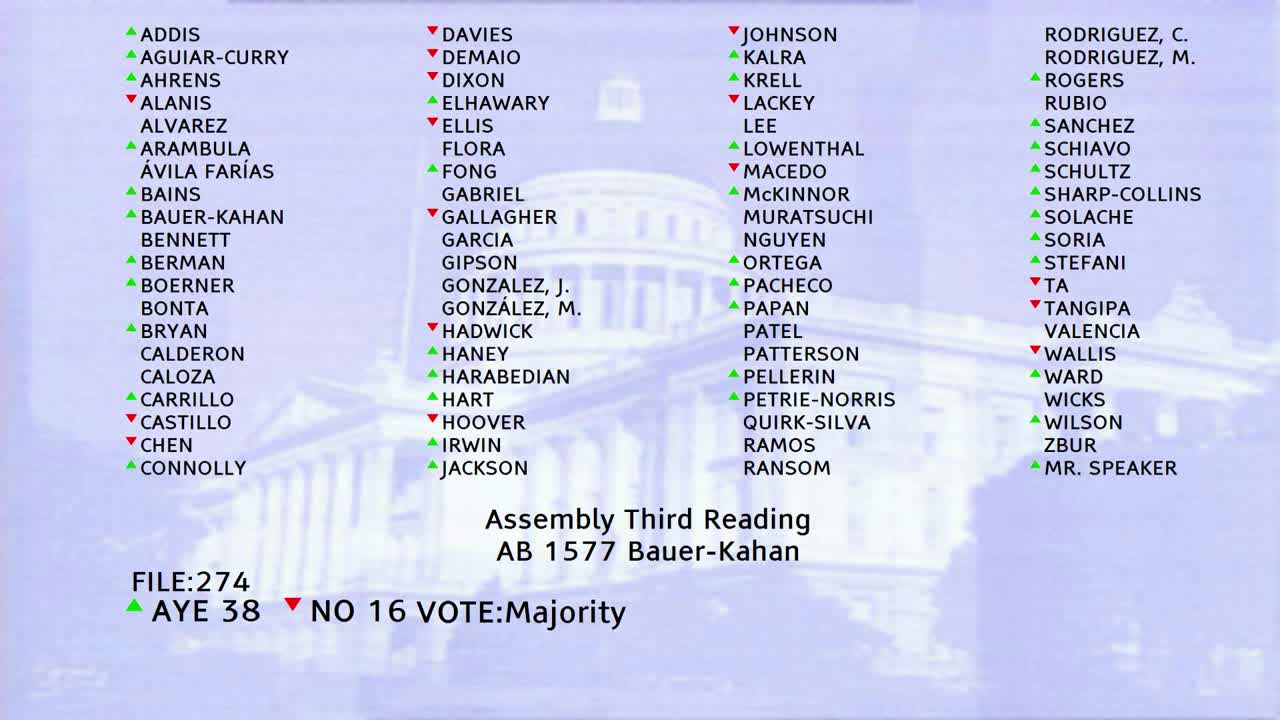 1MIN
Assembly Floor
 32MIN
Assembly Standing Committee on Appropriations
 9MIN
Assembly Standing Committee on Public Employment and Retirement
Bill Author

Bill Co-Author(s):
