AB 1846: Dependency: placement of child with relative.
- Session Year: 2025-2026
- House: Assembly
- Latest Version Date: 2026-09-18
Current Status:
Passed
(2026-09-18: Chaptered by Secretary of State - Chapter 276, Statutes of 2026.)
Introduced
In Committee
Awaiting First Chamber Vote
Passed First Chamber
In Committee
Awaiting Second Chamber Vote
Passed Second Chamber
Enacted
Existing law establishes the jurisdiction of the juvenile court, which may adjudge a child to be a dependent of the court under certain circumstances, including when the child suffered, or there is a substantial risk that the child will suffer, serious physical harm, or a parent fails to provide the child with adequate food, clothing, shelter, or medical treatment. Existing law establishes the grounds for removal of a dependent child from the custody of their parents or guardian, and establishes procedures to determine placement of a child. Existing law requires, when a child has been adjudged a dependent of the court, the court to hold a dispositional hearing to determine the disposition to be made of the child. Under existing law, if the child is removed from the physical custody of their parents, preferential consideration to be given to a request by a relative of the child for placement of the child with the relative. Existing law prescribes factors for the county social worker and court to consider in determining placement, and requires the court to state on the record the reasons placement was denied if the court does not place the child with a relative who has been considered for placement.
This bill would require, if the court does not initially place the child with a relative who has been considered for placement, the court to state for the record the reasons why the placement with that relative was denied or delayed. The bill would require, except as specified, after the court conducts the dispositional hearing, the social worker to assess any relative who requests placement and who has not been previously assessed or found to be unsuitable. The bill would require, if the court has terminated reunification services prior to the relatives request for placement, the county social worker and the court to consider certain additional factors to consider in determining whether placement with the relative is appropriate, including, among others, the childs relationship with the current caregiver. By increasing the duties of county social workers, this bill would impose a state-mandated local program.
The California Constitution requires the state to reimburse local agencies and school districts for certain costs mandated by the state. Statutory provisions establish procedures for making that reimbursement.
This bill would provide that no reimbursement is required by this act for a specified reason.
Existing law establishes the jurisdiction of the juvenile court, which may adjudge a child to be a dependent of the court under certain circumstances, including when the child suffered, or there is a substantial risk that the child will suffer, serious physical harm, or a parent fails to provide the child with adequate food, clothing, shelter, or medical treatment. Existing law establishes the grounds for removal of a dependent child from the custody of their parents or guardian, and establishes procedures to determine placement of a dependent child. Existing law requires, when a child has been adjudged a dependent of the court, the court to hold a dispositional hearing to determine the disposition to be made of the child. Under existing law, if the child is removed from the physical custody of their parents, preferential consideration to be given to a request by a relative of the child for placement of the child with the relative. Existing law prescribes factors for the county social worker and court to consider in determining placement, and requires the court to state on the record the reasons placement was denied if the court does not place the child with a relative who has been considered for placement.
This bill would require, if the court does not initially place the child with a relative who has been considered for placement, the court to state for the record the reasons why the placement with that relative was denied or delayed. The bill would clarify that a statement on the record pursuant to this provision does not prevent the court from ordering a placement with a relative later, as specified. The bill would require, if after specified hearings the child welfare agency recommends placement with a relative and the court finds by clear and convincing evidence that such placement is in the best interest of the child, the court to order the placement with that relative. The bill would specify that placement with a relative does not prevent the child welfare agency from recommending a placement change upon identification of another appropriate placement with a different relative, pursuant to the Interstate Compact on the Placement of Children, or other circumstances as approved by the court, and does not require another petition, as specified. require, except as specified, after the court conducts the dispositional hearing, the social worker to assess any relative who requests placement and who has not been previously assessed or found to be unsuitable. The bill would require, if the court has terminated reunification services prior to the relatives request for placement, the county social worker and the court to consider certain additional factors to consider in determining whether placement with the relative is appropriate, including, among others, the childs relationship with the current caregiver. By increasing the duties of county social workers, this bill would impose a state-mandated local program.
The California Constitution requires the state to reimburse local agencies and school districts for certain costs mandated by the state. Statutory provisions establish procedures for making that reimbursement.
This bill would provide that no reimbursement is required by this act for a specified reason.
Existing law establishes the jurisdiction of the juvenile court, which may adjudge a child to be a dependent of the court under certain circumstances, including when the child suffered, or there is a substantial risk that the child will suffer, serious physical harm, or a parent fails to provide the child with adequate food, clothing, shelter, or medical treatment. Existing law establishes the grounds for removal of a dependent child from the custody of their parents or guardian, and establishes procedures to determine placement of a dependent child. Existing law requires, when a child is removed from the physical custody of their parents, preferential consideration to be given to a request by a relative of the child for placement of the child with the relative. Existing law prescribes factors for the county social worker and court to consider in determining placement, and requires the court to state on the record the reasons placement was denied if the court does not place the child with a relative who has been considered for placement.
This bill would require, if the court does not initially place the child with a relative who has been considered for placement, the court to state for the record the reasons why the placement with that relative was denied or delayed. The bill would clarify that a statement on the record pursuant to this provision does not prevent the court from ordering a placement with a relative later, as specified. The bill would require, if after specified hearings the child welfare agency recommends placement with a relative and the court finds by clear and convincing evidence that such placement is in the best interest of the child, the court to order the placement with that relative. The bill would specify that placement with a relative does not prevent the child welfare agency from recommending a placement change upon identification of another appropriate placement with a different relative, pursuant to the Interstate Compact on the Placement of Children, or other circumstances as approved by the court, and does not require another petition, as specified.
(a)In any case in which a child is removed from the physical custody of their parents pursuant to Section 361, and until the preference in subdivision (k) of Section 366.26 is applicable, preferential consideration shall be given to a request by a relative of the child for placement of the child with the relative, regardless of the relatives immigration status. In determining whether placement with a relative is appropriate, the county social worker and court shall consider, but shall not be limited to, consideration of all the following factors:
(1)The best interest of the child, including special physical, psychological, educational, medical, or emotional needs.
(2)The wishes of the parent, the relative, and child, if appropriate.
(3)The provisions of Part 6 (commencing with Section 7950) of Division 12 of the Family Code regarding relative placement.
(4)Placement of siblings and half siblings in the same home, unless that placement is found to be contrary to the safety and well-being of any of the siblings, as provided in Section 16002.
(5)The good moral character of the relative and any other adult living in the home, including whether any individual residing in the home has a prior history of violent criminal acts or has been responsible for acts of child abuse or neglect.
(6)The nature and duration of the relationship between the child and the relative, and the relatives desire to care for, and to provide legal permanency for, the child if reunification is unsuccessful.
(7)The ability of the relative to do the following:
(A)Provide a safe, secure, and stable environment for the child.
(B)Exercise proper and effective care and control of the child.
(C)Provide a home and the necessities of life for the child.
(D)Protect the child from their parents.
(E)Facilitate court-ordered reunification efforts with the parents.
(F)Facilitate visitation with the childs other relatives.
(G)Facilitate implementation of all elements of the case plan.
(H)(i)Provide legal permanence for the child if reunification fails.
(ii)However, any finding made with respect to the factor considered pursuant to this subparagraph and pursuant to subparagraph (G) shall not be the sole basis for precluding preferential placement with a relative.
(I)Arrange for appropriate and safe childcare, as necessary.
(8)(A)The safety of the relatives home. For a relative to be considered appropriate to receive placement of a child under this section on an emergency basis, the relatives home shall first be assessed pursuant to the process and standards described in Section 361.4.
(B)In this regard, the Legislature declares that a physical disability, such as blindness or deafness, is no bar to the raising of children, and a county social workers determination as to the ability of a disabled relative to exercise care and control should center upon whether the relatives disability prevents them from exercising care and control. The court shall order the parent to disclose to the county social worker the names, residences, and any other known identifying information of any maternal or paternal relatives of the child. This inquiry shall not be construed, however, to guarantee that the child will be placed with any person so identified. The county social worker shall initially contact the relatives given preferential consideration for placement to determine if they desire the child to be placed with them. Those desiring placement shall be assessed according to the factors enumerated in this subdivision. The county social worker shall document these efforts in the social study prepared pursuant to Section 358.1. The court shall authorize the county social worker, while assessing these relatives for the possibility of placement, to disclose to the relative, as appropriate, the fact that the child is in custody, the alleged reasons for the custody, and the projected likely date for the childs return home or placement for adoption or legal guardianship. However, this investigation shall not be construed as good cause for continuance of the dispositional hearing conducted pursuant to Section 358.
(b)In any case in which more than one relative requests preferential consideration pursuant to this section, each relative shall be considered under the factors enumerated in subdivision (a). Consistent with the legislative intent for children to be placed immediately with a relative, this section does not limit the county social workers ability to place a child in the home of a relative or a nonrelative extended family member pending the consideration of other relatives who have requested preferential consideration.
(c)For purposes of this section:
(1)Preferential consideration means that the relative seeking placement shall be the first placement to be considered and investigated.
(2)Relative means an adult who is related to the child by blood, adoption, or affinity within the fifth degree of kinship, including stepparents, stepsiblings, and all relatives whose status is preceded by the words great, great-great, or grand, or the spouse of any of these persons even if the marriage was terminated by death or dissolution.
(d)(1)If, subsequent to a hearing conducted pursuant to Section 358, and to the time the preference in subdivision (k) of Section 366.26 is applicable, a relative, who has not been previously assessed or found to be unsuitable, requests to be assessed for placement of the child, the social worker shall assess the relative in accordance with the factors described in this section.
(2)If the court has terminated family reunification services prior to the relatives request for placement, the county social worker and the court shall also consider all of the following:
(A)The childs relationship with the current caregiver.
(B)The childs progress toward permanency with the current caregiver.
(C)The childs placement preference, if found to be age- and developmentally appropriate.
(3)Notwithstanding paragraph (1), if the county child welfare agency has complied with the family finding and relative notification requirements described in Section 309 and the relatives initial request for placement occurs after family reunification services have been terminated, the social worker may exercise discretion to conduct an initial assessment of the relative.
(4)If the social worker declines to conduct an assessment pursuant to paragraph (3), the court may order the assessment upon request of any party or the relative, if the court determines that the assessment is in the best interest of the child.
(5)This subdivision does not apply if reunification services were not provided pursuant to subdivision (b) of Section 361.5.
(e)If the court does not initially place the child with a relative who has been considered for placement pursuant to this section, the court shall state for the record the reasons placement with that relative was denied or delayed.
(f)(1)With respect to a child who satisfies the criteria set forth in paragraph (2), the department and any licensed adoption agency may search for a relative and furnish identifying information relating to the child to that relative if it is believed the childs welfare will be promoted thereby.
(2)Paragraph (1) shall apply if both of the following conditions are satisfied:
(A)The child was previously a dependent of the court.
(B)The child was previously adopted and the adoption has been disrupted, set aside pursuant to Section 9100 or 9102 of the Family Code, or the child has been released into the custody of the department or a licensed adoption agency by the adoptive parent or parents.
(3)As used in this subdivision, relative includes a member of the childs birth family and nonrelative extended family members, regardless of whether the parental rights were terminated, provided that both of the following are true:
(A)No appropriate potential caretaker is known to exist from the childs adoptive family, including nonrelative extended family members of the adoptive family.
(B)The child was not the subject of a voluntary relinquishment by the birth parents pursuant to Section 8700 of the Family Code or Section 1255.7 of the Health and Safety Code.
(g)If the child is an Indian child, as defined in Section 224.1, placement of the child pursuant to this section shall comply with the placement preferences and requirements of the federal Indian Child Welfare Act of 1978 (25 U.S.C. Sec. 1901 et seq.) and Section 361.31.
(h)Whenever a new placement of the child must be made, consideration for placement shall again be given as described in this section to relatives who have not been found to be unsuitable and who will fulfill the childs reunification or permanent plan requirements. In addition to the factors described in subdivision (a), the county social worker shall consider whether the relative has established and maintained a relationship with the child.
(i)This section does not prevent the court from ordering placement with a relative subsequent to the hearing conducted pursuant to Section 358 or from giving the social worker the discretion for a placement change into the appropriate home of a relative.
SEC. 2.To the extent that this act has an overall effect of increasing the costs already borne by a local agency for programs or levels of service mandated by the 2011 Realignment Legislation within the meaning of Section 36 of Article XIII of the California Constitution, it shall apply to local agencies only to the extent that the state provides annual funding for the cost increase. Any new program or higher level of service provided by a local agency pursuant to this act above the level for which funding has been provided shall not require a subvention of funds by the state or otherwise be subject to Section 6 of Article XIIIB of the California Constitution.
(a)In any case in which a child is removed from the physical custody of their parents pursuant to Section 361, and until the preference in subdivision (k) of Section 366.26 is applicable, preferential consideration shall be given to a request by a relative of the child for placement of the child with the relative, regardless of the relatives immigration status. In determining whether placement with a relative is appropriate, the county social worker and court shall consider, but shall not be limited to, consideration of all the following factors:
(1)The best interest of the child, including special physical, psychological, educational, medical, or emotional needs.
(2)The wishes of the parent, the relative, and child, if appropriate.
(3)The provisions of Part 6 (commencing with Section 7950) of Division 12 of the Family Code regarding relative placement.
(4)Placement of siblings and half siblings in the same home, unless that placement is found to be contrary to the safety and well-being of any of the siblings, as provided in Section 16002.
(5)The good moral character of the relative and any other adult living in the home, including whether any individual residing in the home has a prior history of violent criminal acts or has been responsible for acts of child abuse or neglect.
(6)The nature and duration of the relationship between the child and the relative, and the relatives desire to care for, and to provide legal permanency for, the child if reunification is unsuccessful.
(7)The ability of the relative to do the following:
(A)Provide a safe, secure, and stable environment for the child.
(B)Exercise proper and effective care and control of the child.
(C)Provide a home and the necessities of life for the child.
(D)Protect the child from their parents.
(E)Facilitate court-ordered reunification efforts with the parents.
(F)Facilitate visitation with the childs other relatives.
(G)Facilitate implementation of all elements of the case plan.
(H)(i)Provide legal permanence for the child if reunification fails.
(ii)However, any finding made with respect to the factor considered pursuant to this subparagraph and pursuant to subparagraph (G) shall not be the sole basis for precluding preferential placement with a relative.
(I)Arrange for appropriate and safe childcare, as necessary.
(8)(A)The safety of the relatives home. For a relative to be considered appropriate to receive placement of a child under this section on an emergency basis, the relatives home shall first be assessed pursuant to the process and standards described in Section 361.4.
(B)In this regard, the Legislature declares that a physical disability, such as blindness or deafness, is no bar to the raising of children, and a county social workers determination as to the ability of a disabled relative to exercise care and control should center upon whether the relatives disability prevents them from exercising care and control. The court shall order the parent to disclose to the county social worker the names, residences, and any other known identifying information of any maternal or paternal relatives of the child. This inquiry shall not be construed, however, to guarantee that the child will be placed with any person so identified. The county social worker shall initially contact the relatives given preferential consideration for placement to determine if they desire the child to be placed with them. Those desiring placement shall be assessed according to the factors enumerated in this subdivision. The county social worker shall document these efforts in the social study prepared pursuant to Section 358.1. The court shall authorize the county social worker, while assessing these relatives for the possibility of placement, to disclose to the relative, as appropriate, the fact that the child is in custody, the alleged reasons for the custody, and the projected likely date for the childs return home or placement for adoption or legal guardianship. However, this investigation shall not be construed as good cause for continuance of the dispositional hearing conducted pursuant to Section 358.
(b)In any case in which more than one relative requests preferential consideration pursuant to this section, each relative shall be considered under the factors enumerated in subdivision (a). Consistent with the legislative intent for children to be placed immediately with a relative, this section does not limit the county social workers ability to place a child in the home of a relative or a nonrelative extended family member pending the consideration of other relatives who have requested preferential consideration.
(c)For purposes of this section:
(1)Preferential consideration means that the relative seeking placement shall be the first placement to be considered and investigated.
(2)Relative means an adult who is related to the child by blood, adoption, or affinity within the fifth degree of kinship, including stepparents, stepsiblings, and all relatives whose status is preceded by the words great, great-great, or grand, or the spouse of any of these persons even if the marriage was terminated by death or dissolution.
(d)(1)After the If, subsequent to a hearing conducted pursuant to Section 358, and until to the time the preference in subdivision (k) of Section 366.26 is applicable, the social worker shall assess any relative who requests placement and who has not been previously assessed or found to be unsuitable. a relative, who has not been previously assessed or found to be unsuitable, requests to be assessed for placement of the child, the social worker shall assess the relative in accordance with the factors described in this section.
(2)If the court has terminated family reunification services prior to the relatives request for placement, in addition to the factors described in subdivision (a), the county social worker and the court shall also consider all of the following:
(A)The childs relationship with the current caregiver.
(B)The childs progress toward permanency with the current caregiver.
(C)The childs placement preference. preference, if found to be age- and developmentally appropriate.
(3)Notwithstanding paragraph (1), if the social worker county child welfare agency has complied with the family finding and notice relative notification requirements described in Section 309 and the relatives initial request for placement is made occurs after family reunification services have been terminated, the social worker shall have may exercise discretion to assess conduct an initial assessment of the relative. If the social worker does not assess the relative, the court may order the relative to be assessed upon request by any party or the relative, if the court finds it is in the childs best interests. This paragraph does not apply if the parents were not provided reunification services pursuant to subdivision (b) of Section 361.5.
(4)If the social worker declines to conduct an assessment pursuant to paragraph (3), the court may order the assessment upon request of any party or the relative, if the court determines that the assessment is in the best interest of the child.
(5)This subdivision does not apply if reunification services were not provided pursuant to subdivision (b) of Section 361.5.
(e)If the court does not initially place the child with a relative who has been considered for placement pursuant to this section, the court shall state for the record the reasons placement with that relative was denied or delayed.
(f)(1)With respect to a child who satisfies the criteria set forth in paragraph (2), the department and any licensed adoption agency may search for a relative and furnish identifying information relating to the child to that relative if it is believed the childs welfare will be promoted thereby.
(2)Paragraph (1) shall apply if both of the following conditions are satisfied:
(A)The child was previously a dependent of the court.
(B)The child was previously adopted and the adoption has been disrupted, set aside pursuant to Section 9100 or 9102 of the Family Code, or the child has been released into the custody of the department or a licensed adoption agency by the adoptive parent or parents.
(3)As used in this subdivision, relative includes a member of the childs birth family and nonrelative extended family members, regardless of whether the parental rights were terminated, provided that both of the following are true:
(A)No appropriate potential caretaker is known to exist from the childs adoptive family, including nonrelative extended family members of the adoptive family.
(B)The child was not the subject of a voluntary relinquishment by the birth parents pursuant to Section 8700 of the Family Code or Section 1255.7 of the Health and Safety Code.
(g)Placement of an Indian child shall comply with the placement preferences set forth in Section 361.31.(g)If the child is an Indian child, as defined in Section 224.1, placement of the child pursuant to this section shall comply with the placement preferences and requirements of the federal Indian Child Welfare Act of 1978 (25 U.S.C. Sec. 1901 et seq.) and Section 361.31.
(h)Whenever a new placement of the child must be made, consideration for placement shall again be given as described in this section to relatives who have not been found to be unsuitable and who will fulfill the childs reunification or permanent plan requirements. In addition to the factors described in subdivision (a), the county social worker shall consider whether the relative has established and maintained a relationship with the child.
(i)This section does not prevent the court from ordering placement with a relative subsequent to the hearing conducted pursuant to Section 358 or from giving the social worker the discretion for a placement change into the appropriate home of a relative.
SEC. 2.To the extent that this act has an overall effect of increasing the costs already borne by a local agency for programs or levels of service mandated by the 2011 Realignment Legislation within the meaning of Section 36 of Article XIII of the California Constitution, it shall apply to local agencies only to the extent that the state provides annual funding for the cost increase. Any new program or higher level of service provided by a local agency pursuant to this act above the level for which funding has been provided shall not require a subvention of funds by the state or otherwise be subject to Section 6 of Article XIIIB of the California Constitution.
(a)In any case in which a child is removed from the physical custody of their parents pursuant to Section 361, and until the preference in subdivision (k) of Section 366.26 is applicable, preferential consideration shall be given to a request by a relative of the child for placement of the child with the relative, regardless of the relatives immigration status. In determining whether placement with a relative is appropriate, the county social worker and court shall consider, but shall not be limited to, consideration of all the following factors:
(1)The best interest of the child, including special physical, psychological, educational, medical, or emotional needs.
(2)The wishes of the parent, the relative, and child, if appropriate.
(3)The provisions of Part 6 (commencing with Section 7950) of Division 12 of the Family Code regarding relative placement.
(4)Placement of siblings and half siblings in the same home, unless that placement is found to be contrary to the safety and well-being of any of the siblings, as provided in Section 16002.
(5)The good moral character of the relative and any other adult living in the home, including whether any individual residing in the home has a prior history of violent criminal acts or has been responsible for acts of child abuse or neglect.
(6)The nature and duration of the relationship between the child and the relative, and the relatives desire to care for, and to provide legal permanency for, the child if reunification is unsuccessful.
(7)The ability of the relative to do the following:
(A)Provide a safe, secure, and stable environment for the child.
(B)Exercise proper and effective care and control of the child.
(C)Provide a home and the necessities of life for the child.
(D)Protect the child from their parents.
(E)Facilitate court-ordered reunification efforts with the parents.
(F)Facilitate visitation with the childs other relatives.
(G)Facilitate implementation of all elements of the case plan.
(H)(i)Provide legal permanence for the child if reunification fails.
(ii)However, any finding made with respect to the factor considered pursuant to this subparagraph and pursuant to subparagraph (G) shall not be the sole basis for precluding preferential placement with a relative.
(I)Arrange for appropriate and safe childcare, as necessary.
(8)(A)The safety of the relatives home. For a relative to be considered appropriate to receive placement of a child under this section on an emergency basis, the relatives home shall first be assessed pursuant to the process and standards described in Section 361.4.
(B)In this regard, the Legislature declares that a physical disability, such as blindness or deafness, is no bar to the raising of children, and a county social workers determination as to the ability of a disabled relative to exercise care and control should center upon whether the relatives disability prevents them from exercising care and control. The court shall order the parent to disclose to the county social worker the names, residences, and any other known identifying information of any maternal or paternal relatives of the child. This inquiry shall not be construed, however, to guarantee that the child will be placed with any person so identified. The county social worker shall initially contact the relatives given preferential consideration for placement to determine if they desire the child to be placed with them. Those desiring placement shall be assessed according to the factors enumerated in this subdivision. The county social worker shall document these efforts in the social study prepared pursuant to Section 358.1. The court shall authorize the county social worker, while assessing these relatives for the possibility of placement, to disclose to the relative, as appropriate, the fact that the child is in custody, the alleged reasons for the custody, and the projected likely date for the childs return home or placement for adoption or legal guardianship. However, this investigation shall not be construed as good cause for continuance of the dispositional hearing conducted pursuant to Section 358.
(b)In any case in which more than one relative requests preferential consideration pursuant to this section, each relative shall be considered under the factors enumerated in subdivision (a). Consistent with the legislative intent for children to be placed immediately with a relative, this section does not limit the county social workers ability to place a child in the home of a relative or a nonrelative extended family member pending the consideration of other relatives who have requested preferential consideration.
(c)For purposes of this section:
(1)Preferential consideration means that the relative seeking placement shall be the first placement to be considered and investigated.
(2)Relative means an adult who is related to the child by blood, adoption, or affinity within the fifth degree of kinship, including stepparents, stepsiblings, and all relatives whose status is preceded by the words great, great-great, or grand, or the spouse of any of these persons even if the marriage was terminated by death or dissolution.
(d)After the hearing conducted pursuant to Section 358, whenever a new placement of the child must be made, consideration for placement shall again be given as described in this section to relatives who have not been found to be unsuitable and who will fulfill the childs reunification or permanent plan requirements. In addition to the factors described in subdivision (a), the county social worker shall consider whether the relative has established and maintained a relationship with the child.(d)(1)After the hearing conducted pursuant to Section 358, and until the preference in subdivision (k) of Section 366.26 is applicable, the social worker shall assess any relative who requests placement and who has not been previously assessed or found to be unsuitable.
(2)If the court has terminated family reunification services prior to the relatives request for placement, in addition to the factors described in subdivision (a), the county social worker and the court shall consider all of the following:
(A)The childs relationship with the current caregiver.
(B)The childs progress toward permanency with the current caregiver.
(C)The childs placement preference.
(3)Notwithstanding paragraph (1), if the social worker complied with the family finding and notice requirements in Section 309 and the relatives initial request for placement is made after family reunification services have been terminated, the social worker shall have discretion to assess the relative. If the social worker does not assess the relative, the court may order the relative to be assessed upon request by any party or the relative, if the court finds it is in the childs best interests. This paragraph does not apply if the parents were not provided reunification services pursuant to subdivision (b) of Section 361.5.
(e)(1)(A)If the court does not initially place the child with a relative who has been considered for placement pursuant to this section, the court shall state for the record the reasons placement with that relative was denied or delayed.
(B)A statement for the record pursuant to the requirement in subparagraph (A) does not prevent the court from ordering a placement with a relative after the hearing conducted pursuant to Section 358.(2)(A)If after a hearing conducted pursuant to Section 358 or Section 388, the child welfare agency recommends placement with a relative and the court finds, by clear and convincing evidence, that such placement is in the best interest of the child, the court shall order placement with that relative.(B)A placement made with a relative as described in subparagraph (A) does not prevent the child welfare agency from recommending a placement change upon identification of another appropriate placement with a different relative, pursuant to the Interstate Compact on the Placement of Children, or other circumstances as approved by the court, and does not require another petition pursuant to Section 358 or Section 388.(f)(1)With respect to a child who satisfies the criteria set forth in paragraph (2), the department and any licensed adoption agency may search for a relative and furnish identifying information relating to the child to that relative if it is believed the childs welfare will be promoted thereby.
(2)Paragraph (1) shall apply if both of the following conditions are satisfied:
(A)The child was previously a dependent of the court.
(B)The child was previously adopted and the adoption has been disrupted, set aside pursuant to Section 9100 or 9102 of the Family Code, or the child has been released into the custody of the department or a licensed adoption agency by the adoptive parent or parents.
(3)As used in this subdivision, relative includes a member of the childs birth family and nonrelative extended family members, regardless of whether the parental rights were terminated, provided that both of the following are true:
(A)No appropriate potential caretaker is known to exist from the childs adoptive family, including nonrelative extended family members of the adoptive family.
(B)The child was not the subject of a voluntary relinquishment by the birth parents pursuant to Section 8700 of the Family Code or Section 1255.7 of the Health and Safety Code.
(g)Placement of an Indian child shall comply with the placement preferences set forth in Section 361.31.
(h)Whenever a new placement of the child must be made, consideration for placement shall again be given as described in this section to relatives who have not been found to be unsuitable and who will fulfill the childs reunification or permanent plan requirements. In addition to the factors described in subdivision (a), the county social worker shall consider whether the relative has established and maintained a relationship with the child.
(i)This section does not prevent the court from ordering placement with a relative subsequent to the hearing conducted pursuant to Section 358 or from giving the social worker the discretion for a placement change into the appropriate home of a relative.
SEC. 2.To the extent that this act has an overall effect of increasing the costs already borne by a local agency for programs or levels of service mandated by the 2011 Realignment Legislation within the meaning of Section 36 of Article XIII of the California Constitution, it shall apply to local agencies only to the extent that the state provides annual funding for the cost increase. Any new program or higher level of service provided by a local agency pursuant to this act above the level for which funding has been provided shall not require a subvention of funds by the state or otherwise be subject to Section 6 of Article XIIIB of the California Constitution.
(a)In any case in which a child is removed from the physical custody of their parents pursuant to Section 361, preferential consideration shall be given to a request by a relative of the child for placement of the child with the relative, regardless of the relatives immigration status. In determining whether placement with a relative is appropriate, the county social worker and court shall consider, but shall not be limited to, consideration of all the following factors:
(1)The best interest of the child, including special physical, psychological, educational, medical, or emotional needs.
(2)The wishes of the parent, the relative, and child, if appropriate.
(3)The provisions of Part 6 (commencing with Section 7950) of Division 12 of the Family Code regarding relative placement.
(4)Placement of siblings and half siblings in the same home, unless that placement is found to be contrary to the safety and well-being of any of the siblings, as provided in Section 16002.
(5)The good moral character of the relative and any other adult living in the home, including whether any individual residing in the home has a prior history of violent criminal acts or has been responsible for acts of child abuse or neglect.
(6)The nature and duration of the relationship between the child and the relative, and the relatives desire to care for, and to provide legal permanency for, the child if reunification is unsuccessful.
(7)The ability of the relative to do the following:
(A)Provide a safe, secure, and stable environment for the child.
(B)Exercise proper and effective care and control of the child.
(C)Provide a home and the necessities of life for the child.
(D)Protect the child from their parents.
(E)Facilitate court-ordered reunification efforts with the parents.
(F)Facilitate visitation with the childs other relatives.
(G)Facilitate implementation of all elements of the case plan.
(H)(i)Provide legal permanence for the child if reunification fails.
(ii)However, any finding made with respect to the factor considered pursuant to this subparagraph and pursuant to subparagraph (G) shall not be the sole basis for precluding preferential placement with a relative.
(I)Arrange for appropriate and safe childcare, as necessary.
(8)(A)The safety of the relatives home. For a relative to be considered appropriate to receive placement of a child under this section on an emergency basis, the relatives home shall first be assessed pursuant to the process and standards described in Section 361.4.
(B)In this regard, the Legislature declares that a physical disability, such as blindness or deafness, is no bar to the raising of children, and a county social workers determination as to the ability of a disabled relative to exercise care and control should center upon whether the relatives disability prevents them from exercising care and control. The court shall order the parent to disclose to the county social worker the names, residences, and any other known identifying information of any maternal or paternal relatives of the child. This inquiry shall not be construed, however, to guarantee that the child will be placed with any person so identified. The county social worker shall initially contact the relatives given preferential consideration for placement to determine if they desire the child to be placed with them. Those desiring placement shall be assessed according to the factors enumerated in this subdivision. The county social worker shall document these efforts in the social study prepared pursuant to Section 358.1. The court shall authorize the county social worker, while assessing these relatives for the possibility of placement, to disclose to the relative, as appropriate, the fact that the child is in custody, the alleged reasons for the custody, and the projected likely date for the childs return home or placement for adoption or legal guardianship. However, this investigation shall not be construed as good cause for continuance of the dispositional hearing conducted pursuant to Section 358.
(b)In any case in which more than one relative requests preferential consideration pursuant to this section, each relative shall be considered under the factors enumerated in subdivision (a). Consistent with the legislative intent for children to be placed immediately with a relative, this section does not limit the county social workers ability to place a child in the home of a relative or a nonrelative extended family member pending the consideration of other relatives who have requested preferential consideration.
(c)For purposes of this section:
(1)Preferential consideration means that the relative seeking placement shall be the first placement to be considered and investigated.
(2)Relative means an adult who is related to the child by blood, adoption, or affinity within the fifth degree of kinship, including stepparents, stepsiblings, and all relatives whose status is preceded by the words great, great-great, or grand, or the spouse of any of these persons even if the marriage was terminated by death or dissolution.
(d)Subsequent to the After the hearing conducted pursuant to Section 358, whenever a new placement of the child must be made, consideration for placement shall again be given as described in this section to relatives who have not been found to be unsuitable and who will fulfill the childs reunification or permanent plan requirements. In addition to the factors described in subdivision (a), the county social worker shall consider whether the relative has established and maintained a relationship with the child.
(e)(1)(A)If the court does not initially place the child with a relative who has been considered for placement pursuant to this section, the court shall state for the record the reasons placement with that relative was denied. denied or delayed.
(B)A statement for the record pursuant to the requirement in subparagraph (A) does not prevent the court from ordering a placement with a relative after the hearing conducted pursuant to Section 358.
(2)(A)If after a hearing conducted pursuant to Section 358 or Section 388, the child welfare agency recommends placement with a relative and the court finds, by clear and convincing evidence, that such placement is in the best interest of the child, the court shall order placement with that relative.
(B)A placement made with a relative as described in subparagraph (A) does not prevent the child welfare agency from recommending a placement change upon identification of another appropriate placement with a different relative, pursuant to the Interstate Compact on the Placement of Children, or other circumstances as approved by the court, and does not require another petition pursuant to Section 358 or Section 388.
(f)(1)With respect to a child who satisfies the criteria set forth in paragraph (2), the department and any licensed adoption agency may search for a relative and furnish identifying information relating to the child to that relative if it is believed the childs welfare will be promoted thereby.
(2)Paragraph (1) shall apply if both of the following conditions are satisfied:
(A)The child was previously a dependent of the court.
(B)The child was previously adopted and the adoption has been disrupted, set aside pursuant to Section 9100 or 9102 of the Family Code, or the child has been released into the custody of the department or a licensed adoption agency by the adoptive parent or parents.
(3)As used in this subdivision, relative includes a member of the childs birth family and nonrelative extended family members, regardless of whether the parental rights were terminated, provided that both of the following are true:
(A)No appropriate potential caretaker is known to exist from the childs adoptive family, including nonrelative extended family members of the adoptive family.
(B)The child was not the subject of a voluntary relinquishment by the birth parents pursuant to Section 8700 of the Family Code or Section 1255.7 of the Health and Safety Code.
(g)Placement of an Indian child shall comply with the placement preferences set forth in Section 361.31.
|
Date
|
Status
|
|---|---|
| Sep 18, 2026 | Chaptered by Secretary of State - Chapter 276, Statutes of 2026. |
| Sep 18, 2026 | Approved by the Governor. |
| Sep 8, 2026 | Enrolled and presented to the Governor at 3:30 p.m. |
| Aug 28, 2026 | Senate amendments concurred in. To Engrossing and Enrolling. (Ayes 78. Noes 0.). |
| Aug 28, 2026 | Senate amendments concurred in. To Engrossing and Enrolling. (Ayes 78. Noes 0. Page 6795.). |
| Aug 27, 2026 | In Assembly. Concurrence in Senate amendments pending. |
| Aug 27, 2026 | Read third time. Passed. Ordered to the Assembly. (Ayes 39. Noes 0.). |
| Aug 25, 2026 | Ordered to special consent calendar. |
| Aug 17, 2026 | Read second time. Ordered to third reading. |
| Aug 13, 2026 | Read second time and amended. Ordered returned to second reading. |
| Aug 13, 2026 | From committee: Amend, and do pass as amended. (Ayes 7. Noes 0.) (August 13). |
| Aug 3, 2026 | In committee: Referred to APPR. suspense file. |
| Jun 29, 2026 | From committee: Do pass and re-refer to Com. on APPR. with recommendation: To Consent Calendar. (Ayes 5. Noes 0.) (June 29). Re-referred to Com. on APPR. |
| Jun 10, 2026 | From committee: Do pass and re-refer to Com. on HUMAN S. with recommendation: To Consent Calendar. (Ayes 12. Noes 0.) (June 9). Re-referred to Com. on HUMAN S. |
| May 6, 2026 | Referred to Coms. on JUD. and HUMAN S. |
| Apr 16, 2026 | In Senate. Read first time. To Com. on RLS. for assignment. |
| Apr 16, 2026 | Read third time. Passed. Ordered to the Senate. (Ayes 68. Noes 0.) |
| Apr 16, 2026 | Read third time. Passed. Ordered to the Senate. (Ayes 68. Noes 0. Page 4682.) |
| Apr 9, 2026 | Read second time. Ordered to Consent Calendar. |
| Apr 8, 2026 | From committee: Do pass. To Consent Calendar. (Ayes 14. Noes 0.) (April 8). |
| Mar 25, 2026 | From committee: Do pass and re-refer to Com. on APPR. with recommendation: To Consent Calendar. (Ayes 7. Noes 0.) (March 24). Re-referred to Com. on APPR. |
| Mar 19, 2026 | Re-referred to Com. on HUM. S. |
| Mar 18, 2026 | Read second time and amended. |
| Mar 17, 2026 | From committee: Amend, and do pass as amended and re-refer to Com. on HUM. S. with recommendation: To Consent Calendar. (Ayes 12. Noes 0.) (March 17). |
| Mar 2, 2026 | Referred to Coms. on JUD. and HUM. S. |
| Feb 12, 2026 | From printer. May be heard in committee March 14. |
| Feb 11, 2026 | Read first time. To print. |
|
Date
|
Description
|
Location
|
Votes
|
|
|---|---|---|---|---|
| Aug 28, 2026 | AB 1846 Stefani Concurrence in Senate Amendments | Assembly Floor |
Passed |
|
| Aug 27, 2026 | Special Consent AB1846 Stefani By Wahab | Senate Floor |
Passed |
|
| Aug 13, 2026 | Do pass as amended | Senate Standing Committee on Appropriations |
Passed |
|
| Aug 3, 2026 | Placed on suspense file | Senate Standing Committee on Appropriations |
Passed |
|
| Jun 29, 2026 | Do pass, but first be re-referred to the Committee on [Appropriations] with the recommendation: To Consent Calendar | Senate Standing Committee on Human Services |
Passed |
|
| Jun 9, 2026 | Do pass, but first be re-referred to the Committee on [Human Services] with the recommendation: To Consent Calendar | Senate Standing Committee on Judiciary |
Passed |
|
| Apr 16, 2026 | AB 1846 Stefani Consent Calendar Second Day Regular Session | Assembly Floor |
Passed |
|
| Apr 8, 2026 | Do pass. To Consent Calendar. | Assembly Standing Committee on Appropriations |
Passed |
|
| Mar 24, 2026 | Do pass and be re-referred to the Committee on [Appropriations] with recommendation: To Consent Calendar | Assembly Standing Committee on Human Services |
Passed |
|
| Mar 17, 2026 | Do pass as amended, and be re-referred to the Committee on [Human Services] with recommendation: To Consent Calendar | Assembly Standing Committee on Judiciary |
Passed |
This list shows positions taken on this bill by organizations on the date displayed, which is linked to the original source.
Positions by individuals are not included.
|
Organization
|
Position
|
Date
|
|---|---|---|
| Alliance for Children's Rights | ** Support | |
| Back to the Start | ** Support | |
| Butte County Department of Employment and Social Services | ** Support | |
| Butte County Employment and Social Services | ** Support | |
| California Alliance Of Child And Family Services | ** Support | |
| California Lawyers Association, Family Law Section | ** Support | |
| California Welfare Directors Association | ** Support | |
| Child Welfare Directors Association | ** Support | |
| Children'S Law Center Of California | ** Support | |
| Children’s Law Center of California | ** Support | |
| County of Fresno | ** Support | |
| County of Monterey | ** Support | |
| County Of Stanislaus | ** Support | |
| County of Ventura | ** Support | |
| Dependency Legal Services | ** Support | |
| Family Law Executive Committee of the California Lawyers Association | ** Support | |
| Seneca | ** Support | |
| Seneca Family of Agencies | ** Support |
CONCURRENCE IN SENATE AMENDMENTS
CSA1 Bill Id:AB 1846
Author:(Stefani)
As Amended Ver:August 13, 2026
Majority vote
SUMMARY
Clearly establishes that preferential consideration should be given to a request by a relative for placement of a dependent at every stage of the dependency court proceedings.
Major Provisions
- Requires that, in any case in which a child is removed from the physical custody of their parents, preferential consideration be given to a request by a relative of the child for placement of the child with the relative, until the caregiver preference applies.
- Requires a social worker to assess any relative who requests placement and who has not been previously assessed or found to be unsuitable following the dependent’s initial detention hearing and until the caregiver preference as described applies.
- Requires the county social worker and the court to consider the specified additional factors if the court has terminated family reunification services prior to the relative’s request for placement.
- Grants the social worker discretion to conduct an assessment if the social worker complied with the family finding and notice requirements and the relative’s initial request for placement is made after family reunification services have been terminated. Authorizes, if the social worker declines to conduct an assessment, the court to order an assessment if requested by any party or the relative if the court finds it is in the child’s best interest.
- Exempts parents who were not offered reunification services pursuant to existing provisions of law from the bill’s provisions.
- States that nothing in this section prevents the court from ordering placement with a relative subsequent to the initial detention hearing or from giving the social worker the discretion for a placement change into the appropriate home of a relative.
Senate Amendments
Minor technical amendments to clarify implementation.
COMMENTS
California's child welfare system is tasked with ensuring the safety of children in the state at risk of abuse, neglect, or abandonment. The most desired outcome of the child welfare system is to keep or reunite children with their parents wherever possible. In circumstances where reunification is not appropriate, courts and social workers then look to place children in a variety of alternative placements, whether that is with a relative, an adoptive family, or with a guardian.
Dependency cases typically begin when someone makes a report of child abuse or neglect to a local child welfare agency. The report triggers a social worker with the agency to investigate the report and determine what actions are necessary to ensure the child's safety. If the social worker determines intervention is necessary, the agency files a petition with the dependency court to make the child a dependent of the court. In the event the child is removed from their parent, an initial detention hearing must be held either on the same day the petition is filed or the next court day. At the detention hearing the court determines whether the child will continue to be separated from their parent or parents, or "detained."
The next step in the dependency court process is the jurisdictional hearing, which must occur no later than 15 days after the petition is filed. At the jurisdictional hearing the court decides whether there is sufficient evidence to indicate that the child falls within the dependency court's jurisdiction. In other words, the jurisdictional hearing represents the moment a court will decide whether the facts indicate, based on a preponderance of the evidence, that a child suffered or is at risk of suffering abuse or neglect.
Following the jurisdictional hearing, the court must then set a dispositional hearing within 60 days of the initial detention hearing. That timeline is shortened in cases where the child is still detained, and in those circumstances must be held within 10 days of the jurisdictional hearing. At the dispositional hearing, the court must determine whether to dismiss the case, order informal services for the family, or make the child a dependent of the court. A child that is found to be under the jurisdiction of the dependency court is also referred to as a Welfare and Institutions Code (WIC) 300 dependent, referencing the statute that establishes the court’s jurisdiction. The jurisdictional and dispositional hearings are often held simultaneously. When a court makes the determination that a child is a dependent, it must then decide the best placement for the child. Placements can range from keeping the child in the home with their parent with regular monitoring from the social worker to foster care outside the child's family. Wherever possible, however, courts and local departments strive to keep dependent children within their immediate or extended families.
Ahead of the dispositional hearing, existing law requires the child's social worker to provide the court with a detailed report about the child. The social worker must also investigate each family member they are aware of.
A dependency case is ultimately concluded in a final hearing where a judge can: terminate parental rights and place the child for adoption; appoint a relative as the child's guardian; appoint a nonrelative guardian; place the child with a willing relative; or order that the child remain in foster care. The court may also make relevant orders relating to the Indian Child Welfare Act. (WIC Section 366.26.)
Under existing law, when a family member requests that a child be placed in their home, the courts are required to grant that request preferential consideration. To ensure the placement is safe and secure for the child, the social worker is also required to consider a variety of factors including the best interest of the child, the wishes of the parent where appropriate, the nature of the relationship between the child and the relative, and the ability of the relative to provide certain elements of a beneficial placement such as a safe and stable environment, and facilitate any relevant reunification efforts with the parent. (WIC Section 361.3(a).)
Unfortunately, WIC Section 361.3 does not specify whether the court's obligation to grant preferential consideration to the relative requesting placement continues beyond the initial dispositional hearing, except that it does apply when a new placement is necessary. It is possible to interpret the statute to impose the preference only up until the dispositional hearing and only when a new placement is necessary.
This bill proposes to clarify the ambiguity in existing law that has led to different practices across counties and judicial interpretations by imposing the family placement preference throughout the dependency proceeding until final placement or termination of parental rights under WIC Section 366.26.
According to the Author
Every child deserves stability, connection, and love, and for children in our foster care system, those connections often come from extended family. AB 1846 ensures California's kin-first policy applies throughout the entire time a child is in foster care, giving courts clear authority to place children with family whenever it is safe and in their best interest. Research consistently shows that placing foster youth with relatives leads to better outcomes, including fewer placement disruptions, stronger ties to culture and community, and better long-term emotional well-being. But under current law, when a relative comes forward later in the process, the system can make it difficult to prioritize that family connection, leaving children separated from the people who know and love them for months or even years. AB 1846 is about reducing trauma, strengthening families, and making sure our foster care system reflects the simple truth that kids do better when they're with family.
Arguments in Support
This bill is sponsored by the Child Welfare Directors Association (CWDA). It is further supported by the Alliance for Children's Rights. In support of the measure, CWDA submits:
When a child is placed into foster care due to allegations of abuse or neglect by their parents or guardian, federal and state law require that a relative seeking to provide a loving home be given first consideration for placement above all other settings. Relative preference does not guarantee placement; rather, it ensures that any relative requesting placement is assessed and given preferential consideration based on a number of factors, including the best interest of the child, the wishes of the parent, and the ability of the relative to provide a safe, secure and stable environment. The relative preference aligns with long-standing research that demonstrates better outcomes in such areas as placement stability, academic achievement, and emotional well-being for children placed with relatives. The data also shows that these children are far more likely to remain with their siblings and have more frequent contact with their parents.
California's statute is clear that the relative preference applies in the initial stage of a dependency case or any time a new placement must be made. While the statute does not express a time limit on the relative preference, there is some ambiguity in the law that has led to different interpretations and practices throughout the state. In some situations, the law has been interpreted to preclude the social worker from even having discretion to assess a relative for placement to determine if that placement would be in the best interests of the child(ren). This is inconsistent with the legislative intent of relative preference, and also with recent and ongoing efforts in law and policy to remove barriers and prioritize placement with kin.
AB 1846 resolves these issues and aligns with significant state and county efforts to promote a kin-first culture by clarifying that the relative preference applies until family reunification services have been terminated. AB 1846 further grants the social worker or the court discretion to assess a relative if they request placement after family reunification services have been terminated. This critical legislation recognizes the positive impacts of kinship care and bolsters California’s commitment to honor and prioritize keeping families together.
Arguments in Opposition
None on file
FISCAL COMMENTS
According to the Senate Appropriations Committee, up to $125,000 in FY 20267 and up to $250,000 annually thereafter for social workers to complete the additional documentation of assessing any relative who requests placement. (General Fund)
Estimated $90,000 additional funding is provided by Title IV E of the Social Security Act, with the amount of Federal Financial Participation based on the 50 percent administration rate for those cases meeting federal eligibility criteria. (federal funds)
Although these county workload costs are mandated by the state, they are not reimbursable but instead must be funded by the state pursuant to Proposition 30 (2012). Proposition 30 requires legislation enacted after September 30, 2012, that has an overall effect of increasing the costs already borne by a local agency for programs or levels of service mandated by realignment to apply to local agencies only to the extent the state provides annual funding for the cost increase. (General Fund)
VOTES:
ASM JUDICIARY: 12-0-0
YES: Kalra, Macedo, Bauer-Kahan, Bryan, Connolly, Dixon, Harabedian, Pacheco, Papan, Sanchez, Stefani, Zbur
ASM HUMAN SERVICES: 7-0-0
YES: Lee, Castillo, Gipson, Elhawary, Jackson, Solache, Tangipa
ASM APPROPRIATIONS: 14-0-1
YES: Wicks, Hoover, Arambula, Caloza, Dixon, Fong, Mark González, Krell, Muratsuchi, Pacheco, Pellerin, Solache, Ta, Tangipa
ABS, ABST OR NV: Calderon
ASSEMBLY FLOOR: 68-0-12
YES: Addis, Aguiar-Curry, Ahrens, Alanis, Alvarez, Ávila Farías, Bains, Bauer-Kahan, Bennett, Boerner, Bryan, Calderon, Caloza, Carrillo, Castillo, Chen, Connolly, Davies, DeMaio, Elhawary, Ellis, Fong, Gabriel, Gallagher, Garcia, Gipson, Jeff Gonzalez, Mark González, Hadwick, Haney, Jackson, Johnson, Kalra, Krell, Lackey, Lee, Lowenthal, Macedo, McKinnor, Muratsuchi, Nguyen, Ortega, Pacheco, Patel, Patterson, Pellerin, Petrie-Norris, Quirk-Silva, Ramos, Ransom, Michelle Rodriguez, Rogers, Blanca Rubio, Sanchez, Schultz, Sharp-Collins, Solache, Soria, Stefani, Ta, Tangipa, Valencia, Wallis, Ward, Wicks, Wilson, Zbur, Rivas
ABS, ABST OR NV: Arambula, Berman, Bonta, Dixon, Flora, Harabedian, Hart, Hoover, Irwin, Papan, Celeste Rodriguez, Schiavo
UPDATED
VERSION: August 13, 2026
CONSULTANT: Manuela Boucher-de la Cadena / JUD. / (916) 319-2334 FN: 0003886
SENATE RULES COMMITTEE Office of Senate Floor Analyses (916) 651-4171 | AB 1846 |
THIRD READING
Bill No: AB 1846
Author: Stefani (D)
Amended: 8/13/26 in Senate
Vote: 21
SENATE JUDICIARY COMMITTEE: 12-0, 6/9/26
AYES: Umberg, Niello, Allen, Ashby, Caballero, Durazo, Laird, Reyes, Valladares, Wahab, Weber Pierson, Wiener
NO VOTE RECORDED: Stern
SENATE HUMAN SERVICES COMMITTEE: 5-0, 6/29/26
AYES: Becker, Ochoa Bogh, Laird, Pérez, Weber Pierson
SENATE APPROPRIATIONS COMMITTEE: 7-0, 8/13/26
AYES: Cervantes, Seyarto, Cabaldon, Dahle, Grayson, Richardson, Wahab
ASSEMBLY FLOOR: 68-0, 4/16/26 (Consent) - See last page for vote
SUBJECT: Dependency: placement of child with relative
SOURCE: Children’s Law Center of California
County Welfare Directors Association
Dependency Legal Services
DIGEST:
This bill clarifies that the relative placement preference for a child who is a dependent of the juvenile court extends throughout the dependency proceeding, unless and until parental rights are terminated, as specified.
ANALYSIS:
Existing law:
- Establishes the juvenile court, which has jurisdiction over minors who are suffering or at substantial risk of suffering harm or abuse and may adjudge the minor to be a dependent of the court. (Welfare and Institutions Code (Welf. & Inst. Code), § 300.)
- States that it is the intent of the Legislature to preserve and strengthen a child’s family ties whenever possible and to reunify a foster youth with their biological family whenever possible, or to provide a permanent placement alternative, such as adoption or guardianship. (Welf. & Inst. Code, § 16000.)
- Requires a county to petition the juvenile court for a detention hearing, within 48 hours of placing a child in temporary custody, to determine whether a child should remain in custody and whether any specific court permissions are necessary to provide for the health and safety of the child. (Welf. & Inst. Code, §§ 313, 319.)
- Requires a social worker, within 30 days of removing a child from the custody of their parents, to conduct an investigation in order to identify and locate any grandparents, siblings, or other adult relatives of the child, including any other adult relatives suggested by the child, and, unless a relative’s history of family or domestic violence makes notification inappropriate, notify the family member of the following:
- That the child has been removed from their parents’ custody.
- An explanation of the various options to participate in the care and placement of the child and support for the child’s family, as specified. (Welf. & Inst. Code, § 309(e).)
- Requires the social worker, at the initial petition hearing on a petition to make a child a dependent of the juvenile court, to report to the court on topics including whether there are any relatives who are able and willing to take temporary physical custody of the child. (Welf. & Inst. Code, § 319(b).)
- Provides that, if the court does not order the child released from custody and returned to their parents at the hearing in 5), the court must order the temporary placement of the child; preference must be given to placement in the home of a relative, or if no relative is available, a nonrelative extended family member, as defined. (Welf. & Inst. Code, § 319(h).)
- Requires the court, after finding that a child is a dependent of the juvenile court, to hold a hearing on the disposition of the child (the “dispositional hearing”); at this hearing, the court must determine whether to return the child to their parents’ custody. If the court does not return the child to their parents’ custody, the court must make additional determinations, including:
- Where to place the child pending the possible return to their parents’ custody, including a finding as to whether the social worker exercised due diligence in conducting its investigation into whether any of the child’s relatives would be willing to accept placement of the child.
- Whether to order reunification services to the parents. (Welf. & Inst. Code, §§ 358, 361.5.)
- Requires the social worker’s report to the court, filed in advance of the dispositional hearing, to include the appropriateness of any relative placement for the child and, when the child has been placed in an approved relative’s home on a short-term basis, whether the relative desires and is willing to be appointed the child’s legal guardian. (Welf. & Inst. Code, § 358.1.)
- Provides that, in any case where the juvenile court removes a child from their parents’ physical custody, preferential consideration shall be given to a request by a relative of the child for placement of the child with the relative, regardless of the relative’s immigration status, and that the social worker and court shall consider specified factors in determining whether placement with a relative is appropriate. (Welf. & Inst. Code, § 361.3(a).)
- Provides that, in any case in which more than one relative requests preferential consideration, each relative shall be considered; this provision does not limit a social worker’s ability to place a child in the home of a relative or a nonrelative extended family member pending the consideration of other relatives who have requested preferential consideration. (Welf. & Inst. Code, § 361.3(b).)
- Requires, following the dispositional hearing, that whenever a new placement of the child must be made, consideration for placement shall again be given as described under 9) to any relative who has not been found to be unsuitable and who will fulfill the child’s reunification or permanent plan requirements; the social worker shall consider, in addition to the other factors, whether the relative has established and maintained a relationship with the child. (Welf. & Inst. Code, § 361.3(d).)
- Requires the social worker, in advance of every status hearing to review a parent’s progress toward regaining custody of their child, to include in its report to the court, for a child who does not reside with their relatives or nonrelative extended family members, information about the social worker’s efforts to locate relatives or nonrelative extended family members who could potentially provide family support of a placement for the child. (Welf. & Inst. Code, §§ 366.1 & 366.21.)
- Requires the court, in cases where parental rights have been terminated, to determine whether to place the child for adoption or to establish a legal guardian for the child; in such cases, the application of any person who, as a relative caretaker or foster parent, has cared for the child for whom the court approved a permanent plan for adoption or who has been freed for adoption, shall be given preference with respect to that child over all other applications for adoptive placement if the agency making the placement determines that the child has substantial emotional ties to the relative caretaker or foster parent and removal from the relative caretaker or foster parent would be seriously detrimental to the child’s wellbeing. (Welf. & Inst. Code, §§ 366.21, 366.26.)
This bill:
- Clarifies that the preferential consideration given to a request by a relative of the child to take custody of the child who has been removed from their parent’s custody extends for the duration of a dependency matter unless and until parental rights have been terminated.
- Requires a social worker, if a relative makes a request for placement after the dispositional hearing and until family reunification services are terminated, to assess that relative for placement, provided that the relative has not been previously assessed and found to be unsuitable, pursuant to the existing statutory factors.
- Provides that, if a relative requests placement after the termination of reunification services, the county social worker and the court must consider all of the following factors in addition to the existing statutory factors:
- The child’s relationship with the current caregiver.
- The child’s progress toward permanency with the current caregiver.
- The child’s placement preference, if found to be age- and developmentally appropriate.
- Provides, notwithstanding 2), that if the county welfare agency has complied with family finding relative notification requirements and the relative’s initial request for placement occurs after family reunification services have been terminated, the social worker may exercise discretion to conduct an initial assessment; if the social worker declines to do so, the court may order the assessment at the request of any party or the relative if the court determines that the assessment is in the best interest of the child.
- Provides that 2)-4) do not apply if reunification services were not provided, as specified.
- Requires a juvenile court, if it does not initially place the child with a relative who has been considered for placement, to state on the record the reasons that the placement was denied or delayed.
- Clarifies, where the child is an Indian child, as defined, the placement of the child to comply with applicable state and federal law.
- Requires, whenever a new placement for a child must be made, consideration for placement to again be given, using the existing order of preference and considerations, to relatives who have not been found to be unsuitable and who will fulfill the child’s reunification or permanent plan requirements; in making a placement decision, the social worker shall also consider whether the relative has established and maintained a relationship with the child.
- Clarifies that nothing in Section 361.3 of the Welfare and Institutions Code prevents the juvenile court from ordering placement with a relative following the dispositional hearing or from giving the social worker the discretion for a placement change into the appropriate home of a relative.
Comments
Research shows that a child taken from the custody of their parent, guardian, or Indian custodian will suffer fewer negative outcomes if they are placed with a trusted relative or other person with whom they have a family-like relationship, rather than with a stranger. To this end, California law establishes a relative placement reference when a child is taken into custody and declared a dependent of the juvenile court, and the child’s social worker is required to make efforts to find any suitable relatives for a placement, and such relatives are given preference over any other placement alternatives.
According to the author and sponsor, there are ambiguities in the relative placement preference statutes that have led to confusion over the duration and application of the relative placement preferences. This bill is intended to clarify that the relative placement preference extends throughout a child’s dependency proceeding unless and until parental rights are terminated, and that a child may be placed with a suitable relative—even if they have already been placed with a nonrelative—if the social worker or court deem the new placement in the child’s best interests. This bill also clarifies that a relative requesting a placement must be assessed if the request comes prior to the termination of reunification services, and gives the social worker or court the discretion to assess the suitability of a requested placement if the request comes after the termination of reunification services.
FISCAL EFFECT: Appropriation: No Fiscal Com.: Yes Local: Yes
According to the Senate Appropriations Committee, the fiscal effect is as follows:
Up to $125,000 in FY 2026-27 and up to $250,000 annually thereafter for social workers to complete the additional documentation of assessing any relative who requests placement. (General Fund)
Estimated $90,000 additional funding is provided by Title IV E of the Social Security Act, with the amount of Federal Financial Participation based on the 50 percent administration rate for those cases meeting federal eligibility criteria. (federal funds)
Although these county workload costs are mandated by the state, they are not reimbursable but instead must be funded by the state pursuant to Proposition 30 (2012). Proposition 30 requires legislation enacted after September 30, 2012, that has an overall effect of increasing the costs already borne by a local agency for programs or levels of service mandated by realignment to apply to local agencies only to the extent the state provides annual funding for the cost increase. (General Fund)
SUPPORT: (Verified 8/14/26)
Children’s Law Center of California (co-source)
California Welfare Directors Association (co-source)
Dependency Legal Services (co-source)
Alliance for Children’s Rights
Back to the Start
Butte County Department of Employment and Social Services
California Alliance of Child and Family Services
County of Fresno
County of Monterey
County of Stanislaus
County of Ventura
Family Law Executive Committee of the California Lawyers Association
Seneca
OPPOSITION: (Verified 8/14/26)
None received
ARGUMENTS IN SUPPORT: According to the Children’s Law Center of California, the California Welfare Directors Association, and Dependency Legal Services:
California’s statute is clear that the relative preference applies in the initial stage of a dependency case or any time a new placement must be made. While the statute does not express a time limit on the relative preference, there is some ambiguity in the law that has led to different interpretations and practices throughout the state. In some situations, the law has been interpreted to preclude the social worker from even having discretion to assess a relative for placement to determine if that placement would be in the best interests of the child(ren). This is inconsistent with the legislative intent of relative preference, and also with recent and ongoing efforts in law and policy to remove barriers and prioritize placement with kin.
AB 1846 resolves these issues and aligns with significant state and county efforts to promote a kin-first culture by clarifying that the relative preference applies until family reunification services have been terminated. AB 1846 further grants the social worker or the court discretion to assess a relative if they request placement after family reunification services have been terminated. This critical legislation recognizes the positive impacts of kinship care and bolsters California’s commitment to honor and prioritize keeping families together.
ASSEMBLY FLOOR: 68-0, 4/16/26
AYES: Addis, Aguiar-Curry, Ahrens, Alanis, Alvarez, Ávila Farías, Bains, Bauer-Kahan, Bennett, Boerner, Bryan, Calderon, Caloza, Carrillo, Castillo, Chen, Connolly, Davies, DeMaio, Elhawary, Ellis, Fong, Gabriel, Gallagher, Garcia, Gipson, Jeff Gonzalez, Mark González, Hadwick, Haney, Jackson, Johnson, Kalra, Krell, Lackey, Lee, Lowenthal, Macedo, McKinnor, Muratsuchi, Nguyen, Ortega, Pacheco, Patel, Patterson, Pellerin, Petrie-Norris, Quirk-Silva, Ramos, Ransom, Michelle Rodriguez, Rogers, Blanca Rubio, Sanchez, Schultz, Sharp-Collins, Solache, Soria, Stefani, Ta, Tangipa, Valencia, Wallis, Ward, Wicks, Wilson, Zbur, Rivas
NO VOTE RECORDED: Arambula, Berman, Bonta, Dixon, Flora, Harabedian, Hart, Hoover, Irwin, Papan, Celeste Rodriguez, Schiavo
Prepared by: Allison Whitt Meredith / JUD. / (916) 651-4113
8/17/26 10:54:42
**** END ****
SENATE COMMITTEE ON
Senator Sabrina Cervantes, Chair
2025 - 2026 Regular Session
AB 1846 (Stefani) - Dependency: placement of child with relative
Version: | Policy Vote: |
Urgency: | Mandate: |
Hearing Date: | Consultant: |
Bill Summary:
AB 1846 would clarify that the relative placement preference for a child who is a dependent of the juvenile court extends throughout the dependency proceeding, unless and until parental rights are terminated, as specified.
*********** ANALYSIS ADDENDUM – SUSPENSE FILE ***********
The following information is revised to reflect amendments
adopted by the committee on August 13, 2026
Fiscal Impact:
Up to $125,000 in FY 20267 and up to $250,000 annually thereafter for social workers to complete the additional documentation of assessing any relative who requests placement. (General Fund)
Estimated $90,000 additional funding is provided by Title IV E of the Social Security Act, with the amount of Federal Financial Participation based on the 50 percent administration rate for those cases meeting federal eligibility criteria. (federal funds)
Although these county workload costs are mandated by the state, they are not reimbursable but instead must be funded by the state pursuant to Proposition 30 (2012). Proposition 30 requires legislation enacted after September 30, 2012, that has an overall effect of increasing the costs already borne by a local agency for programs or levels of service mandated by realignment to apply to local agencies only to the extent the state provides annual funding for the cost increase. (General Fund)
Author Amendments:
Make technical and clarifying changes.
-- END --
SENATE COMMITTEE ON
Senator Sabrina Cervantes, Chair
2025 - 2026 Regular Session
AB 1846 (Stefani) - Dependency: placement of child with relative
Version: | Policy Vote: |
Urgency: | Mandate: |
Hearing Date: | Consultant: |
Bill Summary:
AB 1846 would clarify that the relative placement preference for a child who is a dependent of the juvenile court extends throughout the dependency proceeding, unless and until parental rights are terminated, as specified.
Fiscal Impact:
Up to $125,000 in FY 20267 and up to $250,000 annually thereafter for social workers to complete the additional documentation of assessing any relative who requests placement. (General Fund)
Estimated $90,000 additional funding is provided by Title IV‑E of the Social Security Act, with the amount of Federal Financial Participation based on the 50 percent administration rate for those cases meeting federal eligibility criteria. (federal funds)
Although these county workload costs are mandated by the state, they are not reimbursable but instead must be funded by the state pursuant to Proposition 30 (2012). Proposition 30 requires legislation enacted after September 30, 2012, that has an overall effect of increasing the costs already borne by a local agency for programs or levels of service mandated by realignment to apply to local agencies only to the extent the state provides annual funding for the cost increase. (General Fund)
Background:
The intent of this bill is to clarify that the relative placement preference extends throughout a child’s dependency proceeding unless and until parental rights are terminated, and that a child may be placed with a suitable relative, even if they have already been placed with a non-relative, if the social worker or court deem the new placement in the child’s best interests. The bill clarifies that a relative requesting a placement must be assessed if the request comes prior to the termination of reunification services and gives the social worker or court the discretion to assess the suitability of a requested placement if the request comes after the termination of reunification services.
Proposed Law: The administrative cost of the potential additional documentation required for relative assessments and placements associated with this bill in FY 2026-27 and ongoing is based on the following assumptions:
- 13,227 cases of children in foster care may require additional documentation
- Social workers will require 15 minutes per case to complete the additional documentation
- The social worker rate is $99.46.
SENATE COMMITTEE ON HUMAN SERVICES
Senator Becker, Chair
2025 - 2026 Regular
Bill No: | AB 1846 | ||
Author: | Stefani | ||
Version: | March 18, 2026 | Hearing Date: | June 29, 2026 |
Urgency: | No | Fiscal: | Yes |
Consultant: | Heather Hopkins | ||
Subject: Dependency: placement of child with relative
SUMMARY
This bill clarifies that the relative placement preference for a child who is a dependent of the juvenile court extends throughout the proceedings, if and until parental rights are terminated.
ABSTRACT
Existing Law:
- Establishes a state and local system of child welfare services, including foster care, for children who have been adjudged by the court to be at risk of abuse and neglect or have been abused or neglected, as specified. (Welfare and Institutions Code [WIC] 202 et seq.)
- States legislative intent to preserve and strengthen a child’s family ties whenever possible and to reunify a foster youth with their biological family whenever possible, or to provide a permanent placement alternative, such as adoption or guardianship. (WIC 16000)
- Requires the social worker, if a child is removed, to conduct, within 30 days, an investigation in order to identify and locate all grandparents, parents of a sibling of the child, other adult relatives of the child, including any other adult relatives suggested by the parents, and, if it is known or there is reason to know the child is an Indian child, any extended family members, as defined. Requires the social worker to provide to all adult relatives who are located, except when that relative’s history of family or domestic violence makes notification inappropriate, within 30 days of removal of the child, written notification and to also, whenever appropriate, provide oral notification in person or by telephone, that the child has been removed and various options to participate in the care and placement of the child, among other information. (WIC 309(e))
- Requires the social worker to use due diligence in investigating the names and locations of the relatives and requires each county to create and make public a procedure by which a parent and relatives of a child who has been removed from their parents or guardians may identify themselves to the county. (WIC 309(e)(3)(A))
- Specifies due diligence shall include “family finding,” which means conducting an investigation, including, but not limited to, through a computer-based search engine, to identify relatives and kin and to connect a child or youth, who may be disconnected from their parents, with those relatives and kin in an effort to provide family support and possible placement. If it is known, or there is reason to know, that the child is an Indian child, “family finding” also includes contacting the Indian child’s tribe to identify relatives and kin. (WIC 309(e)(3)(B))
- Requires preferential consideration be given to a request by a relative to have the child placed with the relative if the child has been removed from the physical custody of the child's parents, regardless of the relative’s immigration status. (WIC 361.3(a))
- Requires, when placing a child in the home of a relative, an extended family member, or non-relative extended family member (NREFM) on a temporary basis, the court to consider the recommendations of the social worker based on the assessment required by current law, including the results of a criminal records check and prior child abuse allegations, if any, before ordering that the child be placed with a relative or NREFM. (WIC 319(h)(3))
- Establishes the Center Excellence in Family Finding, Engagement, and Support Program to provide, or contract for the provision of, multi-tiered, culturally appropriate training and technical assistance to county child welfare and probation departments, participating tribes, and foster care providers to enhance their practices, policies, and efforts for family finding, support, and engagement. (WIC 16546-16549)
- Requires, in any case in which a child is removed from the physical custody of their parents due to substantial risk to the child's health, safety, or emotional well-being, preferential consideration to be given to a request by a relative of the child for placement of the child with the relative, regardless of the relative’s immigration status. Requires, in determining whether placement with a relative is appropriate, the county social worker and court to consider, but not be limited to, consideration of all the following factors:
- The best interest of the child, including special physical, psychological, educational, medical, or emotional needs;
- The wishes of the parent, the relative, and child, if appropriate;
- The provisions in existing law regarding relative placement;
- Placement of siblings and half siblings in the same home, unless that placement is found to be contrary to the safety and well-being of any of the siblings, as provided;
- The good moral character of the relative and any other adult living in the home, including whether any individual residing in the home has a prior history of violent criminal acts or has been responsible for acts of child abuse or neglect;
- The nature and duration of the relationship between the child and the relative, and the relative’s desire to care for, and to provide legal permanency for, the child if reunification is unsuccessful;
- The ability of the relative to do the following: provide a safe, secure, and stable environment for the child; exercise proper and effective care and control of the child; provide a home and the necessities of life for the child; protect the child from their parents; facilitate court-ordered reunification efforts with the parents; facilitate visitation with the child’s other relatives; facilitate implementation of all elements of the case plan; provide legal permanence for the child if reunification fails; arrange for appropriate and safe childcare, as necessary; and,
- The safety of the relative’s assessed home. (WIC 361.3(a))
This Bill:
- Provides that the preference for relative placement in dependency proceedings continues until parental rights are terminated.
- Provides that anytime during dependency proceedings, until parental rights are terminated, the social worker shall assess any relative who requests placement and who has not been previously assessed or found to be unsuitable.
- Provides that if the court has terminated family reunification services prior to the relative’s request for placement the county social worker shall consider the following:
- The child’s relationship with the current caregiver
- The child’s progress toward permanency with the current caregiver
- The child’s placement preference
- Provides if the social worker complied with the family finding and notice requirements and the relative’s initial request for placement is made after family reunification services have been terminated, the social worker shall have discretion to assess the relative. If the social worker does not assess the relative, the court may order the relative to be assessed upon request by any party or the relative, if the court finds it is in the child’s best interests. These requirements do not apply if the parents were not provided reunification services.
- Provides that whenever a new placement of the child must be made, consideration for placement shall again be given to relatives who have not been found to be unsuitable and who will fulfill the child’s reunification or permanent plan requirements and the county social worker shall consider whether the relative has established and maintained a relationship with the child.
FISCAL IMPACT
According to the Assembly Appropriations Committee:
- Unknown but likely minor costs to county child welfare agencies. The bill requires social workers to assess any previously unassessed relative who requests placement after the dispositional hearing, which may include home investigations, background checks, and reports to the court. Under existing law, social workers are already required to identify and assess relatives within 30 days of removal. Any new workload created by this bill would apply when relatives come forward after disposition and were not identified through existing family finding. The bill further limits the obligation by granting social workers discretion whether to assess relatives who first request placement after reunification services have been terminated. Although these county workload costs are mandated by the state, they are not reimbursable, but instead must be funded by the state pursuant to Proposition 30 (2012). Proposition 30 requires legislation enacted after September 30, 2012, that has an overall effect of increasing the costs already borne by a local agency for programs or levels of service mandated by realignment to apply to local agencies only to the extent the state provides annual funding for the cost increase.
- Minor and absorbable court workload costs for stating reasons for delayed placement on the record.
BACKGROUND AND DISCUSSION
Purpose of the Bill:
According to the author, “Every child deserves stability, connection, and love, and for children in our foster care system, those connections often come from extended family. AB 1846 ensures California's kin-first policy applies throughout the entire time a child is in foster care, giving courts clear authority to place children with family whenever it is safe and in their best interest. Research consistently shows that placing foster youth with relatives leads to better outcomes, including fewer placement disruptions, stronger ties to culture and community, and better long-term emotional well-being. But under current law, when a relative comes forward later in the process, the system can make it difficult to prioritize that family connection, leaving children separated from the people who know and love them for months or even years. AB 1846 is about reducing trauma, strengthening families, and making sure our foster care system reflects the simple truth that kids do better when they're with family.”
Child Welfare System (CWS)
The CWS is the system of intervention of child abuse and neglect. This system provides services to children who have been abused or neglected and their families. The goal of this system is to keep children in their home when it is safe, and when the child is at risk, to develop an alternative plan as quickly as possible[1]. Social workers in each county receive reports of abuse or neglect, and work to investigate and resolve those reports. When the investigation substantiates the allegations of abuse or neglect, a family is either provided with services to ensure a child’s wellbeing and avoid court involvement, or a child is removed from the family and placed into foster care. In 2025, the state’s child welfare agencies received 398,861 reports of abuse or neglect. Of these, 45,856 reports contained substantiated allegations, and 17,886 children were removed from their homes and placed into foster care via the CWS system.
Placement with Relatives
State and federal law include a preference to place children in out-of-home care with relatives. For example, Welfare and Institutions Code Section 361.3 states that preferential consideration must be given to a request by a relative of the child for placement of the child with the relative. The child’s social worker must always determine whether such a placement is appropriate by considering a variety of factors, as specified, including the ability of the relative to provide a safe, secure, and stable environment for the child, but preference is provided for a relative.
Numerous national studies have documented the poor outcomes of children and youth who are removed from their homes and placed into the CWS: increased rates of chronic health problems, developmental delays and disabilities, mental health needs, and substance abuse problems. Many youth in care have experienced traumatic events, including removal from their homes that lead to symptoms such as depression, behavior problems, hypersensitivity, and emotional difficulties. Twenty-five percent of youth who age-out of care experience Post-Traumatic Stress Disorder – double the rate of U.S. war veterans.[2] Studies have also demonstrated the significant benefit to children in the child welfare system that are placed with relatives rather than with strangers in foster homes or in group care. A 2008 study in the Archives of Pediatric and Adolescent Medicine found that children placed with a family member had fewer behavioral problems three years after placement than children who were placed into foster care. This study also noted that a large body of research acknowledges the evidence that children in care of a family member are less likely to change placements, benefiting from increased placement stability and better outcomes. Researchers also found that children placed with relatives were more likely to remain in their same neighborhood, be placed with siblings, and have consistent contact with their birth parents than other children in foster care.[3]
Increasing Number of Youth in Family Placement
Only about one-third of children in foster care were placed with relatives or non-related extended family.[4] This bill seeks to increase this number by clarifying the law regarding relative placement. Existing law makes clear relative placement preference at the initial placement. It also makes clear this preference exists when a new placement must be made for the child during the dependency case. The law is not clear when a foster youth has been first placed with a non-related Resource Family foster parent and a relative is available and requests placement after the dispositional hearing has occurred if the family placement preference continues. This bill seeks to clarify that the family placement preference continues past disposition, until and if parental rights are terminated.
Related/Prior Legislation:
AB 562 (Solache, Chapter 436, Statutes of 2025) added to the requirements for county welfare departments when investigating the names and locations of relatives of a child who has been removed from their home due to abuse or neglect, to include an annual review of data comparing the statewide average rate of placing children with relatives, and mandatory communication with the Center for Excellence in Family Finding, Engagement, and Support if the county’s average was less than the statewide average.
AB 2929 (J. Carrillo, Chapter 845, Statutes of 2024) required courts and social workers to consider, in status review hearings and supplemental reports, respectively, whether appropriate efforts have been made to locate family members who could support or accept placement of a foster child or non-minor dependent.
COMMENTS
Studies of children in foster care have shown that the experience can lead to negative social, emotional and educational outcomes later in life. The CWS includes support services for children and parents to mitigate these harms, but foster care placements play a significant role in the child’s outcomes. Research has shown that children placed with their own relatives and extended family members have greater placement stability, fewer emotional and behavioral problems, and more connections to their biological families and social-cultural communities. This bill makes clear the preference for relative placement continues throughout the dependency case, not just when the child first enters or when the child is being moved to a new placement.
PRIOR VOTES
Senate Judiciary Committee: | 12 - 0 |
Assembly Floor: | 68 - 0 |
Assembly Appropriations Committee: | 14 - 0 |
Assembly Judiciary Committee: | 12 - 0 |
POSITIONS
Support:
Children's Law Center of California (Co-Sponsor)
County Welfare Directors Association of California (Co-Sponsor)
Dependency Legal Services (Co-Sponsor)
Butte County Employment and Social Services
California Alliance of Child and Family Services
California Lawyers Association, Family Law Section
Seneca Family of Agencies
Oppose:
None received
-- END --
Senator Thomas Umberg, Chair
2025-2026 Regular Session
Bill No: AB 1846 (Author:Stefani)
Version: March 18, 2026
Hearing Date: June 9, 2026
Fiscal: Yes
Urgency: No
Consultant: AWM
SUBJECT
Dependency: placement of child with relative
DIGEST
This bill clarifies that the relative placement preference for a child who is a dependent of the juvenile court extends throughout the dependency proceeding, unless and until parental rights are terminated, as specified.
EXECUTIVE SUMMARY
Research shows that a child taken from the custody of their parent, guardian, or Indian custodian will suffer fewer negative outcomes if they are placed with a trusted relative or other person with whom they have a family-like relationship, rather than with a stranger. To this end, California law establishes a relative placement reference when a child is taken into custody and declared a dependent of the juvenile court, and the child’s social worker is required to make efforts to find any suitable relatives for a placement, and such relatives are given preference over any other placement alternatives.
According to the author and sponsor, there are ambiguities in the relative placement preference statutes that have led to confusion over the duration and application of the relative placement preferences. This bill is intended to clarify that the relative placement preference extends throughout a child’s dependency proceeding unless and until parental rights are terminated, and that a child may be placed with a suitable relative, even if they have already been placed with a non-relative, if the social worker or court deem the new placement in the child’s best interests. The bill also clarifies that a relative requesting a placement must be assessed if the request comes prior to the termination of reunification services, and gives the social worker or court the discretion to assess the suitability of a requested placement if the request comes after the termination of reunification services.
This bill is sponsored by Children’s Law Center of California, the County Welfare Directors Association, and Dependency Legal Services, and is supported by the California Alliance of Child and Family Services and the Family Law Executive Committee of the California Lawyers Association. The Committee has not received timely opposition to this bill. If this Committee passes this bill, it will be referred to the Senate Human Services Committee.
PROPOSED CHANGES TO THE LAW
Existing law:
- Establishes the juvenile court, which has jurisdiction over minors who are suffering or at substantial risk of suffering harm or abuse and may adjudge the minor to be a dependent of the court. (Welf. & Inst. Code, § 300.)
- Provides that the purpose of the juvenile court and the dependency system is to provide the maximum safety and protection for children who are currently being physically, sexually, or emotionally abused, being neglected, or being exploited, and to ensure the safety, protection, and physical and emotional well-being of children who are at risk of that harm; this safety, protection, and physical and emotional well-being may include the provision of a full array of social and health services to help the child and family and to prevent the reabuse of children. (Welf. & Inst. Code, § 300.2.)
- States that it is the intent of the Legislature to preserve and strengthen a child’s family ties whenever possible and to reunify a foster youth with their biological family whenever possible, or to provide a permanent placement alternative, such as adoption or guardianship. (Welf. & Inst. Code, § 16000.)
- Requires a county to petition the juvenile court for a detention hearing, within 48 hours of placing a child in temporary custody, to determine whether a child should remain in custody and whether any specific court permissions are necessary to provide for the health and safety of the child. (Welf. & Inst. Code, §§ 313, 319.)[1]
- Requires a social worker, within 30 days of removing a child from the custody of their parents, to conduct an investigation in order to identify and locate any grandparents, siblings, or other adult relatives of the child, including any other adult relatives suggested by the child, and, unless a relative’s history of family or domestic violence makes notification inappropriate, notify the family member of the following:
- That the child has been removed from their parents’ custody.
- An explanation of the various options to participate in the care and placement of the child and support for the child’s family, as specified. (Welf. & Inst. Code, § 309(e).)
- Requires the social worker, at the initial petition hearing on a petition to make a child a dependent of the juvenile court, to report to the court on topics including whether there are any relatives who are able and willing to take temporary physical custody of the child. (Welf. & Inst. Code, § 319(b).)
- Provides that, if the court does not order the child released from custody and returned to their parents at the hearing in 6), the court must order the temporary placement of the child; preference must be given to placement in the home of a relative, or if no relative is available, a nonrelative extended family member, as defined. (Welf. & Inst. Code, § 319(h).)
- Requires the court, after finding that a child is a dependent of the juvenile court, to hold a hearing on the disposition of the child (the “dispositional hearing”); at this hearing, the court must determine whether to return the child to their parents’ custody. If the court does not return the child to their parents’ custody, the court must make additional determinations, including:
- Where to place the child pending the possible return to their parents’ custody, including a finding as to whether the social worker exercised due diligence in conducting its investigation into whether any of the child’s relatives would be willing to accept placement of the child.
- Whether to order reunification services to the parents. (Welf. & Inst. Code, § 358, 361.5.)
- Requires the social worker’s report to the court, filed in advance of the dispositional hearing, to include the appropriateness of any relative placement for the child and, when the child has been placed in an approved relative’s home on a short-term basis, whether the relative desires and is willing to be appointed the child’s legal guardian. (Welf. & Inst. Code, § 358.1.)
- Defines the following relevant terms for purposes of 11)-14):
- “Preferential consideration” means that the relative seeking placement shall be the first placement to be considered and investigated.
- “Relative” means an adult who is related to the child by blood, adoption, or affinity within the first degree of kinship, including stepparents, stepsiblings, and all relatives whose status is preceded by the words “great,” “great-great,” or “grand,” or the spouse of any of these persons even if the marriage was terminated by death or dissolution. (Welf. & Inst. Code, § 361.3(c).)
- Provides that, in any case where the juvenile court removes a child from their parents’ physical custody, preferential consideration shall be given to a request by a relative of the child for placement of the child with the relative, regardless of the relative’s immigration status, and that the social worker and court shall consider the following factors in determining whether placement with a relative is appropriate:
- The best interest of the child, including special physical, physiological, educational, medical, or emotional needs.
- The wishes of the parent, the relative, and child, if appropriate.
- Specified considerations in the Family Code prohibiting discrimination in placements.
- Placement of siblings and half-siblings in the same home, unless that placement is found to be contrary to the safety and wellbeing of any sibling, as provided.
- The good moral character of the relative and any other adult living in the home, including whether any individual residing in the home has a prior history of violent criminal acts or has been responsible for acts of child abuse or neglect.
- The nature and duration of the relationship between the child and the relative, and the relative’s desire to care for, and to provide legal permanency for, the child if reunification is unsuccessful.
- The ability of the relative to provide a safe and secure environment and provide for the child, as specified.
- The safety of the relative’s home, including the results of an assessment, as provided. (Welf. & Inst. Code, § 361.3(a).)
- Provides that, in any case in which more than one relative requests preferential consideration under 11), each relative shall be considered under the factors enumerated in 11); this provision does not limit a social worker’s ability to place a child in the home of a relative or a nonrelative extended family member pending the consideration of other relatives who have requested preferential consideration. (Welf. & Inst. Code, § 361.3(b).)
- Requires, following the dispositional hearing, that whenever a new placement of the child must be made, consideration for placement shall again be given as described under 11) to any relative who has not been found to be unsuitable and who will fulfill the child’s reunification or permanent plan requirements; the social worker shall consider, in addition to the factors set forth in 11), whether the relative has established and maintained a relationship with the child. (Welf. & Inst. Code, § 361.3(d).)
- Requires a court, if the court does not place the child with a relative who has been considered for placement, to state on the record the reasons placement with the relative was denied. (Welf. & Inst. Code, § 361.3(e).)
- Requires the social worker, in advance of every status hearing to review a parent’s progress toward regaining custody of their child, to include in its report to the court, for a child who does not reside with their relatives or nonrelative extended family members, information about the social worker’s efforts to locate relatives or nonrelative extended family members who could potentially provide family support of a placement for the child. (Welf. & Inst. Code, §§ 366.1 & 366.21.)
- Requires the court, in cases where parental rights have been terminated, to determine whether to place the child for adoption or to establish a legal guardian for the child; in such cases, the application of any person who, as a relative caretaker or foster parent, has cared for the child for whom the court approved a permanent plan for adoption or who has been freed for adoption, shall be given preference with respect to that child over all other applications for adoptive placement if the agency making the placement determines that the child has substantial emotional ties to the relative caretaker or foster parent and removal from the relative caretaker or foster parent would be seriously detrimental to the child’s wellbeing. (Welf. & Inst. Code, §§ 366.21, 366.26.)
This bill:
- Clarifies that the preferential consideration given to a request by a relative of the child to take custody of the child who has been removed from their parent’s custody extends for the duration of a dependency matter unless and until parental rights have been terminated.
- Requires a social worker, following the dispositional hearing and until family reunification services are terminated, to assess for placement of the child any relative who requests placement and who has not been previously assessed and found to be unsuitable.
- Gives the social worker or the court, when a relative requests a placement following the termination of reunification services, the discretion to consider the relative for placement; if the social worker opts not to assess the relative, the court may order the relative to be assessed upon the request of any party or the relative if the court finds that it is in the child’s best interests.
- Provides that 3) does not apply if the parents were not provided reunification services under specified statutory provisions.
- Requires the social worker and the court, when determining whether to conduct a discretionary assessment under 3), to consider all of the following in connection with their discretionary assessment of the request:
- The child’s relationship with the current caregiver.
- The child’s progress toward permanency with the current caregiver.
- The child’s placement preference.
- Requires a juvenile court, if it does not initially place the child with a relative who has been considered for placement, to state on the record the reasons that the placement was denied or delayed.
- Requires, whenever a new placement for a child must be made, consideration for placement to again be given, using the existing order of preference and considerations, to relatives who have not been found to be unsuitable and who will fulfill the child’s reunification or permanent plan requirements; in making a placement decision, the social worker shall also consider whether the relative has established and maintained a relationship with the child.
- Clarifies that nothing in Section 361.3 of the Welfare and Institutions Code prevents the juvenile court from ordering placement with a relative following the dispositional hearing or from giving the social worker the discretion for a placement change into the appropriate home of a relative.
COMMENTS
- Author’s comment
According to the author:
Every child deserves stability, connection, and love, and for children in our foster care system, those connections often come from extended family. AB 1846 ensures California's kin-first policy applies throughout the entire time a child is in foster care, giving courts clear authority to place children with family whenever it is safe and in their best interest. Research consistently shows that placing foster youth with relatives leads to better outcomes, including fewer placement disruptions, stronger ties to culture and community, and better long-term emotional well-being. But under current law, when a relative comes forward later in the process, the system can make it difficult to prioritize that family connection, leaving children separated from the people who know and love them for months or even years. AB 1846 is about reducing trauma, strengthening families, and making sure our foster care system reflects the simple truth that kids do better when they're with family.
2. Background on the juvenile court and the preference for placing dependent children with relatives
The overarching purpose of the juvenile court is to provide for the protection and safety of the public and each child under the court’s jurisdiction and, where possible, to preserve and strengthen the child’s family ties so that a child is removed from their parent’s custody only when necessary for the child’s welfare or the safety and protection of the public.[2] To that end, when a child has been removed from a parent’s physical custody but the parent’s parental rights have not been terminated, the social worker and the court must determine the best placement for the child pending a decision on whether the parent will be permitted to resume custody. This placement can be a short-term one—such as when a child is returned to custody at the dispositional hearing, or when the court decides that reunification services will not be offered to the parent—or for up to two years, if the court orders reunification services to the parent to help the parent resume custody of their child.[3]
In dependency cases, California has a strong preference for preserving and strengthening a child’s family ties whenever possible and to reunify a foster youth with their biological family whenever possible.[4] This preference is supported by research showing that family-based placements can minimize a child’s trauma, increase placement stability, improve behavioral outcomes, and promote stronger relationships with the child’s community and culture.[5] To ensure that all viable relative placements are considered, a social worker is required to conduct diligent efforts to find any and all of a child’s relatives with whom it may be suitable to place the child while they remain out of their parent’s custody.[6] A child’s relatives are given preference in the initial placement decision, and if a child is not initially placed with a relative due to the lack of a suitable available relative, the social worker must continue to search for relatives who may possibly provide a placement.[7] If and when a parent’s rights are terminated, the preference for family members changes: at that point, preference is given to the relative caretaker or foster parent who has cared for the dependent child during the dependency proceeding if it appears that the child has substantial emotional ties to that caregiver.[8]
3. This bill clarifies the duration of the family placement preference for a dependent child
According to the author and sponsors of the bill, the current statutes are ambiguous as to how long the relative placement preference applies. Courts are in agreement that the relative placement preference applies at the initial stage of a dependency case or whenever a new placement must be made; but there is disagreement over the extent of the relative placement preference when the child has already been placed with a non-relative. The sponsors report that, in some situations, social workers have been precluded from even assessing a relative placement to determine whether the placement would be in the child’s best interests.
This bill clarifies that the relative placement preference applies throughout the dependency process, unless and until parental rights have been terminated. First, the bill clarifies that a social worker must conduct an assessment for any relative that requests placement of a child before reunification services are terminated. Second, the bill gives the social worker the discretion to consider a relative placement request made after the termination of reunification services but before the termination of parental rights. If the social worker declines to make the assessment, the court can order an assessment upon request of a party or relative, if the court determines that the assessment is in the child’s best interests. The bill also provides that this discretionary assessment does not apply if the court did not order family reunification services under specified provisions. Finally, the bill clarifies that the relative placement preference applies whenever a new placement must be made, and that nothing prevents a change in placement after the initial placement if moving the child to a relative placement is in the child’s best interests. Together, these provisions make clear that kinship placements should be prioritized, even if the child is initially placed with a non-relative.
4. Arguments in support
According to the bill’s sponsors, the Children’s Law Center of California, the California Welfare Director’s Association, and Dependency Legal Services:
California’s statute is clear that the relative preference applies in the initial stage of a dependency case or any time a new placement must be made. While the statute does not express a time limit on the relative preference, there is some ambiguity in the law that has led to different interpretations and practices throughout the state. In some situations, the law has been interpreted to preclude the social worker from even having discretion to assess a relative for placement to determine if that placement would be in the best interests of the child(ren). This is inconsistent with the legislative intent of relative preference, and also with recent and ongoing efforts in law and policy to remove barriers and prioritize placement with kin.
AB 1846 resolves these issues and aligns with significant state and county efforts to promote a kin-first culture by clarifying that the relative preference applies until family reunification services have been terminated. AB 1846 further grants the social worker or the court discretion to assess a relative if they request placement after family reunification services have been terminated. This critical legislation recognizes the positive impacts of kinship care and bolsters California’s commitment to honor and prioritize keeping families together.
SUPPORT
Children’s Law Center of California co-(sponsor)
California Welfare Directors Association (co-sponsor)
Dependency Legal Services (co-sponsor)
California Alliance of Child and Family Services
Family Law Executive Committee of the California Lawyers Association
OPPOSITION
None received
RELATED LEGISLATION
Pending legislation: AB 2478 (Schultz, 2026) establishes a new kinship family approval process within the California Department of Social Services as a streamlined pathway for relatives, nonrelative extended family members (NREFMs), and extended family members of Indian children to become approved foster care providers. AB 2478 is pending before the Senate Human Services Committee.
Prior legislation:
AB 2929 (Juan Carrillo, Ch. 845, Stats. 2024) required a juvenile court and social workers to consider, in status review hearings and supplemental reports, respectively, whether appropriate efforts have been made to locate family members who could support or accept placement of a foster child or non-minor dependent.
AB 448 (Juan Carrillo, 2023) would have expanded the obligations for social workers and probation officers relating to searching for relatives who may be suitable for placement for a minor who has been removed from the custody of their parents. AB 448 was vetoed by Governor Newsom, who stated in his veto message that the bill’s costs were excessive in light of the state’s budget shortfall.
PRIOR VOTES
Assembly Floor (Ayes 68, Noes 0)
Assembly Appropriations Committee (Ayes 14, Noes 0)
Assembly Human Services Committee (Ayes 7, Noes 0)
Assembly Judiciary Committee (Ayes 12, Noes 0)
**************
The federal Indian Child Welfare Act of 1978 (ICWA) (25 U.S.C. §§ 1901 et seq.) and the California Indian Child Welfare Act (CalICWA) (see AB 81 (Ramos, Ch. 656, Stats. 2024) set forth distinct and separate requirements for children in the dependency system who are, or may be, Indian children, as defined. This bill does not affect the ICWA and CalICWA requirements, so those provisions are not discussed in this analysis. ↑
Welf. & Inst. Code, § 202(a). ↑
Id., §§ 358, 361.1, 361.5, 362, 366.21, 366.22, 366.26. ↑
Id, § 16000. ↑
E.g., Children’s Bureau, Kinship Care and the Child Welfare System (May 2022) https://artifacts.childwelfare.gov/public/documents/kinship-care-and-child-welfare-system-ap2.pdf (link current as of June 4, 2026). ↑
Welf. & Inst. Code, §§ 319, 358.1, 366.1. ↑
Id., § 361.3, 366.21. ↑
Id., § 366.24(k). ↑
Date of Hearing: April 8, 2026
ASSEMBLY COMMITTEE ON APPROPRIATIONS
Buffy Wicks, Chair
ABPCA Bill Id:AB 1846
Author:(Stefani) – As Amended Ver:March 18, 2026
Policy Committee: | Judiciary | Vote: | 12 - 0 |
Human Services | 7 - 0 | ||
|
|
Urgency: No State Mandated Local Program: Yes Reimbursable: No
SUMMARY:
This bill makes explicit that preferential consideration for placement of a foster child with a relative applies throughout dependency proceedings until the hearing to terminate parental rights.
Specifically, this bill:
- Requires county social workers to assess any previously unassessed relative who requests placement after the dispositional hearing.
- Requires the court to state on the record the reasons placement with a relative was denied or delayed.
FISCAL EFFECT:
- Unknown but likely minor costs to county child welfare agencies. The bill requires social workers to assess any previously unassessed relative who requests placement after the dispositional hearing, which may include home investigations, background checks, and reports to the court. Under existing law, social workers are already required to identify and assess relatives within 30 days of removal. Any new workload created by this bill would apply when relatives come forward after disposition and were not identified through existing family finding. The bill further limits the obligation by granting social workers discretion whether to assess relatives who first request placement after reunification services have been terminated. Although these county workload costs are mandated by the state, they are not reimbursable, but instead must be funded by the state pursuant to Proposition 30 (2012). Proposition 30 requires legislation enacted after September 30, 2012, that has an overall effect of increasing the costs already borne by a local agency for programs or levels of service mandated by realignment to apply to local agencies only to the extent the state provides annual funding for the cost increase.
- Minor and absorbable court workload costs for stating reasons for delayed placement on the record.
COMMENTS:
- Purpose. The author states the bill ensures that California’s kin-first policy applies throughout the entire time a child is in foster care, giving courts clear authority to place children with family whenever it is safe and in the child’s best interest.
- Background. California law has long established a preference for placing foster children with relatives. Research consistently shows that kinship placements produce better outcomes, including fewer placement disruptions, stronger community ties, and improved emotional well-being. However, current law is ambiguous about whether the relative placement preference extends beyond the dispositional hearing. This ambiguity has led to inconsistent practices across counties — relative placement rates range from 28% in Sacramento County to 48% in Orange County, against a statewide average of 35%. This bill resolves the ambiguity by clarifying that the preference applies throughout the dependency process. It also provides safeguards for children who are already progressing toward permanency with a current caregiver by requiring courts and social workers to consider the child’s existing relationships and permanency progress when evaluating late-arriving relative requests.
- Prior Legislation. AB 2929 (J. Carrillo), Chapter 845, Statutes of 2024, required courts at six-month status review hearings to consider whether social workers had made specified efforts to locate relatives, and required social workers to include additional documentation of family finding efforts in reports to the court.
AB 448 (J. Carrillo, 2023) would have imposed additional family finding documentation requirements on social workers and probation officers and was vetoed by the Governor, who cited cost concerns.
Analysis Prepared by: Shiran Zohar / APPR. / (916) 319-2081
Date of Hearing: March 24, 2026
ASSEMBLY COMMITTEE ON HUMAN SERVICES
Alex Lee, Chair
ABPCA Bill Id:AB 1846 (
Author:Stefani) – As Amended Ver:March 18, 2026
SUBJECT: Dependency: placement of child with relative
SUMMARY: Clarifies that when a child is removed from the physical custody of their parents that the preferential consideration given to a request by a relative of the child for placement is applicable throughout the dependency process until the termination of parental rights and not just the dispositional hearing. Further clarifies that if the court does not initially place a foster youth with a relative, the court to state for the record the reasons that placement was delayed. Specifically, this bill:
- Specifies that the preferential consideration given to a request by a relative of the child for placement with the relative, regardless of the relative’s immigration status when a child is removed from the physical custody of their parents, shall be given until the hearing to terminate parental rights and the preference for relative caretakers or foster parents over all other applications for adoptive placement is applicable.
- Requires, after the dispositional hearing and until the hearing for termination of parental rights where preference for relative caretakers or foster parents over all other applicants for adoptive placement is applicable, the social worker to assess any relative who requests placement and who has not been previously assessed or found to be unsuitable.
- Requires the county social worker and the court, if the court has terminated family reunification services prior to the relative’s request for placement, in addition to the factors described in 9) below in existing law, to consider all of the following:
- The child’s relationship with the current caregiver;
- The child’s progress toward permanency with the current caregiver; and,
- The child’s placement preference.
- Requires, notwithstanding 2) above, if the social worker complied with existing family finding and notice requirements and the relative’s initial request for placement is made after family reunification services have been terminated, the social worker to have discretion to assess the relative. Authorizes the court, if the social worker does not assess the relative, to order the relative to be assessed upon request by any party or the relative, if the court finds it is in the child’s best interests. This does not apply if the parents were denied reunification services.
- Clarifies that if the court does not initially place the child with a relative who has been considered for placement, the court is required to state for the record the reasons placement with that relative was delayed in addition to the existing requirement to document the reasons for a denial.
- Requires, whenever a new placement of the child must be made, consideration for placement to again be given as described in these provisions to relatives who have not been found to be unsuitable and who will fulfill the child’s reunification or permanent plan requirements.
- Requires the county social worker, in addition to the factors described in 9) below in existing law, to consider whether the relative has established and maintained a relationship with the child.
- Specifies that these provisions do not prevent the court from ordering placement with a relative subsequent to the dispositional hearing or from giving the social worker the discretion for a placement change into the appropriate home of a relative.
EXISTING LAW:
- Establishes a state and local system of child welfare services, including foster care, for children who have been adjudged by the court to be at risk of abuse and neglect or have been abused or neglected, as specified. (Welfare and Institutions Code [WIC] § 202 et seq.)
- States legislative intent to preserve and strengthen a child’s family ties whenever possible and to reunify a foster youth with their biological family whenever possible, or to provide a permanent placement alternative, such as adoption or guardianship. (WIC § 16000)
- Requires the social worker, if the child is removed, to conduct, within 30 days, an investigation in order to identify and locate all grandparents, parents of a sibling of the child, other adult relatives of the child, including any other adult relatives suggested by the parents, and, if it is known or there is reason to know the child is an Indian child, any extended family members, as defined. Requires the social worker to provide to all adult relatives who are located, except when that relative’s history of family or domestic violence makes notification inappropriate, within 30 days of removal of the child, written notification and to also, whenever appropriate, provide oral notification in person or by telephone, that the child has been removed and various options to participate in the care and placement of the child, among other information. (WIC § 309(e))
- Requires the social worker to use due diligence in investigating the names and locations of the relatives and requires each county to create and make public a procedure by which a parent and relatives of a child who has been removed from their parents or guardians may identify themselves to the county. (WIC § 309(e)(3)(A))
- Specifies due diligence shall include “family finding,” which means conducting an investigation, including, but not limited to, through a computer-based search engine, to identify relatives and kin and to connect a child or youth, who may be disconnected from their parents, with those relatives and kin in an effort to provide family support and possible placement. If it is known, or there is reason to know, that the child is an Indian child, “family finding” also includes contacting the Indian child’s tribe to identify relatives and kin. (WIC § 309(e)(3)(B))
- Requires preferential consideration be given to a request by a relative to have the child placed with the relative if the child has been removed from the physical custody of the child's parents, regardless of the relative’s immigration status. (WIC § 361.3(a))
- Requires, when placing a child in the home of a relative, an extended family member, or non-relative extended family member (NREFM) on a temporary basis, the court to consider the recommendations of the social worker based on the assessment required by current law, including the results of a criminal records check and prior child abuse allegations, if any, before ordering that the child be placed with a relative or NREFM. (WIC § 319(h)(3))
- Establishes the Center Excellence in Family Finding, Engagement, and Support Program to provide, or contract for the provision of, multi-tiered, culturally appropriate training and technical assistance to county child welfare and probation departments, participating tribes, and foster care providers to enhance their practices, policies, and efforts for family finding, support, and engagement. (WIC §§ 16546-16549)
- Requires, in any case in which a child is removed from the physical custody of their parents due to substantial risk to the child's health, safety, or emotional well-being, preferential consideration to be given to a request by a relative of the child for placement of the child with the relative, regardless of the relative’s immigration status. Requires, in determining whether placement with a relative is appropriate, the county social worker and court to consider, but not be limited to, consideration of all the following factors:
- The best interest of the child, including special physical, psychological, educational, medical, or emotional needs;
- The wishes of the parent, the relative, and child, if appropriate;
- The provisions in existing law regarding relative placement;
- Placement of siblings and half siblings in the same home, unless that placement is found to be contrary to the safety and well-being of any of the siblings, as provided;
- The good moral character of the relative and any other adult living in the home, including whether any individual residing in the home has a prior history of violent criminal acts or has been responsible for acts of child abuse or neglect;
- The nature and duration of the relationship between the child and the relative, and the relative’s desire to care for, and to provide legal permanency for, the child if reunification is unsuccessful;
- The ability of the relative to do the following: provide a safe, secure, and stable environment for the child; exercise proper and effective care and control of the child; provide a home and the necessities of life for the child; protect the child from their parents; facilitate court-ordered reunification efforts with the parents; facilitate visitation with the child’s other relatives; facilitate implementation of all elements of the case plan; provide legal permanence for the child if reunification fails; arrange for appropriate and safe childcare, as necessary; and,
- The safety of the relative’s assessed home. (WIC 361.3(a))
FISCAL EFFECT: Unknown, this bill has not been analyzed by a fiscal committee.
COMMENTS: This analysis only discusses policy issues germane to the jurisdiction of the Assembly Committee on Human Services.
Background: Family Finding and Due Diligence. It has long been the goal of the child welfare services system to preserve familial ties whenever possible. Under certain circumstances, family maintenance services are provided to families in order to prevent the removal of children from their parents’ home, including family therapy, parenting classes, or substance use treatment. However, in instances when a youth is removed from the custody of their parents and placed in the child welfare services system, county social workers are required to identify and locate all relatives or NREFMs who may serve as caregivers to the youth.
Data from the California Child Welfare Indicators Project reveals a wide discrepancy in relative placement rates across counties in California. While the state average is 35%, Los Angeles County, which has one-third of California’s foster youth population, has a relative placement rate of 39%. Orange County places 48% of foster youth with relatives, Alameda County stands at 36%, and San Diego County at 37%. Sacramento County, with 28%, is not only lower than the state average, but it is also significantly lower than the national average of 35.5%.
The reasons for this variation stem from several interconnected factors, including Calfornia’s county-operated, state-supervised child welfare services system. This structure allows each county to have its own policies within the same statutory framework. There are also variations on caseloads between counties and some counties may have less bandwidth to perform family finding than others.
When a child is placed into foster care due to allegations of abuse or neglect, it is state policy that the child be placed by the court with a relative caregiver, if at all possible. This relative preference in the dependency court proceeding requires that relatives are the first placements to be considered and investigated for suitability. This placement preference applies when a youth first becomes a foster youth, and it continues to apply after disposition whenever a new placement of the child must be made for a relative who has not been found to be unsuitable and will fulfill the child’s reunification or permanent plan requirements. However, stakeholders and advocates contend that state law is not clear when a foster youth has been first placed with a non-related foster parent and a relative is available and requests placement after the dispositional hearing has occurred whether that preference still applies.
This bill clarifies that the preference for placement of a child in foster care with relatives exists throughout the entirety of the dependency process, not just at the dispositional hearing.
Center for Excellence in Family Finding, Engagement, and Support. As a result of AB 207, (Committee on Budget), Chapter 573, Statutes of 2022, the California Department of Social Services (CDSS) contracted with the University of California, Davis to launch the center to support efforts to keep children and youth connected to their biological and extended families. The center was designed to provide multi-tiered, culturally appropriate training and technical assistance, such as conducting evidence-based, organization-specific assessments of implementation activities, and strengthening trauma-informed practices and programs related to family finding and engagement.
Kin First Culture. CDSS has recently shifted toward a more "kin-first" approach to streamline the approval of relatives and reduce barriers that historically favored non-relative foster placements. These efforts are centered on creating a separate, less burdensome approval track for kin and increasing financial support for kinship guardians. This approach seeks to move away from the single one-size-fits-all approach that described the resource family approval (RFA) process as a way to streamline approvals for families regardless of intent to adopt or foster. Efforts to create separate licensing standards specifically for kinship caregivers aligns with new federal rules intended to increase the placement of children with relatives, provide equitable financial support to kin caregivers, and reduce barriers to licensing placements.
New Foster Care Placements. Under current law, subsequent to the dispositional hearing, where the judge decides where the foster child will live, whenever a new placement of the foster youth must be made, consideration for placement is required again to be given to suitable relatives who will fulfill the child’s reunification or permanent plan requirements. In addition to the factors described in existing law related to whether the placement is suitable, the county social worker must consider whether the relative has established and maintained a relationship with the child.
This bill would require after the dispositional hearing, and until the hearing where the termination of parental rights occurs and the preference for relatives becomes applicable, the social worker to assess any relative who requests placement and who has not been previously assessed or found to be unsuitable.
Author’s Statement: According to the Author, “Every child deserves stability, connection, and love, and for children in our foster care system, those connections often come from extended family. [This bill] ensures California's kin-first policy applies throughout the entire time a child is in foster care, giving courts clear authority to place children with family whenever it is safe and in their best interest. Research consistently shows that placing foster youth with relatives leads to better outcomes, including fewer placement disruptions, stronger ties to culture and community, and better long-term emotional well-being. But under current law, when a relative comes forward later in the process, the system can make it difficult to prioritize that family connection, leaving children separated from the people who know and love them for months or even years. [This bill] is about reducing trauma, strengthening families, and making sure our foster care system reflects the simple truth that kids do better when they're with family.”
Equity Implications: Research indicates that by improving relative placement rates in California, outcomes for all children and families, and in particular, Black children and families who are overrepresented in the foster care system, will also improve. According to the Legislative Analyst Office (LAO) in a March 2022 publication, the proportions of Black and Native American youth in foster care are around four times larger than the proportions of Black and Native American youth in California overall. In addition, recent research on cumulative child welfare involvement of California’s 1999 birth cohort found nearly one in two Black and Native American children experienced some level of child welfare involvement by the time they turned 18 years of age (compared to around 29% of Latino children, 22% of white children, and 13% of Asian/Pacific Islander children). The LAO states that this same research also found that California children with public insurance like Medi-Cal experienced child welfare involvement at more than twice the rate of those with private insurance. Because of the disproportionality across all aspects of the child welfare system, not just in foster care, but also child protective services involvement, prioritizing placement of a foster youth with their family members or other responsible adults who are known to the child has been seen as a way to address this issue by ensuring that these vulnerable youth are placed with family when possible.
Double referral: This bill was previously heard in the Assembly Committee on Judiciary on March 17, 2026, and was approved on a 12-0 vote.
Arguments in Support: The County Welfare Directors Association of California and the Children’s Law Center of California, co-sponsors of this legislation write in support, “California’s statute is clear that the relative preference applies in the initial stage of a dependency case or any time a new placement must be made. While the statute does not express a time limit on the relative preference, there is some ambiguity in the law that has led to different interpretations and practices throughout the state. In some situations, the law has been interpreted to preclude the social worker from even having discretion to assess a relative for placement to determine if that placement would be in the best interests of the child(ren). This is inconsistent with the legislative intent of relative preference, and also with recent and ongoing efforts in law and policy to remove barriers and prioritize placement with kin.
“[This bill] resolves these issues and aligns with significant state and county efforts to promote a kin-first culture by clarifying that the relative preference applies until family reunification services have been terminated. [This bill] further grants the social worker or the court discretion to assess a relative if they request placement after family reunification services have been terminated.”
Arguments in Opposition: None on file.
RELATED AND PRIOR LEGISLATION:
AB 562 (Solache), Chapter 436, Statutes of 2025, added to the requirements for county welfare departments when investigating the names and locations of relatives of a child who has been removed from their home due to abuse or neglect, to include an annual review of data comparing the statewide average rate of placing children with relatives, and mandatory communication with the Center for Excellence in Family Finding, Engagement, and Support if the county’s average was less than the statewide average.
AB 2929 (J. Carrillo), Chapter 845, Statutes of 2024, required courts and social workers to consider, in status review hearings and supplemental reports, respectively, whether appropriate efforts have been made to locate family members who could support or accept placement of a foster child or non-minor dependent.
AB 3217 (Bryan) of 2024, was substantially similar to AB 562. AB 3217 was held on the Senate Appropriations suspense file.
AB 448 (J. Carrillo) of 2023, would have required a social worker and/or probation officer to immediately conduct, but no later than 30 days after the child had been removed, an investigation in order to identify and locate all relatives of the child, and to document their efforts to the court, and in the case of an Indian child, the active efforts and results of those efforts to locate relatives or kin. AB 448 would have also added requirements for social workers and probation officers to document their efforts and results to locate any relatives or kin who could provide family support or possible placement of the child or nonminor dependent. AB 448 was vetoed by Governor Newsom due to cost.
AB 207 (Committee on Budget), Chapter 573, Statutes of 2022, see comments above.
AB 2579 (Bennet) of 2022, would have required county placing agencies to implement model practices for intensive family finding and support for foster children, children detained but not adjudicated, and candidates for foster care. Would have also required counties to submit a plan to CDSS as a condition of receiving funding for these purposes. AB 2579 was held on Senate Appropriations Committee suspense file.
SB 1091 (Hurtado) of 2022, would have required that funds, appropriated by the Legislature for this purpose, be available to fund new or expanded family finding and engagement techniques and would have required CDSS to fund contracts with community-based organizations or to provide local assistance allocations to counties or Indian tribes, or both. Would have further required CDSS to convene a leadership team to develop recommendations relating to family finding and engagement. SB 1091 was referred to the Assembly Appropriations Committee but the hearing was canceled at the request of the Author.
SB 354 (Skinner), Chapter 687, Statutes of 2021, adopted changes to the criminal background check process during the RFA process for relatives of children placed in the child welfare system. Permitted the court to authorize placement of children with relatives in certain circumstances, regardless of the status of any criminal exemption or RFA; and, required, no later than January 1, 2024, CDSS to submit a report to the Legislature related to criminal record exemptions, as specified.
SB 1336 (Jackson), Chapter 890, Statutes of 2016, required the juvenile court to make a finding as to whether the social worker exercised due diligence in conducting their investigation to identify, locate, and notify the child’s relatives, including whether specific actions were taken.
AB 1761 (Hall), Chapter 765, Statutes of 2014, clarified that the placement priority for relatives and NREFM applies both prior to the detention hearing and also after the detention hearing and prior to the dispositional hearing.
AB 2391 (I. Calderon) of 2014, would have clarified that, after the dispositional hearing for a child in foster care, preferential consideration shall be given, on a case-by-case basis to a relative of a child in foster care for purposes of placement of the child, and would have required the Judicial Council to implement this clarification. AB 2391 was referred to the Senate Judiciary Committee but was not set for a hearing.
REGISTERED SUPPORT / OPPOSITION:
Support
Children's Law Center of California (Co-Sponsor)
County Welfare Directors Association of California (Co-Sponsor)
Dependency Legal Services (Co-Sponsor)
Alliance for Children's Rights
Opposition
None on file.
Analysis Prepared by: Jessica Langtry / HUM. S. / (916) 319-2089
Date of Hearing: March 17, 2026
ASSEMBLY COMMITTEE ON JUDICIARY
Ash Kalra, Chair
ABPCA Bill Id:AB 1846
Author:(Stefani) – As Introduced Ver:February 11, 2026
PROPOSED CONSENT (As Proposed to be Amended)
SUBJECT: Dependency: placement of child with relative
KEY ISSUE: SHOULD THE WELFARE AND INSTITUTIONS CODE CLEARLY STATE THAT PREFERENTIAL CONSIDERATION SHOULD BE GIVEN TO A REQUEST BY A RELATIVE FOR PLACEMENT OF A DEPENDENT CHILD THROUGHOUT THE DEPENDENCY COURT PROCEEDINGS?
SYNOPSIS
California’s child welfare system is tasked with ensuring the safety of children in the state at risk of abuse, neglect, or abandonment. The most desired outcome of the child welfare system is to keep or reunite children with their parents whenever possible. In circumstances where reunification is not appropriate, courts and social workers then look to place children in a variety of alternative placements, whether that is with a relative, an adoptive family, or with a guardian. Practitioners and stakeholders widely agree that the most ideal placement for a child is with a relative, so long as the placement is otherwise safe and in the child’s best interest. Existing law reflects this understanding, and clearly establishes a requirement that courts grant preferential consideration to a request for placement by a relative that meets specified requirements at the early stages of a dependency proceeding. However, it is not clear how far into the dependency proceedings this preferential consideration should be given. This bill seeks to clarify that preferential consideration should be given to a request by a relative for placement of a dependent child at every stage of the dependency court proceedings until the court’s final hearing. As currently in print, however, this bill does so in an arguably unwieldy way and imposes an unnecessarily high standard for placement with a relative following an initial petition hearing. Responding to concerns from stakeholders about this heightened standard and the challenges of implementation of the bill in its current form, the author is proposing amendments to streamline the bill. These amendments are incorporated into the SUMMARY and discussed in the COMMENTS sections of this analysis.
This bill is sponsored by the California Welfare Directors Association. It enjoys additional support from the Alliance for Children’s Rights. There is no known opposition. Should this measure be approved by this Committee it will be heard next by the Assembly Committee on Human Services.
SUMMARY: Clearly establishes that preferential consideration should be given to a request by a relative for placement of a dependent at every stage of the dependency court proceedings. Specifically, this bill:
- Requires that, in any case in which a child is removed from the physical custody of their parents, preferential consideration be given to a request by a relative of the child for placement of the child with the relative, until the caregiver preference as described in Welfare and Institutions Code Section 366.26 (k)(1) applies.
- Requires a social worker to assess any relative who requests placement and who has not been previously assessed or found to be unsuitable following the dependent’s initial detention hearing and until the caregiver preference as described in 366.26 (k)(1) applies.
- Requires the county social worker and the court to consider the following additional factors if the court has terminated family reunification services prior to the relative’s request for placement:
- The relationship of the child with the current caregiver;
- The child’s progress towards permanency with the current caregiver;
- The placement preference of the child.
- Grants the social worker discretion to conduct an assessment pursuant to 2) if the social worker complied with the family finding and notice requirements and the relative’s initial request for placement is made after family reunification services have been terminated. Authorizes, if the social worker declines to conduct an assessment, the court to order an assessment if requested by any party or the relative if the court finds it is in the child’s best interest.
- Exempts parents who were not offered reunification services pursuant to Section 361.5(b) from the bill’s provisions.
- States that nothing in this section prevents the court from ordering placement with a relative subsequent to the initial detention hearing or from giving the social worker the discretion for a placement change into the appropriate home of a relative.
EXISTING LAW:
- Provides that children may become dependent children of the juvenile court and be removed from their parents or guardian on the basis of abuse or neglect. (Welfare and Institutions Code Section 300. Unless otherwise stated, all further statutory references are to that code.)
- States the intent of the Legislature to preserve and strengthen a child’s family ties whenever possible and to reunify a foster youth with his or her biological family whenever possible, or to provide a permanent placement alternative, such as adoption or guardianship. (Section 16000.)
- Requires a county to file a petition to the court requesting a detention hearing within 48 hours of placing a child under temporary custody to determine whether a child should remain in custody and whether any specific court permissions are necessary to provide for the health and safety of the child. (Sections 313 and 319.)
- Requires a social worker, within 30 days of taking a child into temporary custody or whenever appropriate, to identify and locate all adults who are related to the child by blood, adoption, or affinity within the fifth degree of kinship and provide for the purposes of informing them of their right to participate in the care and placement of the child, as specified. (Section 309 (e).)
- Requires preferential consideration be given to a request by a relative to have a foster child placed with the relative if the child has been removed from the physical custody of the child's parents. (Section 361.3 (a).)
- Requires preferential consideration be given to a request by a relative to have a foster child placed with the relative whenever a new placement of the child must be made. (Section 361.3 (d).)
- Requires the social worker to provide to the court, in advance of the disposition hearing, a social study or evaluation of the child, which shall include, among other things, information about the child's siblings and the appropriateness of any relative placement. (Section 358.1.)
- Requires a "detention hearing" to be held within 24 hours of the next court day whenever a detention petition is filed with the court. (Section 315.)
- Requires a juvenile court to hold a "jurisdictional hearing" within 15 judicial days of the petition filed to take the child into temporary custody to determine whether the court has jurisdiction to adjudicate the child. (Section 334.)
- Requires a juvenile court to hold a "dispositional hearing" within 60 days of the detention hearing to determine the appropriate placement for the youth if he or she is adjudicated to be a dependent of the court. (Section 352 and 358.)
- Requires a social worker to conduct an investigation in order to identify and locate all grandparents, adult siblings, and other relatives of a child, including any other adult relatives suggested by the parents. Requires the social worker to provide written notice regarding their right to participate in the proceeding to all adult relatives who are identified, except where it is inappropriate to do so. (Welfare and Institutions Code Section 628 (d).)
FISCAL EFFECT: As currently in print this bill is keyed non-fiscal.
COMMENTS: California’s child welfare system is tasked with ensuring the safety of children in the state at risk of abuse, neglect, or abandonment. The most desired outcome of the child welfare system is to keep or reunite children with their parents wherever possible. In circumstances where reunification is not appropriate, courts and social workers then look to place children in a variety of alternative placements, whether that is with a relative, an adoptive family, or with a guardian.
Dependency cases typically begin when someone makes a report of child abuse or neglect to a local child welfare agency. The report triggers a social worker with the agency to investigate the report and determine what actions are necessary to ensure the child’s safety. If the social worker determines intervention is necessary, the agency files a petition with the dependency court to make the child a dependent of the court. In the event the child is removed from their parent, an initial detention hearing must be held either on the same day the petition is filed or the next court day. At the detention hearing the court determines whether the child will continue to be separated from their parent or parents, or “detained.”
The next step in the dependency court process is the jurisdictional hearing, which must occur no later than 15 days after the petition is filed. At the jurisdictional hearing the court decides whether there is sufficient evidence to indicate that the child falls within the dependency court’s jurisdiction. In other words, the jurisdictional hearing represents the moment a court will decide whether the facts indicate, based on a preponderance of the evidence, that a child suffered or is at risk of suffering abuse or neglect.
Following the jurisdictional hearing, the court must then set a dispositional hearing within 60 days of the initial detention hearing. That timeline is shortened in cases where the child is still detained, and in those circumstances must be held within 10 days of the jurisdictional hearing. At the dispositional hearing, the court must determine whether to dismiss the case, order informal services for the family, or make the child a dependent of the court. A child that is found to be under the jurisdiction of the dependency court is also referred to as a WIC 300 dependent, referencing the statute that establishes the court’s jurisdiction. The jurisdictional and dispositional hearings are often held simultaneously. When a court makes the determination that a child is a dependent, it must then decide the best placement for the child. Placements can range from keeping the child in the home with their parent with regular monitoring from the social worker to foster care outside the child’s family. Wherever possible, however, courts and local departments strive to keep dependent children within their immediate or extended families.
Ahead of the dispositional hearing, existing law requires the child’s social worker to provide the court with a detailed report about the child. The social worker must also investigate each family member they are aware of.
A dependency case is ultimately concluded in a final hearing where a judge can: terminate parental rights and place the child for adoption; appoint a relative as the child’s guardian; appoint a nonrelative guardian; place the child with a willing relative; or order that the child remain in foster care. The court may also make relevant orders relating to the Indian Child Welfare Act. (Welfare and Institutions Code Section 366.26.)
The importance of placement within families. Studies have repeatedly shown that children in dependency overwhelmingly benefit from placement within their families. Children who are not placed with their families, whether it is a grandparent, aunt, uncle, or step-sibling, are often not only removed from contact with their families but also from their larger communities. Additionally, placement within the child’s family can help facilitate reunification efforts with their parent or parents. Relative of kin placements can range from placement in a family’s home while still under the legal custody of a state to a guardianship or even a formal adoption by a family member. These family-based placements can help minimize trauma, increase placement stability, improve behavioral outcomes, and promote stronger relationships with the child’s community and culture. (Kinship Care and the Child Welfare System (May 2022) Children Welfare Information Gateway and Children’s Bureau available at: https://www.childwelfare.gov/resources/kinship-care-and-child-welfare-system/.)
In 2009, reflecting the value of family placements, the Legislature codified federal requirements that welfare agencies provide notice to adult grandparents and relatives within 30 days of a child’s removal from their parents and placement in foster care. (42 U.S.C. Section 671(a), Welfare and Institutions Code Section 627, 309.) The law requires a social worker to provide each of those family members notice of the proceeding and information regarding their options to participate in the care and placement of the child, except where there is a history of family or domestic violence that makes such involvement inappropriate. (Welfare and Institutions Code Section 628 (d).)
Under existing law, when a family member requests that a child be placed in their home, the courts are required to grant that request preferential consideration. To ensure the placement is safe and secure for the child, the social worker is also required to consider a variety of factors including the best interest of the child, the wishes of the parent where appropriate, the nature of the relationship between the child and the relative, and the ability of the relative to provide certain elements of a beneficial placement such as a safe and stable environment, and facilitate any relevant reunification efforts with the parent. (Welfare and Institutions Code Section 361.3 (a).)
While the apparent policy of the Legislature has been to encourage placement of dependent children with relatives wherever possible, there is ambiguity about how far into the dependency proceeding that preference extends. Unfortunately, Section 361.3 does not specify whether the court’s obligation to grant preferential consideration to the relative requesting placement continues beyond the initial dispositional hearing, except that it does apply when a new placement is necessary. It is possible to interpret the statute to impose the preference only up until the dispositional hearing and only when a new placement is necessary. This approach is potentially problematic in circumstances when a relative is either identified or makes the request shortly before the dispositional hearing giving the social worker little to no time to make the necessary evaluations of the relative and their home. On the other hand, courts have interpreted the statute to extend beyond the period when reunification services were terminated, even though there was no apparent need for a new placement. (In re Isabella G. (2016) 246 Cal. App. 4th 708.) This patchwork interpretation risks distinct results between counties, rather than continuous attempts to place the child with a relative family member wherever possible.
According to the author:
Every child deserves stability, connection, and love, and for children in our foster care system, those connections often come from extended family. AB 1846 ensures California's kin-first policy applies throughout the entire time a child is in foster care, giving courts clear authority to place children with family whenever it is safe and in their best interest. Research consistently shows that placing foster youth with relatives leads to better outcomes, including fewer placement disruptions, stronger ties to culture and community, and better long-term emotional well-being. But under current law, when a relative comes forward later in the process, the system can make it difficult to prioritize that family connection, leaving children separated from the people who know and love them for months or even years. AB 1846 is about reducing trauma, strengthening families, and making sure our foster care system reflects the simple truth that kids do better when they're with family.
This bill proposes to clarify the ambiguity in existing law that has led to different practices across counties and judicial interpretations by imposing the family placement preference throughout the dependency proceeding until final placement or termination of parental rights under Section 366.26.
As currently in print, this bill would primarily amend Section 361.3 (e) to clarify that if the court does not initially place the child with the relative, that does not necessarily preclude a future placement with the same relative. This change was intended to be reflective of realities faced by local child welfare agencies that may be in the process of conducting their necessary investigations and drafting reports on the requesting family members at the time of the dispositional hearing. The additional new language inserted into subdivision (e) is likewise intended to clarify that, regardless of the stage of the dependency process, a court is still required to grant preferential consideration to the requesting family member. The bill as currently in print also imposed additional requirements of the court in the event they opt not to place the child with the requesting family member.
Author’s amendments. While generally supportive of the bill’s intent, stakeholders have raised concerns that the bill in print may not ultimately achieve its goal.
Amendment 1. In order to clarify that the courts should grant preferential consideration to requests by relatives for placement of dependent children, the author proposes to amend Section 361.3 (a) as follows:
(a) In any case in which a child is removed from the physical custody of their parents pursuant to Section 361, until the caregiver preference as described in Section 366.26(k)(1) applies, preferential consideration shall be given to a request by a relative of the child for placement of the child with the relative, regardless of the relative’s immigration status. In determining whether placement with a relative is appropriate, the county social worker and court shall consider, but shall not be limited to, consideration of all the following factors:
As previously discussed, Section 366.26 outlines the procedure for the final step of a dependency proceeding where a court may ultimately terminate parental rights. Subdivision (k) requires a court to grant preferential consideration to an application for final placement of the dependent child from a relative or nonrelative foster parent who has cared for the child and who the agency has found the child has substantial emotional ties to, and where removal from their home would be detrimental to their wellbeing. More briefly stated, courts are required to give deference to placements where a dependent child has already spent a significant amount of time, has developed relationships with, and where removal would be more likely to cause harm to the child.
The amendment proposed by the author and sponsors would essentially say that family member placements that are in the best interest of the child should be given preferential consideration up until the final placement and only second to an application from a placement to which the child is already attached.
Amendment 2. The second change to the bill in print would strike the existing language at subdivision (d) that currently grants preferential consideration to relatives and recast it to be subdivision (h). The amendment would place the following language at subdivision (d):
(d)(1) Subsequent to the hearing conducted pursuant to Section 358 and until the caregiver preference as described in 366.26(k)(1) applies, the social worker shall assess any relative who requests placement and who has not been previously assessed or found to be unsuitable.
(2) If the court has terminated family reunification services prior to the relative’s request for placement, in addition to the factors described in subdivision (a), the county social worker and the court shall consider:
(A) the relationship of the child with the current caregiver,
(B) the child’s progress toward permanency with the current caregiver, and
(C) the placement preference of the child.
(3) Notwithstanding subsection (1), if the social worker complied with the family finding and notice requirements of Section 309 and the relative’s initial request for placement is made after family reunification services have been terminated, the social worker shall have discretion to conduct an assessment. If the social worker does not conduct an assessment, the court may order an assessment upon request by any party or the relative if the court finds it is in the child’s best interests. This section does not apply if the parents were not offered reunification services pursuant to 361.5(b).
This language captures the original intent of the bill but more directly states that until the caregiver preference in 366.26(k) applies, a social worker is required to assess any relative that requests placement, and was not already found to be unsuitable. Additionally, it eliminates any existing ambiguities in case law by stating that preferential consideration shall continue to be given to a request by a relative, but that in such circumstances the social worker and court must additionally consider three factors that reflect the impact of the potential change on the dependent child. Finally, the language in (3) addresses the scenario where a parent or other relative identifies another relative that was previously unknown to the social worker or the court after reunification services have been terminated. In these cases, where social workers have already complied with their statutory obligations to investigate and review each potential family placement, the sponsors believe it is appropriate to grant the social worker the discretion to determine whether this newly discovered relative should be assessed for placement at all. As a safeguard against a social worker who opts not to conduct an assessment for unsatisfactory reasons, the language would also authorize a court to override the social worker’s determination and order an assessment if requested by any party or the relative themselves, if doing so is found to be in the best interest of the child. Next, the language includes language that exempts all of these new provisions from cases where parents were not offered reunification services due to the circumstances contemplated by existing provisions.
Last, in addition to revising the structure of the bill, the author has proposed to remove the language currently at (e)(2)(A) requiring a finding of clear and convincing evidence that a placement with a relative is in the child’s best interest before ordering the placement following a dispositional hearing. By removing the clear and convincing standard, the new proposal defaults to a finding by a preponderance of the evidence that the placement is in the child’s best interest, which seems reasonable considering the underlying goal of the statute is to keep children with relatives. Imposing a higher standard than the default seems counterproductive to achieving this goal.
Amendment 3. Finally, the amendments propose to incorporate new subdivision (i) as a final catch-all to restate what the proponents believe to be existing law:
(i) Nothing in this section prevents the court from ordering placement with a relative subsequent to the hearing conducted pursuant to Section 358 or from giving the social worker the discretion for a placement change into the appropriate home of a relative.
ARGUMENTS IN SUPPORT: This bill is sponsored by the Child Welfare Directors Association (CWDA). It is further supported by the Alliance for Children’s Rights. In support of the measure, CWDA submits:
When a child is placed into foster care due to allegations of abuse or neglect by their parents or guardian, federal and state law require that a relative seeking to provide a loving home be given first consideration for placement above all other settings. Relative preference does not guarantee placement; rather, it ensures that any relative requesting placement is assessed and given preferential consideration based on a number of factors, including the best interest of the child, the wishes of the parent, and the ability of the relative to provide a safe, secure and stable environment. The relative preference aligns with long-standing research that demonstrates better outcomes in such areas as placement stability, academic achievement, and emotional well-being for children placed with relatives. The data also shows that these children are far more likely to remain with their siblings and have more frequent contact with their parents.
California’s statute is clear that the relative preference applies in the initial stage of a dependency case or any time a new placement must be made. While the statute does not express a time limit on the relative preference, there is some ambiguity in the law that has led to different interpretations and practices throughout the state. In some situations, the law has been interpreted to preclude the social worker from even having discretion to assess a relative for placement to determine if that placement would be in the best interests of the child(ren). This is inconsistent with the legislative intent of relative preference, and also with recent and ongoing efforts in law and policy to remove barriers and prioritize placement with kin.
AB 1846 resolves these issues and aligns with significant state and county efforts to promote a kin-first culture by clarifying that the relative preference applies until family reunification services have been terminated. AB 1846 further grants the social worker or the court discretion to assess a relative if they request placement after family reunification services have been terminated. This critical legislation recognizes the positive impacts of kinship care and bolsters California’s commitment to honor and prioritize keeping families together.
REGISTERED SUPPORT / OPPOSITION:
Support
California Welfare Directors Association (sponsor)
Alliance for Children’s Rights
Opposition
None on file
Analysis Prepared by: Manuela Boucher-de la Cadena / JUD. / (916) 319-2334
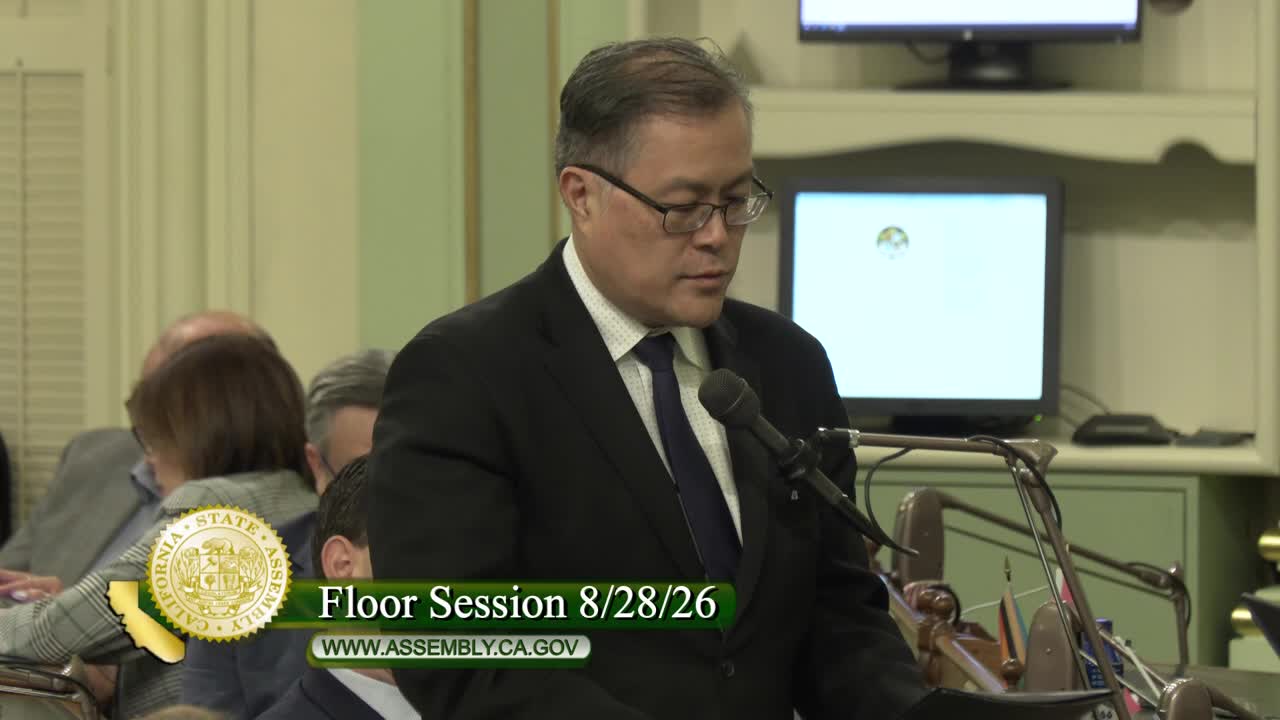
Bill Author

Bill Co-Author(s):