AB 1888: California Safe Homes grant program: contractors.
- Session Year: 2025-2026
- House: Assembly
- Latest Version Date: 2026-03-18
Current Status:
In Progress
(2026-05-14: In committee: Held under submission.)
Introduced
In Committee
Awaiting First Chamber Vote
Passed First Chamber
In Committee
Awaiting Second Chamber Vote
Passed Second Chamber
Enacted
Existing law creates the Department of Insurance, headed by the Insurance Commissioner, and prescribes the departments powers and duties. Existing law establishes the California Safe Homes grant program to be developed by the department to, among other things, reduce local and statewide wildfire losses. Existing law requires the department to prioritize specified needs when awarding grant funds and requires eligible program applicants, which include individuals, cities, counties, and special districts, to meet specified criteria.
This bill would, for purposes of the program, require the department to develop standardized procedures and processes processes, on or before July 1, 2027, for the selection of contractors and award of grant funds to perform specified categories of wildfire mitigation work. The bill would impose specified wage requirements on a contractor who performs any work under these procedures and processes. The bill would prohibit a contractor from being prequalified for, shortlisted for, or awarded a contract unless they provide an enforceable commitment that they will use a skilled and trained workforce to perform all work that falls within an apprenticeable occupation in the building and construction trades, as specified. The bill would impose various requirements on contractors and subcontractors, including requiring each to hold a valid, applicable license issued by the appropriate regulatory entity in this state for the specific task being funded by the program.
Existing law creates the Department of Insurance, headed by the Insurance Commissioner, and prescribes the departments powers and duties. Existing law establishes the California Safe Homes grant program to be developed by the department to, among other things, reduce local and statewide wildfire losses. Existing law requires the department to prioritize specified needs when awarding grant funds and requires eligible program applicants, which include individuals, cities, counties, and special districts, to meet specified criteria.
This bill would, for purposes of the program, require the department to develop standardized procedures and processes for the selection of contractors and award of grant funds to perform specified categories of wildfire mitigation work. The bill would impose specified wage requirements on a contractor who performs any work under these procedures and processes. The bill would prohibit a contractor from being prequalified for, shortlisted for, or awarded a contract unless they provide an enforceable commitment that they will use a skilled and trained workforce to perform all work that falls within an apprenticeable occupation in the building and construction trades, as specified. The bill would impose various requirements on contractors and subcontractors, including requiring each to hold a valid, applicable license issued by the appropriate regulatory entity in this state for the specific task being funded by the program.
The Legislature finds and declares all of the following:
(a)The efficient and economical completion of high-quality construction projects is supported by the use of skilled labor with appropriate certifications, licenses, and training.
(b)The on-schedule completion of these projects is essential to meet the needs of the state and to avoid increased costs caused by construction delays.
(c)The use of skilled labor improves the quality and durability of completed work.
(d)Mitigation grant programs in jurisdictions outside of California have demonstrated the benefits of fostering a skilled workforce on the types of construction necessary to implement public and private projects that address public policy goals.
SEC. 2.Section 2033.1 is added to the Insurance Code, to read:2033.1.(a)The department shall develop standardized procedures and processes processes, on or before July 1, 2027, for the selection of contractors and award of grant funds to perform the following categories of wildfire mitigation work funded under the California Safe Homes grant program:
(1)The alteration or removal of trees and vegetation in the immediate five feet around the exterior of an insured structure.
(2)The construction of a Class-A Wildfire Rated roof for an insured structure.
(3)The construction of noncombustible surfaces or fences within the immediate five feet around the exterior of an insured structure.
(4)The installation of double-paned windows or fireproof exterior shutters for windows on the exterior of an insured structure.
(b)A contractor who enters into a contract to perform any work under the procedures and processes developed pursuant to subdivision (a), or who accepts any California Safe Homes grant funds, shall do all of the following:
(1)Pay each construction worker employed in the execution of the work, at minimum, the general prevailing rate of per diem wages, except that an apprentice registered in a program approved by the Chief of the Division of Apprenticeship Standards shall be paid, at minimum, the applicable apprentice prevailing rate.
(2)Maintain and verify payroll records pursuant to Section 1776 of the Labor Code and make those records available for inspection and copying as provided in that section.
(3)Biannually, on July 1 and December 31 of each year, submit to the department digital copies of its certified payroll records for projects subject to this section. The department shall retain these records as public records for five years.
(c)(1)A contractor shall not be prequalified for, shortlisted for, or awarded a contract pursuant to this section unless the contractor provides an enforceable commitment to the department that the contractor and its subcontractors at every tier will use a skilled and trained workforce to perform all work on the project or contract that falls within an apprenticeable occupation in the building and construction trades, in accordance with Chapter 2.9 (commencing with Section 2600) of Part 1 of Division 2 of the Public Contract Code.
(2)Paragraph (1) shall not apply if all work on the project is subject to a project labor agreement that requires the use of a skilled and trained workforce.
(3)For purposes of this subdivision, project labor agreement has the same meaning as defined in Section 2500 of the Public Contract Code.
(d)In addition to any other contractor requirements under this section, the contractor and each subcontractor shall do all of the following:
(1)Hold a valid, applicable license issued by the appropriate regulatory entity in this state for the specific task being funded by the program. That license shall be unrestricted and free from all ongoing disciplinary action.
(2)Independently hold insurance that complies with the minimum coverages required under state law.
(3)Comply with all applicable state and federal workers compensation laws.
(4)Hold all other licenses or permits necessary, as required by the laws of this state, to complete the work to be performed pursuant to this section.
(5)Avoid conflicts of interest in any work performed using grant funds awarded under the program.
(6)Agree to follow all procedures and processes established by the department for purposes of the program.
(7)Provide documentation of the completed work to the department.
(e)The commissioner may, from time to time, adopt, amend, or repeal regulations to implement the provisions of this section.
The Legislature finds and declares all of the following:
(a)The efficient and economical completion of high-quality construction projects is supported by the use of skilled labor with appropriate certifications, licenses, and training.
(b)The on-schedule completion of these projects is essential to meet the needs of the state and to avoid increased costs caused by construction delays.
(c)The use of skilled labor improves the quality and durability of completed work.
(d)Mitigation grant programs in jurisdictions outside of California have demonstrated the benefits of fostering a skilled workforce on the types of construction necessary to implement public and private projects that address public policy goals.
SEC. 2.Section 2033.1 is added to the Insurance Code, to read:2033.1.(a)The department shall develop standardized procedures and processes for the selection of contractors and award of grant funds to perform the following categories of wildfire mitigation work funded under the California Safe Homes grant program:
(1)The alteration or removal of trees and vegetation in the immediate five feet around the exterior of an insured structure.
(2)The construction of a Class-A Wildfire Rated roof for an insured structure.
(3)The construction of noncombustible surfaces or fences within the immediate five feet around the exterior of an insured structure.
(4)The installation of double-paned windows or fireproof exterior shutters for windows on the exterior of an insured structure.
(b)A contractor who enters into a contract to perform any work under the procedures and processes developed pursuant to subdivision (a), or who accepts any California Safe Homes grant funds, shall do all of the following:
(1)Pay each construction worker employed in the execution of the work, at minimum, the general prevailing rate of per diem wages, except that an apprentice registered in a program approved by the Chief of the Division of Apprenticeship Standards shall be paid, at minimum, the applicable apprentice prevailing rate.
(2)Maintain and verify payroll records pursuant to Section 1776 of the Labor Code and make those records available for inspection and copying as provided in that section.
(3)Biannually, on July 1 and December 31 of each year, submit to the department digital copies of its certified payroll records for projects subject to this section. The department shall retain these records as public records for five years.
(c)(1)A contractor shall not be prequalified for, shortlisted for, or awarded a contract pursuant to this section unless the contractor provides an enforceable commitment to the department that the contractor and its subcontractors at every tier will use a skilled and trained workforce to perform all work on the project or contract that falls within an apprenticeable occupation in the building and construction trades, in accordance with Chapter 2.9 (commencing with Section 2600) of Part 1 of Division 2 of the Public Contract Code.
(2)Paragraph (1) shall not apply if all work on the project is subject to a project labor agreement that requires the use of a skilled and trained workforce.
(3)For purposes of this subdivision, project labor agreement has the same meaning as defined in Section 2500 of the Public Contract Code.
(d)In addition to any other contractor requirements under this section, the contractor and each subcontractor shall do all of the following:
(1)Hold a valid, applicable license issued by the appropriate regulatory entity in this state for the specific task being funded by the program. That license shall be unrestricted and free from all ongoing disciplinary action.
(2)Independently hold insurance that complies with the minimum coverages required under state law.
(3)Comply with all applicable state and federal workers compensation laws.
(4)Hold all other licenses or permits necessary, as required by the laws of this state, to complete the work to be performed pursuant to this section.
(5)Avoid conflicts of interest in any work performed using grant funds awarded under the program.
(6)Agree to follow all procedures and processes established by the department for purposes of the program.
(7)Provide documentation of the completed work to the department.
(e)The commissioner may, from time to time, adopt, amend, or repeal regulations to implement the provisions of this section.
|
Date
|
Status
|
|---|---|
| May 14, 2026 | In committee: Held under submission. |
| May 6, 2026 | In committee: Set, first hearing. Referred to APPR. suspense file. |
| Apr 23, 2026 | From committee: Do pass and re-refer to Com. on APPR. (Ayes 7. Noes 0.) (April 22). Re-referred to Com. on APPR. |
| Apr 15, 2026 | From committee: Do pass and re-refer to Com. on L. & E. (Ayes 14. Noes 2.) (April 15). Re-referred to Com. on L. & E. |
| Mar 19, 2026 | Re-referred to Com. on INS. |
| Mar 18, 2026 | From committee chair, with author's amendments: Amend, and re-refer to Com. on INS. Read second time and amended. |
| Mar 2, 2026 | Referred to Coms. on INS. and L. & E. |
| Feb 13, 2026 | From printer. May be heard in committee March 15. |
| Feb 12, 2026 | Read first time. To print. |
|
Date
|
Description
|
Location
|
Votes
|
|
|---|---|---|---|---|
| Apr 22, 2026 | Do pass and be re-referred to the Committee on [Appropriations] | Assembly Standing Committee on Labor and Employment |
Passed |
|
| Apr 15, 2026 | Do pass and be re-referred to the Committee on [Labor and Employment] | Assembly Standing Committee on Insurance |
Passed |
This list shows positions taken on this bill by organizations on the date displayed, which is linked to the original source.
Positions by individuals are not included.
|
Organization
|
Position
|
Date
|
|---|---|---|
| Associated General Contractors Of California | ** Against | |
| California Department of Insurance | ** Support | |
| Insurance Commissioner Ricardo Lara | ** Support | |
| Teamsters California | ** Support | |
| Western Electrical Contractors Association | ** Support |
Date of Hearing: May 6, 2026
ASSEMBLY COMMITTEE ON APPROPRIATIONS
Buffy Wicks, Chair
ABPCA Bill Id:AB 1888
Author:(Ortega) – As Amended Ver:March 18, 2026
Policy Committee: | Insurance | Vote: | 14 - 2 |
Labor and Employment | 7 - 0 | ||
|
|
Urgency: No State Mandated Local Program: No Reimbursable: No
SUMMARY:
This bill creates labor standards for the California Safe Homes (CSH) grant program.
Specifically, this bill:
- Requires the Department of Insurance (CDI) to develop, by July 1, 2027, standardized procedures for the selection of contractors and award of grant funds to perform specified categories of wildfire mitigation work under the CSH grant program.
- Requires a contractor that performs work under the standardized procedures or accepts grant funds to pay each construction worker the general prevailing rate of per diem wages or the applicable apprentice prevailing rate, maintain certified payroll records (CPRs) and submit digital copies of such records annually to CDI.
- Prohibits a contractor from being prequalified for or awarded a CSH grant program contract unless the contractor provides an enforceable commitment to CDI that the contractor and the contractor’s subcontractors will use a skilled and trained workforce, but provides an exemption from this prohibition if work on the project is subject to a project labor agreement (PLA) that requires a skilled and trained workforce.
- Requires a contractor and subcontractor to meet additional requirements, such as holding a valid, applicable license, free from all ongoing disciplinary action, issued by the appropriate state regulatory entity for the specific task being funded by the program.
- Authorizes the Insurance Commissioner (IC) to adopt, amend, or appeal regulations to implement these provisions.
FISCAL EFFECT:
- To the extent new labor requirements increase project costs, this bill may increase General Fund (GF) cost pressures to augment grant program funding to support additional grant award recipients if existing funding is allocated toward larger grant award amounts. The Budget Act of 2025 provided $12.5 million to CDI to support community hardening oversight and wildfire risk mitigation efforts, including measuring risk for communities and individual residential property owners, pursuant to pending legislation. According to CDI, it received $3 million GF from the 2025-26 state budget to set up the CSH grant program and the author of the original legislation establishing the CSH grant program is requesting another $3 million GF from the 2026-27 state budget for the program.
- Costs of approximately $81,000 in fiscal year (FY) 2026-27, $91,000 in FY 2027-28, and $43,000 in FY 2028-29 and annually thereafter to CDI to update standardized procedures from the CSH grant program, receive and review workforce records, and possibly adopt regulations (Insurance Fund).
- Costs of an unknown, but potentially significant amount, to the Labor Commissioner (LC) depending on whether projects funded by the CSH grant program are considered “public works” and thus already subject to prevailing wage and CPR requirements, and the total number of program projects that would now be subject to skilled and trained workforce requirements under this bill. Although this bill requires the submission of certain workforce records to CDI, the LC is ultimately responsible for enforcing prevailing wage, CPR, and skilled and trained workforce requirements, including investigating complaints and imposing penalties (Labor Enforcement and Compliance Fund).
The Legislative Analyst’s Office recently warned of GF structural deficits of around $35 billion per year in the 2027-28 fiscal year and ongoing.
COMMENTS:
- Purpose. According to the author:
AB 1888 ensures cost efficiency and quality of home-hardening construction funded by the [CSH grant program] by requiring the use of skilled and trained labor. Better work done right the first time by a well-paid, highly skilled workforce, will result in savings for the state by avoiding costly delays or repairs. In a budget-conscious year, assuring the cost-effectiveness of taxpayer funded grants is essential.
- Background. Safe Homes Grant Program. AB 888 (Calderon), Chapter 536, Statutes of 2025, established the CSH grant program within CDI to reduce wildfire losses, improve insurability and resilience of vulnerable communities, and support home hardening measures. Eligible program applicants include qualifying individuals and local agencies meeting certain criteria, including an income limitation for a qualifying individual. This bill requires CDI to develop standardized procedures for the selection of contractors and award of grant funds for specified categories of wildfire mitigation work by July 1, 2027.
Labor Standards. Existing law requires payment of prevailing wage to all workers employed on a public works project valued over $1,000, such as publicly funded construction, alteration, demolition, installation, maintenance, or repair work done under contract. The prevailing wage rate is determined by the Department of Industrial Relations and generally based on the basic hourly rate paid on public works projects to a majority of workers engaged in a particular craft or classification within a locality. Existing law also requires a public works contractor to keep accurate CPRs and make a copy of any CPR available for inspection by certain entities. A CPR details the hours worked, wages paid to each employee, and the jobs performed and provides the contracting agency with a method of oversight to guarantee contractors compensate employees with prevailing wages.
It is possible that the projects funded by the CSH grant program qualify as a public works project pursuant to the existing statutory definition for such projects. If that is the case, this bill’s requirements to subject a CSH project to prevailing wage and CPR requirements have no practical effect on the program. However, regardless of whether a CSH project qualifies as a public works project, this bill imposes skilled and trained workforce requirements on a CSH project, as such requirements are not generally required of a public works project.
- Support and Opposition. This bill is sponsored by IC Ricardo Lara, who argues, “By requiring the use of a skilled and trained workforce, along with prevailing wage, AB 1888 promotes quality workmanship, accountability, and response use of public funds.” This bill is also supported by a labor organization.
This bill is opposed by the Associated General Contractors of California, which argues this bill “is likely to reduce the pool of qualified bidders, drive up project costs, and slow the pace of urgently needed mitigation work. Higher costs may also mean fewer projects can be funded overall, undermining the effectiveness of the Safe Homes grant program.”
- Related Legislation. SB 429 (Cortese), Chapter 541, Statutes of 2025, created the Wildfire Safety and Risk Mitigation Program within CDI to provide grants for the development and deployment of a public wildfire catastrophe model. Alongside AB 888, SB 429 was identified by CDI as legislation that may be funded by the $12.5 million appropriation in the Budget Act of 2025 to support community hardening oversight and wildfire risk mitigation efforts.
Analysis Prepared by: Irene Ho / APPR. / (916) 319-2081
Date of Hearing: April 22, 2026
ASSEMBLY COMMITTEE ON LABOR AND EMPLOYMENT
Liz Ortega, Chair
ABPCA Bill Id:AB 1888 (
Author:Ortega) – As Amended Ver:April 14, 2026
SUBJECT: California Safe Homes grant program: contractors
SUMMARY: Requires the Department of Insurance (CDI) to develop standardized procedures and processes, on or before July 1, 2027, for the selection of contractors and award of grant funds to perform specified categories of wildfire mitigation work as it relates to the California Safe Homes (CSH) grant program; and imposes certain contractor requirements for the program, including the use of a skilled and trained workforce, payment of prevailing wage and maintenance of payroll records. Specifically, this bill:
- Requires the CDI to develop standardized procedures and processes, on or before July 1, 2027, for the selection of contractors and award of grant funds to perform the following categories of wildfire mitigation work funded under the CSH grant program:
- The alteration or removal of trees and vegetation in the immediate five feet around the exterior of an insured structure.
- The construction of a Class-A Wildfire Rated roof for an insured structure.
- The construction of noncombustible surfaces or fences within the immediate five feet around the exterior of an insured structure.
- The installation of double-paned windows or fireproof exterior shutters for windows on the exterior of an insured structure.
- Requires a contractor who enters into a contract to perform any work under the procedures and processes developed pursuant to (1) above or who accepts any CSH grant funds, to do all of the following:
- Pay each construction worker employed in the execution of the work, at minimum, the prevailing wage, as specified.
- Maintain and verify payroll records and make those records available for inspection and copying, as specified.
- Biannually submit to the CDI digital copies of its certified payroll records for projects subject to this measure, as specified.
- Requires the CDI to retain these records as public records for five years.
- Prohibits a contractor from being prequalified for, shortlisted for, or awarded a contract pursuant to this measure unless the contractor provides an enforceable commitment to the CDI that the contractor and its subcontractors at every tier will use a skilled and trained workforce to perform all work on the project or contract that falls within an apprenticeable occupation in the building and construction trades, as specified.
- Provides that (3) above shall not apply if all work on the project is subject to a project labor agreement that requires the use of a skilled and trained workforce.
- Requires, in addition to the above requirements, the contractor and each subcontractor to do all of the following:
- Hold a valid, applicable license issued by the appropriate regulatory entity in this state for the specific task being funded by the program. That license shall be unrestricted and free from all ongoing disciplinary action.
- Independently hold insurance that complies with the minimum coverages required under state law.
- Comply with all applicable state and federal workers’ compensation laws.
- Hold all other licenses or permits necessary, as required by the laws of this state, to complete the work to be performed pursuant to this measure.
- Avoid conflicts of interest in any work performed using grant funds awarded under the program.
- Agree to follow all procedures and processes established by the CDI for purposes of the program.
- Provide documentation of the completed work to the CDI.
- Authorizes the Insurance Commissioner to adopt, amend, or repeal regulations to implement the provisions above.
- Makes related findings and declarations.
EXISTING LAW:
- Establishes the CDI under the direction of the Insurance Commissioner, to oversee the regulation of insurance companies, agents, and brokers in the state. Insurance Code § 12900 et seq.
- Establishes the CSH grant program within the CDI with the goals of reducing local and statewide wildfire losses, improving insurability and resilience of vulnerable communities, and home hardening to mitigate wildfire risk and reduce the cost of insurance. Insurance Code § 2033.
- Defines “public works,” for the purposes of regulating public works contracts, as, among other things, construction, alteration, demolition, installation, or repair work done under contract and paid for, in whole or in part, out of public funds. Labor Code § 1720(a).
- Requires that not less than the general prevailing rate of per diem wages be paid to all workers employed on a public works project costing over $1,000 dollars and imposes misdemeanor penalties for violation of this requirement. Labor Code §1771.
- Requires each contractor and subcontractor on a public works project to keep accurate payroll records, showing the name, address, social security number, work classification, straight time and overtime hours worked each day and week, and the actual per diem wages paid to each journeyman, apprentice, worker, or other employee employed by the contractor or subcontractor in connection with the public work. Labor Code § 1776(a).
- Authorizes a public entity to require a bidder, contractor, or other entity to use a skilled and trained workforce to complete a contract or project regardless of whether the public entity is required to do so by a statute or regulation. Public Contract Code § 2600(b).
- Requires, when the use of a skilled and trained workforce to complete a contract or project is required, the public entity to include in all bid documents and construction contracts a notice that the project is subject to the skilled and trained workforce requirement. Public Contract Code § 2600(c).
- Defines a “skilled and trained workforce” to mean a workforce that meets certain conditions, including specified apprenticeship graduation requirements. Public Contract Code § 2601.
- Requires a contractor, bidder, or other entity to provide to the public entity or other awarding body, on a monthly basis while the project or contract is being performed, a report demonstrating compliance with skilled and trained workforce requirements. Public Contract Code § 2602.
- Requires a contractor or subcontractor to pay a civil penalty to the state of not more than $5,000 per month of work performed in violation of the skilled and trained workforce requirements if the Labor Commissioner or their designee determines that the contractor or subcontractor failed to use a skilled and trained workforce. A contractor or subcontractor that commits a second or subsequent violation within a three-year period shall forfeit as a civil penalty to the state the sum of not more than $10,000 per month of work performed in violation. Public Contract Code § 2603.
- Provides that the ratio of work performed by apprentices to journeymen employed in a particular craft or trade on the public work may be no higher than the ratio stipulated in the apprenticeship standards under which the apprenticeship program operates if the contractor agrees to be bound by those standards, but provides that, unless otherwise specified, in no case shall the ratio be less than one hour of apprentice work for every five hours of journeyman work. Labor Code § 1777.5(g).
- Defines “project labor agreement” to mean a prehire collective bargaining agreement that establishes terms and conditions of employment for a specific construction project or projects, and authorizes a public entity to use, enter into, or require contractors to enter into a project labor agreement for a construction project if specified conditions are met. Public Contract Code § 2500(b)(1).
FISCAL EFFECT: Unknown
COMMENTS: A “skilled and trained workforce” is one in which all the workers performing work in an apprenticeable occupation in the building and construction trades are either skilled journeypersons or apprentices registered in an apprenticeship program approved by the Division of Apprenticeship Standards (DAS) of the Department of Industrial Relations. A skilled journeyperson is defined as a worker who either 1) graduated from an apprenticeship program for the applicable occupation that was approved by the DAS, or located outside California and approved pursuant to the federal apprenticeship regulations, or 2) has at least as many hours of on-the-job experience in the applicable occupation as would be required to graduate from an apprenticeship program for the applicable occupation that is approved by the DAS.
Skilled and trained workforces are required in California for various projects, particularly for public works, design-build, and certain private projects. The purpose behind mandating this workforce is to ensure high-quality work, safety, and regulatory compliance. Highly trained workers also complete projects more quickly and efficiently, thereby reducing project timelines and overall cost.
According to the author, “AB 1888 is a follow up to AB 888 (Calderon, 2025) which established the California Safe Homes Grant program. As home insurance premiums continue to rise due to the increased cost of climate-caused natural disasters, the [grant program] allows for low- and middle-income homeowners to have access to home hardening upgrades they wouldn’t otherwise be able to afford. AB 1888 ensures cost efficiency and quality of home-hardening construction funded by the program by requiring the use of skilled and trained labor. Better work done right the first time by a well-paid, highly skilled workforce will result in savings for the state by avoiding costly delays or repairs. In a budget-conscious year, assuring the cost-effectiveness of taxpayer funded grants is essential. AB 1888 accomplishes cost-efficiency, supports good union jobs, and prevents the loss of homes due to wildfires.”
Arguments in Support
The Insurance Commissioner, sponsor of this bill, writes: “As California continues to face increasing wildfire risk, home-hardening remains one of the most effective tools to protect homes and communities, but the effectiveness of these investments depends on the quality of the work performed. Without clear workforce standards, there is a risk that publicly funded mitigation work may be performed inconsistently or inadequately, leading to reduced effectiveness and the potential for costly rework. Ensuring this work is performed correctly and to a high standard is critical to the success of these investments.”
Arguments in Opposition
The Associated General Contractors of California write in opposition that “the bill mandates elevated wage standards and requires the use of a skilled-and-trained workforce for all apprenticeable occupations. These provisions significantly increase labor costs and create barriers for many small and mid-sized contractors who have long delivered wildfire-hardening work in high-risk communities. Skilled-and-trained thresholds do not reflect the structure of many trades, the uneven availability of apprenticeship programs across regions, or the staffing realities of small businesses. As a result, a large portion of the qualified contractor community would be excluded from participating—regardless of their experience, safety record, or proven ability to perform this work effectively.”
Prior Legislation
AB 888 (Calderon), Chapter 536, Statutes of 2025, created the CSH grant program within the CDI with the goals of reducing local and statewide wildfire losses, improving the insurability and resilience of vulnerable communities, and home hardening to mitigate wildfire risk and reduce the cost of insurance.
SB 369 (Padilla) of 2025 would have extended the requirement to use a skilled and trained workforce to Salton Sea restoration projects undertaken by specified state agencies. Vetoed by Governor Newsom.
SB 1298 (Cortese) of 2024 would have authorized the California Energy Commission, until January 1, 2030, to exempt from its certification a thermal powerplant with a generating capacity of up to 150 megawatts, if specified requirements are met, including that a skilled and trained workforce is used to perform all construction work on the facility, as specified. This bill died in the Assembly Rules Committee.
SB 144 (Committee on Budget and Fiscal Review) Chapter 367, Statutes of 2023 required eligible centralized procurement entity projects to, among other things, use a skilled and trained workforce.
SB 288 (Wiener), Chapter 200, Statutes of 2020 required the use of a skilled and trained workforce for certain transit-related projects conducted by public agencies.
SB 524 (Stern) of 2019 would have required that a skilled and trained workforce perform the work for energy efficiency projects of $50,000 or more in ratepayer-funded incentives within the same building, facility or complex. This bill died on the Assembly inactive file.
AB 356 (Santiago), Chapter 173, Statutes of 2019, among other things, extended the skilled and trained workforce requirement to Los Angeles Community College District construction projects over $1 million.
AB 695 (Medina), Chapter 492, Statutes of 2019, among other things, extended the skilled and trained workforce requirement to design-build contracts for community college facilities.
AB 1413 (Gloria), Chapter 758, Statutes of 2019, among other things, extended the skilled and trained workforce requirement to specified construction contracts over $1 million with the San Diego County Regional Transportation Commission, the San Diego Association of Governments, the San Diego Metropolitan Transit System, and the North County Transit District.
REGISTERED SUPPORT / OPPOSITION:
Support
Insurance Commissioner Ricardo Lara / California Department of Insurance (Sponsor)
Support If Amended
Western Electrical Contractors Association
Analysis Prepared by: Erin Hickey / L. & E. /
Date of Hearing: April 15, 2026
ASSEMBLY COMMITTEE ON INSURANCE
Lisa Calderon, Chair
ABPCA Bill Id:AB 1888 (
Author:Ortega & Calderon) – As Amended Ver:March 18, 2026
SUBJECT: California Safe Homes grant program: contractors
SUMMARY: Requires the California Department of Insurance (CDI) to develop standardized procedures and processes, on or before July 1, 2027, for the selection of contactors and award of grant funds to perform specified categories of wildfire mitigation work as it relates to the California Safe Homes (CSH) grant program. Specifically, this bill:
- Requires a contractor who enters into a contract to perform work under the California Safe Homes grant program to do all of the following:
- Pay each construction worker, at a minimum, the general prevailing rate of per diem wages, as specified;
- Maintain and verify payroll records; and,
- Provide digital copies of payroll records to CDI biannually, on July 1 and December 31 of each year.
- Requires CDI to retain these records for 5 years.
- Requires a contractor to use a skilled and trained workforce for all work related to the project.
- Requires the contractor and subcontractors to do all of the following:
- Hold a valid, applicable license issued by the appropriate regulatory entity in this state;
- Independently hold insurance that complies with the minimum coverages required under the law;
- Comply with all applicable state and federal workers’ compensation laws;
- Hold all other licenses or permits necessary, as required by the laws of this state;
- Avoid conflicts of interest in any work performed using grant funds awarded under the CSH grant program;
- Agree to follow all procedures and processes established by CDI; and,
- Provide documentation of the completed work to CDI.
- Requires the contractor and subcontractors to do all of the following:
- Allows the Insurance Commissioner to adopt, amend, or repeal regulations to implement the provisions of this bill.
- Makes findings and declarations.
EXISTING LAW:
- Provides for the regulation of insurers, agents and brokers, and other insurance-like organizations by the Insurance Commissioner, and imposes a broad range of financial solvency, licensing, and market behavior requirements, as set forth in the Insurance Code.
- Establishes the CSH grant program within CDI with the goals of reducing local and statewide wildfire losses, improving insurability and resilience of vulnerable communities, and home hardening to mitigate wildfire risk and reduce the cost of insurance. (Insurance Code, Section 2033)
- Establishes the “Safer from Wildfires” Framework. (Section 2644.9 of Title 10 of the California Code of Regulations)
FISCAL EFFECT: Unknown.
COMMENTS:
- Purpose of the bill: According to the Authors, “AB 1888 is a follow up to AB 888 (Calderon, 2025) which established the CSH grant program. As home insurance premiums continue to rise due to the increased cost of climate-caused natural disasters, the CSHG allows for low- and middle-income homeowners to have access to home hardening upgrades they wouldn’t otherwise be able to afford. AB 1888 ensures cost efficiency and quality of home-hardening construction funded by the program by requiring the use of skilled and trained labor. Better work done right the first time by a well-paid, highly skilled workforce, will result in savings for the state by avoiding costly delays or repairs. In a budget-conscious year, assuring the cost-effectiveness of taxpayer funded grants is essential. AB 1888 accomplishes cost-efficiency, supports good union jobs, and prevents the loss of homes due to wildfires.”
- Background: AB 888 established the CSH grant program to provide financial assistance to low- and middle-income homeowners in high wildfire-risk areas for home-hardening mitigations. The CSH grant program received funding last year to get the program started, and there is a new budgetary ask in the 2026-27 Budget to continue the program.
AB 1888 is a follow-up measure to create standards and processes for those conducting the work for those projects granted funding. AB 1888 ensures that funds are spent on work done by qualified union labor.
- California Safe Homes grant program: The CSH grant program was created to help Californians reduce wildfire risk by prioritizing the replacement of fire-prone roofs and clearing the first five feet around properties. The CSH grant program focuses on incentivizing important mitigation measures such as:
- Removal of trees and vegetation in the immediate five feet around the exterior;
- Construction of Class-A Wildfire Rated roof;
- Construction of noncombustible surfaces or fences within the immediate five-feet around the exterior; and,
- Installation of double-paned windows or fireproof exterior shutters.
Applicants could receive funding to cover all or part of the costs. Eligible applicants include: 1) homeowners who are insured by an admitted insurer or the California FAIR Plan; are located in zip codes overlapping with high or very high fire hazard severity zones; and, meet low-income limits set by the Department of Housing and Community Development, and 2) cities, counties, and special districts that propose projects aligned with wildfire mitigation priorities, and demonstrate how grant funds will support measurable outcomes.
Programs similar to this exist in several others states, including Louisiana, Alabama, and Florida. In 2011, Alabama introduced the Strengthen Alabama Homes Act to help homeowners with building modifications, with roofs specifically identified, that reduce property damage from hurricanes and other catastrophic windstorms. Funded primarily through premium taxes, the Alabama Department of Insurance offers financial assistance to qualified homeowners for retrofitting roof costs. Homes with hardened roofs have been determined to be more valuable on average than those without.
- Previous legislation: AB 888 (Calderon, Chapter 525, Statutes of 2025) created the CSH grant program within the CDI with the goals of reducing local and statewide wildfire losses, improving the insurability and resilience of vulnerable communities, and home hardening to mitigate wildfire risk and reduce the cost of insurance.
- Arguments in support: Insurance Commissioner Ricardo Lara, sponsor of AB 1888, states, “As California continues to face increasing wildfire risk, home-hardening remains one of the most effective tools to protect homes and communities, but the effectiveness of these investments depends on the quality of the work performed. Without clear workforce standards, there is a risk that publicly funded mitigation work may be performed inconsistently or inadequately, leading to reduced effectiveness and the potential for costly rework. Ensuring this work is performed correctly and to a high standard is critical to the success of these investments.
By requiring the use of a skilled and trained workforce, along with prevailing wage, AB 1888 promotes quality workmanship, accountability, and responsible use of public funds. These standards help attract and retain qualified workers, support pathways to good-paying jobs, and reduce the risk of delays or costly rework. In doing so, AB 1888 helps ensure that limited state program funds deliver meaningful, durable protection for homeowners.
- Arguments in opposition: According to the Associated General Contractors, “The bill mandates elevated wage standards and requires the use of a skilled-and-trained workforce for all apprenticeable occupations. These provisions significantly increase labor costs and create barriers for many small and mid-sized contractors who have long delivered wildfire-hardening work in high-risk communities. Skilled-and-trained thresholds do not reflect the structure of many trades, the uneven availability of apprenticeship programs across regions, or the staffing realities of small businesses. As a result, a large portion of the qualified contractor community would be excluded from participating—regardless of their experience, safety record, or proven ability to perform this work effectively. Fewer eligible contractors means fewer homes can be hardened each year.”
- Double-referral: Should this measure pass out of the Assembly Insurance Committee, it will move on to the Assembly Labor and Employment Committee for consideration.
REGISTERED SUPPORT / OPPOSITION:
Support
Insurance Commissioner Ricardo Lara / California Department of Insurance
Teamsters California
Support If Amended
Western Electrical Contractors Association
Opposition
Associated General Contractors, California Chapters
Analysis Prepared by: Kathleen O'Malley / INS. / (916) 319-2086
Discussed in Hearing
 7MIN
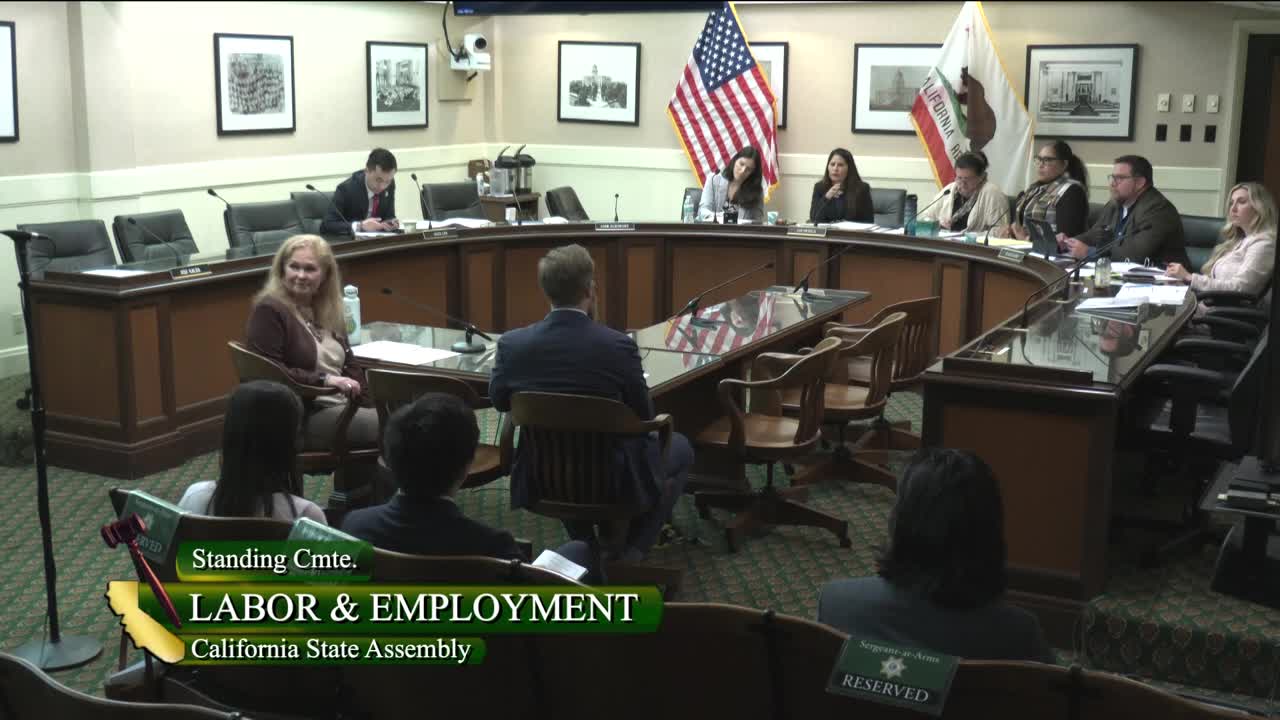
Assembly Standing Committee on Labor and Employment
 7MIN
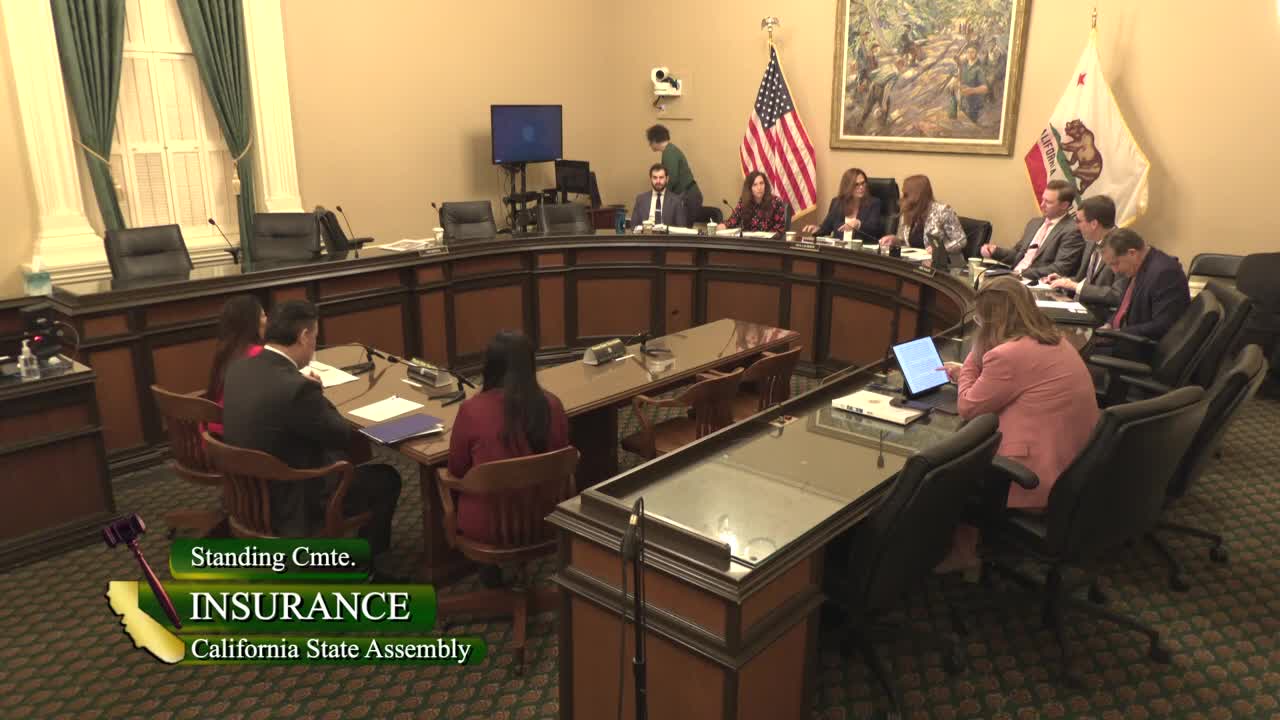
Assembly Standing Committee on Insurance


Bill Co-Author(s):