AB 1956: Suicide prevention.
- Session Year: 2025-2026
- House: Assembly
- Latest Version Date: 2026-08-28
Current Status:
Passed
(2026-08-28: Chaptered by Secretary of State - Chapter 163, Statutes of 2026.)
Introduced
In Committee
Awaiting First Chamber Vote
Passed First Chamber
In Committee
Awaiting Second Chamber Vote
Passed Second Chamber
Enacted
What does this bill do?
The bill directs the State Department of Public Health’s Office of Suicide Prevention to pay special attention to boys and to include young men among groups targeted for suicide prevention, and it requires the office to report to the Legislature on strategies to reach those groups. It also preserves the office’s ability to focus on other high-risk populations such as Native American youth, older adults, veterans, and LGBTQ people.
The summary is provided by generative AI which can make mistakes. For original language, please view the details in the table below.
Existing law authorizes the State Department of Public Health to establish the Office of Suicide Prevention within the department. Existing law authorizes the office, if established, to perform certain functions, including, among others, conducting state-level assessment of regional and statewide suicide prevention policies and practices and reporting on progress to reduce rates of suicide. Existing law authorizes the office, if established, to focus activities on groups with the highest risk, including youth, Native American youth, older adults, veterans, and LGBTQ people.
This bill would authorize the offices activities focused on youth to pay special attention to boys. The bill would additionally authorize the office to focus activities on young men. The bill would require the office, if established, to report to the Legislature, on or before July 1, 2028, on strategies to implement the activities focused on boys and young men.
(a)The State Department of Public Health may establish the Office of Suicide Prevention in the department pursuant to this chapter. The responsibilities of the office, if established, may include all of the following:
(1)Providing information and technical assistance to statewide and regional partners regarding best practices on suicide prevention policies and programs.
(2)Conducting state-level assessment of regional and statewide suicide prevention policies and practices, including other states suicide prevention policies and specific metrics and domains, as appropriate.
(3)Monitoring and disseminating data to inform prevention efforts at the state and local levels.
(4)Convening experts and stakeholders, including, but not limited to, stakeholders representing populations with high rates of suicide, to encourage collaboration and coordination of resources for suicide prevention.
(5)Reporting on progress to reduce rates of suicide.
(b)If established, the office may focus activities on groups with the highest risk, including youth, with special attention on boys, Native American youth, older adults, veterans, LGBTQ people, and young men.
(c)(1)On or before July 1, 2028, the office, if established, shall provide a report to the Legislature on strategies to implement the activities focused on boys and young men described in subdivision (b).
(2)The report shall be submitted in compliance with Section 9795 of the Government Code.
(3)Pursuant to Section 10231.5 of the Government Code, the reporting requirement imposed by paragraph (1) is inoperative on July 1, 2032.
(a)The State Department of Public Health is hereby authorized to may establish the Office of Suicide Prevention in the department pursuant to this chapter. The responsibilities of the office, if established, may include all of the following:
(1)Providing information and technical assistance to statewide and regional partners regarding best practices on suicide prevention policies and programs.
(2)Conducting state level state-level assessment of regional and statewide suicide prevention policies and practices, including other states suicide prevention policies, and including policies and specific metrics and domains domains, as appropriate.
(3)Monitoring and disseminating data to inform prevention efforts at the state and local levels.
(4)Convening experts and stakeholders, including, but not limited to, stakeholders representing populations with high rates of suicide, to encourage collaboration and coordination of resources for suicide prevention.
(5)Reporting on progress to reduce rates of suicide.
(b)If established, the office may focus activities on groups with the highest risk, including youth, with special attention on boys, Native American youth, older adults, veterans, LGBTQ people, and young men.
(c)(1)On or before July 1, 2028, the office, if established, shall provide a report to the Legislature on strategies to implement the activities focused on boys and young men described in subdivision (b).
(2)The report shall be submitted in compliance with Section 9795 of the Government Code.
(3)Pursuant to Section 10231.5 of the Government Code, the reporting requirement imposed by paragraph (1) is inoperative on July 1, 2032.
(a)The State Department of Public Health is hereby authorized to establish the Office of Suicide Prevention in the department pursuant to this chapter. The responsibilities of the office, if established, may include all of the following:
(1)Providing information and technical assistance to statewide and regional partners regarding best practices on suicide prevention policies and programs.
(2)Conducting state level assessment of regional and statewide suicide prevention policies and practices, including other states suicide prevention policies, and including specific metrics and domains as appropriate.
(3)Monitoring and disseminating data to inform prevention efforts at the state and local levels.
(4)Convening experts and stakeholders, including, but not limited to, stakeholders representing populations with high rates of suicide, to encourage collaboration and coordination of resources for suicide prevention.
(5)Reporting on progress to reduce rates of suicide.
(b)If established, the office may focus activities on groups with the highest risk, including youth, with special attention on boys, Native American youth, older adults, veterans, and LGBTQ people. LGBTQ people, and young men.
(c)(1)On or before July 1, 2028, the office, if established, shall provide a report to the Legislature on strategies to implement the activities focused on boys and young men described in subdivision (b).
(2)The report shall be submitted in compliance with Section 9795 of the Government Code.
(3)Pursuant to Section 10231.5 of the Government Code, the reporting requirement imposed by paragraph (1) is inoperative on July 1, 2032.
|
Date
|
Status
|
|---|---|
| Aug 28, 2026 | Chaptered by Secretary of State - Chapter 163, Statutes of 2026. |
| Aug 28, 2026 | Approved by the Governor. |
| Aug 18, 2026 | Enrolled and presented to the Governor at 3:30 p.m. |
| Aug 11, 2026 | In Assembly. Ordered to Engrossing and Enrolling. |
| Aug 10, 2026 | Read third time. Passed. Ordered to the Assembly. (Ayes 39. Noes 0.). |
| Aug 10, 2026 | Read third time. Passed. Ordered to the Assembly. (Ayes 39. Noes 0. Page 5322.). |
| Aug 4, 2026 | Read second time. Ordered to Consent Calendar. |
| Aug 3, 2026 | From committee: Be ordered to second reading file pursuant to Senate Rule 28.8 and ordered to Consent Calendar. |
| Jul 1, 2026 | From committee: Do pass and re-refer to Com. on APPR. with recommendation: To Consent Calendar. (Ayes 13. Noes 0.) (June 30). Re-referred to Com. on APPR. |
| Jun 11, 2026 | From committee: Do pass and re-refer to Com. on JUD. with recommendation: To Consent Calendar. (Ayes 10. Noes 0.) (June 10). Re-referred to Com. on JUD. |
| May 27, 2026 | Referred to Coms. on HEALTH and JUD. |
| May 18, 2026 | In Senate. Read first time. To Com. on RLS. for assignment. |
| May 18, 2026 | Read third time. Passed. Ordered to the Senate. (Ayes 72. Noes 0.) |
| May 18, 2026 | Read third time. Passed. Ordered to the Senate. (Ayes 72. Noes 0. Page 5130.) |
| May 11, 2026 | Read third time and amended. Ordered to third reading. (Page 5013.) |
| May 11, 2026 | Read third time and amended. Ordered to third reading. |
| May 7, 2026 | Ordered to third reading. |
| May 7, 2026 | From Consent Calendar. |
| Apr 30, 2026 | Read second time. Ordered to Consent Calendar. |
| Apr 29, 2026 | From committee: Do pass. To Consent Calendar. (Ayes 14. Noes 0.) (April 29). |
| Apr 8, 2026 | From committee: Do pass and re-refer to Com. on APPR. with recommendation: To Consent Calendar. (Ayes 16. Noes 0.) (April 7). Re-referred to Com. on APPR. |
| Mar 2, 2026 | Referred to Com. on HEALTH. |
| Feb 14, 2026 | From printer. May be heard in committee March 16. |
| Feb 13, 2026 | Read first time. To print. |
|
Date
|
Description
|
Location
|
Votes
|
|
|---|---|---|---|---|
| Aug 10, 2026 | Consent Calendar 2nd AB1956 Valencia et al. | Senate Floor |
Passed |
|
| Jun 30, 2026 | Do pass, but first be re-referred to the Committee on [Appropriations] with the recommendation: To Consent Calendar | Senate Standing Committee on Judiciary |
Passed |
|
| Jun 10, 2026 | Do pass, but first be re-referred to the Committee on [Judiciary] with the recommendation: To Consent Calendar | Senate Standing Committee on Health |
Passed |
|
| May 18, 2026 | AB 1956 Valencia Assembly Third Reading | Assembly Floor |
Passed |
|
| Apr 29, 2026 | Do pass. To Consent Calendar. | Assembly Standing Committee on Appropriations |
Passed |
|
| Apr 7, 2026 | Do pass and be re-referred to the Committee on [Appropriations] with recommendation: To Consent Calendar | Assembly Standing Committee on Health |
Passed |
This list shows positions taken on this bill by organizations on the date displayed, which is linked to the original source.
Positions by individuals are not included.
|
Organization
|
Position
|
Date
|
|---|---|---|
| American Institute for Boys and Men | ** Support | |
| Big Brothers Big Sisters of Orange County | ** Support | |
| California Academy of Child and Adolescent Psychiatry | ** Support | |
| California Alliance of Caregivers | ** Support | |
| California Behavioral Health Association | ** Support | |
| California Charter Schools Association | ** Support | |
| California Medical Association | ** Support | |
| Generation Up | ** Support | |
| Generation Up (GENup) | ** Support | |
| Health Officers Association Of California | ** Support | |
| MENTOR California | ** Support | |
| Orange County Asian and Pacific Islander Community Alliance, INC. | ** Support | |
| Orange County Asian and Pacific Islander Community Alliance, INC. (OCAPICA) | ** Support | |
| Orange County Association for Mental Health | ** Support | |
| Orange County Medical Association | ** Support | |
| Orange County United Way | ** Support | |
| Rebecca Bender Initiative | ** Support | |
| The Center for Boys and Men | ** Support | |
| United Nations Association of Orange County | ** Support | |
| Wilton Rancheria | ** Support |
SENATE RULES COMMITTEE Office of Senate Floor Analyses (916) 651-4171 | AB 1956 |
CONSENT
Bill No: AB 1956
Author: Valencia (D), et al.
Amended: 5/11/26 in Assembly
Vote: 21
SENATE HEALTH COMMITTEE: 10-0, 6/10/26
AYES: Weber Pierson, Valladares, Caballero, Durazo, Grove, Menjivar, Padilla, Pérez, Rubio, Smallwood-Cuevas
NO VOTE RECORDED: Gonzalez
SENATE JUDICIARY COMMITTEE: 13-0, 6/30/26
AYES: Umberg, Niello, Allen, Ashby, Caballero, Durazo, Laird, Reyes, Stern, Valladares, Wahab, Weber Pierson, Wiener
ASSEMBLY FLOOR: 72-0, 5/18/26 - See last page for vote
SUBJECT: Suicide prevention
SOURCE: Generation Up
DIGEST:
This bill adds boys and young men to the list of highest risk populations on which the Office of Suicide Prevention (OSP) can focus its prevention activities. Requires OSP, by July 1, 2028, to provide a report to the Legislature on strategies to implement these activities.
ANALYSIS:
Existing law:
- Establishes the California Department of Public Health (CDPH) to be vested with all the duties, powers, purposes, functions, responsibilities, and jurisdiction as they relate to public health, as specified. [Health and Safety Code (HSC) §131050]
- Permits CDPH to establish OSP with responsibilities to include providing information and technical assistance to statewide and regional partners regarding best practices on suicide prevention policies and programs; conducting state-level assessment of regional and statewide suicide prevention policies and practices; monitoring and disseminating data to inform prevention efforts at the state and local levels; convening experts and stakeholders, including stakeholders representing populations with high rates of suicide, to encourage collaboration and coordination of resources for suicide prevention; and, reporting on progress to reduce rates of suicide. [Welfare and Institutions Code (WIC) §131300(a)]
- Permits OSP to focus activities on groups with the highest risk, including youth, Native American youth, older adults, veterans, and LGBTQ people. [WIC §131300(b)]
This bill:
- Adds boys, as a population to receive special attention under the category of “youth,” and young men as an additional category to the list of highest risk populations on which OSP can focus its suicide prevention activities.
- Requires OSP, by July 1, 2028, to provide a report to the Legislature on strategies to implement the activities focused on boys and young men. Sunsets this reporting requirement on July 1, 2032.
Background
According to the author of this bill:
California is facing a mental health crisis, and young men and boys are at the center of it. Four out of five youth suicides are male, accounting for nearly 80% of suicides statewide. These statistics represent more than data points: they represent sons, brothers, and fathers whose lives were lost. Despite this clear disparity, targeted outreach and interventions for young men remain limited, even though they face distinct barriers to seeking help, including stigma, isolation, and a lack of messaging that resonates with their experiences. This bill recognizes this gap and directs greater focus toward prevention strategies that better reach and support this population. California has the opportunity to do better and strengthen its response to a crisis that continues to affect families and communities all across the state.
In 2024, suicide was the 10th leading cause of death in the U.S., accounting for 48,824 deaths nationwide (13.7 per 100,000 people) and 2.2 million estimated attempts (1.5 times increase from 2023), according to the American Foundation for Suicide Prevention’s website. Suicide-related deaths were four times higher among males (38,977) compared to females (9,847). Among youth and young adults ages 15 to 34, suicide is the second leading cause of death. However, suicide rates in this age group decreased slightly from 2023 to 2024, declining from 15.9 to 15.2 per 100,000 (4%). Firearms were the most common method of death by suicide, accounting for more than half of all suicide deaths (57%).
In California, according to CDPH’s “2026 California State of Public Health Report,” there were 4,042 suicides in 2024. Overall suicide rates in California increased somewhat from 2000 through 2019 with a slight drop observed during the first year of the pandemic (2020), followed by fairly stable rates since then. The number of suicide deaths in 2024 represents a decrease from the number of suicide deaths (4,191) in 2023. The most common mechanism for Californians aged 25 and younger was suffocation, comprising 38.9% of these suicide deaths. There were 30,535 non-fatal self-harm-related emergency department visits in 2024, with the majority (54.4%) among individuals 24 or younger.
CDPH highlights Governor Newsom’s Executive Order (EO), regarding suicide rates for boys and young men, and states it is participating in the coordinated statewide response to improve mental health, reduce stigma, and expand access to meaningful education, work, and mentorship opportunities for this population. OSP also led two Children and Youth Behavioral Health Initiative workstreams, including the Youth Suicide Reporting and Crisis Response Pilot Program, which aimed to strengthen local systems for rapid report and response to youth suicides and suicide attempts in 10 counties, and the Never a Bother youth suicide prevention campaign. The Never a Bother campaign, co-created with over 420 youth from across California, is part of the state’s ongoing effort to increase awareness of suicide warning signs, share suicide prevention and mental health resources, build life-saving intervention skills, and promote help seeking behavior for youth and young adults—before, during, and after a crisis. In its first year, the campaign generated more than 1.12 billion impressions, while community-based grantees offered over 4,600 engagement activities that supported 106,000+ direct interactions with youth and caregivers.
Governor’s EO. In July 2025, Governor Newsom signed Executive Order N-31-25 directing California state agencies to launch a coordinated response to the rising suicide rates among young men and boys, which he called an urgent and growing crisis. The EO proclaimed in part that young men are more disconnected from school, work, and relationships than ever before, with nearly one-in-four men under 30 years old reporting that they have no close friends (a five-fold increase since 1990) with higher rates of disconnection for young Black males, citing that a lack of social connection is associated with increased risk of poor health, including mental health disorders, poverty, and even premature death. The EO further stated that college enrollment and completion rates for men have dropped significantly over the past decade, and the school suspension rate for boys is more than double the rate for girls, with even higher rates for Black and American Indian and Native Alaskan boys. The EO ordered the creation and continuation of various initiatives under Governor Newsom’s Administration, such as:
- Directing the California Health and Human Services Agency, in consultation with the Department of Health Care Services, CDPH, and other relevant departments, to develop recommendations to address the suicide crisis among young men within existing initiatives, including the Children and Youth Behavioral Health Initiative and other components of the Master Plan for Kids’ Mental Health; to support the mental health and help-seeking behavior of boys, men, and the communities that support them, including those affected by violence; and, to access timely services and seek treatment if needed, including development of pathways for men and boys in need to participate in improved behavioral health services that are expanding through California’s Mental Health for All Plan and the Master Plan for Kid’s Mental Health;
- Requiring the Governor’s Office of Service and Community Engagement, in consultation with the Office of the First Partner and the Executive Director of the State Board of Education, to identify opportunities for promoting and enhancing the participation of men and boys in service opportunities through California Volunteers;
- Requiring the Executive Director of the State Board of Education, and requesting the California Department of Education and California Commission on Teacher Credentialing, to identify opportunities within the initiatives underway as part of the more than $1 billion invested to strengthen the teacher workforce to improve recruitment of men as teachers and school counselors, including review of outreach, marketing, and promotional materials and partnerships with institutions of higher education; and,
- Requiring other agencies and departments within the Governor’s Administration to assist in the efforts directed by the EO if requested, and requesting agencies and departments not subject to the Governor’s authority to do the same.
FISCAL EFFECT: Appropriation: No Fiscal Com.: Yes Local: No
Senate Rule 28.8
SUPPORT: (Verified 8/3/26)
Generation Up (source)
American Institute for Boys and Men
California Academy of Child and Adolescent Psychiatry
California Alliance of Caregivers
California Behavioral Health Association
California Charter Schools Association
California Medical Association
Health Officers Association of California
Orange County Asian and Pacific Islander Community Alliance, Inc.
Orange County Association for Mental Health
Orange County Medical Association
Orange County United Way
Rebecca Bender Initiative
United Nations Association of Orange County
Wilton Rancheria
OPPOSITION: (Verified 8/3/26)
None received
ARGUMENTS IN SUPPORT: Generation Up, sponsor of this bill, and other supporters, state that the challenges boys and young men face, such as stigma around mental health conditions, isolation and masculinity norms are often exacerbated for young men in communities of color, where access to mental health resources may already be limited or looked down upon. Despite these disparities, young men and boys are not explicitly recognized as a priority population within existing suicide prevention frameworks. Without targeted outreach, many at-risk individuals may remain disconnected from the support systems that could prevent mental health crises and suicide attempts.
ASSEMBLY FLOOR: 72-0, 5/18/26
AYES: Addis, Aguiar-Curry, Ahrens, Alanis, Alvarez, Arambula, Ávila Farías, Bains, Bauer-Kahan, Bennett, Berman, Boerner, Bonta, Bryan, Caloza, Carrillo, Castillo, Chen, Connolly, Davies, DeMaio, Elhawary, Ellis, Flora, Fong, Gabriel, Gallagher, Garcia, Gipson, Jeff Gonzalez, Mark González, Hadwick, Haney, Harabedian, Hart, Hoover, Irwin, Jackson, Johnson, Kalra, Krell, Lackey, Lowenthal, Macedo, McKinnor, Muratsuchi, Nguyen, Ortega, Pacheco, Patel, Patterson, Pellerin, Petrie-Norris, Ramos, Ransom, Michelle Rodriguez, Rogers, Blanca Rubio, Sanchez, Schiavo, Schultz, Sharp-Collins, Solache, Soria, Ta, Tangipa, Valencia, Wallis, Ward, Wilson, Zbur, Rivas
NO VOTE RECORDED: Calderon, Dixon, Lee, Papan, Quirk-Silva, Celeste Rodriguez, Stefani, Wicks
Prepared by: Reyes Diaz / HEALTH / (916) 651-4111
8/5/26 15:04:13
**** END ****
Senator Thomas Umberg, Chair
2025-2026 Regular Session
Bill No: AB 1956 (Author:Valencia)
Version: May 11, 2026
Hearing Date: June 30, 2026
Fiscal: Yes
Urgency: No
Consultant: AWM
SUBJECT
Suicide prevention
DIGEST
This bill adds boys and young men to the list of highest-risk populations on which the Office of Suicide Prevention (OSP) may focus its prevention activities’ and requires, by July 1, 2028, the OSP to provide a report to the Legislature on strategies to implement these activities.
EXECUTIVE SUMMARY
Current law establishes the OSP, contingent upon a funding appropriation through the budget or other legislation. The OSP is authorized to conduct a number of activities relating to the collection of data regarding, and preventing, suicide in this state. The OSP’s mandate permits it to focus its activities on groups with the highest risk of suicide, including youth, Native American youth, older adults, veterans, and LGBTQ people.
Studies show that men and boys commit suicide at a significantly higher rate than women, though likely at a lower rate than transgender and nonbinary individuals (who are already included within the OSP’s high-risk mandate). This bill, therefore adds boys and young men, to the list of highest-risk groups on which the OSP may focus its activities. The bill also requires the OSP, on or before July 1, 2028, to report to the Legislature on its suicide prevention efforts with respect to boys and young men.
This bill is sponsored by Generation Up (GENup) and is supported by the American Institute for Boys and Men, the California Academy of Child & Adolescent Psychiatry, the California Behavioral Health Association, and the California Charter Schools Association. The Committee has not received timely opposition to this bill. The Senate Health Committee passed this bill with a vote of 10-0.
PROPOSED CHANGES TO THE LAW
Existing constitutional law:
- Provides that the U.S. Constitution, and the Laws of the United States, are the supreme law of the land. (U.S. Const., art. VI, cl. 2.)
- Provides for equal protection under the law as follows:
- Under the United States Constitution, provides that no state shall deny to any person within its jurisdiction the equal protection of the laws. (U.S. Const., 14th Amend., § 1.)
- Under the California Constitution, provides that a person may not be denied the equal protection of the laws, and that a citizen or class of citizens may not be granted privileges or immunities not granted on the same terms to all citizens. (Cal. Const., art. I, § 7.)
- Provides that the State shall not discriminate against, or grant preferential treatment to, any individual or group on the basis of race, sex, color, ethnicity, or national origin in the operation of public employment, public education, or public contracting. (Cal. Const., art. I, § 31, added by initiative, Gen Elec. (Nov. 5, 1996) (Proposition 209).)
Existing state law:
- Authorizes the State Department of Health (DPH) to establish the OSP within DPH. (Health & Saf. Code, § 131300.)
- Provides that the responsibilities of the OSP may include all of the following:
- Providing information and technical assistance to statewide and regional partners regarding best practices on suicide prevention policies and programs.
- Conducting state-level assessment of regional and statewide suicide prevention policies and practices, including other states’ suicide prevention policies, and including specific metrics and domains as appropriate.
- Monitoring and disseminating data to inform prevention efforts at the state and local levels.
- Convening experts and stakeholders, including, but not limited to, stakeholders representing populations with high rates of suicide, to encourage collaboration and coordination of resources of resources for suicide prevention.
- Reporting on progress to reduce rates of suicide. (Health & Saf. Code, § 131300(a).)
- Provides that the OSP, if established, may focus activities on groups with the highest risk, including youth, Native American youth, older adults, veterans, and LGBTQ people. (Health & Saf. Code, § 131311(b).)
- Provides that the OSP shall become operative only if funds are appropriated in the annual Budget Act or another statute for its purposes. (Health & Saf. Code, § 131120.)
This bill:
- Adds boys and young men to the list of high-risk categories on which the OSP may focus its activities.
- Requires the OSP, if established, to provide a report to the Legislature on strategies to implement the activities focused on boys and young men pursuant to 1).
- Provides that the report in 2) must be provided to the Legislature on or before July 1, 2028, and sunsets the reporting requirement in 2) on July 1, 2032.
COMMENTS
- Author’s comment
According to the author:
California is facing a mental health crisis, and young men and boys are at the center of it. Four out of five youth suicides are male, accounting for nearly 80% of suicides statewide. These statistics represent more than data points, they represent sons, brothers, and fathers whose lives were lost. Despite this clear disparity, targeted outreach and intervention for young men remains limited, even though they face distinct barriers to seeking help, including stigma, isolation, and a lack of messaging that resonates with their experiences. AB 1956 recognizes this gap and directs greater focus toward prevention strategies that better reach and support this population. California has the opportunity to do better and strengthen its response to a crisis that continues to affect families and communities all across the state.
2. Background on high rates of suicide in the US and in California
According to the Senate Health Committee’s analysis of this bill:
In 2024, suicide was the 10th leading cause of death in the U.S., accounting for 48,824 deaths nationwide (13.7 per 100,000 people) and 2.2 million estimated attempts (1.5 times increase from 2023), according to the American Foundation for Suicide Prevention’s website. Suicide-related deaths were four times higher among males (38,977) compared to females (9,847). Among youth and young adults ages 15 to 34, suicide is the second leading cause of death. However, suicide rates in this age group decreased slightly from 2023 to 2024, declining from 15.9 to 15.2 per 100,000 (4%). Firearms were the most common method of death by suicide, accounting for more than half of all suicide deaths (57%).
In California, according to CDPH’s “2026 California State of Public Health Report,” there were 4,042 suicides in 2024. Overall suicide rates in California increased somewhat from 2000 through 2019 with a slight drop observed during the first year of the pandemic (2020), followed by fairly stable rates since then. The number of suicide deaths in 2024 represents a decrease from the number of suicide deaths (4,191) in 2023. The most common mechanism for Californians aged 25 and younger was suffocation, comprising 38.9% of these suicide deaths. There were 30,535 non-fatal self-harm-related emergency department visits in 2024, with the majority (54.4%) among individuals 24 or younger.
CDPH highlights Governor Newsom’s Executive Order (EO), regarding suicide rates for boys and young men, and states it is participating in the coordinated statewide response to improve mental health, reduce stigma, and expand access to meaningful education, work, and mentorship opportunities for this population. OSP also led two Children and Youth Behavioral Health Initiative workstreams, including the Youth Suicide Reporting and Crisis Response Pilot Program, which aimed to strengthen local systems for rapid report and response to youth suicides and suicide attempts in 10 counties, and the Never a Bother youth suicide prevention campaign. The Never a Bother campaign, co-created with over 420 youth from across California, is part of the state’s ongoing effort to increase awareness of suicide warning signs, share suicide prevention and mental health resources, build life-saving intervention skills, and promote help seeking behavior for youth and young adults—before, during, and after a crisis. In its first year, the campaign generated more than 1.12 billion impressions, while community-based grantees offered over 4,600 engagement activities that supported 106,000+ direct interactions with youth and caregivers.
3. This bill adds boys and young men to the list of high-risk categories on which the OSP may focus its activities
On July 30, 2025, Governor Newsom signed an executive order recognizing, among other things, that “[m]en account for nearly 80 percent of all suicides, and young men are three times more likely to die by suicide than young women.”[1] The order directed a number of state agencies, including DPH, to “develop recommendations to address the suicide crisis among young men within existing initiatives” and ways to better support boys’ and men’s mental health.[2]
This bill, consistent with the executive order, includes, within the list of groups with the highest risk on which the OSP may focus its activities, boys and young men. This inclusion appears consistent with other groups already included in the statute and who suffer from high rates of suicide. The bill also requires the OSP to report to the Legislature on its suicide prevention efforts with respect to boys and young men on or before July 1, 2028.
4. Constitutional considerations
This bill includes a facial gender-based classification that triggered this Committee’s examination of whether the bill could run afoul of laws relating to equal treatment under the law, including the Fourteenth Amendment to the United States Constitution and Proposition 209.[3] In both cases, the answer is likely no. Because the OSP’s activities are generally discretionary, with the statute simply setting forth activities and priorities the OSP may wish to engage in, the bill does not create an automatic sex-based privilege. Given that this bill adds boys and young men to the existing list of highest-risk categories, the best interpretation of this language appears to be filling out the list to include additional high-risk groups toward which the OSP may wish to target its efforts. Additionally, Proposition 209 applies only in the operation of public employment, public education, and public contracting, so Proposition 209 does not appear to implicate the OSP’s activities.
5. Arguments in support
According to GENup:
Men account for nearly 80 percent of suicide deaths, and young men face suicide rates significantly higher than their female counterparts. Many young men experience social isolation, stigma around seeking mental health support, and barriers associated with masculinity norms. These challenges are often exacerbated for young men in communities of color, where access to mental health resources may already be limited or looked down upon.
Despite these disparities, young men and boys are not explicitly recognized as a priority population within existing suicide prevention frameworks. Without targeted outreach, many at-risk individuals may remain disconnected from the support systems that could prevent mental health crises and suicide attempts.
AB 1956 addresses this gap by recognizing young men and boys as a priority population within the state’s suicide prevention efforts.
SUPPORT
GENup (sponsor)
American Institute for Boys and Men
California Academy of Child & Adolescent Psychiatry
California Behavioral Health Association
California Charter Schools Association
OPPOSITION
None received
RELATED LEGISLATION
Pending legislation: None known.
Prior legislation: AB 2112 (Ramos, Ch. 142, Stats. 2020) established the OSP, including the provisions permitting the OSP to focus its activities on the groups with the highest risk, including youth, Native American youth, older adults, veterans, and LGBTQ people.
PRIOR VOTES:
Senate Health Committee (Ayes 10, Noes 0)
Assembly Floor (Ayes 72, Noes 0)
Assembly Appropriations Committee (Ayes 14, Noes 0)
Assembly Health Committee (Ayes 16, Noes 0)
**************
SENATE COMMITTEE ON HEALTH
Senator Akilah Weber Pierson, Chair
BILL NO: AB 1956
AUTHOR: | Valencia | ||
VERSION: | May 11, 2026 | ||
HEARING DATE: | June 10, 2026 | ||
CONSULTANT: | Reyes Diaz | ||
SUBJECT: Suicide prevention
SUMMARY:
Adds boys and young men to the list of highest risk populations on which the Office of Suicide Prevention (OSP) can focus its prevention activities. Requires, by July 1, 2028, OSP to provide a report to the Legislature on strategies to implement these activities.
Existing law:
- Establishes the California Department of Public Health (CDPH) to be vested with all the duties, powers, purposes, functions, responsibilities, and jurisdiction as they relate to public health, as specified. [HSC §131050]
- Permits CDPH to establish OSP with responsibilities to include providing information and technical assistance to statewide and regional partners regarding best practices on suicide prevention policies and programs; conducting state-level assessment of regional and statewide suicide prevention policies and practices; monitoring and disseminating data to inform prevention efforts at the state and local levels; convening experts and stakeholders, including stakeholders representing populations with high rates of suicide, to encourage collaboration and coordination of resources for suicide prevention; and, reporting on progress to reduce rates of suicide. [WIC §131300(a)]
- Permits OSP to focus activities on groups with the highest risk, including youth, Native American youth, older adults, veterans, and LGBTQ people. [WIC §131300(b)]
This bill:
- Adds boys, as a population to receive special attention under the category of “youth,” and young men as an additional category to the list of highest risk populations on which OSP can focus its suicide prevention activities.
- Requires OSP, by July 1, 2028, to provide a report to the Legislature on strategies to implement the activities focused on boys and young men. Sunsets this reporting requirement on July 1, 2032.
FISCAL EFFECT:
According to the Assembly Appropriations Committee, CDPH anticipates minor and absorbable General Fund costs to implement the provisions of this bill. CDPH states preparation of the required Legislative report can be accommodated within existing staff capacity and resources.
PRIOR VOTES:
Assembly Floor: | 72 - 0 |
Assembly Appropriations Committee: | 14 - 0 |
Assembly Health Committee: | 16 - 0 |
COMMENTS:
- Author’s statement. According to the author, California is facing a mental health crisis, and young men and boys are at the center of it. Four out of five youth suicides are male, accounting for nearly 80% of suicides statewide. These statistics represent more than data points: they represent sons, brothers, and fathers whose lives were lost. Despite this clear disparity, targeted outreach and interventions for young men remain limited, even though they face distinct barriers to seeking help, including stigma, isolation, and a lack of messaging that resonates with their experiences. This bill recognizes this gap and directs greater focus toward prevention strategies that better reach and support this population. California has the opportunity to do better and strengthen its response to a crisis that continues to affect families and communities all across the state.
- Background. In 2024, suicide was the 10th leading cause of death in the U.S., accounting for 48,824 deaths nationwide (13.7 per 100,000 people) and 2.2 million estimated attempts (1.5 times increase from 2023), according to the American Foundation for Suicide Prevention’s website. Suicide-related deaths were four times higher among males (38,977) compared to females (9,847). Among youth and young adults ages 15 to 34, suicide is the second leading cause of death. However, suicide rates in this age group decreased slightly from 2023 to 2024, declining from 15.9 to 15.2 per 100,000 (4%). Firearms were the most common method of death by suicide, accounting for more than half of all suicide deaths (57%).
In California, according to CDPH’s “2026 California State of Public Health Report,” there were 4,042 suicides in 2024. Overall suicide rates in California increased somewhat from 2000 through 2019 with a slight drop observed during the first year of the pandemic (2020), followed by fairly stable rates since then. The number of suicide deaths in 2024 represents a decrease from the number of suicide deaths (4,191) in 2023. The most common mechanism for Californians aged 25 and younger was suffocation, comprising 38.9% of these suicide deaths. There were 30,535 non-fatal self-harm-related emergency department visits in 2024, with the majority (54.4%) among individuals 24 or younger.
CDPH highlights Governor Newsom’s Executive Order (EO), regarding suicide rates for boys and young men, and states it is participating in the coordinated statewide response to improve mental health, reduce stigma, and expand access to meaningful education, work, and mentorship opportunities for this population. OSP also led two Children and Youth Behavioral Health Initiative workstreams, including the Youth Suicide Reporting and Crisis Response Pilot Program, which aimed to strengthen local systems for rapid report and response to youth suicides and suicide attempts in 10 counties, and the Never a Bother youth suicide prevention campaign. The Never a Bother campaign, co-created with over 420 youth from across California, is part of the state’s ongoing effort to increase awareness of suicide warning signs, share suicide prevention and mental health resources, build life-saving intervention skills, and promote help seeking behavior for youth and young adults—before, during, and after a crisis. In its first year, the campaign generated more than 1.12 billion impressions, while community-based grantees offered over 4,600 engagement activities that supported 106,000+ direct interactions with youth and caregivers.
- Governor’s EO. In July 2025, Governor Newsom signed Executive Order N-31-25 directing California state agencies to launch a coordinated response to the rising suicide rates among young men and boys, which he called an urgent and growing crisis. The EO proclaimed in part that young men are more disconnected from school, work, and relationships than ever before, with nearly one-in-four men under 30 years old reporting that they have no close friends (a five-fold increase since 1990) with higher rates of disconnection for young Black males, citing that a lack of social connection is associated with increased risk of poor health, including mental health disorders, poverty, and even premature death. The EO further stated that college enrollment and completion rates for men have dropped significantly over the past decade, and the school suspension rate for boys is more than double the rate for girls, with even higher rates for Black and American Indian and Native Alaskan boys. The EO ordered the creation and continuation of various initiatives under Governor Newsom’s Administration, such as:
- Directing the California Health and Human Services Agency, in consultation with the Department of Health Care Services, CDPH, and other relevant departments, to develop recommendations to address the suicide crisis among young men within existing initiatives, including the Children and Youth Behavioral Health Initiative and other components of the Master Plan for Kids’ Mental Health; to support the mental health and help-seeking behavior of boys, men, and the communities that support them, including those affected by violence; and, to access timely services and seek treatment if needed, including development of pathways for men and boys in need to participate in improved behavioral health services that are expanding through California’s Mental Health for All Plan and the Master Plan for Kid’s Mental Health;
- Requiring the Governor’s Office of Service and Community Engagement, in consultation with the Office of the First Partner and the Executive Director of the State Board of Education, to identify opportunities for promoting and enhancing the participation of men and boys in service opportunities through California Volunteers;
- Requiring the Executive Director of the State Board of Education, and requesting the California Department of Education and California Commission on Teacher Credentialing, to identify opportunities within the initiatives underway as part of the more than $1 billion invested to strengthen the teacher workforce to improve recruitment of men as teachers and school counselors, including review of outreach, marketing, and promotional materials and partnerships with institutions of higher education; and,
- Requiring other agencies and departments within the Governor’s Administration to assist in the efforts directed by the EO if requested, and requesting agencies and departments not subject to the Governor’s authority to do the same.
- Double referral. This bill is double referred. Should it pass out of this Committee, it will be referred to the Senate Committee on Judiciary.
- Prior legislation. AB 440 (Ramos, Chapter 262, Statutes of 2025) requires the California Department of Transportation, by July 1, 2028, to consult with CDPH, behavioral health experts, and other relevant stakeholders, to develop best practices for the consideration of suicide countermeasures designed to deter suicide attempts on bridges and overpasses, including evaluating appropriate physical infrastructure and design features.
SB 326 (Eggman, Chapter 790, Statutes of 2023), among other things, requires OSP to consult with the Behavioral Health Services Oversight and Accountability Commission (BHSOAC) to implement suicide prevention efforts consistent with the BHSOAC’s “Striving for Zero” suicide prevention report.
AB 1394 (Irwin, Chapter 101, Statutes of 2022) requires a general acute care hospital to establish and adopt written policies and procedures to screen patients who are 12 years of age and older for purposes of detecting a risk for suicidal ideation and behavior and to routinely screen those patients for a risk of suicidal ideation and behavior.
AB 2112 (Ramos, Chapter 142, Statutes of 2020) authorizes CDPH to establish the OSP.
SB 331 (Hurtado of 2019) would have required each county to create and implement a suicide prevention strategic plan with a particular emphasis on youth, and specified items that must be addressed in planning and implementation. SB 331 would have authorized the use of Mental Health Services Act funds for this purpose. SB 331 was held on the Assembly Appropriations Committee suspense file.
- Support. Generation Up, sponsor of this bill, and other supporters, state that the challenges boys and young men face, such as stigma around mental health conditions, isolation and masculinity norms are often exacerbated for young men in communities of color, where access to mental health resources may already be limited or looked down upon. Despite these disparities, young men and boys are not explicitly recognized as a priority population within existing suicide prevention frameworks. Without targeted outreach, many at-risk individuals may remain disconnected from the support systems that could prevent mental health crises and suicide attempts.
- Is this policy already covered under existing law and the EO? CDPH already has authority to focus suicide prevention activities on the highest risk groups, and the Governor’s EO requires state departments under his Administration to assist in efforts outlined in the EO. Thus, the effect of this bill is unclear.
SUPPORT AND OPPOSITION:
Support: Generation Up (sponsor)
American Institute for Boys and Men
California Academy of Child and Adolescent Psychiatry
California Alliance of Caregivers
California Behavioral Health Association
California Charter Schools Association
California Medical Association
Health Officers Association of California
Orange County Asian and Pacific Islander Community Alliance, Inc.
Orange County Association for Mental Health
Orange County Medical Association
Orange County United Way
Rebecca Bender Initiative
United Nations Association of Orange County
Oppose: None received
-- END --
ASSEMBLY THIRD READING
ATR Bill Id:AB 1956
Author:(Valencia)
As Amended Ver:May 11, 2026
Majority vote
SUMMARY
Authorizes the Office of Suicide Prevention (OSP) within the State Department of Public Health (DPH) to pay special attention to boys in its activities currently focused on youth, and to focus activities on young men. Requires the OSP, if established, to report to the Legislature, on or before July 1, 2028, on strategies to implement the activities focused on boys and young men.
Major Provisions
COMMENTS
Suicide and Self-Harm in California. According to a January 2025 data brief from DPH, suicide is the leading cause of violent death, and self-harm is the third leading cause of injury-related emergency department (ED) visits. Men consistently have higher rates of suicide than women, and in 2022 men accounted for more than three-fourths of suicides. Use of firearms was the most common mechanism for suicide in 2021 and 2022. Youth under the age of 10 had a statistically significant increase in self-harm ED visit rates from 1.9 per 100,000 Californians in this age group in 2021 to 2.7 in 2022. Although there was a small number of Black people who visited the ED for self-harm injury, this group is at elevated risk for self-harm. Self-harm by poisoning was the most common mechanism of self-harm injury leading to ED visits, followed by cutting/piercing and, when combined, both accounted for approximately 85% of self-harm ED visits. Other mechanisms of self-harm combined, including fall, firearm, and hanging/suffocation, made up 2% of self-harm ED visits.
The brief also highlights opportunities for prevention, such as advancing protective factors as a part of prevention programming to build resilience and foster support at the individual, relationship, and community level to help decrease suicide risk. While the brief notes that prevention efforts should focus on the most common and lethal means of suicide (firearms and intentional drug overdoses), it also highlights the 2024 National Strategy for Suicide Prevention, which contains several goals, such as integrating suicide prevention into the culture of the workplace and into other community settings, and implementing research-informed suicide prevention communication activities in diverse populations, using best practices from communication science.
OSP. OSP was permitted to be established through Assembly Bill 2112 (Ramos), Chapter 142, Statutes of 2020, to address the root causes of suicide and self-harm. OSP works to build partnerships, share critical data, and promote evidence-informed strategies that support safe and healthy communities across California. OSP has four strategic priority areas: Communications; Creating Safe and Protective Environments; Crisis Response and Postvention; and Continuing Education and Training. According to the OSP Annual Highlights Brief, Year 4, published by DPH, strategic priorities aligned with the National Strategy for Suicide Prevention, the Centers for Disease Control and Prevention Suicide Prevention Resource for Action, and best practices in population-based suicide prevention. The brief also notes that in Spring 2025, OSP conducted the second biennial Needs Assessment, including an online survey that received over 200 responses and 14 key-informant interviews. The assessment sought input from partners on specific technical assistance needs, focus areas within OSP's strategic priorities, and how OSP can best support suicide prevention and response work at the state and local level. A summary of needs assessment results will be released in year five on the OSP website.
Executive Order N-31-25. On July 30, 2025, Governor Newsom announced the signing of Executive Order (EO) N-31-25. The EO "directs a coordinated statewide response to improve mental health outcomes, reduce stigma, and expand access to meaningful education, work, and mentorship opportunities." Relevant to this bill, the EO makes a specific order regarding mental health, among other things:
"The California Health and Human Services Agency, in consultation with the Department of Health Care Services (DHCS), DPH, and other relevant departments, shall develop recommendations to address the suicide crisis among young men within existing initiatives, including the Children and Youth Behavioral Health Initiative (CYBHI) and other components of the Master Plan for Kids' Mental Health, and to support the mental health and help-seeking behavior of boys, men and the communities that support them, including those affected by violence, to access timely services and seek treatment if needed, including development of pathways for men and boys in need to participate in improved behavioral health services that are expanding through California's Mental Health for All Plan and the Master Plan for Kid's Mental Health."
CYBHI. As part of CYBHI, DHCS launched two mobile applications to support youth. The BrightLife Kids application is designed for parents or caregivers and kids 0-12 years old. It provides free, expert coaching for sleep issues, worry, social skills, and more, as well as live, 1:1 video sessions, secure chat, and on-demand content. Soluna application provides confidential support for 13-to 25-year-olds via 1:1 chat with a professional coach, interactive tools to destress, quizzes, videos, forums, and more. Both resources are available regardless of insurance coverage or immigration status.
The Youth Suicide Reporting and Crisis Response Pilot Program, also part of CYBHI, was designed to develop and test models for rapidly reporting and comprehensively responding to youth suicides and suicide attempts at the county level by providing crisis services and follow-up supports within school and community settings. The 10 counties selected to participate were: Alameda, El Dorado, Humboldt, Kern, Los Angeles, Riverside, Sacramento, San Diego, San Joaquin, and Solano. The program intended to provide equitable, timely, and culturally responsive services for youth, bolstering local suicide prevention and postvention strategies. The pilot program was unique to each county; however, the overarching design and approach aimed to: complement and expand upon existing supports and strengthen systems; identify and shrink gaps in rapidly reporting suicide deaths and attempts; and, improve collaboration across departments and within schools, community-based organizations. The University of California, Los Angeles was selected as the independent evaluator of the pilot and according to a DPH brief from October 2025, an in-depth project summary report will be released in fiscal year 2027-28.
Striving for Zero. In 2019, pursuant to AB 114 (Committee on Budget), Chapter 38, Statutes of 2017, the Mental Health Services Oversight and Accountability Commission (now the Commission for Behavioral Health, or CBH) adopted Striving for Zero, California's Strategic Plan for Suicide Prevention, 2020-2025. The 2020-21 Budget Act authorized the CBH to allocate $2 million support suicide prevention efforts consistent with the plan. The Behavioral Health Services Act (SB 326 (Eggman), Chapter 790, Statutes of 2023), requires OSP, if established, to consult with the CBH to implement suicide prevention efforts consistent with the strategic plan.
According to the Author
California is facing a mental health crisis, and young men and boys are at the center of it. Four out of five youth suicides are male, accounting for nearly 80% of suicides statewide. These statistics represent more than data points, they represent sons, brothers, and fathers whose lives were lost. The author argues that, despite this clear disparity, targeted outreach and intervention for young men remains limited, even though they face distinct barriers to seeking help, including stigma, isolation, and a lack of messaging that resonates with their experiences. The author states this bill recognizes this gap and directs greater focus toward prevention strategies that better reach and support this population. The author concludes that California has the opportunity to do better and strengthen its response to a crisis that continues to affect families and communities all across the state.
Arguments in Support
The California Charter Schools Association (CCSA) supports this bill stating that it would strengthen state suicide prevention efforts by expanding OSP's priority populations to explicitly include young men and boys. Men account for nearly 80% of suicide deaths, and young men face suicide rates significantly higher than their female counterparts. CCSA states that many young men experience social isolation, stigma around seeking mental health support, and barriers associated with masculinity norms. These challenges are often exacerbated for young men in communities of color, where access to mental health resources may already be limited or looked down upon. CCSA concludes that, despite these disparities, young men and boys are not explicitly recognized as a priority population within existing suicide prevention frameworks, and by explicitly recognizing this group as high-risk, the bill ensures outreach and prevention efforts are tailored to address the barriers these students face.
The American Institute for Boys and Men (Institute) supports this bill, noting that men across the country and in California experience elevated rates of suicide, making up 78% of suicides in California. Suicides among young men have risen by approximately 30% in the last 20 years, and rates for older men remain elevated. The Institute states that despite these disparities, young men and boys are not explicitly recognized as a priority population within existing suicide prevention frameworks. Without targeted outreach, many at-risk men may remain disconnected from the support systems that could prevent crises. The Institute argues that this bill addresses this gap by recognizing young men and boys as a priority population within the state's suicide prevention efforts, and creates the foundation for the state to develop a dedicated attention, approach and strategy for this population, informed by data and tailored to the distinct risk factors young men face.
Arguments in Opposition
None on file.
FISCAL COMMENTS
According to the Assembly Appropriations Committee, DPH anticipates minor and absorbable General Fund costs to implement the provisions of this bill. DPH states preparation of the required Legislative report can be accommodated within existing staff capacity and resources.
VOTES
ASM HEALTH: 16-0-0
YES: Bonta, Chen, Addis, Aguiar-Curry, Ahrens, Caloza, Carrillo, Mark González, Johnson, Patel, Patterson, Rogers, Sanchez, Schiavo, Sharp-Collins, Stefani
ASM APPROPRIATIONS: 14-0-1
YES: Wicks, Hoover, Arambula, Calderon, Caloza, Dixon, Fong, Mark González, Krell, Pacheco, Pellerin, Solache, Ta, Tangipa
ABS, ABST OR NV: Muratsuchi
UPDATED
VERSION: May 11, 2026
CONSULTANT: Logan Hess / HEALTH / (916) 319-2097 FN: 0002536
ASSEMBLY THIRD READING
ATR Bill Id:AB 1956
Author:(Valencia)
As Introduced Ver:February 13, 2026
Majority vote
SUMMARY
Authorizes the Office of Suicide Prevention (OSP) within the State Department of Public Health (DPH) to pay special attention to boys in its activities currently focused on youth, and to focus activities on young men. Requires the OSP, if established, to report to the Legislature, on or before July 1, 2028, on strategies to implement the activities focused on boys and young men.
Major Provisions
COMMENTS
Suicide and Self-Harm in California. According to a January 2025 data brief from DPH, suicide is the leading cause of violent death, and self-harm is the third leading cause of injury-related emergency department (ED) visits. Men consistently have higher rates of suicide than women, and in 2022 men accounted for more than three-fourths of suicides. Use of firearms was the most common mechanism for suicide in 2021 and 2022. Youth under the age of 10 had a statistically significant increase in self-harm ED visit rates from 1.9 per 100,000 Californians in this age group in 2021 to 2.7 in 2022. Although there was a small number of Black people who visited the ED for self-harm injury, this group is at elevated risk for self-harm. Self-harm by poisoning was the most common mechanism of self-harm injury leading to ED visits, followed by cutting/piercing and, when combined, both accounted for approximately 85% of self-harm ED visits. Other mechanisms of self-harm combined, including fall, firearm, and hanging/suffocation, made up 2% of self-harm ED visits.
The brief also highlights opportunities for prevention, such as advancing protective factors as a part of prevention programming to build resilience and foster support at the individual, relationship, and community level to help decrease suicide risk. While the brief notes that prevention efforts should focus on the most common and lethal means of suicide (firearms and intentional drug overdoses), it also highlights the 2024 National Strategy for Suicide Prevention, which contains several goals, such as integrating suicide prevention into the culture of the workplace and into other community settings, and implementing research-informed suicide prevention communication activities in diverse populations, using best practices from communication science.
OSP. OSP was permitted to be established through Assembly Bill 2112 (Ramos), Chapter 142, Statutes of 2020, to address the root causes of suicide and self-harm. OSP works to build partnerships, share critical data, and promote evidence-informed strategies that support safe and healthy communities across California. OSP has four strategic priority areas: Communications; Creating Safe and Protective Environments; Crisis Response and Postvention; and Continuing Education and Training. According to the OSP Annual Highlights Brief, Year 4, published by DPH, strategic priorities aligned with the National Strategy for Suicide Prevention, the Centers for Disease Control and Prevention Suicide Prevention Resource for Action, and best practices in population-based suicide prevention. The brief also notes that in Spring 2025, OSP conducted the second biennial Needs Assessment, including an online survey that received over 200 responses and 14 key-informant interviews. The assessment sought input from partners on specific technical assistance needs, focus areas within OSP's strategic priorities, and how OSP can best support suicide prevention and response work at the state and local level. A summary of needs assessment results will be released in year five on the OSP website.
Executive Order N-31-25. On July 30, 2025, Governor Newsom announced the signing of Executive Order (EO) N-31-25. The EO "directs a coordinated statewide response to improve mental health outcomes, reduce stigma, and expand access to meaningful education, work, and mentorship opportunities." Relevant to this bill, the EO makes a specific order regarding mental health, among other things:
"The California Health and Human Services Agency, in consultation with the Department of Health Care Services (DHCS), DPH, and other relevant departments, shall develop recommendations to address the suicide crisis among young men within existing initiatives, including the Children and Youth Behavioral Health Initiative (CYBHI) and other components of the Master Plan for Kids' Mental Health, and to support the mental health and help-seeking behavior of boys, men and the communities that support them, including those affected by violence, to access timely services and seek treatment if needed, including development of pathways for men and boys in need to participate in improved behavioral health services that are expanding through California's Mental Health for All Plan and the Master Plan for Kid's Mental Health."
CYBHI. As part of CYBHI, DHCS launched two mobile applications to support youth. The BrightLife Kids application is designed for parents or caregivers and kids 0-12 years old. It provides free, expert coaching for sleep issues, worry, social skills, and more, as well as live, 1:1 video sessions, secure chat, and on-demand content. Soluna application provides confidential support for 13-to 25-year-olds via 1:1 chat with a professional coach, interactive tools to destress, quizzes, videos, forums, and more. Both resources are available regardless of insurance coverage or immigration status.
The Youth Suicide Reporting and Crisis Response Pilot Program, also part of CYBHI, was designed to develop and test models for rapidly reporting and comprehensively responding to youth suicides and suicide attempts at the county level by providing crisis services and follow-up supports within school and community settings. The 10 counties selected to participate were: Alameda, El Dorado, Humboldt, Kern, Los Angeles, Riverside, Sacramento, San Diego, San Joaquin, and Solano. The program intended to provide equitable, timely, and culturally responsive services for youth, bolstering local suicide prevention and postvention strategies. The pilot program was unique to each county; however, the overarching design and approach aimed to: complement and expand upon existing supports and strengthen systems; identify and shrink gaps in rapidly reporting suicide deaths and attempts; and, improve collaboration across departments and within schools, community-based organizations. The University of California, Los Angeles was selected as the independent evaluator of the pilot and according to a DPH brief from October 2025, an in-depth project summary report will be released in fiscal year 2027-28.
Striving for Zero. In 2019, pursuant to AB 114 (Committee on Budget), Chapter 38, Statutes of 2017, the Mental Health Services Oversight and Accountability Commission (now the Commission for Behavioral Health, or CBH) adopted Striving for Zero, California's Strategic Plan for Suicide Prevention, 2020-2025. The 2020-21 Budget Act authorized the CBH to allocate $2 million support suicide prevention efforts consistent with the plan. The Behavioral Health Services Act (SB 326 (Eggman), Chapter 790, Statutes of 2023), requires OSP, if established, to consult with the CBH to implement suicide prevention efforts consistent with the strategic plan.
According to the Author
California is facing a mental health crisis, and young men and boys are at the center of it. Four out of five youth suicides are male, accounting for nearly 80% of suicides statewide. These statistics represent more than data points, they represent sons, brothers, and fathers whose lives were lost. The author argues that, despite this clear disparity, targeted outreach and intervention for young men remains limited, even though they face distinct barriers to seeking help, including stigma, isolation, and a lack of messaging that resonates with their experiences. The author states this bill recognizes this gap and directs greater focus toward prevention strategies that better reach and support this population. The author concludes that California has the opportunity to do better and strengthen its response to a crisis that continues to affect families and communities all across the state.
Arguments in Support
The California Charter Schools Association (CCSA) supports this bill stating that it would strengthen state suicide prevention efforts by expanding OSP's priority populations to explicitly include young men and boys. Men account for nearly 80% of suicide deaths, and young men face suicide rates significantly higher than their female counterparts. CCSA states that many young men experience social isolation, stigma around seeking mental health support, and barriers associated with masculinity norms. These challenges are often exacerbated for young men in communities of color, where access to mental health resources may already be limited or looked down upon. CCSA concludes that, despite these disparities, young men and boys are not explicitly recognized as a priority population within existing suicide prevention frameworks, and by explicitly recognizing this group as high-risk, the bill ensures outreach and prevention efforts are tailored to address the barriers these students face.
The American Institute for Boys and Men (Institute) supports this bill, noting that men across the country and in California experience elevated rates of suicide, making up 78% of suicides in California. Suicides among young men have risen by approximately 30% in the last 20 years, and rates for older men remain elevated. The Institute states that despite these disparities, young men and boys are not explicitly recognized as a priority population within existing suicide prevention frameworks. Without targeted outreach, many at-risk men may remain disconnected from the support systems that could prevent crises. The Institute argues that this bill addresses this gap by recognizing young men and boys as a priority population within the state's suicide prevention efforts, and creates the foundation for the state to develop a dedicated attention, approach and strategy for this population, informed by data and tailored to the distinct risk factors young men face.
Arguments in Opposition
None on file.
FISCAL COMMENTS
According to the Assembly Appropriations Committee, DPH anticipates minor and absorbable General Fund costs to implement the provisions of this bill. DPH states preparation of the required Legislative report can be accommodated within existing staff capacity and resources.
VOTES
ASM HEALTH: 16-0-0
YES: Bonta, Chen, Addis, Aguiar-Curry, Ahrens, Caloza, Carrillo, Mark González, Johnson, Patel, Patterson, Rogers, Sanchez, Schiavo, Sharp-Collins, Stefani
ASM APPROPRIATIONS: 14-0-1
YES: Wicks, Hoover, Arambula, Calderon, Caloza, Dixon, Fong, Mark González, Krell, Pacheco, Pellerin, Solache, Ta, Tangipa
ABS, ABST OR NV: Muratsuchi
UPDATED
VERSION: February 13, 2026
CONSULTANT: Logan Hess / HEALTH / (916) 319-2097 FN: 0002524
Date of Hearing: April 29, 2026
ASSEMBLY COMMITTEE ON APPROPRIATIONS
Buffy Wicks, Chair
ABPCA Bill Id:AB 1956
Author:(Valencia) – As Introduced Ver:February 13, 2026
Policy Committee: | Health | Vote: | 16 - 0 |
|
| ||
|
|
Urgency: No State Mandated Local Program: No Reimbursable: No
SUMMARY:
This bill authorizes the California Department of Public Health (CDPH) Office of Suicide Prevention (OSP) to focus its activities on boys and young men, in addition to its currently mandated focus areas, and requires OSP to provide to the Legislature a report on strategies to implement the activities focused on boys and young men.
FISCAL EFFECT:
CDPH anticipates minor and absorbable General Fund costs to implement the provisions of this bill. CDPH states preparation of the required Legislative report can be accommodated within existing staff capacity and resources.
COMMENTS:
- Purpose. According to the author:
California is facing a mental health crisis, and young men and boys are at the center of it. Four out of five youth suicides are male… accounting for nearly 80% of suicides statewide. These statistics represent more than data points, they represent sons, brothers, and fathers whose lives were lost. Despite this clear disparity, targeted outreach and intervention for young men remains limited, even though they face distinct barriers to seeking help, including stigma, isolation, and a lack of messaging that resonates with their experiences. [This bill] recognizes this gap and directs greater focus toward prevention strategies that better reach and support this population.
- Background. OSP. Assembly Bill 2112 (Ramos), Chapter 142, Statutes of 2020, established OSP to address the root causes of suicide and self-harm. According to the OSP website, OSP builds partnerships, shares critical data, and promotes evidence-informed strategies that support safe and healthy communities. OSP has four strategic priority areas: communications; creating safe and protective environments; crisis response and postvention; and continuing education and training. According to the OSP Annual Highlights Brief, Year 4, OSP’s strategic priorities aligned with the National Strategy for Suicide Prevention, the Centers for Disease Control and Prevention Suicide Prevention Resource for Action, and best practices in population-based suicide prevention. The brief also notes that in Spring 2025, OSP conducted the second biennial Needs Assessment to obtain input from partners on specific technical assistance needs, focus areas within OSP’s strategic priorities, and to identify how OSP can best support suicide prevention and response work at the state and local level.
Other State Efforts to Improve Mental Health Among Youth.- Executive Order N-31-25. On July 30, 2025, Governor Newsom announced Executive Order (EO) N-31-25, which “directs a coordinated statewide response to improve mental health outcomes, reduce stigma, and expand access to meaningful education, work, and mentorship opportunities.” The EO requires the California Health and Human Services Agency, in consultation with its component departments (including CDPH) and other departments, develop recommendations to (a) address the suicide crisis among young men within existing initiatives, including the Children and Youth Behavioral Health Initiative (CYBHI) and other components of the Master Plan for Kids’ Mental Health, and (b) support the mental health and help-seeking behavior of boys, men and the communities that support them, including development of pathways for men and boys to participate in improved behavioral health services.
- Children and Youth Behavioral Health Initiative (CYBHI). CYBHI is a five-year, $4+ billion initiative administered by the Department of Health Care Services (DHCS) to create a more integrated, youth-centered system that meets the mental health needs of young Californians. As part of CYBHI, DHCS launched two mobile applications to support youth: the BrightLife Kids application for parents or caregivers and kids 0-12 years old, and the Soluna application for 13- to 25-year-olds. Both provide free, expert sessions with professionals, including one-to-one sessions; forums; and more, and are available regardless of insurance or immigration status.
The Youth Suicide Reporting and Crisis Response Pilot Program, also part of CYBHI, was designed to develop and test models for rapidly reporting and comprehensively responding to youth suicides and suicide attempts at the county level by providing equitable, timely, and culturally responsive crisis services and follow-up supports within school and community settings. The pilot program was unique to each of ten participating counties; however, the overarching approach aimed to complement and expand upon existing supports and strengthen systems; identify and shrink gaps in rapidly reporting suicide deaths and attempts; and improve collaboration across departments and within schools and community-based organizations.
Analysis Prepared by: Allegra Kim / APPR. / (916) 319-2081
Date of Hearing: April 7, 2026
ASSEMBLY COMMITTEE ON HEALTH
Mia Bonta, Chair
ABPCA Bill Id:AB 1956
Author:(Valencia) – As Introduced Ver:February 13, 2026
SUBJECT: Suicide prevention.
SUMMARY: Authorizes the Office of Suicide Prevention (OSP) within the State Department of Public Health (DPH) to pay special attention to boys in its activities currently focused on youth, and to focus activities on young men. Requires the OSP, if established, to report to the Legislature, on or before July 1, 2028, on strategies to implement the activities focused on boys and young men.
EXISTING LAW:
- Authorizes DPH to establish the OSP with the responsibilities to include all of the following:
- Providing information and technical assistance to statewide and regional partners regarding best practices on suicide prevention policies and programs;
- Conducting state level assessment of regional and statewide suicide prevention policies and practices, including other states’ suicide prevention policies, and including specific metrics and domains as appropriate;
- Monitoring and disseminating data to inform prevention efforts at the state and local levels;
- Convening experts and stakeholders, including, but not limited to, stakeholders representing populations with high rates of suicide, to encourage collaboration and coordination of resources for suicide prevention; and,
- Reporting on progress to reduce rates of suicide. [Health and Safety Code (HSC) § 131300(a)]
- Authorizes OSP, if established by DPH, to focus activities on groups with the highest risk, including youth, Native American youth, older adults, veterans, and LGBTQ people. [HSC § 131300 (b)]
- Requires OSP, if established, to consult with the Behavioral Health Services Oversight and Accountability Commission (BHSOAC) to implement suicide prevention efforts consistent with the Suicide Prevention Report “Striving for Zero.” [HSC § 131315]
- Establishes the California Suicide Prevention Act of 2000 and permits the Department of Health Care Services (DHCS), contingent upon appropriation in the annual Budget Act, to establish and implement a suicide prevention, education, and gatekeeper training program to reduce the severity, duration, and incidence of suicidal behavior, as specified. [Welfare and Institutions Code (WIC) § 4098.2]
- Establishes the Children and Youth Behavioral Health Initiative (CYBHI) to be administered by the California Health and Human Services Agency (CHHSA) and its departments. Subject to appropriation by the legislature, authorizes the initiative to include, at a minimum, the following: a behavioral health services and supports virtual platform; school-linked partnership, capacity, and infrastructure grants; incentive payments to qualifying Medi-Cal managed care plans; development and maintenance of a statewide fee schedule for school-linked outpatient mental health and substance use disorder treatment; and investments for behavioral health workforce, education, and training. [WIC § 5961, et seq.]
- Establishes the Miles Hall Lifeline and Suicide Prevention Act in the state for the purpose of implementing the 988 Suicide and Crisis Line. Requires the Office of Emergency Services to establish a technical advisory board to establish operational standards for 988 and interoperability with 911. Requires the California Health and Human Services Agency to develop a five-year implementation plan for 988 and coordinate with several other state entities for the operation of 988. Establishes the 988 State Suicide and Behavioral Health Crisis Services Fund for the operation of 988 with funds generated by the 988 surcharge. [Government Code § 53123.1, et seq.]
FISCAL EFFECT: Unknown. This bill has not been analyzed by a fiscal committee.
COMMENTS:
- PURPOSE OF THIS BILL. According to the author, California is facing a mental health crisis, and young men and boys are at the center of it. Four out of five youth suicides are male, accounting for nearly 80% of suicides statewide. These statistics represent more than data points, they represent sons, brothers, and fathers whose lives were lost. The author argues that, despite this clear disparity, targeted outreach and intervention for young men remains limited, even though they face distinct barriers to seeking help, including stigma, isolation, and a lack of messaging that resonates with their experiences. The author states this bill recognizes this gap and directs greater focus toward prevention strategies that better reach and support this population. The author concludes that California has the opportunity to do better and strengthen its response to a crisis that continues to affect families and communities all across the state.
- BACKGROUND.
- Suicide and Self-Harm in California. According to a January 2025 data brief from DPH, suicide is the leading cause of violent death, and self-harm is the third leading cause of injury-related emergency department (ED) visits. Men consistently have higher rates of suicide than women, and in 2022 men accounted for more than three-fourths of suicides. Use of firearms was the most common mechanism for suicide in 2021 and 2022. Youth under the age of 10 had a statistically significant increase in self-harm ED visit rates from 1.9 per 100,000 Californians in this age group in 2021 to 2.7 in 2022. Although there was a small number of Black people who visited the ED for self-harm injury, this group is at elevated risk for self-harm. Self-harm by poisoning was the most common mechanism of self-harm injury leading to ED visits, followed by cutting/piercing and, when combined, both accounted for approximately 85% of self-harm ED visits. Other mechanisms of self-harm combined, including fall, firearm, and hanging/suffocation, made up 2% of self-harm ED visits.
The brief also highlights opportunities for prevention, such as advancing protective factors as a part of prevention programming to build resilience and foster support at the individual, relationship, and community level to help decrease suicide risk. While the brief notes that prevention efforts should focus on the most common and lethal means of suicide (firearms and intentional drug overdoses), it also highlights the 2024 National Strategy for Suicide Prevention, which contains several goals, such as integrating suicide prevention into the culture of the workplace and into other community settings, and implementing research-informed suicide prevention communication activities in diverse populations, using best practices from communication science.
- OSP. OSP was permitted to be established through Assembly Bill 2112 (Ramos), Chapter 142, Statutes of 2020, to address the root causes of suicide and self-harm. OSP works to build partnerships, share critical data, and promote evidence-informed strategies that support safe and healthy communities across California. OSP has four strategic priority areas: Communications; Creating Safe and Protective Environments; Crisis Response and Postvention; and Continuing Education and Training. According to the OSP Annual Highlights Brief, Year 4, published by DPH, strategic priorities aligned with the National Strategy for Suicide Prevention, the Centers for Disease Control and Prevention Suicide Prevention Resource for Action, and best practices in population-based suicide prevention. The brief also notes that in Spring 2025, OSP conducted the second biennial Needs Assessment, including an online survey that received over 200 responses and 14 key-informant interviews. The assessment sought input from partners on specific technical assistance needs, focus areas within OSP’s strategic priorities, and how OSP can best support suicide prevention and response work at the State and local level. A summary of needs assessment results will be released in year five on the OSP website.
- Executive Order N-31-25. On July 30, 2025, Governor Newsom announced the signing of Executive Order (EO) N-31-25. The EO “directs a coordinated statewide response to improve mental health outcomes, reduce stigma, and expand access to meaningful education, work, and mentorship opportunities.” Relevant to this bill, the EO makes a specific order regarding mental health, among other things:
“The California Health and Human Services Agency, in consultation with DHCS, DPH, and other relevant departments, shall develop recommendations to address the suicide crisis among young men within existing initiatives, including the CYBHI and other components of the Master Plan for Kids’ Mental Health, and to support the mental health and help-seeking behavior of boys, men and the communities that support them, including those affected by violence, to access timely services and seek treatment if needed, including development of pathways for men and boys in need to participate in improved behavioral health services that are expanding through California’s Mental Health for All Plan and the Master Plan for Kid’s Mental Health.”
- CYBHI. As part of CYBHI, DHCS launched two mobile applications to support youth. The BrightLife Kids application is designed for parents or caregivers and kids 0-12 years old. It provides free, expert coaching for sleep issues, worry, social skills, and more, as well as live, 1:1 video sessions, secure chat, and on-demand content. Soluna application provides confidential support for 13-to 25-year-olds via 1:1 chat with a professional coach, interactive tools to destress, quizzes, videos, forums, and more. Both resources are available regardless of insurance coverage or immigration status.
The Youth Suicide Reporting and Crisis Response Pilot Program, also part of CYBHI, was designed to develop and test models for rapidly reporting and comprehensively responding to youth suicides and suicide attempts at the county level by providing crisis services and follow-up supports within school and community settings. The 10 counties selected to participate were: Alameda, El Dorado, Humboldt, Kern, Los Angeles, Riverside, Sacramento, San Diego, San Joaquin, and Solano. The program intended to provide equitable, timely, and culturally responsive services for youth, bolstering local suicide prevention and postvention strategies. The pilot program was unique to each county; however, the overarching design and approach aimed to: complement and expand upon existing supports and strengthen systems; identify and shrink gaps in rapidly reporting suicide deaths and attempts; and, improve collaboration across departments and within schools, community-based organizations. The University of California, Los Angeles was selected as the independent evaluator of the pilot and according to a DPH brief from October 2025, an in-depth project summary report will be released in fiscal year 2027-28.
- Striving for Zero. In 2019, pursuant to AB 114, Chapter 38, Statutes of 2017, the Mental Health Services Oversight and Accountability Commission (now the Commission for Behavioral Health, or CBH) adopted Striving for Zero, California’s Strategic Plan for Suicide Prevention, 2020-2025. The 2020-21 Budget Act authorized the CBH to allocate $2 million support suicide prevention efforts consistent with the plan. The Behavioral Health Services Act (SB 326 (Eggman), Chapter 790, Statutes of 2023), requires OSP, if established, to consult with the CBH to implement suicide prevention efforts consistent with the strategic plan.
- SUPPORT. The California Charter Schools Association (CCSA) supports this bill stating that it would strengthen state suicide prevention efforts by expanding OSP’s priority populations to explicitly include young men and boys. Men account for nearly 80% of suicide deaths, and young men face suicide rates significantly higher than their female counterparts. CCSA states that many young men experience social isolation, stigma around seeking mental health support, and barriers associated with masculinity norms. These challenges are often exacerbated for young men in communities of color, where access to mental health resources may already be limited or looked down upon. CCSA concludes that, despite these disparities, young men and boys are not explicitly recognized as a priority population within existing suicide prevention frameworks, and by explicitly recognizing this group as high-risk, the bill ensures outreach and prevention efforts are tailored to address the barriers these students face.
The American Institute for Boys and Men (Institute) supports this bill, noting that men across the country and in California experience elevated rates of suicide, making up 78% of suicides in California. Suicides among young men have risen by approximately 30% in the last 20 years, and rates for older men remain elevated. The Institute states that despite these disparities, young men and boys are not explicitly recognized as a priority population within existing suicide prevention frameworks. Without targeted outreach, many at-risk men may remain disconnected from the support systems that could prevent crises. The Institute argues that this bill addresses this gap by recognizing young men and boys as a priority population within the state’s suicide prevention efforts, and creates the foundation for the state to develop a dedicated attention, approach and strategy for this population, informed by data and tailored to the distinct risk factors young men face.
- PREVIOUS LEGISLATION.
- SB 326 (Eggman), Chapter 790, Statutes of 2023, among other things, requires OSP, if established, to consult with the CBH to implement suicide prevention efforts consistent with the Suicide Prevention Report “Striving for Zero.”
- AB 988 (Bauer-Kahan), Chapter 747, Statutes of 2022, establishes the Miles Hall Lifeline and Suicide Prevention Act in the state for the purpose of implementing the 988 Suicide and Crisis Line, including a technical advisory board to establish operational standards for 988 and interoperability with 911. Requires CHHSA to develop a five-year implementation plan for 988 and coordinate with several other state entities for the operation of 988 and establishes the 988 State Suicide and Behavioral Health Crisis Services Fund for the operation of 988 with funds generated by the 988 surcharge.
- AB 133 (Committee on Budget), Chapter 143, Statutes of 2021, removes the limitation that requires OSP, if established, to be carried out with existing staff and resources.
- AB 2112 (Ramos), Chapter 142, Statutes of 2020, authorizes DPH to establish OSP to, among other functions, provide information and technical assistance to statewide and regional partners regarding best practices on suicide prevention policies and programs and conduct and convene experts and stakeholders to encourage collaboration and coordination of resources for suicide prevention. Provides that if OSP is established, DPH may focus resources on groups with the highest risk, including the youth and Native Americans.
- AB 114 (Committee on Budget), Chapter 38, Statutes of 2017, appropriated $100,000 from the Mental Health Services Fund for the CBH to develop a statewide suicide prevention plan.
- POLICY COMMENT. Following EO N-31-25, several state agencies, including DPH, were directed to focus efforts on young men and boys. Without additional information from state partners it is difficult to fully assess the extent to which this bill would change the activities of OSP following the EO. The author may wish to consider further discussion with DPH and CHHSA to assess the impact should this bill move forward.
REGISTERED SUPPORT / OPPOSITION:
Support
American Institute for Boys and Men
Big Brothers Big Sisters of Orange County
California Alliance of Caregivers
California Charter Schools Association
MENTOR California
Orange County Asian and Pacific Islander Community Alliance, Inc. (OCAPICA)
Orange County Association for Mental Health
Rebecca Bender Initiative
The Center for Boys and Men
Opposition
None on file
Analysis Prepared by: Logan Hess / HEALTH / (916) 319-2097
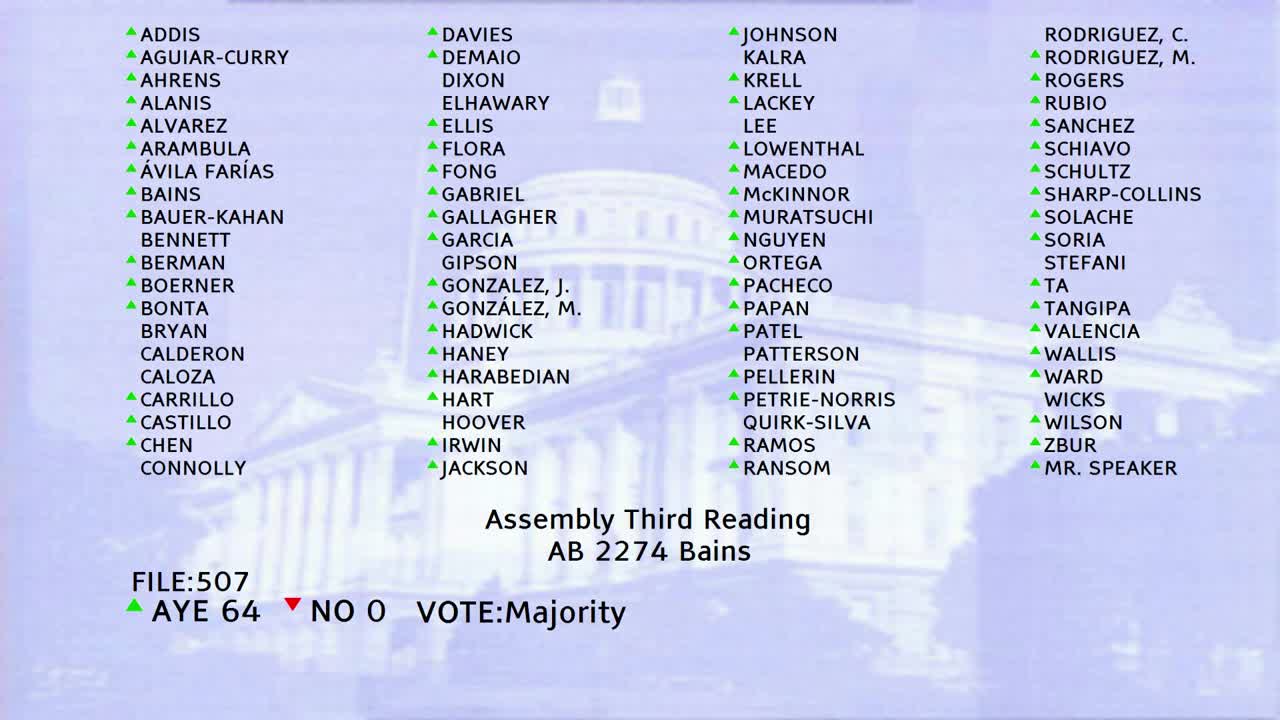
Bill Author
Bill Co-Author(s):
