AB 2078: Employees: meal periods: stationary engineers.
- Session Year: 2025-2026
- House: Assembly
- Latest Version Date: 2026-09-18
Current Status:
Passed
(2026-09-18: Chaptered by Secretary of State - Chapter 287, Statutes of 2026.)
Introduced
In Committee
Awaiting First Chamber Vote
Passed First Chamber
In Committee
Awaiting Second Chamber Vote
Passed Second Chamber
Enacted
Existing law generally prohibits an employer from employing an employee for a work period of more than 5 hours per day without providing the employee with a meal period of not less than 30 minutes. Existing law creates exceptions from this prohibition for employees in specified occupations, including employees of an electrical corporation, a gas corporation, a water corporation, or a local publicly owned electric utility covered by a valid collective bargaining agreement meeting certain conditions. Existing law charges the Labor Commissioner with enforcement of these provisions.
This bill would also create an exception from the above-described prohibition for employees who perform building maintenance work as a stationary engineer, as defined, covered by a valid collective bargaining agreement meeting certain conditions.
(a)An employer shall not employ an employee for a work period of more than five hours per day without providing the employee with a meal period of not less than 30 minutes, except that if the total work period per day of the employee is no more than six hours, the meal period may be waived by mutual consent of both the employer and employee. An employer shall not employ an employee for a work period of more than 10 hours per day without providing the employee with a second meal period of not less than 30 minutes, except that if the total hours worked is no more than 12 hours, the second meal period may be waived by mutual consent of the employer and the employee only if the first meal period was not waived.
(b)(1)Notwithstanding subdivision (a), the Industrial Welfare Commission may adopt a working condition order permitting a meal period to commence after six hours of work if the commission determines that the order is consistent with the health and welfare of the affected employees.
(2)Notwithstanding paragraph (1), a commercial driver employed by a motor carrier transporting nutrients and byproducts from a commercial feed manufacturer subject to Section 15051 of the Food and Agricultural Code to a customer located in a remote rural location may commence a meal period after six hours of work, if the regular rate of pay of the driver is no less than one and one-half times the state minimum wage and the driver receives overtime compensation in accordance with Section 510.
(c)Subdivision (a) does not apply to an employee in the wholesale baking industry who is subject to an Industrial Welfare Commission wage order and who is covered by a valid collective bargaining agreement that provides for a 35-hour workweek consisting of five 7-hour days, payment of one and one-half times the regular rate of pay for time worked in excess of seven hours per day, and a rest period of not less than 10 minutes every two hours.
(d)If an employee in the motion picture industry or the broadcasting industry, as those industries are defined in Industrial Welfare Commission Wage Order Numbers 11 and 12, is covered by a valid collective bargaining agreement that provides for meal periods and includes a monetary remedy if the employee does not receive a meal period required by the agreement, then the terms, conditions, and remedies of the agreement pertaining to meal periods apply in lieu of the applicable provisions pertaining to meal periods of subdivision (a) of this section, Section 226.7, and Industrial Welfare Commission Wage Order Numbers 11 and 12.
(e)Subdivisions (a) and (b) do not apply to an employee specified in subdivision (f) if both of the following conditions are satisfied:
(1)The employee is covered by a valid collective bargaining agreement.
(2)The valid collective bargaining agreement expressly provides for the wages, hours of work, and working conditions of employees, and expressly provides for meal periods for those employees, final and binding arbitration of disputes concerning application of its meal period provisions, premium wage rates for all overtime hours worked, and a regular hourly rate of pay of not less than 30 percent more than the state minimum wage rate.
(f)Subdivision (e) applies to each of the following employees:
(1)An employee employed in a construction occupation.
(2)An employee employed as a commercial driver.
(3)An employee employed in the security services industry as a security officer who is registered pursuant to Chapter 11.5 (commencing with Section 7580) of Division 3 of the Business and Professions Code, and who is employed by a private patrol operator registered pursuant to that chapter.
(4)An employee employed by an electrical corporation, a gas corporation, a water corporation, or a local publicly owned electric utility.
(5)An employee who performs building maintenance work as a stationary engineer.
(g)The following definitions apply for the purposes of this section:
(1)Commercial driver means an employee who operates a vehicle described in Section 260 or 462 of, or subdivision (b) of Section 15210 of, the Vehicle Code.
(2)Construction occupation means all job classifications associated with construction by Article 2 (commencing with Section 7025) of Chapter 9 of Division 3 of the Business and Professions Code, including work involving alteration, demolition, building, excavation, renovation, remodeling, maintenance, improvement, and repair, and any other similar or related occupation or trade.
(3)Electrical corporation has the same meaning as provided in Section 218 of the Public Utilities Code.
(4)Gas corporation has the same meaning as provided in Section 222 of the Public Utilities Code.
(5)Local publicly owned electric utility has the same meaning as provided in Section 224.3 of the Public Utilities Code.
(6)Stationary engineer means a skilled tradesperson located in a fixed facility who operates, maintains, monitors, and repairs stationary mechanical equipment and building systems, including those involving boilers, chillers, heating, ventilation, and air conditioning systems, pumps, compressors, power generation equipment, and other critical plant machinery and whose occupation has a state-registered apprenticeship program that was established on or before December 31, 1964, and includes the name Stationary Engineer in the programs occupation.
(7)Water corporation has the same meaning as provided in Section 241 of the Public Utilities Code.
(a)An employer shall not employ an employee for a work period of more than five hours per day without providing the employee with a meal period of not less than 30 minutes, except that if the total work period per day of the employee is no more than six hours, the meal period may be waived by mutual consent of both the employer and employee. An employer shall not employ an employee for a work period of more than 10 hours per day without providing the employee with a second meal period of not less than 30 minutes, except that if the total hours worked is no more than 12 hours, the second meal period may be waived by mutual consent of the employer and the employee only if the first meal period was not waived.
(b)(1)Notwithstanding subdivision (a), the Industrial Welfare Commission may adopt a working condition order permitting a meal period to commence after six hours of work if the commission determines that the order is consistent with the health and welfare of the affected employees.
(2)Notwithstanding paragraph (1), a commercial driver employed by a motor carrier transporting nutrients and byproducts from a commercial feed manufacturer subject to Section 15051 of the Food and Agricultural Code to a customer located in a remote rural location may commence a meal period after six hours of work, if the regular rate of pay of the driver is no less than one and one-half times the state minimum wage and the driver receives overtime compensation in accordance with Section 510.
(c)Subdivision (a) does not apply to an employee in the wholesale baking industry who is subject to an Industrial Welfare Commission wage order and who is covered by a valid collective bargaining agreement that provides for a 35-hour workweek consisting of five 7-hour days, payment of one and one-half times the regular rate of pay for time worked in excess of seven hours per day, and a rest period of not less than 10 minutes every two hours.
(d)If an employee in the motion picture industry or the broadcasting industry, as those industries are defined in Industrial Welfare Commission Wage Order Numbers 11 and 12, is covered by a valid collective bargaining agreement that provides for meal periods and includes a monetary remedy if the employee does not receive a meal period required by the agreement, then the terms, conditions, and remedies of the agreement pertaining to meal periods apply in lieu of the applicable provisions pertaining to meal periods of subdivision (a) of this section, Section 226.7, and Industrial Welfare Commission Wage Order Numbers 11 and 12.
(e)Subdivisions (a) and (b) do not apply to an employee specified in subdivision (f) if both of the following conditions are satisfied:
(1)The employee is covered by a valid collective bargaining agreement.
(2)The valid collective bargaining agreement expressly provides for the wages, hours of work, and working conditions of employees, and expressly provides for meal periods for those employees, final and binding arbitration of disputes concerning application of its meal period provisions, premium wage rates for all overtime hours worked, and a regular hourly rate of pay of not less than 30 percent more than the state minimum wage rate.
(f)Subdivision (e) applies to each of the following employees:
(1)An employee employed in a construction occupation.
(2)An employee employed as a commercial driver.
(3)An employee employed in the security services industry as a security officer who is registered pursuant to Chapter 11.5 (commencing with Section 7580) of Division 3 of the Business and Professions Code, and who is employed by a private patrol operator registered pursuant to that chapter.
(4)An employee employed by an electrical corporation, a gas corporation, a water corporation, or a local publicly owned electric utility.
(5)An employee who performs building maintenance work as a stationary engineer.
(g)The following definitions apply for the purposes of this section:
(1)Commercial driver means an employee who operates a vehicle described in Section 260 or 462 of, or subdivision (b) of Section 15210 of, the Vehicle Code.
(2)Construction occupation means all job classifications associated with construction by Article 2 (commencing with Section 7025) of Chapter 9 of Division 3 of the Business and Professions Code, including work involving alteration, demolition, building, excavation, renovation, remodeling, maintenance, improvement, and repair, and any other similar or related occupation or trade.
(3)Electrical corporation has the same meaning as provided in Section 218 of the Public Utilities Code.
(4)Gas corporation has the same meaning as provided in Section 222 of the Public Utilities Code.
(5)Local publicly owned electric utility has the same meaning as provided in Section 224.3 of the Public Utilities Code.
(6)Stationary engineer means a skilled tradesperson located in a fixed facility who operates, maintains, monitors, and repairs stationary mechanical equipment and building systems, including those involving boilers, chillers, heating, ventilation, and air conditioning systems, pumps, compressors, power generation equipment, and other critical plant machinery.(6)Stationary engineer means a skilled tradesperson located in a fixed facility who operates, maintains, monitors, and repairs stationary mechanical equipment and building systems, including those involving boilers, chillers, heating, ventilation, and air conditioning systems, pumps, compressors, power generation equipment, and other critical plant machinery and whose occupation has a state-registered apprenticeship program that was established on or before December 31, 1964, and includes the name Stationary Engineer in the programs occupation.
(7)Water corporation has the same meaning as provided in Section 241 of the Public Utilities Code.
(a)An employer shall not employ an employee for a work period of more than five hours per day without providing the employee with a meal period of not less than 30 minutes, except that if the total work period per day of the employee is no more than six hours, the meal period may be waived by mutual consent of both the employer and employee. An employer shall not employ an employee for a work period of more than 10 hours per day without providing the employee with a second meal period of not less than 30 minutes, except that if the total hours worked is no more than 12 hours, the second meal period may be waived by mutual consent of the employer and the employee only if the first meal period was not waived.
(b)(1)Notwithstanding subdivision (a), the Industrial Welfare Commission may adopt a working condition order permitting a meal period to commence after six hours of work if the commission determines that the order is consistent with the health and welfare of the affected employees.
(2)Notwithstanding paragraph (1), a commercial driver employed by a motor carrier transporting nutrients and byproducts from a commercial feed manufacturer subject to Section 15051 of the Food and Agricultural Code to a customer located in a remote rural location may commence a meal period after six hours of work, if the regular rate of pay of the driver is no less than one and one-half times the state minimum wage and the driver receives overtime compensation in accordance with Section 510.
(c)Subdivision (a) does not apply to an employee in the wholesale baking industry who is subject to an Industrial Welfare Commission wage order and who is covered by a valid collective bargaining agreement that provides for a 35-hour workweek consisting of five 7-hour days, payment of one and one-half times the regular rate of pay for time worked in excess of seven hours per day, and a rest period of not less than 10 minutes every two hours.
(d)If an employee in the motion picture industry or the broadcasting industry, as those industries are defined in Industrial Welfare Commission Wage Order Numbers 11 and 12, is covered by a valid collective bargaining agreement that provides for meal periods and includes a monetary remedy if the employee does not receive a meal period required by the agreement, then the terms, conditions, and remedies of the agreement pertaining to meal periods apply in lieu of the applicable provisions pertaining to meal periods of subdivision (a) of this section, Section 226.7, and Industrial Welfare Commission Wage Order Numbers 11 and 12.
(e)Subdivisions (a) and (b) do not apply to an employee specified in subdivision (f) if both of the following conditions are satisfied:
(1)The employee is covered by a valid collective bargaining agreement.
(2)The valid collective bargaining agreement expressly provides for the wages, hours of work, and working conditions of employees, and expressly provides for meal periods for those employees, final and binding arbitration of disputes concerning application of its meal period provisions, premium wage rates for all overtime hours worked, and a regular hourly rate of pay of not less than 30 percent more than the state minimum wage rate.
(f)Subdivision (e) applies to each of the following employees:
(1)An employee employed in a construction occupation.
(2)An employee employed as a commercial driver.
(3)An employee employed in the security services industry as a security officer who is registered pursuant to Chapter 11.5 (commencing with Section 7580) of Division 3 of the Business and Professions Code, and who is employed by a private patrol operator registered pursuant to that chapter.
(4)An employee employed by an electrical corporation, a gas corporation, a water corporation, or a local publicly owned electric utility.
(5)An employee who performs building maintenance work as a stationary engineer.
(g)The following definitions apply for the purposes of this section:
(1)Commercial driver means an employee who operates a vehicle described in Section 260 or 462 of, or subdivision (b) of Section 15210 of, the Vehicle Code.
(2)Construction occupation means all job classifications associated with construction by Article 2 (commencing with Section 7025) of Chapter 9 of Division 3 of the Business and Professions Code, including work involving alteration, demolition, building, excavation, renovation, remodeling, maintenance, improvement, and repair, and any other similar or related occupation or trade.
(3)Electrical corporation has the same meaning as provided in Section 218 of the Public Utilities Code.
(4)Gas corporation has the same meaning as provided in Section 222 of the Public Utilities Code.
(5)Local publicly owned electric utility has the same meaning as provided in Section 224.3 of the Public Utilities Code.
(6)Stationary engineer means a skilled tradesperson located in a fixed facility who operates, maintains, monitors, and repairs stationary mechanical equipment and building systems, including those involving boilers, chillers, heating, ventilation, and air conditioning systems, pumps, compressors, power generation equipment, and other critical plant machinery.
(6)(7)Water corporation has the same meaning as provided in Section 241 of the Public Utilities Code.
|
Date
|
Status
|
|---|---|
| Sep 18, 2026 | Chaptered by Secretary of State - Chapter 287, Statutes of 2026. |
| Sep 18, 2026 | Approved by the Governor. |
| Sep 3, 2026 | Enrolled and presented to the Governor at 4 p.m. |
| Aug 26, 2026 | Senate amendments concurred in. To Engrossing and Enrolling. (Ayes 79. Noes 0.). |
| Aug 26, 2026 | Senate amendments concurred in. To Engrossing and Enrolling. (Ayes 79. Noes 0. Page 6639.). |
| Aug 26, 2026 | In Assembly. Concurrence in Senate amendments pending. |
| Aug 26, 2026 | Read third time. Passed. Ordered to the Assembly. (Ayes 40. Noes 0.). |
| Aug 24, 2026 | Read second time. Ordered to third reading. |
| Aug 21, 2026 | Read third time and amended. Ordered to second reading. |
| Jun 25, 2026 | Ordered to third reading. |
| Jun 25, 2026 | From Consent Calendar. |
| Jun 23, 2026 | Read second time. Ordered to Consent Calendar. |
| Jun 22, 2026 | From committee: Be ordered to second reading file pursuant to Senate Rule 28.8 and ordered to Consent Calendar. |
| Jun 10, 2026 | From committee: Do pass and re-refer to Com. on APPR. with recommendation: To Consent Calendar. (Ayes 5. Noes 0.) (June 10). Re-referred to Com. on APPR. |
| May 27, 2026 | Referred to Com. on L., P.E. & R. |
| May 14, 2026 | In Senate. Read first time. To Com. on RLS. for assignment. |
| May 14, 2026 | Read third time. Passed. Ordered to the Senate. (Ayes 77. Noes 0.) |
| May 14, 2026 | Read third time. Passed. Ordered to the Senate. (Ayes 77. Noes 0. Page 5054.) |
| May 7, 2026 | Read second time. Ordered to Consent Calendar. |
| May 6, 2026 | From committee: Do pass. To Consent Calendar. (Ayes 14. Noes 0.) (May 6). |
| Apr 23, 2026 | From committee: Do pass and re-refer to Com. on APPR. with recommendation: To Consent Calendar. (Ayes 7. Noes 0.) (April 22). Re-referred to Com. on APPR. |
| Mar 2, 2026 | Referred to Com. on L. & E. |
| Feb 19, 2026 | From printer. May be heard in committee March 21. |
| Feb 18, 2026 | Read first time. To print. |
|
Date
|
Description
|
Location
|
Votes
|
|
|---|---|---|---|---|
| Aug 26, 2026 | AB 2078 Rogers Concurrence in Senate Amendments | Assembly Floor |
Passed |
|
| Aug 26, 2026 | Assembly 3rd Reading AB2078 Rogers By Laird | Senate Floor |
Passed |
|
| Jun 10, 2026 | Do pass, but first be re-referred to the Committee on [Appropriations] with the recommendation: To Consent Calendar | Senate Standing Committee on Labor, Public Employment and Retirement |
Passed |
|
| May 14, 2026 | AB 2078 Rogers Consent Calendar Second Day Regular Session | Assembly Floor |
Passed |
|
| May 6, 2026 | Do pass. To Consent Calendar. | Assembly Standing Committee on Appropriations |
Passed |
|
| Apr 22, 2026 | Do pass and be re-referred to the Committee on [Appropriations] with recommendation: To Consent Calendar | Assembly Standing Committee on Labor and Employment |
Passed |
This list shows positions taken on this bill by organizations on the date displayed, which is linked to the original source.
Positions by individuals are not included.
|
Organization
|
Position
|
Date
|
|---|---|---|
| ABM Engineering Services | ** Support | |
| California-Nevada Conference Of Operating Engineers | ** Support | |
| California-Nevada Conference of Operating Engineers – Sponsors | ** Support | |
| Metro Services Group | ** Support | |
| U2g LLC | ** Support | |
| UG2 LLC | ** Support |
CONCURRENCE IN SENATE AMENDMENTS
CSA1 Bill Id:AB 2078
Author:(Rogers)
As Amended Ver:August 21, 2026
Majority vote
SUMMARY
Adds stationary engineers, as defined, to the exemption from meal period law for certain employees covered by a valid collective bargaining agreement (CBA) with specified provisions.
Senate Amendments
- Add to the definition of ″stationary engineer″ that the occupation has a state-registered apprenticeship program that was established on or before December 31, 1964, and includes the name ″Stationary Engineer″ in the program′s occupation.
COMMENTS
The Legislature has taken action in a limited manner to exempt from meal and rest period law narrowly defined categories of employees in a specific industry who are unable to take meal or rest breaks due to the unique nature of their working conditions. In these cases, the exemption generally requires the employees: 1) be covered by a CBA containing specific provisions related to wages and dispute resolution; and 2) be provided a remedy if they miss their meal or rest period.
According to the Author
According to the author, ″AB 2078 provides flexibility for stationary engineers by adding them to the existing list of employees whose meal breaks are governed by their collective bargaining agreements due to the complex nature of their work.
Blue collar jobs are often strenuous in nature, and workers require rest and recovery to continue to perform to the best of their ability. Currently, stationary engineers, who oversee important equipment and perform maintenance and oversight work, constantly get interrupted from their meal breaks during their shifts. After the working hours of their shift, they must stay to satisfy the statutory meal break requirement and avoid any employer related violations, which inconveniences the workers and creates inconsistency for employers.
AB 2078 adds stationary engineers to the list of employees whose meal breaks are governed by CBAs, ensuring that they can leave work at the scheduled time, providing more certainty for employers. This bill will ensure that workers who perform these strenuous and risky tasks are allowed to have flexibility in a part of their day that they can use to rest, recover, and spend time with loved ones.″
Arguments in Support
The California-Nevada Conference of Operating Engineers, sponsor of the bill, states, ″Importantly, stationary engineers serve as the first line of defense in emergency building maintenance situations; whether a boiler malfunctions, HVAC system fails, power disruptions take place, or other urgent facility issues arise—these workers are often the only qualified personnel immediately available to address these problems and keep facilities safe and operational. Because of this, stationary engineers are effectively on call throughout their entire shift and are frequently pulled away and interrupted from their meal break periods to respond to building emergencies.
As a result, some employers who want to avoid meal break violations will require their stationary engineers to remain onsite for an additional 30 minutes after their shift ends to act as a designated ″meal break.″ This practice creates significant frustration for employees who have already completed their full scheduled shift, but are called to stay an extra 30 minutes once their shift has been completed.
Legislation is needed to provide flexibility for both employers and employees in this space that ensures that emergency building maintenance situations can be responded to while not penalizing employees for simply doing their job.″
Arguments in Opposition
None on file.
FISCAL COMMENTS
The Senate Committee on Appropriations passed this bill pursuant to Senate Rule 28.8.
VOTES:
ASM LABOR AND EMPLOYMENT: 7-0-0
YES: Ortega, Alanis, Chen, Elhawary, Kalra, Lee, Ward
ASM APPROPRIATIONS: 14-0-1
YES: Wicks, Hoover, Aguiar-Curry, Caloza, Dixon, Fong, Mark González, Krell, Pacheco, Pellerin, Sharp-Collins, Solache, Ta, Tangipa
ABS, ABST OR NV: Arambula
ASSEMBLY FLOOR: 77-0-3
YES: Addis, Aguiar-Curry, Ahrens, Alanis, Alvarez, Ávila Farías, Bains, Bauer-Kahan, Bennett, Berman, Boerner, Bonta, Bryan, Calderon, Caloza, Carrillo, Castillo, Chen, Connolly, Davies, DeMaio, Dixon, Elhawary, Ellis, Fong, Gabriel, Gallagher, Garcia, Gipson, Jeff Gonzalez, Mark González, Hadwick, Haney, Harabedian, Hart, Hoover, Irwin, Jackson, Johnson, Kalra, Krell, Lackey, Lee, Lowenthal, Macedo, McKinnor, Muratsuchi, Nguyen, Ortega, Pacheco, Papan, Patel, Patterson, Pellerin, Petrie-Norris, Quirk-Silva, Ramos, Ransom, Michelle Rodriguez, Rogers, Blanca Rubio, Sanchez, Schiavo, Schultz, Sharp-Collins, Solache, Soria, Stefani, Ta, Tangipa, Valencia, Wallis, Ward, Wicks, Wilson, Zbur, Rivas
ABS, ABST OR NV: Arambula, Flora, Celeste Rodriguez
UPDATED
VERSION: August 21, 2026
CONSULTANT: Megan Lane / L. & E. / (916) 319-2091 FN: 0004251
SENATE RULES COMMITTEE Office of Senate Floor Analyses (916) 651-4171 | AB 2078 |
THIRD READING
Bill No: AB 2078
Author: Rogers (D)
Introduced: 8/21/26
Vote: 21
SENATE LABOR, PUB. EMP. & RET. COMMITTEE: 5-0, 6/10/26
AYES: Smallwood-Cuevas, Strickland, Cortese, Durazo, Laird
SENATE APPROPRIATIONS COMMITTEE: Senate Rule 28.8
ASSEMBLY FLOOR: 77-0, 5/14/26 (Consent) - See last page for vote
SUBJECT: Employees: meal periods: stationary engineers
SOURCE: California-Nevada Conference of Operating Engineers
DIGEST:
This bill extends an existing exemption from the meal period requirements of existing law to an employee who performs building maintenance work as a stationary engineer, as defined, that is covered by a valid collective bargaining agreement (CBA) that meets specified conditions.
Senate Floor Amendments of 8/21/26 modified the definition of “stationary engineer” to limit this exemption only to those workers whose occupation has a state-registered apprenticeship program, as specified.
ANALYSIS:
Existing law:
- Empowers the Labor Commissioner (LC) with ensuring a just day’s pay in every workplace by authorizing the LC to investigate employee complaints and provide for a hearing in actions to recover wages, penalties, and other demands for compensation, as specified. (Labor Code §79-107)
- Defines a full workday as 8 hours, and 40 hours as a workweek and requires overtime to be paid at the rate of no less than one and one-half times an employee’s regular rate of pay for work performed beyond 8 hours in a day or 40 hours in a week. Furthermore, work performed beyond 12 hours in a day is to be compensated at twice the regular rate of pay. (Labor Code §510)
- Prohibits an employer from employing a worker without providing a meal period as follows:
- 30 minutes every 5 hours, except if the total work period is no more than 6 hours, the meal period may be waived by mutual consent.
- A second 30 minute meal period if working more than 10 hours a day, except if the work period is no more than 12 hours, the second meal period may be waived by mutual consent, but only if the first was not waived. (Labor Code §512)
- Requires the LC to enforce these provisions and provides that, if an employer fails to provide a meal or rest or recovery period as required by state law or applicable regulation, standard or Industrial Welfare Commission (IWC) wage order, the employer must pay the employee one additional hour of pay at the employee’s regular rate of compensation for each workday that the meal or rest or recovery period is not provided. (Labor Code §226.7)
- Exempts specified employees from the required meal period provisions if both of the following conditions are satisfied:
- The employee is covered by a valid CBA.
- The valid CBA expressly provides for the wages, hours of work, and working conditions of employees, and expressly provides for meal periods for those employees, final and binding arbitration of disputes concerning application of its meal period provisions, premium wage rates for all overtime hours worked, and a regular hourly rate of pay of not less than 30 percent more than the state minimum wage rate. (Labor Code §512)
- Provides that the above-mentioned exemption applies to the following employees if they meet the specified criteria:
- An employee employed in a construction occupation.
- An employee employed as a commercial driver.
- An employee employed in the security services industry as a security officer who is employed by a private patrol operator, as specified.
- An employee employed by an electrical corporation, a gas corporation, a water corporation, or a local publicly owned electric utility. (Labor Code §512)
This bill:
- Extends the above-described exemption from the meal period requirements of existing law to an employee who performs building maintenance work as a stationary engineer, as defined, if both of the following conditions are satisfied:
- The employee is covered by a valid CBA.
- The CBA meets the requirements delineated in existing law.
- Defines “stationary engineer” to mean a skilled tradesperson located in a fixed facility who operates, maintains, monitors, and repairs stationary mechanical equipment and building systems, including those involving boilers, chillers, heating, ventilation, and air conditioning systems, pumps, compressors, power generation equipment, and other critical plant machinery and whose occupation has a state-registered apprenticeship program that was established on or before December 31, 1964, and includes the name “Stationary Engineer” in the program’s occupation.
Background
As noted above, existing law prohibits an employer from requiring an employee to work during a meal or rest or recovery period (such as a cooldown period required for heat illness prevention) that is mandated pursuant to statute, or applicable regulation, standard, or order of the Industrial Welfare Commission (IWC), the Occupational Safety and Health Board, or the Division of Occupational Safety and Health. If an employer fails to provide a meal or rest or recovery period as required by state law or applicable regulation, standard or IWC order, the employer must pay the employee one additional hour of pay at the employee’s regular rate of compensation for each workday that the meal or rest or recovery period is not provided.
Additionally, as specified under current IWC wage orders, unless the employee is relieved of all duty during their meal period, the meal period is considered “on duty” that is counted as hours worked which must be compensated at the employee’s regular rate of pay. An "on duty" meal period is permitted only when the nature of the work prevents an employee from being relieved of all duty and when by written agreement between the employer and employee an on-the-job paid meal period is agreed to. Missed meal breaks entitle employees to one hour of pay.
Existing law recognizes the unique nature of some occupations and the need for industry specific provisions for compliance with wage and hour laws. Among a few others, existing law includes provisions for specified commercial drivers, construction workers, security service employees, and employees of an electrical corporation, gas corporation, water corporation, or a local publicly owned electric utility.
Need for this bill? According to the author, “Stationary engineers have complex roles, including the requirement to be on-site and perform important maintenance and oversight work during their entire shift. These workers are the first line of defense in emergency building maintenance situations, including but not limited to situations when a boiler in a building malfunction, or a HVAC system goes down, etc.
“Because the employees have such a complex role and deal with emergency circumstances, often they will be interrupted from their meal break to respond to an emergency. In these situations, employers have been requiring these specific employees to stay after their shift is over to satisfy the statutory meal break requirement and avoid any employer related violations. This practice inconveniences the employee, who has lost their meal break, and is then required to stay on the job later than they were scheduled.
“AB 2078 provides flexibility for stationary engineers by adding them to the existing list of employees whose meal breaks are governed by their collective bargaining agreements (CBAs).”
Related/Prior Legislation
SB 693 (Cortese, Chapter 95, Statutes of 2025) extended an existing exemption from the meal period requirements of existing law to employees of a water corporation that are covered by a valid CBA that meets specified conditions.
SB 41 (Cortese, Chapter 2, Statutes of 2023) provided an exemption from meal and rest period requirements for airline cabin crew employees that are covered by a valid CBA meeting specified conditions.
SB 1334 (Chapter 845, Statutes of 2022) extended existing meal and rest period rights and remedies available to private sector employees to those who provide direct patient care or support direct patient care in general acute care hospitals, clinics or public health settings who are directly employed by specified public sector employers.
AB 2610 (Aguiar-Curry, Chapter 148, Statutes of 2018) permits commercial drivers transporting commercial feed to a consumer in a rural area to commence a meal period after six hours when specified conditions are met.
AB 569 (Emmerson, Chapter 662, Statutes of 2010) exempted employees in certain industries, including those of an electrical corporation, a gas corporation, or a local publicly owned electric utility, from meal period laws if the employees are covered by a CBA.
FISCAL EFFECT: Appropriation: No Fiscal Com.: Yes Local: No
SUPPORT: (Verified 8/21/26)
California-Nevada Conference of Operating Engineers (source)
ABM Engineering Services
Metro Services Group
UG2 LLC
OPPOSITION: (Verified 8/21/26)
None received
ARGUMENTS IN SUPPORT: According to the sponsors, the California-Nevada Conference of Operating Engineers:
“Importantly, stationary engineers serve as the first line of defense in emergency building maintenance situations; whether a boiler malfunctions, HVAC system fails, power disruptions take place, or other urgent facility issues arise—these workers are often the only qualified personnel immediately available to address these problems and keep facilities safe and operational. Because of this, stationary engineers are effectively on call throughout their entire shift and are frequently pulled away and interrupted from their meal break periods to respond to building emergencies.
As a result, some employers who want to avoid meal break violations will require their stationary engineers to remain onsite for an additional 30 minutes after their shift ends to act as a designated “meal break.” This practice creates significant frustration for employees who have already completed their full scheduled shift, but are called to stay an extra 30 minutes once their shift has been completed.
Legislation is needed to provide flexibility for both employers and employees in this space that ensures that emergency building maintenance situations can be responded to while not penalizing employees for simply doing their job.
AB 2708 (Rogers) seeks to remedy this situation by requiring that meal breaks for Stationary Engineers be governed by an employees valid collectively bargaining agreement. This in return will provide flexibility for the employee by ensuring that they still get their rightful break, while additionally ensuring that these workers aren’t required to stay on-sight after their shift has ended. Providing this change will additionally bring certainty and peace of mind to employers in this industry by making clear that they will not be penalized for interrupting their employees meal break, so long as the employee is covered by a valid collective bargaining agreement that provides for meal breaks.”
ASSEMBLY FLOOR: 77-0, 5/14/26
AYES: Addis, Aguiar-Curry, Ahrens, Alanis, Alvarez, Ávila Farías, Bains, Bauer-Kahan, Bennett, Berman, Boerner, Bonta, Bryan, Calderon, Caloza, Carrillo, Castillo, Chen, Connolly, Davies, DeMaio, Dixon, Elhawary, Ellis, Fong, Gabriel, Gallagher, Garcia, Gipson, Jeff Gonzalez, Mark González, Hadwick, Haney, Harabedian, Hart, Hoover, Irwin, Jackson, Johnson, Kalra, Krell, Lackey, Lee, Lowenthal, Macedo, McKinnor, Muratsuchi, Nguyen, Ortega, Pacheco, Papan, Patel, Patterson, Pellerin, Petrie-Norris, Quirk-Silva, Ramos, Ransom, Michelle Rodriguez, Rogers, Blanca Rubio, Sanchez, Schiavo, Schultz, Sharp-Collins, Solache, Soria, Stefani, Ta, Tangipa, Valencia, Wallis, Ward, Wicks, Wilson, Zbur, Rivas
NO VOTE RECORDED: Arambula, Flora, Celeste Rodriguez
Prepared by: Alma Perez-Schwab / L., P.E. & R. / (916) 651-1556
8/24/26 11:29:50
**** END ****
SENATE RULES COMMITTEE Office of Senate Floor Analyses (916) 651-4171 | AB 2078 |
THIRD READING
Bill No: AB 2078
Author: Rogers (D)
Introduced: 2/18/26
Vote: 21
SENATE LABOR, PUB. EMP. & RET. COMMITTEE: 5-0, 6/10/26
AYES: Smallwood-Cuevas, Strickland, Cortese, Durazo, Laird
SENATE APPROPRIATIONS COMMITTEE: Senate Rule 28.8
ASSEMBLY FLOOR: 77-0, 5/14/26 (Consent) - See last page for vote
SUBJECT: Employees: meal periods: stationary engineers
SOURCE: California-Nevada Conference of Operating Engineers
DIGEST:
This bill extends an existing exemption from the meal period requirements of existing law to an employee who performs building maintenance work as a stationary engineer, as defined, that is covered by a valid collective bargaining agreement (CBA) that meets specified conditions.
ANALYSIS:
Existing law:
- Empowers the Labor Commissioner (LC) with ensuring a just day’s pay in every workplace by authorizing the LC to investigate employee complaints and provide for a hearing in actions to recover wages, penalties, and other demands for compensation, as specified. (Labor Code §79-107)
- Defines a full workday as 8 hours, and 40 hours as a workweek and requires overtime to be paid at the rate of no less than one and one-half times an employee’s regular rate of pay for work performed beyond 8 hours in a day or 40 hours in a week. Furthermore, work performed beyond 12 hours in a day is to be compensated at twice the regular rate of pay. (Labor Code §510)
- Prohibits an employer from employing a worker without providing a meal period as follows:
- 30 minutes every 5 hours, except if the total work period is no more than 6 hours, the meal period may be waived by mutual consent.
- A second 30 minute meal period if working more than 10 hours a day, except if the work period is no more than 12 hours, the second meal period may be waived by mutual consent, but only if the first was not waived.
(Labor Code §512)
- Requires the LC to enforce these provisions and provides that, if an employer fails to provide a meal or rest or recovery period as required by state law or applicable regulation, standard or Industrial Welfare Commission (IWC) wage order, the employer must pay the employee one additional hour of pay at the employee’s regular rate of compensation for each workday that the meal or rest or recovery period is not provided. (Labor Code §226.7)
- Exempts specified employees from the required meal period provisions if both of the following conditions are satisfied:
- The employee is covered by a valid CBA.
- The valid CBA expressly provides for the wages, hours of work, and working conditions of employees, and expressly provides for meal periods for those employees, final and binding arbitration of disputes concerning application of its meal period provisions, premium wage rates for all overtime hours worked, and a regular hourly rate of pay of not less than 30 percent more than the state minimum wage rate.
(Labor Code §512)
- Provides that the above-mentioned exemption applies to the following employees if they meet the specified criteria:
- An employee employed in a construction occupation.
- An employee employed as a commercial driver.
- An employee employed in the security services industry as a security officer who is employed by a private patrol operator, as specified.
- An employee employed by an electrical corporation, a gas corporation, a water corporation, or a local publicly owned electric utility.
(Labor Code §512)
This bill:
- Extends the above-described exemption from the meal period requirements of existing law to an employee who performs building maintenance work as a stationary engineer, as defined, if both of the following conditions are satisfied:
- The employee is covered by a valid CBA.
- The CBA meets the requirements delineated in existing law.
- Defines “stationary engineer” to mean a skilled tradesperson located in a fixed facility who operates, maintains, monitors, and repairs stationary mechanical equipment and building systems, including those involving boilers, chillers, heating, ventilation, and air conditioning systems, pumps, compressors, power generation equipment, and other critical plant machinery.
Background
As noted above, existing law prohibits an employer from requiring an employee to work during a meal or rest or recovery period (such as a cooldown period required for heat illness prevention) that is mandated pursuant to statute, or applicable regulation, standard, or order of the Industrial Welfare Commission (IWC), the Occupational Safety and Health Board, or the Division of Occupational Safety and Health. If an employer fails to provide a meal or rest or recovery period as required by state law or applicable regulation, standard or IWC order, the employer must pay the employee one additional hour of pay at the employee’s regular rate of compensation for each workday that the meal or rest or recovery period is not provided.
Additionally, as specified under current IWC wage orders, unless the employee is relieved of all duty during their meal period, the meal period is considered “on duty” that is counted as hours worked which must be compensated at the employee’s regular rate of pay. An "on duty" meal period is permitted only when the nature of the work prevents an employee from being relieved of all duty and when by written agreement between the employer and employee an on-the-job paid meal period is agreed to. Missed meal breaks entitle employees to one hour of pay.
Existing law recognizes the unique nature of some occupations and the need for industry specific provisions for compliance with wage and hour laws. Among a few others, existing law includes provisions for specified commercial drivers, construction workers, security service employees, and employees of an electrical corporation, gas corporation, water corporation, or a local publicly owned electric utility.
Need for this bill? According to the author, “Stationary engineers have complex roles, including the requirement to be on-site and perform important maintenance and oversight work during their entire shift. These workers are the first line of defense in emergency building maintenance situations, including but not limited to situations when a boiler in a building malfunction, or a HVAC system goes down, etc.
“Because the employees have such a complex role and deal with emergency circumstances, often they will be interrupted from their meal break to respond to an emergency. In these situations, employers have been requiring these specific employees to stay after their shift is over to satisfy the statutory meal break requirement and avoid any employer related violations. This practice inconveniences the employee, who has lost their meal break, and is then required to stay on the job later than they were scheduled.
“AB 2078 provides flexibility for stationary engineers by adding them to the existing list of employees whose meal breaks are governed by their collective bargaining agreements (CBAs).”
Prior/Related Legislation
SB 693 (Cortese, Chapter 95, Statutes of 2025) extended an existing exemption from the meal period requirements of existing law to employees of a water corporation that are covered by a valid CBA that meets specified conditions.
SB 41 (Cortese, Chapter 2, Statutes of 2023) provided an exemption from meal and rest period requirements for airline cabin crew employees that are covered by a valid CBA meeting specified conditions.
SB 1334 (Chapter 845, Statutes of 2022) extended existing meal and rest period rights and remedies available to private sector employees to those who provide direct patient care or support direct patient care in general acute care hospitals, clinics or public health settings who are directly employed by specified public sector employers.
AB 2610 (Aguiar-Curry, Chapter 148, Statutes of 2018) permits commercial drivers transporting commercial feed to a consumer in a rural area to commence a meal period after six hours when specified conditions are met.
AB 569 (Emmerson, Chapter 662, Statutes of 2010) exempted employees in certain industries, including those of an electrical corporation, a gas corporation, or a local publicly owned electric utility, from meal period laws if the employees are covered by a CBA.
FISCAL EFFECT: Appropriation: No Fiscal Com.: Yes Local: No
SUPPORT: (Verified 6/22/26)
California-Nevada Conference of Operating Engineers (source)
ABM Engineering Services
Metro Services Group
UG2 LLC
OPPOSITION: (Verified 6/22/26)
None received
ARGUMENTS IN SUPPORT: According to the sponsors, the California-Nevada Conference of Operating Engineers:
“Importantly, stationary engineers serve as the first line of defense in emergency building maintenance situations; whether a boiler malfunctions, HVAC system fails, power disruptions take place, or other urgent facility issues arise—these workers are often the only qualified personnel immediately available to address these problems and keep facilities safe and operational. Because of this, stationary engineers are effectively on call throughout their entire shift and are frequently pulled away and interrupted from their meal break periods to respond to building emergencies.
As a result, some employers who want to avoid meal break violations will require their stationary engineers to remain onsite for an additional 30 minutes after their shift ends to act as a designated “meal break.” This practice creates significant frustration for employees who have already completed their full scheduled shift, but are called to stay an extra 30 minutes once their shift has been completed.
Legislation is needed to provide flexibility for both employers and employees in this space that ensures that emergency building maintenance situations can be responded to while not penalizing employees for simply doing their job.
AB 2708 (Rogers) seeks to remedy this situation by requiring that meal breaks for Stationary Engineers be governed by an employees valid collectively bargaining agreement. This in return will provide flexibility for the employee by ensuring that they still get their rightful break, while additionally ensuring that these workers aren’t required to stay on-sight after their shift has ended. Providing this change will additionally bring certainty and peace of mind to employers in this industry by making clear that they will not be penalized for interrupting their employees meal break, so long as the employee is covered by a valid collective bargaining agreement that provides for meal breaks.”
ASSEMBLY FLOOR: 77-0, 5/14/26
AYES: Addis, Aguiar-Curry, Ahrens, Alanis, Alvarez, Ávila Farías, Bains, Bauer-Kahan, Bennett, Berman, Boerner, Bonta, Bryan, Calderon, Caloza, Carrillo, Castillo, Chen, Connolly, Davies, DeMaio, Dixon, Elhawary, Ellis, Fong, Gabriel, Gallagher, Garcia, Gipson, Jeff Gonzalez, Mark González, Hadwick, Haney, Harabedian, Hart, Hoover, Irwin, Jackson, Johnson, Kalra, Krell, Lackey, Lee, Lowenthal, Macedo, McKinnor, Muratsuchi, Nguyen, Ortega, Pacheco, Papan, Patel, Patterson, Pellerin, Petrie-Norris, Quirk-Silva, Ramos, Ransom, Michelle Rodriguez, Rogers, Blanca Rubio, Sanchez, Schiavo, Schultz, Sharp-Collins, Solache, Soria, Stefani, Ta, Tangipa, Valencia, Wallis, Ward, Wicks, Wilson, Zbur, Rivas
NO VOTE RECORDED: Arambula, Flora, Celeste Rodriguez
Prepared by: Alma Perez-Schwab / L., P.E. & R. / (916) 651-1556
6/25/26 11:37:14
**** END ****
SENATE RULES COMMITTEE Office of Senate Floor Analyses (916) 651-4171 | AB 2078 |
CONSENT
Bill No: AB 2078
Author: Rogers (D)
Introduced: 2/18/26
Vote: 21
SENATE LABOR, PUB. EMP. & RET. COMMITTEE: 5-0, 6/10/26
AYES: Smallwood-Cuevas, Strickland, Cortese, Durazo, Laird
SENATE APPROPRIATIONS COMMITTEE: Senate Rule 28.8
ASSEMBLY FLOOR: 77-0, 5/14/26 (Consent) - See last page for vote
SUBJECT: Employees: meal periods: stationary engineers
SOURCE: California-Nevada Conference of Operating Engineers
DIGEST:
This bill extends an existing exemption from the meal period requirements of existing law to an employee who performs building maintenance work as a stationary engineer, as defined, that is covered by a valid collective bargaining agreement (CBA) that meets specified conditions.
ANALYSIS:
Existing law:
- Empowers the Labor Commissioner (LC) with ensuring a just day’s pay in every workplace by authorizing the LC to investigate employee complaints and provide for a hearing in actions to recover wages, penalties, and other demands for compensation, as specified. (Labor Code §79-107)
- Defines a full workday as 8 hours, and 40 hours as a workweek and requires overtime to be paid at the rate of no less than one and one-half times an employee’s regular rate of pay for work performed beyond 8 hours in a day or 40 hours in a week. Furthermore, work performed beyond 12 hours in a day is to be compensated at twice the regular rate of pay. (Labor Code §510)
- Prohibits an employer from employing a worker without providing a meal period as follows:
- 30 minutes every 5 hours, except if the total work period is no more than 6 hours, the meal period may be waived by mutual consent.
- A second 30 minute meal period if working more than 10 hours a day, except if the work period is no more than 12 hours, the second meal period may be waived by mutual consent, but only if the first was not waived.
(Labor Code §512)
- Requires the LC to enforce these provisions and provides that, if an employer fails to provide a meal or rest or recovery period as required by state law or applicable regulation, standard or Industrial Welfare Commission (IWC) wage order, the employer must pay the employee one additional hour of pay at the employee’s regular rate of compensation for each workday that the meal or rest or recovery period is not provided. (Labor Code §226.7)
- Exempts specified employees from the required meal period provisions if both of the following conditions are satisfied:
- The employee is covered by a valid CBA.
- The valid CBA expressly provides for the wages, hours of work, and working conditions of employees, and expressly provides for meal periods for those employees, final and binding arbitration of disputes concerning application of its meal period provisions, premium wage rates for all overtime hours worked, and a regular hourly rate of pay of not less than 30 percent more than the state minimum wage rate.
(Labor Code §512)
- Provides that the above-mentioned exemption applies to the following employees if they meet the specified criteria:
- An employee employed in a construction occupation.
- An employee employed as a commercial driver.
- An employee employed in the security services industry as a security officer who is employed by a private patrol operator, as specified.
- An employee employed by an electrical corporation, a gas corporation, a water corporation, or a local publicly owned electric utility.
(Labor Code §512)
This bill:
- Extends the above-described exemption from the meal period requirements of existing law to an employee who performs building maintenance work as a stationary engineer, as defined, if both of the following conditions are satisfied:
- The employee is covered by a valid CBA.
- The CBA meets the requirements delineated in existing law.
- Defines “stationary engineer” to mean a skilled tradesperson located in a fixed facility who operates, maintains, monitors, and repairs stationary mechanical equipment and building systems, including those involving boilers, chillers, heating, ventilation, and air conditioning systems, pumps, compressors, power generation equipment, and other critical plant machinery.
Background
As noted above, existing law prohibits an employer from requiring an employee to work during a meal or rest or recovery period (such as a cooldown period required for heat illness prevention) that is mandated pursuant to statute, or applicable regulation, standard, or order of the Industrial Welfare Commission (IWC), the Occupational Safety and Health Board, or the Division of Occupational Safety and Health. If an employer fails to provide a meal or rest or recovery period as required by state law or applicable regulation, standard or IWC order, the employer must pay the employee one additional hour of pay at the employee’s regular rate of compensation for each workday that the meal or rest or recovery period is not provided.
Additionally, as specified under current IWC wage orders, unless the employee is relieved of all duty during their meal period, the meal period is considered “on duty” that is counted as hours worked which must be compensated at the employee’s regular rate of pay. An "on duty" meal period is permitted only when the nature of the work prevents an employee from being relieved of all duty and when by written agreement between the employer and employee an on-the-job paid meal period is agreed to. Missed meal breaks entitle employees to one hour of pay.
Existing law recognizes the unique nature of some occupations and the need for industry specific provisions for compliance with wage and hour laws. Among a few others, existing law includes provisions for specified commercial drivers, construction workers, security service employees, and employees of an electrical corporation, gas corporation, water corporation, or a local publicly owned electric utility.
Need for this bill? According to the author, “Stationary engineers have complex roles, including the requirement to be on-site and perform important maintenance and oversight work during their entire shift. These workers are the first line of defense in emergency building maintenance situations, including but not limited to situations when a boiler in a building malfunction, or a HVAC system goes down, etc.
“Because the employees have such a complex role and deal with emergency circumstances, often they will be interrupted from their meal break to respond to an emergency. In these situations, employers have been requiring these specific employees to stay after their shift is over to satisfy the statutory meal break requirement and avoid any employer related violations. This practice inconveniences the employee, who has lost their meal break, and is then required to stay on the job later than they were scheduled.
“AB 2078 provides flexibility for stationary engineers by adding them to the existing list of employees whose meal breaks are governed by their collective bargaining agreements (CBAs).”
Prior/Related Legislation
SB 693 (Cortese, Chapter 95, Statutes of 2025) extended an existing exemption from the meal period requirements of existing law to employees of a water corporation that are covered by a valid CBA that meets specified conditions.
SB 41 (Cortese, Chapter 2, Statutes of 2023) provided an exemption from meal and rest period requirements for airline cabin crew employees that are covered by a valid CBA meeting specified conditions.
SB 1334 (Chapter 845, Statutes of 2022) extended existing meal and rest period rights and remedies available to private sector employees to those who provide direct patient care or support direct patient care in general acute care hospitals, clinics or public health settings who are directly employed by specified public sector employers.
AB 2610 (Aguiar-Curry, Chapter 148, Statutes of 2018) permits commercial drivers transporting commercial feed to a consumer in a rural area to commence a meal period after six hours when specified conditions are met.
AB 569 (Emmerson, Chapter 662, Statutes of 2010) exempted employees in certain industries, including those of an electrical corporation, a gas corporation, or a local publicly owned electric utility, from meal period laws if the employees are covered by a CBA.
FISCAL EFFECT: Appropriation: No Fiscal Com.: Yes Local: No
SUPPORT: (Verified 6/22/26)
California-Nevada Conference of Operating Engineers (source)
ABM Engineering Services
Metro Services Group
UG2 LLC
OPPOSITION: (Verified 6/22/26)
None received
ARGUMENTS IN SUPPORT: According to the sponsors, the California-Nevada Conference of Operating Engineers:
“Importantly, stationary engineers serve as the first line of defense in emergency building maintenance situations; whether a boiler malfunctions, HVAC system fails, power disruptions take place, or other urgent facility issues arise—these workers are often the only qualified personnel immediately available to address these problems and keep facilities safe and operational. Because of this, stationary engineers are effectively on call throughout their entire shift and are frequently pulled away and interrupted from their meal break periods to respond to building emergencies.
As a result, some employers who want to avoid meal break violations will require their stationary engineers to remain onsite for an additional 30 minutes after their shift ends to act as a designated “meal break.” This practice creates significant frustration for employees who have already completed their full scheduled shift, but are called to stay an extra 30 minutes once their shift has been completed.
Legislation is needed to provide flexibility for both employers and employees in this space that ensures that emergency building maintenance situations can be responded to while not penalizing employees for simply doing their job.
AB 2708 (Rogers) seeks to remedy this situation by requiring that meal breaks for Stationary Engineers be governed by an employees valid collectively bargaining agreement. This in return will provide flexibility for the employee by ensuring that they still get their rightful break, while additionally ensuring that these workers aren’t required to stay on-sight after their shift has ended. Providing this change will additionally bring certainty and peace of mind to employers in this industry by making clear that they will not be penalized for interrupting their employees meal break, so long as the employee is covered by a valid collective bargaining agreement that provides for meal breaks.”
ASSEMBLY FLOOR: 77-0, 5/14/26
AYES: Addis, Aguiar-Curry, Ahrens, Alanis, Alvarez, Ávila Farías, Bains, Bauer-Kahan, Bennett, Berman, Boerner, Bonta, Bryan, Calderon, Caloza, Carrillo, Castillo, Chen, Connolly, Davies, DeMaio, Dixon, Elhawary, Ellis, Fong, Gabriel, Gallagher, Garcia, Gipson, Jeff Gonzalez, Mark González, Hadwick, Haney, Harabedian, Hart, Hoover, Irwin, Jackson, Johnson, Kalra, Krell, Lackey, Lee, Lowenthal, Macedo, McKinnor, Muratsuchi, Nguyen, Ortega, Pacheco, Papan, Patel, Patterson, Pellerin, Petrie-Norris, Quirk-Silva, Ramos, Ransom, Michelle Rodriguez, Rogers, Blanca Rubio, Sanchez, Schiavo, Schultz, Sharp-Collins, Solache, Soria, Stefani, Ta, Tangipa, Valencia, Wallis, Ward, Wicks, Wilson, Zbur, Rivas
NO VOTE RECORDED: Arambula, Flora, Celeste Rodriguez
Prepared by: Alma Perez-Schwab / L., P.E. & R. / (916) 651-1556
6/24/26 16:35:02
**** END ****
SENATE COMMITTEE ON LABOR, PUBLIC EMPLOYMENT AND RETIREMENT
Senator Lola Smallwood-Cuevas, Chair
2025 - 2026 Regular
Bill No: AB 2078 Hearing Date: June 10, 2026
Author: | Rogers | ||
Version: | February 18, 2026 | ||
Urgency: | No | Fiscal: | Yes |
Consultant: | Alma Perez-Schwab | ||
SUBJECT: Employees: meal periods: stationary engineers
KEY ISSUE
This bill would extend an existing exemption from the meal period requirements of existing law to an employee who performs building maintenance work as a stationary engineer, as defined, that is covered by a valid collective bargaining agreement (CBA) that meets specified conditions.
ANALYSIS
Existing law:
- Empowers the Labor Commissioner (LC) with ensuring a just day’s pay in every workplace by authorizing the LC to investigate employee complaints and provide for a hearing in actions to recover wages, penalties, and other demands for compensation, as specified. (Labor Code §79-107)
- Defines a full workday as 8 hours, and 40 hours as a workweek and requires overtime to be paid at the rate of no less than one and one-half times an employee’s regular rate of pay for work performed beyond 8 hours in a day or 40 hours in a week. Furthermore, work performed beyond 12 hours in a day is to be compensated at twice the regular rate of pay. (Labor Code §510)
- Prohibits an employer from employing a worker without providing a meal period as follows:
- 30 minutes every 5 hours, except if the total work period is no more than 6 hours, the meal period may be waived by mutual consent.
- A second 30 minute meal period if working more than 10 hours a day, except if the work period is no more than 12 hours, the second meal period may be waived by mutual consent, but only if the first was not waived.
(Labor Code §512)
- Requires the LC to enforce these provisions and provides that, if an employer fails to provide a meal or rest or recovery period as required by state law or applicable regulation, standard or Industrial Welfare Commission (IWC) wage order, the employer must pay the employee one additional hour of pay at the employee’s regular rate of compensation for each workday that the meal or rest or recovery period is not provided. (Labor Code §226.7)
- Exempts specified employees from the required meal period provisions if both of the following conditions are satisfied:
- The employee is covered by a valid CBA.
- The valid CBA expressly provides for the wages, hours of work, and working conditions of employees, and expressly provides for meal periods for those employees, final and binding arbitration of disputes concerning application of its meal period provisions, premium wage rates for all overtime hours worked, and a regular hourly rate of pay of not less than 30 percent more than the state minimum wage rate.
(Labor Code §512)
- Provides that the above-mentioned exemption applies to the following employees if they meet the specified criteria:
- An employee employed in a construction occupation.
- An employee employed as a commercial driver.
- An employee employed in the security services industry as a security officer who is employed by a private patrol operator, as specified.
- An employee employed by an electrical corporation, a gas corporation, a water corporation, or a local publicly owned electric utility.
(Labor Code §512)
This bill:
- Extends the above-described exemption from the meal period requirements of existing law to an employee who performs building maintenance work as a stationary engineer, as defined, if both of the following conditions are satisfied:
- The employee is covered by a valid CBA.
- The CBA meets the requirements delineated in existing law.
- Defines “stationary engineer” to mean a skilled tradesperson located in a fixed facility who operates, maintains, monitors, and repairs stationary mechanical equipment and building systems, including those involving boilers, chillers, heating, ventilation, and air conditioning systems, pumps, compressors, power generation equipment, and other critical plant machinery.
COMMENTS
1. Background:
As noted above, existing law prohibits an employer from requiring an employee to work during a meal or rest or recovery period (such as a cooldown period required for heat illness prevention) that is mandated pursuant to statute, or applicable regulation, standard, or order of the Industrial Welfare Commission (IWC), the Occupational Safety and Health Board, or the Division of Occupational Safety and Health. If an employer fails to provide a meal or rest or recovery period as required by state law or applicable regulation, standard or IWC order, the employer must pay the employee one additional hour of pay at the employee’s regular rate of compensation for each workday that the meal or rest or recovery period is not provided.
Additionally, as specified under current IWC wage orders, unless the employee is relieved of all duty during their meal period, the meal period is considered “on duty” that is counted as hours worked which must be compensated at the employee’s regular rate of pay. An "on duty" meal period is permitted only when the nature of the work prevents an employee from being relieved of all duty and when by written agreement between the employer and employee an on-the-job paid meal period is agreed to. Missed meal breaks entitle employees to one hour of pay.
Existing law recognizes the unique nature of some occupations and the need for industry specific provisions for compliance with wage and hour laws. Among a few others, existing law includes provisions for specified commercial drivers, construction workers, security service employees, and employees of an electrical corporation, gas corporation, water corporation, or a local publicly owned electric utility.
This bill would add an employee who performs building maintenance work as a stationary engineer to the list of workers that may be exempt from meal period requirements provided they are party to a valid CBA meeting specified criteria.
2. Need for this bill?
According to the author:
“Stationary engineers have complex roles, including the requirement to be on-site and perform important maintenance and oversight work during their entire shift. These workers are the first line of defense in emergency building maintenance situations, including but not limited to situations when a boiler in a building malfunction, or a HVAC system goes down, etc.
Because the employees have such a complex role and deal with emergency circumstances, often they will be interrupted from their meal break to respond to an emergency. In these situations, employers have been requiring these specific employees to stay after their shift is over to satisfy the statutory meal break requirement and avoid any employer related violations. This practice inconveniences the employee, who has lost their meal break, and is then required to stay on the job later than they were scheduled.
AB 2078 provides flexibility for stationary engineers by adding them to the existing list of employees whose meal breaks are governed by their collective bargaining agreements (CBAs).”
3. Proponent Arguments:
According to the sponsors, the California-Nevada Conference of Operating Engineers:
“Importantly, stationary engineers serve as the first line of defense in emergency building maintenance situations; whether a boiler malfunctions, HVAC system fails, power disruptions take place, or other urgent facility issues arise—these workers are often the only qualified personnel immediately available to address these problems and keep facilities safe and operational. Because of this, stationary engineers are effectively on call throughout their entire shift and are frequently pulled away and interrupted from their meal break periods to respond to building emergencies.
As a result, some employers who want to avoid meal break violations will require their stationary engineers to remain onsite for an additional 30 minutes after their shift ends to act as a designated “meal break.” This practice creates significant frustration for employees who have already completed their full scheduled shift, but are called to stay an extra 30 minutes once their shift has been completed.
Legislation is needed to provide flexibility for both employers and employees in this space that ensures that emergency building maintenance situations can be responded to while not penalizing employees for simply doing their job.
AB 2708 (Rogers) seeks to remedy this situation by requiring that meal breaks for Stationary Engineers be governed by an employees valid collectively bargaining agreement. This in return will provide flexibility for the employee by ensuring that they still get their rightful break, while additionally ensuring that these workers aren’t required to stay on-sight after their shift has ended. Providing this change will additionally bring certainty and peace of mind to employers in this industry by making clear that they will not be penalized for interrupting their employees meal break, so long as the employee is covered by a valid collective bargaining agreement that provides for meal breaks.”
4. Opponent Arguments:
None received.
5. Prior/Related Legislation:
SB 693 (Cortese, Chapter 95, Statutes of 2025) extended an existing exemption from the meal period requirements of existing law to employees of a water corporation that are covered by a valid CBA that meets specified conditions.
SB 41 (Cortese, Chapter 2, Statutes of 2023) provided an exemption from meal and rest period requirements for airline cabin crew employees that are covered by a valid CBA meeting specified conditions.
SB 1334 (Chapter 845, Statutes of 2022) extended existing meal and rest period rights and remedies available to private sector employees to those who provide direct patient care or support direct patient care in general acute care hospitals, clinics or public health settings who are directly employed by specified public sector employers.
AB 2610 (Aguiar-Curry, Chapter 148, Statutes of 2018) permits commercial drivers transporting commercial feed to a consumer in a rural area to commence a meal period after six hours when specified conditions are met.
AB 569 (Emmerson, Chapter 662, Statutes of 2010) exempted employees in certain industries, including those of an electrical corporation, a gas corporation, or a local publicly owned electric utility, from meal period laws if the employees are covered by a CBA.
SUPPORT
California-Nevada Conference of Operating Engineers – Sponsors
ABM Engineering Services
Metro Services Group
UG2 LLC
OPPOSITION
None received
-- END --
SENATE COMMITTEE ON LABOR, PUBLIC EMPLOYMENT AND RETIREMENT
Senator Lola Smallwood-Cuevas, Chair
2025 - 2026 Regular
Bill No: AB 2078 Hearing Date: June 10, 2026
Author: | Rogers | ||
Version: | February 18, 2026 | ||
Urgency: | No | Fiscal: | Yes |
Consultant: | Alma Perez-Schwab | ||
SUBJECT: Employees: meal periods: stationary engineers
KEY ISSUE
This bill would extend an existing exemption from the meal period requirements of existing law to an employee who performs building maintenance work as a stationary engineer, as defined, that is covered by a valid collective bargaining agreement (CBA) that meets specified conditions.
ANALYSIS
Existing law:
- Empowers the Labor Commissioner (LC) with ensuring a just day’s pay in every workplace by authorizing the LC to investigate employee complaints and provide for a hearing in actions to recover wages, penalties, and other demands for compensation, as specified. (Labor Code §79-107)
- Defines a full workday as 8 hours, and 40 hours as a workweek and requires overtime to be paid at the rate of no less than one and one-half times an employee’s regular rate of pay for work performed beyond 8 hours in a day or 40 hours in a week. Furthermore, work performed beyond 12 hours in a day is to be compensated at twice the regular rate of pay. (Labor Code §510)
- Prohibits an employer from employing a worker without providing a meal period as follows:
- 30 minutes every 5 hours, except if the total work period is no more than 6 hours, the meal period may be waived by mutual consent.
- A second 30 minute meal period if working more than 10 hours a day, except if the work period is no more than 12 hours, the second meal period may be waived by mutual consent, but only if the first was not waived.
(Labor Code §512)
- Requires the LC to enforce these provisions and provides that, if an employer fails to provide a meal or rest or recovery period as required by state law or applicable regulation, standard or Industrial Welfare Commission (IWC) wage order, the employer must pay the employee one additional hour of pay at the employee’s regular rate of compensation for each workday that the meal or rest or recovery period is not provided. (Labor Code §226.7)
- Exempts specified employees from the required meal period provisions if both of the following conditions are satisfied:
- The employee is covered by a valid CBA.
- The valid CBA expressly provides for the wages, hours of work, and working conditions of employees, and expressly provides for meal periods for those employees, final and binding arbitration of disputes concerning application of its meal period provisions, premium wage rates for all overtime hours worked, and a regular hourly rate of pay of not less than 30 percent more than the state minimum wage rate.
(Labor Code §512)
- Provides that the above-mentioned exemption applies to the following employees if they meet the specified criteria:
- An employee employed in a construction occupation.
- An employee employed as a commercial driver.
- An employee employed in the security services industry as a security officer who is employed by a private patrol operator, as specified.
- An employee employed by an electrical corporation, a gas corporation, a water corporation, or a local publicly owned electric utility.
(Labor Code §512)
This bill:
- Extends the above-described exemption from the meal period requirements of existing law to an employee who performs building maintenance work as a stationary engineer, as defined, if both of the following conditions are satisfied:
- The employee is covered by a valid CBA.
- The CBA meets the requirements delineated in existing law.
- Defines “stationary engineer” to mean a skilled tradesperson located in a fixed facility who operates, maintains, monitors, and repairs stationary mechanical equipment and building systems, including those involving boilers, chillers, heating, ventilation, and air conditioning systems, pumps, compressors, power generation equipment, and other critical plant machinery.
COMMENTS
1. Background:
As noted above, existing law prohibits an employer from requiring an employee to work during a meal or rest or recovery period (such as a cooldown period required for heat illness prevention) that is mandated pursuant to statute, or applicable regulation, standard, or order of the Industrial Welfare Commission (IWC), the Occupational Safety and Health Board, or the Division of Occupational Safety and Health. If an employer fails to provide a meal or rest or recovery period as required by state law or applicable regulation, standard or IWC order, the employer must pay the employee one additional hour of pay at the employee’s regular rate of compensation for each workday that the meal or rest or recovery period is not provided.
Additionally, as specified under current IWC wage orders, unless the employee is relieved of all duty during their meal period, the meal period is considered “on duty” that is counted as hours worked which must be compensated at the employee’s regular rate of pay. An "on duty" meal period is permitted only when the nature of the work prevents an employee from being relieved of all duty and when by written agreement between the employer and employee an on-the-job paid meal period is agreed to. Missed meal breaks entitle employees to one hour of pay.
Existing law recognizes the unique nature of some occupations and the need for industry specific provisions for compliance with wage and hour laws. Among a few others, existing law includes provisions for specified commercial drivers, construction workers, security service employees, and employees of an electrical corporation, gas corporation, water corporation, or a local publicly owned electric utility.
This bill would add an employee who performs building maintenance work as a stationary engineer to the list of workers that may be exempt from meal period requirements provided they are party to a valid CBA meeting specified criteria.
2. Need for this bill?
According to the author:
“Stationary engineers have complex roles, including the requirement to be on-site and perform important maintenance and oversight work during their entire shift. These workers are the first line of defense in emergency building maintenance situations, including but not limited to situations when a boiler in a building malfunction, or a HVAC system goes down, etc.
Because the employees have such a complex role and deal with emergency circumstances, often they will be interrupted from their meal break to respond to an emergency. In these situations, employers have been requiring these specific employees to stay after their shift is over to satisfy the statutory meal break requirement and avoid any employer related violations. This practice inconveniences the employee, who has lost their meal break, and is then required to stay on the job later than they were scheduled.
AB 2078 provides flexibility for stationary engineers by adding them to the existing list of employees whose meal breaks are governed by their collective bargaining agreements (CBAs).”
3. Proponent Arguments:
None received.
4. Opponent Arguments:
None received.
5. Prior/Related Legislation:
SB 693 (Cortese, Chapter 95, Statutes of 2025) extended an existing exemption from the meal period requirements of existing law to employees of a water corporation that are covered by a valid CBA that meets specified conditions.
SB 41 (Cortese, Chapter 2, Statutes of 2023) provided an exemption from meal and rest period requirements for airline cabin crew employees that are covered by a valid CBA meeting specified conditions.
SB 1334 (Chapter 845, Statutes of 2022) extended existing meal and rest period rights and remedies available to private sector employees to those who provide direct patient care or support direct patient care in general acute care hospitals, clinics or public health settings who are directly employed by specified public sector employers.
AB 2610 (Aguiar-Curry, Chapter 148, Statutes of 2018) permits commercial drivers transporting commercial feed to a consumer in a rural area to commence a meal period after six hours when specified conditions are met.
AB 569 (Emmerson, Chapter 662, Statutes of 2010) exempted employees in certain industries, including those of an electrical corporation, a gas corporation, or a local publicly owned electric utility, from meal period laws if the employees are covered by a CBA.
SUPPORT
California-Nevada Conference of Operating Engineers – Sponsors
ABM Engineering Services
Metro Services Group
UG2 LLC
OPPOSITION
None received
-- END --
Date of Hearing: May 6, 2026
ASSEMBLY COMMITTEE ON APPROPRIATIONS
Buffy Wicks, Chair
ABPCA Bill Id:AB 2078
Author:(Rogers) – As Introduced Ver:February 18, 2026
Policy Committee: | Labor and Employment | Vote: | 7 - 0 |
|
| ||
|
|
Urgency: No State Mandated Local Program: No Reimbursable: No
SUMMARY:
This bill extends an existing exception from meal period requirements, applicable to certain employees covered by a valid collective bargaining agreement (CBA), to an employee who performs building maintenance work as a stationary engineer.
This bill defines “stationary engineer” as a skilled tradesperson located in a fixed facility who operates, maintains, monitors, and repairs stationary mechanical equipment and building systems, such as an air conditioning system or power generation equipment, among other items.
FISCAL EFFECT:
Minor and absorbable costs to the Department of Industrial Relations to update and provide related guidance.
COMMENTS:
- Purpose. According to the author:
Currently, stationary engineers, who oversee important equipment and perform maintenance and oversight work, constantly get interrupted from their meal breaks during their shifts. After the working hours of their shift, they must stay to satisfy the statutory meal break requirement and avoid any employer related violations, which inconveniences the workers and creates inconsistency for employers.
AB 2078 adds stationary engineers to the list of employees whose meal breaks are governed by CBAs, ensuring that they can leave work at the scheduled time, providing more certainty for employers.
This bill is sponsored by the California-Nevada Conference of Operating Engineers and supported by engineering firms.
- Meal Period Exception. Existing law generally prohibits an employer from requiring an employee to work for a certain period of time without providing the employee a 30-minute meal period. However, existing law provides an exception for certain employees covered by a valid CBA that expressly provides meal period provisions among other wage requirements. The exception applies to an employee employed: (a) in a construction occupation, (b) as a commercial driver, (c) in the security services industry, as specified, and (d) by an electrical corporation, gas corporation, water corporation, or local publicly owned electric utility. This bill adds an employee who performs building maintenance work as a stationary engineer to this exception.
- Related Legislation. AB 751 (Gipson), Chapter 42, Statutes of 2025, permanently exempted certain safety-sensitive positions at petroleum facilities from rest period requirements under certain conditions.
SB 693 (Cortese), Chapter 95, Statutes of 2025, extended the meal period exception to an employee of a water corporation.
Analysis Prepared by: Irene Ho / APPR. / (916) 319-2081
Date of Hearing: April 22, 2026
ASSEMBLY COMMITTEE ON LABOR AND EMPLOYMENT
Liz Ortega, Chair
ABPCA Bill Id:AB 2078 (
Author:Rogers) – As Introduced Ver:February 18, 2026
SUBJECT: Employees: meal periods: stationary engineers
SUMMARY: Adds stationary engineers, as defined, to the exemption from meal period law for certain employees covered by a valid collective bargaining agreement (CBA) with specified provisions. Defines “stationary engineer” to mean a skilled tradesperson located in a fixed facility who operates, maintains, monitors, and repairs stationary mechanical equipment and building systems, including those involving boilers, chillers, heating, ventilation, and air conditioning systems, pumps, compressors, power generation equipment, and other critical plant machinery.
EXISTING LAW:
- Authorizes the Labor Commissioner to investigate employee complaints and to provide for a hearing in any action to recover wages, penalties, and other demands for compensation, as specified. Labor Code §98.
- Prohibits an employer from employing an employee for a work period of more than five hours per day without providing the employee with a meal period of not less than 30 minutes, except that if the total work period per day of the employee is no more than six hours, the meal period may be waived by mutual consent of both the employer and employee. Labor Code §512(a).
- Prohibits an employer from employing an employee for a work period of more than 10 hours per day without providing the employee with a second meal period of not less than 30 minutes, except that if the total hours worked is no more than 12 hours, the second meal period may be waived by mutual consent of the employer and the employee only if the first meal period was not waived. Labor Code §512(b).
- Authorizes the Industrial Welfare Commission to adopt a working condition order permitting a meal period to commence after six hours of work if the commission determines that the order is consistent with the health and welfare of the affected employees. Labor Code §512(c).
- Exempts from 2) and 3) above an employee specified in 6) below if both of the following conditions are satisfied:
- The employee is covered by a valid CBA.
- The valid CBA expressly provides for the wages, hours of work, and working conditions of employees, and expressly provides for meal periods for those employees, final and binding arbitration of disputes concerning application of its meal period provisions, premium wage rates for all overtime hours worked, and a regular hourly rate of pay of not less than 30 percent more than the state minimum wage rate. Labor Code §512(e).
- Provides that the exemption applies to each of the following employees:
- An employee employed in a construction occupation.
- An employee employed as a commercial driver.
- An employee employed in the security services industry as a registered security officer and who is employed by a private patrol operator, registered as specified.
- An employee employed by an electrical corporation, a gas corporation, a water corporation, or a local publicly owned electric utility. Labor Code §512(f).
FISCAL EFFECT: Unknown.
COMMENTS: The Legislature has taken action in a limited manner to exempt from meal and rest period law narrowly defined categories of employees in a specific industry who are unable to take meal or rest breaks due to the unique nature of their working conditions. In these cases, the exemption generally requires the employees: 1) be covered by a CBA containing specific provisions related to wages and dispute resolution; and 2) be provided a remedy if they miss their meal or rest period.
According to the author, “AB 2078 provides flexibility for stationary engineers by adding them to the existing list of employees whose meal breaks are governed by their collective bargaining agreements due to the complex nature of their work.
Blue collar jobs are often strenuous in nature, and workers require rest and recovery to continue to perform to the best of their ability. Currently, stationary engineers, who oversee important equipment and perform maintenance and oversight work, constantly get interrupted from their meal breaks during their shifts. After the working hours of their shift, they must stay to satisfy the statutory meal break requirement and avoid any employer related violations, which inconveniences the workers and creates inconsistency for employers.
AB 2078 adds stationary engineers to the list of employees whose meal breaks are governed by CBAs, ensuring that they can leave work at the scheduled time, providing more certainty for employers. This bill will ensure that workers who perform these strenuous and risky tasks are allowed to have flexibility in a part of their day that they can use to rest, recover, and spend time with loved ones.
Arguments in Support
The California-Nevada Conference of Operating Engineers, sponsor of the bill, states, “Importantly, stationary engineers serve as the first line of defense in emergency building maintenance situations; whether a boiler malfunctions, HVAC system fails, power disruptions take place, or other urgent facility issues arise—these workers are often the only qualified personnel immediately available to address these problems and keep facilities safe and operational. Because of this, stationary engineers are effectively on call throughout their entire shift and are frequently pulled away and interrupted from their meal break periods to respond to building emergencies.
As a result, some employers who want to avoid meal break violations will require their stationary engineers to remain onsite for an additional 30 minutes after their shift ends to act as a designated “meal break.” This practice creates significant frustration for employees who have already completed their full scheduled shift, but are called to stay an extra 30 minutes once their shift has been completed.
Legislation is needed to provide flexibility for both employers and employees in this space that ensures that emergency building maintenance situations can be responded to while not penalizing employees for simply doing their job.”
ABM Engineering Services is in support, and states, AB 2078 “will provide much needed flexibility for stationary engineers by adding them to the existing list of employees whose meal breaks are governed by their collective bargaining agreements due to the complex nature of their work.
Under existing law, most employees are entitled to a 30-minute uninterrupted meal period
if they work more than five hours in a workday. Further, existing law acknowledges that
certain employees need more flexibility with their required breaks due to the unique nature
of their occupation. In these specific circumstances, the law allows additional flexibility for
specified employees who are covered by a valid collective bargaining agreement. This
ensures that workers can attend to their job duties while guaranteeing that they will still get
their full break that they are entitled to in statute. Workers whose meal breaks are currently
governed by their collective bargaining agreements include construction workers,
commercial drivers, security officers and utility workers.”
Arguments in Opposition
None on file.
Prior Legislation
SB 693 (Cortese) Chapter 95, Statutes of 2025, added employees of a water corporation to the exemption from meal period law for certain employees covered by a valid collective bargaining agreement (CBA) with specified provisions.
SB 41 (Cortese) Chapter 2, Statutes of 2023, provides, among other things, that state meal and rest period laws do not apply to an airline cabin crew employee if the employee is covered by a valid collective bargaining agreement under the Railway Labor Act and that agreement includes a provision addressing meal and rest breaks for airline cabin crew employees, as specified.
SB 1334 (Bradford) Chapter 845, Statutes of 2022, extends meal and rest period provisions to public employees who provide or support direct patient care in general acute care hospitals, clinics, or public health settings.
AB 1512 (Carrillo) Chapter 343, Statutes of 2020, authorizes a private patrol operator, as specified, to require its security officer employees, who are covered by a valid collective bargaining agreement, to remain on call during rest periods.
AB 2610 (Aguiar-Curry) Chapter 148, Statutes of 2018, permits commercial drivers transporting commercial feed to a consumer in a rural area to commence a meal period after six hours when specified conditions are met.
AB 2605 (Gipson) Chapter 584, Statutes of 2018, provides that specified employees who hold a safety-sensitive position at a petroleum facility, as defined, are exempt from rest and recovery period requirements.
REGISTERED SUPPORT / OPPOSITION:
Support
California-Nevada Conference of Operating Engineers (Sponsor)
ABM Engineering Services
International Union of Operating Engineers, Cal-Nevada Conference
Metro Services Group
U2g LLC
Opposition
None on file
Analysis Prepared by: Megan Lane / L. & E. /
Discussed in Hearing
View Older Hearings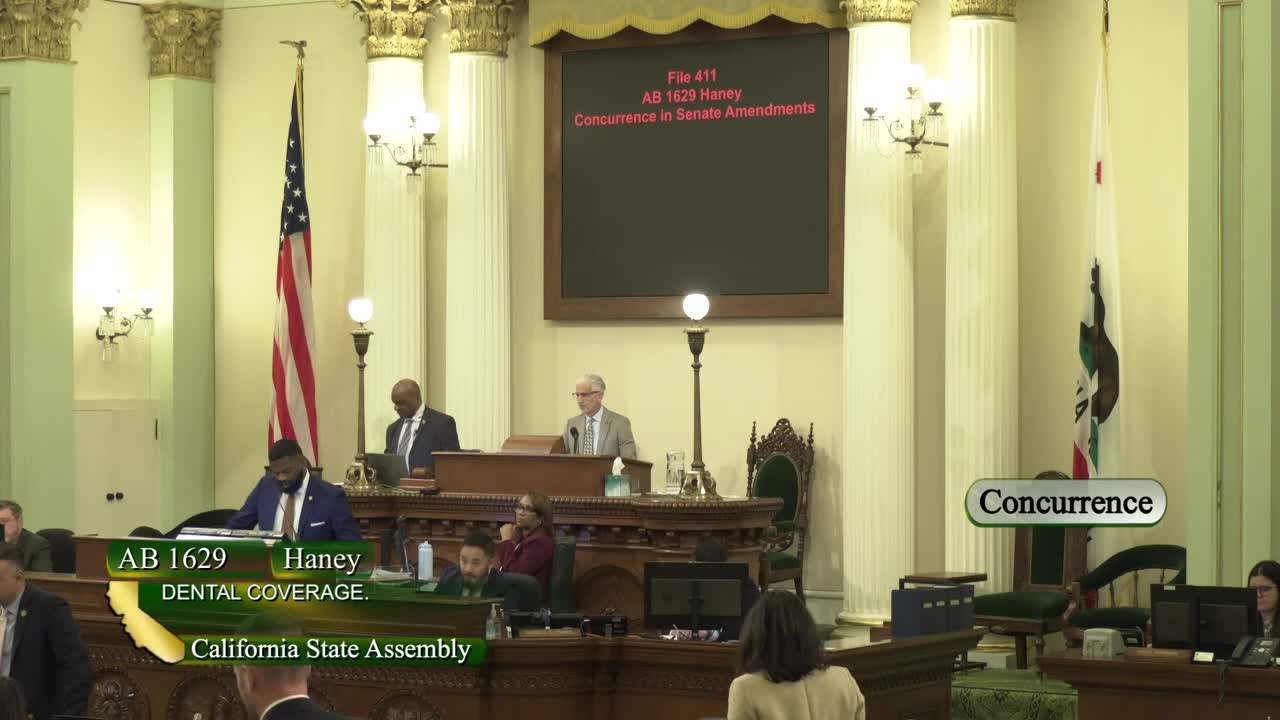
Bill Author

Bill Co-Author(s):