AB 223: Jury selection: acknowledgment and agreement.
- Session Year: 2025-2026
- House: Assembly
- Latest Version Date: 2025-07-14
Current Status:
Passed
(2025-07-14: Chaptered by Secretary of State - Chapter 29, Statutes of 2025.)
Introduced
In Committee
Awaiting First Chamber Vote
Passed First Chamber
In Committee
Awaiting Second Chamber Vote
Passed Second Chamber
Enacted
The Trial Jury Selection and Management Act requires all persons be selected for jury service at random and from sources inclusive of a representative cross section of the population of the area served by the court. Existing law requires a trial judge to examine the prospective jurors in jury trials. Existing law gives the counsel for each party, after this initial examination, the right to examine any of the prospective jurors, as specified, in order to enable counsel to intelligently exercise both peremptory challenges and challenges for cause. Existing law requires, prior to the examination of prospective trial jurors in the panel assigned for voir dire, a specified perjury acknowledgment and agreement to be obtained from the prospective jurors. Existing law requires, after the selection of the trial jury is completed, another specified acknowledgment and agreement to be obtained from the trial jurors.
This bill would revise the acknowledgment and agreements obtained from the jury panel prior to the examination of prospective trial jurors assigned for voir dire and after the completion of selection of trial jurors.
(a)Prior to the examination of prospective trial jurors in the panel assigned for voir dire, the following perjury acknowledgment and agreement shall be obtained from the panel, which shall be acknowledged by the prospective jurors with the statement I do:
Do you understand and agree, under penalty of perjury, that you will accurately and truthfully answer all questions about your qualifications and ability to serve as a juror in this case, and that failure to do so may result in criminal prosecution?
(b)As soon as the selection of the trial jury is completed, the following acknowledgment and agreement shall be obtained from the trial jurors, which shall be acknowledged by the statement I do:
Do you understand and agree that you will carefully consider the case being heard in this court, and that you will reach a verdict based only on the evidence presented to you and the instructions on the law given by the court?
(a)Prior to the examination of prospective trial jurors in the panel assigned for voir dire, the following perjury acknowledgement acknowledgment and agreement shall be obtained from the panel, which shall be acknowledged by the prospective jurors with the statement I do:
Do you, and each of you, understand and agree you understand and agree, under penalty of perjury, that you will accurately and truthfully answer, under penalty of perjury, all questions propounded to you concerning answer all questions about your qualifications and competency ability to serve as a trial juror in the matter pending before this court; juror in this case, and that failure to do so may subject you to criminal prosecution. result in criminal prosecution?
(b)As soon as the selection of the trial jury is completed, the following acknowledgment and agreement shall be obtained from the trial jurors, which shall be acknowledged by the statement I do:
Do you and each of you understand and agree that you will well and truly try the cause now pending before carefully consider the case being heard in this court, and a true verdict render according only to that you will reach a verdict based only on the evidence presented to you and to the instructions of the court. the instructions on the law given by the court?
|
Date
|
Status
|
|---|---|
| Jul 14, 2025 | Chaptered by Secretary of State - Chapter 29, Statutes of 2025. |
| Jul 14, 2025 | Approved by the Governor. |
| Jul 3, 2025 | Enrolled and presented to the Governor at 11 a.m. |
| Jun 27, 2025 | In Assembly. Ordered to Engrossing and Enrolling. |
| Jun 27, 2025 | Read third time. Passed. Ordered to the Assembly. (Ayes 38. Noes 0. Page 1810.). |
| Jun 25, 2025 | Read second time. Ordered to Consent Calendar. |
| Jun 24, 2025 | From committee: Do pass. To Consent Calendar. (Ayes 6. Noes 0.) (June 24). |
| Jun 17, 2025 | From committee: Do pass and re-refer to Com. on PUB. S. with recommendation: To Consent Calendar. (Ayes 12. Noes 0.) (June 17). Re-referred to Com. on PUB. S. |
| May 7, 2025 | Referred to Coms. on JUD. and PUB. S. |
| Mar 11, 2025 | In Senate. Read first time. To Com. on RLS. for assignment. |
| Mar 10, 2025 | Read third time. Passed. Ordered to the Senate. (Ayes 72. Noes 0. Page 572.) |
| Mar 5, 2025 | Read second time. Ordered to Consent Calendar. |
| Mar 4, 2025 | From committee: Do pass. To Consent Calendar. (Ayes 12. Noes 0.) (March 4). |
| Feb 3, 2025 | Referred to Com. on JUD. |
| Jan 10, 2025 | From printer. May be heard in committee February 9. |
| Jan 9, 2025 | Read first time. To print. |
|
Date
|
Description
|
Location
|
Votes
|
|
|---|---|---|---|---|
| Jun 27, 2025 | Consent Calendar 2nd AB223 Pacheco | Senate Floor |
Passed |
|
| Jun 24, 2025 | Do pass and be ordered to the Consent Calendar | Senate Standing Committee on Public Safety |
Passed |
|
| Jun 17, 2025 | Do pass, but first be re-referred to the Committee on [Public Safety] with the recommendation: To Consent Calendar | Senate Standing Committee on Judiciary |
Passed |
|
| Mar 10, 2025 | The committee on PBS recommend that the measure be PASSED, UNAMENDED. | Assembly Floor |
Passed |
|
| Mar 4, 2025 | Do pass. To Consent Calendar. | Assembly Standing Committee on Judiciary |
Passed |
This list shows positions taken on this bill by organizations on the date displayed, which is linked to the original source.
Positions by individuals are not included.
|
Organization
|
Position
|
Date
|
|---|---|---|
| Judicial Council of California | ** Support |
SENATE RULES COMMITTEE Office of Senate Floor Analyses (916) 651-1520 Fax: (916) 327-4478 | AB 223 |
CONSENT
Bill No: AB 223
Author: Pacheco (D)
Introduced: 1/9/25
Vote: 21
SENATE JUDICIARY COMMITTEE: 12-0, 6/17/25
AYES: Umberg, Niello, Allen, Arreguín, Caballero, Durazo, Laird, Stern, Valladares, Wahab, Weber Pierson, Wiener
NO VOTE RECORDED: Ashby
SENATE PUBLIC SAFETY COMMITTEE: 6-0, 6/24/25
AYES: Arreguín, Seyarto, Caballero, Gonzalez, Pérez, Wiener
ASSEMBLY FLOOR: 72-0, 3/10/25 (Consent) - See last page for vote
SUBJECT: Jury selection: acknowledgment and agreement
SOURCE: Judicial Council of California
DIGEST:
This bill updates the language used in the acknowledgments and agreements obtained from prospective jurors before conducting voir dire and from jurors once selected for trial regarding their obligations and duties.
ANALYSIS:
Existing law:
- Provides for the right to trial by an impartial jury as follows:
- In all criminal prosecutions; however, in a criminal prosecution in state court, the jury may be waived with the consent of both parties in open court. (U.S. Const., 6th amend; Ramos v. Louisiana (2020) 590 U.S. 83, 93 (Sixth Amendment applies to the states through incorporation by way of the Fourteenth Amendment); (California Constitution) Cal. Const., art. I, § 16.)
- In civil suits at common law in federal court, where the value in controversy exceeds $20. (U.S. Const., 7th amend.; Minneapolis & St. Louis Railroad Co. v. Bombolis (1916) 241 U.S. 211, 217.)
- In civil suits under state law in state court; a verdict may be rendered by three-fourths of the jury. (Cal. Const., art. I, § 16.)
- Establishes the Trial Jury Selection and Management Act (the TJSMA), which governs the selection of jurors and the formation of trial juries in civil and criminal cases in all trial courts of the state. (Code of Civil Procedure (Code Civ. Proc.) §§ 190 et seq.)
- Provides that voir dire of potential jurors in criminal and civil cases shall be conducted in two steps:[1]
- First, the judge conducts an initial examination of prospective jurors; the judge may, as they deem proper, include in their initial questioning additional questions submitted by the parties.
- Second, upon completion of the judge’s initial examination, counsel for each party has the right to examine, by oral and direct questioning, any of the prospective jurors. The scope of counsel’s examination shall be within reasonable limits prescribed by the judge, and the judge shall permit liberal and probing examination calculated to discover bias or prejudice with regard to the circumstances of the particular case. (Code Civ. Proc. §§ 222.5, 223.)
- Requires, prior to the examination of prospective trial jurors in the panel assigned for voir dire, the following perjury acknowledgement and agreement to be obtained from the panel, which shall be acknowledged by the prospective jurors with the statement “I do”:
“Do you, and each of you, understand and agree that you will accurately and truthfully answer, under penalty of perjury, all questions propounded to you concerning your qualifications and competency to serve as a trial juror in the matter pending before this court; and that failure to do so may subject you to criminal prosecution?” (Code Civ. Proc. § 232(a).)
- Requires, as soon as the selection of the trial jury is completed, the following acknowledgment and agreement to be obtained from the trial jurors, which shall be acknowledged by the statement “I do”:
“Do you and each of you understand and agree that you will well and truly try the cause now pending before this court, and a true verdict render according only to the evidence presented to you and to the instructions of the court?” (Code Civ. Proc. § 232(b).)
This bill:
- Updates the language in the agreement for prospective jurors to read: “Do you understand and agree, under penalty of perjury, that you will accurately and truthfully answer all questions about your qualifications and ability to serve as a juror in this case, and that failure to do so may result in criminal prosecution?”
- Updates the language for the agreement jurors must make after being impaneled but before trial to read: “Do you understand and agree that you will carefully consider the case being heard in this court, and that you will reach a verdict based only on the evidence presented to you and the instructions on the law given by the court?”
Background
The United States and California Constitutions protect the right to a trial by an impartial jury in criminal and civil cases. The voir dire process, in which the court and counsel select a jury, involves a series of questions to assess the fitness of prospective jurors to serve on the jury.
Before this examination begins, the court is required to read language to prospective jurors, that they must acknowledge and agree to, regarding their obligations to answer the questions posed accurately and truthfully and the consequences for failing to do so. After the jury is impaneled, another oath is taken by the jurors by which they agree to hear the case and render a verdict appropriately. However, the language used in these acknowledgments is outdated and potentially confusing for jurors. This bill therefore modernizes and simplifies the language.
This bill is sponsored by Judicial Council of California. No timely support or opposition has been received
Comments
The voir dire process in civil cases. The right to trial by jury is protected in both the federal and state Constitutions.[2] While the Seventh Amendment’s guarantee of a trial by jury in civil cases has not been incorporated to apply to the states by way of the Fourteenth Amendment,[3] California’s Constitution separately guarantees the parties the right to a trial by jury.[4] The right may be waived with the consent of both parties, and unlike in a criminal case, a civil jury verdict may be rendered when only three-fourths of the jurors agree.[5]
The TJSMA governs the jury selection process in California state court proceedings.[6] The TJSMA covers matters from who is qualified to serve as a juror[7] to how lists of qualified jurors are created for jury selection[8] to jurors’ duties during trial.[9] Relevant to this bill are the TJSMA’s provisions for voir dire.
In voir dire, or the jury selection process, members of the jury pool are asked questions to determine their fitness to serve in the particular trial. The judge first asks the potential jurors a standardized set of general questions, and then counsel for the parties are permitted to ask more probing questions to determine if there are reasons why the juror may not be fit to serve.[10]
Relevant here, prior to this examination of prospective trial jurors in the panel assigned for voir dire, each juror must acknowledge and agree to the following:
Do you, and each of you, understand and agree that you will accurately and truthfully answer, under penalty of perjury, all questions propounded to you concerning your qualifications and competency to serve as a trial juror in the matter pending before this court; and that failure to do so may subject you to criminal prosecution?
Each prospective juror must answer, “I do.” After jury selection is completed, jurors must also acknowledge and agree to the following: “Do you and each of you understand and agree that you will well and truly try the cause now pending before this court, and a true verdict render according only to the evidence presented to you and to the instructions of the court?” They must again answer, “I do.”
Given the archaic phrasing and language included in these acknowledgments, this bill modernizes and simplifies the respective provisions to read as follows:
“Do you understand and agree, under penalty of perjury, that you will accurately and truthfully answer all questions about your qualifications and ability to serve as a juror in this case, and that failure to do so may result in criminal prosecution?”
“Do you understand and agree that you will carefully consider the case being heard in this court, and that you will reach a verdict based only on the evidence presented to you and the instructions on the law given by the court?”
According to the author:
AB 223 updates the language of the statutory oaths administered to jurors by replacing outdated legal language with clear, plain language that all jurors can easily understand. This proposal is comprised of technical amendments, and otherwise leaves the substance of the oaths intact.
FISCAL EFFECT: Appropriation: No Fiscal Com.: No Local: No
SUPPORT: (Verified 6/24/25)
Judicial Council of California (Source)
OPPOSITION: (Verified 6/24/25)
None received
ARGUMENTS IN SUPPORT: The Judicial Council of California writes:
AB 223 makes narrowly tailored plain language revisions to the oaths so that jurors can better understand them. Using plain language when interacting with juries has been a longstanding goal for the Judicial Council. Both a Blue Ribbon Commission on Jury System Improvement from 1996, and a Task Force on Jury System Improvement from 2004, suggested that plain language instructions be given to jurors. While the suggestion to use plain language was adopted in the context of jury instructions, the statute governing juror oaths has remained untouched since 1989. This bill continues the task of using plain language in the jury context, so that jurors can more readily fulfill their roles in the justice system.
ASSEMBLY FLOOR: 72-0, 3/10/25
AYES: Addis, Aguiar-Curry, Ahrens, Alanis, Alvarez, Arambula, Ávila Farías, Bains, Bauer-Kahan, Bennett, Berman, Boerner, Bonta, Calderon, Caloza, Carrillo, Castillo, Chen, Connolly, Davies, DeMaio, Dixon, Elhawary, Ellis, Essayli, Flora, Fong, Gabriel, Garcia, Gipson, Jeff Gonzalez, Mark González, Hadwick, Haney, Harabedian, Hart, Hoover, Irwin, Jackson, Kalra, Lackey, Lee, Macedo, McKinnor, Nguyen, Ortega, Pacheco, Papan, Patel, Patterson, Pellerin, Petrie-Norris, Quirk-Silva, Ransom, Celeste Rodriguez, Michelle Rodriguez, Rogers, Blanca Rubio, Sanchez, Schiavo, Schultz, Sharp-Collins, Solache, Soria, Stefani, Ta, Tangipa, Wallis, Wicks, Wilson, Zbur, Rivas
NO VOTE RECORDED: Bryan, Gallagher, Krell, Lowenthal, Muratsuchi, Ramos, Valencia, Ward
Prepared by: Christian Kurpiewski / JUD. / (916) 651-4113
6/26/25 16:11:36
**** END ****
There are slight differences between the criminal and civil voir dire process that are not relevant to this analysis. (Compare Code Civ. Proc., § 222.5 with id., § 223.) ↑
U.S. Const., 6th & 7th amends.; Cal. Const., art. I, § 16. ↑
E.g., Curtis v. Loether (415 U.S. 189, 192, fn. 6. ↑
Cal. Const., art. I, § 16. ↑
Ibid. ↑
Code Civ. Proc., pt. 1, tit. 3, ch. 1, §§ 190 et seq. ↑
Id., § 203. ↑
Id., §§ 198, 198.5. ↑
Id., § 236. ↑
Id., §§ 222.5, 223. ↑
SENATE COMMITTEE ON PUBLIC SAFETY
Senator Jesse Arreguín, Chair
2025 - 2026 Regular
Bill No: AB 223 Hearing Date: June 24, 2025
Author: | Pacheco | ||
Version: | January 9, 2025 | ||
Urgency: | No | Fiscal: | No |
Consultant: | CA | ||
Subject: Jury selection: acknowledgment and agreement
HISTORY
Source: Judicial Council of California
Prior Legislation: None
Support: Unknown
Opposition: None known
Assembly Floor Vote: 72 - 0
PURPOSE
The purpose of this bill is to revise and modernize the juror acknowledgments and agreements obtained from prospective jurors prior to voir dire and after jury selection is completed.
Existing law establishes the Trial Jury Selection and Management Act. (Code of Civ. Pro., § 190 et seq.)
Existing law provides that all persons selected for jury service are to be selected at random, from a source or sources inclusive of a representative cross section of the population of the area served by the court, including but not limited to Department of Motor Vehicle records, voting rolls, tax filer lists, customer mailing lists, telephone directories, and utility company lists. (Code Civ. Pro., § 197.)
Existing law provides that in order to select a fair and impartial jury in both civil and criminal jury trials, a trial judge must conduct an initial examination of prospective jurors, or voir dire. (Code Civ. Pro., §§ 222.5, subd. (a), 223, subd. (a).)
Existing law provides that upon completion of the trial judge’s initial examination, counsel for each party shall have the right to examine, by oral and direct questioning, any of the prospective jurors, as specified. (Code Civ. Pro., §§ 222.5, subd. (b), 223, subd. (b).)
Existing law provides that prior to the examination of prospective trial jurors in the panel assigned for voir dire, the following perjury acknowledgement and agreement shall be obtained from the panel, which shall be acknowledged by the prospective jurors with the statement “I do”:
Do you, and each of you, understand and agree that you will accurately and truthfully answer, under penalty of perjury, all questions propounded to you concerning your qualifications and competency to serve as a trial juror in the matter pending before this court; and that failure to do so may subject you to criminal prosecution. (Code Civ. Pro., § 232, subd. (a).)
This bill requires that the pre voir dire acknowledgment and agreement instead read as follows:
Do you understand and agree, under penalty of perjury, that you will accurately and truthfully answer all questions about your qualifications and ability to serve as a juror in this case, and that failure to do so may result in criminal prosecution?
Existing law requires that as soon as the selection of the trial jury is completed, the following acknowledgment and agreement shall be obtained from the trial jurors, which shall be acknowledged by the statement “I do”:
Do you and each of you understand and agree that you will well and truly try the cause now pending before this court, and a true verdict render according only to the evidence presented to you and to the instructions of the court. (Code Civ. Pro., § 232, subd. (b).)
This bill requires that the post jury selection acknowledgment and agreement instead read as follows:
Do you understand and agree that you will carefully consider the case being heard in this court, and that you will reach a verdict based only on the evidence presented to you and the instructions on the law given by the court?
COMMENTS
- Need for This Bill
According to the author:
AB 223 updates the language of the statutory oaths administered to jurors by replacing outdated legal language with clear, plain language that all jurors can easily understand. This proposal is comprised of technical amendments, and otherwise leaves the substance of the oaths intact.
- Background
According to information provided by the author’s office: “Current jury oaths in the Code of Civil Procedure section 232 contain archaic language that may confuse jurors. For example, the juror selection oath requires jurors to acknowledge that they will truthfully answer all questions “propounded” to them concerning their qualifications and competency. The other oath requires jurors to agree that they will “well and truly try the cause now pending before this court, and a true verdict render.” This outdated language creates unnecessary barriers to understanding the oaths and may prevent jurors from comprehending the duties that they are agreeing to carry out.” - Argument in Support
According to the Judicial Council of California, the sponsor of this bill:
The Judicial Council is pleased to sponsor Assembly Bill 223 (Pacheco) which makes plain language revisions to the juror and prospective juror oaths obtained from the jury panel prior to the examination of prospective trial jurors assigned for voir dire and after the completion of selection of trial jurors. This proposal is comprised of technical amendments, and otherwise leaves the substance of the oaths intact.
Under existing law, jurors generally must take an oath at two different stages of a trial. The first oath they must take occurs prior to jury selection, in which they agree to accurately and truthfully answer all questions concerning their qualifications and competency to serve as a trial juror. The second oath occurs right after jury selection is over; jurors must acknowledge that they will consider the case before them, and reach a verdict based only on the evidence and the court’s instructions.
Code of Civil Procedure section 232 sets forth the express text of the oaths that must be read to jurors. The statutory language uses words and phrases that may be outdated or unfamiliar for those serving on a jury. For example, the juror selection oath requires jurors to acknowledge that they will truthfully answer all questions “propounded” to them concerning their qualifications and competency. The other oath requires jurors to agree that they will “well and truly try the cause now pending before this court, and a true verdict render” according to the evidence and court instructions. Such language can serve as a barrier that limits a juror’s ability to understand the oaths and the duties that they are agreeing to carry out.
AB 223 makes narrowly tailored plain language revisions to the oaths so that jurors can better understand them. Using plain language when interacting with juries has been a longstanding goal for the Judicial Council. Both a Blue Ribbon Commission on Jury System Improvement from 1996, and a Task Force on Jury System Improvement from 2004, suggested that plain language instructions be given to jurors. While the suggestion to use plain language was adopted in the context of jury instructions, the statute governing juror oaths has remained untouched since 1989. This bill continues the task of using plain language in the jury context, so that jurors can more readily fulfill their roles in the justice system.
For these reasons, the Judicial Council is pleased to sponsor AB 223.
-- END –
SENATE JUDICIARY COMMITTEE
Senator Thomas Umberg, Chair
2025-2026 Regular Session
Bill No: AB 223 (Author:Pacheco)
Version: January 9, 2025
Hearing Date: June 17, 2025
Fiscal: No
Urgency: No
Consultant: CK
SUBJECT
Jury selection: acknowledgment and agreement
DIGEST
This bill updates the language used in the acknowledgments and agreements obtained from prospective jurors before conducting voir dire and from jurors once selected for trial regarding their obligations and duties.
EXECUTIVE SUMMARY
The United States and California Constitutions protect the right to a trial by an impartial jury in criminal and civil cases. The voir dire process, in which the court and counsel select a jury, involves a series of questions to assess the fitness of prospective jurors to serve on the jury.
Before this examination begins, the court is required to read language to prospective jurors, that they must acknowledge and agree to, regarding their obligations to answer the questions posed accurately and truthfully and the consequences for failing to do so. After the jury is impaneled, another oath is taken by the jurors by which they agree to hear the case and render a verdict appropriately.
However, the language used in these acknowledgments is outdated and potentially confusing for jurors. This bill therefore modernizes and simplifies the language.
This bill is sponsored by Judicial Council of California. No timely support or opposition has been received by the Committee. Should the bill pass out of this Committee, it will next be heard by the Senate Public Safety Committee.
PROPOSED CHANGES TO THE LAW
Existing law:
- Provides for the right to trial by an impartial jury as follows:
- In all criminal prosecutions; however, in a criminal prosecution in state court, the jury may be waived with the consent of both parties in open court. (U.S. Const., 6th amend; Ramos v. Louisiana (2020) 590 U.S. 83, 93 (Sixth Amendment applies to the states through incorporation by way of the Fourteenth Amendment); Cal. Const., art. I, § 16.)
- In civil suits at common law in federal court, where the value in controversy exceeds $20. (U.S. Const., 7th amend.; Minneapolis & St. Louis Railroad Co. v. Bombolis (1916) 241 U.S. 211, 217.)
- In civil suits under state law in state court; a verdict may be rendered by three-fourths of the jury. (Cal. Const., art. I, § 16.)
- Establishes the Trial Jury Selection and Management Act (the TJSMA), which governs the selection of jurors and the formation of trial juries in civil and criminal cases in all trial courts of the state. (Code Civ. Proc., pt. 1, tit. 3, ch. 1, §§ 190 et seq.)
- Provides that voir dire of potential jurors in criminal and civil cases shall be conducted in two steps:[1]
- First, the judge conducts an initial examination of prospective jurors; the judge may, as they deem proper, include in their initial questioning additional questions submitted by the parties.
- Second, upon completion of the judge’s initial examination, counsel for each party has the right to examine, by oral and direct questioning, any of the prospective jurors. The scope of counsel’s examination shall be within reasonable limits prescribed by the judge, and the judge shall permit liberal and probing examination calculated to discover bias or prejudice with regard to the circumstances of the particular case. (Code Civ. Proc. §§ 222.5, 223.)
- Requires, prior to the examination of prospective trial jurors in the panel assigned for voir dire, the following perjury acknowledgement and agreement to be obtained from the panel, which shall be acknowledged by the prospective jurors with the statement “I do”:
“Do you, and each of you, understand and agree that you will accurately and truthfully answer, under penalty of perjury, all questions propounded to you concerning your qualifications and competency to serve as a trial juror in the matter pending before this court; and that failure to do so may subject you to criminal prosecution?” (Code Civ. Proc. § 232(a).)
- Requires, as soon as the selection of the trial jury is completed, the following acknowledgment and agreement to be obtained from the trial jurors, which shall be acknowledged by the statement “I do”:
“Do you and each of you understand and agree that you will well and truly try the cause now pending before this court, and a true verdict render according only to the evidence presented to you and to the instructions of the court?” (Code Civ. Proc. § 232(b).)
This bill:
- Updates the language in the agreement for prospective jurors to read: “Do you understand and agree, under penalty of perjury, that you will accurately and truthfully answer all questions about your qualifications and ability to serve as a juror in this case, and that failure to do so may result in criminal prosecution?”
- Updates the language for the agreement jurors must make after being impaneled but before trial to read: “Do you understand and agree that you will carefully consider the case being heard in this court, and that you will reach a verdict based only on the evidence presented to you and the instructions on the law given by the court?”
COMMENTS
- The voir dire process in civil cases
The right to trial by jury is protected in both the federal and state Constitutions.[2] While the Seventh Amendment’s guarantee of a trial by jury in civil cases has not been incorporated to apply to the states by way of the Fourteenth Amendment,[3] California’s Constitution separately guarantees the parties the right to a trial by jury.[4] The right may be waived with the consent of both parties, and unlike in a criminal case, a civil jury verdict may be rendered when only three-fourths of the jurors agree.[5]
The TJSMA governs the jury selection process in California state court proceedings.[6] The TJSMA covers matters from who is qualified to serve as a juror[7] to how lists of qualified jurors are created for jury selection[8] to jurors’ duties during trial.[9] Relevant to this bill are the TJSMA’s provisions for voir dire.
In voir dire, or the jury selection process, members of the jury pool are asked questions to determine their fitness to serve in the particular trial. The judge first asks the potential jurors a standardized set of general questions, and then counsel for the parties are permitted to ask more probing questions to determine if there are reasons why the juror may not be fit to serve.[10]
Relevant here, prior to this examination of prospective trial jurors in the panel assigned for voir dire, each juror must acknowledge and agree to the following:
Do you, and each of you, understand and agree that you will accurately and truthfully answer, under penalty of perjury, all questions propounded to you concerning your qualifications and competency to serve as a trial juror in the matter pending before this court; and that failure to do so may subject you to criminal prosecution?
Each prospective juror must answer, “I do.” After jury selection is completed, jurors must also acknowledge and agree to the following: “Do you and each of you understand and agree that you will well and truly try the cause now pending before this court, and a true verdict render according only to the evidence presented to you and to the instructions of the court?” They must again answer, “I do.”
Given the archaic phrasing and language included in these acknowledgments, this bill modernizes and simplifies the respective provisions to read as follows:
“Do you understand and agree, under penalty of perjury, that you will accurately and truthfully answer all questions about your qualifications and ability to serve as a juror in this case, and that failure to do so may result in criminal prosecution?”
“Do you understand and agree that you will carefully consider the case being heard in this court, and that you will reach a verdict based only on the evidence presented to you and the instructions on the law given by the court?”
- Stakeholder positions
According to the author:
AB 223 updates the language of the statutory oaths administered to jurors by replacing outdated legal language with clear, plain language that all jurors can easily understand. This proposal is comprised of technical amendments, and otherwise leaves the substance of the oaths intact.
SUPPORT
Judicial Council of California (sponsor)
OPPOSITION
None known
RELATED LEGISLATION
Pending Legislation:
SB 645 (Umberg, 2025) permanently exempts civil cases from requiring certain procedures to be used when a peremptory challenge is exercised against a potential juror. SB 645 is pending referral in the Assembly.
SB 758 (Umberg, 2025) limits certain bases relating to beliefs and feelings about law enforcement, and the juror’s history with law enforcement, in Section 231.7’s list of presumptively invalid bases for a peremptory challenge, so that they do not apply in cases where a law enforcement officer is the defendant or alleged victim. SB 758 is currently in the Senate Public Safety Committee.
AB 387 (Alanis, 2025) prohibits probation officers from being selected for voir dire in criminal matters. AB 387 is currently in the Senate Public Safety Committee.
Prior Legislation: AB 3070 (Weber, Ch. 318, Stats. 2020) established a new process by which courts would determine whether a peremptory challenge was the product of improper discrimination. It required courts to look for not only for deliberate discrimination but also implicit and unconscious bias. AB 3070 required courts to use an objective, rather than subjective, test to determine whether a challenge was motivated by the juror’s membership in a protected group, and required courts to consider a number of factors in reaching this decision.
PRIOR VOTES:
Assembly Floor (Ayes 72, Noes 0)
Assembly Judiciary Committee (Ayes 12, Noes 0)
**************
There are slight differences between the criminal and civil voir dire process that are not relevant to this analysis. (Compare Code Civ. Proc., § 222.5 with id., § 223.) ↑
U.S. Const., 6th & 7th amends.; Cal. Const., art. I, § 16. ↑
E.g., Curtis v. Loether (415 U.S. 189, 192, fn. 6. ↑
Cal. Const., art. I, § 16. ↑
Ibid. ↑
Code Civ. Proc., pt. 1, tit. 3, ch. 1, §§ 190 et seq. ↑
Id., § 203. ↑
Id., §§ 198, 198.5. ↑
Id., § 236. ↑
Id., §§ 222.5, 223. ↑
Date of Hearing: March 4, 2025
ASSEMBLY COMMITTEE ON JUDICIARY
Ash Kalra, Chair
ABPCA Bill Id:AB 223
Author:(Pacheco) – As Introduced Ver:January 9, 2025
proposed consent
SUBJECT: Jury selection: acknowledgment and agreement
KEY ISSUE: SHOULD THE admonishment that is required to be read to jurors in both civil and criminal proceedings BE MODIFIED so that it uses MORE ACCESSIBLE PLAIN LANGUAGE?
SYNOPSIS
Current law requires each juror in both civil and criminal court proceedings to be read an “admonishment” about their responsibilities should they be selected for jury service and to acknowledge those responsibilities once they are selected to serve on a jury. The two statements that make up the admonishment include relatively archaic language. This bill proposes to modernize the statements while maintaining their meanings in order to promote accessibility and understanding by potential jurors. This bill is sponsored by the California Judicial Council. It has no opposition on file.
SUMMARY: Modernizes the language in the admonishment administered to potential jurors prior to voir dire.
EXISTING LAW:
- Establishes the Trial Jury Selection and Management Act. (Code of Civil Procedure Section 190 et seq. All further statutory references are to this code, unless otherwise indicated.)
- Provides that all persons selected for jury service are to be selected at random, from a source or sources inclusive of a representative cross section of the population of the area served by the court, including but not limited to Department of Motor Vehicle records, voting rolls, tax filer lists, customer mailing lists, telephone directories, and utility company lists. (Section 197.)
- In order to select a fair and impartial jury in both civil and criminal jury trials, requires a trial judge to conduct an initial examination of prospective jurors, or voir dire. (Sections 222.5, 223.)
- Requires the following perjury acknowledgments and agreement to be obtained prior to the examination of prospective trial jurors in the panel assigned for voir dire, and acknowledged by the prospective jurors with the statement “I do”:
“Do you, and each of you, understand and agree that you will accurately and truthfully answer, under penalty of perjury, all questions propounded to you concerning your qualifications and competency to serve as a trial juror in the matter pending before this court; and that failure to do so may subject you to criminal prosecution.” (Section 232 (a).)
- Requires the following acknowledgement and agreement to be obtained from the trial jurors, acknowledged by the statement “I do,” as soon as the selection of the trial jury is completed:
“Do you and each of you understand and agree that you will well and truly try the cause now pending before this court, and a true verdict render according only to the evidence presented to you and to the instructions of the court.” (Section 232 (b).)
FISCAL EFFECT: As currently in print this bill is keyed non-fiscal.
COMMENTS: The equity of our justice system relies in no small part on the proper composition and instruction of a jury. In order to ensure a deep understanding of a juror’s responsibility, jurors are read two statements which they are required to verbally acknowledge; one before the jury selection process begins, and a second before the trial begins. Both statements are required by Code of Civil Procedure section 232 which has not been amended since 1989. The first statement reads:
“Do you, and each of you, understand and agree that you will accurately and truthfully answer, under penalty of perjury, all questions propounded to you concerning your qualifications and competency to serve as a trial juror in the matter pending before this court, and that failure to do so may subject you to criminal prosecution.”
Following the selection of the jury for trial, the jurors are read the following statement:
“Do you and each of you understand and agree that you will well and truly try the cause now pending before this court, and a true verdict render according only to the evidence presented to you and to the instructions of the court.”
Despite asking straightforward questions, both phrases are structured in a convoluted manner and use relatively complex and uncommon language.
This bill proposes to modify the statements to promote greater accessibility of their language while maintaining each question’s underlying meaning.
According to the author, AB 223 updates the language of the statutory oaths administered to jurors by replacing outdated legal language with clear, plain language that all jurors can easily understand. This proposal is comprised of technical amendments, and otherwise leaves the substance of the oaths intact.
Under the bill, the first question would be amended to read:
“Do you understand and agree, under penalty or perjury, that you will accurately and truthfully answer all questions about your qualifications and ability to serve as a juror in this case, and that failure to do so may result in criminal prosecution?”
The second would be amended to read as follows:
“Do you understand and agree that you will carefully consider the case being heard in this court, and that you will reach a verdict based only on the evidence presented to you and the instructions on the law given by the court?”
The changes proposed by this bill seem a reasonable step towards ensuring that each juror understands their tasks and responsibilities throughout the trial process.
ARGUMENTS IN SUPPORT: This measure is sponsored by the Judicial Council. They submit the following:
Code of Civil Procedure section 232 sets forth the express text of the oaths that must be read to jurors. The statutory language uses words and phrases that may be outdated or unfamiliar for those serving on a jury. For example, the juror selection oath requires jurors to acknowledge that they will truthfully answer all questions “propounded” to them concerning their qualifications and competency. The other oath requires jurors to agree that they will “well and truly try the cause now pending before this court, and a true verdict render” according to the evidence and court instructions. Such language can serve as a barrier that limits a juror’s ability to understand the oaths and the duties that they are agreeing to carry out.
AB 223 makes narrowly tailored revisions to the oaths so that jurors can better understand them. Using plain language when interacting with juries has been a longstanding goal for the Judicial Council. Both a Blue Ribbon Commission on Jury System Improvement from 1996, and a Task Force on Jury System Improvement from 2004, suggested that plain language instructions be given to jurors. While the suggestion to use plain language was adopted in the context of jury instructions, the statute governing juror oaths has remained untouched since 1989. This bill continues the task of using plain language in the jury context, so that jurors can more readily fulfill their roles in the justice system.
REGISTERED SUPPORT / OPPOSITION:
Support
Judicial Council (sponsor)
Opposition
None on file
Analysis Prepared by: Manuela Boucher-de la Cadena / JUD. / (916) 319-2334
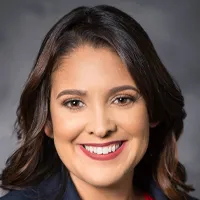
Bill Author
Bill Co-Author(s):